
A casual dress is harder to get right than a gown, not easier. With no boning, beading or train doing the work, the fabric, the hem and the fit carry everything, and a few wrong choices can leave you looking like a guest at your own courthouse ceremony. The range is wide, from bias-cut slips and minis to breathable linen midis and plain lace, and casual also frees your feet: flats, sneakers and boots are all fair game. Each of the twenty dresses below comes with the shoes, bag and hair I’d style it with, plus a note on where it struggles.
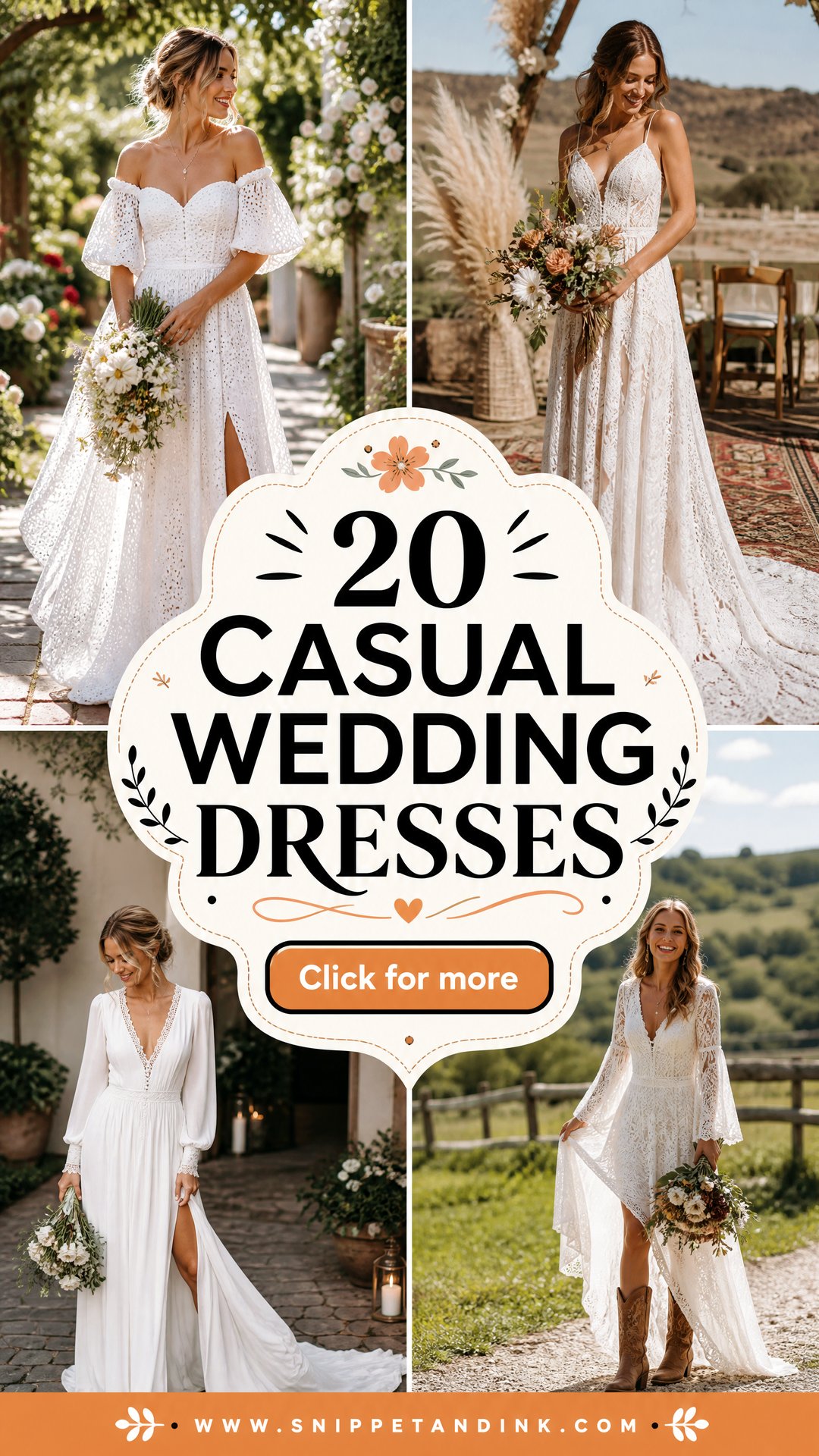
What Makes a Plain Dress Look Like a Wedding Dress?
When a bride brings me a simple dress and asks why it looks like a party outfit, the answer is usually one of four things. None of them cost much to fix.
- Fabric weight. A dress that moves heavily and hangs straight reads as bridal; thin fabric that clings and wrinkles reads as daywear. If you’re between two dresses, pick the heavier one.
- One bridal signal. A short veil, a bow, a hair comb, a statement shoe. You need one, not five.
- Fit at the shoulders and hem. A strap that slips or a hem that’s a little uneven is invisible in a sundress and obvious in wedding photos.
- Shade consistency. Ivory shoes against a bright white dress, or a champagne jacket over cool ivory, can look accidental. Hold everything together in daylight.
Get those right and almost any dress on this list will look like it belongs at the front of the aisle.
1. Simple Slip Wedding Dress
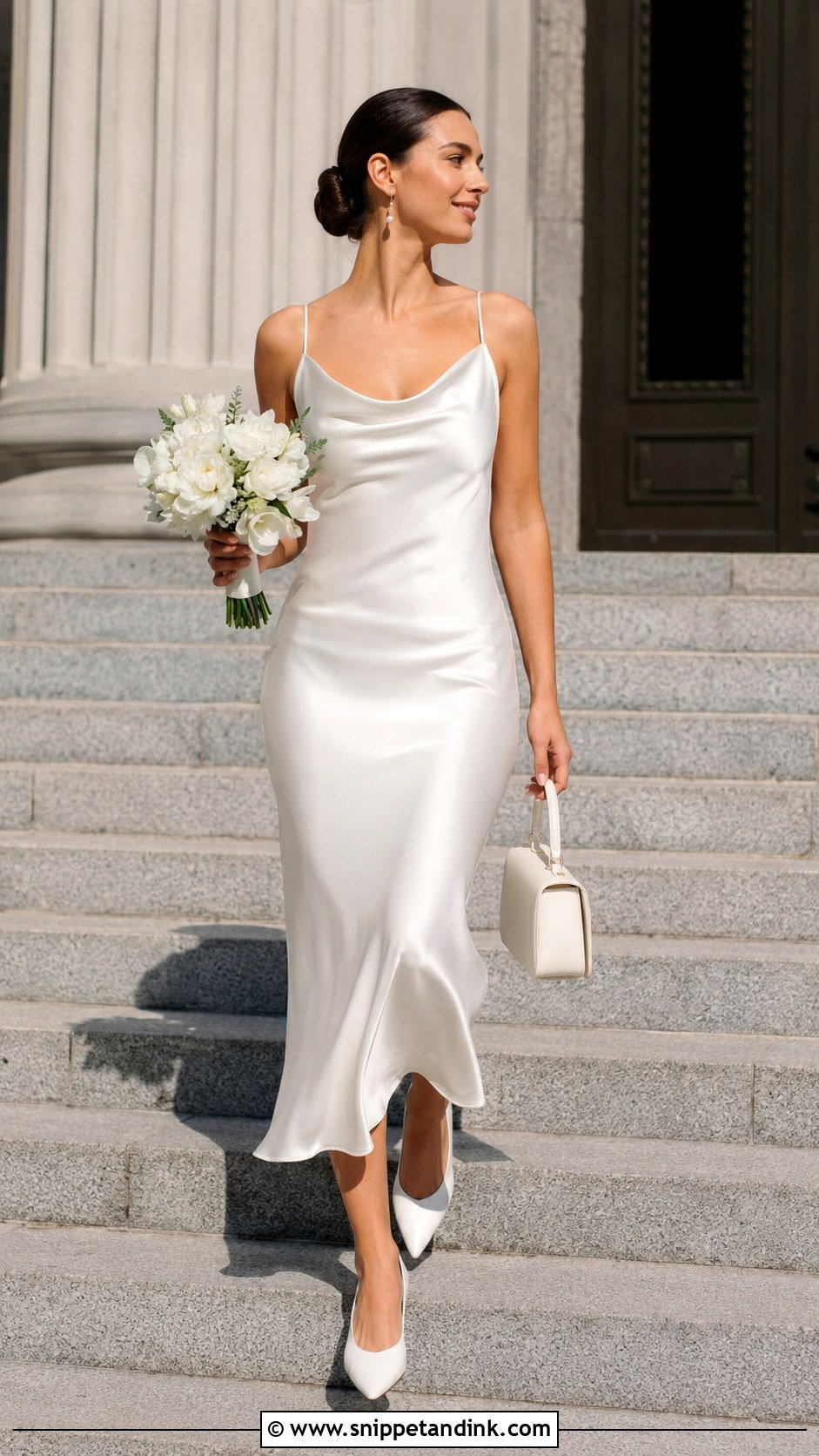
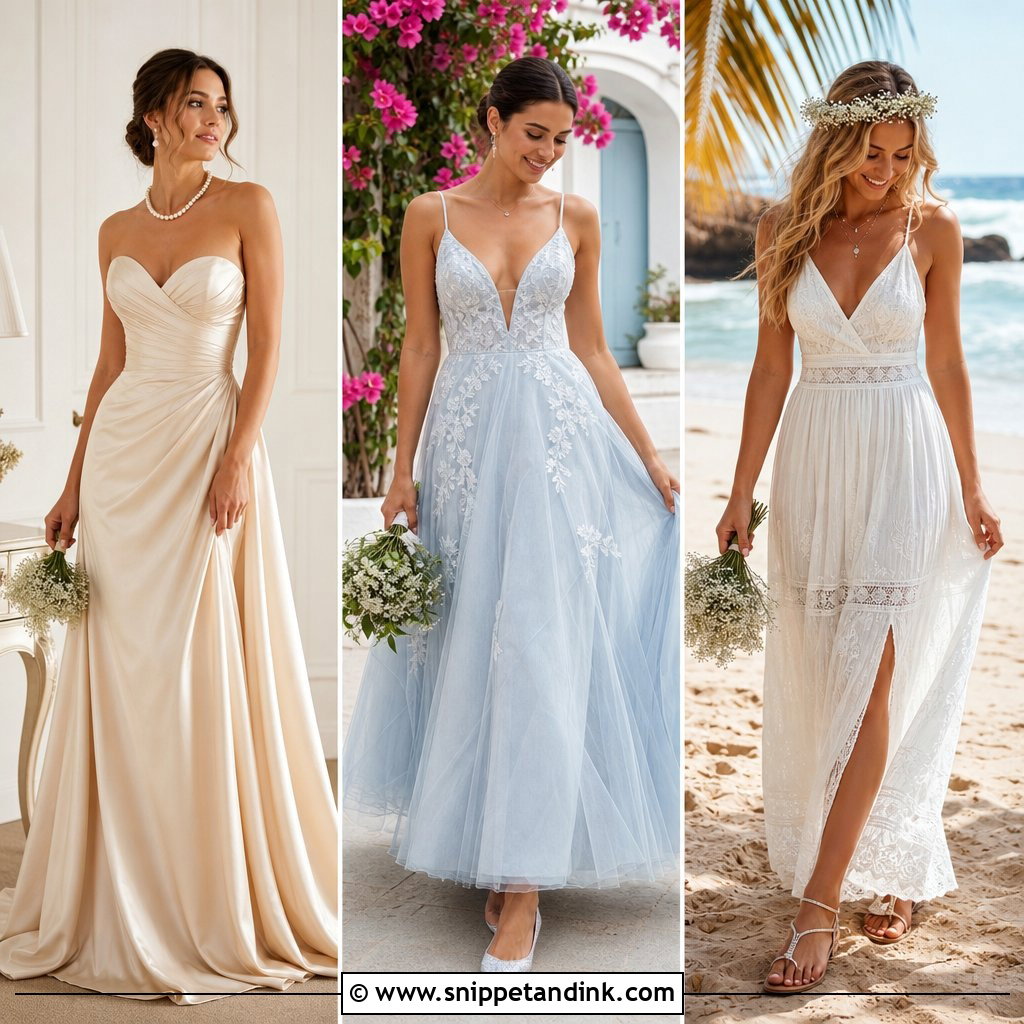
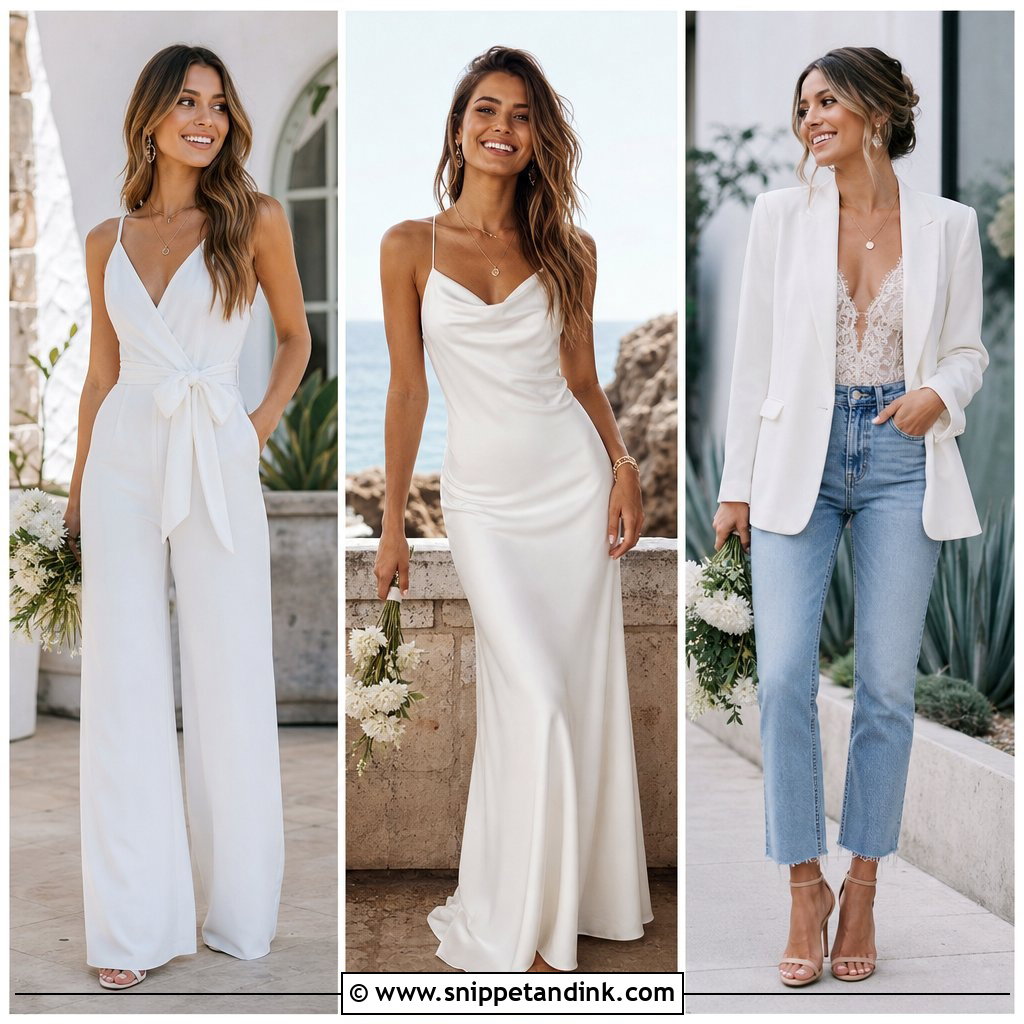
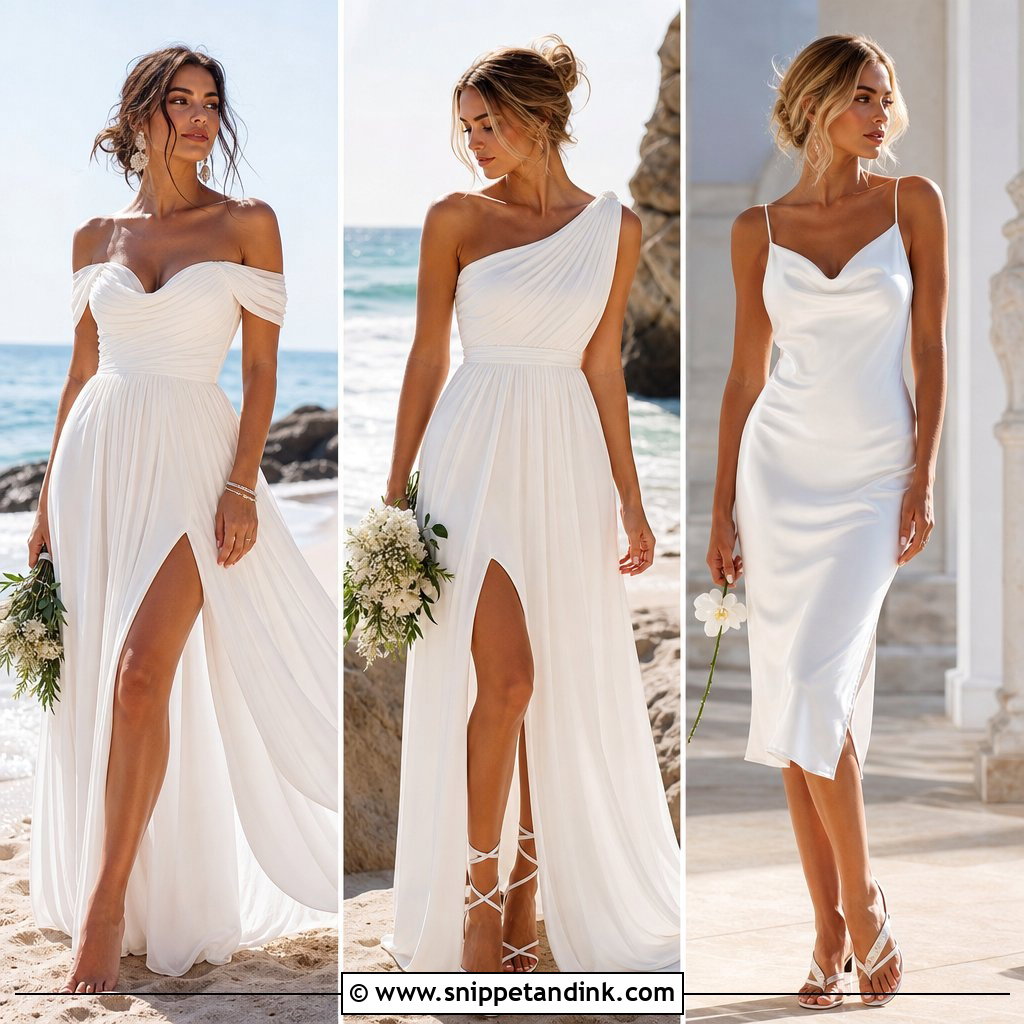
I love a slip for a bride who wants nothing extra, but I’m strict about the fabric. Thin satin shows every seam and strap underneath, so I hold it up to a window before anything else; heavier bias-cut satin or crepe drapes instead of clinging. A midi length suits city hall, and ankle length gives an intimate dinner a little more ceremony. Low white slingbacks, small drop earrings and a structured bag keep it from looking like nightwear. An ivory blazer over the shoulders covers you for the vows.
2. Short A-Line Wedding Dress
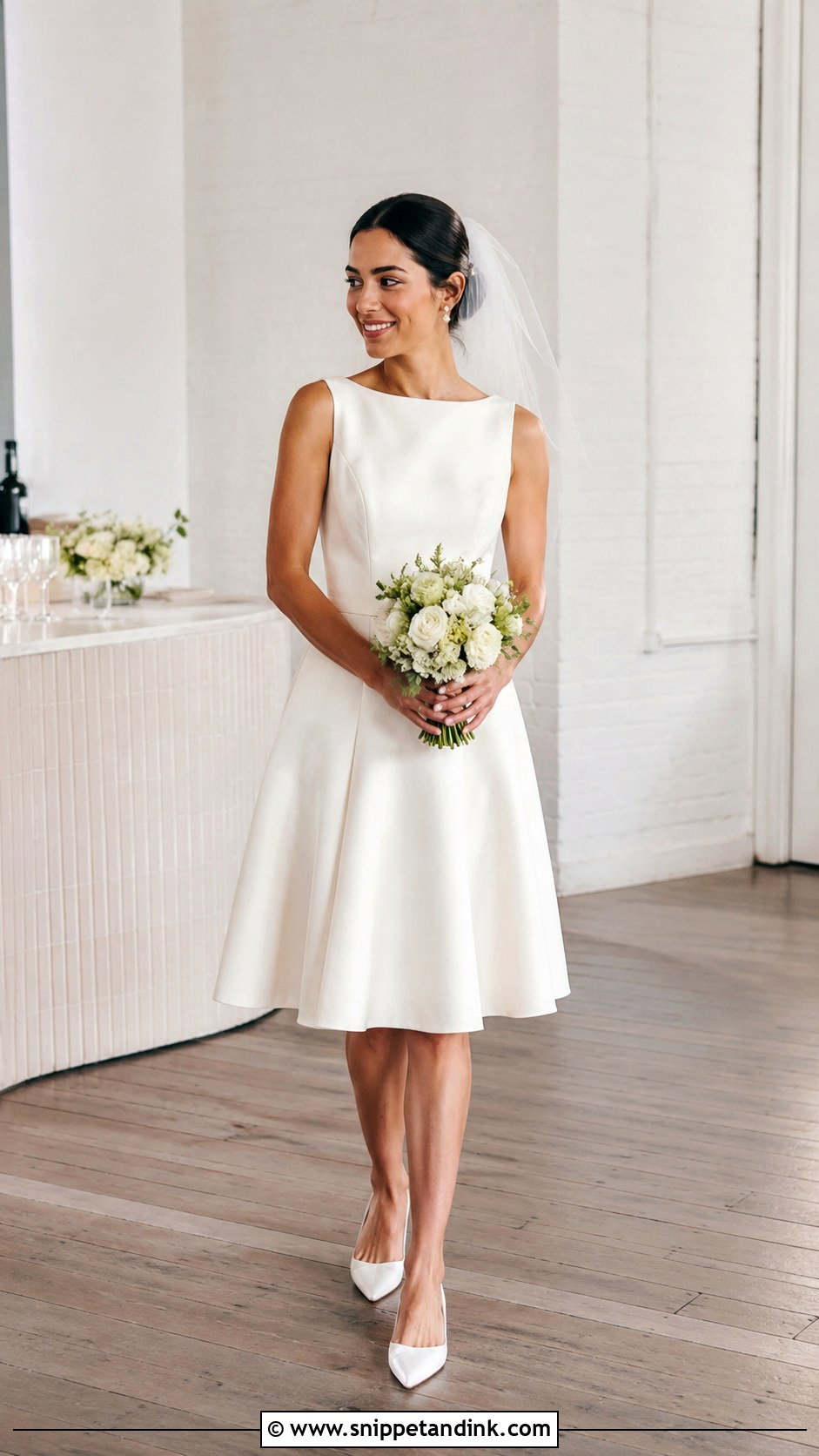
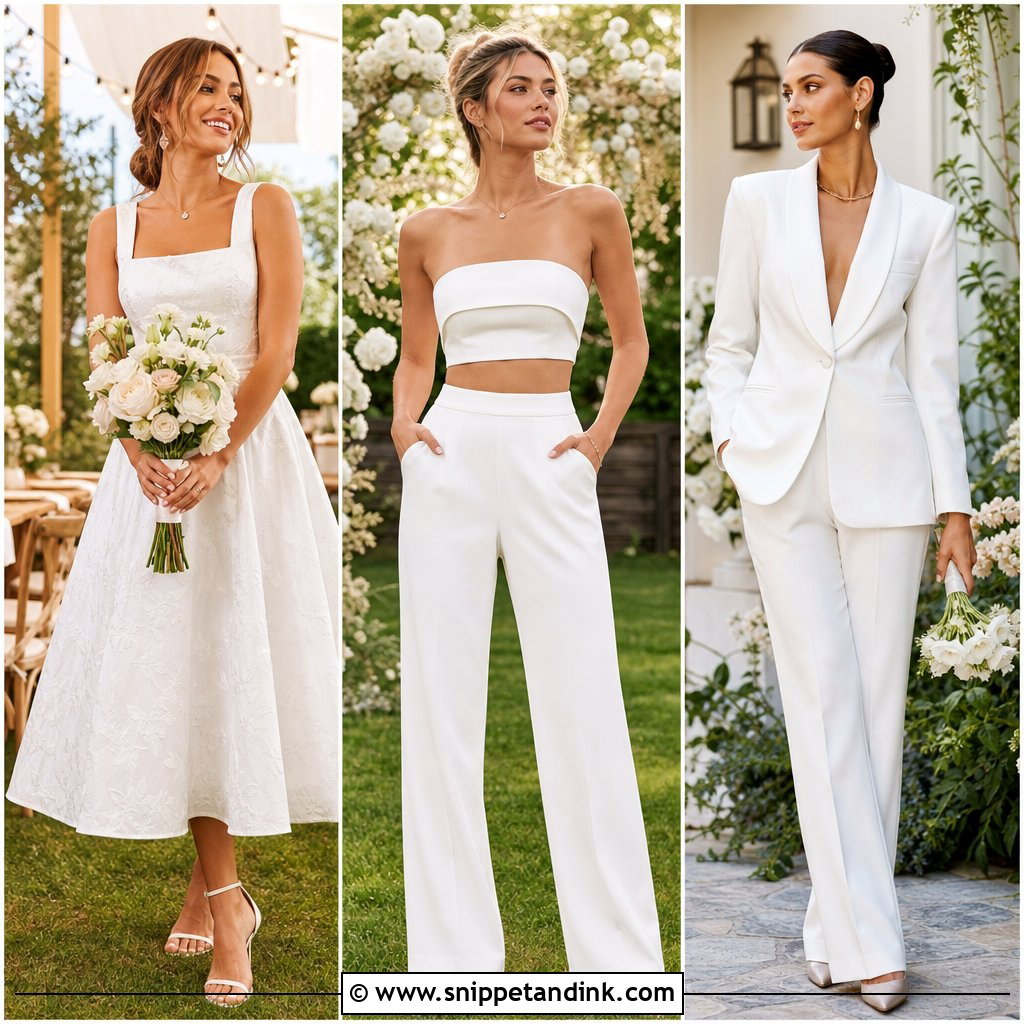
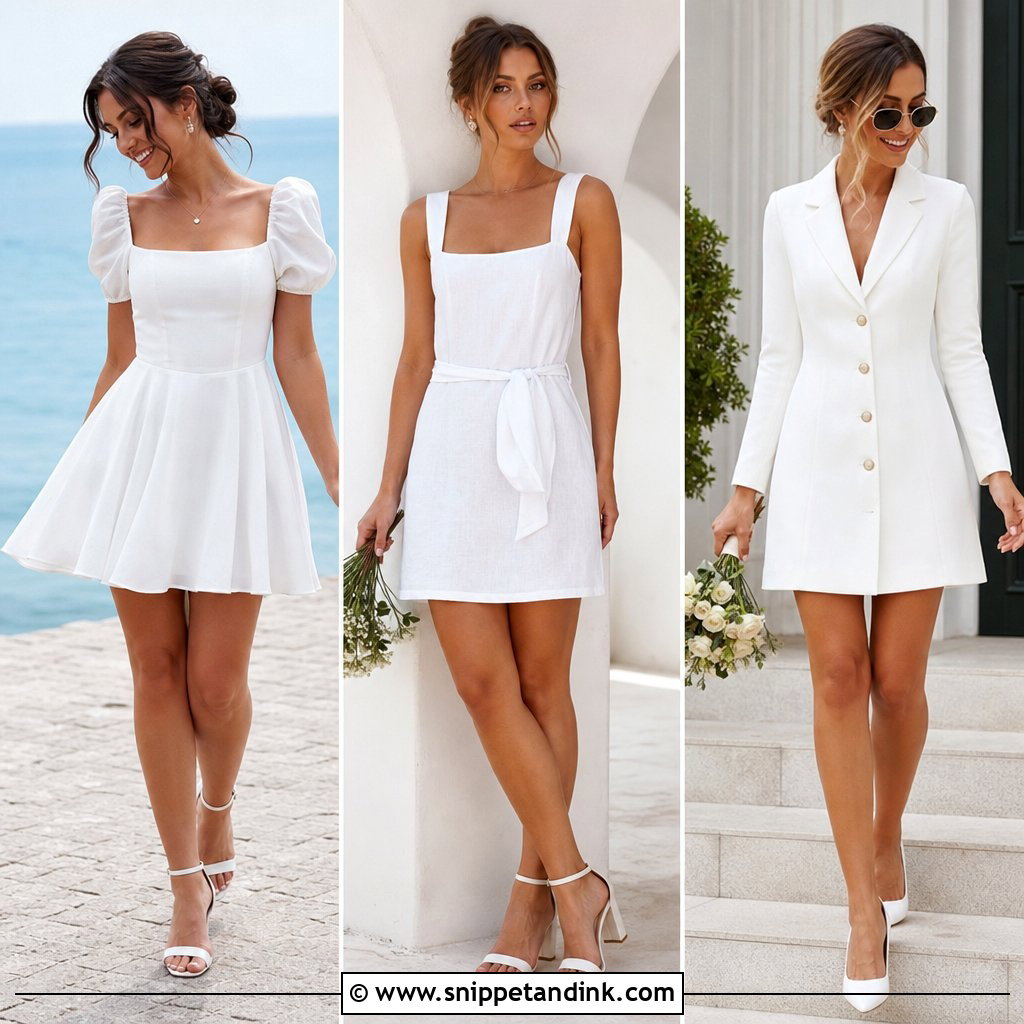
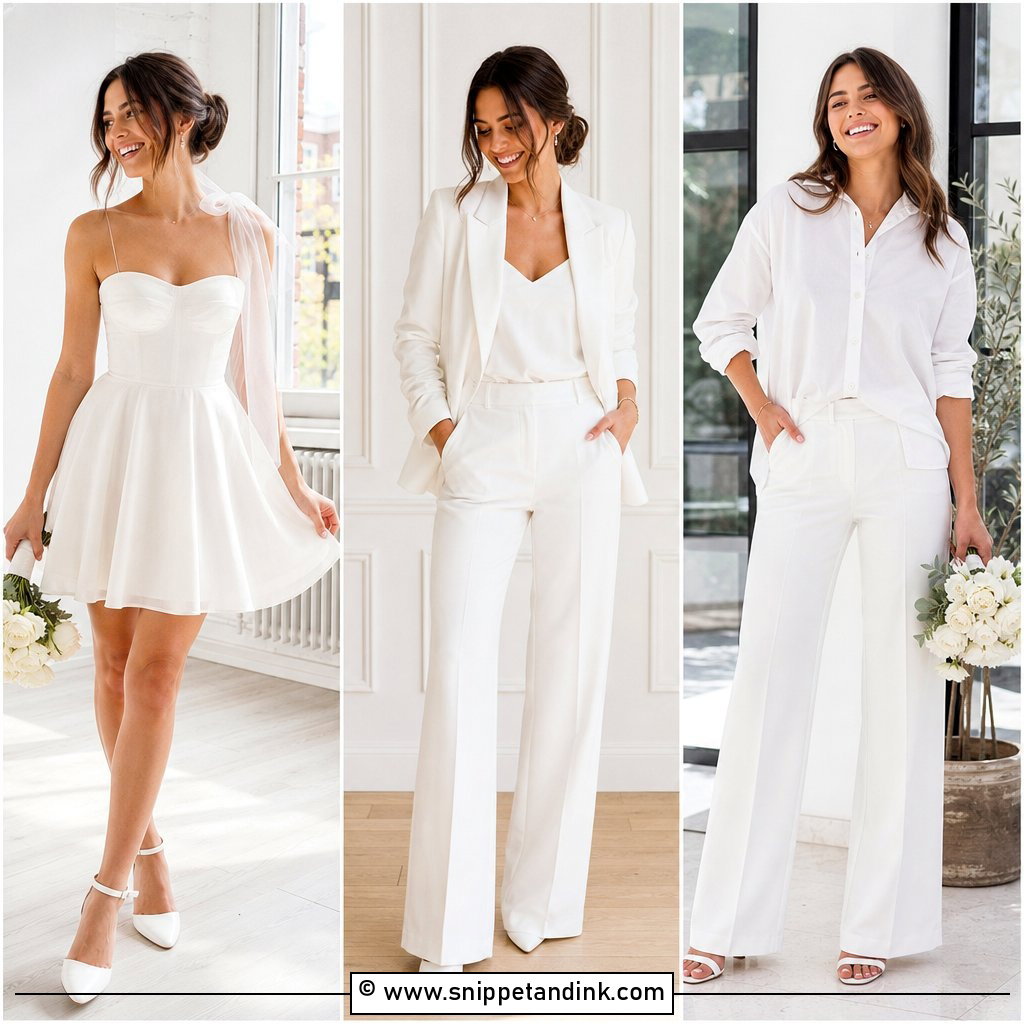
Short and flared is the most forgiving shape for dancing. The bodice should fit closely and the hem land just above or at the knee; any shorter and sitting at a ceremony table becomes a project. Crepe, mikado or jacquard give the skirt enough body to hold its shape in photos, where thin fabric would collapse. A curved waist seam adds definition if you want it. Pointed flats, pearl studs and a short veil or headband are plenty, and a compact bouquet keeps the proportions right for a brunch reception.
3. Tea-Length Wedding Dress
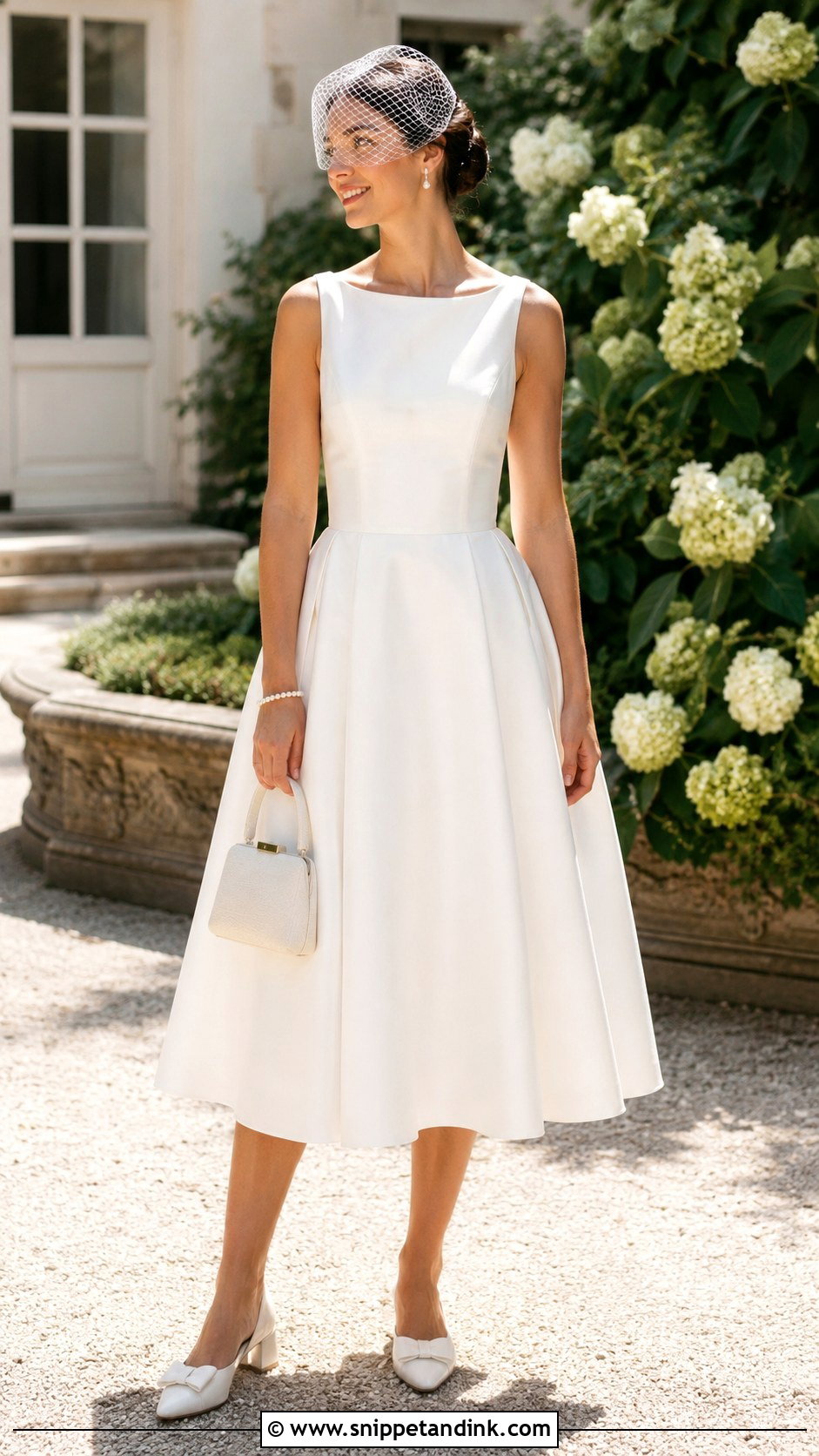
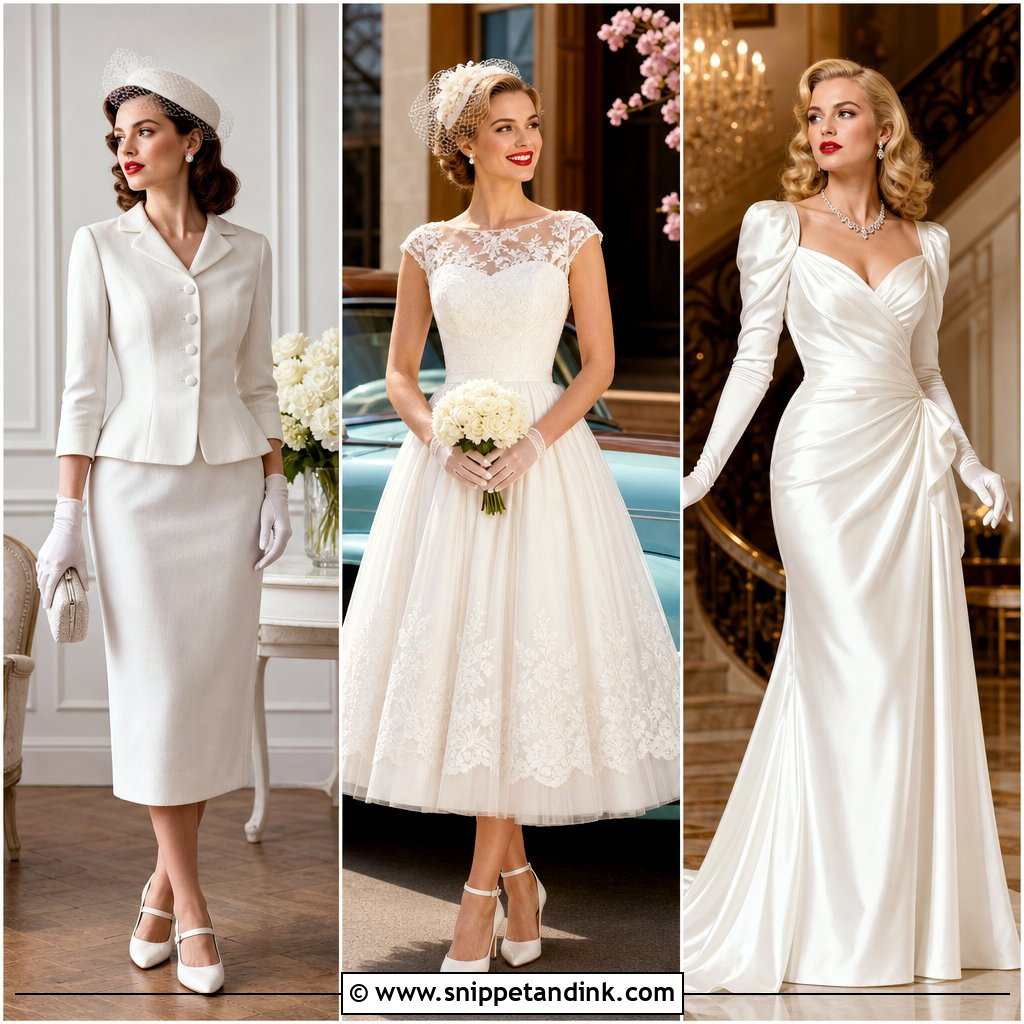
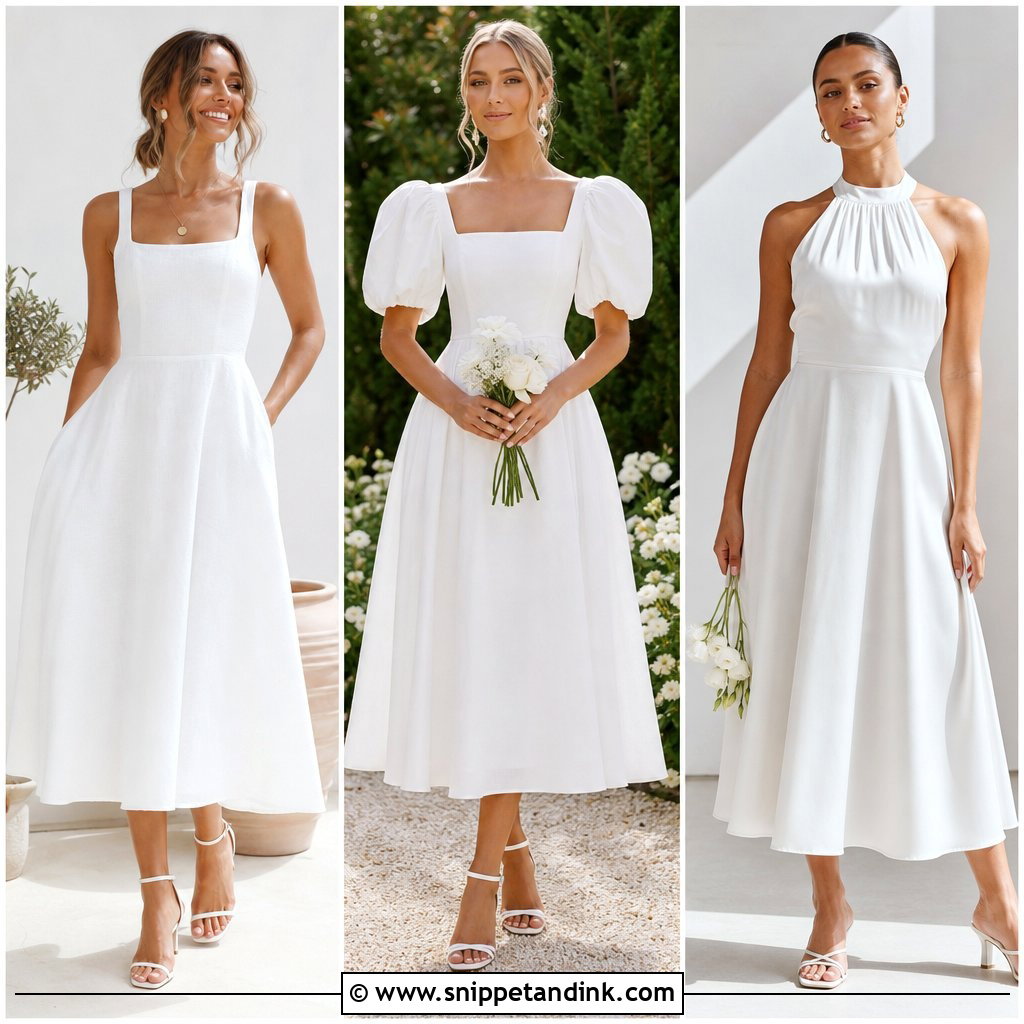
Mid-calf hems are easy to live in: you can walk, dance and sit without gathering anything. Look for a softly structured A-line with a defined waist and a simple scoop neck. The shoes will be seen, so low block heels you genuinely like are worth the money. A birdcage veil leans retro; loose waves pull it back toward modern. One caution for petite brides: a true tea length can cut the leg at its widest point, so I’d raise the hem to just below the knee instead.
4. Linen Midi Wedding Dress
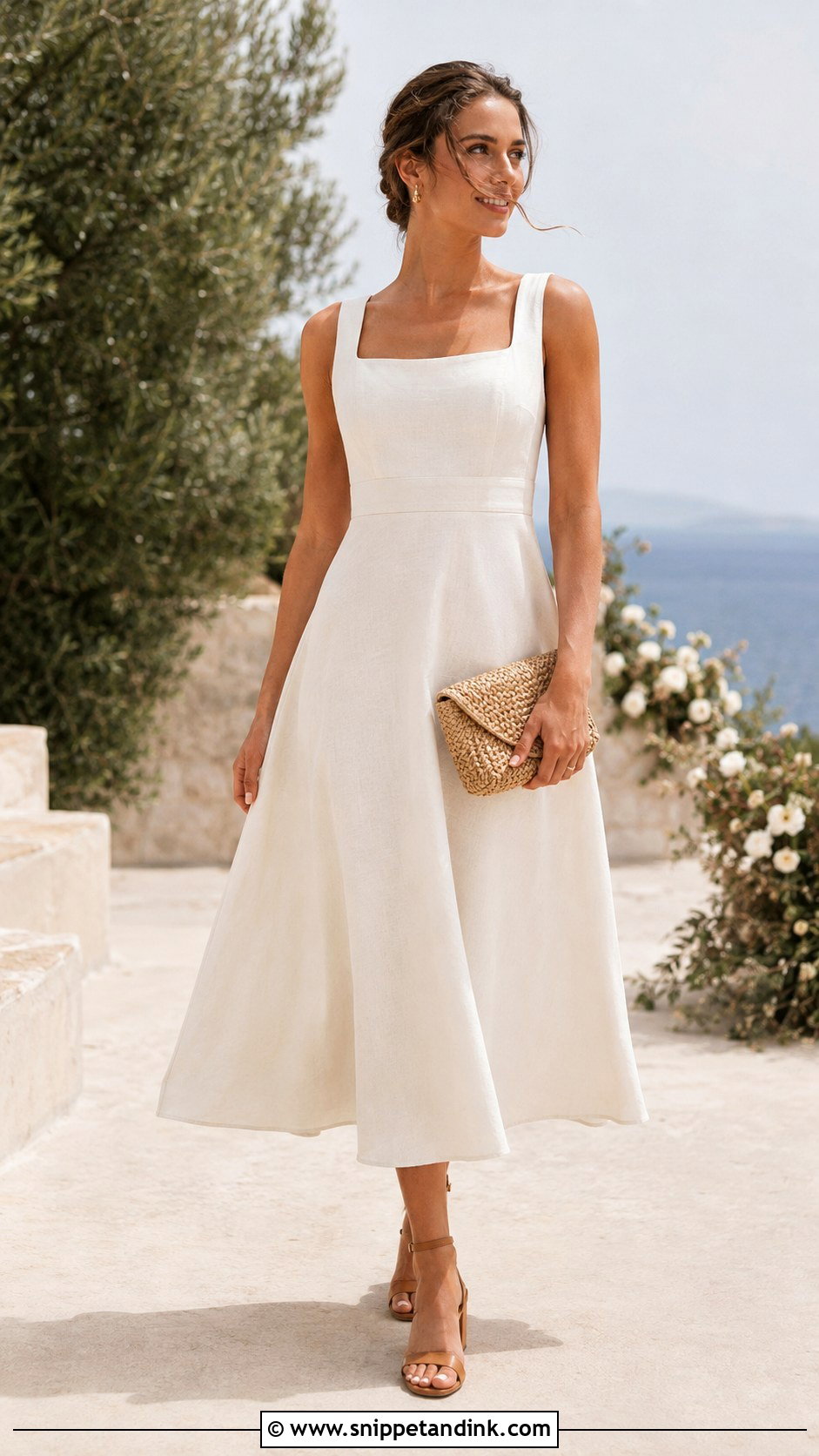
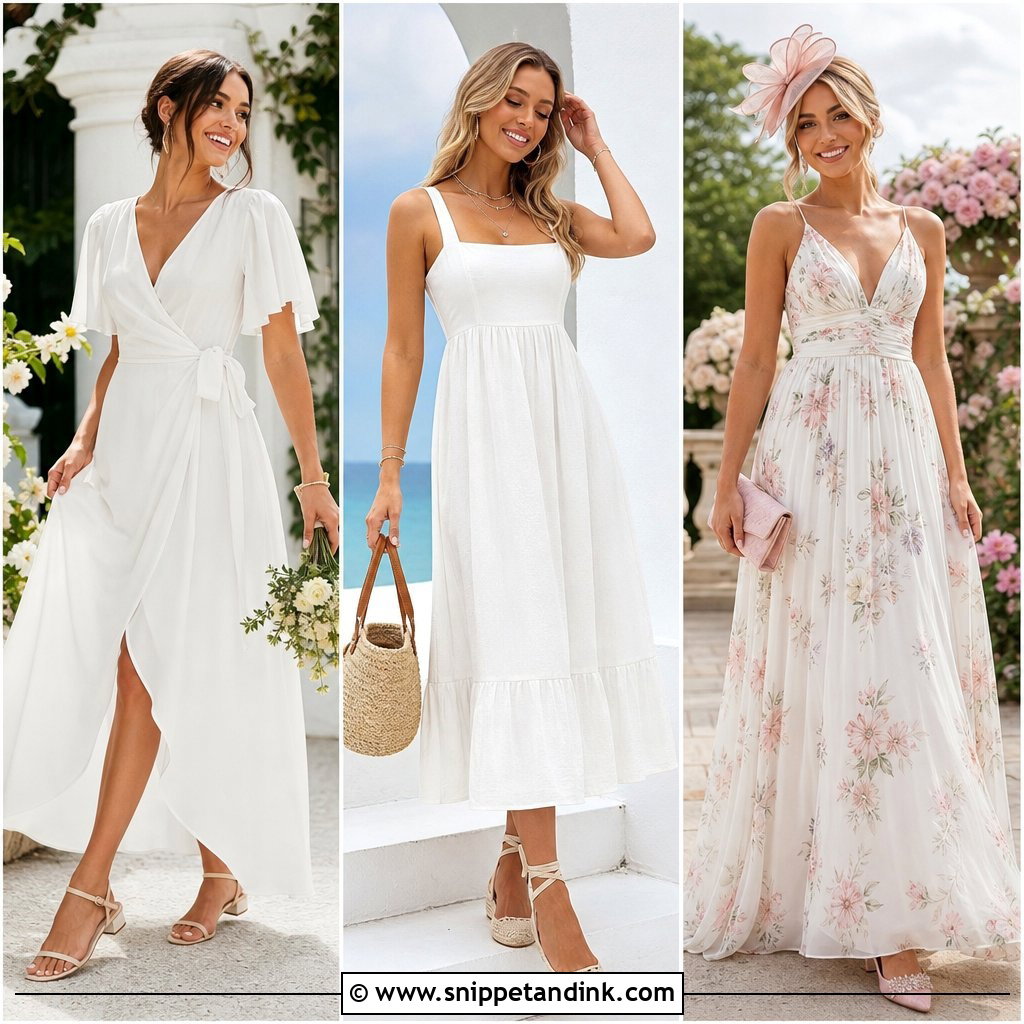
Linen breathes better than almost anything in heat, and it also wrinkles the moment you sit. I tell brides to decide in advance whether they’re fine with that soft crumple in photos. If not, a linen blend with a little viscose or silk holds its press far longer. Choose a lined ivory design with a fitted waist and a flowing skirt; wide straps or a square neck sit well with the texture. Leather block-heel sandals, small gold earrings and a woven clutch suit it, and a loose seasonal bouquet is better than a formal round one here.
5. Cotton Eyelet Wedding Dress
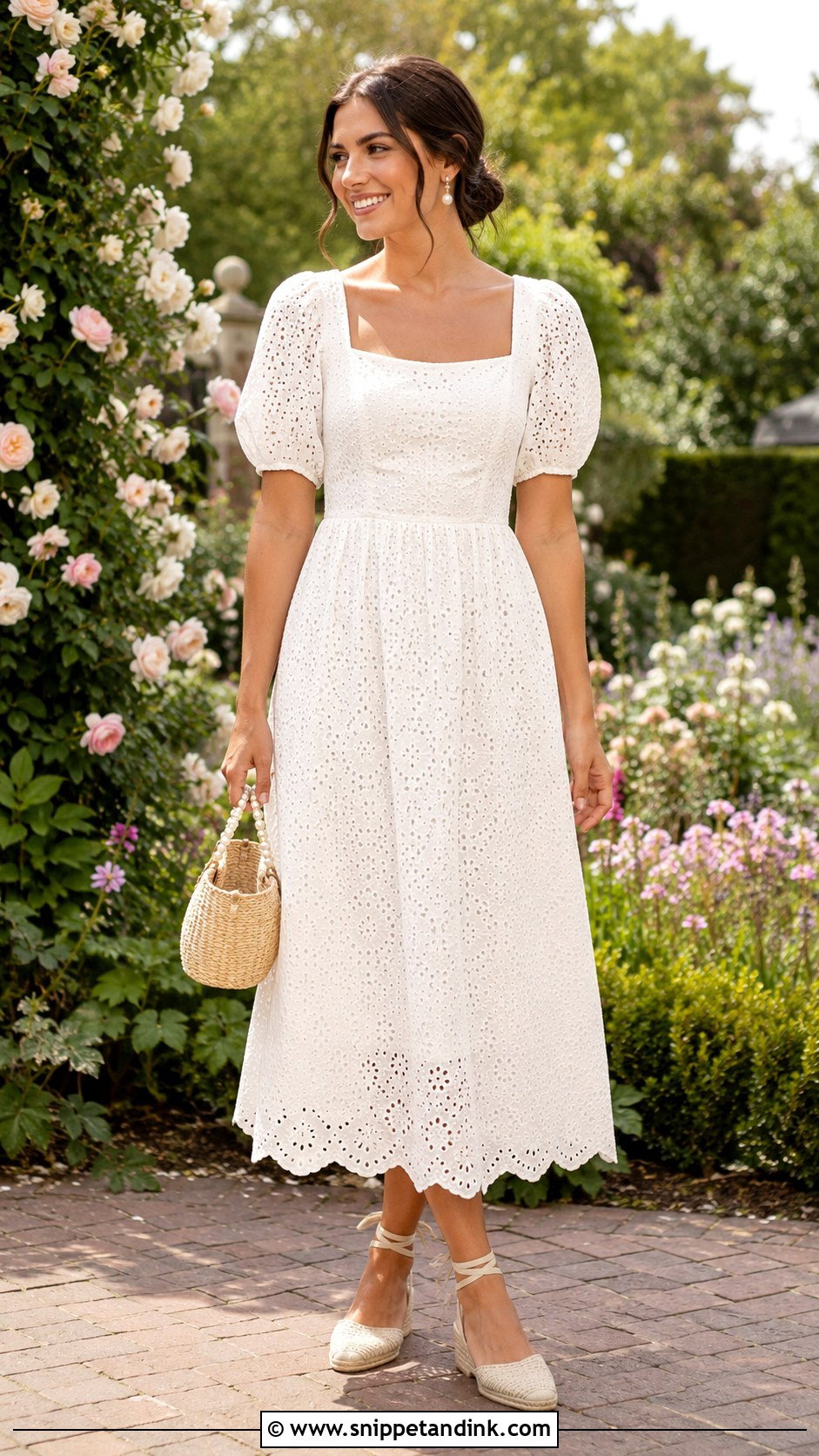
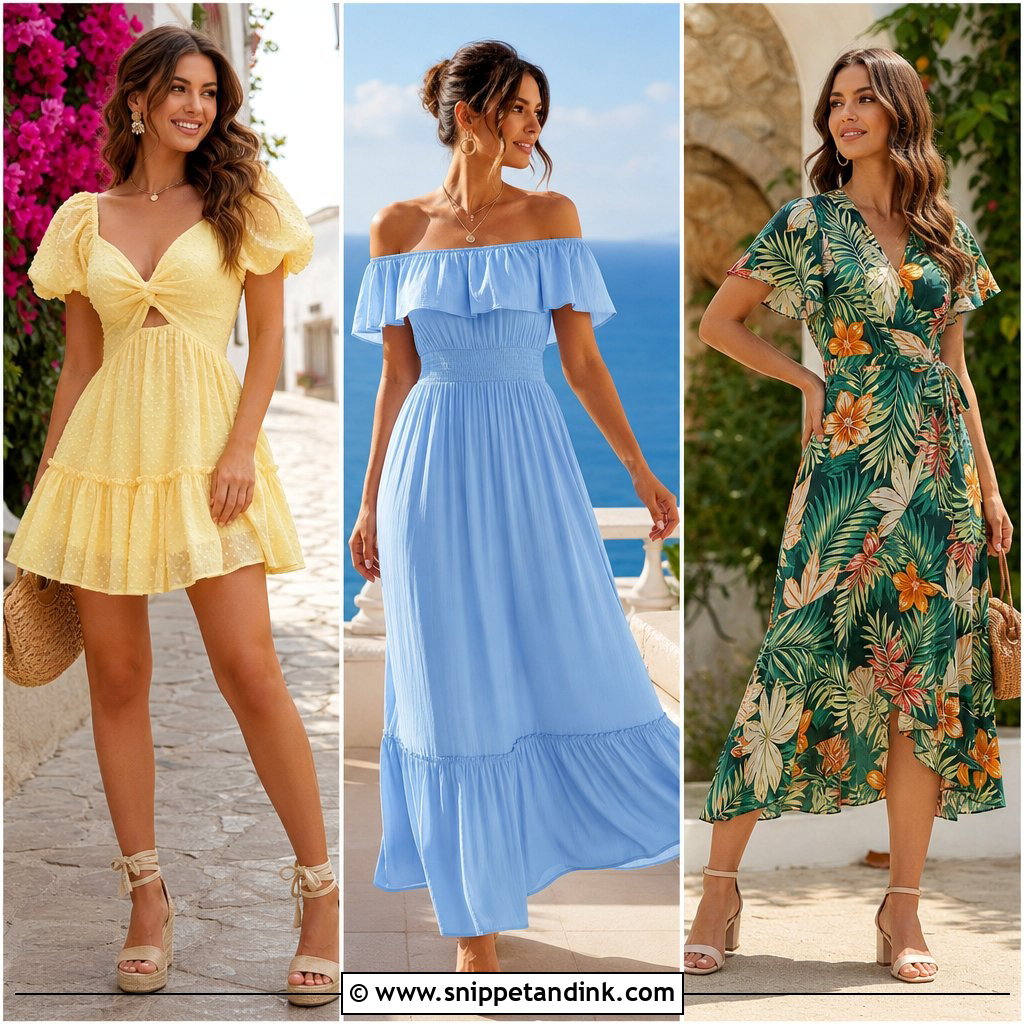
Eyelet gives you pattern without beading, and cotton keeps you cool at an afternoon ceremony. The weak point is the holes themselves: unlined eyelet in bright sun is far more see-through than it looks indoors, so a full lining is not optional. A fitted bodice, soft puffed sleeves and a scalloped hem read clearly as bridal. Ivory espadrilles or ankle-strap sandals handle grass, and a small basket bag fits a backyard wedding without tipping into theme. A braided updo or half-up style finishes it.
6. Square-Neck Wedding Dress
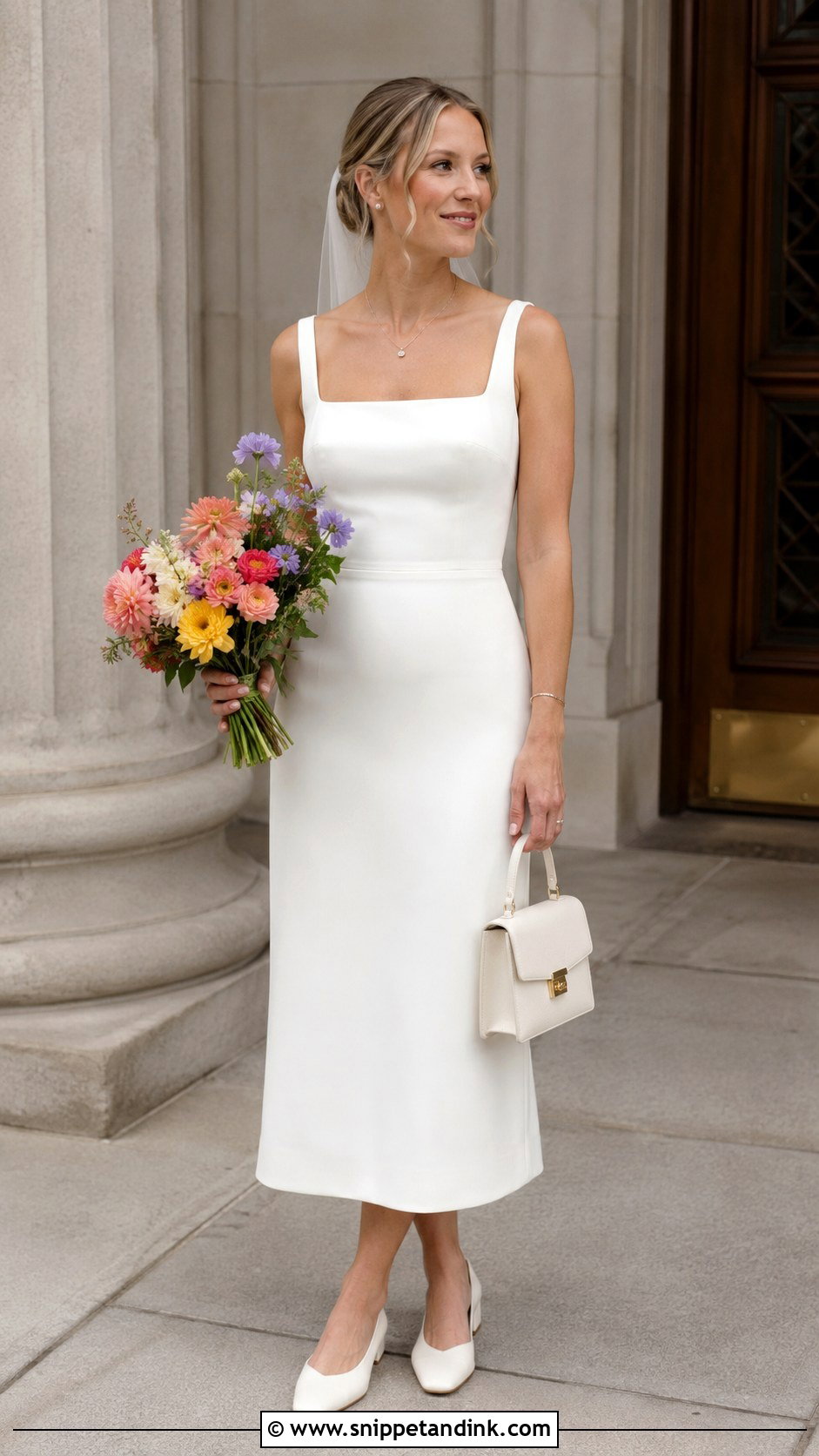
A square neck frames the collarbones and lends structure to an otherwise simple dress. Wide straps hold it in place, which also means a regular bra often works underneath. Pick either a short pendant or bold earrings, not both, since the neckline is already a strong horizontal. Hair should go up or tuck behind the ears so the shape stays visible. This is one of the most adaptable cuts across seasons: a cropped cardigan for a cool garden, a tailored blazer for city hall.
7. Wrap Wedding Dress
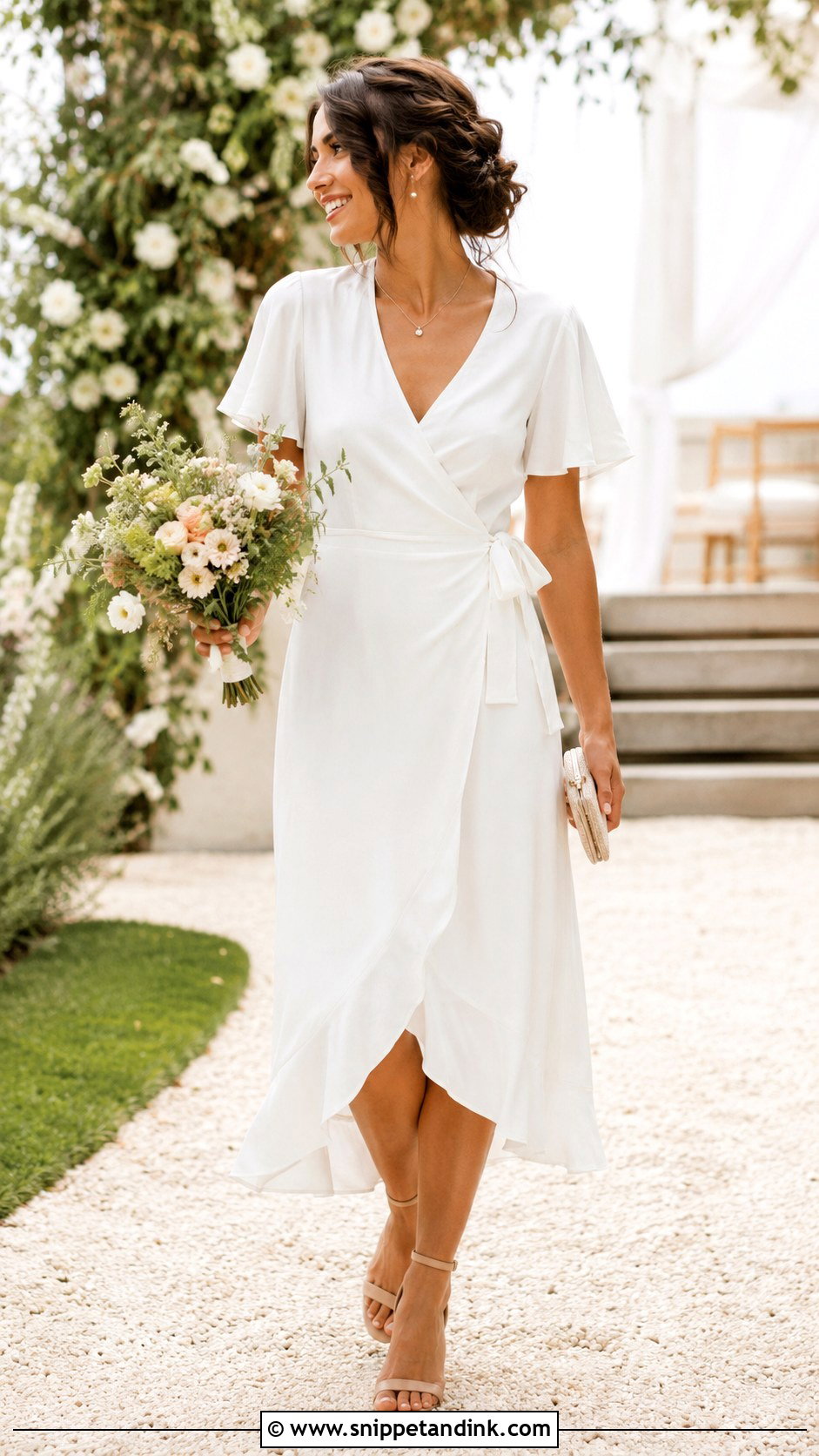
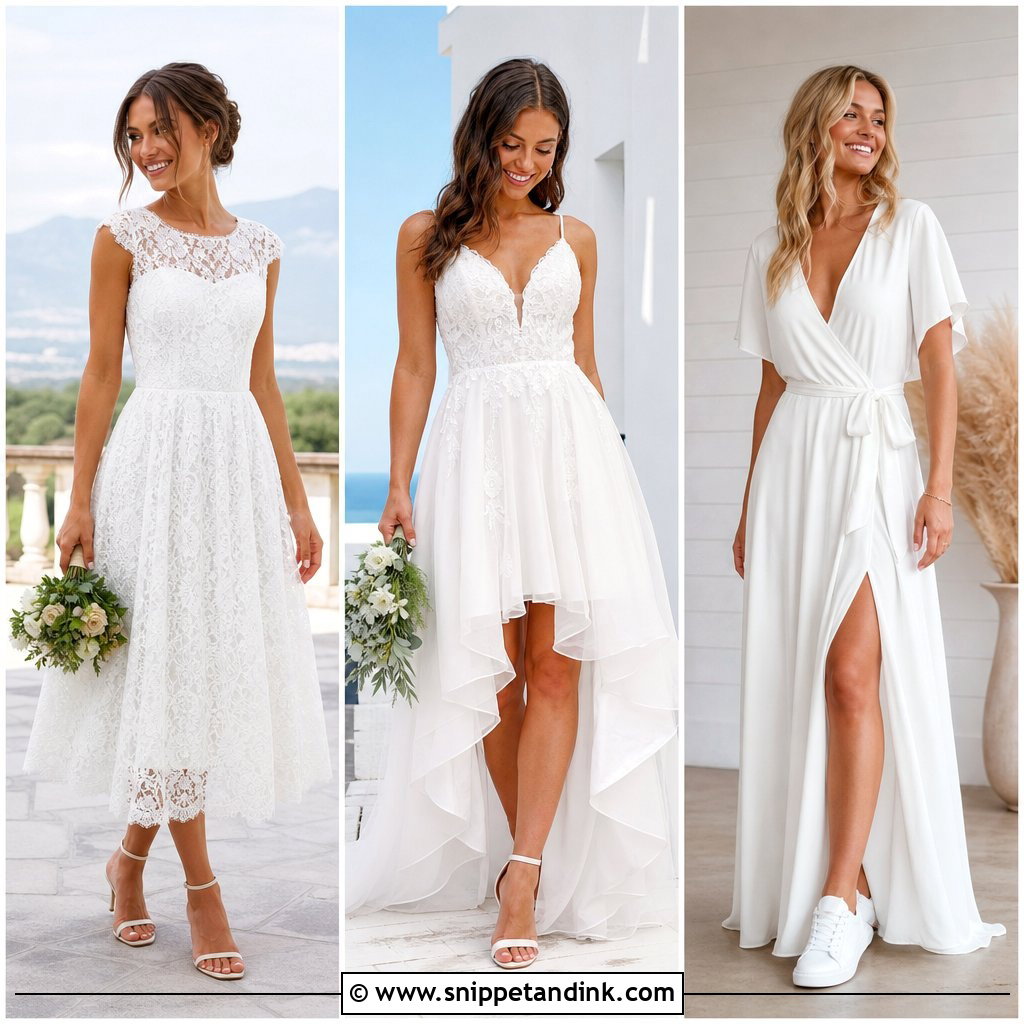
Wrap dresses adjust as you move, and they’re kind to any body that changes shape between the fitting and the day. My one worry is the neckline. Fluid fabrics drift open once you start dancing, so I use fashion tape at the cross point or ask a seamstress for a small hidden snap. Matte satin or crepe stays put better than slippery chiffon. Nude block heels, a fine necklace and softly pinned hair go with its easy line, and a medium bouquet keeps everything in proportion.
8. Boho Lace Wedding Dress
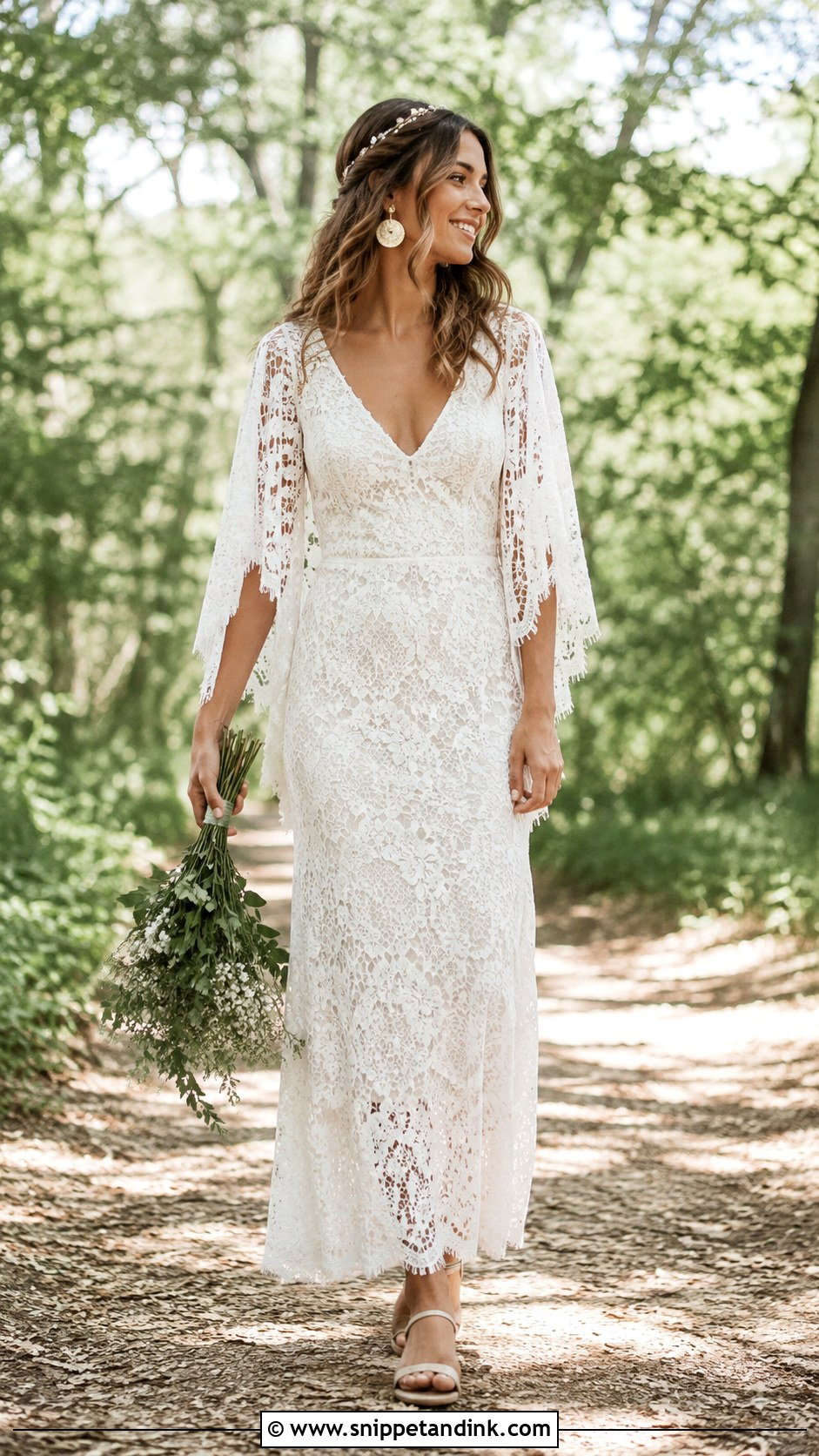
Boho lace walks a line between romantic and fancy dress, and the deciding factor is how much decoration you allow. One textured lace, an open sleeve and a simple lining are enough. Floral or crochet-style lace stays light outdoors. Flat neutral sandals and small hammered earrings suit it; I’d swap a flower crown for a plain comb or a fine hair vine, which looks more current. Have the hem raised so it clears the ground, because lace drags up soil and sand faster than any other fabric and the stains don’t come out easily.
9. Beach Wedding Dress
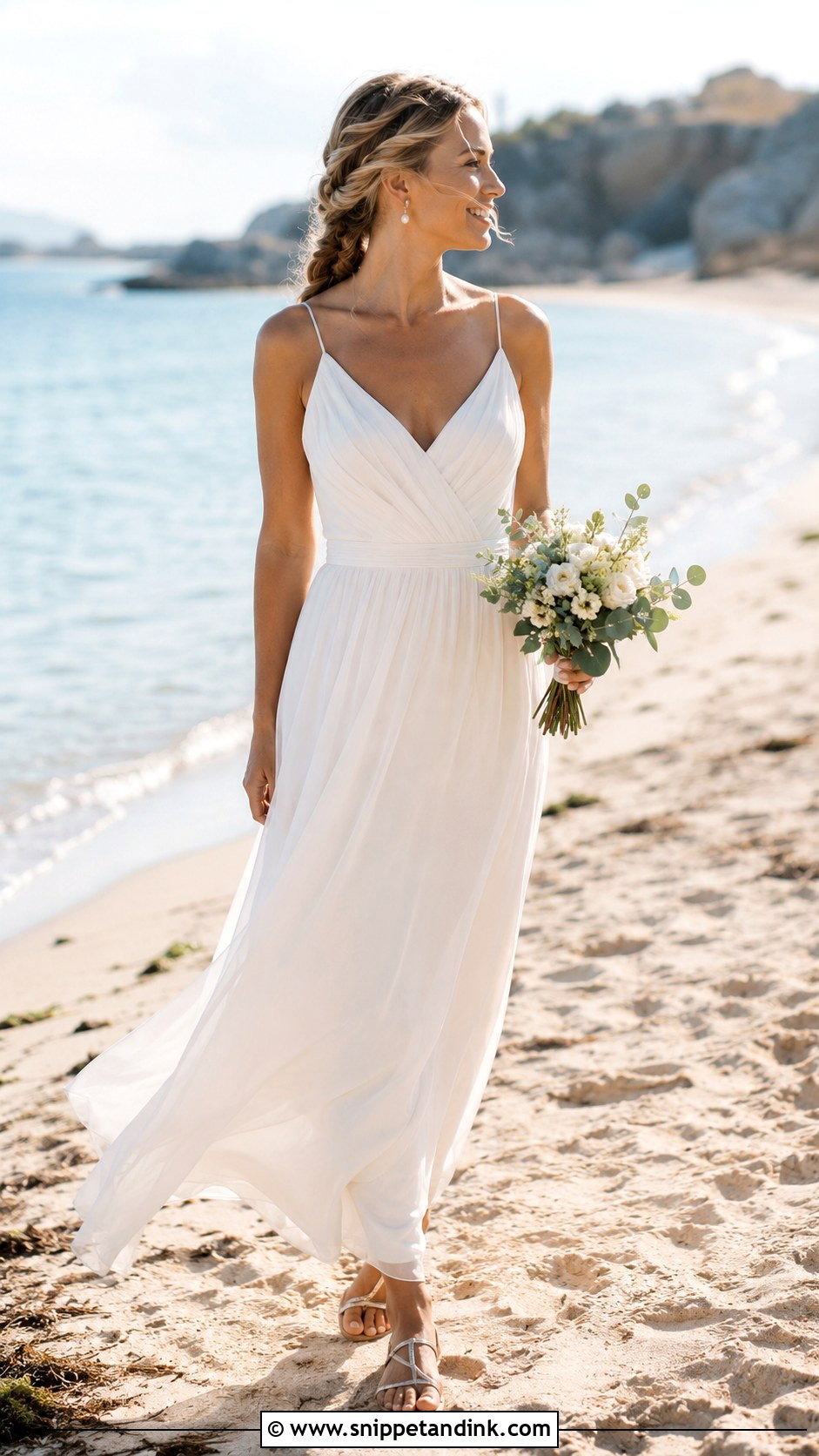
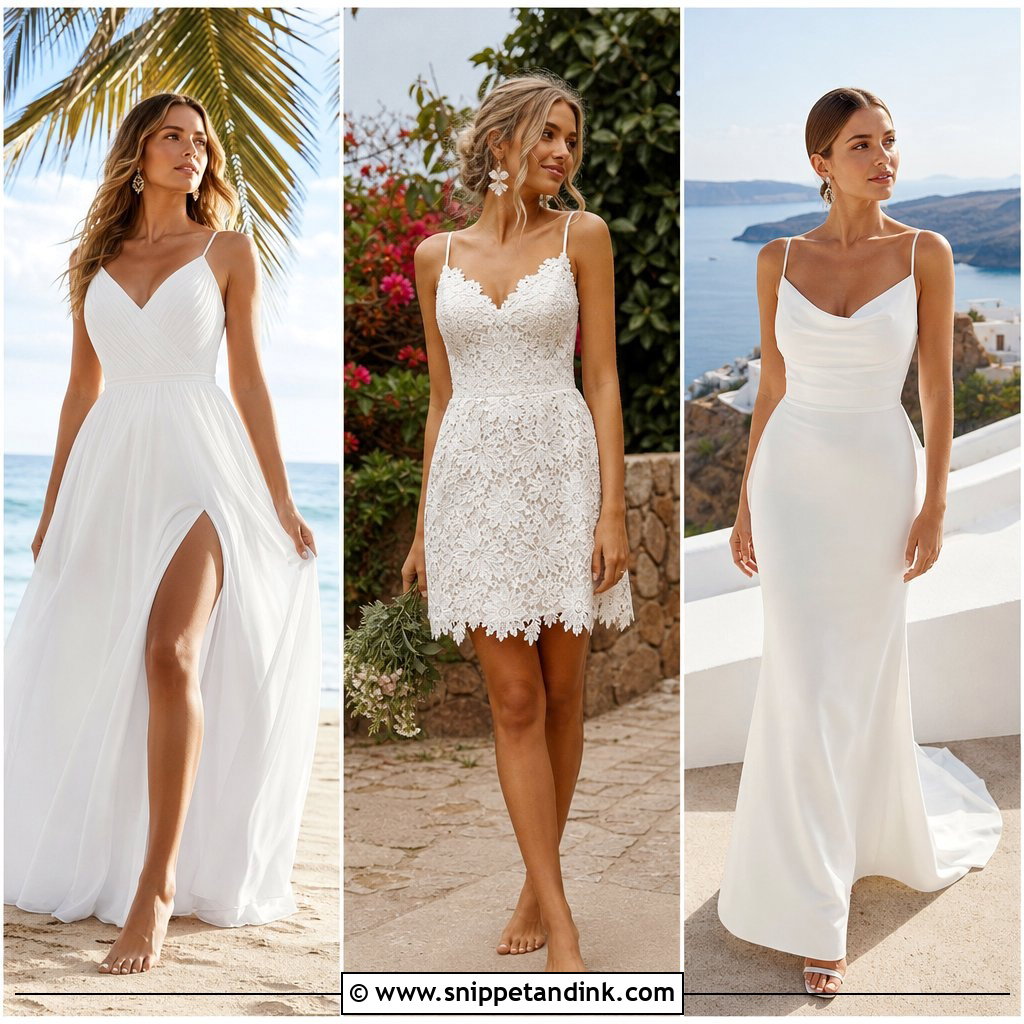
Wind is the real problem at a beach ceremony, more than sand. Chiffon, georgette or light crepe in an ankle length moves well, but skirts lift and veils wrap around faces, so I pin hair into a low braid or bun and skip a long veil entirely. Secure straps matter for the same reason. Leave the train at home. Flat metallic sandals, pearl earrings and a light wrap for the temperature drop are all you need, and check the lining in direct sunlight before the day.
10. Backyard Wedding Dress
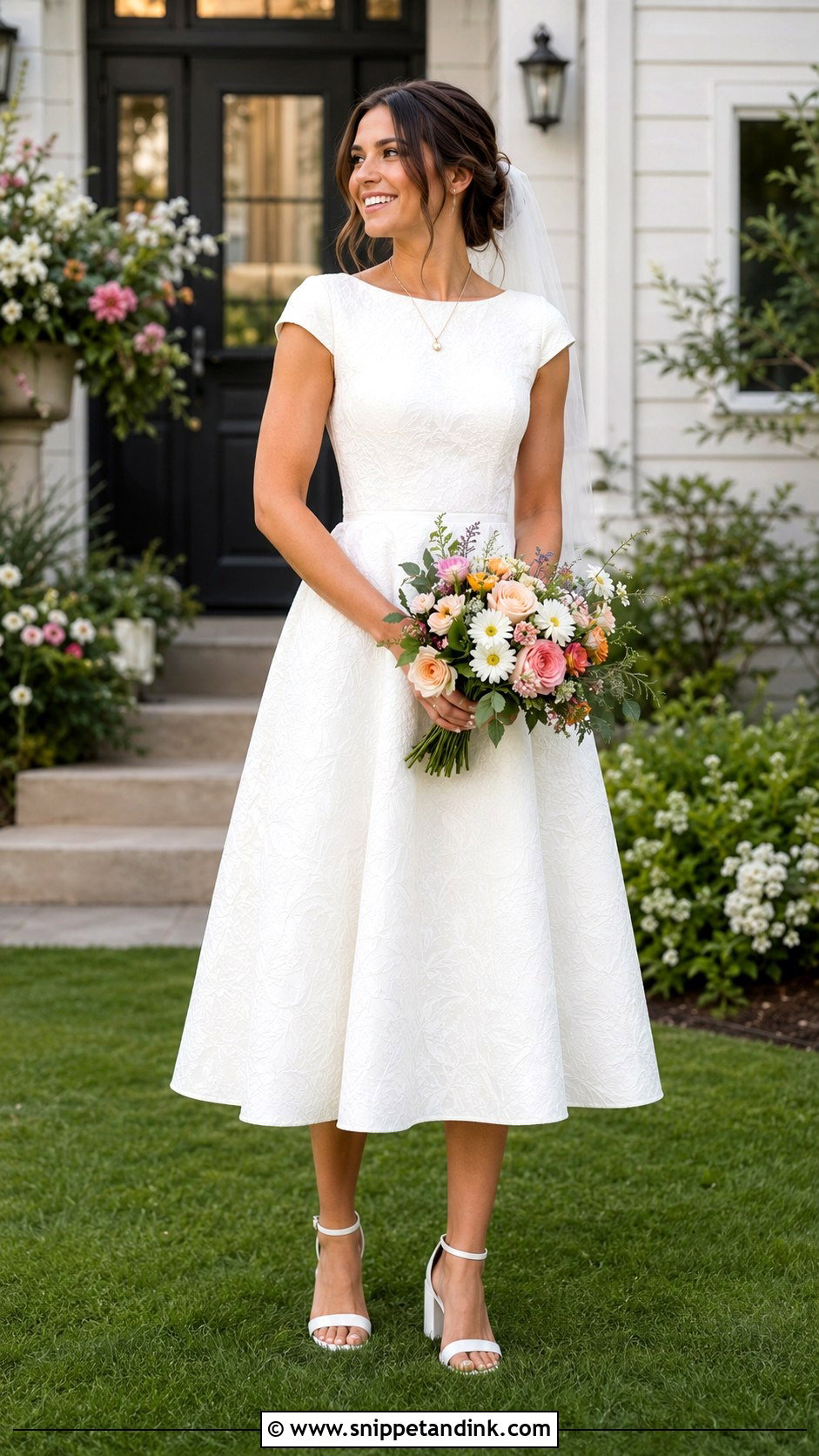
The risk with a backyard dress is that it ends up looking like a nice sundress. Structure is what separates the two: cotton sateen, crepe or subtle jacquard hold a fitted bodice and flared skirt in a way a thin cotton never will. A knee or midi length with cap sleeves works well. Block-heel sandals or flats won’t sink into the lawn. A short veil or ribbon in the hair signals bride immediately, and an ivory cardigan nearby covers you once the sun goes down.
11. Long-Sleeve Wedding Dress
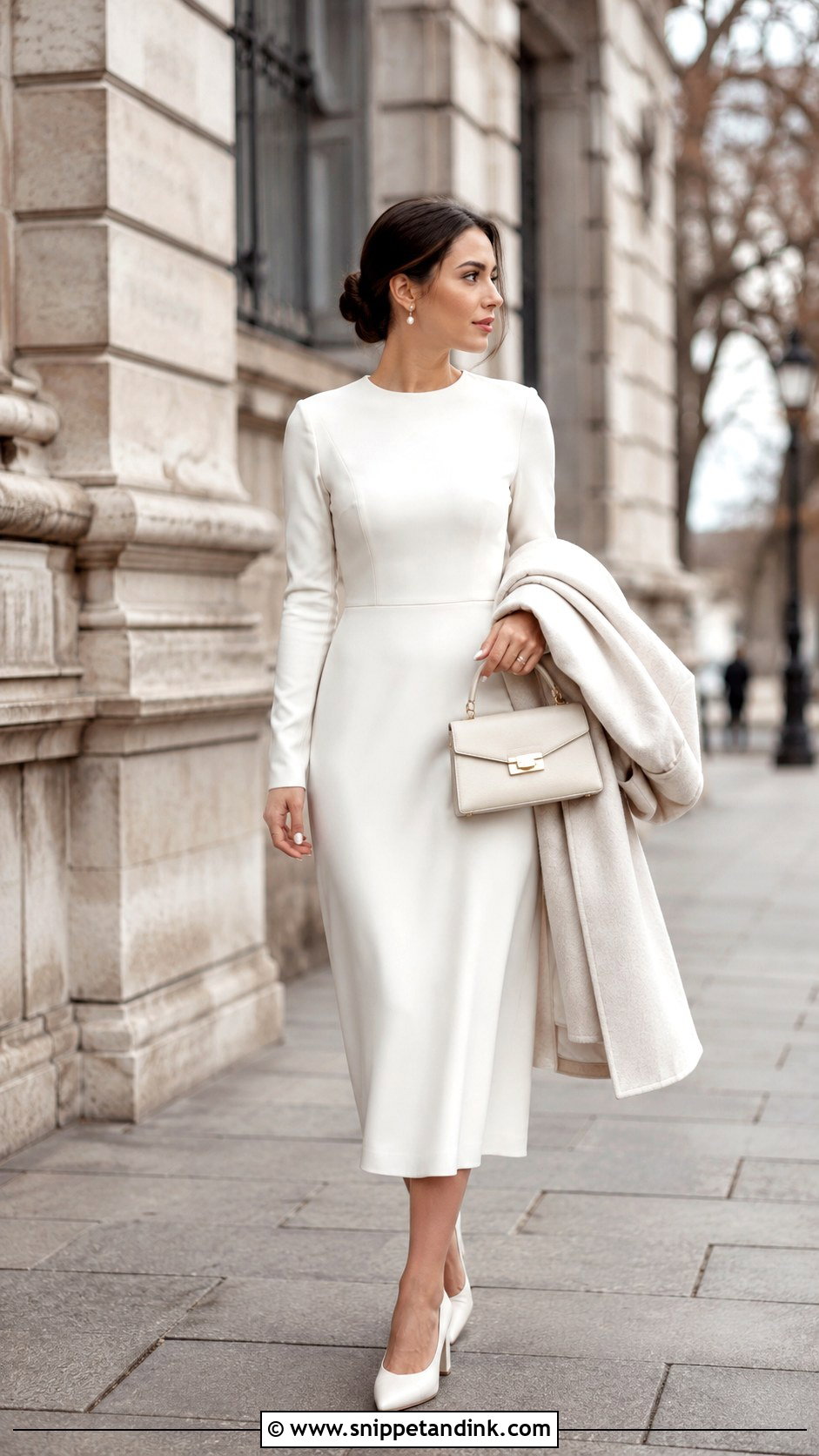
Cooler weather is where long sleeves come into their own. A crepe midi, lace column or draped ankle-length dress gives coverage without the weight of a full gown. Fitted sleeves look streamlined; a slightly puffed shoulder adds volume. For autumn I’d lean toward cream or champagne, which sit more warmly against the season than optic white. Closed-toe block heels and a low bun, which shows off the sleeve detail, finish it, and a tailored wool coat makes outdoor portraits possible in the cold.
12. Off-Shoulder Wedding Dress
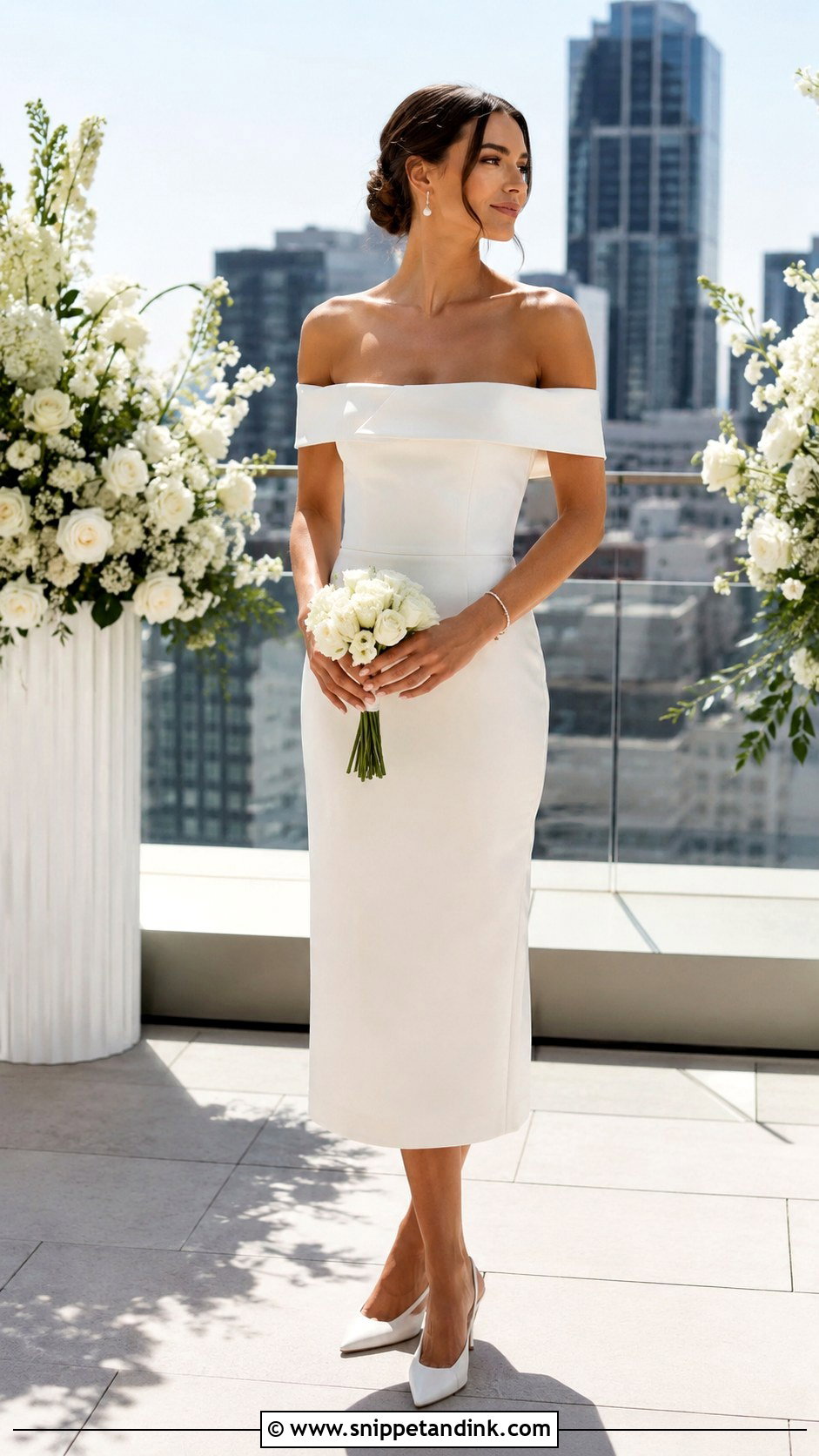
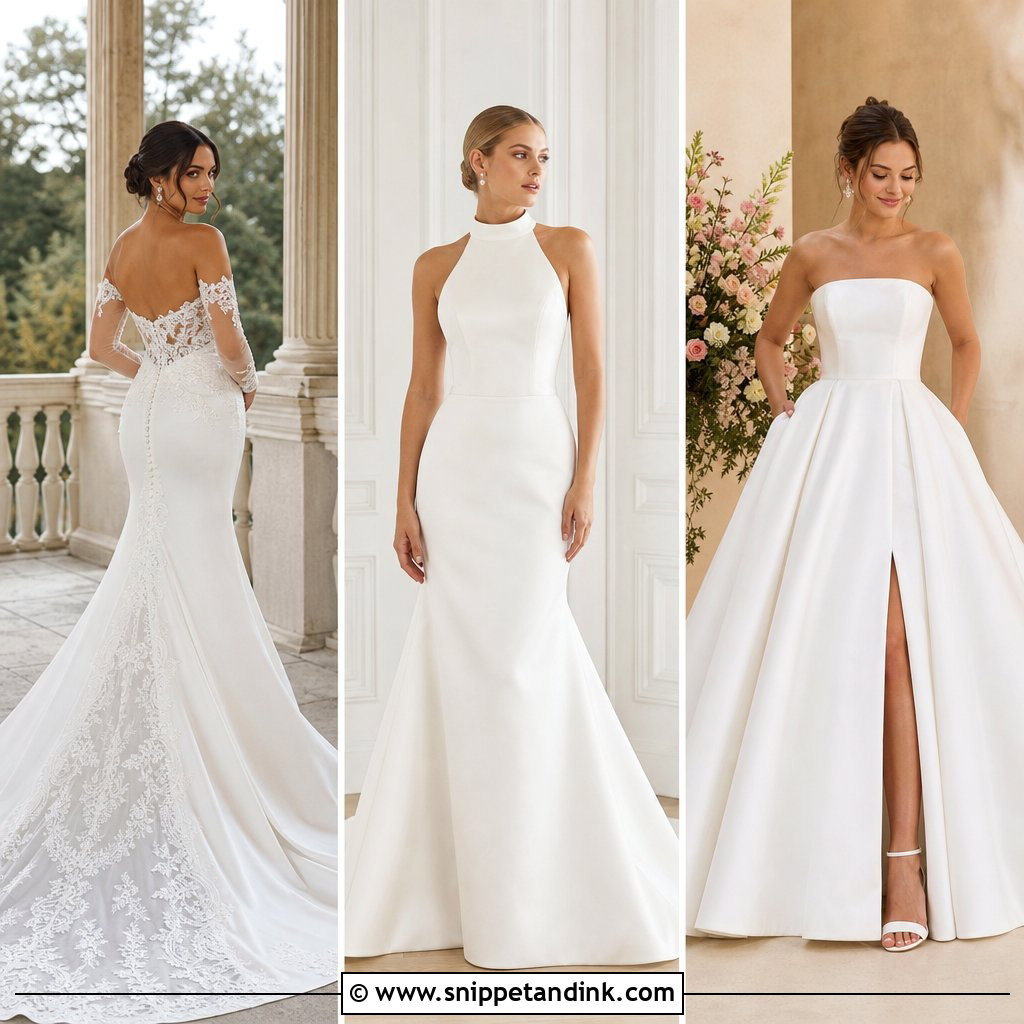
Off-shoulder necklines are about the shoulders, so I keep everything else quiet: no necklace, drop earrings, hair low or swept to one side. Crepe holds the folded neckline better than soft fabrics. The real test happens at the fitting. Lift your arms as if hugging someone; many off-shoulder bodices ride up and sit awkwardly afterward, and the fix is internal elastic or boning added before the day. Pointed slingbacks and a delicate bracelet suit a rooftop or courthouse.
13. Satin Cowl-Neck Wedding Dress
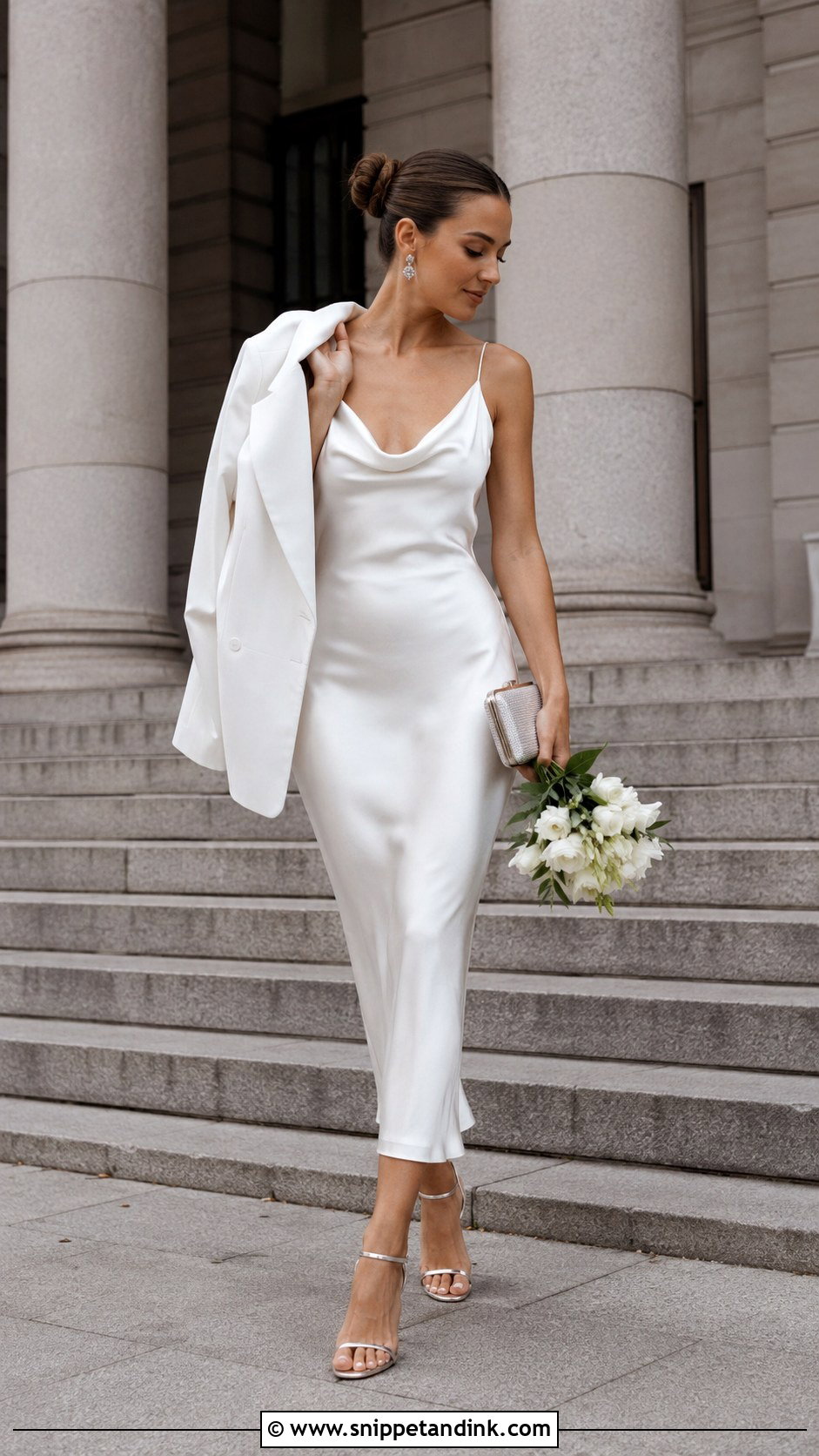
A cowl drapes softly near the face and does the decorating for you. Bias-cut satin with adjustable straps is the usual build; check the back, because cowl dresses often leave no place for a bra and you’ll need a plan for support. Shiny satin plus lots of sparkle reads busy, so keep the jewelry small and wrap the bouquet in matte ribbon. A sleek bun keeps the drape visible. For a city elopement, an oversized white blazer over it is an easy modern layer.
14. Minimalist Column Wedding Dress
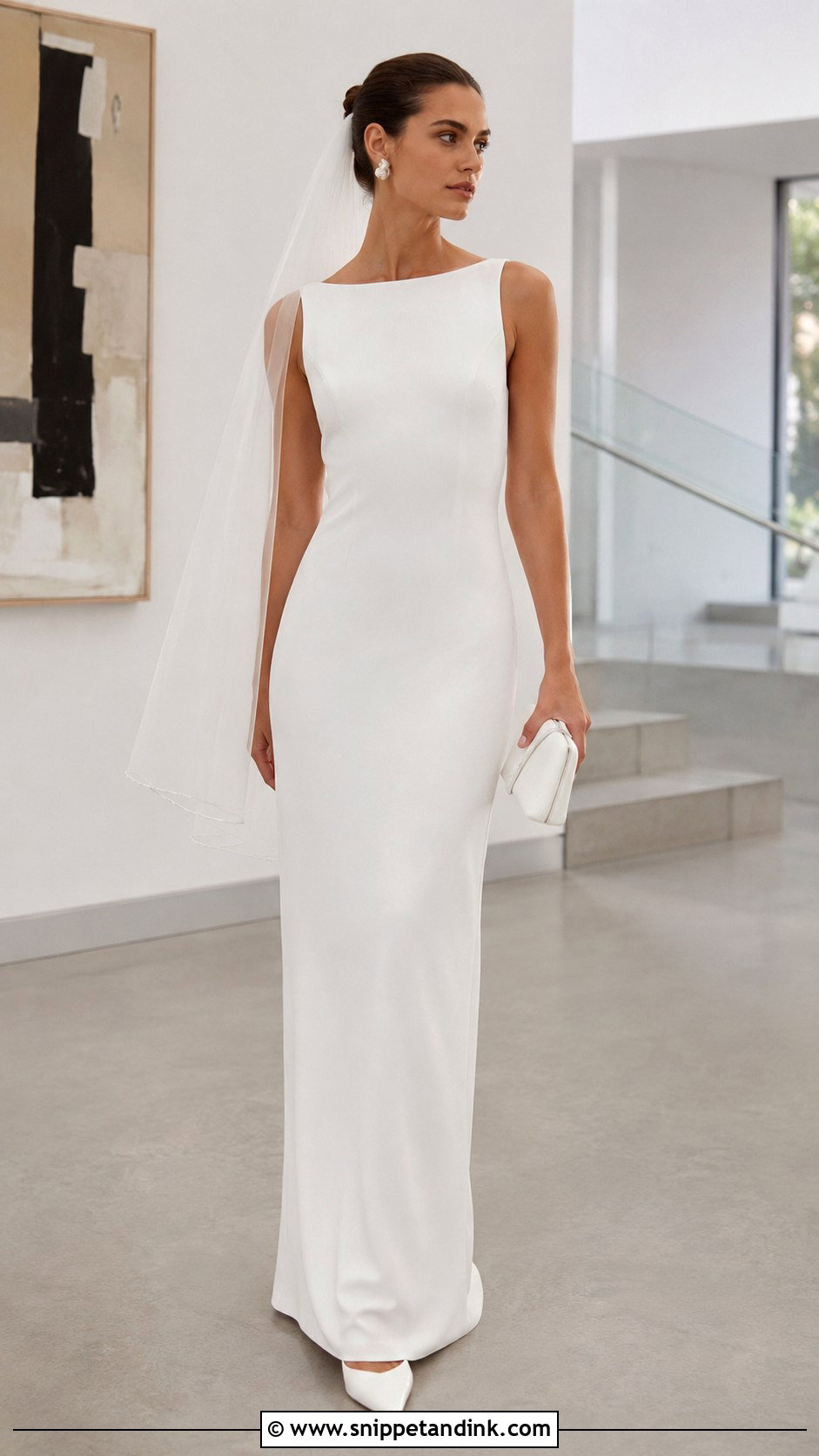
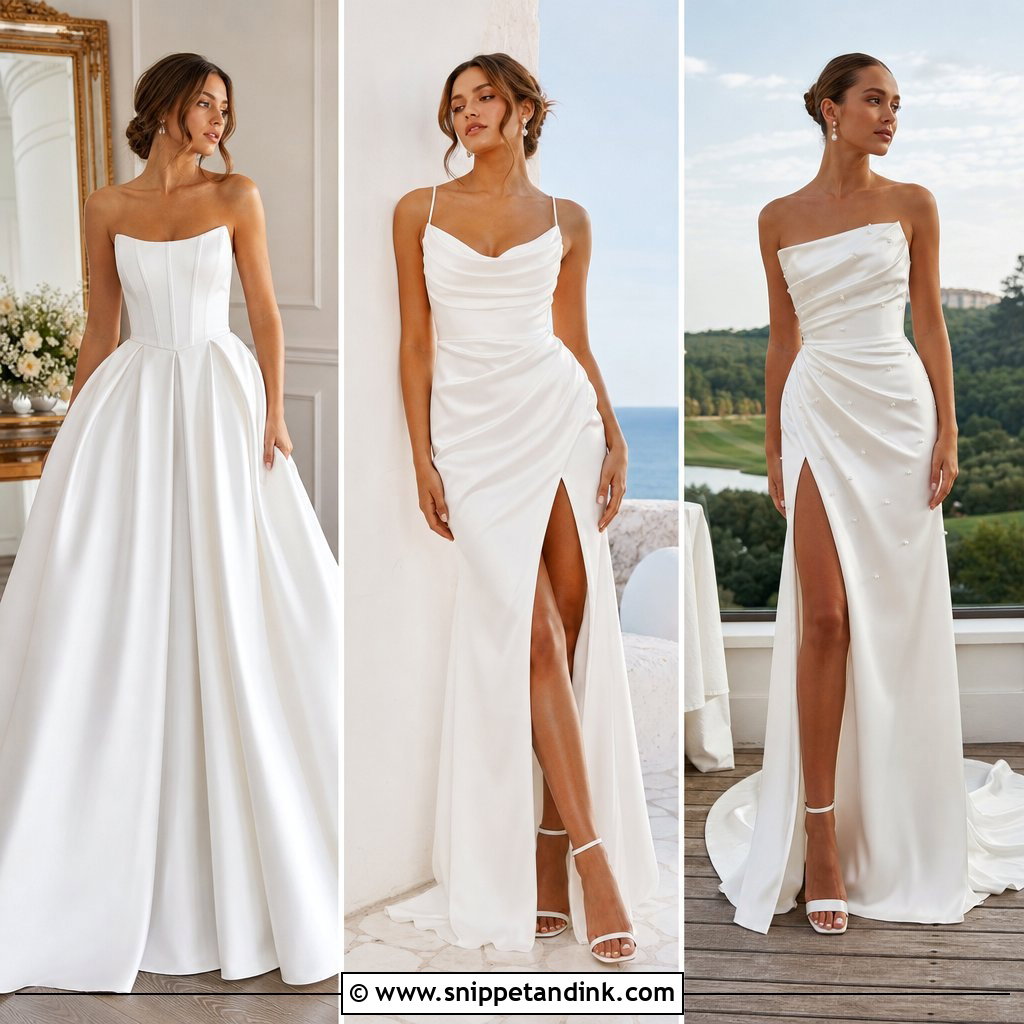
There’s nowhere to hide in a column dress, which is exactly its appeal and its demand. With no decoration, every pull and ripple in the fit shows, so precise tailoring is part of the budget. Floor-skimming crepe with wide straps or a bateau neck is the cleanest version. It should still let you take a full stride. Pointed kitten heels and sculptural earrings suit it, and an unembellished fingertip veil adds a bridal note without breaking the line in a gallery or modern venue.
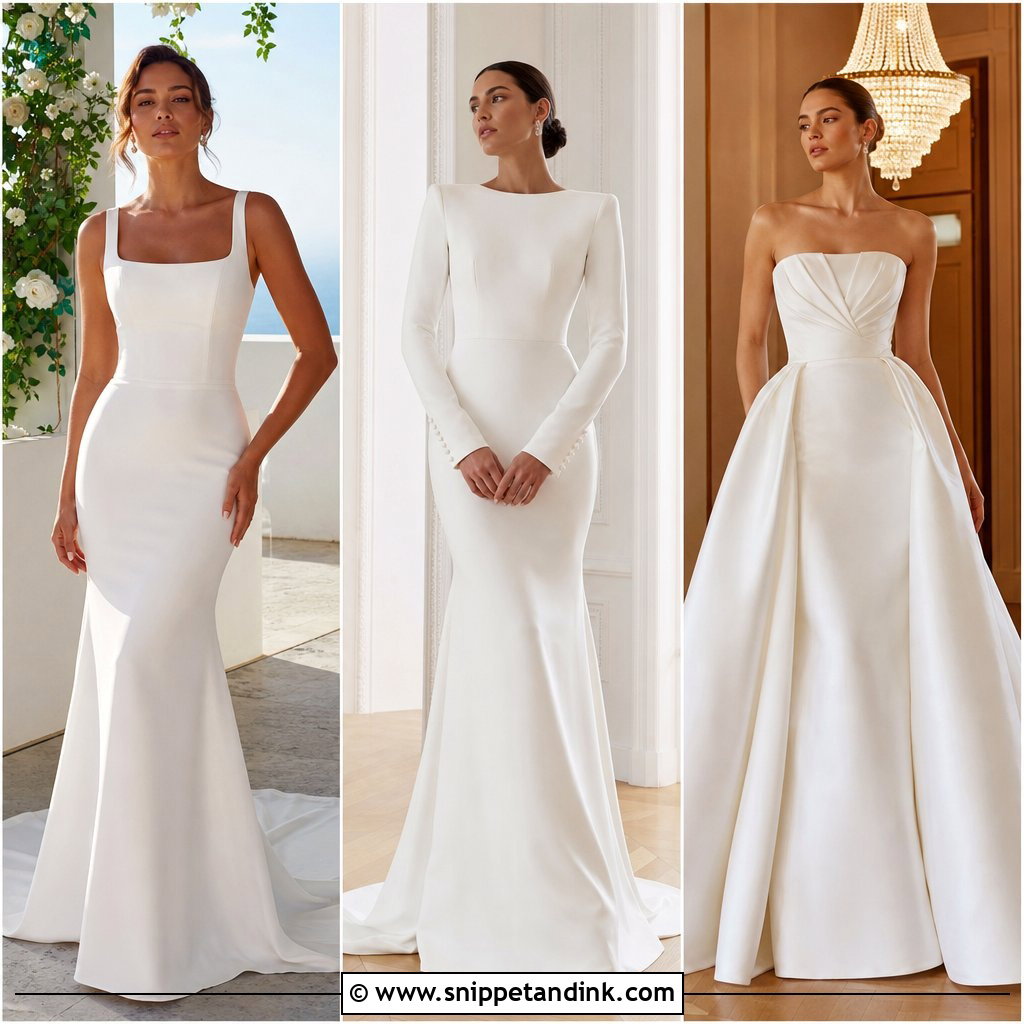
15. Empire-Waist Wedding Dress
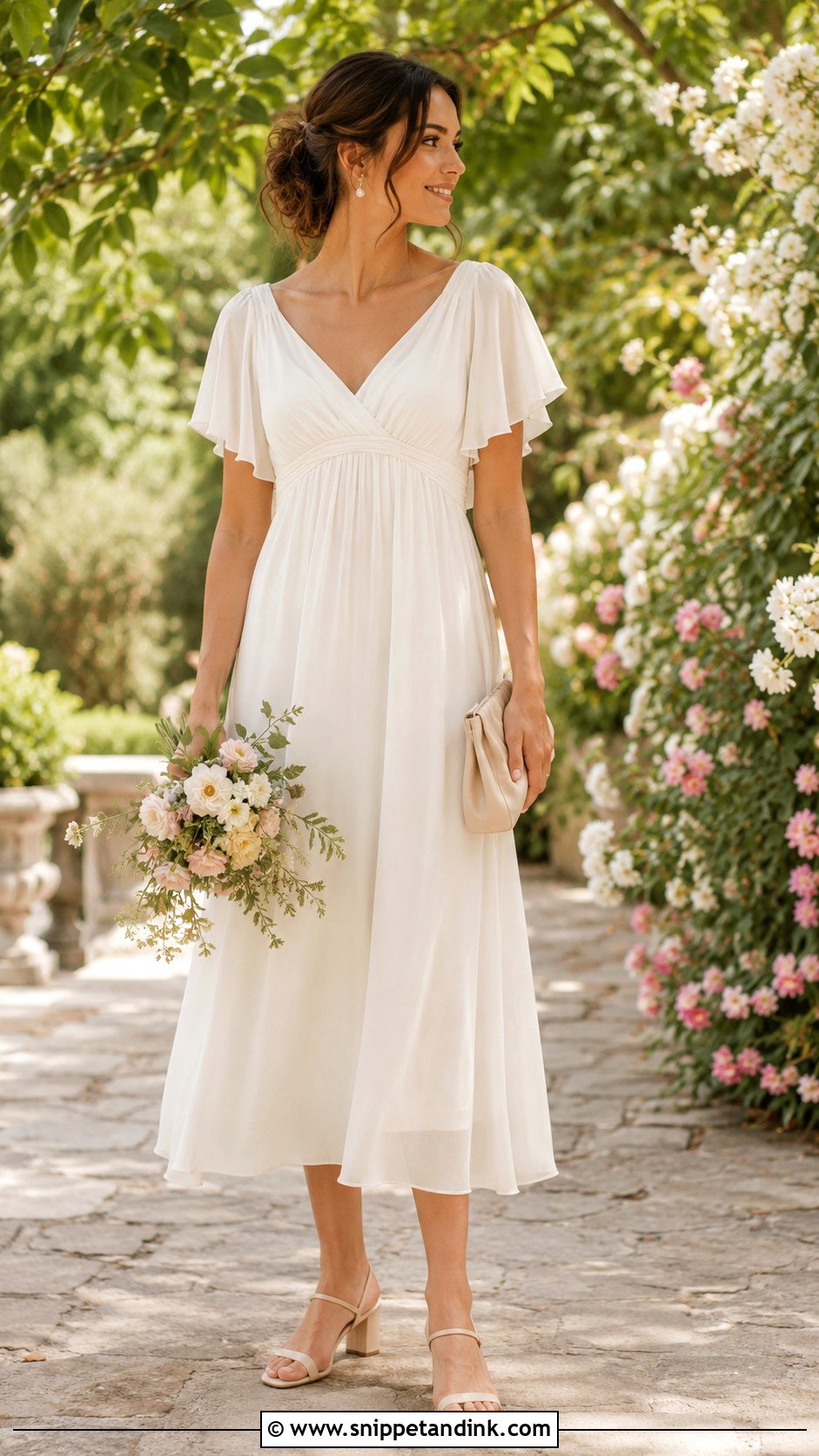
Nothing sits tight at the natural waist in an empire line, which is why it’s so comfortable for long, warm days. The seam lands just under the bust and the skirt falls from there. I’d avoid heavily gathered versions: too much fabric below the bust can photograph as volume you don’t have, while gentle draping lies flatter. Chiffon or light crepe with flutter sleeves suits a garden or beach. If you need support, look for a structured inner bodice rather than relying on the thin outer layer.
16. Floral Wedding Dress
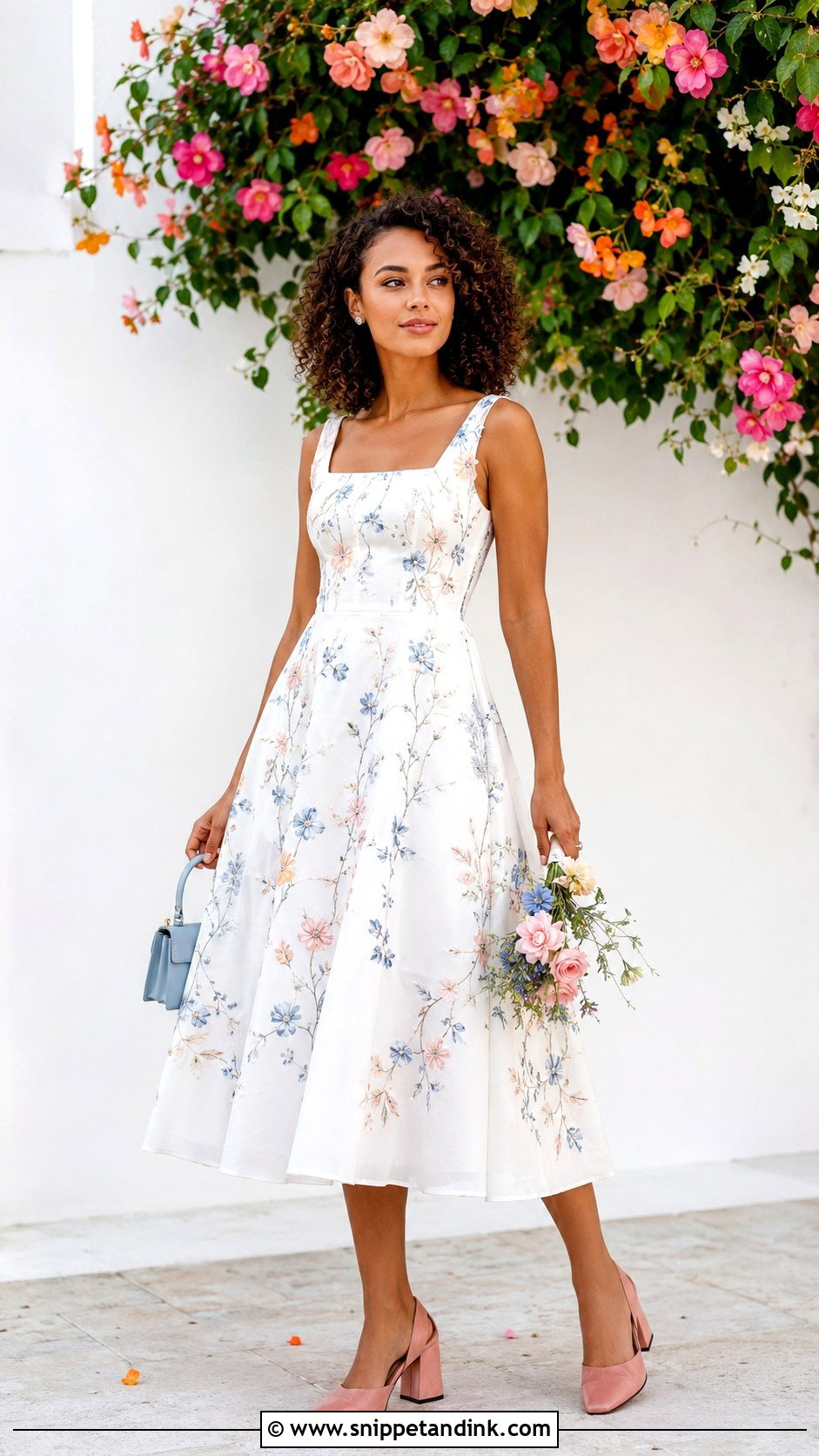
Not every bride wants solid white, and a floral print lets you bring color in while still looking like the bride. A white, blush, blue or pale green base with embroidered flowers or a refined botanical keeps it grown-up; a midi A-line keeps the pattern wearable. Repeat one color from the print in your bag and keep the shoes solid. The bouquet should be simpler than the dress so the two don’t argue. Choosing flowers that bloom in your season or region is a quiet way to tie the print to the place.
17. Plus-Size Casual Wedding Dress
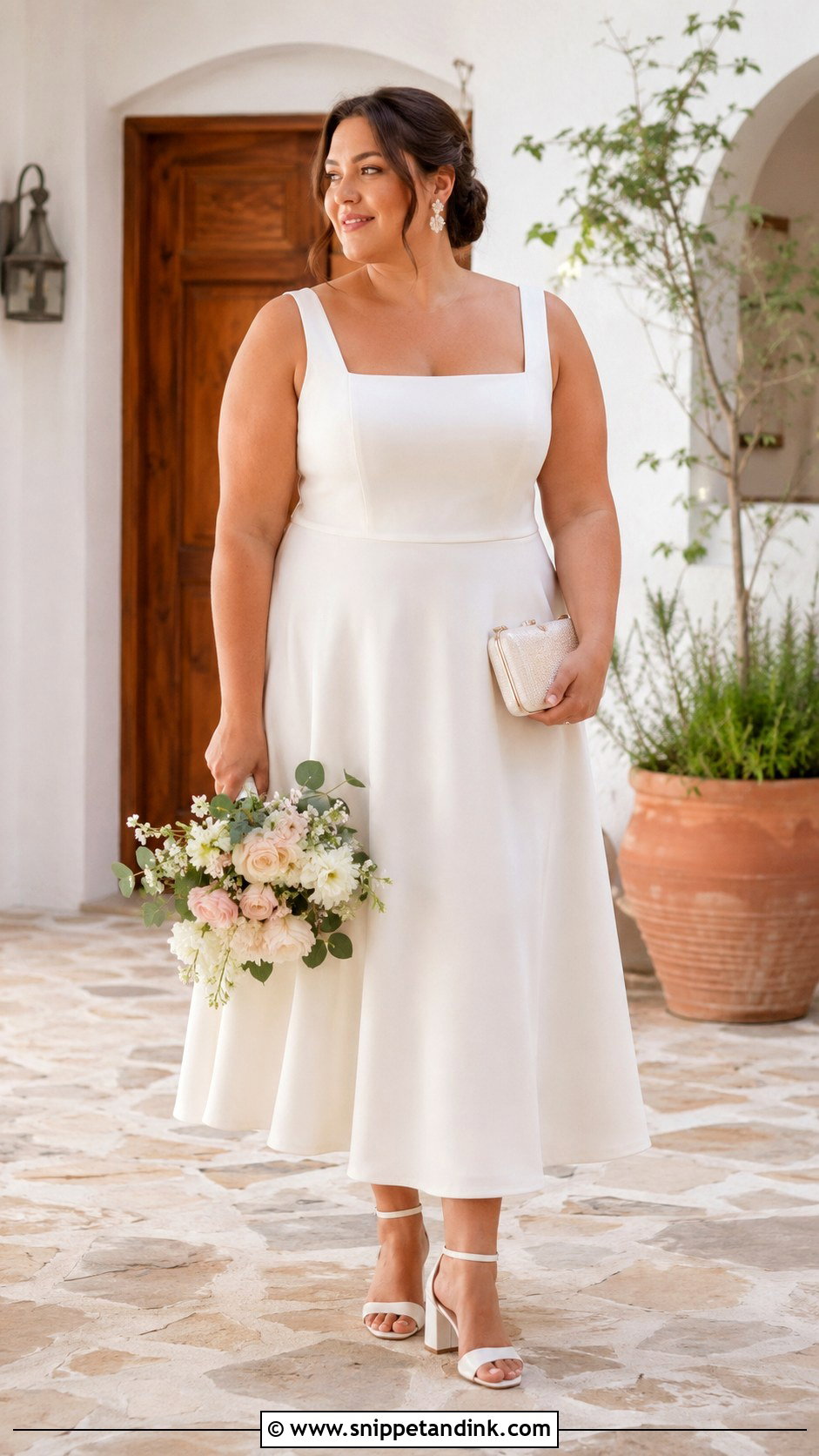
Support is the first thing I look at, before style: wide straps, internal seaming and a bodice built to hold rather than just cover. From there the choice is yours, whether a wrap midi, a square-neck A-line or a soft crepe gown with a defined waist. Leave time for adjustments at the bust, waist, straps and hem, because tailoring changes the result far more than the size on the label. I don’t follow rules about what any body should hide. Cushioned block heels will matter by the evening.
18. Maternity Casual Wedding Dress
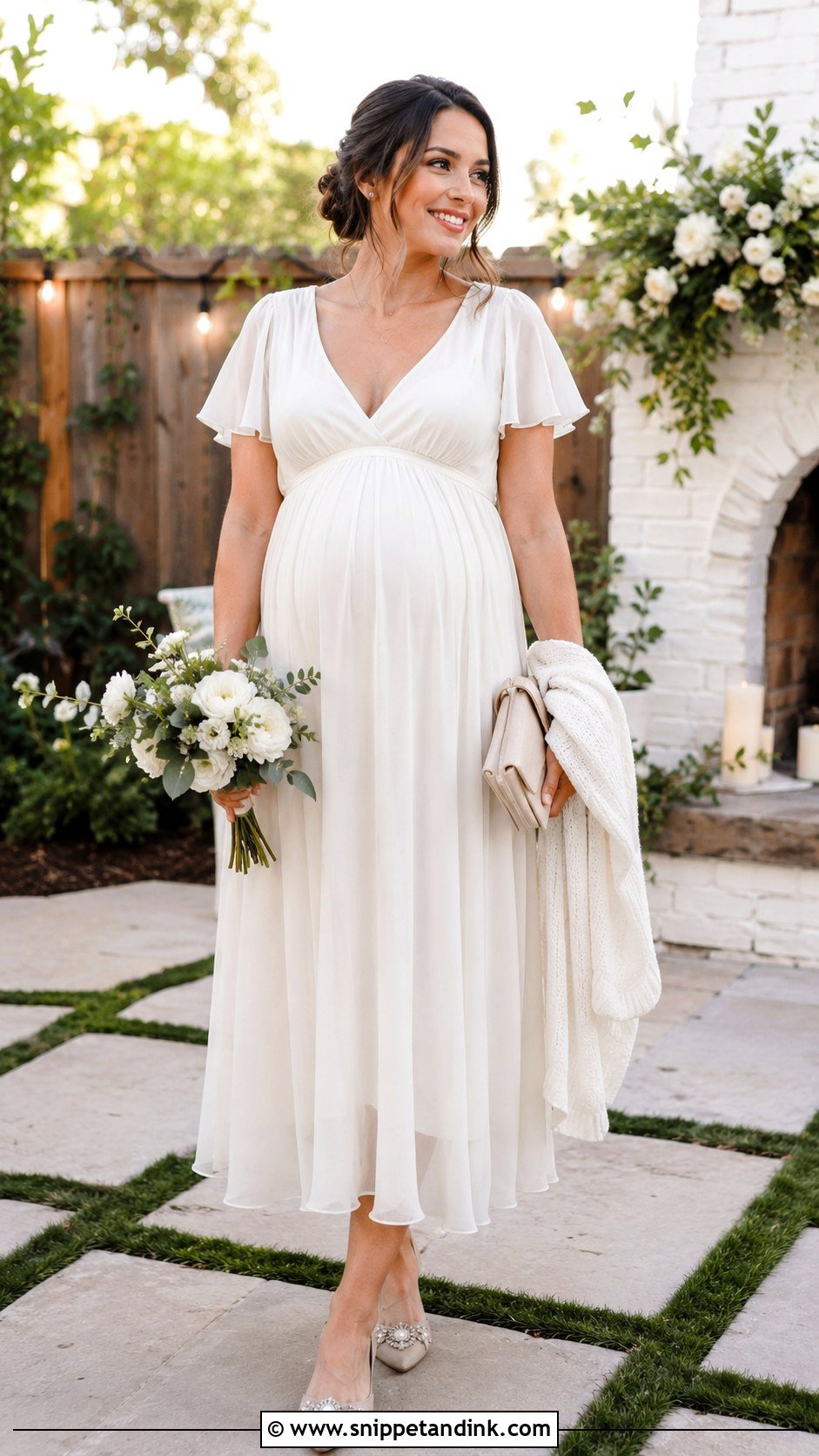
Timing is the tricky part with a pregnancy, because the bump can grow noticeably between buying and the wedding. I’d hold off on anything structured until late, unless you have a seamstress who can adjust it close to the date. An empire-waist midi or a soft wrap gives room while keeping a clear shape. Stretch crepe, polished jersey or lined chiffon breathe well. Supportive low heels or flats, a cropped cardigan and a light bouquet you can hold for an hour keep the day comfortable.
19. Casual Wedding Dress With Sneakers
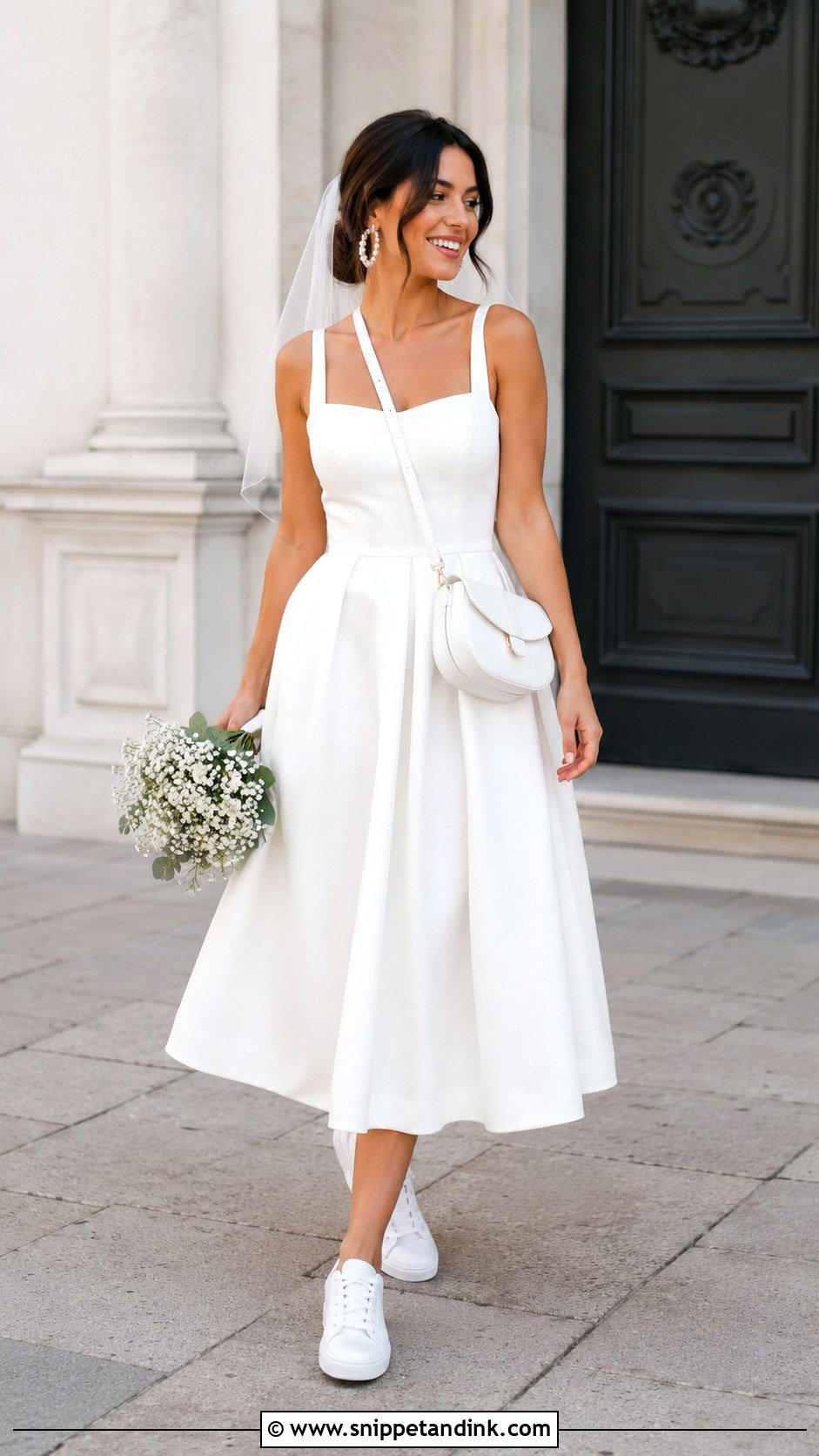
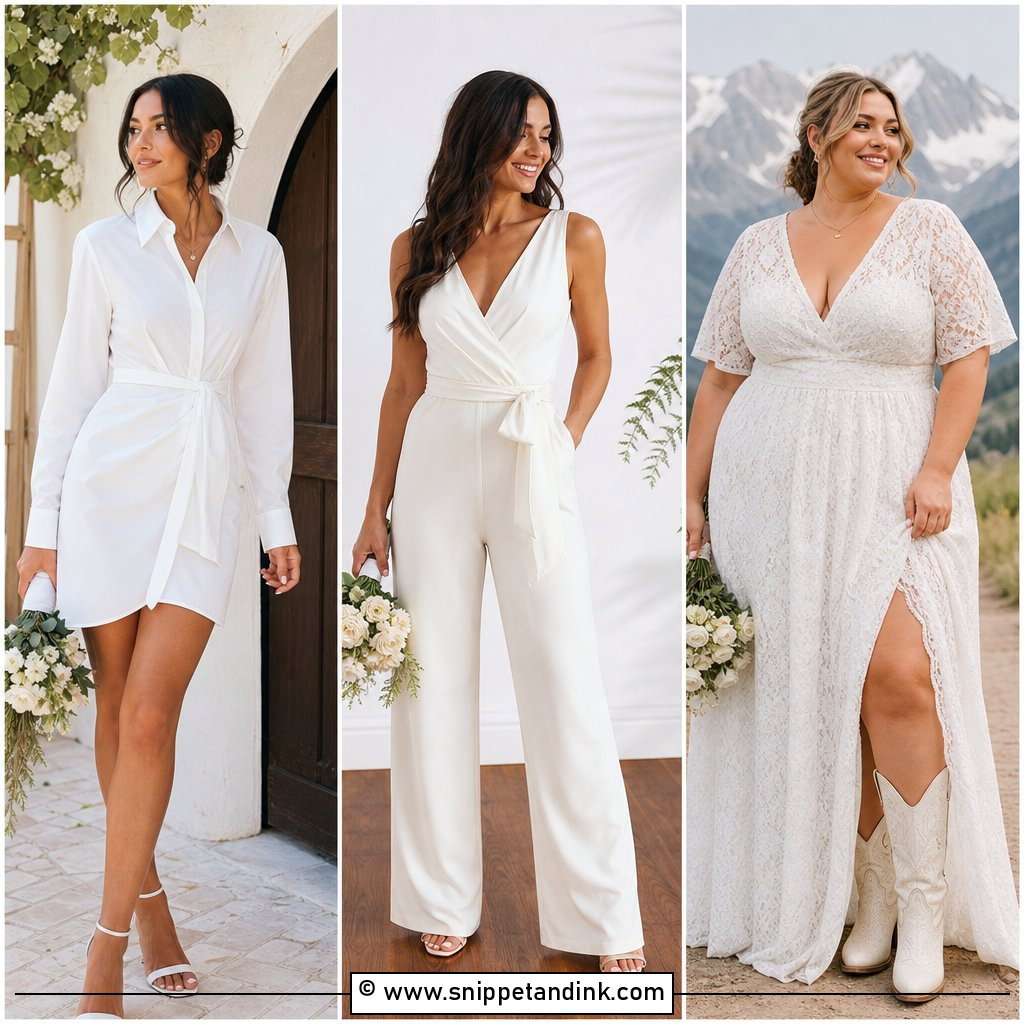
Sneakers make a dress youthful and practical, but the dress has to work harder to stay bridal. Look for a clear structural detail, such as a defined neckline, good fabric or careful seaming, so the outfit doesn’t read as weekend wear. A mini, simple midi or ankle-length slip keeps the shoes in view. Choose clean white leather or canvas with minimal logos, and break them in a week ahead. Pearl hoops and a short veil help. Carry a spare pair if there’s any chance of mud.
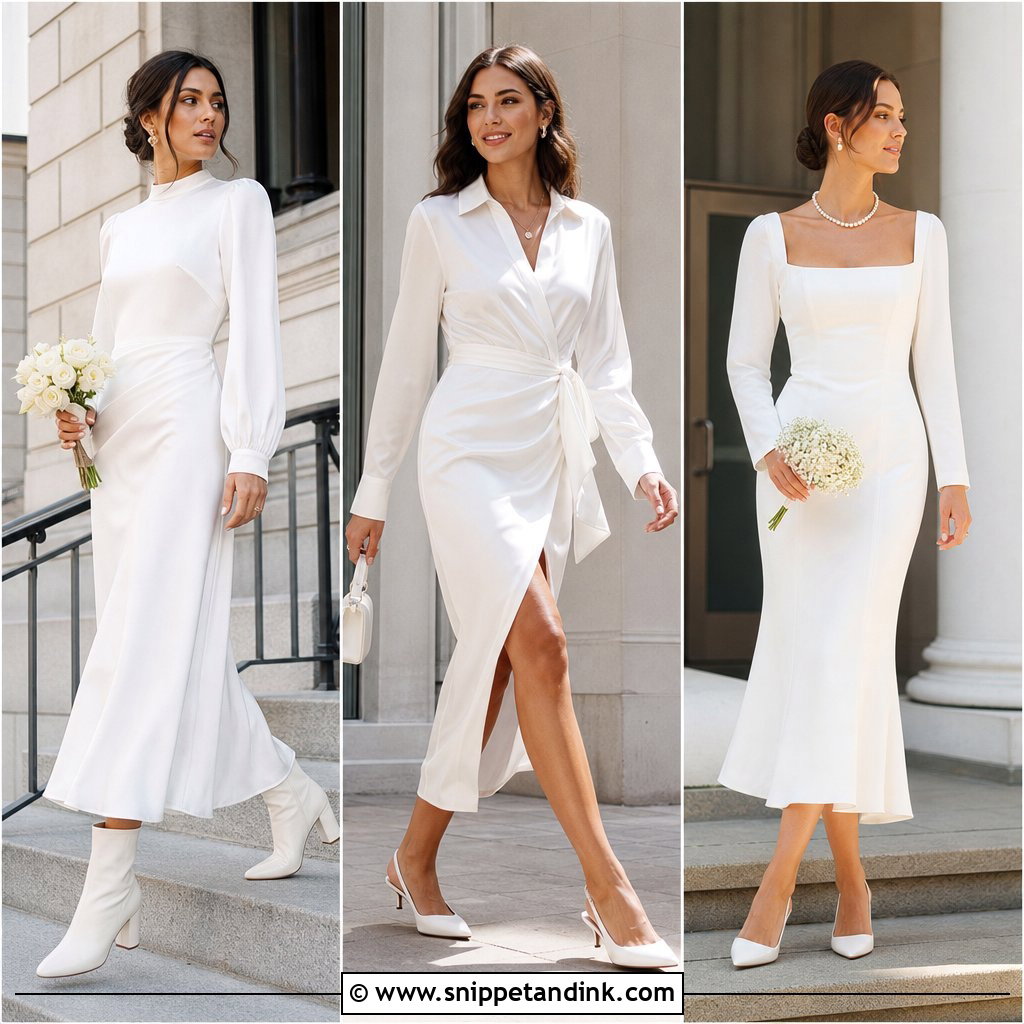

20. Casual Wedding Dress With Boots
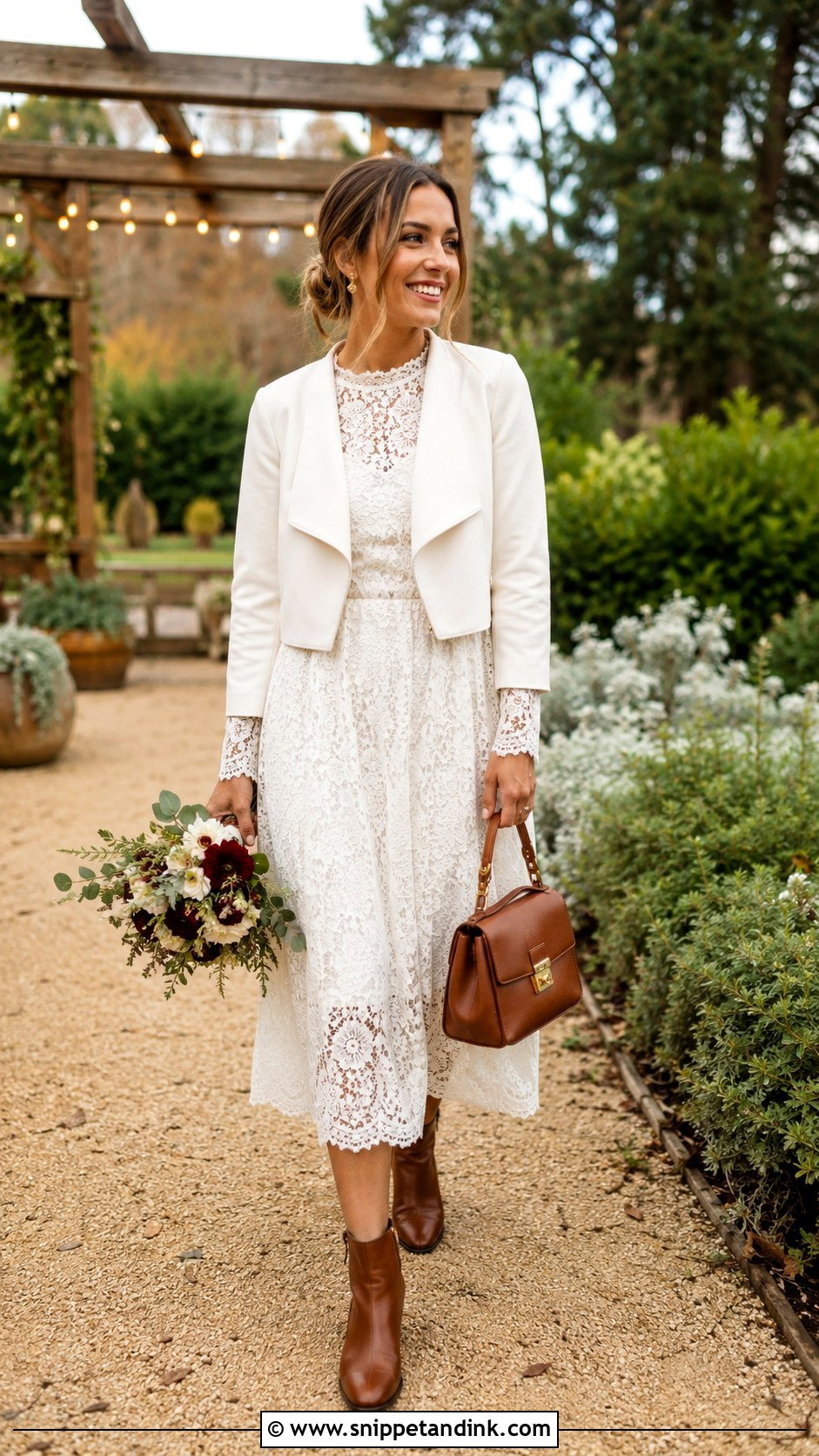
Boots solve uneven ground, cold evenings and long hours of standing in one go. A casual wedding dress with boots works best with polished leather ankle boots and a slim or softly rounded toe; heavy work-boot shapes overpower a light dress. Tan or soft brown gives relaxed contrast, white looks more fashion-led. Have the hem sit clear of the boot shaft, since lace and chiffon snag on zips and buckles. A cropped jacket and loose waves suit a rustic autumn venue.
Heat, Sun and Wrinkles on a Lightweight Dress
Casual dresses are often worn outdoors and often in summer, and light fabrics react to that in ways a structured gown doesn’t.
Sweat and satin
Satin and silk crepe show damp patches under the arms and across the back. Dress shields sewn into the bodice help, and so does choosing ivory over pale colors, where marks are more visible. Put on antiperspirant the night before so it has time to work and won’t leave white streaks.
Creases in transit
For a destination wedding, carry the dress on the plane in a garment bag rather than checking it. Steam it at the venue, never iron linen or satin directly, and test the steamer on the inside of the hem first, since some satins water-spot. If nobody is available to steam, a dress hung in a bathroom during a hot shower loses its softer creases.
Sheerness in daylight
Every lightweight dress should be photographed with the sun behind you before the day. What looks opaque in a shop can show your legs outdoors. A slip in a shade close to your skin tone, not white, is the least visible fix.
Every Fabric Here Has One Flaw Worth Knowing
None of these fabrics is flawless. Linen creases, slips show seams, eyelet turns sheer in sun and chiffon lifts in wind; the trick is picking the flaw you can live with for your venue and weather. Satin suits city hall, while linen, eyelet and soft lace belong outdoors. Hem, fabric, shoes and tailoring decide whether a simple dress looks intentional or ordinary, so build from the setting outward and add only accessories that sound like you. Above all, you should be able to walk, sit and hug people without tugging at anything.
You'll Like These Ideas:



Leave a Reply