
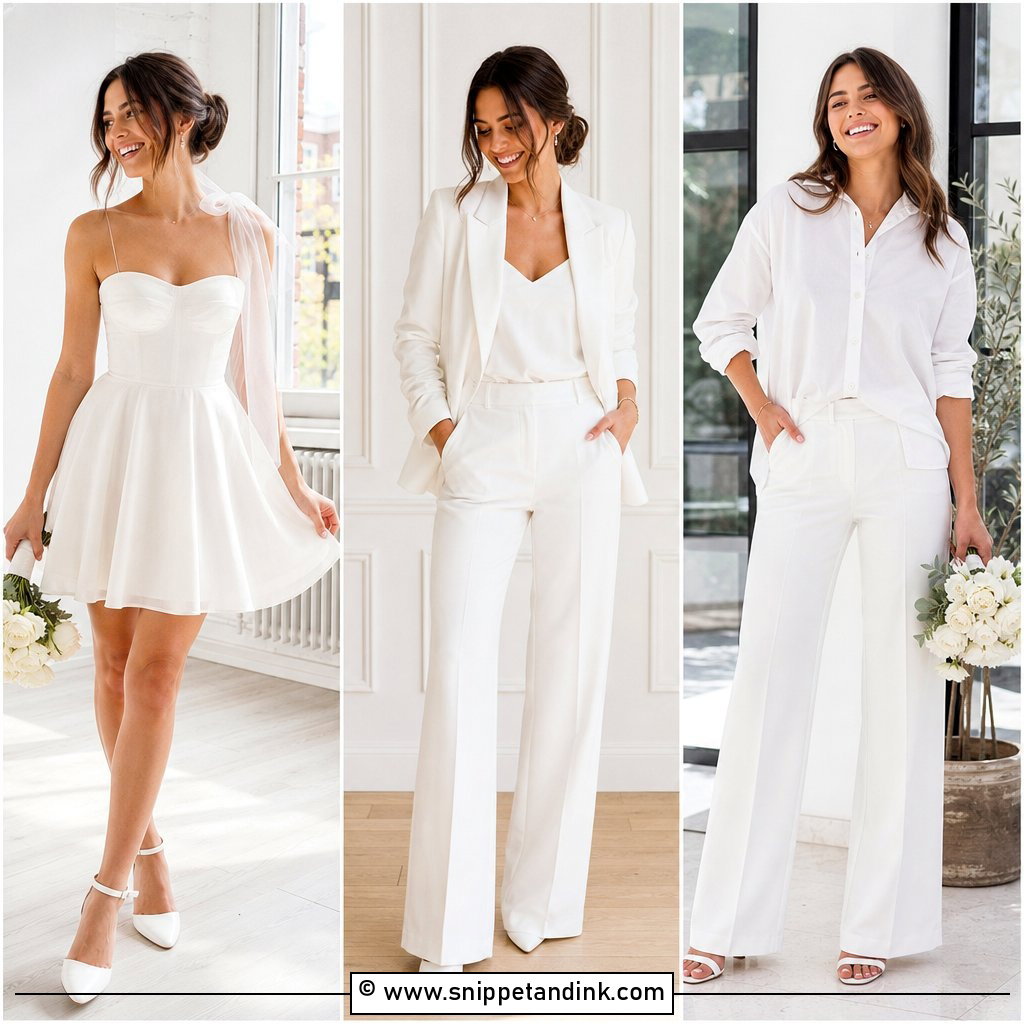
If you’ve never felt like yourself in a big white gown, you don’t have to wear one. The brides I style for courthouse ceremonies, backyard parties and beach vows often end up in jumpsuits, suits, separates or colour, and they look more like themselves in photos because of it. Short hems, trousers and two-piece sets are all real alternatives to the conventional floor-length white gown. What I care about is that the outfit still reads as a wedding outfit and holds up for the whole day. Each idea below comes with shoes and accessories, plus the fit check I’d do before you buy.
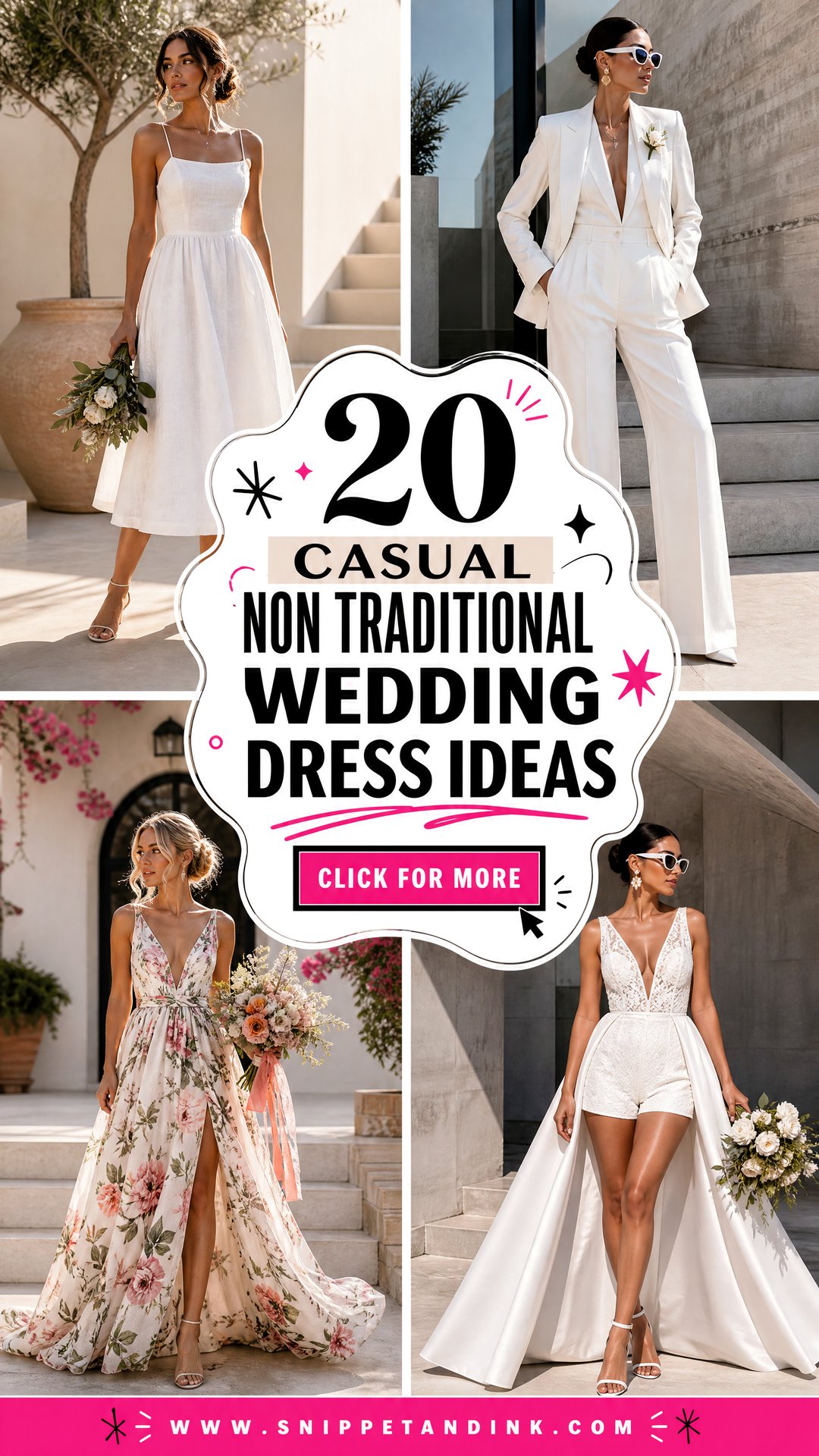
Signals That Turn a Suit or Coloured Dress Into Bridal Wear
Brides who skip the gown sometimes worry that they’ll look like a guest. In practice, people recognise a bride from a few cues, and you only need one or two of them.
One traditional element, kept
A veil of any length is the strongest cue there is. A birdcage veil on a suit, a short tulle veil over a coloured dress, or a long cathedral veil with a jumpsuit all instantly read as wedding. If you don’t want a veil, a fresh flower in the hair or a bridal bouquet does similar work.
Better fabric than an everyday version
A white jumpsuit in thin polyester looks like a party outfit. The same cut in heavy crepe or satin looks bridal. Weight and finish matter more than colour.
Coordination with your partner
Matching one accent, such as a pocket square or flowers in the same shade, ties the two of you together in photos. That visual pairing does a lot to show who’s getting married.
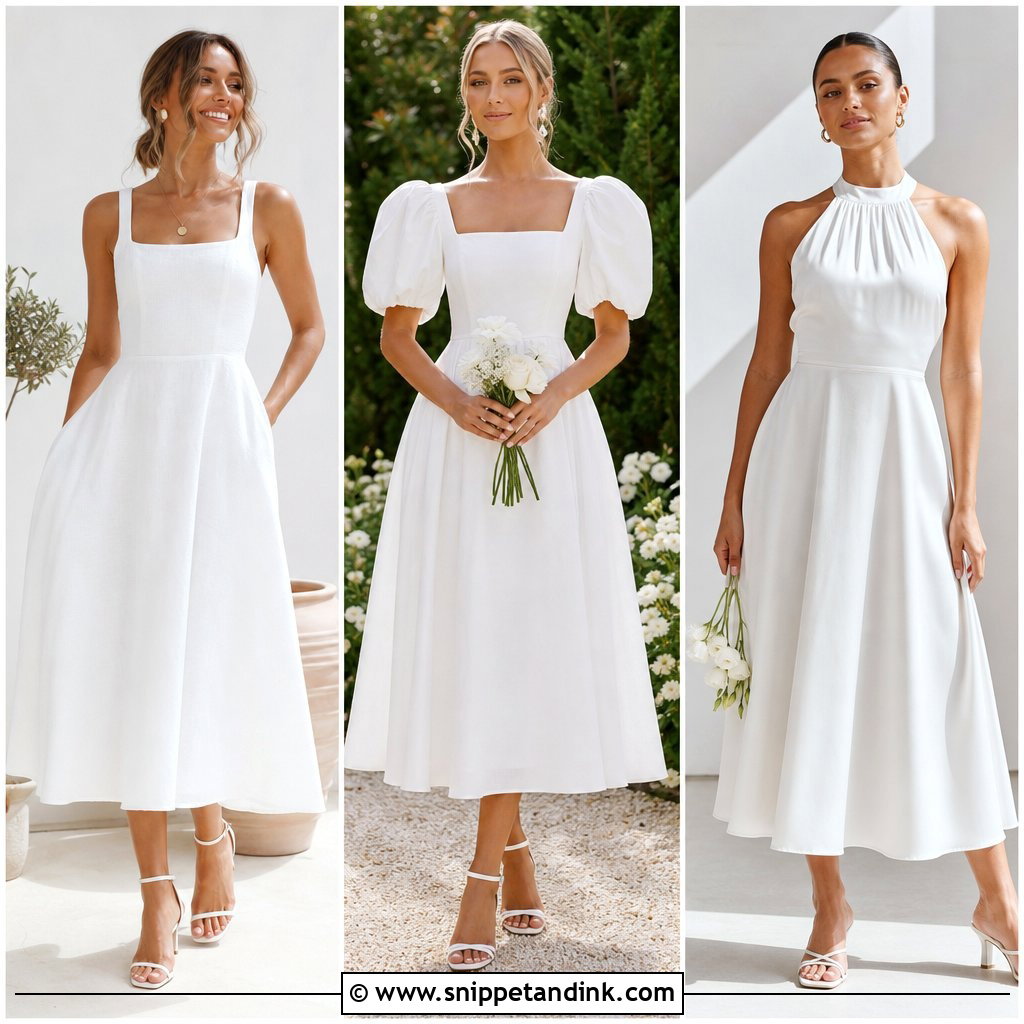
1. White Linen Midi Wedding Dress
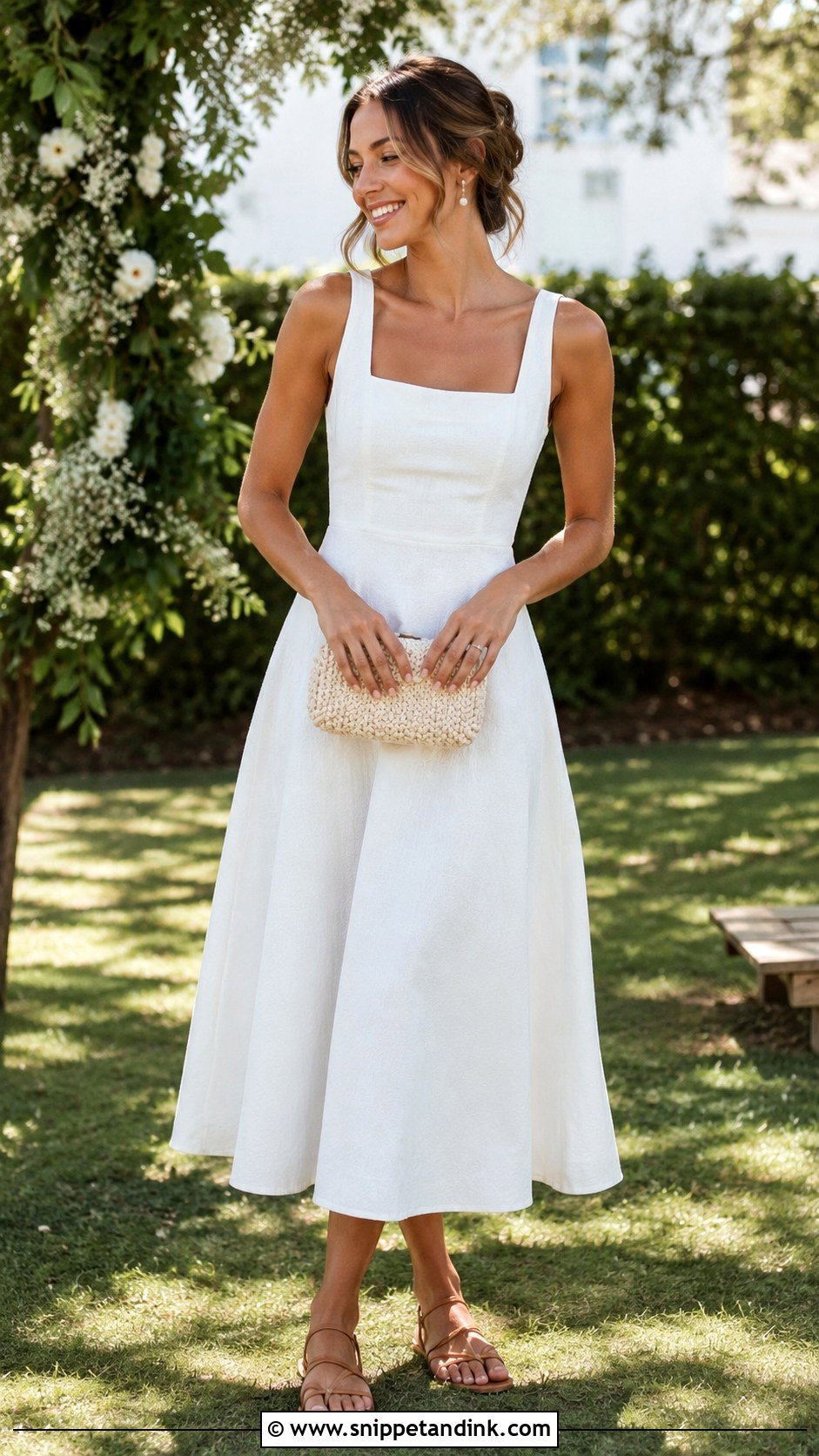
Linen is my first suggestion for a hot outdoor ceremony, as long as you’re happy with creases. A softly fitted bodice, square neckline, wide straps and an A-line skirt keep the dress from slumping. White linen is see-through in bright sun unless it’s lined, so insist on a lining. Flat leather sandals, pearl earrings and a woven clutch suit the texture. Book alterations early: linen has little stretch, so straps and waist need to sit exactly right. A cropped linen blazer handles a cool evening.
2. Satin Slip Midi Wedding Dress
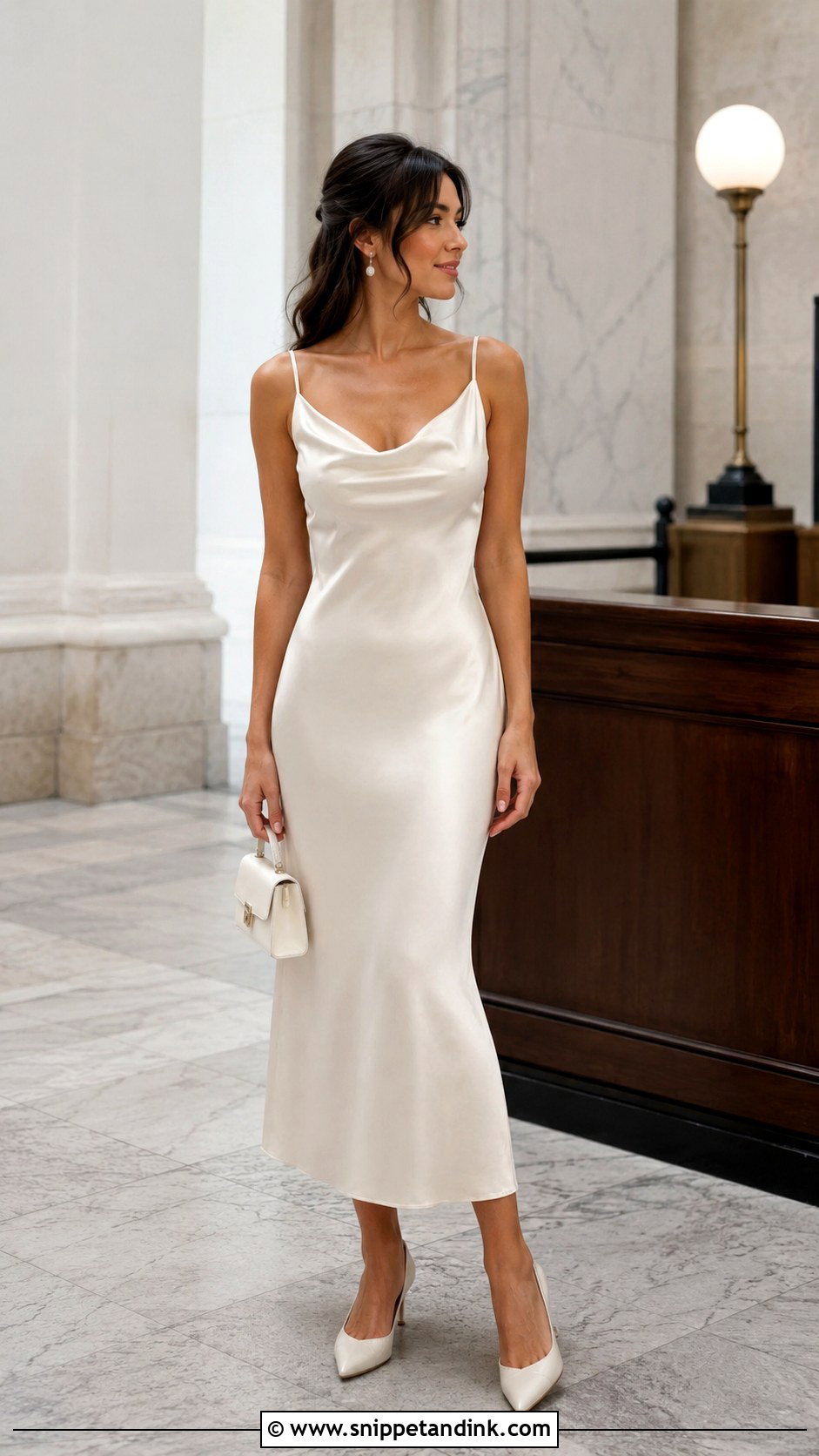
Satin slips are lighter than any gown, and the colour range is where they get interesting. Champagne, pale gold and soft blush all look bridal while sitting further from bright white. Bias-cut satin drapes closely, so I fit them with adjustable straps and underwear that leaves no line. Shiny fabric shows sweat marks under the arms in heat, which is worth knowing for a summer date. Pointed kitten heels, a structured mini bag and drop earrings suit it. Layer a fitted blazer or a sheer organza shirt for the ceremony and take it off for the dancing.
3. Lace Mini Wedding Dress
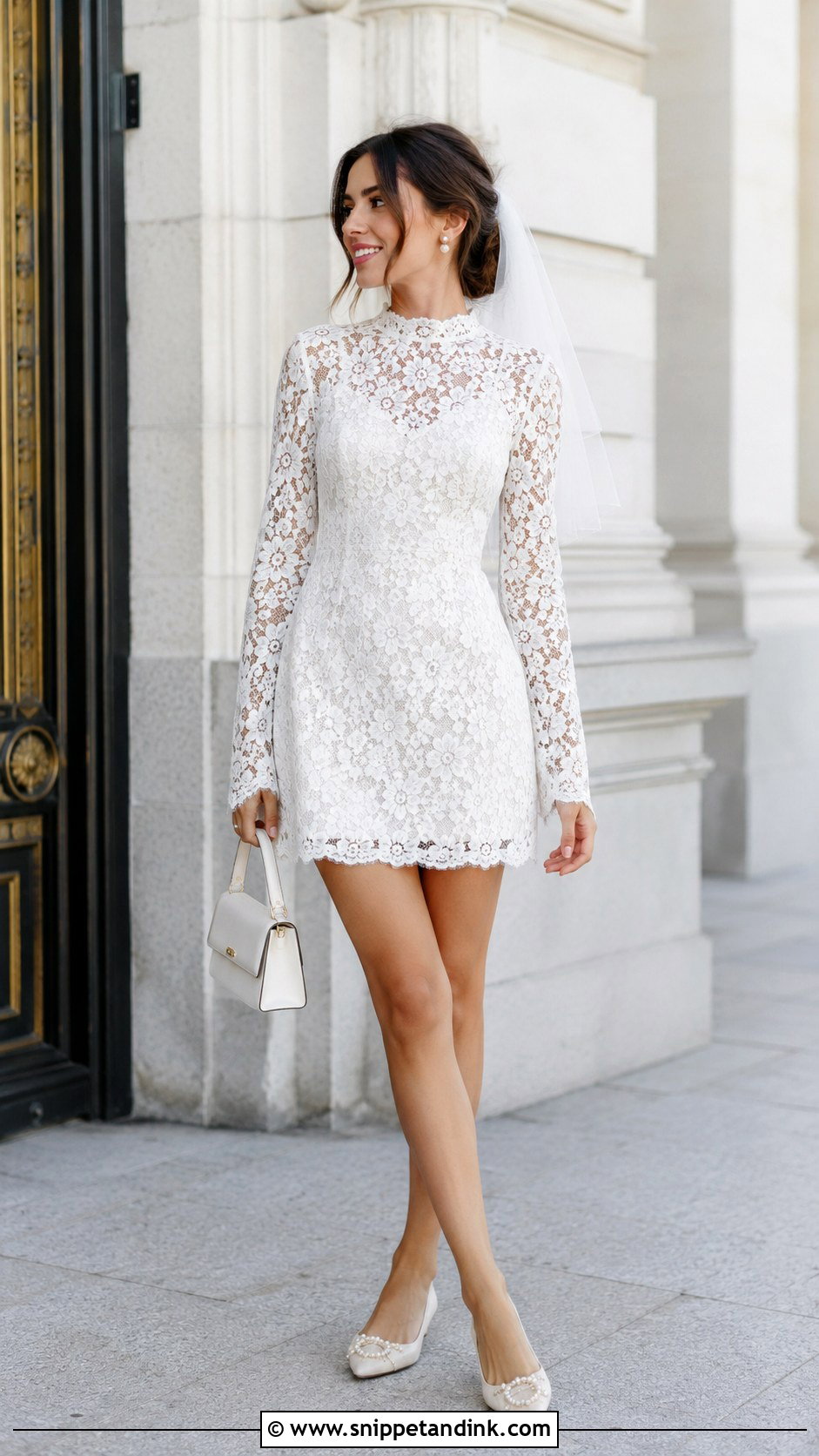
A short hem needs balance above. That’s why lace minis often come with long sleeves or a high neck, and I think they look best that way. Choose geometric or crochet-style lace with a comfortable lining over heavy corded bridal lace, which is stiff at this length. Sit down in the fitting room and check how far the hem rides up; minis can rise several inches when you’re seated. Block-heel sandals or embellished flats, a short veil or a big hair bow, and sheer tights with a tailored coat in winter all work.
4. White Bridal Jumpsuit
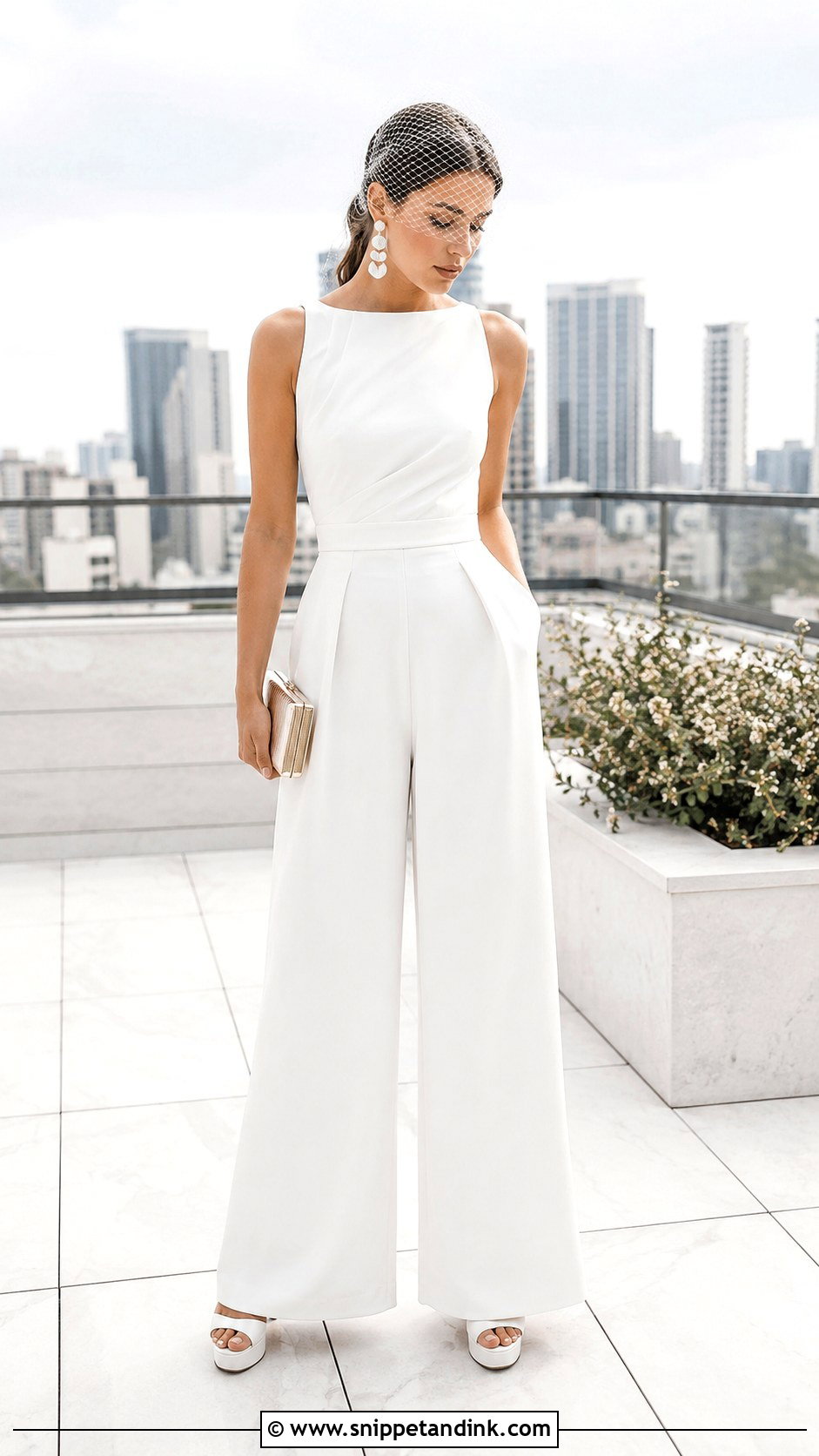
A jumpsuit gives you a long, unbroken line and the freedom to sit any way you like. Crepe holds structure best; satin is dressier; a linen blend suits a beach. The one practical issue nobody mentions is the bathroom, since many jumpsuits mean undressing almost completely. I look for a side zip you can reach yourself, or a two-piece that looks like a jumpsuit once on. Hem the legs in your exact shoes so the trouser falls just above the floor. A fingertip veil, detachable cape or floral piece adds the bridal note.
5. Tailored White Wedding Suit
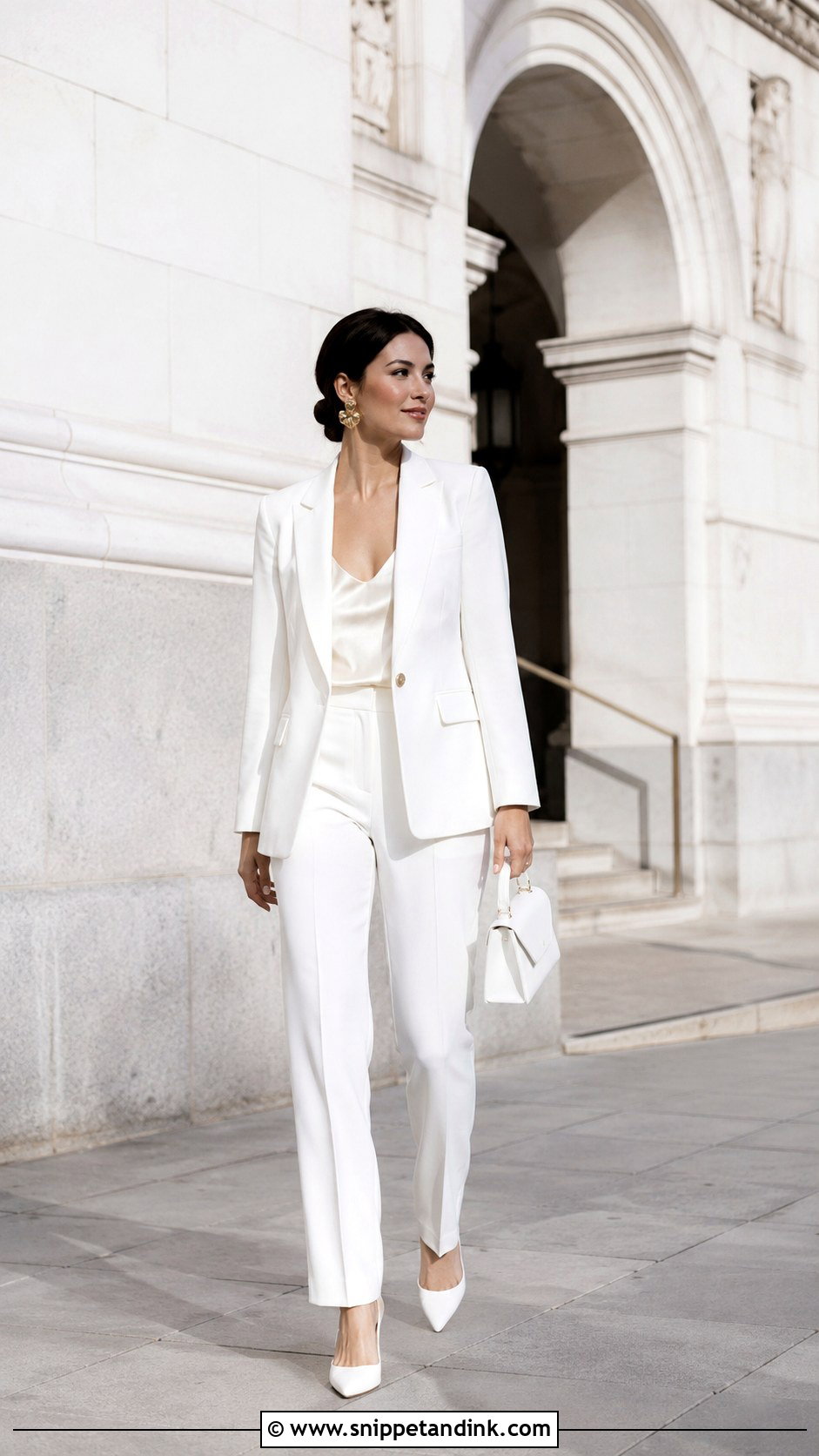
Good tailoring is what makes a suit feel like a wedding outfit. Start with a single-breasted white blazer and matching straight or wide trousers, with a silk camisole or a lace-trimmed tank beneath. The jacket should close without pulling into an X across the button; if it does, go up a size and take it in. White suits show makeup at the collar, so dress after your face is done and drape a scarf at the neck. Loafers for daytime, pointed heels for evening, and a birdcage veil if you want a traditional touch. Powder blue or butter yellow work if white isn’t you.
6. Two Piece Bridal Skirt Set
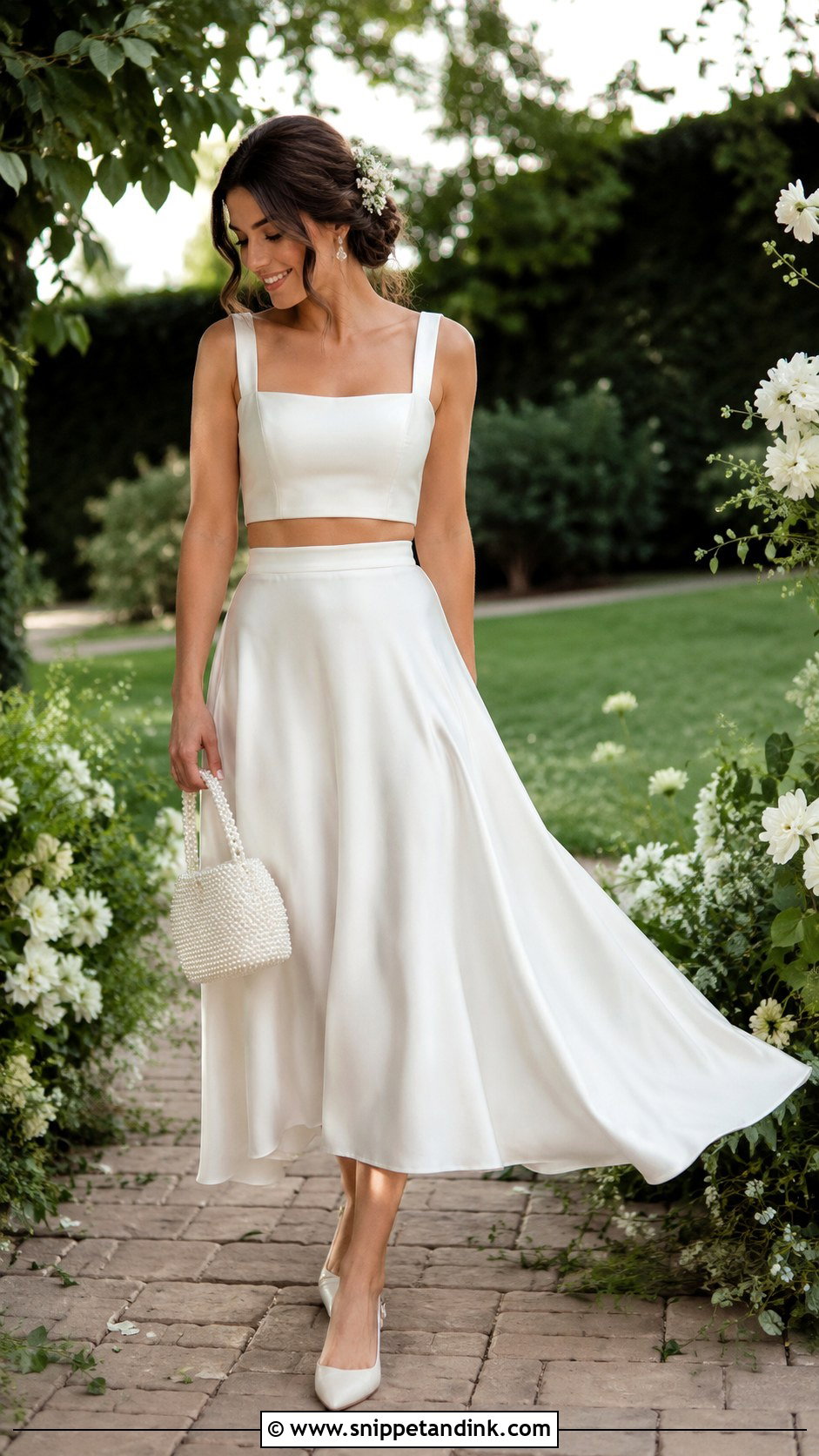
Separates let you buy the top and skirt in different sizes, which is the reason I suggest them to brides whose measurements don’t fit one size top to bottom. A fitted crop top or draped blouse over a high-waisted midi skirt in matching ivory or champagne looks like a dress from across the room. Satin skirts move better; cotton poplin is crisper and more casual. Raise your arms and sit to check the gap between the pieces stays where you want it. Both pieces can be worn again separately after the wedding.
7. White Wide Leg Pants Set
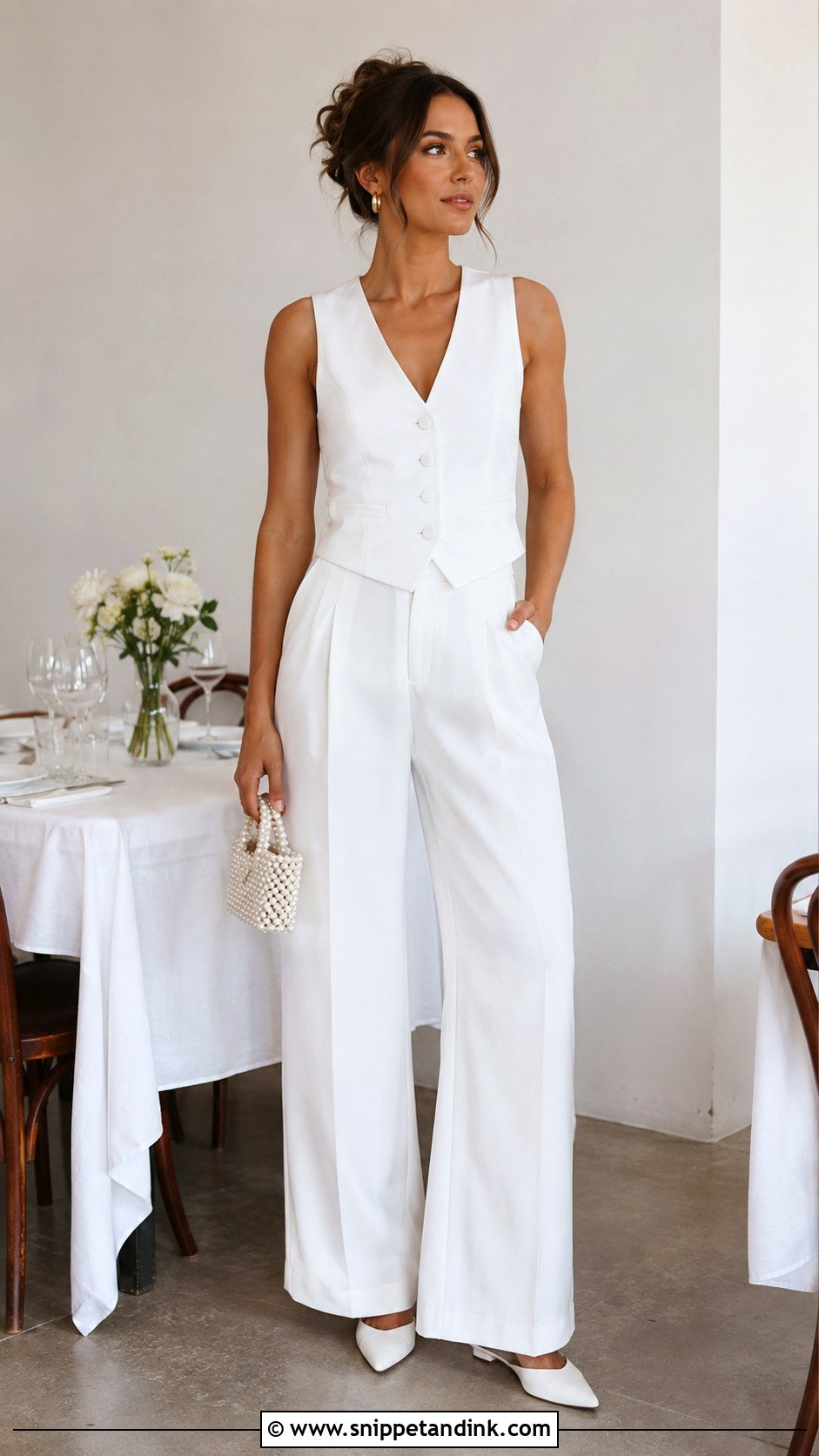
A coordinated pants set is softer than a full suit. High-waisted wide trousers with a matching halter, vest or blouse in crepe or satin move easily. White trousers need a lining, or pockets and seams show through. White sneakers make it truly casual; pointed flats or block heels dress it up. Medium earrings stand out against the minimal shapes. If the top is sleeveless, a cropped jacket gives you ceremony coverage and comes off for dinner.
8. Tea Length Wedding Dress
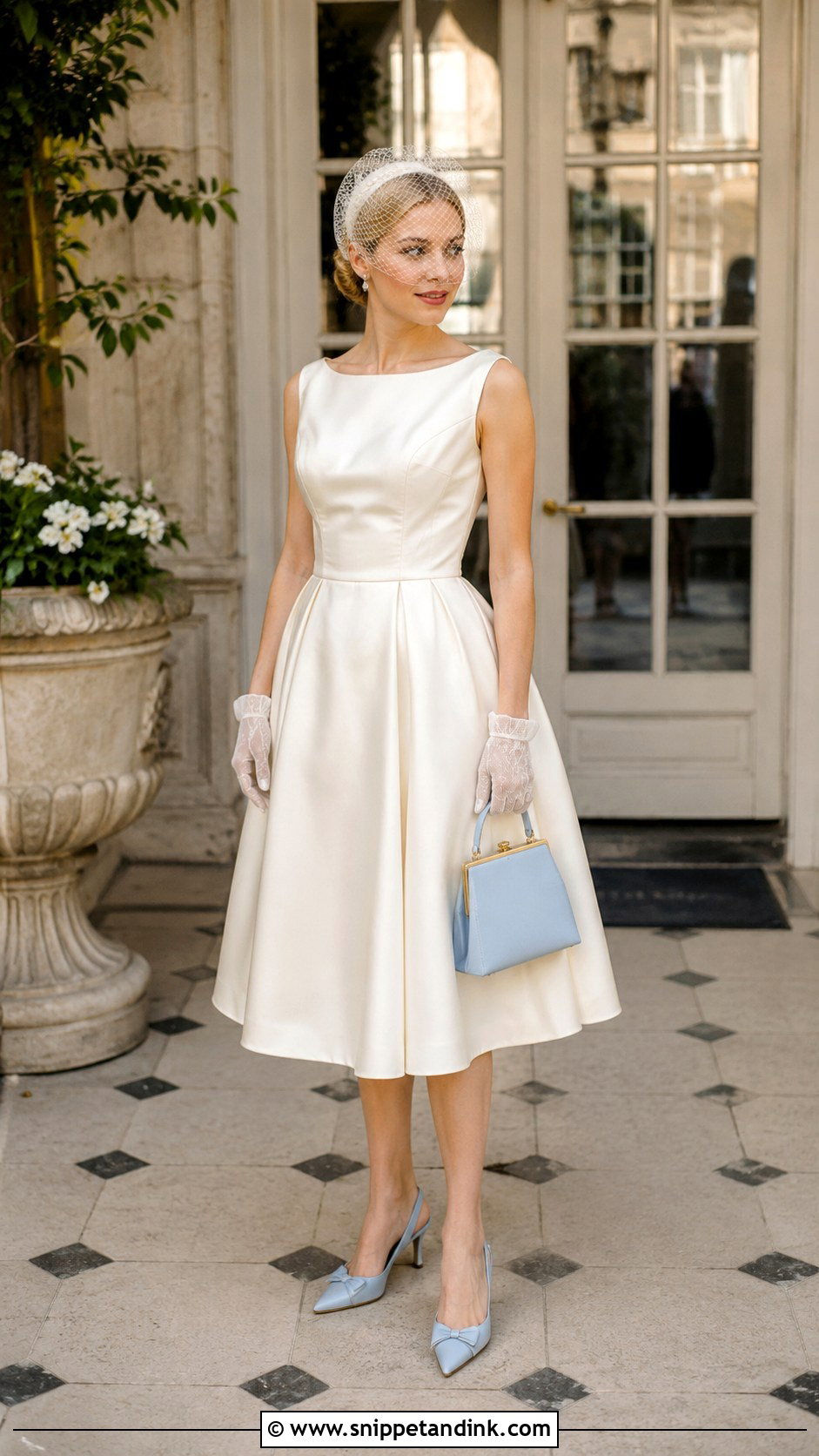
Tea length has a retro feel without the formality of floor length, and it puts your shoes on show. Matte satin, cotton jacquard or light tulle over a fitted bodice give the skirt shape. Petticoats are optional; I usually leave them out for informal weddings because they add volume and heat. Coloured pumps or Mary Janes and short gloves lean into the vintage look; plain jewellery keeps it current. Walk in it before buying: full skirts at this length can catch on the back of heels.
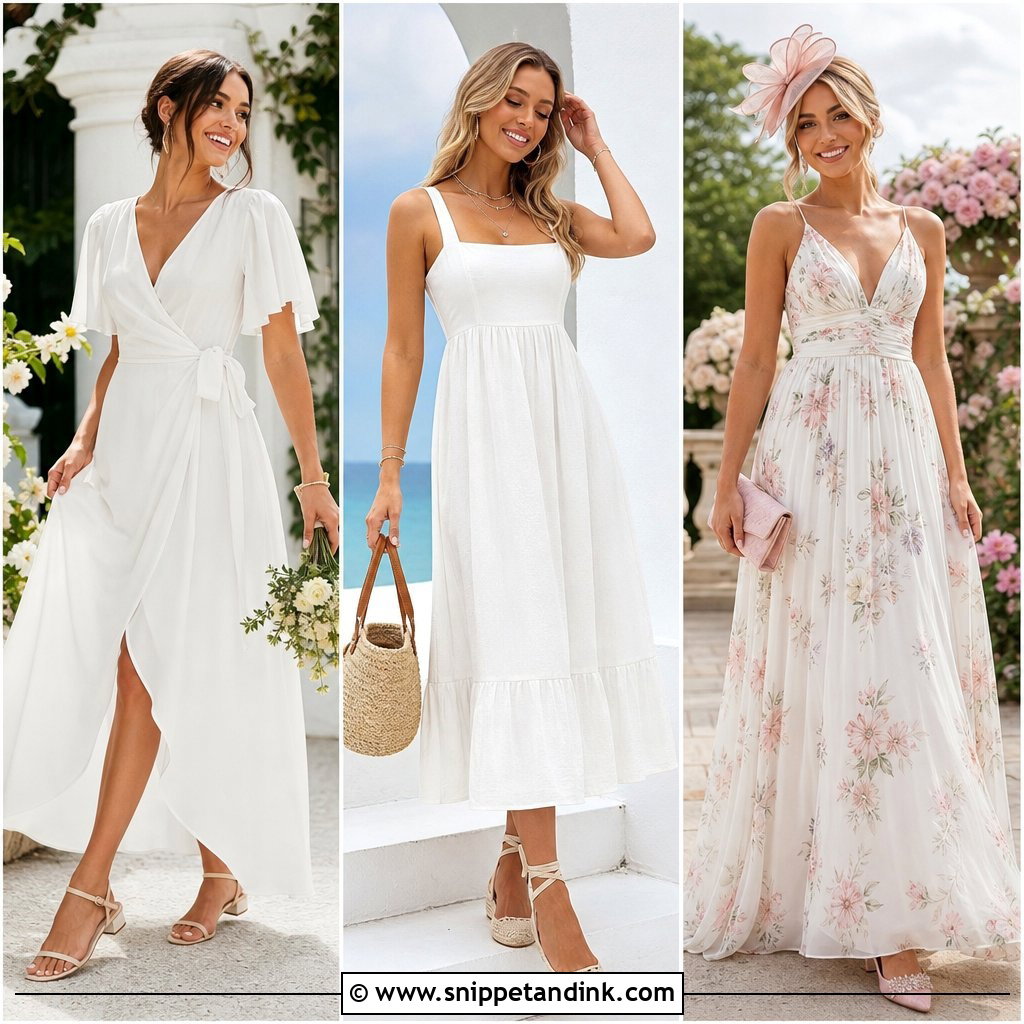
9. Floral Print Wedding Dress
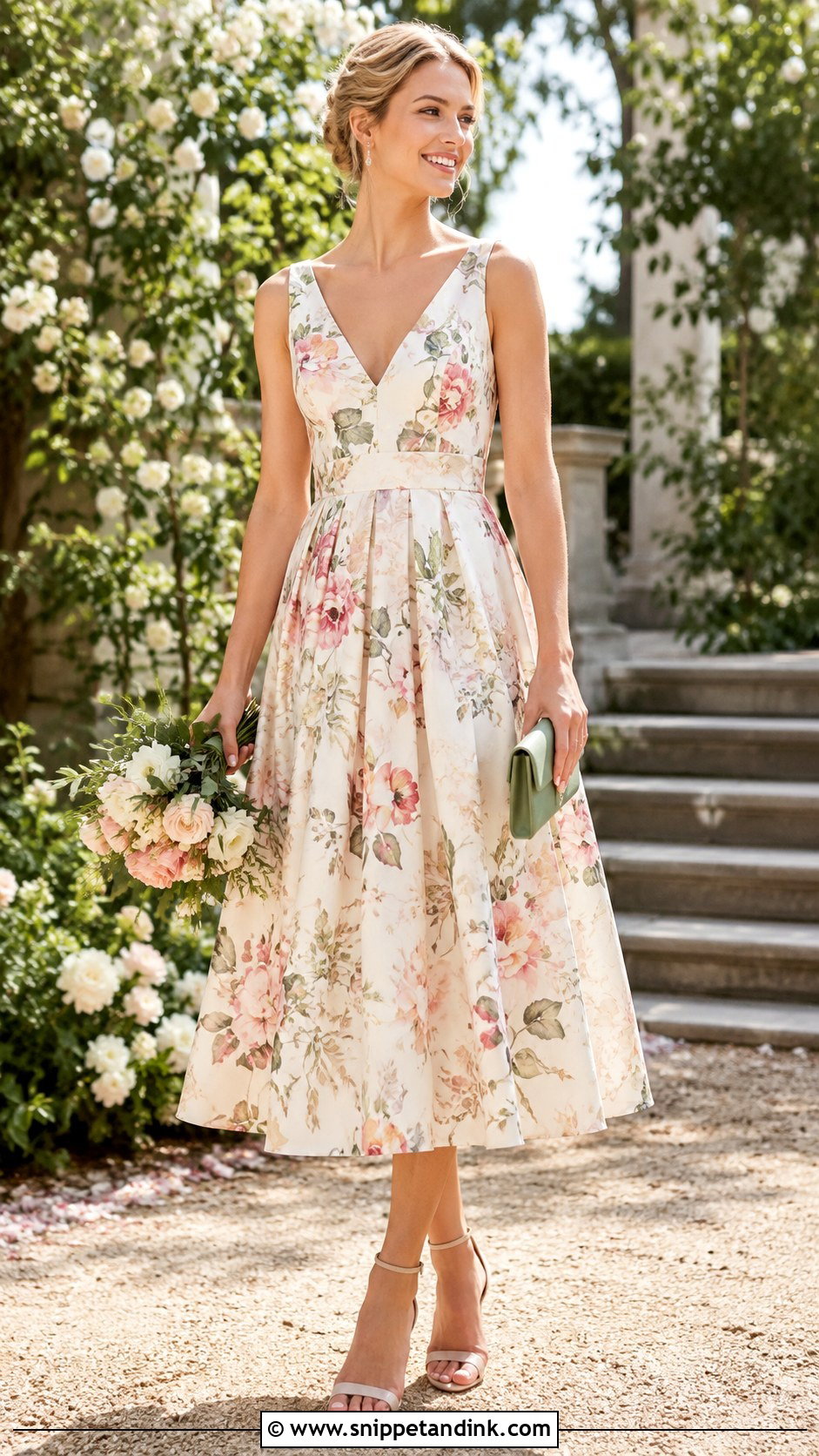
Florals turn a dress into something cheerful for a garden or spring elopement. A light background keeps it bridal, while saturated prints make a bolder statement. I always pick one colour from the print for shoes or bag: blush sandals with a pink and green floral, for example. Keep the bouquet simpler than the dress or the two start to blur together in photos. If the dress already has a full skirt or big sleeves, leave the jewellery small.
10. Blush Pink Wedding Dress
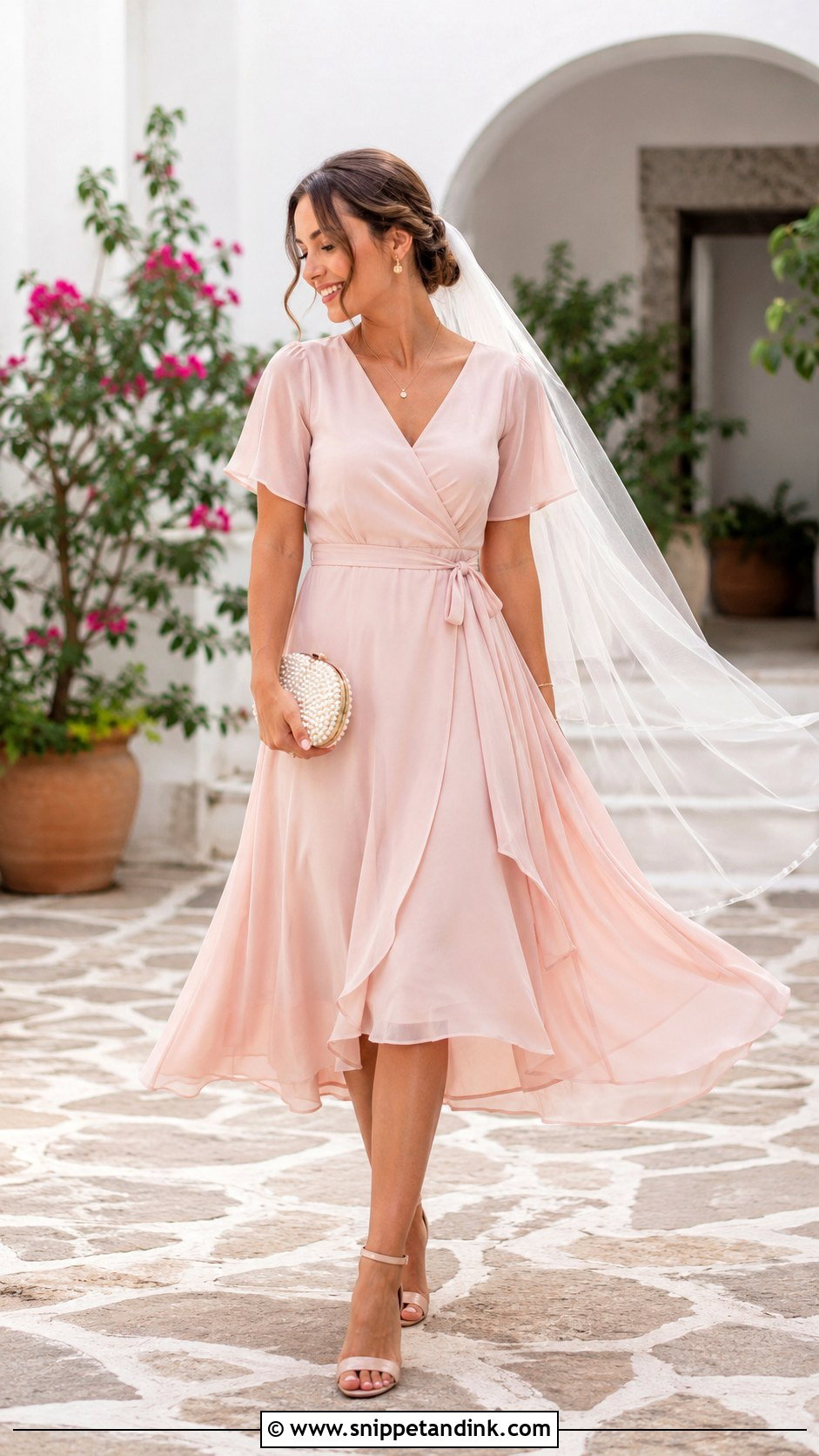
Blush ranges from cool pink to warm peach, and the difference matters. I take brides to a window to see the dress in daylight, because shop lighting makes most blush look the same. Cool pinks flatter cooler skin; peachy blush suits warmer undertones. A chiffon, satin or crepe midi in a wrap, slip or A-line shape all suit a casual celebration. Nude or rose gold shoes blend in, and a sheer ivory veil gives a pleasing contrast without hiding the colour.
11. Blue Wedding Dress
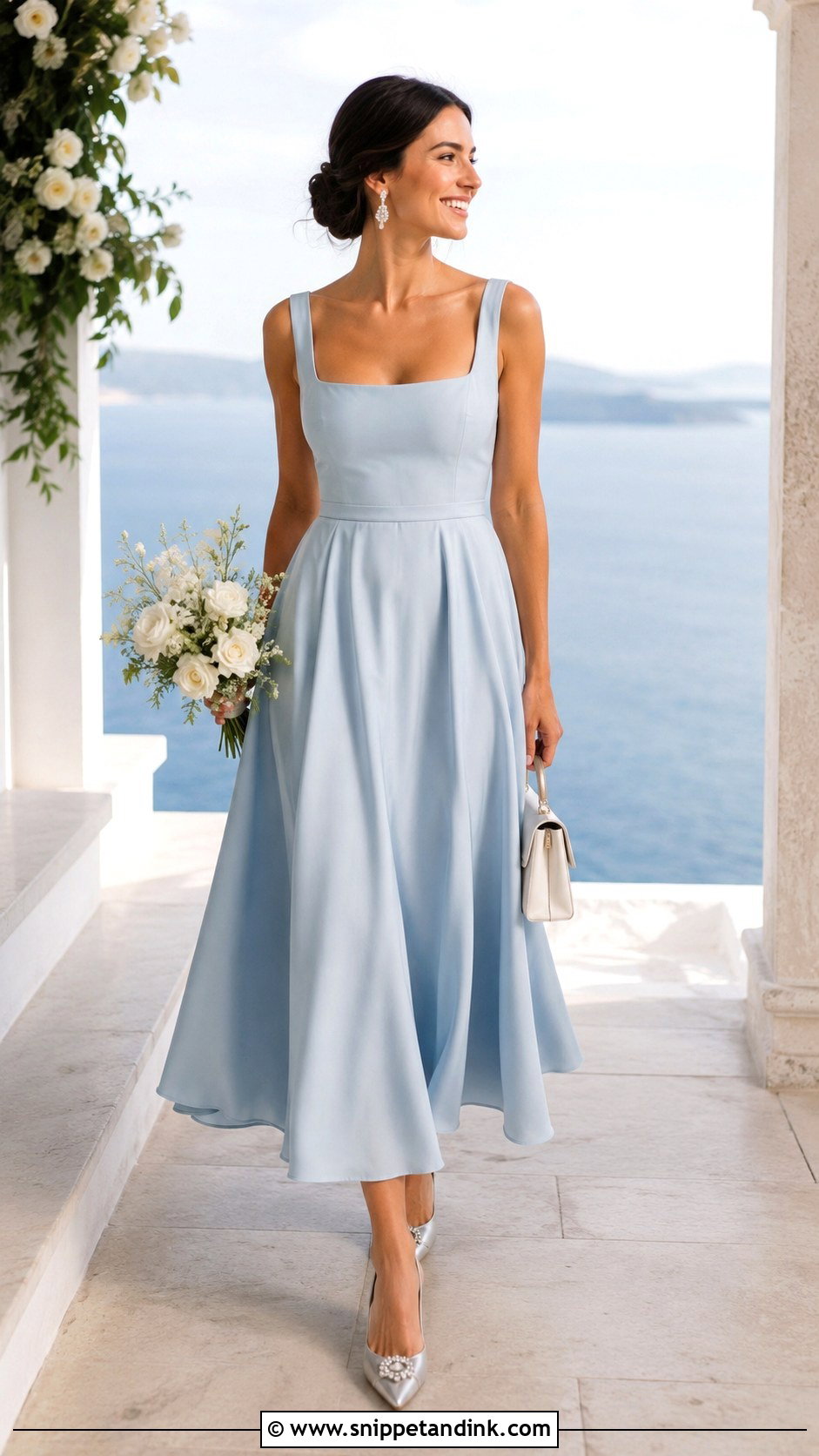
Pale blue is calm and clearly not a traditional choice, which is exactly its appeal for a coastal or courthouse wedding. Powder blue and grey-blue shift a lot between daylight and indoor lighting, sometimes leaning grey, sometimes almost lilac. Take test photos in both before you commit. A midi with a square neck and fitted waist, silver flats and a small ivory bag keep it light. If you want stronger colour, cobalt or navy with restrained accessories looks confident.
12. Black Casual Wedding Dress
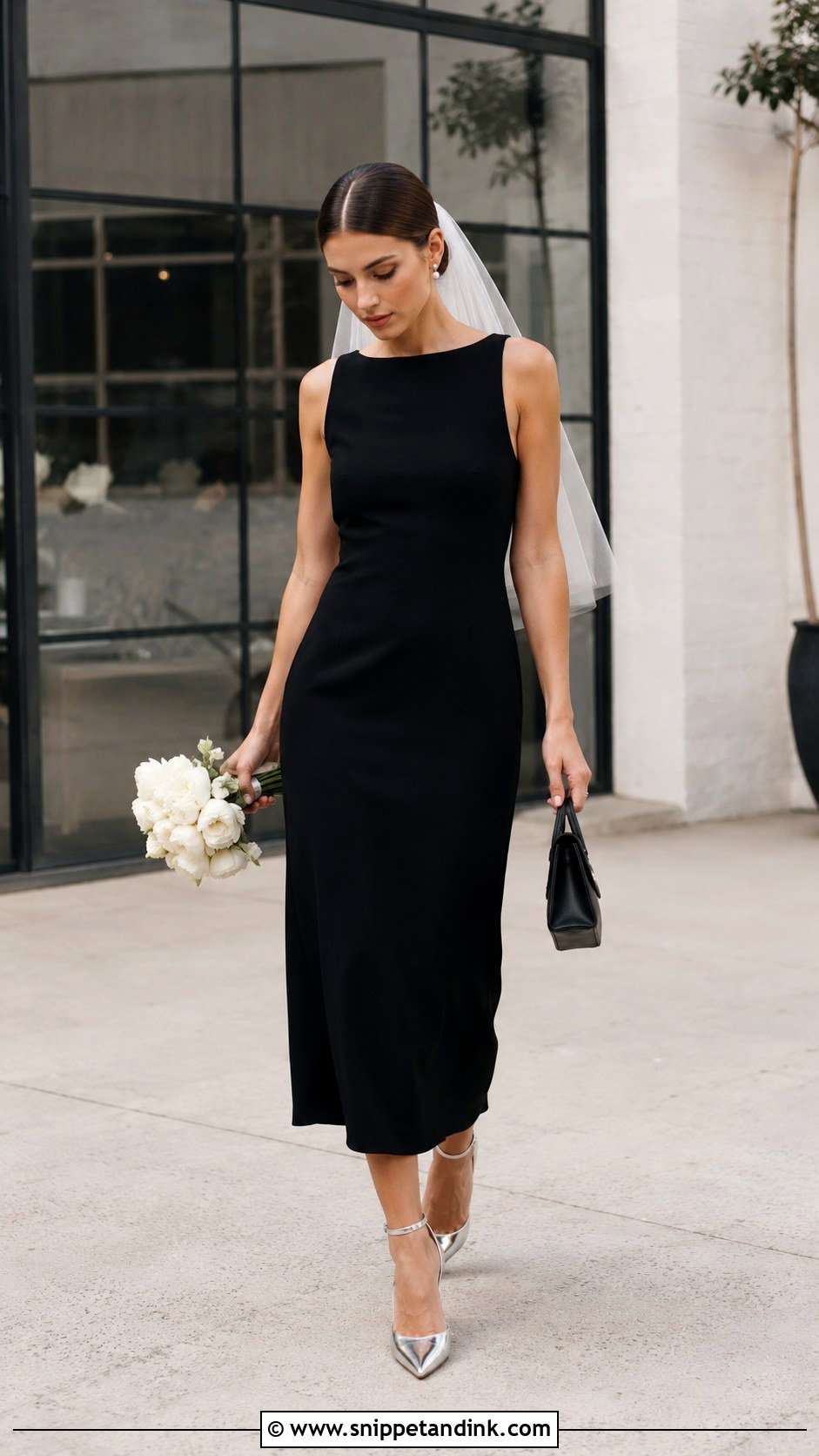
Black works best for evening, a fall date or an industrial space, and it’s more common than people think. Keep the silhouette simple, such as a slip, wrap or long-sleeve crepe midi. My main concern with black is that flat fabric loses all its detail in photos and becomes a silhouette, so I look for some texture or movement. An ivory bouquet and pearl earrings give contrast, and a short ivory veil makes it instantly bridal. Black also shows every bit of lint and pet hair, so bring a compact roller.
13. Embroidered Boho Wedding Dress
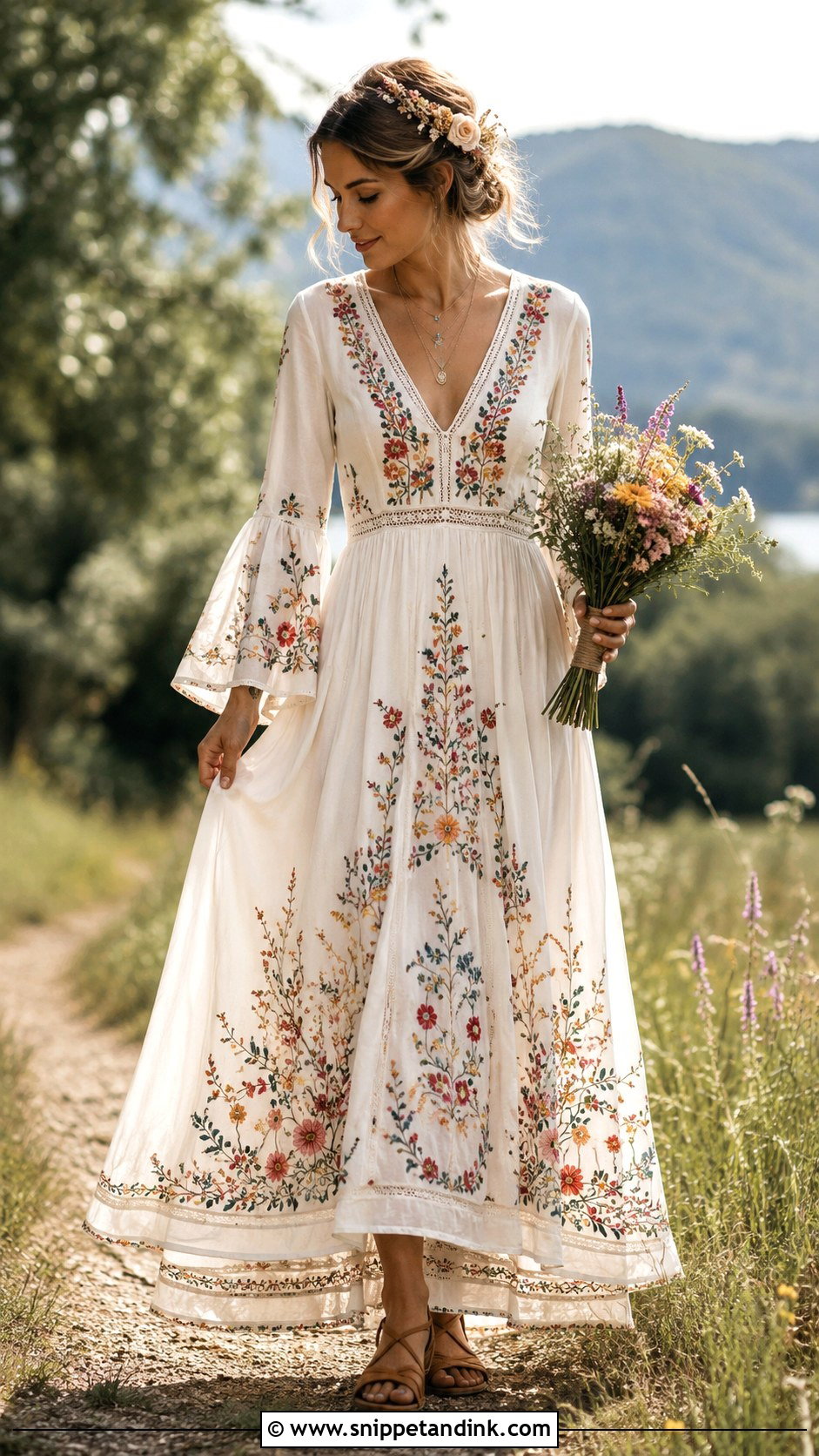
Embroidered boho dresses look handmade and personal, which suits outdoor venues well. Cotton, chiffon or light tulle with botanical or tonal embroidery, bell sleeves and a loose waist feel relaxed without tipping into costume. The bodice and skirt should be lined while the sleeves stay unlined for airflow. If the embroidery uses several colours, repeat just one or two in the flowers. Leather sandals or suede boots, layered fine necklaces and a sheer capelet in place of a veil complete it.
14. Crochet Beach Wedding Dress
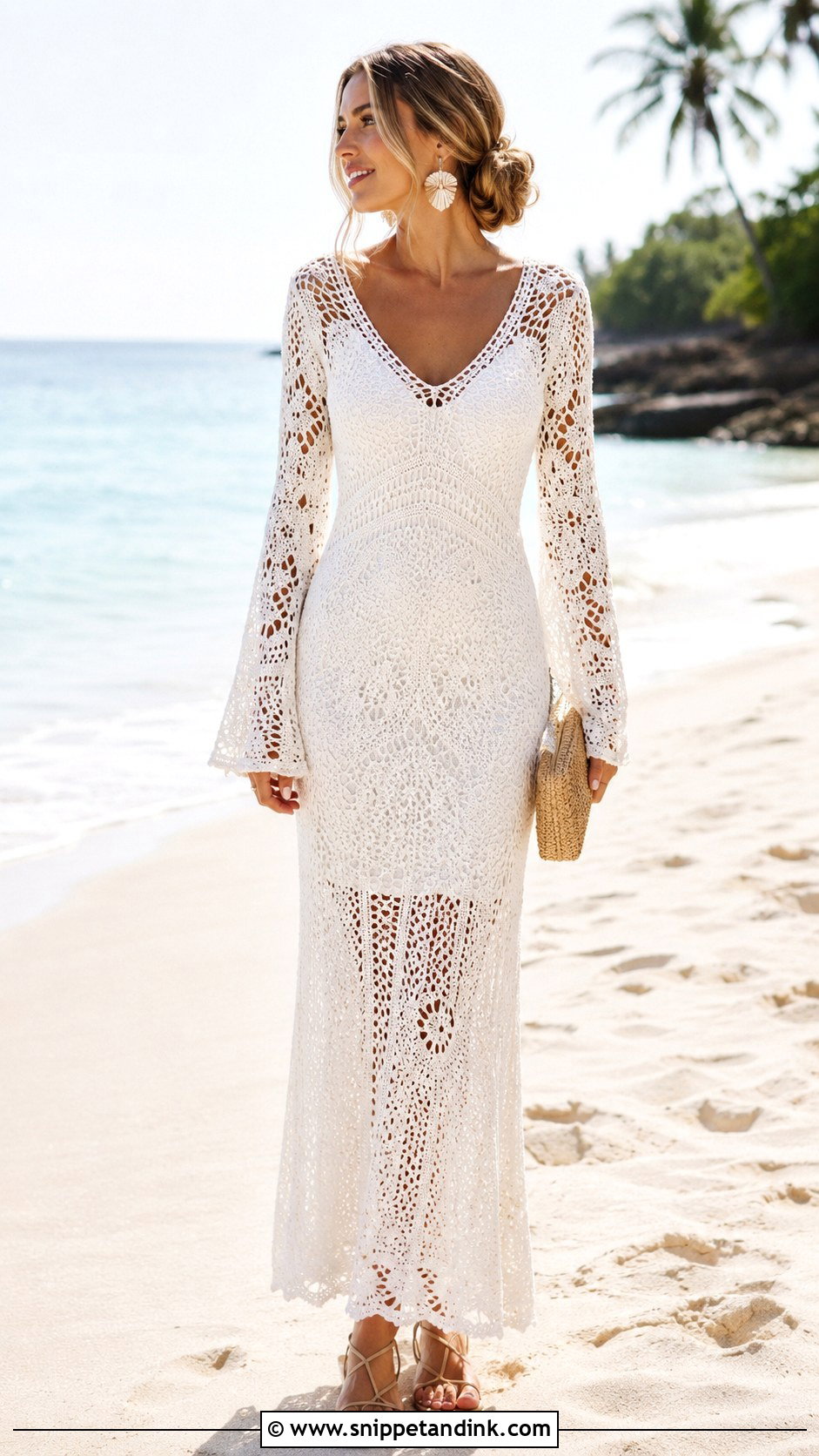
A crochet wedding dress breathes on a hot beach, but crochet is heavy when wet and stretches as it hangs, so try it on and leave it on for a while before you decide. A lined bodice and skirt with open sleeves or neckline show the pattern. A column or relaxed A-line keeps it from looking bulky. Skip any train; it gathers sand. Flat sandals or bare feet if the venue allows, a woven clutch and a linen shirt as a cover-up work well. Check the lining in bright daylight.
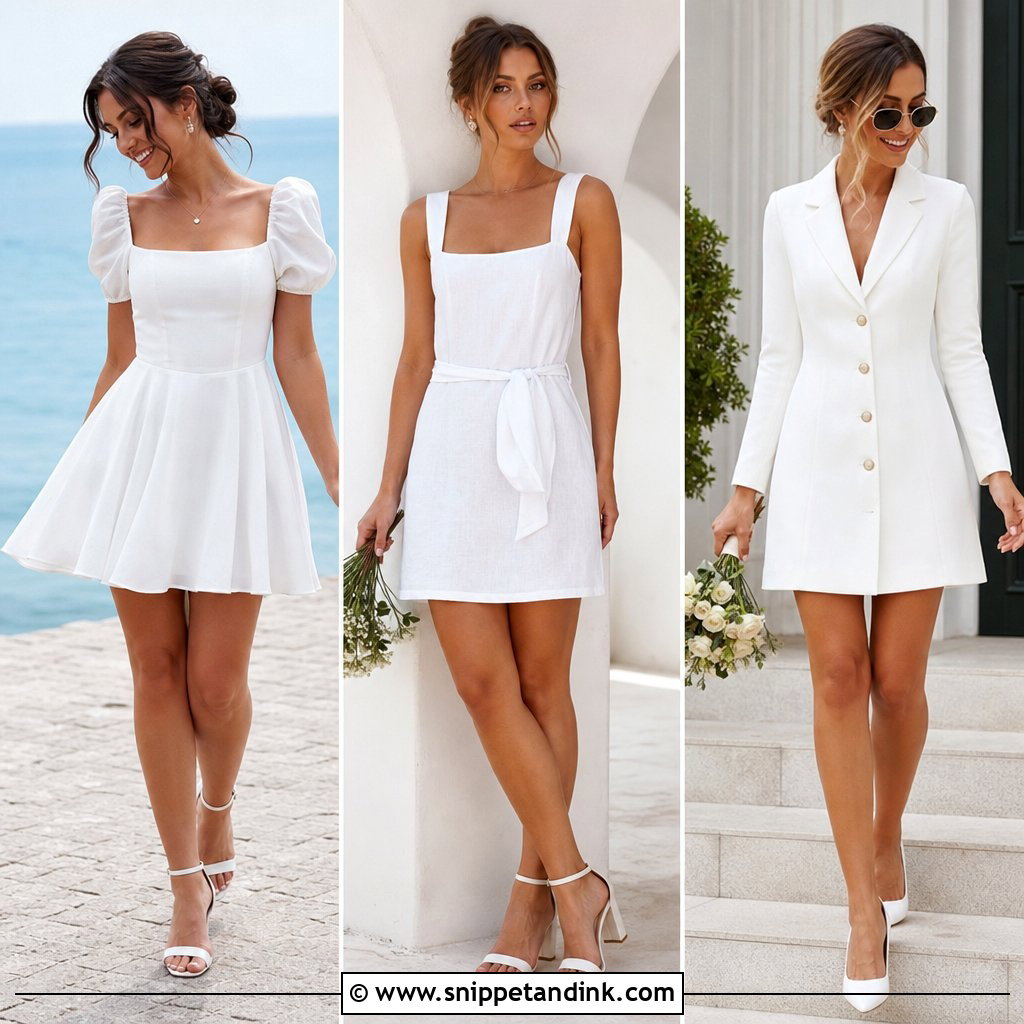

15. Puff Sleeve Cotton Wedding Dress
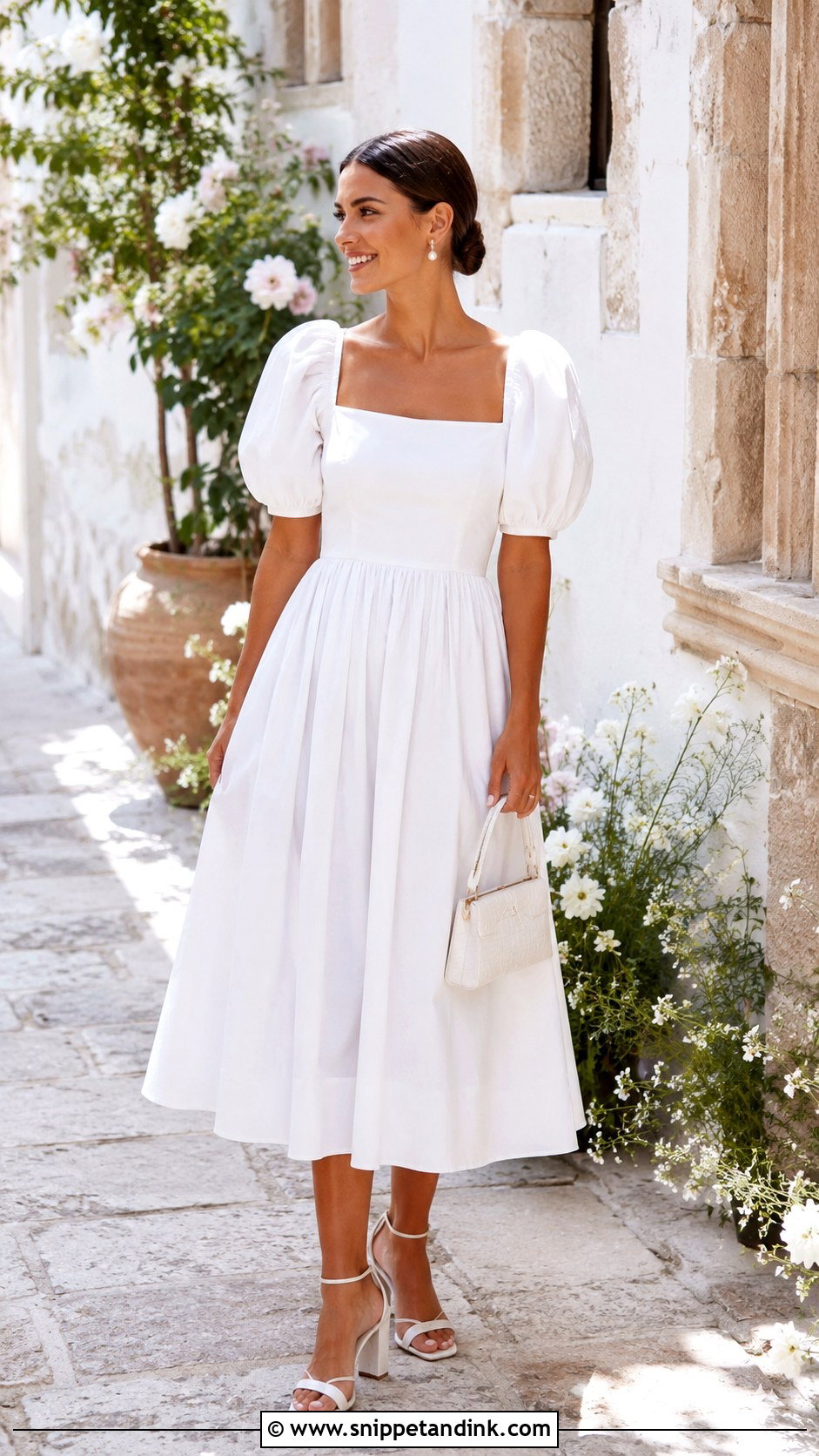
Puff sleeves on crisp cotton are fresh and approachable for daytime. A midi with a square or sweetheart neck, defined waist and gathered skirt lets the sleeves stay the focus. Cotton creases once you sit, so steam it just before the ceremony rather than the night before. A blend with a little stretch is more comfortable through the bodice. Hair up shows the sleeves; woven block heels or white sandals and small earrings keep the rest simple.
16. Bridal Romper With Overskirt
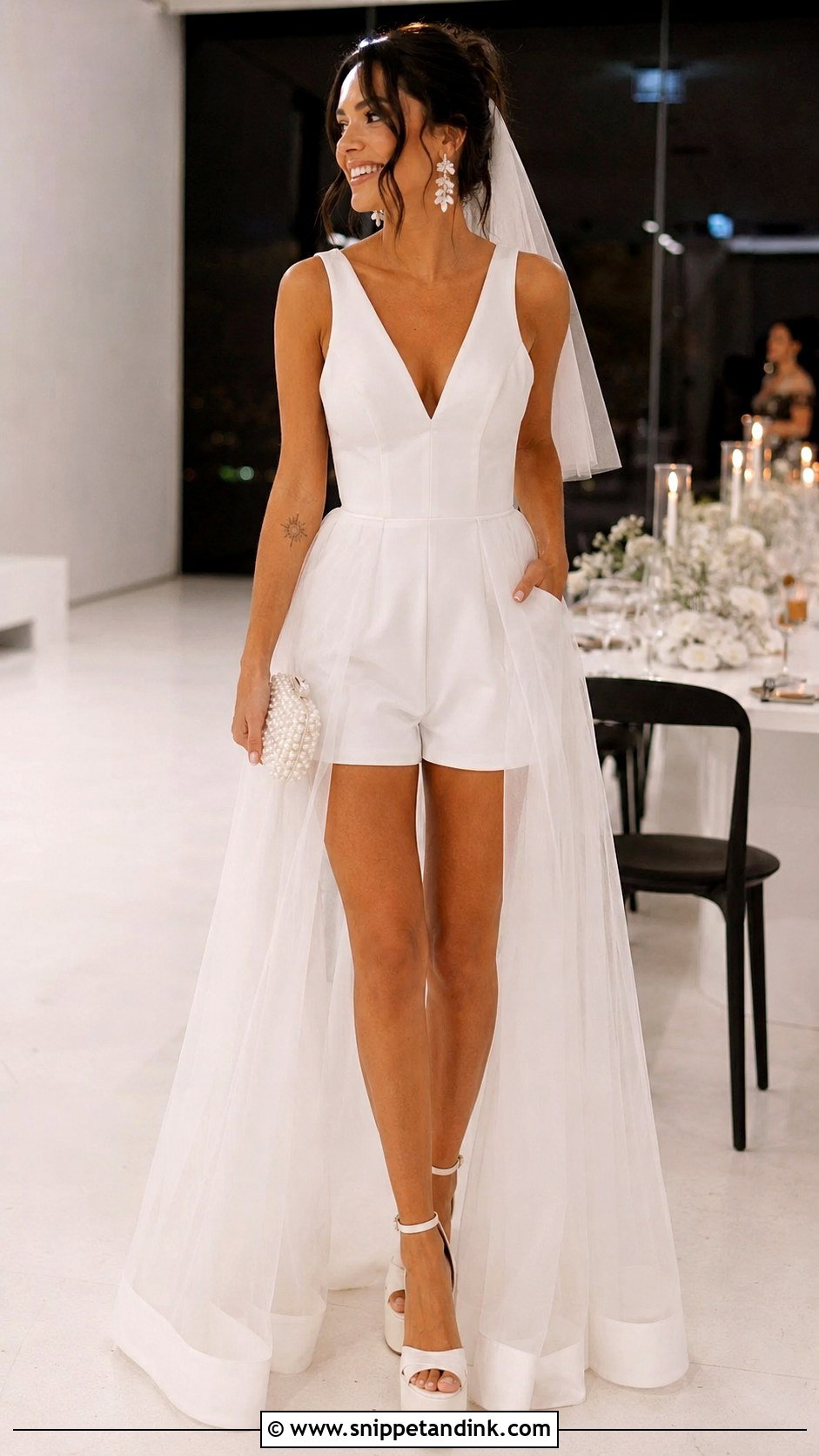
A romper with a removable overskirt gives you a ceremony dress and a party outfit without a costume change. The skirt has to attach properly, with covered snaps, hooks or a structured waistband, not just a tie that loosens. Practise taking it off in front of a mirror before the day; under pressure, people fumble the closures. Check the inseam when sitting and bending. Platform sandals or block heels, statement earrings and a short veil make the romper clearly bridal.
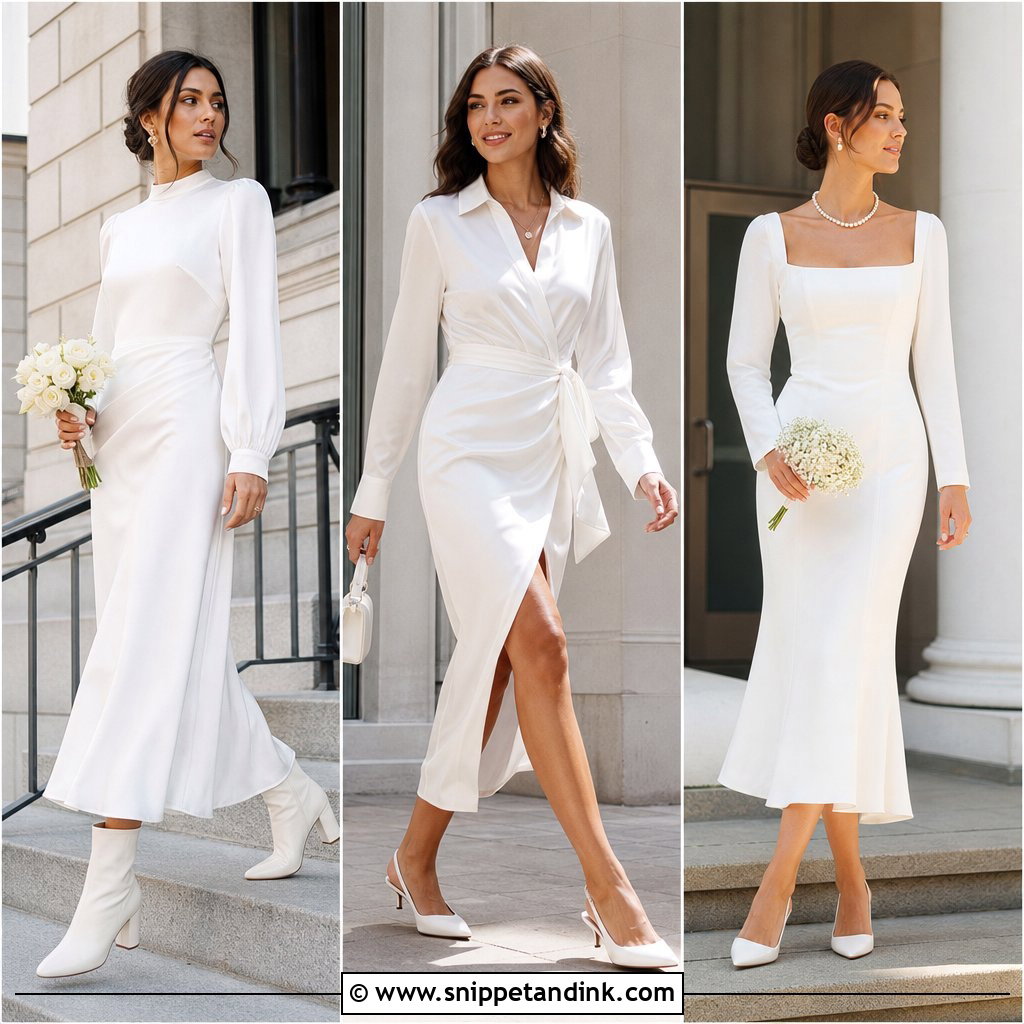
17. White Shirt Dress Wedding Outfit
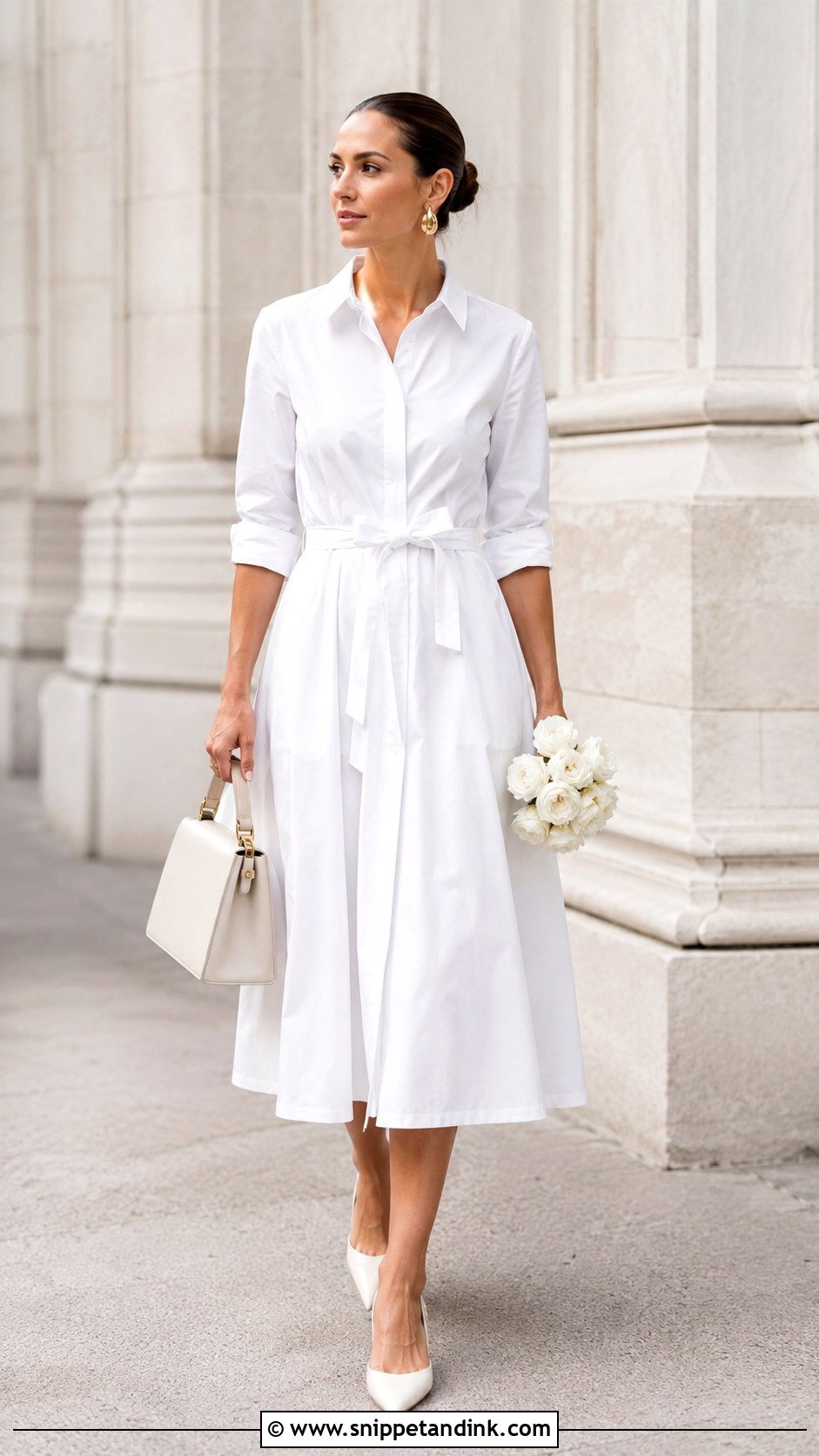
A shirt dress is familiar and comfortable, the kind of outfit you can forget you’re wearing. Cotton poplin is crisp for daytime; silk or satin dresses it up. The weak point is the button placket over the bust, which gapes when you sit. I fix that with fashion tape or a hidden snap between buttons. A defined waist or narrow belt keeps it from looking like work clothes. Pointed slingbacks, gold earrings and a sleek bun, then roll the sleeves for the reception.
18. Knit Midi Wedding Dress
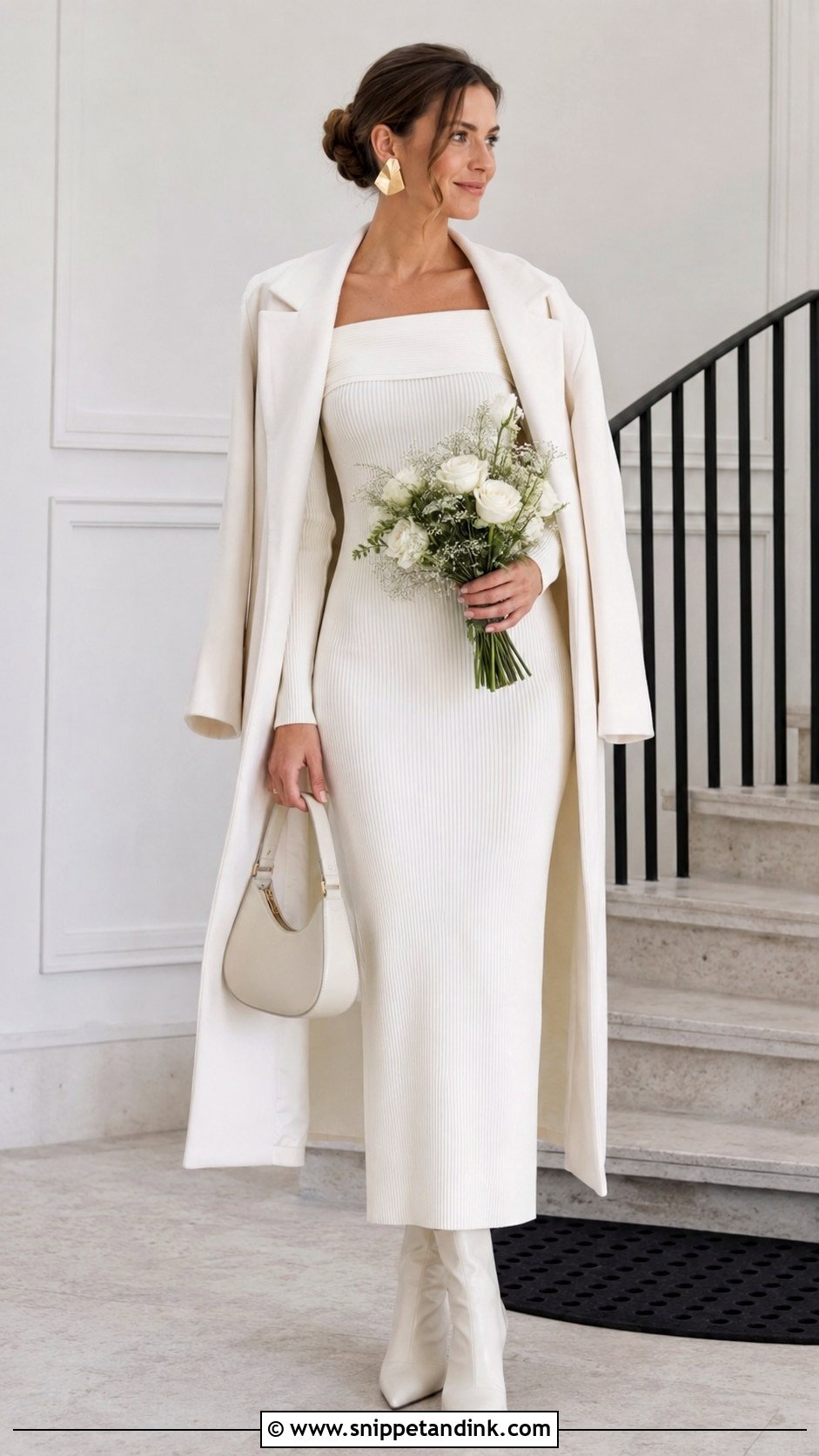
Knit is a winter option for a courthouse or small indoor ceremony. Choose a substantial rib that skims rather than clings; thin knit shows every line. Sit for several minutes in the fitting room and check whether it bags at the knees or seat, since some knits never spring back once stretched. A mock neck or long sleeves make it feel dressed. Wear it with pointed ankle boots, a structured coat and sculptural earrings. Oatmeal or soft grey feel quieter than ivory.
19. Vintage Floral Tea Dress
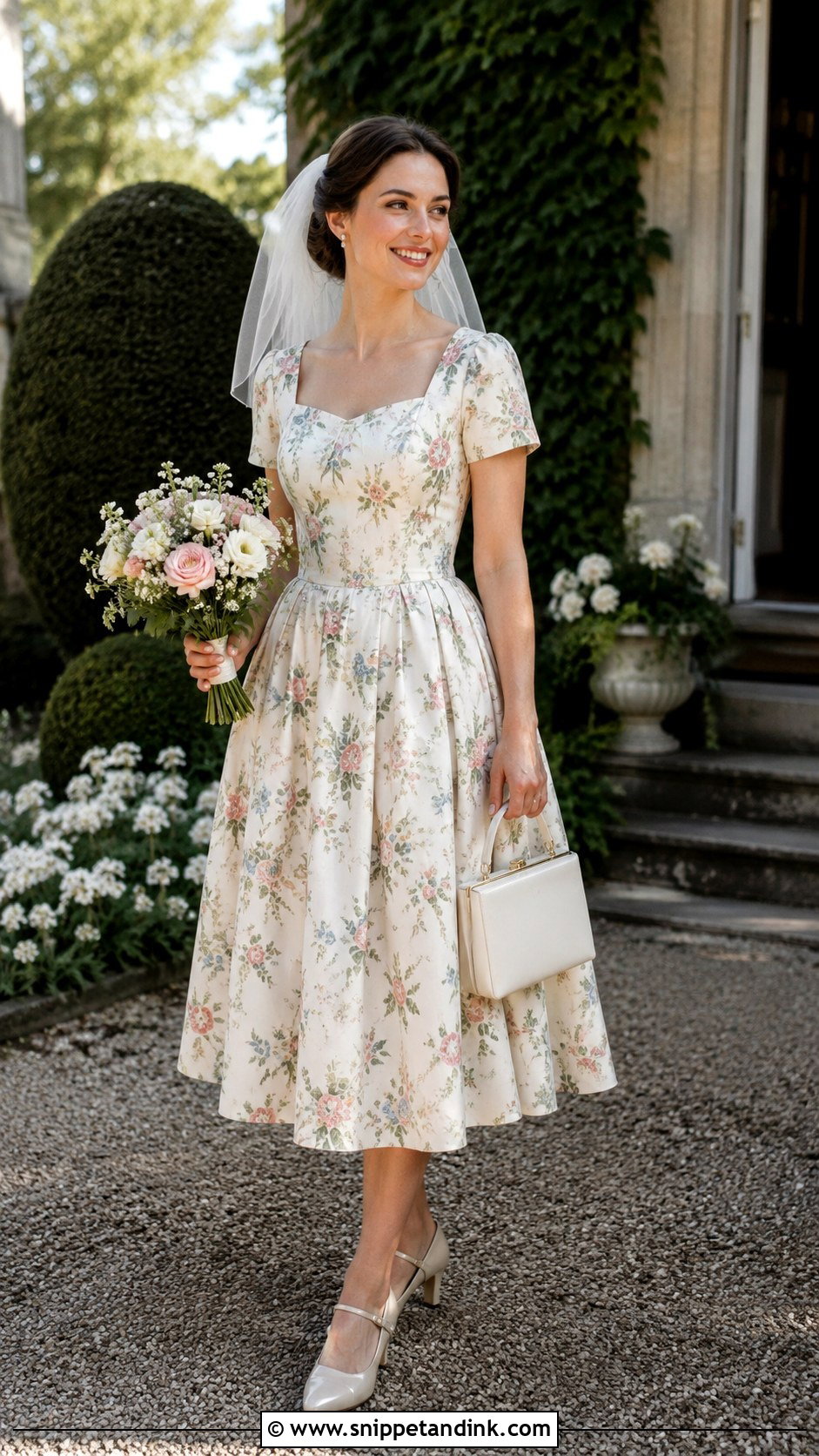
A vintage-style floral tea dress gives you the mood without the fragility of a real antique. Small ditsy or faded botanical prints on a midi with short sleeves and a gently full skirt look nostalgic and wearable. Mary Janes, a box bag and a padded headband suit it, but don’t wear every retro accessory at once or it starts to feel like a theme party. Modern makeup keeps it current. If you do buy genuine vintage, check the seams, zip and underarms carefully; old fabric can tear under the stress of a long day.

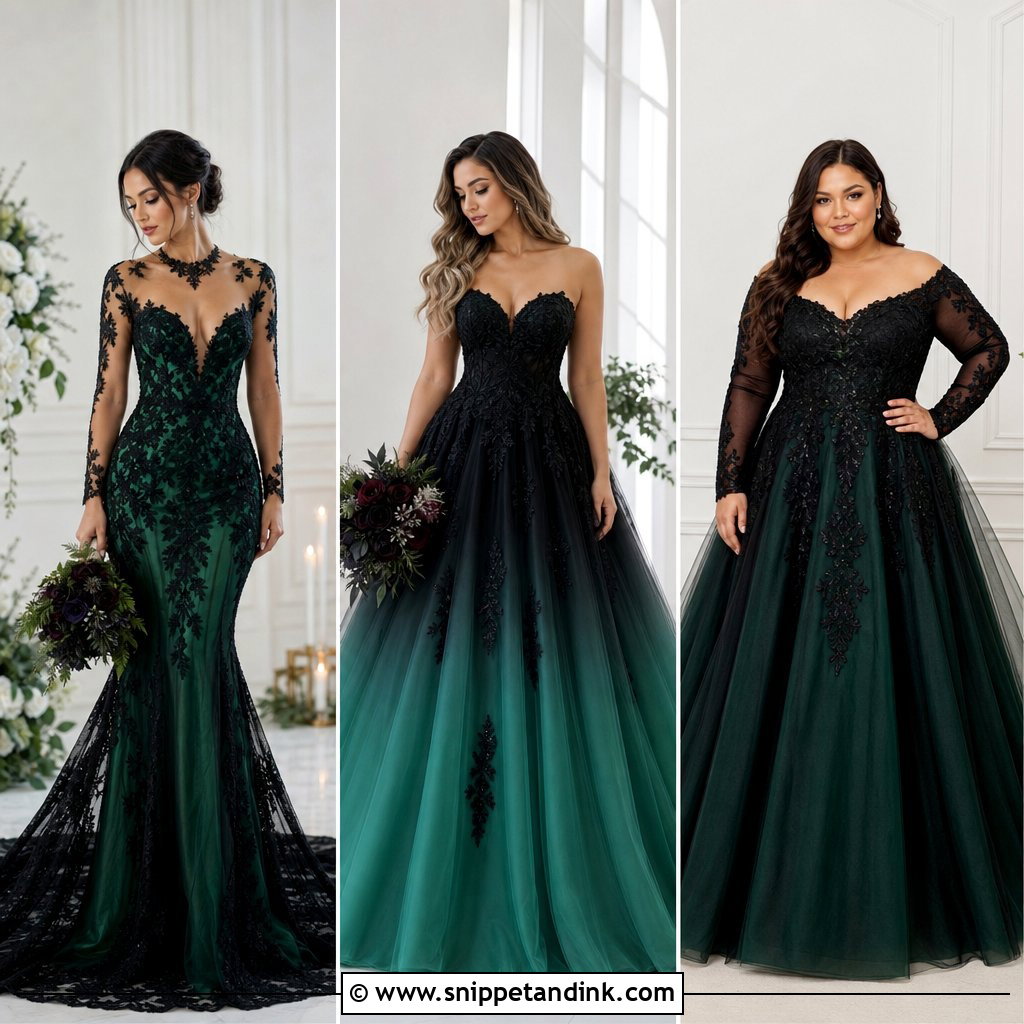
20. Colorful Wedding Pantsuit
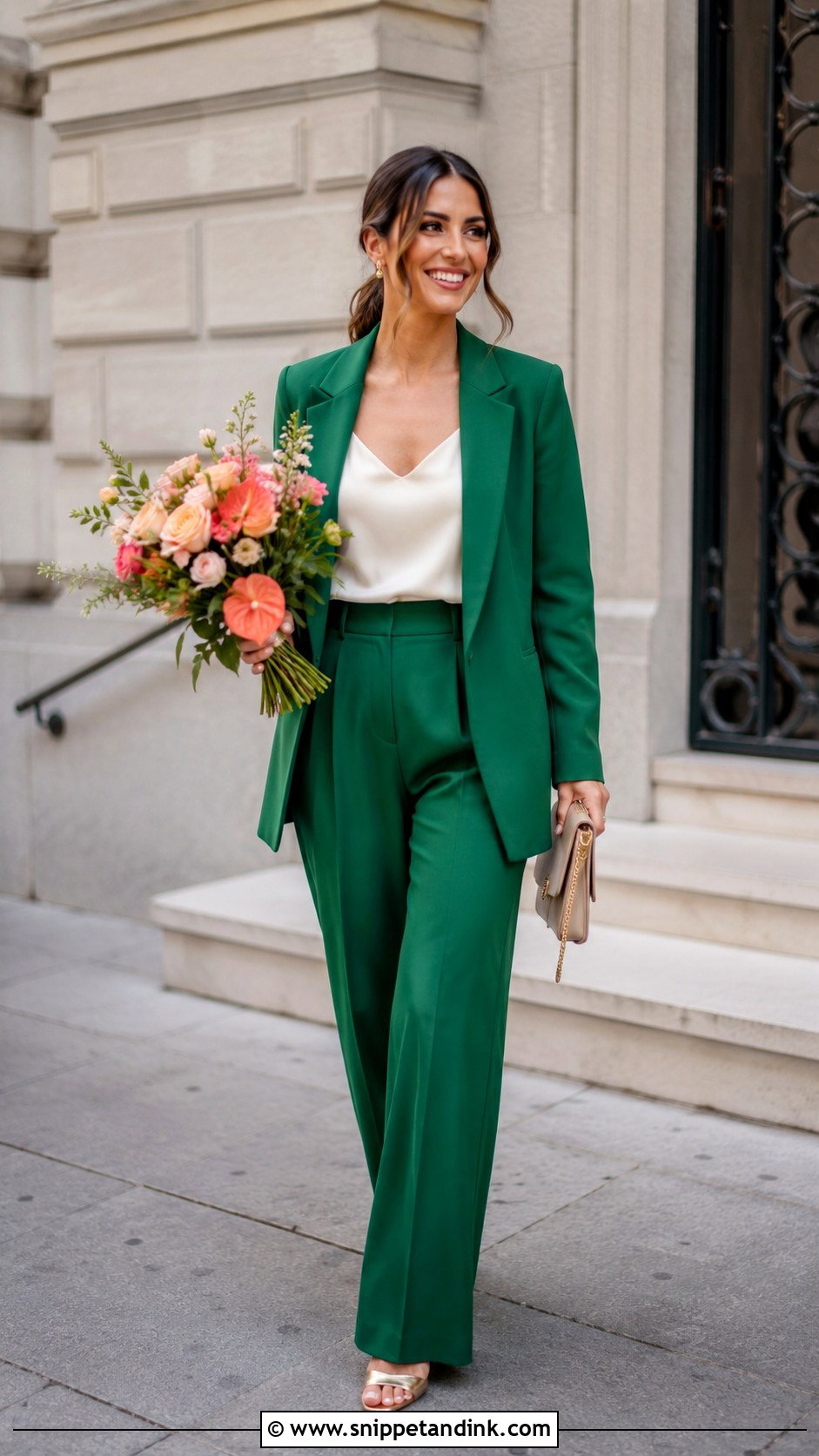
A colorful pantsuit works when it’s a shade you already love wearing. Emerald, lavender, cobalt or terracotta in a relaxed double-breasted blazer with wide trousers looks modern; a fitted vest with straight pants looks sharper. Wear a silk camisole or bodysuit beneath depending on how much coverage you want. Keep the bag neutral and earrings simple so the colour does the talking. Adjust sleeves, waist and trouser length after you’ve chosen your shoes, and add a veil or boutonniere for the ceremony.
Wearing It Again After the Wedding
One of the quiet advantages of a non-traditional outfit is that you can wear it again, and planning for that changes a few decisions. Separates and suits come back as work wear or anniversary dinner outfits, especially if you choose a colour you’d normally wear. Have the tailor leave a little extra seam allowance at the waist when altering, so the piece can be let out later.
Get anything worn at the wedding cleaned within a few weeks, before makeup, sweat and food marks oxidise and set into the fabric. Point out any spills to the cleaner. Ivory and white can be dyed afterwards, but results vary by fibre: natural fibres like cotton, linen and silk take dye well, while most polyester barely changes. Silk and satin are best stored folded in acid-free tissue in a cotton bag, out of light, instead of hanging, where their own weight stretches the shoulders over time.
If you plan to dye, ask a professional dyer before the wedding rather than after, and keep the care label. Thread, lining and lace trim are often a different fibre from the main fabric, so they can stay white while the dress changes colour. Some brides like that contrast; others are surprised by it. Rented or borrowed suits obviously skip all of this, which is another reason to decide early whether the piece is yours to keep.
Start With the Shape You Already Wear
A wedding outfit doesn’t have to be a gown to feel like a wedding outfit. Start with the shape you already love wearing, a slip, a suit or a jumpsuit, then make it bridal through tailoring, good shoes and one detail people recognise, like a veil or a meaningful piece of jewellery. Think about the venue, the weather and the ground underfoot. And try the whole outfit on together at least once before the day, shoes and all. Clothing that suits you this well rarely needs anything else.
You'll Like These Ideas:





Leave a Reply