
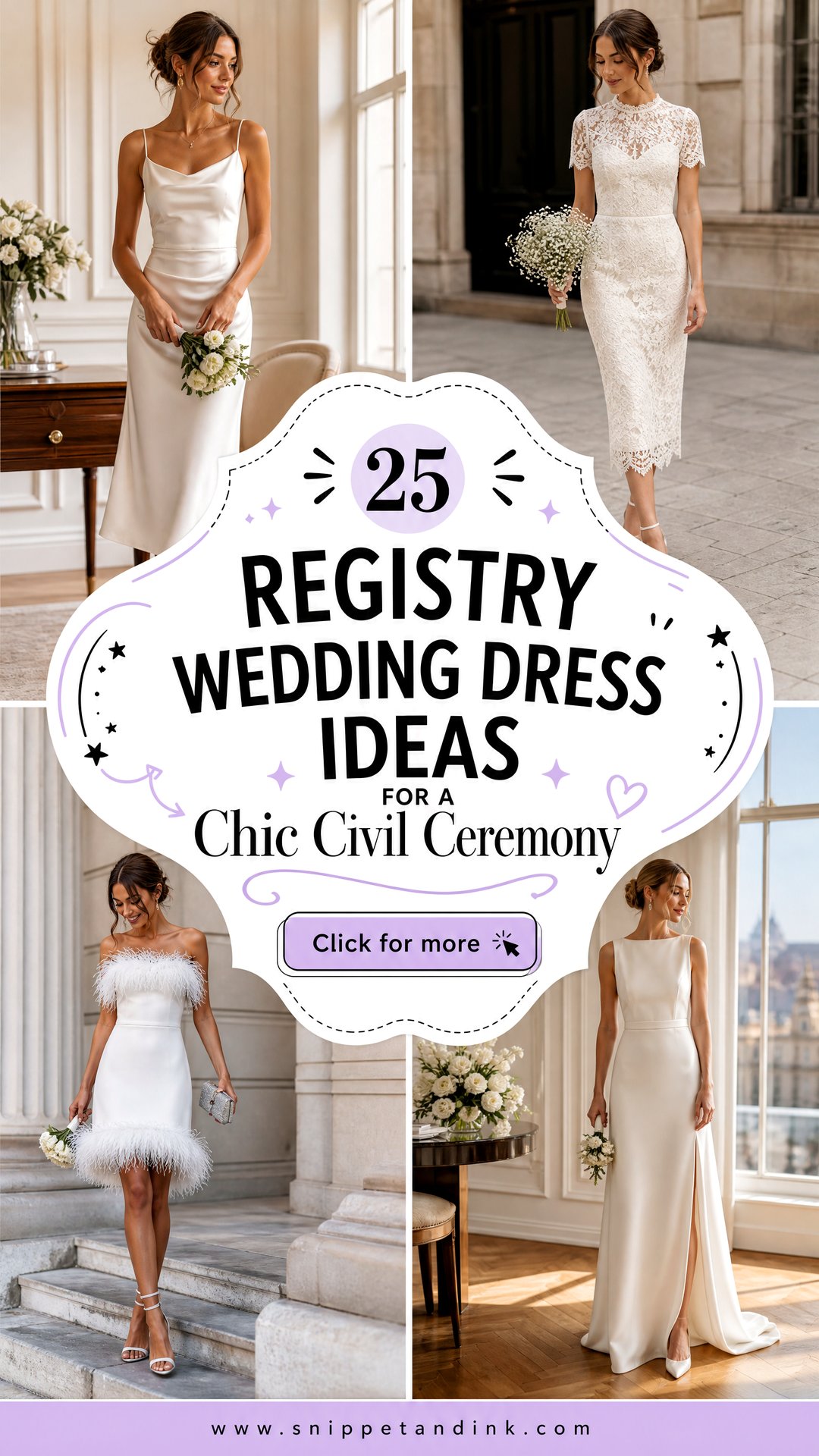
A registry ceremony asks more of an outfit than people expect. You might climb town hall steps, wait in a corridor, sit at a desk to sign the register and walk straight out into photos on the pavement, often inside half an hour. When I dress a bride for that day, I start with how the piece moves and sits, then think about mood. Below are twenty-five shapes I’d happily put a registry bride in, from minis and satin midis to suits and quiet column gowns, with notes on what each one needs to work in real life.
How a Twenty-Minute Civil Ceremony Treats Your Clothes
Most registry ceremonies are short, but the outfit works hard in that time. You’ll probably arrive by car, wait in a corridor or a small anteroom, stand for the vows, then sit at a table to sign the register while your witnesses lean over your shoulder. Photos happen on the steps or the street outside, often in wind or bright overhead sun. Every one of those moments tests something different.
At a fitting I ask brides to do four things in the outfit: sit in a hard chair, lean forward as if signing, raise both arms to hug someone, and walk up and down a few stairs. A dress that passes all four is ready. If it fails the sitting test, look at length or fabric weight; if it fails the arm test, the sleeves or bodice need easing.
Weather and the walk outside
Civic buildings tend to be either chilly or overheated, and you’ll go from one to the other in seconds. Plan a layer that looks deliberate in photos: a cropped blazer, a tailored coat or a structured cape. Bring a small umbrella in a neutral colour, and choose shoes with a little grip, since polished stone steps get slippery after rain.
- Light fabrics such as chiffon and thin satin lift in the wind; crepe and heavier satin stay put.
- Very bright white can bleach out in direct midday sun, while ivory holds detail better.
- A short train or long hem picks up dust and damp from outside steps.
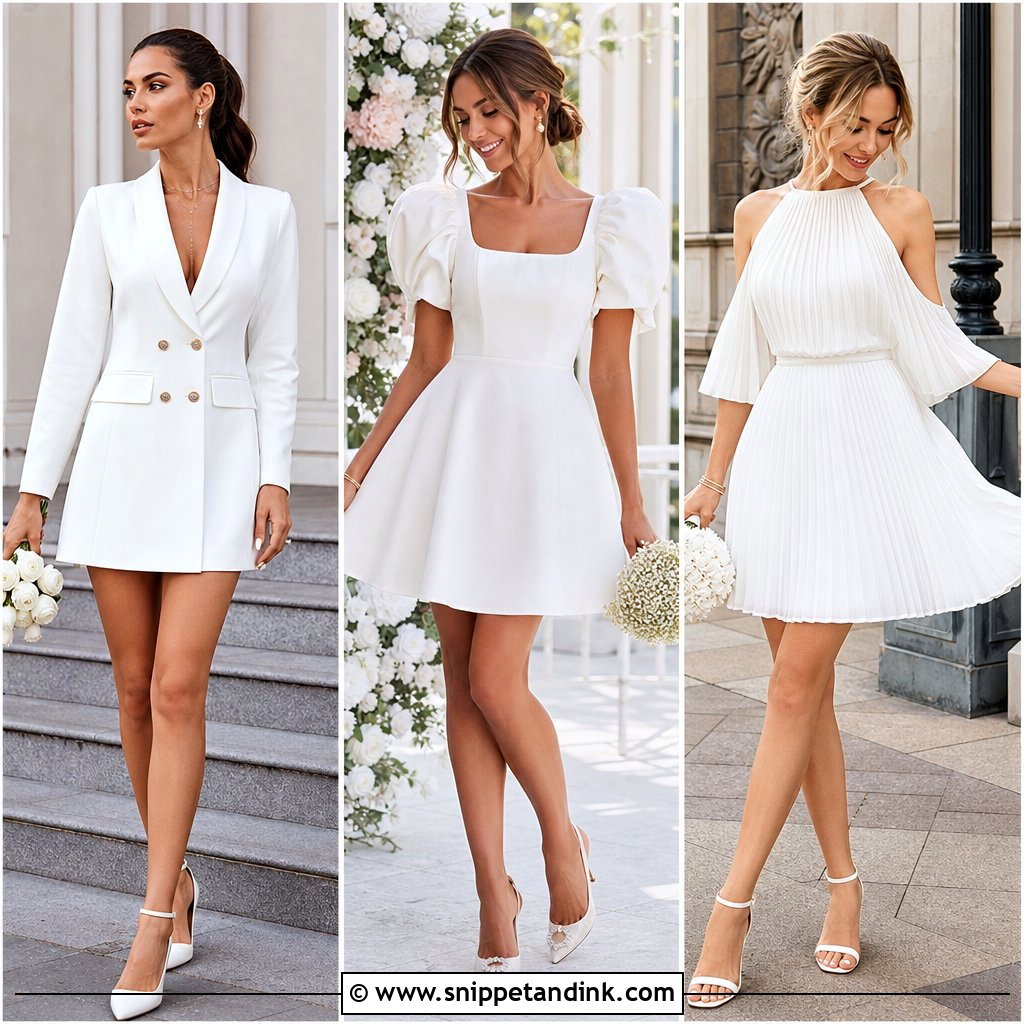
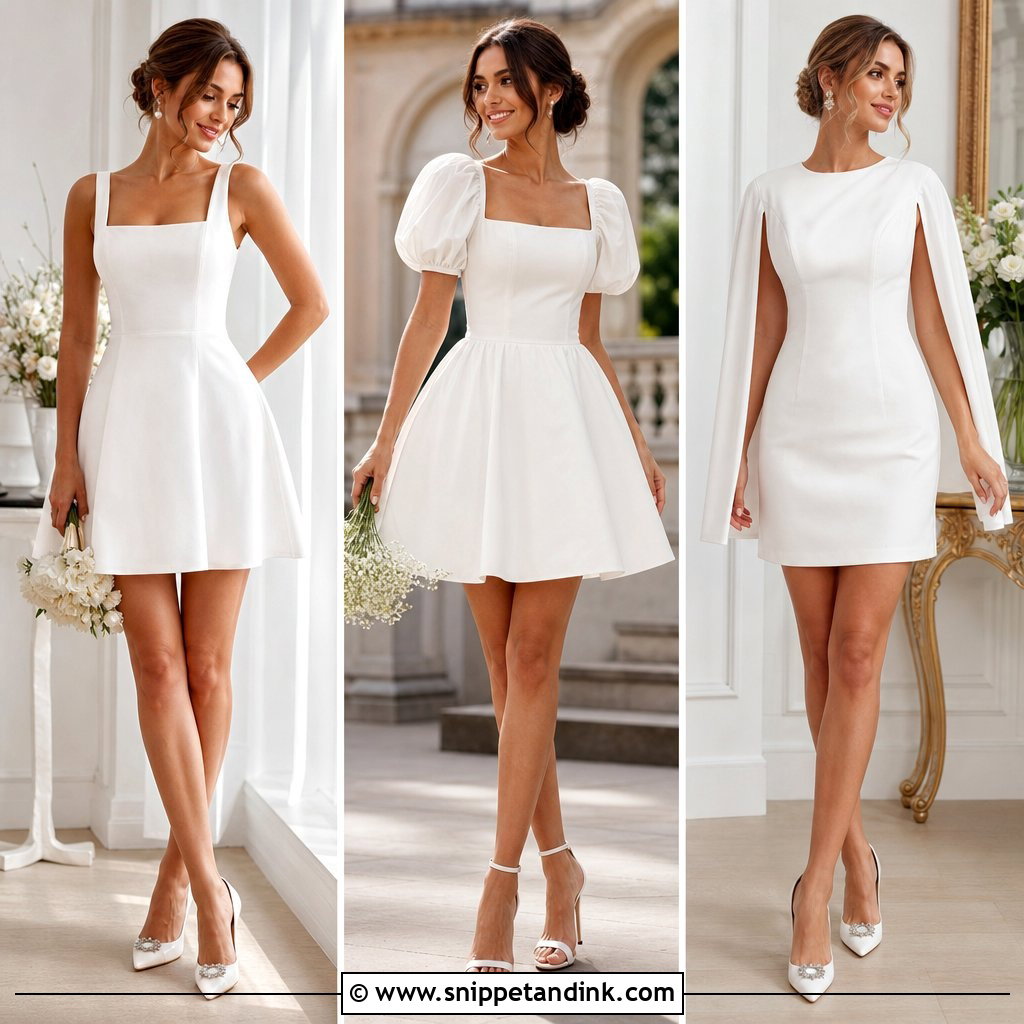
1. Short White Registry Wedding Dress
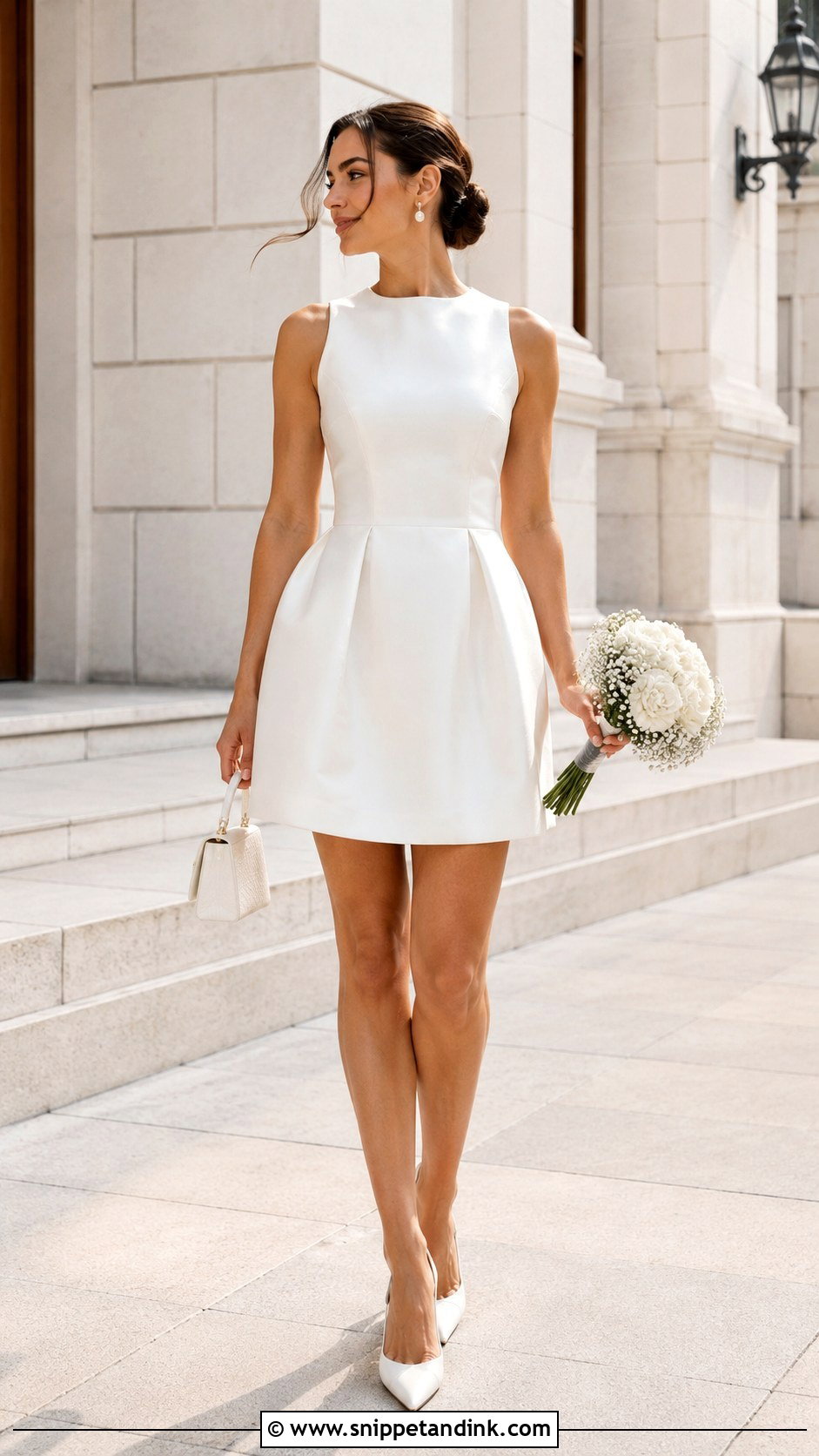
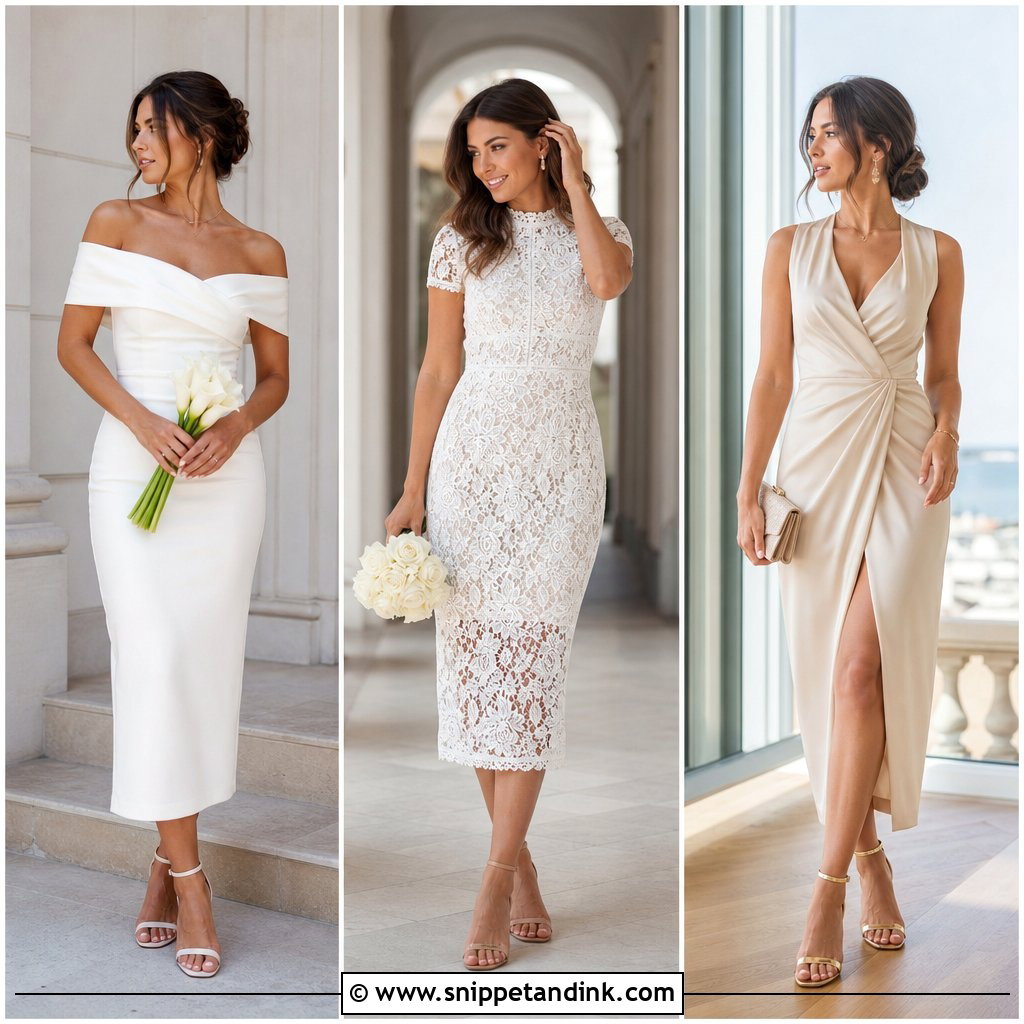
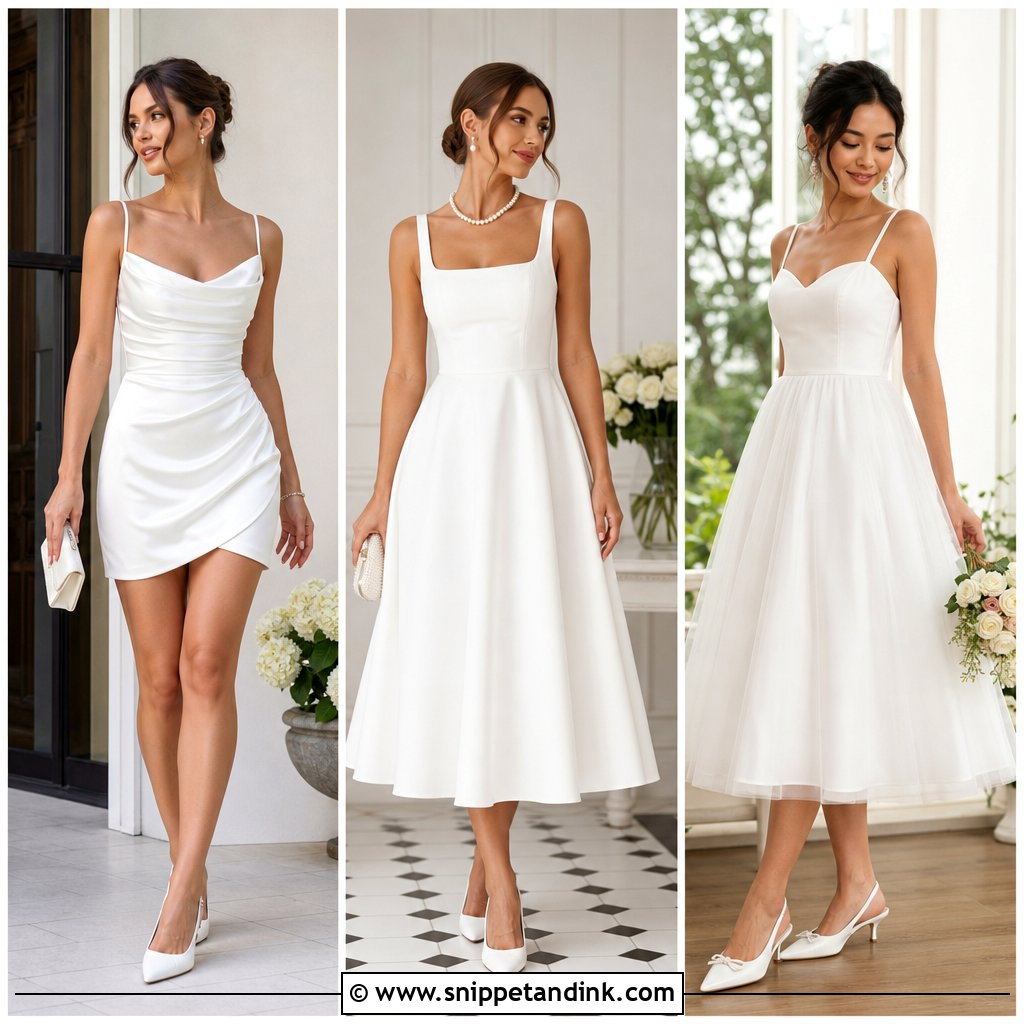
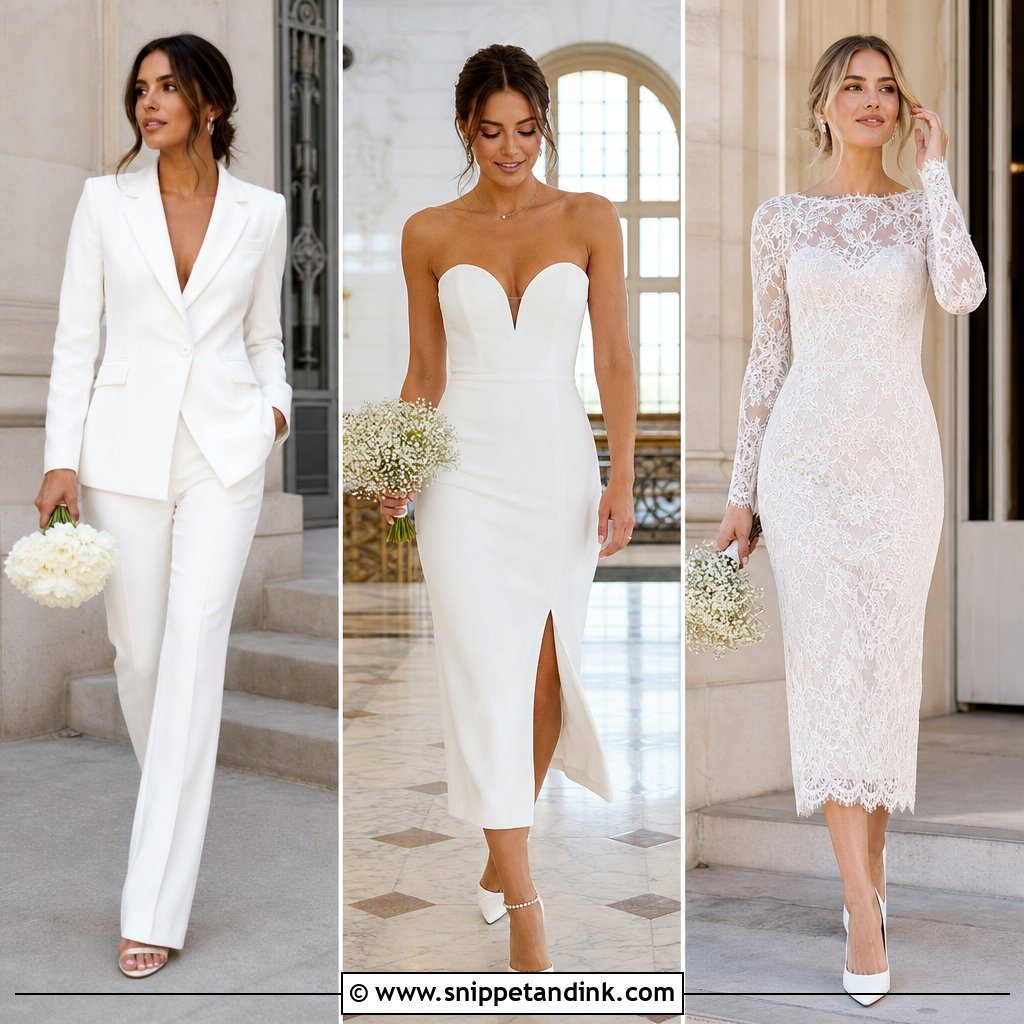
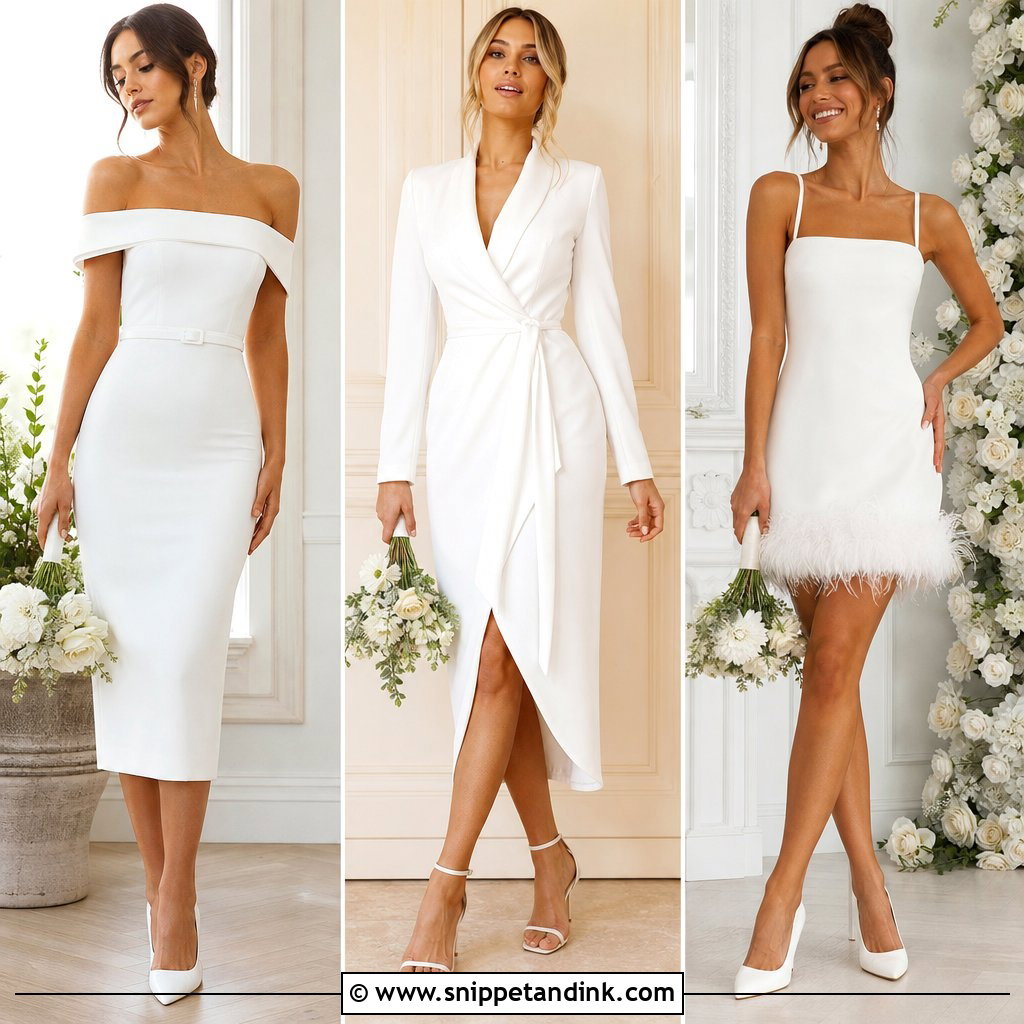
A short white registry wedding dress is the easiest thing to wear up a flight of civic steps, because there’s no hem to lift and no train to gather. My one test is the sit test: a structured mini can ride up several centimetres when you lower yourself into a signing chair, so try it seated in front of a mirror before you commit. A slightly longer A-line forgives this better than a bodycon cut. Slingbacks and pearl studs are enough, and a cropped blazer sorts out a chilly morning.
2. Satin Midi Registry Wedding Dress
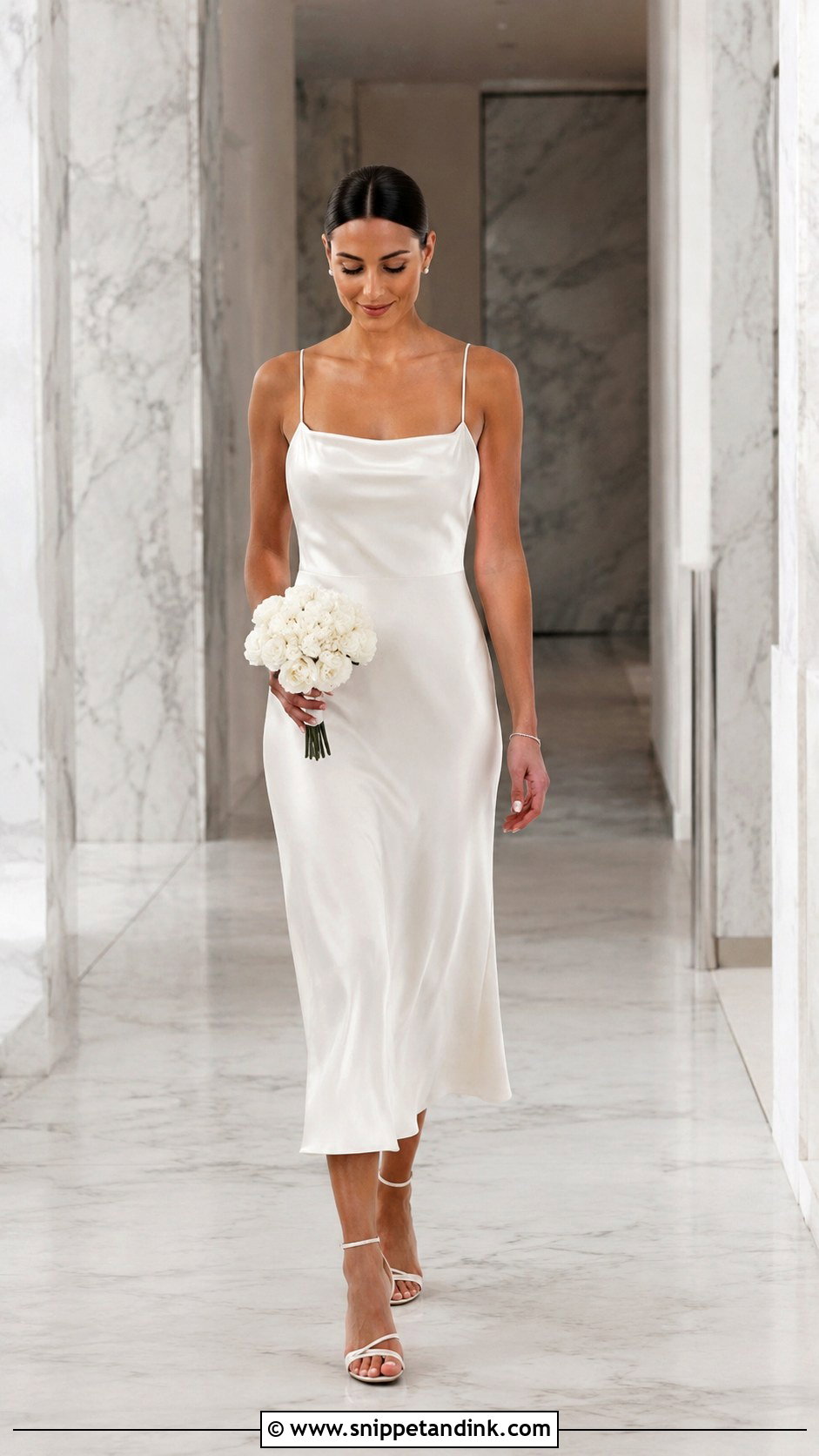
Satin is the fabric I get asked about most, and it’s also the one that shows everything. A bias-cut midi skims the body beautifully, but thin satin creases across the lap the moment you sit and highlights every seam of your underwear, so I push brides toward a heavier duchess or crepe-back satin. It catches daylight against stone buildings in a way that looks expensive in pictures. Keep the hair to a smooth low bun and let the fabric do the talking.
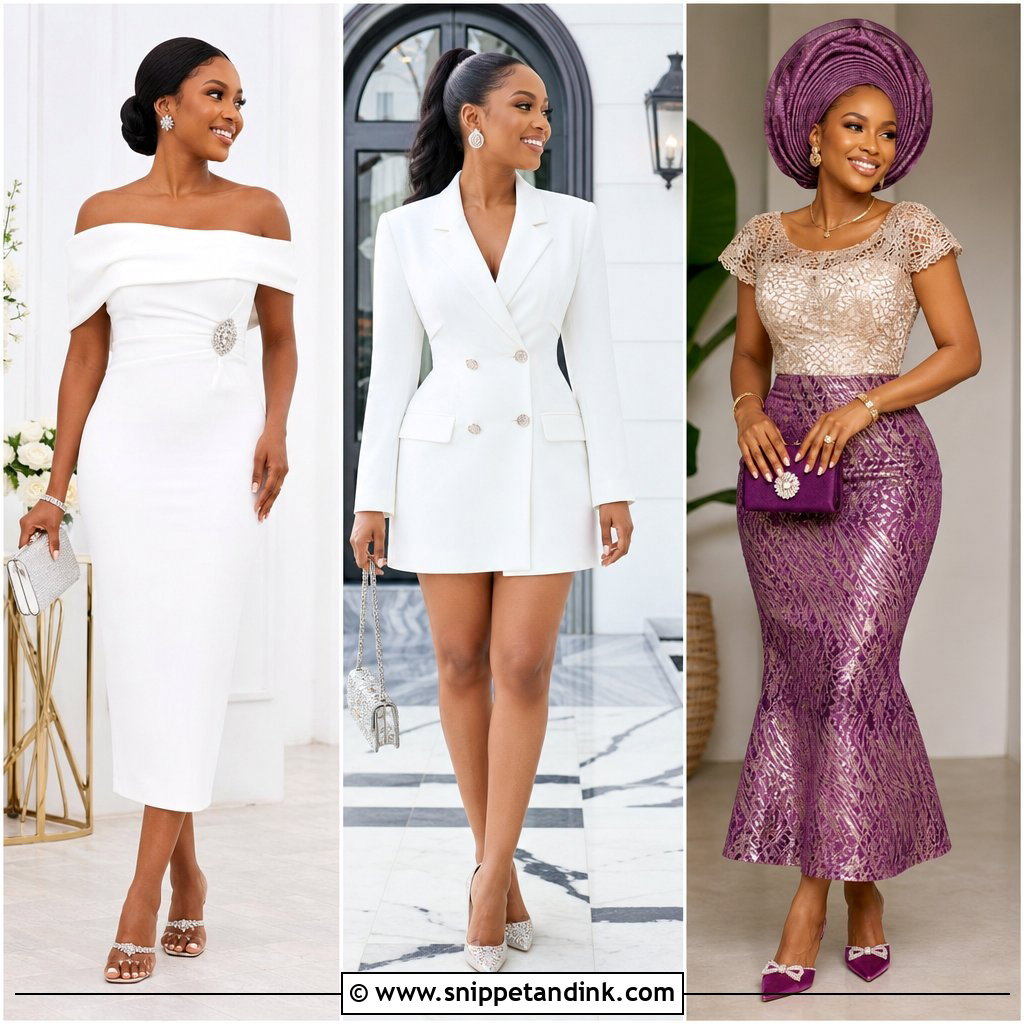
3. White Blazer Dress Registry Wedding Outfit
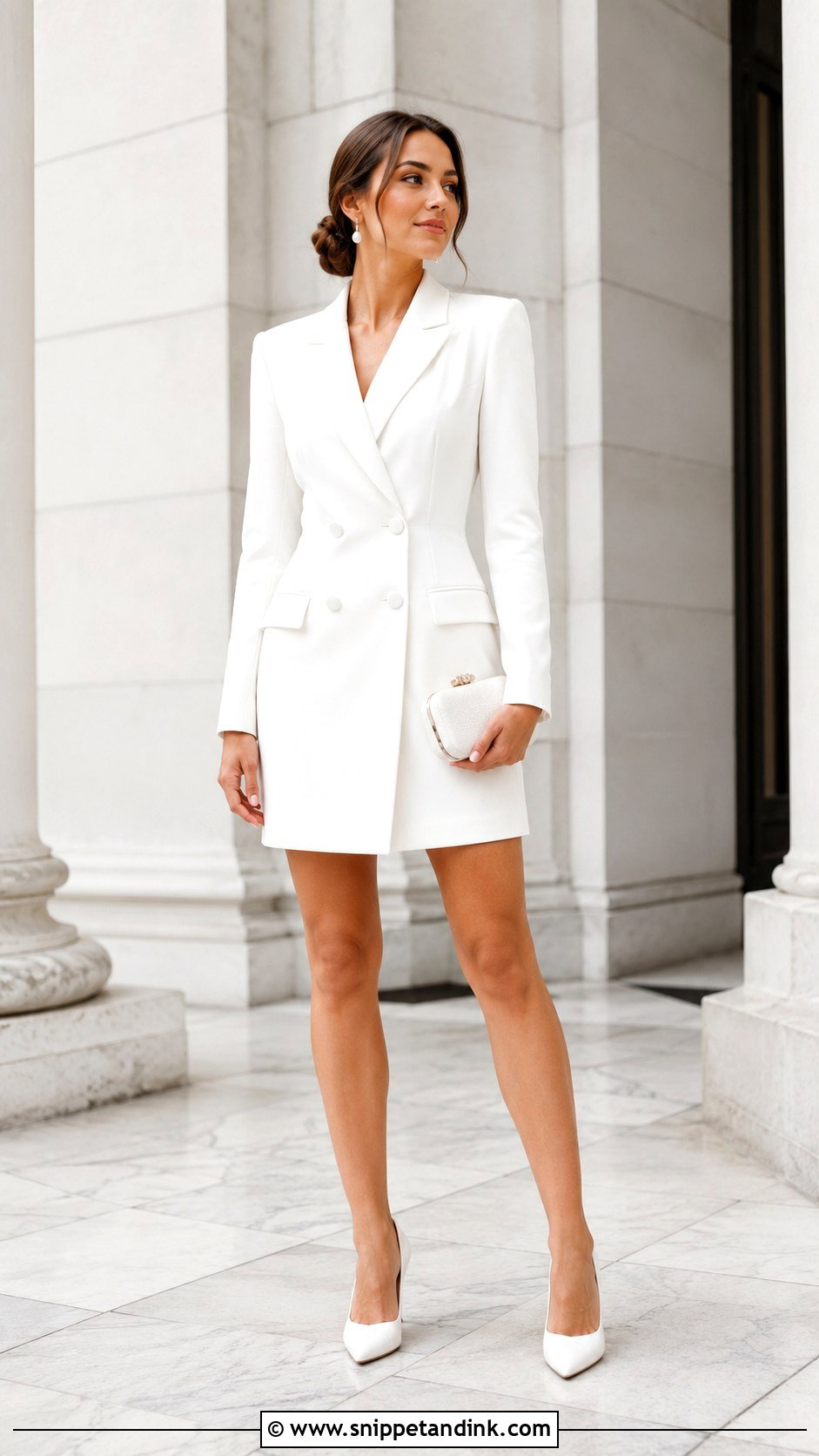
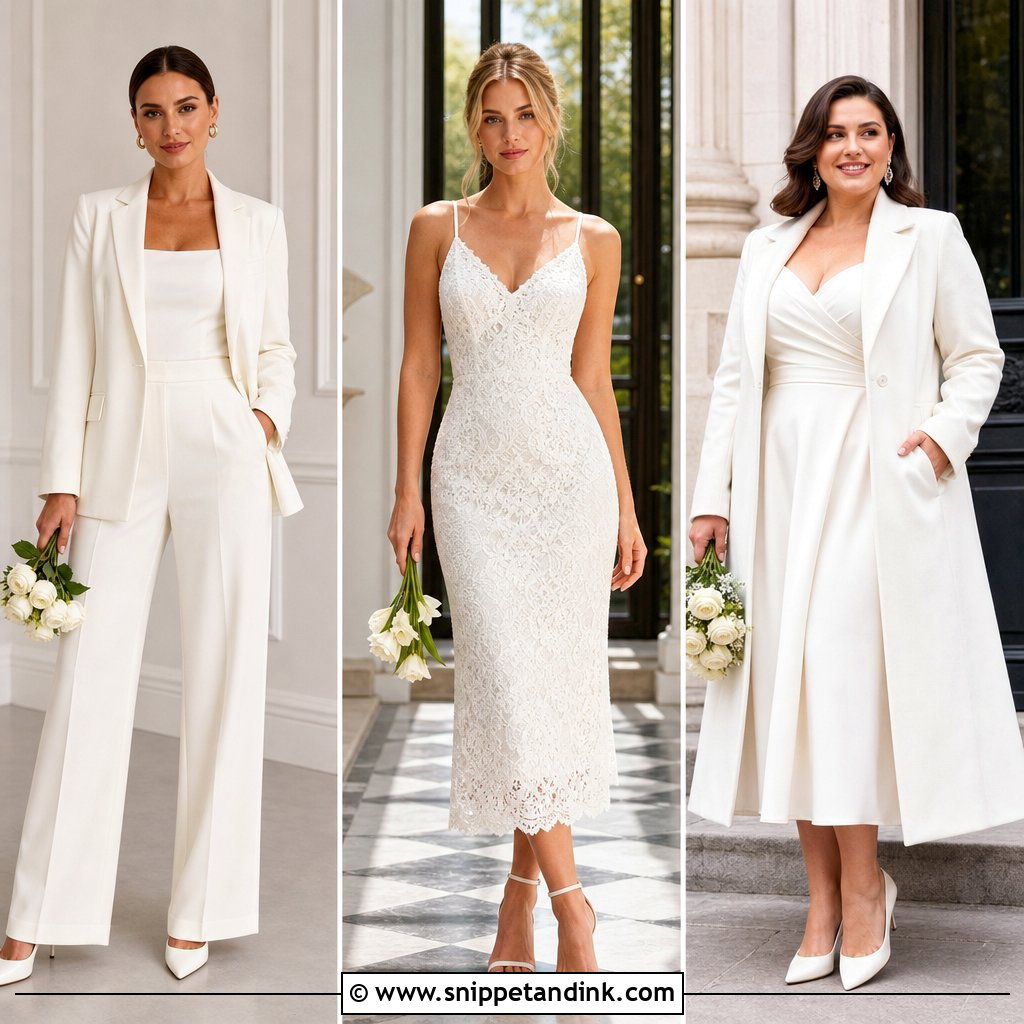
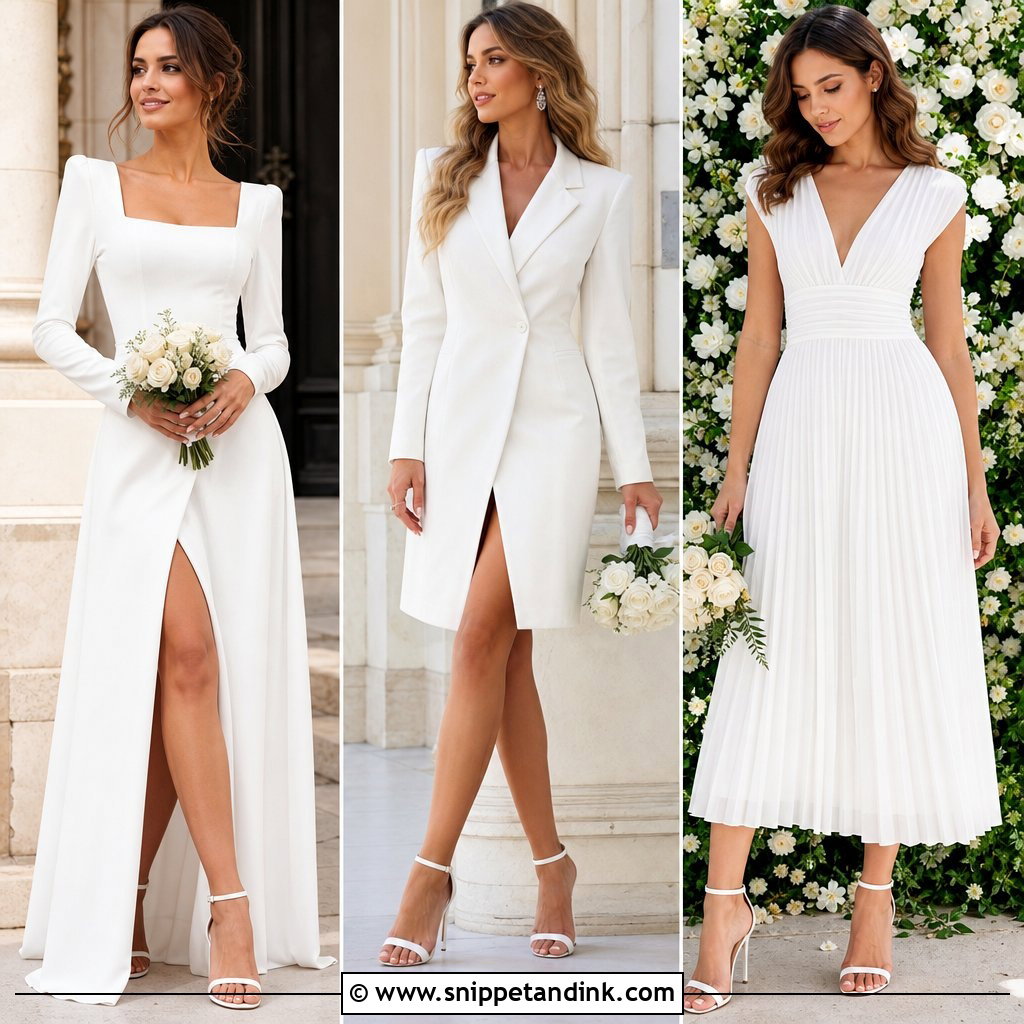
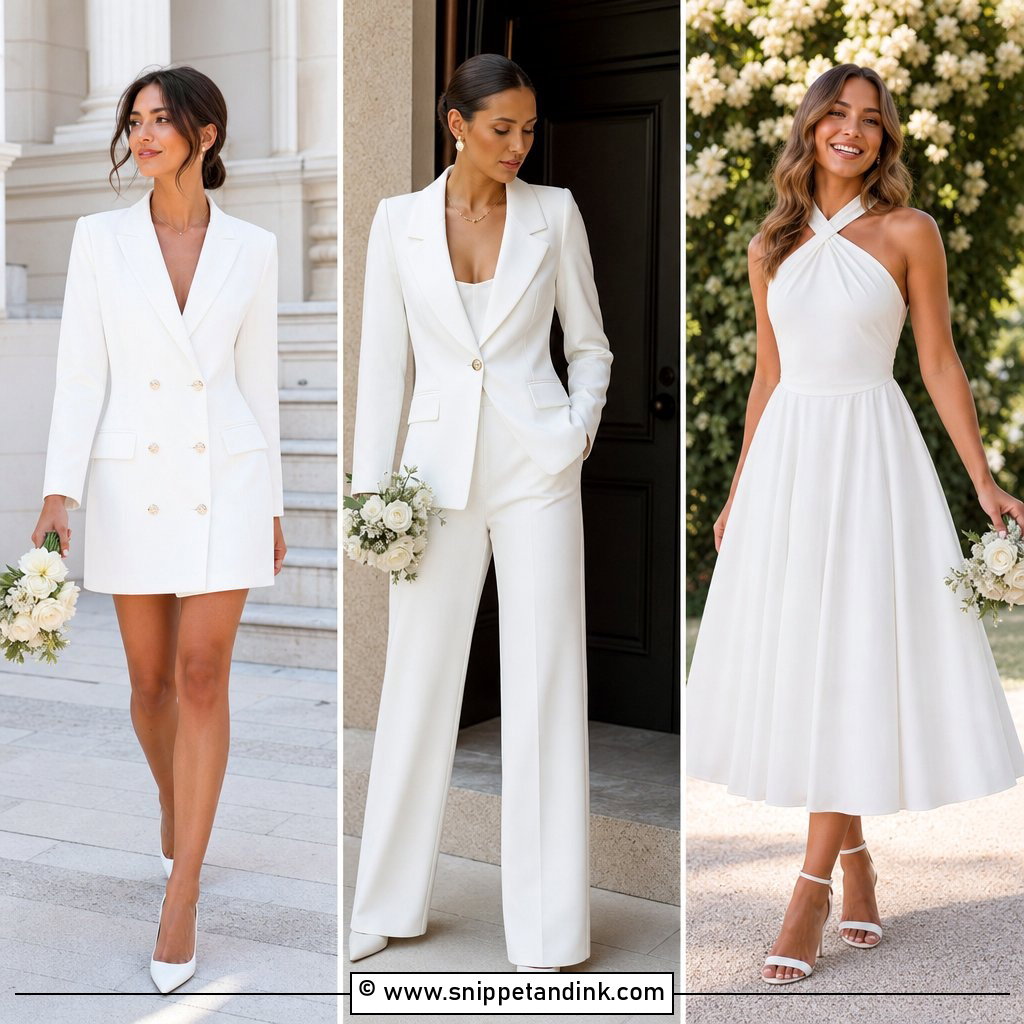
A white blazer dress gives you tailoring without trousers, and it suits brides who feel fussy in anything frilly. The fit point that matters is the shoulder seam: if it overhangs, no amount of hemming will save it, so buy for the shoulders and have the waist taken in. Double-breasted cuts sit flat when you’re standing but can gape at the lapels when you lean over a desk to sign. A small bow clip or short veil stops it looking like office wear.
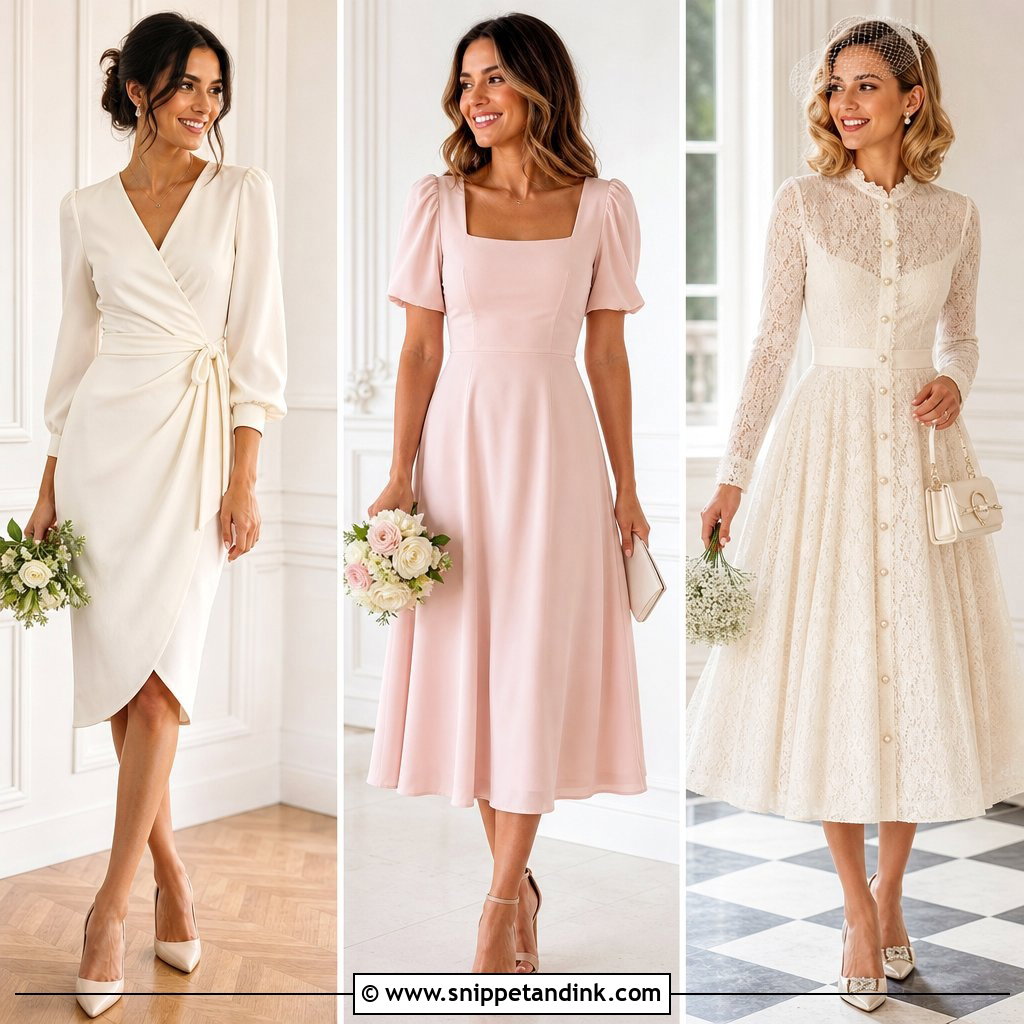
4. Lace Midi Registry Wedding Dress
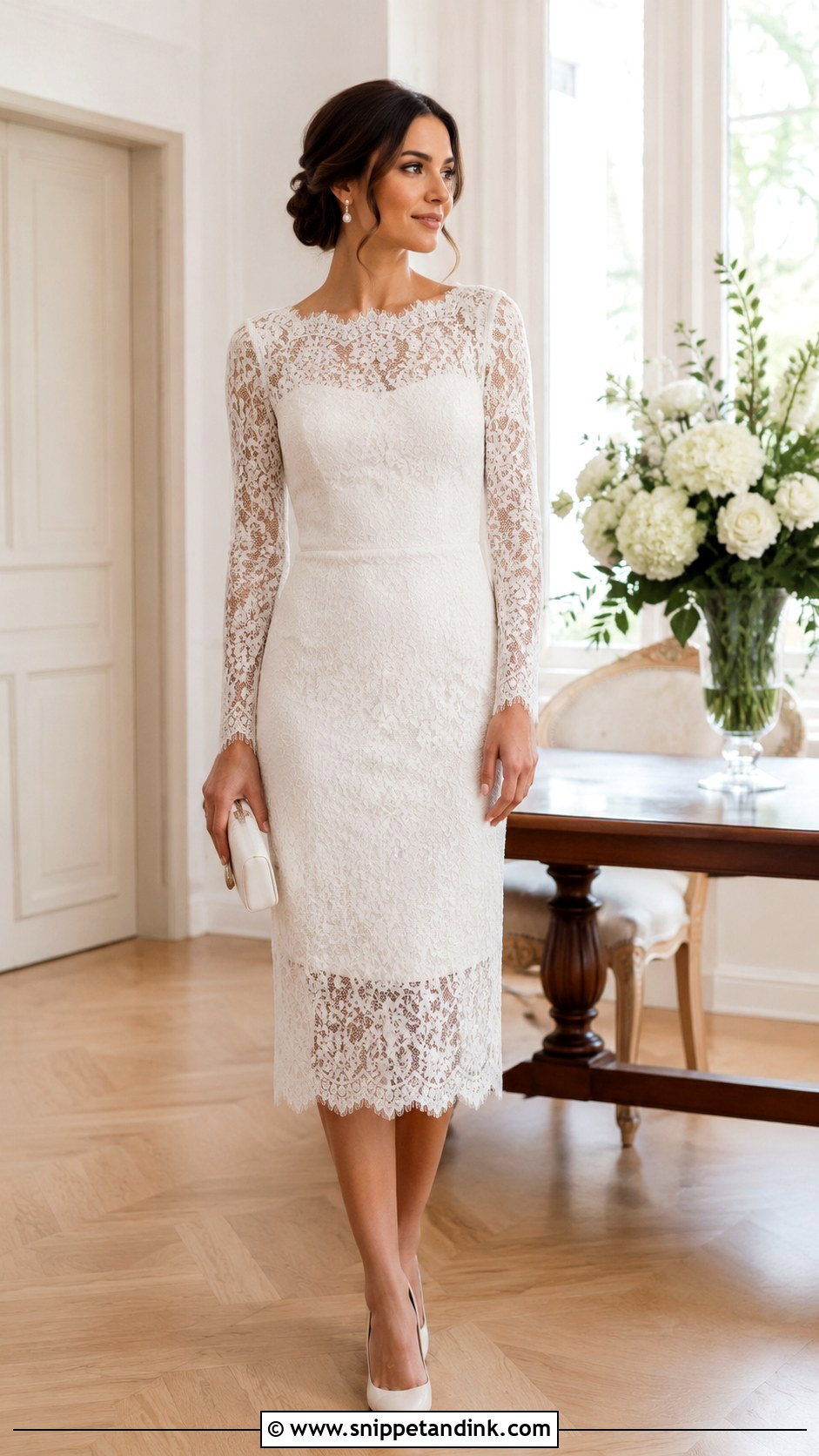
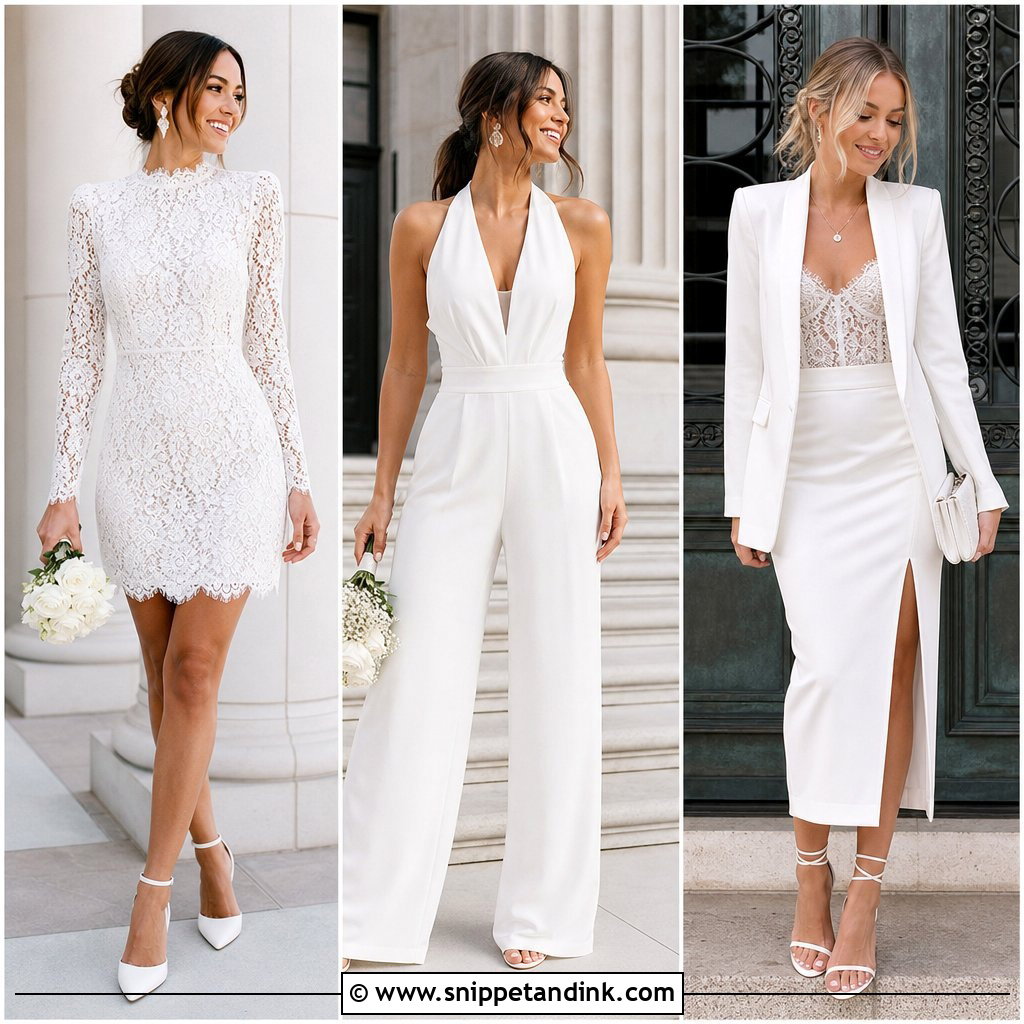
Lace earns its place in a small room because guests stand close and the camera sees texture. I look at the lining first: a nude or skin-tone lining gives that illusion effect, while a white lining reads cleaner and more traditional under fluorescent office lighting. Heavy corded lace is warm and stiff, so I’d skip it if you’re travelling between a ceremony, a lunch and a pub. A long-sleeved, high-necked midi in a softer Chantilly-style lace is the version I’d reach for.
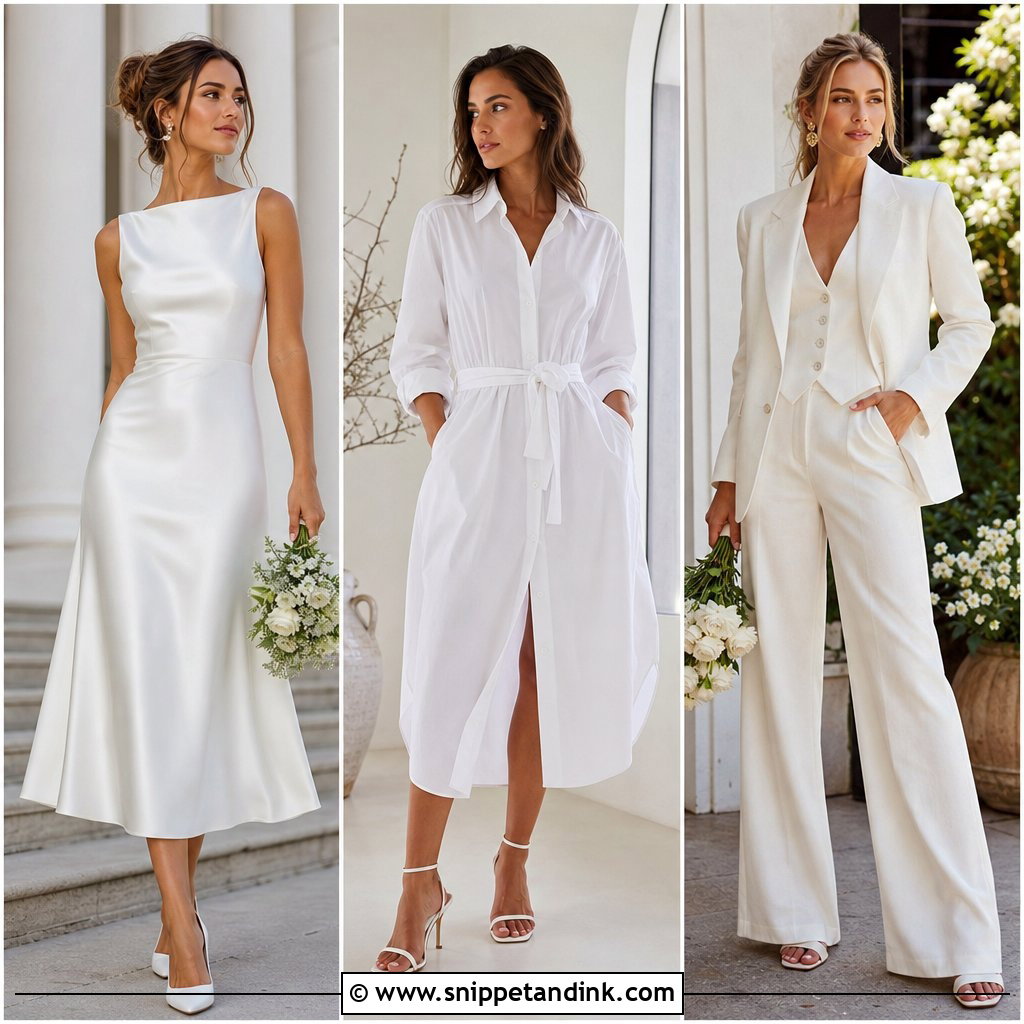
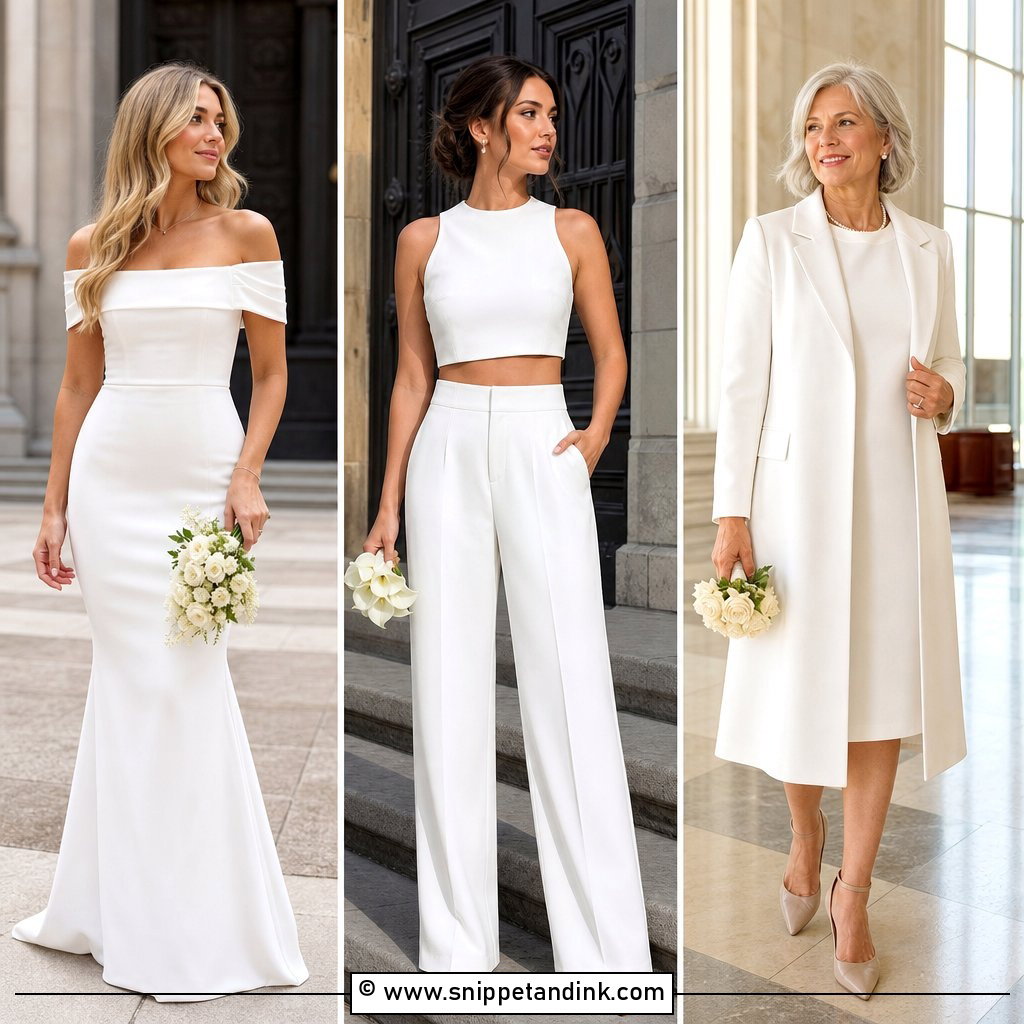
5. White Bridal Suit Registry Wedding Outfit
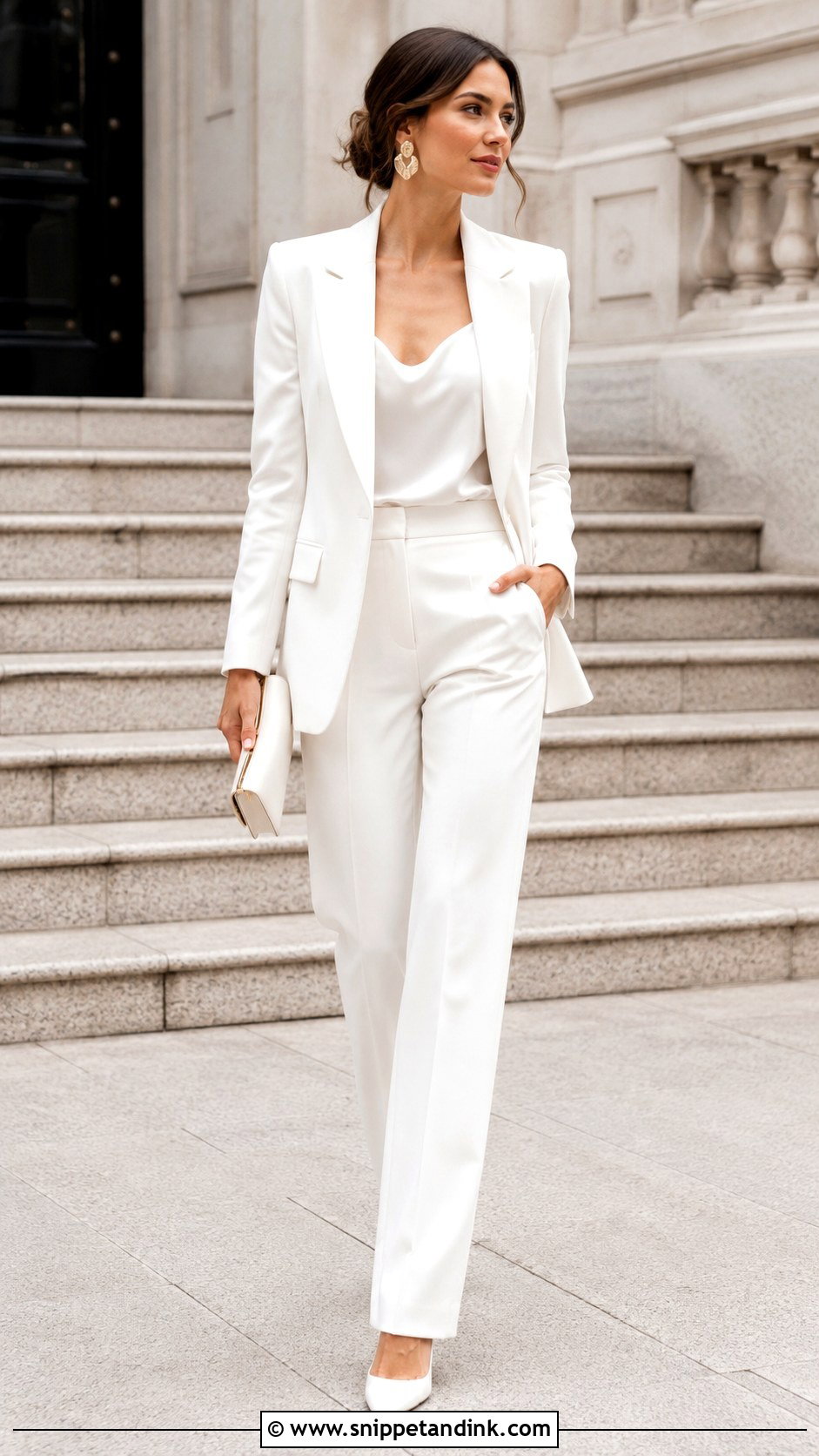
Suits are my default suggestion for brides who’ve never liked dresses. The jacket should close without pulling across the bust when you raise your arm to sign, which is the movement most fittings forget. A silk camisole underneath is prettier than a shirt, and a bodysuit stops it untucking. On petite frames I’d crop the trouser to the ankle so the shoe shows; on taller brides a full wide leg grazing the floor looks deliberate rather than borrowed.
6. White Jumpsuit Registry Wedding Outfit
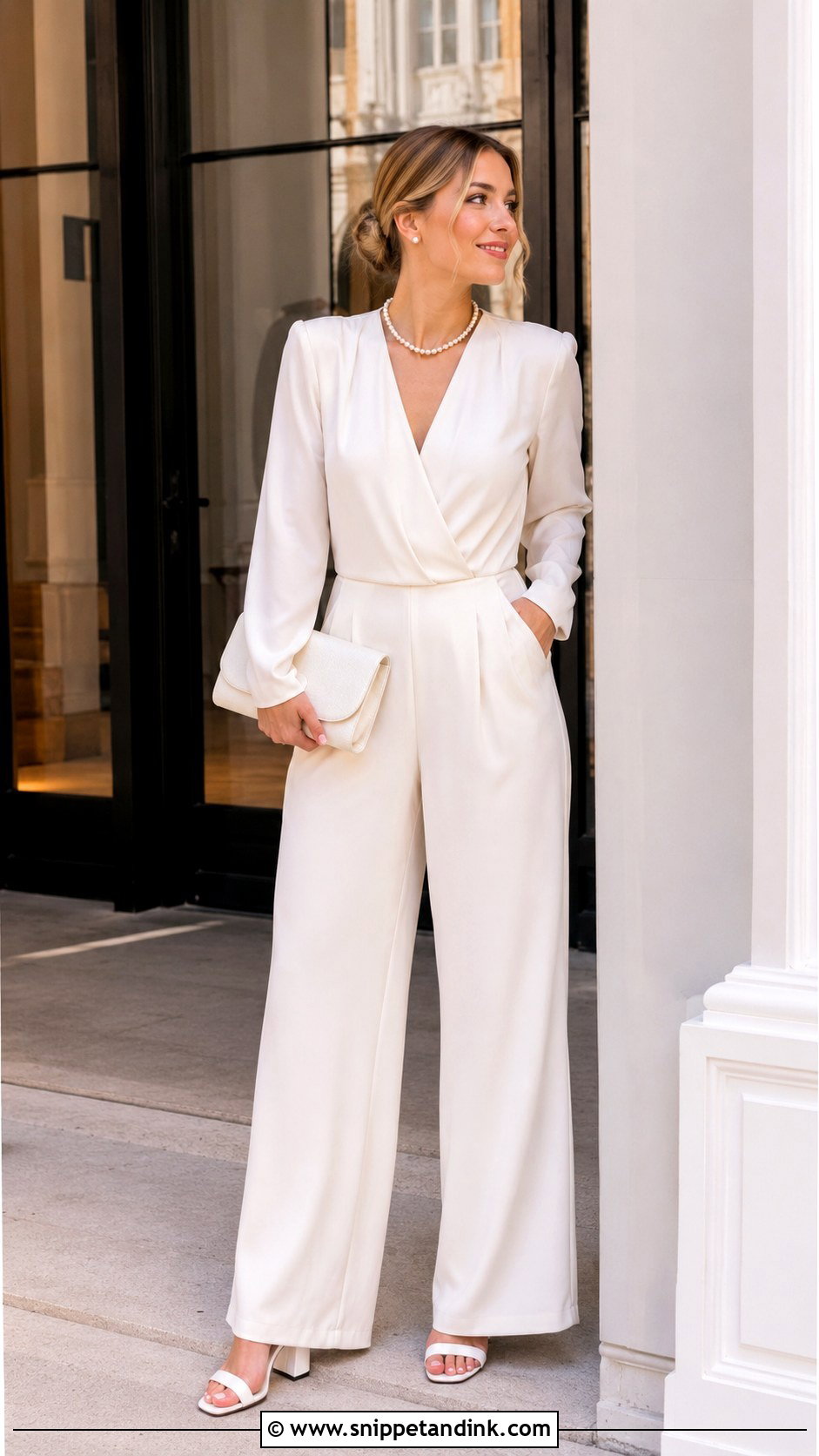
Jumpsuits look relaxed in photos and feel even better to wear, but they come with one practical catch: the loo. Check how you get in and out of it before you buy, because a back zip with a hook at the neck is hard to manage alone in a council building cloakroom. Wide legs give a softer line than straight ones. A wrap bodice or cape sleeve keeps it bridal, and a block heel copes with cobbles.
7. Tea Length Registry Wedding Dress
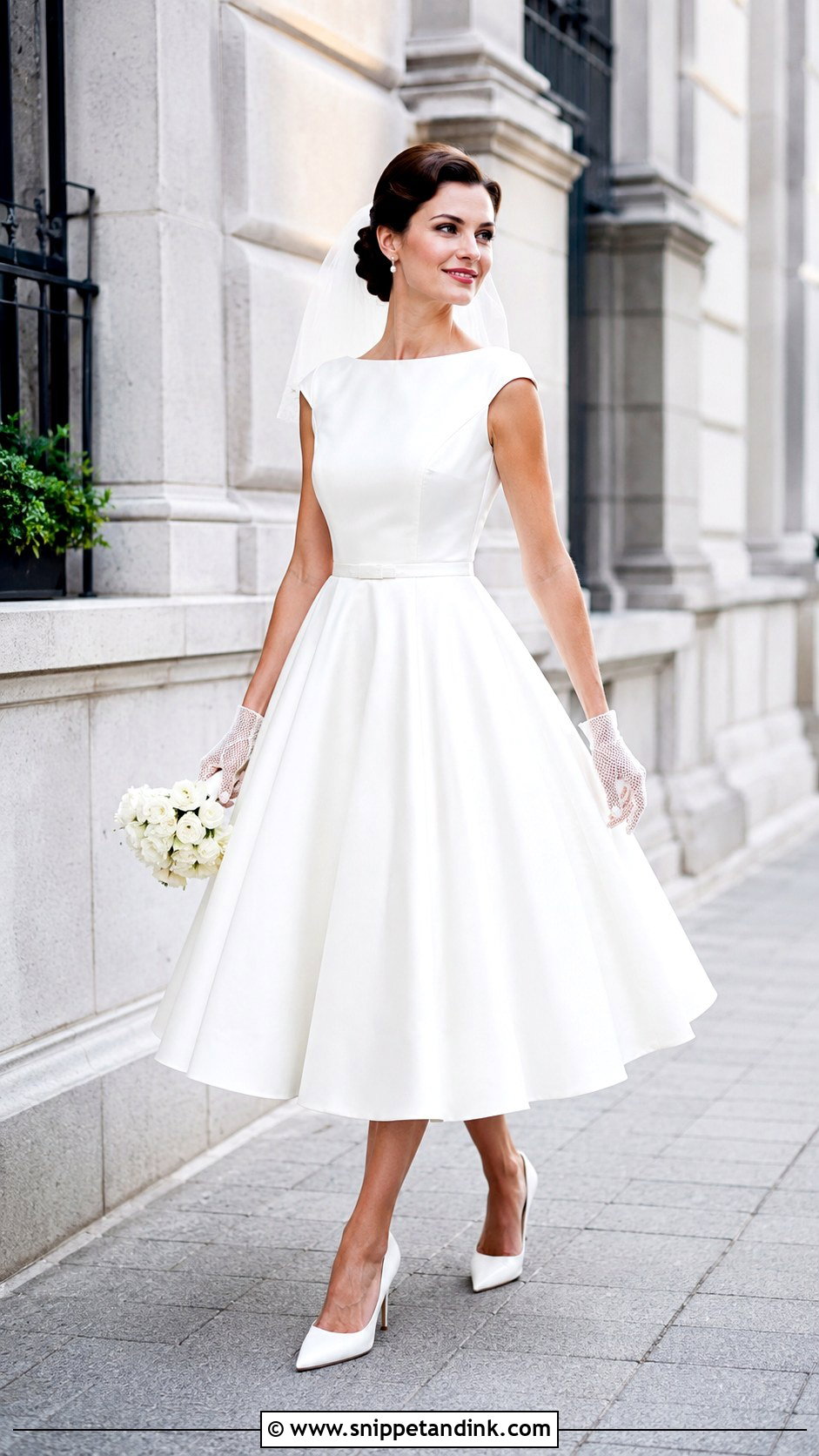
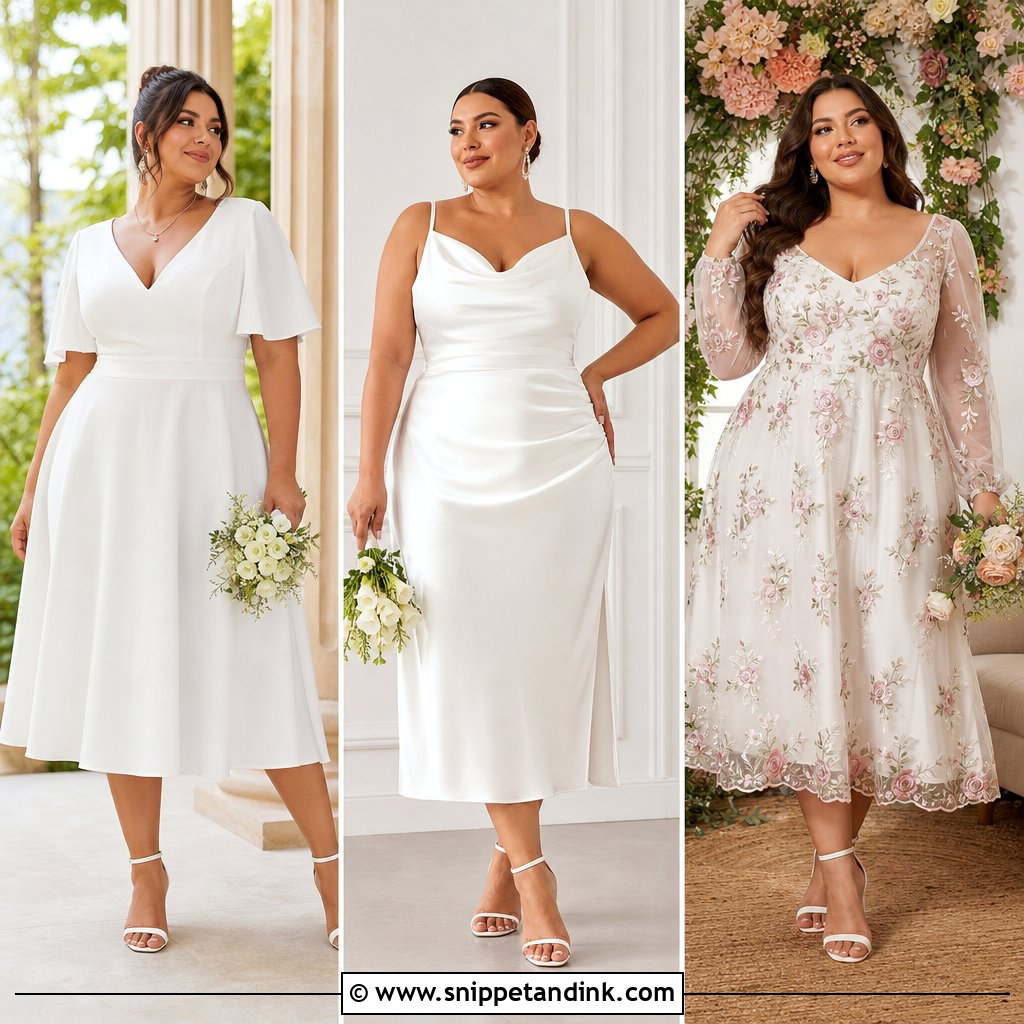
Tea length, sitting somewhere between knee and ankle, has a 1950s feel that I love for registry weddings because it moves when you walk down a corridor. The fuller skirt needs a light petticoat or net layer to hold its bell; without it, the shape collapses by lunchtime. In satin or crepe it reads modern, while lace pushes it toward vintage. Pointed pumps and a short birdcage or fingertip veil finish it.
8. Slip Dress Registry Wedding Outfit
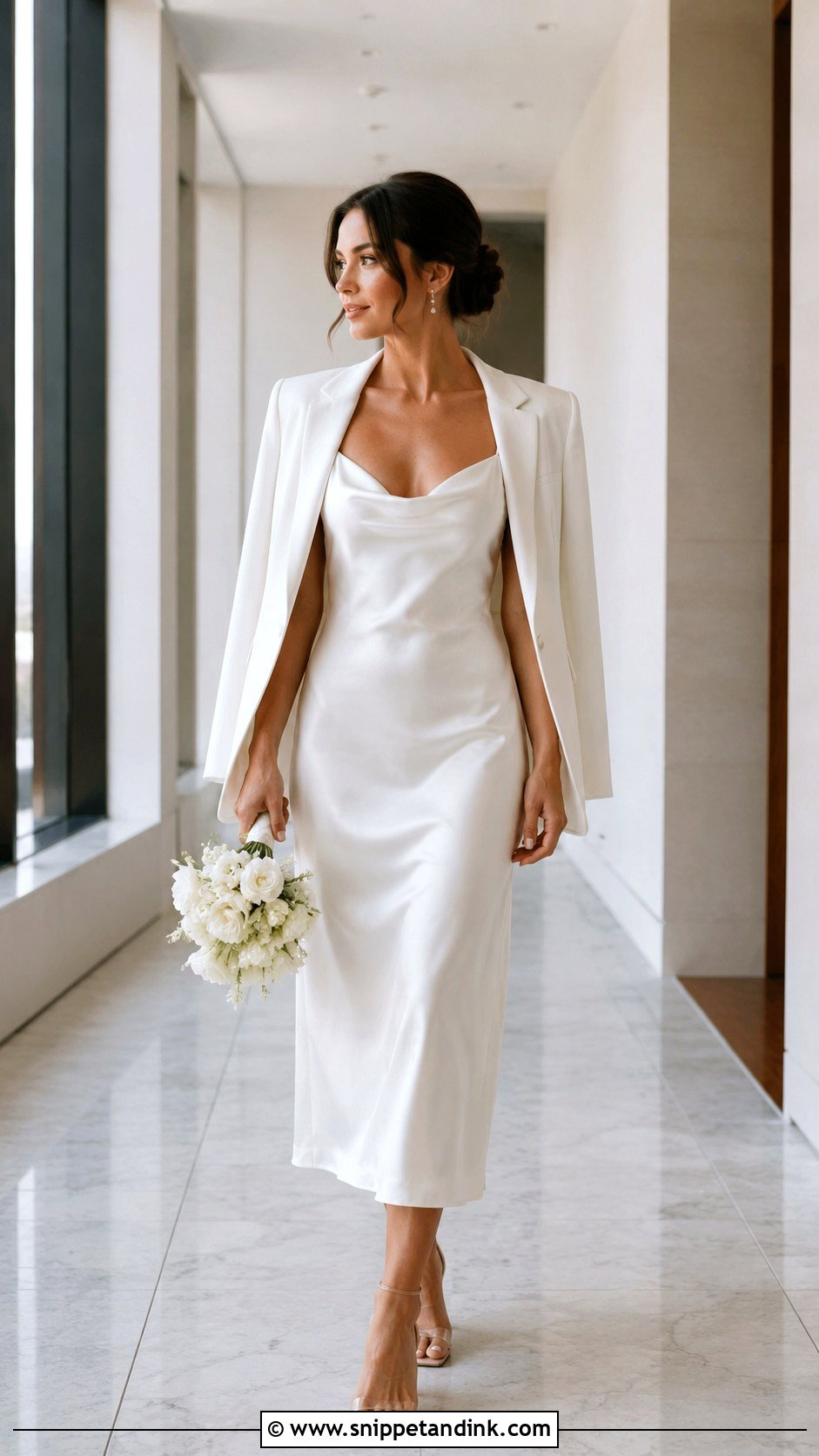
A slip is the simplest dress here and the least forgiving. It only looks expensive if the fabric has weight and the bias cut has been done properly, so feel the hem: a thin, light hem will flip and cling. Smooth, no-line underwear is non-negotiable. I nearly always add a tailored blazer over the shoulders, partly for warmth and partly because a slip on its own can look like a nightdress in flat daylight.
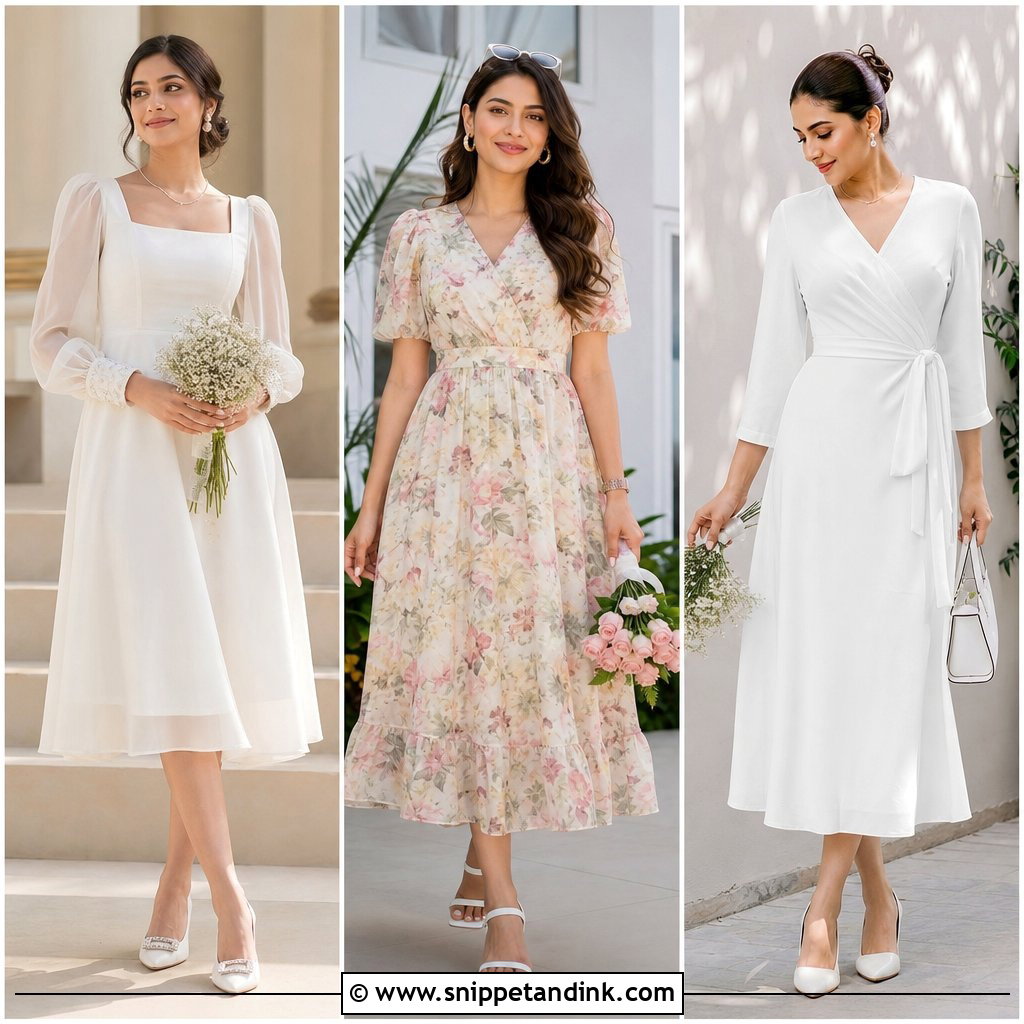
9. Long Sleeve Registry Wedding Dress
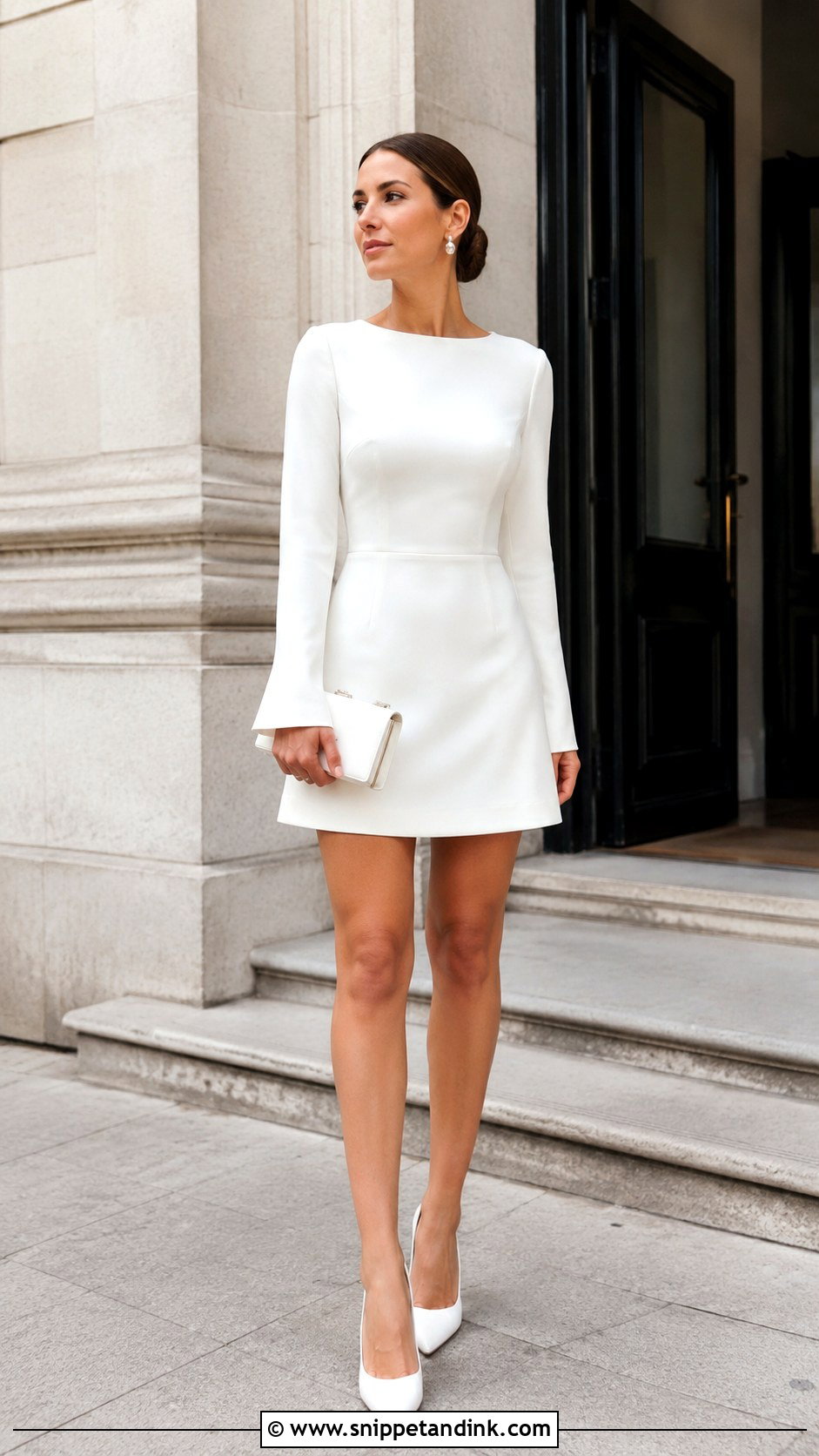
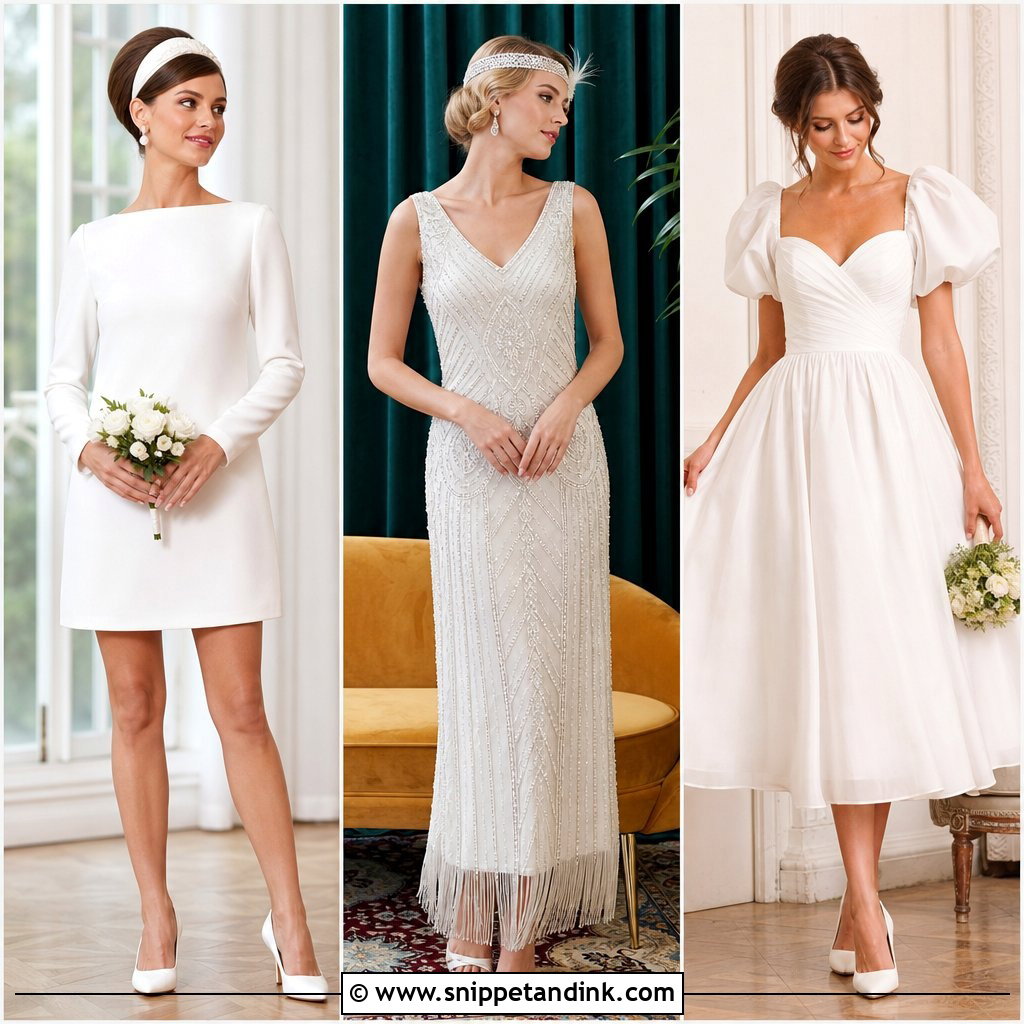
Long sleeves solve two problems at once: cold registry offices and brides who want their arms covered. Sheer lace sleeves keep things light; crepe sleeves look sharper and hold their shape after hours of hugging. Check that you can lift your arms to shoulder height, because tight sleeves restrict exactly the gestures you make when embracing family on the steps. A short long-sleeved dress has a mod feel; a long-sleeved column looks more formal.
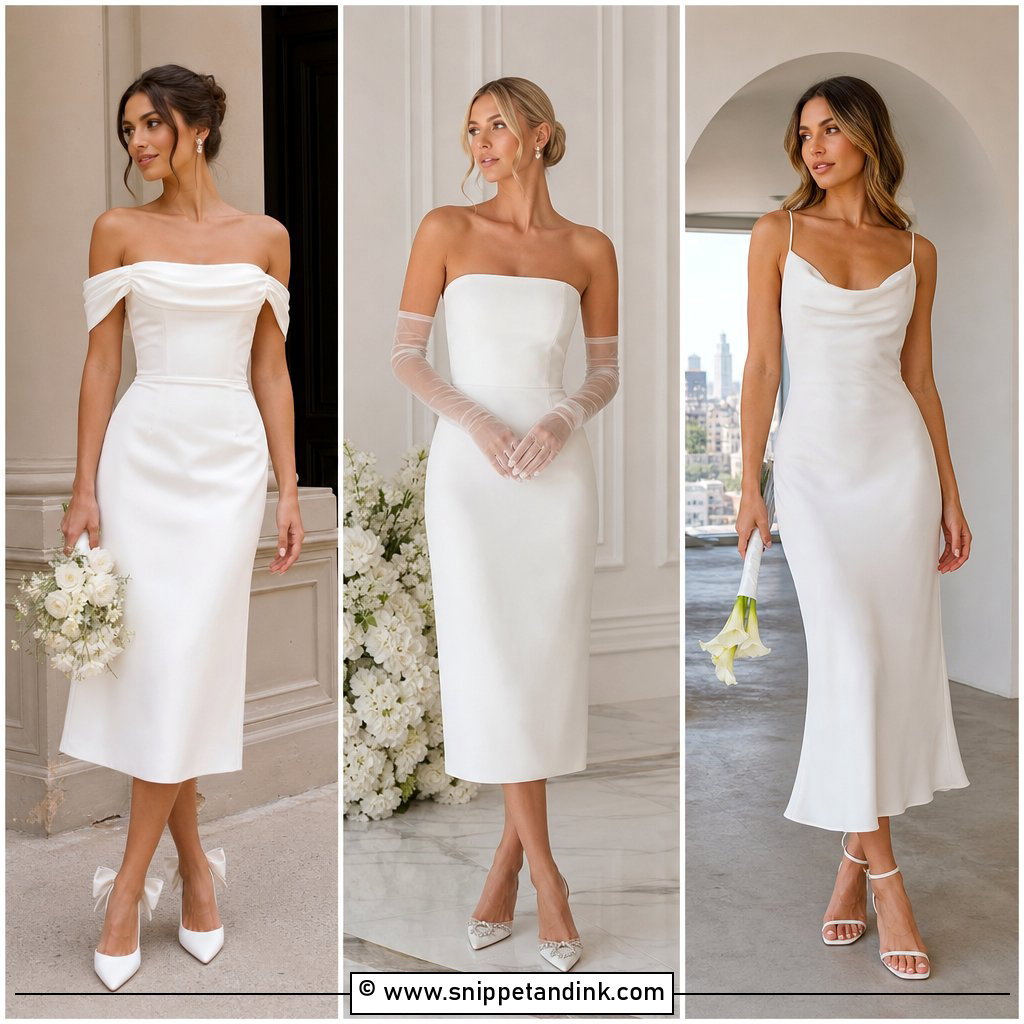
10. Off Shoulder Registry Wedding Dress
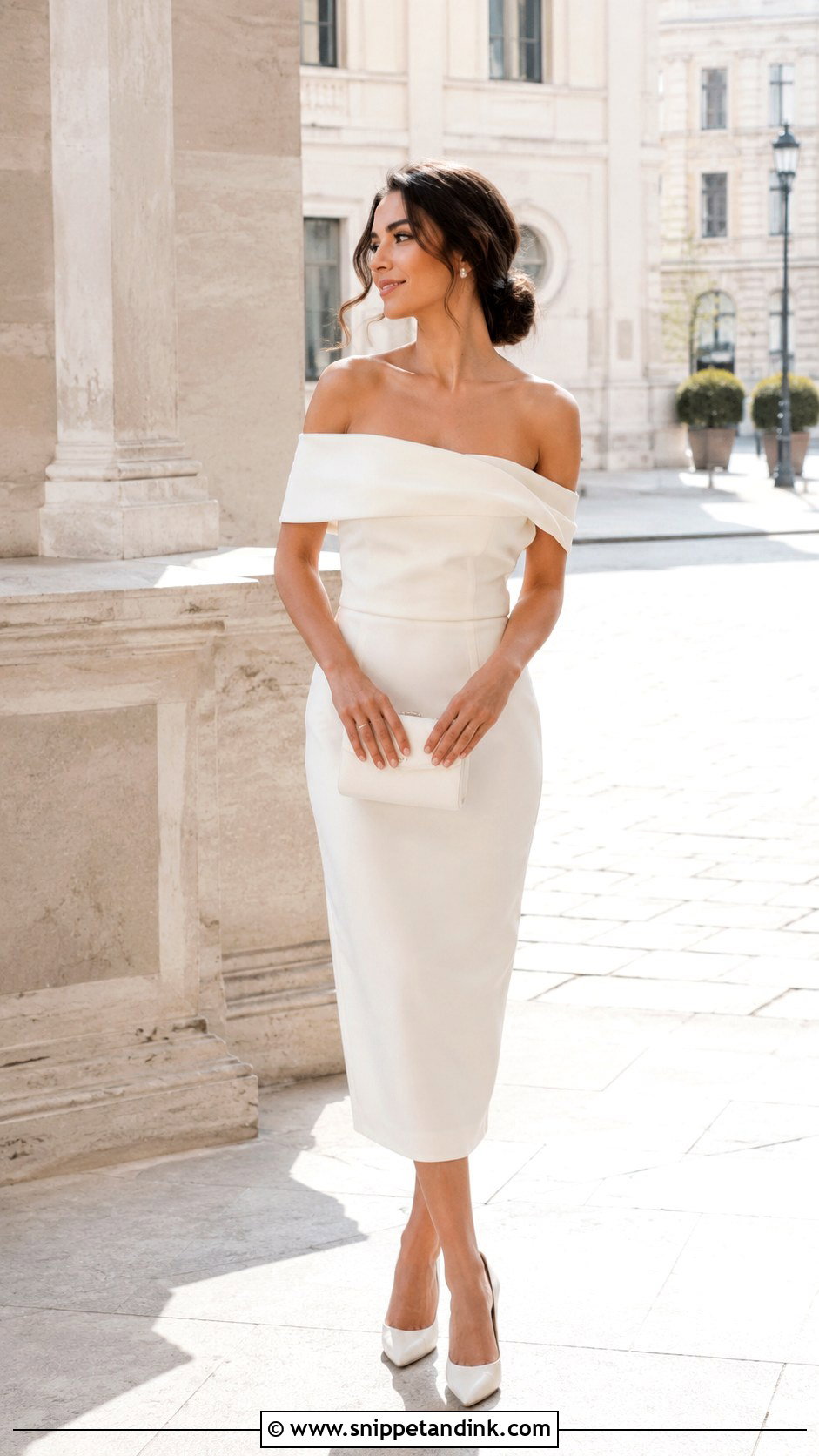
Off the shoulder is pretty and slightly high-maintenance. Without boning or a silicone grip band at the neckline, the sleeves creep up every time you lift your arms, and you’ll spend the day tugging them down. That’s why I’d only choose a version with a structured bodice. Wear the hair up so the collarbones are clear, and keep the necklace to studs or a short pearl choker.
11. White Column Registry Wedding Dress
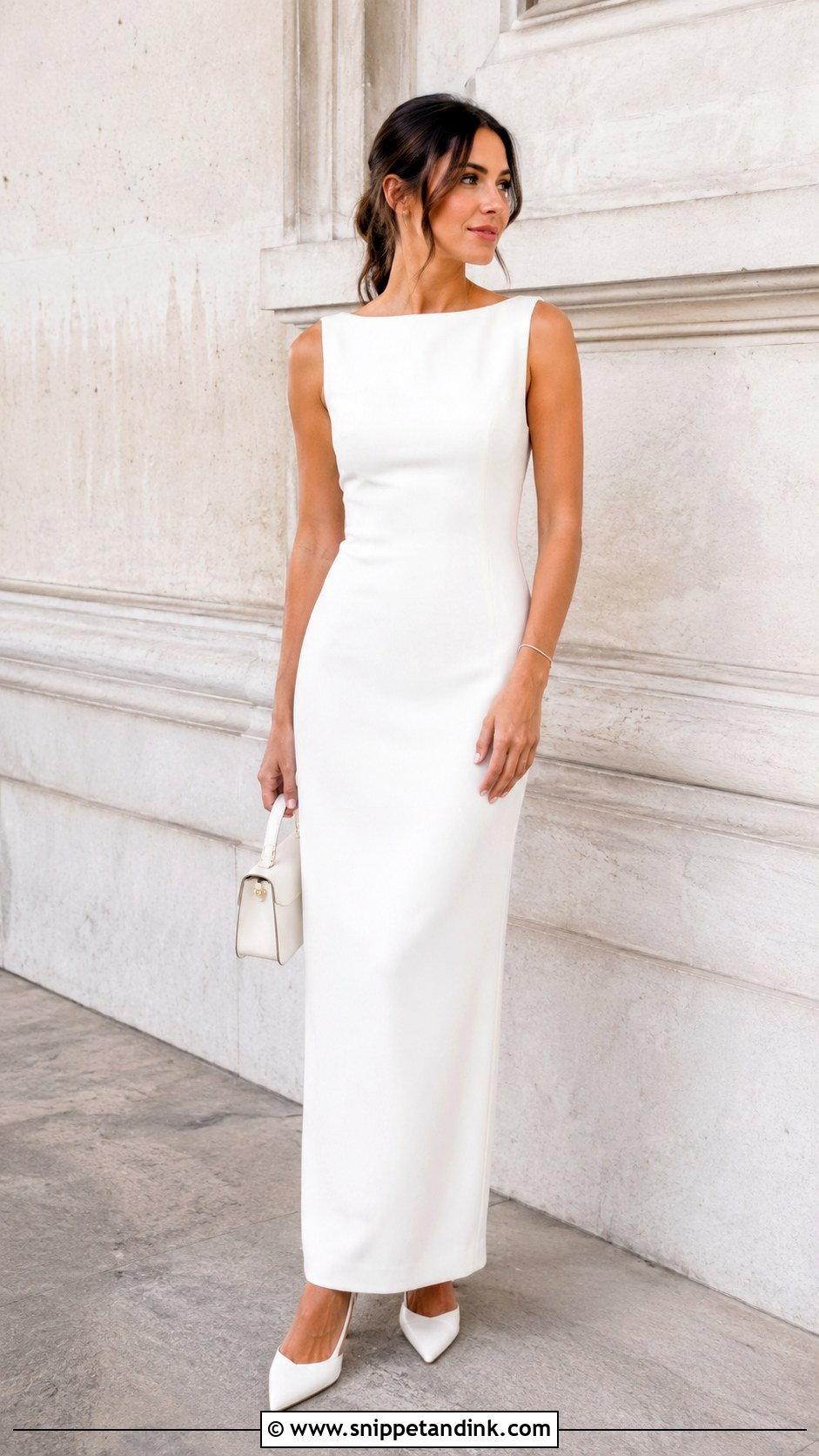
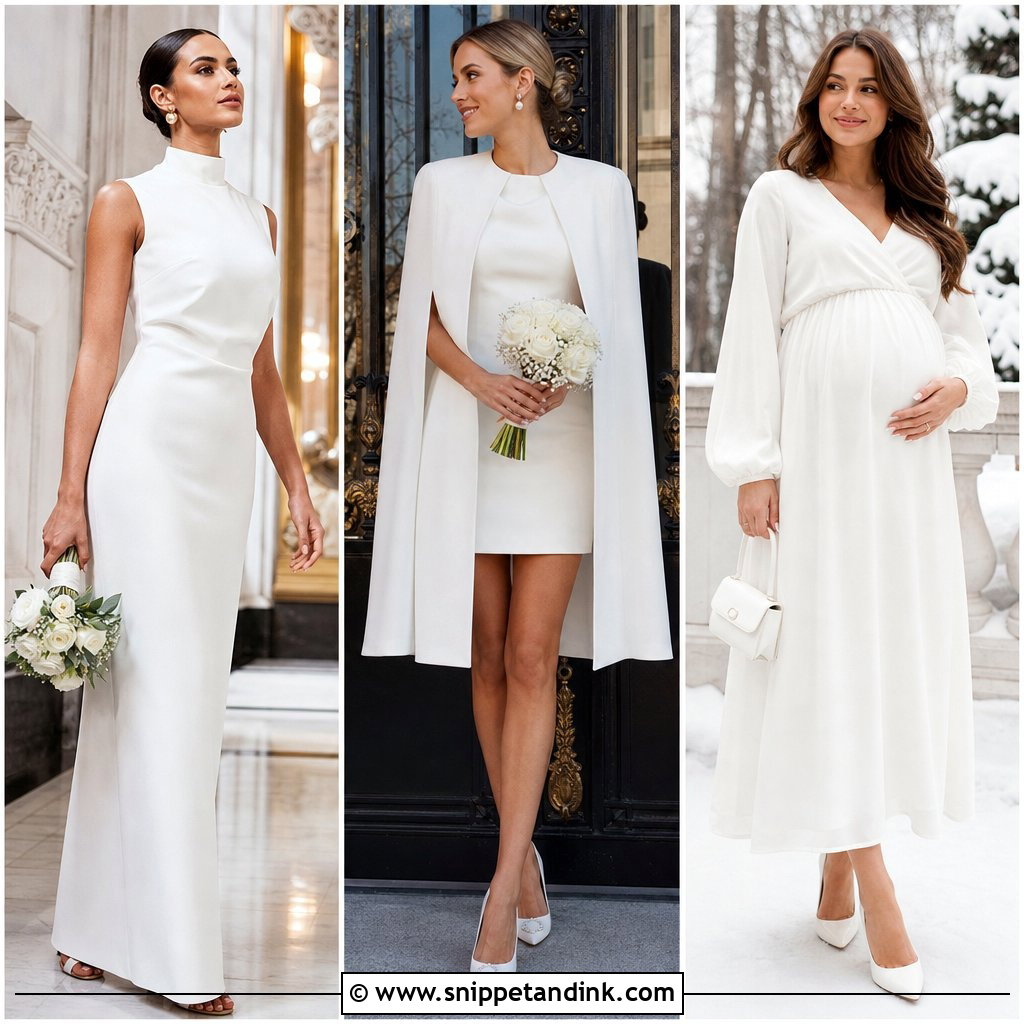
A column gives you the long line of a gown without volume, and it slips through doorways and into taxis with no drama. Fabric matters more than design here: soft jersey shows everything, while crepe or stretch satin with some body holds the silhouette. If it’s ankle length, have it hemmed with the exact shoes you’ll wear, because a centimetre too long catches on steps. A cropped jacket covers the shoulders without hiding the shape.
12. Puff Sleeve Registry Wedding Dress
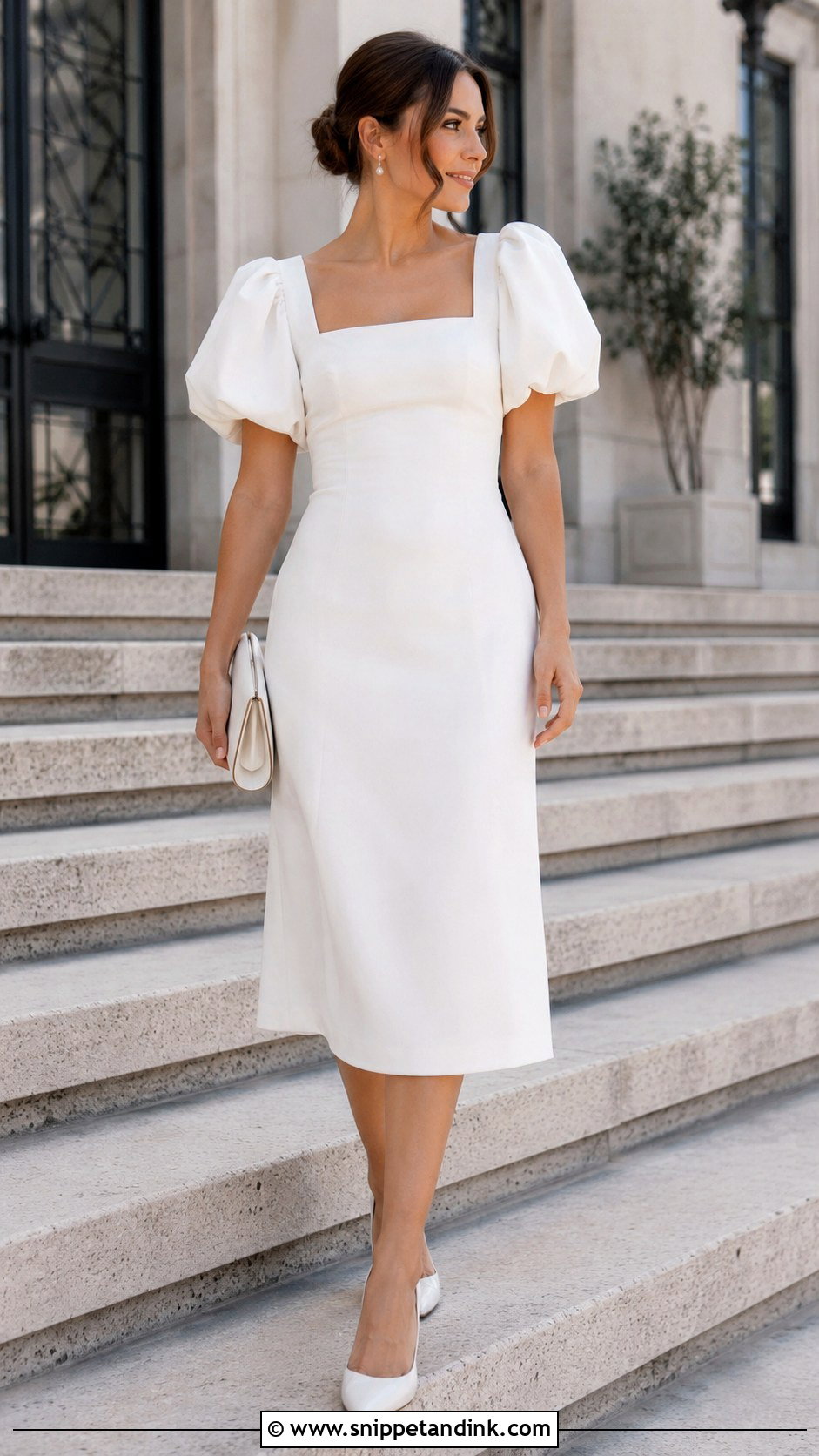
Puff sleeves bring personality, and the trick is restraint everywhere else. The sleeve head is usually supported by a little tulle inside; on cheaper dresses that’s missing and the puffs collapse within an hour. Squeeze one in the shop and see whether it springs back. With dramatic sleeves I’d keep jewellery to tiny studs and wear the hair off the face so the shoulders don’t look crowded.
13. White Two Piece Registry Wedding Outfit
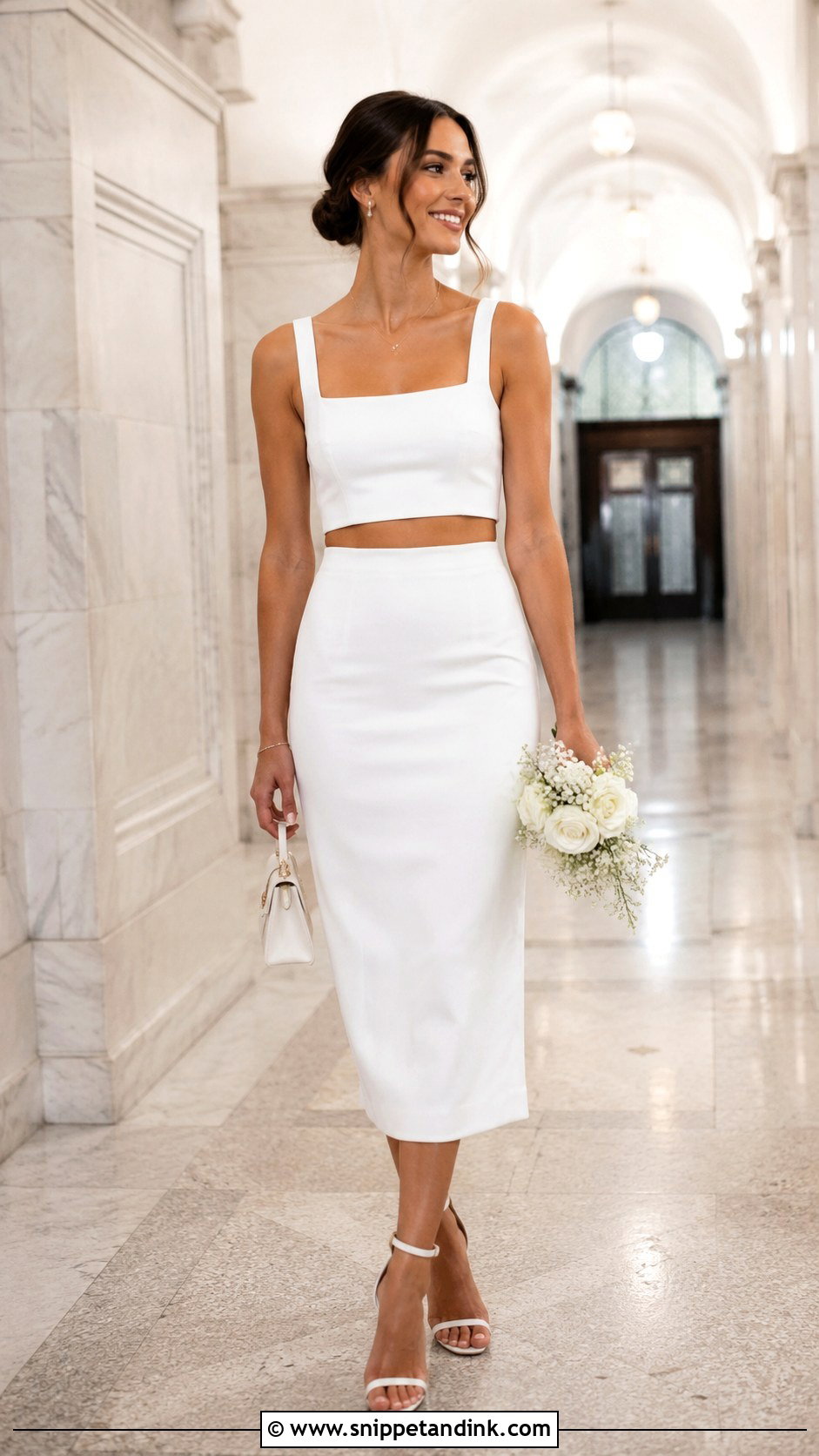
Separates are underrated for registry weddings, mostly because they solve fit problems. A tailored vest with trousers looks sharp, while a crop top over a high-waisted midi feels softer, and in both cases top and bottom can come in different sizes. Matching the fabric exactly is where people slip; two whites from different shops rarely agree in photos. Buy both pieces from the same line, and you’ll get far more wear out of them afterward.
14. Bow Detail Registry Wedding Dress
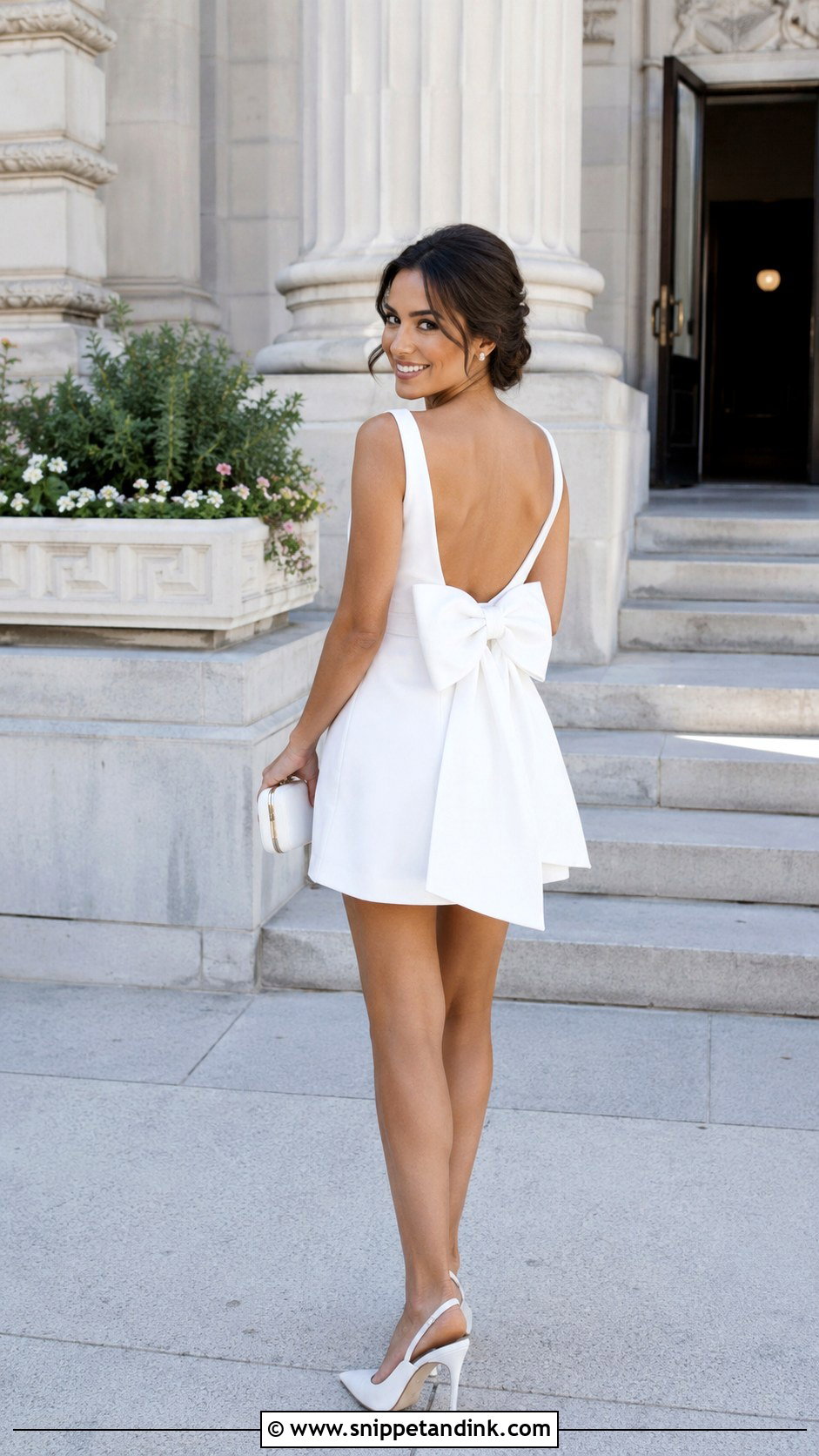
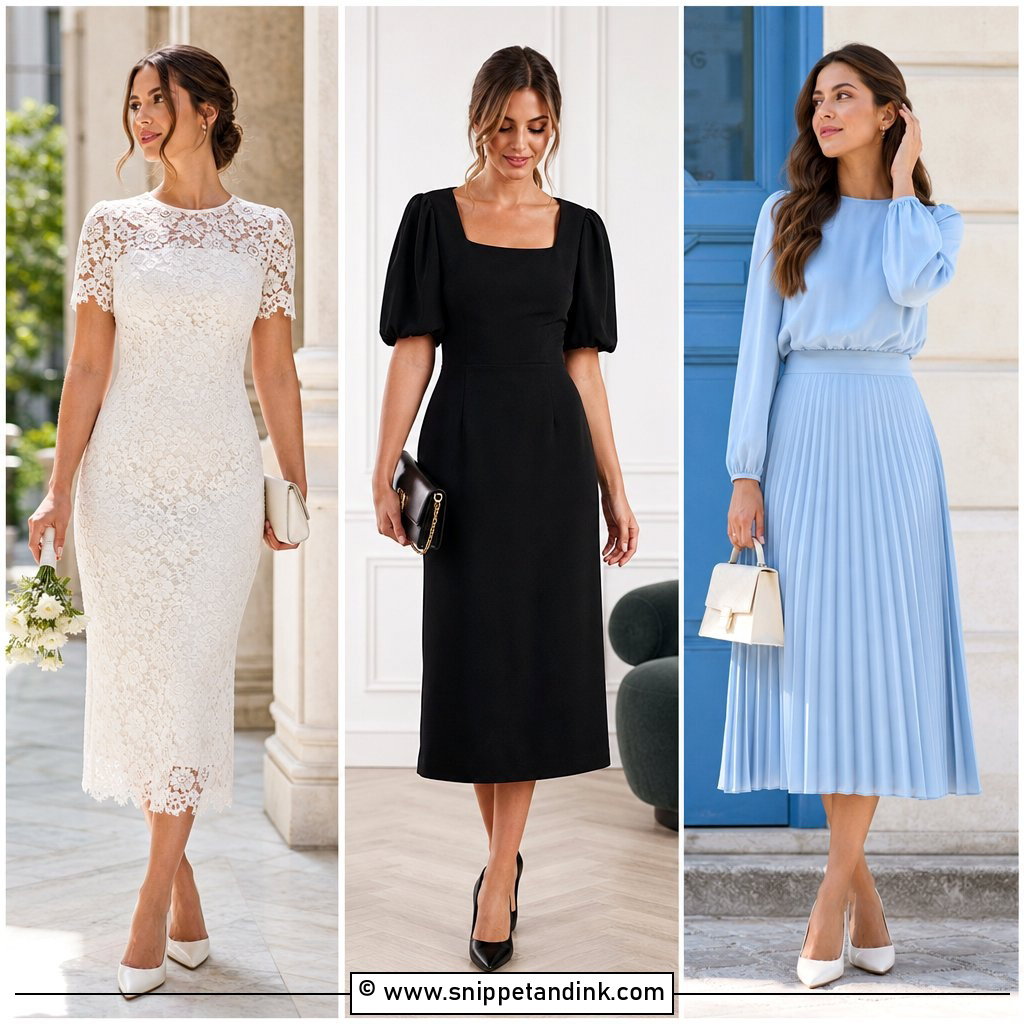
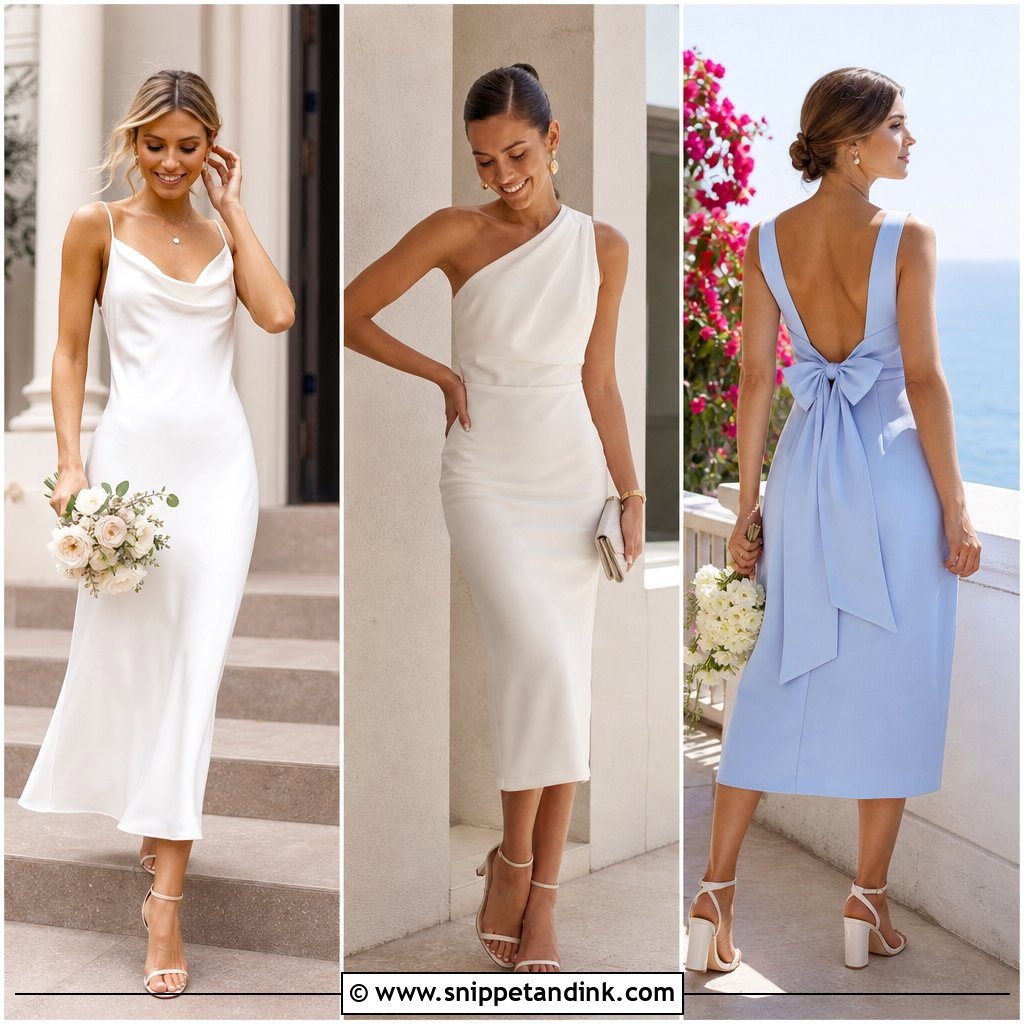
A bow is a single, confident detail, and I like it best at the back, where it shows as you walk away down the aisle or out of the room. Large bows in soft fabric droop as the day goes on, so look for one that’s interfaced or stitched into shape rather than simply tied. With a bow that size, skip the statement earrings. A mini with a back bow reads playful; a midi with a waist bow reads more classic.
15. Feather Trim Registry Wedding Dress
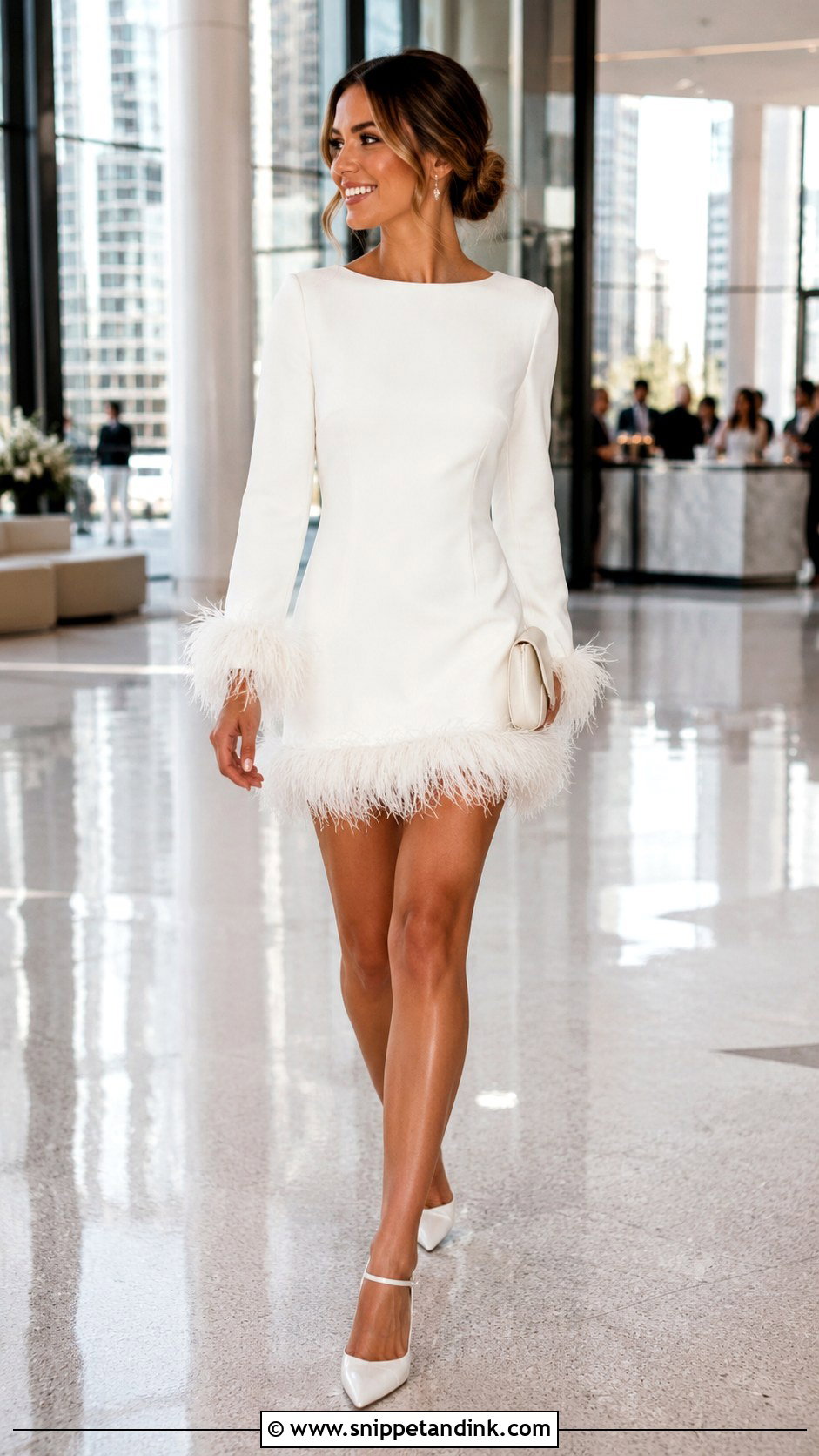
Feather trim is fun, and the photos after the ceremony are where it really comes alive. I’d only pick a feather trim registry wedding dress with the trim at the cuffs or hem, not at the neckline, because ostrich feathers tickle and catch in lipstick and earrings. They also shed a little, so expect a few strands on your partner’s jacket. Keep the hair neat and the clutch plain so the outfit stays fashion rather than costume.
16. Crepe Mini Registry Wedding Dress
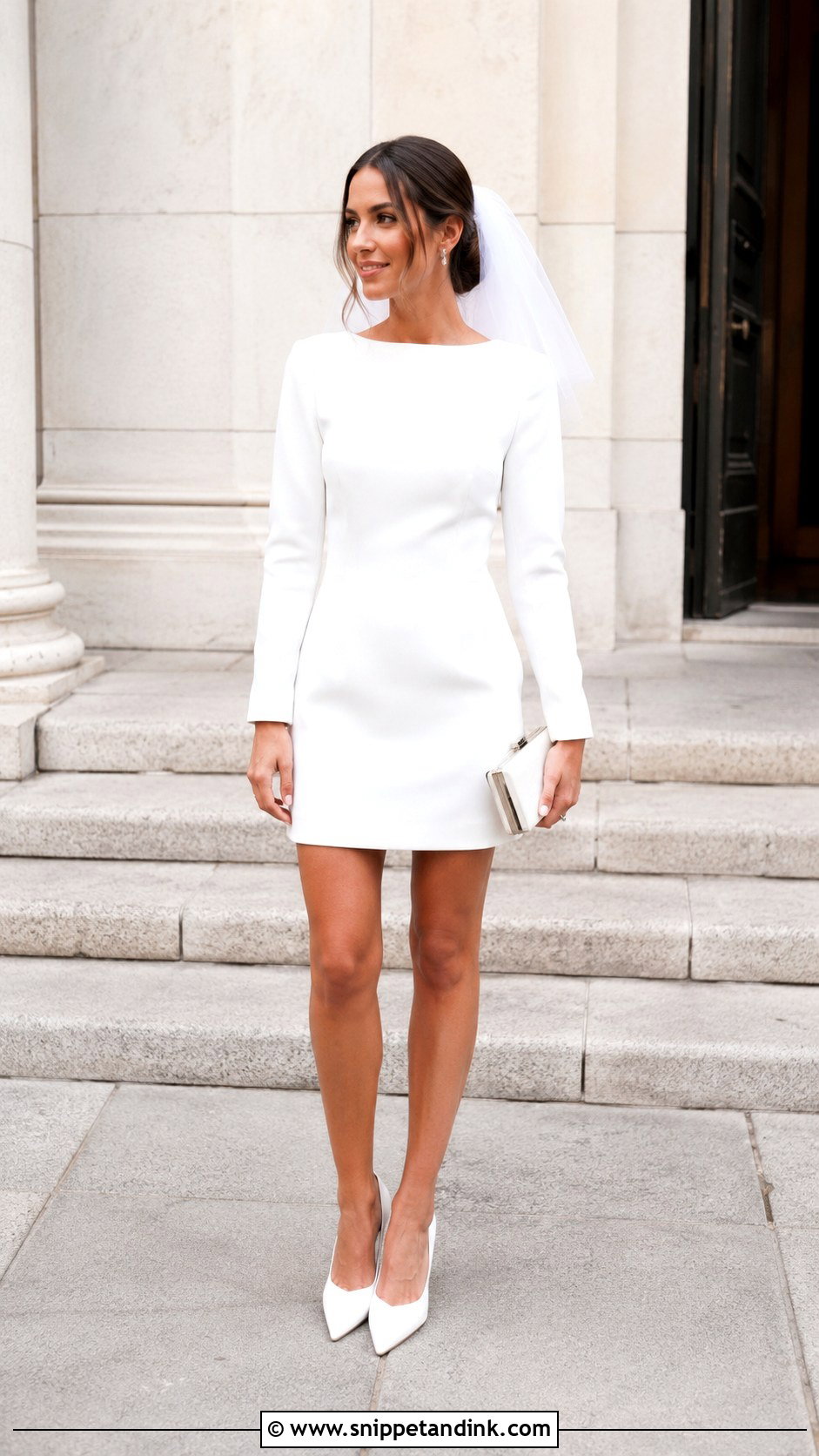
Crepe minis are the workhorse of registry dressing. The fabric is heavier than chiffon, so the skirt hangs straight and resists wind on a street corner, and it doesn’t shine in flash photos the way cheap satin can. Square, boat and strapless necklines all suit it. Add a short veil and a box clutch, and if it’s cold, a wool coat in camel or ivory sits neatly over the top.
17. Square Neck Registry Wedding Dress
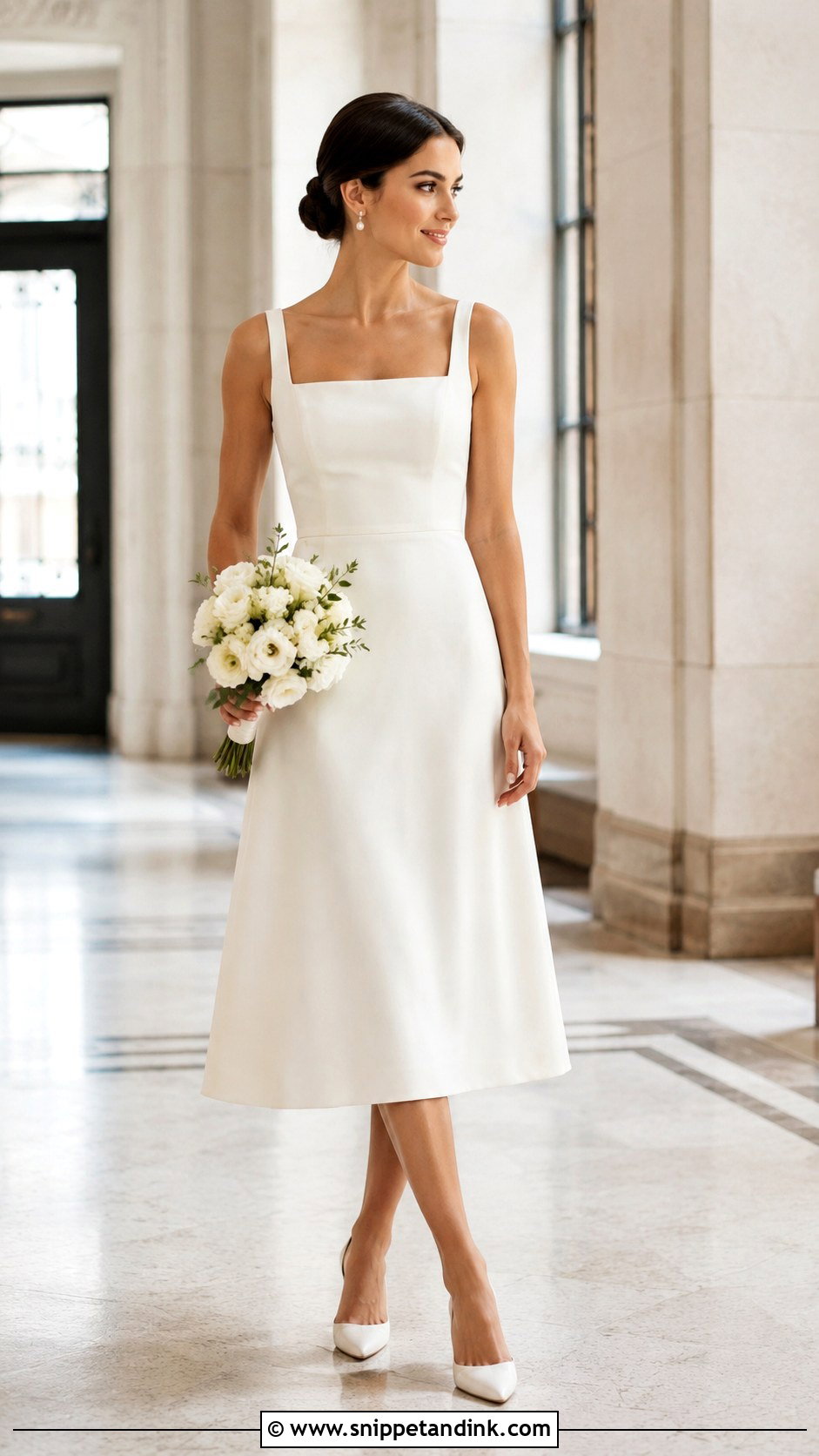
A square neck flatters more bodies than almost any other neckline because it frames the collarbone without demanding a plunge. What I check is the corners: they should sit flat, not peel outward when you breathe in. Covered buttons down the back or a small slit add interest. Pearl earrings and a low bun keep the frame clean.
18. Pleated Midi Registry Wedding Dress
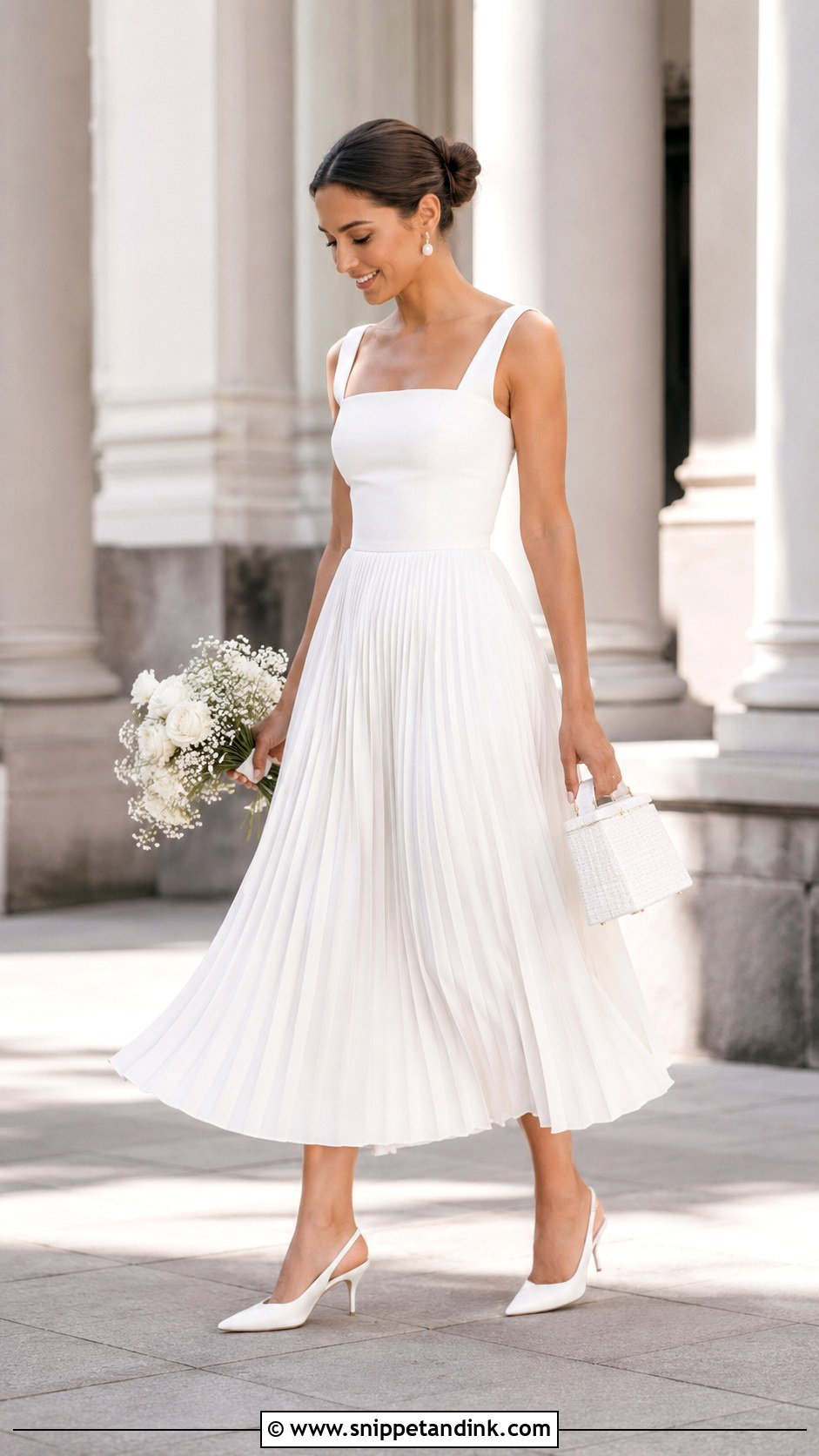
Pleats move beautifully when you walk, and they’re kind to anyone who wants room through the hips. The thing to know is that pleats get crushed in transit. Hang the dress in the car if you can, or bring a hand steamer, because knife pleats lose their line if you sit on them for a long drive. Champagne and soft ivory suit warmer skin tones more kindly than stark white.
19. Strapless Registry Wedding Dress
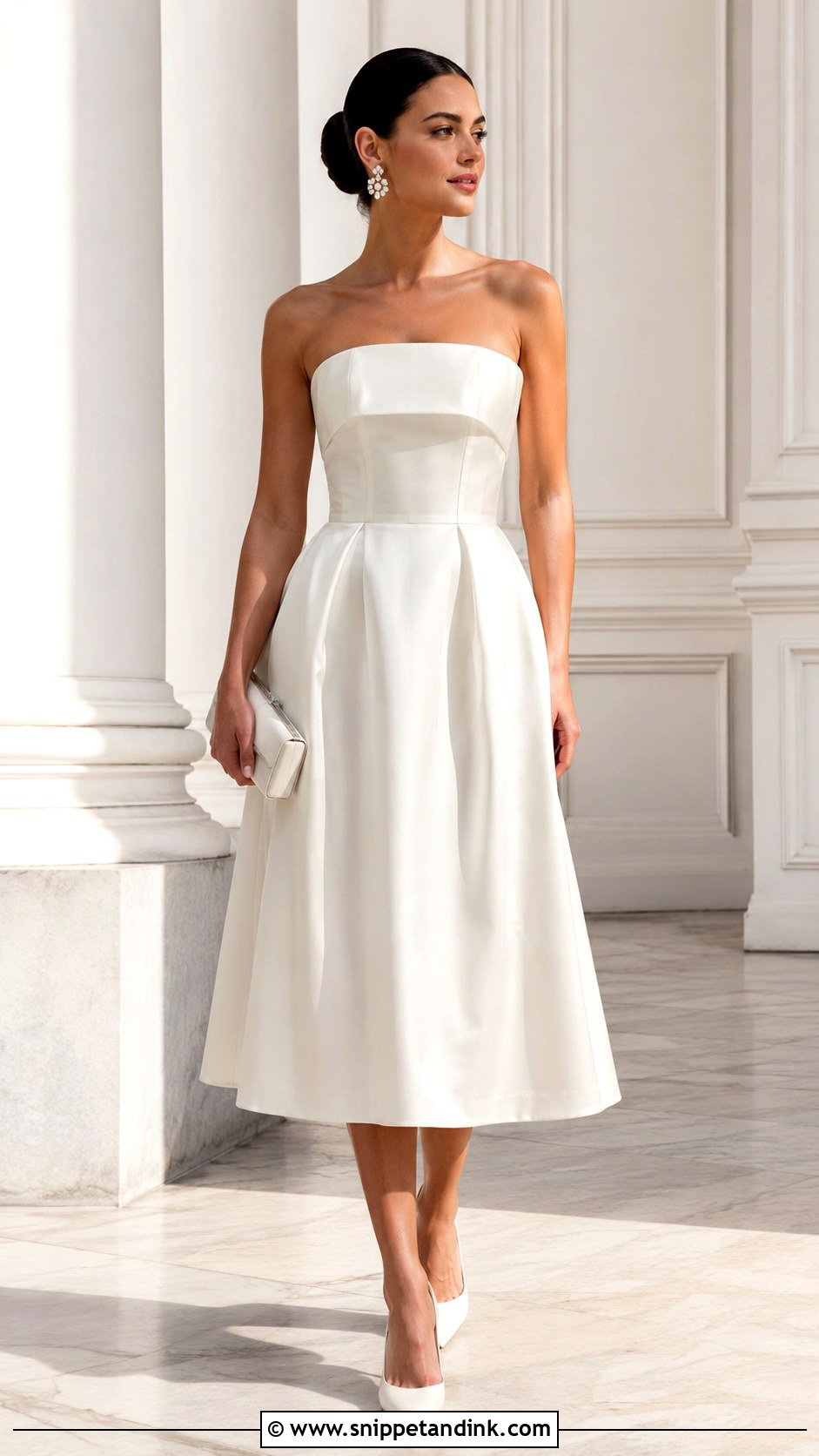
Strapless only works when the bodice is built properly. I want to see boning and a waist stay, a grosgrain band inside that fastens at the natural waist and takes the weight off the bust. Without it you’ll be hitching it up all day, and you’ll see it in every candid. A cropped jacket or cape for arrival shots helps in a cold building. Keep the neck bare and the hair swept up.
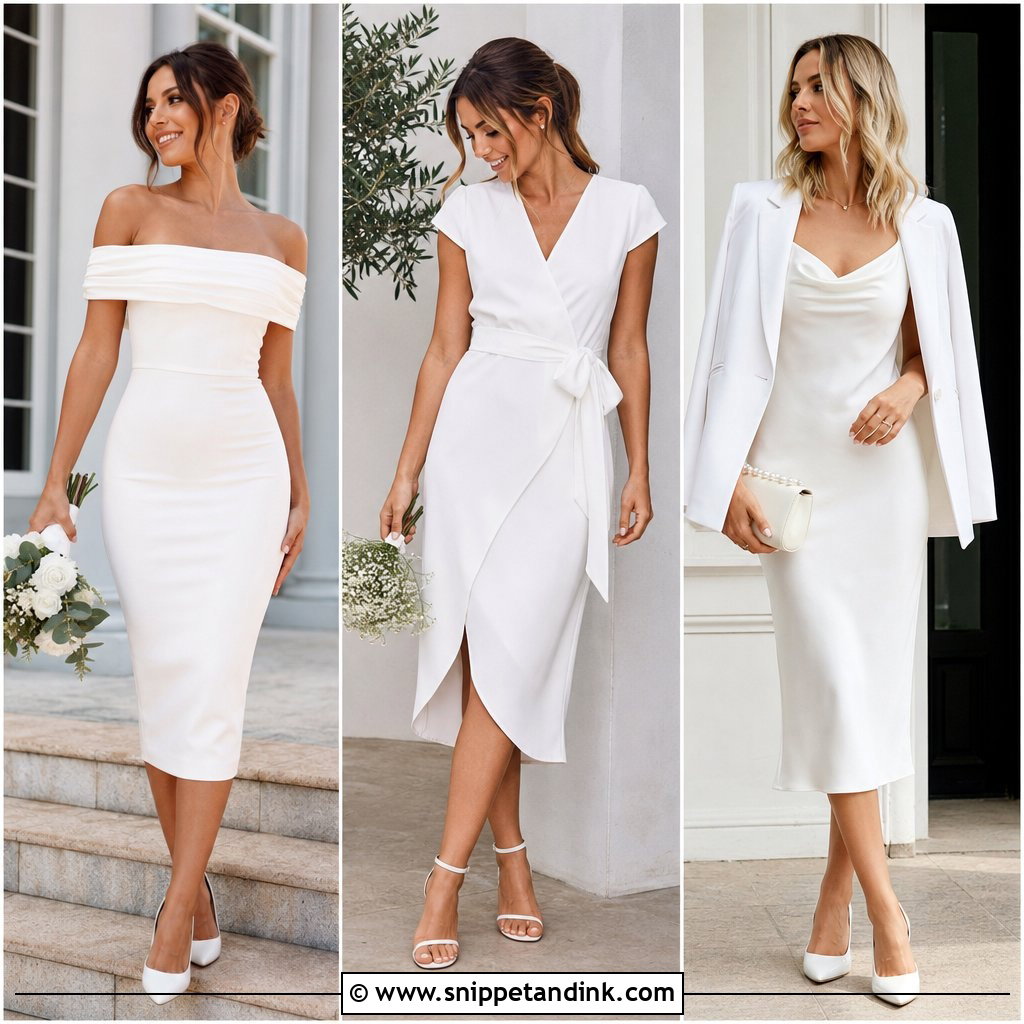

20. Floral Embroidered Registry Wedding Dress
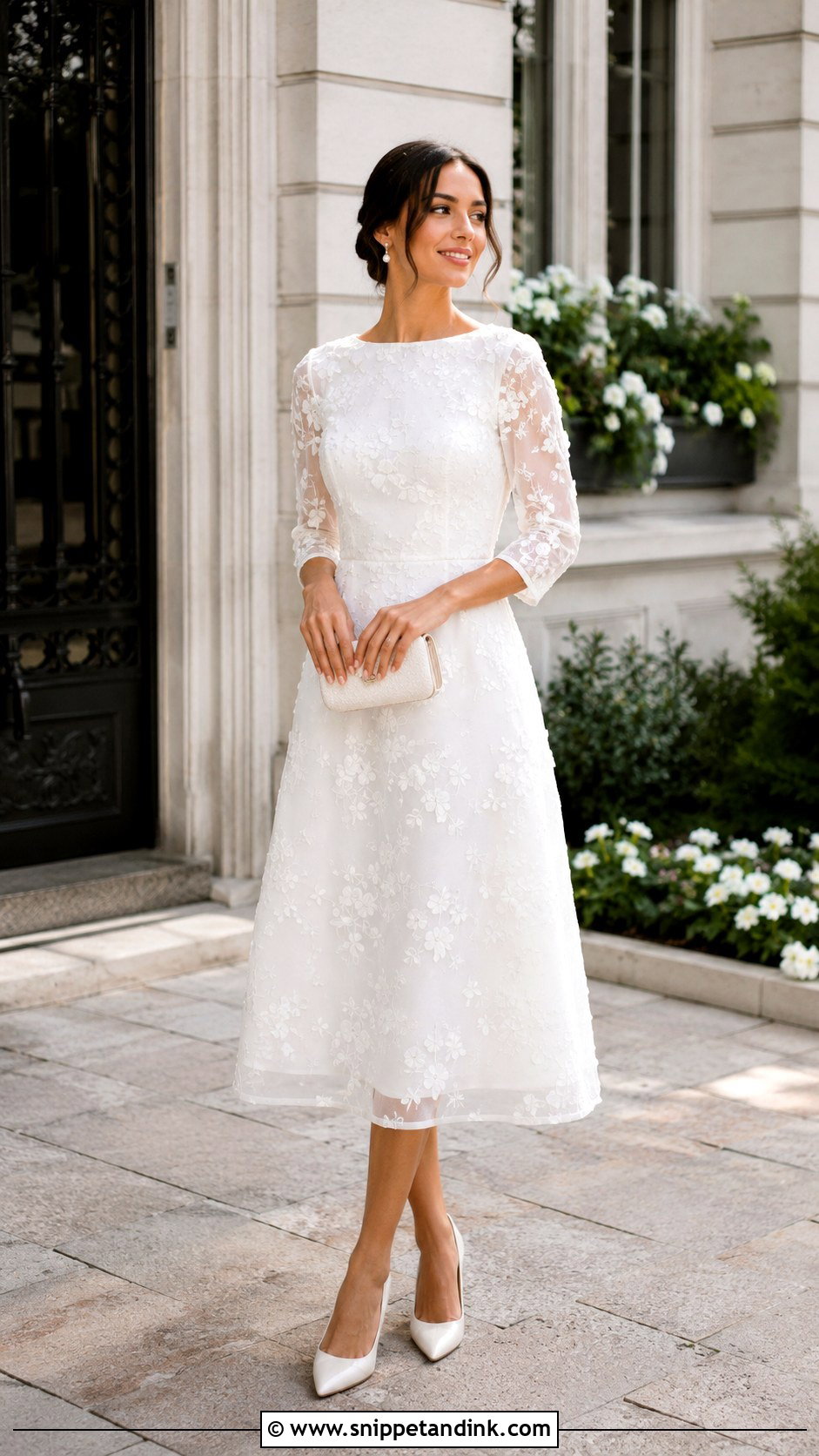
Embroidery gives you detail without the stiffness of lace. White-on-white is subtle in person and reads as texture in photos; coloured threads look sweet but can clash with a bouquet, so I match them when I order flowers. Keep the shoes, veil and bag plain, and let the stitching be the conversation. Lighter cottons and organza bases suit spring and summer best.
21. High Neck Registry Wedding Dress
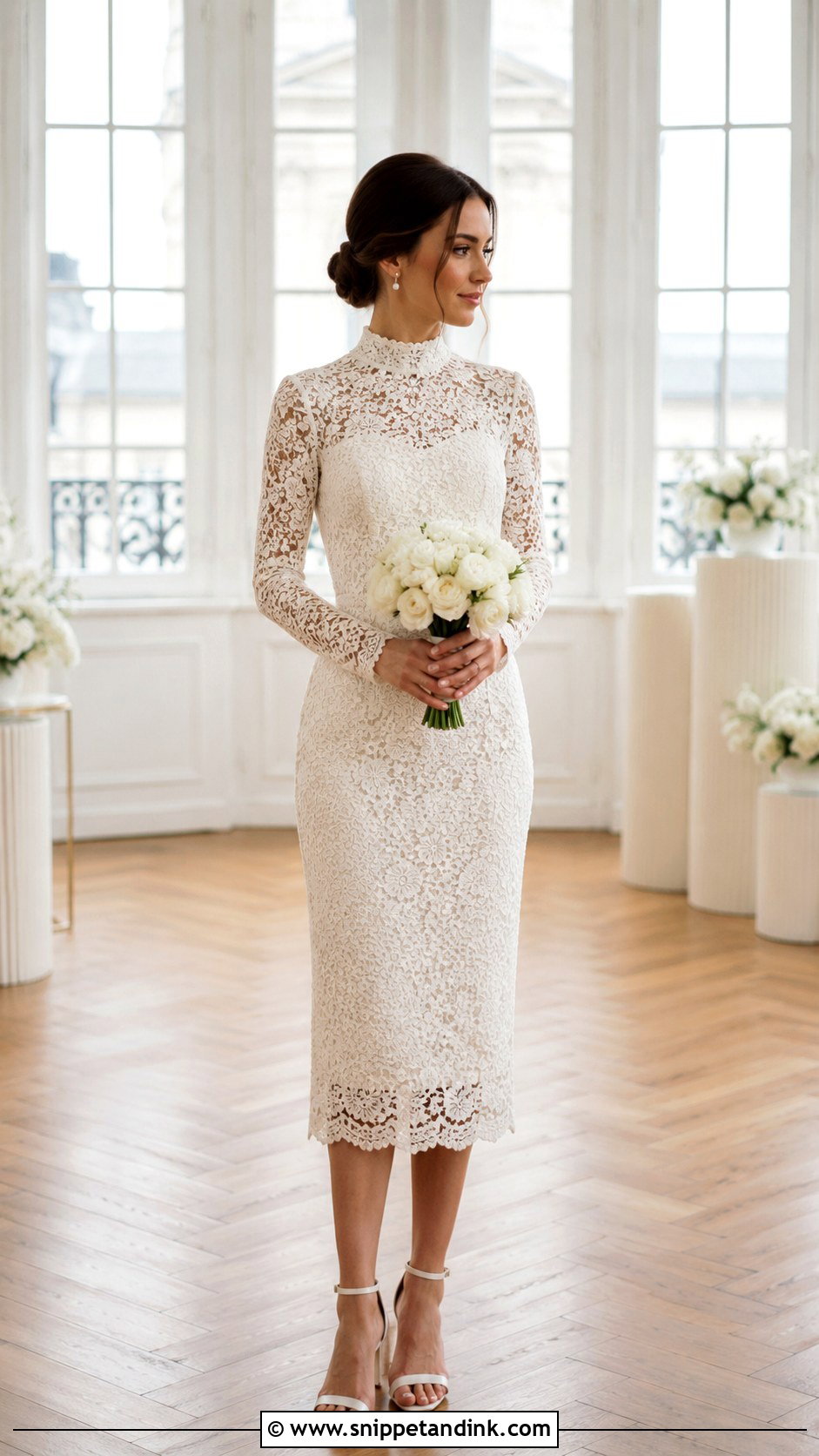
A high neck creates a long, composed line and looks wonderful in close portraits. The fit around the throat needs care: too snug and it rides up when you turn your head, too loose and it buckles. A low bun opens the neck area, and small drops are all the jewellery it needs. With long sleeves too, I’d keep everything else minimal so it doesn’t feel heavy.
22. Cape Registry Wedding Dress
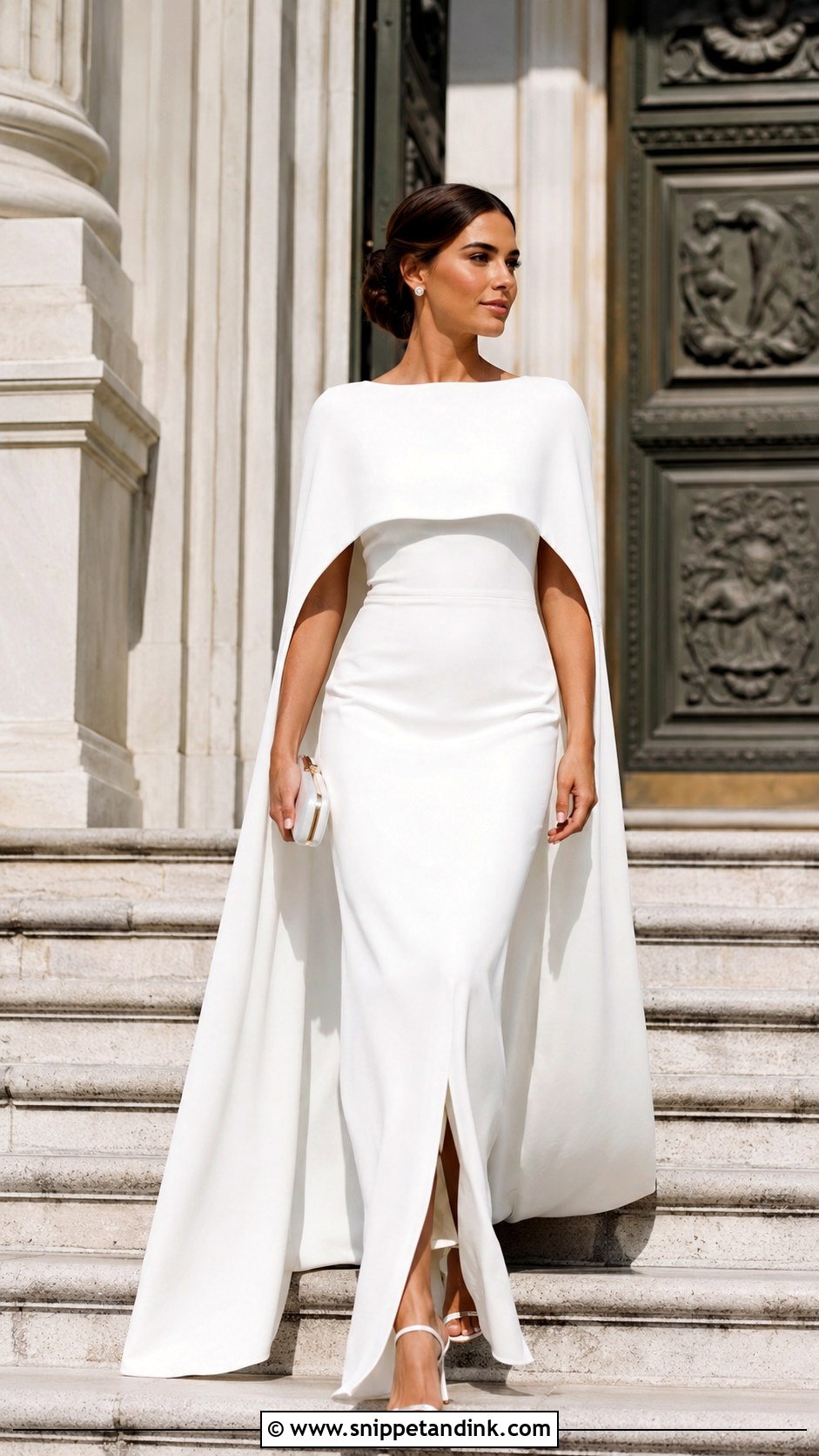
A cape gives you the movement of a train without the weight or the trip hazard on stairs. Removable capes are the version I recommend, because you can wear it for the ceremony and outdoor shots, then take it off for lunch. Shoulder-attached capes need snaps that hold firmly, or the cape will slide back as you sign. Keep the dress beneath it simple and the jewellery quiet.
23. White Shirt Dress Registry Wedding Outfit
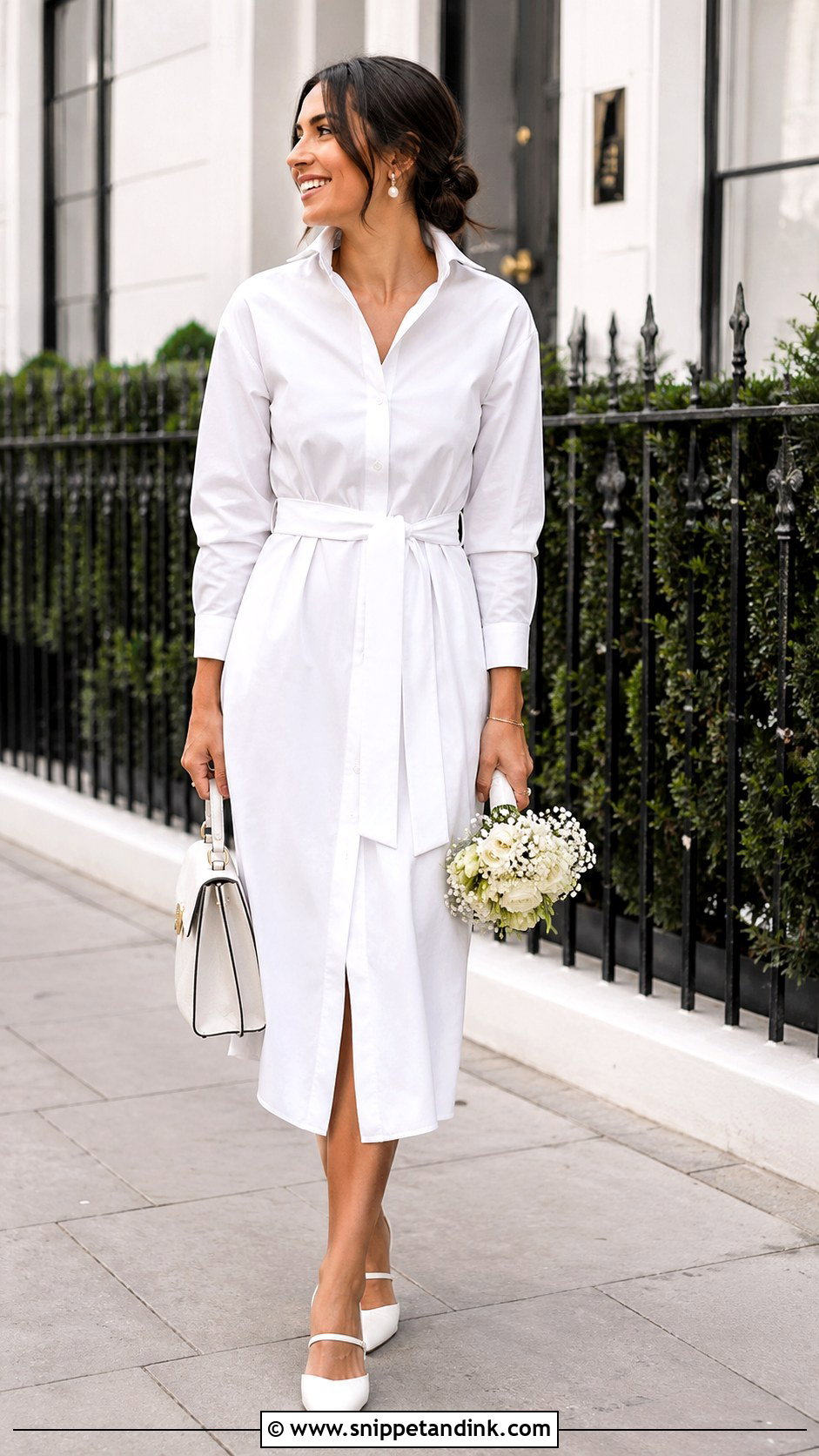
A white shirt dress is the most relaxed outfit on this list, so the finish has to be immaculate or it slides into weekday. I’d choose a cotton poplin or a structured satin over linen, which creases by the time you’ve reached the registrar. A belt gives the waist shape, and pointed flats work if you’re walking any distance. Steam it the morning of, and press the collar points flat so it looks sharp rather than casual.
24. Ivory Maxi Registry Wedding Dress
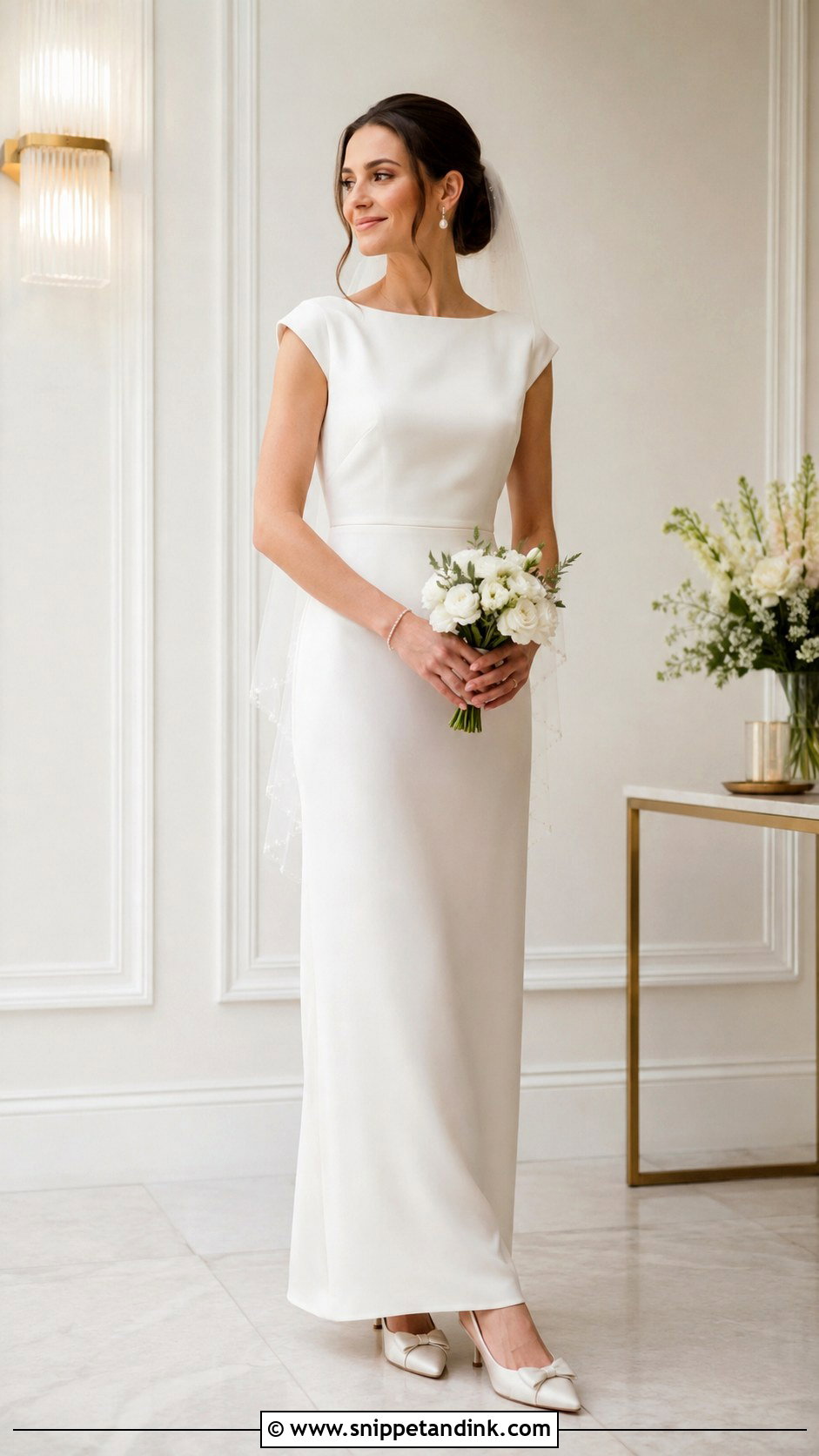
An ivory maxi gives you the long bridal silhouette without the size of a ballgown. Ivory is gentler than optic white against most complexions, especially under the cool lighting found in many civic rooms. A tiny train looks lovely in pictures but sweeps up whatever’s on the floor, so keep it to a short sweep or ask for a bustle loop. Low heels make the length easier on stairs.
25. Tailored Vest Registry Wedding Outfit
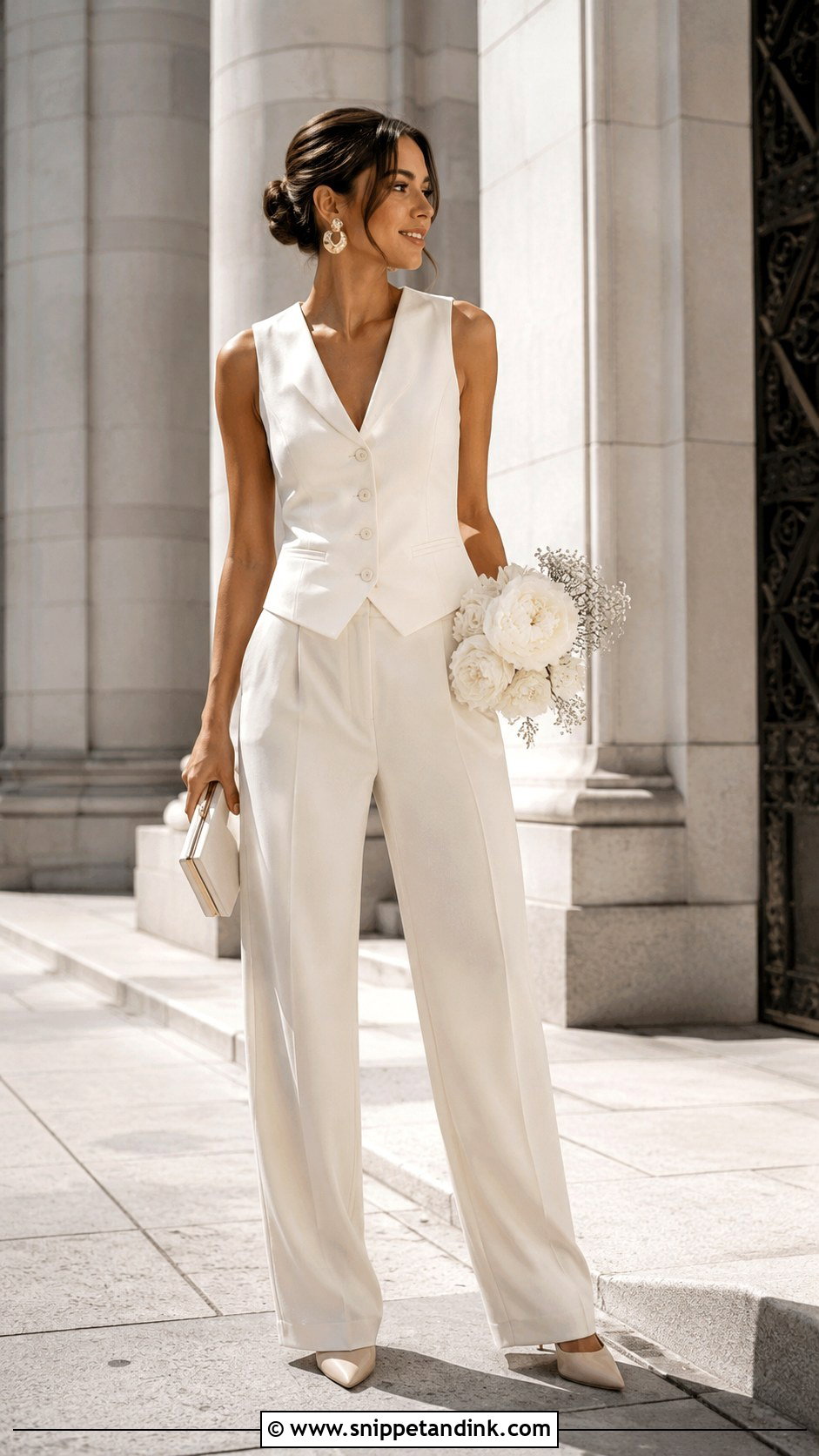
A vest and trousers look modern and suit brides who’d rather be comfortable than formal. Wear the vest alone for a sleek line, or layer it over a silk camisole if you want more coverage. Pair it with matching wide-leg trousers cut from the same cloth, and hem them with your actual shoes. Over the cooler months, add a long coat in a soft neutral.
Ready-to-Wear or Bridal Shop: Timing the Purchase
Many registry brides buy off the rack, and that’s a smart move for simple shapes. A ready-to-wear dress can be in your hands within days, but it will almost always need a hem, a strap adjustment or a waist taken in. Allow at least three or four weeks for alterations, longer in spring and summer when tailors are busy.
If you’re ordering from a bridal boutique instead, the timeline stretches. Made-to-order gowns typically take several months to arrive before fittings begin, so even a simple bridal midi needs planning well ahead of the booked date. Ask the shop for its current lead time in writing when you order.
The night before and the morning of
- Hang the outfit in a breathable cotton garment bag, not the plastic it came in.
- Steam rather than iron satin and crepe, holding the steamer a short distance away so it doesn’t spot.
- Test any tape, bra or shapewear with the outfit at least once beforehand.
- Pack a small kit: safety pins, a stain pen, clear nail polish for ladders and a spare pair of flat shoes.
After the day, have satin and lace cleaned by a specialist before storing them, since invisible marks from sugary drinks oxidise and turn yellow over time.
What I’d Want You to Try On First
Start with the room and the day: how long you’ll be on your feet, if you’re walking between locations, how cold it is likely to be. Then pick the shape you feel most like yourself in, try it seated as well as standing, and leave enough time for a hem and a steam. A registry outfit that’s been fitted properly will look far more bridal than an elaborate one that’s fighting you all day.
You'll Like These Ideas:


Leave a Reply