
A courthouse wedding is short, but the day around it isn’t. You’ll queue at security, wait on a hallway bench, stand for a few minutes, sign, then walk out for photos and probably on to lunch. The dress has to handle all of that. That’s why the twenty outfits here lean toward minis, midis, tailored suits and slim gowns rather than anything with a train. I’d pick a fabric that doesn’t crease the moment you sit, shoes you can do stairs in and a neckline that stays put when you lean over to sign. Then add one or two pieces that mean something to you.
Security Lines, Waiting Benches and Other Courthouse Realities
Before I dress a courthouse bride, I ask her to call or check the clerk’s office page for the building’s rules. They vary a lot, and a few of them change what you can wear and carry.
- Most courthouses screen visitors. Hair sticks, big metal hairpins and some jewelry may set off the scanner, so pin your hair with standard bobby pins and keep a small pouch for metal pieces.
- Guest numbers are often limited, and rooms can be small. A dress with a big skirt or a long veil fills the space quickly.
- Ceremony slots run on a schedule and can be delayed. Plan to wait, and choose a fabric that survives sitting.
- Some buildings don’t allow confetti, petals or large bouquets inside. Ask before the florist makes anything big.
- Bring the license paperwork and photo ID in a bag that matches the outfit; a folder under your arm ends up in photos.
None of this means dressing down. It just means the outfit should work in a public building first and look bridal second.
1. White Satin Midi Court Wedding Dress
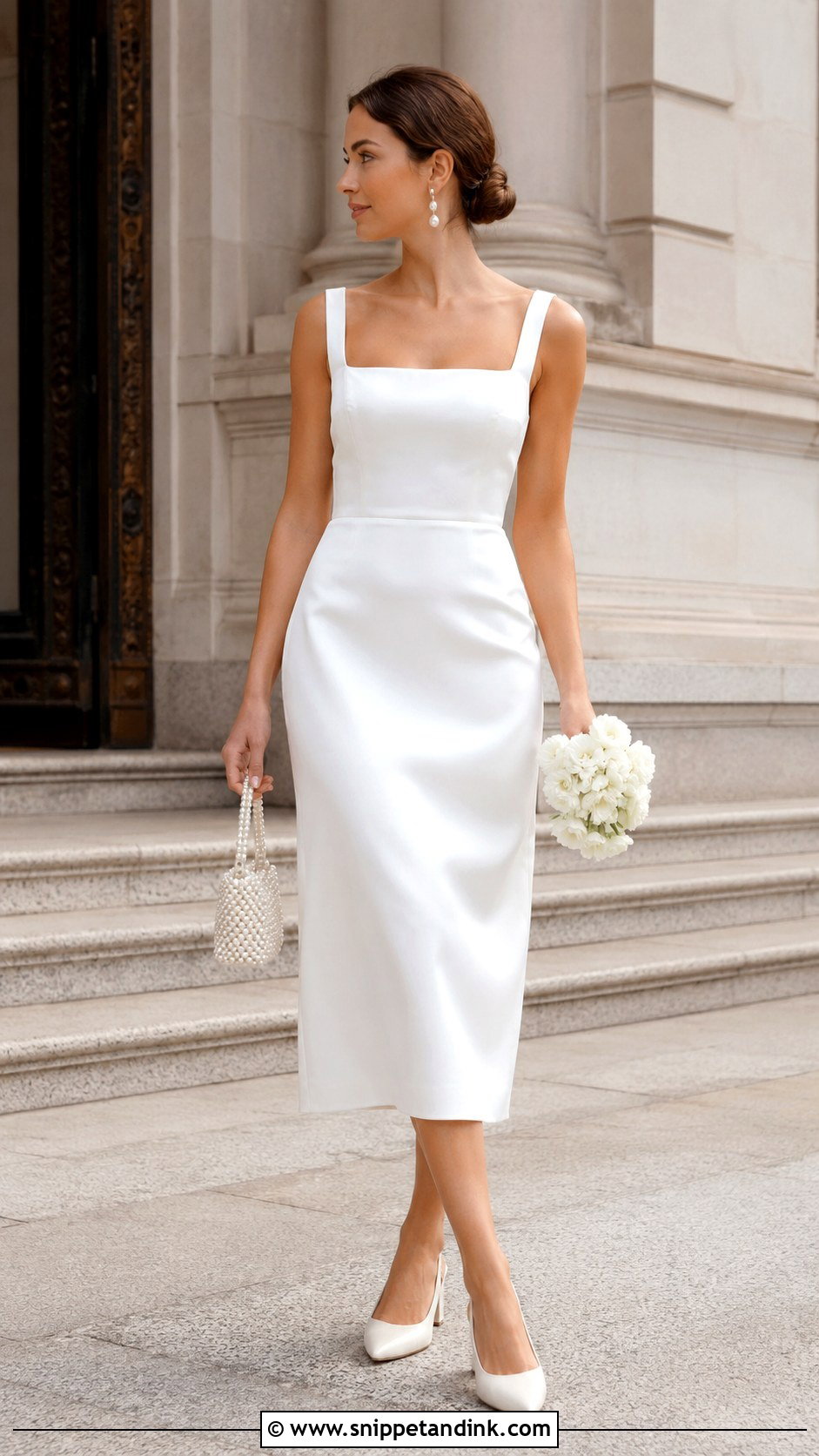
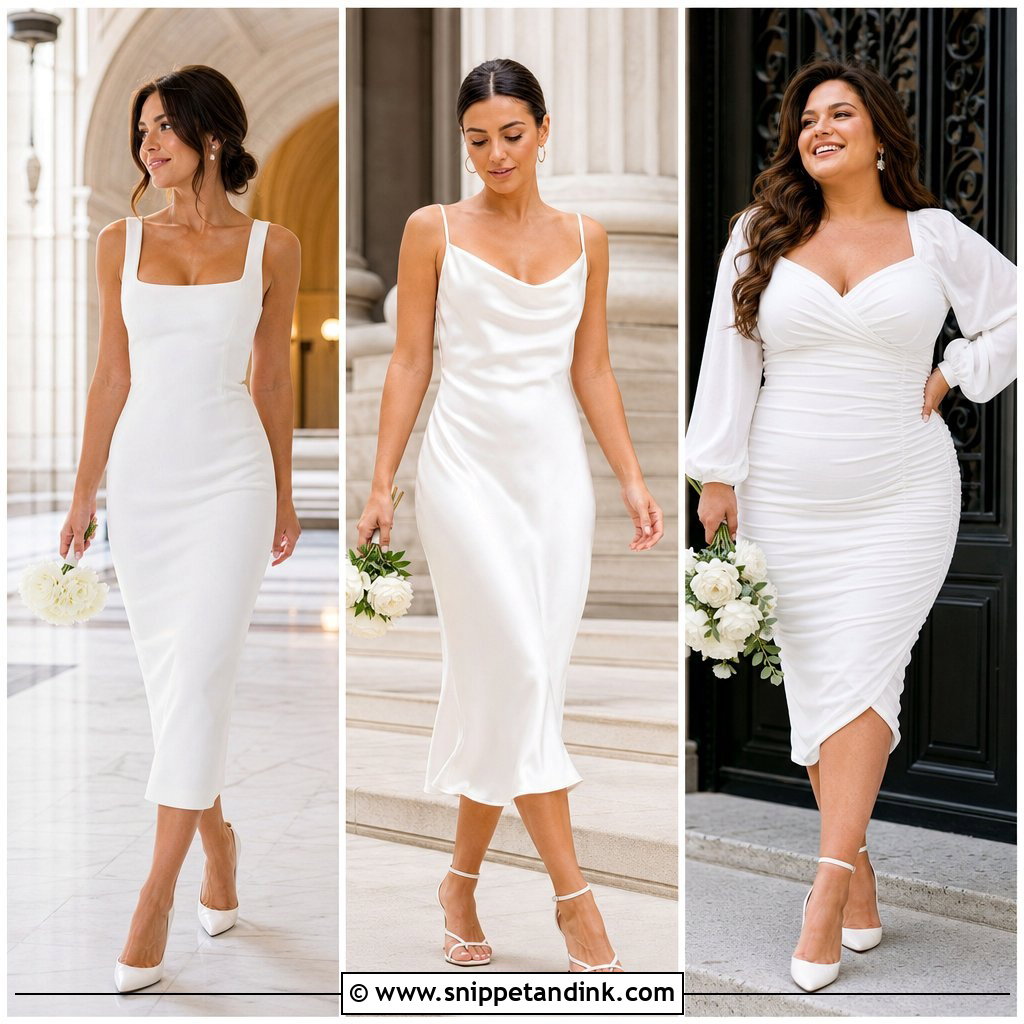
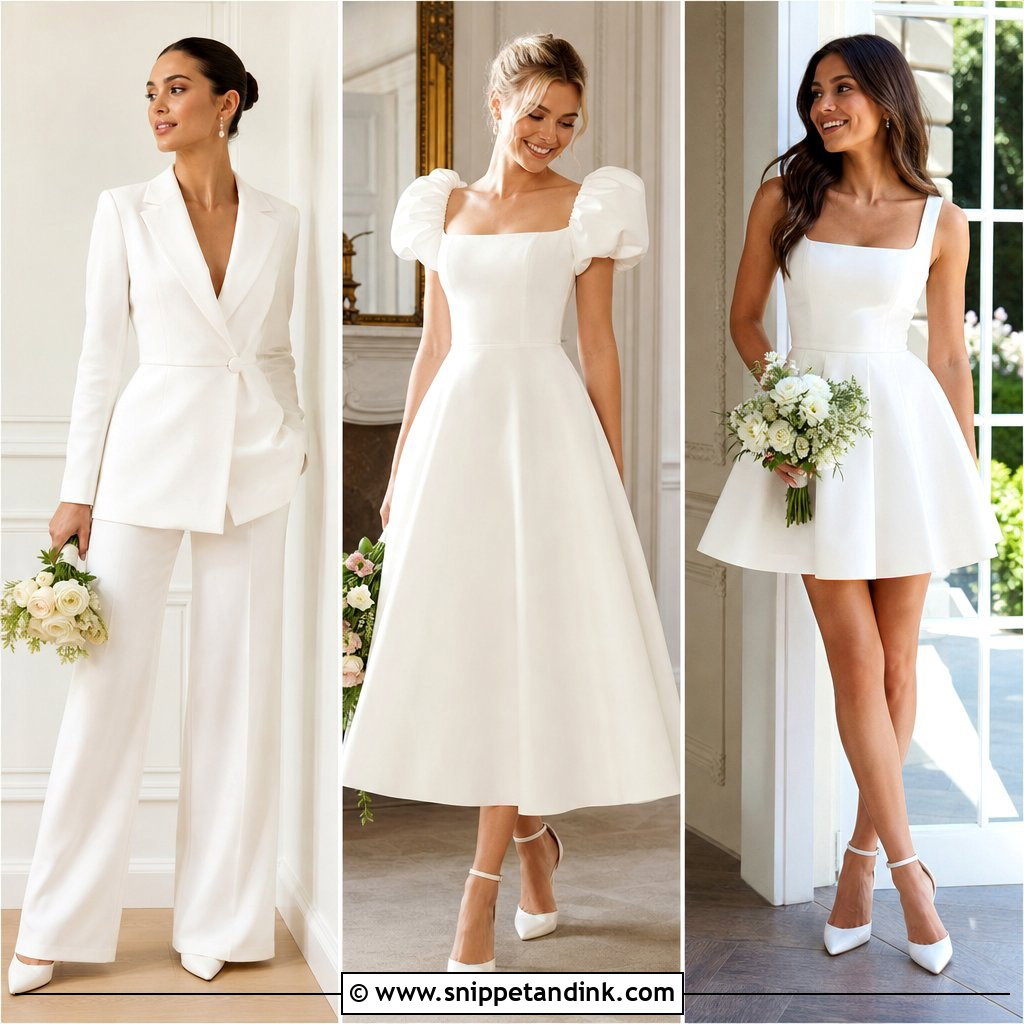
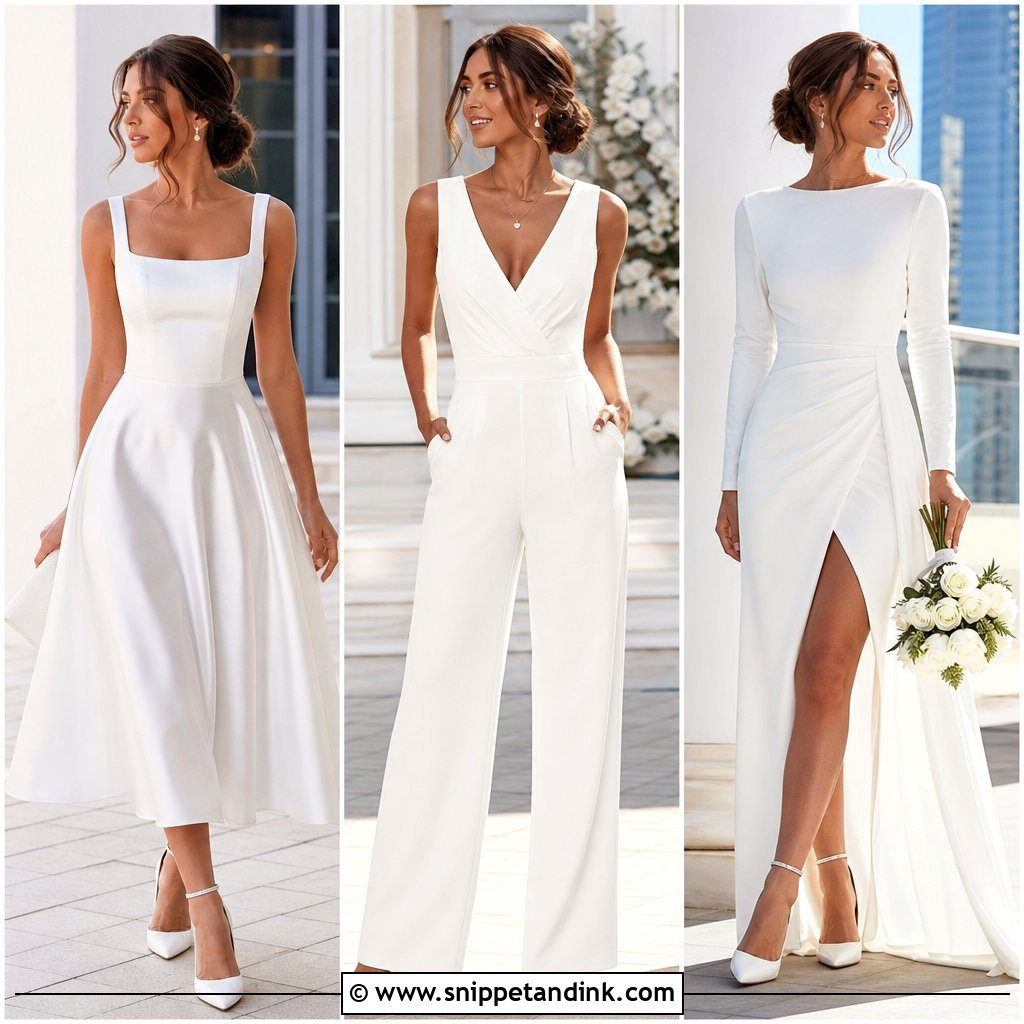
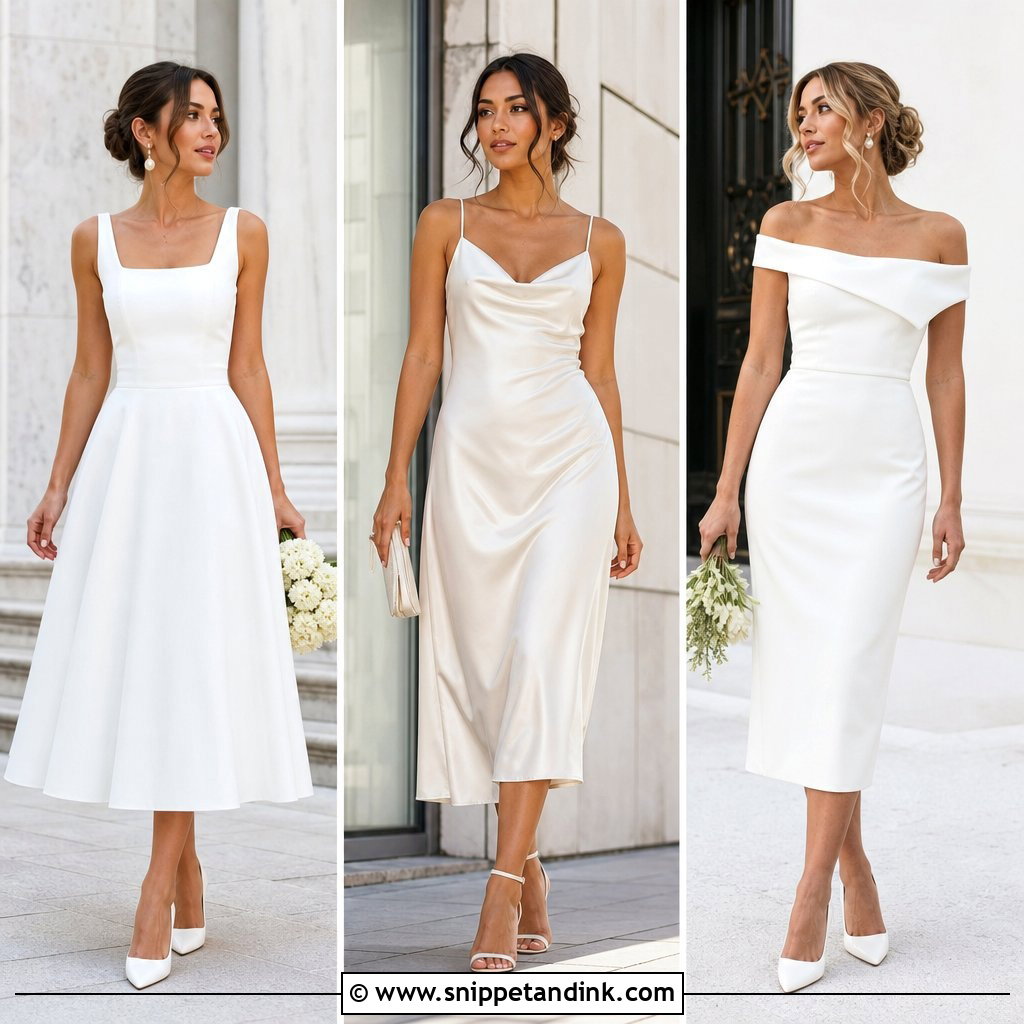
Satin is the most bridal fabric you can wear at a courthouse without looking overdressed. A white satin midi dress with a square, cowl or bateau neck and a below-knee hem is my starting point for most brides who want something classic. The catch is creasing: twenty minutes on a waiting-room bench leaves lines across the lap. Heavier satin with a lining creases less, and I’d stand rather than sit if you can. Ivory block slingbacks, a pearl bag and drop earrings are enough. A cream blazer covers you in cold weather.
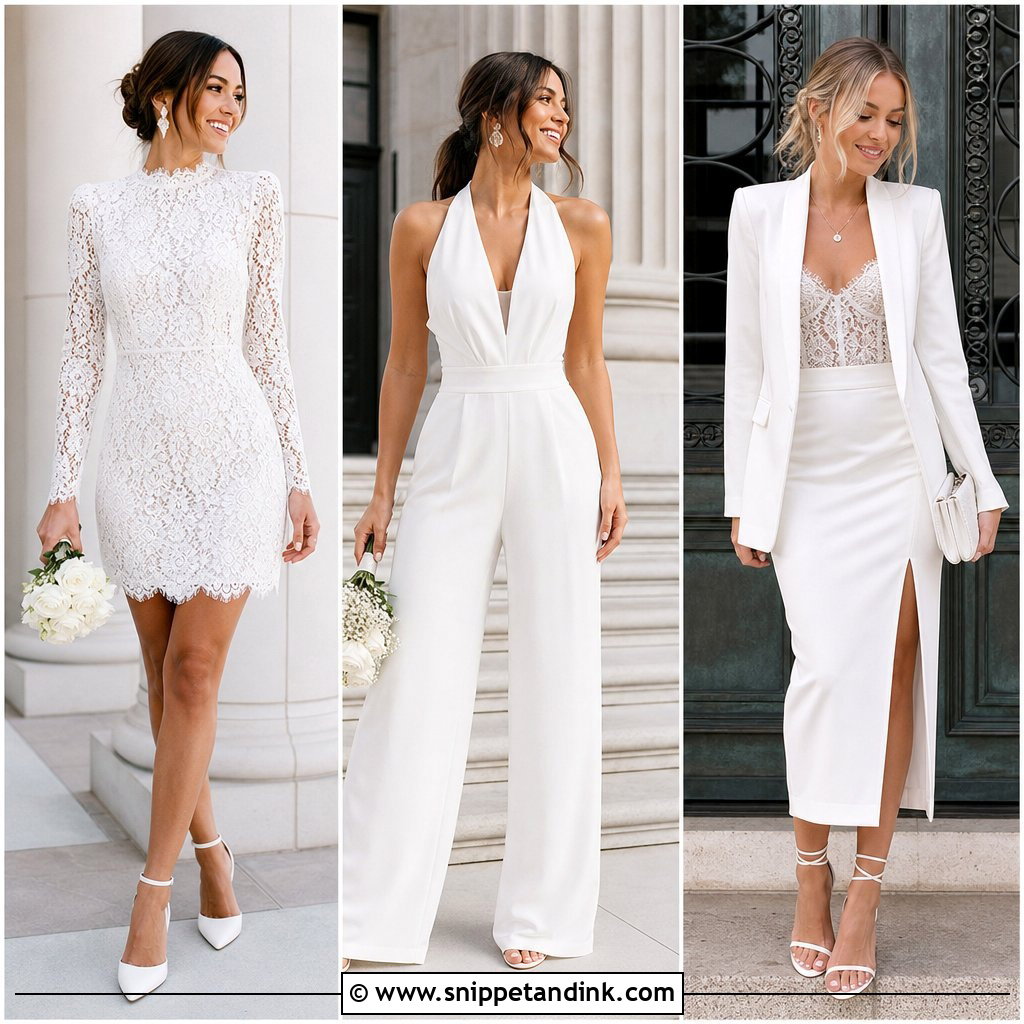
2. Long Sleeve Mini Court Wedding Dress
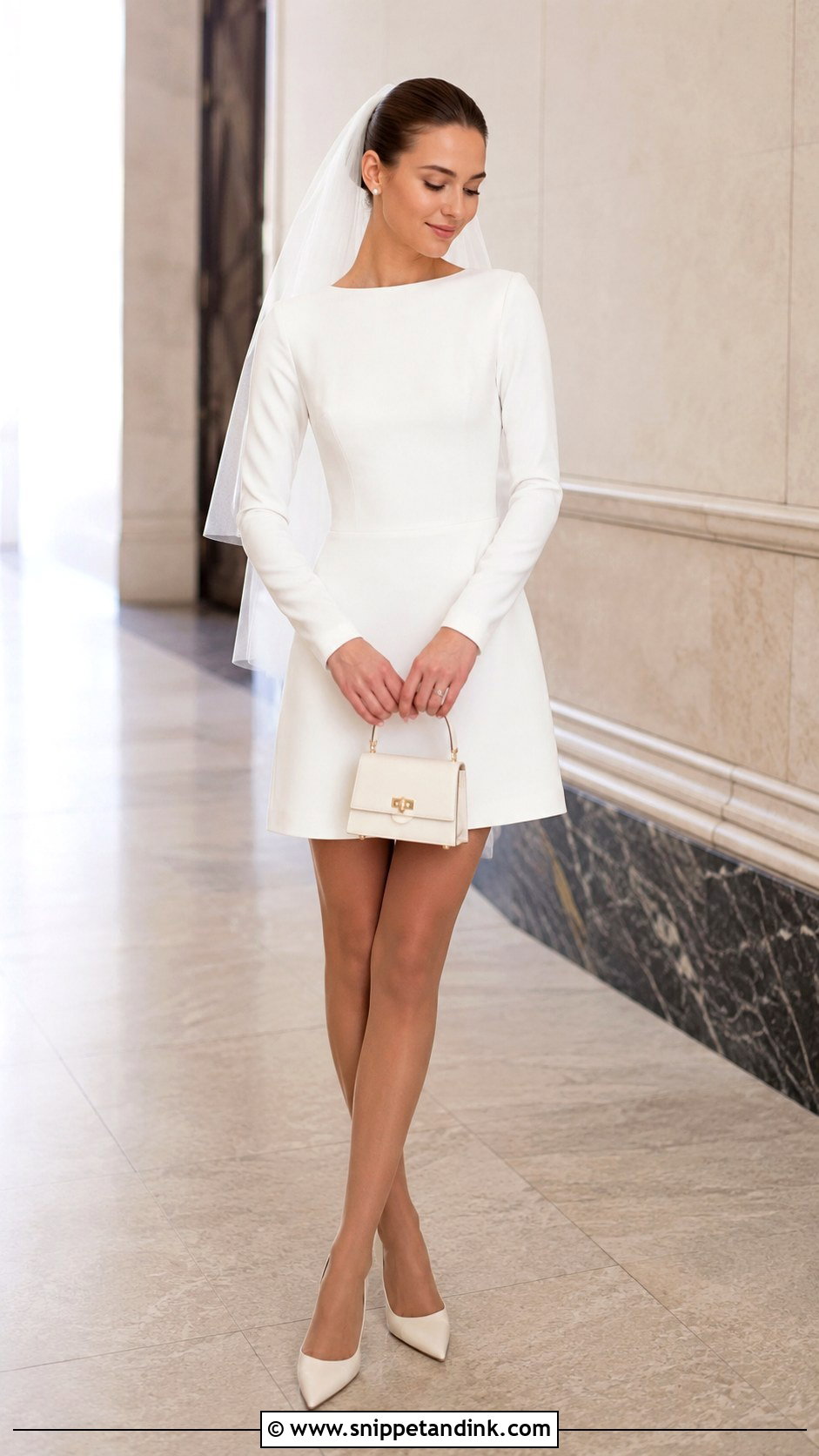
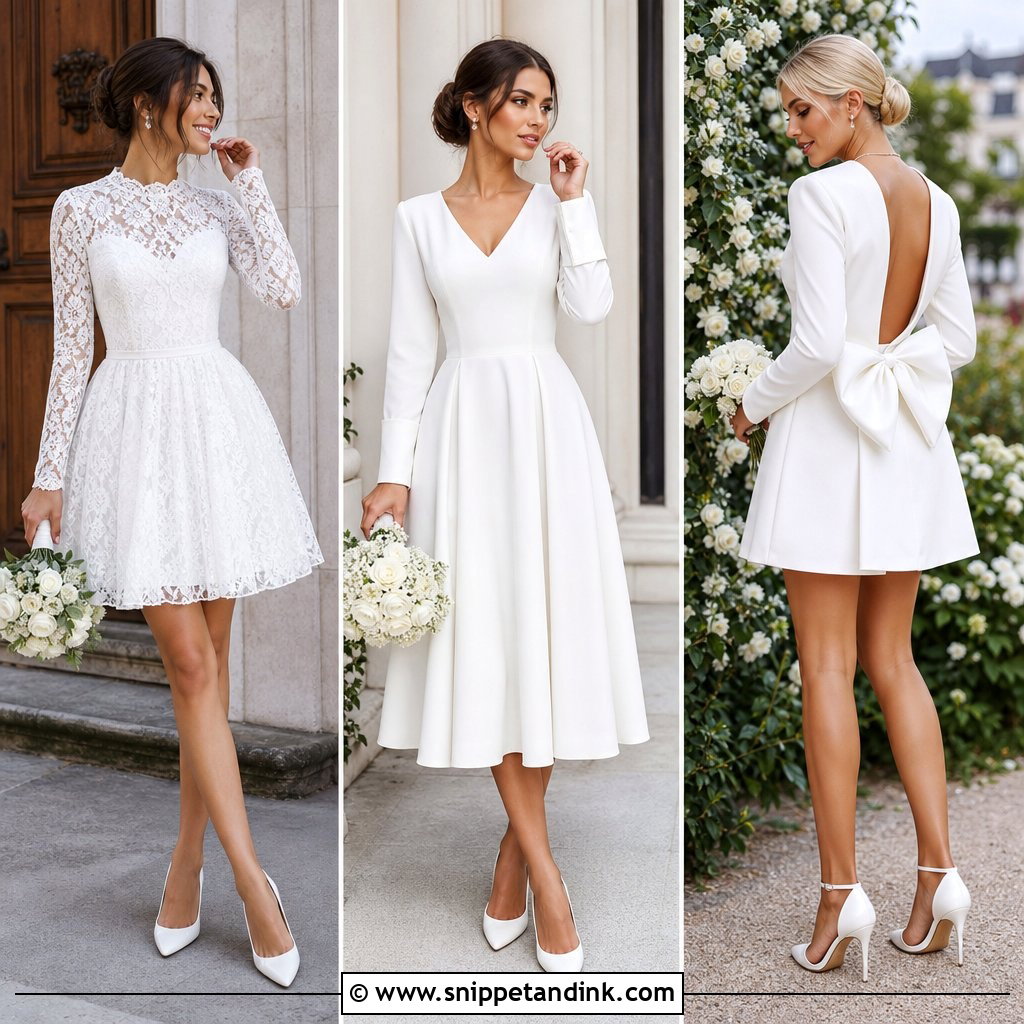
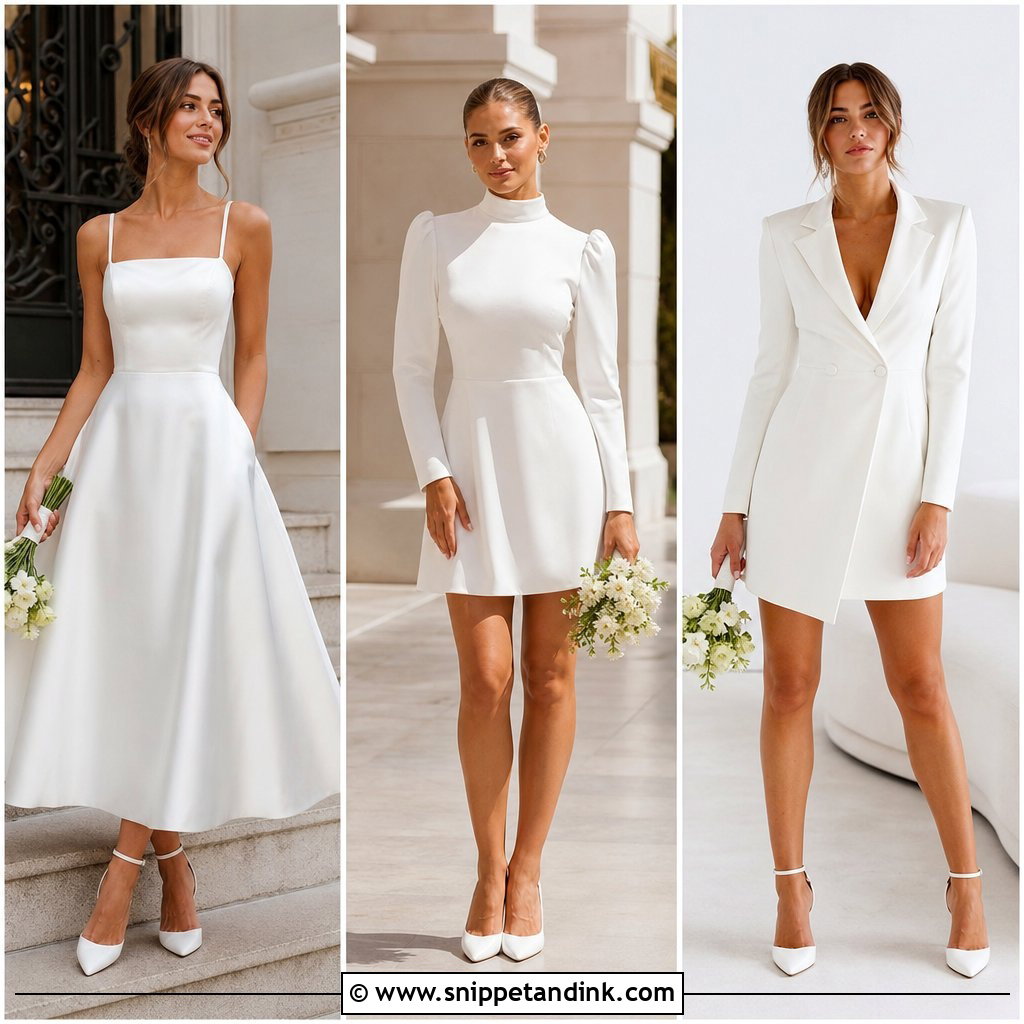
Sleeves balance a short hem, which is why a long-sleeve mini looks bridal rather than like a night out. Choose a structured white dress with a defined waist in crepe, satin or a subtle lace. Ivory or soft beige pumps, sheer tights in winter, pearl studs and a top-handle bag finish it. A short veil pinned under a low bun is a nice touch; long veils catch in revolving doors and security trays. If photos involve walking a few blocks, fold a pair of flats into your bag.
3. Lace Tea Length Court Wedding Dress
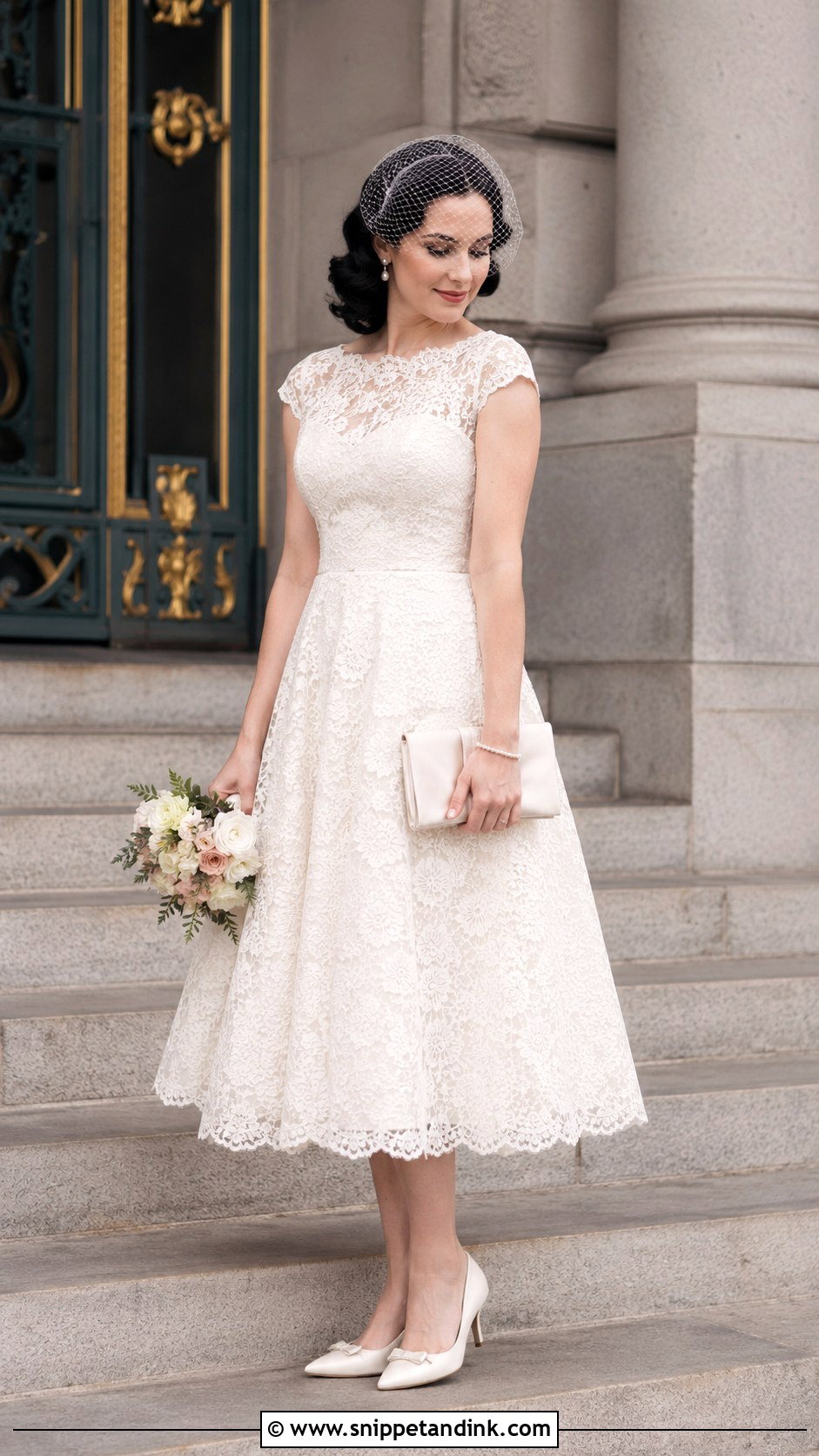
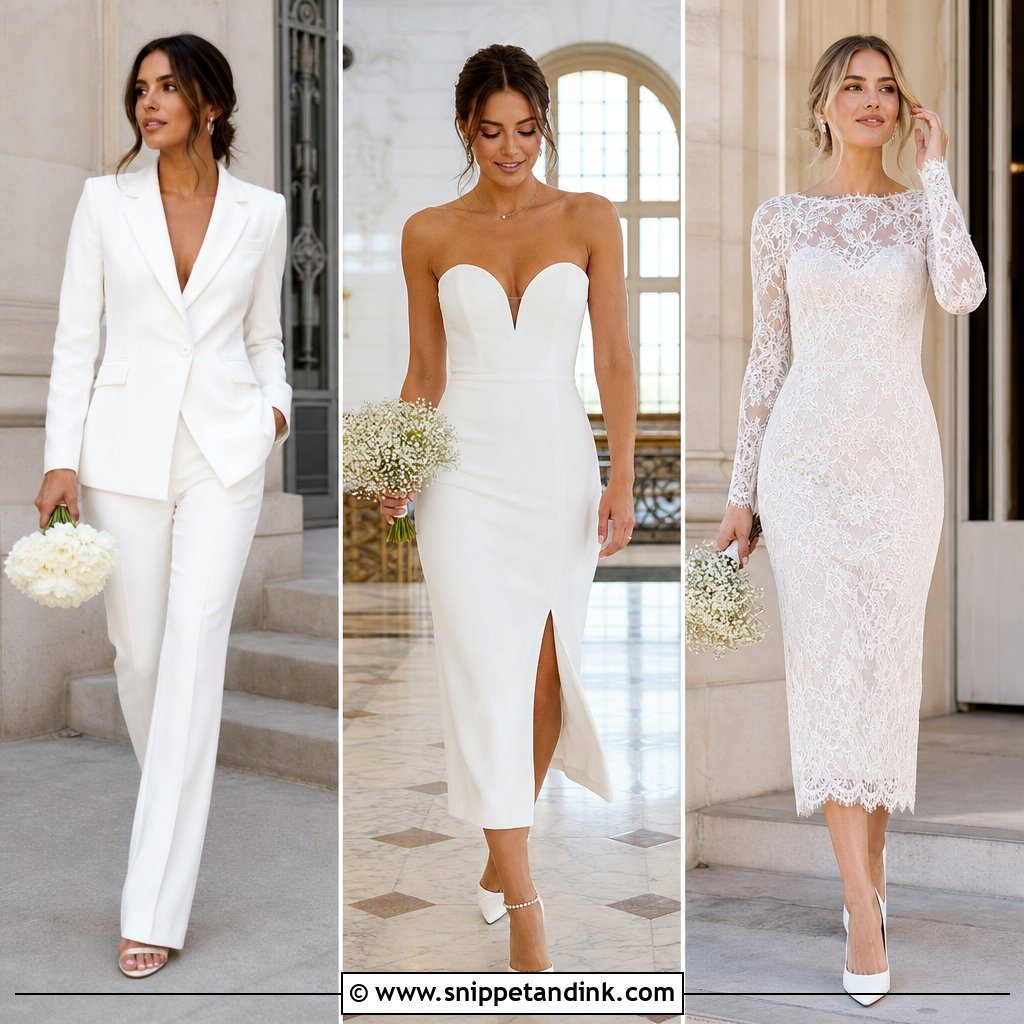
Tea length gives you vintage character without a hem that sweeps courthouse floors. Lace needs a lined bodice or fitted sleeves so it looks deliberate, not see-through, under hard indoor lighting. A defined waist and gentle flare make it easy to walk in. Ivory kitten heels, pearl earrings and a small satin clutch suit it, with a birdcage veil if you like the period feel, or a pearl headband for something simpler. Lace already has plenty of texture, so I’d leave off the necklace. Keep the bouquet small, white flowers and greenery.
4. White Blazer Dress Court Wedding Outfit
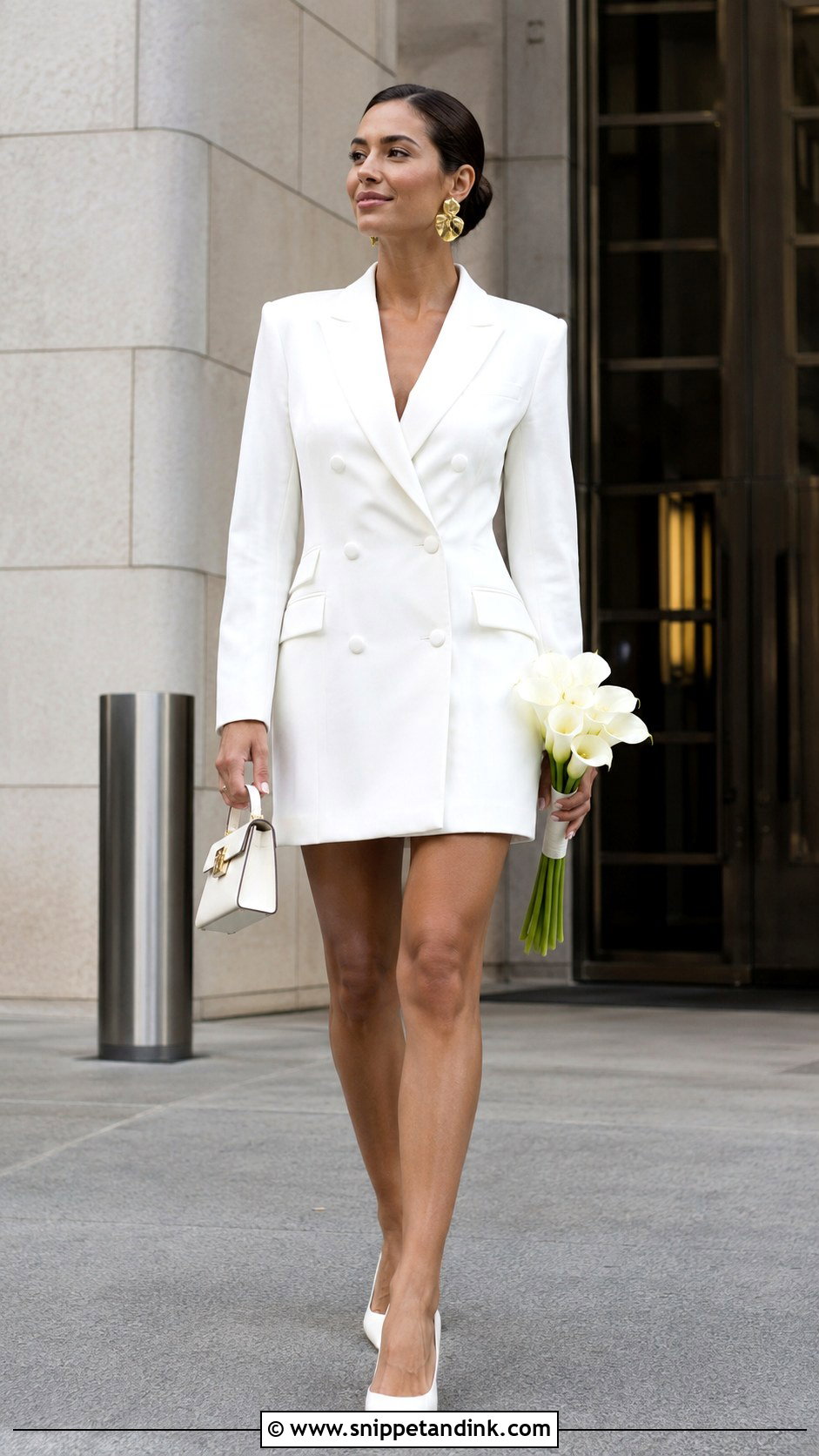
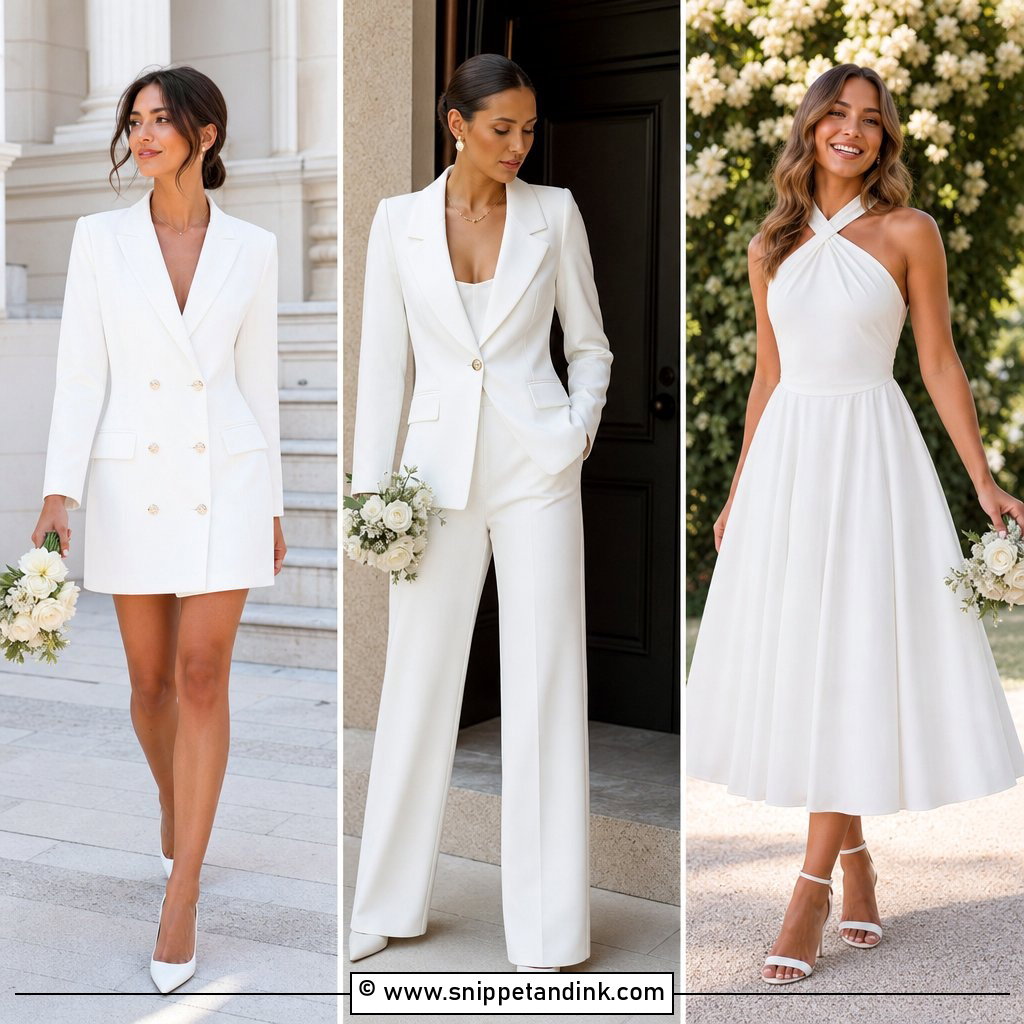
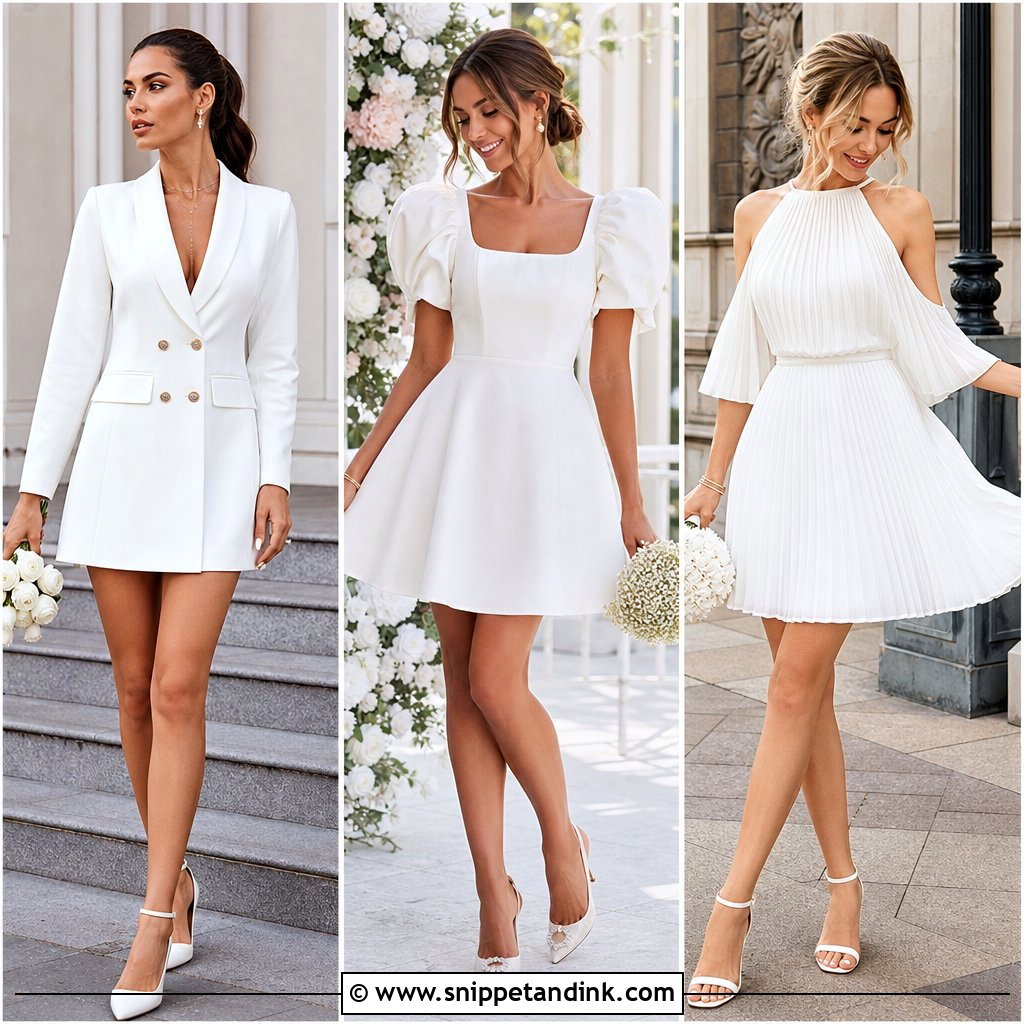
Sharp tailoring suits a lot of courthouse brides, and a white blazer dress looks right in a government building. Choose double-breasted or wrap-front, fully lined, with enough length that you can sit at the clerk’s desk without tugging. Satin lapels or covered buttons add the wedding detail. A silk camisole underneath stops the neckline gaping when you lean over the register. Pointed ivory pumps, gold earrings and a structured mini bag complete it. White roses or calla lilies suit the clean lines.
5. Off Shoulder Midi Court Wedding Dress
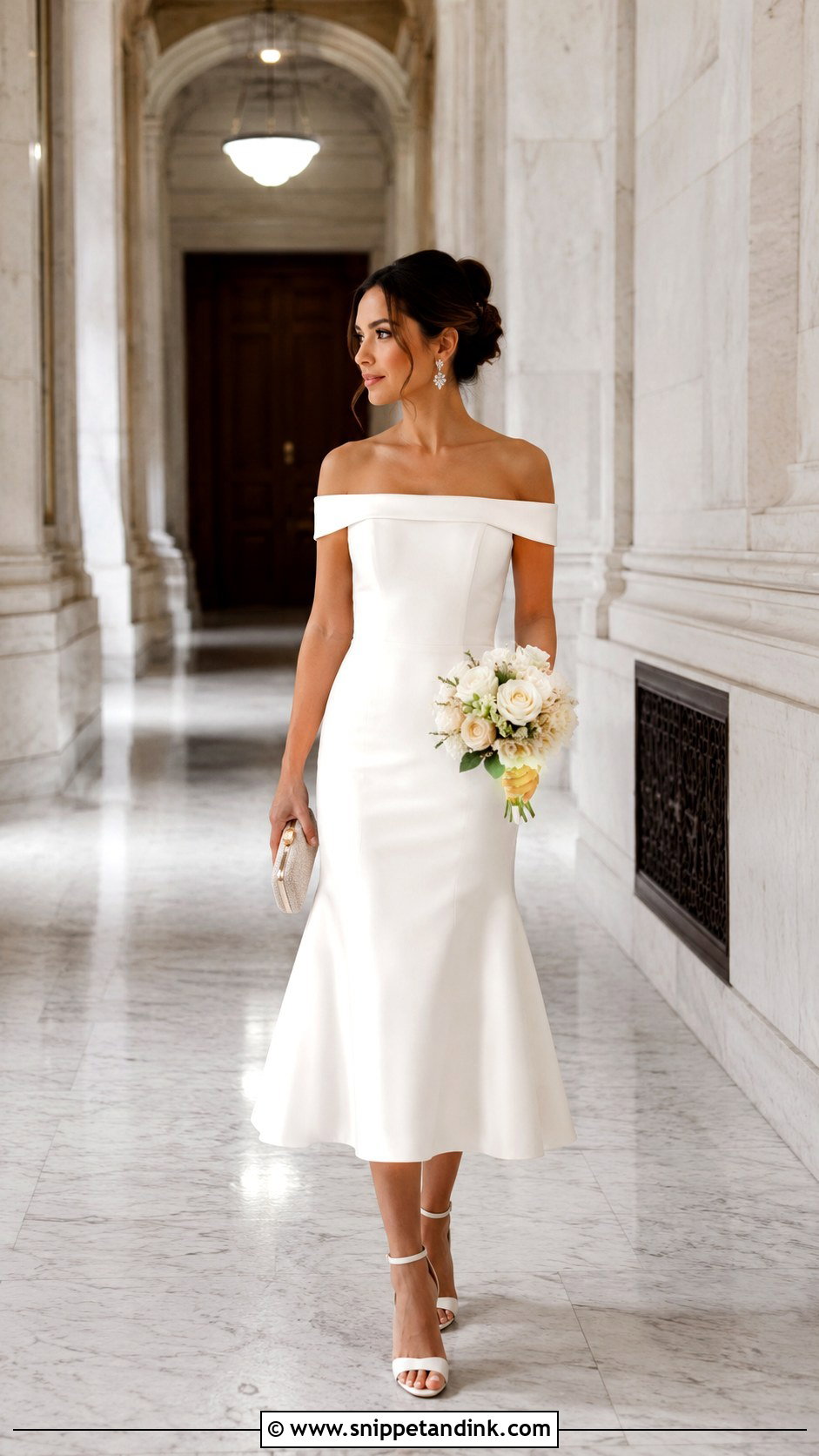
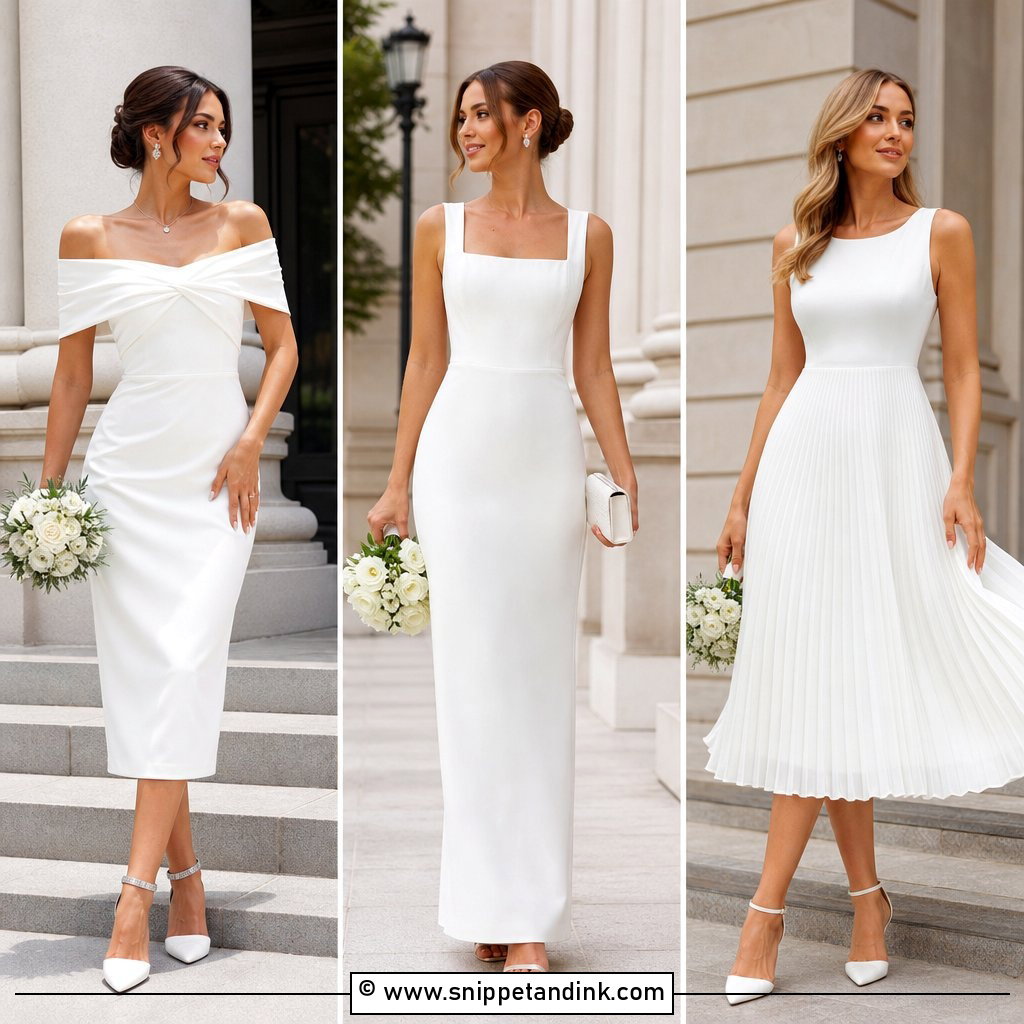
Off-the-shoulder looks romantic, but it is the neckline I test hardest. You’ll raise your arm to take the oath in some places, lean to sign, and hug everyone afterward. If it rides up or slips, it needs internal boning or grip elastic. A flared or column skirt keeps it refined. Ankle-strap heels in ivory, champagne or silver, small crystal earrings and a compact clutch let the shoulders lead. An updo shows the neckline. Bring a cropped white jacket for cold courthouse hallways.
6. White Jumpsuit Court Wedding Outfit
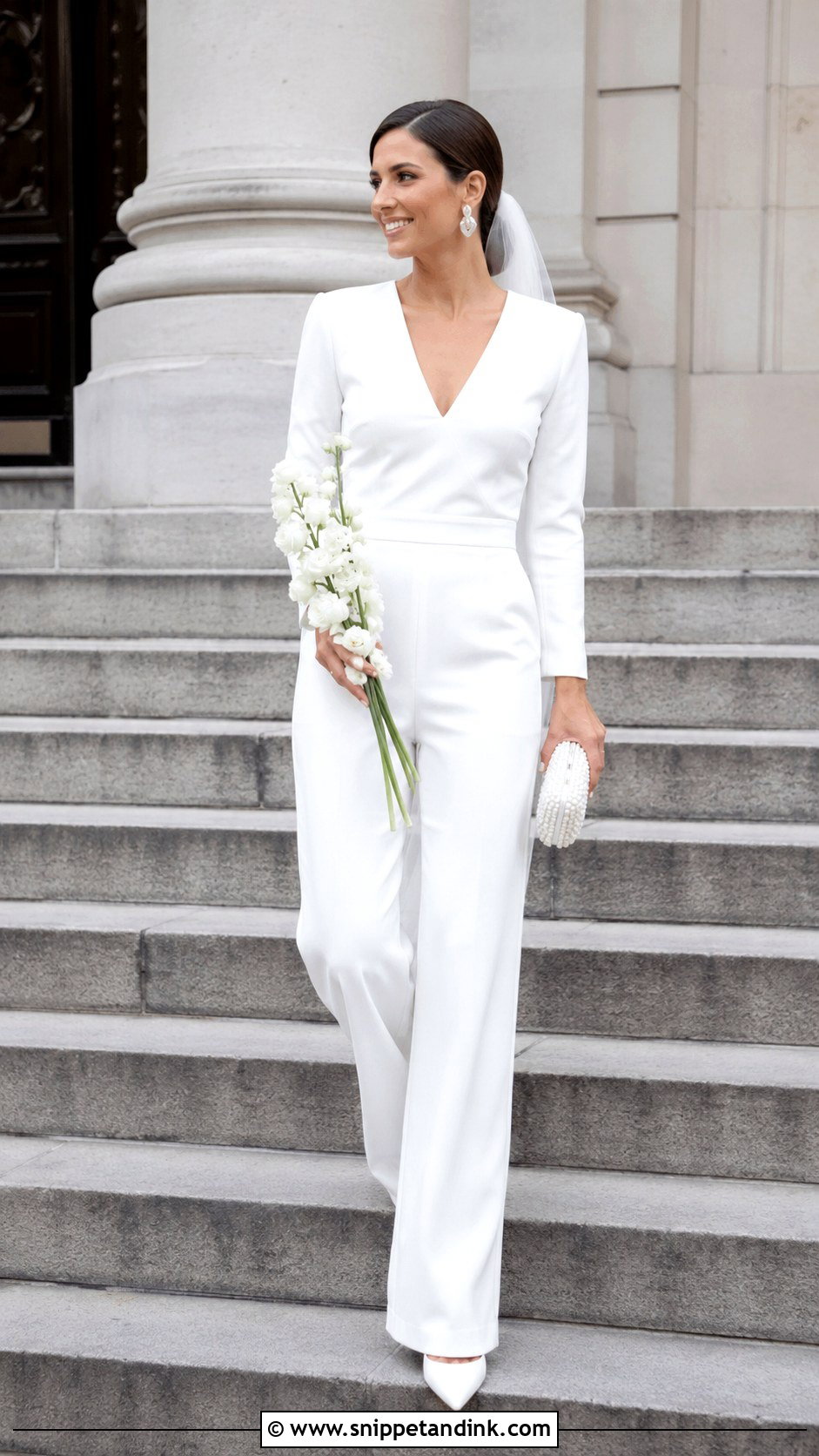
Trousers make a lot of sense at a courthouse, and a white jumpsuit is the dressier way to wear them. Crepe or heavier satin drapes without clinging. A wrap, halter or square neckline, a defined waist and full-length legs keep it bridal. The step people skip is hemming to the exact heel you’ll wear, so the trouser just grazes the shoe. A pearl clutch, sculptural earrings and a short veil or headband finish it. Keep the bouquet slim so it doesn’t hide the waist. It moves straight on to dinner or a rooftop drink.
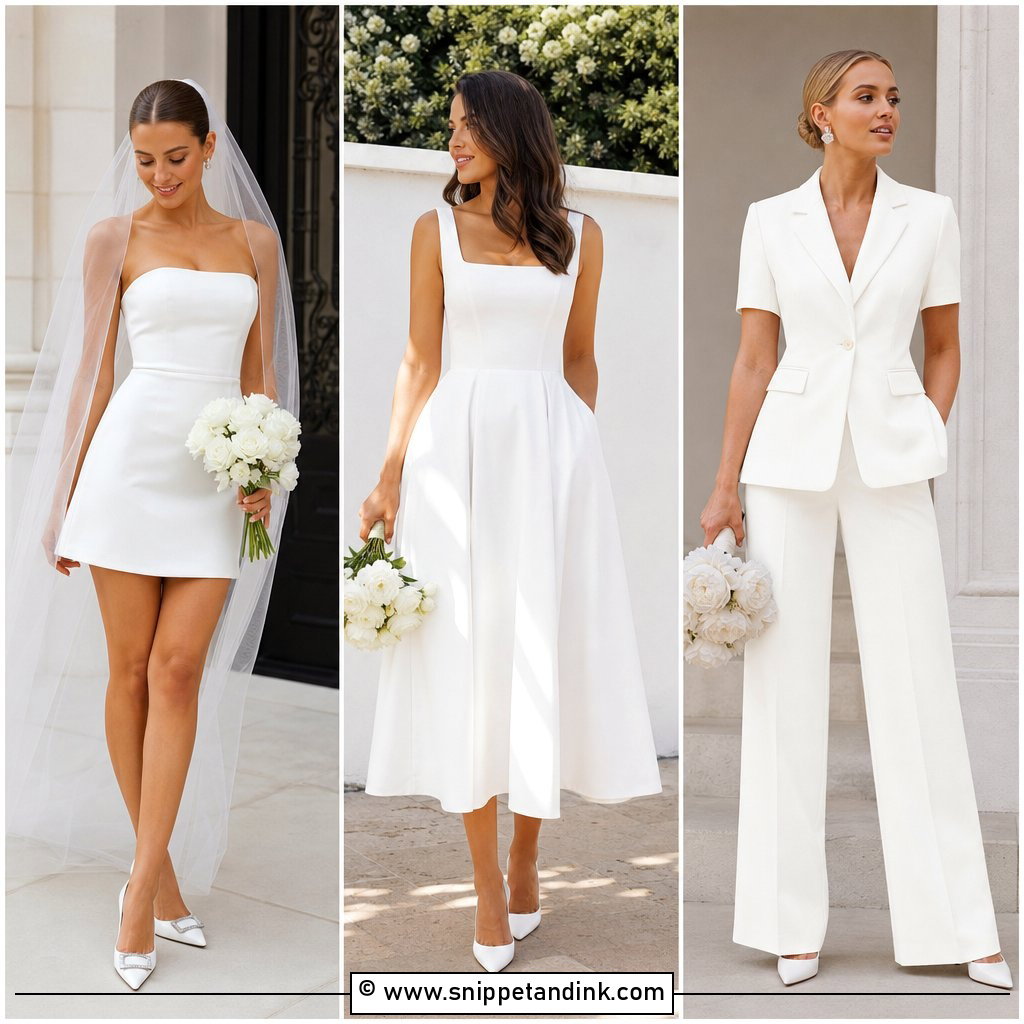
7. White Pantsuit Court Wedding Outfit
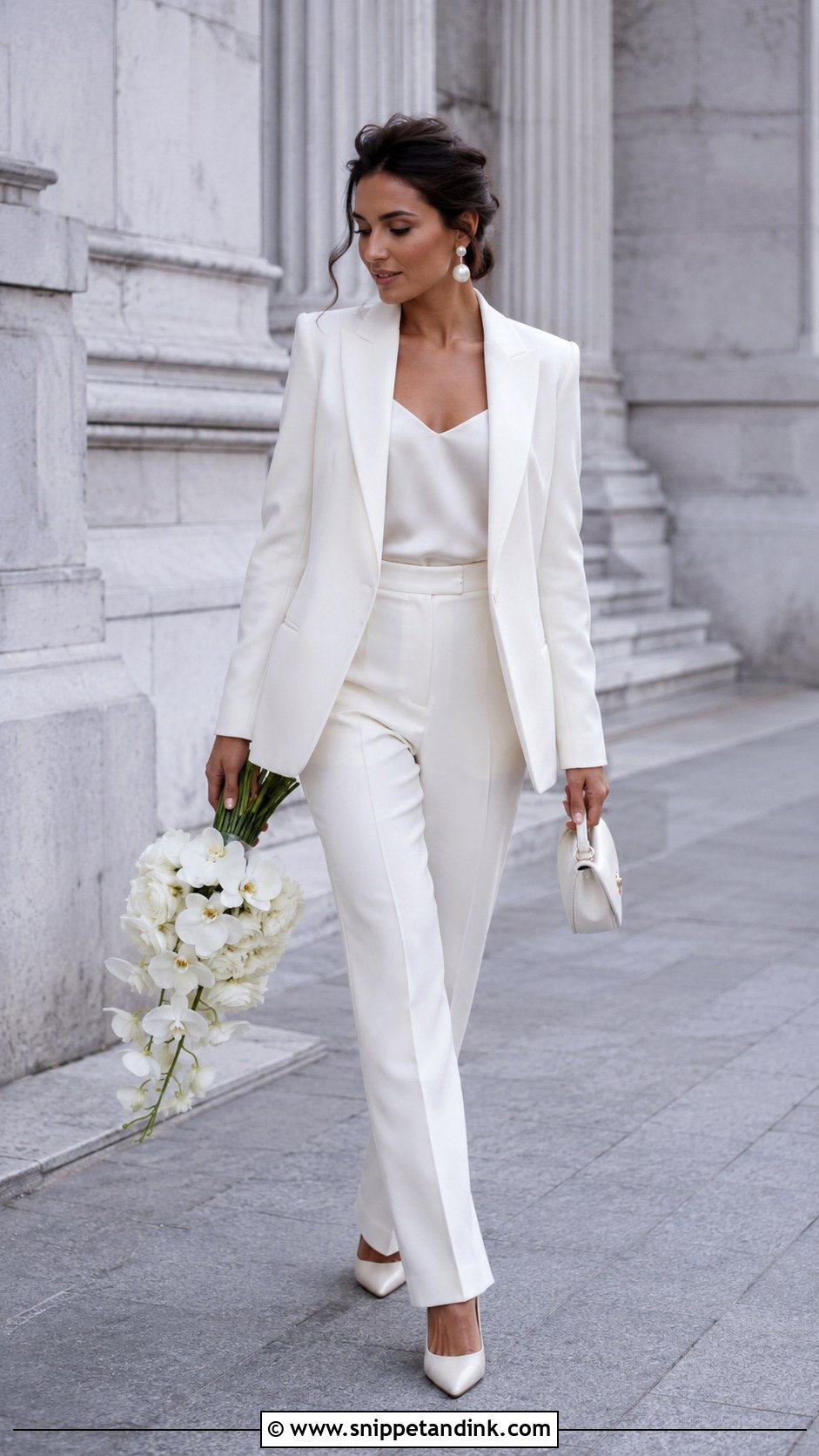
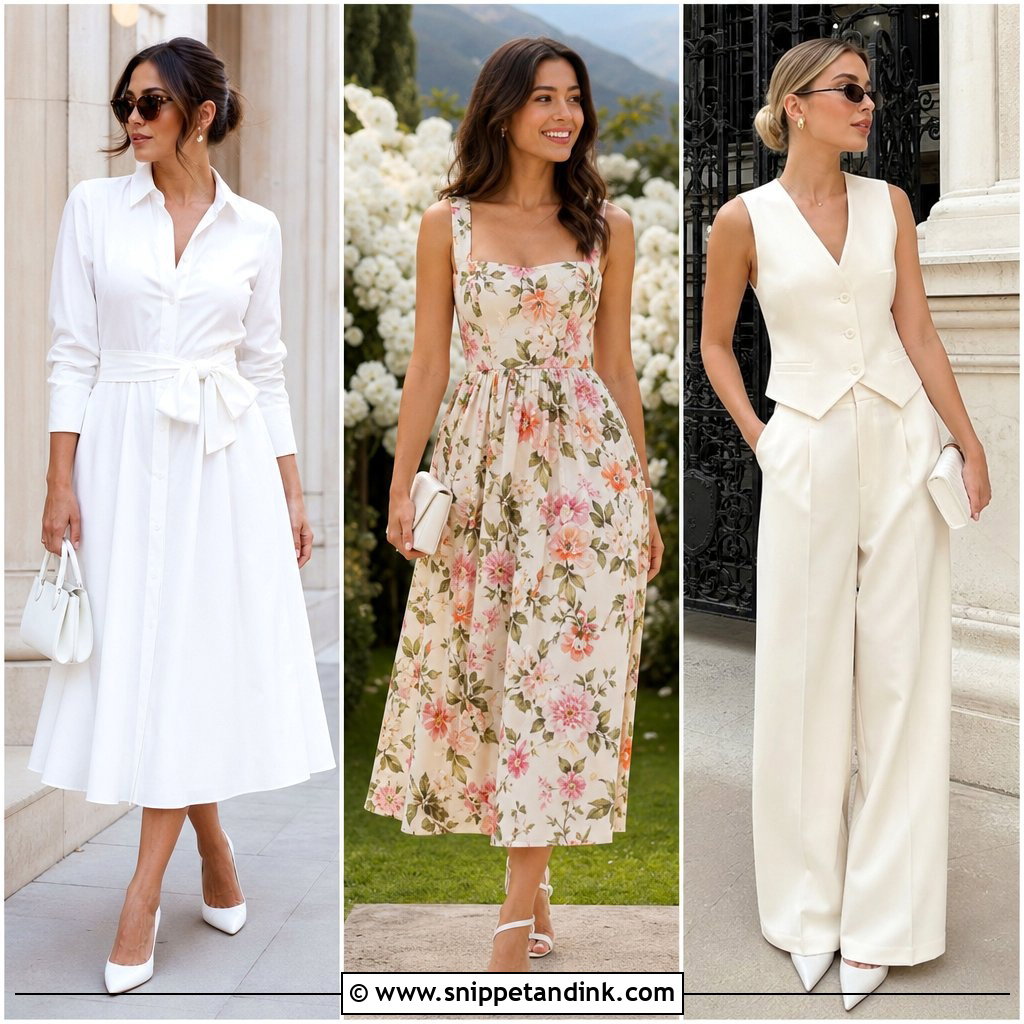
A sharply tailored white pantsuit is the most rewearable outfit here, since every piece goes back into your wardrobe afterward. Fit the blazer across the shoulders first; if it pulls when you hug, size up and take in the waist. Underneath, a silk camisole, a fitted bodysuit or a high-neck satin top. Pointed heels lengthen the leg, though polished loafers are more comfortable and look just as deliberate. Pearl drops and a long-stemmed bouquet suit it. A shoulder-length veil under a sleek bun adds tradition if you want it.
8. Puff Sleeve Midi Court Wedding Dress
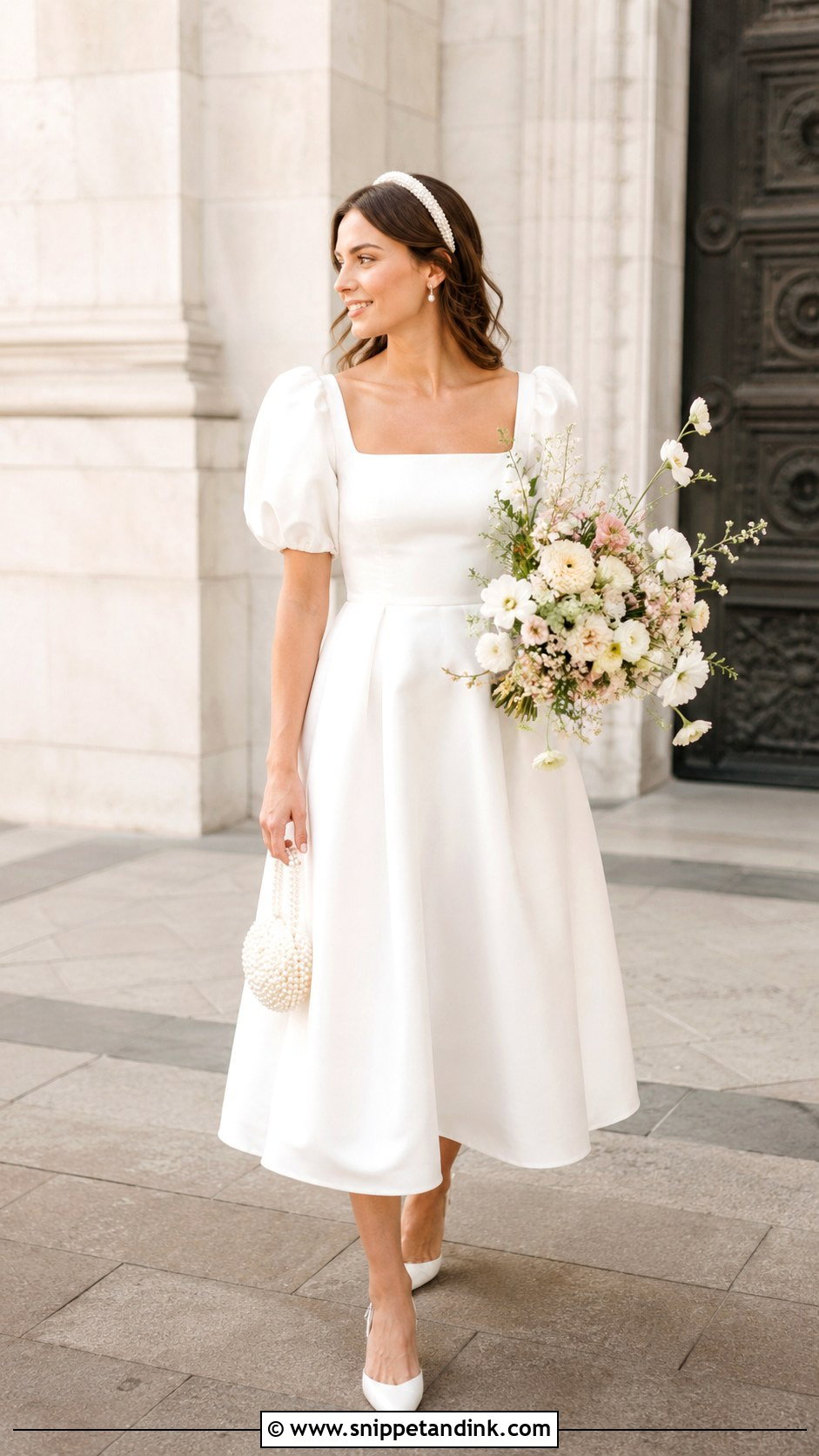
Puff sleeves add romance without a big skirt, but keep the volume controlled. Oversized sleeves crush under a coat and won’t fit back into the arms of most jackets. A square neckline, fitted waist and gentle flare balance the shape. Low slingbacks, a pearl bag and delicate earrings suit it; a ribbon bow or headband echoes the sweetness without tipping into costume. With a textured fabric, keep shoes smooth and jewelry minimal. It suits spring, and a tailored coat with closed heels carries it into colder months.
9. Sheath Midi Court Wedding Dress
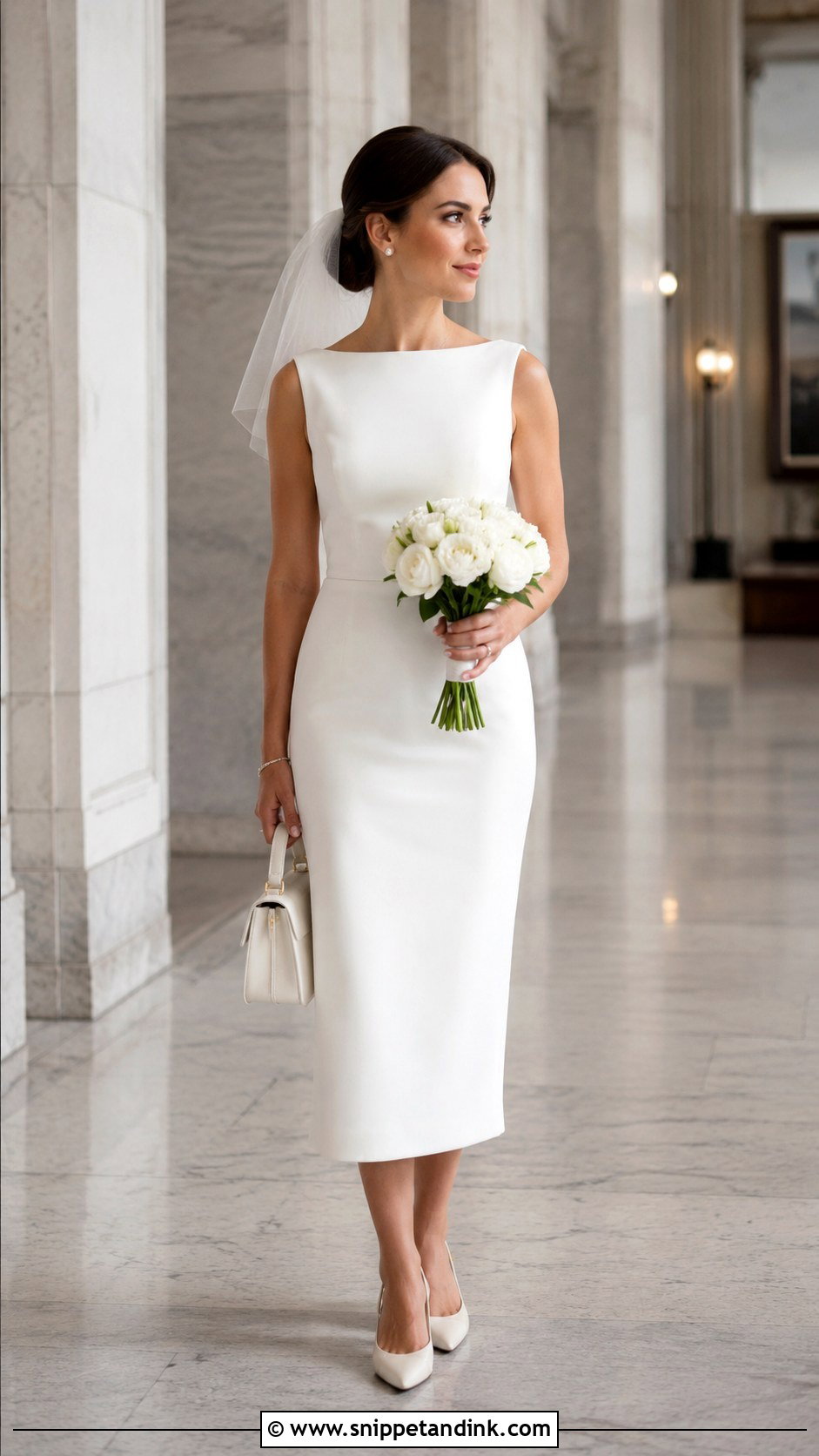
The sheath is the dress I’d suggest to a bride who wants to look composed rather than decorated. Substantial crepe with a good lining is the key, because thin crepe shows every line underneath. Check for a back slit; without one, courthouse stairs are a shuffle. A bateau, scoop or modest V-neck keeps it clean. Pointed slingbacks, an ivory bag, pearl studs and a low bun finish it. A detachable bow at the waist or a short tulle veil adds bridal definition. It’s a strong choice when lunch afterward is somewhere formal.
10. Halter Neck Court Wedding Dress
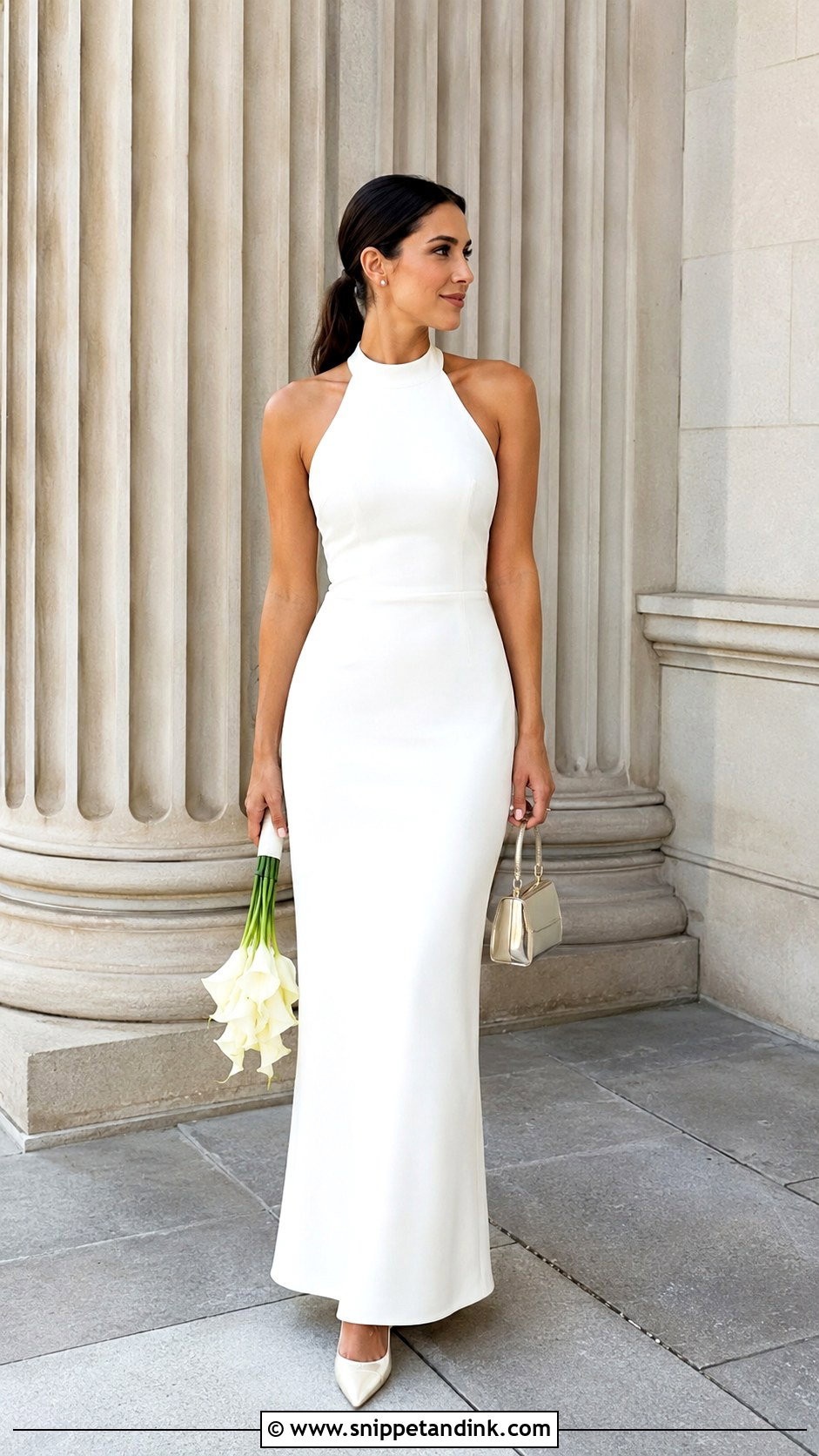
Halters put the attention on shoulders and face, which suits brides who don’t want a lot of fuss below. Choose midi or ankle length with a secure neck fastening and enough skirt room to walk. Smooth crepe, matte satin or light jacquard all work. Wear your hair up, or in a low ponytail, and skip the necklace, which crowds the neckline. Studs, a cuff and a top-handle bag are plenty. In cold weather a tailored white coat sits well over it. A narrow long-stemmed bouquet keeps the vertical line of this sophisticated court wedding dress.
11. Wrap Midi Court Wedding Dress
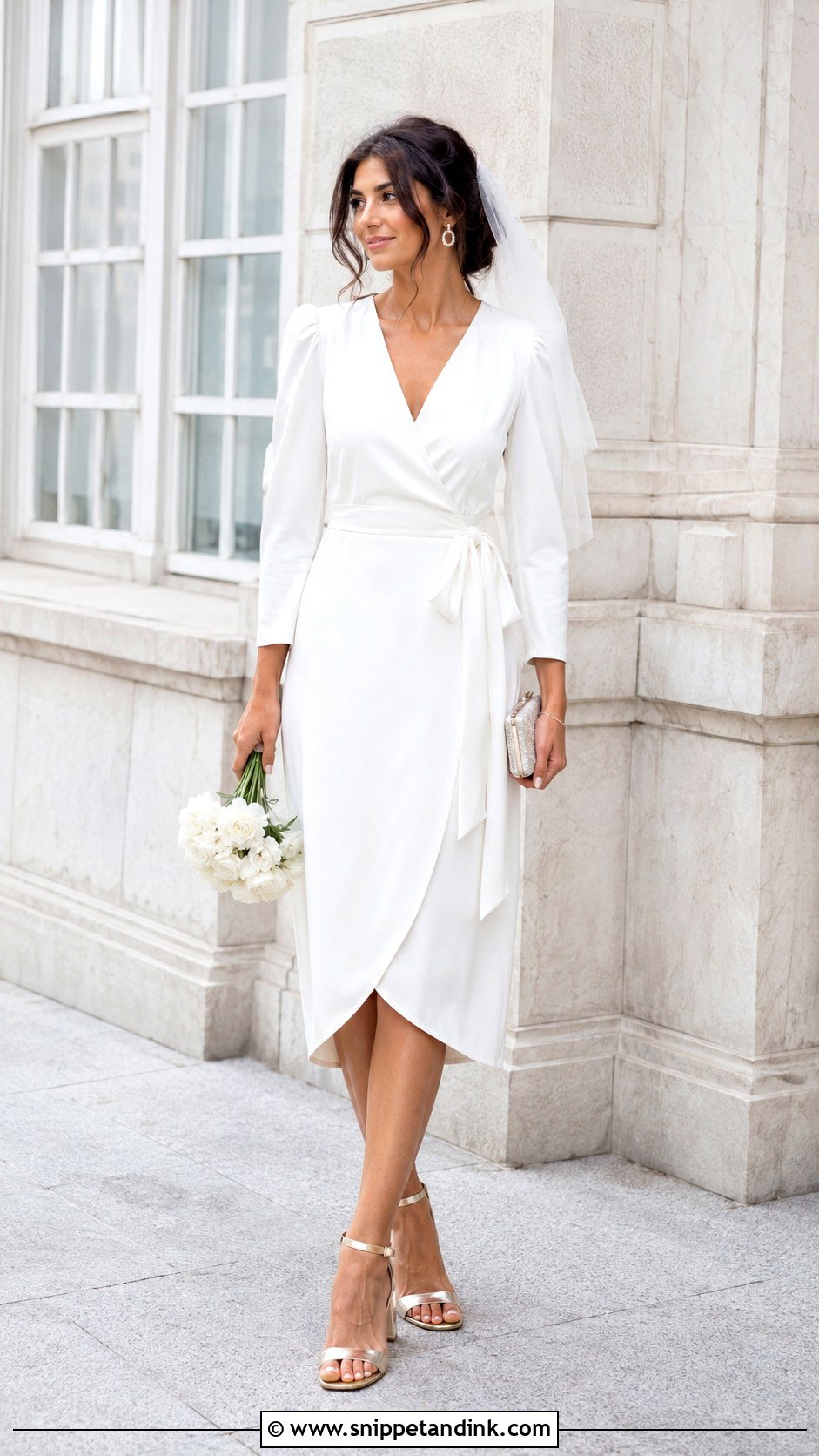
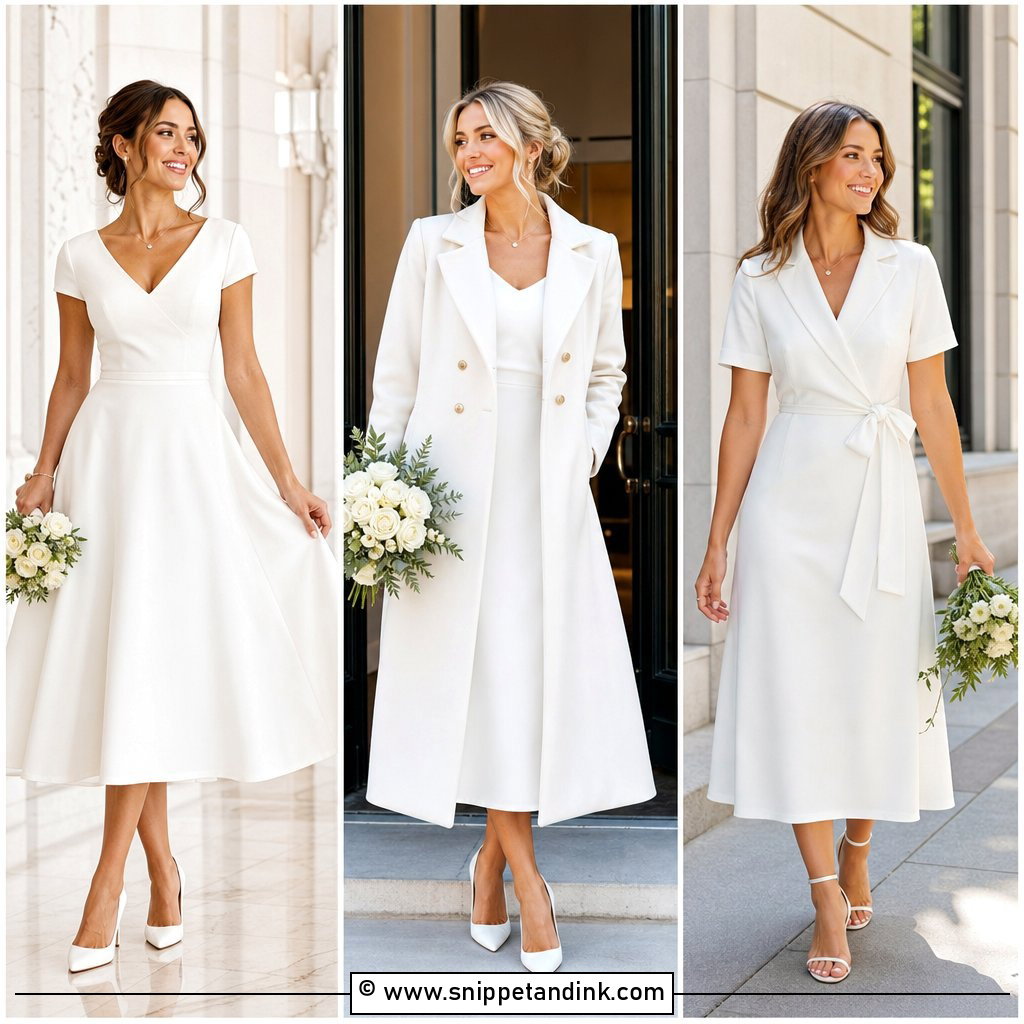
Wrap dresses forgive a lot, including the small fit changes that happen in the weeks before a wedding. That’s the main reason I like one for a courthouse. Choose a lined style with a hidden snap or inner tie at the neckline, since true wraps open when you sit. Nude, ivory or metallic block heels handle stairs. Pearl hoops, a small clutch and a fine bracelet suit it. A plain wrap needs a bridal signal: a floral comb or a short veil. Crepe looks modern, jacquard more textured. Add a light trench in changeable weather.
12. Square Neck Mini Court Wedding Dress
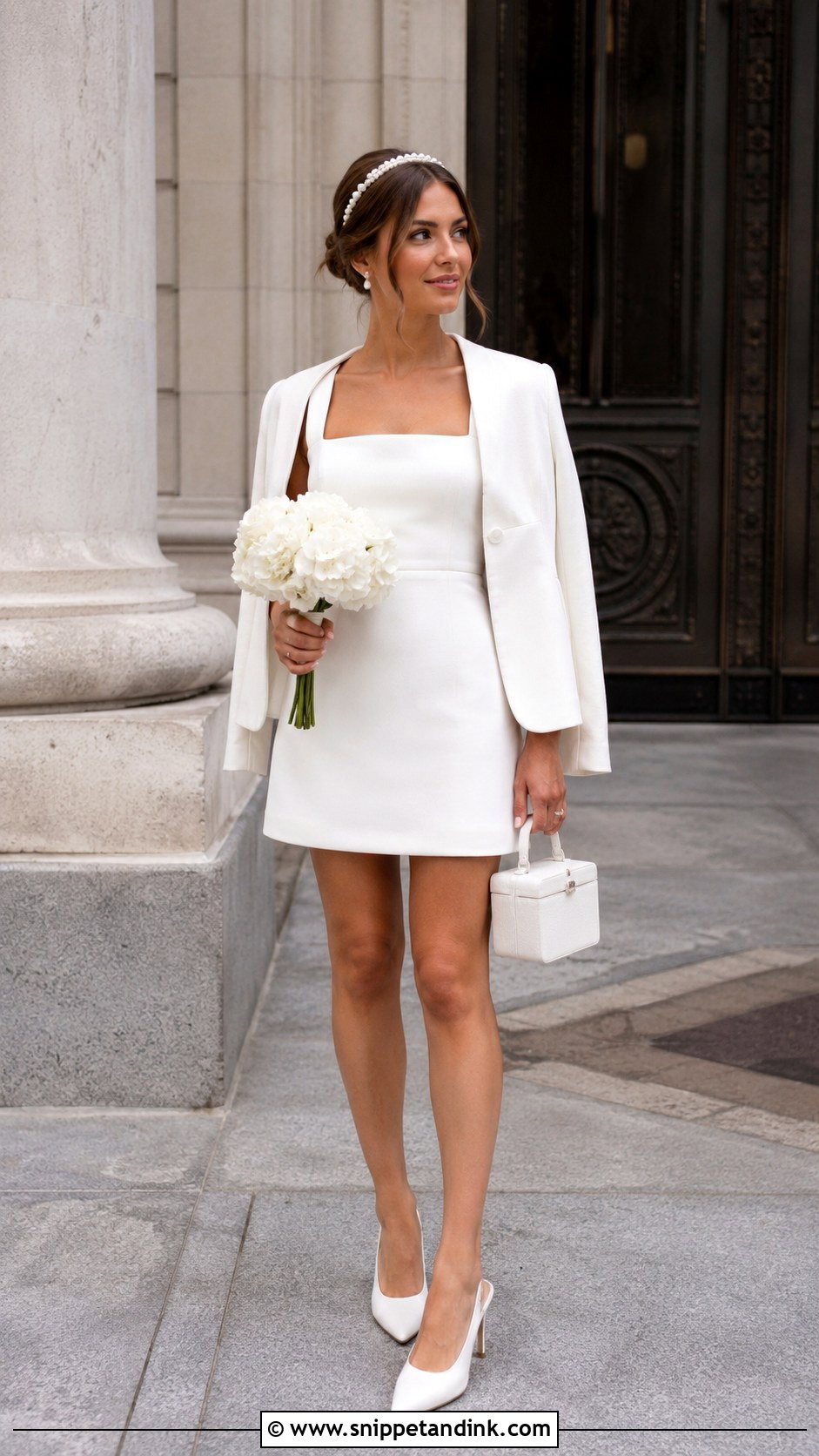
A square neck and a short hem look modern, but a mini can tip casual if the fabric is soft. Structured fabric with thick straps or short sleeves holds its shape through the day. Low block heels or pointed slingbacks keep it grown-up. A pearl headband, small earrings and a box bag make it bridal, and a cropped blazer covers you in a cold building. Hold the bouquet low so it doesn’t hide the neckline. It suits a warm day followed by city photos or brunch.
13. One Shoulder Midi Court Wedding Dress
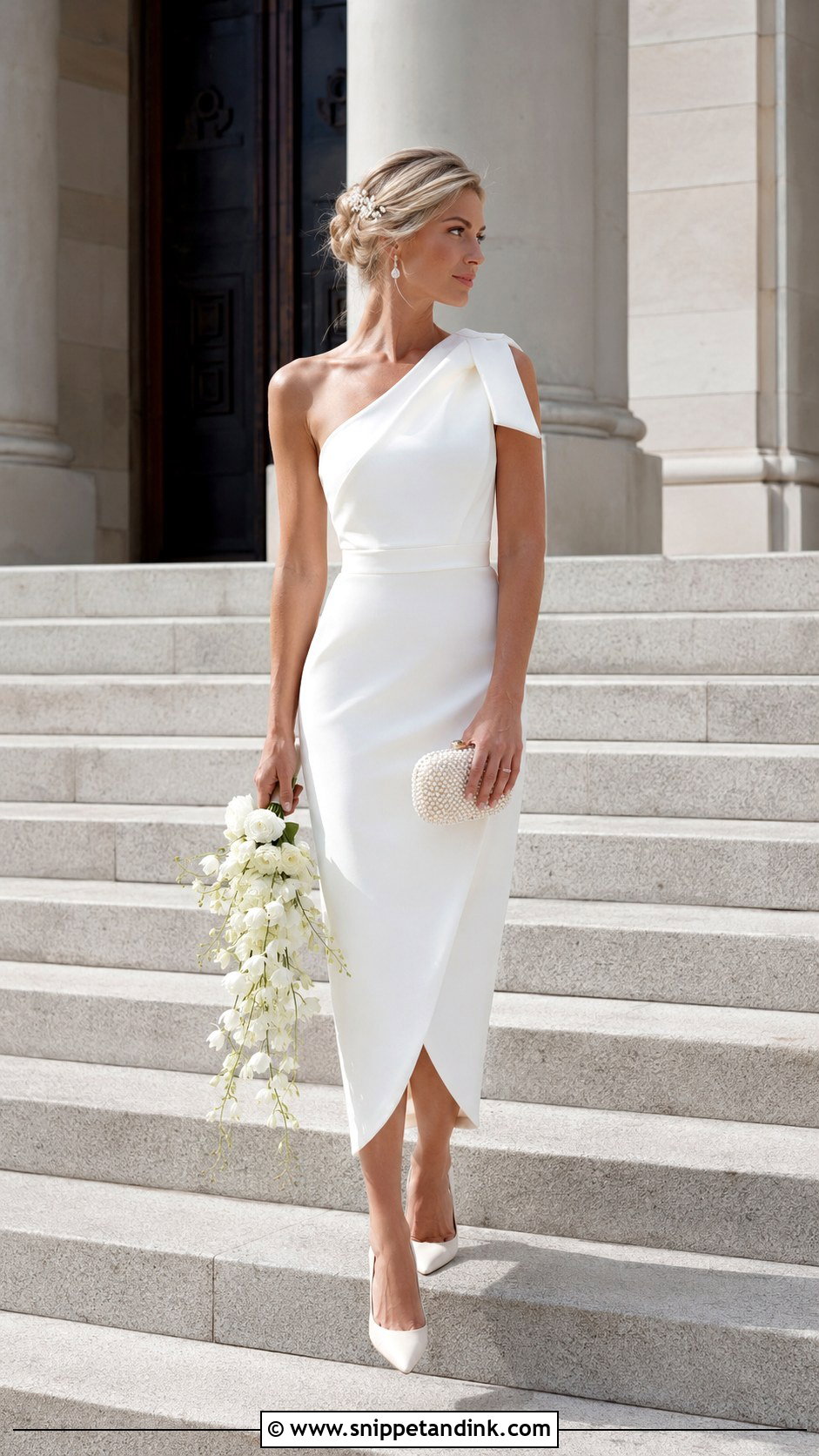
One shoulder gives you a statement through cut alone. The bodice needs real support, so try reaching across a table in it before you buy. Keep the rest quiet: slim drop earrings, a small pearl or metallic clutch and pointed ivory pumps. Sweep your hair to the opposite side or into a low ponytail. I’d use a small comb instead of a veil, which fights with the asymmetric line. For outdoor photos, drape a coat over both shoulders rather than wearing it. A narrow white bouquet suits the shape.
14. Button Front Court Wedding Dress
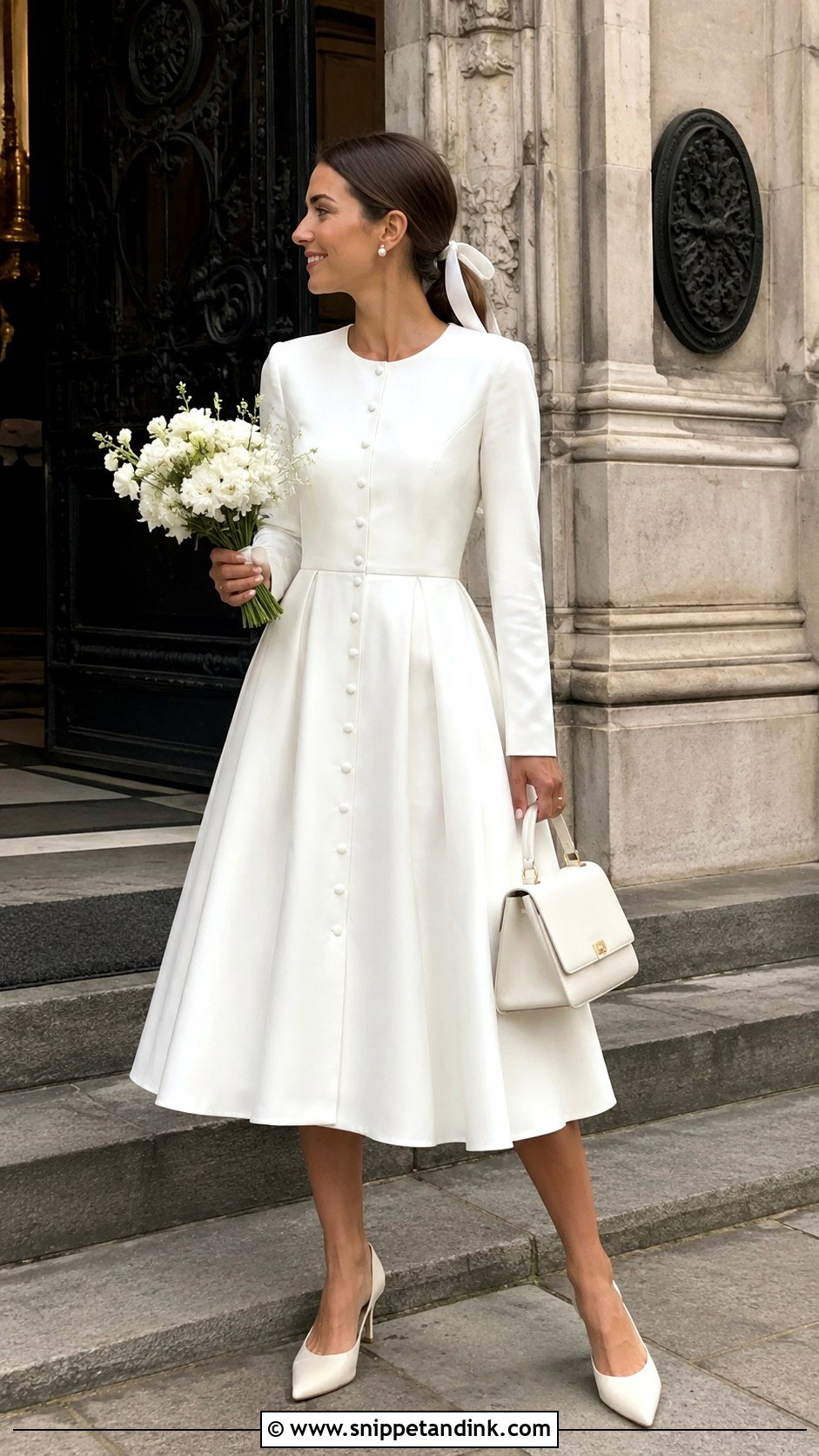
Button-fronts gape when you sit; that’s the first thing I check, and a strip of fashion tape between buttons fixes it. Otherwise this is a sweet, slightly vintage choice. Covered buttons, a fitted waist and a soft flare in crepe, linen blend or textured cotton. Short sleeves for warm weather, fitted long sleeves for cooler months. Almond-toe pumps or slingback kitten heels, pearl studs and a ribbon in a low ponytail suit it. A short veil is optional; the buttons can carry the look alone.
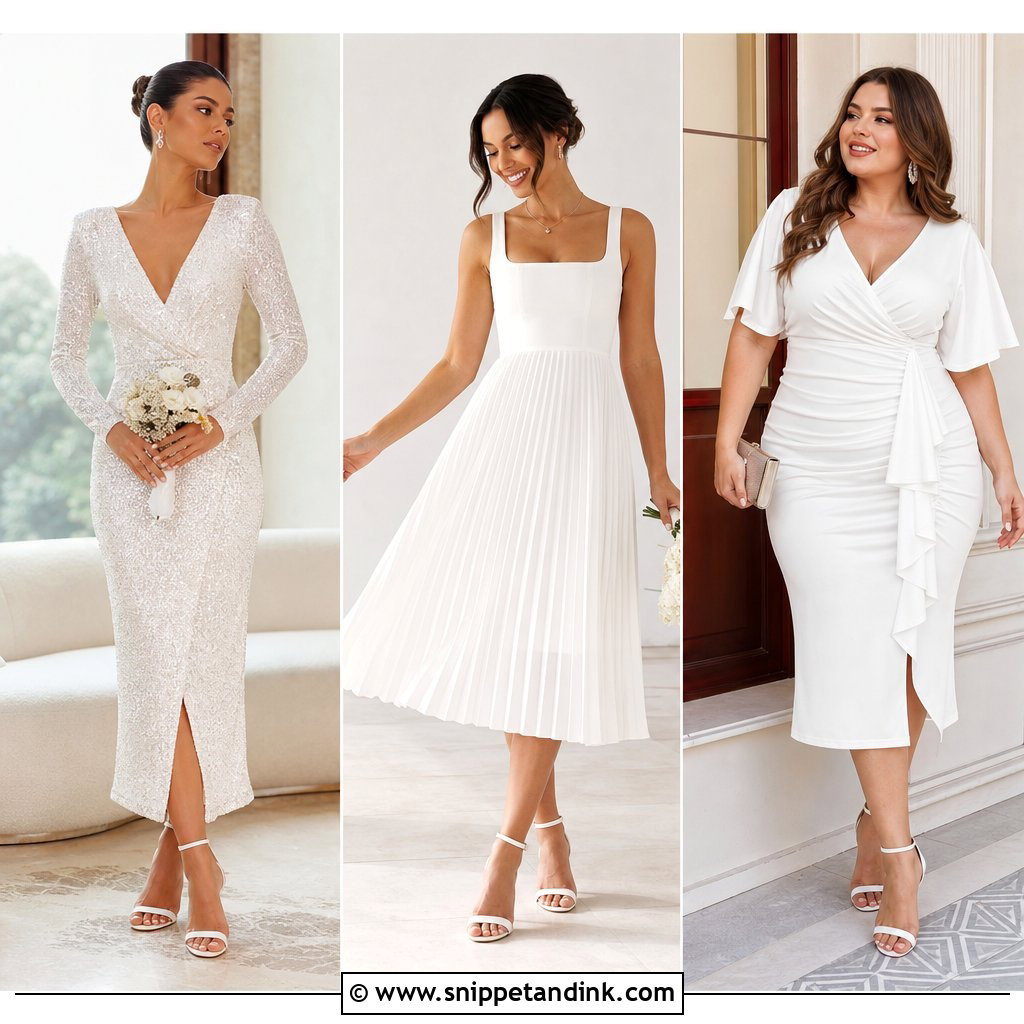
15. Pleated Midi Court Wedding Dress
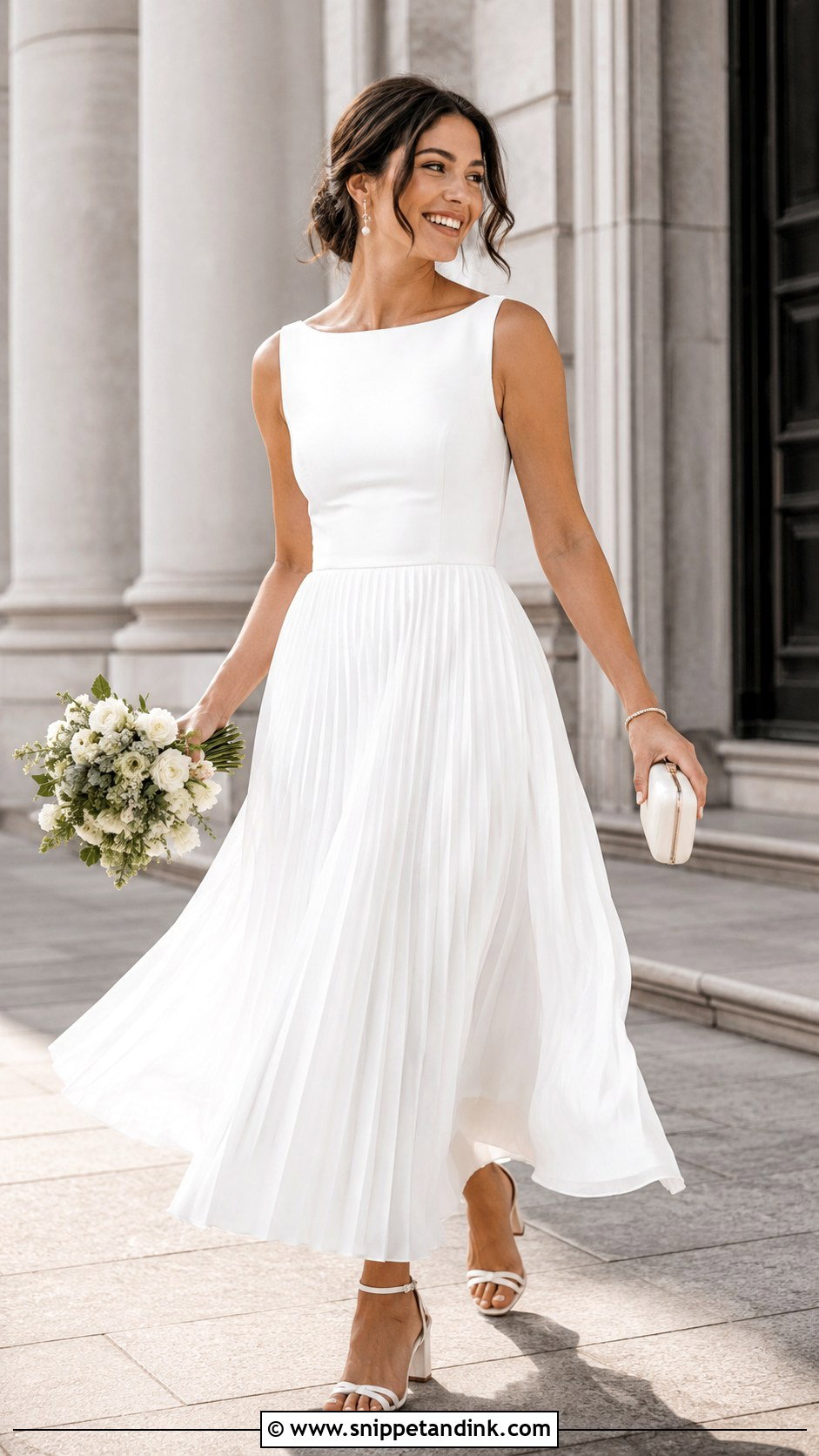
Pleats bring movement to a simple shape, and a white pleated midi dress looks lively in outdoor photos when a breeze catches it. A lined skirt matters, because unlined white pleats go sheer on sunny courthouse steps. A fitted bodice gives definition. Block sandals in summer, pointed pumps in cooler weather. A smooth satin clutch contrasts with the texture. If the neckline is plain, a short pearl necklace works. Hold the bouquet at the waist so the pleats show below it.
16. Cape Sleeve Court Wedding Dress
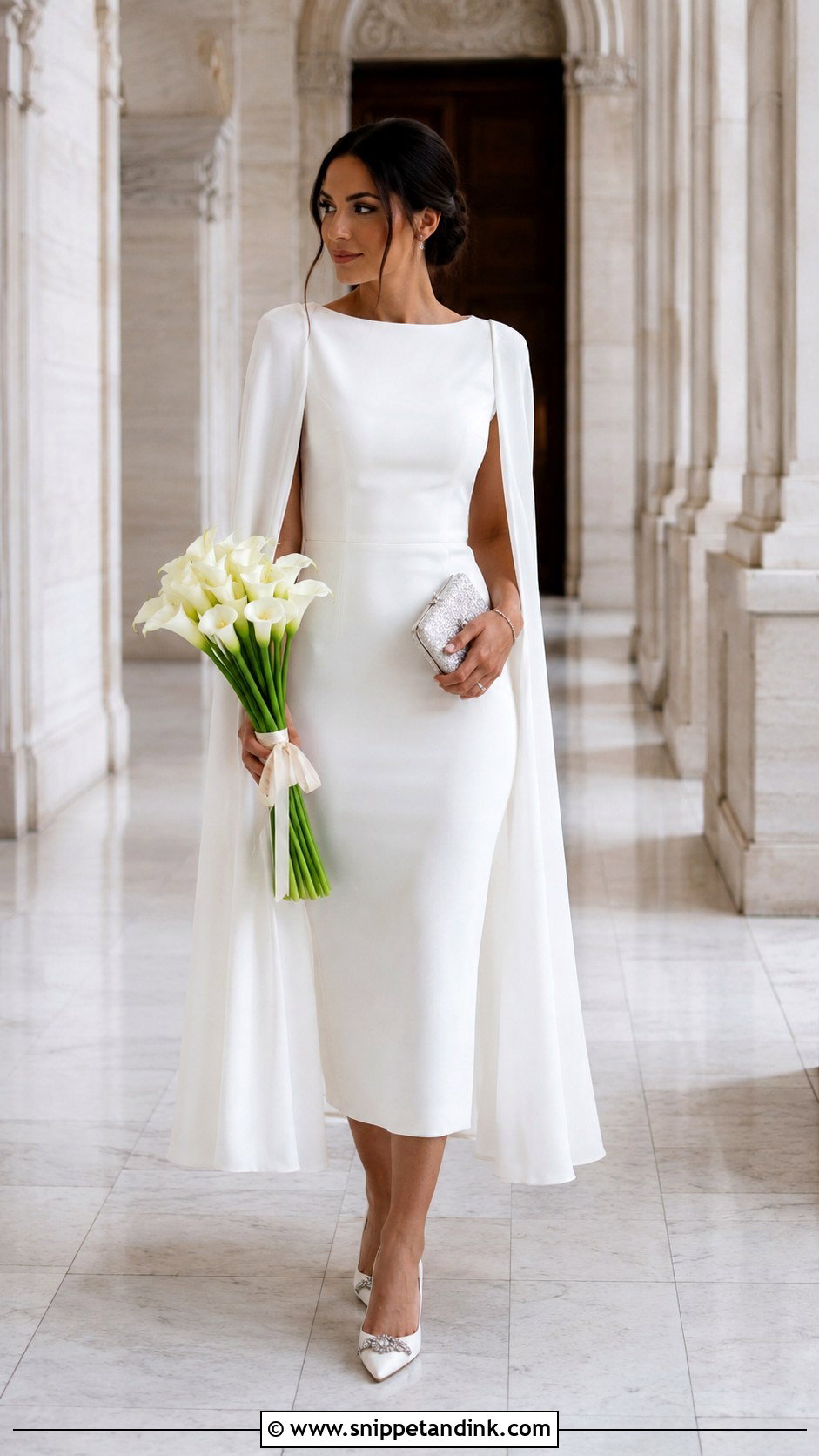
Cape sleeves give coverage and a bit of drama without a jacket. Keep the cape panels light and short; long cape fabric gets caught in heavy courthouse doors and security belts. A fitted midi or ankle-length base works. Pointed heels, crystal studs and a compact clutch are enough. A sleek bun keeps hair off the cape. I’d skip the veil, since the cape is already doing that job. Hold the bouquet slightly lower than usual so the sleeves show in photos. It suits brides who want modest coverage with some movement.
17. Floral Jacquard Court Wedding Dress
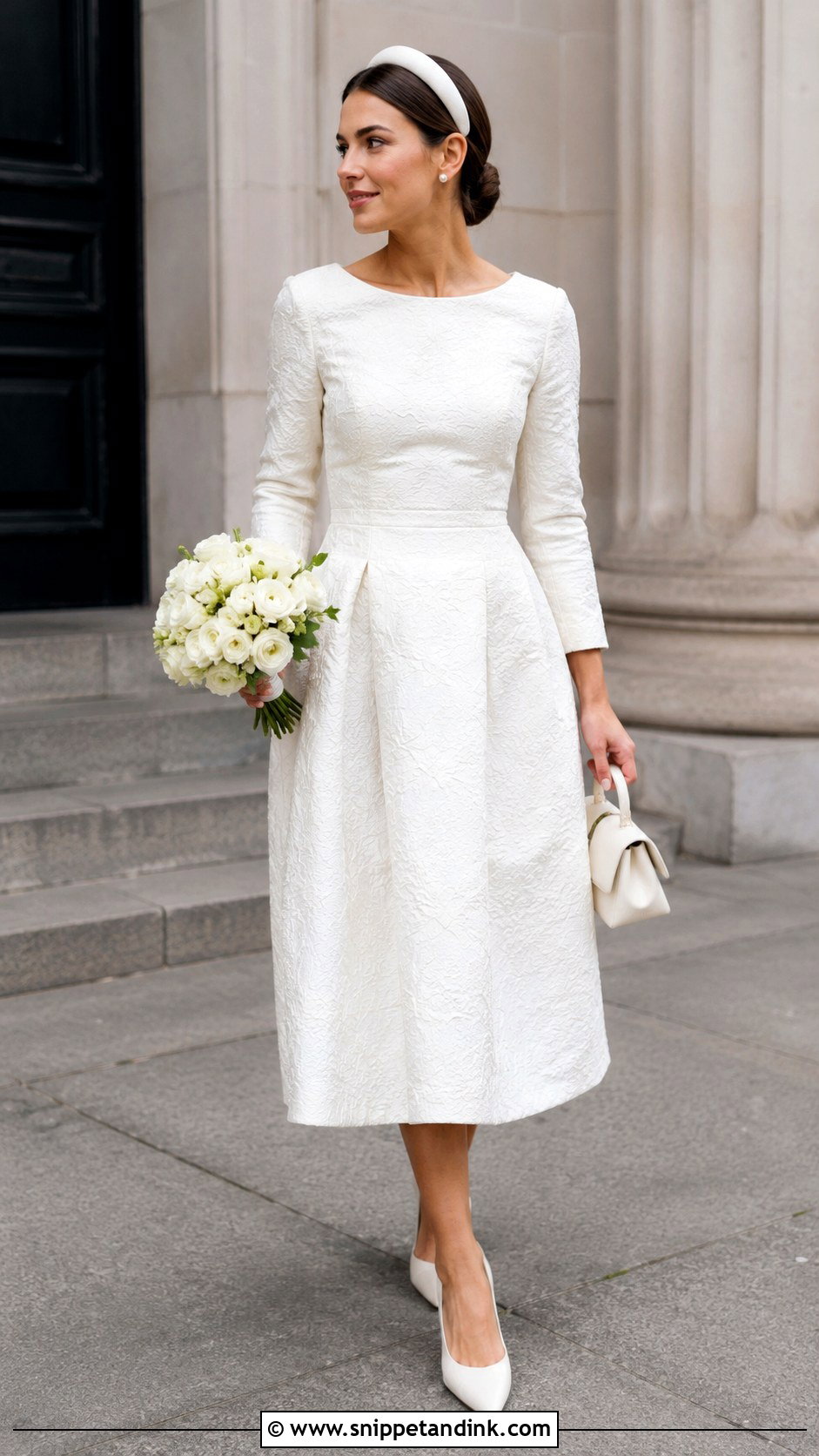
Jacquard has more body than satin and holds a defined shape through a long day, which makes it a good fabric for a courthouse midi. A woven white floral pattern looks refined with plain accessories: smooth ivory pumps, pearl studs and a satin bag. A fitted bodice over a straight, A-line or gentle flare skirt suits it. A structured headband sits better with the texture than a soft tulle veil, in my view. Don’t pile on more florals; a simple bouquet is enough. A tailored cream coat works in winter.
18. Ankle Length Column Court Wedding Dress
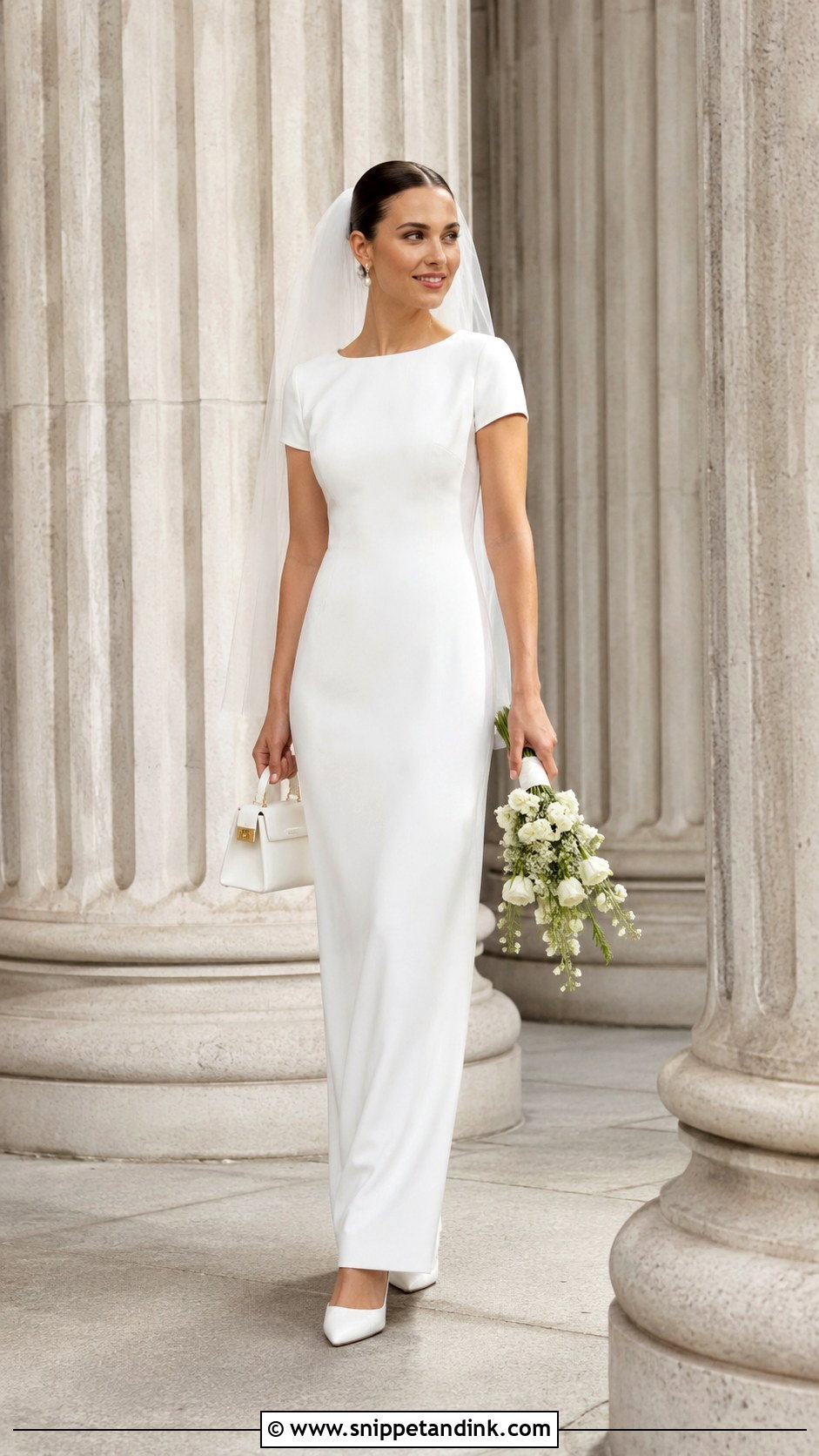
Ankle length is the sweet spot for a bride who wants a long gown feel without a hem to manage in elevators and on staircases. Matte crepe or satin with light waist shaping and a back slit lets you walk normally. A high neck looks sophisticated; a V or scoop softens it. Choose pointed pumps that show under the hem, small drop earrings and a structured mini bag. A narrow bouquet keeps the proportions clean. If you want a veil, keep it short; a cathedral length is too much fabric for a courthouse hallway.
19. Blush Midi Court Wedding Dress
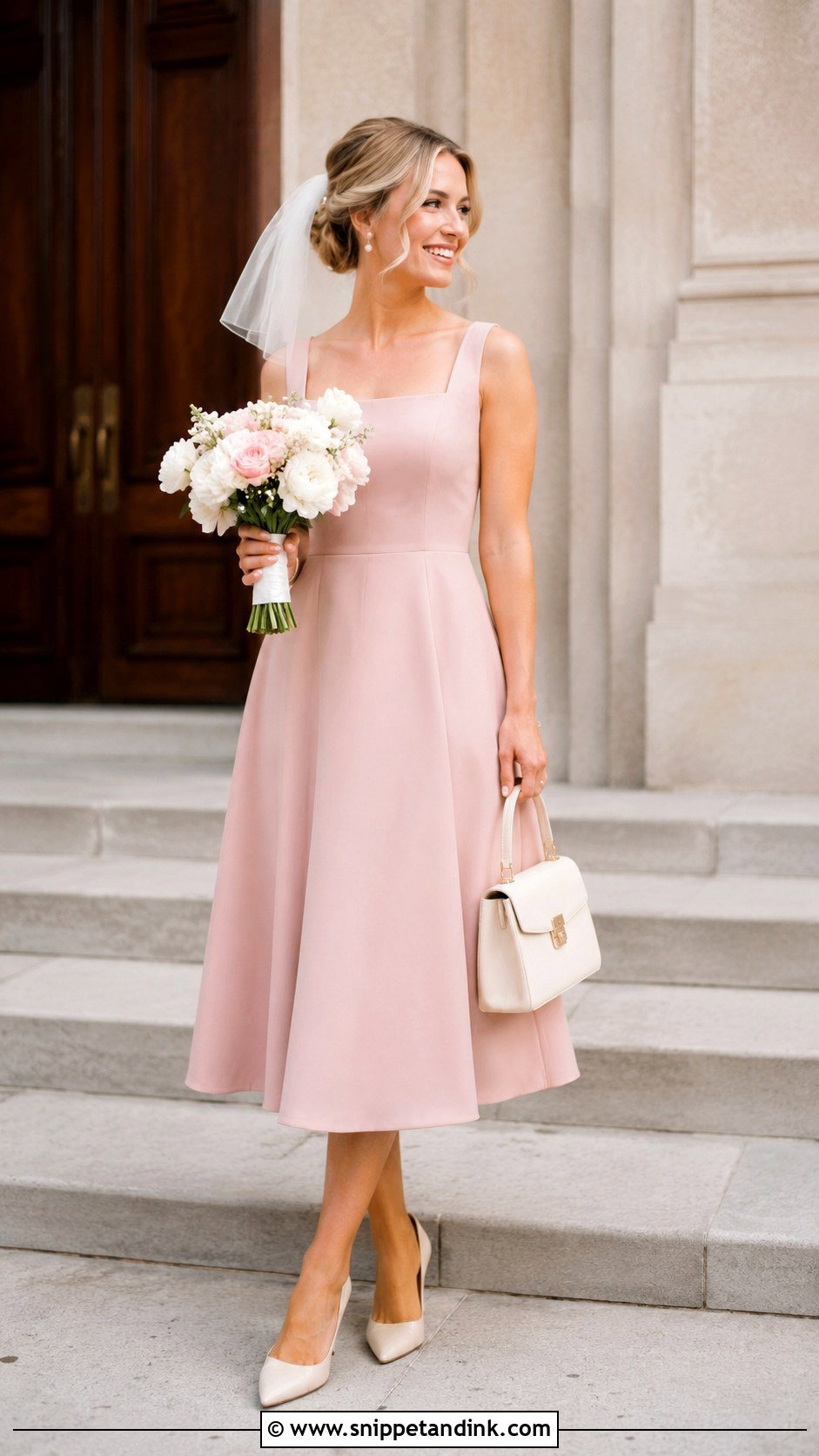
White isn’t required, and a blush midi is easy to wear again. Pick the shade against your skin in daylight: muted rose suits warm undertones, cooler pale pinks suit fair cool skin, and nude-blush can wash out some complexions. A wrap, slip or soft A-line keeps it polished. Ivory or champagne heels, pearl earrings and a cream top-handle bag suit it, with a short ivory veil for contrast. White and pale pink flowers tie it together. I’d avoid mixing several pinks in one outfit.
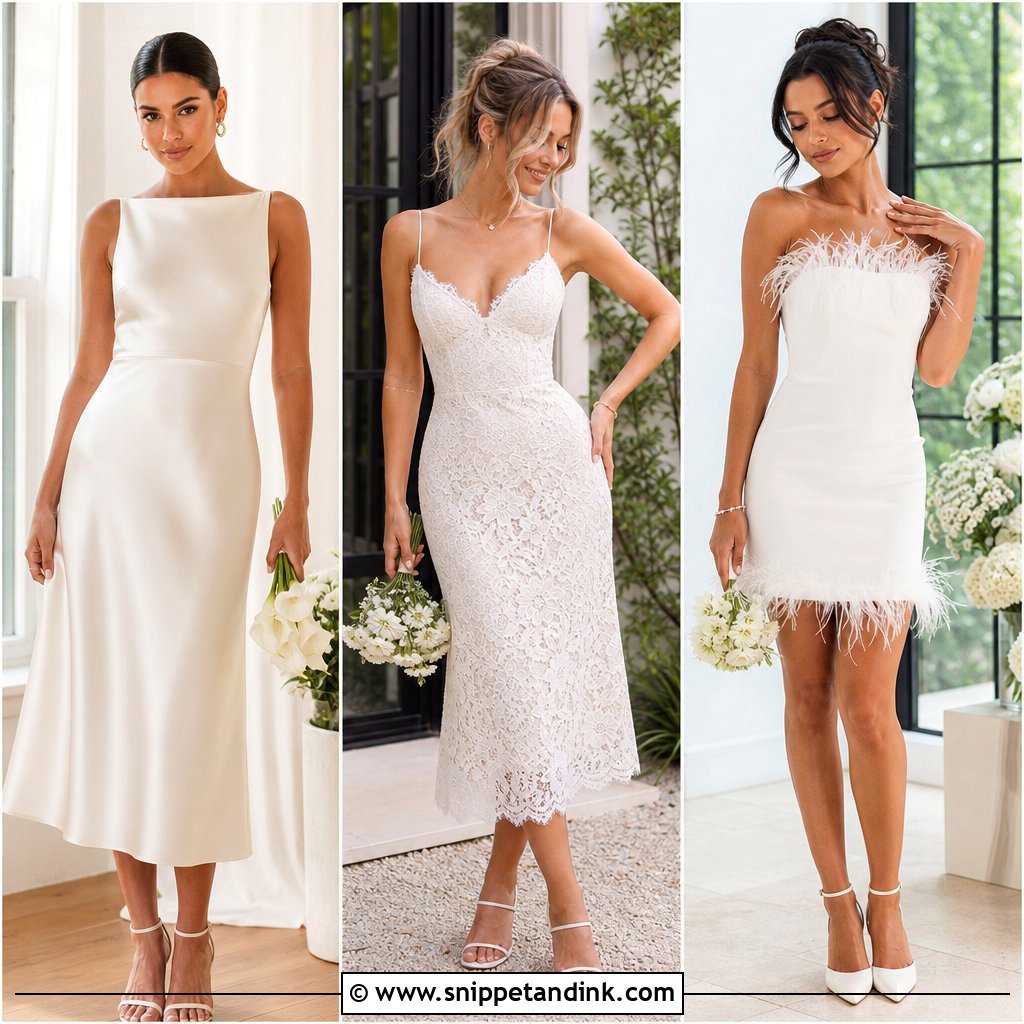
20. White Midi Dress With Bridal Coat
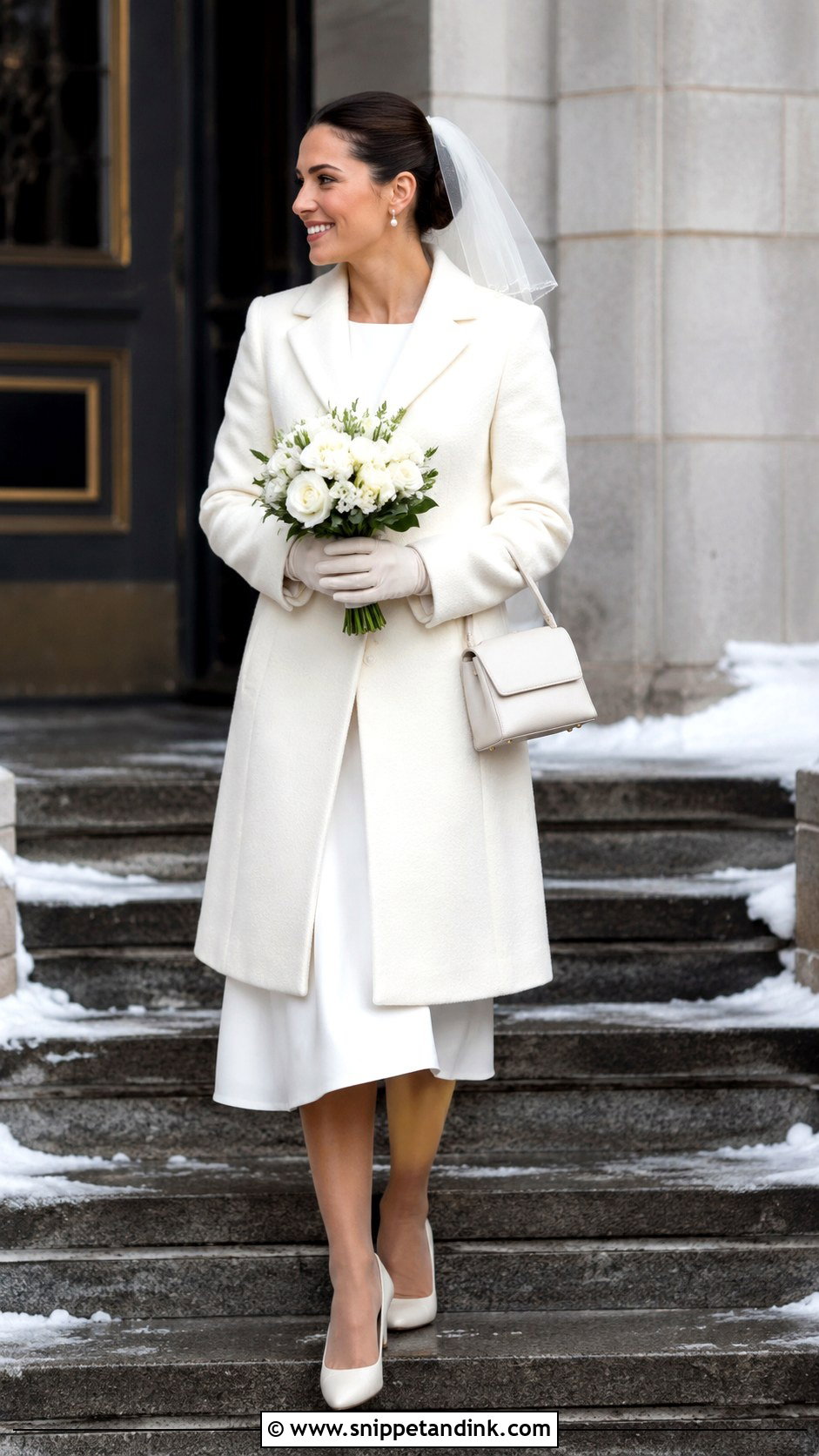
A coat turns a simple dress into a winter bridal look. Start with a sheath, slip or A-line dress that sits flat under outerwear, then add a knee-length cream or ivory coat with clean lapels and a lightly shaped waist. The coat should be cut close enough that the dress still shows. Closed pumps, ankle boots or slingbacks depending on the weather; pearl earrings, leather gloves and a structured bag finish it. A low bun keeps the veil above the collar. Pick a bouquet you can hold with one hand while you open heavy doors.
Fluorescent Halls, Bright Steps: Getting the White Right
Courthouse photos are shot in two very different lights, and the dress has to survive both. Inside, overhead fluorescent or LED panels can give bright white a cold, slightly blue or green cast. Outside on the steps at midday, white can blow out to a flat shape with no detail.
What I do about it
- Choose soft white or ivory over optical bright white if your skin is warm; it looks less stark under office lighting.
- Texture helps. Crepe, jacquard, pleats or lace hold detail in strong sun better than flat shiny satin.
- Stand rather than sit while you wait, or sit on a scarf, to keep creases off the lap.
- Ask your photographer to use the shaded side of the building for portraits. Open shade is kinder to white than direct noon sun.
If a friend is taking the photos on a phone, have them tap on your face before shooting, so the camera exposes for skin rather than for the dress.
A Short Ceremony Still Deserves a Proper Fitting
A courthouse look should feel special and be easy to wear. You have romantic dresses, sharp tailoring, comfortable midis and alternatives to a gown to work with. Start with the season, the building, how far you’ll walk and what happens after the ceremony. Then get the fit secure, the hem practical and the shoes comfortable for several hours. Personalize it with a short veil, a piece of family jewelry or a small bouquet. Good tailoring does more for a simple dress or suit than any amount of decoration.
You'll Like These Ideas:


Leave a Reply