
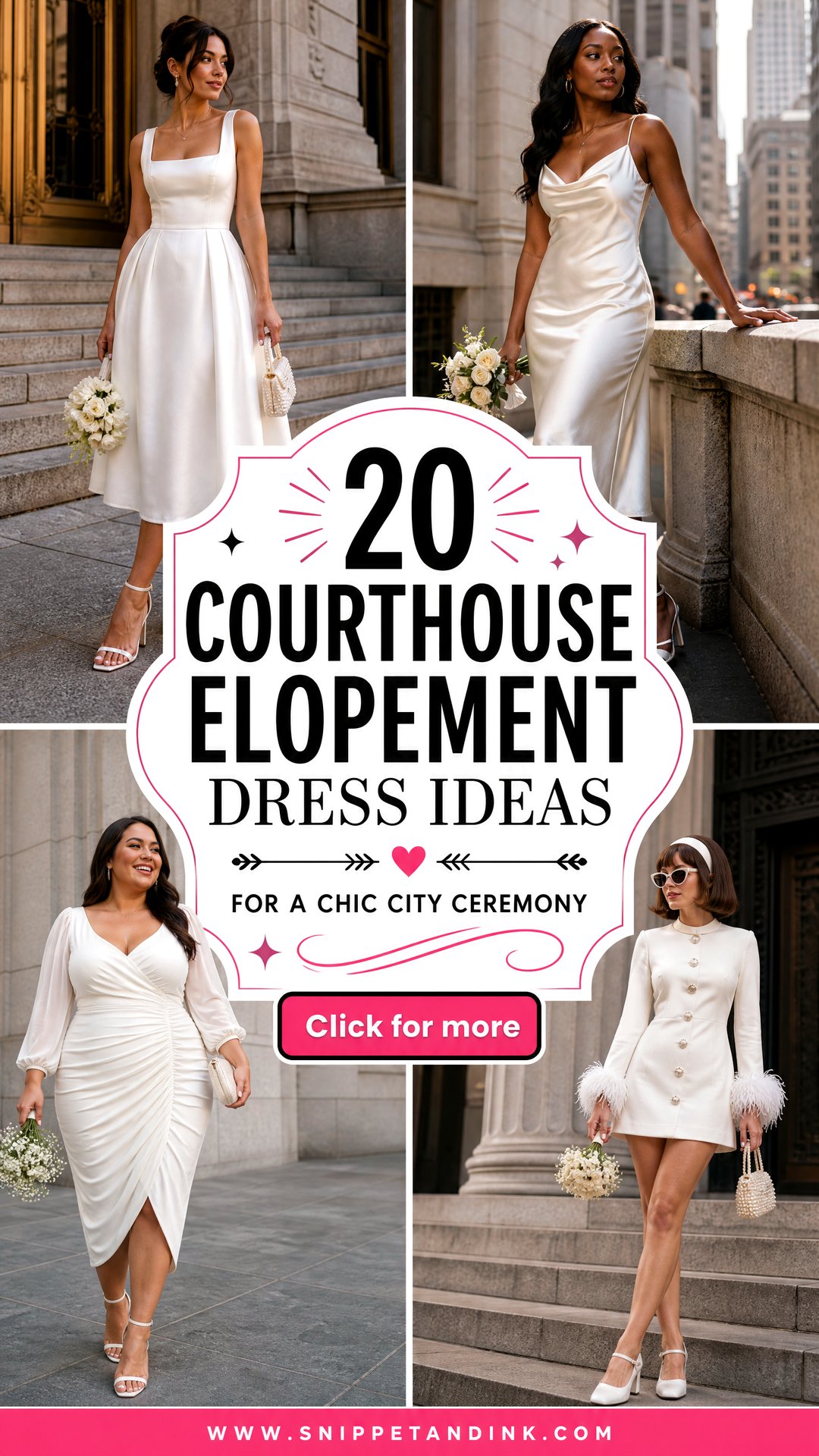
A courthouse wedding asks something different of a dress than a ballroom does. You’ll queue at security, sit on a hard bench while you wait for your name, sign a register at a counter, and then probably walk to lunch. Short, streamlined, and versatile bridal dresses handle that kind of day well, and they’re where I start most civil-ceremony brides. The twenty ideas below run from satin minis and lace midis to curvier cuts and winter layers. For each one I’ve noted what I check at a fitting and how I’d finish it, because with a simple dress the shoes, veil and coat do a lot of the bridal work.
Off the Rack or a Bridal Salon for a Courthouse Date?
Courthouse dates are often booked weeks out, not a year, and that shapes where I’d shop. A gown ordered through a bridal salon is usually made to order, and many take four to six months to arrive before alterations even start. If your date is closer than that, a salon may still help, but you’ll be choosing from sample or ready-to-ship stock.
Ready-to-wear is the more realistic route for most civil ceremonies, and the bridal or occasion sections of department stores and online shops now carry plenty of white and ivory. The trade-off is fabric and finish. My checklist when a bride brings me an off-the-rack dress:
- Is it lined? Unlined white fabric shows everything under bright lights.
- Does it have seam allowance? Generous seams can be let out; overlocked edges trimmed close cannot.
- Is the white consistent? Order two shades if you can and compare them side by side in daylight.
- Can it be returned? Order early enough to swap sizes before the alteration window closes.
Leave room for alterations
Simple hemming and strap shortening on a short dress can often be done in a week or two, but busy seamstresses book up in spring and early fall. I’d have the dress in hand at least four weeks before the date and book the fitting the day it arrives, with your wedding shoes and underwear in the bag.
1. White Satin Mini Courthouse Elopement Dress
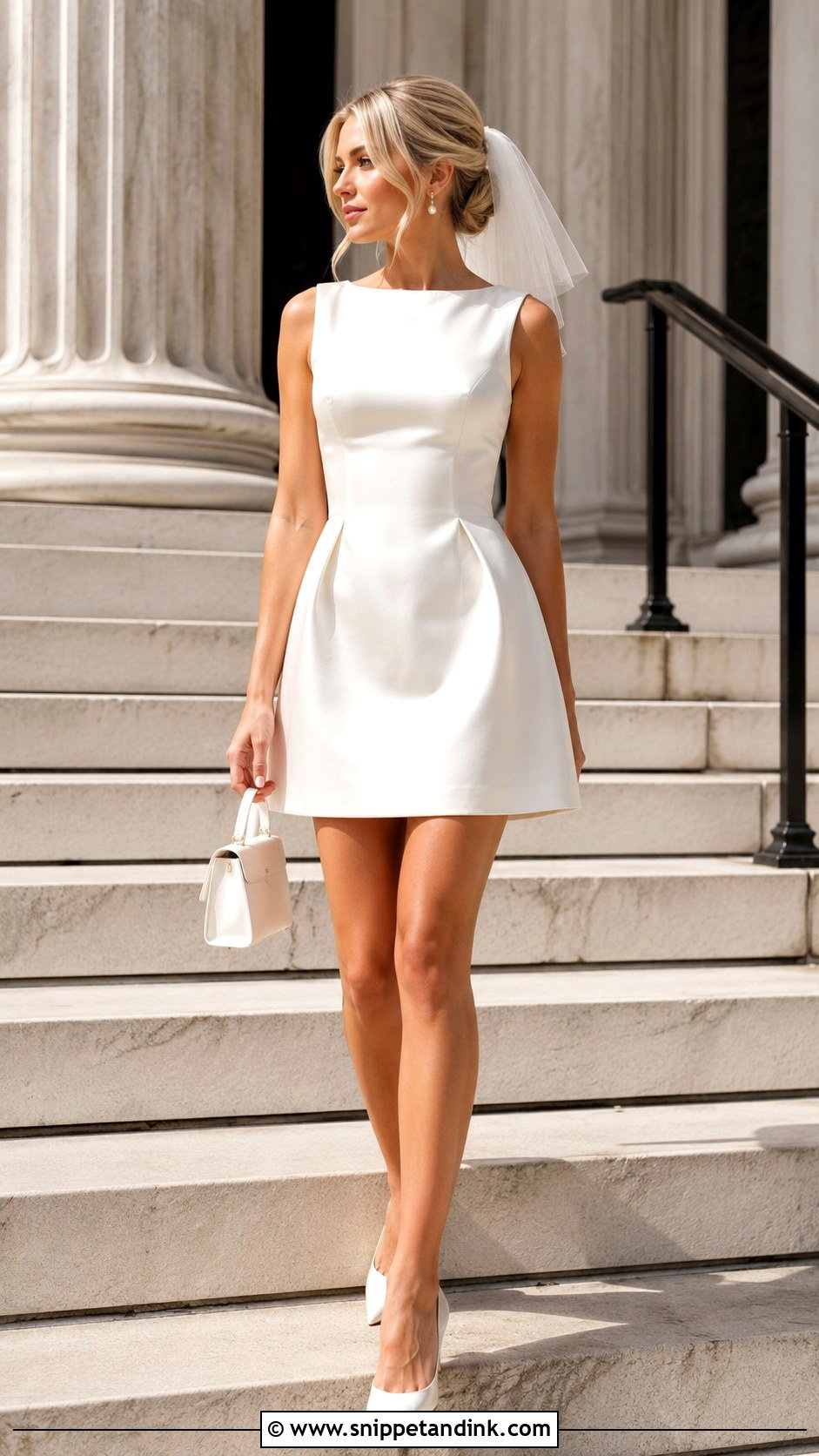
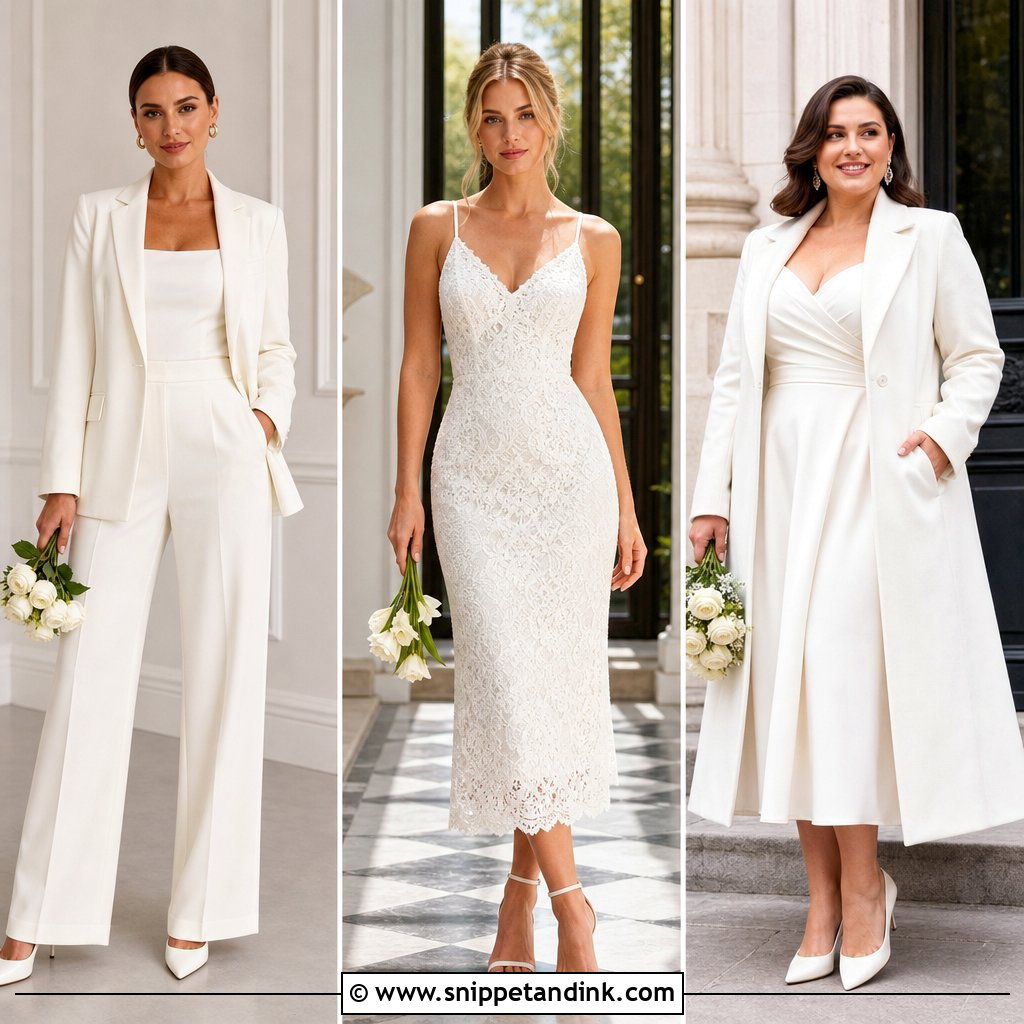
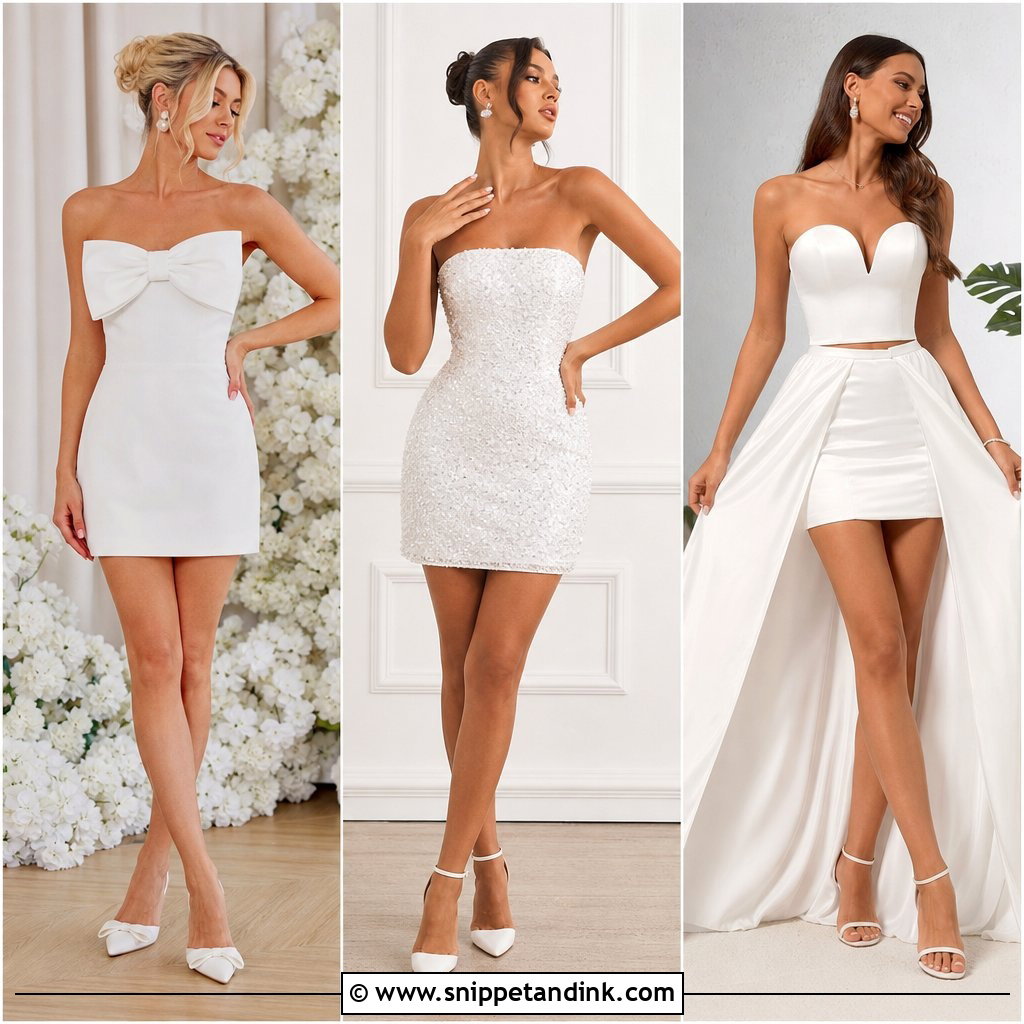
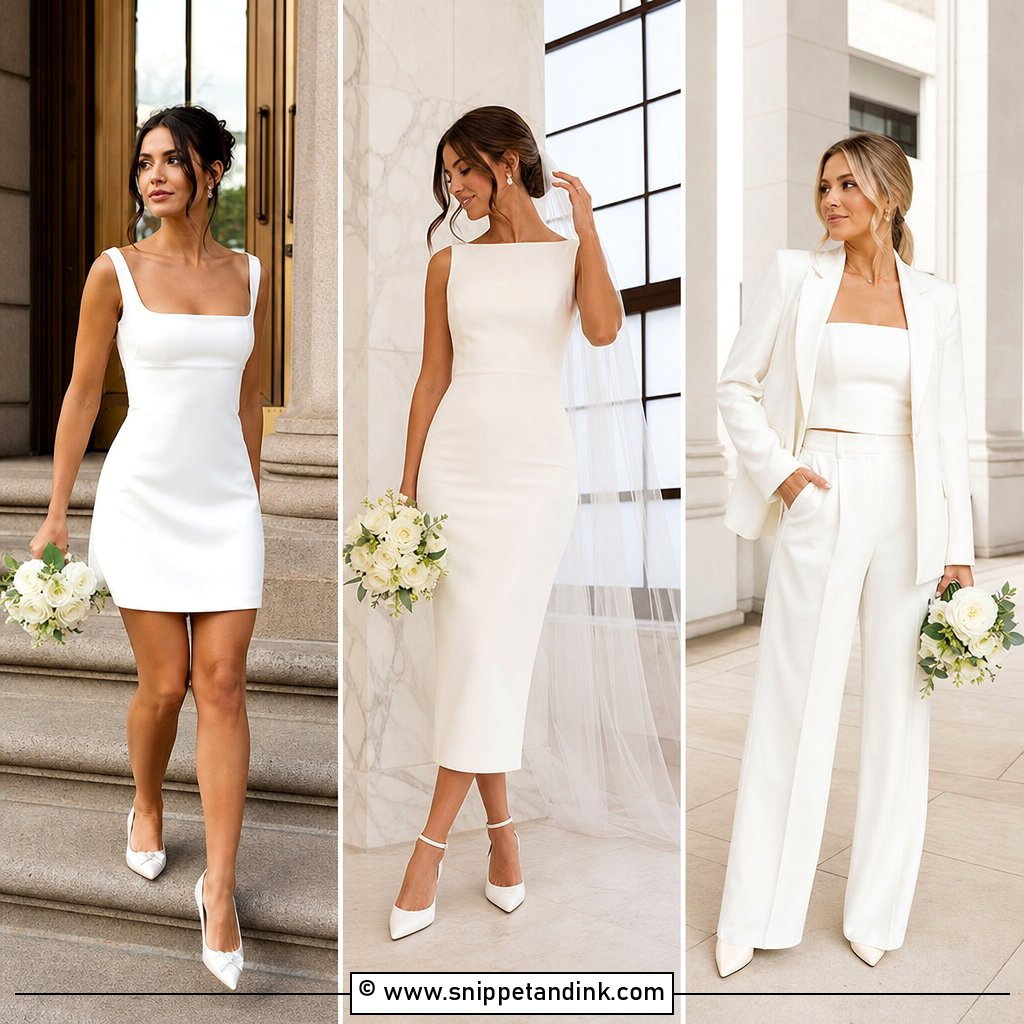
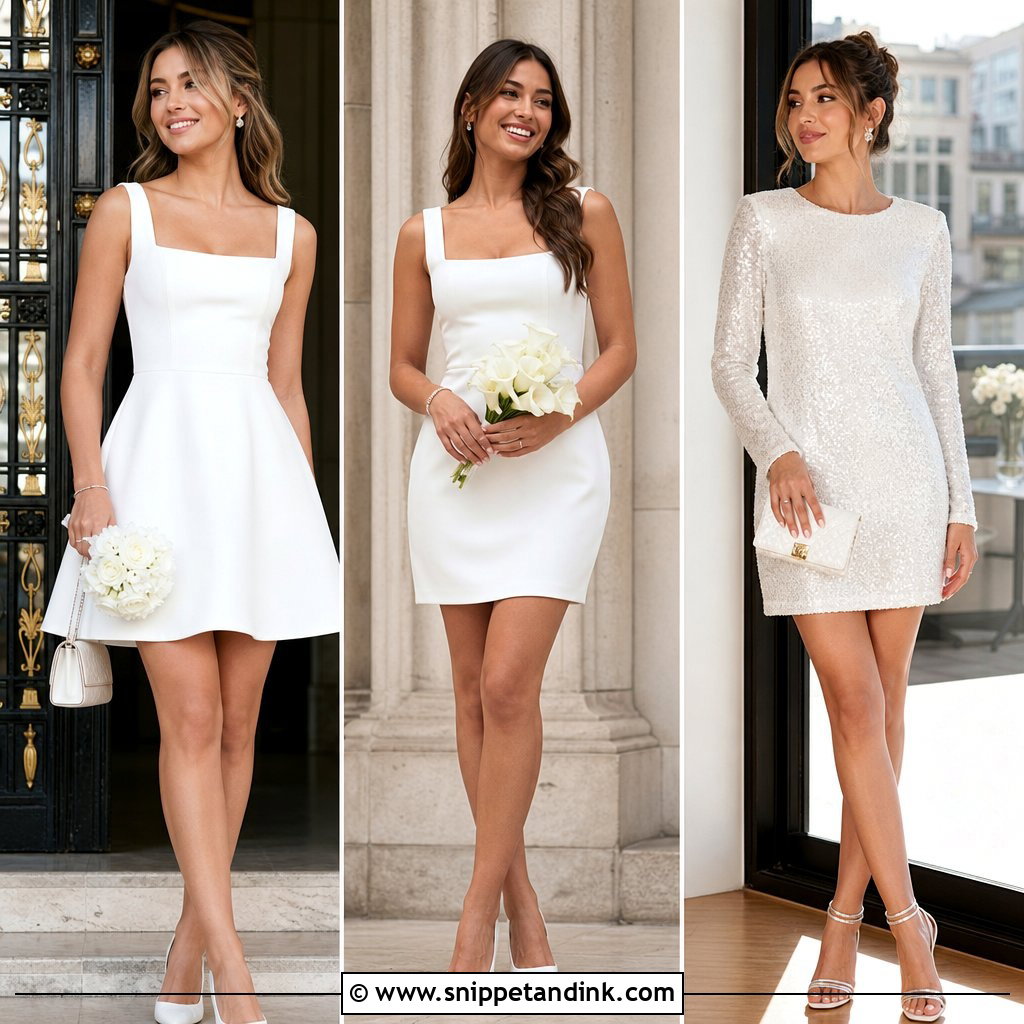
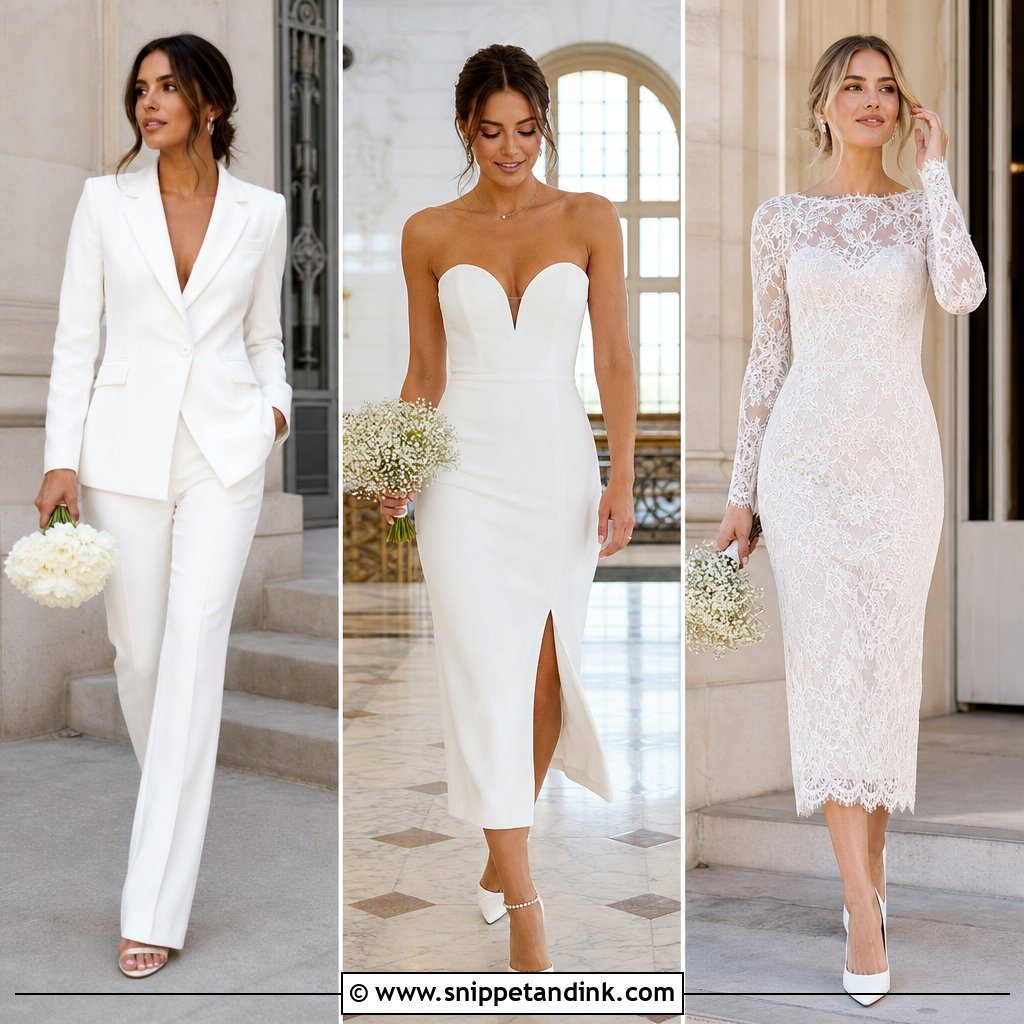
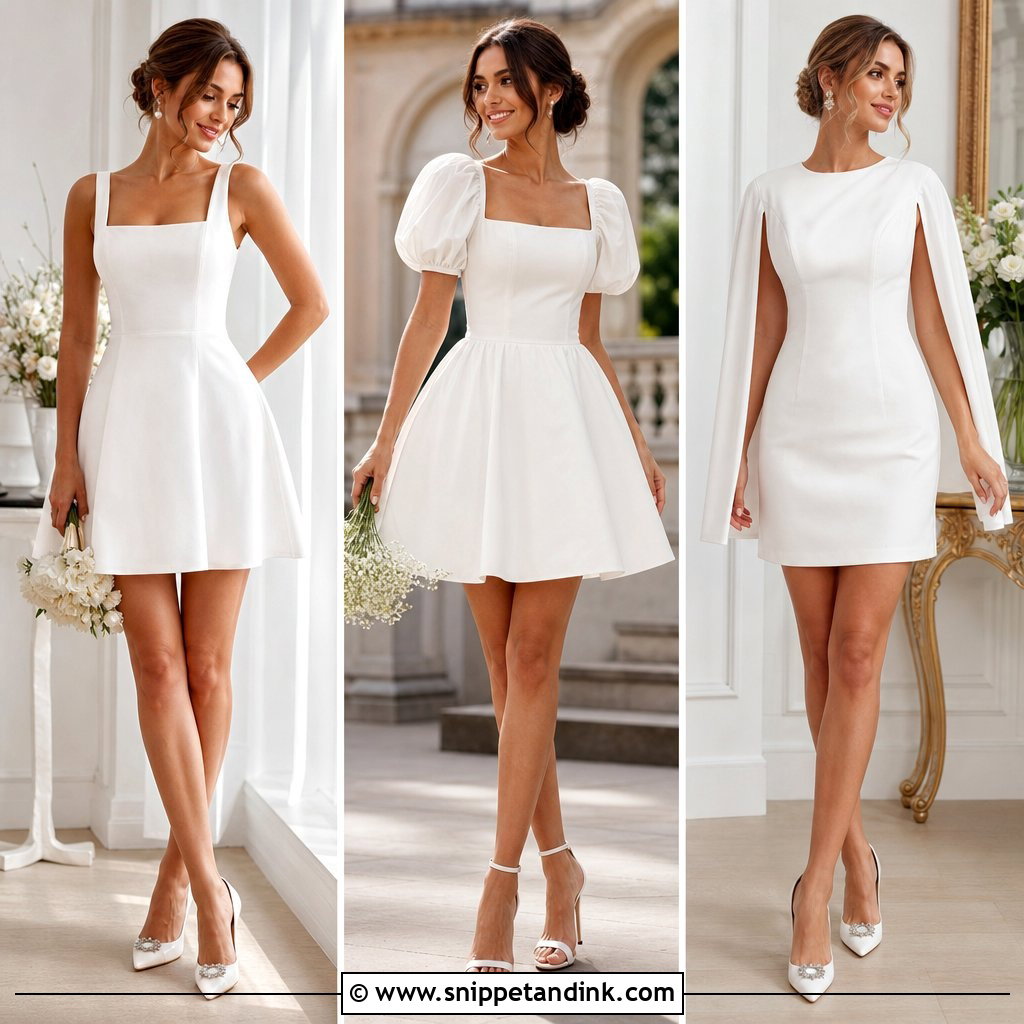
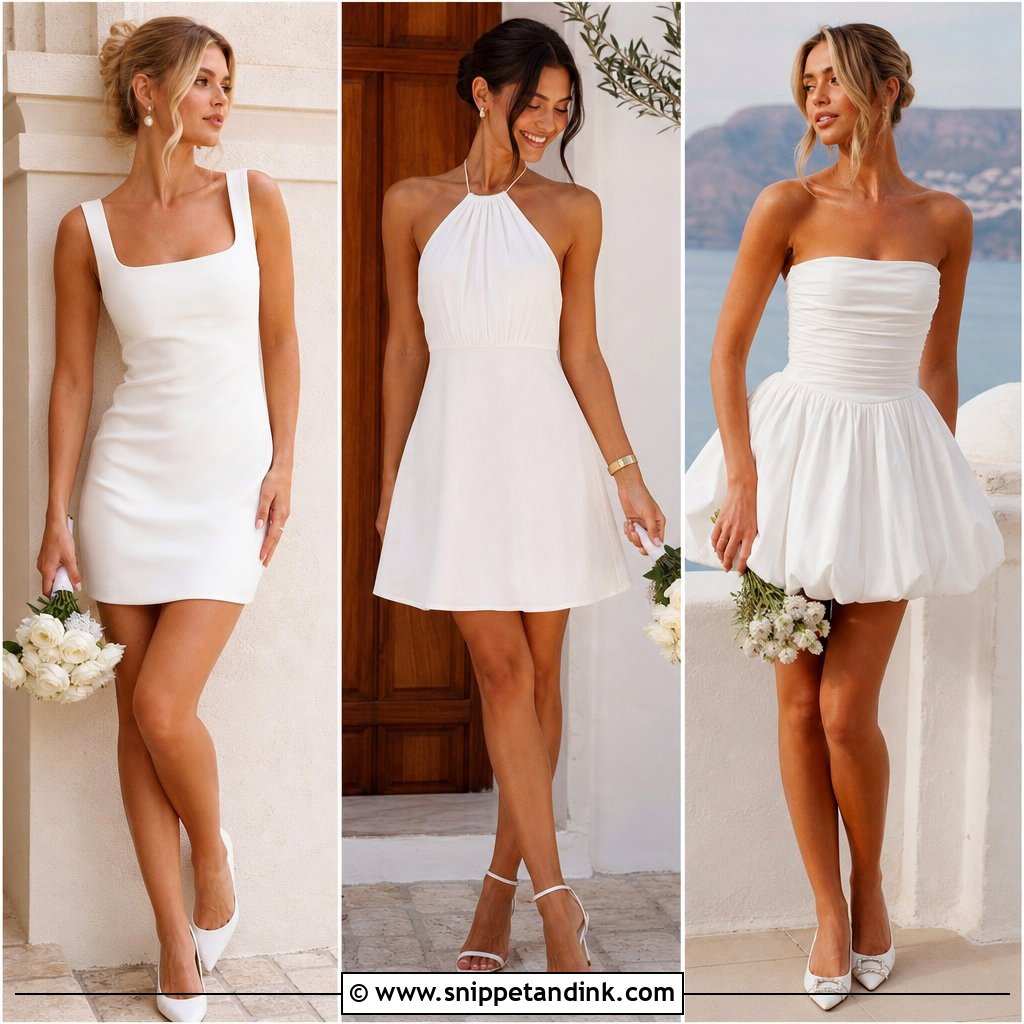
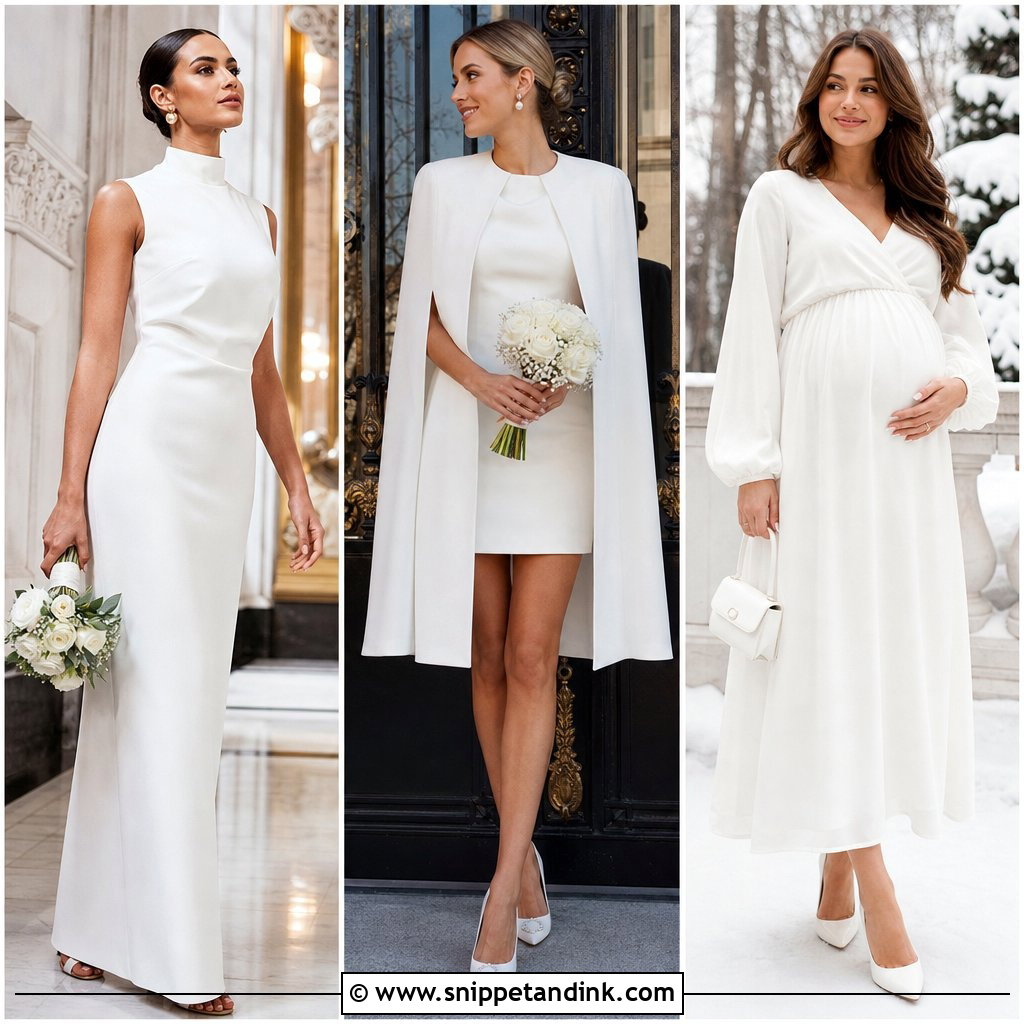
When a bride asks for something short that still reads unmistakably bridal, a satin mini is the first dress I pull. The thing I check is the fit through the hips: satin has no give, and a mini that’s snug standing will ride up and crease across the lap the moment you sit. Go for a softly structured bodice with a straight or gently flared skirt, and size so the skirt hangs rather than grips. Pointed ivory pumps, pearl drops and a compact top-handle bag finish it. A short tulle veil makes the whole thing read as a wedding outfit; a satin headband does the job if a veil feels like too much.
2. Square Neck Midi Courthouse Elopement Dress
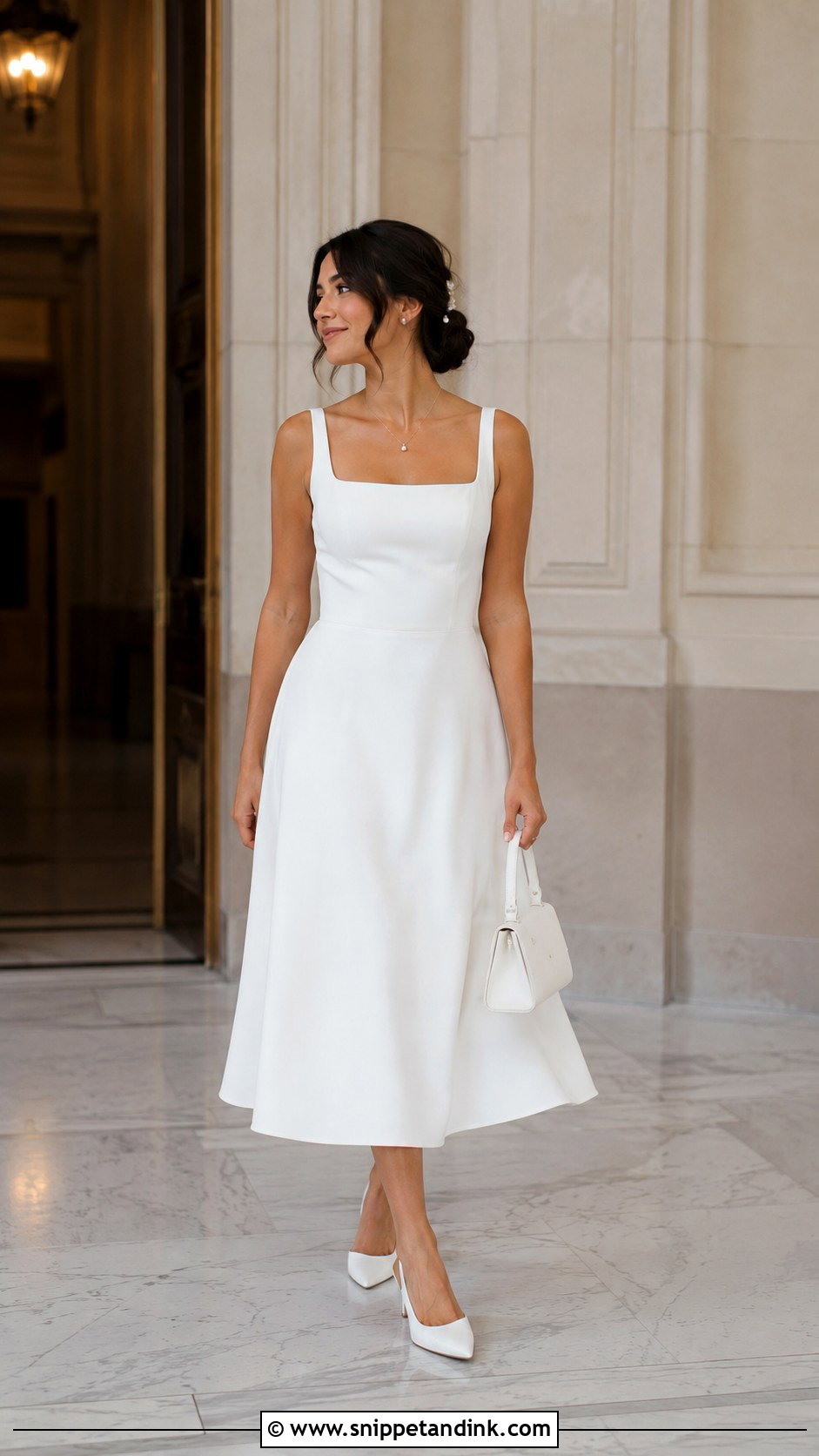
A square neckline sits flat across the collarbone, which is why it suits brides who find a sweetheart too fussy. My fitting check here is the corners: if they gape when you lean forward, the bodice needs taking in at the side seams, not the straps. Crepe, satin or a heavier cotton holds the line over an A-line midi. Slingbacks, a fine pendant and a small white or soft metallic bag keep it clean, and a few pearl pins in a low bun keep the neckline clear. On petite brides I’d hem just below the knee rather than mid-calf, which can cut the leg at its widest point. Add a cropped ivory jacket when the season calls for it.
3. Long Sleeve Crepe Mini Courthouse Elopement Dress
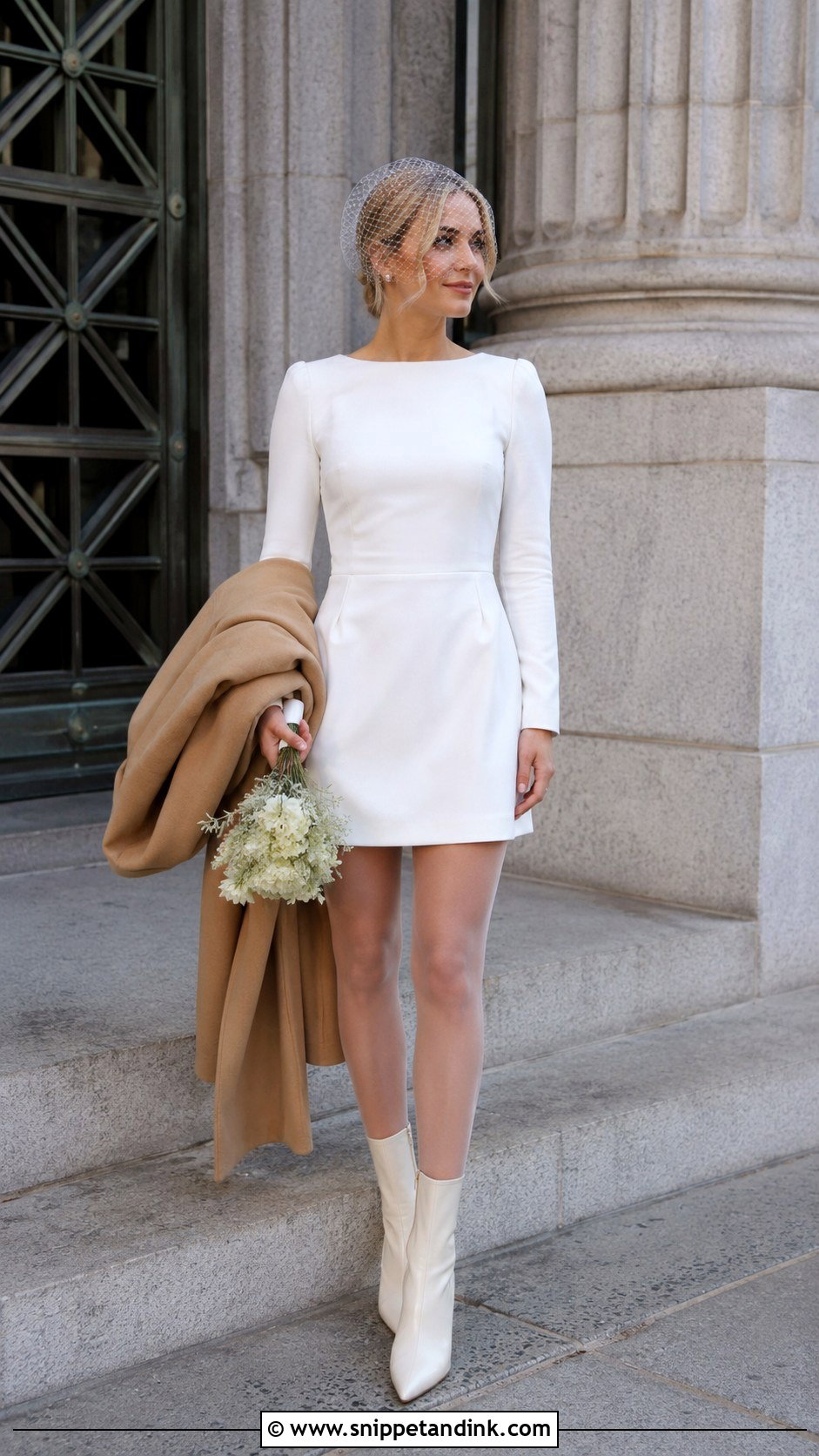
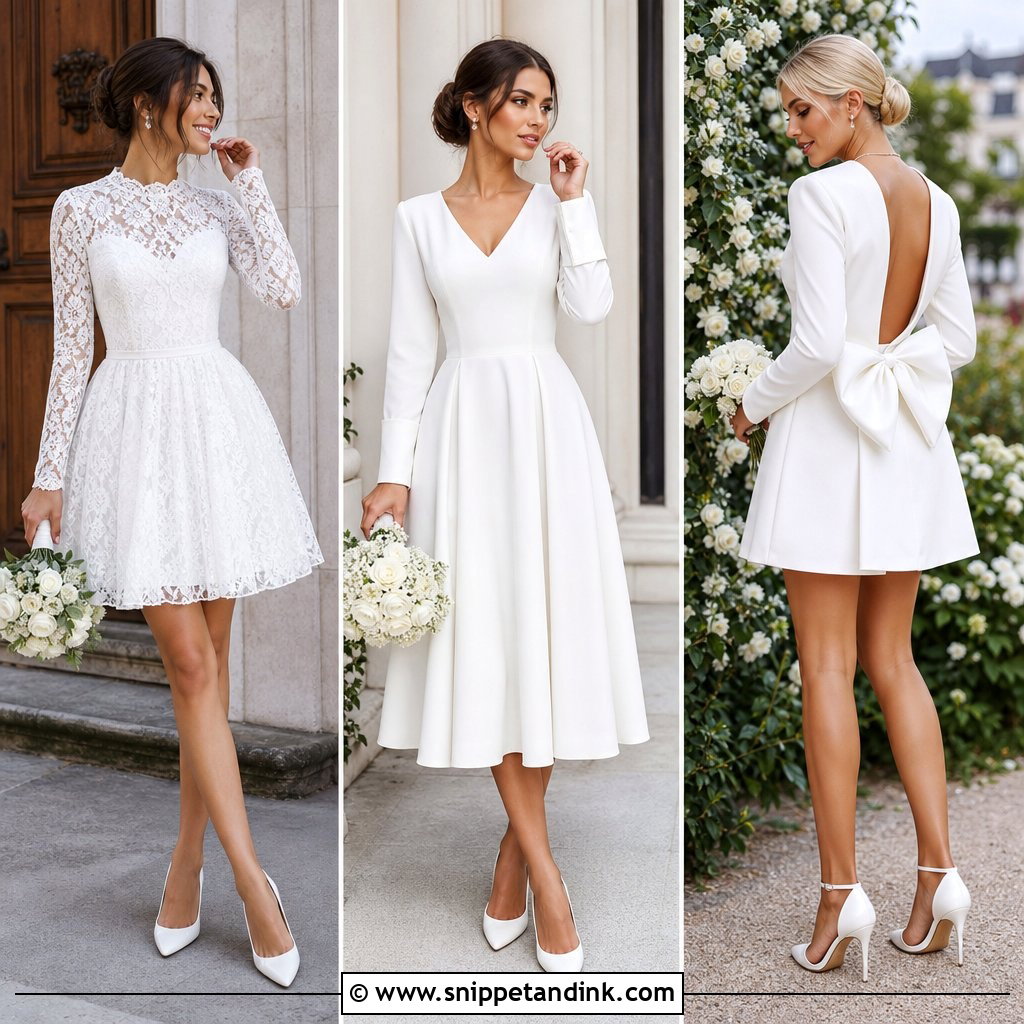
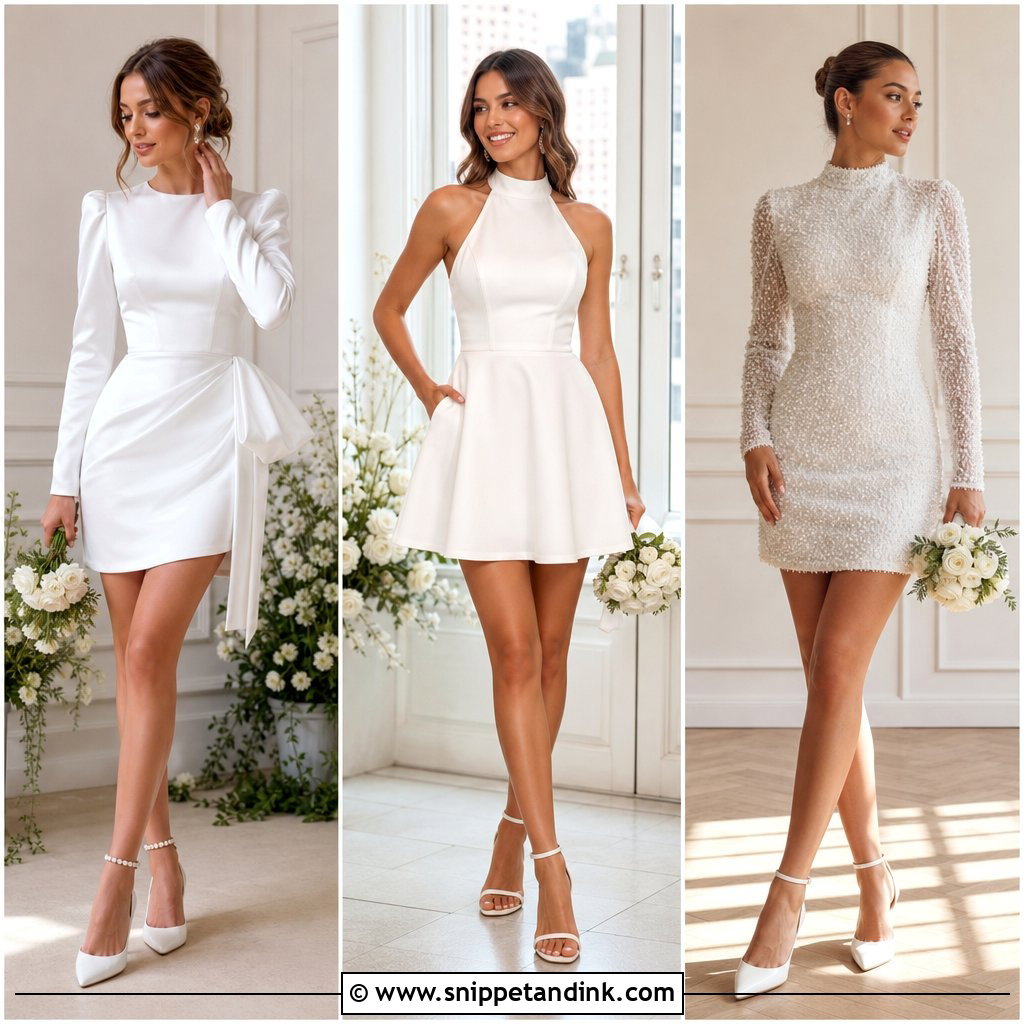
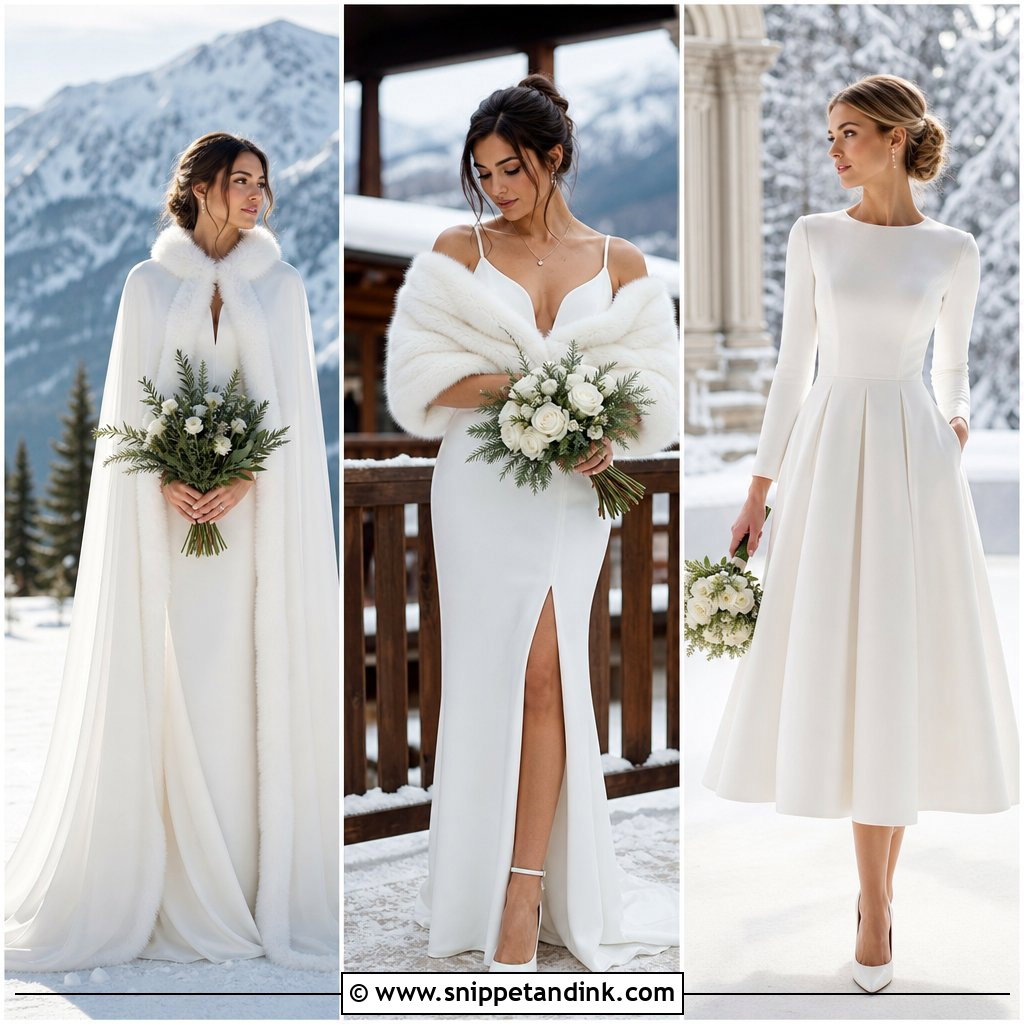
For a winter ceremony, this is often my first suggestion: long sleeves, a short hem and a fabric with some weight. Crepe drapes without clinging and doesn’t show the creases from a taxi ride the way satin does. Look for a slightly defined waist over a straight or A-line skirt. Wear it with sheer tights and pointed ankle boots in the cold months, or closed pumps in spring and fall. Crystal studs, a tiny bag and a birdcage veil are enough. If the dress has strong shoulders or statement cuffs, I’d drop the earrings to studs and let the sleeves lead. An ivory or camel wool coat finishes it outdoors.
4. Tea Length A-Line Courthouse Elopement Dress
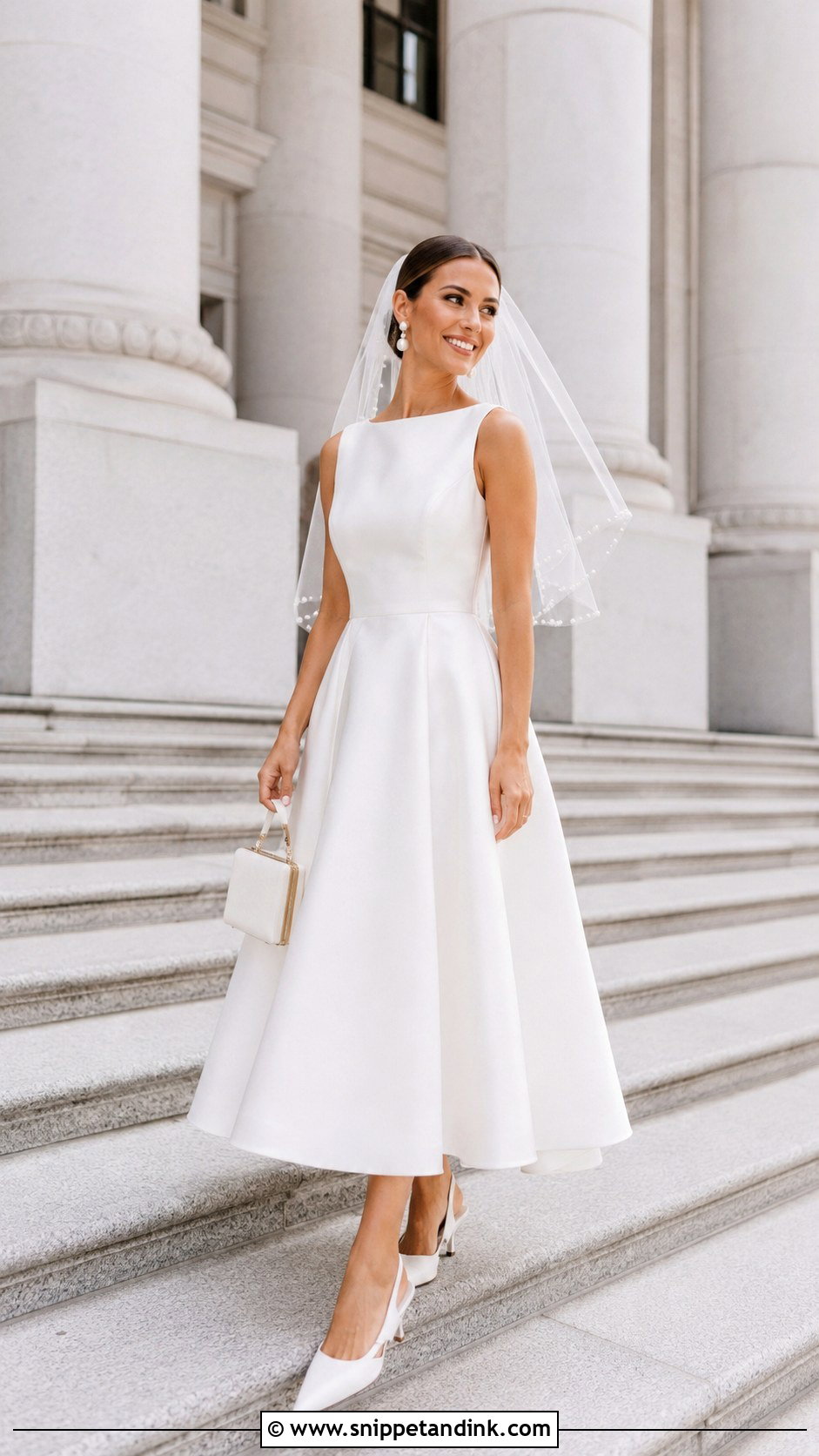
Tea length has a sense of occasion built in, and it’s the cut I suggest to brides who want a proper wedding-dress feeling without a floor-length hem to manage. The skirt only keeps its shape if the fabric has body, so I look for crisp mikado, matte satin or structured cotton; a soft fabric at this length just droops. Kitten heels or pointed slingbacks suit the retro hem without tipping into costume, and pearl earrings, a box bag and a fingertip veil complete it. A narrow satin belt adds waist definition. With this much skirt, keep the bodice fitted and the accessories slim, or the outfit looks heavy from the waist down.
5. Lace Midi Courthouse Elopement Dress
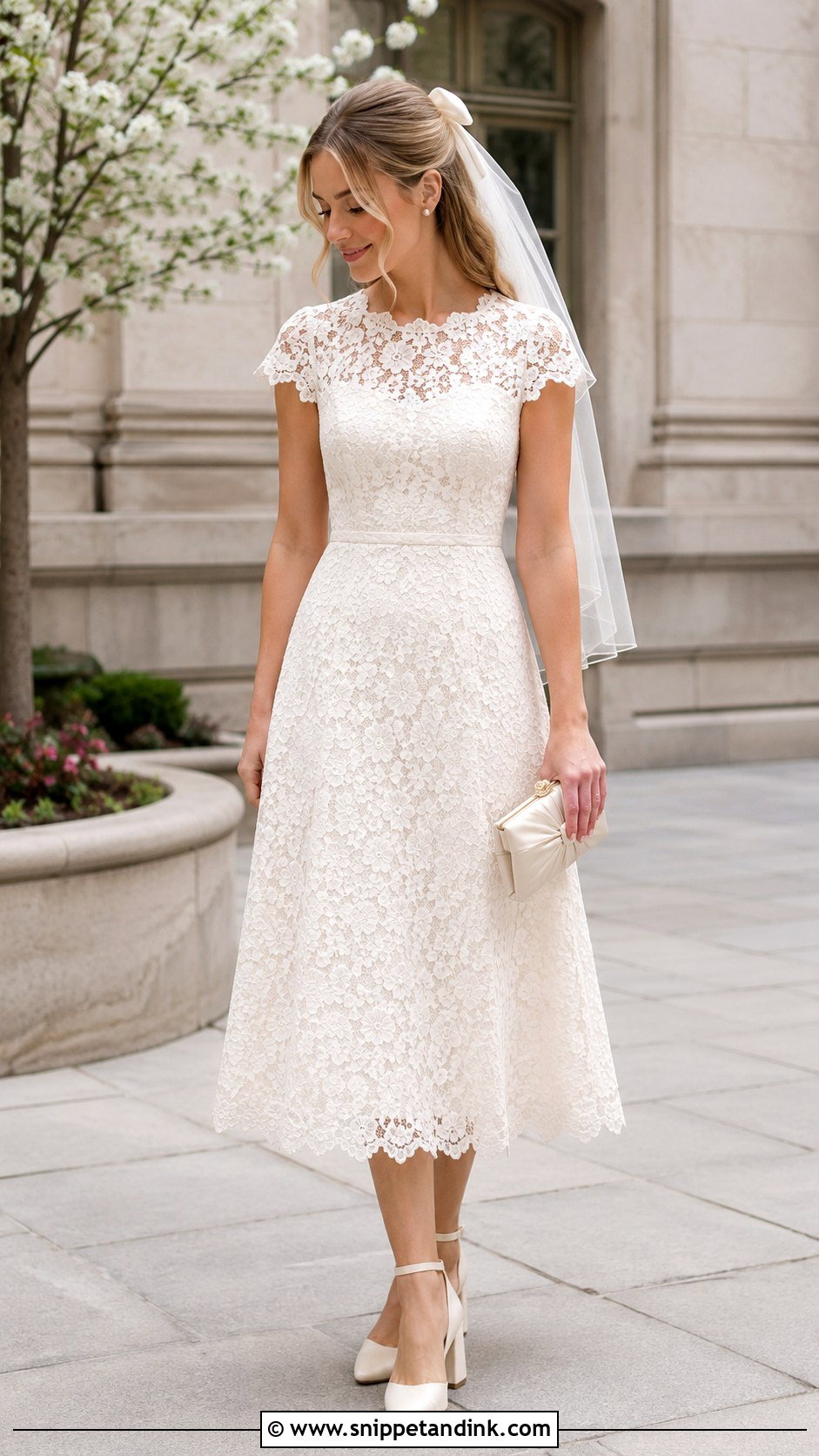
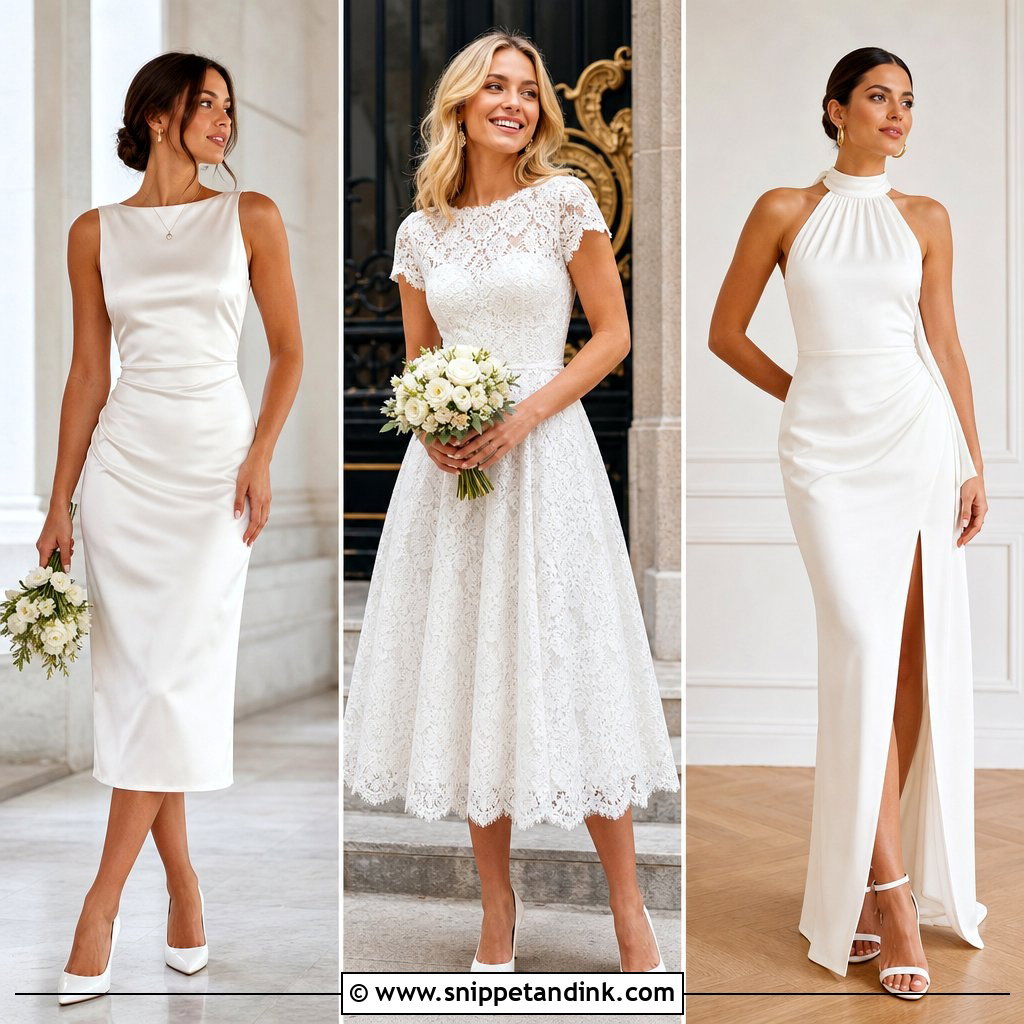
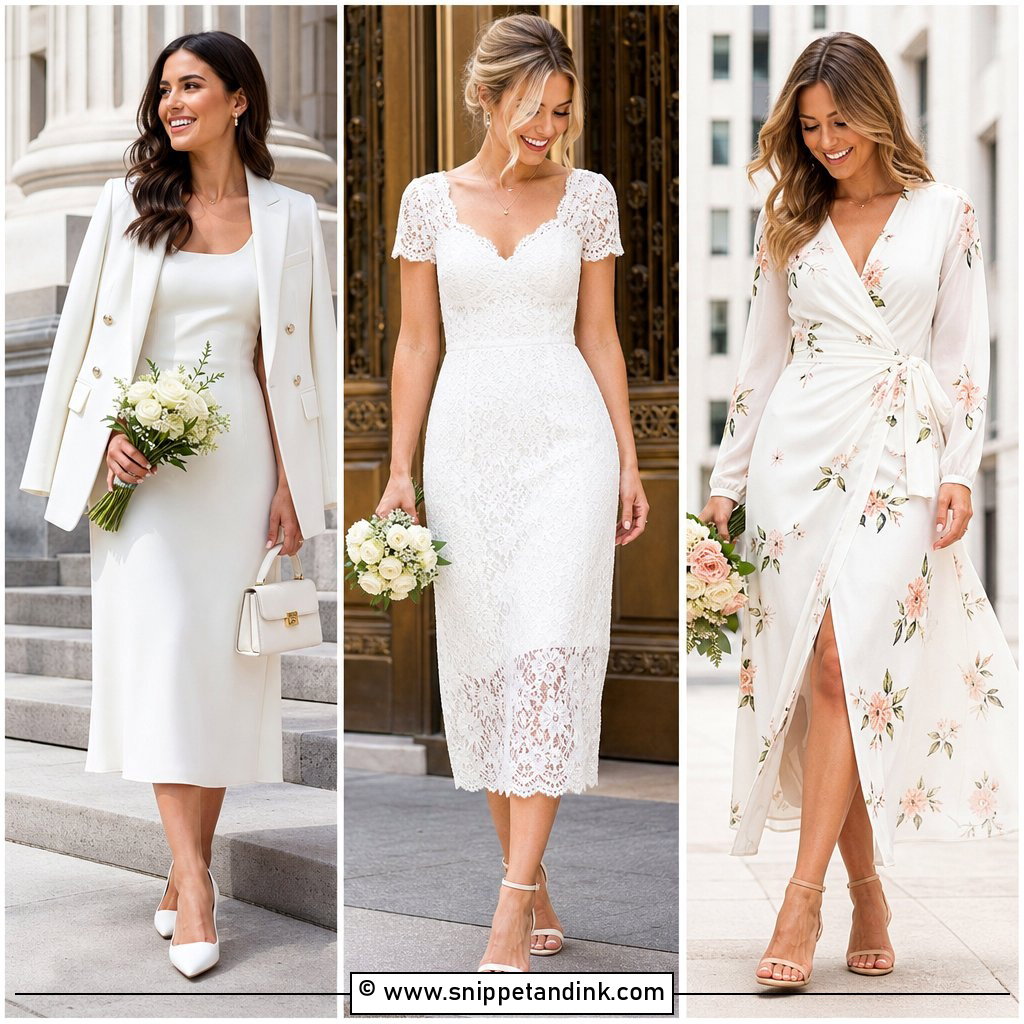
Lace is the quickest way to make a short dress feel bridal on its own, so you can go lighter on everything else. I’d look for a lined midi in floral lace with a fitted or A-line shape; scalloped sleeves or a scalloped hem give enough detail that the accessories can stay plain. Ivory block heels, pearl studs and a smooth satin clutch work, and a floral comb or small bow veil suits the texture. One honest warning: cheaper lace is often lined only to the hip, and courthouse lighting is bright and overhead. Stand under a strong ceiling light in the fitting room and check the lining covers what you want it to.
6. Satin Slip Midi Courthouse Elopement Dress
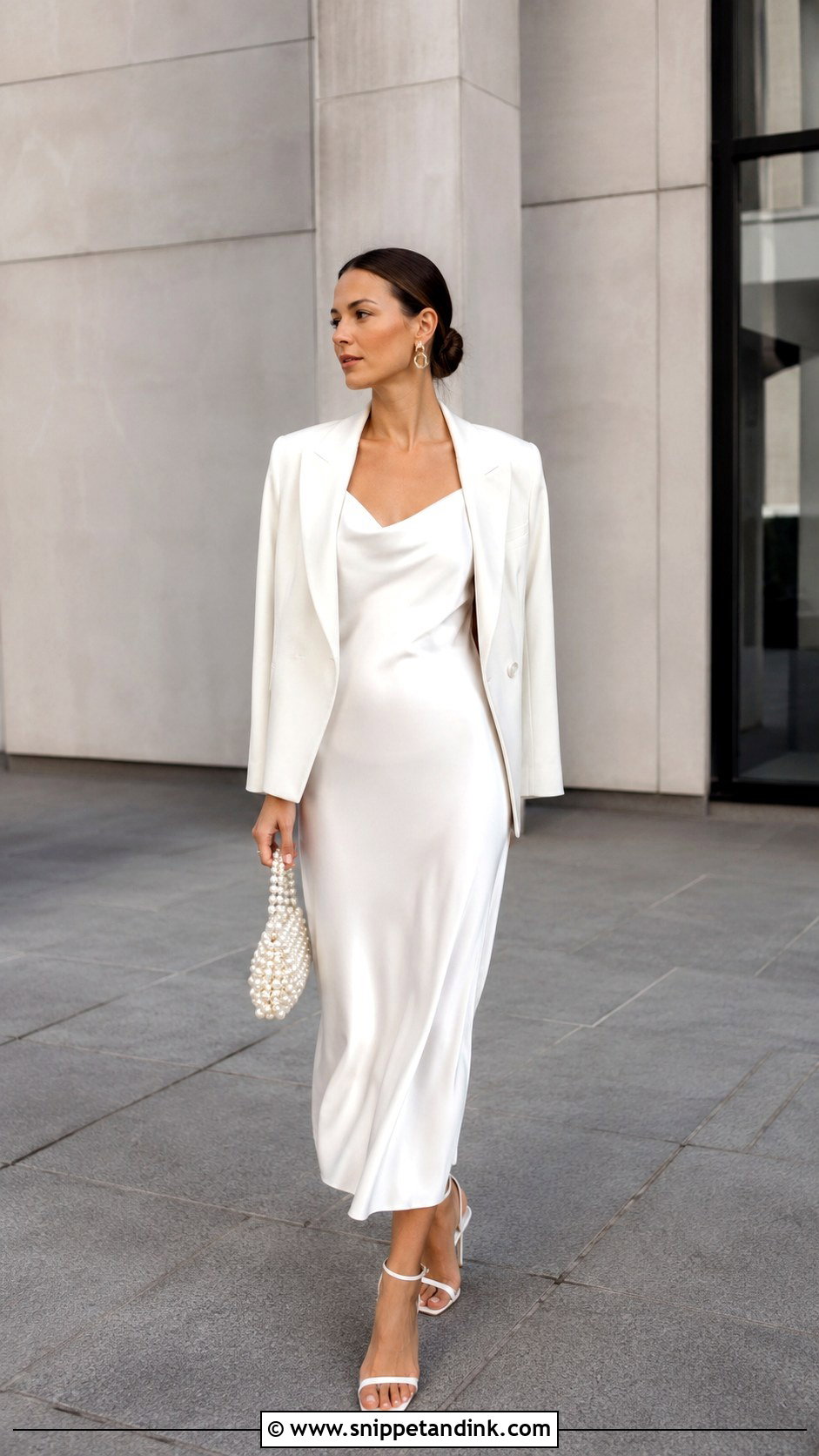
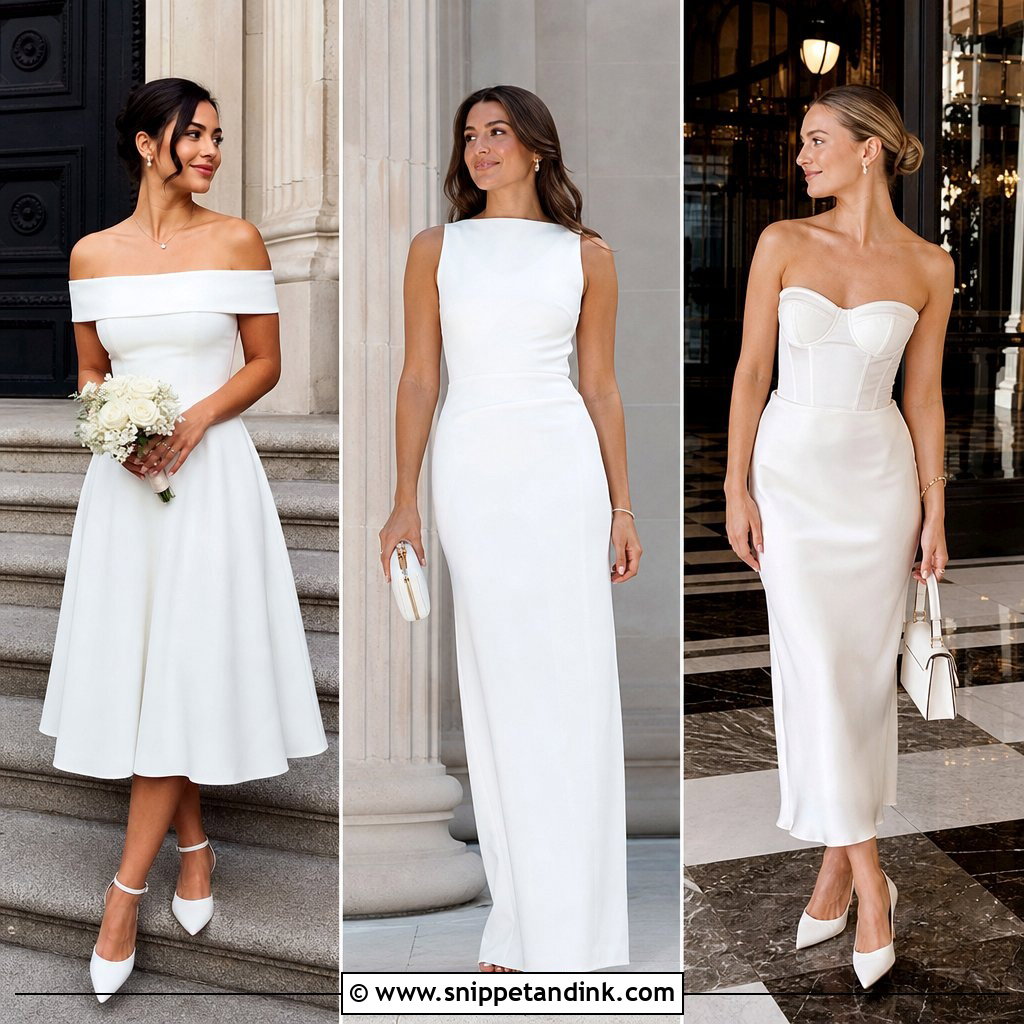
A satin slip midi is the most understated dress here, and also the least forgiving. Cut on the bias, the fabric stretches and settles over whatever is underneath it, so smooth, edge-free underwear isn’t optional. I look for a cut that skims rather than clings, with adjustable straps or a supportive cowl, and I’d size up rather than down if you’re between sizes, then take in the straps. Strappy heels, sculptural earrings and a small pearl or metallic bag dress it up. A cropped blazer is the piece I’d never skip: courthouses are often cold inside, and the blazer gives the slip a sharper city finish that carries straight into dinner. A sleek ponytail or low bun keeps the lines quiet.
7. Off Shoulder Mini Courthouse Elopement Dress
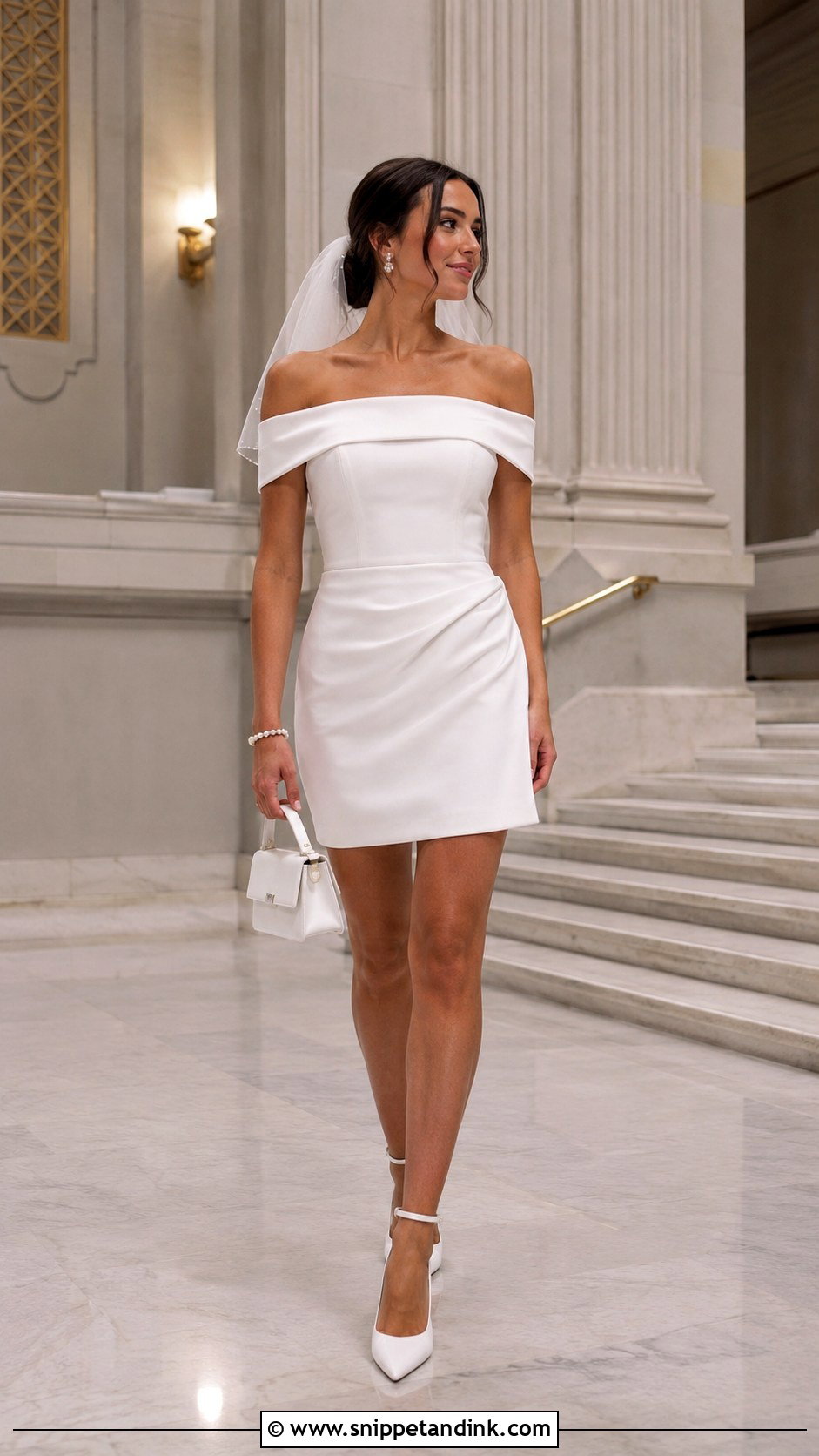
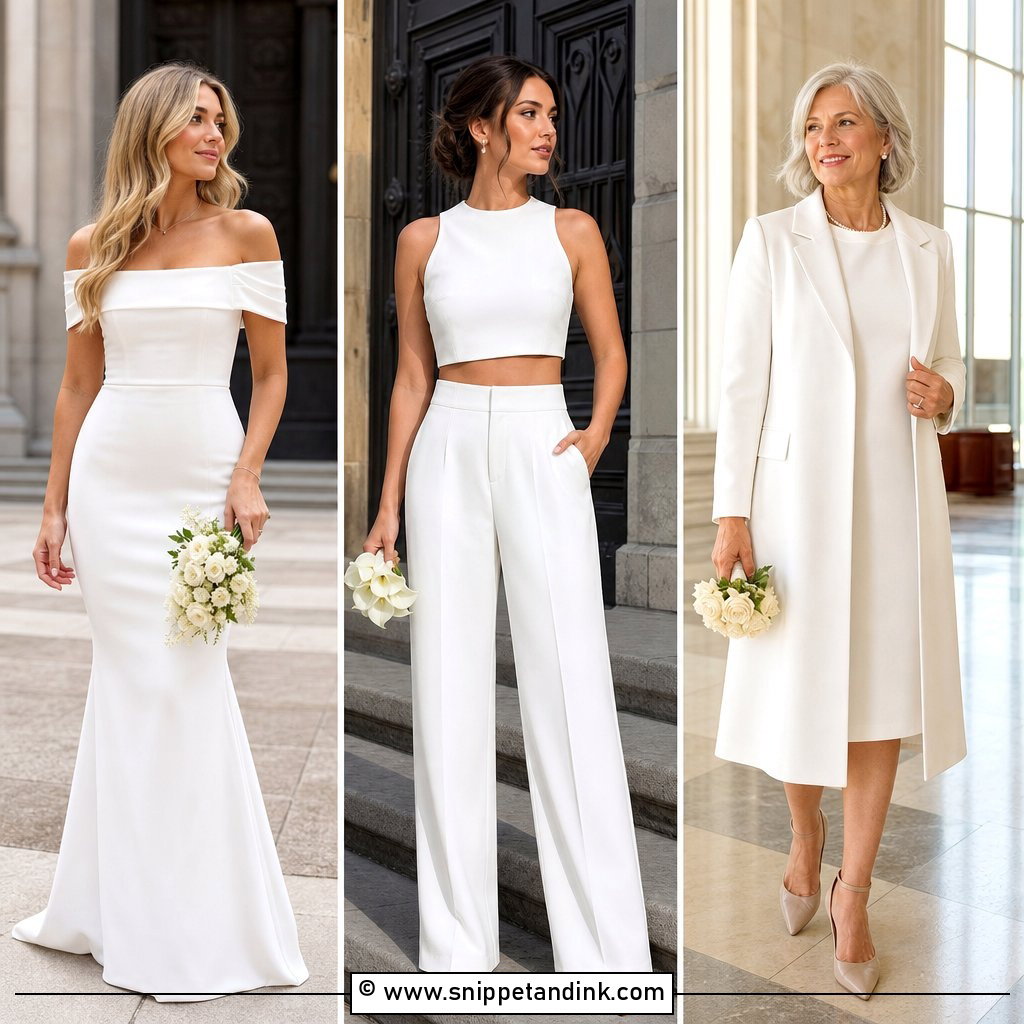
The off-shoulder mini only works if the neckline stays where it was put. Before I’d sign off on one, I have the bride raise her arms, hug someone and lean over a table as if signing the register; if the band slides, it needs silicone grip tape or a boned inner bodice added. A softly draped neckline over a fitted crepe skirt balances the playful hem. Ankle-strap pumps, a pearl bracelet and a structured mini bag are plenty, and I’d leave the neck bare since the shoulders already do the work. A shoulder-length veil can sit behind the neckline. For cool days, carry a cropped jacket; a long coat swallows a mini completely.
8. White Blazer Courthouse Elopement Dress
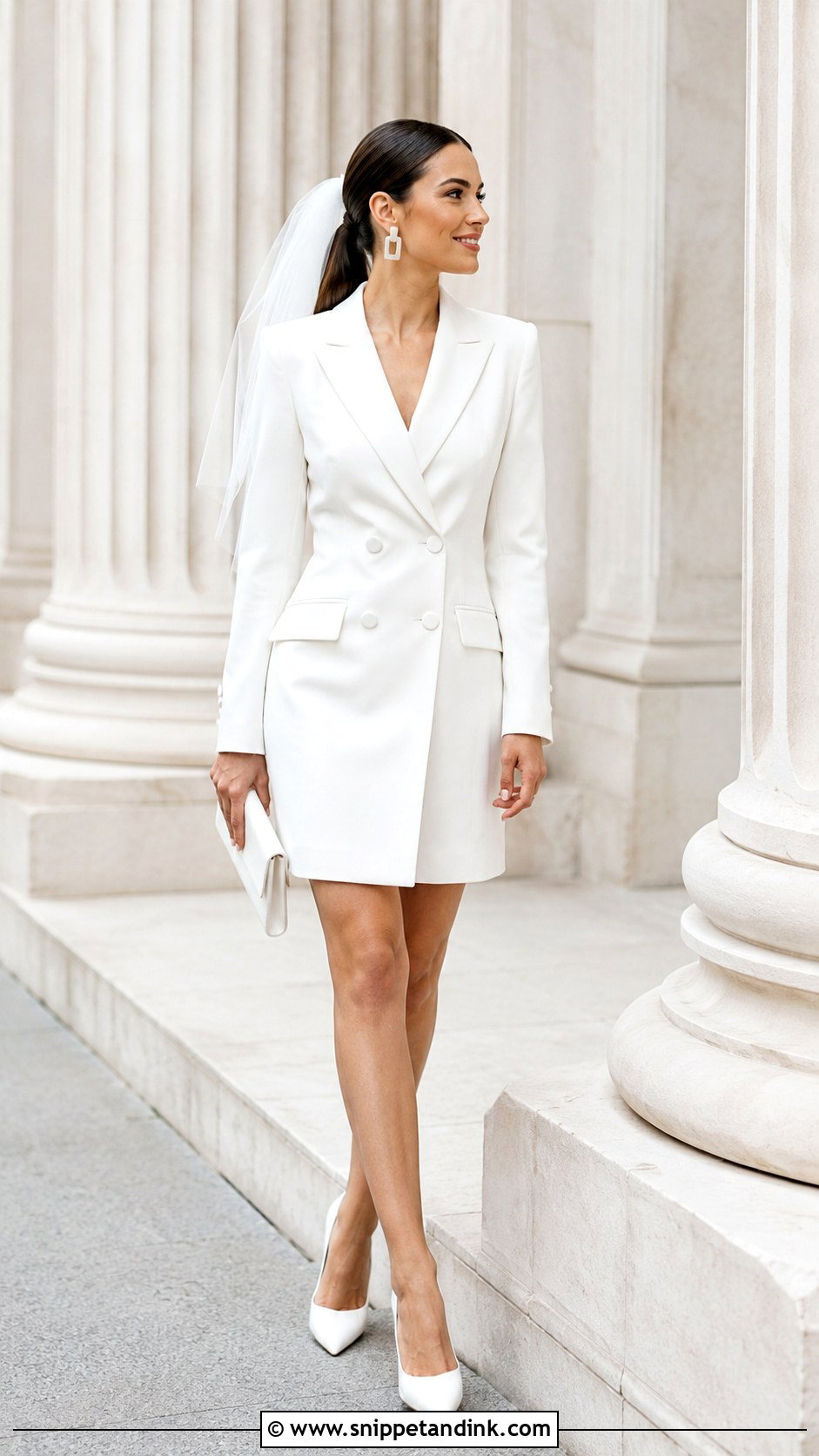
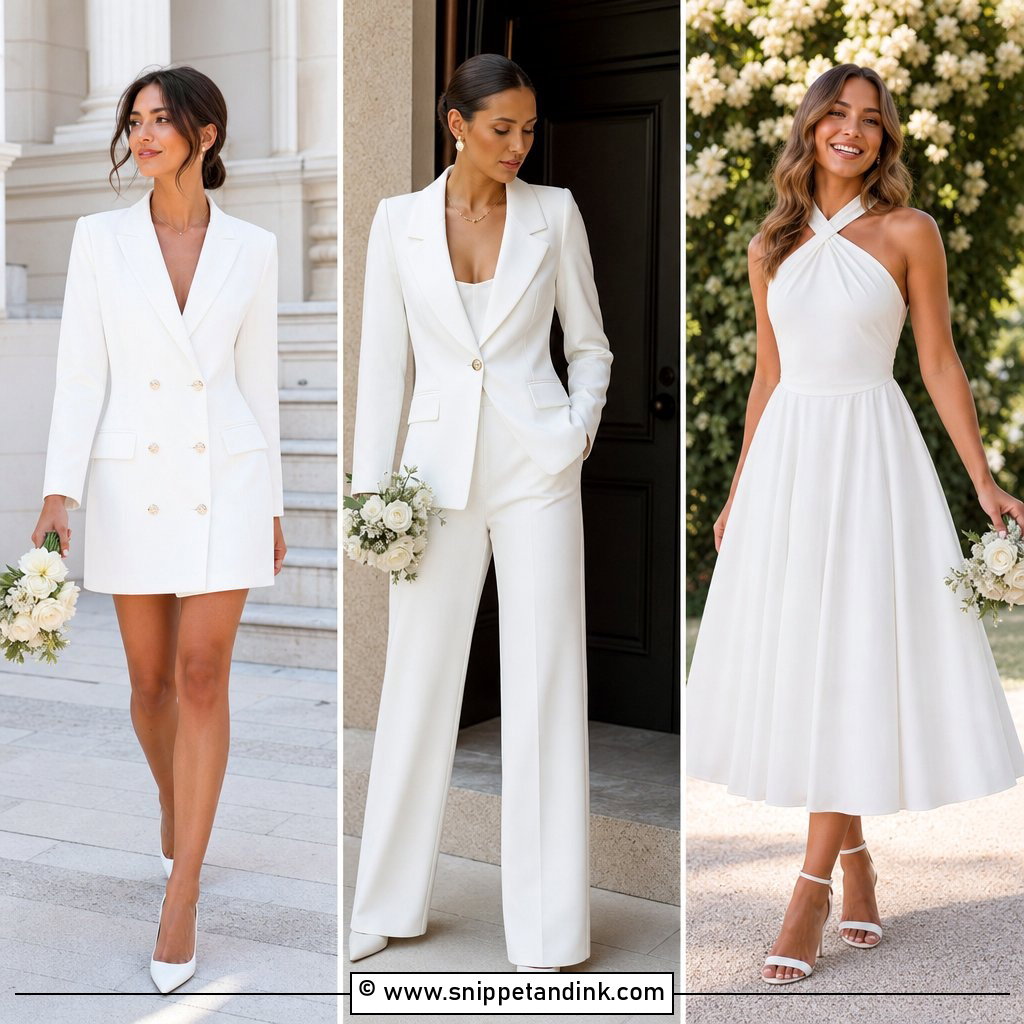
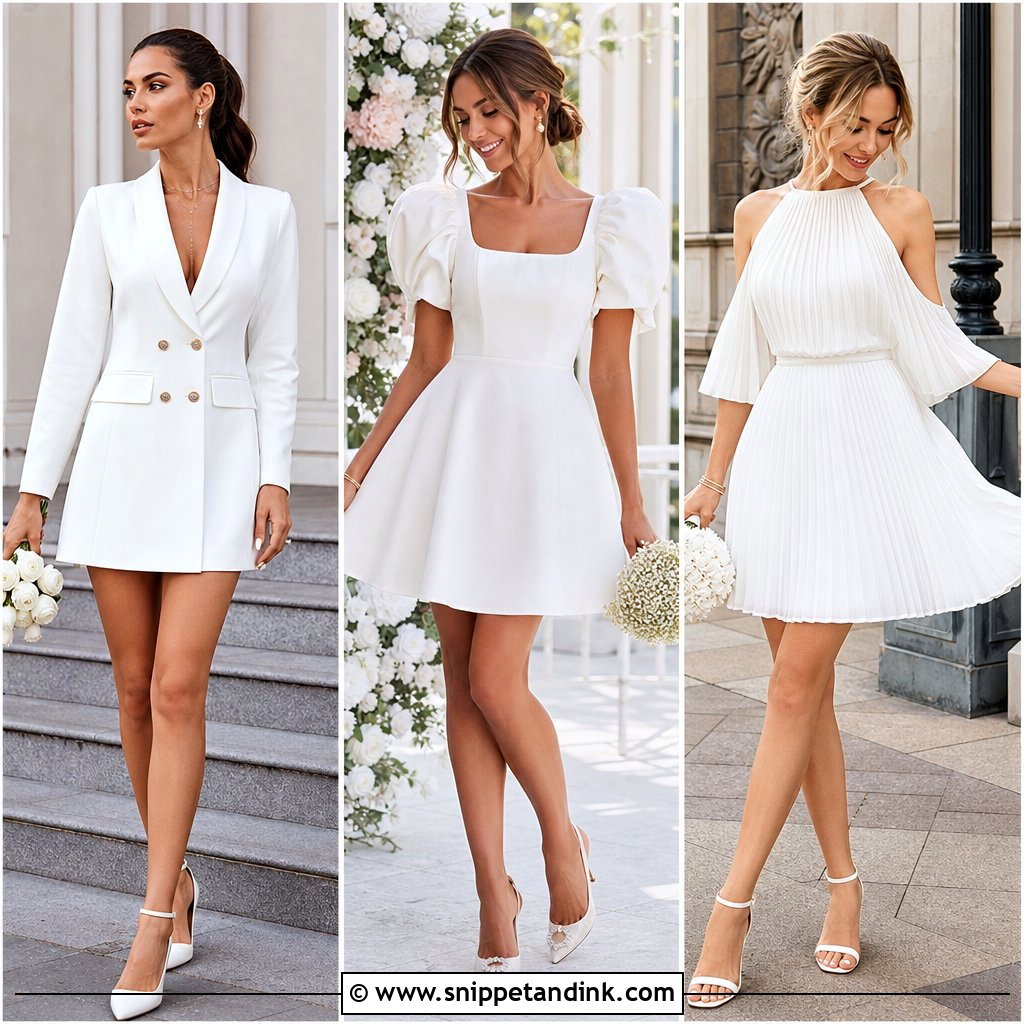
A white blazer dress gives you tailoring in one piece, and it’s the choice I see suit brides who live in suits and don’t want to feel dressed up as someone else. Look for a double-breasted or wrap front with a secure closure and a defined waist. Light crepe suits warm months; proper suiting cloth adds warmth later in the year. My check is the lapel when you sit and bend forward, because blazer dresses gape at the chest more than people expect. A lace camisole or a discreet snap underneath fixes it. Pointed pumps, geometric earrings and an envelope clutch suit the mood, and a short veil or pearl headband is what stops it reading as office wear.
9. Halter Column Courthouse Elopement Dress
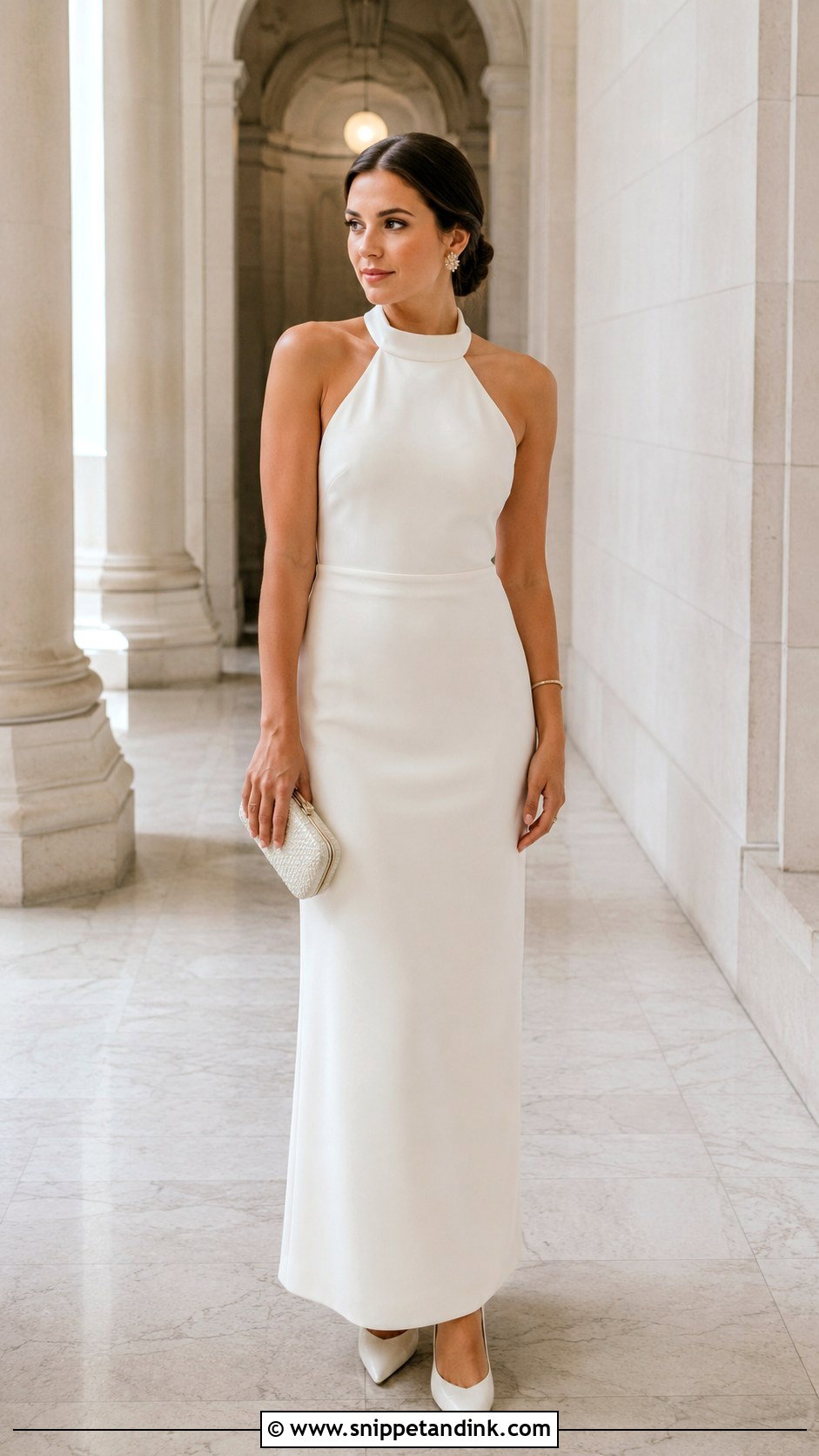
A halter column draws one long vertical line from neck to hem, which is why it looks glamorous with almost no decoration. Keep it midi or ankle length so hallways, lifts and kerbs aren’t a problem. Soft crepe or satin follows the body and drapes well, but halters put the weight of the dress on the back of the neck, so I’d want an internal waist stay or a back closure that shares the load. Skip the necklace, sweep the hair back, and add bold studs with one slim bracelet. In cold weather, layer a tailored coat over it. A chunky cardigan breaks the line the dress is built on.
10. Puff Sleeve Mini Courthouse Elopement Dress
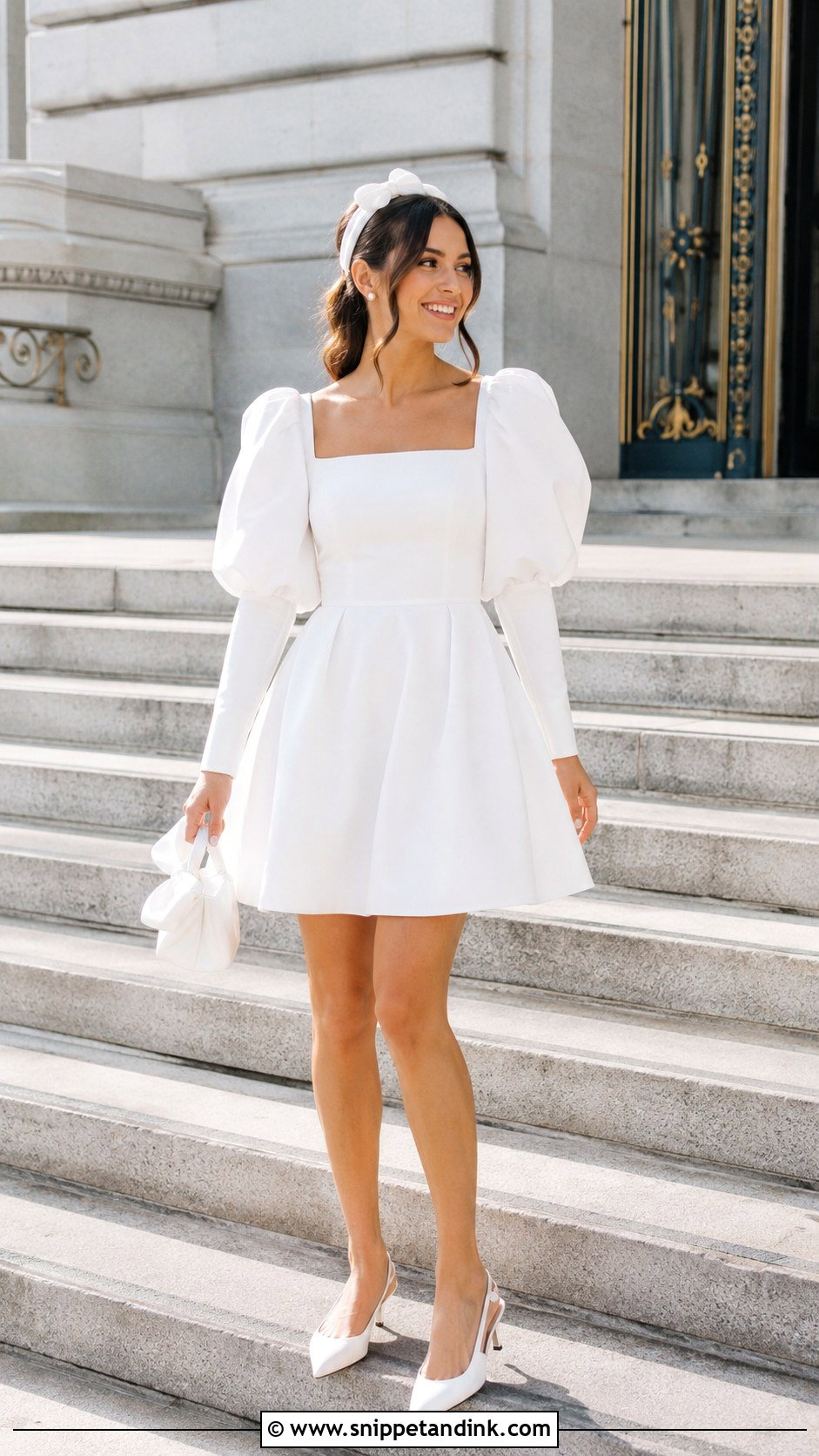
Would you like a short bridal dress with more personality? Puff sleeves give it, but they need restraint. Moderate volume with fitted cuffs looks polished, while very large puffs crowd the face and get in the way when you hold flowers or put an arm around someone. A square or sweetheart neckline and a gently flared skirt balance the fuller top. Slingback heels, pearl earrings and a small satin bag keep it light, and a bow headband can stand in for a veil. Lift both arms at the fitting: stiff sleeves set into a narrow armhole pull the whole bodice up when you wave.
11. Wrap Midi Courthouse Elopement Dress
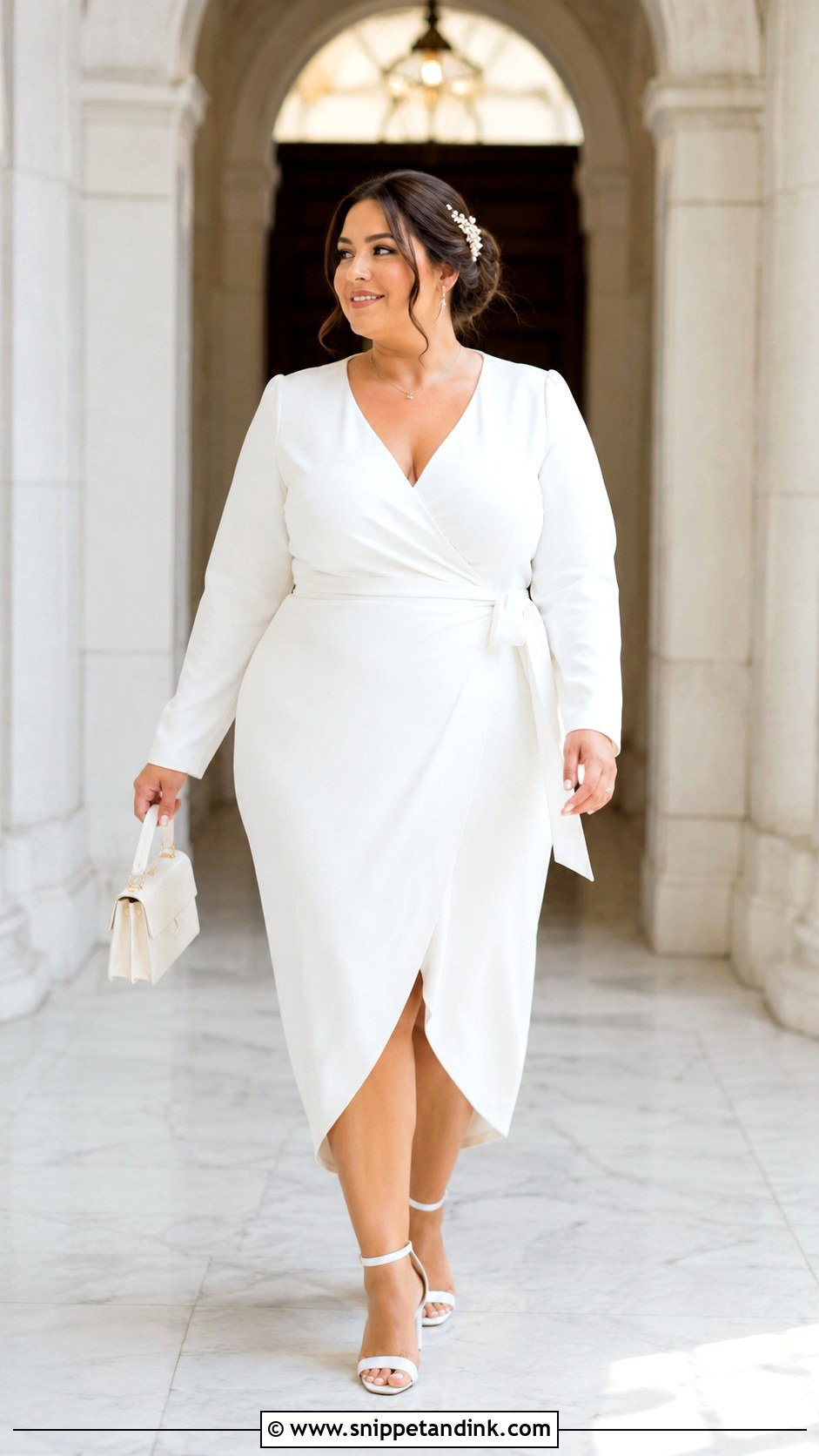
On a long day, a wrap midi is one of the kindest dresses you can choose, because it adjusts at the waist after lunch. Matte crepe, soft satin or a substantial jersey drape well without looking casual. I always ask for an internal snap at the cross-over so the neckline stays put. The other thing I check is the overlap: walk briskly across the room and see whether the skirt opens above the knee. If it does, a hidden hook or a few stitches fix it before a windy street corner finds it for you. Block-heel sandals, a fine necklace and a structured bag finish it, with a pearl comb tucked into a low chignon.
12. Boat Neck Sheath Courthouse Elopement Dress
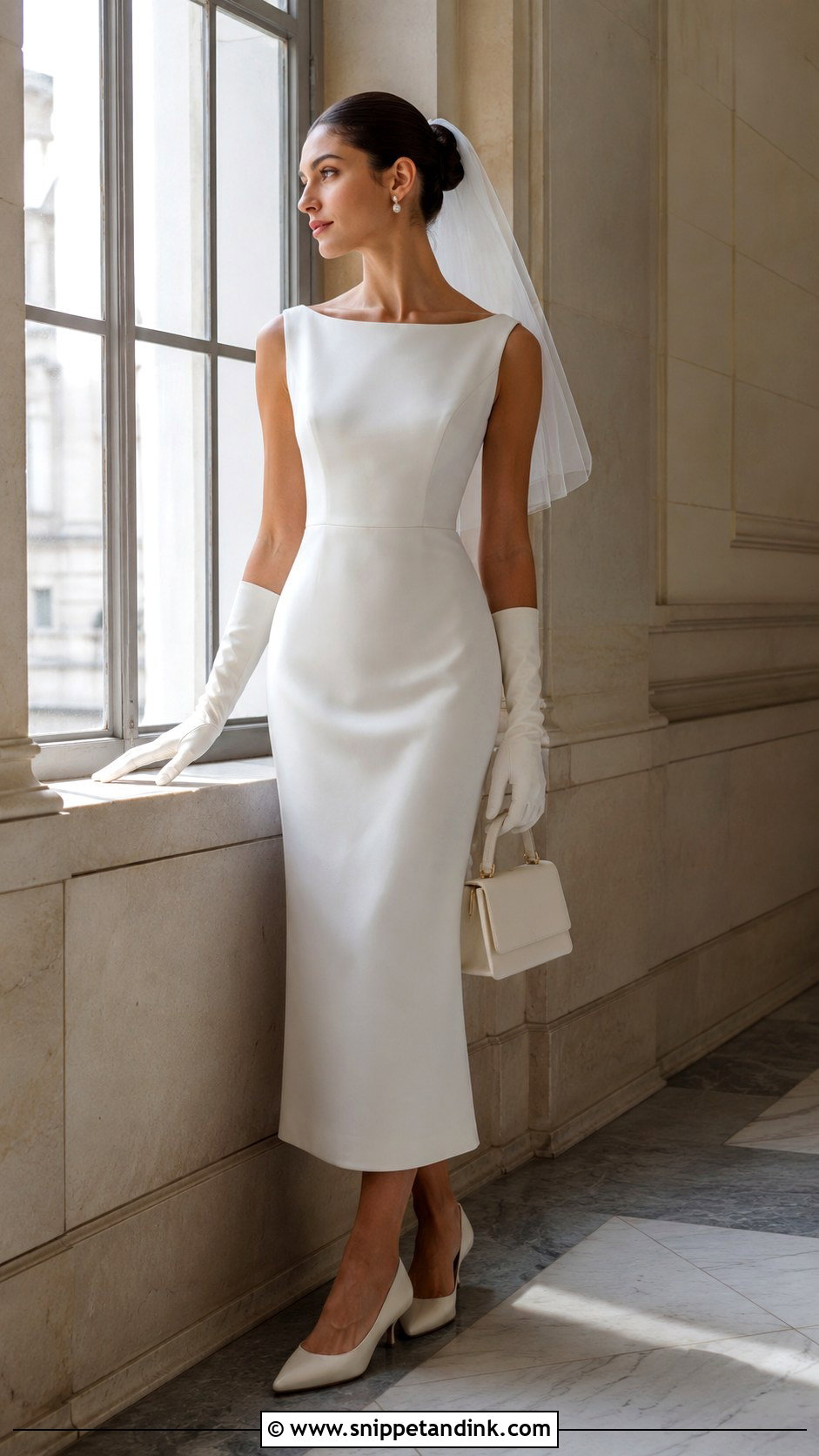
A boat neck sheath dress is the classic minimalist option: a wide neckline across the shoulders and a narrow skirt, best in structured crepe that holds its line. The fitting check I’d never skip is walking up stairs. Without a back vent, a slit or a little stretch, a sheath turns courthouse steps into a shuffle, and any seamstress can add a vent in an afternoon. Pointed kitten heels, pearl studs and a small top-handle bag suit it. Elbow gloves add vintage character, but slip off the left one before the rings. A low bun keeps the neckline clear, and a short veil or pillbox headpiece makes it bridal.
13. Corset Midi Courthouse Elopement Dress
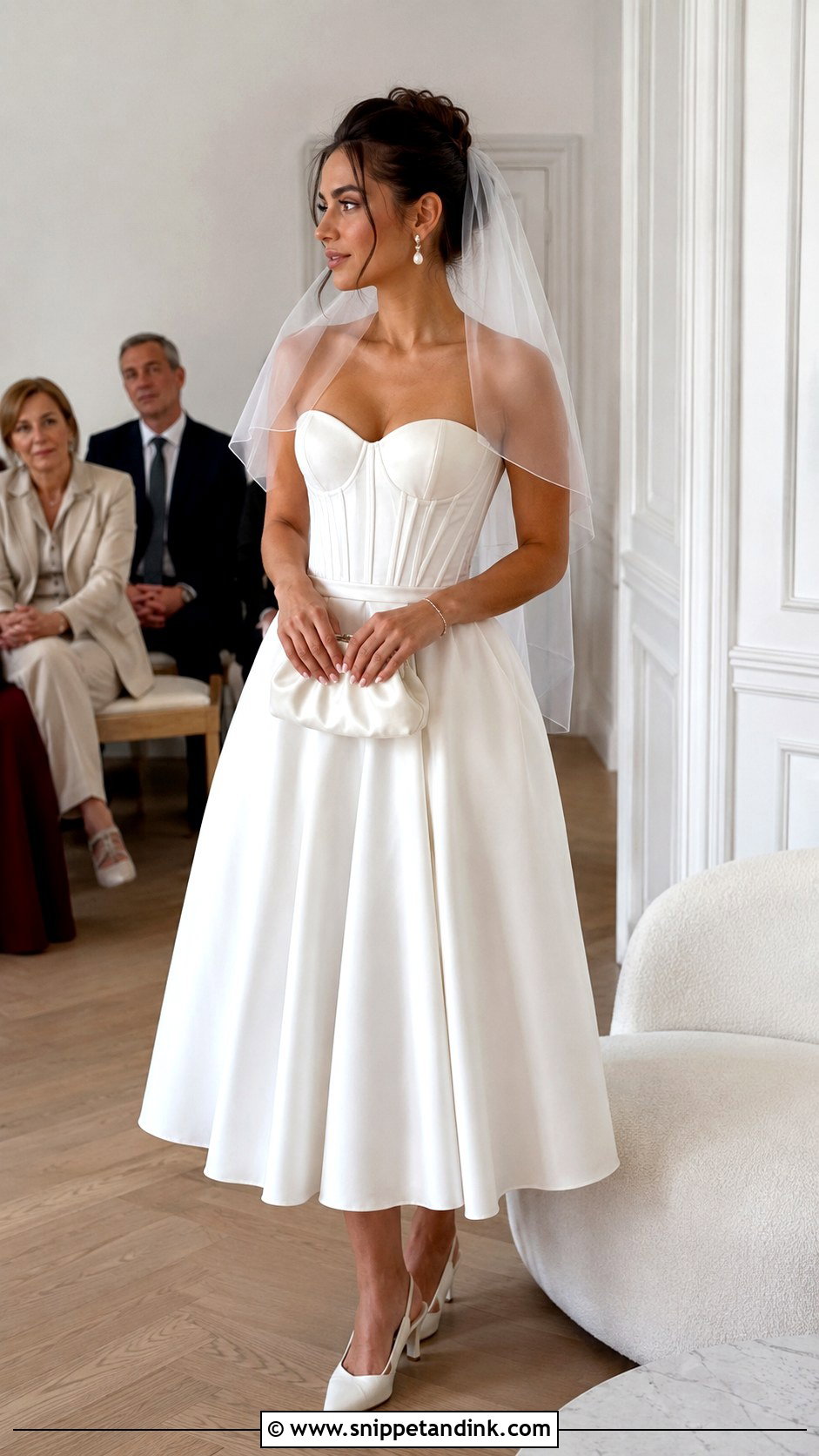
A corset midi gives you shape without a big skirt. The fit check is simple: sit down and take a deep breath. If either one feels tight, the boning is fitted too closely, and you’ll feel it by the time you’re signing the register. I look for a proper lining over the bones so nothing presses through, and a straight or softly flared skirt that balances the structured top. Closed slingbacks, small drops and a satin clutch are plenty. A sheer shoulder veil softens the bodice. Detachable straps are worth having for travel days, and a metal busk may set off the security scanner at the door, so allow a minute for the wand check.
14. High Neck Satin Maxi Courthouse Elopement Dress
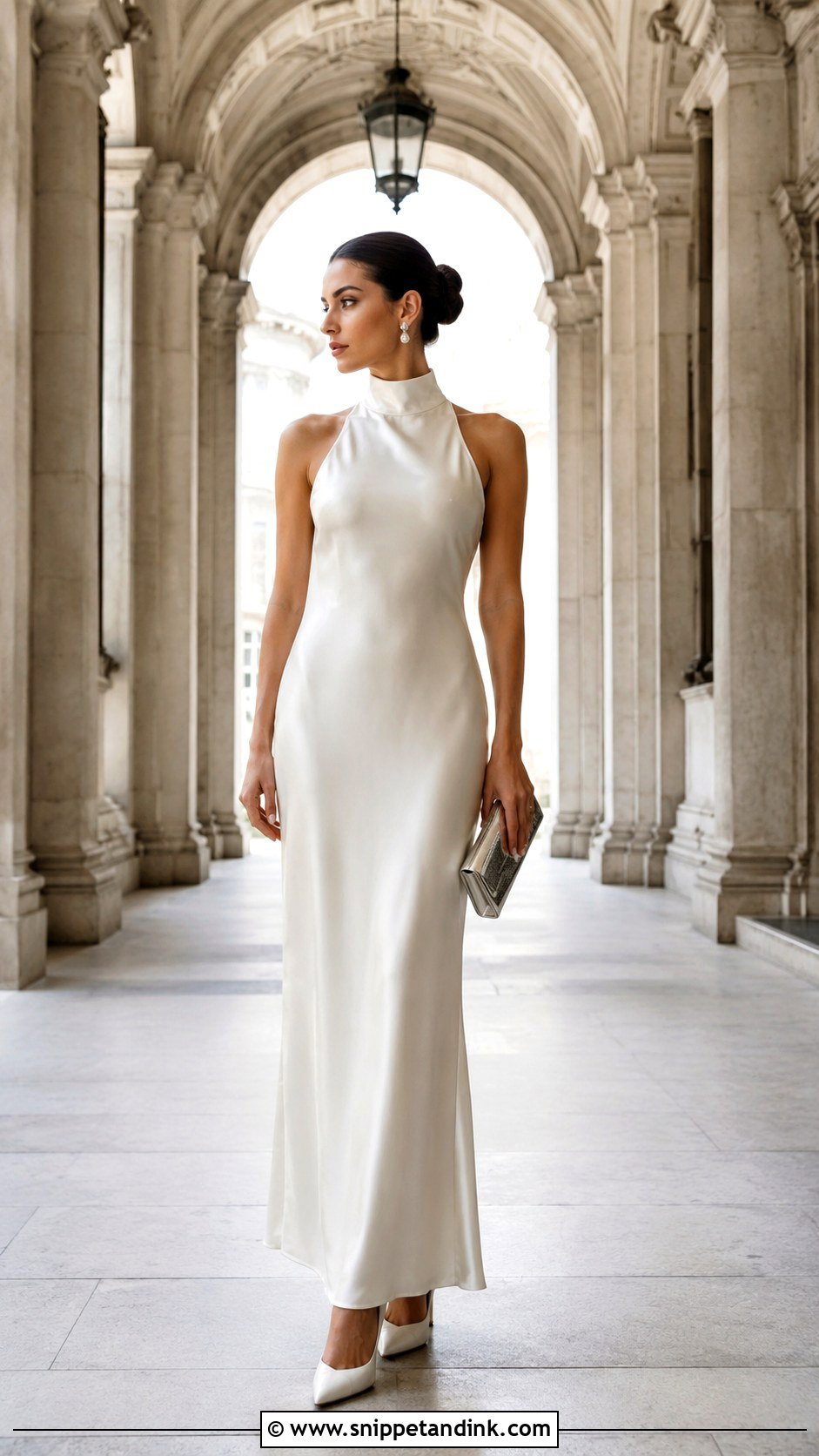
Yes, you can wear a long dress to a courthouse. A high neck satin maxi gives coverage and quiet drama, as long as it’s an ankle-skimming column and not a train dragging across public floors and pavements. I’d have it hemmed to clear the floor by about half an inch in the shoes you’ll actually wear, so you’re not lifting it on every step. Pointed pumps, statement earrings and a slim metallic clutch keep the outfit streamlined. Wear your hair up to show the neck. Thin satin shows every edge beneath it, so plan smooth layers, and add a tailored coat for warmth.
15. Pleated Chiffon Midi Courthouse Elopement Dress
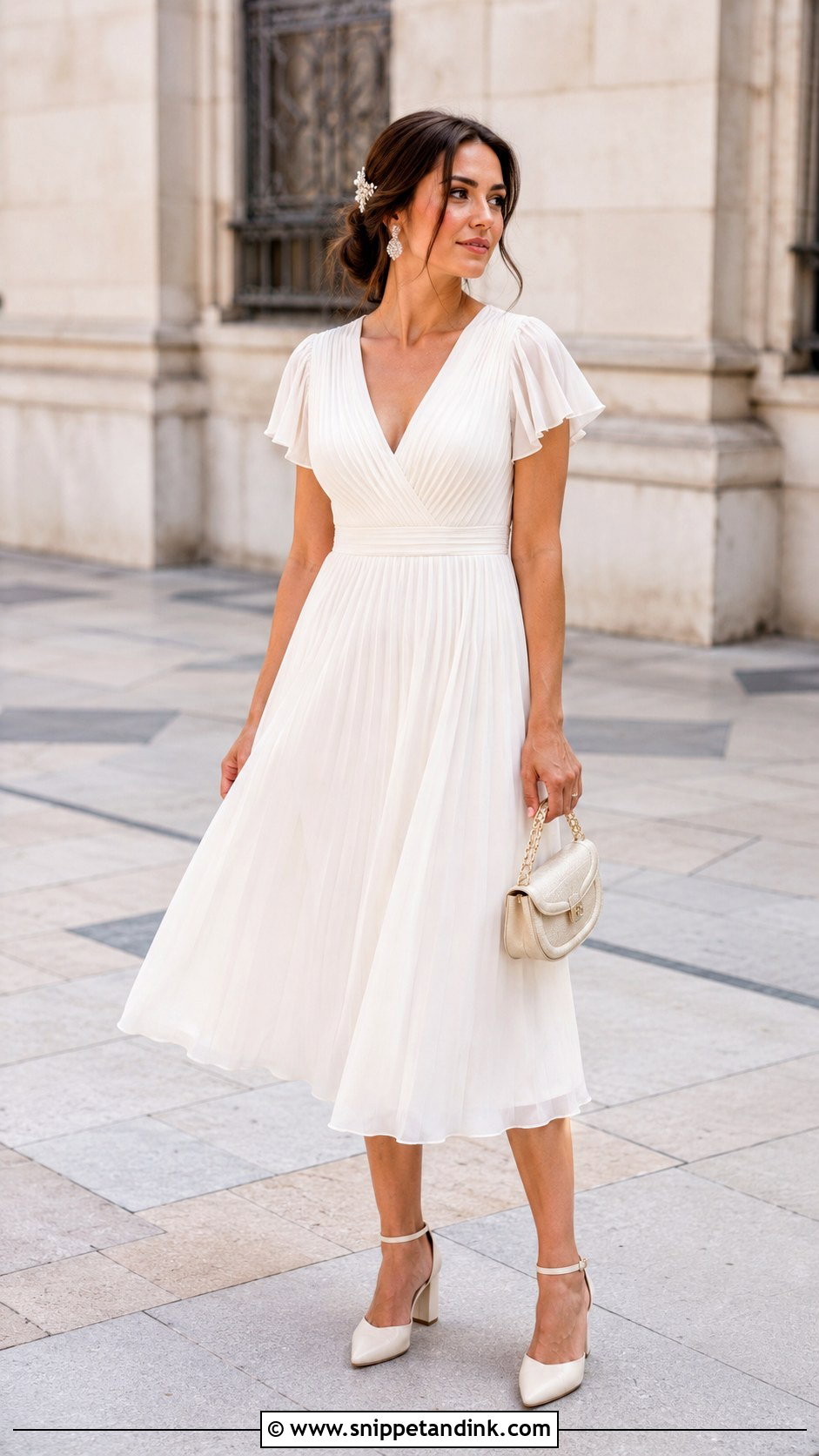
Chiffon pleats move with every step and hold up well through a long day, because pleats hide creases that would show on a plain skirt. Choose a lined midi with a fitted waist and controlled volume so it reads as special without spreading too wide on a bench. Flutter sleeves, a modest V-neck or a gathered bodice suit the airy fabric. Chiffon is sheer, so I check the lining length outdoors, not just under fitting-room lights. Block heels, crystal earrings and a small ivory or pale gold bag finish it, with a floral comb rather than a heavy headpiece. A fine cashmere cardigan or tailored jacket covers you on cool days.
16. Plus Size Ruched Courthouse Elopement Dress
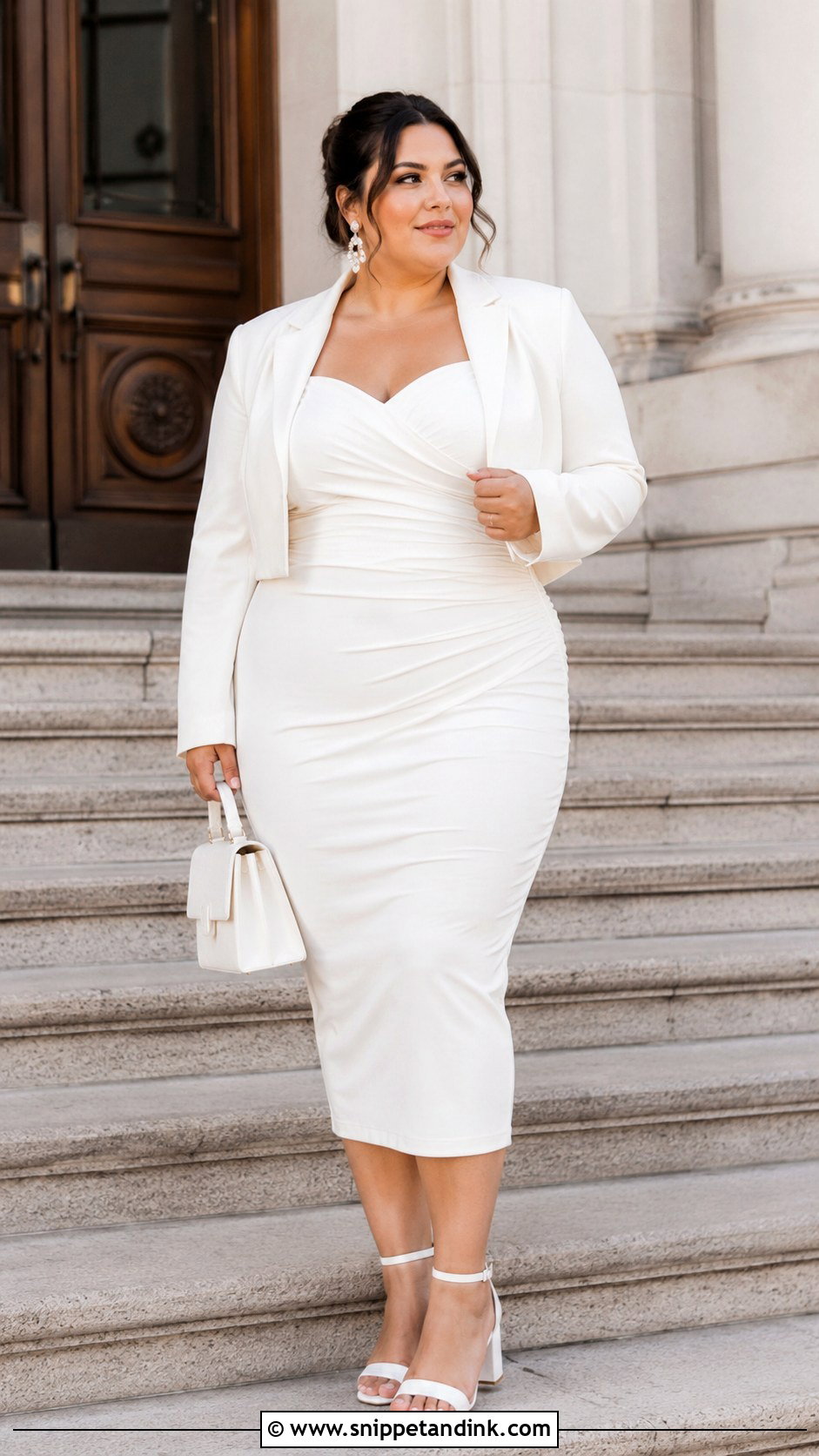
Ruching works best when it’s placed with purpose, across the waist or along the side seams, rather than gathered over the whole dress, where it adds bulk instead of shape. Stretch crepe or lined jersey gives you comfortable movement on a walking day. My sizing rule: buy for your largest measurement and have the rest taken in, because letting out a ruched seam rarely has enough fabric to work with. Supportive block heels, statement earrings and a medium structured bag keep the proportions in balance, and a cropped blazer adds coverage without hiding the waist. The right underwear changes how smoothly the gathers lie, so bring it to every fitting.
17. Maternity Empire Waist Courthouse Elopement Dress
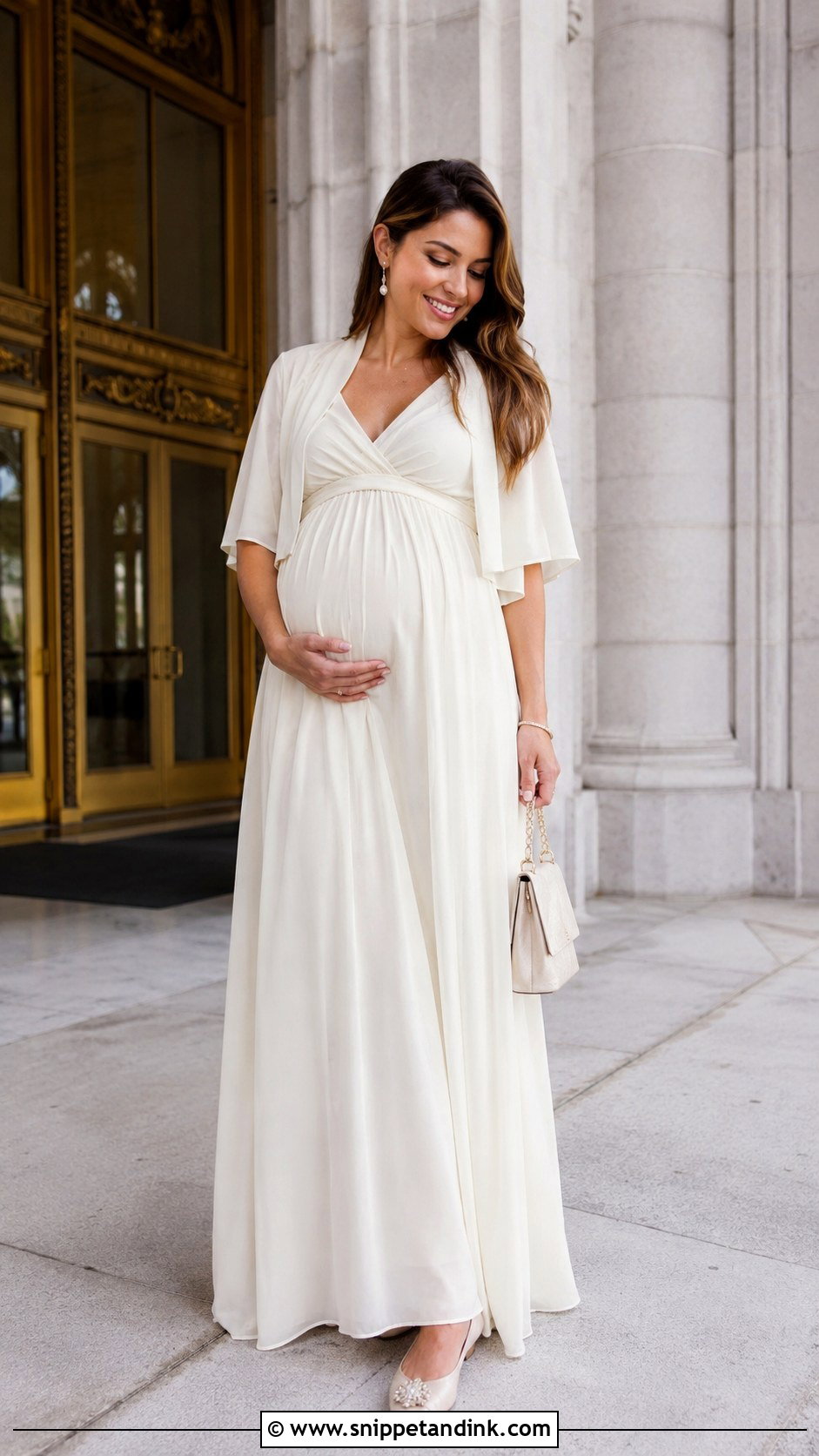
For a pregnant courthouse bride, an empire waist sits above the bump and lets the skirt fall freely, with nothing pressing on the midsection. Knee, midi or ankle length all work, in stretch crepe, chiffon or soft satin. I’d choose low block heels or embellished flats over stilettos, since balance changes in pregnancy and city steps are unforgiving. Lightweight earrings and a small bag you can carry one-handed keep it simple. A cropped wrap or structured coat adds warmth without pressure on the bump. Book the final alteration as close to the date as your seamstress allows, because fit can shift in a week.
18. Velvet Midi Courthouse Elopement Dress
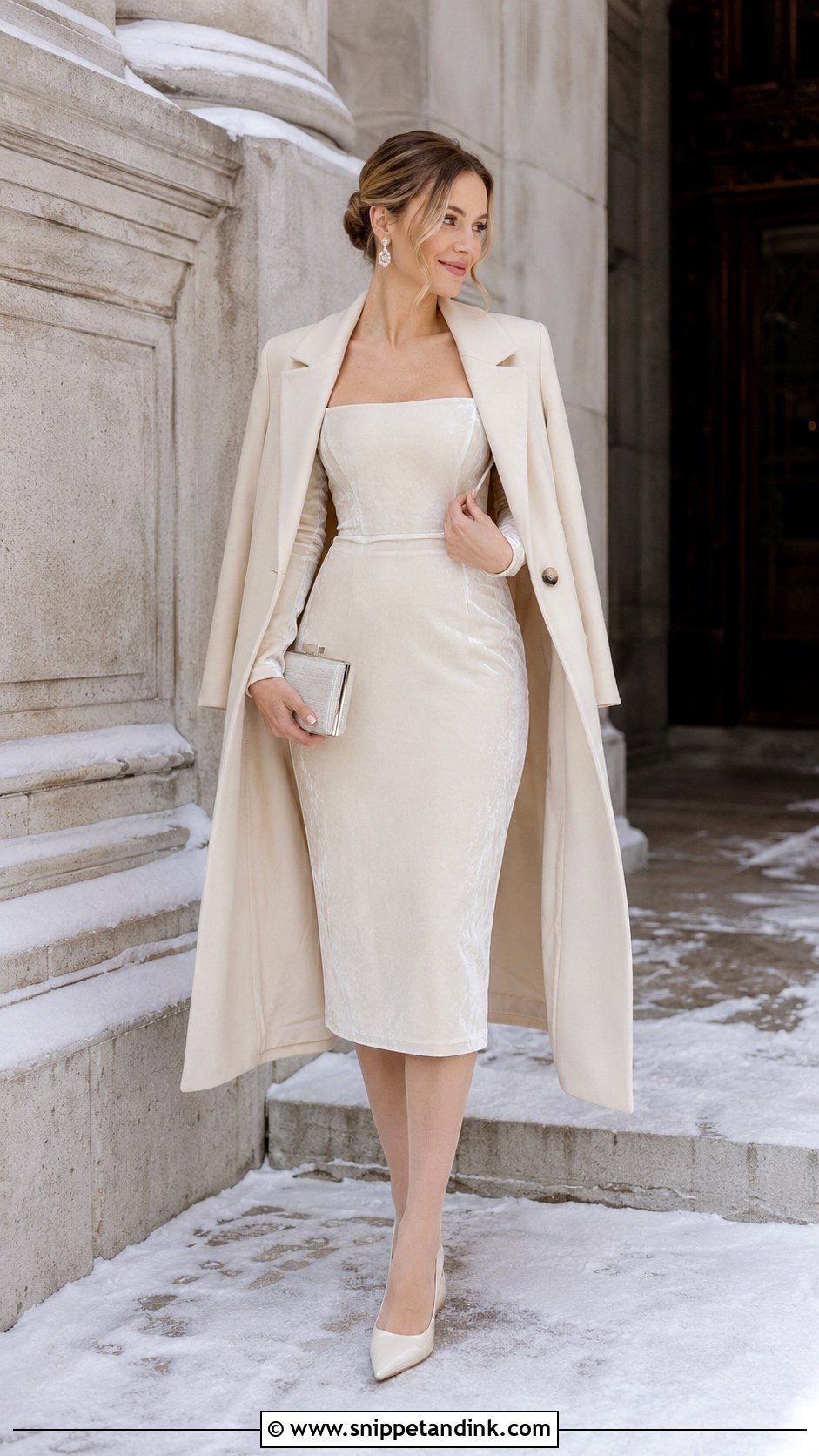
Velvet is the warmest fabric on this list and the one I reach for in deep winter. Ivory, cream or champagne velvet reads bridal, and a deep jewel tone suits anyone who wants color. Look for a wrap, square-neck or fitted long-sleeve midi with a smooth lining. Closed pumps, sheer tights, crystal earrings and a structured clutch are enough; velvet already has depth, so extra sparkle fights it. A tailored wool coat ending near the hem keeps the proportions clean. One practical note: velvet crushes where you sit, so smooth the skirt with your palm when you stand, and hang it in a steamy bathroom the night before rather than ironing.
19. Vintage 1960s Mini Courthouse Elopement Dress
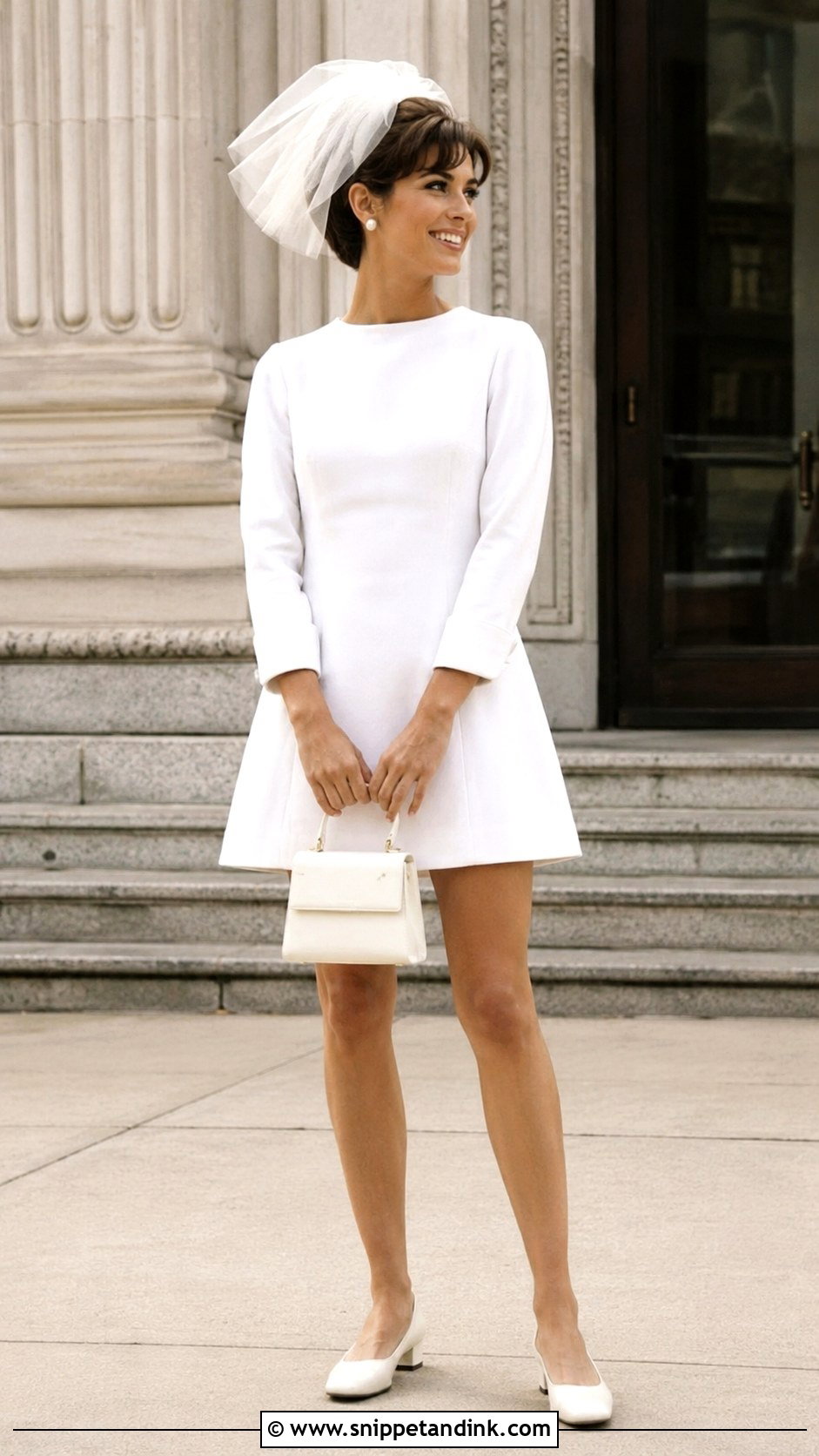
A 1960s-inspired mini dress carries retro charm because of its shape, so the fabric has to hold it. Look for a shift or A-line with a high neckline, bracelet sleeves or decorative buttons, in structured crepe, jacquard or heavy satin. Low block heels, pearl earrings and a top-handle bag suit the period, and a short bubble veil or wide satin headband carries the mood without looking theatrical. I’d keep the palette white or ivory and allow one soft accent in the shoes or bag. Shift dresses can ride up on a bench, so sit at the fitting and check the hem still covers you.
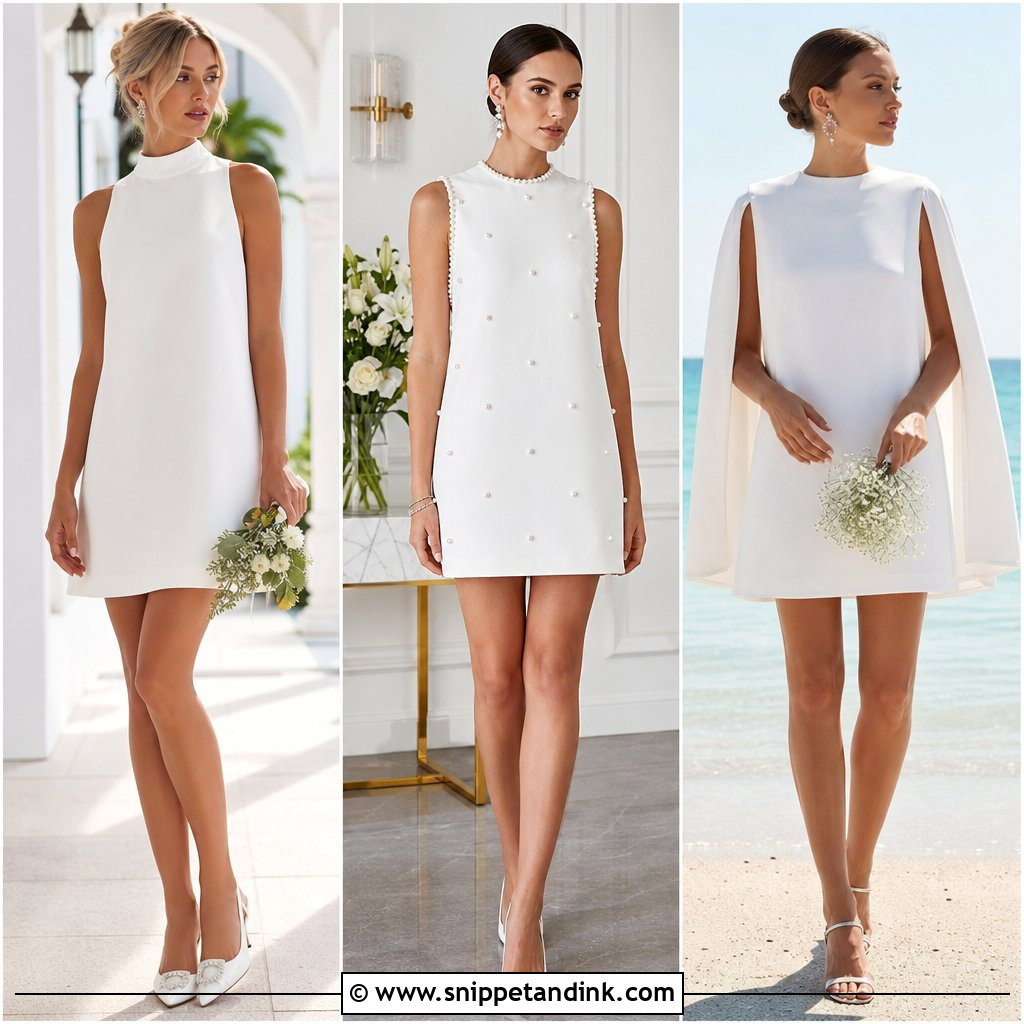
20. Blush Midi Courthouse Elopement Dress
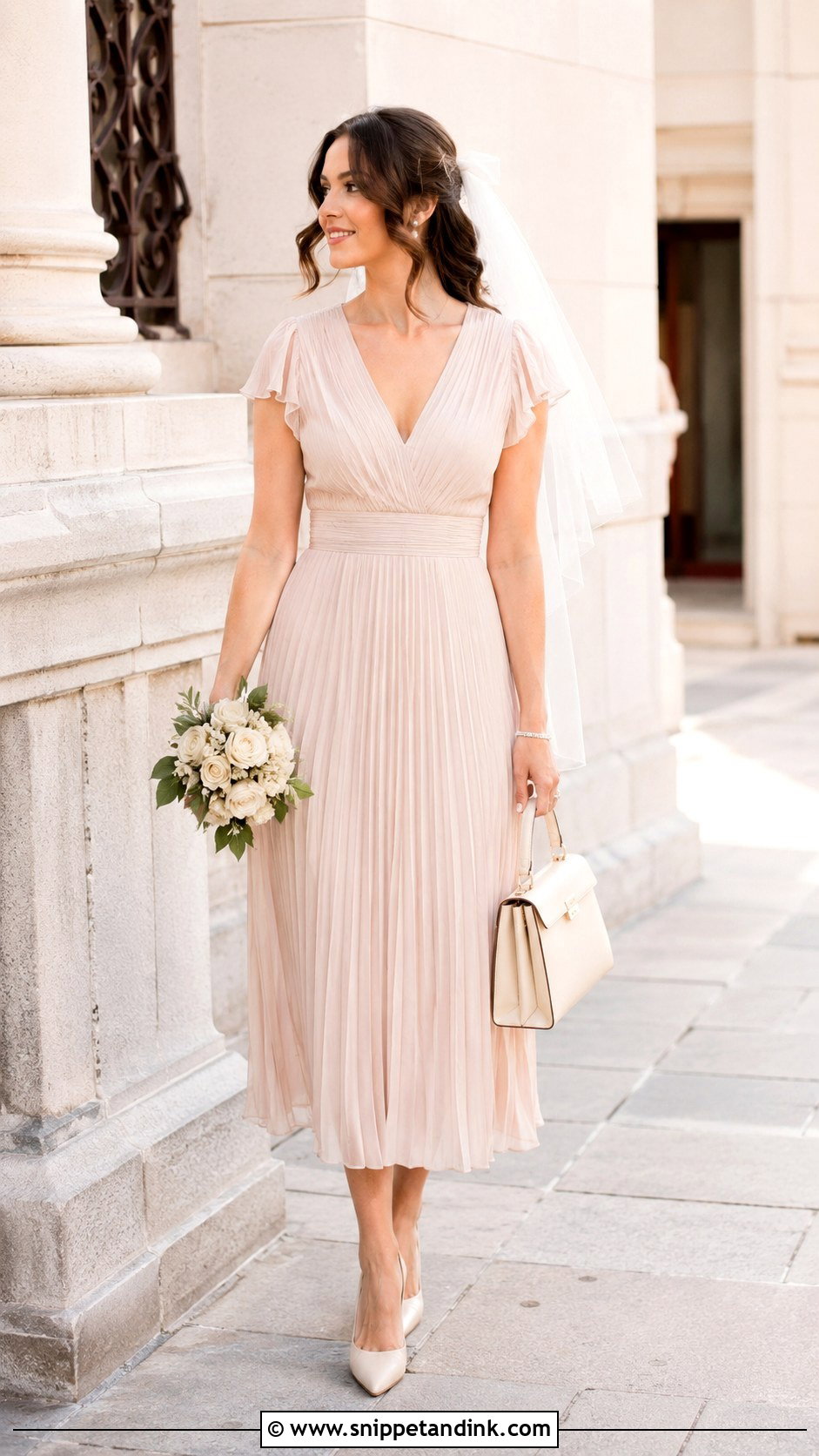
White isn’t the only bridal color. A blush midi suits anyone who feels more like herself in a soft shade. I’d steer toward dusty pink, pale rose or champagne rather than a bright pink, which can look like a bridesmaid dress next to a white veil. Satin, pleated chiffon or textured crepe gives it a dressier finish. Ivory pumps, pearls and a cream bag tie it back to traditional bridal styling, and a white bow veil makes it clearly a wedding outfit. Warmer blushes tend to suit deeper skin tones, cooler pinks fair or rosy ones, and of every dress here, this is the one you’ll find easiest to wear again.
Security Scanners, Subway Stairs and a Lunch Booking
A civil ceremony is rarely just the ceremony. Most city days involve a security line, a lift or a long staircase, a wait on a bench, and then a walk or a subway ride to wherever you’ve booked lunch. I dress brides for the whole route, not the five minutes in front of the officiant.
- Most courthouses screen everyone at the door. Wire, boning and a metal busk can trigger the scanner, so build in ten extra minutes and keep hairpins to what’s needed.
- Grates, cobbles and escalator steps catch thin stiletto heels. A block heel, or flats folded in your bag, saves the day.
- Short and light skirts lift on corners and subway platforms. A slim slip underneath or a few weights sewn into the hem keep them down.
- Rain marks satin and velvet. A clear umbrella and a coat long enough to cover the dress are worth carrying.
- Pack a small kit: safety pins, fashion tape, a stain pen and blister plasters.
Making a Simple White Dress Feel Bridal
With a plain dress, I treat accessories as the part that tells people you’re getting married. Pick one clear bridal signal and build around it: a short veil, a bow at the back of the hair, a pearl headband or a small bouquet. Two or three of these together can tip a simple outfit into costume, so I usually let one lead and keep the rest quiet.
Shoes are the second lever. A satin or pearl-trimmed pump looks deliberate in a way a work heel doesn’t. Then think past the day: a dress without a veil is easier to wear again, so choose one you’d happily put on for an anniversary dinner, and have it cleaned within a few weeks so any marks don’t set into the fabric.
A Plain Dress, a Short Veil and a Coat You Love
Of everything here, the courthouse dress that works is the one that never gets in your way: a hem you can manage on steps, a fit you can sit and breathe in, and fabric that suits the season. A satin mini feels modern; a lace midi, a structured sheath or a column maxi feels more traditional. Think about the building, the weather, how you’ll get across town and where you’re going afterward. Then spend your styling effort on the few pieces that make a simple dress feel bridal, because at a civil ceremony those small choices carry the whole look.
You'll Like These Ideas:


Leave a Reply