
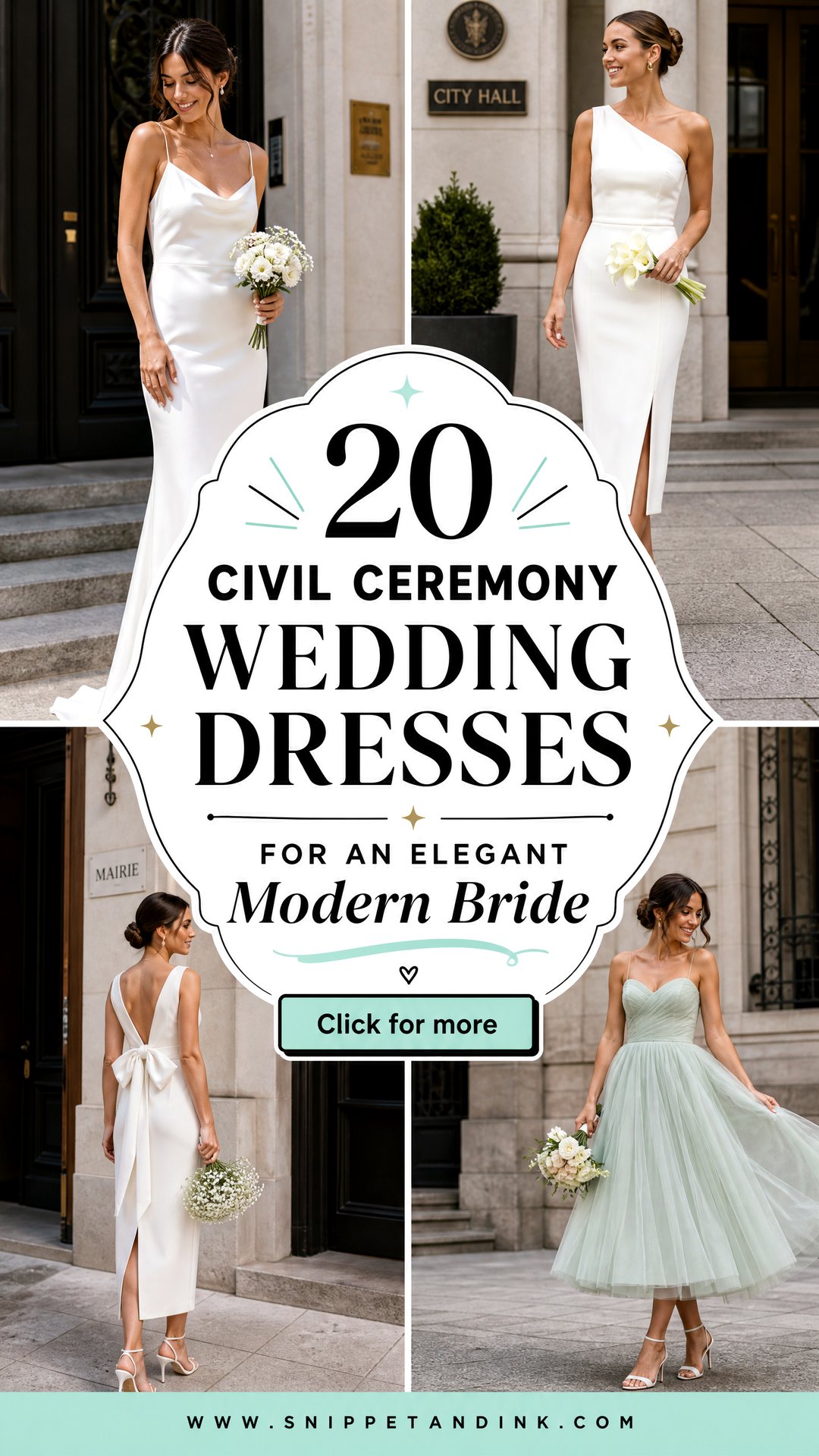
A civil ceremony asks different things of a dress than a church aisle does. You queue in a corridor, sit on a bench, lean over a counter to sign, then walk out onto steps for photos, often all inside an hour. A city hall ceremony also frees you from bridal convention, so a mini, a lace midi and a plain floor-length gown can all be right. When I style a courthouse bride, I judge every option by two tests: can she sit and sign without tugging at it, and does it still read as bridal under office lighting? The twenty looks below run from classic to colored, with notes on fit and fabric for each.
What a Courthouse Hour Does to a Dress
Most brides try on a city hall dress standing in front of a mirror, which is the one position you’ll barely use. On the day you’ll wait in a corridor, perch on a wooden bench, lean over a counter to sign, and squeeze into a lift with your guests. I build every civil ceremony fitting around those moments.
- Sit on a hard chair for five minutes, then stand. Satin and linen blends will show the creases, crepe and jacquard mostly won’t.
- Lean forward over a table as if signing. Watch the neckline and any wrap or button front.
- Walk up and down a flight of stairs. A long hem you have to lift with both hands is a problem when you’re also holding flowers.
- Stand under ordinary overhead light. Many registry rooms are lit like offices, and that cool light can make ivory look dingy and pastels look grey.
Security screening is another quiet detail. Heavy metal boning, beaded belts and hair hardware can set off a scanner, so wear your accessories in rather than adding them in the queue.
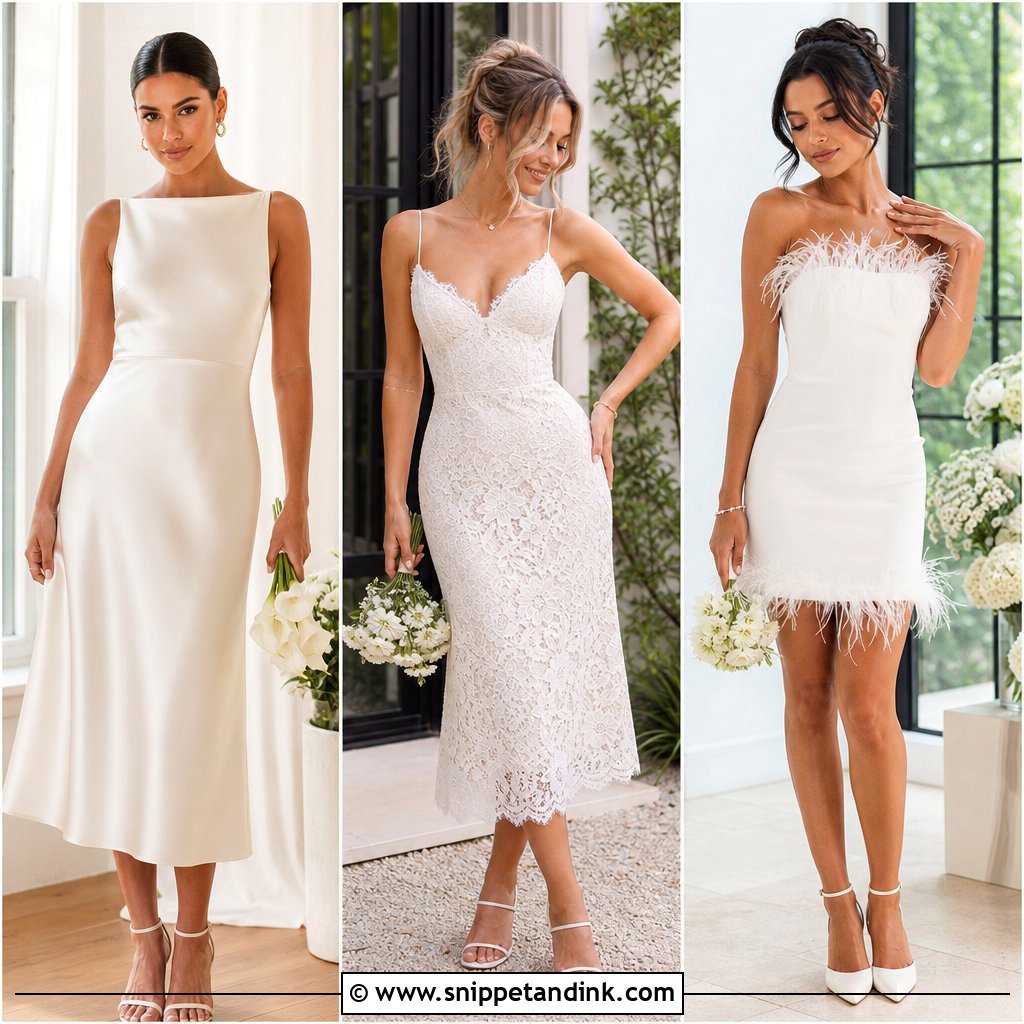
1. Civil Ceremony Satin Midi Dress
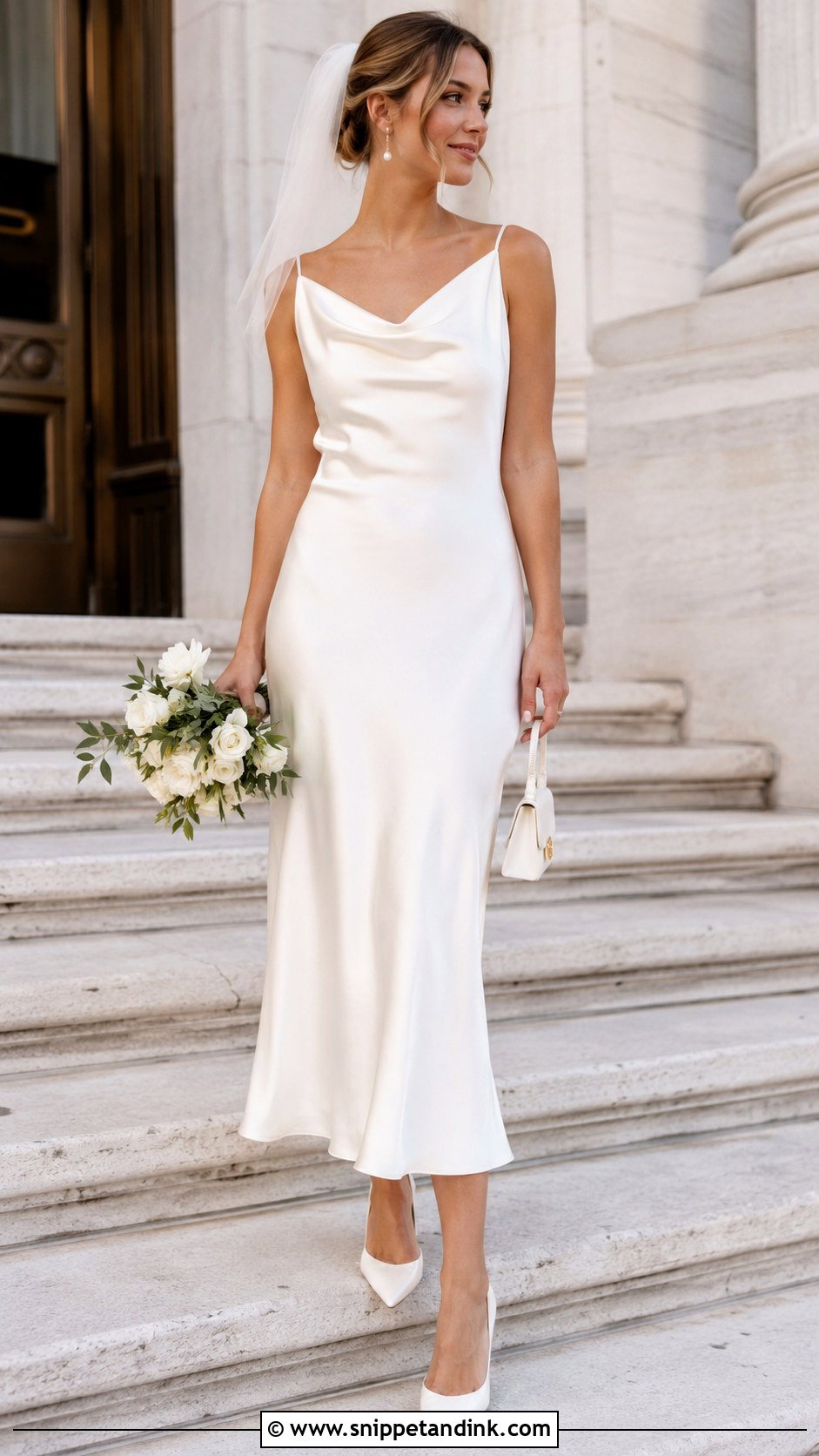
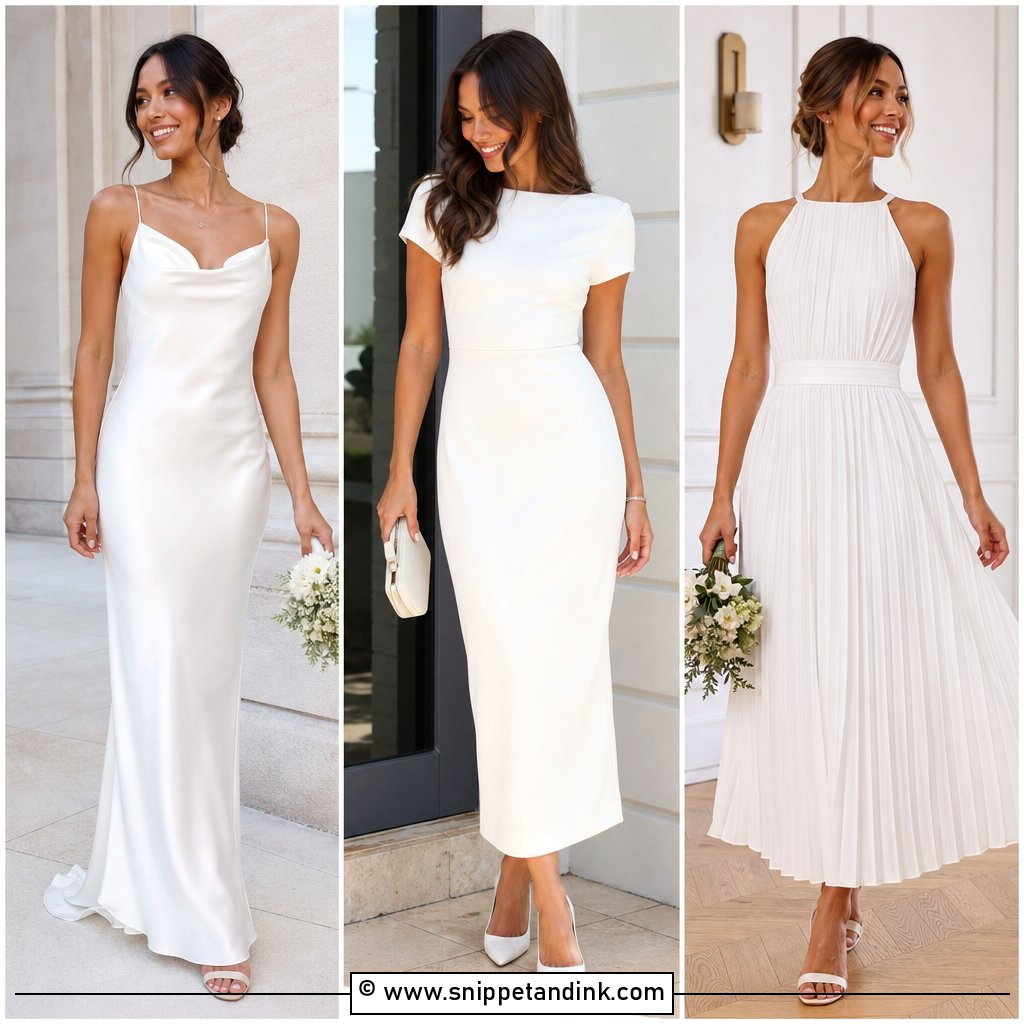
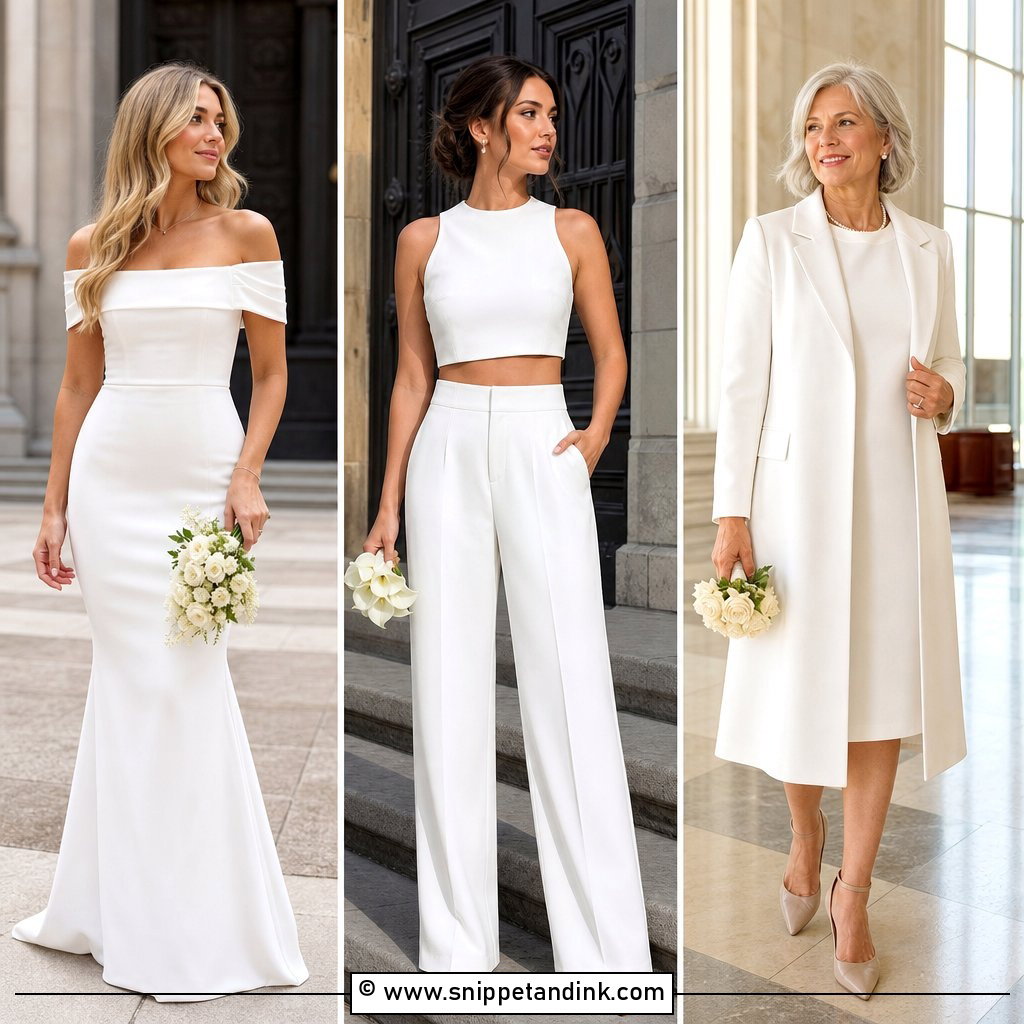
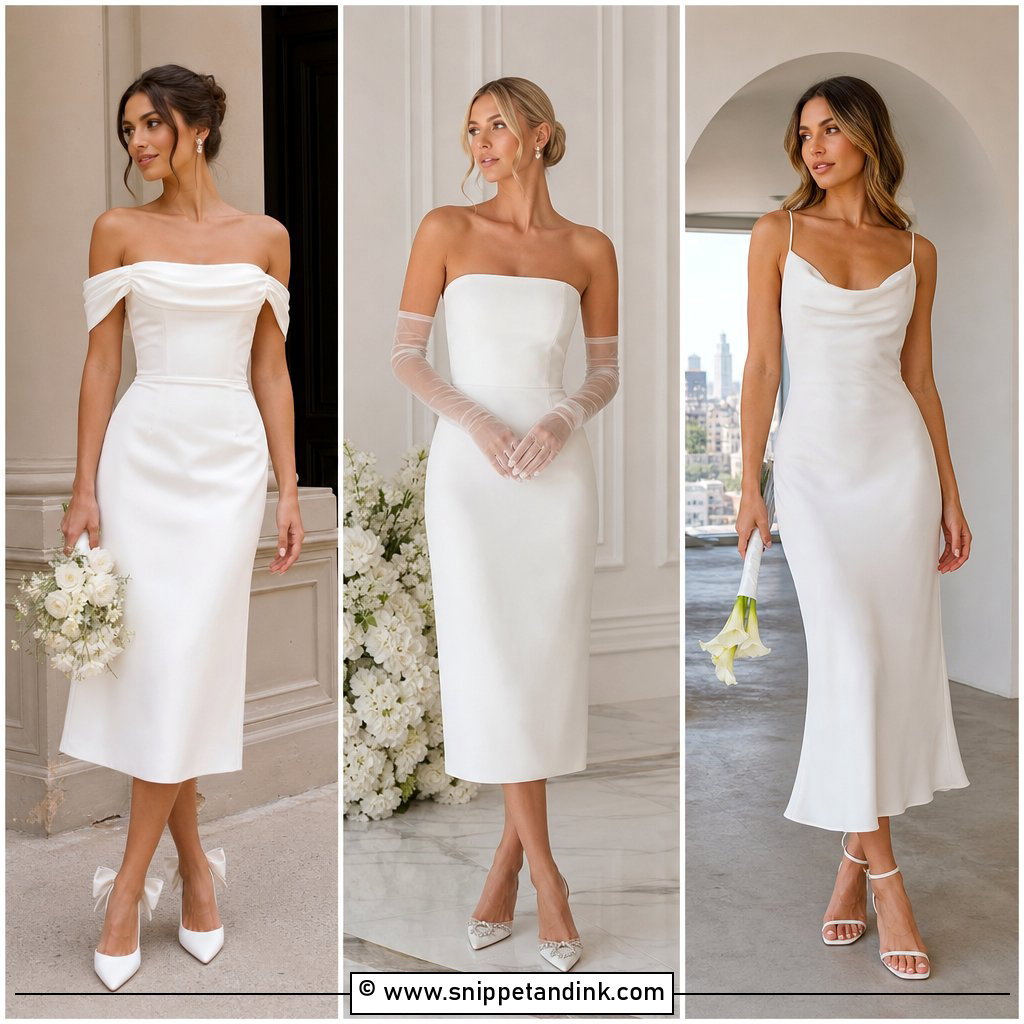
Satin is the fabric I reach for first for city hall, because it looks finished even in a plain room. A bias cut skims and moves; a structured A-line holds the waist. The catch with satin is that it shows every wrinkle from the drive over, so I tell brides to travel standing or to sit on a smooth lining rather than the skirt itself. Ivory and pearl tones flatter more skin tones in daylight than stark white. Slingbacks, pearl drops, a short veil and a low bun finish it, and if you want support, ask for wider straps and a fully lined bodice.
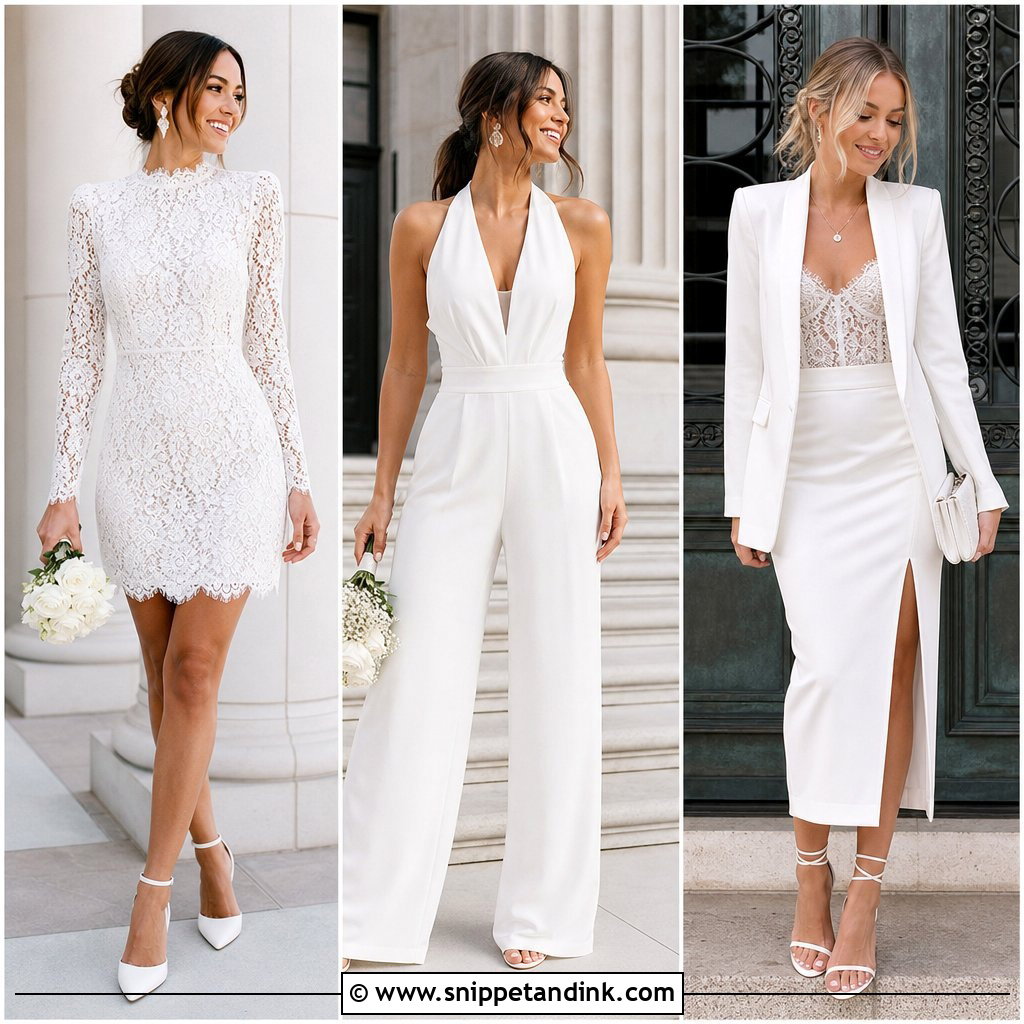
2. Civil Ceremony Long Sleeve Mini Dress
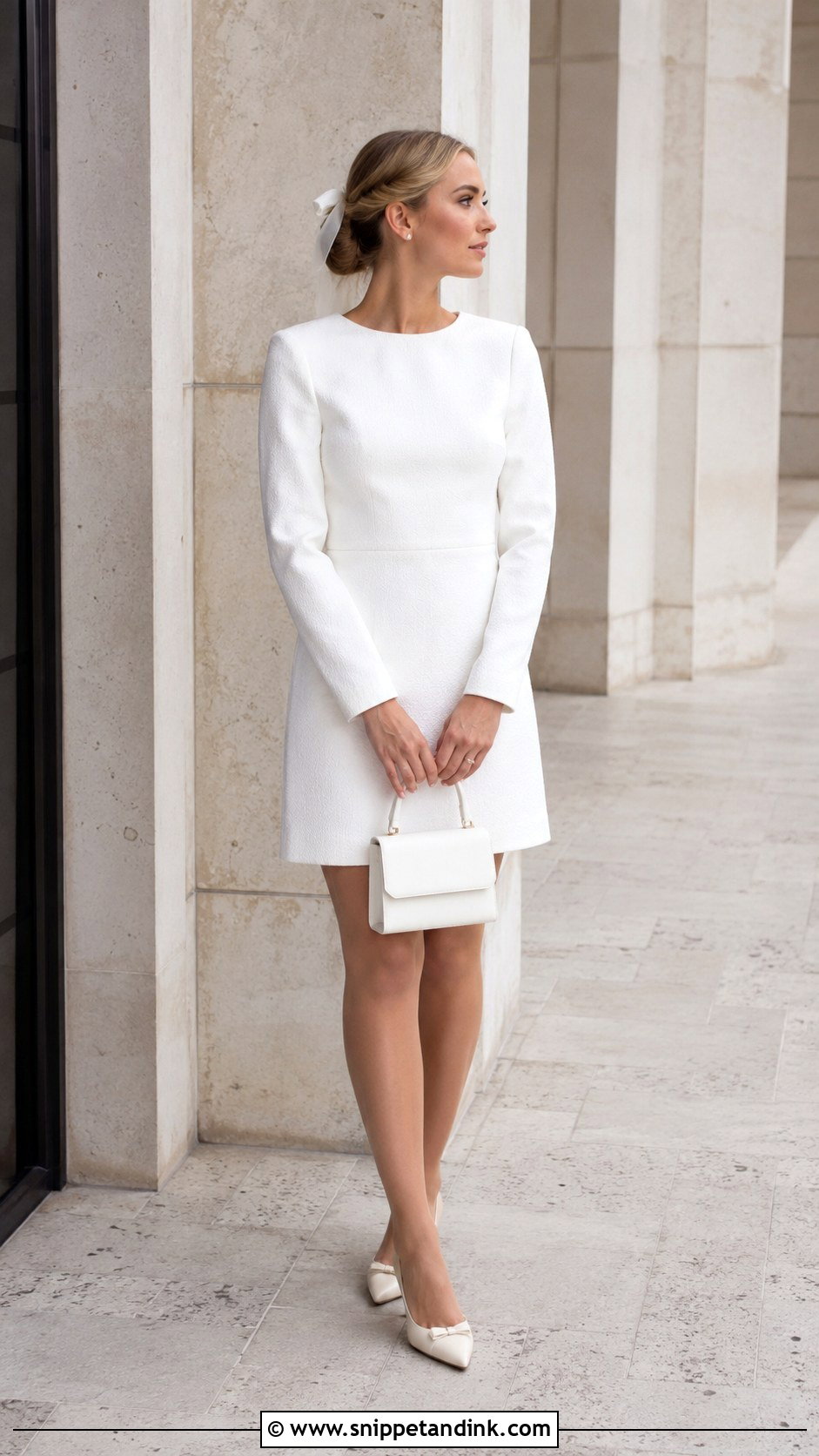
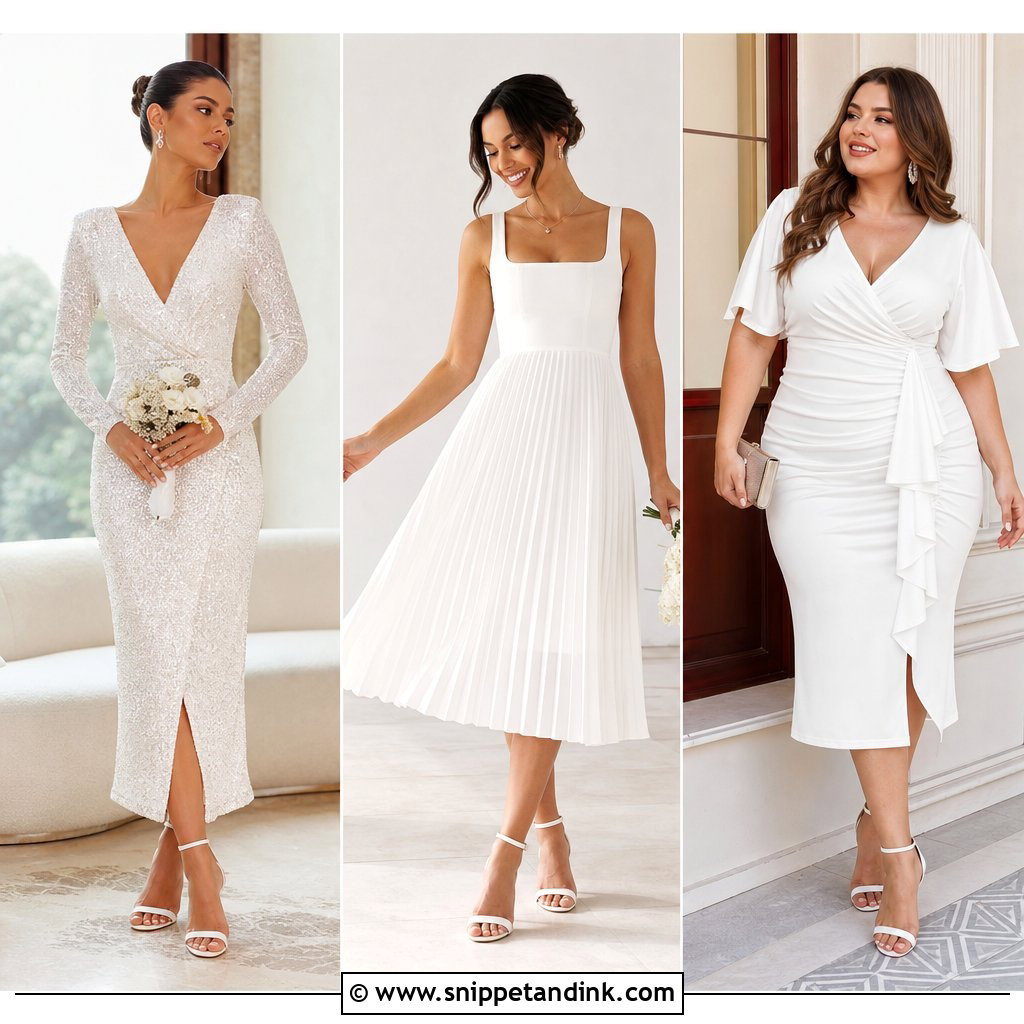
The long sleeve mini is the one I check most carefully at the fitting, because the sleeves decide everything. Raise your arms as if hugging someone: if the hem rides up or the shoulder seams pull, the sleeve head is set too tight. Crepe looks crisp, while lace or jacquard reads more bridal. Low block heels or pointed flats handle long courthouse hallways, and sheer tights help in winter. If the hem creeps too high when you sit, go a size longer or wear fitted shorts underneath. A small bow or short veil keeps it clearly a wedding outfit.
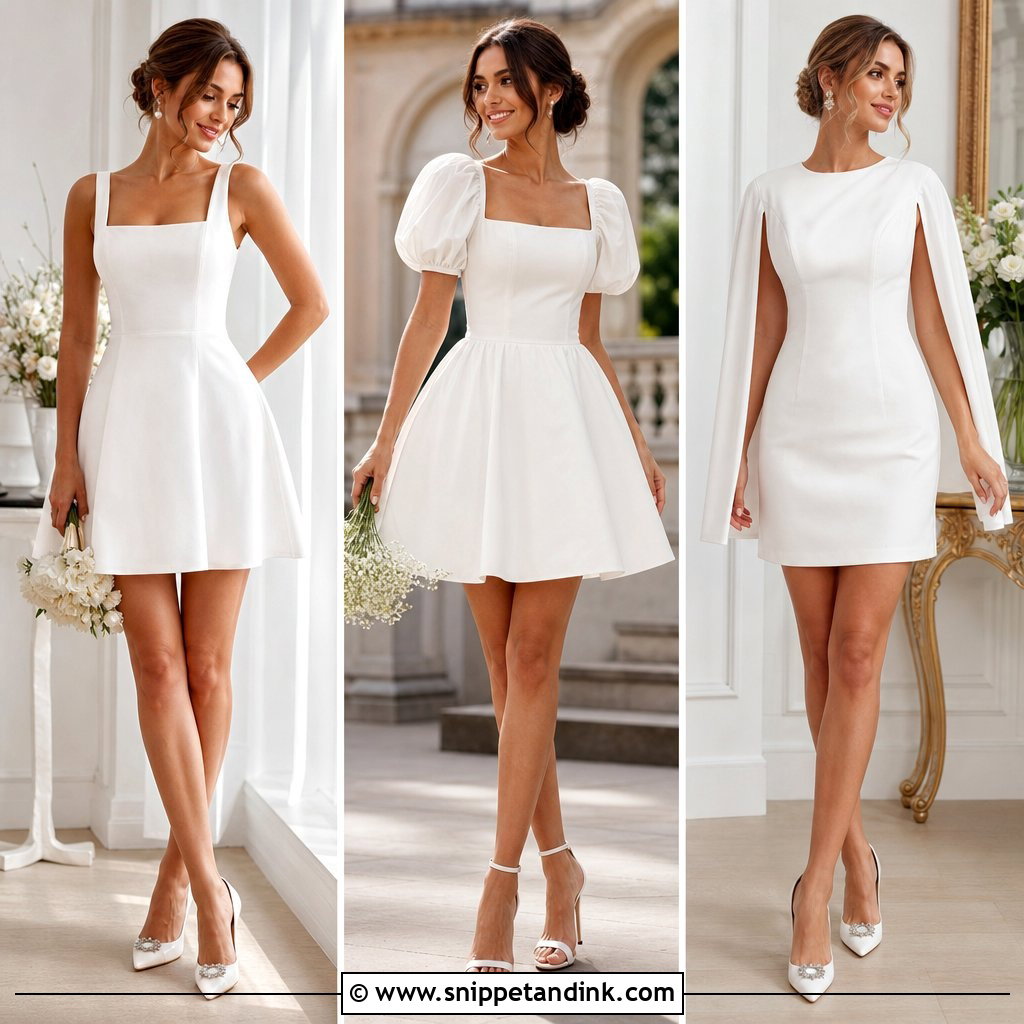
3. Civil Ceremony Square Neck Midi Dress
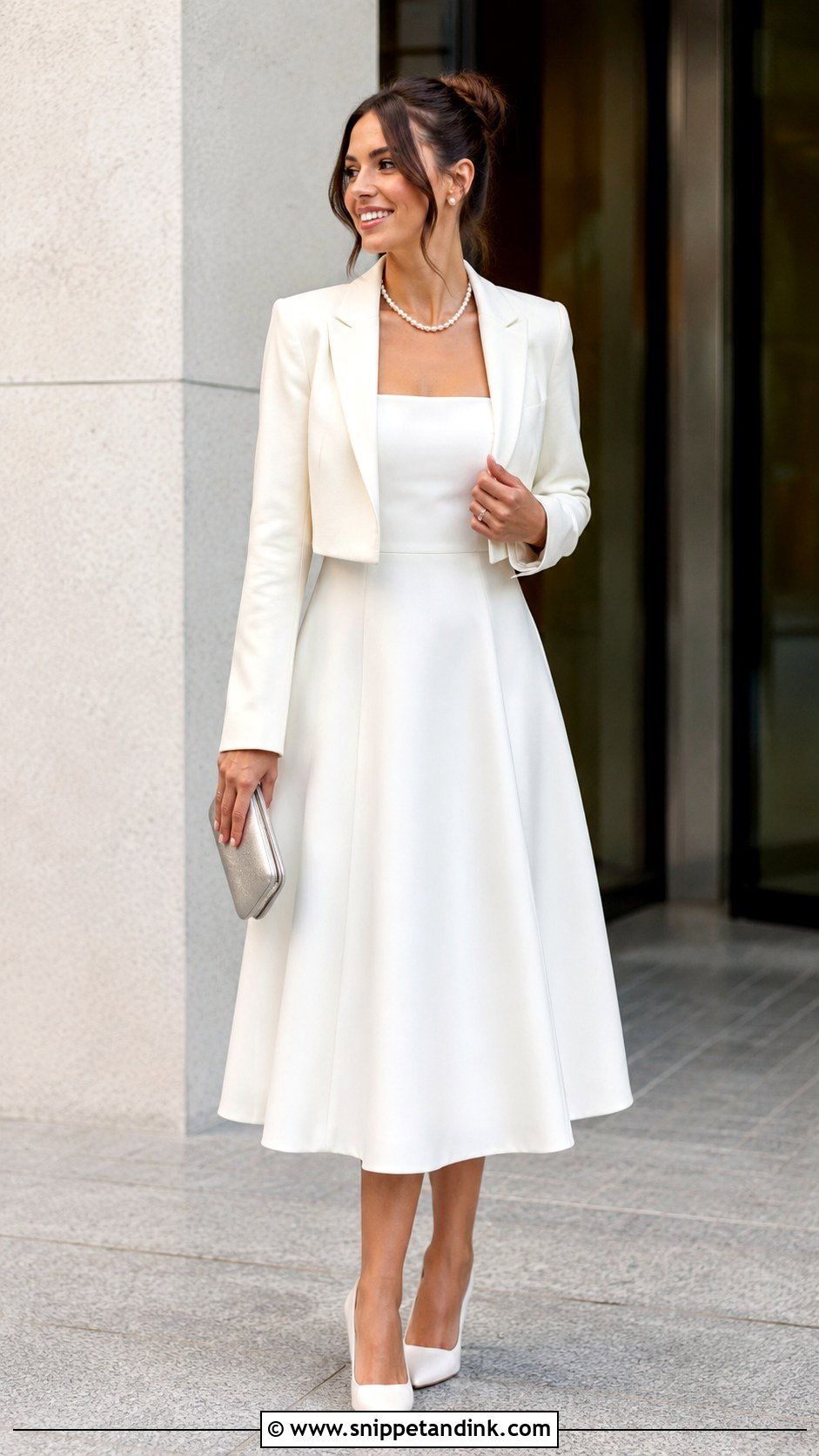
Square necklines are kind to anyone who wants to wear a normal bra, since the straps usually sit wide enough to hide one. That alone makes this a calm, wearable pick. An A-line skirt moves easily; a column cut looks sharper against city architecture. Almond-toe pumps and a small pearl necklace sit well inside the neckline’s frame. A cropped blazer can provide coverage without hiding the neckline. Sweep the hair back so the straight edge stays visible. The fit adjusts easily at strap width and waist placement, which is why I see it work across ages and body types.
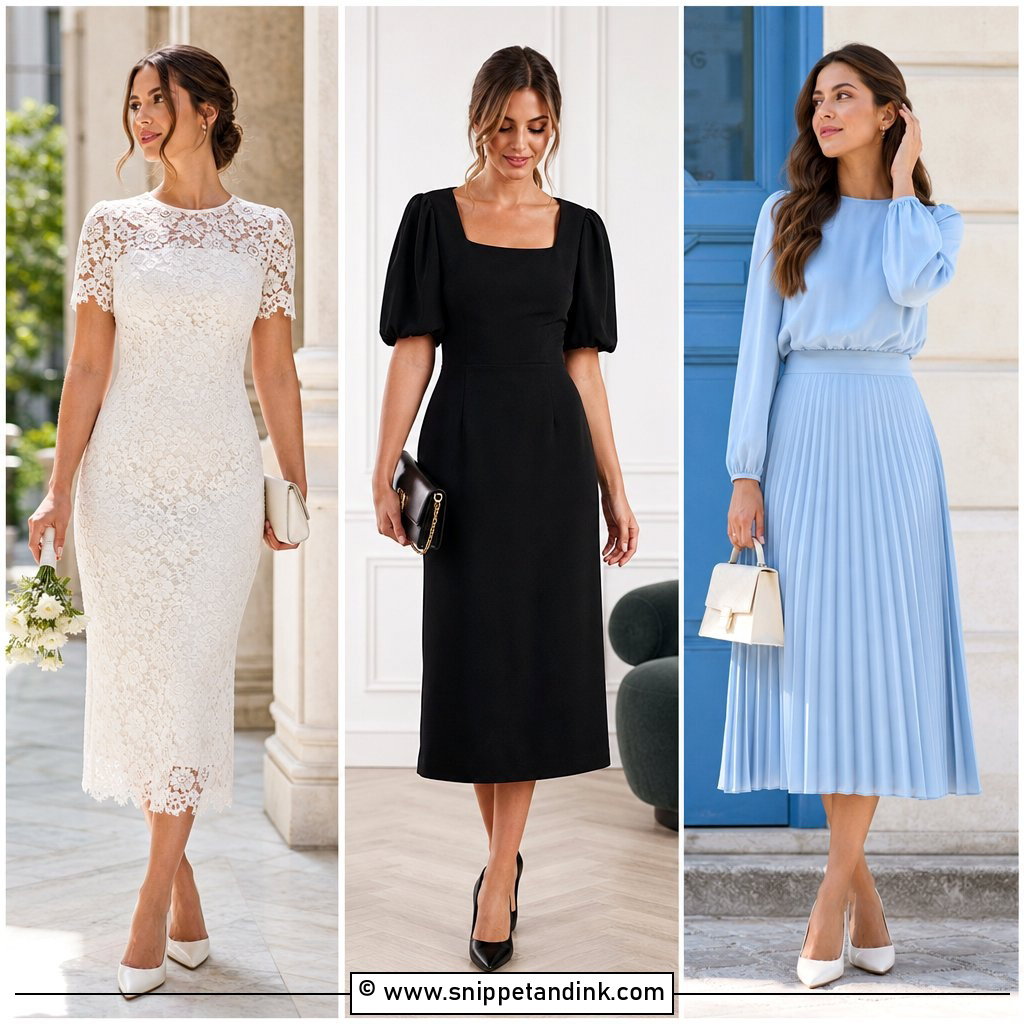
4. Civil Ceremony Lace Tea Length Dress
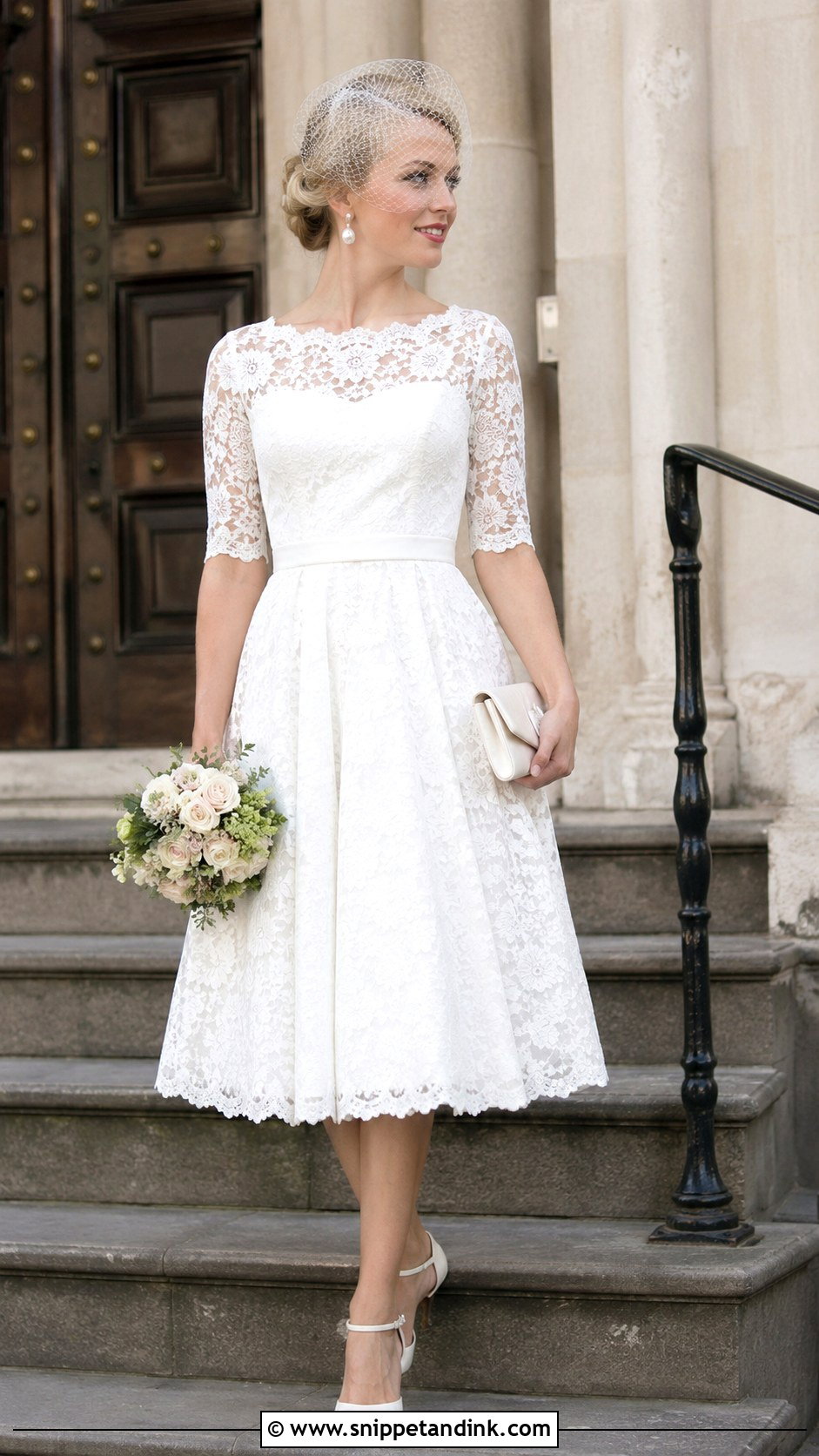
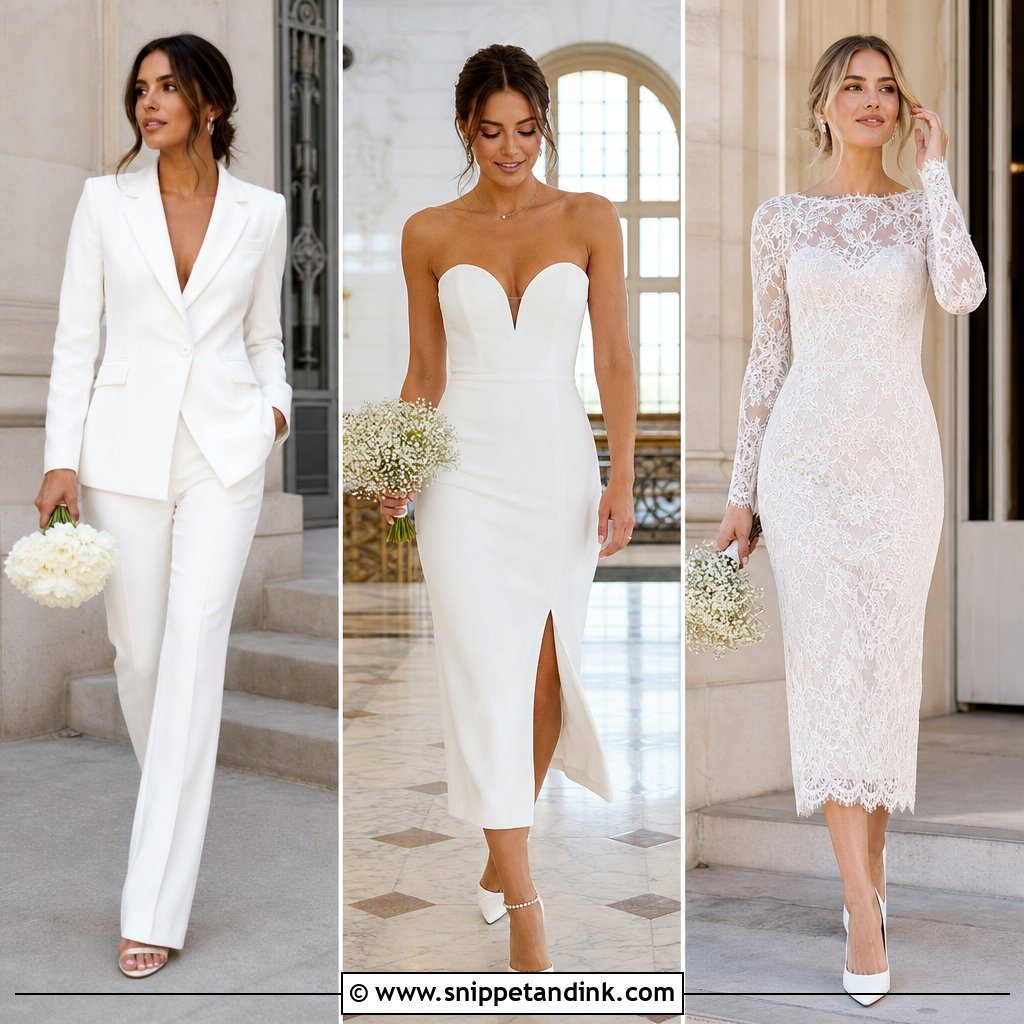
Tea-length lace is manageable in a courthouse in a way floor-length lace is not: nothing drags through a security line. Pick lace with a clear, open motif, since dense busy patterns turn to grey texture in photos. A fitted bodice and a gently flared skirt need no heavy petticoat. Ankle-strap heels keep you steady on stone steps. A birdcage veil suits the vintage feel without tipping into costume, and elbow sleeves give coverage if you want it.
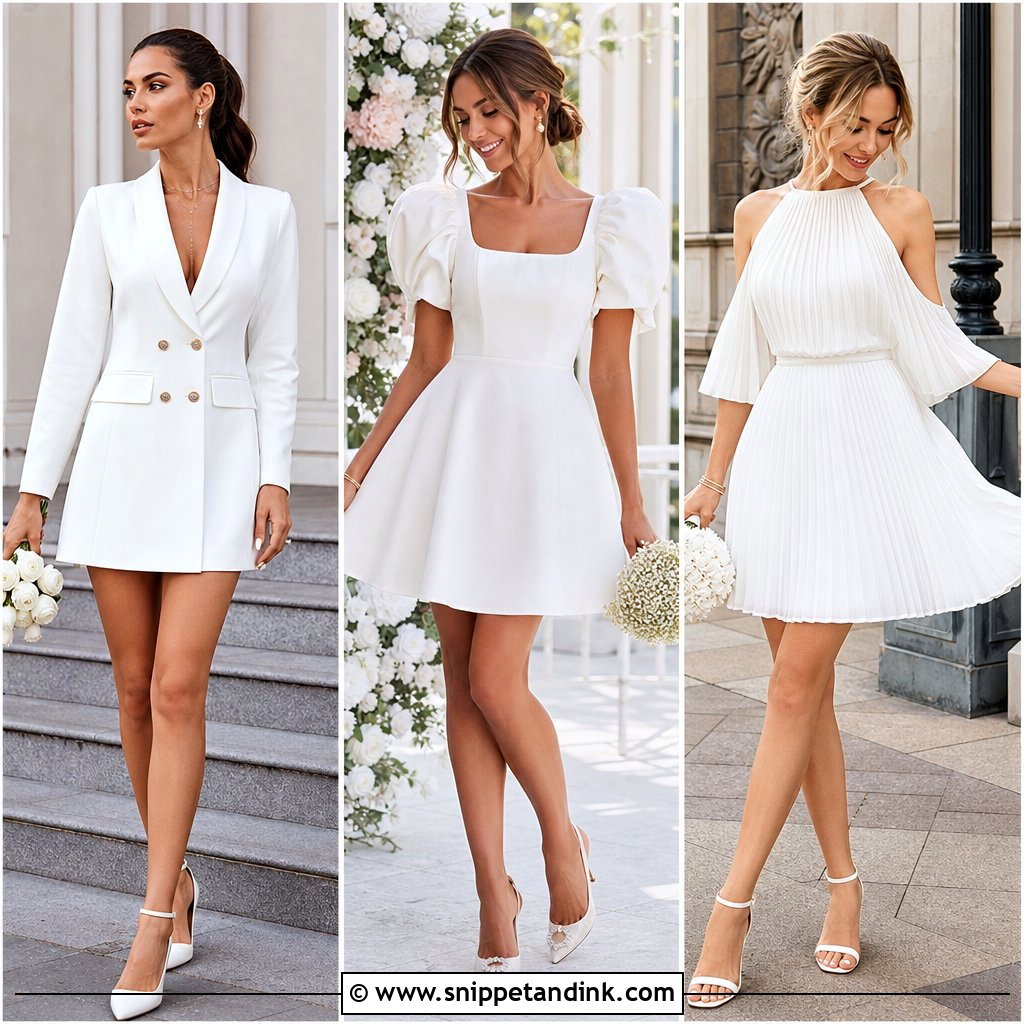
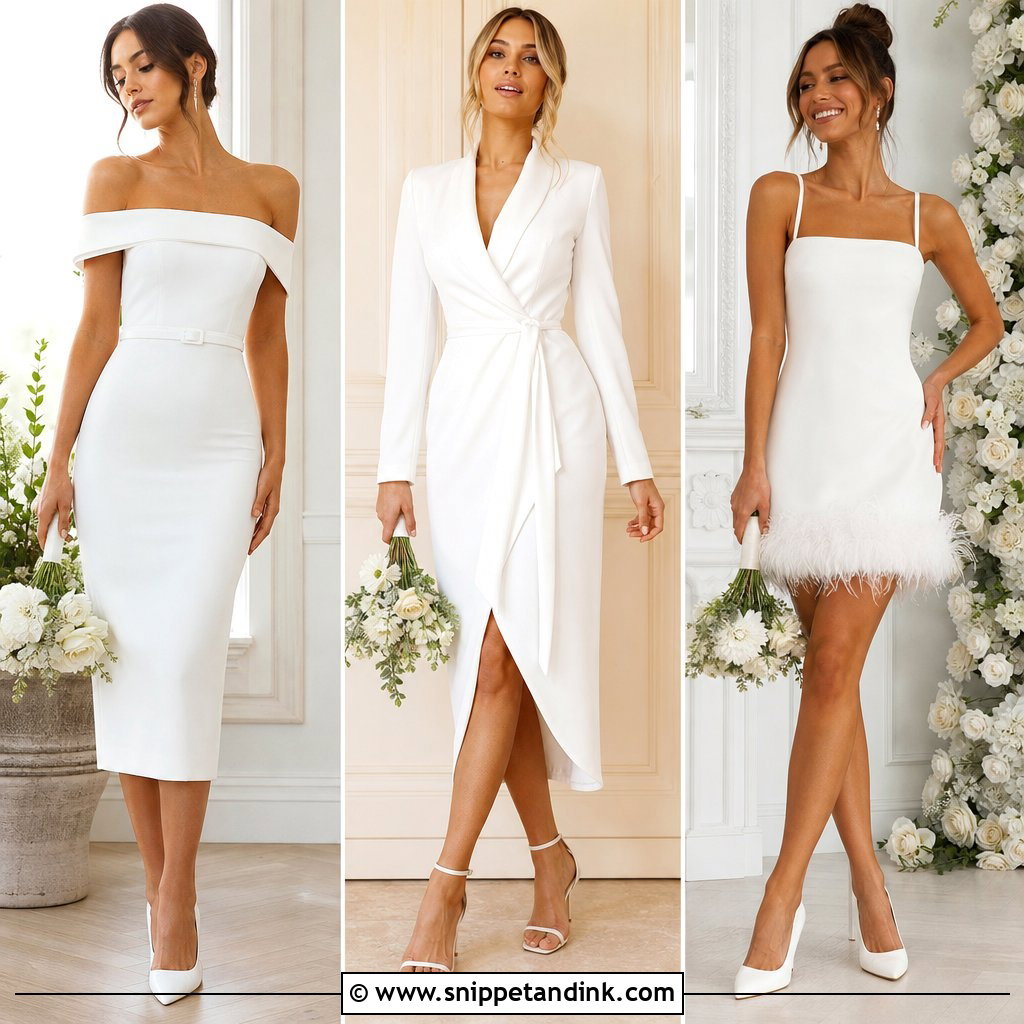
5. Civil Ceremony Off Shoulder Mini Dress
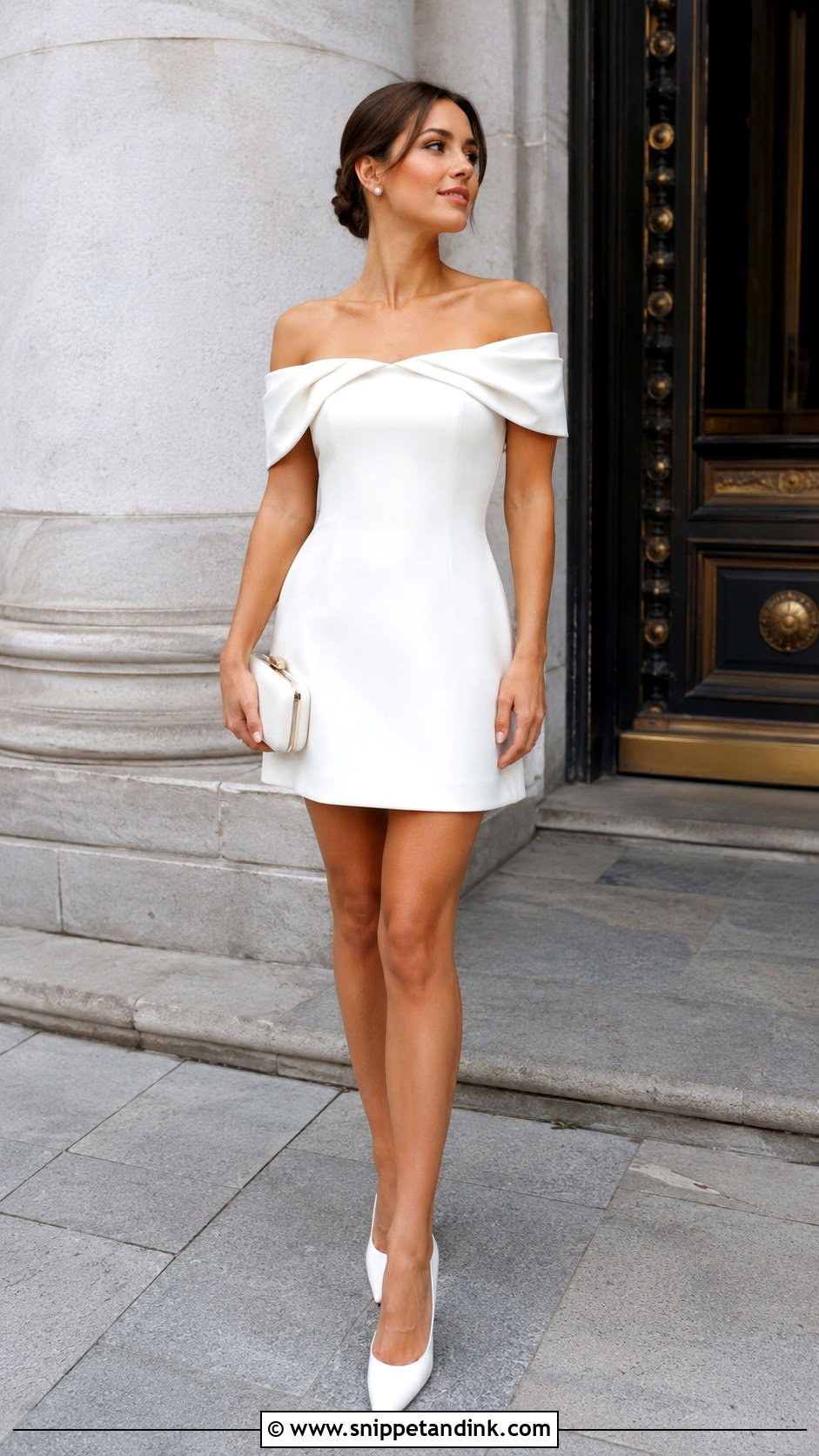
Off-shoulder necklines need a hidden structure to stay put, and I won’t send a bride out in one without testing it. Hug someone, reach across a table and sign your name in it; if the neckline slips, it needs a stay or silicone grip added by the seamstress. With a short hem, keep the bodice fitted and plain so the outfit doesn’t feel busy. Pointed pumps lengthen the leg. A wool coat over the top works for winter, and fashion tape is a backup, not the plan.
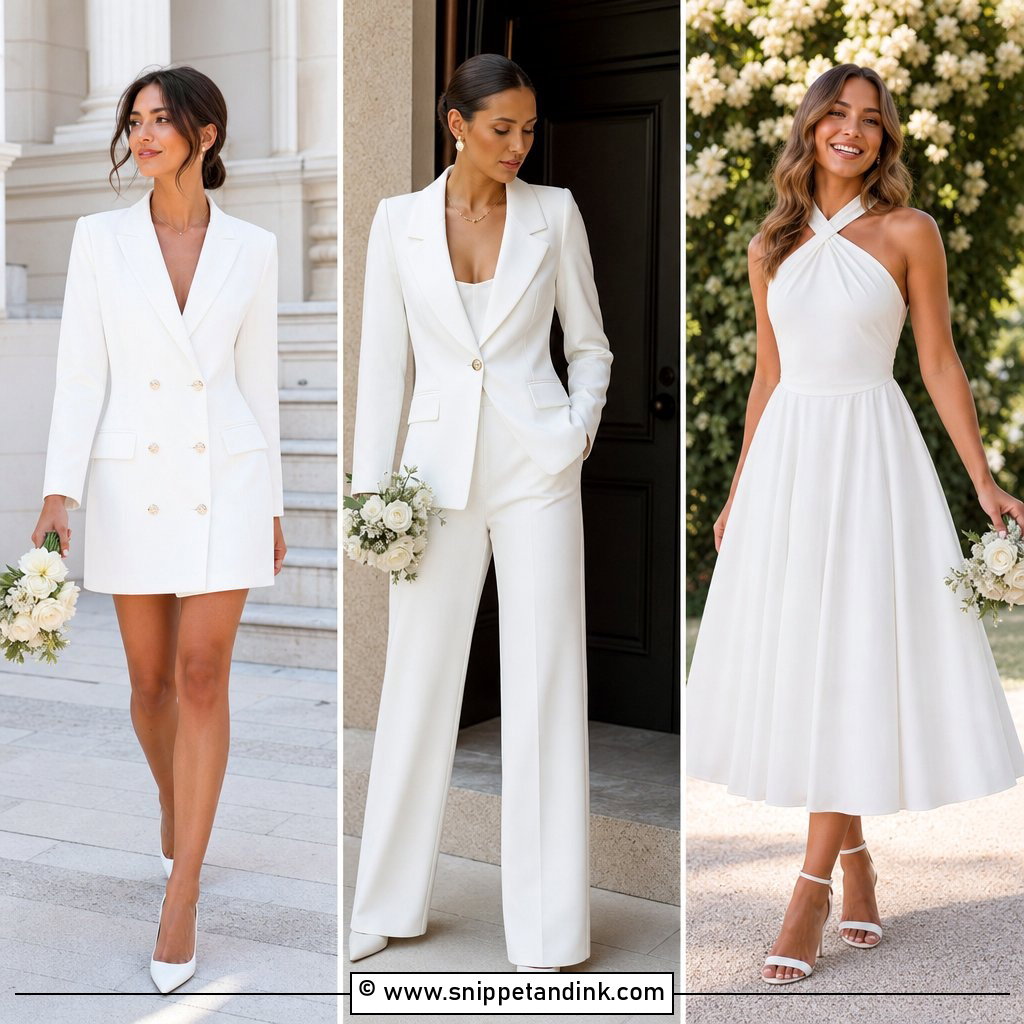
6. Civil Ceremony Blazer Mini Dress
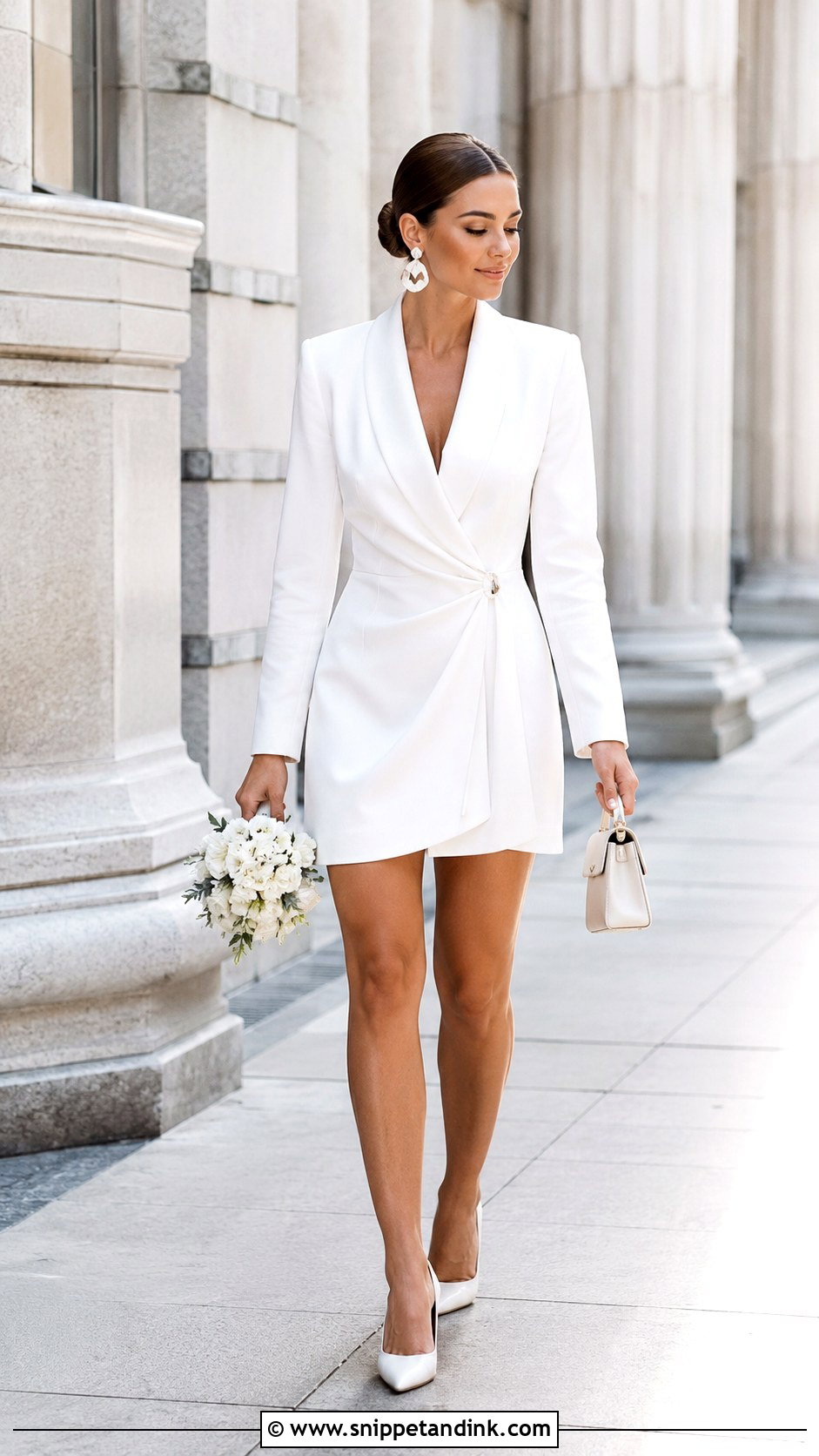
This is the dress for a bride who would rather look sharp than sweet. A double-breasted or wrap front with a shaped waist gives tailoring without a suit. Check the length while seated, because blazer minis are cut short and the front panels can gape when you sit. Crepe, light wool or satin-backed fabric hold a crisp lapel. Wear a camisole under a deep neckline. If you’re petite, smaller lapels keep the proportions right; a single-button style defines a curvier waist well.
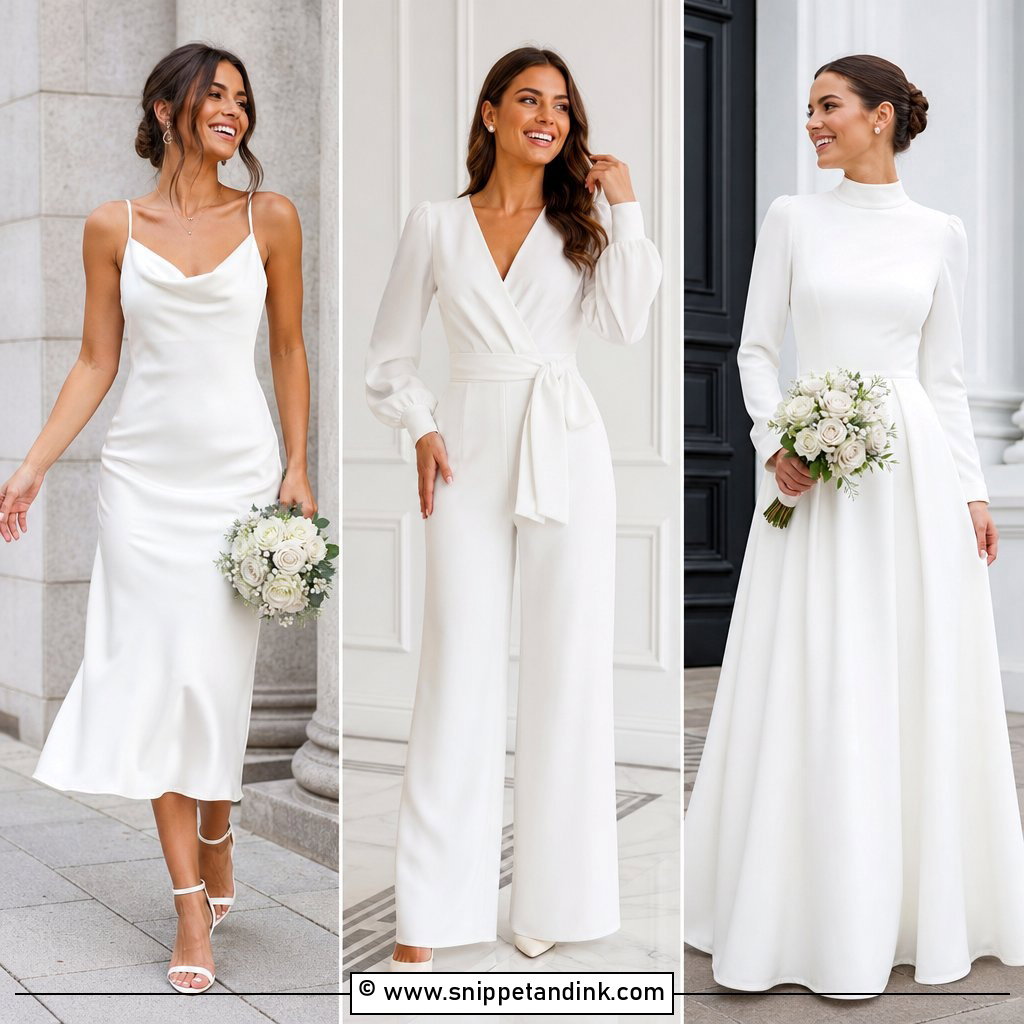
7. Civil Ceremony High Neck Column Dress
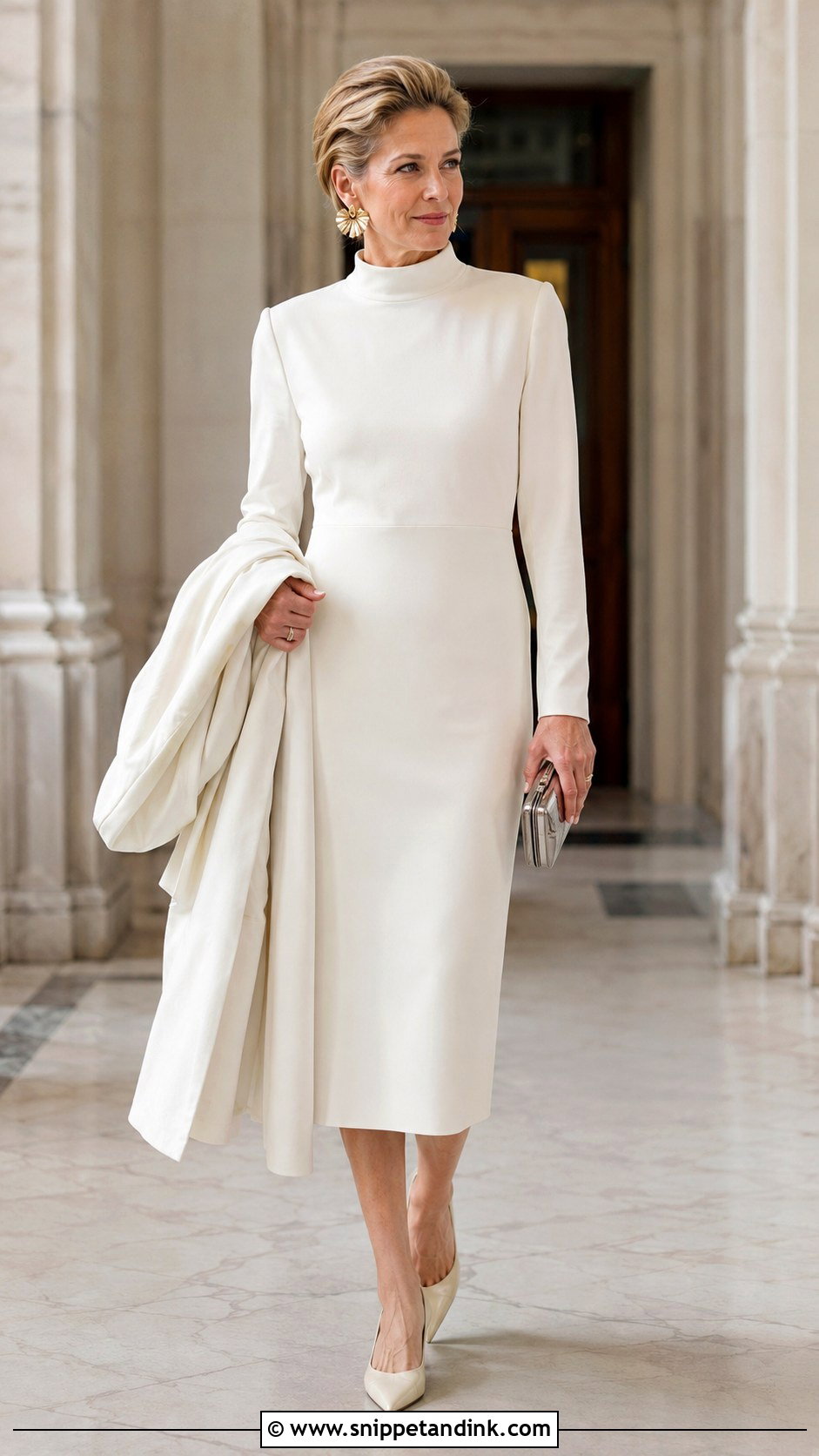
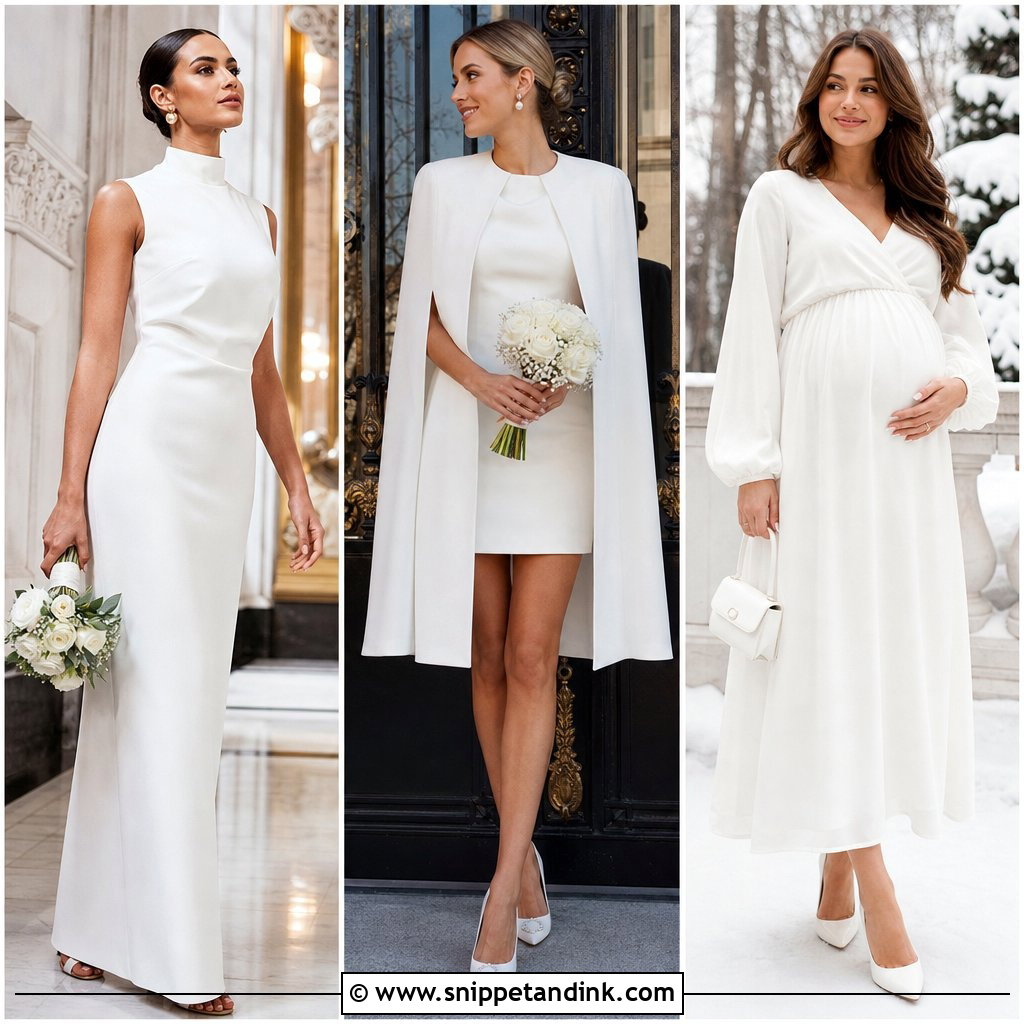
A high neck column is about one long uninterrupted line, so the fit has to skim, never pull. That is the alteration I watch hardest; drag lines across the hips ruin it. Stretch crepe or matte satin walks and sits more comfortably than rigid fabric, and a back slit helps you climb steps. Skip the necklace and wear bolder earrings. A bun or ponytail keeps the neck clear. In autumn and winter, a long tailored coat over this looks very deliberate.
8. Civil Ceremony Puff Sleeve Midi Dress
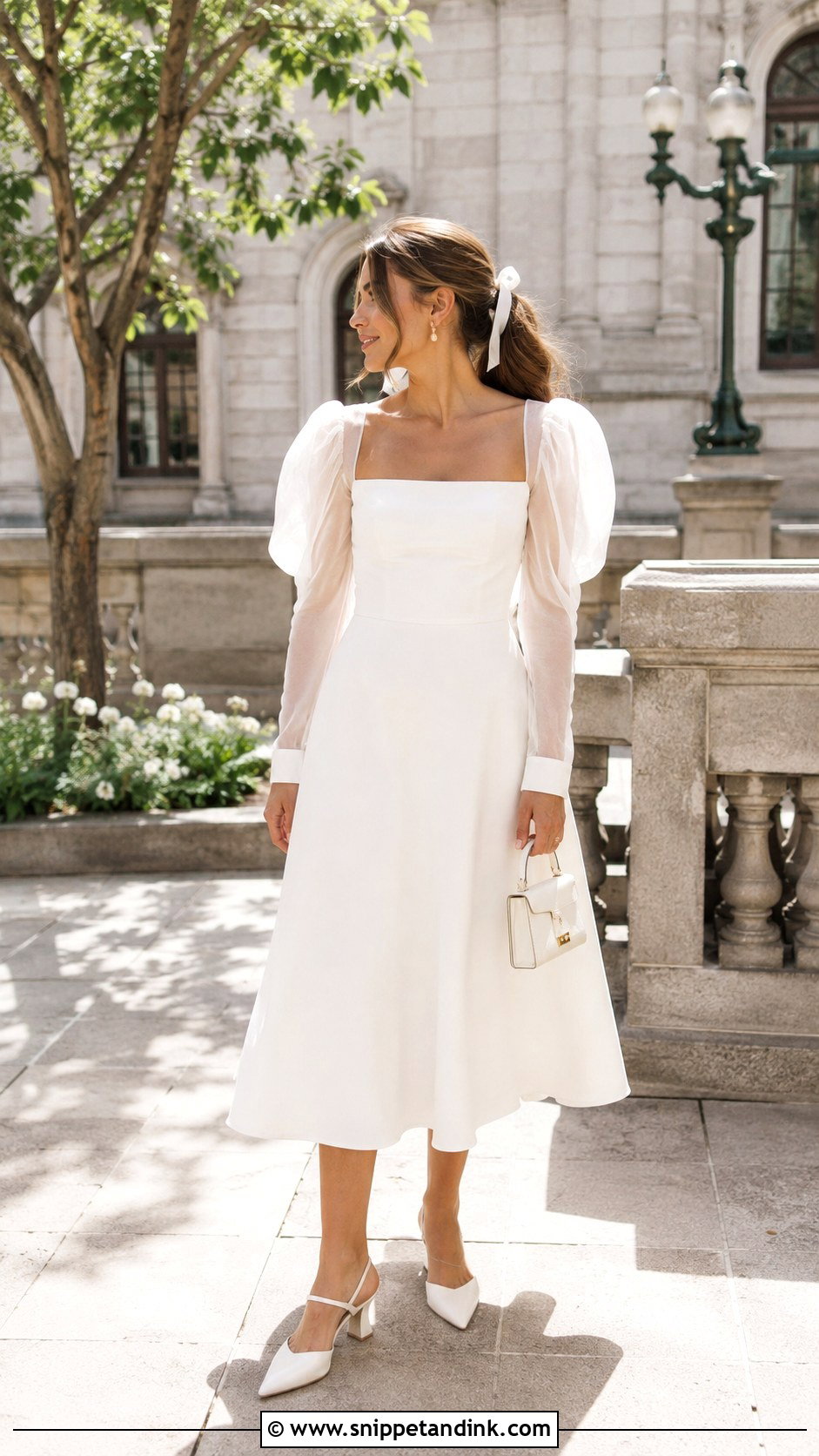
With a puff sleeve midi dress, scale is the whole game. Sleeves should frame the shoulders, not widen them, so I compare volume against the bride’s shoulder width before anything else. Organza and jacquard hold their shape; soft cotton blends collapse by the afternoon. A fitted waist and simple A-line skirt balance the top. Petite brides usually look better with a smaller, less gathered sleeve. A ribbon-tied ponytail echoes the shape for spring or early autumn.
9. Civil Ceremony Slip Wedding Dress
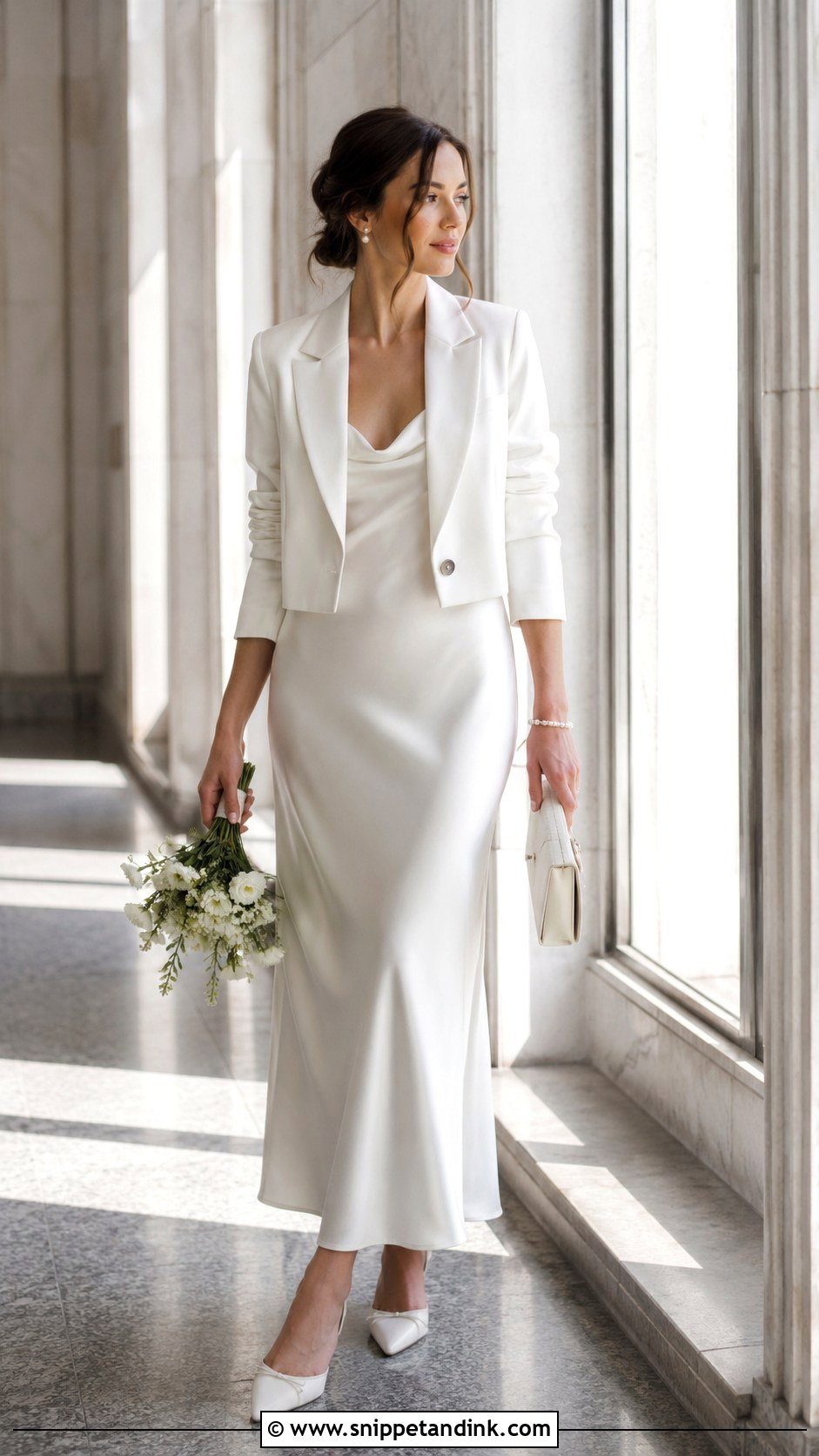
Slip dresses look simple and are the least forgiving dress on this list. Thin silk shows every line underneath, so I insist on substantial fabric, a lining, and a fitting done in the exact underwear you’ll wear. Adjustable straps refine the fit. A cropped blazer over it for the ceremony, then off for portraits, gives you two looks. Mules or minimal sandals and a pearl bracelet keep it relaxed. If you need support, look for a version with a built-in bodice.
10. Civil Ceremony Wrap Midi Dress
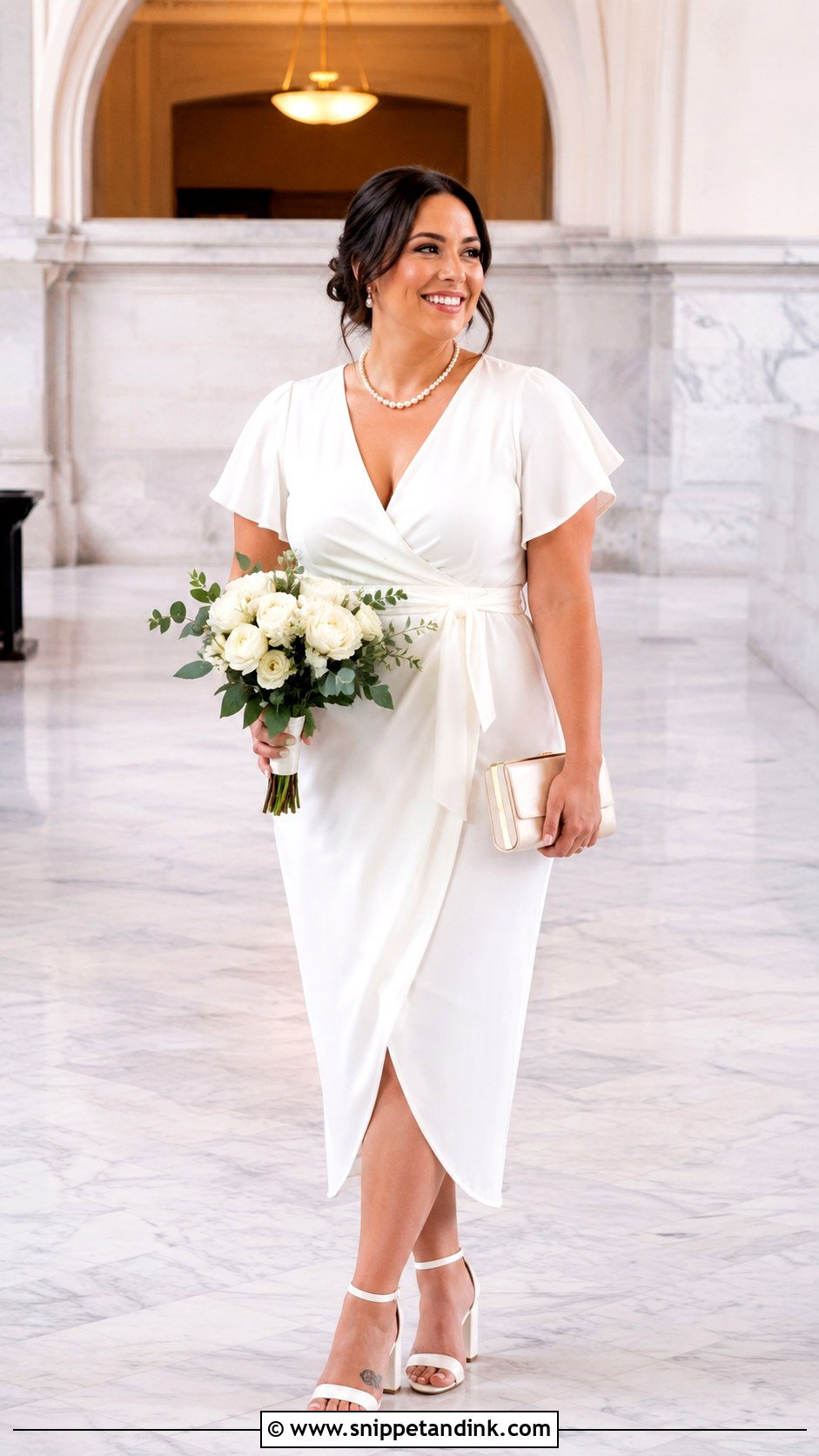
A wrap dress adjusts to your body on the day, which is why it suits so many shapes. A true wrap is the most flexible; a fixed wrap front is more secure. I always add a hidden snap at the cross point, because a wrap neckline opens when you lean forward to sign. Crepe and matte satin drape without looking casual. Flutter sleeves balance fuller hips. Block-heel sandals and a side bun suit its soft lines.
11. Civil Ceremony Plus Size A Line Dress
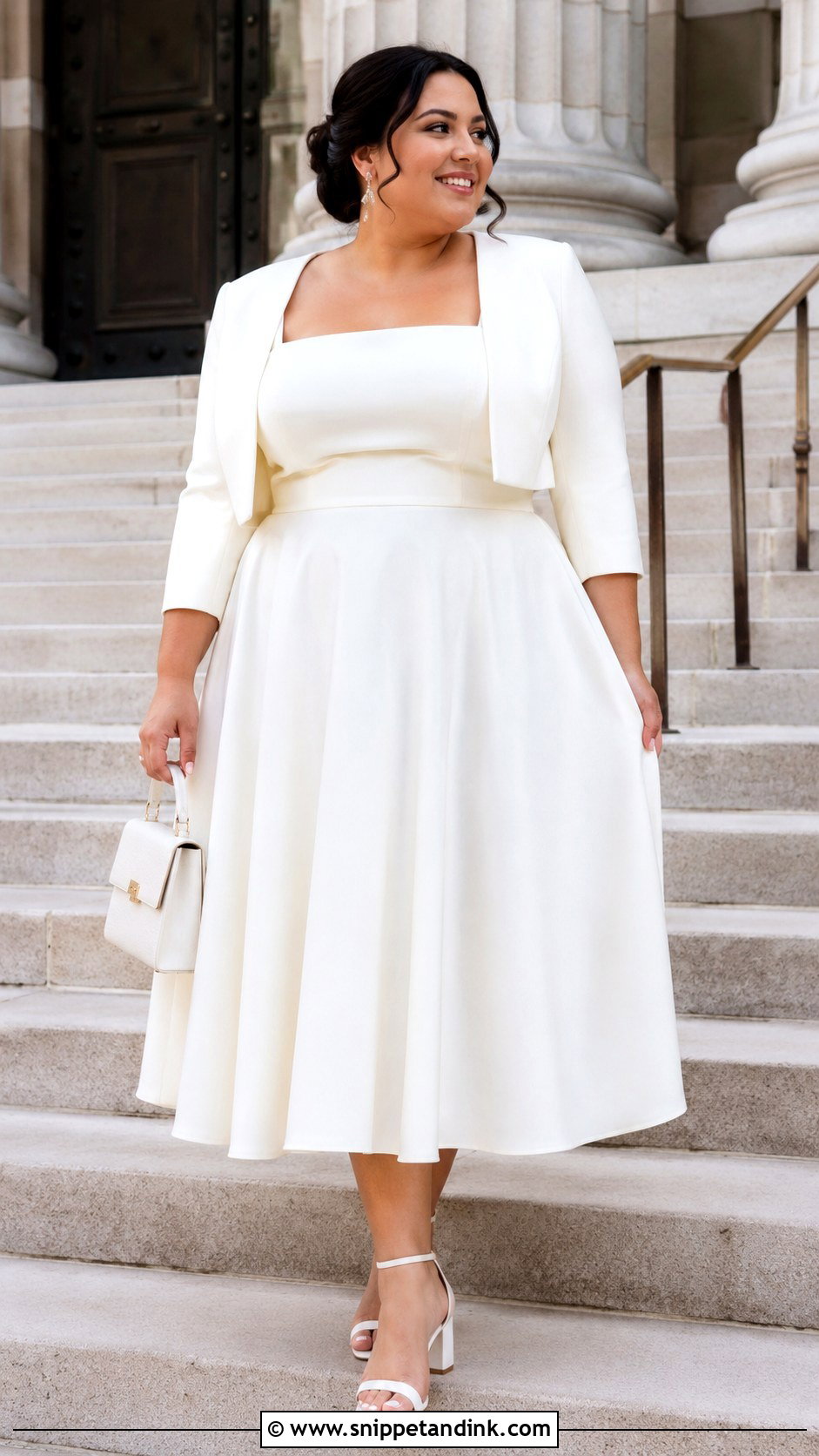
For plus-size brides, the construction inside matters more than anything on the hanger. Look for supportive straps, internal boning, substantial lining, and a waist seam that lands at your natural waist rather than above it. A square or V neckline opens the upper body, and a midi hem fits a courthouse well. Buy the size that fits your largest measurement and let a seamstress take in the rest; a smaller, tight dress never looks as polished as a tailored one. A cropped jacket adds warmth without hiding the waist.
12. Civil Ceremony One Shoulder Midi Dress
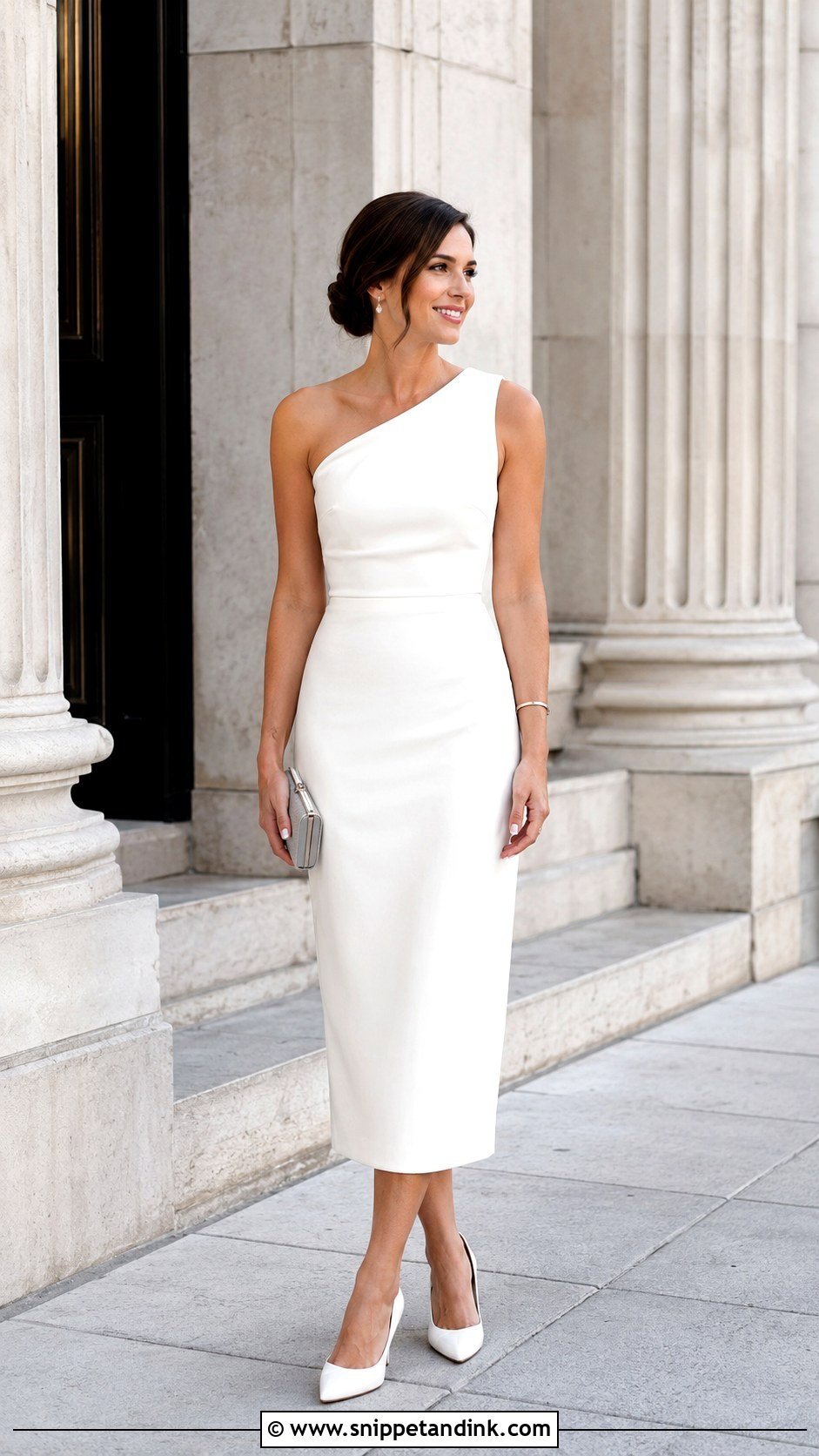
The neckline is already doing the talking on a one shoulder dress, so I keep everything else quiet. A column skirt looks sleek; an A-line gives you more stride. Before buying, check the inside of the bodice for grip tape or boning along the bare side, because without it the dress slowly creeps toward that shoulder. Small earrings, a slim bracelet and a side-parted low bun keep the shoulder detail clear.
13. Civil Ceremony Button Front Midi Dress
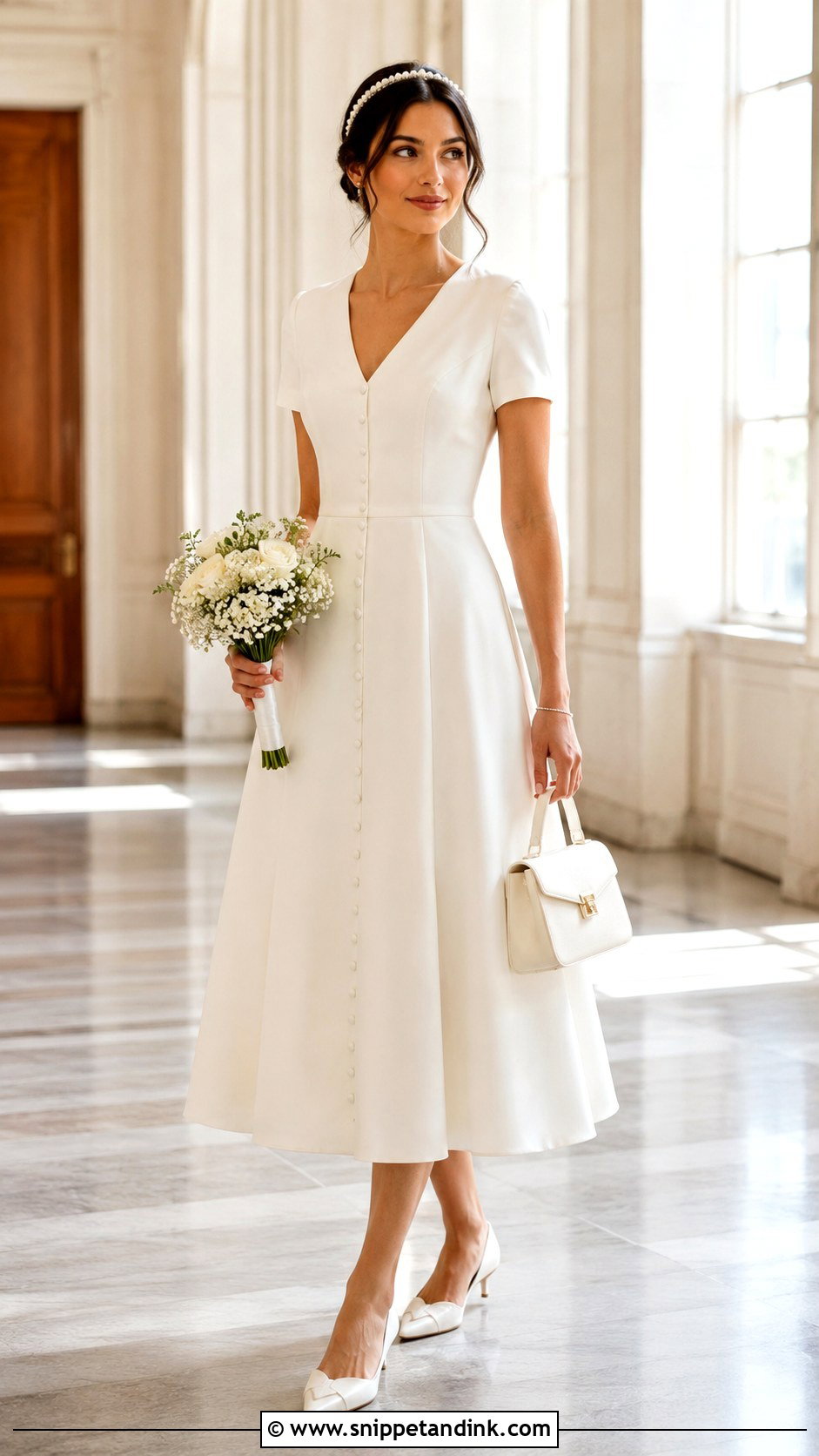
Covered buttons are what make a button front read as bridal instead of everyday. Fabric weight matters here: if it’s too light, the placket gapes between buttons across the bust, and that shows in every seated photo. If you need bust room, fit the bodice first and tailor the waist afterward. Pointed flats and a pearl headband keep it understated. It suits a morning ceremony, portraits and a small family lunch.
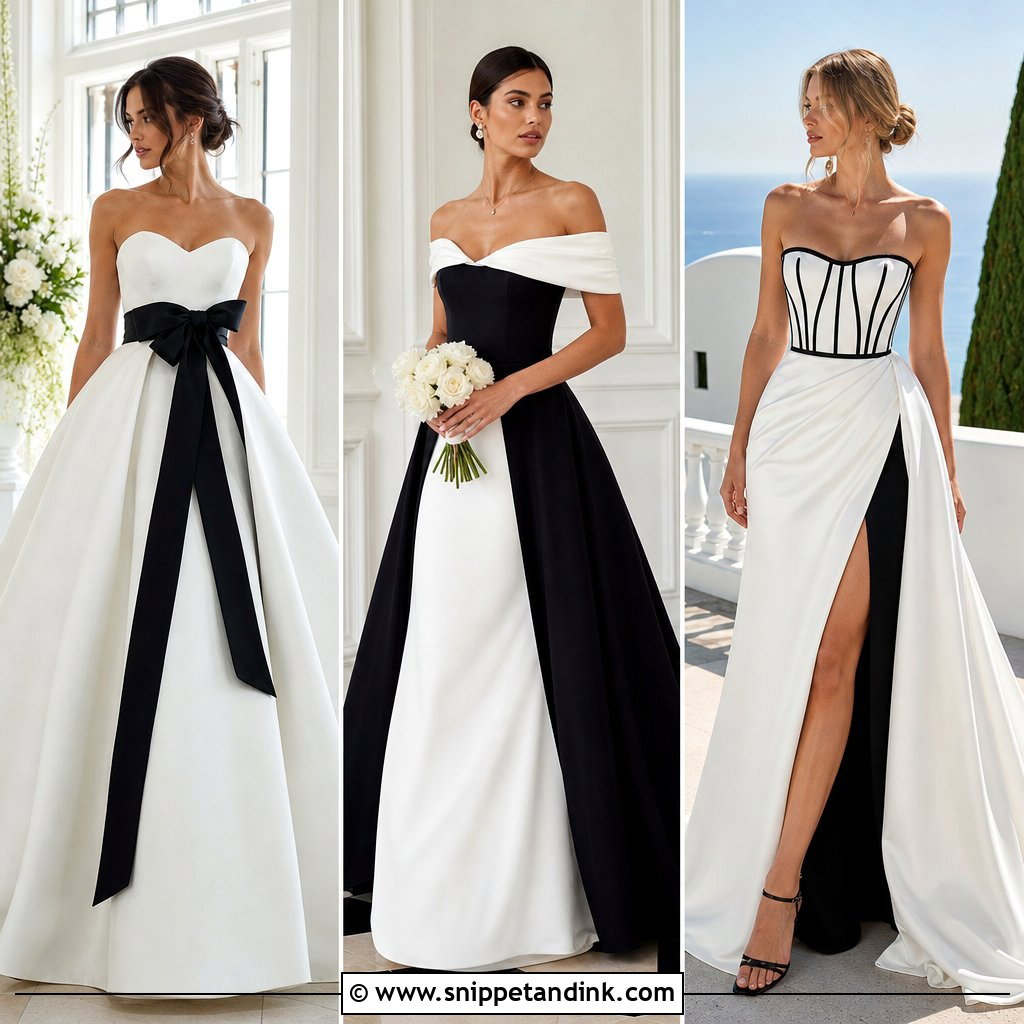
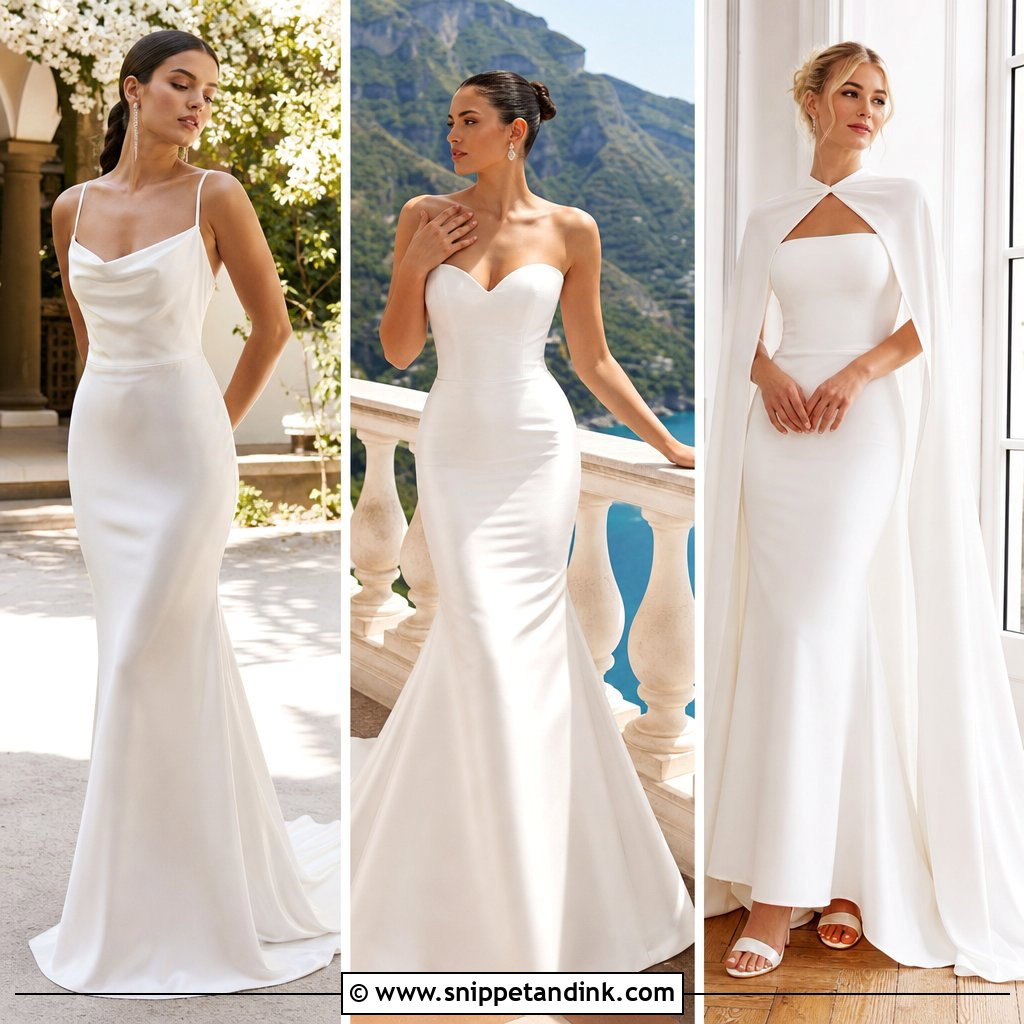
14. Civil Ceremony Cape Sleeve Dress
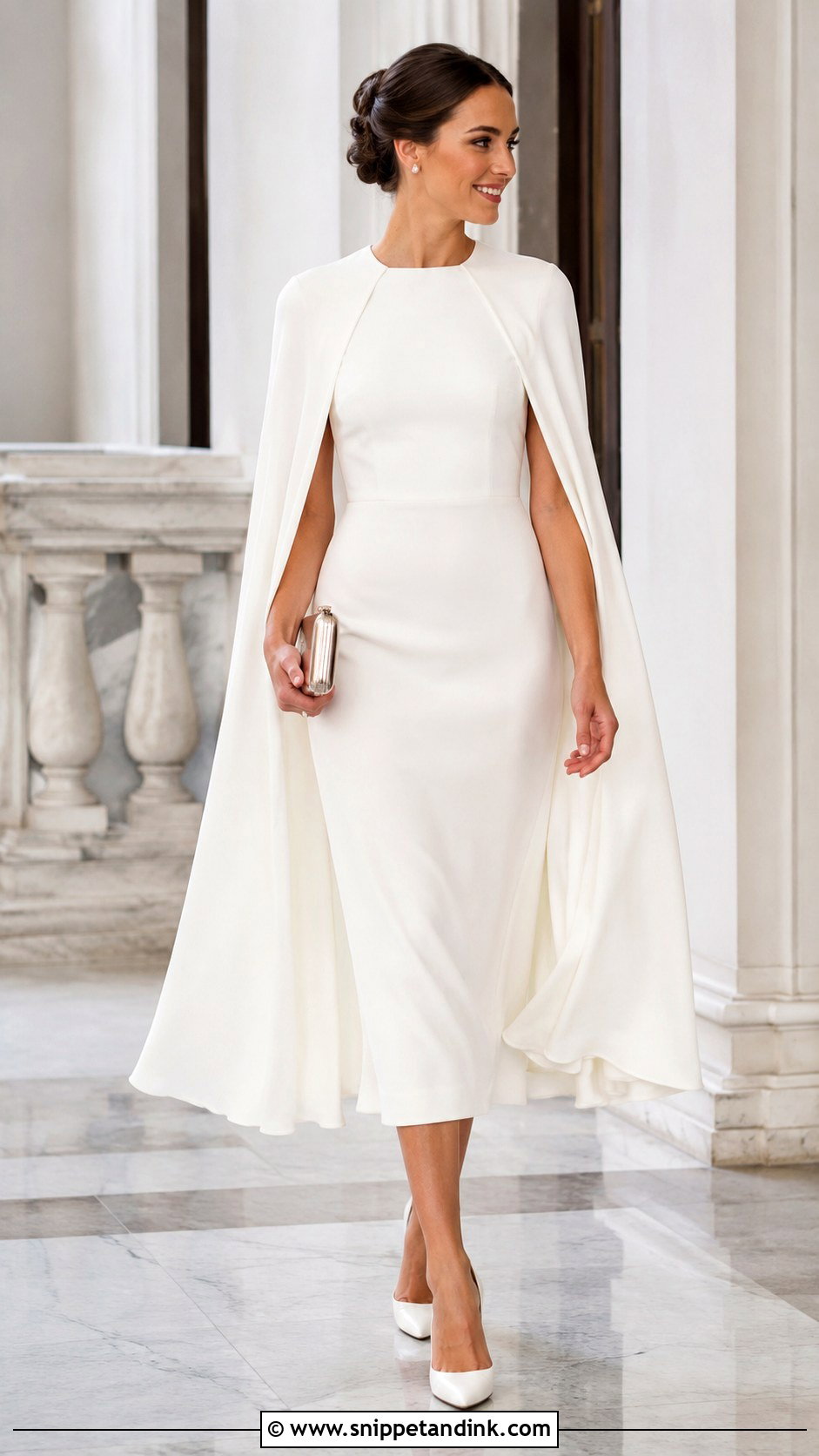
A cape gives coverage and movement without a separate jacket, and it catches air as you walk in. Keep the dress underneath fitted or gently A-line so the cape doesn’t swamp a small frame. Midi or ankle length balances it best. Skip necklaces entirely, since they disappear under the cape. Opaque crepe gives real arm coverage; chiffon is softer but sheer. A neat updo stops hair tangling in the overlay.
15. Civil Ceremony Pleated Midi Dress
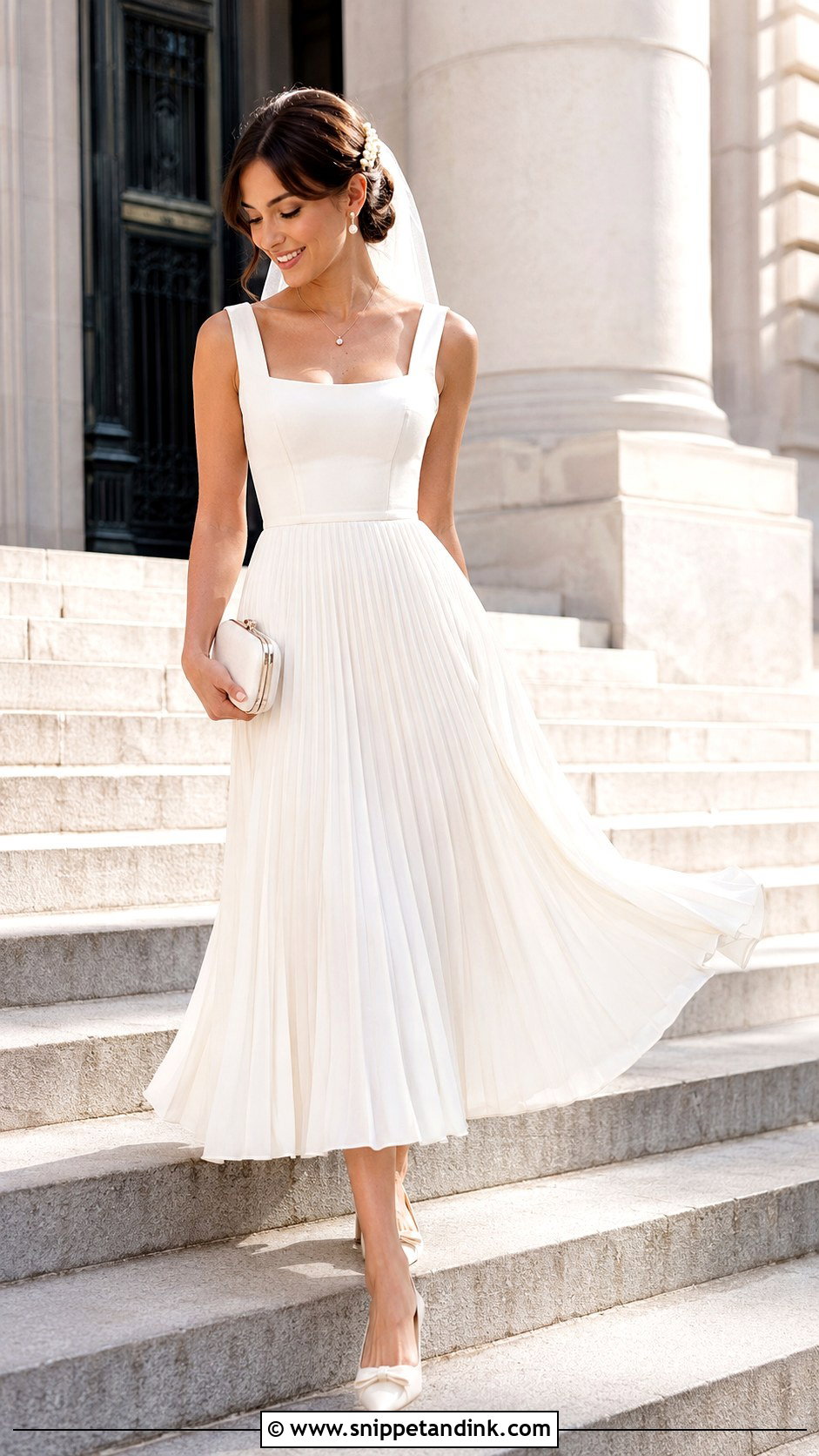
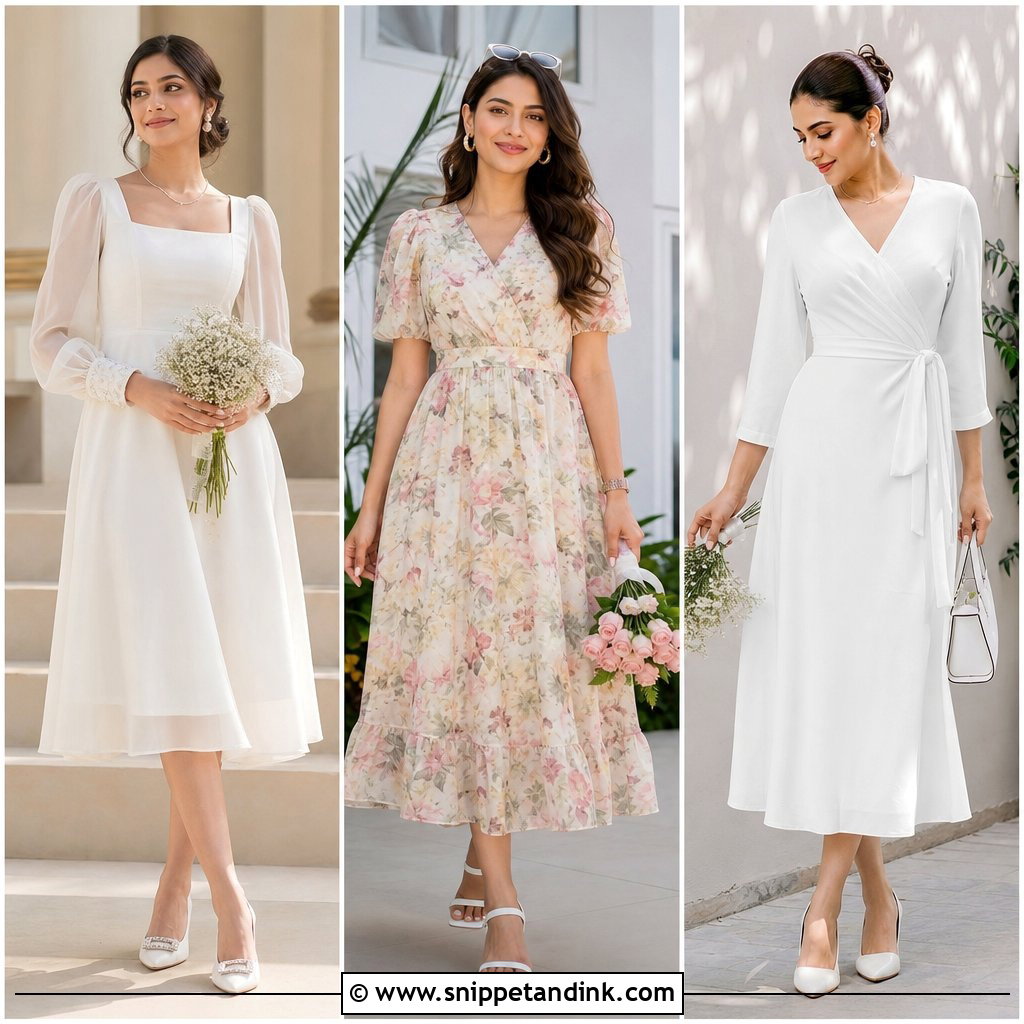
Fine pleats move with every step, which is lovely in a small room. The thing I check is the hip: pleats should fall straight, not split open, when you stand still. A smooth fitted bodice and defined waist stop them adding bulk at the middle. Low heels and a slim clutch are enough, and a short veil or pearl clip adds the bridal note. Ivory, cream, blush and pale blue all work. Pleats also hide creases from sitting better than flat satin does.
16. Civil Ceremony Halter Neck Dress
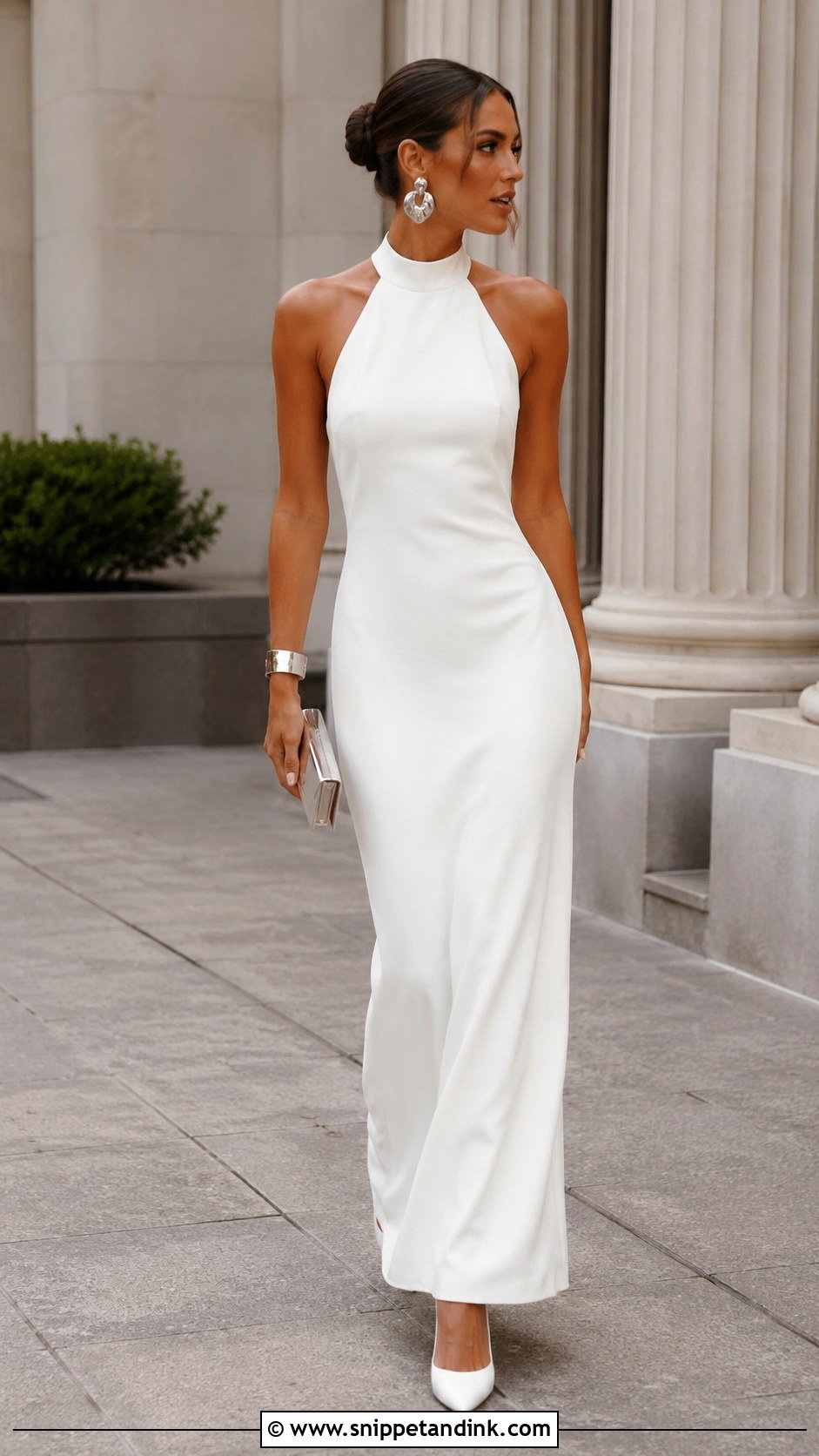
A halter neck dress shows off the shoulders and suits warm weather or indoor ceremonies without layers. Wear it for a full hour at your fitting before deciding: some halters dig into the back of the neck as the day goes on, and an adjustable or wider band fixes that. Crepe, satin and structured jacquard all work in midi or ankle length. Skip the necklace for statement earrings. If you need bust support, look for wider straps and inner construction.
17. Civil Ceremony Bow Back Midi Dress
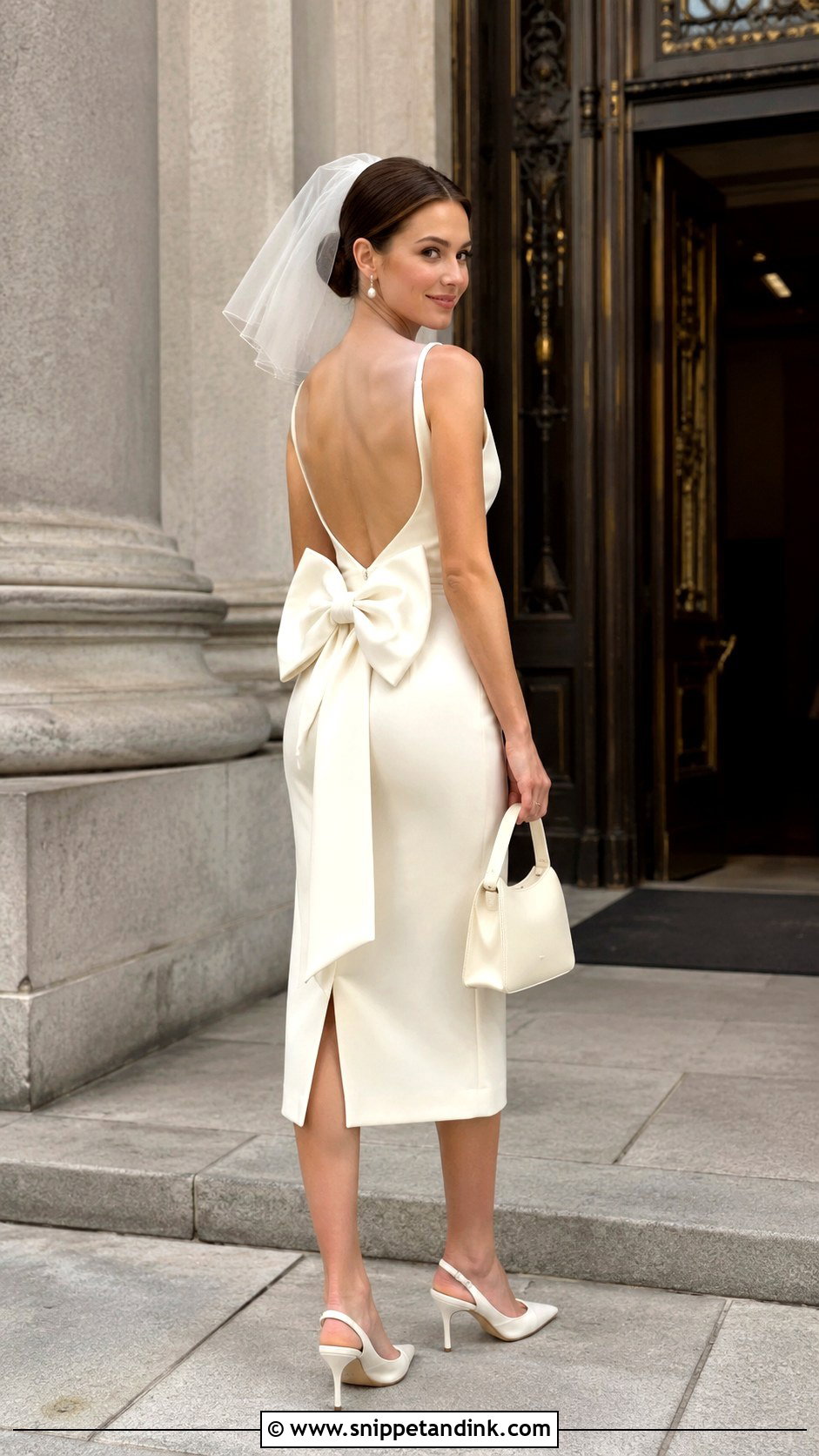
A bow back gives guests something to see while you stand facing the officiant, which is most of a civil ceremony. Ask whether the bow is interfaced; a soft bow flattens after an hour of leaning against chairs. An open back still needs a secure bodice. Wear your hair up, choose a veil that ends above the bow, and carry a small bouquet that won’t hide it from behind. Slingbacks and pearl earrings keep the front simple.
18. Civil Ceremony Floral Jacquard Midi Dress
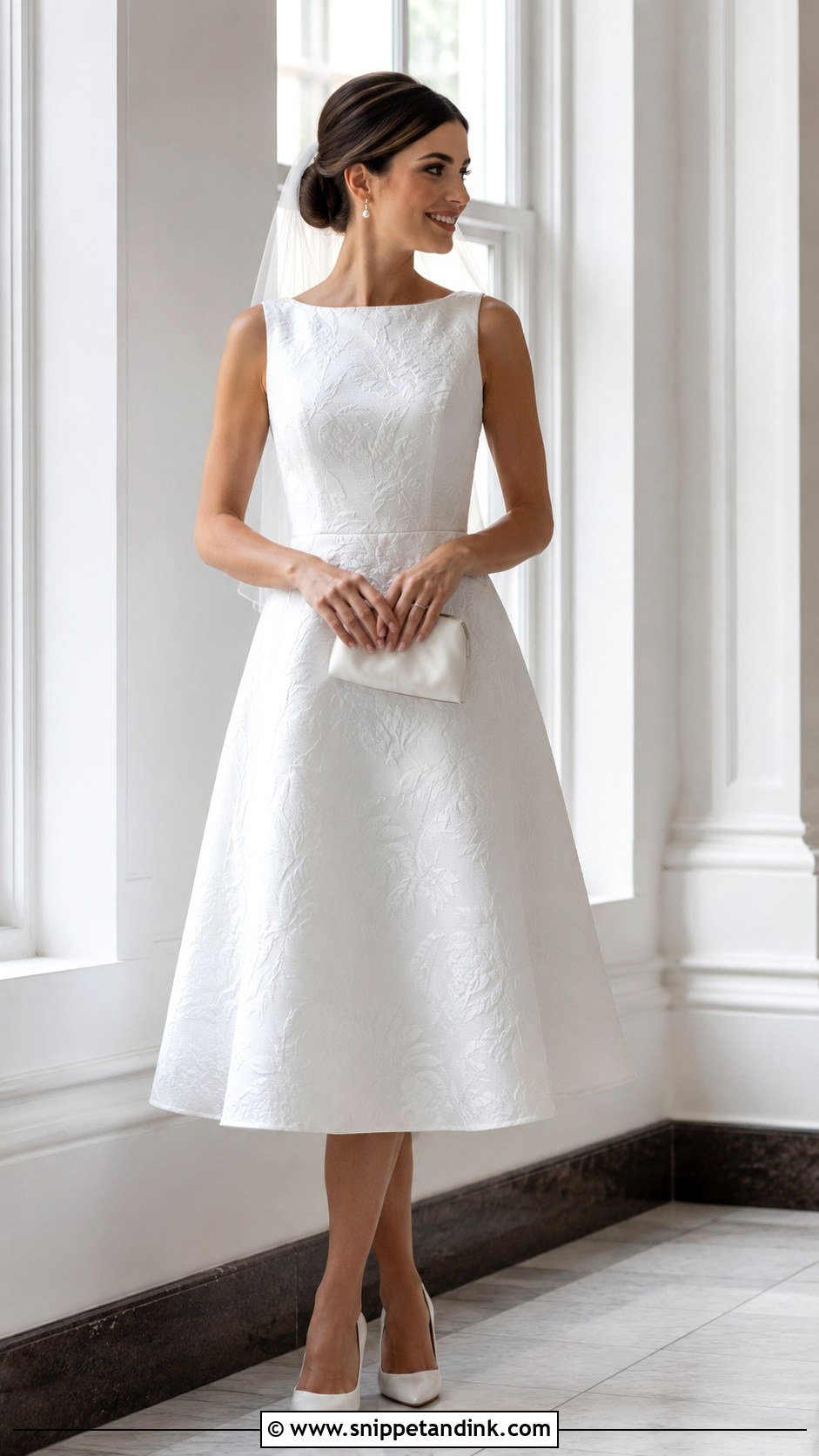
Jacquard puts the pattern in the weave, so you get texture without lace or beading. Tonal floral motifs look faint indoors and come alive in daylight, giving photos depth. It is a stiffer cloth, so I always have brides sit and raise their arms in it; seams with no ease will pinch by the end of lunch. A fitted bodice with an A-line or softly pleated skirt shows the fabric off. Plain pumps, a satin clutch and a clean chignon let the weave do the work.
19. Civil Ceremony Ankle Length Wedding Dress
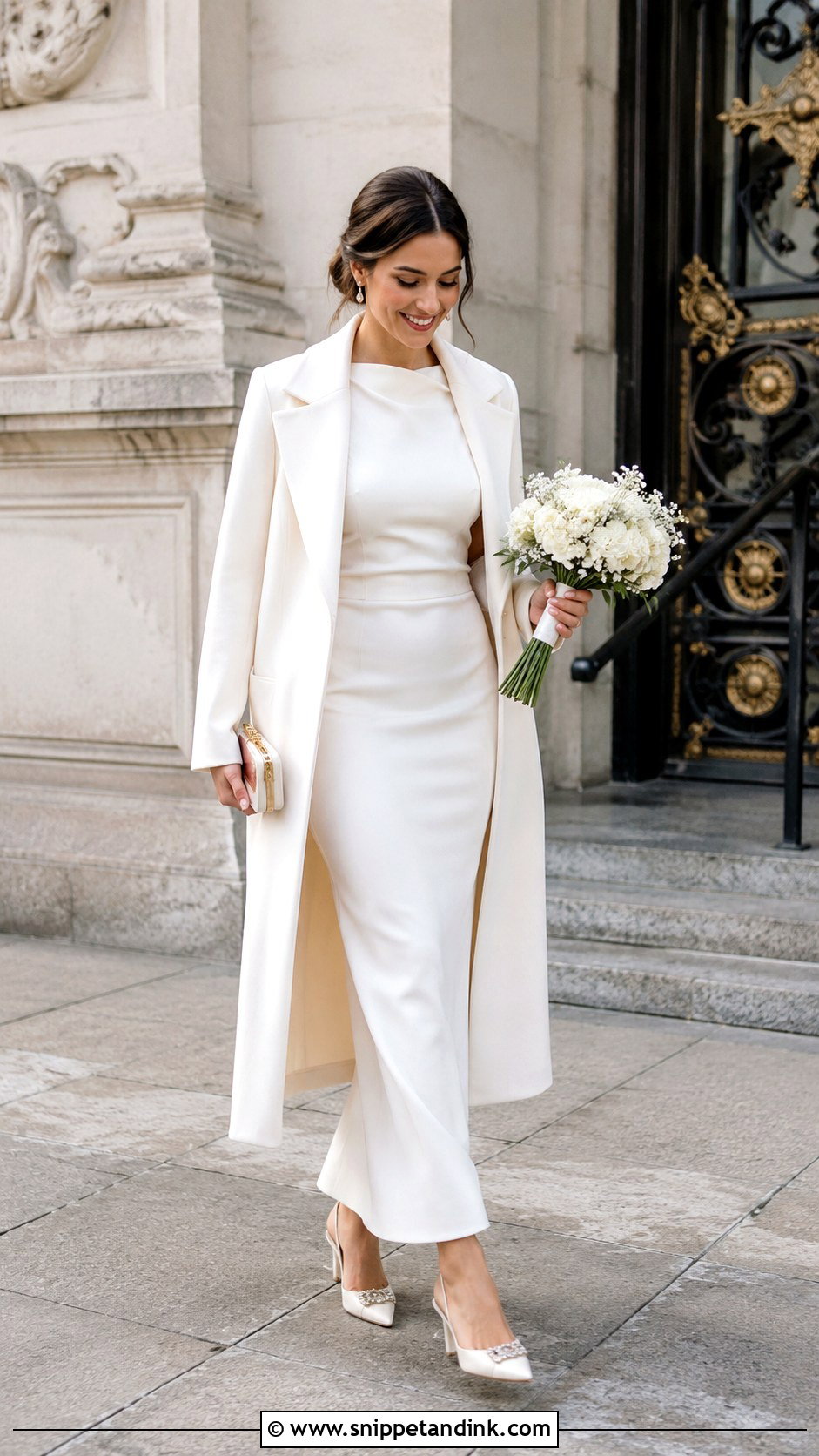
Ankle length gives the formality of a long gown without the hem catching on stairs or getting stepped on in a crowded lobby. It also keeps your shoes visible. Column, bias-cut and gentle A-line shapes all work. My one rule: confirm the finished length while wearing your actual ceremony shoes, since a quarter inch decides whether it looks intentional or just short. Petite brides find this hem easier to alter. Add a tailored coat in winter or a light wrap in milder weather.
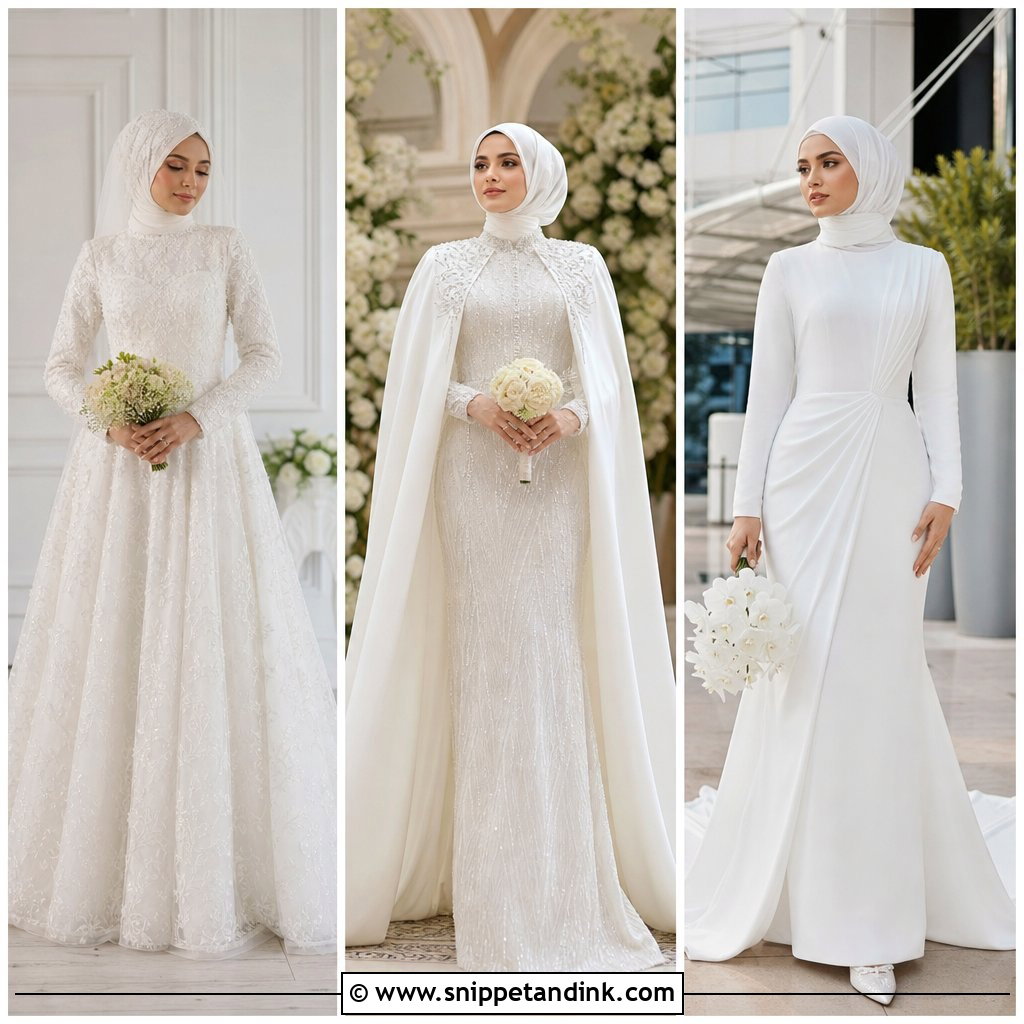

20. Civil Ceremony Colored Wedding Dress
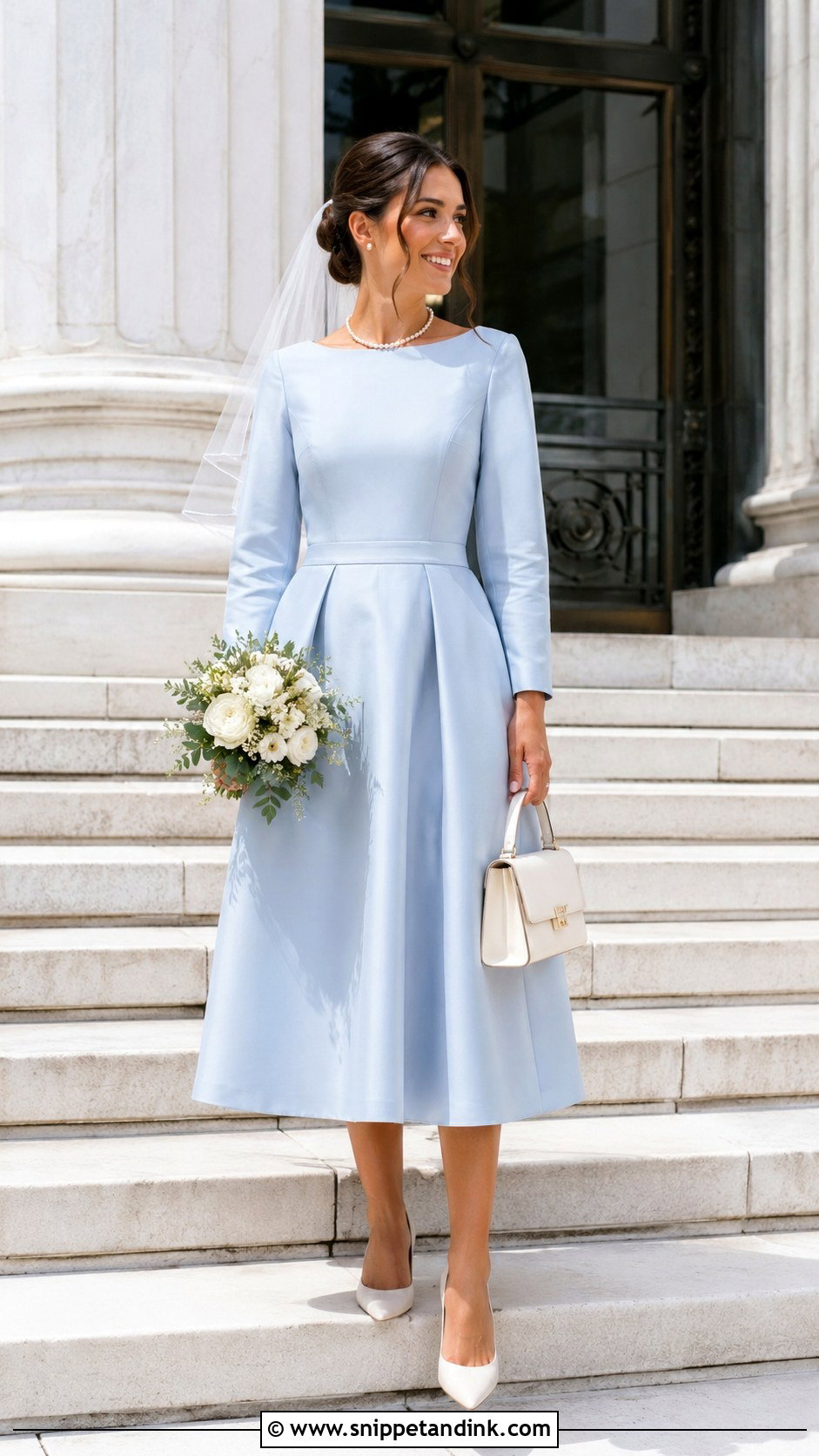
White is optional at a civil ceremony. Pale blue, blush, champagne or soft lavender can feel just as bridal. Choose a polished shape such as a satin midi, tailored sheath, or tea-length A-line. Match shoes and bag by undertone rather than exact shade. View the color under both daylight and fluorescent light before buying, because pastels can turn flat or greenish indoors. Pearls or a small veil signal bride, and you’ll actually wear it again.
Off the Rack, Six Weeks Out: Is That Enough Time?
Usually, yes. Civil ceremony dresses are often bought ready to wear, and that changes the timeline. A full bridal gown ordered from a salon can take several months to arrive before alterations even start. A ready-to-wear midi or mini skips that wait, so the real deadline is your seamstress.
For a simple hem and strap adjustment, I’d still allow three to four weeks, because good seamstresses book up in spring and summer. Anything structural, like taking in a boned bodice or adding a lining, needs two fittings and more time. Bring your shoes and underwear to every fitting, or the length and the fit will both be guesswork.
The night before
Steam the dress on a hanger rather than ironing it, and keep the steamer moving on satin, which water-spots if you hold it still. Hang it in a breathable bag, not plastic. Pack a small kit for the day: safety pins, fashion tape, a stain pen tested on a hidden seam, and blotting paper. If rain is forecast, decide now which coat goes over it, because a raincoat you didn’t plan for will end up in half your photos.
The Dress That Gets You Through the Signing and the Lunch After
A courthouse wedding is short, but the day around it isn’t. From structured minis and satin midis to lace and color, any of these works if it suits the room, the weather and what you’re doing afterward. At your fitting, sit, walk, sign and raise your arms before you say yes. Then keep the shoes walkable, the underwear supportive and the accessories few. If you can stop thinking about the dress once you’re standing at the desk, you chose well.
You'll Like These Ideas:


Leave a Reply