
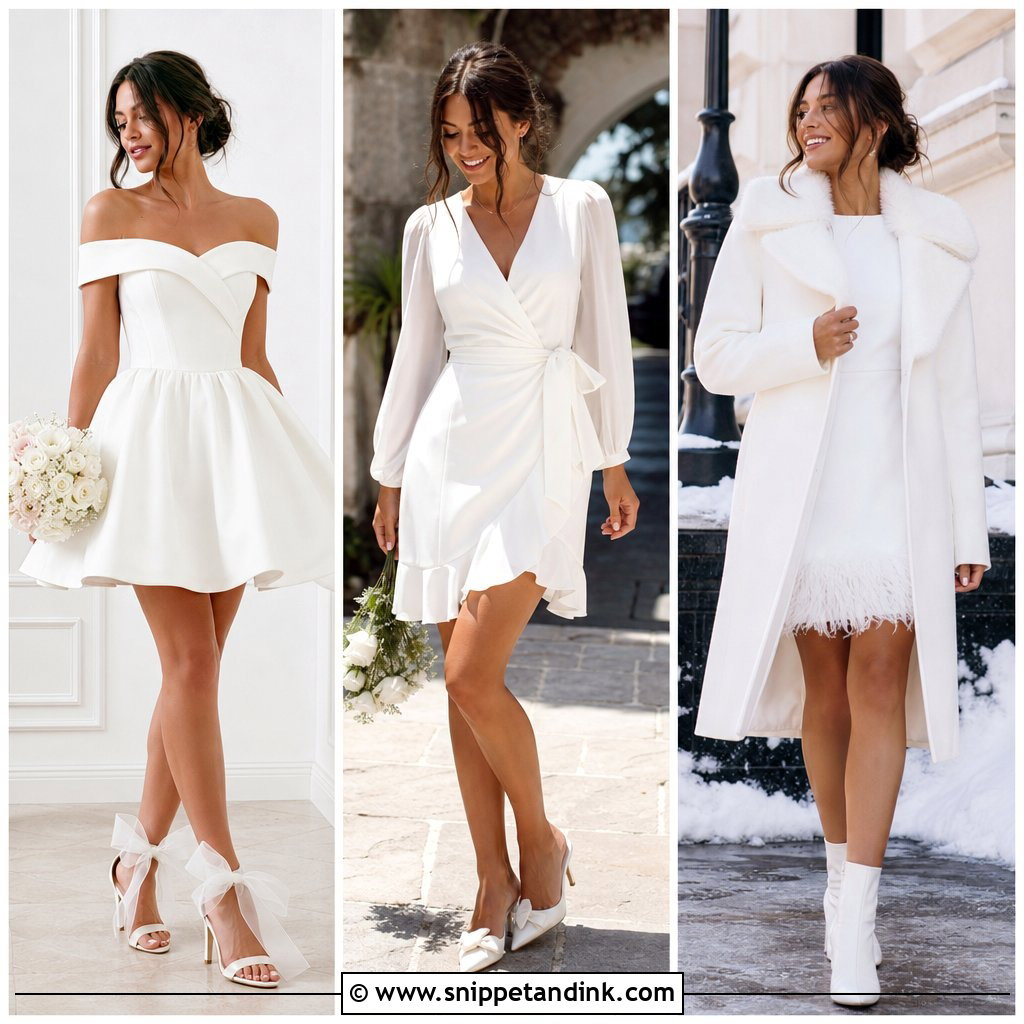
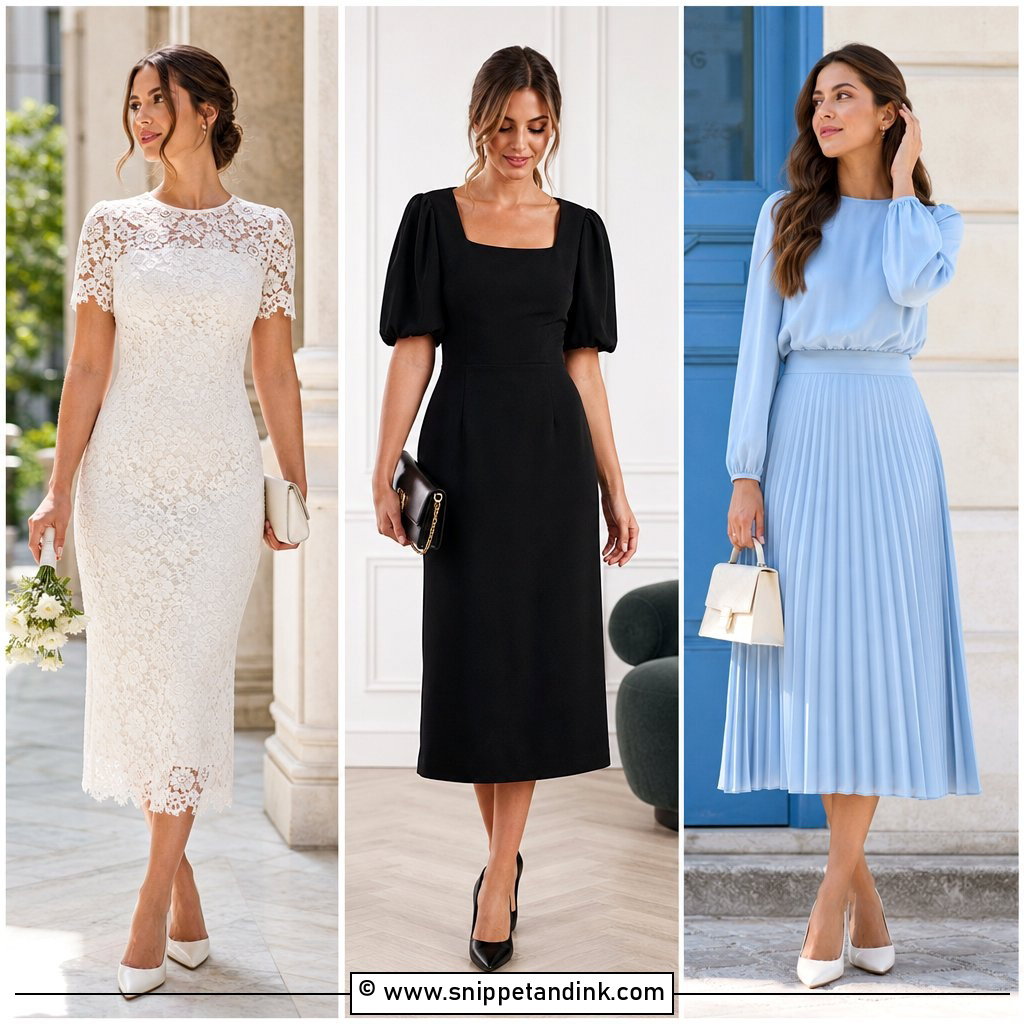
Short dresses suit civil ceremonies better than people expect. They clear the stairs, they don’t drag through a security line, and they go straight on to lunch or an evening party without a change. They’re also cheaper to alter and far more likely to be worn again. The catch is that a simple short dress has nowhere to hide: hem length, fabric quality and fit are all on show. Below are twenty clean, short looks for a courthouse or city hall, each with the fit point I’d check before you commit, plus shoes, bag, jewelry and an optional veil or hair piece.
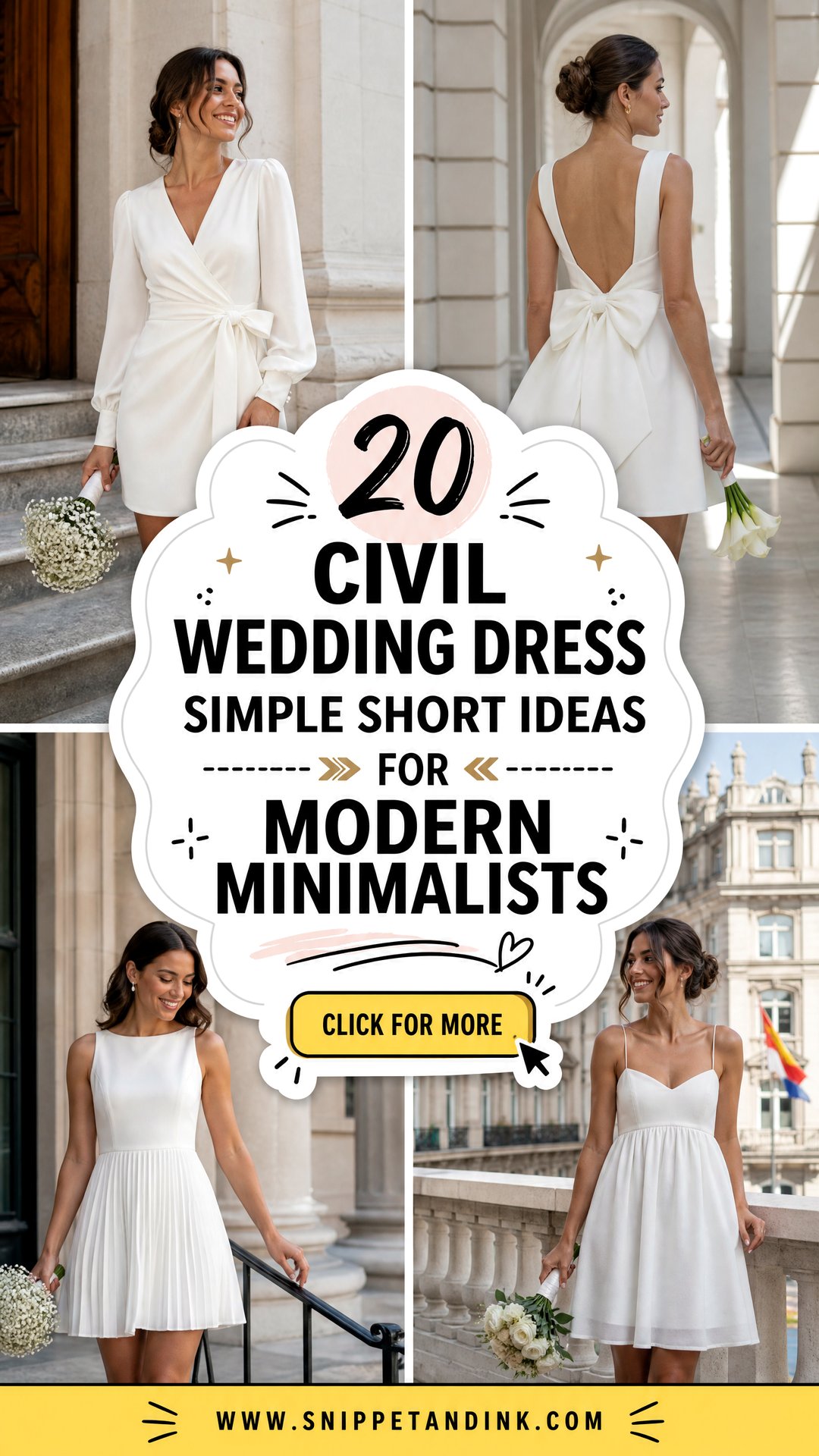
Where Your Hem Should Land, Measured Seated
Most short dress regrets come down to one thing: the hem was checked standing. When you sit, a skirt rises by several inches, and on a straight or fitted shape it can rise more. Courthouse benches are often low, and photographers sometimes shoot the signing from slightly below. So I mark hems in two positions.
- Stand in your ceremony shoes and note where the hem hits.
- Sit on a low chair with knees together and look in a mirror placed at seat height.
- Climb a few stairs while someone watches from the bottom.
- If the seated length bothers you, add length or plan fitted shorts rather than tugging at it all day.
Proportion matters as much as comfort. On petite frames, a hem just above the knee usually lengthens the leg more than mid-thigh does. Taller brides can carry a slightly shorter hem, but a very short skirt on a tall frame can start to look like a top. A-line skirts ride up less than straight shifts, which is worth knowing if the dress you love is cut straight.
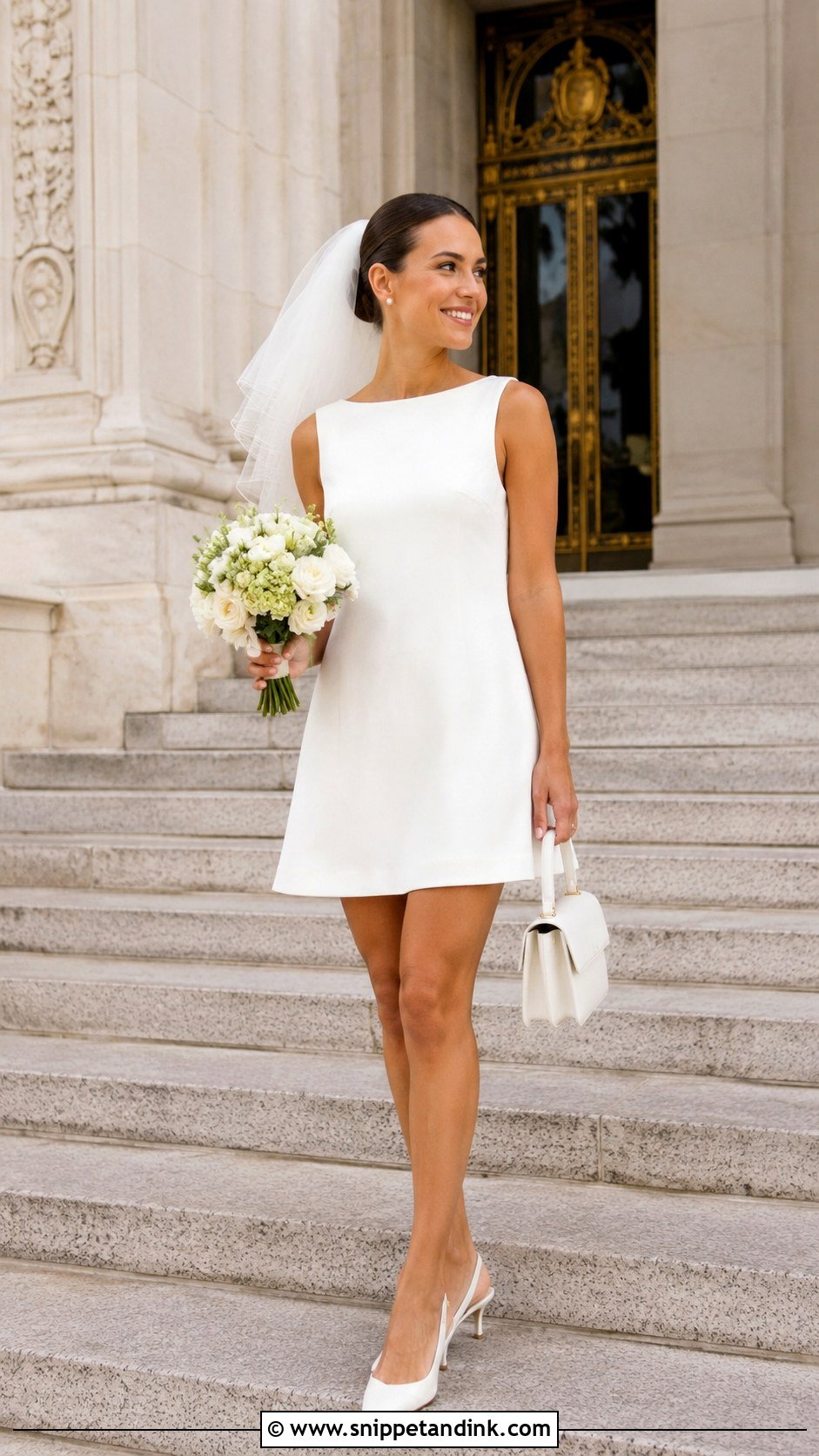
1. Sleeveless A-Line Short Civil Wedding Dress
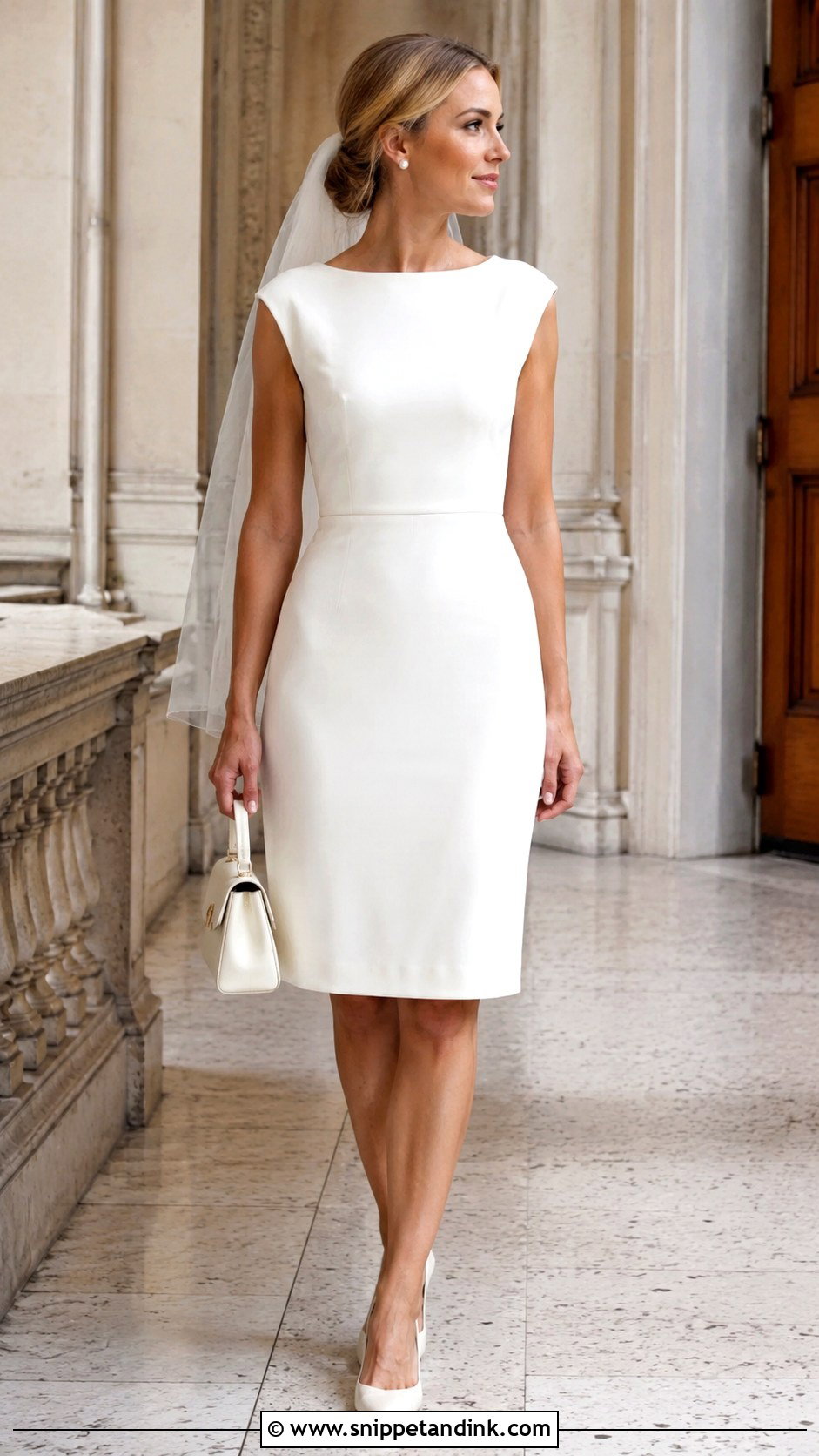
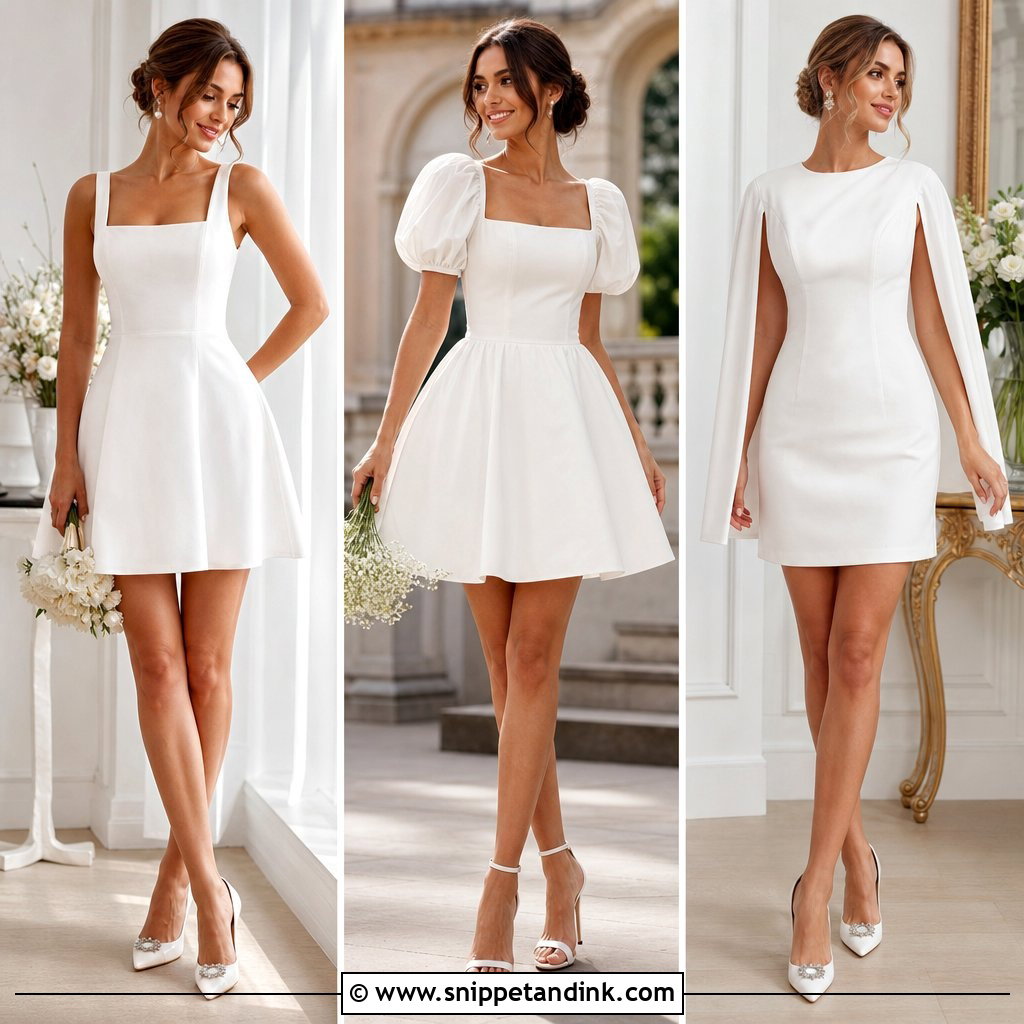
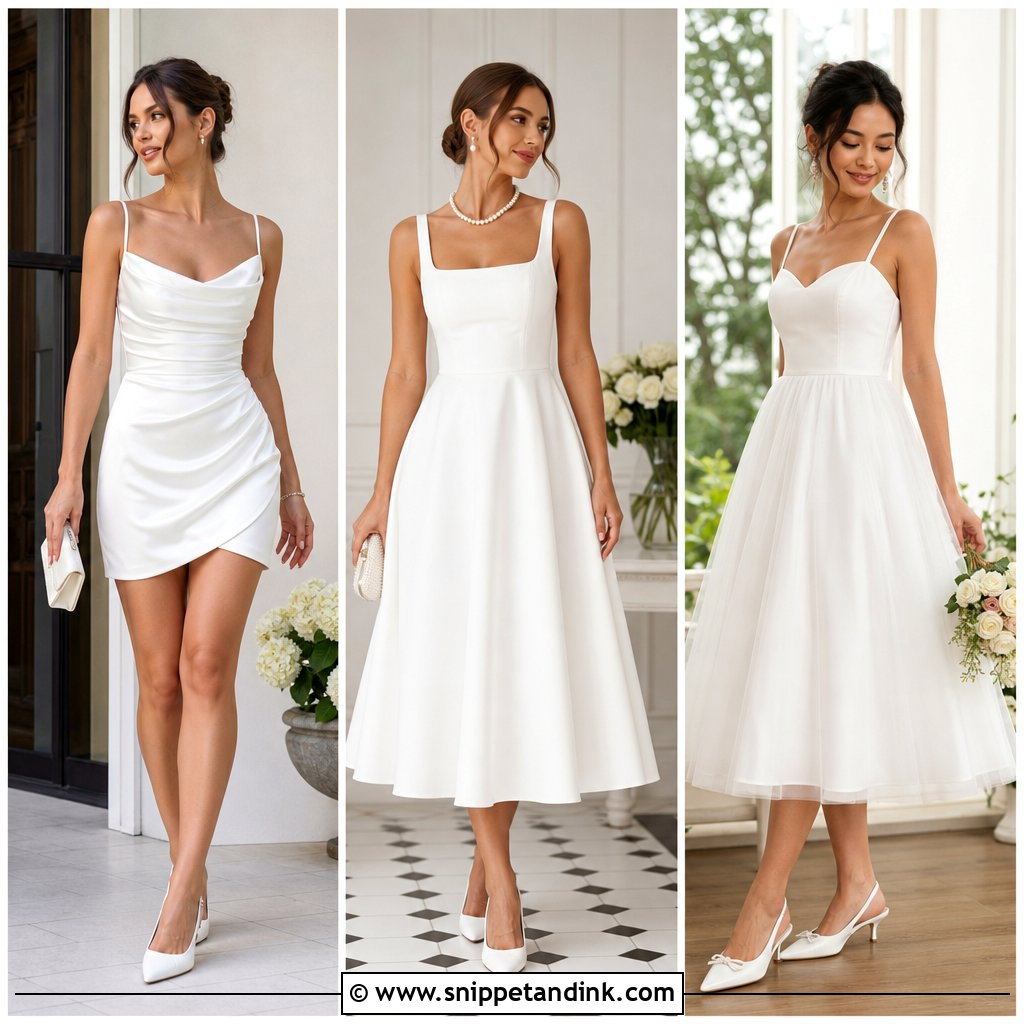
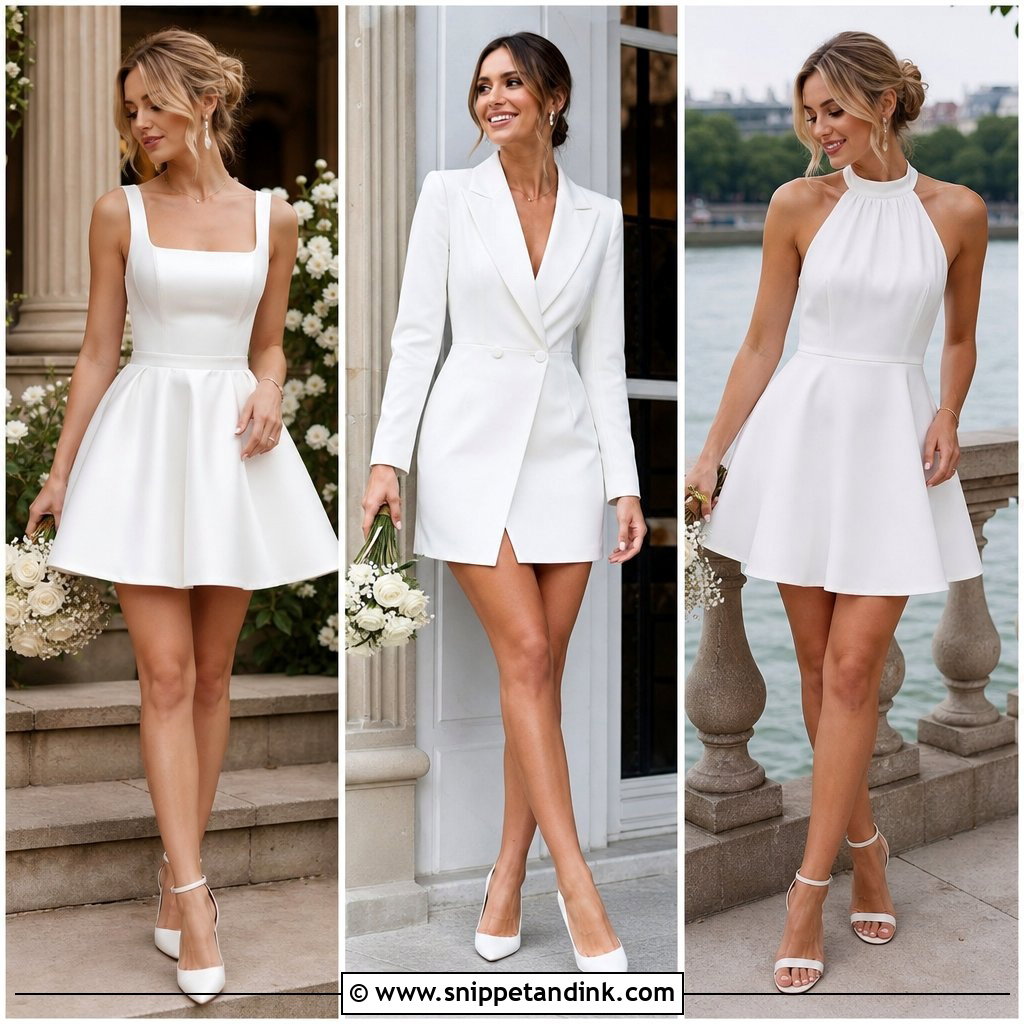
Sleeveless A-line is the safest short shape I know. The fitted bodice defines the waist and the flared skirt gives you room to sit and walk, which is why it suits most figures. Smooth crepe or matte satin in ivory or soft cream keeps it clean. Make it a full civil wedding outfit with pointed kitten heels, pearl studs and a short tulle veil. In cooler weather, a cropped ivory jacket stops at the waist and keeps the shape intact.
2. Long Sleeve Short Civil Wedding Dress
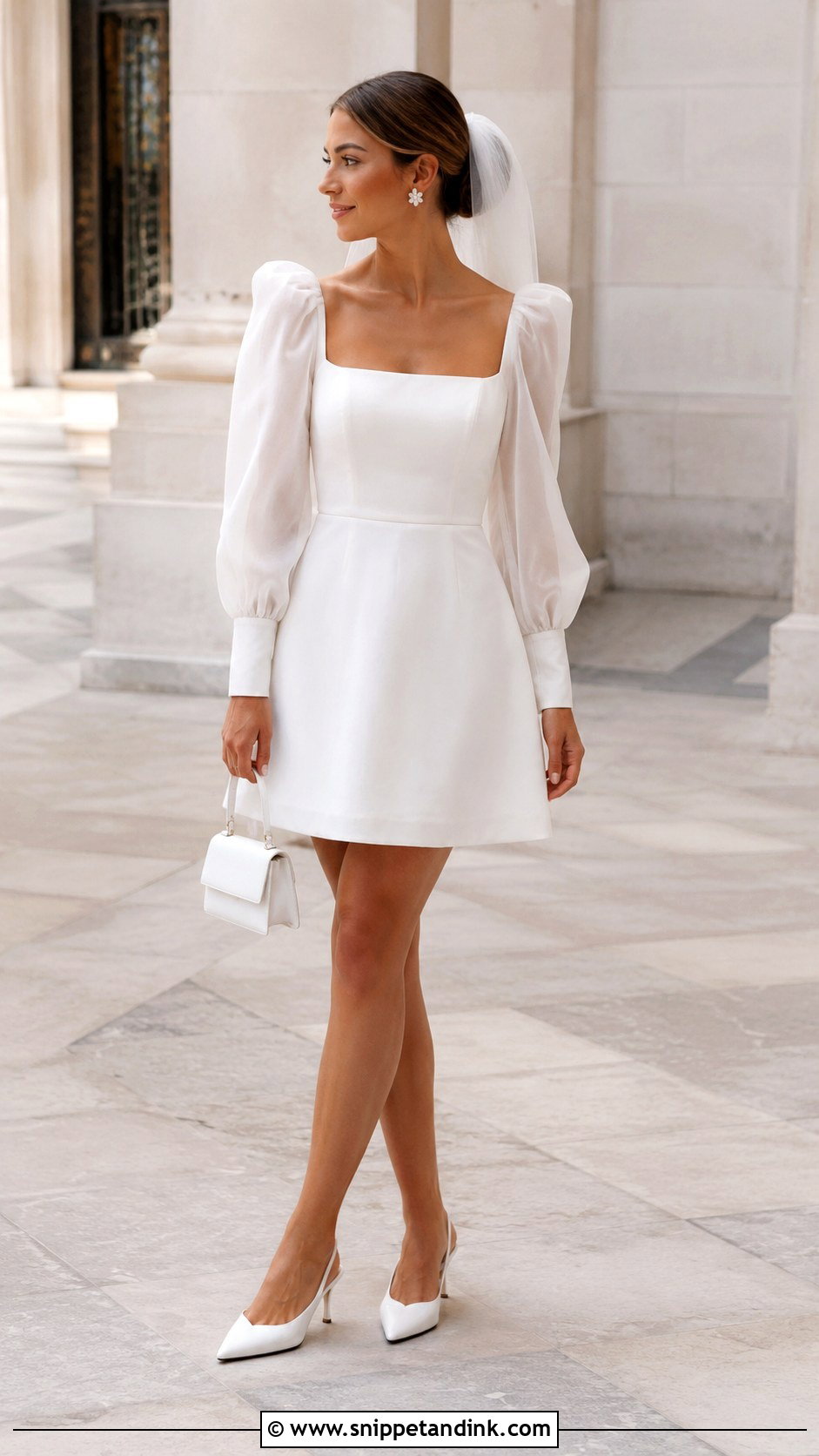
Sleeves and a short hem balance each other: cover the arms and the legs can show without the outfit feeling bare. That’s useful in autumn, in winter, or in an over-air-conditioned courthouse. Crepe, stretch satin or lined lace all work. A boat neck or shallow V keeps it polished. Sheer tights add warmth without bulk. Skip extra embellishment; the sleeves are already doing enough.
3. Square Neck Satin Short Civil Wedding Dress
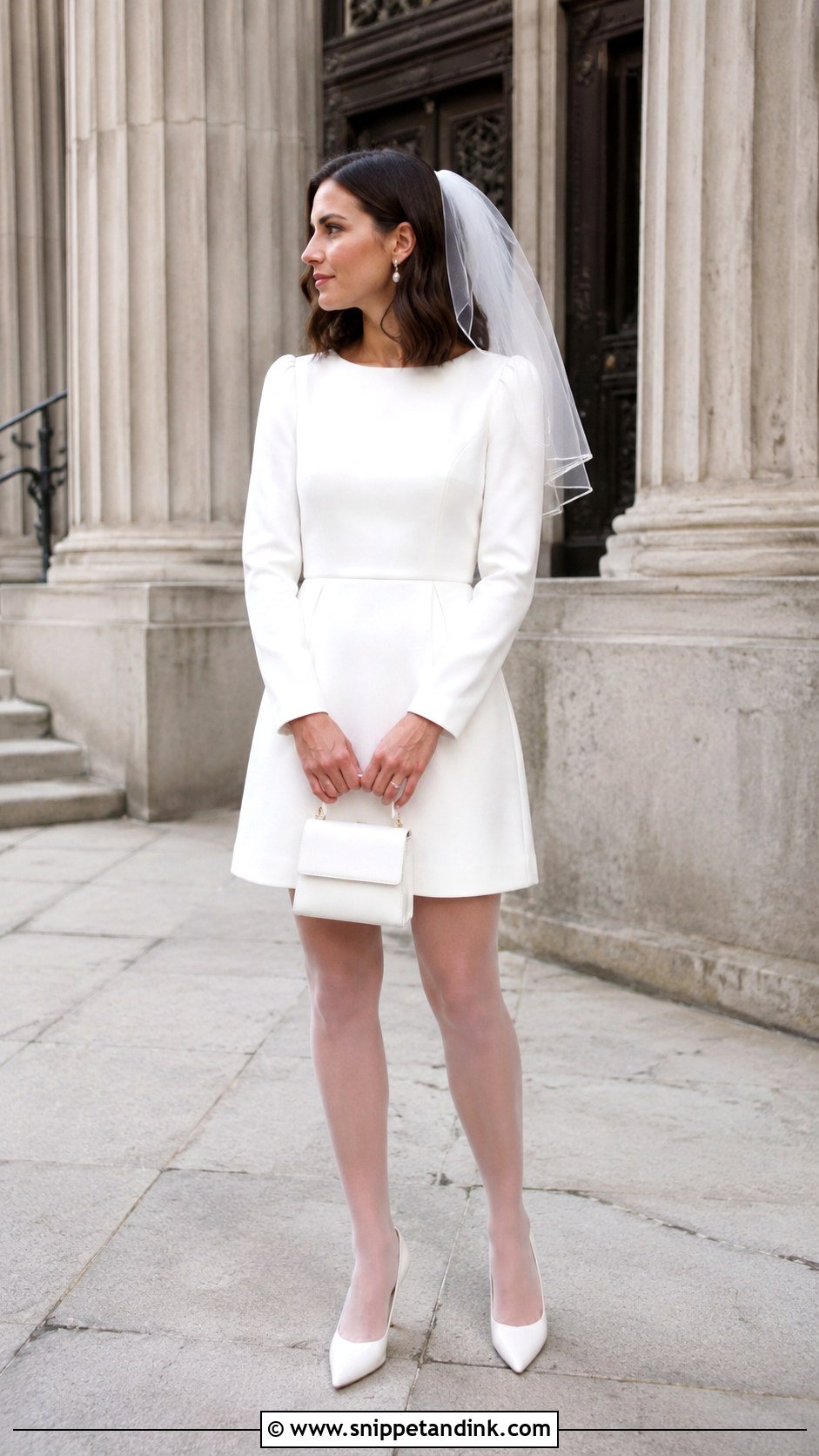
Satin reflects light, which flatters a simple square-neck shape but also shows every pull line. That’s why I’d skip a skin-tight cut here and go for wide straps, a fitted waist and a lightly flared skirt. The neckline leaves room for a short pearl strand. A padded headband can stand in for a veil, or wear a shoulder-length one. Keep the rest of the accessories quiet against the shine.
4. Lace Shift Short Civil Wedding Dress
A lace shift falls straight from the shoulders, so it needs no shaping at the waist and suits a straighter figure particularly well. Make sure it’s fully lined; unlined lace on a short dress shows more than you’d think in daylight. Floral lace feels romantic, geometric lace more modern. Pair a plain veil with it, or a pearl comb above a low bun, so the lace stays the detail. Ivory flats or low block heels handle city streets.
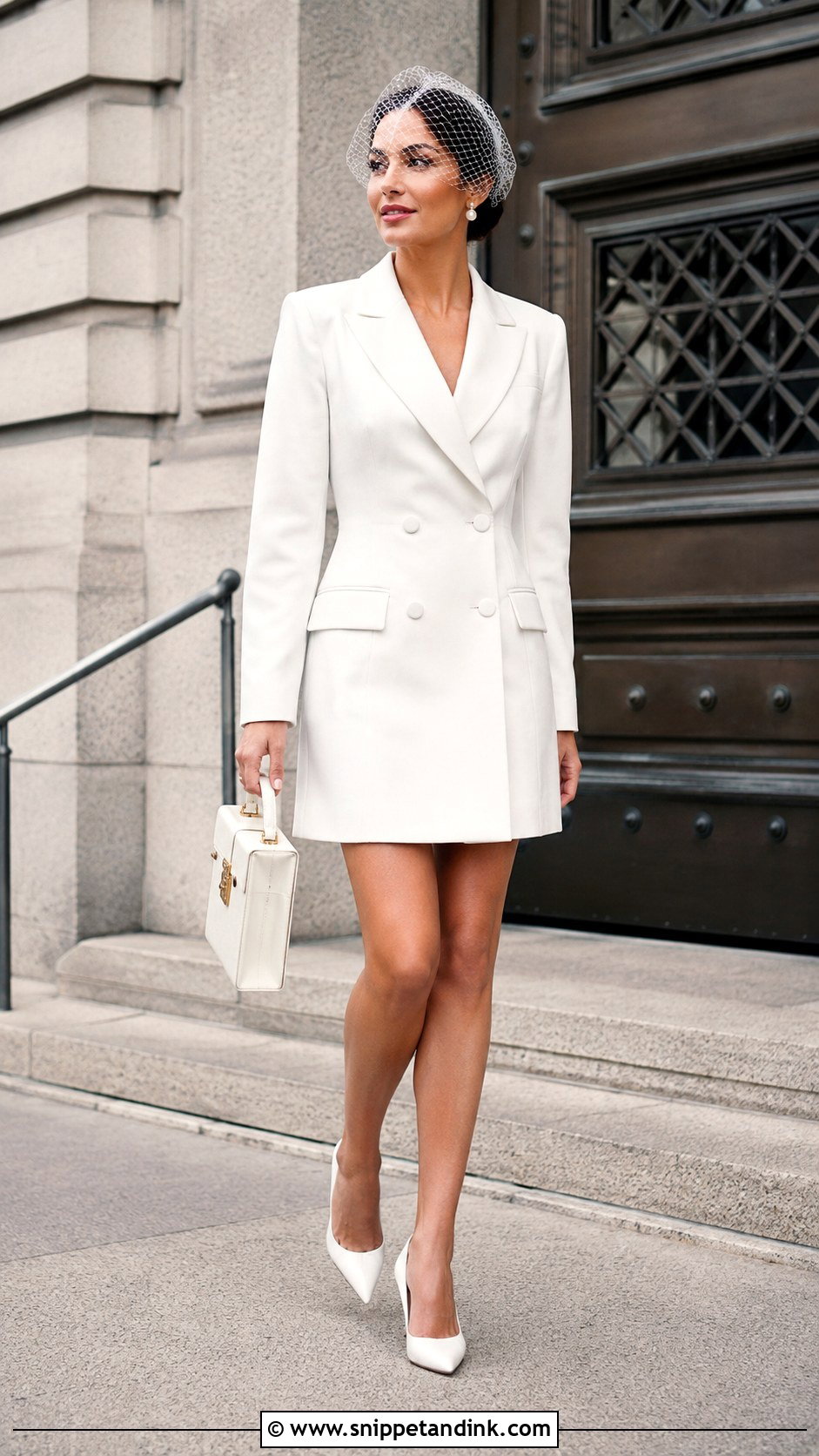
5. Blazer Short Civil Wedding Dress
Tailoring in one piece: a blazer-style mini dress needs secure buttons and enough length to sit without the front panels parting. I’d test that sitting on a low chair, not just a stool. Structured crepe looks crisp; softer suiting relaxes it. Wear discreet shorts underneath if the overlap is shallow. Pointed pumps and a small box bag finish it, with a birdcage veil or a sleek headband.
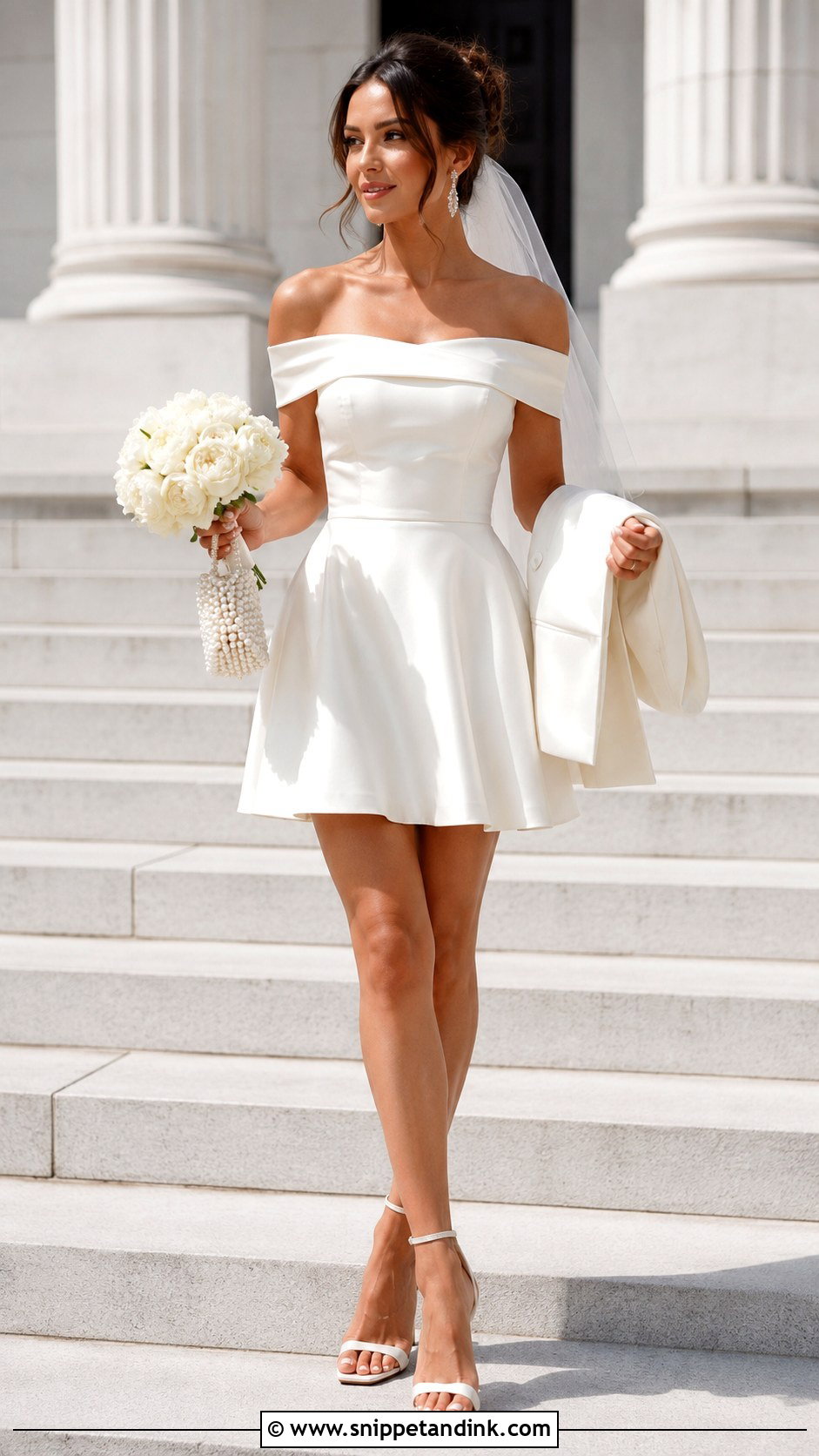
6. Off Shoulder Short Civil Wedding Dress
An off-the-shoulder bodice must stay up when you raise your arms, and that only happens with internal structure and careful tailoring. Matte satin, crepe and mikado hold the neckline best. Leave the necklace off and wear a bracelet. A short veil pinned under a low bun keeps the shoulders visible. Bring a cropped jacket for before and after the ceremony.
7. Boat Neck Short Civil Wedding Dress
A boat neck dress follows the collarbone and covers more than it reveals, so it suits formal courthouse rooms and older relatives in the photos. A fitted sheath or soft A-line in ivory crepe, ending around the knee, keeps it understated. The fit to watch is across the shoulders: too tight, and the neckline drags down when you move your arms. Elbow gloves are optional. A low chignon and a fingertip veil keep the mood minimal.
8. Puff Sleeve Short Civil Wedding Dress
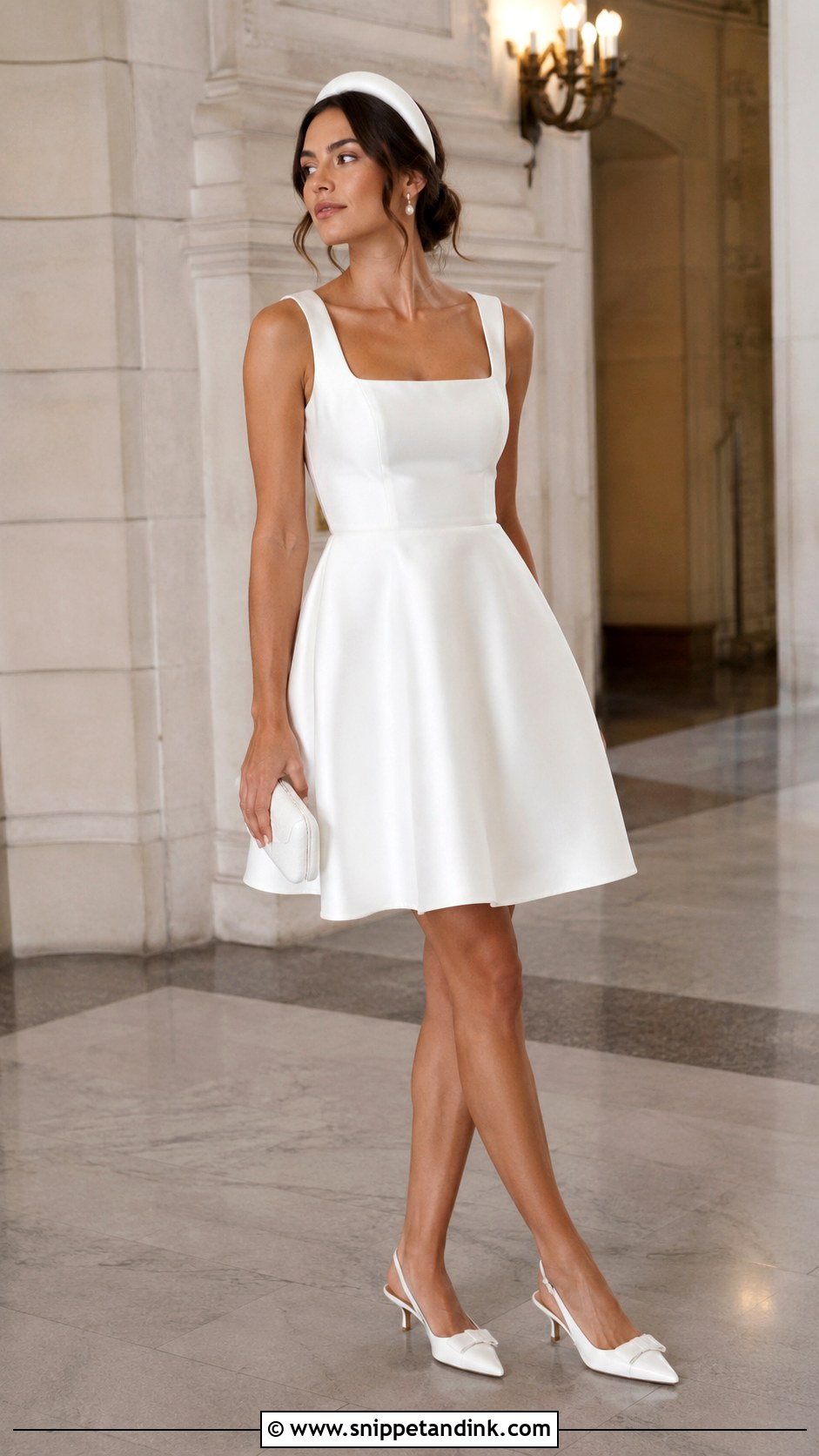
Controlled volume is the rule with puff sleeves, especially in a small ceremony room where big sleeves bump into everyone. A square or V bodice with a defined waist balances them on a simple short civil wedding dress. Crepe looks modern; organza sleeves add air for spring and summer. Check the sleeve openings, because elastic that’s too tight leaves red marks by the end of the day. A narrow veil or a satin bow over a low ponytail suits it.
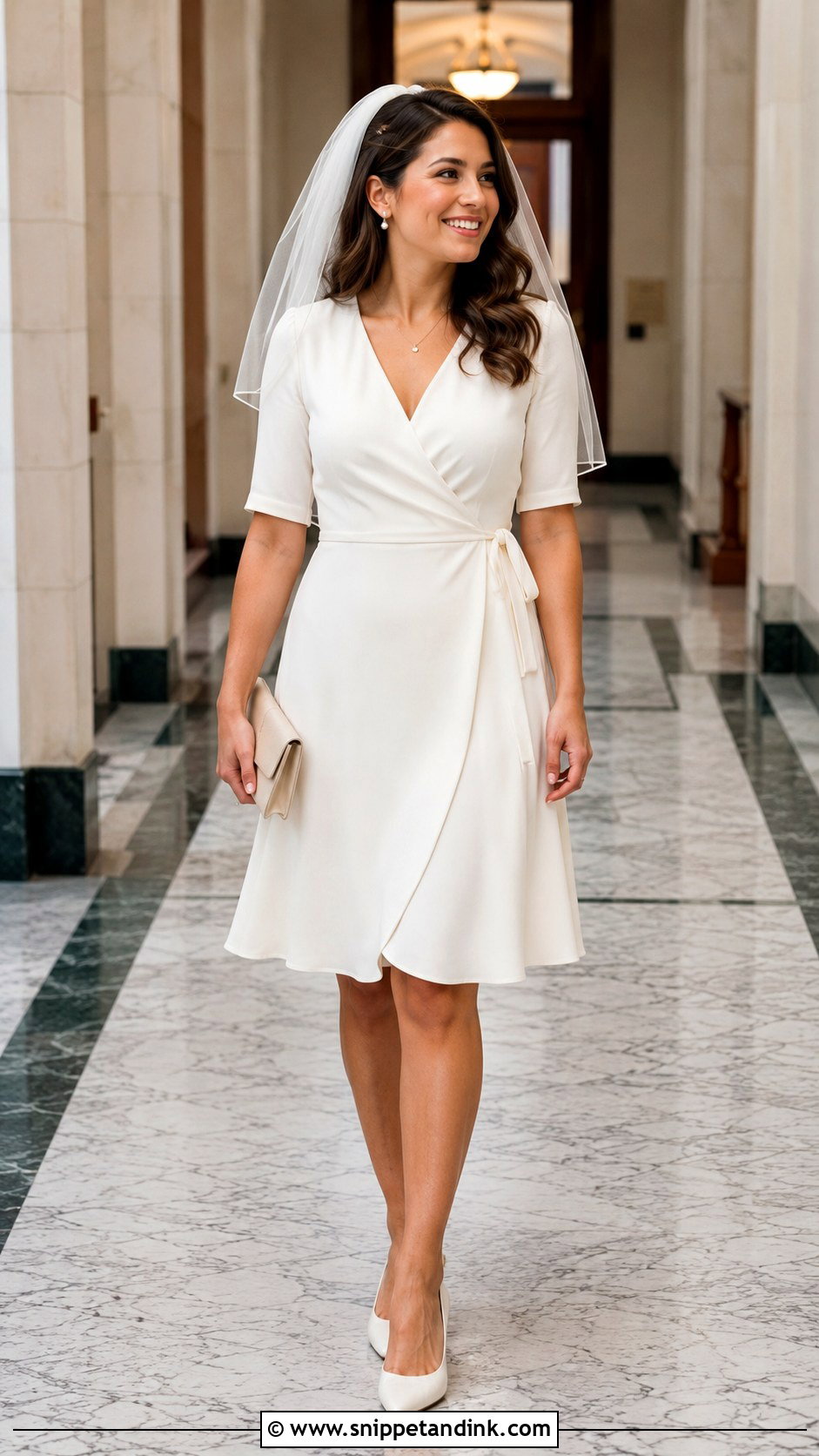
9. Wrap Short Civil Wedding Dress
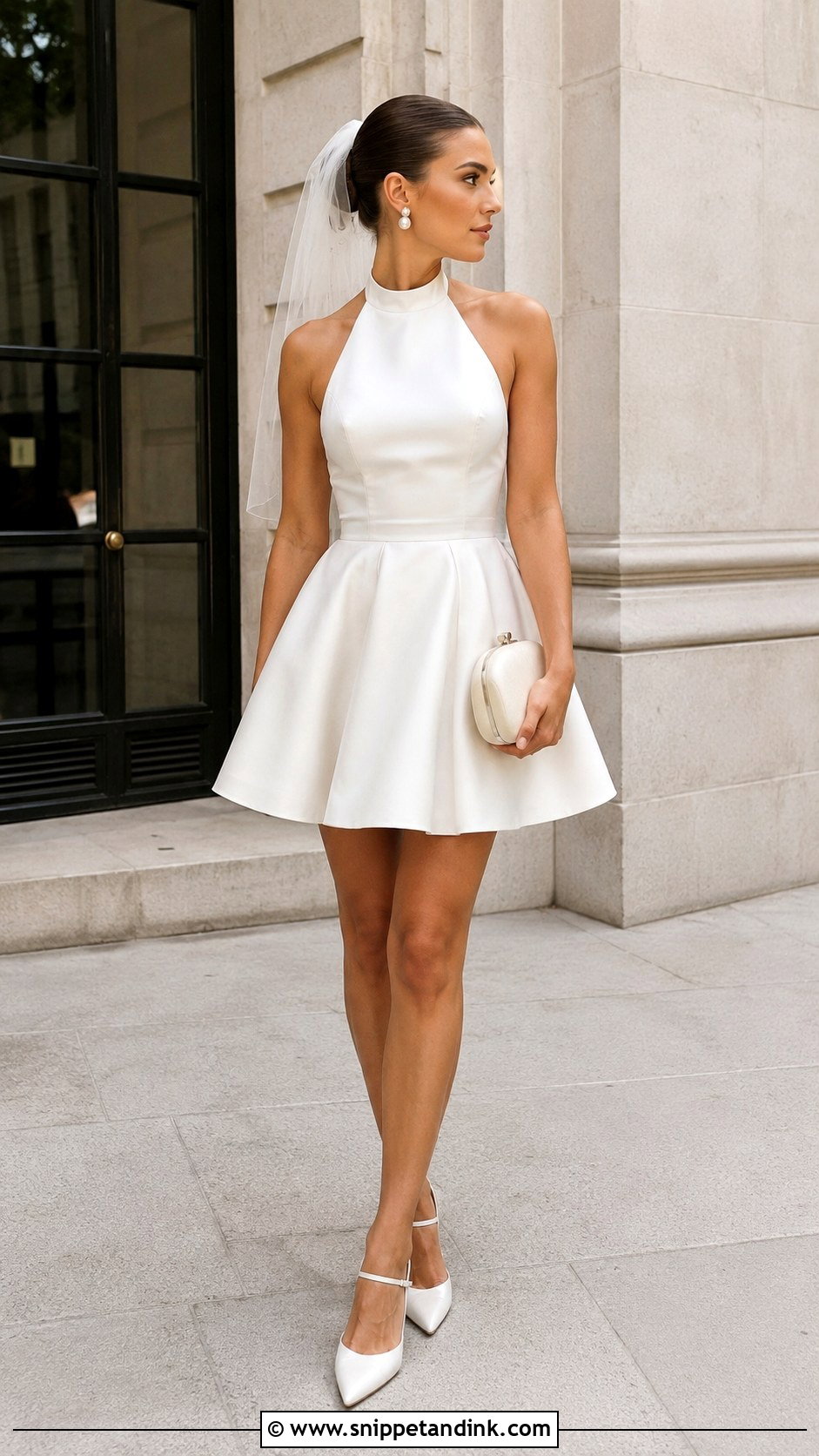
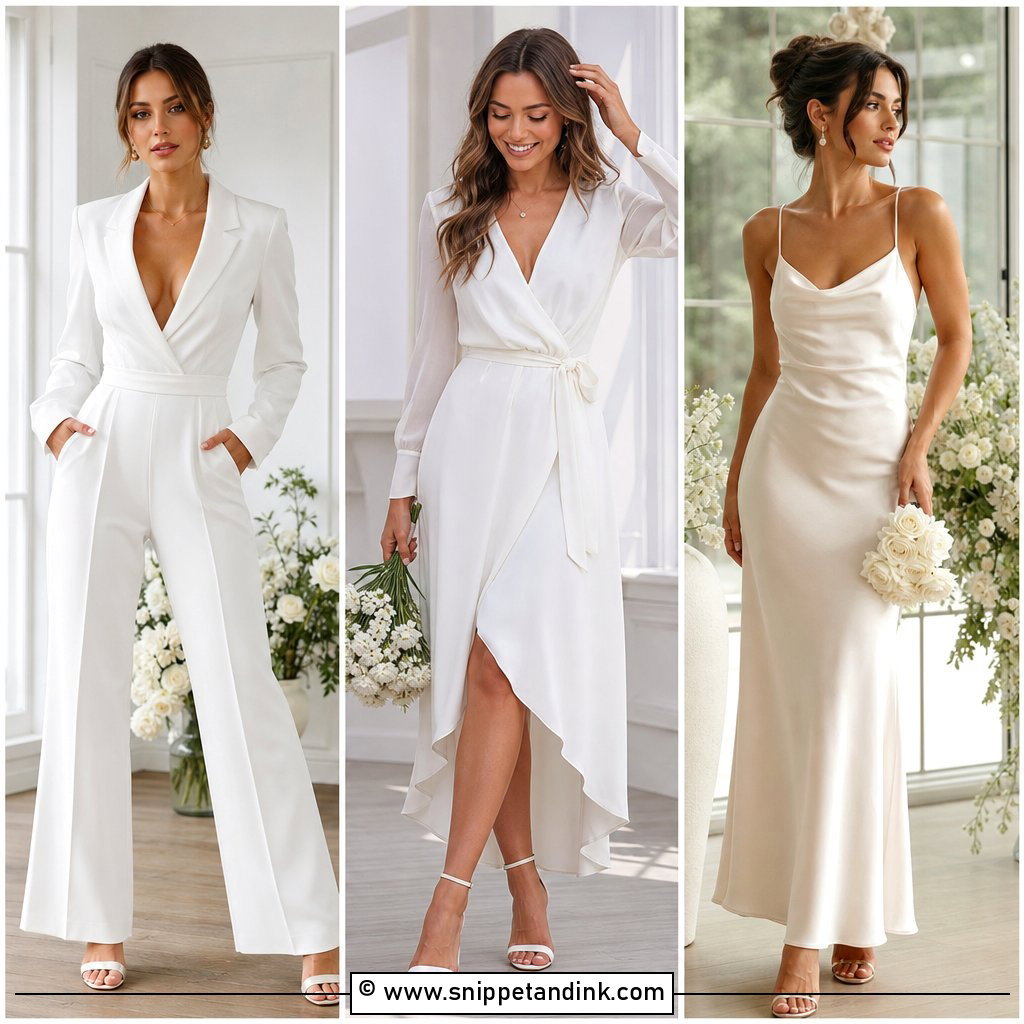
Wrap dresses forgive a lot. They adjust on the day, define the waist and suit changing measurements. Insist on an inner tie or a snap at the neckline, since wraps open when you move. Crepe and heavier satin hold their shape better than thin fabric. Elbow sleeves and a knee-skimming hem make it look finished. A fine necklace fills the V, and a hair comb in soft waves keeps it light.
10. Halter Neck Short Civil Wedding Dress
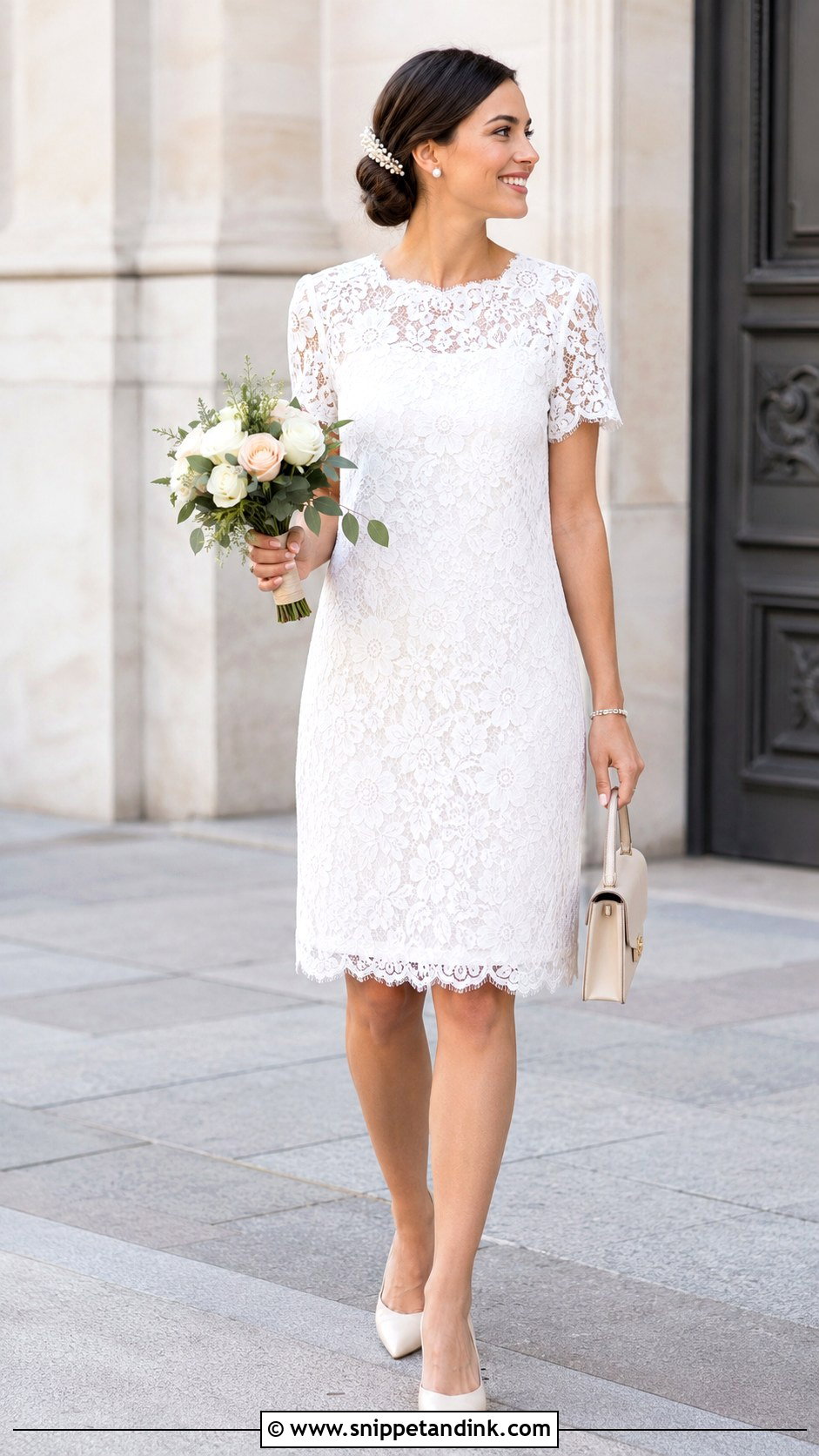
A halter mini shows the shoulders, and the high neckline means you can skip the necklace entirely. Structured crepe or satin stays smooth. What I check first is the strap at the back of the neck: if it pulls, it will ache by lunch. Make sure your bra choice is fully hidden, since halters often need a strapless or built-in option. A sleek bun or ponytail with a short veil clipped at the back shows the cut from every angle.
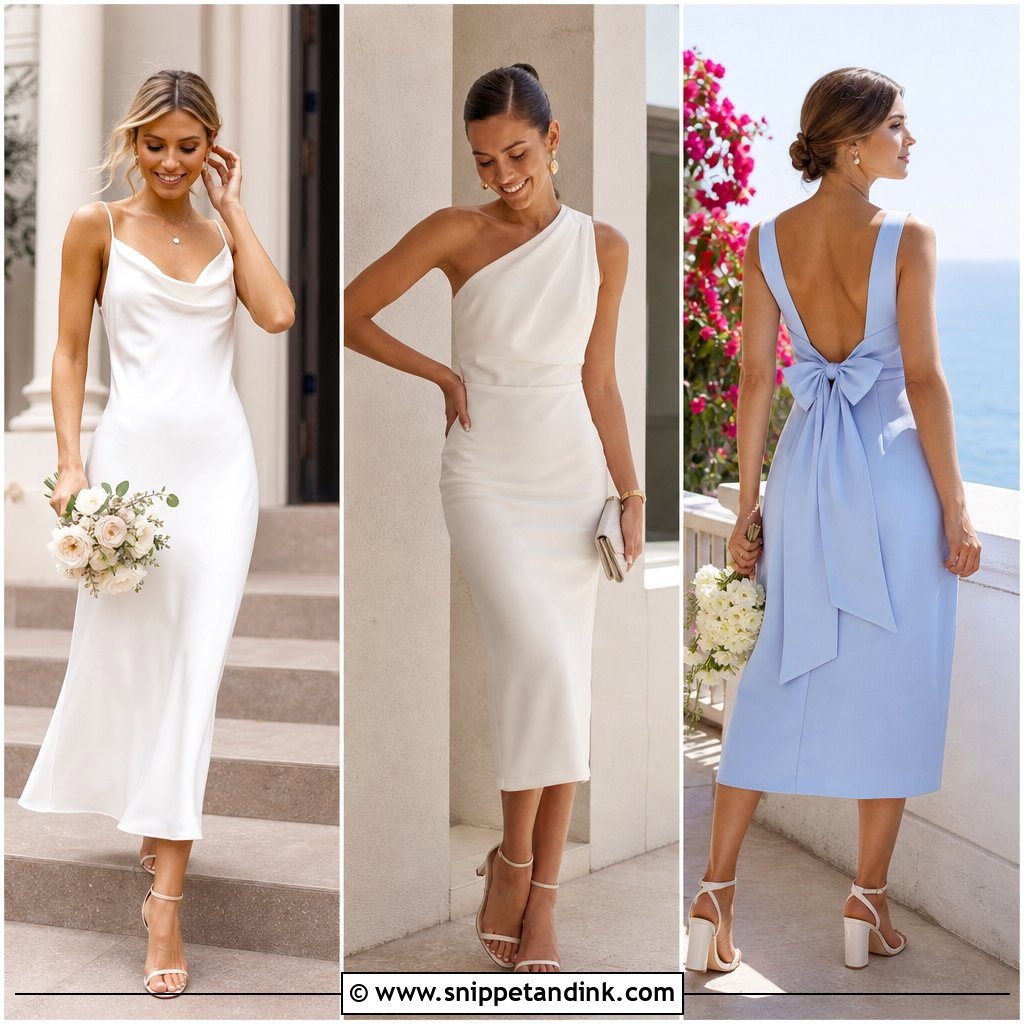
11. Bow Back Short Civil Wedding Dress
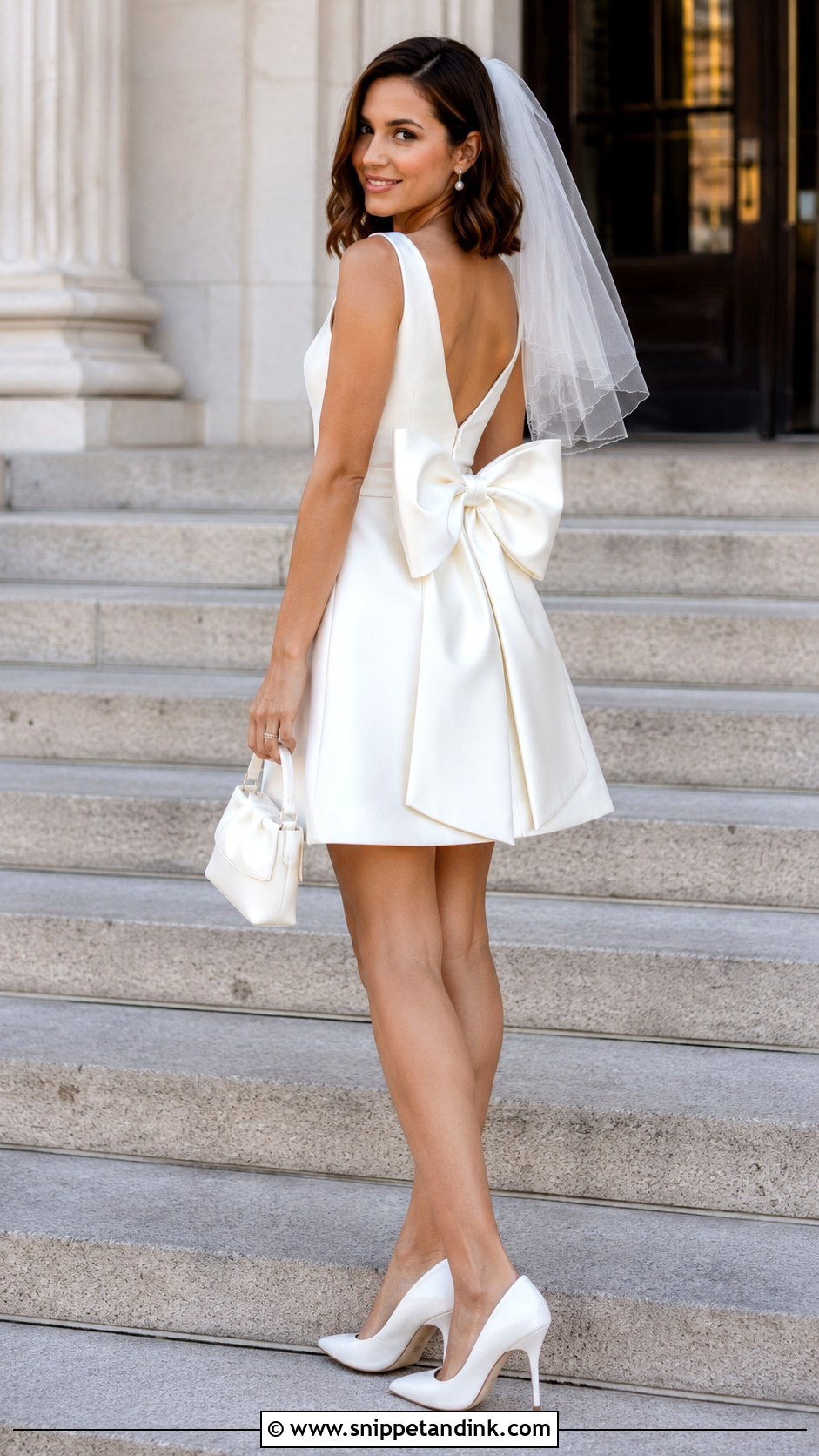
The front of a bow-back dress stays plain; the back gives guests something to look at during the vows and the walk out. Keep the rest of the dress simple, without heavy lace, beading or dramatic sleeves alongside a big bow. Have your tailor tack the loops so the bow keeps its shape and doesn’t twist as you sit. A shoulder-length veil can sit above it, or swap it for a pearl hairpin. Plain pumps and pearl earrings keep the front quiet.
12. Cape Sleeve Short Civil Wedding Dress
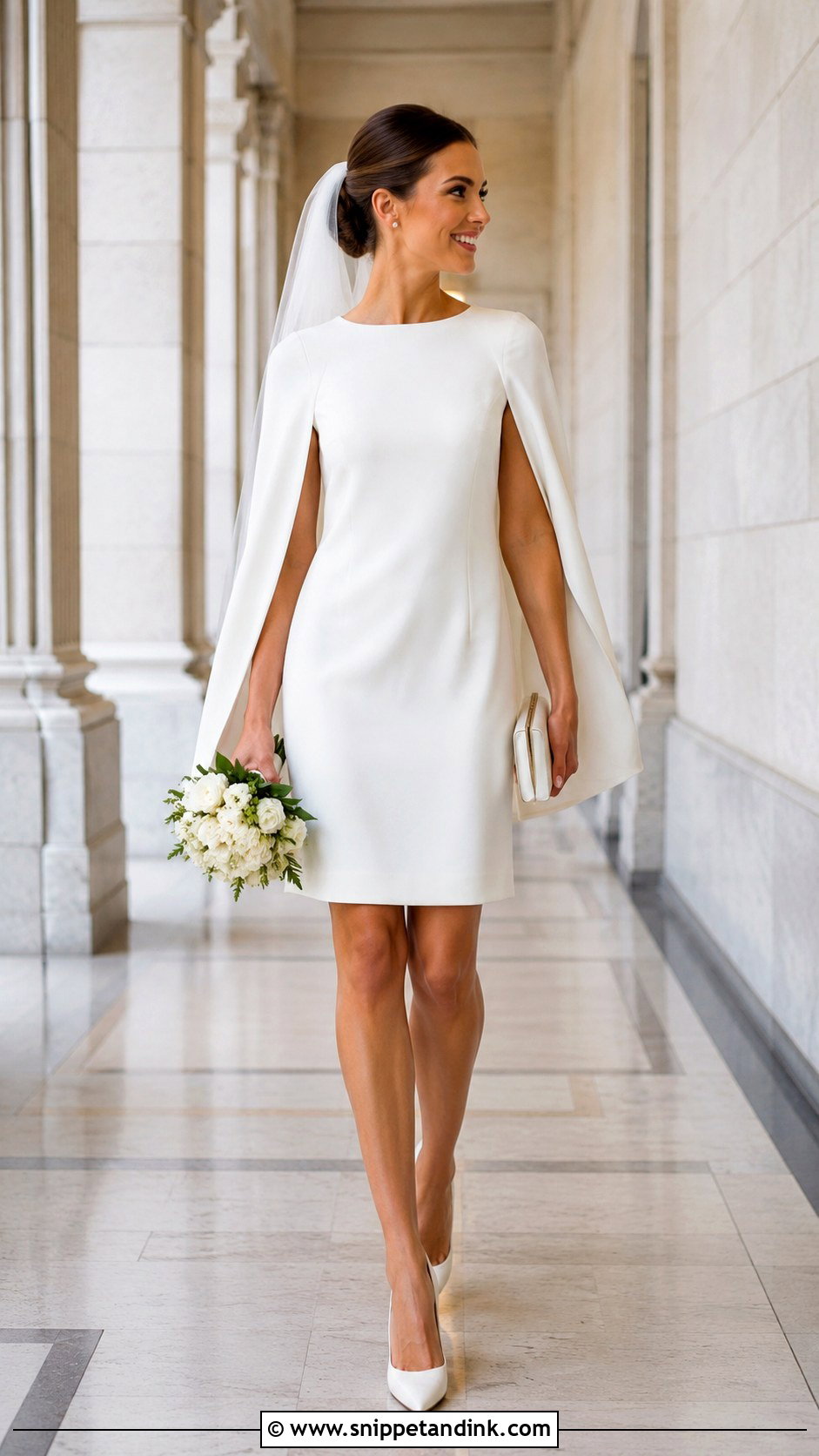
Cape sleeves give coverage without the snug feel of a set-in sleeve, which I find suits brides who run warm. A light cape panel to the elbow over a short sheath or A-line, in crepe, moves nicely. Watch where it falls when you hold the bouquet; some capes get pinned under the arm. A removable cape gives you a second look for the party. Keep bracelets and necklaces off so the cape stays the only detail.
13. Button Front Short Civil Wedding Dress
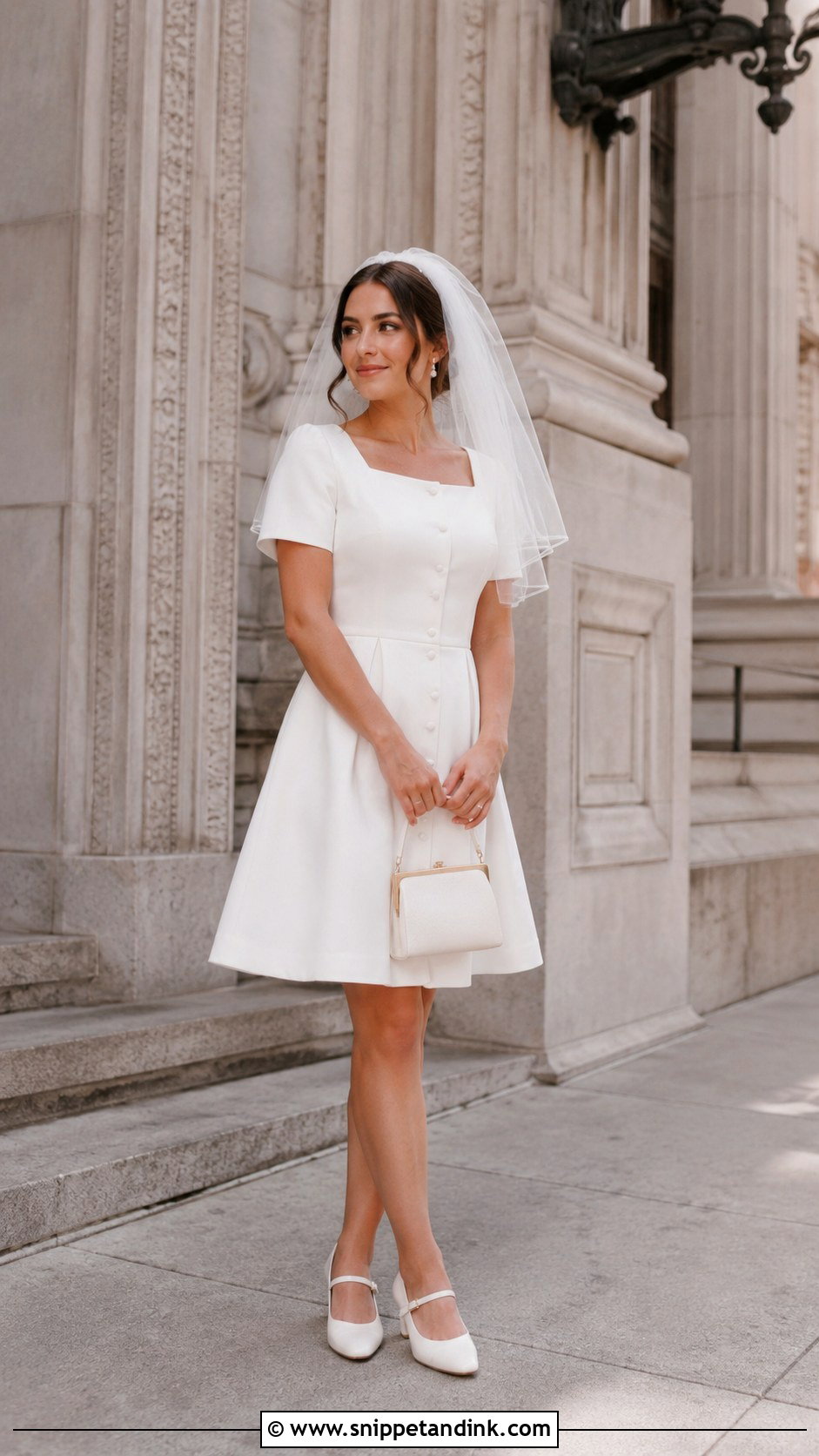
Fabric-covered buttons look softer and more bridal than contrasting hardware. The common problem is a placket that gapes between buttons when you sit; a tailor can add small hidden snaps between them to stop it. A fitted bodice, defined waist and lightly flared knee-length skirt keep it classic. Mary Janes or pointed pumps, a frame bag and a short blusher veil push it retro. A smooth bun or curled bob suits historic city hall interiors.
14. Pleated Short Civil Wedding Dress
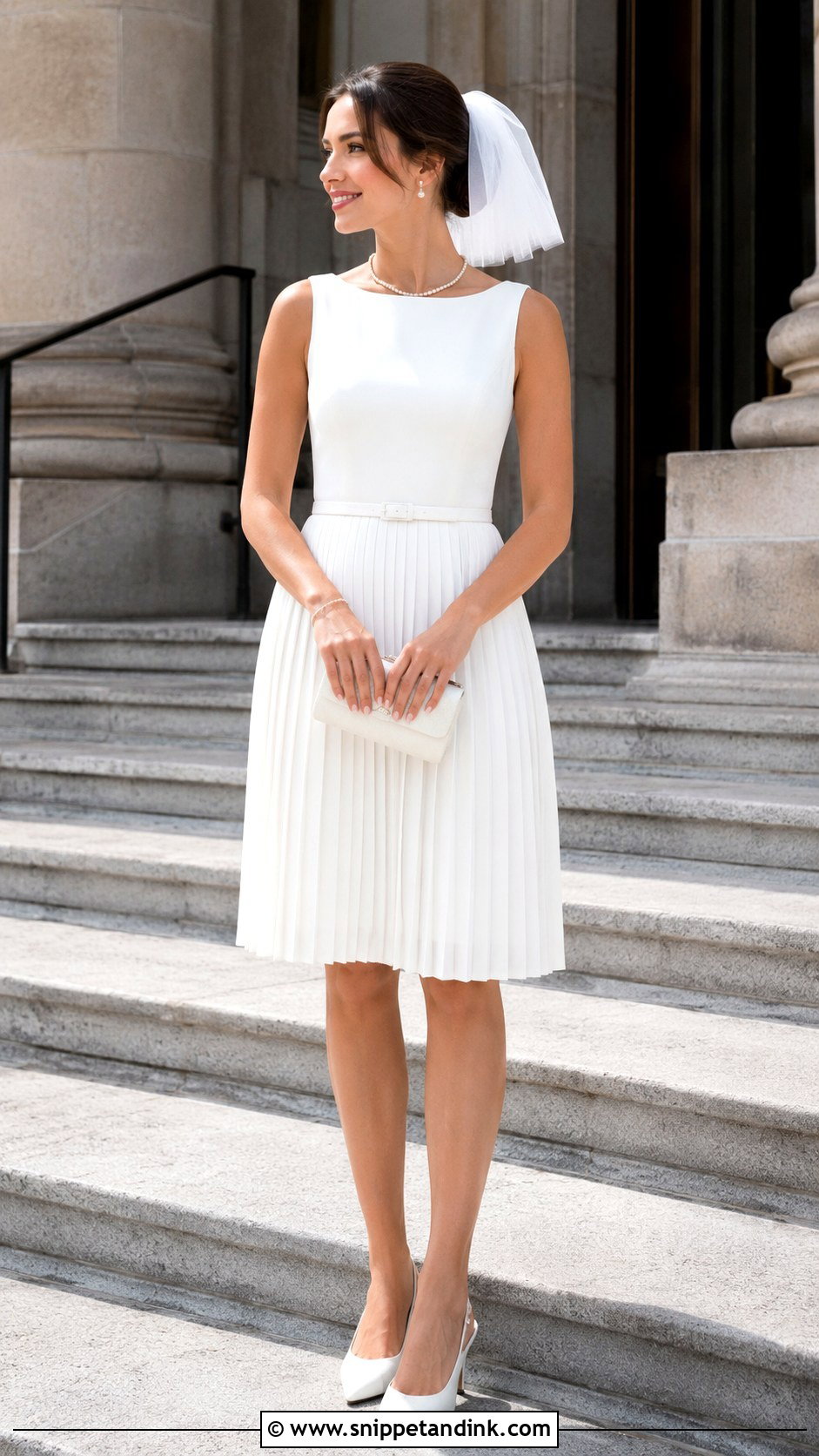
Pleats give a short dress movement without any trim. Narrow pleats with a fitted top look streamlined; wide ones add volume you may not want. Knee length is practical on stairs and in seated photos. Chiffon pleats are soft, crepe pleats look sharper. A belt should match the dress, not contrast. Steam the skirt the night before and transport it hanging full length, or the pleats will crush into odd folds by the time you arrive.
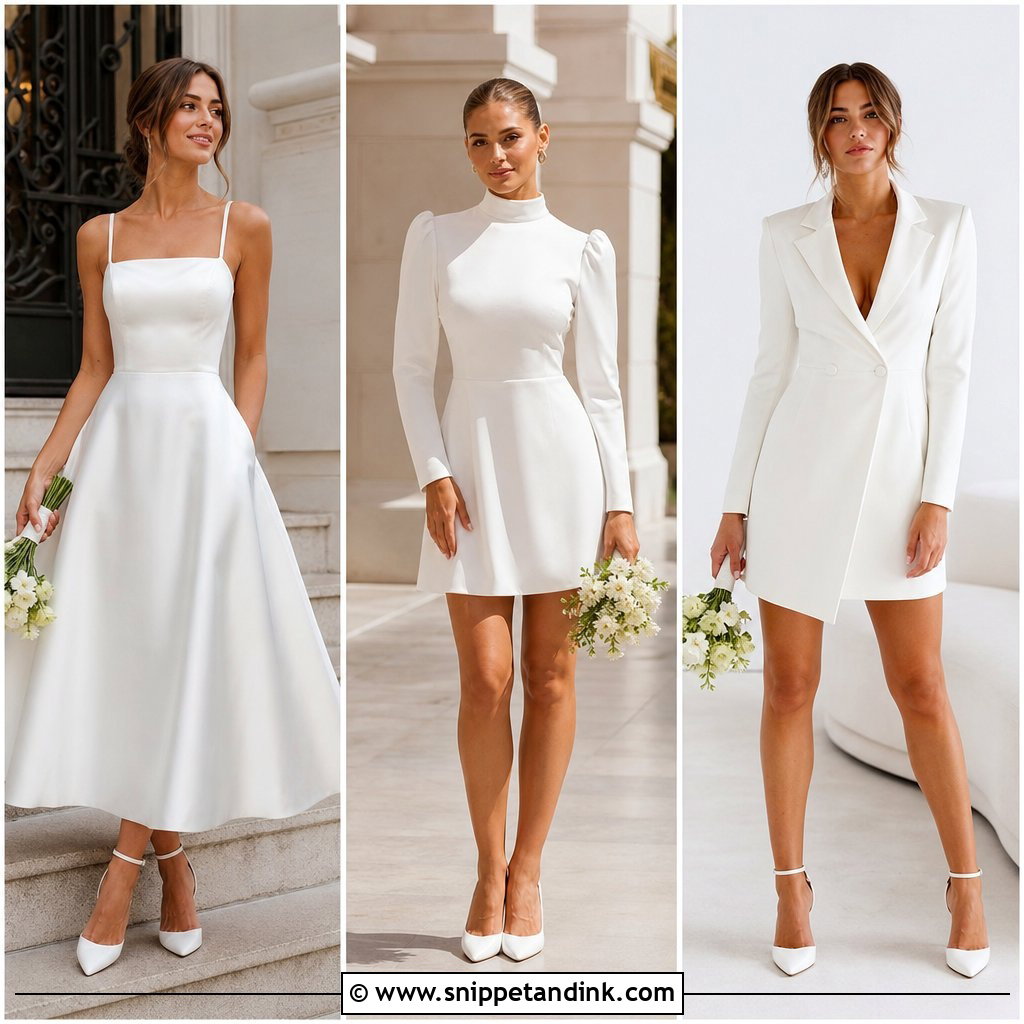
15. One Shoulder Short Civil Wedding Dress
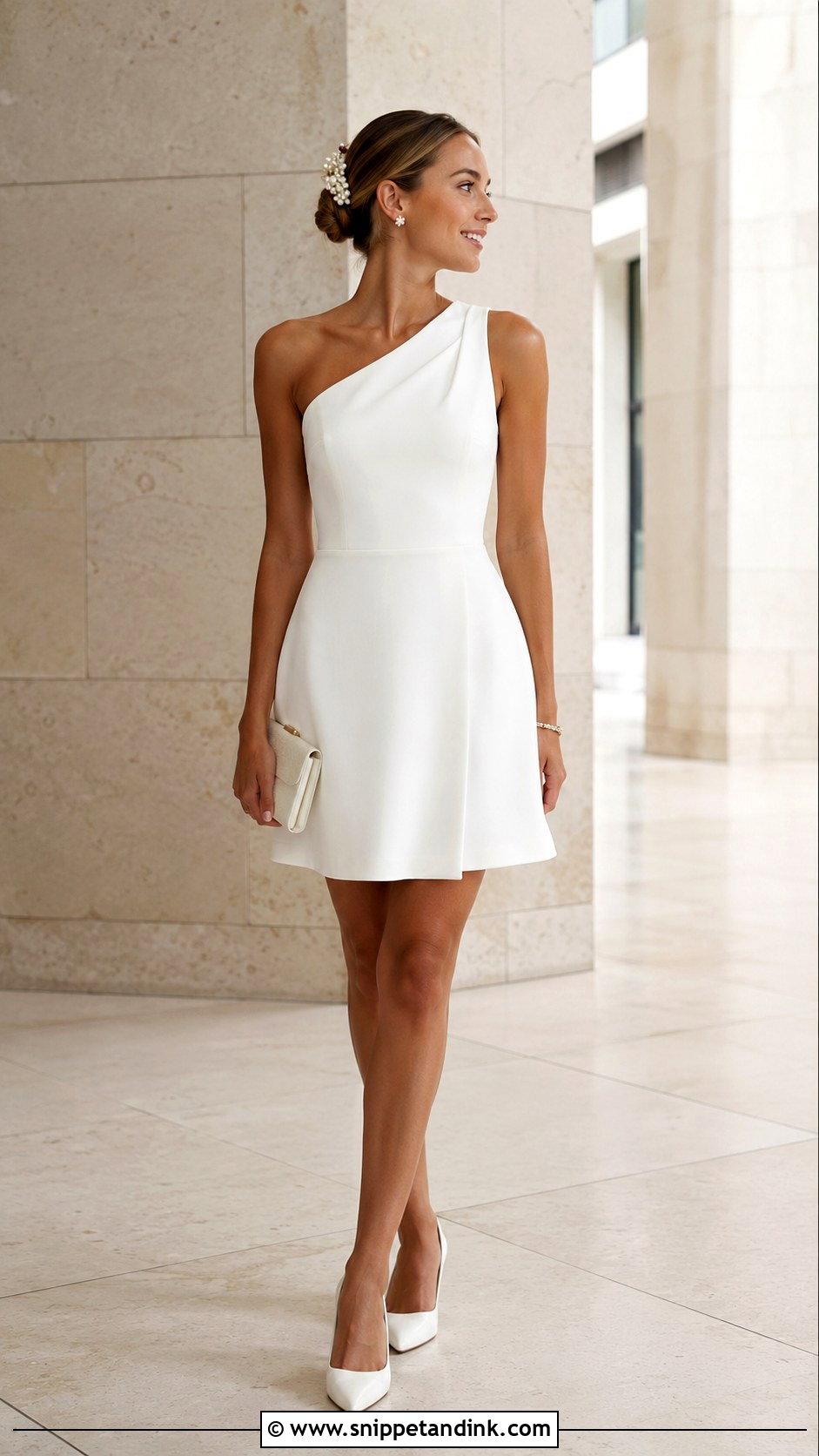
With only one shoulder holding the bodice up, the support has to come from inside the dress. That’s the first thing I check: boning or a grip band along the bare side, and a strapless bra or built-in cups. A small drape at the shoulder softens the asymmetry, but large ruffles undo the minimal look. Studs or small drops instead of a necklace, and a sleek ponytail or side-parted bun. A hair comb or small bow can replace the veil.
16. High Neck Short Civil Wedding Dress
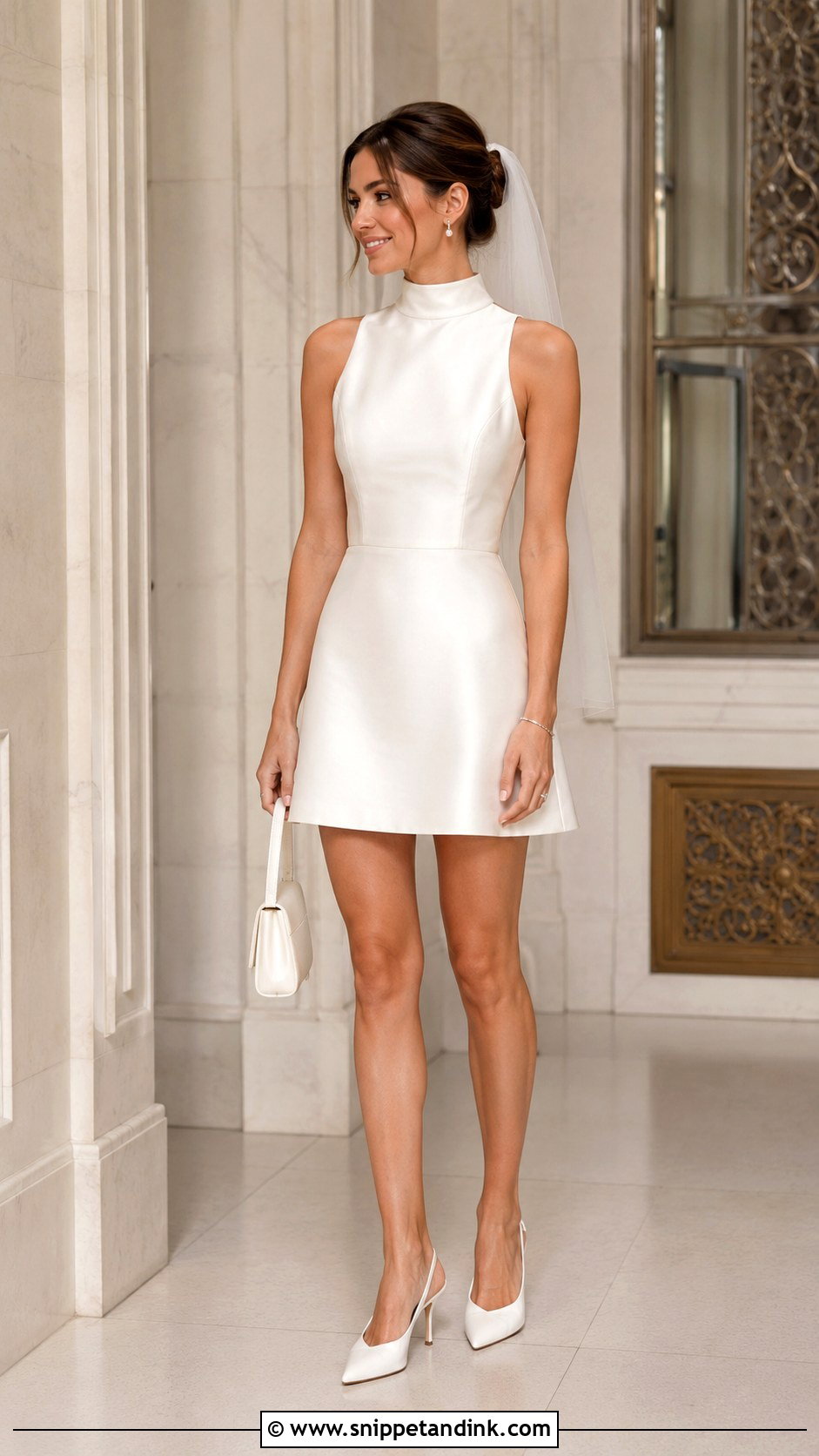
A high neck covers you up top, so a short hem feels light rather than daring. Sleeveless or cap sleeve in crepe, satin or subtle jacquard, with a fitted waist and A-line skirt, keeps the collar from looking severe. Turn your head and sit down at the fitting; a collar that’s too snug rubs all day. Wear the hair up to show any buttons at the back. A narrow veil under the bun adds a traditional note.
17. Empire Waist Short Civil Wedding Dress
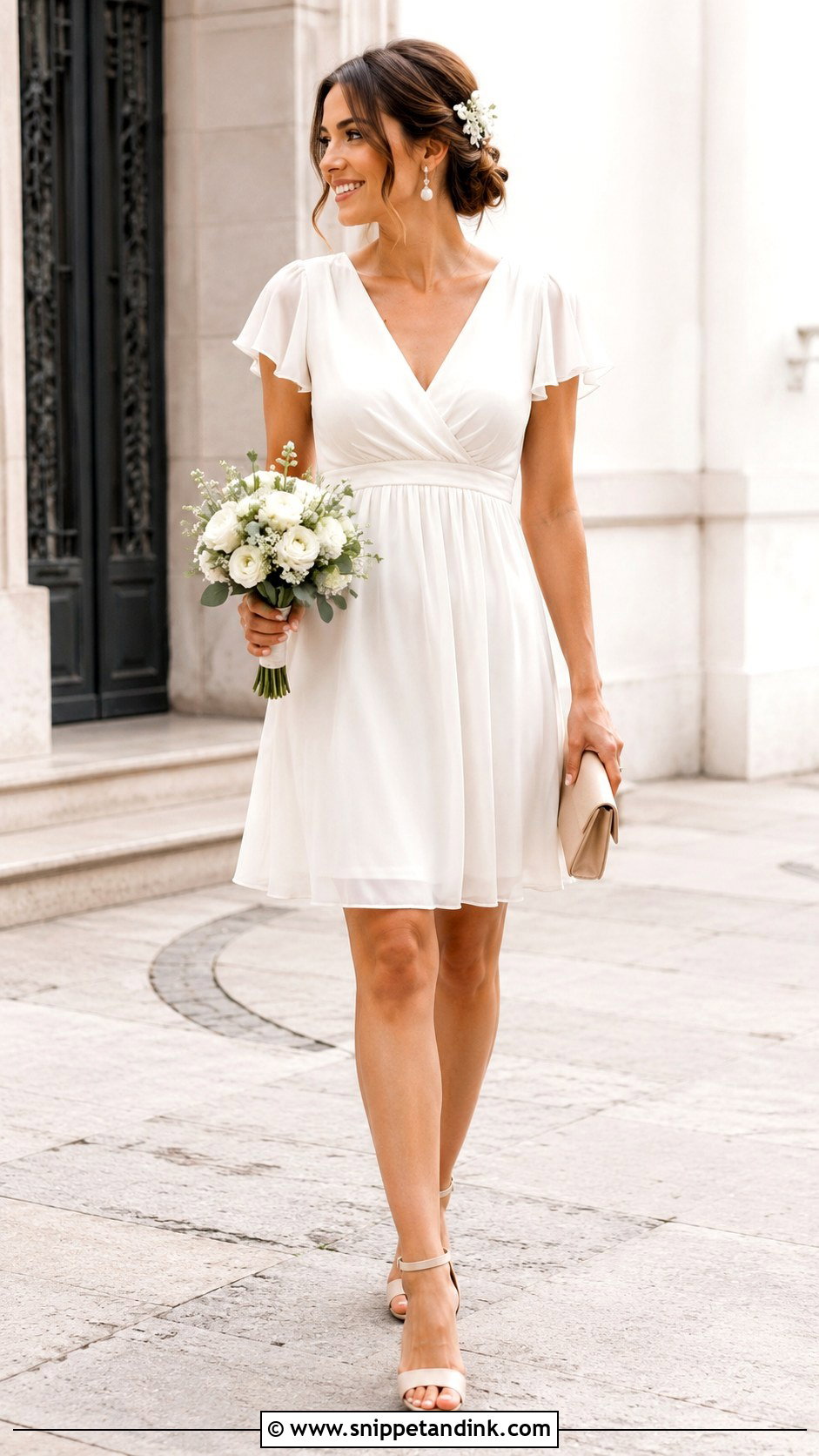
An empire-waist dress sits just under the bust and falls loosely over the waist and hips. It handles changing measurements well. Lined chiffon, georgette or light crepe give it movement. Watch the gathering under the bust: too much, and a short empire dress starts to look like a babydoll. Flutter sleeves or wide straps balance the skirt. A floral hair comb or a narrow veil, and a compact bouquet that doesn’t hide the raised waist.
18. Slip Short Civil Wedding Dress With Blazer
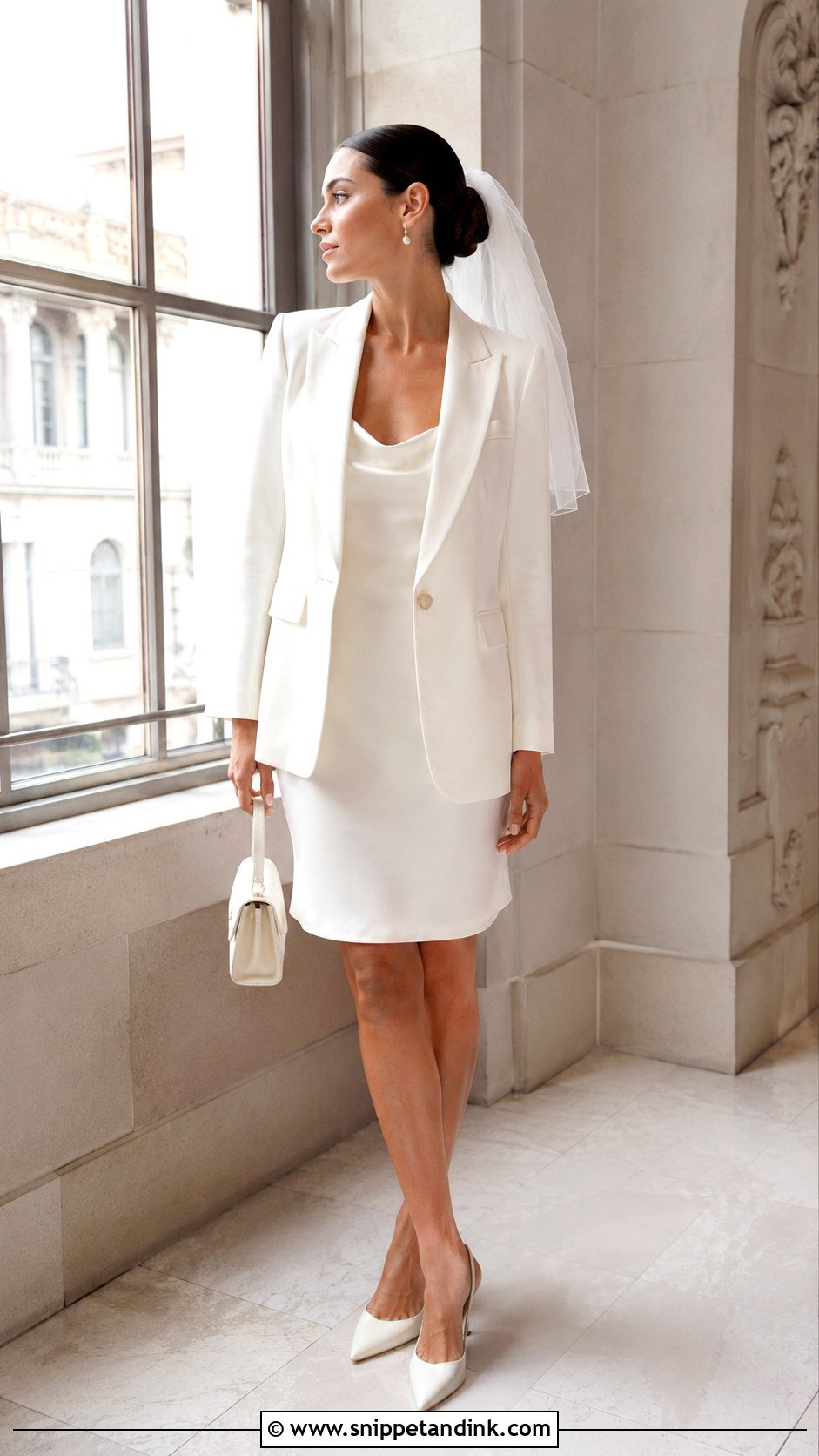
A satin slip with a blazer is really two outfits: blazer on for the courthouse and formal photos, off for the meal. Pick a slip with wider straps, a modest neckline and a hem near the knee. The blazer should end at or just above the hip and sit cleanly through the shoulders. Satin shows every line underneath, so fit it in smooth, invisible underwear and check it by a window. Slingbacks, a small leather bag, a sleek bun and a short veil finish it.
19. Tweed Short Civil Wedding Dress
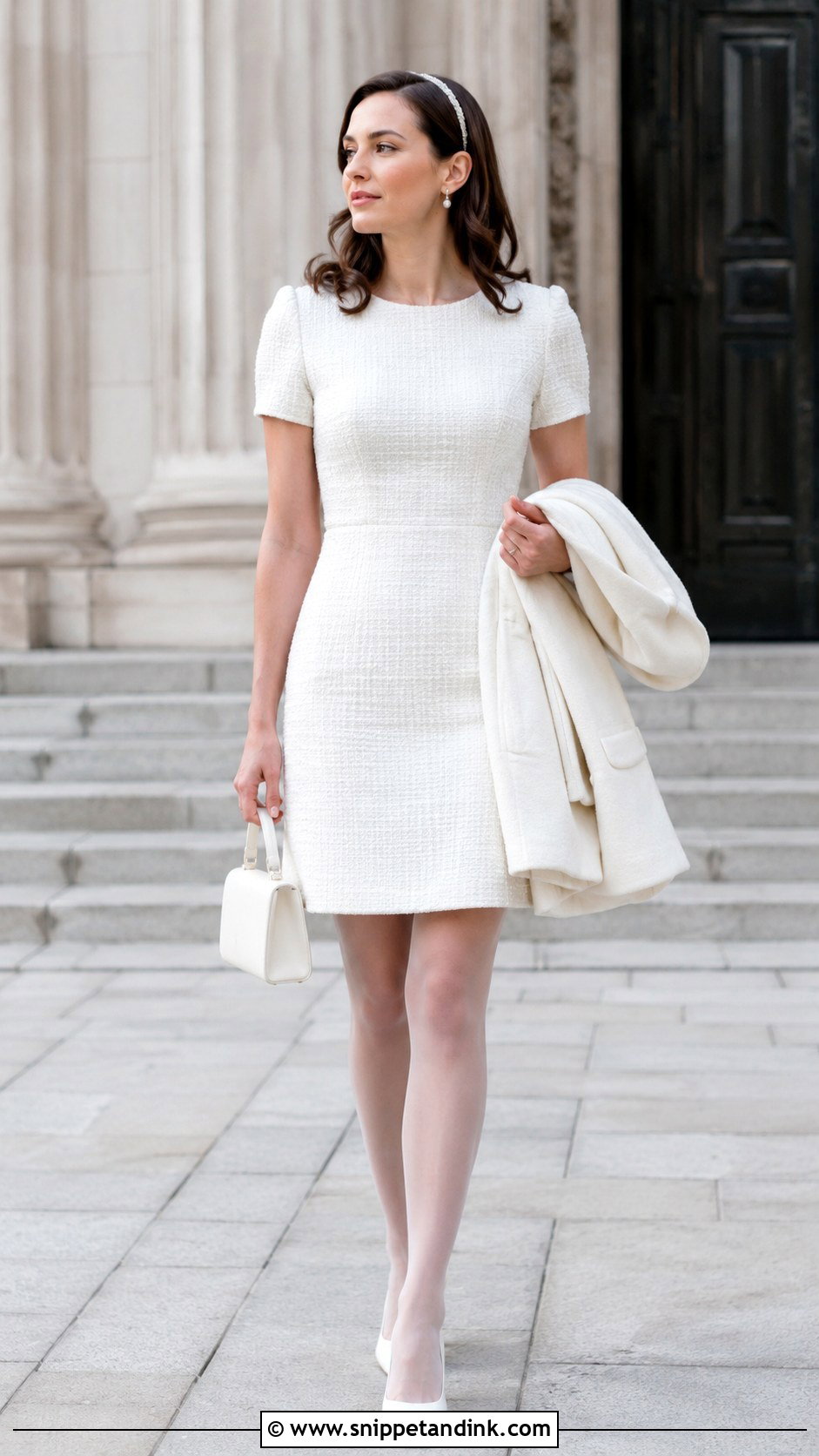
Tweed is warm and structured, so it suits a cool-season civil wedding. A white tweed mini dress needs a full lining, because loose-weave tweed scratches and can snag on tights. A simple shift or soft A-line with clean edges keeps it from looking like a costume. Closed-toe pumps, sheer tights and a cropped ivory coat suit the season. Since the fabric has depth already, keep jewelry to pearl earrings and a narrow headband.
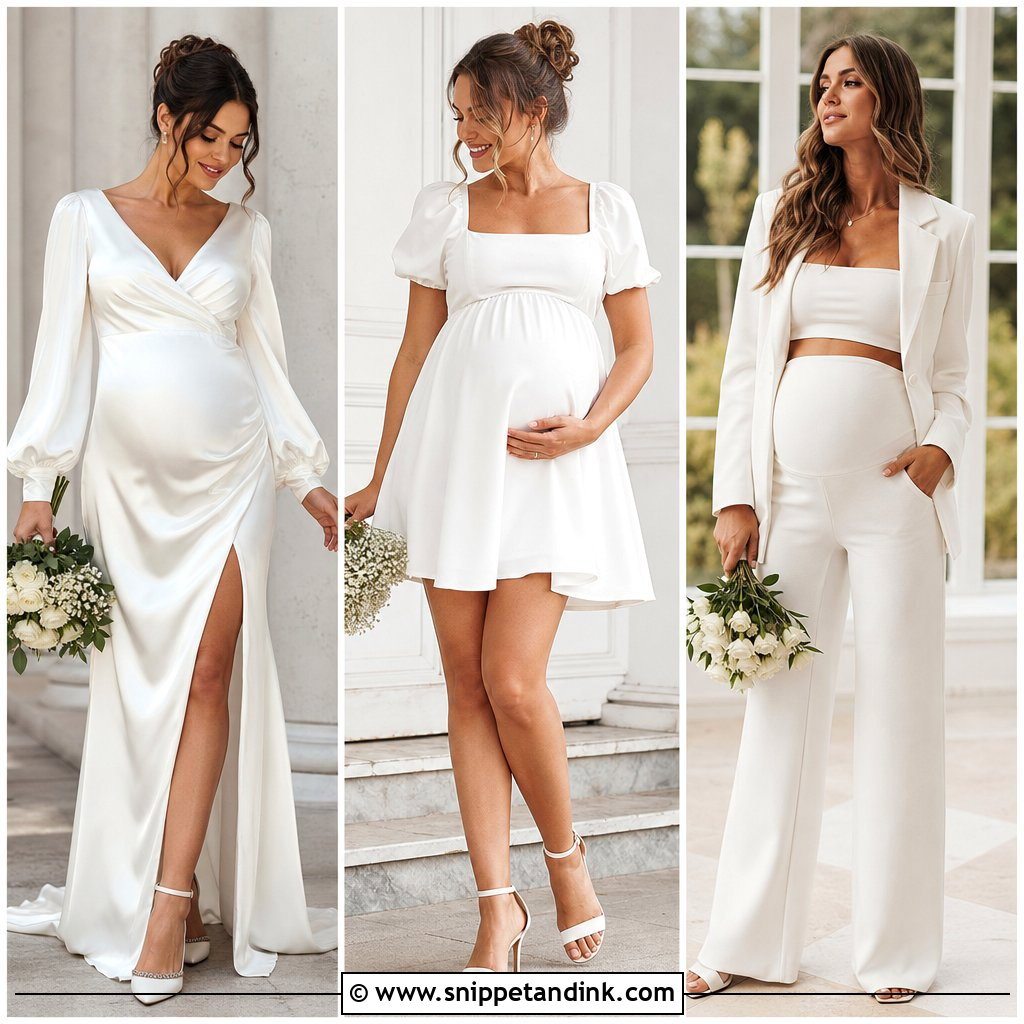
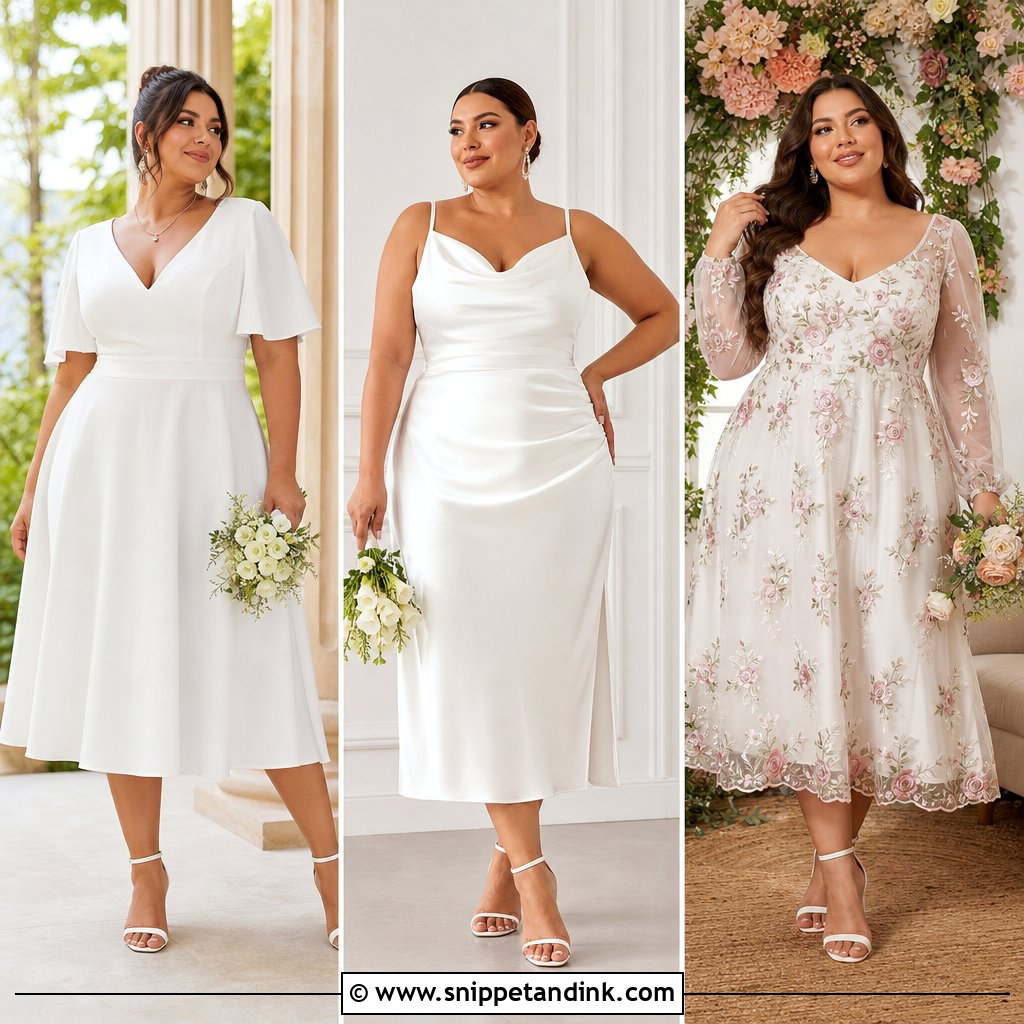
20. Ruched Short Civil Wedding Dress
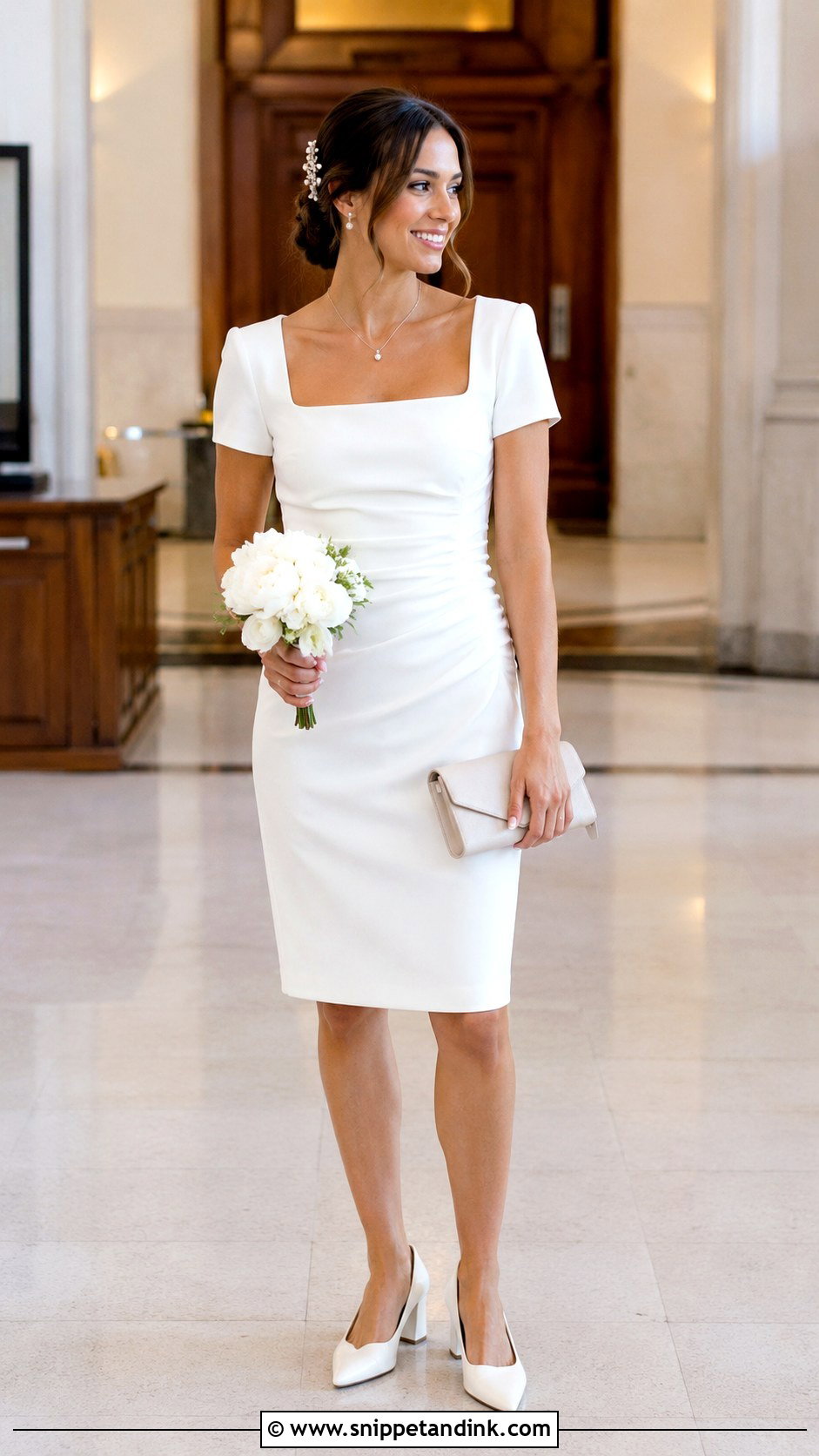
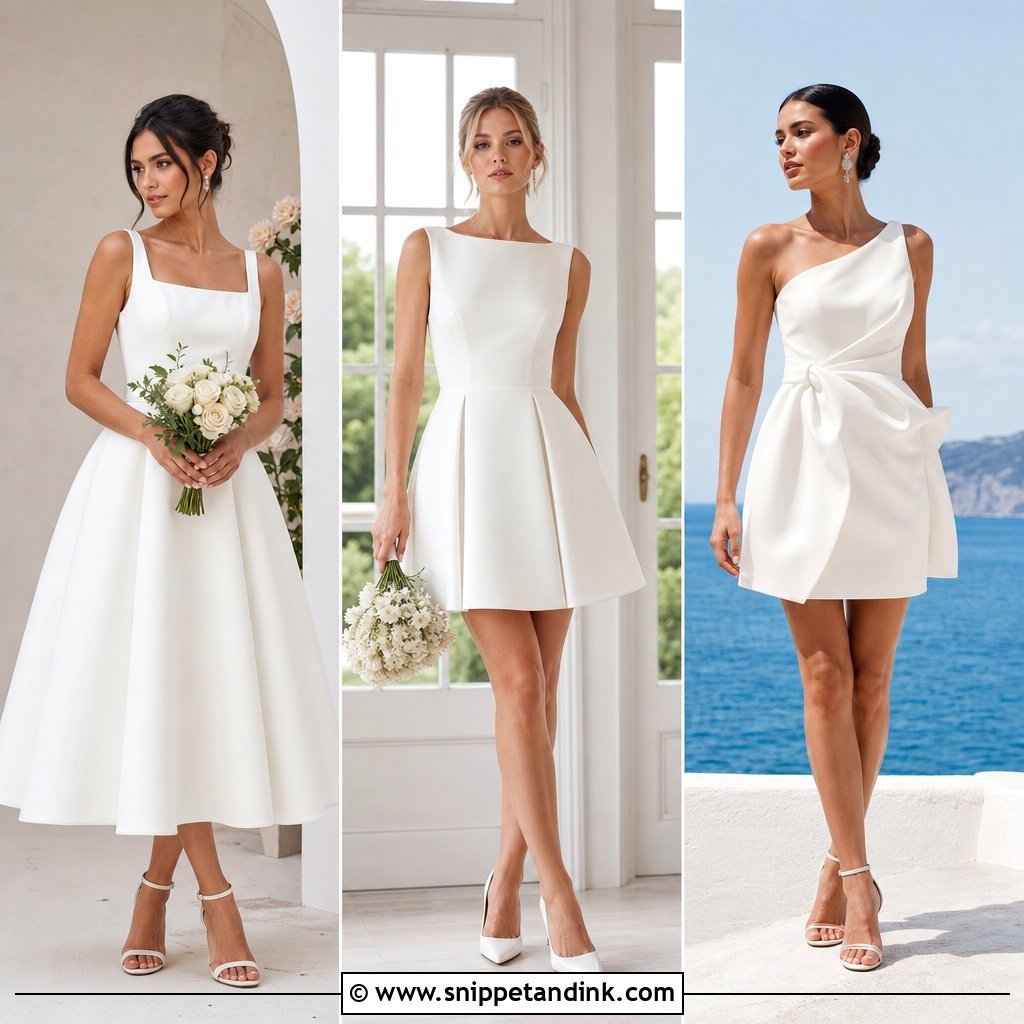
Ruching adds a little texture and some give, which helps if your weight moves around before the wedding. Gathering at the waist or side seam looks deliberate; ruching all over looks like a bodycon party dress. A V or square neck with short sleeves and a knee-length hem keeps it balanced. Lined stretch crepe won’t cling. At the fitting, sit and stand a few times and make sure the gathers settle back into place each time.
What Gives a Cheap Minimal Dress Away Up Close
A simple dress is judged from a foot away, by guests hugging you and by close-up photos. Without lace or beading to distract, construction shows. Before buying, I turn the dress inside out and look at a few things.
- Seams should lie flat with no puckering, especially along the side and at the zip.
- The zip should be invisible and sit flat. A bubbling zip at the small of the back is the first thing a camera catches.
- Lining should be cut slightly shorter than the dress and hang free, never peeking at the hem.
- Hold white fabric up to daylight. Thin white crepe or satin can show skin and underwear through it.
Shoes matter more with a short dress, since they’re fully on view. Scuff the soles on concrete so they grip, break them in at home, and match the tone of the shoe to your skin or the dress rather than adding a third color. With a minimal look, those small choices are most of what people see.
A Short Dress Lives or Dies on Proportion
From tailored blazer dresses to lace, satin and pleats, every short look here works if the proportions do. Test the whole outfit sitting, walking and on stairs, in your real shoes and underwear. Get alterations done early, and carry a bag big enough for what you need. Then add one bridal detail, whether that’s a veil, a pearl piece, a bow or a small bouquet, and let the simplicity carry the rest. That restraint is what makes a minimal outfit look intentional.
You'll Like These Ideas:



Leave a Reply