
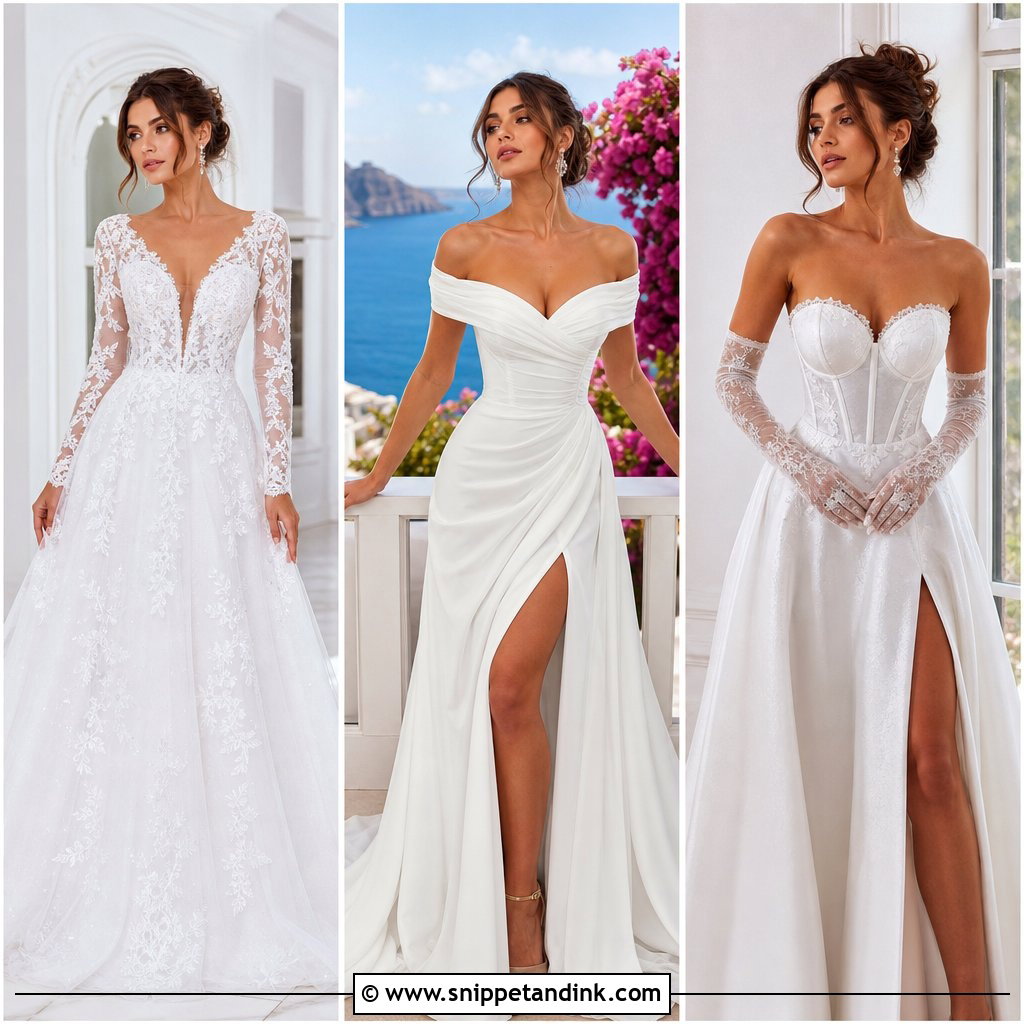
I love dressing brides in silk, and I’m also honest with them about it: silk is the fabric that shows every crease, water drop and seam. What you get in return is drape and a soft glow no synthetic quite copies. Depending on the weave, a silk gown can be a fluid bias-cut slip or a ball gown that stands on its own. Clean cuts, sculptural details, soft draping, bows and detachable layers are where a lot of brides are heading right now. Below are twenty-five silk looks, each paired with the shoes, veil or jewelry I’d put with it and the fabric notes I give in the fitting room.
Charmeuse, Crepe or Mikado? Reading the Fabric Before the Dress
Brides often ask me for a silk dress when what they mean is a particular weave. Each one behaves differently, and the weave matters more than the label.
- Charmeuse: light, slippery, shiny on one side. Drapes beautifully on the bias but shows every line beneath it.
- Crepe: matte with a slight grain. Hides creases better than satin and is comfortable for long days.
- Silk satin and duchess satin: heavier, with a high sheen. Holds shape, but marks wherever you sit.
- Mikado and faille: stiff, with a subtle texture. These are the silks for ball gowns, bows and sharp necklines. Mikado is often a silk blend.
Polyester satin looks similar in photos, creases less and costs less. I tell brides honestly that it’s a reasonable choice for a hot outdoor wedding, but it doesn’t breathe the way silk does, and it has a harder shine under flash.
My quick test at any appointment: ask for a swatch, scrunch it tight in your fist for ten seconds, then let go. Crepe and mikado spring back with faint lines; charmeuse and thin satin hold the creases. That’s roughly how the skirt will look after the car ride and the ceremony, so you’ll know what you’re signing up for.
1. Silk Slip Wedding Dress With Pearl Veil
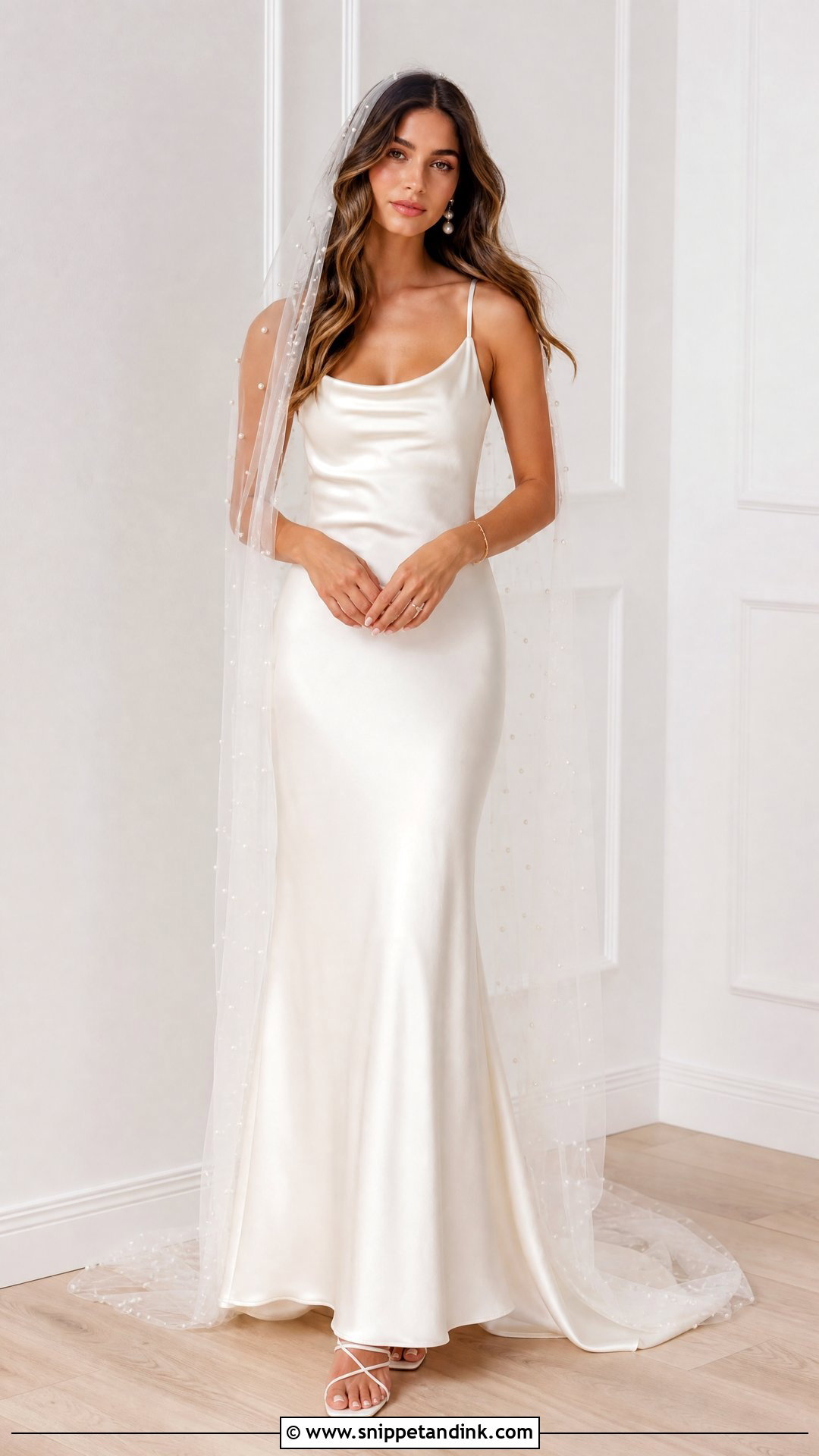
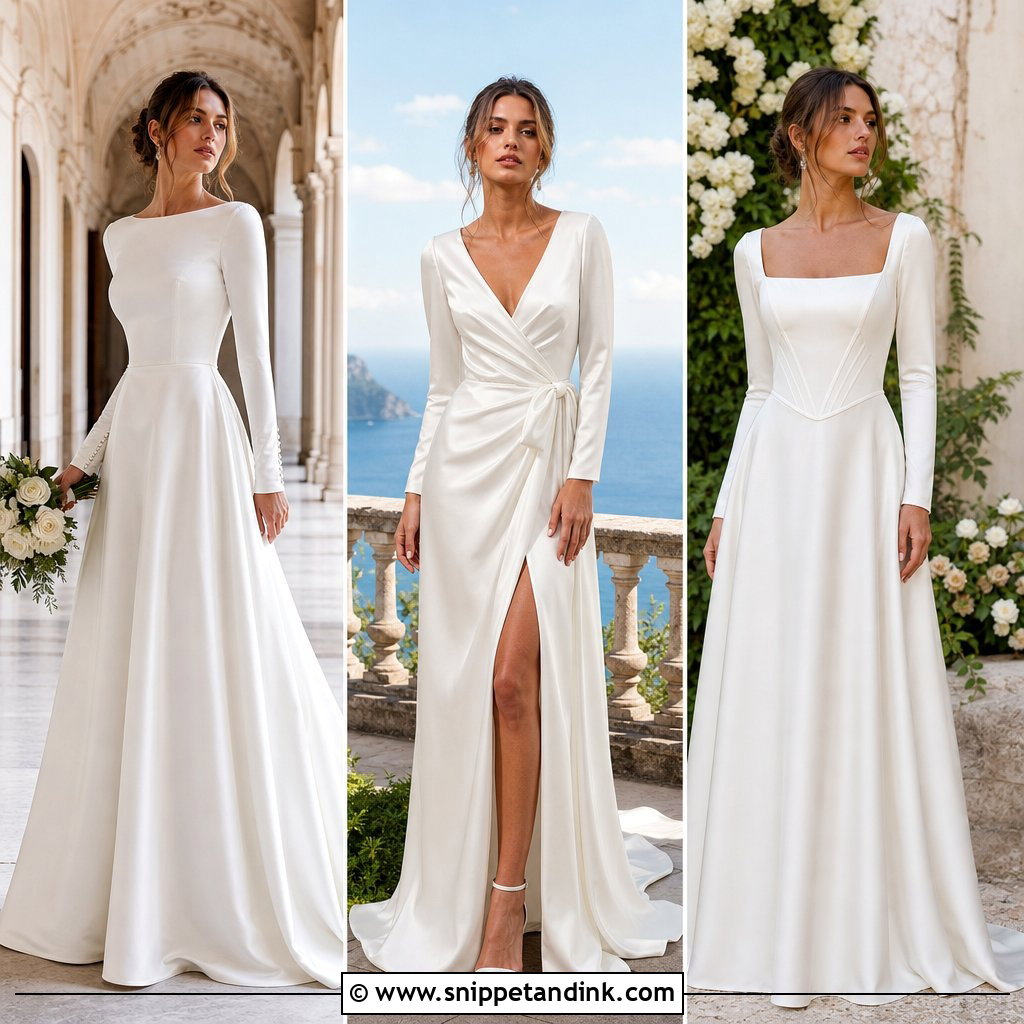
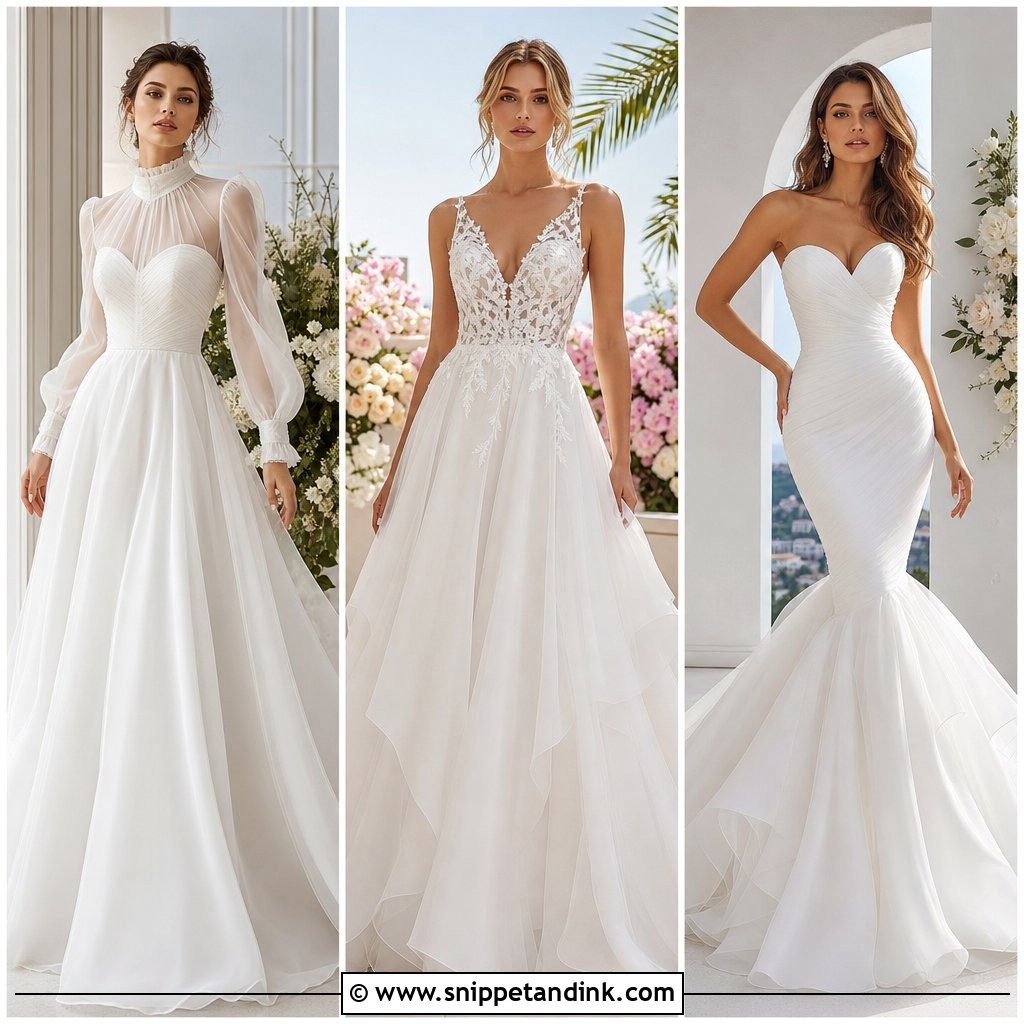
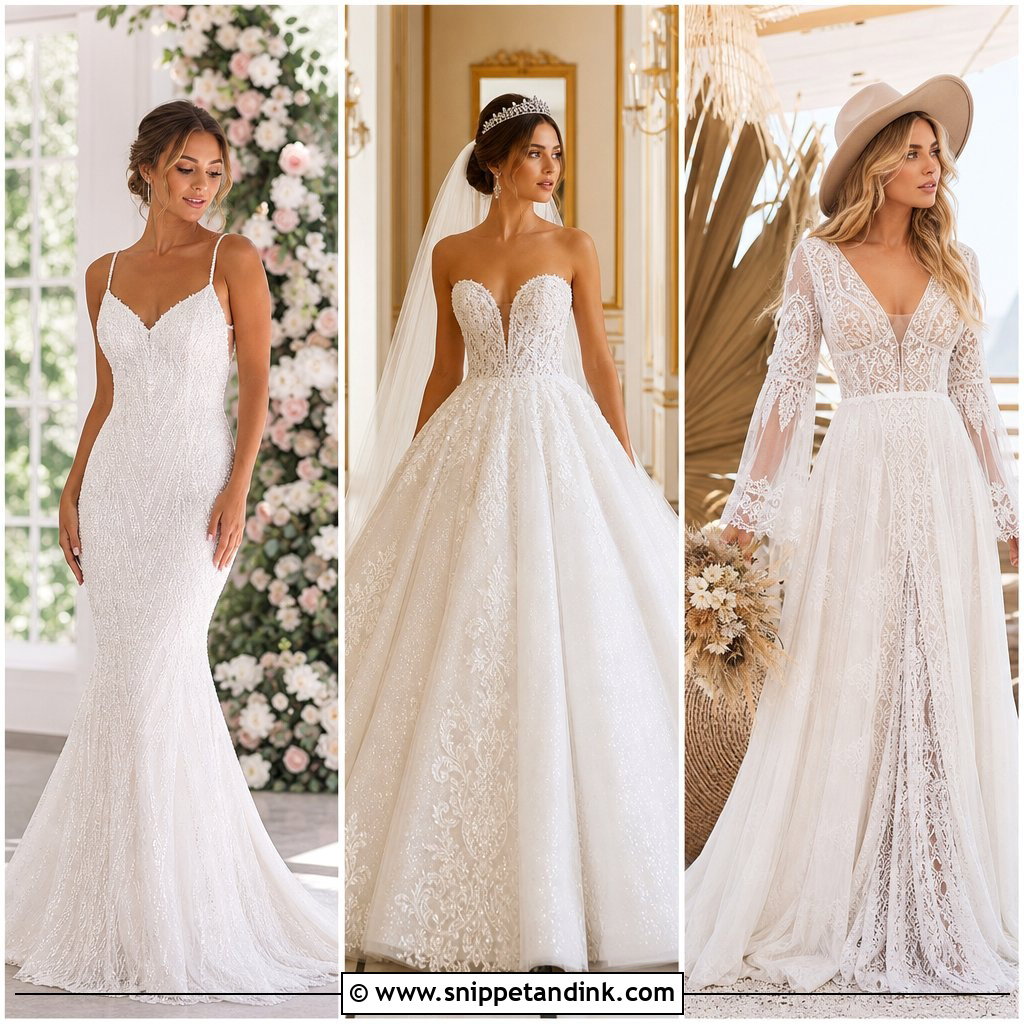
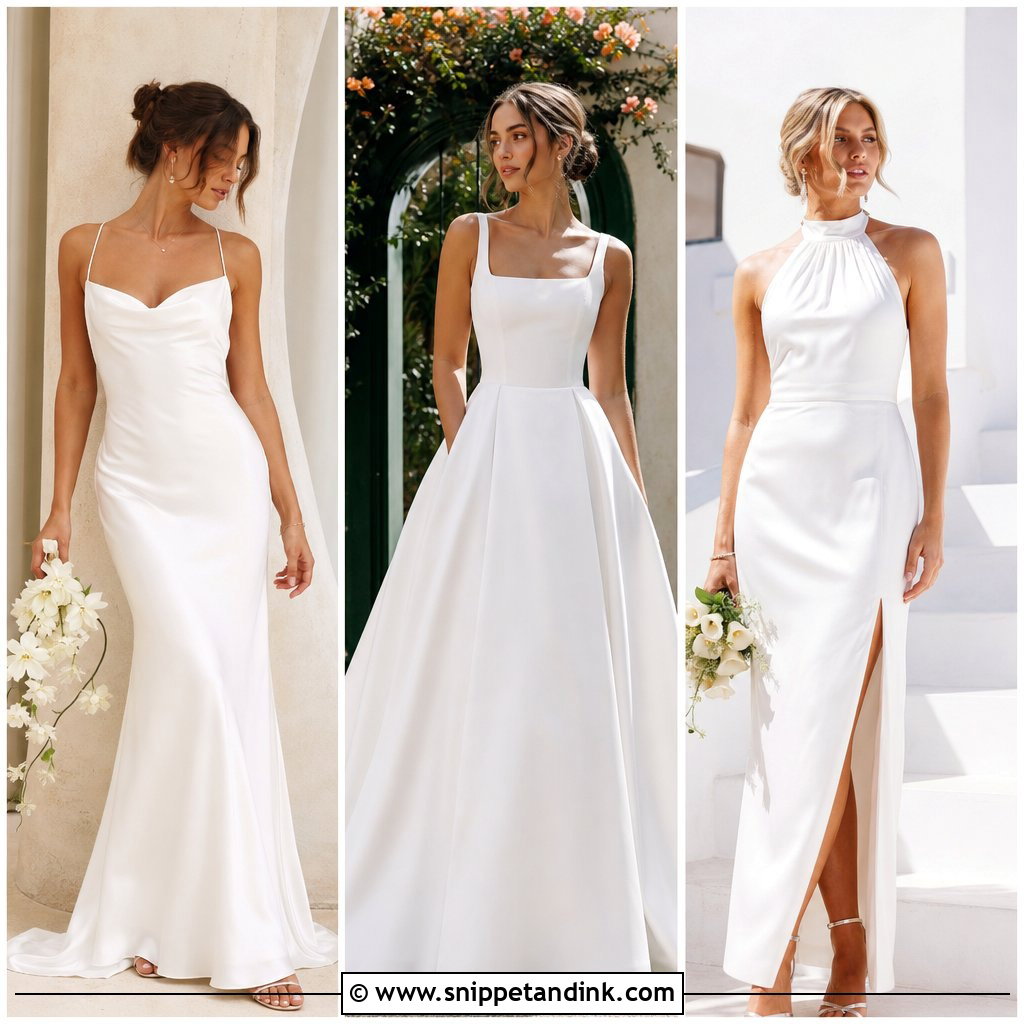
A silk slip wedding dress is cut on the bias, so it skims rather than grips. Charmeuse gives the liquid shine; silk satin a slightly heavier hang. It’s the most revealing gown on this list in one specific way: it shows underwear lines and every ridge of shapewear, so I always fit it over what you’ll actually wear on the day. Thin straps, a cowl or a straight neckline all work. A sheer pearl veil, pearl drops, barely-there heels and a small satin clutch keep it light. Smooth hair or soft waves.
2. Silk Ball Gown Wedding Dress With Cathedral Veil
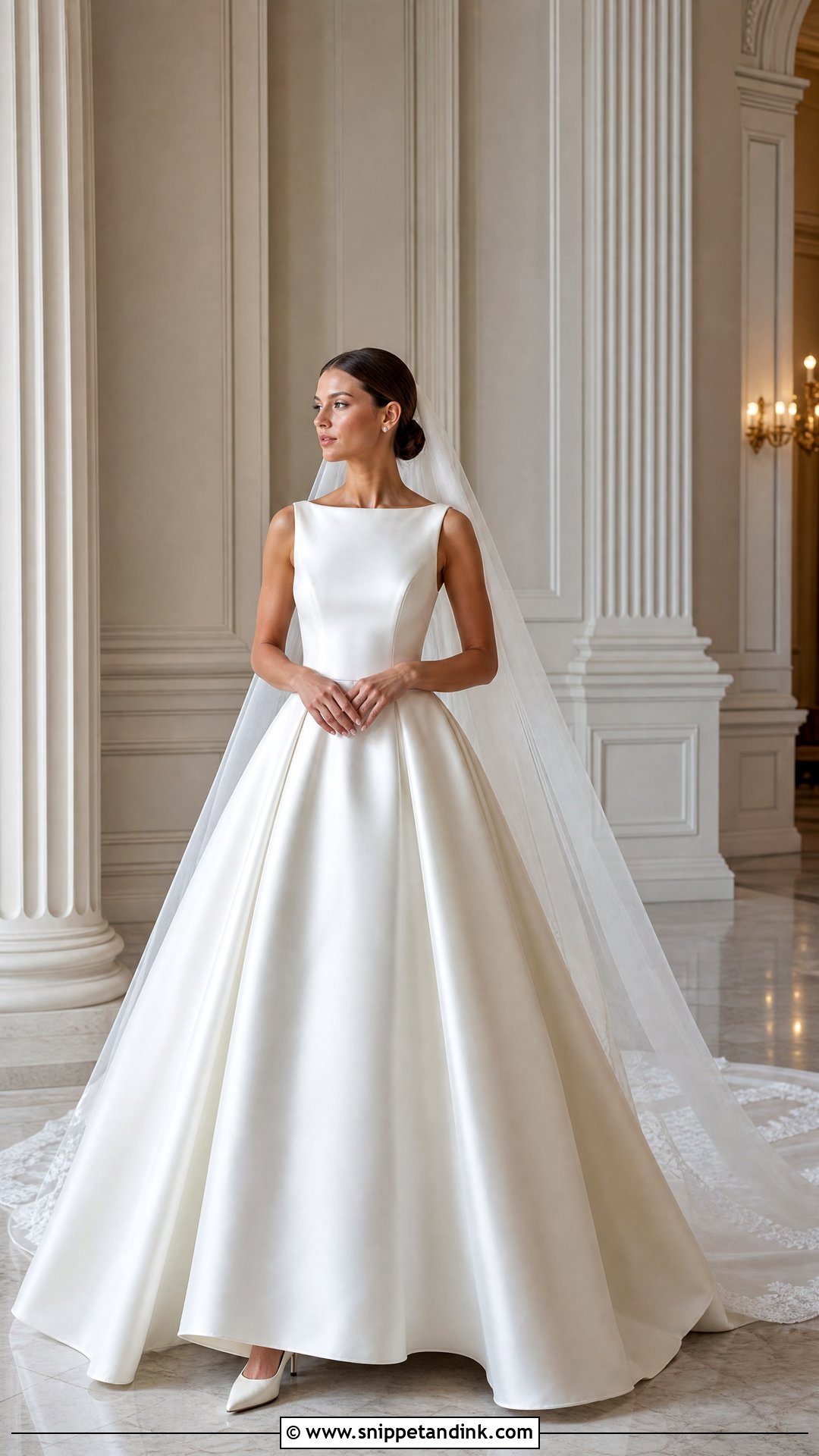
A silk ball gown needs a fabric with body. Silk mikado and duchess satin are the two I use, because they hold volume with less netting underneath than softer silks, which keeps the skirt lighter than it looks. Strapless, square or bateau necklines suit it. A cathedral veil, pointed satin pumps, diamond or pearl studs and a low bun complete it. Be aware that duchess satin marks where you sit; I tell brides to keep the skirt spread out on the car seat rather than bunched underneath.
3. Silk A Line Wedding Dress With Lace Veil
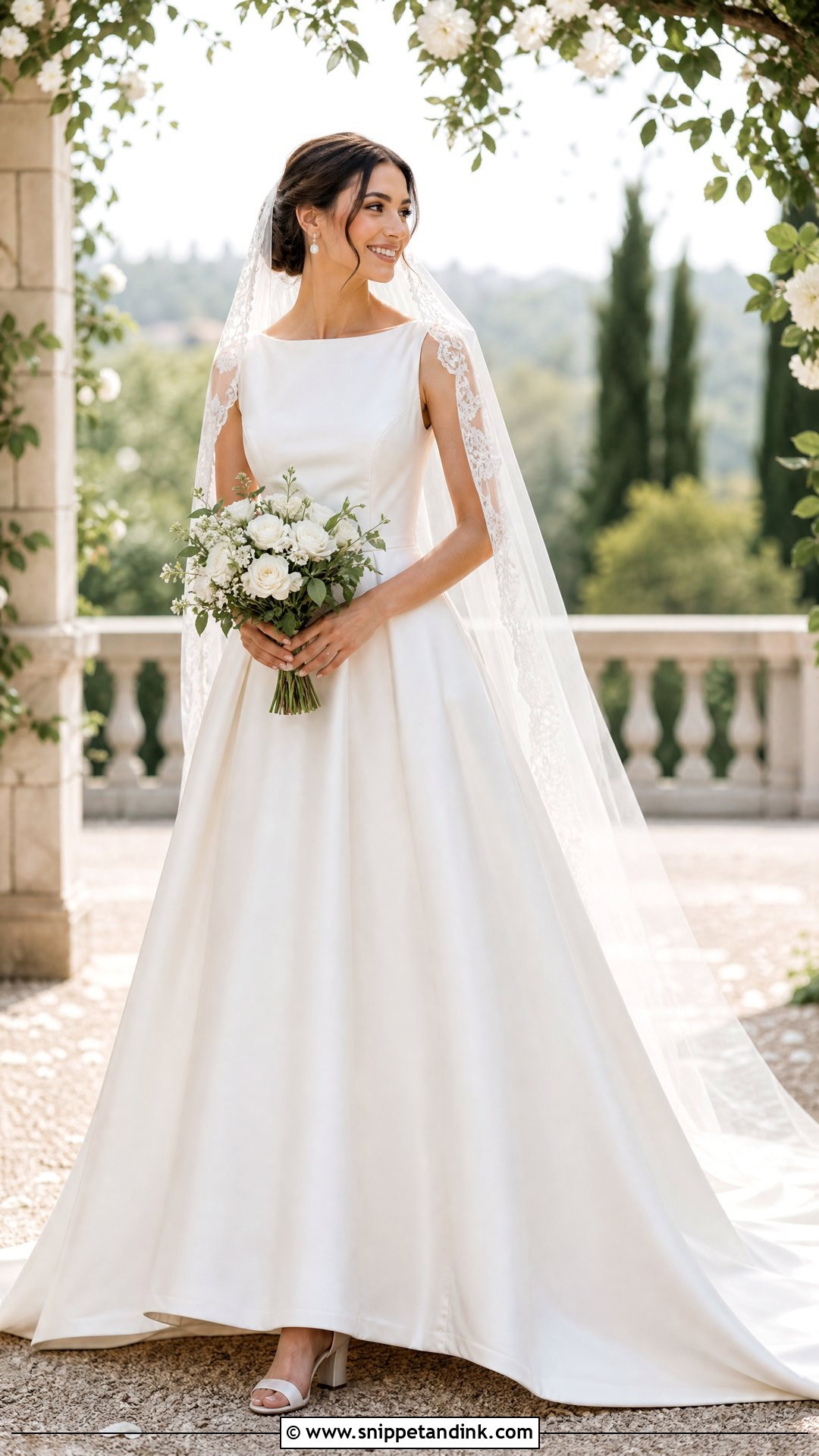
The A-line is where I send most brides who are new to silk, because it defines the waist and skims the hips without clinging. Silk satin, faille or mikado give it a smooth line; faille has a fine rib that hides creases better than plain satin, which is worth knowing for a long day. A lace veil softens it. Wide straps or an off-the-shoulder neckline balance the bodice. Pearl earrings, block heels and a simple bouquet are enough.
4. Silk Mermaid Wedding Dress With Long Gloves
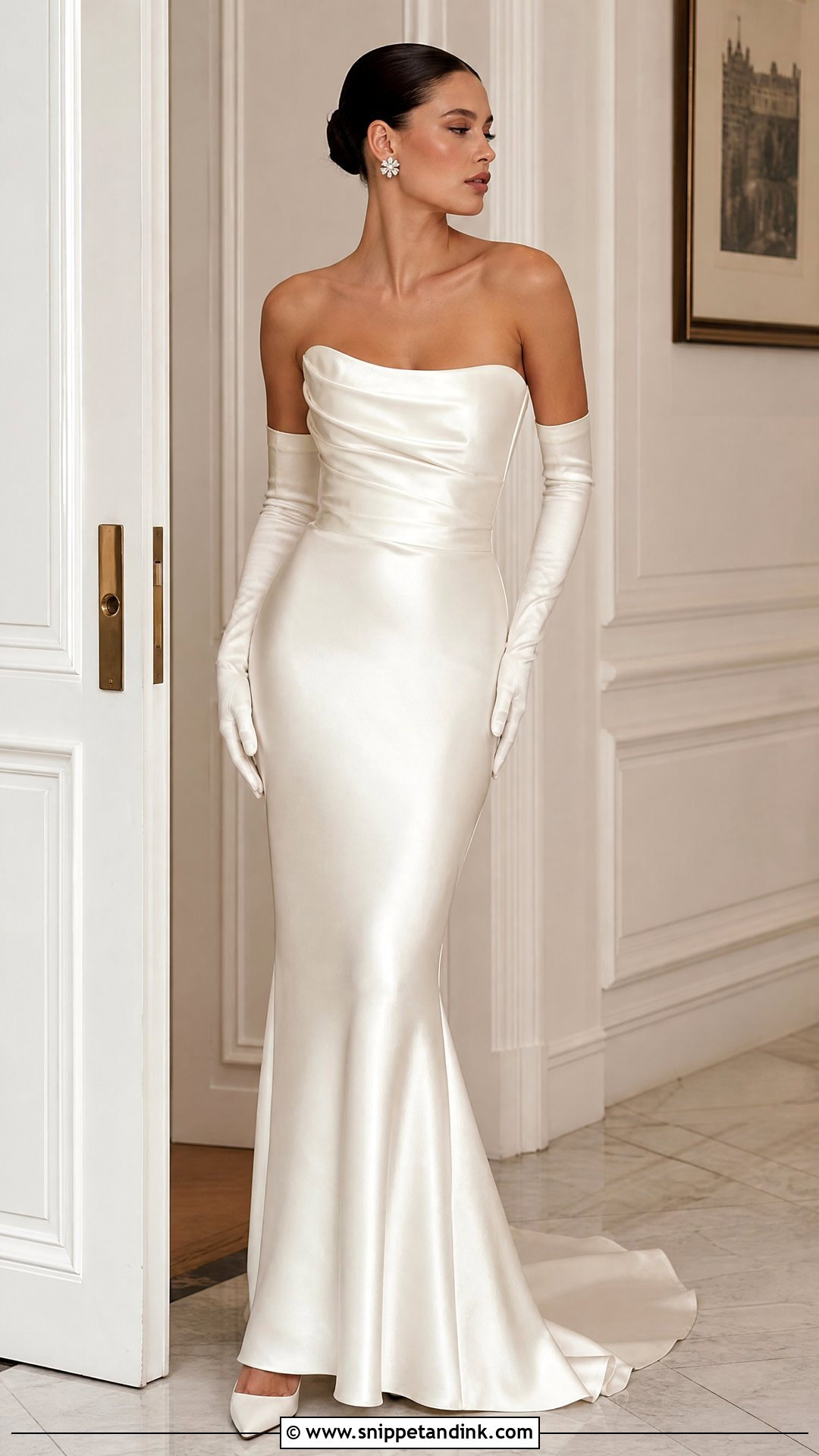
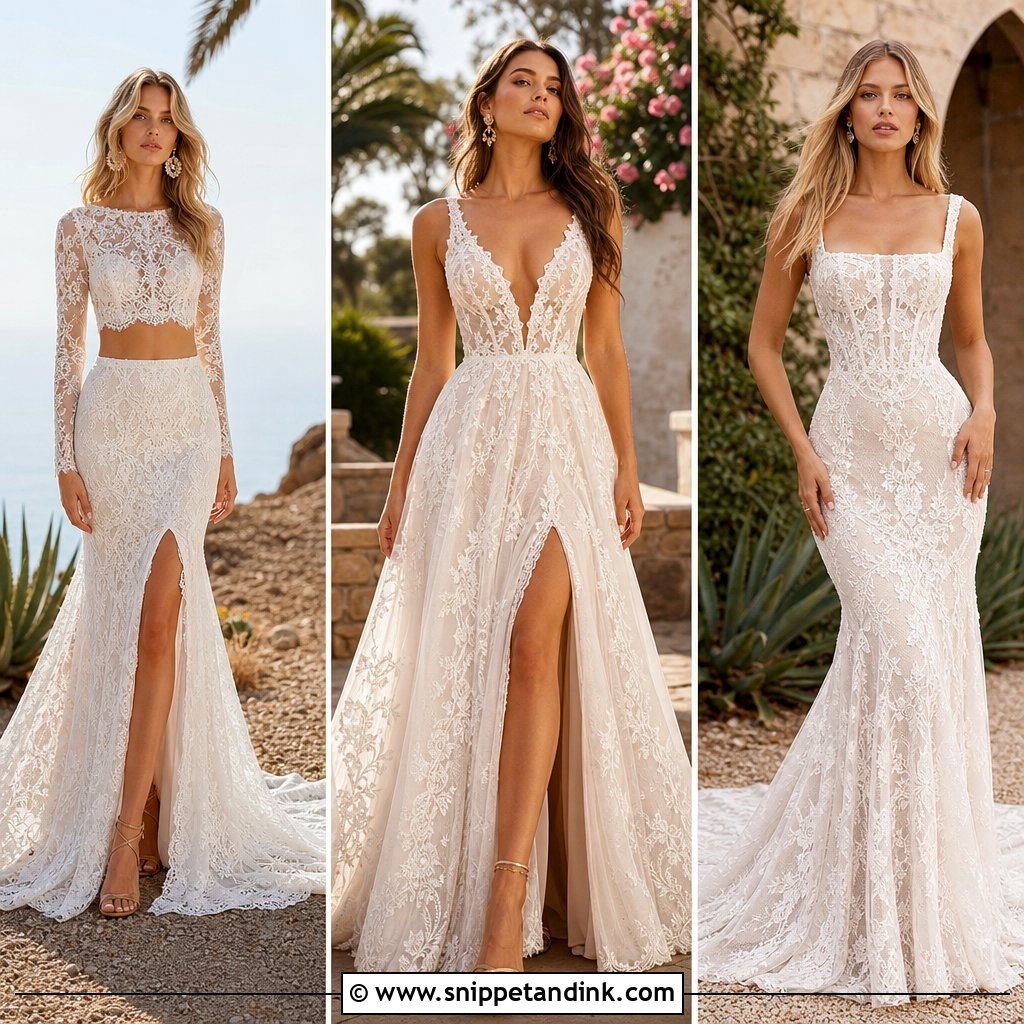
Silk mermaids are fitted through the hips, and silk has almost no stretch. That means the fit has to be exact, and I’d plan an extra fitting. Silk crepe is a little kinder to move in than satin. The flare usually opens near the knee. Long gloves suit a strapless or off-shoulder version for an evening hotel wedding. Pointed heels, a sleek updo and small statement earrings, with a plain veil so the outline stays clear.
5. Silk Column Wedding Dress With Statement Earrings
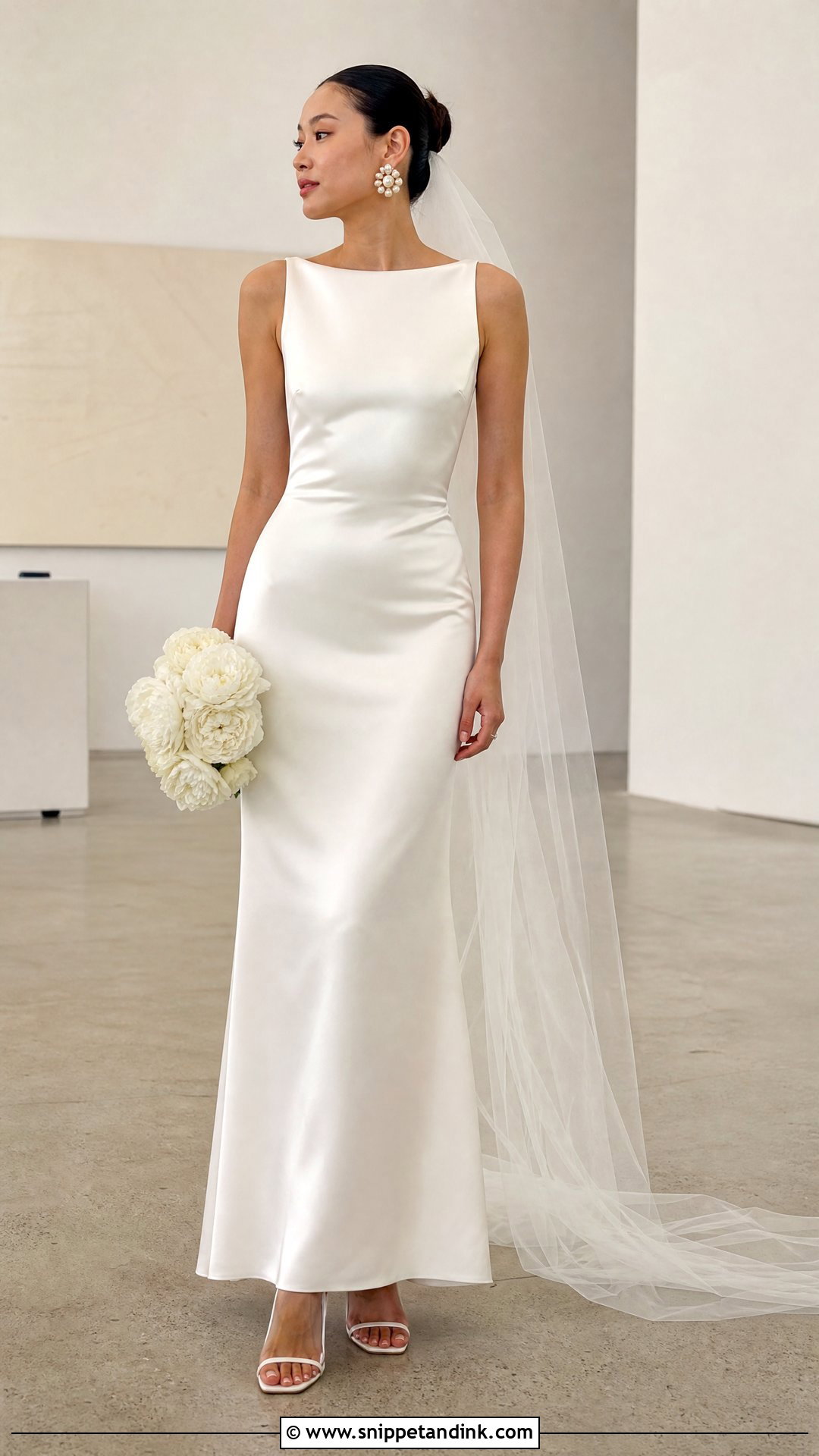
A silk column wedding dress runs in a straight line from shoulder to hem. Crepe gives you matte, satin and charmeuse give shine. Because it’s so plain, a pair of statement earrings is the one piece of drama it needs: sculptural pearl, crystal drops or sleek silver. Strappy heels, a smooth bun and a slim veil, or none. A column needs a walking slit or a kick pleat at the back; without one, you’ll take tiny steps all day. Courthouses, rooftops and modern venues suit it.
6. Silk Cowl Neck Wedding Dress With Strappy Heels
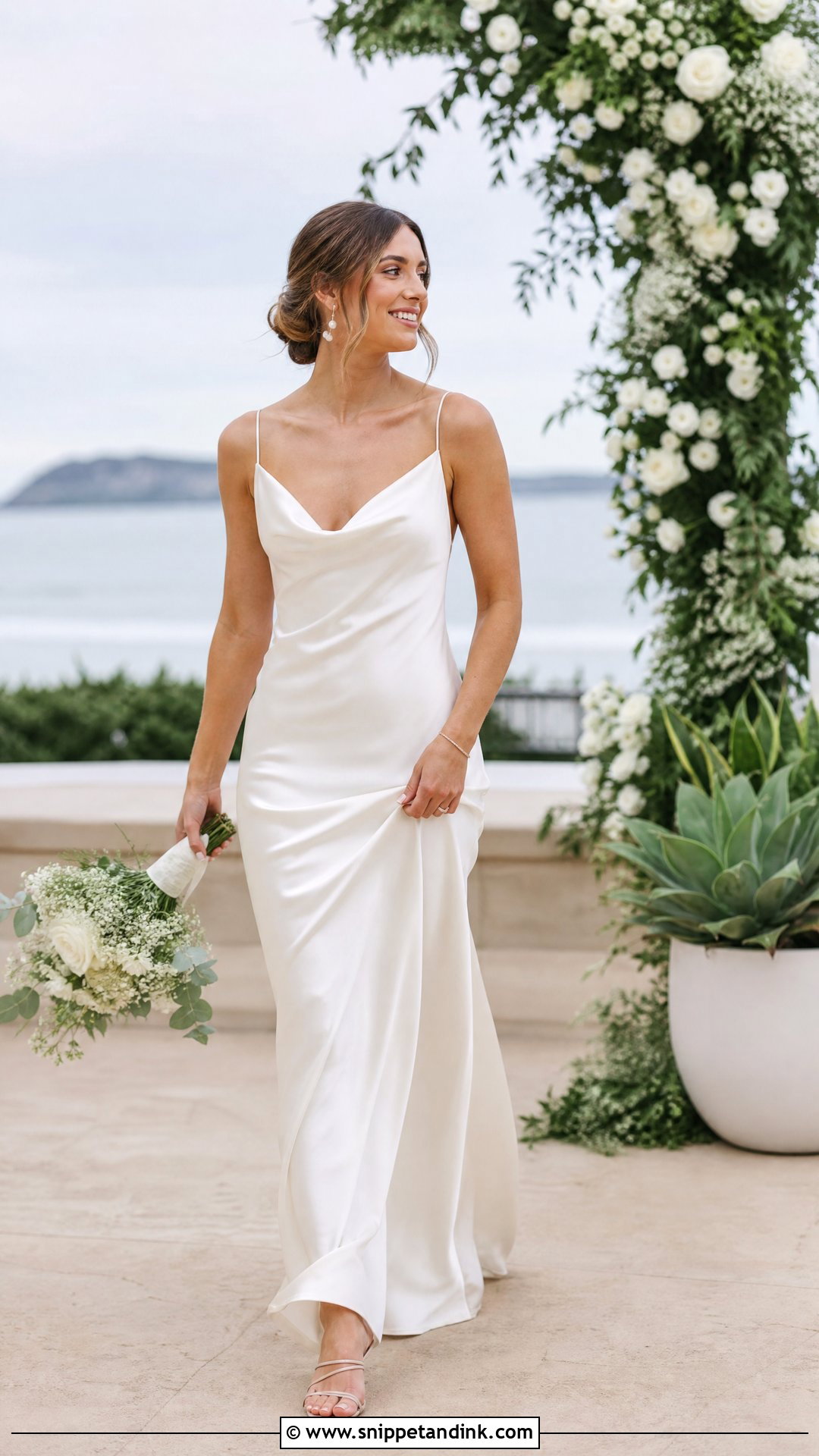
A cowl neckline is fabric draped in soft folds across the chest, and it only works in a silk that falls under its own weight, which is why charmeuse is the classic choice. The folds shift as you move, so I check that the drape doesn’t gape when you lean forward to sign the register; a tiny hidden stitch or a weight inside the cowl fixes it. Delicate strappy heels, a fine bracelet and pearl studs. Loose waves or a soft updo. A fingertip veil for the ceremony, off for dancing.
7. Silk Off Shoulder Wedding Dress With Low Bun
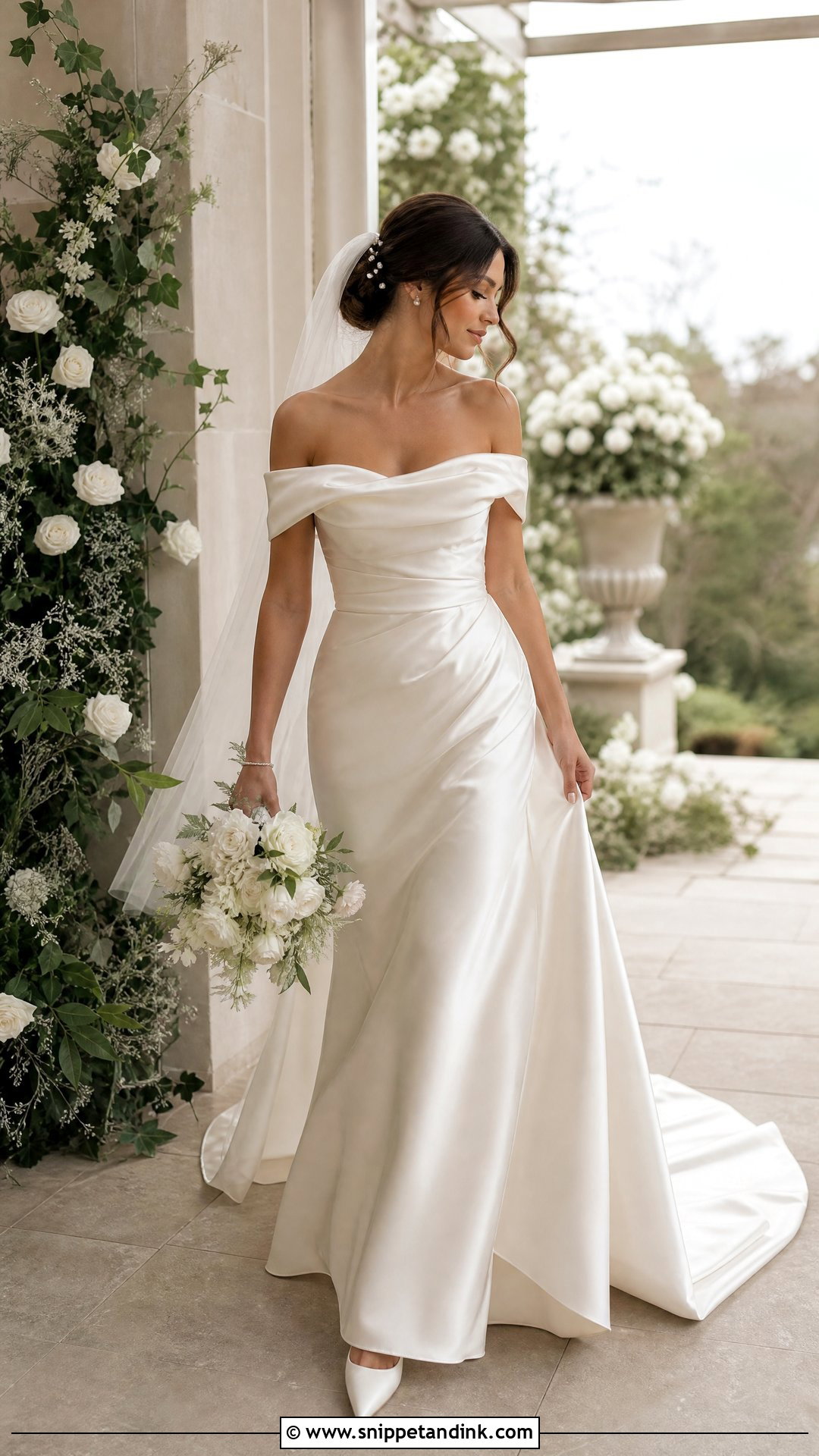
Off-shoulder silk depends on structure you can’t see. Draped silk satin needs an inner band or boning to stay put; mikado holds a crisper line. I have brides lift their arms in the fitting room, and if the neckline rides up, it gets taken in. A low bun with pearl pins shows off the shoulders, and pointed heels and a thin bracelet finish it. A plain veil, since the neckline is already the feature.
8. Silk Square Neck Wedding Dress With Satin Pumps
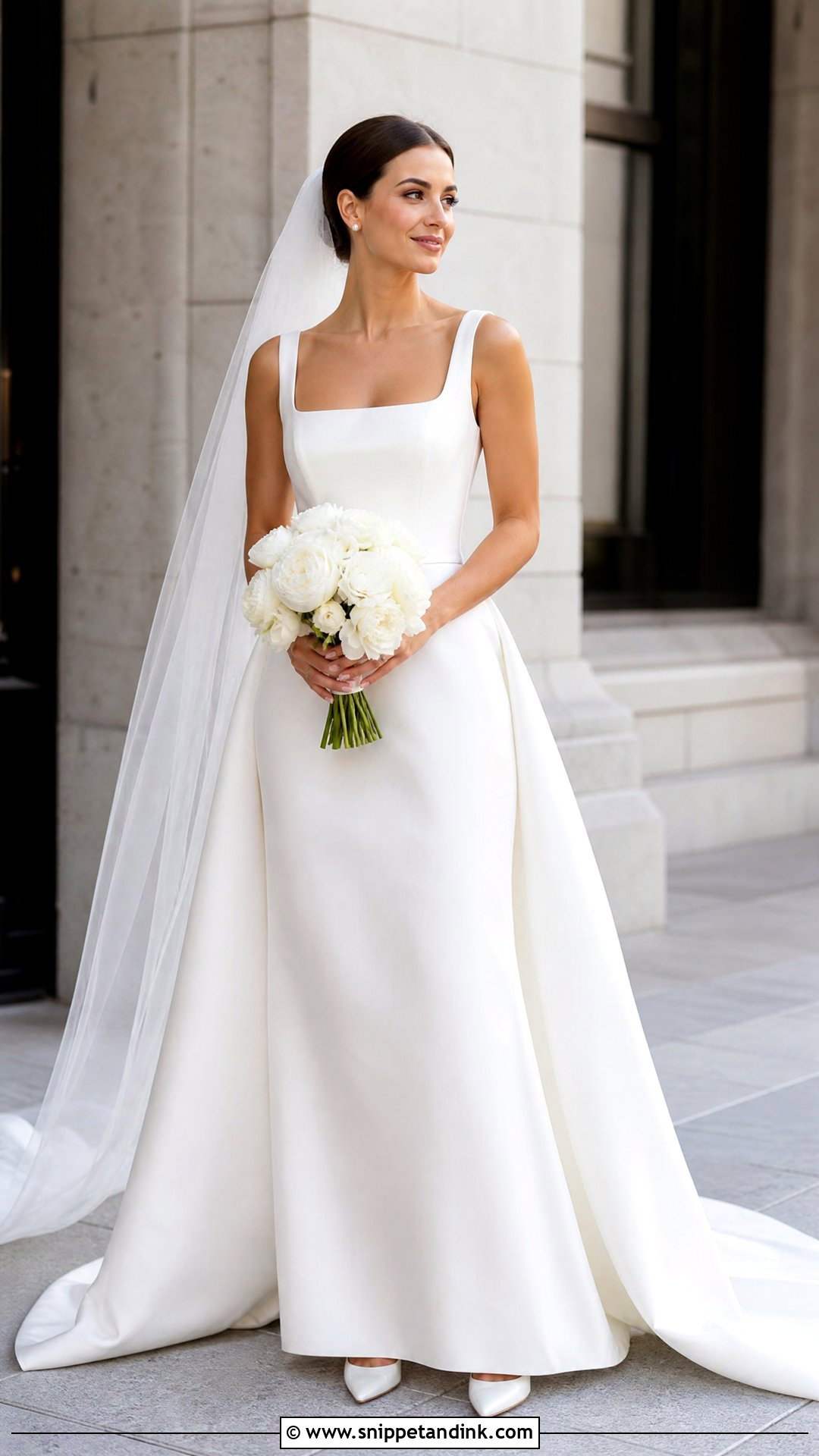
A straight square neckline across the chest suits mikado best, since its stiffness keeps the corners sharp; silk satin will soften them. Wide straps, cap sleeves or a structured bodice all work. I pair it with ivory or champagne satin pumps, pearl studs, a slim bracelet and a smooth veil. Museum and city venues suit this cut. Quick fit check: the neckline edge should lie flat against the skin with no gap when you breathe in.
9. Silk Halter Wedding Dress With Sleek Bun
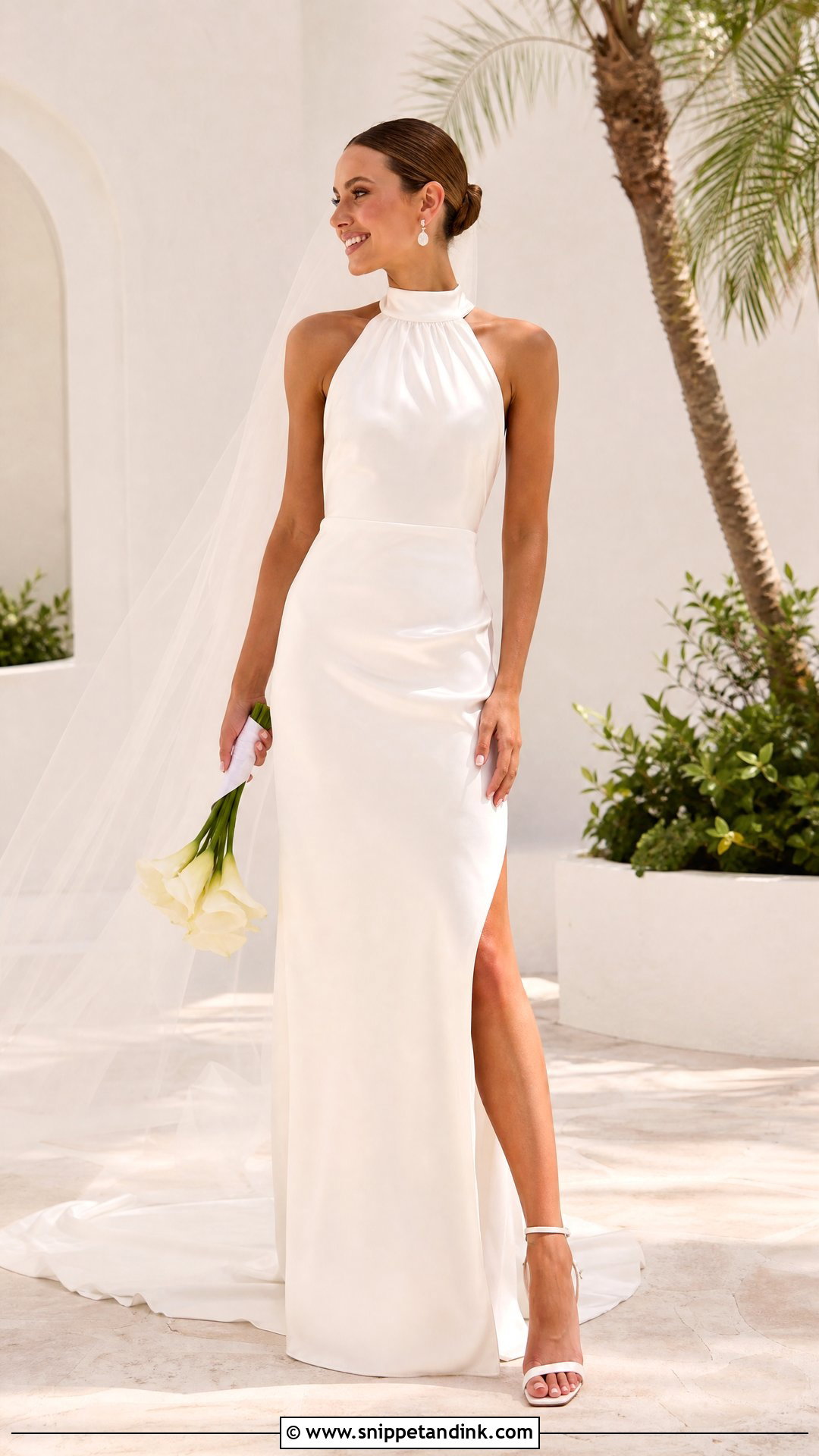
A halter pulls the eye up to the shoulders and throat. Silk satin and crepe keep it smooth. Because the neck strap carries part of the bodice’s weight, I check it after an hour of wear at the final fitting; a halter that felt fine at minute five can dig in by minute sixty. A sleek bun is the right hair, since loose hair hides the neckline and tangles in the tie. Drop earrings, a narrow bracelet and high-heeled sandals. A sheer veil set low won’t cover the detail.
10. Silk Long Sleeve Wedding Dress With Pearl Shoes
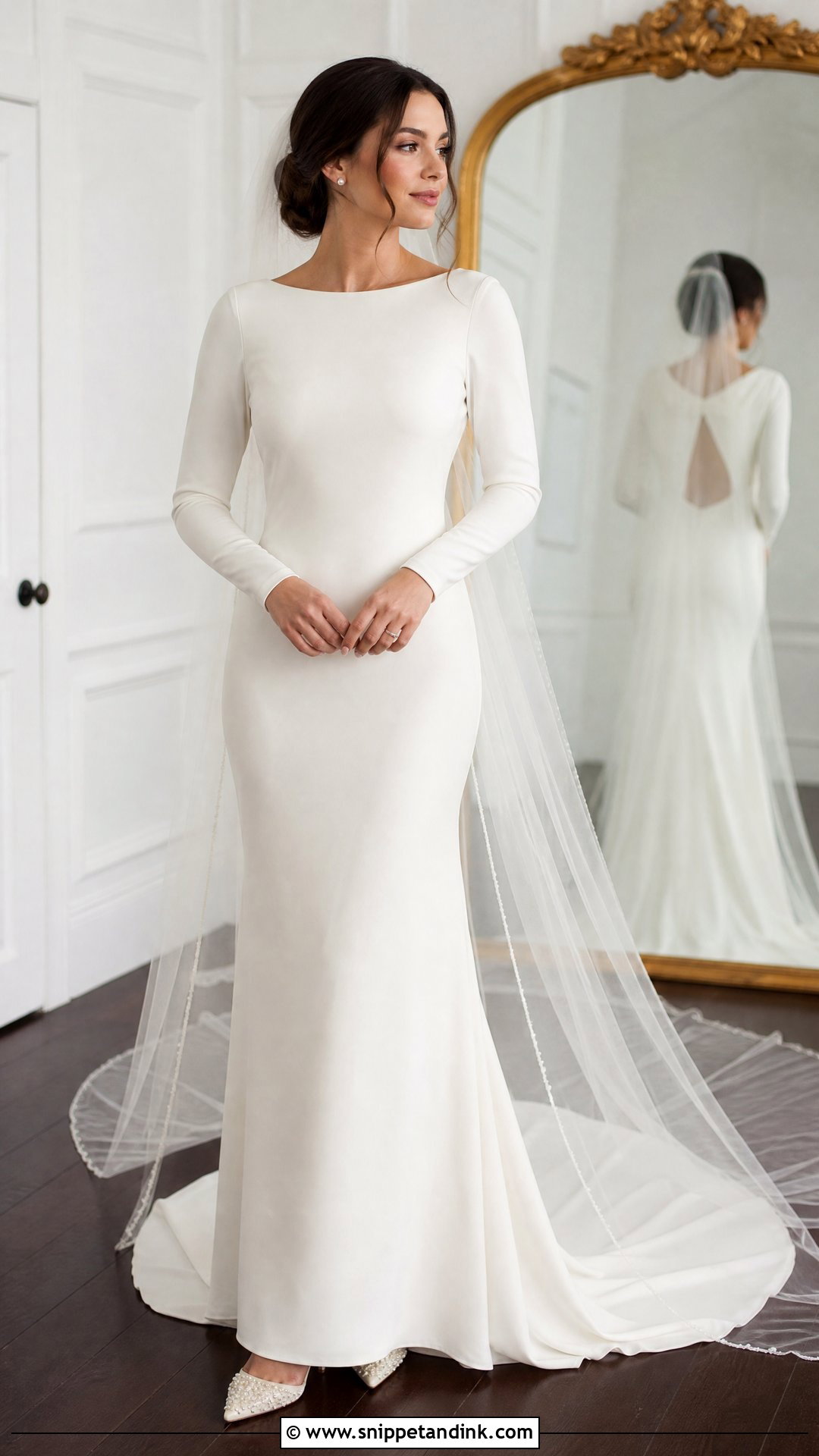
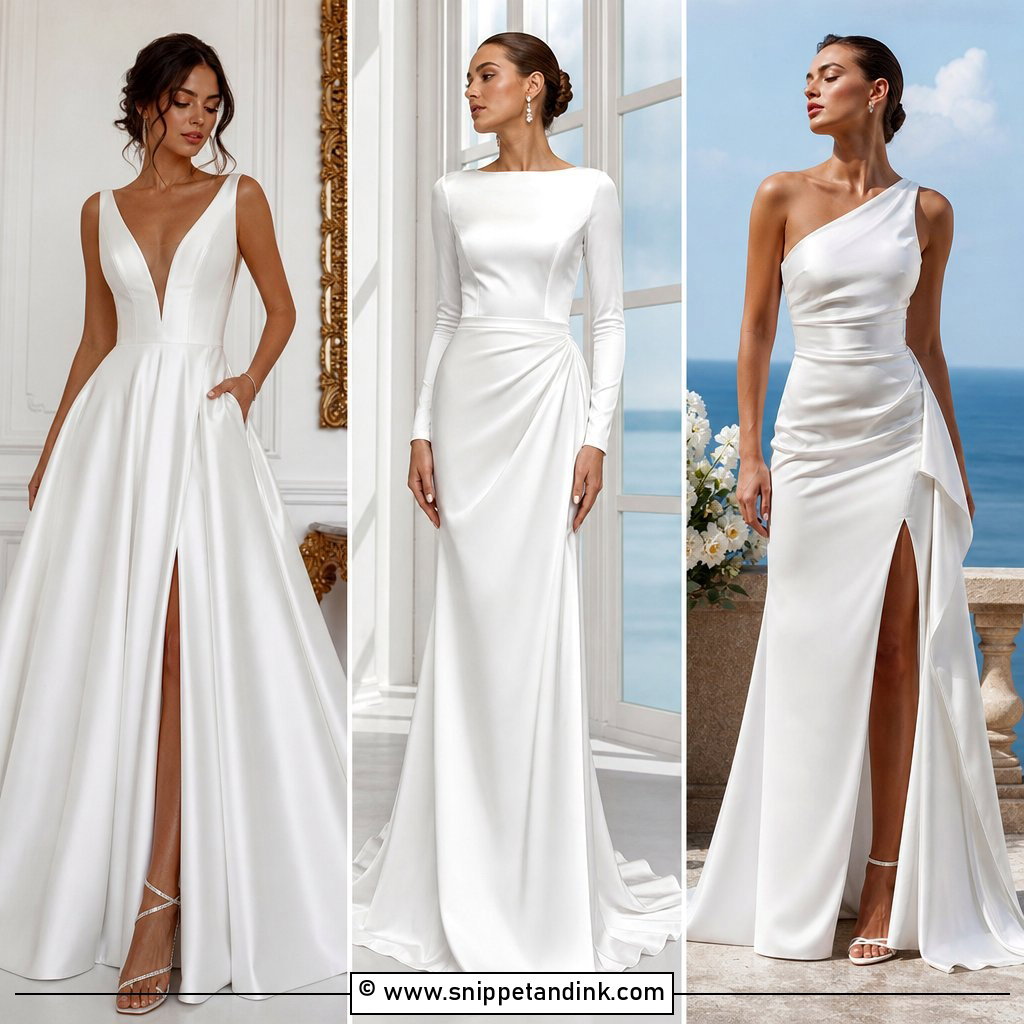
Long silk sleeves look modern when the cut is simple. Crepe suits slim gowns; satin adds a soft glow. Fitted sleeves look clean, slightly billowed ones romantic. One thing I flag with silk sleeves: they crease at the inner elbow more than any other fabric, so a fully fitted sleeve in satin will show lines in photos. Pearl shoes, pearl studs, a low chignon and a chapel veil. Autumn and winter suit it, but lightweight silk works for spring.
11. Silk Midi Wedding Dress With Bow Heels
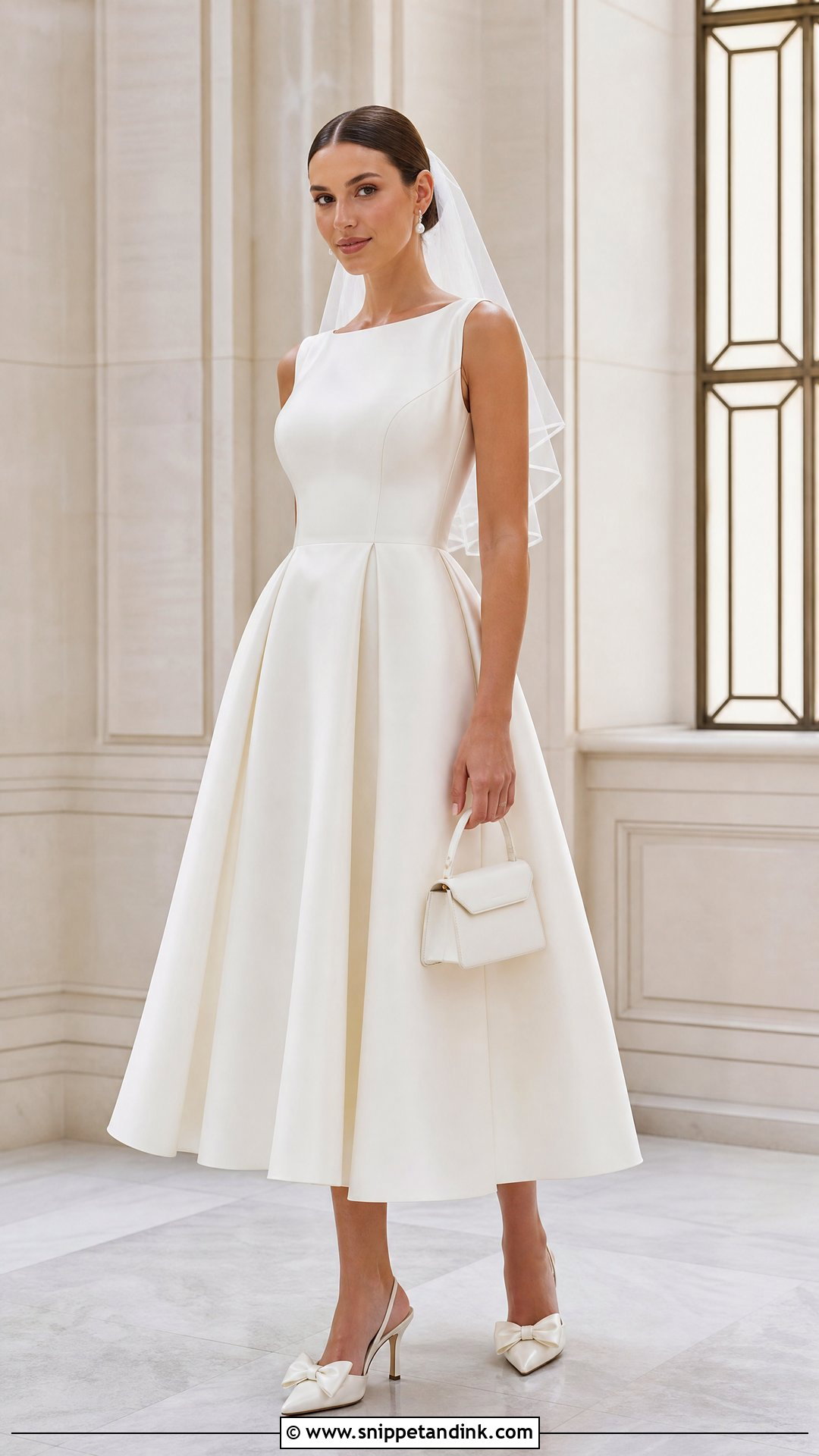
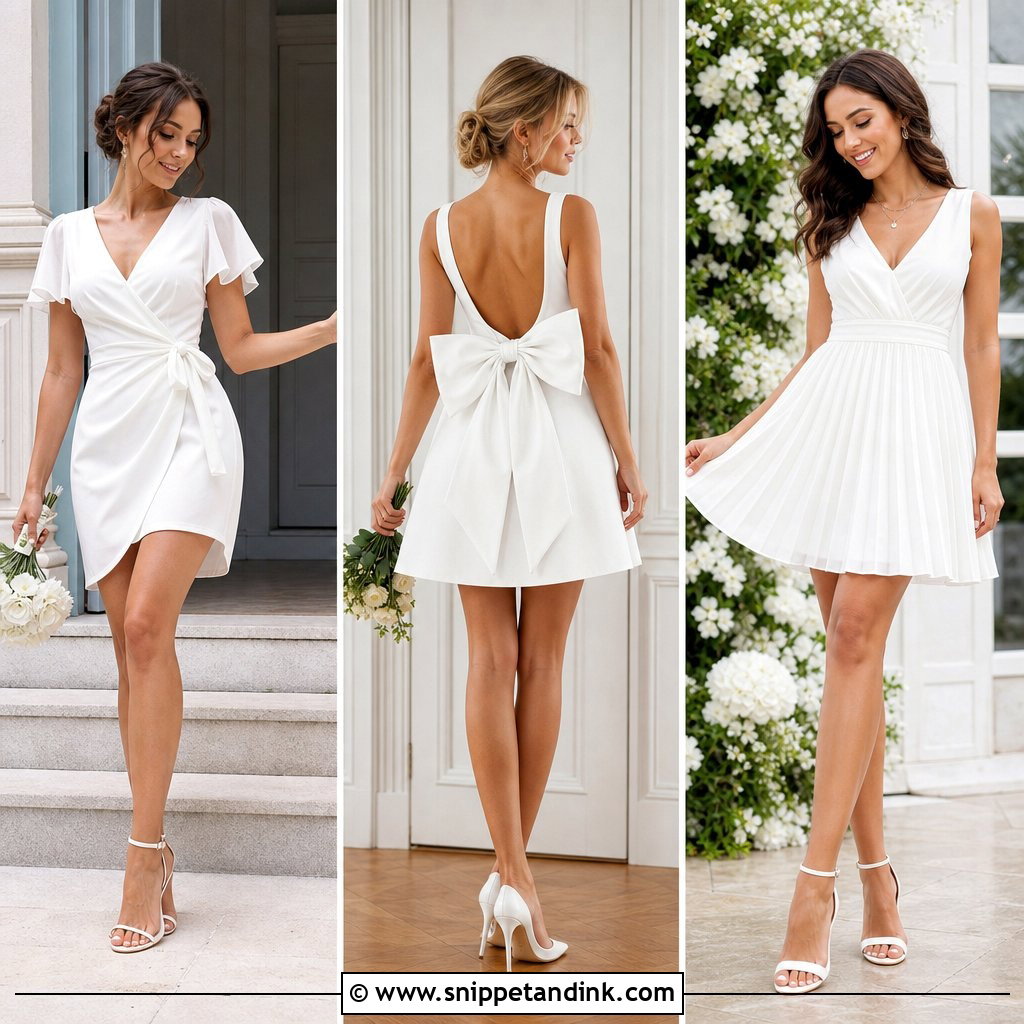
A silk midi wedding dress shows your shoes, so the shoes become part of the outfit; bow heels are an easy match. Structured mikado holds a classic skirt shape, while silk satin moves more softly. A square neckline, strapless bodice or short sleeves all work. Pearl earrings, a small veil and a mini top-handle bag finish it. I suggest it for civil ceremonies, elopements and reception changes. Hem placement matters: just below the widest part of the calf is the most flattering line for most legs.
12. Silk Wrap Wedding Dress With Gold Jewelry
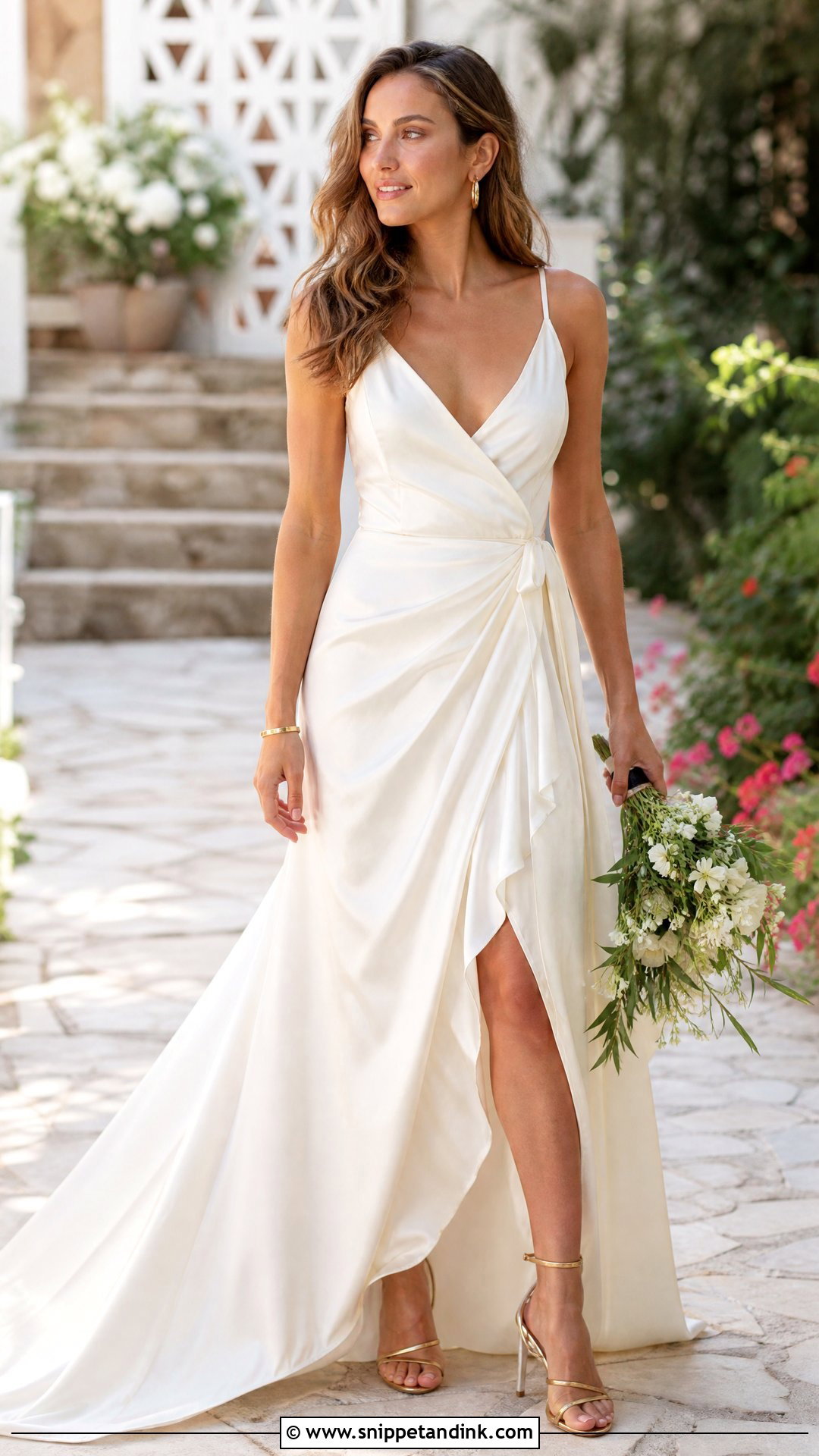
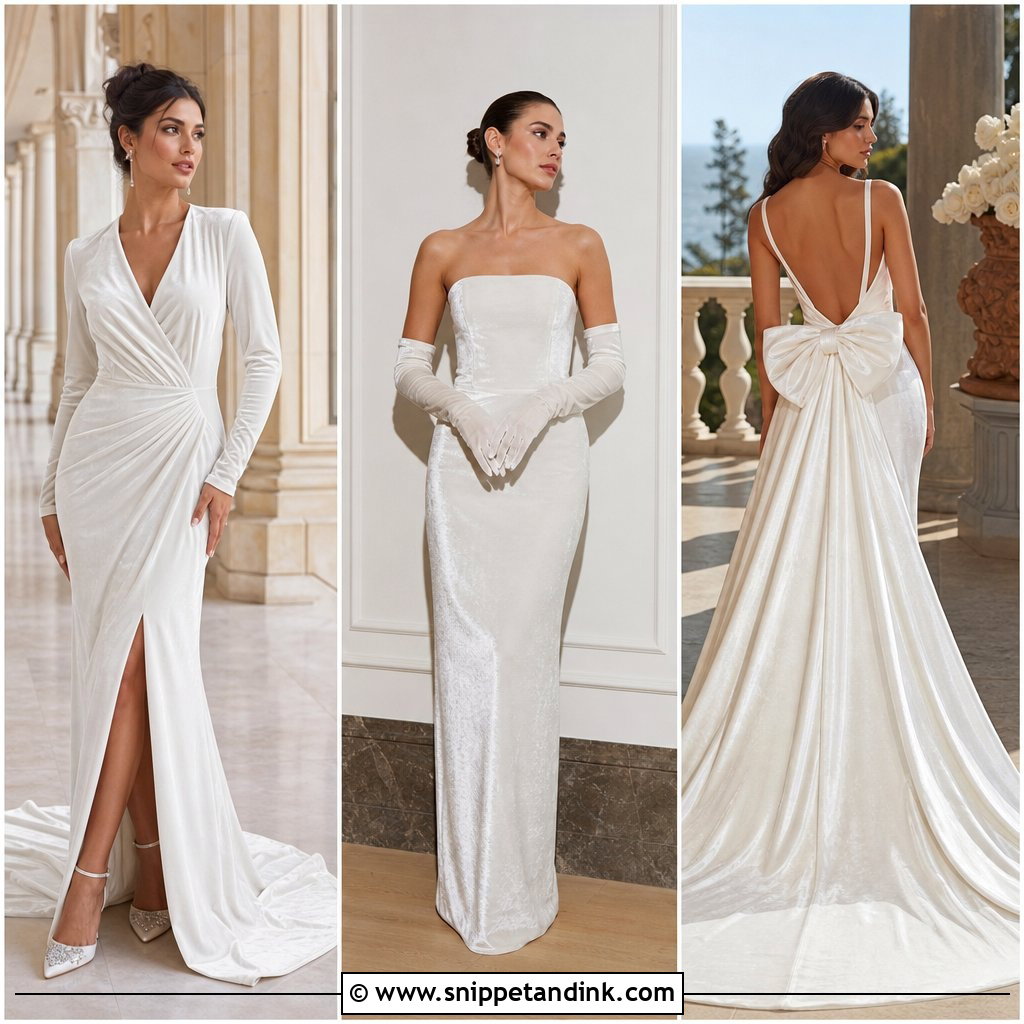
A wrap dress defines the waist and makes a soft V. It’s adjustable, so it handles small weight changes before the wedding better than almost anything else. Charmeuse or silk satin flows, crepe looks quieter. The weak point is the wrap opening at the thigh when you walk or sit, so I add a hidden snap at the overlap. Gold jewelry warms up ivory or champagne silk: fine hoops, a chain bracelet and metallic heels. A loose bun or soft waves suit destination and garden weddings.
13. Silk Empire Waist Wedding Dress With Soft Veil
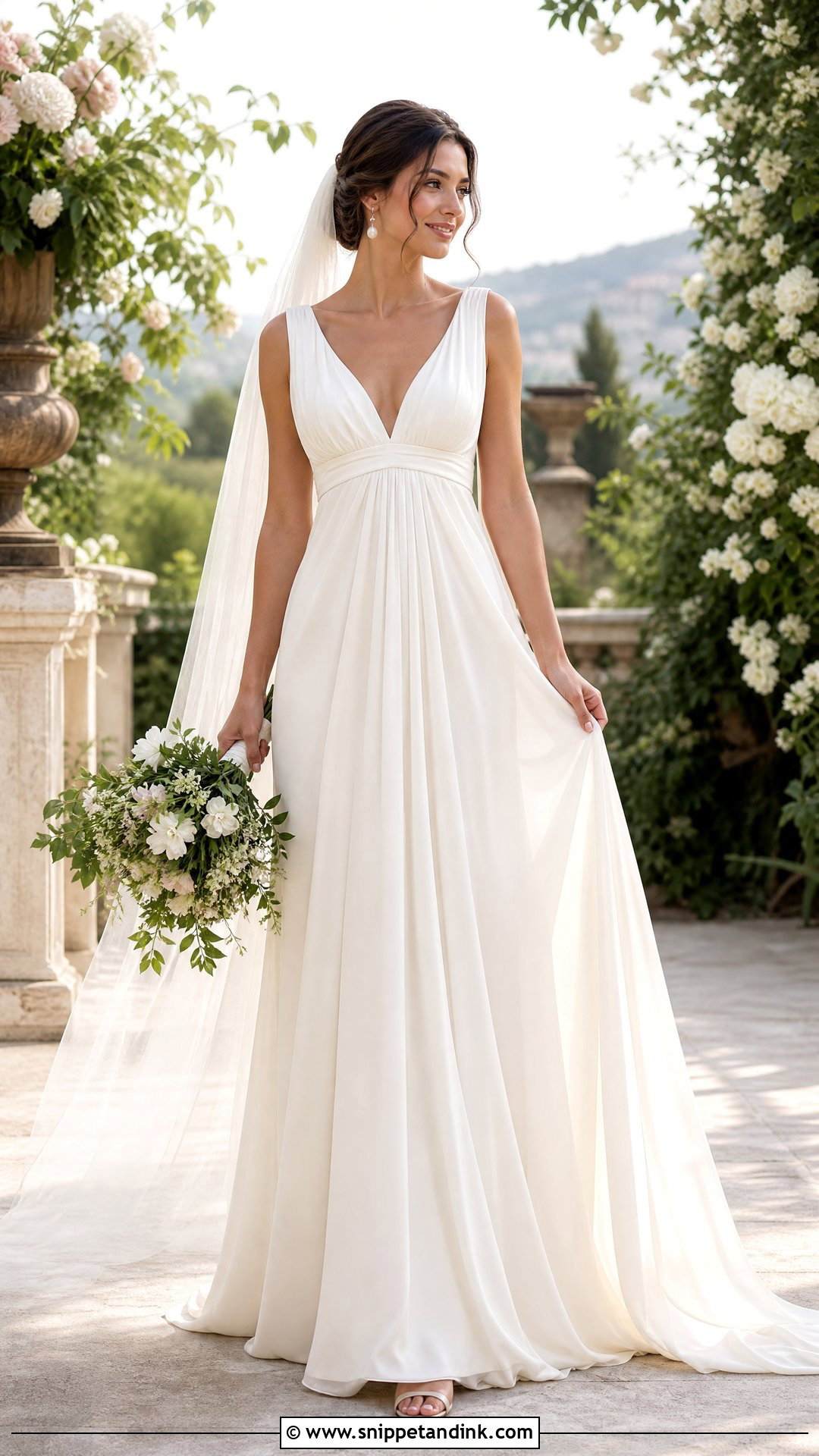
An empire waist sits just under the bust and lets the skirt fall loose. It’s comfortable and suits warm weather. Silk chiffon layered over satin feels airy; charmeuse drapes more. I’d mention one drawback: on a fuller bust, an empire line can look like a maternity cut unless the bodice has some shaping, so I look at the seam under the bust closely. A soft veil, low heels, pearl earrings and natural makeup. Loose waves and a delicate bouquet suit an outdoor ceremony.
14. Silk High Neck Wedding Dress With Crystal Hair Pins
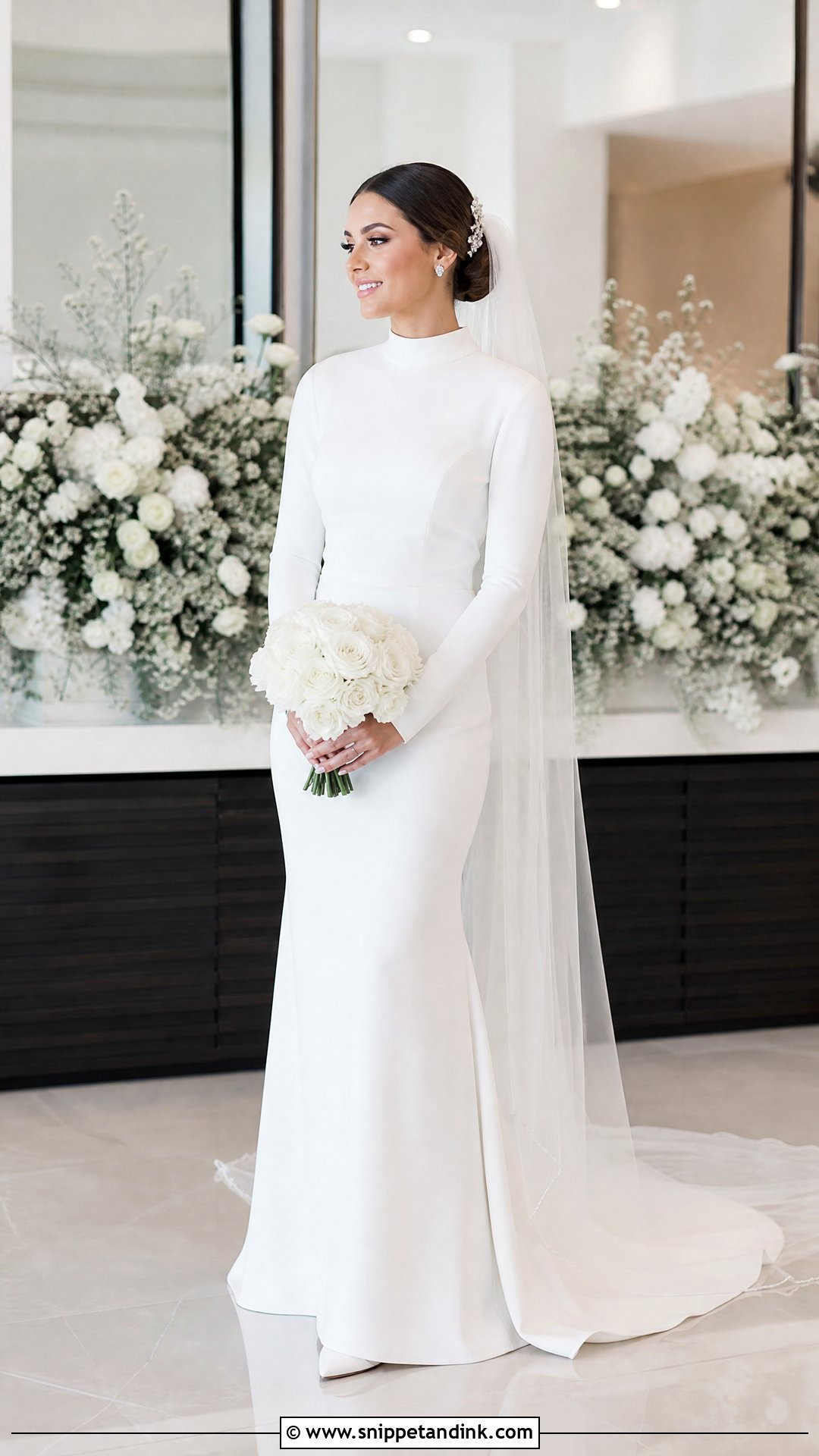
A high neck in silk frames the face cleanly. It suits a column, an A-line or a soft fit-and-flare. Crepe gives a matte finish, satin a more formal one. Crystal pins in the hair add sparkle near the face, so the earrings can stay small. I attach the veil low at the back so it doesn’t fight the collar. Closed-toe heels complete it. Cool-weather and indoor weddings suit this most, since a covered silk neckline is warm.

15. Silk Strapless Wedding Dress With Oversized Bow
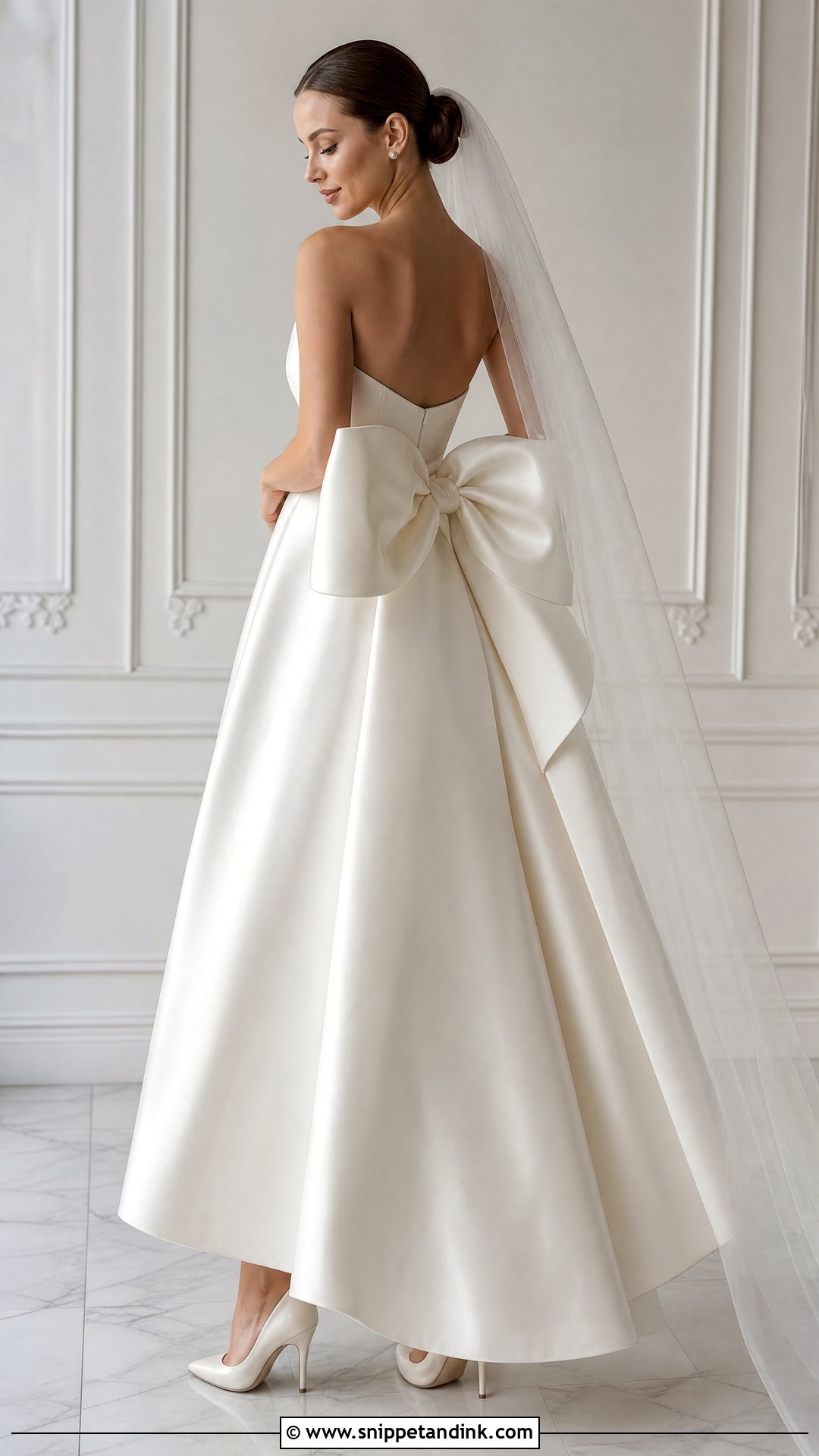
A strapless silk gown with an oversized bow needs a fabric that keeps its shape, and mikado does that better than any softer silk. The bow can sit at the back, the waist or the neckline. I ask whether it’s interfaced inside; an unsupported bow wilts by evening. Pointed pumps, pearl studs, a sleek bun and a plain veil. Plan portraits from behind if the bow is at the back.
16. Silk V Neck Wedding Dress With Chapel Veil
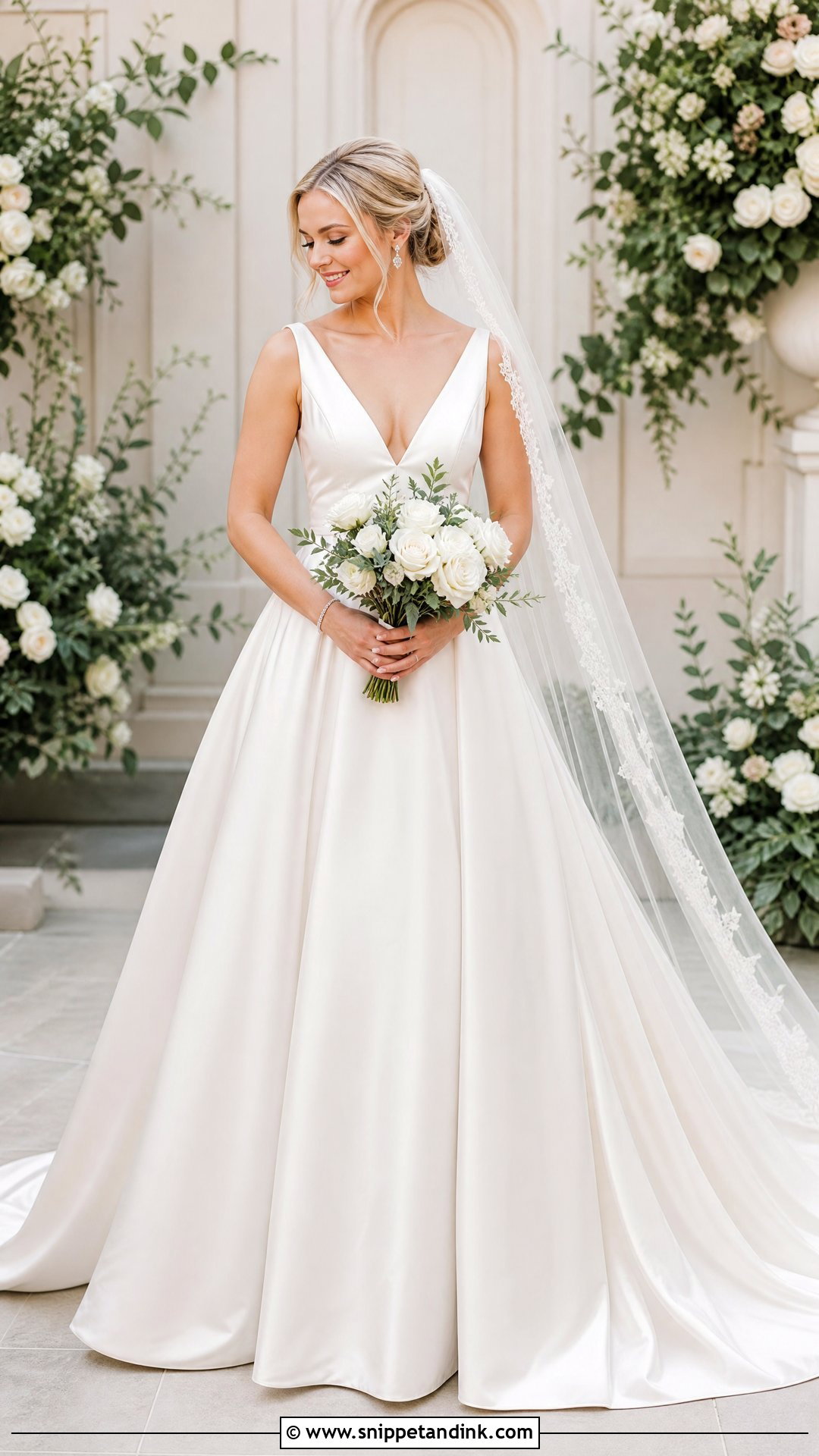
A V-neck adapts to most styles. A deep V looks modern, a shallow one classic. Silk satin glows, crepe looks sleek. With a deeper V, I use clear fashion tape and check it during movement, since silk is slippery and tape holds less well on it than on cotton. A chapel veil adds length without much weight. Delicate earrings, ivory heels and a slim bracelet. Soft waves or a clean updo.
17. Silk Tea Length Wedding Dress With Mary Jane Heels
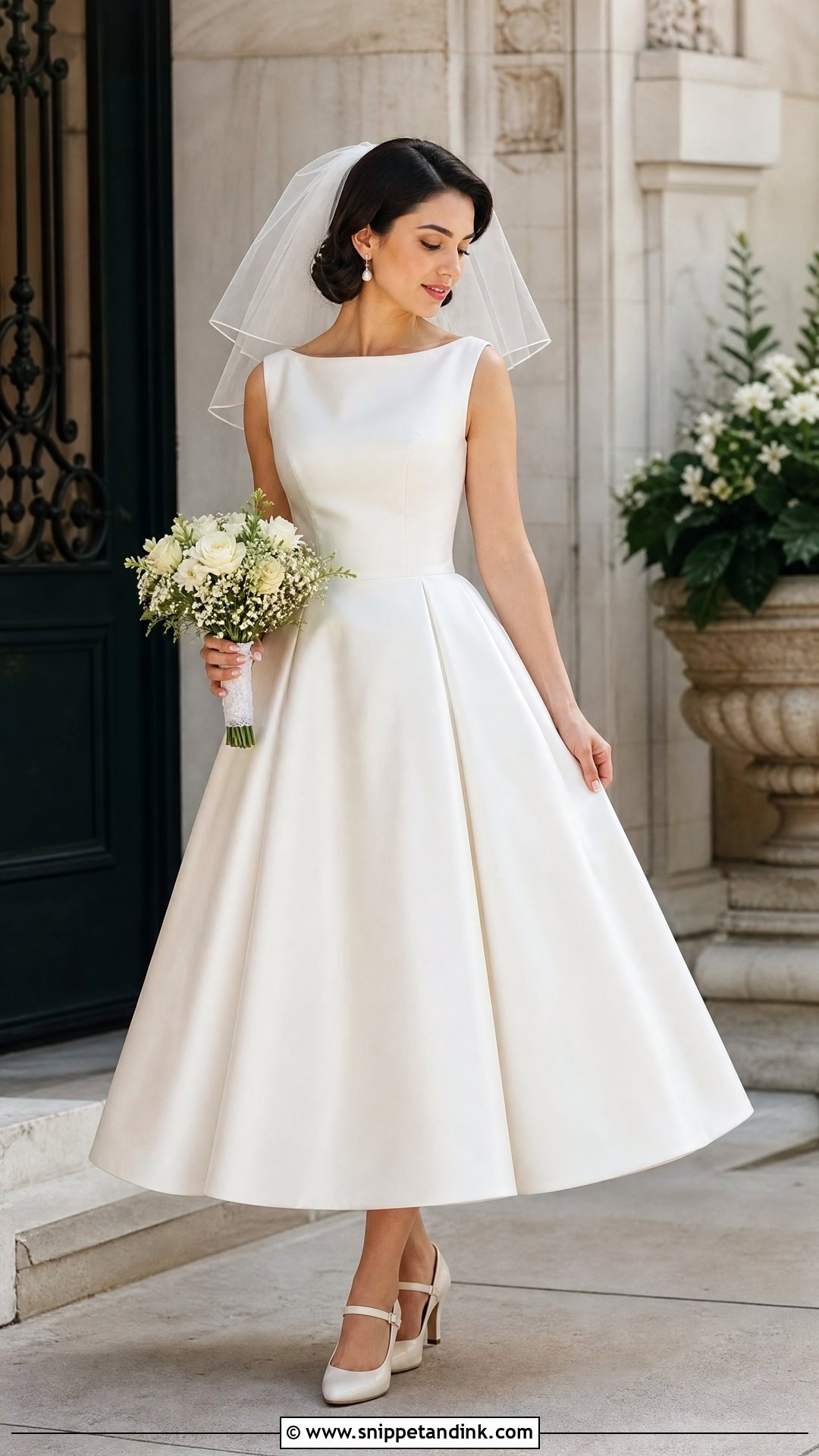
Tea-length silk falls between knee and ankle, which puts the shoes on show; Mary Janes give a sweet, polished finish. Mikado makes a structured skirt, satin a softer one. Pearl earrings, a short veil and a small bouquet. A red lip suits this vintage line well, though neutral makeup works too. I like it for courthouse ceremonies and garden receptions. Do try sitting in it: a full tea-length skirt can ride up past the knee in a low chair.
18. Silk Corset Wedding Dress With Simple Veil
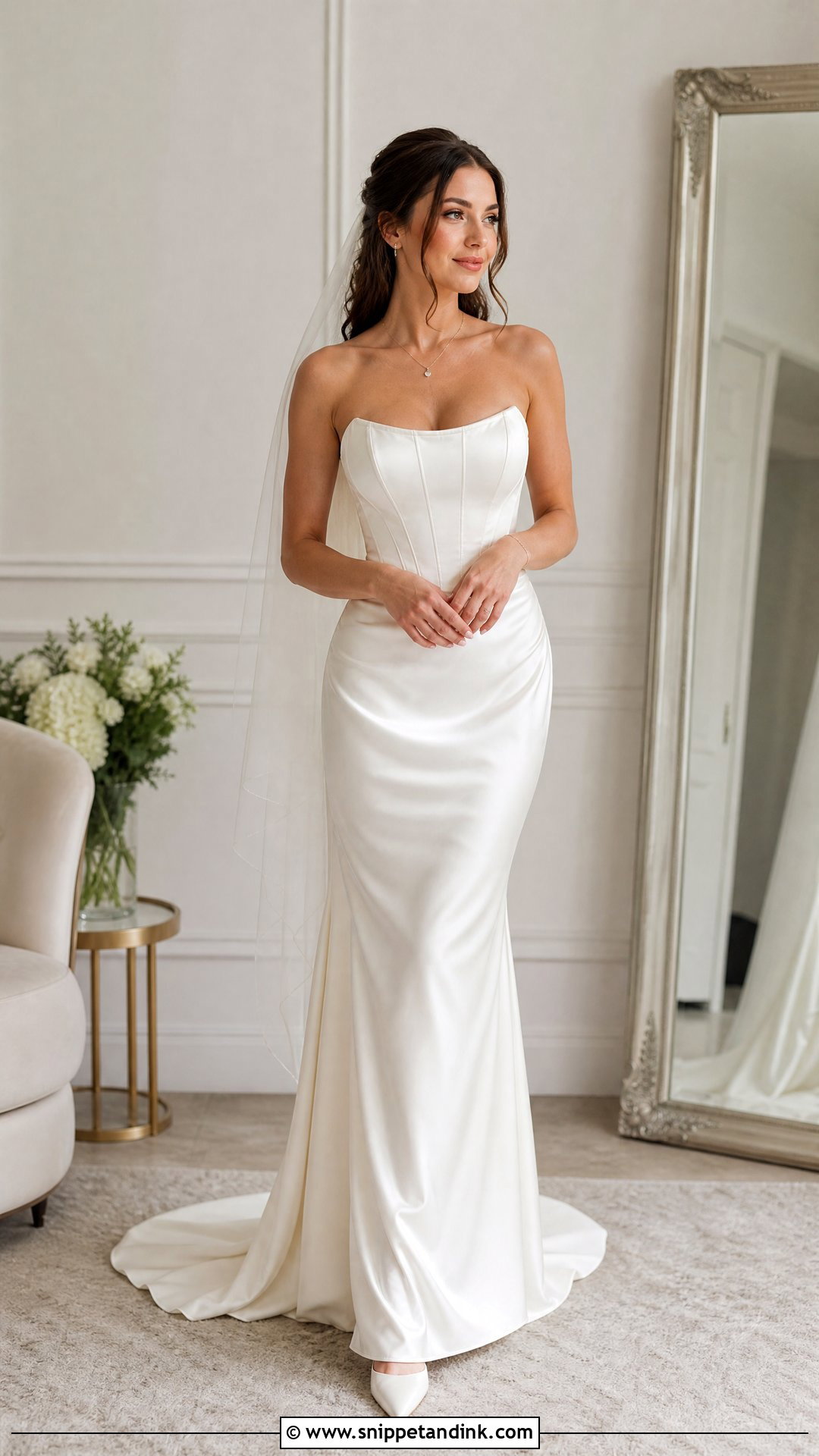
A silk corset bodice can show its boning on the outside or hide it under smooth fabric. Satin and mikado both carry the structure. I always have the bride sit and eat at the last fitting, because a corset laced for standing is too tight for dinner. Keep the veil simple, the heels pointed and the jewelry understated so the bodice stays the focus. A half-up style or low bun shows off the waist.
19. Silk Drop Waist Wedding Dress With Tulle Veil
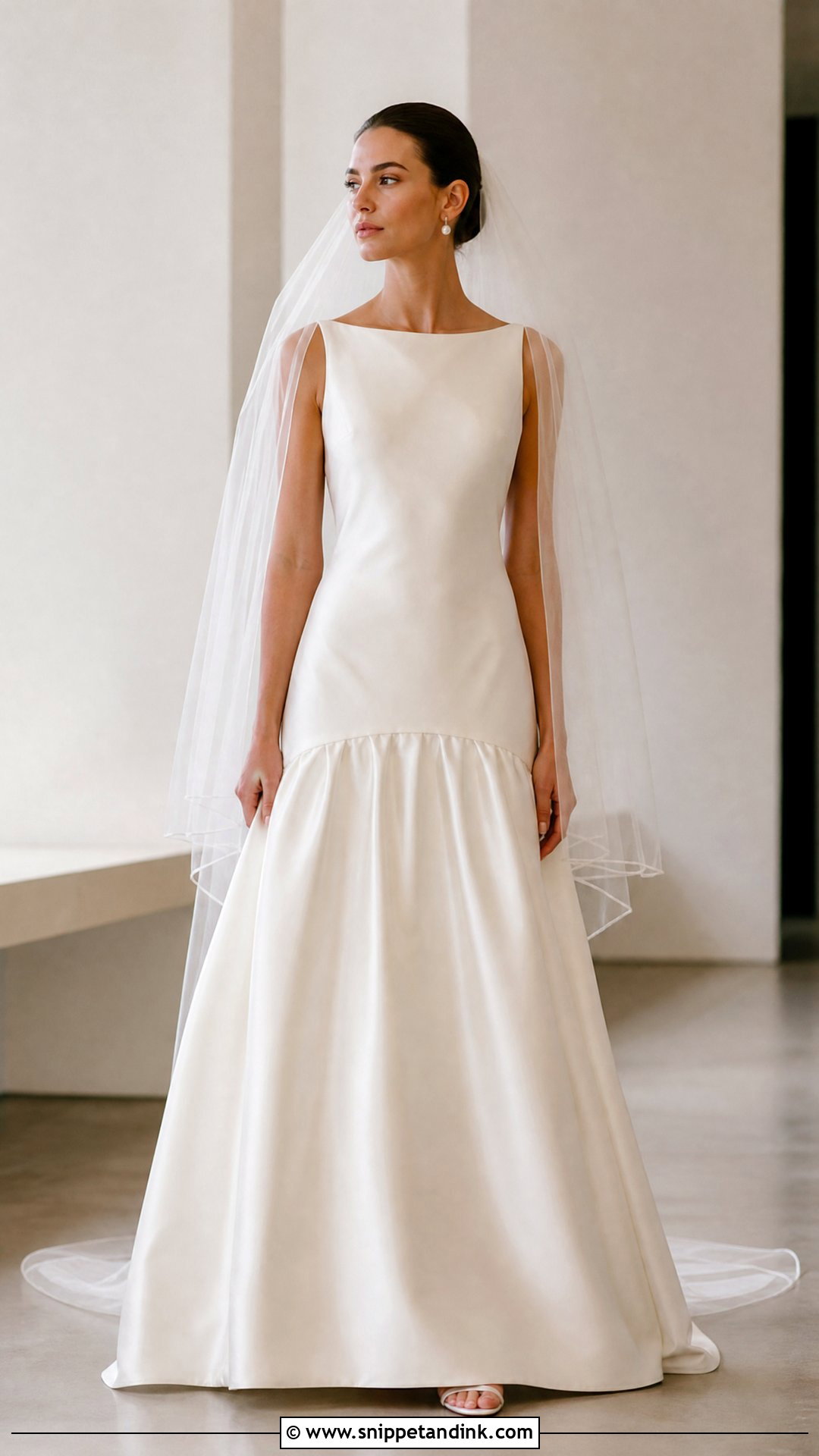
A drop waist moves the seam below the natural waist and lengthens the torso. Satin or mikado gives it enough body to look deliberate rather than slouchy. A soft tulle veil adds contrast to the smooth silk. It looks good with either a full skirt or a slim one that flares a little. I’d steer a short-waisted bride away from it, or at least pin the seam at two heights before deciding. Simple heels, pearl earrings and sleek hair.
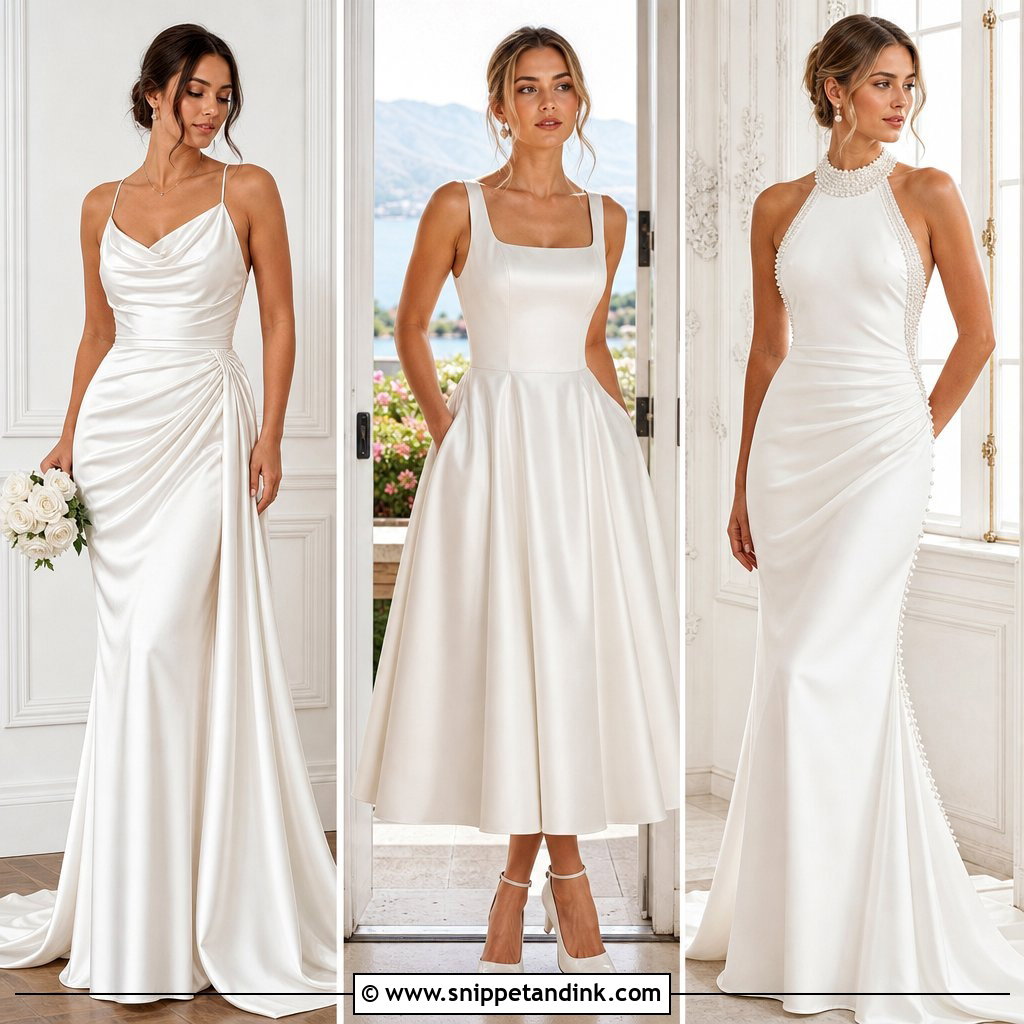
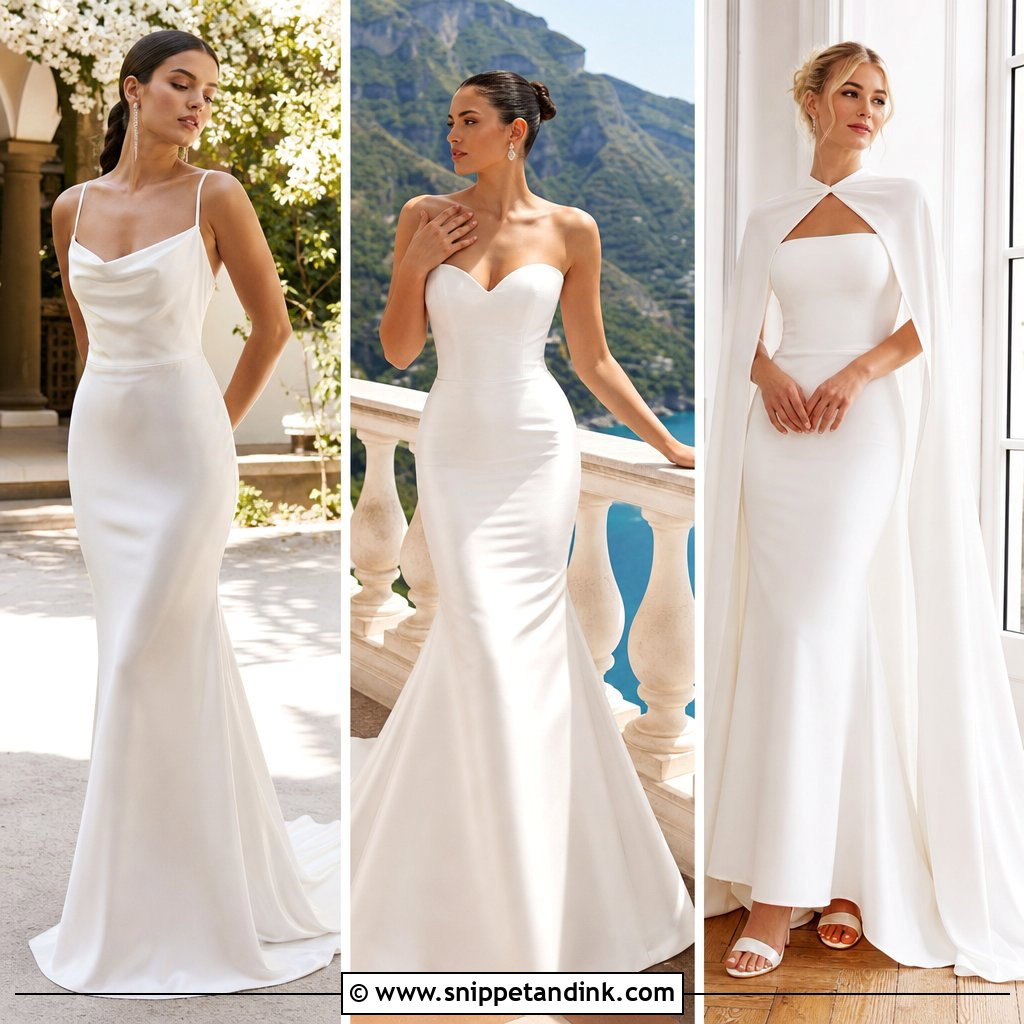
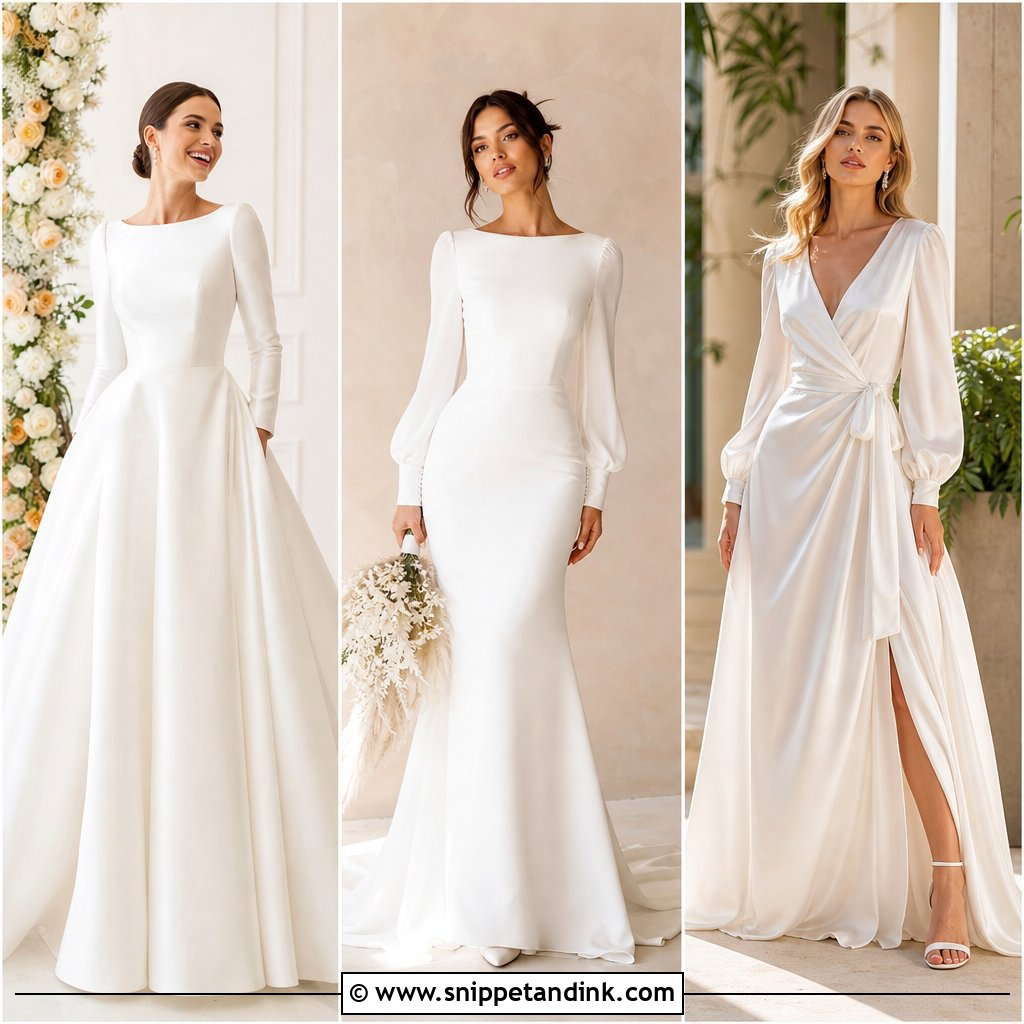
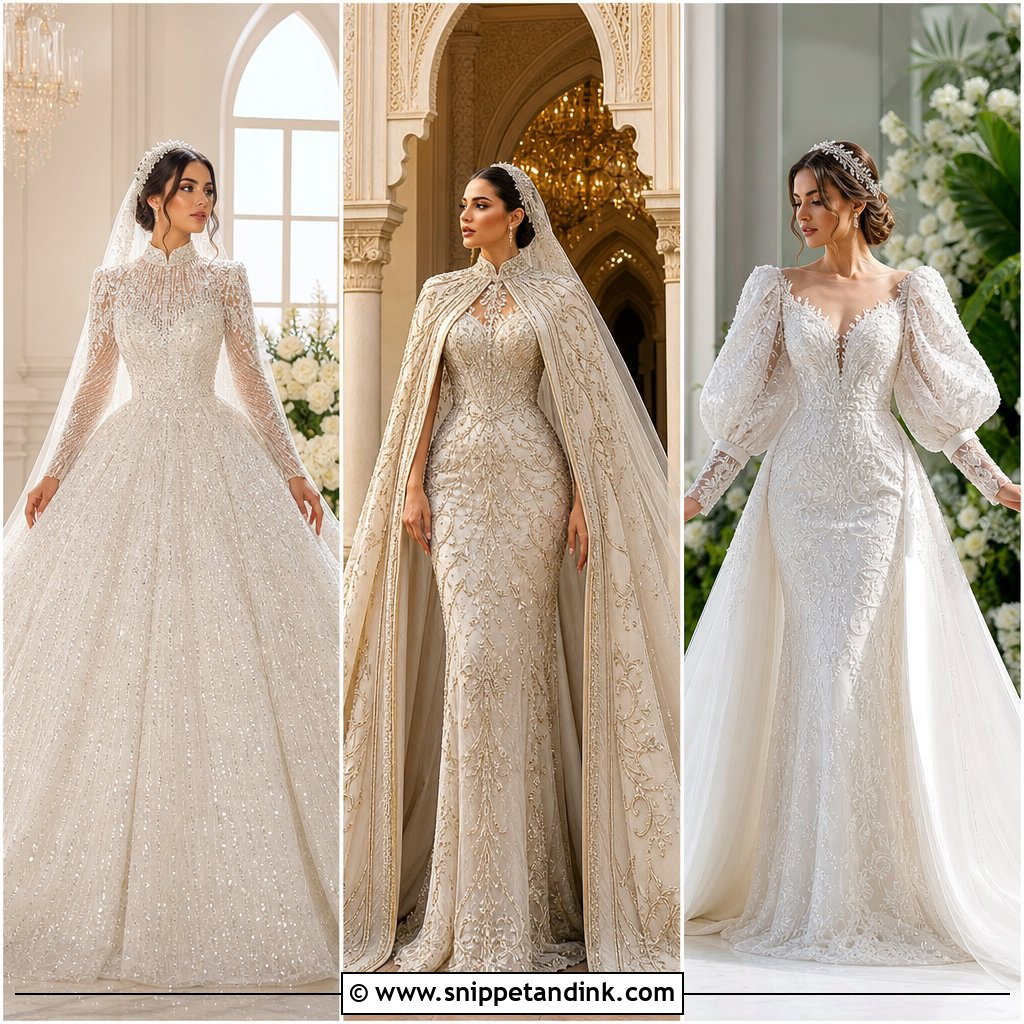
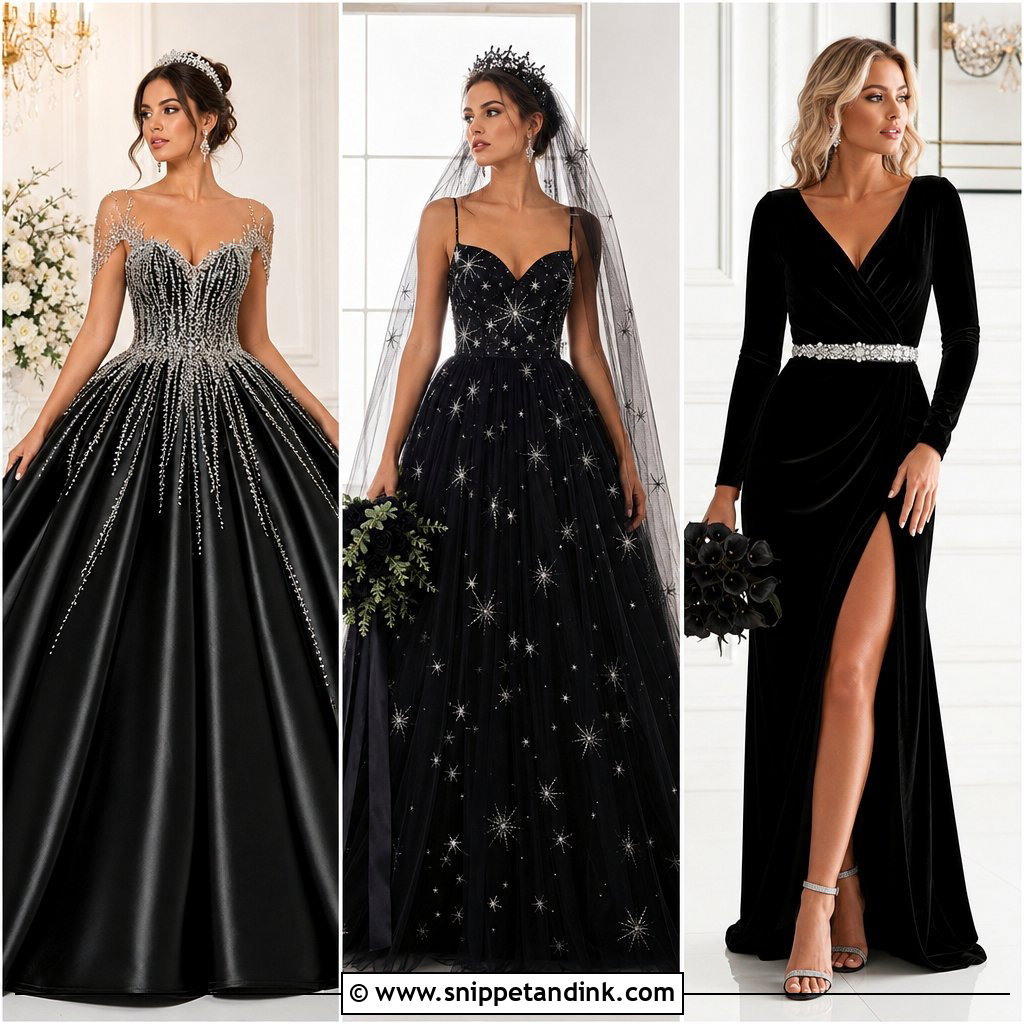
20. Silk Bias Cut Wedding Dress With Minimal Jewelry
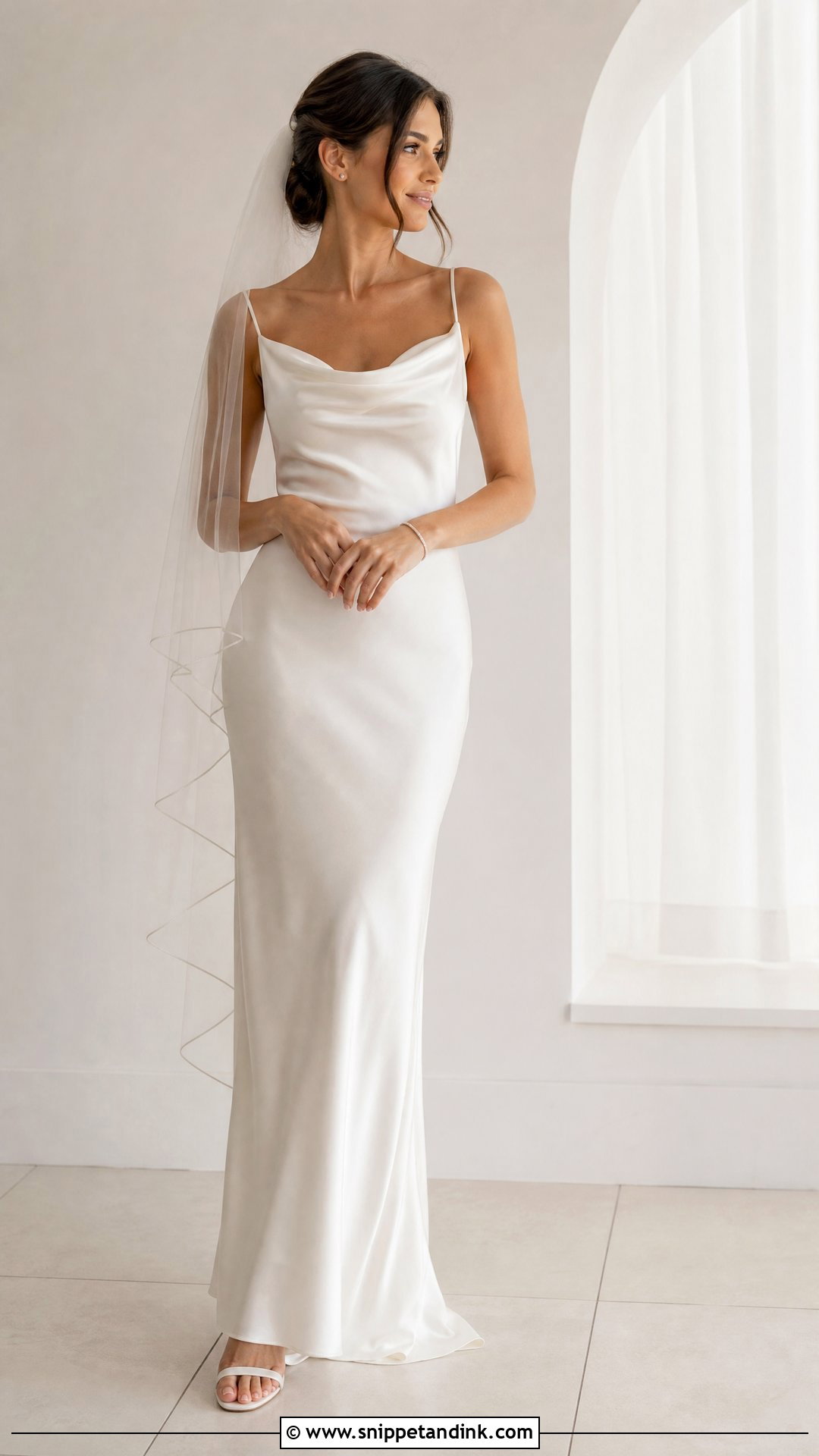
A bias cut means the fabric is cut diagonally across the grain, which gives it stretch and that fluid way of following the body. It’s also why I hang a bias gown for a day before the final hem: the fabric relaxes and the hem drops unevenly if you skip that step. Charmeuse drapes best here. Small diamond studs, a thin bracelet and simple heels. A fingertip veil or none at all. Coastal, modern and intimate venues suit it.
21. Silk Pleated Wedding Dress With Pearl Headband
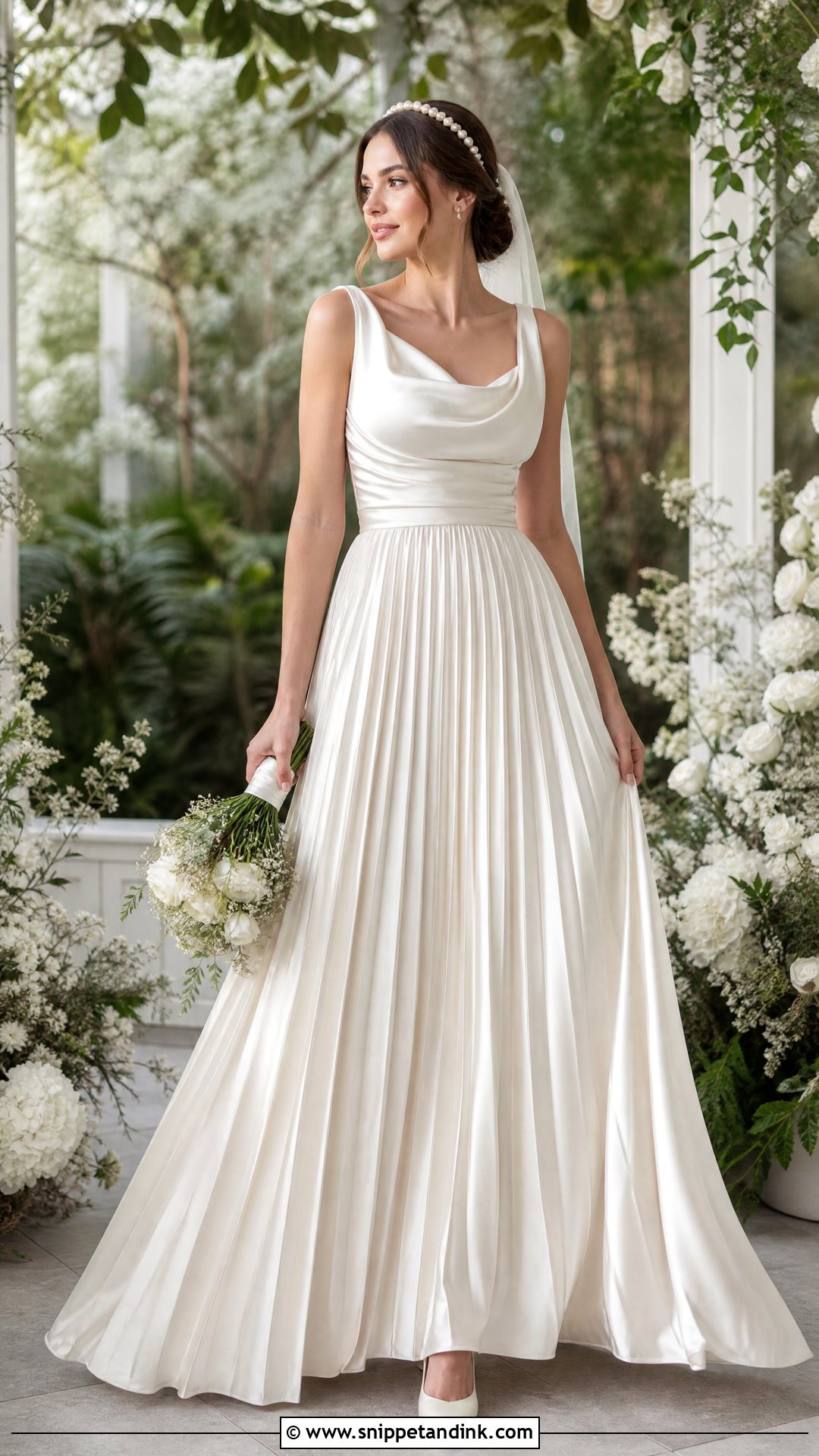
Pleats add texture without embellishment. They can run down the skirt, across the bodice or gather softly at the waist. Silk satin and silk chiffon both pleat well, though chiffon pleats loosen with heat and humidity, so for a summer wedding I prefer stitched-down pleats. A pearl headband works with loose waves or a low bun. Ivory heels, small earrings and a plain veil if you want more softness.
22. Silk Backless Wedding Dress With Long Veil
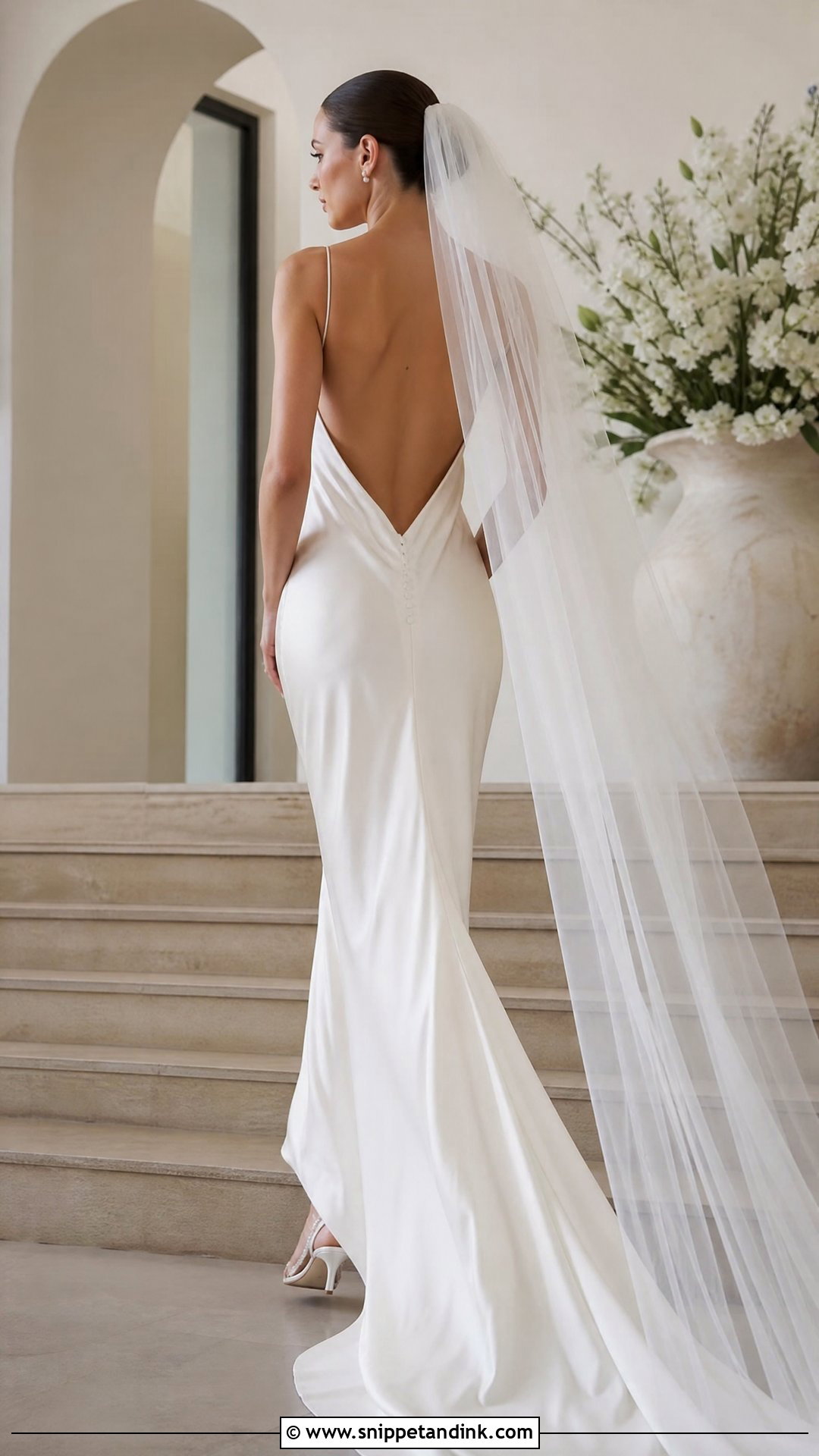
A backless silk gown is about what guests see during the ceremony, since they’re behind you. The back can be low, draped or framed with straps. Satin and charmeuse move softly. For an open back I plan the bra solution early: a low-back adhesive bra or cups sewn into the dress. A long veil adds drama and, if sheer, still shows the back through it. Delicate heels, small earrings and a clean updo. No heavy necklace.
23. Silk One Shoulder Wedding Dress With Silver Heels
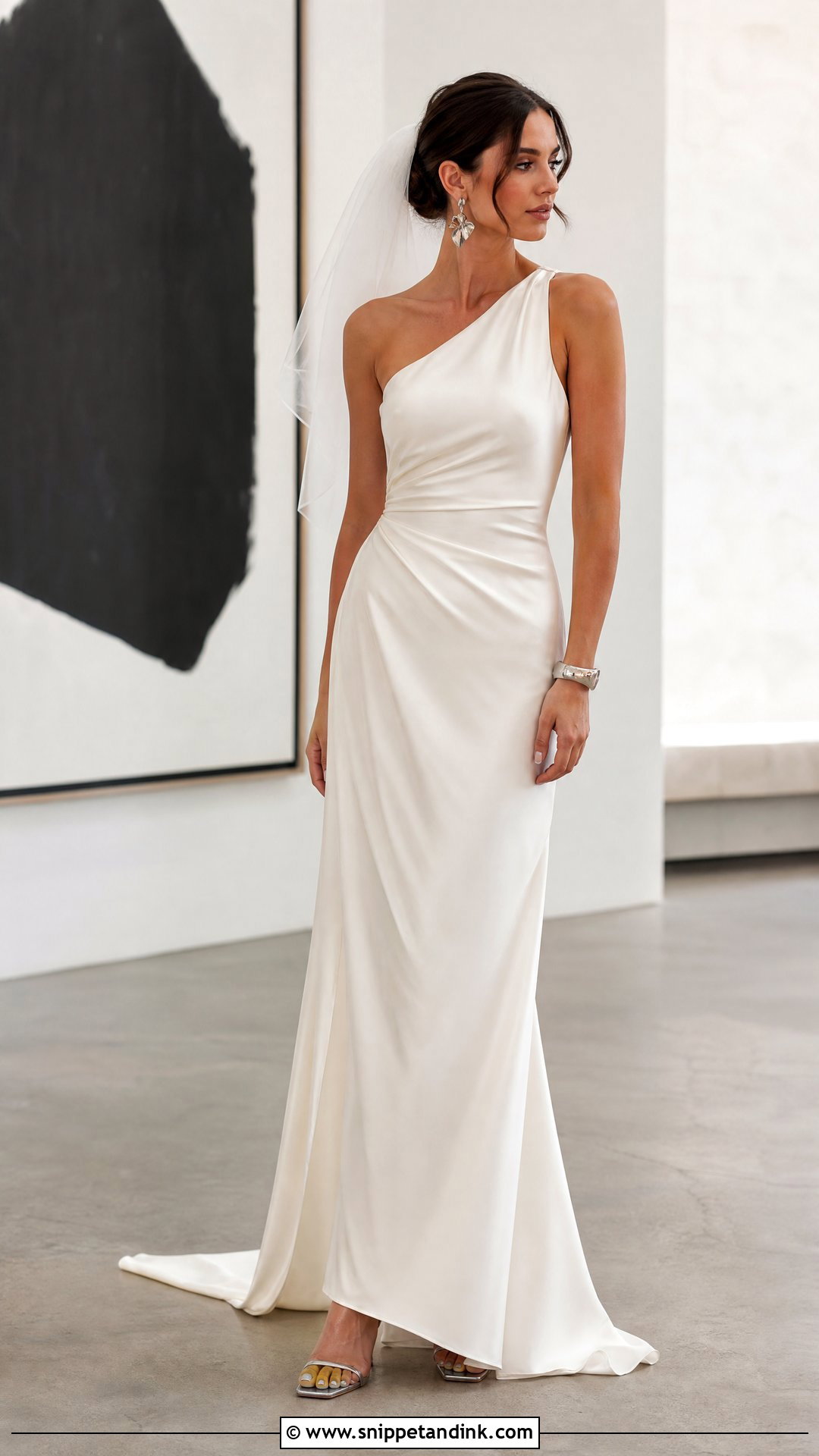
One shoulder is an asymmetrical line that looks modern on a column, a fitted gown or a soft drape. Crepe gives a matte finish, satin more glow. The single strap carries more weight than two would, so I check it’s anchored well and won’t slip toward the arm. Silver heels look cool against white or ivory silk. Sculptural earrings on the bare side, a smooth bracelet and a veil attached low. City and gallery venues suit this style.
24. Silk Wedding Dress With Detachable Overskirt
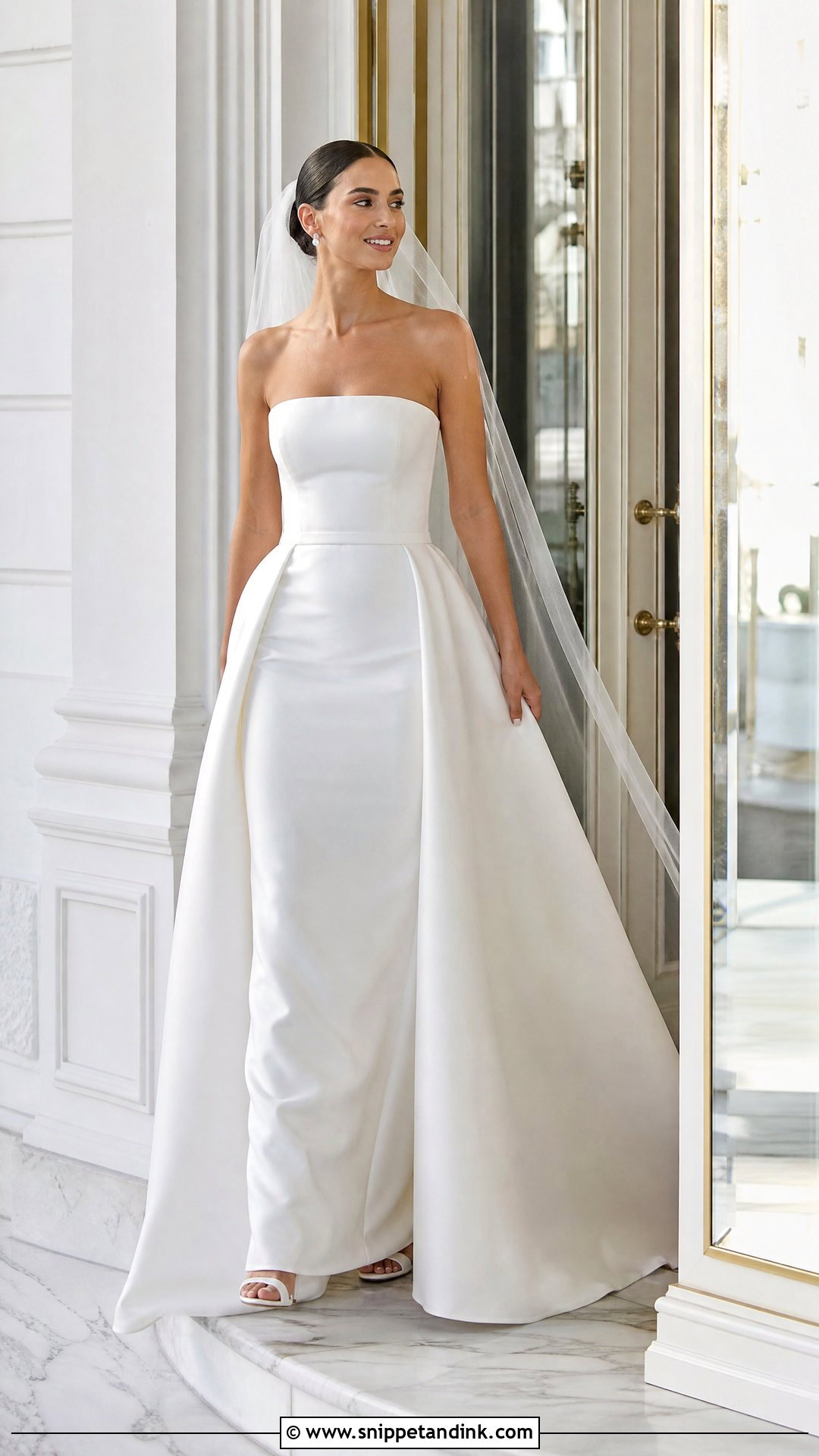
A detachable overskirt gives you a full skirt for the ceremony and a slimmer dress for dancing. Mikado makes a structured overskirt; satin flows more. Keep the base gown simple so the change looks clean. Practice the removal before the day with whoever will help; hooks or snaps around a waistband take a minute, buttons take much longer. Heels, pearl earrings and a plain veil complete it.

25. Silk Reception Wedding Dress With Feather Trim
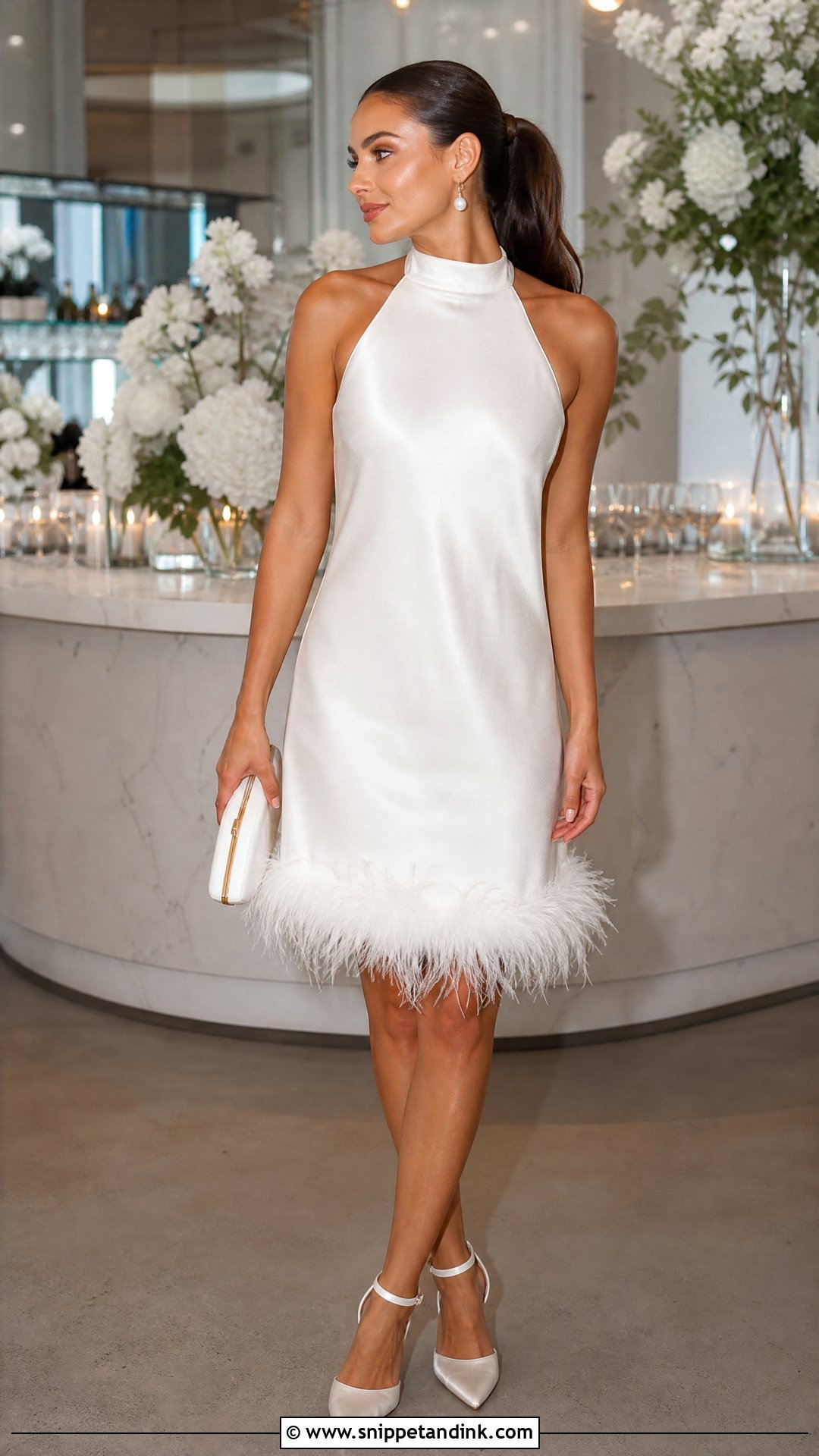
A reception dress in silk can be shorter or lighter than the ceremony gown. Feather trim at the hem, cuffs or neckline adds movement. A mini, midi or slim column all work. Satin heels, pearl earrings and a small clutch. A sleek ponytail or soft waves. I’d plan the change for after dinner; it’s especially welcome if your main gown has a long train. Feathers shed, so keep the dress in a bag until you put it on.
Water Spots, Steam and What Silk Hates on the Day
Silk will forgive a lot, but not water. A single drop can leave a ring on satin or charmeuse, so I keep drinks away from the dress while you’re getting ready and make sure hairspray and perfume go on before you step into it.
- Steam, don’t iron. Hold a steamer a hand’s width away and keep it moving, so it can’t spit water onto the fabric.
- Hang the gown by its inner loops the night before, not by the straps, so the weight doesn’t stretch them.
- Pack a white cotton cloth and a little talcum powder for oily marks; blot, never rub.
- If it rains, a clear umbrella and a helper holding the train off the ground will save the hem.
After the wedding, get the gown to a specialist cleaner within a few weeks. Spilled champagne and sweat are invisible at first, but on silk they oxidize and turn yellow in storage.
Silk Rewards a Bride Who Knows Its Weave
Silk shifts character with the weave: charmeuse is fluid, crepe calm, mikado sculpted. The right dress should be comfortable, suit your venue and move the way you do. A slip looks modern and a ball gown classic, and veils, gloves, bows, pearls and detachable skirts finish the picture. Take a few of these looks to your appointments, feel the fabrics in your hand, and see how each one behaves when you sit down. That will tell you more than any photo.
You'll Like These Ideas:









Leave a Reply