
A short wedding dress takes away the weight and formality of a traditional gown, and that’s exactly why it needs more thought around it. With less fabric, the shoes, jewelry, outerwear, hair accessory and bouquet do most of the work of telling people you’re the bride. Short dresses suit courthouse ceremonies, small venues, destination weddings, receptions and city celebrations. Below you’ll find minis, knee-length and tea-length options in clean fabrics and wearable cuts, with choices for different seasons, figures and comfort levels. Each one is styled as a complete outfit, because that’s how a short dress succeeds.
Measure the Hem Sitting, Not Standing
A mini that looks right in the mirror can ride several inches higher once you sit, and a short dress spends a lot of the day seated: in the car, at the ceremony, at dinner. I check hem length in four positions before anyone commits.
- Sitting on a normal chair with knees together. This is where most hems turn out shorter than planned.
- Climbing a few steps, since courthouse and venue stairs put the camera below you.
- Standing in a breeze, if any part of the day is outdoors. Light A-line skirts lift easily.
- Bending to hug someone shorter than you, which raises the back hem.
If a hem fails any of these, the fix is usually an inch more length, a weightier fabric or fitted shorts underneath. Ask before alterations start, because adding length later is only possible if there is hem allowance to let down.
1. Simple Satin Mini Wedding Dress
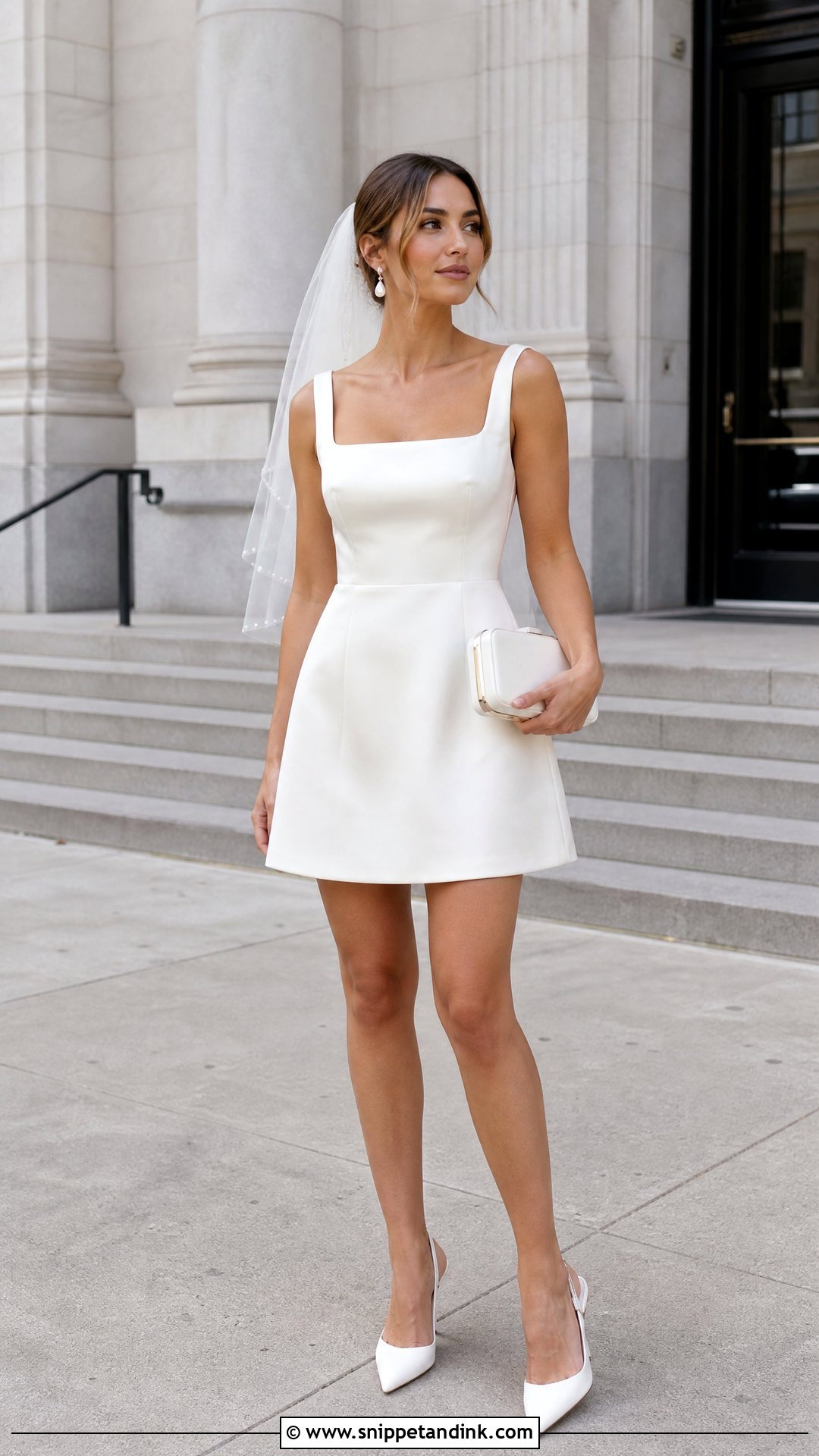
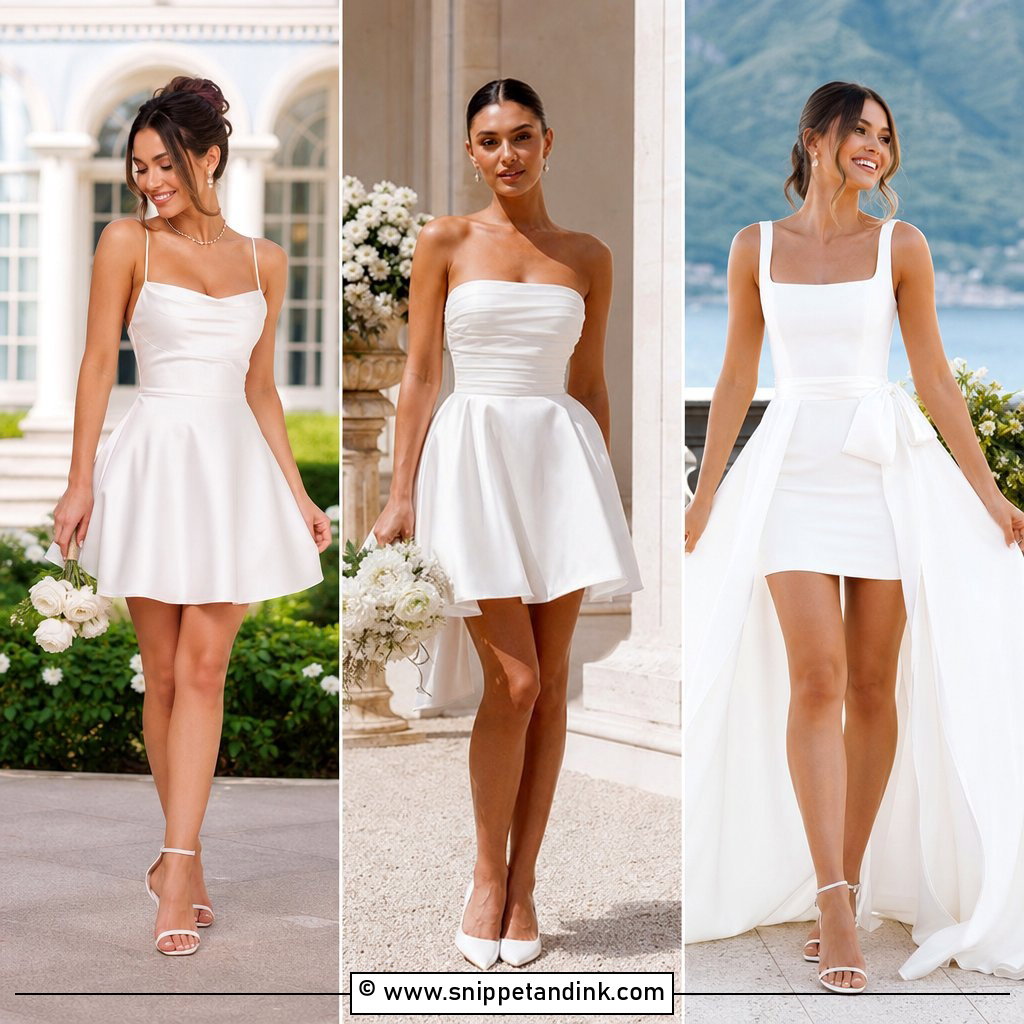
A satin mini is the quickest route to a clean, modern bridal look. I’d go for a softly structured A-line with a square neckline and wide straps; thin straps on a structured satin bodice tend to slip as the day goes on. Ivory satin looks softer in photos than bright white, and a fitted waist keeps the short hem from reading casual. Pointed slingbacks, pearl drops and a small structured clutch, plus a fingertip veil for a traditional touch. On a cool day, a cropped ivory jacket over the shoulders. Petite brides usually suit a hem above the knee, and taller brides often prefer a slightly longer mini.
2. Short A-Line Wedding Dress
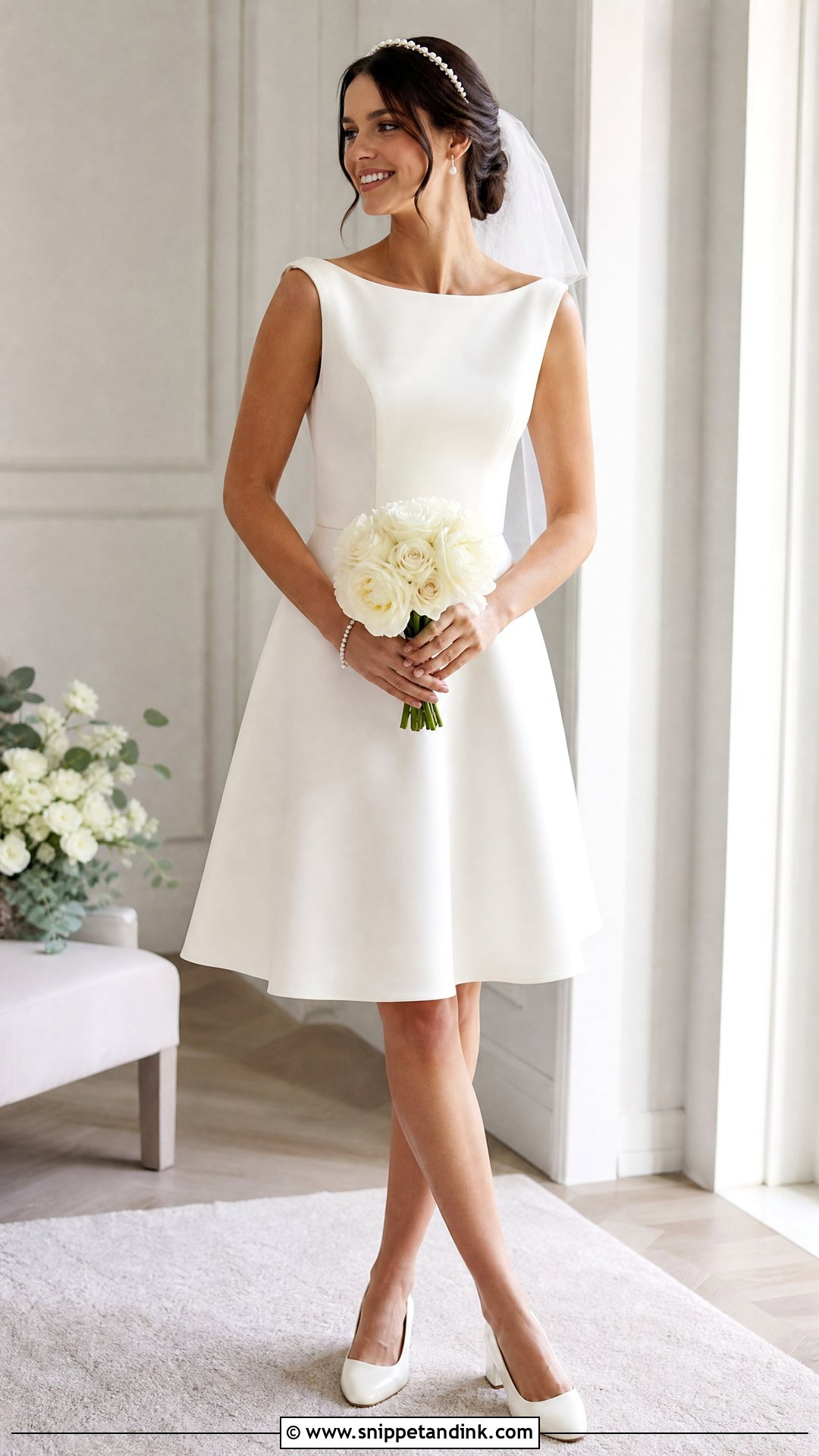
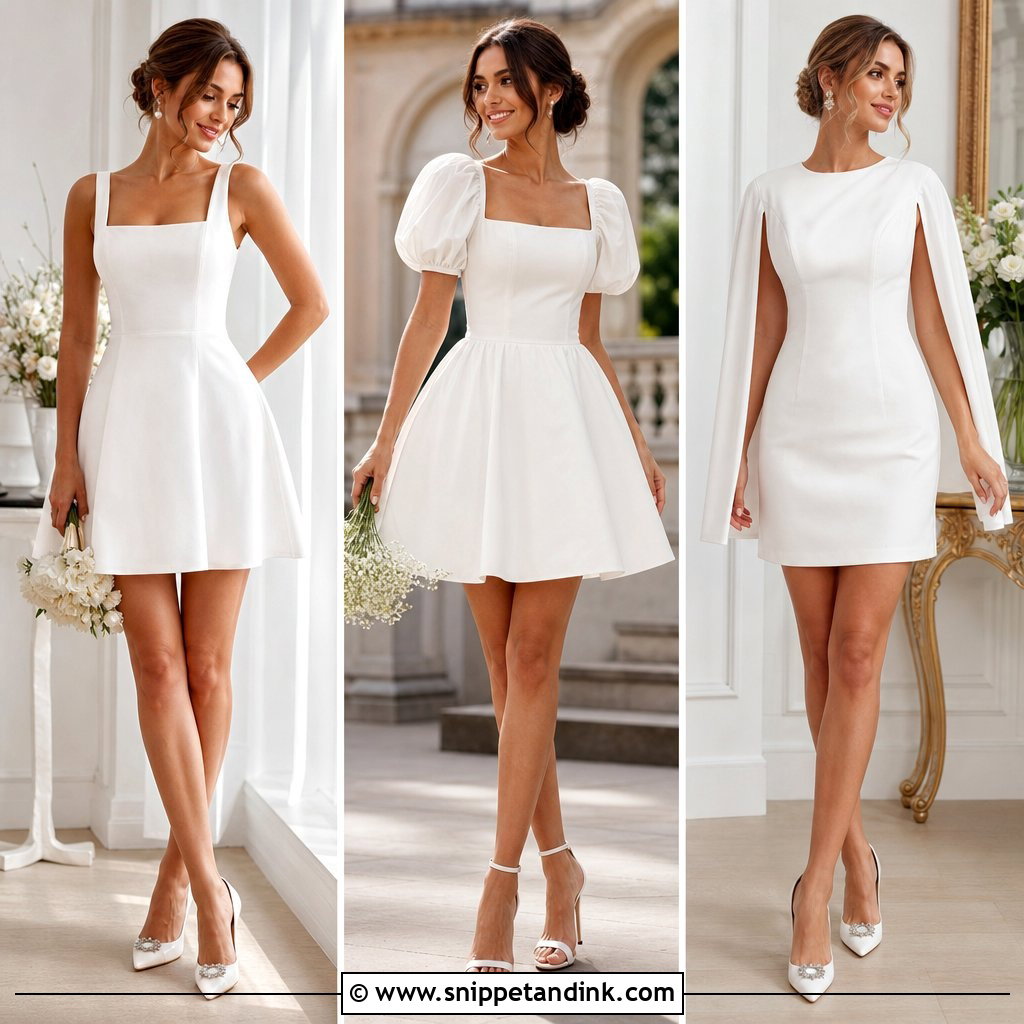
Could the plainest silhouette be the one people remember? A knee-length A-line gives a defined waist, a skirt that moves and room through the hips. Matte crepe or mikado holds the skirt crisply, which is what stops a simple dress from looking like a day dress. A bateau neckline balances the fuller skirt. Low block heels, a pearl headband and a compact top-handle bag; small studs and a fine bracelet are enough jewelry. A short tulle veil softens it, and a neat bun keeps the neckline clear. Civil ceremonies and daytime weddings suit it.
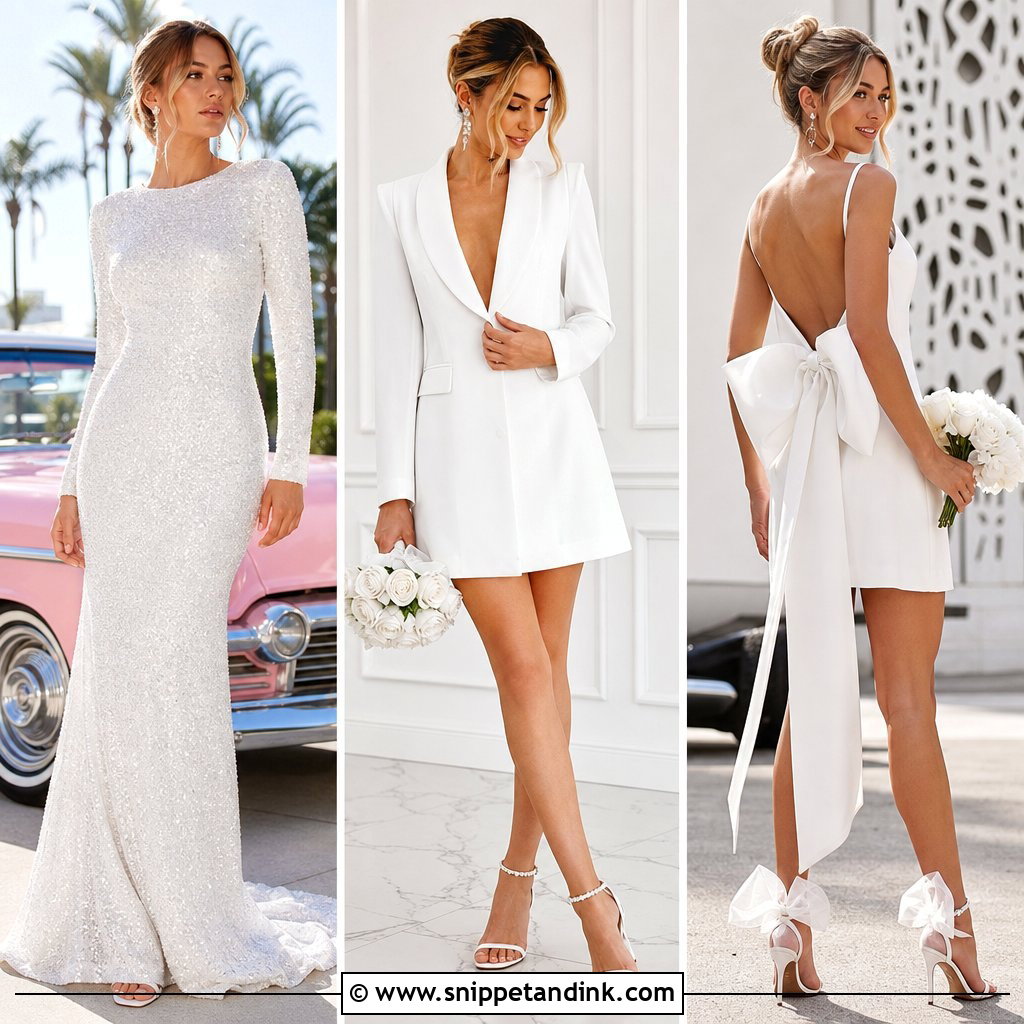
3. Simple Long Sleeve Mini Wedding Dress
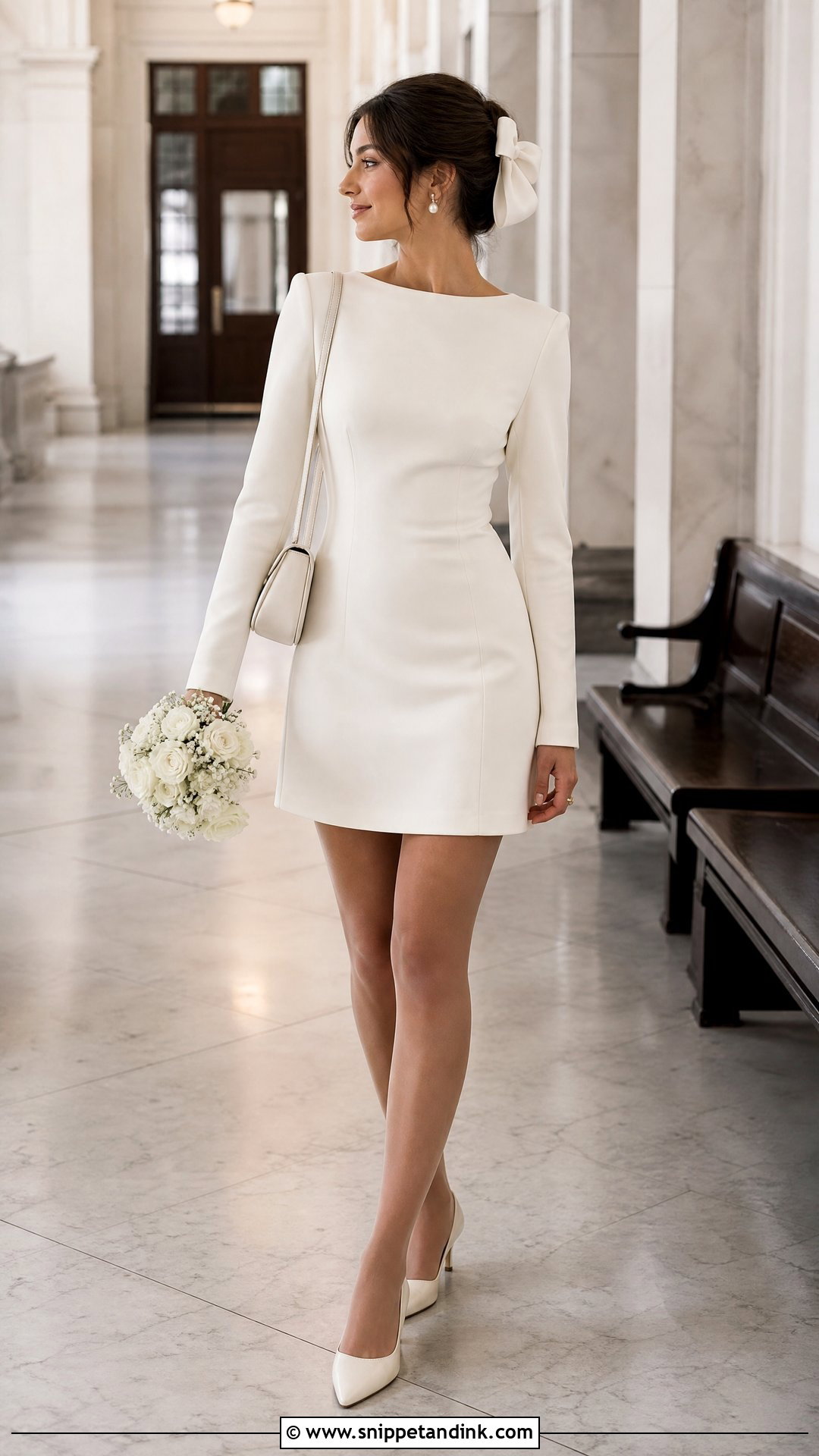
For a cool-weather ceremony, a long-sleeve mini in stretch crepe gives coverage without bulk. Ask for a gently fitted bodice, defined waist and a subtle A-line skirt rather than a bodycon cut; long sleeves plus a tight mini can look more like evening wear than bridal. Closed-toe kitten heels, pearl earrings and a small ivory shoulder bag. Sheer tights in a shade matched closely to your skin add warmth in fall or winter and disappear in photos. A short veil or satin hair bow makes the bridal signal clear. City halls and restaurant celebrations suit it, and plain sleeves leave room for statement shoes or earrings.
4. Short Square Neck Wedding Dress
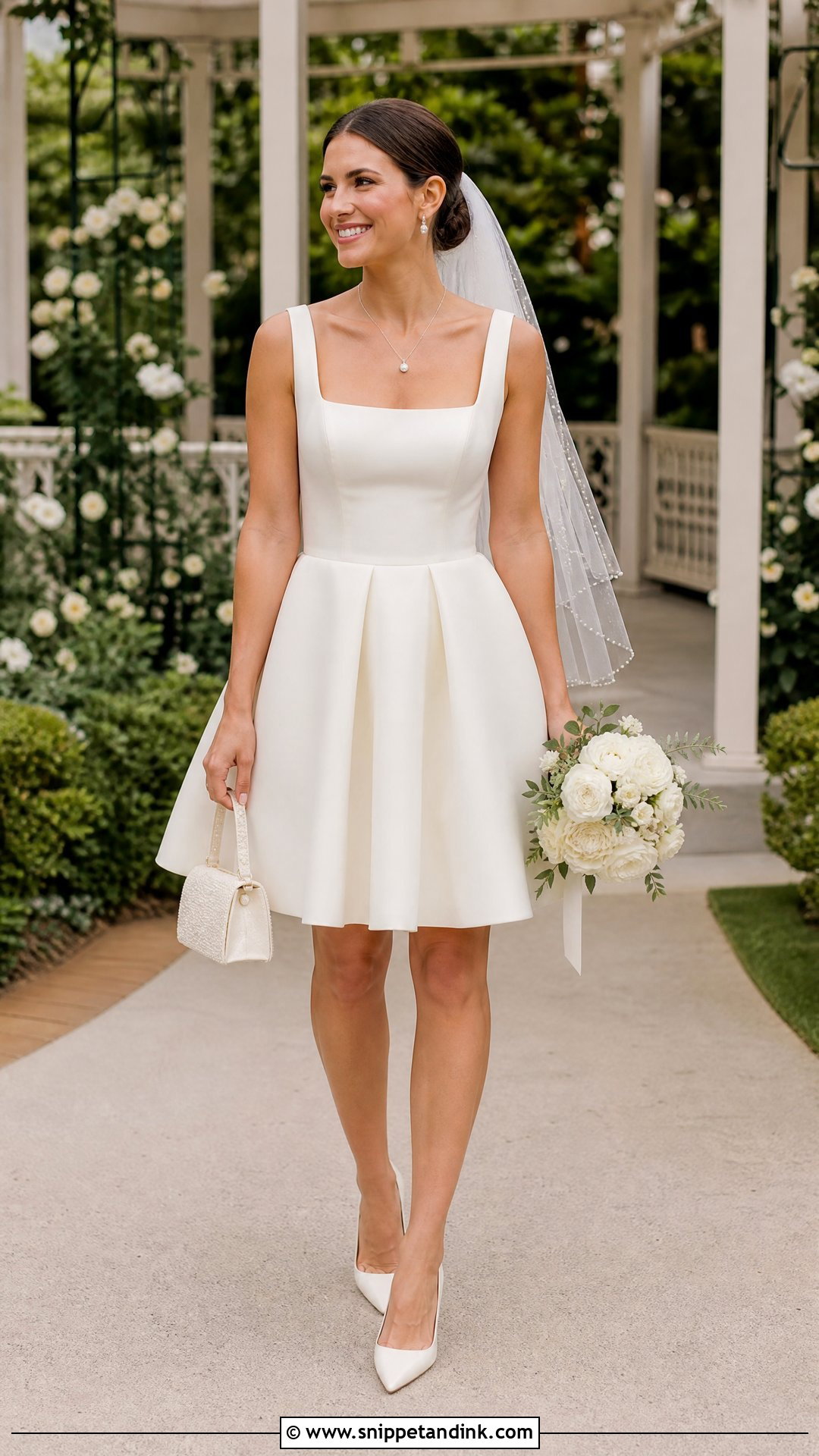
Square necklines frame the collarbone and suit a wide range of bust sizes, because the shape feels open without plunging. The catch is gaping: if the bodice isn’t fitted closely at the sides, the corners lift when you lean forward. A fitted bodice with thicker straps and a gently flared knee-length skirt keeps it balanced. Pointed pumps, a delicate pendant and a structured mini bag. A low chignon and a short pearl-edged veil keep the lines clean. On a very plain dress, a compact bouquet of white flowers and greenery adds texture. Courthouses, gardens and modern interiors all suit it.
5. Simple Tea-Length Wedding Dress
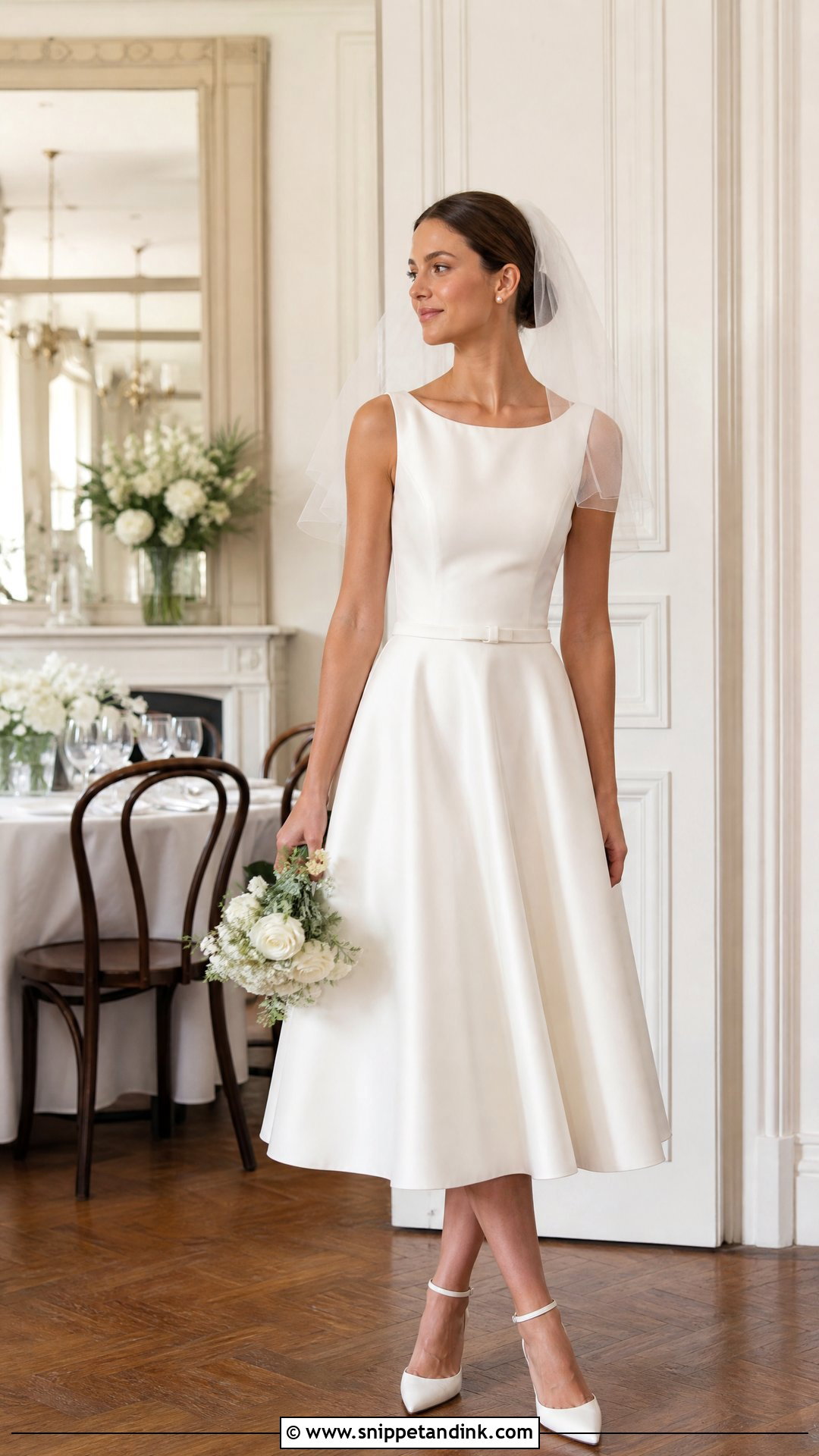
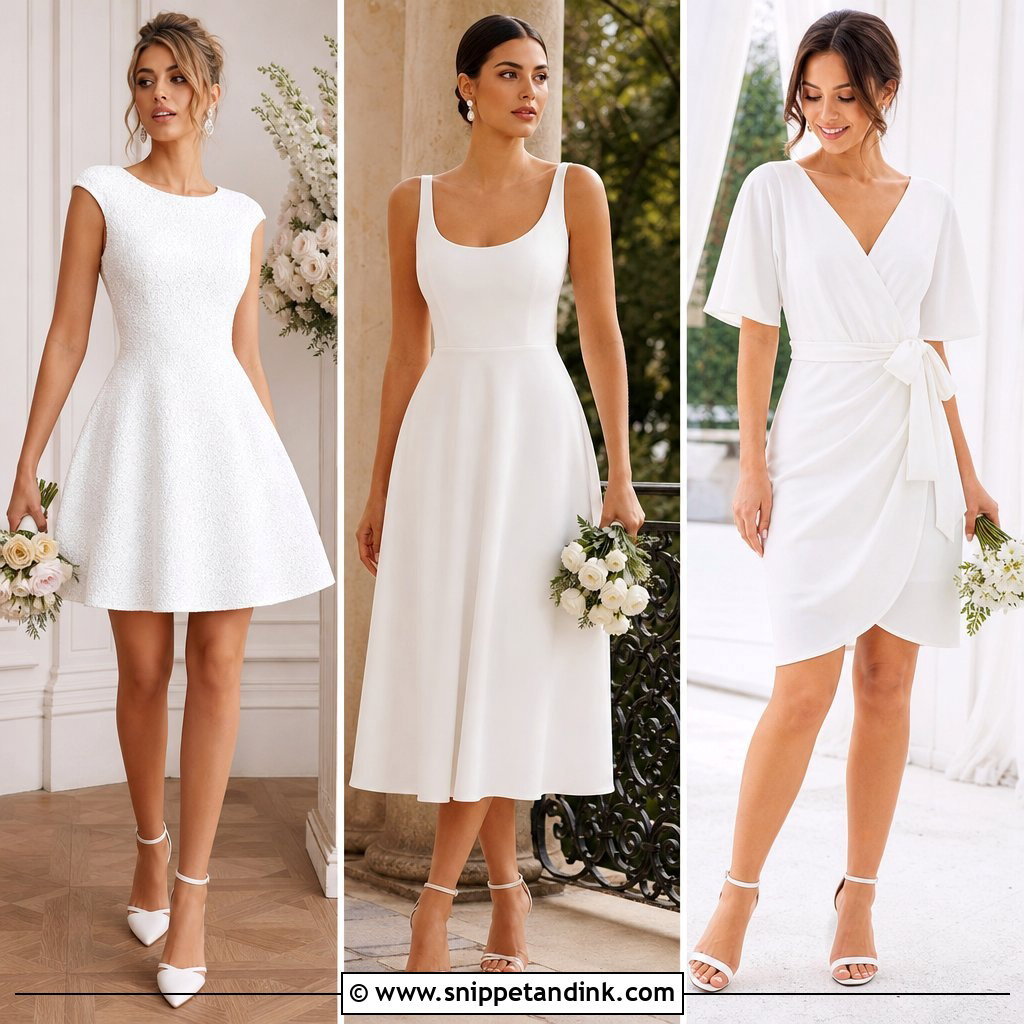
Tea length falls between knee and ankle, so you get the presence of a bridal silhouette without a floor-length hem to manage. Plain satin, crepe or organza with a fitted bodice and lightly flared skirt; organza holds a fuller flare without a petticoat. Your shoes are fully on show, so ankle-strap heels, pointed flats or embellished slingbacks deserve real attention. Pearl studs, a short veil and a small bouquet. If you add a slim belt, keep it the same tone as the dress. It suits vintage-style venues, daytime weddings and dance-heavy receptions, and outdoors the hem stays clear of grass and pavement.
6. Short Slip Wedding Dress
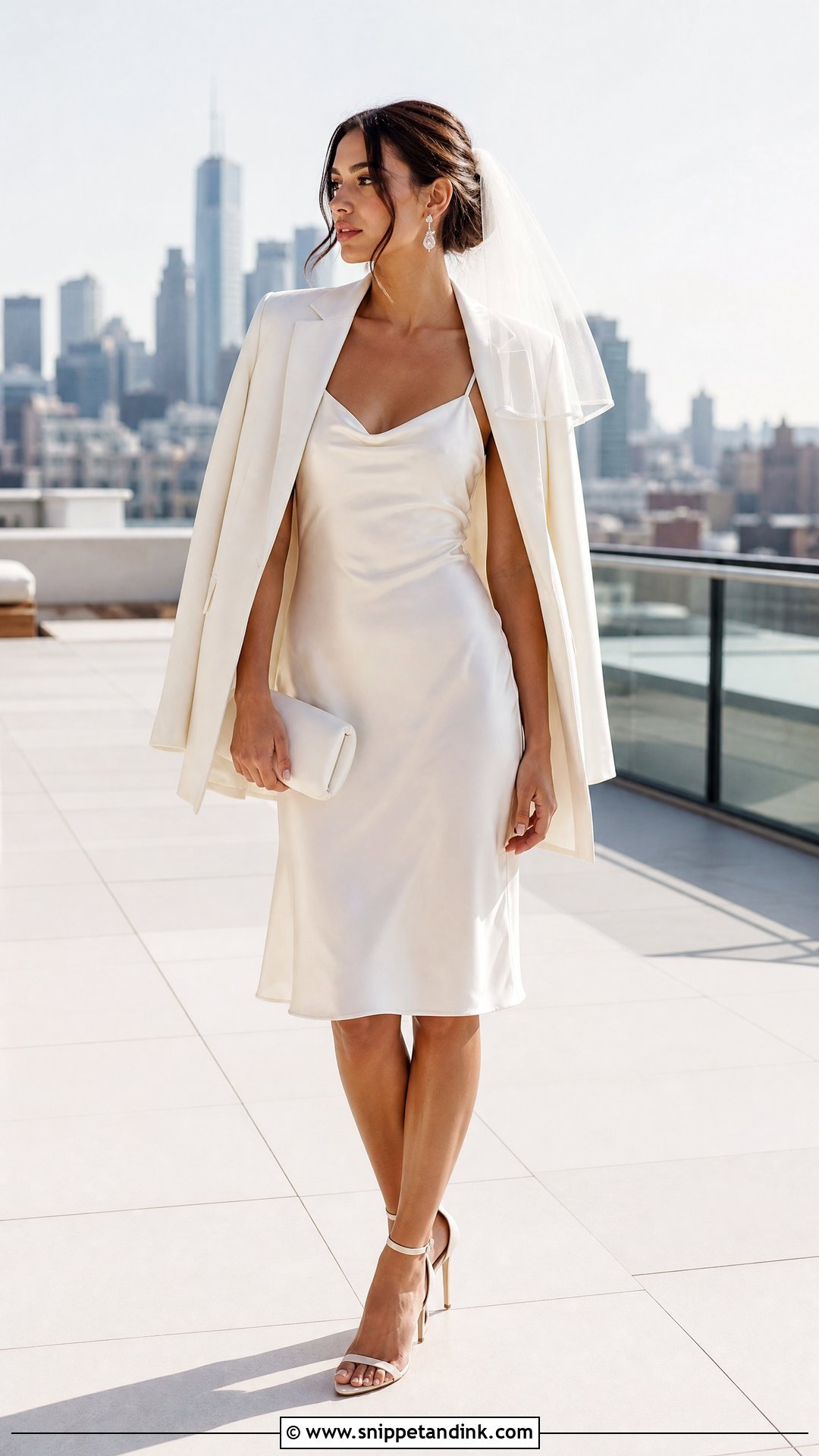
Short slip dresses are bias-cut, so they skim the body and move with it, and they show everything underneath. Smooth, invisible undergarments are essential, and fashion tape keeps a draped neckline where it belongs. Choose a knee-length or mini that skims rather than clings, with adjustable straps; alterations on bias-cut fabric are delicate, so use a seamstress who works with silk and satin. Slim strappy heels, small crystal earrings and a satin clutch, with a sheer shoulder-length veil. A tailored ivory blazer or a light wrap gives coverage. Warm-weather elopements, rooftops and small evening celebrations suit it.
7. Simple Courthouse Wedding Dress With Blazer
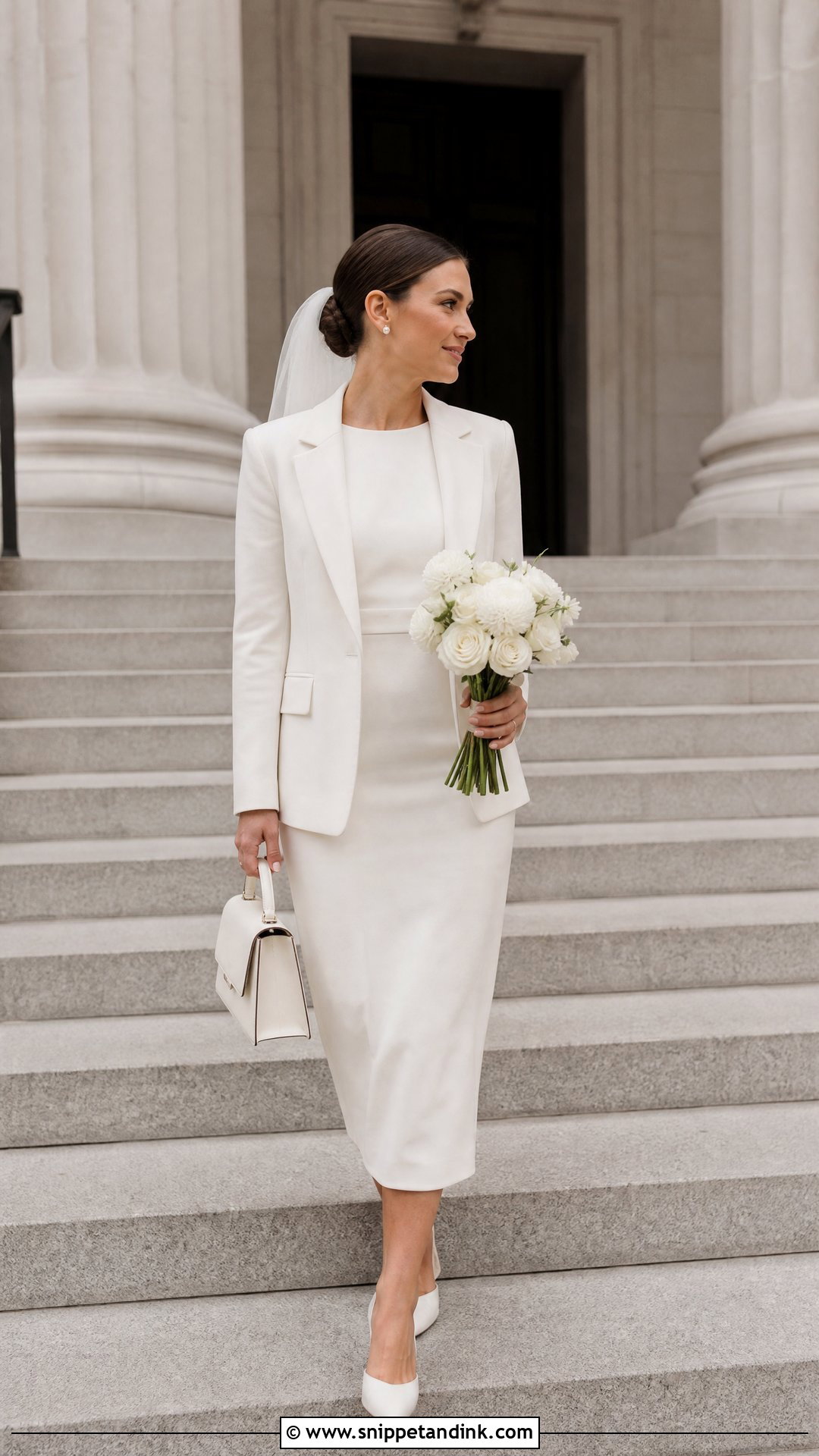
Walking into city hall in a coordinated short dress and blazer outfit feels deliberate. Start with a sleeveless crepe mini or knee-length sheath with a high or softly scooped neckline, then add a tailored ivory blazer ending at the hip or waist. Match the whites closely; a blazer even a shade off the dress looks like two separate purchases. Pointed pumps, a structured top-handle bag, pearl studs, a sleek low bun and a short veil you can remove after the ceremony. The blazer covers you for travel and air-conditioned interiors, and both pieces can be worn again. Polished slingbacks or pointed ballet flats work if you’d rather not wear heels.
8. Short Off-Shoulder Wedding Dress
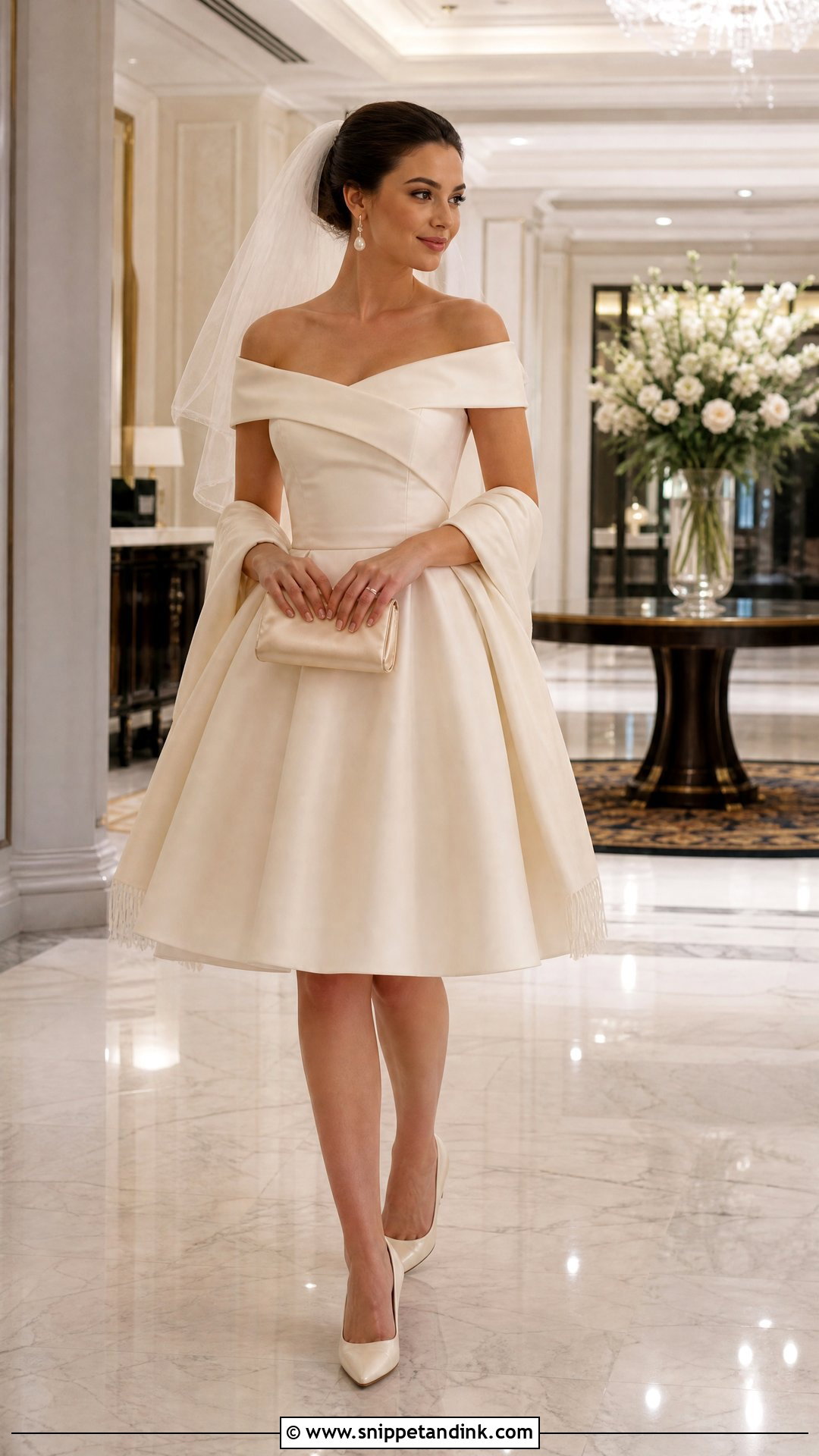
A short off-shoulder dress lives or dies on its internal bodice. A folded neckline with boning or a built-in corset holds the sleeves in place; without it, you’ll be hitching the neckline up all day. Choose a structured mini or knee-length design with a gently flared skirt, which balances the bare shoulders and makes sitting easier. Pearl drop earrings, closed-toe heels and a small satin clutch. No necklace. A smooth updo and fingertip veil frame the shoulders. Carry a soft ivory wrap for colder months. Courthouses, hotels and small formal celebrations suit it.
9. Simple Lace Trim Wedding Dress
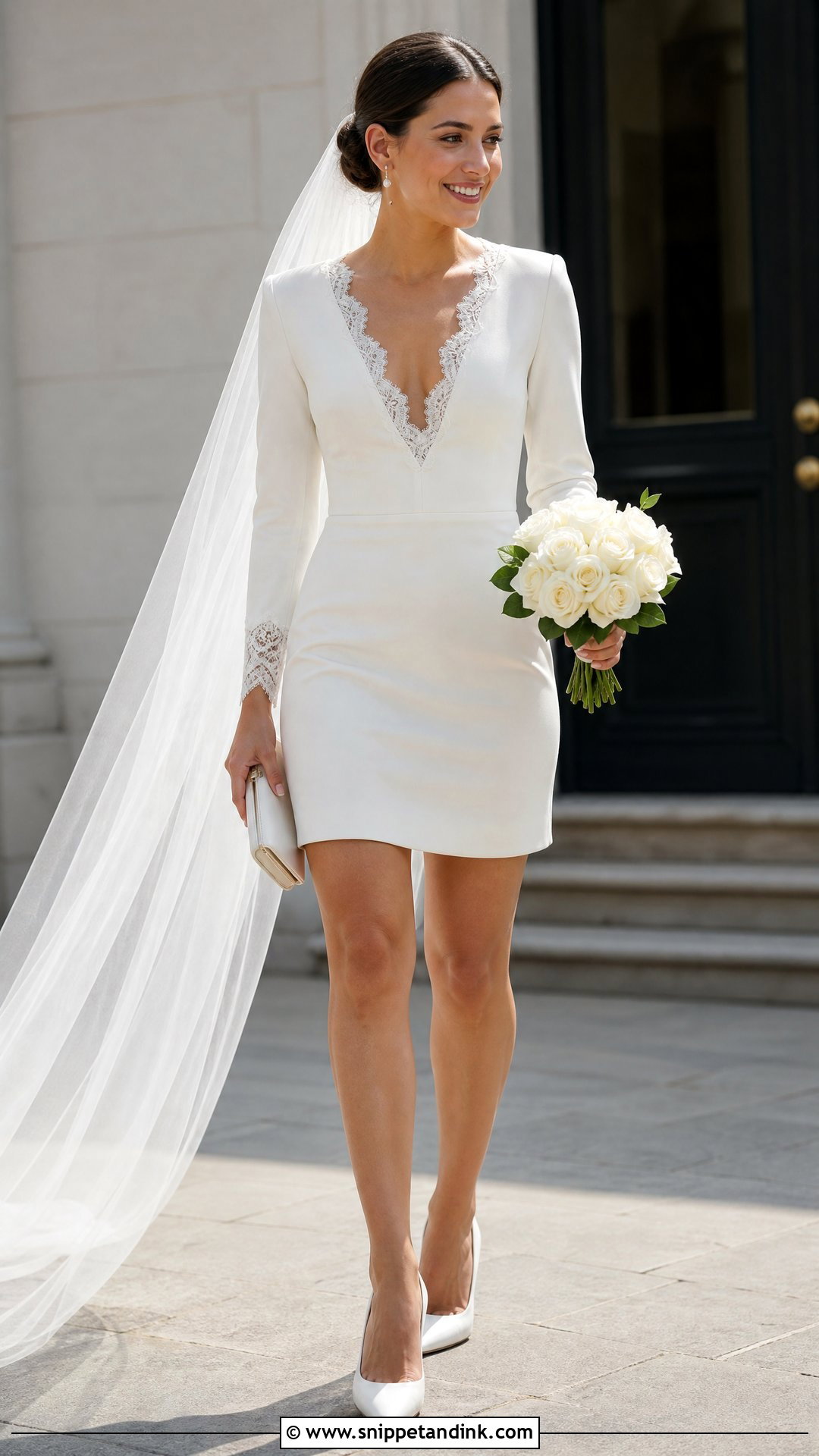
A little lace softens a plain crepe or satin mini without turning it into a lace dress. Edging on the neckline, sleeves or hem works, but I keep it to one area; lace in three places starts to look busy. Fine patterns read delicate, while heavier guipure looks more graphic. Pointed ivory heels, pearl earrings and a clutch with minimal hardware, with a plain tulle veil so nothing competes. Check the lining too, since lace edging on a sheer sleeve or hem can show more skin than you expect. A small bouquet of white roses or seasonal flowers suits an outdoor ceremony.
10. Short Halter Wedding Dress
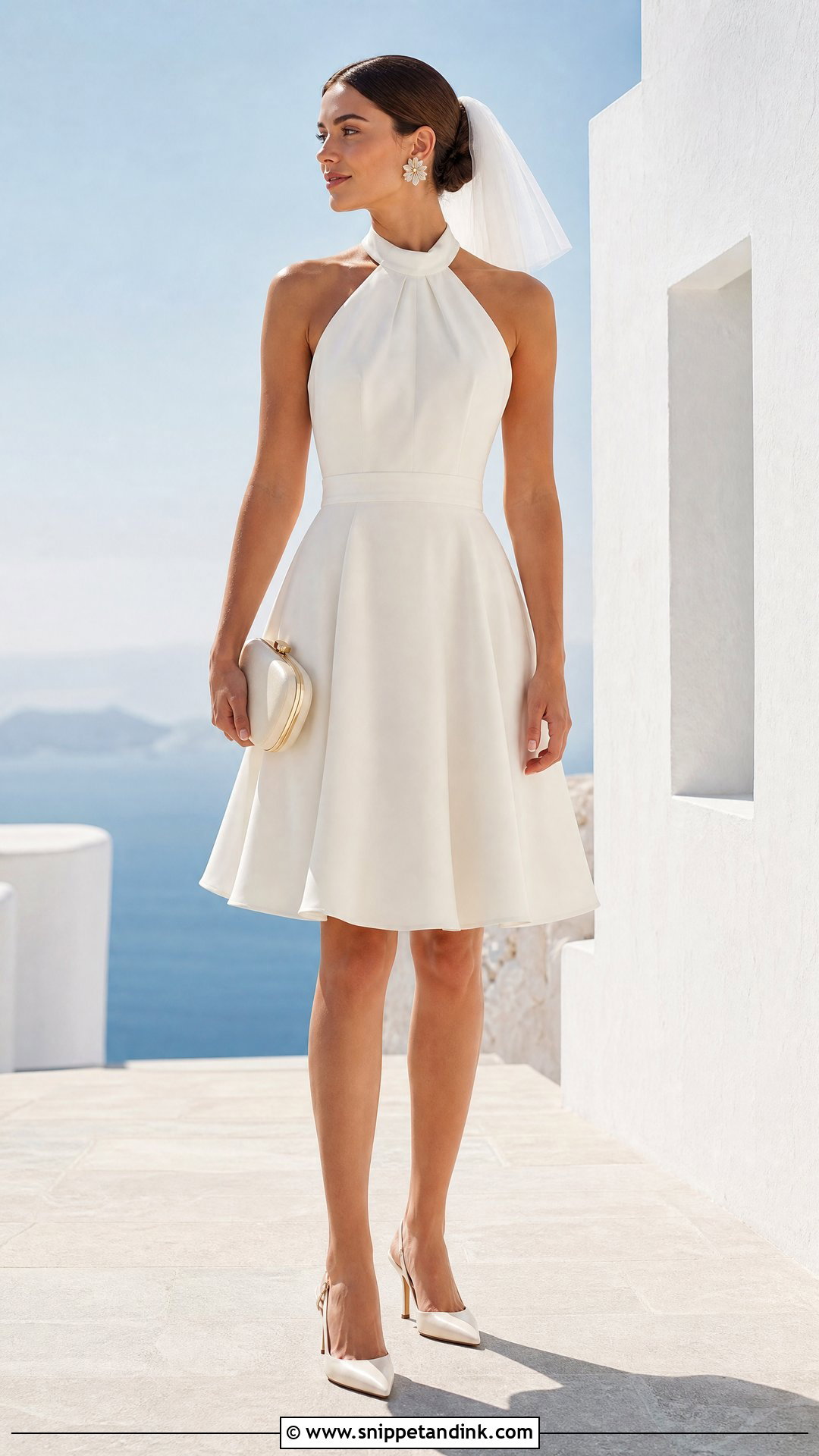
Halter necks put the weight of the bodice on the back of your neck, so sit in the dress for a few minutes and check for pressure there before you buy. A knee-length or mini with a fitted waist and softly flared skirt keeps it balanced. Matte crepe looks refined; satin has more glow. Slingback heels, sculptural studs and a compact clutch, with hair up in a bun or ponytail so the neckline and back stay visible. Attach a short veil beneath the hairstyle so it doesn’t cover the halter. Summer venues, destination ceremonies and modern interiors suit it.
11. Simple Puff Sleeve Wedding Dress
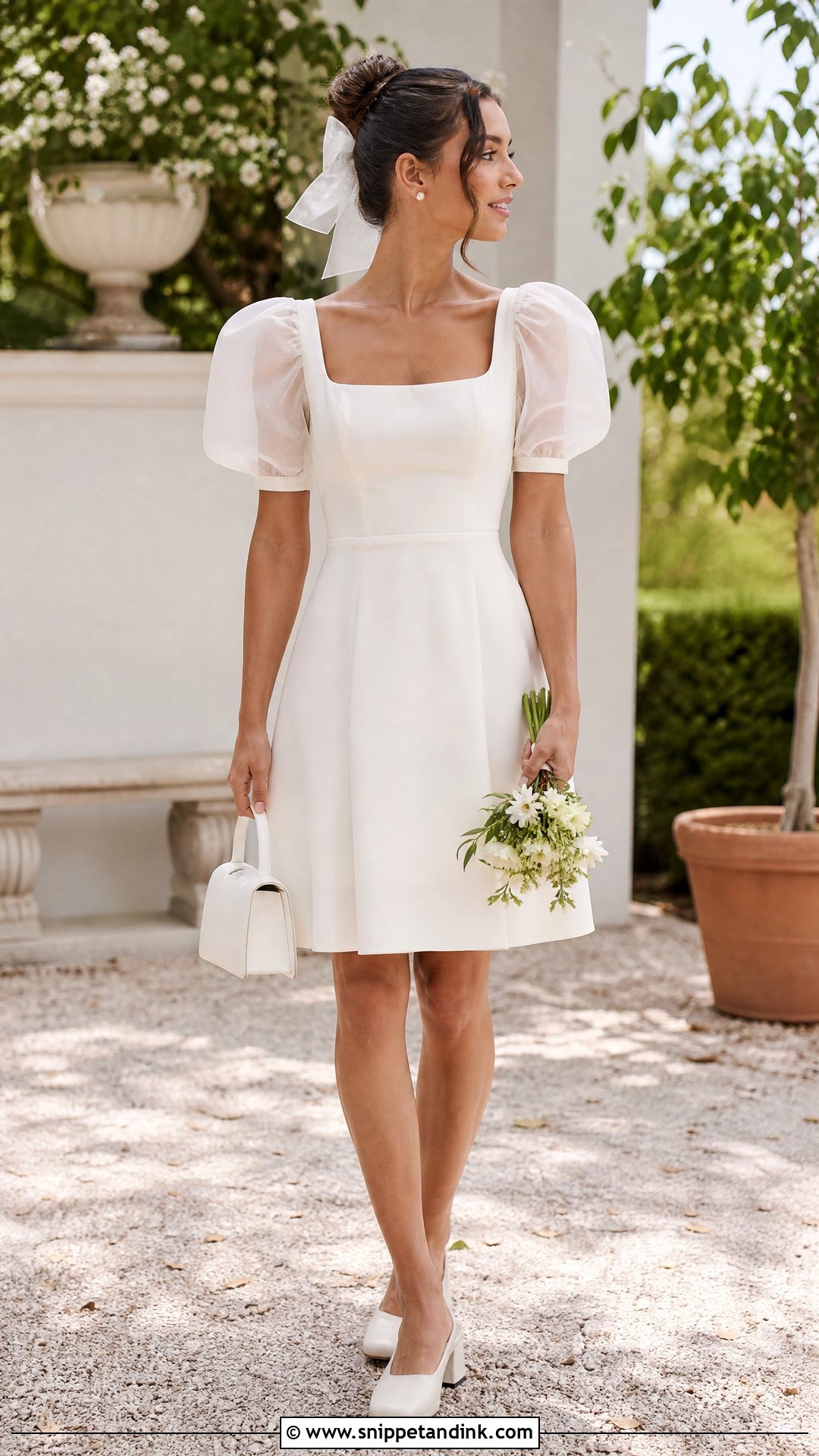
Puff sleeves give a simple short dress shape and a little arm coverage. Elbow-length or short sleeves in organza, chiffon or matching crepe, with a fitted bodice and an uncomplicated skirt. Organza holds a puff all day; chiffon softens and drops a little by evening, which some brides prefer. Knee length feels classic, a mini more playful for a reception. Low block heels, pearl studs and a small structured handbag. A ribbon bow or plain headband can replace a veil. Keep the bouquet compact so it doesn’t fight the sleeves. Gardens and daytime celebrations suit it.
12. Short Boat Neck Wedding Dress
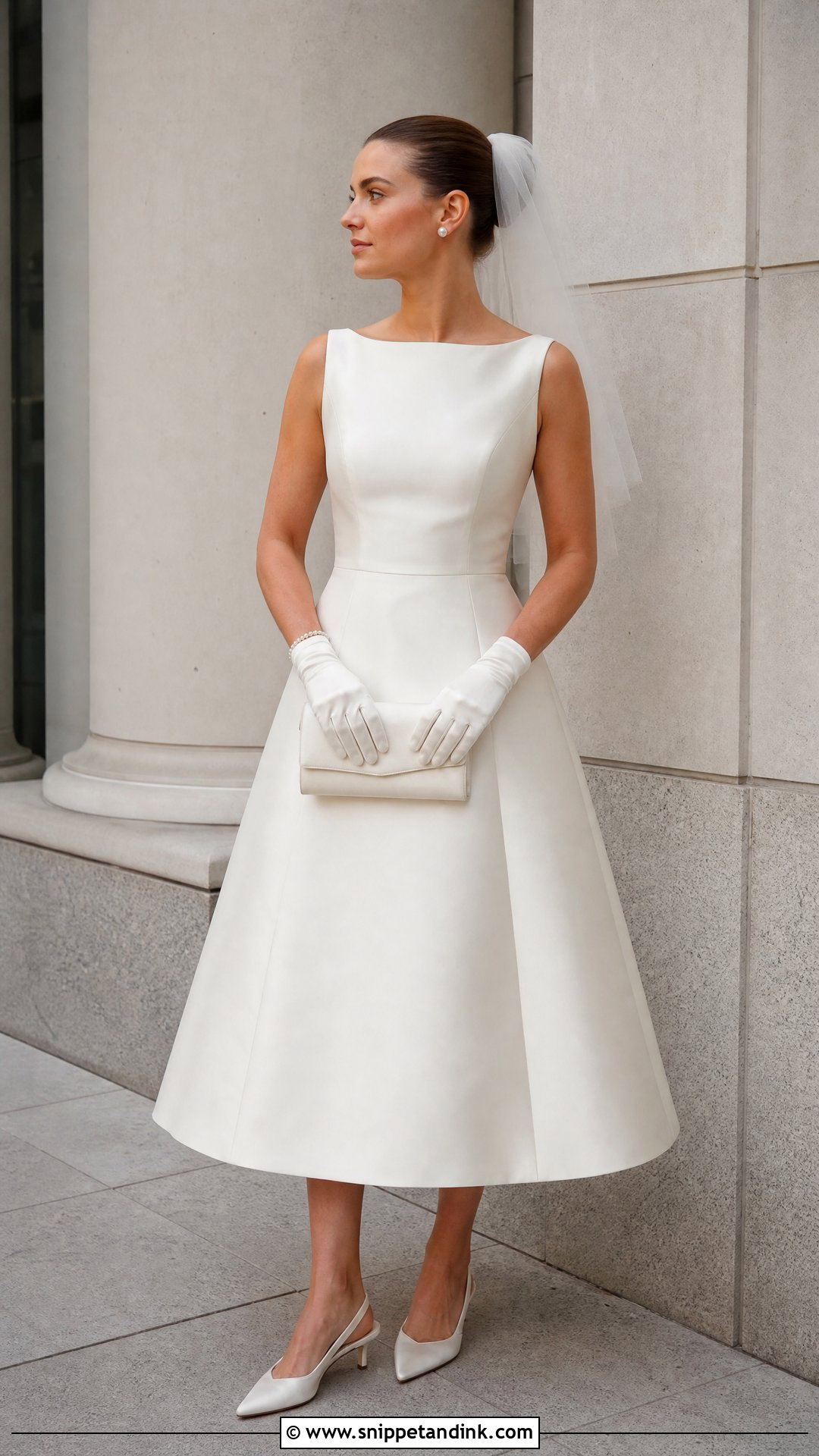
A boat neck wedding dress suits a civil ceremony because the line is so clean. A short sheath or A-line in crepe, mikado or heavier satin holds the wide neckline flat; lighter fabrics collapse at the shoulder. The neckline draws attention outward, so keep jewelry to studs and a slim bracelet. Pointed kitten heels, a structured clutch and a short veil behind a neat bun. Wrist-length gloves in a smooth matching fabric give it a retro finish. If the neckline pulls or lifts at the shoulder, alterations to the upper bodice usually fix it. City photos and formal interiors suit it.
13. Simple Wrap Wedding Dress
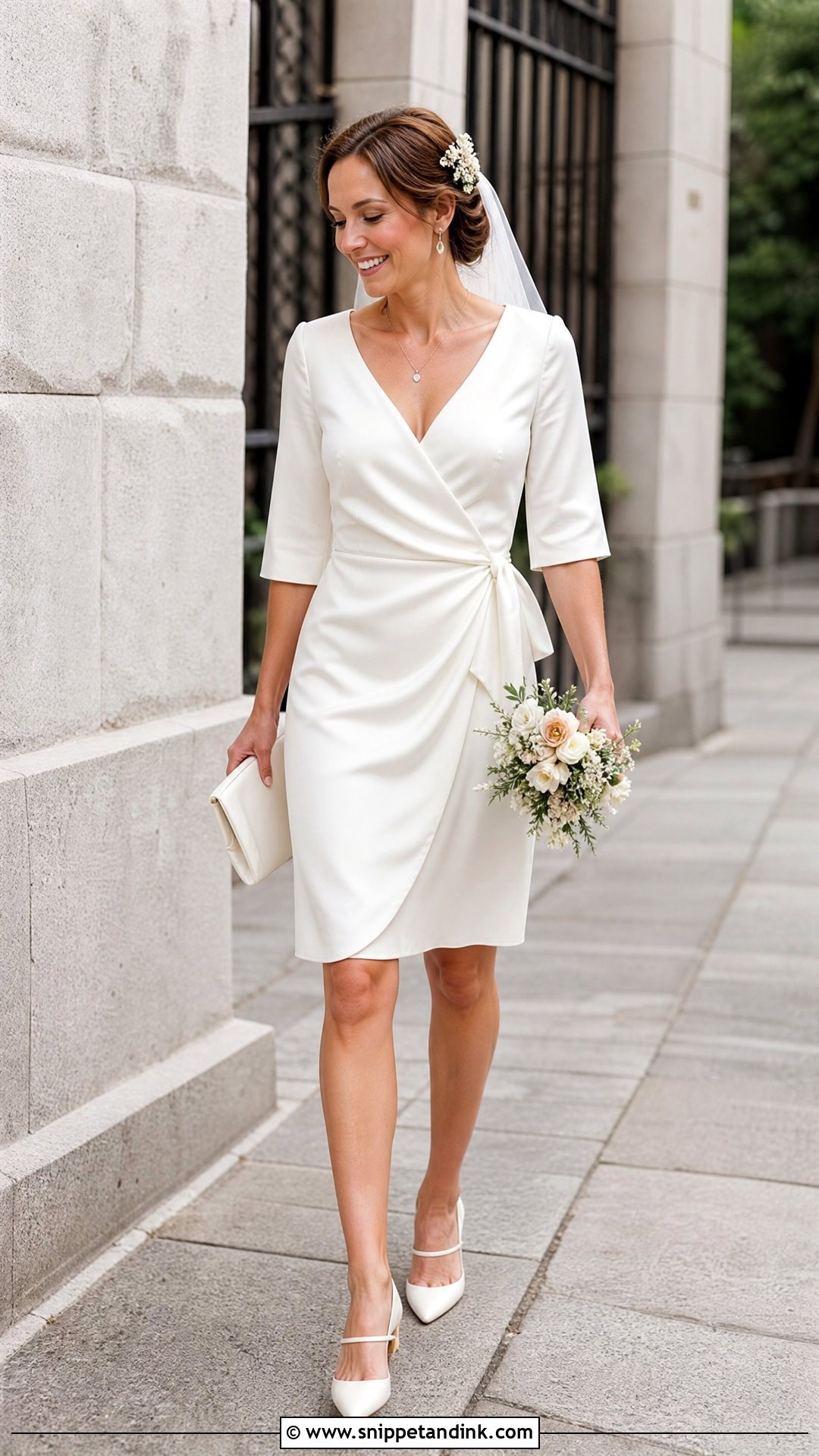
Wrap dresses are the most adjustable shape on this list, since the tie sets the waist exactly where you want it. Choose a true wrap or a well-secured faux wrap with a modest V and knee-length hem. True wraps can blow open at the skirt in wind, so I’d ask for a hidden snap at the neckline and one at the skirt overlap rather than relying on tape. Crepe and matte satin have enough body to hang well. Low slingbacks, a delicate pendant and a small envelope clutch, with a floral comb or short veil. Relaxed venues and outdoor ceremonies suit it.
14. Short Shift Wedding Dress
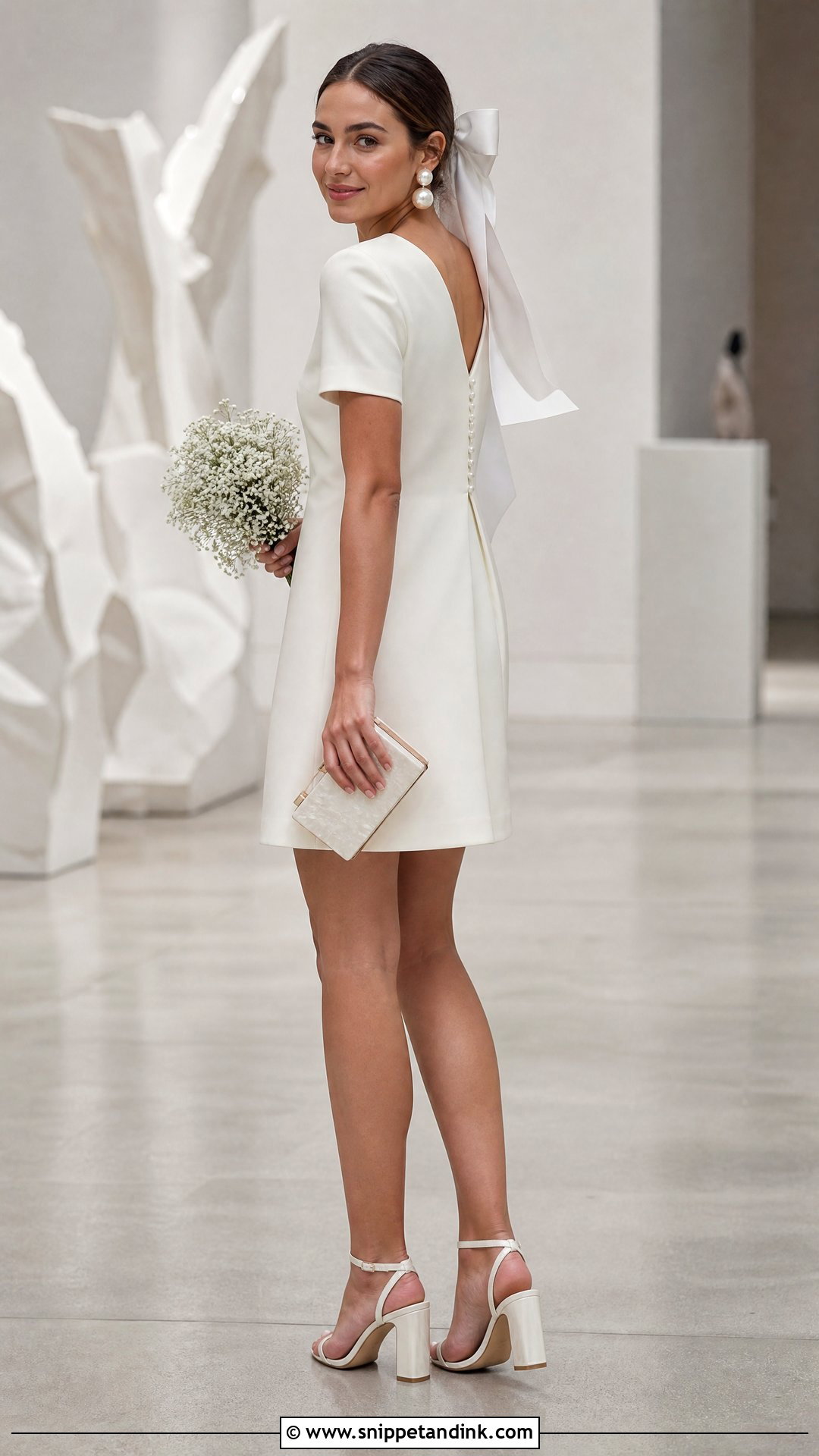
A shift falls straight from the shoulders with no waist seam, which makes it relaxed and also easy to get wrong: a size too big looks like a sack. It should skim the body, so shoulder and hem alterations matter. A high neckline, short sleeves or a small back detail gives the plain shape something special. Block-heel sandals, bold pearl earrings and a compact box clutch, with a short veil or structured bow at the back of a smooth hairstyle. Skip a long, trailing bouquet, which drags the eye down a dress with no waist. Warm-weather courthouses and gallery venues suit it.
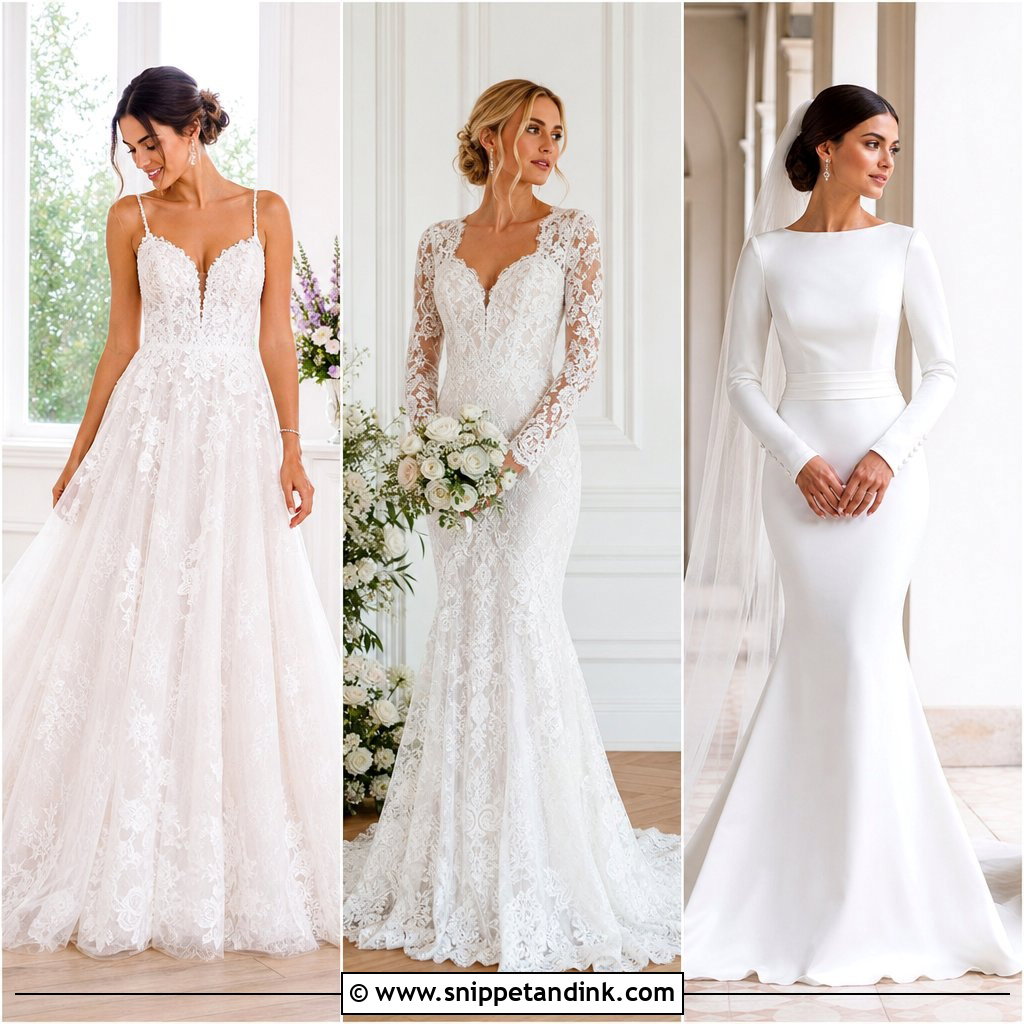
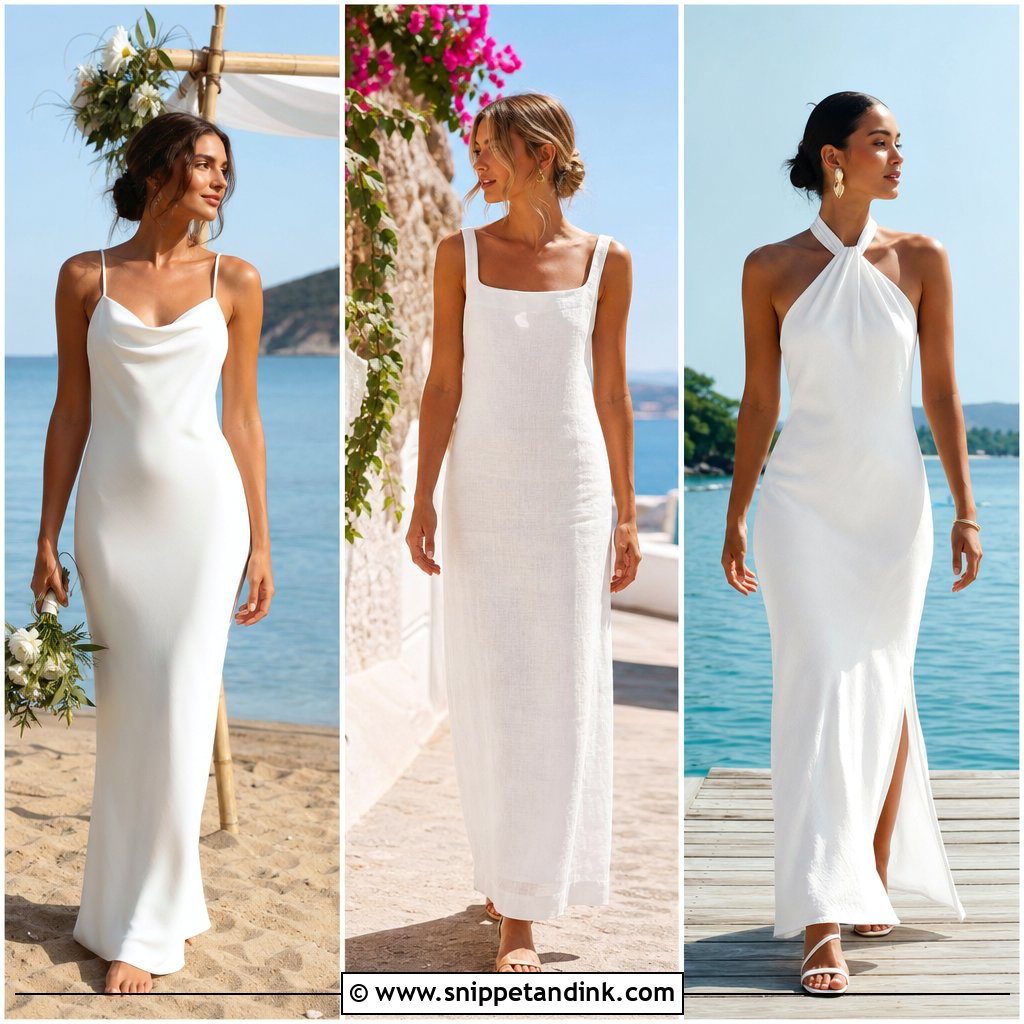
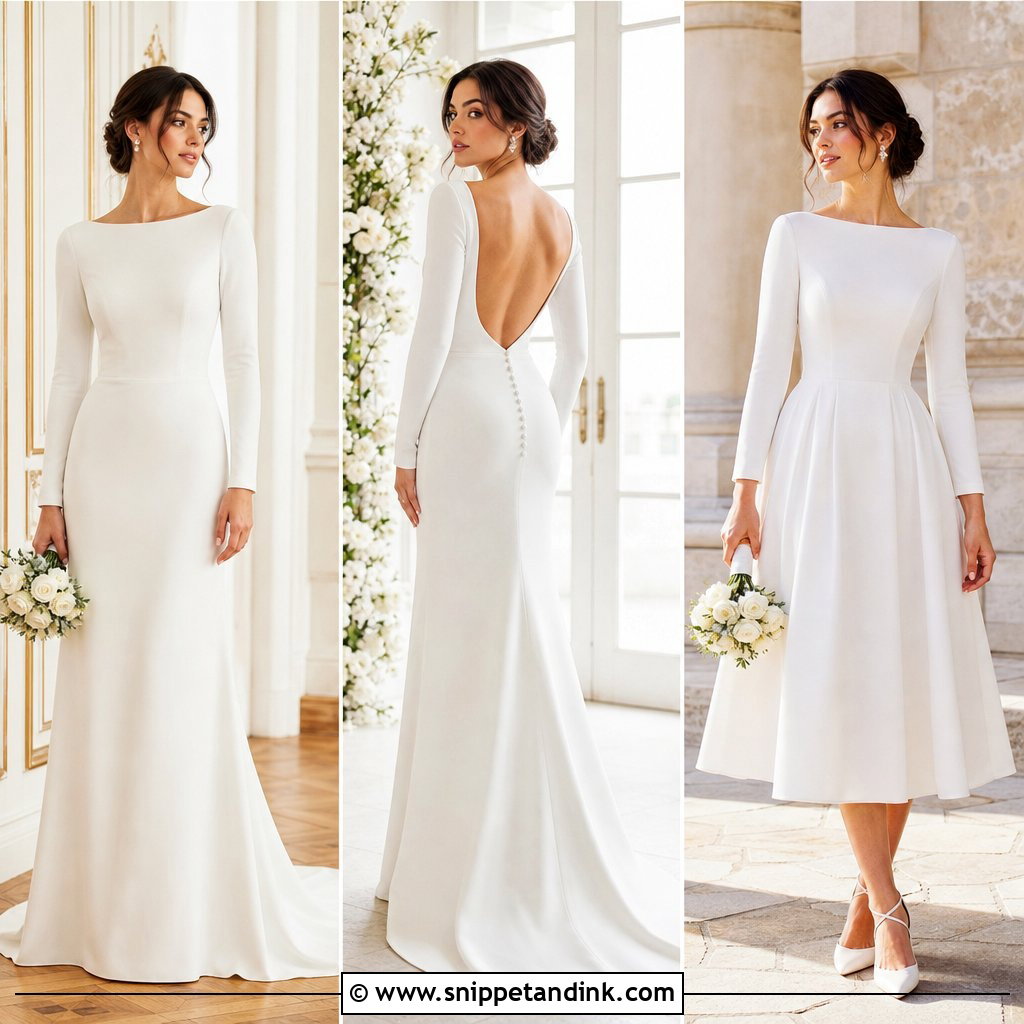
15. Simple Drop Waist Wedding Dress
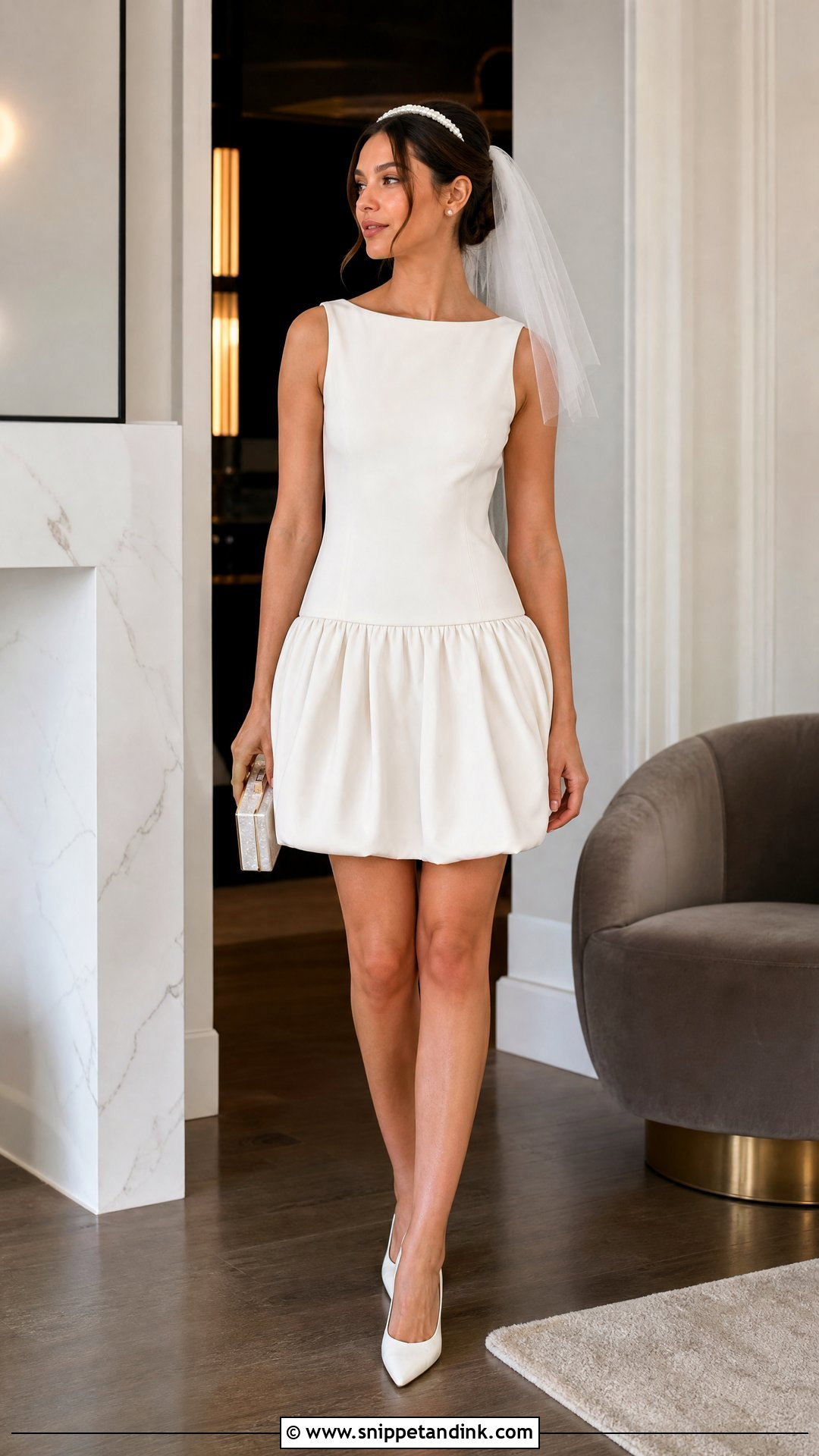
The drop waist moves the seam below your natural waist, so proportion is the first thing to check in the mirror. Petite brides often need the bodice shortened so the skirt isn’t squeezed into a few inches; taller brides should check the skirt still covers enough when seated. The fitted upper section meets a softly gathered or flared mini skirt. Sleek pointed heels, small studs and a structured clutch, with a narrow headband or short tulle veil. It suits brides who want something that feels different from a standard A-line without adding embellishment.
16. Short One Shoulder Wedding Dress
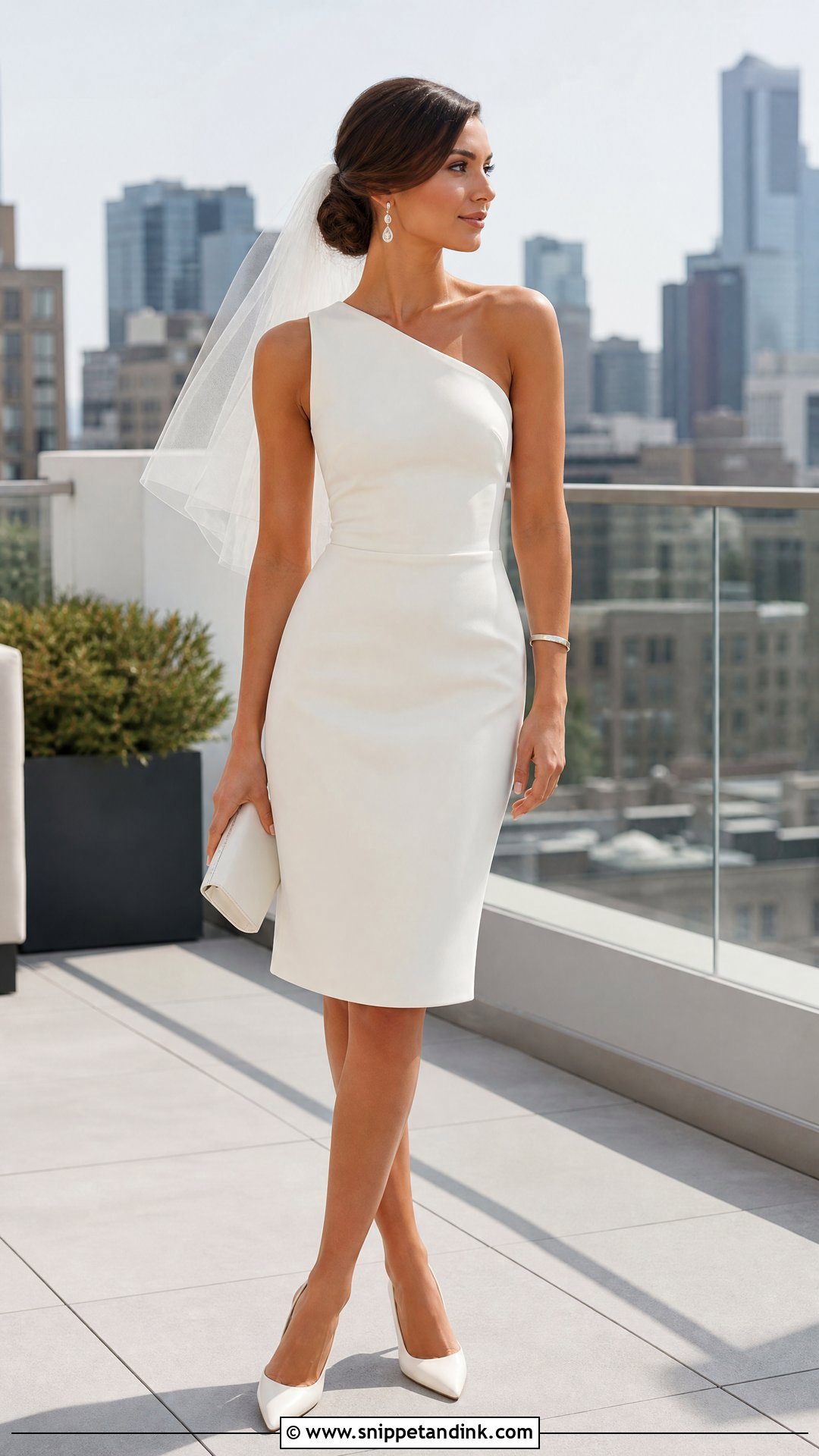
A one-shoulder dress gets its interest from the cut, not decoration. Pick a simple crepe mini or knee-length sheath with gentle waist definition and a secure asymmetric neckline; the single strap carries more load than two would, so it should be wide enough not to dig in. Leave the bare shoulder free of necklaces and wear small drops or a slim cuff. Pointed slingbacks and a clean envelope clutch. A low side-parted bun on the bare side shows the neckline. If you wear a veil, attach a short one at the back. Raise your arms and sit in fittings to check the neckline stays put.
17. Simple High Neck Wedding Dress
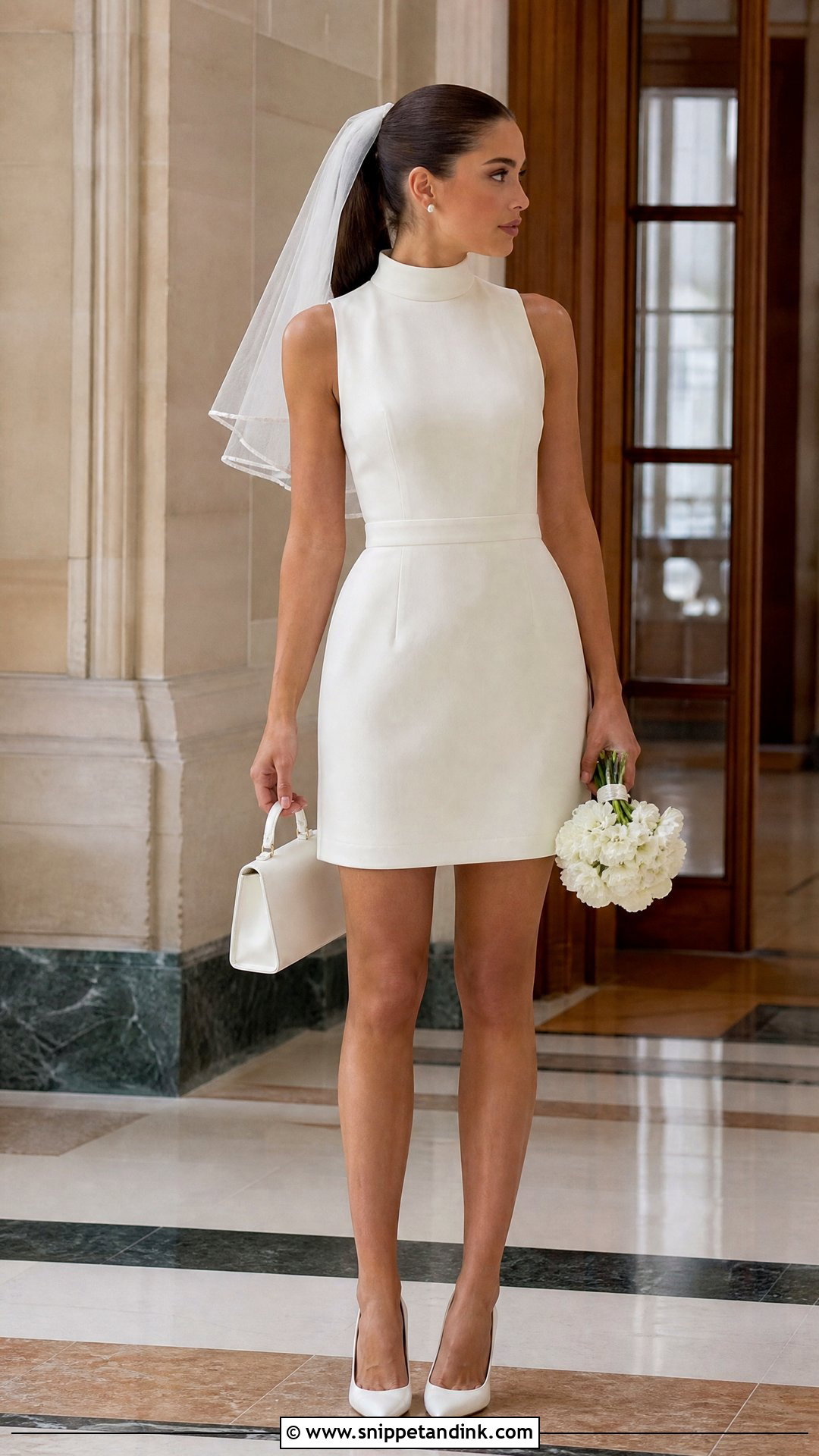
A high neck makes a short dress feel more formal, and it works across seasons: a sleeveless mini in structured crepe for summer, a long-sleeve knee-length version for winter. A defined waist stops the coverage from looking severe. For fuller busts, I’d suggest a slightly lower or softer neckline and seams placed to shape the bust; a very high, flat neck can make the bodice look heavier than it is. Pointed heels, pearl or crystal studs and a small top-handle bag. A neat updo or polished ponytail, with a short veil placed beneath the hairstyle. City halls and minimalist venues suit it.
18. Short Wedding Dress With Detachable Overskirt
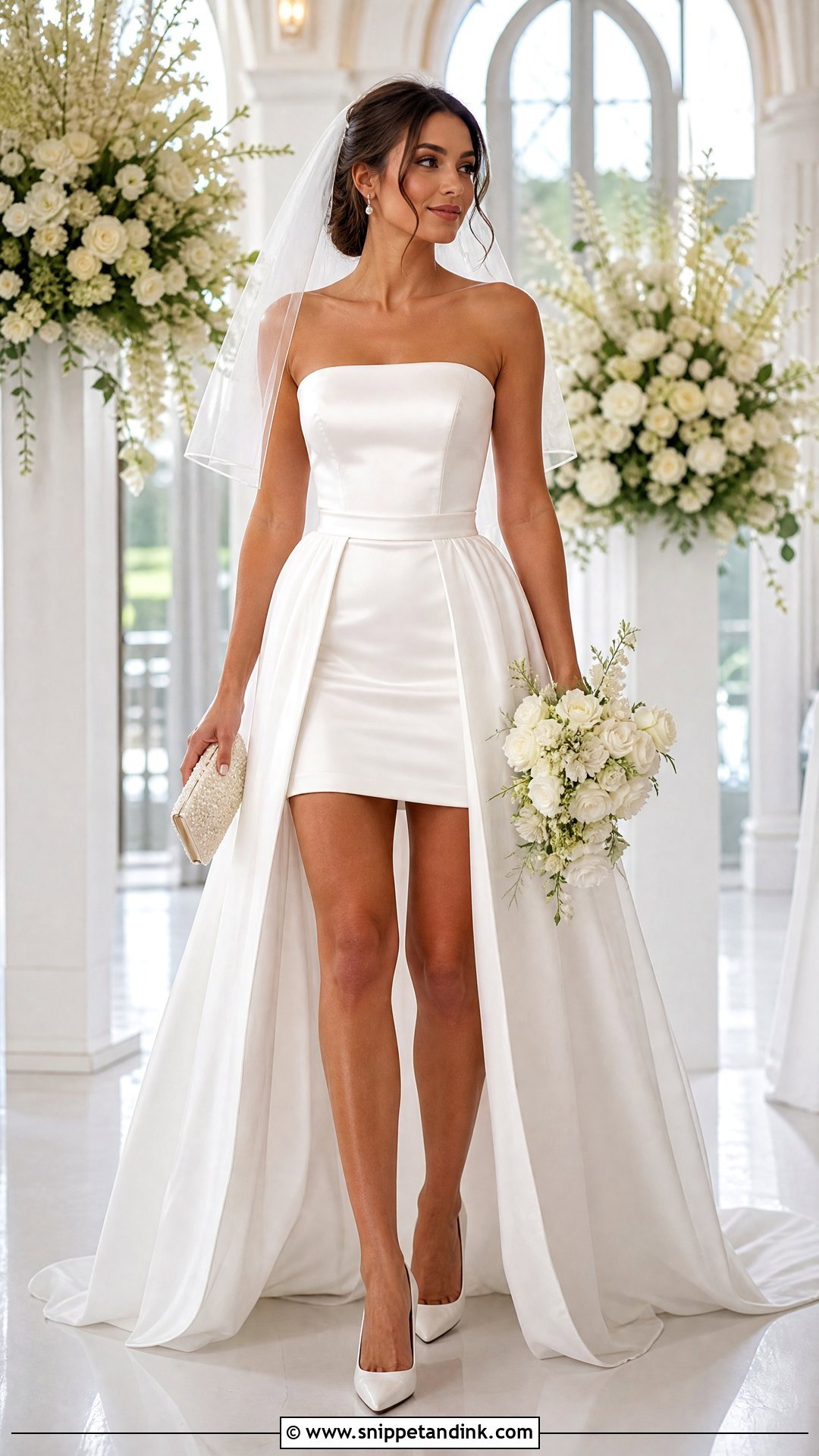
A detachable overskirt gives you a traditional entrance and a short dress for dinner and dancing. Start with a fitted mini or knee-length dress in satin or crepe, then add a lightweight overskirt for the ceremony; a front-opening design keeps the dress and shoes visible. The attachment point is the detail to check: hooks or snaps should lie flat under the waistband, and removing the skirt shouldn’t drag or wrinkle the dress. Practice taking it off before the day. Pointed pumps, pearl earrings and a small clutch work for both versions, and a fingertip veil suits the longer layer.
19. Simple Short Blazer Wedding Dress
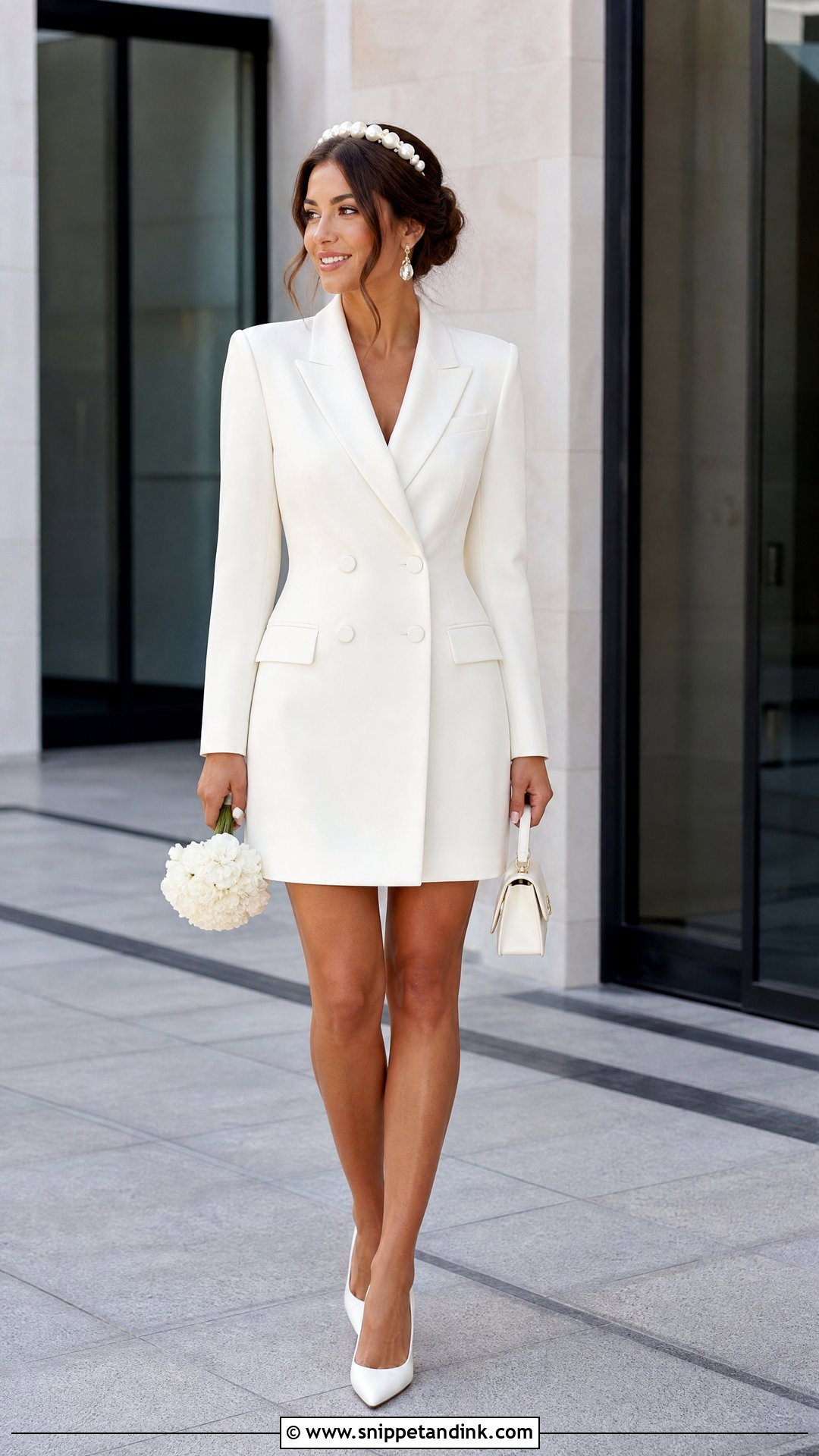
Sharp tailoring makes a blazer wedding dress look polished and modern, provided it actually fits. Shoulders, lapels, waist and hem all have to sit correctly, or the dress looks borrowed. Choose a double-breasted or wrap-front mini with a secure neckline, defined waist and enough length to sit in. Ivory crepe or suiting fabric gives structure without weight. Pointed pumps, simple metallic earrings and a structured mini bag, softened by a small birdcage veil, satin bow or pearl headband. A smooth camisole underneath adds coverage. City halls, restaurants and cool-season weddings suit it.
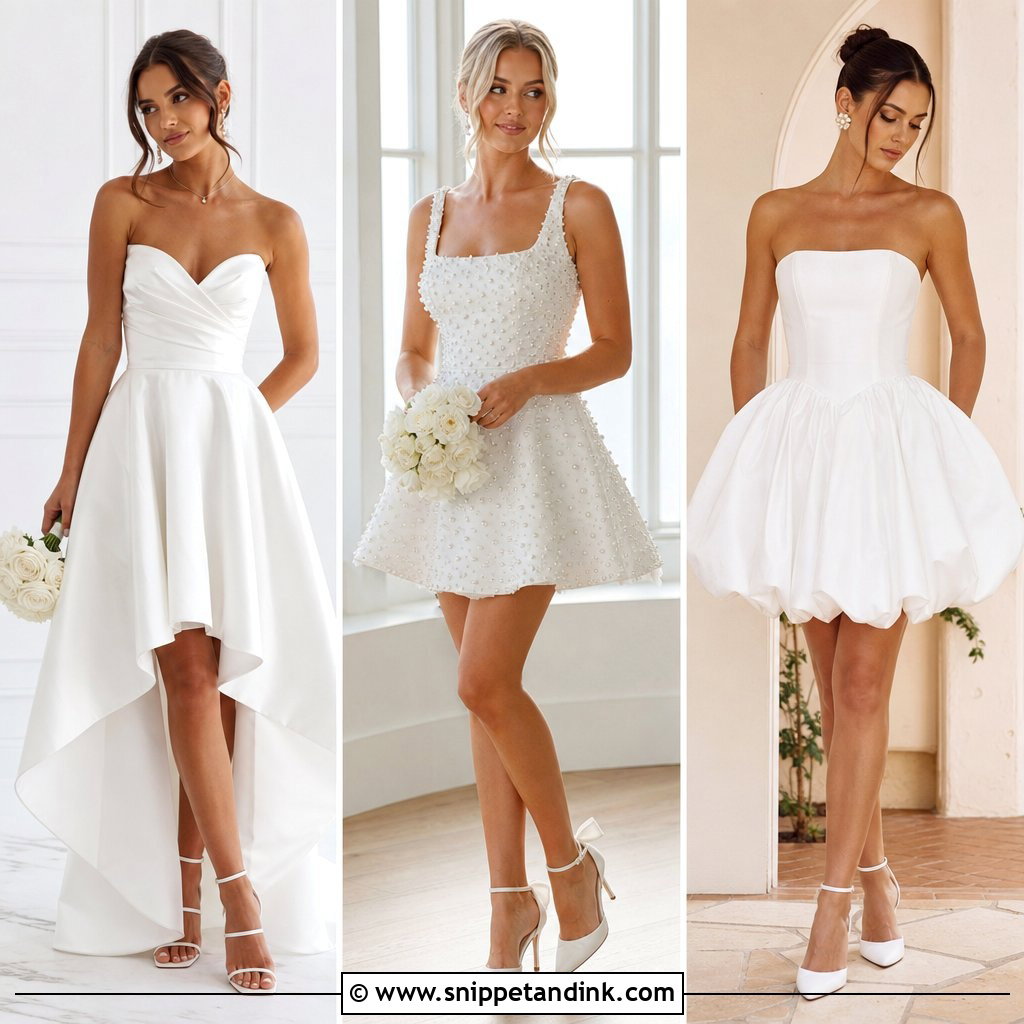
20. Short Plus Size Fit And Flare Wedding Dress
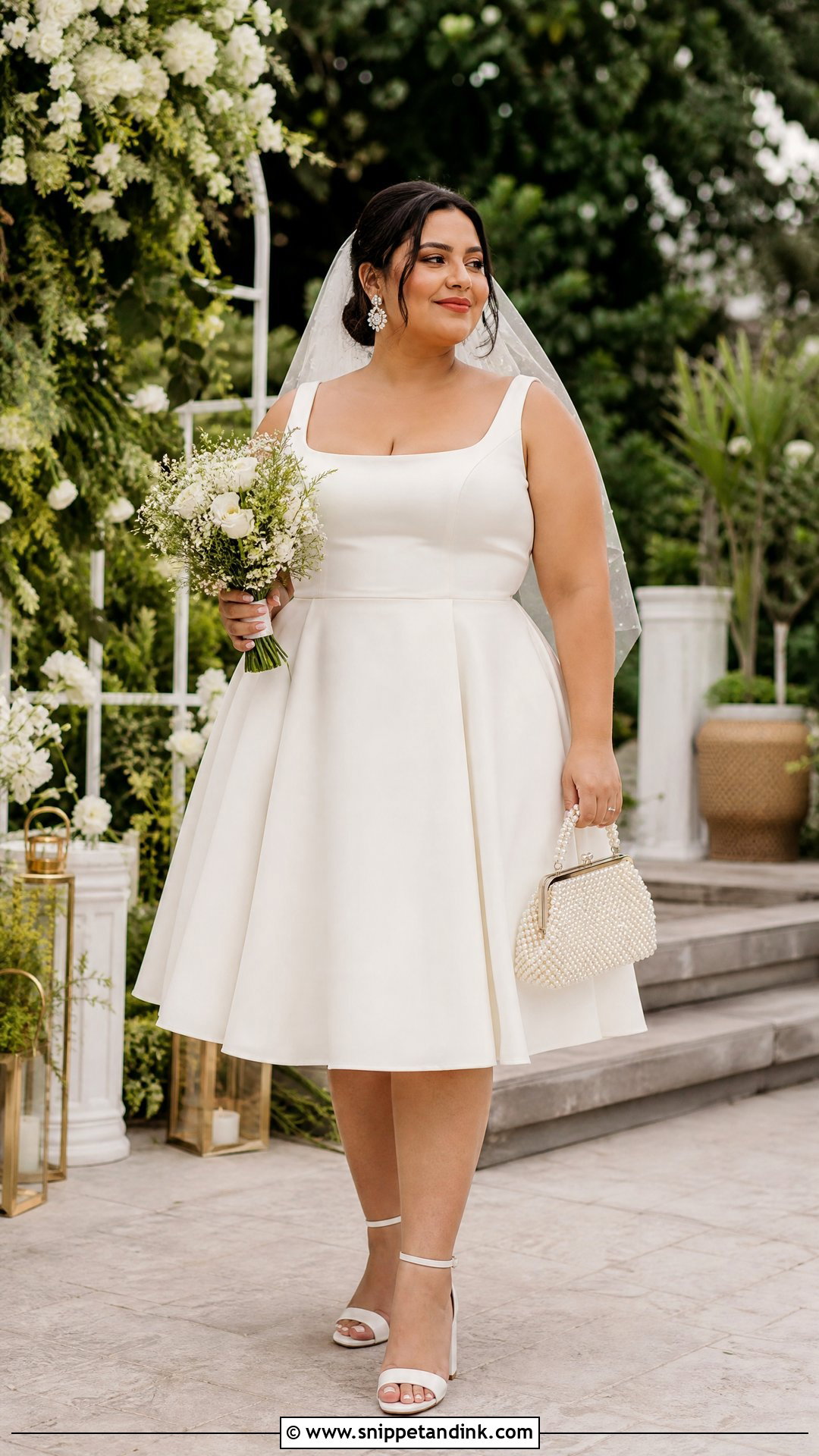
A fit-and-flare defines the waist and releases over the hips and thighs, so it’s comfortable to sit and dance in. Choose a knee-length or slightly shorter design with a supportive bodice, wide straps and a skirt that moves. Stretch crepe gives the most comfort, while satin and mikado hold more structure. I’d look for a dress with good internal construction, boning and a built-in bra if you like, so shapewear becomes optional rather than required. Stable block heels, statement earrings and a small structured bag, with a fingertip veil or pearl headband. Test the fit sitting, walking, hugging and dancing.
Small Signals That Make a Short Dress Read as Bridal
With less fabric, guests and photos rely on details to tell them who the bride is. You don’t need all of these, but a short dress with none of them can look like a cocktail outfit. A veil of any length is the clearest signal, and even a short one attached at the back of the hair changes how the whole outfit reads. After that come pearls, a satin bow, a bouquet and shoes in ivory or a soft metallic rather than black.
Match your whites across the outfit. A bright white veil over an ivory dress, or an off-white jacket over a pure white mini, shows up immediately in daylight photos. Hold every piece together near a window before the day.
Ready-to-Wear Timing Works in Your Favor
Many short wedding dresses are sold ready to wear, which shortens the wait compared with made-to-order gowns. That doesn’t mean you can leave it late. Allow time for delivery, a possible exchange if the size is wrong and at least one alteration appointment. Order a couple of sizes if the shop has an easy return policy, try them in daylight, and book the seamstress as soon as you know which one stays.
A Short Hem Asks More of the Shoes and the Tailoring
Mini, knee-length and tea-length dresses can all look formal once the shoes, accessories and tailoring are right. Satin gives a smooth finish, crepe offers structure and lace adds texture. Sleeves, supportive straps, adjustable necklines and fuller skirts help you find a cut that feels secure. Before you decide, test the entire outfit walking, sitting and in a few phone photos taken from below as well as eye level. Courthouse ceremony, small gathering or reception change, a well-fitted short dress makes a complete bridal look on its own.
You'll Like These Ideas:





Leave a Reply