
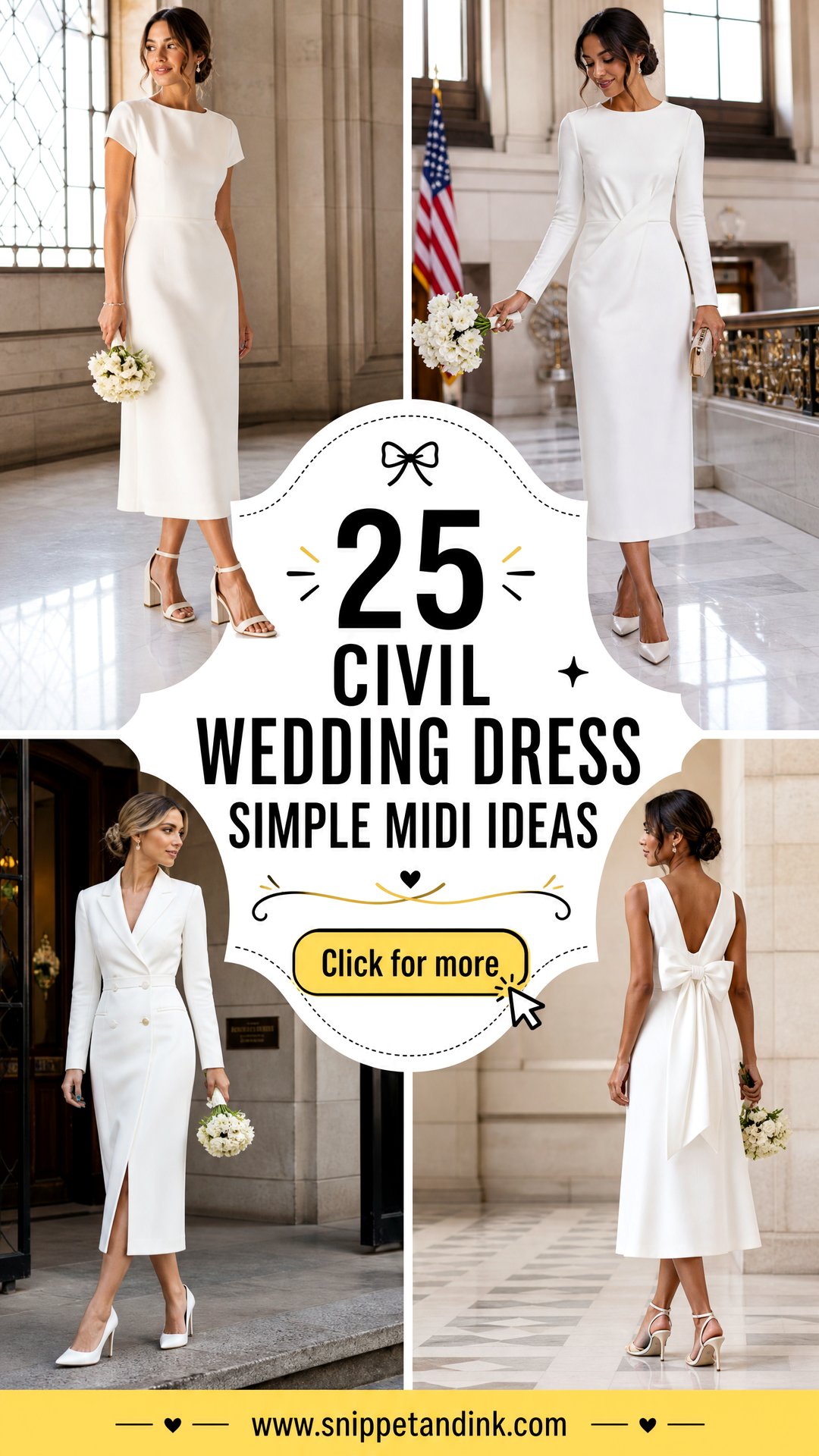
Most brides I dress for a civil ceremony want two things at once: to look like a bride while the paperwork is signed, and to still be comfortable at lunch afterwards. A midi hem manages that better than anything else I fit. It reads as bridal at city hall, at a courthouse and at registry office weddings, yet you can climb steps, sit on a corridor bench and get out of a taxi without anyone carrying a train. The dresses below run from plain satin and crepe through corsets, blazer dresses and short veils. With each one I’ve added what I actually check in the fitting room, because a short dress shows every fit problem a long gown would hide.
Where a Midi Hem Should Land on Your Leg
The single alteration I make on nearly every civil wedding dress is the hem, and it changes the whole look. A midi that ends at the widest part of the calf cuts the leg in two and makes it look heavier. Just below the fullest point, where the calf starts narrowing toward the ankle, is the most flattering line for most legs.
Height shifts the target. On petite brides a long midi can swamp the frame, so I bring it up to just under the calf muscle and add a pointed shoe. Taller brides can carry a tea length, but a dress cut for an average height may arrive sitting higher than the photo suggested, so check the listed skirt length against your own measurement before ordering.
- Bring the exact shoes to every fitting. A two inch heel moves the hem visibly on the leg.
- Buy the dress early enough for two fittings. Six to eight weeks ahead is comfortable for most simple midis; lace or pleated hems take longer to shorten neatly.
- Pleated and scalloped hems are usually shortened from the waist, not the bottom, which costs more. Ask before you buy if you’ll need much taken off.
1. Satin Midi Civil Wedding Dress With White Pumps
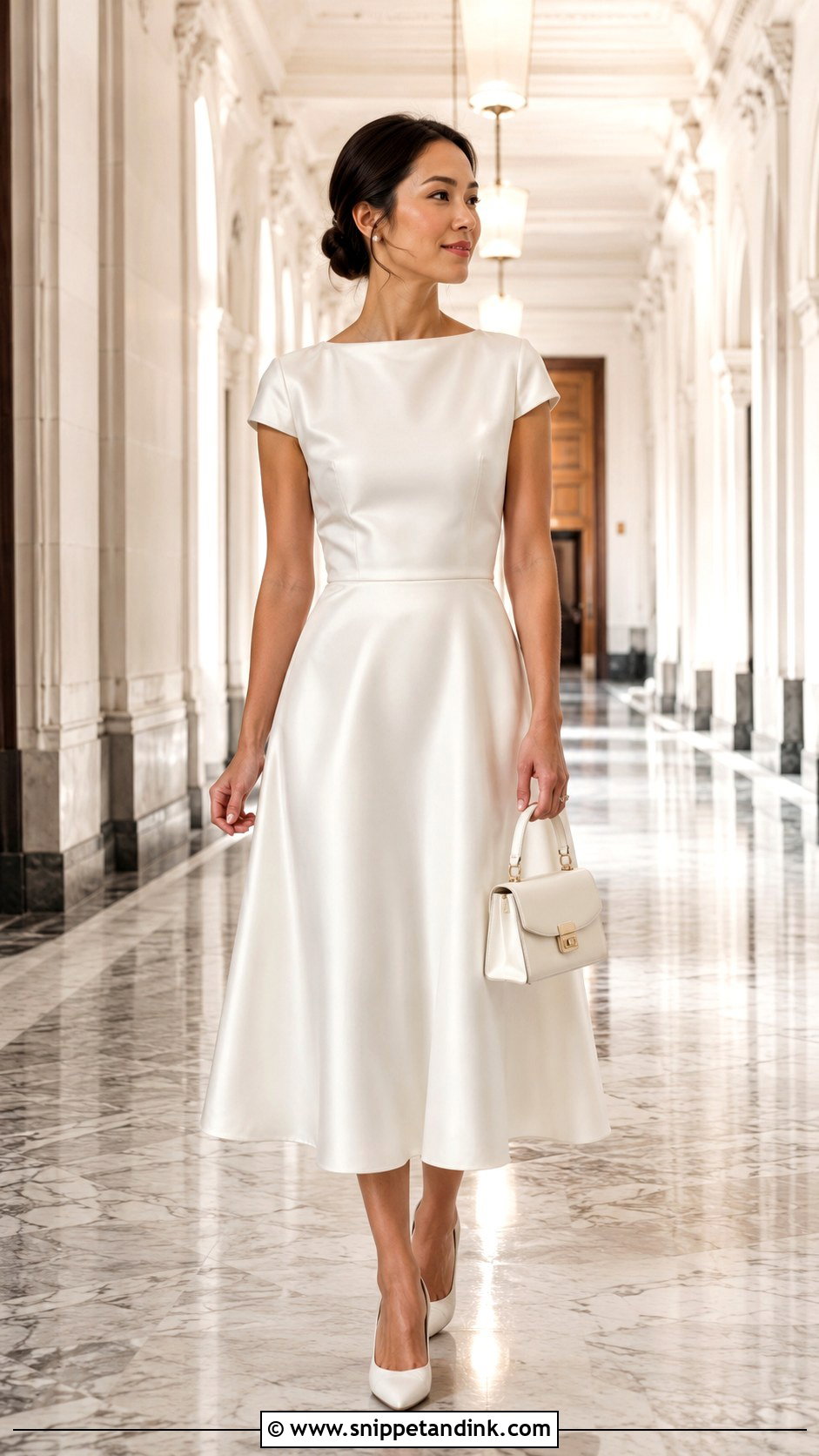
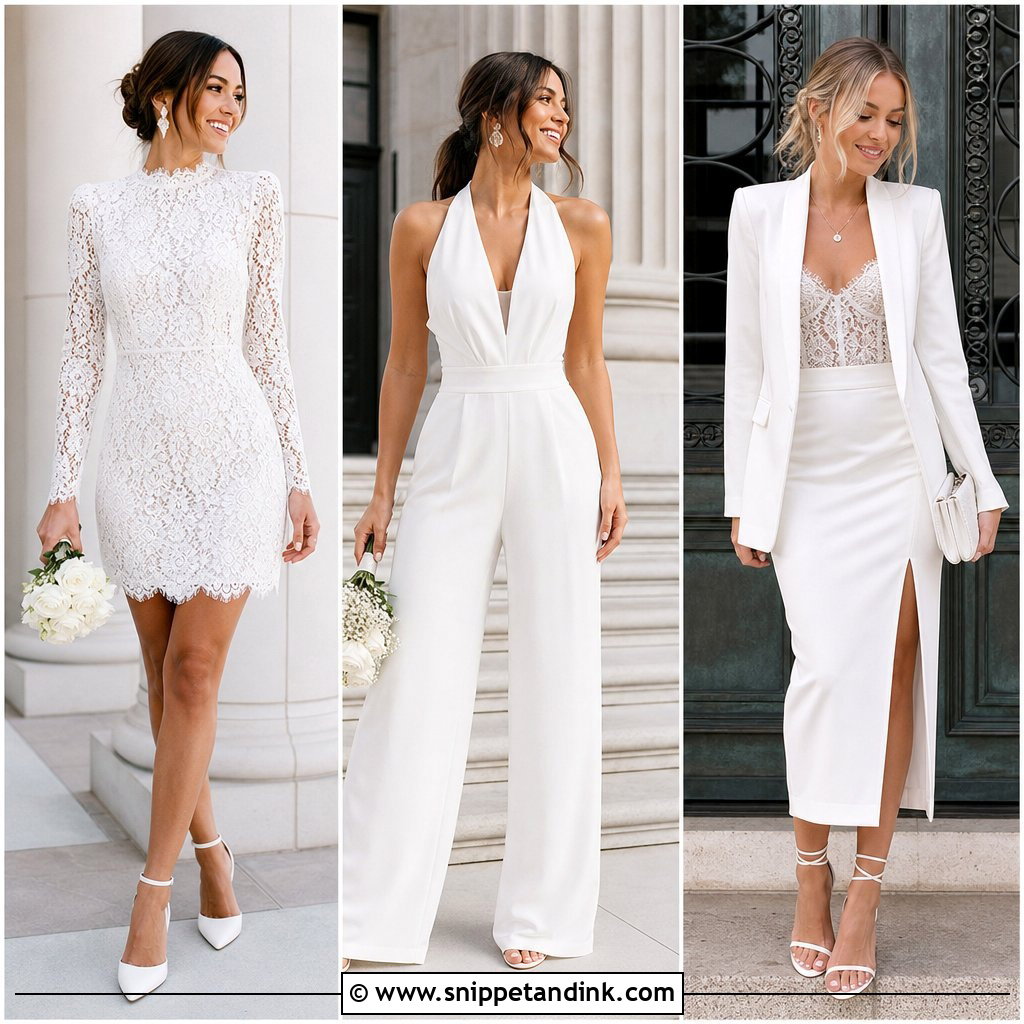
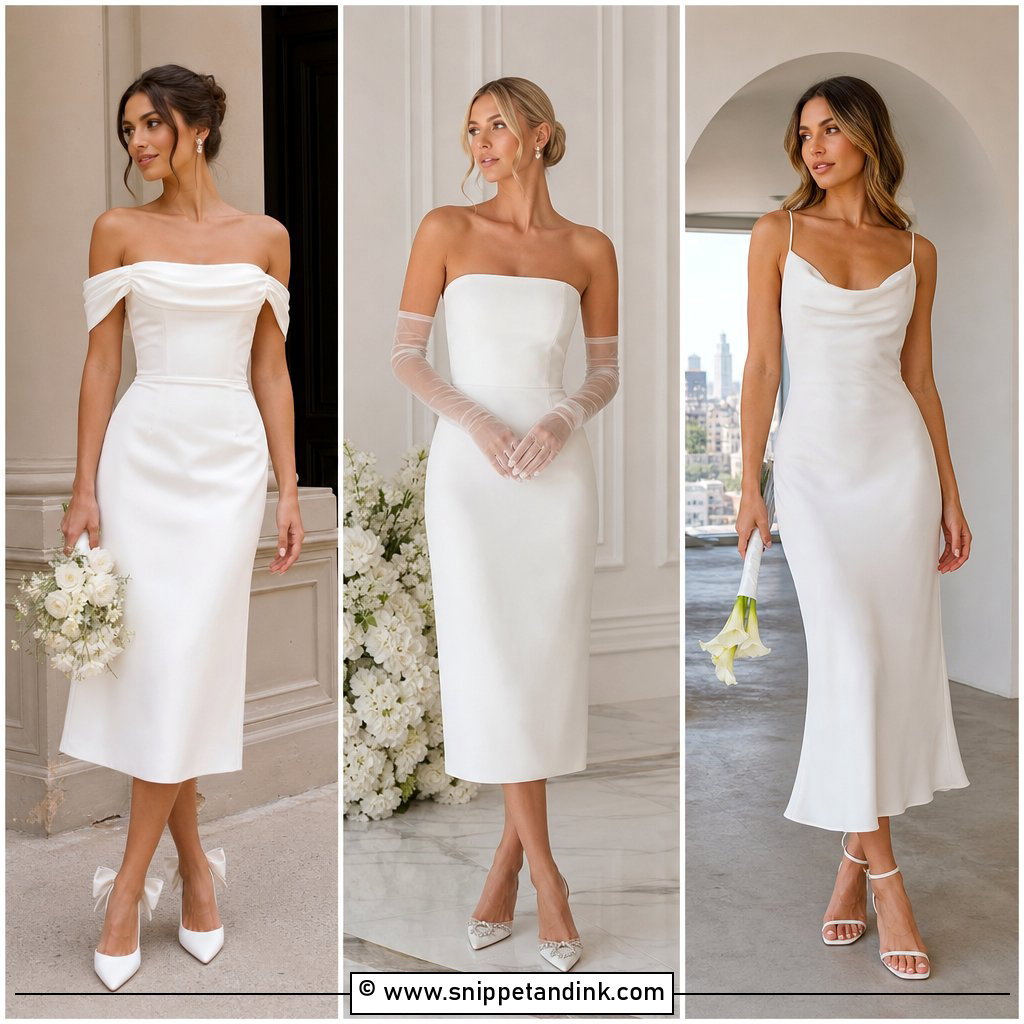
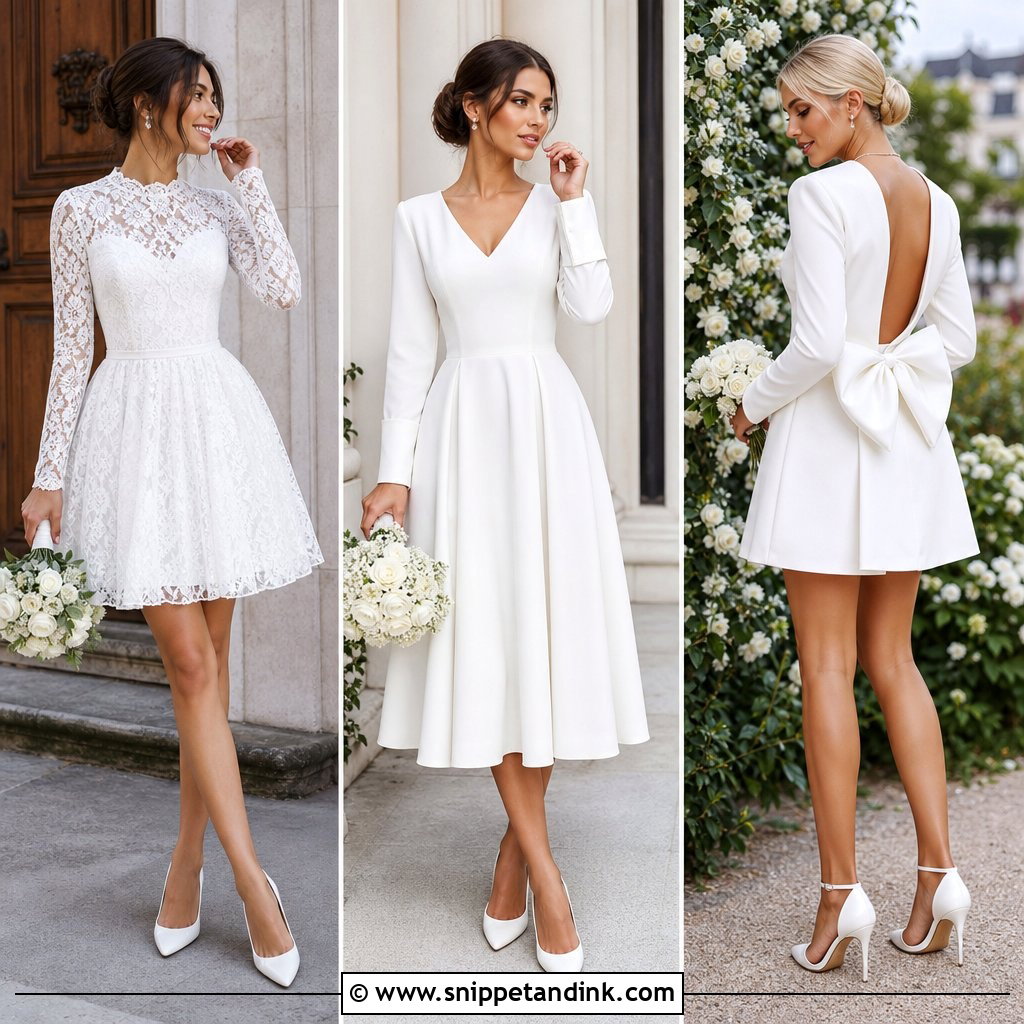
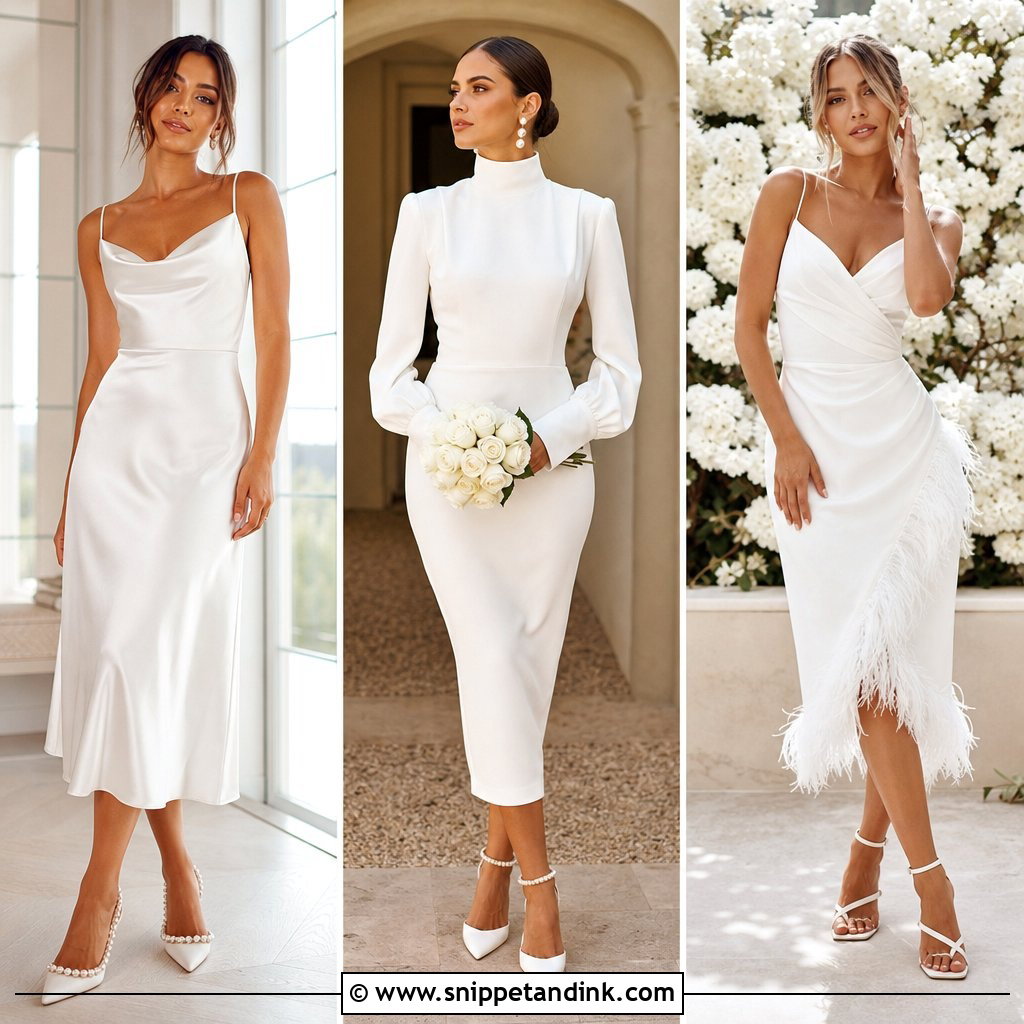
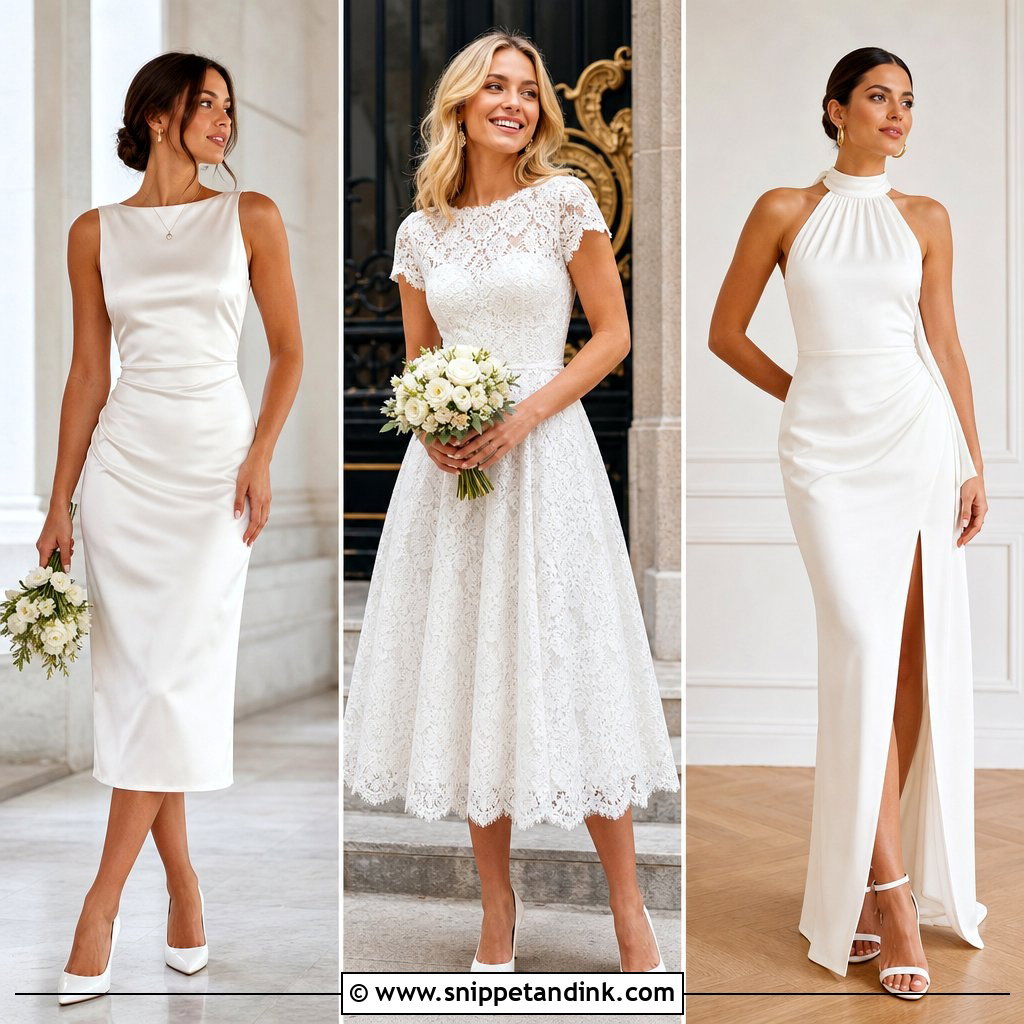
Satin is the fabric I reach for first when a bride wants to look unmistakably bridal with no decoration at all, because the sheen does the work. Ivory or soft white with a plain neckline, a fitted waist and a skirt with a little swing is the version I’d buy. Pointed white pumps lengthen the leg under a calf-length hem, and pearl studs, a top-handle bag and soft waves or a low bun finish it. The catch is that satin shows everything underneath. I insist on a lined dress and smooth, edge-free shapewear, since a bra line or knicker seam will show in every flash photo at the registrar’s desk.
2. Crepe Midi Civil Wedding Dress With Block Heels
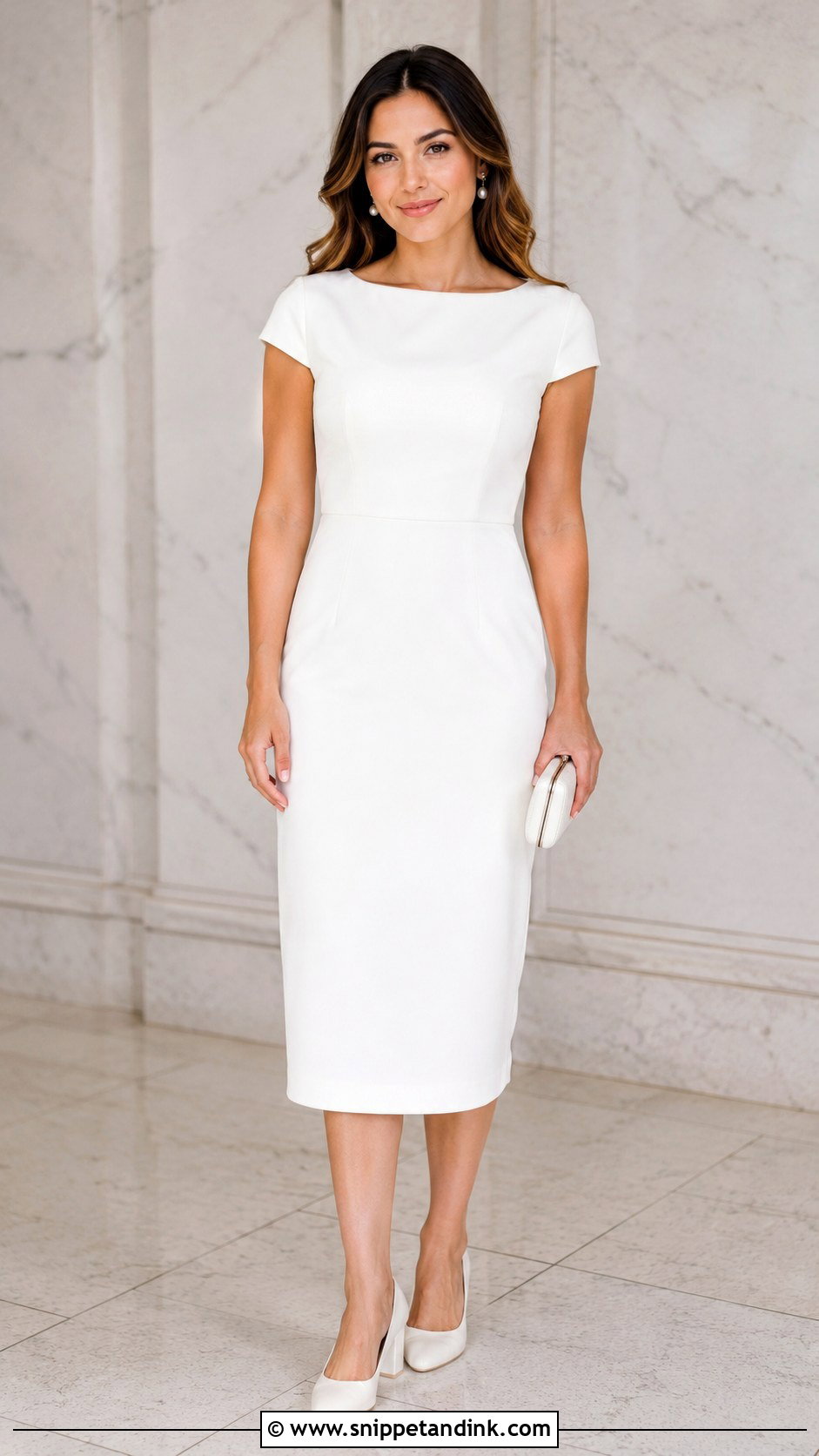
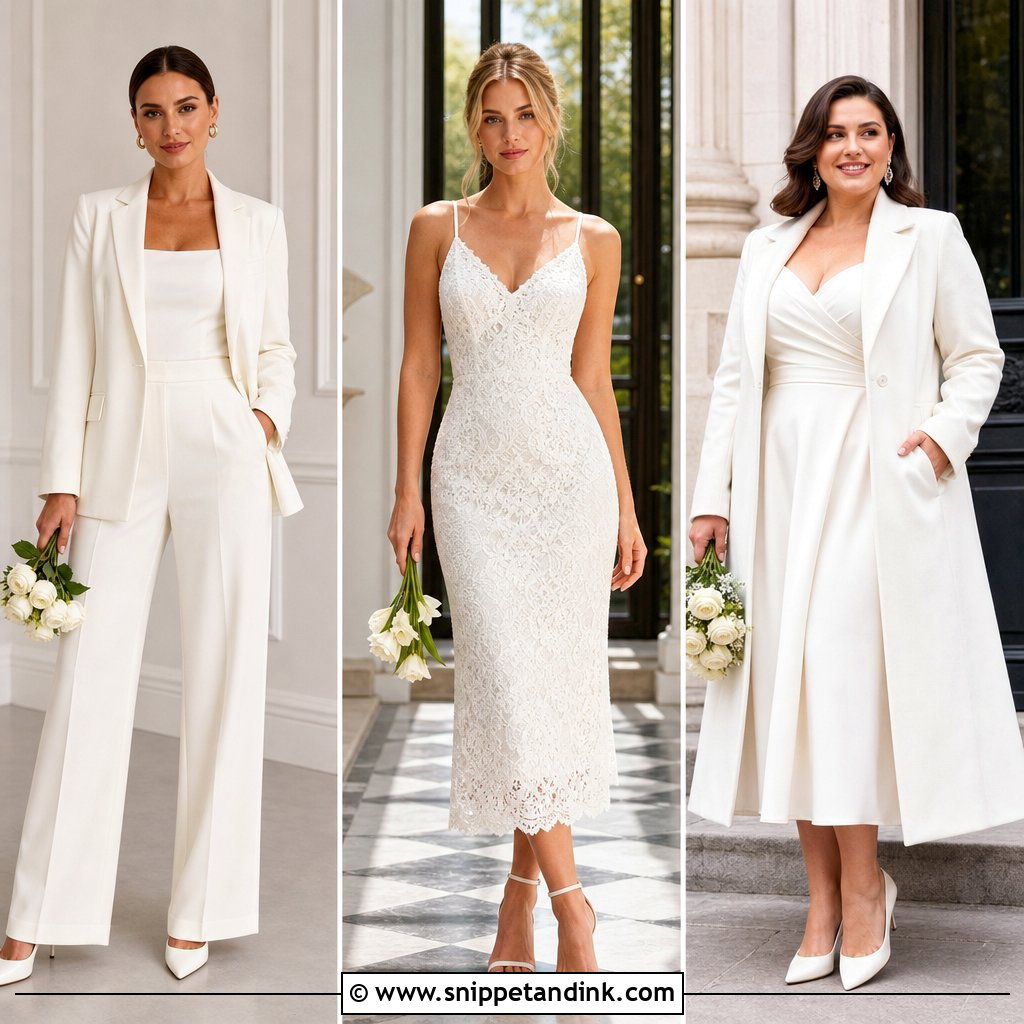
Crepe is the forgiving one. Its dry matte surface doesn’t bounce back the harsh overhead lighting most municipal buildings have, and a good weight hangs straight without clinging. A sheath, A-line or column all suit it as long as there’s some shaping at the waist. White or nude block heels are my pick for brides who will stand in a queue and then walk to a park for photos. A sleek clutch, small pearl earrings and either a short veil or a hair bow turn it from office dress into wedding dress. Look at the fabric under a lamp before buying: thin polyester crepe goes shiny along the seams once it has been pressed.
3. Square Neck Midi Civil Wedding Dress With Slingback Heels
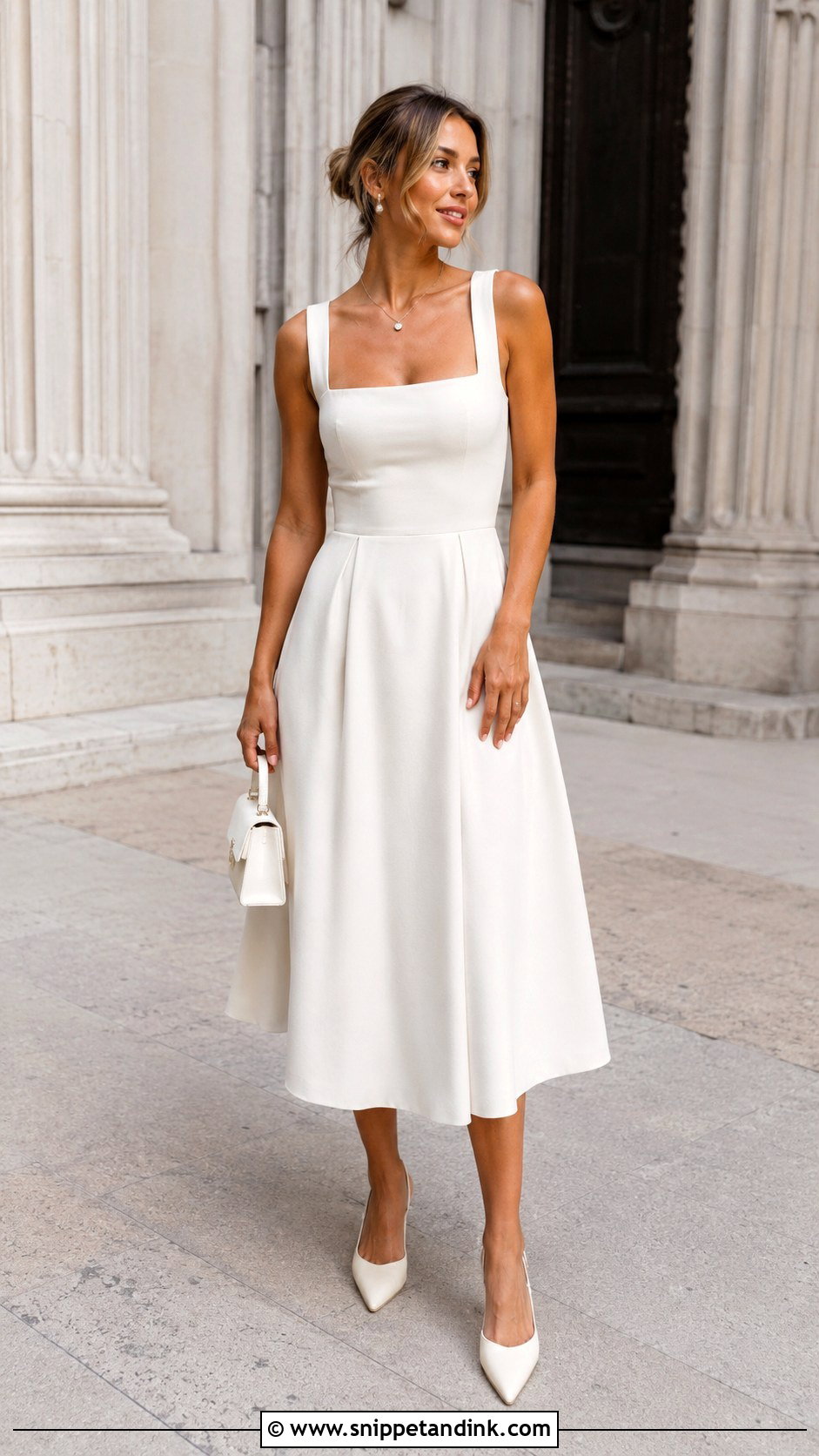
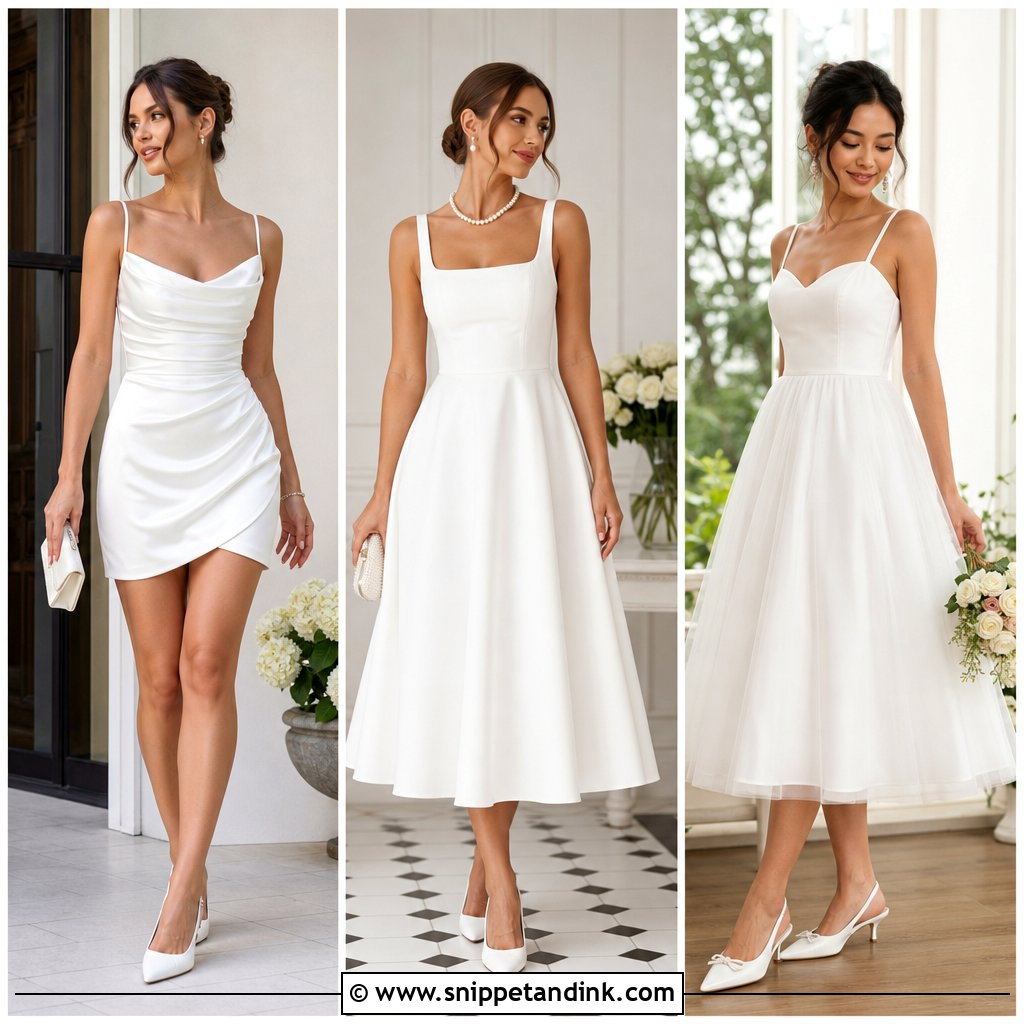
A square neckline frames the collarbones and suits almost every neck. It sits happily with no sleeve or a short puff, and I keep the bodice fitted with a softly flared skirt so the straight line above is balanced below. Slingback heels give a classic note without looking formal, and a delicate necklace, pearl earrings and a small structured bag are all it needs. One fitting detail matters here. The corners of a square neck should lie flat, so lift your arms as if signing the register; if they gape, the neckline can be taken in at the shoulder seams.
4. Boat Neck Midi Civil Wedding Dress With Kitten Heels
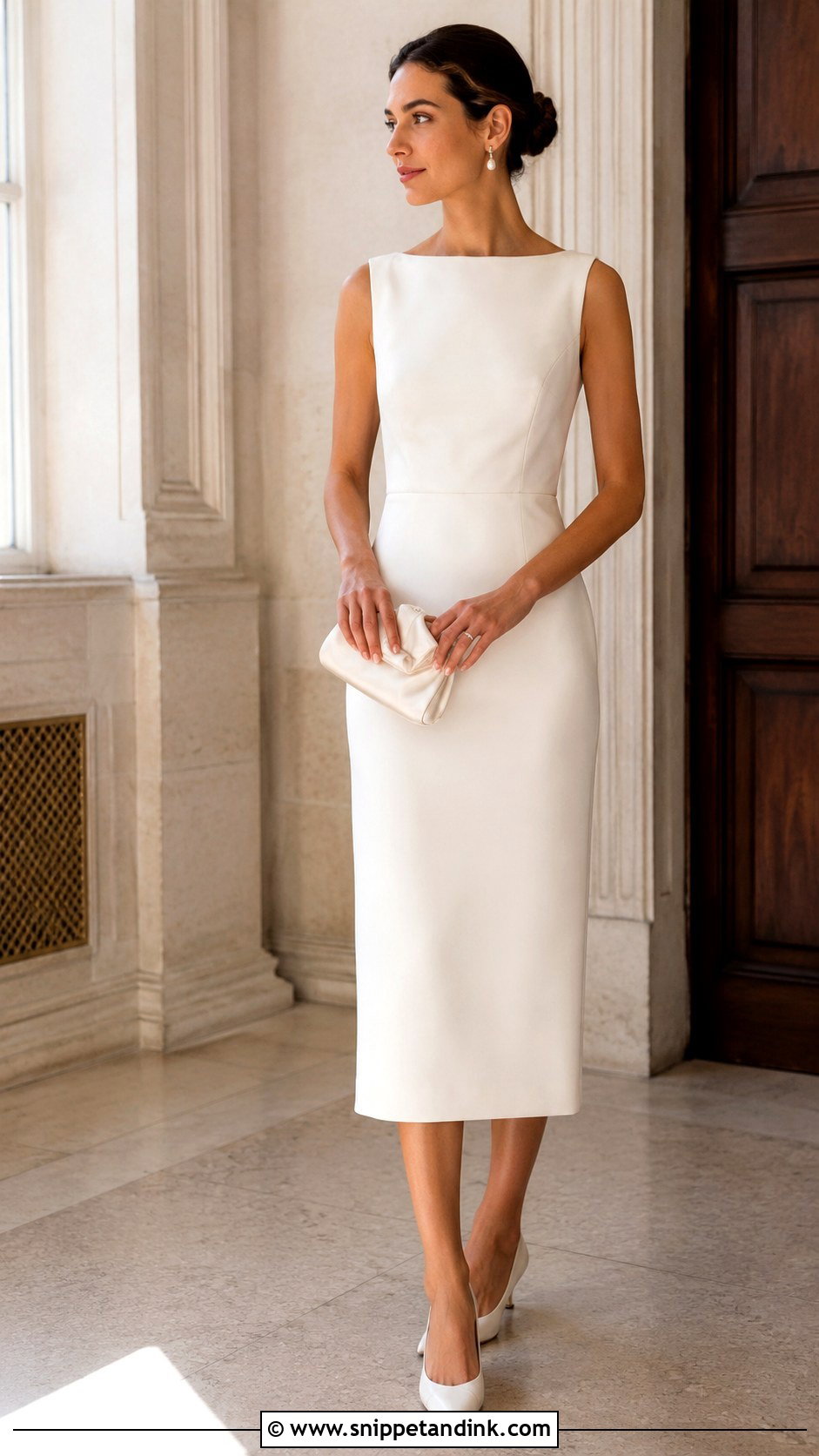
Boat necks run almost straight from shoulder to shoulder, covering the chest completely while still showing the collarbones. That makes them my usual suggestion for modest brides who don’t want sleeves. You need a crepe, satin or stretch fabric with enough body to hold the horizontal line, because a limp fabric lets it droop into a scoop. Kitten heels suit the slightly retro proportion and are kind to your feet, and pearl drops, a smooth bun and a small clutch are enough. On narrow shoulders the wide neck tends to slip, so ask your seamstress to sew lingerie guards into the shoulder seams.
5. Long Sleeve Midi Civil Wedding Dress With Low Heels
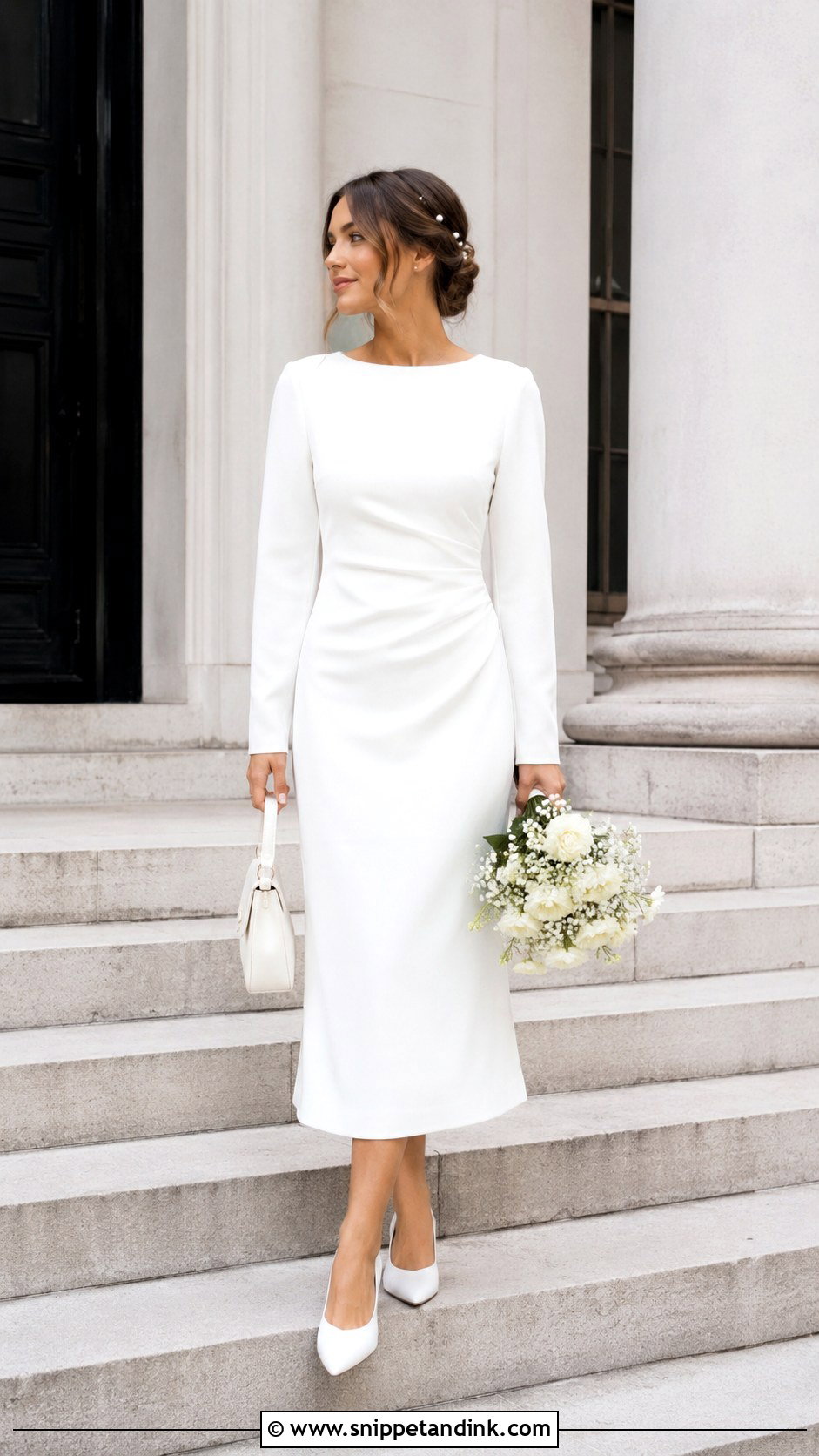
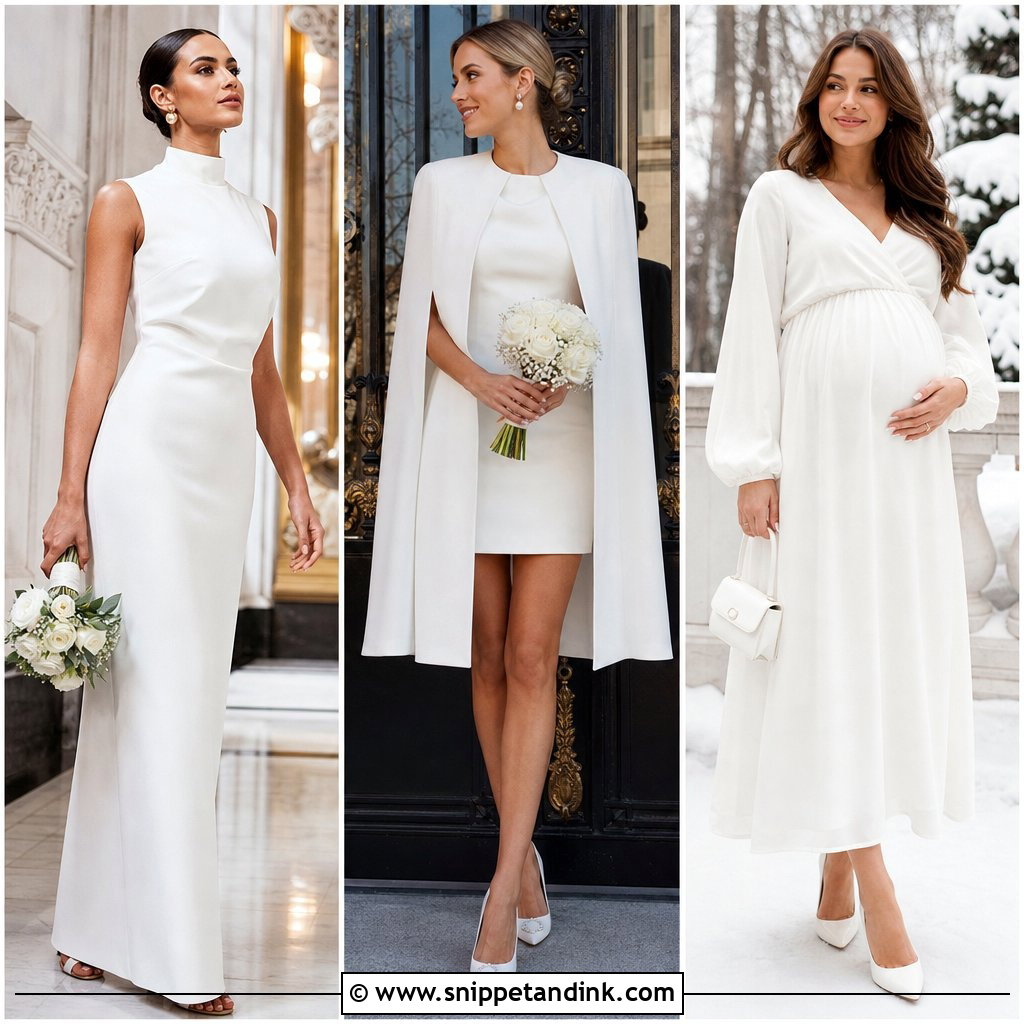
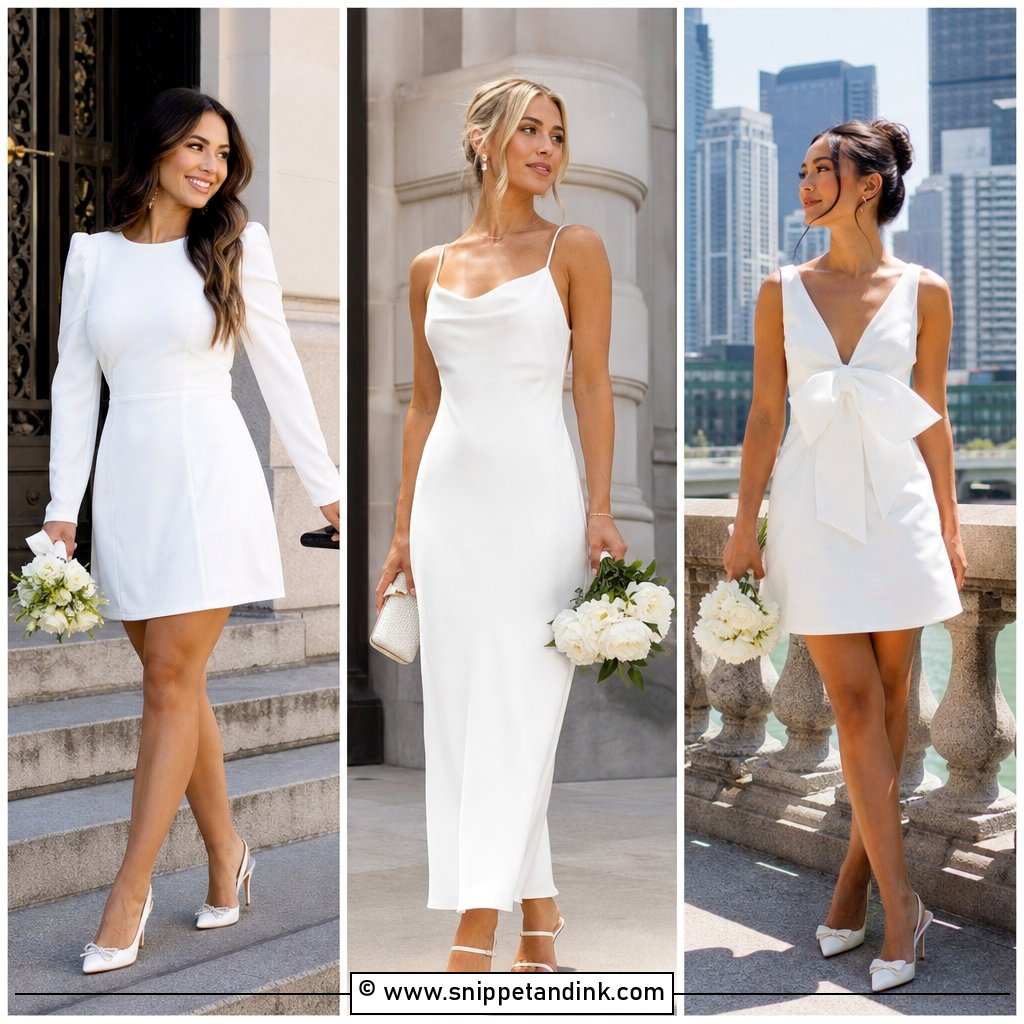
Sleeves solve a winter date, a formal old council chamber or simply wanting your arms covered. A long sleeve midi dress in crepe, satin or soft lace keeps the outfit bridal, while the shorter hem stops it feeling heavy. Fitted sleeves need room to move, so at the fitting I ask brides to reach forward as if for a pen. If the fabric pulls across the back of the arm, the armhole needs work before anything else. Low white heels or pointed flats, a small bouquet and pearl hair pins are plenty. Leave the bracelets at home; they snag on lace cuffs.
6. Lace Midi Civil Wedding Dress With Nude Sandals
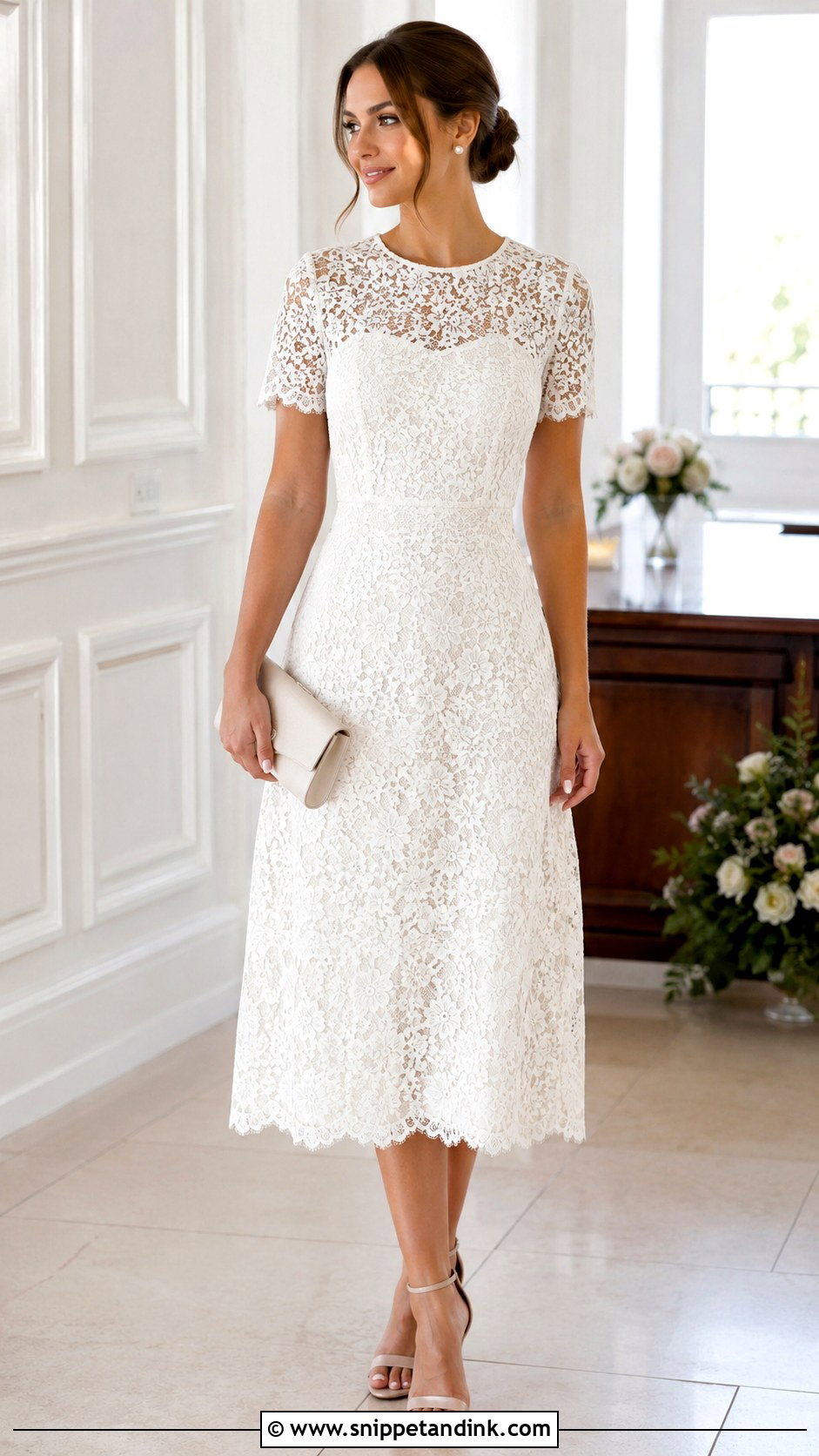
Lace on a short dress turns heavy quickly, so I keep the motif small and the shape plain. Soft floral lace over a smooth lining with a clean hem and very little trim is the version I’d choose for a spring or summer ceremony. Nude sandals let the lace lead, with pearl studs, a soft updo and a cream clutch. I’d steer you away from oversized motifs and sequinned lace in a small registry room, where at arm’s length they look far busier than they did in the shop mirror. Check the hem as well. A scalloped lace edge always looks more finished than one that has been cut and bound.
7. Wrap Midi Civil Wedding Dress With Pearl Earrings
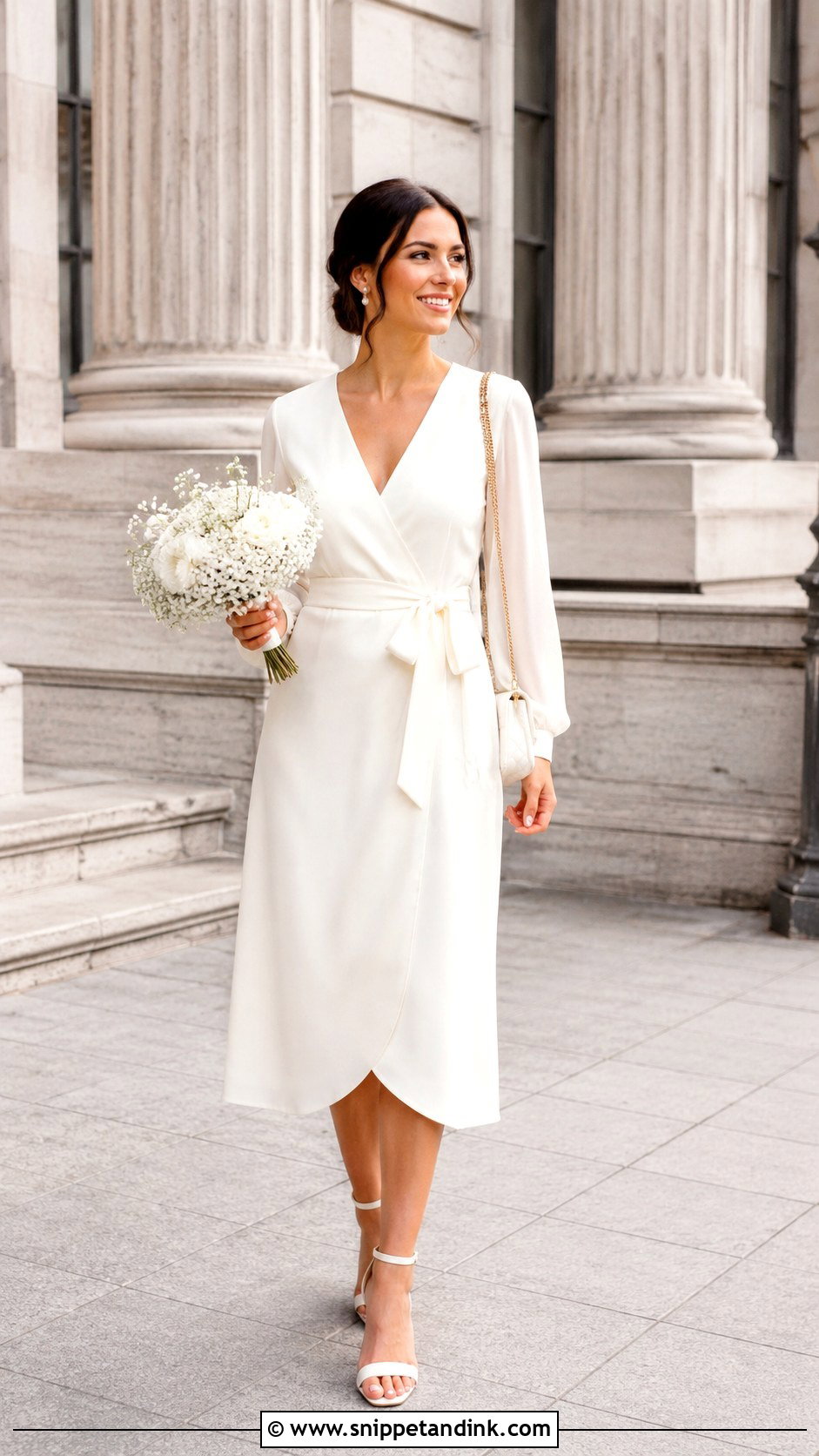
Wrap dresses adjust as you tie them, which is why they suit so many figures and need the least tailoring of anything here. The crossover defines the waist and makes a V-neck that doesn’t have to be low. Ivory crepe or satin looks dressier than jersey, and pearl earrings, white block heels and a small shoulder bag suit it. My one warning: a wrap opens when you sit. Sit down in the changing room and watch where the skirt parts, then fix it with a small hidden snap at the overlap and a strip of fashion tape at the neckline.
8. Off Shoulder Midi Civil Wedding Dress With Ankle Strap Heels
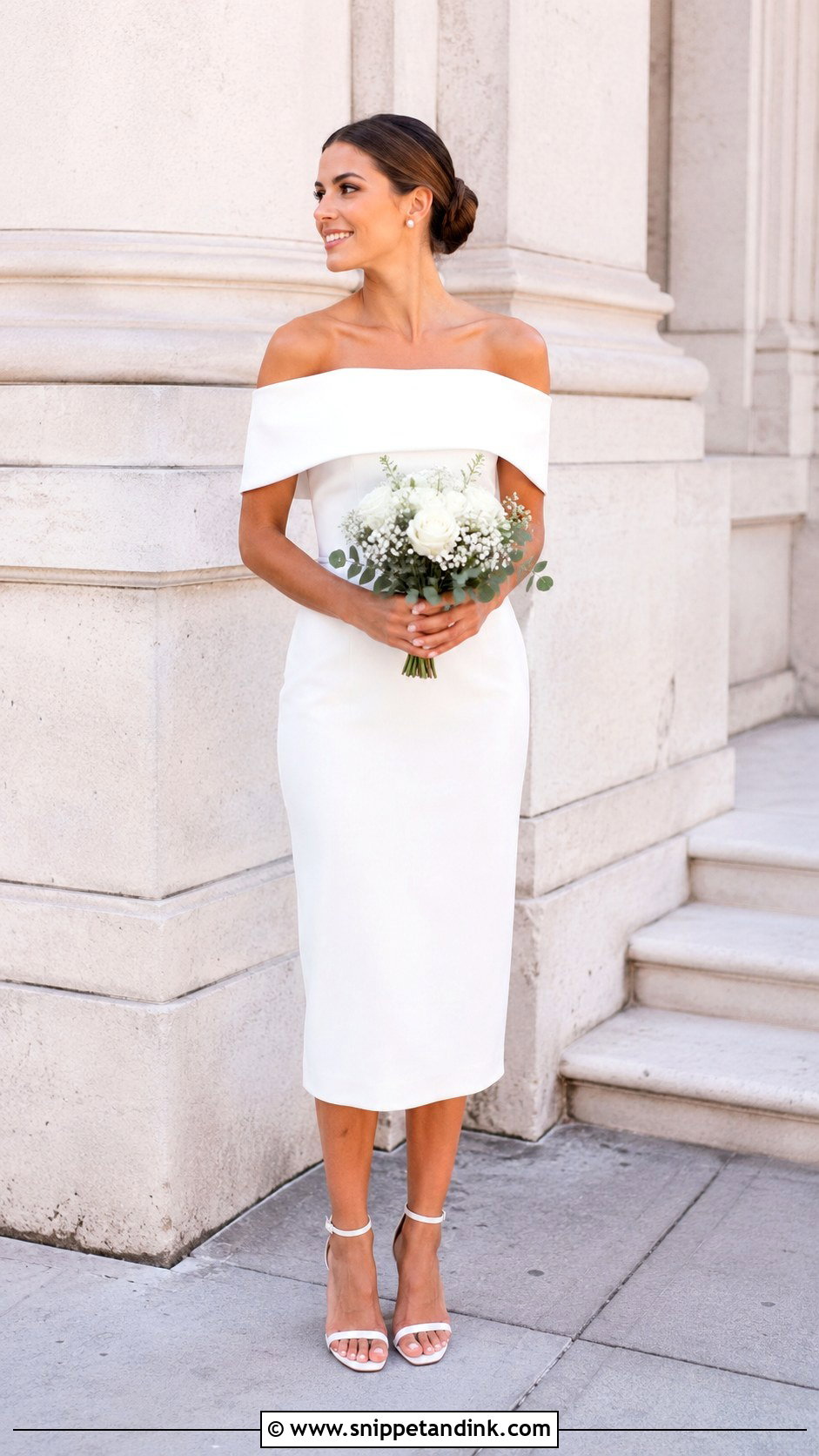
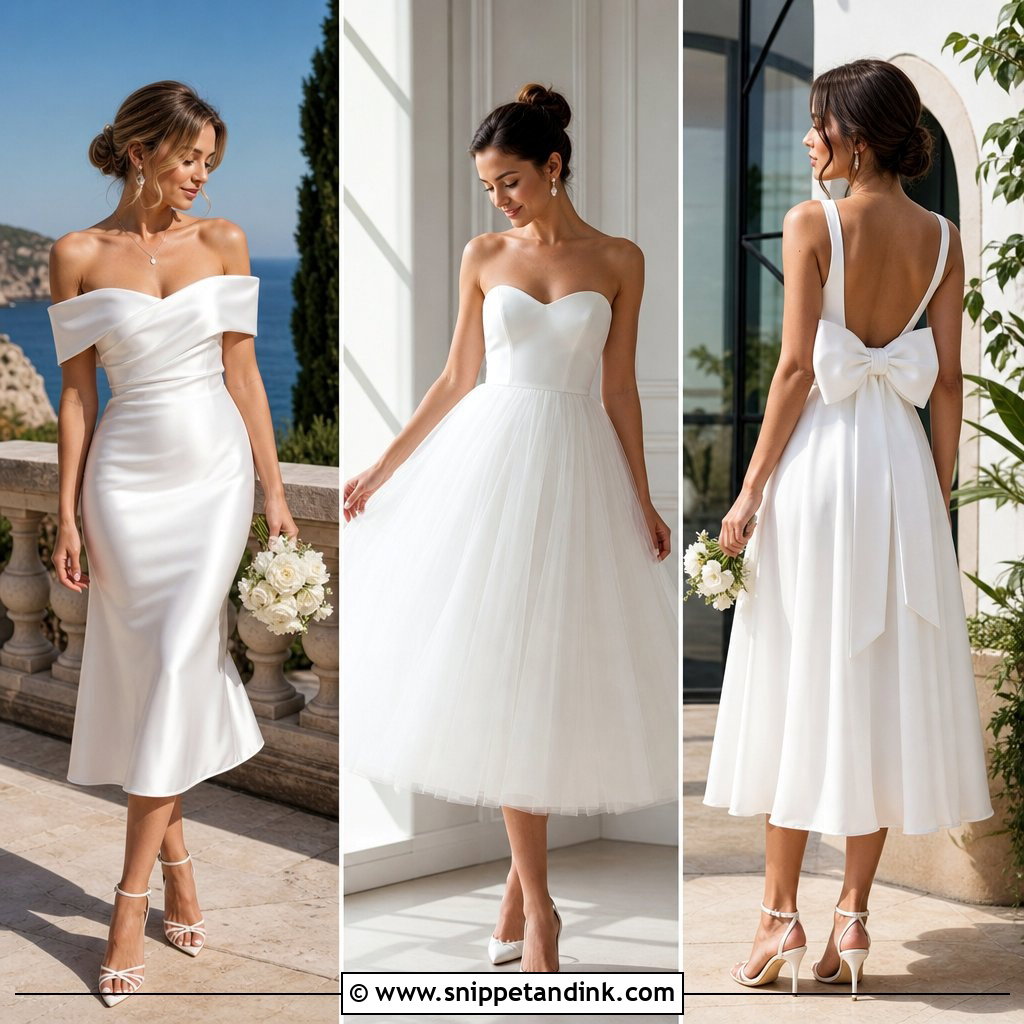
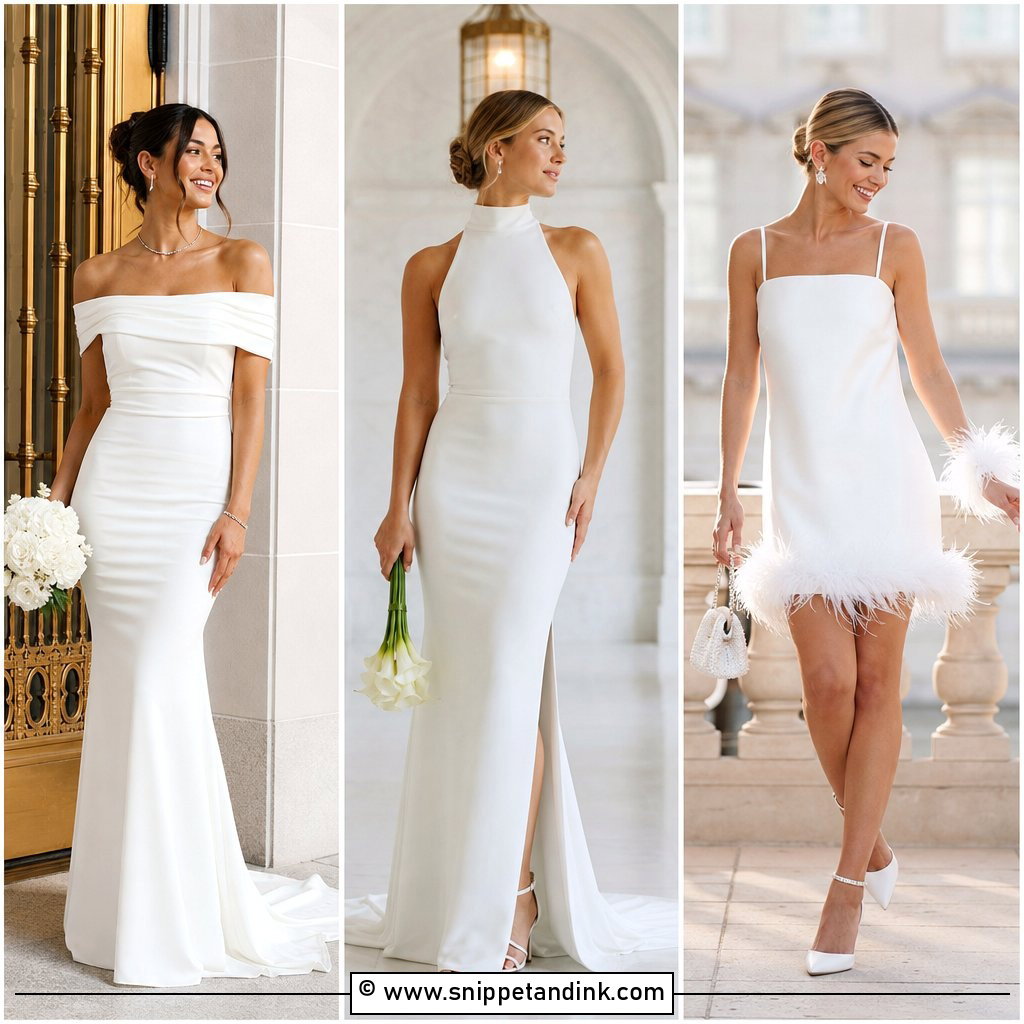
Off-shoulder bodices need a structured fabric to stay where they’re put, and I test this one by asking the bride to hug me. If the band slides toward the upper arm, the dress needs internal boning or a silicone gripper inside the neckline. Once it’s secure, white ankle-strap heels, a sleek bun, pearl studs and a small bouquet give some drama without a full gown. Know before you buy that you can’t raise your arms high in most of these, which matters if you’ve planned a confetti throw or an arms-up photo on the steps.
9. One Shoulder Midi Civil Wedding Dress With Minimal Sandals
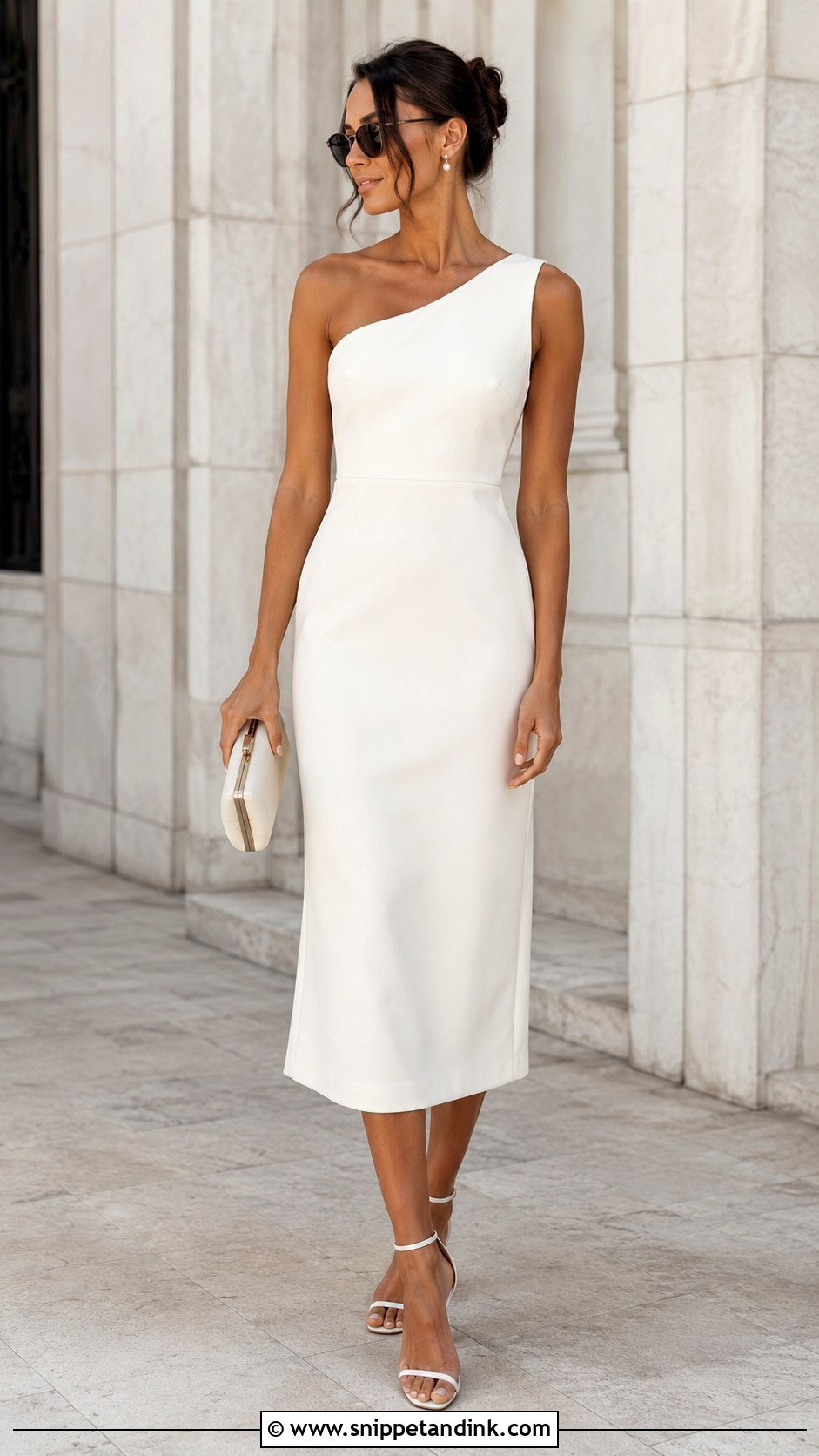
With one bare shoulder, the neckline is the whole design and everything else should step back. Smooth satin, crepe or a stretch fabric in white or ivory keeps that diagonal sharp. I drop the necklace entirely and keep earrings small. Simple heeled sandals and a slim clutch finish it, while a low bun or sleek side-parted hair keeps the strap clear. Have the strap fitted snug, because it carries the weight of the whole bodice and starts sliding at the first hint of slack.
10. Pleated Midi Civil Wedding Dress With Pointed Flats
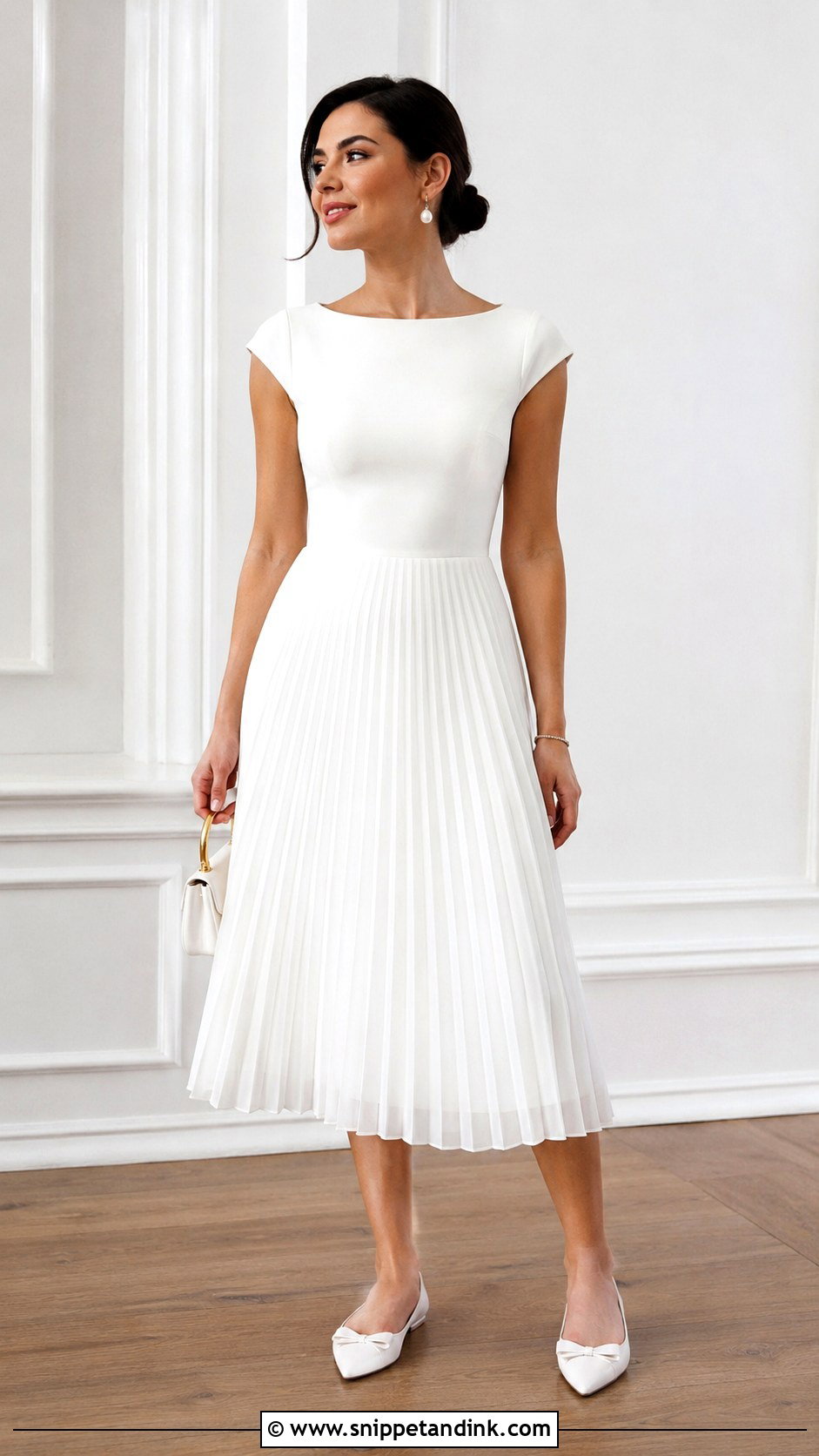
Fine pleats give movement without width, and they swing well as you walk out of the building. A clean bodice over a pleated skirt that falls below the knee is the shape I’d go for, worn with pointed flats by brides who’d rather skip heels. The point of the toe matters more than you’d think: a round ballet toe with pleats can look like school uniform. Pearl earrings, a delicate bracelet and a small bag are enough. Pleats are fussy to care for, so hang the dress rather than folding it and never press across heat-set polyester pleats with a hot iron.
11. A Line Midi Civil Wedding Dress With Mary Jane Heels
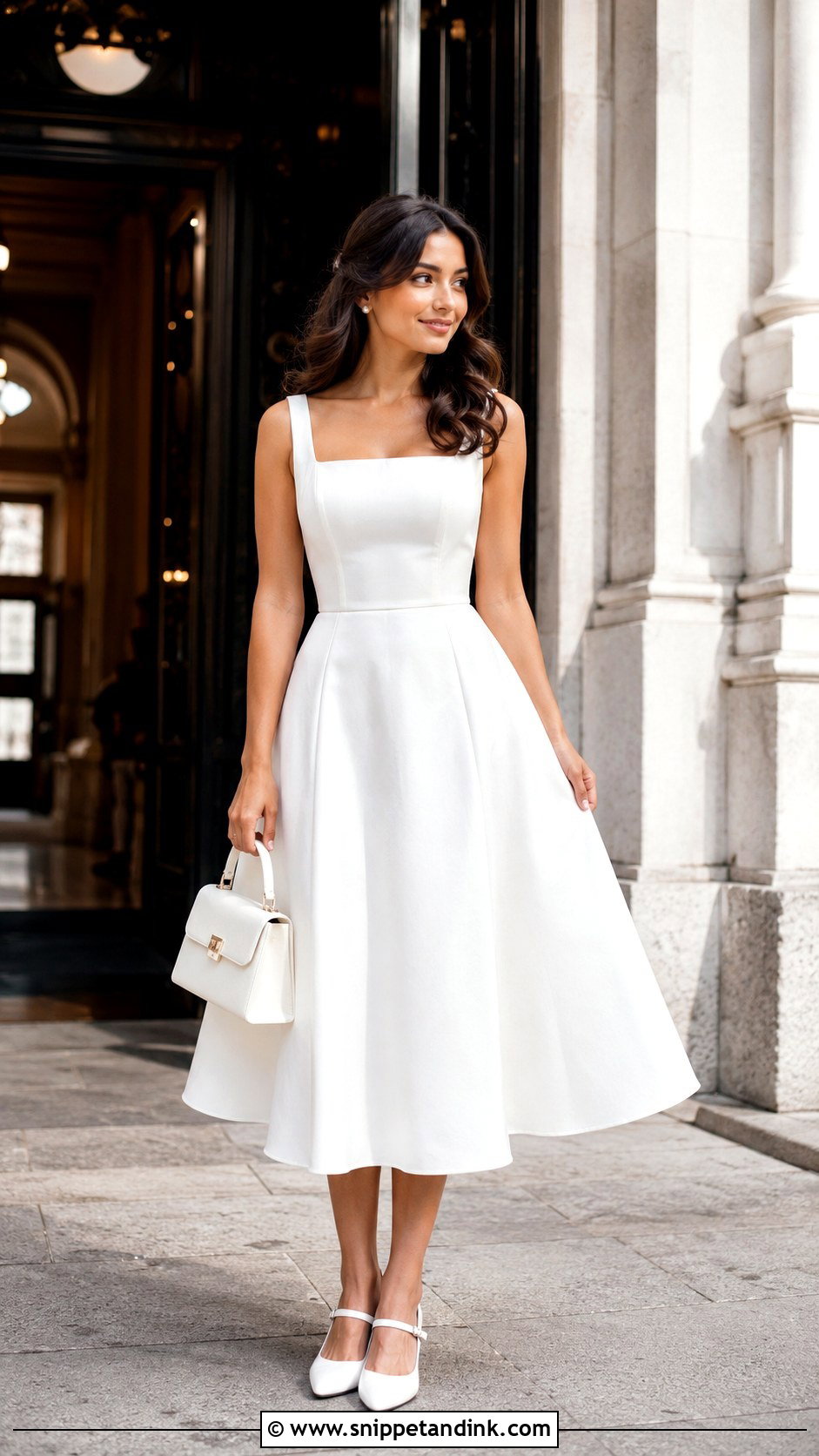
An A-line is the shape I suggest to anyone who doesn’t know where to start. The fitted top and gently flared skirt flatter most figures and give full freedom on stairs, in cars and on uneven pavements. Choose a plain white fabric with few seams, or a quiet texture. Mary Jane heels add a slight vintage feel without looking like costume, and the strap keeps the shoe on when you’re standing for hours. Pearl studs, a small structured handbag and soft curls are all it takes.
12. Column Midi Civil Wedding Dress With Strappy Heels
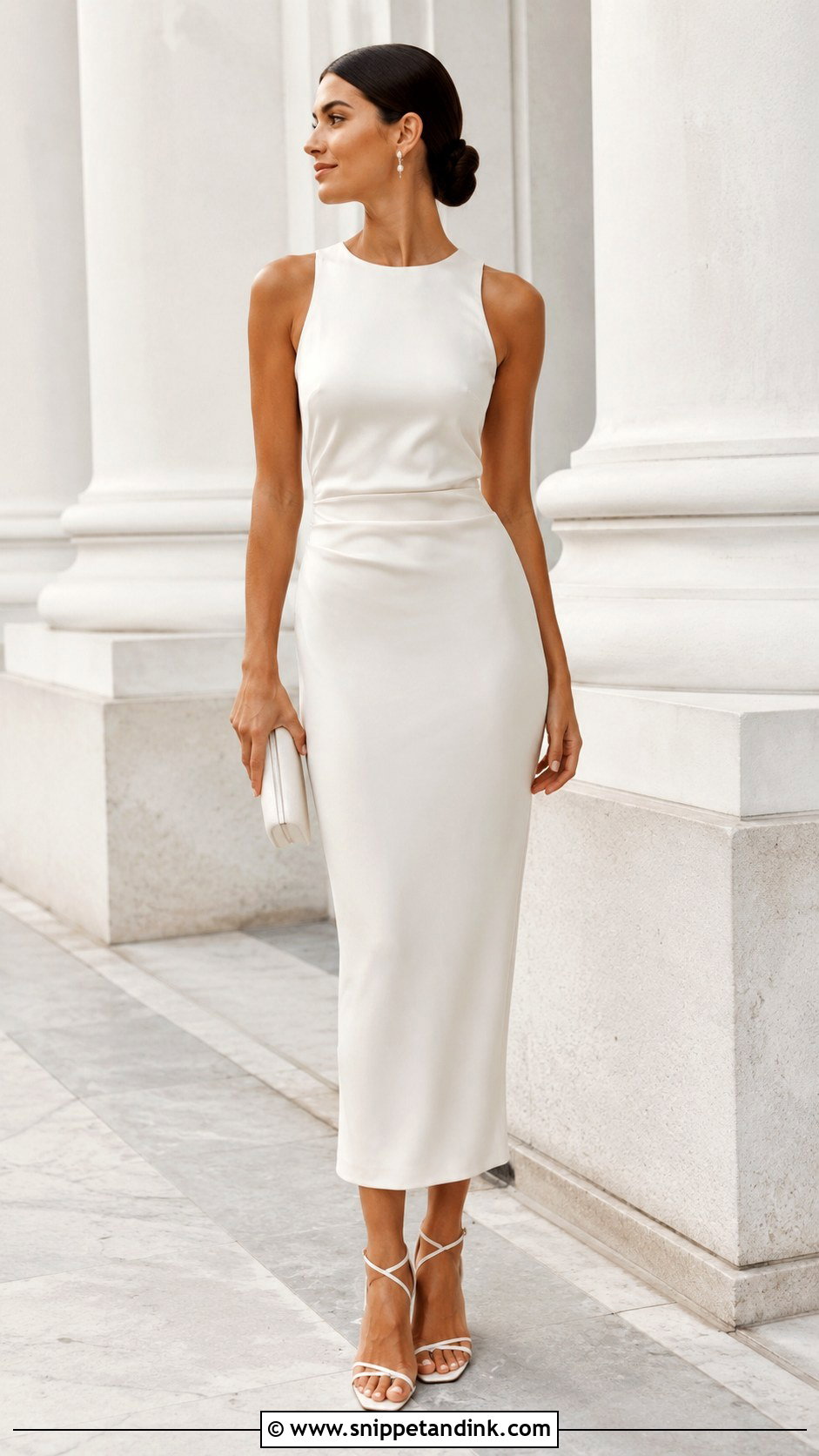
A column midi dress runs straight down the body with no added volume, giving a long, clean line that suits a modern building. It only works in a fabric with some structure, one that skims rather than clings, or every crease from the waiting area will show. Strappy heels soften the severity, and a small clutch, smooth hair and understated jewelry keep it sharp. Test your walk before you commit. A straight skirt at this length restricts your stride more than you’d expect, and a discreet back vent is worth asking for if there are courthouse steps.
13. Halter Midi Civil Wedding Dress With Sleek Bun
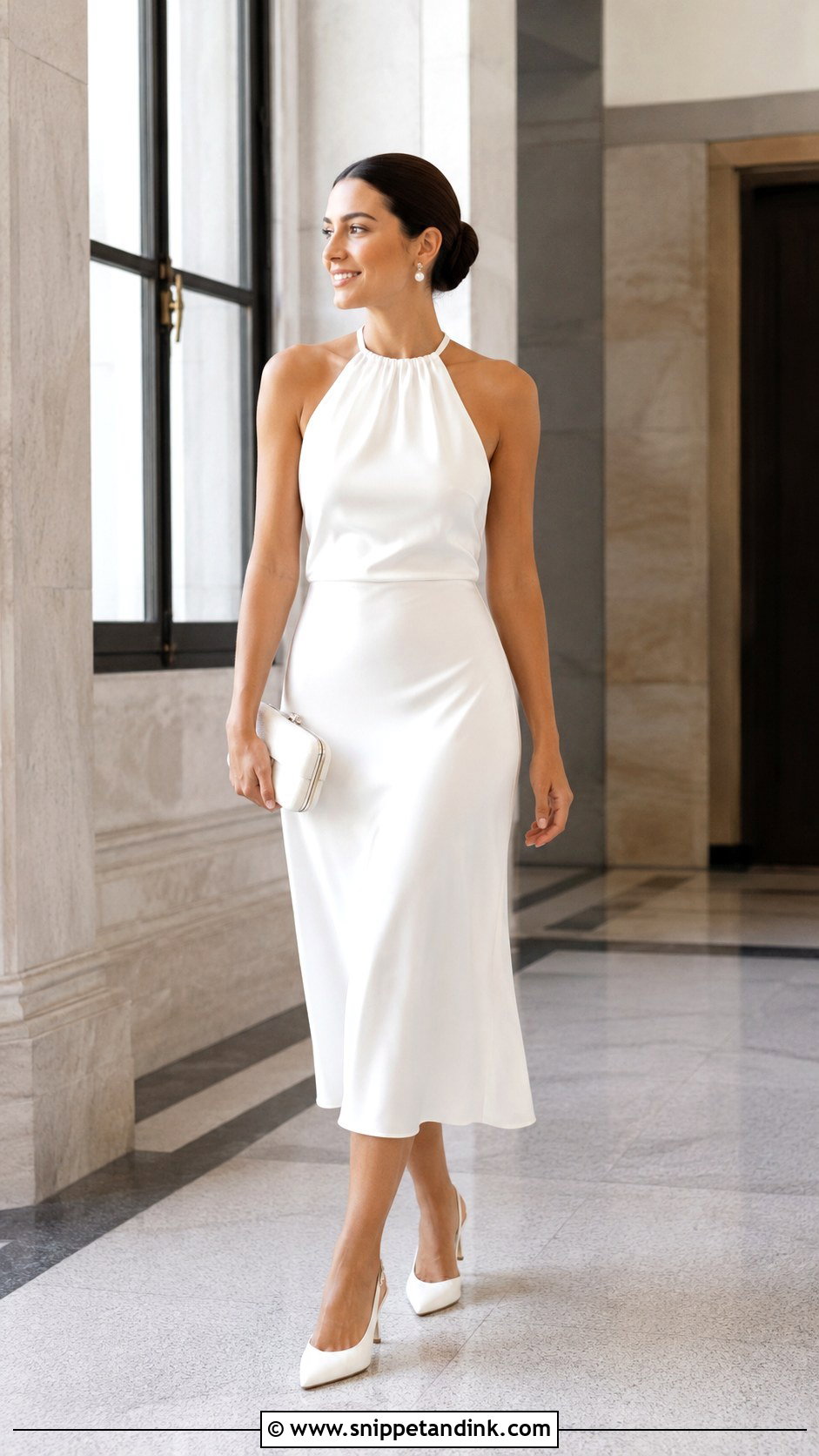
Halters pull the eye up to the face and shoulders, and they’re my first suggestion for a hot-weather ceremony because the arms and back stay free. Swept-back hair keeps the strap line visible, which is why the sleek bun is the classic match. White satin or crepe, white sandals or slingbacks, pearl earrings and a small clutch are all it needs. Two practical points from fittings. A halter tied at the neck can pull and give you a headache by mid-afternoon, so ask for a hook closure, and sort out the bra question before you buy rather than after.
14. Corset Midi Civil Wedding Dress With Simple Pumps
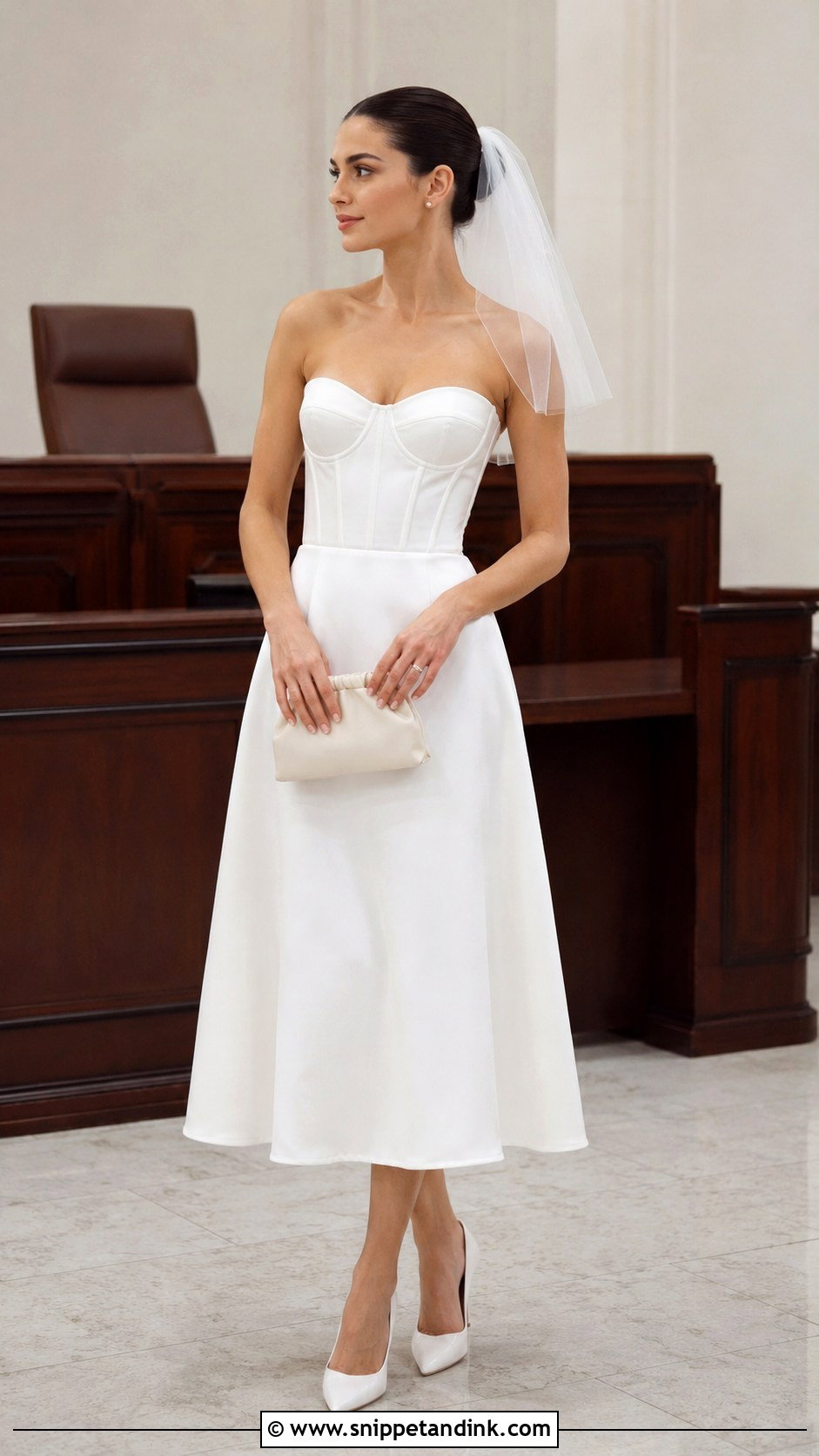
A corset bodice gives the most structure of anything on this list, and it only looks right when it genuinely fits. I look for clean seams, boning that lies flat and an A-line or pencil skirt to balance the fitted top. Simple white pumps, pearl studs and a soft veil or hair bow keep it ceremony ready. The test I never skip is sitting. A corset that feels fine standing can dig into the ribs or hips once you’re seated for the ceremony and a long lunch, so choose light support and minimal embellishment over a heavily boned, beaded bodice.
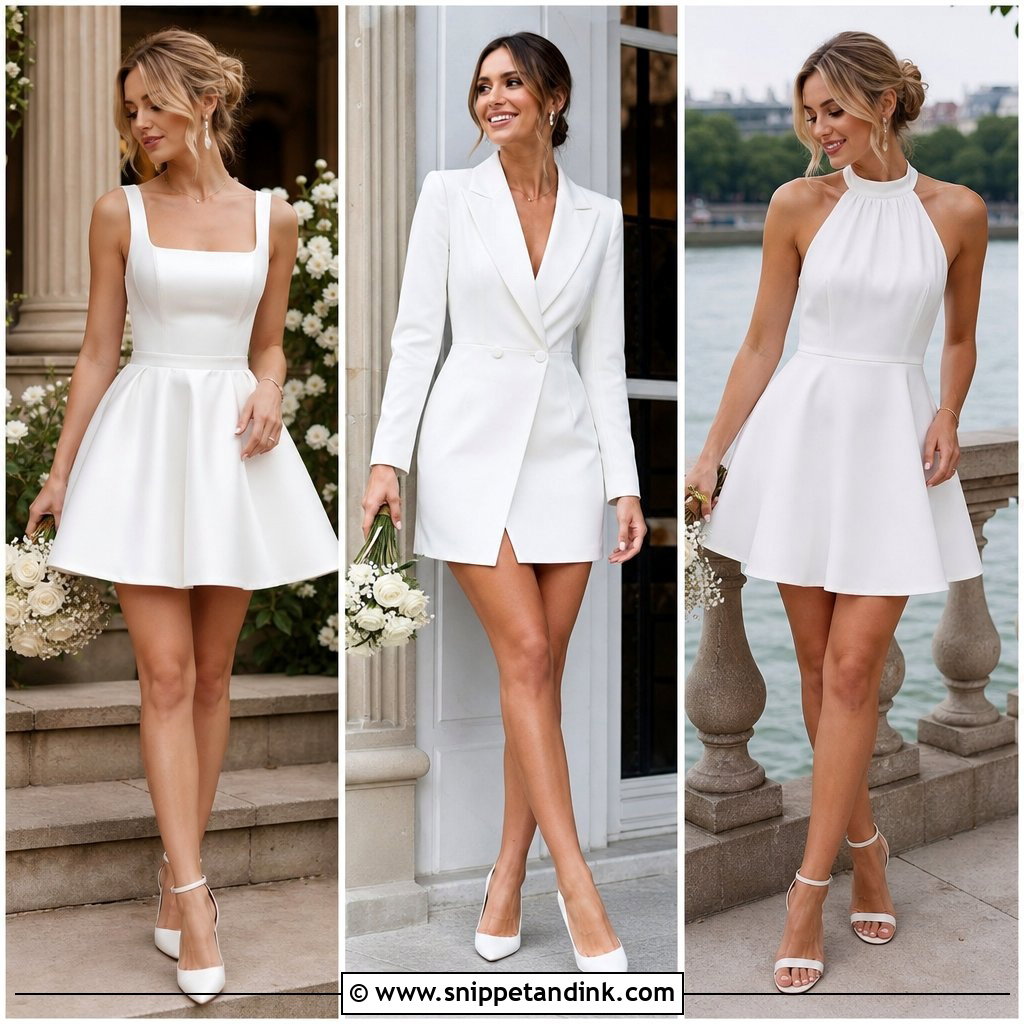
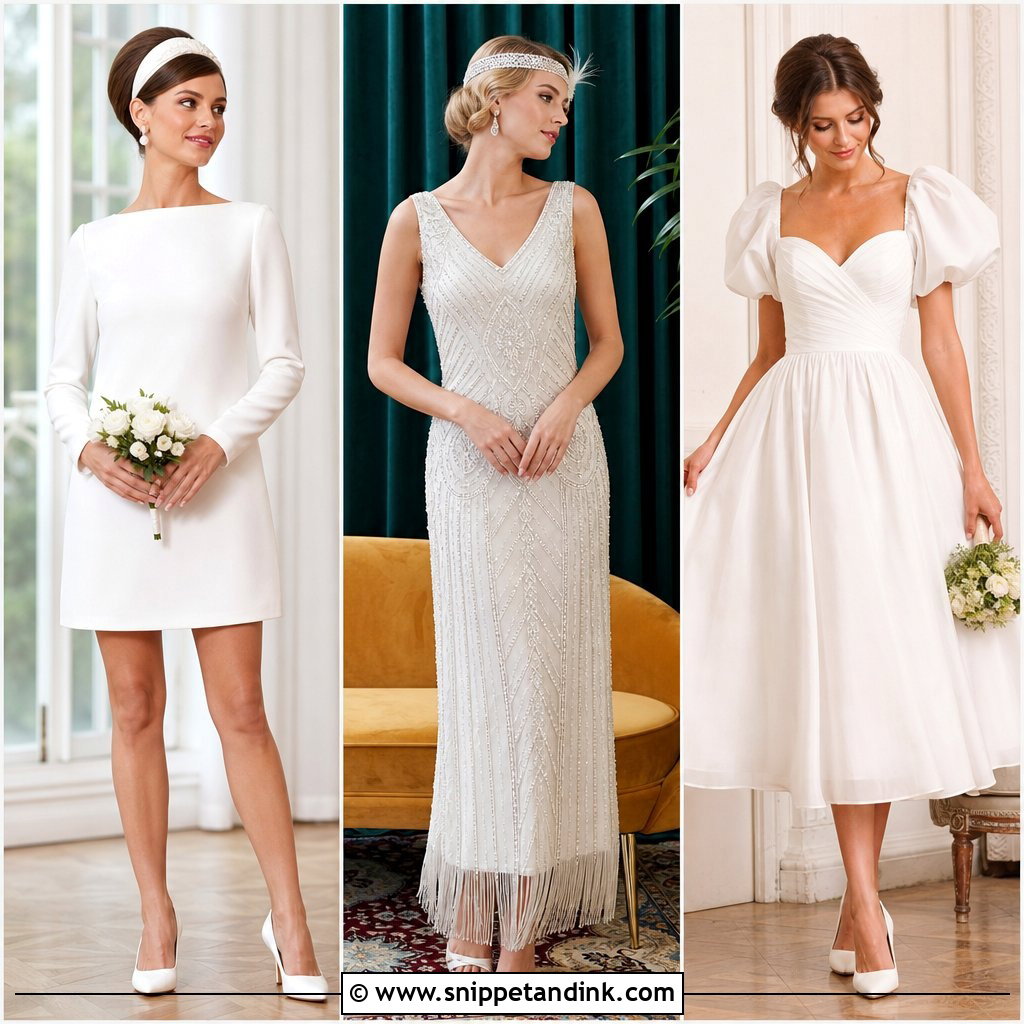
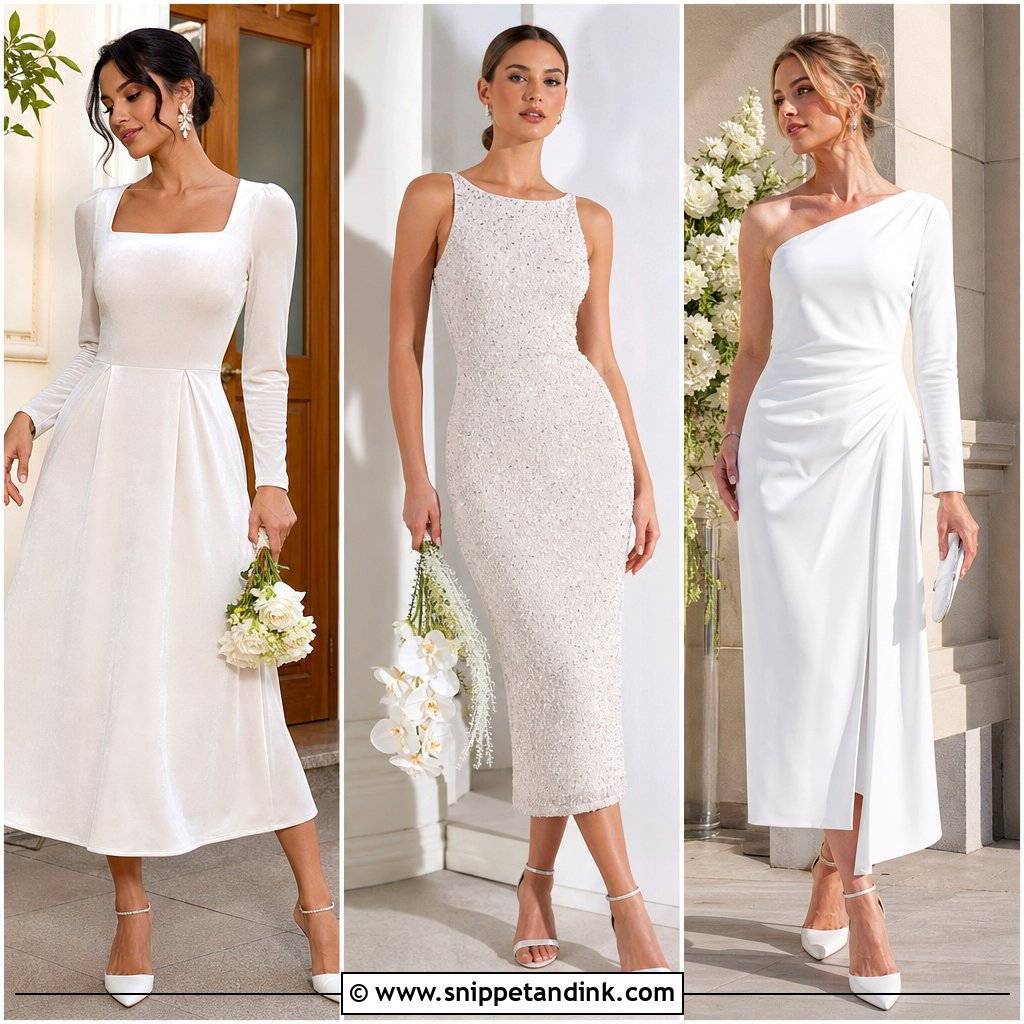
15. Button Front Midi Civil Wedding Dress With Closed Toe Heels
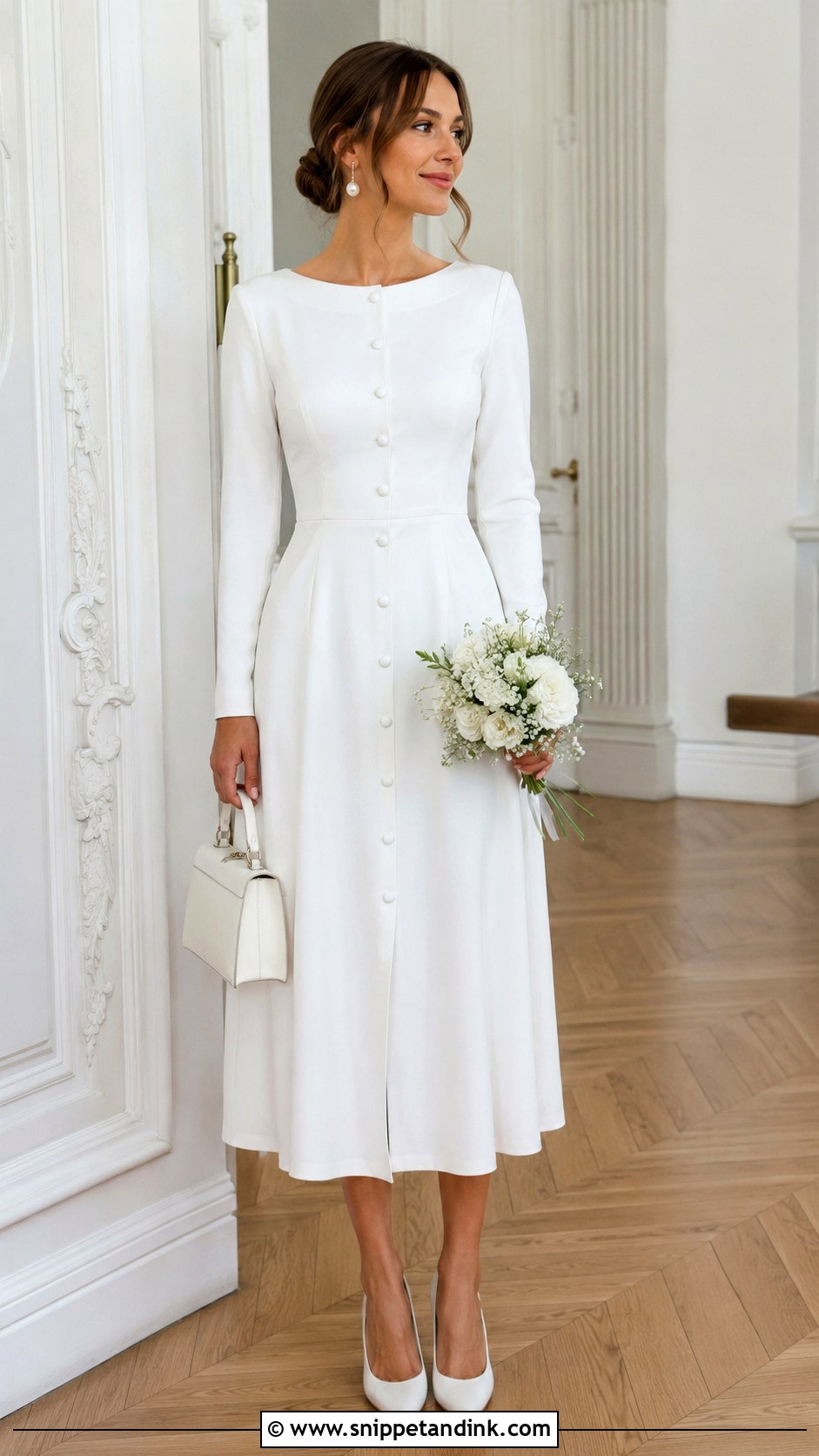
A button front midi dress has a polished, slightly vintage feel, and covered buttons down the front add detail without any sparkle. White cotton sateen, crepe and satin all take covered buttons well. Closed-toe heels, a small handbag, pearl earrings and a soft low bun suit a morning ceremony. Buttons are where I spend most of the fitting. If the placket gapes between them across the bust or hips, the dress is too tight there; a seamstress can add hidden hooks between the buttons or let out the side seams.
16. Blazer Midi Civil Wedding Dress With White Heels
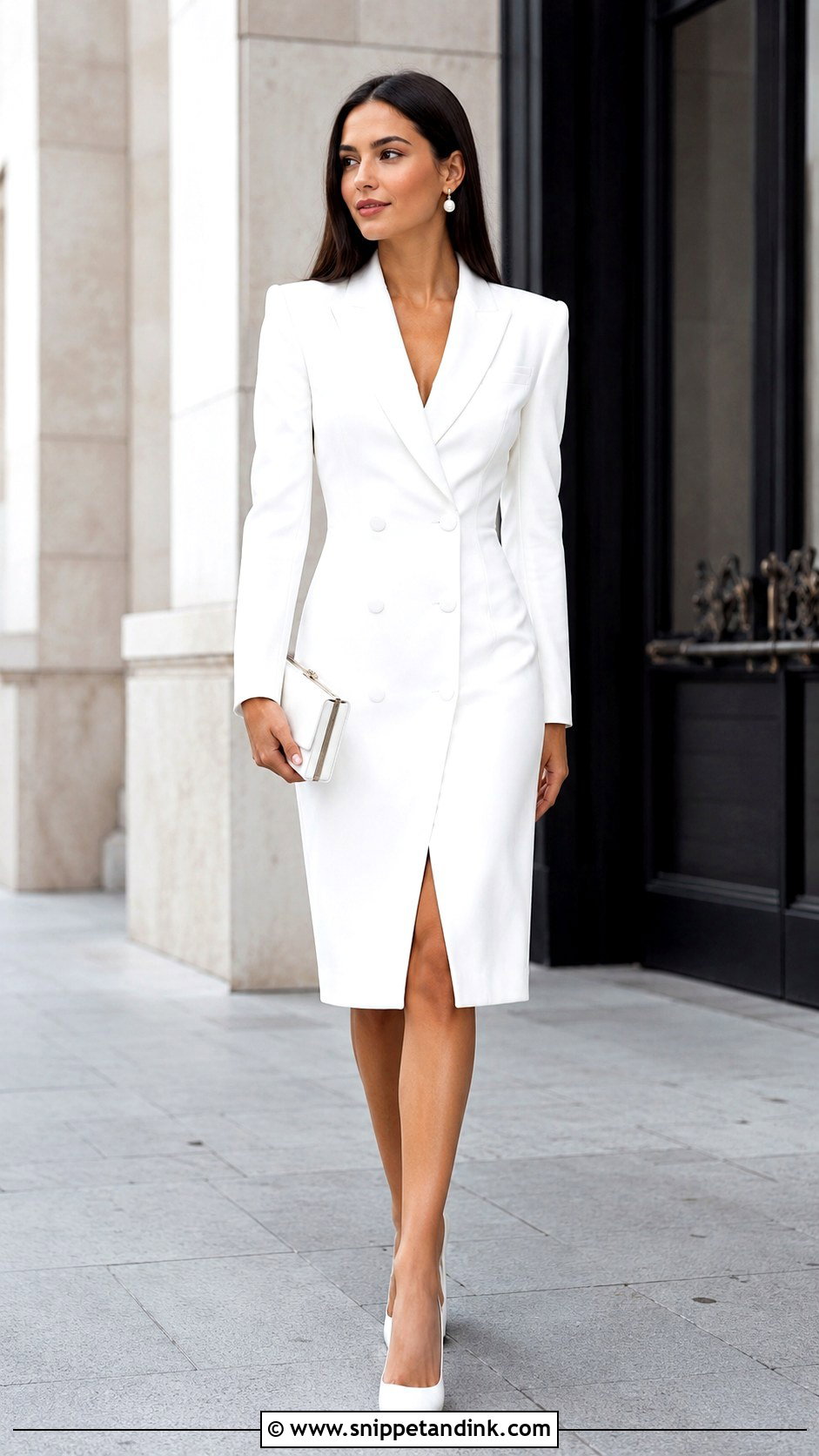
Brides who never wear dresses often feel most like themselves in a blazer dress, the most tailored option here. A white double-breasted or wrapped style hitting around the calf or just below the knee is the one to look for. White heels, a sleek clutch, small gold or pearl earrings and smooth hair match the sharp lines. Tailoring is unforgiving at the shoulder, which is also the hardest place to alter, so buy for the shoulders and have the waist and hem adjusted. If the lapels open deep, a hidden snap or a lace camisole keeps you covered as you lean over the register.
17. Slip Midi Civil Wedding Dress With Sheer Wrap
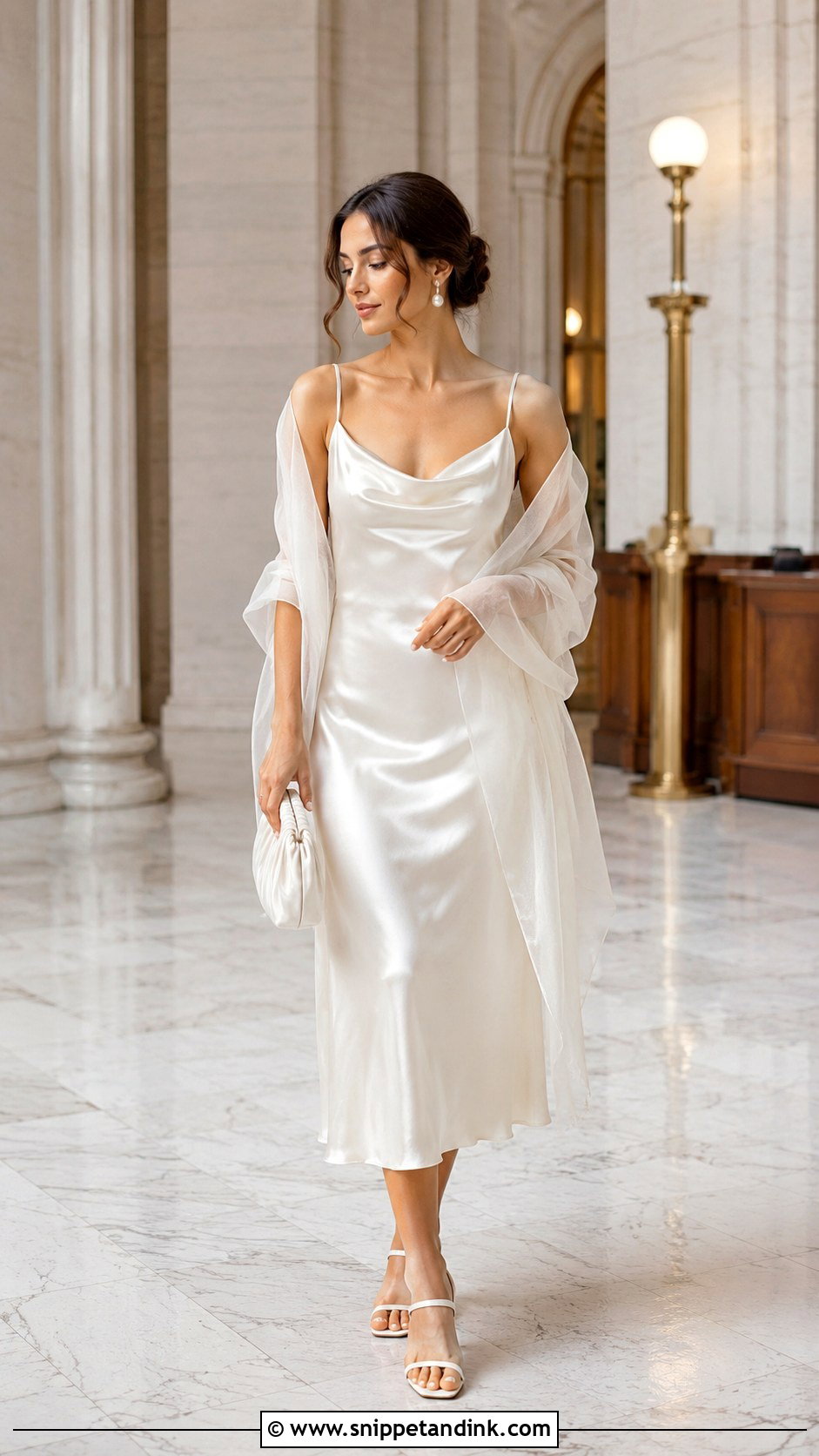
A bias-cut slip drapes well when it fits loosely and shows every line when it doesn’t, so I size up in slips rather than down. White or ivory satin with good lining or smooth underlayers is essential. Add a sheer wrap, light scarf or cropped cover-up if the building is cold or you want covered shoulders for the ceremony, then take it off for lunch. Minimal sandals, pearl earrings and a small clutch keep it relaxed. Satin slips crease across the hips the moment you sit, so a small travel steamer in the car is worth packing.
18. Tea Length Midi Civil Wedding Dress With Ballet Flats
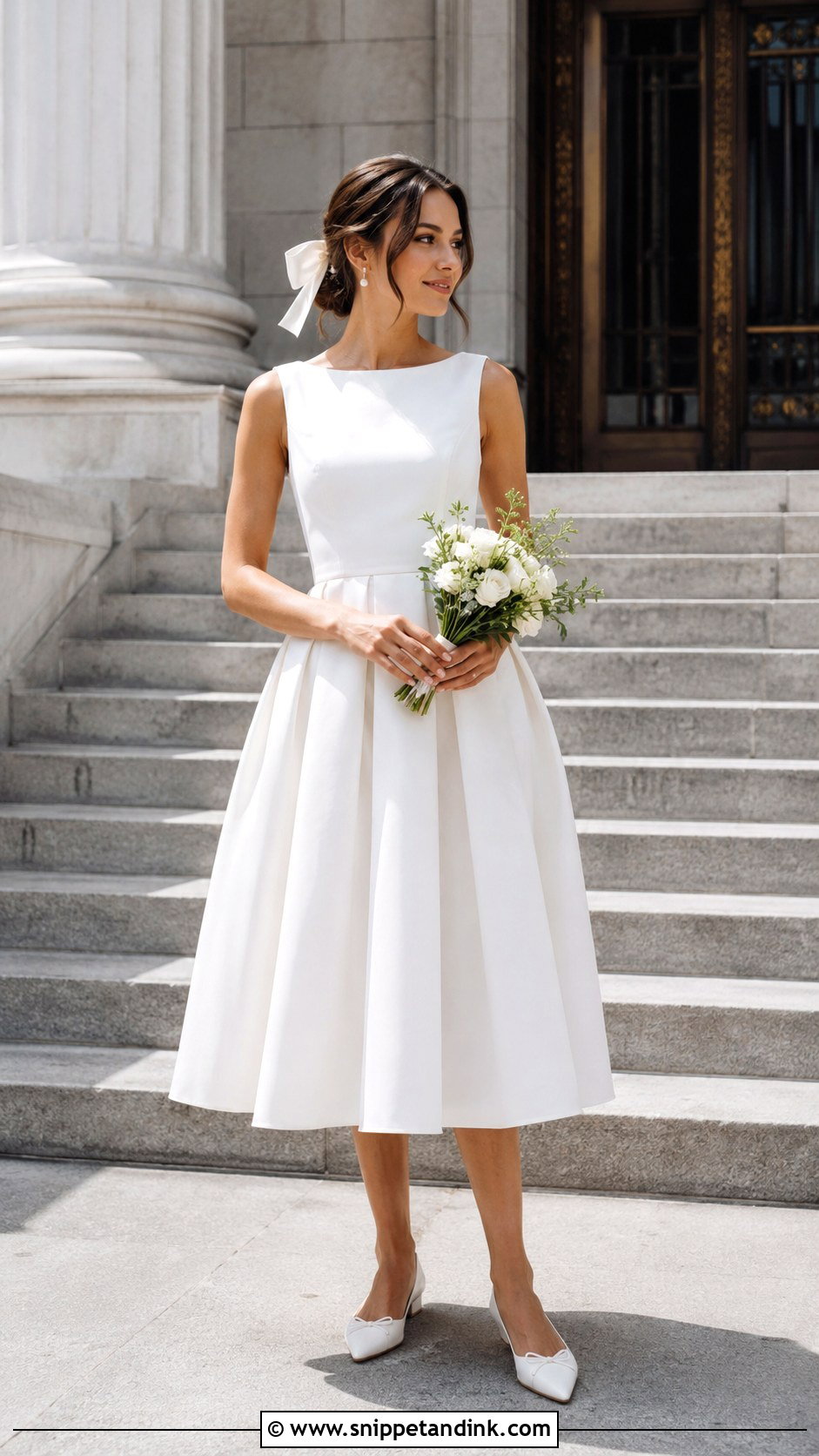
A tea length midi dress falls between the lower calf and the ankle, the most bridal proportion a midi can have without becoming a gown. A fitted bodice over a plain skirt is the classic cut. I pair it with pointed ballet flats or low heels, since the longer hem already elongates. Pearl earrings, a small bouquet and a satin hair bow suit it. Keep the skirt light. Heavy satin at this length can look dowdy, while tulle or a lighter crepe moves as you walk.
19. Minimal Midi Civil Wedding Dress With Statement Bow
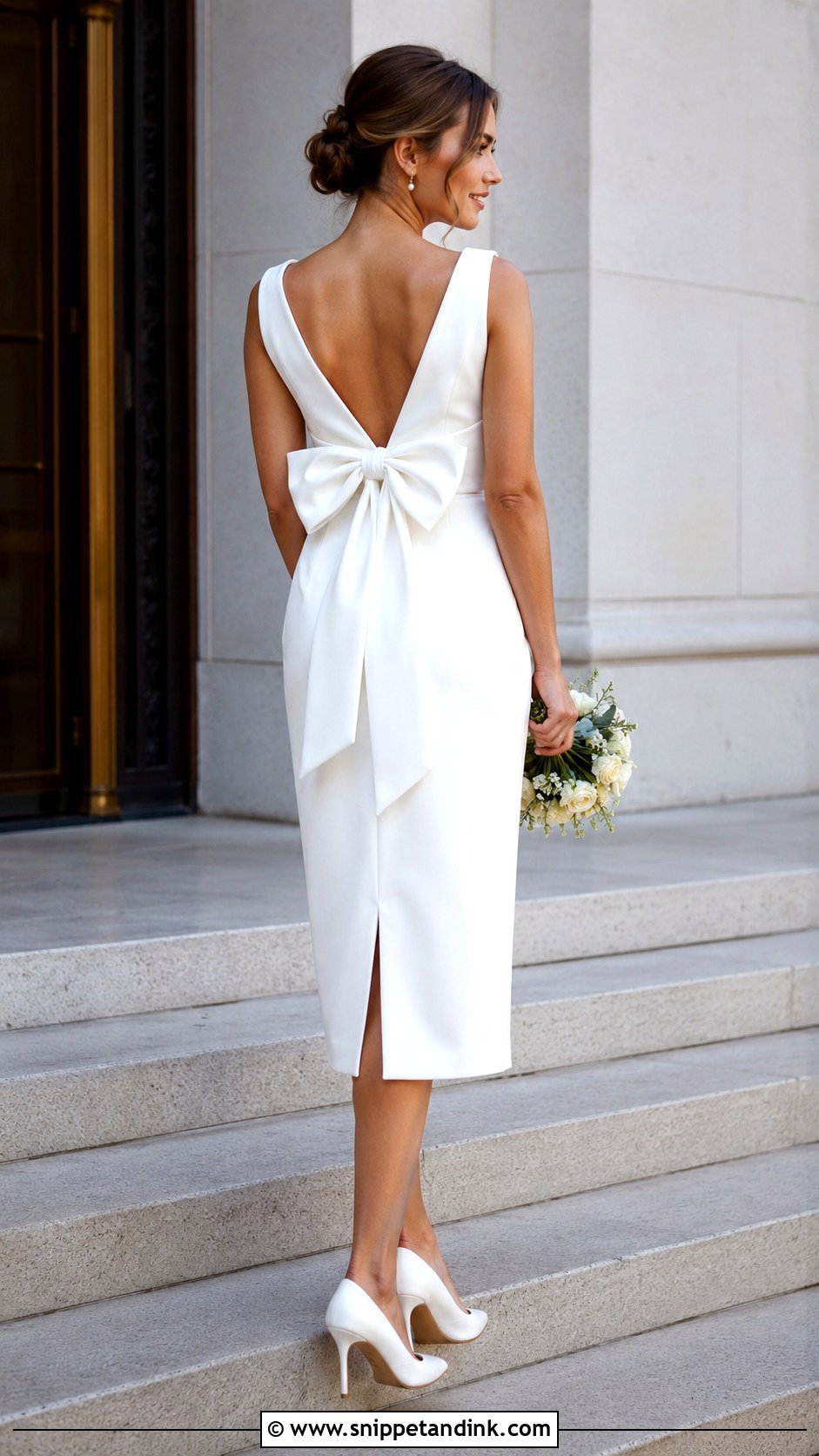
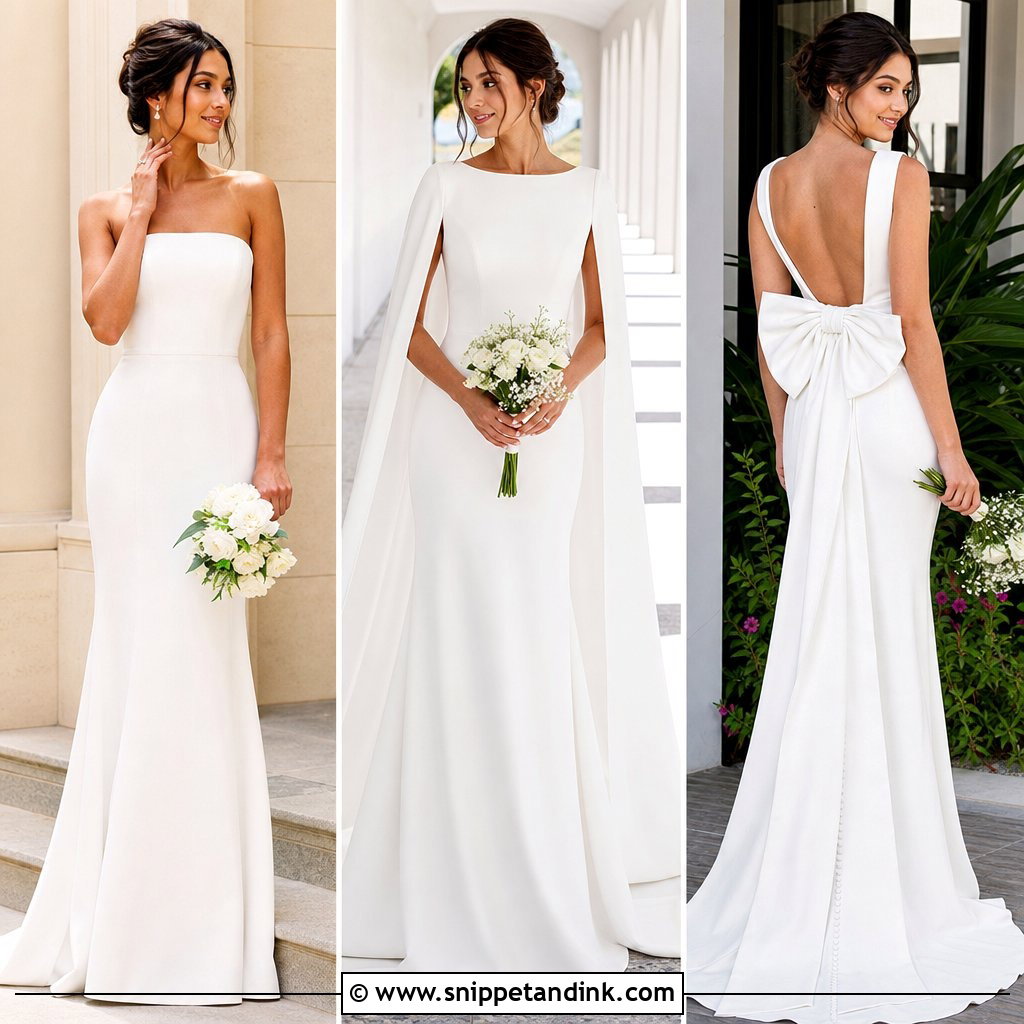
One large bow brings personality into a plain dress. It can sit at the back, the shoulder or the waist, and it needs a fabric with body, such as mikado, heavy satin or crepe, so it stands up instead of drooping by the afternoon. Simple pumps or sandals and small jewelry stop it getting busy. For a civil ceremony I’d put the bow at the back, since guests mostly see you from behind while you sign. Just check you can lean back in a chair without flattening it.
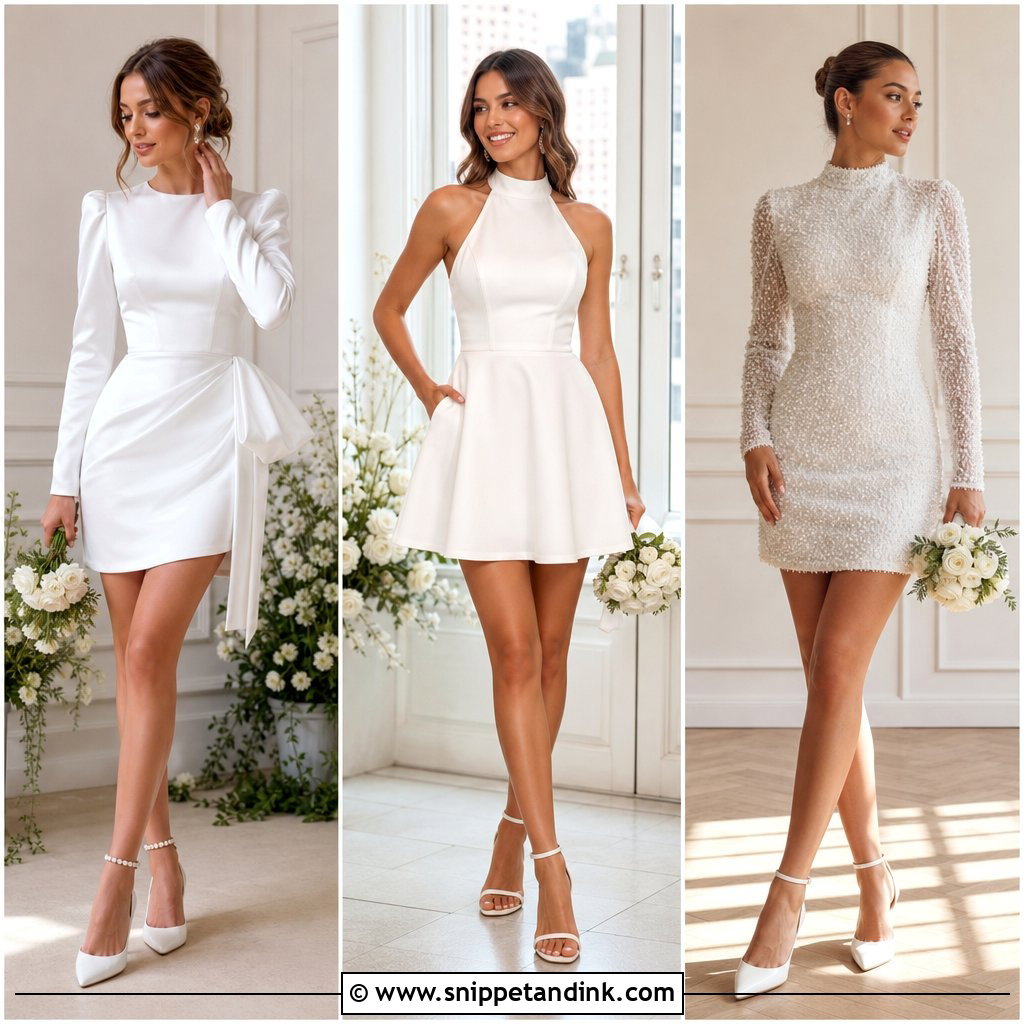
20. High Neck Midi Civil Wedding Dress With Pearl Clutch
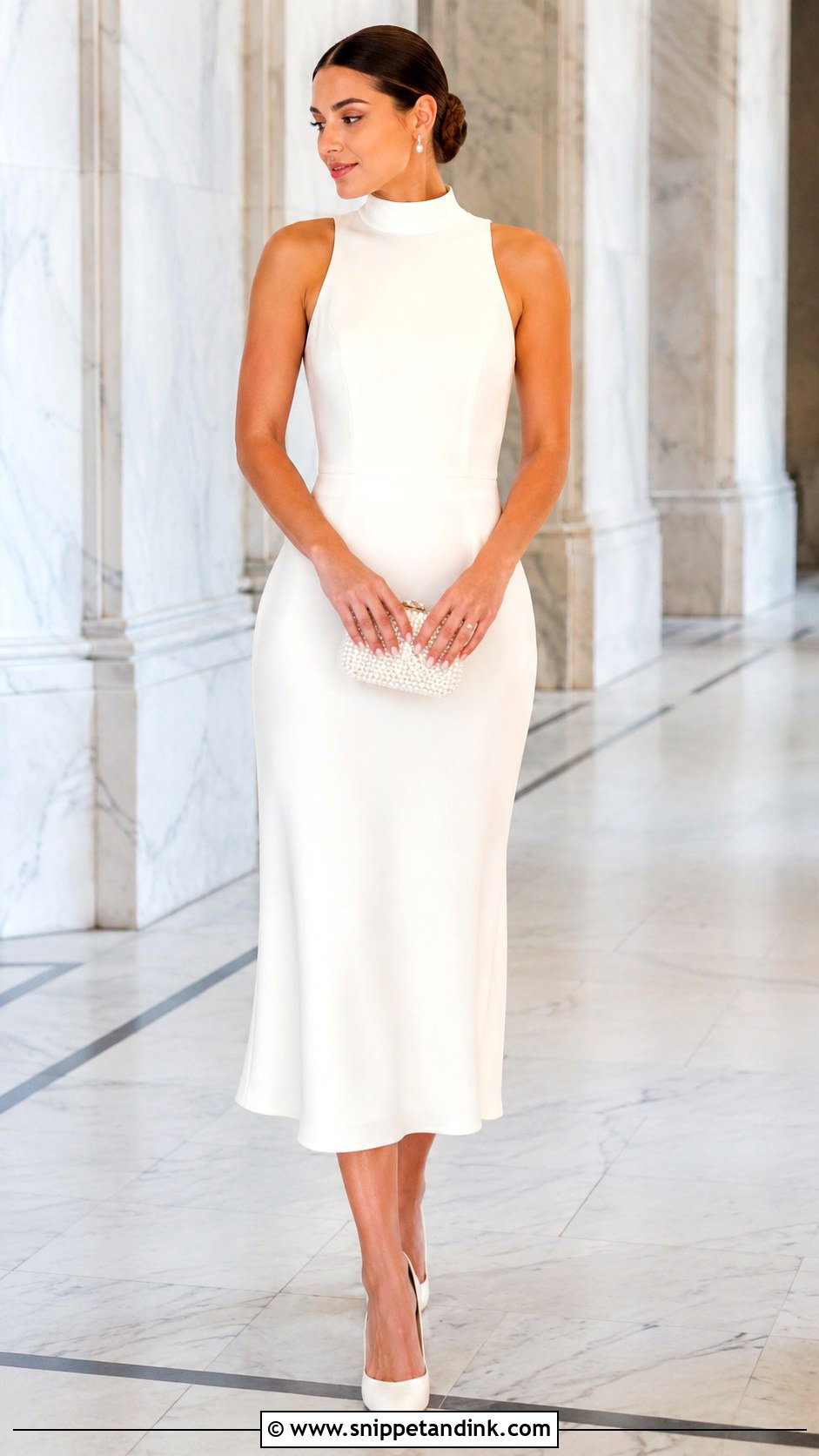
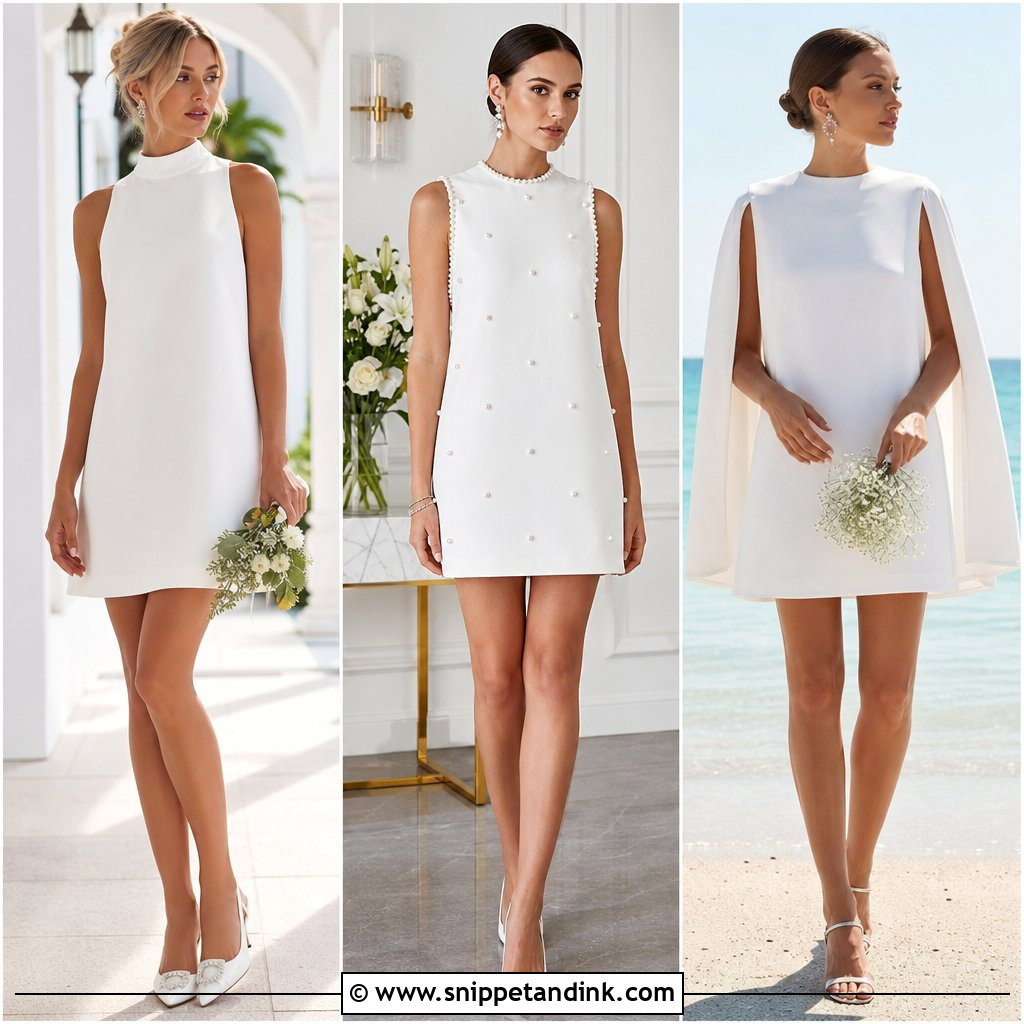
High necklines want crepe, satin or a soft stretch fabric that lies smooth against the throat, in either a fitted or gently flared skirt. With the neck covered, skip the necklace and spend your jewelry on earrings or a bracelet; a pearl clutch adds bridal texture without tipping into too much. Pointed heels and a neat bun or polished ponytail keep the neck clear. For brides with a shorter neck I prefer a mock neck that sits a little lower over a full funnel, which can make the neck vanish in photos.
21. Short Sleeve Midi Civil Wedding Dress With Slingback Flats
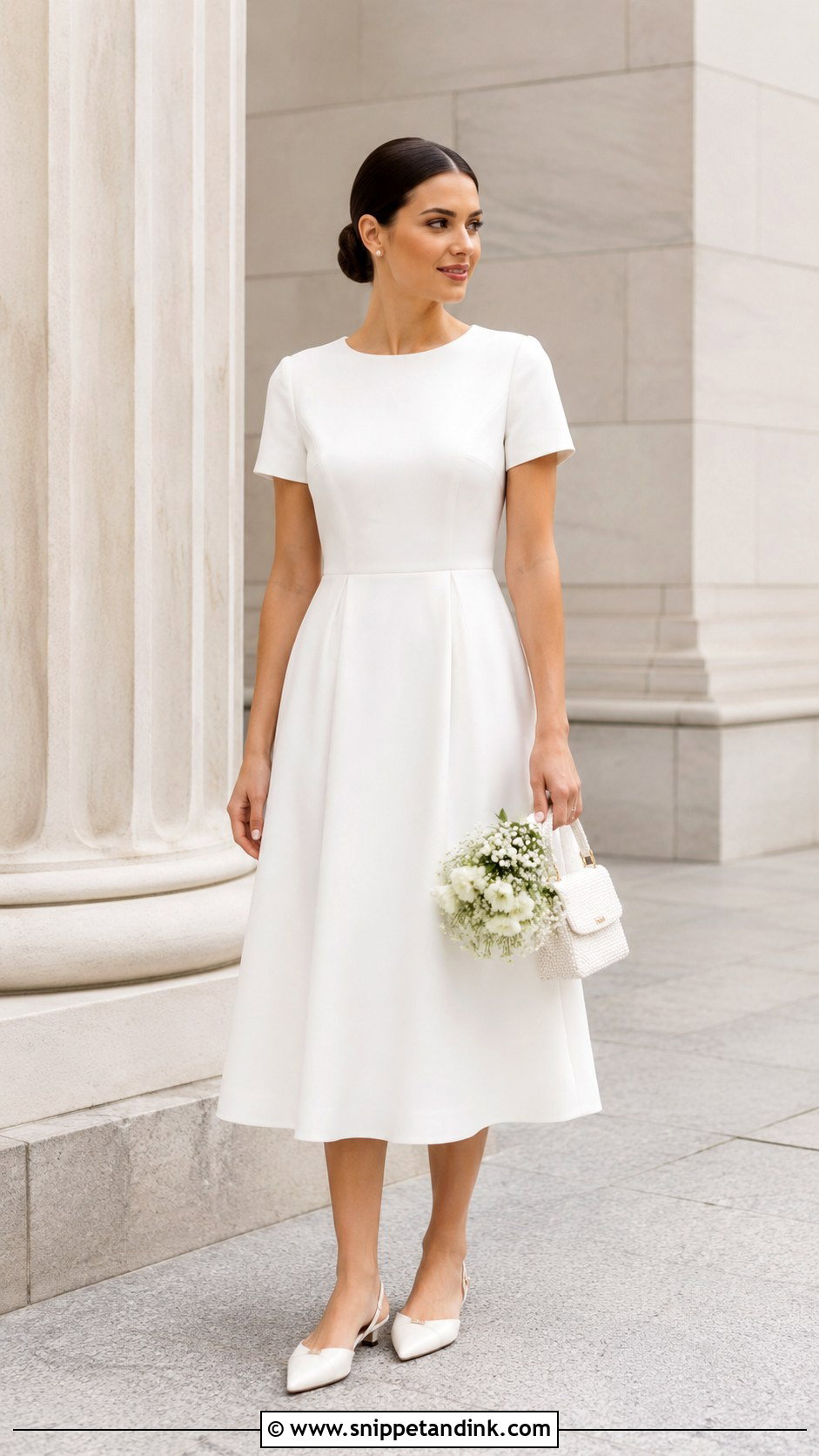
Short sleeves are underrated for a civil wedding. They give a little coverage, stay cool in a stuffy waiting room and rarely need alteration through the armhole. A fitted waist, clean sleeves and a smooth midi skirt in white are the basics, with slingback flats so you can walk around the courthouse and through the photos afterwards in comfort. Pearl studs, a mini top-handle bag and natural makeup suit a daytime ceremony. To make it read more bridal, a slight puff or a folded cuff on the sleeve does more than any accessory.
22. V Neck Midi Civil Wedding Dress With Delicate Necklace
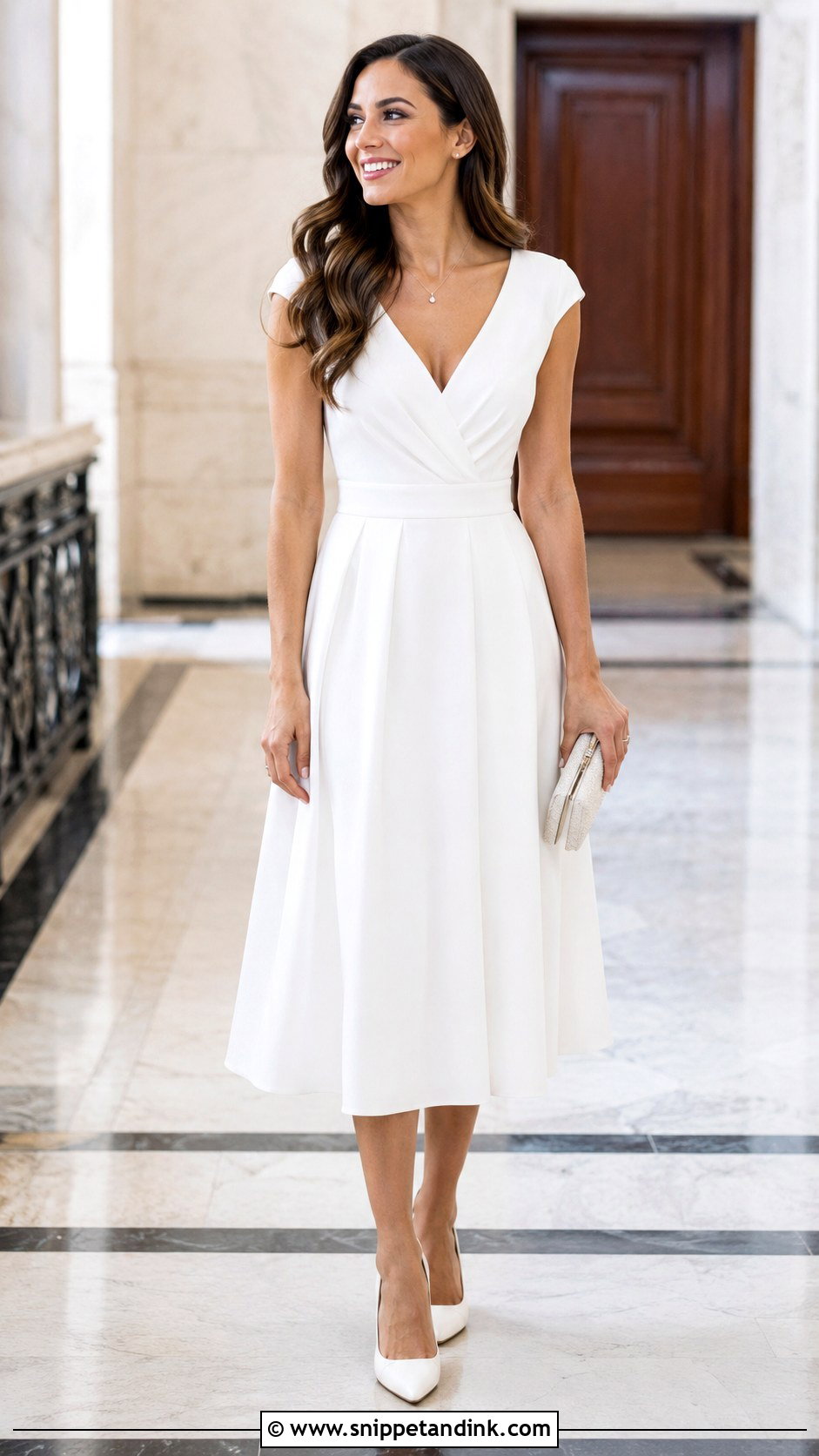
A modest V lengthens the upper body and leaves room for a fine necklace, which is the only jewelry this dress really needs. The fabric decides its character: crepe looks polished, satin dressier, lace softer. Choose a defined waist and a hem that hits a comfortable point on the calf, then add white heels, a small clutch and soft curls or a low bun. I judge the depth of a V with the bride bending forward, not standing straight, because that’s the angle you’ll be at when you sign.
23. Puff Sleeve Midi Civil Wedding Dress With Simple Sandals
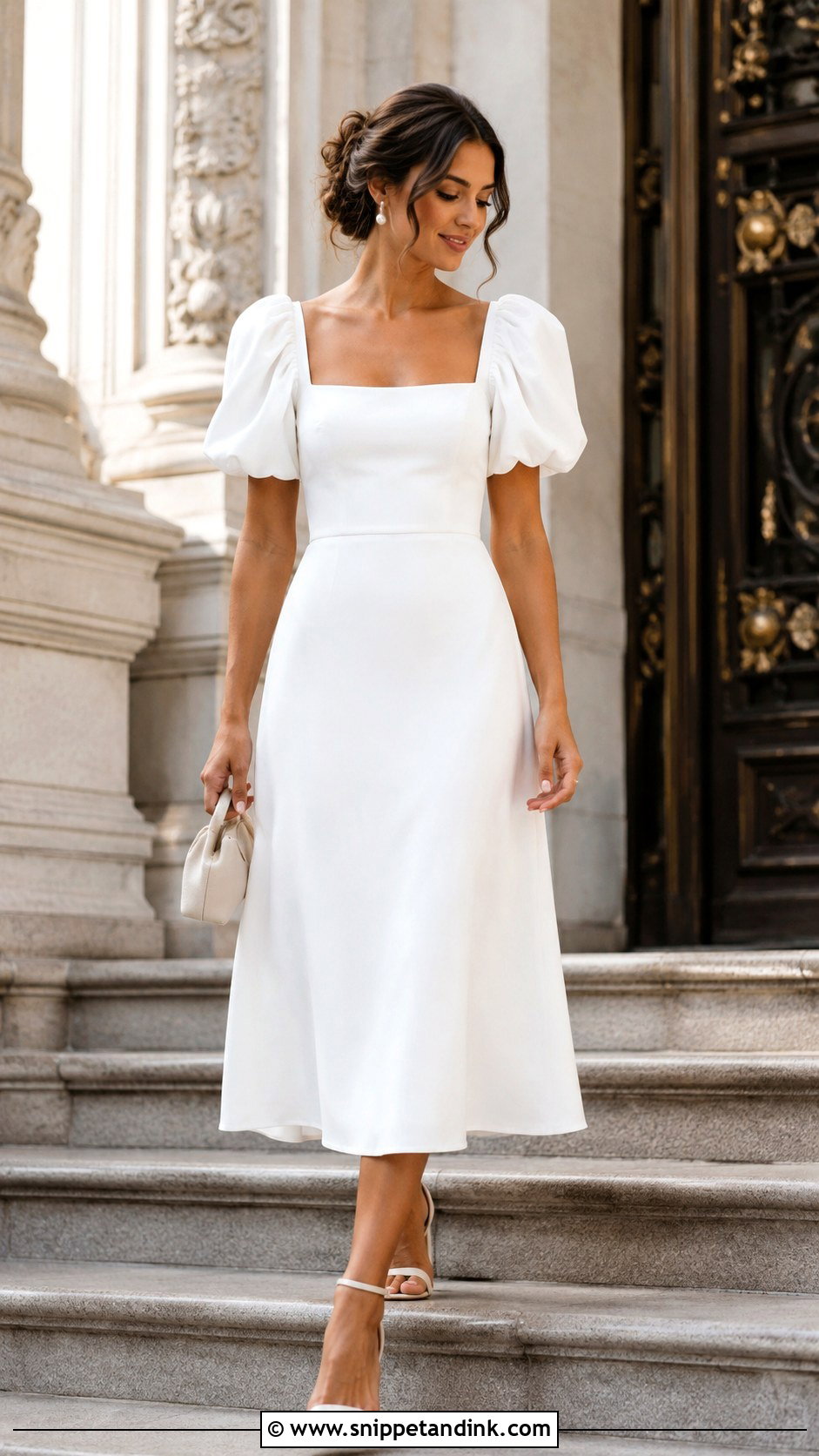
Scale is everything with puff sleeves. Small or medium puffs look balanced, while large ones overwhelm a short dress and widen the shoulders in photos. Keep the bodice fitted and the skirt plain, and add simple sandals for a spring or summer ceremony along with pearl earrings, a small bag and a soft updo. For petite brides I shorten the puff and make sure the waist is clearly marked, which keeps the proportions neat.
24. Textured Midi Civil Wedding Dress With Nude Heels
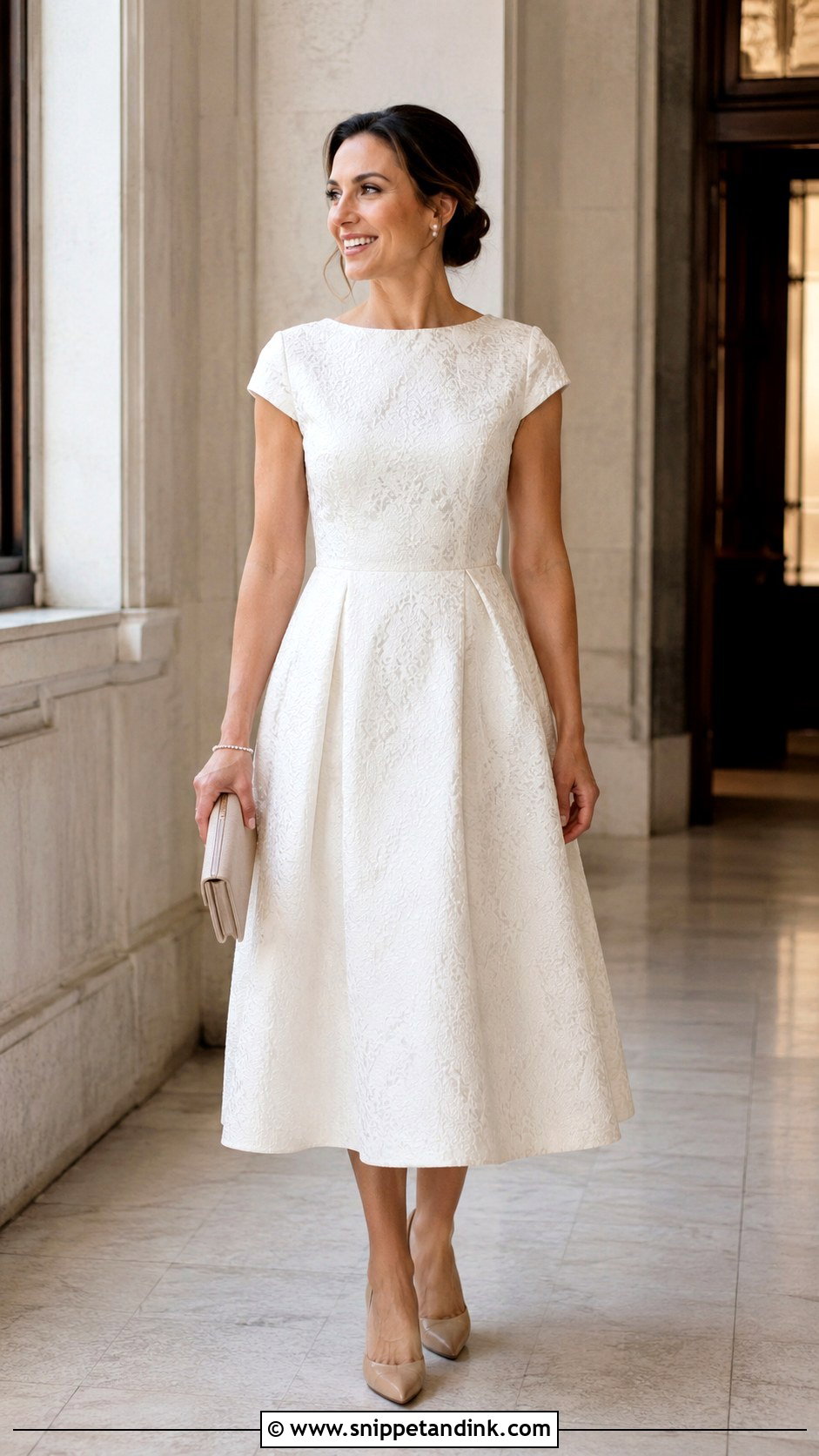
Texture gives a plain dress depth without a single bead. Jacquard, a subtle floral weave, ribbed crepe or soft embossed fabric in white or ivory all work. Nude heels keep the attention on the cloth, and pearl studs, a slim bracelet and a small cream clutch are enough. Close-up photos are where texture pays off, since it gives the camera something to pick up in flat indoor light. Keep the silhouette simple so the fabric stays the feature.
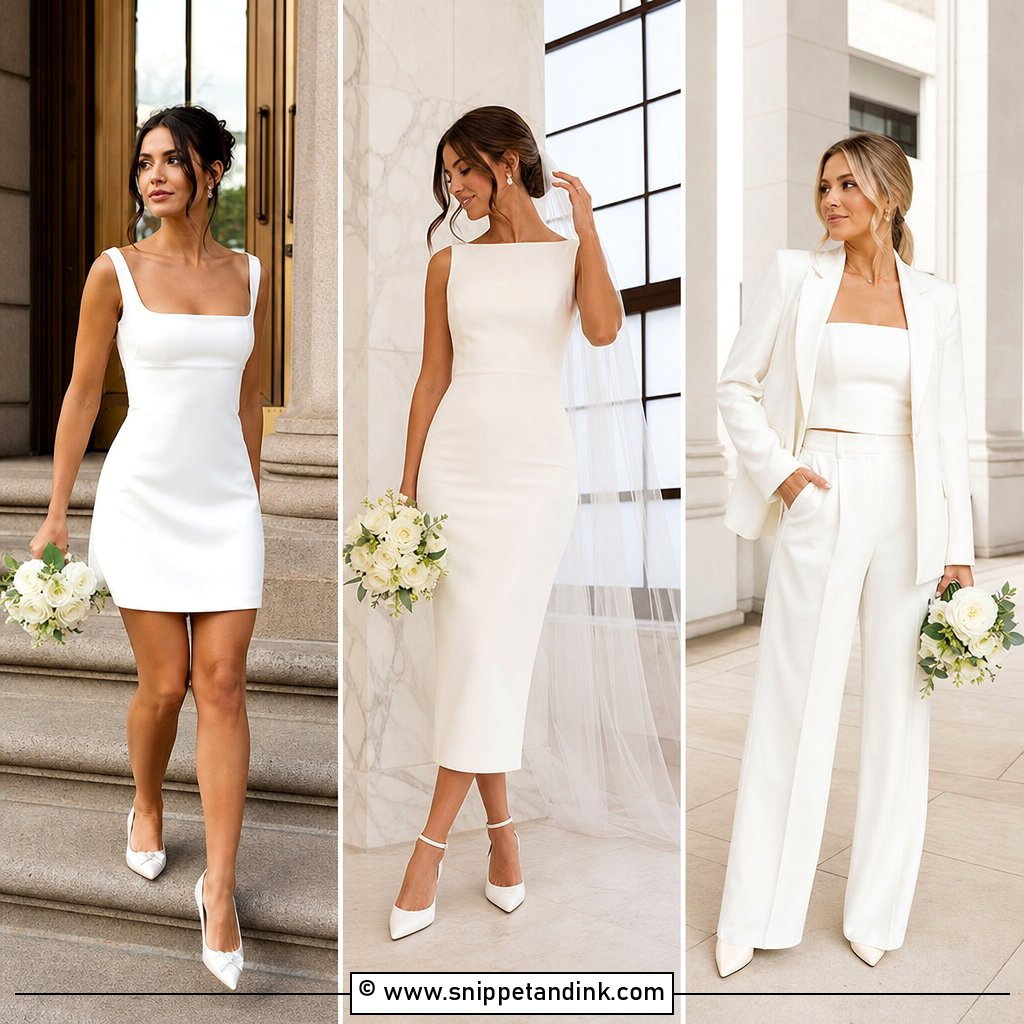
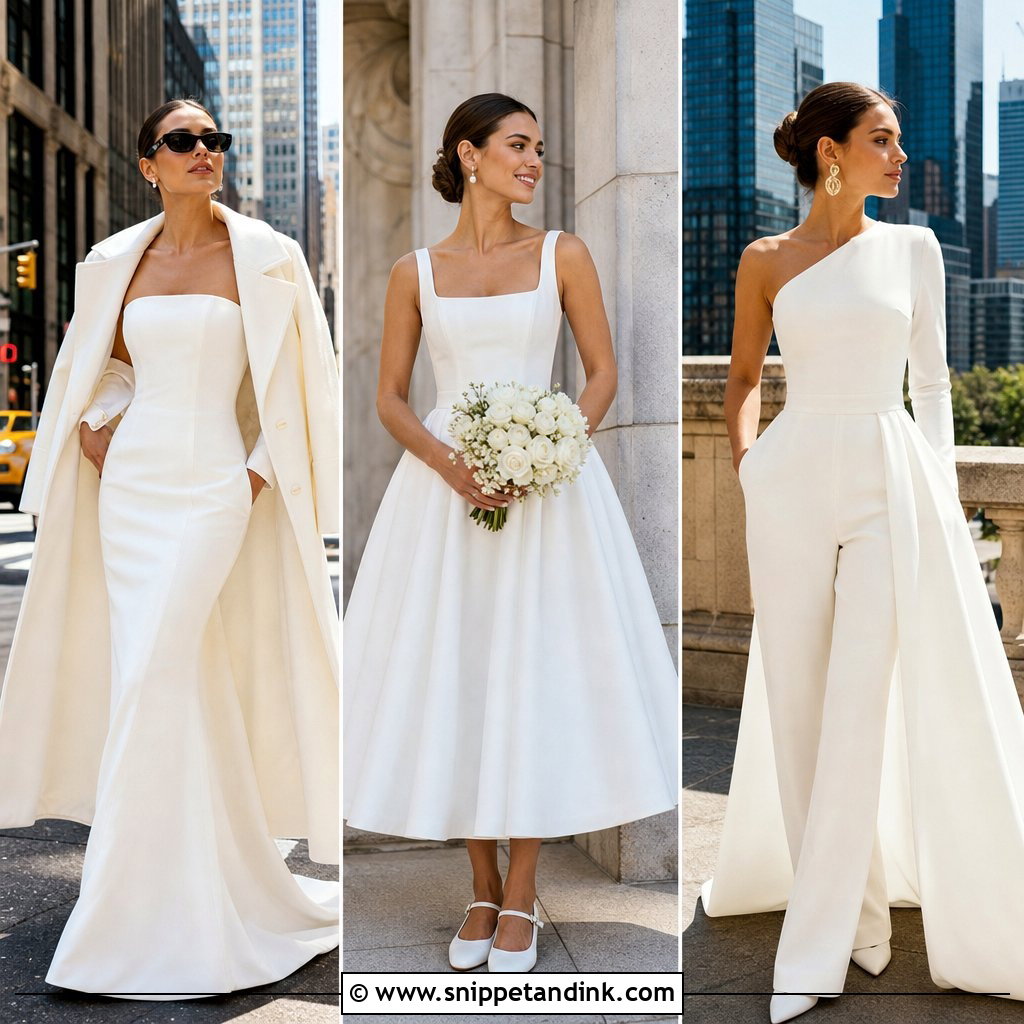
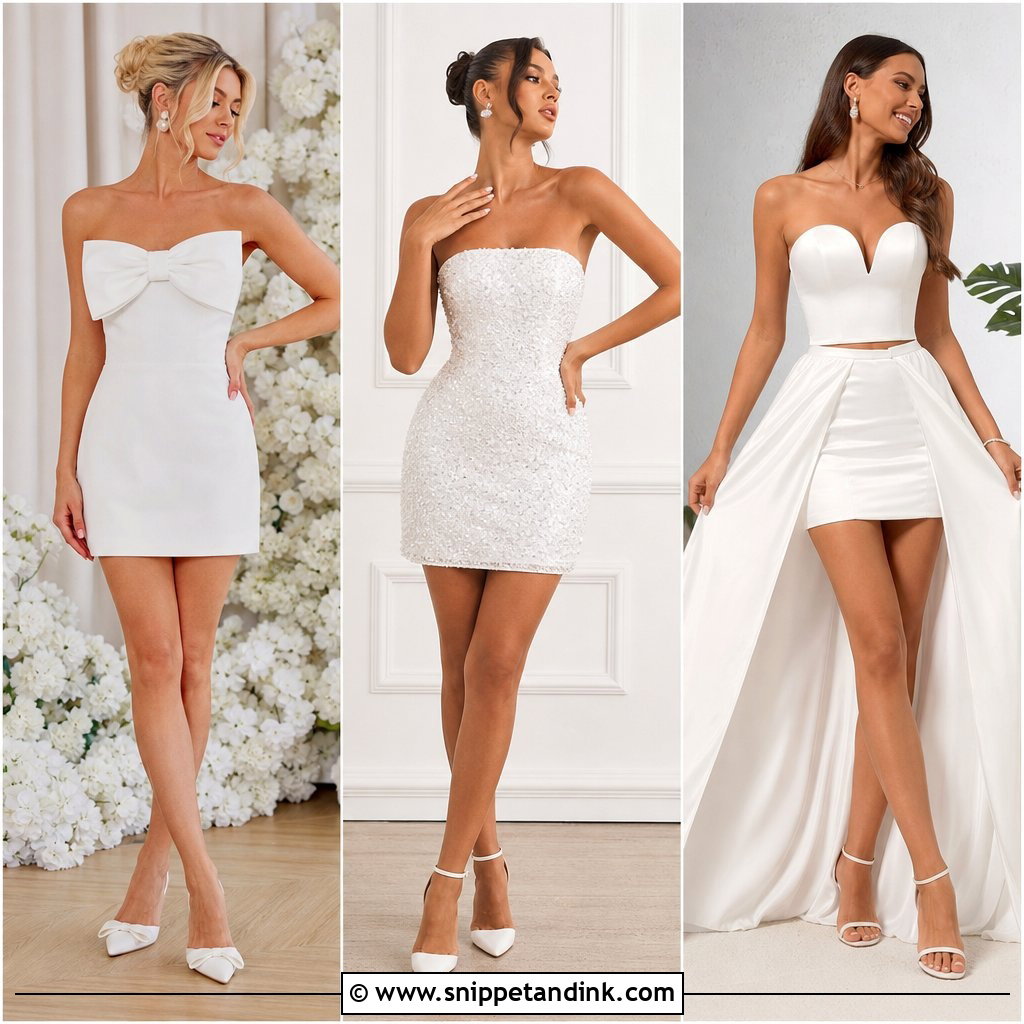
25. Simple Midi Civil Wedding Dress With Short Veil
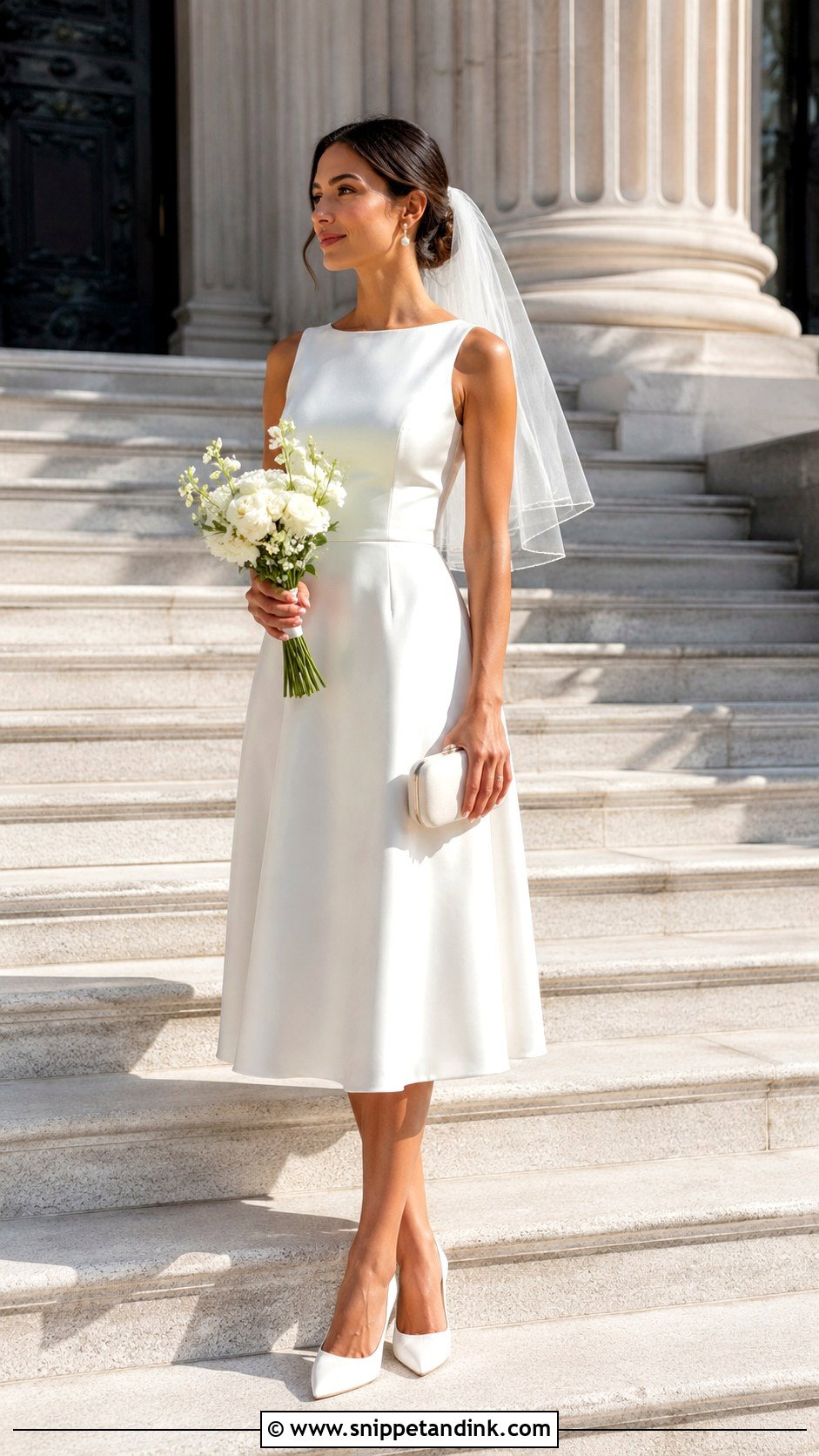
A short veil is the quickest way to make a simple midi clearly bridal. Shoulder-length or a birdcage style suits a city hall, where a long train would only be stepped on in a busy corridor. Wear it with a clean white midi in satin, crepe or lace, white pumps or low heels, pearl earrings and a small bouquet. Ask your stylist to set the comb at the crown or just behind it; a short veil placed too low rests on the collar and flips up every time you turn your head.
A Courthouse Day Is Mostly Waiting, So Dress for That
The ceremony itself is short. What fills the day is standing in a queue, sitting on hard benches, walking through security and going in and out of air conditioning. I fit civil wedding dresses with that in mind.
- Sit on a hard chair in the dress for ten minutes and then stand up. If the skirt is creased across the lap, choose crepe or a lined fabric over unlined satin.
- Marble and polished floors are slippery. Scuff the soles of new shoes, or add grip pads, before the morning.
- Your bag has to hold ID and any documents the registrar asks for, so a tiny clutch may need a partner who carries the folder.
- Light skirts lift on windy steps outside government buildings. A few small dress weights stitched into the hem fix it invisibly.
Cleaning a Short Dress So You Can Wear It Again
One of the quiet advantages of a midi is that many brides wear it again for anniversaries or another dinner. That only happens if it’s looked after in the first week. Foundation on the neckline and spilt champagne are the usual culprits, and champagne is the sneaky one: the sugar dries invisibly and turns brown months later.
Take it to a cleaner within a couple of weeks and point out every spot, even ones you can’t see. For storage, stuff the bodice with acid-free tissue and keep it in a breathable cotton bag rather than the plastic it came home in, which traps moisture and can yellow ivory fabric over time.
Wear It for an Afternoon at Home First
Every dress here is simple, which means fit carries more weight than it would in a full gown. Satin, crepe and column shapes keep things minimal, while lace, pleats, pearls, bows and a short veil add softness. Whichever way you lean, wear the dress for a few hours at home before the day. Sit in it, climb the stairs, reach across a table for a pen. The one that still feels easy by late afternoon is the one to marry in.
You'll Like These Ideas:



Leave a Reply