
A suit asks more of the fit than a gown does. A full skirt hides a lot; a trouser leg and a jacket shoulder hide almost nothing, so most of my work with suit brides happens with pins and a mirror rather than on a rail of samples. Below are twenty tailored looks, from ivory pantsuits and skirt sets to linen for the beach and sequins for the after party, each with the fitting detail I’d check before you commit. Some suit a registry office at eleven in the morning, others only make sense after dark. Read them with your venue and your shoes in mind, because both change which cut will work.
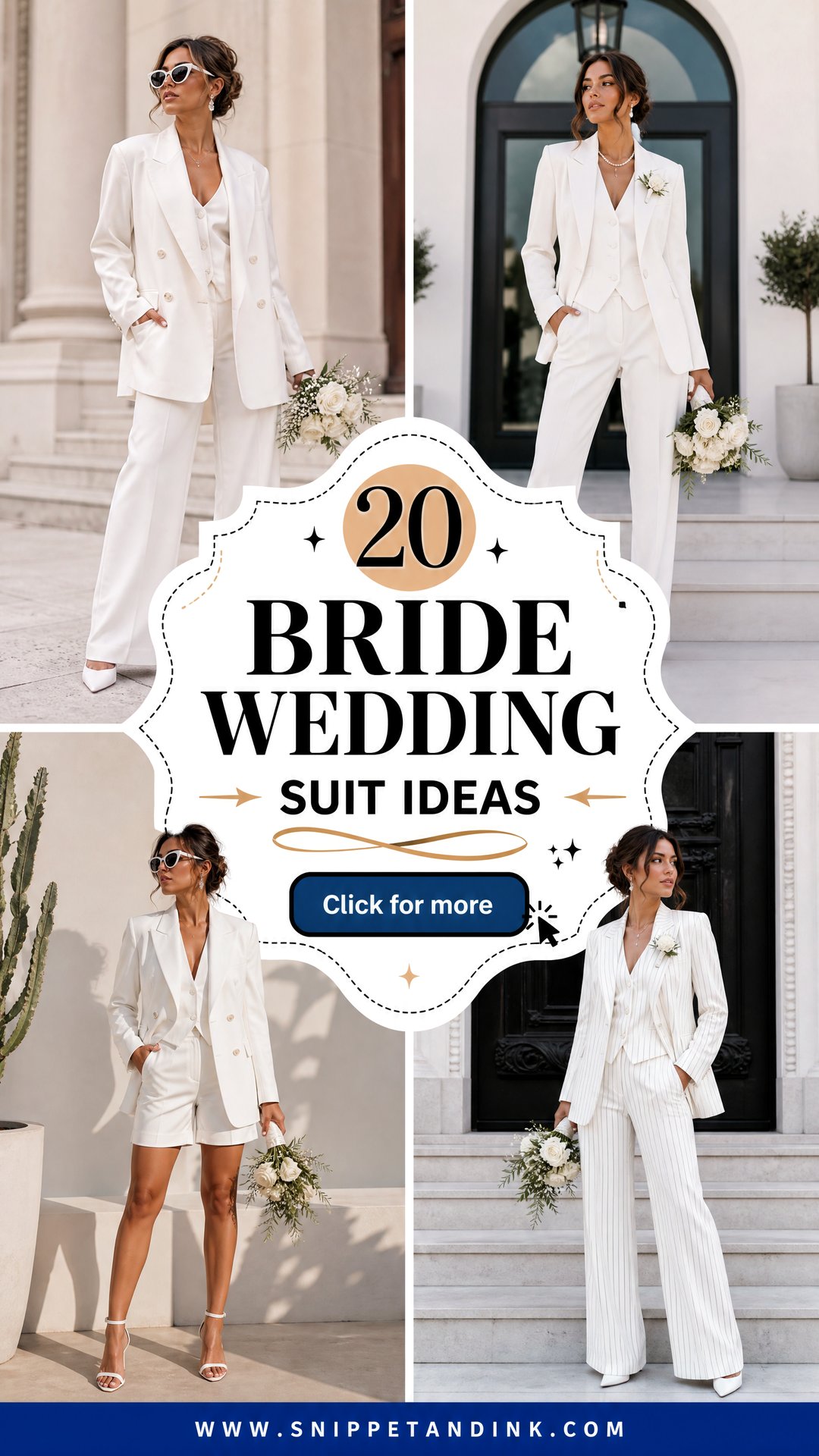
Shoulders First, Everything Else Can Be Altered
When a bride brings me a suit, the first thing I do is look at the shoulder seam. It should sit right at the edge of the shoulder bone, with no dent below it and no ridge pushing past it. Shoulders are the one part of a jacket a tailor can rarely fix well, so if they’re wrong, the suit is wrong, however good the fabric looks.
Almost everything else is adjustable. These are the alterations I’d expect on nearly every bridal suit:
- Sleeves shortened so a little wrist shows when your arms hang loose. Bouquets and rings look better with a bare wrist.
- Waist suppression, taking the jacket in at the back seams so it follows your shape without pulling at the button.
- Trouser hems set in the exact shoes you’ll wear, never in trainers or bare feet at the fitting.
- The trouser seat and waistband adjusted so they sit flat when you’re seated, not only when you stand.
Bring your underwear, shoes and the top you plan to wear to every fitting. Allow two or three appointments spread over about six to eight weeks, with the last one a week or two out, because weight and posture change before a wedding. Then do the full test: sit down, lift both arms as if hugging someone tall, and walk a flight of stairs. If any of it pulls, say so while the pins are still in.
1. Classic Ivory Bride Wedding Suit
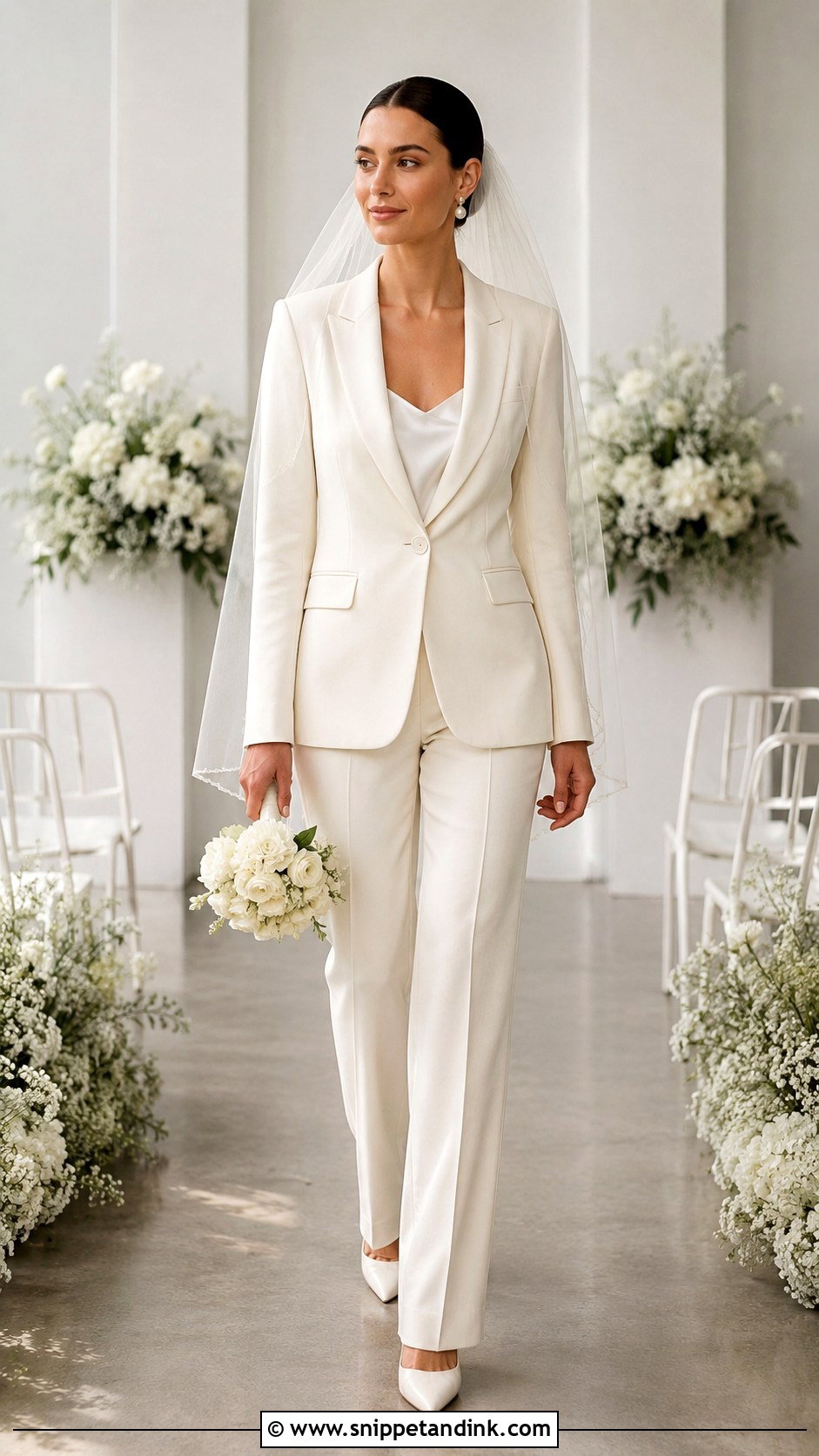
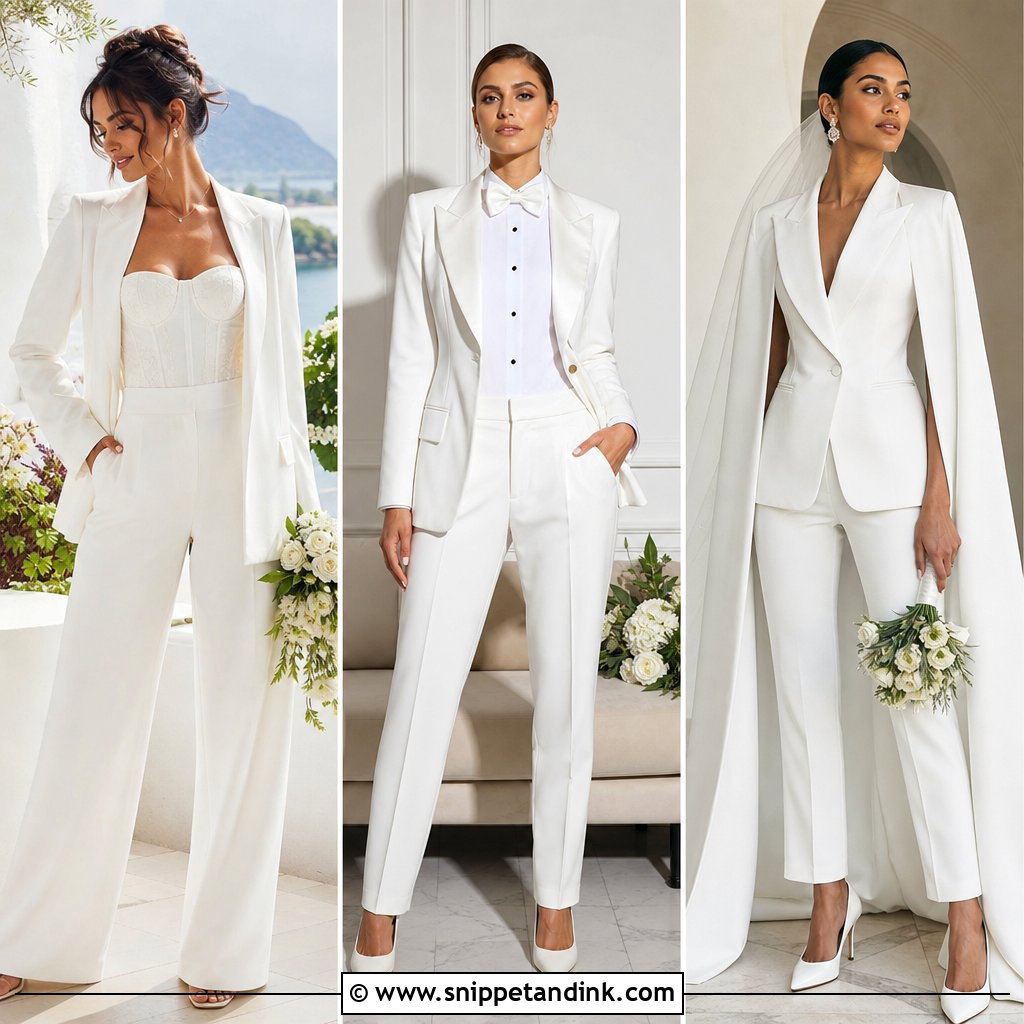
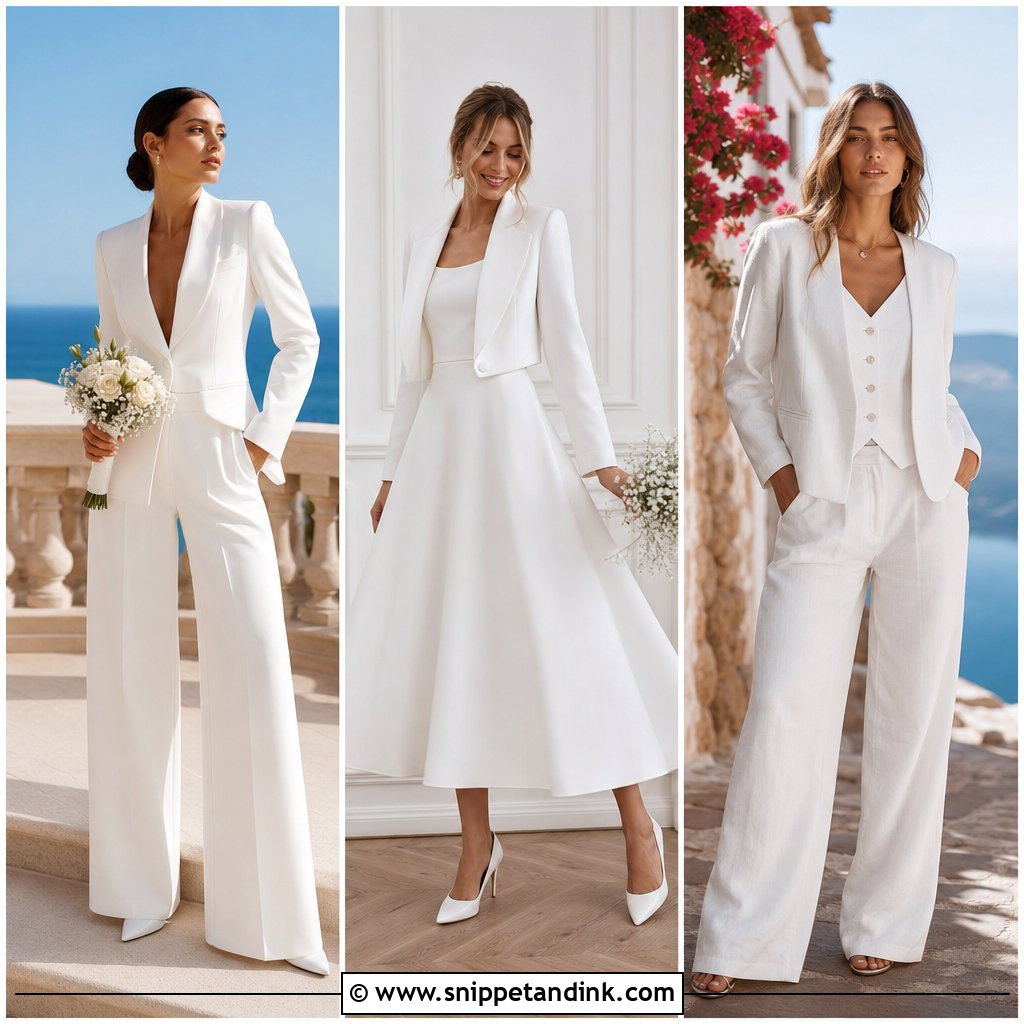
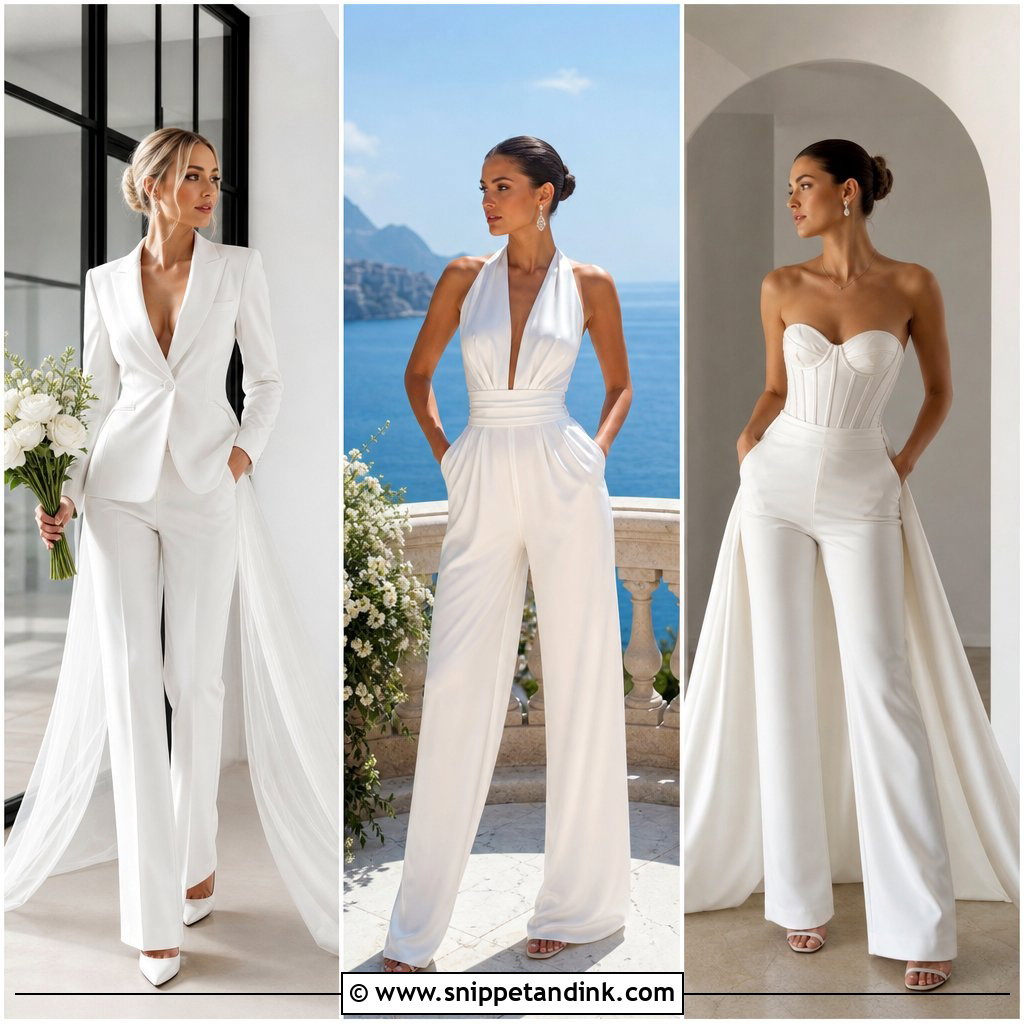
This is where I start most suit brides, because a classic ivory pantsuit shows you quickly whether tailoring feels like you. Go single-breasted with a gently shaped waist and straight or slightly tapered trousers, and keep the top underneath in the same family of ivory, since a silk cami that’s a shade whiter will look grey next to it in pictures. Ivory is kinder than bright white outdoors; bright white can bounce light onto the face and lose detail. The suit itself can be inexpensive. What makes it look bridal is taking in the sleeves to show a little cuff of wrist, hemming the trousers in your actual shoes and pulling the waist in so the jacket doesn’t gape when you turn.
2. Double-Breasted Bride Wedding Suit
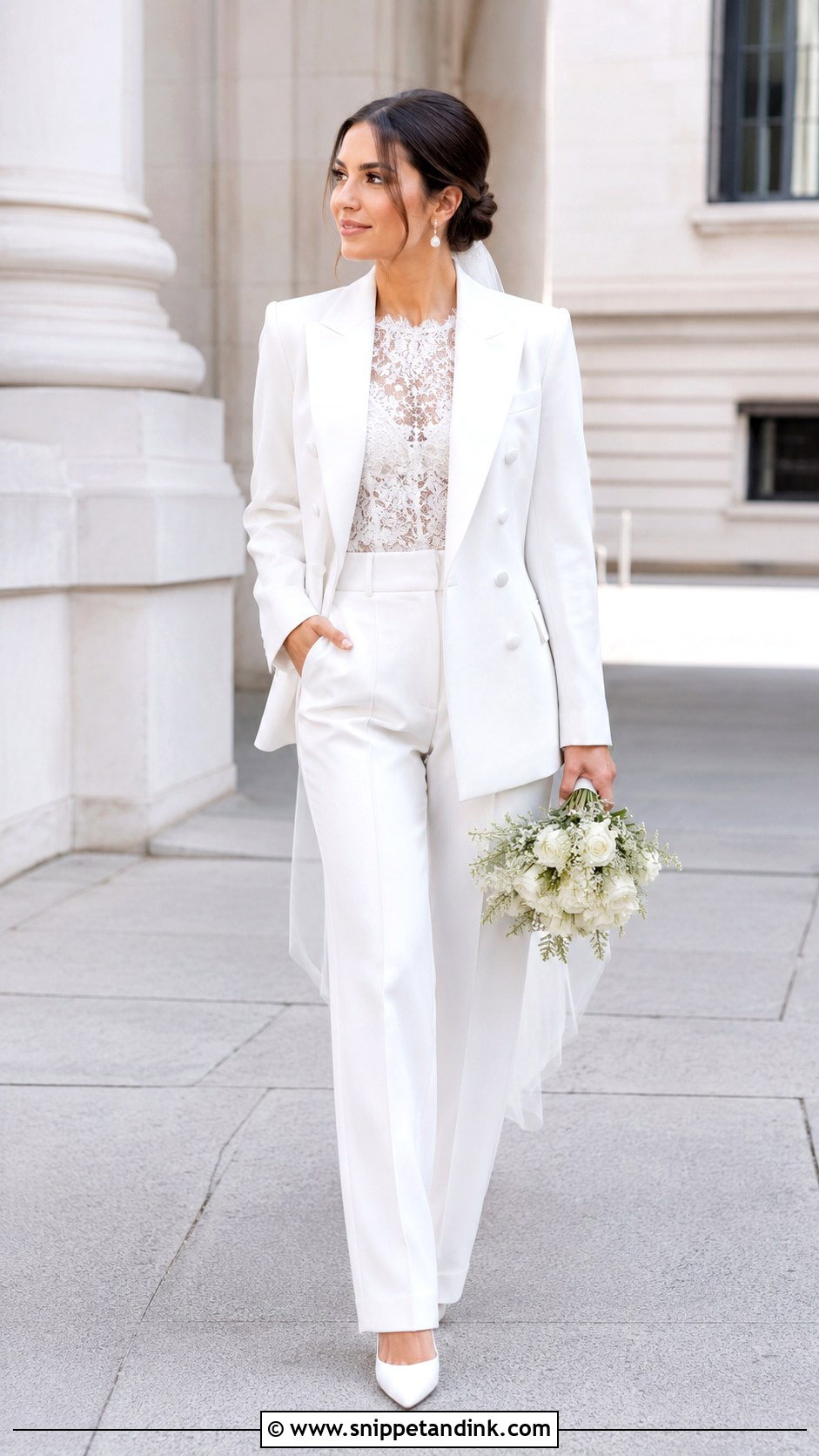
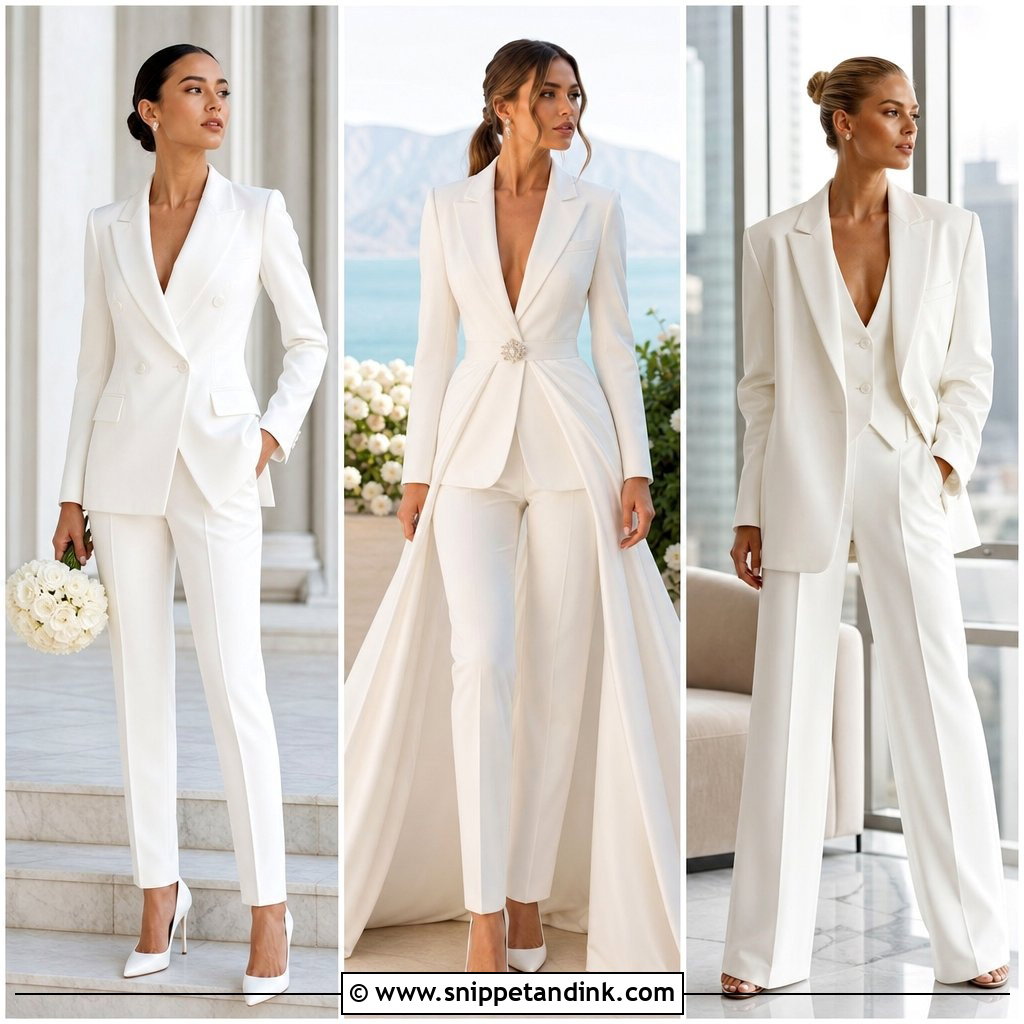
Double-breasted jackets look sharp on the hanger and unforgiving on the body if the button stance is wrong. I check where the closing button lands before anything else: too high and it pulls across the bust, too low and the front sags into a tent. Covered buttons and strong but not padded shoulders keep it bridal, and high-waisted straight trousers stop the jacket swallowing your legs. A lace bralette or a high silk neck underneath changes the mood completely, so try both. It reads best at hotels and city ceremonies. Keep it buttoned for portraits, then undo it at the reception, because a double-breasted jacket worn open flaps unless it has been tailored to hang that way.
3. Satin Lapel Bride Tuxedo Suit
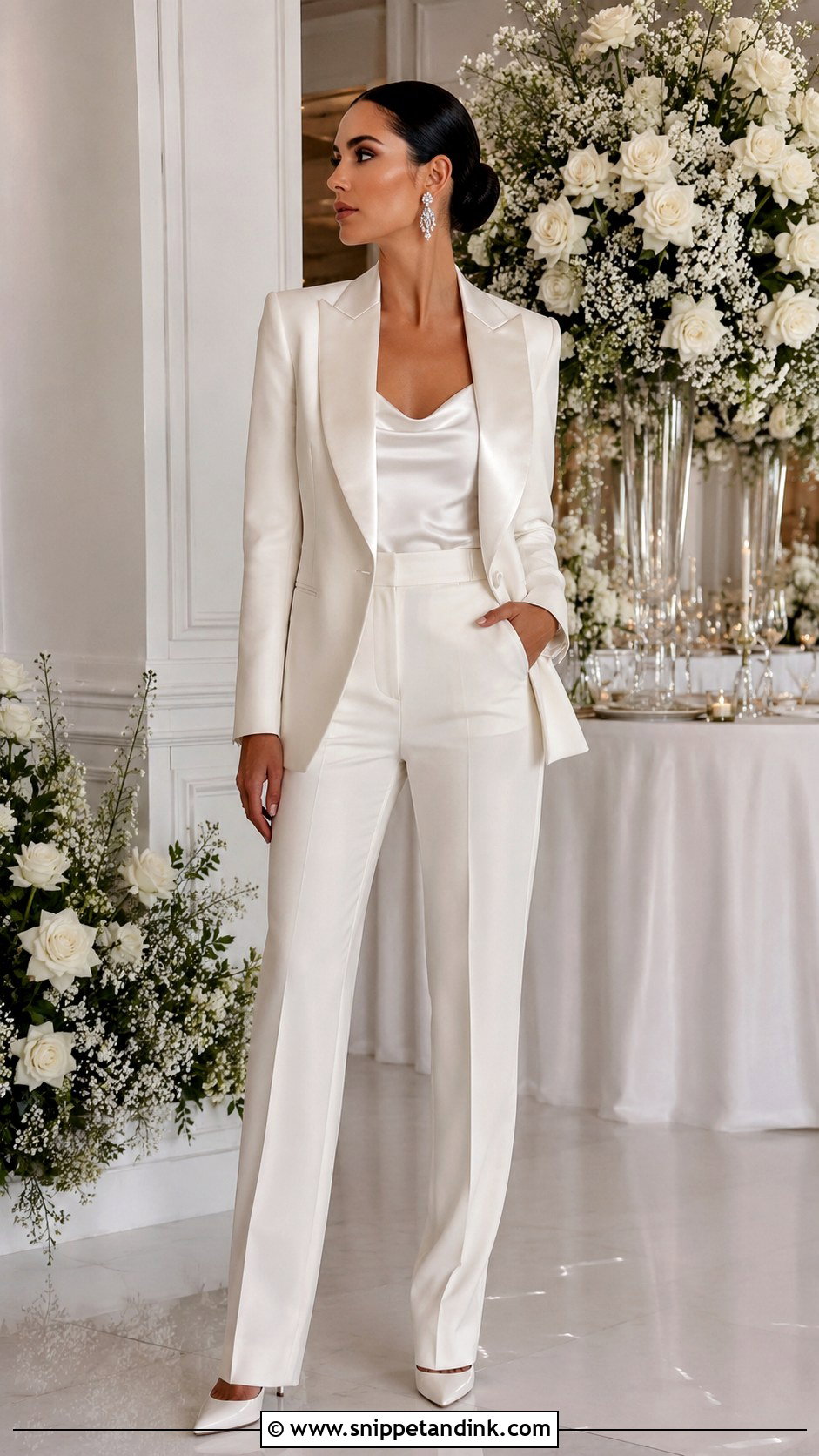
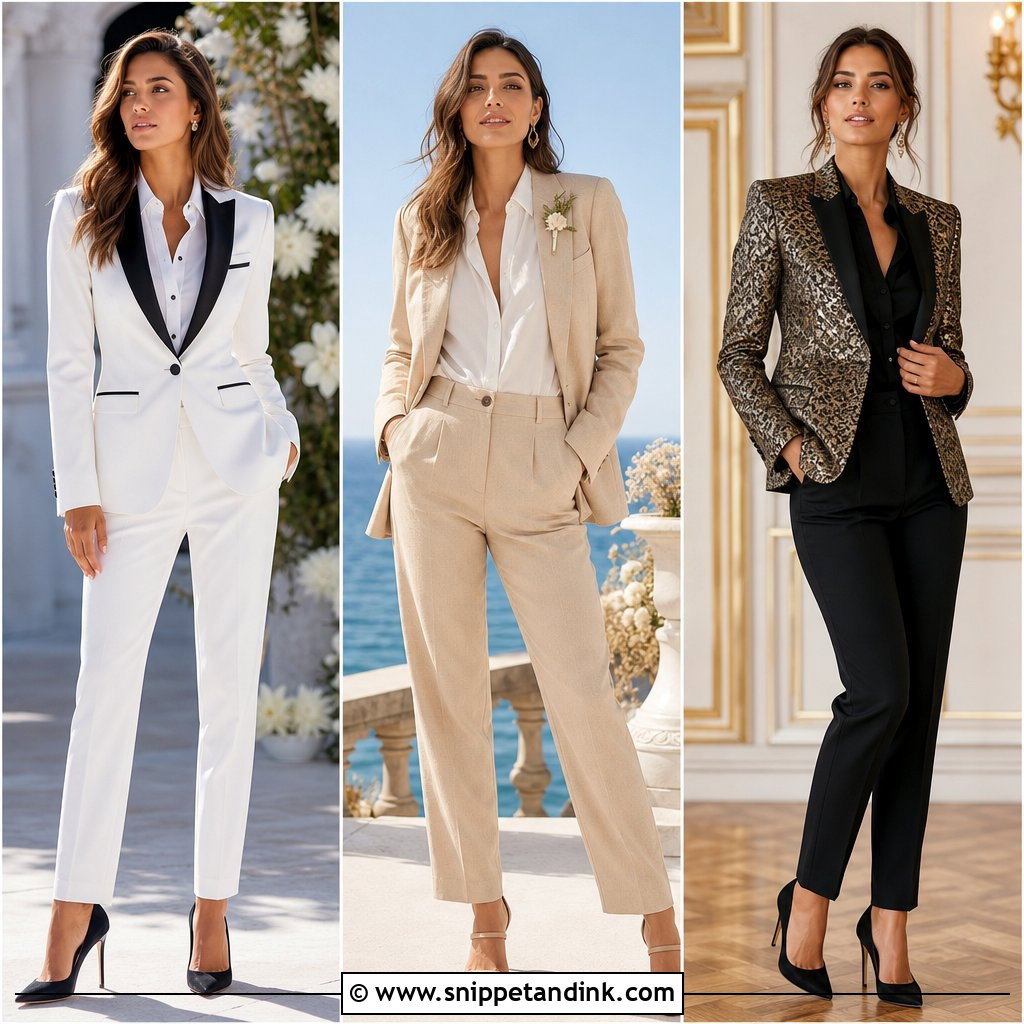
Satin lapels turn an ivory tuxedo suit into evening wear the moment the light drops. A deep V front and jetted pockets keep it streamlined, and a fitted satin cami gives coverage without stealing attention from the lapels. If you add a matching waistcoat, wear the jacket open so the layers read. Satin facing marks easily: a damp thumb or a dab of foundation shows on it all night, so I dress tuxedo brides after makeup is set and keep a tissue at the collar. Pick one point of shine, crystal earrings or embellished shoes, not both, because satin already reflects plenty.
4. Wide-Leg Bride Wedding Suit
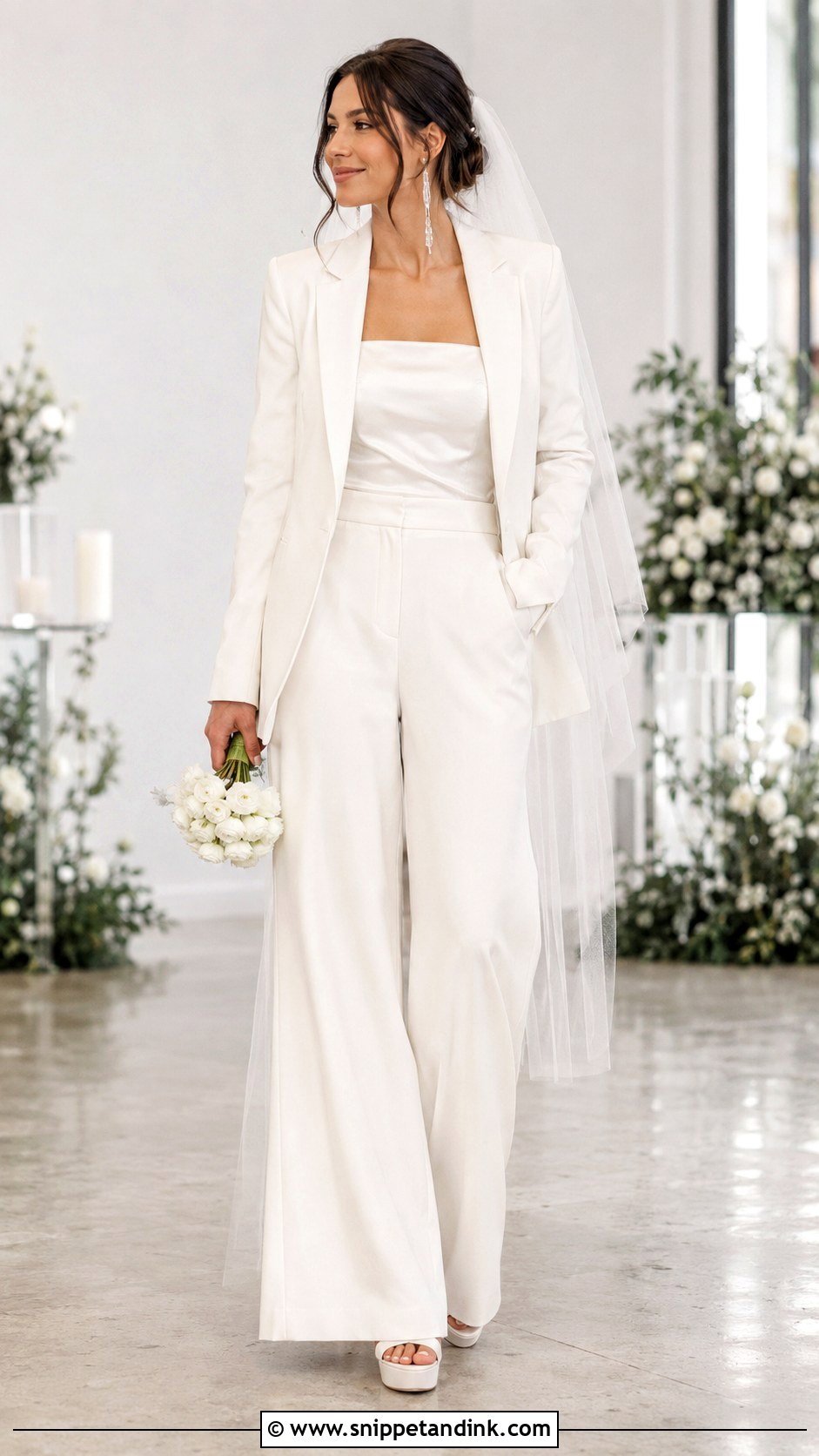
Wide-leg trousers move when you walk, which is the whole point, so the hem decides whether this works. I pin it with the bride standing in her wedding shoes and let the front just kiss the vamp, about a finger off the floor at the back. Too long and you’ll be stepping on it by the first dance. A fitted or cropped jacket balances the volume, and a square-neck bodysuit stays tucked better than a loose cami. Platforms give height with far more stability than a stiletto on grass. Because the trouser skims rather than clings, this cut is forgiving through the hips and thighs.
5. Cropped Blazer Bride Wedding Suit
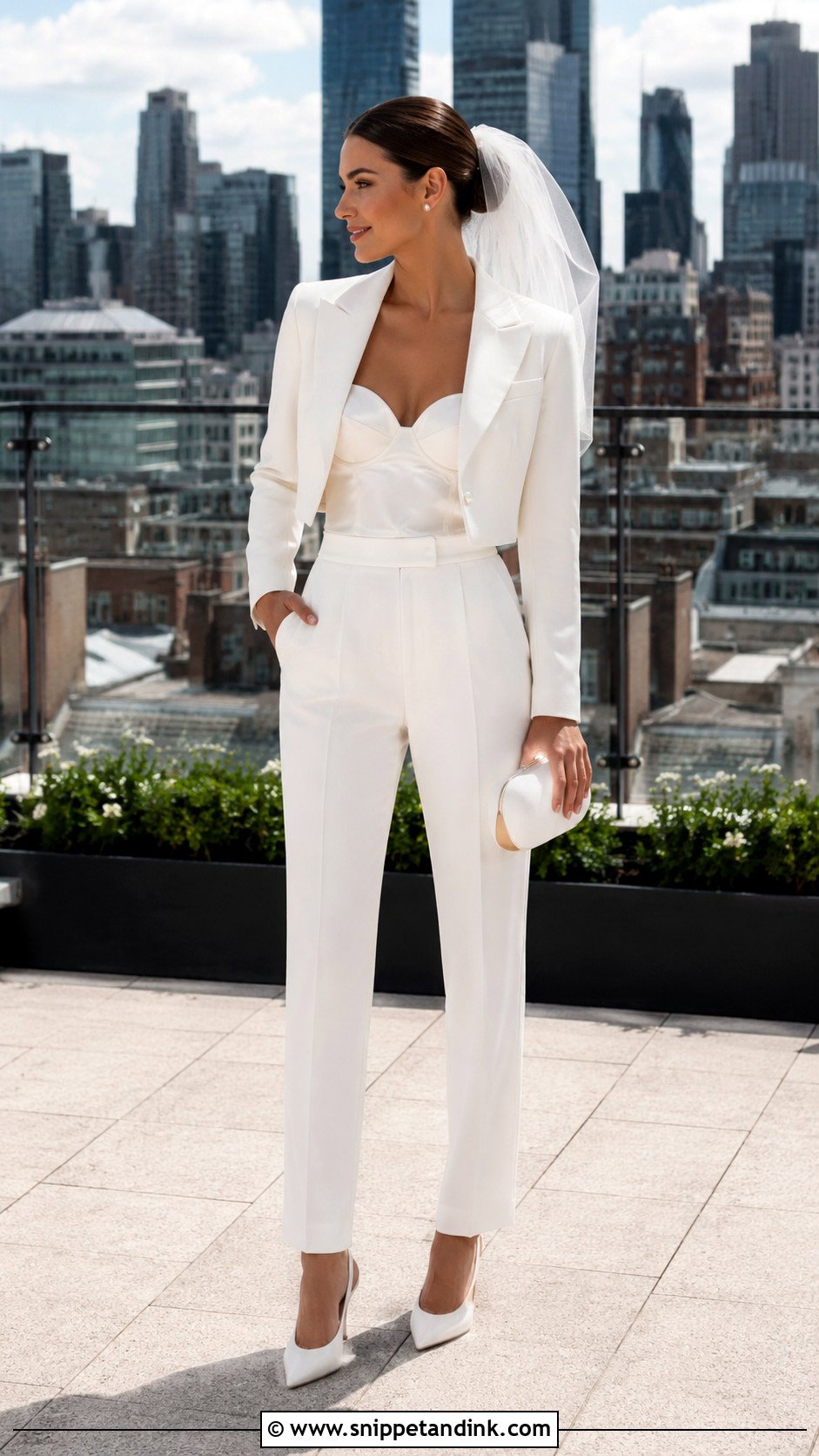
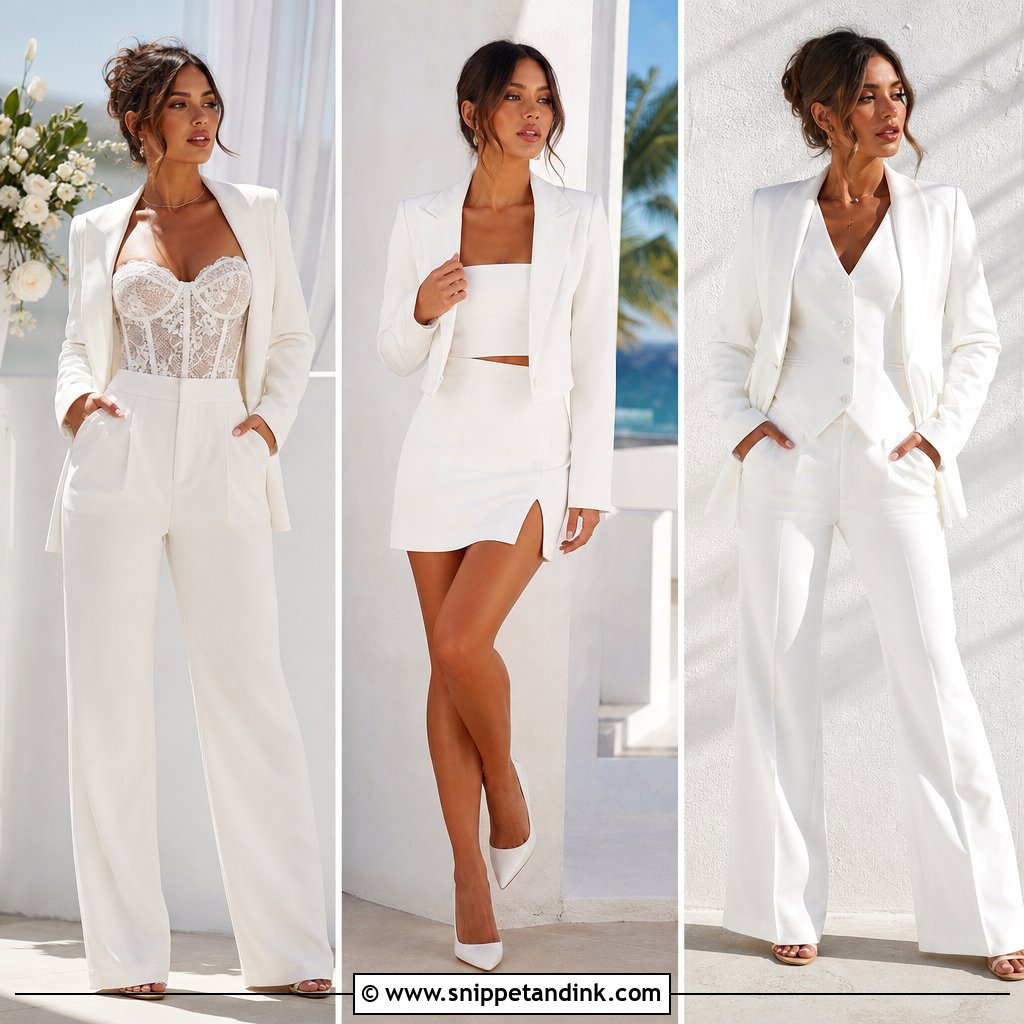
A cropped blazer only looks finished if the gap between jacket and waistband is planned. I want the jacket to end at the natural waist and the trousers to rise right up to meet it, with a fitted sleeveless top or a structured bustier bridging the few centimetres in between. Matching fabric matters more here than anywhere, since two whites side by side at the midriff make the set look borrowed. With a fuller bust, ask for a slightly longer crop and hidden hooks so the front doesn’t swing open. Raise your arms at the fitting; a cropped jacket that rides up when you hug people will annoy you all day. Slingbacks and a short veil suit the modern shape, especially for a courthouse or rooftop.
6. Oversized Bride Wedding Suit
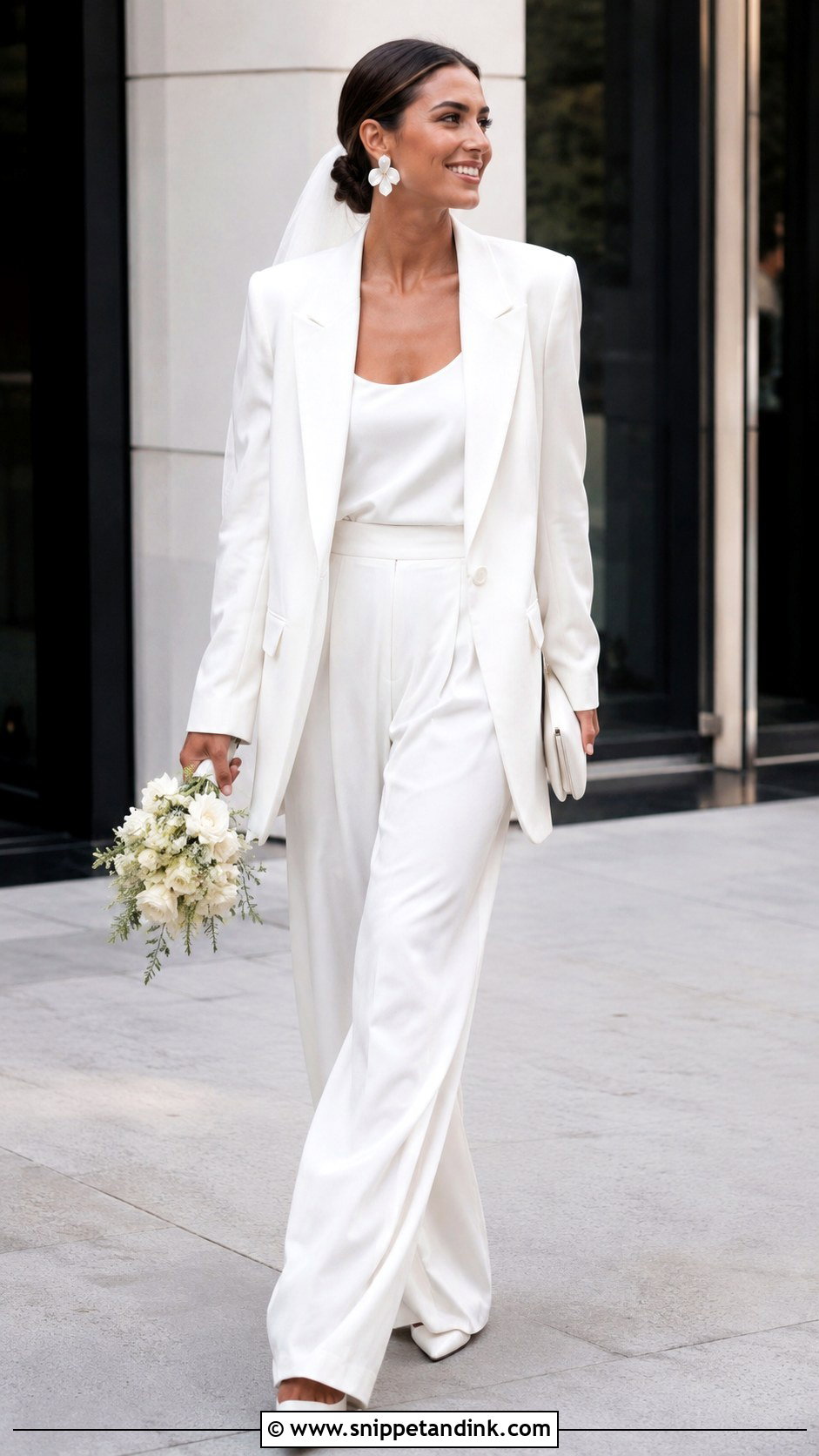
Oversized tailoring is designed, not sized up. The mistake I see most is a regular suit bought three sizes big: the shoulder seam drops halfway down the arm and the whole thing looks like a loan. Look for a cut drafted to be roomy, with a long softly structured jacket and fluid trousers, then still have the sleeves and hems shortened to your measurements. Keep the layer underneath close-fitting, a silk tank or a secure bandeau, so there’s one line of the body showing. Pointed heels stop it reading casual. Sleek loafers with a pearl or metal detail are the honest alternative if you’ll be on your feet for hours.
7. Three-Piece Bride Wedding Suit
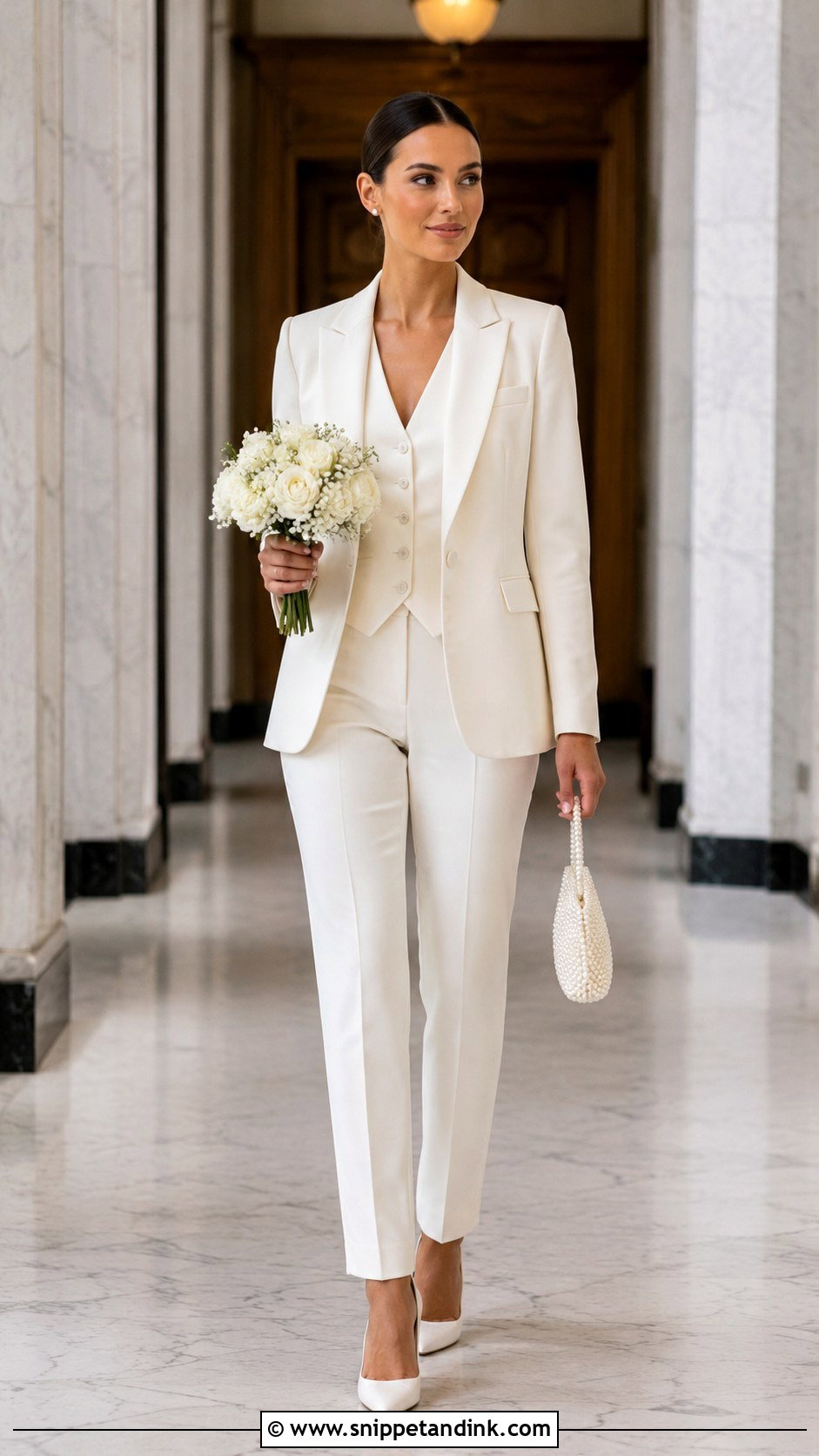
Three pieces give you three outfits: the full suit for the ceremony, waistcoat and trousers for dinner, waistcoat alone on the dance floor. Matching ivory crepe or a light wool keeps all three pieces consistent in colour. The waistcoat needs the most care. Buttons should lie flat across the bust with no pulling into little smiles between them, and a plunging one can take a hidden panel or a lace insert if you want more coverage. Sit down in the trousers at the fitting and stay seated for a few minutes; a three-piece adds layers at the waist, and that is where it gets uncomfortable by the speeches. Pointed pumps and a small pearl bag are all it needs.
8. Lace Top Bride Wedding Suit
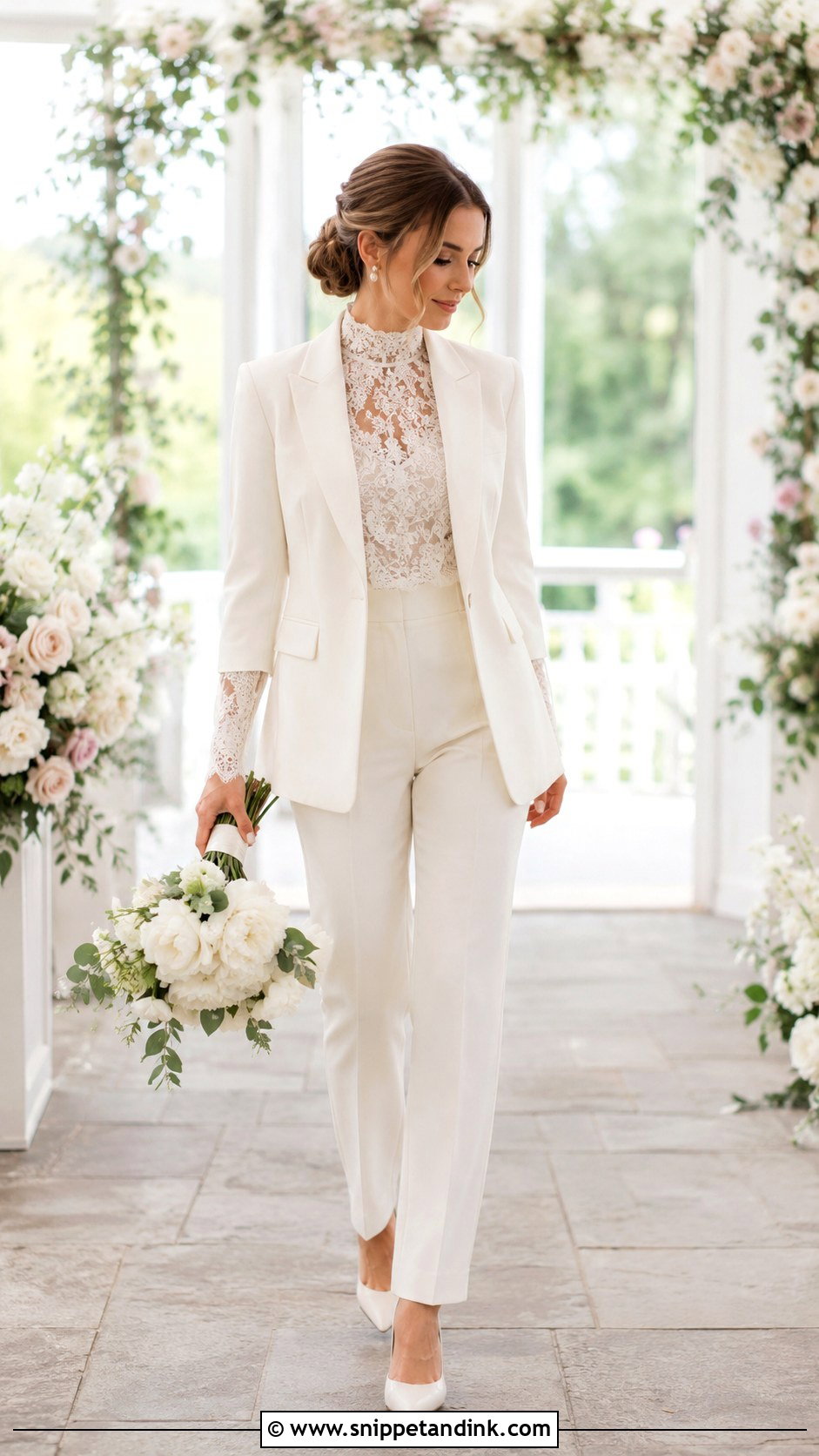
Lace brings the softness back into tailoring, but it has to sit on the right layer. I’d put it in the blouse, with a high neck, scalloped edge or sheer sleeve, and keep the suit itself plain ivory so the two textures don’t fight. Make sure the bodice is lined. Then rub the lace along your inner arm before you buy: cheap lace has stiff, scratchy edges that feel fine in a changing room and raw after eight hours. Satin pumps, pearls, a low bun and a small bouquet of white flowers and greenery finish it. It sits naturally in garden venues, old buildings and small ceremonies.
9. Cape Blazer Bride Wedding Suit
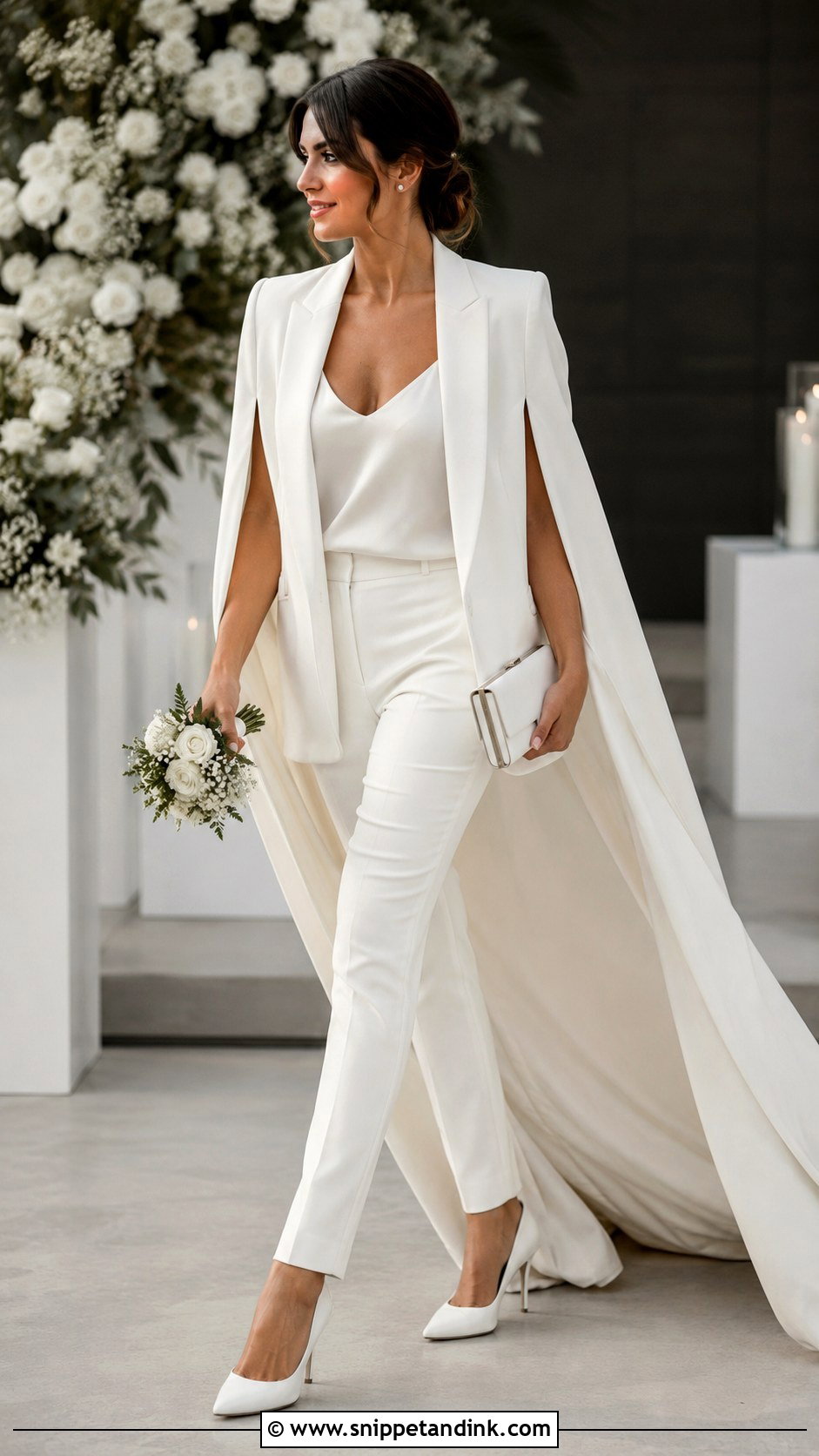
A cape blazer does the work a long veil normally does: it moves when you walk and frames you from behind. The ones that work have clean shoulders, arm slits placed where your hands naturally fall, and fabric heavy enough to hang straight rather than flutter. Slim or straight trousers balance the extra volume up top. Keep the accessories small, studs and a structured clutch, since big earrings catch on the cape edge. At the fitting, sit down, lift both arms and hold a bouquet at your waist. If the cape bunches behind you on a chair or traps your elbows, you’ll be fighting it through dinner. Entrances and walking portraits are where it really shows off.
10. Peplum Blazer Bride Wedding Suit
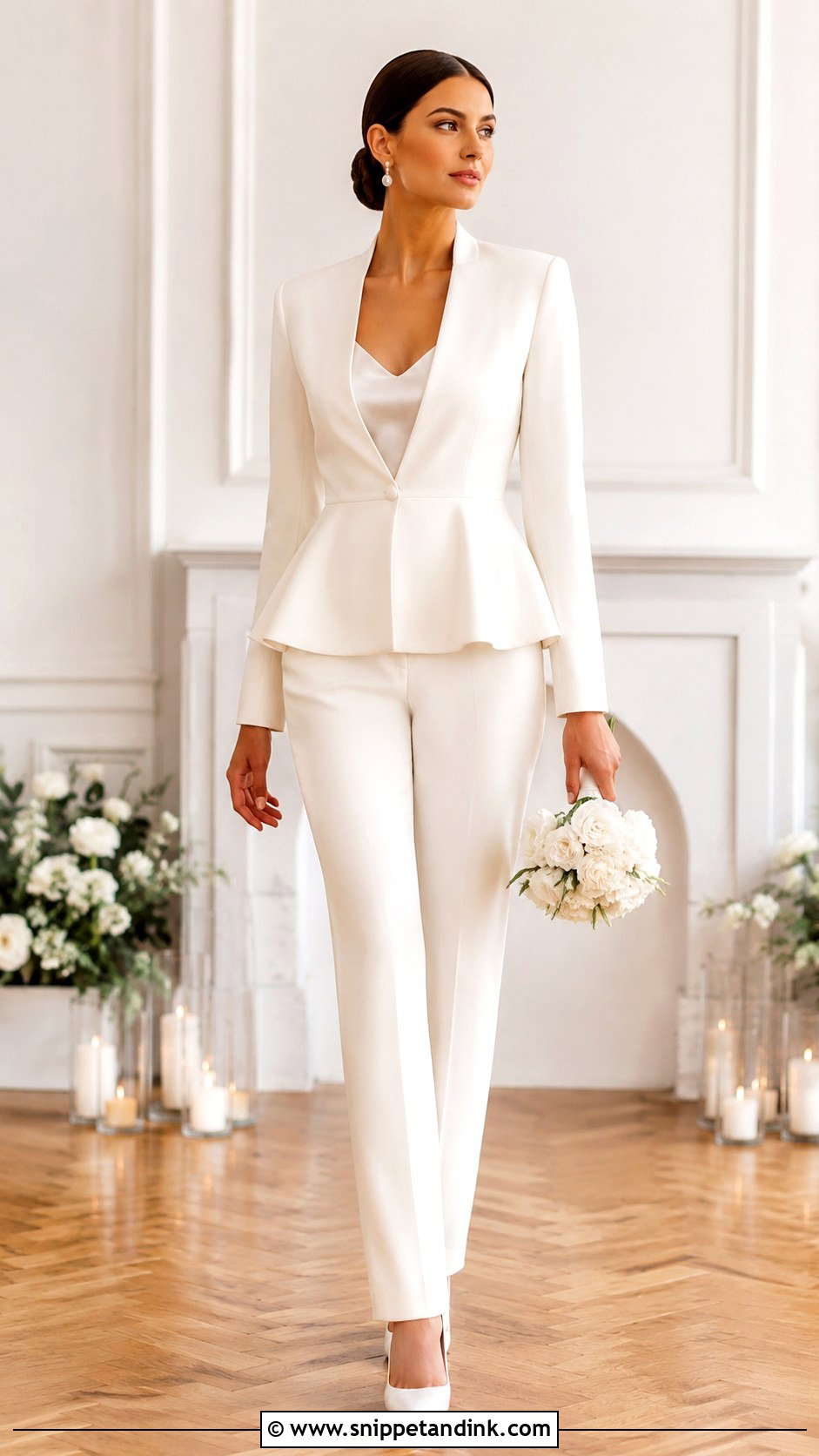
Peplum placement is a matter of centimetres. The flare should start right at your natural waist; a little too high and it widens the ribcage, a little too low and it sits on the hip like a frill. I always have brides try two or three lengths side by side, because you can’t judge it from a photo. Keep the bodice smooth and the camisole underneath free of seams, or every line shows through the fitted section. Straight trousers look cleaner than flares with a peplum, which already adds volume. This one is at home in a formal indoor room or a polished courthouse ceremony.
11. Bride Wedding Skirt Suit
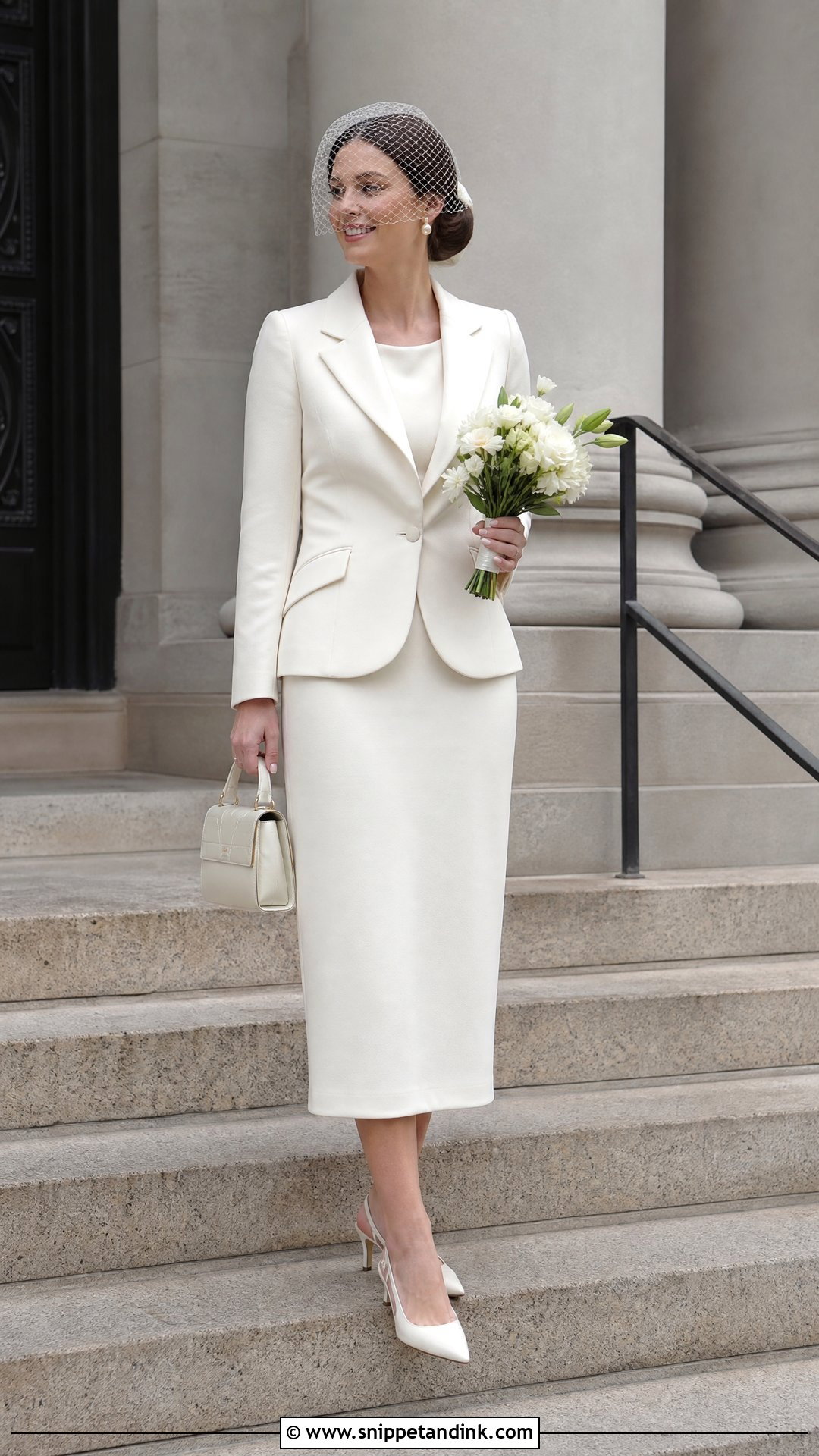
A skirt suit is the most traditional of the tailored options and often the easiest for older relatives to read as bridal. Pair a fitted ivory blazer with a matching midi pencil skirt or a gentle A-line, with a silk shell or plain blouse underneath. The pencil version needs testing: walk, sit and climb a few stairs in it, because a narrow skirt without a back vent or a little stretch will shorten your stride to a shuffle. Where the jacket meets the waistband, I want one smooth line, not a bulge of tucked blouse. A birdcage or short tulle veil suits the shorter hem, and slingbacks keep it neat for a civil ceremony or restaurant wedding.
12. Bride Wedding Shorts Suit
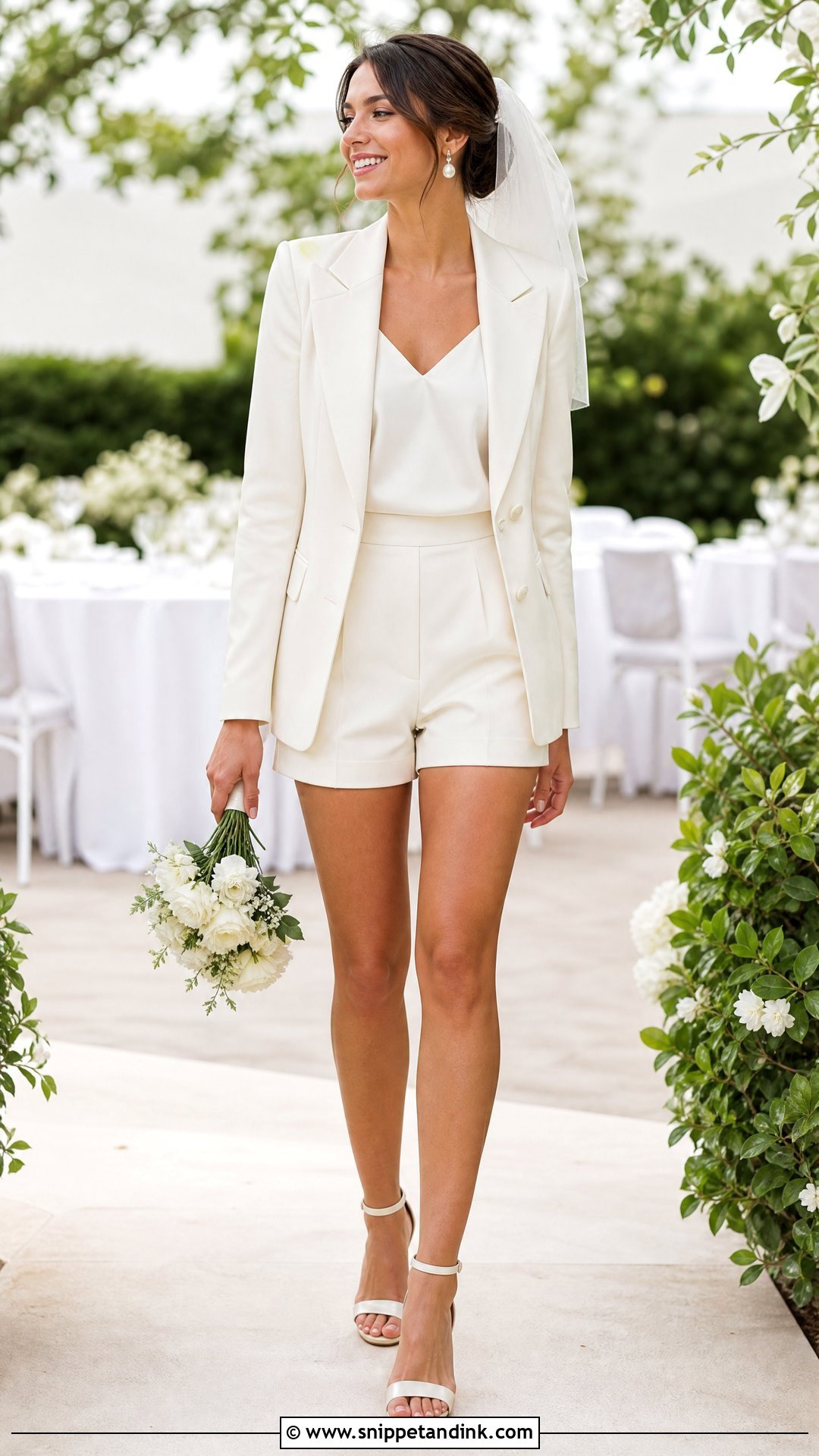
Shorts get dismissed until you’ve stood in July sun in full-length trousers. Go for tailored high-waisted shorts with a longer inseam, cut to land mid-thigh or lower, and a matching fitted or slightly roomy blazer. Sit on a low chair at the fitting and check the coverage from the side, since shorts ride up more than you expect. A silk cami or a structured bustier underneath, then satin-covered buttons or a floral appliqué on the jacket, stop it looking like summer office wear. Pearls and a small bouquet help too. It suits beach elopements, garden receptions and a change for dancing.
13. Pinstripe Bride Wedding Suit
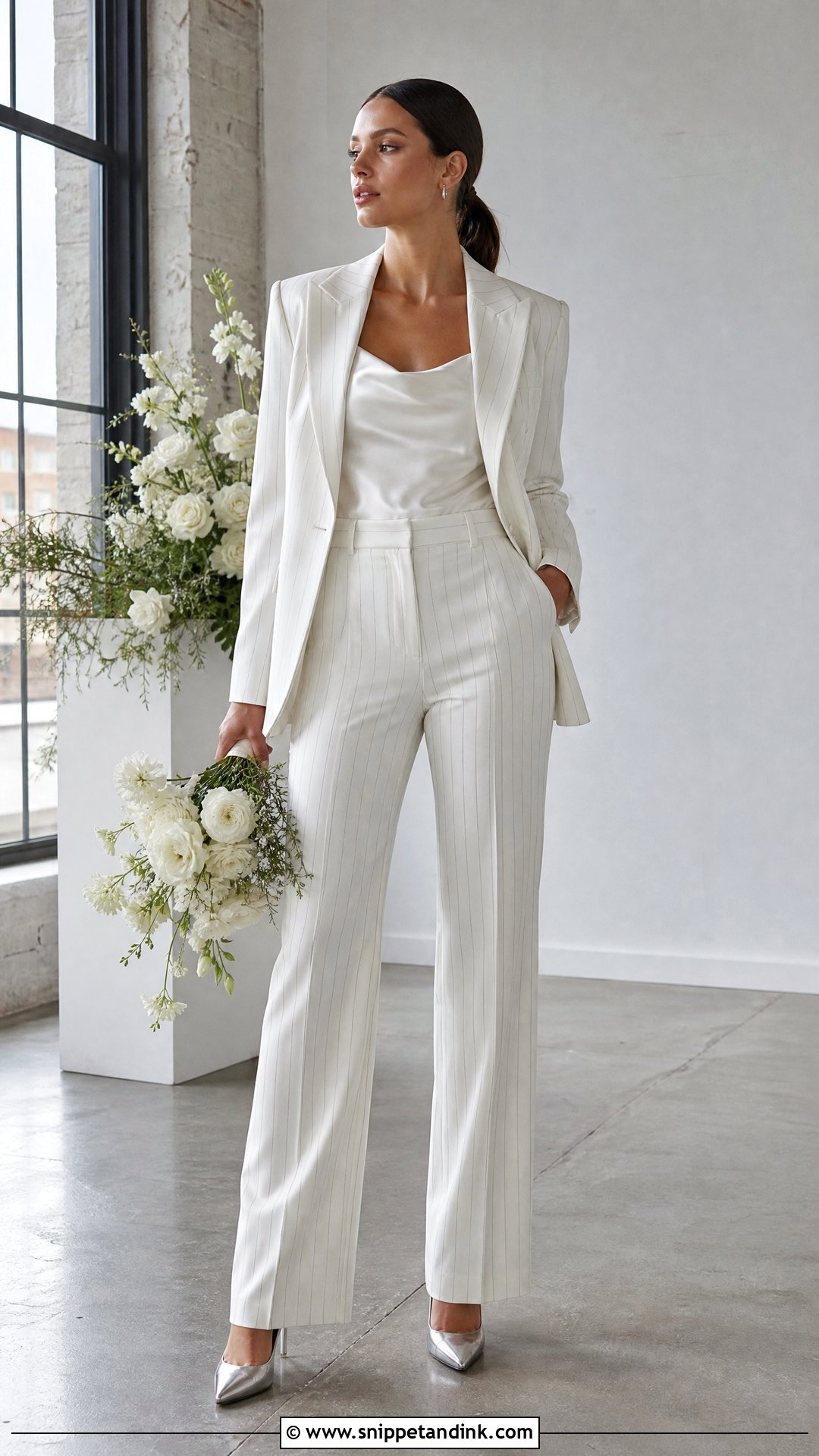
Subtle pinstripes borrow from menswear, and they also expose tailoring faults faster than any plain fabric. Look at the seams: the stripes should meet across the jacket front and run straight down the trouser leg. A crooked stripe at the shoulder tells me the pattern was cut carelessly, and it will show in every photo. Keep the stripes fine, ivory or pale grey on cream, and keep everything else plain, from the silk top to the metallic pumps. A sleek ponytail or low bun suits the sharpness. City ceremonies and loft venues bring out the best in it.
14. Pastel Bride Wedding Suit
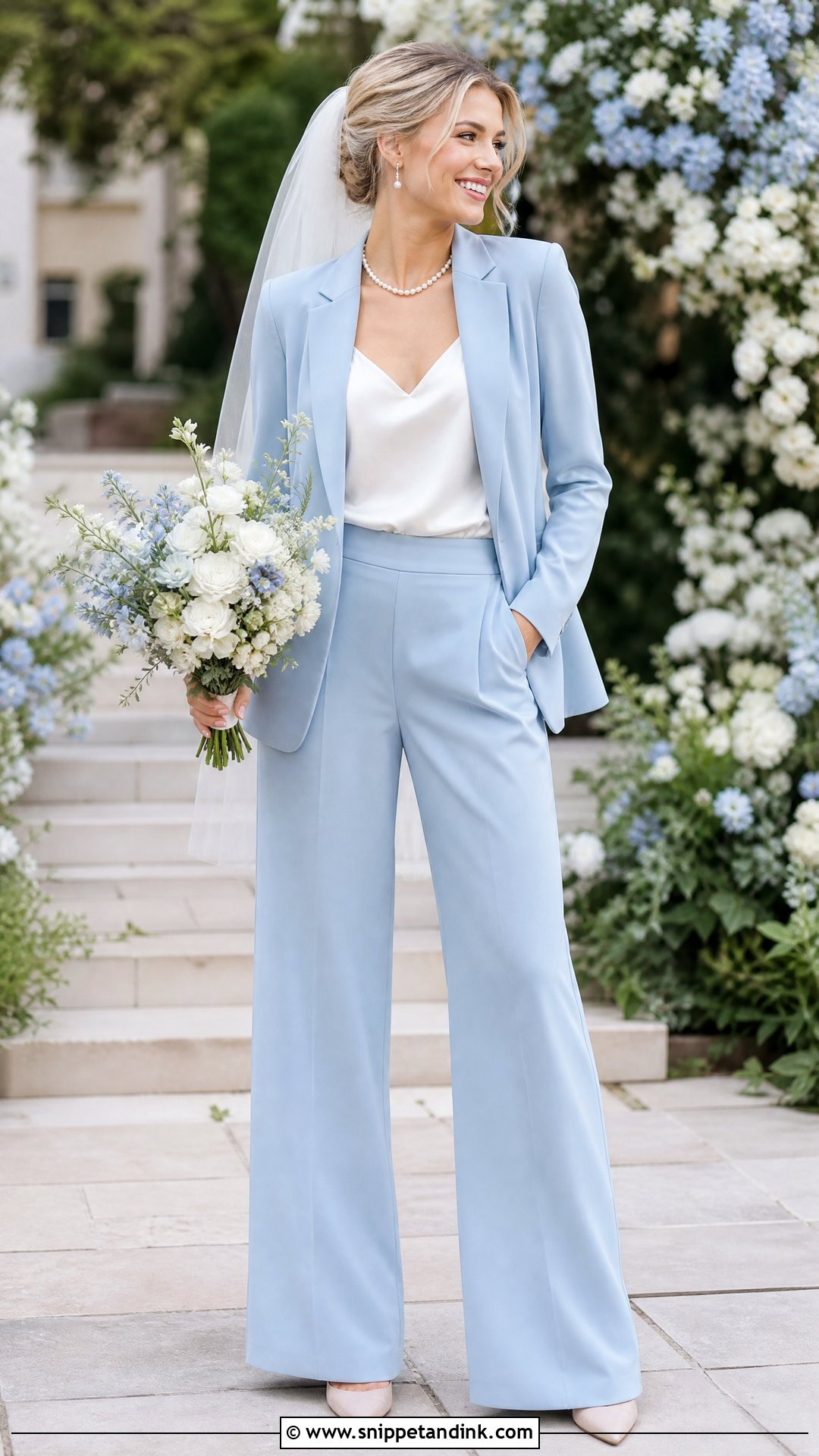
Colour is a real option, and the trick is choosing the shade by your skin rather than by the season’s trend. Blush and peach warm up golden undertones; powder blue, lavender and sage tend to sit better on cooler skin. Hold the fabric under your chin in daylight before ordering. An ivory silk cami underneath keeps a thread back to bridal white, and neutral pumps and pearls stop the outfit becoming a colour story. Keep the accessories quiet, since the suit is already doing the talking. A light veil over a pastel suit gives a soft contrast that works for spring and outdoor ceremonies.
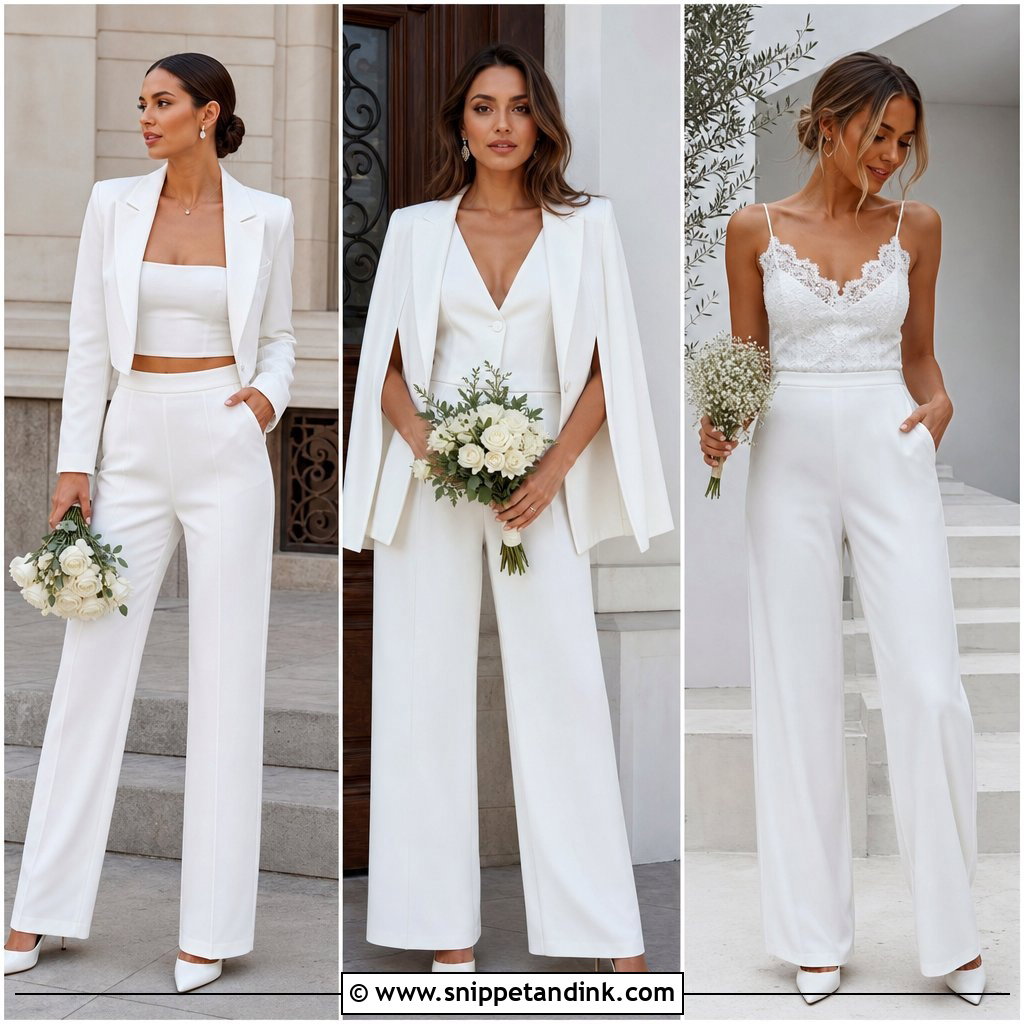

15. Black And White Bride Tuxedo Suit
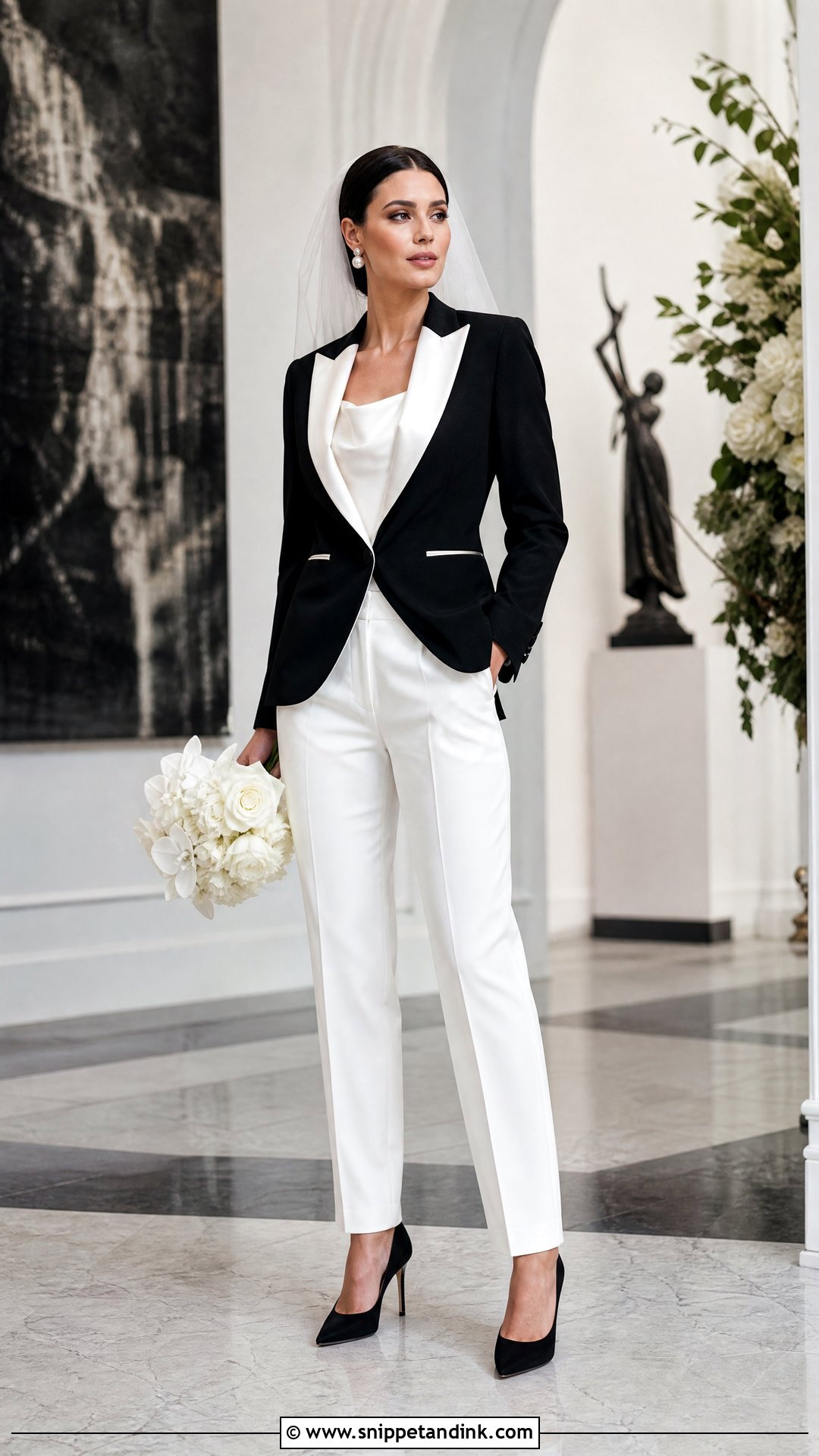
Black and white is for the bride who wants contrast and isn’t attached to an all-white look. You can go black blazer with white satin lapels and white trousers, a full black suit over an ivory silk top, or the reverse: ivory jacket, black lapels, black trousers. Bring a white bouquet and a short veil or a white bow to pull the top half back towards bridal. One thing I insist on is seeing it under the venue’s real lighting. Black tailoring in a dim gallery or hotel ballroom can lose all its detail on camera, leaving a white face floating above a dark shape. Two colours is plenty; adding a third breaks it.
16. Sequin Bride Reception Suit
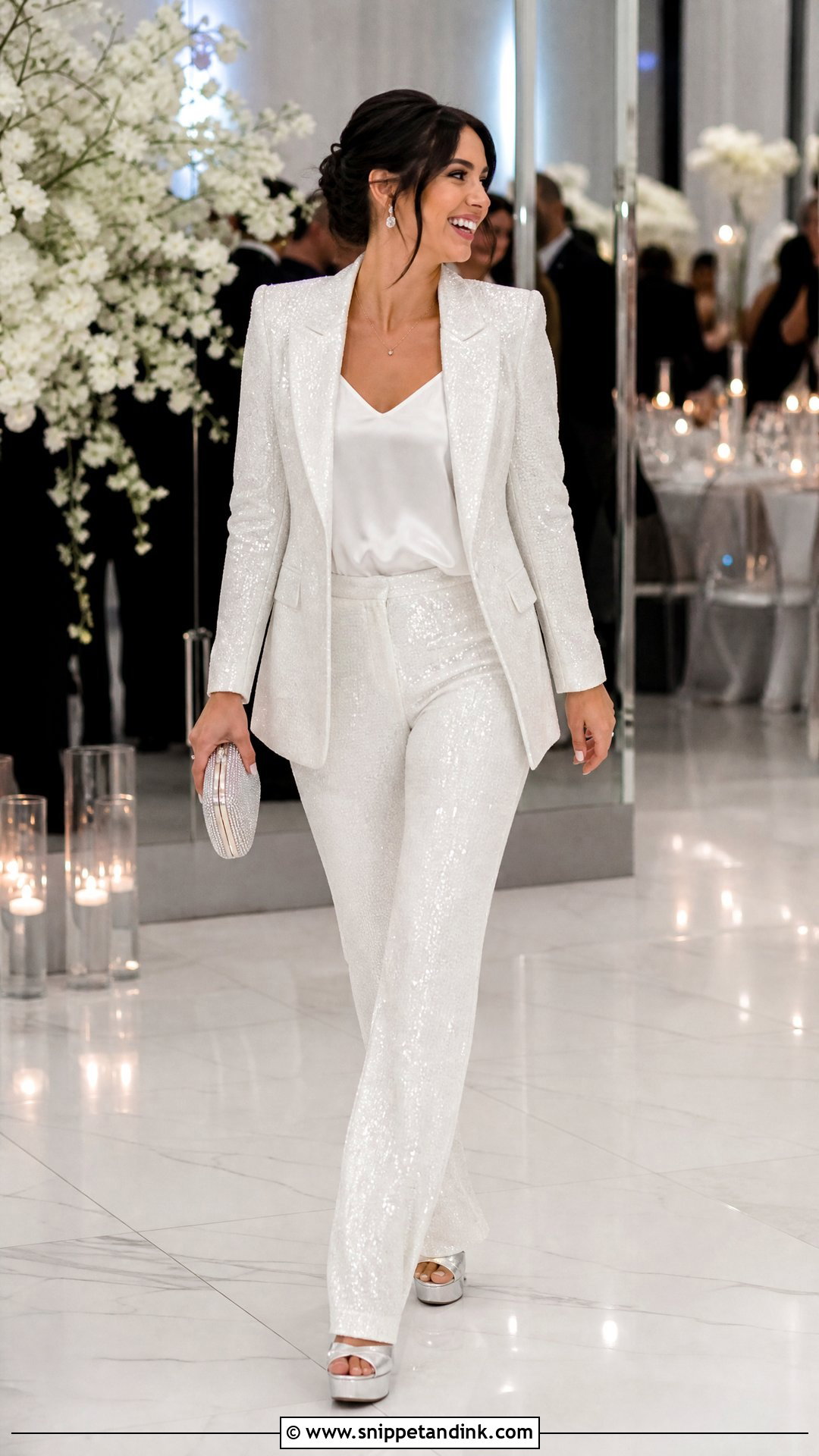
Sequins belong to the second half of the night, when you want to move and catch the light. A fitted jacket with straight or wide-leg trousers in white, silver or iridescent sequins is enough on its own, so keep the earrings small and the cami plain satin. Before you buy, check the lining. Unlined sequin seams scratch the inner arms raw by midnight, and sequins snag on lace tops, chair covers and anyone’s knitwear when you hug. Block heels, platforms or clean sneakers under a longer trouser make dancing realistic. I’d keep this for the reception change rather than the ceremony.
17. Velvet Bride Wedding Suit
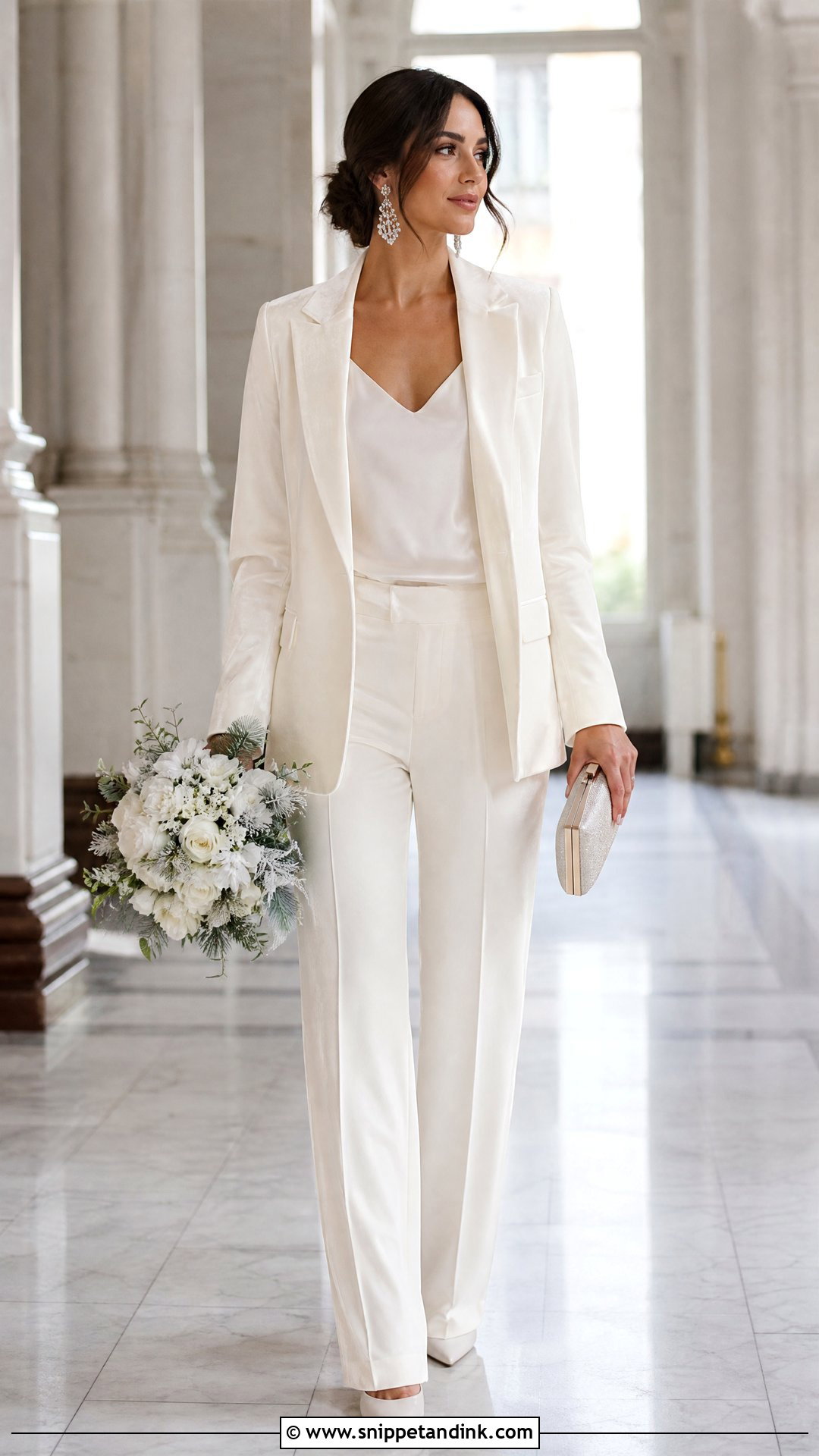
Velvet is the warmest option here and the most fickle. The pile has a direction, so every piece of the suit needs to be cut with the nap running the same way, otherwise the jacket and trousers will look like two different colours in photos. Ivory, cream and silver read as bridal; deep emerald is there if you want to break tradition. Pair it with a smooth silk cami and closed-toe pumps, and keep the bouquet simple so it doesn’t fight the texture. Ask for a breathable lining. Heated winter venues get hot fast, and velvet holds that heat for hours, so wear it indoors for a while before deciding.
18. Linen Bride Wedding Suit
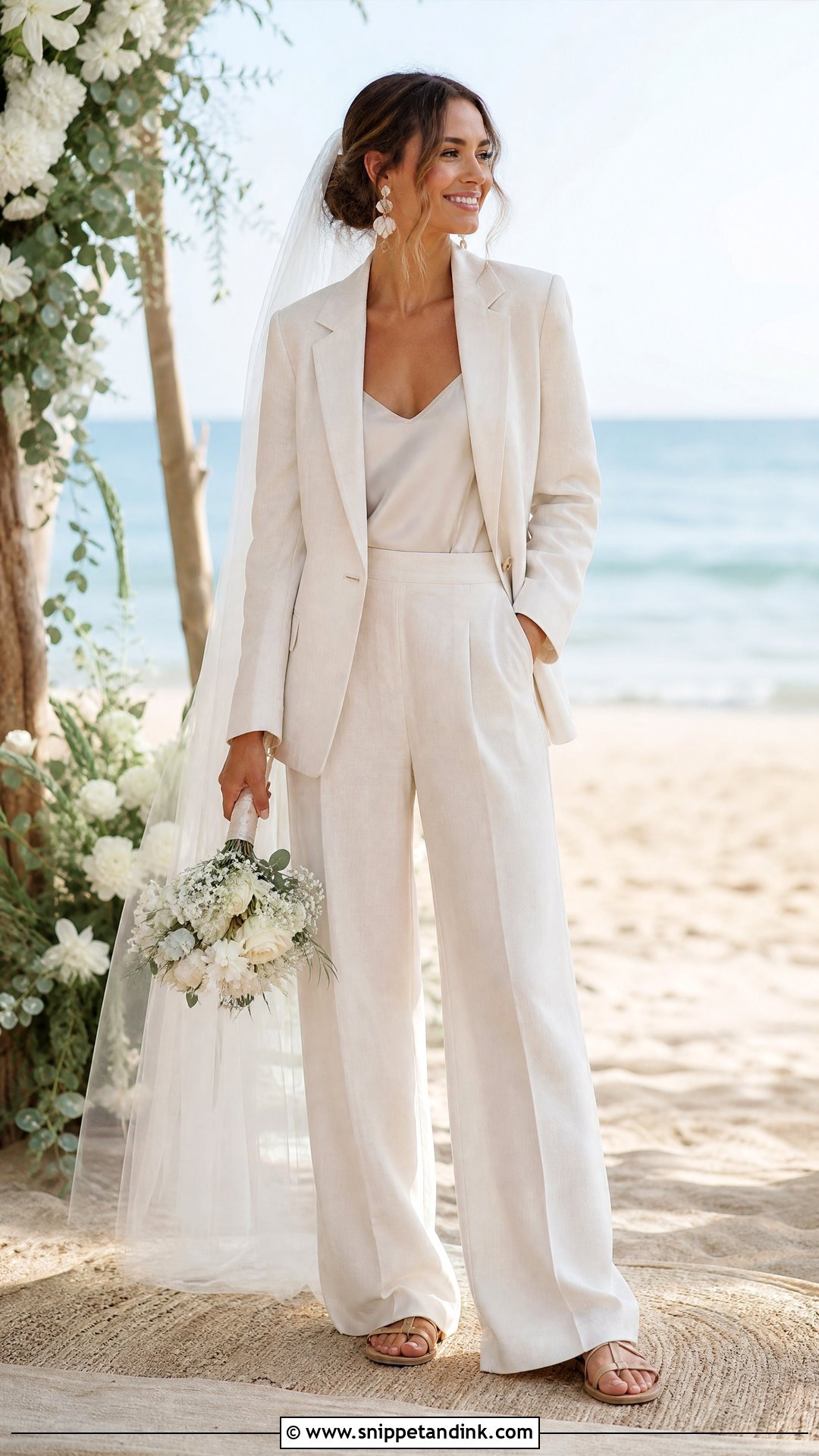
A linen bridal suit will crease, and you should decide in advance that you’re fine with that. A linen blend, often with some viscose or silk, holds its shape far better than thin pure linen and still breathes on a beach. Pair a relaxed blazer with high-waisted wide-leg trousers and a silk or cotton cami, and choose shoes for the ground: flat sandals or low block heels on sand or lawn, pointed mules on paving. Steam it right before you dress and have someone keep a travel steamer for touch-ups after the ceremony. Shell earrings and a woven clutch hint at the destination without tipping into holiday wear.
19. Bridal Suit With Detachable Train
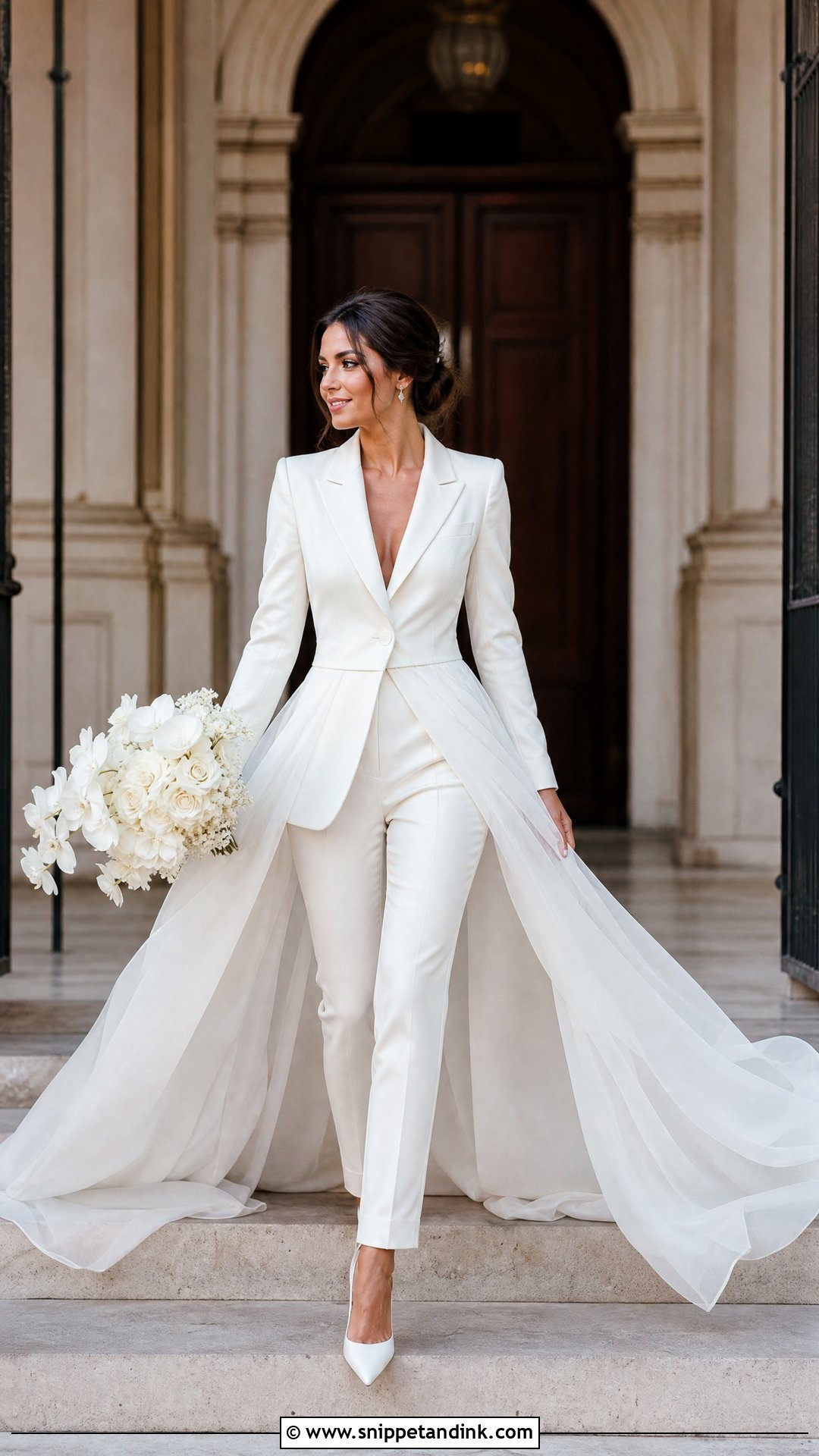
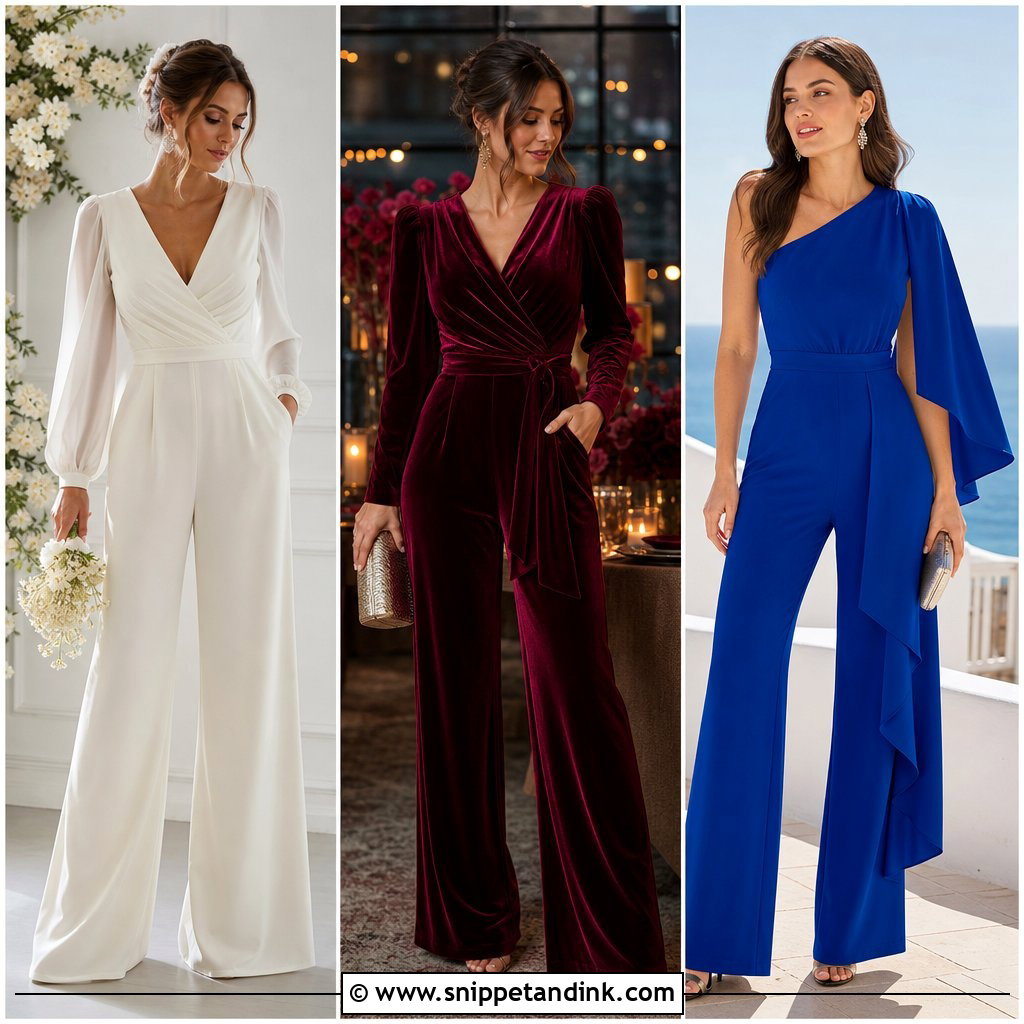
A detachable train gives you the gown moment for the aisle and full use of your legs after it. It’s usually an overskirt in tulle, organza or crepe that clips or buttons at the waist over a fitted waistcoat or blazer and trousers. The attachment is what I test hardest. It must sit flat without adding bulk at the waistband, survive a full walk and a few turns, and come off in under a minute with one person helping, ideally without a pair of scissors. Practise removing it before the day. Pointed heels and fine earrings keep the remaining suit polished once the train is off.

20. Embellished Bride Wedding Suit
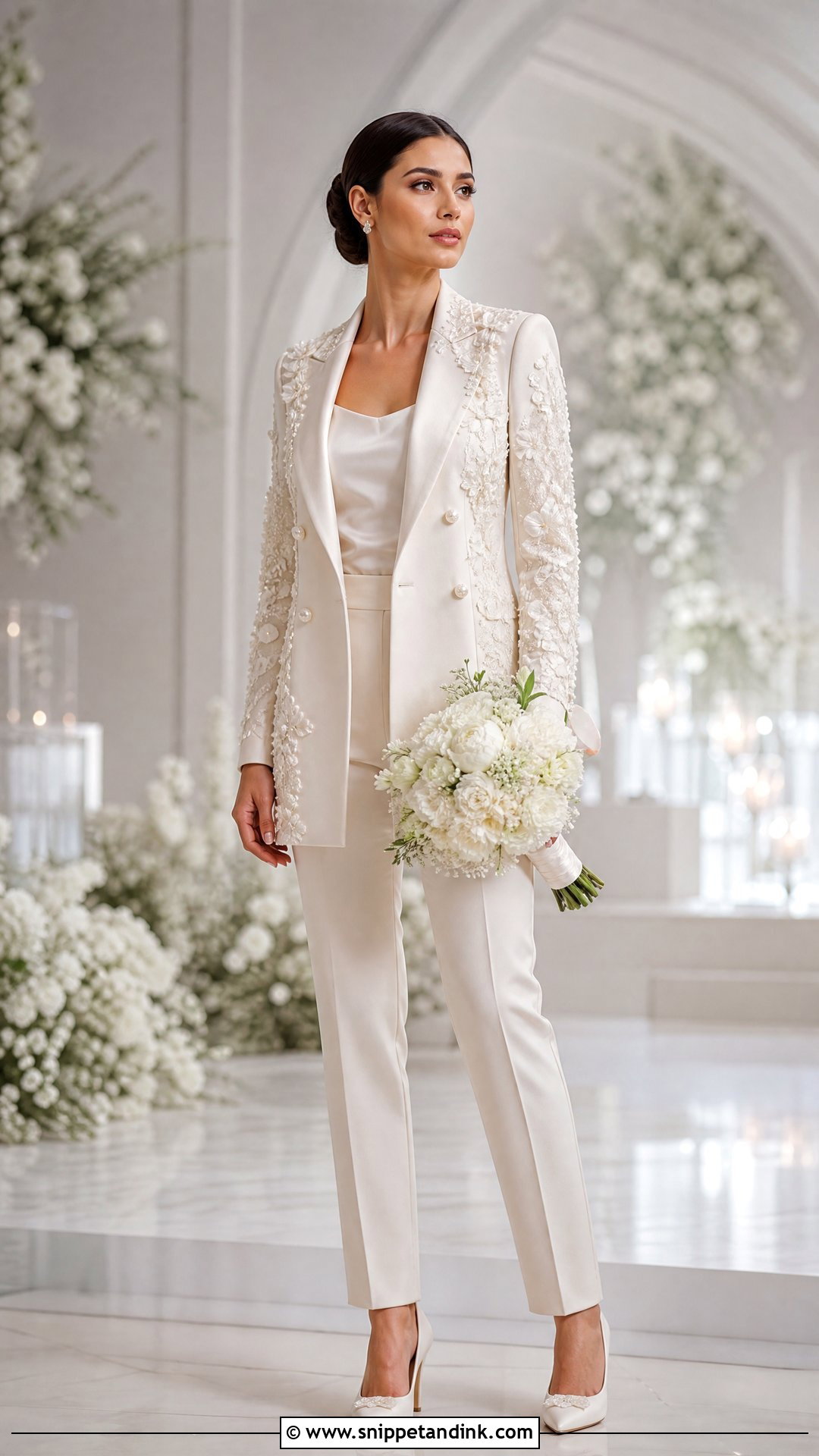
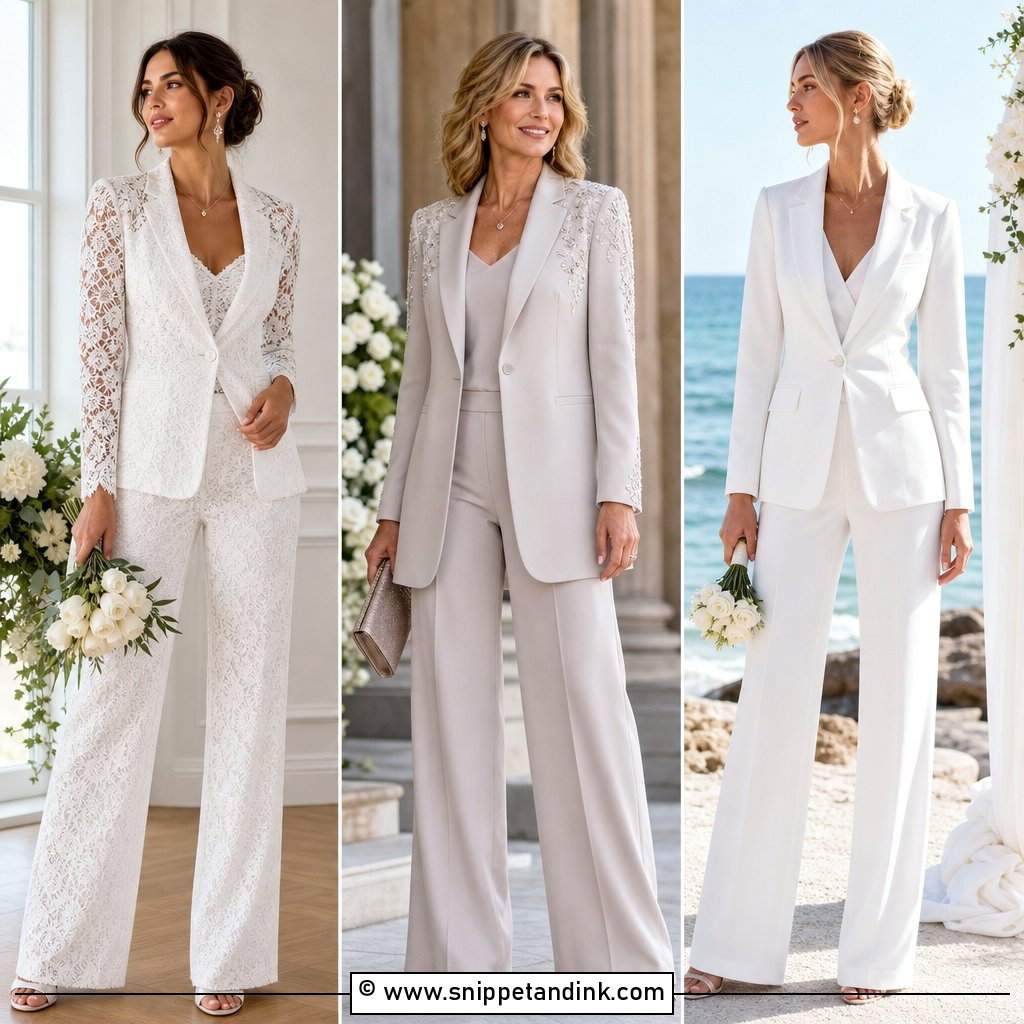
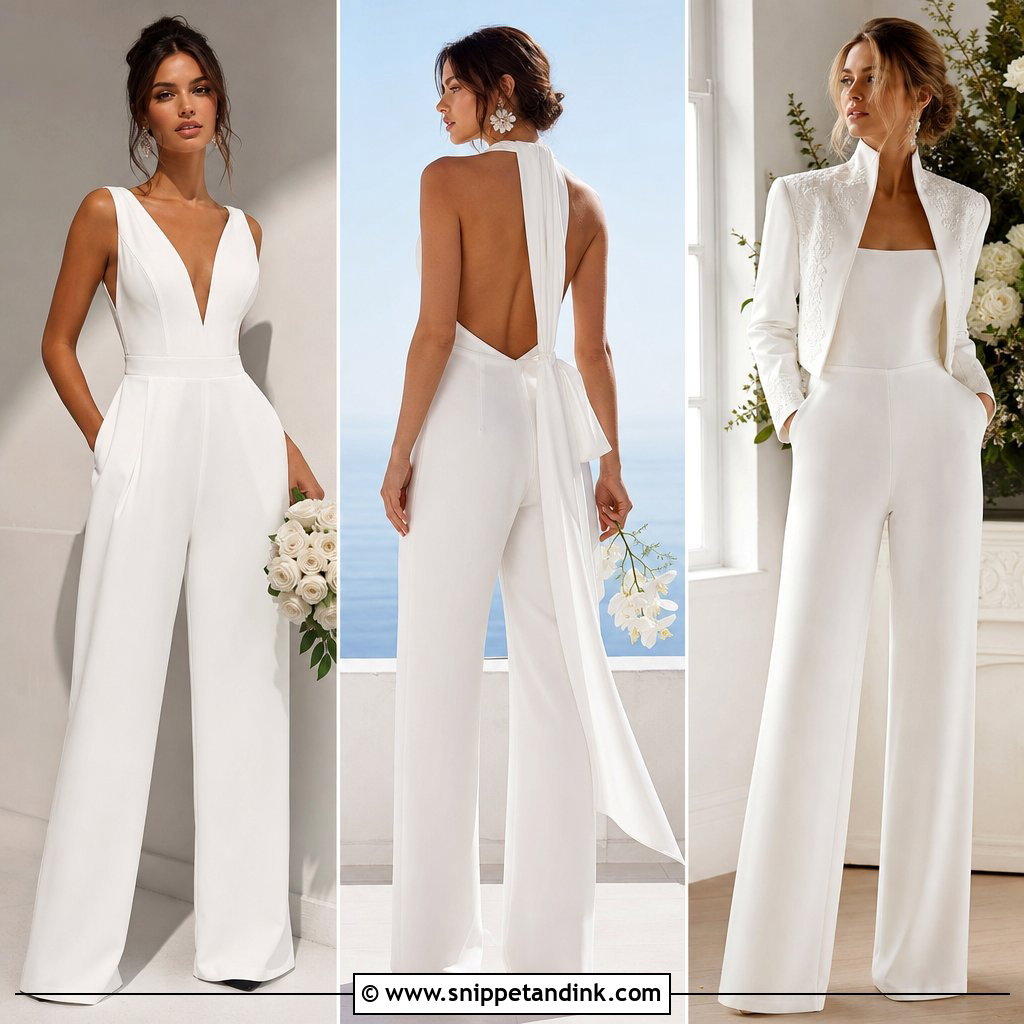
Embellishment on a suit should be concentrated, not scattered. Pearl buttons, crystal embroidery, beaded lapels or a little feather trim on a structured blazer give it couture-like detail, and plain trousers with a satin top let it carry the look. Turn the jacket inside out before buying. Beadwork stitched through without backing tends to scratch at the neck and inner arms, and loose threads mean beads dropping by midnight. A heavily worked jacket gets weighty, so pair it with lightweight trousers and keep the jewellery to small studs. It suits the ceremony, the reception or formal portraits equally well.
Pressing, Packing and Getting Dressed in Tailoring
Suits wrinkle in different places than gowns, mostly at the inner elbow, behind the knee and across the lap. A little planning on the morning saves you from photos full of creases.
The week before
Collect the suit from the tailor already pressed and hang the jacket on a shaped hanger with wide shoulders, never a wire one, which leaves bumps that photograph. Trousers hang by the hem from clip hangers so the crease stays sharp. If you’re travelling, carry the suit on rather than checking it, folded in a garment bag with tissue in the sleeves.
On the morning
- Steam rather than iron. Satin, velvet and crepe can shine or flatten under a hot iron, and velvet especially should only be steamed from the inside.
- Dress after hair and makeup, stepping into the trousers before the top so nothing goes over your face.
- Keep a lint roller, a travel steamer and a stain pen with whoever is carrying your bag.
- Stay standing for the last half hour before the ceremony if you can; one car journey can crease the lap of linen or crepe trousers.
Afterwards, take the suit to a dry cleaner who handles formalwear within a week or two, especially if anything was spilled. Unlike most gowns, a well-made bridal suit gets worn again, so it’s worth looking after.
Why the Tailor Matters More Than the Label
Look back over these twenty suits and the thing they have in common isn’t a fabric or a colour; it’s the fit. Ivory pantsuits and skirt sets lean classic, while capes, trains, sequins and embellished jackets push further, but any of them looks cheap with sleeves to the knuckle and trousers pooling on the floor. Settle your venue, season, coverage and shoes first, then choose the cut. Put real money aside for alterations, and add a few accessories that mean something to you rather than every bridal detail at once. A suit should let you sit, dance and hug people all day while still looking like a bride.
You'll Like These Ideas:


Leave a Reply