
Sugar work is the part of cake design I enjoy most, because every petal, pearl and fold is shaped by hand and can be matched to your bouquet, your gown or a scrap of heirloom lace. It also solves a practical problem. Fresh flowers on a cake need food-safe sourcing, wrapping and careful placement, and a few popular blooms are toxic. Gum paste flowers carry none of that risk, and they don’t wilt under reception lights. The finish and palette decide whether a sugar cake reads classic, rustic or bold, but structure decides whether it survives the day, so I always design the two together. Here are 20 sugar designs I’d happily put on a dessert table, with notes on how each one actually behaves.
Why Gum Paste Flowers Need Months, Not Weeks
A sugar peony isn’t sculpted in one sitting. I roll the paste thin enough to see light through, cut and vein each petal, wire it, and then let it dry overnight before the next layer of petals goes on. Large blooms go through several of these drying rounds before they’re dusted with color and steamed to take off the powdery look. That’s why sugar flowers are priced on labor rather than on the size of the cake, and why the quote for a single tier covered in blooms can surprise people.
For timing, I’d contact a cake designer four to six months out if you’re marrying in a busy season, and earlier if your design depends on a lot of hand-made flowers. The flowers themselves keep well once dry, so I usually make them in the weeks before the wedding and bake much closer to the day.
What helps me most at a tasting
- Your florist’s list of stems and colors, so the sugar flowers echo the real ones instead of guessing
- A fabric swatch or close-up of your dress if you want lace, pearls or a bow on the cake
- The venue, the room it sits in, and whether it’s indoors, under a marquee or outside
- Your guest count, and a note if you’re also serving a sheet cake from the kitchen
1. Sugar Flower Wedding Cake
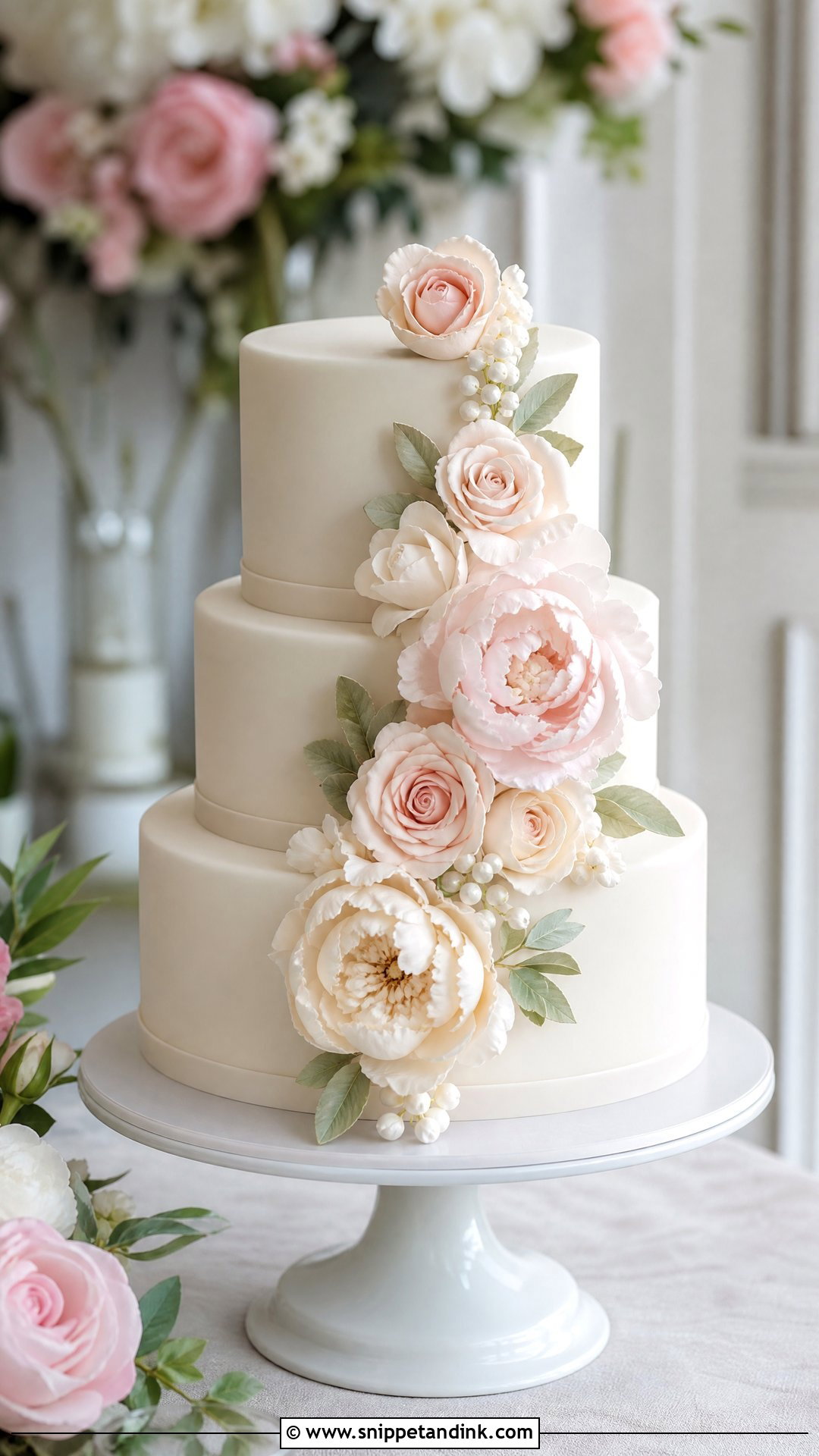
Gum paste flowers give you the look of a bouquet with full control over color, scale and placement. Peonies, roses, ranunculus, orchids and gardenias can all be matched to what your florist is using, as long as you send me a photo of the actual stems rather than a mood board. They sit happily on smooth fondant, buttercream or a lightly textured finish. A three-tier ivory cake with three or four large blooms reads clean; a cascade running from the top tier down one side reads romantic. Either way, the wires never go straight into the cake. I seat every stem in a food-safe posy pick first.
2. Sugar Rose Wedding Cake
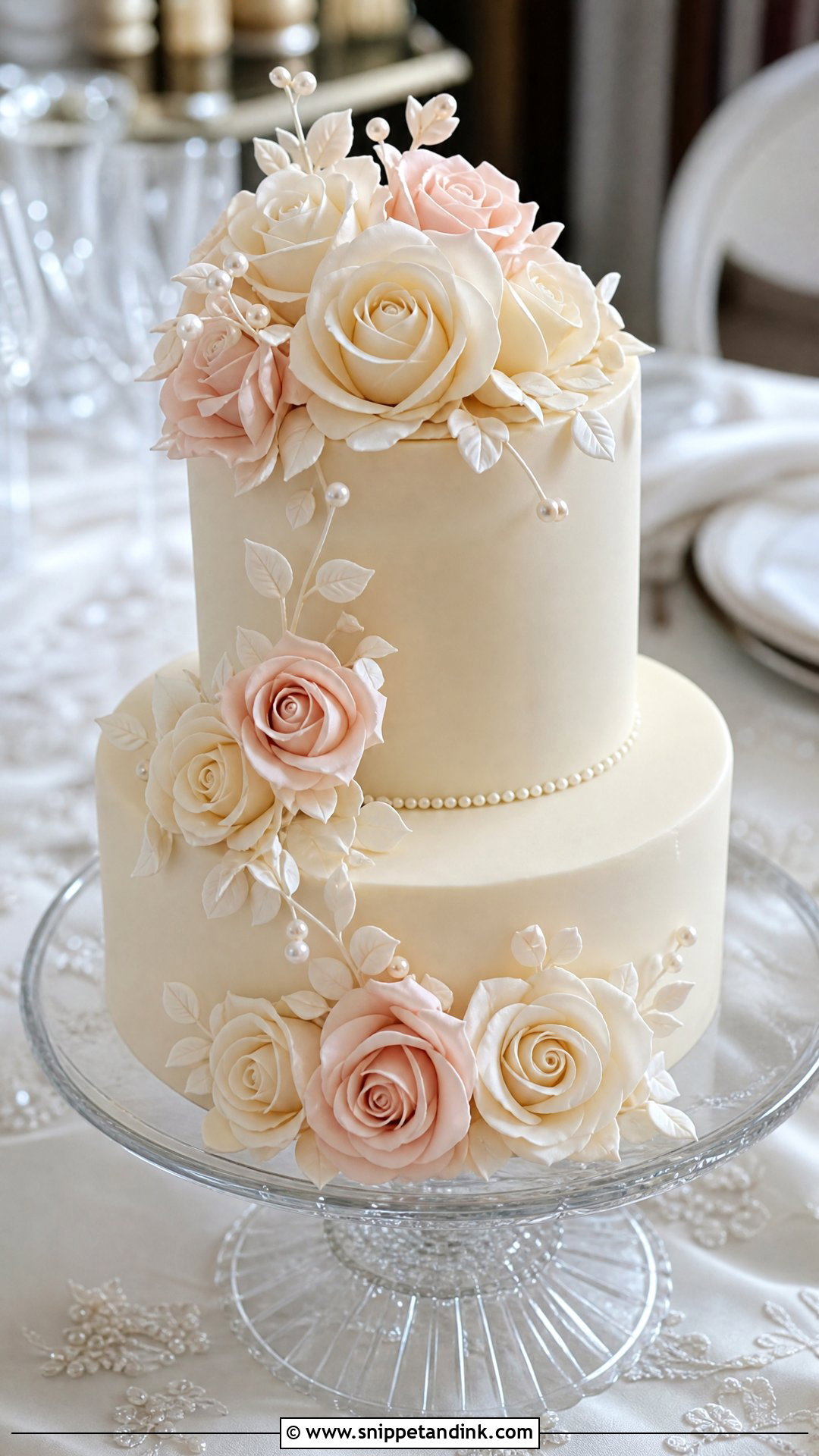
Roses are the flower I make most, and they adapt to almost any setting, from a ballroom to a garden ceremony. Blush on white reads gentle and classic, ivory with champagne-dusted leaves leans vintage, and mauve or dusty pink pulls the palette somewhere more current. What separates a good sugar rose from a stiff one is the outer petal edge. I thin it until it’s nearly translucent and let it curl over a former, so it dries with a natural lip. Keep the icing smooth behind them, or add light piping if you want texture.
3. Sugar Peony Wedding Cake
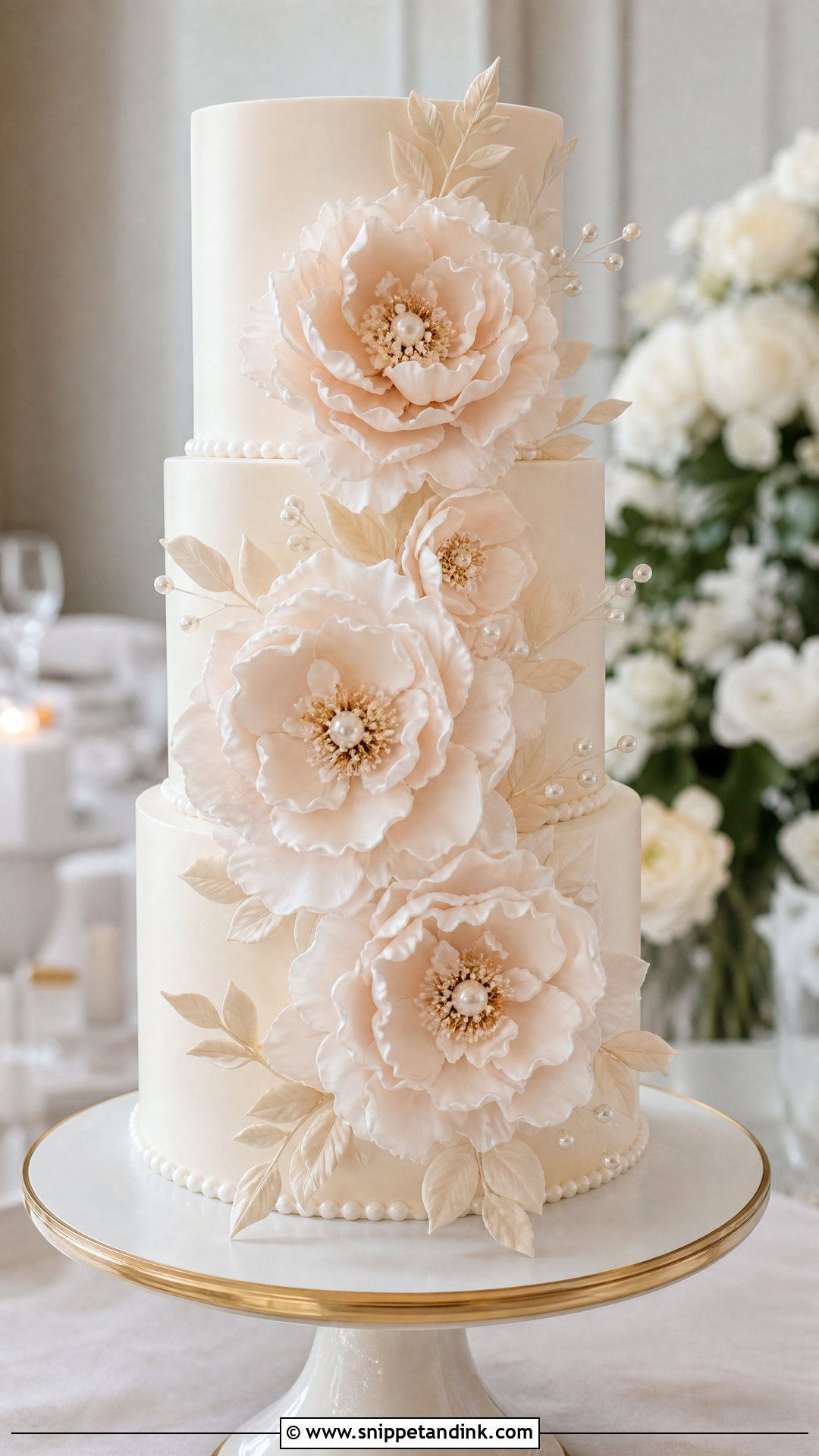
A sugar peony wedding cake gives that full, lush look from every side of the table. A peony is big enough to carry the design alone, so one oversized bloom on a single tier looks intentional, and a cluster across three tiers looks lavish. Be aware that a large open peony can run to forty or more petals, each shaped by hand, and that labor shows up in the quote. Blush, ivory, cream and pale coral suit spring and summer. I pair them with smooth fondant and a few sugar leaves rather than piling on more flowers.
4. Sugar Orchid Wedding Cake
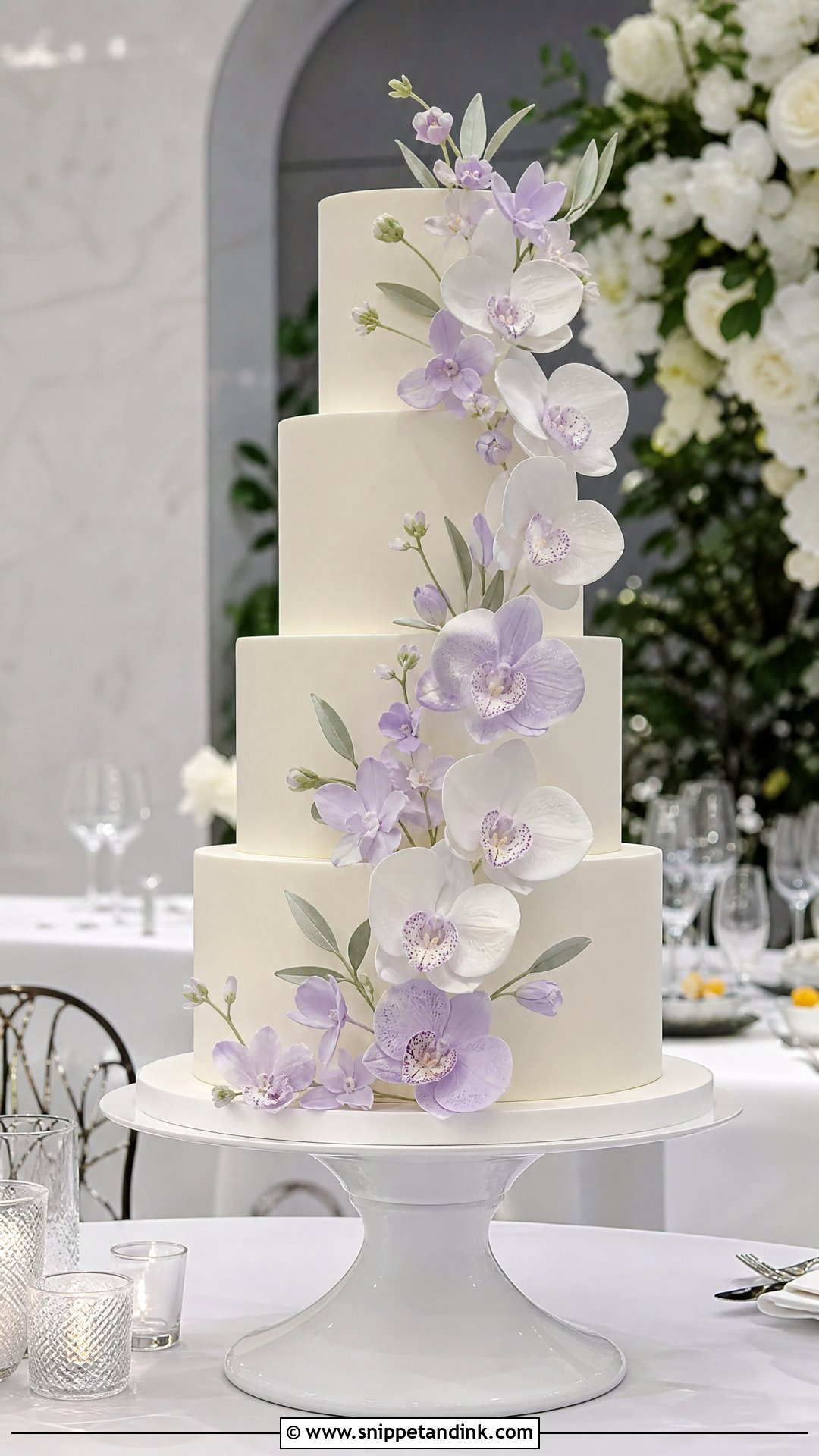
Orchids bring a refined, slightly modern line to tall tiers, especially in a clean cascade. White orchids on ivory look polished and traditional; pale pink or lavender softens the mood. Moth orchid petals are thin and wide, which makes them among the most fragile flowers I make, so I set them at the venue instead of transporting them attached. Keep the icing plain, since the arching stems already give plenty of movement. Slim leaves, tiny buds or a fine pearl border at each tier base add depth without crowding.
5. Sugar Pearl Wedding Cake
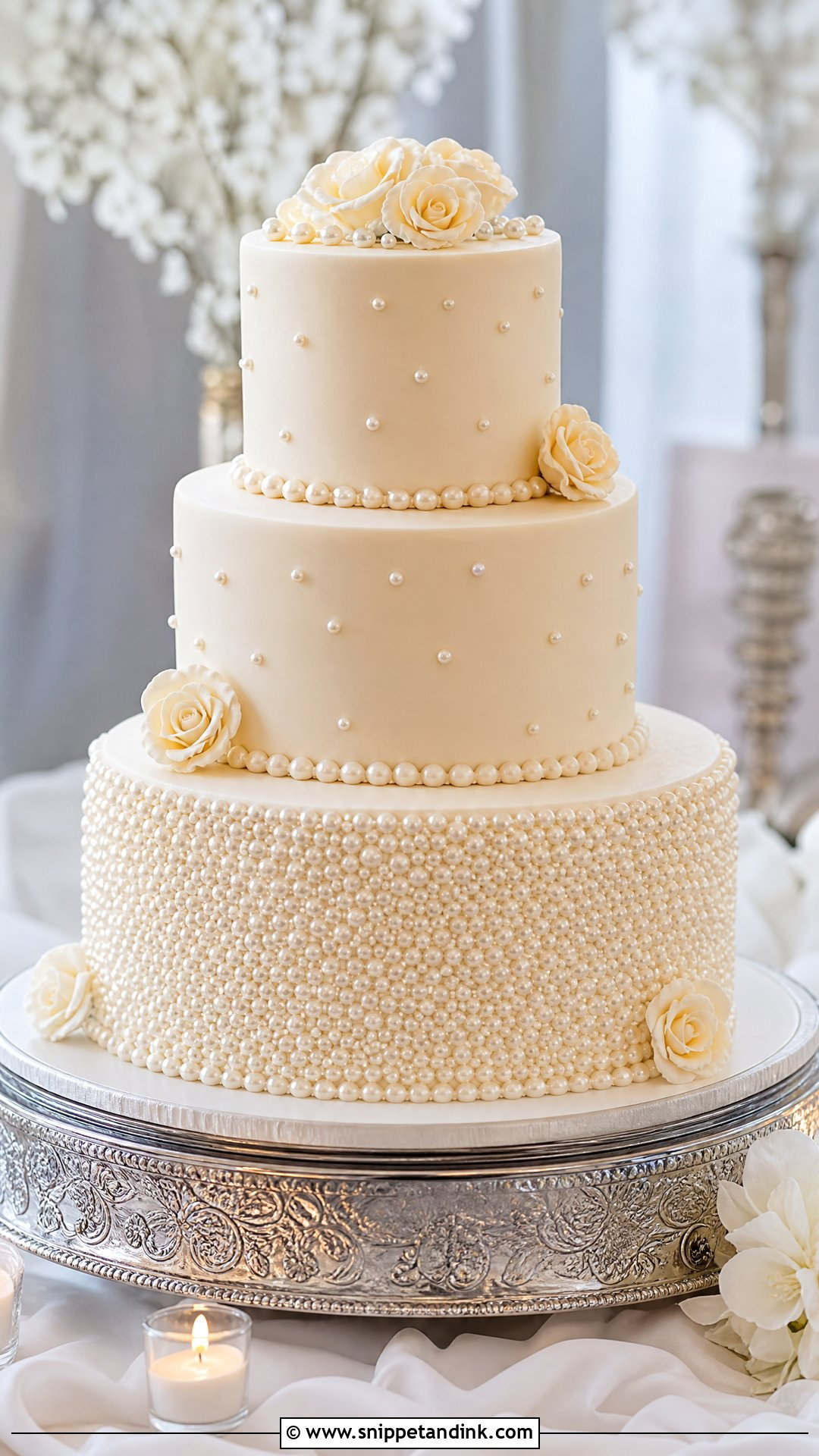
A sugar pearl wedding cake borrows from jewelry, and placement sets the mood. A tier covered edge to edge in pearls is glamorous; scattered pearls feel lighter. Each pearl is rolled and set with a dab of edible glue, and a fully covered tier takes thousands of them, so plan for that in the budget. Smooth ivory fondant, satin buttercream or a pale blush base all work. Leave it pearls only, or add sugar roses, a bow or lace. Candlelit evening receptions show the sheen best.
6. Sugar Lace Wedding Cake
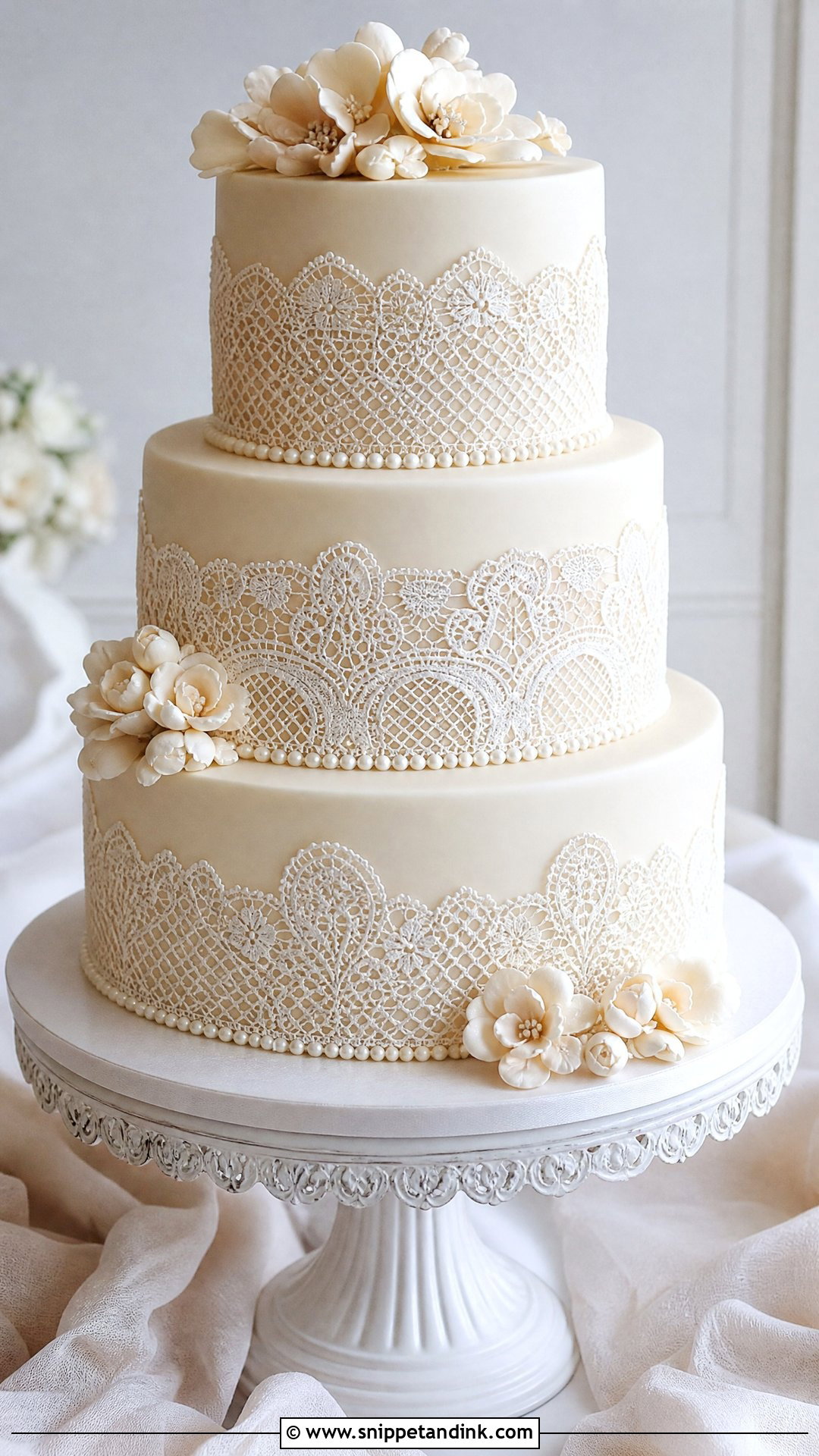
Sugar lace lets the cake repeat the pattern of your gown, your veil or a family piece of fabric. It can go on as panels, as narrow bands around each tier, or as a full overlay on one tier. I make most of it by spreading a lace mix into a silicone mat, where it sets flexible, so if you bring a snip or a sharp close-up of your actual lace I can usually find a mat that comes close. White on ivory gives quiet texture; champagne warms it. The trap is overcrowding. Lace on every tier plus flowers plus pearls stops reading as lace at all.
7. Sugar Bow Wedding Cake
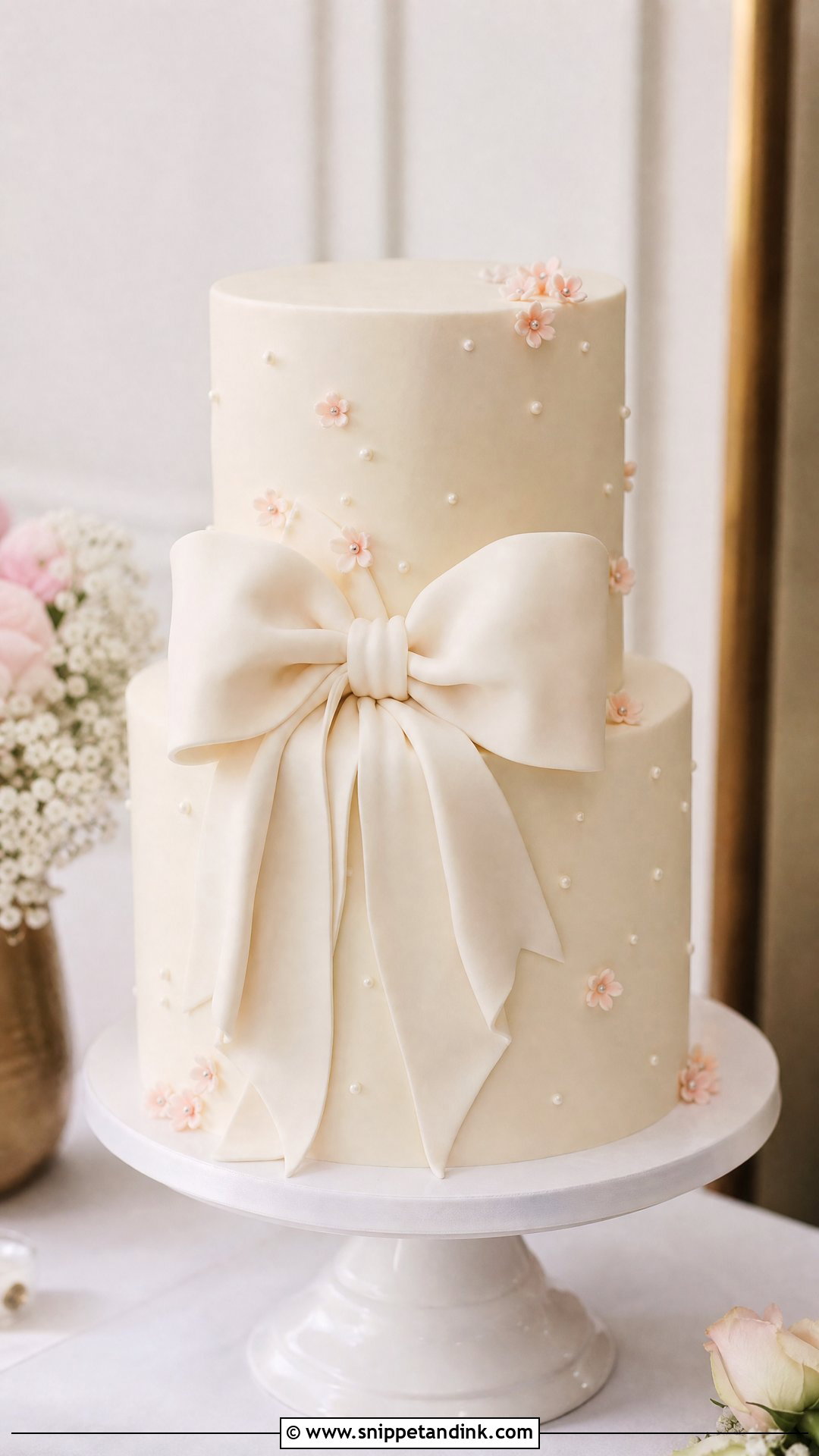
One well-made bow does a lot of work on its own. It can sit large on the front of a tier or wrap the tier like ribbon. White on ivory is the clean bridal version, while blush, champagne or pale blue add a hint of color. Big fondant loops can sag, so I dry them over supports for a day or two before assembling the bow. I’d avoid a very large bow on a buttercream cake outdoors in summer, because the base softens under the weight. Sharp tier edges make it look tailored.
8. Sugar Ruffle Wedding Cake
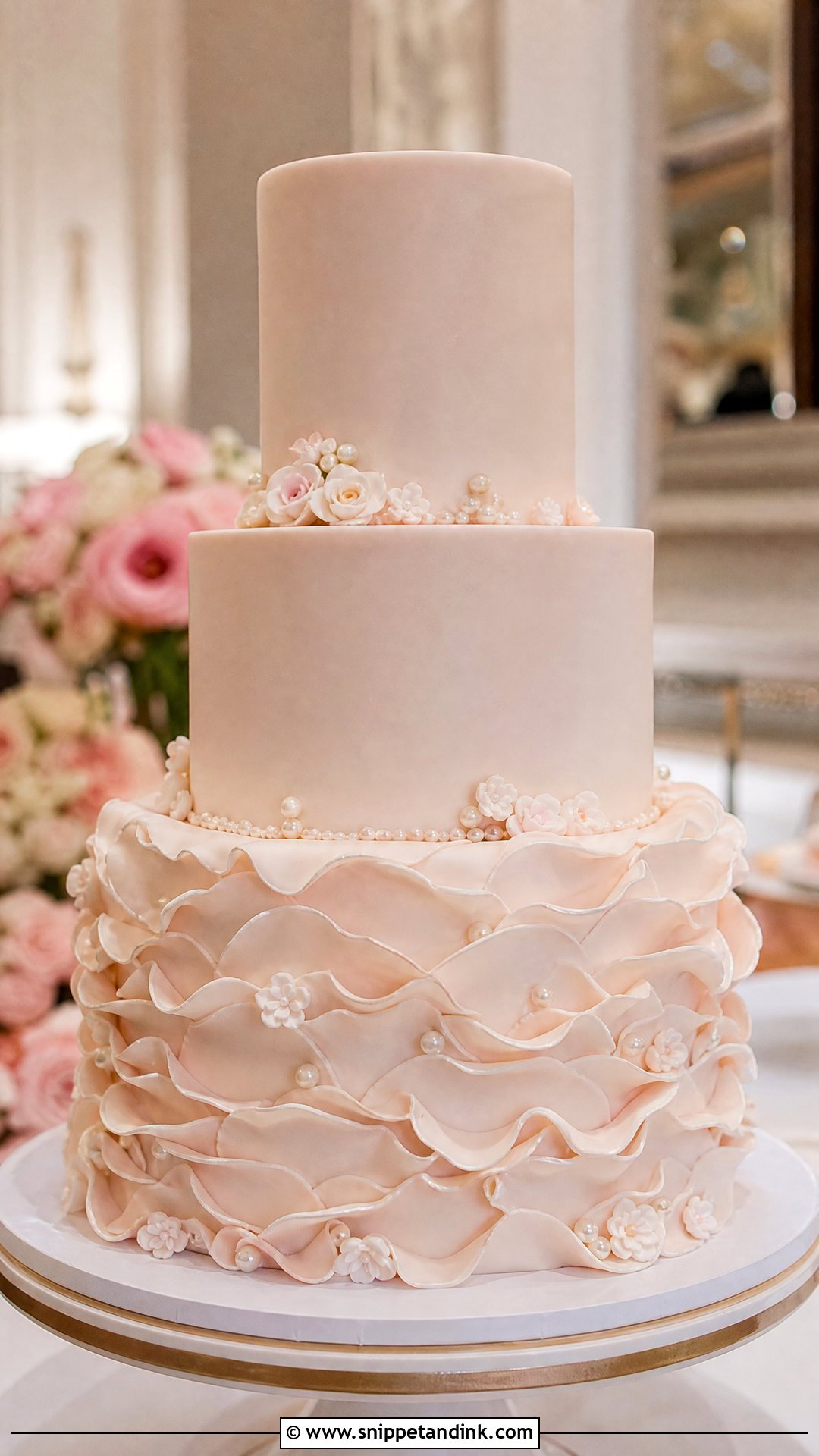
Ruffles give a cake the feel of fabric in motion. They can cover every tier or appear on just one as the statement. Each ruffle is a thin strip of paste, frilled and attached row by row, which makes a full ruffle cake one of the most labor-heavy designs here and one of the heaviest to carry. Ivory reads classic, blush reads romantic, and an ombré from deep to pale gives a modern turn. I keep the top tier plain or add a single flower so the eye has somewhere to rest. It sits naturally beside flowing dresses and soft linens.
9. Sugar Magnolia Wedding Cake
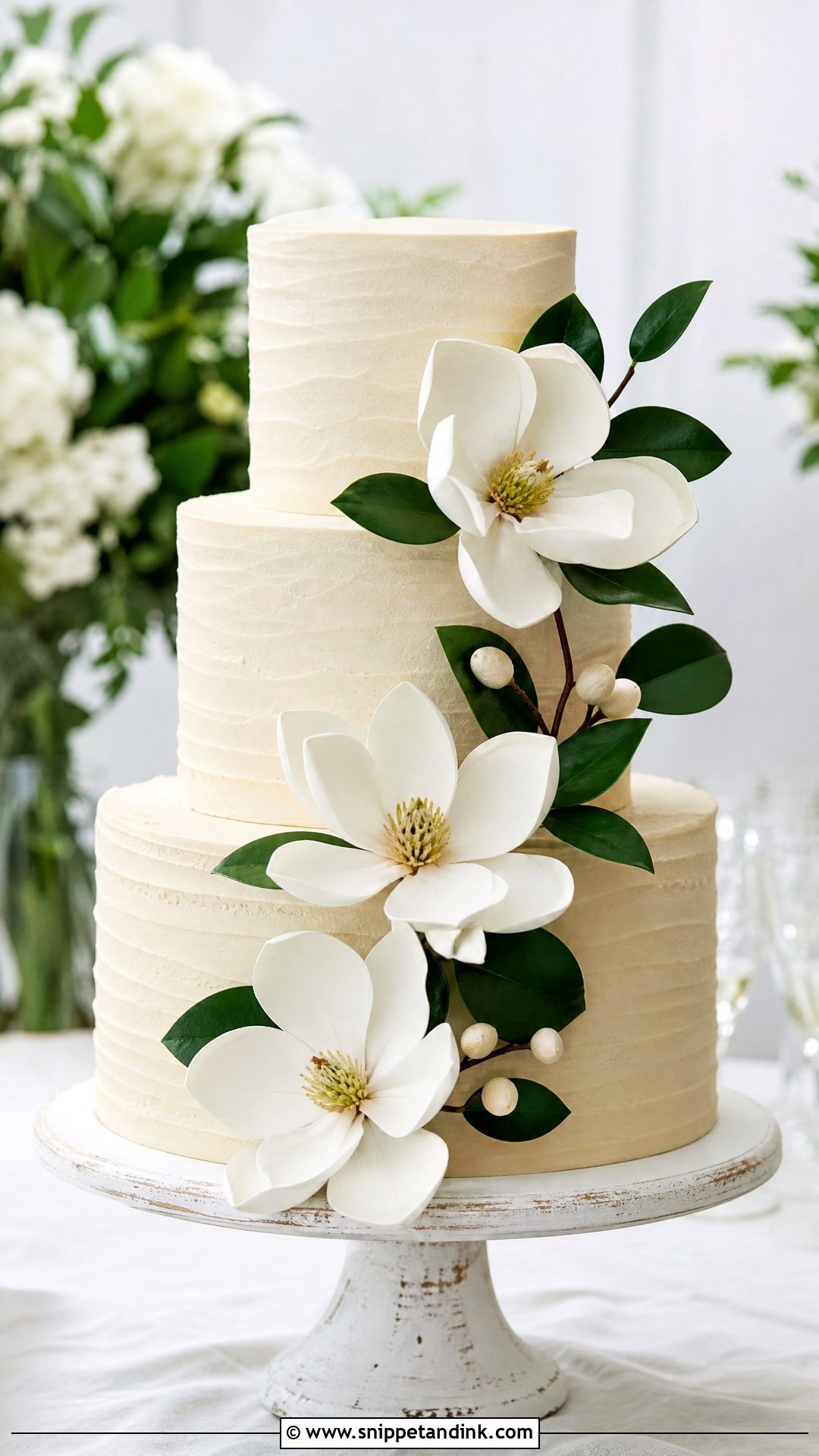
Magnolias have broad, sculptural petals and a Southern garden feel, and two or three are enough to anchor a cake. White blooms with glossy dark sugar leaves look crisp on smooth ivory; pale cream petals with muted sage leaves soften the whole thing. To get that waxy shine on the leaves I pass them quickly through steam after dusting, which also sets the color. Estate venues and warm-weather receptions suit this design well. Keep the base plain, or add horizontal buttercream lines for a refined texture.
10. Sugar Hydrangea Wedding Cake
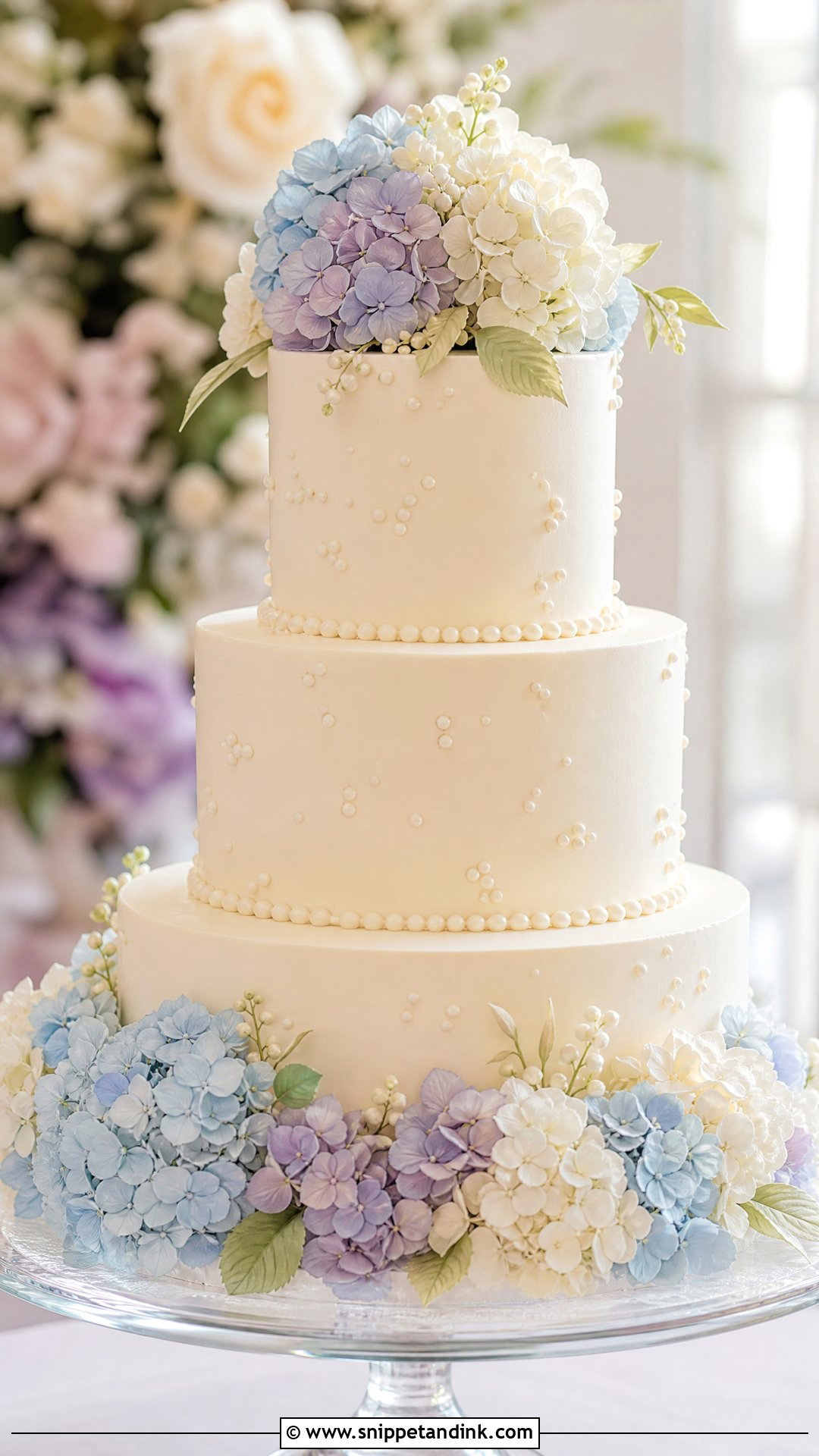
A sugar hydrangea wedding cake suits anyone who loves clustered, soft color. Sugar hydrangeas can be ivory, blue, lavender, blush or green, so they match most palettes. I build each head from dozens of small four-petal florets, which is why they look full without looking heavy. Tuck them around each tier base, into corners, or gather them on top as a crown. Ask for color variation within each head. A single flat shade is exactly what makes a hydrangea look artificial.
11. Sugar Anemone Wedding Cake
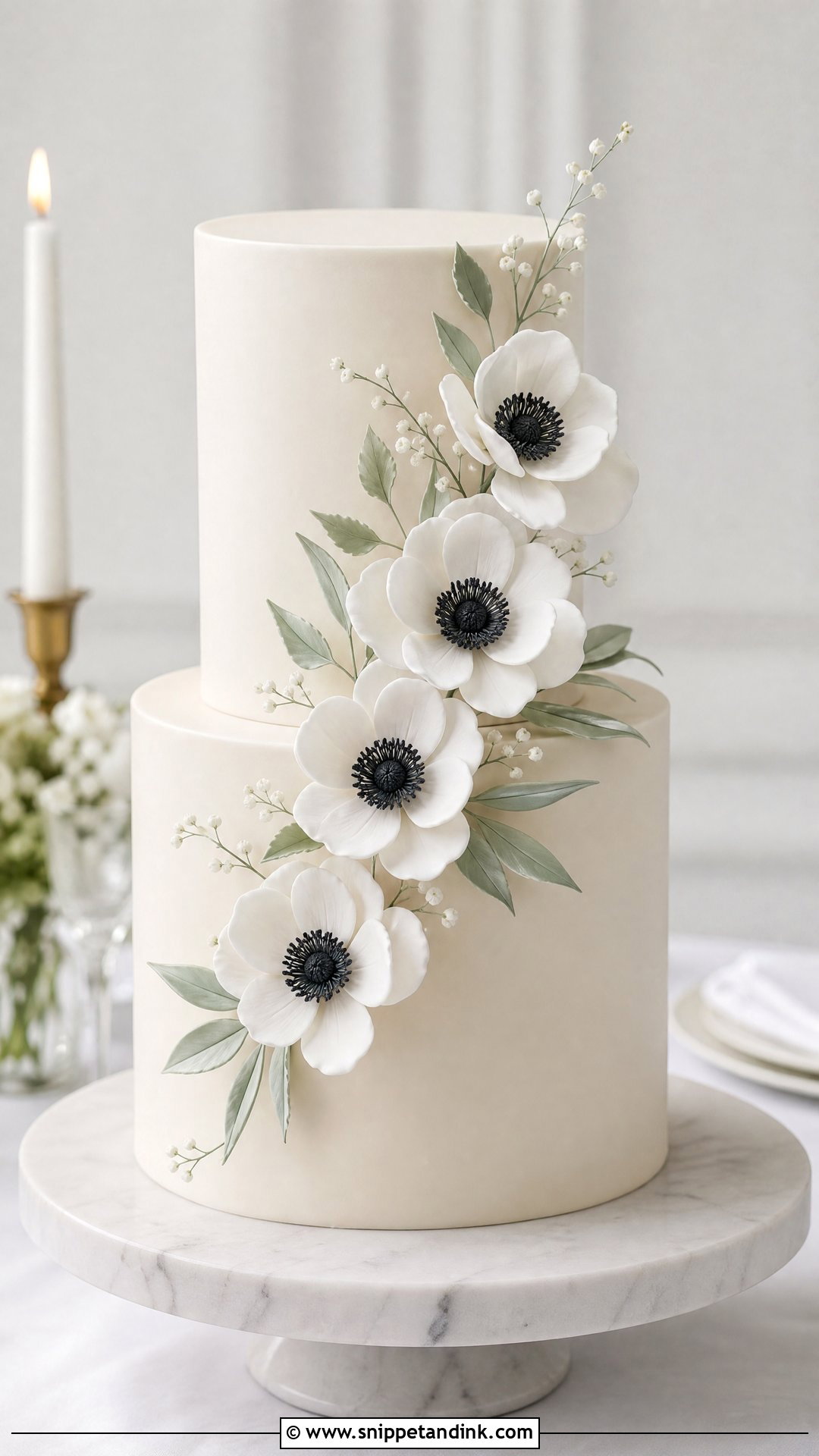
Anemones look clean and graphic because the flower itself is simple: flat petals around a dark center. White with black centers on ivory or pale blush gives strong contrast, which is what a modern tiered cake with minimal icing needs. Blush anemones with light centers soften it. I build the center from fine black stamens around a small dome, and I keep the count low, three to five flowers, because that contrast multiplies quickly. Thin sugar leaves or small buds finish the arrangement.
12. Sugar Calla Lily Wedding Cake
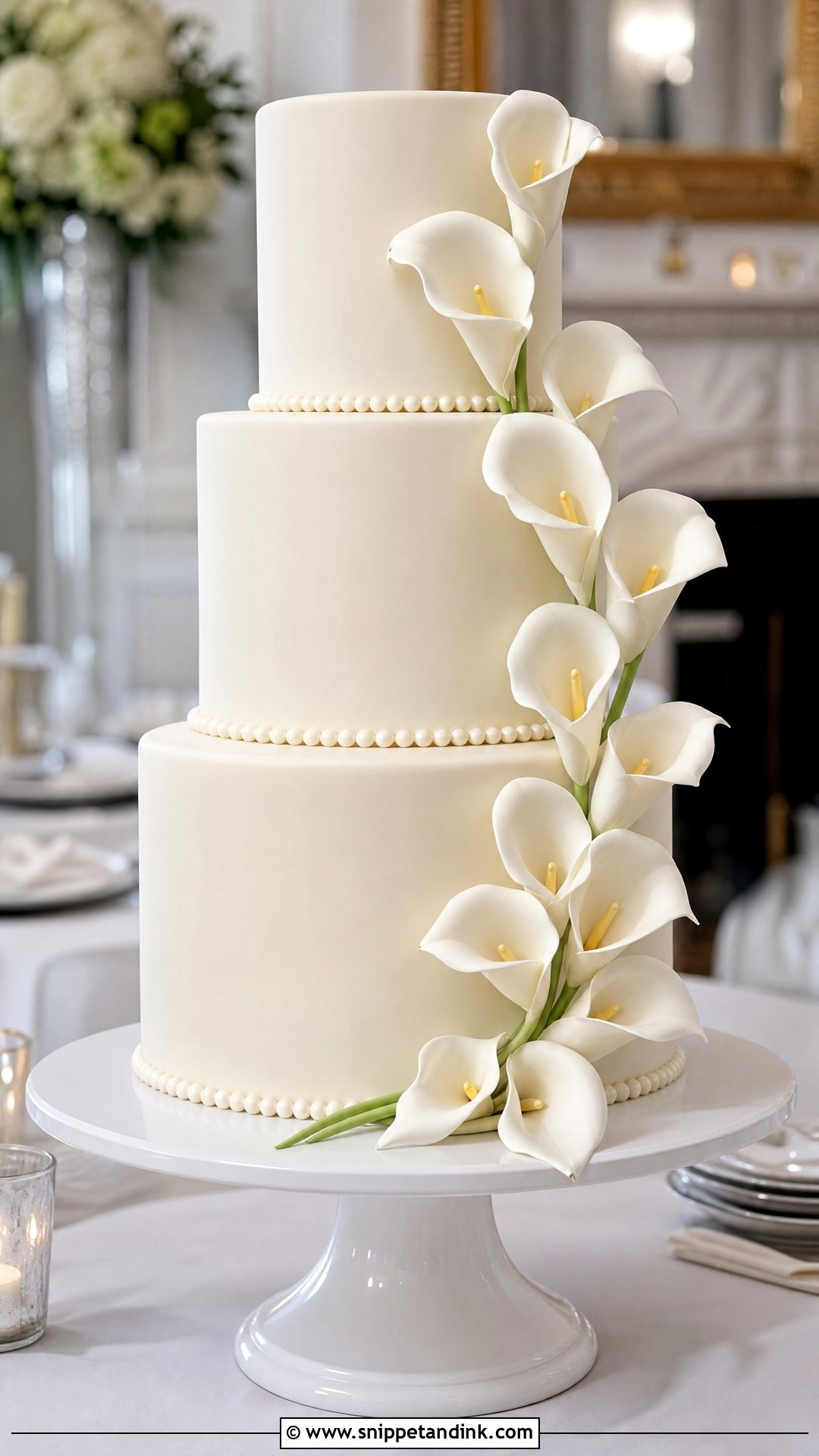
A sugar calla lily wedding cake reads sleek and formal. The curved single-petal shape suits tall cakes with clean lines. White callas on smooth fondant are the classic version, and pale blush or soft yellow warms it up. A small group on the top tier is minimal; a side cascade adds drama. Callas are one of the quicker flowers to make, which helps when the budget is tight. Skip extra decoration and let the shape do the work.
13. Sugar Succulent Wedding Cake
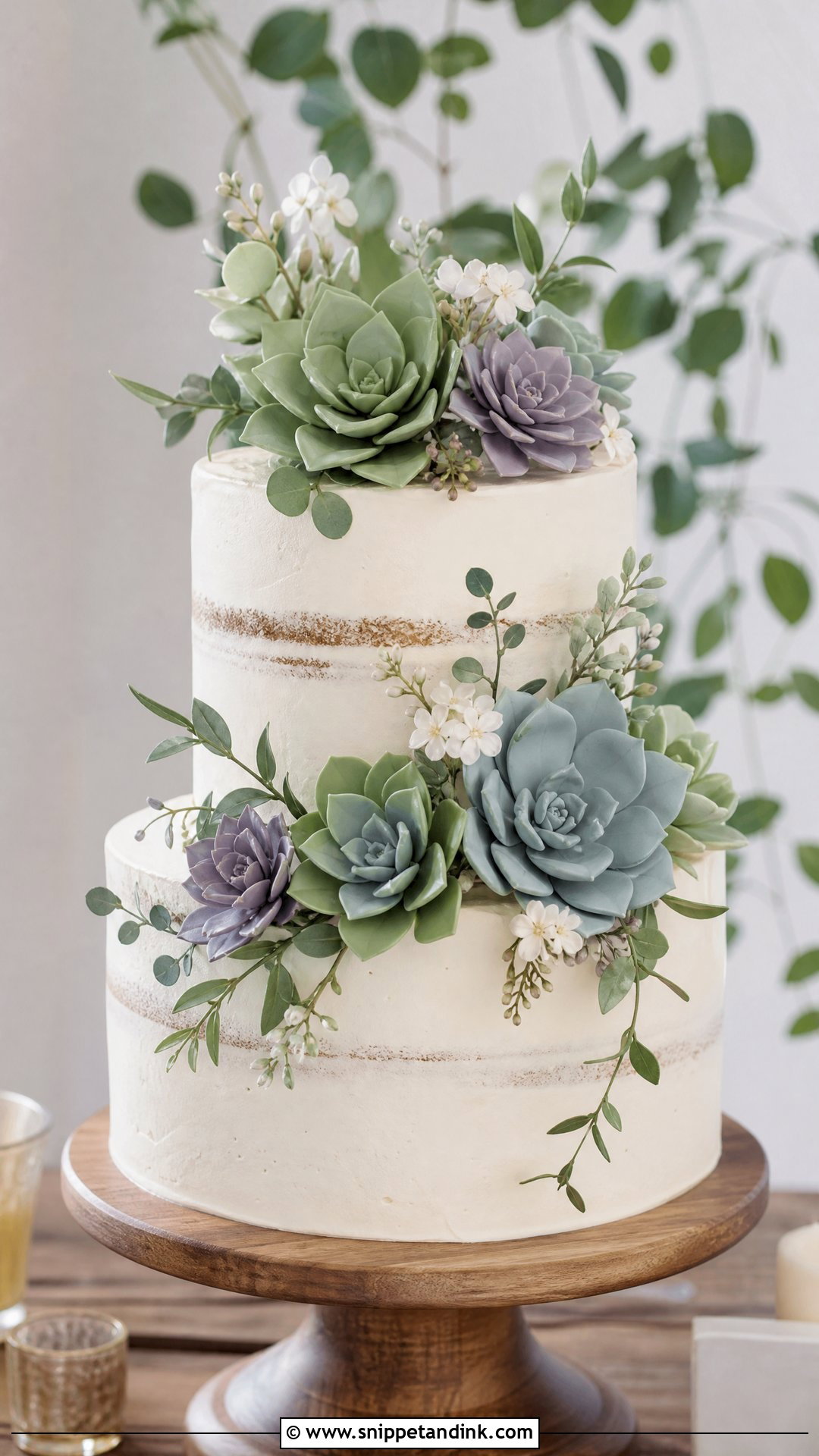
Succulents give a botanical look without leaning on flowers. Sage, dusty blue, grey-green and muted purple sit comfortably on ivory, taupe or sand-colored icing. I’d suggest this for desert venues, barns and outdoor receptions, because a succulent rosette is dense and holds its shape in warmth far better than a thin-petaled bloom. A few sugar roses add softer contrast. Semi-naked buttercream feels relaxed, though exposed sponge dries out faster on a long display; smooth fondant makes the same design look more modern.
14. Sugar Butterfly Wedding Cake
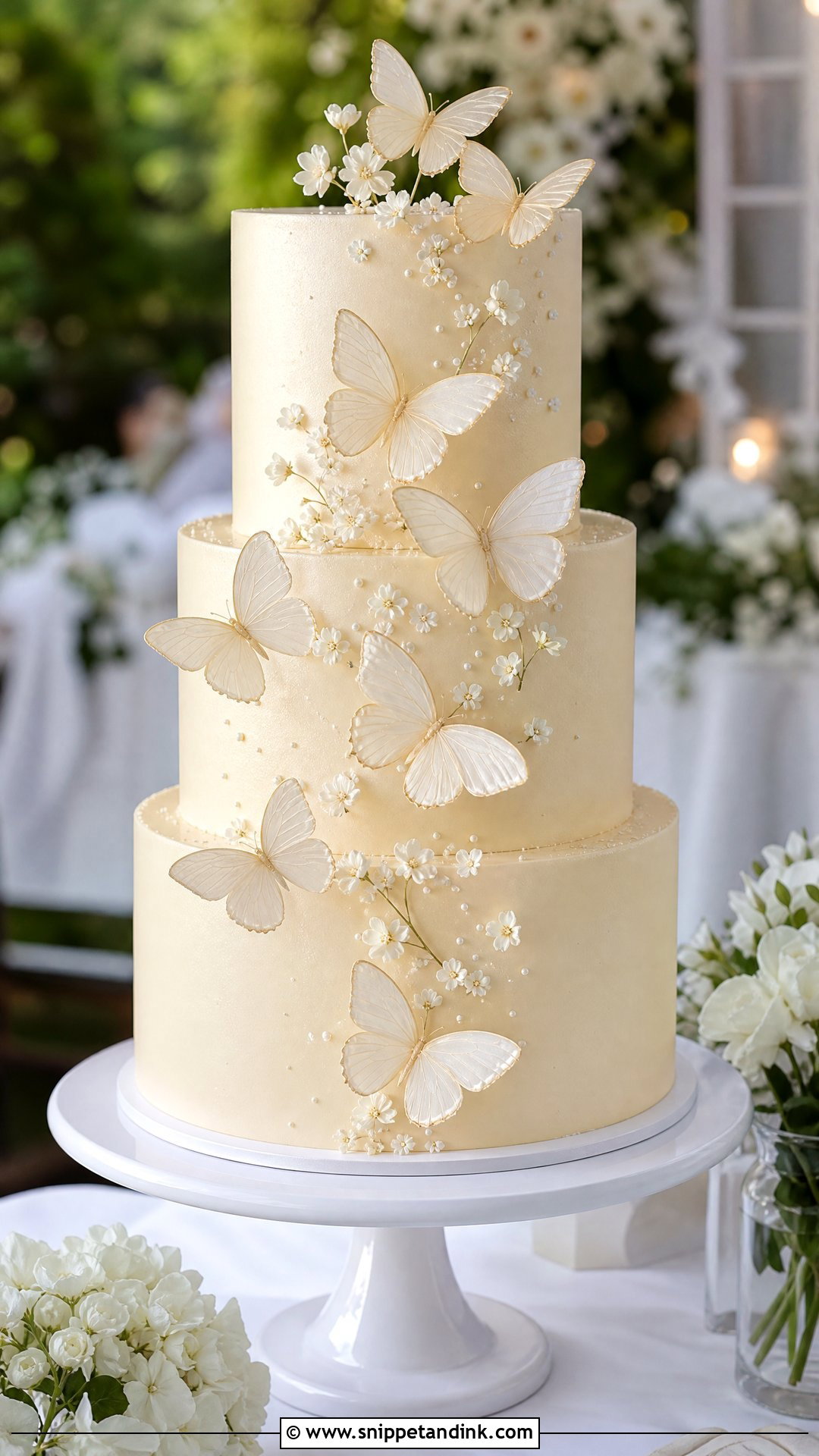
Butterflies add lightness, but they tip into childish quickly. The fix is restraint: white, ivory, pearl or wafer paper butterflies set at angles, as though they’re lifting off the tiers. I dry the wings folded along a crease so they hold an open, mid-flight shape, and wafer paper gives a translucency that gum paste can’t. A smooth base gives them room. A few tiny flowers or a light shimmer is plenty. Spring and garden receptions suit it, as do couples who like the quiet meaning of change a butterfly carries.
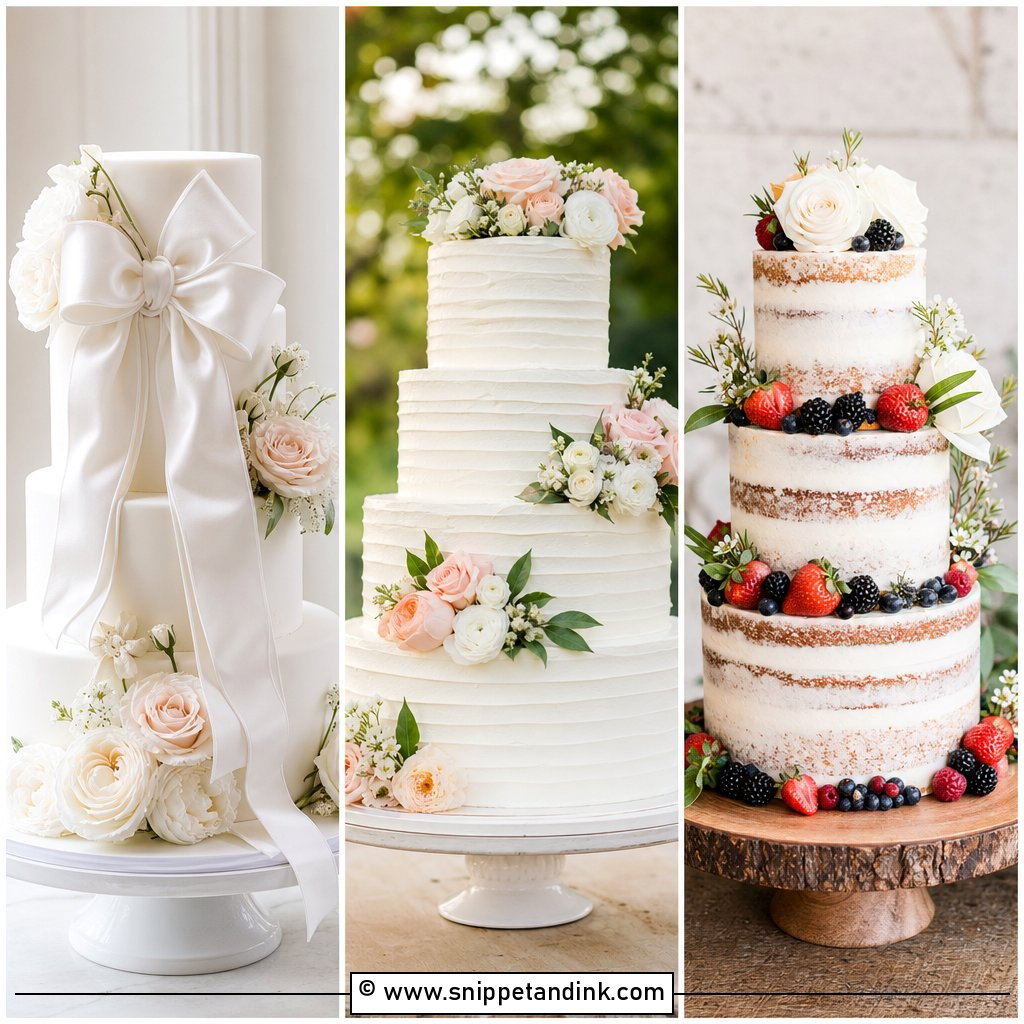


15. Sugar Monogram Wedding Cake
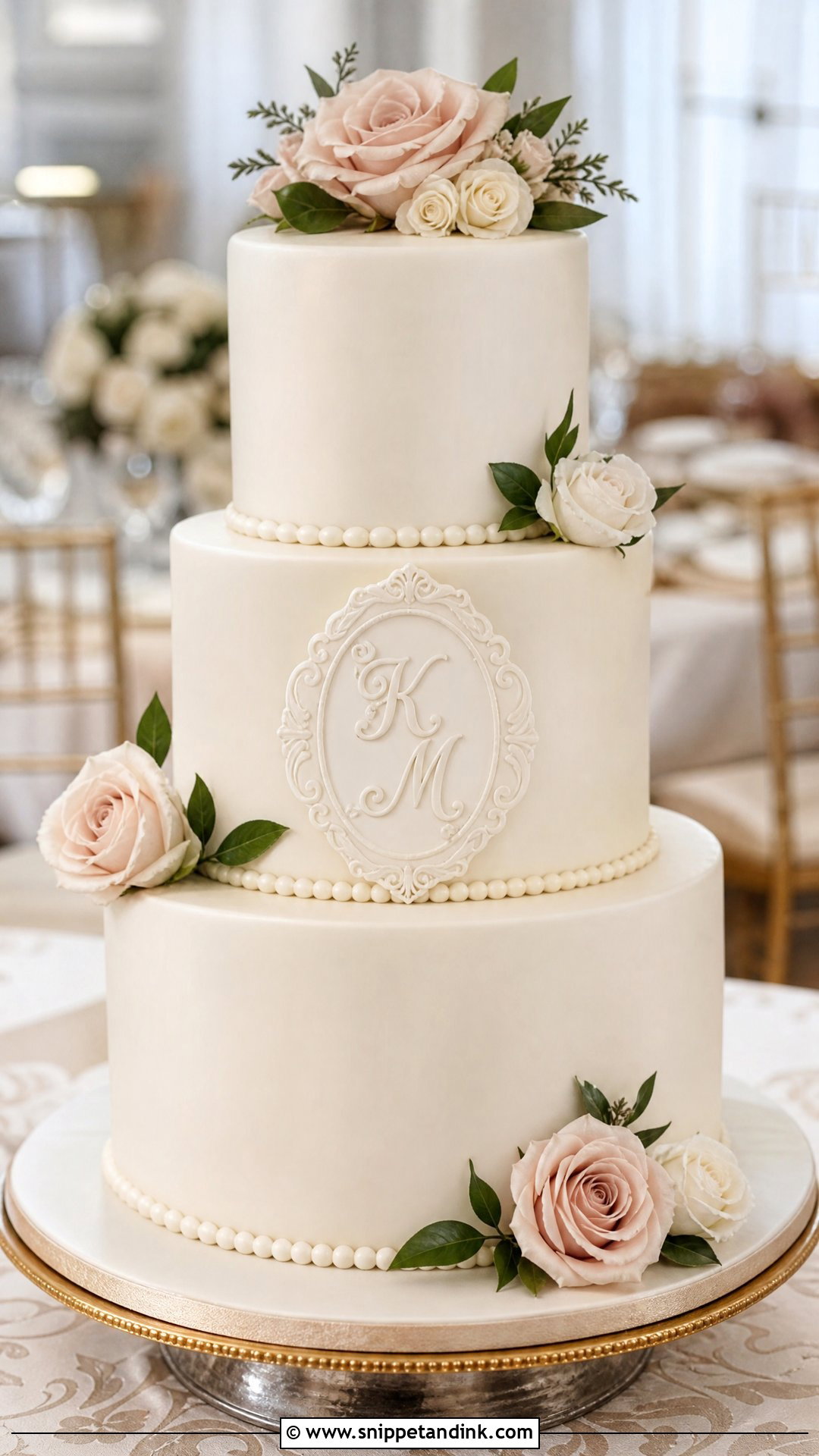
Turning your initials into the decoration makes the cake unmistakably yours. The monogram can be cut from sugar paste, piped in royal icing or raised on a fondant plaque, and it needs a smooth tier with generous open space around it. Send me the exact typeface from your invitations. I’d much rather match your stationery than invent a script that almost fits. Keep the palette to ivory, white, champagne or a soft metallic, and frame it with flowers for a warmer feel. Formal venues suit it best.
16. Sugar Geode Wedding Cake
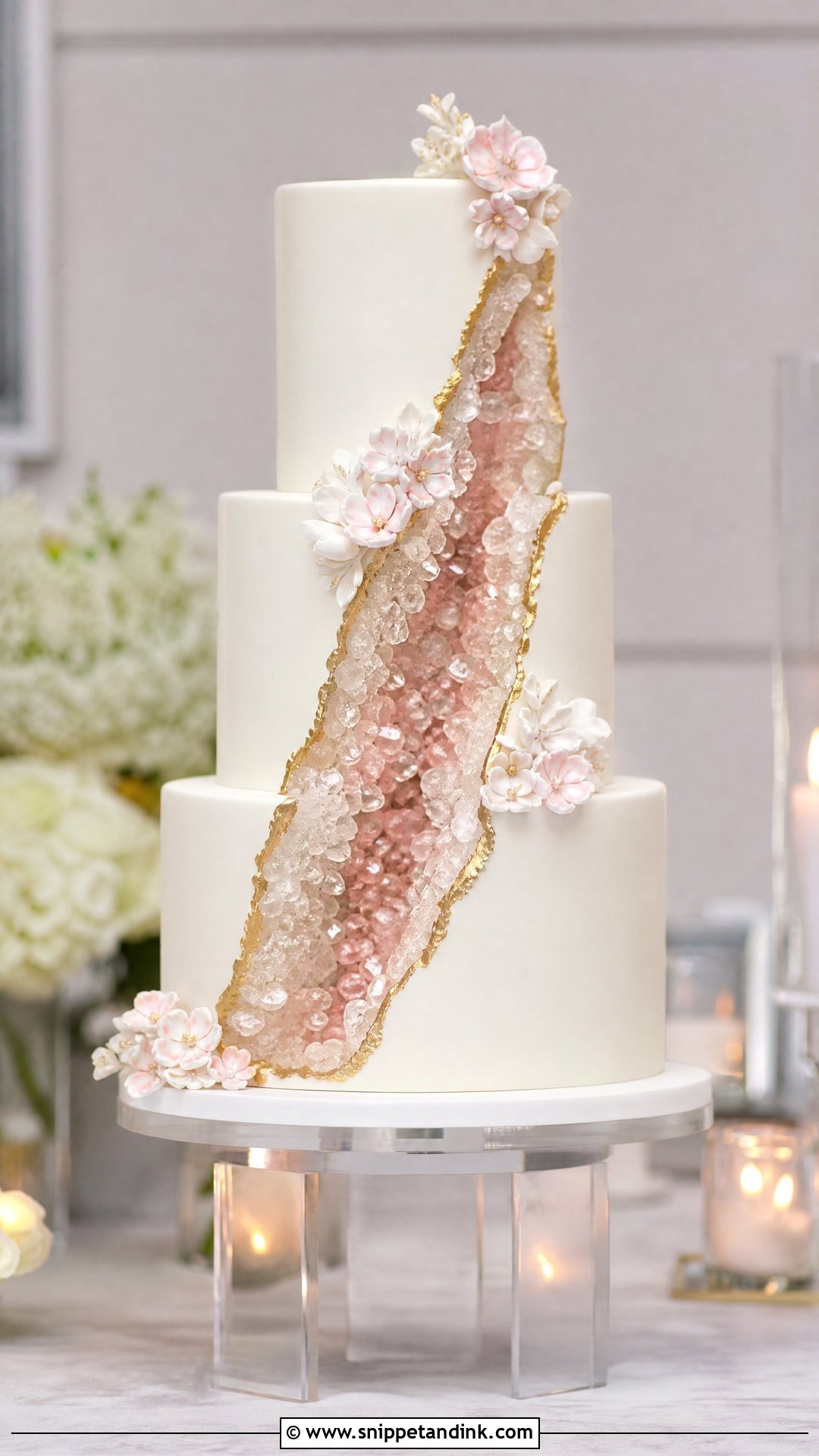
A geode cake has a section carved out of one tier and filled with rock candy or isomalt crystals, with the edges painted in metallic dust. Blush, clear quartz, pale blue or amethyst tones look elegant against ivory. Two warnings from the work itself. The crystals are hard, so they come out before slicing, and sugar crystals pull in moisture, so they lose their sparkle in a humid room. Keep the shape clean, add a small flower cluster for softness, and make sure the cake table is well lit.
17. Sugar Leaf Wedding Cake
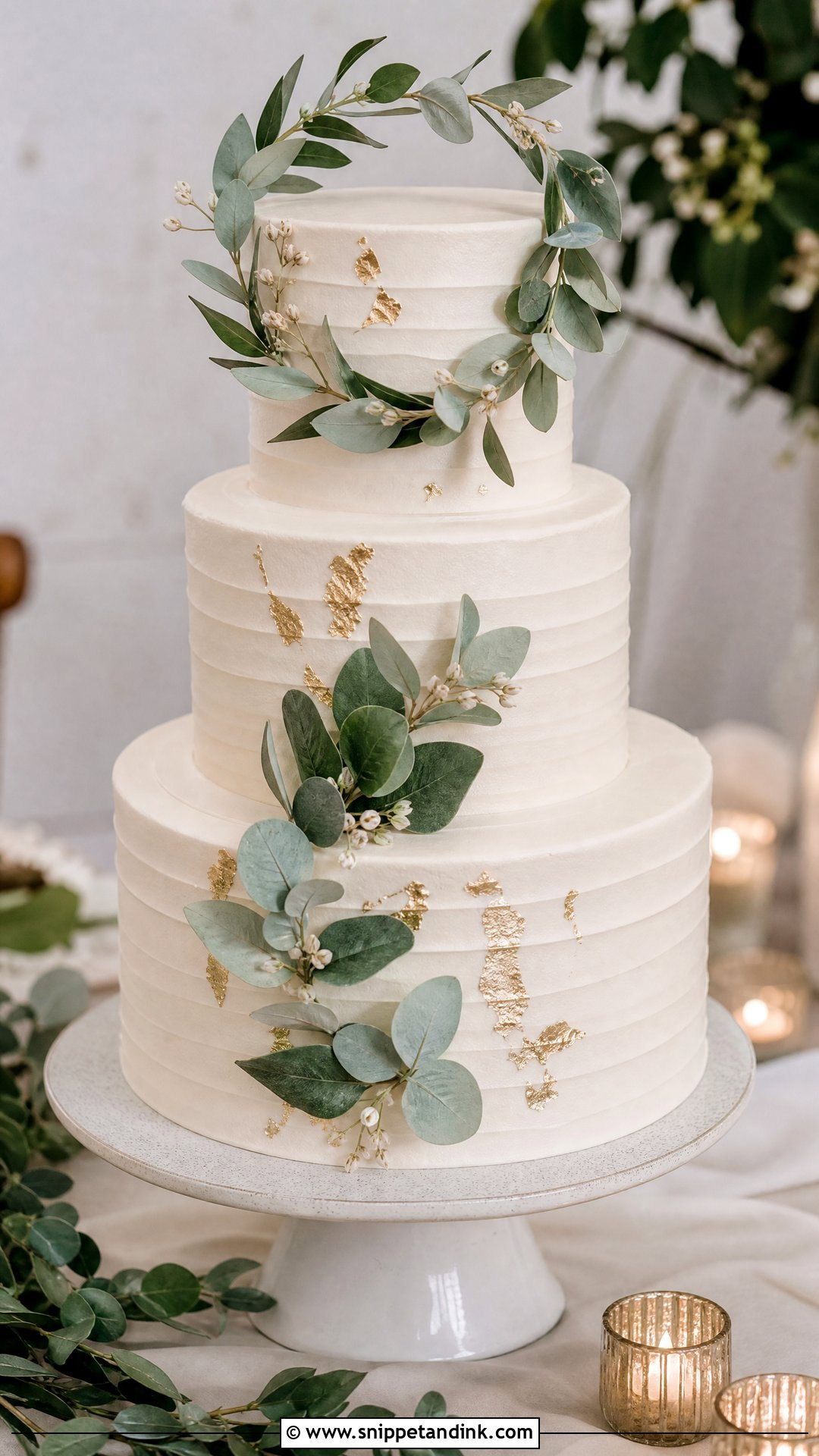
A sugar leaf wedding cake gives a natural look without fresh greenery, which matters because some decorative foliage, eucalyptus included, isn’t food safe. Sugar leaves can take olive, eucalyptus, fern, ivy or maple shapes. Sage leaves on clean ivory feel fresh; gold-brushed leaves feel formal. Arrange them as a wreath, a side trail or a loose crown. I press every leaf in a veiner, because a flat, unveined leaf is the giveaway that it’s sugar.
18. Sugar Fruit Wedding Cake
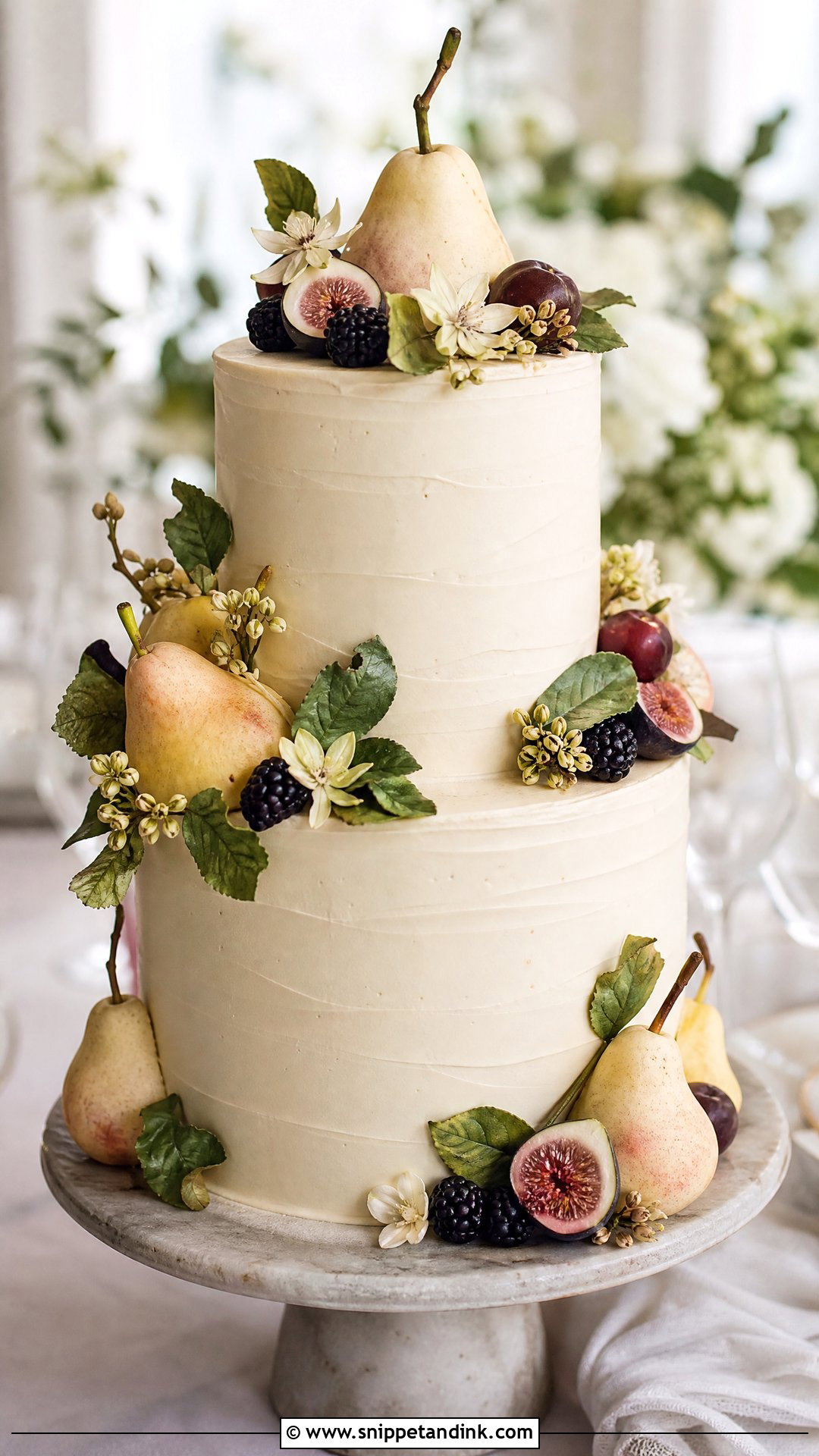
Sugar fruit brings color and personality while staying polished. Lemons, pears, figs, berries or peaches can be sculpted for the season, and you avoid real fruit weeping juice into the icing. Pears and leaves on white feel right for fall; lemons with blossom feel bright for spring or summer. The realism is all in the finish. I dust in layers, speckle the pears and dimple the lemon skins, otherwise the fruit looks like modeling clay. Keep the icing plain and let the fruit carry the color.
19. Sugar Vine Wedding Cake
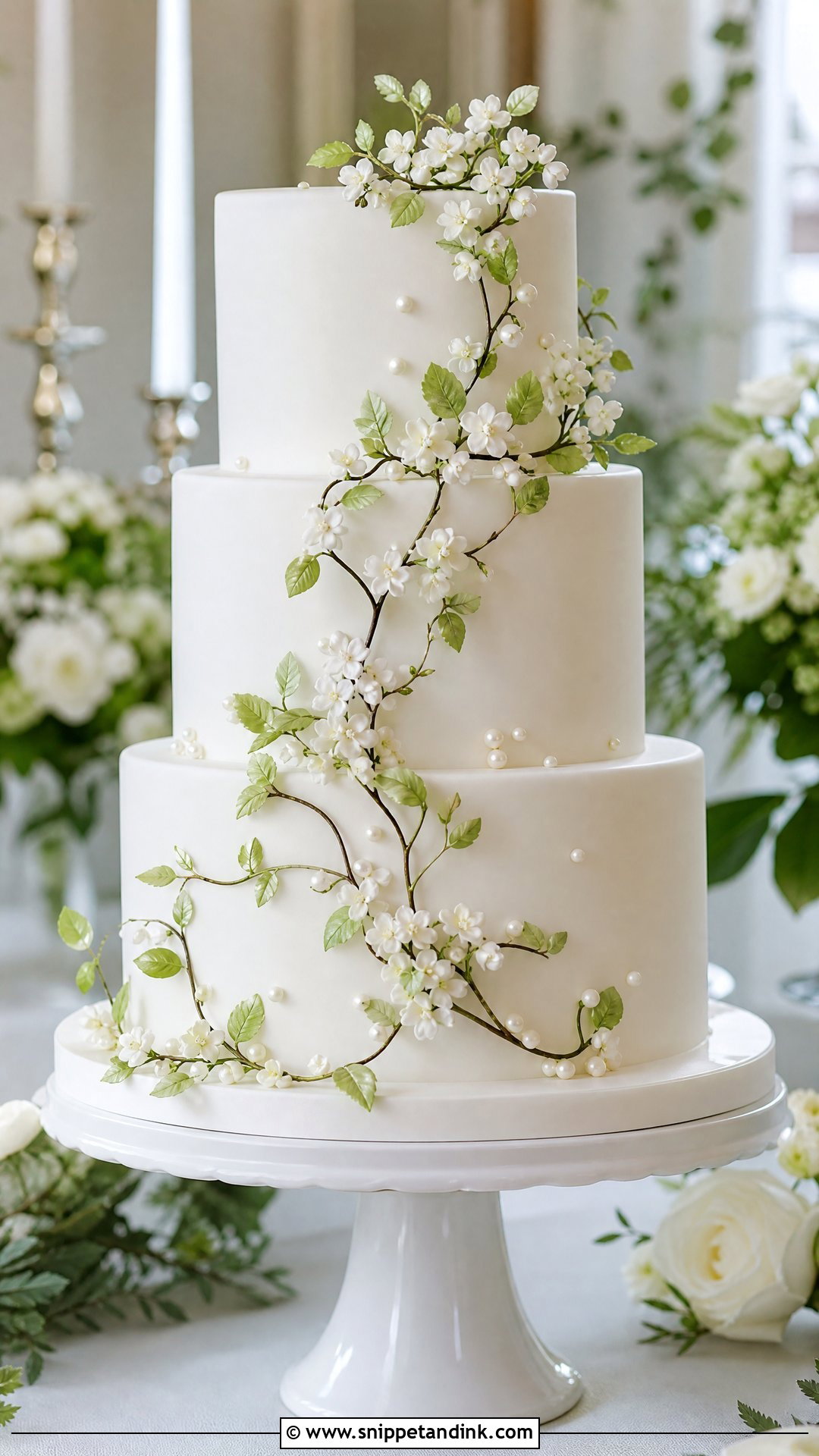
A vine climbs the tiers and adds movement without covering the whole surface, so it suits tall cakes. It’s built from leaves, small blossoms, tendrils and tiny berries. I wire it in short overlapping sections, which lets it wind around the cake and still come apart for delivery. Pale green leaves and white blossoms keep it soft; blush flowers or touches of gold add drama. Ivory fondant, smooth buttercream or a light texture all make a good backdrop, and garden receptions are its natural home.



20. Sugar Floral Cascade Wedding Cake
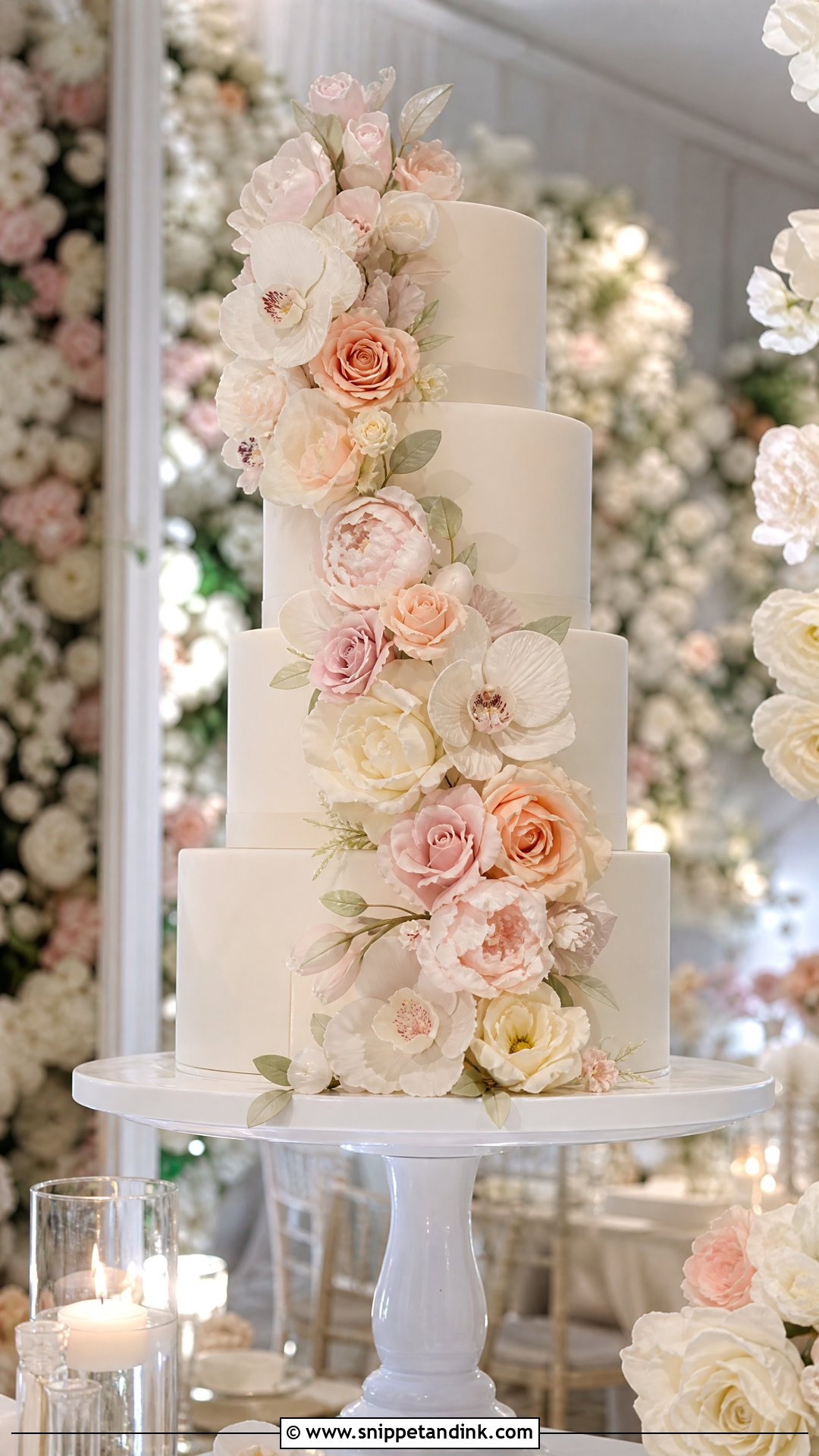
A sugar floral cascade wedding cake is a showpiece. The blooms flow down the side in a planned line instead of sitting only on top. Roses, peonies, orchids, ranunculus and small fillers can share one cascade if the colors stay balanced, and an ivory or white base keeps it bridal. It needs three or more tiers to fall naturally. It also needs hidden support: I anchor the heavier blooms in posy picks and lean the line so its weight rests against the cake rather than hanging off it.
Sugar Has One Enemy, and It’s a Damp Room
Gum paste is mostly sugar, and sugar draws moisture from the air. In a humid marquee, thin petals soften and start to droop, crystals go cloudy, and a fondant cake moved from a cold van into a warm room can bead with condensation. None of this is a reason to avoid sugar work, but it does change how I plan the setup.
- Ask the venue where the cake will stand, and keep it away from windows, heaters and direct sun
- For outdoor summer weddings, choose sturdier flowers like roses, succulents and callas over orchids and thin-petaled blooms
- Let the cake sit in the room for a while before the flowers go on, so any condensation dries first
- Keep the display time sensible; a cake set out hours before guests arrive is working harder than it needs to
Your Top Tier Flowers Can Outlive the Cake
Gum paste is technically edible, but nobody enjoys eating it, and the wires inside make it unsafe to bite into. I always tell the person cutting the cake which pieces come off first: flowers, picks, crystals and any support dowels. Lift the flowers out before slicing and they become a keepsake.
Once they’re off the cake, brush away any crumbs or icing and let them dry for a day. Then store them in a box lined with tissue, or under a glass dome, somewhere dry and out of sunlight. Direct light fades the dusted colors within months, and a damp shelf softens the petals. Kept dry and shaded, sugar flowers hold their shape for years.
A Sugar Cake That Belongs to the Rest of Your Wedding
What I love about sugar work is how precisely it can be matched. Flowers, pearls, lace, bows, vines, fruit and crystals can all take their cue from your gown, your bouquet or your stationery, and they outlast fresh decoration, so the cake looks as finished at the cutting as it did at setup. When you meet your cake designer, bring the venue details, a photo of your dress and flowers, and your date. Those three things tell me more than any inspiration picture. A cake that clearly belongs to the rest of the day will always look better than one designed on its own.
You'll Like These Ideas:




Leave a Reply