
Lace on a cake does what lace on a dress does: it adds detail you notice up close without shouting from across the room. Depending on the flowers, tier shape and finish, it can read vintage, garden or quite modern. Couples are asking me for more texture lately, with edible lace, sugar embroidery, pressed flowers, floating tiers and old-fashioned piping all coming back. Lace can sit quietly on one tier or cover the whole cake. Below are 25 lace and flower designs I’d happily make, with notes on how each is built and where it struggles.
Piped, Molded or Stenciled Lace Each Behave Differently
When couples say lace, they usually mean one of three techniques, and each behaves differently on the day. It helps to know which one you’re looking at in a photo before you ask for a quote.
Edible lace from a mat
A sugar lace paste is spread into a silicone mat and dried until it peels off flexible, like thin fabric. It wraps around fondant tiers beautifully and gives the finest detail. It’s also the most sensitive to humidity. In a damp room it softens, and in very dry air it can crack, so I store it sealed and apply it the day before delivery.
Hand-piped lace
Royal icing or buttercream piped freehand. It looks softer and slightly irregular, which is part of its charm, and it can copy a motif from your gown. It takes the most hours, which shows up in the price.
Stenciled or embossed lace
Royal icing scraped through a stencil, or a pattern pressed into soft fondant. It’s flatter and quicker, and it holds up best in heat. For a large cake on a modest budget, it’s often the sensible choice for the lower tiers.
1. White Lace Wedding Cake With Roses
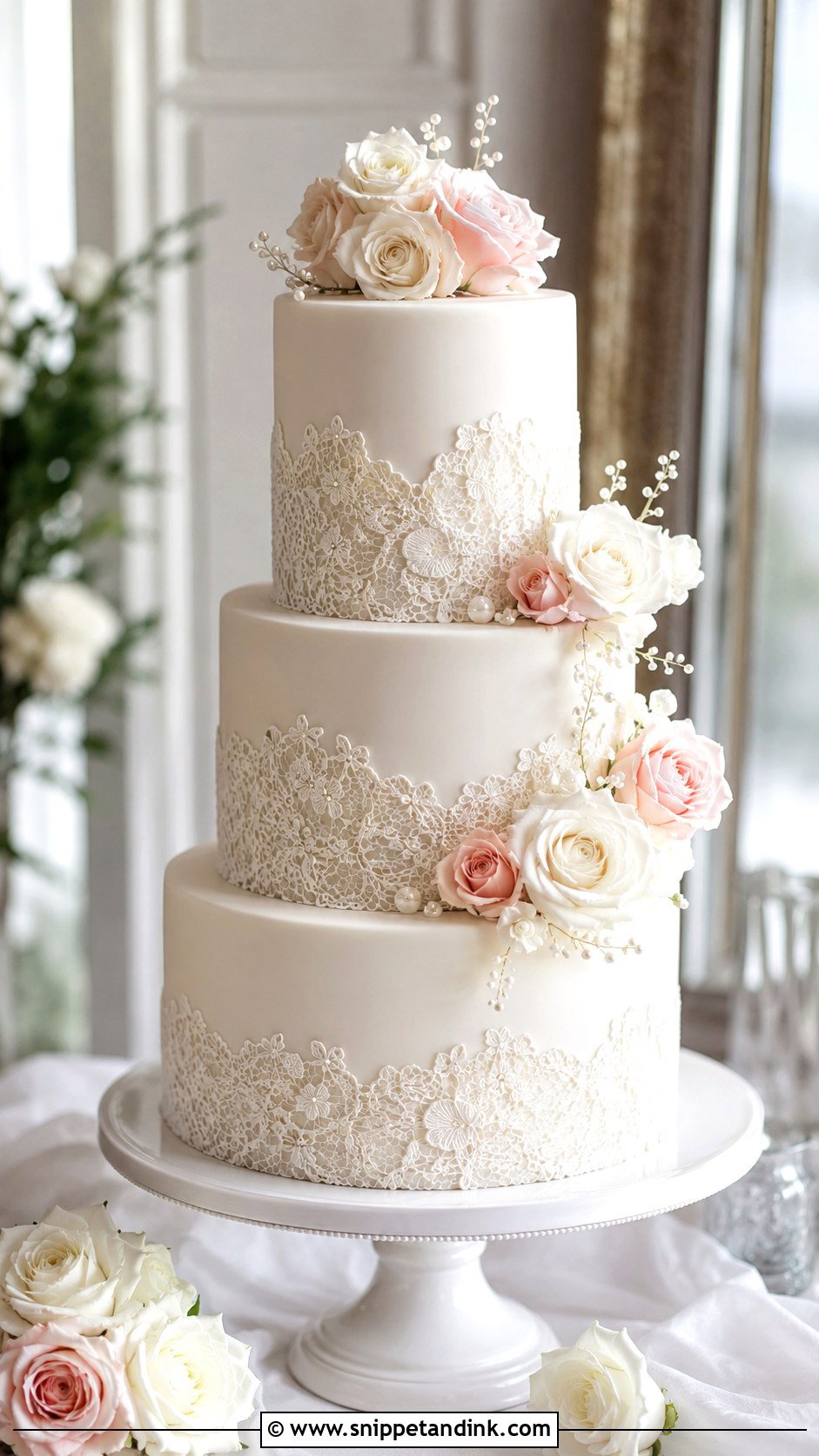
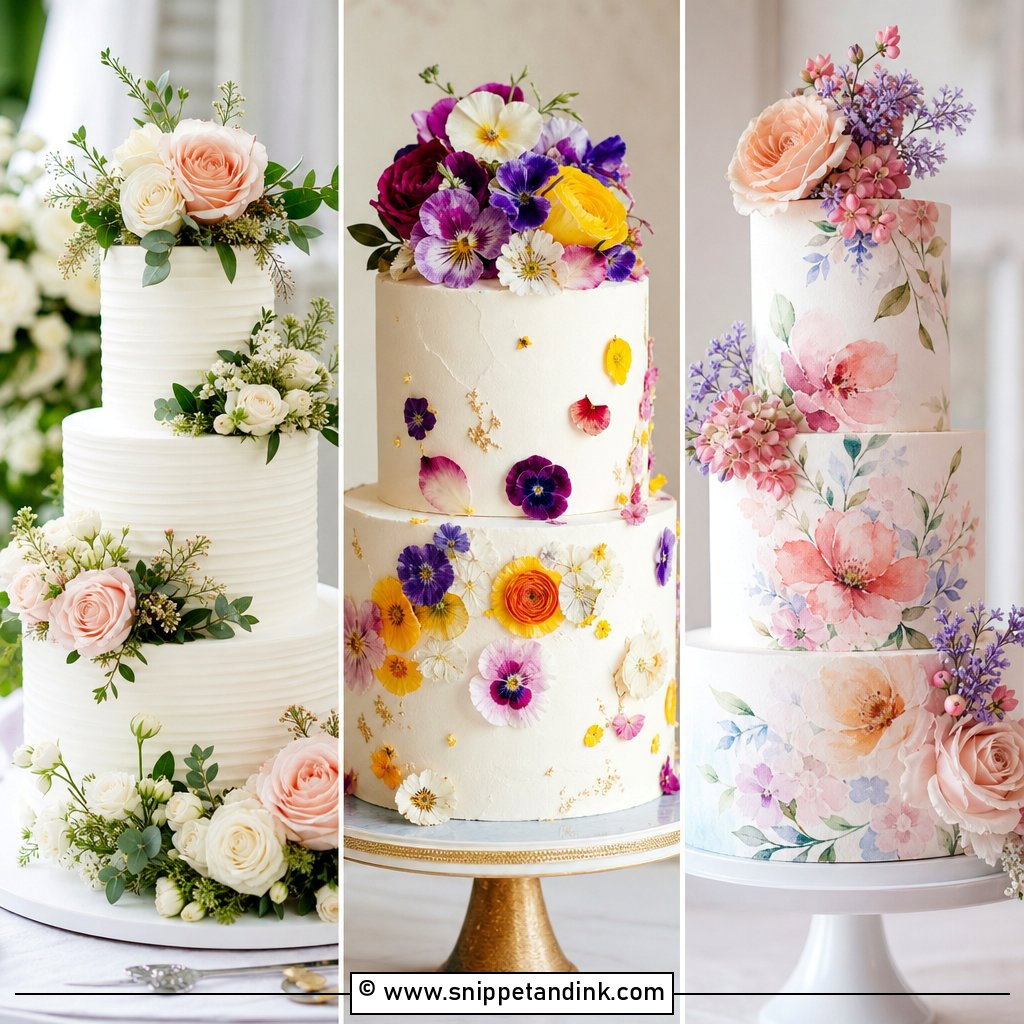
White lace with roses is the design I’m asked for most, and the lace is where you can make it personal. I can copy a motif from the gown, the veil or the invitation, either as raised edible lace on one or two tiers or as hand-piped lace for a softer, slightly irregular finish. White roses keep it bridal; blush ones warm it up. I place the roses in small clusters rather than over every tier, so the lace still has room to be seen. Vanilla, almond, lemon and champagne sponges all suit it.
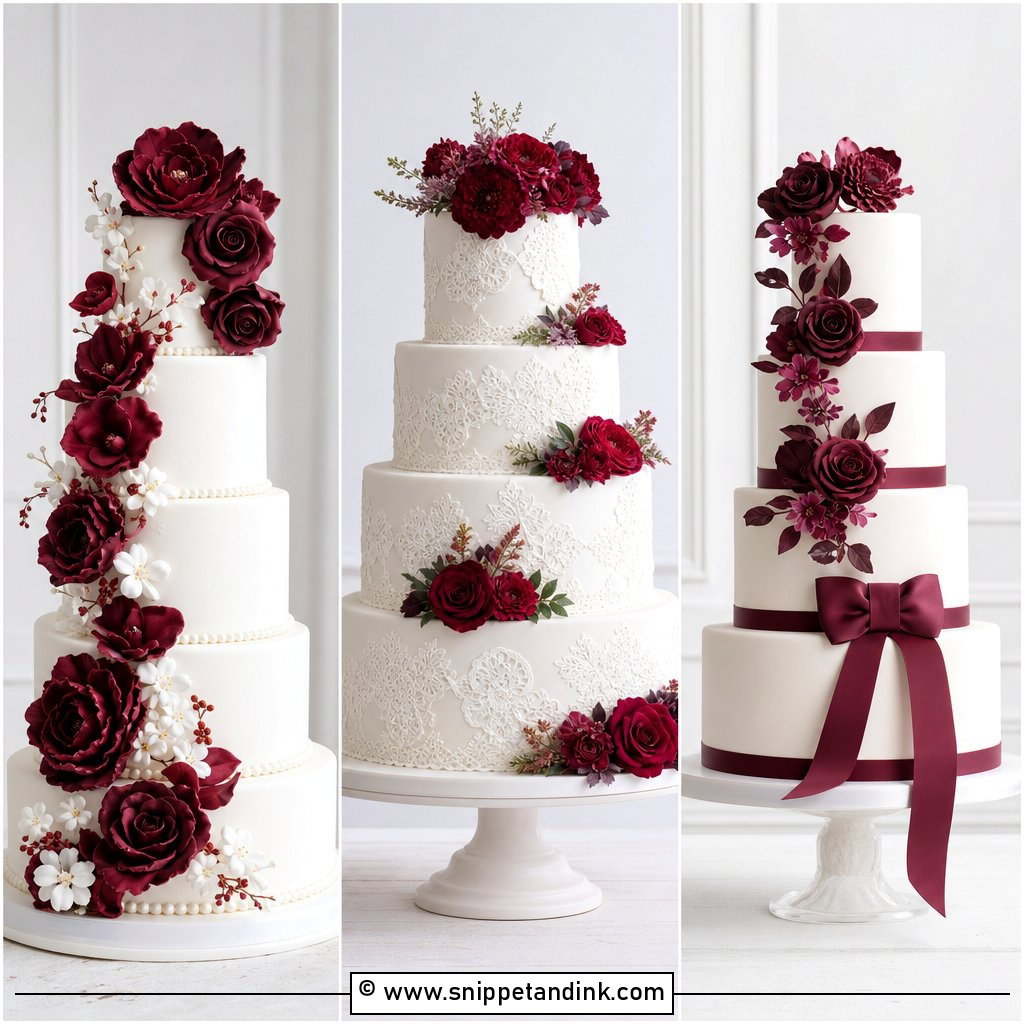
2. Vintage Lace Wedding Cake With Peonies
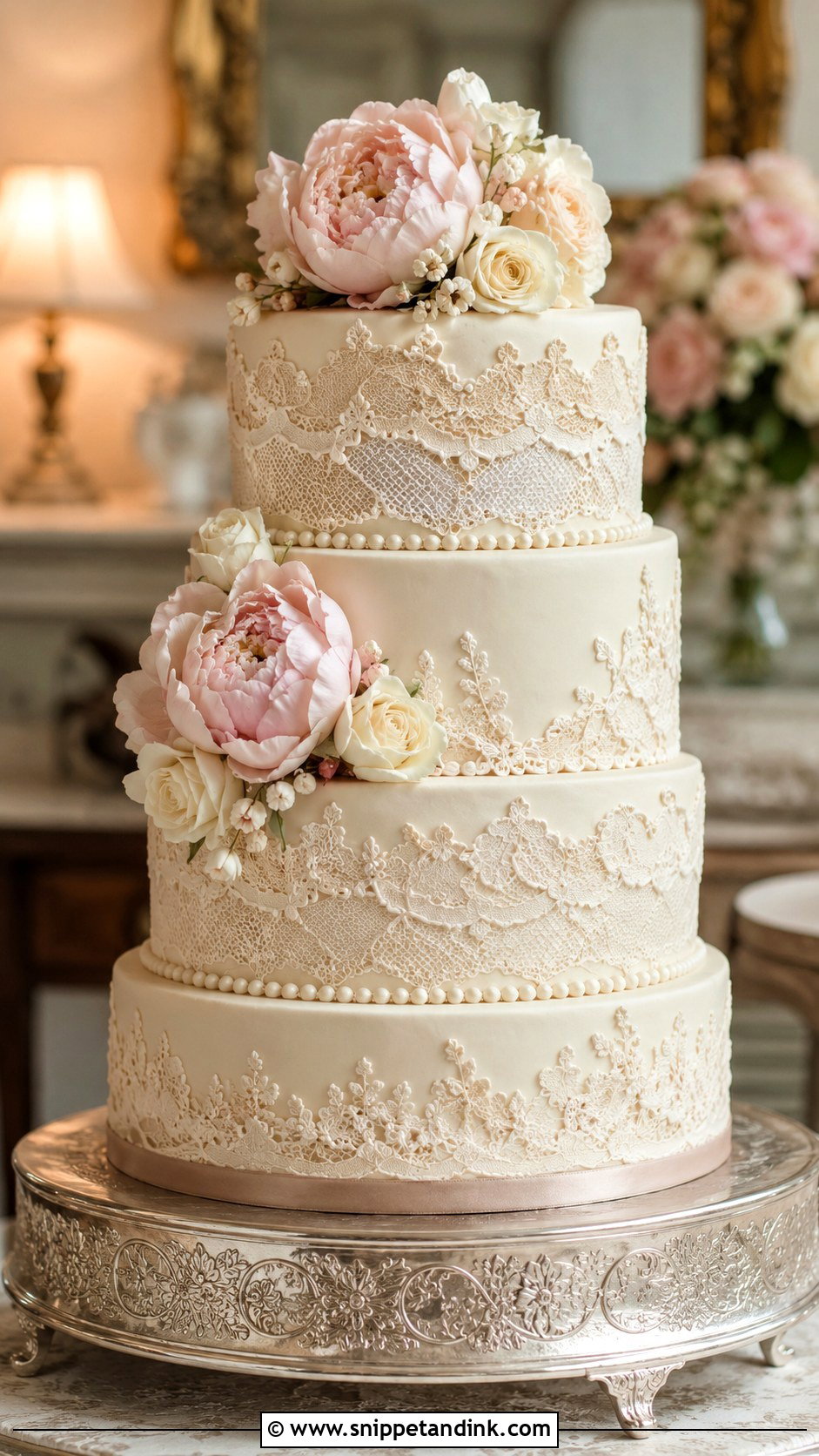
Peonies have so much volume that I treat the lace as the quiet part here. Ivory frosting, fine lace panels and large blooms sitting between the tiers give the cake an heirloom feel that suits a ballroom, a garden or a historic house. Pearl piping, scalloped edges or a satin ribbon push it further toward antique. Keep the palette in ivory, dusty pink and pale peach. One honest warning about fresh peonies: their season is short, and outside late spring the florist may only find them imported and pricey, so sugar peonies are worth considering.
3. Buttercream Lace Wedding Cake With Fresh Flowers
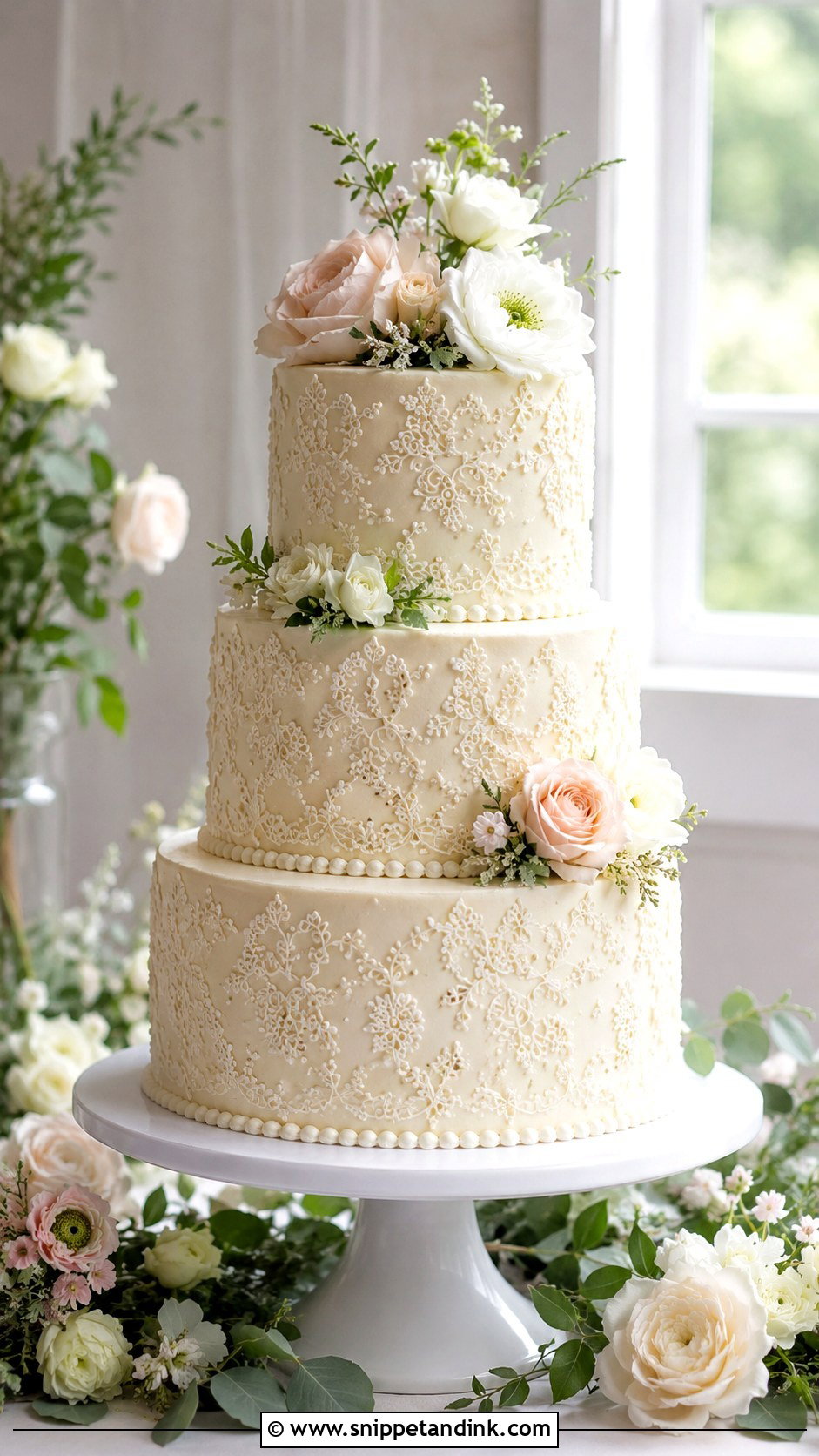
Buttercream gives a softer, creamier look than fondant, and piped lace on it looks properly handmade. I pipe it with a fine round tip onto a well-chilled crusting buttercream; on a warm, soft surface the lines drift and lose their crispness. Fresh flowers can run in a diagonal cascade or sit as small side clusters. They never touch the cake directly in my kitchen: stems are wrapped and set into food-safe picks. Roses, ranunculus, orchids and lisianthus all sit well against piped buttercream lace.
4. Edible Lace Wedding Cake With Sugar Flowers
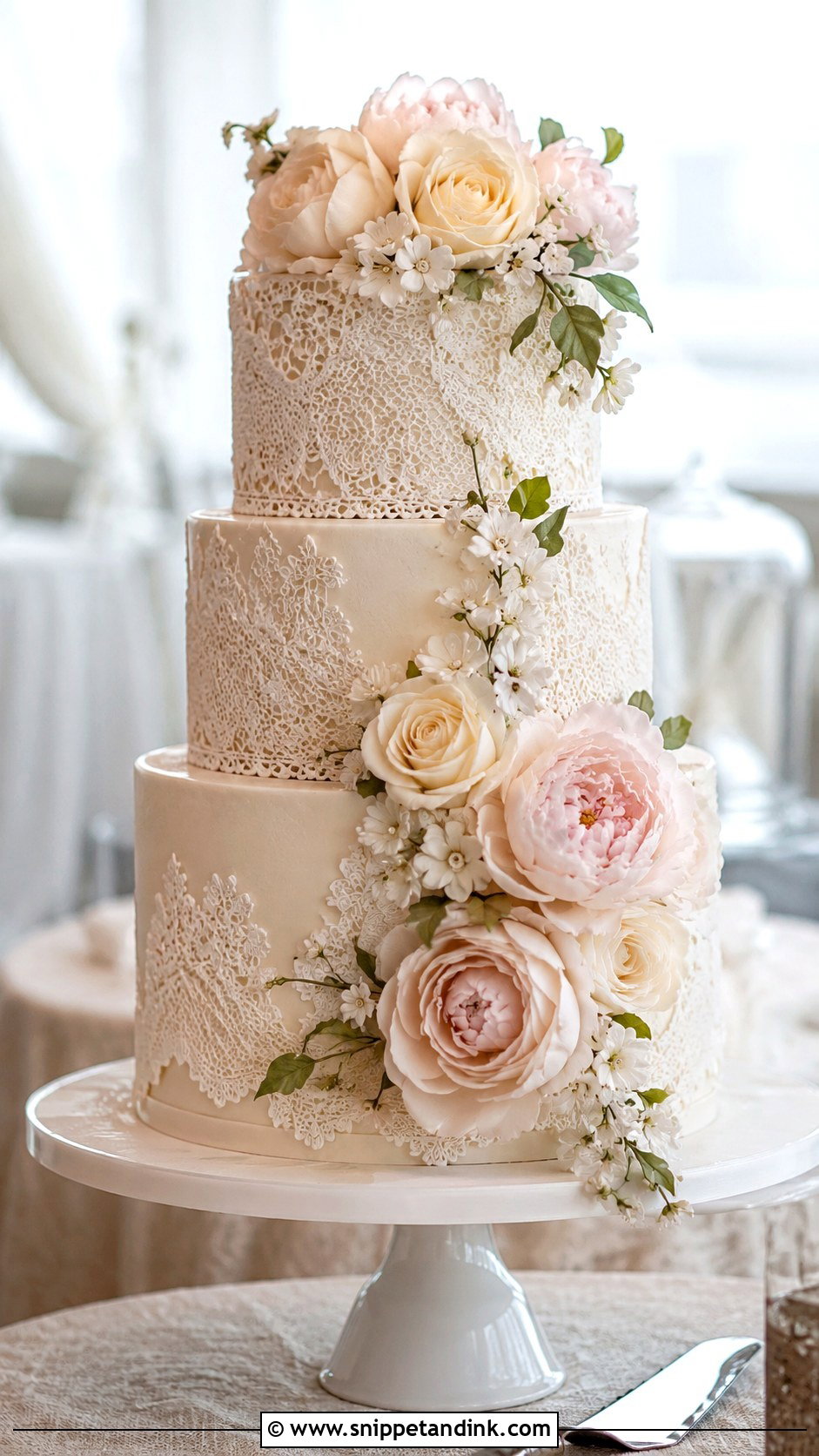
Sugar flowers are the answer when you need the cake to look exactly the same at 10 p.m. as it did at noon. I can tint them to a swatch and size them to the tier, and they don’t wilt in a warm marquee. Edible lace wraps around fondant like fabric and contrasts nicely with the smooth surface. I like a mix of one or two large blooms with small blossoms to fill gaps, which keeps the cake detailed without crowding it. Plan ahead: good sugar flowers take days to dry, so they’re made well before the cake is baked.
5. Lace Wedding Cake With Cascading Flowers
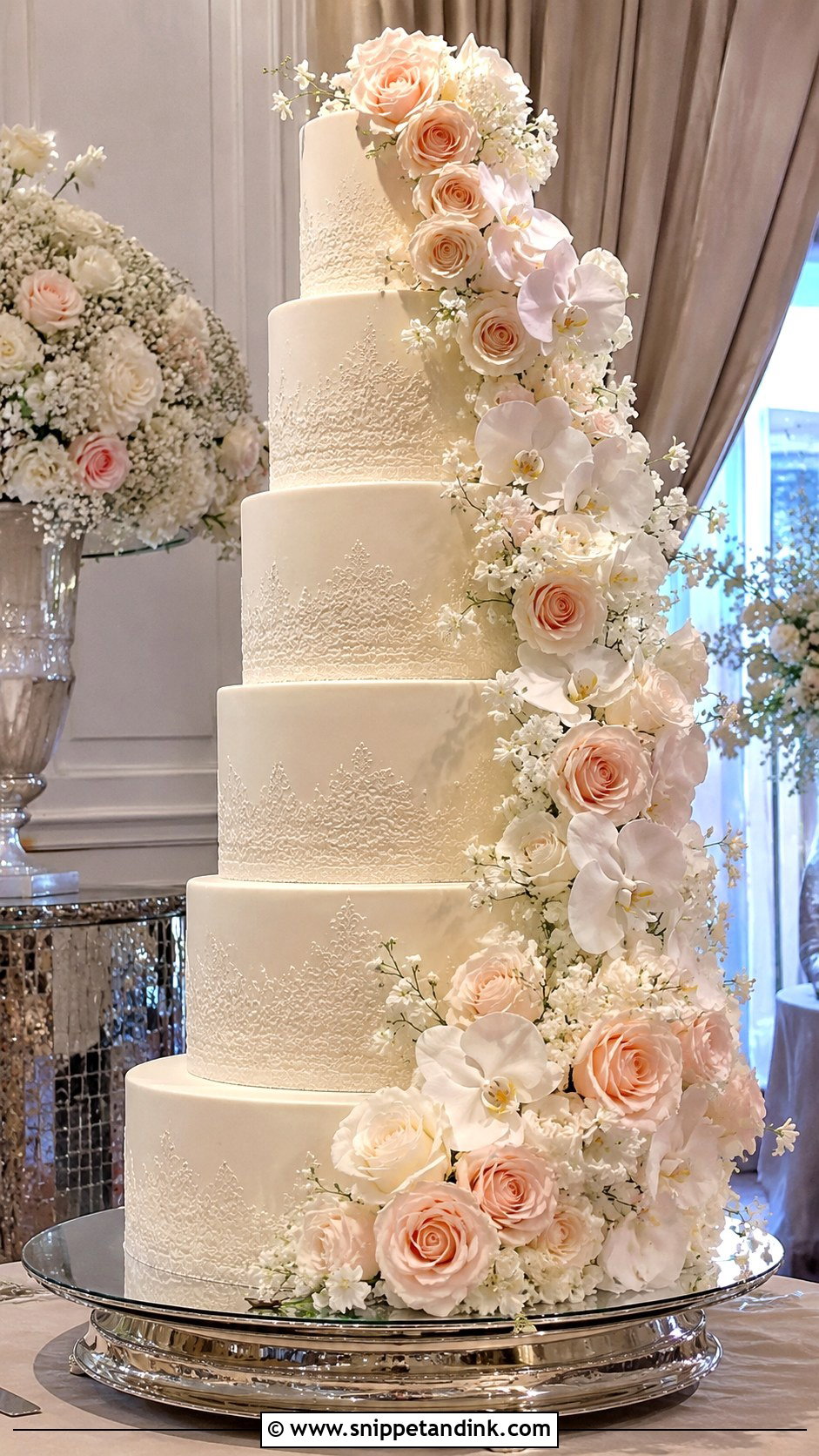
A cascading flowers design gives a cake movement, with blooms flowing from the top tier down one side. The lace works best as a background here, especially when the flowers are colorful or full. Tall cakes, three or four tiers or narrow stacked ones, give a cascade room to travel. Roses, orchids, sweet peas and small fillers build depth. The engineering matters: a heavy fresh cascade needs to be wired into a structure, not pushed into the sponge, or the side tiers start to bulge under the weight.
6. Blush Lace Wedding Cake With Flowers
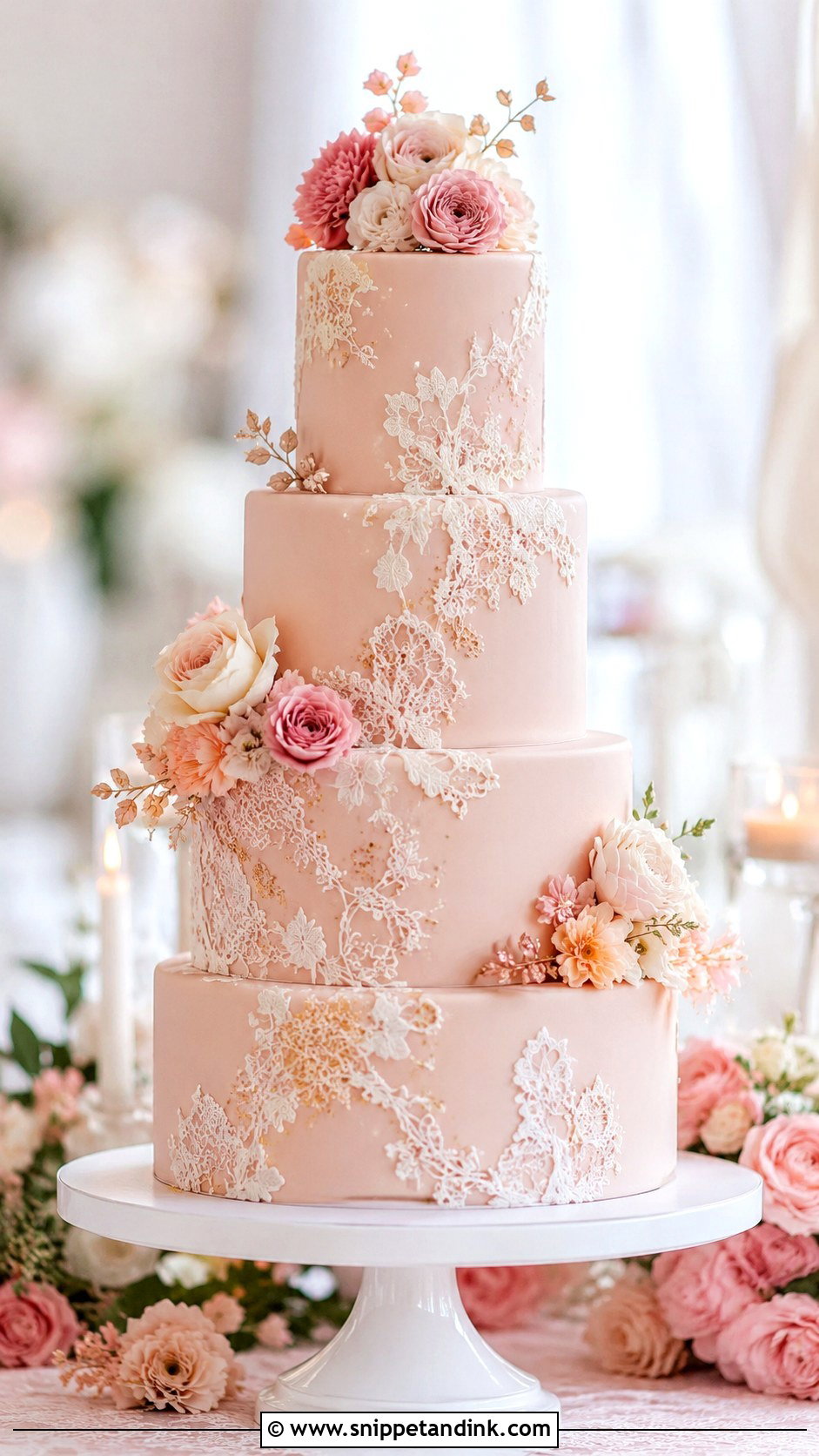
Blush fondant or buttercream under ivory lace appliqué gives a gentle contrast that photographs softly. Flowers can stay in the same family or add cream and dusty rose for depth. For balance, I’d put the lace on the middle tier and the flowers on the top and lower side. Spring and garden weddings suit it. Colored fondant fades under strong light, so if the cake will sit near a sunny window for hours, ask your baker to keep it covered until the room fills.
7. Ivory Lace Wedding Cake With Garden Flowers
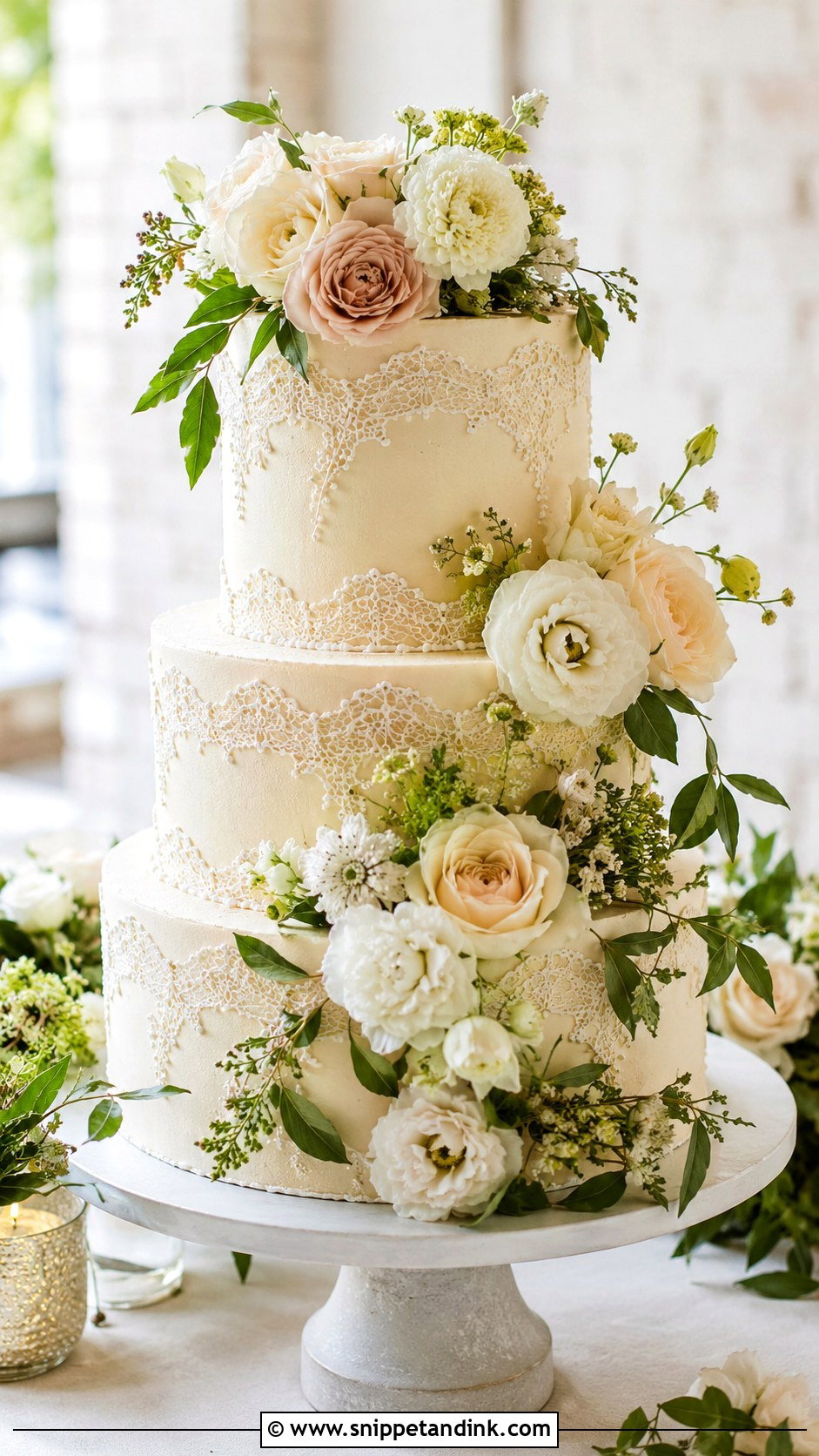
Ivory reads warmer than bright white, so it sits naturally beside loose garden flowers. Think roses, ranunculus, lisianthus, scabiosa and trailing greenery set in relaxed clusters. I’d mold or pipe the lace to look like an old textile, and keep the frosting smooth so the flowers aren’t fighting a heavy texture. It looks good on a wooden table, an antique stand or a plain white pedestal. Scabiosa and lisianthus last well out of water, which matters more than most couples realize on a cake that sits out all afternoon.
8. Tall Lace Wedding Cake With Floral Topper
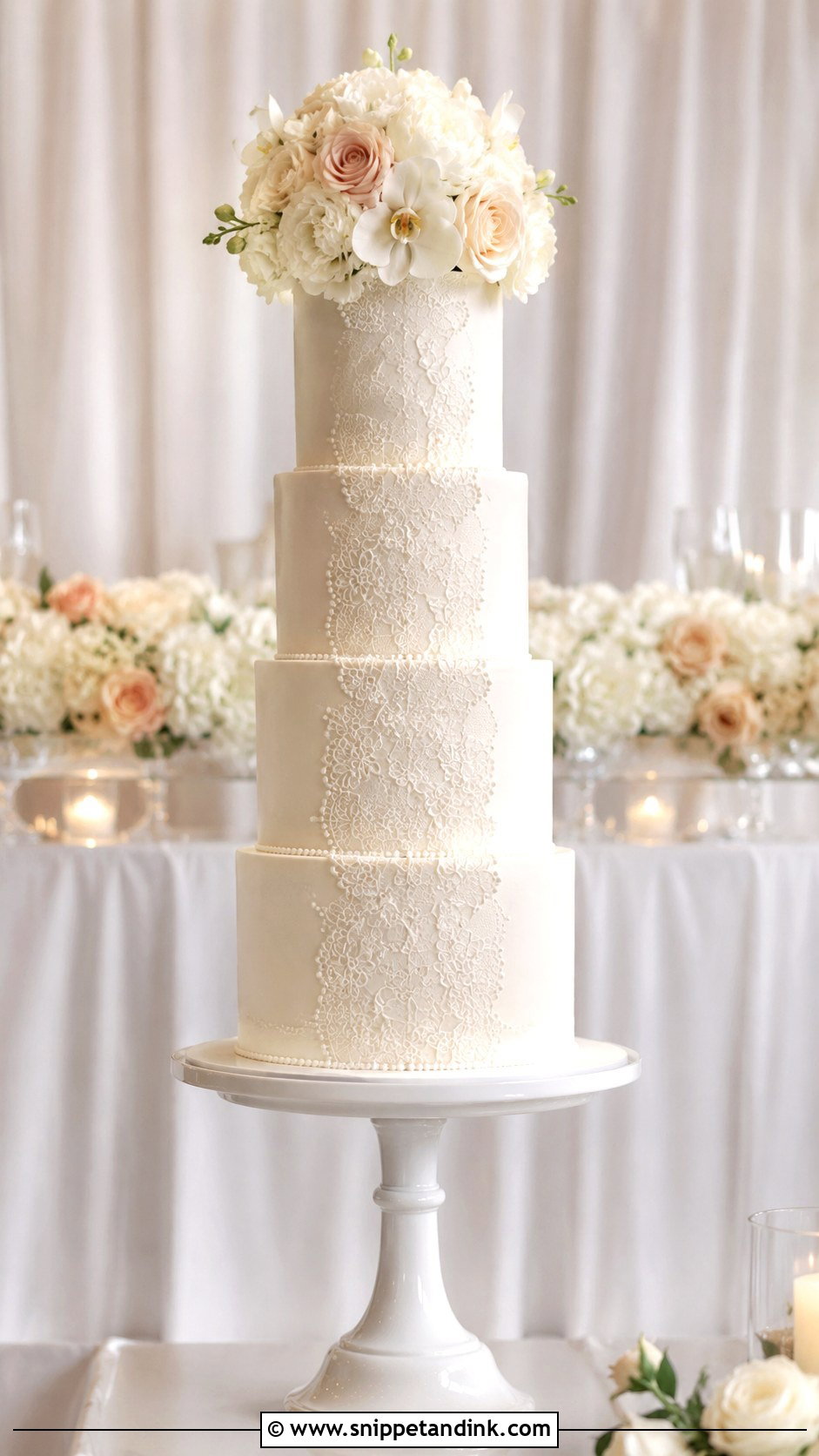
A tall cake gives you height without needing much decoration. Narrow, cleanly stacked tiers already feel elegant, so the lace can wrap every tier or only alternate ones for a lighter rhythm. Roses, orchids, peonies or sugar flowers form the topper. I keep the topper compact and add one small side cluster lower down, which ties top to bottom. Height means extra dowels and often a central rod. Tall cakes are usually transported in sections and stacked at the venue, so the setup time needs to be on the schedule.
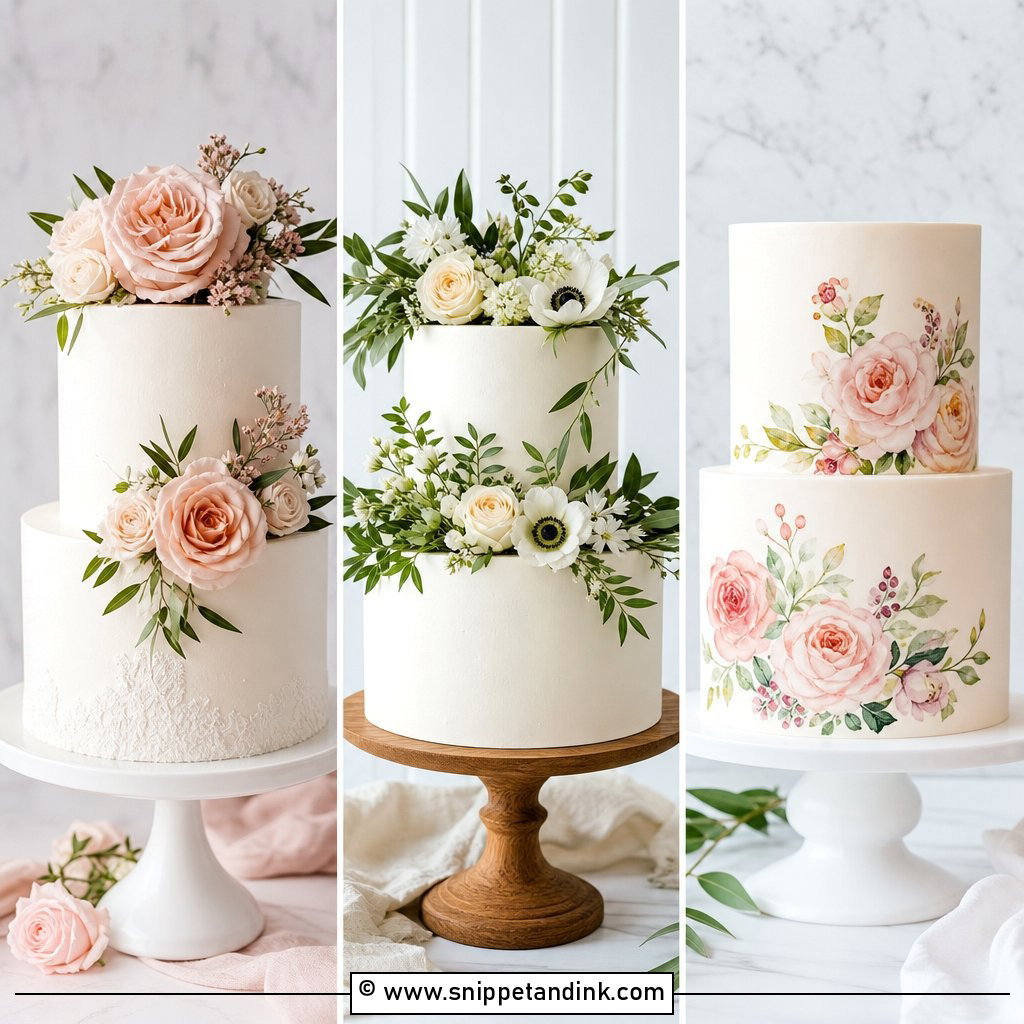
9. Two Tier Lace Wedding Cake With Flowers
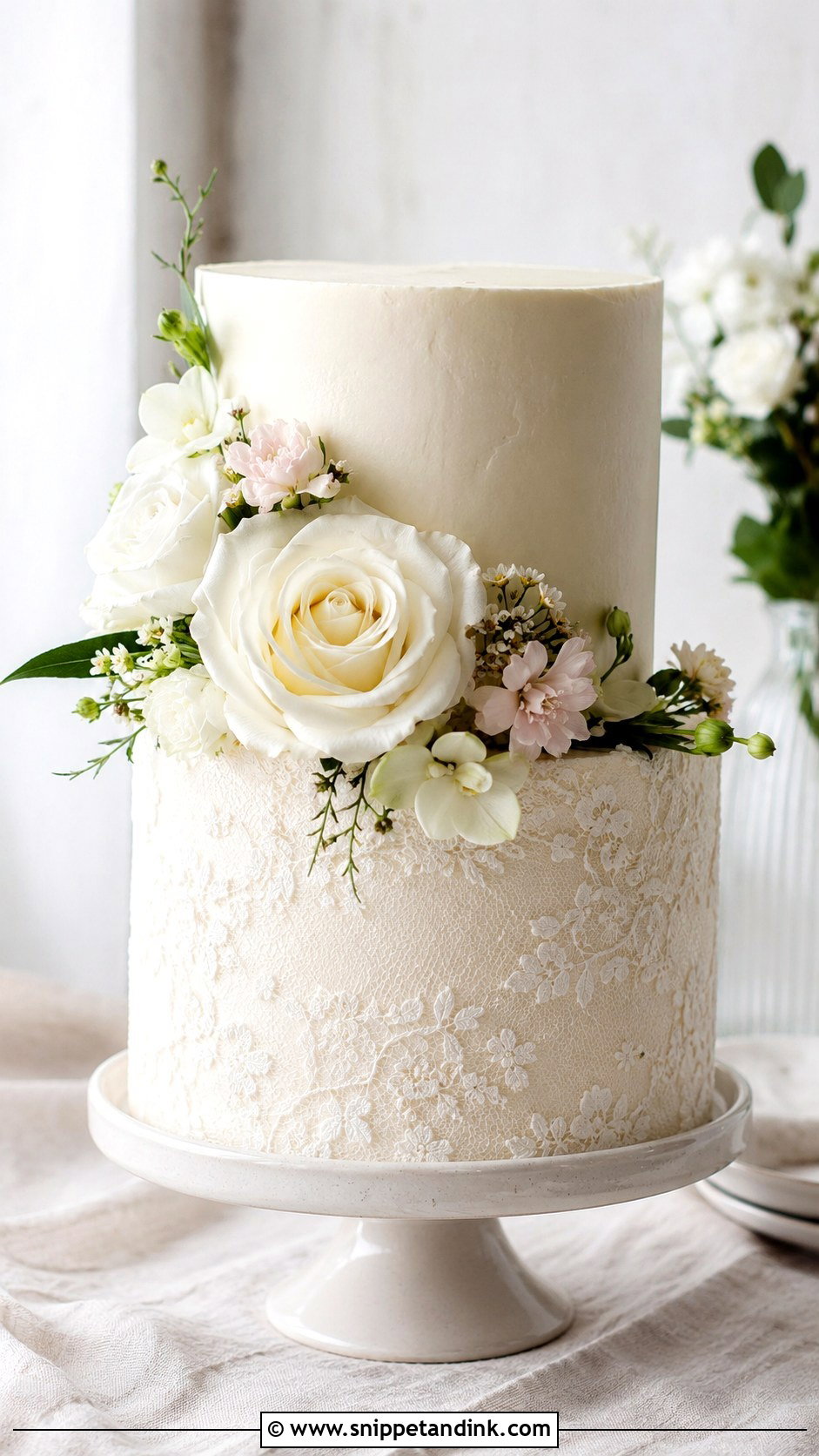
Two tiers suit an elopement or a guest list under about fifty, and lace gives a small cake a finished, luxurious look. I often pair one fully laced tier with one smooth one, then set flowers where they meet so the join looks full. Soft roses, small orchids and fresh greenery work well. Vanilla bean, almond, lemon or strawberry sponges suit the light look. If you need more servings, a kitchen cake of the same flavor, cut out of sight, keeps the display cake small.
10. Three Tier Lace Wedding Cake With Flowers
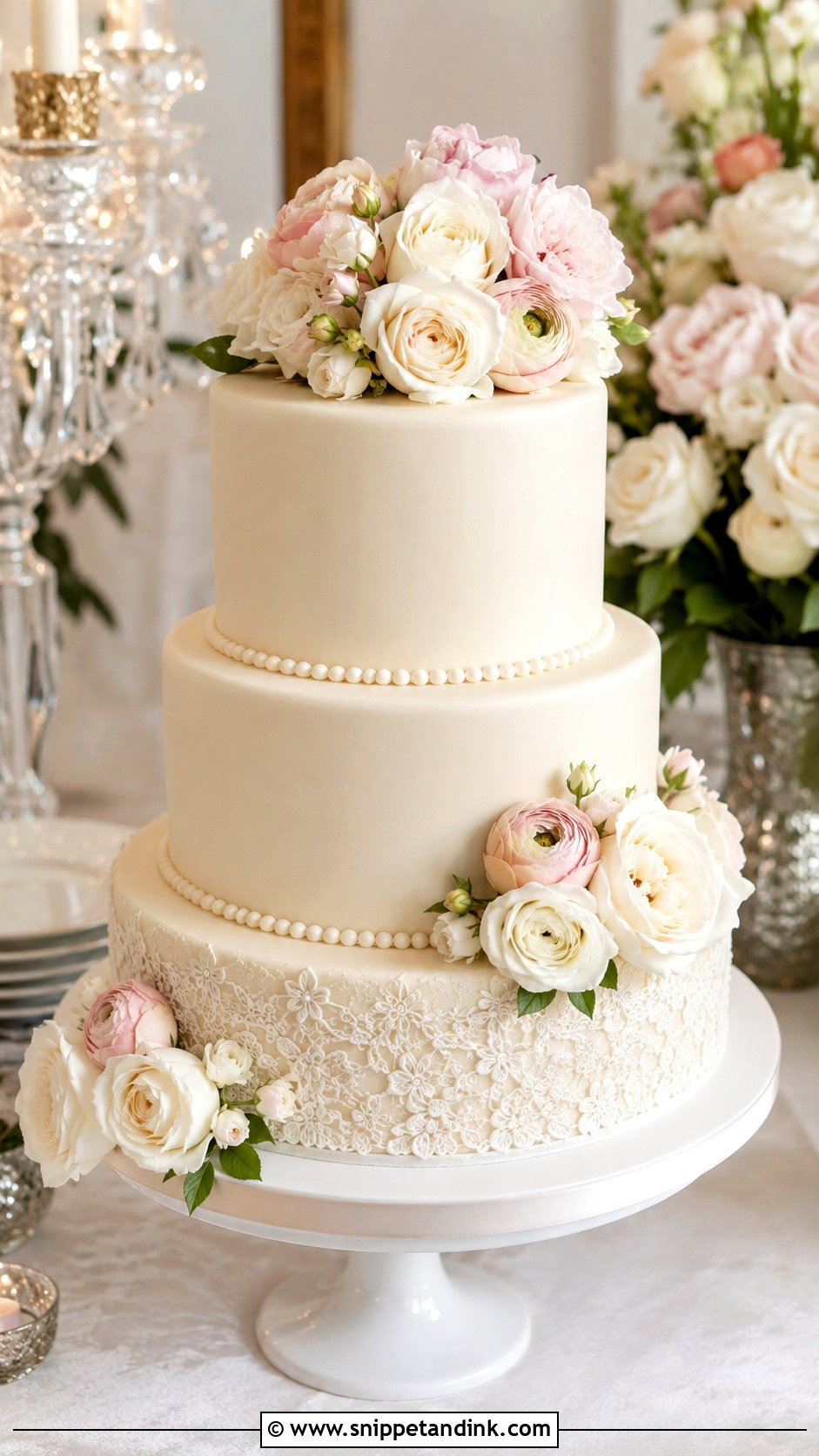
Three tiers is the size most couples picture first. It has room for smooth frosting, lace appliqué, piped borders and flowers without looking crowded. For a clean version, I put lace on the bottom tier, keep the middle smooth and add flowers top and side. For a fuller one, lace repeats on every tier with clusters between. It fits a garden tent as easily as a hotel ballroom, which is why I recommend it to couples who haven’t settled on a style yet.
11. Floral Lace Wedding Cake With Pearl Details
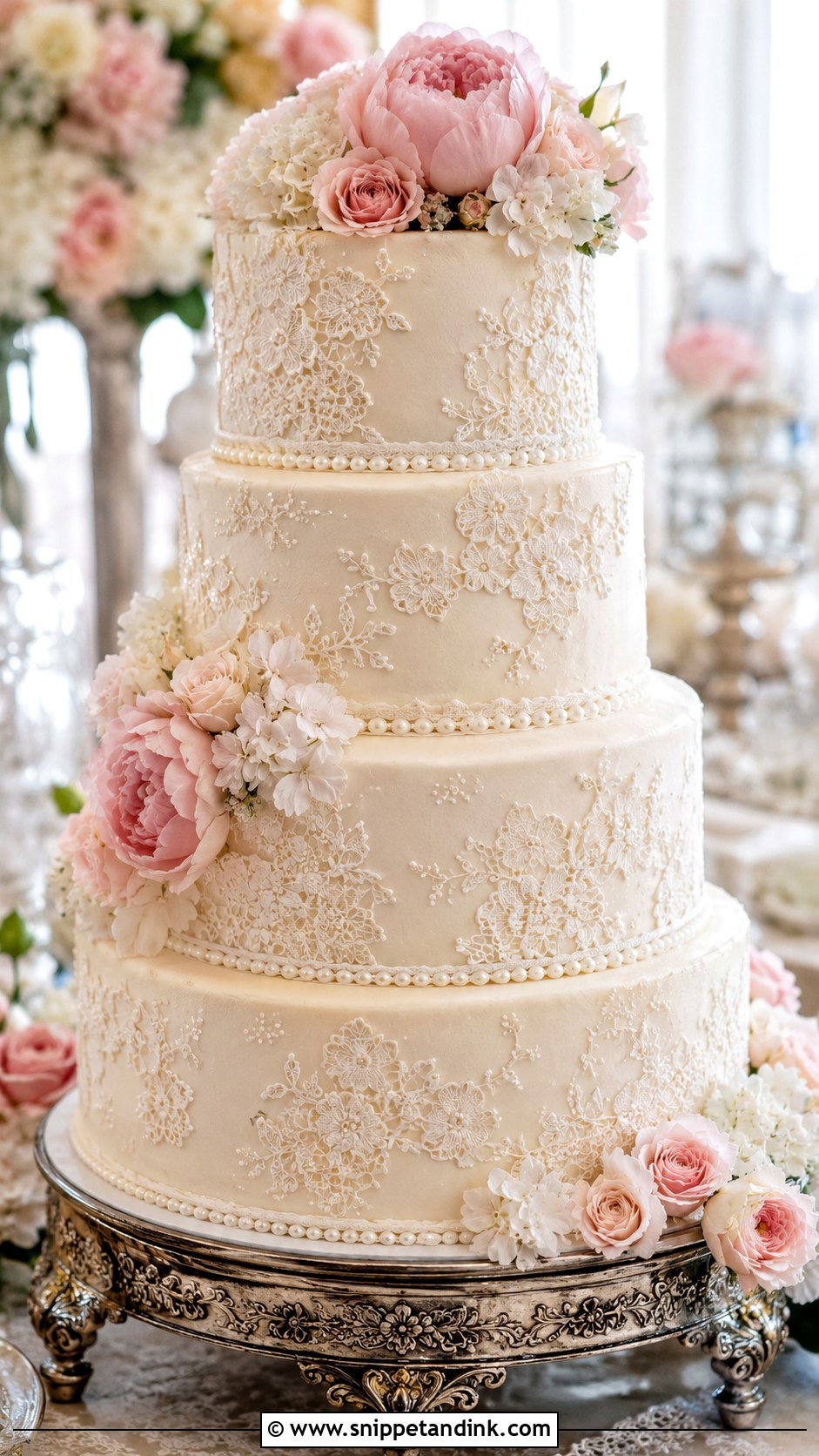
Pearls are where restraint matters most. I pipe them in buttercream, roll them from sugar or set edible pearls along the lace pattern, but too many make the cake look fussy. A single border or a light scatter is enough. Floral lace patterns pair well with roses, peonies and hydrangeas, and ivory frosting with pale pink flowers is my favorite version. If your gown has pearl beading, matching the size of the pearls is a small detail guests do notice up close.
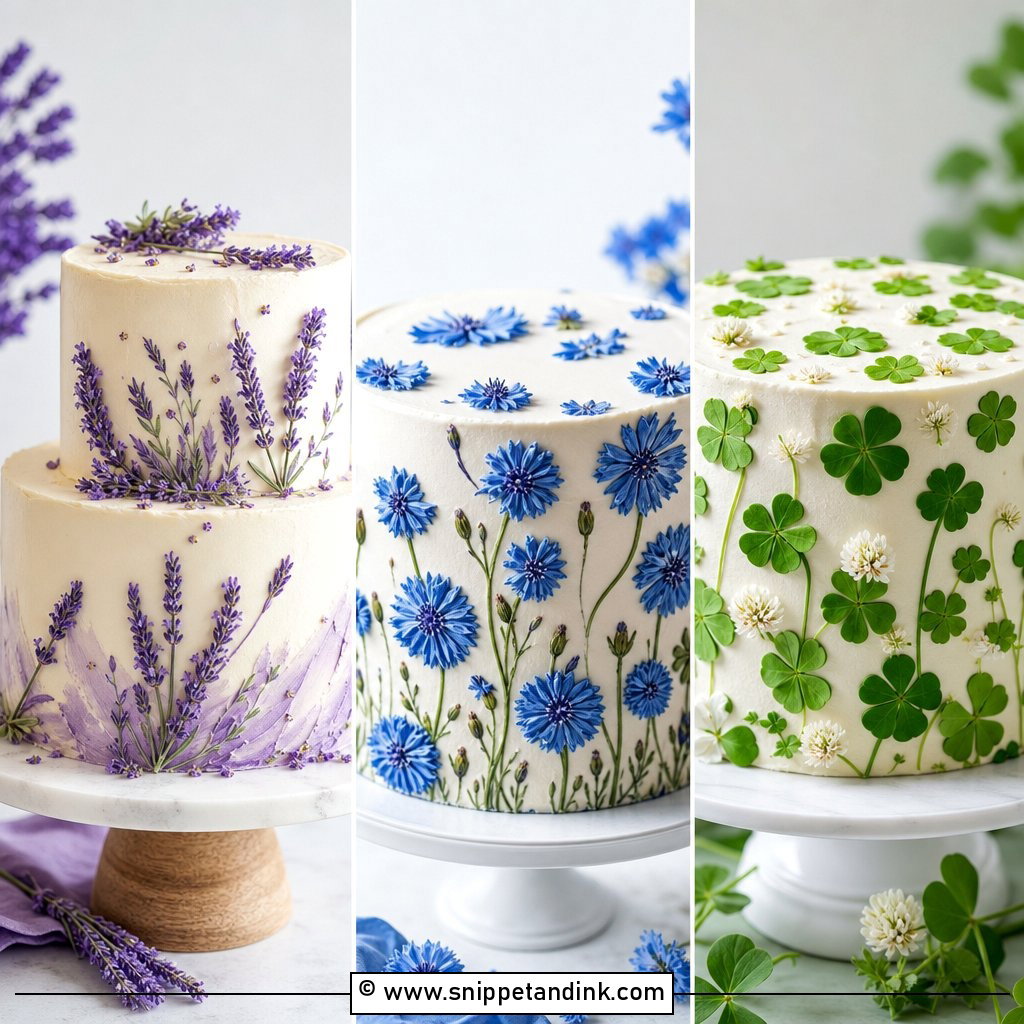
12. Lace Wedding Cake With Pressed Flowers
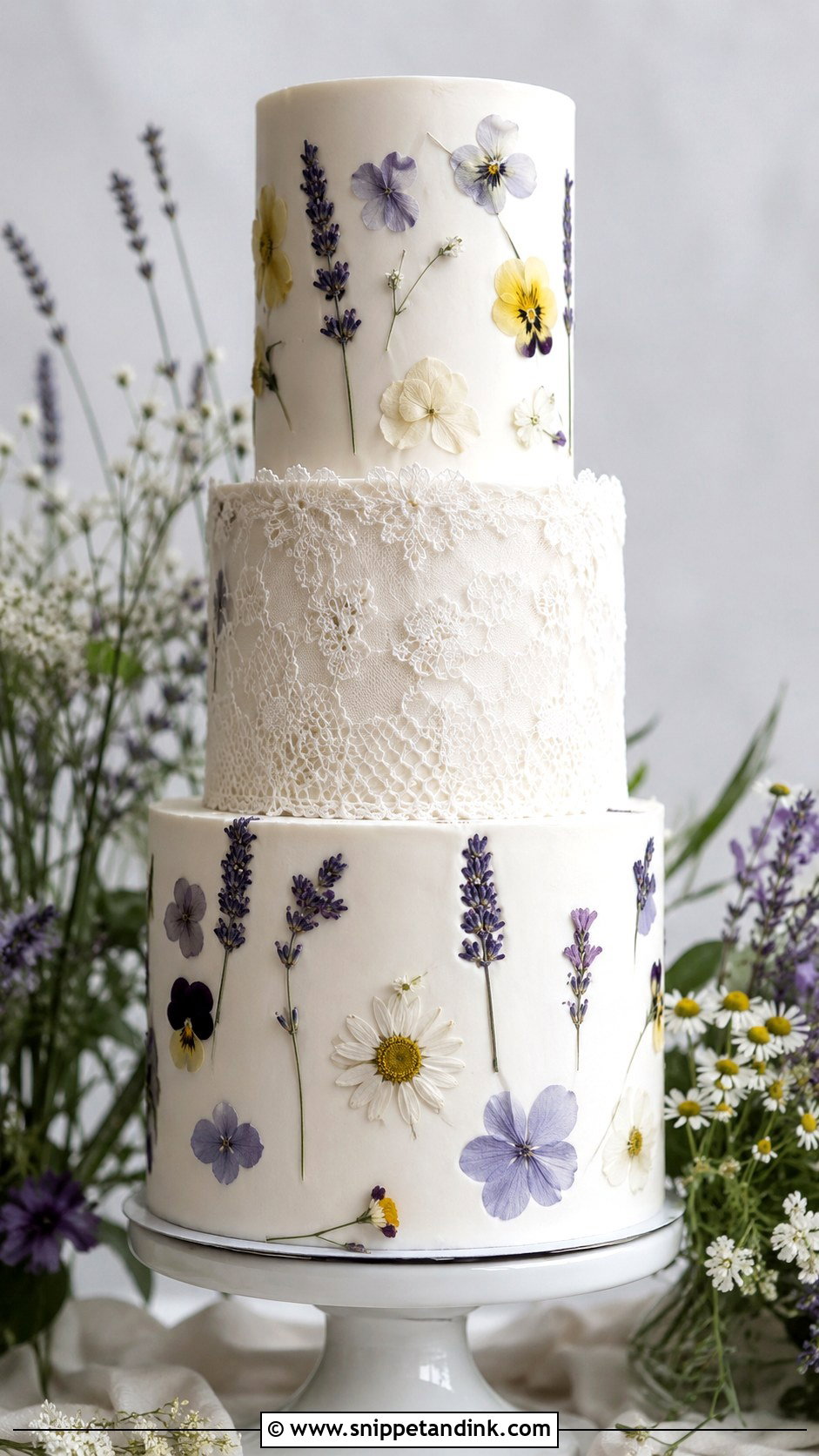
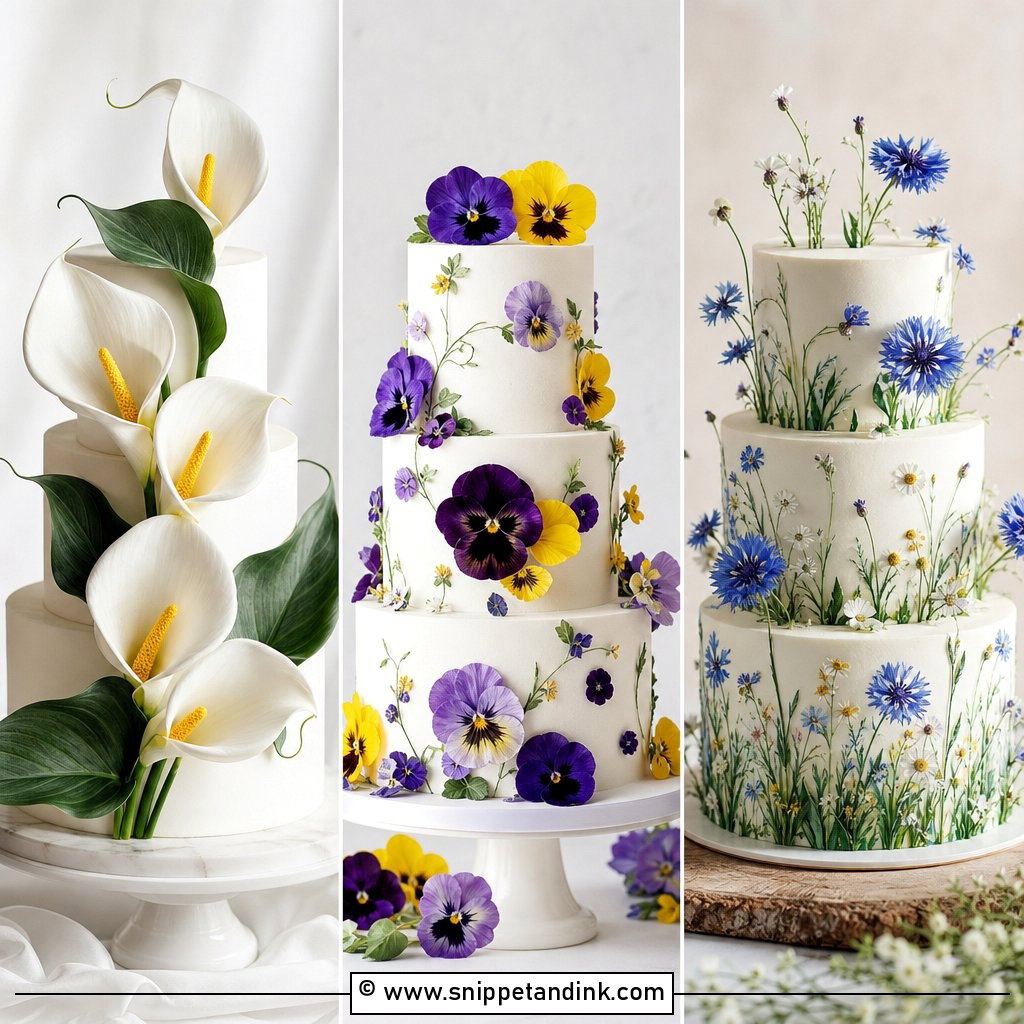
Pressed flowers sit flat against the frosting, so you get a botanical look with no bulk. I pair them with lace on just one tier to add texture. They need a clean surface, smooth buttercream or fondant, and they must be edible flowers, grown without pesticides and pressed for food use. Violas, pansies, cornflowers and calendula petals keep their color well when pressed. Lavender, yellow, pink and pale blue give a garden feel that suits brunch receptions and outdoor weddings. On buttercream they can bleed a little color after a few hours, so they go on close to delivery.
13. Lace Wedding Cake With Wildflowers
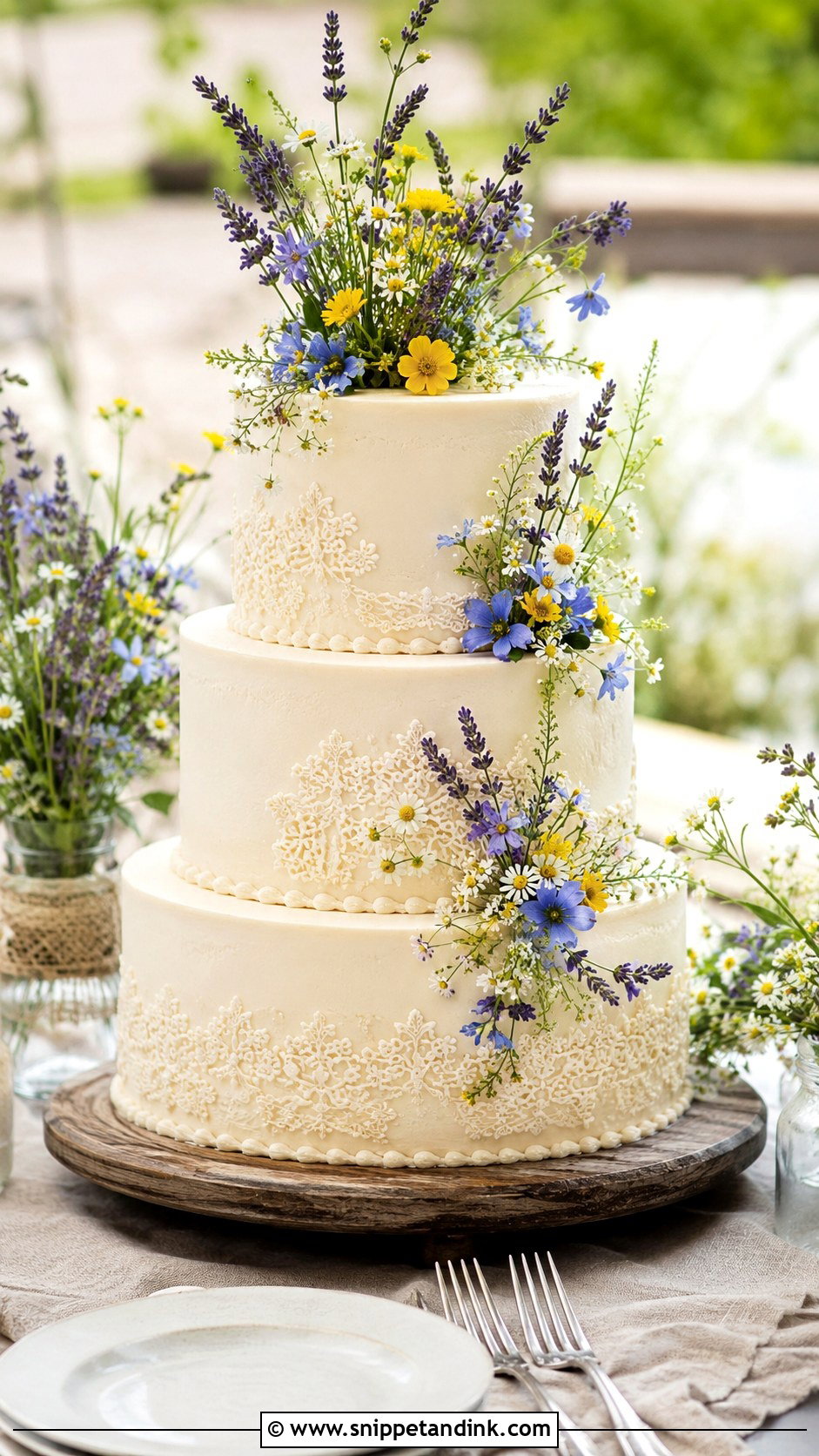
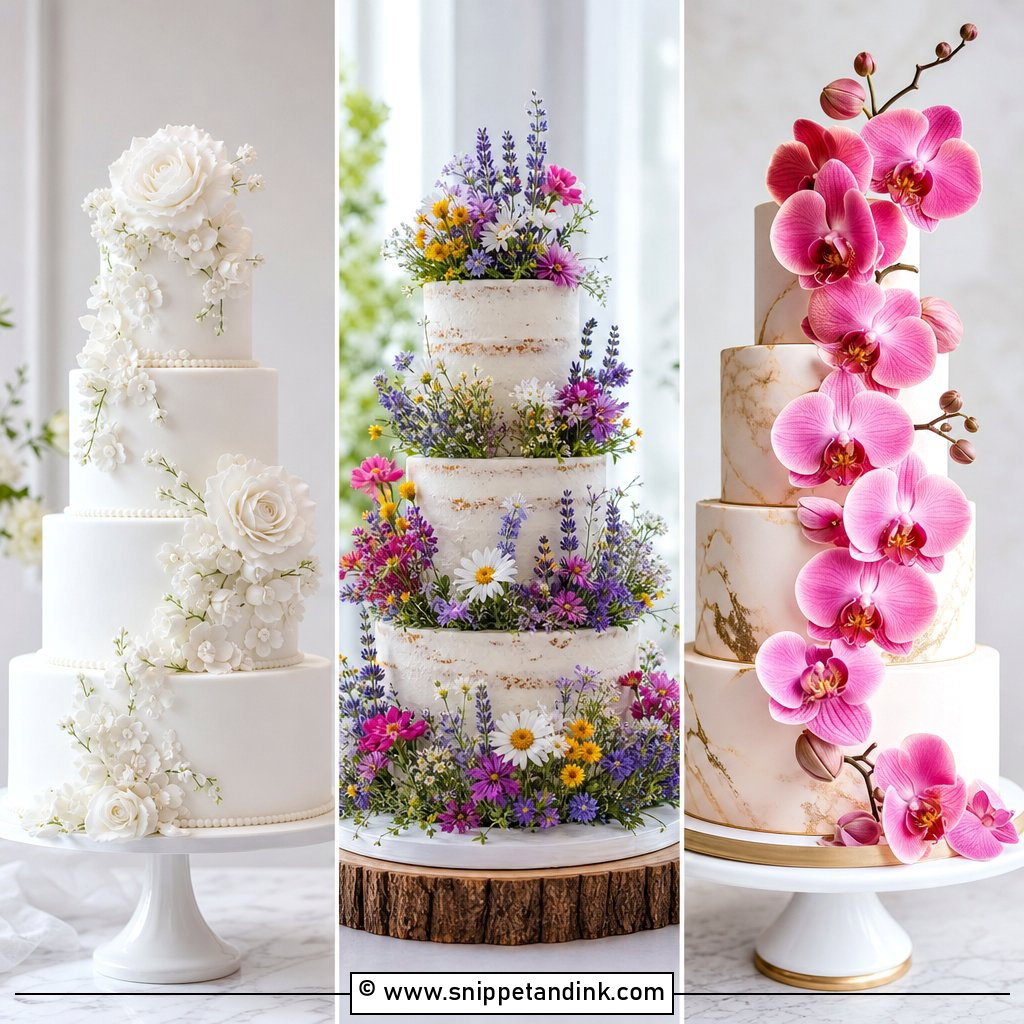
A lace wedding cake with wildflowers is relaxed, with the lace bringing structure and the flowers a meadow feel. Simple ivory buttercream or smooth fondant underneath works best. Small blooms can circle the tiers, tuck into a side cascade or gather on top like a little bouquet. Keep the arrangement airy so the lace still shows. True wildflowers wilt quickly once cut, so I ask florists for hardier lookalikes, like chamomile-style daisies, waxflower and small spray roses, for barn weddings and summer gardens.
14. Lace Wedding Cake With Orchids
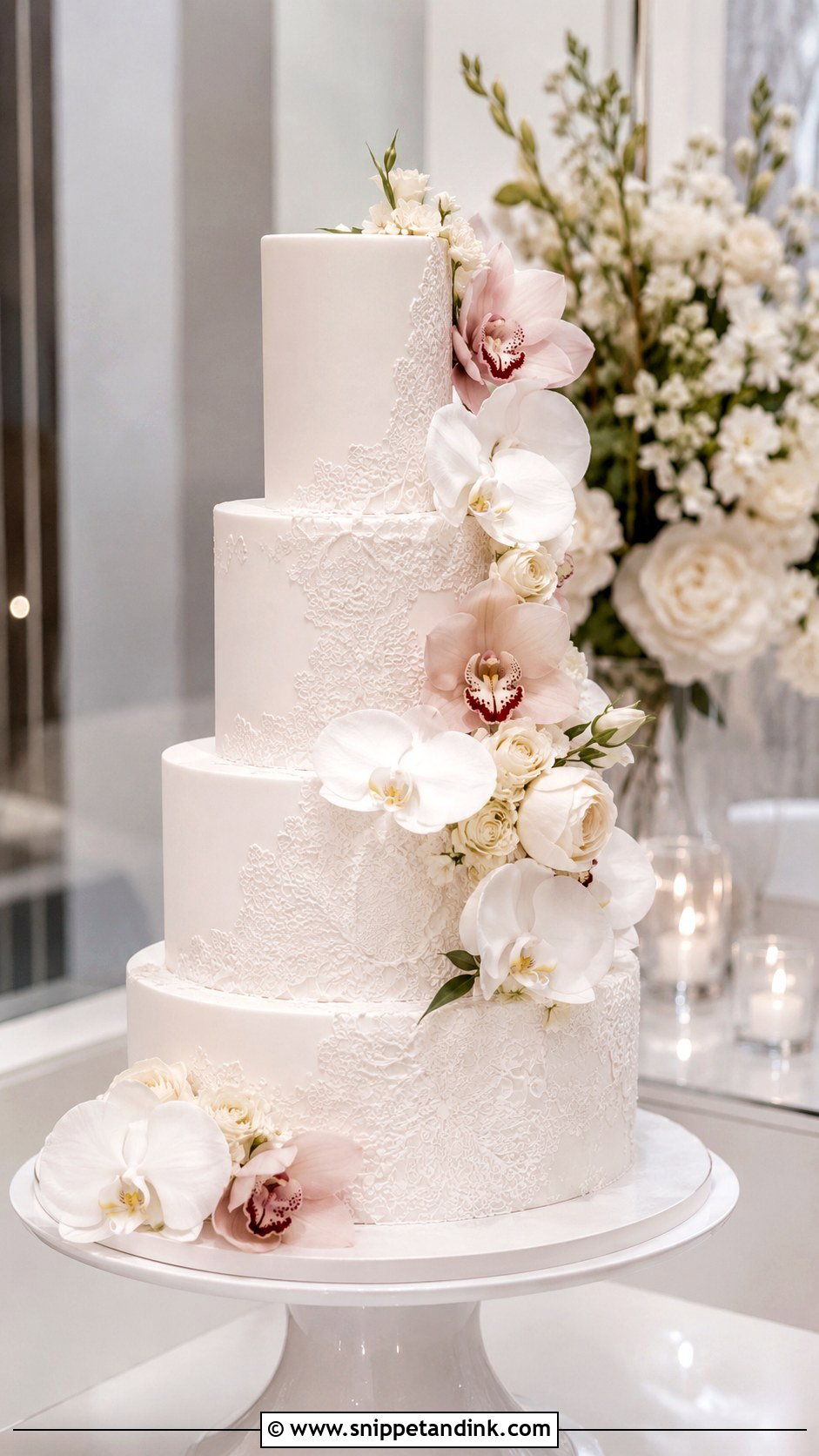
Orchids have a sculptural shape that stands out sharply against fine lace. White keeps the cake classic; blush, lavender or pale yellow adds a quiet color story. They suit tall cakes with smooth fondant and clean edges, and the lace can be a panel, a border or a full wrap on one tier. Leave space between the blooms. Packed tightly, orchids hide the lace and start to look like a corsage. Fresh phalaenopsis and dendrobium orchids hold up well out of water, which makes them a reliable fresh option.
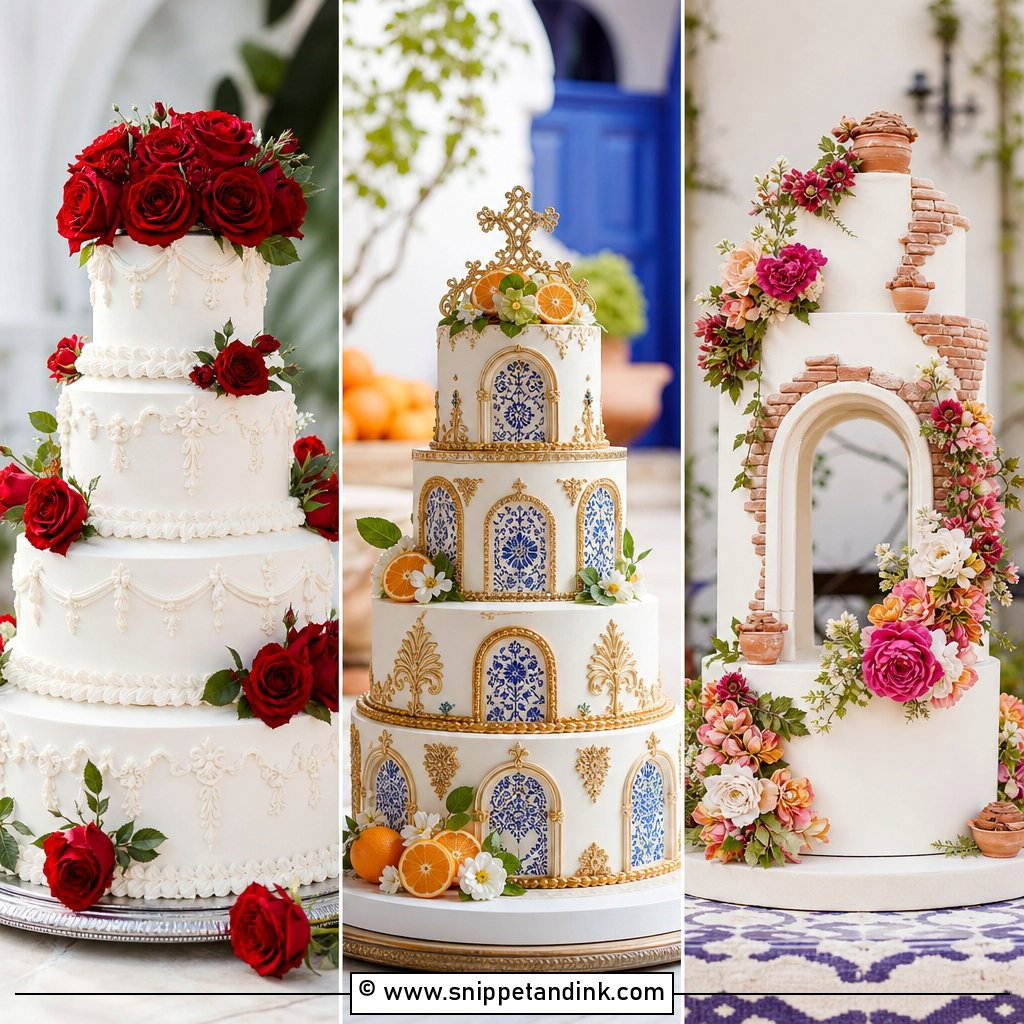
15. Lace Wedding Cake With Hydrangeas
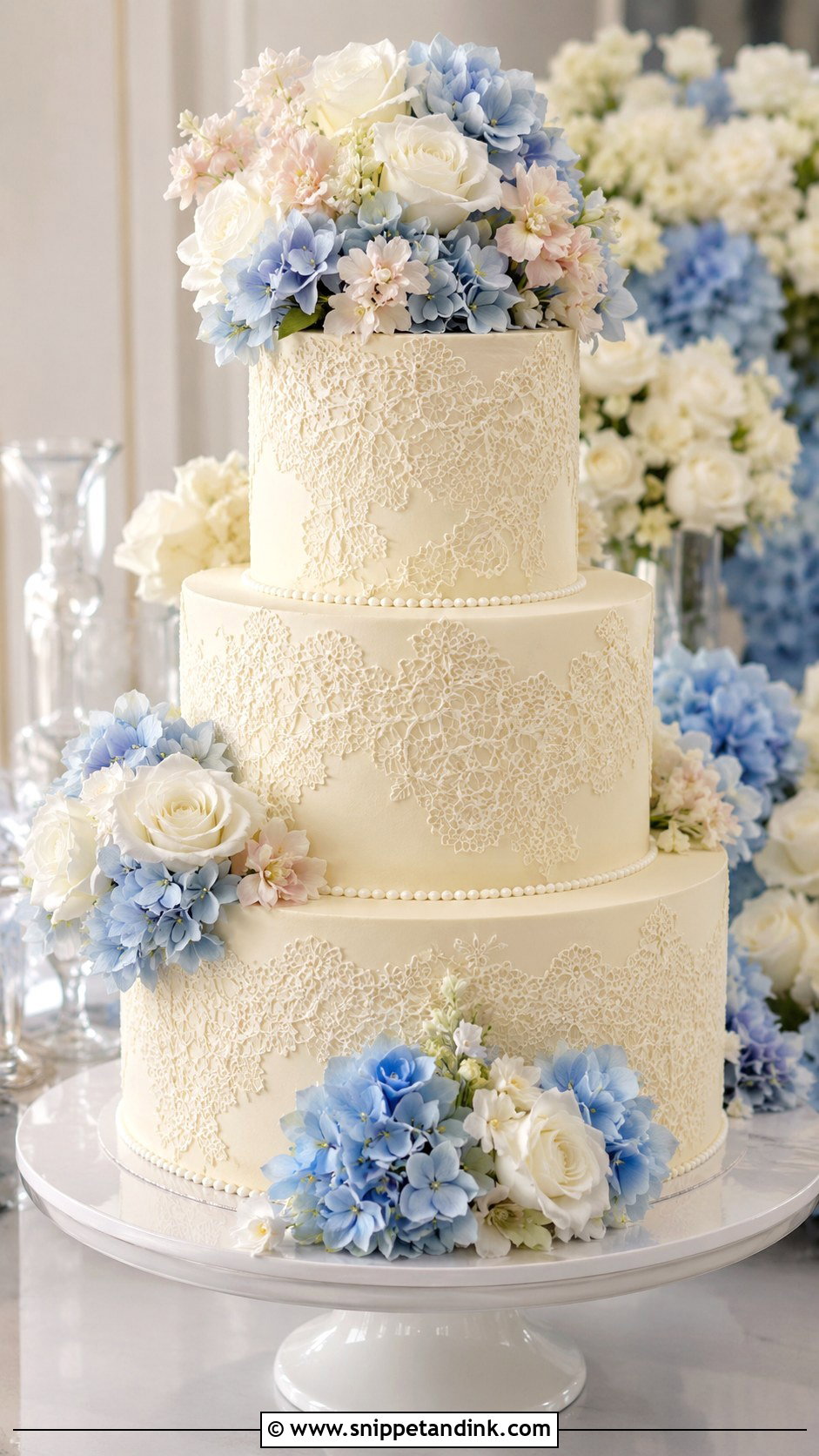
Hydrangeas build volume fast, so one flower type can make a cake look lush. Their rounded petals soften a structured lace pattern, and they suit ivory, pale blue, blush or lavender palettes. Here I’d push you toward sugar hydrangeas. Fresh hydrangeas are not considered food safe, and they wilt quickly without water, so if you do use real ones, they belong in the base arrangement around the stand rather than on the tiers. Talk it through with both the florist and your baker.
16. Lace Wedding Cake With Lavender Flowers
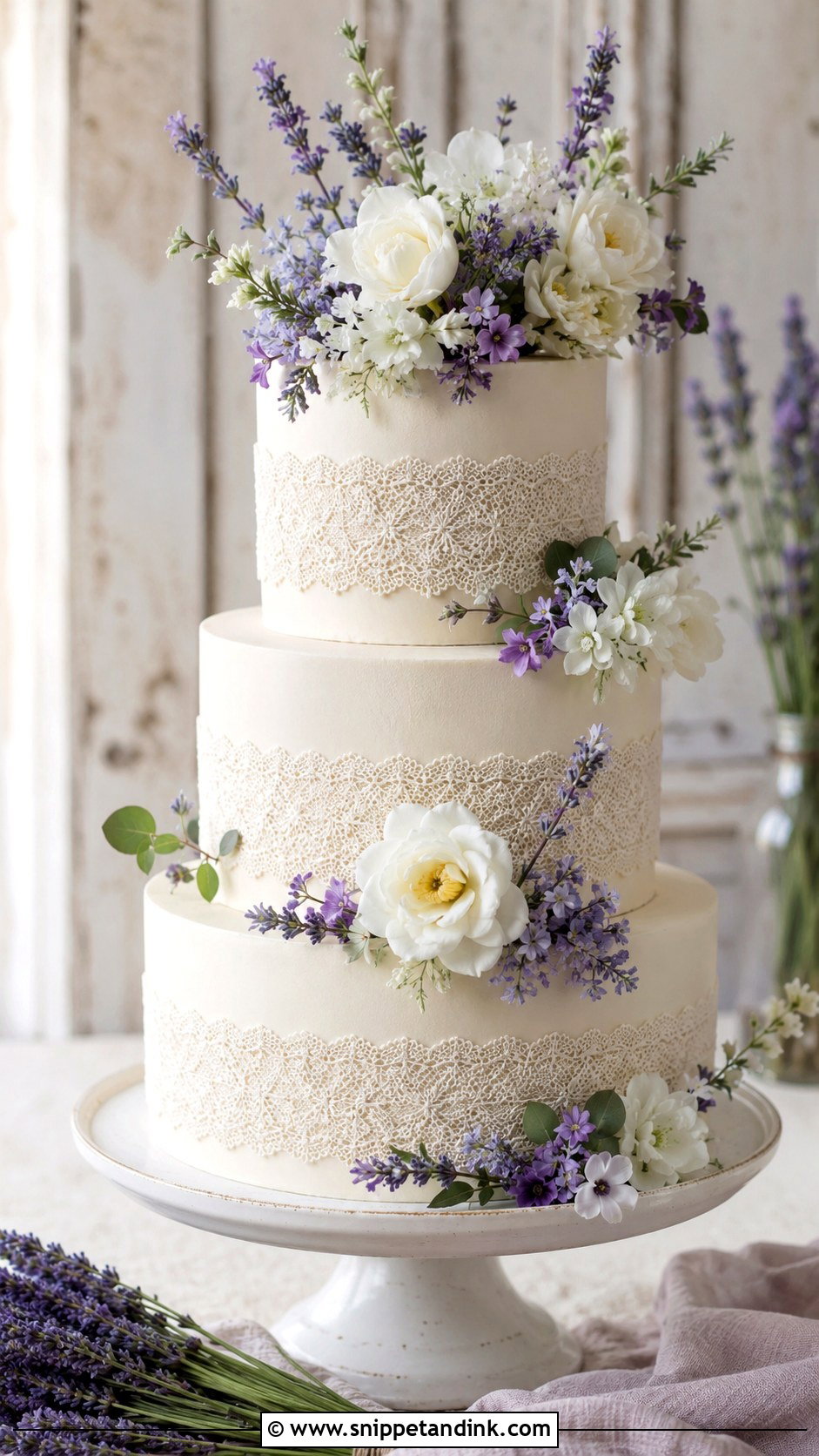
Lavender suits countryside weddings and soft purple palettes. I keep the cake ivory or white, with lace adding texture around each tier, and set small sprigs, fresh culinary lavender or sugar stems, in clusters. For more fullness, add white roses or lisianthus. Lemon, honey and almond sponges sit well with lavender, and a little goes a long way in the flavor too. Keep the decoration light. Too much lavender on a buttercream cake starts to look rustic in a way the lace was meant to balance.
17. Gold Lace Wedding Cake With Flowers
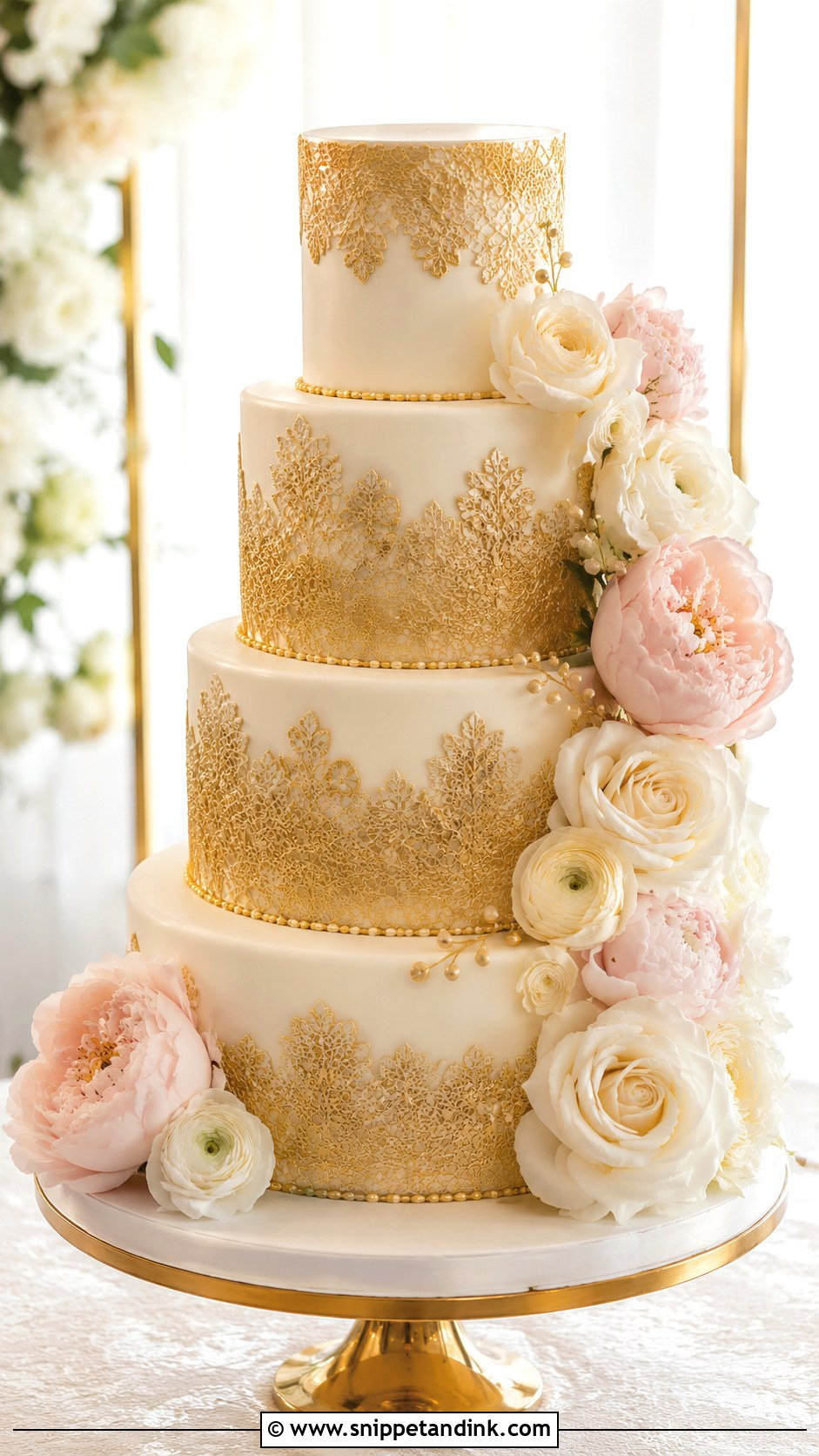
Gold on lace looks glamorous, and I can paint it onto raised lace, brush it over a stencil or use it only as a trim. The flowers soften the shine, so white roses, blush peonies, orchids or cream ranunculus work best. I’d keep gold to one or two tiers. A fully gilded cake starts to look like a sculpture rather than a wedding cake. Edible gold paint is applied by hand and needs a dry, set surface, which is another reason this design usually means fondant rather than soft buttercream.
18. Dusty Blue Lace Wedding Cake With Flowers
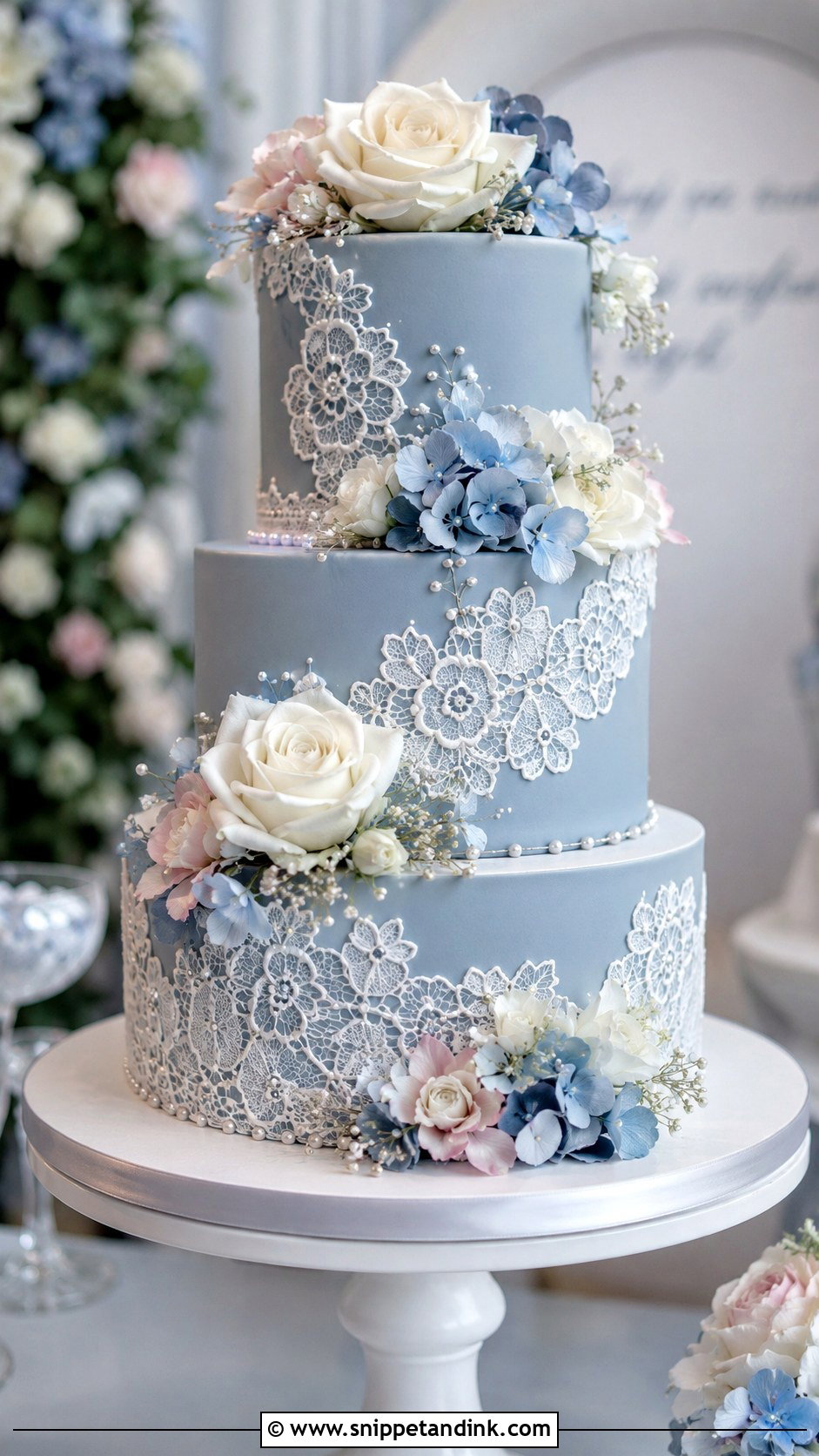
Dusty blue lets ivory lace stand out gently without the contrast feeling bold. White roses, pale blue hydrangeas or blush garden flowers make a soft palette, and silver or pearl details finish it. Blue can sit on one statement tier or cover them all. Getting the shade right is fiddly. Blue gel colors in fondant can drift toward grey or teal, so I always make a test swatch and check it against your color card in daylight.
19. Black Lace Wedding Cake With Flowers
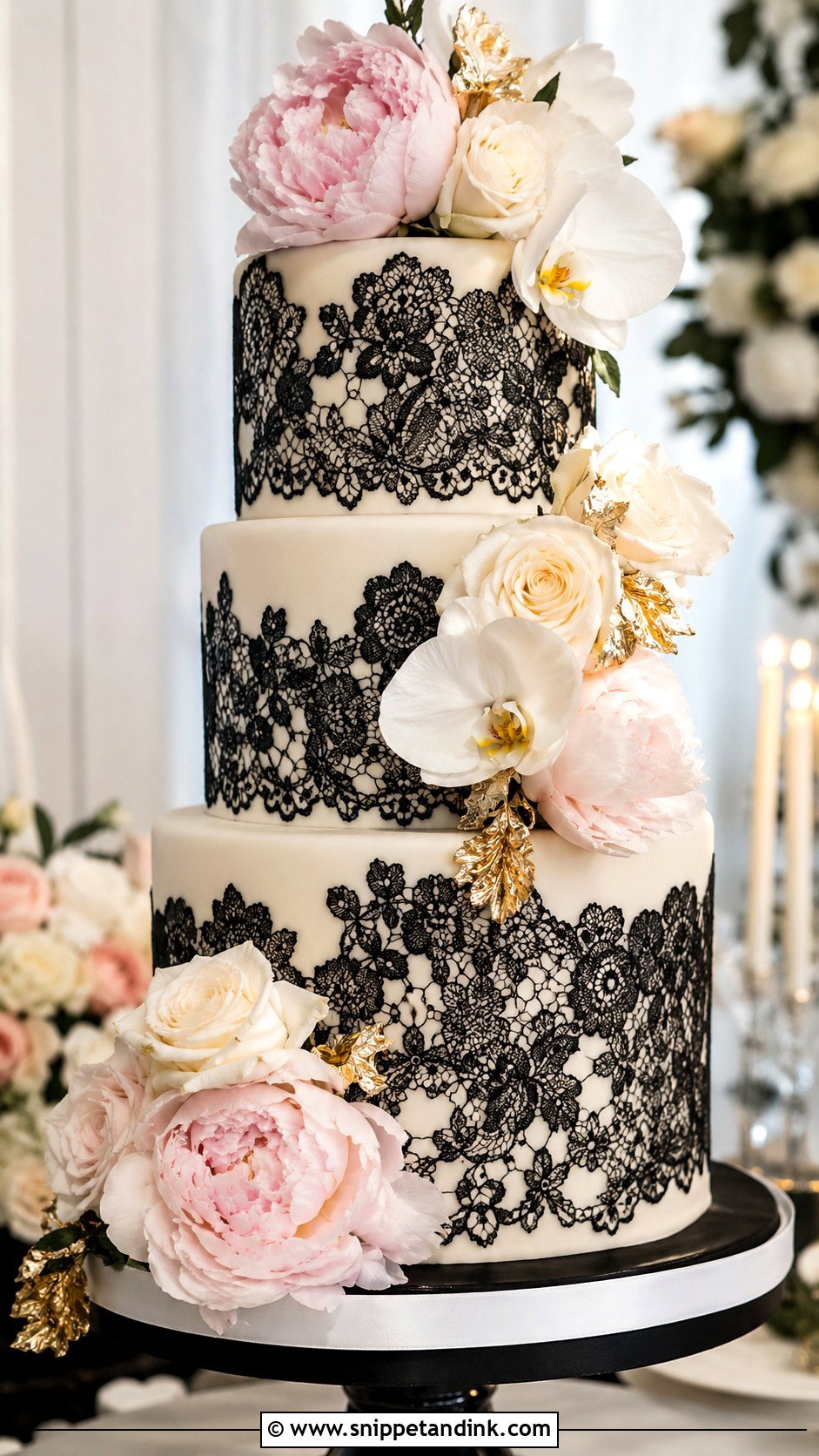
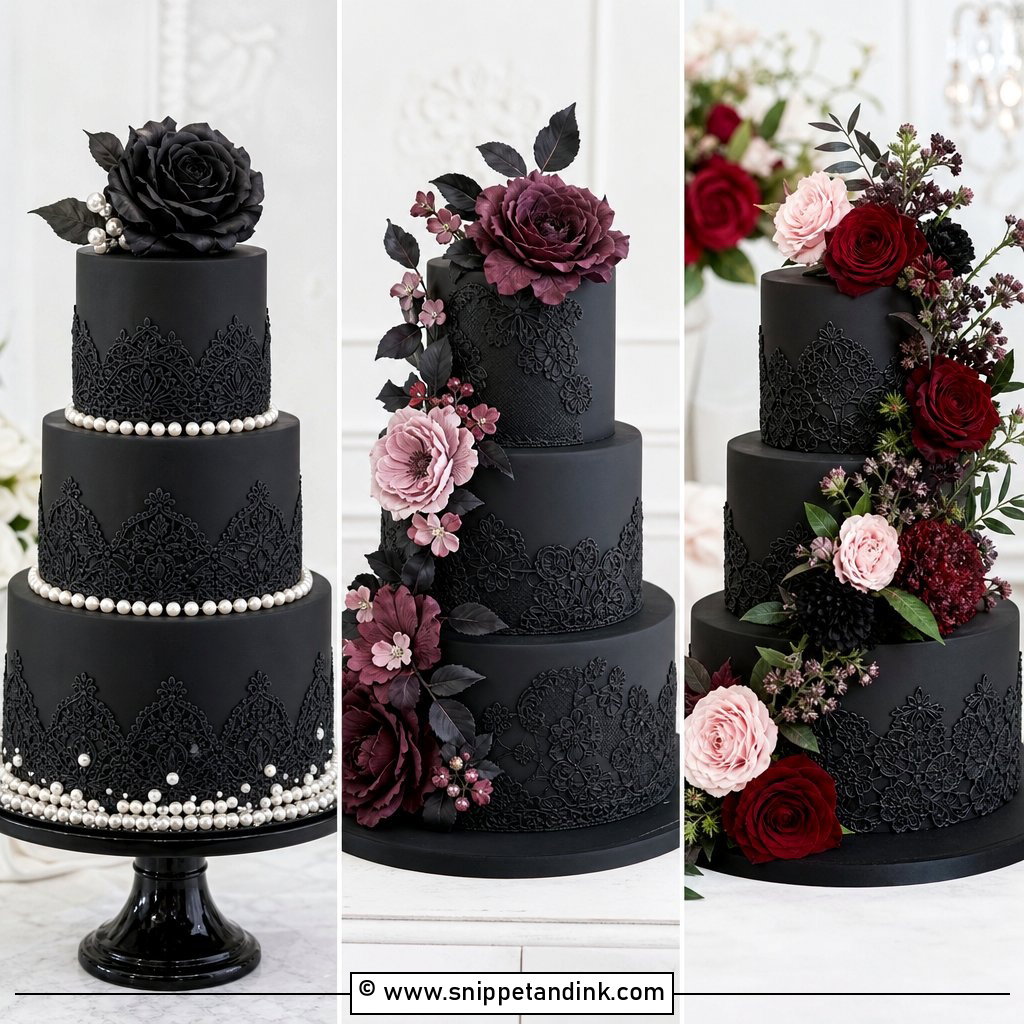
Black lace over ivory, champagne or pale blush frosting gives a bold, high-contrast cake that still feels bridal when the tier shape is clean. White roses, orchids or pale pink peonies soften it. It suits modern or formal receptions, and a touch of gold warms it. Keep the lace pattern fine. Thick black lace looks heavy fast. Black food coloring also stains teeth and lips, so I make the lace from a thin sugar layer and keep it to the outside of the cake.
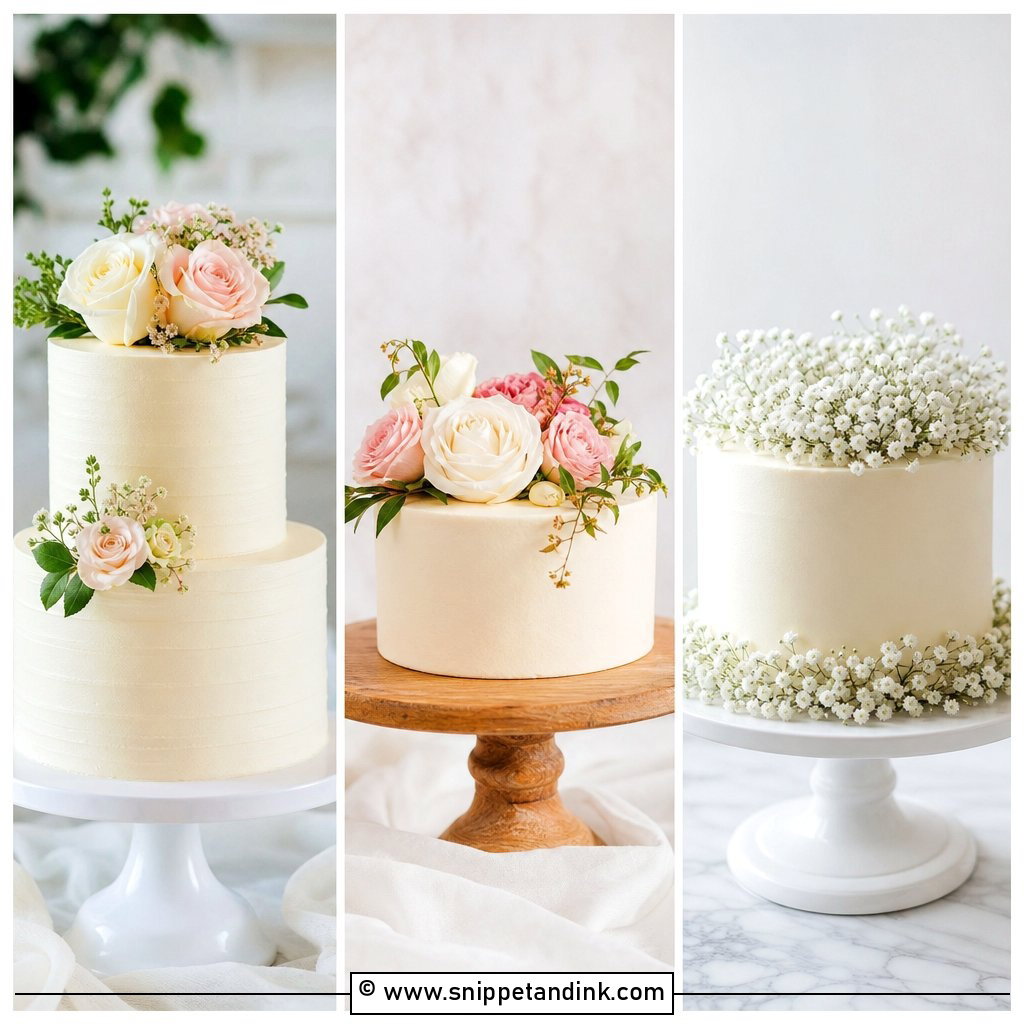
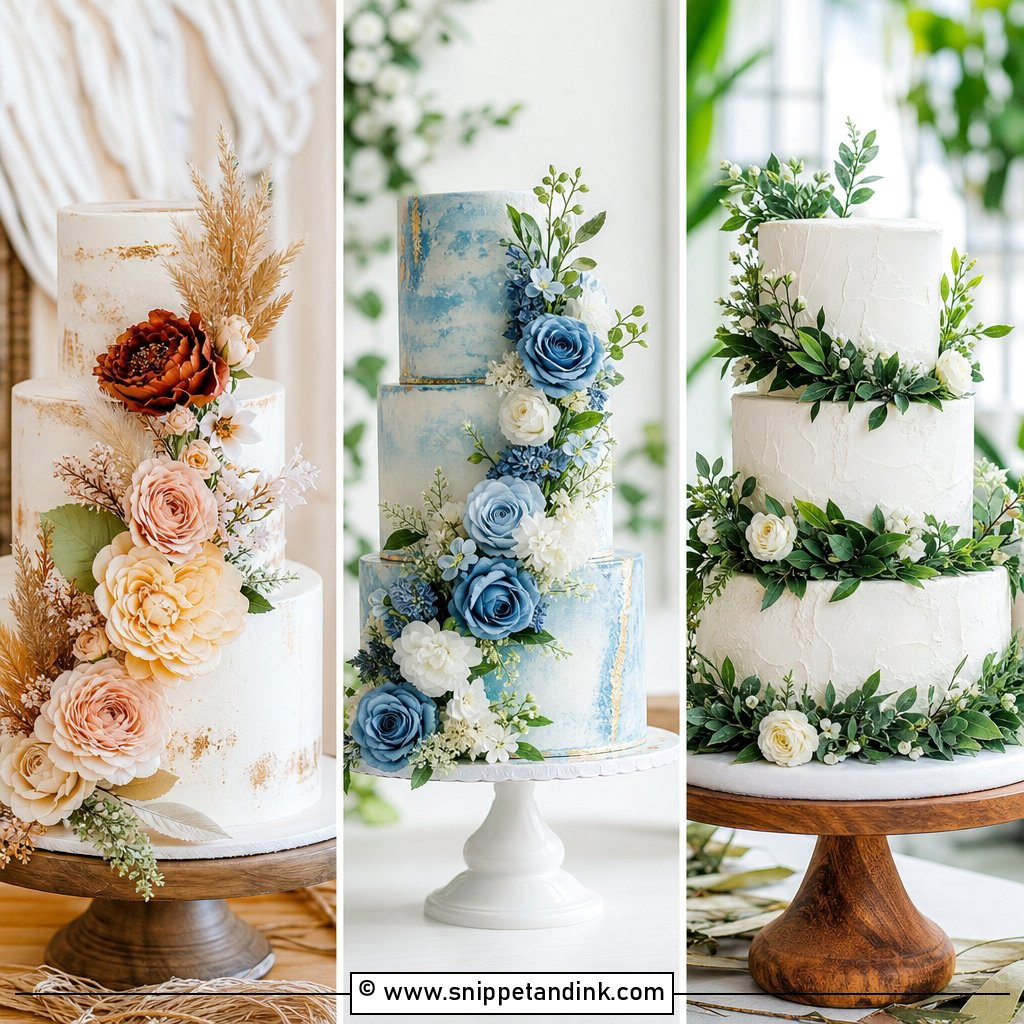
20. Rustic Lace Wedding Cake With Flowers
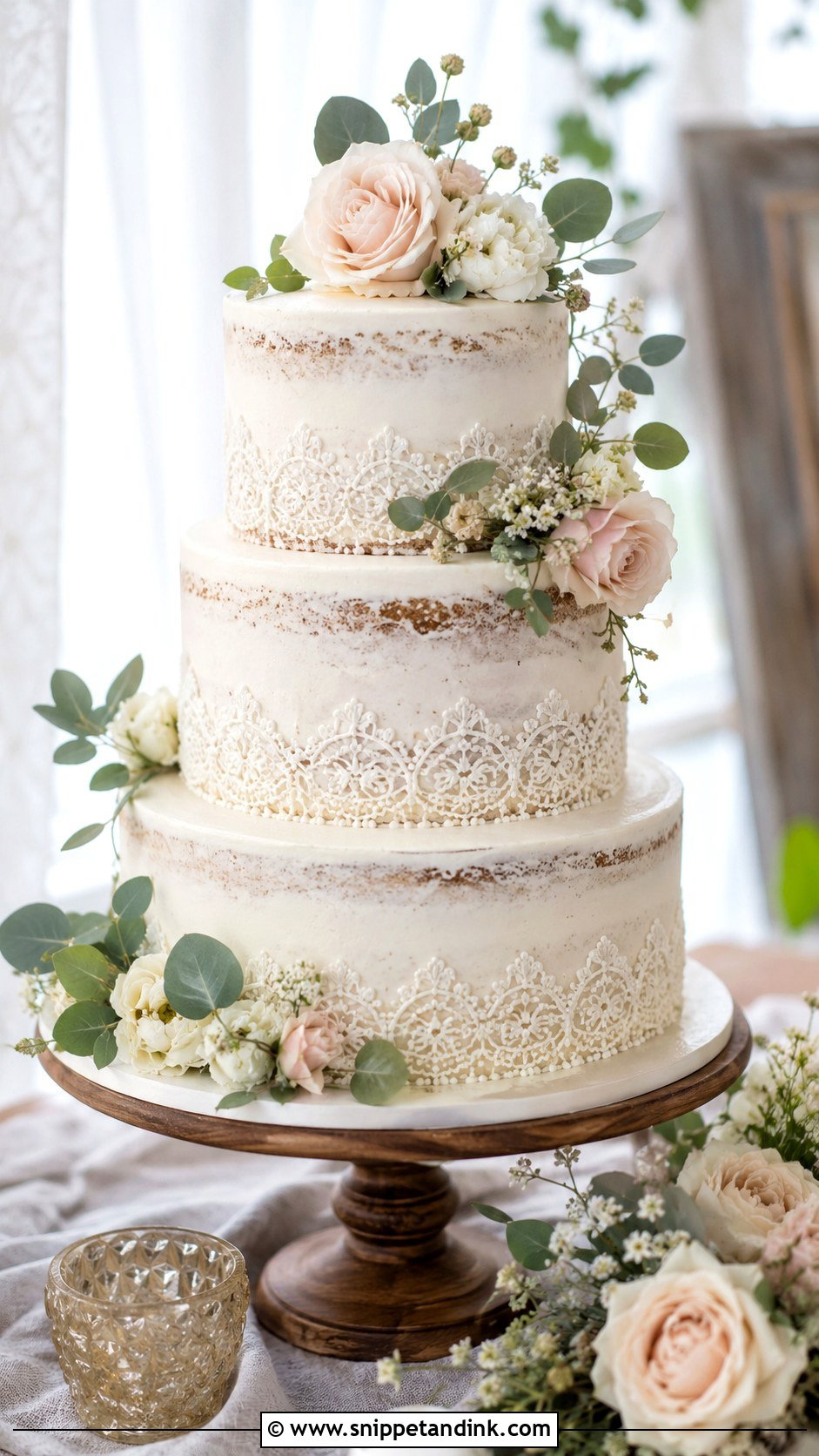
Rustic doesn’t have to mean messy. A semi-naked buttercream finish, lace-inspired piping or edible lace on one tier, plus loosely arranged fresh flowers and greenery, gives a cake that feels relaxed but planned. It suits barn venues and countryside weddings, in ivory, sage, blush and soft peach. Semi-naked cakes dry out faster than fully frosted ones because more sponge is exposed, so I brush the layers with syrup and keep the cake covered until close to serving.
21. Modern Lace Wedding Cake With Flowers
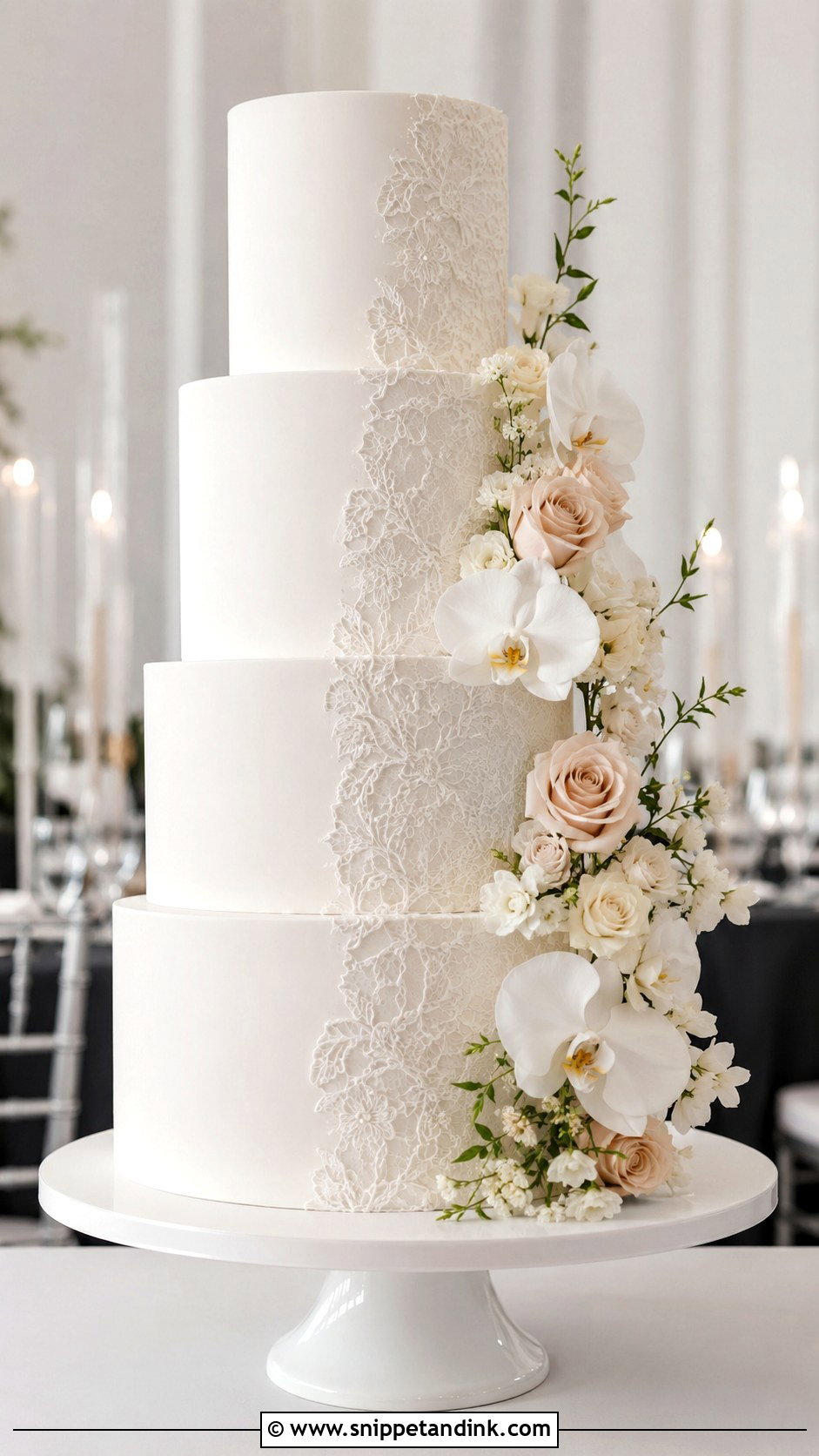
Modern lace is about placement. Instead of covering every tier, I’ll use one lace panel, one textured tier or a single vertical strip, with flowers in one small asymmetrical cluster. Smooth fondant, sharp edges and a limited palette, white, ivory, blush or sage, keep it fresh. If you love lace but don’t want anything vintage, this is the version to show your baker.
22. Square Lace Wedding Cake With Flowers
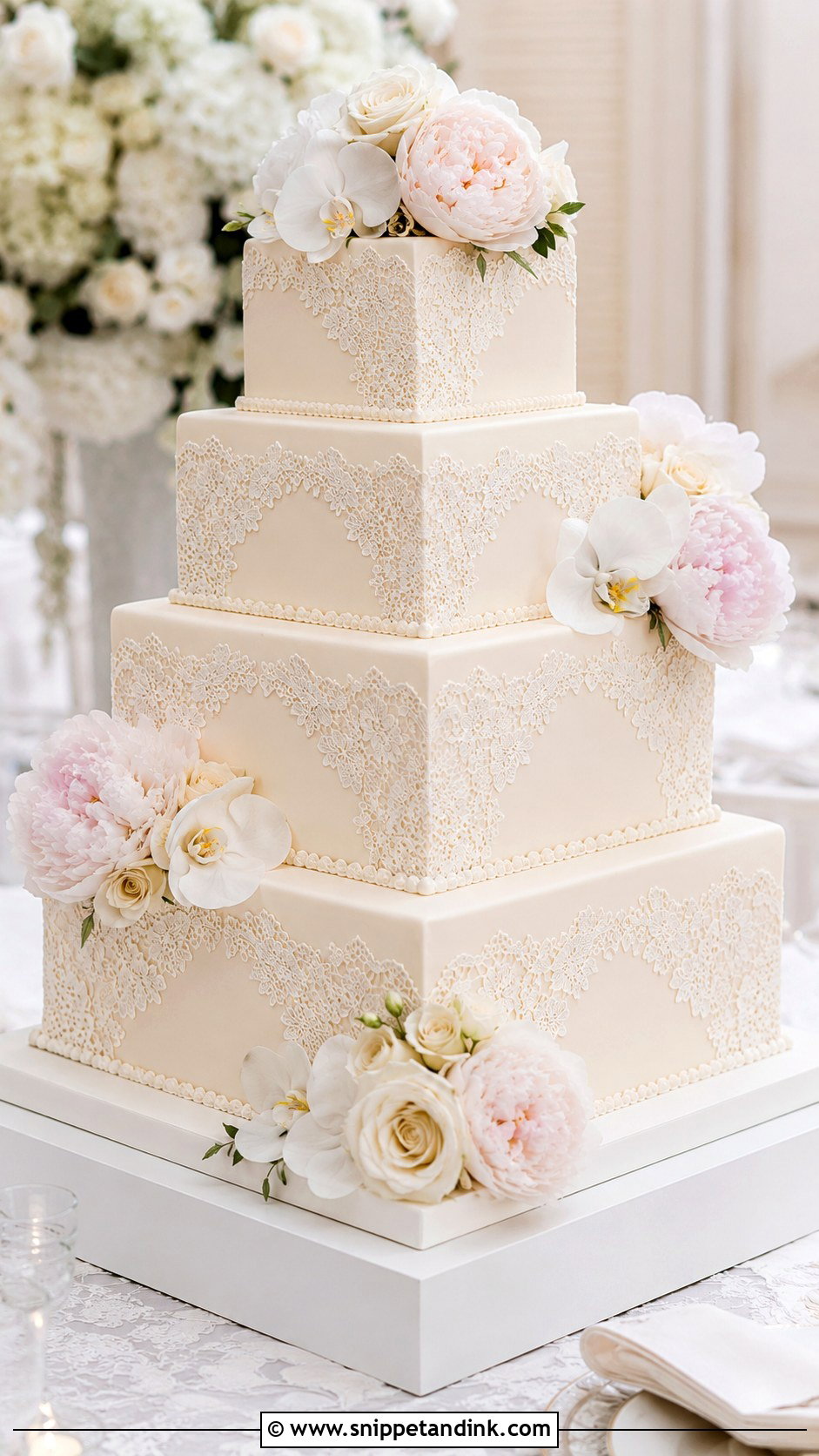
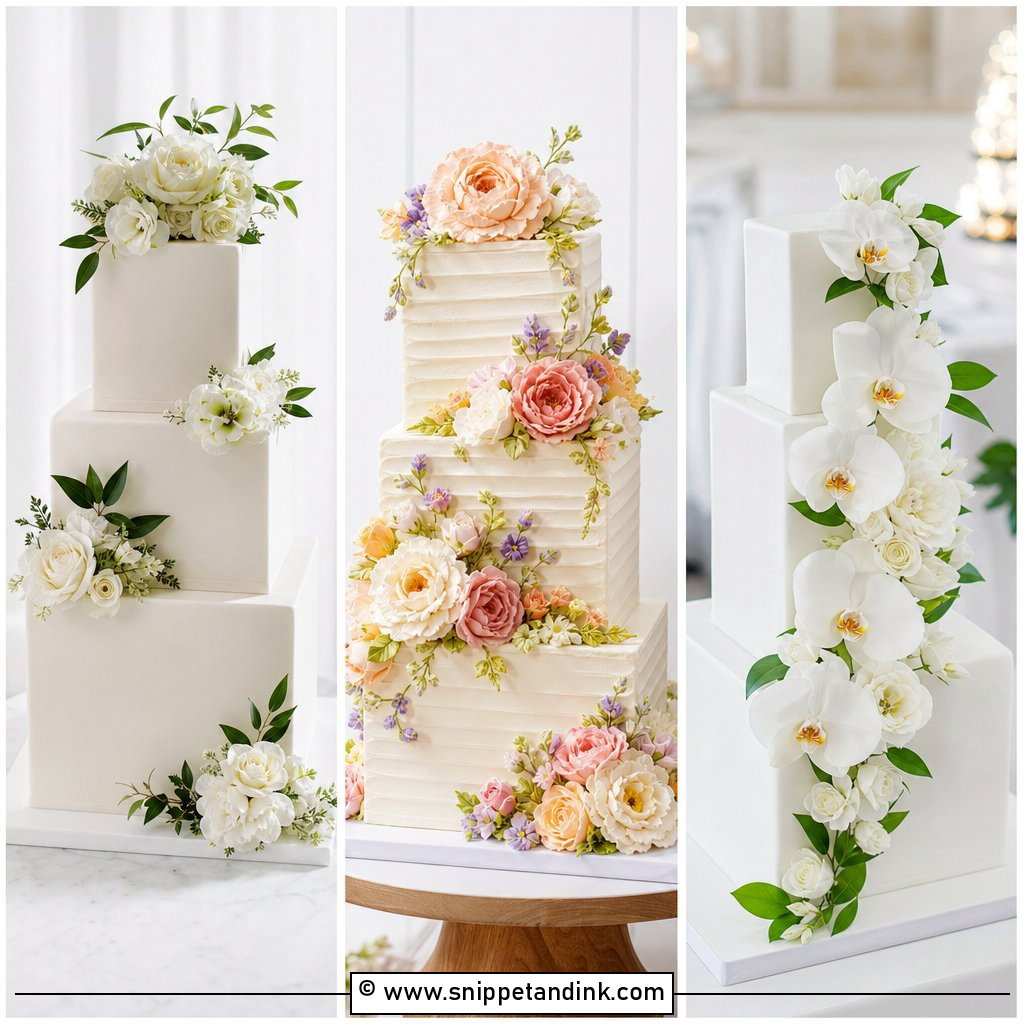
Square tiers are a little unexpected, and their clean corners make a modern base that lace softens nicely. Fondant is the right finish because it holds the sharp edges, and the lace can wrap each tier or sit as side panels. Flowers at the corners or between tiers highlight the shape instead of hiding it. Square cakes take longer to cover neatly, since corners tear easily, and they serve slightly more portions than a round cake of the same width, which can let you drop a tier.
23. Round Lace Wedding Cake With Flowers
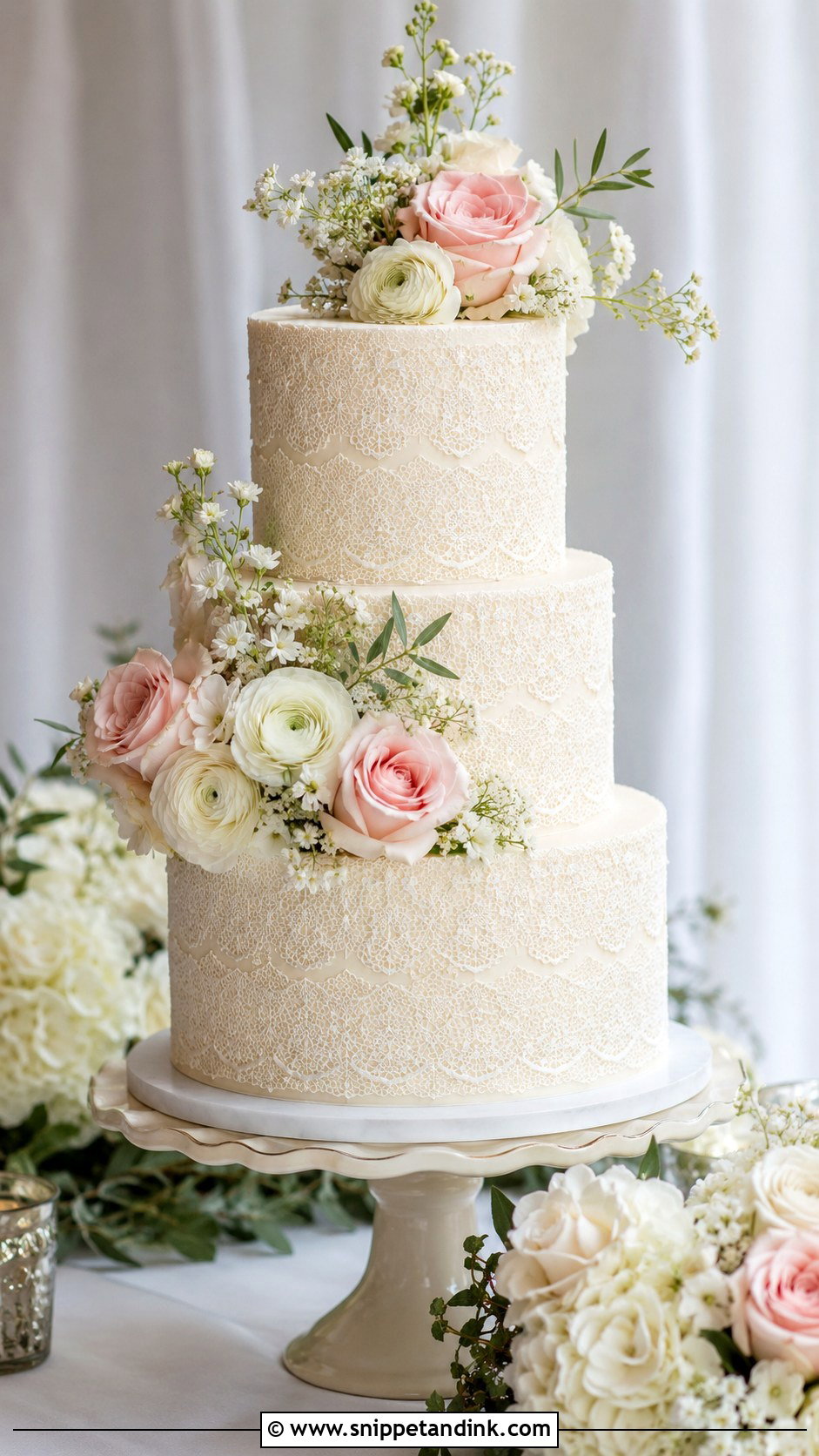
Round tiers let lace wrap smoothly without corners to break the pattern, and flowers follow the curve naturally. One laced tier with a few blooms is enough, or lace can run on every tier. To keep it current, place the flowers asymmetrically and keep the frosting clean. Round is the shape I recommend to couples who want lace to be the star, because the pattern reads continuously as guests walk around the table.
24. Lace Wedding Cake With Floral Wreath
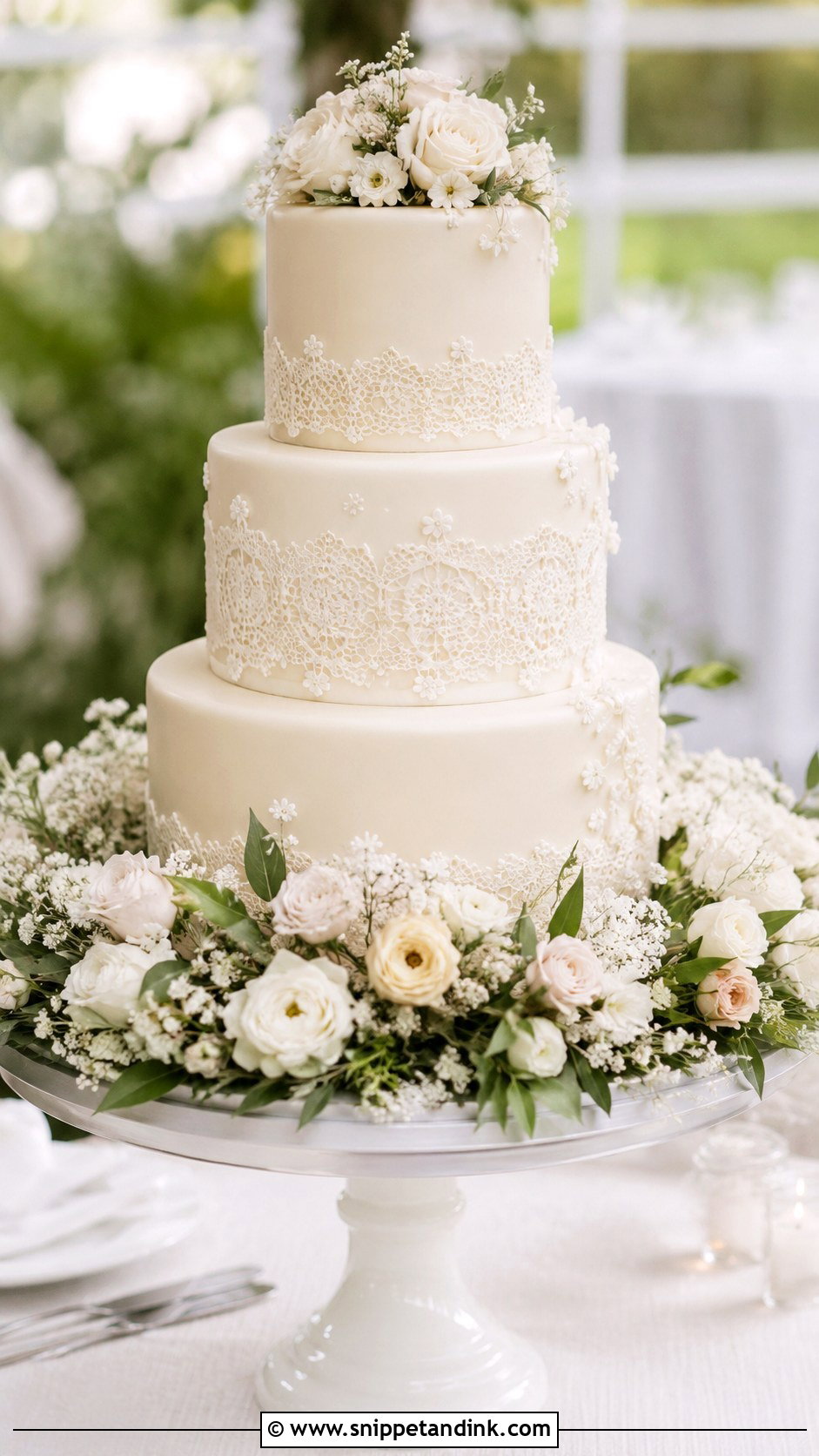
A floral wreath keeps flowers organized instead of cascading, which suits couples who prefer tidiness. It can sit around the base, circle one tier or frame the top. I add lace just above the wreath so the fine texture contrasts with the blooms. Small roses, baby’s breath, lisianthus or tiny sugar flowers make a neat ring. A base wreath also hides the board edge, a small finishing detail many cakes overlook. Garden, chapel and intimate receptions all suit it.
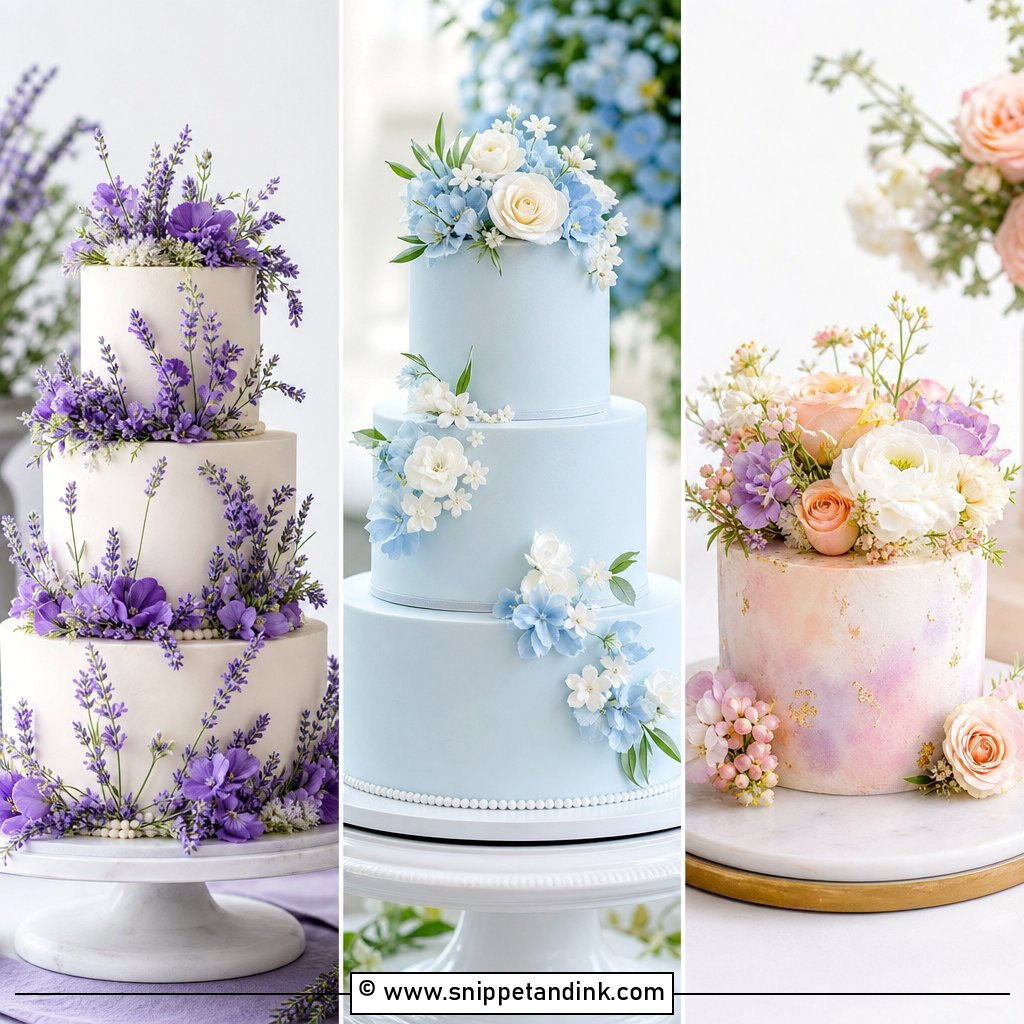

25. Simple Lace Wedding Cake With Flowers
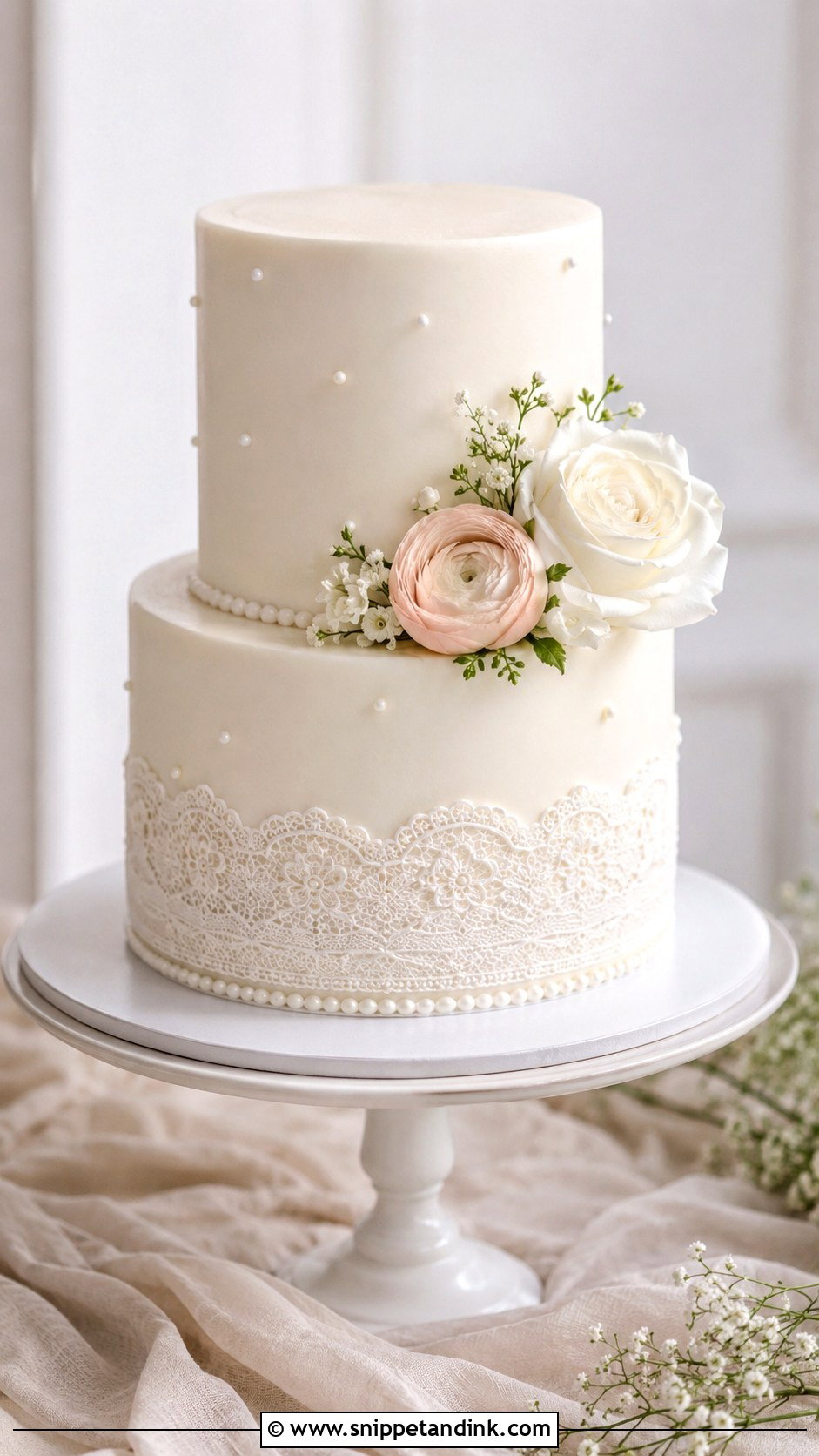
A simple cake doesn’t need to be large to feel finished. I’d pick one lace detail, a band, a stencil or a piped tier, and add one small cluster of flowers in a deliberate spot. That’s it. White, ivory, blush and pale green are easy colors. This is the design I suggest when the budget is tight, because a single lace band costs far less in hours than a fully wrapped cake.
Fresh Blooms on a Cake Need a Barrier
Florist flowers are grown to be looked at, not eaten, and many are treated with sprays. So any fresh stem going on one of these cakes should be grown without pesticides if possible, and should never go straight into the sponge. I wrap stems in floral tape and set them in food-safe picks or on small discs of parchment. Some popular flowers are toxic and shouldn’t sit on a cake at all, including lily of the valley, hydrangea, foxglove and oleander. If one of those is in your palette, it can be made in sugar instead.
Agree with your florist who places the flowers and when. Usually the florist delivers clean, conditioned stems and the baker or setup team places them at the venue. Leaving that unclear is how a cake ends up decorated by whoever happens to be holding the bucket.
Heat, Humidity and the Drive to the Venue
Lace is the first detail to suffer in a warm room. Buttercream lace softens and slumps, and edible lace goes limp in humidity. For a summer reception, ask where the cake will stand and for how long. Out of direct sun, away from heaters and kitchen doors, and on a sturdy table that nobody bumps. Most bakers deliver stacked cakes in a chilled car and finish the flowers on site.
- Order a lace design three to six months ahead, earlier in peak season
- Book the setup time with the venue so the table is ready
- Plan for the cake to come out of the cold an hour or so before cutting so the sponge isn’t hard
Decide Whether the Lace or the Flowers Leads
Lace cakes with flowers fit so many styles because the two elements can swap roles. White roses make it classic, peonies vintage, orchids modern and wildflowers relaxed. Before your tasting, decide which one leads: lace as the main feature, or lace as a soft background for the flowers. Then match the shape, frosting and palette to your venue and dress. A simple two-tier cake with one lace band can be as memorable as a full floral cascade, as long as one idea runs through it.
You'll Like These Ideas:





Leave a Reply