
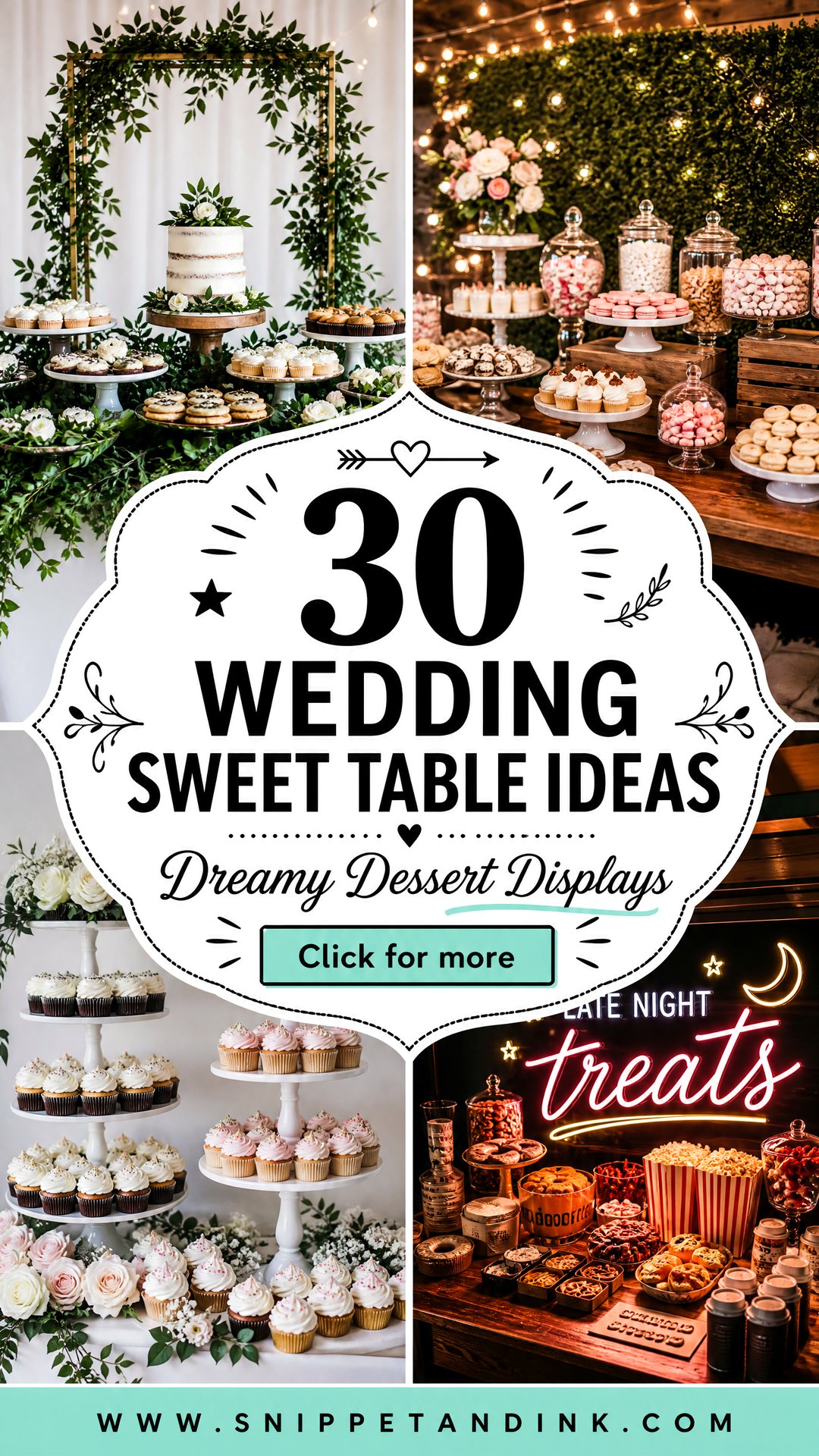
A sweet table often ends up as one of the most photographed corners of a reception, and it does more than look pretty. It gives guests choice, brings colour into the room and creates a natural gathering point near the dance floor, the lounge or the cake. The tables I’m proudest of feel planned rather than piled up: varied heights, matching trays, clear labels and sweets that fit the season, the venue and the couple. Mini cakes, cookies, macarons, cupcakes, brownies, pies, fruit tarts and a cutting cake to hold it all together. Here are thirty ways I’d build one, with the practical notes I give couples when we plan.
How Many Sweets to Order for Each Guest
This is the question I get in every planning meeting, and the honest answer depends on what else is being served. Use these as starting points, then adjust for your crowd.
- Sweet table alongside a full wedding cake: around two or three small pieces per guest is usually enough.
- Sweet table replacing the cake: plan more, roughly four or five pieces per guest, since this is now the whole dessert course.
- Late evening crowds that have been dancing eat more than you’d think. Daytime and brunch receptions eat less.
- Plan on three to six varieties rather than fifteen. Fewer types in larger quantities look generous and keep the table easy to refill.
Order slightly more of the familiar options, like brownies, chocolate cupcakes and cookies, and fewer of the adventurous ones. In my experience those classics go first, while an unusual flavour often comes home in boxes.
Timing changes the numbers as well. If the table opens straight after dinner, alongside the cake cutting, guests are full and take less. If it opens an hour or two into the dancing, it gets far more traffic, so I’d hold back part of the order in the kitchen and bring it out then. That second round also means the table looks fresh in late-evening photos instead of half-empty.
1. Elegant White Wedding Sweet Table
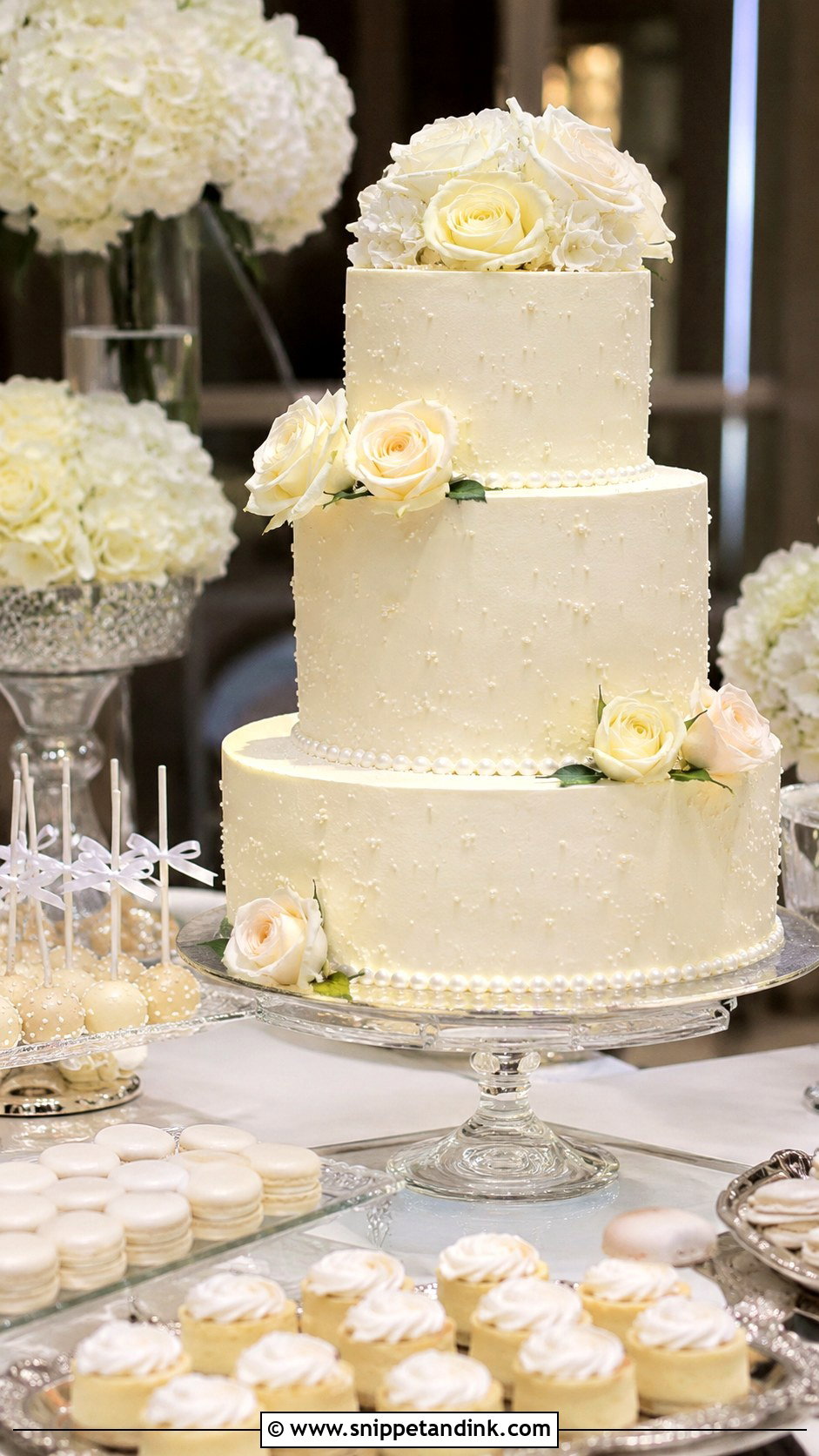
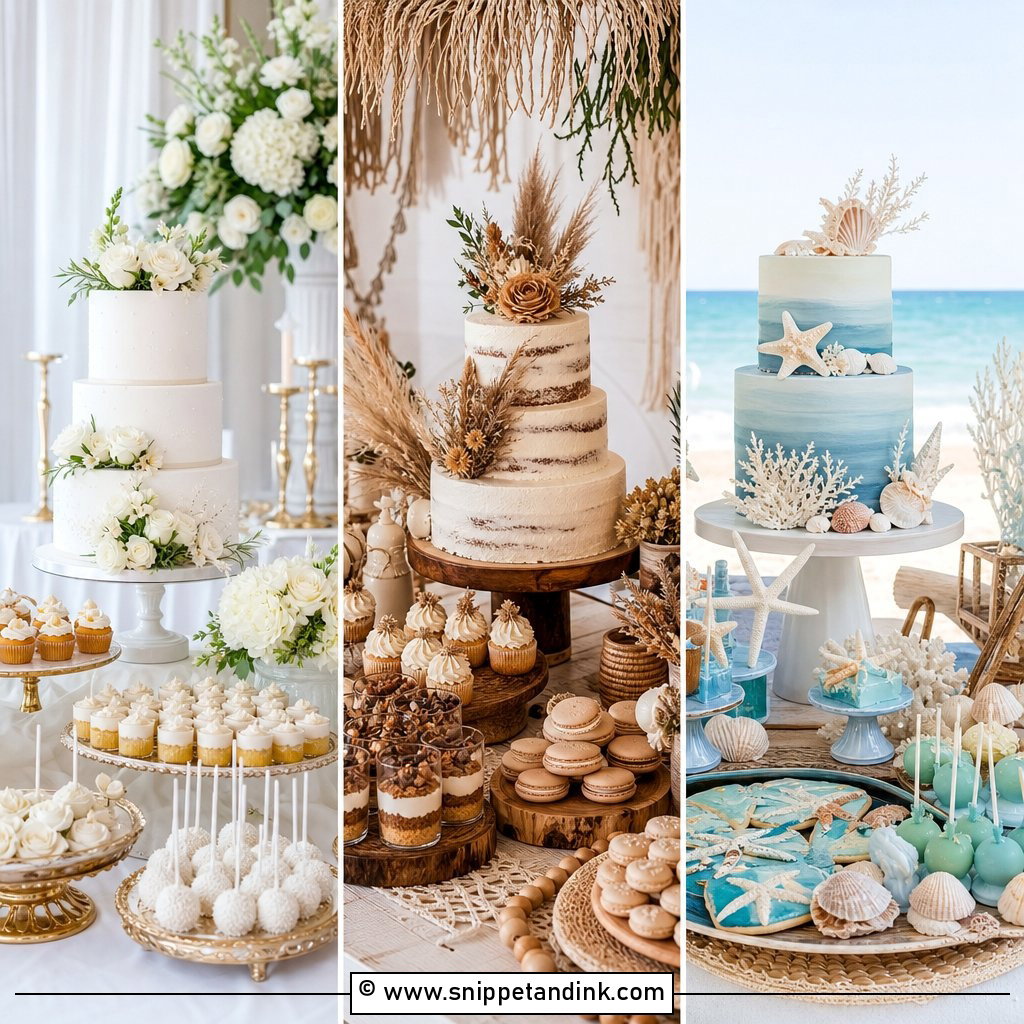
All-white is the calmest way to dress a formal reception, and it sits happily with nearly any floral plan. I put a white tiered cake in the middle and surround it with vanilla cupcakes, white chocolate mousse cups, sugar cookies, macarons and mini cheesecakes. Mostly white, glass or silver serving pieces keep it serene. One thing to watch: white desserts are only white if the buttercream is made to look it, so if you want true white rather than ivory, tell your baker, because butter naturally tints frosting yellow. Tallest cake centre, small treats forward for easy reach.
2. Rustic Wedding Sweet Table
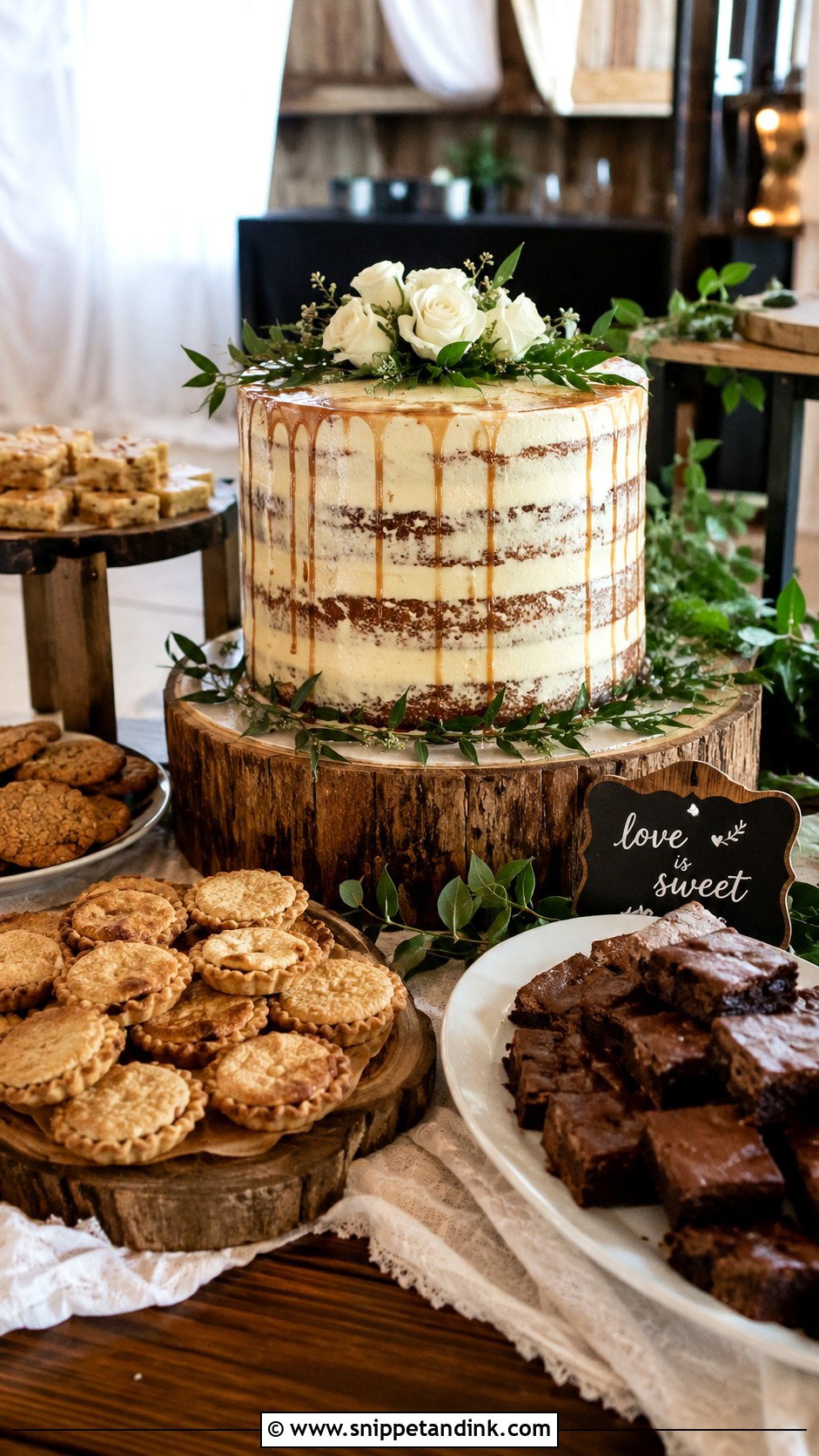
Wood, linen and food that looks homemade. I’d anchor a rustic table with a small buttercream cake with a soft, spatula-textured finish, then add pies, brownies, oatmeal cookies, mini bundts and caramel cups. Wood slices, ceramic platters, baskets and glass jars give height without looking too slick. Baby’s breath and kraft paper labels suit barns and gardens. Abundant but neat is the balance; crumbs on a wooden board look charming for about ten minutes, so ask someone to tidy as the night goes on.
3. Modern Wedding Sweet Table
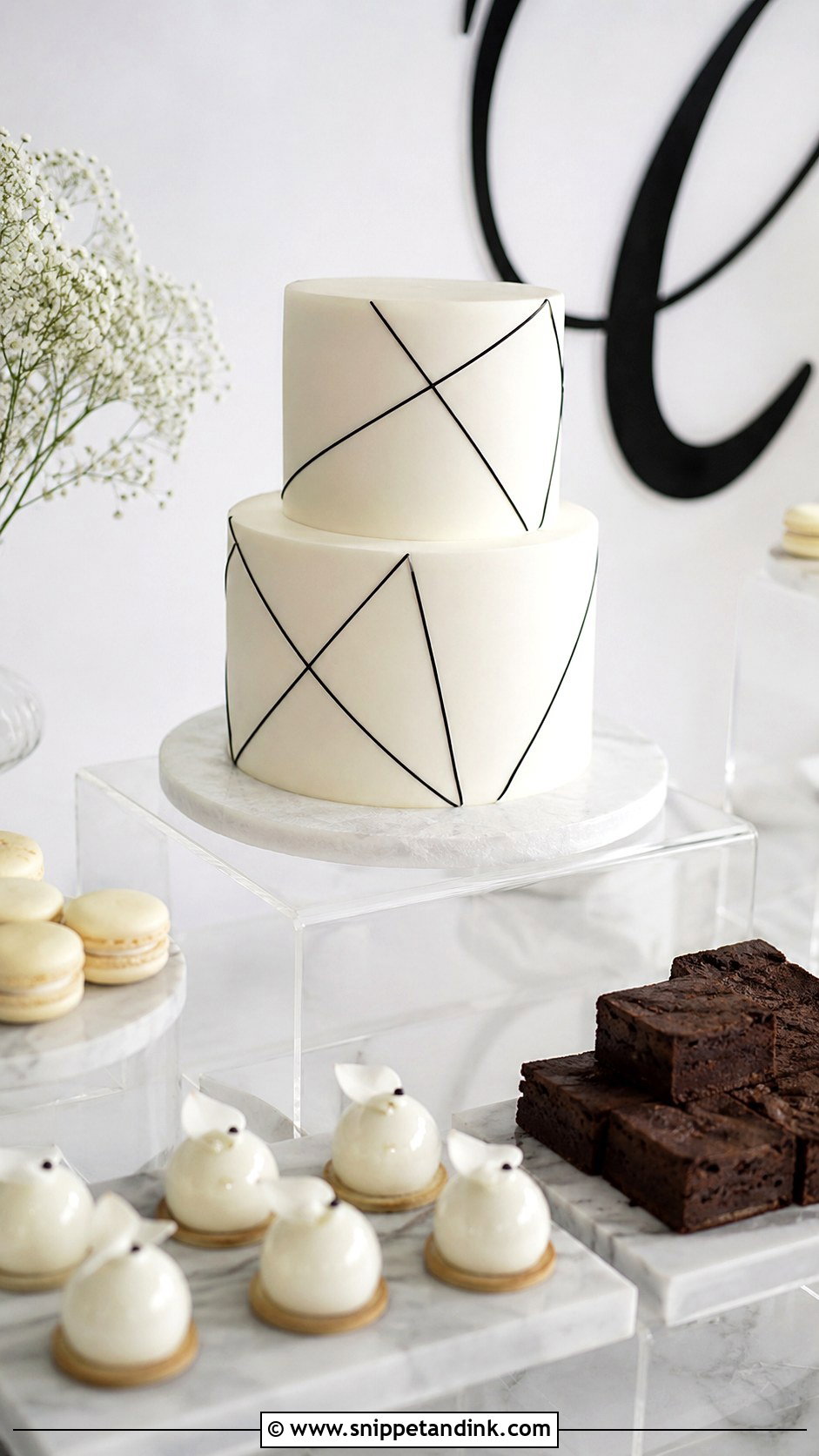
Edited is the word for this one. A smooth fondant or sharp-edged buttercream cake, then desserts with clean shapes in a tight palette: square brownies, glossy mousse domes, geometric cookies, mini tarts and macarons in straight rows. Black, white, acrylic, marble or matte gold stands. One bold arrangement beats lots of small ones. Leave empty space on purpose; a modern table falls apart the moment every inch is filled.
4. Garden Wedding Sweet Table
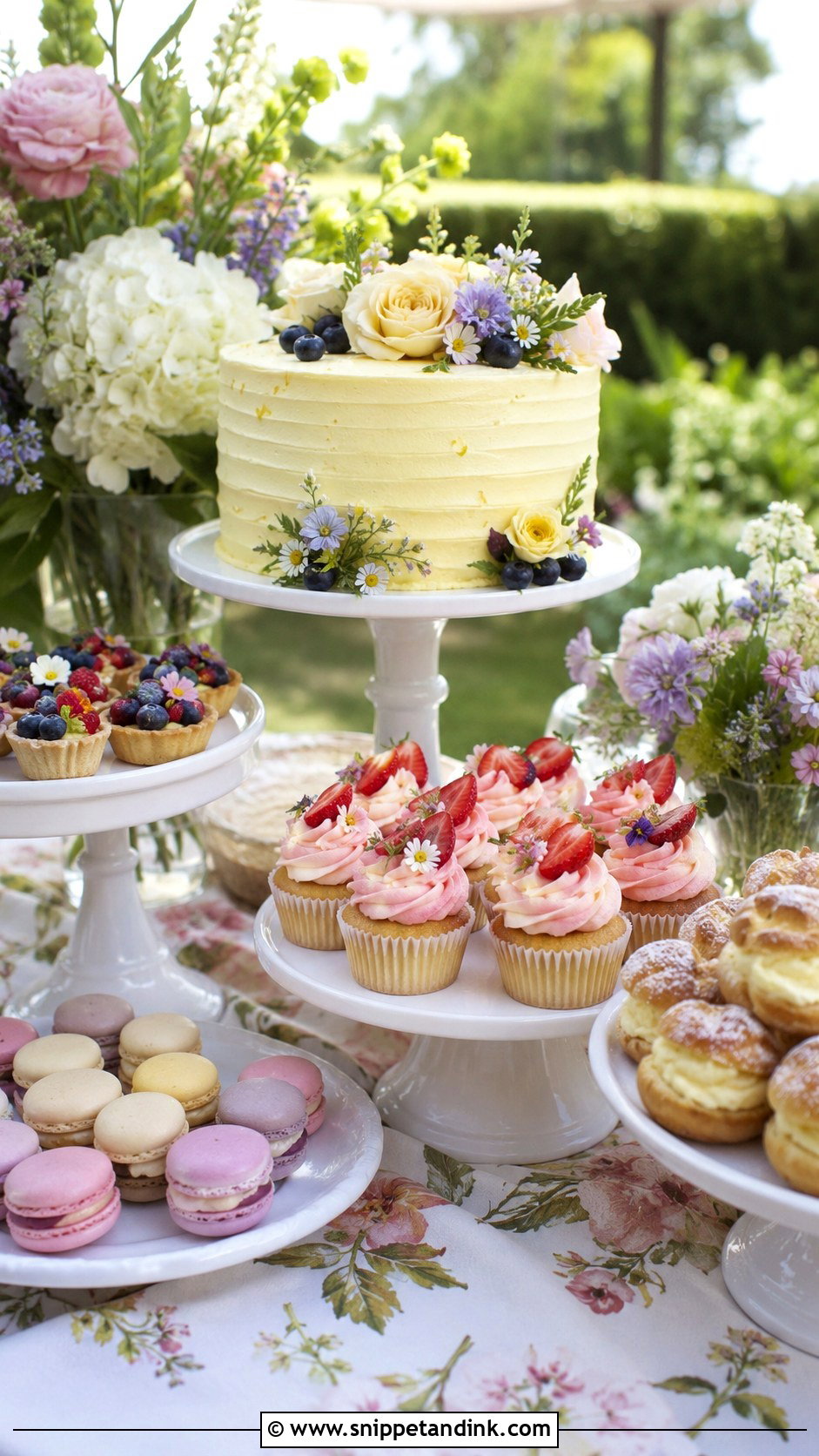
Fruit-forward desserts suit a garden: lemon tarts, berry pavlovas, strawberry cupcakes, shortbread and mini cream puffs around a buttercream cake decorated with pressed or fresh flowers. Any flowers that touch a cake must be pesticide-free and safe to sit against food, and I wrap or insert stems into picks so the cut ends never sit in the frosting. Stands at different heights read like a garden border. Pavlova is the delicate one here; meringue softens and weeps in humidity, so I’d plate it as late as possible.
5. Boho Wedding Sweet Table
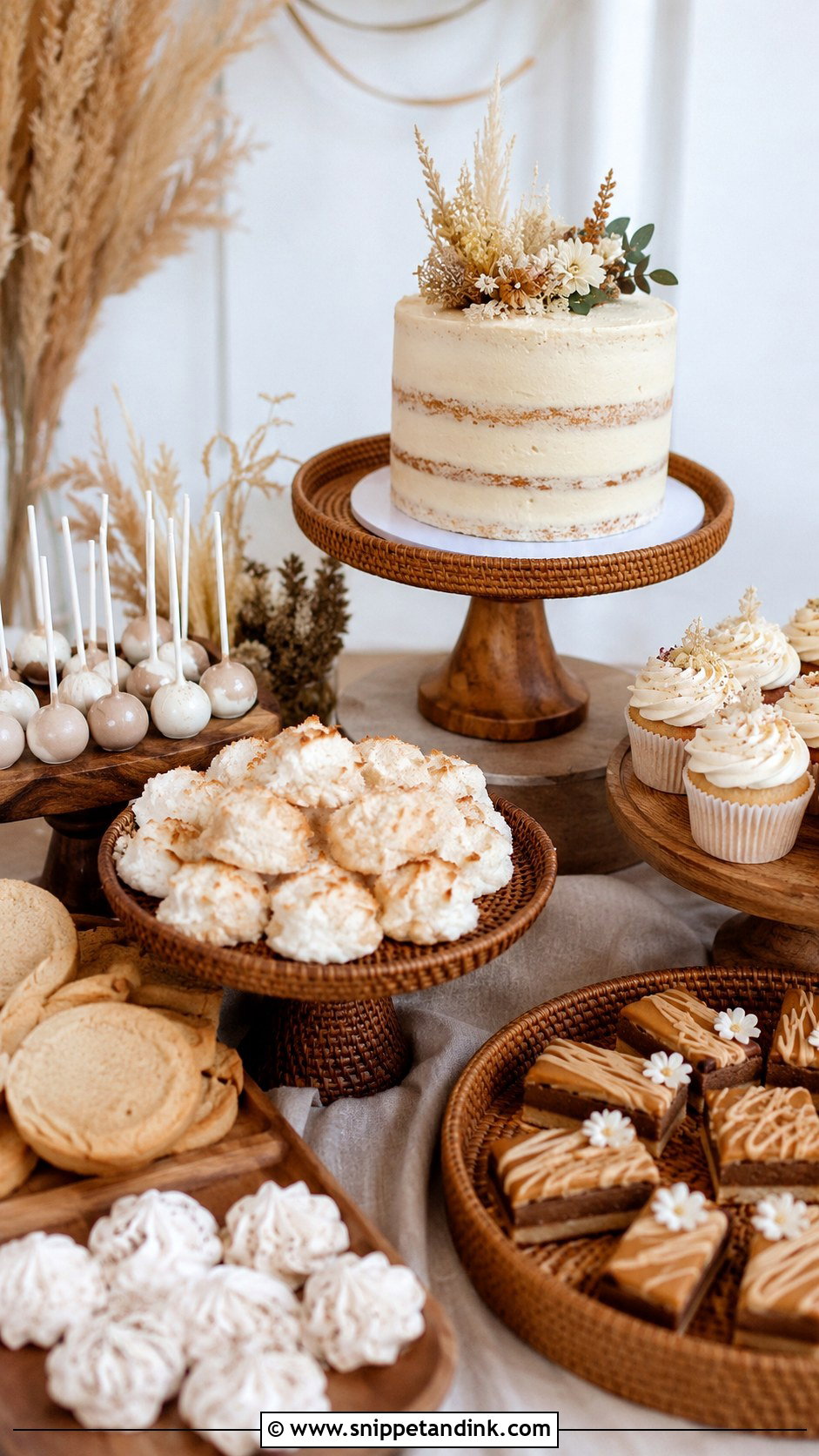
Texture, warm neutrals and a handmade feel. A semi-naked or textured buttercream cake leads, with coconut macaroons, mini cupcakes, cookies, cake pops and caramel bars in warm tones. Rattan trays, wood risers, dried flowers, linen and plain ceramics complete it. Pampas grass frames the setup well, but keep it away from the food; it sheds. Repeating cream, tan, blush and soft gold makes every dessert look like part of one story.
6. Vintage Wedding Sweet Table
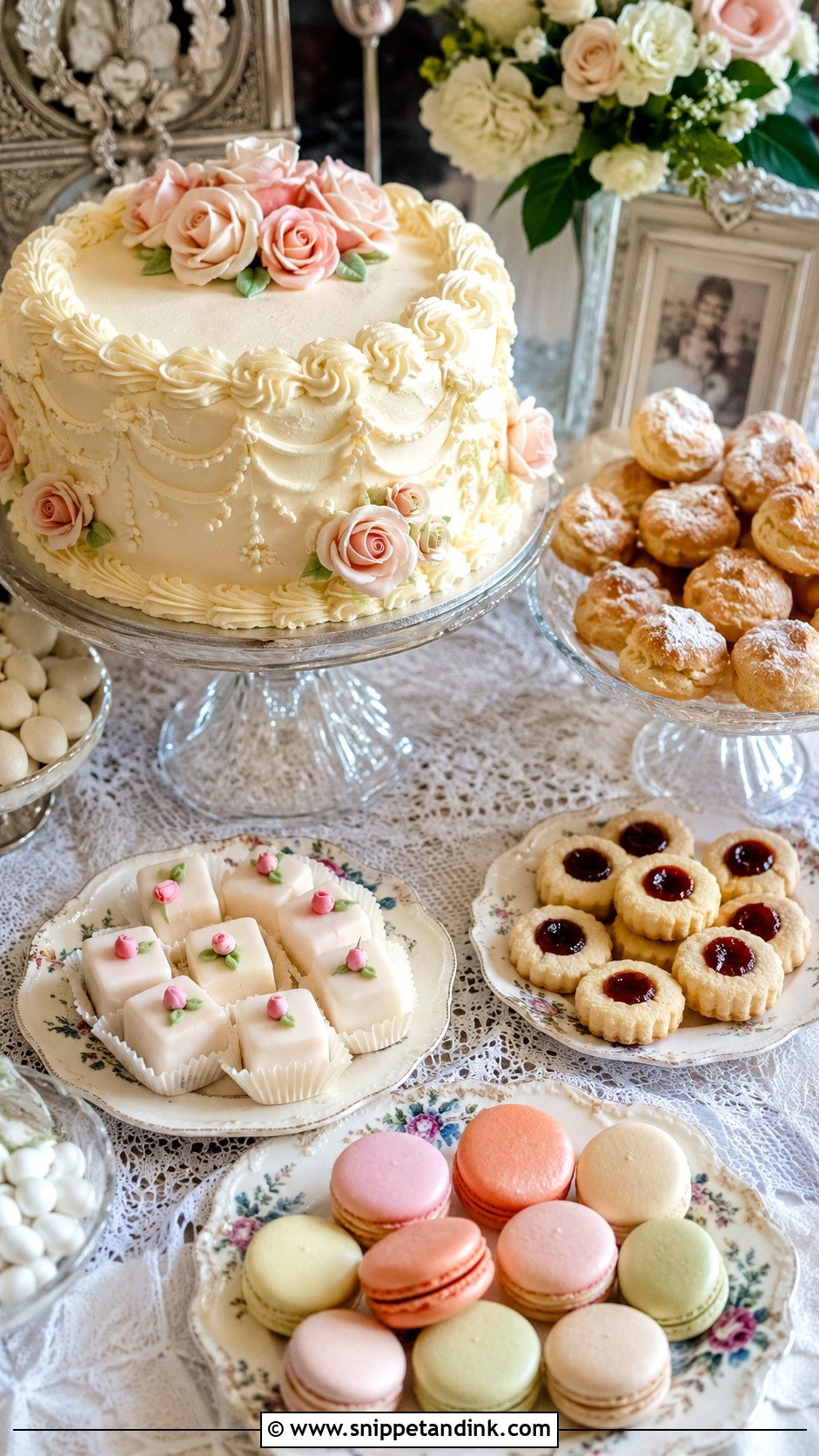
Old-fashioned piping does the heavy lifting here. I’d do a small tiered cake with buttercream scrolls or Lambeth-style over-piping, then petit fours, thumbprint cookies, cream puffs, mini éclairs and pastel macarons. Lace linens, glass compotes and mismatched floral china plates give a collected look, and a mirror or framed signs behind the table add depth. Cream-filled choux softens if filled too far ahead, so I fill them as close to service as I can.
7. Black And White Wedding Sweet Table
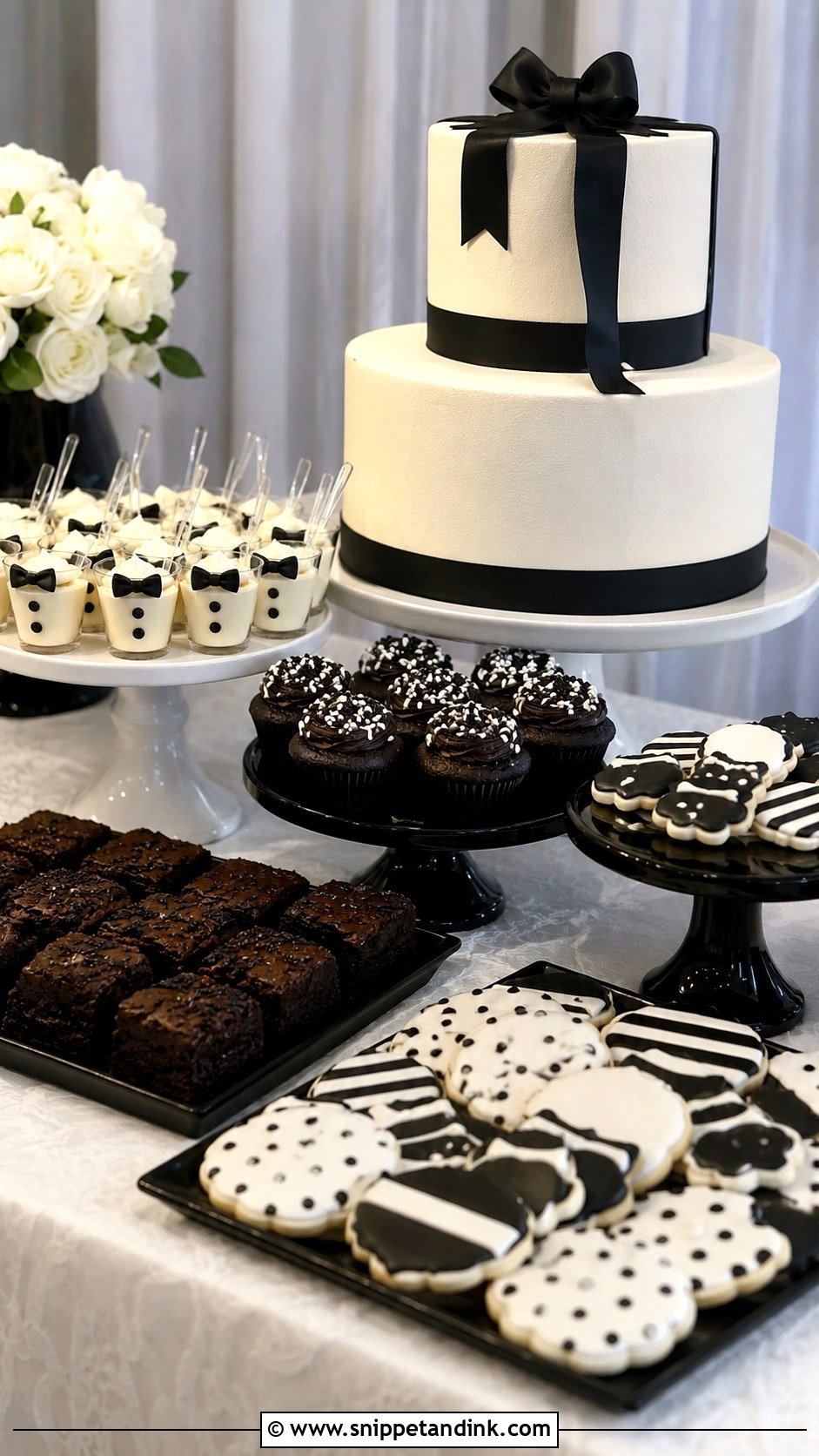
Graphic and easy to make look sophisticated. A white cake with black ribbon-style details or sugar flowers, then chocolate cupcakes, vanilla macarons, black-and-white cookies, brownies and tuxedo mousse cups. A true black frosting needs a lot of colouring, which can taste bitter and stain mouths, so I start from a dark chocolate base and use black only for small details. Black trays, white stands and clear glass give the contrast. It suits ballrooms, lofts and evening receptions.
8. Gold Wedding Sweet Table
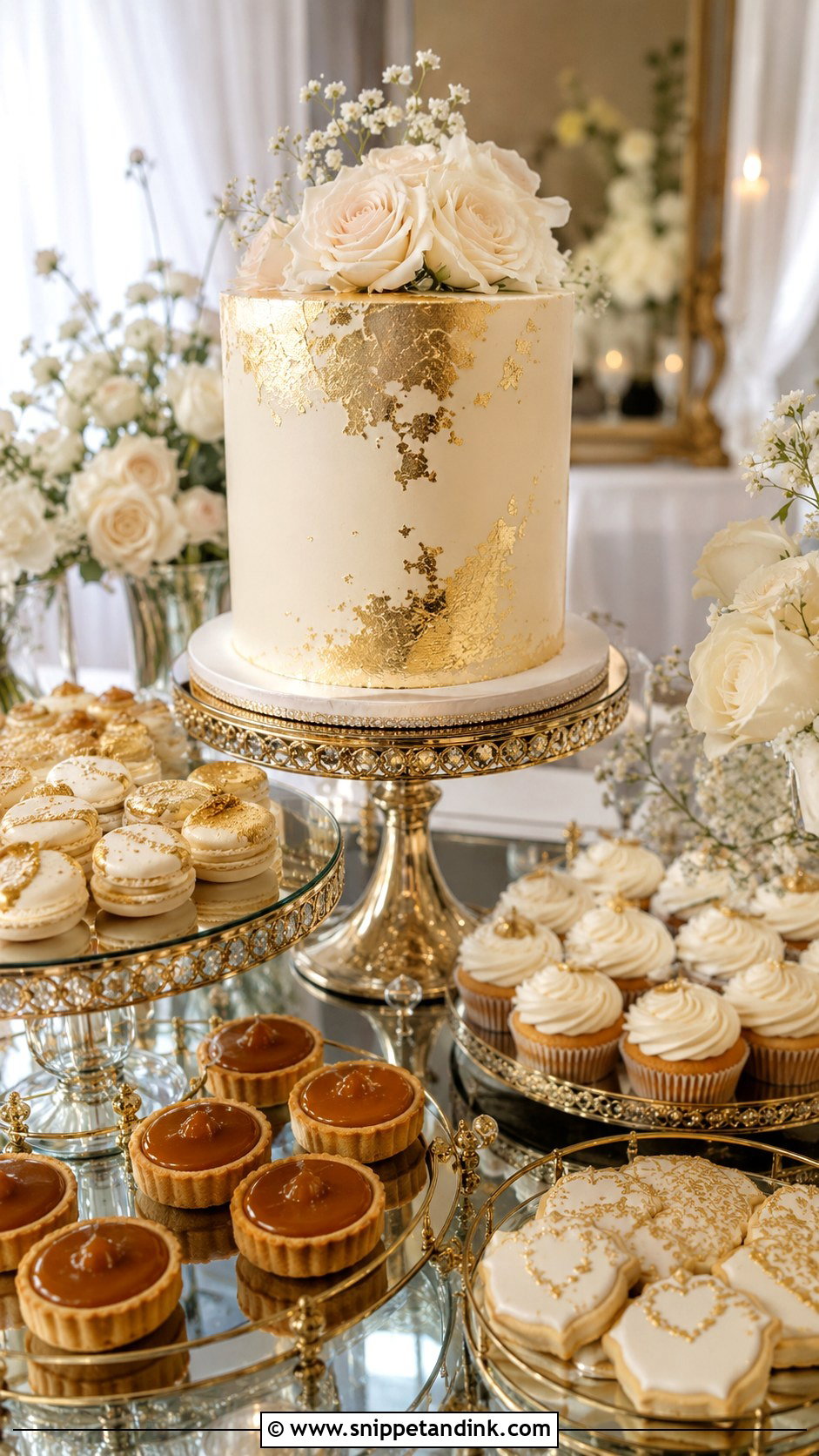
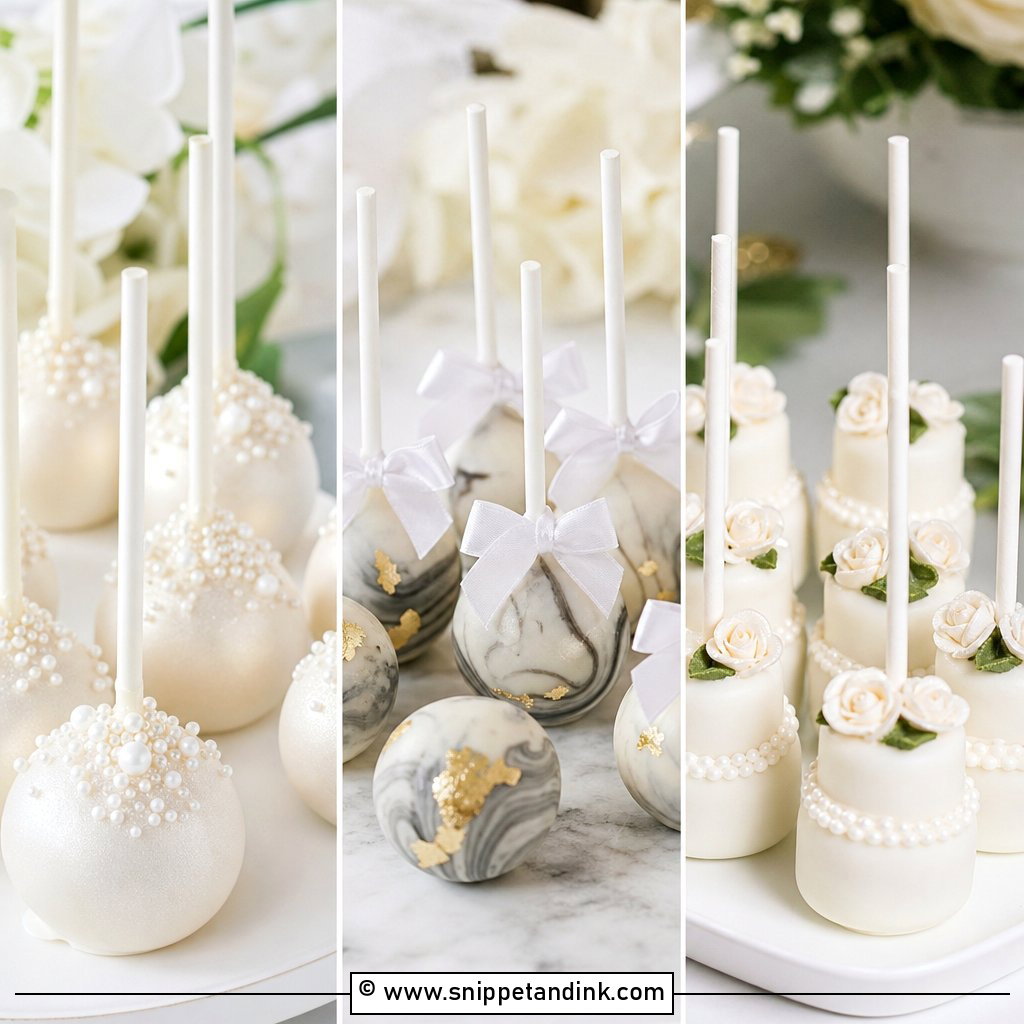
Gold works when it accents rather than covers. An ivory cake with gold leaf, champagne macarons, vanilla cupcakes, caramel tartlets, golden sugar cookies and cream pastries is plenty. Not every gold product is edible; some lustre dusts are labelled non-toxic but are only meant for decoration, so I use edible gold leaf or edible lustre on anything guests will eat. Gold-rimmed trays, mirrored stands and warm candlelight, if the venue allows it, finish the look.
9. Pink Wedding Sweet Table
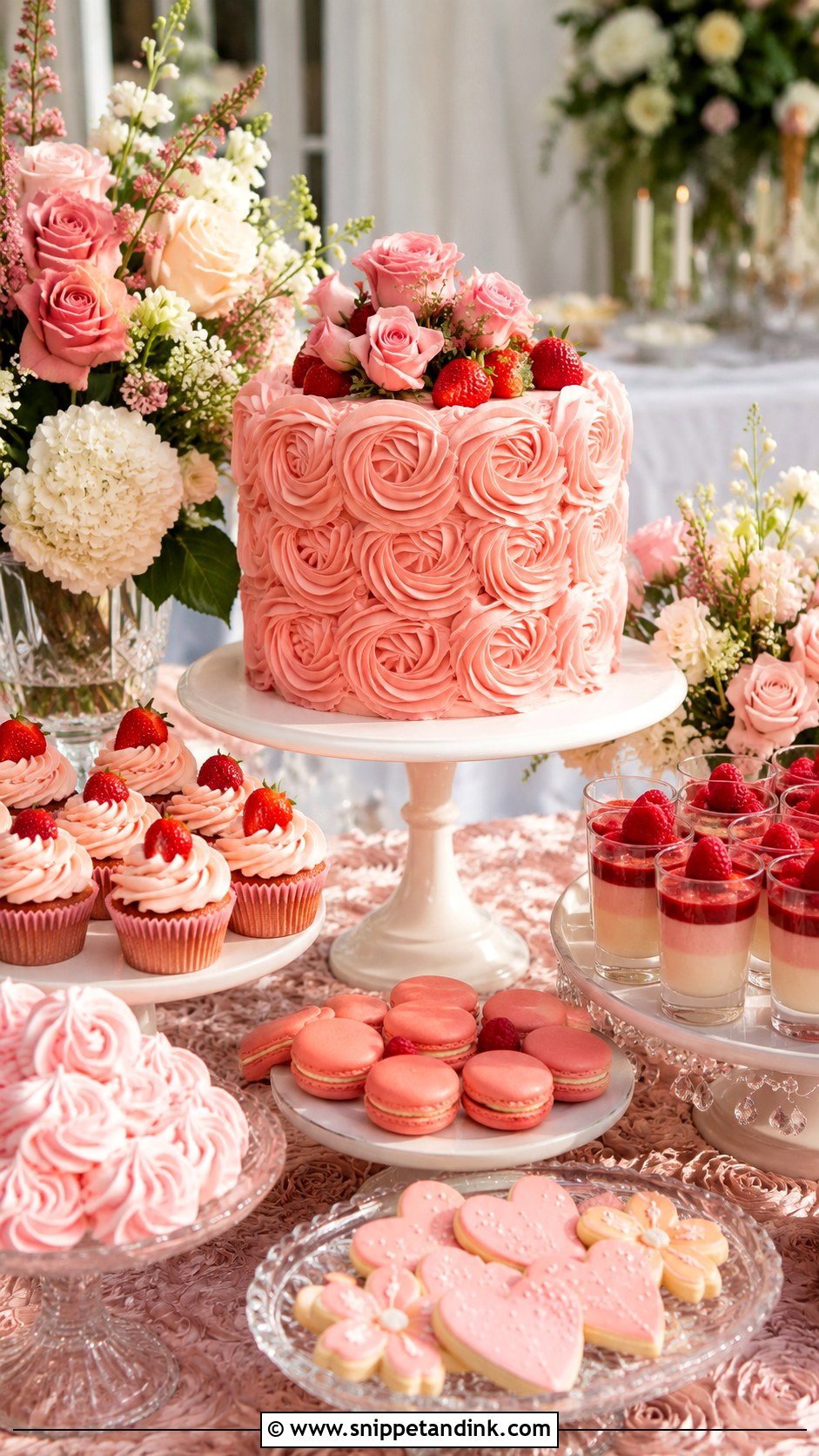
Layer blush, rose and ivory rather than one flat pink, and the table looks soft instead of sugary. A pink buttercream cake in the centre, then strawberry cupcakes, raspberry macarons, pink cookies, mini cheesecakes and berry mousse cups, on white or clear stands. Some pink food colourings fade under strong light, so I keep the cake out of direct sun and colour it a touch deeper than the target shade. Roses, peonies or ranunculus tie it to the bouquets.
10. Blue Wedding Sweet Table
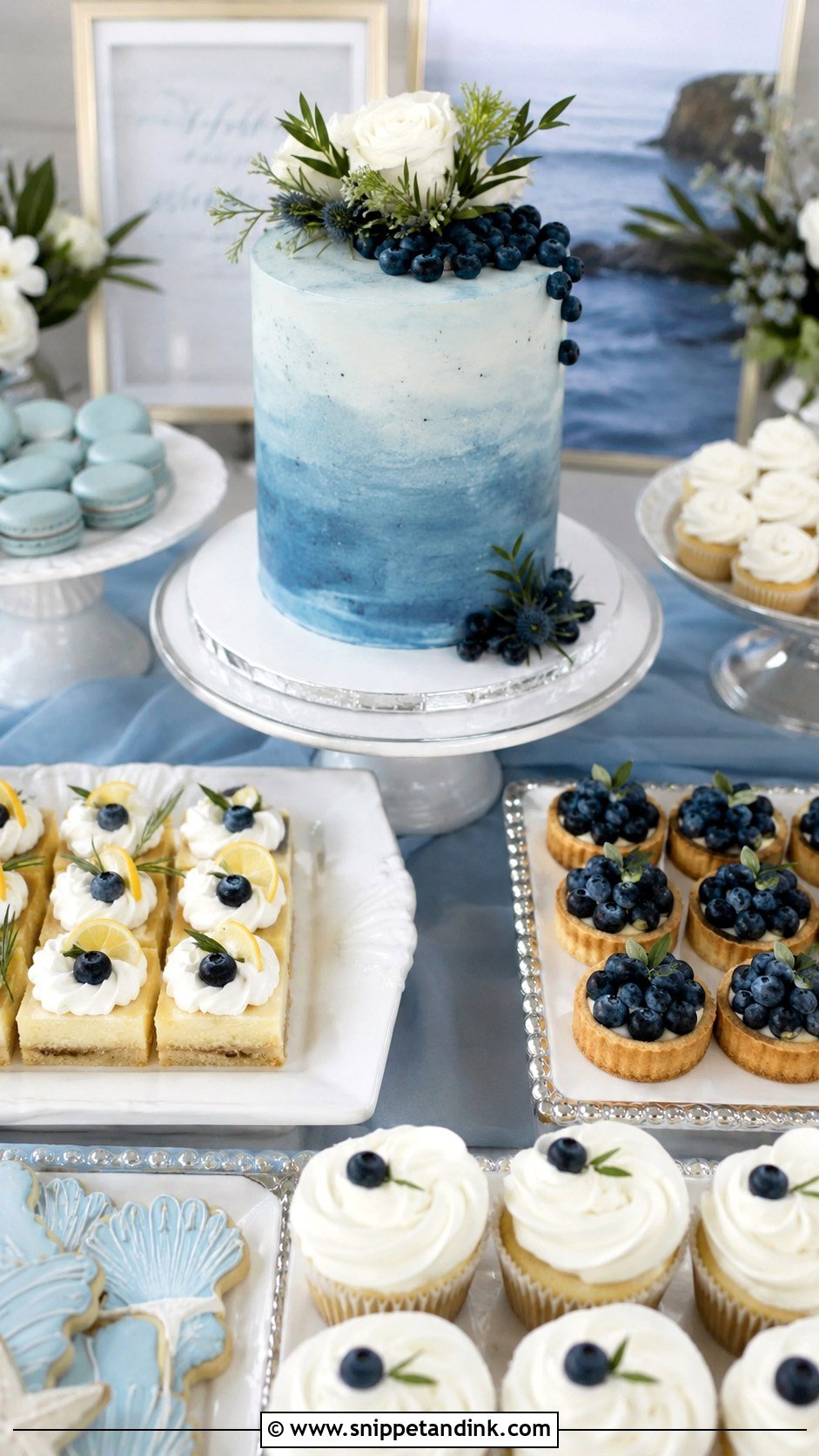
Dusty blue suits coastal and modern weddings. I’d anchor it with a blue watercolour buttercream cake or a white cake with blue florals, then blueberry tartlets, pale blue cupcakes, blue macarons, decorated cookies and lemon bars for contrast. Blue has a quirk: added to a yellowish butter frosting, it turns slightly green, so the base has to be whitened first. Don’t dye every dessert; natural blueberry tones mixed with a few blue decorations keep it from looking artificial.
11. Greenery Wedding Sweet Table
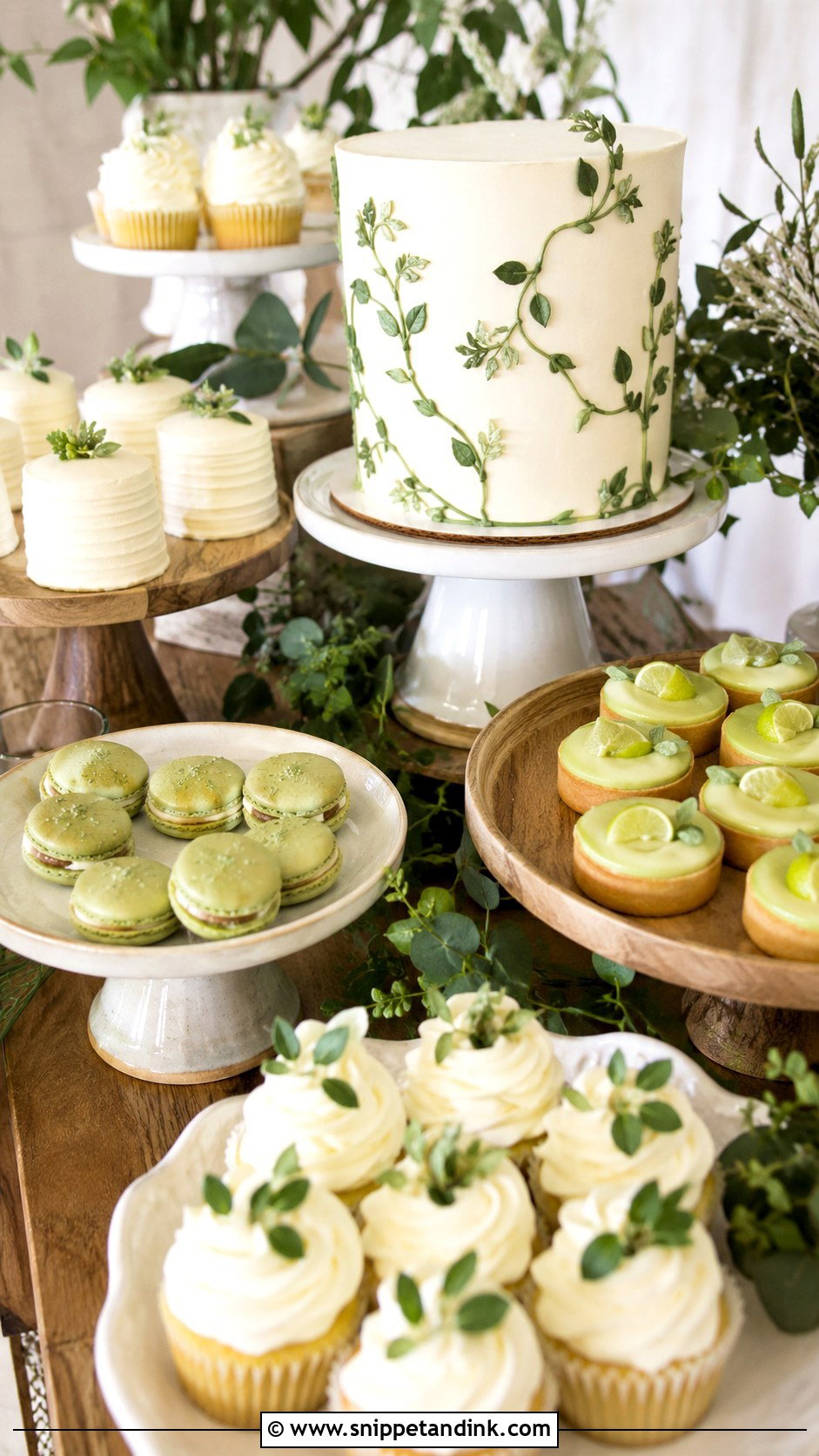
Leaves alone can carry a dessert table. A white buttercream cake with piped green vines, pistachio macarons, lime tartlets, vanilla cupcakes, shortbread and mini cakes, with eucalyptus, olive branches or ferns around the display. Eucalyptus is not something to have touching food, so I keep greenery on the table surface and away from uncovered desserts. Wood, stone or white ceramic stands suit greenhouses and outdoor venues.
12. Floral Wedding Sweet Table
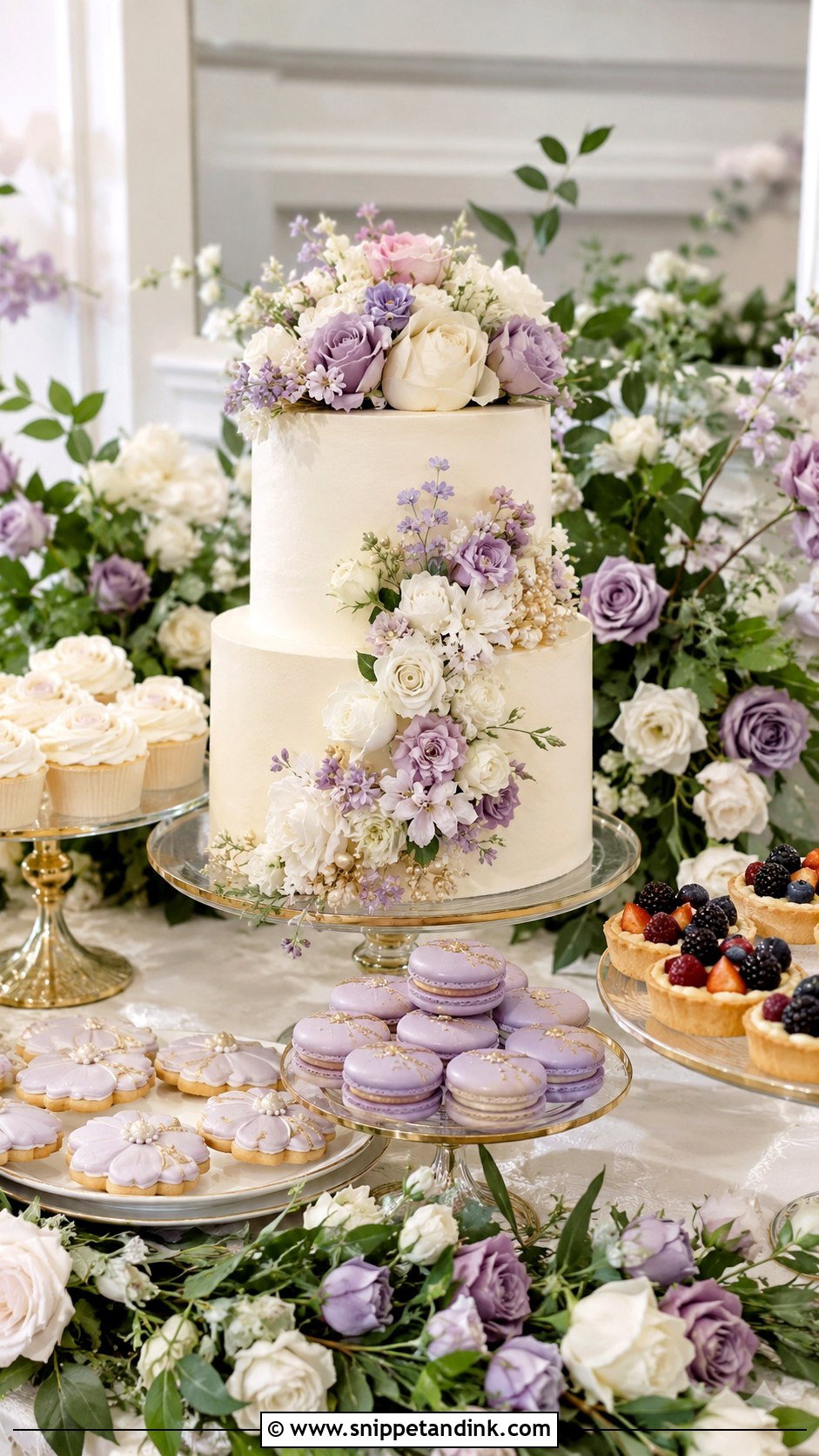
Desserts should feel part of the flower plan here. I’d start with a cake carrying fresh or sugar flowers matched to the bouquet, then flower-shaped cookies, rose cupcakes, lavender macarons, mini fruit tarts and vanilla panna cotta cups. Keep the floral colours to two, blush and ivory or peach and cream, with greenery to break them up. Sugar flowers cost more than fresh ones but hold up much better in heat and can be kept afterwards.
13. Beach Wedding Sweet Table
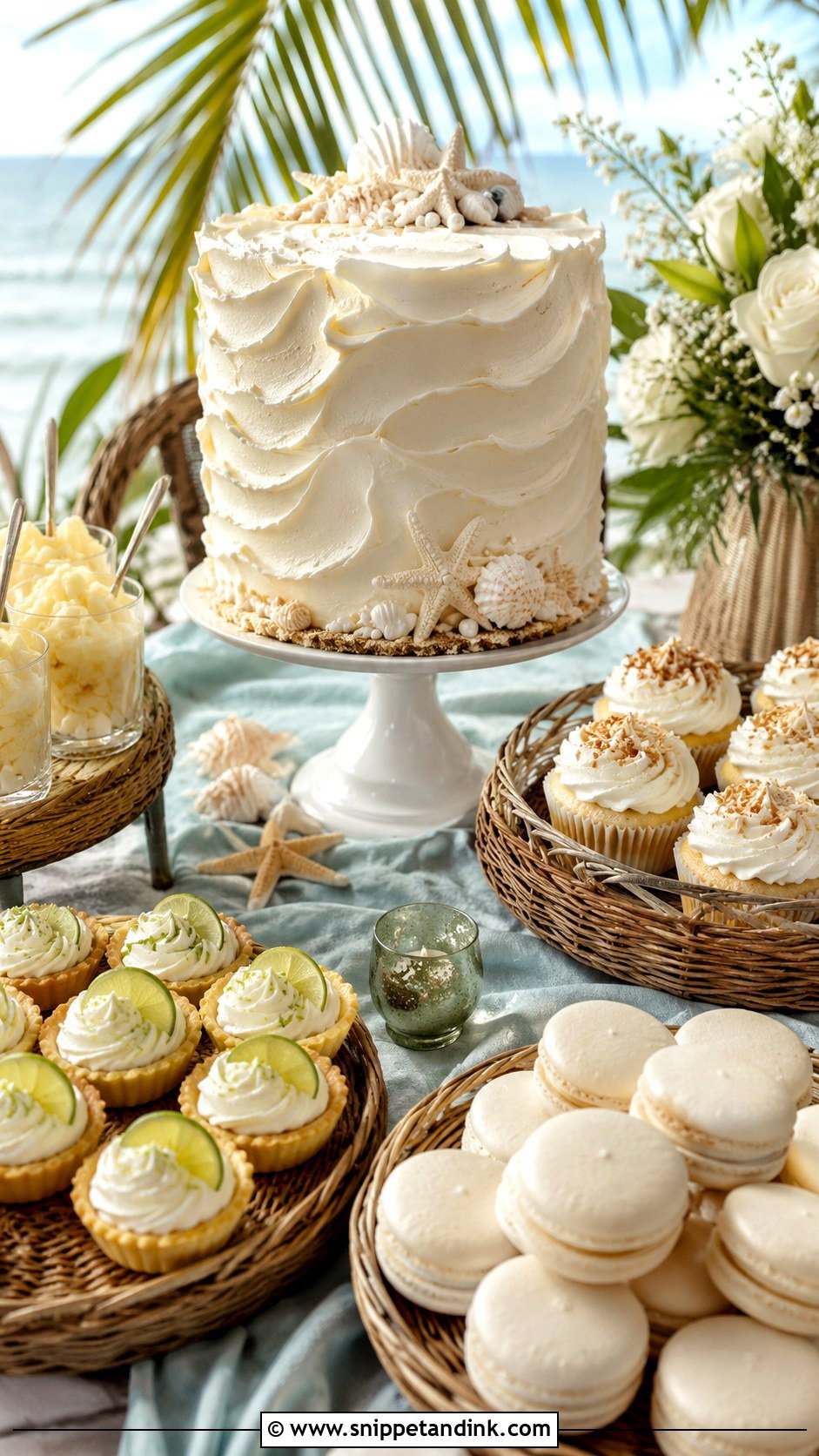
Heat is the enemy at the beach, so the menu has to be chosen for it. A white or sand-toned cake with wave-textured buttercream, then coconut cupcakes, key lime tartlets, vanilla macarons, sugar cookies, pineapple cups and mini cheesecakes. Light wood, woven trays, linen and clear glass suit it, with seashell sugar pieces or tropical greenery. Butter-based frostings slump in direct sun, so I’d ask for shade, a firmer frosting or a later set-up. Coastal is fine; costume-level theming is not.
14. Fall Wedding Sweet Table
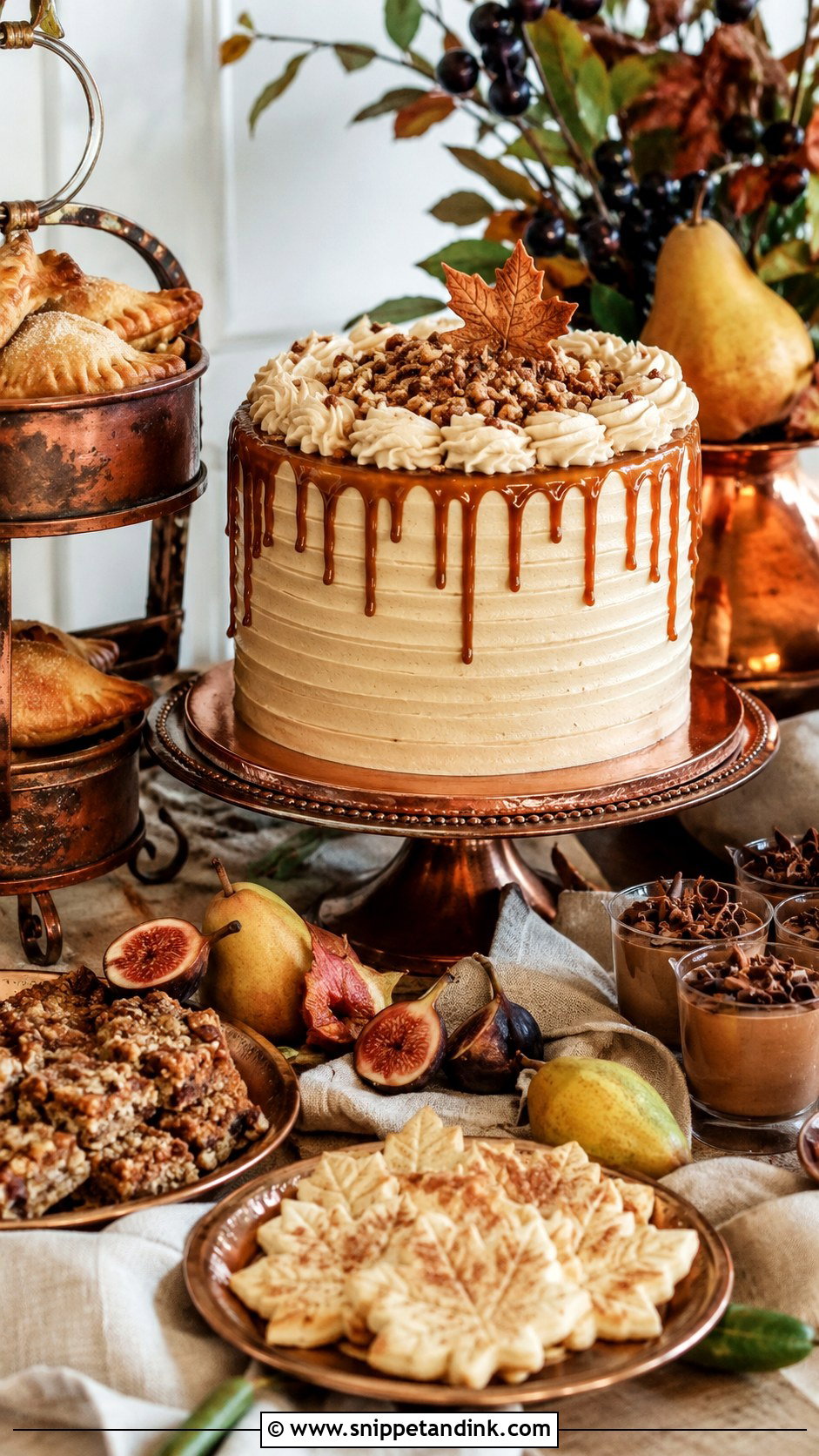
Autumn wants warmth without heaviness. A spice cake, caramel cake or pumpkin cake as the centerpiece, then apple hand pies, maple cookies, pecan bars, cinnamon cupcakes and chocolate mousse cups. Copper, cream, rust and soft brown, with wood risers and amber glass. Figs, pears or small pumpkins can sit nearby as decoration. After a filling dinner, guests take small pieces, so I’d size everything at two bites.
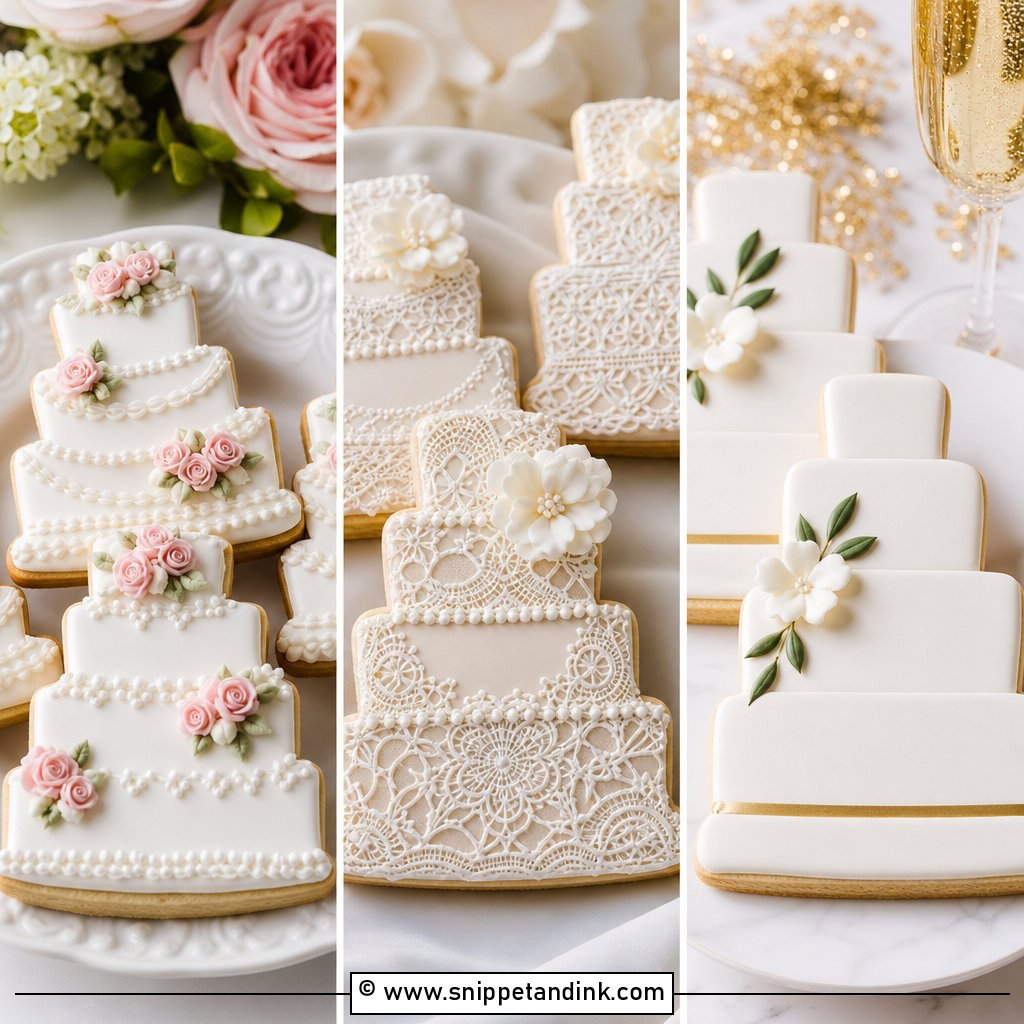
15. Spring Wedding Sweet Table
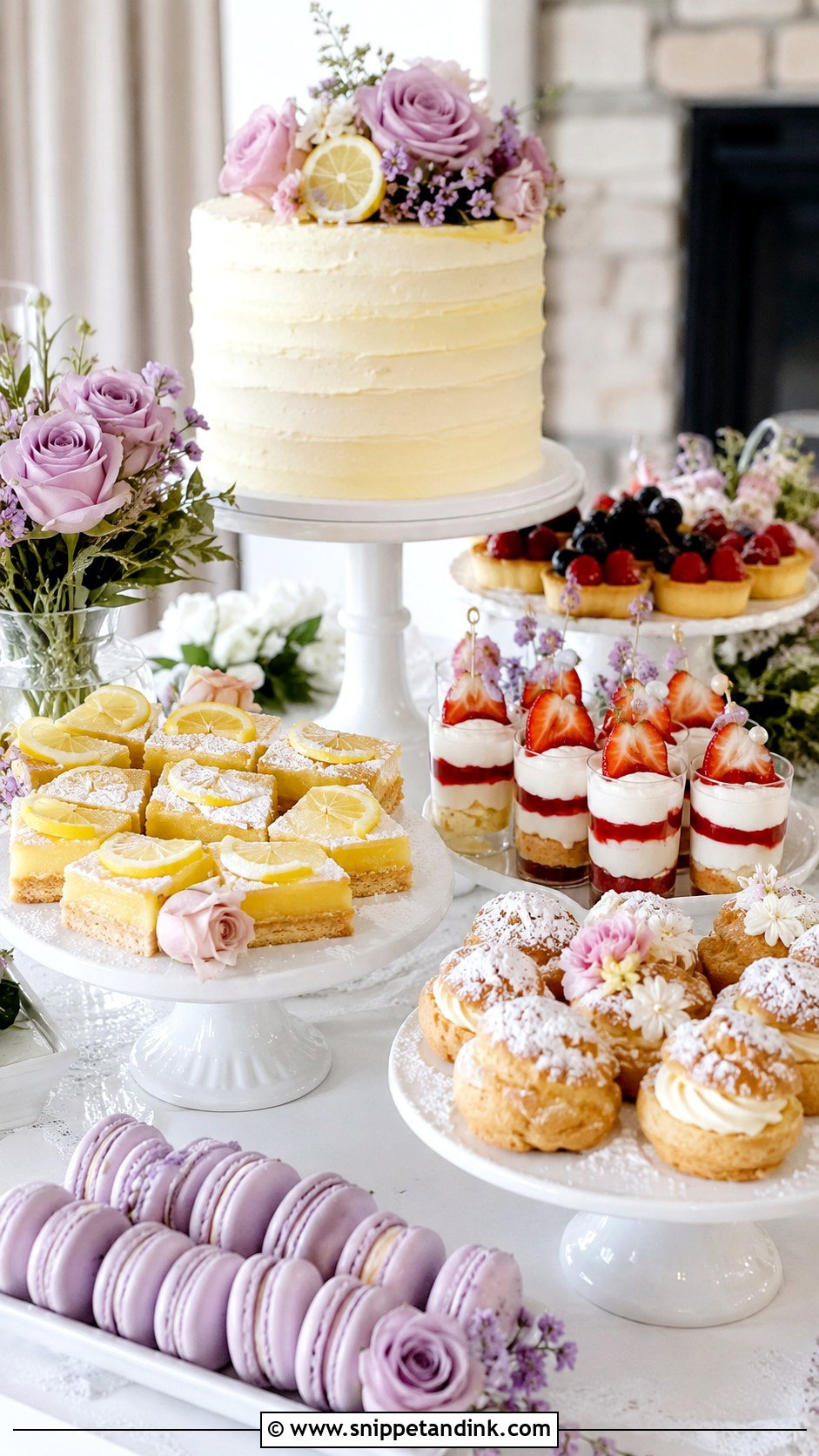
Brunch weddings and daytime receptions suit this. Start with a lemon or vanilla cake with soft buttercream and small flowers, then strawberry shortcake cups, lemon bars, pastel macarons, mini fruit tarts, sugar cookies and cream puffs. Light stands in white, glass or pale wood keep it airy. Lavender, blush, butter yellow and mint work together in small amounts. A good spread pleases children as much as adults.
16. Summer Wedding Sweet Table
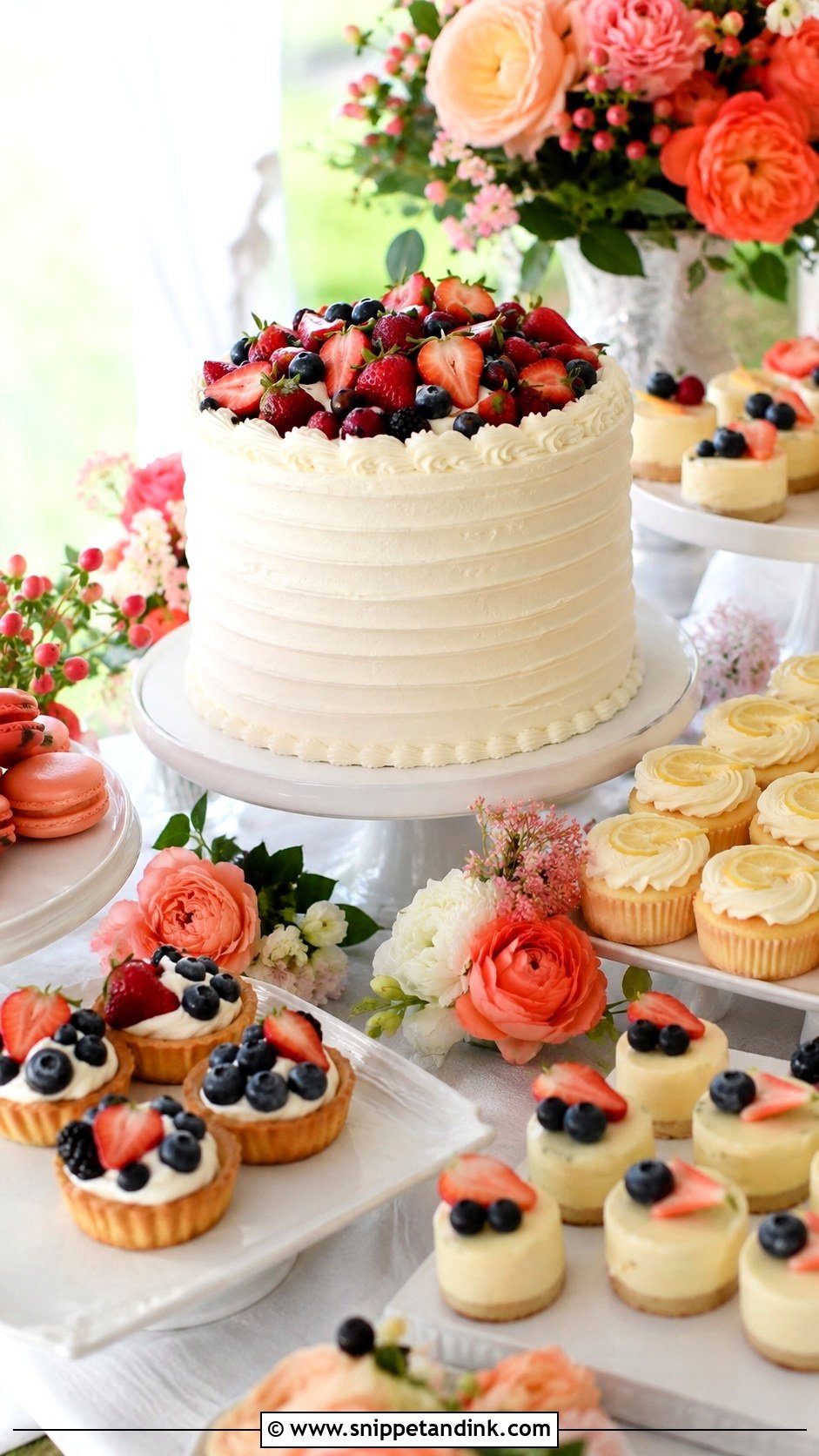
Summer means guests serve themselves in heat, so choose sturdy sweets. A berry, citrus or vanilla cake with fresh fruit on top, then fruit tarts, mini cheesecakes, lemon cupcakes, macarons, shortbread and chilled cups only if the venue can keep them cold. White trays with coral, yellow or berry accents. I always ask about shade and timing for an outdoor table, because frosting softens fast and cut fruit starts to weep within a couple of hours.
17. Winter Wedding Sweet Table
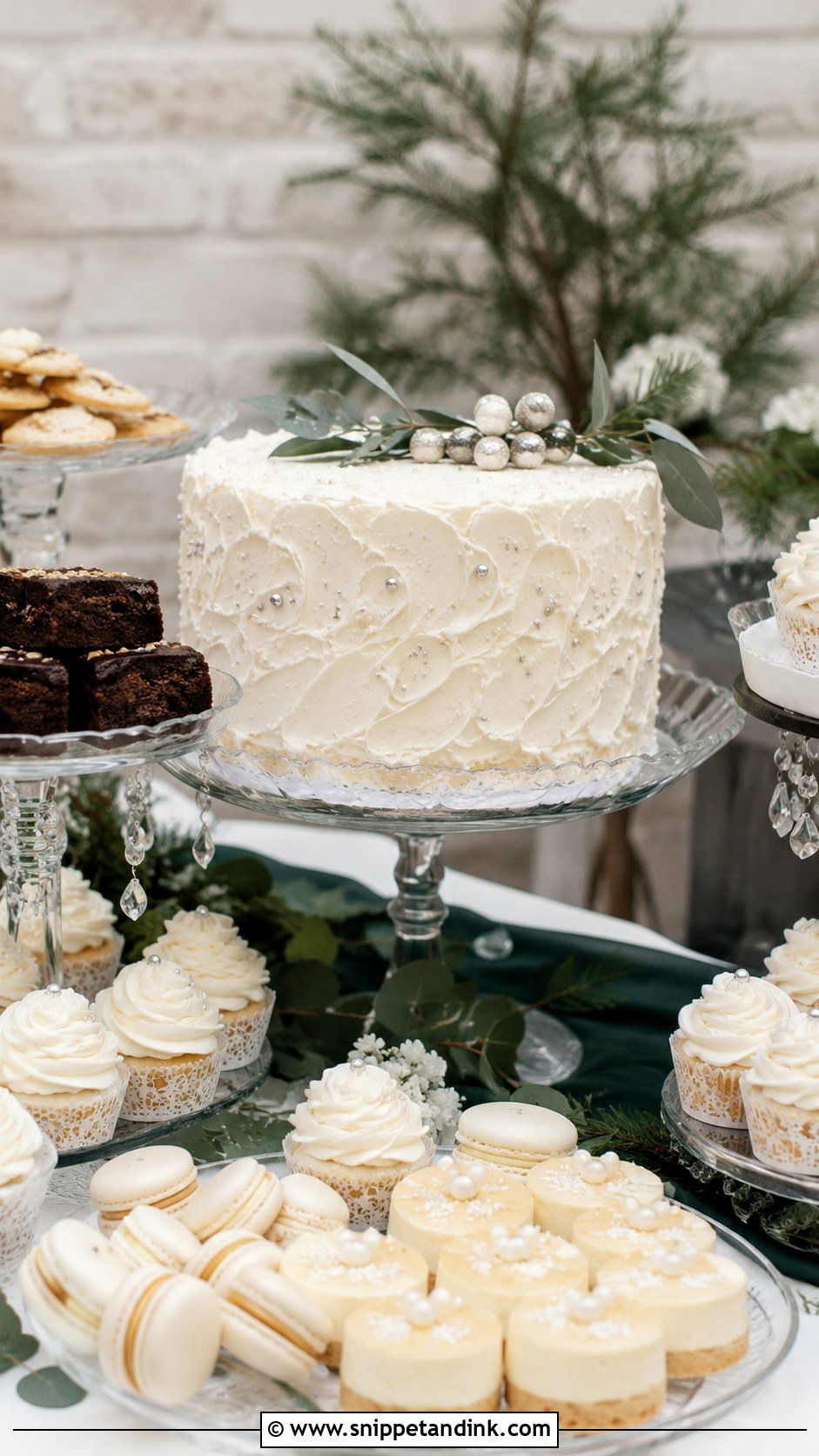
Winter can feel elegant without any holiday decor. A white cake with textured buttercream, silver accents or sugar snow, then dark chocolate brownies, vanilla cupcakes, almond cookies, mini cheesecakes, mousse cups and white macarons. Glass stands, silver trays, soft candles and winter greenery. Ivory, silver, pale blue or deep green. Rich flavours suit cold months, but I’d add something light like citrus or berry so it doesn’t feel heavy.
18. Dessert Bar Wedding Sweet Table
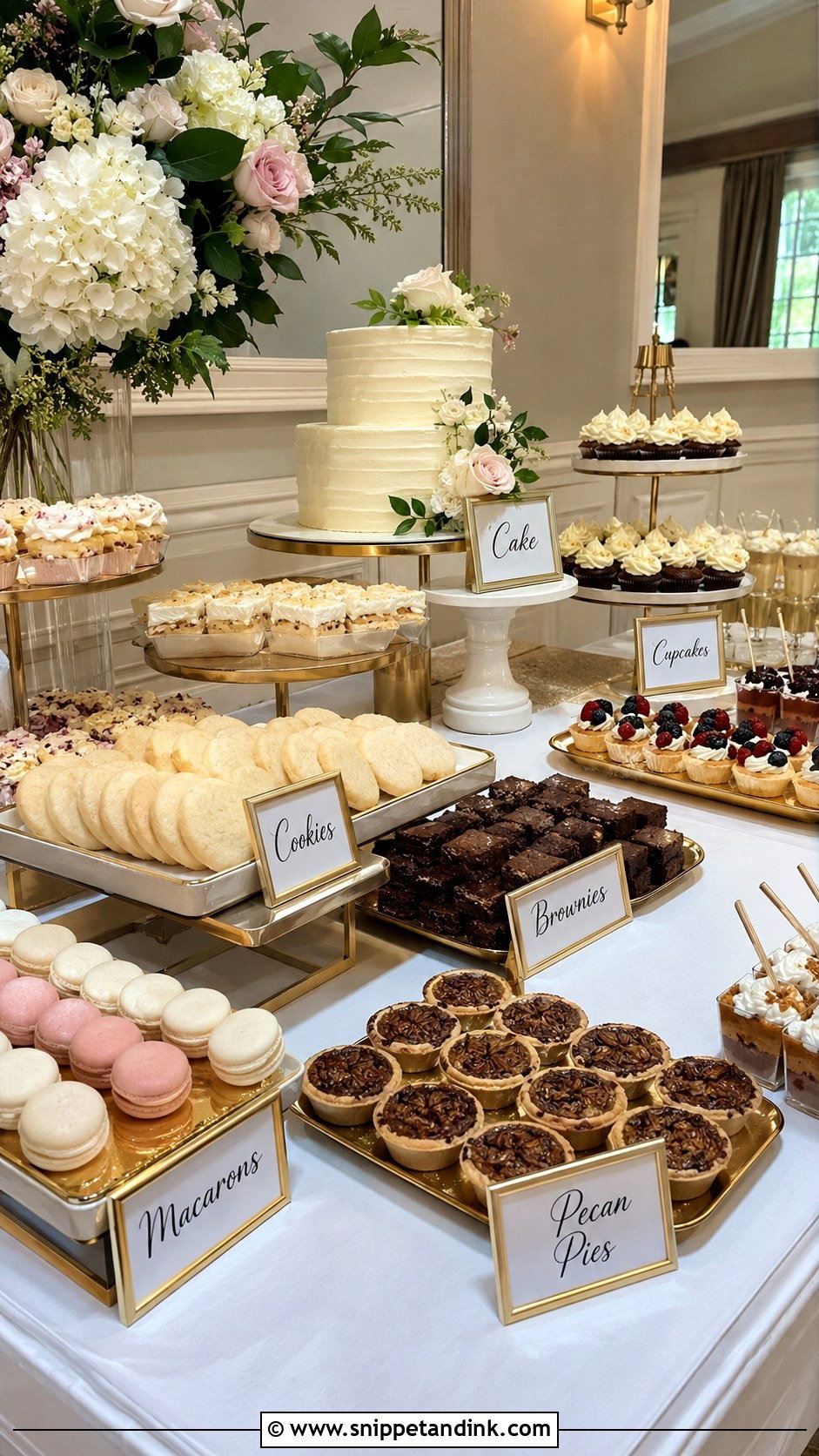
Variety is the whole point when you turn the table into a dessert bar wedding sweet table: guests pick what suits them. A small cutting cake anchors it, with sections for cupcakes, cookies, brownies, macarons, mini pies and dessert cups. Labels matter more as the spread grows. Keep serving pieces and colours consistent across the sections. For bigger weddings I suggest setting the table out from the wall so guests can work along both sides; the queue moves twice as fast.
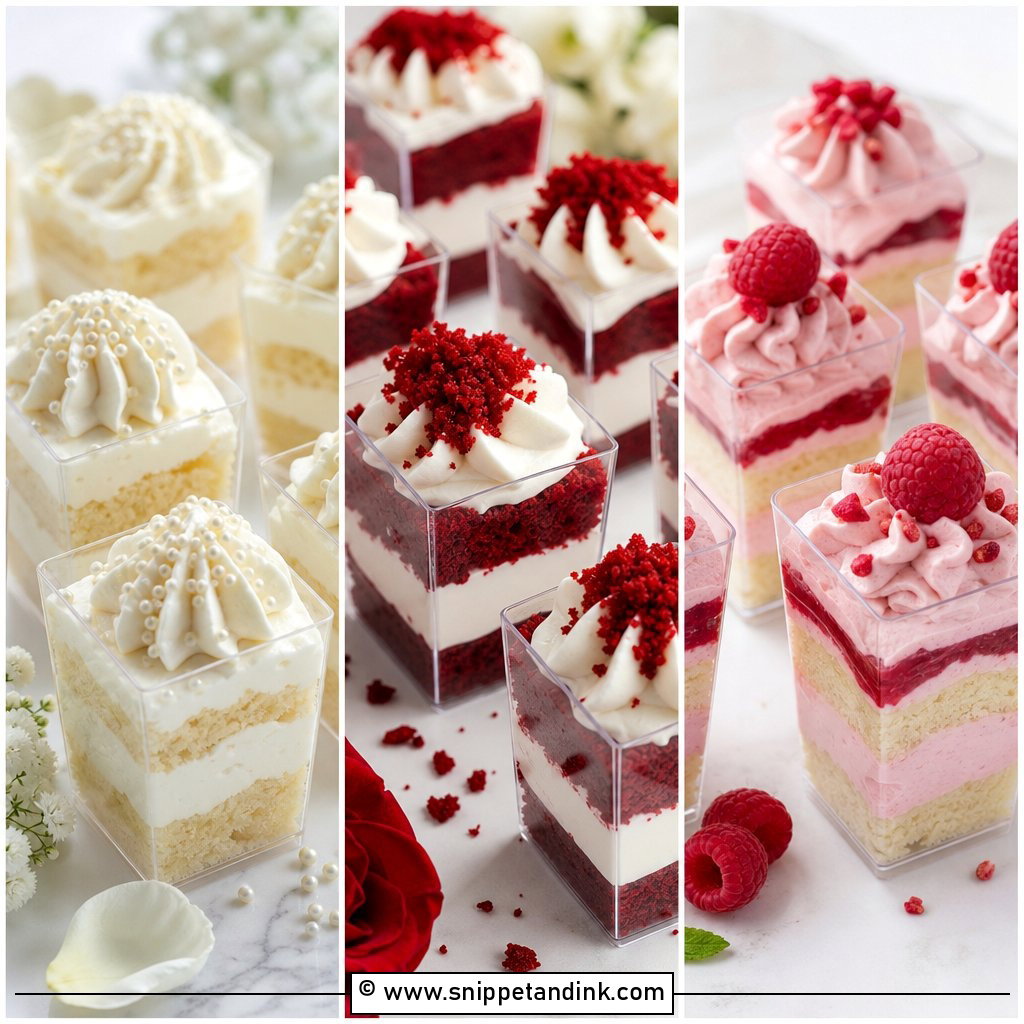
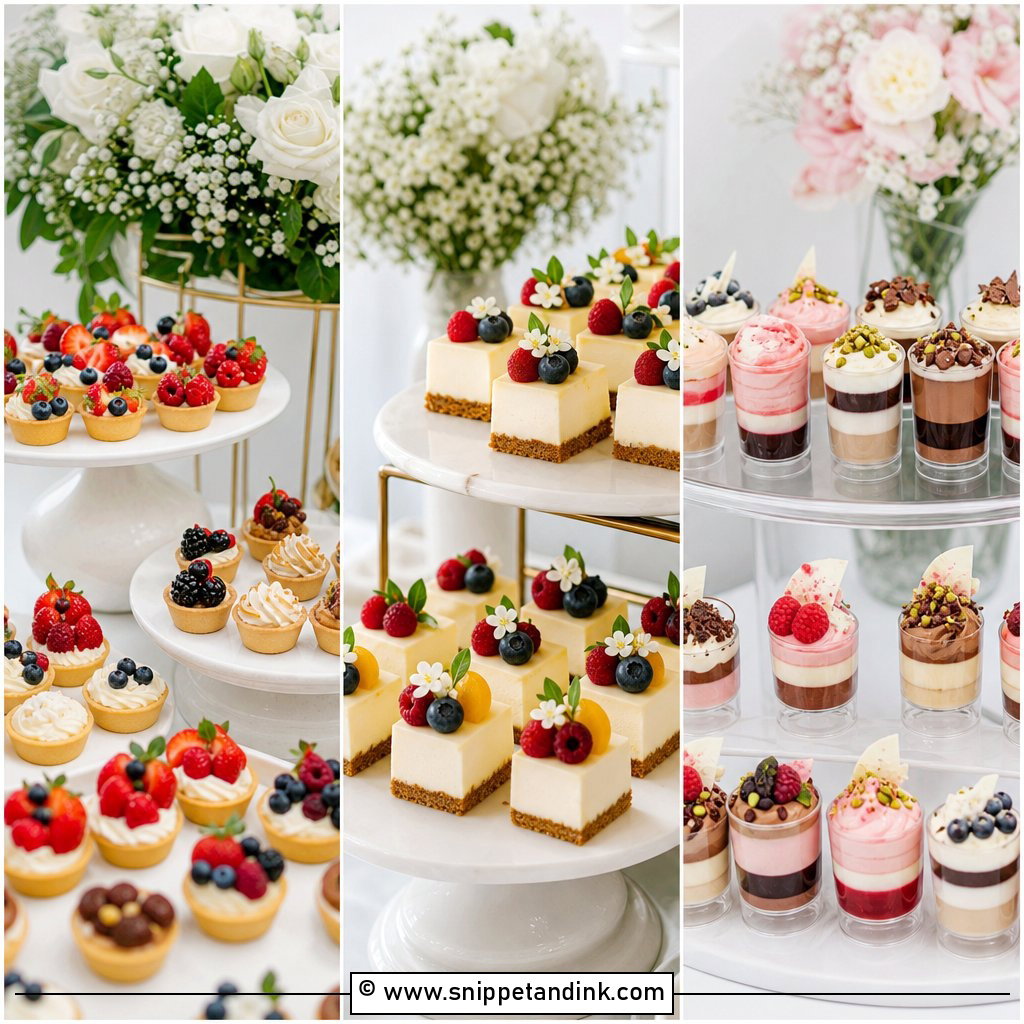
19. Mini Dessert Wedding Sweet Table
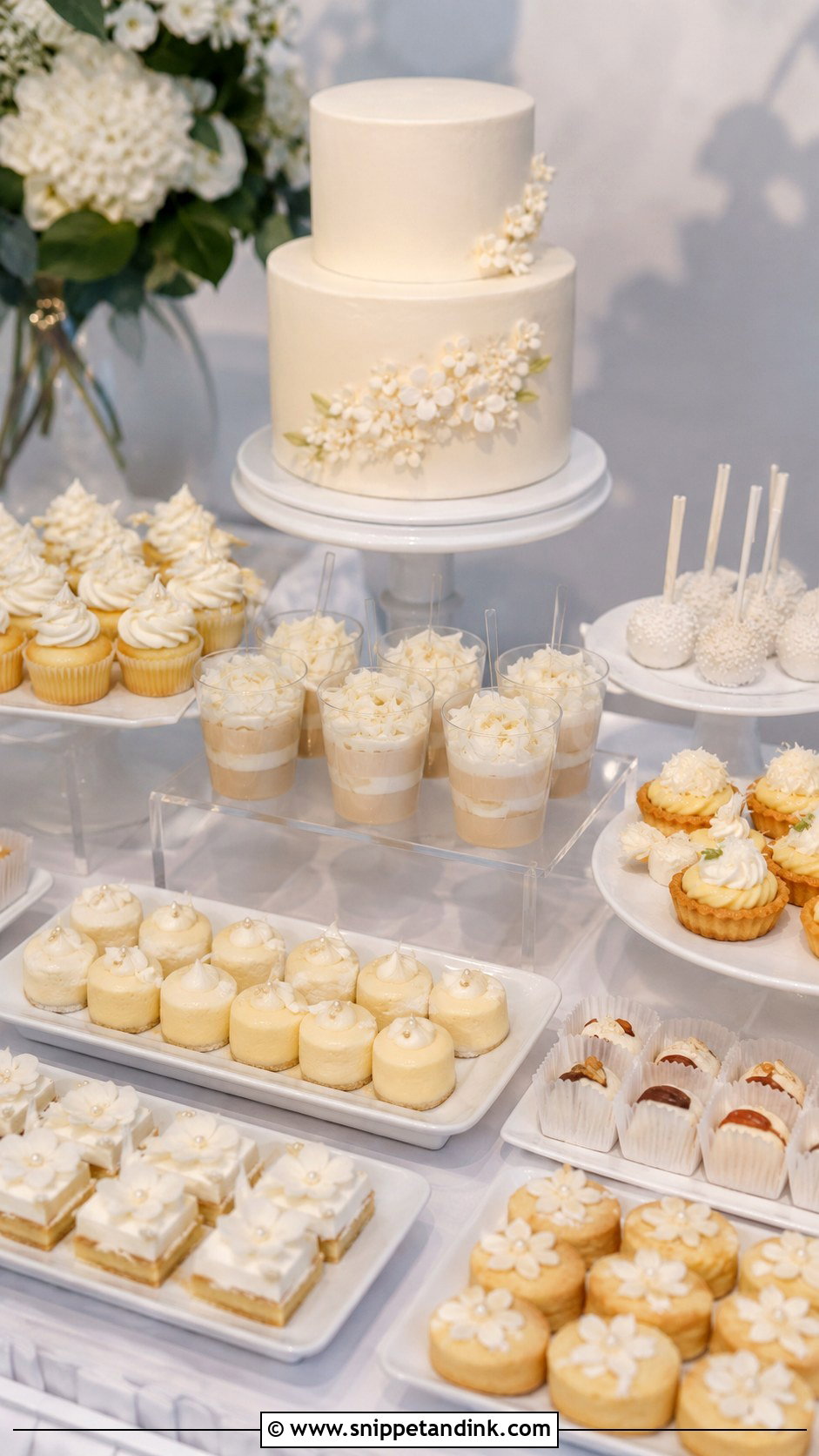
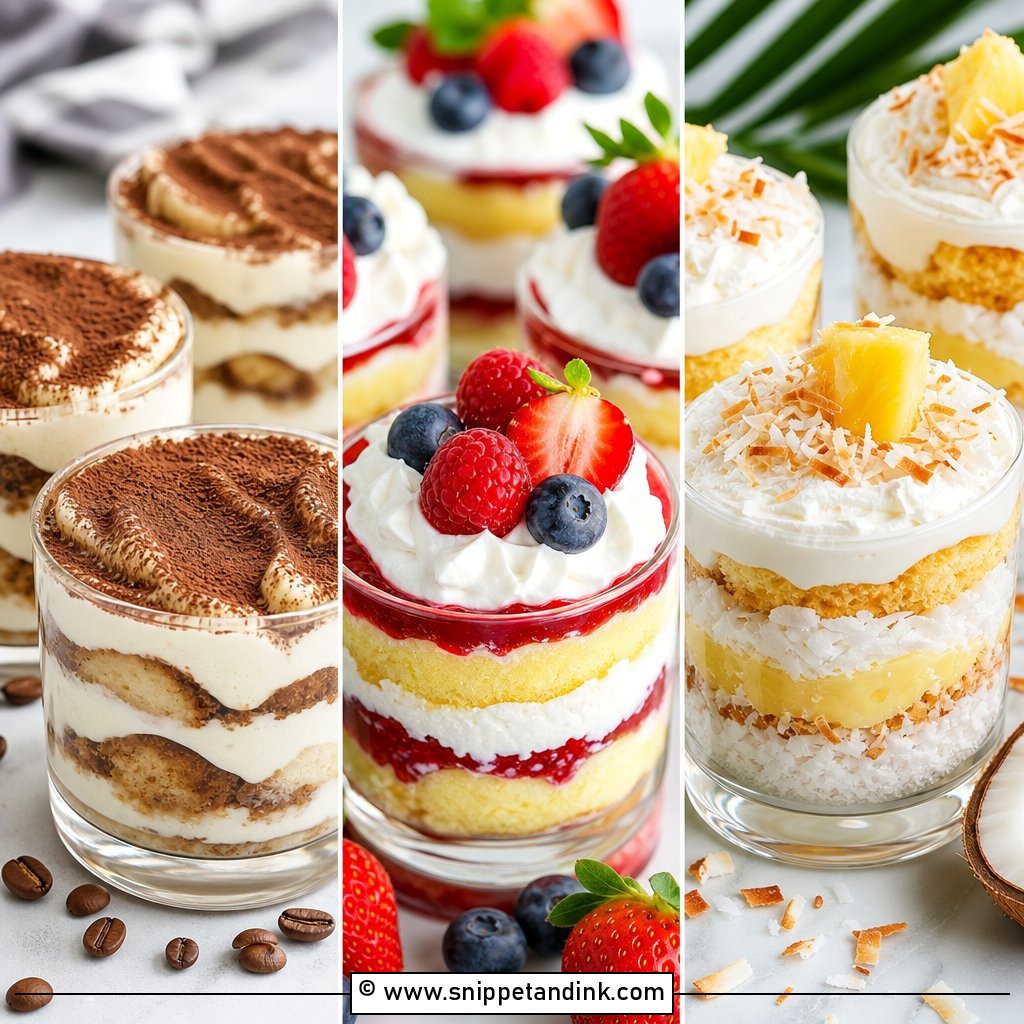
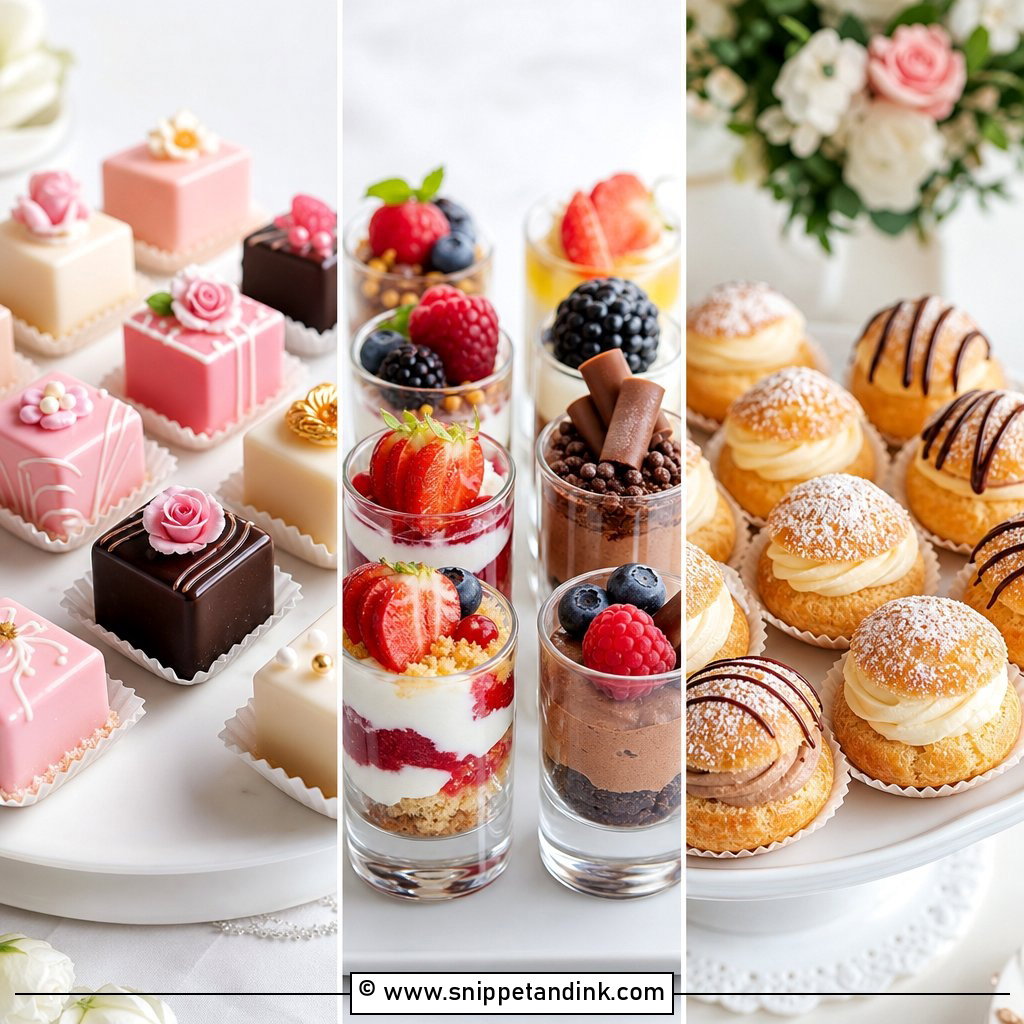
Every portion here is neat and easy to hold. A petite tiered cake, then bite-size cheesecakes, mini cupcakes, tartlets, cake bites, mousse cups and tiny cookies, arranged in rows or grouped by flavour on small trays. Guests can try three things without a plate full of big slices, which suits receptions full of dancing and mingling. Keeping the pieces a consistent size is what makes the table look professional.
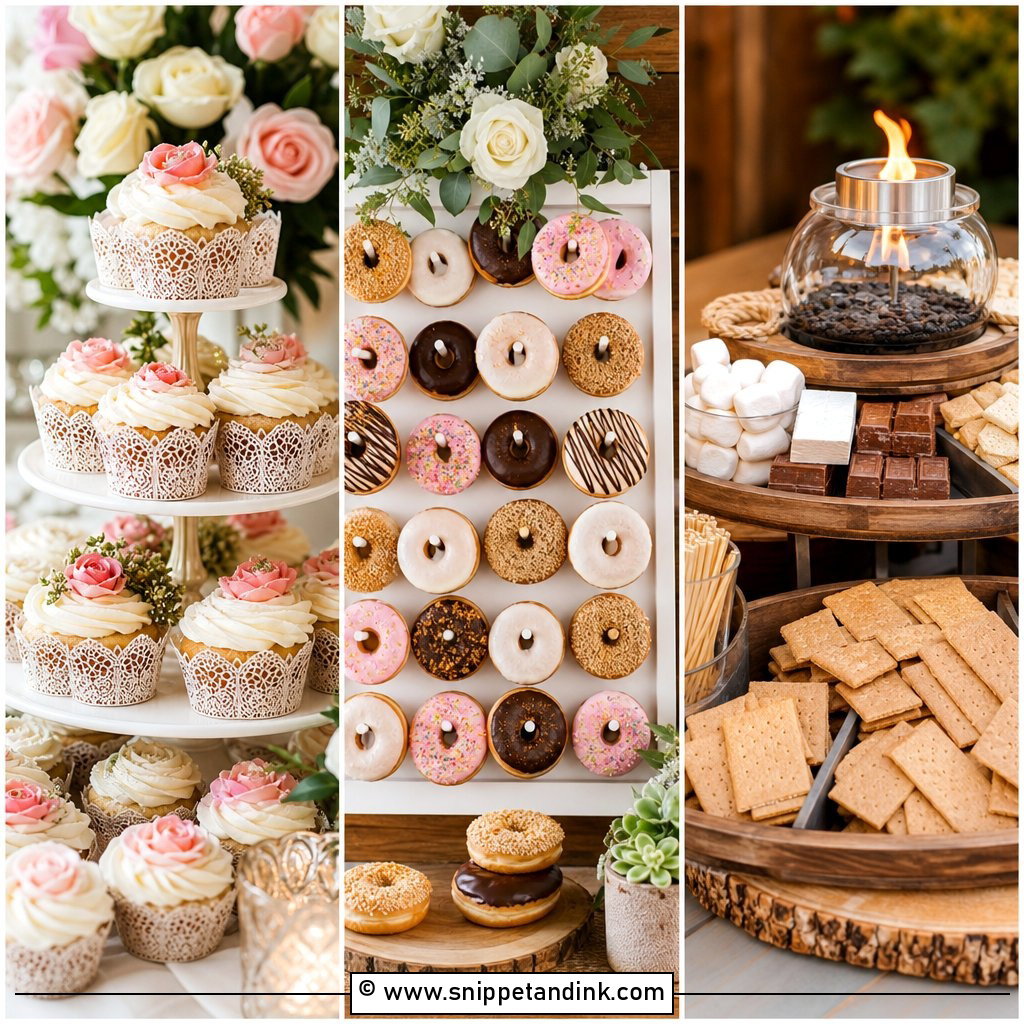
20. Cupcake Wedding Sweet Table
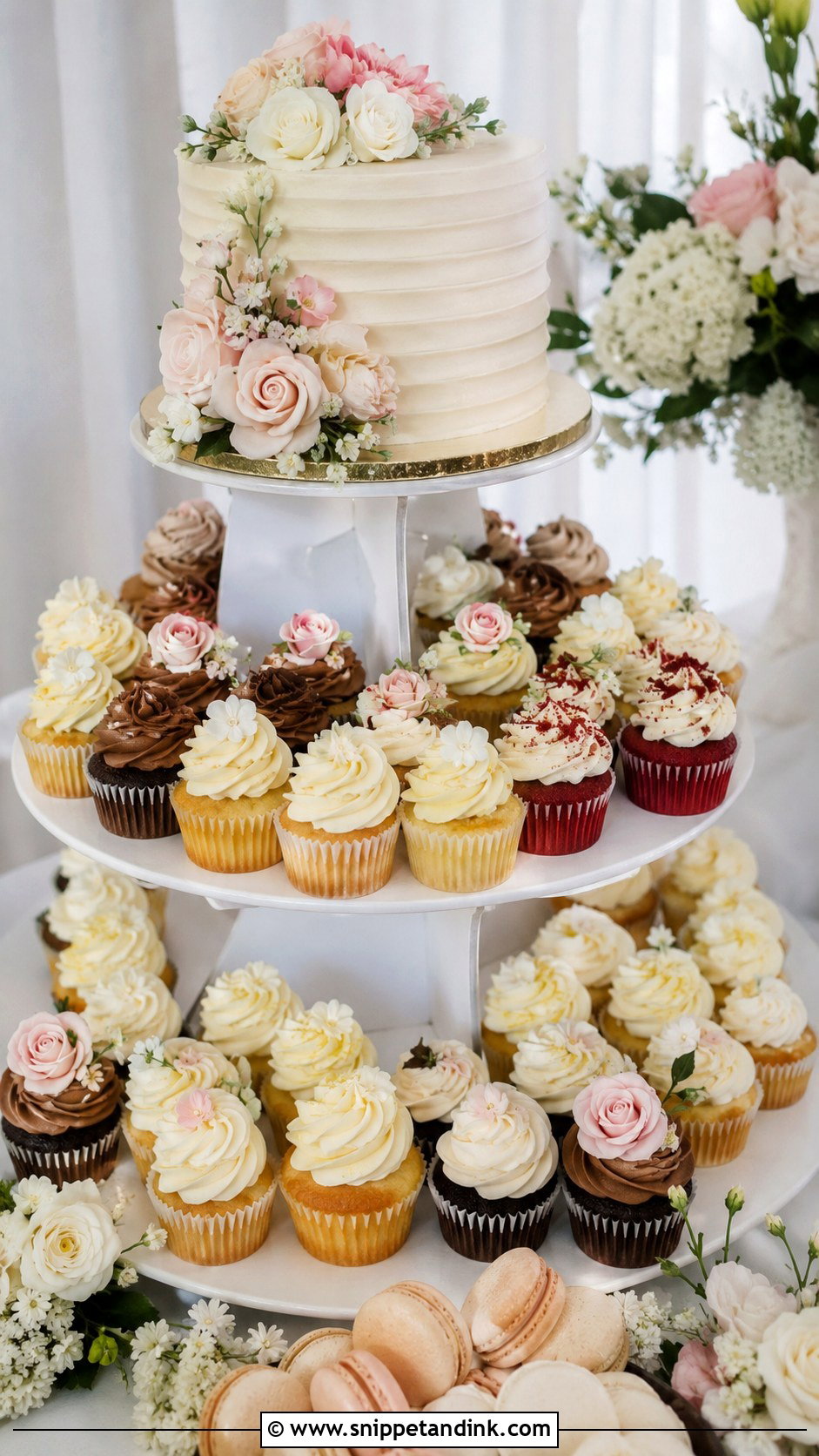
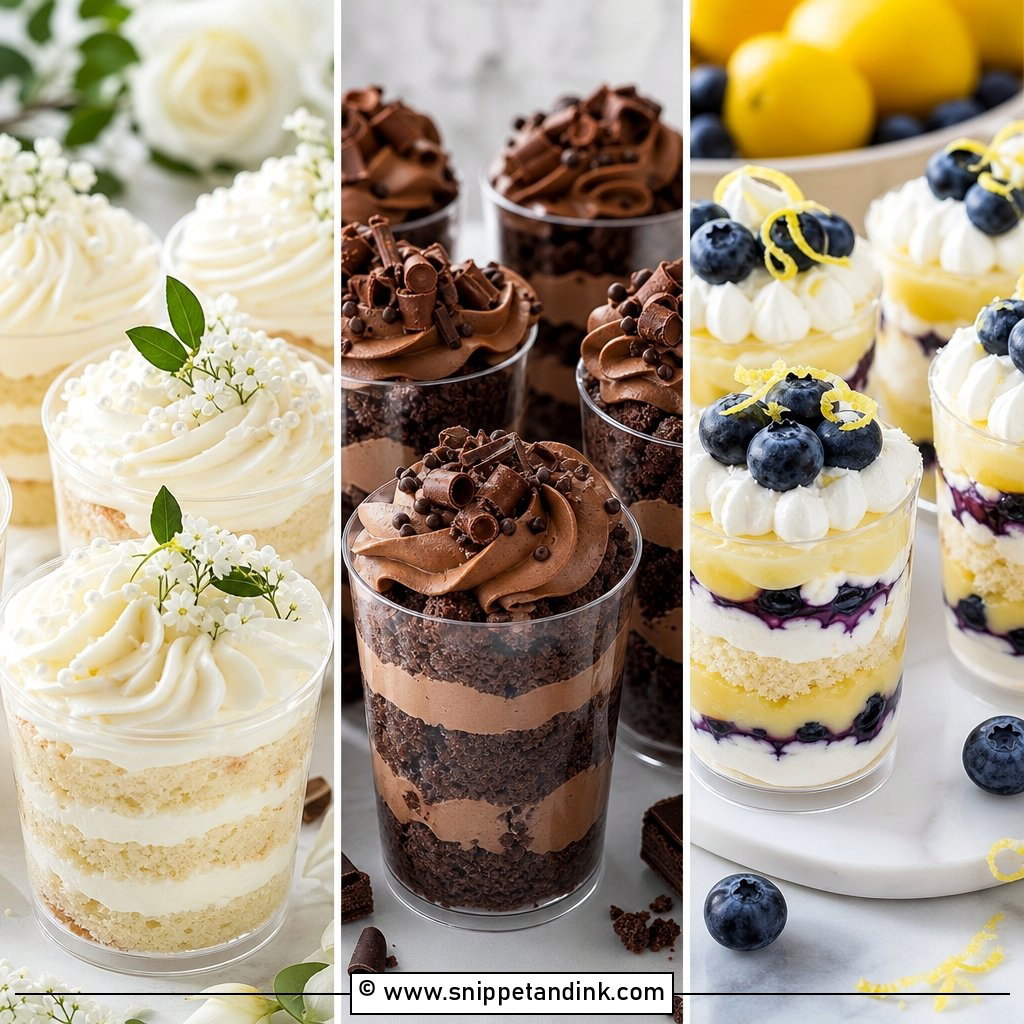
No slicing, no cake-cutting staff, no plates needed: that is why couples choose cupcakes. A small cake sits at the top of a tiered stand and cupcakes fill the levels below, in two or three flavours rather than six. Vanilla, chocolate, lemon, red velvet and almond are reliable. I pipe them the day of or the day before, because cupcakes dry out faster than a whole cake. Coordinated frosting colours or small sugar flowers keep the stand looking wedding-worthy.
21. Macaron Wedding Sweet Table
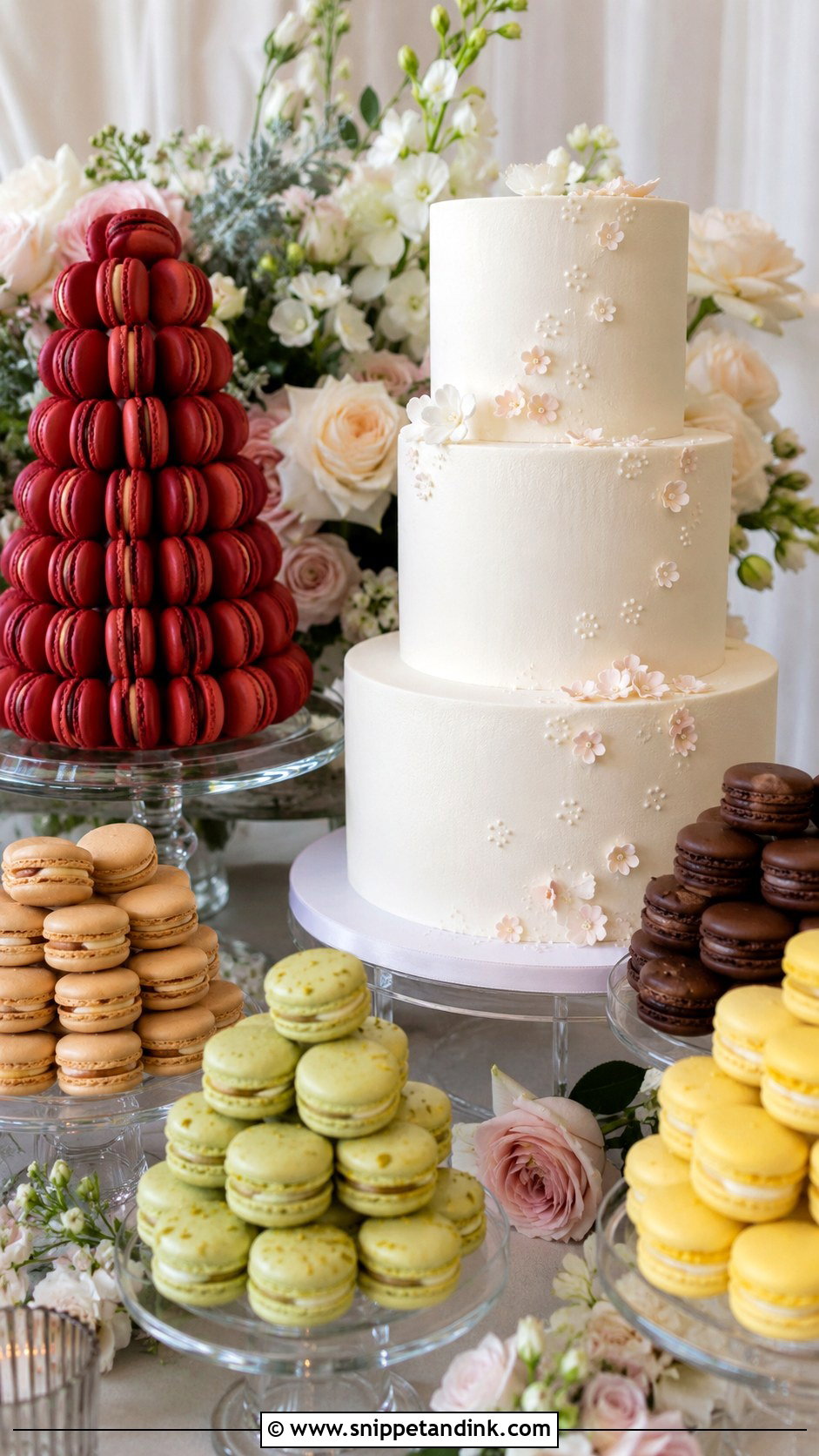
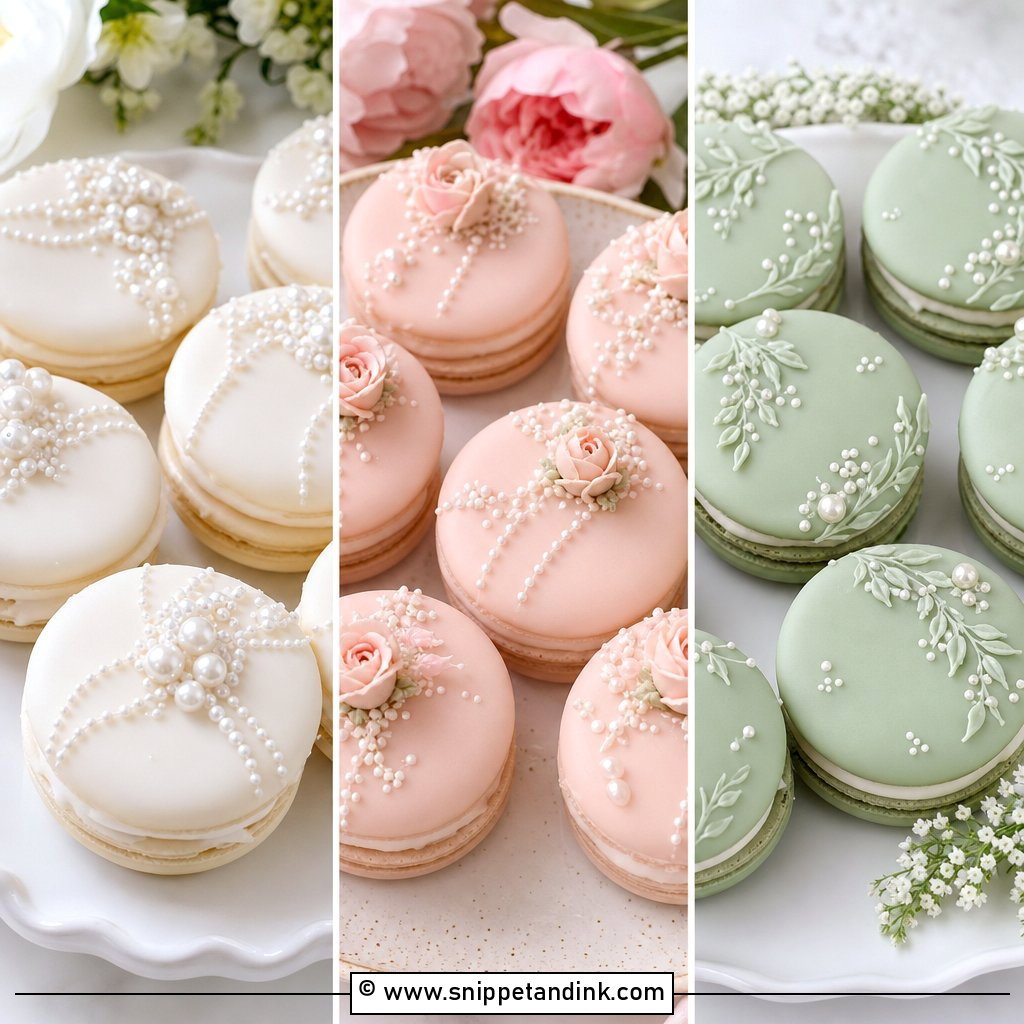
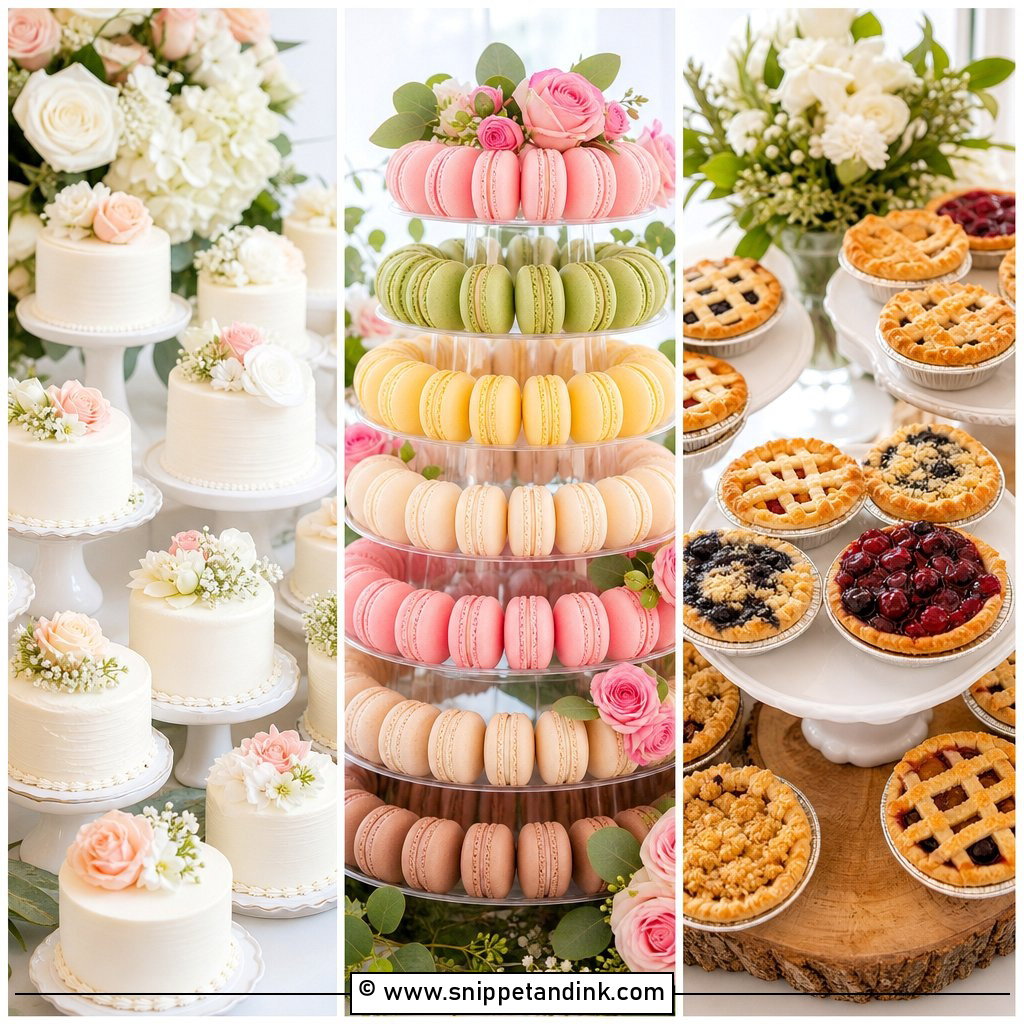
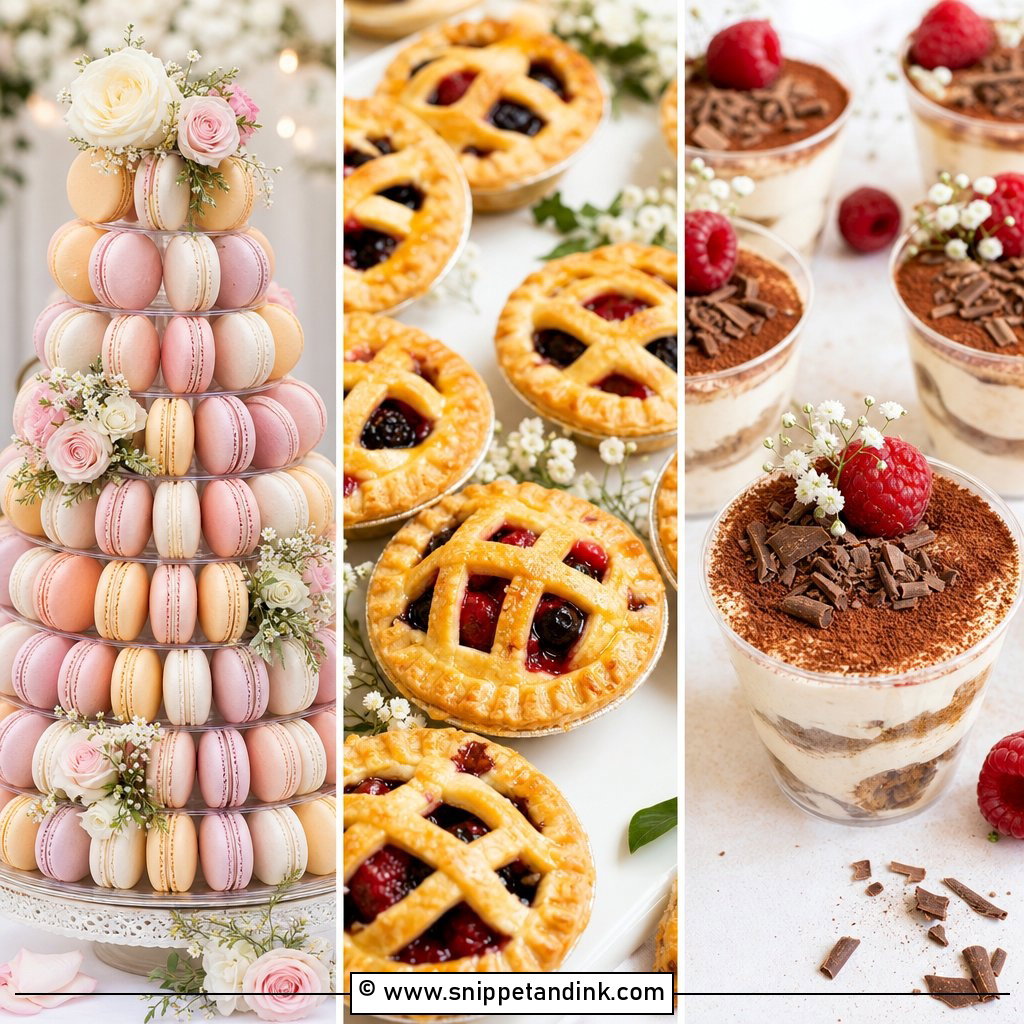
Macarons look polished when they are organised: towers, trays or clear risers around a simple cake. Raspberry, vanilla, pistachio, lemon, caramel and chocolate are good seasonal picks, coloured to match the flowers or linens. They are sensitive to humidity and soften on a hot, damp day, so I’d keep them boxed and cool until the table opens. Little flavour labels help, because guests like knowing before they bite.
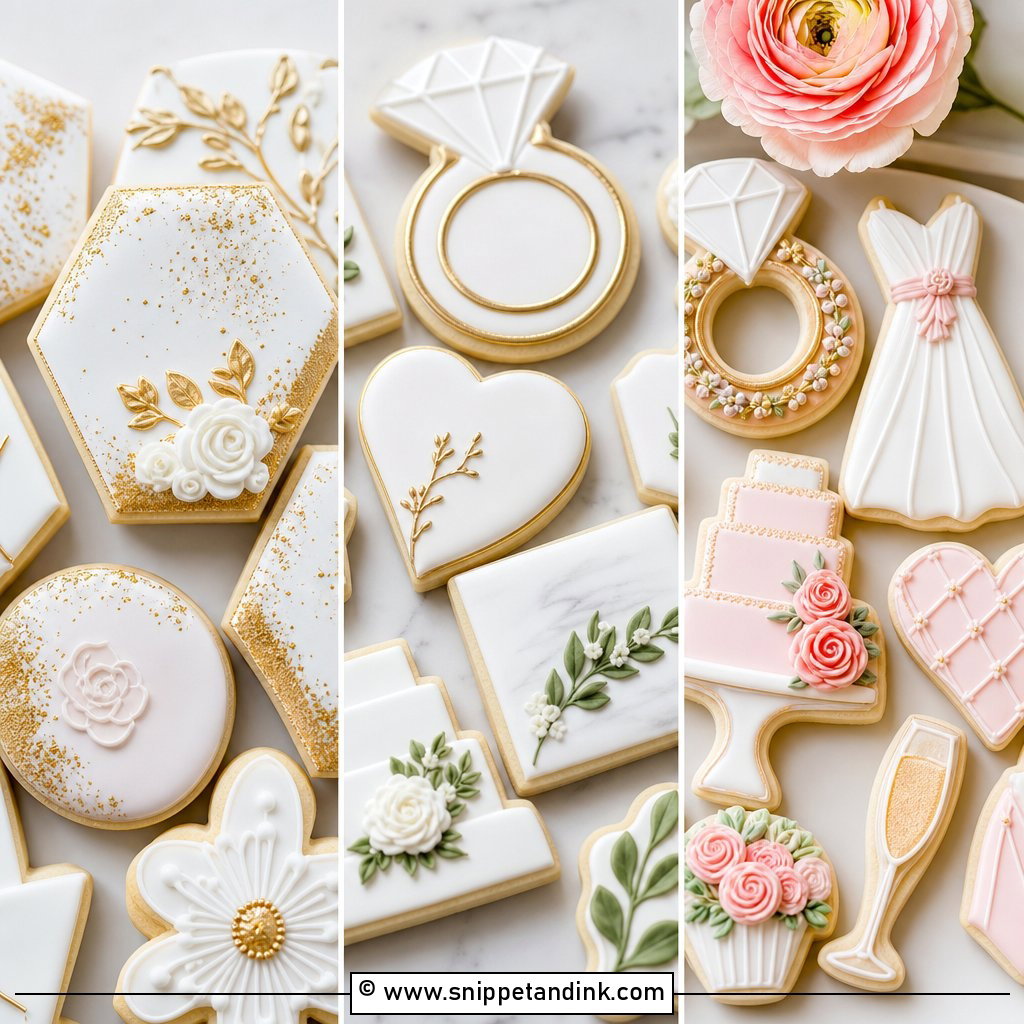
22. Cookie Wedding Sweet Table
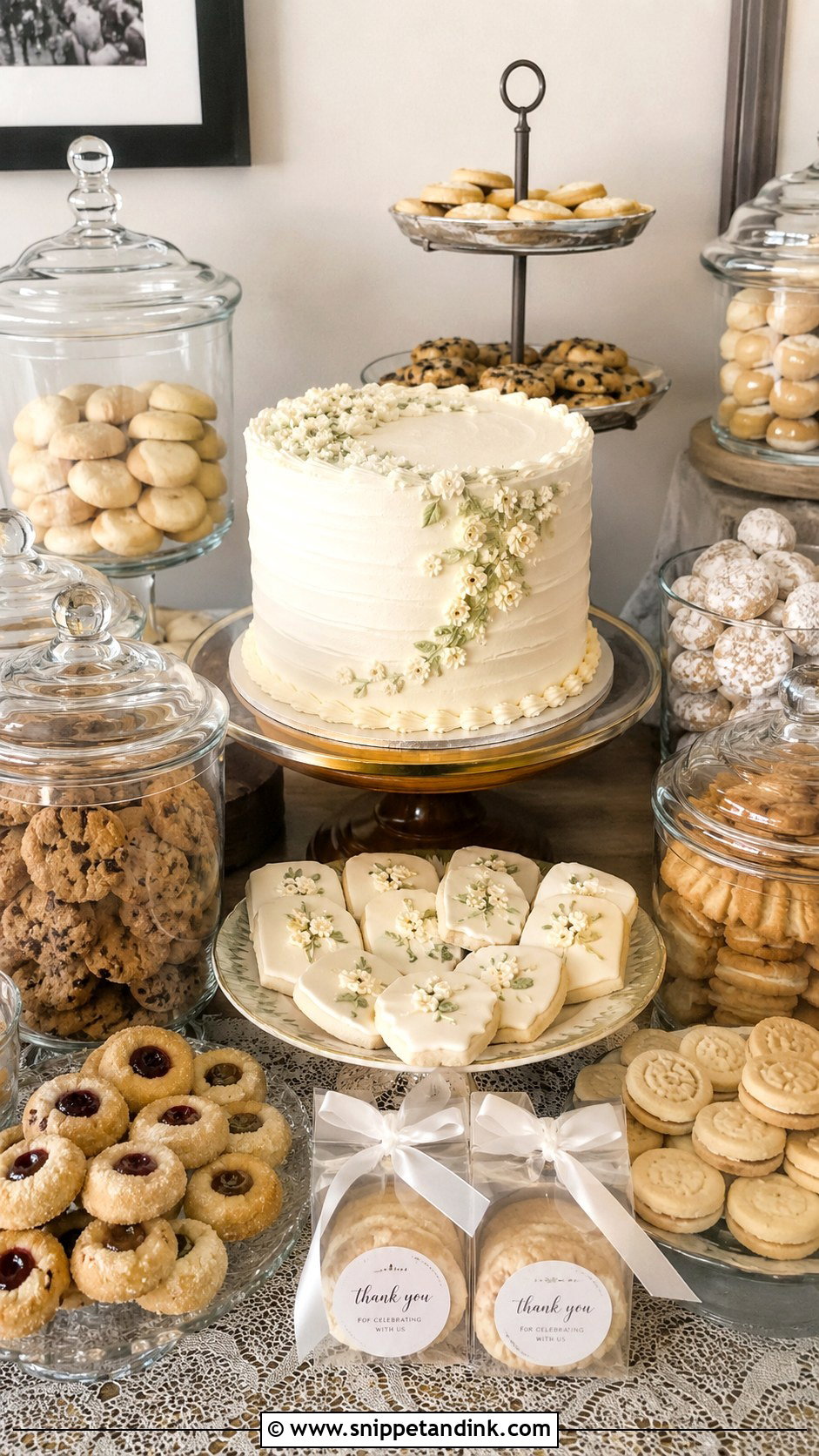
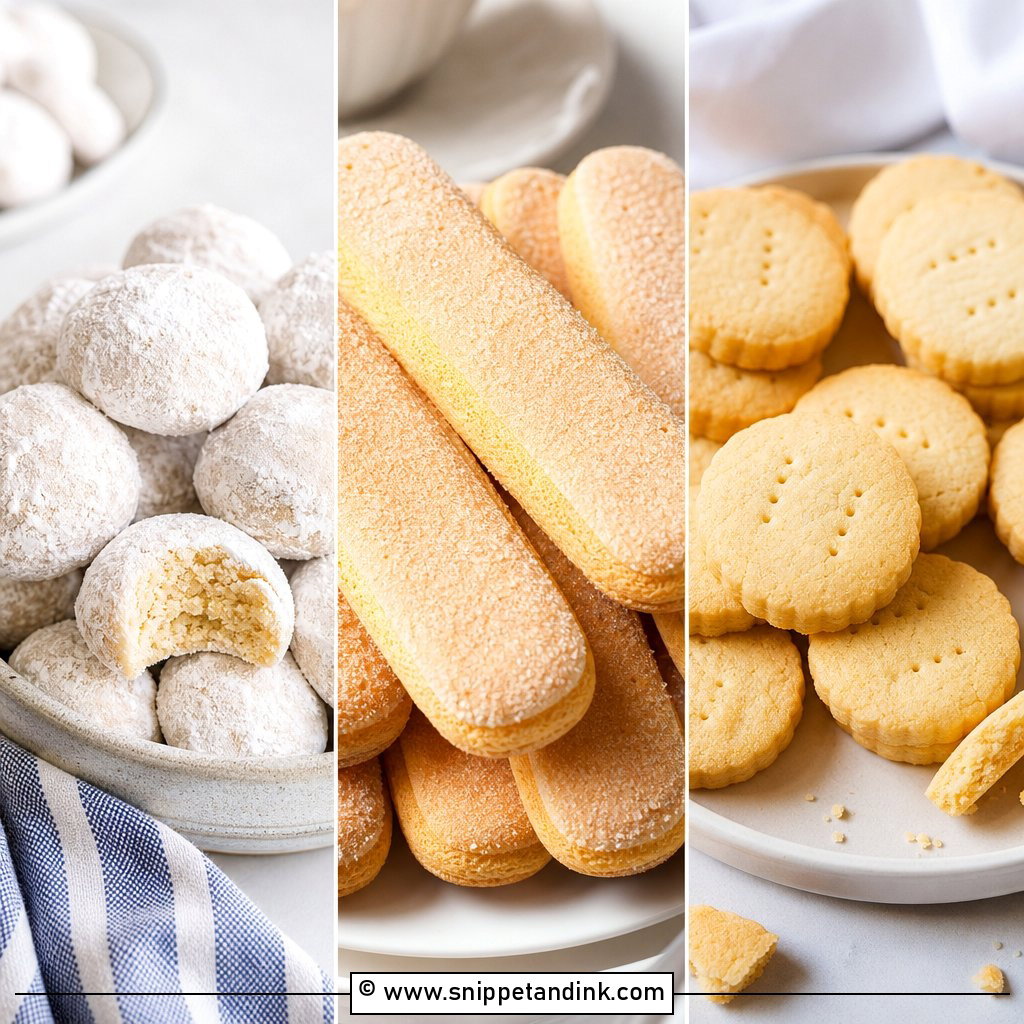
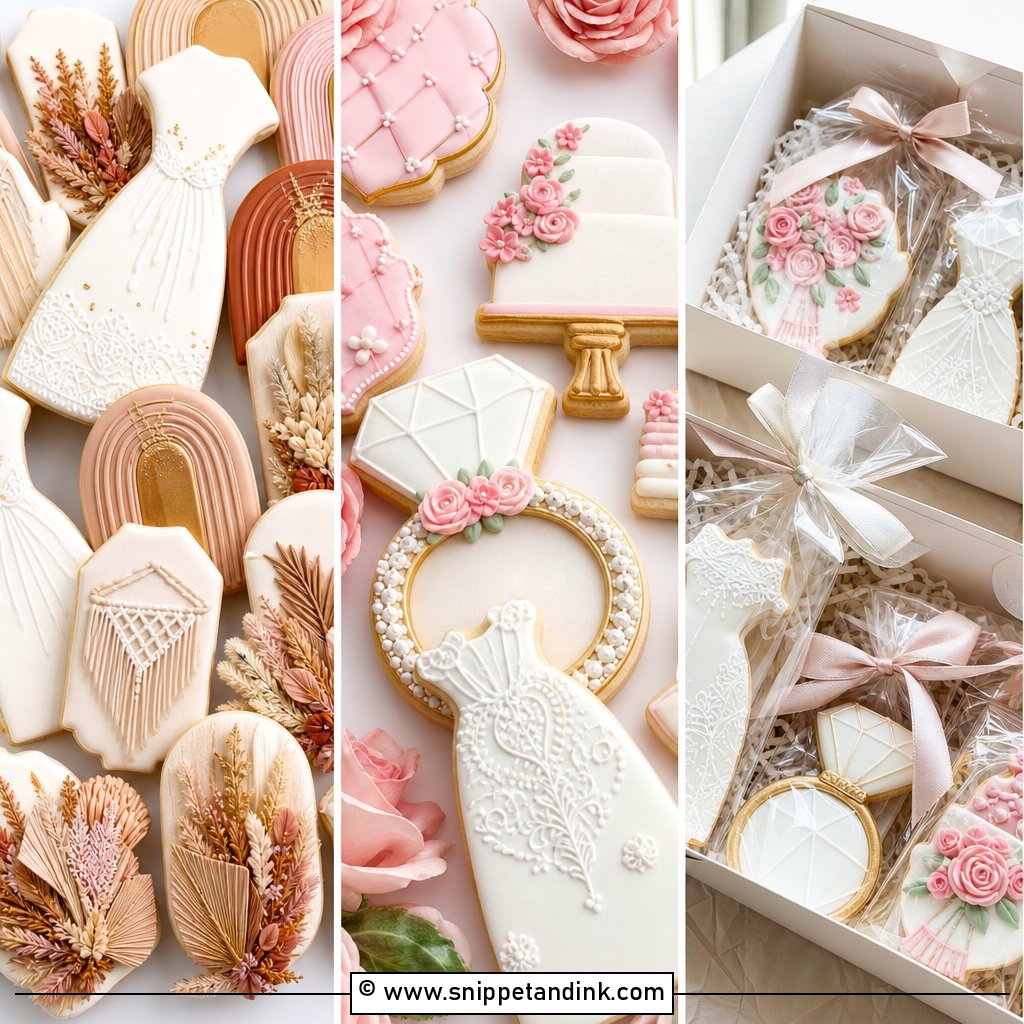
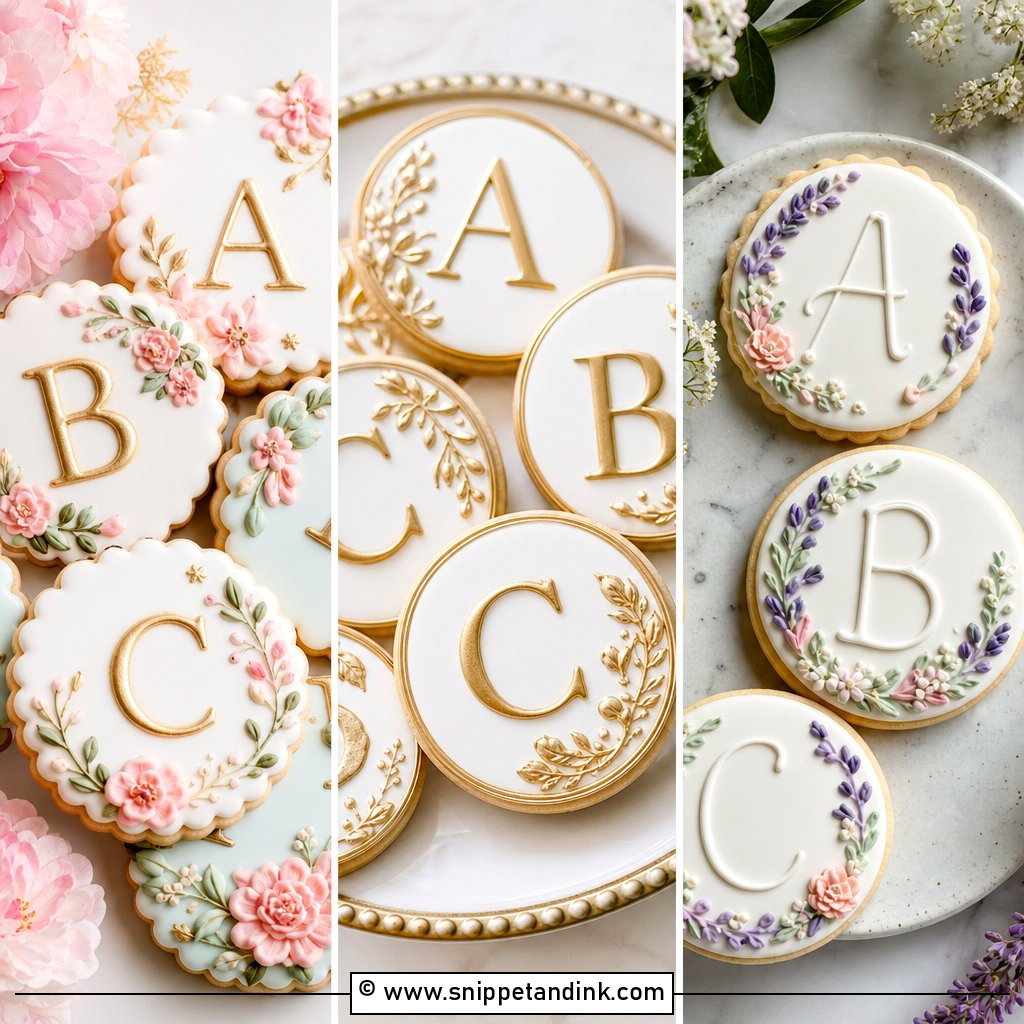
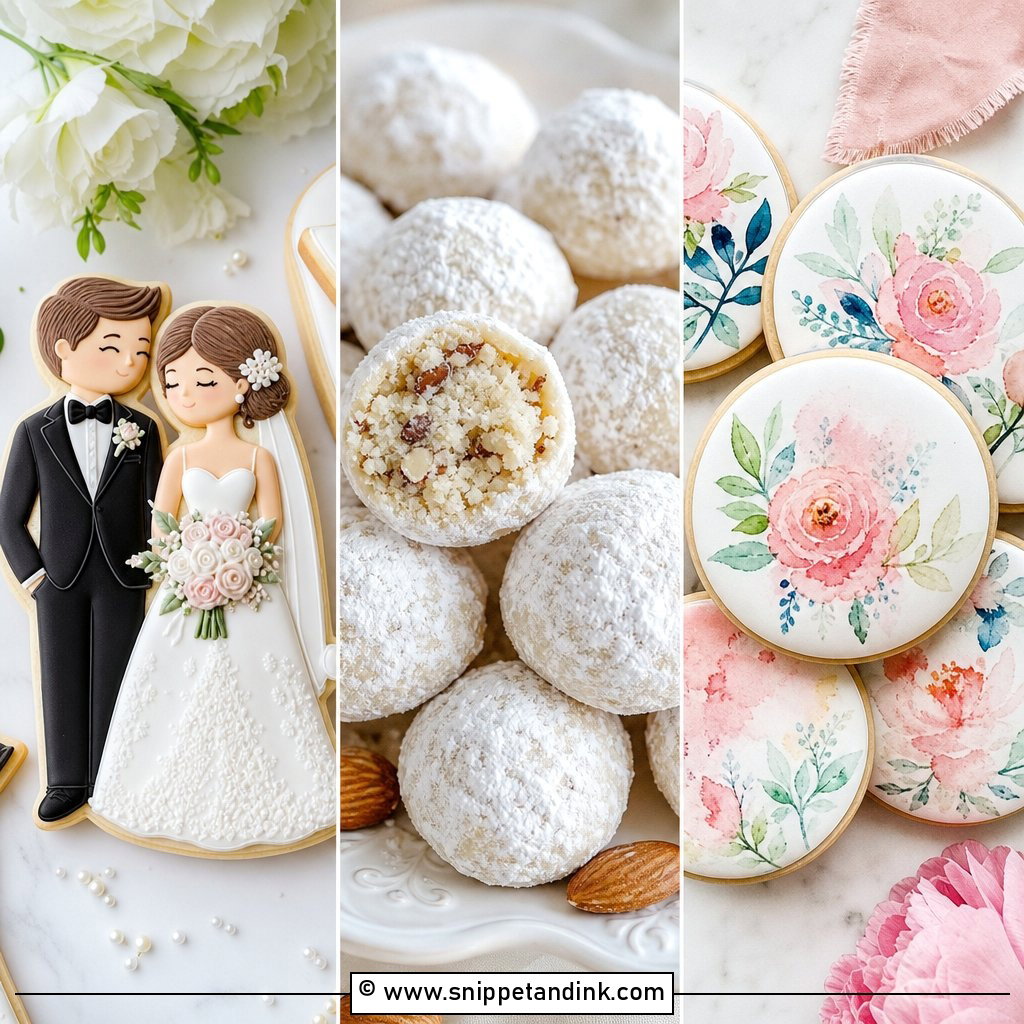
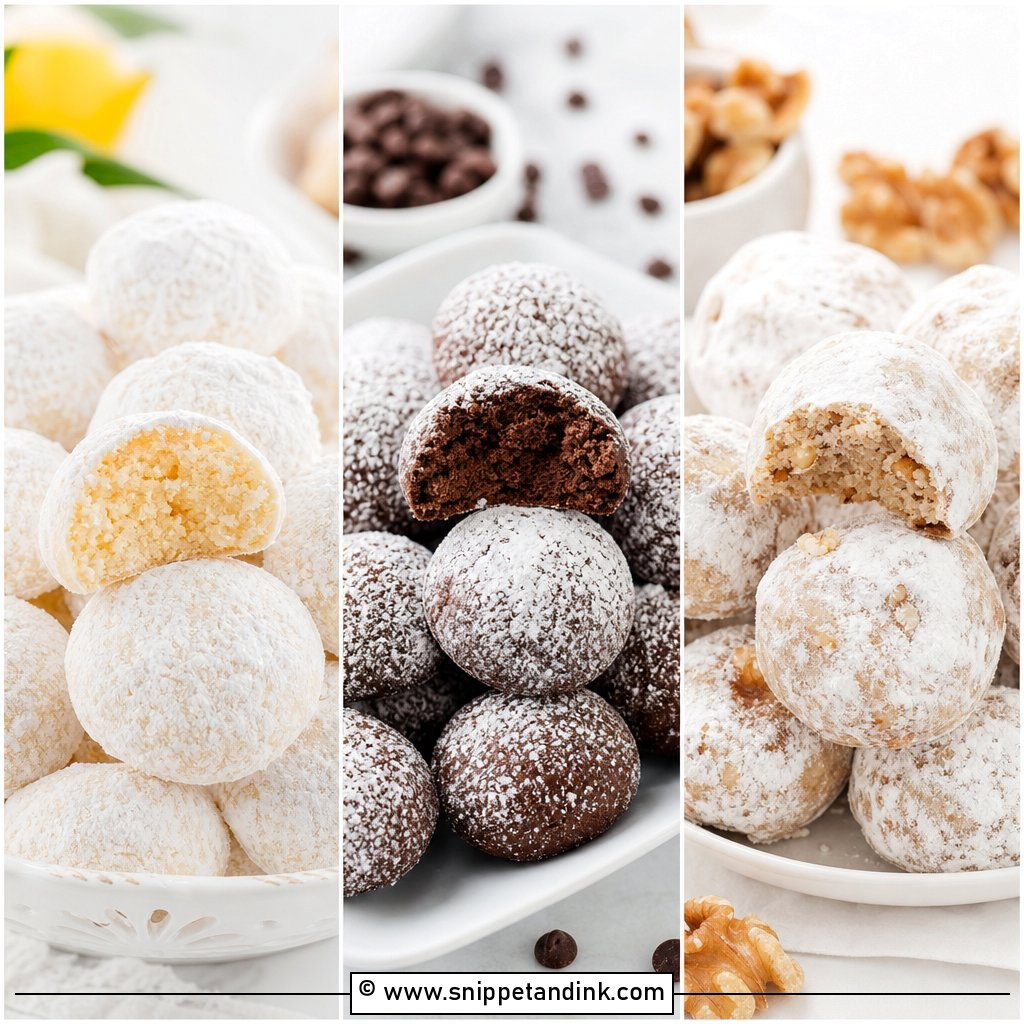
Cookies feel personal, especially family recipes. A small cake is the centrepiece, with decorated sugar cookies, chocolate chip, shortbread, thumbprints and sandwich cookies around it, in glass jars, tiered trays and flat platters. Bags or boxes turn them into favours. Royal-icing cookies need a day or more to dry before they can be stacked or bagged, so they can’t be a last-minute job. Matching labels and ribbons stop it looking like a casual buffet.
23. Donut Wedding Sweet Table
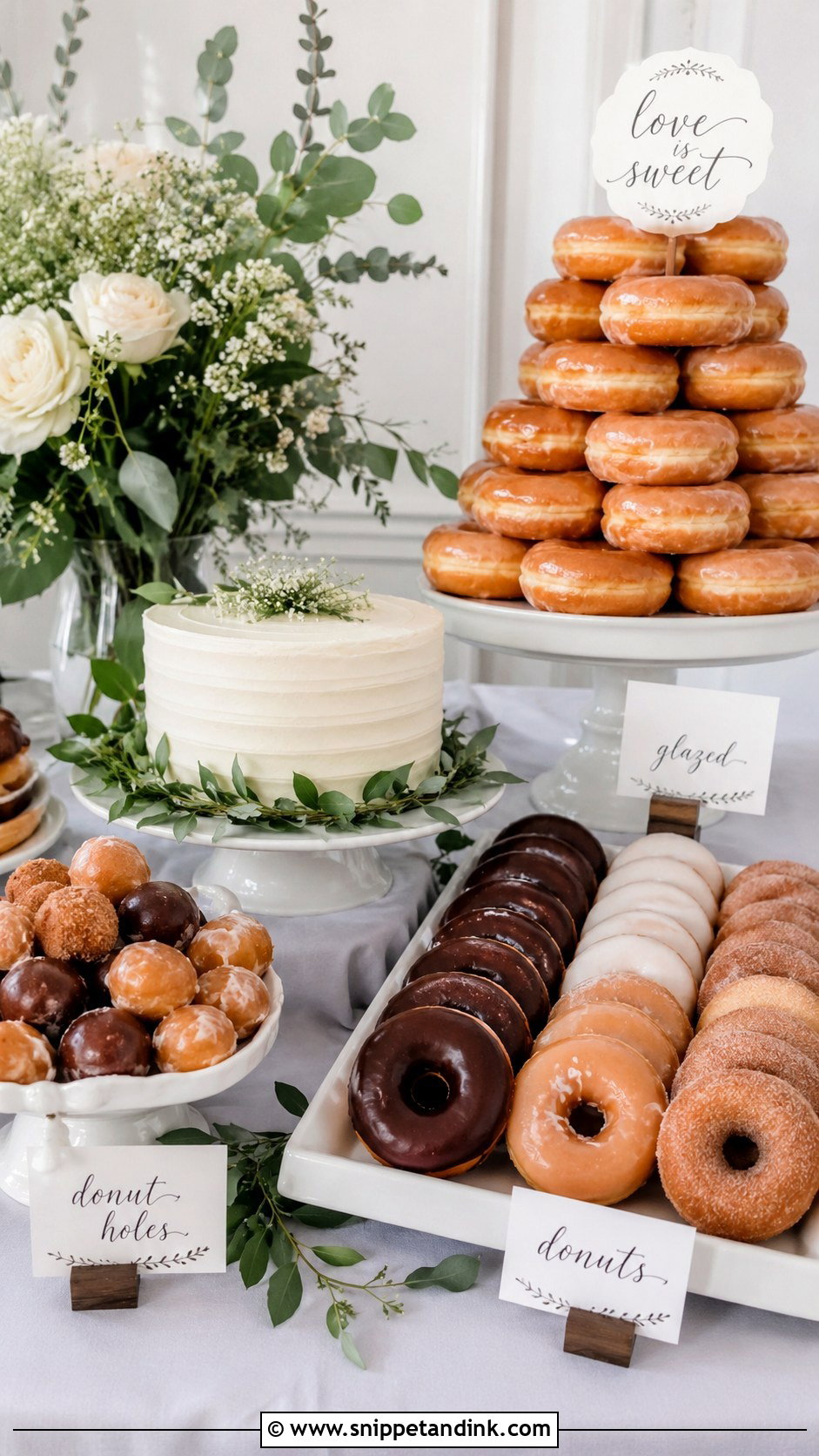
Fun and affordable, with one catch: donuts stale quickly, so they need to arrive the day of. I’d set a small cutting cake beside donut towers, donut walls or stacked trays of glazed, chocolate, cinnamon sugar and vanilla frosted. Flowers, greenery and clean signage keep it wedding-ready. Put napkins right next to a donut wall. Limit colours and toppings to the wedding palette rather than a rainbow.
24. Pie Wedding Sweet Table
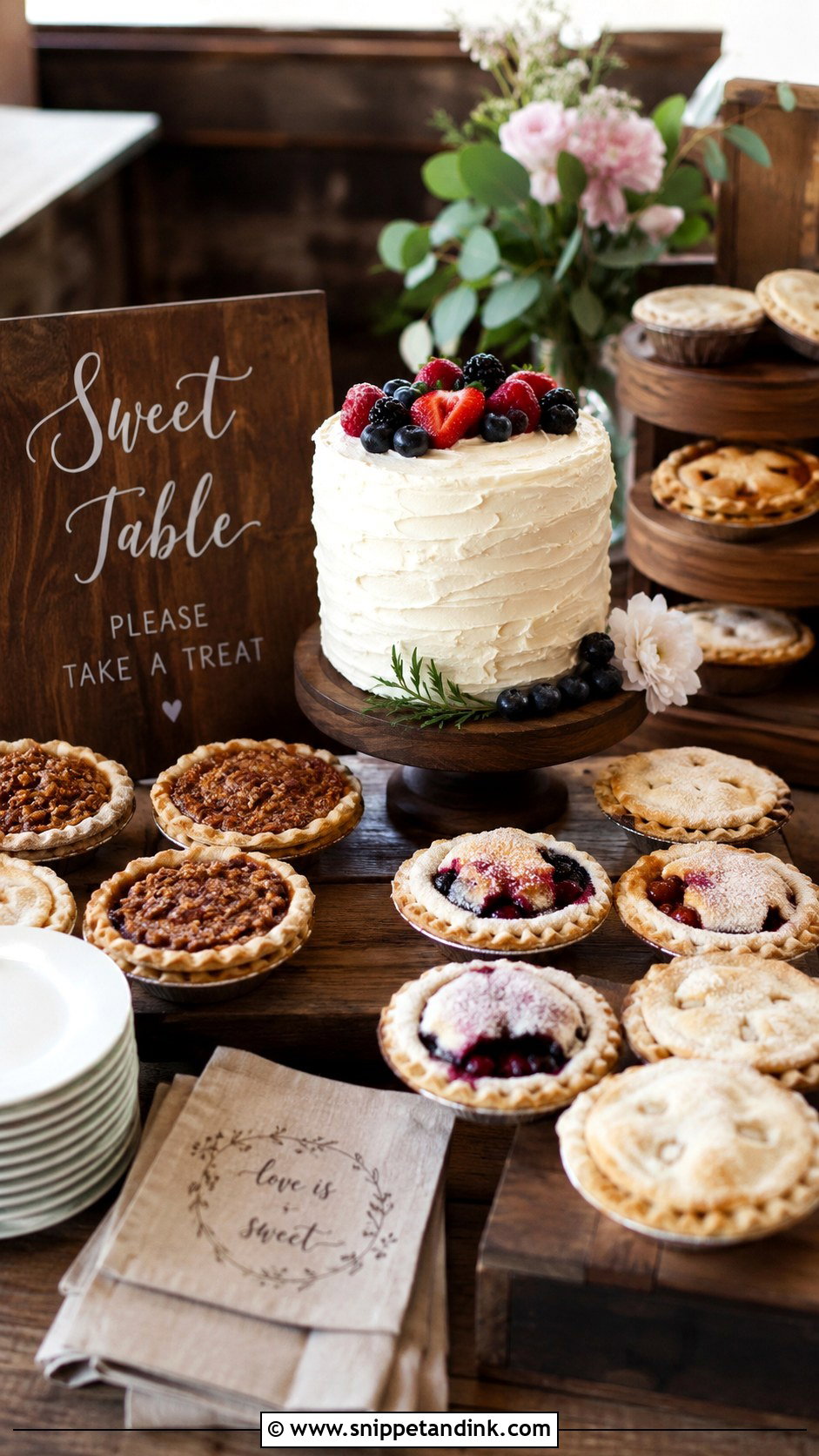
Pie suits rustic, autumn, backyard and farmhouse weddings. A small buttercream cake or a single cutting pie leads, with mini pies and slices in apple, cherry, pecan, lemon and mixed berry. Custard-based pies such as lemon or pumpkin need refrigeration, while double-crust fruit pies are happy at room temperature, which shapes how long each one can sit out. Pre-slice the big pies and label every flavour so the line keeps moving.
25. Cheesecake Wedding Sweet Table
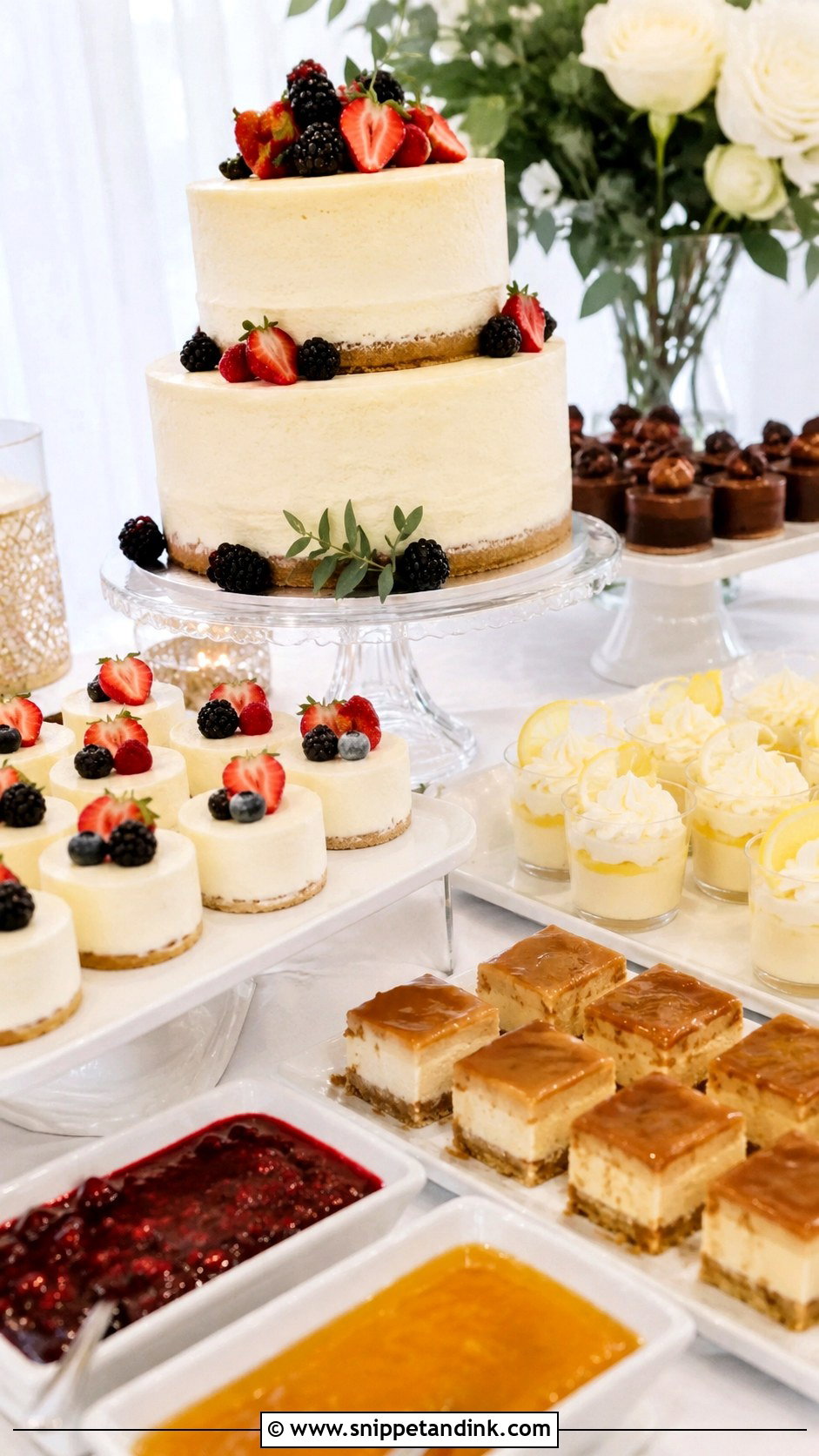
Creamy and a little unexpected next to a traditional cake. A full or tiered cheesecake as the centrepiece, then mini bites in vanilla, strawberry, chocolate, lemon and caramel, with berries, sauces and cookie crusts for colour. Cheesecake is a dairy dessert, so it stays chilled until service and should not sit out for hours; I’d put out a smaller amount and refill from the fridge. White platters and glass cups keep it clean.
26. Candy Wedding Sweet Table
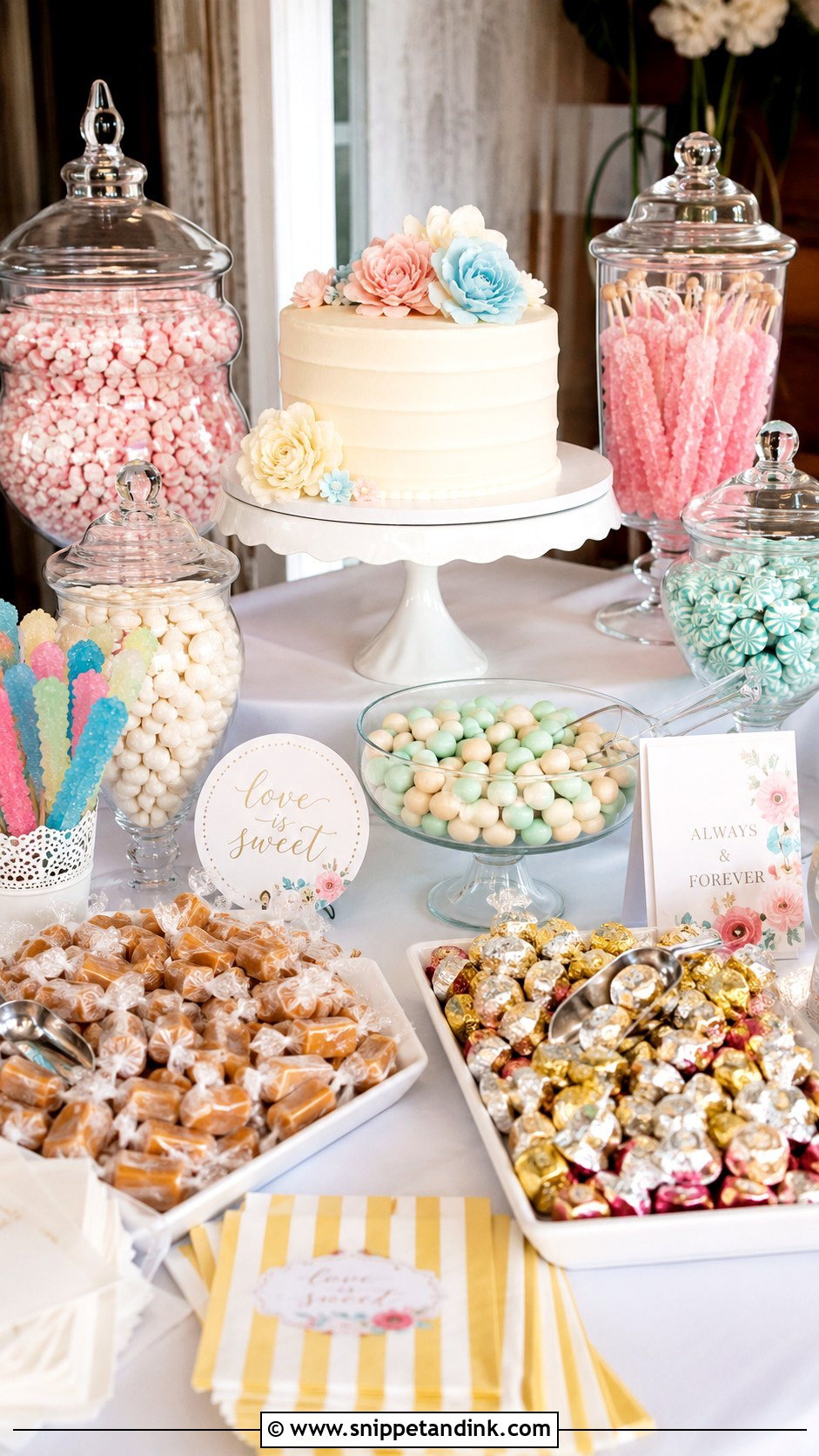
Candy adds colour and doubles as favours. A small cake keeps the display connected to the wedding, then glass jars of sweets in two to four colours that match the decor; wrapped chocolates, gummies, mints, caramels and rock candy. Scoops, bags and clear labels let guests help themselves neatly. Too many random colours is the usual mistake. Near the exit, the lounge or the photo booth works best.
27. Chocolate Wedding Sweet Table
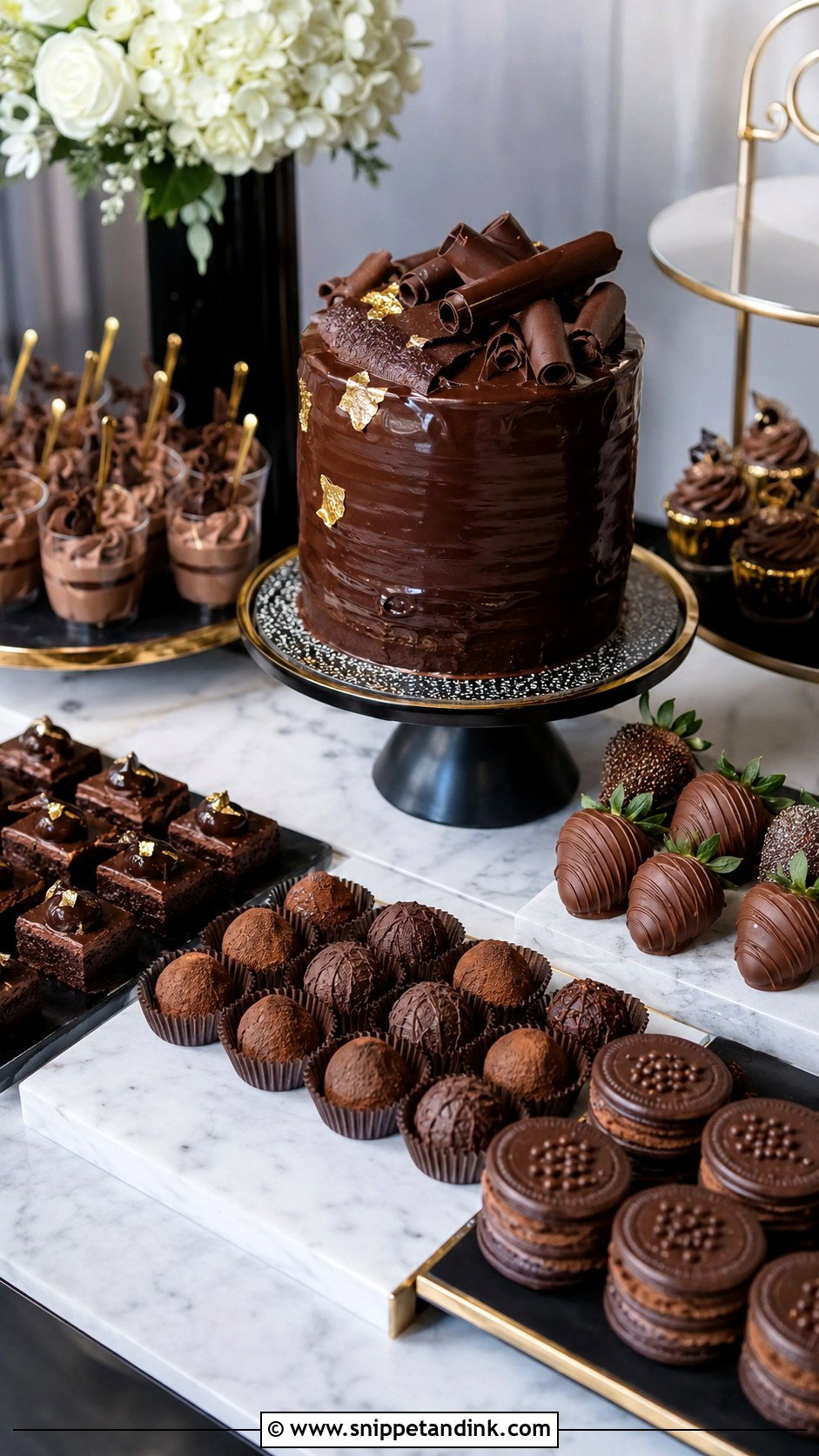
Chocolate is always the first table to empty. A ganache or chocolate buttercream cake, then brownies, truffles, chocolate cupcakes, dipped strawberries, mousse cups and sandwich cookies. Ganache is far more stable in warm rooms than buttercream, which is why I use it on chocolate cakes for summer weddings. Dipped strawberries should go from the fridge to the table late, because they sweat when they warm up. Keep portions small and add a few vanilla or berry pieces for contrast.
28. Fruit Wedding Sweet Table
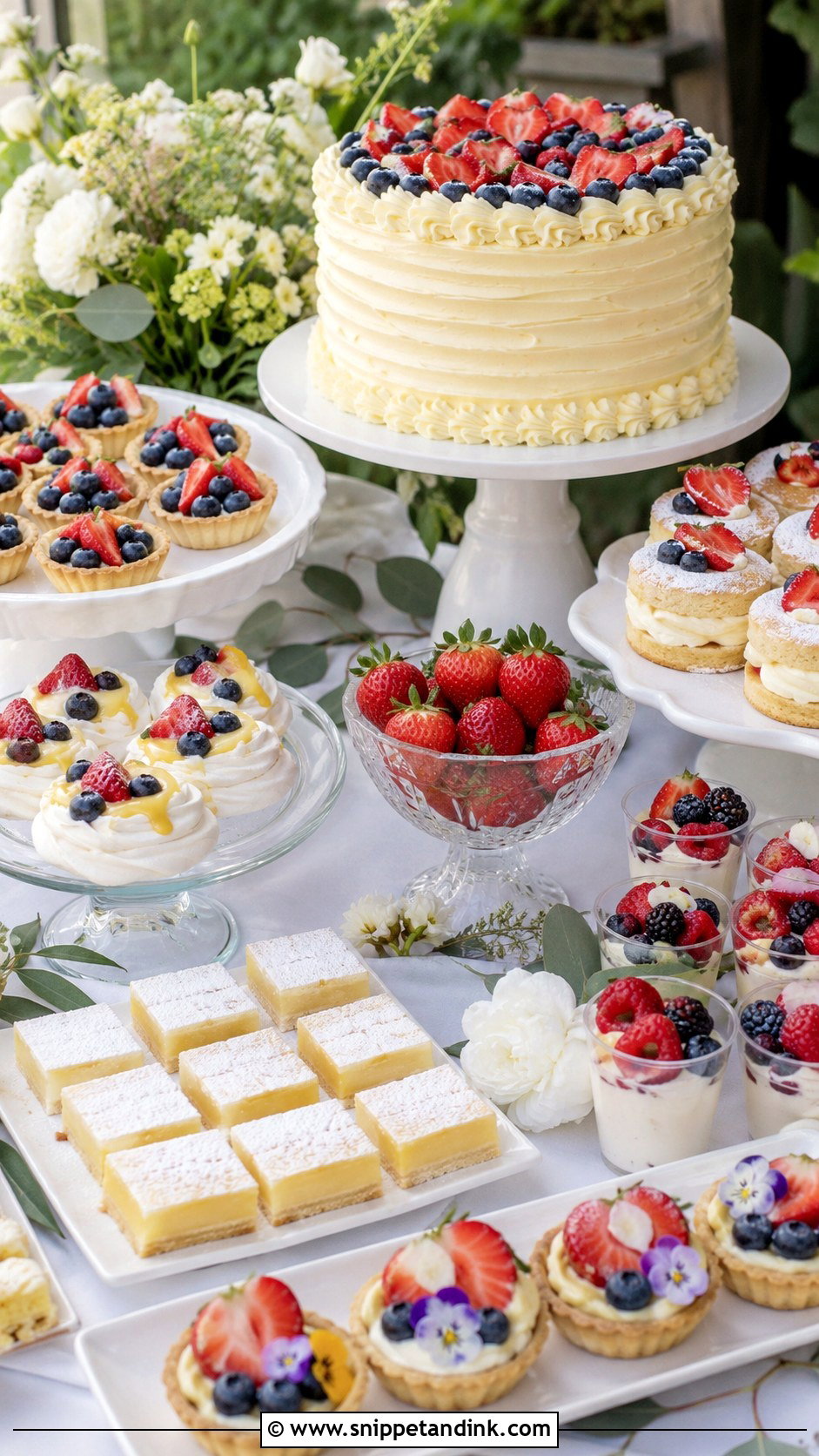
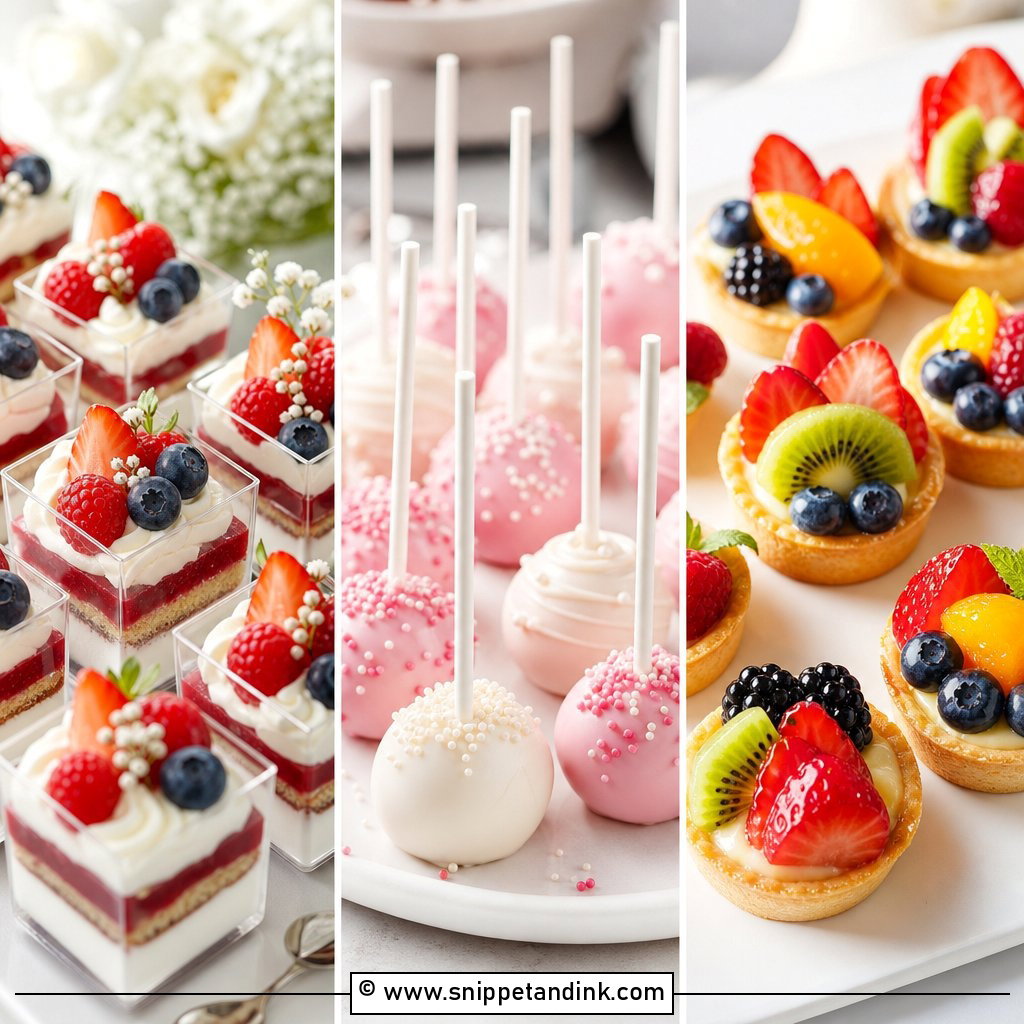
Lighter after dinner, and colourful. A vanilla or lemon cake with fresh berries, then fruit tarts, pavlovas, berry cups, chocolate-dipped strawberries, citrus bars and mini shortcakes. Pick fruit that holds: berries, grapes and citrus last; apples, pears and bananas brown quickly once cut. White trays and clear glass let the colours show. It balances richer sweets like brownies or cheesecake well.
29. Cultural Wedding Sweet Table
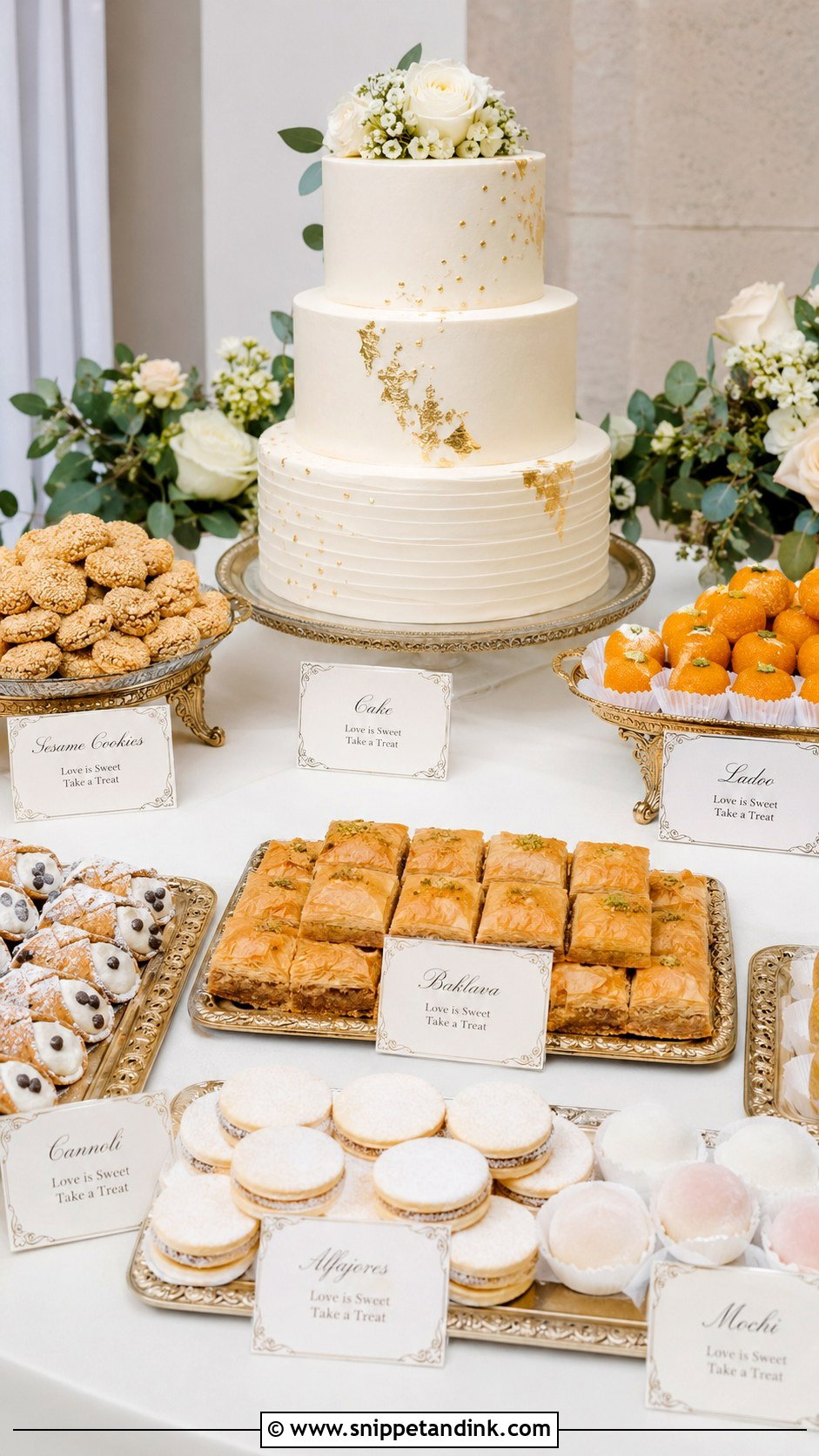
Family traditions often make the most meaningful sweet tables. A cake that matches the decor, then sweets from the couple’s heritage: baklava, ladoo, cannoli, mochi, alfajores, sesame cookies or a grandmother’s recipe. Label each one and add a line of explanation if many guests will not know it. Some of these, like cannoli, need filling at the last moment to stay crisp. Matching trays and one shared palette keep a varied spread looking unified.
30. Late Night Wedding Sweet Table
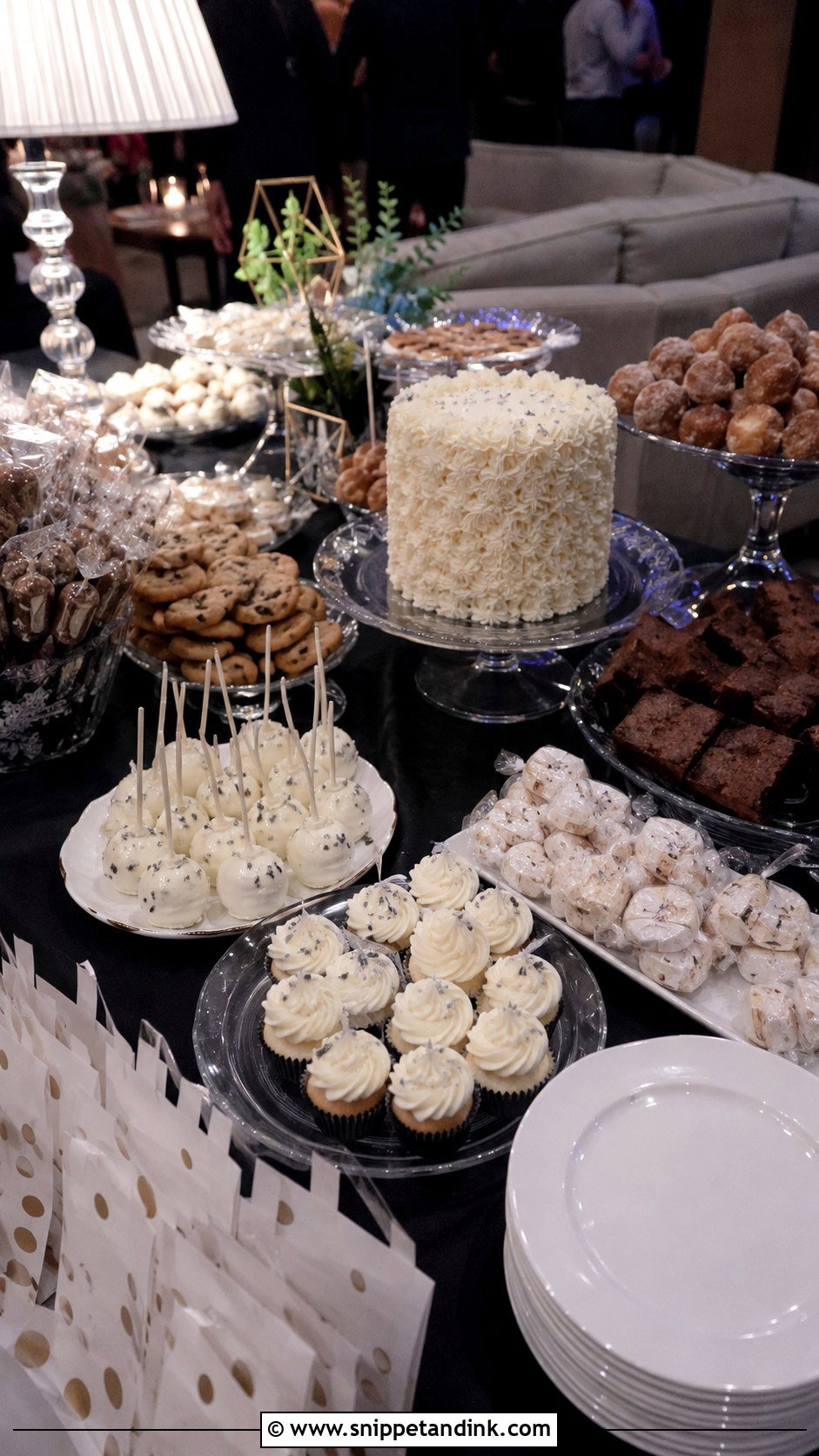
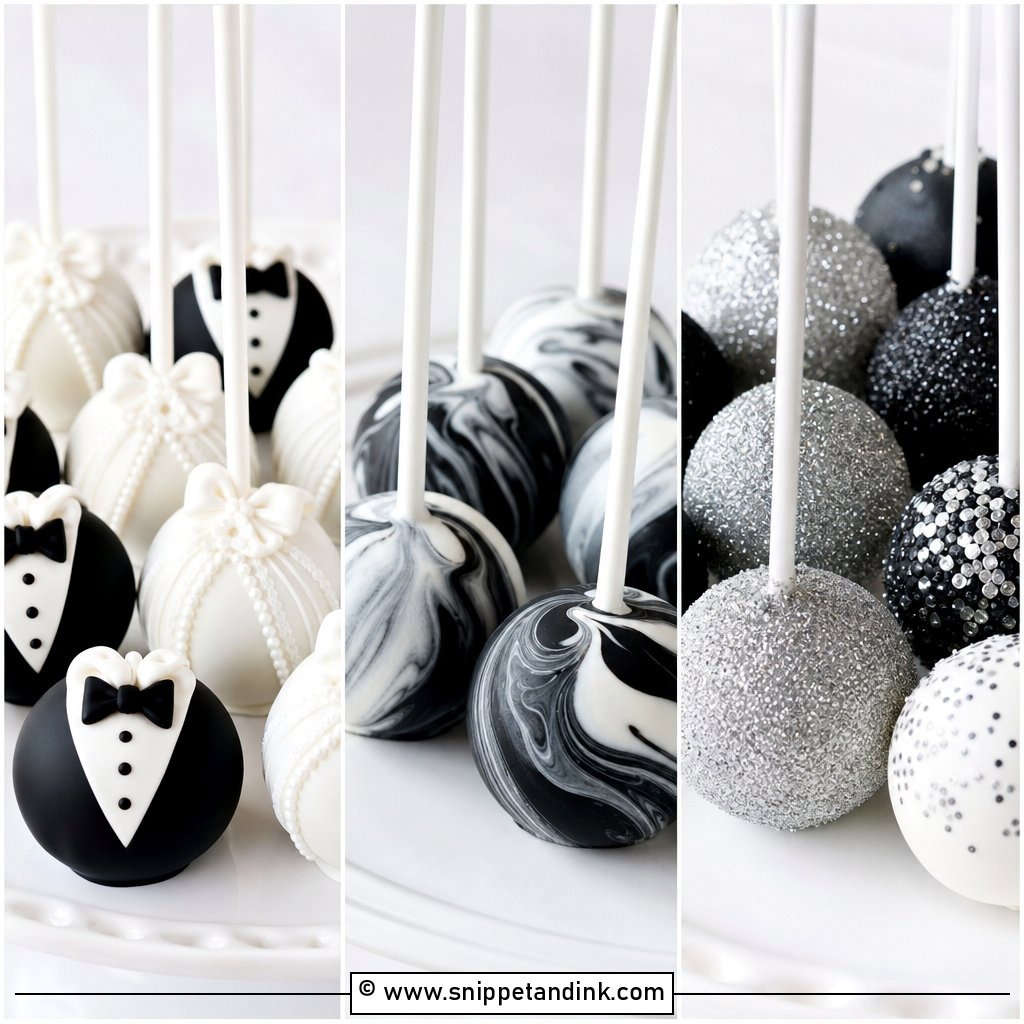
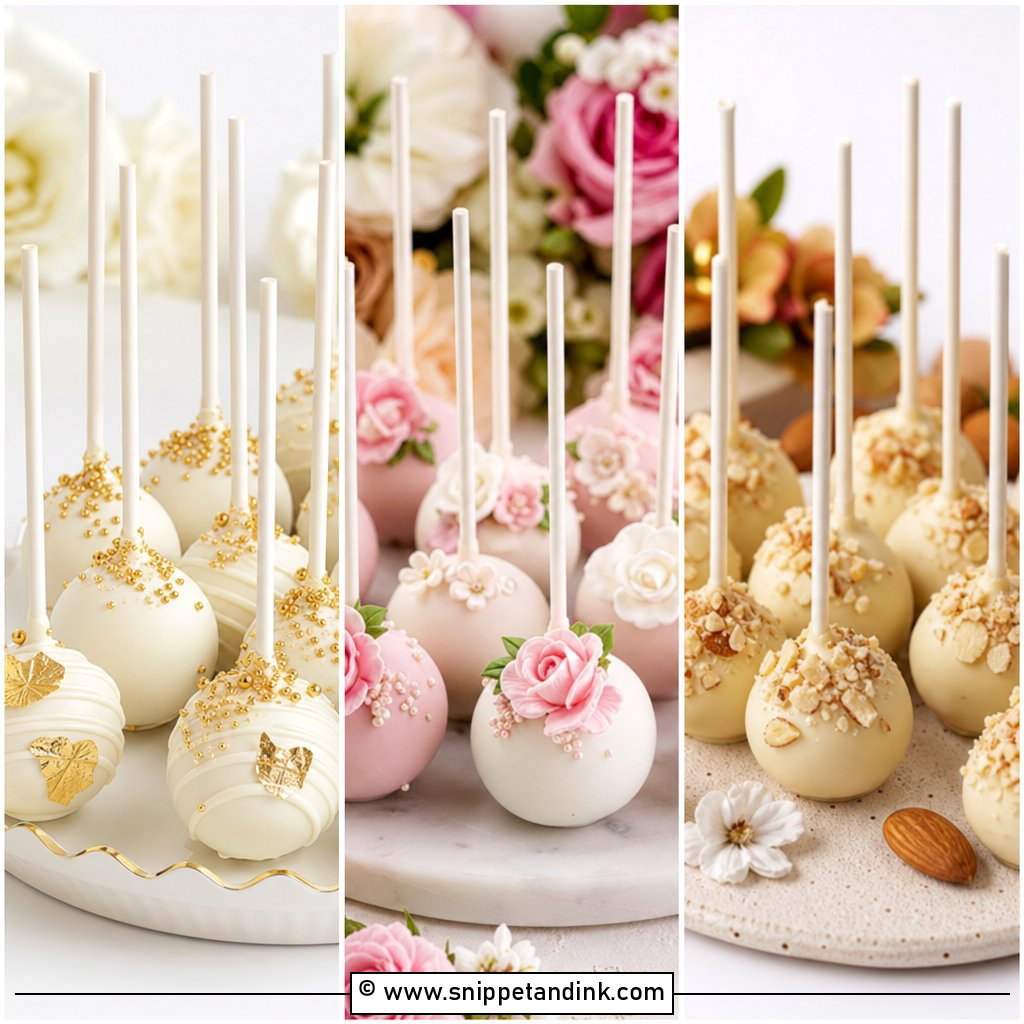
After a few hours of dancing, guests want something they can grab with one hand. Keep it sturdy: a small cake or mini cakes, cookies, brownies, donut holes, cake pops, mini cupcakes and wrapped sweets that can sit out safely. Skip anything that needs plating unless staff are serving. Napkins, small plates and to-go bags nearby. Opening it later in the evening feels like a surprise, and it pairs well with coffee service.
What Sits Out Happily and What Needs the Fridge
A sweet table is often on display for hours, and not every dessert can handle that. General food-safety guidance is that perishable dairy and cream-filled sweets should not sit at room temperature for more than about two hours, and less in hot weather. I plan the table around that.
Usually fine at room temperature
- Cookies, brownies, blondies and shortbread.
- Double-crust fruit pies, bundts and cupcakes with crusting buttercream.
- Wrapped candy, chocolates and most donuts on the day they are made.
Keep chilled and set out in rounds
- Cheesecake, mousse cups, panna cotta and anything with whipped cream or custard.
- Cream puffs, éclairs and cannoli, ideally filled close to service.
- Custard pies such as lemon or pumpkin.
Ask the venue for a fridge and one person responsible for refilling. Put small labels on anything containing nuts, alcohol or gluten too; guests with allergies will thank you, and it saves the catering team from answering the same question all night.
Give Your Baker the Room Temperature and the Timeline
The tables that work have a clear theme, a planned palette, real height variation and desserts that are easy to pick up. Classic with cake and cupcakes, personal with family recipes, or bolder with chocolate, macarons, candy or cultural sweets, the choice should follow your venue, your season and your guest list. Give the baker your timings and the room temperature as early as possible. Then keep every tray neat, labelled and refilled.
You'll Like These Ideas:


Leave a Reply