
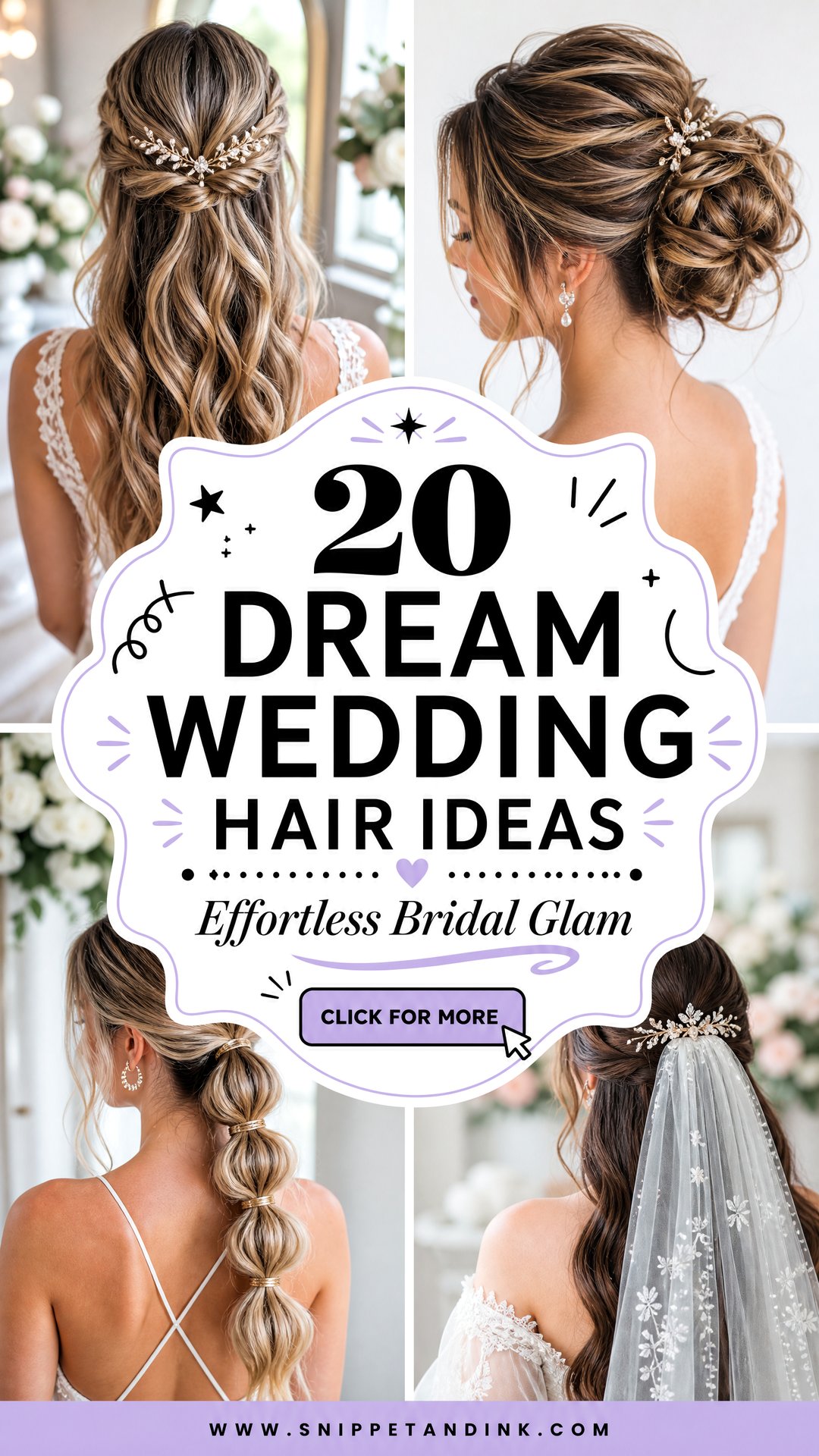
Most of the brides who sit in my chair arrive with a folder of saved photos and one worry: will it still look like that at eleven at night? Good bridal hair has to suit your dress, your veil and your venue, but it also has to suit the hair you actually have. The looks below are the ones I’m asked for most, from low buns and glossy waves to braided crowns and short cuts. For each of these dream wedding hair looks I’ve added what I check first, who it suits, and where it tends to go wrong.
Reading Inspiration Photos the Way a Stylist Does
Many bridal hair photos online show hair with added extensions, styled minutes before the shot, and lit by a professional. That doesn’t make them useless; it means you should look at shape and placement rather than thickness. When you show me a picture, I’m checking where the bun sits, how much volume is at the crown, and whether the front is soft or smooth.
Three things make a trial far more productive:
- A few photos of styles you dislike. They tell me as much as the ones you love.
- A picture of your dress from the back and side, since the neckline decides where hair should sit.
- Your hair in the condition you’ll have on the day: washed the same way, with the color you’ll have then.
If your hair is fine and the photo isn’t, ask about clip-ins at the trial rather than the week before. They need color matching and sometimes a trim to blend.
1. Wedding Hair Low Bun
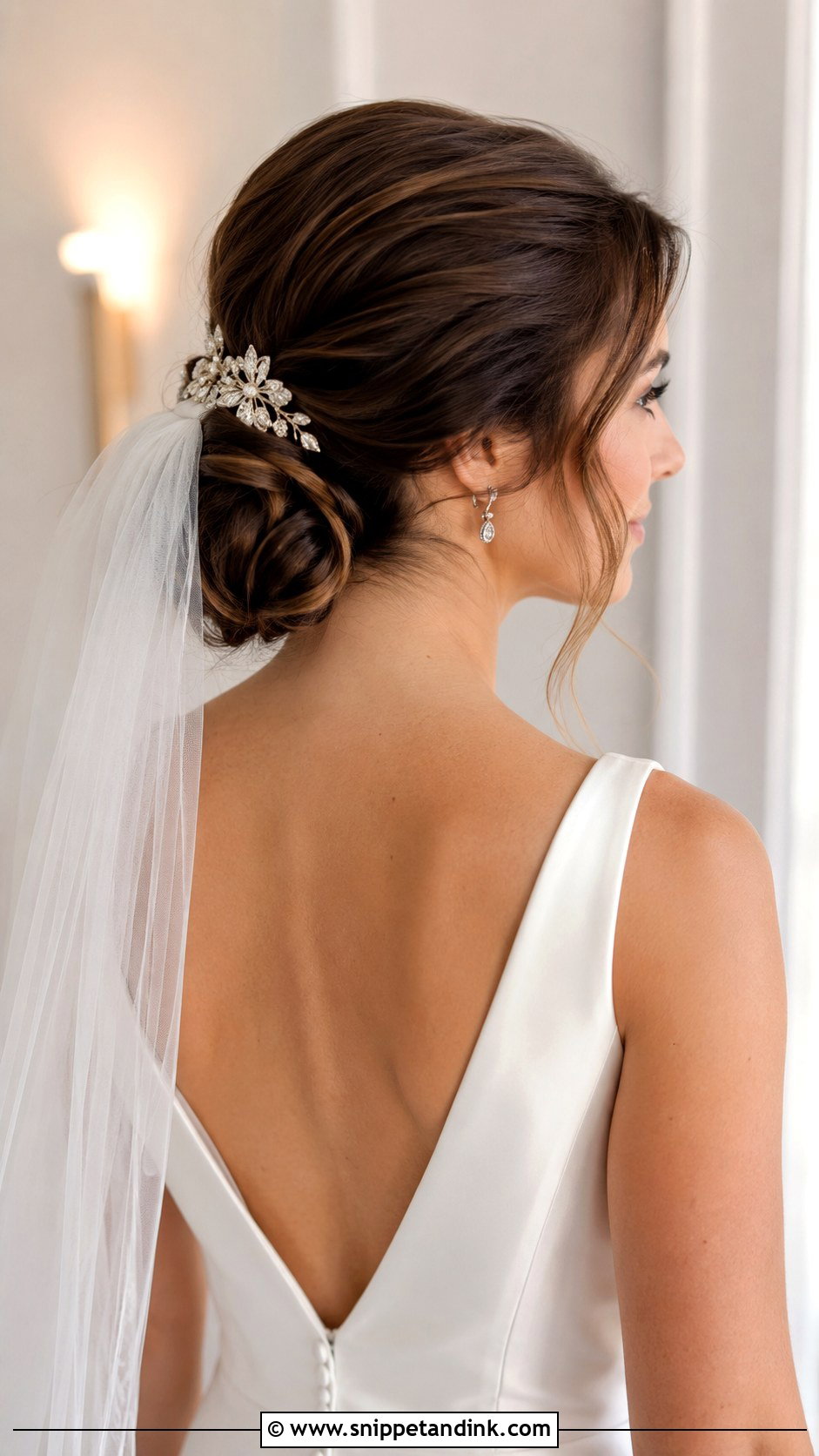
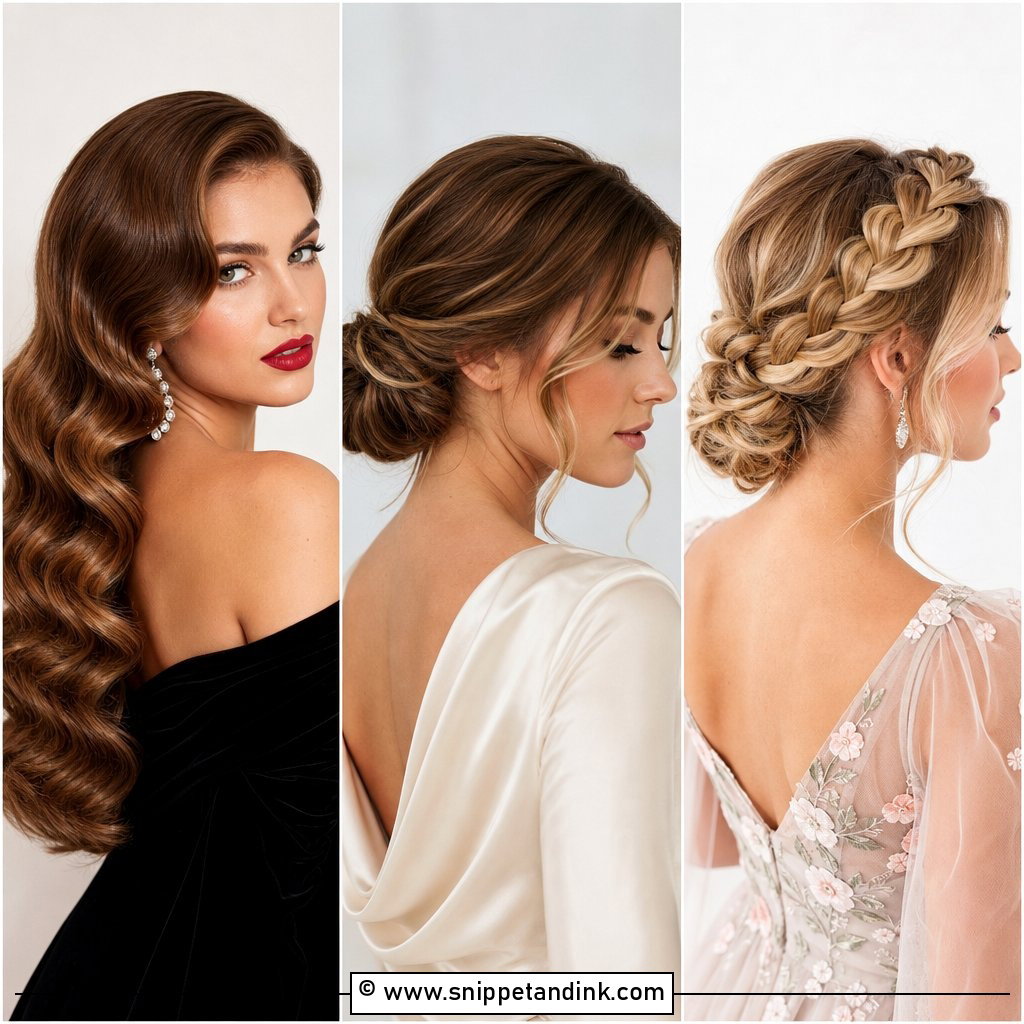
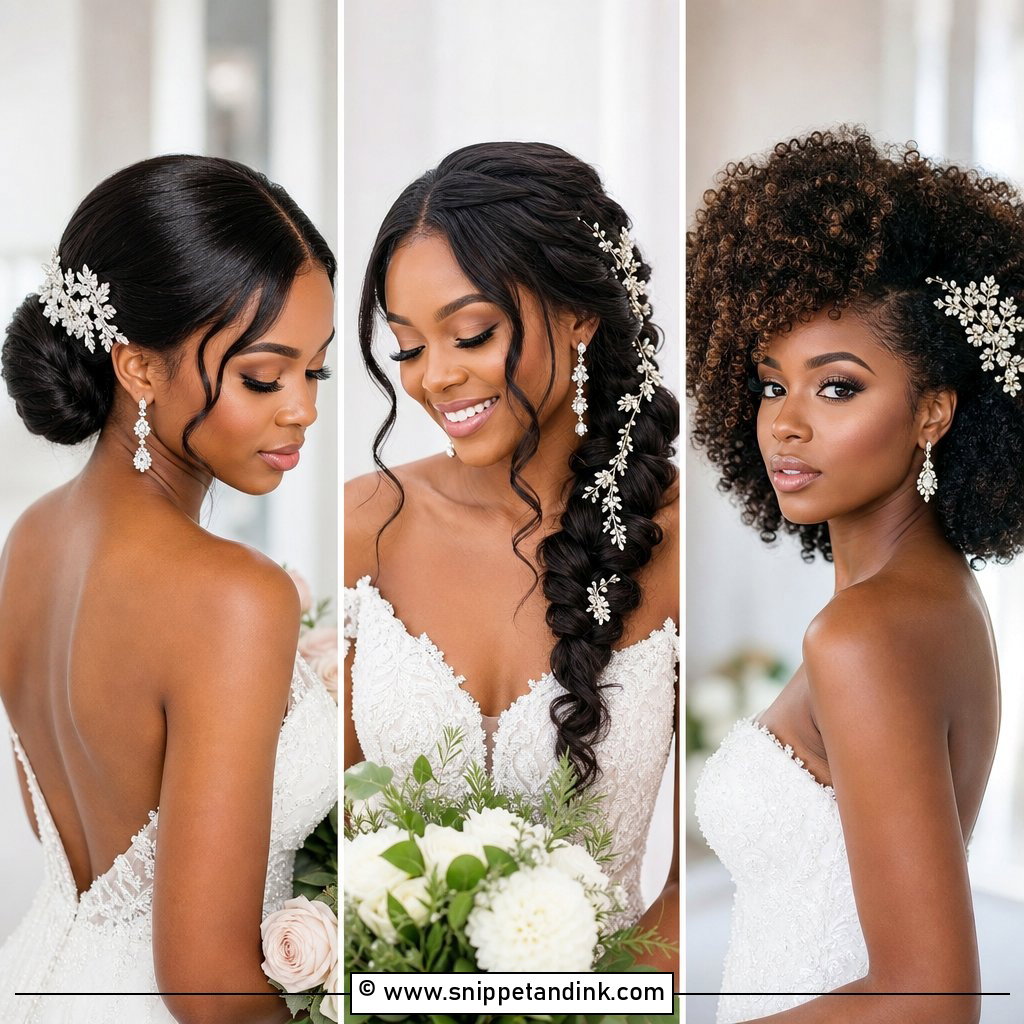
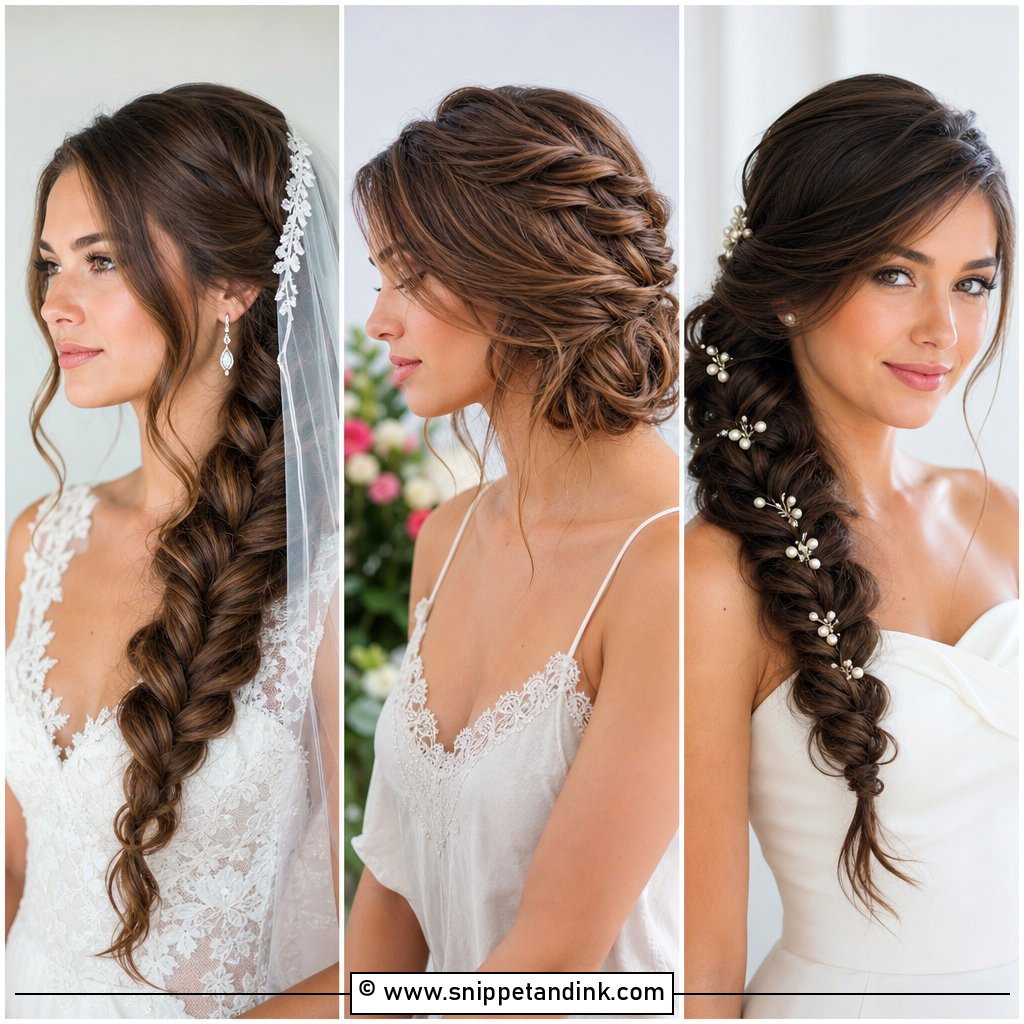
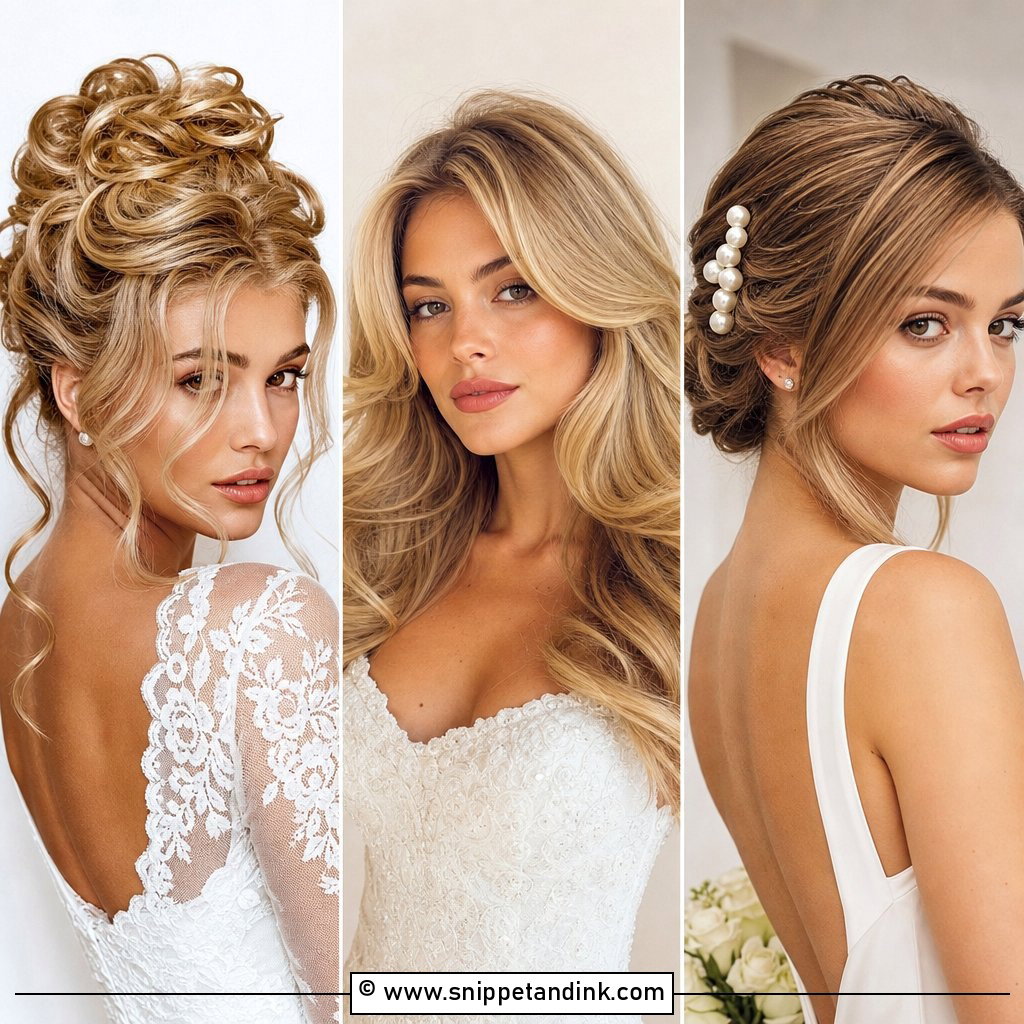
If I had to pick one style that survives everything a wedding throws at it, it would be this. A bun at the nape stays comfortable under a veil, sits flat against a chair back during dinner, and suits strapless, square, open-back and lace dresses alike. I build it on a hidden ponytail so the pins have something solid to grip. Ask for a little lift at the crown; a bun pulled flat and tight can look severe from the front, especially in photos taken straight on.
2. Wedding Hair Hollywood Waves
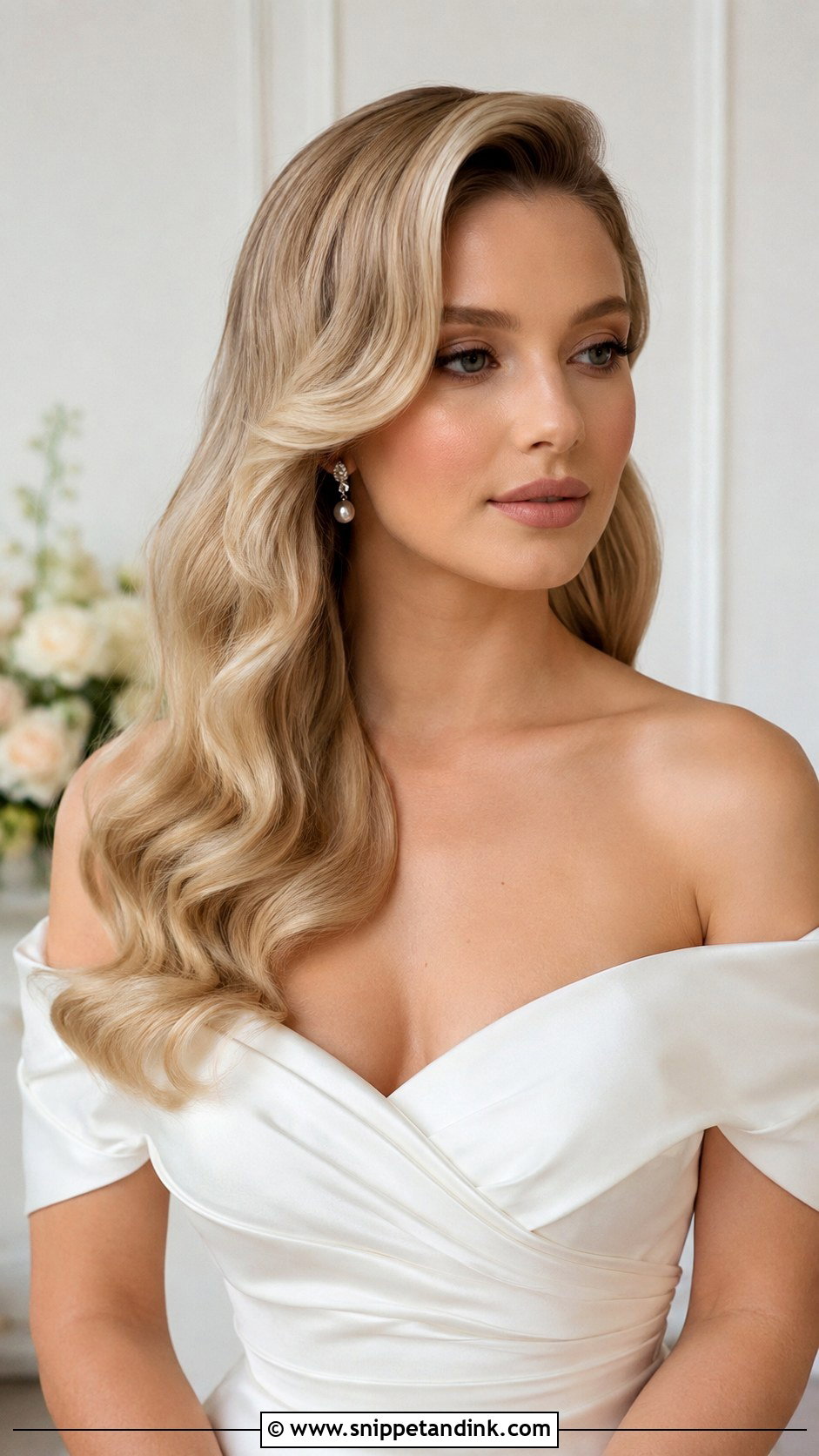
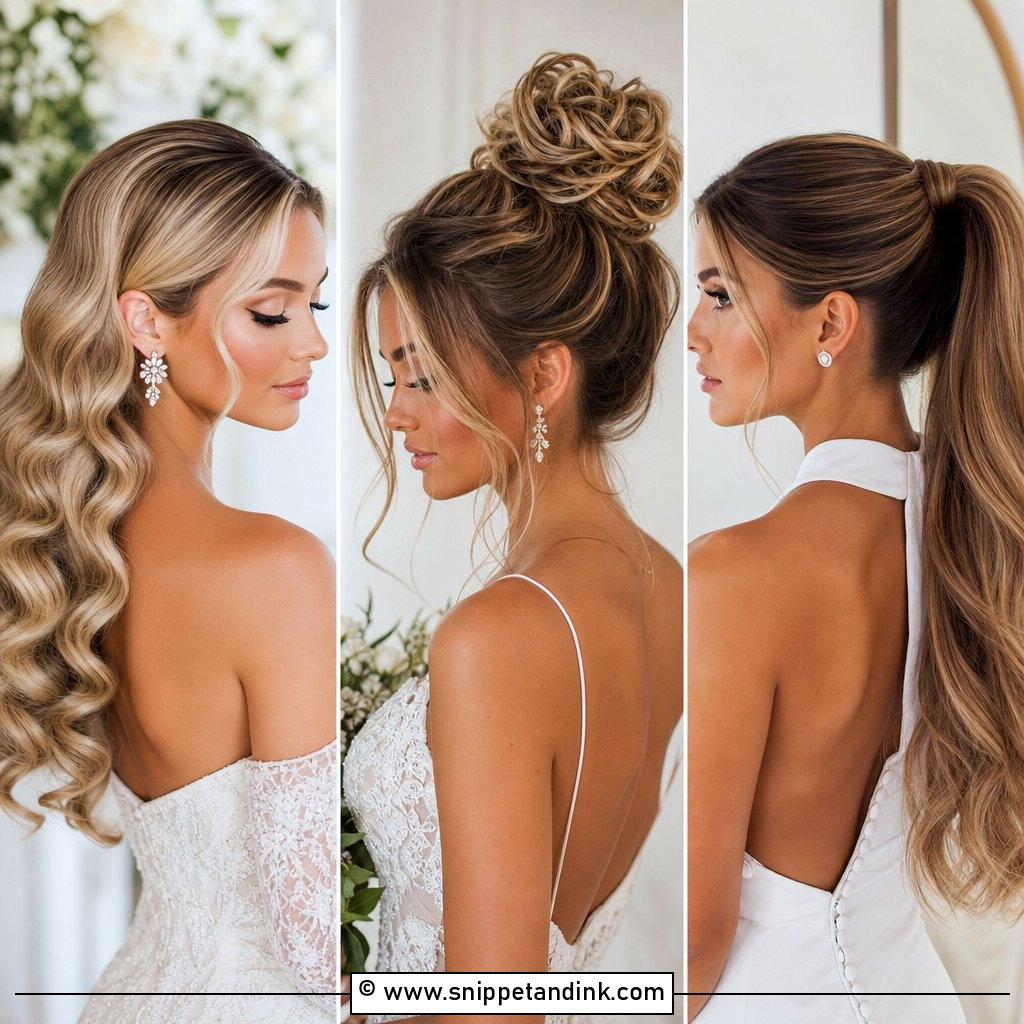
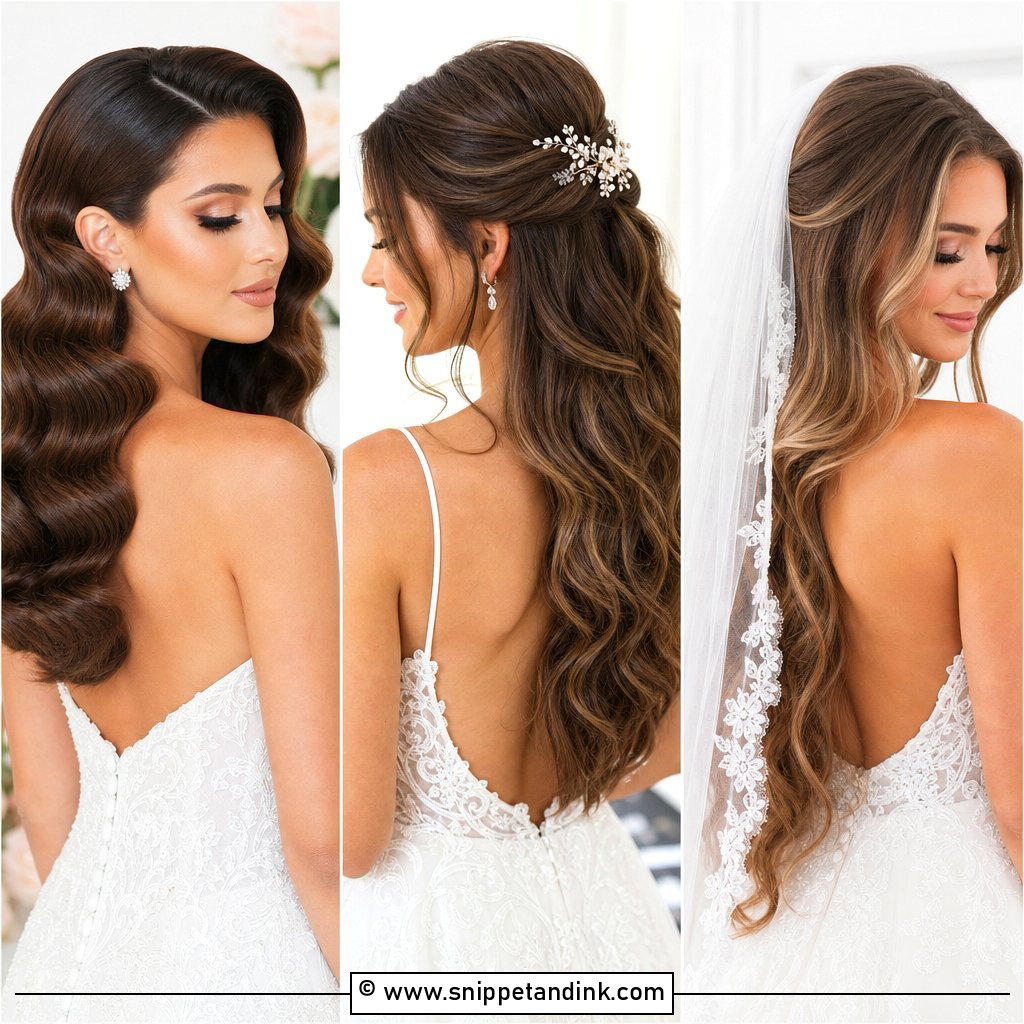
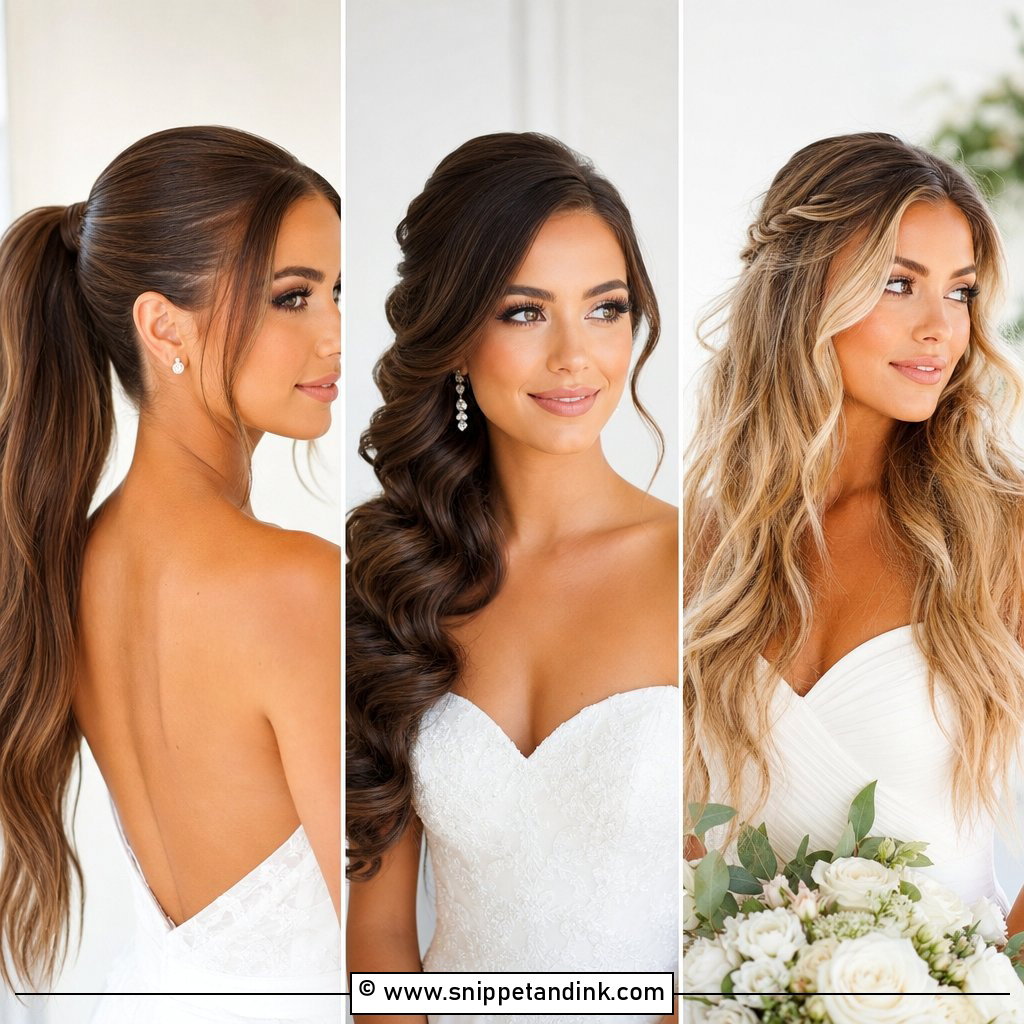
Hollywood waves look simple and are anything but. Each curl is set in the same direction, pinned while it cools, then brushed out into one continuous S shape, and that cooling time is what makes them last. They work on long and medium hair and even on a sleek lob. A deep side part and a satin or off-the-shoulder gown suit them best. The honest warning: in humid outdoor heat, these waves loosen faster than an updo, so I’d save them for indoor or evening weddings.
3. Wedding Hair Half Up Half Down
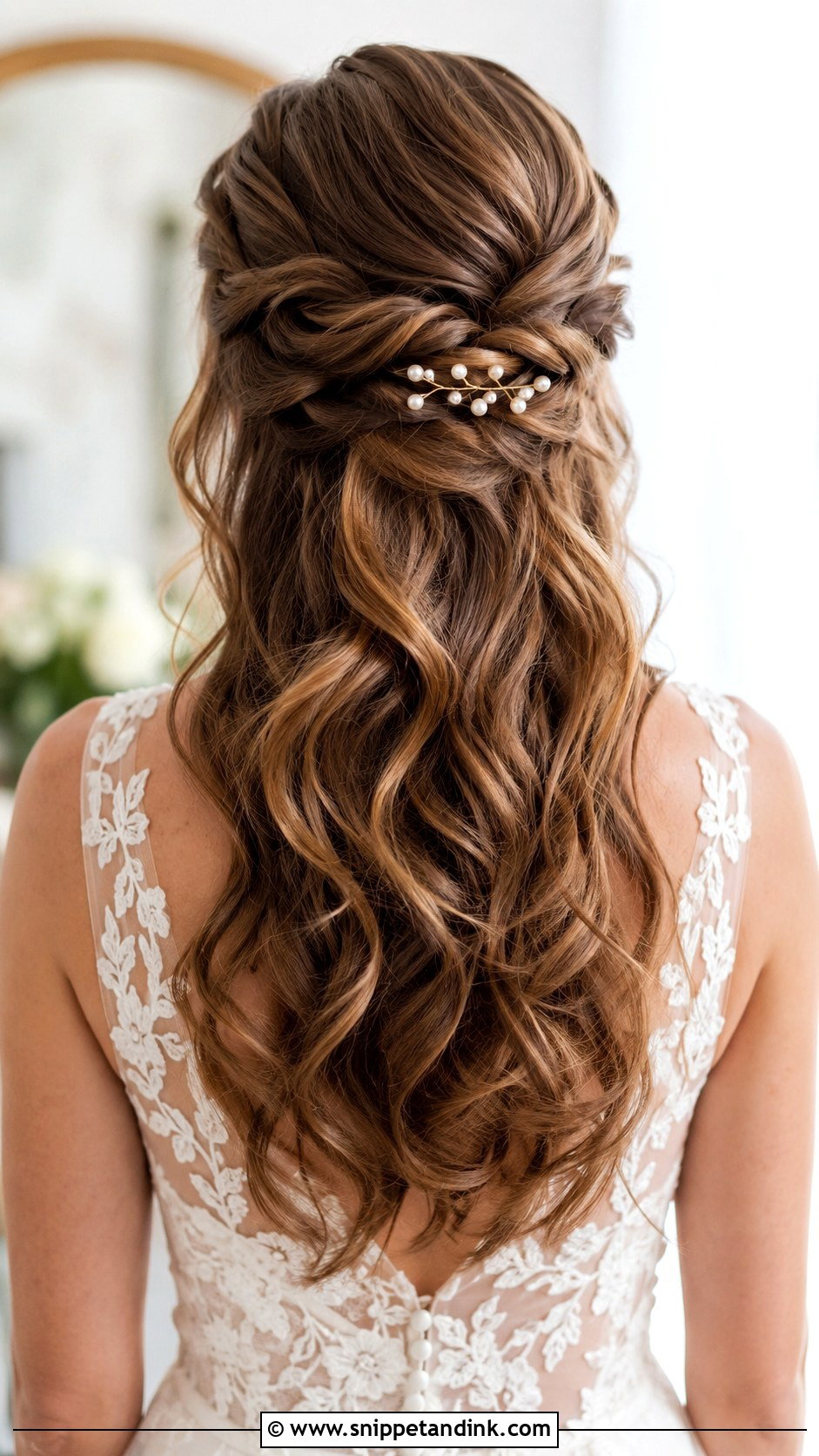
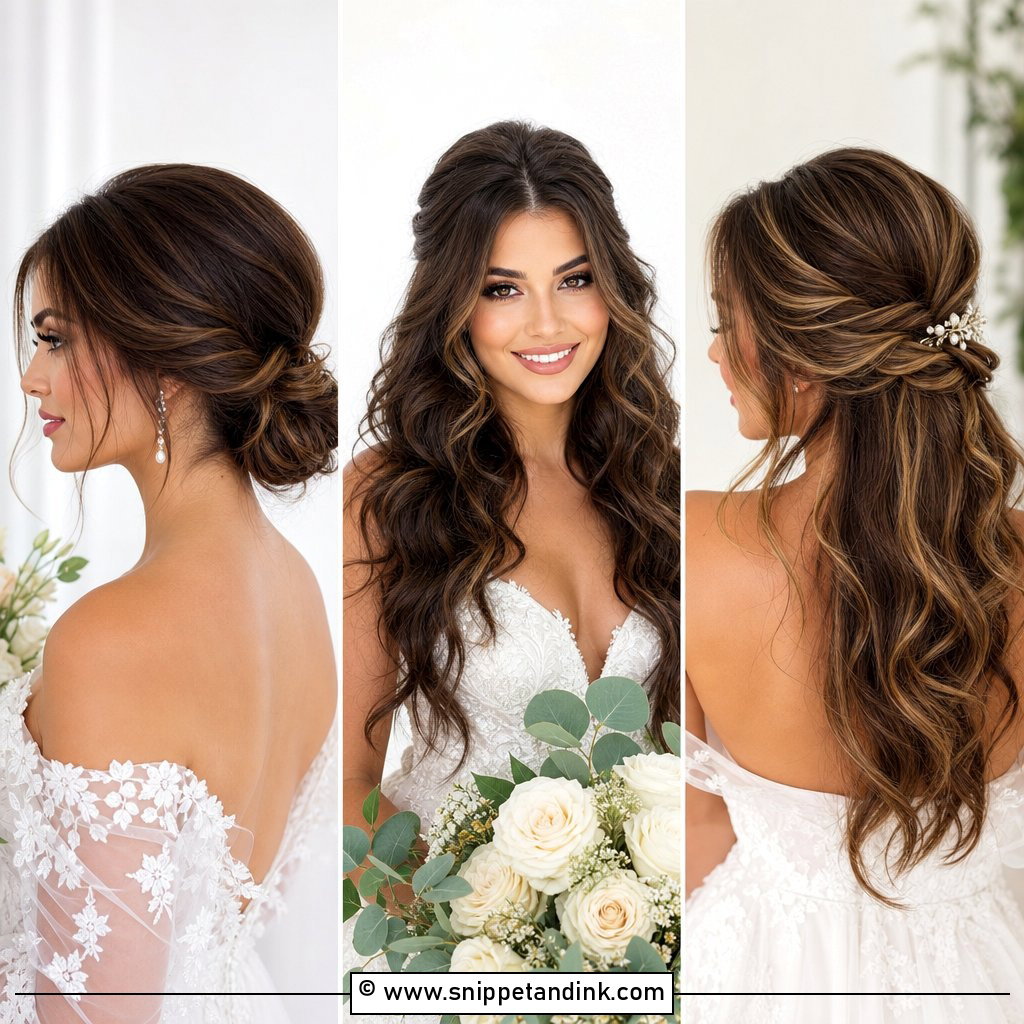
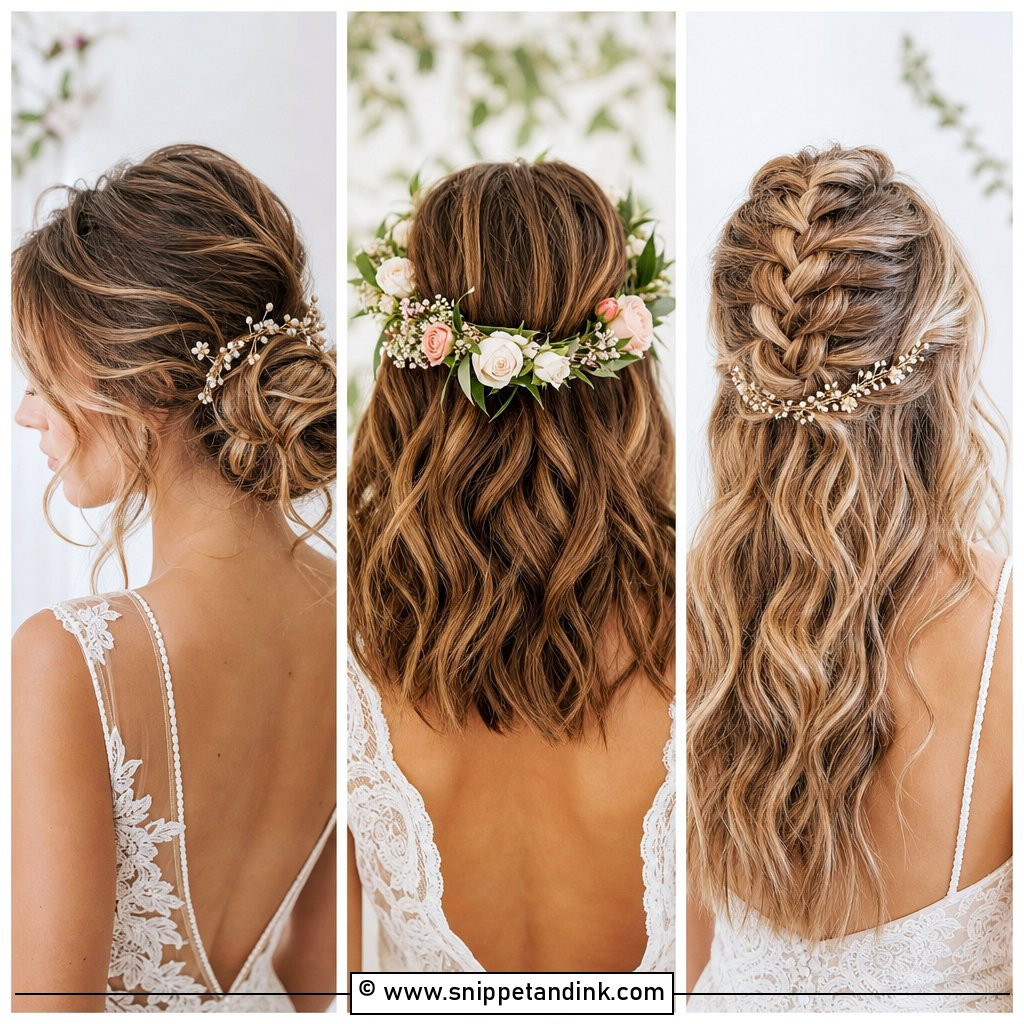
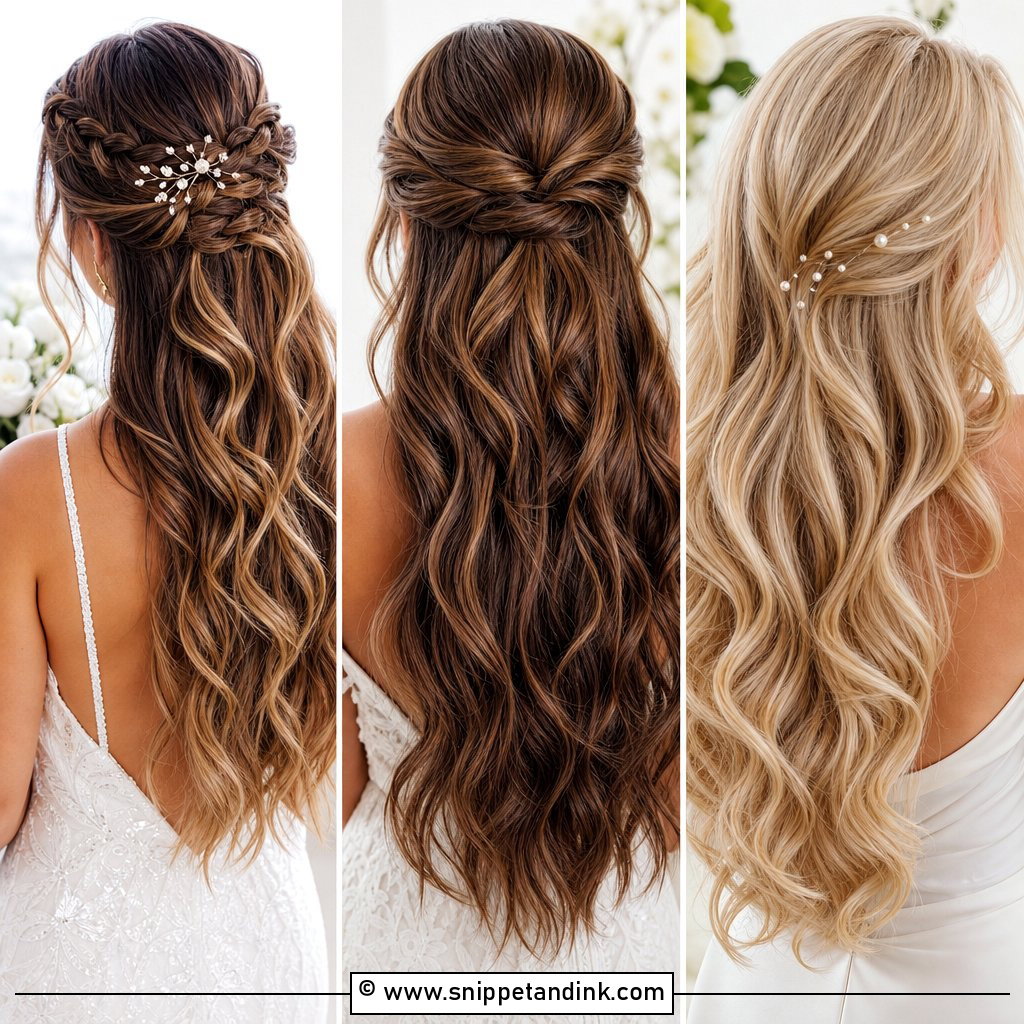
Half up, half down keeps the front controlled while the back moves. The lifted crown adds height, which flatters round and square faces, and the loose lengths soften everything below. I can twist the top section, tie it into a sleek half pony or pin it loosely. One thing I tell every bride who chooses this: the gathered section is where your veil comb goes, so it needs a firm base underneath, not just a single clip.
4. Wedding Hair Sleek Bun
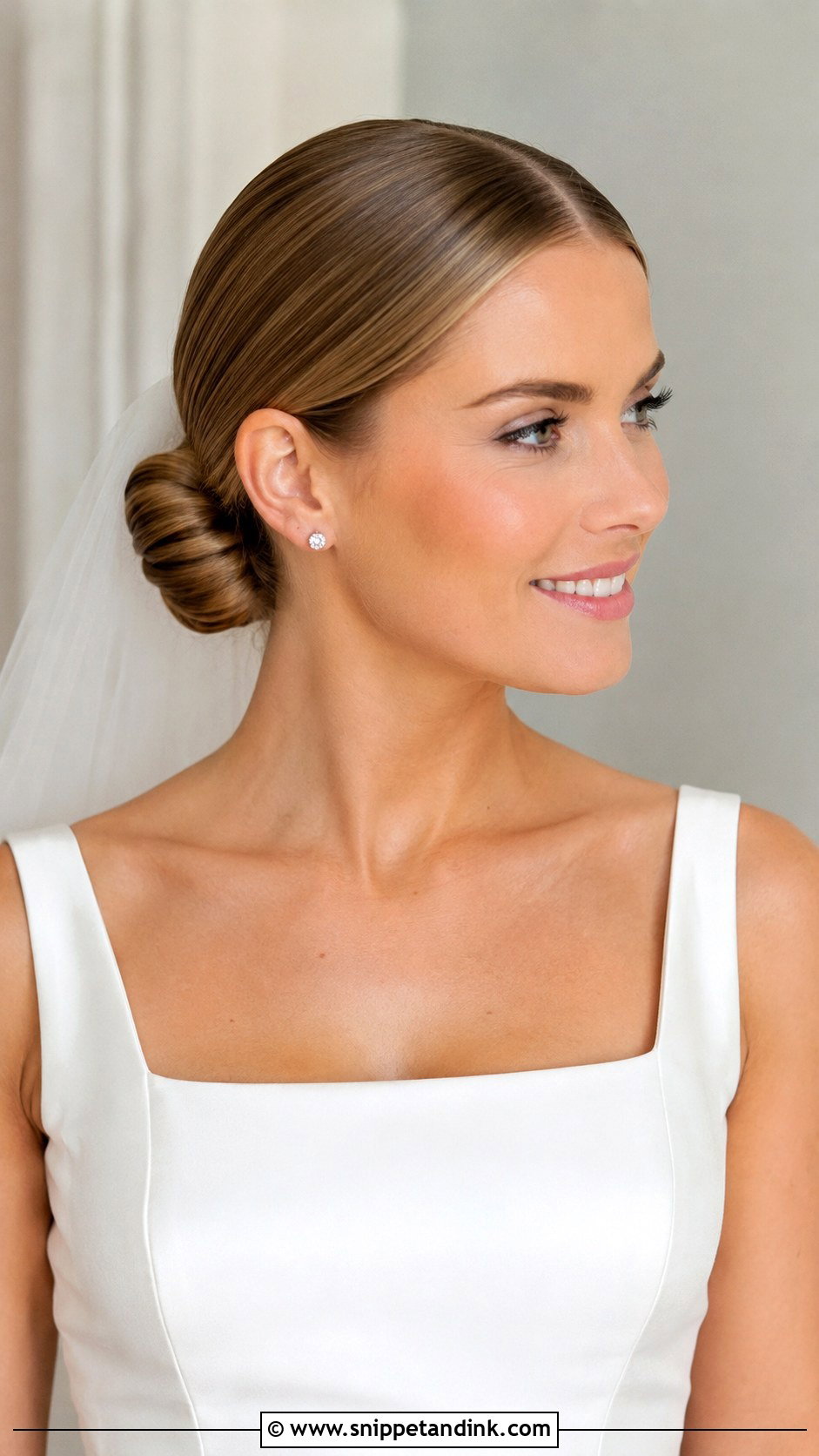
A sleek bun is the strictest style on this list, and it shows every flaw. I brush the hair close to the head, secure it neatly and finish with shine so it reads smooth rather than flat. It suits minimalist gowns and sharp tailoring, and it’s my pick for windy coastal ceremonies because nothing can blow loose. Set it low for something softer, or higher for a ballerina-inspired finish. Pair it with fresh, glowy makeup so the overall look doesn’t feel cold.
5. Wedding Hair Textured Updo
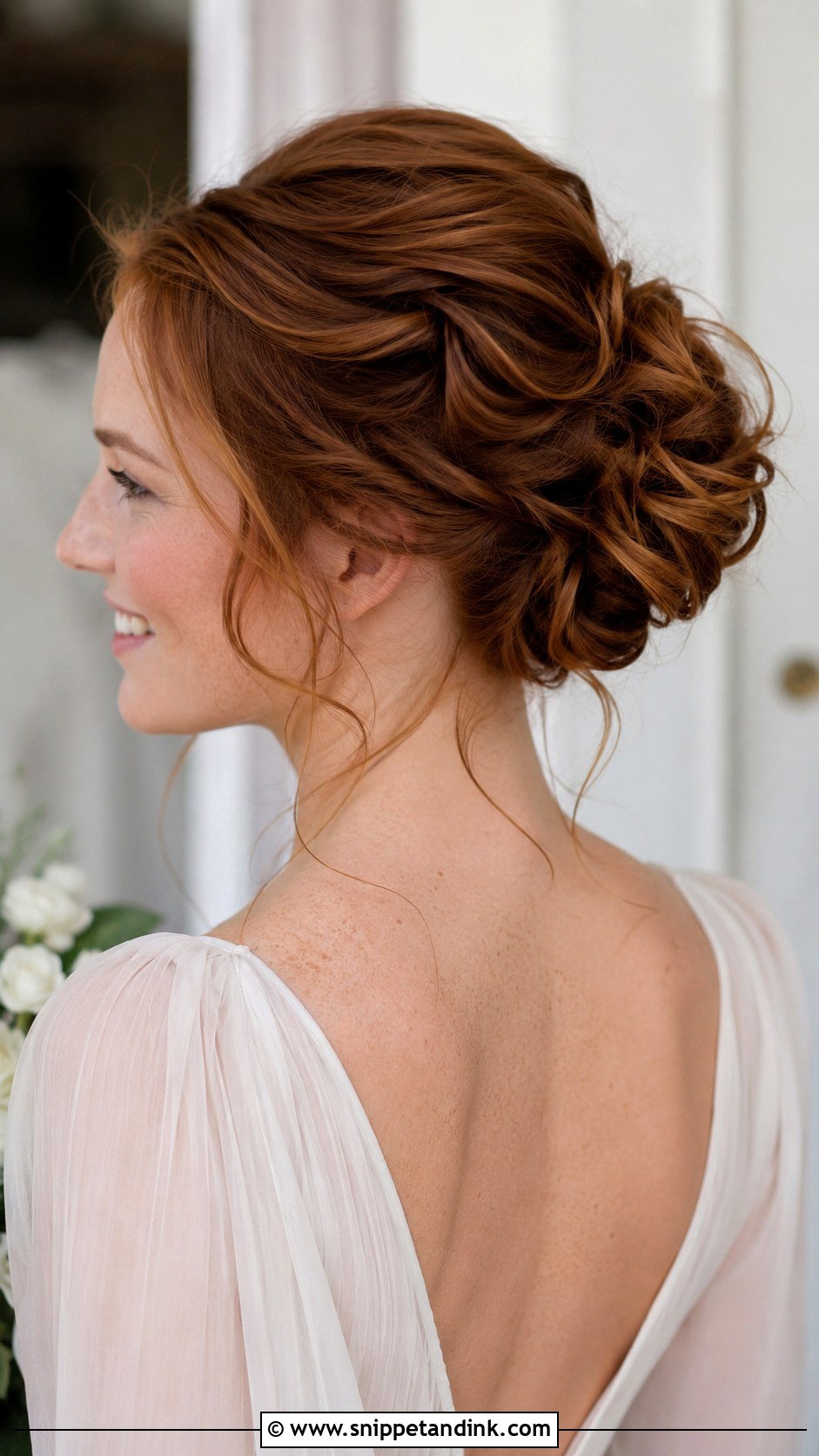
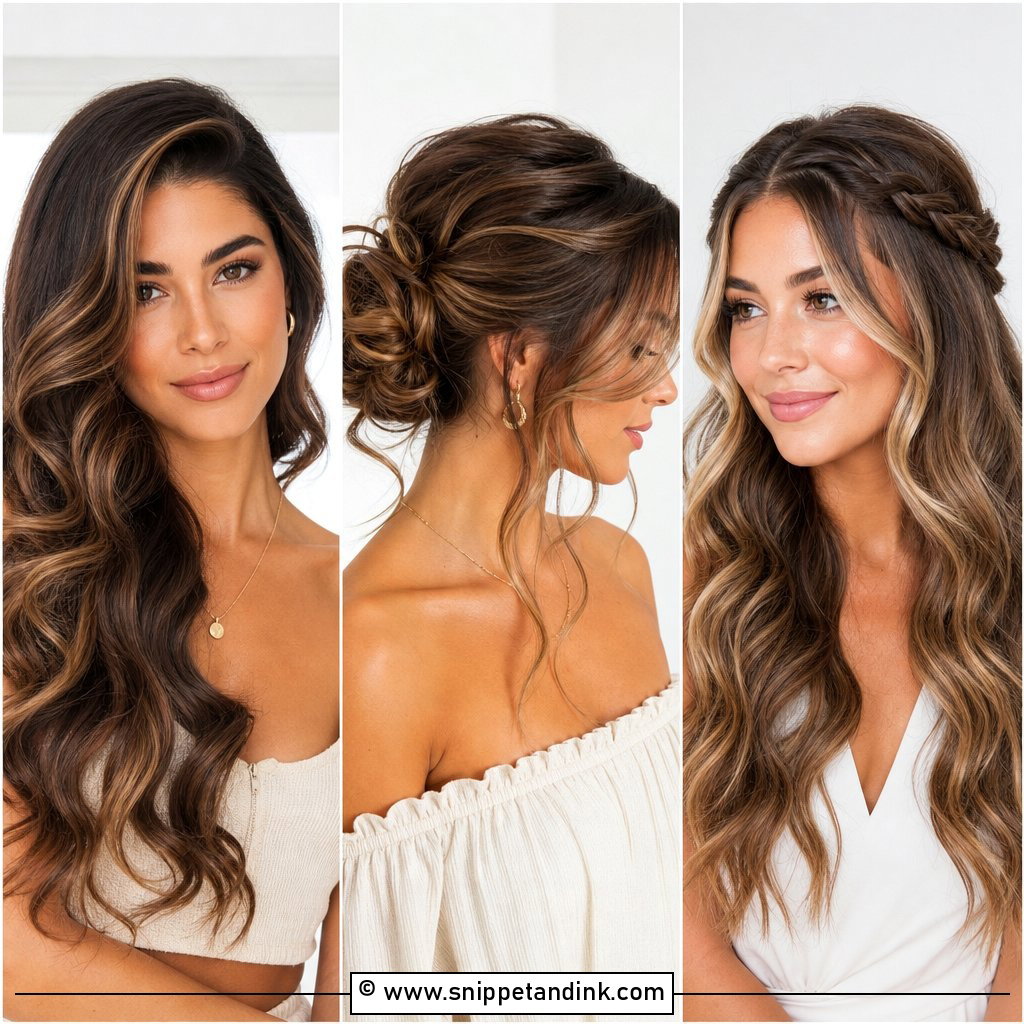
Textured updos are what most brides mean when they say they want something romantic but modern. Pinned waves, soft twists and a few face-framing pieces sit over a structure that is much firmer than it looks. Medium to long hair with some natural wave or layers holds this best; very straight, silky hair tends to slip unless I add texture spray first. It suits garden, rustic and indoor weddings equally. The texture should look airy, but the foundation underneath must be secure enough for the full day.
6. Wedding Hair French Twist
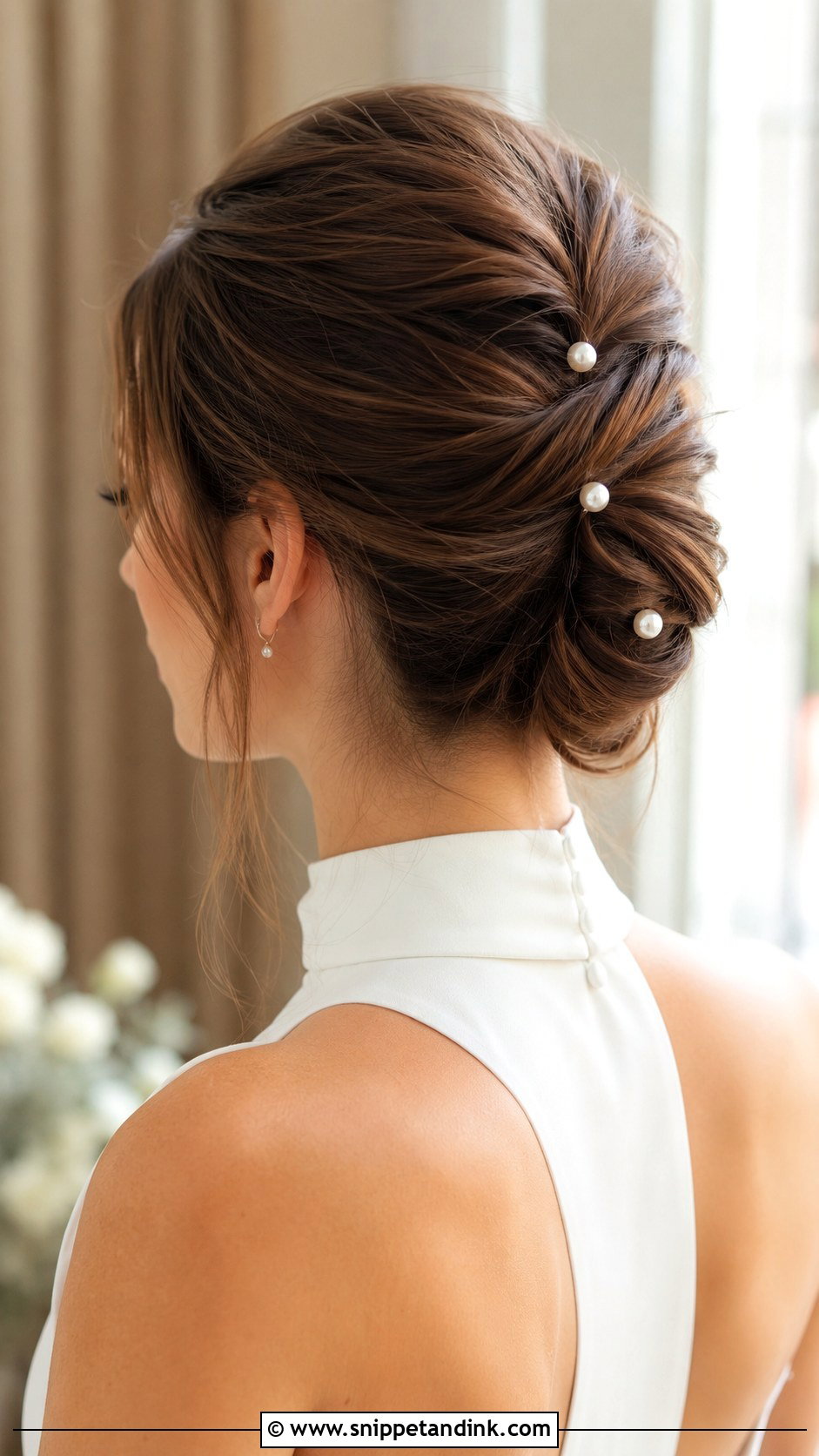
A French twist gives a vertical shape rather than a round bun, which lengthens the neck and pairs well with high necklines and statement earrings. Smooth and tight, it reads refined; looser with a few soft pieces, it relaxes. I suggest it to anyone who wants hair off the shoulders but dislikes the round outline of a bun. Fine hair can struggle to hold the fold, so I often backcomb the inner layer lightly to give the pins grip. Pearl pins or a small comb along the seam add detail without crowding it.
7. Wedding Hair Chignon
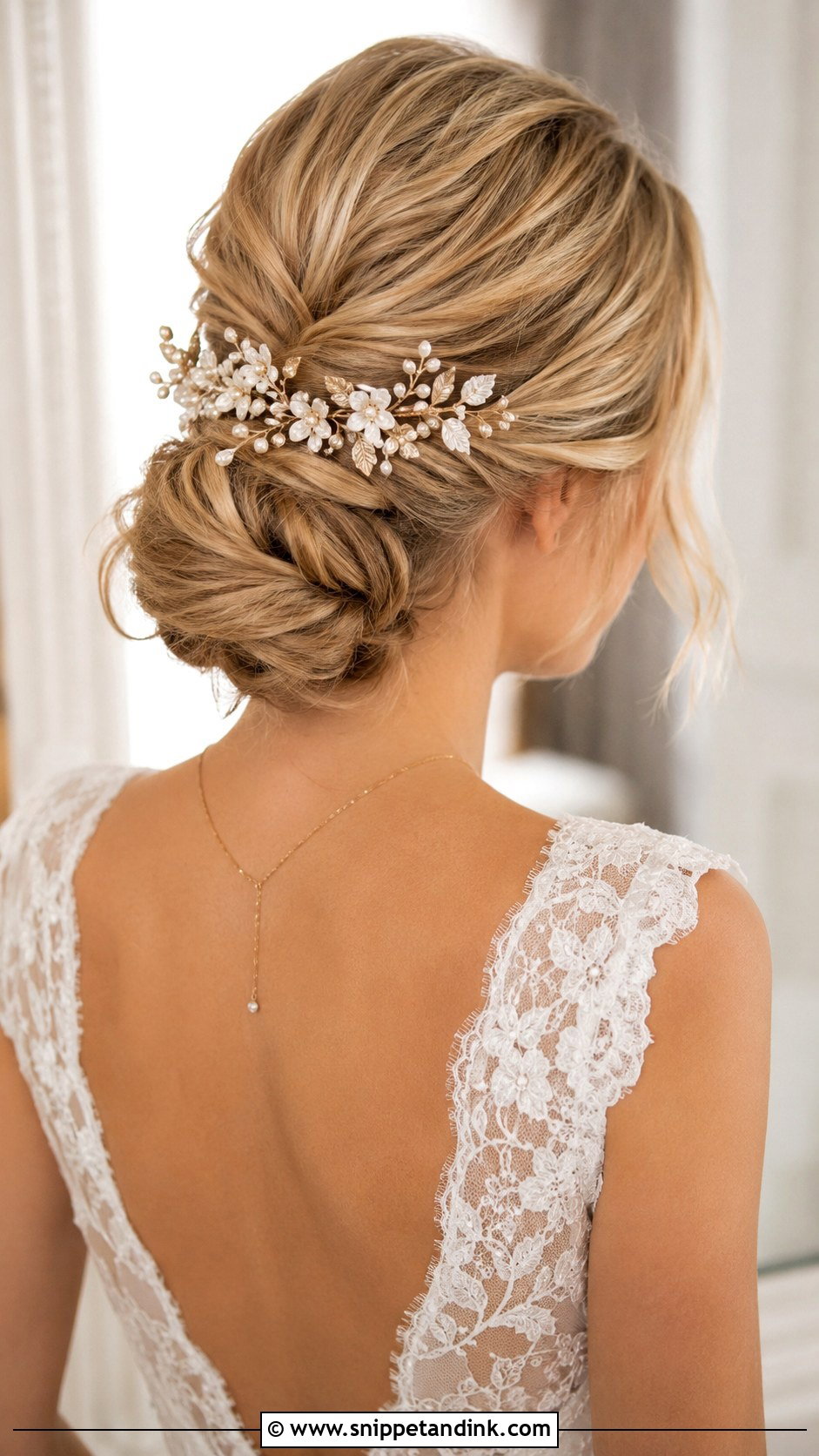
The chignon sits low at the nape and can be smooth, twisted, braided or softly undone. It looks traditional without being dated, and because guests mostly see you from the side and back during the ceremony, its shape matters more than the front. It suits lace gowns, cathedral veils and pearl accessories. Fine hair may need clip-in extensions for fullness; thick hair needs careful sectioning so the chignon looks balanced instead of bulky.
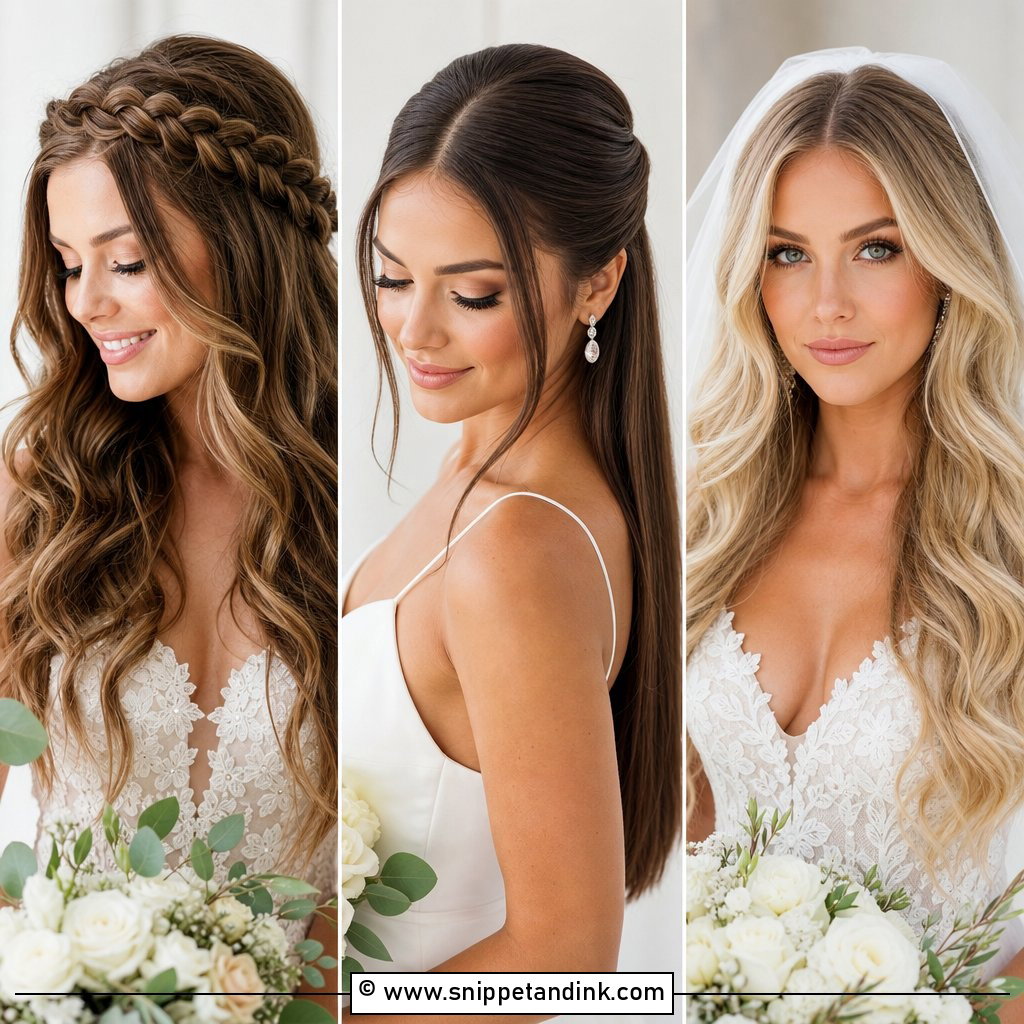
8. Wedding Hair Loose Waves
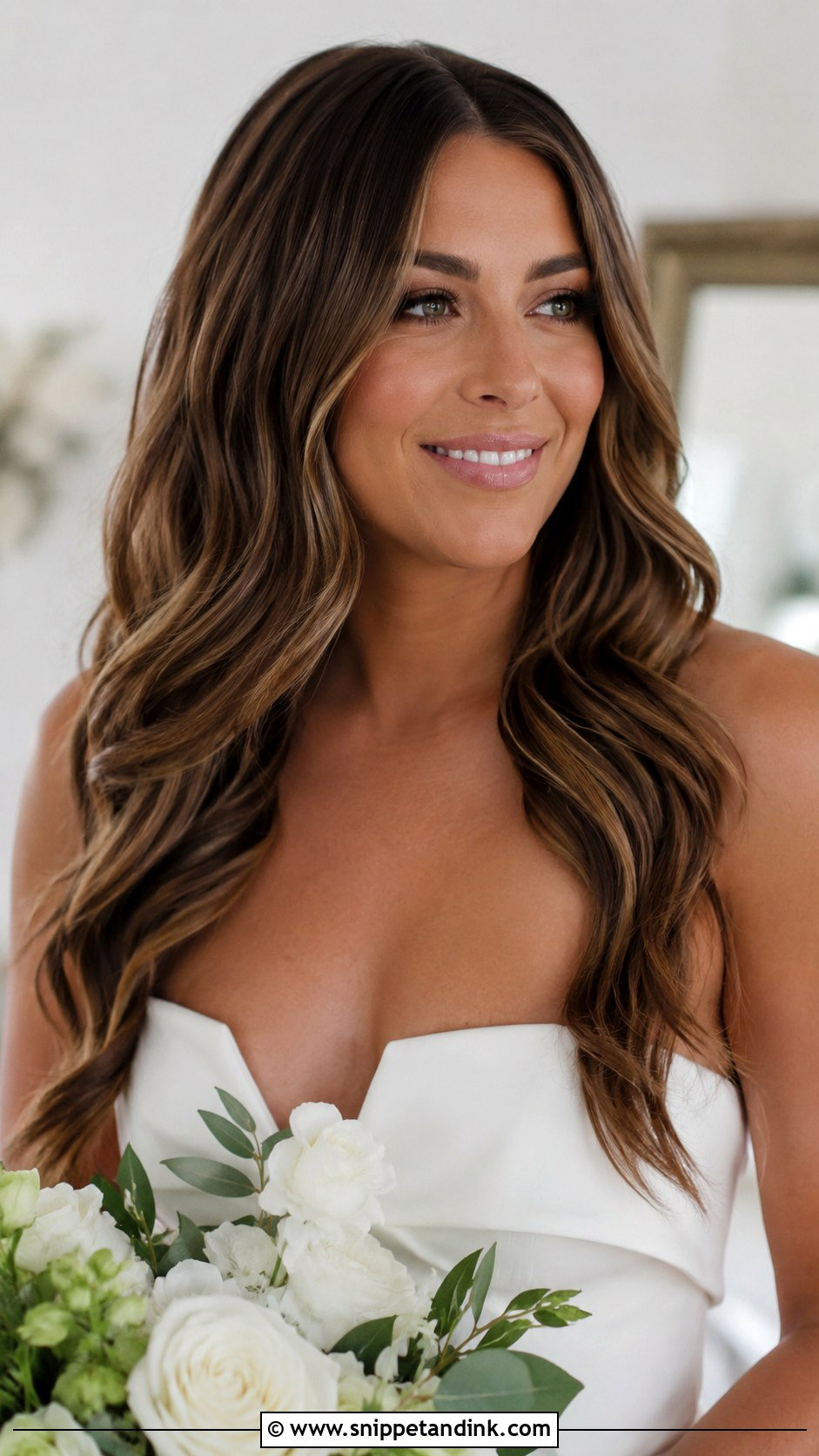
Hair down is the riskiest choice I can make for a bride, and also the one many feel most like themselves in. Bridal loose waves must be shinier and better set than everyday beach waves, or they fall flat by the speeches. Balayage and dimensional color show off the movement especially well. A middle part reads modern; a side part adds glamour. Prep makes the difference here: a heat protectant with some grip, curls set and cooled, then a flexible spray.
9. Wedding Hair Braided Crown
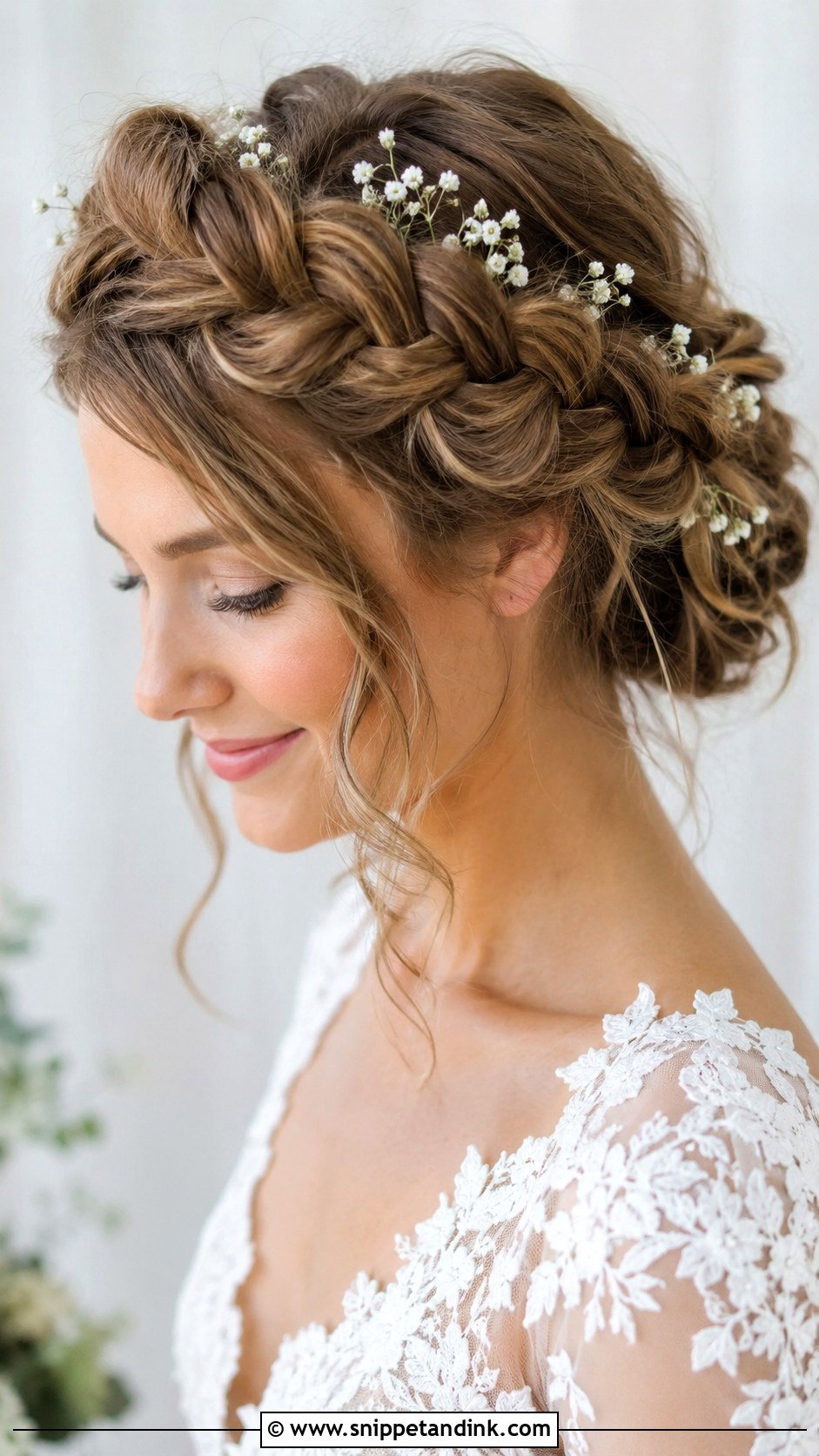
A braided crown frames the face softly and keeps everything secure, which is why I like it for outdoor ceremonies. The braid can circle the whole head or sit as a partial crown above curls or a low bun. It’s also very useful for controlling short layers and grown-out bangs that would otherwise fall forward. Tiny flowers, pearl pins or gold accents can go in if they match the dress. I gently pull the braid apart after pinning; a tight crown looks like schoolgirl plaits rather than bridal hair.
10. Wedding Hair Low Ponytail
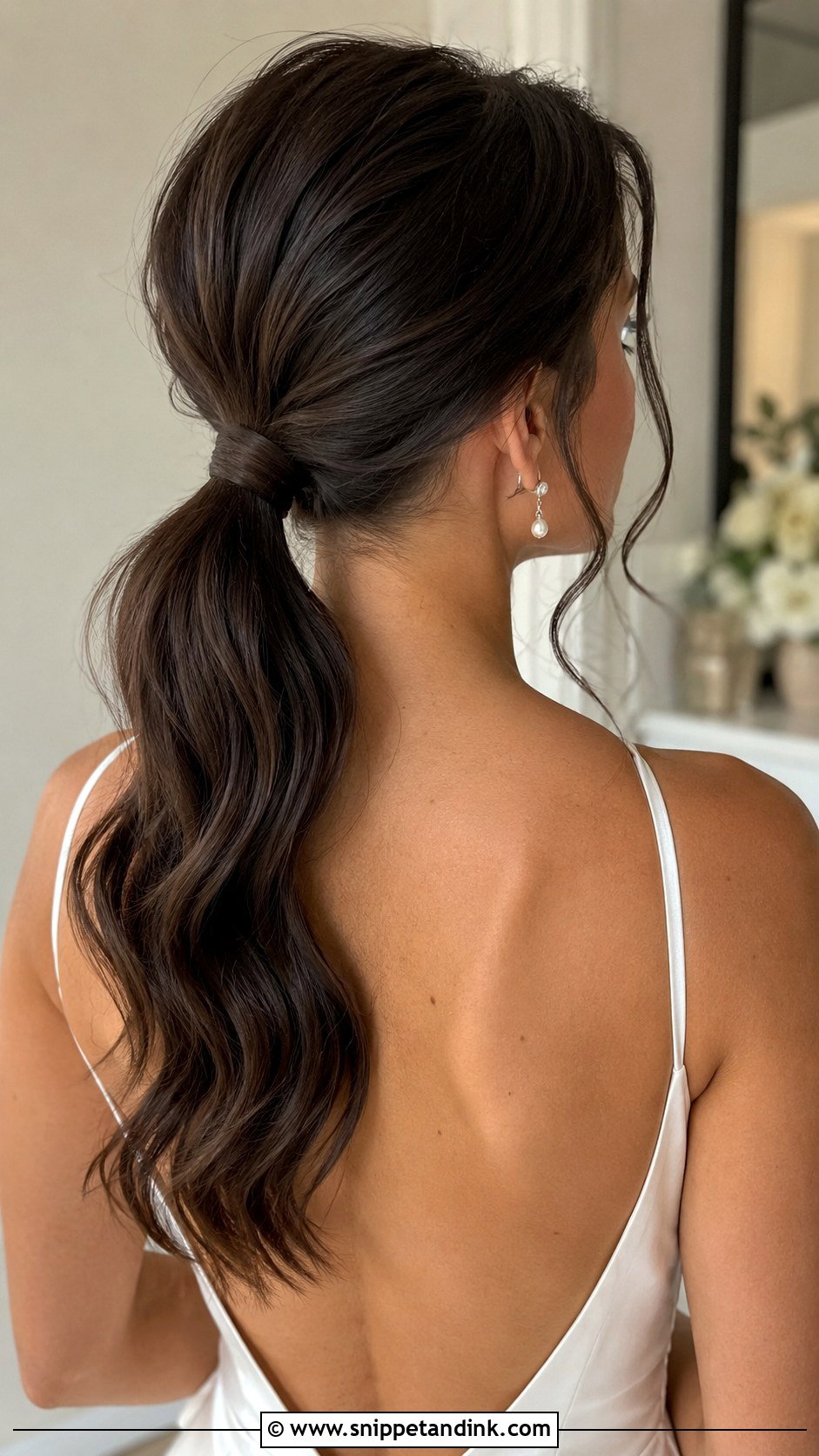
A low ponytail looks plain in theory and polished in practice, as long as the base is clean. I wrap a section of hair around the elastic and pin it underneath so it can’t unwind. The tail can be smooth and straight or softly waved. It’s a strong match for open-back gowns and high necklines because it shows one and balances the other. Volume at the crown softens it; a center part makes it more editorial. A bow, a pearl clip or a veil comb above the base finishes the bridal touch.
11. Wedding Hair High Ponytail
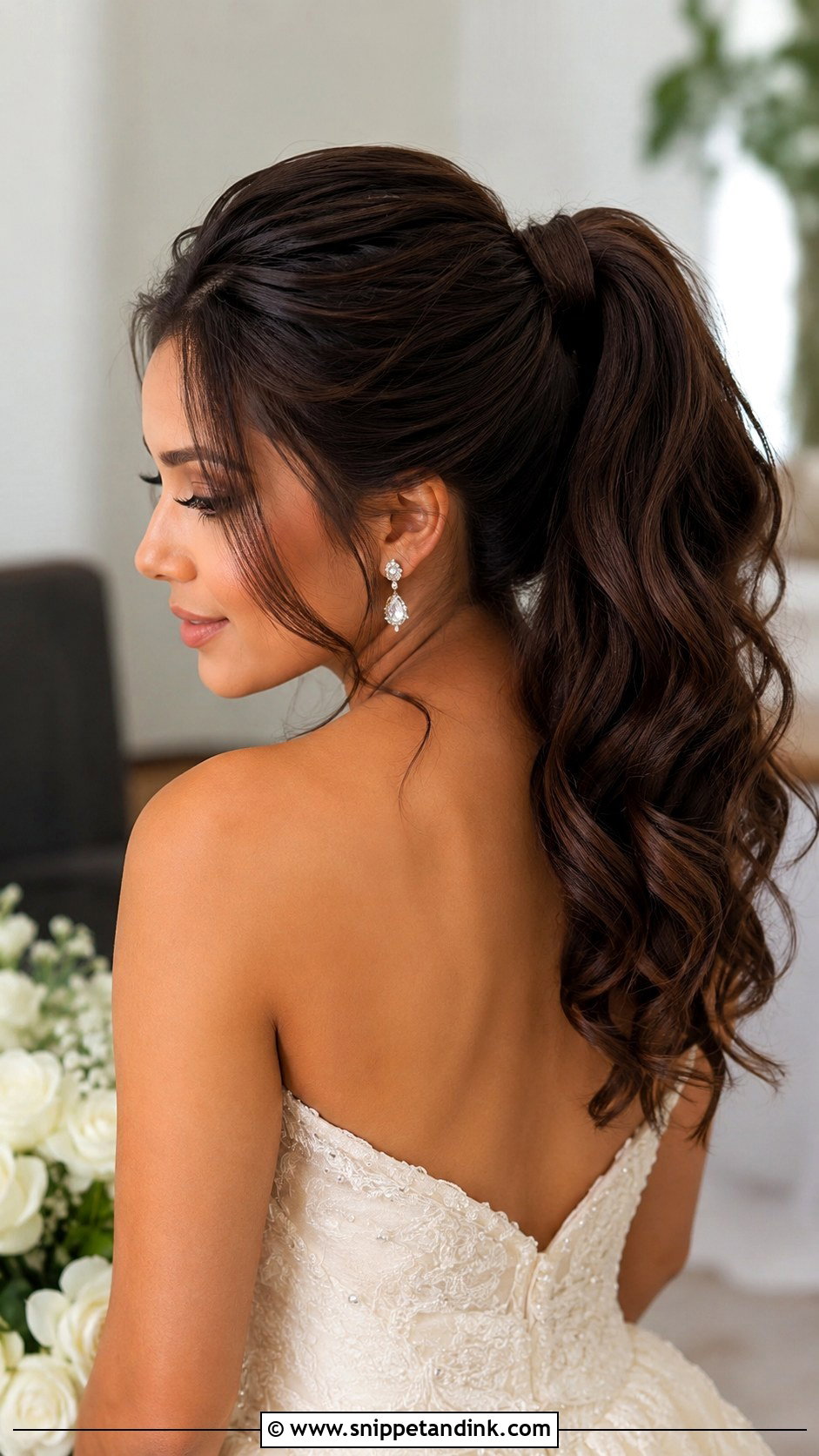
A high ponytail brings lift, movement and some drama. Curled into full waves, styled sleek, or softened with face-framing pieces, it works especially well with strapless gowns, halter necklines, and reception dresses. It keeps hair away from the neck in warm weather. Weight is the issue: long, heavy hair in a high pony can cause a headache after a few hours, so I secure it with two elastics and sometimes add a small hidden braid for support. Extensions give fullness if your own hair is fine.
12. Wedding Hair Side Swept Curls
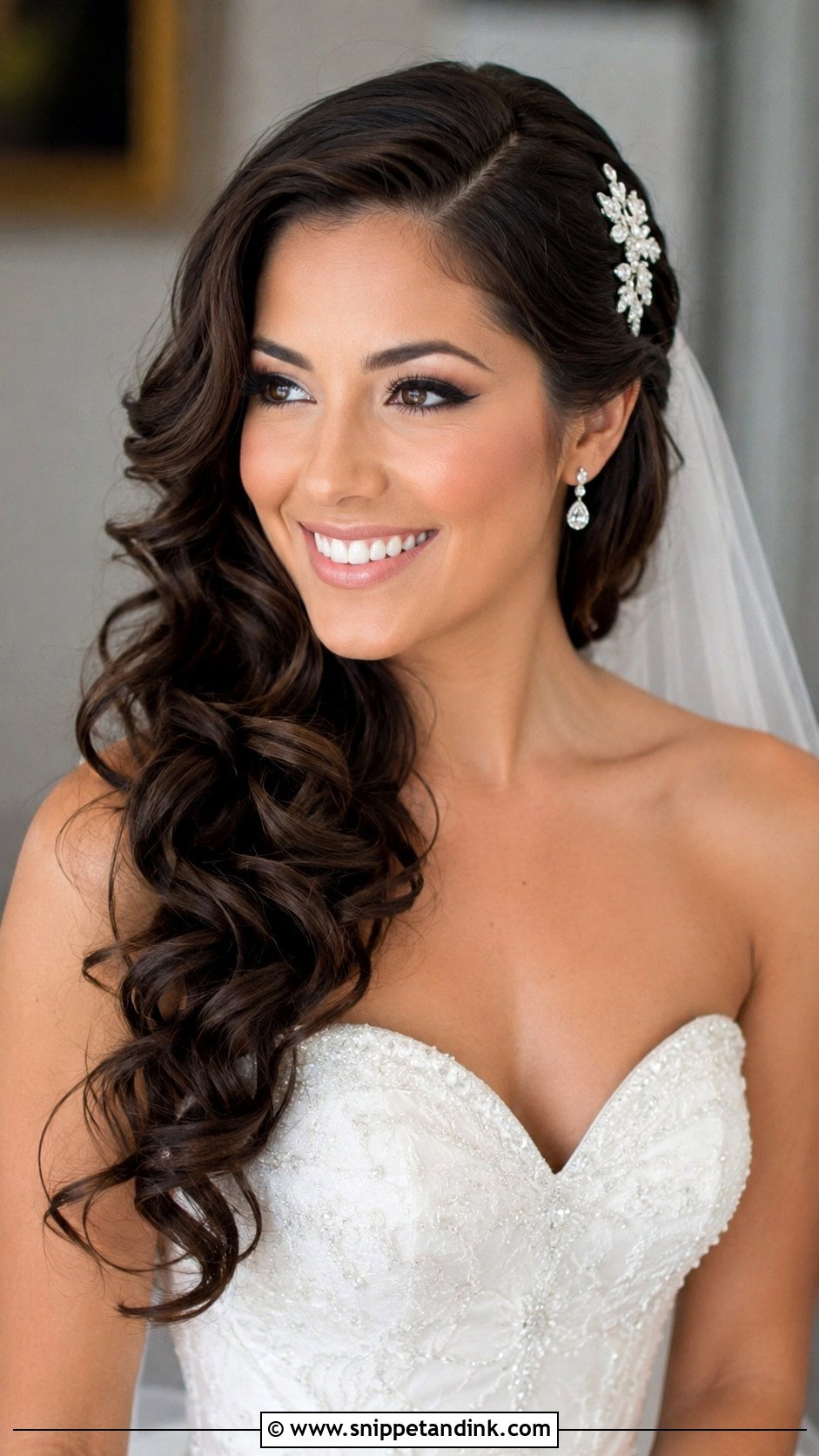
Side swept curls gather over one shoulder and let your length become part of the look. One-shoulder gowns, sweetheart necklines and vintage dresses suit them well. I brush the curls lightly into shape instead of leaving them separated, which keeps them looking polished. Underneath sits a hidden line of pins behind the ear; without it, the curls slide back to center within an hour. A comb or jeweled clip on the opposite side balances the composition.
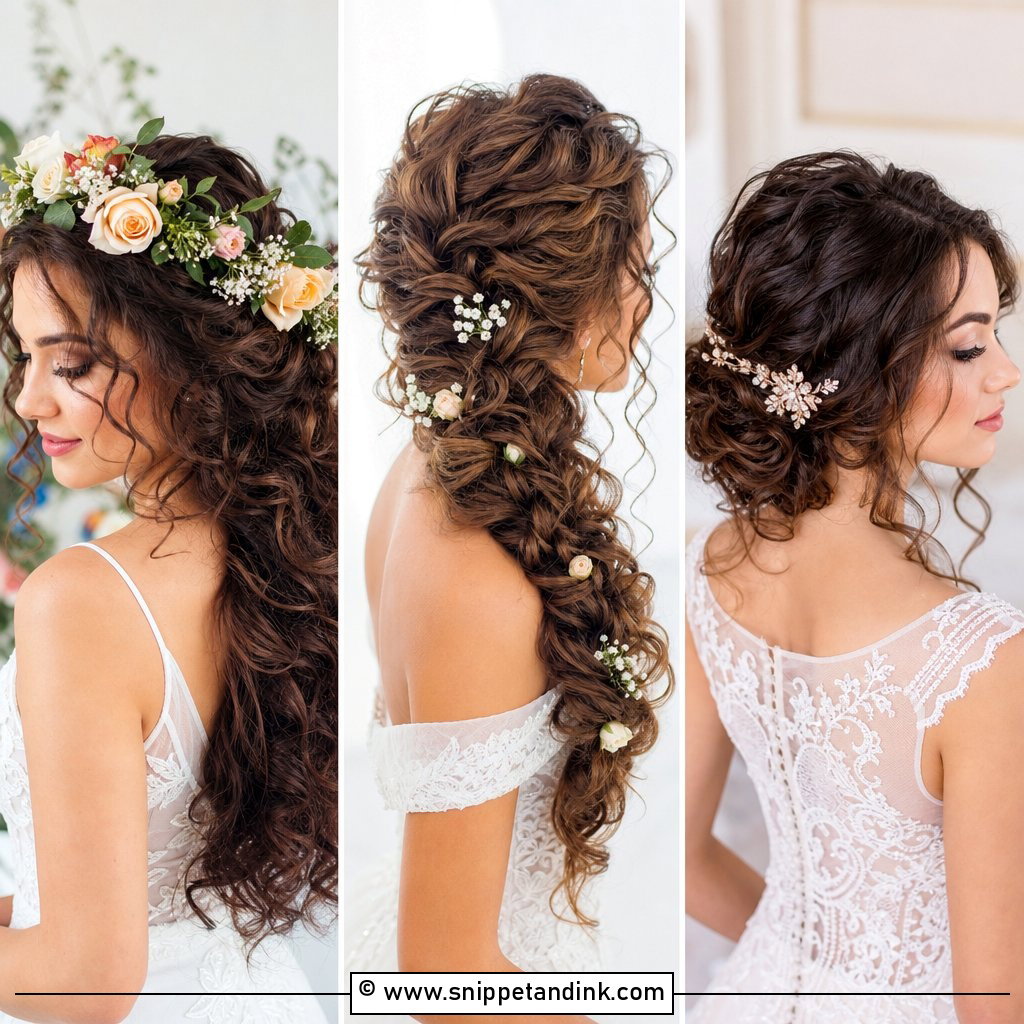
13. Wedding Hair Curly Updo
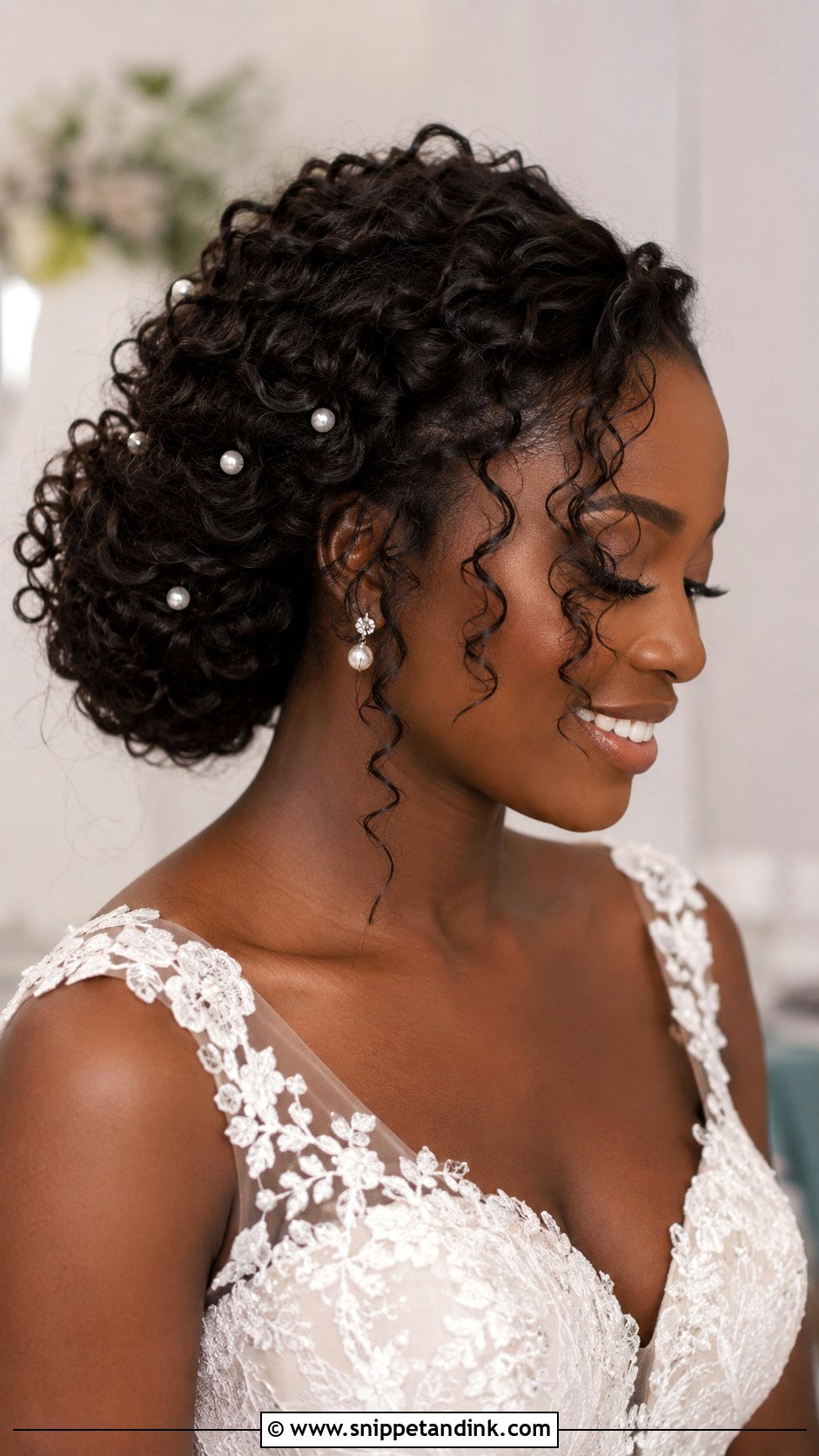
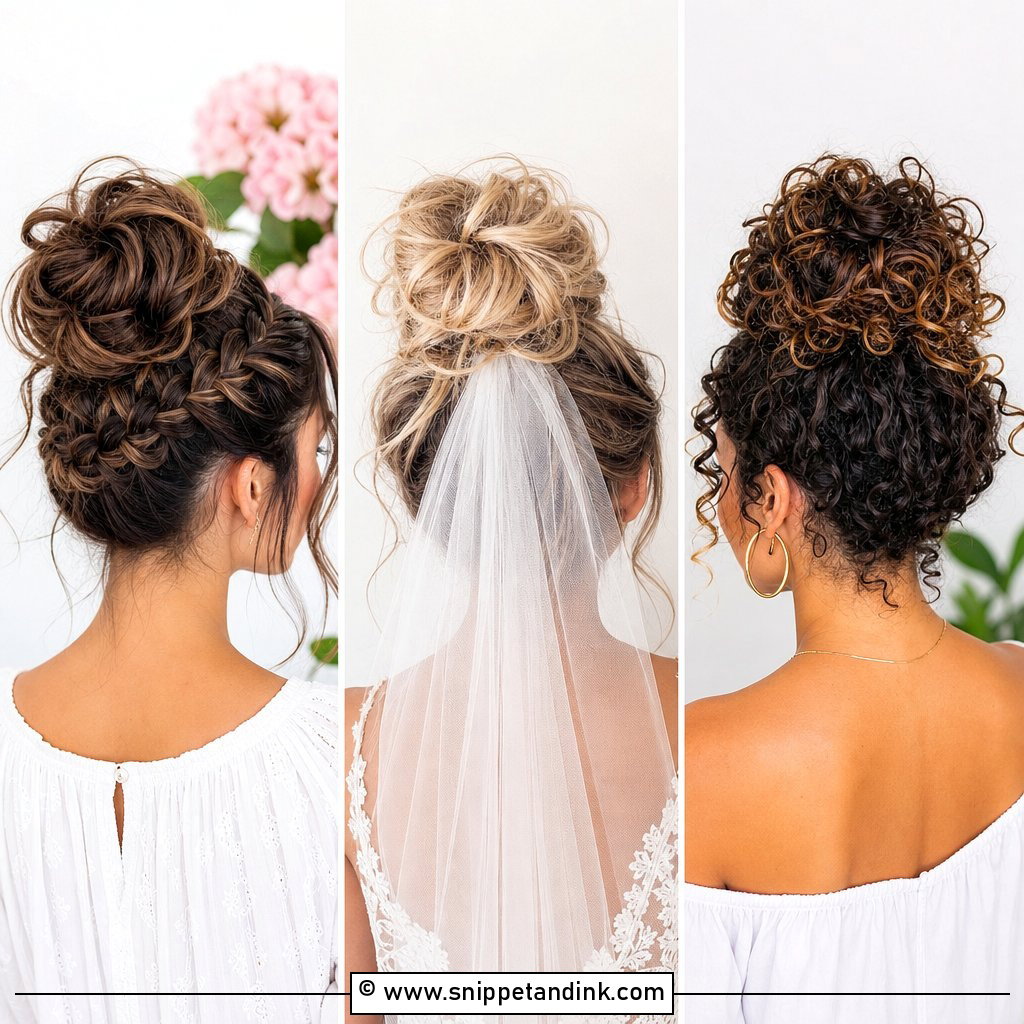
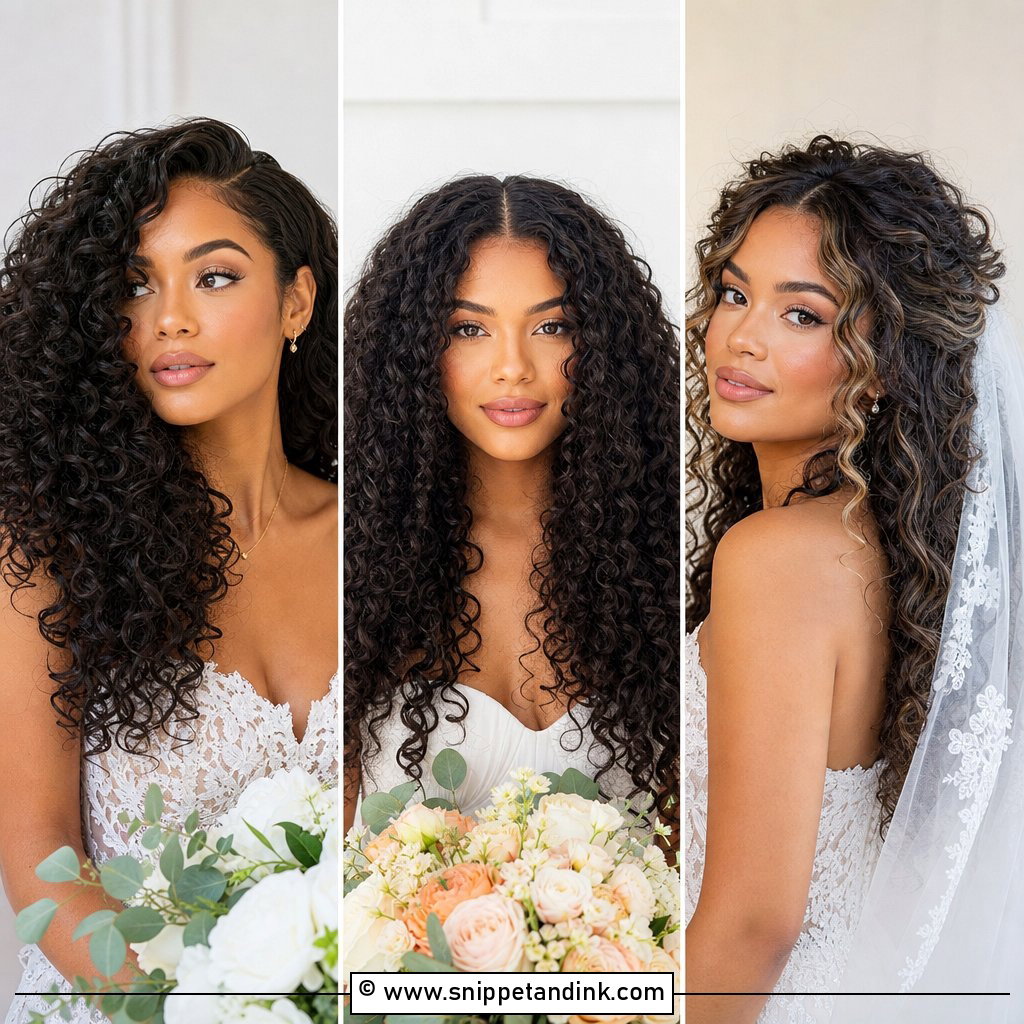
A curly updo celebrates natural curls instead of smoothing them away. The curl shape and volume become the main feature, pinned into a soft bun, gathered high or shaped into a low romantic updo, with a few curls left free at the face. It sits well with veils and floral pins. The most important step is curl prep: hydrated, defined curls hold shape better and look far better in close-up photos. I’d rather work with curls refreshed the day before than brushed out the morning of.
14. Wedding Hair Natural Curls
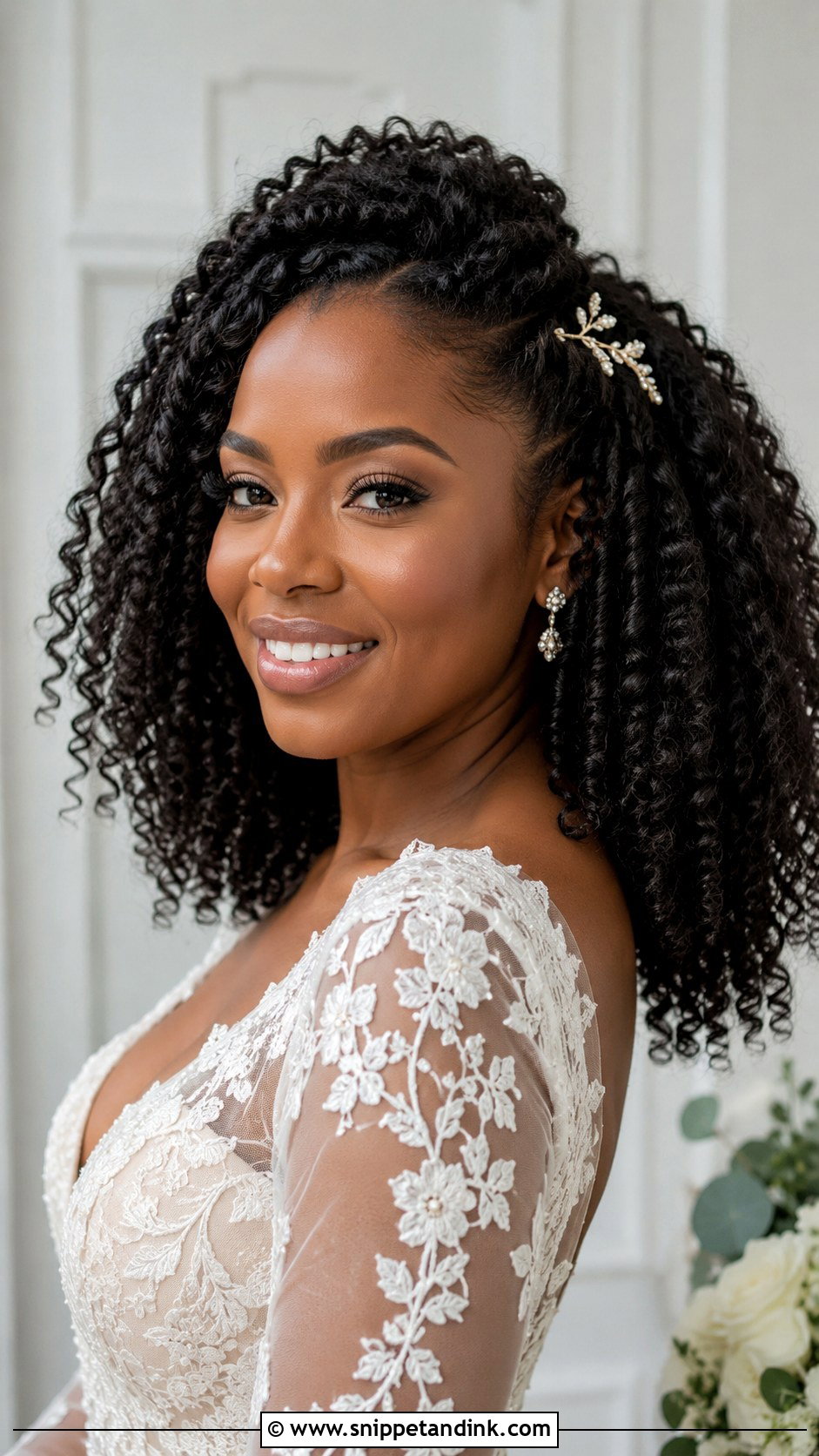
Natural curls worn down are, for many brides, the most honest version of themselves. They can be left loose, half pinned or lifted slightly at the crown for structure. A defined pattern with healthy shine photographs well indoors and out. What I avoid is any product that dries crunchy; it looks fine in person and harsh in close-up photos. Use a strong but touchable routine you already trust, and test it at your trial in a similar humidity to your venue.
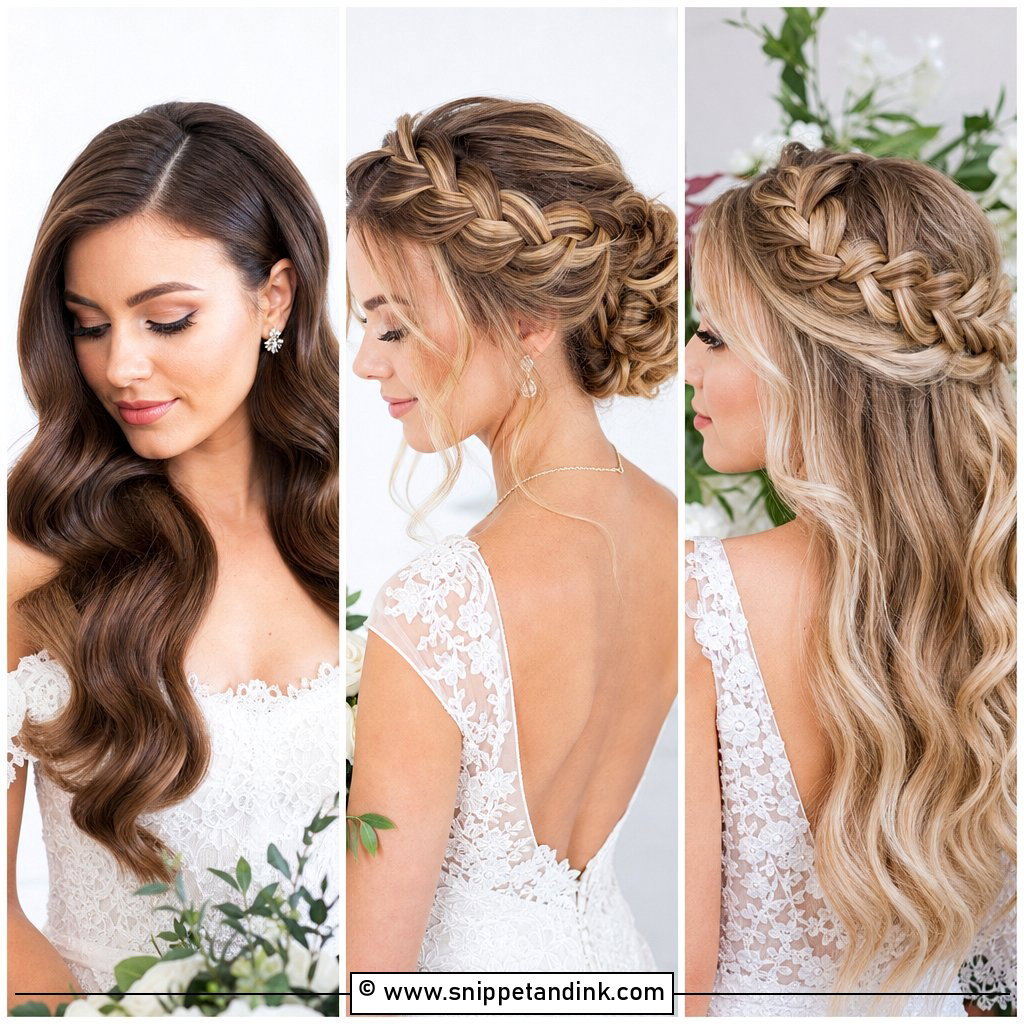
15. Wedding Hair Braided Bun
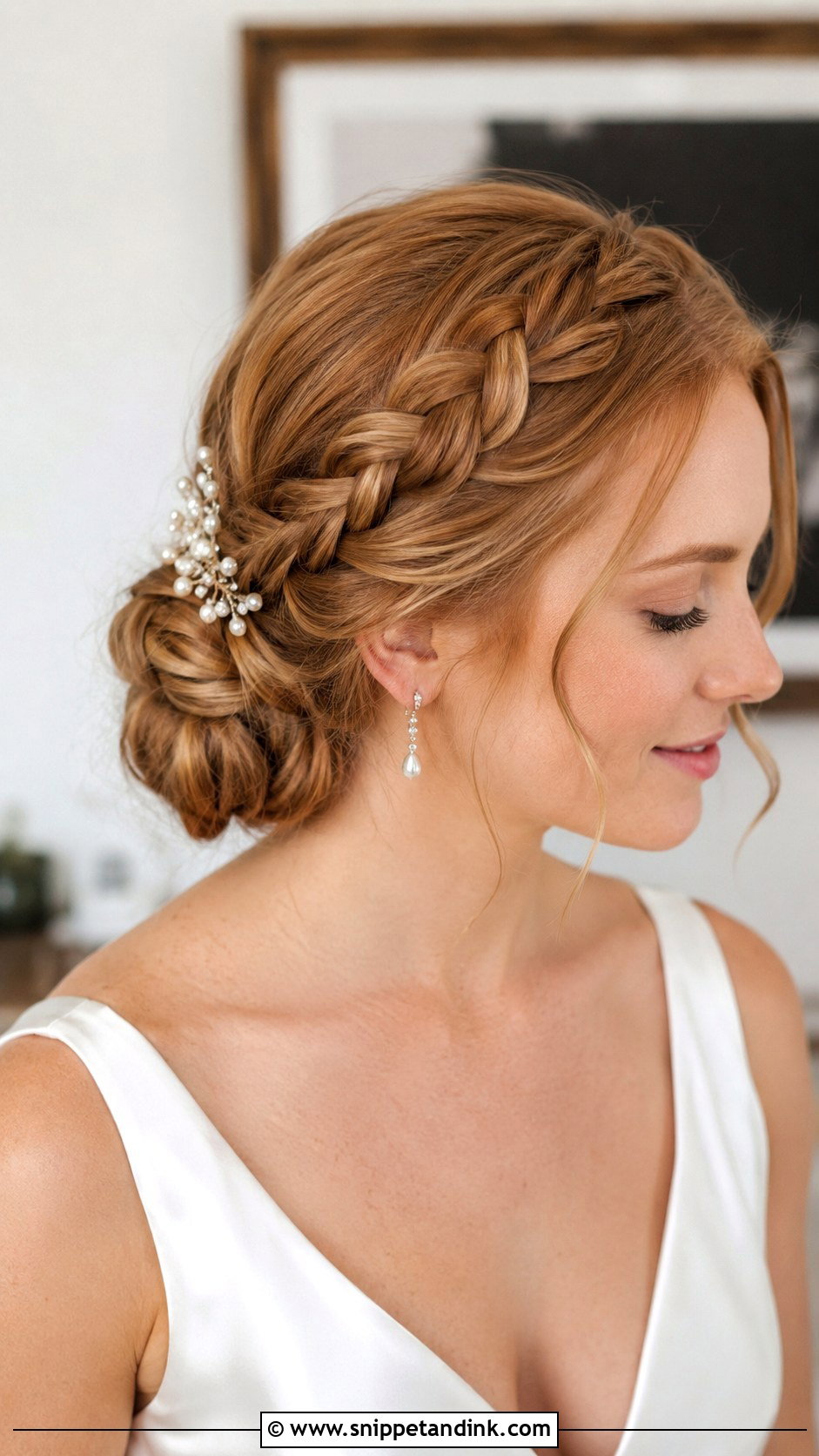
A braided bun is a good middle ground: more detail than a plain bun, still formal enough for a church ceremony. The braid can wrap the bun, run along the sides or create texture across the back. Thick hair holds this brilliantly because the braid adds structure. Fine hair can benefit too, as long as the braid is gently pulled apart to look fuller. I keep the front smooth so the eye goes to the braid detail instead of everything at once.
16. Wedding Hair Bubble Ponytail
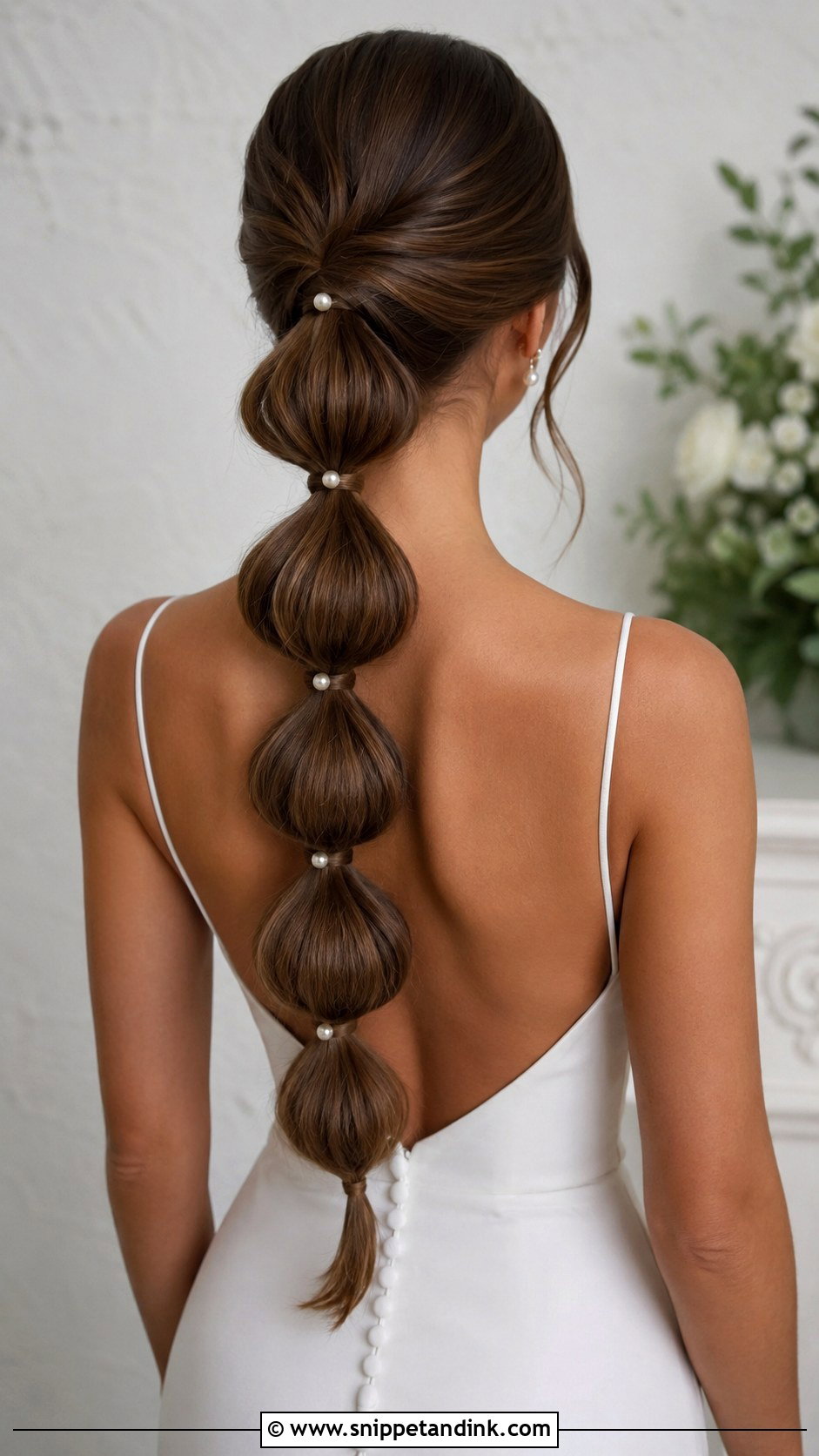
The bubble ponytail is a fashion-forward look that suits long hair, since the sections show off length while keeping everything controlled. Sleek or softly pulled apart, it makes a fun reception change or a destination-wedding choice. Clear elastics give a cleaner line than colored ones, and small pearls or bows can sit at each tie. The tricky part is evenness: I measure the bubbles roughly with my fingers so they stay the same size from top to bottom.
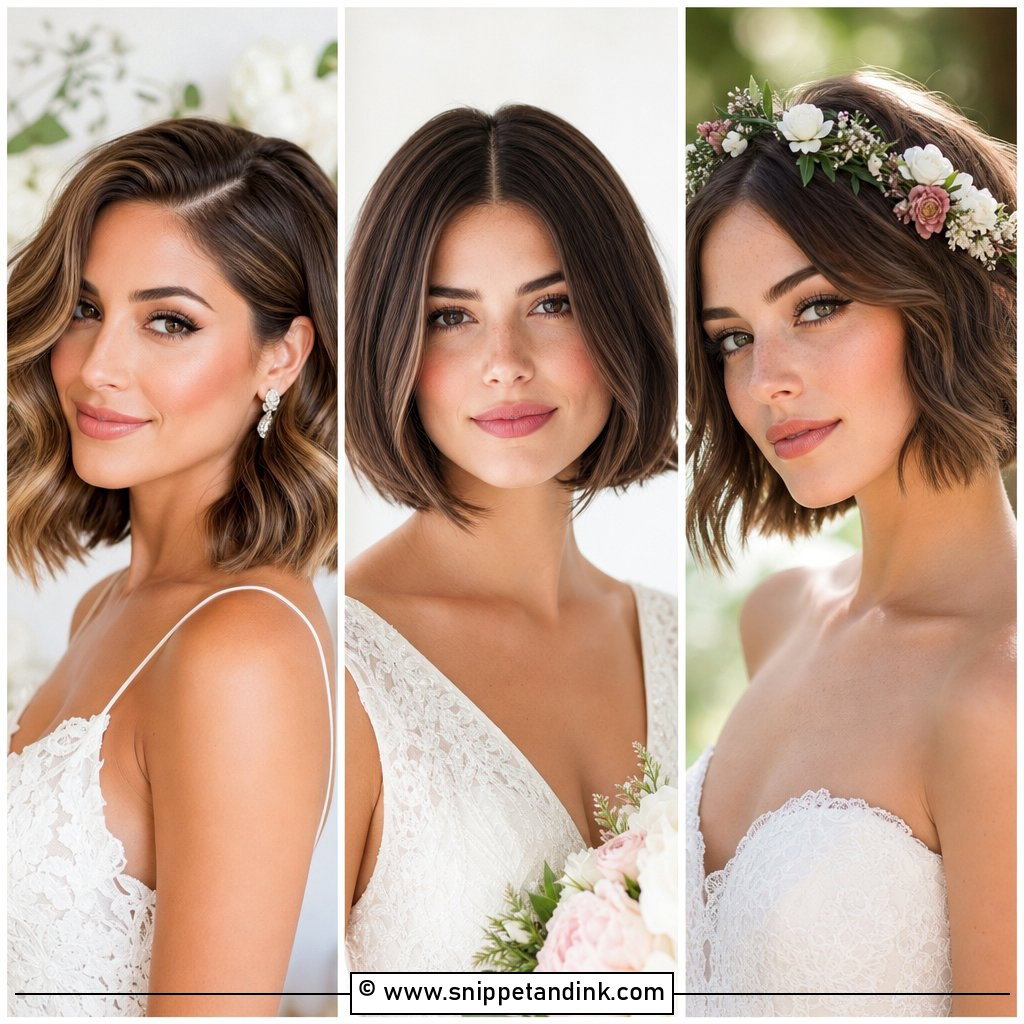
17. Wedding Hair Short Bob
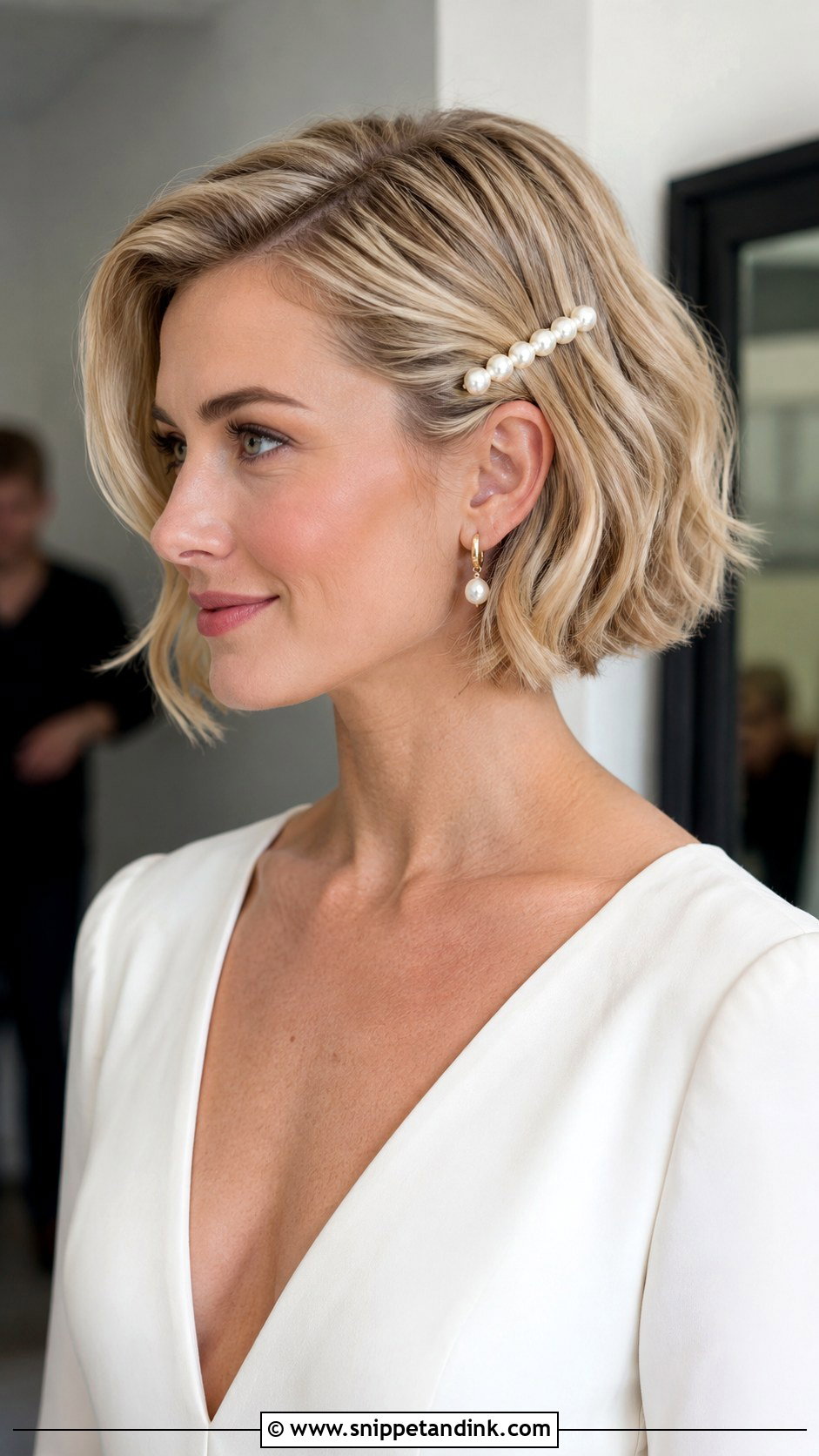
Wedding hair short bob styling doesn’t need an updo to feel bridal. A bob can be smooth and tucked, softly bent at the ends, side-parted or finished with a headband, barrette or veil. It suits modern gowns, city weddings and courthouse ceremonies especially. I choose the part based on face shape at the trial, then finish with a shine spray. Get your trim about two weeks before; a fresh blunt cut can look a little hard in the first few days.
18. Wedding Hair Pixie Cut
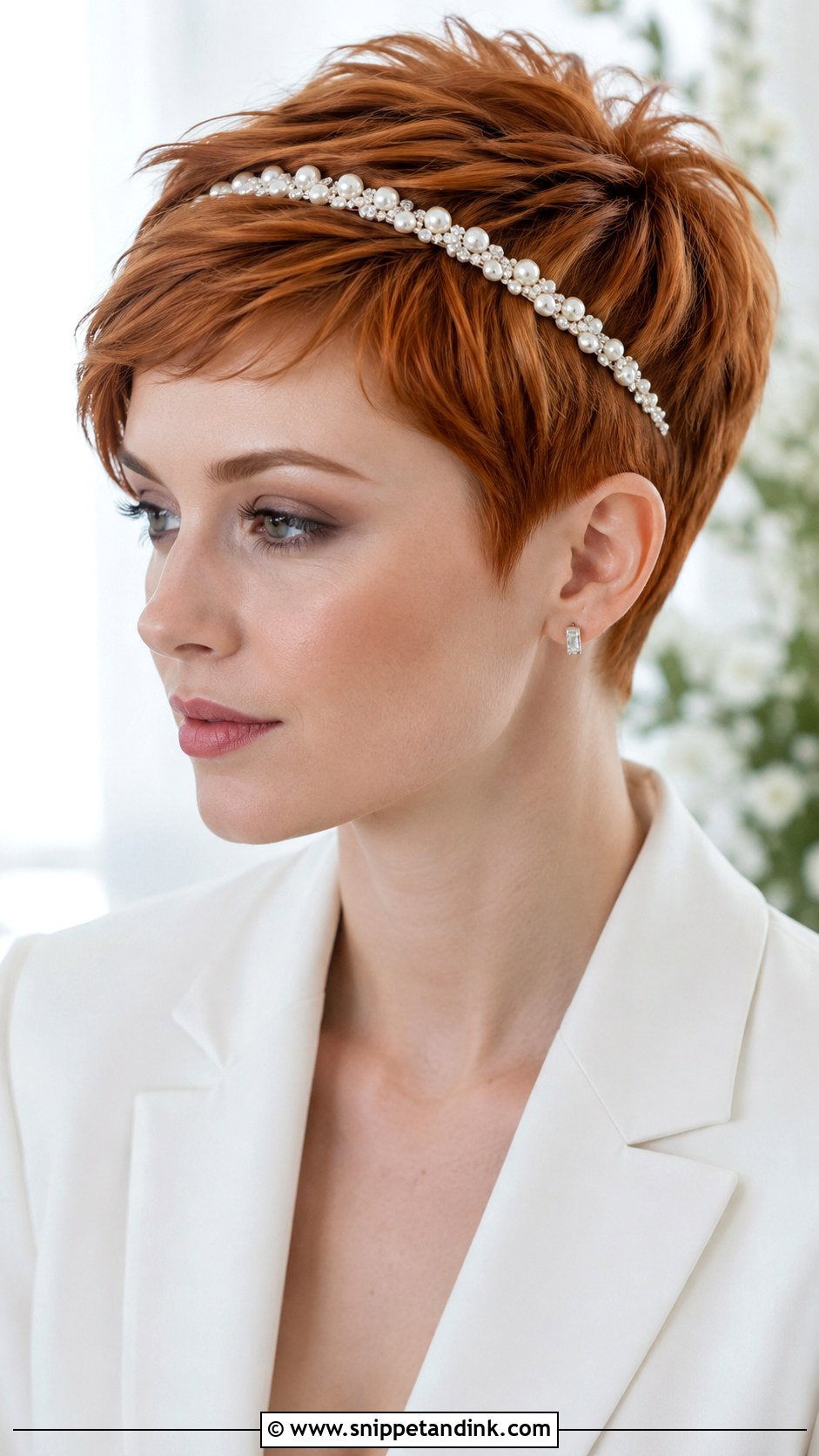
Wedding hair pixie cut styling is the most low-maintenance bridal option there is, and short hair looks just as bridal as long hair when the shape is right. Sleek reads polished; soft and textured reads more romantic. A delicate headband, pearl pins, a birdcage veil or a small flower gives the bridal touch. The main thing is timing: get it trimmed about a week before, since pixies grow out of shape quickly. There are no curls to drop, which many brides find freeing.
19. Wedding Hair With Veil
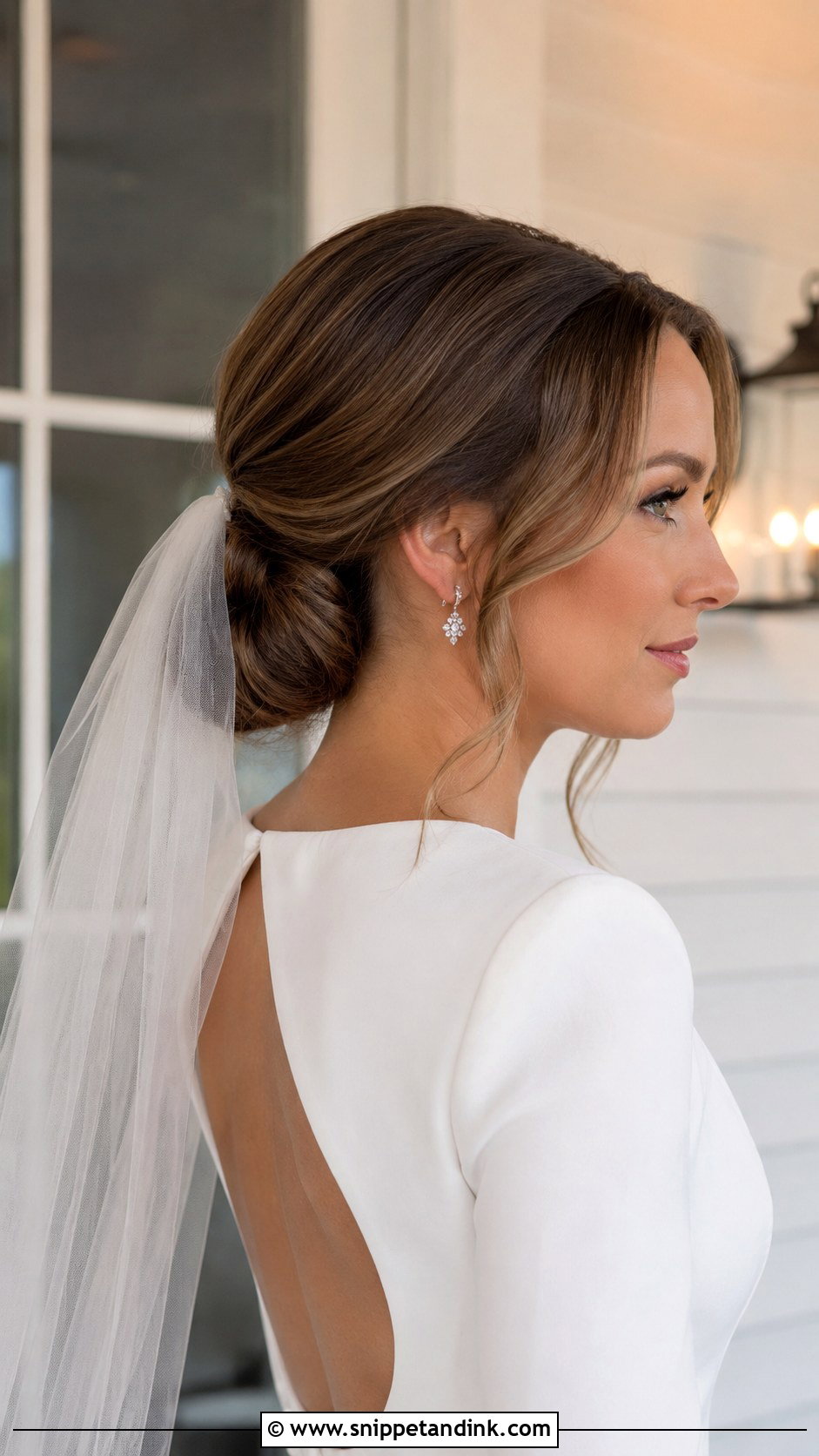
Veil plans should be made before the hairstyle, not after. Low buns, chignons, half-up hair and soft waves all take a veil well, but the attachment point decides the look. Above the bun feels traditional and dramatic; tucked beneath it feels softer and modern. If you plan to take the veil off after the ceremony, I build the style so it looks finished without it, and I leave the comb loose enough to remove without pulling pins. Bring the actual veil to your trial; its weight changes everything.
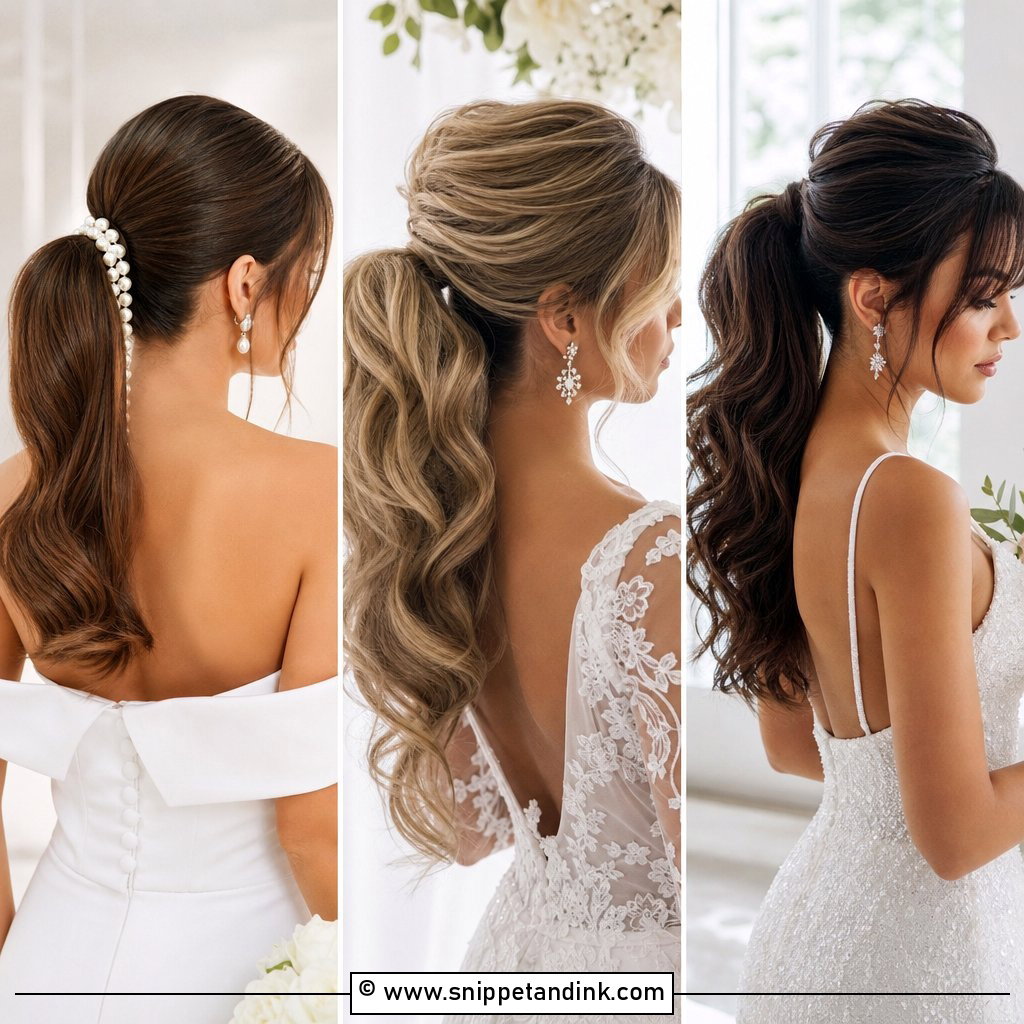
20. Wedding Hair With Pearls
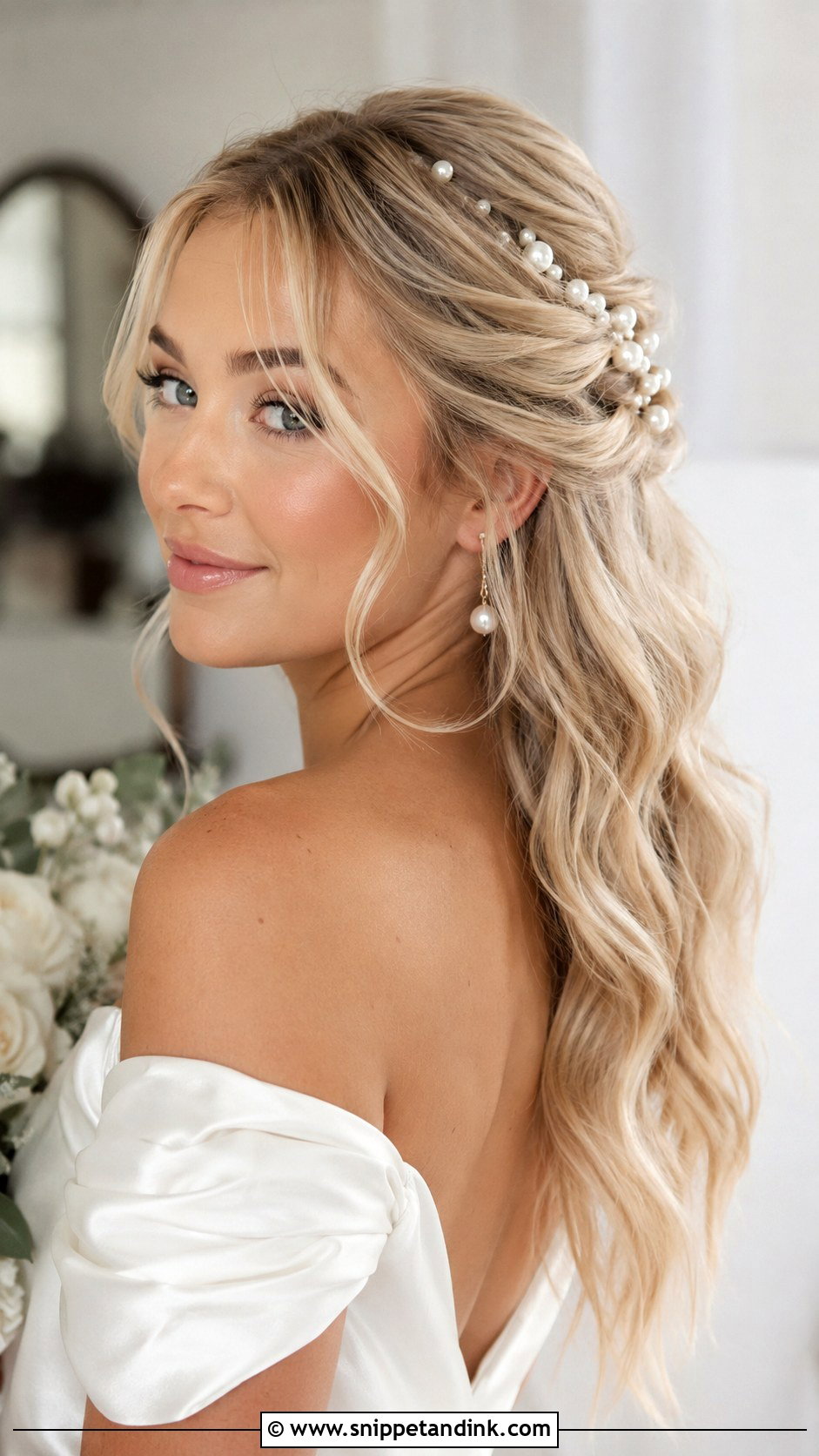
Pearls are the accessory I add most often, because they sit quietly on almost any hair color. They can be scattered through waves, tucked into a bun, pinned along a braid or placed around a sleek twist. I treat them as accents, not the main feature; too many make the hairstyle look busy. Small pearl pins read delicate, while a pearl headband makes more of a statement. They work with satin, lace and classic makeup, and they look most intentional on hair that has been shaped and polished first.
Your Last Cut and Color Belong Two to Three Weeks Out
Hair needs a little time to settle after salon work. I suggest the final trim two to three weeks before the wedding, so the ends soften and any small mistakes can grow out. Color or a toner gloss goes about a week or two before; it fades slightly in the first washes and looks more natural by the day itself.
Avoid any big change in the final six weeks: no new cut, no dramatic color, no first-time treatments. Keratin smoothing in particular can make hair too slippery to hold pins or curls, so tell your stylist if you’ve had one.
Washing on the day before
For most hair types I prefer hair washed the evening or day before, not that morning. Freshly washed hair is very soft and slippery; a day of natural oils gives curls and pins far more grip. Curly and coily hair is the exception, and that routine should follow what already works for you.
If a Curl Drops or a Pin Slides Mid-Reception
Give a bridesmaid a small pouch with a few bobby pins matched to your hair color, a travel hairspray and a comb. Most problems are a single section loosening; one pin pushed in against the direction of the hair fixes it. If a curl has fully dropped, twisting it loosely and pinning it back into the style looks better than trying to recurl it without tools.
Will Your Saved Look Survive Eleven at Night?
The best wedding hair fits your face, dress, venue and comfort level, and it holds through the real parts of the day: hugs, wind, a long dinner and a dance floor. A photo may look perfect online, but your own hair density and texture will decide how it translates. Save the looks closest to your personal style, bring them to your trial with your veil and accessories, and be honest about what feels like you.
You'll Like These Ideas:


Leave a Reply