
Most brides walk into a first appointment with a folder of screenshots and leave having fallen for a shape they never saved. That happens because a gown on a hanger tells you very little. The silhouette only makes sense once it moves with you, and a neckline only makes sense against your own face and shoulders. The dress styles below are grouped loosely by silhouette, waistline, length, fabric, sleeve and neckline, which is roughly the order I work through them with a bride. Clean tailoring, removable layers and separates now sit alongside the classic A-lines and ball gowns, so treat this as a map to carry into fittings rather than a shortlist you have to commit to.
Silhouette First, Fabric Second at Your First Appointment
When a bride arrives with a long list, I don’t start with lace or necklines. I start with silhouette, because it decides how the dress feels to wear, and many of the other details on this list can be changed or added later by a skilled seamstress.
- Try three contrasting shapes back to back: an A-line, something fitted like a trumpet, and a sheath or column. Your reaction to the contrast tells us more than any saved photo.
- Sit, walk and lift your arms in each one. A gown that looks right standing still can be the wrong one for a day of dinners, hugs and dancing.
- Only then compare fabrics, and do it in the shape you’ve settled on. Satin, crepe, tulle and mikado make the same silhouette behave very differently.
- Leave necklines and sleeves for last. Straps can be added and sleeves removed; a silhouette can’t be swapped.
Bring shoes close to the heel height you’ll wear and the underwear you plan to use. Both change how a hem and bodice sit, and a sample worn over the wrong bra can rule out a dress that would have been right.
1. A-Line Wedding Dress
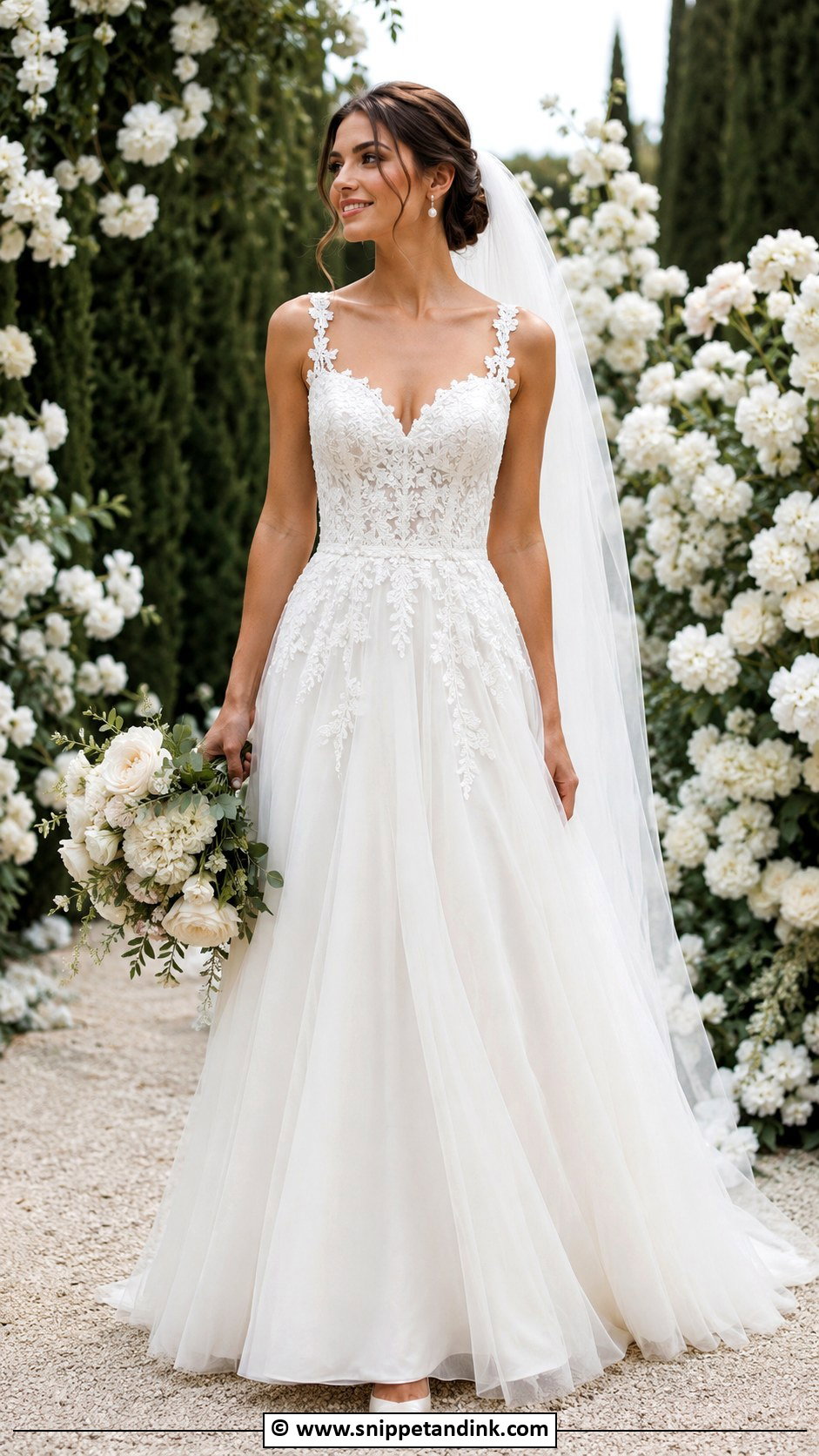
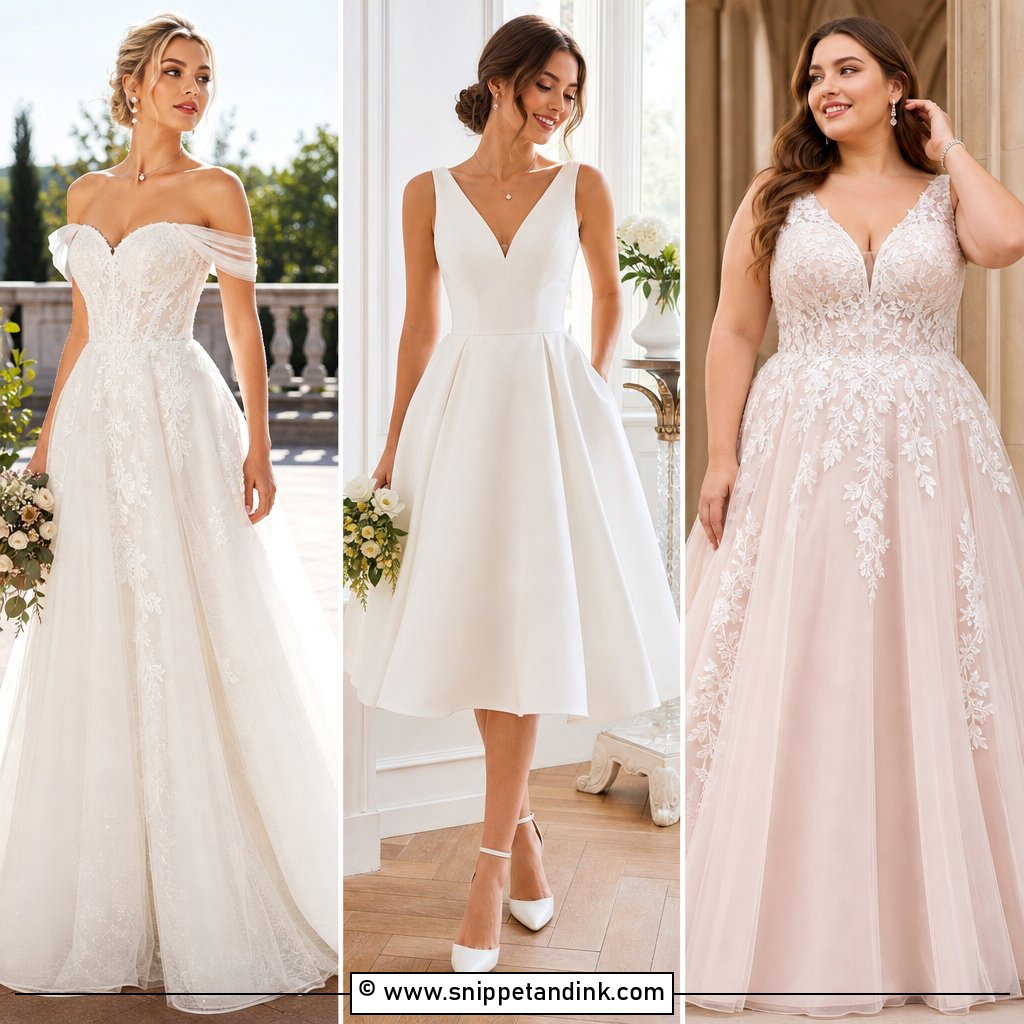
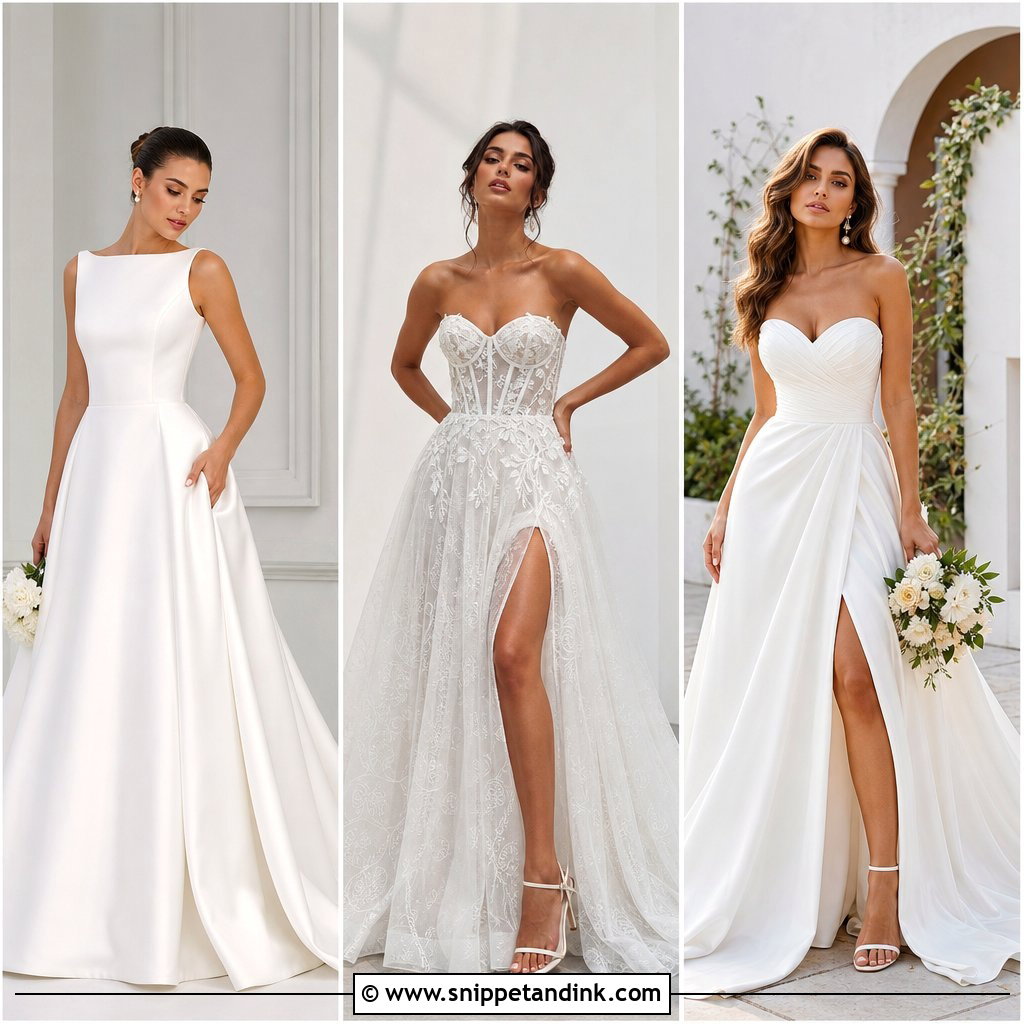
An A-line fits through the bodice and waist, then the skirt opens gradually to the hem, so nothing grips the hips. That is why I usually put one on a bride first: it gives us a neutral baseline to compare every other shape against. Fabric sets the mood more than the cut does here, with crepe keeping the line crisp and lace softening it. Watch where the skirt starts to flare. A seam sitting an inch too low can make a petite bride look shorter. Styled simply with a plain veil, pearl earrings and pointed satin heels, it sits comfortably in a garden, a hotel ballroom or a formal church.
2. Ball Gown Wedding Dress
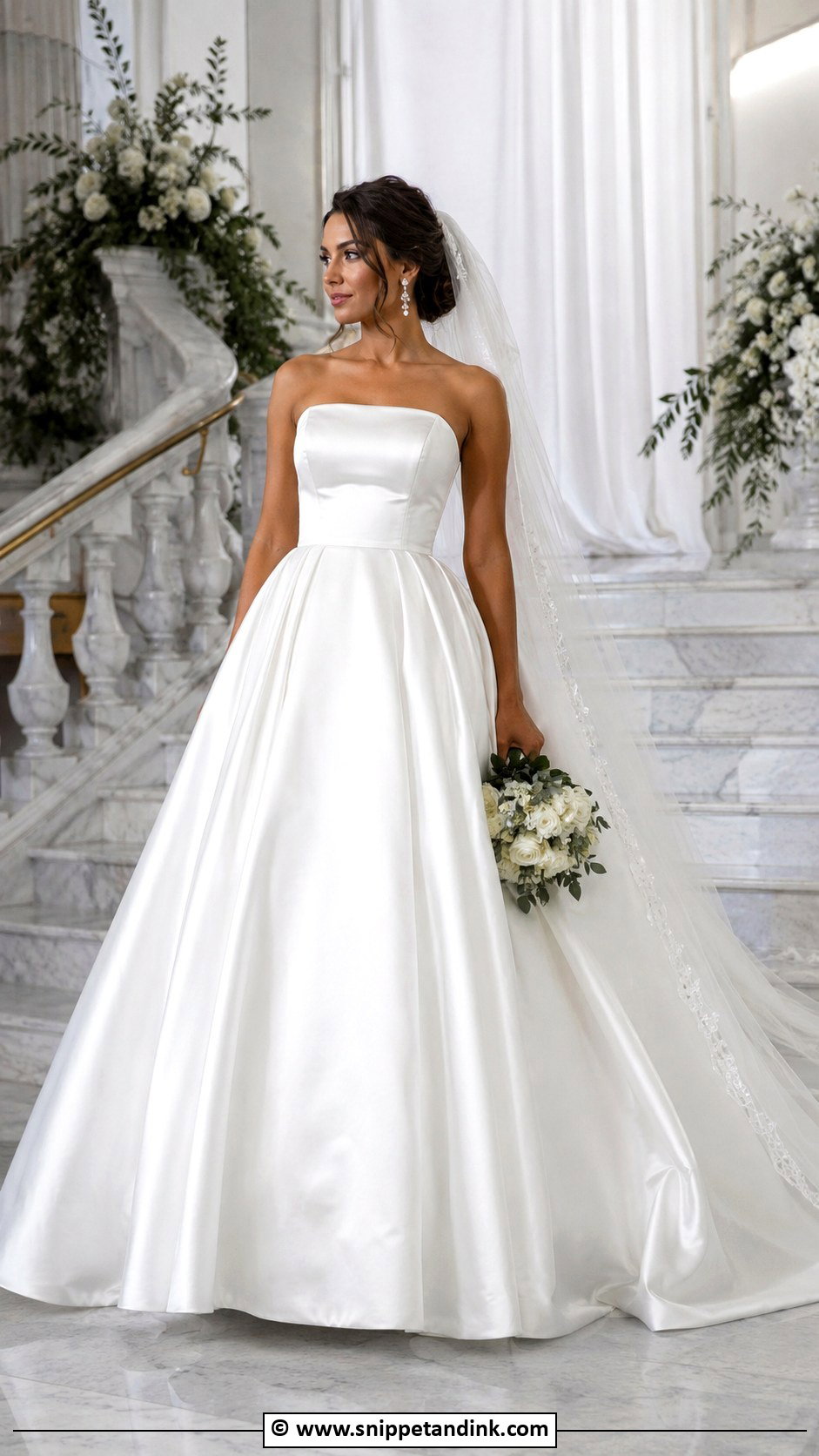
A ball gown wedding dress pairs a fitted bodice with a full skirt from the waist down, and it makes the biggest entrance on this list. What brides underestimate is the weight. A satin ball gown over a structured petticoat can feel heavy by the reception, while tulle gives similar volume for far less load on the waist. I always have a bride sit, climb a step and walk through a doorway in one before she decides. With that much skirt, keep the rest quiet: drop earrings, a smooth updo, and a veil that lies over the skirt instead of competing with it for width.
3. Mermaid Wedding Dress
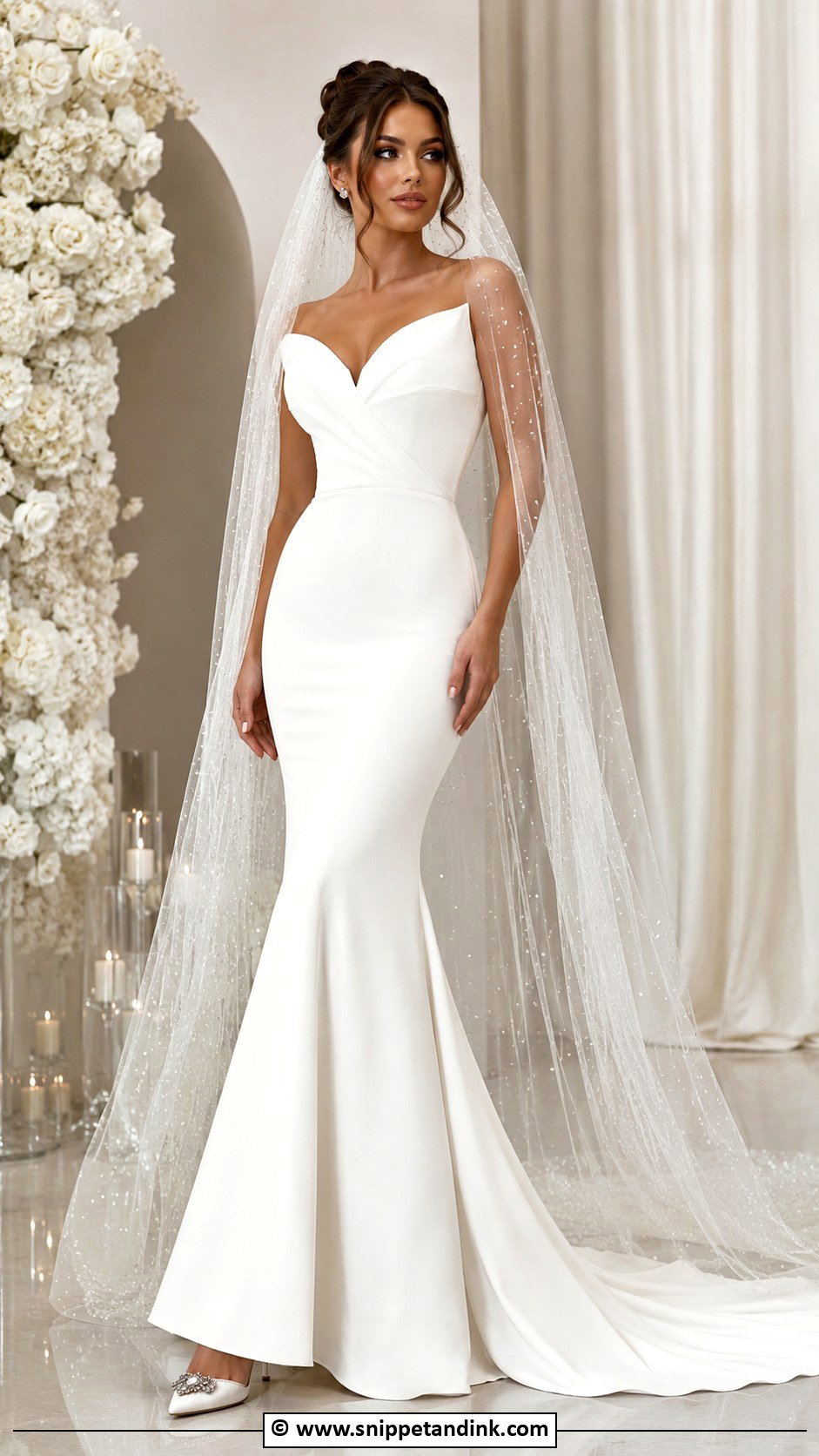
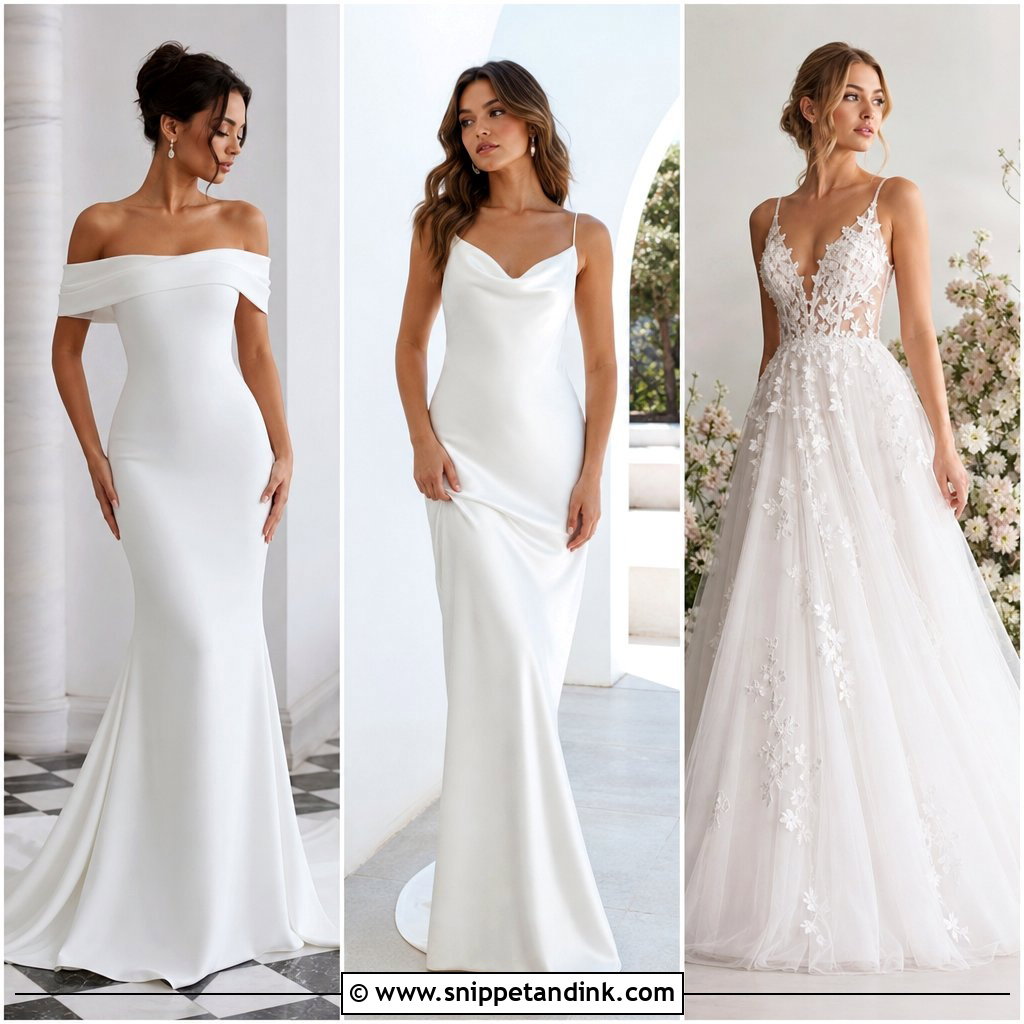
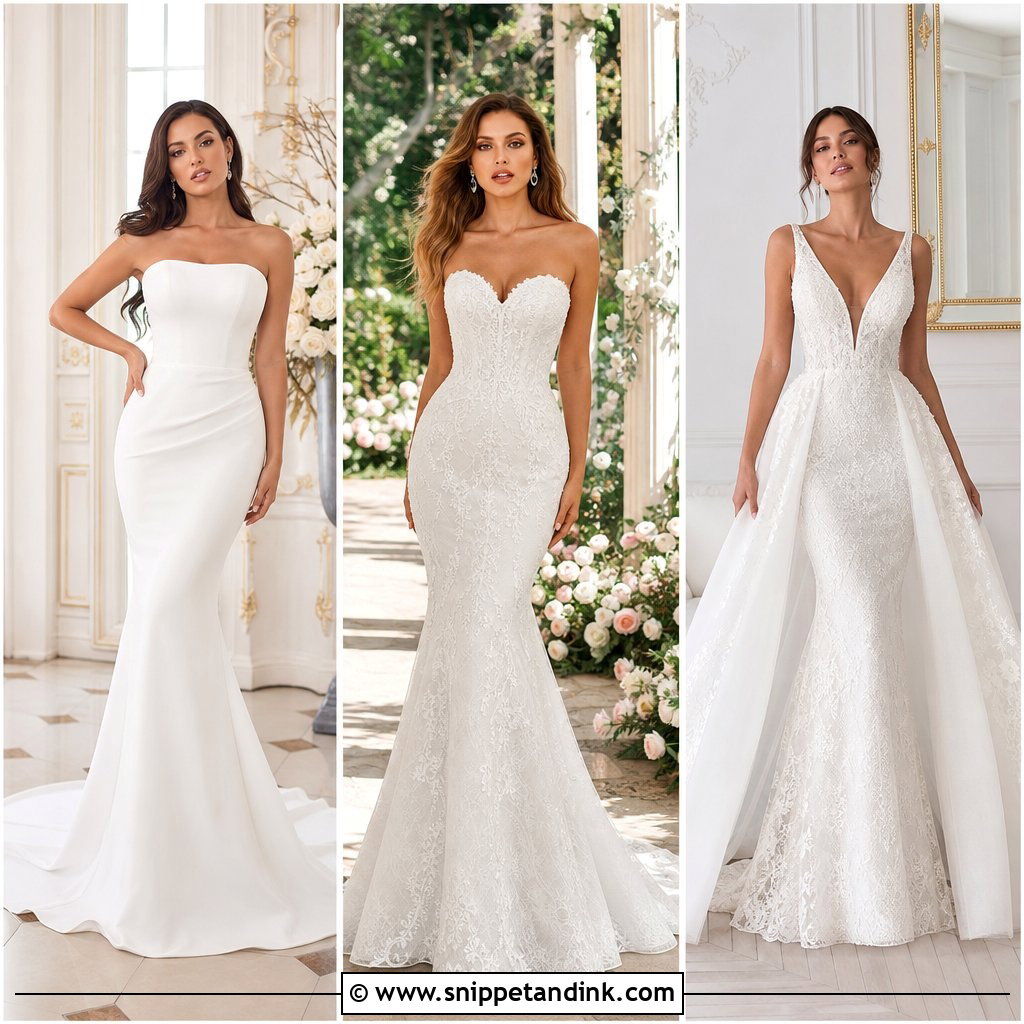
The mermaid follows the body through the bust, waist, hips and thighs and only flares at or just below the knee. That flare point is the whole story. Too high and it reads as a trumpet; too low and you’ll be taking tiny steps all night. At fittings I ask brides to climb stairs and sit on a low chair, because a mermaid in stiff satin can make both hard work, while a stretch crepe forgives far more. A long veil and crystal studs finish it without adding bulk at the hips.
4. Trumpet Wedding Dress
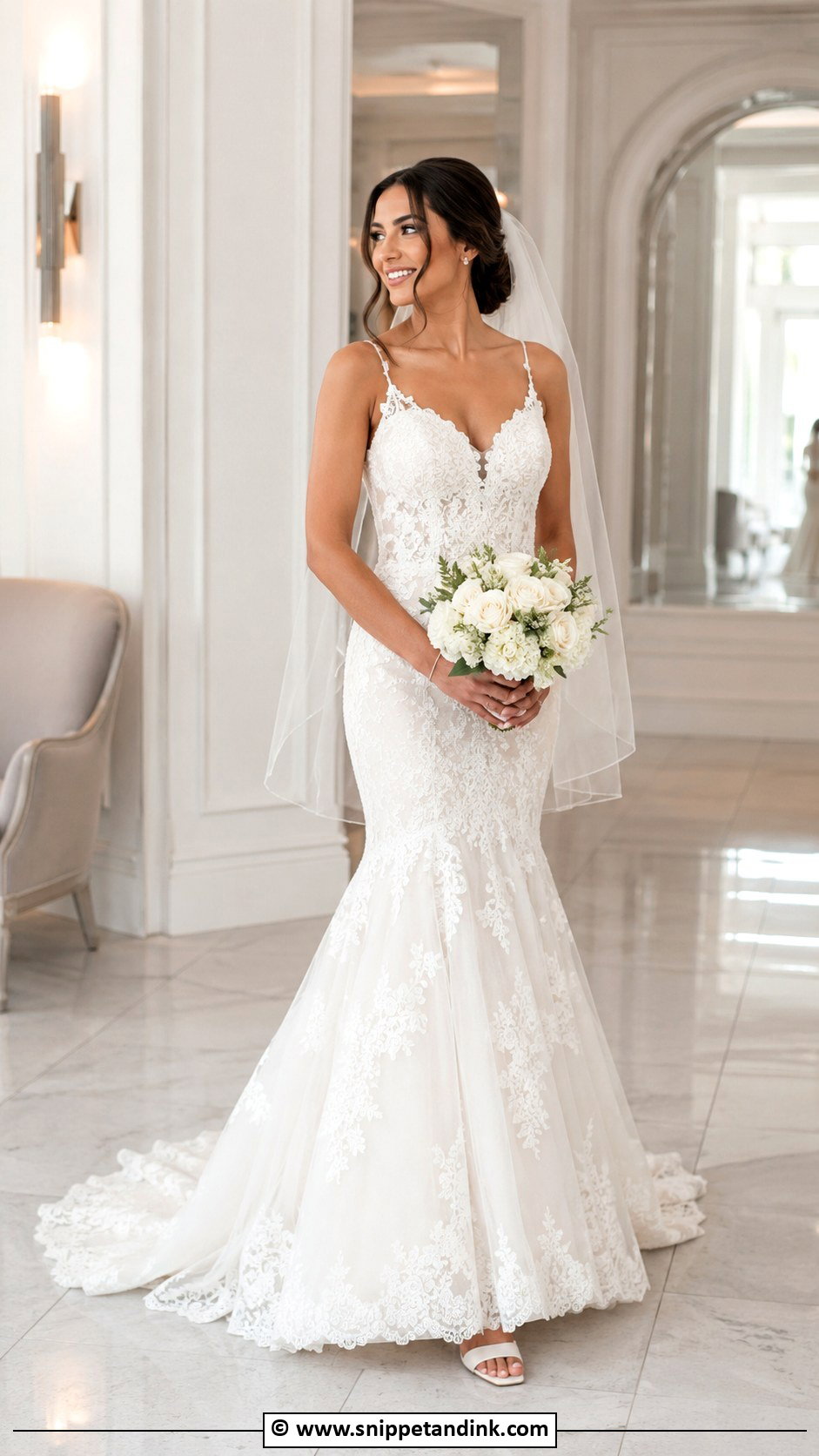
A trumpet wedding dress flares higher than a mermaid, usually from mid-thigh, which buys you a longer stride and a much easier time on the dance floor. It still shows the waist and hips, so I steer brides toward it when they’ve tried a true mermaid and felt trapped. A crepe trumpet with a sweetheart neckline looks clean and modern; lace makes it softer. I often suggest block heels with this one. The skirt hides the shoe anyway, and your feet will notice the difference by the speeches.
5. Sheath Wedding Dress
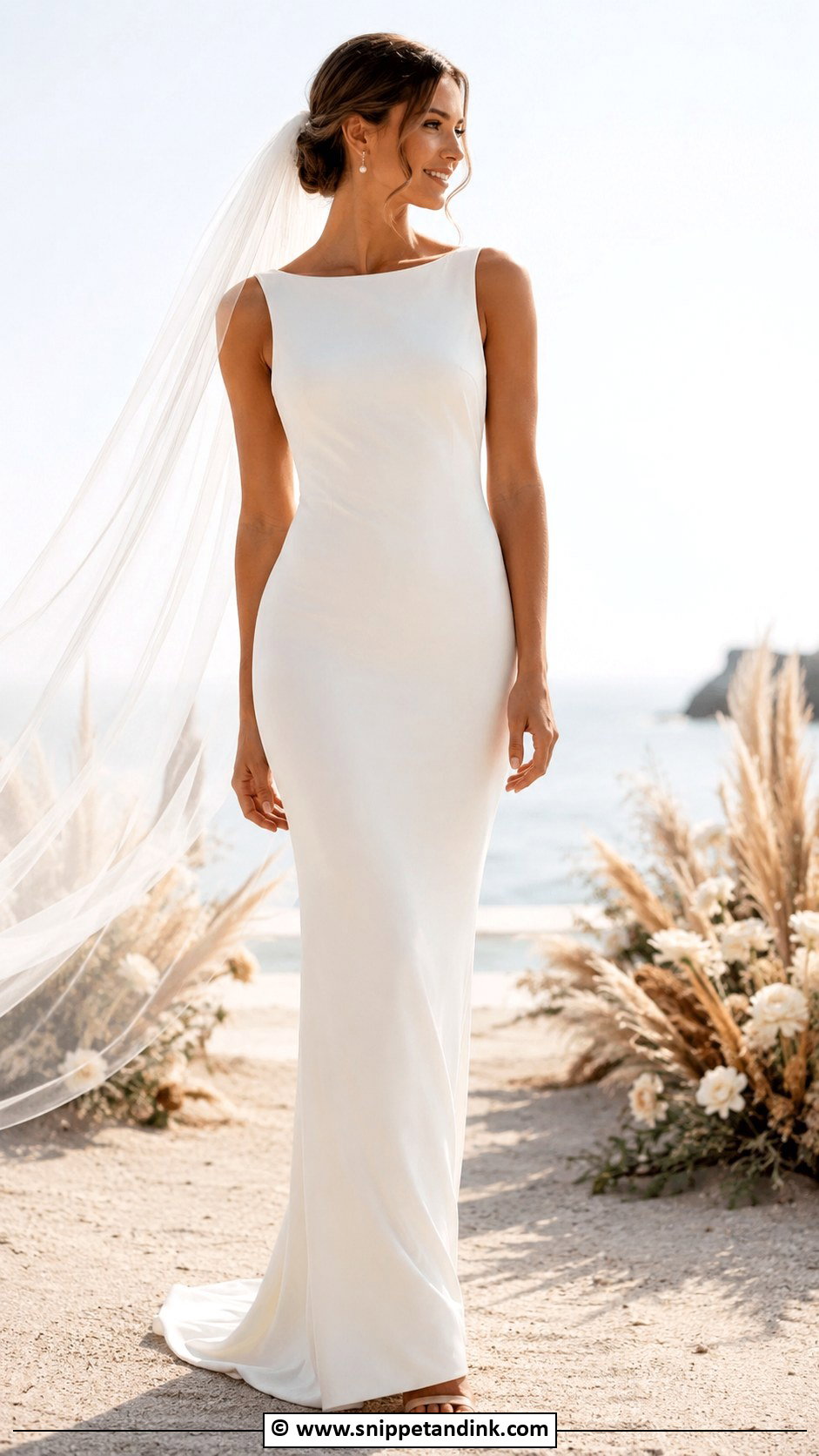
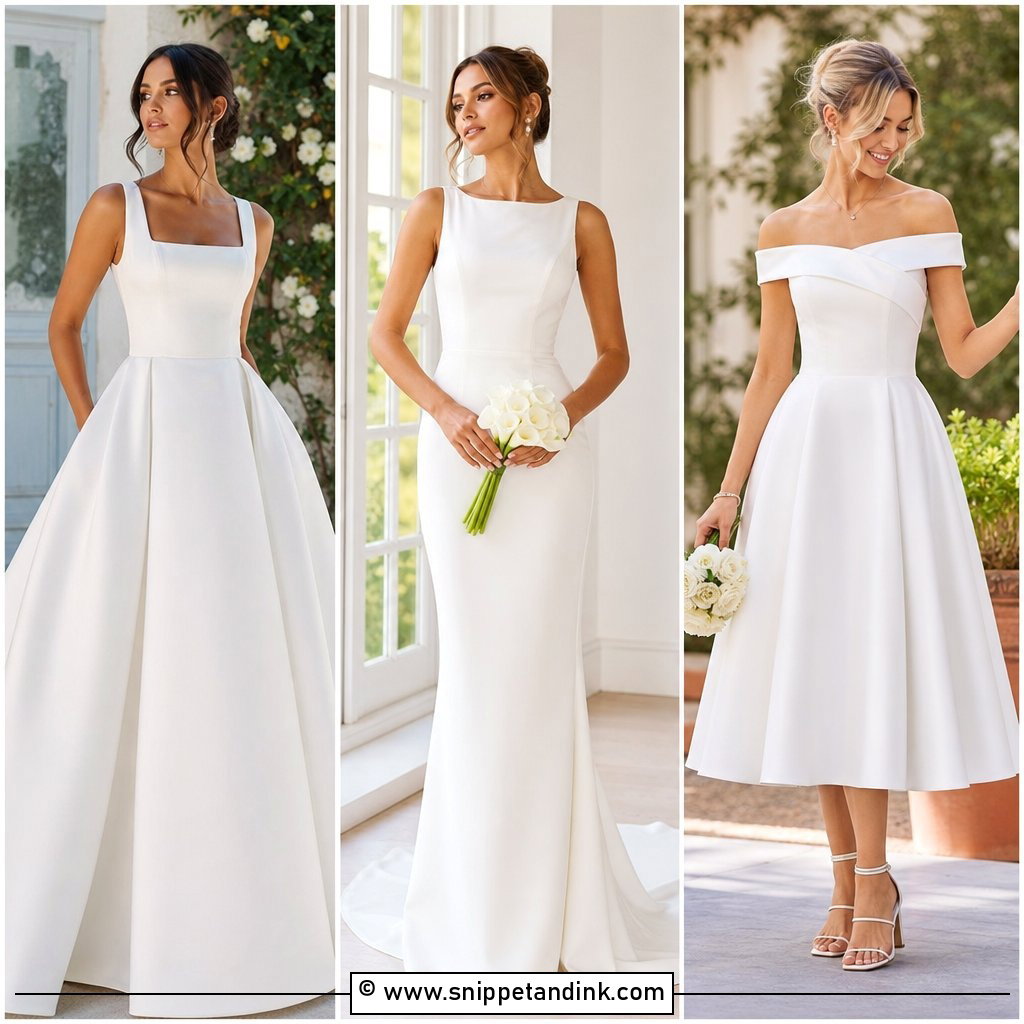
There’s nowhere for poor fit to hide in a sheath. It drops close to the body in a straight, narrow line with no real flare, so every wrinkle at the hip or pull across the bust shows. Cut well, though, it’s the easiest dress here to wear for a long day, which is why I see it so often at beaches, small ceremonies and city weddings. Crepe skims, silk drapes, and a light lace adds detail without bulk. Choose your underwear before the first fitting, because seams and edges read straight through. A sheer cape or long veil gives it ceremony weight.
6. Column Wedding Dress
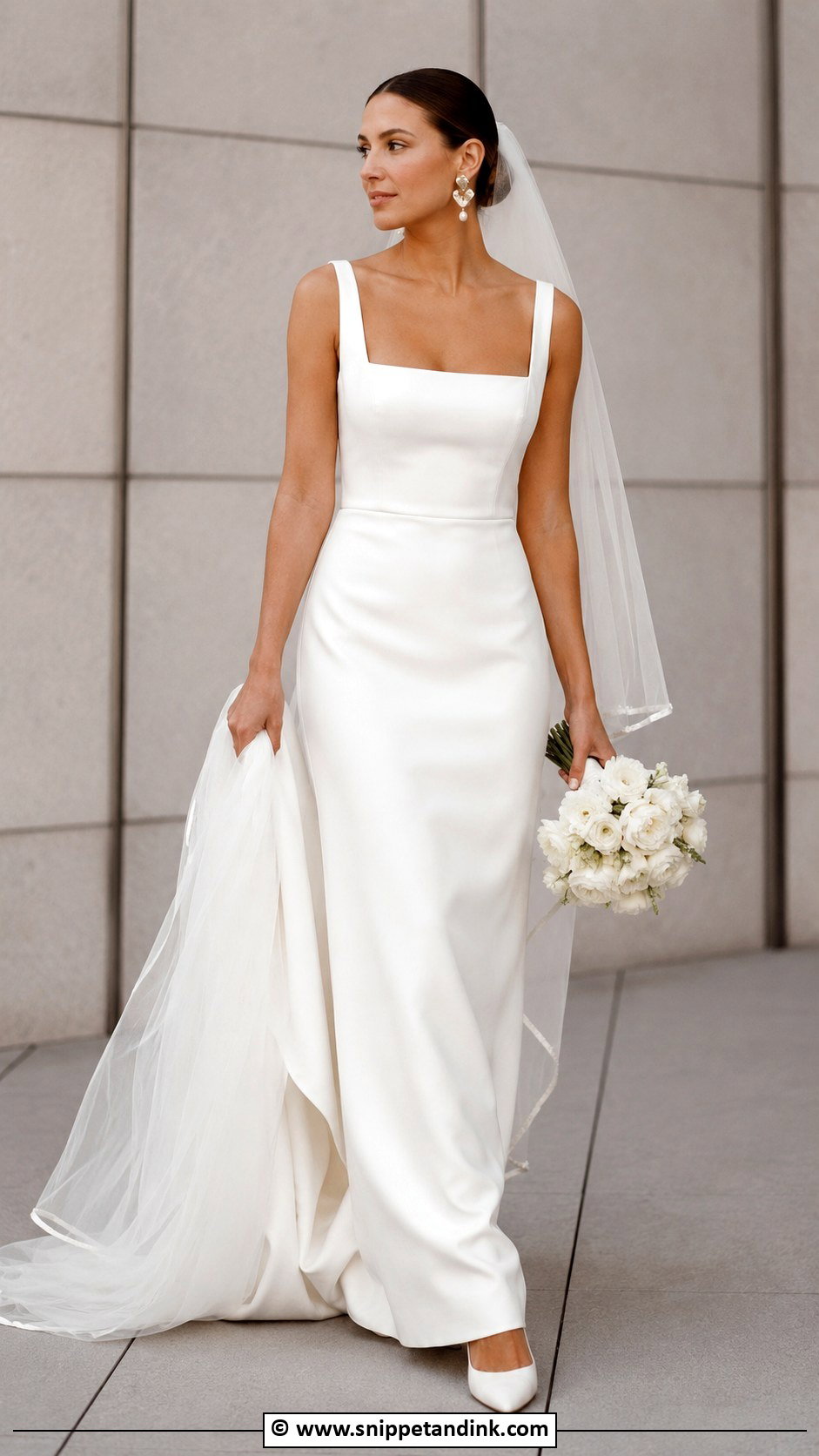
A column runs one long vertical line from neckline to hem, but unlike the softer sheath it usually holds its own shape, especially in silk mikado or matte satin. A square-neck column in either fabric looks very current. The catch is that structured fabric doesn’t give, so your seamstress has to get the bust, waist and hip right in the seams themselves. Sculptural earrings, a sleek veil and closed-toe heels suit its formality. Anything fussy undoes the reason you chose it.
7. Slip Wedding Dress
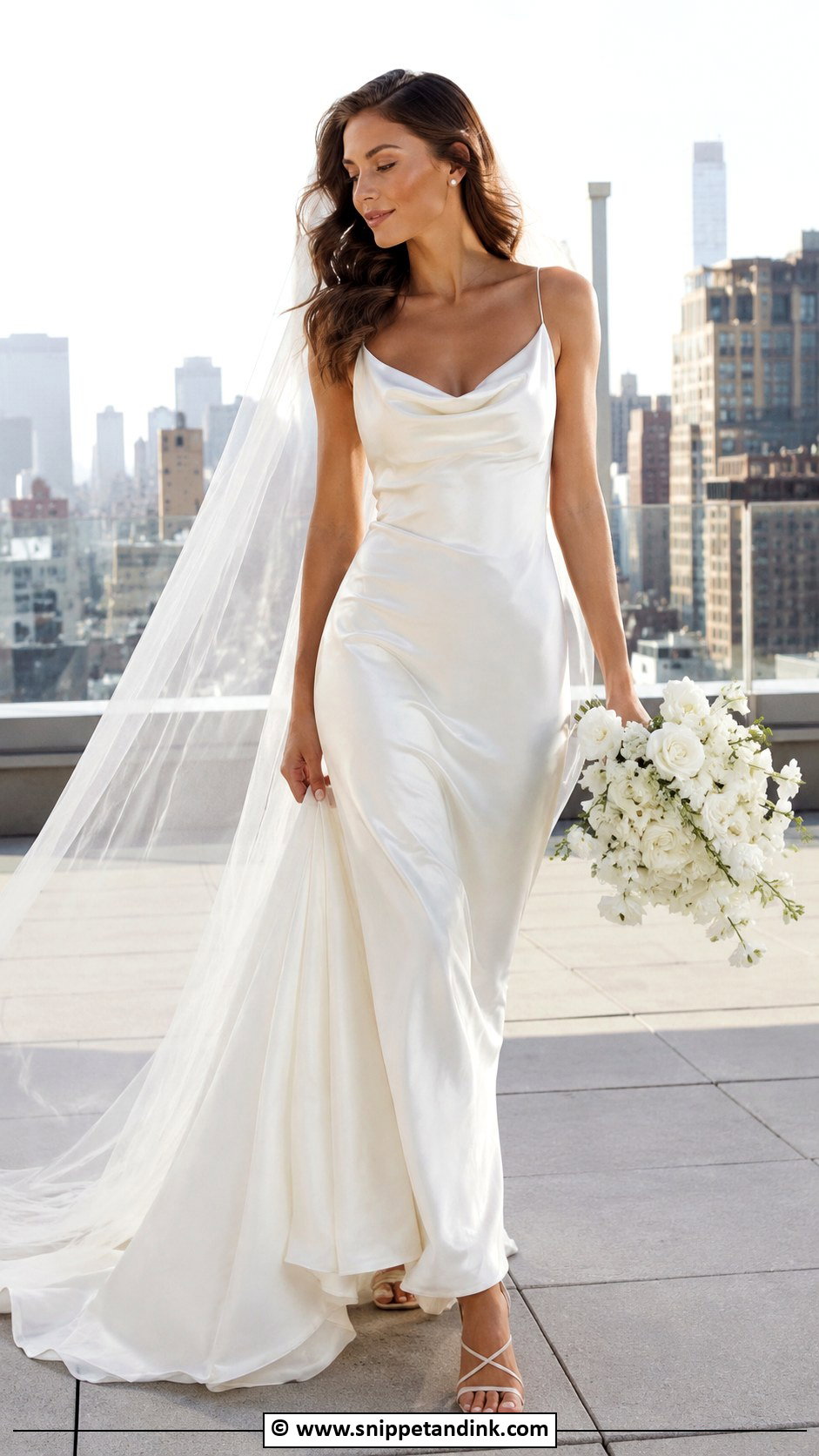
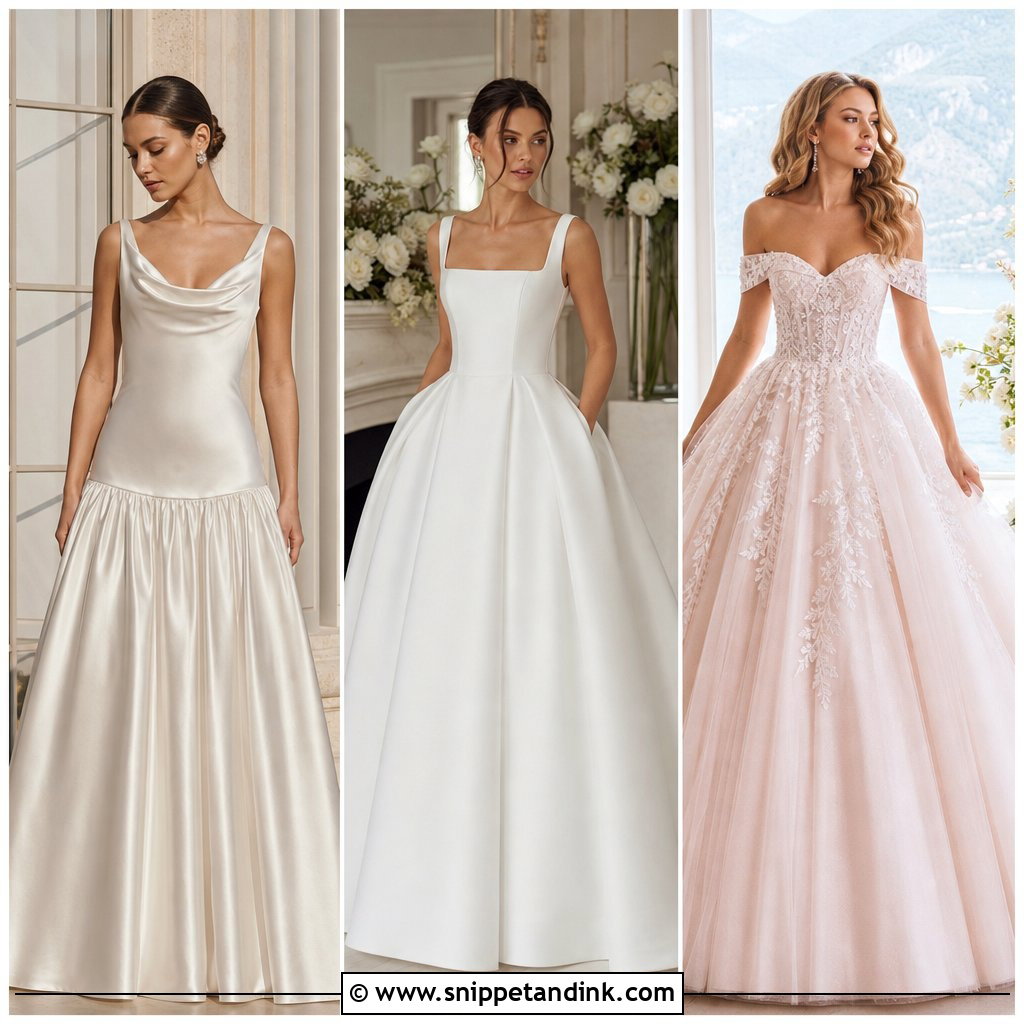
Slip dresses come from bias cutting: the fabric is cut on the diagonal so it drapes and clings as you move, usually with slim straps and a plain neckline. Silk, satin and charmeuse give that liquid fall. Be honest with yourself about bias cut, though. It shows every line underneath and creases quickly when you sit, so I always check a slip in daylight and after a few minutes in a chair. Strappy heels, pearl studs and soft waves keep it light, and a tailored bridal jacket or lace topper covers the arms for a church ceremony before coming off for a rooftop party.
8. Fit And Flare Wedding Dress
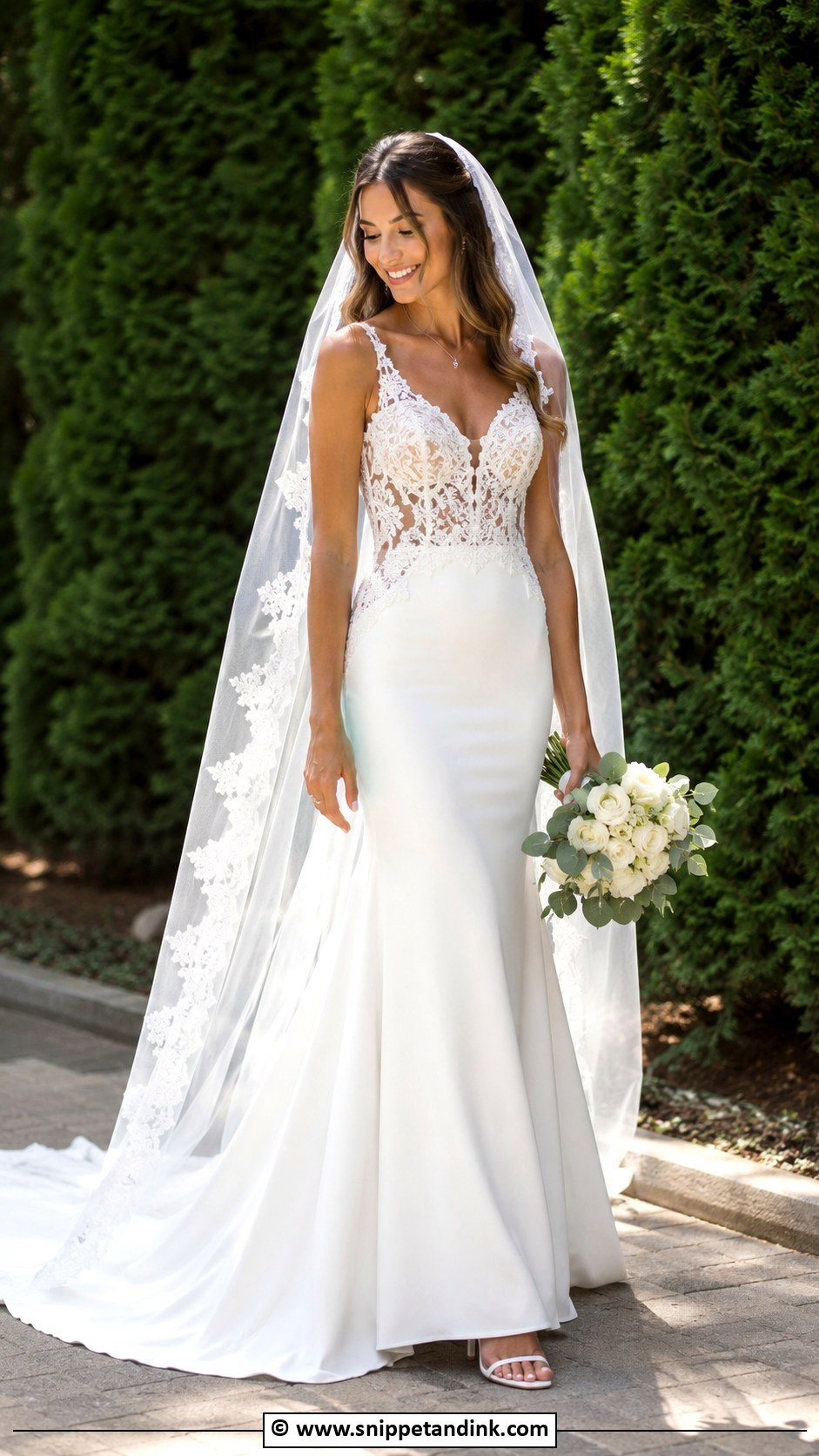
Fit and flare sits between the A-line and the mermaid, fitted through the upper body and opening gradually from just below the hips. Brides who find an A-line too loose and a mermaid too restrictive often land here. It takes sweetheart, square and off-shoulder necklines equally well, in romantic lace or plain crepe. I pair it with a chapel veil and heeled sandals, and at the fitting I check one thing above all: that the flare begins where your hip actually ends, not where the sample size’s did.
9. Empire Waist Wedding Dress
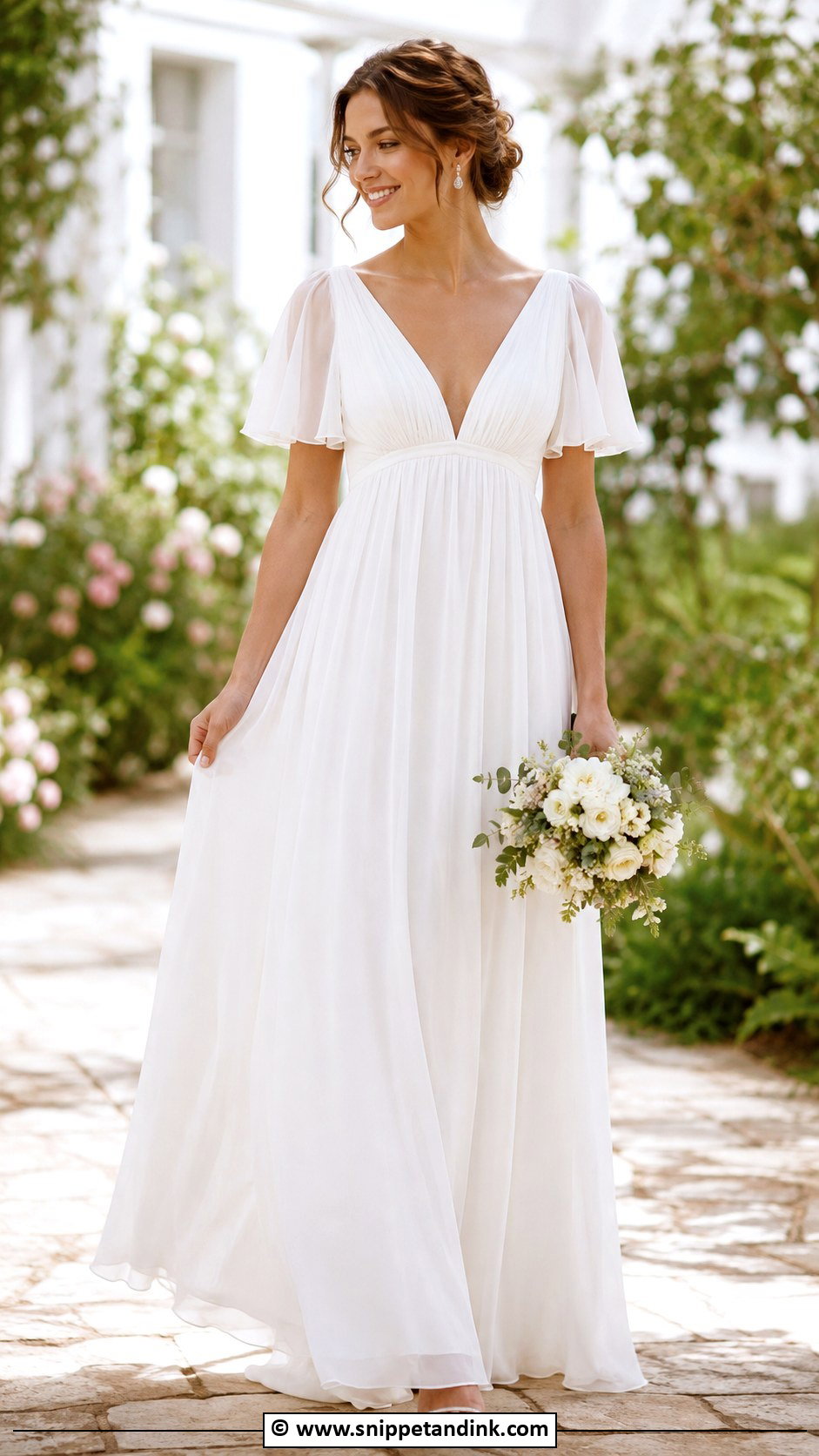
An empire waist rises to just under the bust, and the skirt falls loose from there. Nothing presses on the midsection, which makes it one of the kindest shapes for a long day, a hot venue or a pregnant bride. Chiffon, tulle and soft crepe move well in it, while satin makes it more formal, and a V-neck with flutter sleeves keeps it airy. The seam under the bust needs real support built in, or the bodice slides down by evening. Soft curls and low heels or flats suit its relaxed mood.
10. Drop Waist Wedding Dress
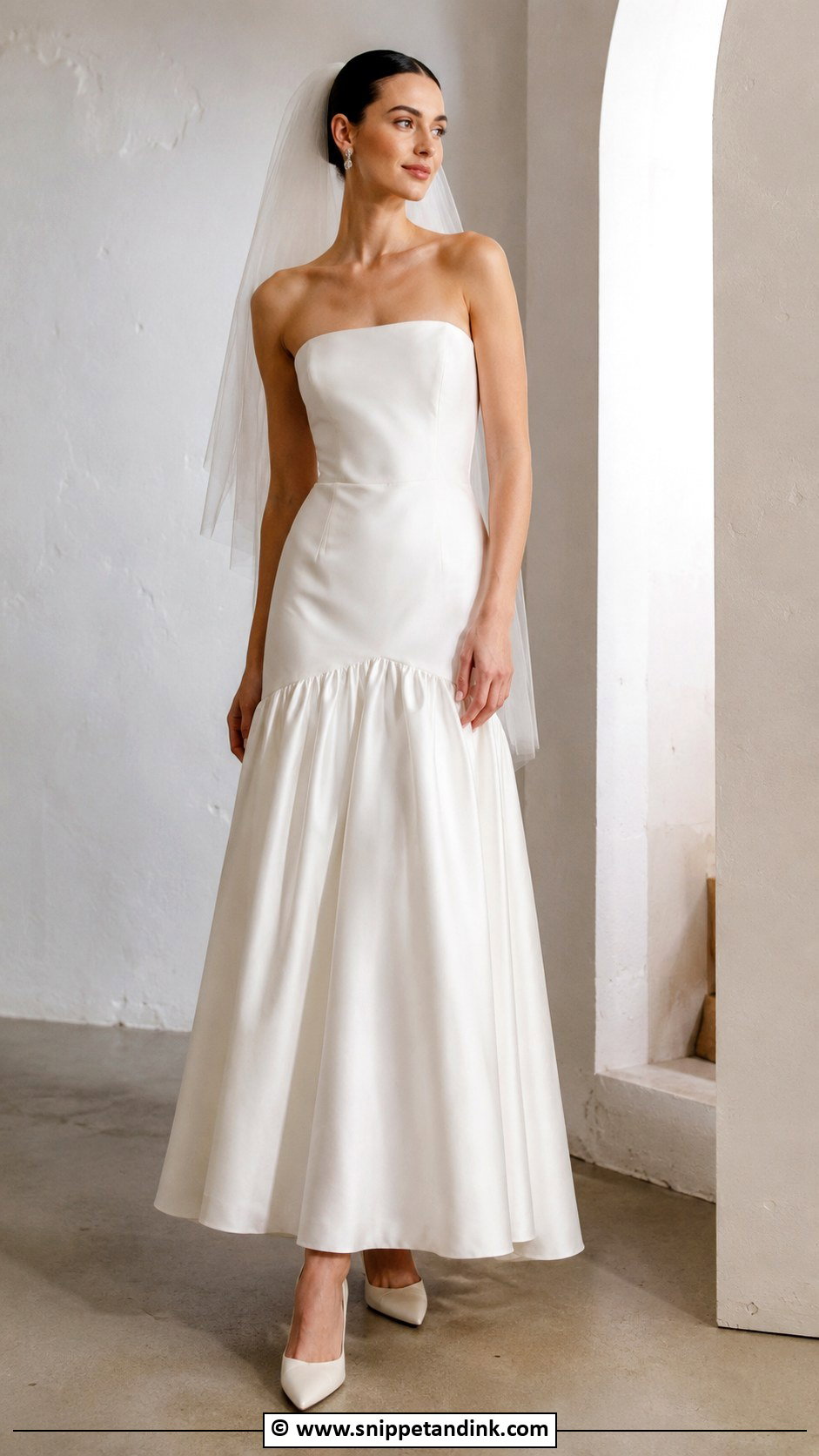
A drop waist moves the seam down toward the hips, which lengthens the torso and gives the dress a faint 1920s feel. The skirt can stay narrow or open into tulle, almost like a ballet costume. I’m careful recommending it to brides with a short torso and long legs, because the low seam can visually shorten the legs. A long-torsoed bride, on the other hand, often looks remarkable in it. Fitting through the hip is everything, so allow time for it, and keep jewelry refined so the proportions stay clean.
11. Basque Waist Wedding Dress
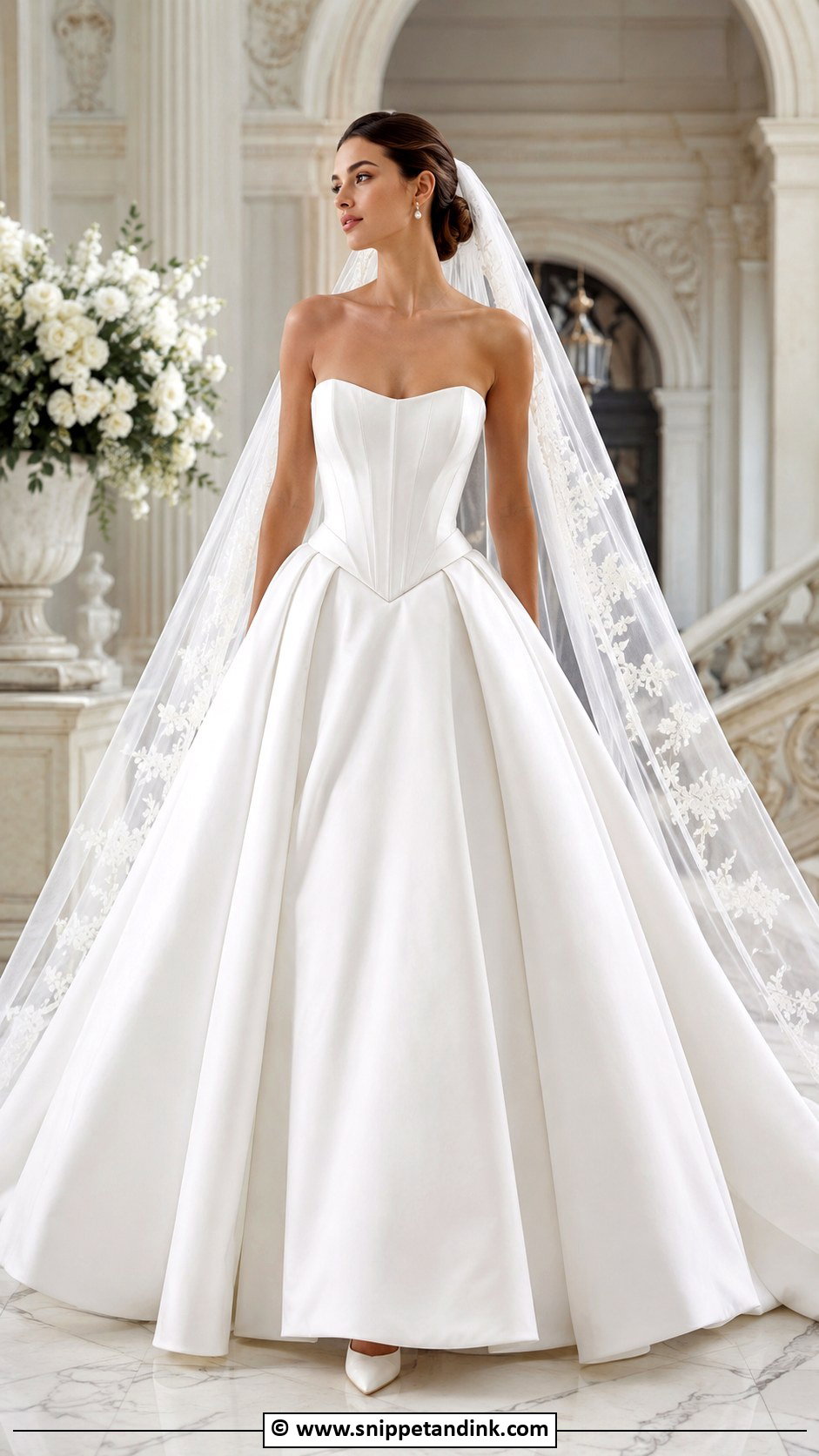
A basque waist dips into a V or point below the natural waist. It carves the torso and sends the eye down into a full skirt, with an old-world feel that looks fresh again in clean satin, mikado or tulle. That point has to land in the right place on your body, so expect your seamstress to spend time there. I tend to show it to brides who like structure and want more waist definition than a standard ball gown gives. A cathedral veil, pearl earrings and classic pumps match its formality.
12. Princess Wedding Dress
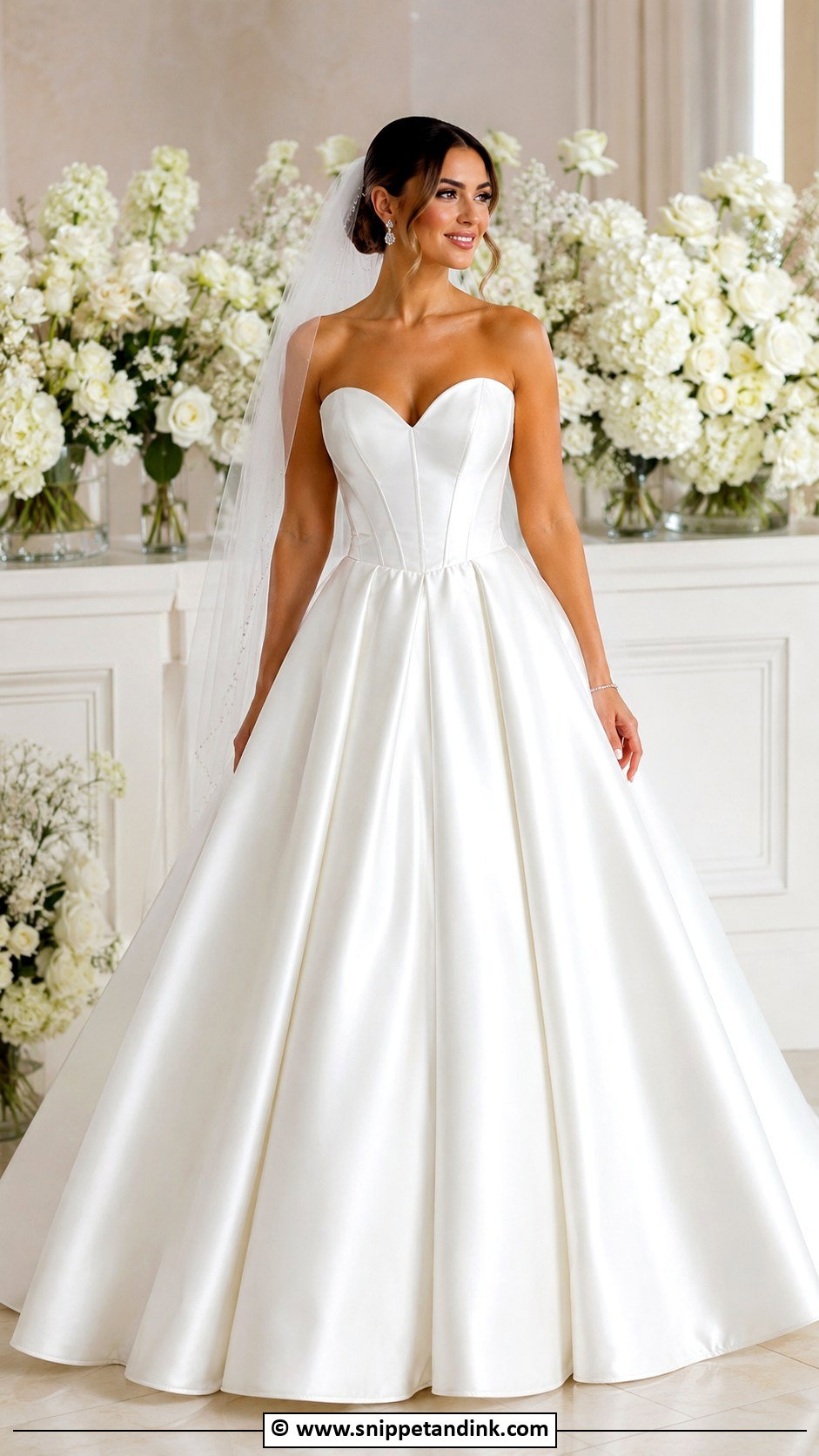
What defines a princess gown is its vertical seams, running from the shoulder or bust down into a full skirt with no horizontal waist seam to break the line. That’s why it looks grand without cutting you in half. It works in satin, tulle, organza or lace. Those long seams are also a gift at alterations, since a good seamstress can take in or let out along each one. A sweetheart neckline, a soft veil and some sparkle at the ears is the traditional finish. Wear comfortable shoes; nobody will see them.
13. Tea Length Wedding Dress
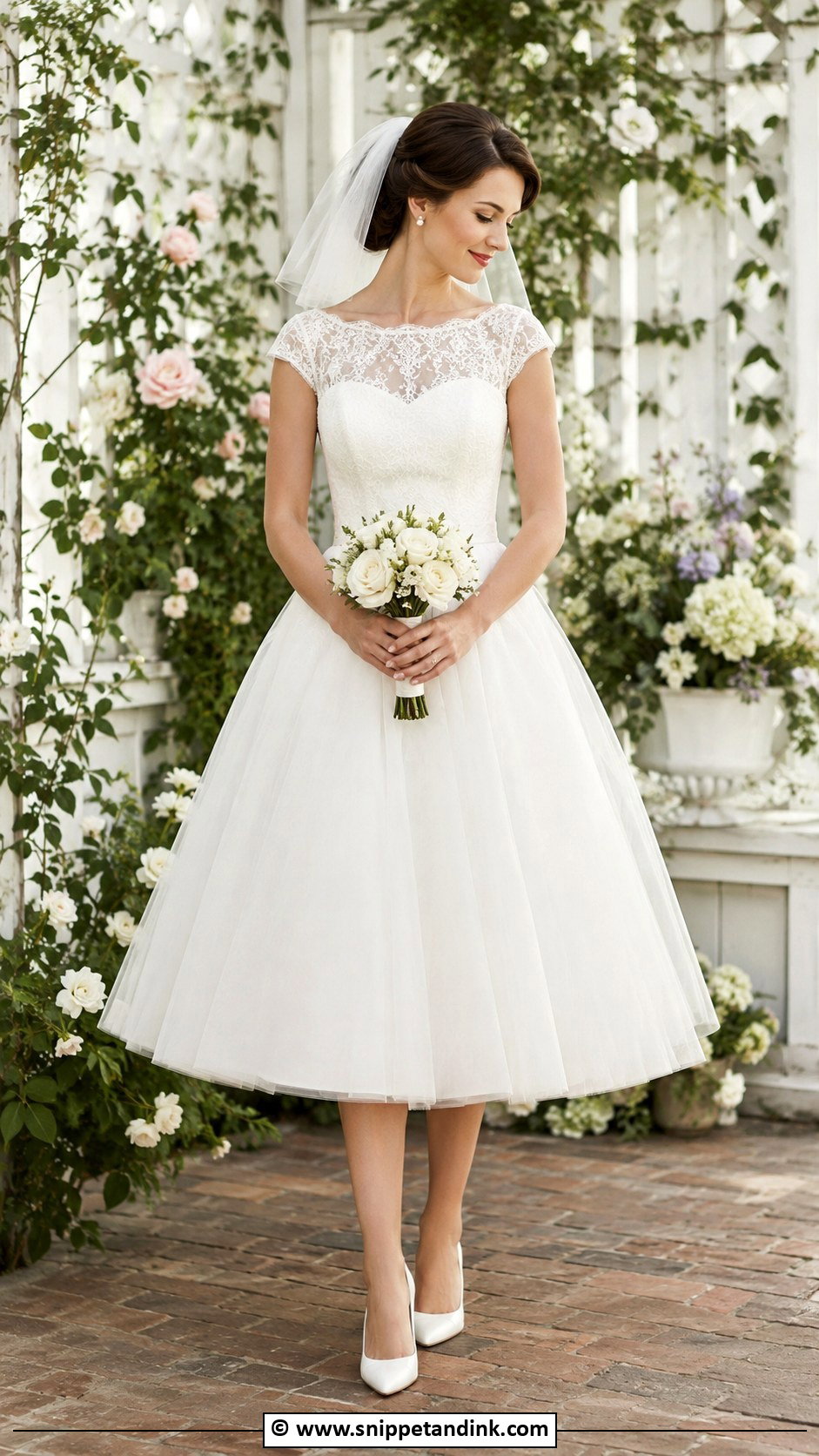
Tea length ends between knee and ankle, usually mid-calf, and has a cheerful retro feel that suits courthouse weddings, garden parties and relaxed receptions. Because the shoes show, I treat them as part of the dress: pointed pumps, slingbacks and embellished flats each change it. Tulle gives the skirt bounce and satin keeps it crisp. Have your hem marked while wearing the exact shoes, since heel height moves where mid-calf falls. A short veil, pearl studs and a small structured bouquet complete it.
14. Midi Wedding Dress
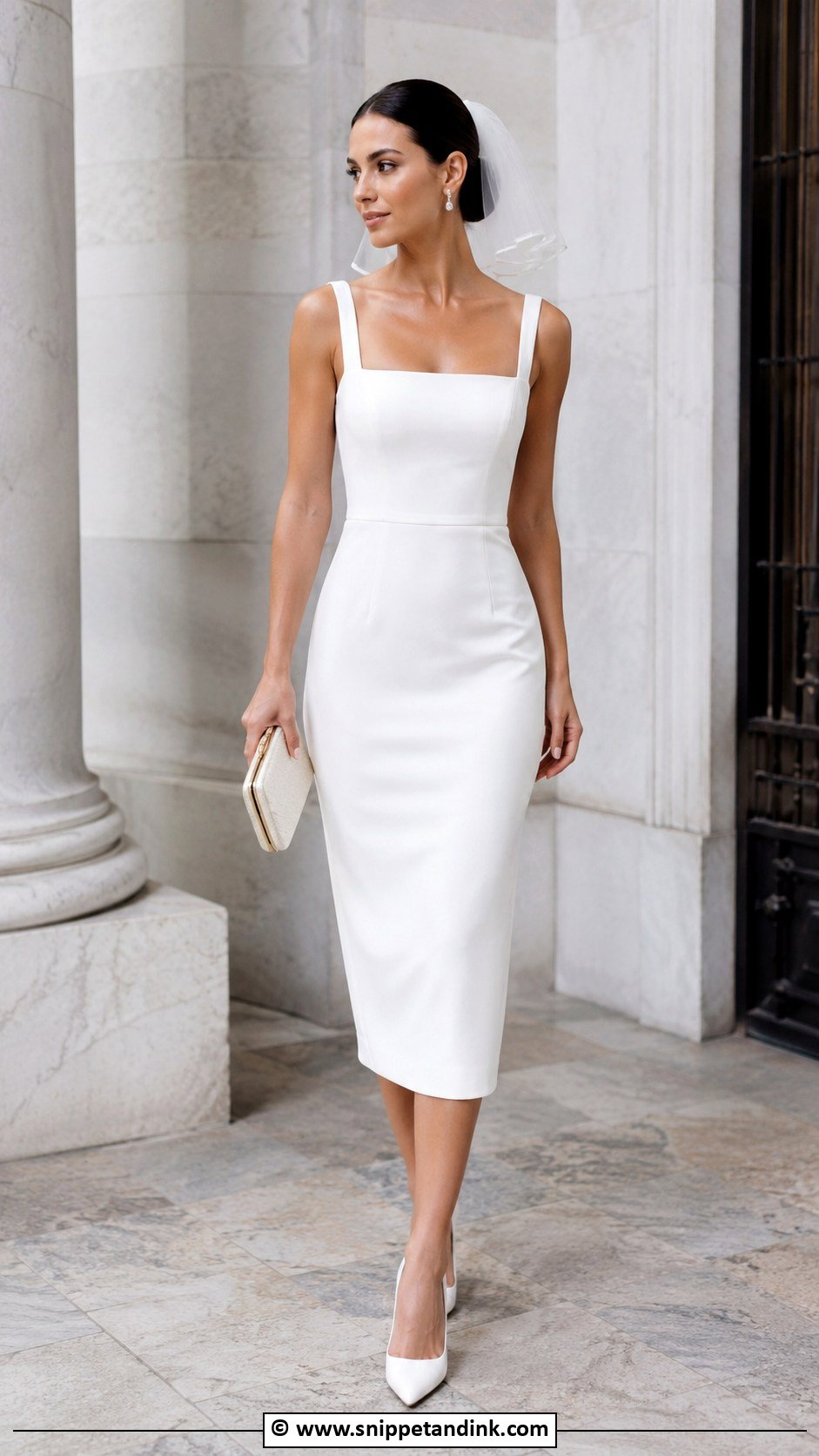
A midi wedding dress falls below the knee and above the ankle, so it looks dressed up without a floor-length skirt to manage. I suggest it most for civil ceremonies, welcome dinners and smaller weddings. A fitted crepe midi with a square neck looks modern; a full-skirted satin midi is classic. The hem is the detail I fuss over, because a centimetre too long can make the calf look heavier. Pointed heels and a mini veil or hair bow finish it.

15. Mini Wedding Dress
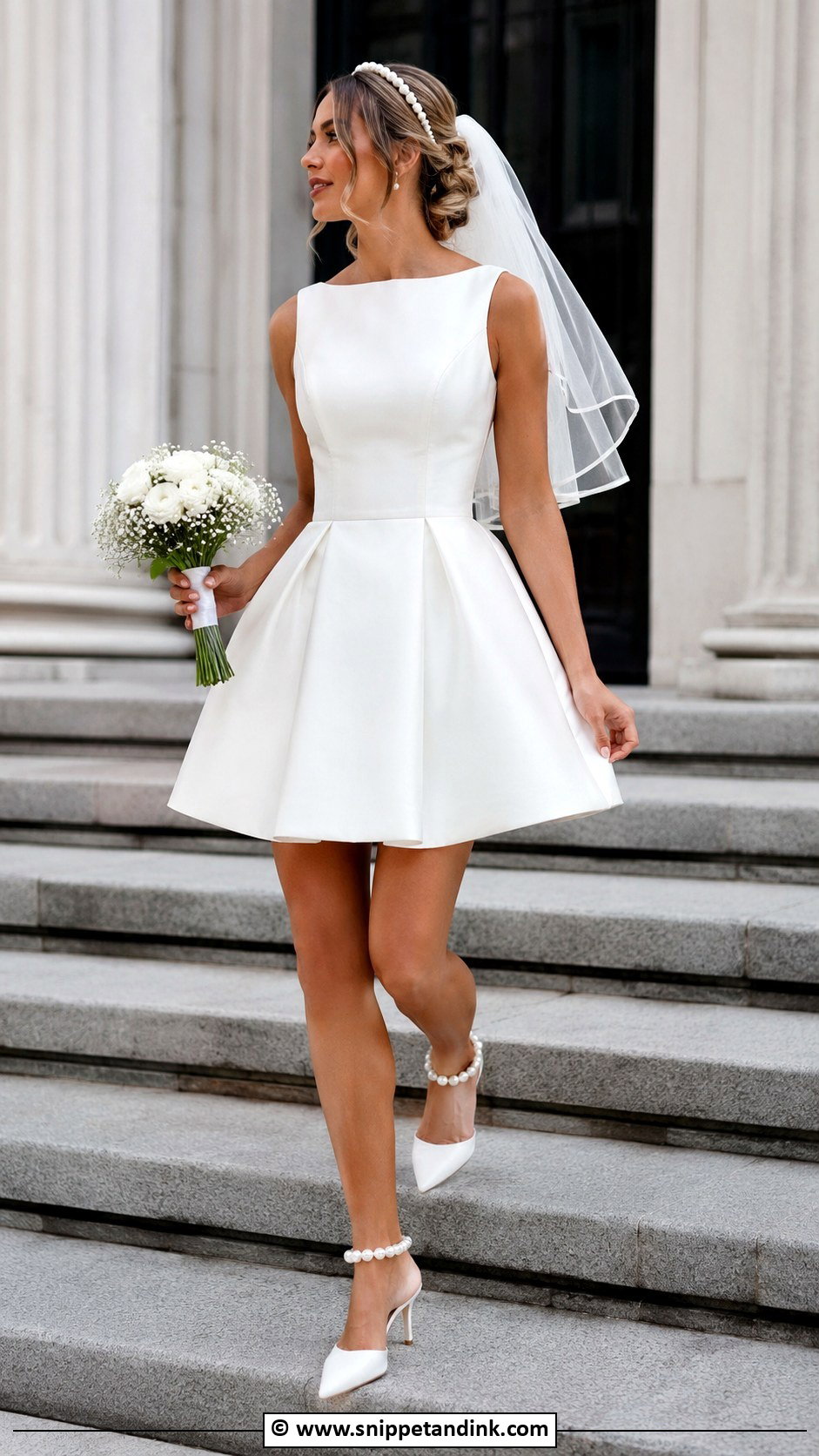
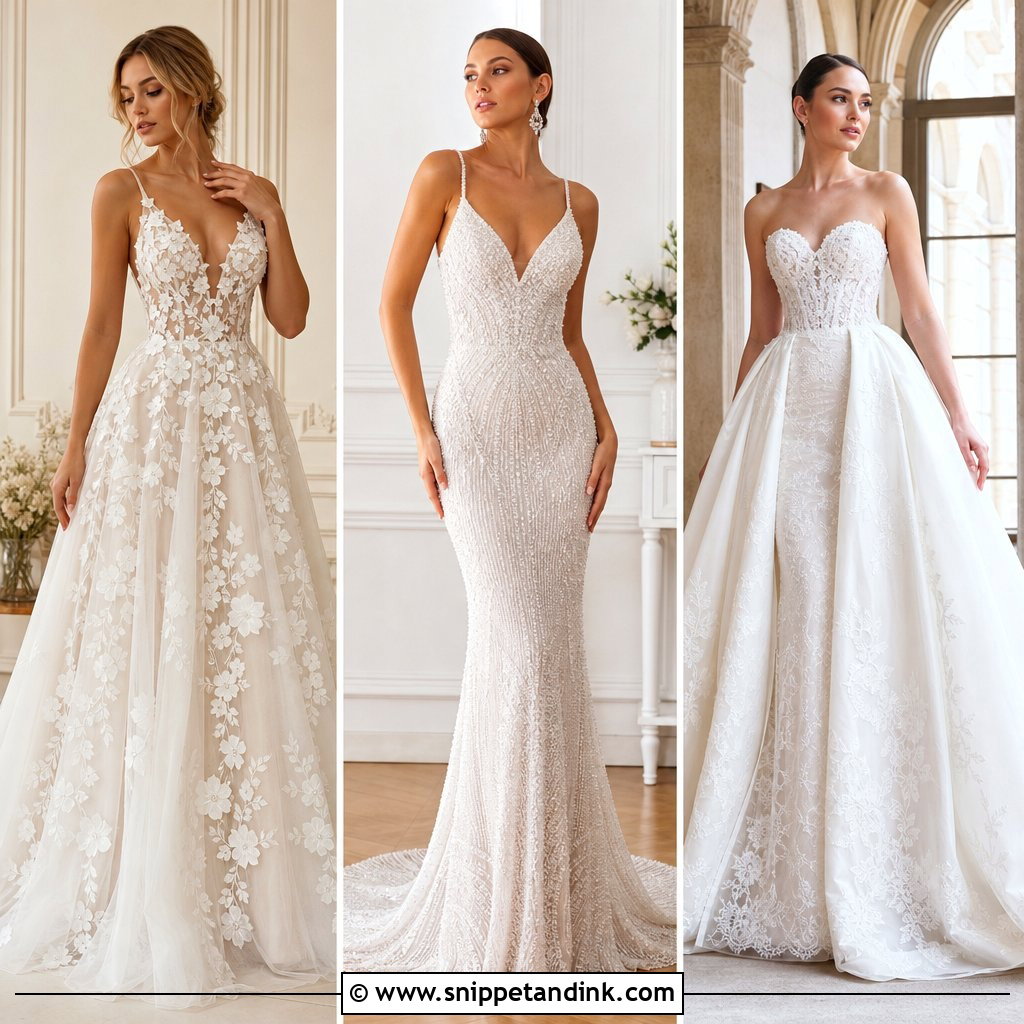
A mini is the freshest option here, and it needs the most bridal cues to avoid looking like a party dress. Fabric and finish do that work: mikado, satin, lace, bows, pearl trim or a sculpted bodice. I see minis most at courthouse ceremonies, elopements and as a reception change. Check the length sitting down and bending over before you buy, not just standing at a mirror. Statement heels and a short veil or sleek headband complete it, and you can dance all night without holding a hem.
16. High Low Wedding Dress
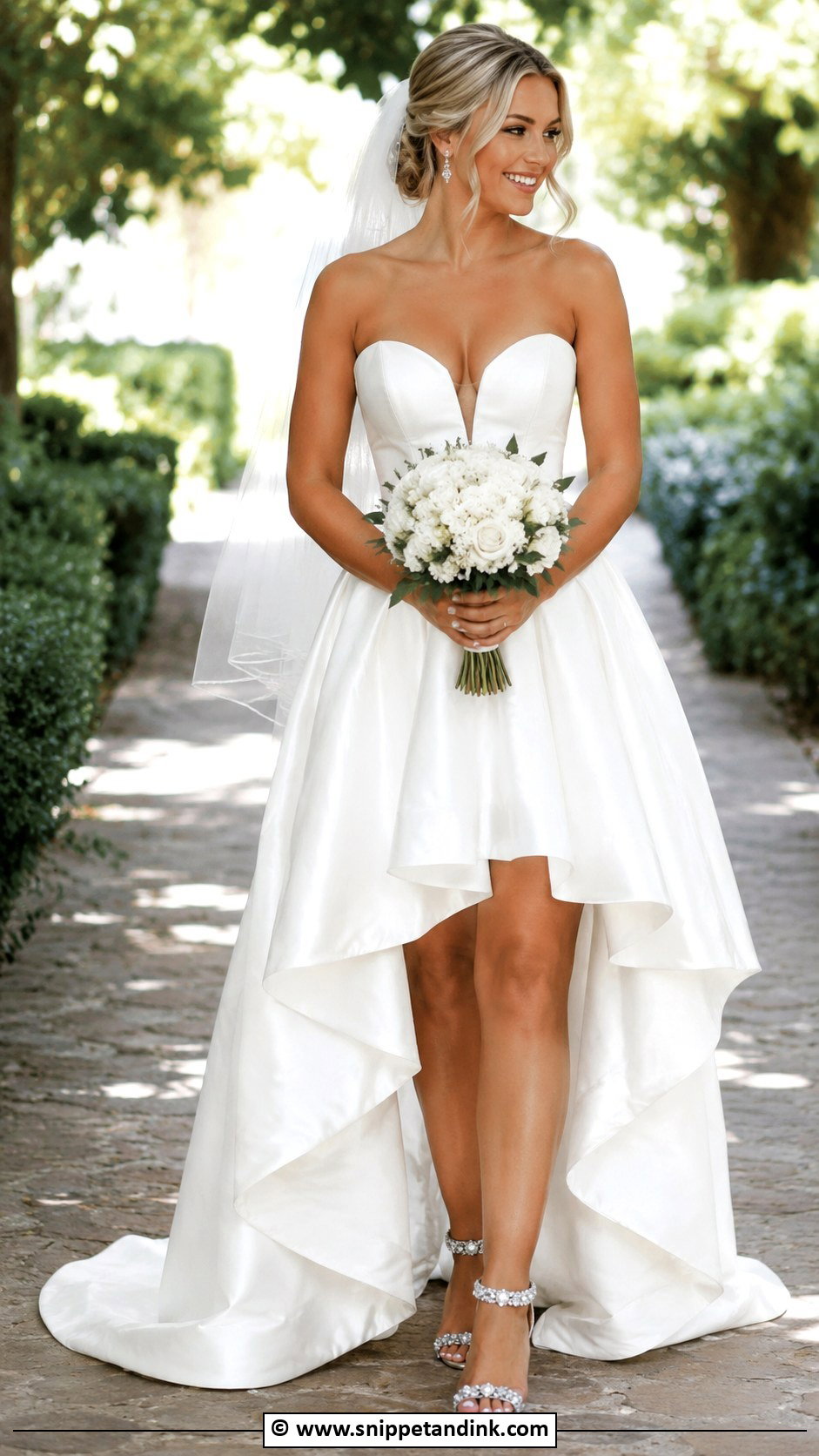
A high-low hem is shorter in front and longer at the back, so your shoes show and you still get a train behind you. The front is far easier to walk in on grass or gravel, which is why I suggest it for outdoor weddings. Tulle makes it playful and structured crepe more modern. Pick a veil that ends above the long back hem or matches it. One that cuts across the uneven hem at a random point looks messy in photos. Embellished heels earn their place here.
17. Wedding Dress Jumpsuit
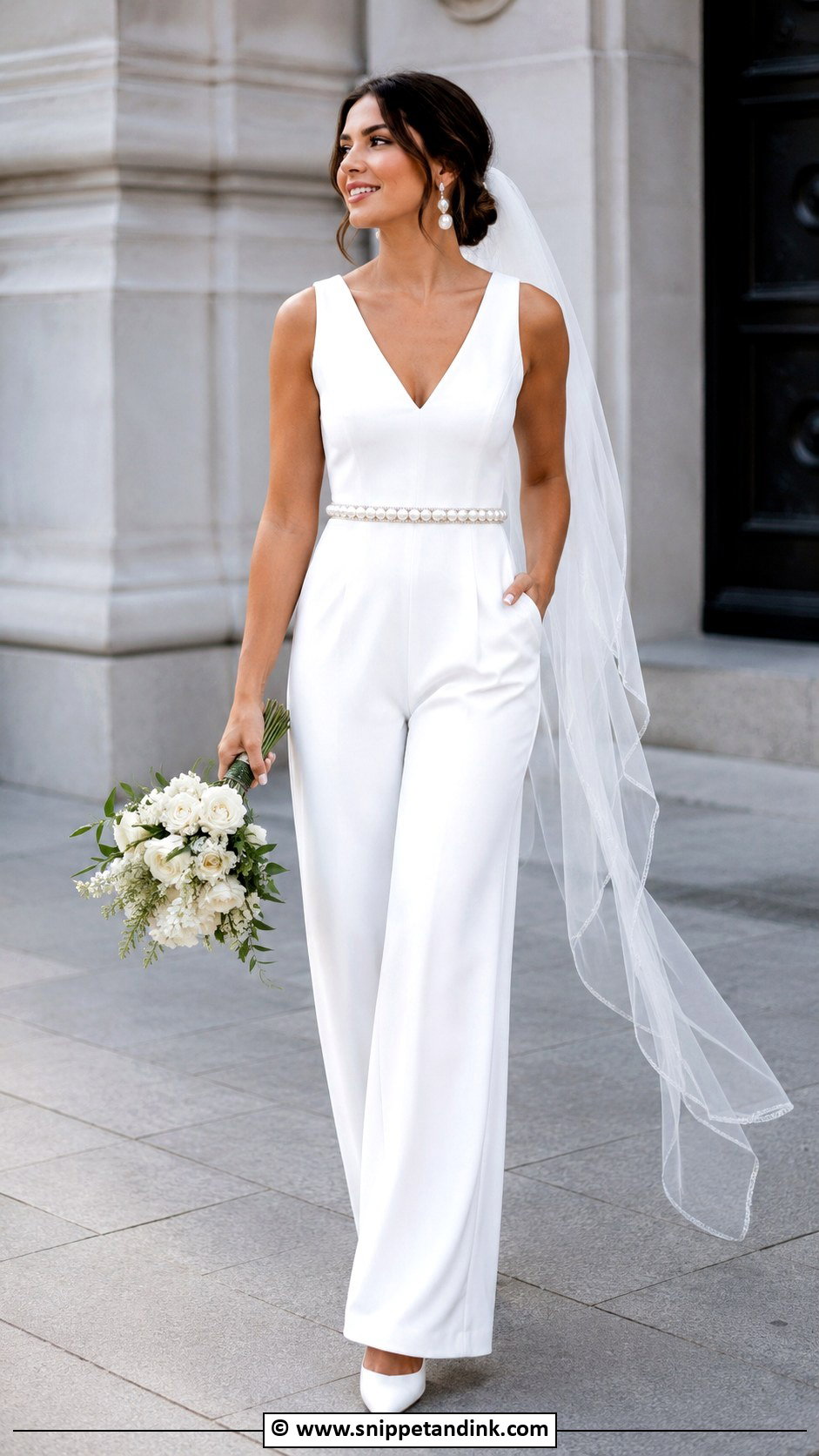
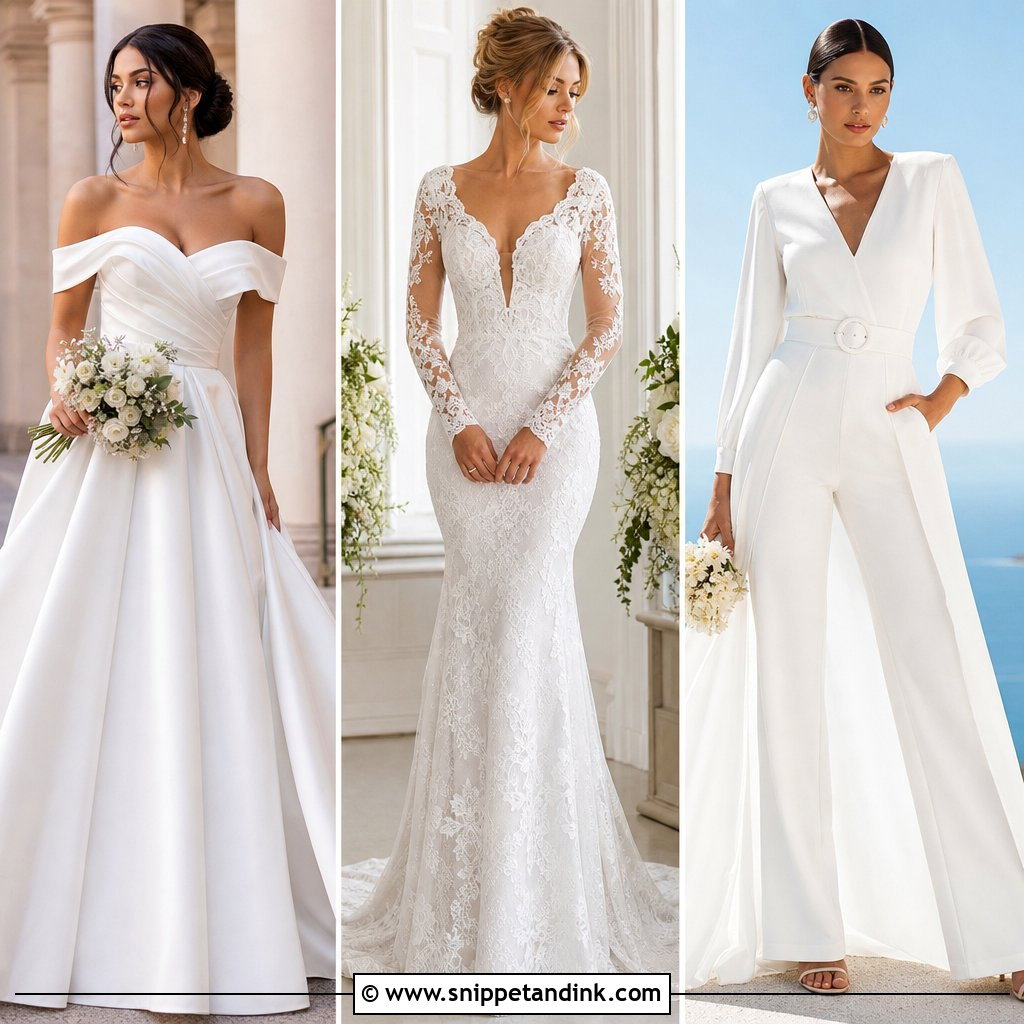
A wedding dress jumpsuit gives you movement and a sharp outline without any skirt at all. Wide legs swing as you walk, while straight tailored legs feel closer to a suit. It can be minimal in crepe, softened with lace sleeves, or dressed up with a detachable overskirt for the ceremony. One practical warning from fittings: work out how you’ll use the bathroom. A back zip on a one-piece can mean needing help every time. Pearl earrings, pointed heels and a veil or cape keep it bridal.
18. Two Piece Wedding Dress
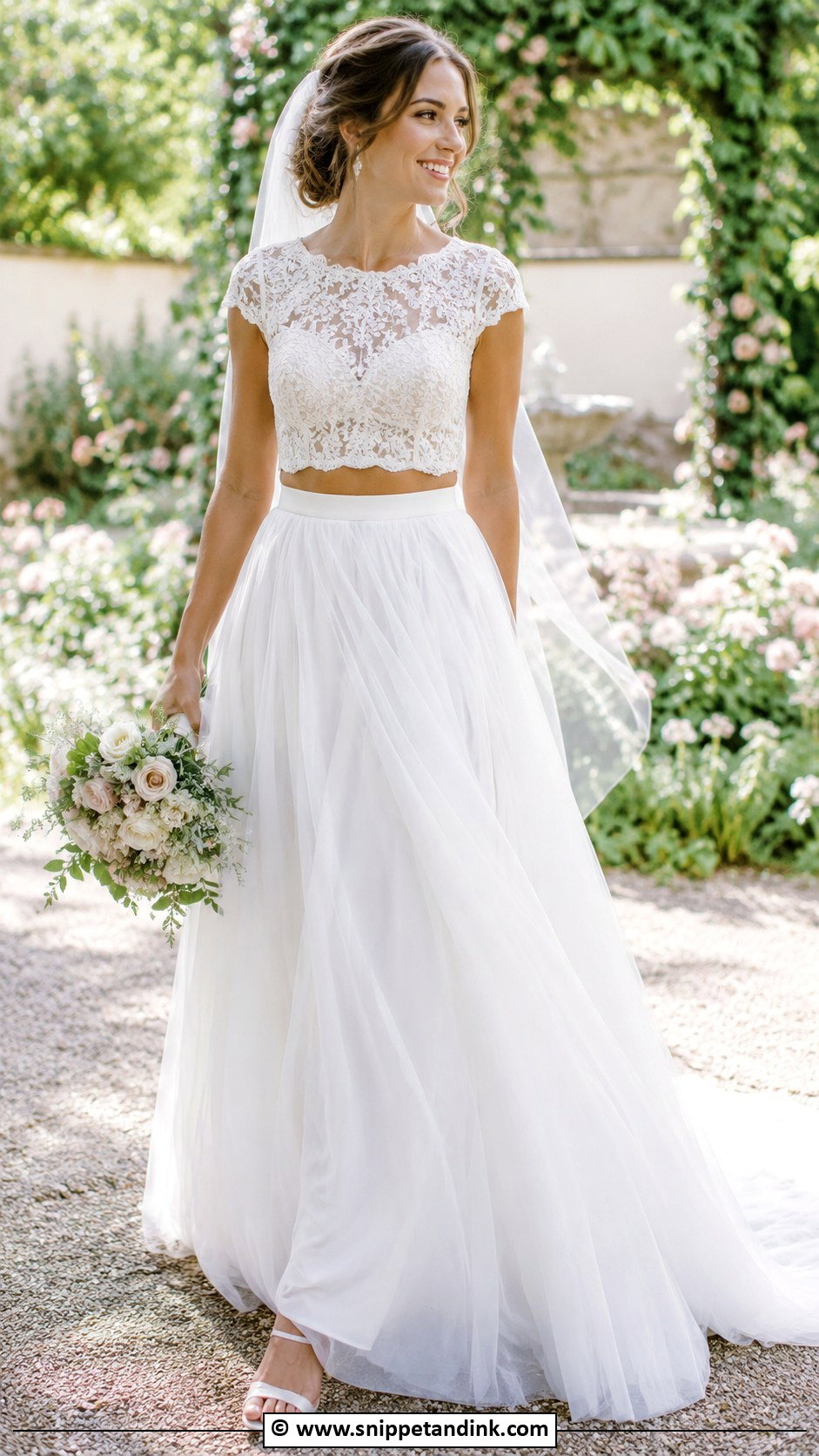
Separates solve a fitting problem I see constantly: brides whose top and bottom fall in different sizes. With a two-piece, each part is sized and altered on its own. A lace crop top over a flowing tulle skirt reads bohemian; a satin bandeau with a high-waisted skirt looks sleek. Decide early how much skin you want between the pieces, because that gap changes the moment you lift your arms to hug someone. Simple heels and a veil in the same mood complete it.
19. Wedding Dress Suit
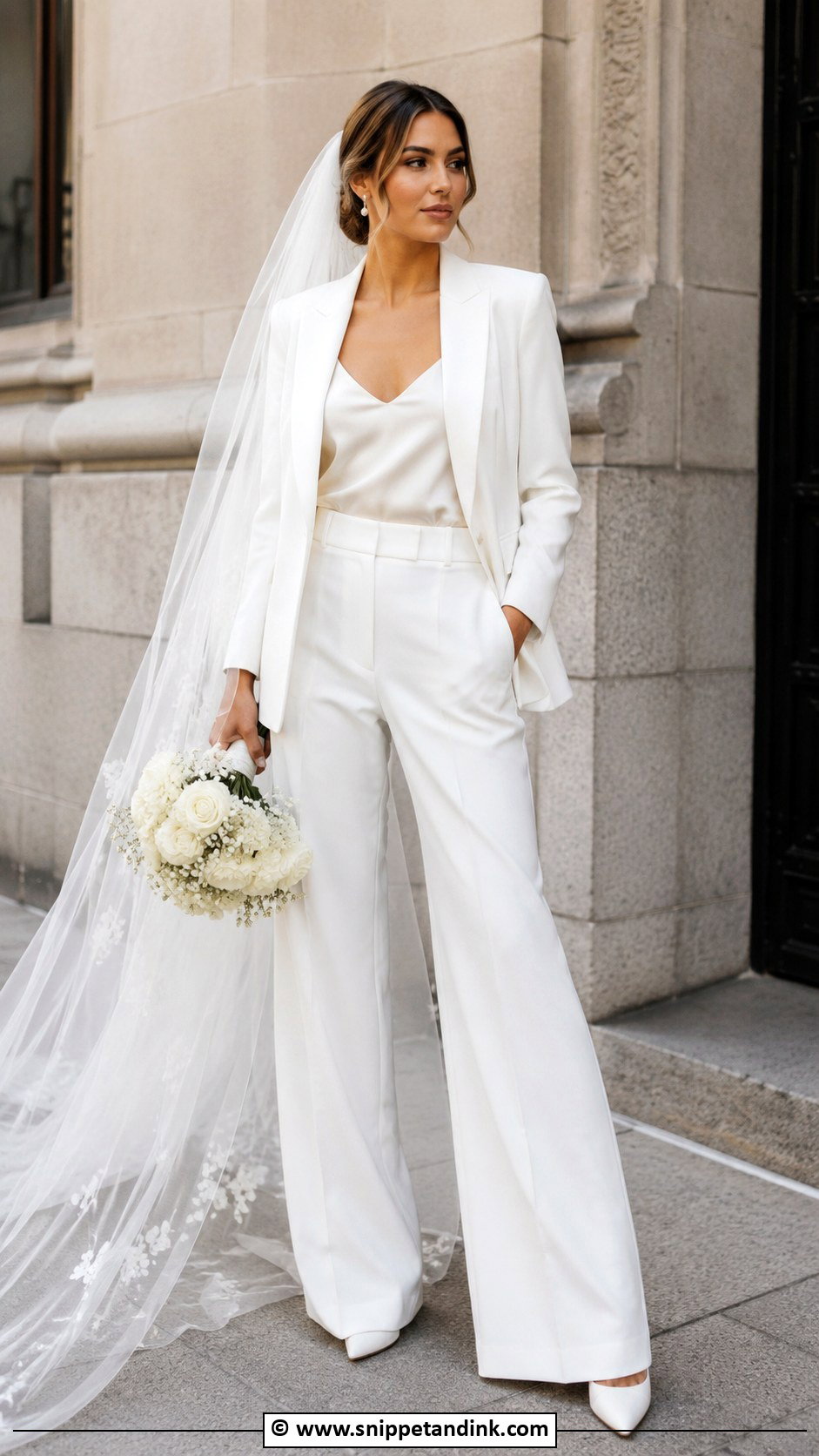
A wedding suit swaps the gown for tailoring, and it only works when the tailoring is right. A white blazer with wide-leg trousers, a silk camisole and pointed heels make a clean outfit, and satin, crepe or pearl buttons soften it. At fittings I watch three things: the shoulder seam should end at your shoulder bone, the jacket should button without pulling, and the trousers should be hemmed for your actual heels so they just graze the floor. A long veil or statement earrings mark it as bridal at a courthouse or city ceremony.


20. Lace Wedding Dress
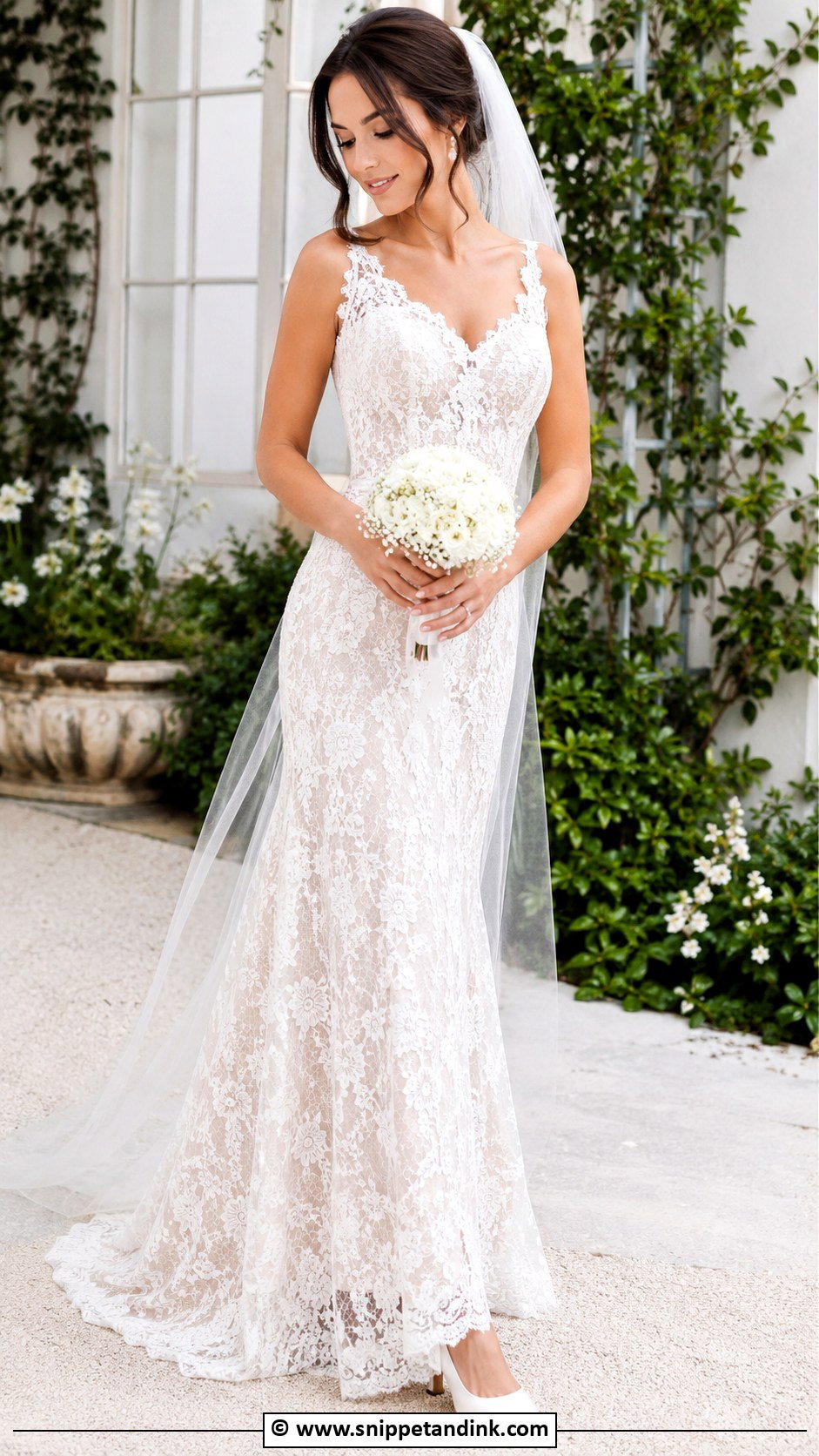
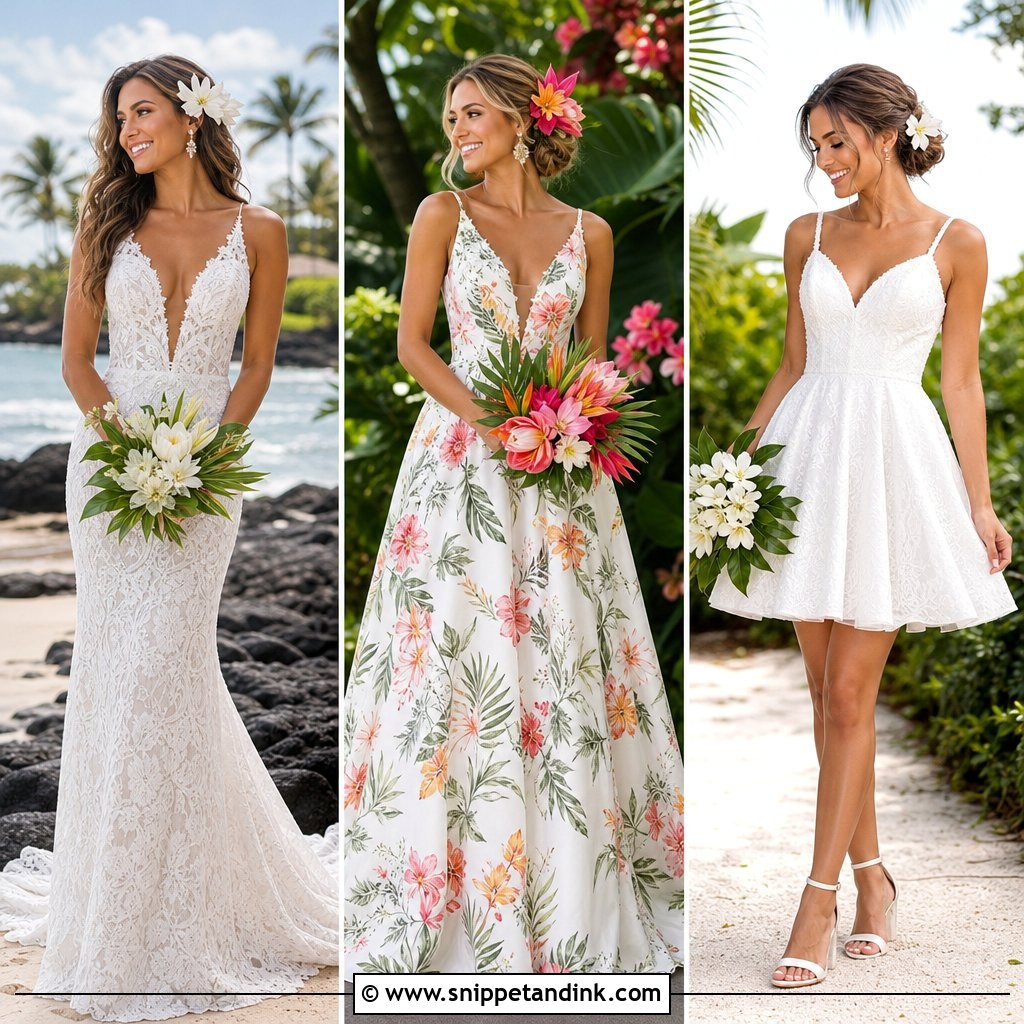
Lace brings texture without needing sparkle, and it can cover the whole gown or sit only on the sleeves, bodice or train. The type matters: floral lace is classic, geometric lace looks modern, and Chantilly is fine and light. Ask about the lining too. Lace over a nude or champagne lining reads less traditional than over ivory, and it changes how the pattern shows in photos. Keep jewelry simple so the fabric stays the focus. As a quiet bonus, lace hides small alteration seams better than plain fabric does.
21. Satin Wedding Dress
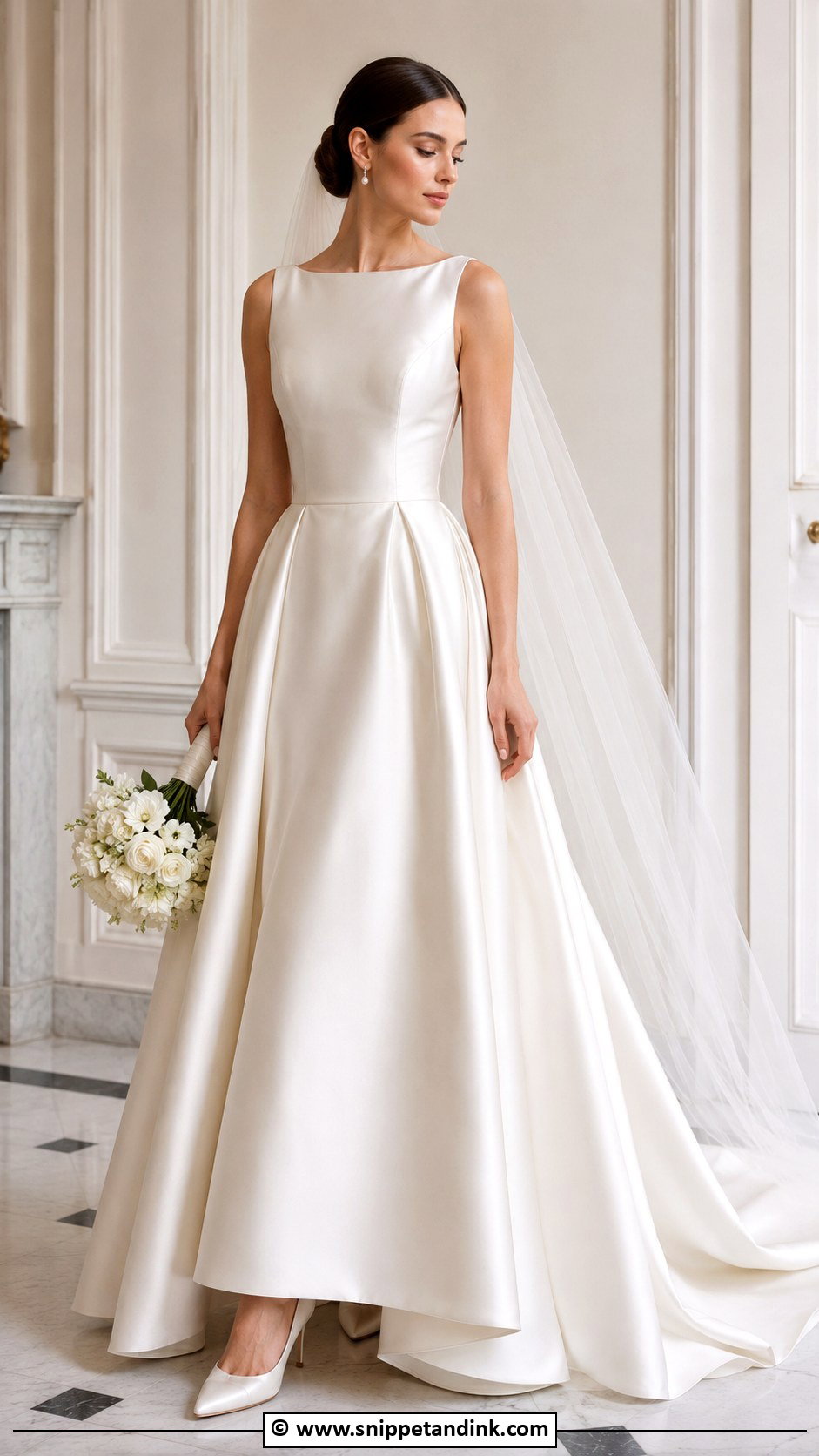
Satin has a soft shine and holds a clean line, so it suits structured and flowing shapes alike. That shine is also brutally honest about fit. Any tension at a seam or edge of underwear shows as a pull line, which is why I ask for precise alterations. I also warn brides that satin creases when you sit through a long ceremony or a car ride, so have it steamed on the morning and expect some softening by evening. Pearl earrings, a sleek veil and simple pumps are all it needs.
22. Crepe Wedding Dress
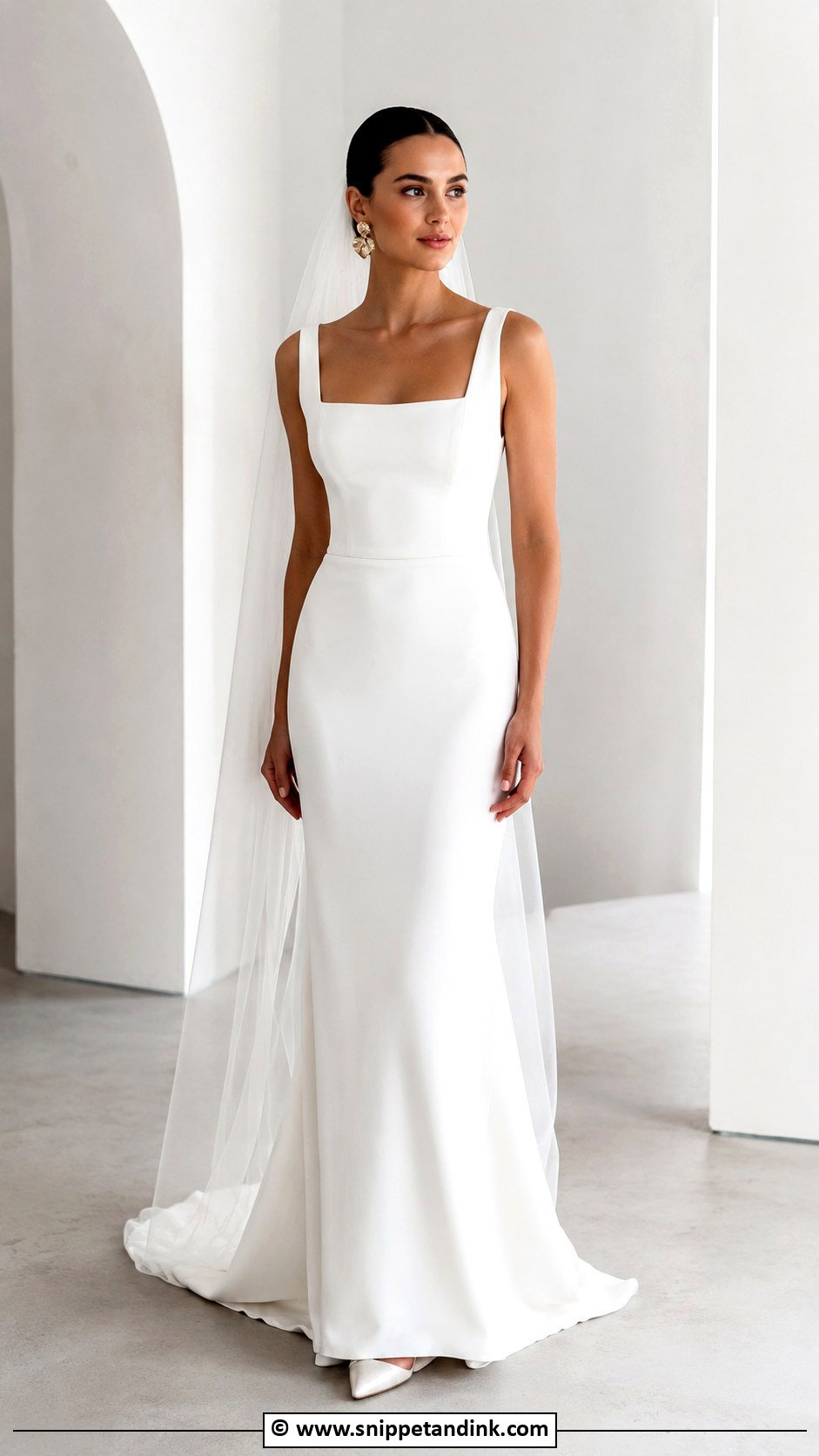
Crepe has a matte surface and enough weight to skim rather than cling, which suits sheath, fit and flare, trumpet and column shapes. With no shine or texture to distract, every seam, button and neckline becomes the detail, so construction quality shows. A square neck with a low back looks considered without any fuss. I like crepe for warm days because it doesn’t show creases the way satin does. Sculptural earrings, a simple veil and pointed heels finish it.
23. Tulle Wedding Dress
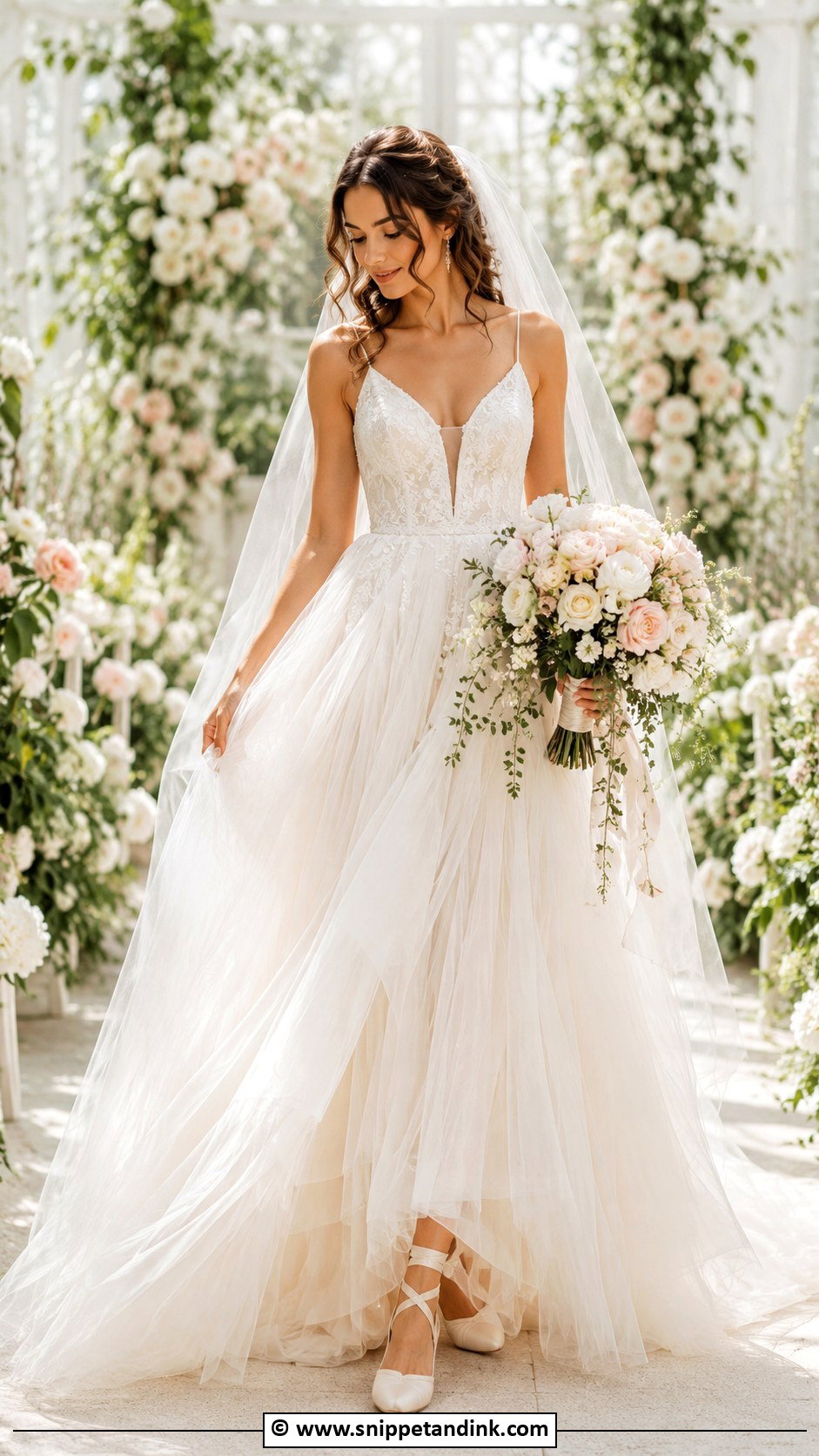
Tulle is a light, sheer net layered to build volume without much weight, so a full tulle skirt is easier to carry than its size suggests. Embroidered or floral tulle adds detail on its own, with no help from jewelry. The downside is that it snags on rough stone, rose bushes, bracelets and anything with Velcro. I tell brides to choose smooth jewelry and to mention it to the photographer before any shoot near hedges. Ballet-style heels and a veil with similar airiness suit it.
24. Organza Wedding Dress
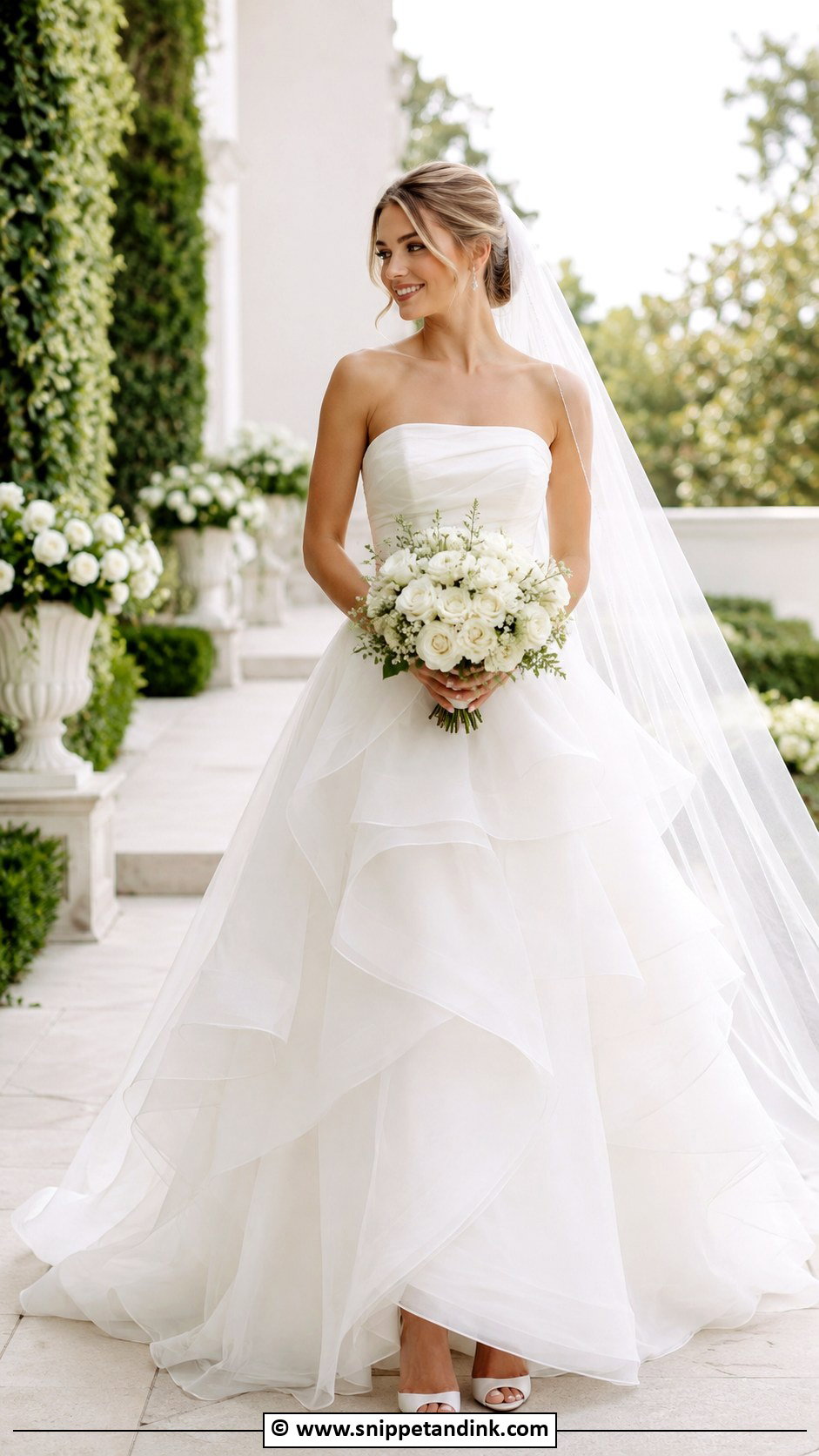
Organza is crisper than tulle, with a little body that holds shape while staying light. That makes it right for volume that floats: A-line skirts, ball gowns, layered overskirts and sculptural details. A strapless organza gown with a full skirt manages to look modern and romantic at once. It does mark easily and holds creases, so ask the shop how the gown should be pressed before the day. Simple heels, a smooth veil and quiet earrings keep attention on how the fabric moves.

25. Mikado Wedding Dress
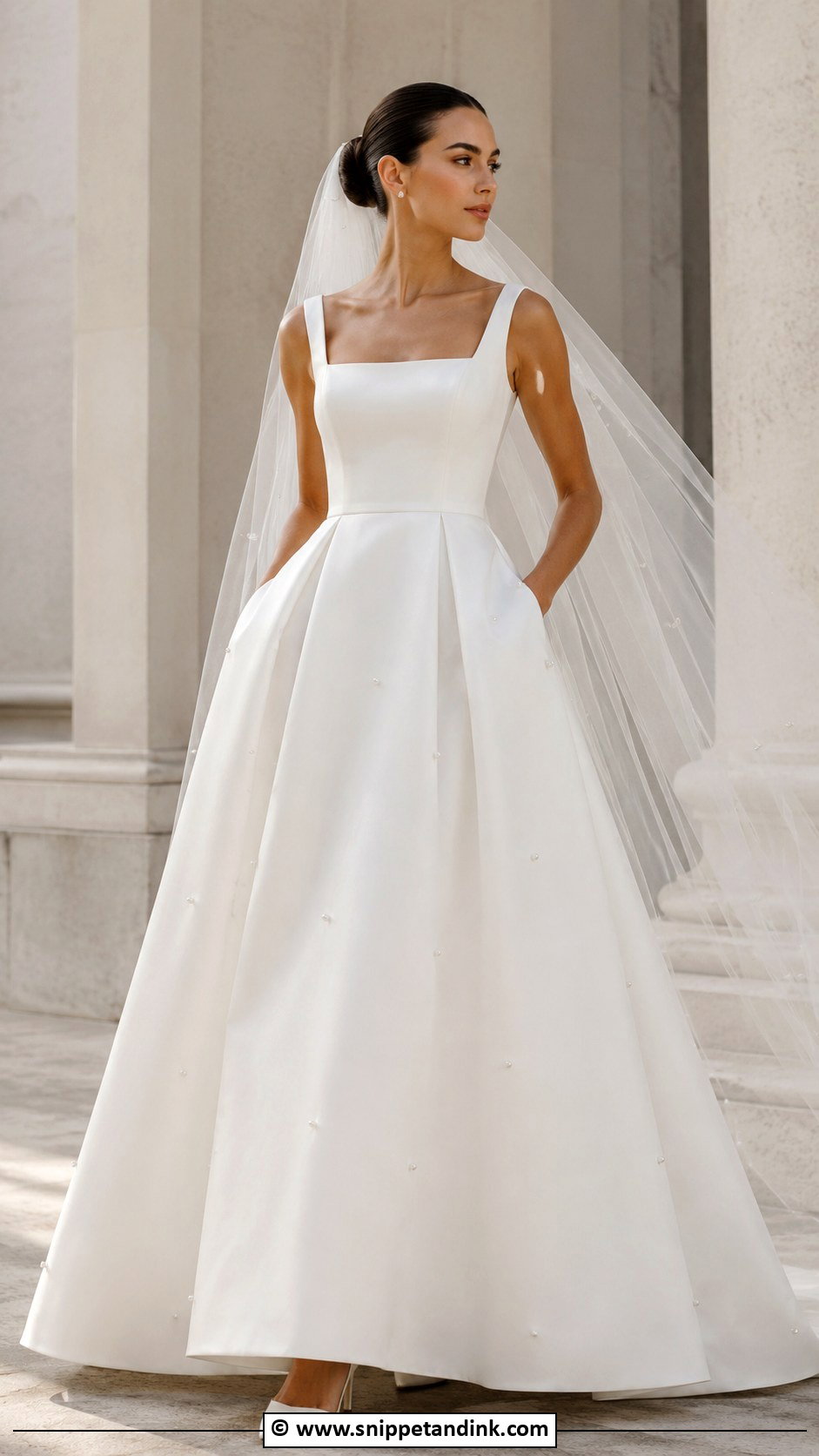
Mikado is a heavier silk or silk blend with a smooth surface and a subtle sheen, and that weight lets it hold architectural shapes. Clean ball gowns, A-lines, basque waists and sculpted minis all suit it, and a mikado gown with a square neckline and pockets looks modern without dating quickly. It won’t drape softly, so it’s the wrong fabric if you want flow. Because it holds its shape, the bodice has to be fitted properly; it won’t relax into your body over the day. Classic pumps, pearl studs and a crisp veil match it.
26. Long Sleeve Wedding Dress
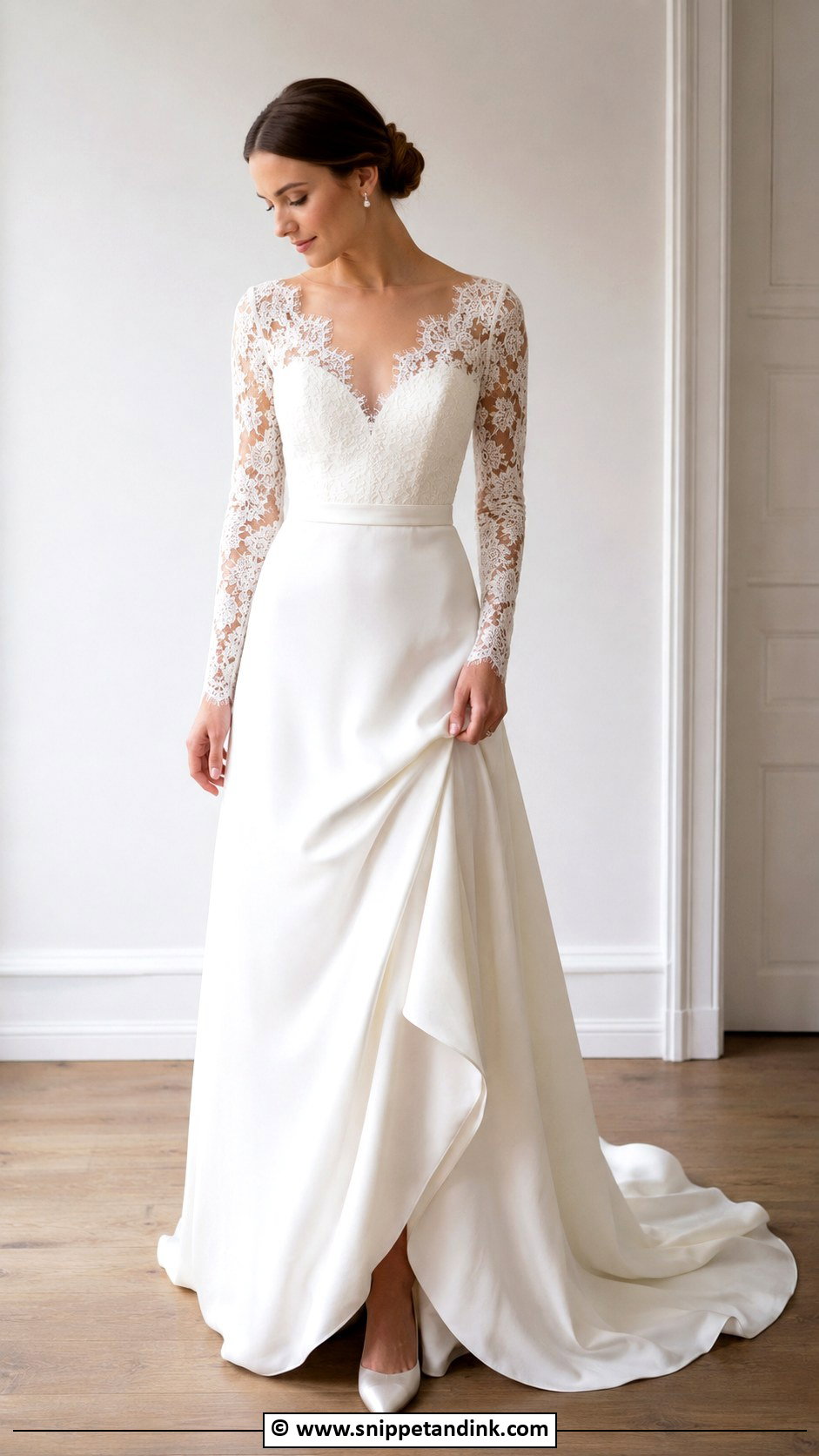
Long sleeves come fitted in lace, sheer in tulle, smooth in satin or crepe, or softly puffed. The test I always run is the hug: arms up and forward. A sleeve set too tight in the armhole pulls the whole bodice up when you raise your arms, and you’ll be doing that all night. Sheer sleeves are fine in warm weather, while lined ones suit cool seasons and heavily air-conditioned venues. A sleek hairstyle and simple earrings let the arms and shoulders carry the detail.
27. Off Shoulder Wedding Dress
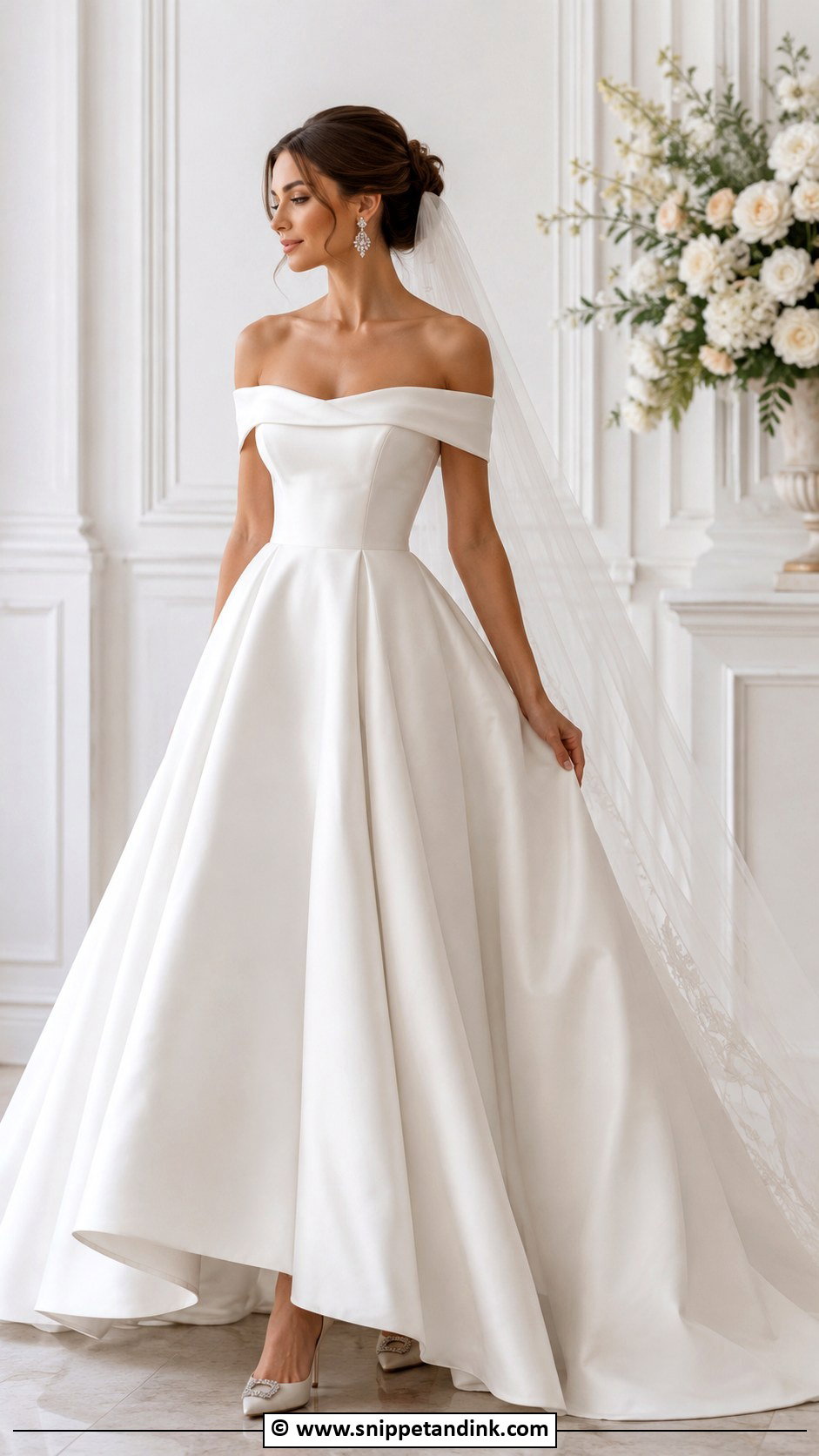
An off-shoulder neckline sits across the upper arms and frames the collarbone, either structured and fitted or loosely draped, on ball gowns, mermaids, fit and flare and A-lines. It does limit arm movement, since raising your arms pulls against the band, so I test it at fittings by having the bride reach and hug. The bodice also has to stay put when you sit and dance. Skip the necklace, wear statement earrings, and put your hair up so the shoulder line stays visible.
28. Strapless Wedding Dress
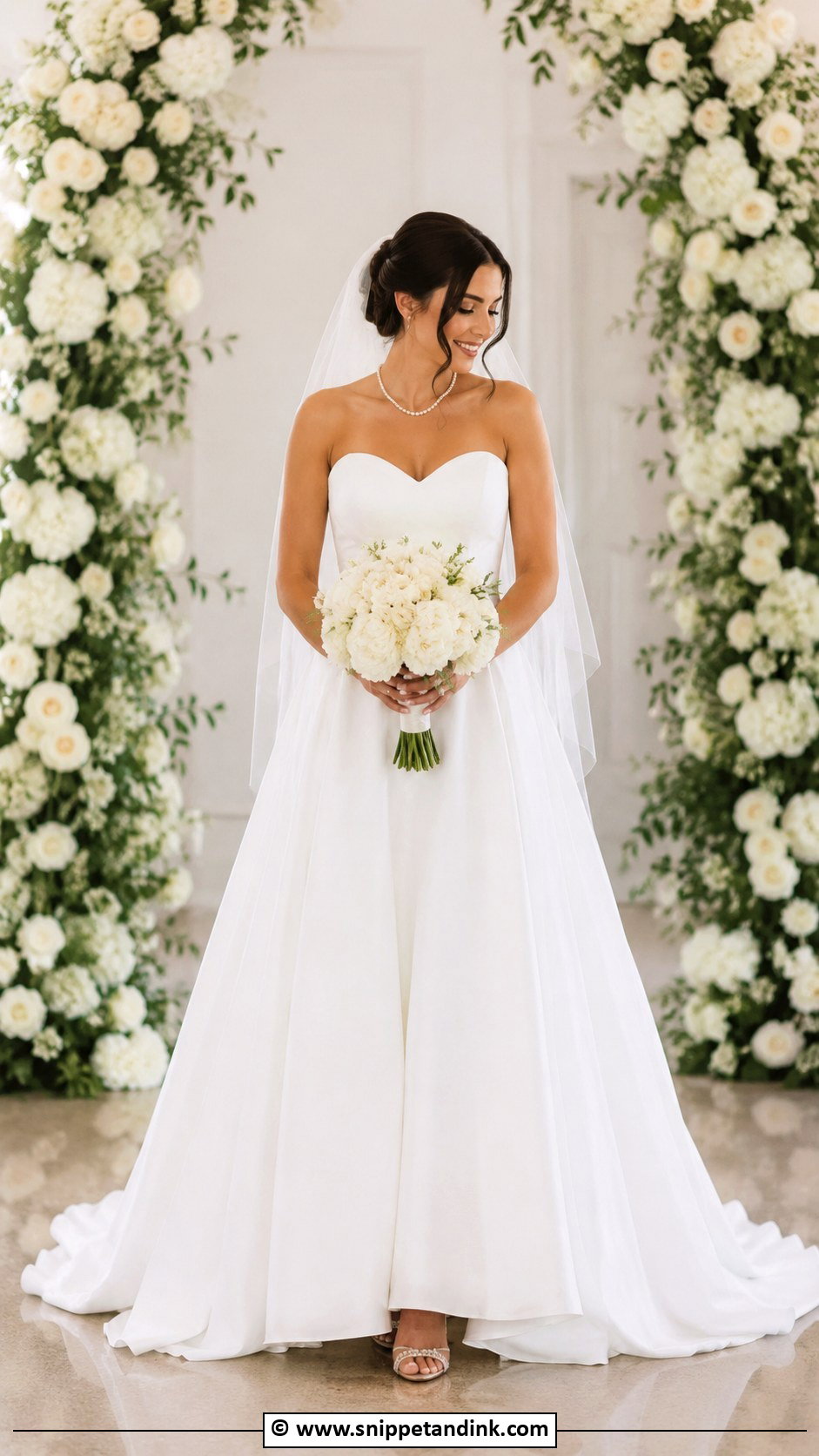
Strapless keeps the neckline open and works with sweetheart, straight, scoop or curved bodices. Everything depends on support. A well-built strapless bodice uses boning and a waist stay to hold it up from the waist, not from pressure at the top edge. If you find yourself tugging it up at a fitting, it isn’t fitted yet. Once it sits securely, the open neckline leaves room for pearl studs, a tennis necklace or a dramatic veil.
29. Square Neck Wedding Dress
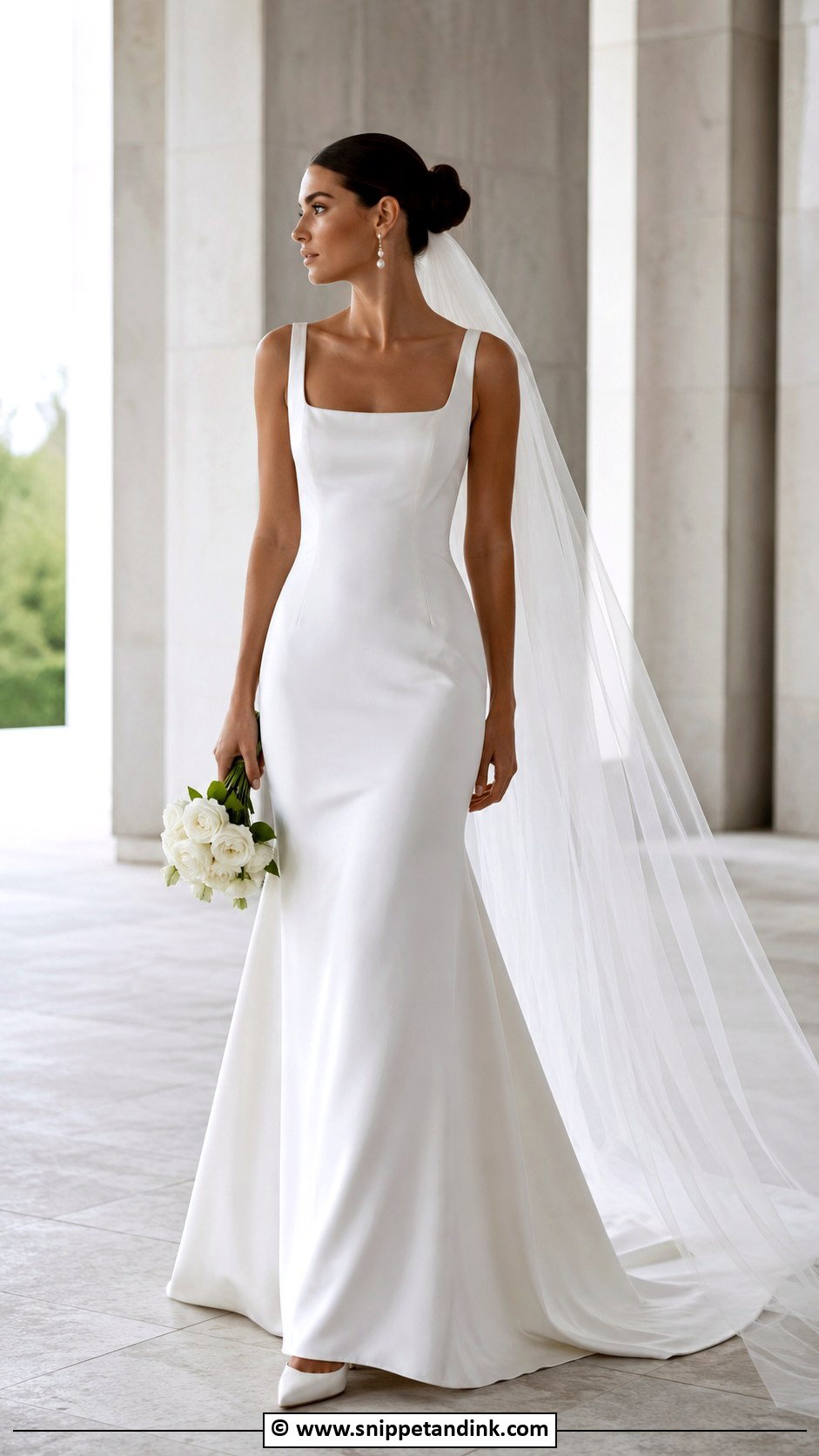
A square neckline cuts straight across and turns at the corners, framing the collarbone with clean structure. It looks current on column gowns, A-lines, satin ball gowns and plain crepe. The corners need to lie flat. If they gape when you lean forward, the neckline needs taking in. Pearl drops, a smooth bun and pointed heels suit it, and on a very plain dress a long veil or subtle gloves add interest.
30. Sweetheart Wedding Dress
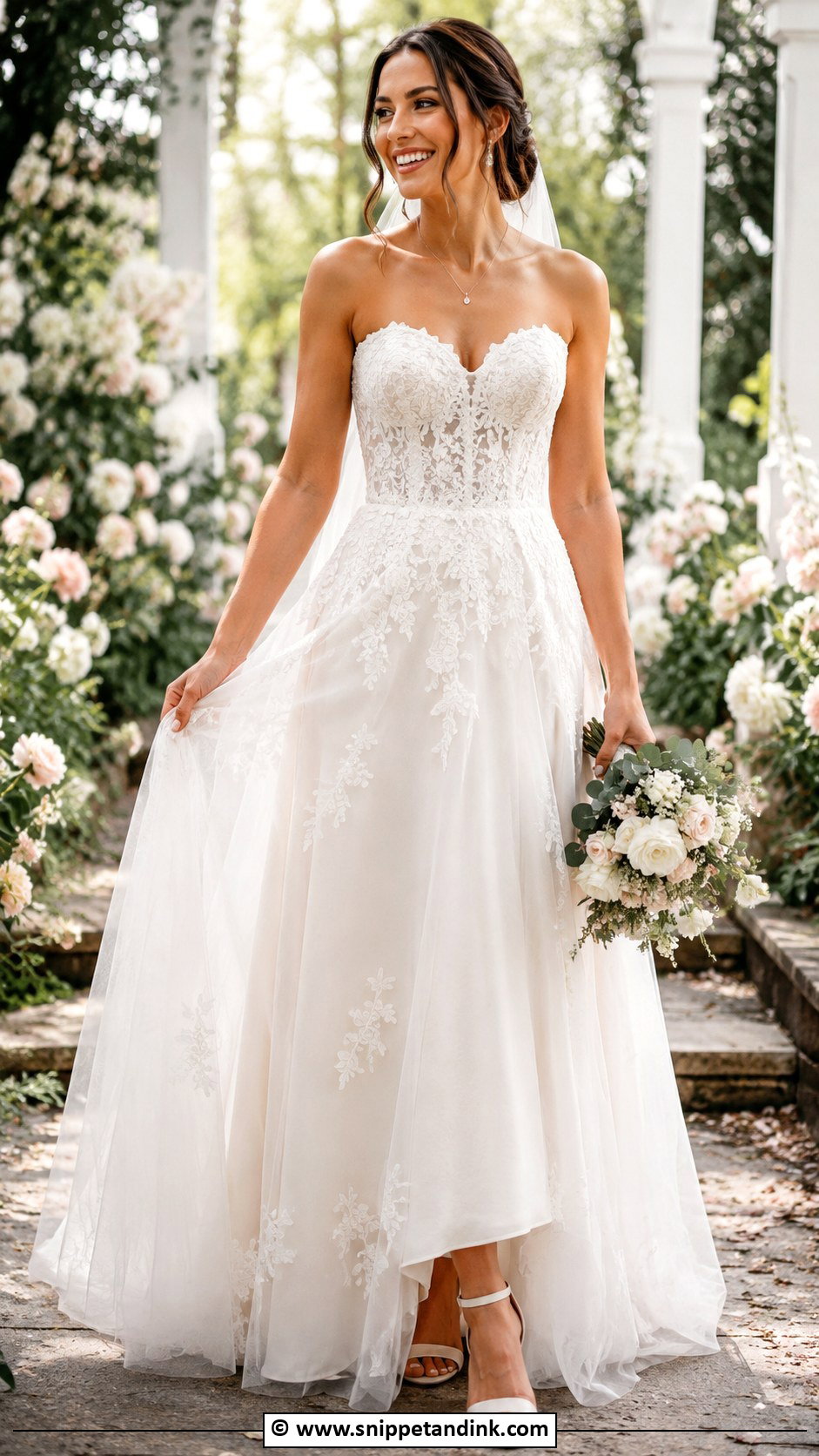
A sweetheart neckline curves over the bust like the top of a heart and dips at the centre, and it goes with ball gown, mermaid, trumpet and A-line skirts. That centre dip is where fit gets tested. A bodice that’s slightly loose will gape at the curves when you bend to sign the register or hug your grandmother. Strapless is the traditional version; straps or sleeves give fuller busts more support. A fine necklace, drop earrings and a veil with a similar level of detail finish it.
31. Halter Wedding Dress
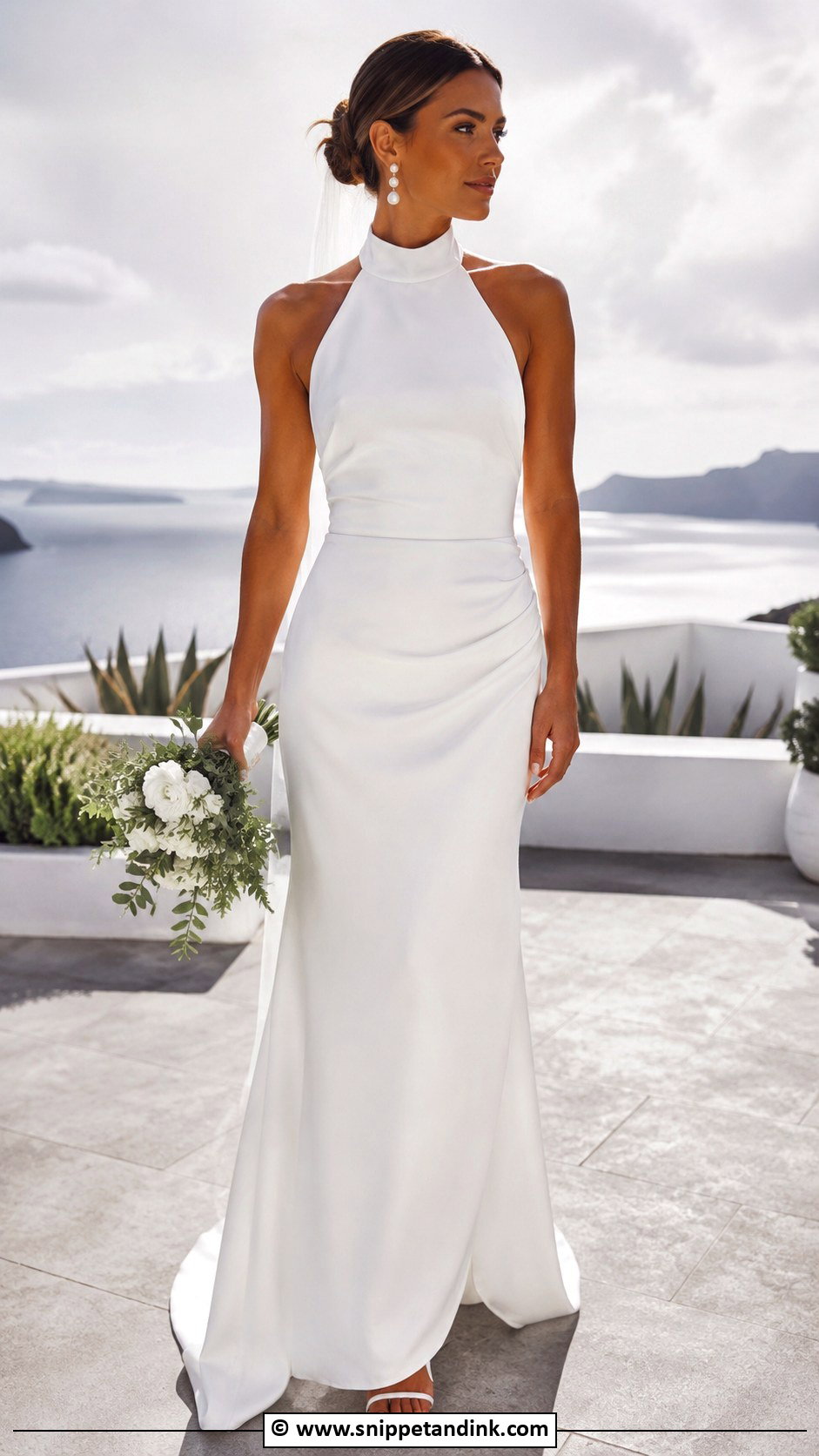
A halter fastens behind the neck and draws the eye up to the shoulders, neckline and upper back. In crepe with a high neck it looks modern; as a silk slip it’s softer. Because the neckline is already the feature, I’d skip necklaces and use earrings. The thing I check is weight. On a halter the bodice hangs from the back of your neck, so a heavily beaded one can make it ache by evening. A smooth updo, strappy heels and a minimal veil, or none, suit warm weather and modern venues.
32. High Neck Wedding Dress
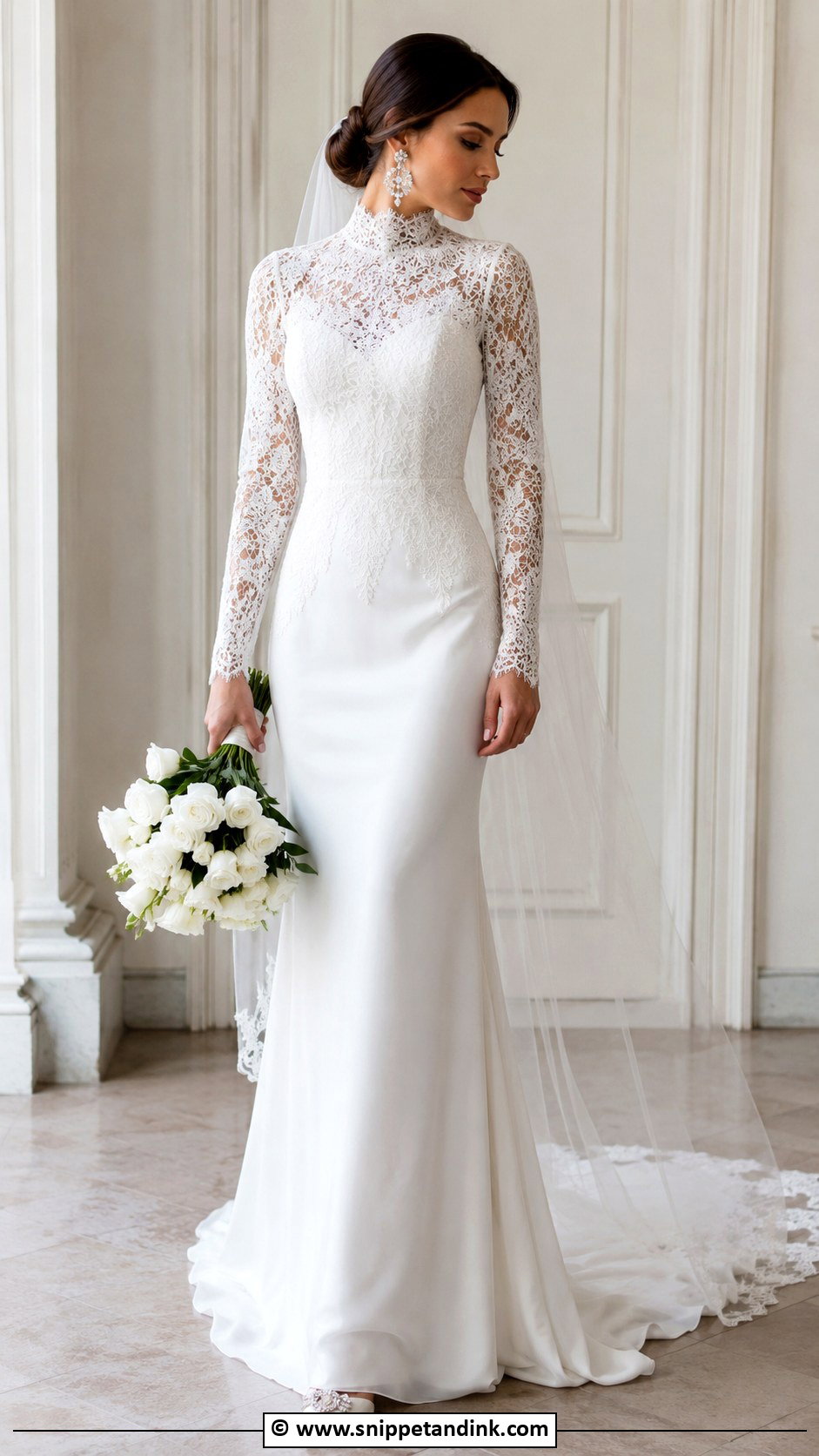
A high neck covers up to the collar or throat, in lace, crepe, satin or illusion tulle. Lace leans vintage, while a crepe high-neck column looks modern. Since the neckline fills the space a necklace would take, wear statement earrings and a low bun instead. I find high necks pair especially well with an open back or long sleeves. For a summer outdoor ceremony, ask whether the collar is lined: unlined lace can scratch, and a lined one can feel warm.
33. Backless Wedding Dress
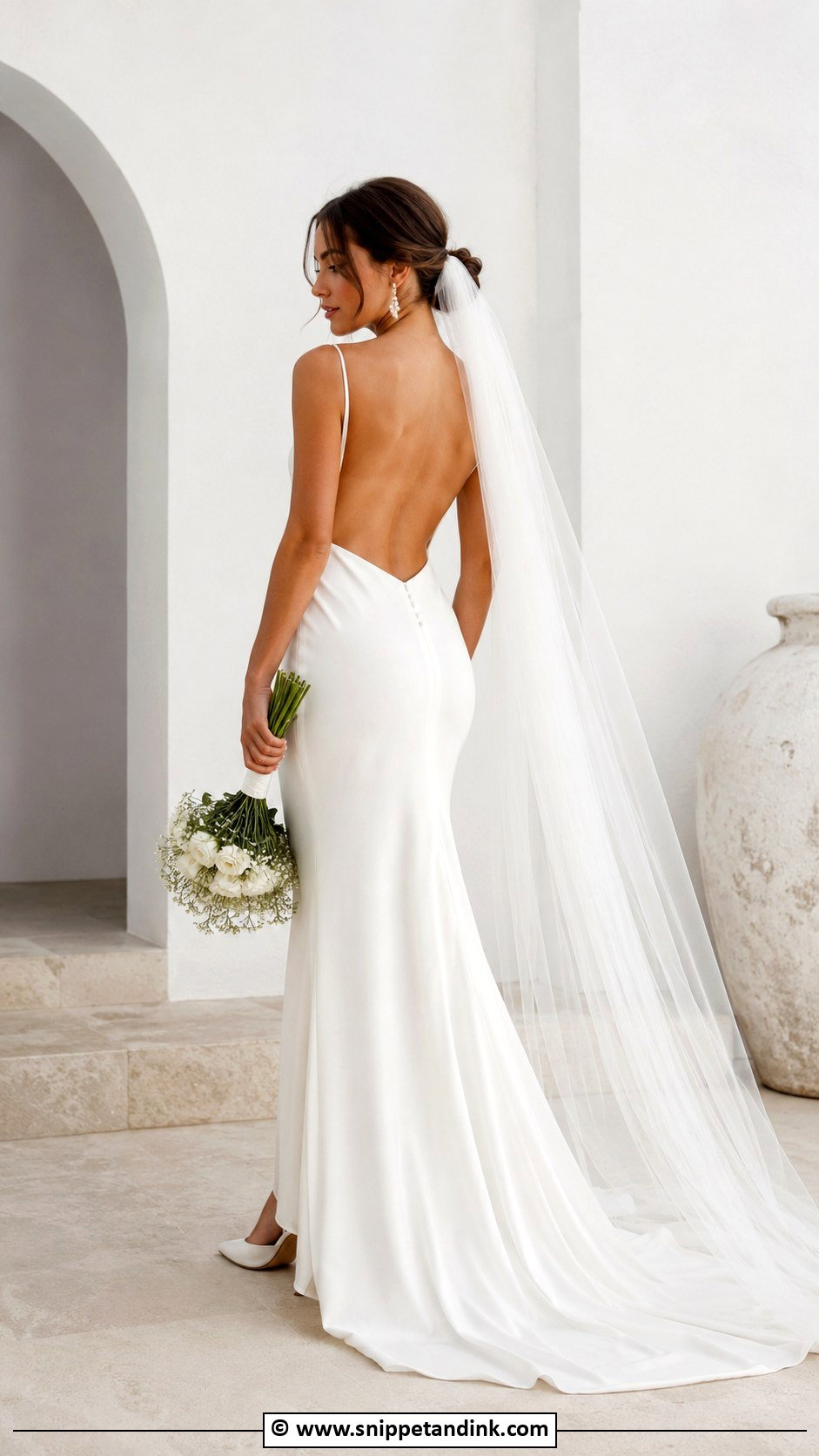
Guests spend most of the ceremony looking at your back, which is why a backless gown has more impact than people expect. The front stays plain and the drama sits behind you, on slips, sheaths, lace gowns and long-sleeve designs. Support is the real question. You usually can’t wear a standard bra, so plan undergarments early and ask whether cups can be sewn into the bodice. A low bun, a back necklace if you like, and a sheer veil that lets the back show finish it.
34. Corset Bodice Wedding Dress
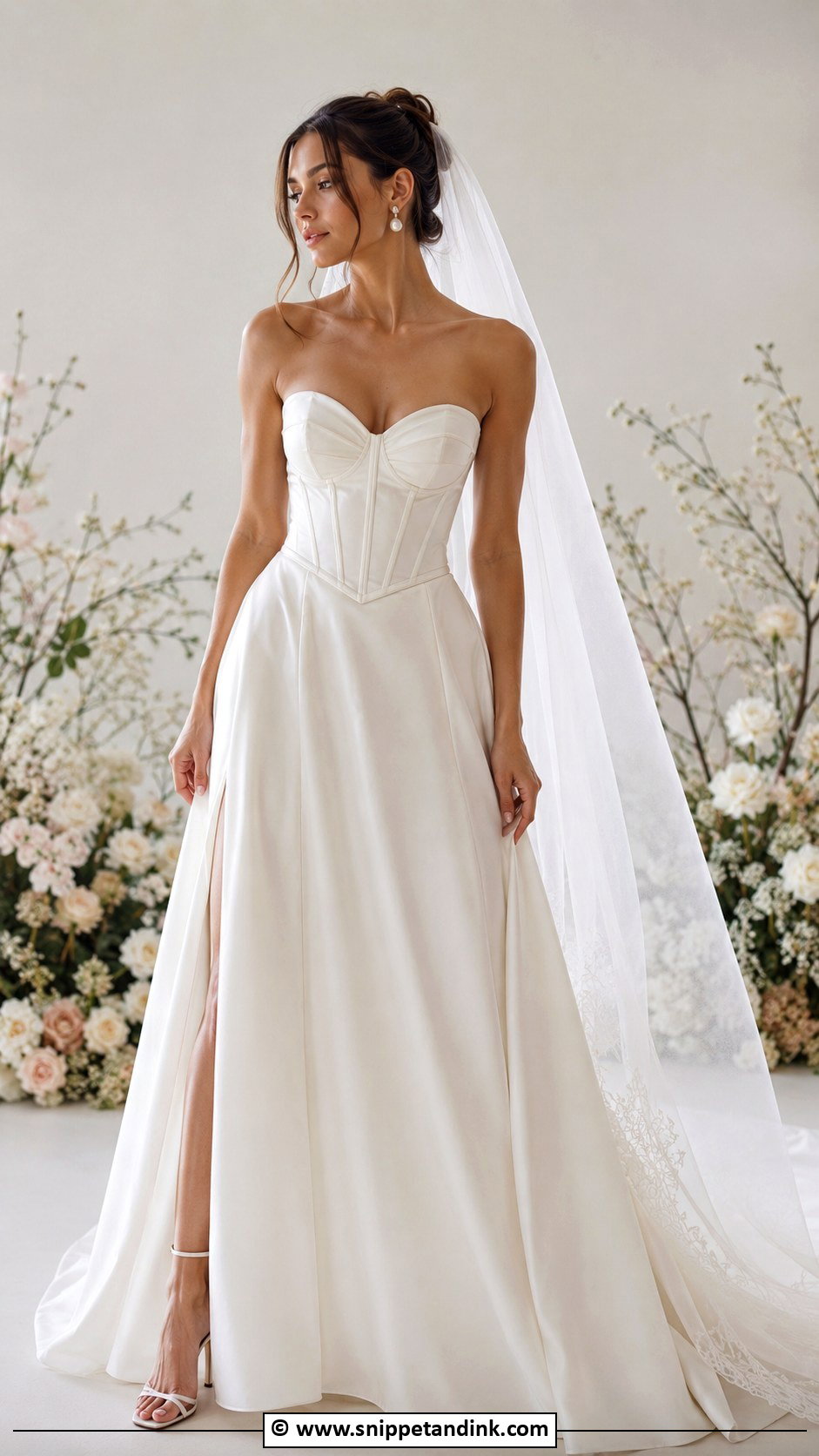
A corset bodice uses boning, visible or hidden, to shape the waist and support the bust. Exposed boning looks fashion-forward; covered structure is more classic. It pairs with an A-line skirt for softness, a ball gown skirt for drama or a fitted skirt for glamour. The rule I hold to at fittings: you should be able to take a full breath, sit down and eat dinner in it. A corset laced to its limit at the fitting will feel far tighter after a few hours. Pearl earrings, a long veil and elegant heels complete it.
35. Convertible Overskirt Wedding Dress
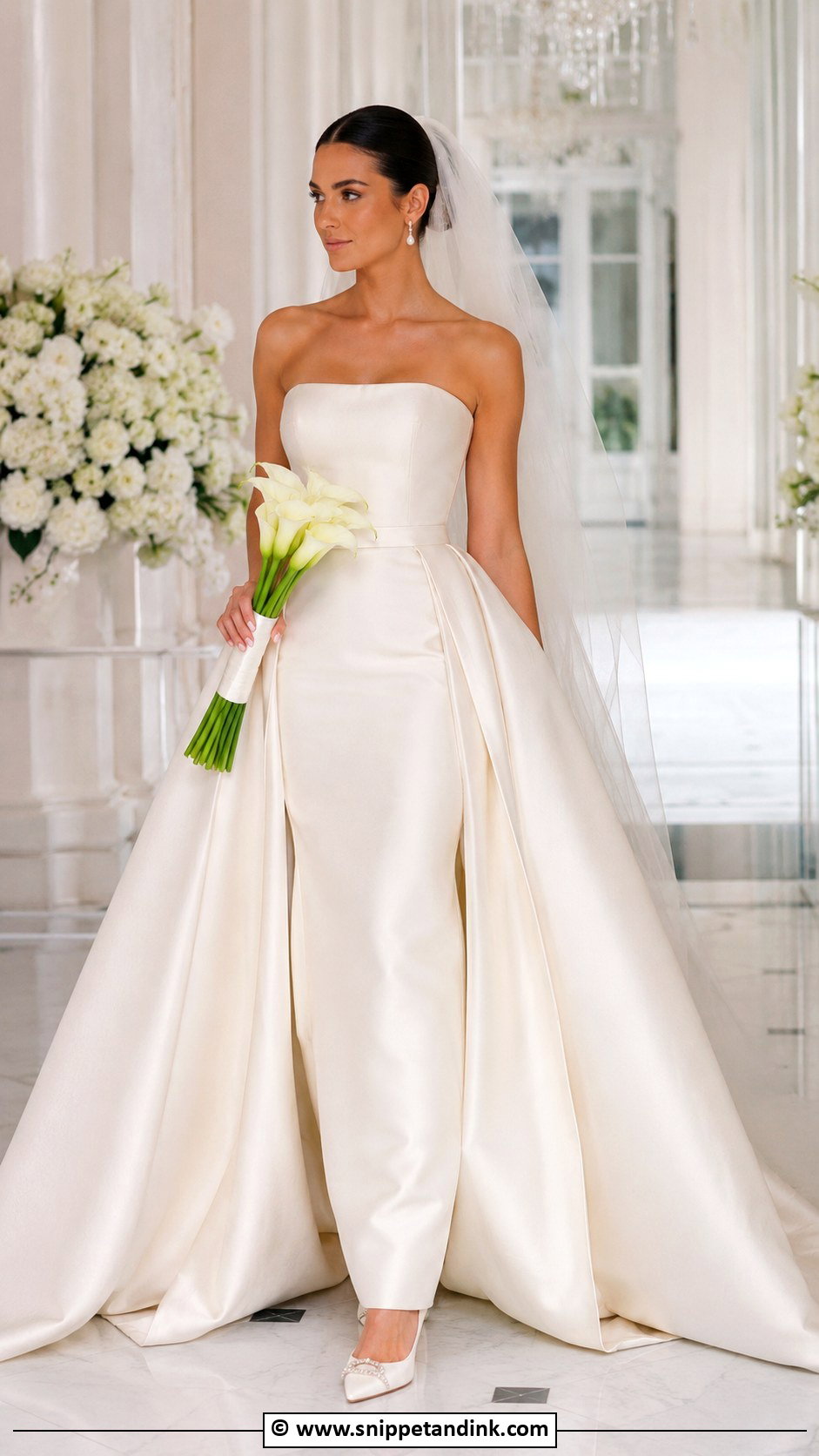
A convertible gown gives you two looks in one. For the ceremony, a full detachable skirt adds volume, drama or a train. For the reception, it comes off to reveal a slimmer gown, jumpsuit, mini or fitted silhouette underneath. Ask how it fastens, because hooks, snaps and buttons each take a different amount of time, and someone in your party should practise removing it before the day. Wear a veil and classic heels for the ceremony, then switch to statement earrings or a hair accessory once the skirt is off.
The Calendar Between Saying Yes and the Aisle
Most gowns bought in a bridal shop are made to order after you pay the deposit, not taken off a rack, and that shapes the timeline more than brides expect. Production often runs somewhere around four to eight months depending on the designer and the season, and alterations need their own window after the gown arrives. Rush production exists at many shops, but it usually costs extra and narrows your choices.
The rough schedule I work back from
- Nine to twelve months out: start appointments, so a made-to-order gown can arrive without rush fees.
- About two to three months out: first alteration fitting, with your shoes and undergarments.
- Four to six weeks out: second fitting to check the hem, bustle and bodice after the first round of changes.
- One to two weeks out: final fitting. Bring whoever will help you dress so they can learn the fastenings and the bustle.
Construction affects this too. Heavily beaded and layered gowns take longer to alter, and moving lace appliqués around a shortened hem is slow hand work. If your weight is likely to change before the wedding, tell your seamstress early. She would much rather plan for it than rebuild a bodice in the final fortnight.
What Happens to the Gown After the Last Dance
Brides think about the dress right up to the moment they take it off. Hem dirt and spills set if they’re left for months, so I suggest getting the gown to a specialist cleaner within a few weeks. Champagne and other sugary drinks can dry invisible and then turn yellow-brown over time, so point out anywhere you remember a splash.
For storage, choose somewhere cool, dark and dry, with the gown folded in acid-free tissue inside an acid-free box or a breathable cotton bag rather than plastic, which can trap moisture. I’d avoid hanging a heavy gown long term, since the skirt’s weight drags on the shoulders and seams. Silk and satin can yellow in light and tulle crushes under weight, so give the box its own shelf.
Try On the Shape You Swore You’d Hate
Start with the silhouette that suits your body and your venue, then narrow it by neckline, fabric, sleeve and how much movement your day needs. Ball gowns, lace, suits, jumpsuits, minis and convertibles all made this list because each one solves a different problem. Do try on at least one shape you’re sure you won’t like. I’ve watched that dress win more than once, because it moves differently from how it looks in a photo. The right gown is the one you stop thinking about once you’re wearing it.
You'll Like These Ideas:










Leave a Reply