
Wedding makeup has a harder job than any other makeup you’ll wear. It has to survive crying, hugging, a camera flash and ten or more hours of wear, and it still has to look like your face when someone stands a foot away. The twenty looks below run from barely-there skin to full glam, and each one comes with what I actually do when I build it on a bride and where it tends to go wrong. Treat them as starting points for your trial. The final shades should be adjusted to your dress, your venue’s light and how much makeup you’re comfortable in on a normal day.
Matching a Finish to the Skin You Actually Have
Most brides choose a look from a photo, but the photo was taken on someone else’s skin. The finish of your base, dewy, satin or matte, will decide how the rest of the makeup wears more than any eyeshadow choice. At a trial, I start by looking at your bare skin under daylight and asking how it behaves by mid-afternoon on a normal day.
Oily or combination skin
Expect the centre of the face to break through by the first dance. I use a mattifying primer only on the T-zone, a satin or soft matte foundation, and powder pressed in thin layers. You can still have glow, but I place it with highlighter on the cheekbones instead of relying on a dewy foundation.
Dry or mature skin
Powder is the enemy here because it settles into texture and lines as the day goes on. I prep with a richer moisturiser, use cream blush and cream highlight, and set only under the eyes and around the nose. Matte looks can work, but I’d move you toward satin.
Sensitive or reactive skin
Bring the products your skin already tolerates to the trial. A wedding morning is not the day to test a new primer or a strong retinol the night before. If something stings at the trial, it will be worse on a day of heat and emotion.
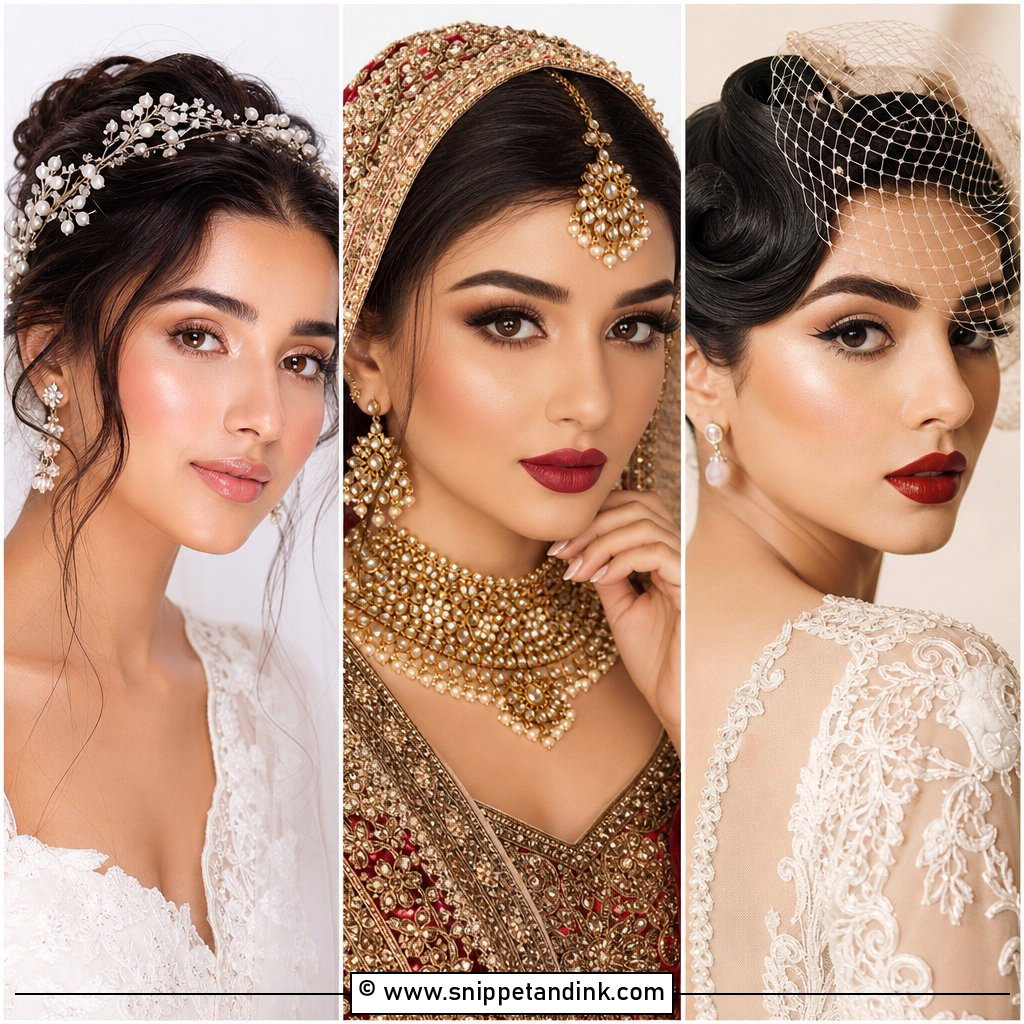
1. Natural Bridal Makeup
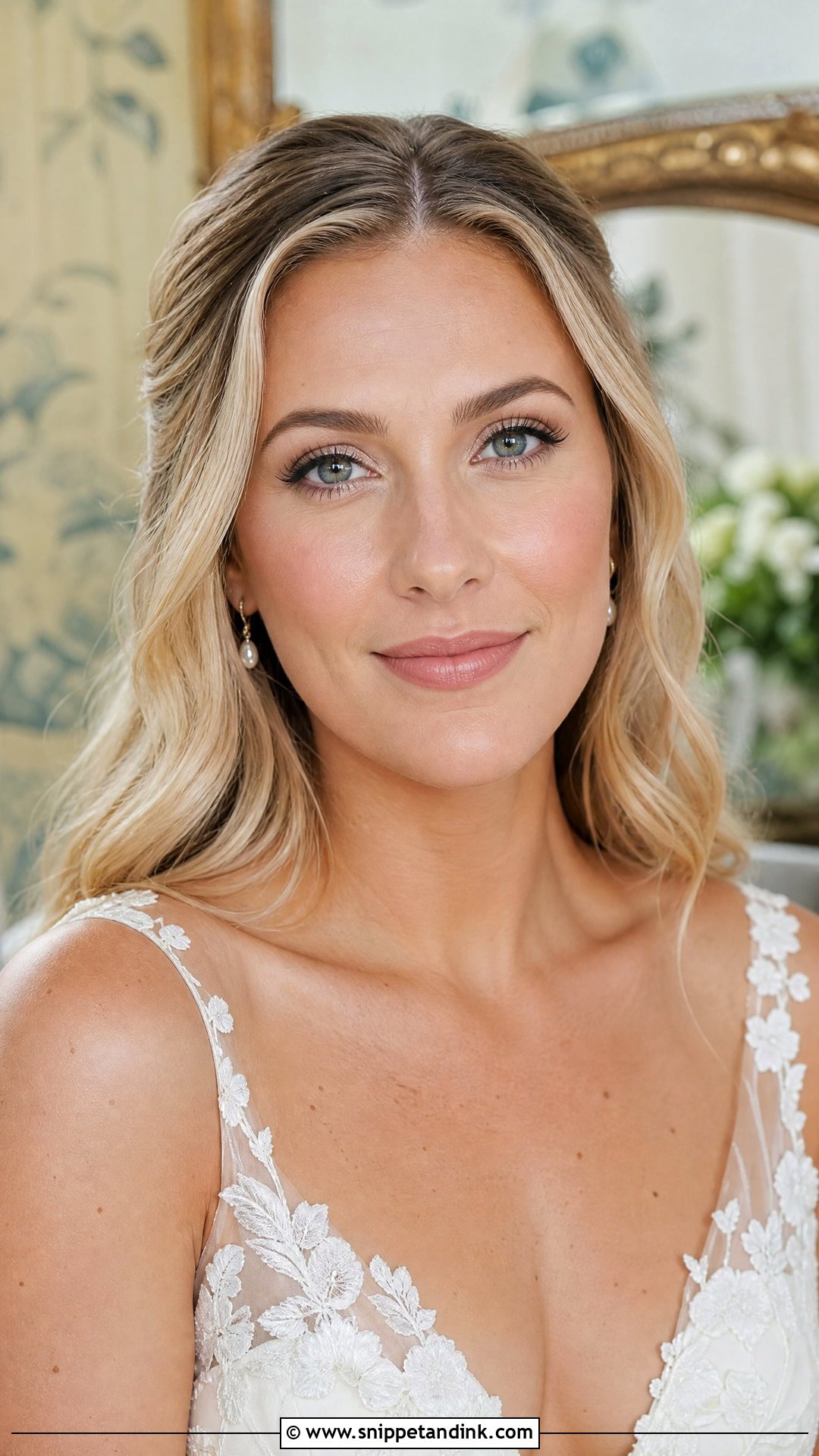
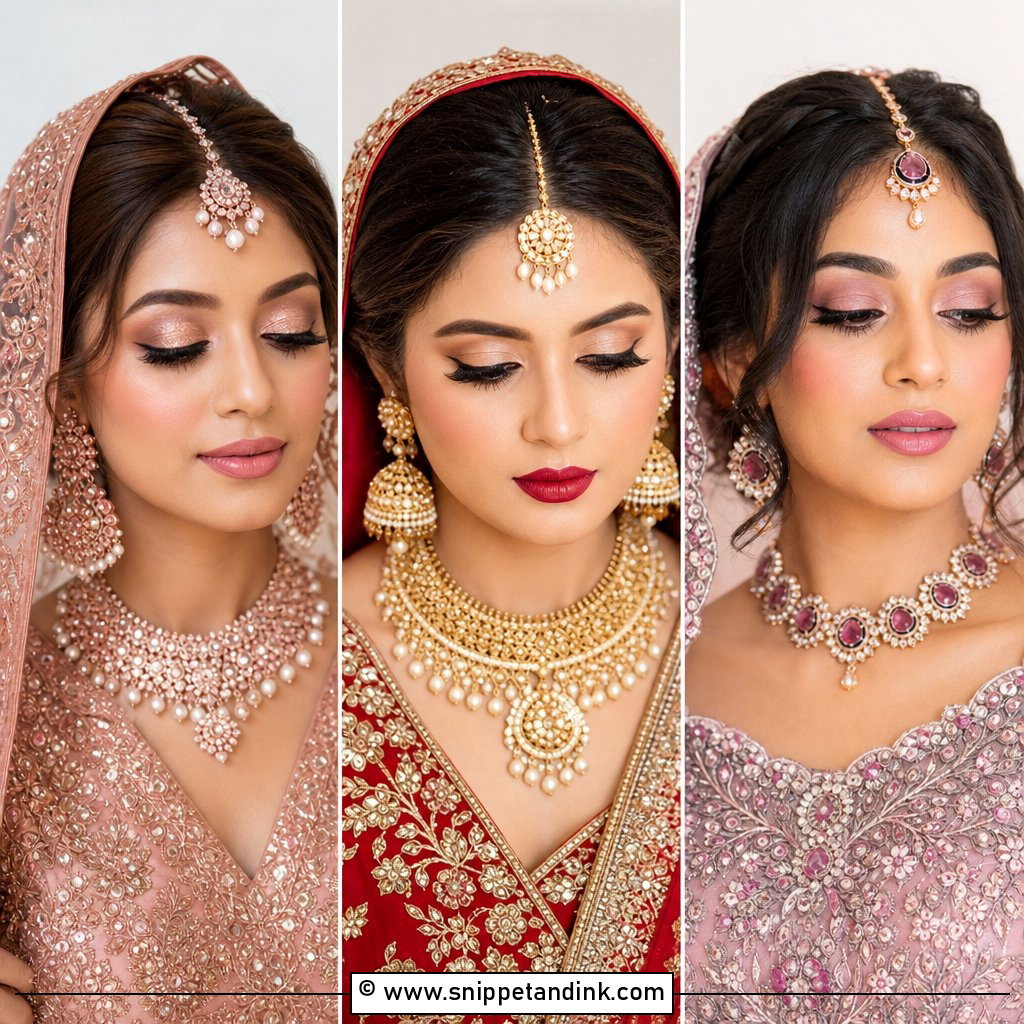
This is the look I get asked for most, and it’s harder to do well than glam because there’s nothing to hide behind. I spend most of the time on skin prep and use a skin tint or light foundation only where the skin needs evening out, usually around the nose and chin. Soft beige or champagne on the lid, brown liner pressed into the lash line rather than drawn on top, and individual lashes or a wispy half lash for lift. Cream blush in pink or peach and a touch of highlight on the cheekbones keep the face from going flat in photos, and a satin nude-pink lip finishes it. The trap is going too light: what reads as fresh in the mirror can look washed out under a photographer’s flash.
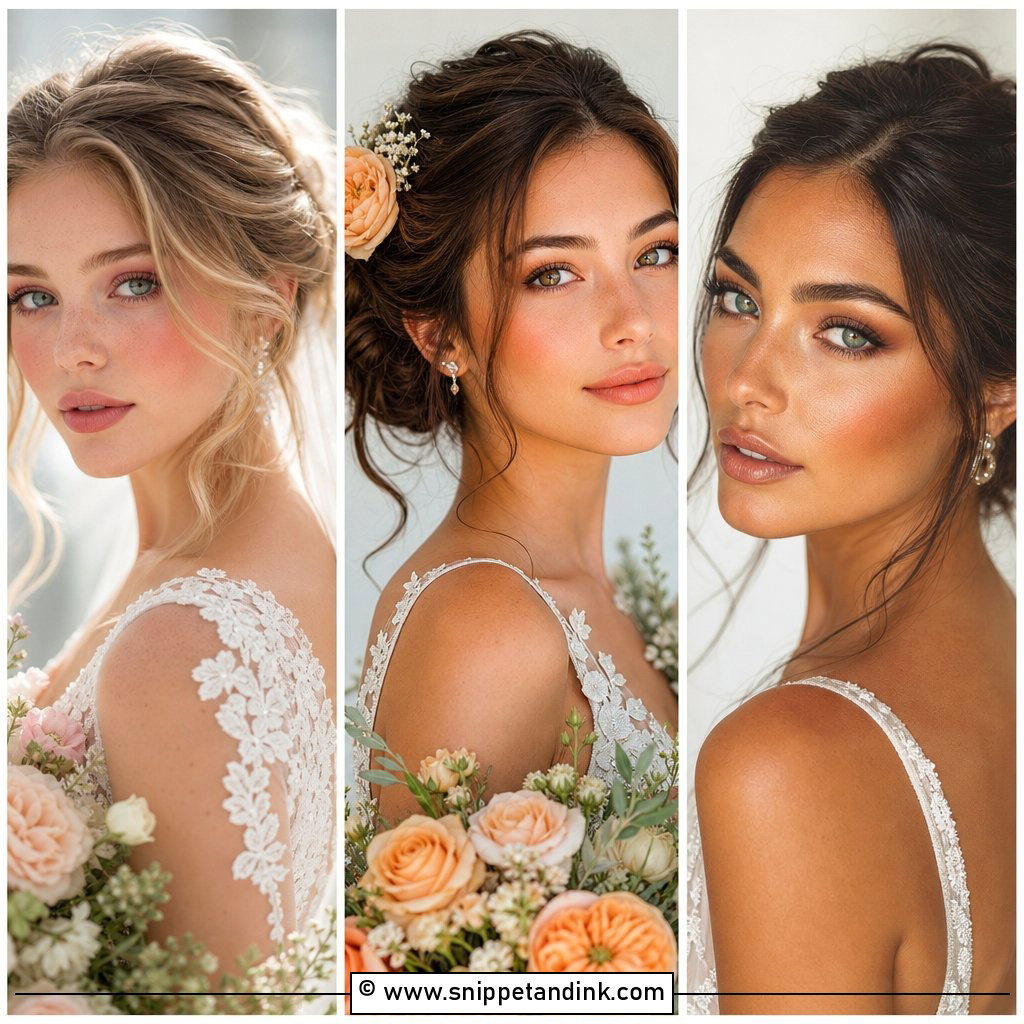
2. Soft Glam Bridal Makeup
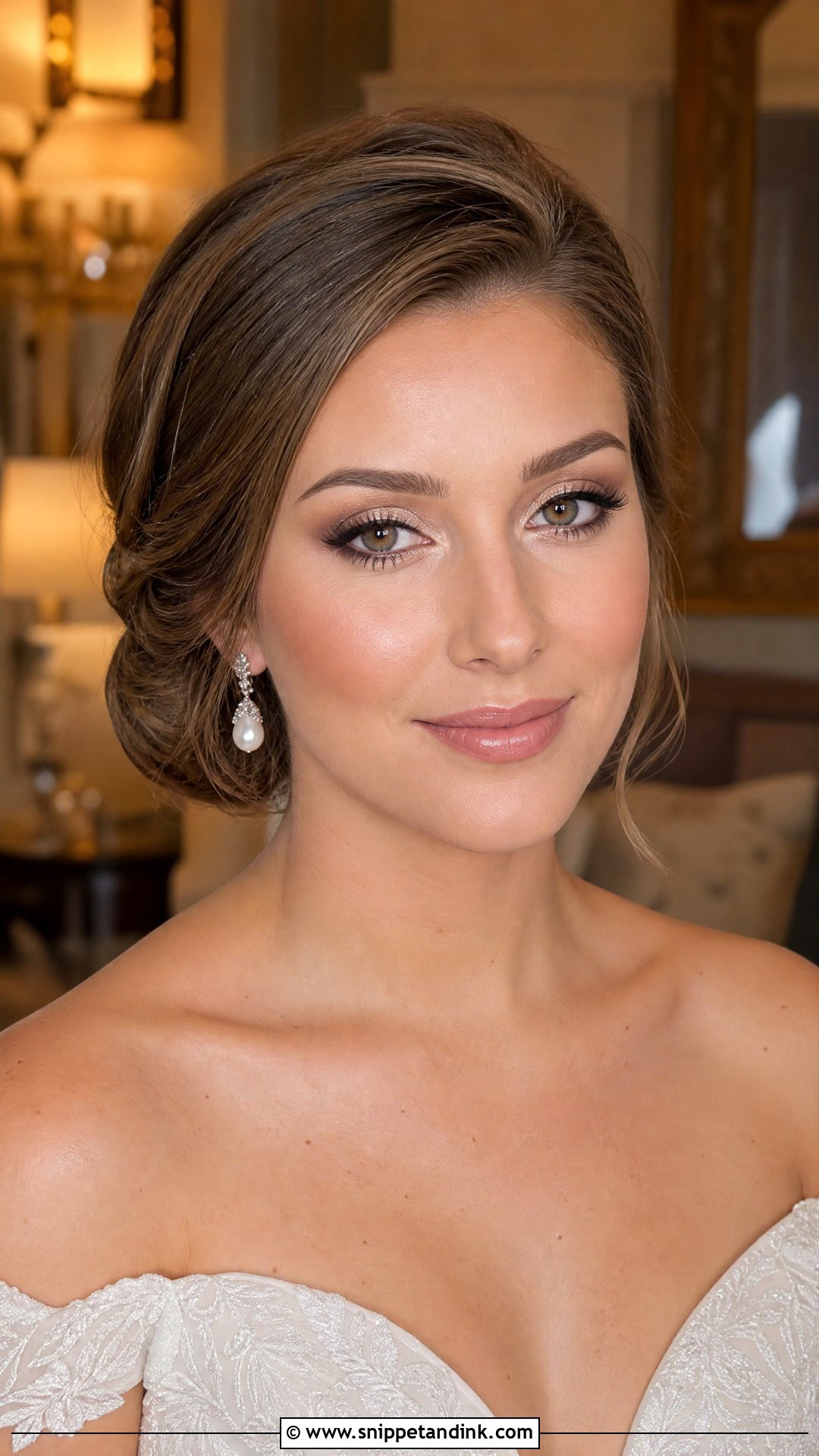
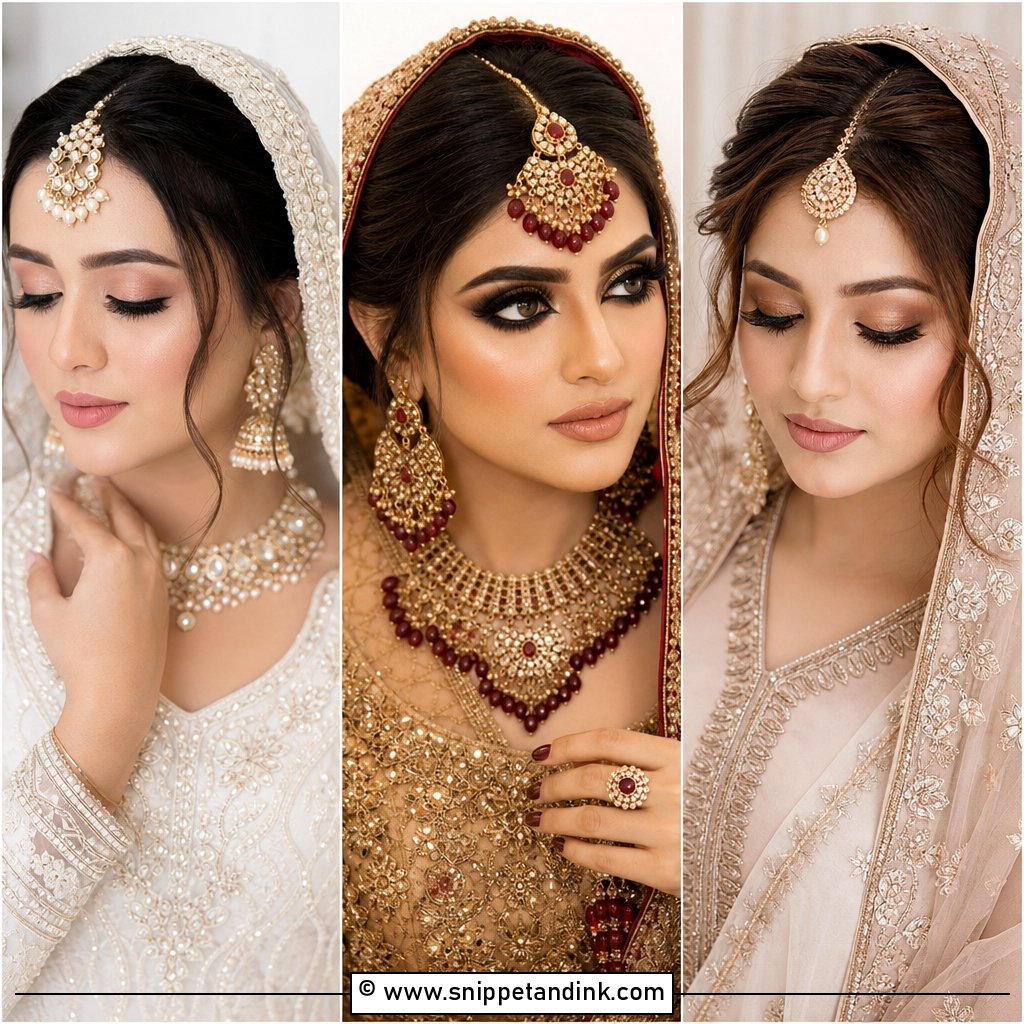
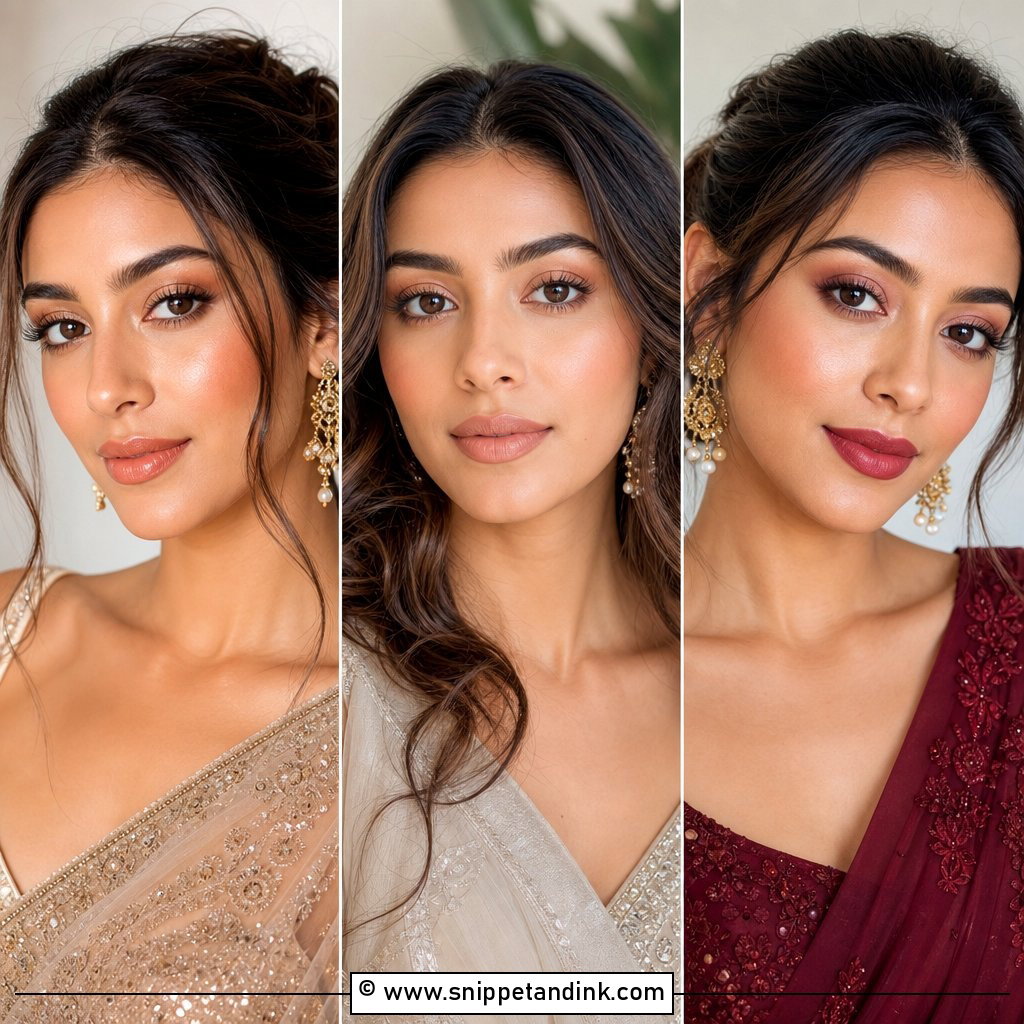
Soft glam is the middle ground, and it suits almost any dress. I build the base with a medium-coverage satin foundation so the skin looks smooth without going flat. On the eyes I blend warm taupe through the crease, a soft brown at the outer corner and champagne shimmer on the centre of the lid, then a thin brown or black-brown liner and fluffy lashes. Soft contour under the cheekbones, rose blush on the apples and a pearly highlight give the face shape. A pinky nude lipstick over a matching liner holds its edge far better through dinner than lipstick alone.
3. Dewy Bridal Makeup
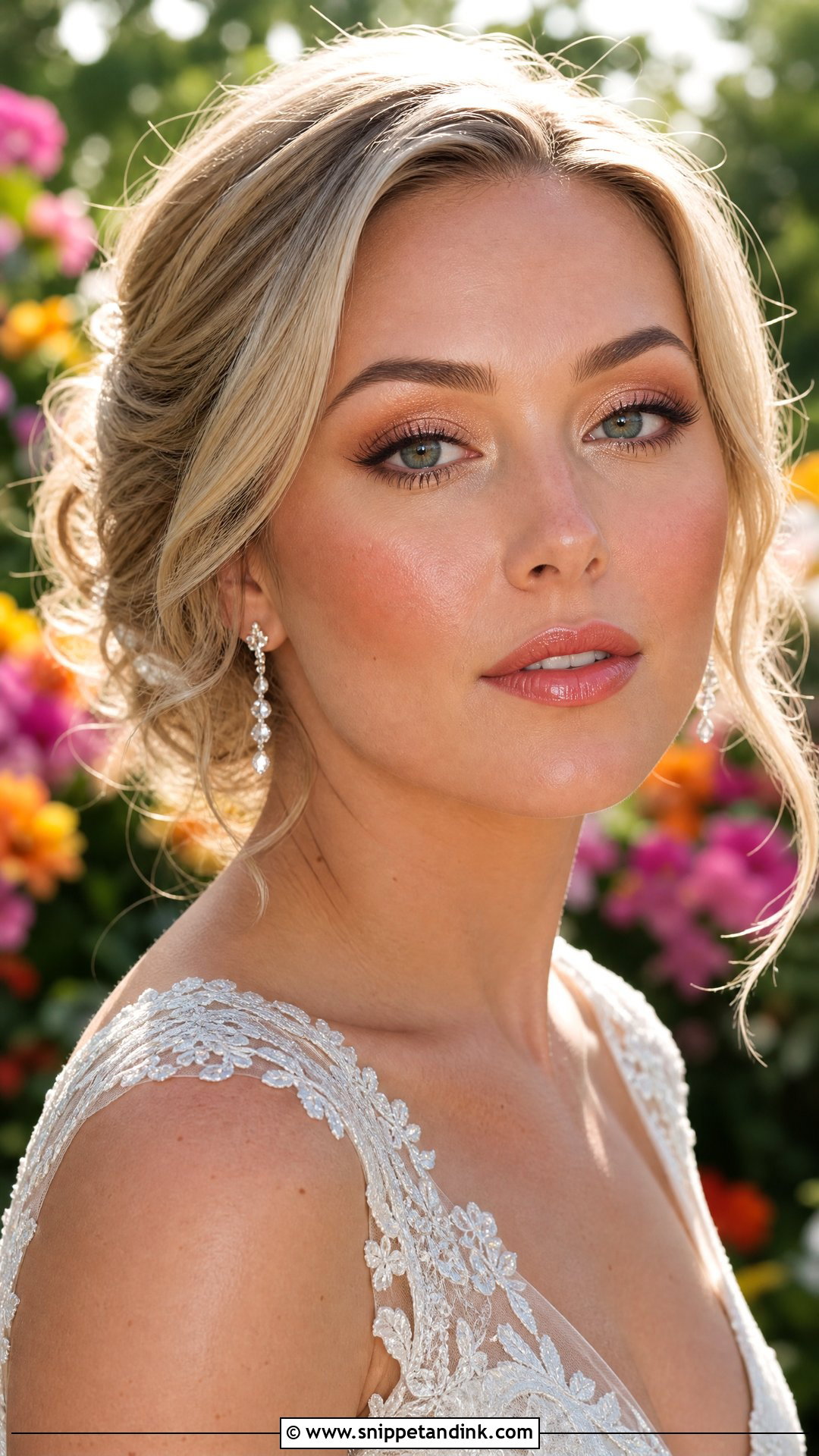
Glow is the point here, but controlled glow, not shine across the whole face. I prep with hydrating skincare and a radiant foundation, then set only the T-zone, the smile lines and under the eyes, because that’s where a dewy base breaks down first. Champagne shimmer on the lid, a light brown crease and well-curled lashes keep the eyes fresh, with brows softly filled rather than carved. Cream blush in peach, rose or coral melts into the skin in daylight, and liquid highlighter goes only on the high points. I’d hold back on this one for oily skin in a warm venue. By the speeches, dewy on oily skin usually just reads as shiny.
4. Matte Bridal Makeup
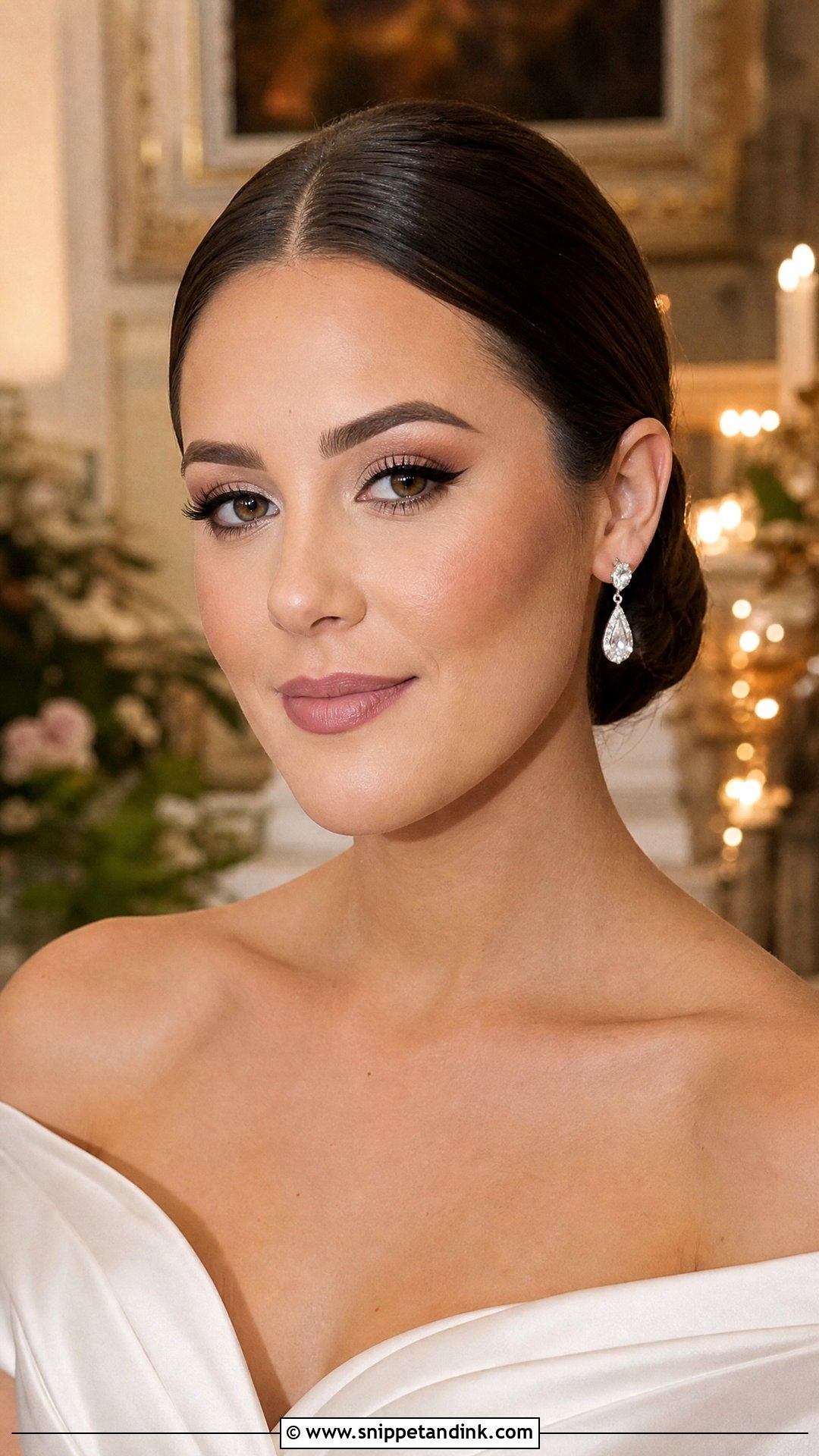
Matte is what I reach for when the weather is humid, the skin runs oily or the photographer works heavily with flash. The risk is a flat, dry-looking face, so I use a soft matte foundation and press in a finely milled powder in thin layers instead of dusting it all over. Matte ivory, taupe and soft brown shadows give clean definition, and a thin wing with full lashes and structured brows keeps it classic. Powder blush and a natural contour stop the cheeks from disappearing. A satin-matte nude or rose lipstick is the one place I let a little sheen back in, because fully matte lips crack and look dry by the evening.
5. Classic Bridal Makeup
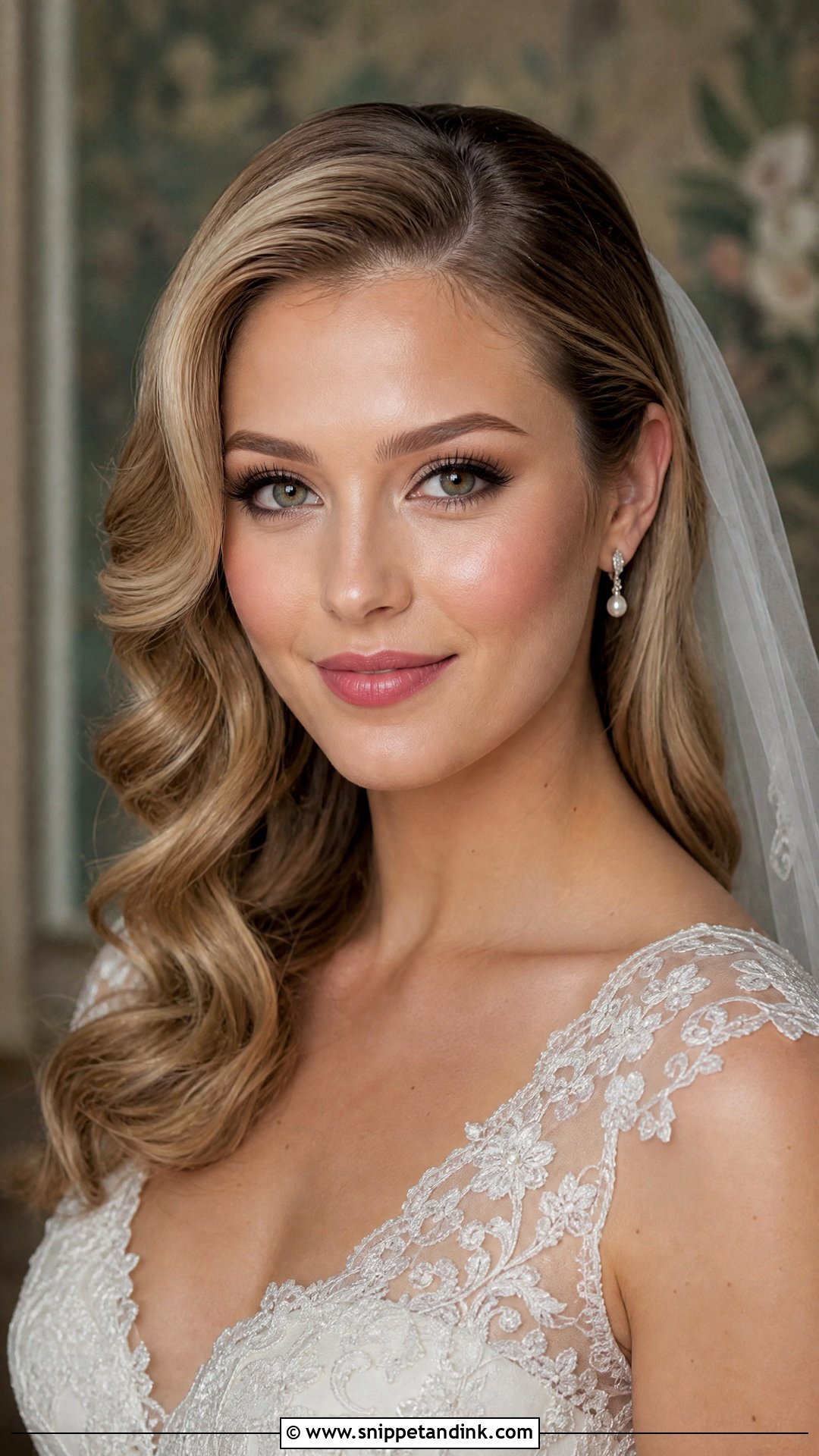
Classic makeup stays current because it’s about balance rather than trend. Even skin, softly defined eyes, rosy cheeks and a lip that suits your natural coloring are the whole formula. I use a medium-coverage foundation with a satin finish, neutral shadows in cream, taupe and soft brown, and a clean black or brown liner along the upper lashes. Lashes should look full but never heavy. A gentle contour adds structure and pink or rose blush keeps the face bright, with a creamy rose or mauve lip. It sits naturally under a cathedral veil and with a sleek bun, which is why traditional portrait photographers like it so much.
6. Romantic Bridal Makeup
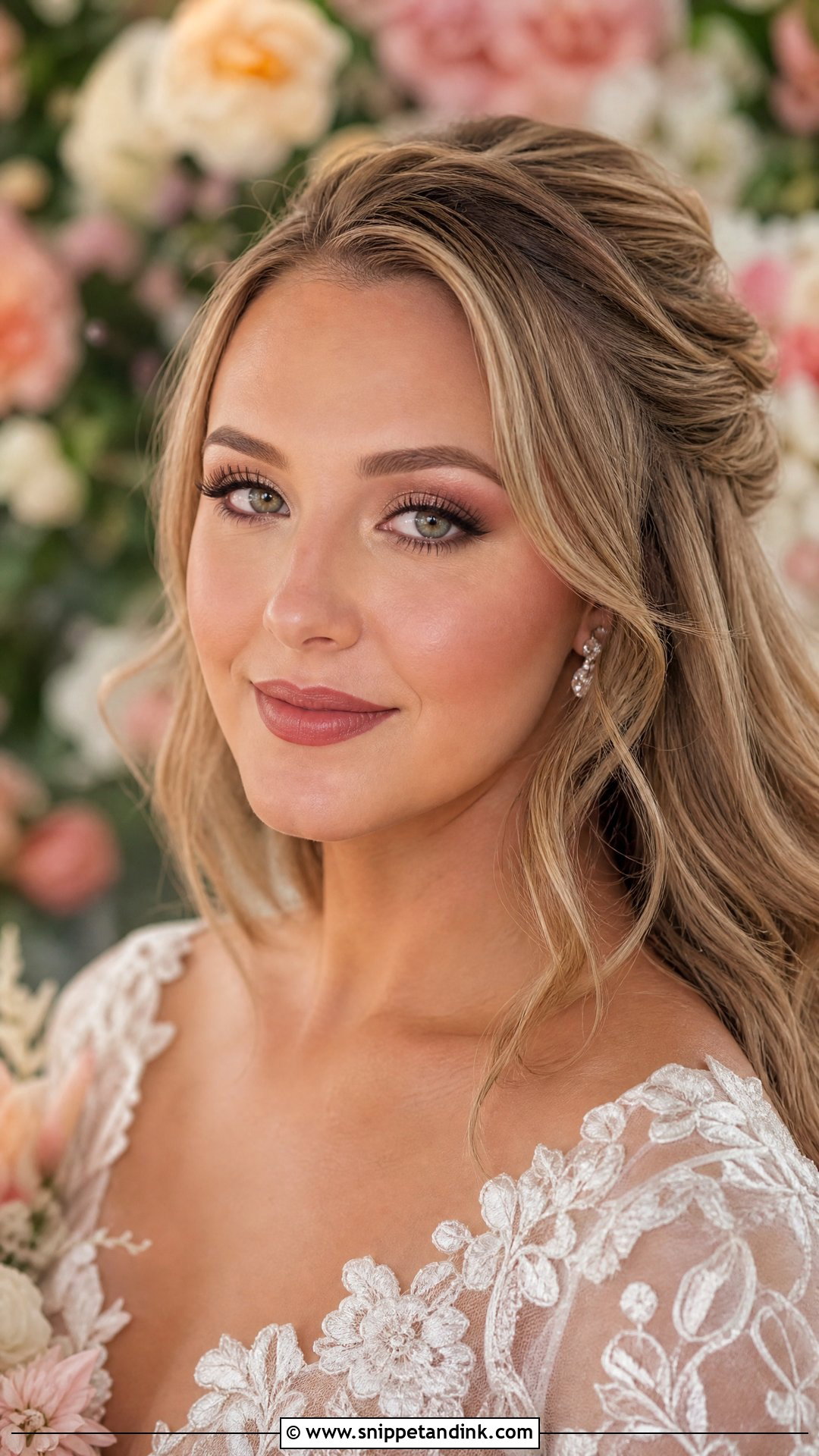
Blush leads this look. I keep the skin smooth with just a little glow and put the color into the cheeks and lips first, in rosy, peachy or petal-pink tones, before I touch the eyes. Mauve, dusty rose or warm beige shadows go on with no hard edges, and I use brown liner smudged softly along the upper lash line because black looks too sharp next to all that softness. Fluttery lashes, brushed-up brows and a satin rose lipstick or tinted gloss finish it. If your features are very small or fine, keep the blush sheer. Built too strongly, the effect tips from flushed to feverish in close-ups.
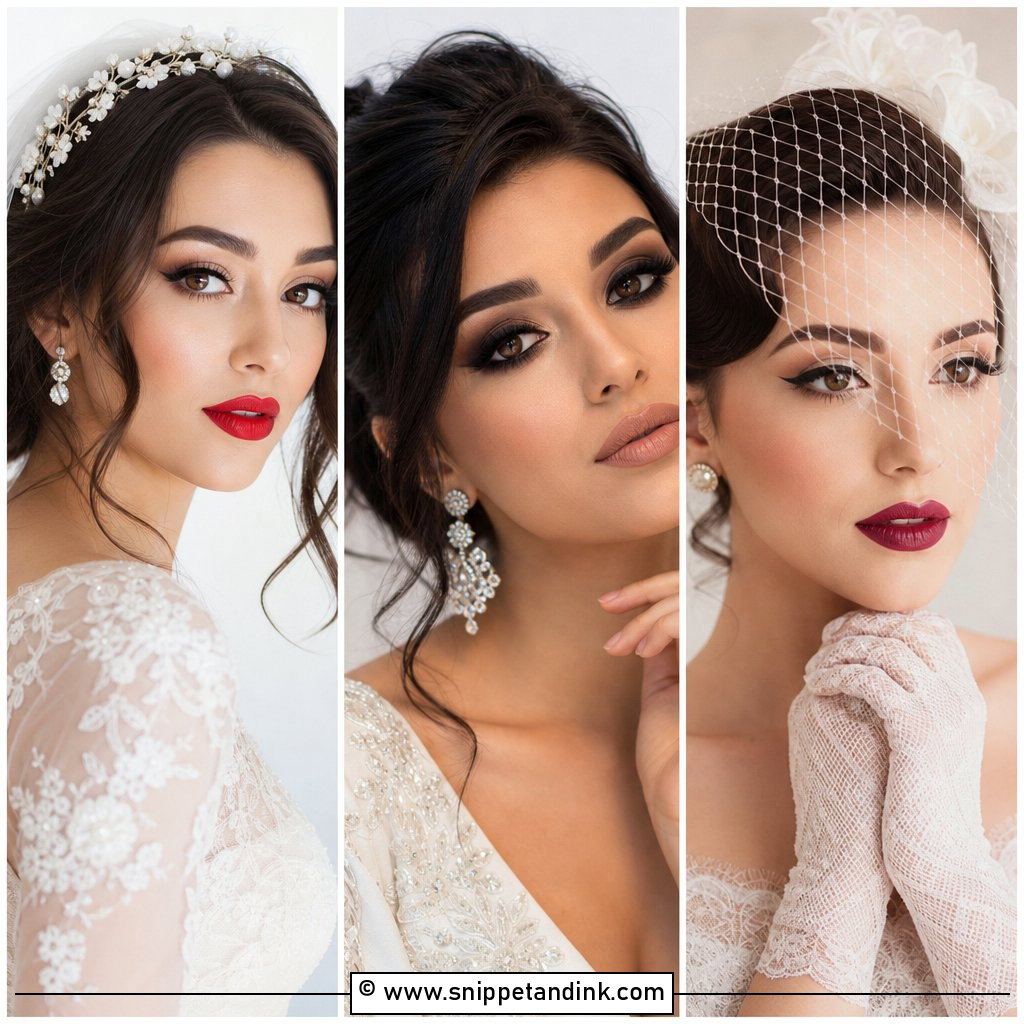
7. Smokey Eye Bridal Makeup
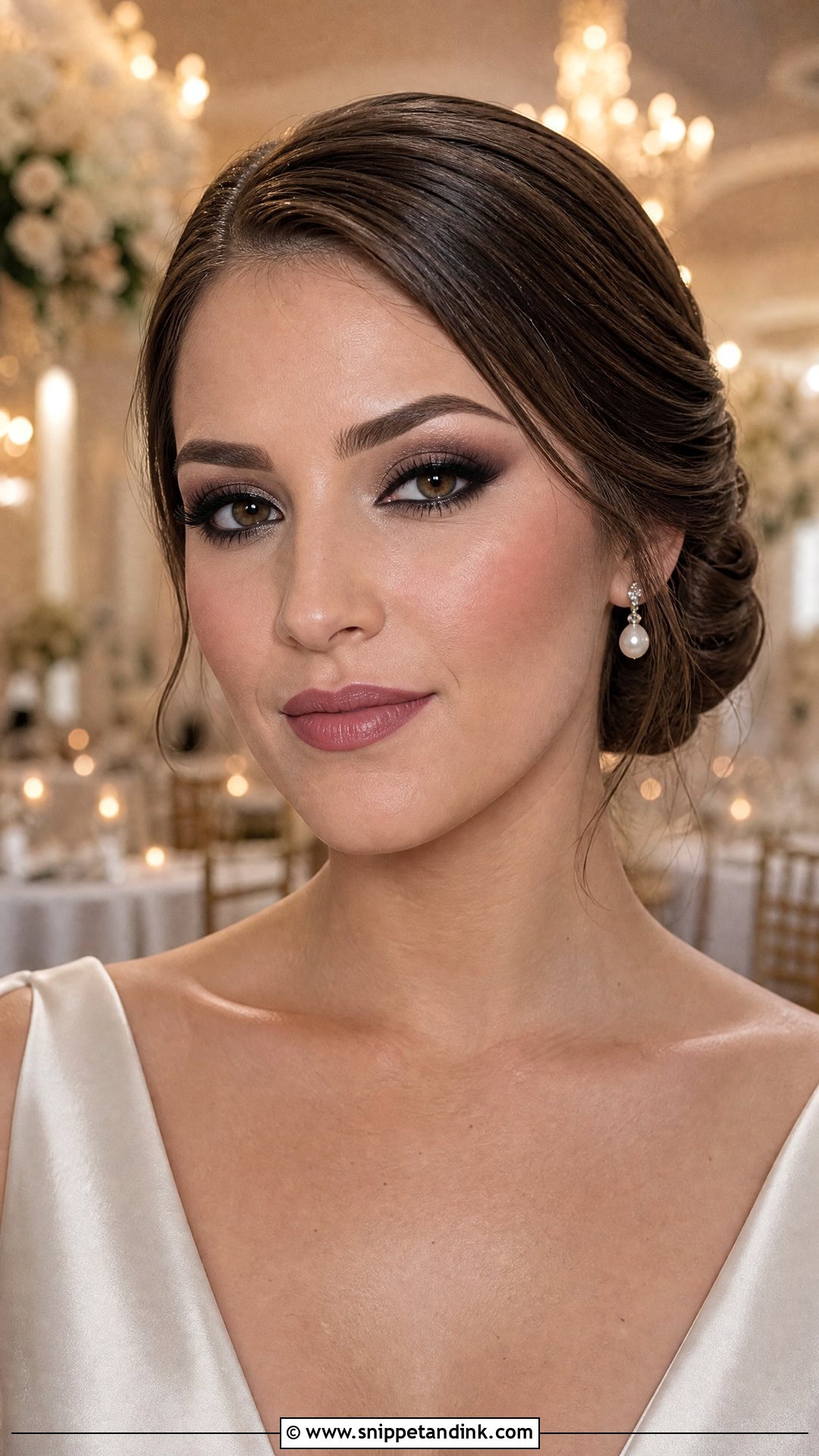
Smokey eye bridal makeup works at a wedding when it’s soft and fully blended. I skip true black and use taupe, bronze, espresso, plum-brown or soft charcoal, keeping the deepest shade tight to the lash line and diffusing upward into a lighter crease color. A touch of shimmer pressed onto the centre of the lid gives dimension without making it dramatic. Balance it with polished skin, a neutral blush and a nude or muted rose lip. Waterproof liner and mascara aren’t optional here: a smoky eye that runs during the vows is the hardest thing to repair quickly. I’d steer evening and satin-gown brides toward this before daytime garden weddings.
8. Winged Liner Bridal Makeup
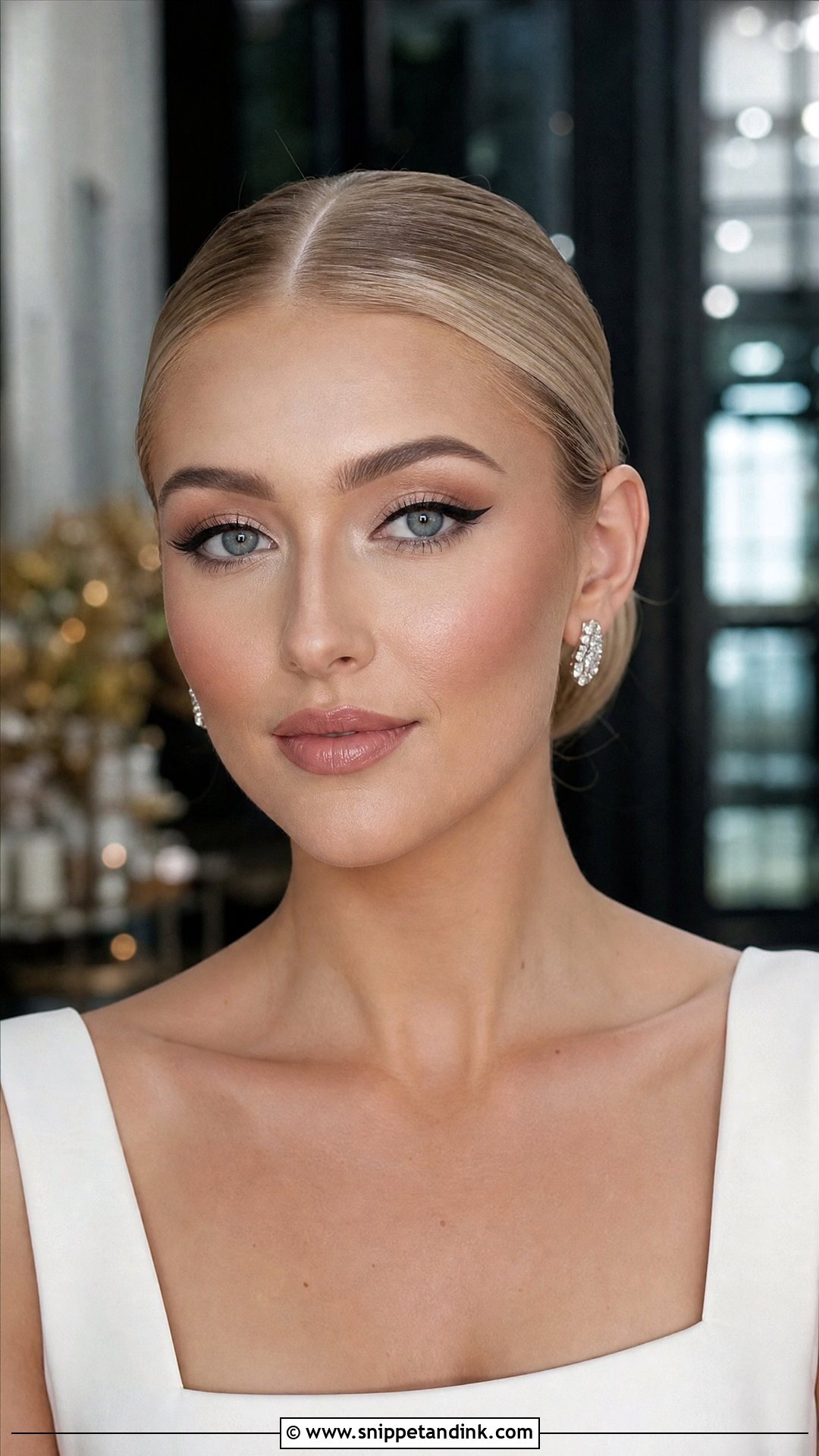
A wing only looks right when it follows your eye shape. On hooded eyes I draw it with the eyes open and looking straight ahead, because a wing drawn on a closed lid folds and breaks once the eye opens. The rest of the face stays soft: satin foundation, subtle contour, a fresh pink or peach blush, neutral matte shadows and a little champagne in the inner corner. The wing lifts slightly at the outer corner rather than stretching toward the temple, and wispy lashes take the hard edge off it. A nude-pink, rose or peach satin lip balances it. Sleek hair and structured gowns are where this one makes the most sense.
9. Red Lip Bridal Makeup
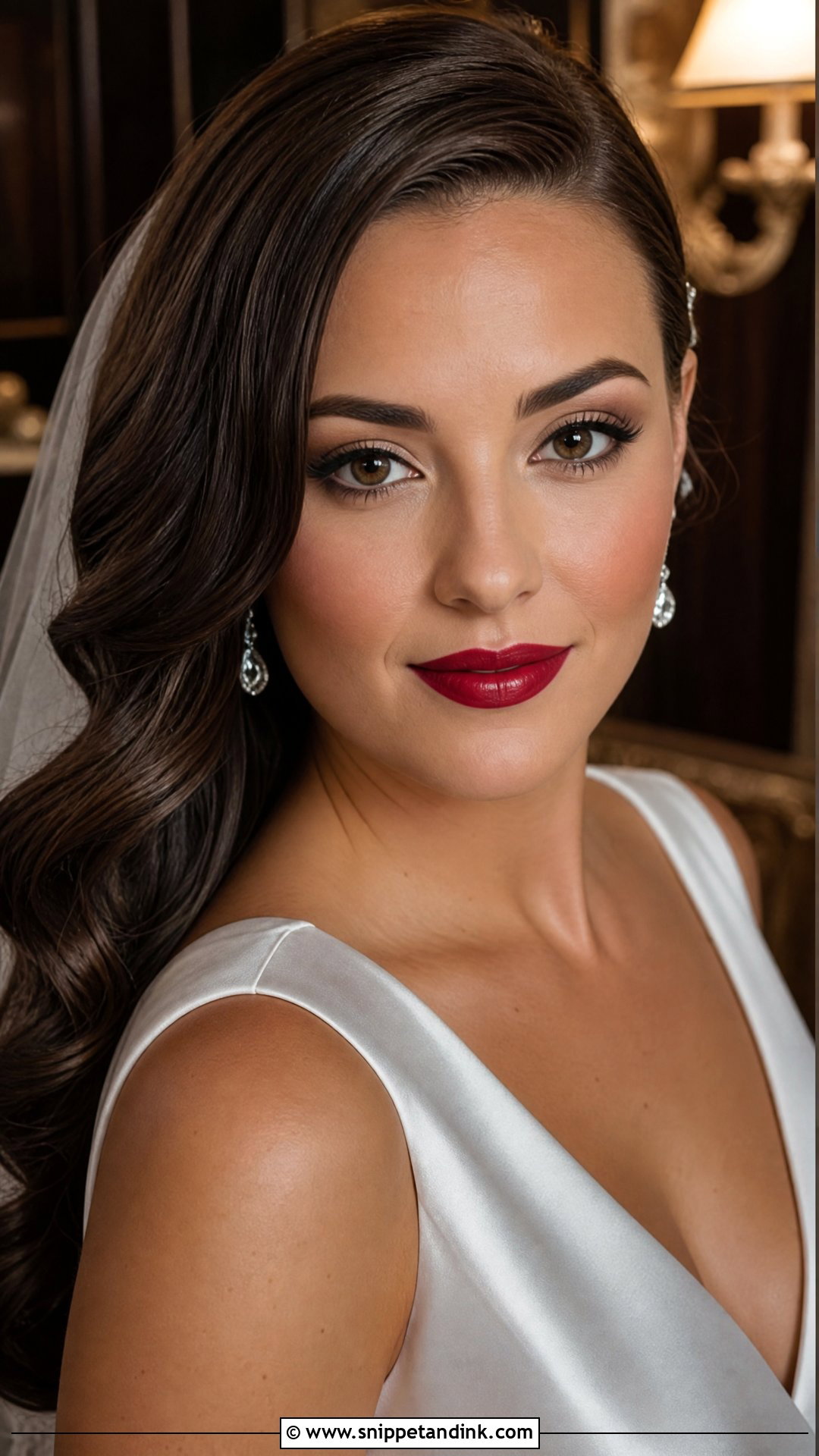
A red lip is the most classic bridal choice there is, and the most demanding to keep looking good. I pick the red by undertone: blue-red for cool skin, tomato red for warm skin and a deeper cherry for rich skin tones. The base needs to be flawless in a satin or soft matte finish, and the eyes stay simple with ivory shadow, a soft crease shade, black or brown liner and clean lashes. Blush stays muted so the cheeks don’t compete. I always line and fill the whole lip with liner before the long-wear formula goes on, then blot and layer, which is what stops feathering and the red ring on the champagne glass. It’s my first suggestion for formal weddings and vintage-inspired dresses.
10. Pink Bridal Makeup
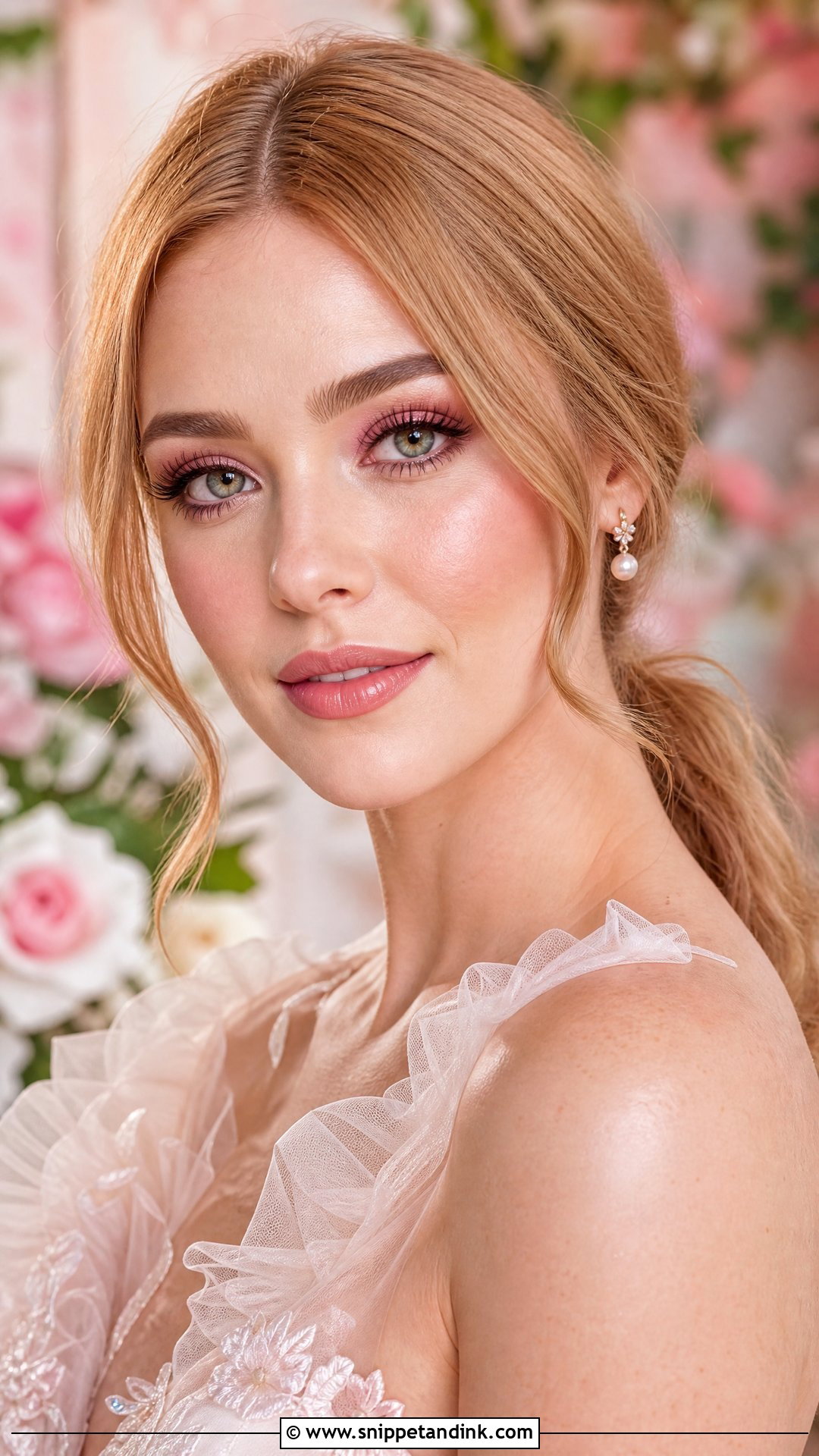
Pink is easy to get wrong because there are so many of them. Soft pinks, dusty rose, mauve-pink and peachy pinks all work, but which one depends on your undertone, and I usually swatch three on the jaw before choosing. Radiant or satin skin goes first, then pink blush placed high on the cheeks for lift. On the eyes I use champagne, rose gold, soft mauve or a matte pink-beige with brown liner and airy lashes. A pink liner under satin lipstick or gloss ties it together. The mistake I see most is the exact same bright pink on eyes, cheeks and lips; shifting the shade slightly from feature to feature looks more considered and far less costume-like.
11. Peach Bridal Makeup
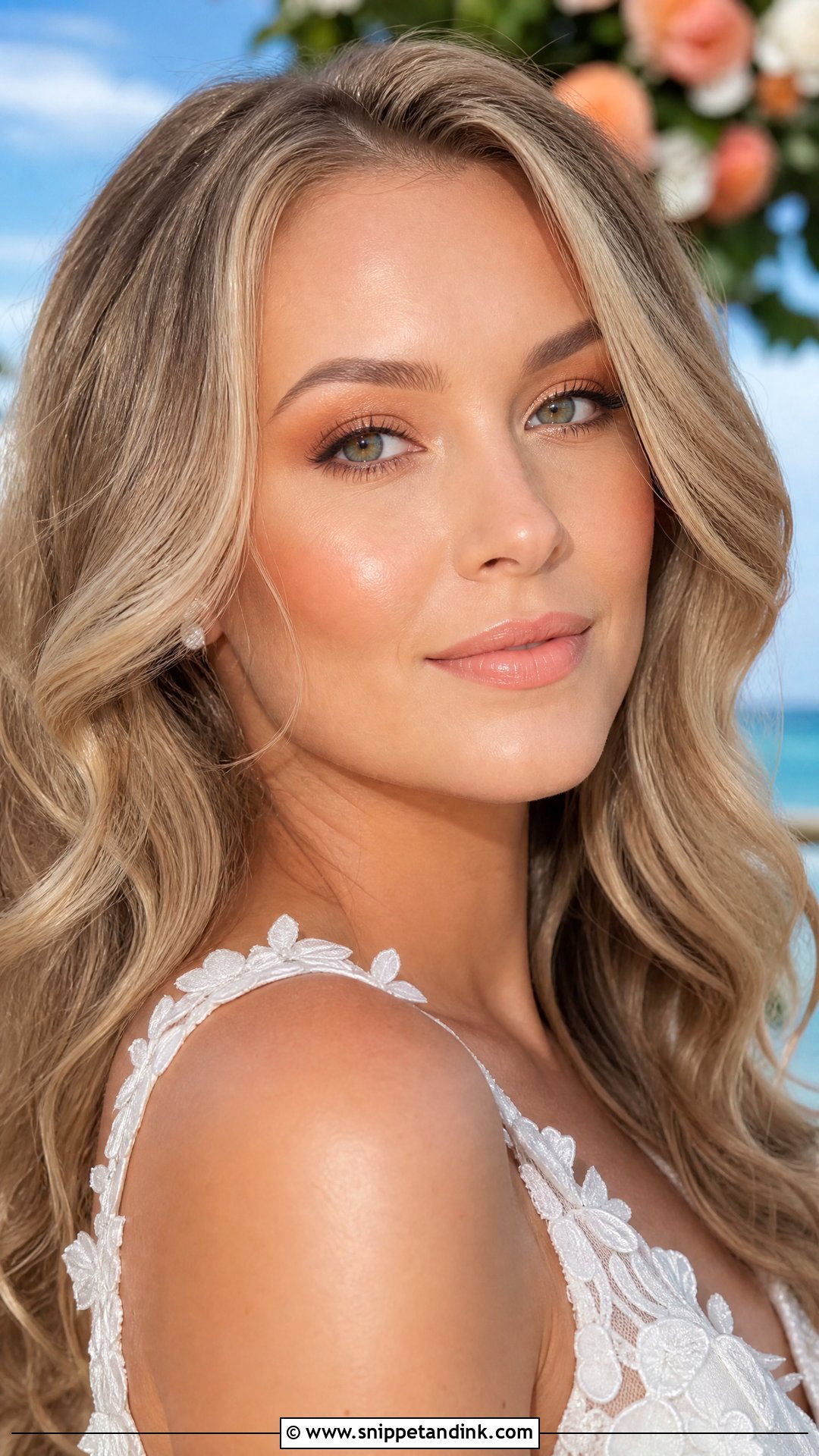
Peach brings warmth without boldness, and it’s particularly kind to skin that looks a little grey under outdoor light. I keep the foundation lightweight with a natural finish and sweep peach cream blush across the cheeks for a healthy flush. Peach-beige, warm brown and soft gold shimmer on the eyes, brown liner and well-curled lashes keep things open. A peachy nude or coral-peach lip adds warmth without stealing attention. The highlight stays golden and subtle; peach plus too much glow can tip into orange on camera, especially in late-afternoon sun at a beach or summer wedding.
12. Rose Gold Bridal Makeup
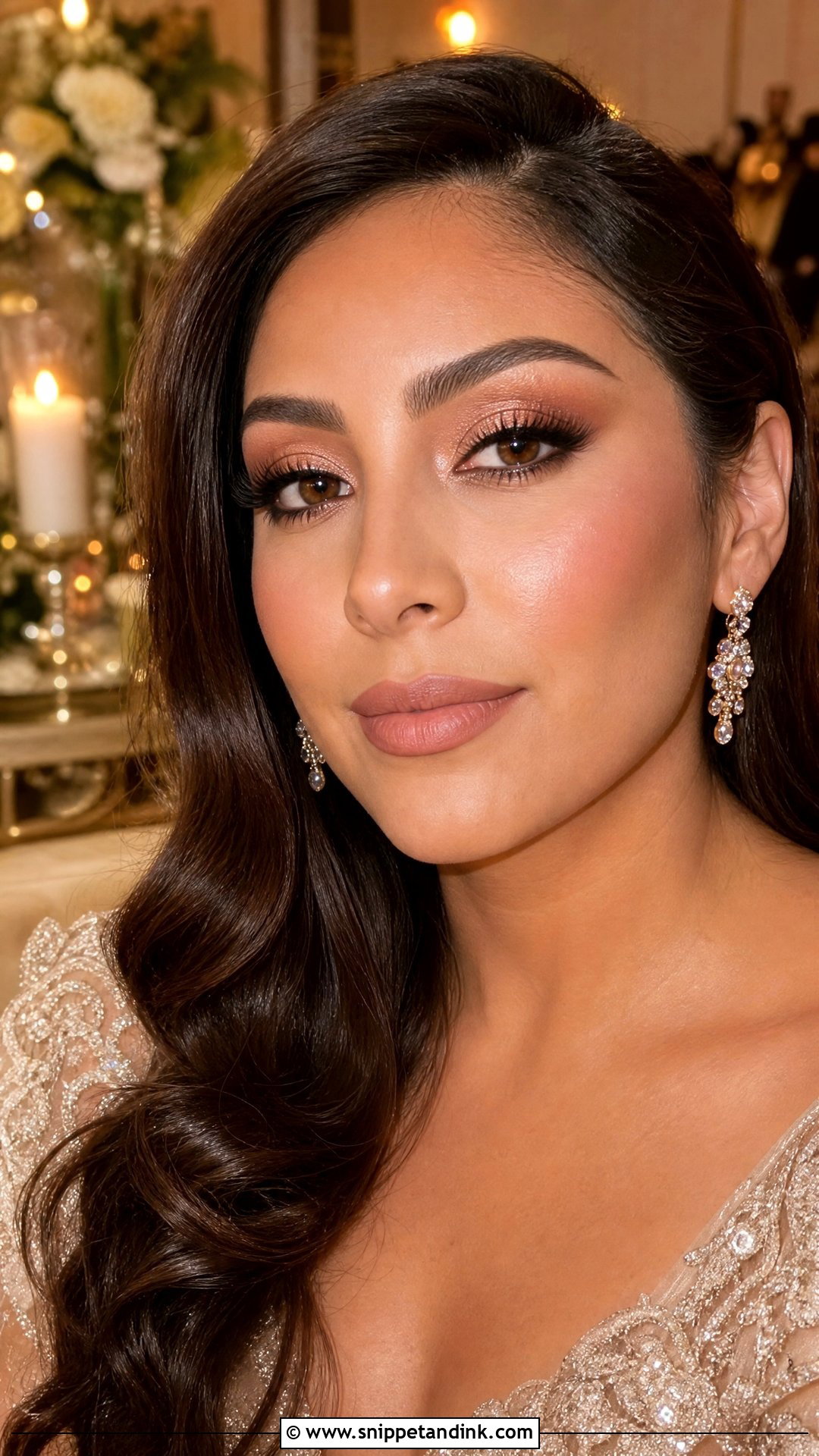
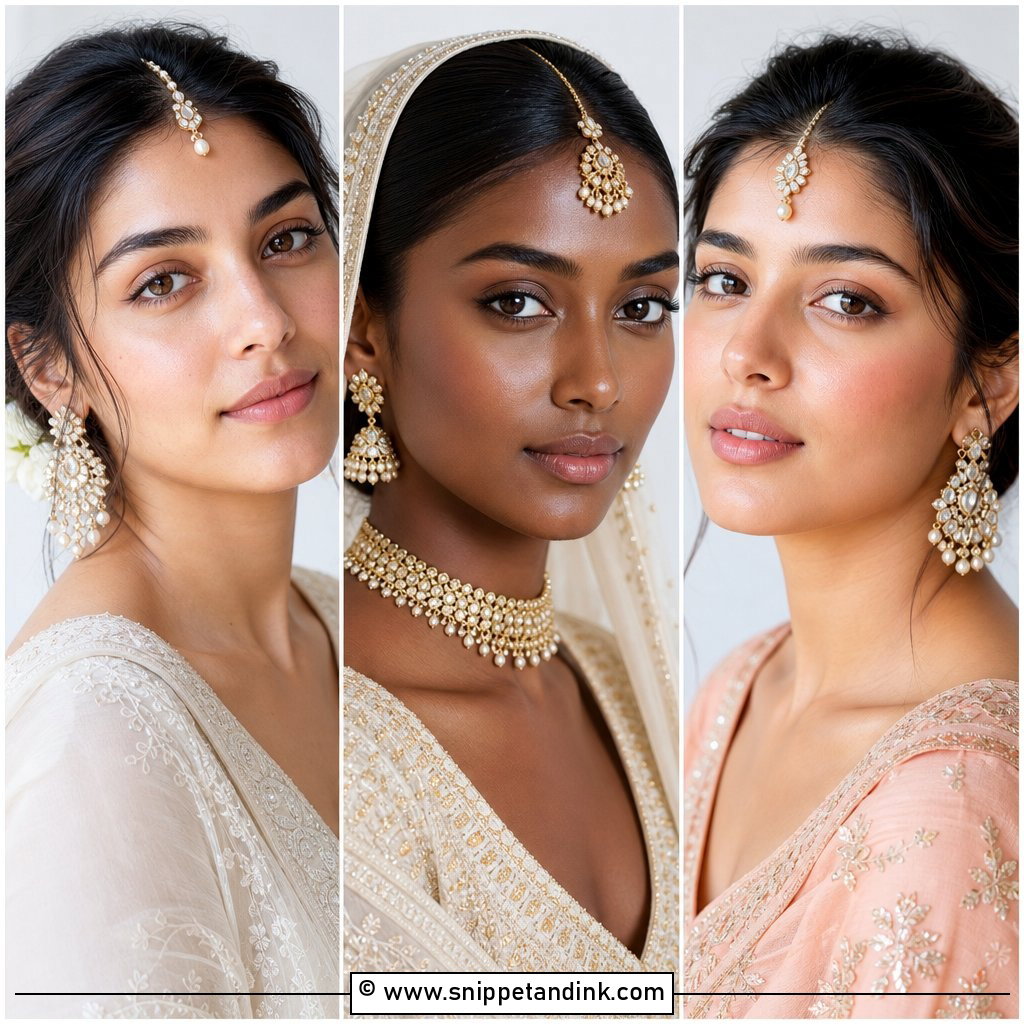
Rose gold on the lid brightens the eyes and sits easily beside rose, nude, peach or mauve lips. I start with a satin complexion and softly sculpted cheeks, put warm brown or mauve in the crease, then press the rose gold shimmer onto the lid with a fingertip. Pressing rather than sweeping matters, because metallic shimmer brushed on loosely ends up sitting on the cheeks by mid-afternoon. The lower lash line stays soft so the eyes don’t look heavy, and I add fluttery lashes, softly filled brows, rose blush and a satin nude-rose lipstick. It pairs especially well with champagne dresses and warm reception lighting.
13. Champagne Bridal Makeup
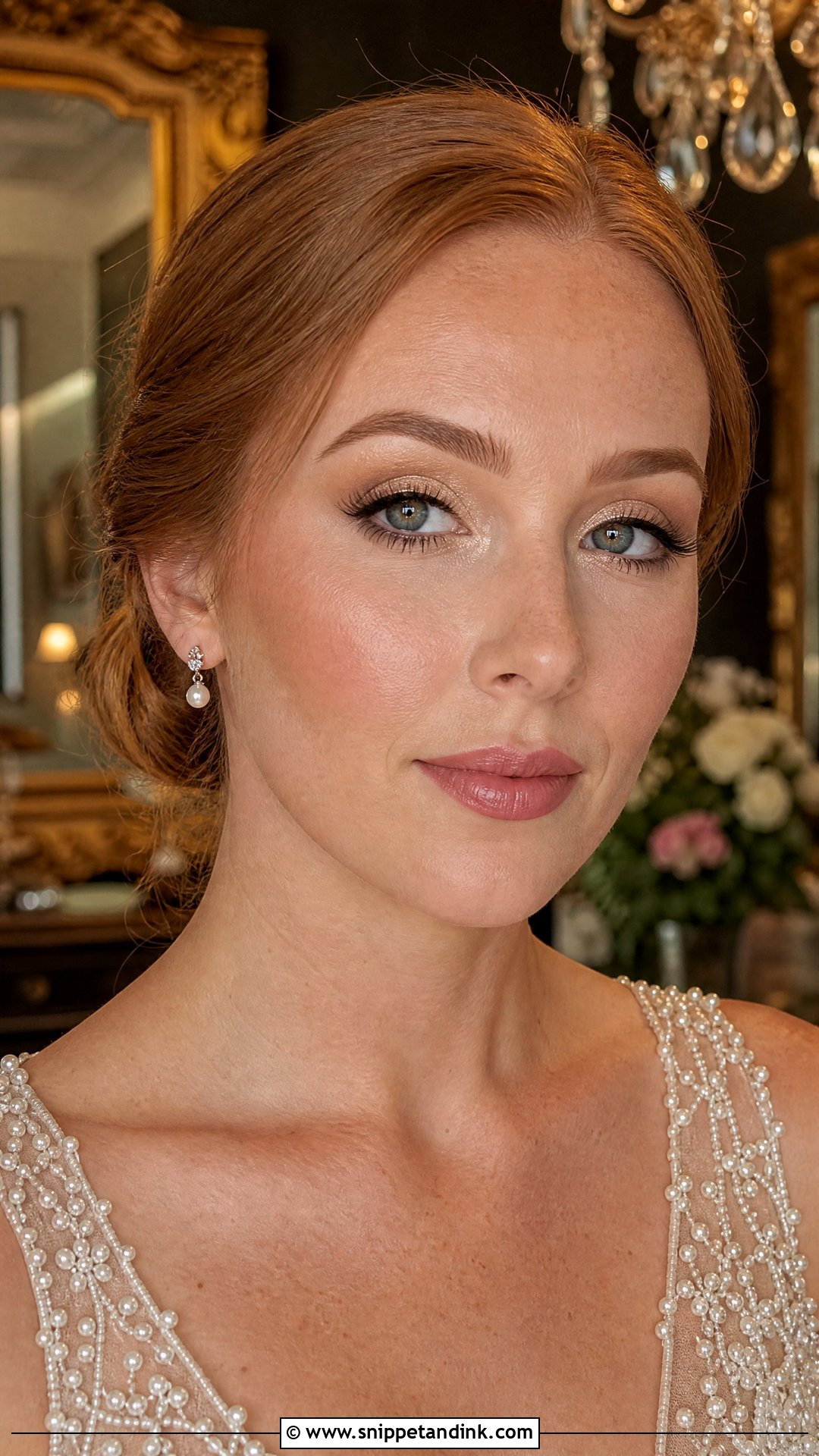
Champagne is the shimmer I trust on almost everyone, because it catches light softly without adding obvious color. On the lids I lay down cream or beige first, then soft brown in the crease and champagne on the centre and inner corner, which makes the face look awake. Contour stays light, blush stays fresh, and liner and lashes stay natural. For lips, nude pink, beige rose or soft peach. If you want glow but feel uneasy with strong color, this is the safe option, and it holds up in both daylight and evening photos without needing a different approach for each.
14. Bronze Bridal Makeup
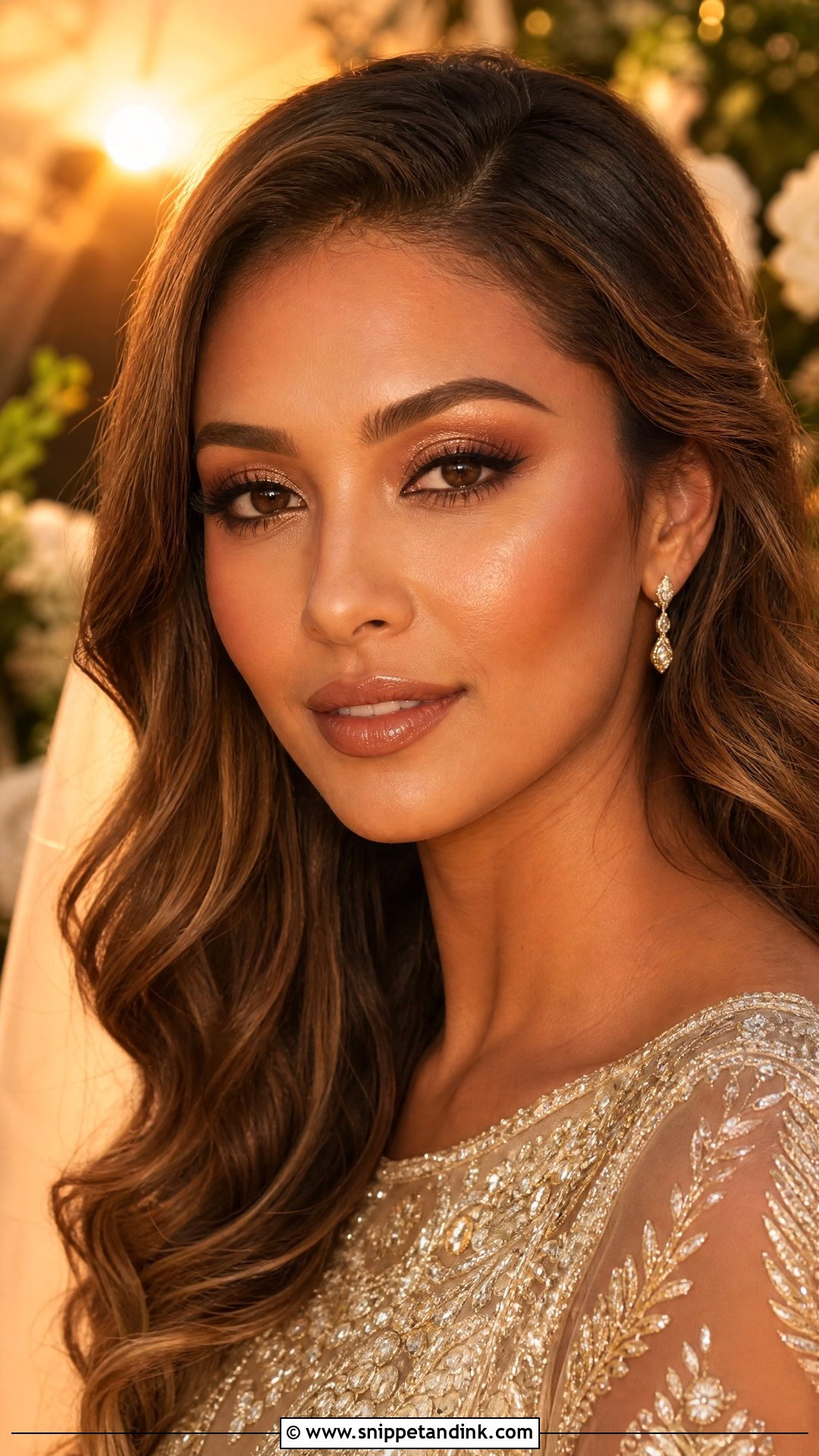
Bronze bridal makeup gives warmth and shape, but bronzer needs a light hand at a wedding. I build a long-wearing satin base and add bronzer only where the sun would naturally hit: forehead, cheekbones and the jawline. Bronze shimmer on the lid, warm brown in the crease and deep brown liner near the lashes, with soft but defined brows. Peach or terracotta blush blends into the bronze, and a warm nude lip completes it. I keep highlight sparing, because bronze skin plus heavy highlight reads as oily in flash photos. Destination ceremonies and golden-hour portraits are where this look comes into its own.
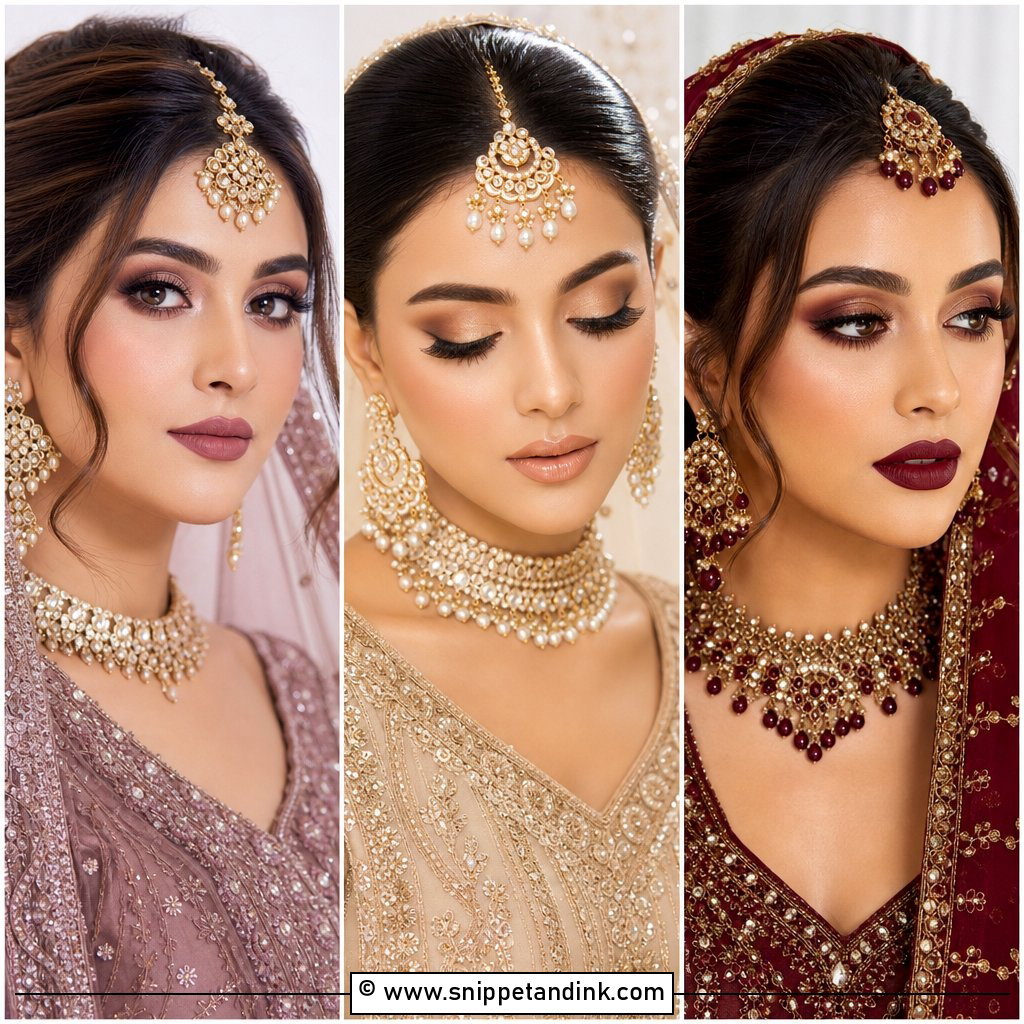
15. Brown Bridal Makeup
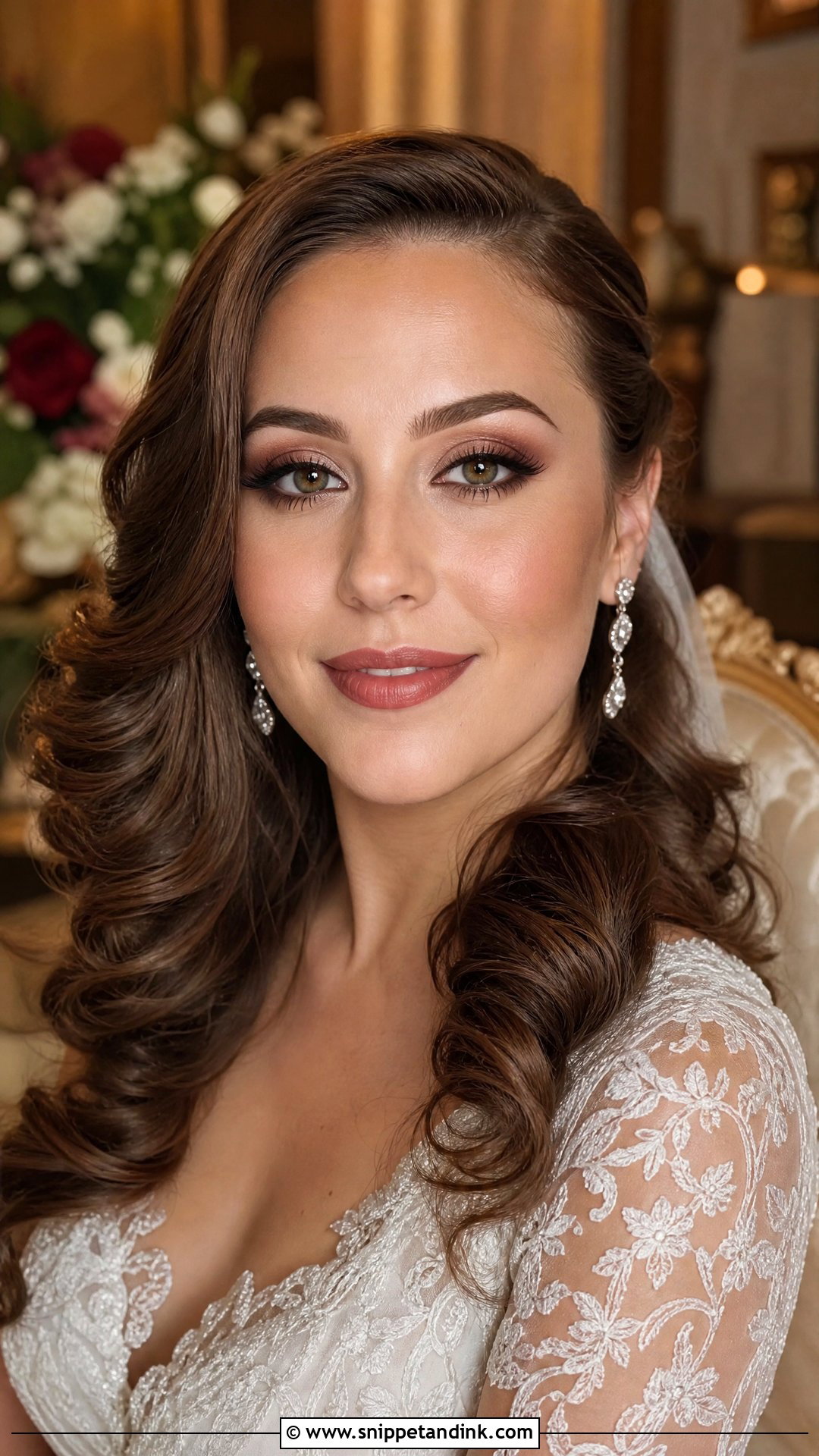
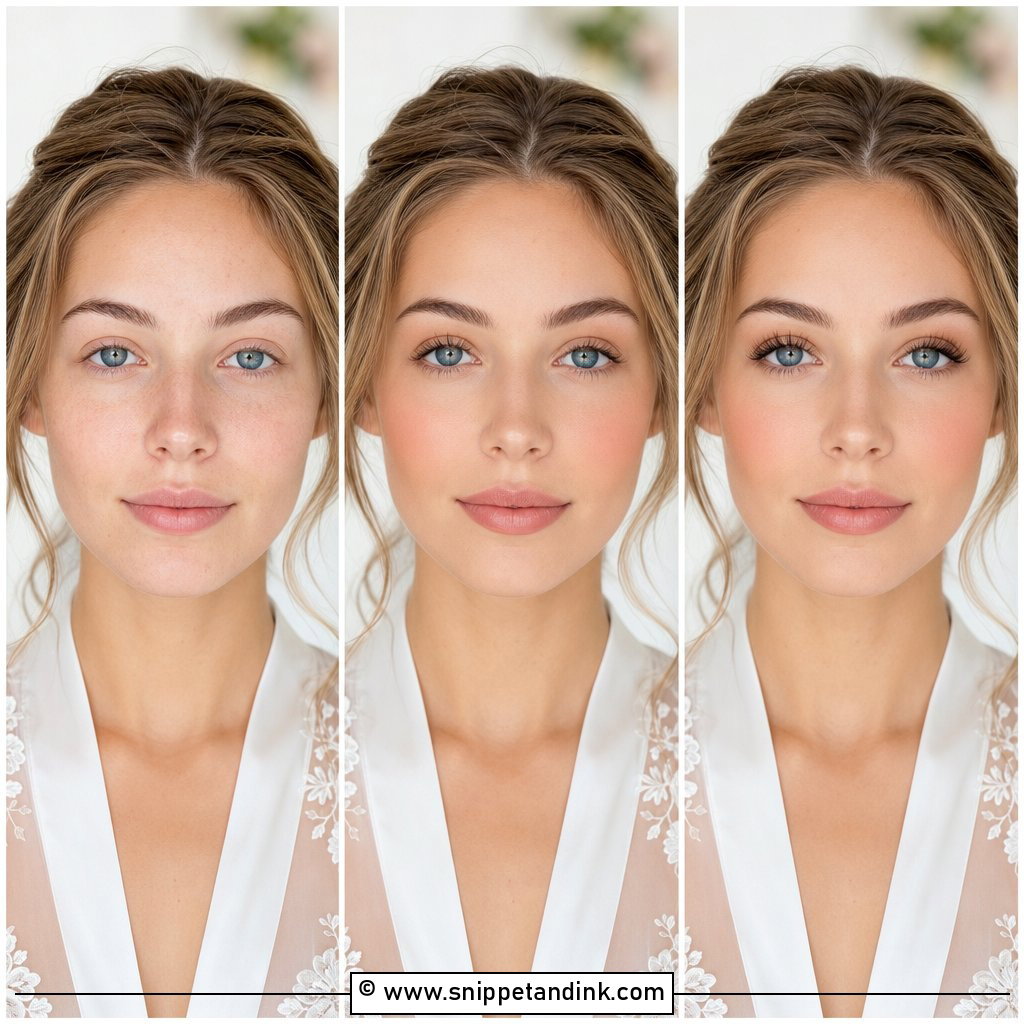
Brown gives definition without the drama of black, and it suits nearly every eye color. I choose the shade by skin depth: caramel and taupe on fair skin, cocoa and mocha in the middle, espresso on deep skin. The complexion stays smooth and natural, and the eye is built mainly from matte browns with only a touch of shimmer. Brown pencil smudged at the lash line gives a soft smoky edge that’s very forgiving if it moves during the day. Full but wispy lashes, warm blush and a nude-brown or rose-brown lip finish it. It’s quiet makeup, and it looks expensive for exactly that reason.
16. Mauve Bridal Makeup
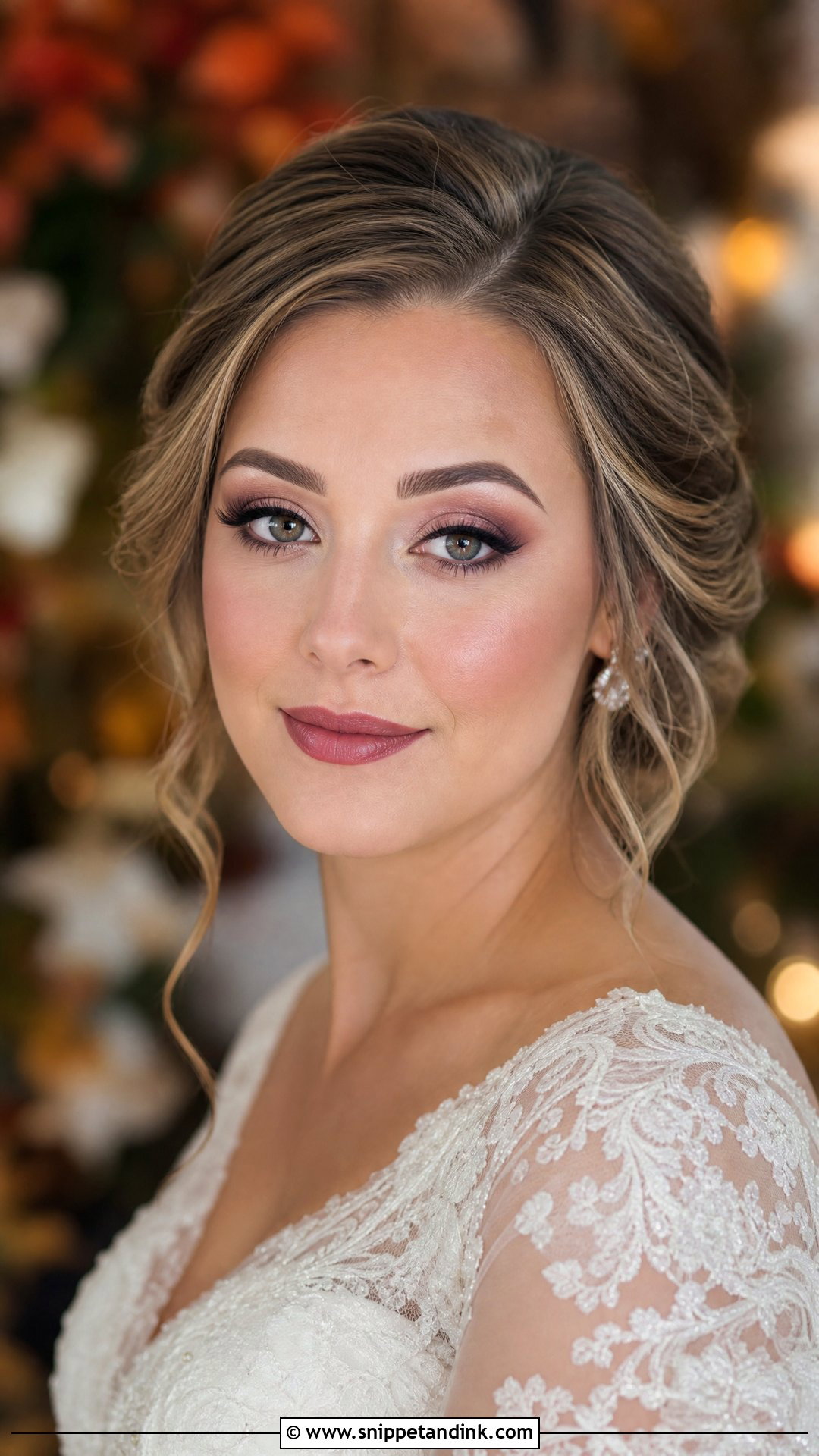
Mauve sits between pink, purple and taupe, which is why it gives color while still looking muted. I use a satin complexion with a cool rose or neutral pink blush, blend mauve-brown in the crease, soft plum close to the lash line and pale shimmer on the lid. Liner stays thin and lashes lifted. For the lip, mauve nude, rosy mauve or a soft berry-mauve depending on how much depth you want. It flatters green, hazel, brown, and blue eyes, though green and hazel eyes gain the most from it. One caution: on very sallow skin, mauve can look tired, so I warm the blush slightly. It suits fall weddings and cooler palettes well.
17. Full Glam Bridal Makeup
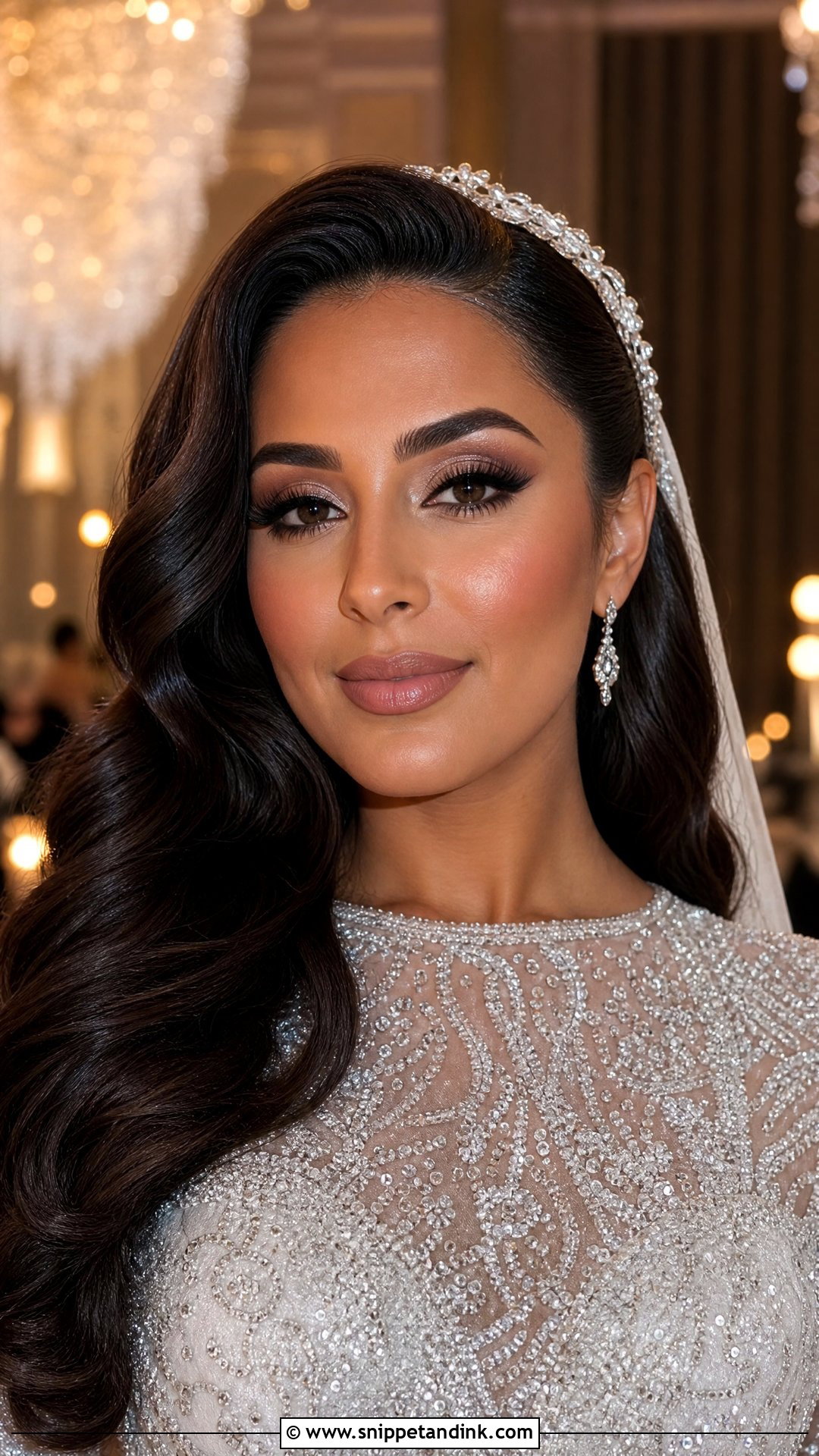
Full glam is for the bride who wears it often and feels like herself in it. The base needs to be flawless and long-wearing, blended down the neck so it never sits like a mask. Defined brows, layered neutral eyeshadow, black or deep brown liner and fuller lashes, then contour, bronzer, blush and highlight in balanced layers for dimension. I always pick one feature to lead, usually the eyes, and keep the lip nude, rose, mauve or soft brown to match. If you rarely wear makeup, I’d talk you out of this: you’ll spend the day feeling the lashes and the weight of the base rather than enjoying it.
18. Minimal Bridal Makeup
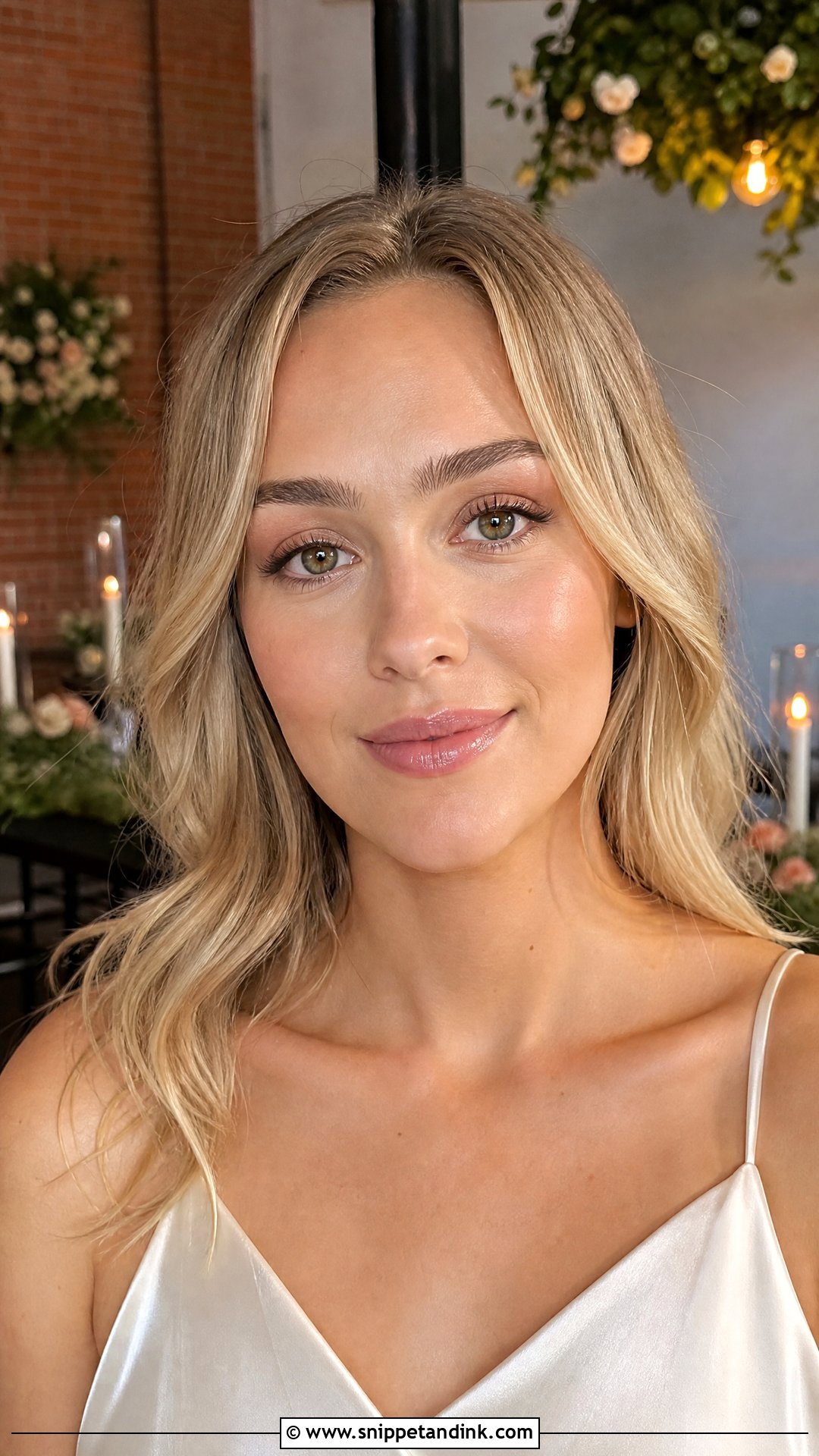
Minimal is the look most likely to disappear in photos, so it needs more thought than people expect. I focus on skin prep, spot concealing and a lightweight base instead of full coverage, then add clear or tinted brow gel, curled lashes and a little brown mascara or soft liner. Cream blush and a sheer highlighter keep the skin alive. Lips can be tinted balm, a soft gloss or a sheer nude-pink lipstick. Cameras flatten the face, so I add slightly more blush and lash definition than looks necessary in the mirror. In person it still reads as natural, and in photos it finally reads at all.
19. Vintage Bridal Makeup
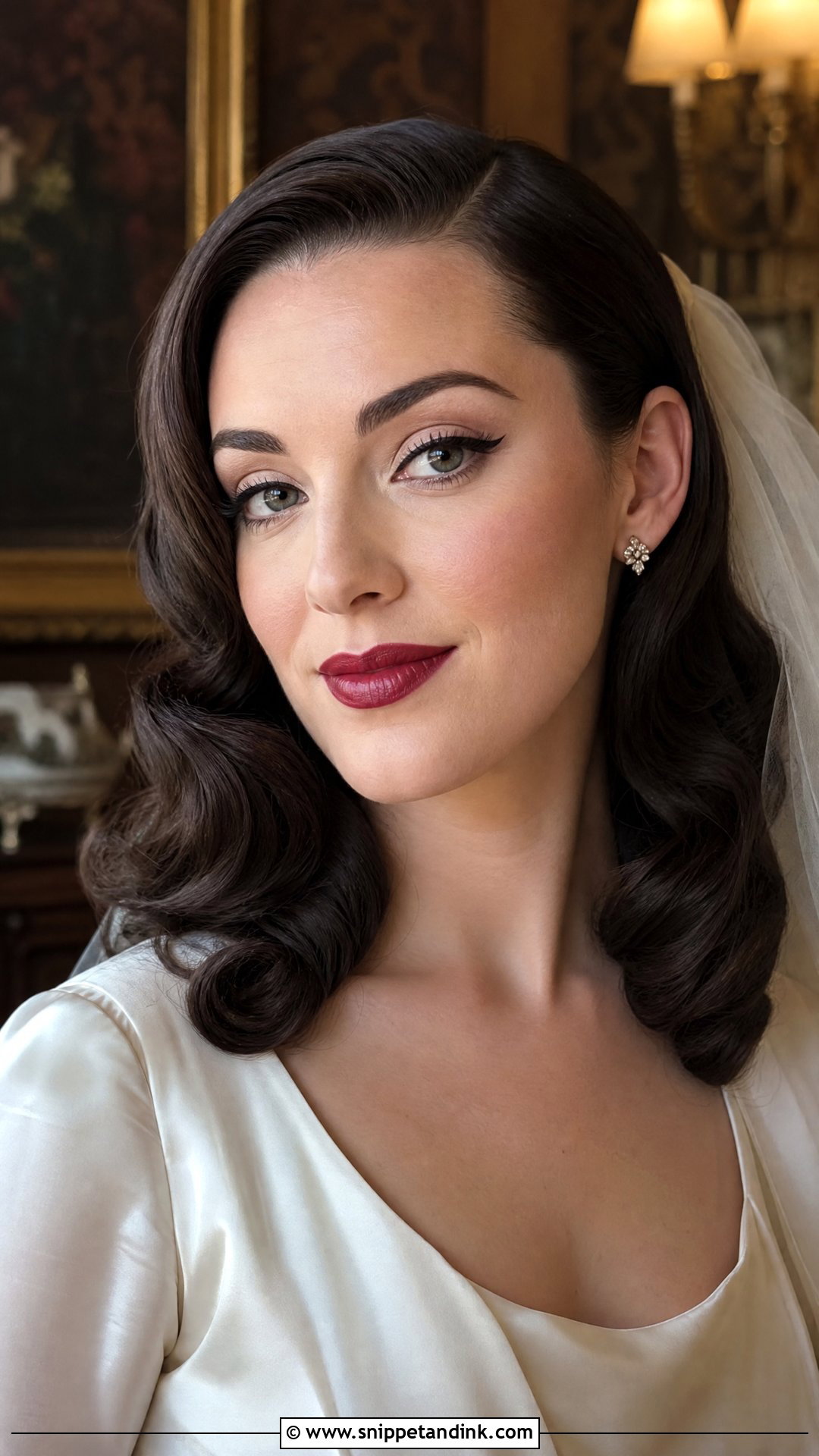
Vintage works when it borrows one detail and stops there; three vintage details at once starts to look like a costume. Pick a single feature to lead, such as a red lip, a soft wing, matte skin or sculpted brows. I keep the base smooth with a soft matte or satin finish, use ivory shadow with a gentle crease color and a clean liner shape, and keep lashes defined but not heavy. Muted rose or peach blush stops the face going pale. For lips, red, berry, rose or deeper pink, depending on your style. Satin gowns, birdcage veils and Hollywood waves are where this look belongs.
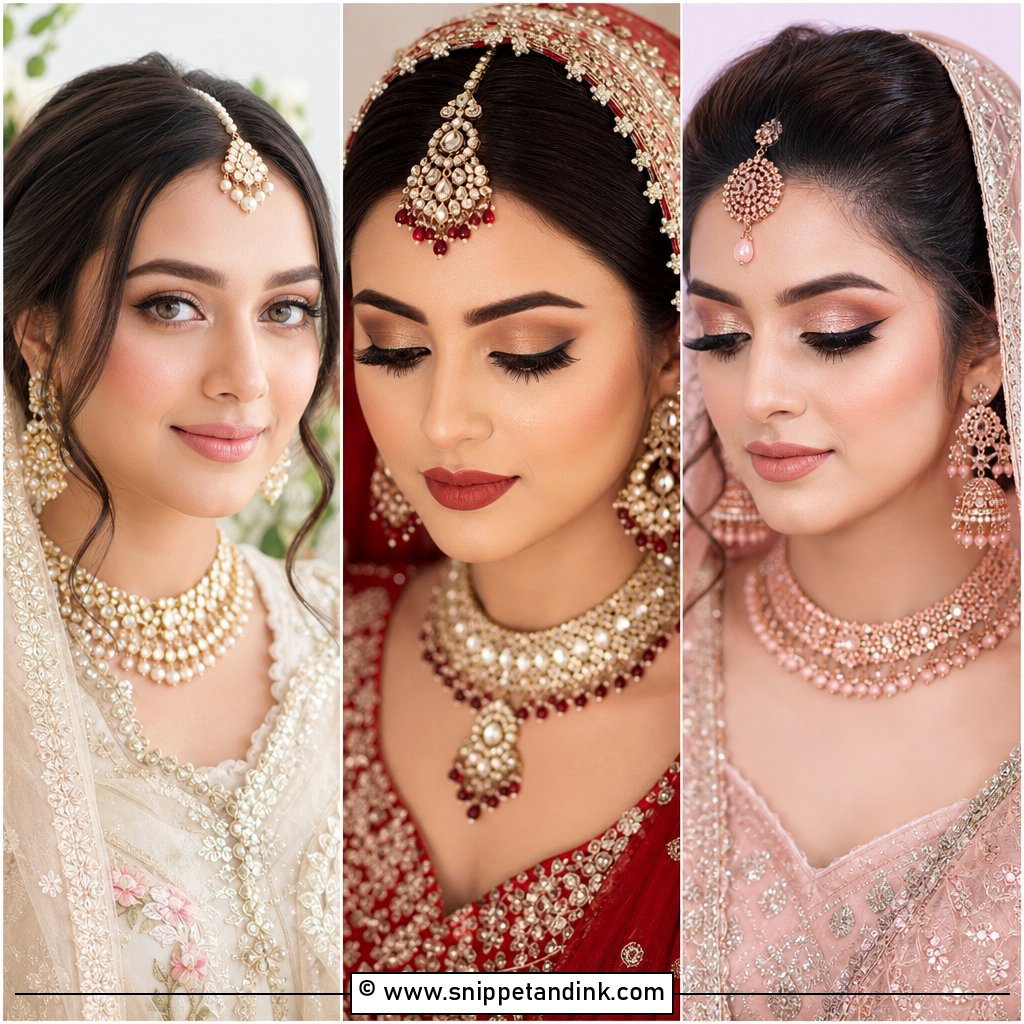
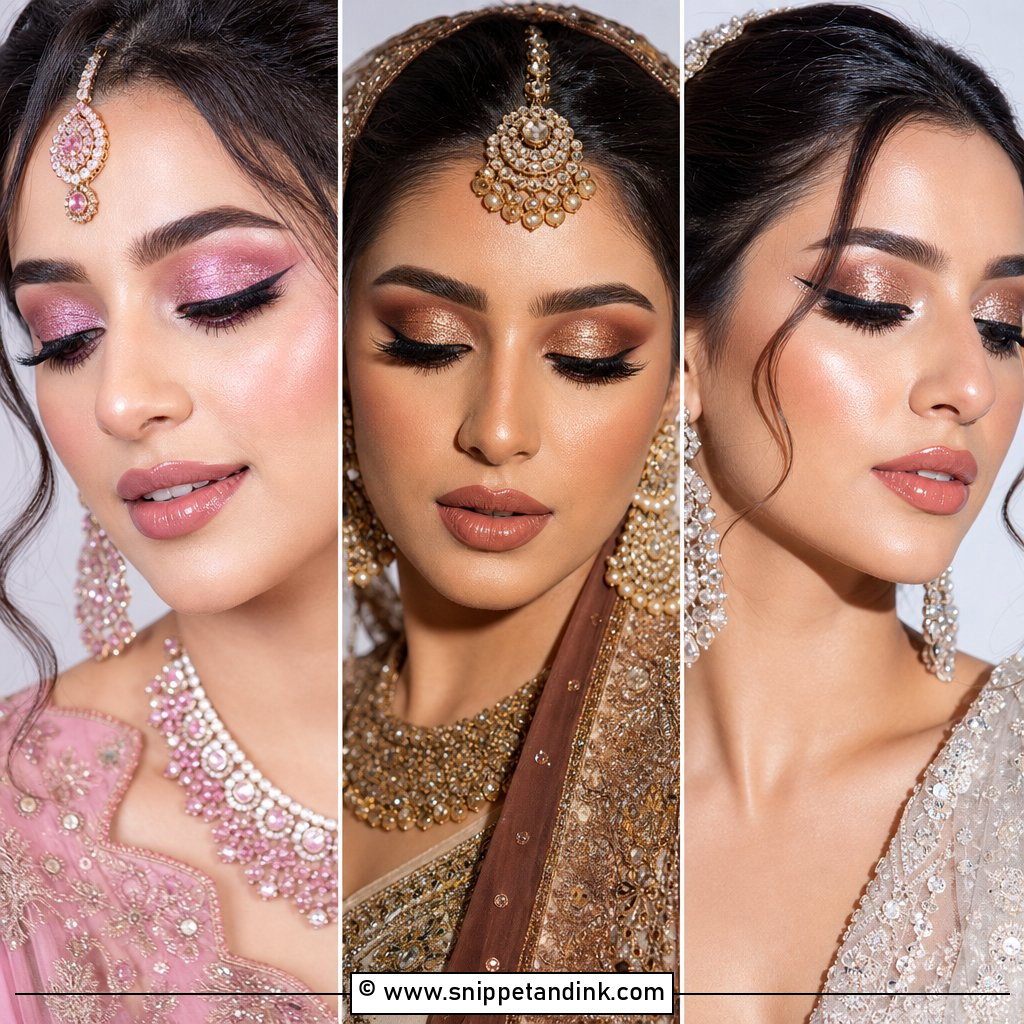
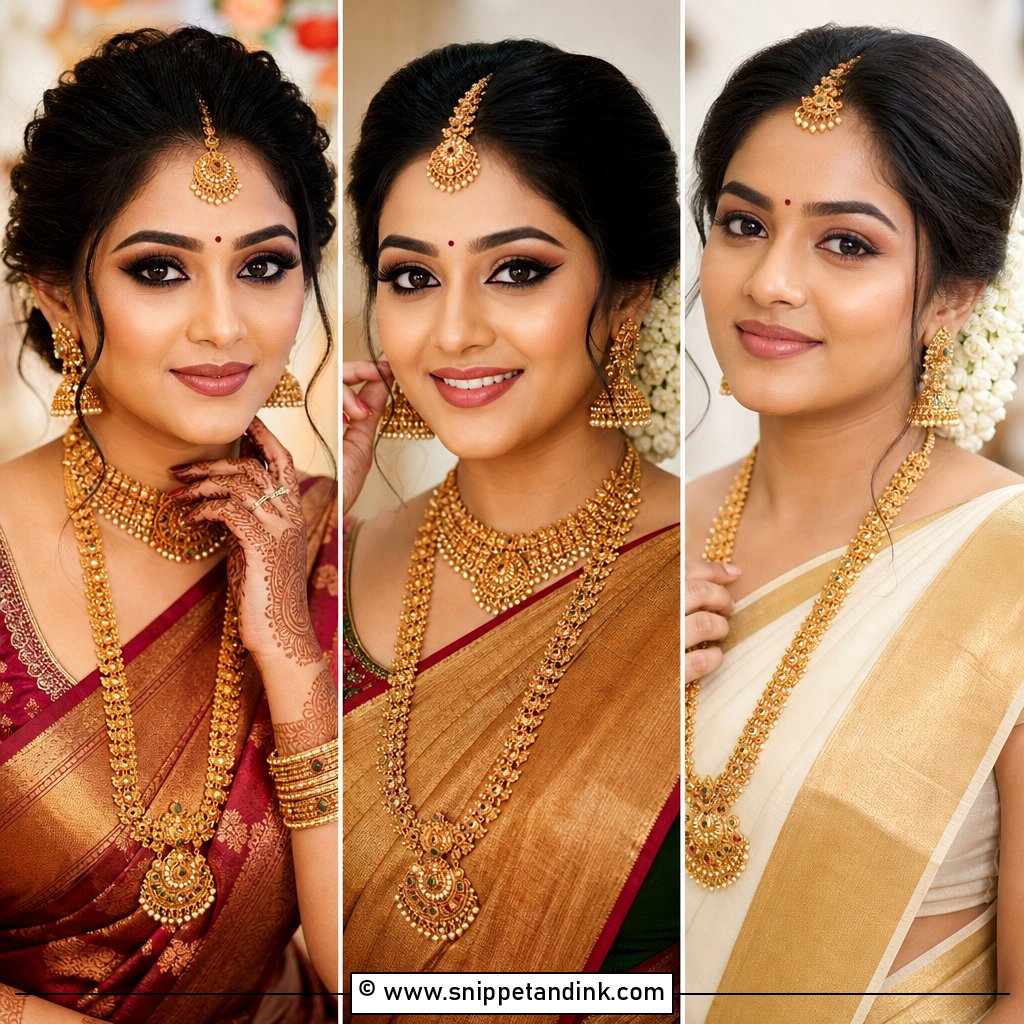
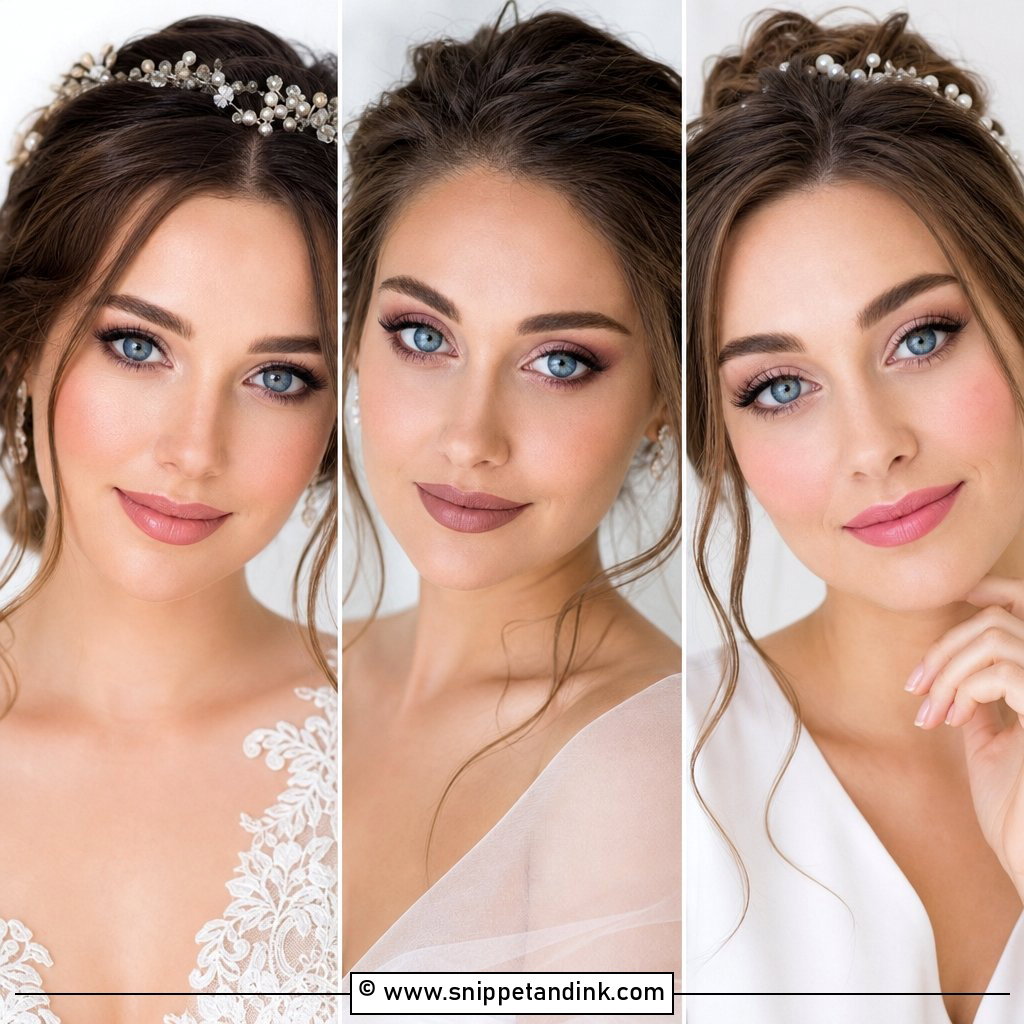
20. Black Bride Bridal Makeup
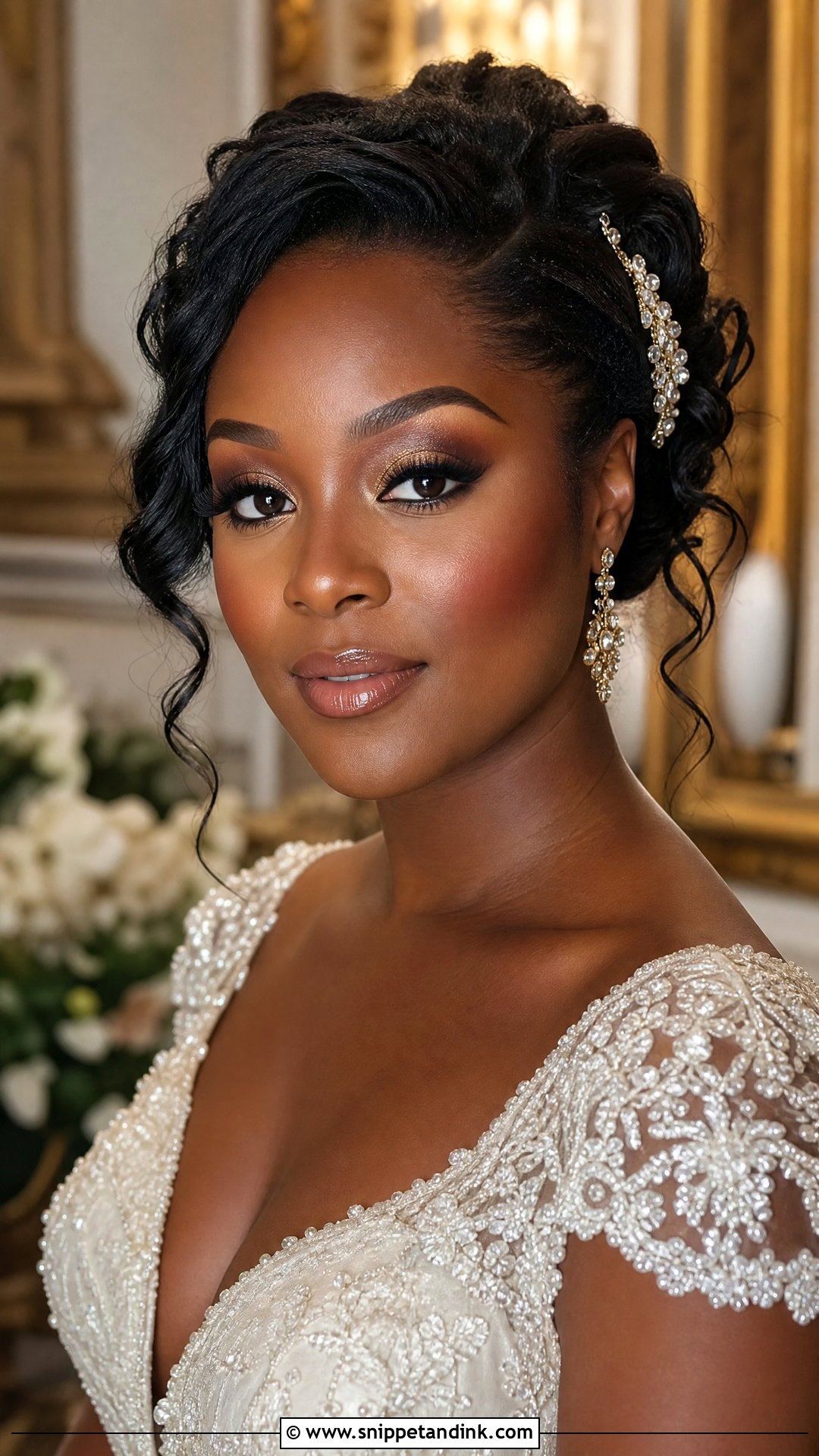
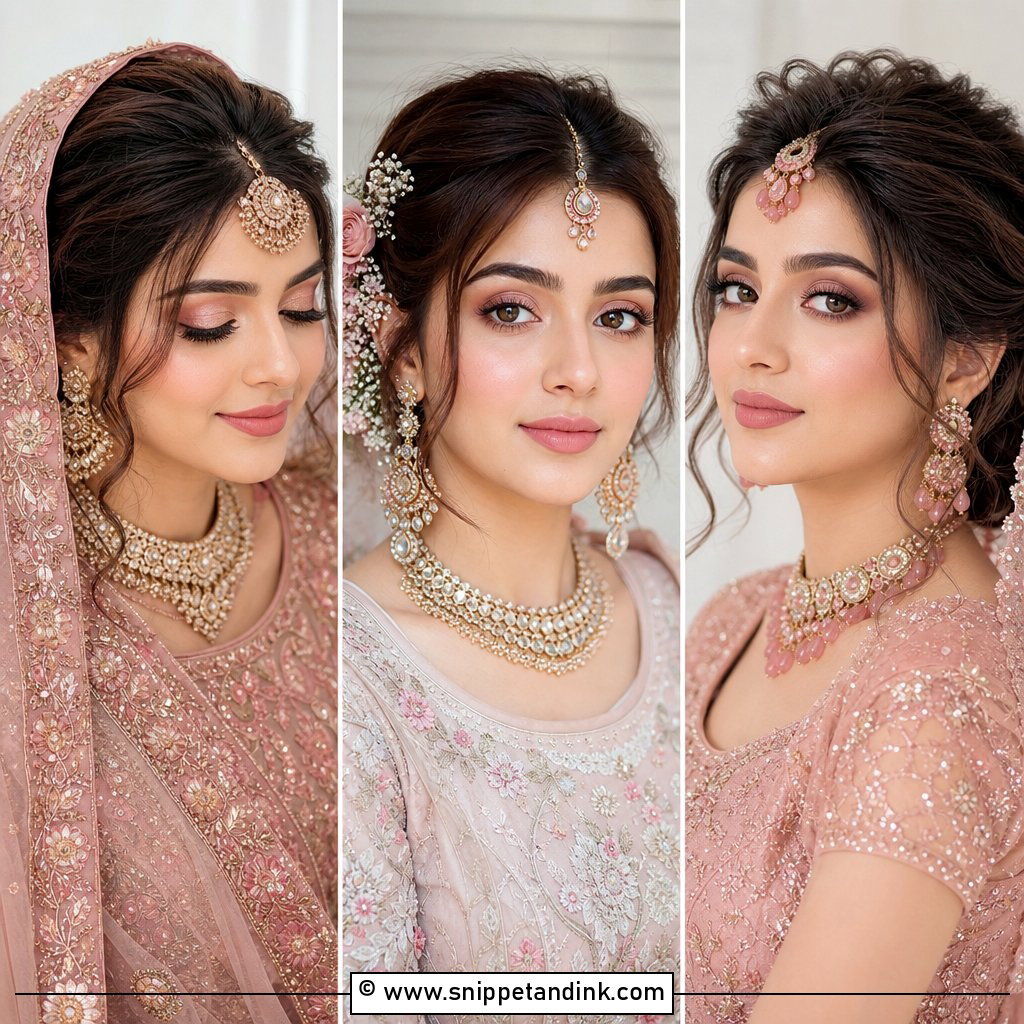
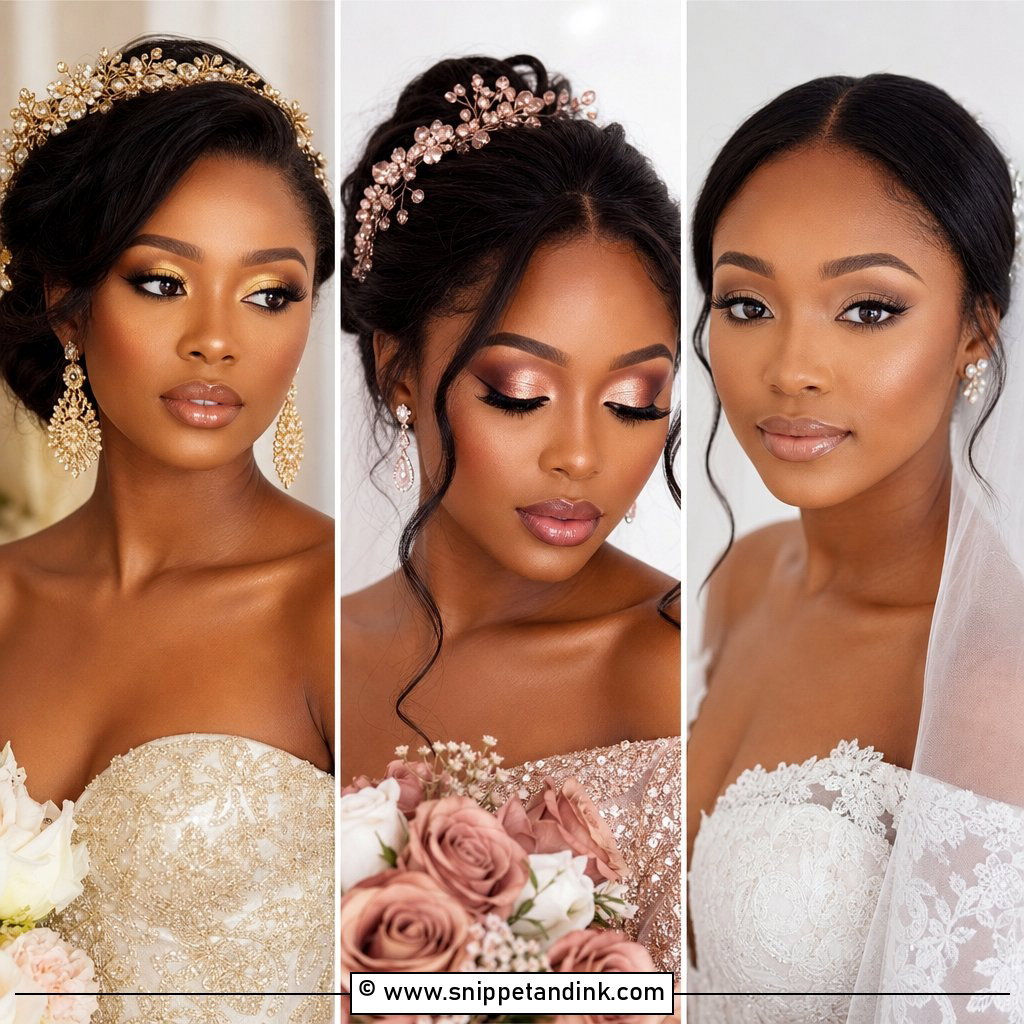
On deeper skin, the complexion match is everything, and I check it on the jaw, neck and chest together because they often differ. Rich skin tones carry bronze, gold, copper, chocolate, plum, berry and terracotta well. I choose foundation for the undertone first, then add warm contour, a radiant highlighter and a blush strong enough to actually show, such as berry, burnt rose, coral or brick. Pale pinks tend to sit grey on deep skin. For the eyes, bronze shimmer, soft smoky brown or champagne gold all show up richly. I finish with a nude-brown, rose, berry or glossy mocha lip. I also avoid setting powders with heavy flashback ingredients here, because they can leave a white cast in flash photos.
What Happens to Your Makeup Between the Vows and the Last Dance
Bridal makeup is applied in the morning and judged at night. Over that stretch, the lip goes first, then the base around the nose, then the blush fades. Tears usually take the lower lash line, and a lot of cheek-to-cheek hugging lifts foundation from one side of the face. None of this is a failure; it’s normal wear, and I plan for it.
Here’s the small kit I hand to a bride or her maid of honour, and nothing in it should be new to you on the day:
- Your exact lipstick and lip liner, because a near match always shows in photos
- Blotting papers, which lift oil without adding more powder on top
- A few cotton buds and a small tube of the cream concealer used that morning
- Pressed powder only if your skin is oily; dry skin does better with blotting alone
- A spare lash glue if you’re wearing strip lashes
Plan one proper touch-up, ideally just before the evening portraits or the entrance to the reception. Ten quiet minutes there does more for the photos than constant dabbing all afternoon. If a lash starts to lift, press it down with a clean fingertip and a dot of glue rather than pulling it off, which usually takes the liner with it.
One more thing I always test: a flash photo at the trial. Some setting powders and sunscreens bounce flash and leave a white cast that you’d never notice in the mirror. A quick phone photo with the flash on will show it, and that’s far better than finding it in your album.
Settling on a Look That Still Feels Like You at Midnight
The right look is the one you stop thinking about an hour after it goes on. Before you decide, picture your dress, your venue’s light, the season and how much makeup you wear on an ordinary Saturday. Bring two or three photos to your trial, and let your makeup artist adjust shades to your own features rather than copying the picture exactly. If I had to name the most reliable formula, it’s soft glam skin with real blush and defined lashes. Whichever direction you go, you should still recognise yourself in every photo.
You'll Like These Ideas:


Leave a Reply