
A full princess skirt does the dramatic work on its own, so the sleeve is where the personality of the dress comes through. In fitting rooms I watch brides go from lace ball gowns to plain satin, floral appliqué and convertible styles with sleeves that come off for the party, and the sleeve almost always decides it. Collections right now lean on varied necklines, textured fabrics and sculpted waists, with sleeves running from close-fitted to properly full. Before you fall for a picture, think about your venue, the season, how heavy the fabric is and how far the train runs, then lift your arms in the sample. Shoes, jewelry and the veil are there to support the gown. Below are twenty sleeved princess dresses, with what I check on each one before a bride says yes.
Why a Sleeved Ball Gown Is Fitted Differently
A strapless princess gown is mostly fitted from the waist up and held by the bodice. Add a sleeve and suddenly the armhole, the shoulder seam and the length of your arm all matter. That changes how I run the appointments, and it should change what you look for in a sample.
Samples are made for a standard arm, so a sleeve that feels tight in the boutique may simply be the wrong length or set too low, not too small. Pin the sleeve where the cap should sit before judging it. A high armhole lets you lift your arms without the whole bodice rising with them; a low one looks fine standing still and pulls the waist up the moment you wave.
- Lift both arms above your head. The waist seam should stay put, or very nearly.
- Bend your elbows and bring your hands together, as if holding the bouquet. Look for strain across the back.
- Check sleeve length with your arms relaxed at your sides. A long sleeve should reach the wrist bone, not the base of the thumb.
- Ask how much seam allowance the sleeves have. Lace sleeves often have little to let out.
Sleeve work is often the slowest part of alterations, because lace may have to be unpicked and reapplied by hand around the cap. Plan for at least three fittings and leave a comfortable gap between ordering and your first one.
1. Long Sleeve Lace Princess Wedding Dress
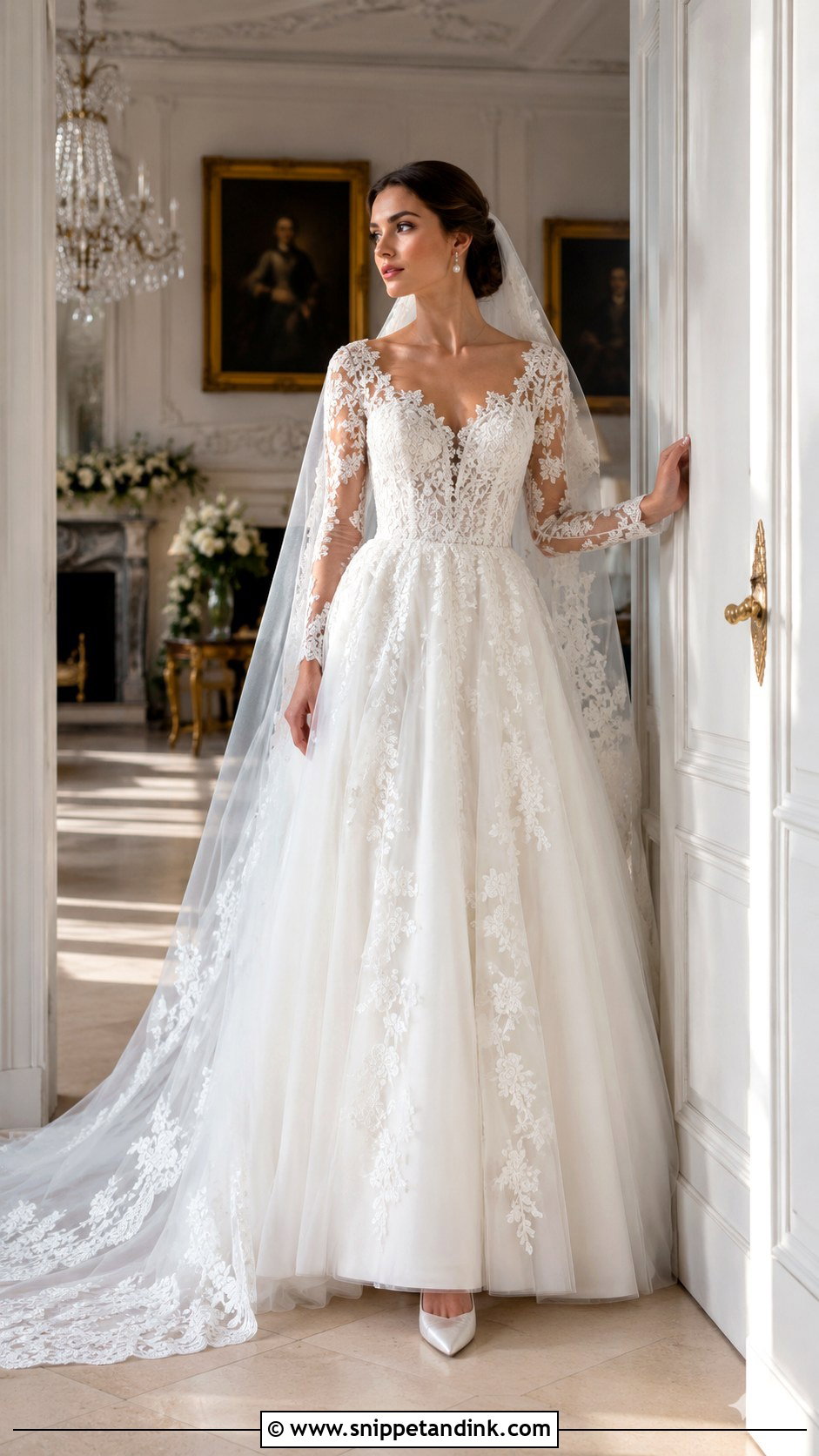
This is the version most brides describe to me before they’ve tried anything on. It works best with a fitted lace bodice that has lightly boned structure, a waist at your natural waist and a full tulle skirt, with sheer sleeves carrying the floral lace down the arm. A bateau or soft V-neck keeps the top from feeling crowded against all that volume. Ivory pointed pumps, pearl drops and a cathedral veil with matching lace edging are enough. Wear a low chignon so the shoulder lace stays visible. At the fitting, cross your arms in front of you: if the lace strains across the back of the shoulders, the sleeve cap needs more room before anything else gets altered.
2. Satin Princess Wedding Dress With Long Sleeves
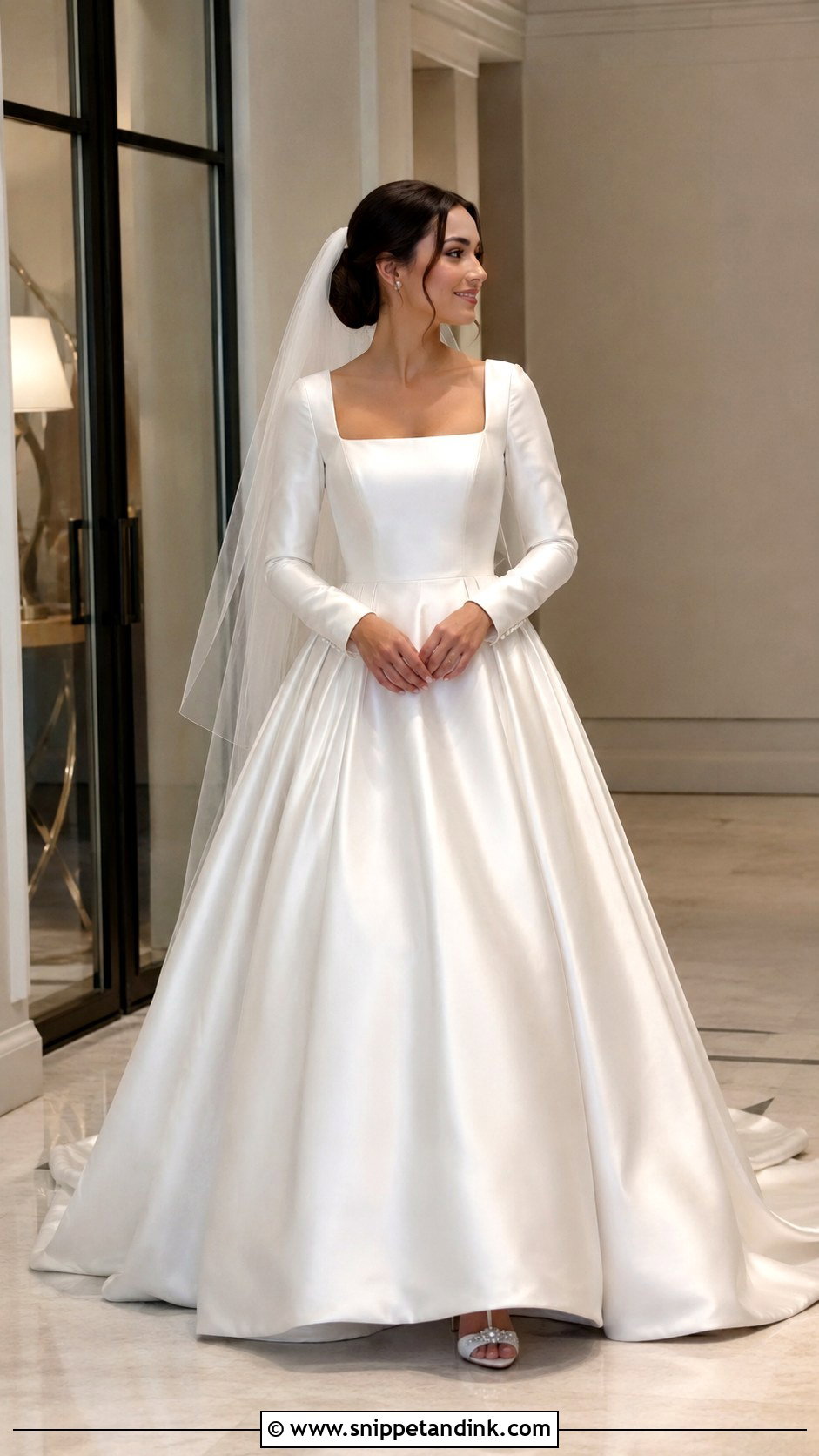
Satin is honest fabric. It shows every pull, so the tailoring matters more here than on any lace gown in this list. Look for a sculpted bodice, fitted long sleeves and a pleated skirt that holds its shape without decoration, with covered buttons at the wrists and back. A square or bateau neckline suits the plainness. I’d keep the accessories quiet: satin block heels, crystal studs, a fingertip veil and a sleek bun. Have your seamstress check the elbows with your arms bent, because satin sleeves cut too narrow will crease into a fan of lines there by the end of dinner. Hotel ballrooms and grand staircases suit it well.
3. Illusion Sleeve Princess Wedding Dress
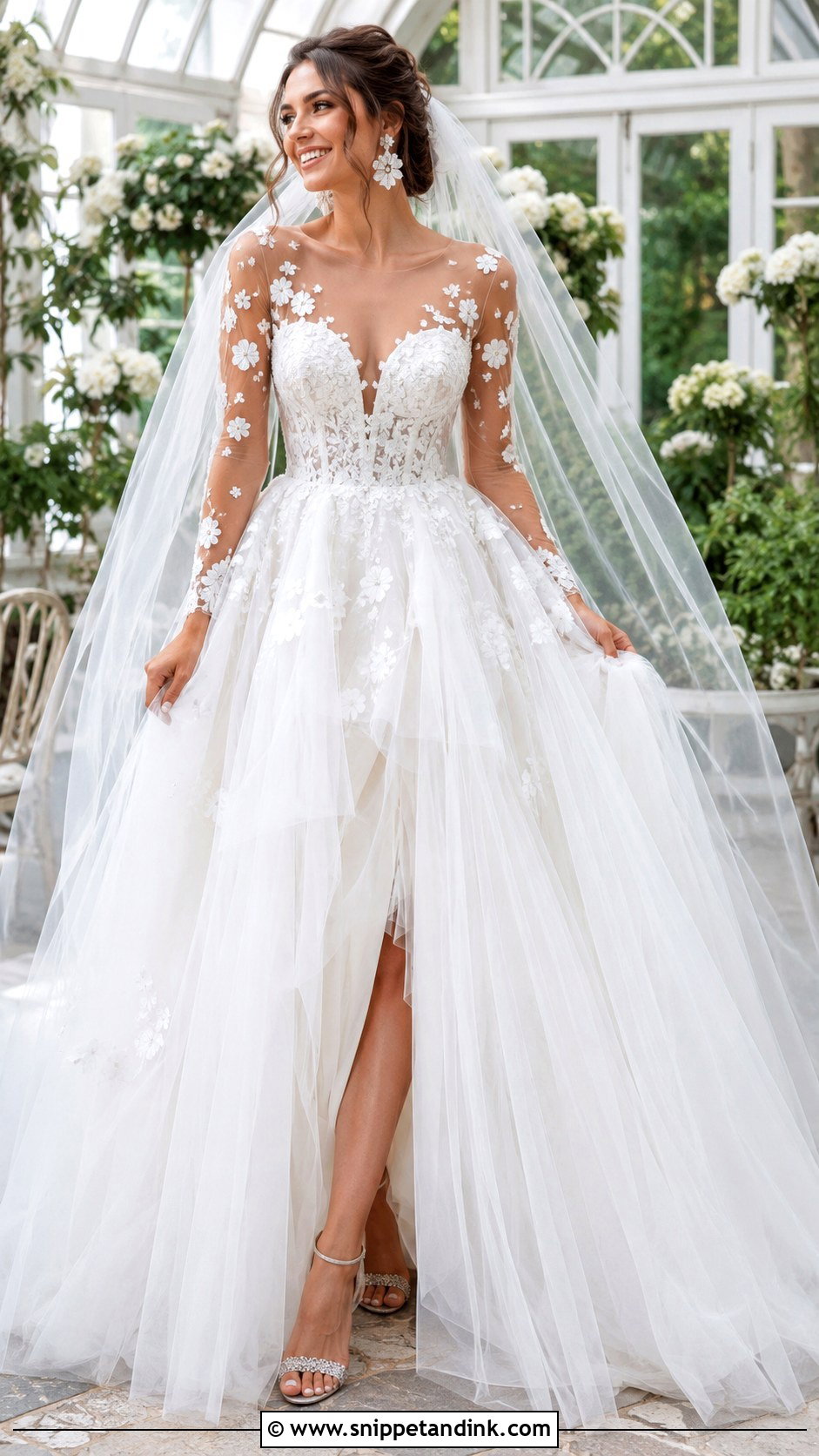
An illusion sleeve princess wedding dress makes the lace vines, pearls or embroidered flowers look as if they sit straight on your skin. Pair the mesh with a supportive bodice and airy tulle so the whole thing stays light. The mesh has to match your skin tone closely, and I always hold it against the inside of the wrist in daylight, not under the boutique spotlights, before ordering. Choose delicate crystal heels, small floral earrings and a veil without a heavy border. Soft curls or a textured updo suit the detail. One warning from experience with this fabric: bracelet clasps and wired bouquet ribbons snag fine mesh easily, so test both against the sleeve before the day.
4. Off The Shoulder Princess Wedding Dress With Sleeves
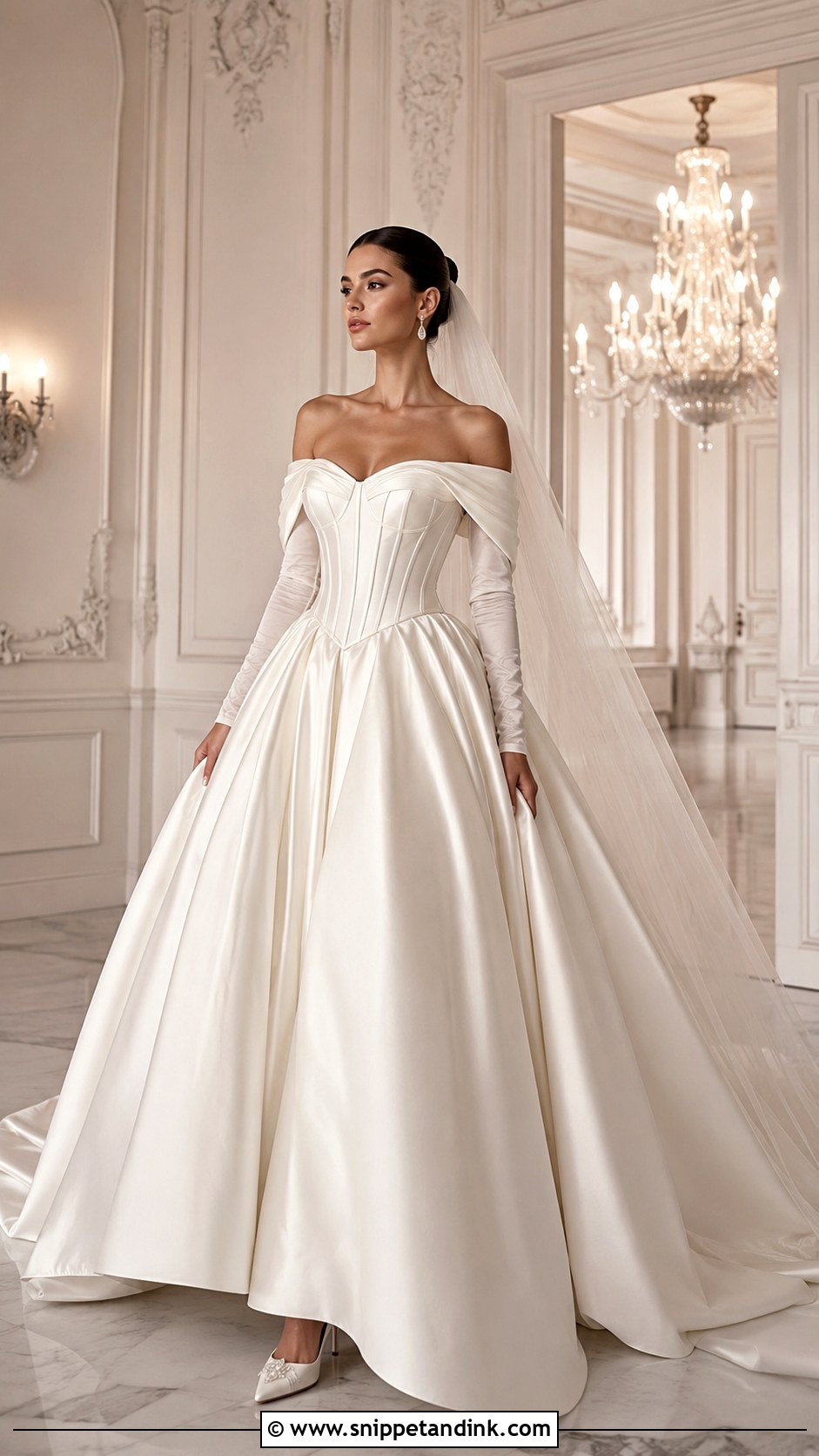
Off-the-shoulder sleeves show the collarbones and still give you arm coverage, but they only work if the bodice is doing the holding. Choose a structured corset bodice so the draped satin bands or lace sleeves rest on your upper arms without being asked to keep the dress up. A defined waist and a sweeping train give you the classic proportion. Drop earrings, a fine tennis bracelet and pointed heels finish it; a necklace is optional because the neckline is already the focal point. Wear your hair low or swept to one side. In the fitting room I ask brides to hug someone: if the sleeves ride up toward the elbow, they’re set too loose.
5. High Neck Princess Wedding Dress With Sleeves
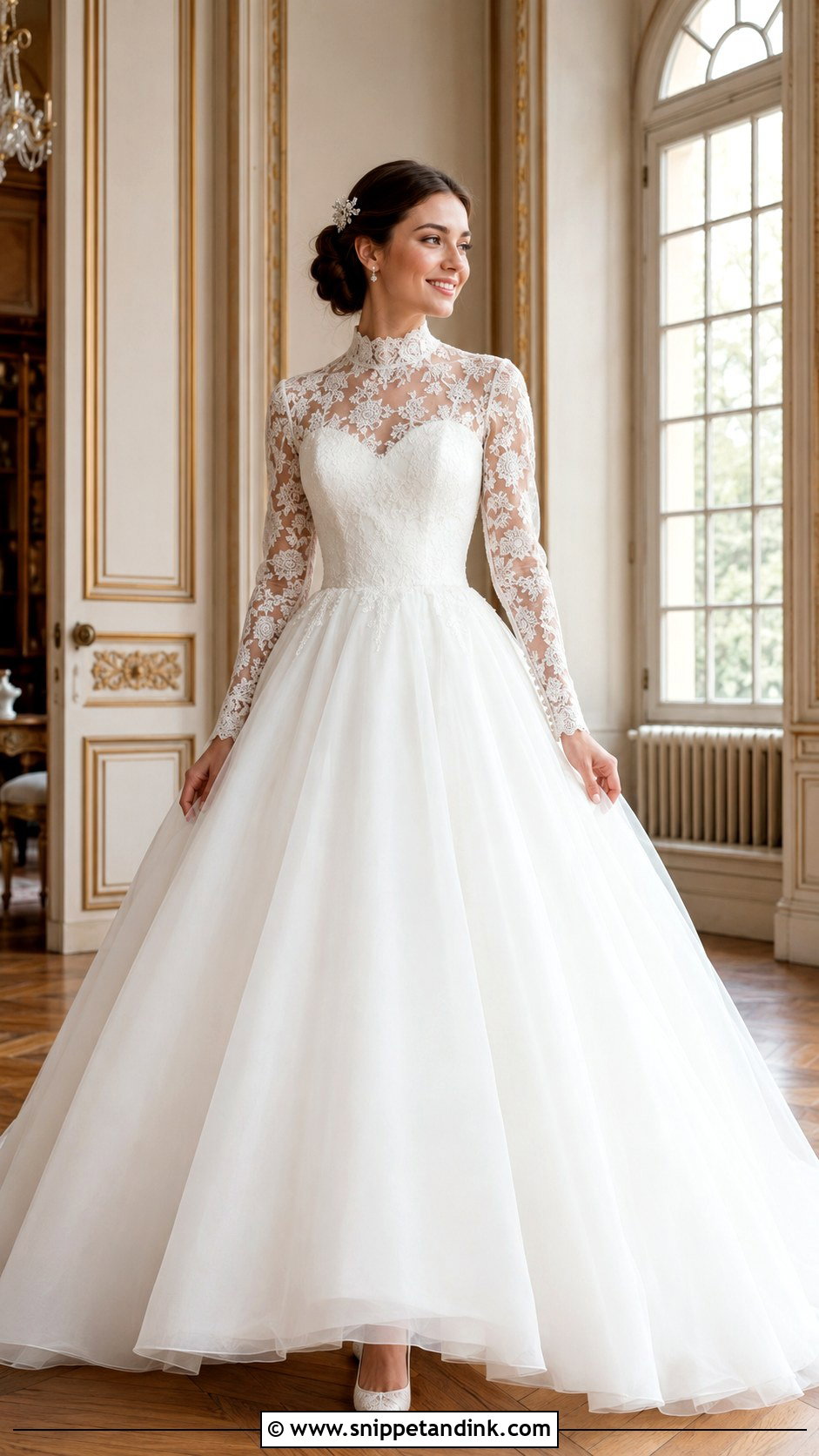
A high neck princess wedding dress gives regal coverage and can still feel soft if the neckline is sheer lace over a lined bodice. Look for fitted sleeves with small wrist buttons and a full skirt in tulle, organza or lightweight satin. A keyhole or illusion back stops the covered front from looking stern. Skip the necklace entirely. Pearl studs, a jeweled comb, closed-toe pumps and a polished bun are all it needs. Turn your head both ways while wearing it, since a collar cut even slightly too high will fold or rub against the jaw and leave a pink mark by the speeches. It suits cooler months and more traditional ceremonies.
6. Square Neck Princess Wedding Dress With Sleeves
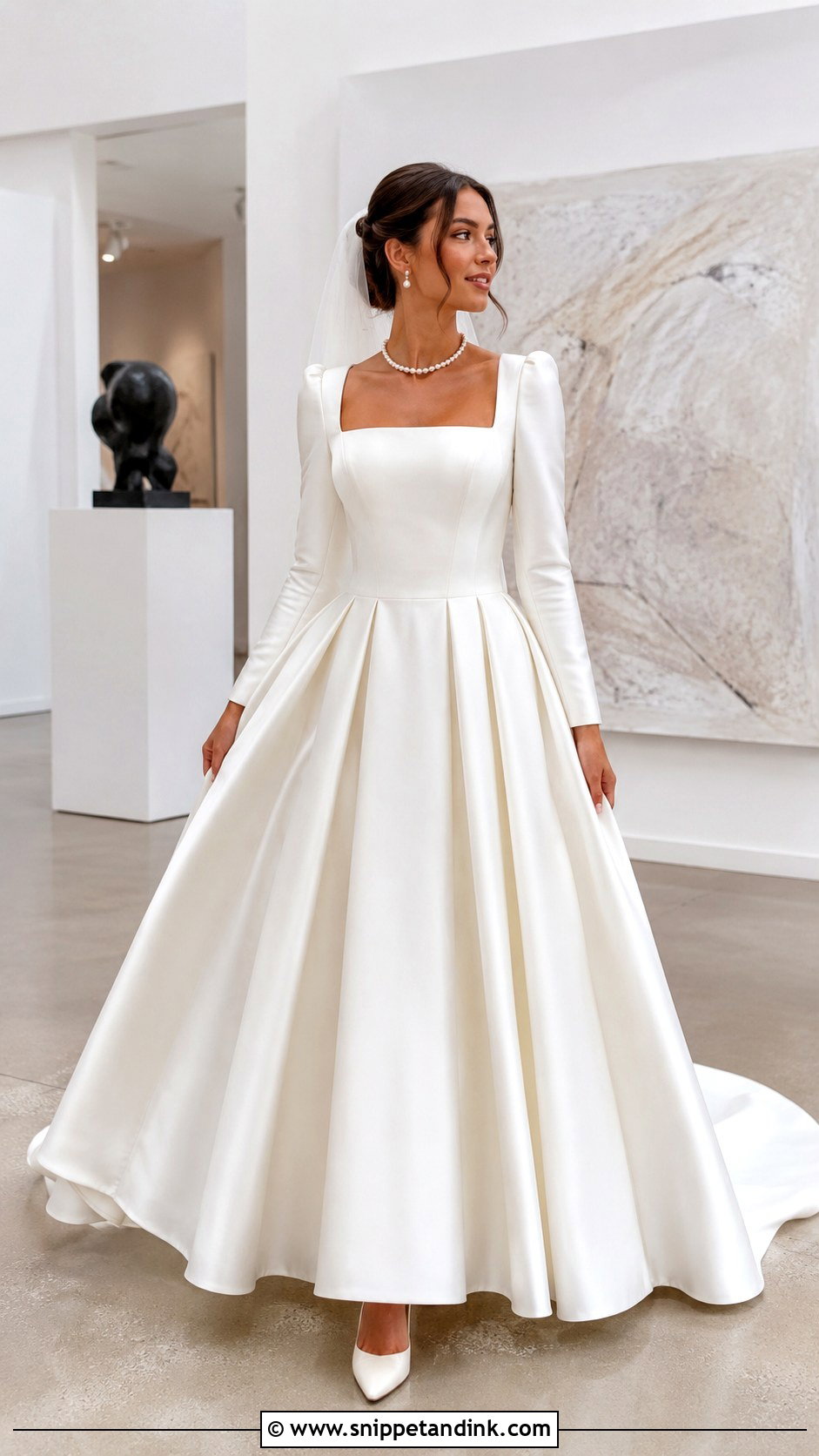
The straight line of a square neck frames the collarbones and pairs well with close long sleeves. Structured satin keeps it minimal, while a lace-covered version softens it. Subtle pleats in a wide skirt add volume without making the bodice look fussy. A short pearl necklace, matching studs, sleek ivory pumps and a center-parted low bun echo the geometry of the neckline. If the square is cut low, sit down in it before you commit. The front edge tends to gap forward when you lean toward the table, and a tailor can add a little shaping or a hidden stay to stop that. From the front, few silhouettes show neckline, waist and skirt as cleanly.
7. Sweetheart Princess Wedding Dress With Lace Sleeves
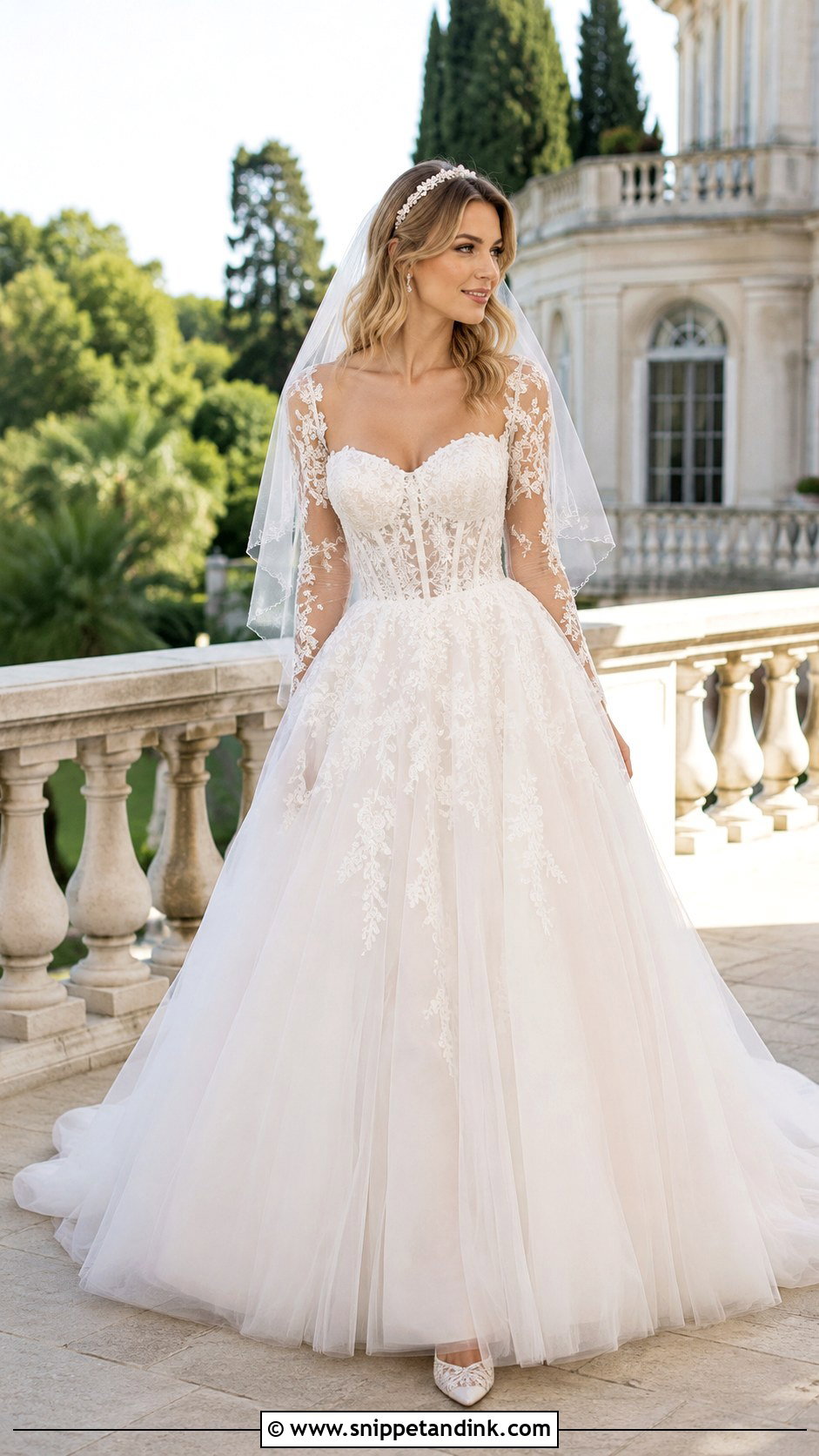
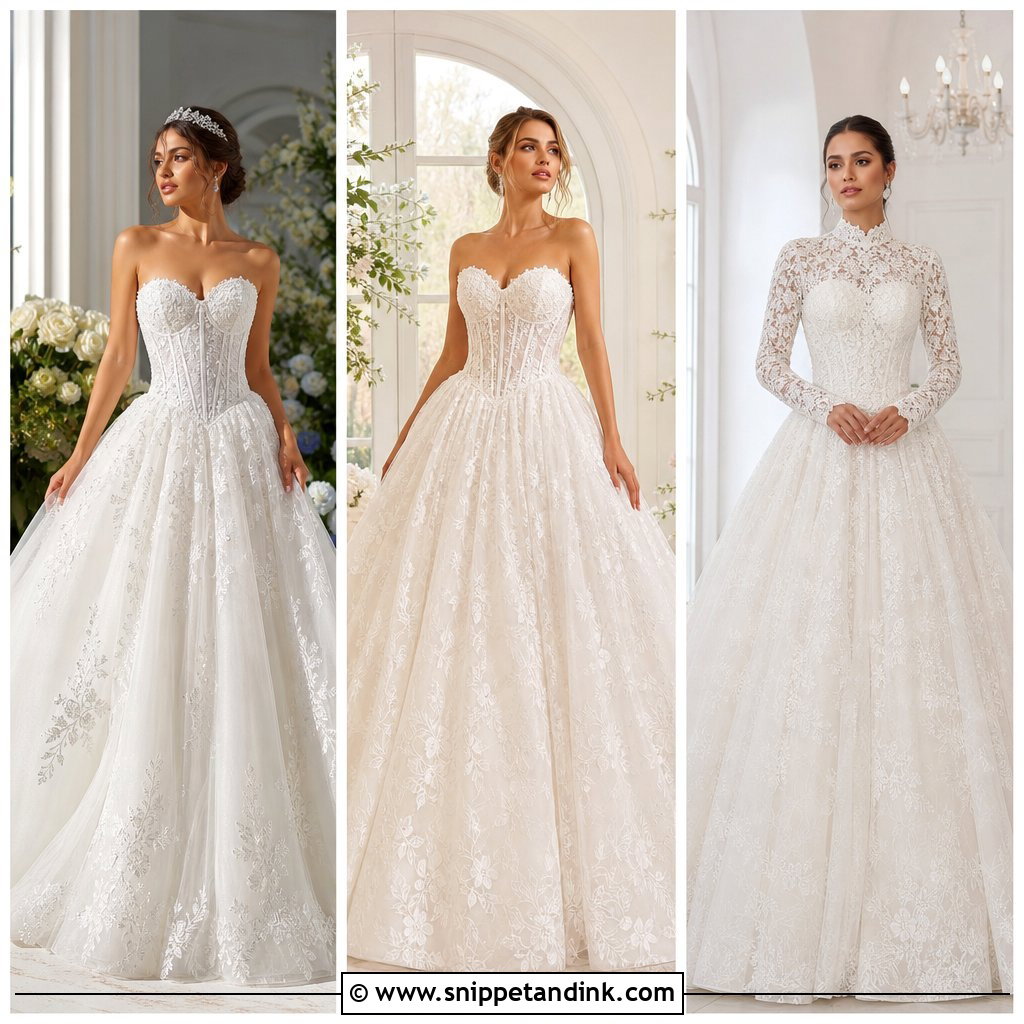
Pairing a sweetheart neckline with lace sleeves mixes a defined bust with soft arm coverage. Choose a corseted bodice whose appliqués continue onto the tulle skirt, so the design flows past the waist rather than stopping at a hard seam. Embellished pumps, a narrow crystal headband and a medium-length veil with a plain edge are enough, and a half-up style keeps the neckline in view. The spot I always check is where the sleeve lace meets the sweetheart curve. Done badly, it bunches or shows a visible join; done well, you can’t see where one piece of lace ends. Make sure the bodice supports you without slipping lower through the evening.
8. Corset Princess Wedding Dress With Long Sleeves
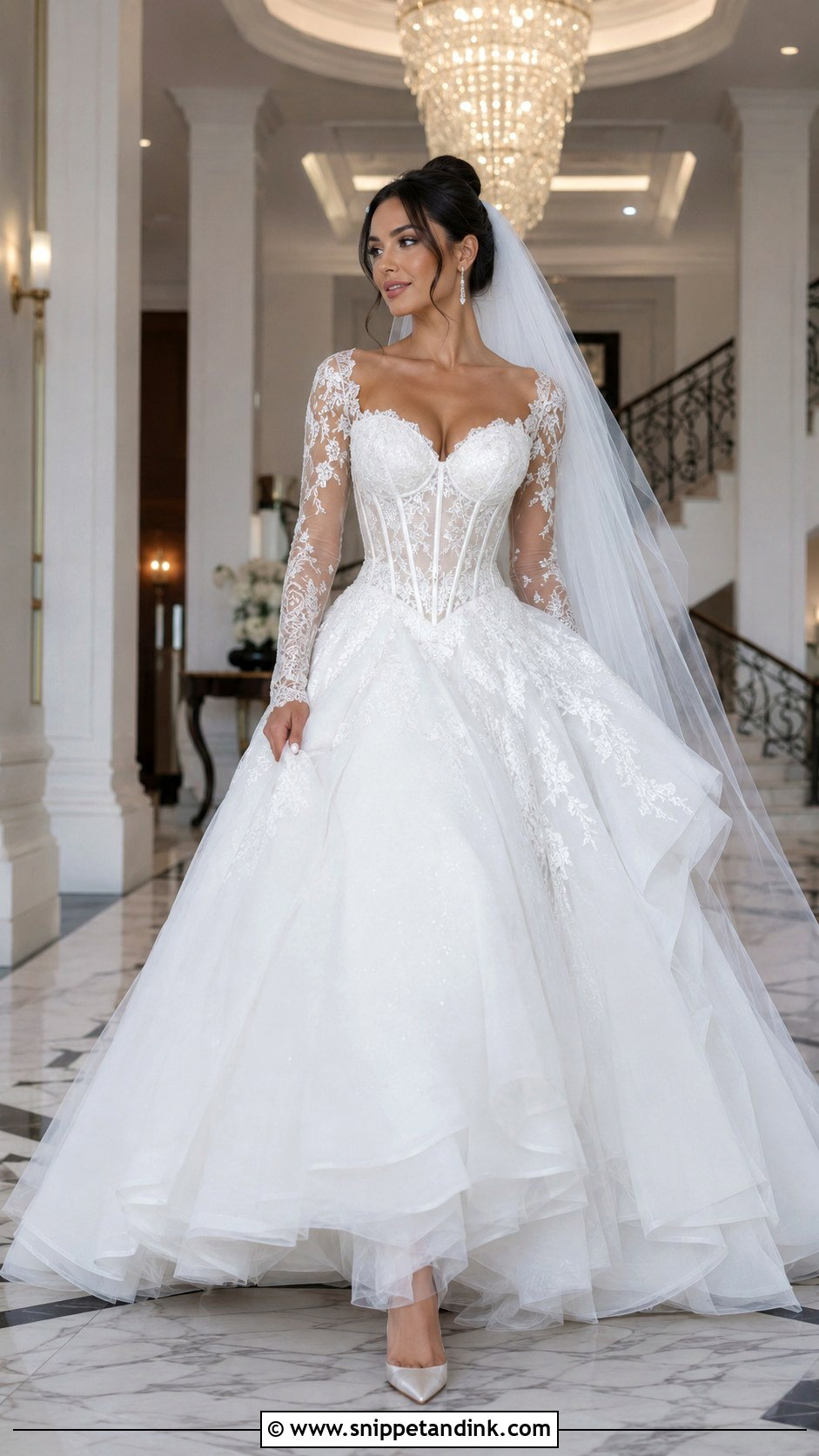
Visible boning gives a corset gown a modern feel, while a lace overlay makes the same structure look traditional. Keep the long sleeves in matching lace or sheer mesh so the bodice stays the center of attention, and let the full skirt start at the natural waist to sharpen the waistline. Pointed satin heels, slim drop earrings and a long plain veil suit it. Loose waves soften all that structure; an updo makes it sharper. Here’s the test I insist on: sit, then take a deep breath as if you’re about to laugh. A properly fitted corset supports the ribs without pinching, and if you can’t breathe comfortably in the fitting room, eight hours in it won’t get easier.
9. Basque Waist Princess Wedding Dress With Sleeves
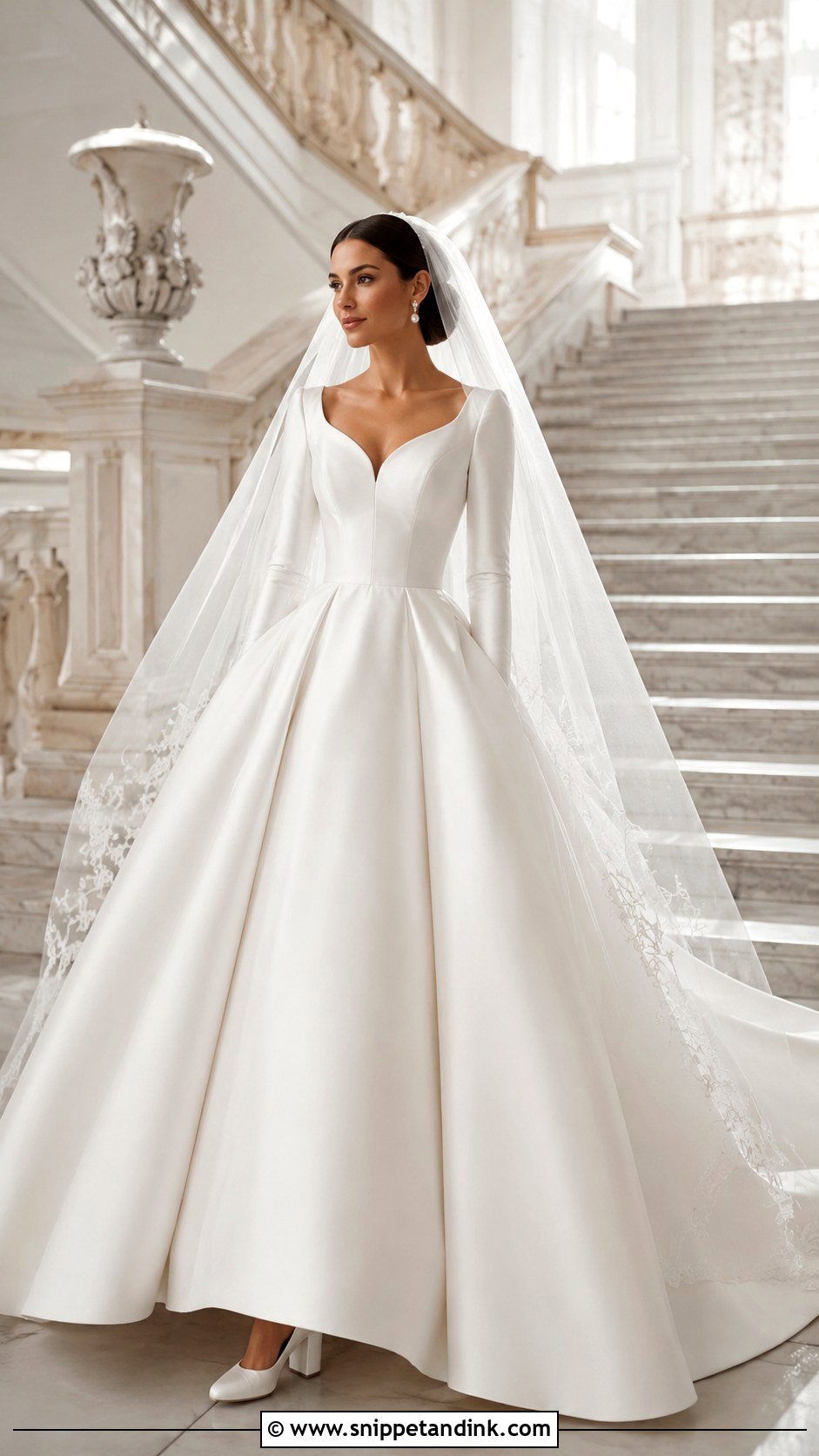
A basque waist dips into a V at the front and lengthens the torso before the ball gown skirt takes over. Fitted satin sleeves keep it clean, and embroidered illusion sleeves add texture. Scoop, square or gently curved necklines all keep the bodice in proportion. Wear simple pearl earrings, a long veil and comfortable block heels, which nobody sees under a skirt this full anyway. Put your hair in a smooth bun. The point of the V is where problems show up: when you sit, it can dig into the stomach or buckle outward. A good alteration shortens the point slightly or adds flexible boning so it bends with you. In large venues this shape stays readable across the room.
10. Floral Princess Wedding Dress With Long Sleeves
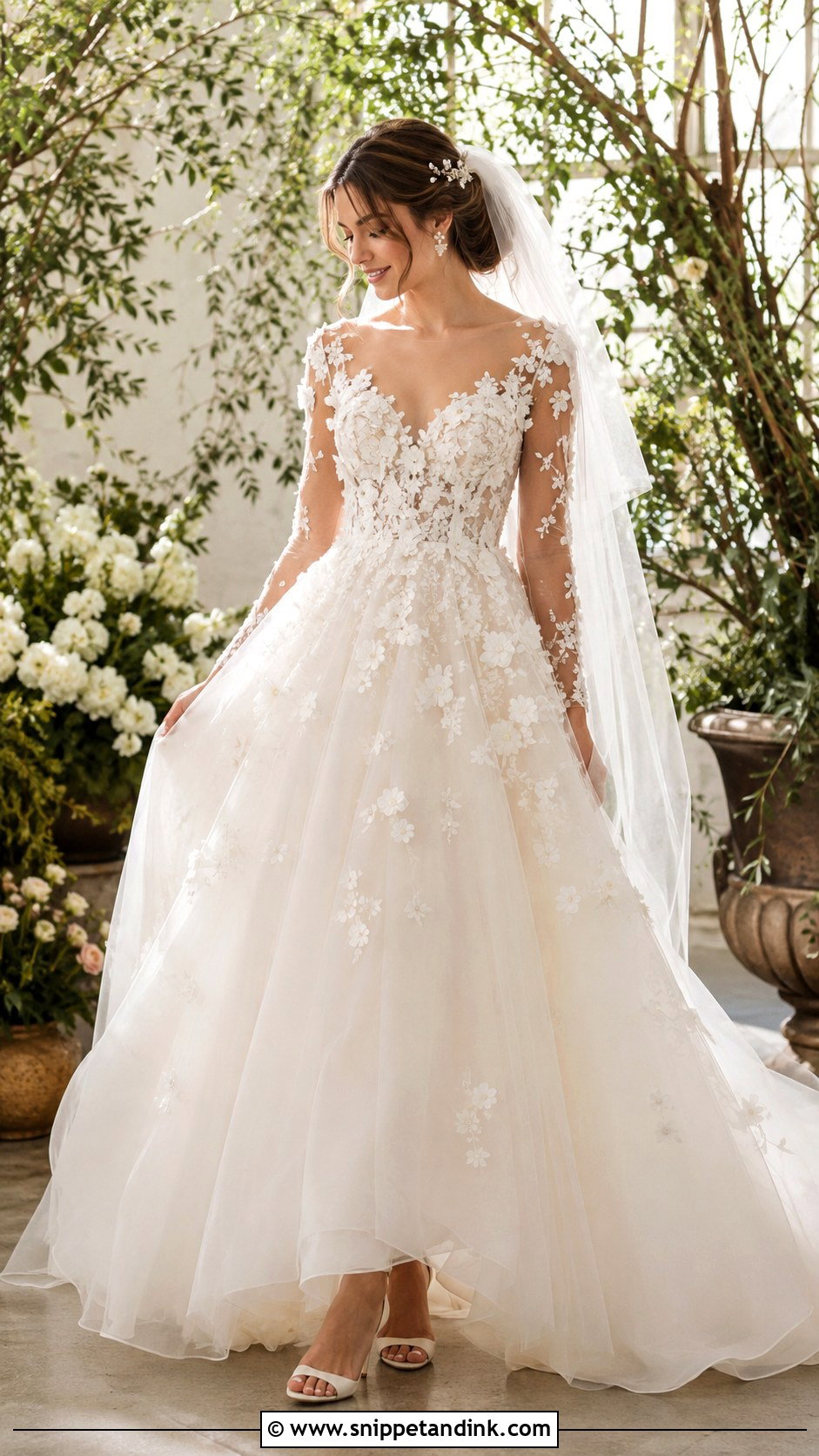
Three-dimensional flowers need to be placed with restraint. The best versions I’ve fitted cluster appliqués across the bodice, sleeves and upper skirt, then thin them out toward the hem so the full silhouette doesn’t turn busy. A soft tulle skirt lets the petals look like they’ve landed on the fabric, with a fitted lining underneath doing the support. Choose understated ivory heels, floral studs, and a veil with only a handful of matching appliqués. A loose low bun with small pearl pins is enough. Raised petals catch on veil tulle constantly, so bring your veil to a fitting and walk around in both. Spring and summer suit it naturally; deeper ivory embroidery carries it into fall.
11. Beaded Princess Wedding Dress With Sleeves
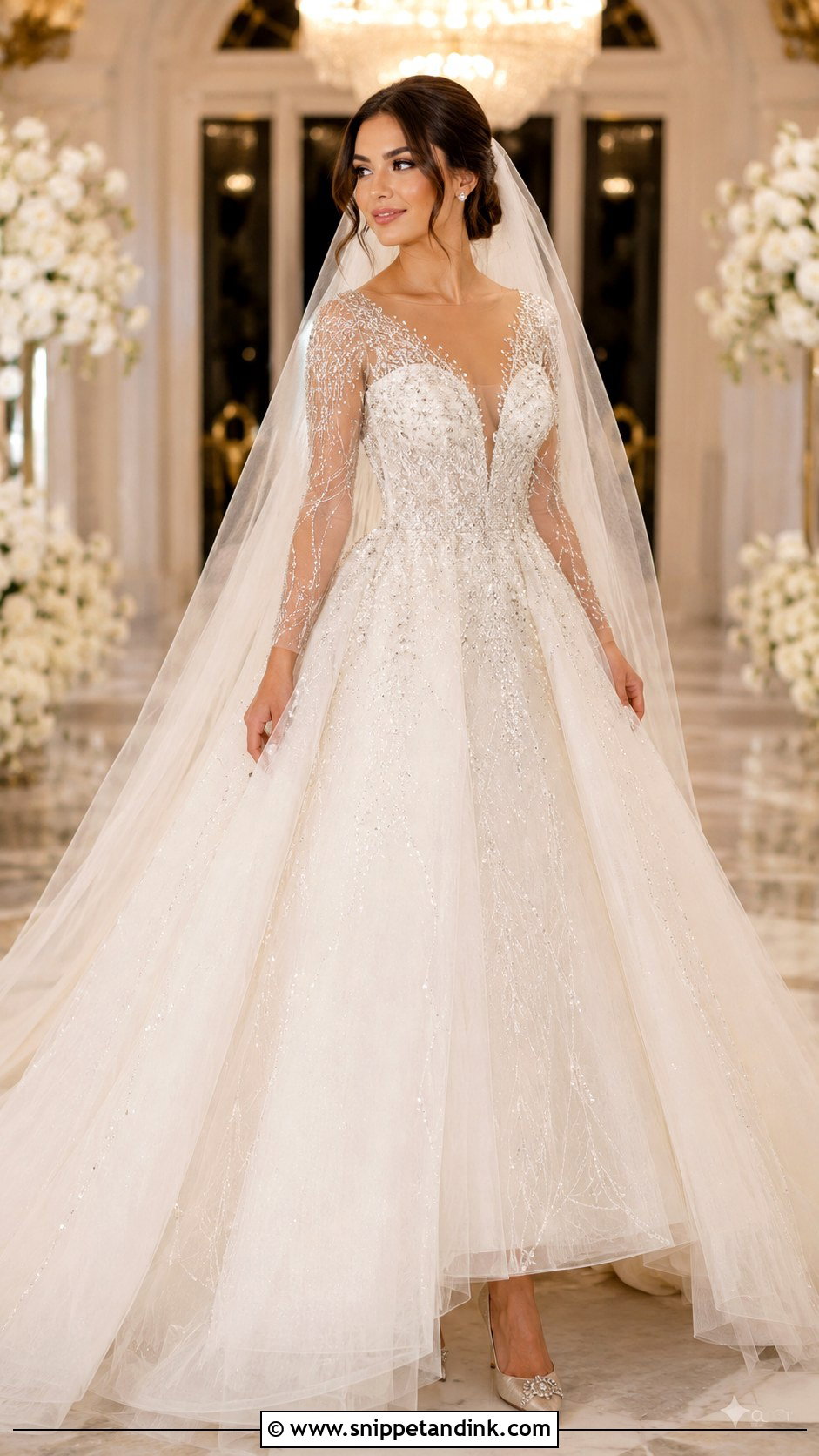
Beading reads differently under candlelight and daylight, and a princess bodice gives it a large surface to catch both. I prefer beadwork that runs down the sleeves and fades into the layered tulle, which stops the gown from looking top-heavy. Silver, clear or pearl-toned beads coordinate far more easily than colored stones. Add metallic ivory heels, crystal studs and a plain veil, with a sleek updo so loose strands don’t tangle in the embellishment. Heavy beading adds real weight, and brides underestimate it. Wear the sample for a full fitting, standing, and pay attention to how your shoulders feel at the end. Ask too whether the sleeve linings are smooth inside, since rough bead backs scratch the inner arm all evening.
12. Pearl Princess Wedding Dress With Long Sleeves
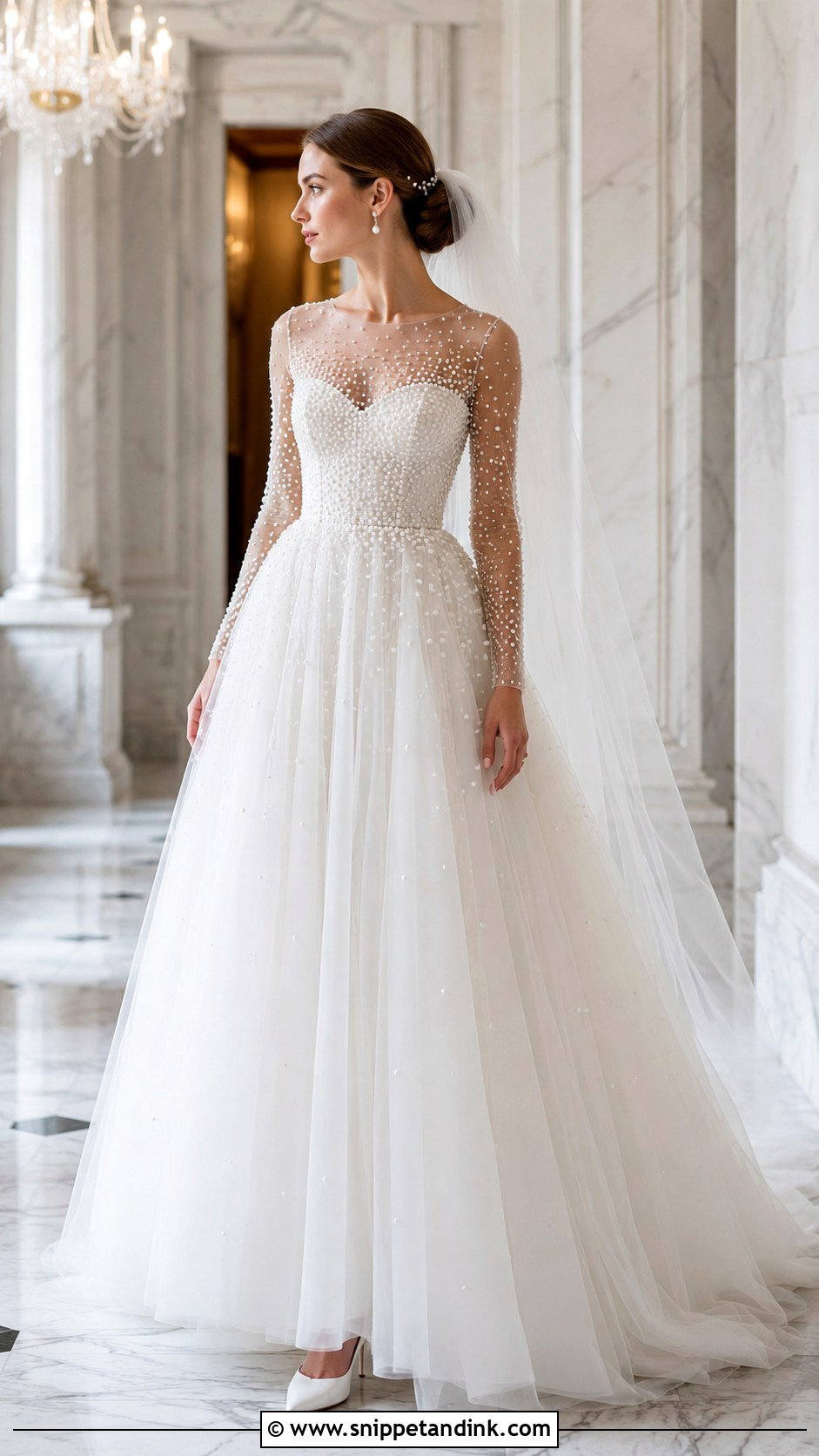
Pearls give dimension without the hard sparkle of crystal. On a princess gown they can trim illusion sleeves, outline the neckline or scatter across a corset bodice and tulle skirt; small, evenly spaced pearls look the most refined. Classic pearl earrings, satin pumps and a sheer veil with a clean edge are all it needs, and a jeweled necklace would only compete. A low chignon with pearl pins ties it together. I always turn a sleeve inside out to see how the pearls are attached. Hand-sewn pearls hold; glued ones pop off when you hug people. Ask the boutique whether spare pearls come with the dress so a seamstress can repair it later. In daylight the pearls give soft highlights rather than flashes.
13. Bishop Sleeve Princess Wedding Dress
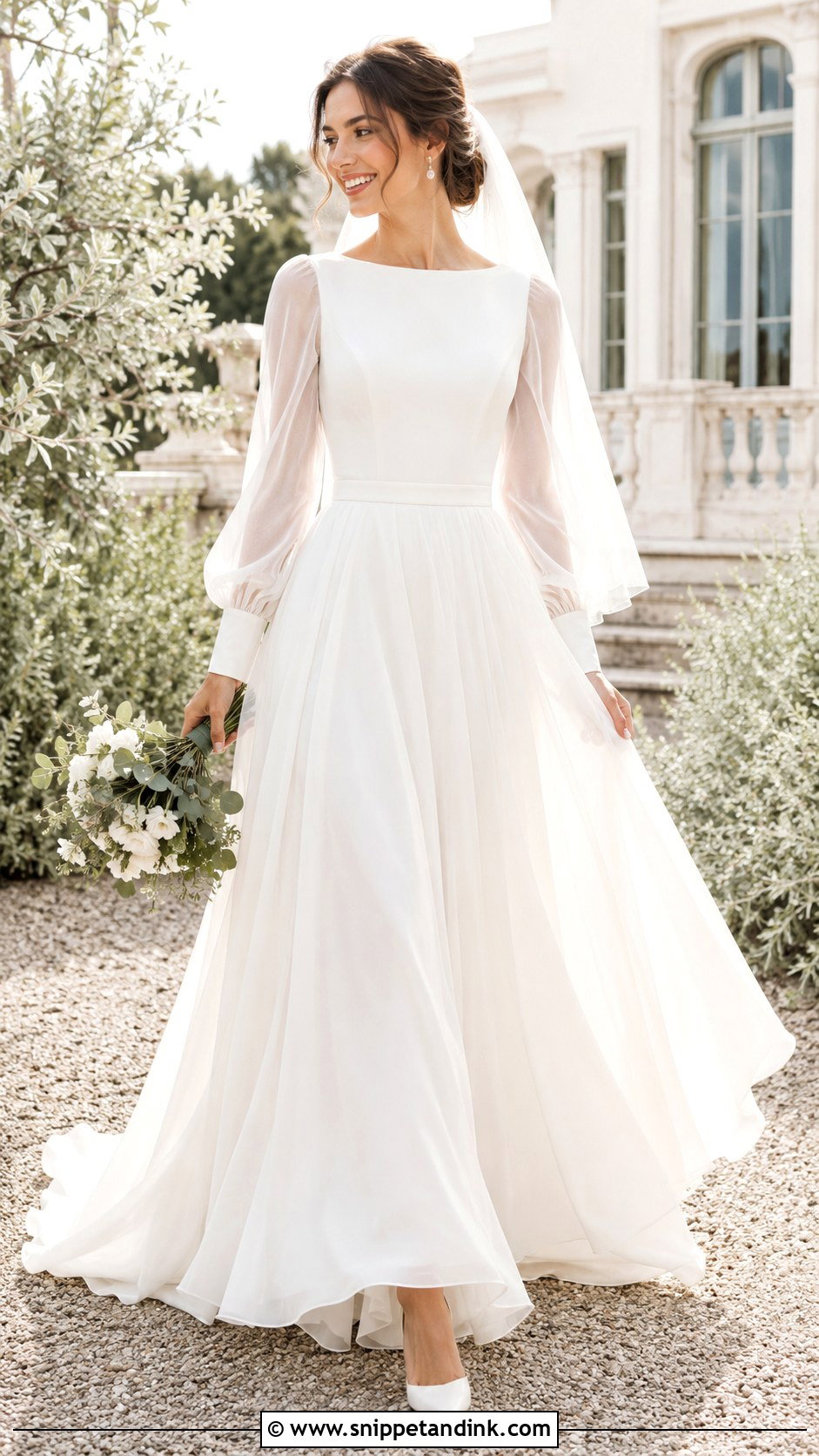
Bishop sleeves are full through the arm and gathered into a cuff at the wrist, so they move while the bodice stays fitted. Sheer chiffon gives a light, drifting sleeve; organza holds more volume. Keep the corset bodice and layered skirt simple so the sleeves have room to be the feature. Closed-toe heels, delicate drop earrings and a lightweight veil suit it, along with a relaxed updo. Cuff placement is worth fussing over: it should sit right at the wrist bone, because a cuff that drops onto the hand will get wet every time you wash up or reach for a glass. Brush past a candle in the sample and you’ll understand why I mention flames. Airy spaces and vintage-leaning brides tend to love this one.
14. Puff Sleeve Princess Wedding Dress
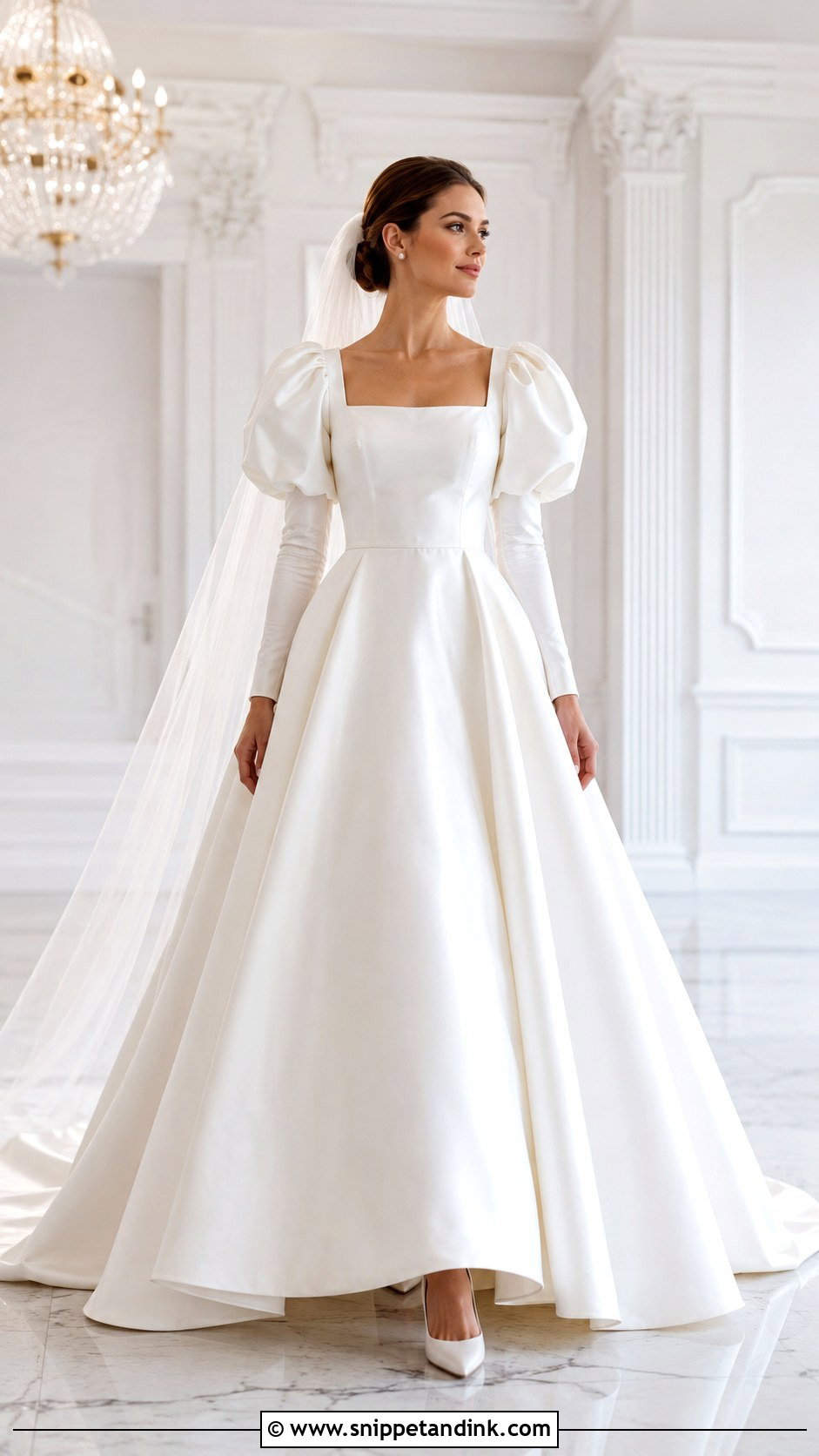
Puff sleeves add volume at the shoulder, and on a full princess shape that means the proportions need watching. I’d steer most brides toward a sleeve with controlled fullness at the top and a fitted shape below the elbow, or a short puff with a structured square-neck bodice. Satin makes the puff sculptural; tulle and organza make it softer. Wear simple pumps and pearl studs, and set the veil behind the crown so it doesn’t add width at the sides. A smooth bun or low ponytail balances the shoulders. View the dress from the side and back in a three-way mirror. If the sleeves look wider than your hips from behind, scale them down.


15. Bell Sleeve Princess Wedding Dress
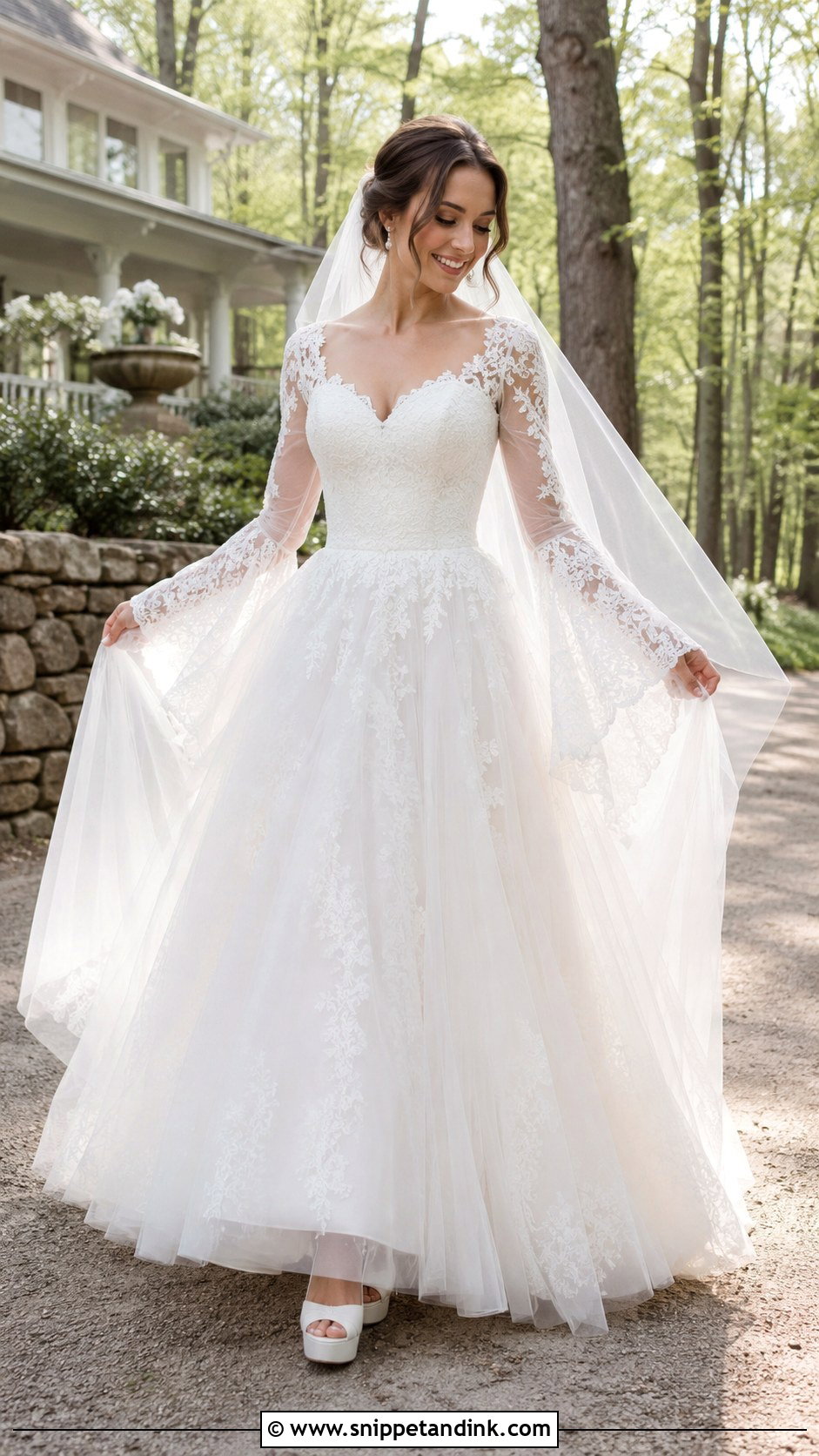
A bell sleeve flows, and that movement is exactly why you need to think about practicalities. It can stay fitted to the elbow and widen toward the wrist, or fall loose from the shoulder. Light lace or chiffon moves naturally beside the full skirt; heavier fabric just looks bulky. A fitted bodice and defined waist give the contrast it needs. Understated earrings, platform heels, a simple veil set behind the sleeves and soft waves or a braided low bun complete it. Hold a bouquet, shake a hand and lift a fork in the sample. A slightly shorter bell keeps the hem of the sleeve out of your dinner. Garden and historic estate settings suit it best.
16. Detachable Sleeve Princess Wedding Dress
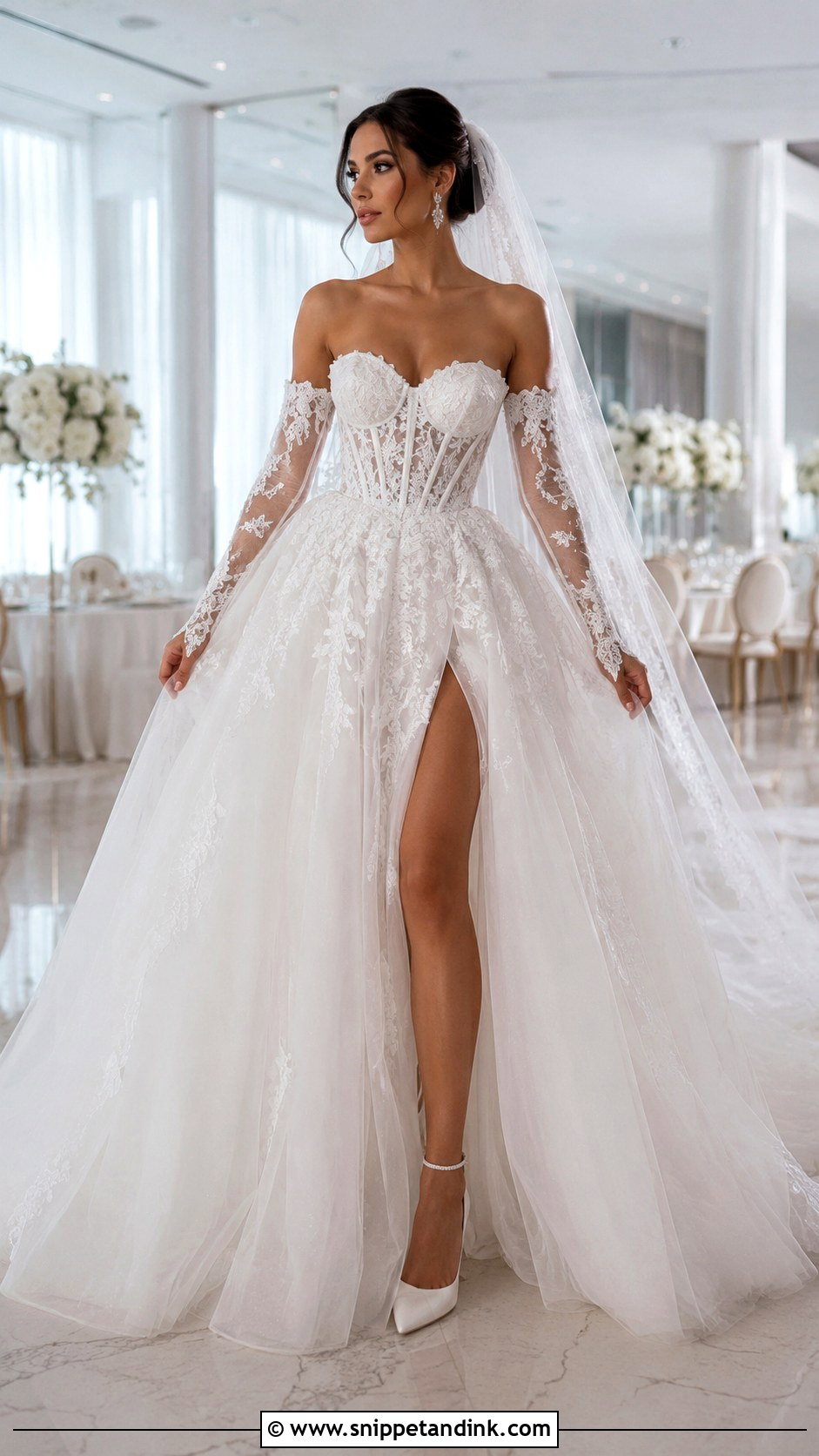
Detachable sleeves give you two looks from one gown: a strapless or sleeveless ball gown with lace, satin or tulle sleeves for the ceremony, then bare shoulders for the reception. Brides now have both fitted detachable sleeves and fuller off-the-shoulder versions to pick from. The attachment points must hide under appliqués, buttons or a neckline band, or the sleeves look borrowed. For the ceremony, wear a long veil, crystal earrings and pointed pumps; afterward, swap to a shorter veil or a jeweled pin. Practice the change several times before the wedding with whoever will help you. Hooks and tiny snaps that feel easy in the fitting room can take ten minutes with nervous fingers.
17. Cap Sleeve Princess Wedding Dress
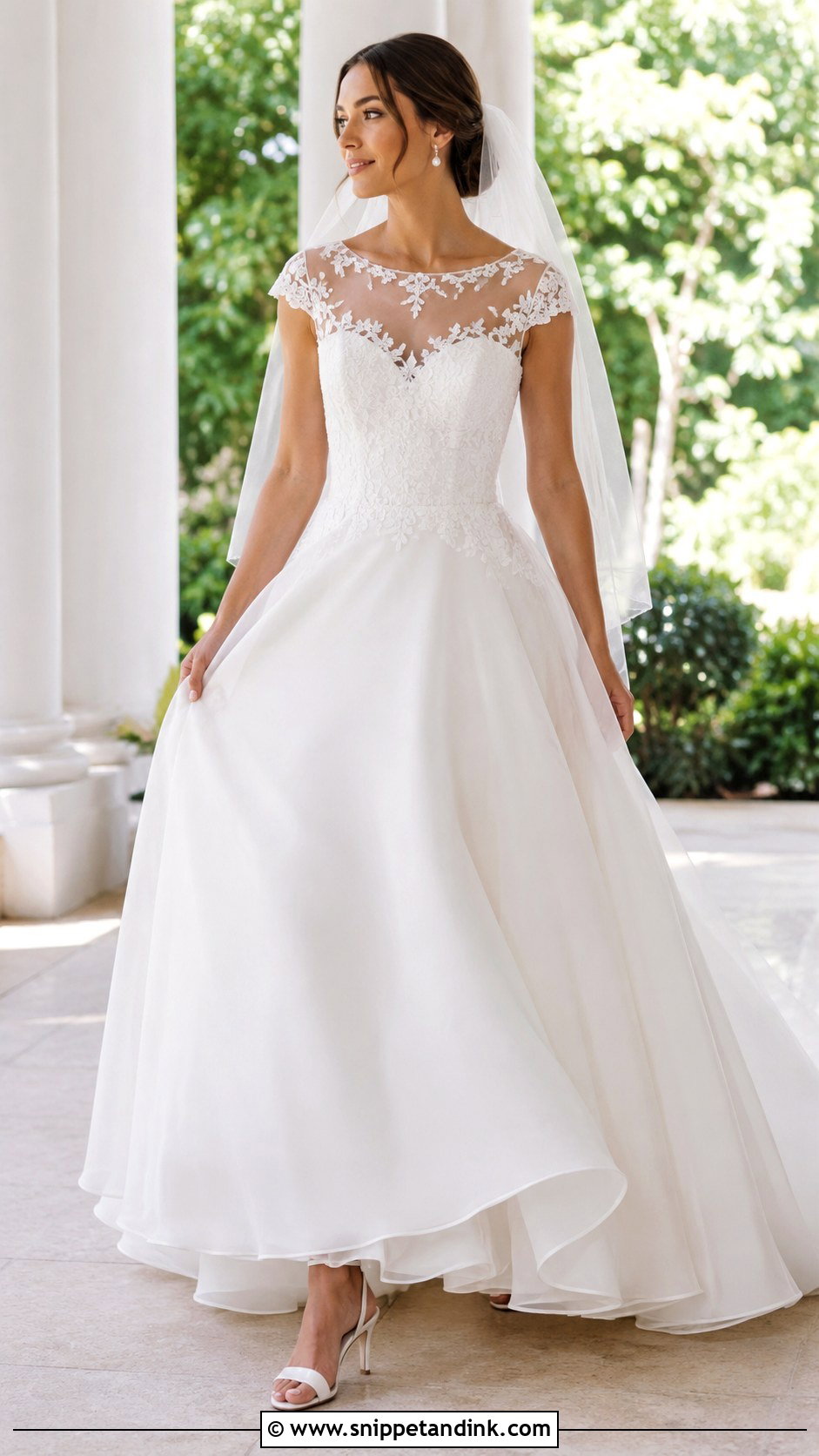
Cap sleeves give the lightest shoulder coverage in this list and sit well with illusion lace, floral appliqués or fine beading across the bodice. The edge of the sleeve is the critical point. It should end where your arm is narrowest, never cutting straight across the fullest part of the upper arm, which makes any arm look wider in photos. A full organza or tulle skirt keeps it formal. Slingback heels, small drop earrings, a fingertip veil and a half-up style finish it. With so little fabric, a cap sleeve either fits precisely or gapes. Reach forward and raise your bouquet at the fitting. In warm weather this is the coolest sleeved option here.
18. Short Sleeve Princess Wedding Dress
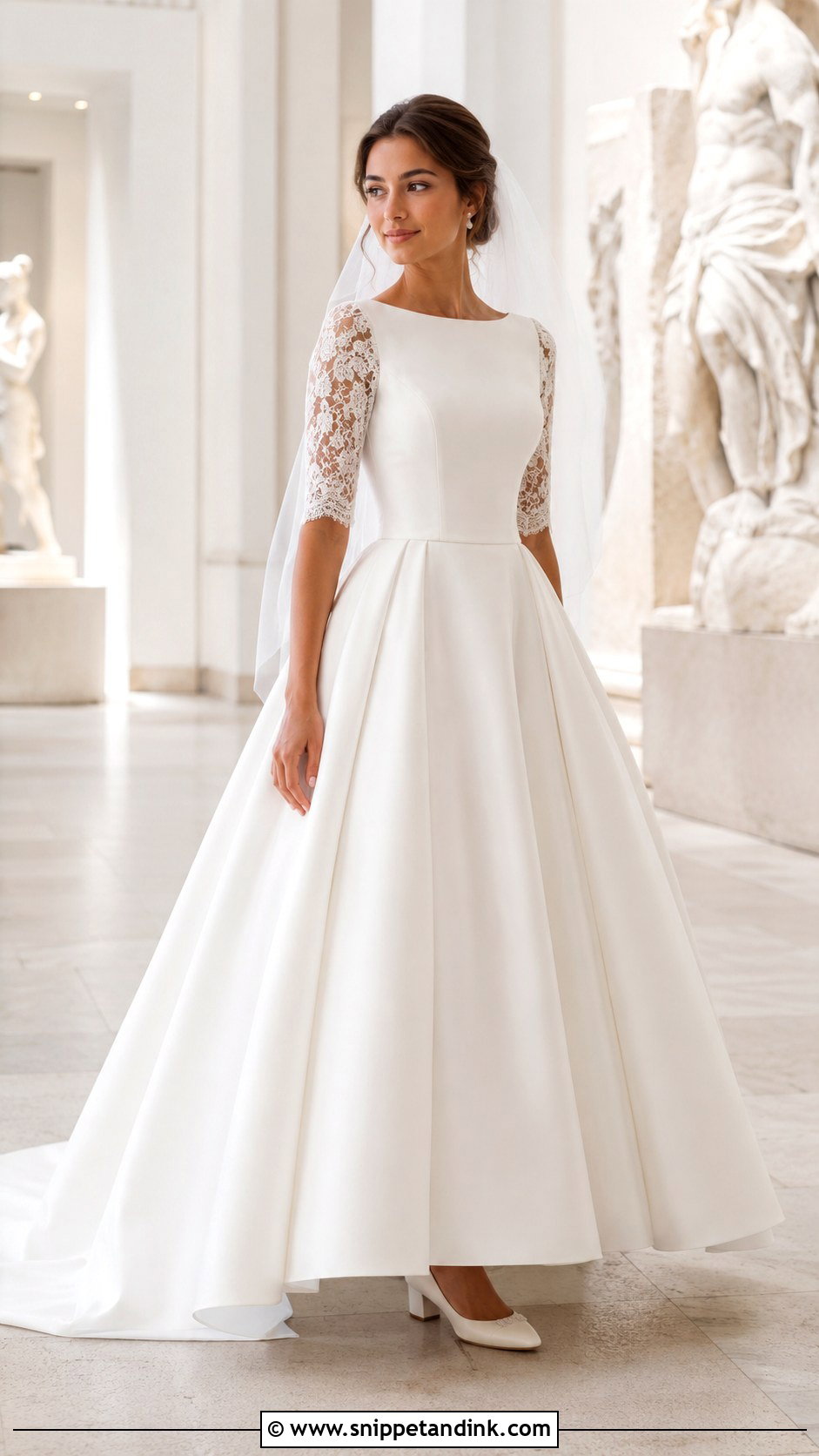
Short sleeves are the middle ground, more coverage than straps without the heat of a full sleeve. Lace ending above the elbow looks traditional, while structured satin looks clean and modern. Balance either with a fitted bodice, defined waist and a full skirt in tulle, mikado or organza. Pearl earrings, low block heels and a light veil that leaves the sleeve shape visible are enough, with soft curls or a pinned updo. The sleeve opening needs a finger’s width of ease. Too snug and it presses a line into the arm that shows up in close photos. If the skirt is heavily embellished, keep these sleeves plain.
19. Modest Princess Wedding Dress With Sleeves
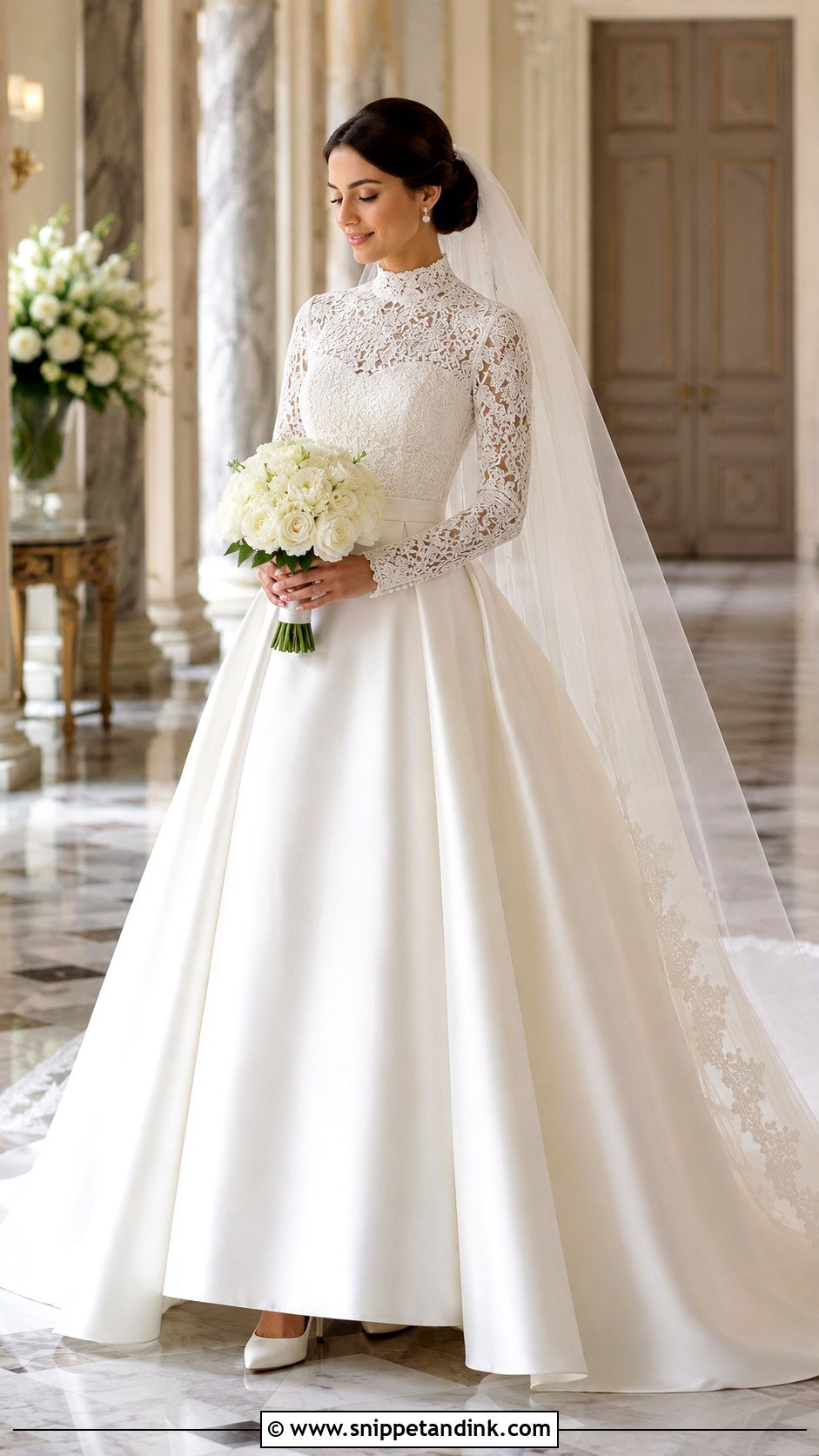
Modest doesn’t have to mean heavy. A lined bodice, long sleeves, a higher neckline and an opaque back with covered buttons give full coverage, while lace overlays and light beading add depth without sheer panels. A structured waist and wide skirt keep the princess shape. Closed-toe pumps, pearl drop earrings and a cathedral veil anchored in a smooth low bun suit it. When a gown mixes several lace patterns, I pare the accessories right back. The lining is the detail to inspect at alterations: it must lie flat at the neckline and give enough room at the elbow, because fully lined sleeves have no stretch at all. It works in any season and almost any venue.

20. Winter Princess Wedding Dress With Long Sleeves
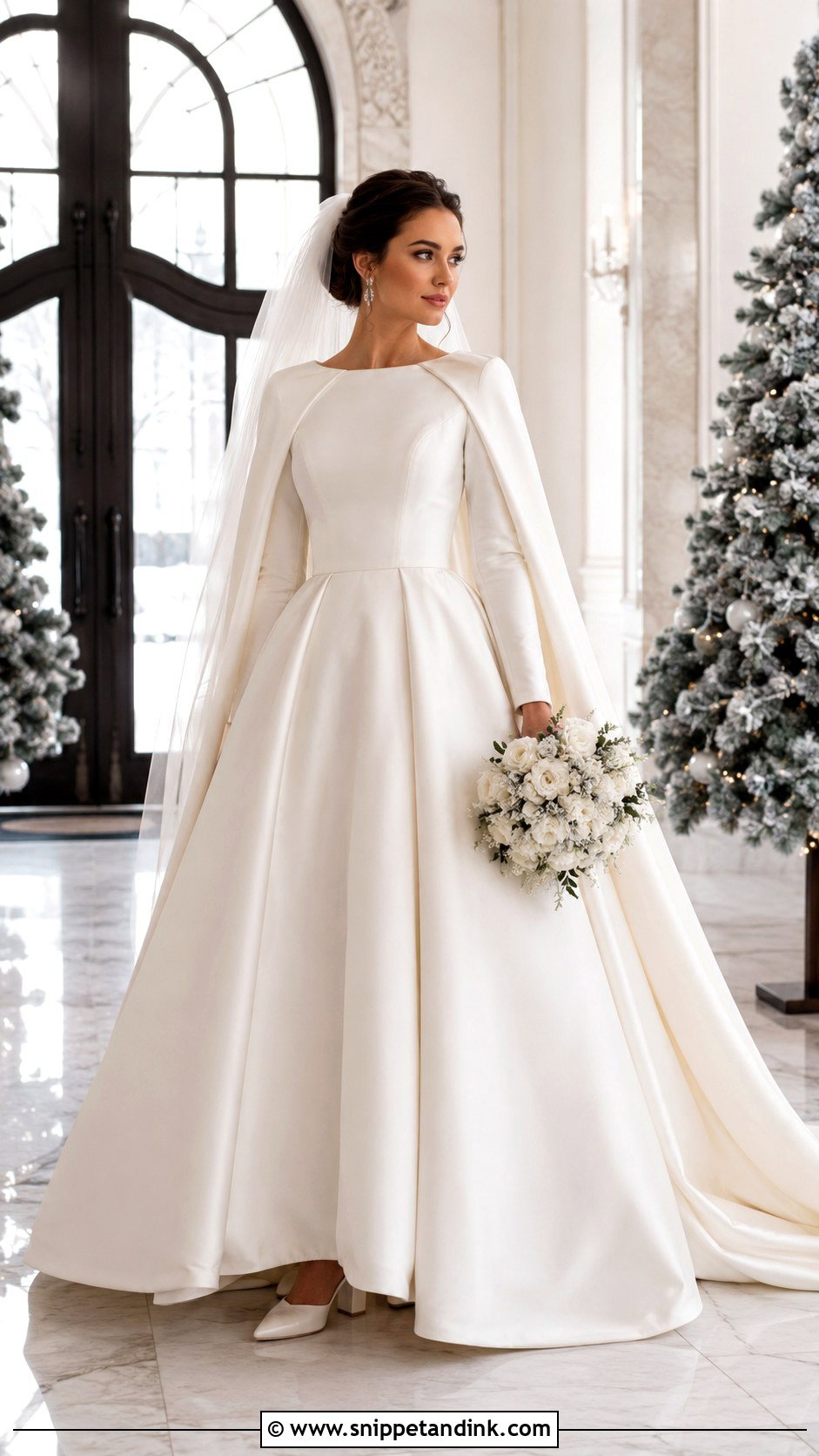
Winter gowns need some substance for the cold, yet you’ll spend most of the day in a heated room. Structured satin, mikado, layered organza and lined lace all hold a ball gown shape well. Choose fitted long sleeves with covered wrist buttons and a bateau or high neckline. Closed-toe block heels, crystal earrings and a long veil finish the outfit, and a tailored ivory cape or faux-fur wrap can come off once you’re indoors. A polished updo keeps wind from pulling the veil around. Ask whether the skirt has room for a soft underskirt layer for outdoor portraits, since a few extra degrees of warmth make a visible difference to how relaxed you look in them.
How a Sleeved Ball Gown Feels at Hour Six
Brides rarely ask me how the dress behaves at hour six, and it’s the question I’d most like them to ask. A full skirt plus covered arms holds heat. For a summer wedding, choose lighter sleeves such as illusion mesh, chiffon or a short cap, and keep the long satin sleeves for cooler months or air-conditioned rooms.
The bustle and the bathroom
Ask for the bustle to be fitted at your final fitting, with the person who’ll do it on the day watching. Ball gown trains usually need several bustle points, and the ribbon loops are often color coded. For the bathroom, a helper gathers the skirt from the front while you step backward; sleeves make it harder to manage the skirt yourself, so don’t be shy about asking.
After the wedding
Take the gown to a specialist cleaner within a few weeks, before invisible sugar or drink marks oxidise into yellow spots. Point out any spills on the sleeves and cuffs, which pick up more than you’d think. Store it boxed in acid-free tissue or in a breathable cotton bag, never sealed plastic, and pad the sleeves with tissue so the lace doesn’t crease along the fold.
The Arm Test That Settles Most Sleeve Decisions
A sleeve changes how a full gown looks and how it feels to wear, whether it’s adding coverage, movement or texture. This list runs from minimal satin to romantic lace, glamorous beadwork and modest designs. Start with the neckline, waist placement, fabric and sleeve length you feel most comfortable in. Then test the dress the way you’ll actually use it: sit, walk, lift your arms and hold a bouquet. Good tailoring makes even an elaborate ball gown easy to wear. Keep accessories in proportion to the decoration on the dress, choose shoes you can stand in for hours, and pick the gown you forget you’re wearing once the music starts.
You'll Like These Ideas:









Leave a Reply