
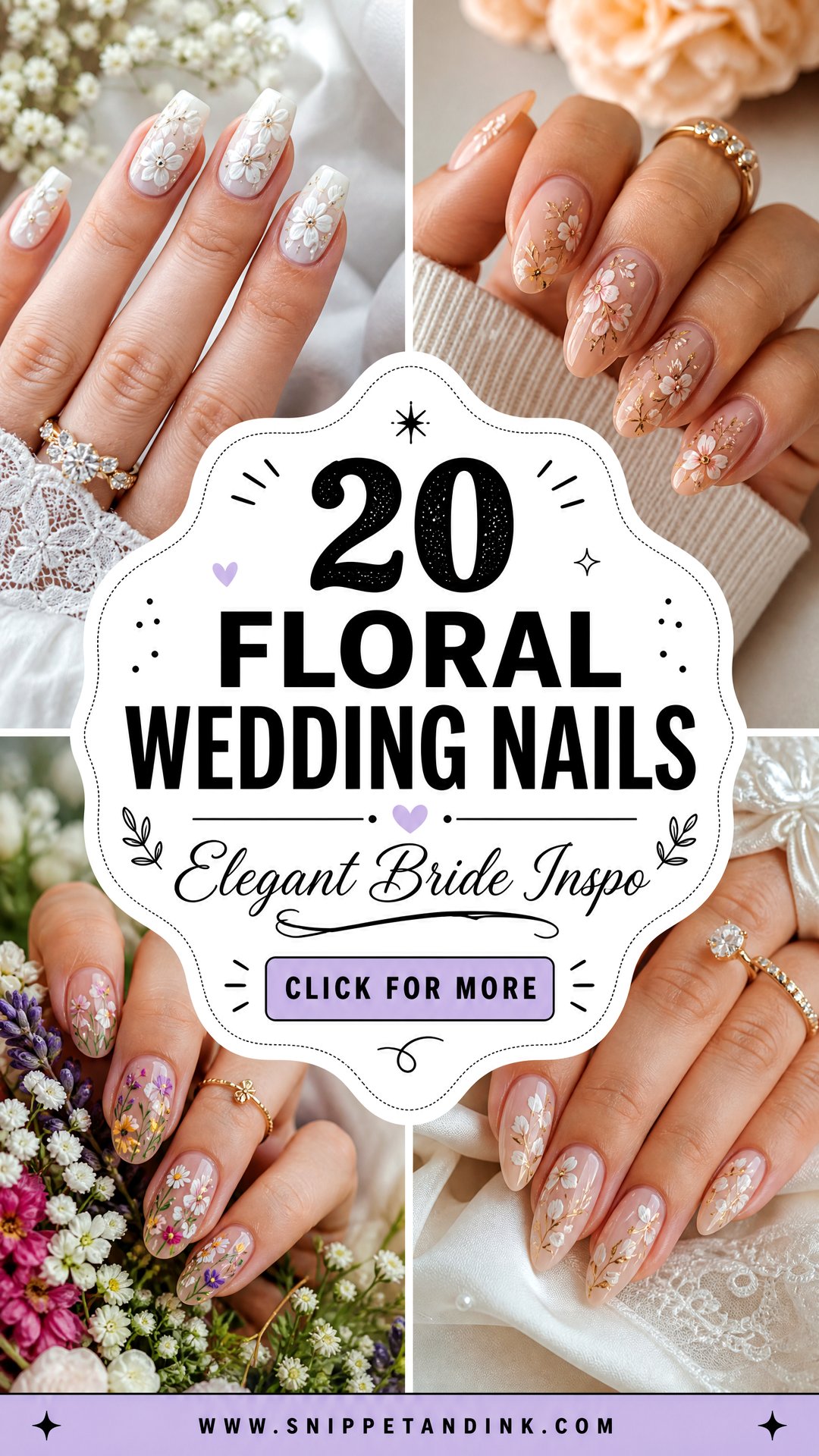
Flowers are the one piece of nail art I can fit to almost any bride, because the scale is so adjustable. A couple of white petals near the cuticle disappear from three feet away and show up only in the ring close-up; a full garden of hand-painted blooms reads from across the room. They also layer onto the finishes brides are asking for right now: chrome, milky bases, micro French tips and pearls. What decides the right set is your gown, your bouquet, your natural nail length and how much you use your hands at work in the week before. These floral bridal nail designs run from barely-there to full statement, with notes on how each one is actually built and worn.
Your Bouquet Photo Tells Me More Than a Pinterest Board
Inspiration photos are useful, but they’re often shot on long extensions with perfect lighting. To design floral nails that fit you, I need a few practical things at the consultation.
- A close-up of your dress fabric, so I can match lace motifs and the exact white or ivory.
- A photo or sample from your florist, so the petal shapes and colors echo the bouquet rather than clash with it.
- Your ring, or a photo of it in daylight. Gold, platinum and rose gold each look better beside slightly different bases.
- Honest notes about your hands: weak or peeling nails, whether you bite, and how short your natural nails are right now.
If you can, book a trial set a month or two ahead. It shows you how the design wears for a couple of weeks and gives your artist time to adjust the shade or scale before the real thing.
1. White Floral Wedding Nails
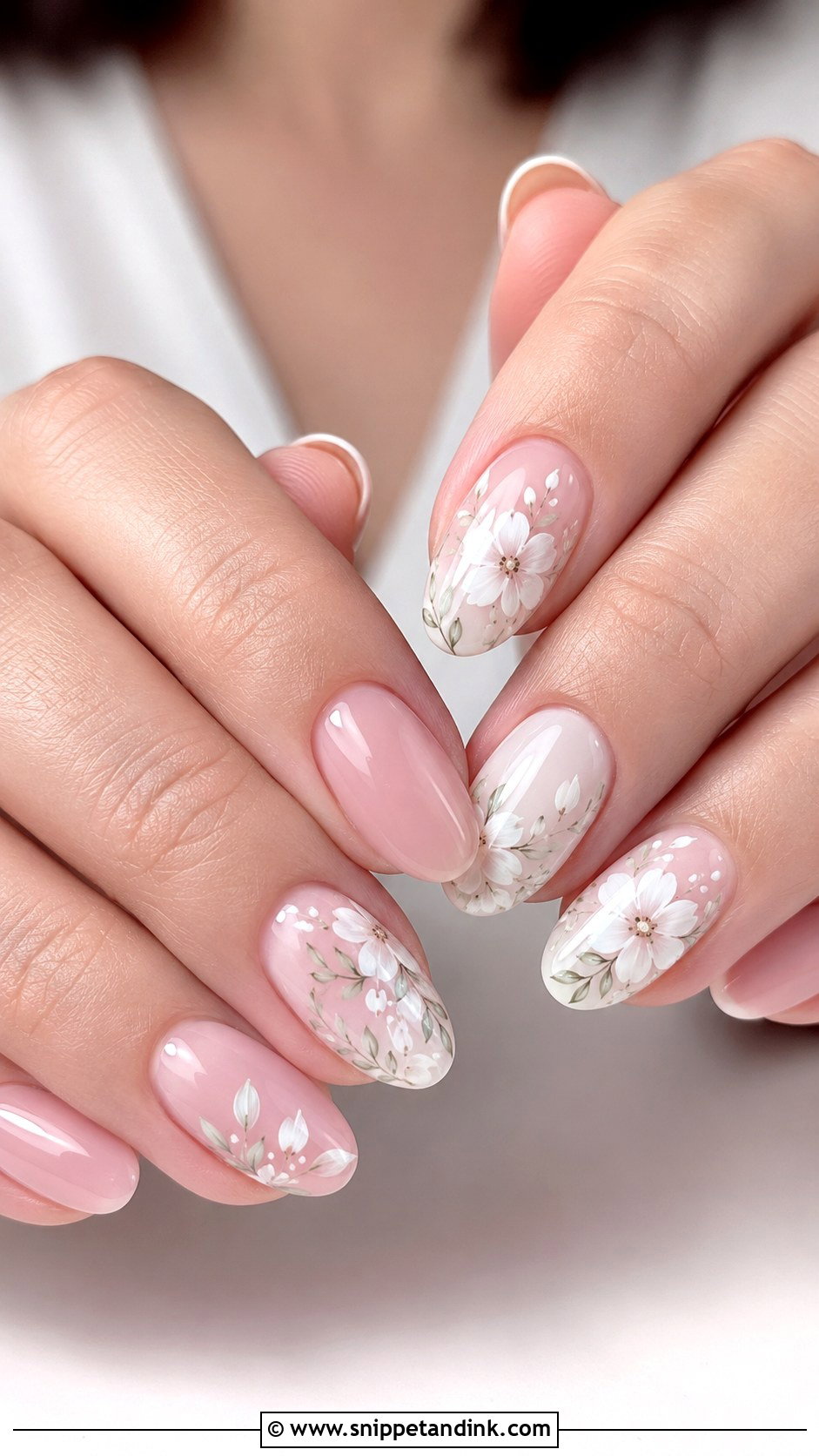
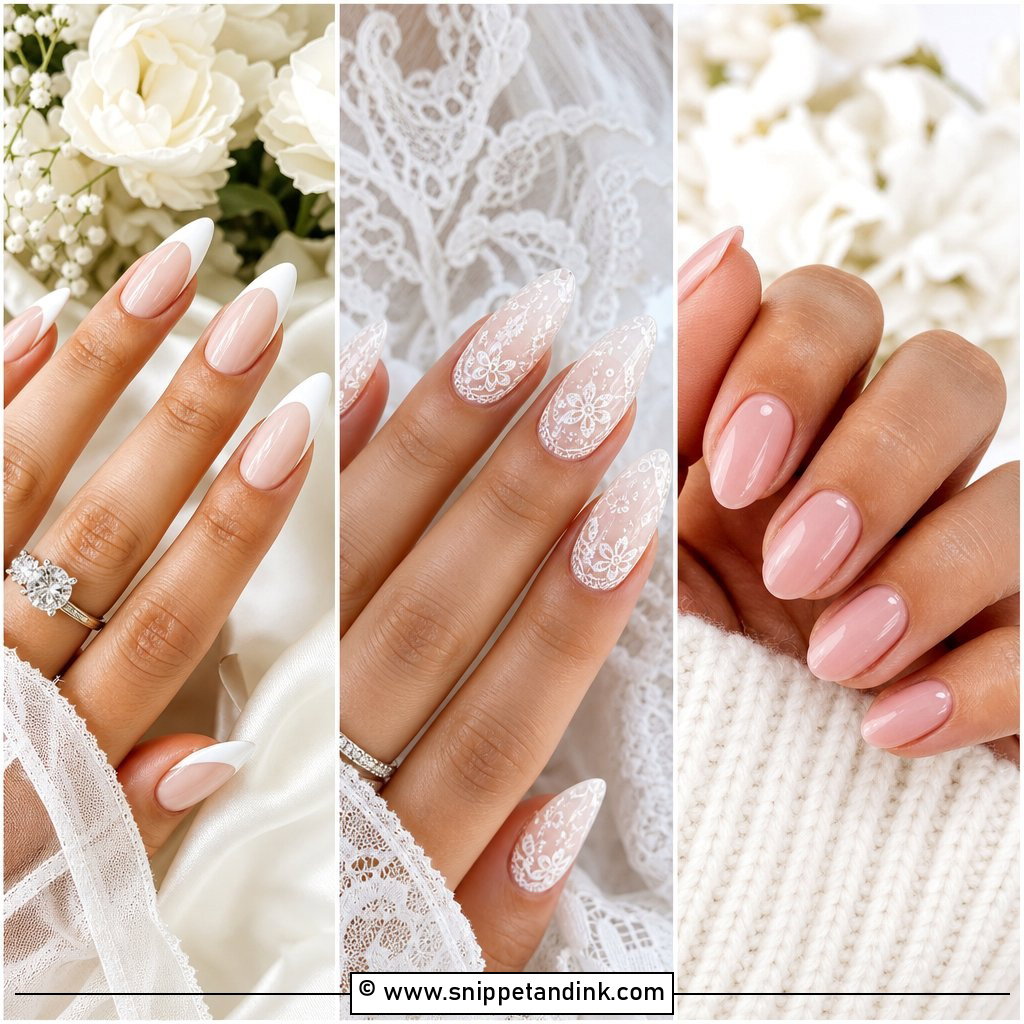
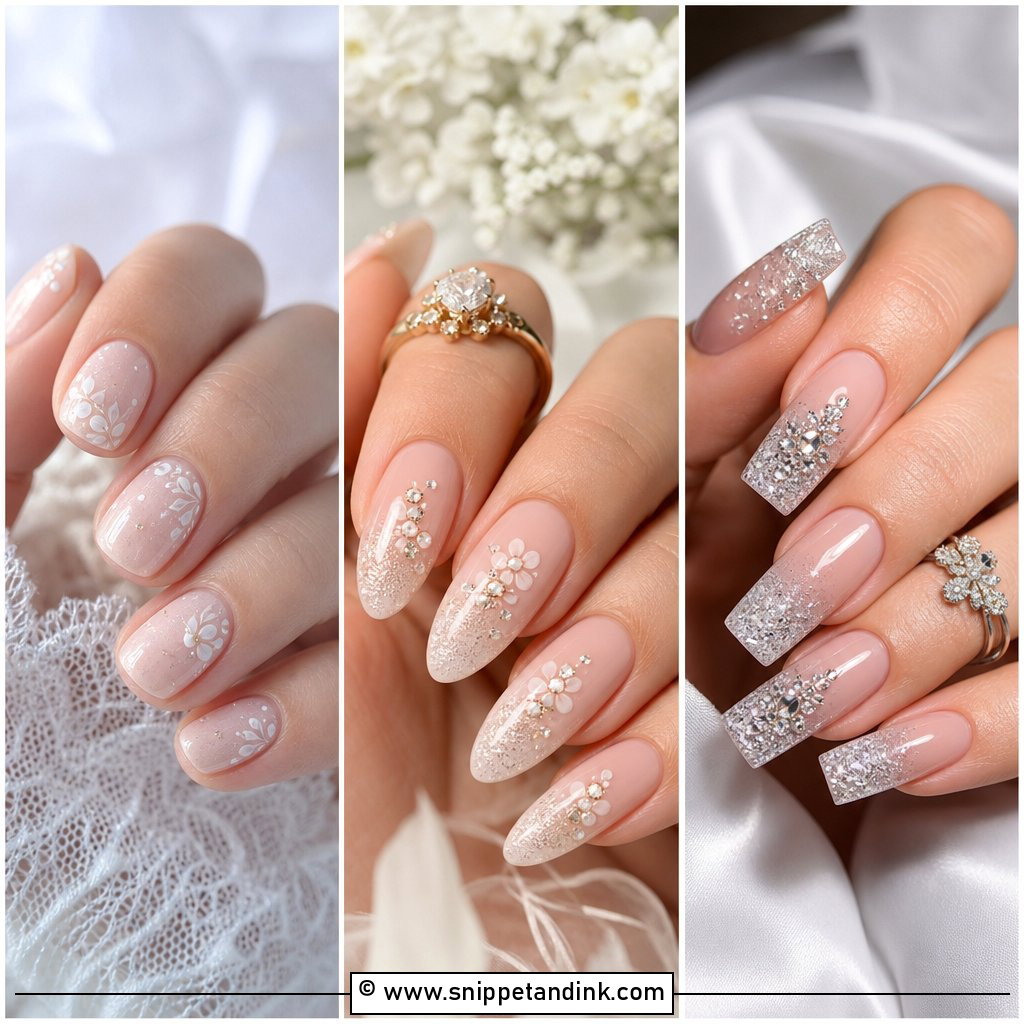
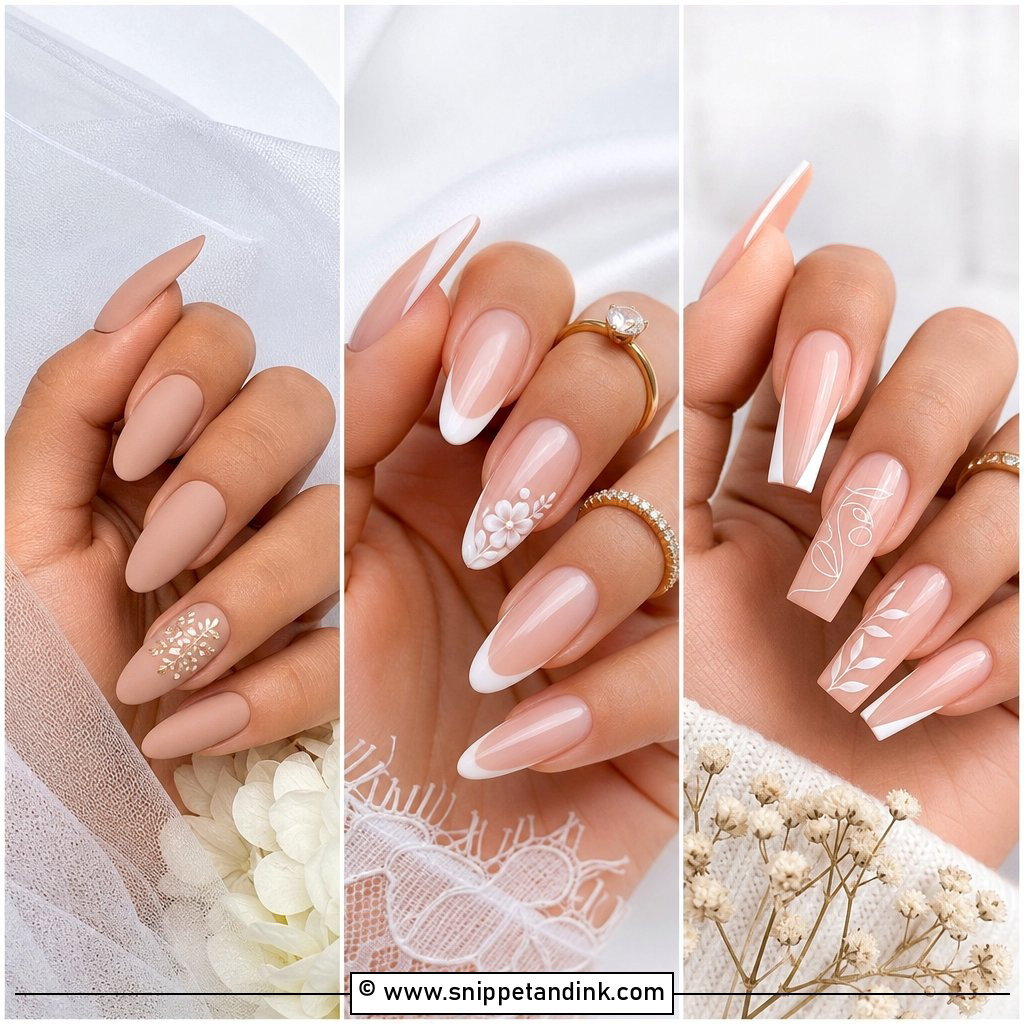
I build this one on a sheer pink, nude or milky base, then paint small white flowers on a few nails or across all ten. White gel paint is thicker than colored gels, so I thin the petals with a fine liner and cure each layer quickly before it spreads. Lace gowns, pearls and white bouquets sit naturally with it. Almond and oval shapes make the petals look delicate; square tips give it a crisper, modern edge. Don’t let every nail carry the same cluster, though. Offsetting the placement keeps the set from looking stamped.
2. Pink Floral Wedding Nails
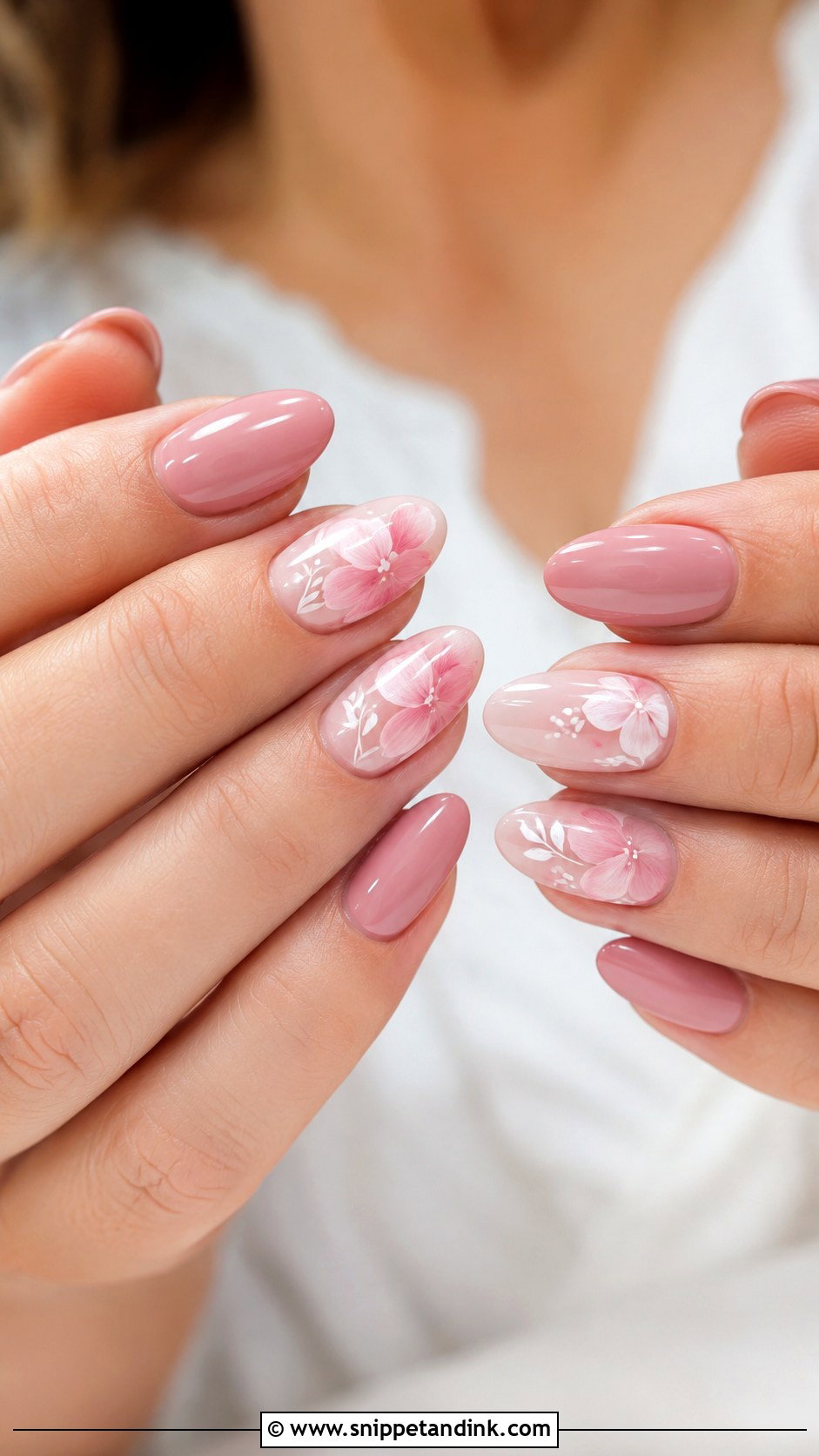
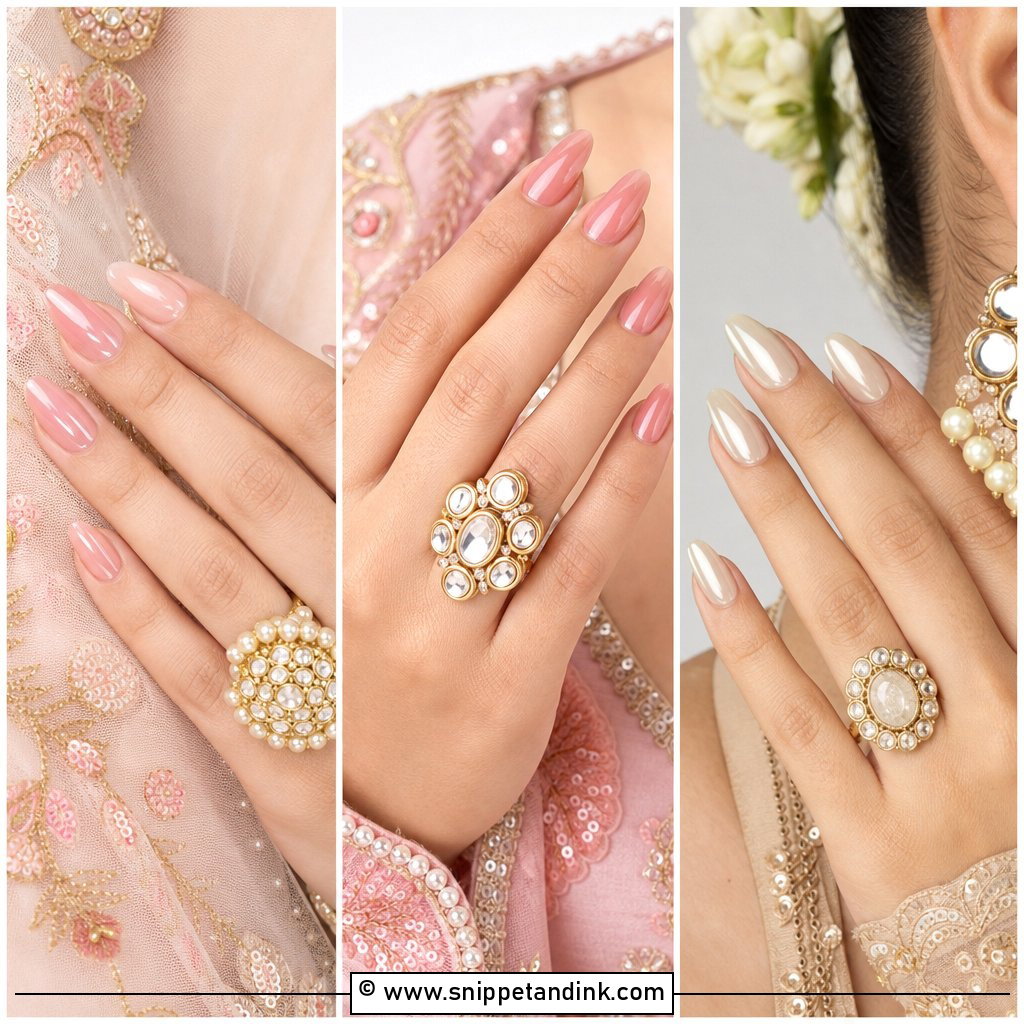
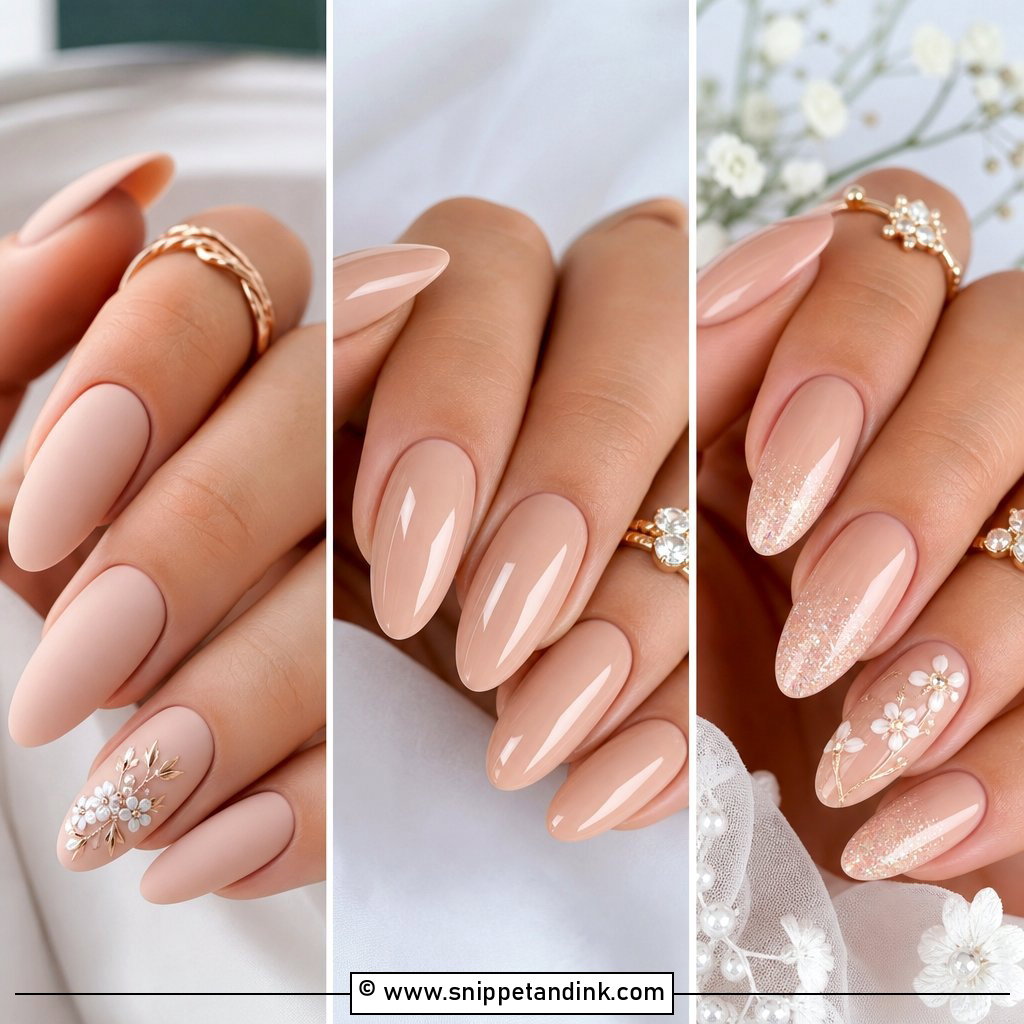
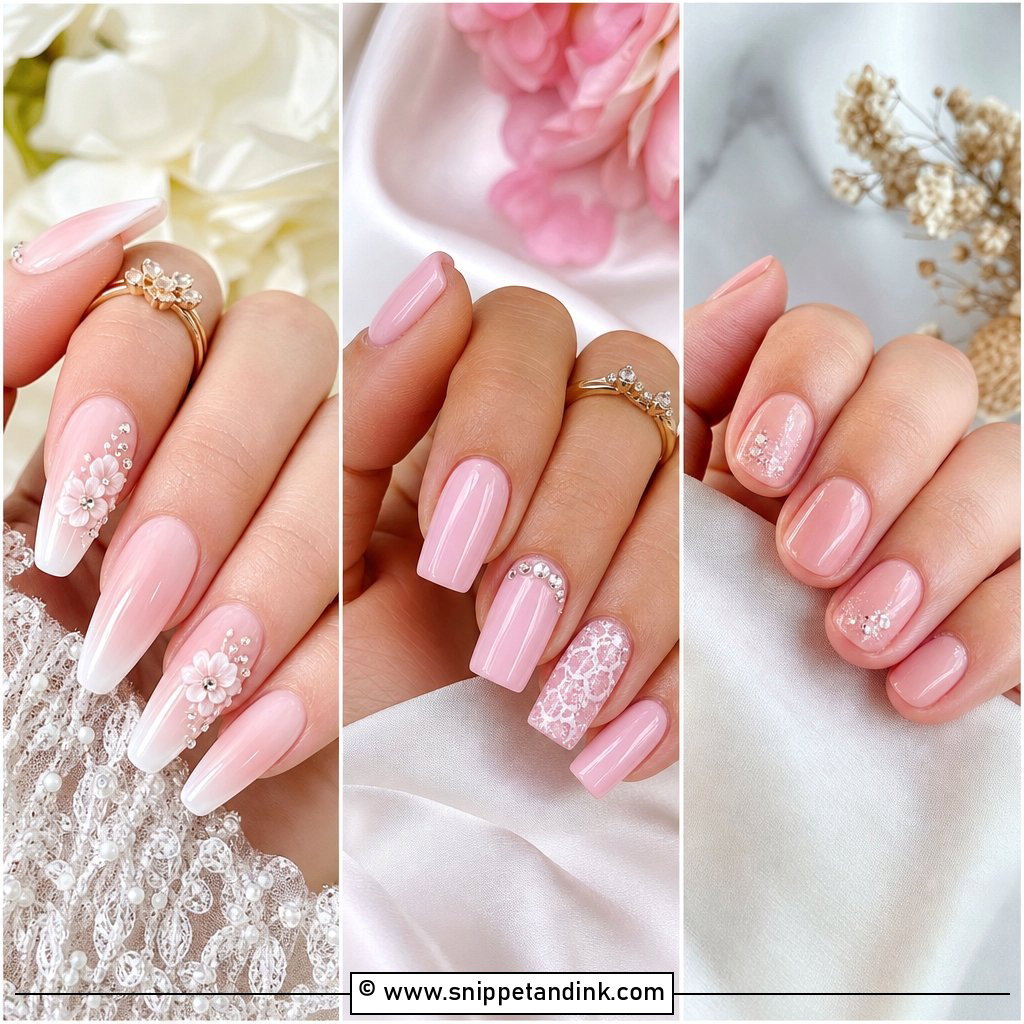
Pink flowers on a sheer blush base give color without any shout. The real work is in the base: I shift it from a cool baby pink to a warm peachy nude depending on your skin, and that one choice decides whether the set flatters you or makes your hands look ruddy. Small scattered flowers keep it minimal; two accent nails with larger hand-painted blooms make more of a feature. A glossy top coat looks cleanest, and a pearl shimmer softens it further. Spring weddings and rose or champagne color schemes suit it best.
3. French Tip Floral Wedding Nails
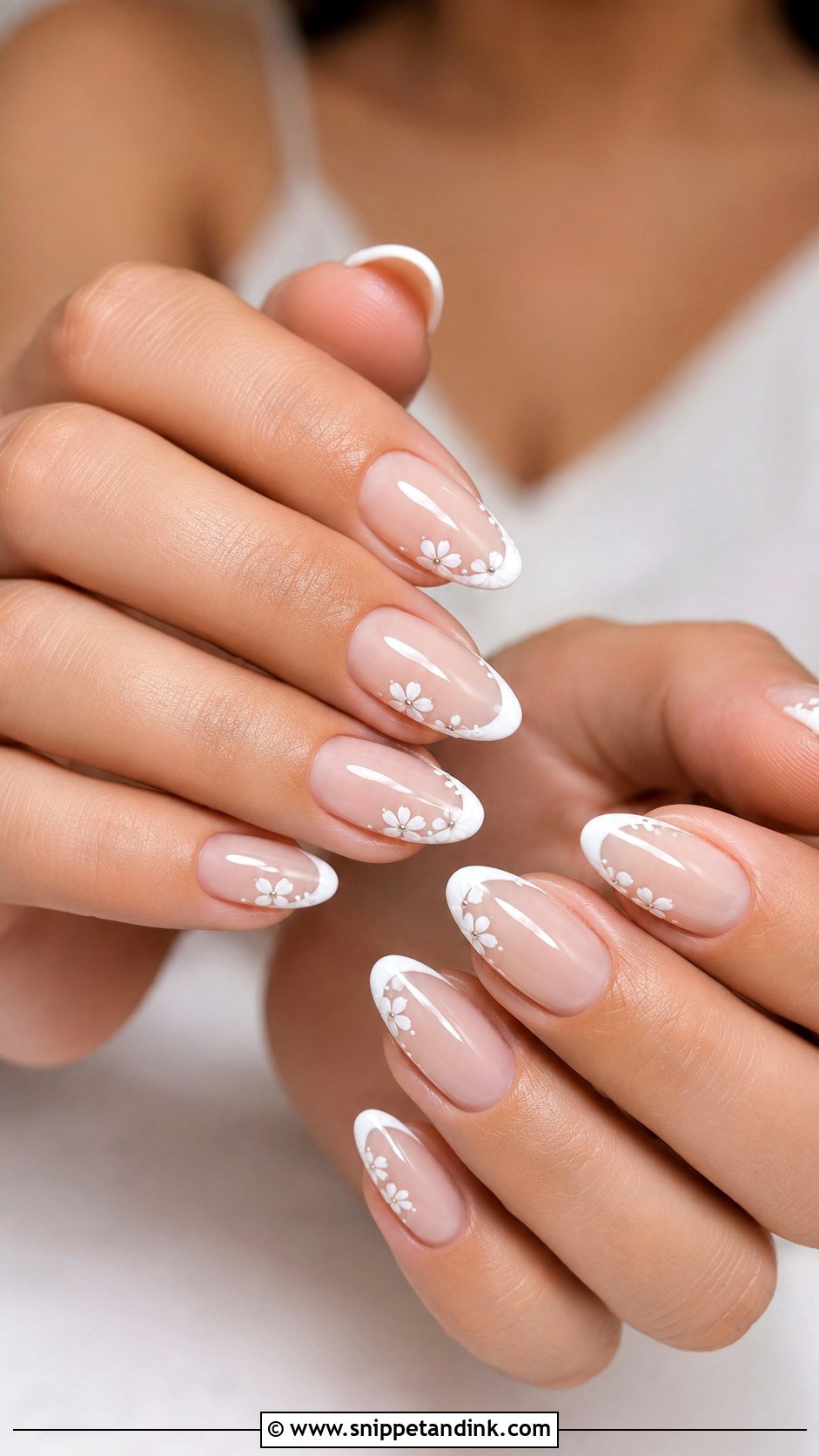
Adding flowers to a French tip is my favorite way to update the classic without losing what brides like about it. The flowers can sit along the smile line, near the cuticle or on one or two accent nails. A micro French looks modern and suits short nails; a deeper tip reads more traditional and needs some free edge. Keep the colors in white, ivory, blush and nude, with a couple of tiny green leaves if you want to echo the bouquet. Because the nail bed stays clear, the set still looks clean in close-up photos.
4. Milky White Floral Wedding Nails
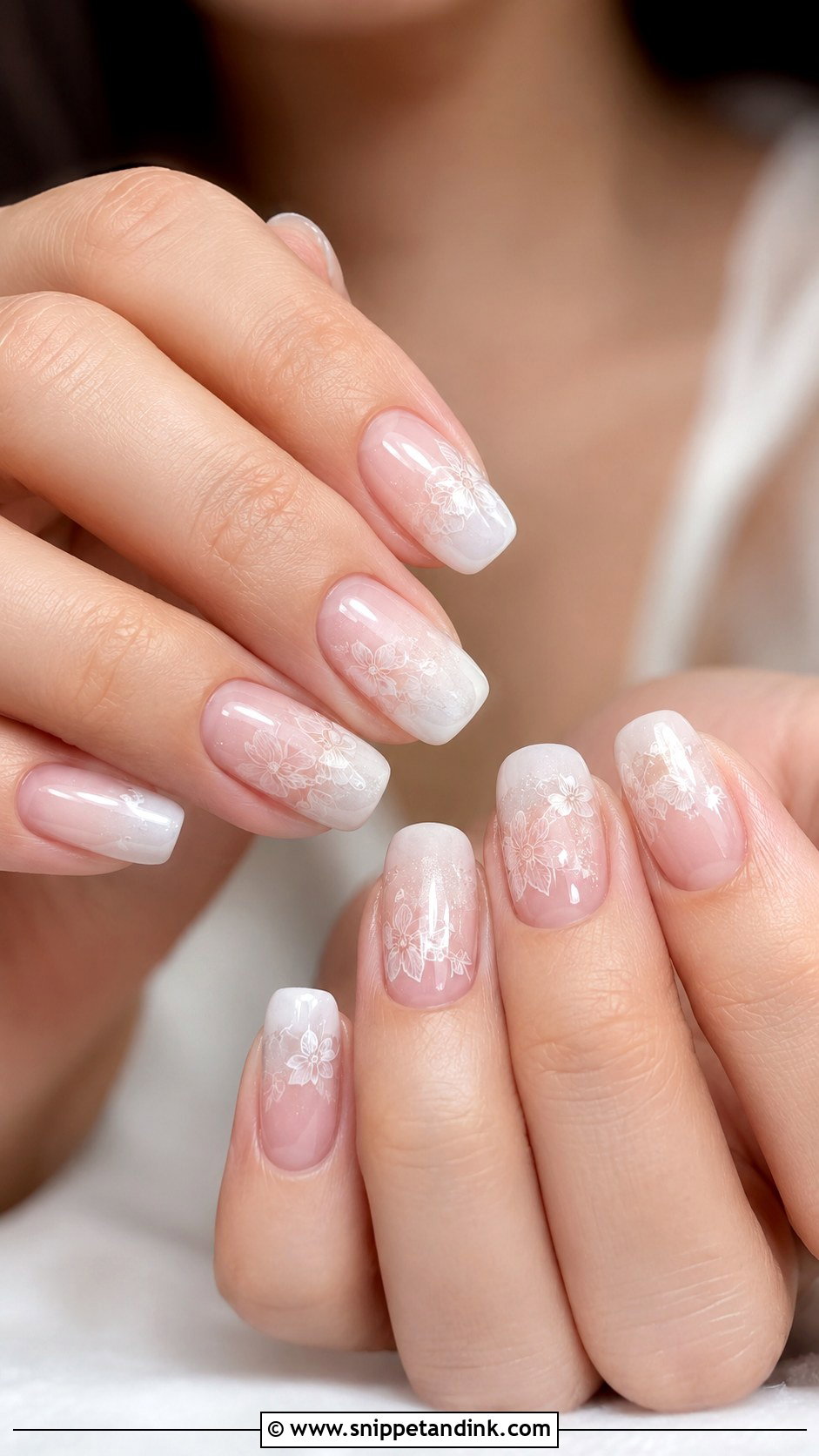
A milky base blurs the natural nail, so any flower painted on it looks softer and slightly diffused. My trick for that pressed-under-glass effect is to paint the white or pale blush flowers first, then float one thin milky layer over them. Two coats too many and the flowers vanish, so I check under daylight before curing. From a distance it reads as clean nails; up close the flowers appear. Satin gowns and simple veils suit it. Short almond, oval or squoval nails keep it looking natural.
5. Nude Floral Wedding Nails
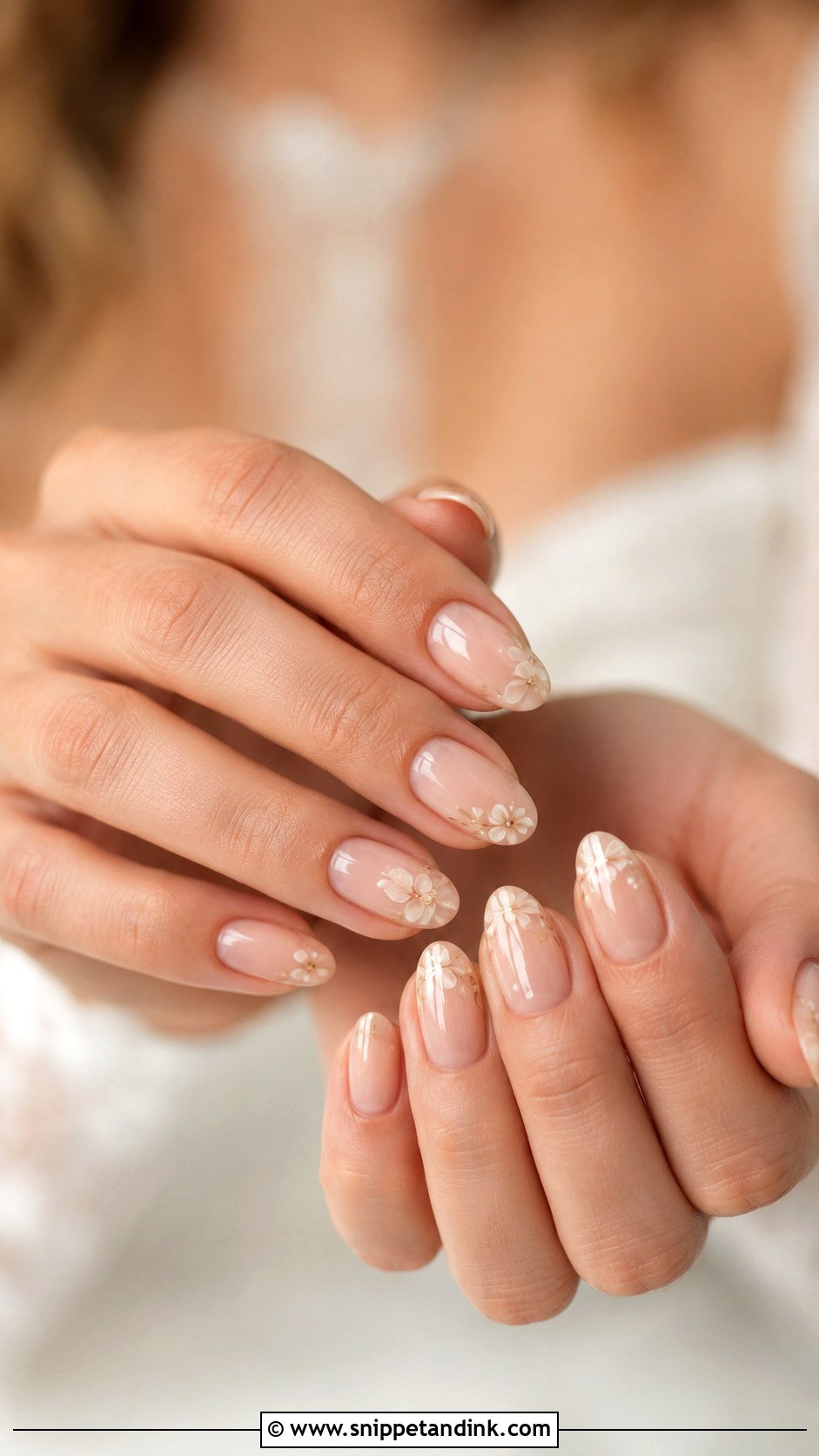
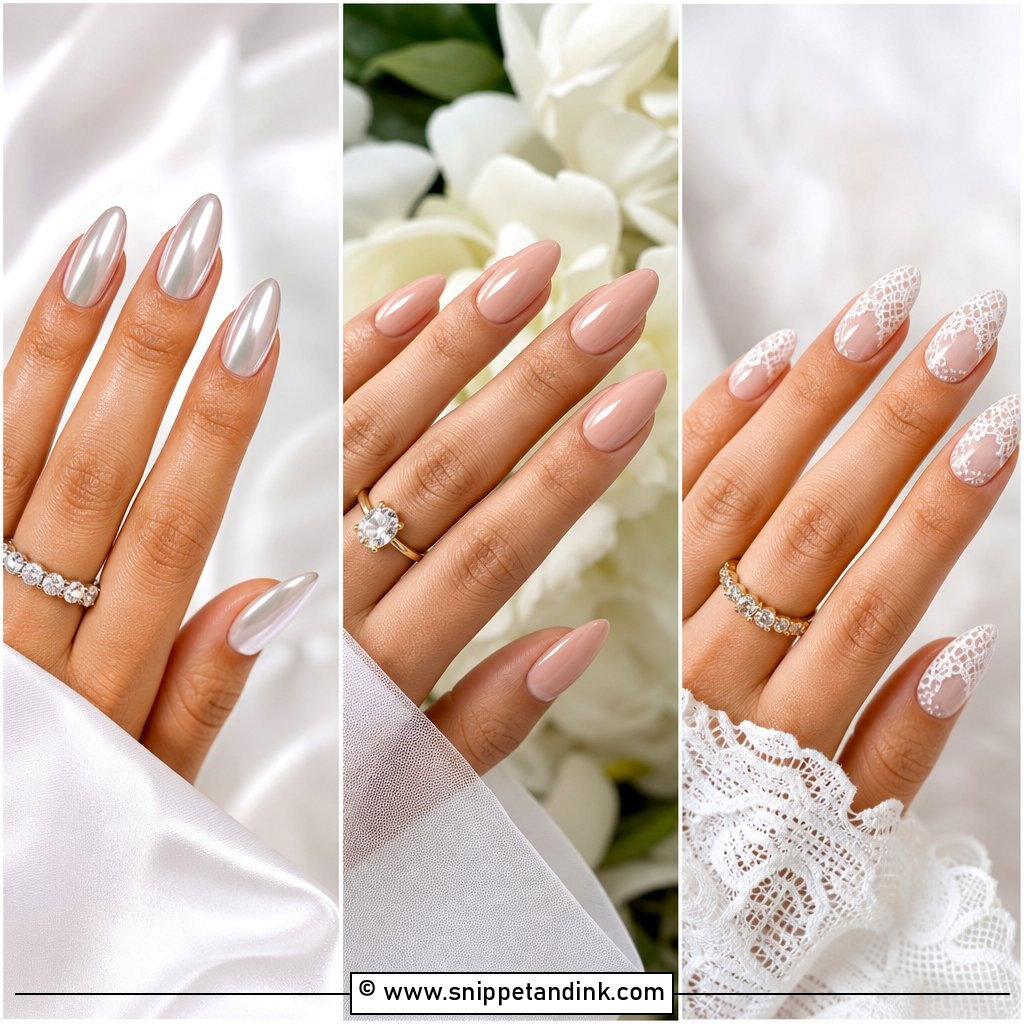
Nude is the base I suggest when the dress already has beading, lace or dramatic sleeves, because the nails shouldn’t compete. Matching the undertone matters most: beige for neutral skin, peach for warm, rosy nude for cool. If the shade is off, hands can look grey or washed out in photos. White flowers are the safest choice, and champagne, pale pink or soft taupe petals also work. A glossy finish is classic; a satin top coat gives a more editorial look but shows scratches sooner.
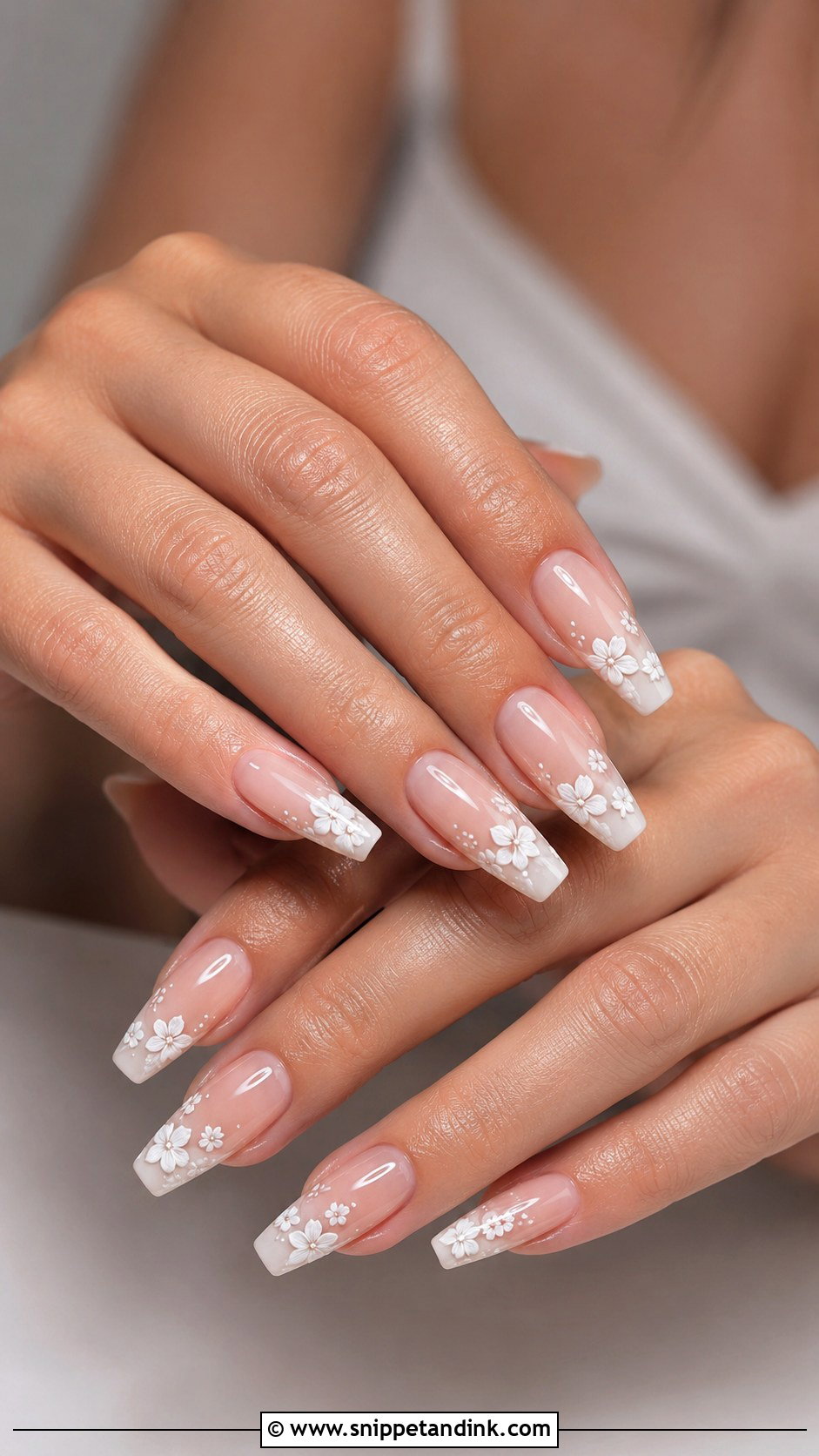
6. 3D Floral Wedding Nails
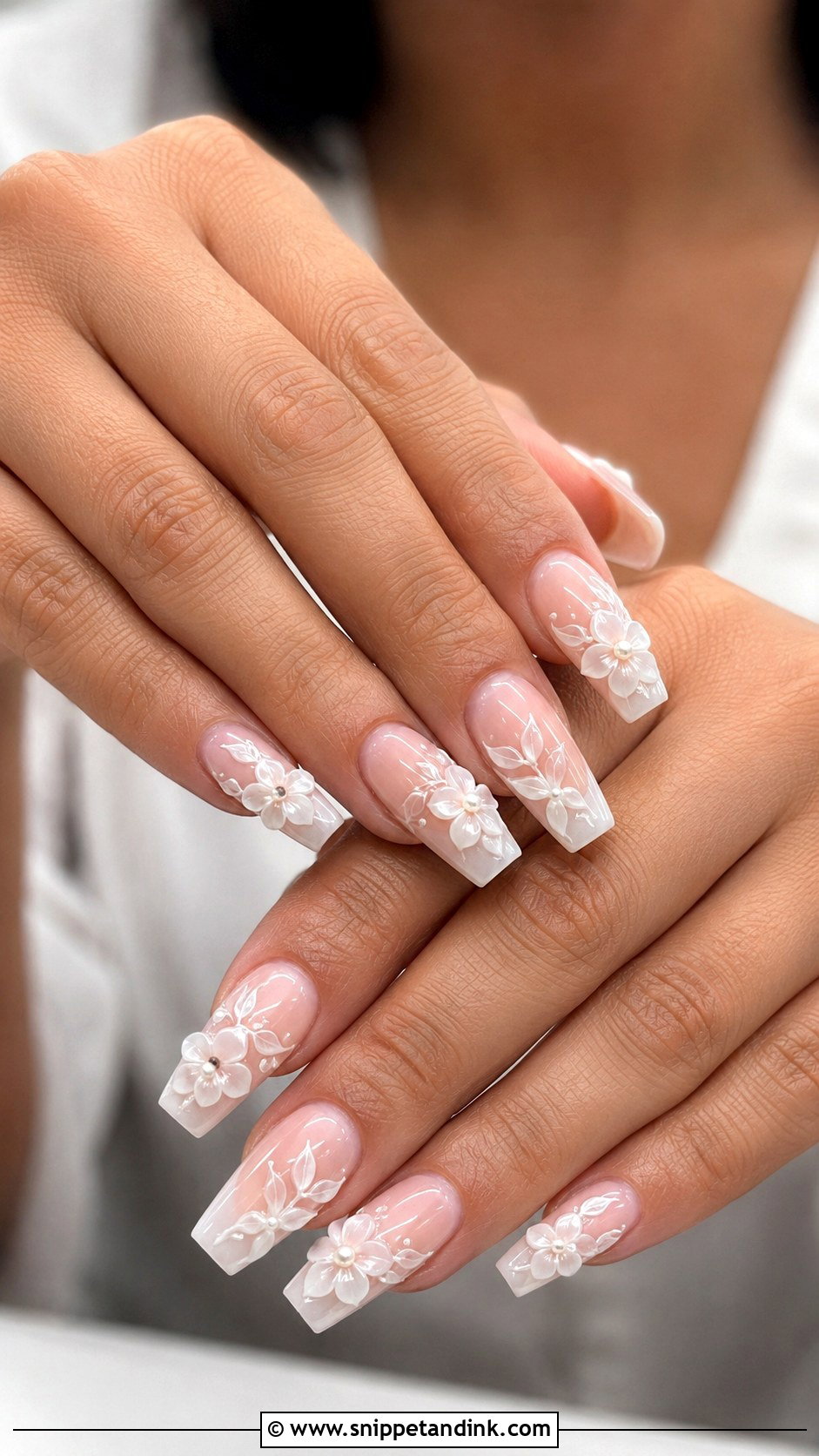
Three-dimensional flowers are sculpted from acrylic or a thick sculpting gel and set onto the nail, usually over a sheer nude, milky or French base. They catch light in detail photos, but they also catch everything else. Raised petals snag fine veil tulle, lace sleeves and hair, so I limit them to one or two nails per hand and place them low, near the cuticle. Medium-length almond, coffin or oval nails give the flower enough room. Tiny pearls or crystals at the centers finish them.
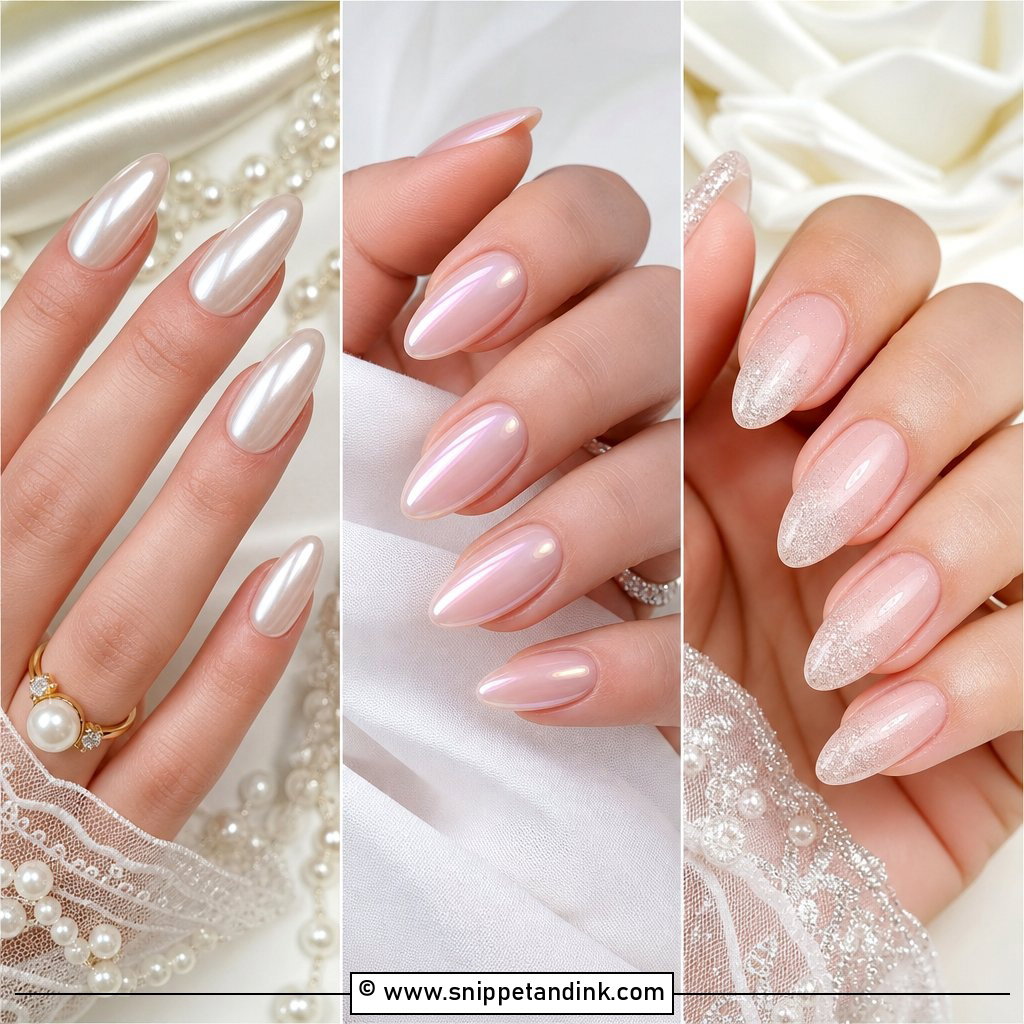
7. Pearl Floral Wedding Nails
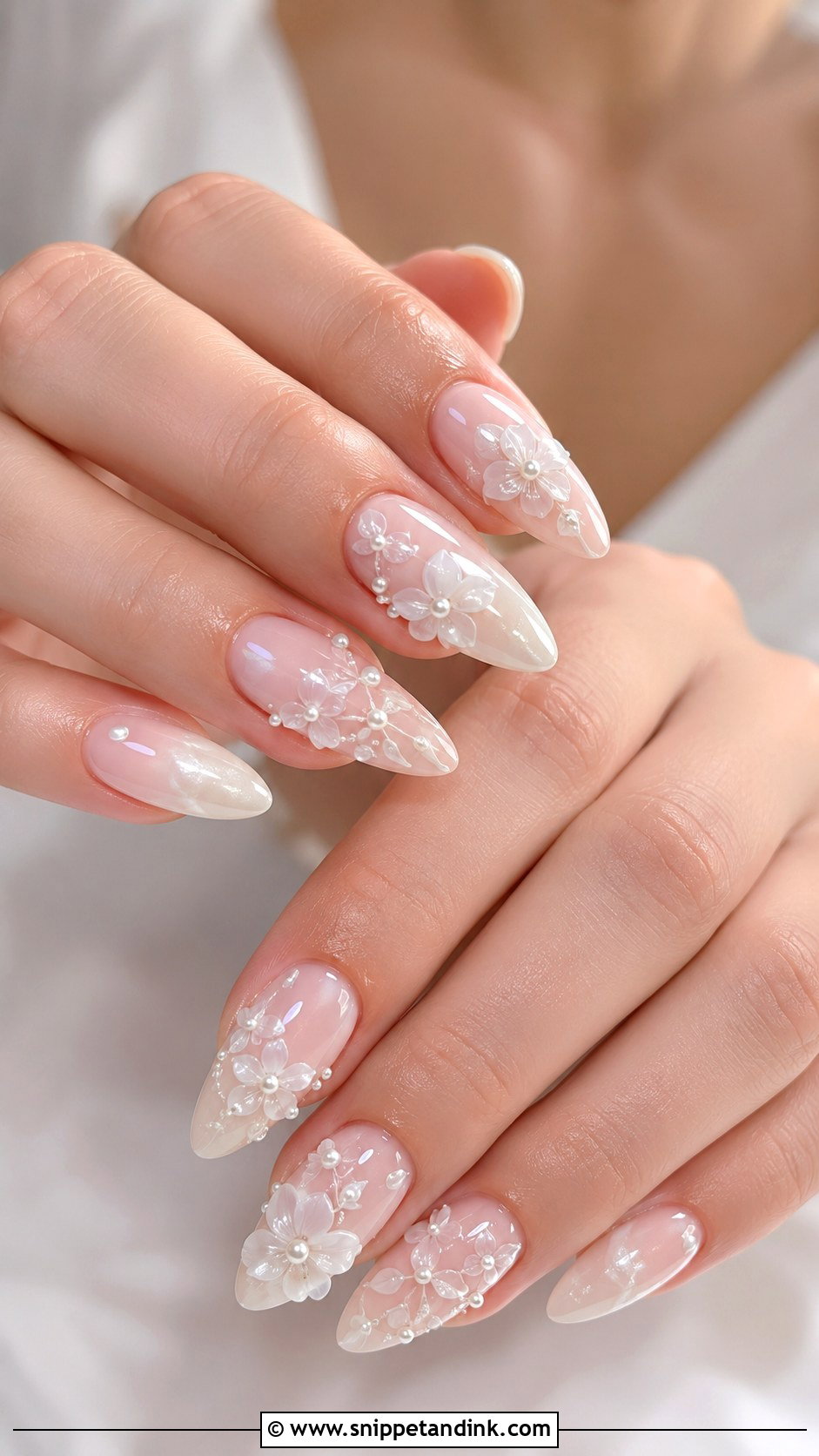
Pearls and flowers together pick up ivory dresses, pearl earrings or a pearl-trimmed veil. I paint tiny flowers over a sheer pink or milky base, then set small flat-backed pearls at the centers or along the cuticle like jewelry. Restraint matters here. Every pearl is a raised point that can catch on fabric, and too many make the set look bulky. Oval and almond shapes look graceful with it, but short square nails can carry a minimal version too.
8. Chrome Floral Wedding Nails
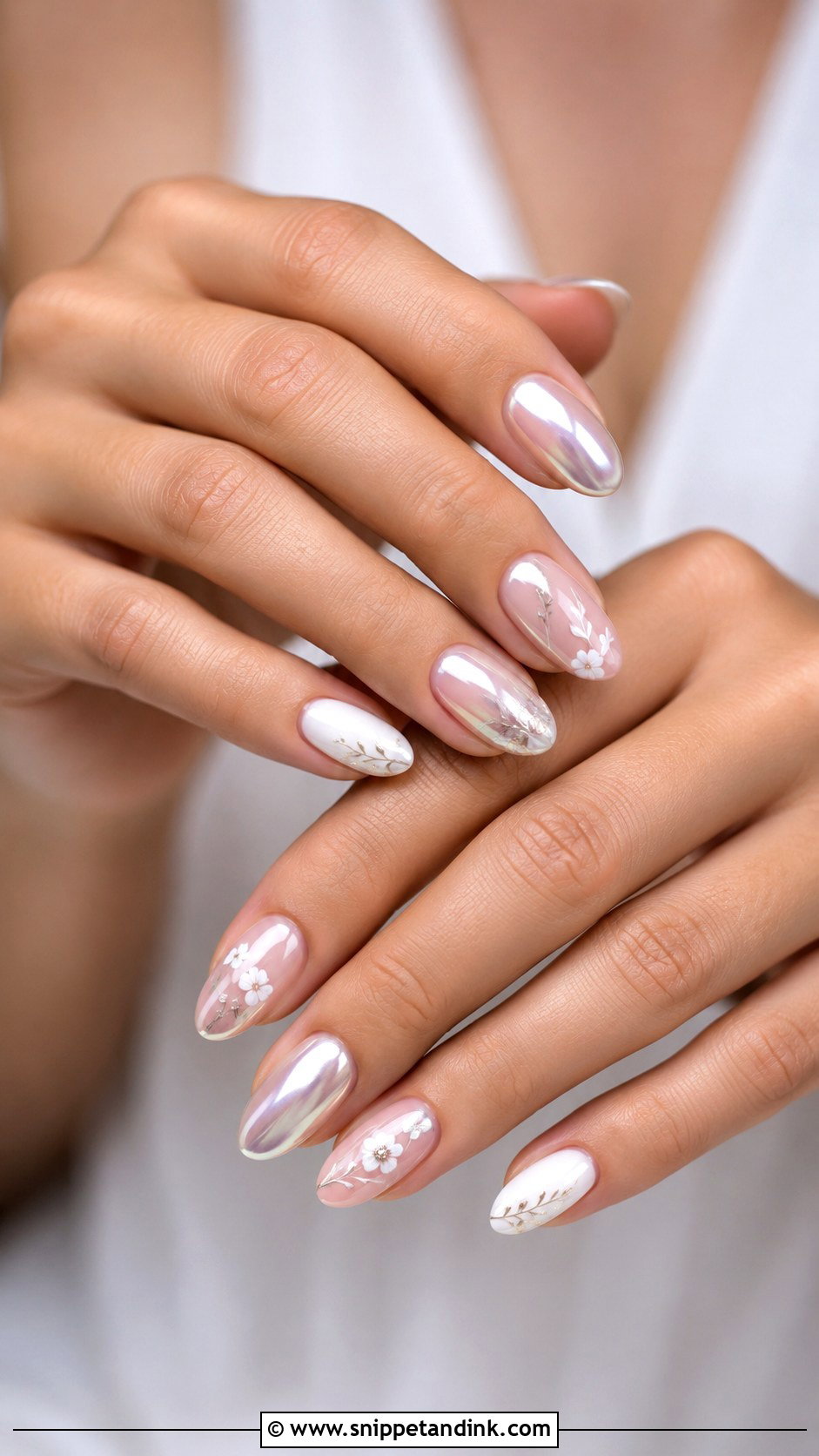
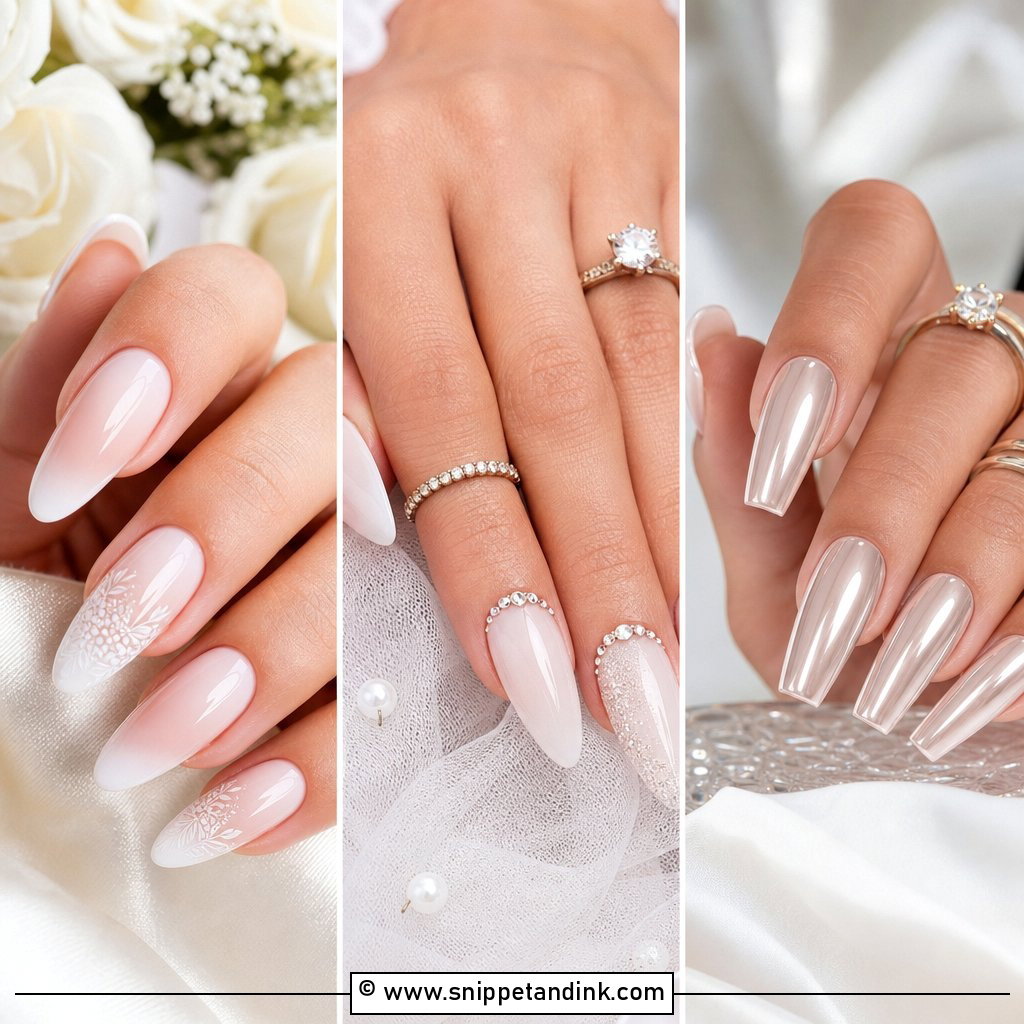
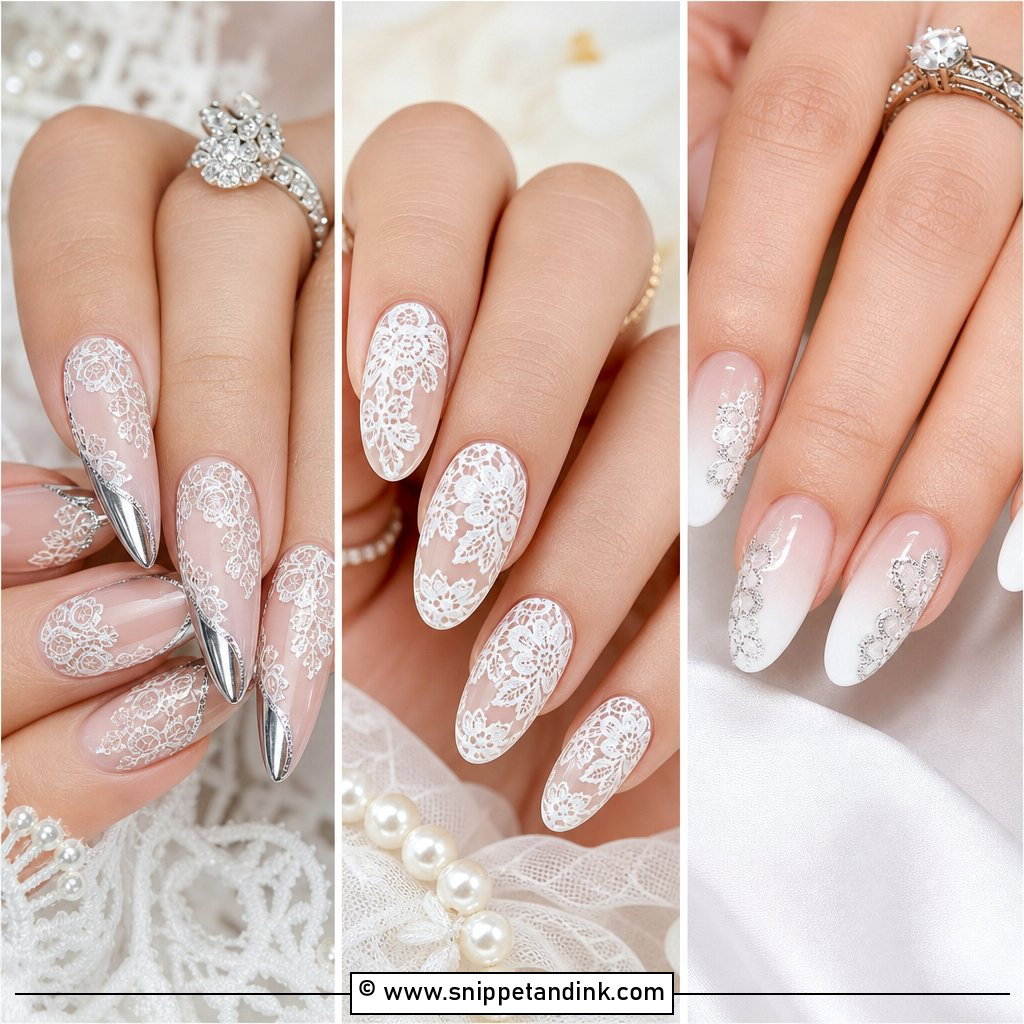
Chrome is a powder rubbed into a cured top coat, which gives the nail that glowing, pearly surface. Flowers can be painted over it, embossed underneath, or kept to subtle white accents on one or two nails. A pearl chrome over nude, pink or milky white reads bridal; a hard silver chrome looks more like an evening look. The thing I watch with chrome is the free edge. If it isn’t sealed and capped properly, it starts wearing away within days. Sleek gowns and minimalist styling are where this finish fits.
9. Lace Floral Wedding Nails
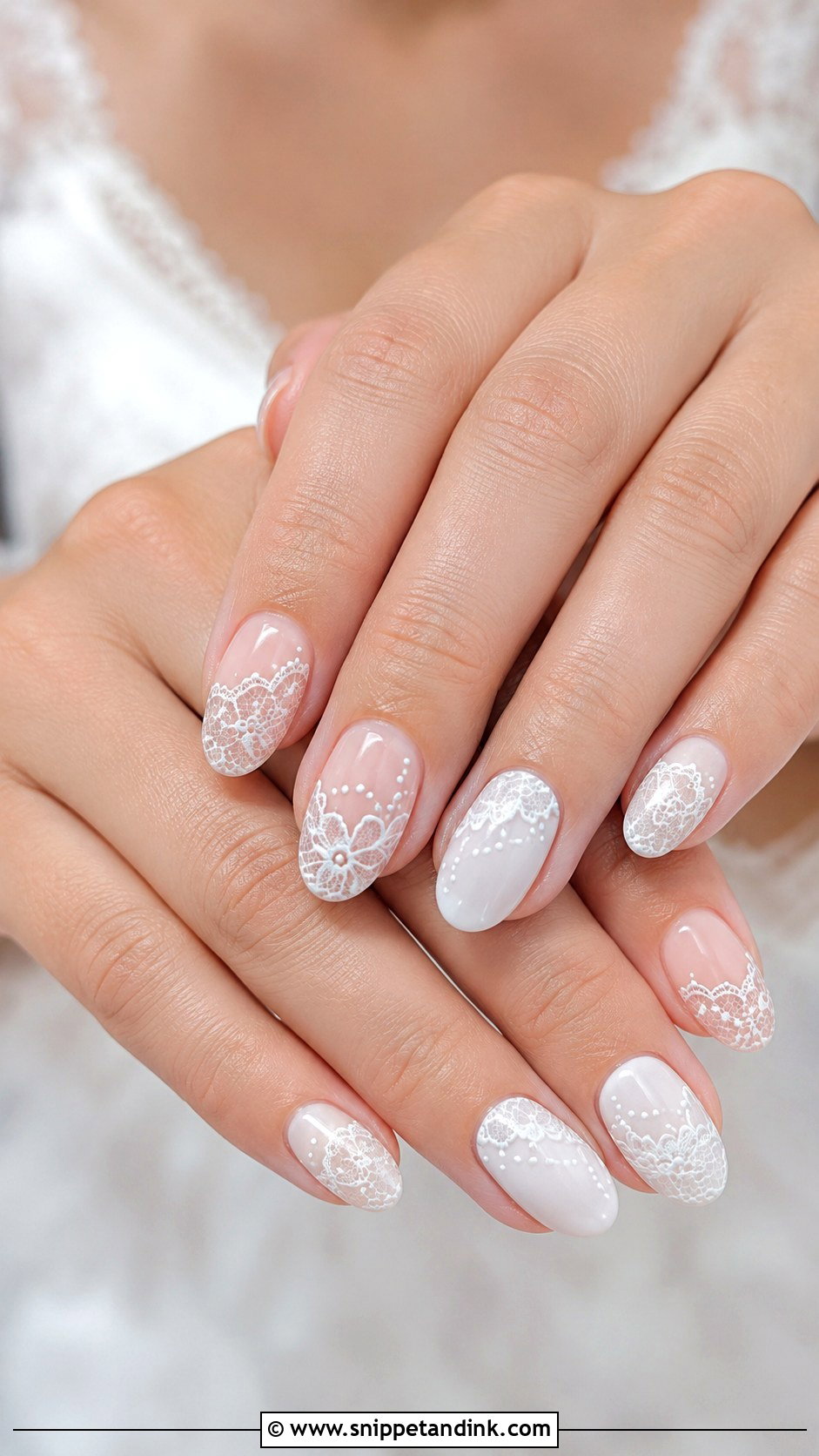
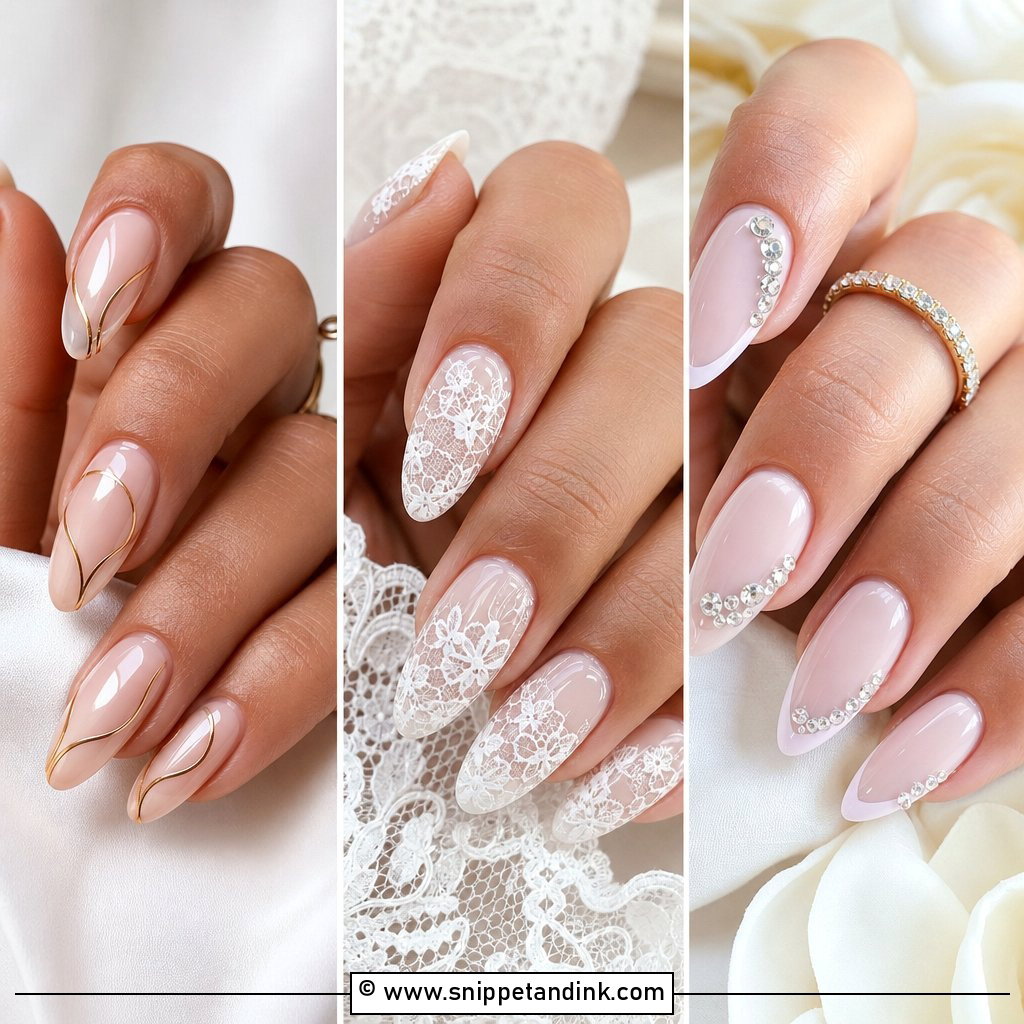
If your dress has lace or floral appliqué, bring a close-up photo of it. I can match the motif with fine white lines on a sheer nude or pale pink base, either freehand or with a stamping plate for very fine repeating patterns. Freehand looks more like the gown; stamping is faster and more even. The curved edge of almond and oval nails complements lace well. Keep it mostly white for the classic version, or add tiny pearl dots to mimic beaded lace.
10. Pressed Flower Wedding Nails
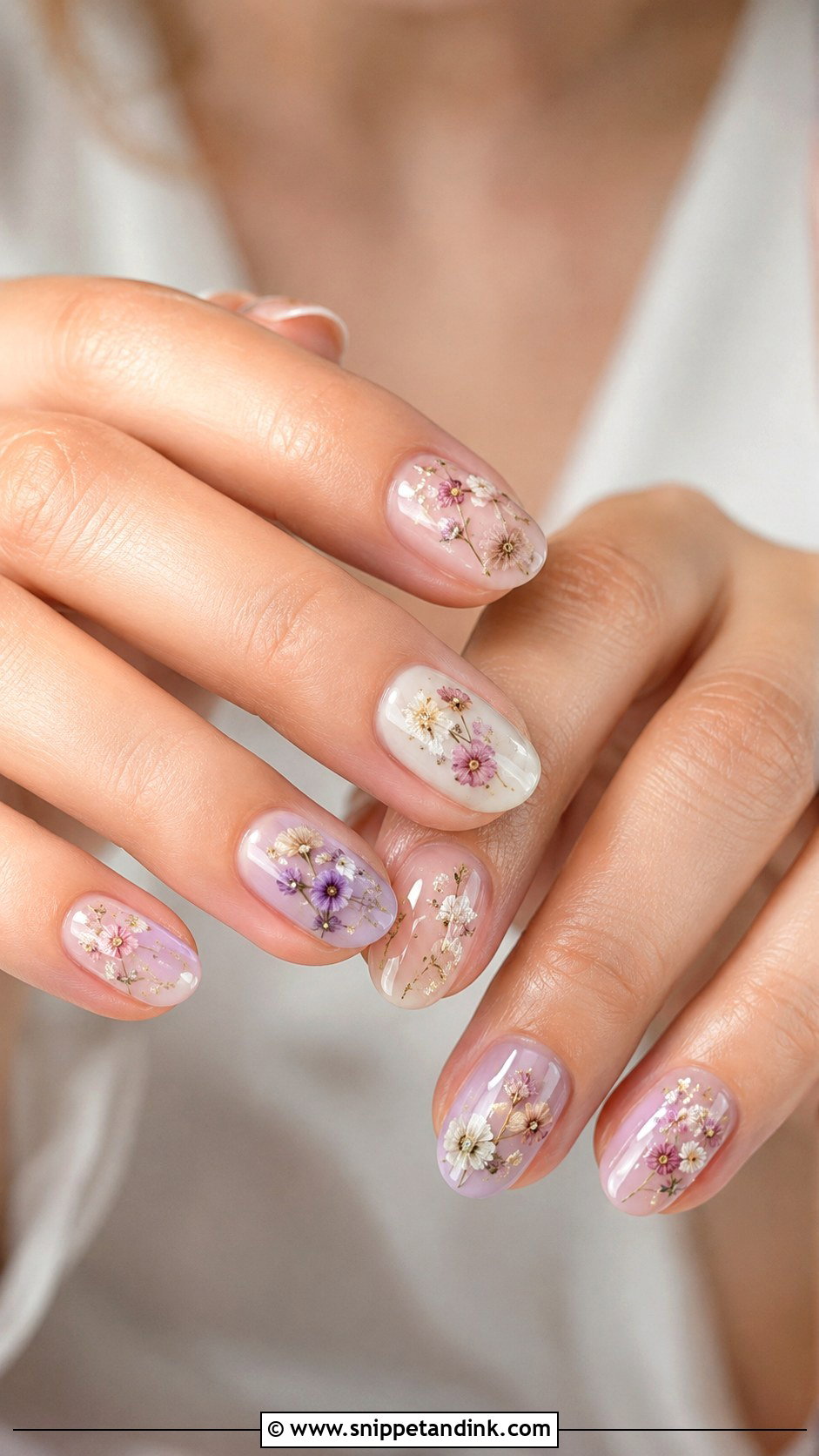
Pressed flower wedding nails use real dried flowers or very fine decals sealed into a clear, nude or milky base. Real petals have to be fully flat and dry, and I encapsulate them under builder gel so no edge can lift; an exposed petal edge will fray and catch within a day. Tiny flowers in white, blush, lavender and pale yellow look the most bridal. A sheer jelly layer over the top makes them look suspended. Short to medium oval nails keep the set delicate, and it’s a sweet nod to a garden bouquet.
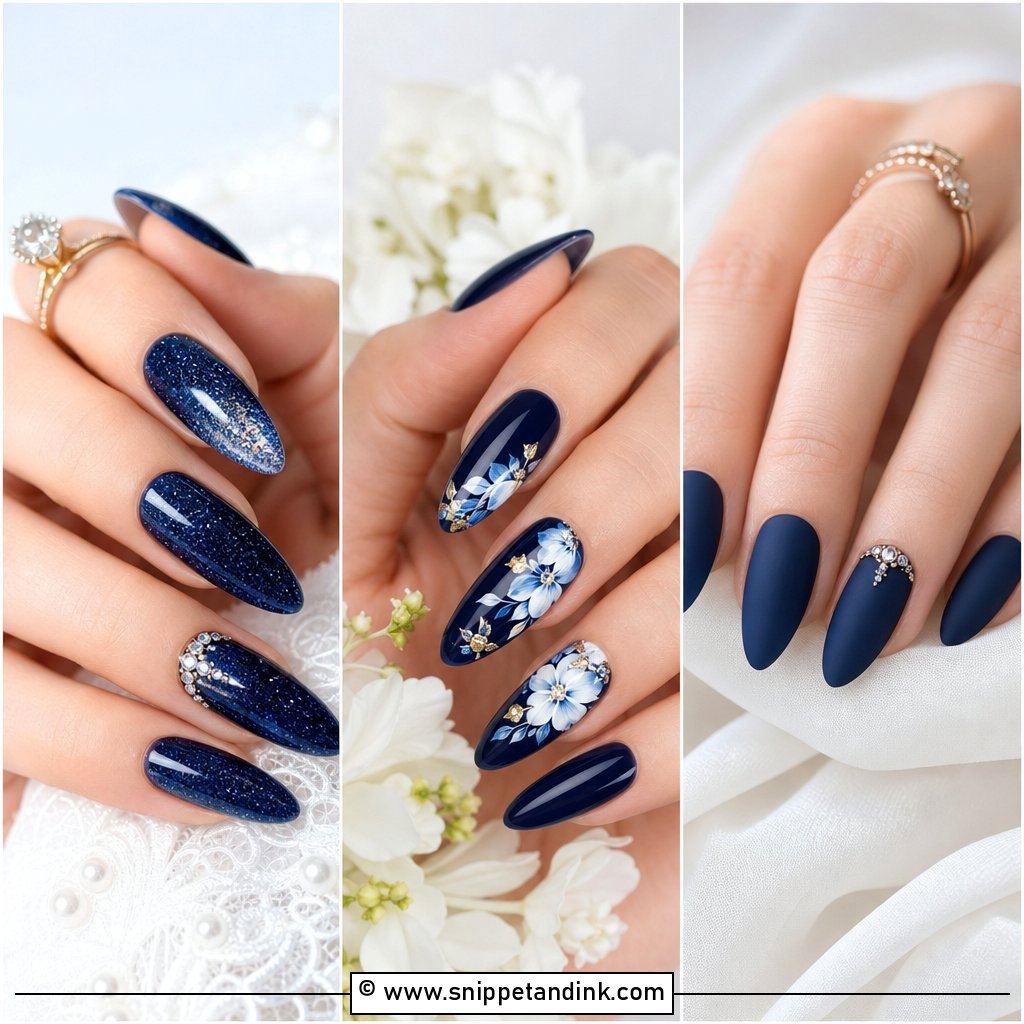
11. Blue Floral Wedding Nails
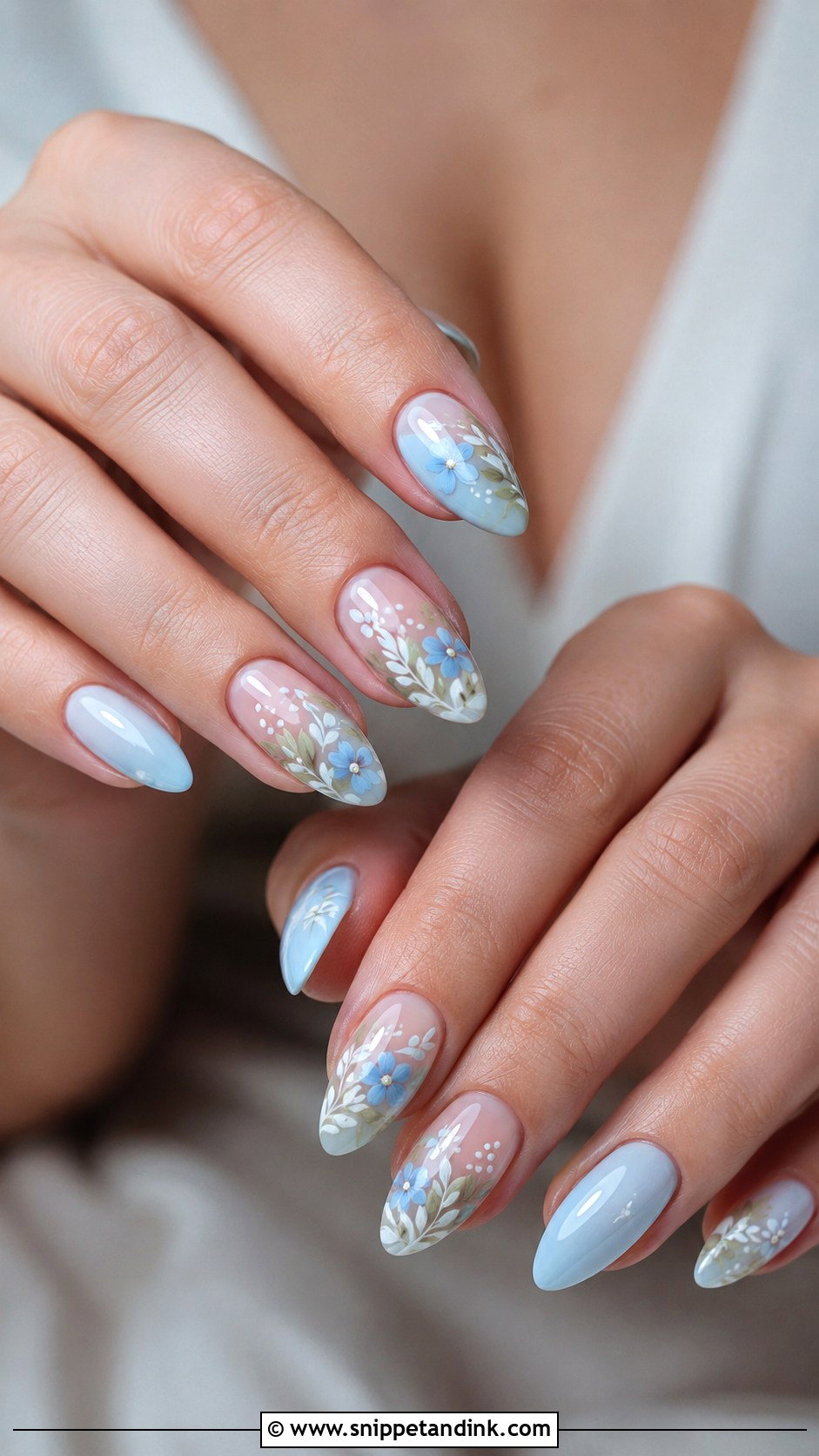
Blue flowers are an easy way to carry your something blue without a full blue manicure. I keep the base sheer nude or milky and paint tiny powder, dusty or cornflower blue blooms, often with a few white petals and soft green leaves so the blue looks natural rather than graphic. It ties in with hydrangea bouquets, blue shoes, blue earrings or a coastal palette. Gloss keeps the flowers crisp, while a pearl shimmer softens them. Pick the muted shade under daylight; bright blues can look electric in flash photos.
12. Gold Floral Wedding Nails
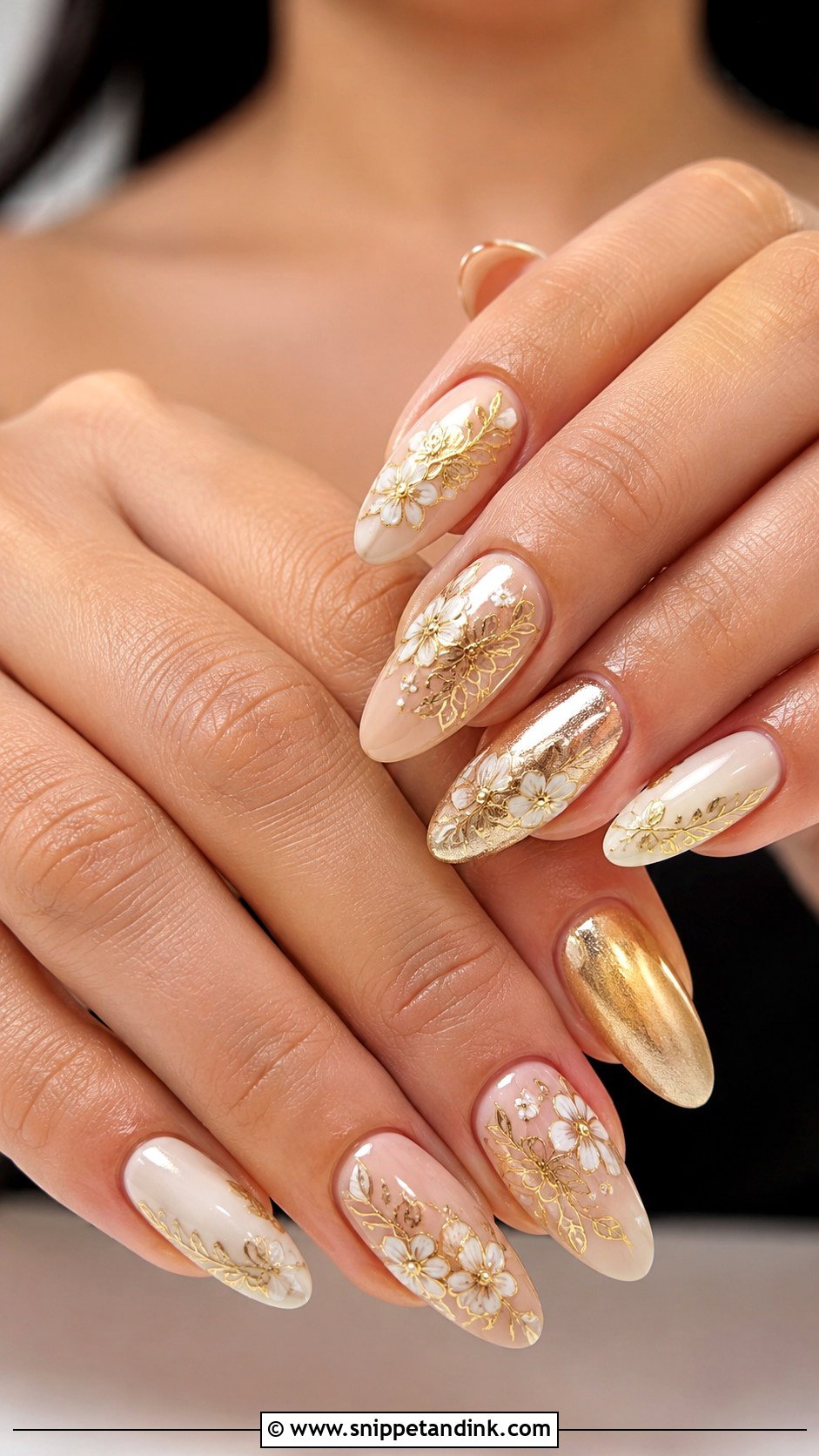
Gold makes sense when your ring, jewelry or hairpiece is gold. On a nude, ivory or sheer pink base, I outline flowers in gold gel paint, use foil for petals, or drop tiny gold centers into white blooms. Foil wrinkles if it isn’t pressed flat and sealed, so I keep it to small areas. Avoid putting metallic on every nail; two accent nails look richer than ten. Warm skin tones and champagne gowns suit gold particularly well, and a high-gloss top coat helps it reflect light without looking heavy.
13. Blush Floral Wedding Nails
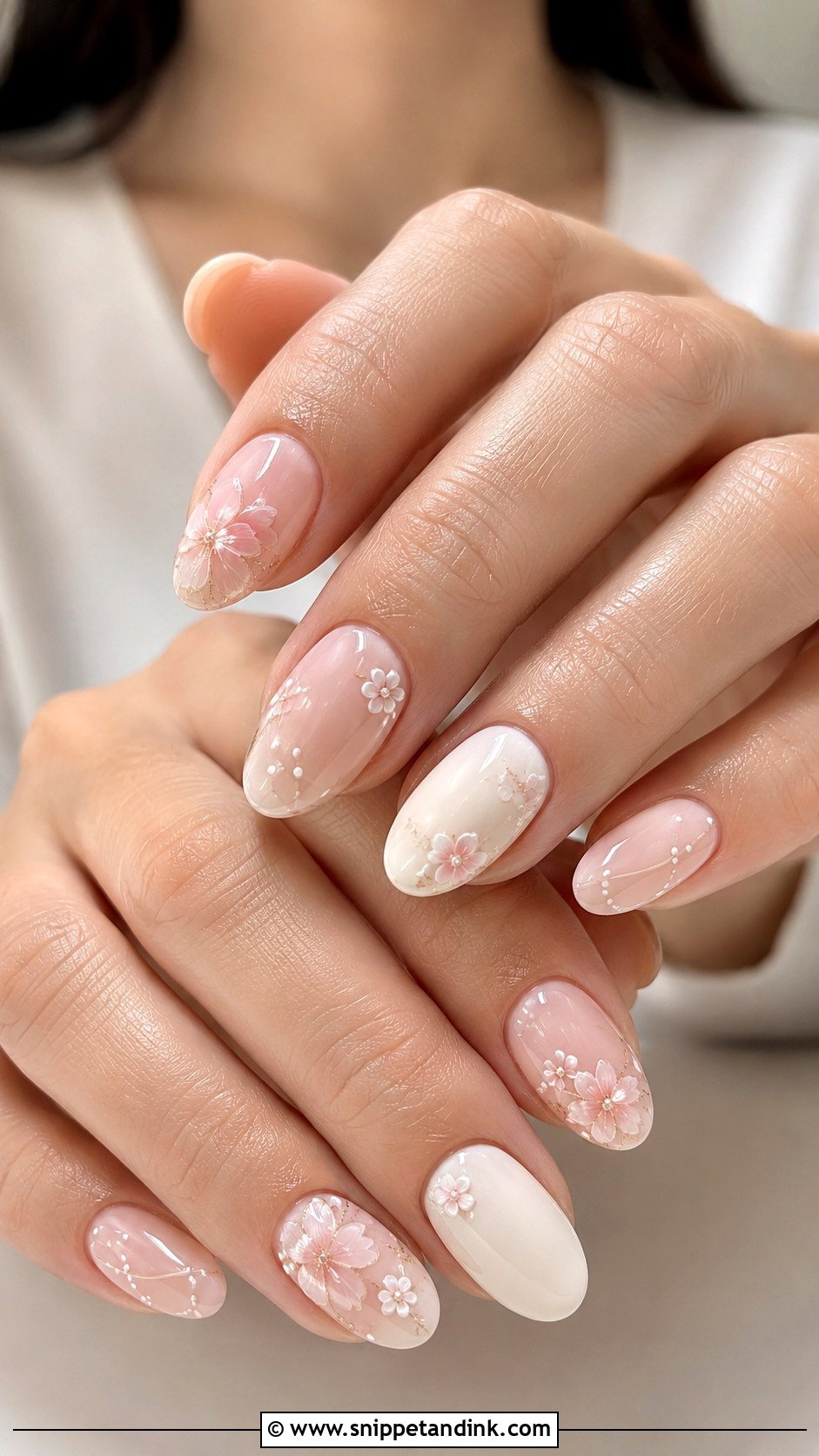
A blush base with white, cream or slightly deeper pink flowers makes a tone-on-tone set that blends with rose, peony and ranunculus bouquets. It also sits comfortably next to soft bridal makeup. Negative space is what keeps it modern: I leave clear gaps between the petals instead of filling the nail. For a softer feel, a few tiny pearl dots or a fine shimmer does it. Almond, oval and short squoval shapes all work.
14. Ivory Floral Wedding Nails
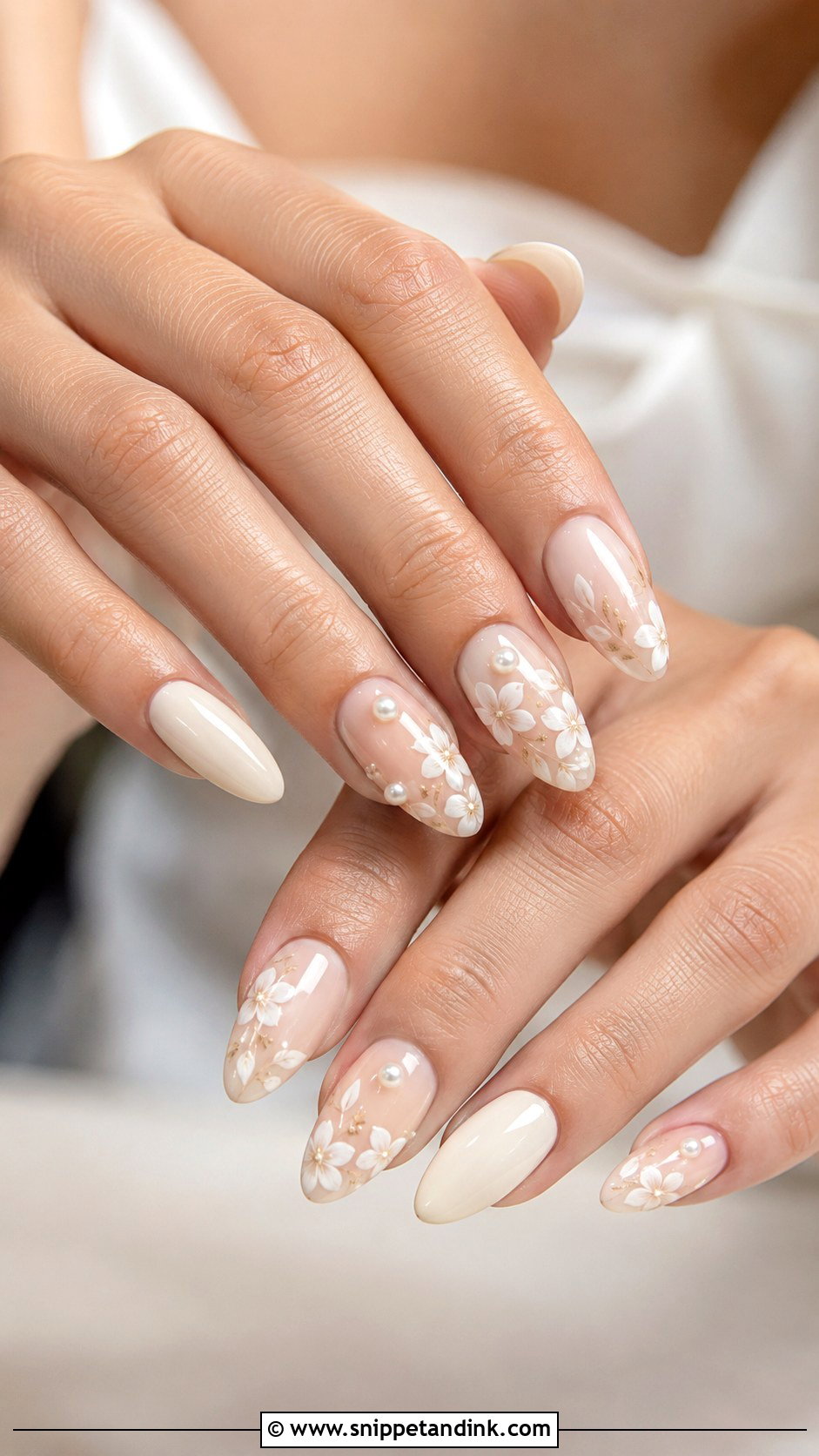
Bright white can look stark beside an ivory, cream or champagne dress, and in photos the mismatch is obvious. Ivory flowers solve that. I paint them on a sheer nude or ivory base with a touch of shadow in a slightly darker cream to give each petal shape. Vintage gowns, satin and heirloom jewelry sit naturally with this warmer tone. Tiny gold or pearl accents dress it up, but keep the linework fine so it doesn’t turn fussy.
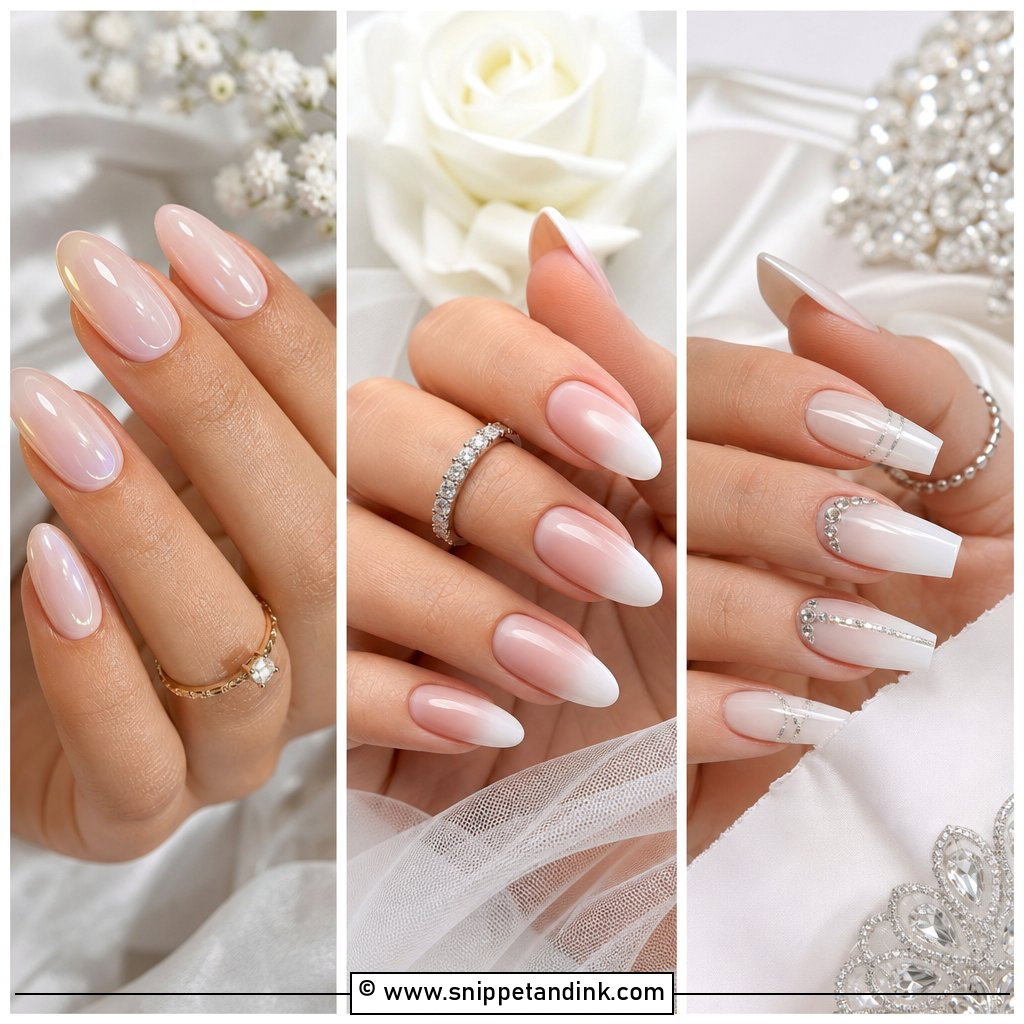
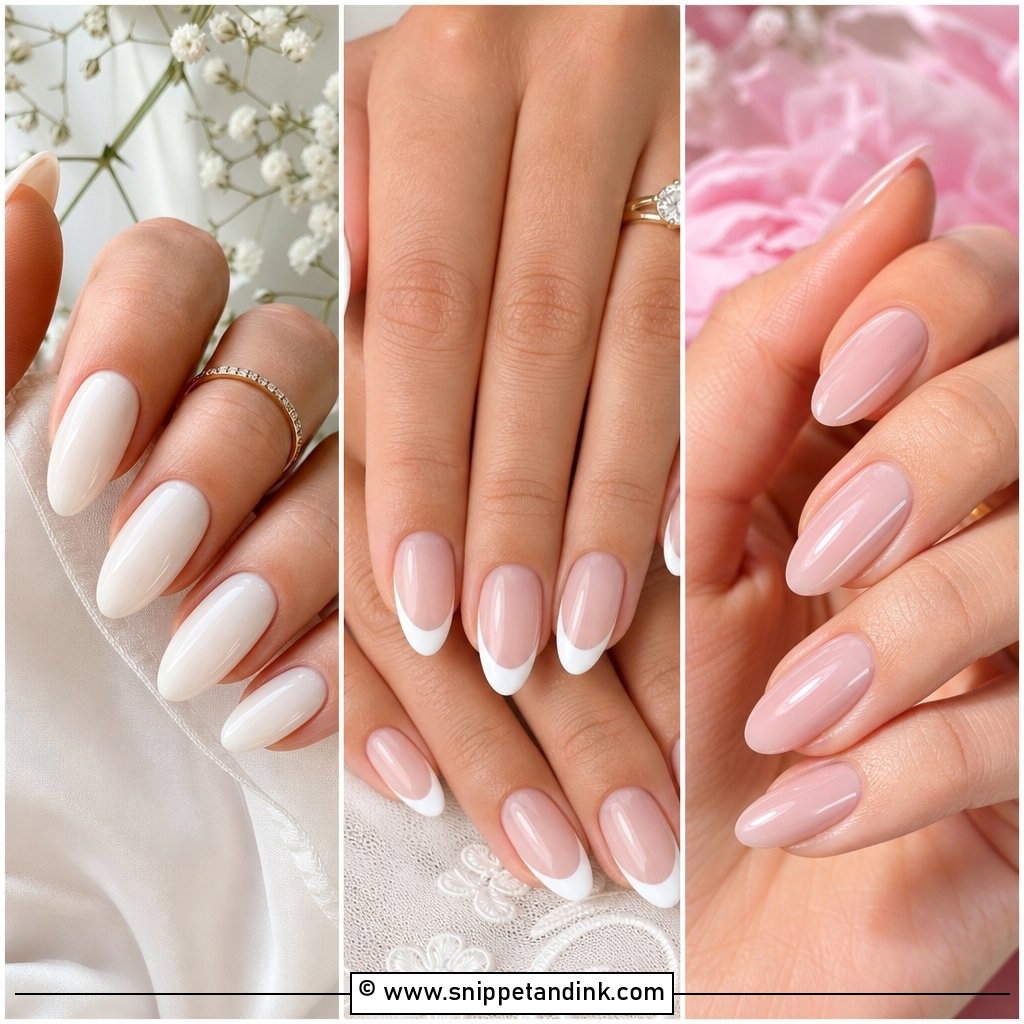
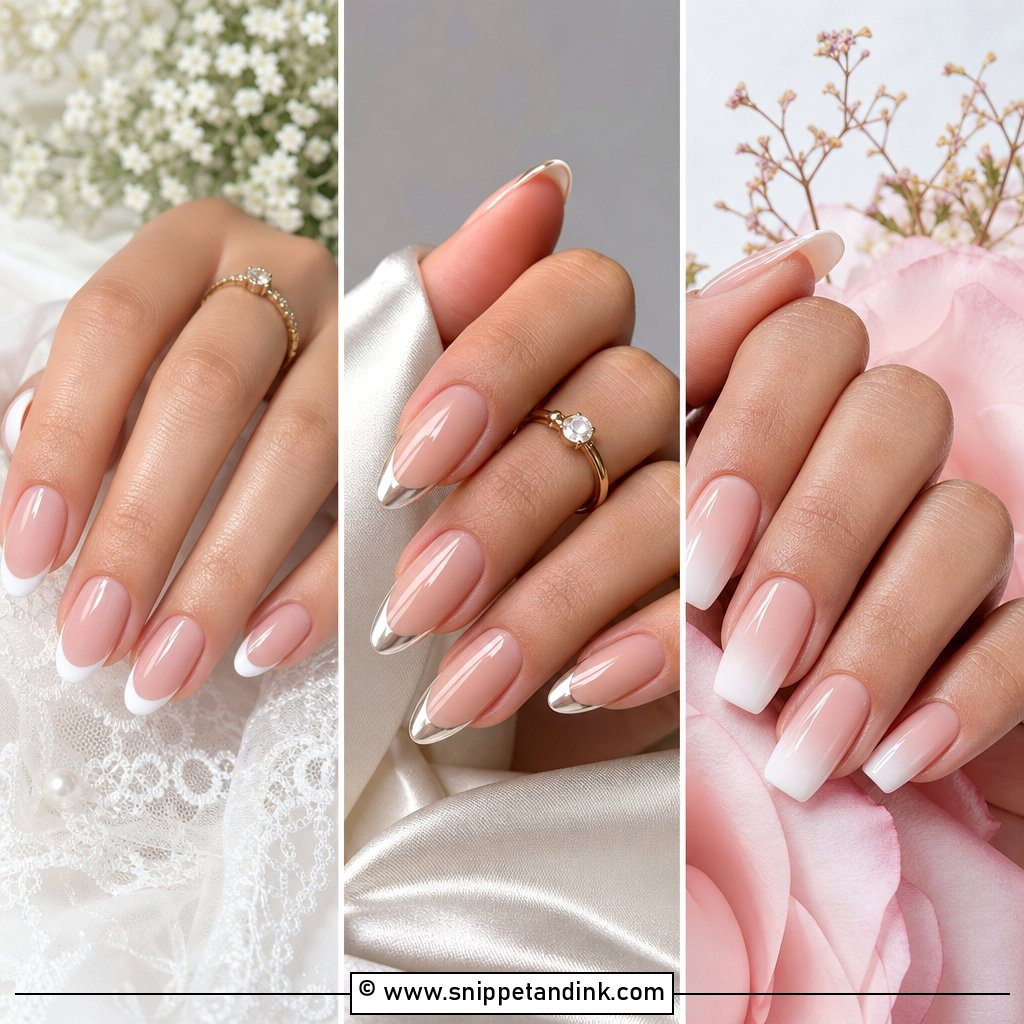
15. Ombre Floral Wedding Nails
Ombre is for brides who like the idea of a French but find the defined white line too harsh. I sponge or blend a nude-to-white or blush-to-milky gradient, then place flowers near the tips, along the sides or on the ring fingers. White blooms keep it classic; pale pink or peach flowers warm it up. The gradient needs some length to fade properly, so medium almond, coffin and oval nails suit it better than very short ones. Finish with gloss.
16. Floral Wedding Nails With Rhinestones
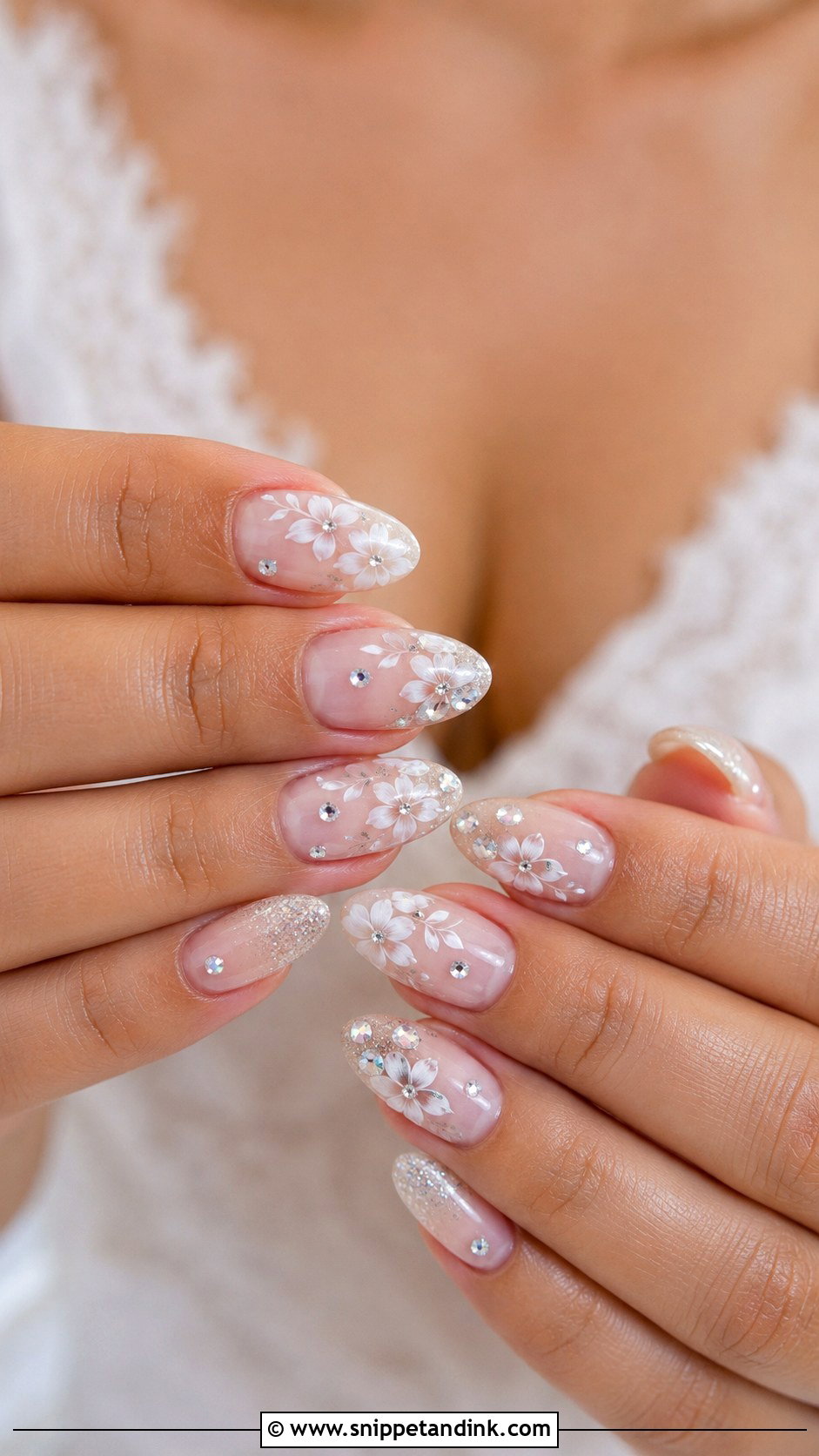
Rhinestones add sparkle that flowers alone can’t. On a sheer nude, pink or milky base, I set tiny stones in the flower centers, along the cuticle or beside a French tip, using a gel adhesive so they hold through the day. Small stones and space between them keep it elegant. Clear crystals go with any dress, while pearl-toned stones look softer. Be aware that stones can catch on veil tulle and knitwear. With beaded gowns and evening receptions, the sparkle comes alive under candlelight.
17. Minimal Floral Wedding Nails
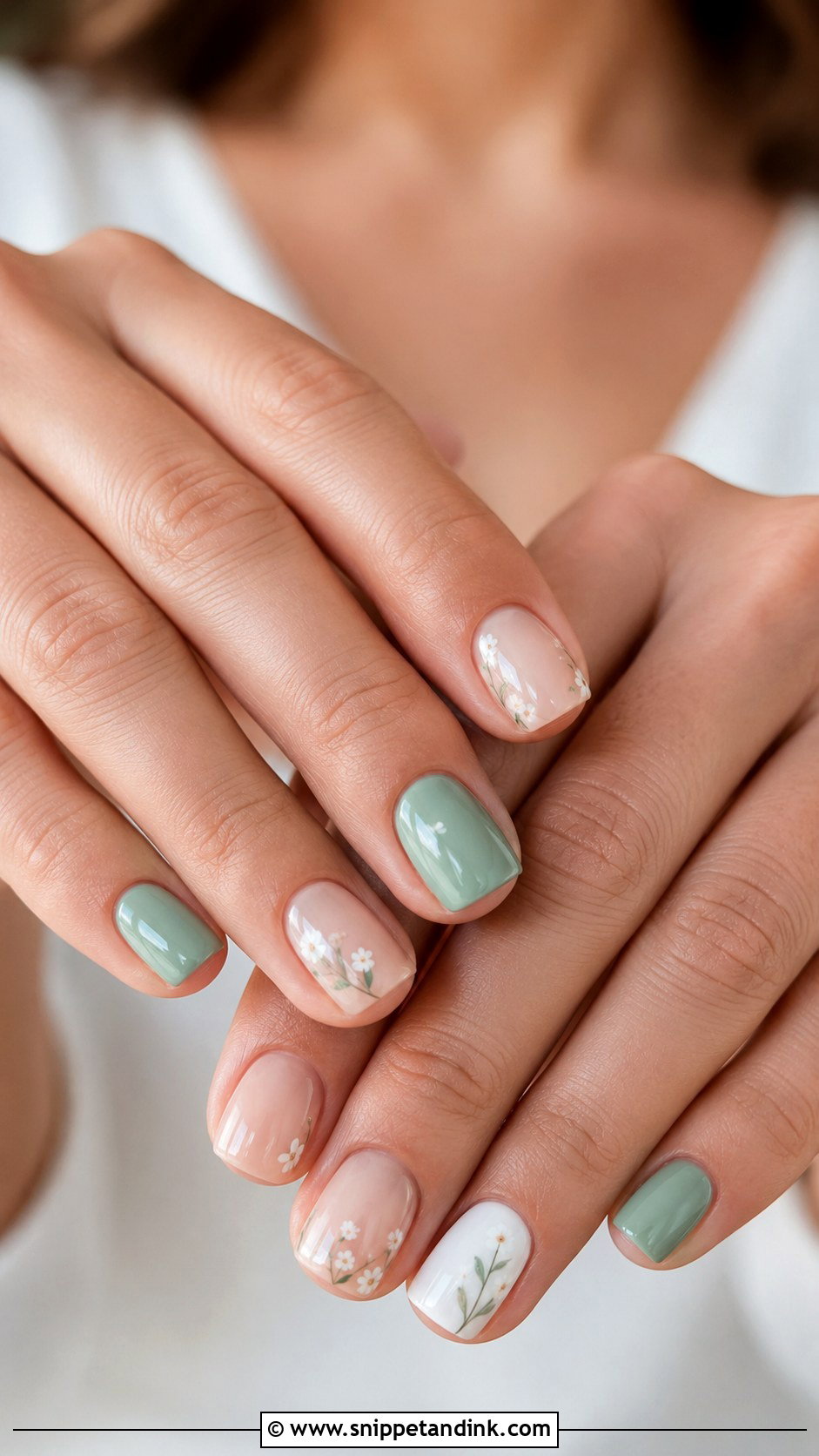
Minimal is the safest choice when your dress, veil or bouquet already carries plenty of detail. One or two tiny flowers per nail on a sheer base, or flowers only on the ring fingers, with fine white petals, dots and thin green stems. A short oval or squoval shape keeps it natural and practical for the hands-on wedding week. It’s also the design that ages best in photos, because there’s nothing in it that dates to one season’s trend.
18. Garden Floral Wedding Nails
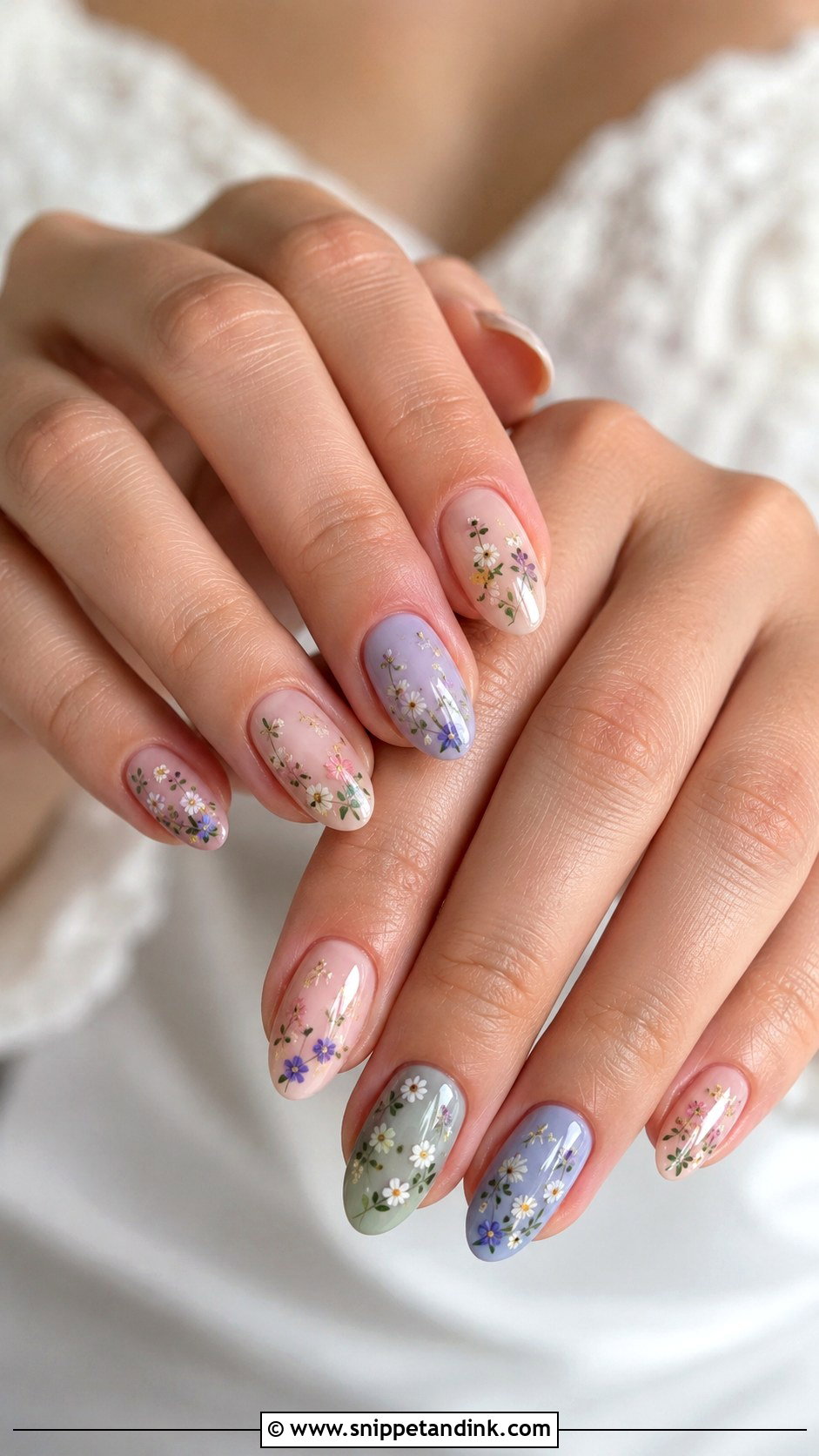
Garden sets mix small flowers, leafy vines and natural colors: blush, lavender, pale blue and sage over a sheer nude or milky base. You can spread a fine pattern across all nails or focus it on a few accent nails. The more colors involved, the smaller each flower should be, or the set starts to look busy. It sits naturally with outdoor ceremonies, greenhouse venues, loose bouquets, floral dresses for bridesmaids and soft wavy hair.
19. Floral Wedding Nails For Short Nails
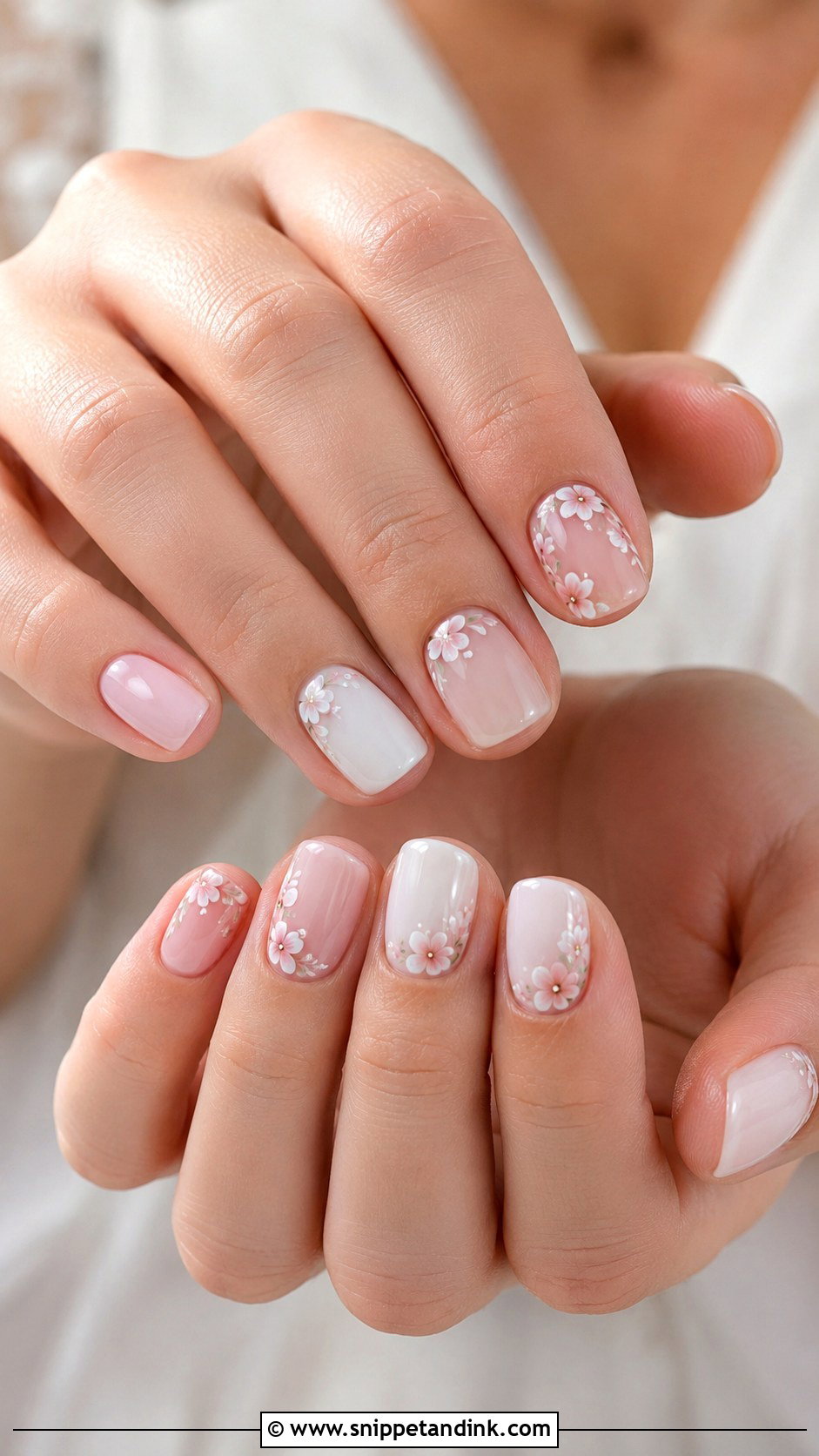
Floral wedding nails for short nails can look every bit as bridal as long ones, provided the flowers are scaled down. On a short nail I place art near the cuticle, along one side or on a single accent nail, because a flower in the center visually shortens the nail. A sheer pink, nude or milky base keeps everything clean. Short oval and squoval shapes look neat and are comfortable for days of handling favors and decor. A micro French tip or soft shimmer adds dimension.
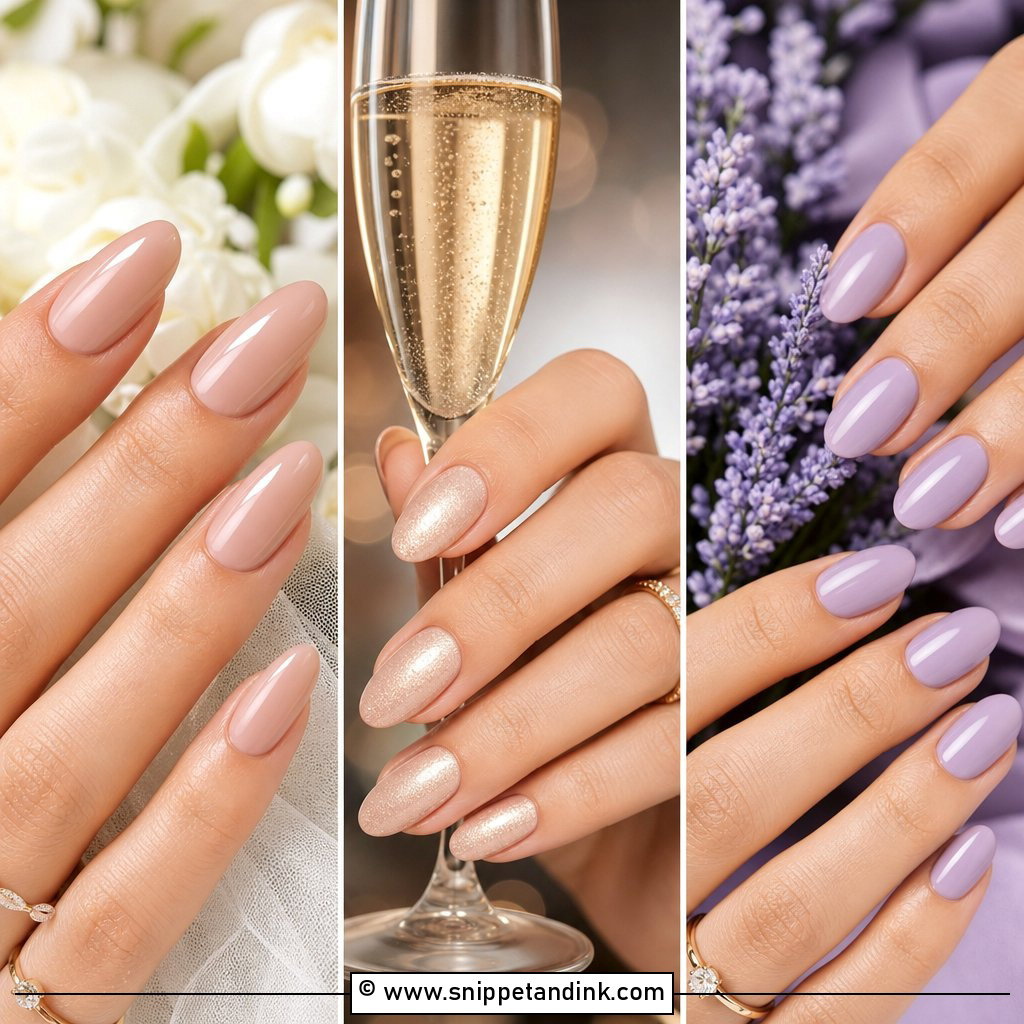
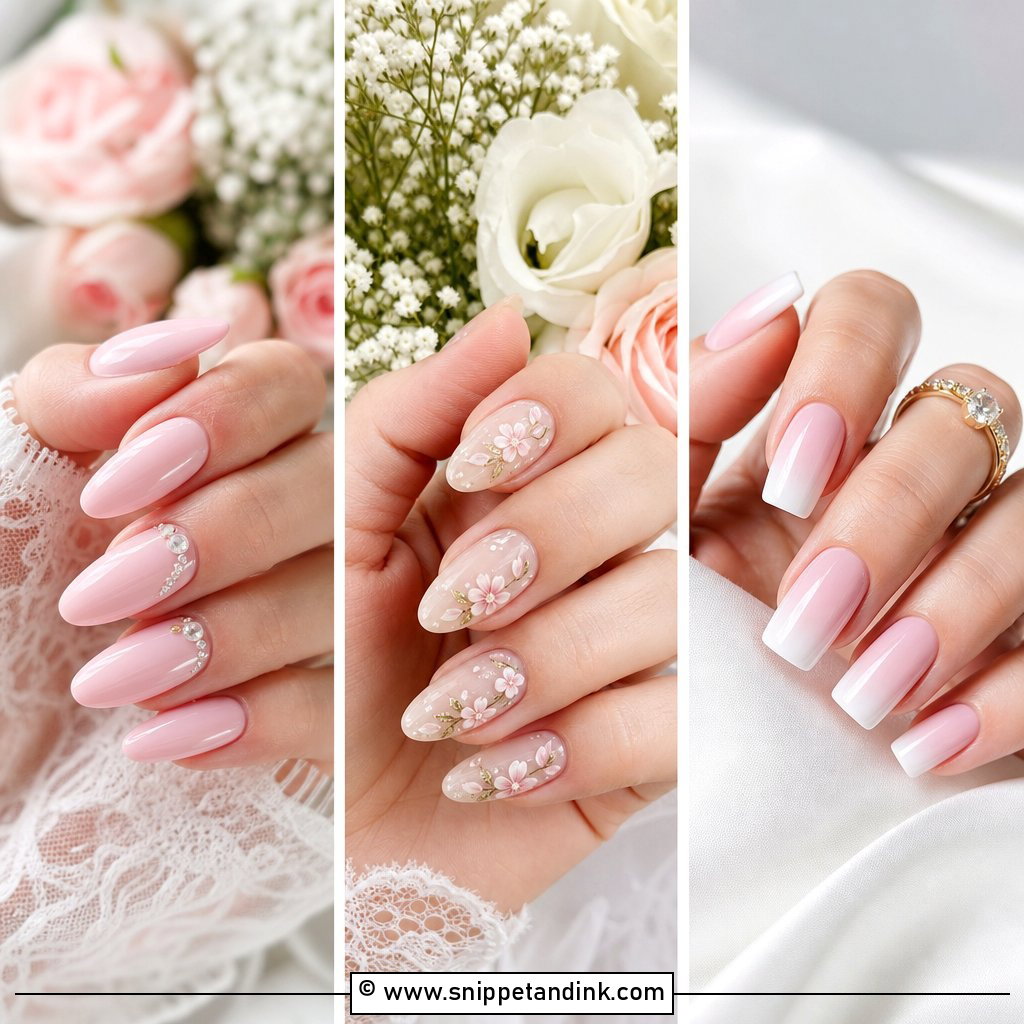
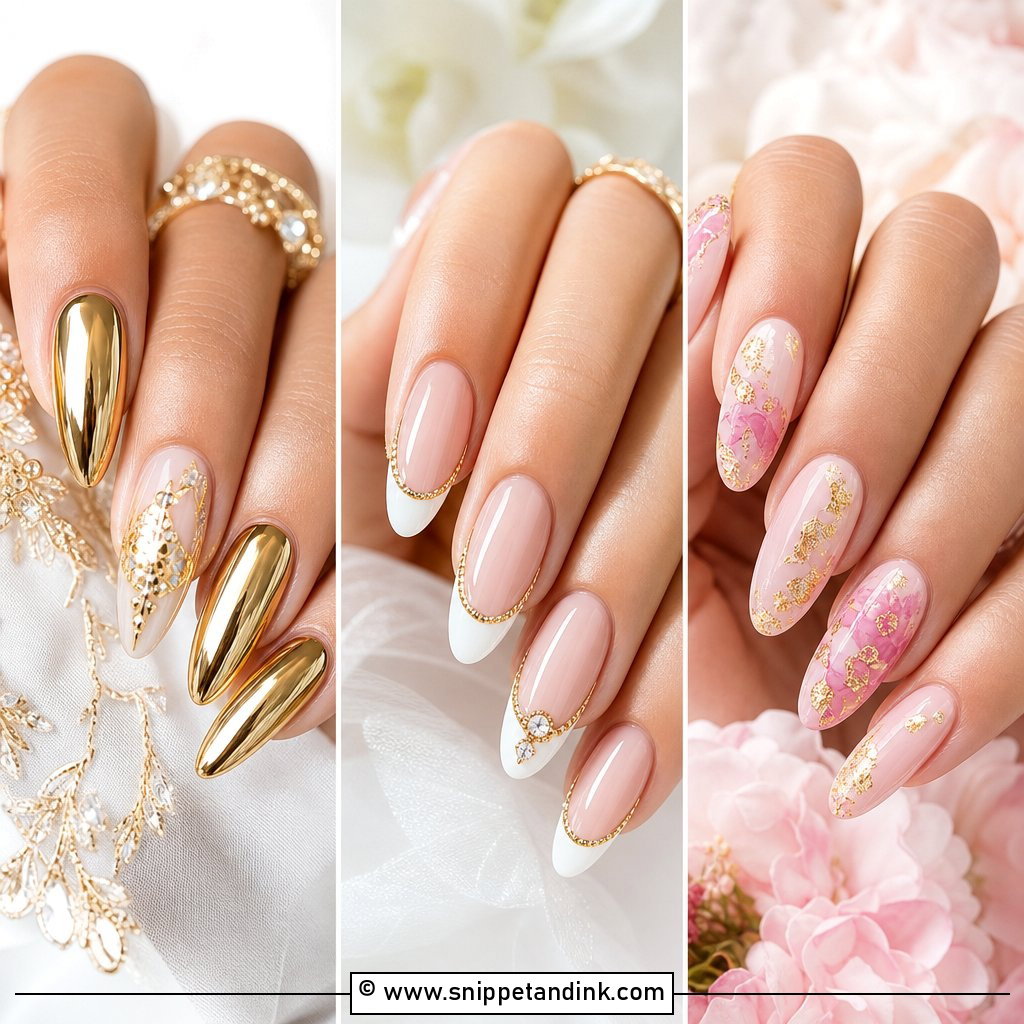
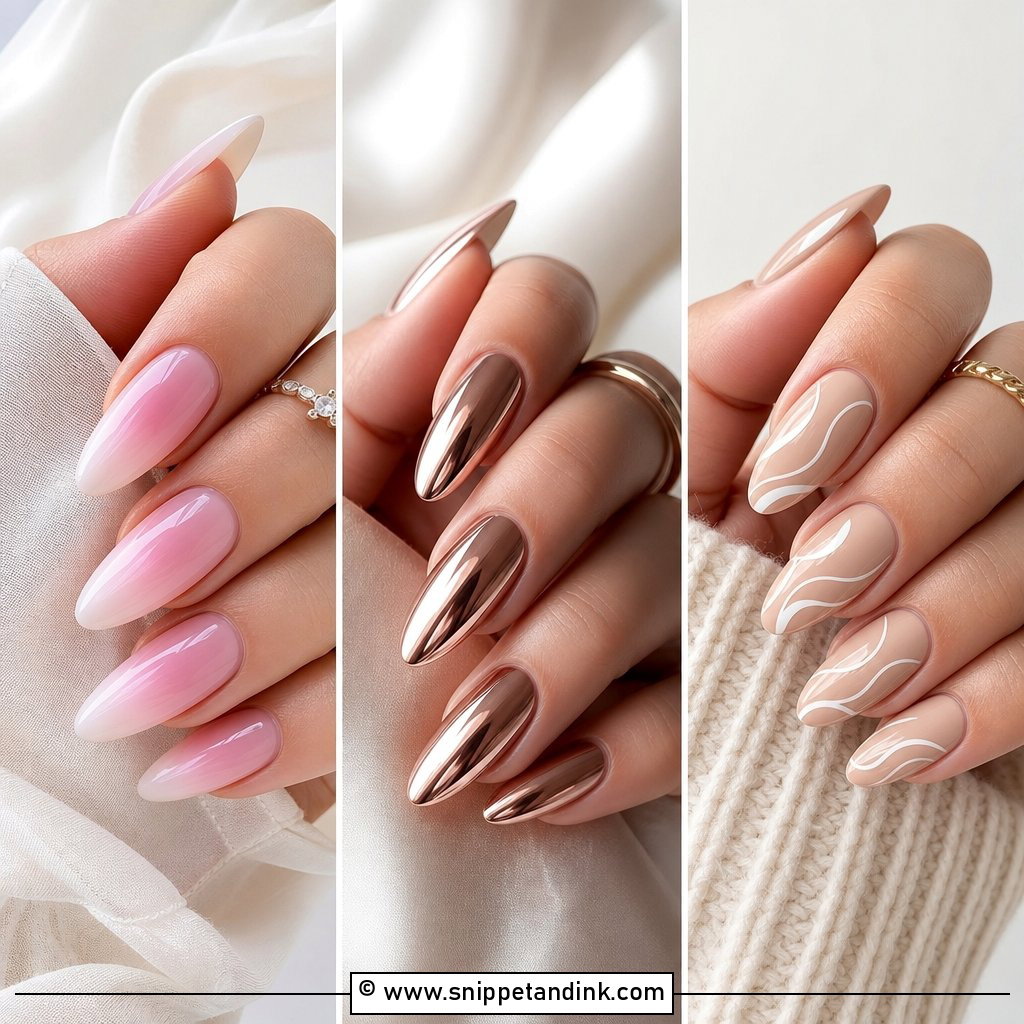
20. Floral Wedding Nails For Almond Nails
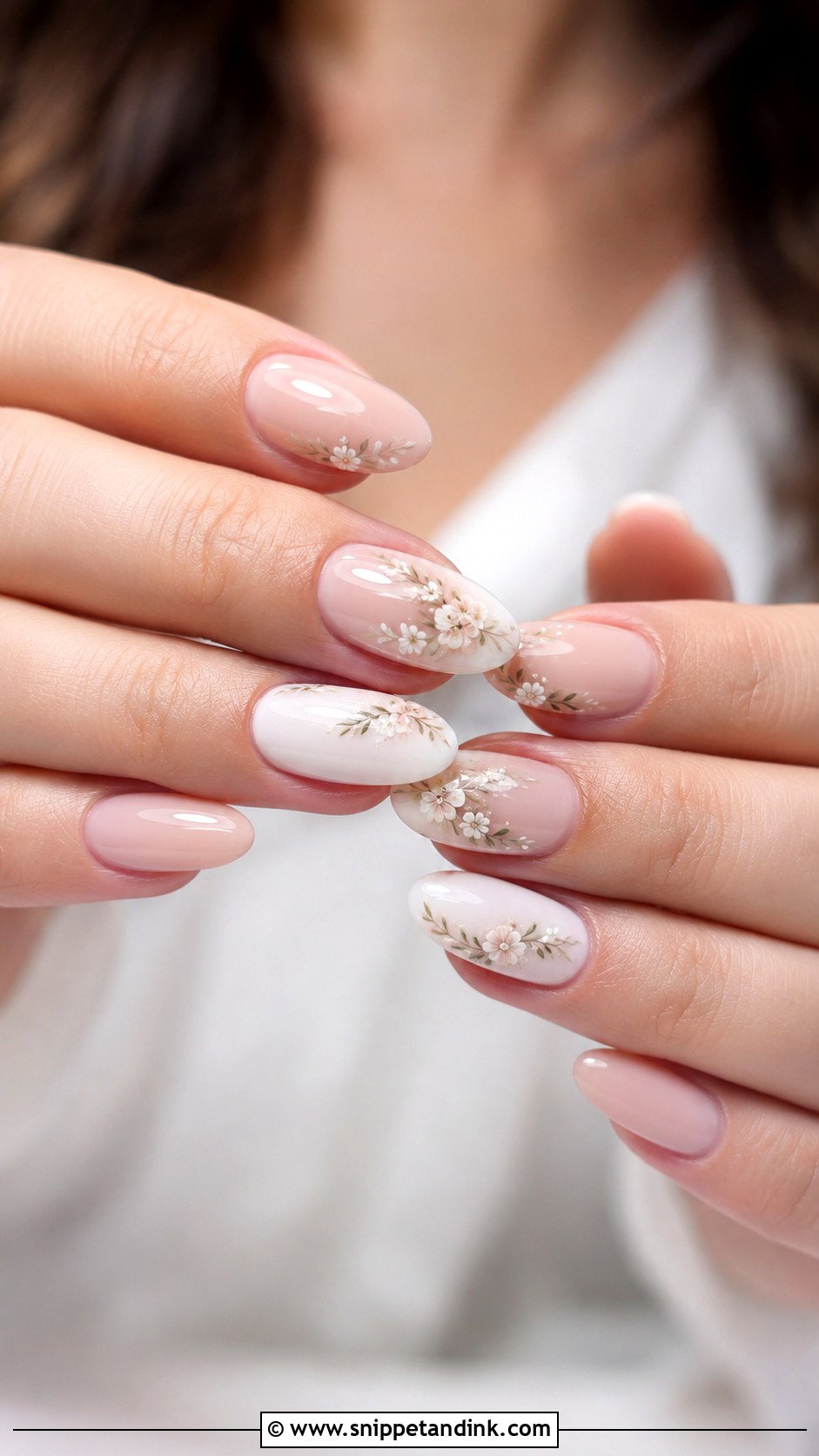
Floral wedding nails for almond nails are easy to design because the tapered tip already gives the art direction. Vines and petals running up the sidewalls make the fingers look longer, and a soft floral French near the edge suits the curve. I use a sheer nude, blush or milky white base with white or pale pink flowers. Almond also carries pearls, chrome and lace detail well. If your natural nails are weak at the sides, an almond shape may need a little structure gel underneath so the narrow tip doesn’t snap.
Petals, Pearls and Veil Lace: What Snags and What Lasts
A wedding manicure has a harder few days than most. You’re tying ribbons, handling favors, pinning boutonnieres and hugging everyone. Flat designs come through that best. Hand-painted petals, stamping and milky blurs sit under the top coat and almost never chip early.
Anything raised is a different story. 3D flowers, pearls and rhinestones are the parts that catch on veil tulle, lace sleeves and hair, and occasionally pop off. Keep them to one or two nails, ask for them near the cuticle rather than the tip, and check your hands before the veil goes on.
The appointment date I recommend
For gel, one to three days before the wedding works well. That’s close enough that there’s no visible gap at the cuticle in close-up photos, and far enough that a lifted stone can be fixed. Rub cuticle oil in every night after; dry cuticles show up clearly in ring shots, and well-oiled skin also keeps the gel from lifting at the edge.
Let the Flowers Stay Small and the Base Do the Work
Almost every set above follows the same rule I use at the nail table: get the base right for your skin and dress, then add flowers in proportion to your nail length. White florals, lace and floral French tips feel classic; pearl chrome, milky flowers and a single 3D petal feel more current. Blue, gold, blush and garden colors bring in color without losing the bridal feel. Bring photos of your dress fabric, bouquet and ring, and choose a design that still looks like your hands when you see the photos years from now.
You'll Like These Ideas:


Leave a Reply