
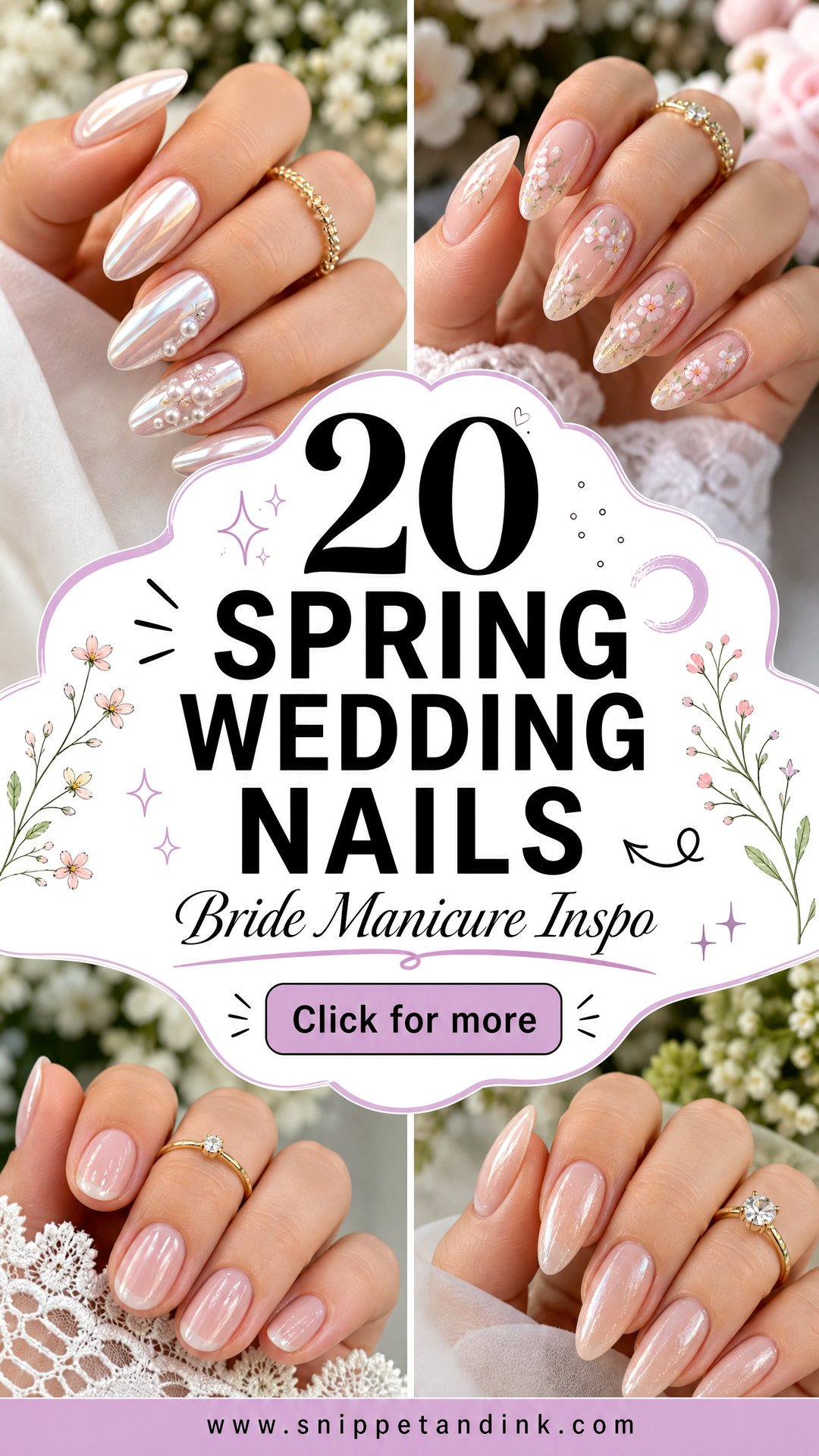
Spring bridal nails have one job: look finished in every close photo of your hands without pulling attention from the dress, the bouquet or the ring. Most of the sets I do for spring weddings start from a sheer base, milky pink or soft white, and then take a single seasonal detail on top, a pastel tip, a little pearl chrome or a few painted petals. Below are twenty directions, from a plain French to pressed flowers and lace, with what each one asks of your natural nail and how it tends to wear.
Why Sheer Spring Shades Need More Prep Than Bold Ones
Nearly every set in this list sits on a sheer or milky base, and sheer polish behaves differently from opaque color. It lets the natural nail show through, so whatever is underneath, white spots, a yellowed tip from old dark polish, ridges, a ragged cuticle, will show too. That’s why I spend more of the appointment on prep for a sheer bridal set than I would for a red one.
What I look at before we pick a shade
- The back of your hand, not your palm. That’s the skin your nails sit against in every photo.
- Your engagement ring. Yellow gold warms a base up; platinum and white gold make it look cooler.
- Daylight. Spring ceremonies are often outdoors or beside big windows, and that light is far cooler than a salon lamp, so I walk swatches over to the window.
- The nail bed itself. If it’s stained or uneven, a slightly more opaque milky shade hides it better than a clear jelly pink.
Sheer shades also need even thickness. A heavier spot near the cuticle shows as a darker band once it’s cured, so ask for thin coats and a little patience. Stop wearing dark polish a few weeks ahead if you can, and let the natural nail breathe and grow out any staining.
1. Spring Wedding French Tip Nails
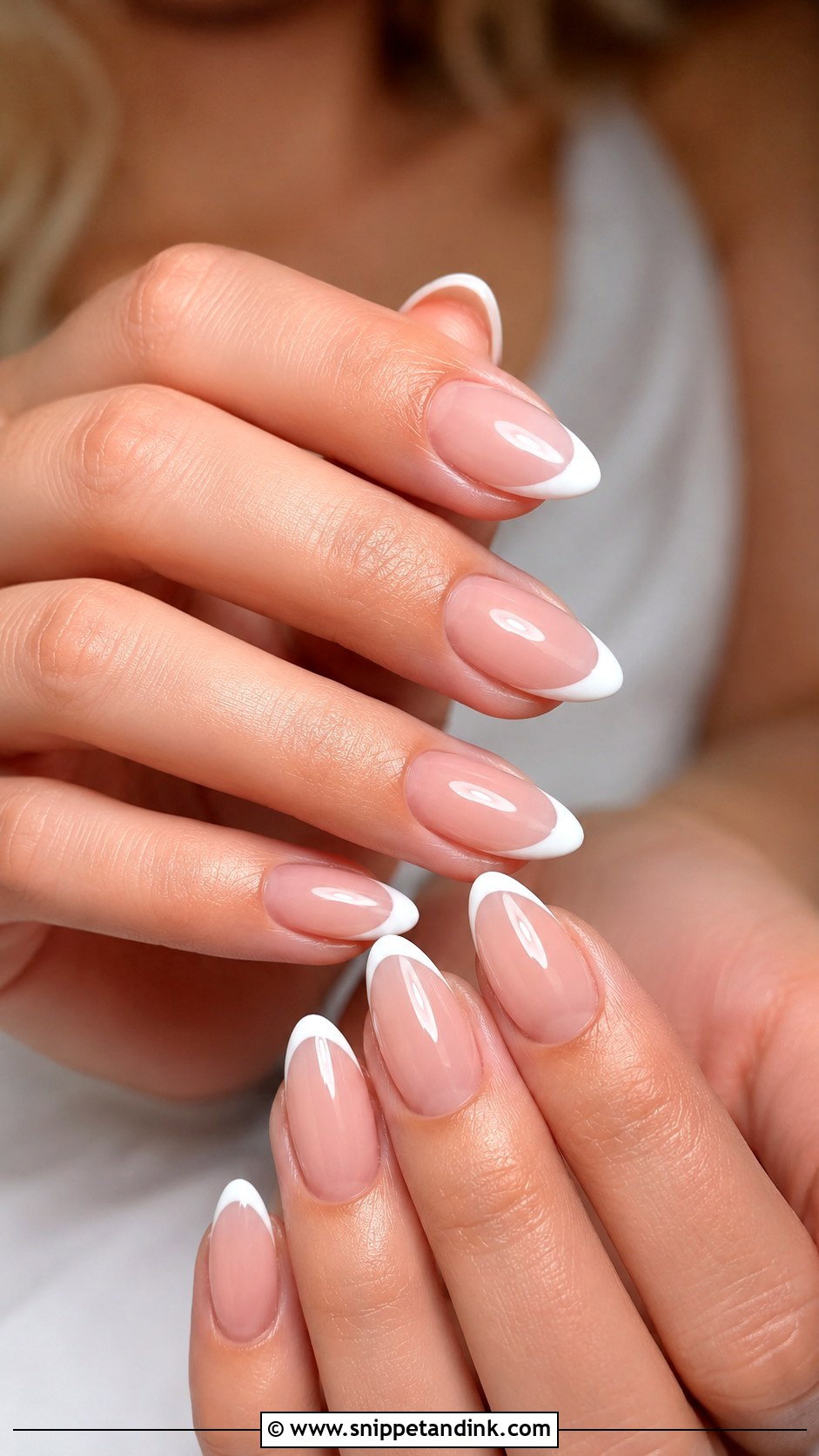
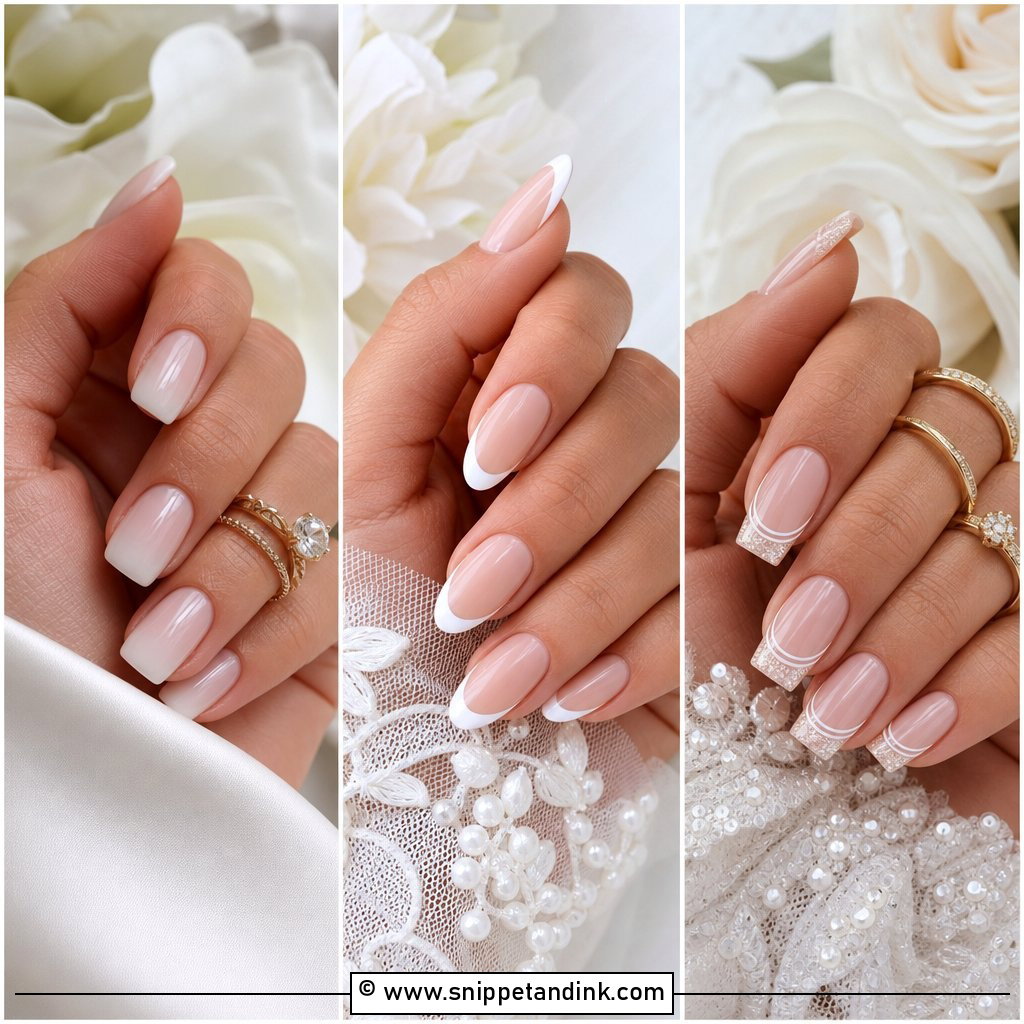
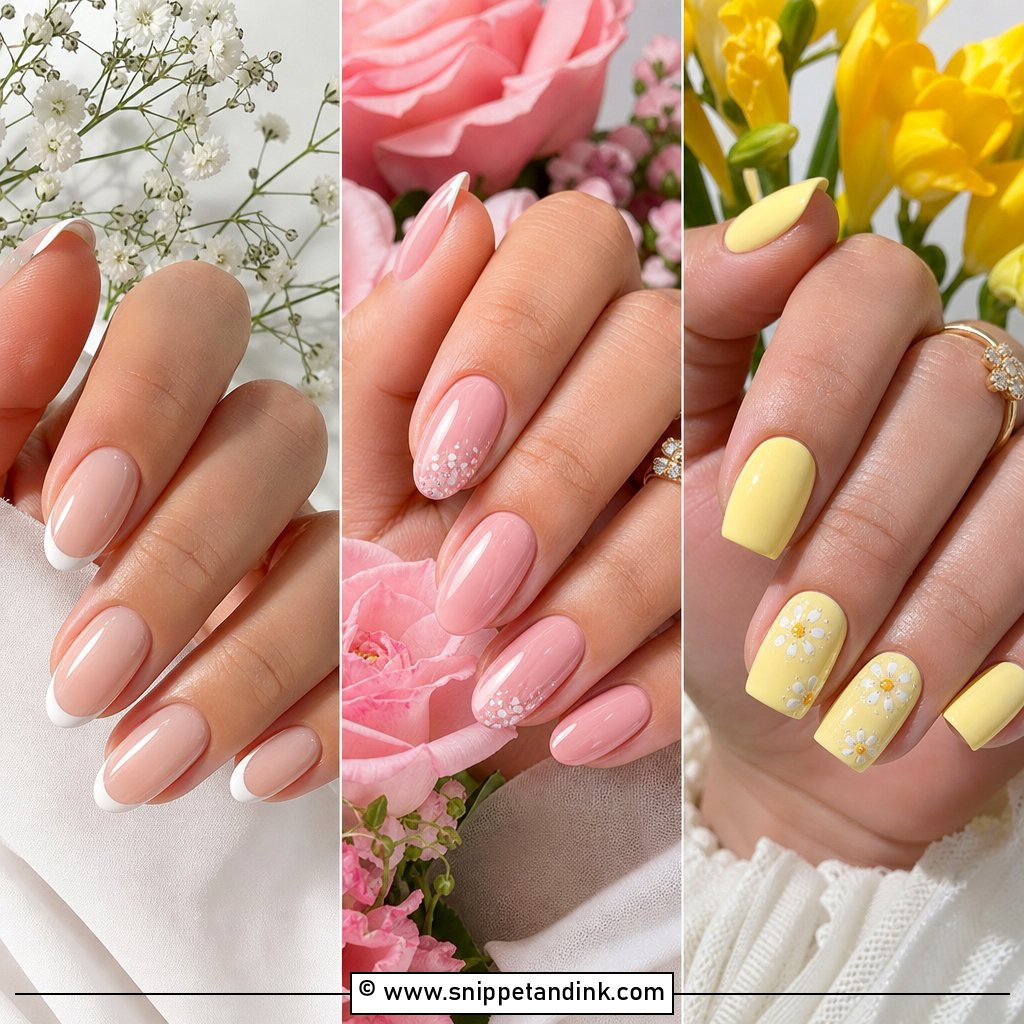
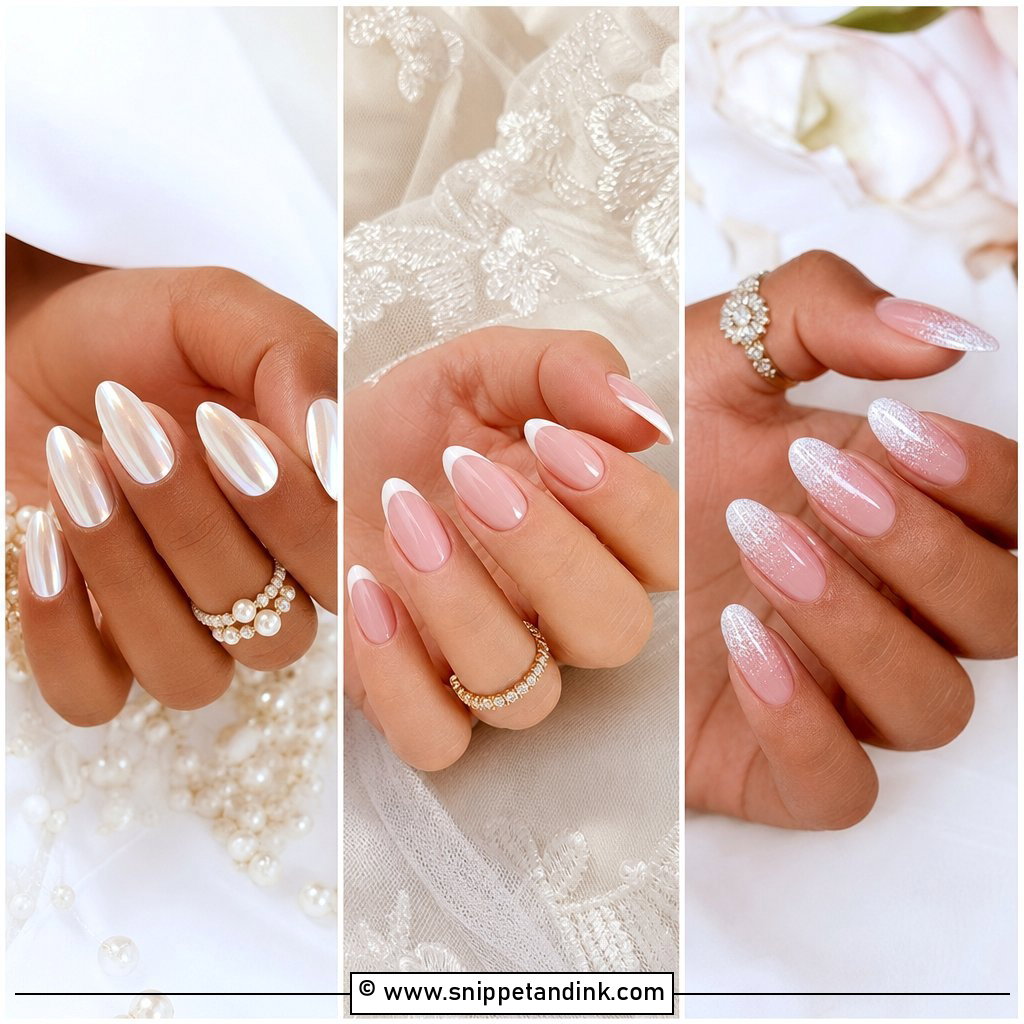
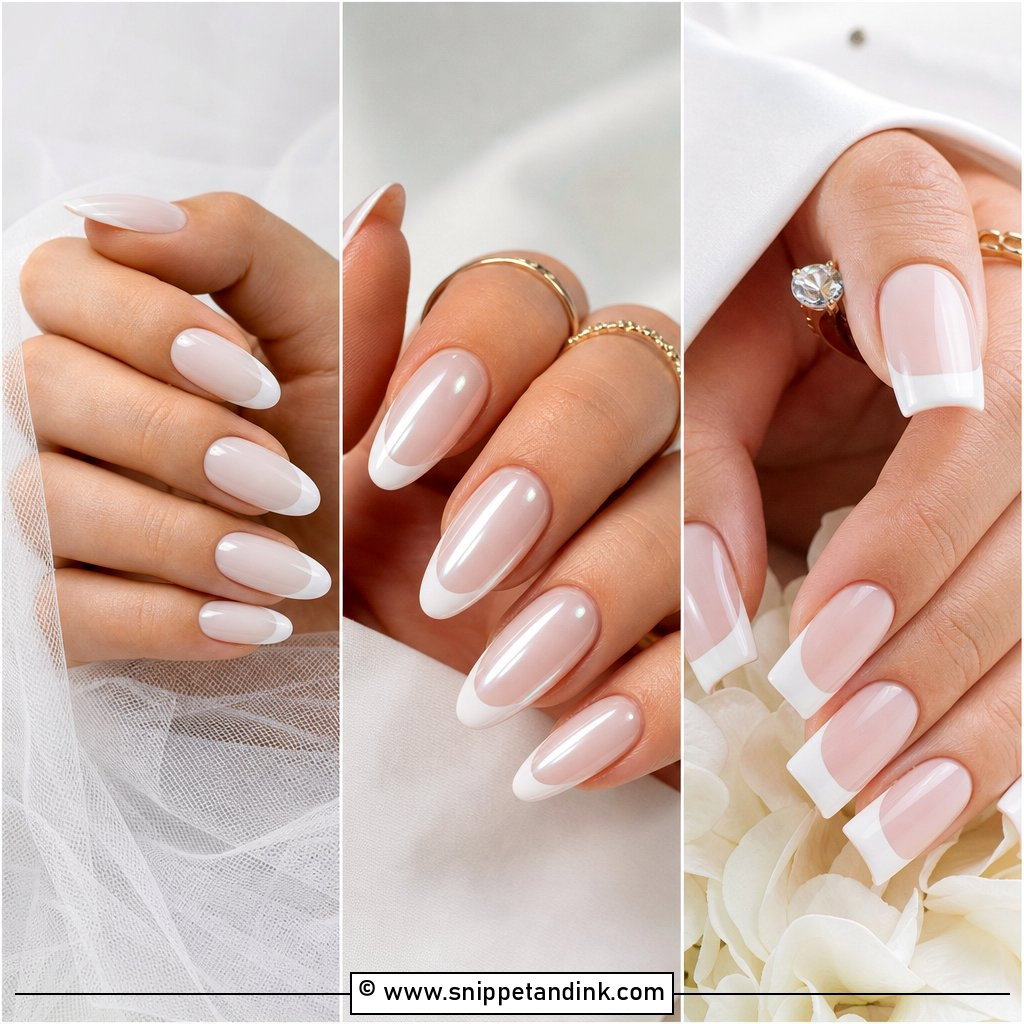
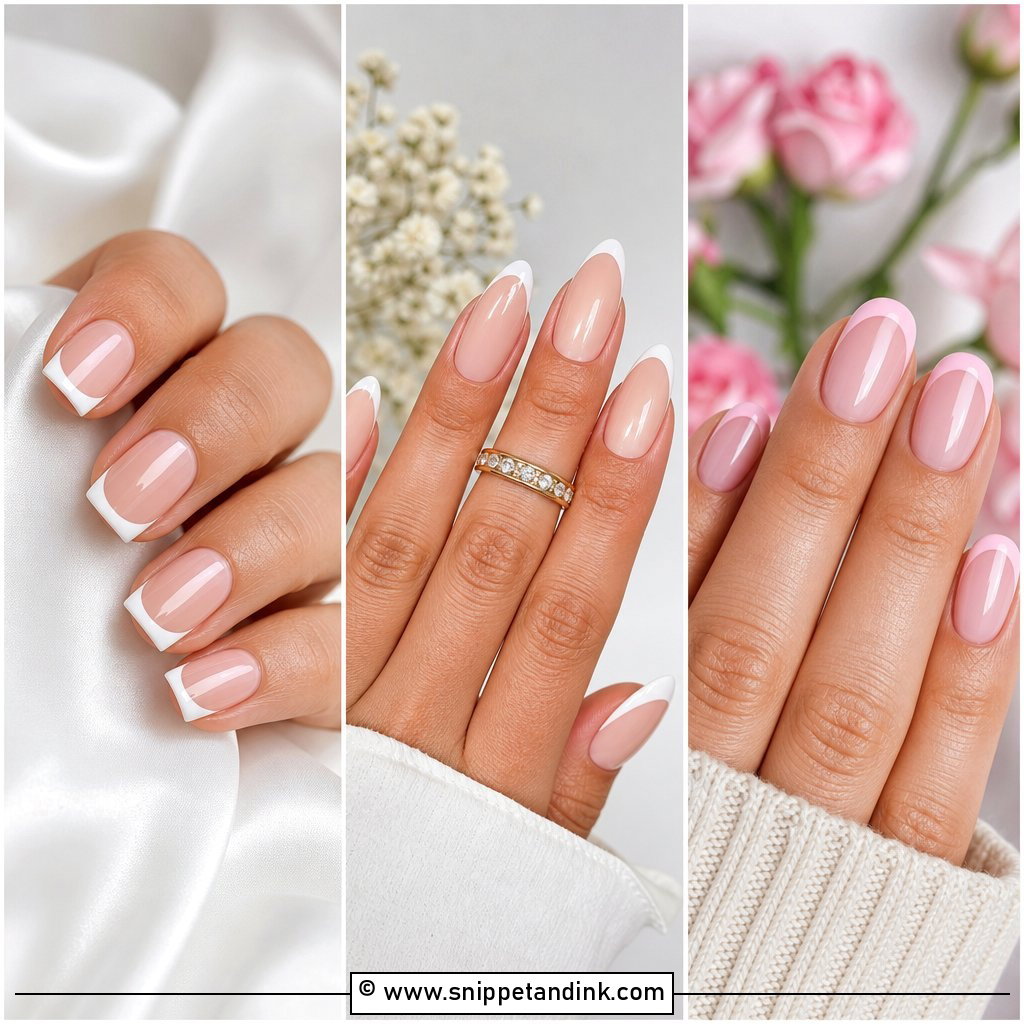
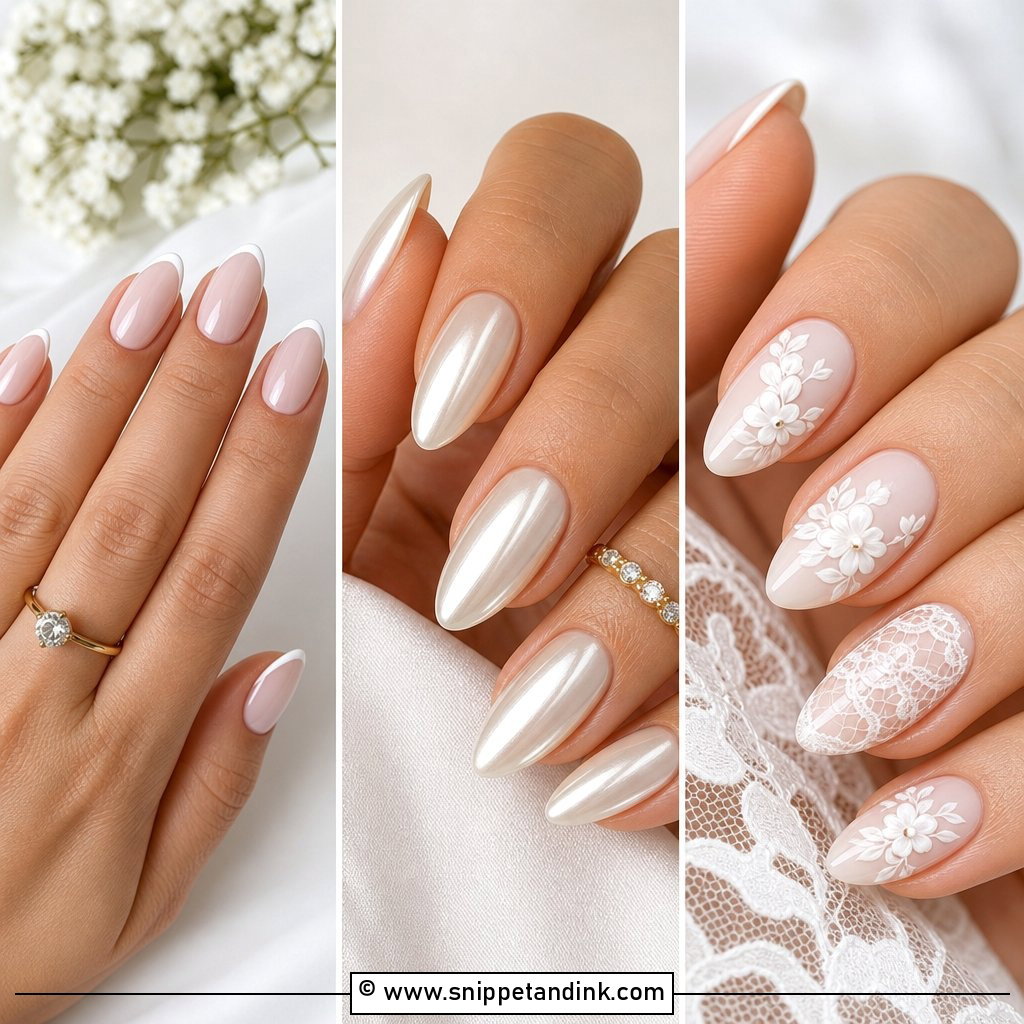
A sheer pink or nude base with a crisp white tip is still the set I’m asked for most, because it sits quietly beside every other wedding detail. The part people underestimate is the smile line. On short nails I keep the white thin and follow the natural curve of the free edge; a thick, flat tip shortens the nail bed in photos. Almond, oval and soft square all carry it well. I match the base to the skin on the back of the hand rather than to the dress, then finish with a high-gloss top coat so the white stays bright.
2. Spring Wedding Milky White Nails
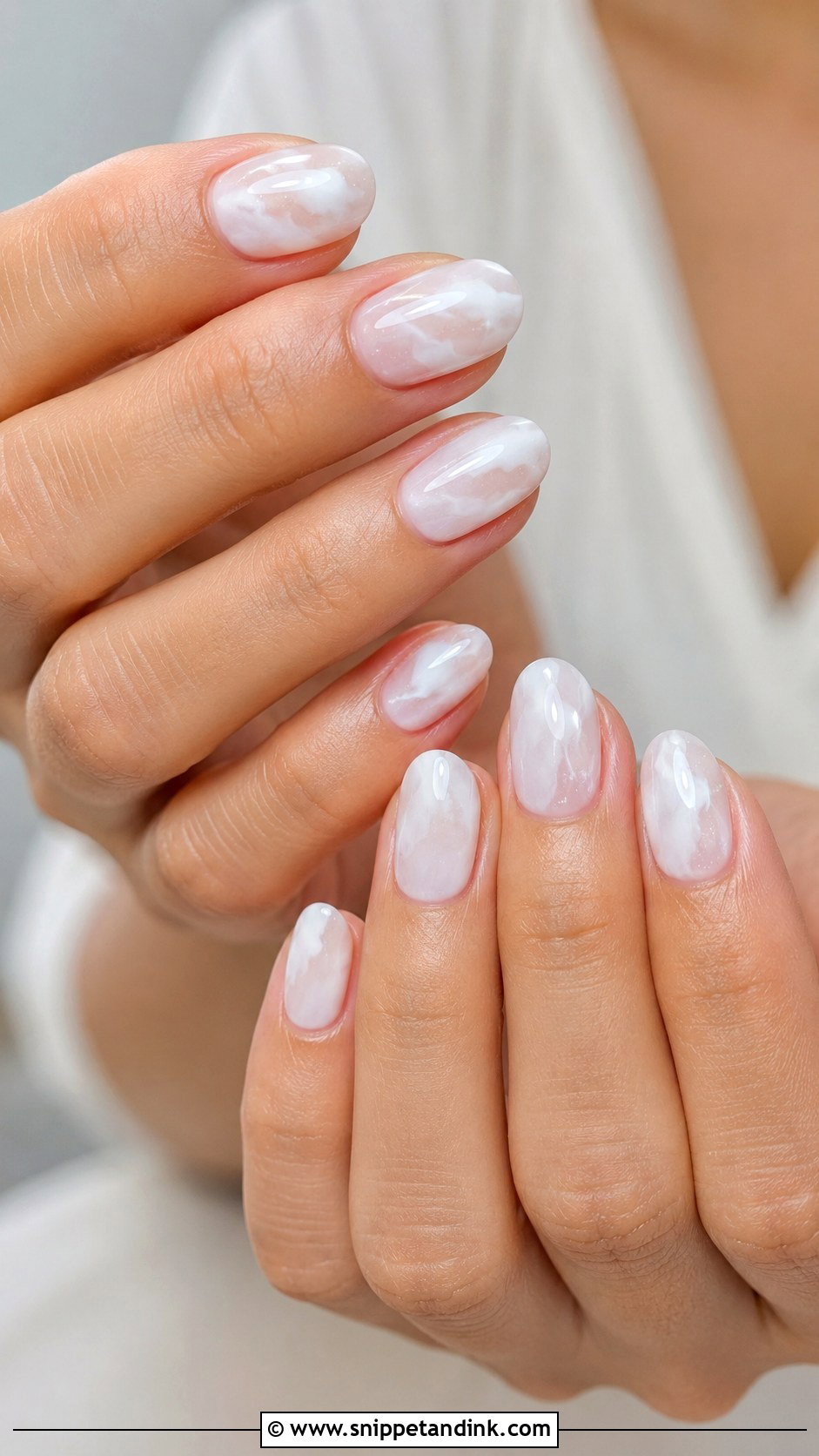
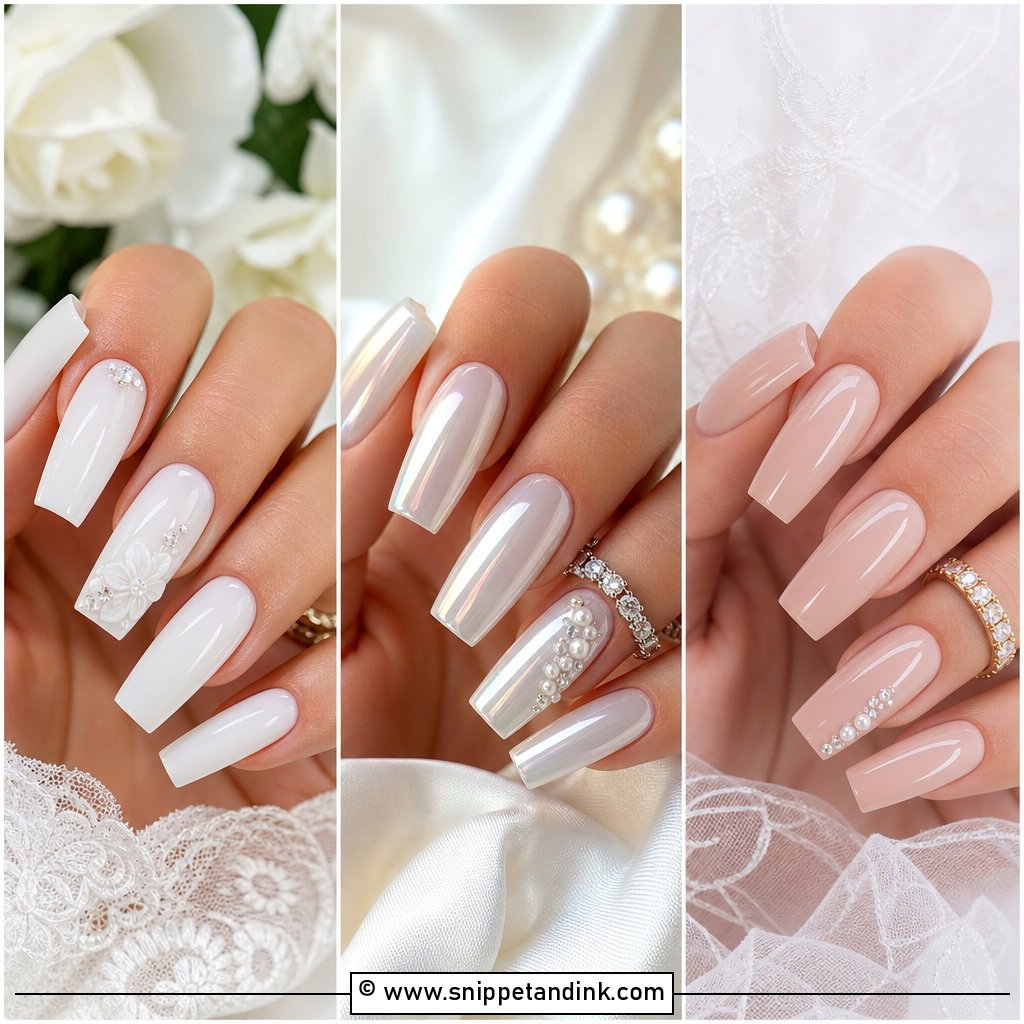
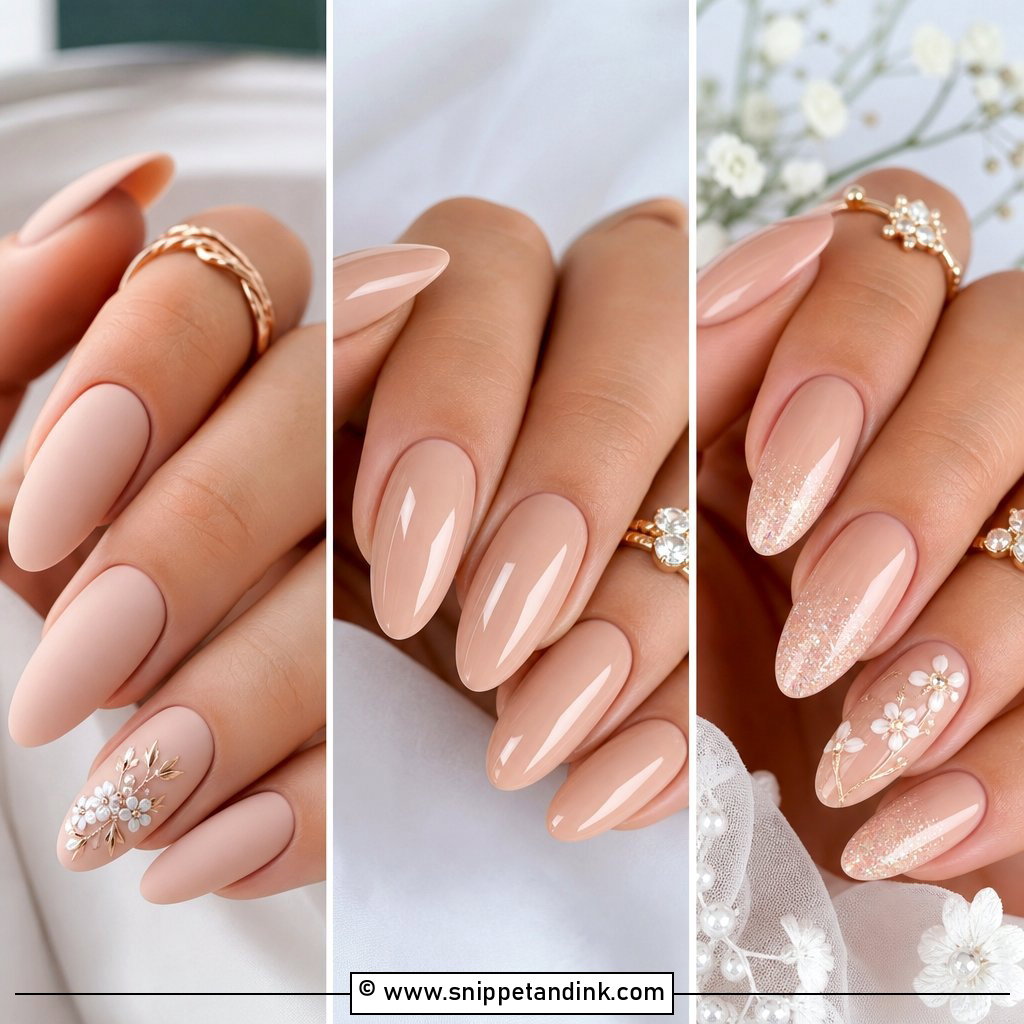
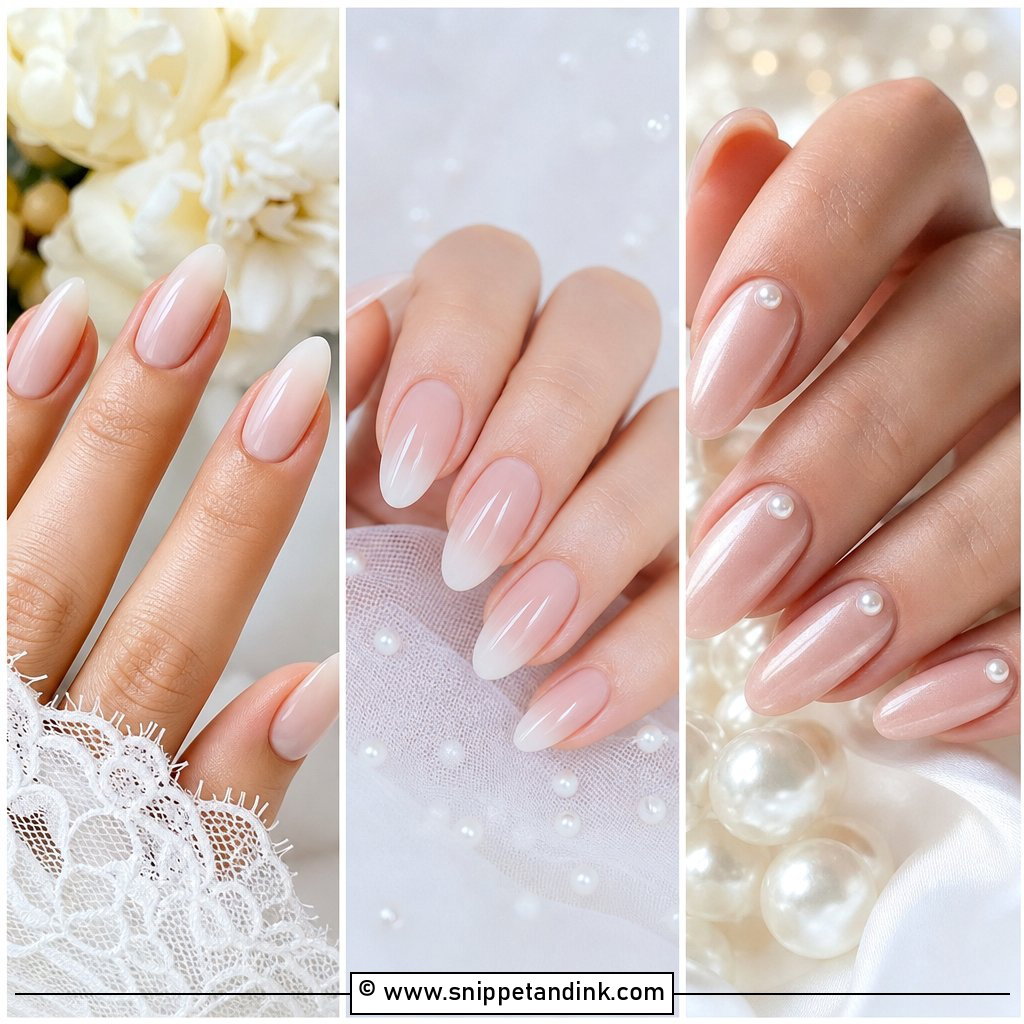
Milky white nails sit between sheer white and creamy nude, which is why they read as polished without any art at all. They look at home next to satin, lace and pearls. Getting the opacity right is the whole skill: one coat can look streaky and three can turn chalky, so I usually build two thin coats and hold them against your skin before curing. Short oval and medium almond suit it best. If you’d like more depth, a whisper of shimmer top coat is enough.
3. Spring Wedding Pearl Chrome Nails
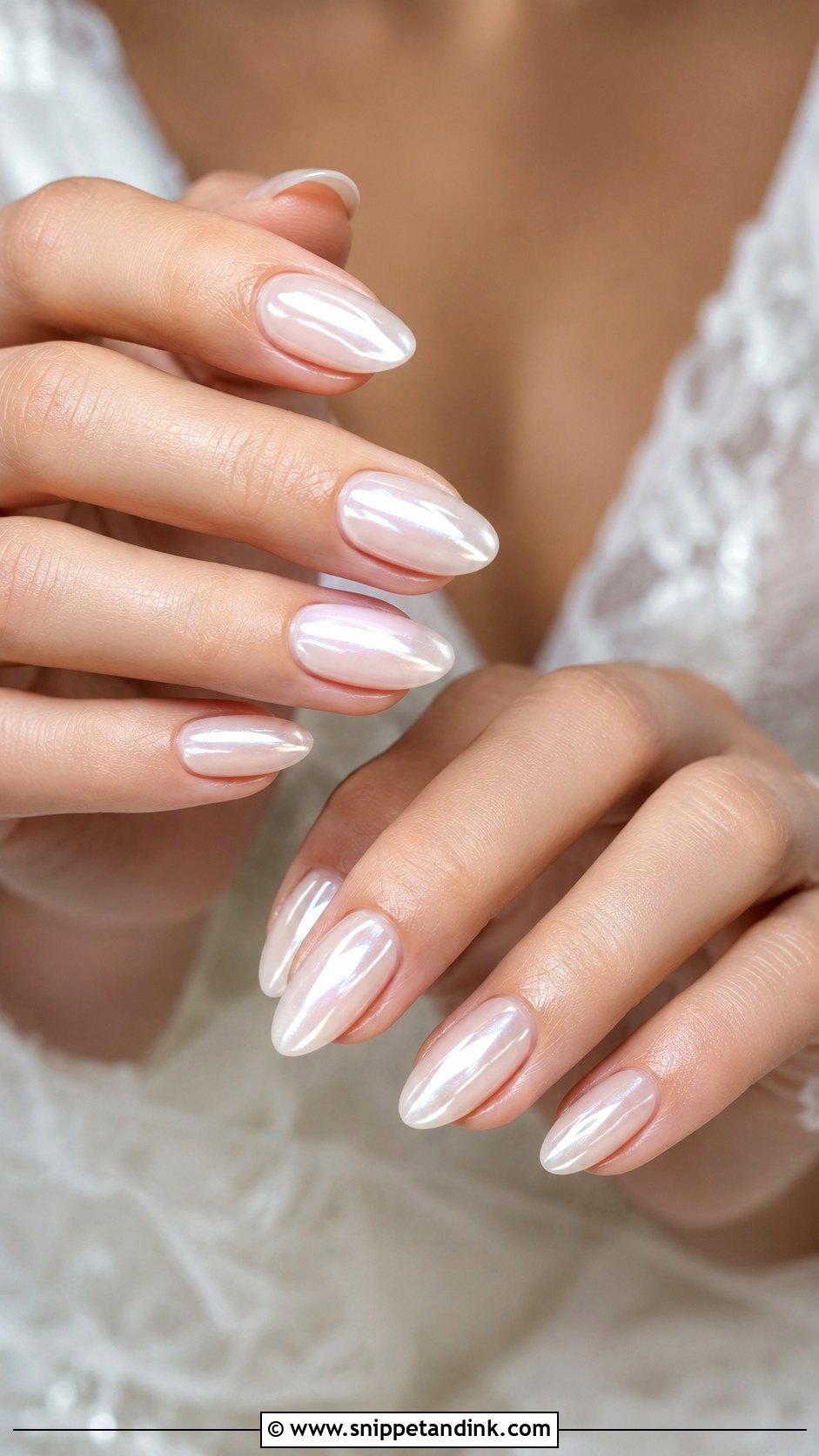
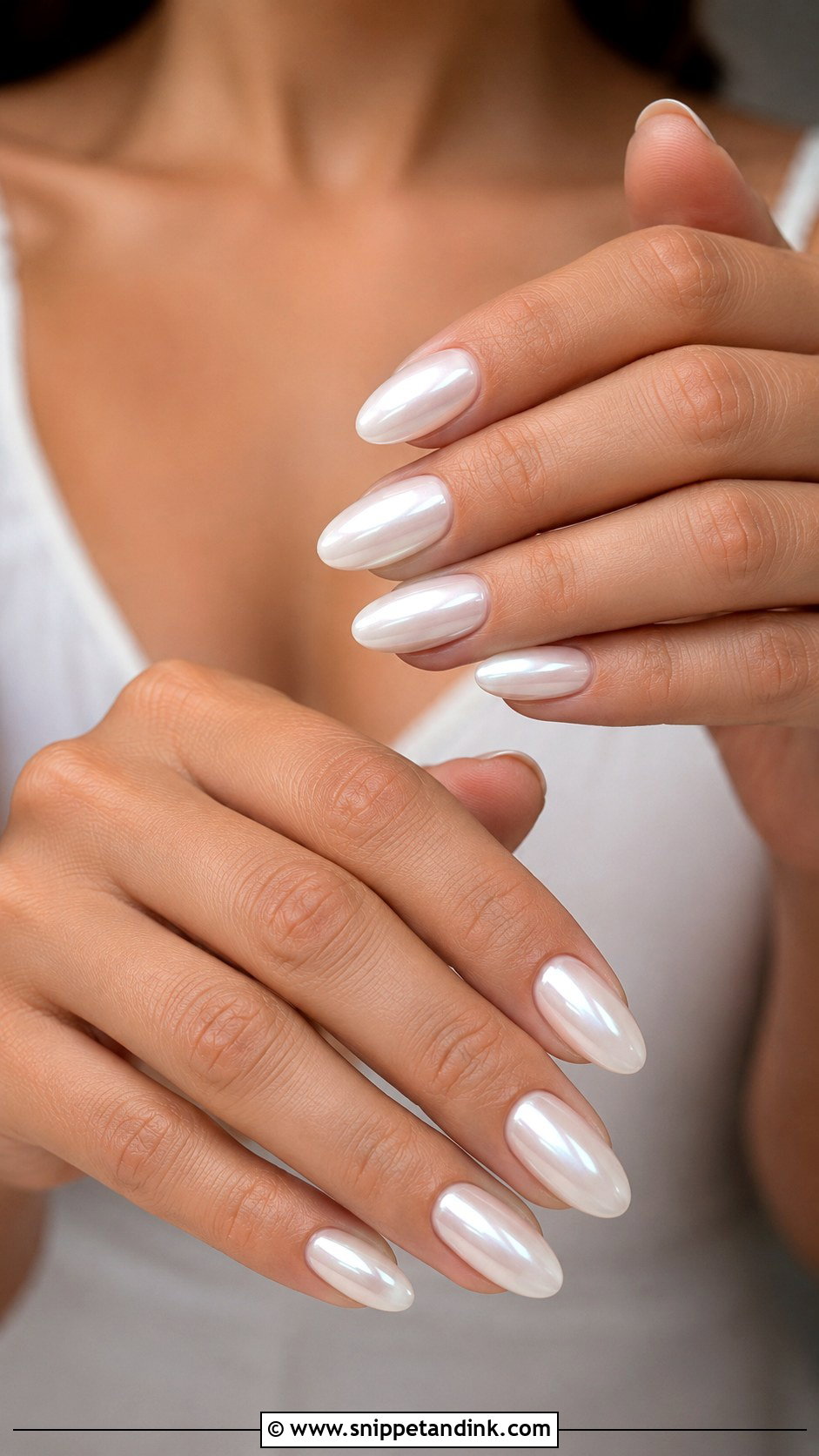
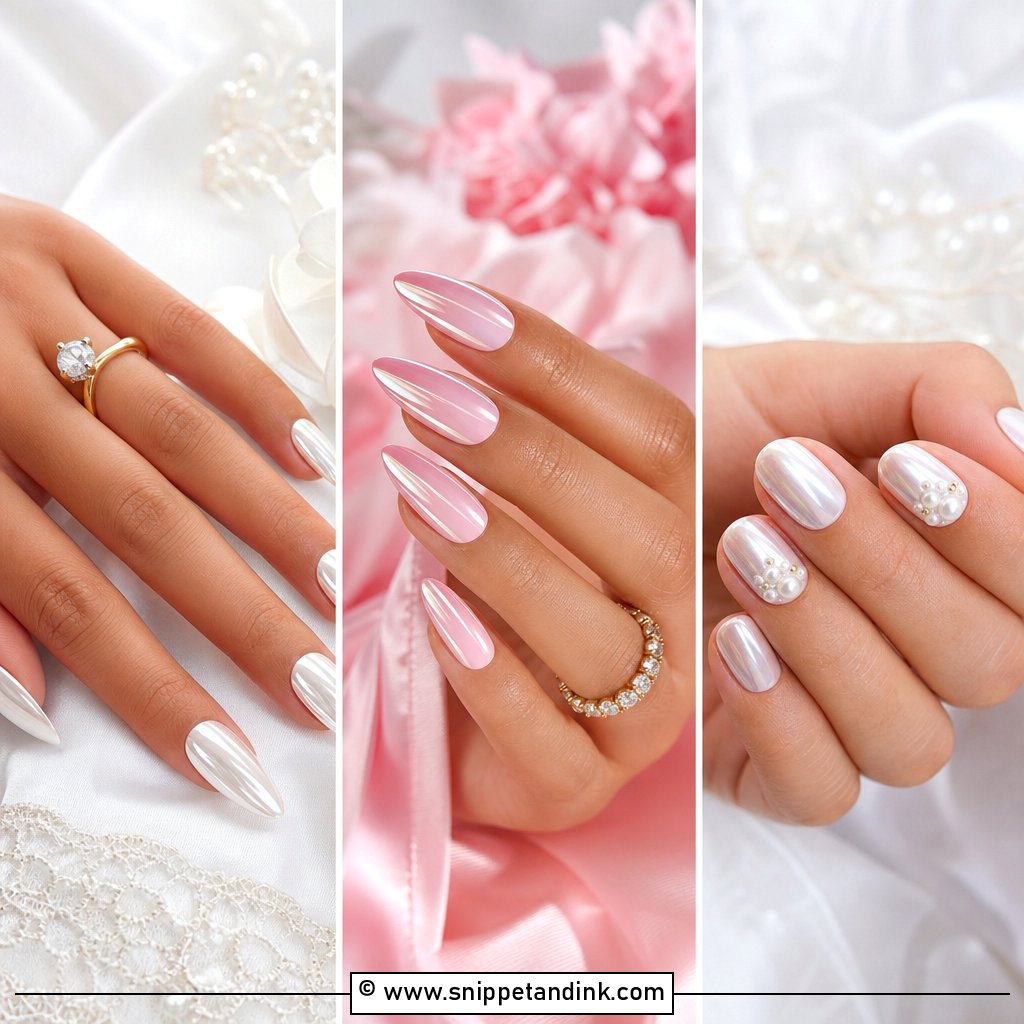
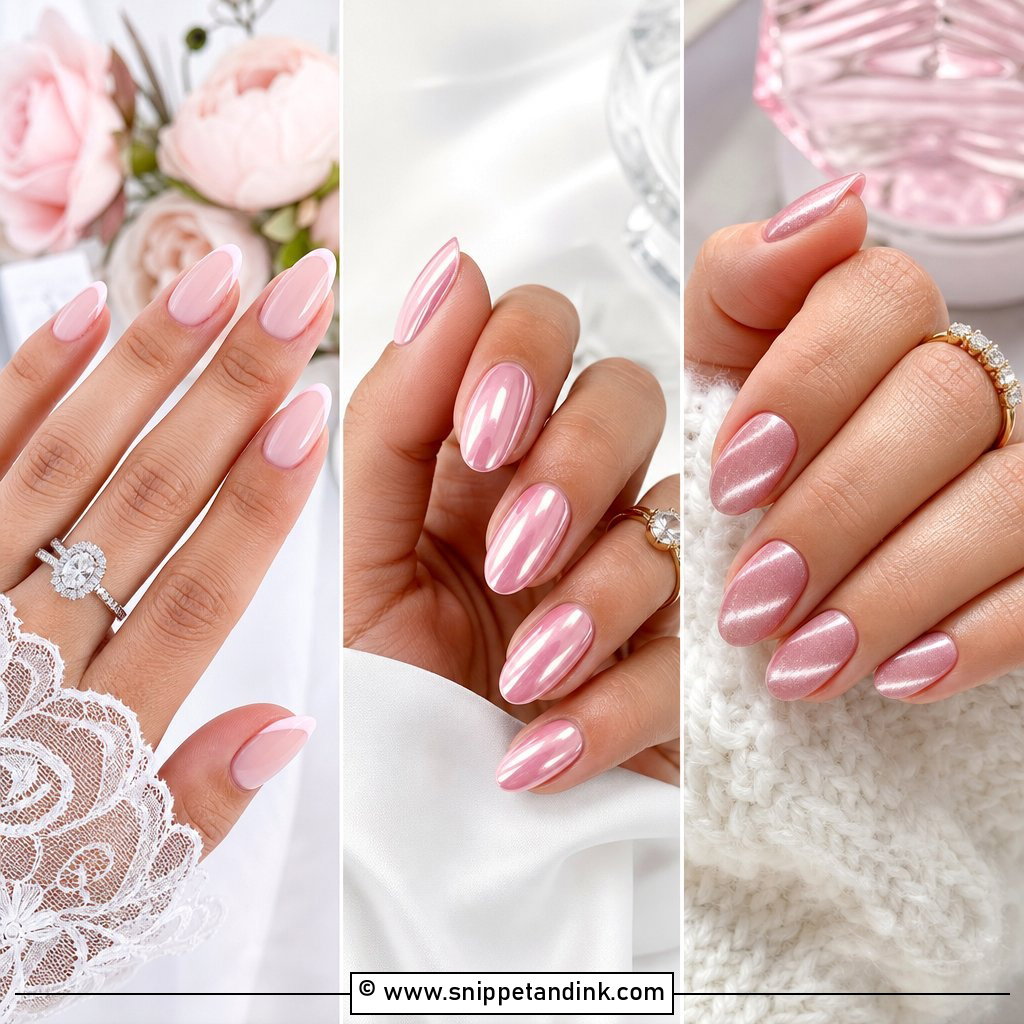
Pearl chrome nails give shine without a single fleck of glitter. I build a milky white, pale pink or soft nude base, cure a no-wipe top coat over it, then buff a fine pearl powder into the surface and seal it twice. Done that way, the finish looks like the inside of a shell. Skip sealing the free edge and the chrome wears off at the tips within days, which is the most common complaint I hear about chrome sets. Leave oversized charms off; they snag on veils and lace.
4. Spring Wedding Blush Pink Nails
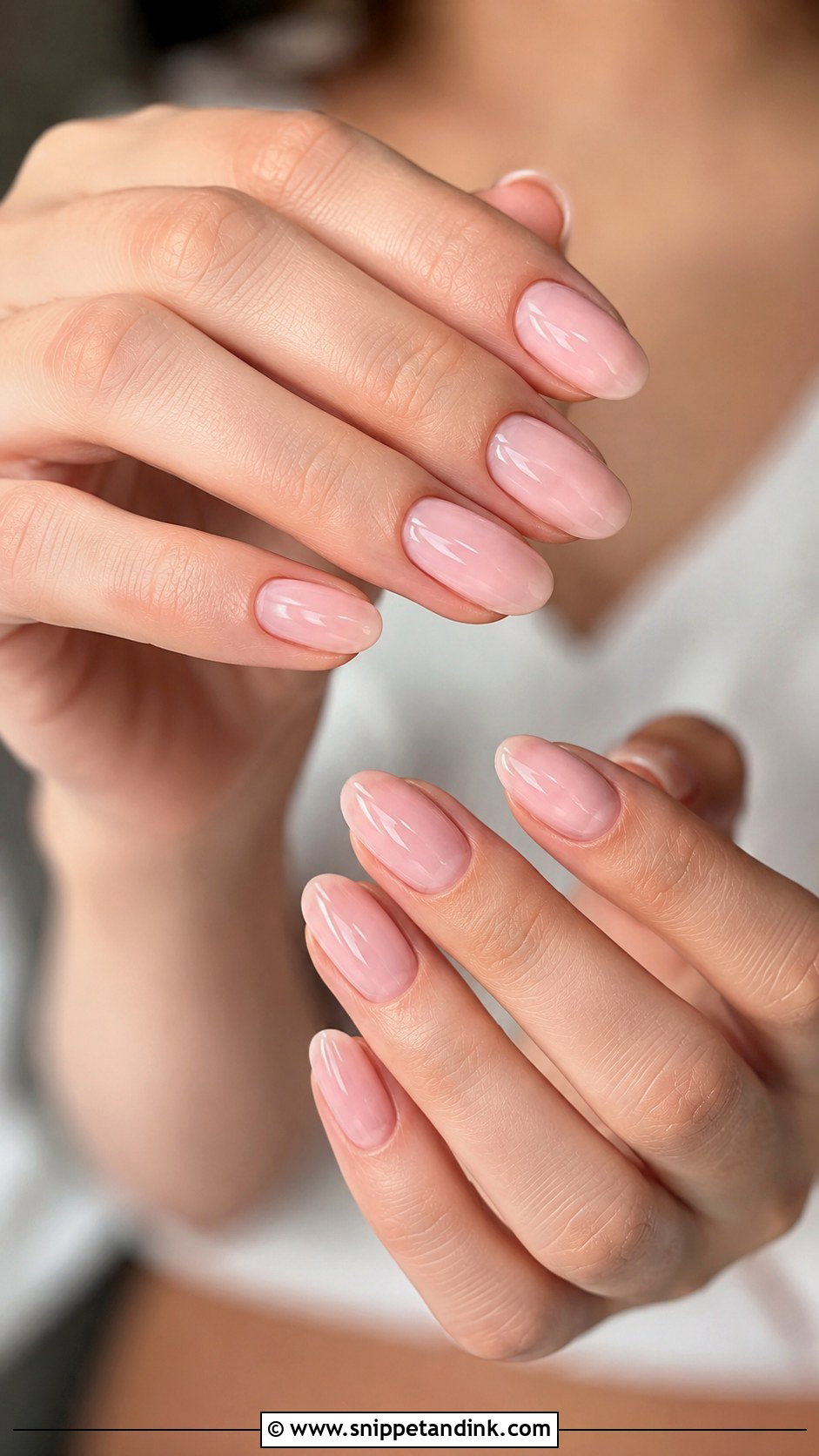
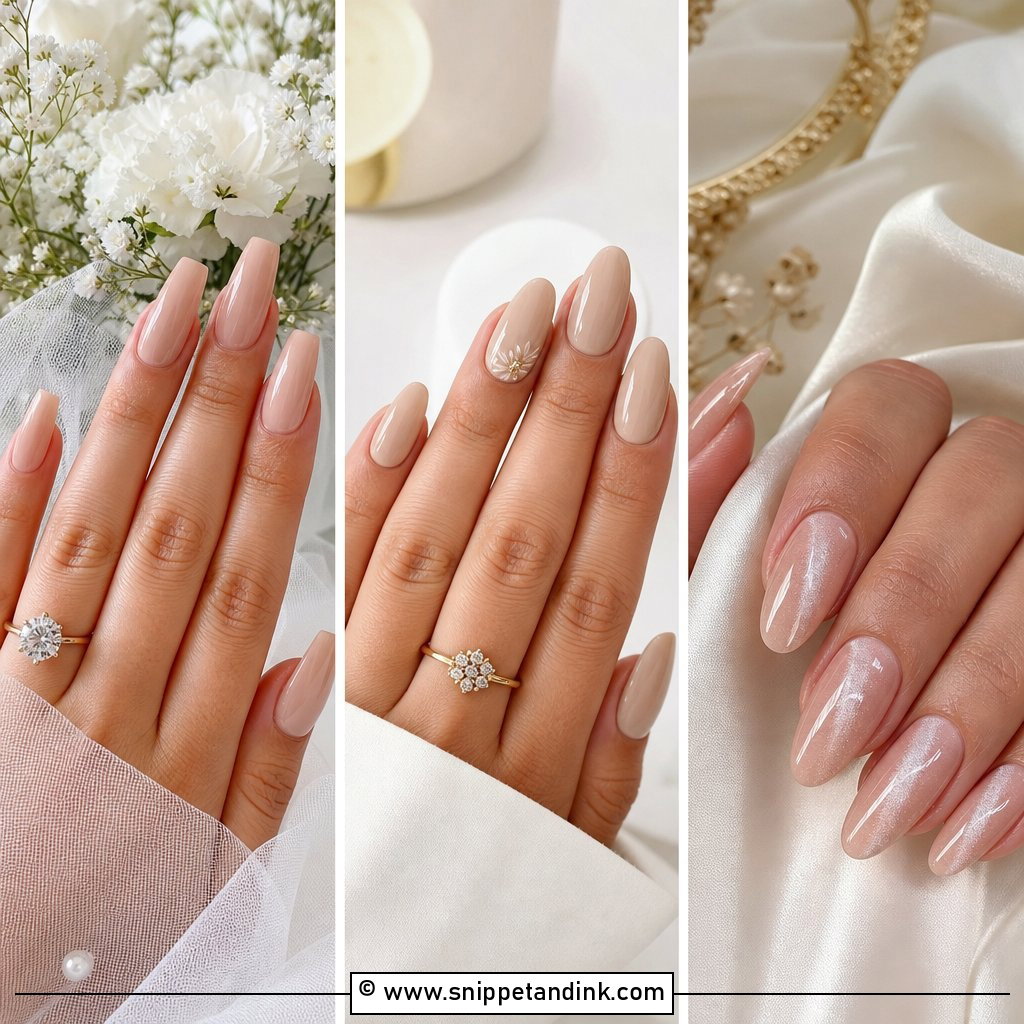
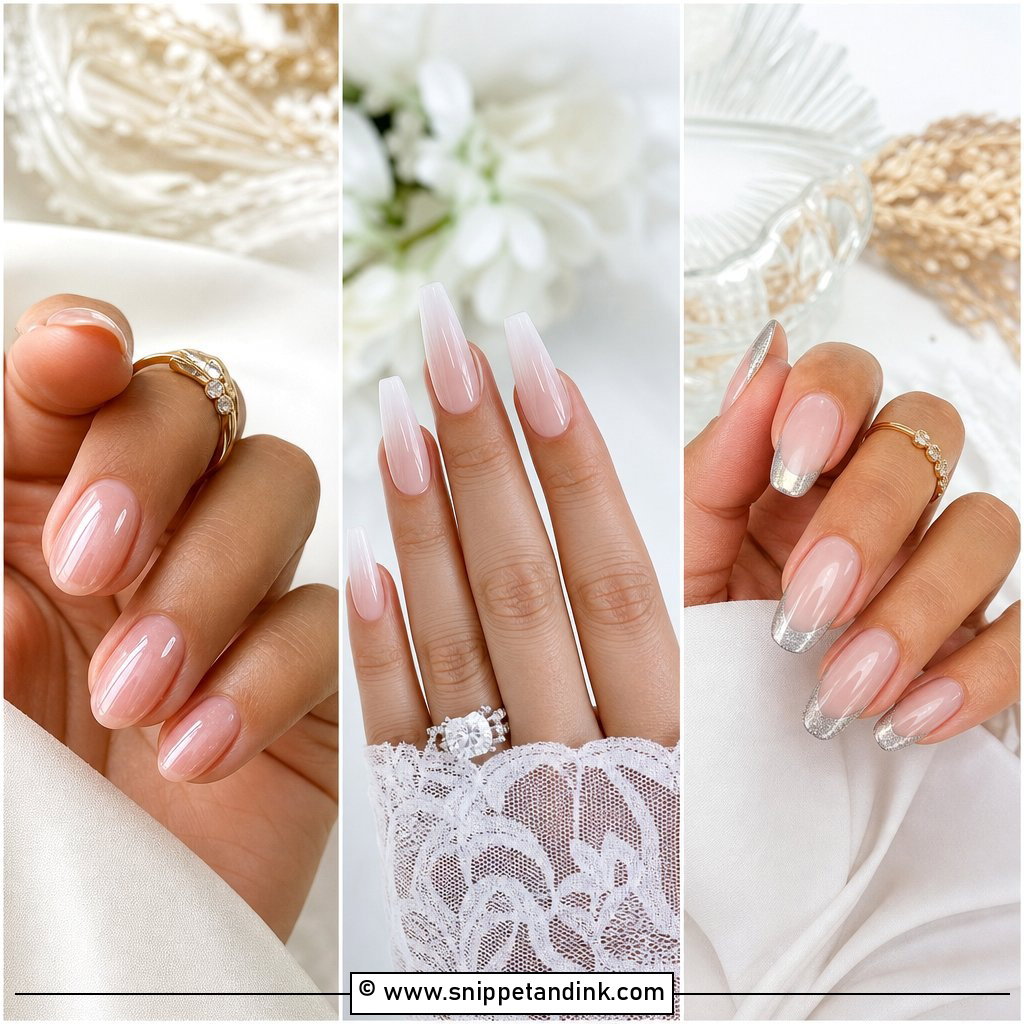
Blush pink flatters almost every hand because it evens out the nail bed while still looking like your own nail. I check undertone before anything else. A cool, bluish pink beside warm skin can make the fingers look faintly grey, so if you wear rose gold or have golden skin, I’ll lean toward a peachier blush. Plain gloss is enough. Ask to see the shade beside your engagement ring before you settle on it.
5. Spring Wedding Floral Nails
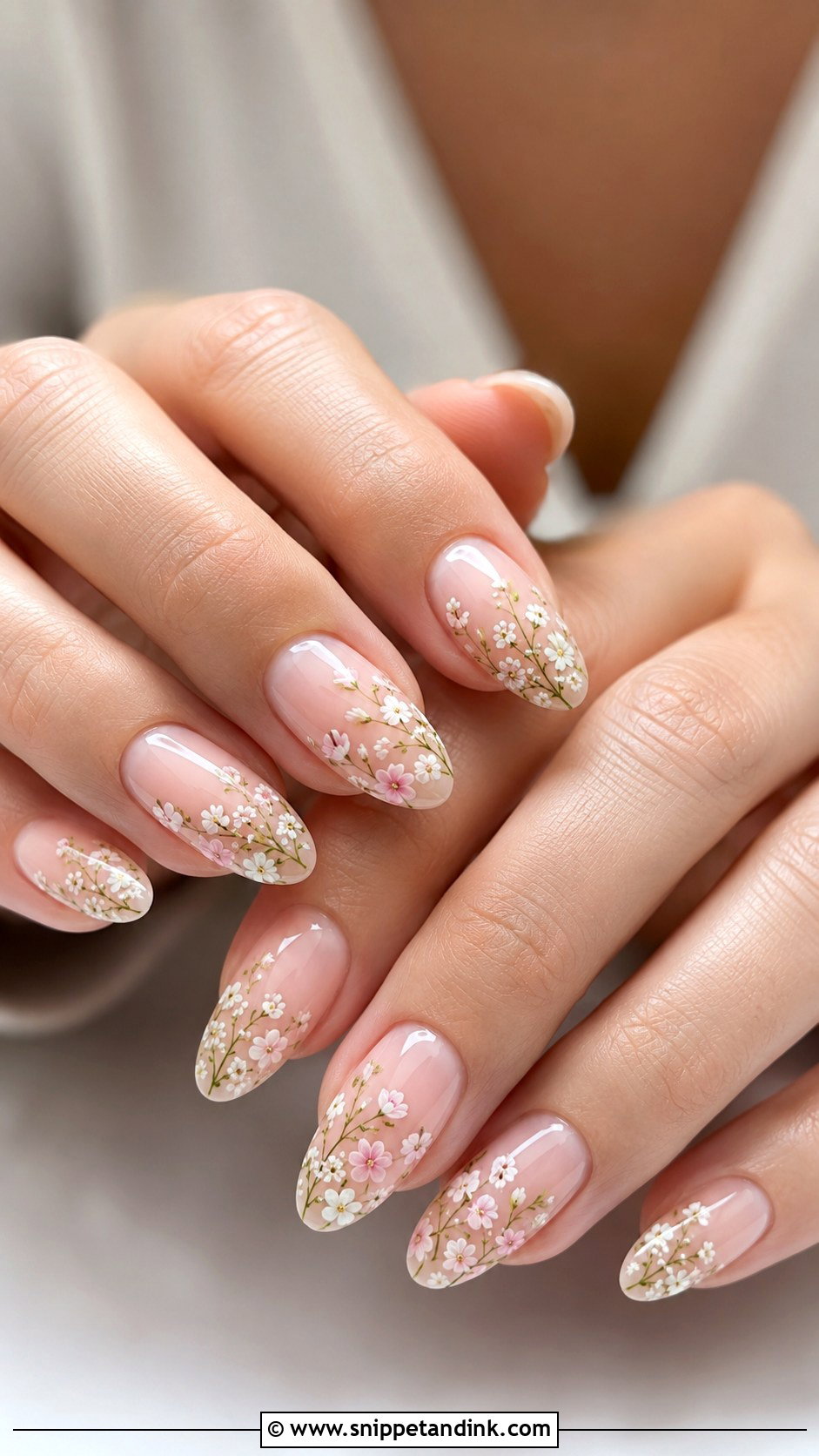
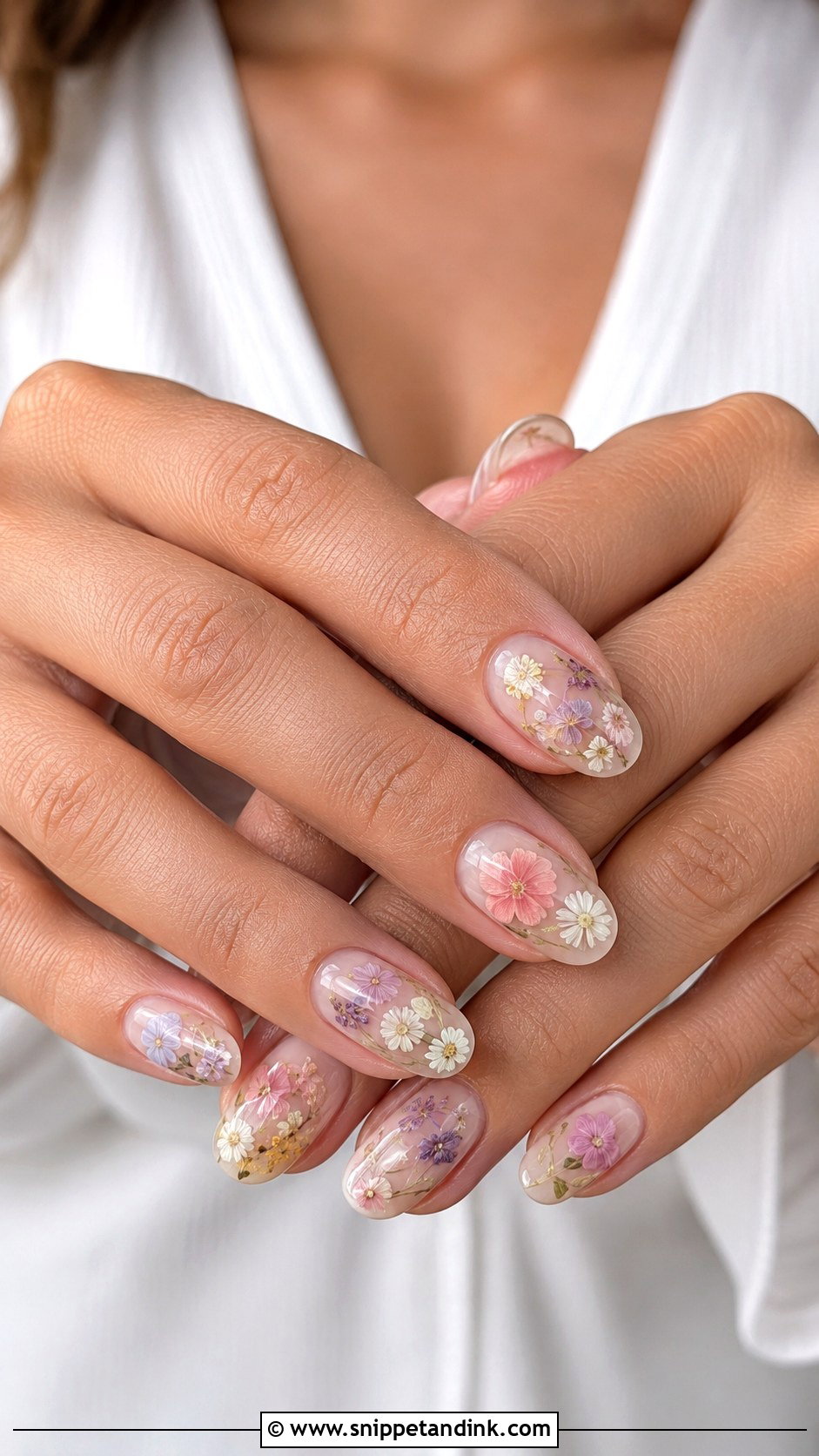
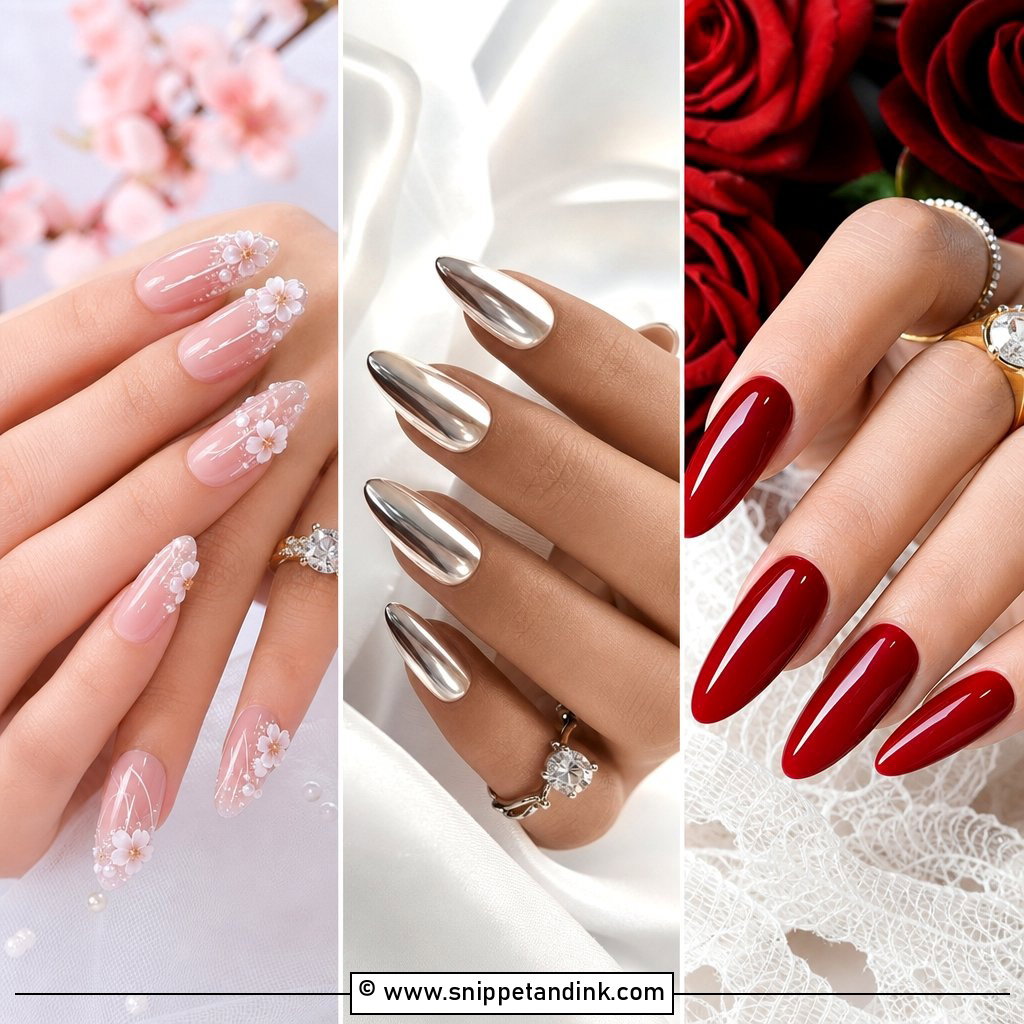
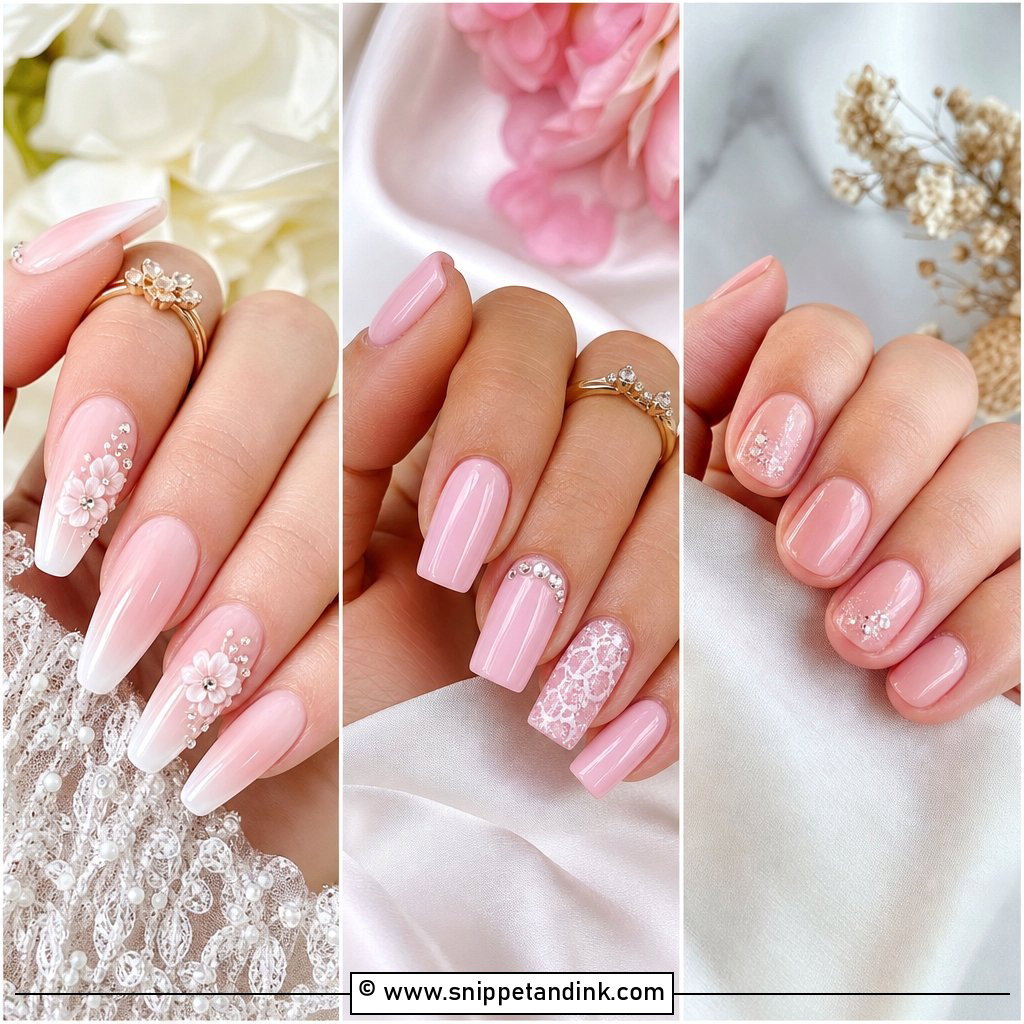
Painted flowers suit spring, but scale makes or breaks them. I paint tiny blooms with a fine liner brush over a sheer nude or milky pink base: a few white petals, a pink bud, a dot of pale blue, sometimes copying one flower from the bouquet. Big flowers on every nail start to look like a theme party. I usually put art on two or three nails per hand and leave the rest clean, with thin stems, small dots and plenty of bare base so the set stays airy.
6. Spring Wedding Lace Nails
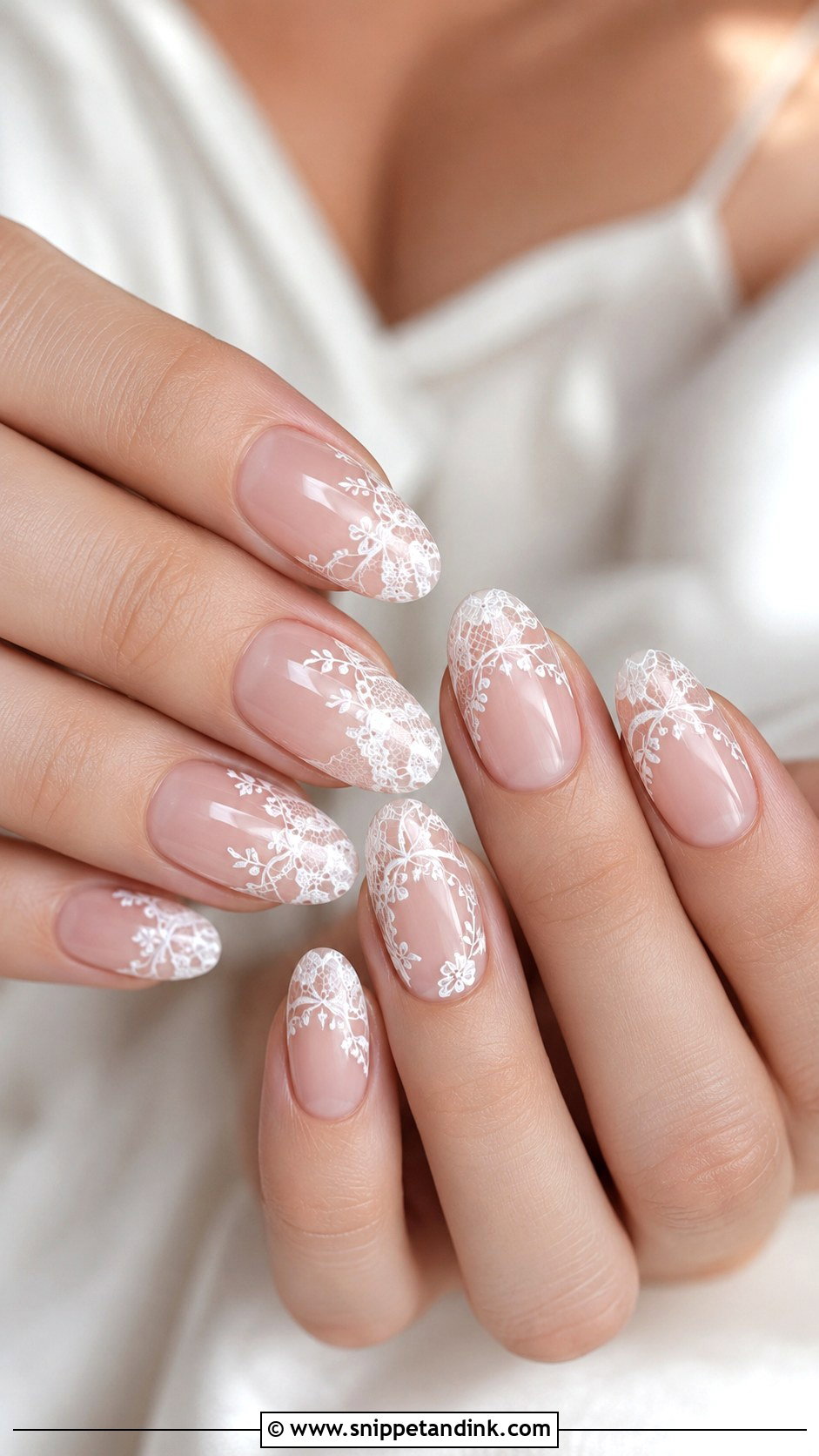
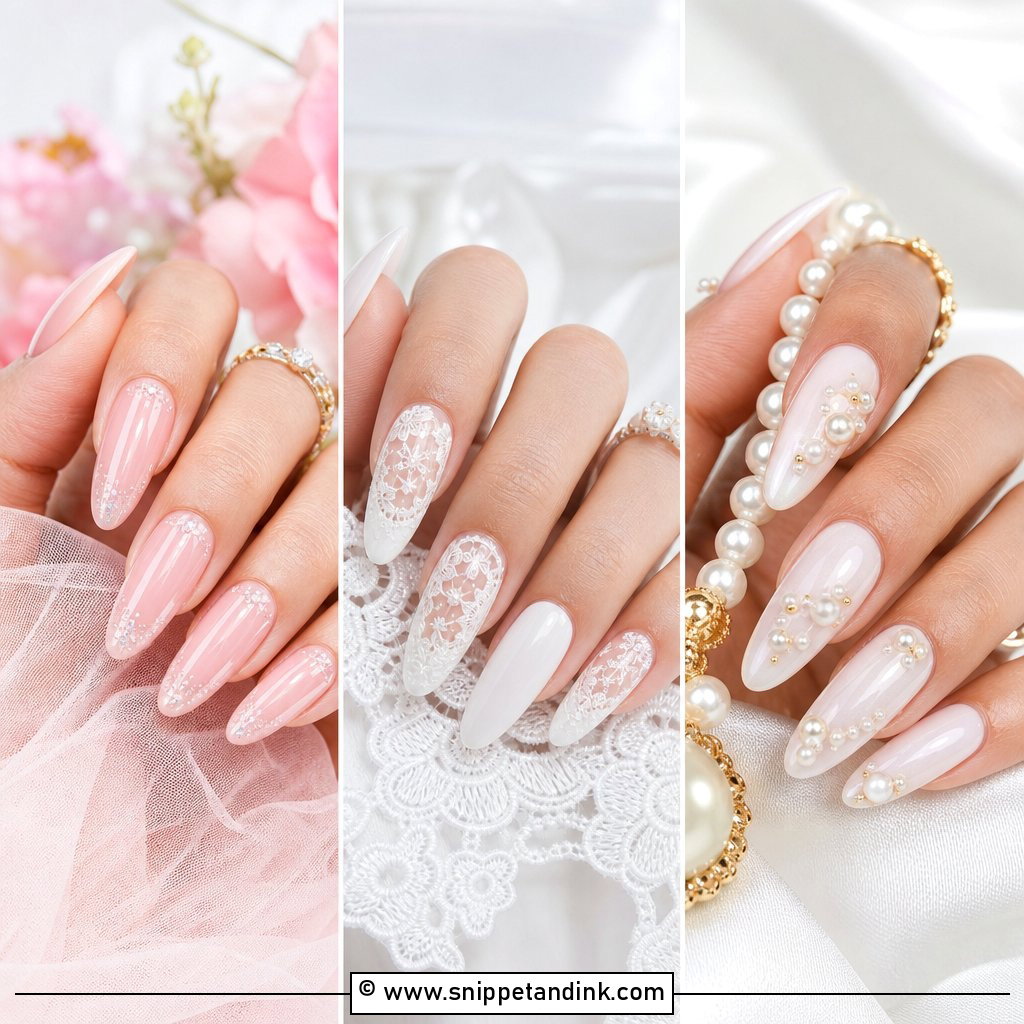
Lace nails make the most sense when your dress actually has lace, at the sleeve, the hem or the veil edge. The line work is white over sheer nude or pale pink, placed at the tips, along one side, or on accent nails only. Fine lines are slow to paint, so plan for a longer appointment; lace rushed on with a stamper looks like a sticker up close. Gloss keeps it bridal. A matte top coat makes the pattern look more like fabric, but it picks up hand cream and makeup marks sooner, so I only suggest matte to brides who’ll keep lotion off their hands on the day.
7. Spring Wedding Ombre Nails
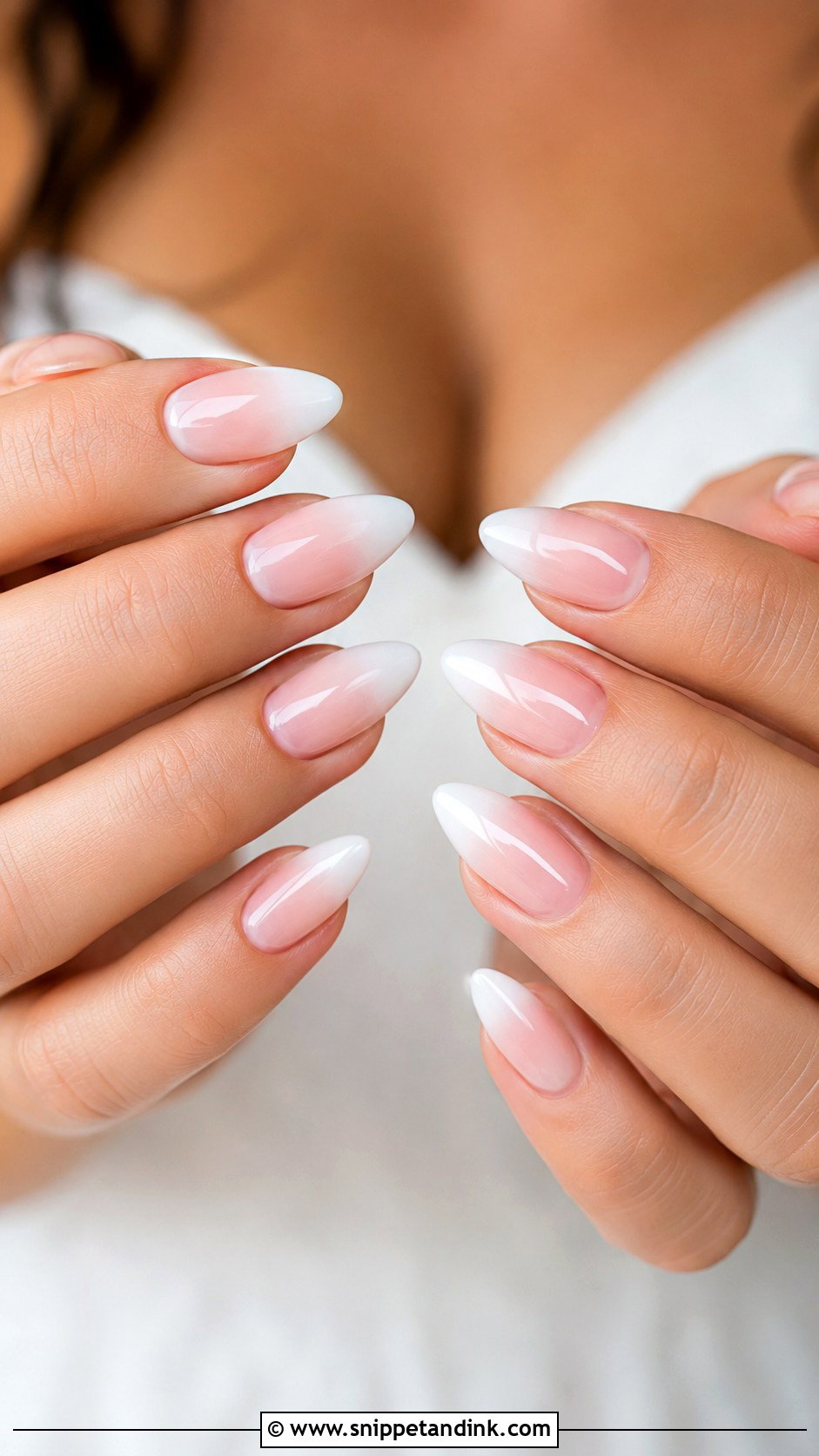
Spring wedding ombre nails, often called baby boomer nails, fade from pale pink or nude at the cuticle into white at the tip. They’re the softer cousin of a French. I diffuse the white down the nail with a sponge or a brush, and from a few feet away the transition should be invisible; a visible stripe in the middle means the blend wasn’t worked enough. The fade makes fingers look longer on almond, coffin and oval shapes. Keep it glossy, or add one thin layer of shimmer.
8. Spring Wedding Nude Nails
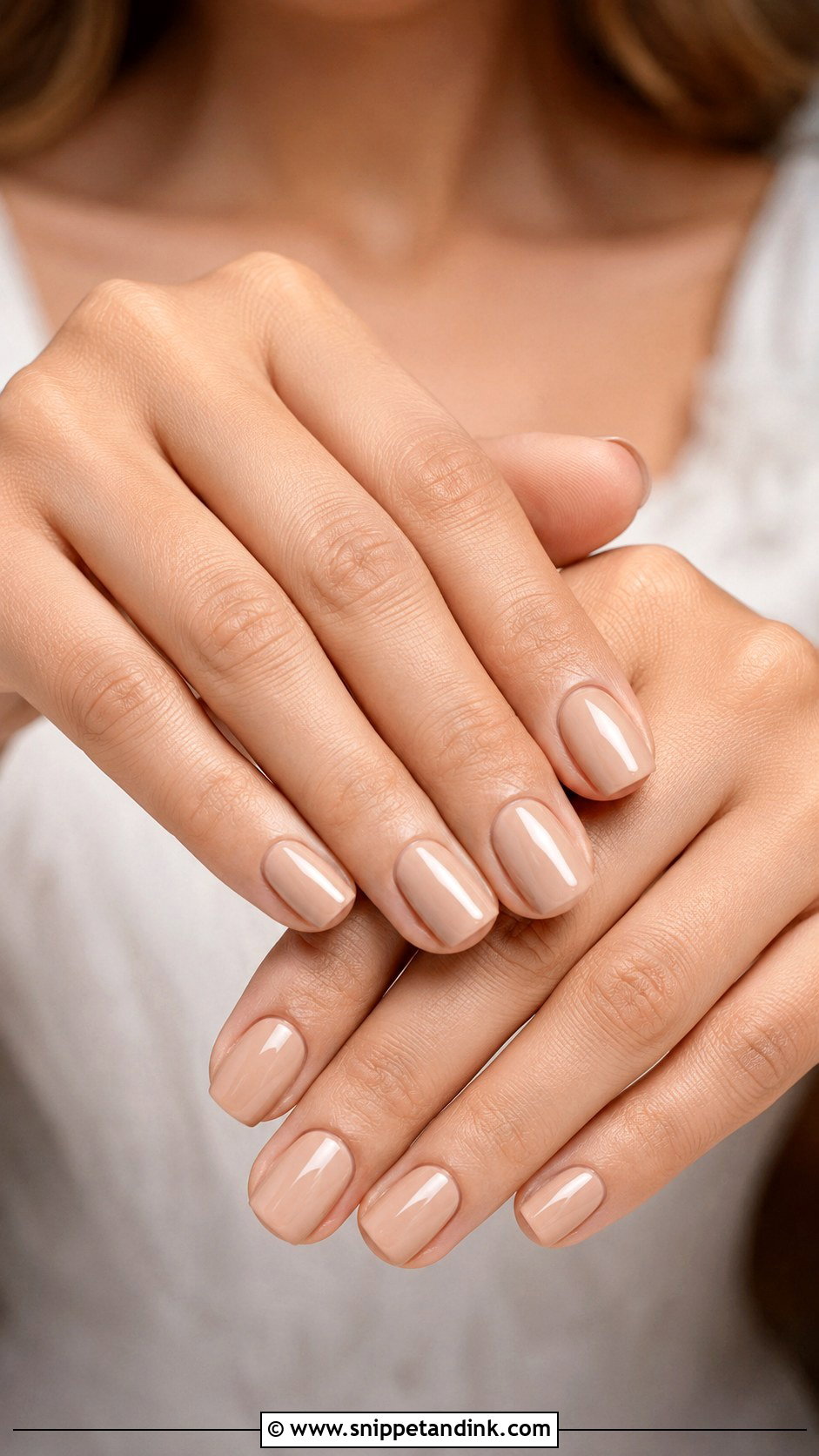
A nude manicure only works if the shade suits your skin, and it’s the color I most often reswatch at trials. As a starting point, fair skin tends to suit pinky beige, medium skin a warm peach nude, and deeper skin caramel, mocha or rosy brown. A nude that’s lighter than your skin washes the hands out in photos and makes knuckles look ruddy. Keep the finish sheer and glossy for spring, with one small pearl or a fine white tip if you want a detail.
9. Spring Wedding Short Nails
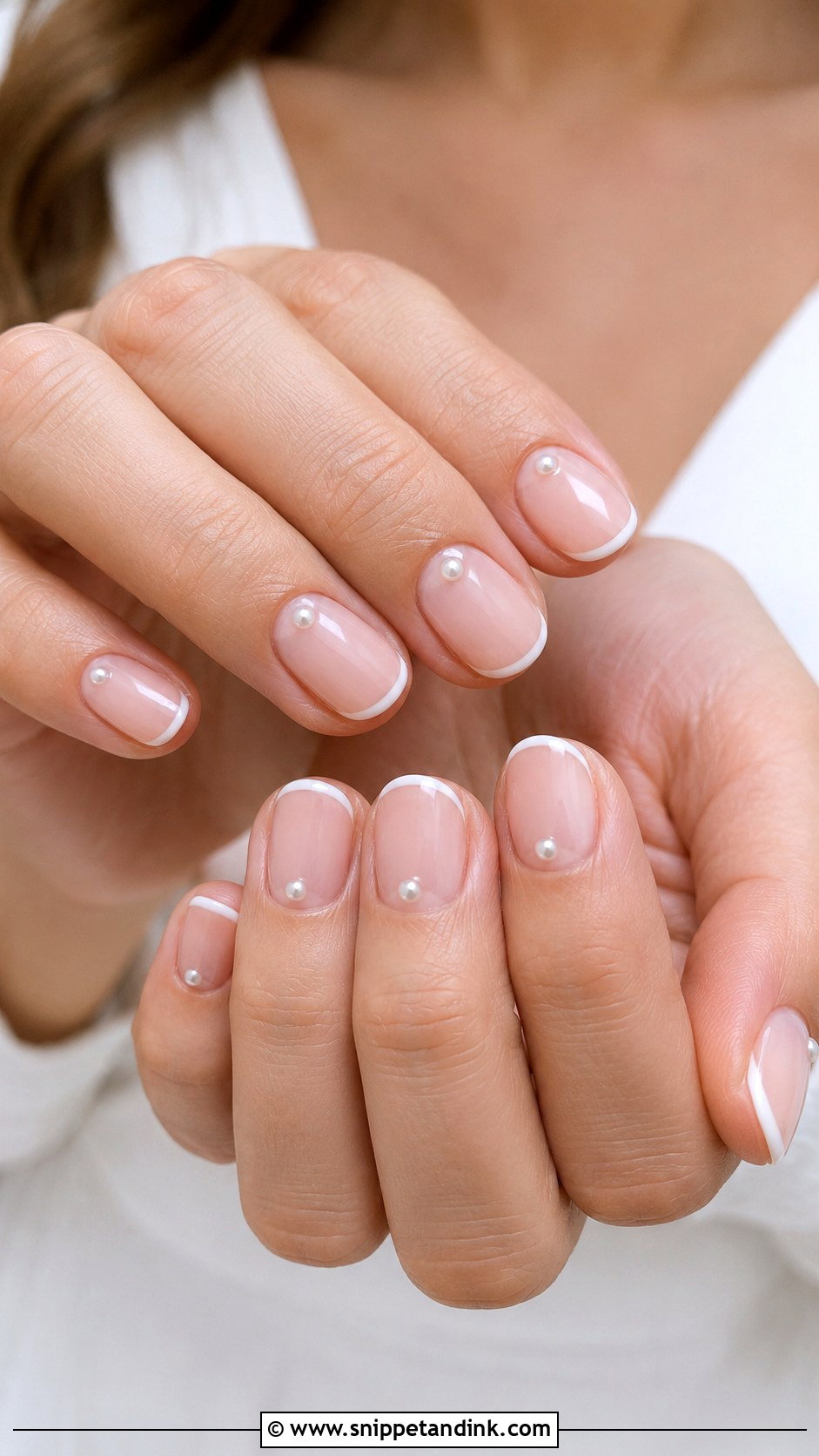
Short nails photograph as bridal as long extensions, provided the cuticles are clean and the shape is even across all ten. A short oval or soft square is what I’d suggest if you don’t normally wear length, because you’ll be fastening a bustle, opening cards and handling a phone all day. Milky pink, sheer white and a micro French all sit well on a short bed. Large art crowds a small canvas. Keep detail tiny: a micro pearl, one flower, a thin chrome.
10. Spring Wedding Almond Nails
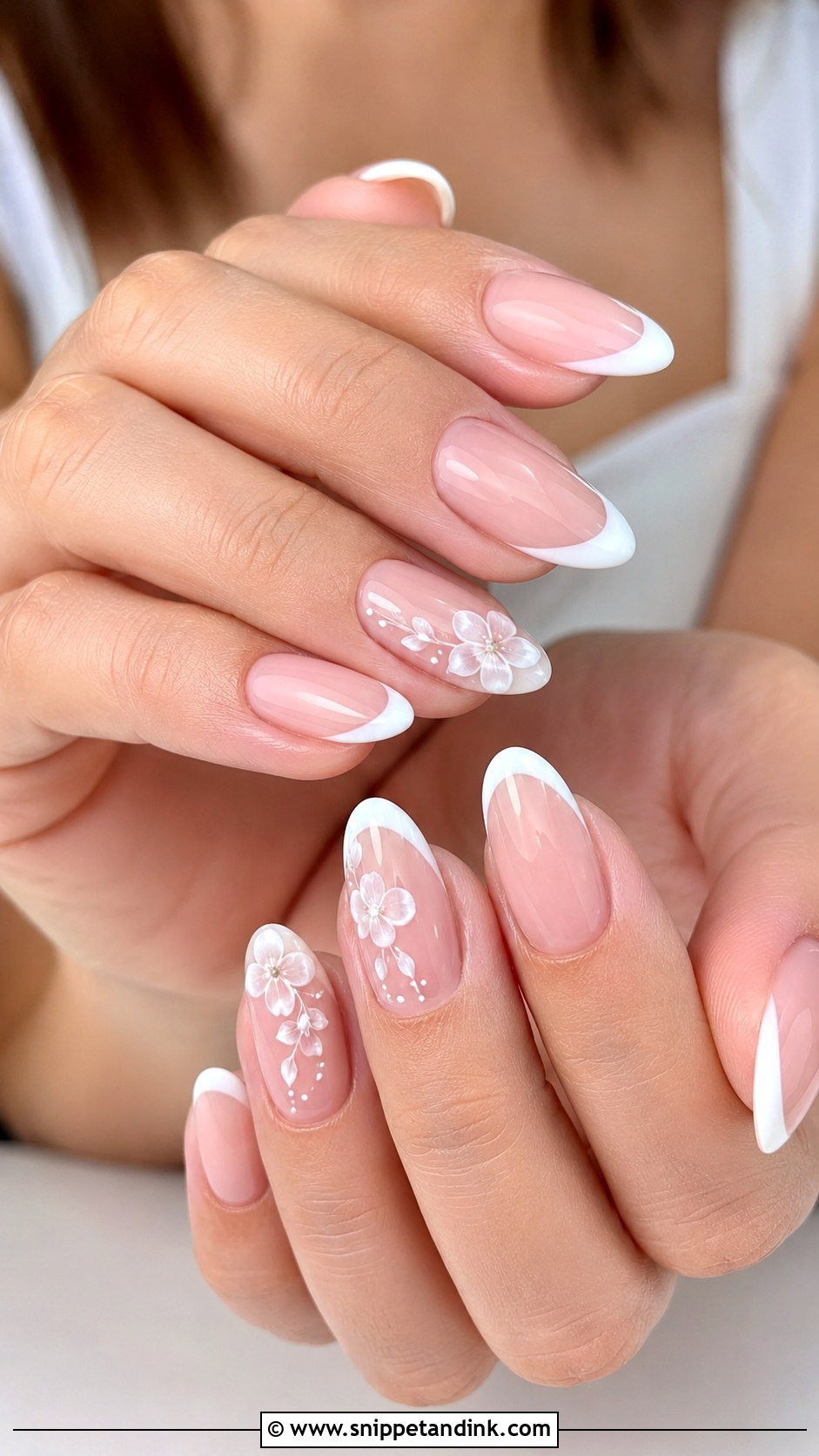
Almond is the shape I recommend most to brides who aren’t sure, since the taper slims the fingers from any angle. Medium length gives room for French tips, pearl chrome, ombre or small flowers without the drama of a stiletto, and it’s practical for holding stems and lifting a veil. My rough rule: a clean, structured dress goes well with almond French tips, while a romantic lace or floral gown can carry almond with soft painted detail. Sharp points do catch on fine tulle, so I round the tip slightly for anyone wearing a long veil.
11. Spring Wedding Square Nails
Square suits brides who like structure. The flat free edge gives a French its crispest line, and softened corners stop it looking blunt or catching on fabric. Sheer pink, milky nude, pale peach and creamy white all work. On short square nails a micro French tip looks fresh and minimal, while longer squares can take pearl chrome or light florals. What I watch closely is the sidewalls: if they flare out, a square nail looks wide and bulky beside a ring, so I file them straight and parallel.
12. Spring Wedding Pastel French Nails
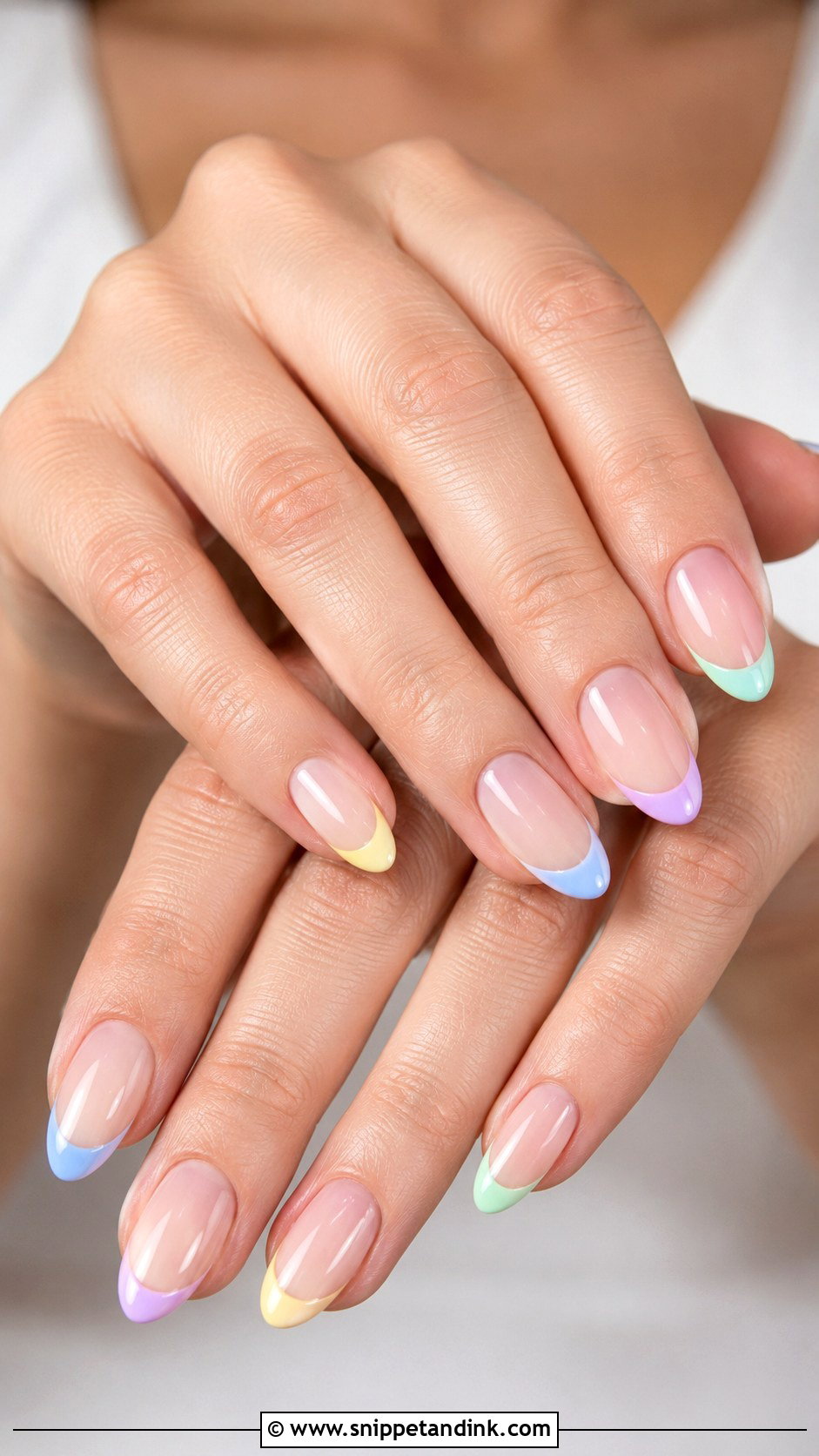
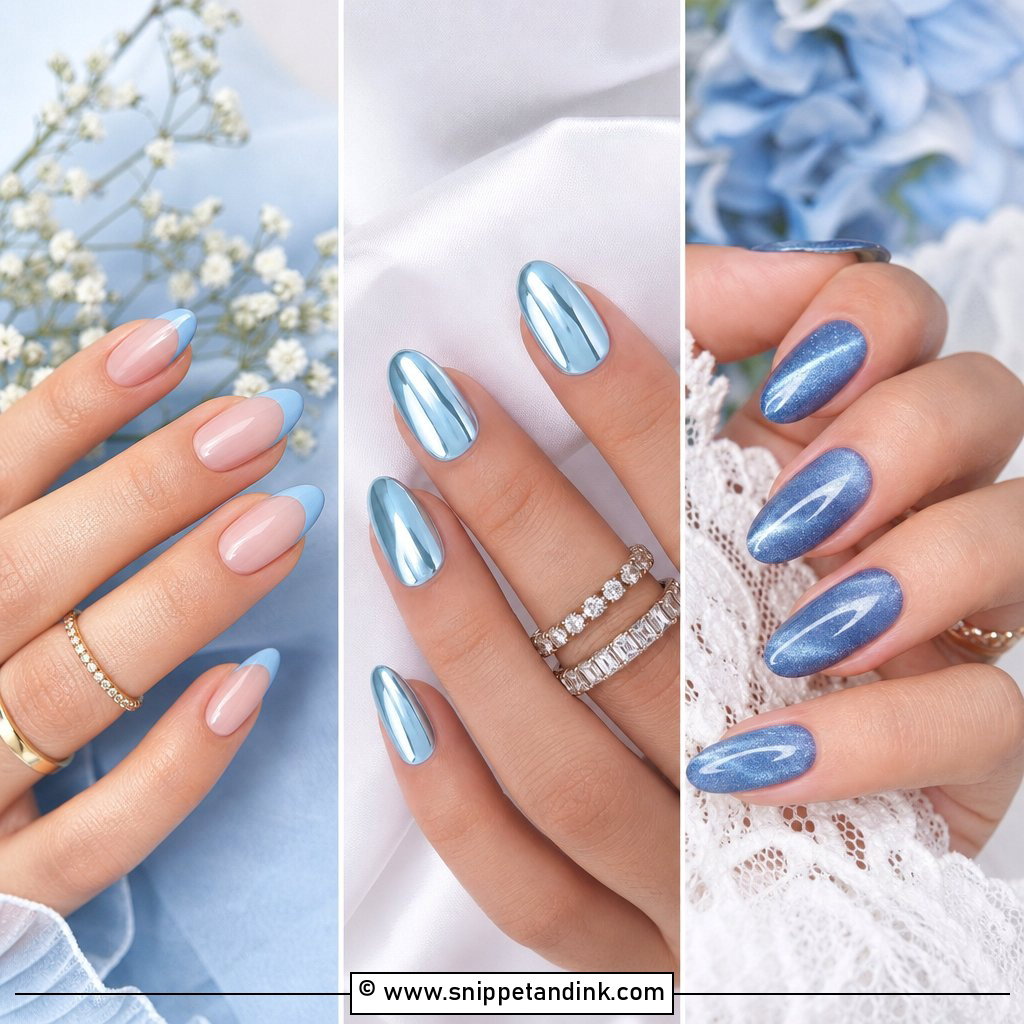
Swapping white tips for a pastel is the easiest way to bring spring color into a bridal set. Baby blue, butter yellow, pale lavender, mint and blush peach all sit well over a sheer nude or pink base. Pastels are harder to apply than white. Many are low in pigment, so a thin tip can look patchy and I usually go over the line twice. Keep the shades muted rather than bright, and know that one pastel across all ten looks calmer than a mixed palette, though a soft rainbow can suit a garden wedding full of colorful flowers.
13. Spring Wedding Blue Nails
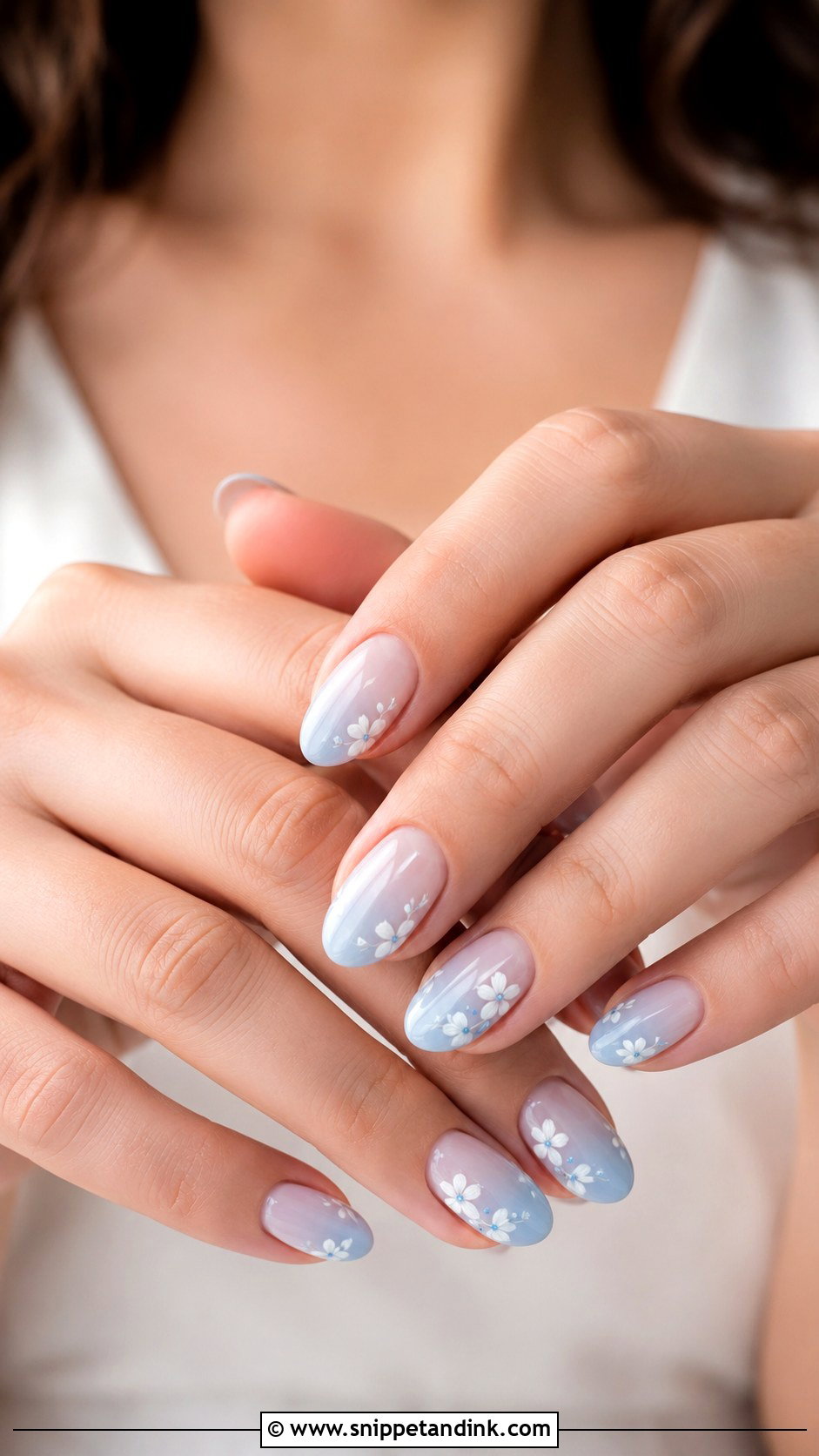
A pale blue manicure is a neat way to wear your “something blue” where you’ll actually see it all day. The versions I like for spring are baby blue French tips, a milky blue, or a sheer blue glaze over short oval or almond nails. Keep it pale and translucent; navy and heavy glitter pull the set away from bridal very quickly. Blue sits best with white flowers and silver or platinum. Next to warm yellow gold it can look a little cold, so test it against your ring first.
14. Spring Wedding Lavender Nails
Lavender has to be pale, milky and slightly muted to stay bridal beside white or ivory; a saturated purple reads as a party color. I often mix a touch of white into it for that reason. Wear it on all ten nails, on the tips only, or as tiny flowers over nude, and it ties in neatly with lilac bouquets and pastel bridesmaid dresses. One thing to know: cool purples can look duller under warm indoor bulbs, so look at the swatch in daylight and in room lighting before you decide.
15. Spring Wedding Butter Yellow Nails
Butter yellow surprises people. Kept pale and creamy, it looks warm and seasonal rather than loud. The simplest route is butter yellow French tips over a sheer nude, and tiny white daisies or a glazed finish soften it further. Yellow is less forgiving on skin with olive or sallow undertones and can make hands look tired, so I’d only commit after seeing it on your own nails. Short to medium length with a glossy top coat keeps it fresh.
16. Spring Wedding Sage Green Nails
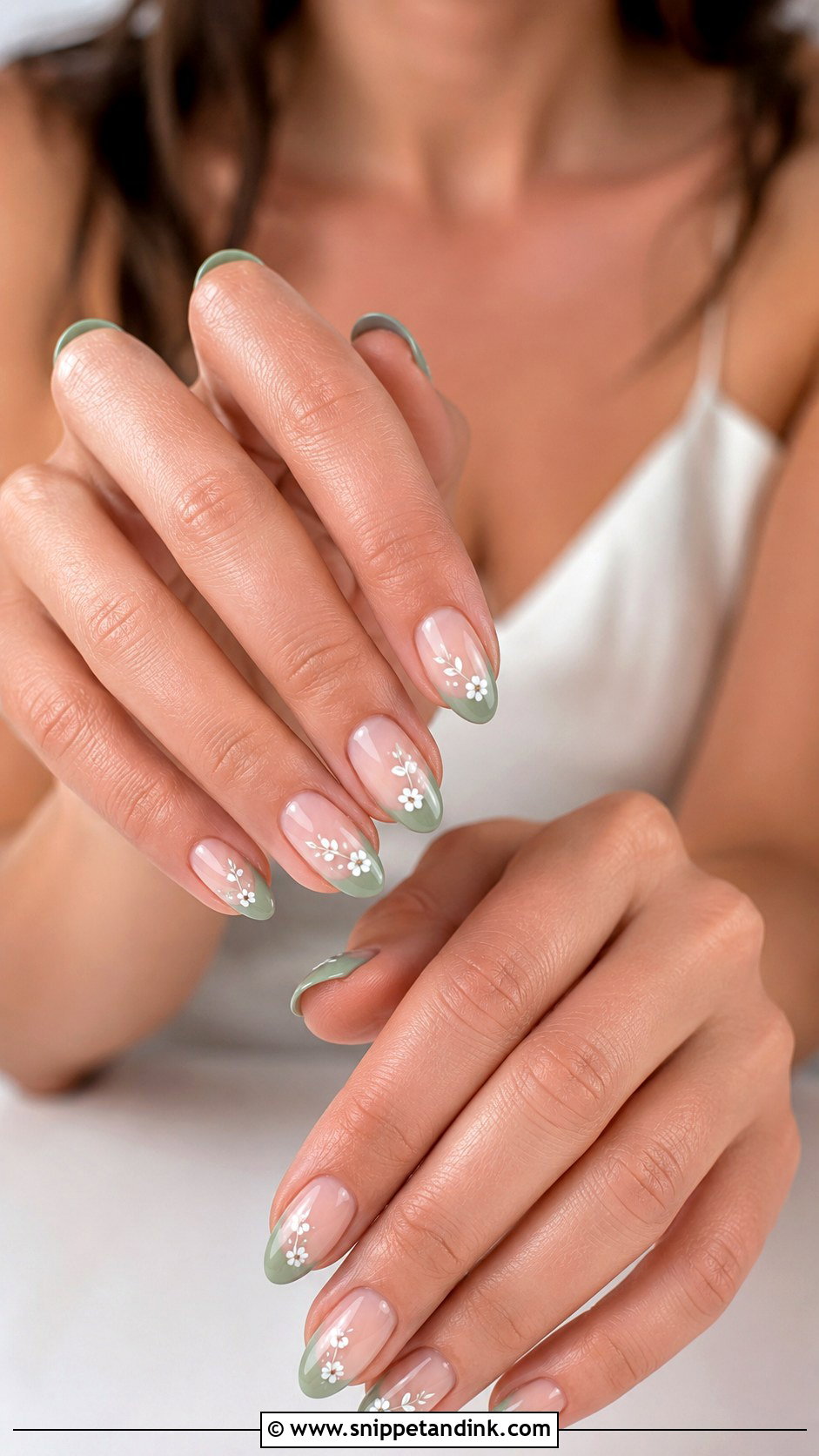
Sage green nails belong at botanical and outdoor weddings, especially where the bouquet is mostly greenery or eucalyptus. I use sage as a French tip, a soft ombre or a single accent nail, then balance it with sheer nude, milky white or a few white flowers. Ask for a muted, grey-leaning sage. A bright leaf green fights with real foliage in photos. Almond and short square both suit it.
17. Spring Wedding Glitter Ombre Nails
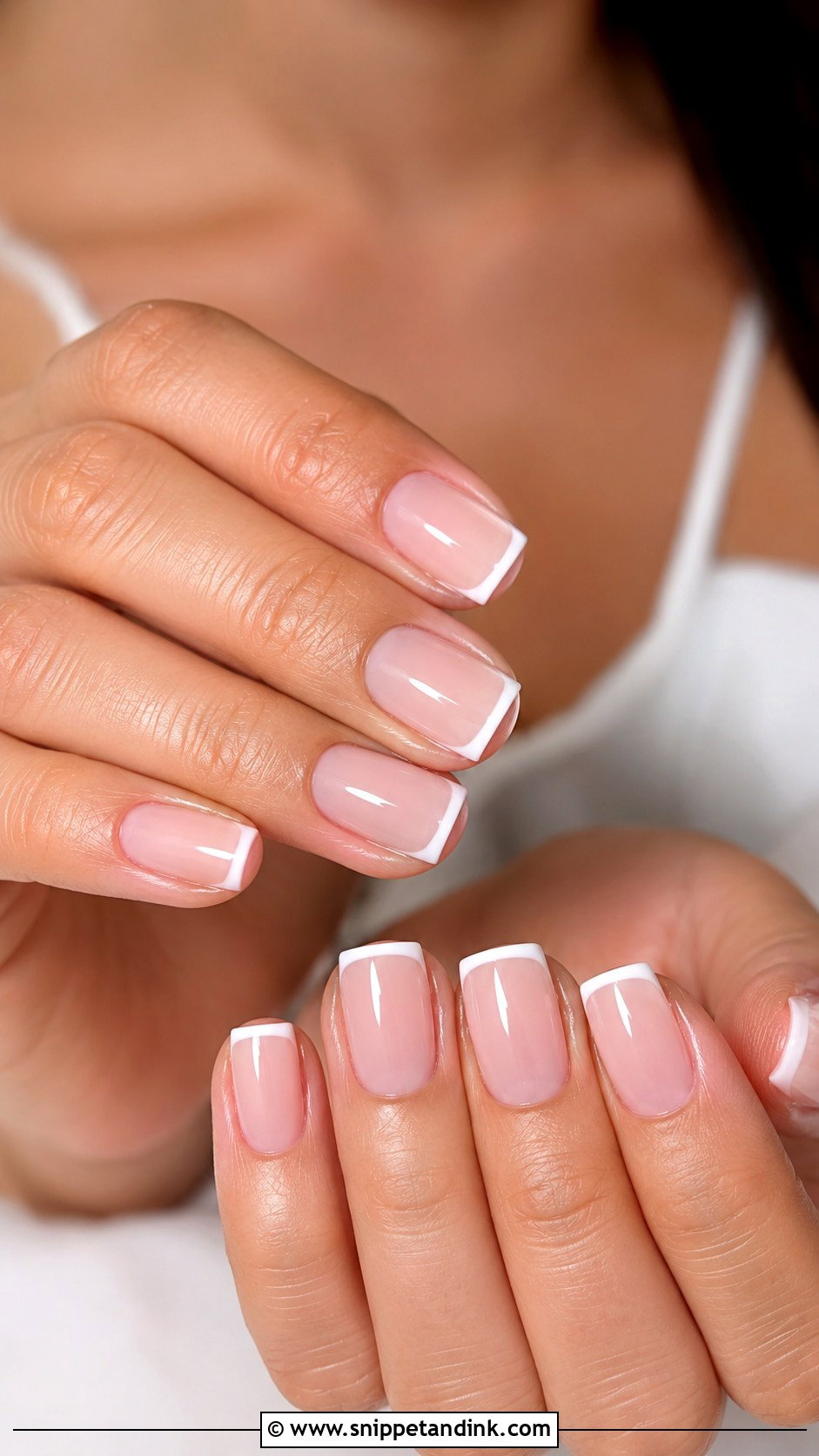
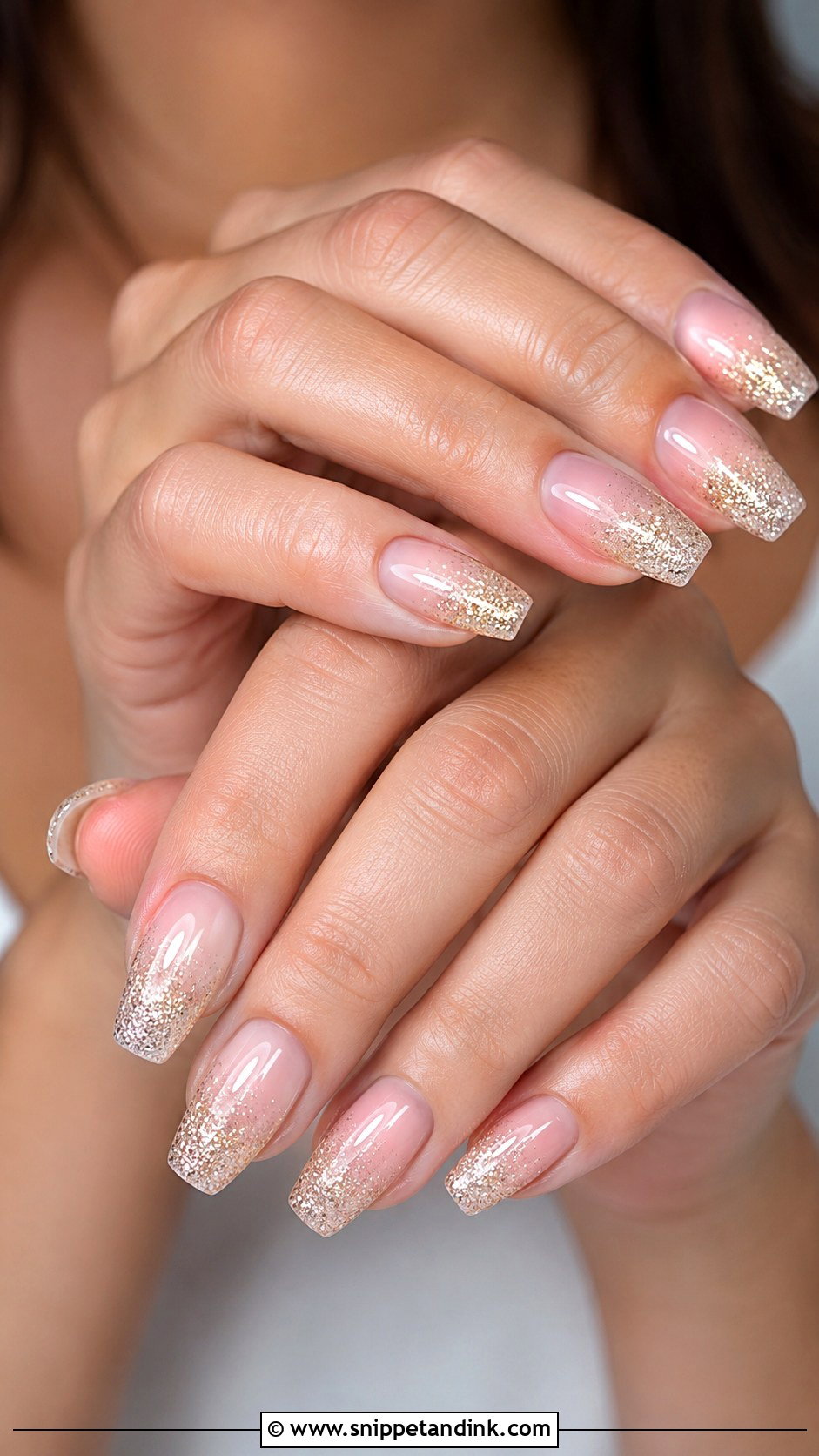
Glitter ombre puts sparkle exactly where you want it. The shimmer fades up from the tip, or down from the cuticle, over a sheer pink, nude or milky base, so most of the nail stays soft. Fine silver, champagne, rose gold and pearl glitters read as light; chunky glitter reads as a disco ball. Glitter leaves a gritty surface, so I add an extra layer of top coat to bury it, otherwise it can snag tulle and tights. Almond, oval and coffin all carry it.
18. Spring Wedding Pearl Accent Nails
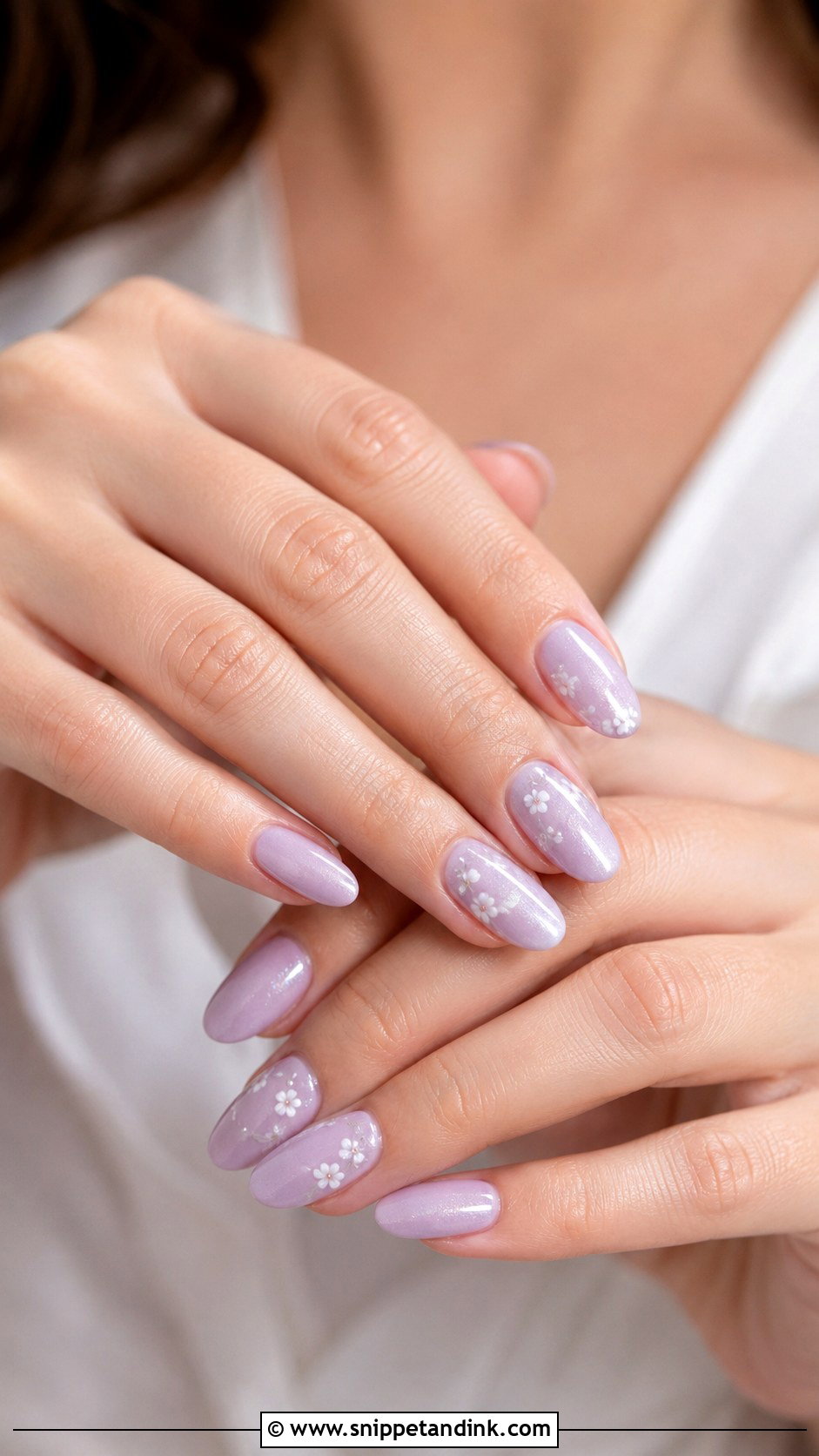
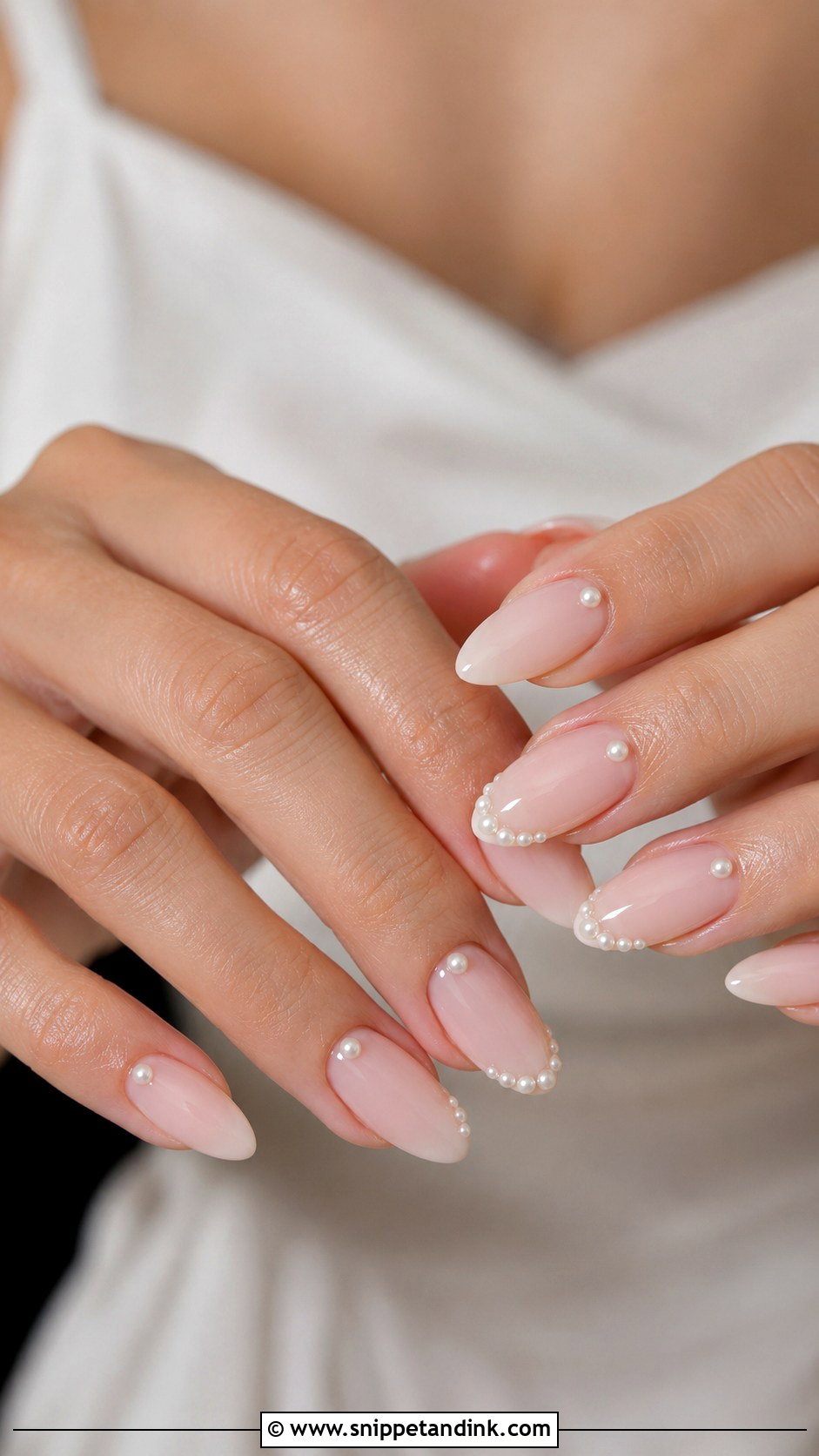
Pearls look bridal only when they’re small. I set micro pearls in a dab of gel at the cuticle, along the smile line of a French, or on one or two accent nails, over a sheer pink, nude or milky white base. Big flat-backed pearls lift at the edges, catch on hair and veils, and are usually the first thing to pop off before the reception ends. Pair them with florals, lace or soft chrome if you like, but leave the other nails plain. They’re a natural match for pearl jewelry or a beaded gown.
19. Spring Wedding Pressed Flower Nails
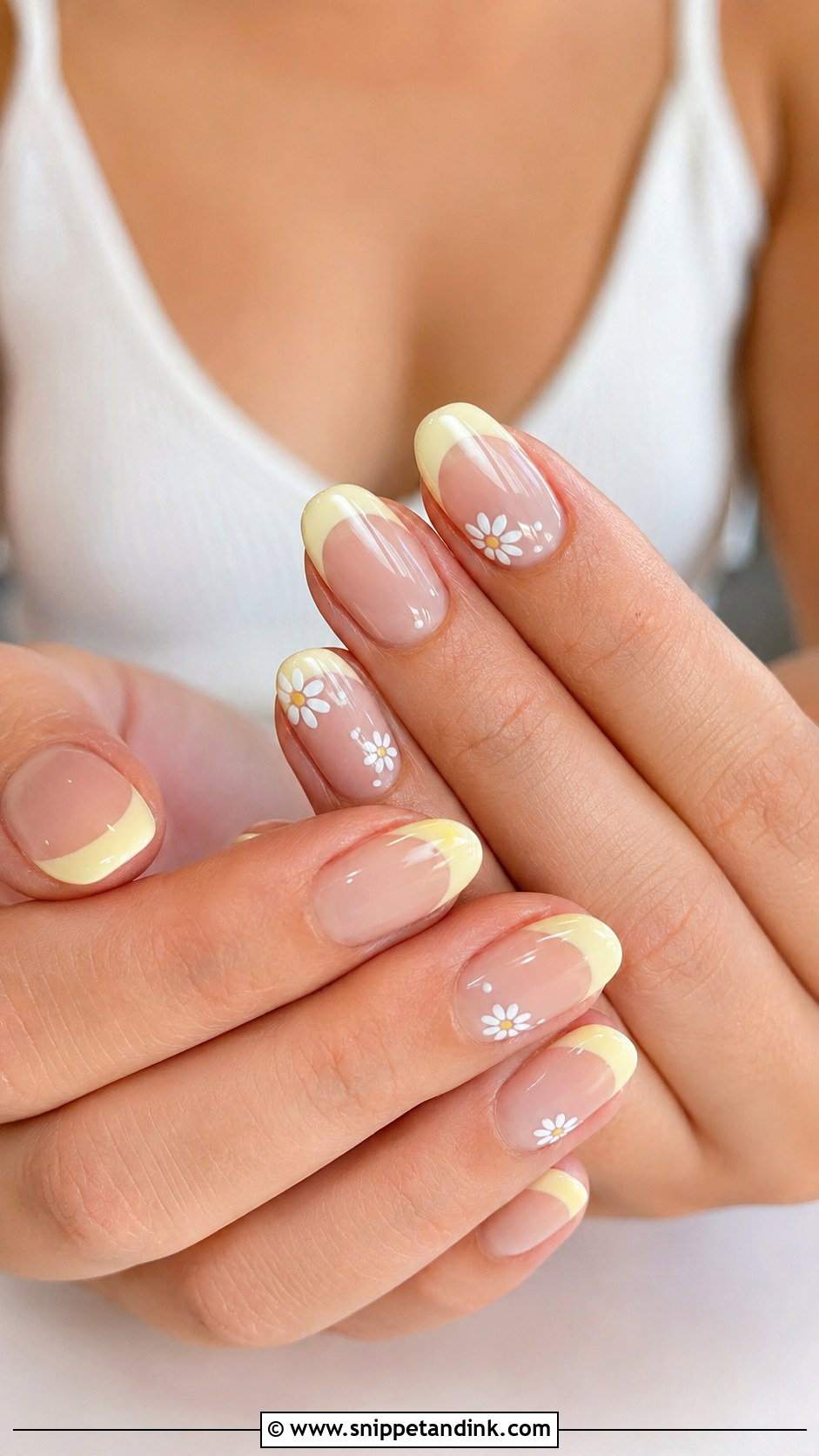
These are real dried petals sealed into the gel, usually over a clear, nude or milky base, in pale pink, white, lavender or yellow. Because petals add thickness, I lay them on a thin layer of builder and then encapsulate them in clear gel until the surface is level. A flower that isn’t fully sealed can lift at its edge or discolor. Clear extensions, almond and oval give the petals room. Scatter a few small pieces rather than covering the nail, which keeps the set light enough for a garden or wildflower wedding.
20. Spring Wedding White Chrome Nails
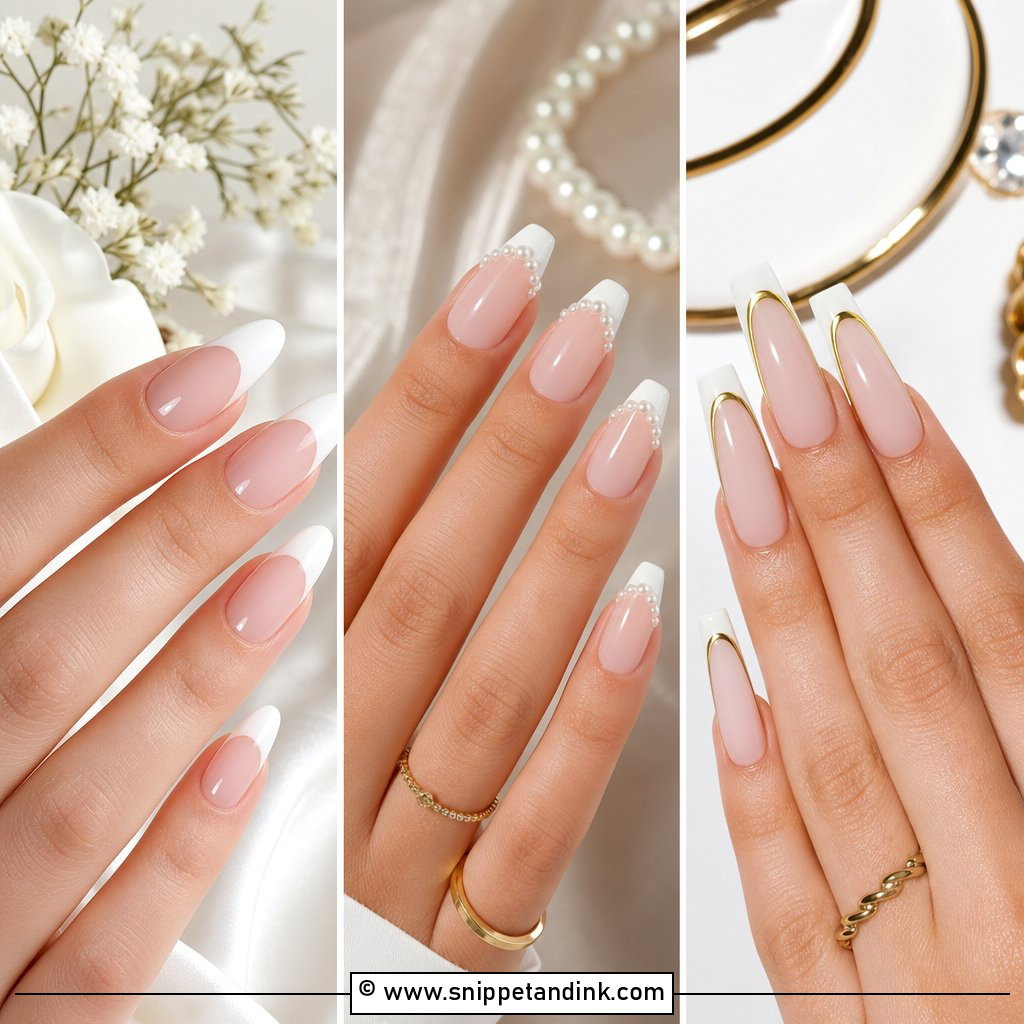
White chrome is the modern take on an all-white manicure. I build a soft white or milky ivory base and buff a fine chrome powder over it for a smooth, pearly reflection, nothing like a mirror-metal nail. It suits minimalist gowns, satin and simple jewelry, and almond, oval and square all work. For spring I keep the base a little sheer. A fully opaque white with chrome on top can look heavy, almost plastic, in close shots.
Pollen, Sanitizer and a Snapped Nail on the Morning
A spring set has a few enemies that winter manicures never meet. Planning for them is mostly about timing and a small kit.
When to sit in my chair
For gel or builder gel, I like the final appointment one to three days before the wedding. That’s close enough that no regrowth shows at the cuticle, and far enough out that a lifted corner or chip reveals itself while there’s still time to fix it. Regular polish should be done the day before at the earliest, and even then it can smudge while you dress. If you want a trial, book it four to six weeks out so you can live with the shape and length for a week or two.
Flowers, grass and DIY
Lily pollen and some plant sap stain pale manicures, and milky white shows it first. Wear gloves if you’re arranging your own flowers or tying favors, and keep a non-acetone wipe in the emergency bag. Hand sanitizer dries cuticles fast too, so a swipe of cuticle oil morning and night in the final week keeps them smooth for close-up ring photos.
If one breaks
Ask your tech for a spare tip in your size and a mini bottle of the exact base shade. A cracked extension can be glued and filed in minutes, and the matching color covers a chip far better than clear top coat.
One Sheer Base, One Spring Detail
Most of these sets come down to the same formula: a sheer base that matches your skin, plus one spring detail. The classics, French, milky white, blush and nude, are the safest place to start, and pastel tips, pearl chrome, pressed flowers or lace bring in the season. Take your ring and a fabric swatch from the dress to a trial, look at the set by a window as well as under the salon lamp, and give it a few days of normal wear. If it still feels like your own hands while you’re doing up buttons and holding a coffee, you’ve found it.
You'll Like These Ideas:


Leave a Reply