
A bridesmaid manicure has an odd job. It has to survive pinning a bustle, gripping a bouquet for an hour and a dozen hugs, and it has to look right next to the bride’s hands in the ring shot without stealing it. That’s why I steer most bridal parties toward sheer pinks, milky whites, fine French tips, soft chrome and muted seasonal colors. Below are the sets I actually recommend, with notes on which shapes and nail lengths each one suits, and where each tends to fail. Dress color, venue and how matched the group wants to be will narrow it down quickly.
Which Finish Lasts From the Rehearsal Dinner to the Day After
Before choosing a color, decide what the manicure is made of, because that decides when you book it and how it ages. Regular polish looks fine for about two or three days before the tips start to wear, so it needs to be done the day before the wedding. Gel polish cured under a lamp is my default for bridal parties: it can go on two or three days ahead and stay glossy well past the wedding.
Builder gel is thicker and adds strength, so it’s what I’d recommend for anyone with soft or peeling nails, or anyone who wants a little extra length without extensions. Press-ons are a reasonable plan B for a bridesmaid who lives far away, but they need a proper fit at the sidewalls. One that’s too narrow pops off; one that’s too wide shows a gap that the camera finds instantly.
A rough timeline I give bridal parties
- Three to four weeks out: stop cutting cuticles and start using cuticle oil every night.
- One to two weeks out: book the group slot, confirm the design and send the salon a dress swatch photo taken in daylight.
- Two to three days out: gel or builder appointment.
- The night before: hand cream and oil, then gloves if you can stand them.
- The morning: no chores that soak the hands, and save any self-tanner for well before the appointment.
1. Soft Pink Bridesmaid Nails
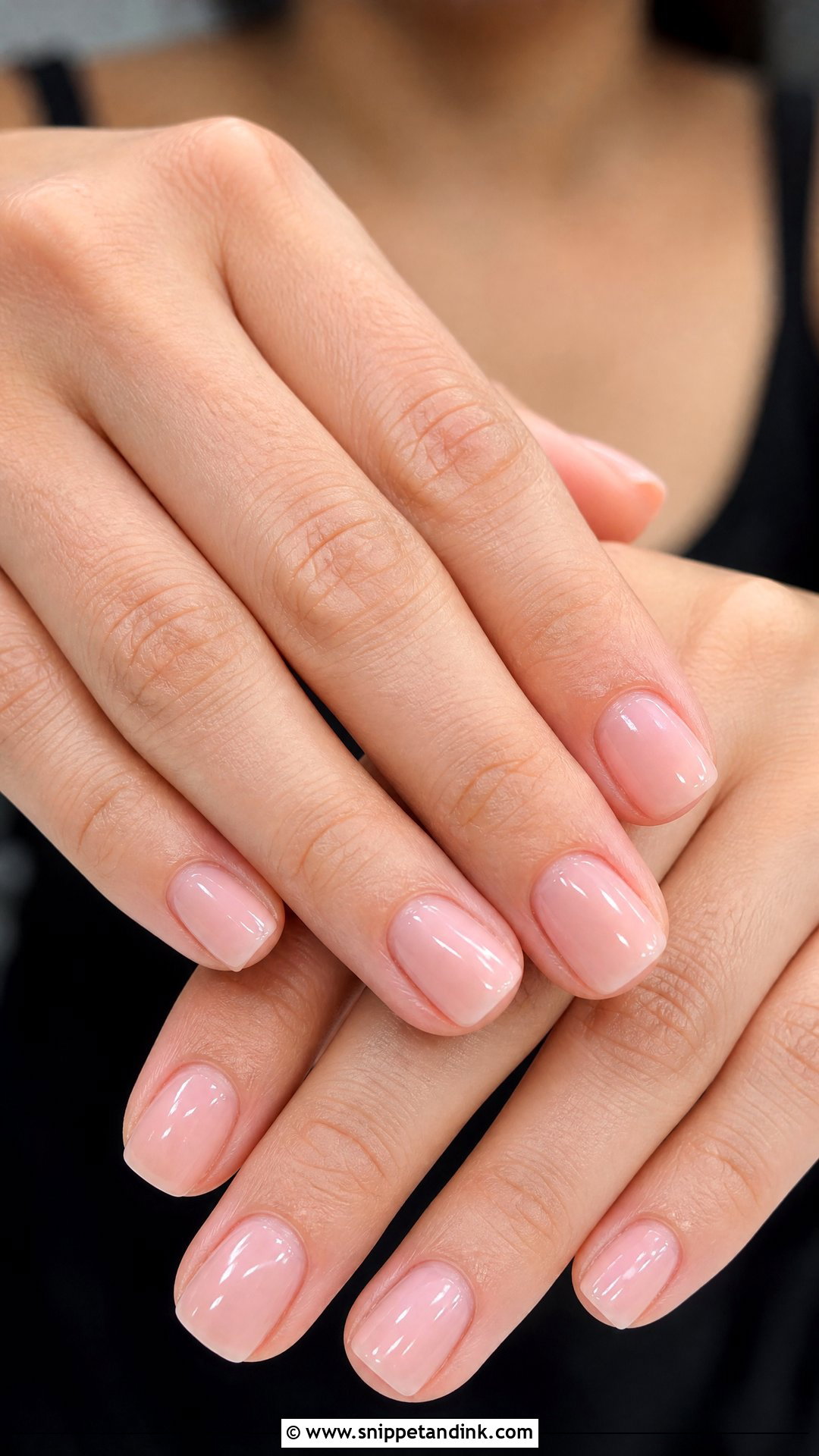
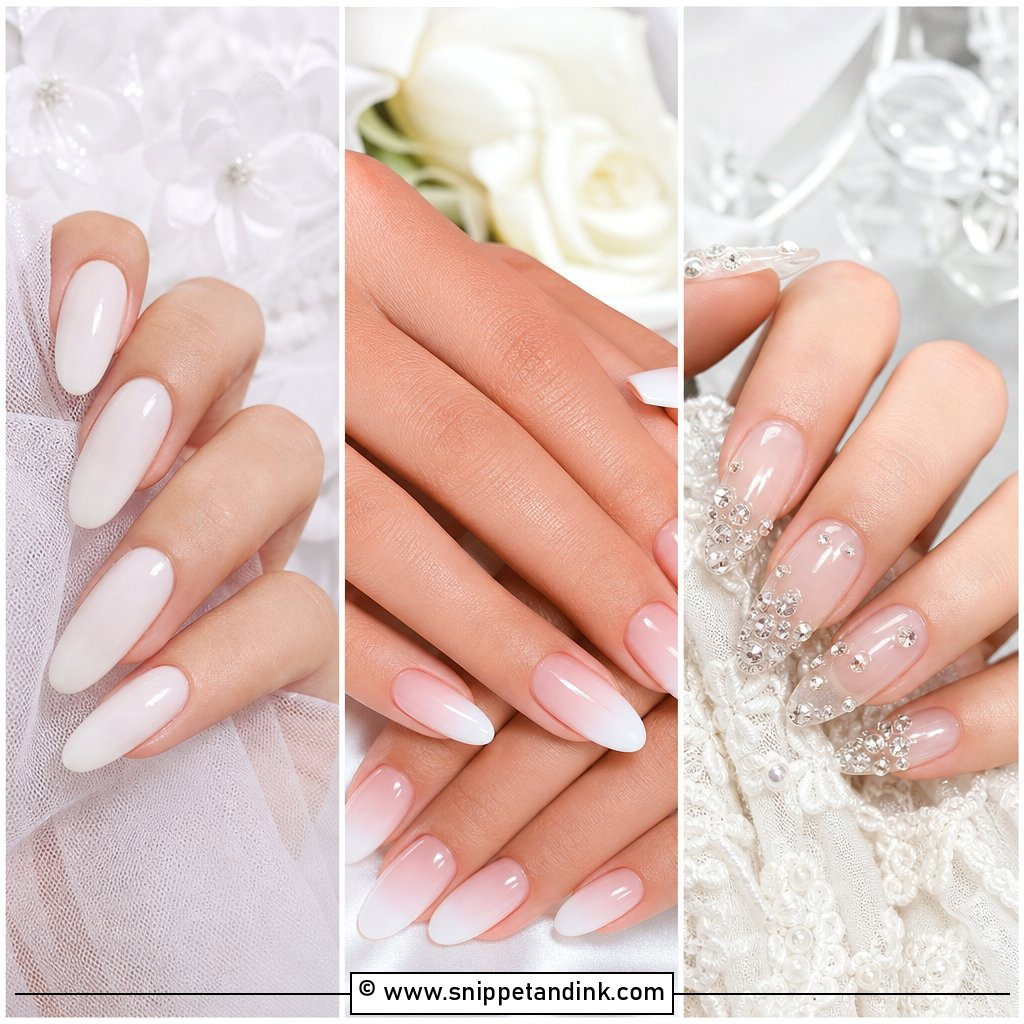
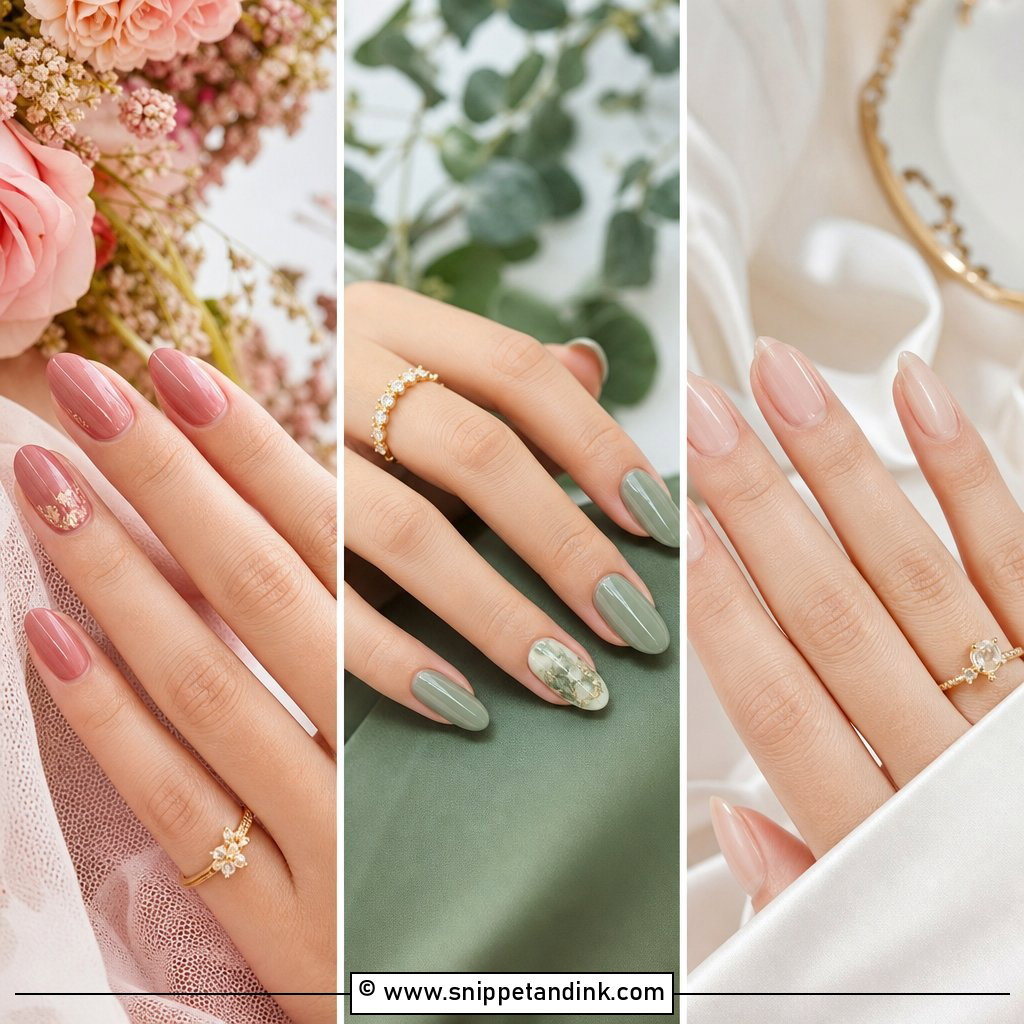
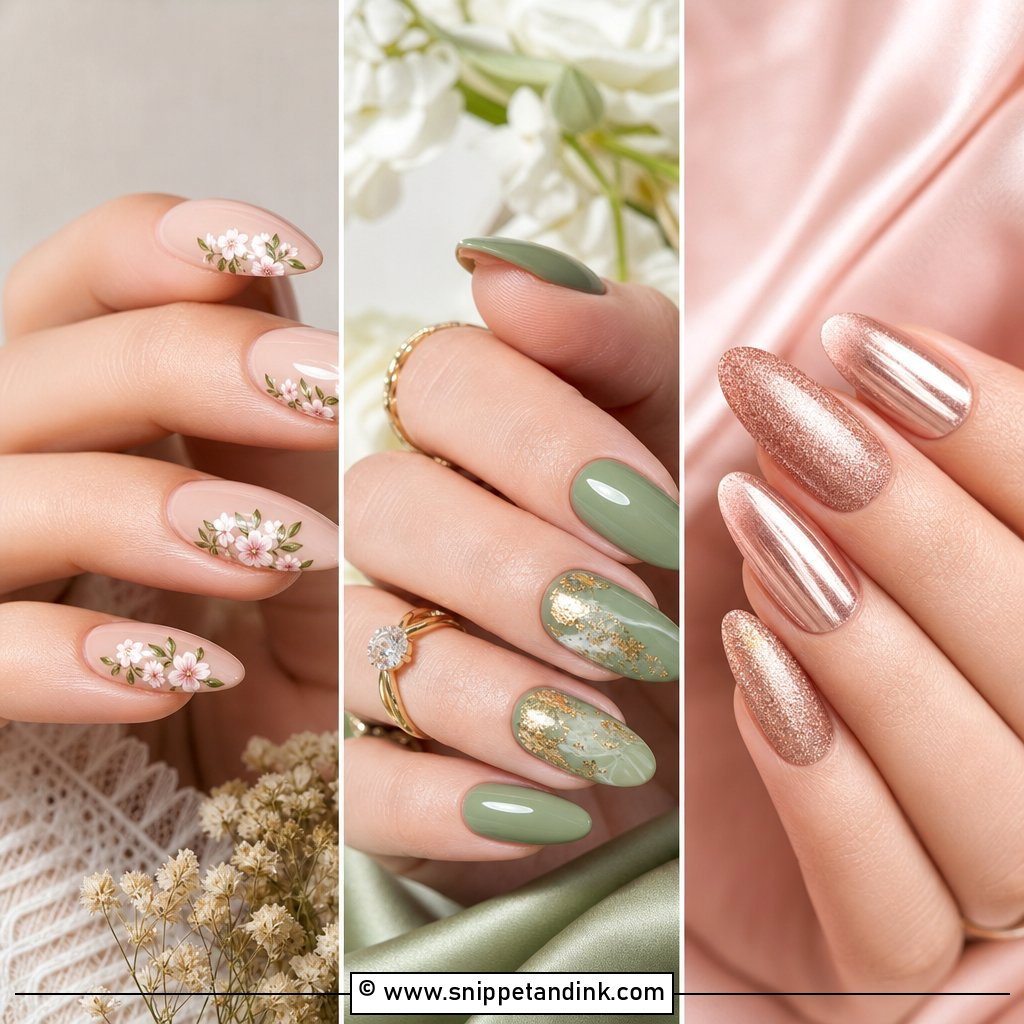
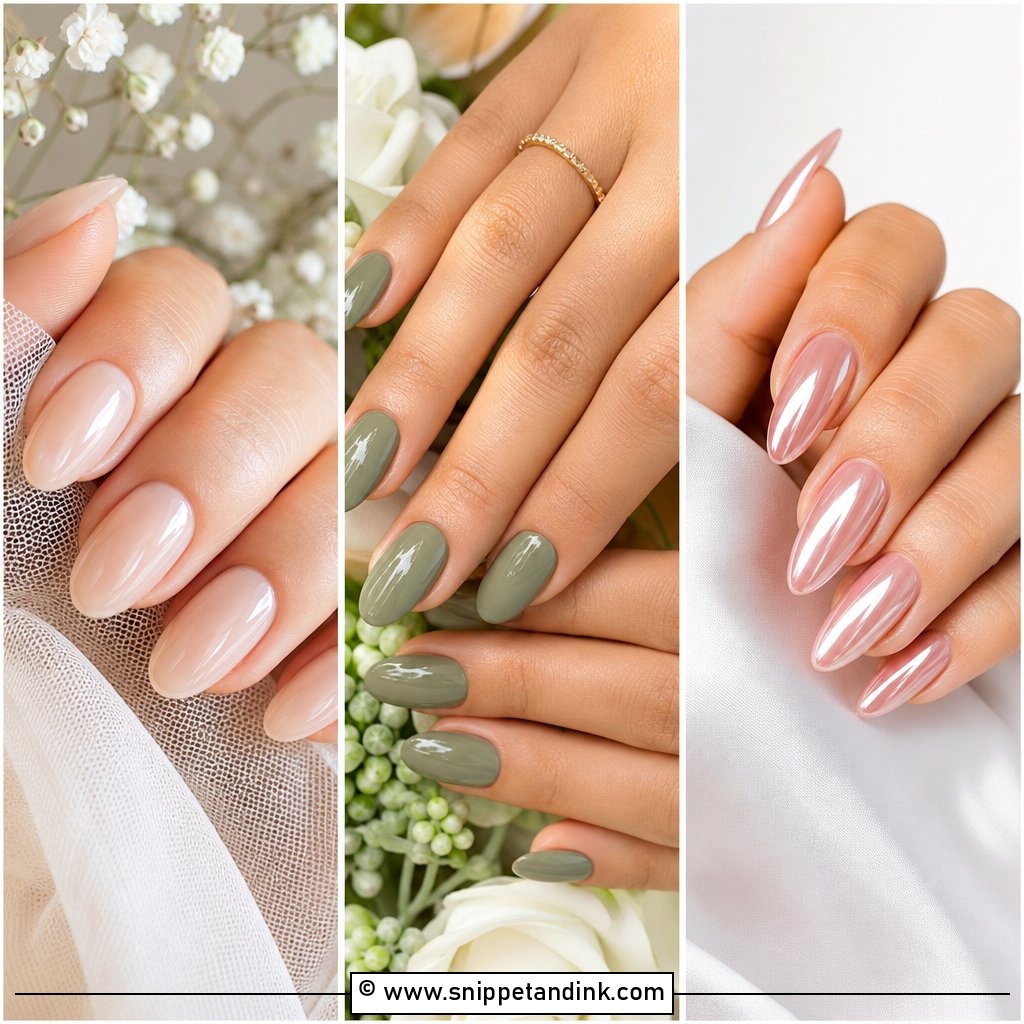
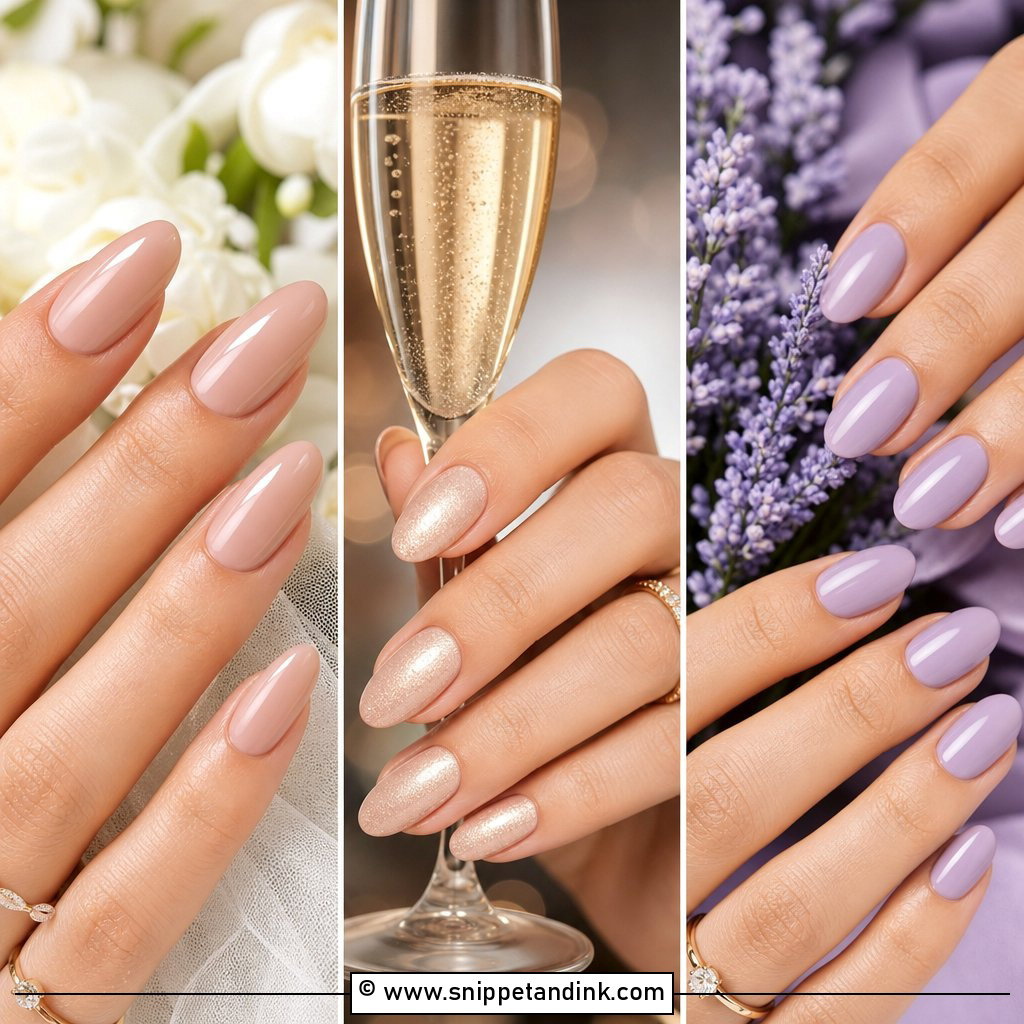
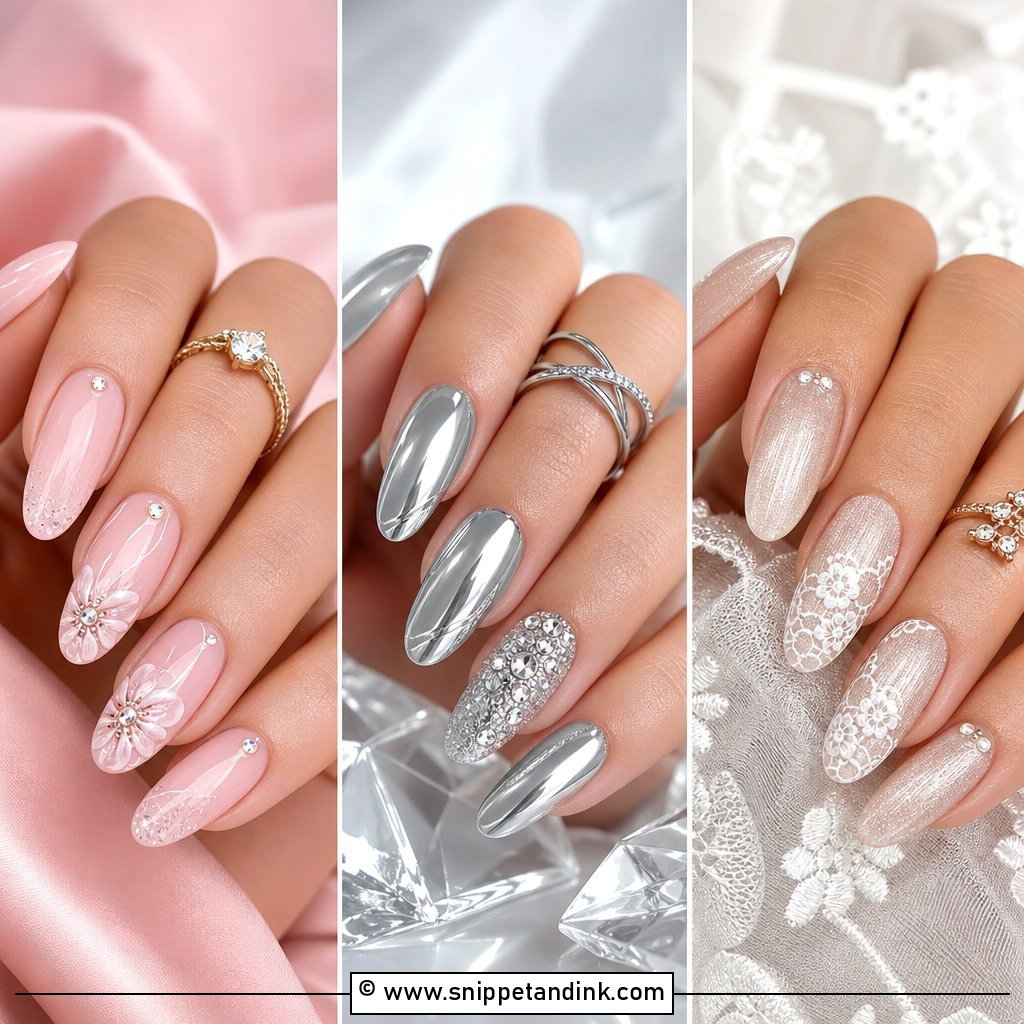
If a bride can’t decide, I start here. Soft pink bridesmaid nails sit quietly next to champagne, dusty blue, sage, lavender or mauve dresses. On short squoval nails I use a sheer pink; on almond or oval I go a shade deeper so the color doesn’t look washed out over the longer free edge. A semi-sheer builder gel is my favorite way to do it, because it levels ridges in the nail plate and the hands look healthy in close-ups. Finish glossy.
2. Nude Bridesmaid Nails
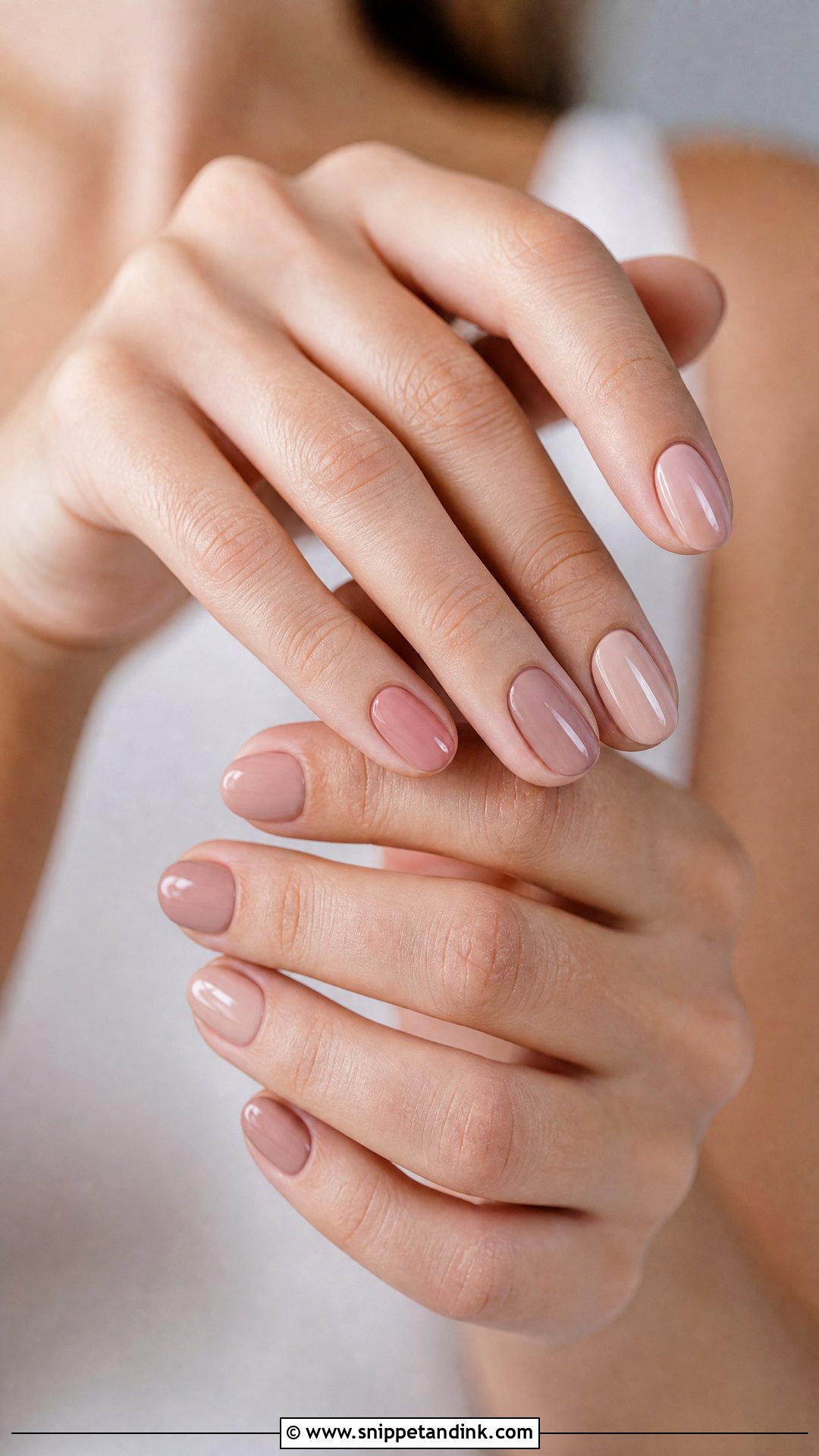
The mistake I see most with a nude manicure is one bottle for every bridesmaid. The same beige that looks clean on fair skin can turn chalky on a deep skin tone. I match each person instead: pink-beige or milky nude for fair skin, peach or rose beige for medium, and cocoa, toffee or warm brown for deep. Keep the shape simple. Glossy nudes hold up at formal and black-tie weddings, and they’re the easiest set to keep looking fresh if the wedding is several days after the appointment.
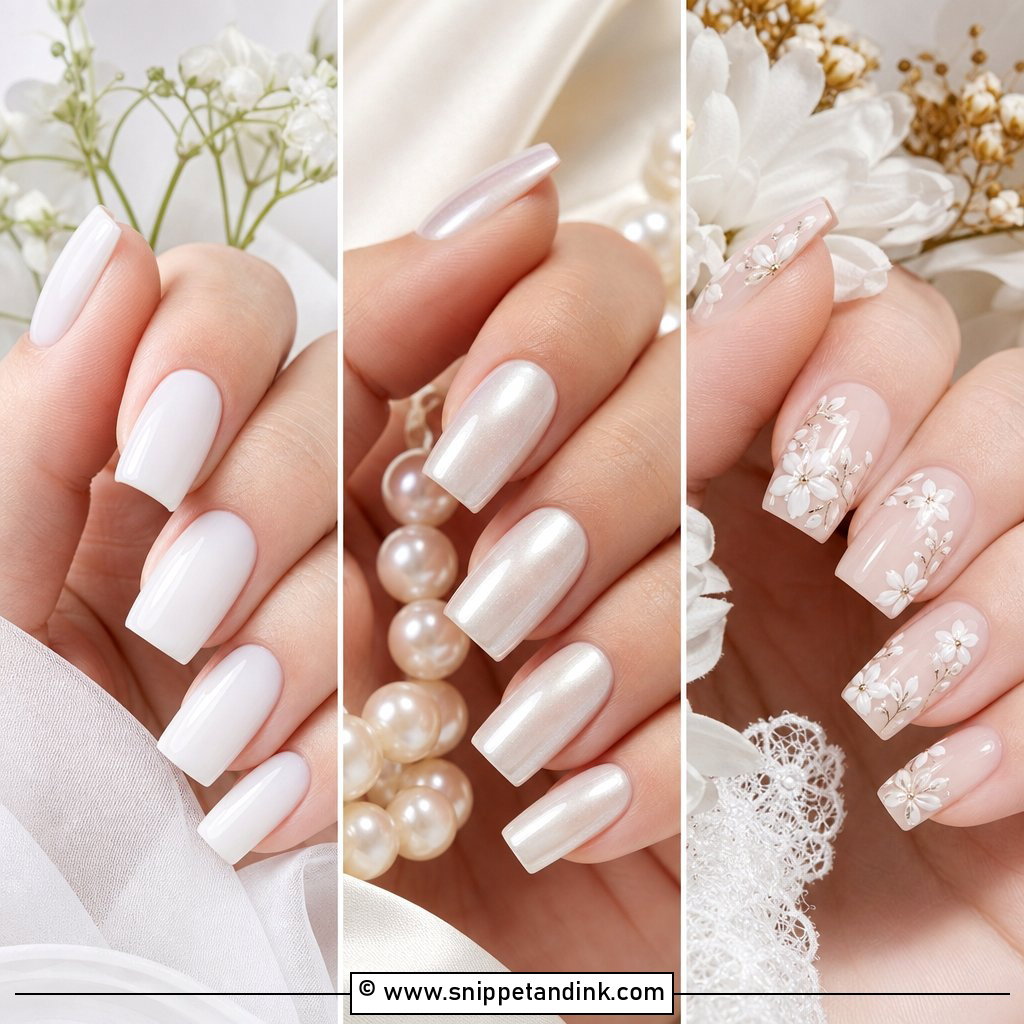
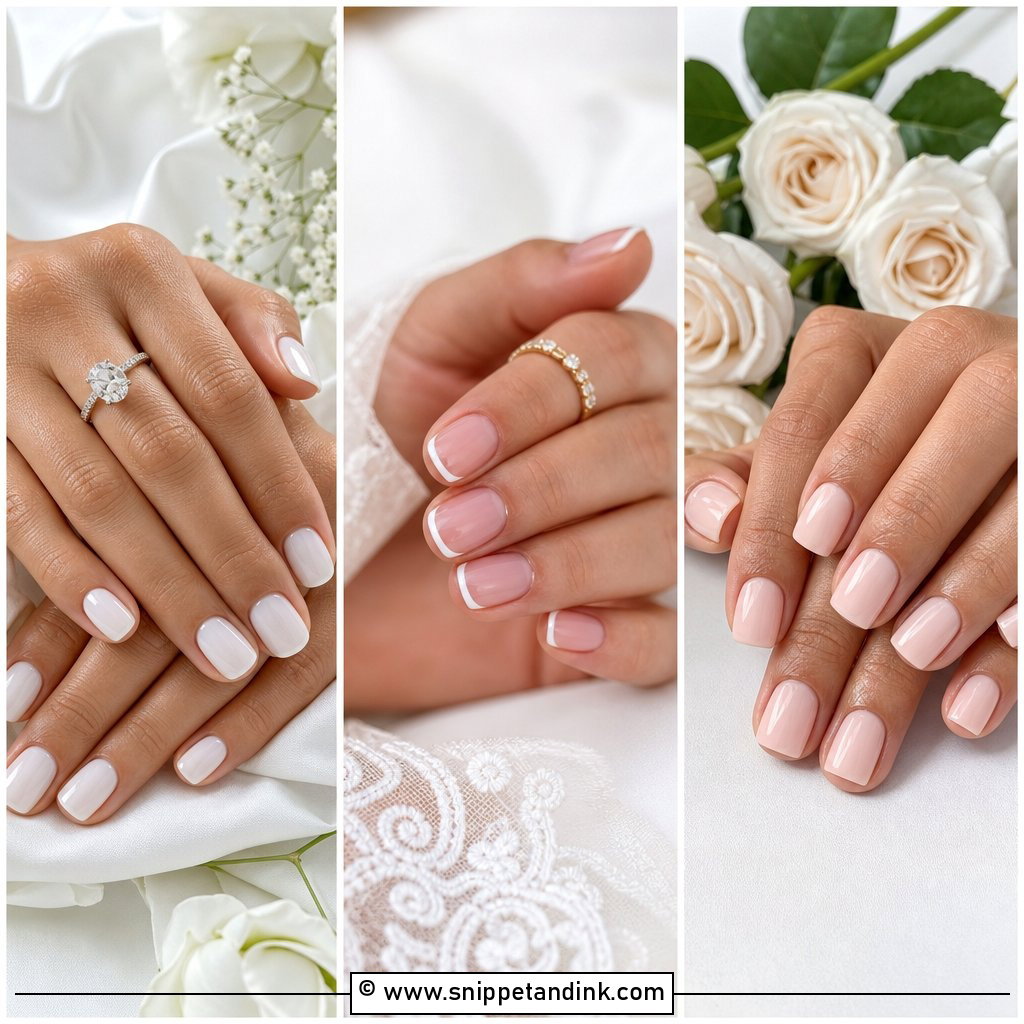
3. Milky White Bridesmaid Nails
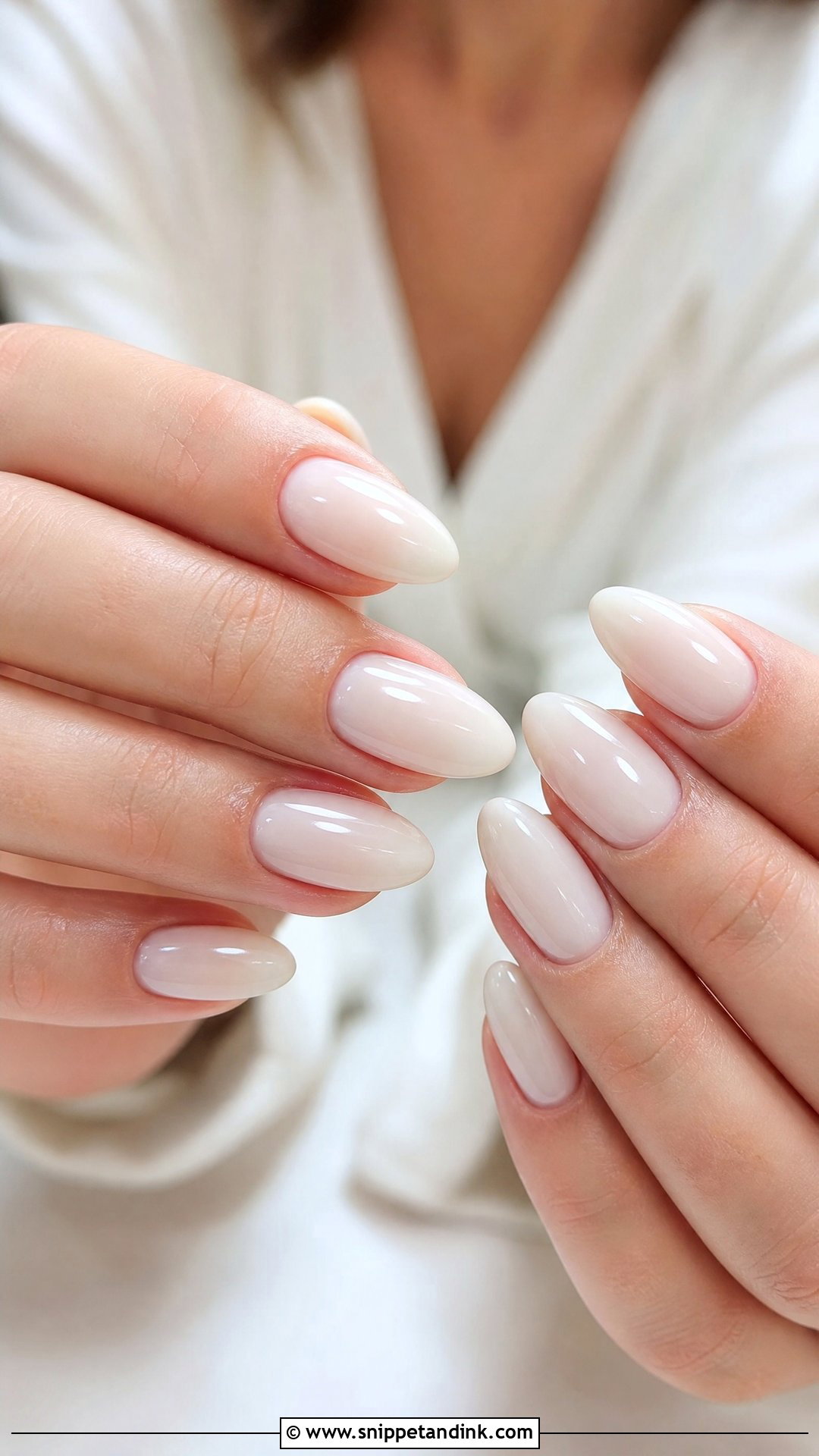
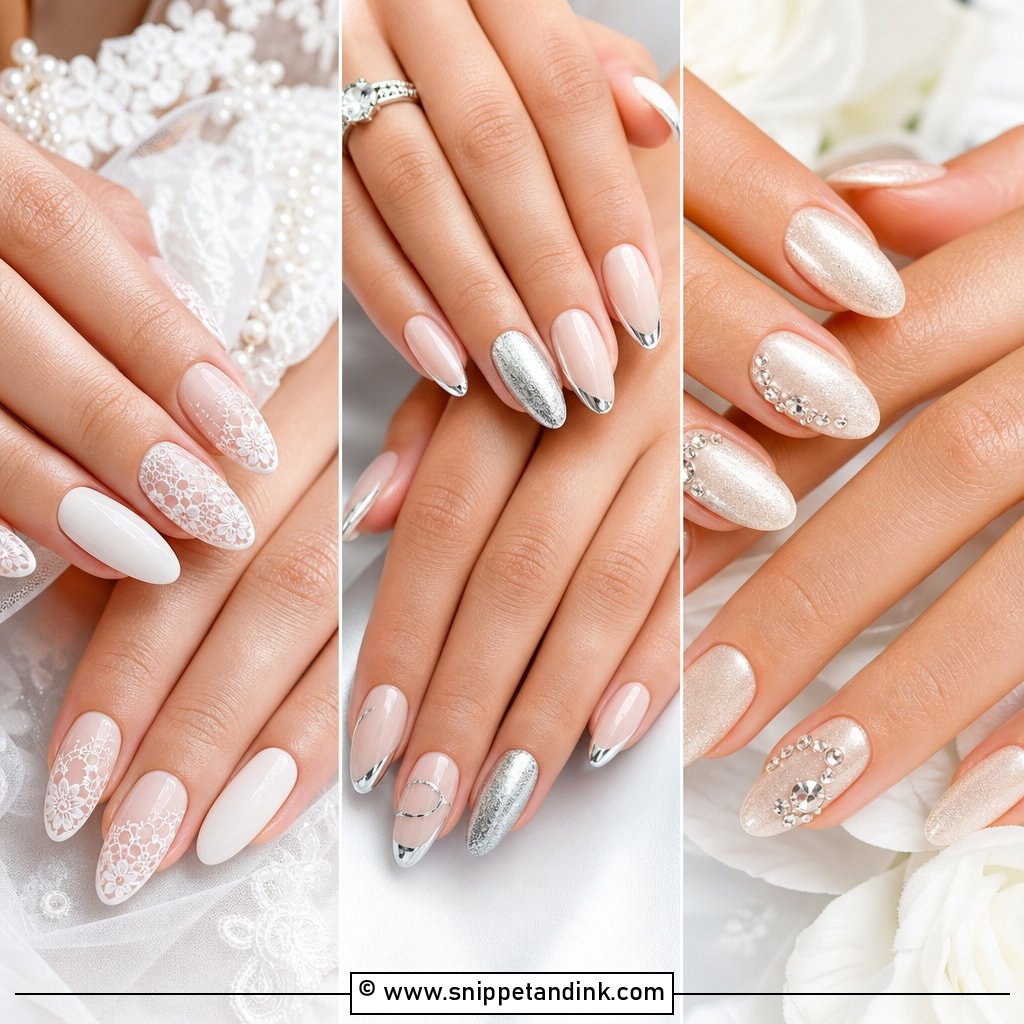
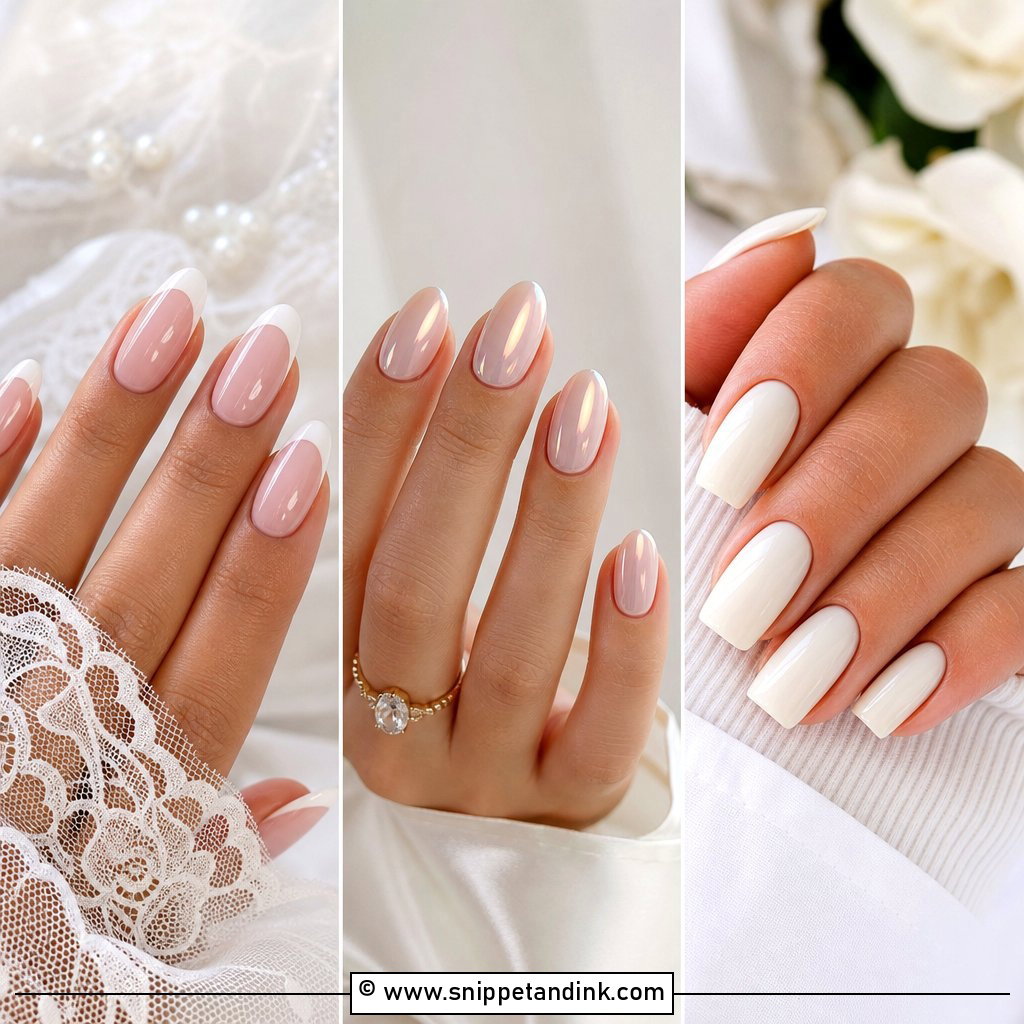
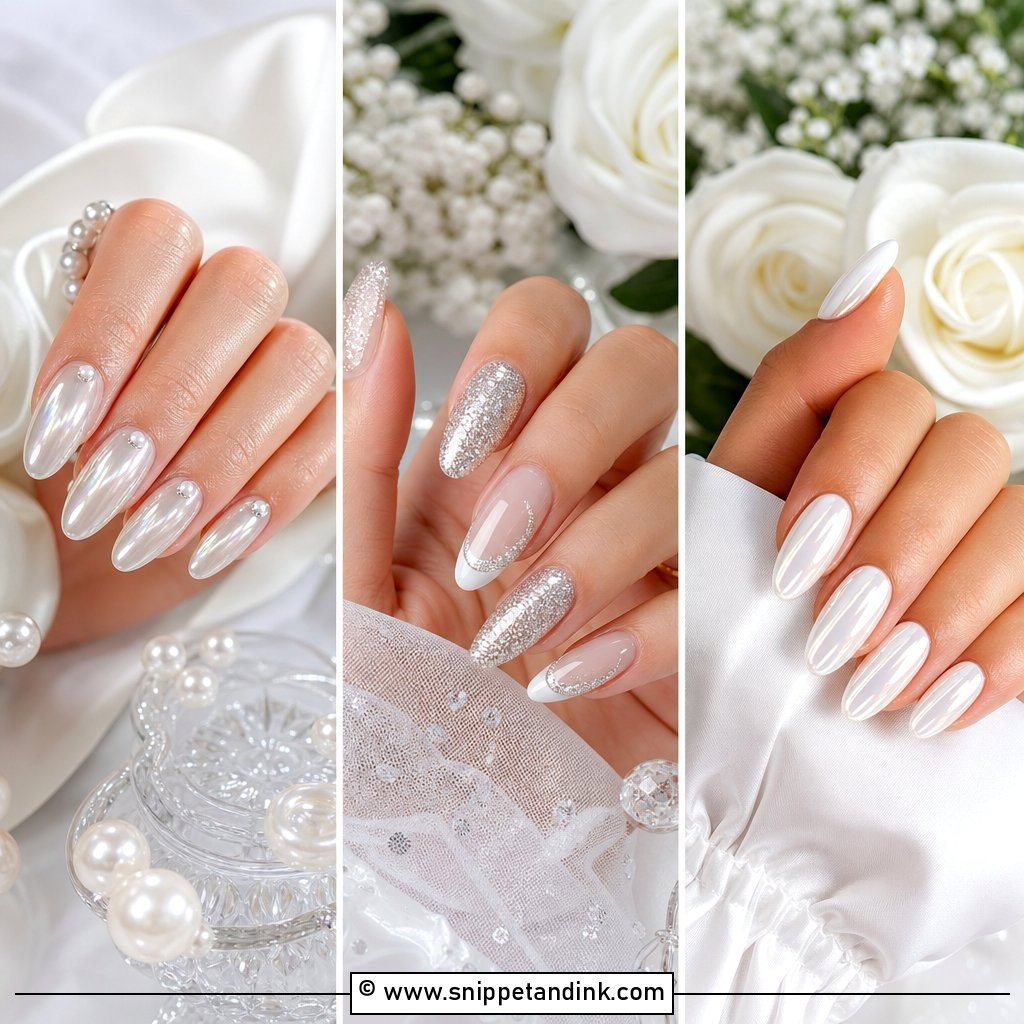
Milky white is softer than a solid white crème because a little of the natural nail shows through. That translucency is the whole point, so I build it in two or three thin layers rather than one thick coat, which would turn it opaque and slightly clinical. It sits well beside satin, pearls and neutral palettes. Short round nails look natural; almond looks more dressed. A glazed or fine shimmer topcoat brings it up to date.
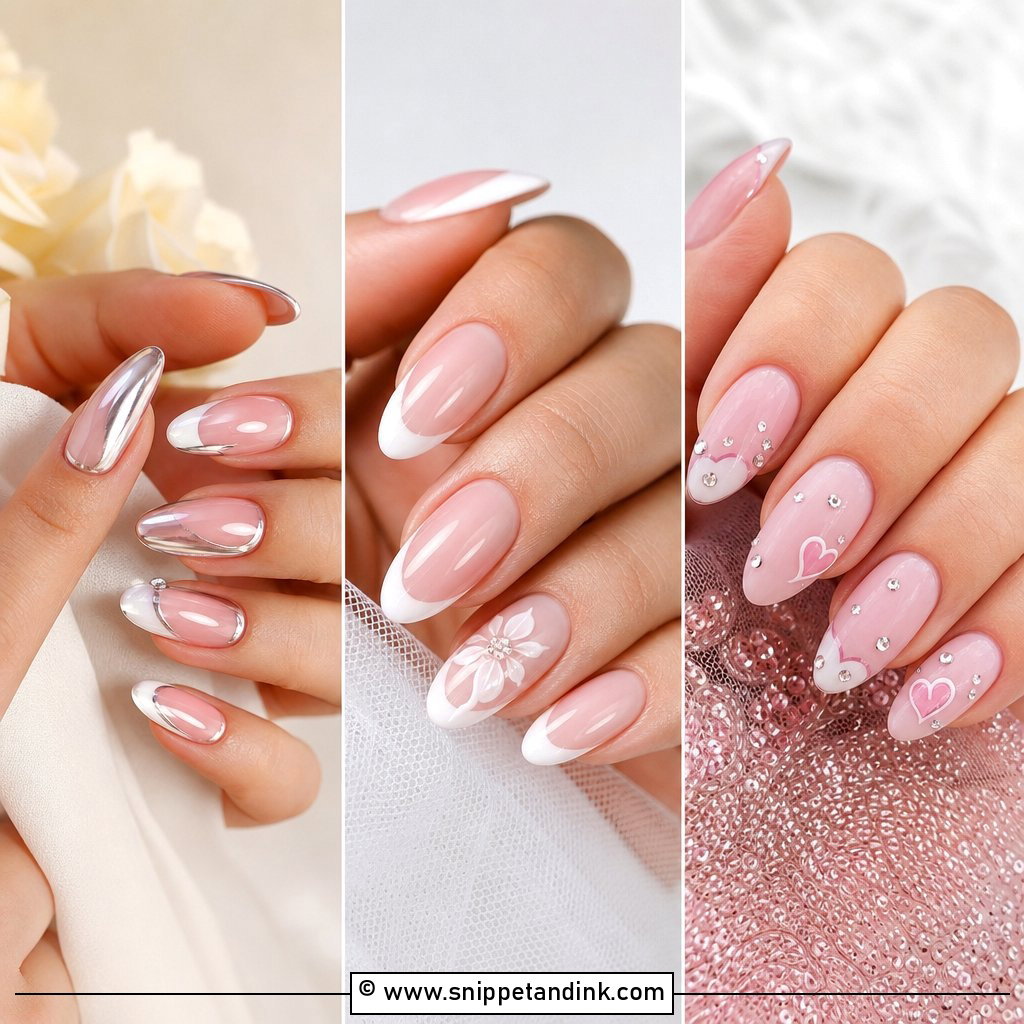
4. French Tip Bridesmaid Nails
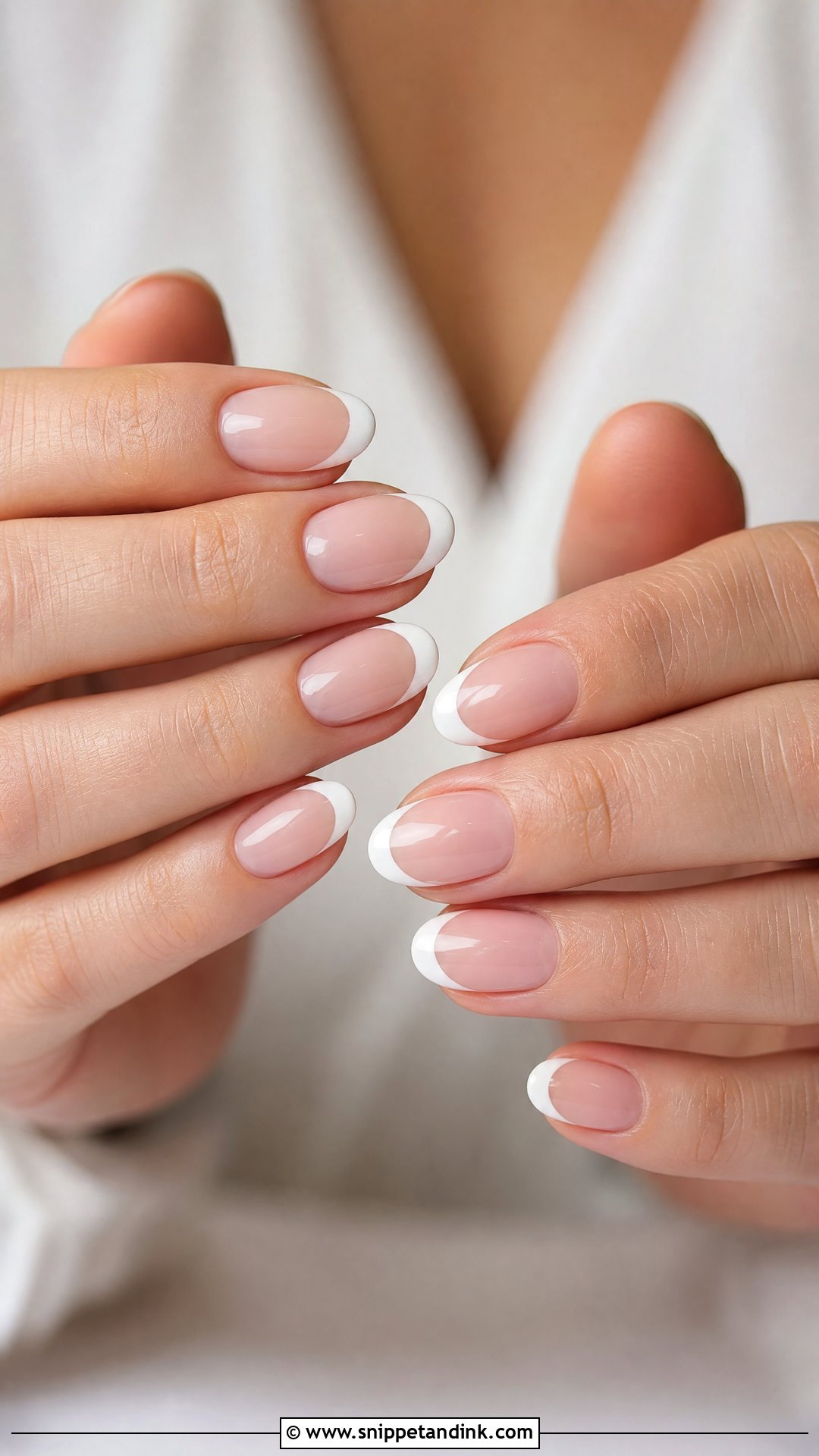
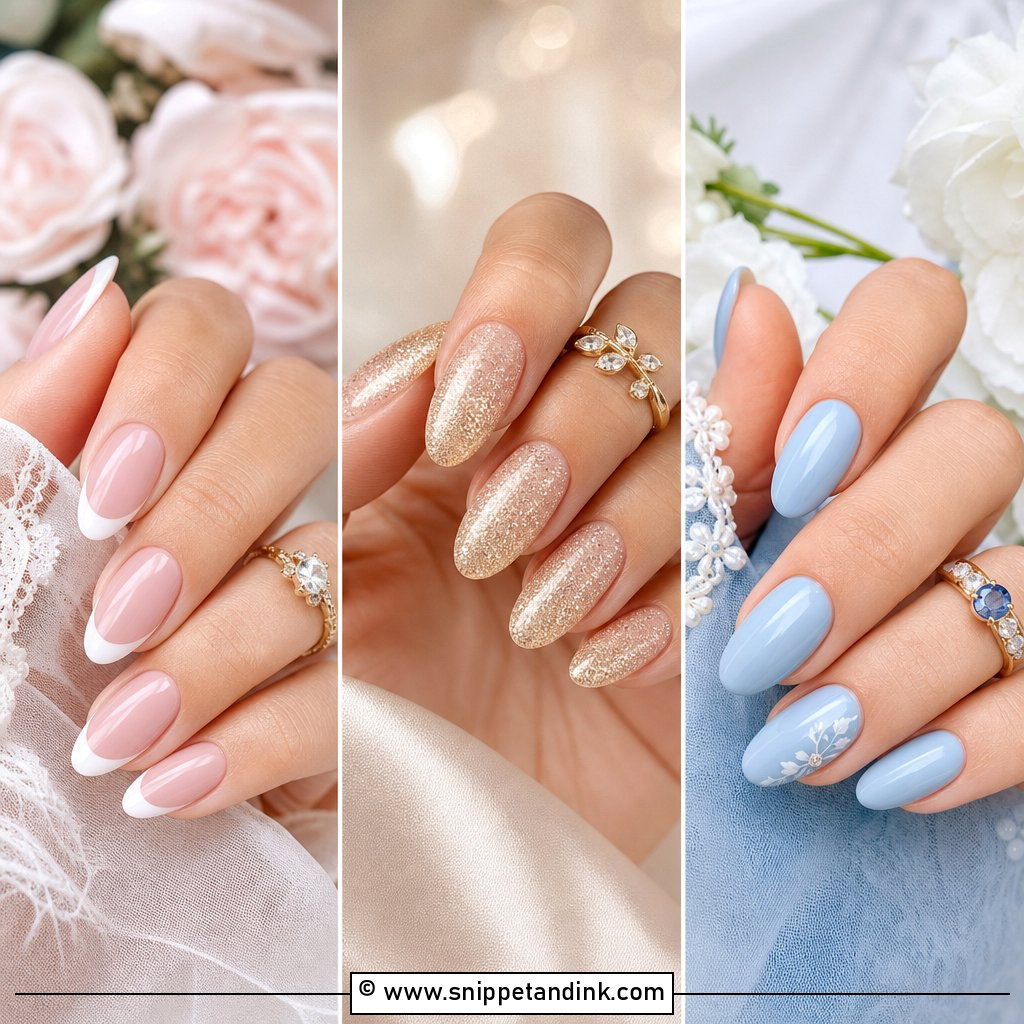
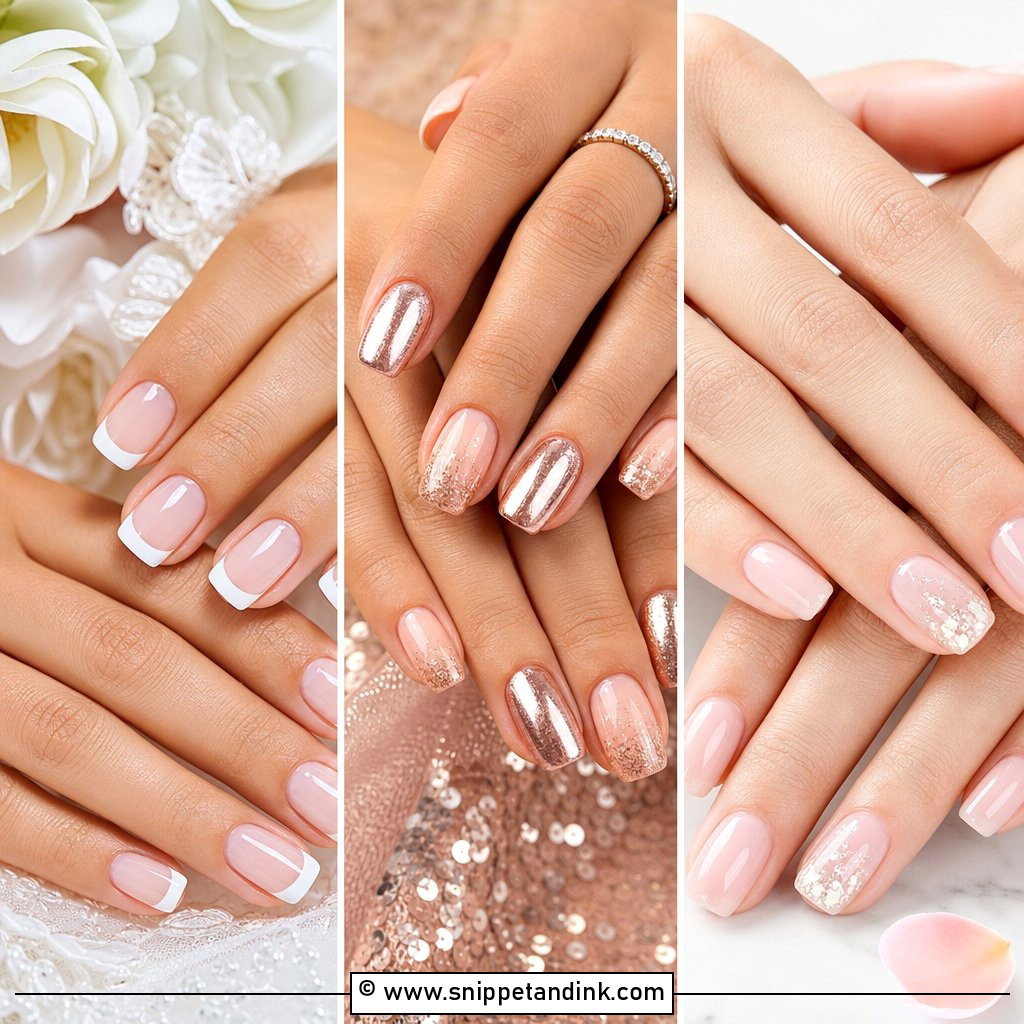
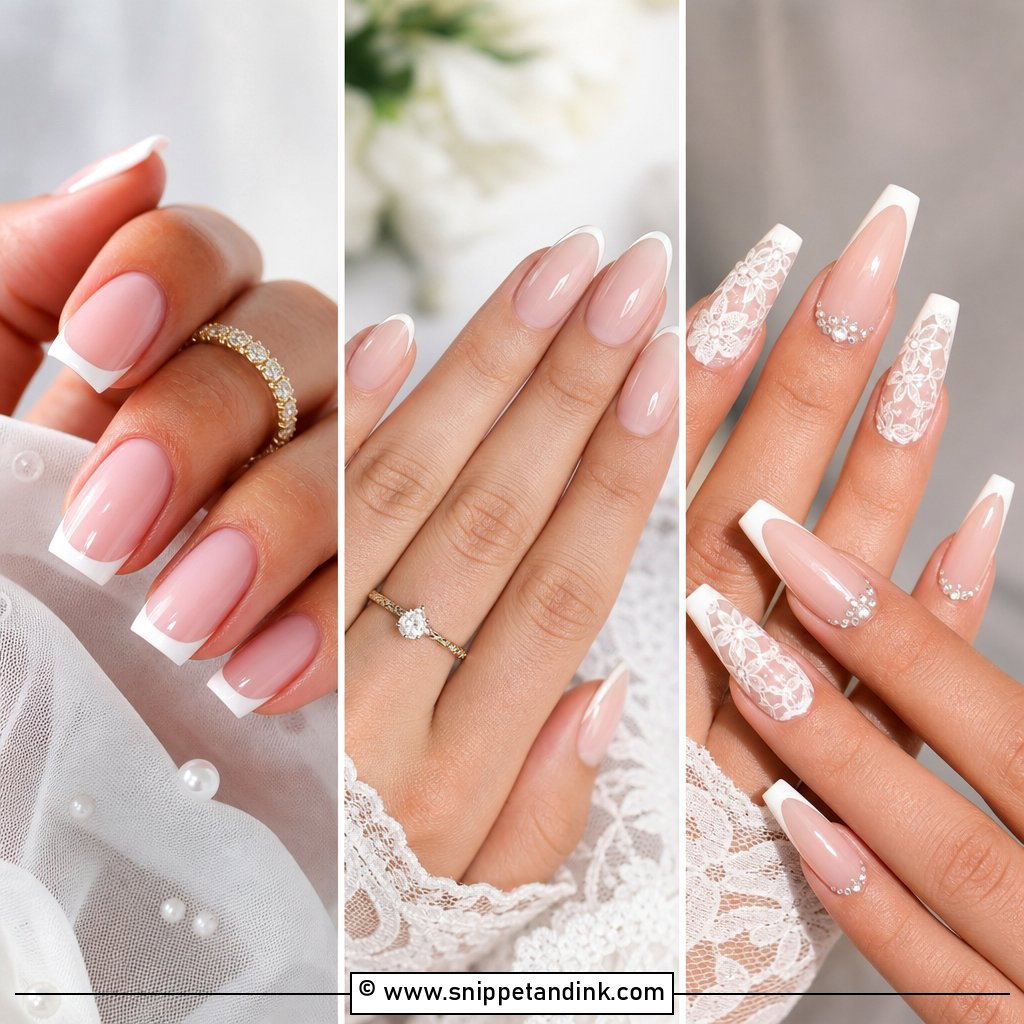
There’s a reason the French manicure keeps coming back to weddings: it goes with every dress color and every venue. A sheer pink base with a crisp white tip suits formal ceremonies. On short nails I’d ask for a thinner line, since a thick white tip on a short free edge makes the nail look stubby. Almond, oval and squoval all work, and it sits easily beside navy, black, blush, emerald or champagne. If the bride wants everyone matched but plain, this is the safest pick.
5. Micro French Bridesmaid Nails
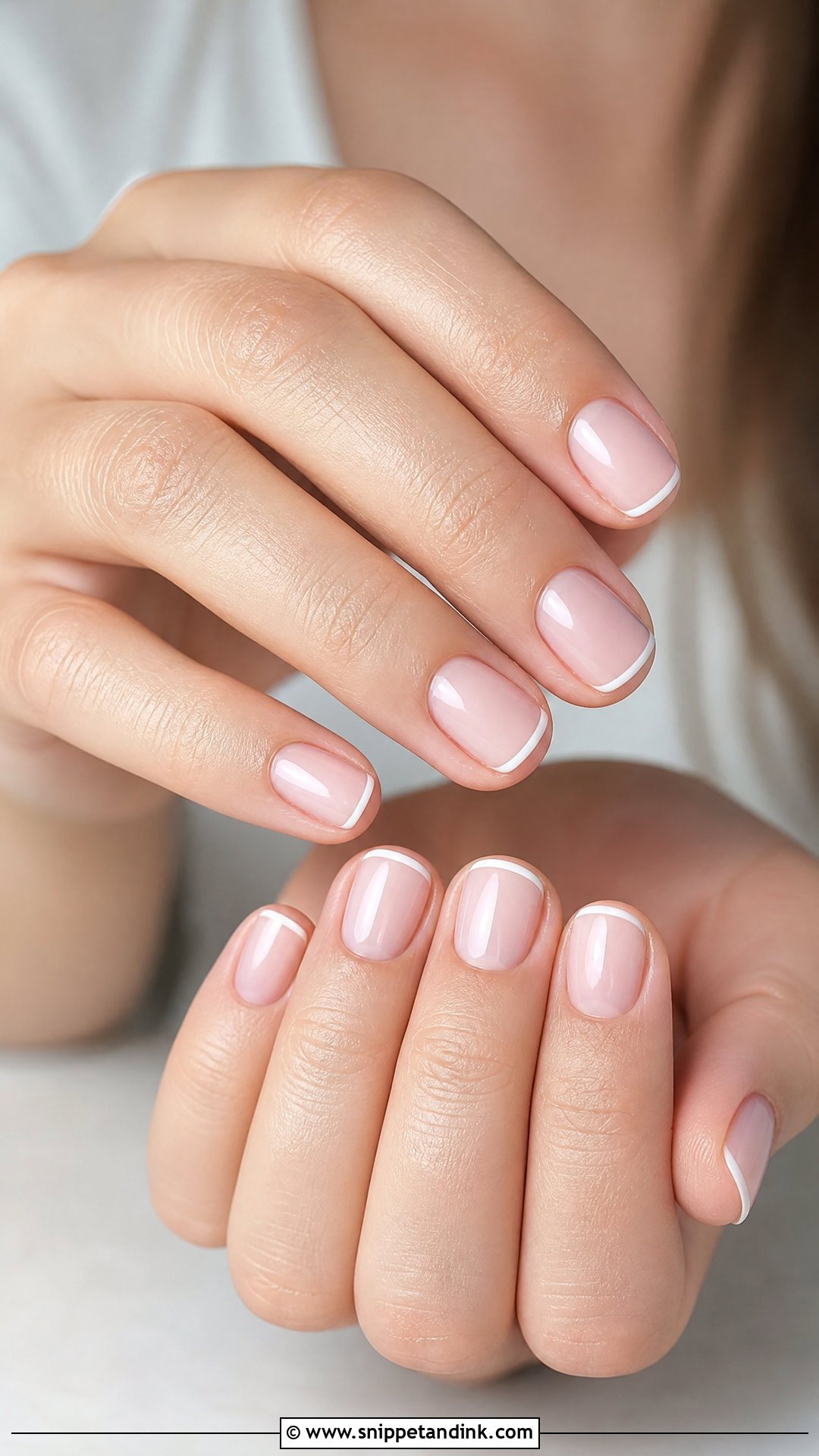
A micro French uses a hairline tip in white, ivory, nude or soft pink. Painting that line cleanly takes a steady hand and a long, thin liner brush, so it’s worth checking that your salon offers it rather than assuming. The thin tip makes the nail bed look longer, which helps on short nails. It reads as nail art up close but disappears at a distance, which is exactly what minimalist and black-tie bridal parties tend to want. Put it over a sheer nude or pink base.
6. Glazed Donut Bridesmaid Nails
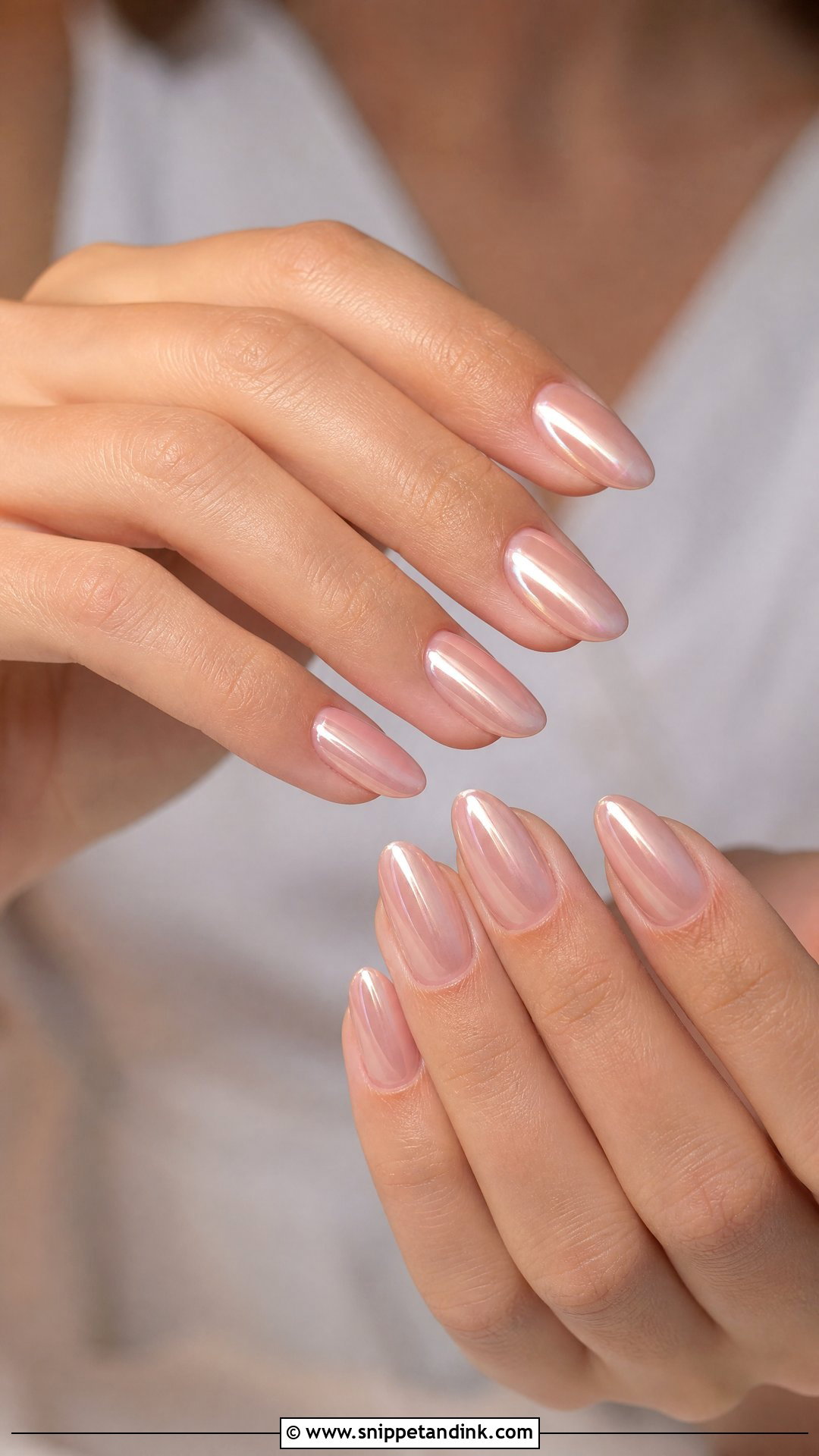
This one starts with a sheer pink, nude or milky white base, then I buff a pearly chrome powder over a no-wipe top layer so it bonds before sealing. The shine is soft, not mirror-like, and it catches light in bouquet shots. It works on almond, oval or short squoval nails. For a wedding I keep the chrome in pearl, champagne or pink tones, not icy silver. One honest note: chrome powder needs gel underneath, so this isn’t a look you can do with regular polish at home.
7. Pearl Bridesmaid Nails
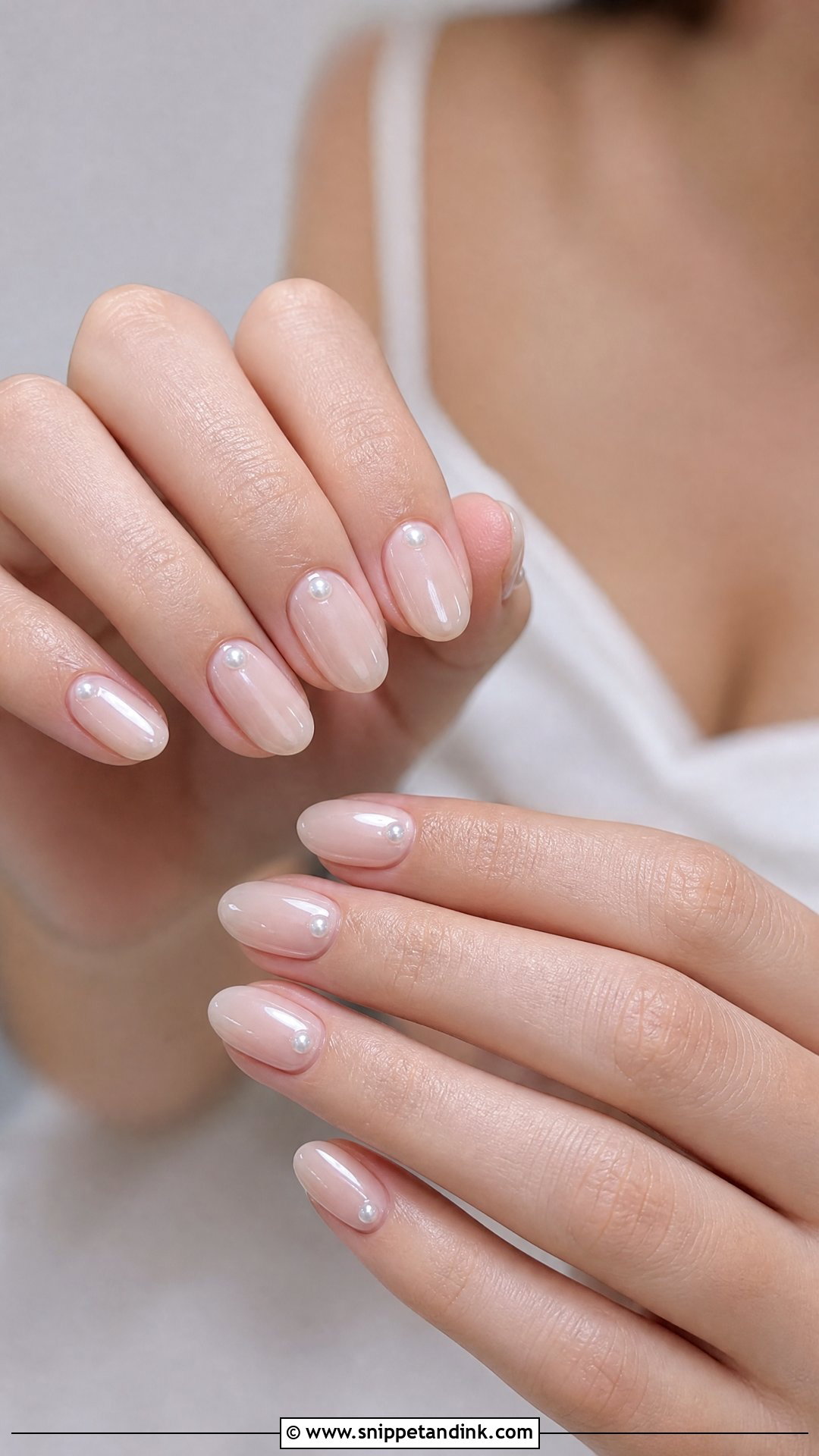
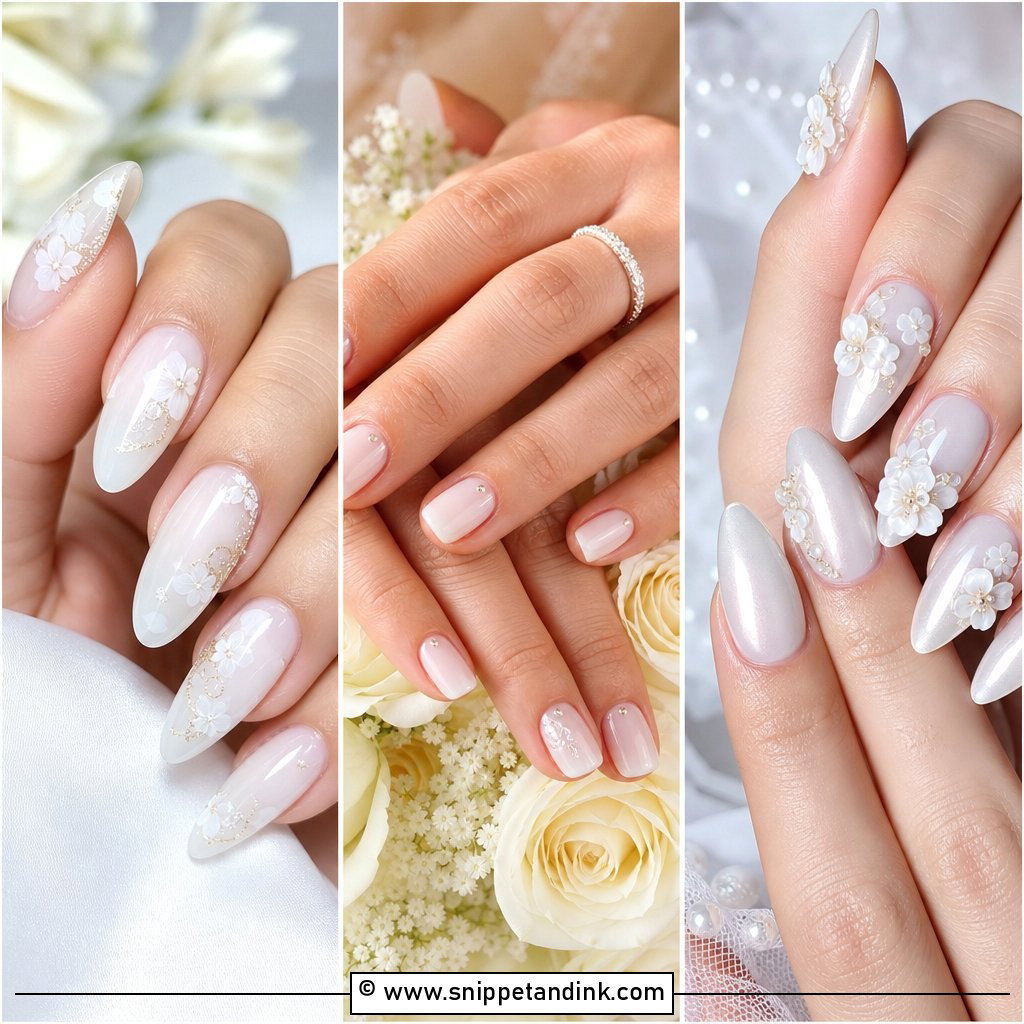
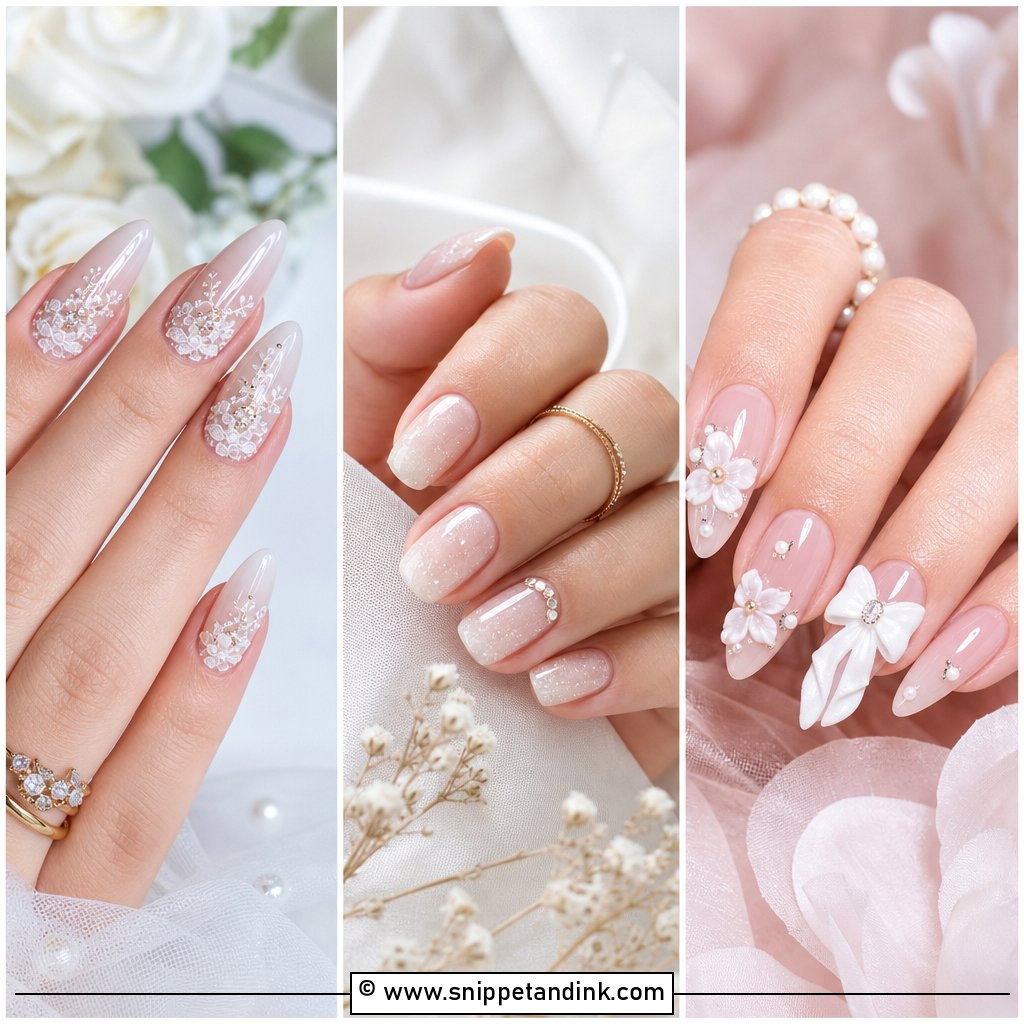
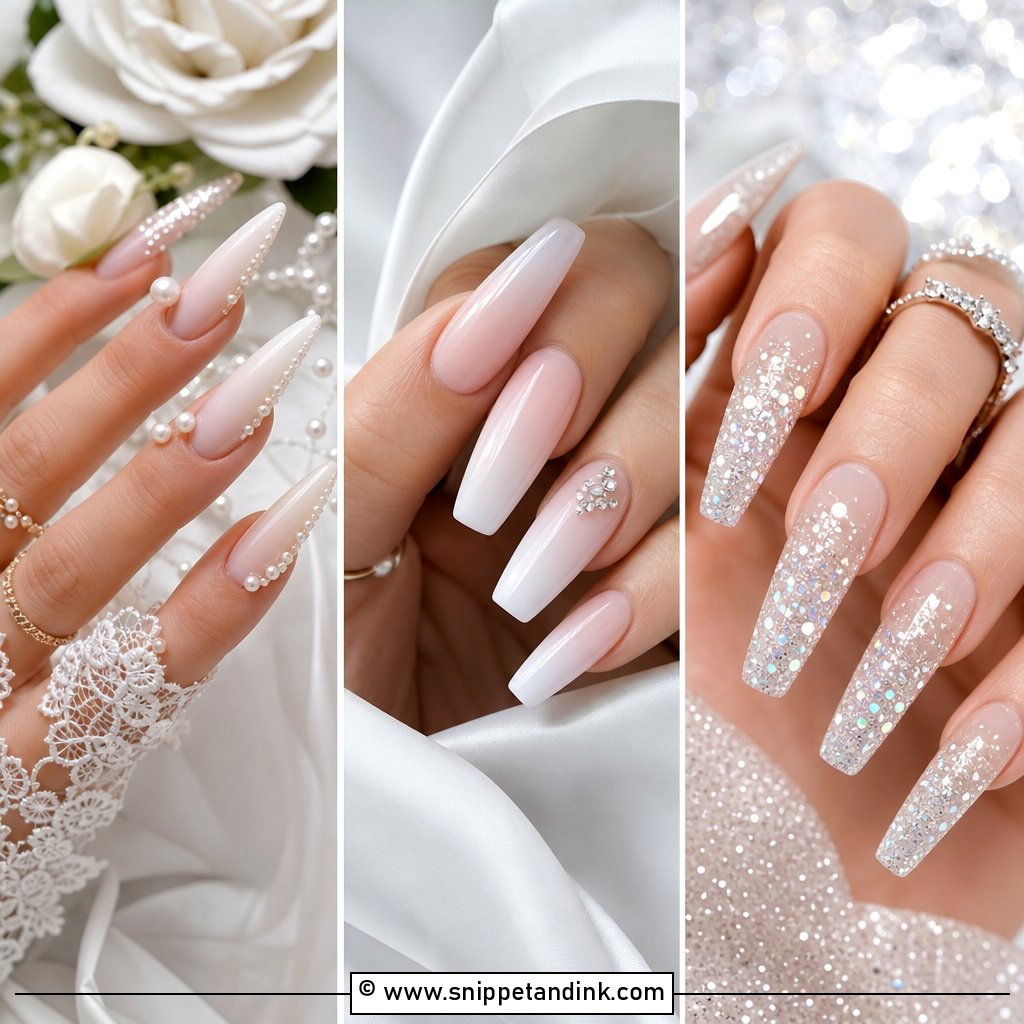
Tiny pearls placed near the cuticle, down one side, or on just one or two accent nails add detail without crowding the set. I use flat-backed pearls and set them into gel, then cap the edges so nothing catches on chiffon or hair. Raised, domed pearls are the ones that snag tulle and pop off mid-reception. The base can be sheer pink, nude or milky white. Almond feels dressier; short square keeps it simple.
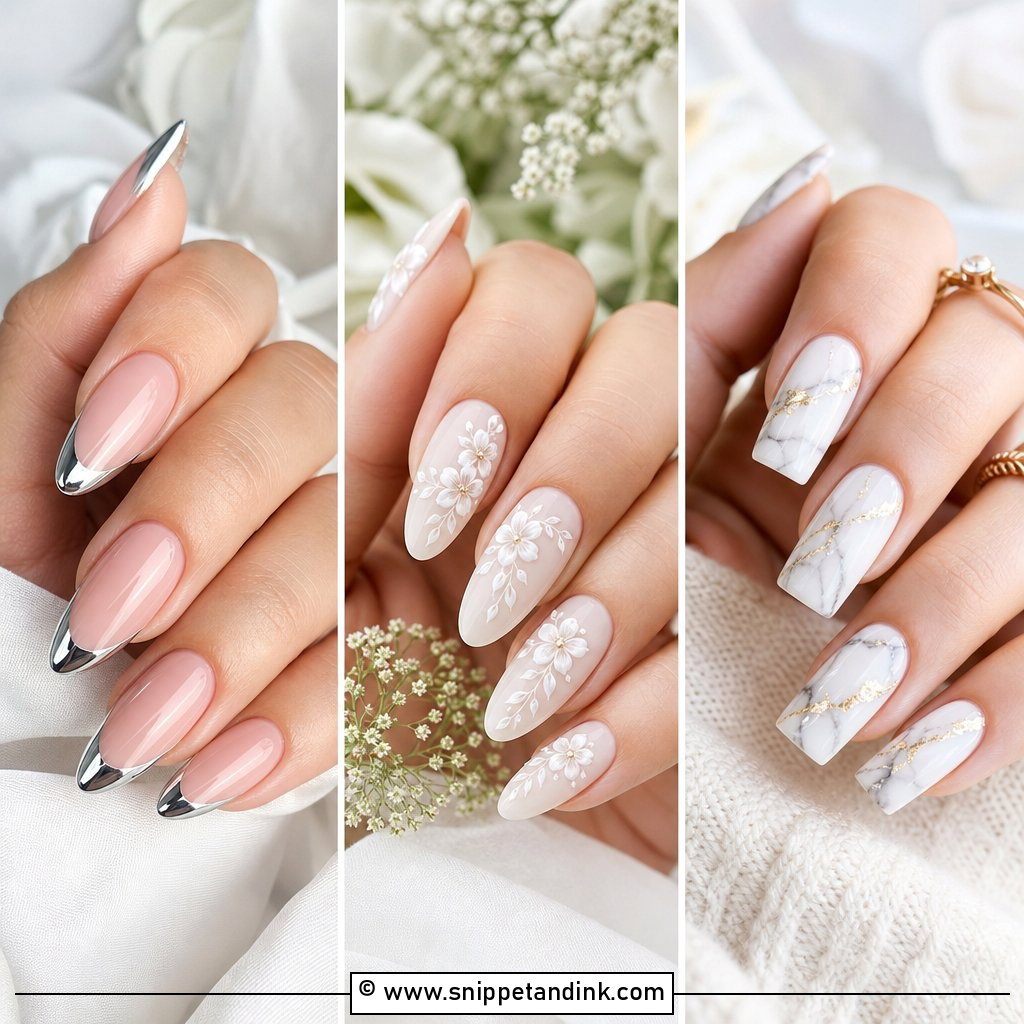
8. Chrome Bridesmaid Nails
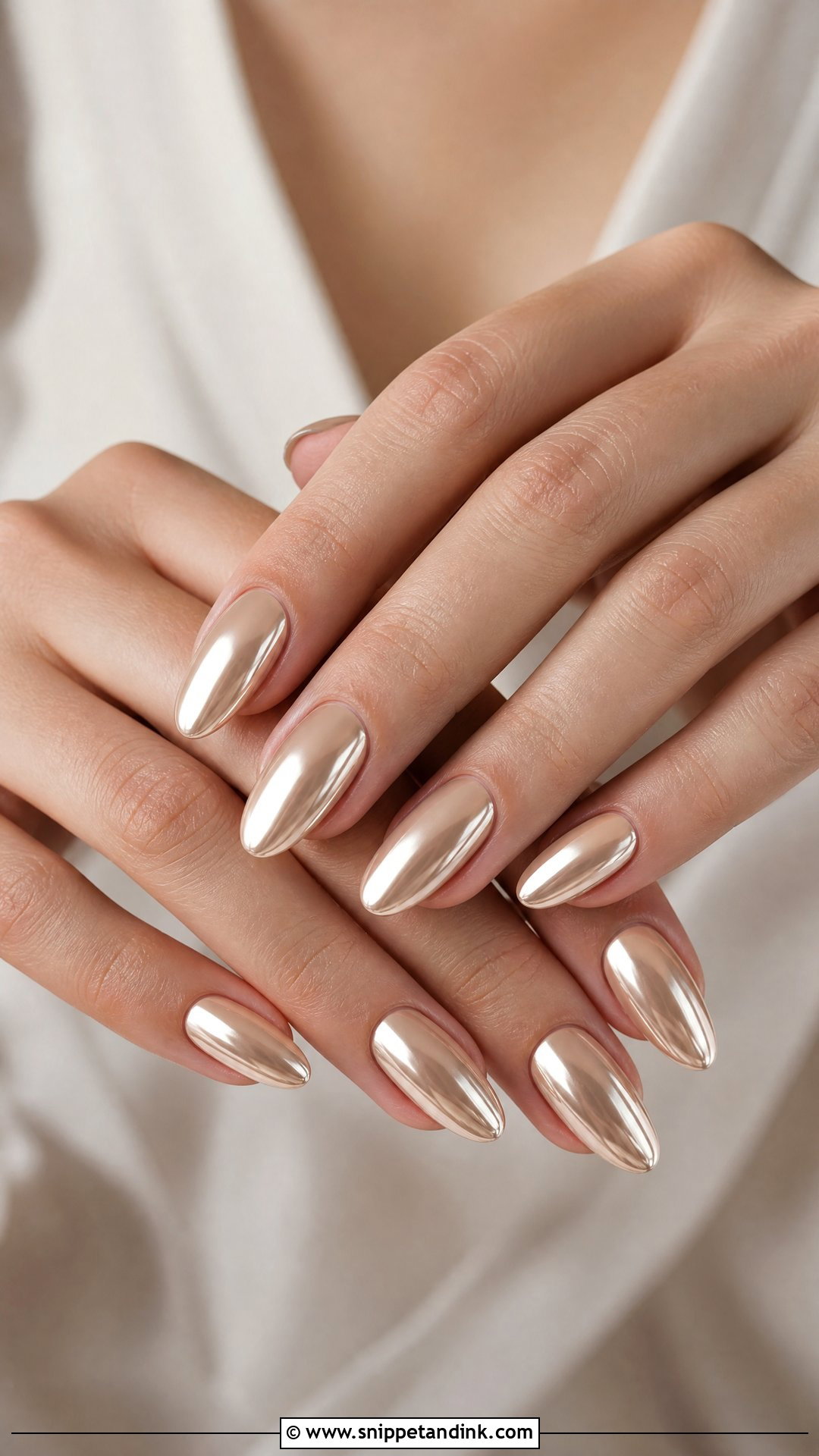
Chrome only looks refined at a wedding when the color is soft. I’d go with champagne, pearl, rose or a glazed nude chrome instead of bold silver. Modern dresses and silk fabrics suit it, and it can lift a very plain gown. Skip extra art on top, since the reflective finish is already the detail. Be aware that chrome shows every bump in the nail surface, so I level the base carefully first; uneven nails look lumpy under it in close-ups.
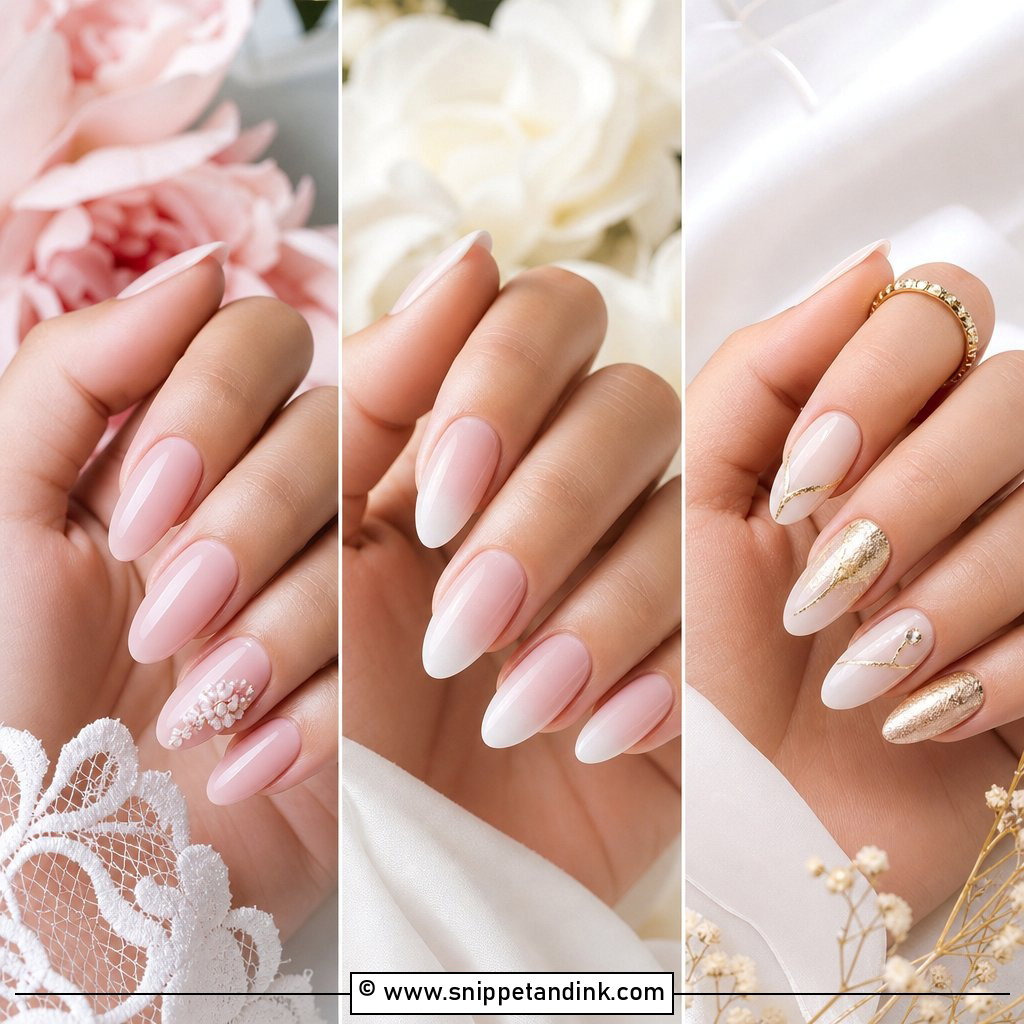
9. Blush Ombre Bridesmaid Nails
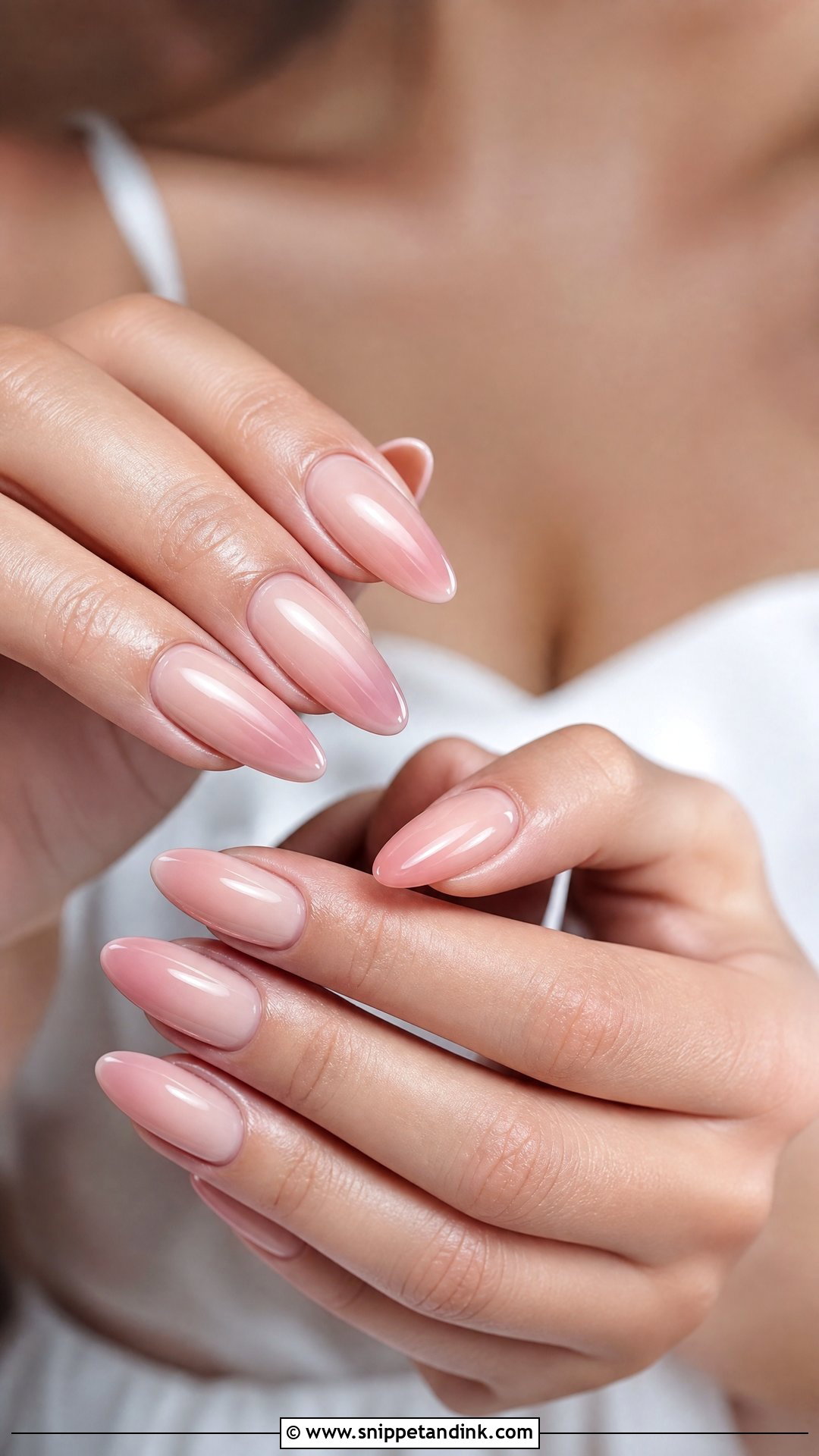
A blush ombre fades a sheer nude or milky base into a pink tip with no hard line. I sponge it on in thin passes, or airbrush where available, and the smoothness of that gradient is what decides whether it looks expensive or homemade. It suits pink, mauve, champagne, rose gold and floral dresses, and outdoor weddings in particular. Almond nails stretch the fade nicely; short round nails make it subtle. A glossy top coat blurs any remaining edge.
10. Nude Ombre Bridesmaid Nails
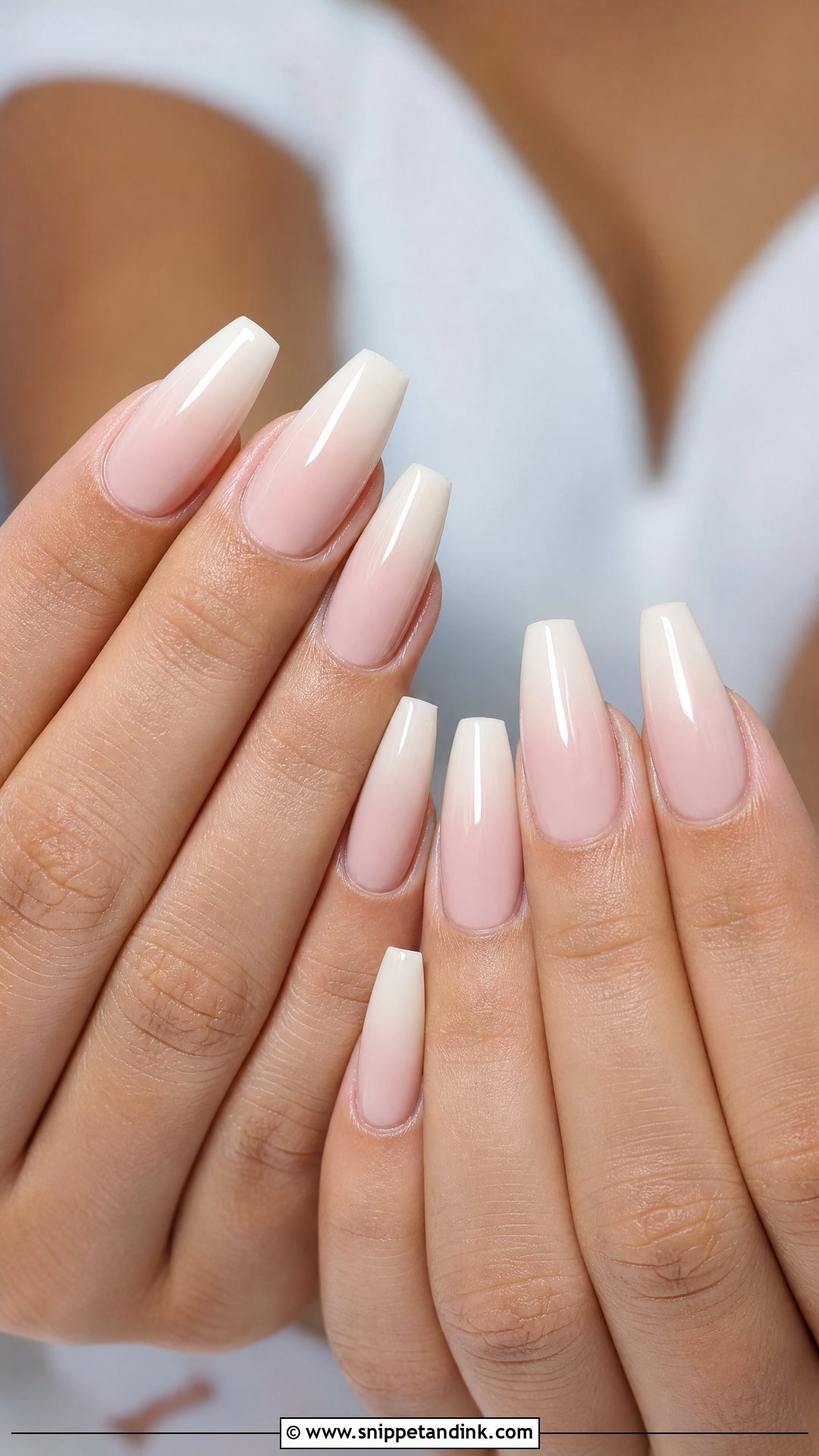
Fading from a sheer pink base to beige, ivory or soft white tips, nude ombre gives a little dimension without strong contrast. It goes with almost every dress color I can think of, including sage, terracotta, navy, dusty rose, burgundy and black. Almond and coffin show the fade best, though shorter squoval nails carry it well. The quiet advantage: because the base is close to your natural nail, grow-out at the cuticle is hard to spot, which matters if the appointment is a week before the wedding.
11. Floral Bridesmaid Nails
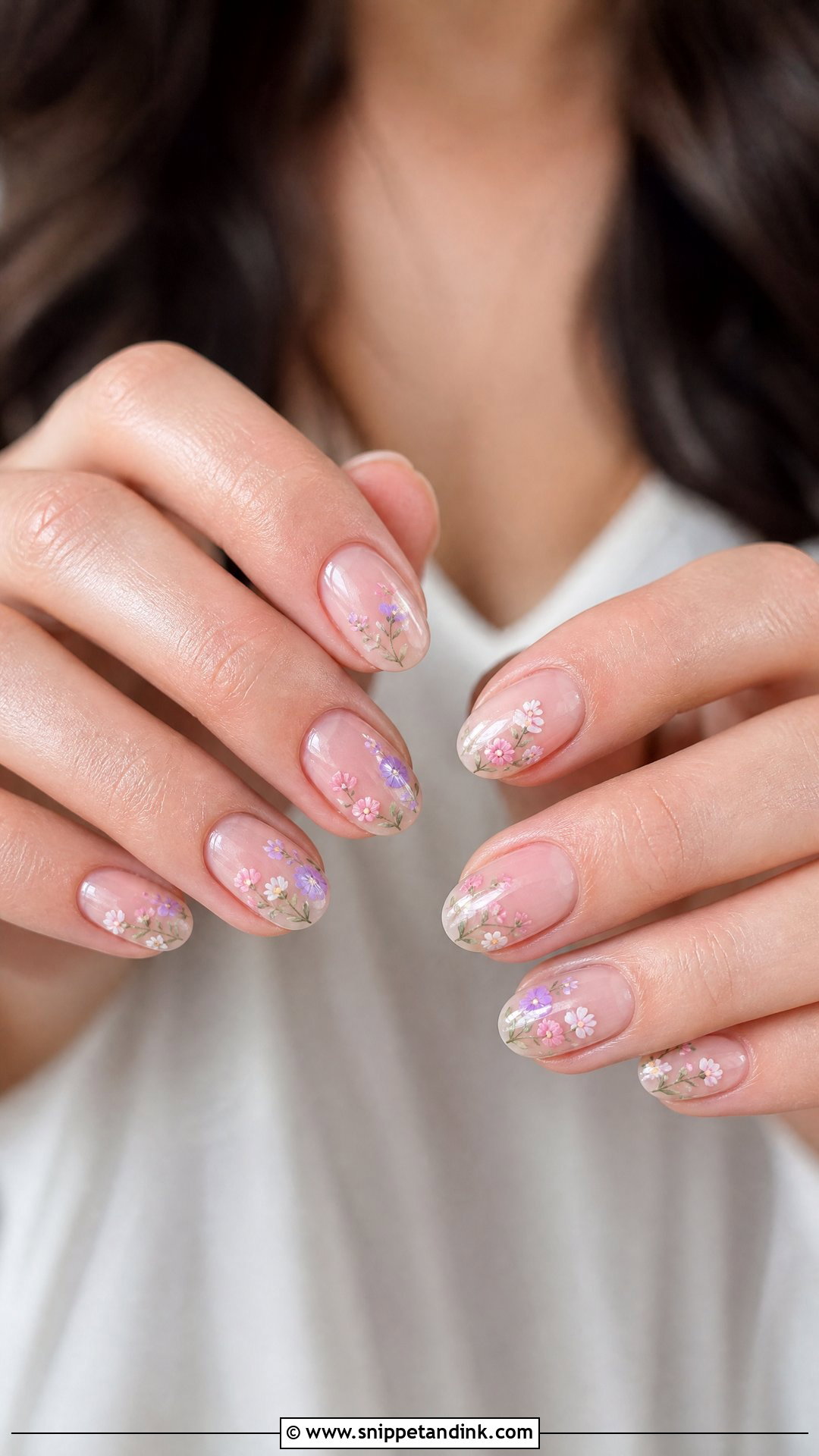
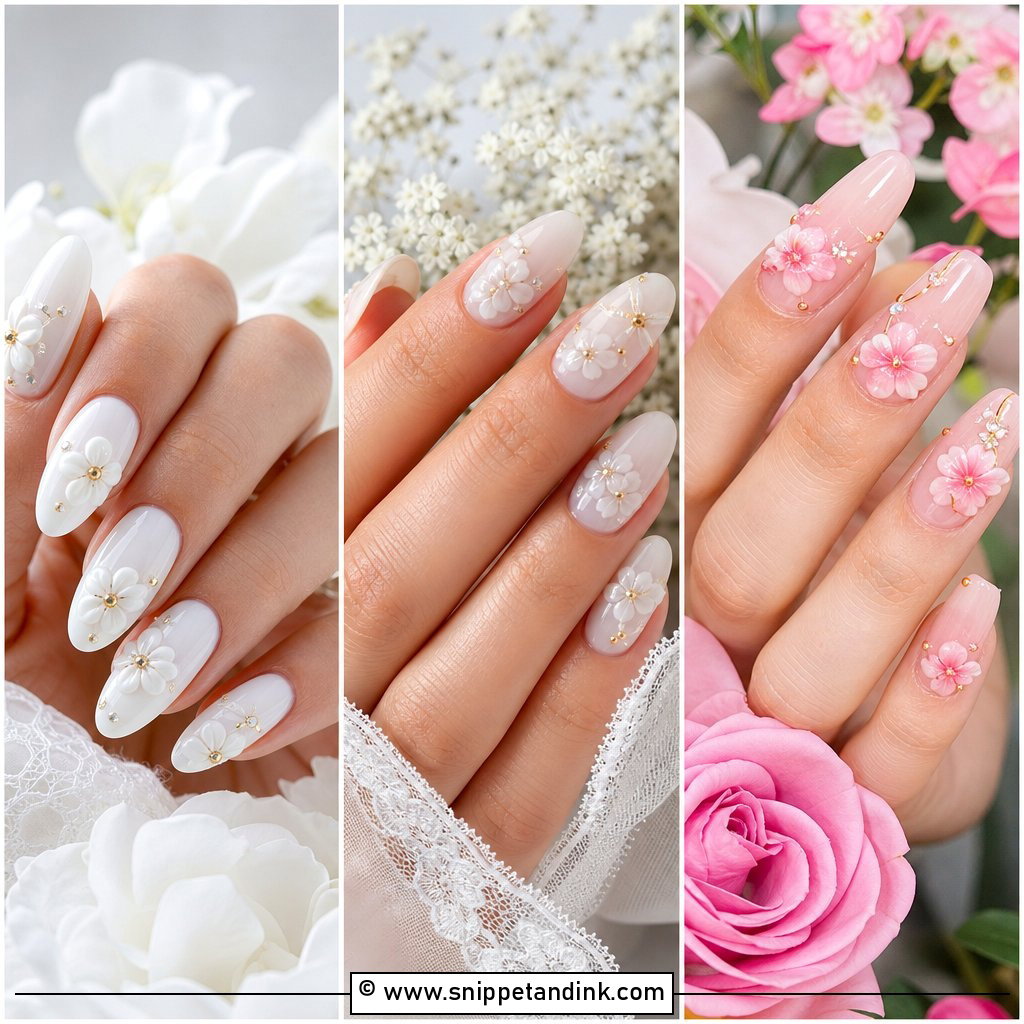
Garden and spring weddings are where flowers on nails make sense. Keep them small. Tiny white, blush, lavender or blue blossoms on a sheer pink or nude base read well in photos without fighting the dress. I usually suggest two accent nails per hand for a formal party and the full set only for a relaxed garden ceremony. Hand-painted florals take time, so if every bridesmaid wants them, plan a longer appointment or consider decals as a fallback.
12. White Flower Bridesmaid Nails
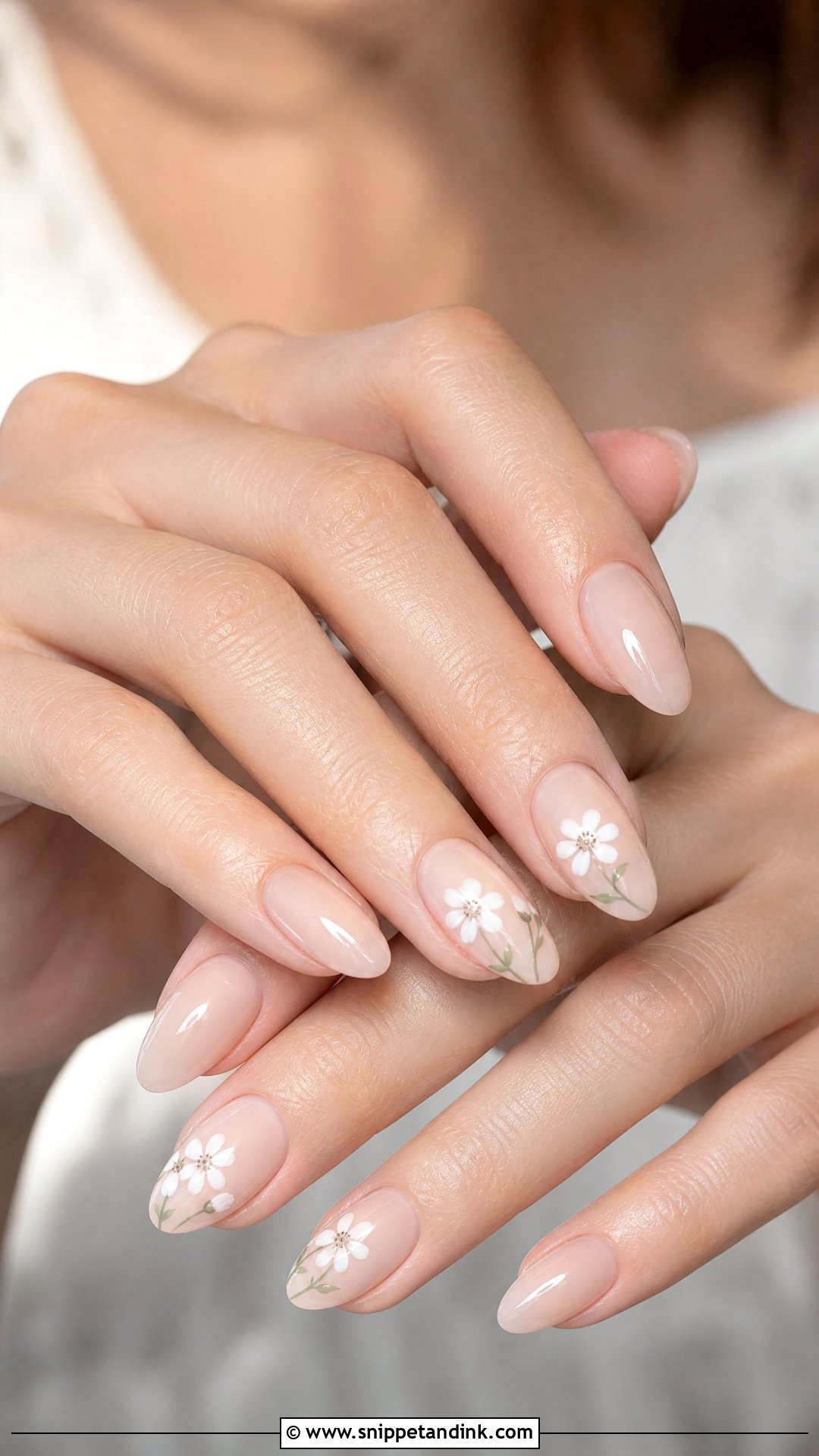
White flowers keep florals neutral. I paint five dots for petals, add a contrasting center and finish with fine green leaves on a nude, sheer pink or milky base. Thin linework is what makes them look delicate rather than cartoonish. Pastel, sage, lavender and dusty blue dresses suit them. At formal weddings, I limit them to accent nails; at garden weddings, scattering tiny blooms across all ten can work. Oval and almond shapes give the art room.
13. Gold Accent Bridesmaid Nails
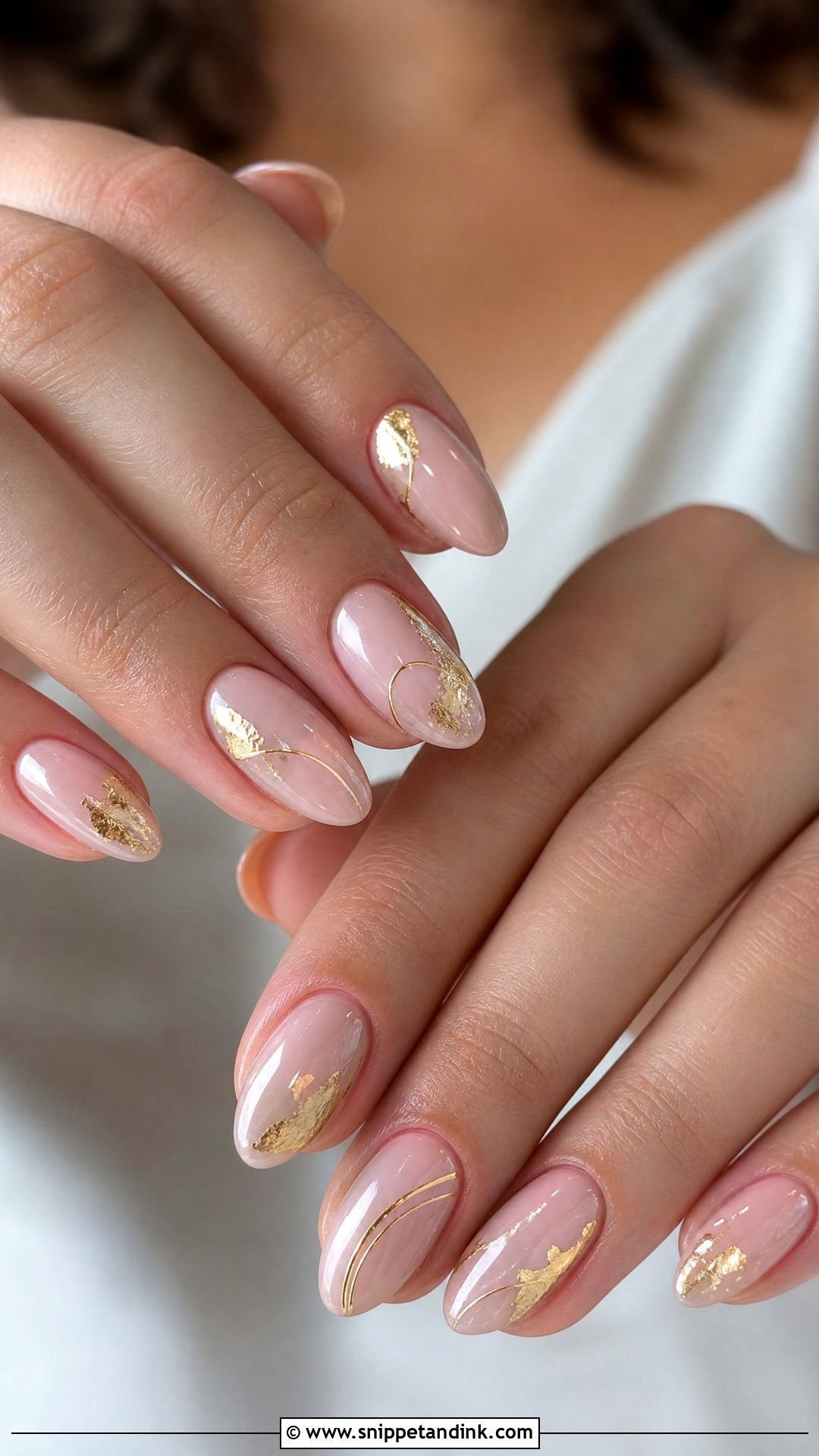
Gold works best as a light touch: fine foil, a thin gold tip, or a few dots over nude, blush, ivory or soft pink. Champagne dresses, terracotta, emerald and gold jewelry pair well, and it’s a natural fit for fall and evening receptions. Foil flakes need to be fully sealed under top coat; any exposed edge lifts within a day or two and snags. If a bridesmaid dislikes glitter, foil gives the shine without the sparkle.
14. Silver Accent Bridesmaid Nails
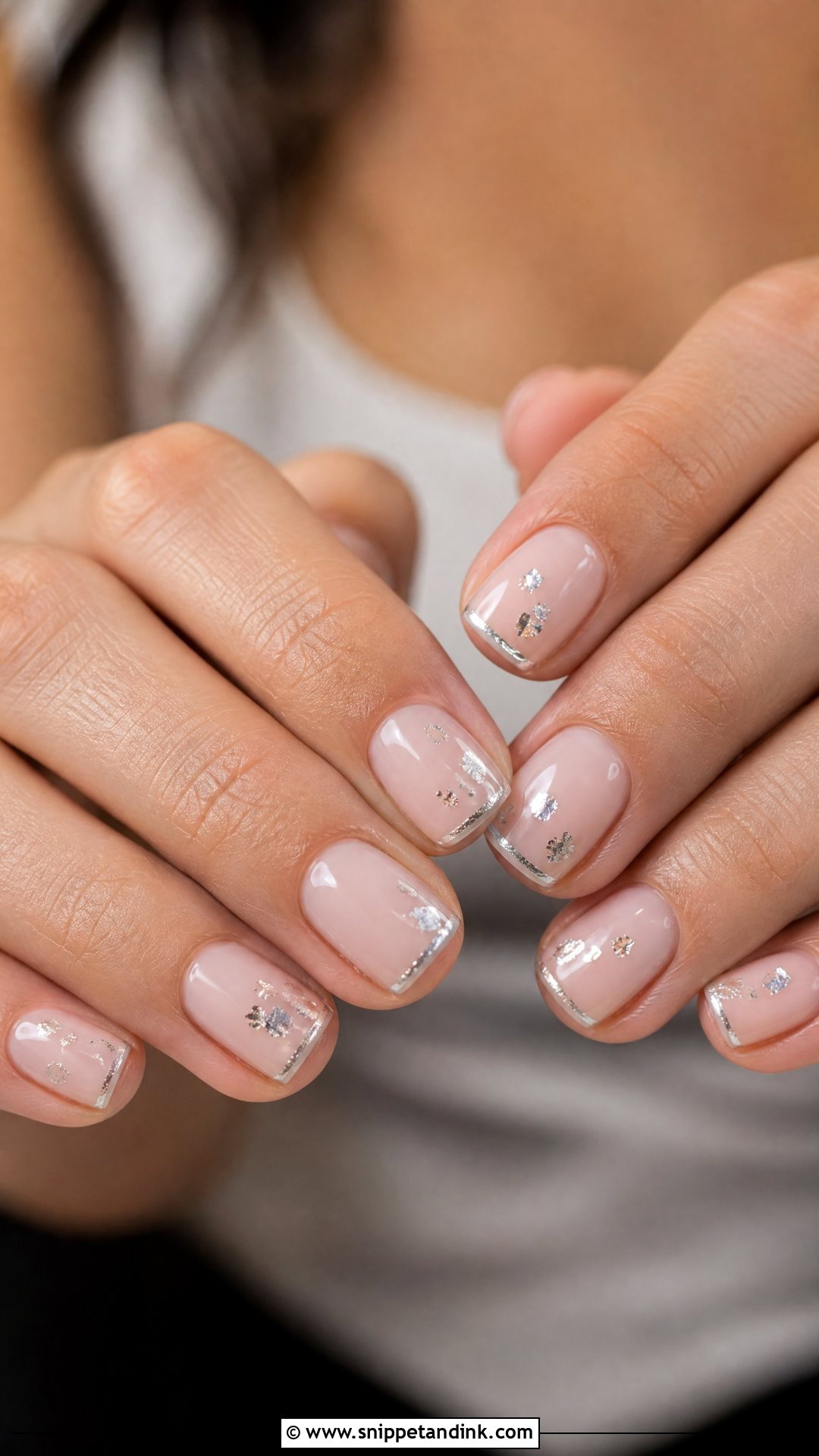
Silver suits cool palettes: gray, icy blue, lavender, navy, black and silver accessories. I keep the base sheer nude or pale pink and add tiny foil, a thin silver tip or a light shimmer topcoat. Minimal is the rule. Heavy silver glitter can look a little like a party manicure at a very formal wedding. It’s crisp on short squoval nails and works for winter weddings without looking themed.
15. Sage Green Bridesmaid Nails
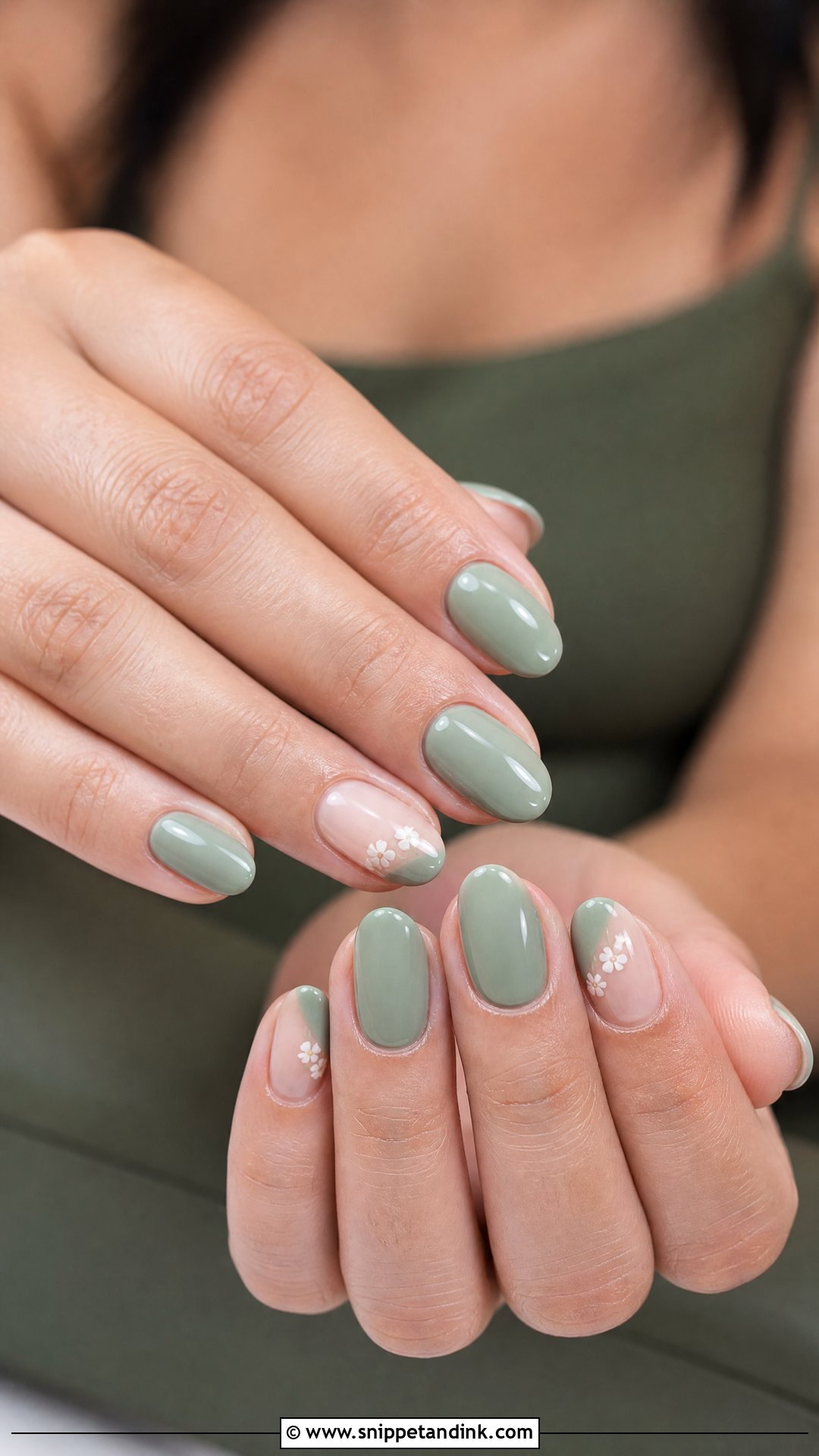
Sage is the color I’m asked to match most often to dresses, and the trick is muting it. Bright greens look like a costume; a grayed-down sage or olive looks considered. I bring a few swatch sticks to hold against the actual dress fabric, ideally in daylight. A solid glossy sage keeps it simple, while a sage tip over a nude base feels lighter. Tiny white flowers or a touch of gold foil suit outdoor and rustic venues. Oval or almond shapes stop the green feeling casual.
16. Dusty Blue Bridesmaid Nails
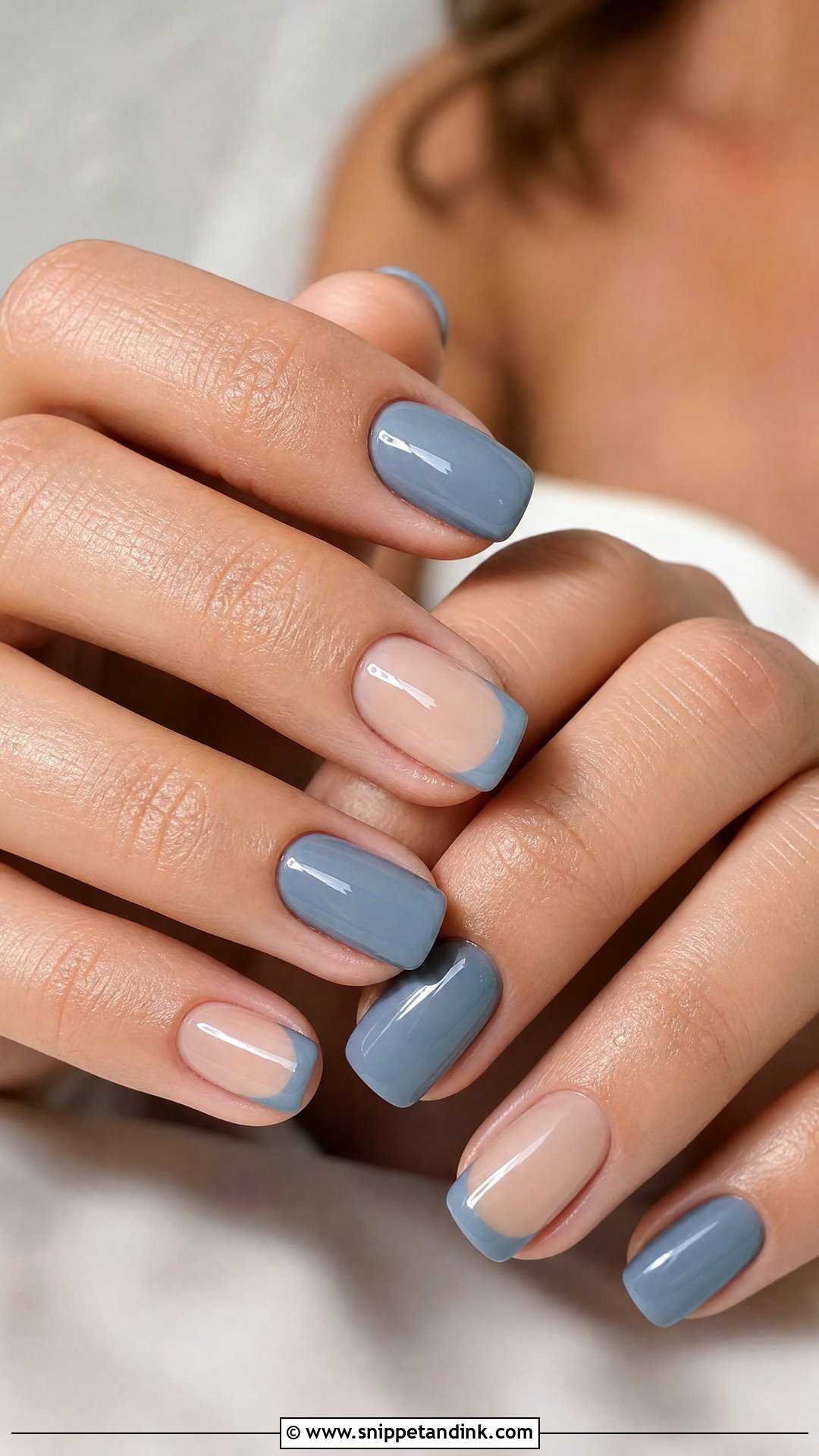
Dusty blue keeps color formal enough for a wedding while still giving the hands some personality. It goes well with blue, gray, silver and ivory palettes. A solid set looks clean on short square or squoval nails; dusty blue tips over a sheer nude base are softer. A few tiny pearls or a gentle shimmer dress it up. Coastal and winter weddings suit it, and plenty of bridal parties treat it as a nod to something blue.
17. Lavender Bridesmaid Nails
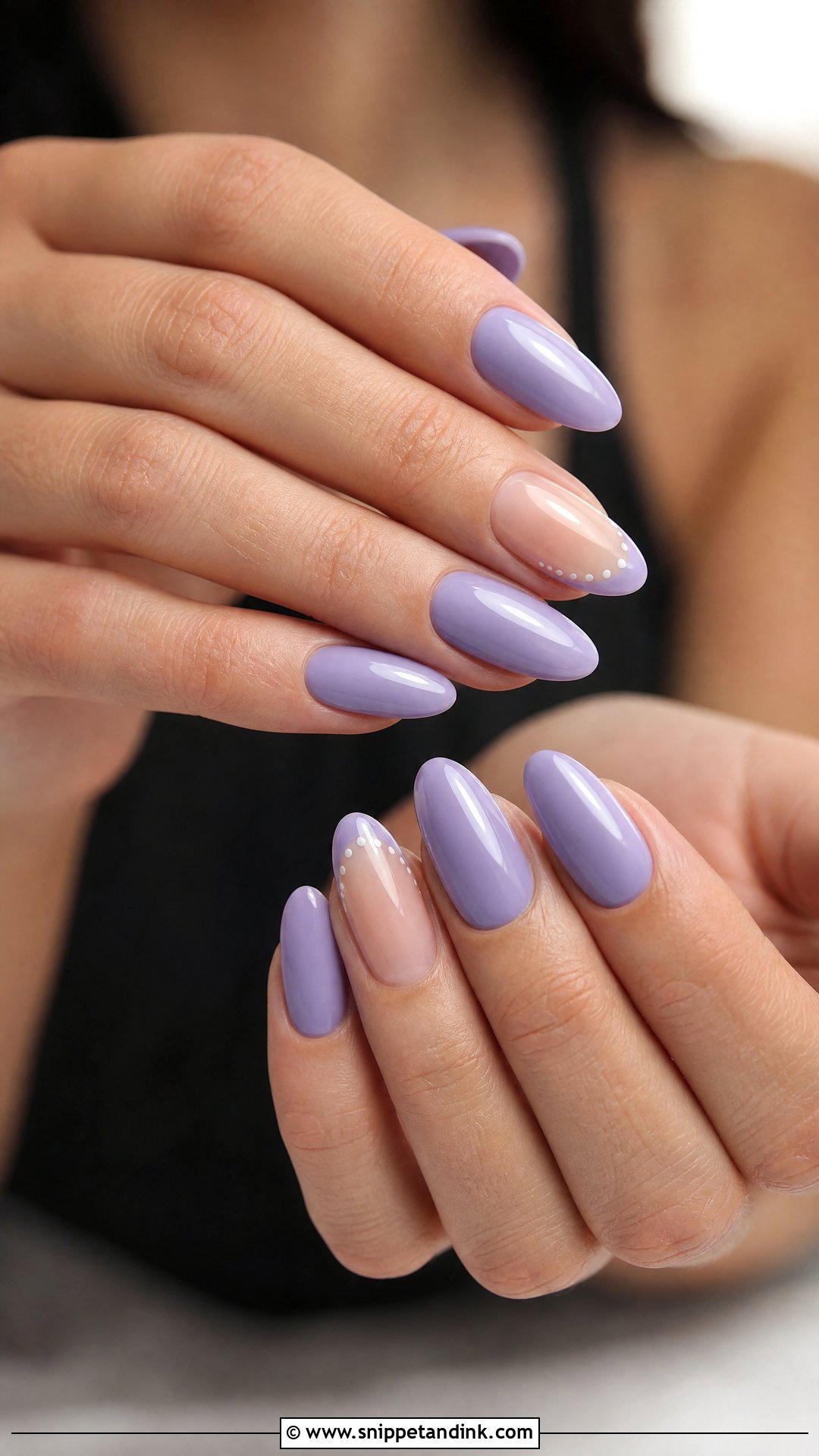
Pick a muted lavender, lilac or pale purple and finish it glossy or pearly. Pastel purples often need three coats to cover without streaks, so I’d allow extra time and keep each layer thin to avoid wrinkling under the lamp. It sits well next to lavender and blush gowns, silver jewelry and spring flowers. A full set looks coordinated; lavender tips are subtler. Almond makes it elegant, and short rounded nails keep it sweet.
18. Mauve Bridesmaid Nails
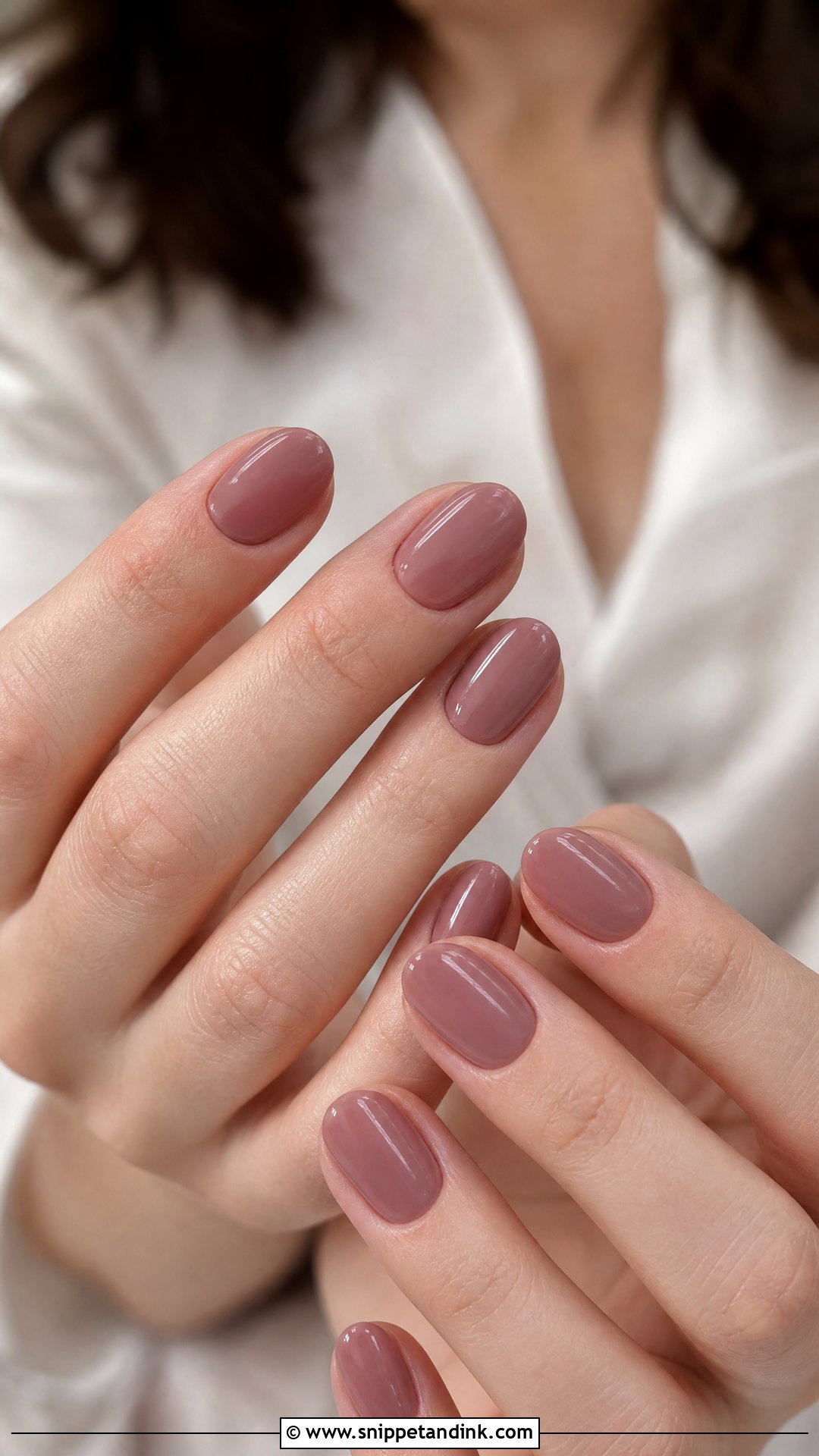
Mauve sits between pink, purple and nude, which is why it flatters so many skin tones and works with dusty rose, burgundy, champagne, navy and taupe dresses. A glossy solid mauve is simple; a sheer jelly mauve or a mauve-to-nude ombre is softer. It has enough warmth for fall without going dark. I’d keep length short to medium here, since a long deep-toned nail starts to look more evening-out than bridal party.
19. Champagne Bridesmaid Nails
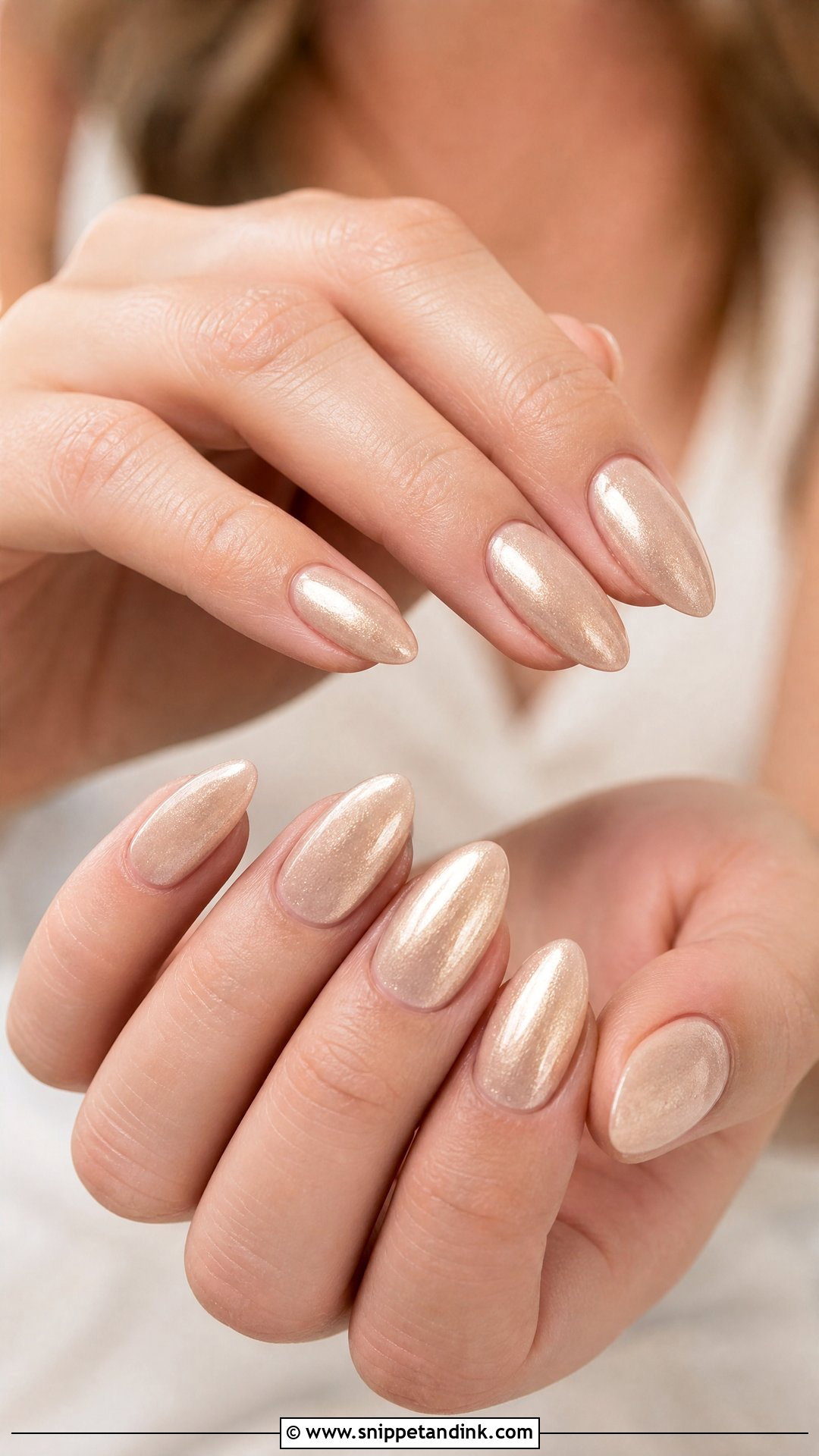
Champagne can be a creamy beige, a pale gold shimmer or a translucent chrome over a nude base. A fine shimmer gives a glow from within; chrome is the more modern version. It suits satin dresses, warm neutral palettes and gold jewelry, especially for evening receptions and bridesmaids in champagne, taupe, ivory or terracotta. Choose a shimmer with very fine particles. Coarse shimmer shows brush strokes, and those lines are obvious in close-up ring photos.
20. Rose Gold Bridesmaid Nails
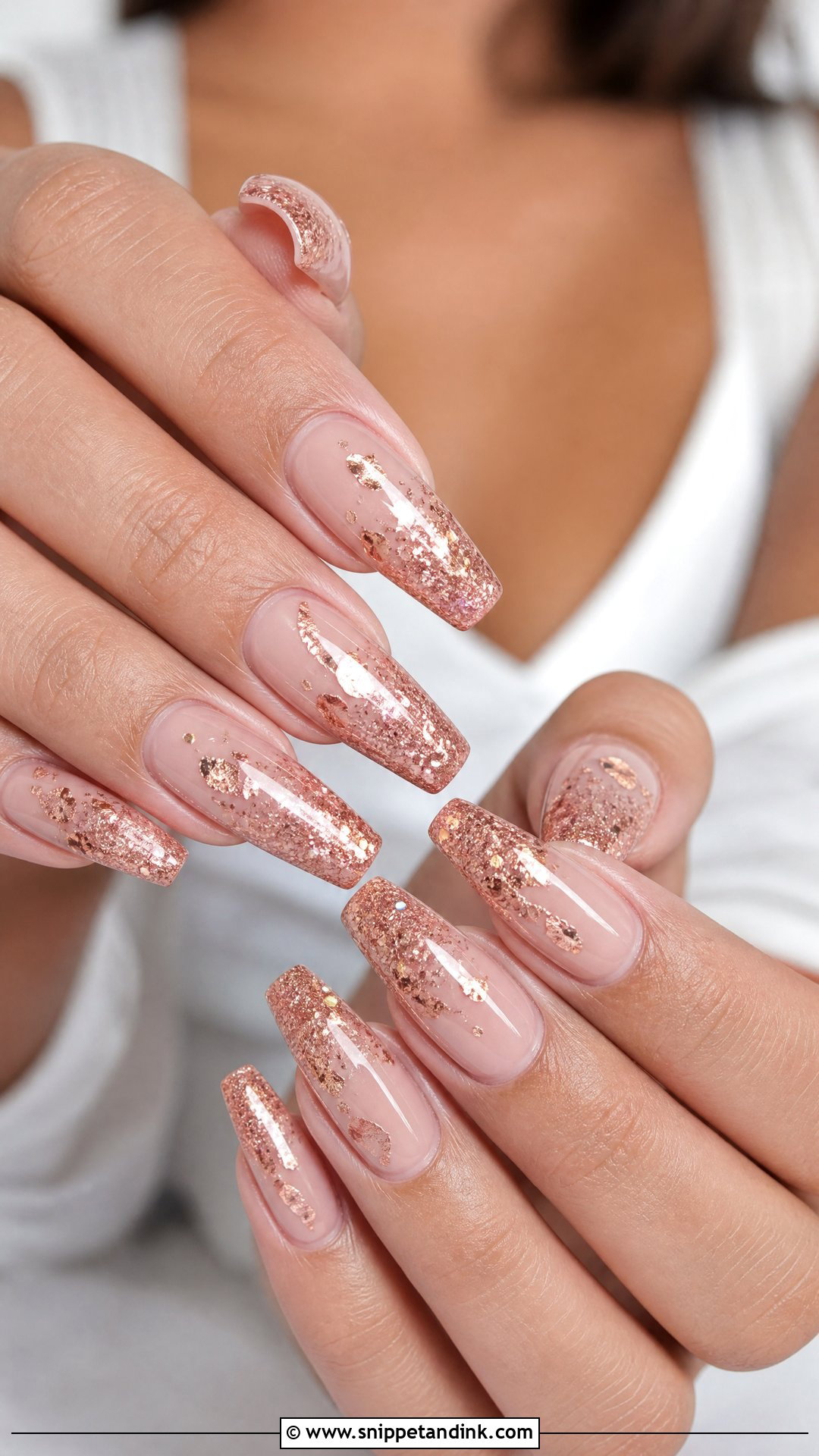
Rose gold is warm and flattering, and it sits well with blush, mauve, champagne and dusty pink dresses. I use it as an accent rather than all-over metallic: foil on a nude base, rose gold micro French tips, or a shimmer topcoat. For bridesmaids who want sparkle, a rose gold glitter fade from the tip keeps it controlled. Almond and coffin shapes show it off, while short squoval nails make it more practical for a bridesmaid who’ll be carrying things all day.
21. Sheer Glitter Bridesmaid Nails
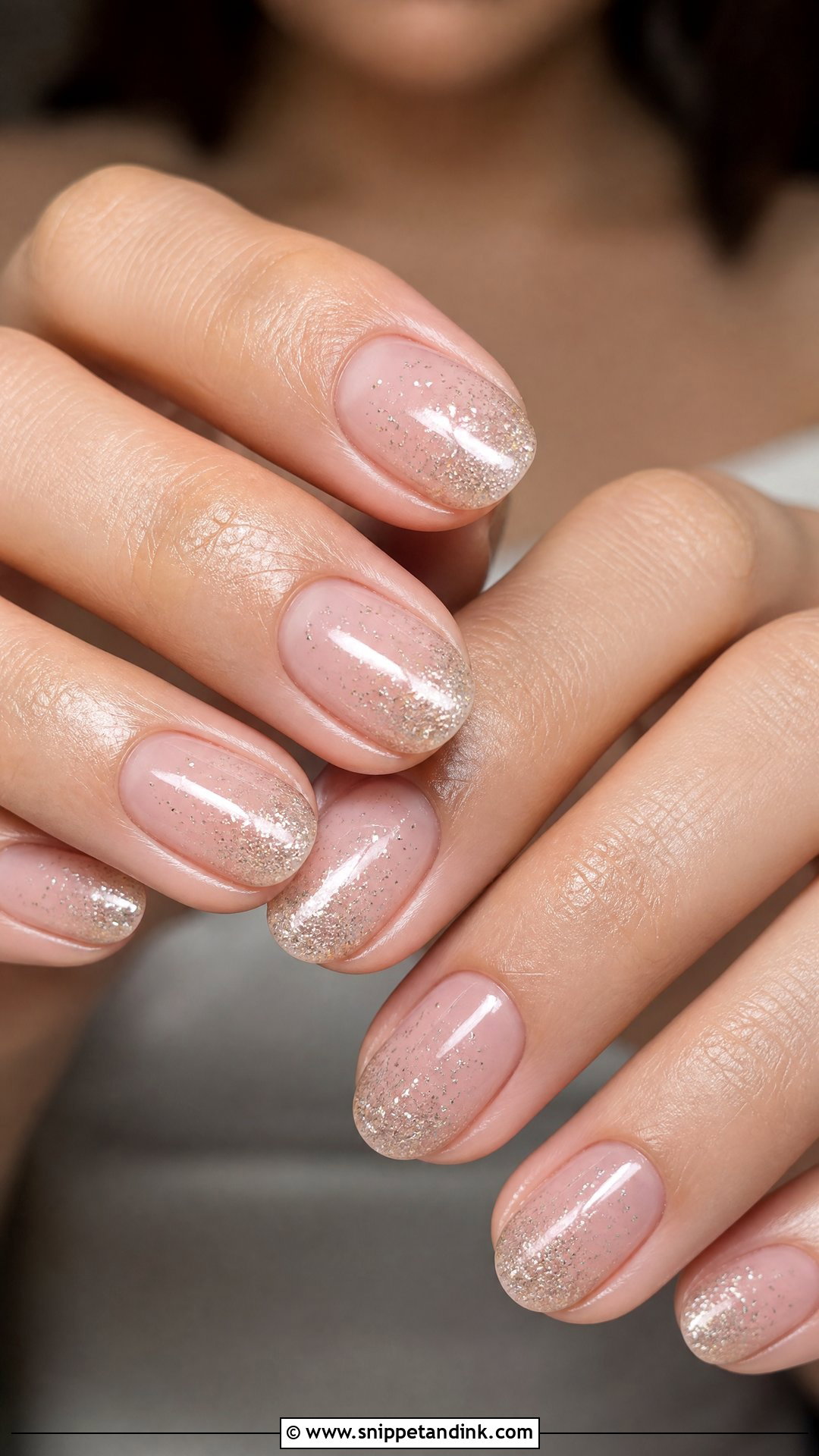
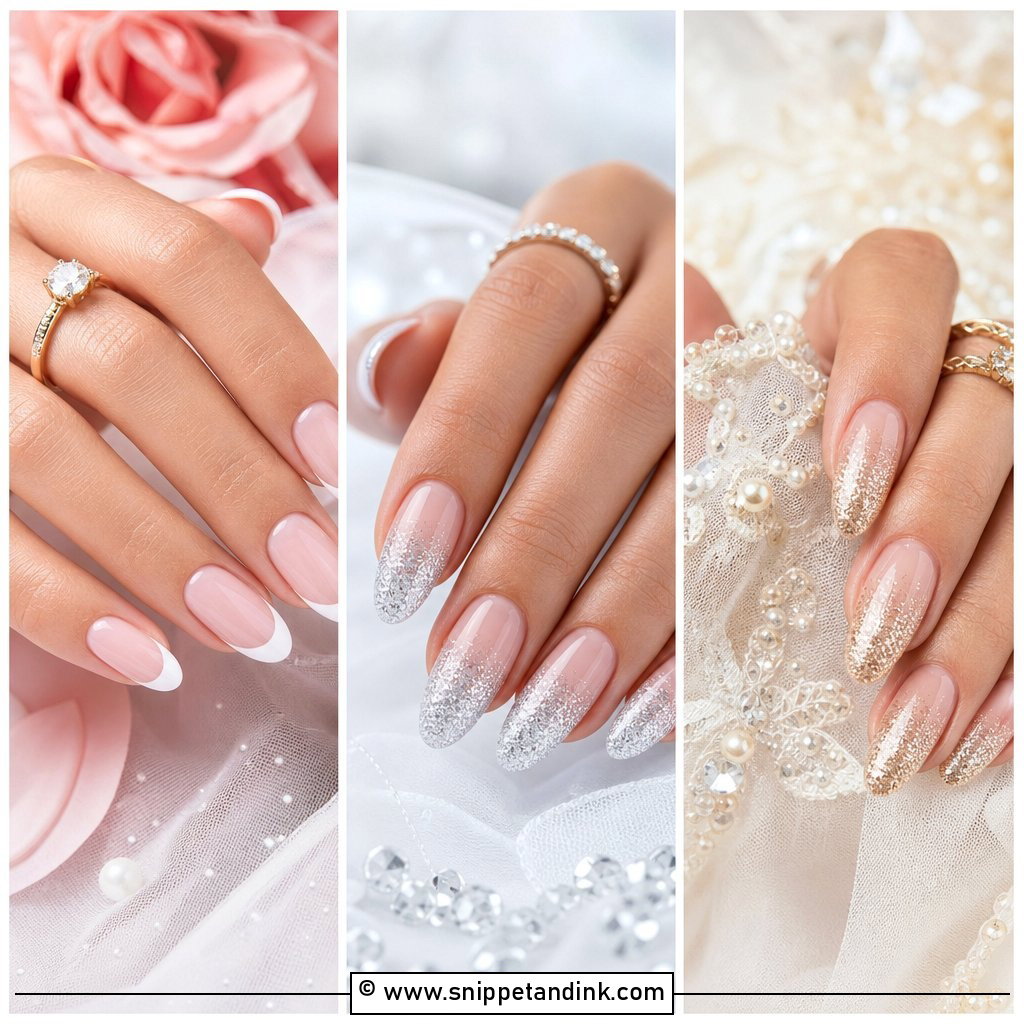
Fine glitter scattered over a nude, blush or clear pink base gives sparkle without density. Silver, champagne, pearl or rose gold glitter all suit weddings. My favorite placement is a fade from the tip, which lengthens the nail and keeps the cuticle area clean. Avoid chunky glitter; it looks heavy and is a nightmare to remove, which matters if a bridesmaid has work on Monday. Evening receptions and plainer dress fabrics suit it best.
22. Short Bridesmaid Nails
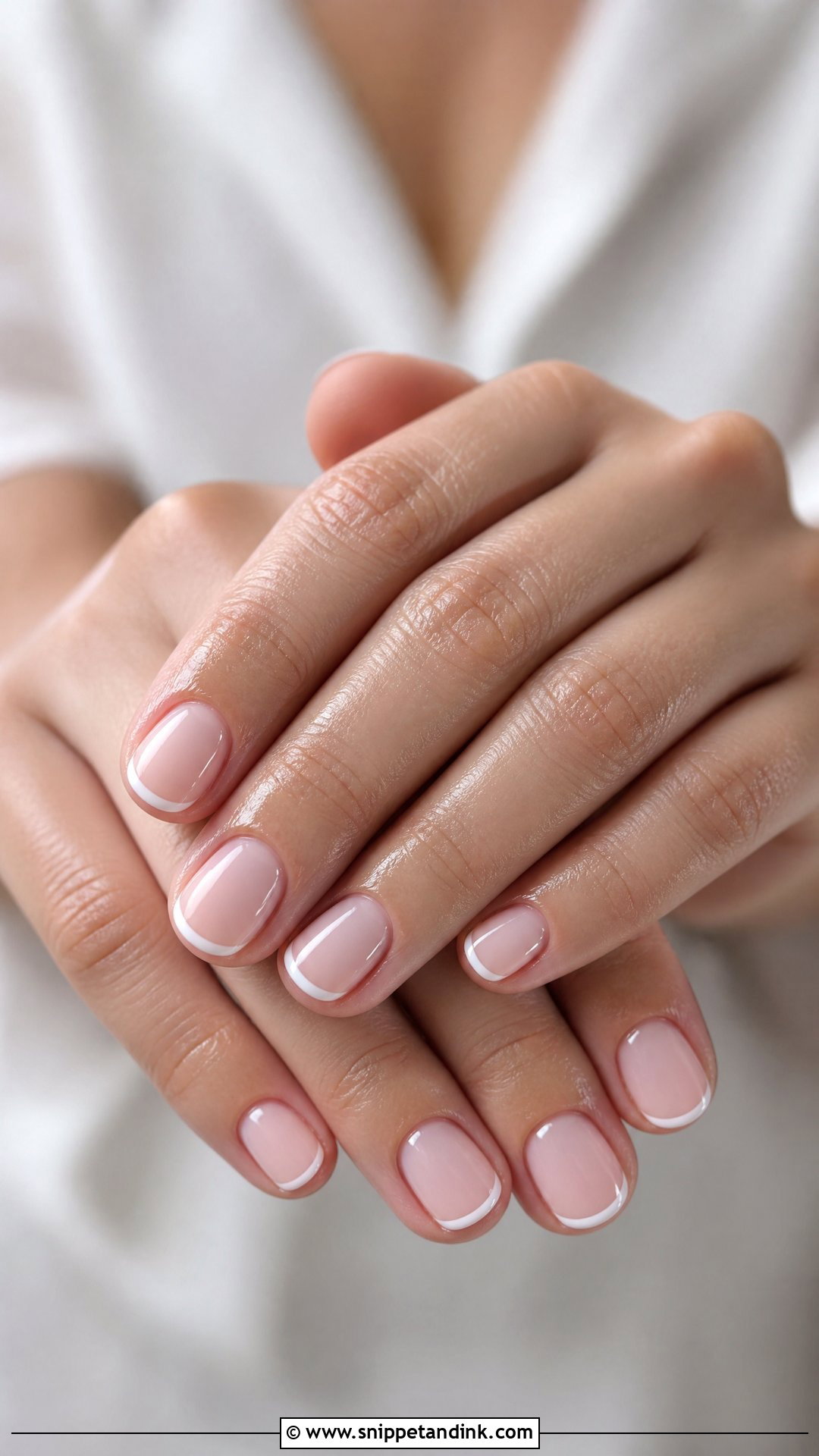
Short nails are what I’d honestly recommend to most bridesmaids. A short squoval, round or soft square shape handles bouquets, zips and bustles without snapping. Sheer pink, nude, milky white, mauve and soft beige all look good, and micro French tips, tiny florals, pearl dots or a chrome glaze add detail if wanted. Natural and tidy is what photographs best. A builder base adds strength and smooths the surface so the polish doesn’t chip at the tips.
23. Almond Bridesmaid Nails
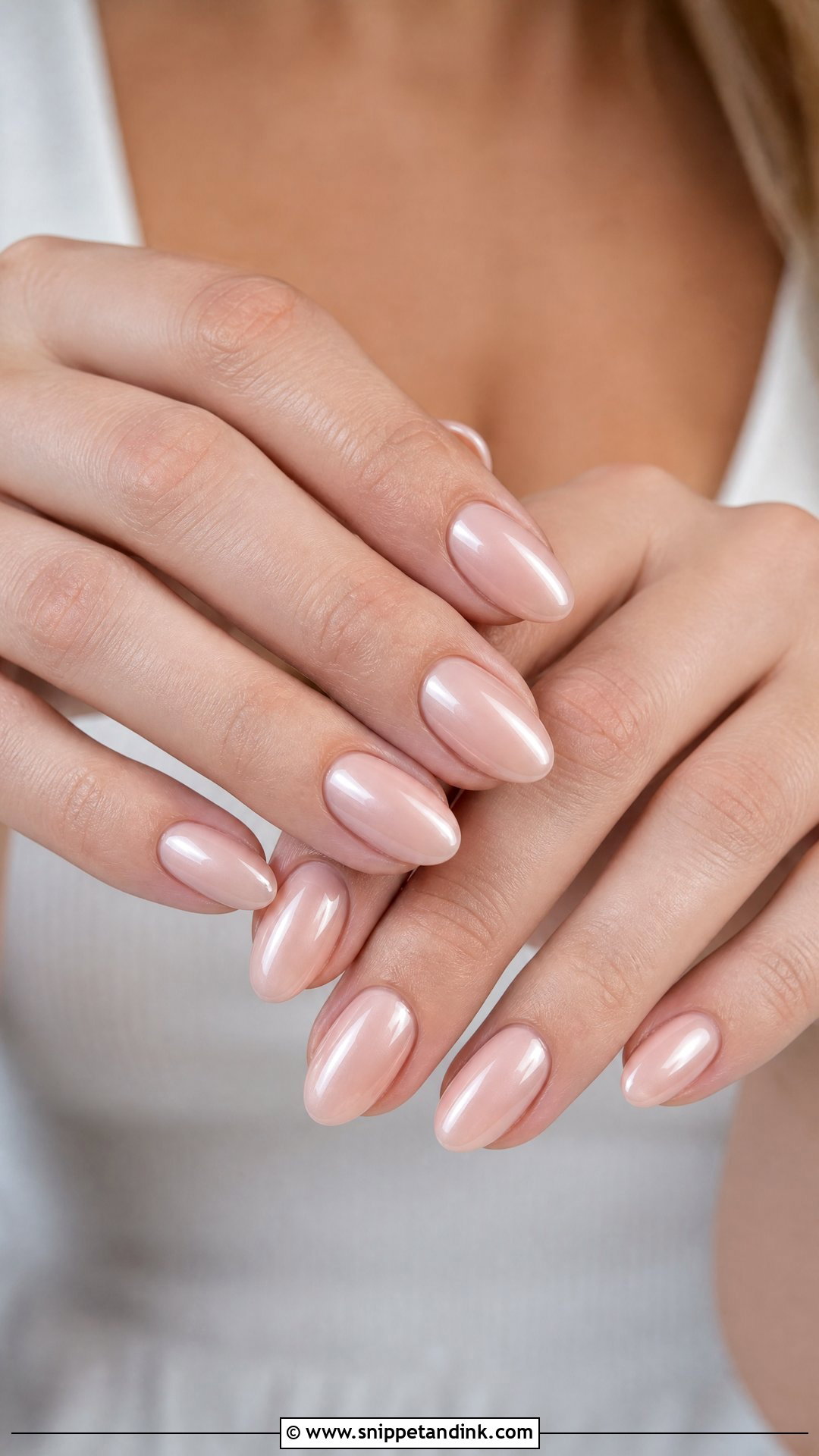
The tapered shape lengthens fingers, and almond handles almost any design, from French tips to chrome, ombre, florals and pearls. Medium-length almond nails are the most balanced for bridesmaids: dressed up but still usable. Very thin nails can be weak at the narrow tip of an almond, so I file it a bit softer on anyone whose nails bend. For a coordinated party, everyone can wear the same color and pick almond or oval depending on comfort.
24. Coffin Bridesmaid Nails
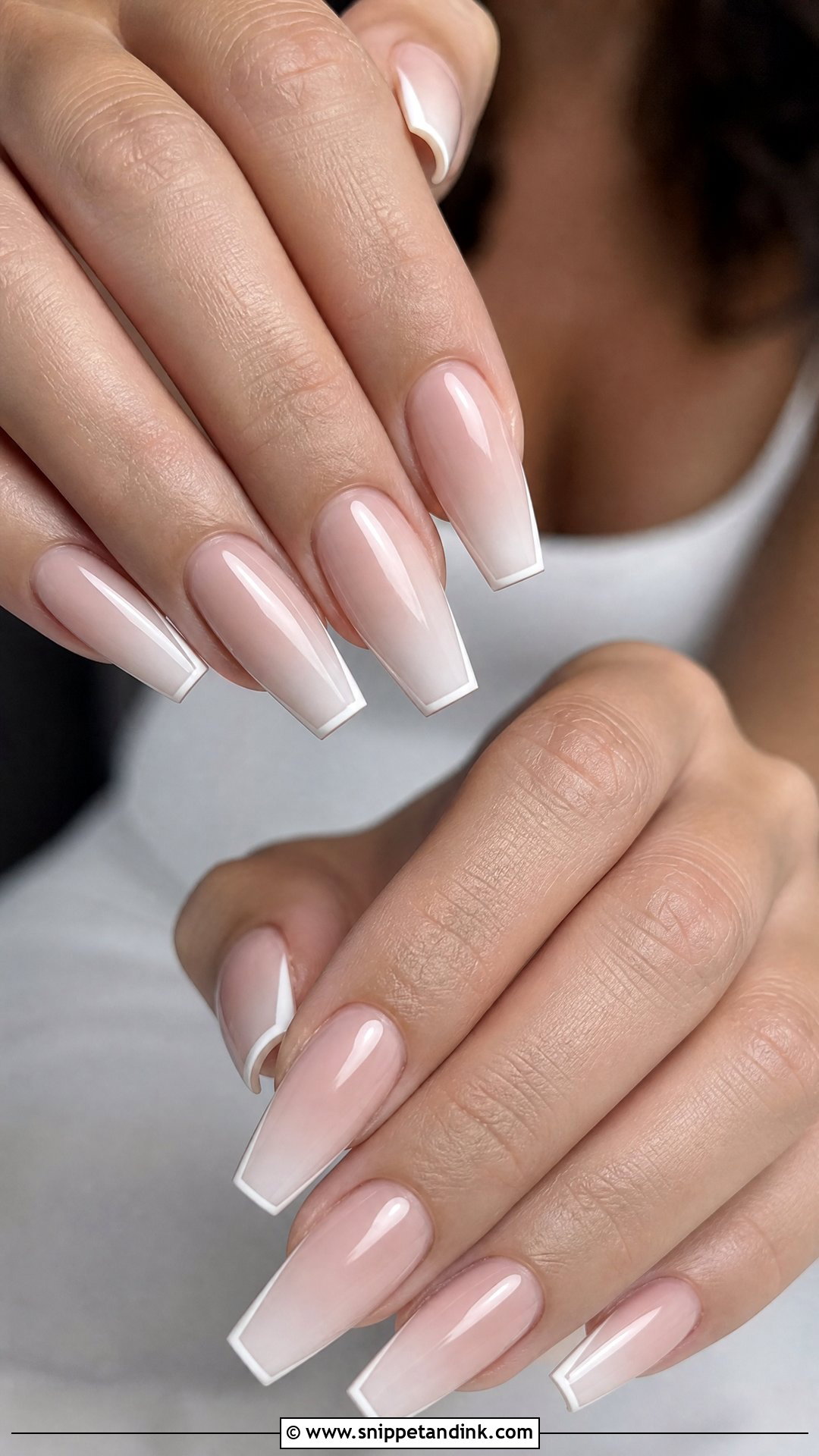
Coffin bridesmaid nails get their sleek shape from straight sides and a squared-off tip, and they suit bridesmaids who like a longer, structured set. Keep the design soft so the shape isn’t too bold: nude ombre, blush pink, milky white, champagne chrome or thin French tips. Medium length looks better and is far more practical than extra long. Coffin nails usually need extensions or overlays to get the length, so book enough time if someone is starting from short natural nails.
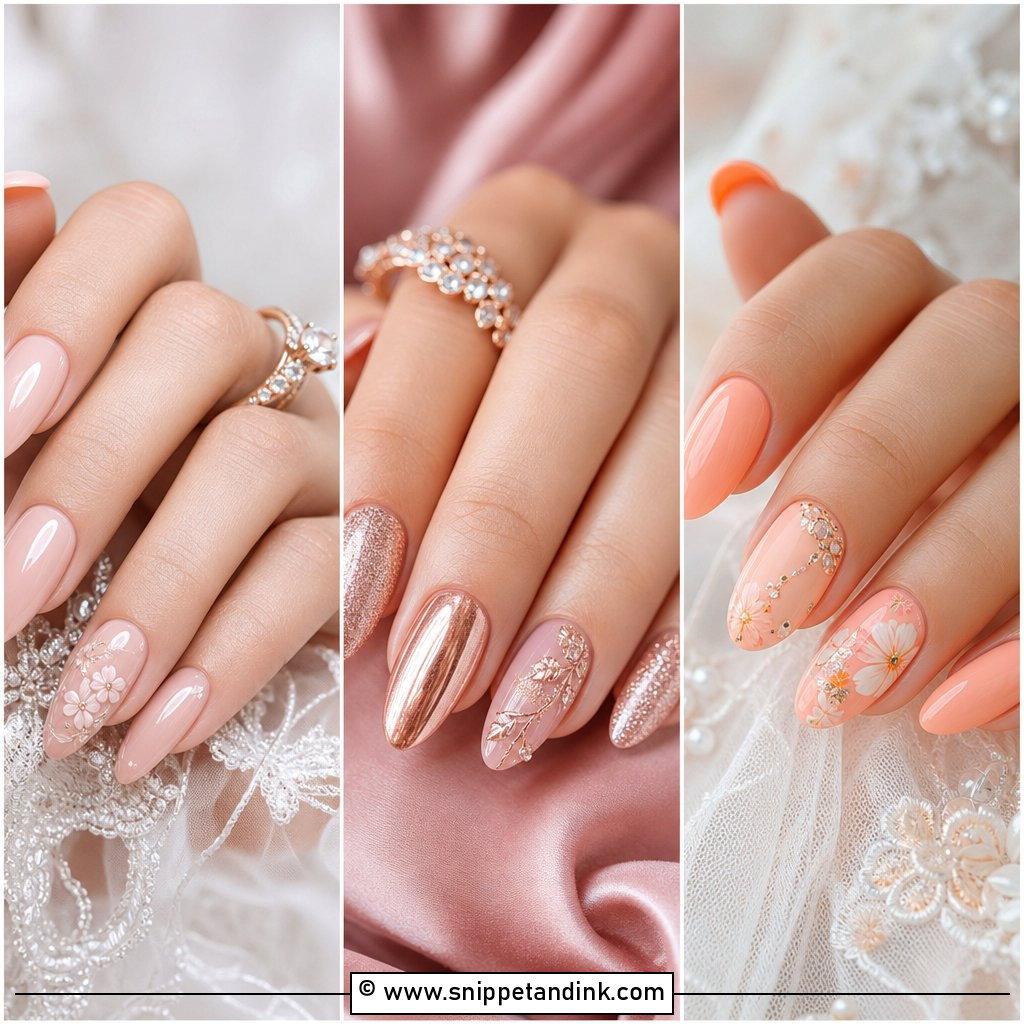
25. Mismatched Bridesmaid Nails
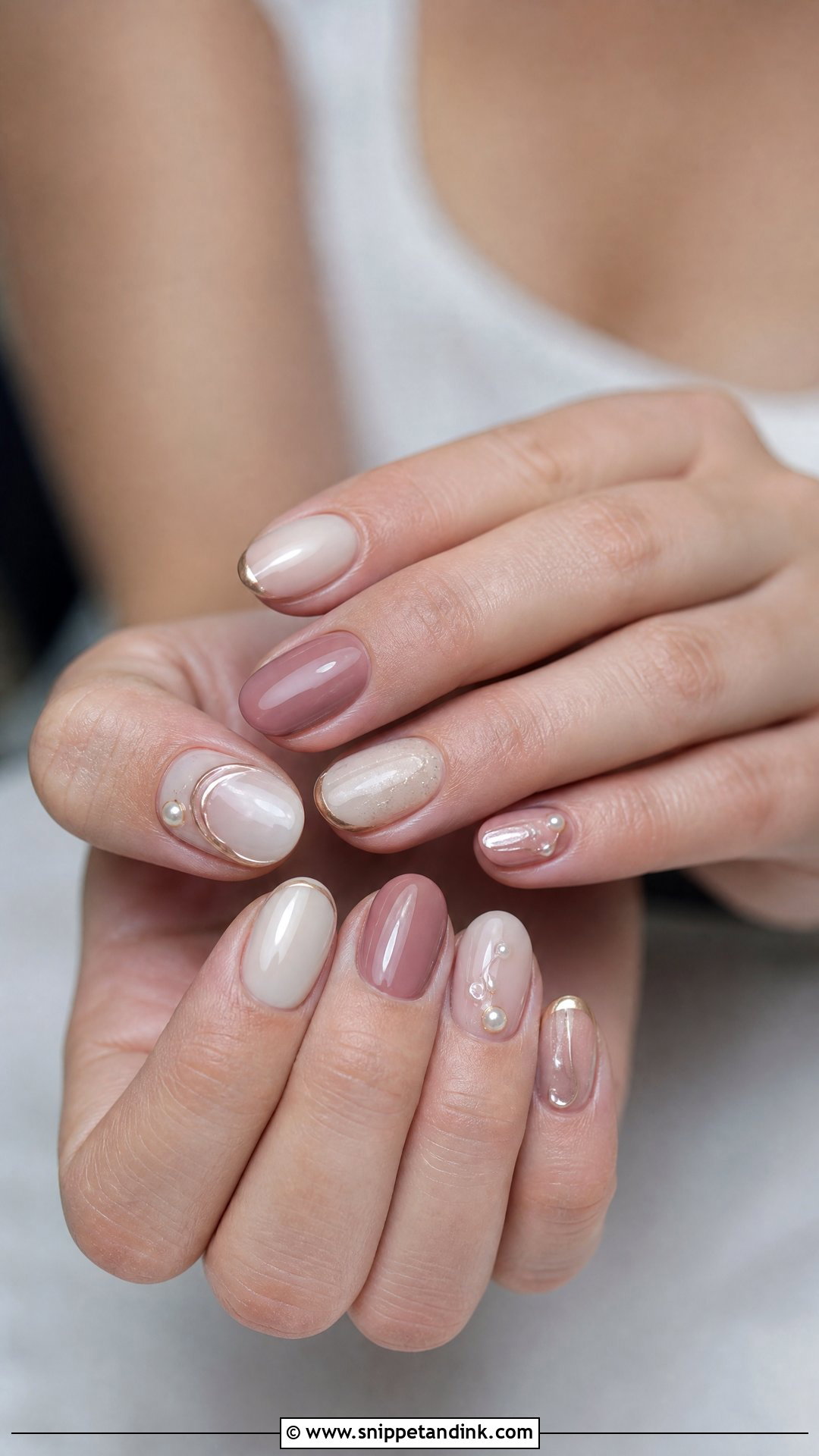
When dresses are mismatched or opinions differ, I set a short palette and let each bridesmaid choose from it: blush, nude, milky white, champagne, mauve or sage. The other approach is one base color with a different detail on each person, such as French tips, florals, chrome or pearls. Either way the group looks coordinated without being identical. It also solves skin tone and length differences neatly. Keep every finish soft and every color muted.
Getting Six Bridesmaids Through One Salon in an Afternoon
Group appointments go wrong in predictable ways: not enough technicians, a design that takes far longer than anyone expected, and two bridesmaids arriving with old gel that needs soaking off first. Removal alone can add twenty minutes per person, so tell the salon who’s coming in with existing product.
When you call, give the exact number of people, the design in one sentence and a reference photo. Ask how many technicians will be free at once and whether hand-painted art is possible for everyone or only for the bride. If the art is elaborate, I’d give the bride the detailed set and keep bridesmaids on a simpler version of the same idea, which also keeps the timing realistic. Prices vary a lot by area and design, so ask for a per-person quote before the day.
How the hands will actually be photographed
Bridesmaid hands show up mostly holding bouquets and resting on the bride’s shoulder, which means the camera sees the backs of the fingers and the cuticles more than the tips. Ragged cuticles and dry knuckles show more than chipped color. A drop of cuticle oil and a light, non-greasy hand cream about an hour before photos does more than any extra nail art.
A Clean Short Set Usually Wins in the Group Photo
If I had to pick one bridesmaid set for any wedding, it would be a short, well-shaped nail in a sheer pink, nude or milky white, possibly with a fine French tip. Chrome, pearls, florals and metallic accents add personality when the bride wants it, and seasonal colors like sage, dusty blue, lavender, mauve and champagne tie the hands to the dresses. Before booking, think about length, dress color, jewelry and how much upkeep each bridesmaid can manage. A simple set done well looks better in photos than a busy design done in a rush.
You'll Like These Ideas:


Leave a Reply