
Hair flowers are the smallest pieces I make for a wedding and the ones that work hardest. A bouquet sits in water until the last minute; a bloom in a bun lives out of water, against warm skin, under hairspray, for the whole day. That’s the lens I’d use on every idea below. Some are a few tiny white blooms on a sleek low bun, some a scatter of baby’s breath through a loose one, and some a full floral bun wrapped in roses and jasmine. Fresh flowers give the softest finish; silk ones earn their place in serious heat or on a very long day. Save the shapes you like, then talk to your florist and stylist together.
Which Blooms Last a Whole Day Out of Water
When a bride brings me a picture of a floral bun, the first thing I do is look at the flowers, not the hair. A bloom that sits happily in a vase for a week can collapse in a few hours against the warmth of your head. Here’s how I sort them for hair work.
Hardy enough for a long day
- Orchids, especially dendrobium and small cymbidium blooms
- Spray roses and mini roses, which stay closed longer than large garden roses
- Waxflower and baby’s breath
- Most sturdy greenery, such as eucalyptus tips and ruscus
Beautiful, but on borrowed time
- Hydrangea, which wilts quickly away from water
- Gardenia, whose petals bruise brown wherever they’re touched
- Peonies and garden roses, which keep opening in warm rooms
- Fresh jasmine, whose buds open and start to brown within hours
None of the second group is off limits. They simply need to go in late, or come with a spare, or be swapped for a good silk or dried version that copes with heat and long hours better.
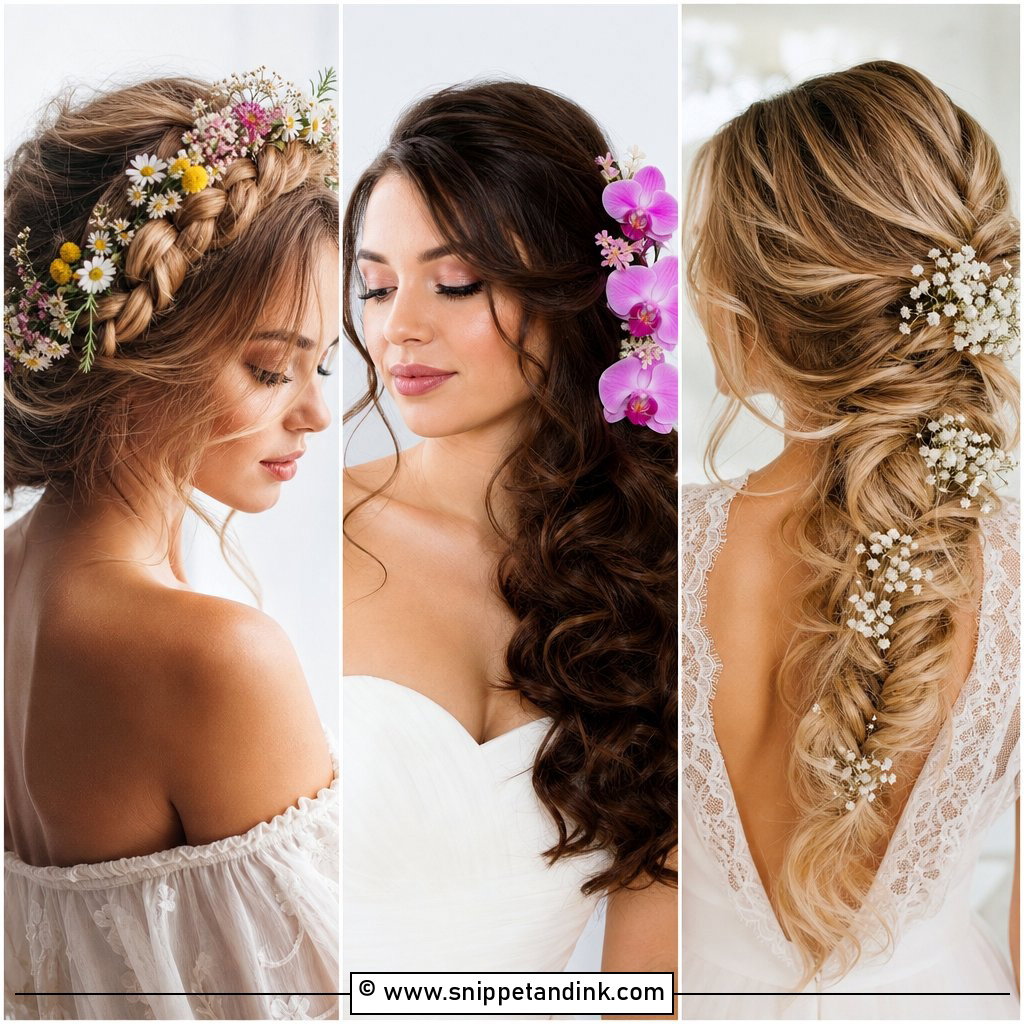
1. Low Wedding Bun With Flowers
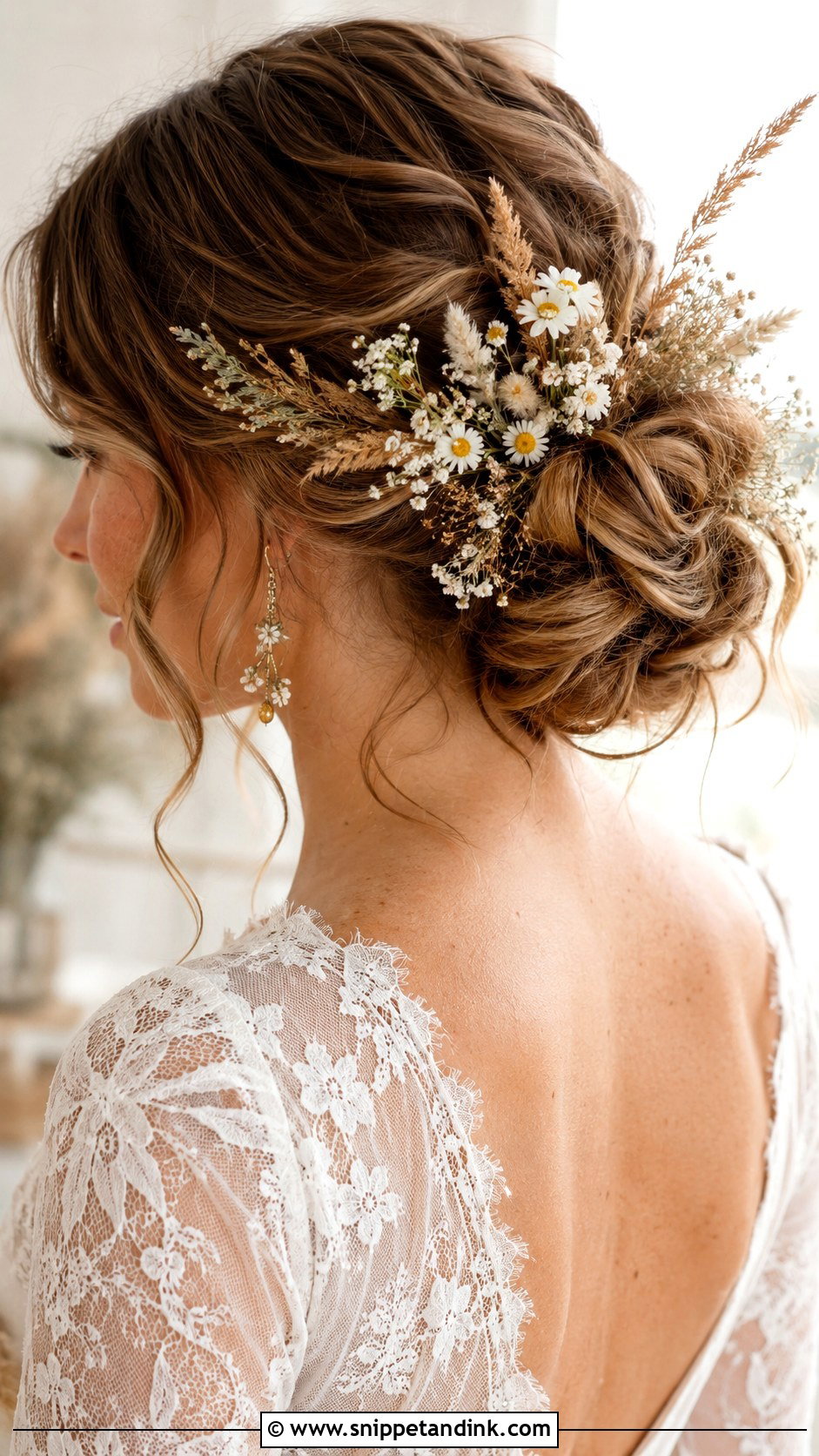
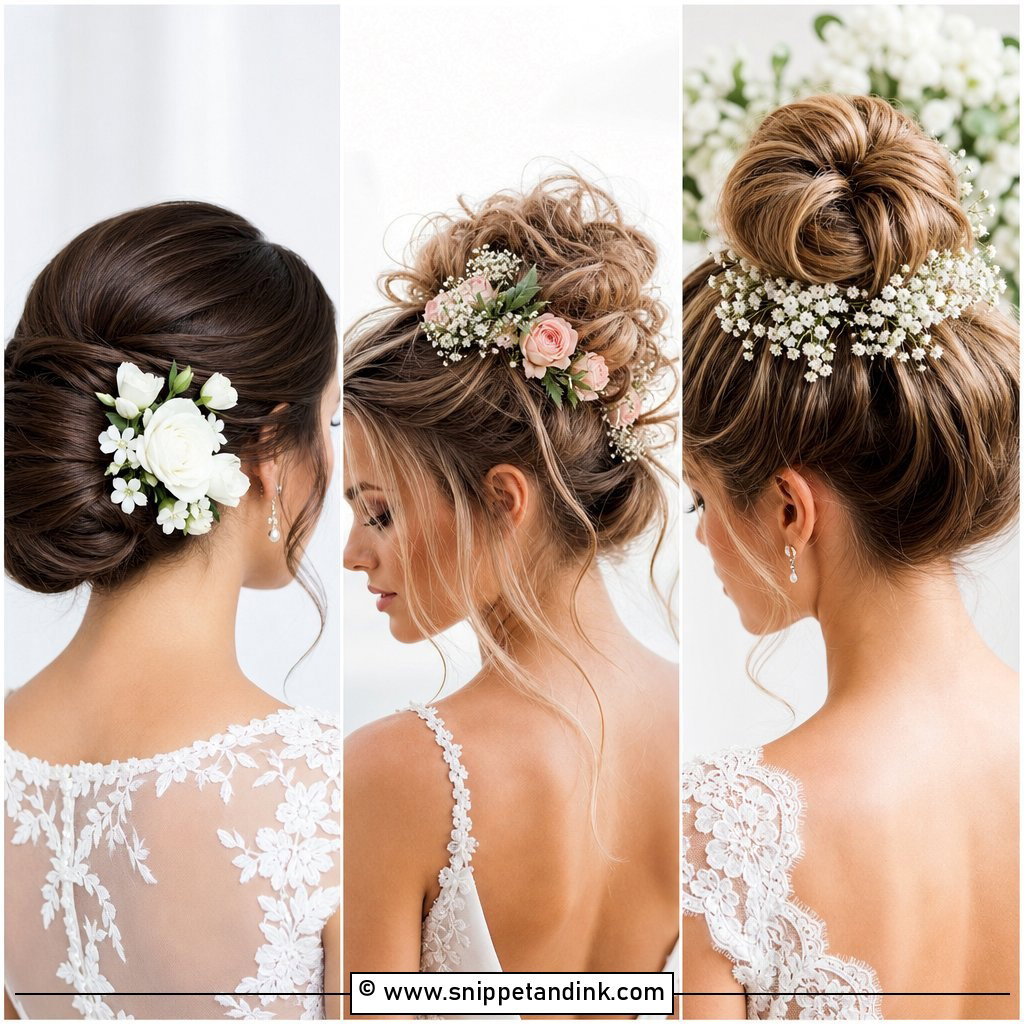
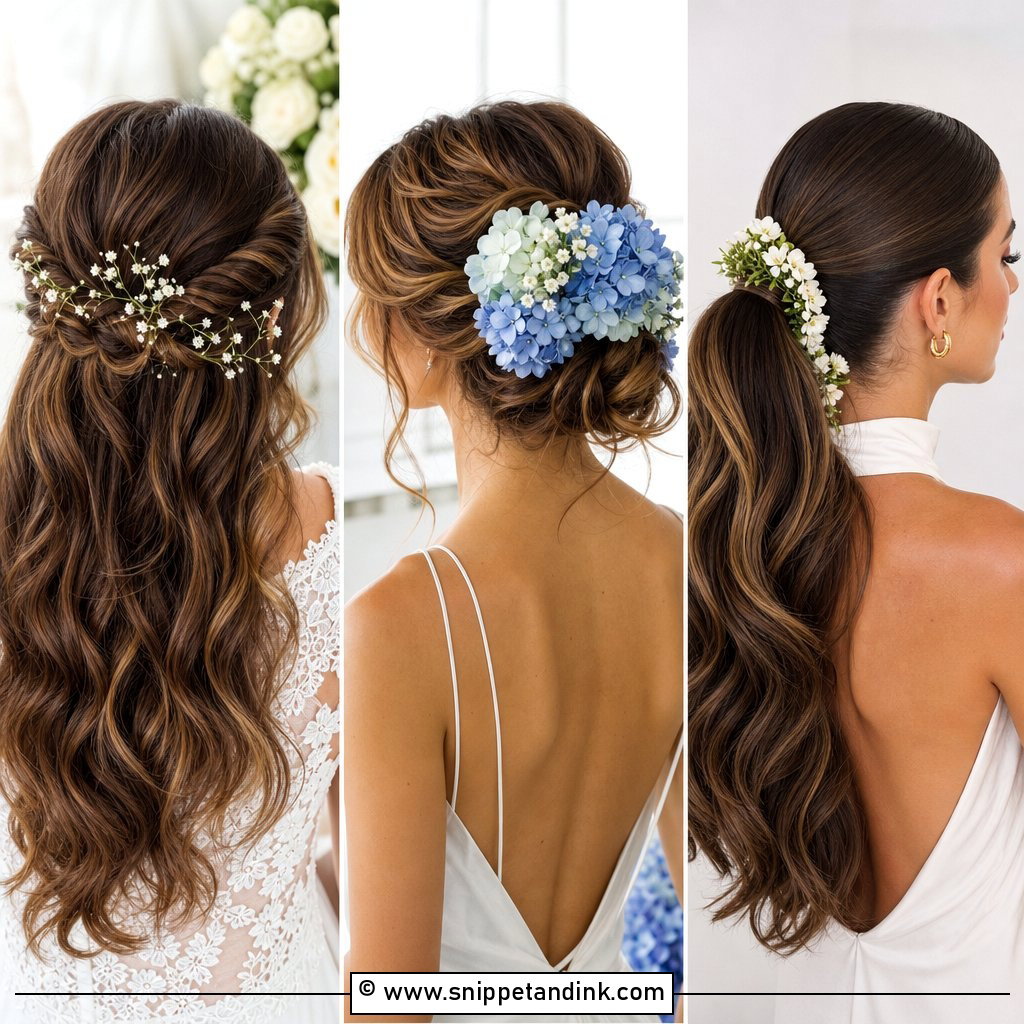
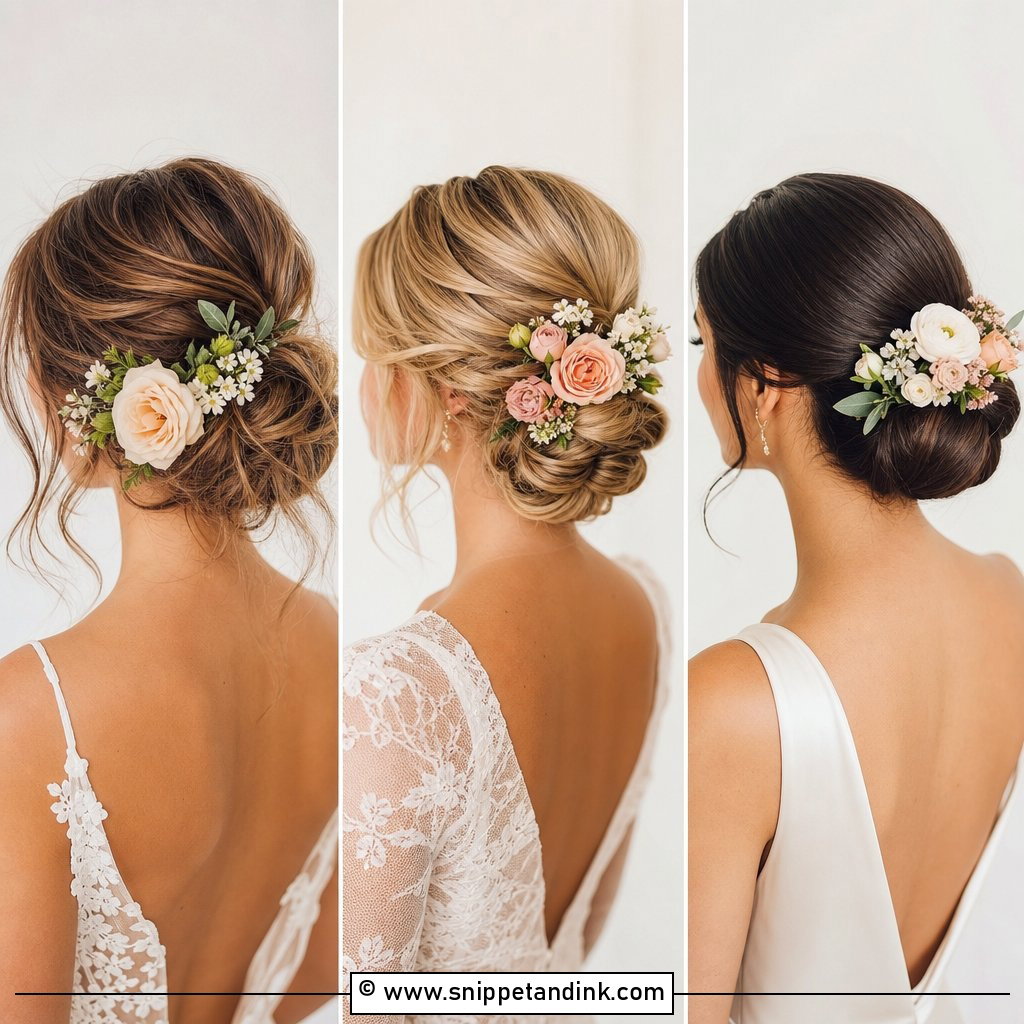
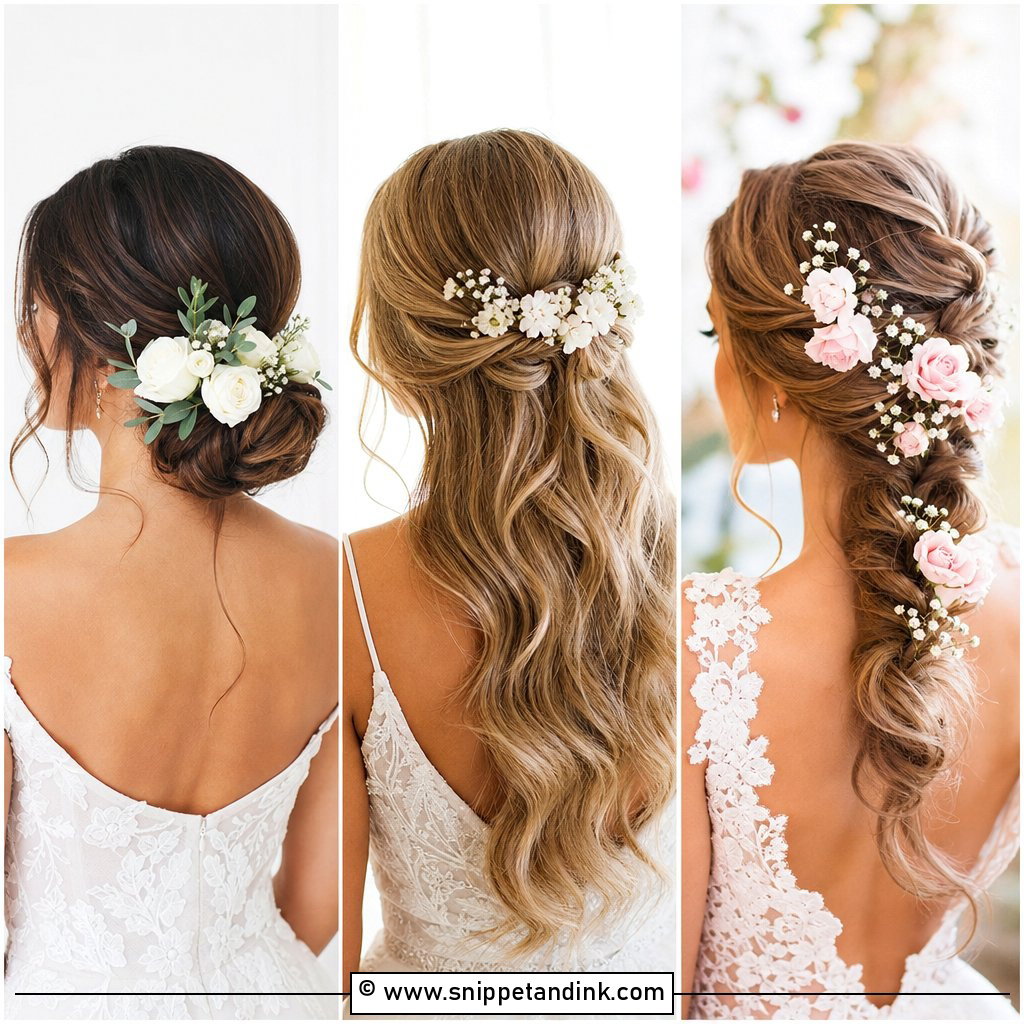
A low bun at the nape gives flowers a flat, steady surface to sit against, which is why it’s the shape I’m happiest to make pieces for. Small white spray roses, baby’s breath or a couple of orchids tucked to one side read clean with a veil, pearl pins and either an off-shoulder or high-neck gown. For a romantic version, the stylist leaves a few face-framing pieces and texture at the crown; for a modern dress, keep the bun smooth and set the flowers neatly around its base. I wire everything onto short picks so the stylist can push each one into the bun without it swinging.
2. Messy Wedding Bun With Flowers
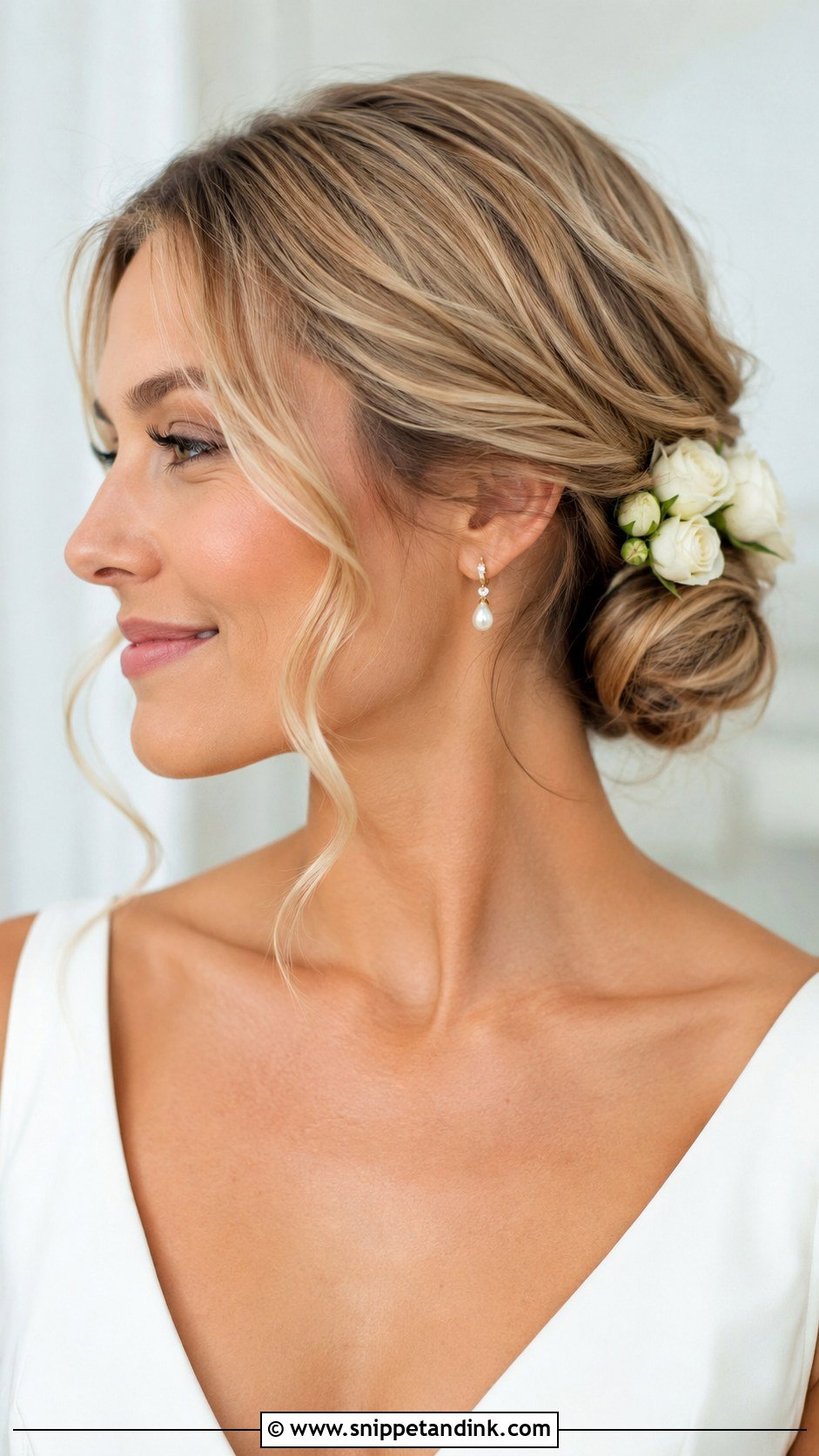
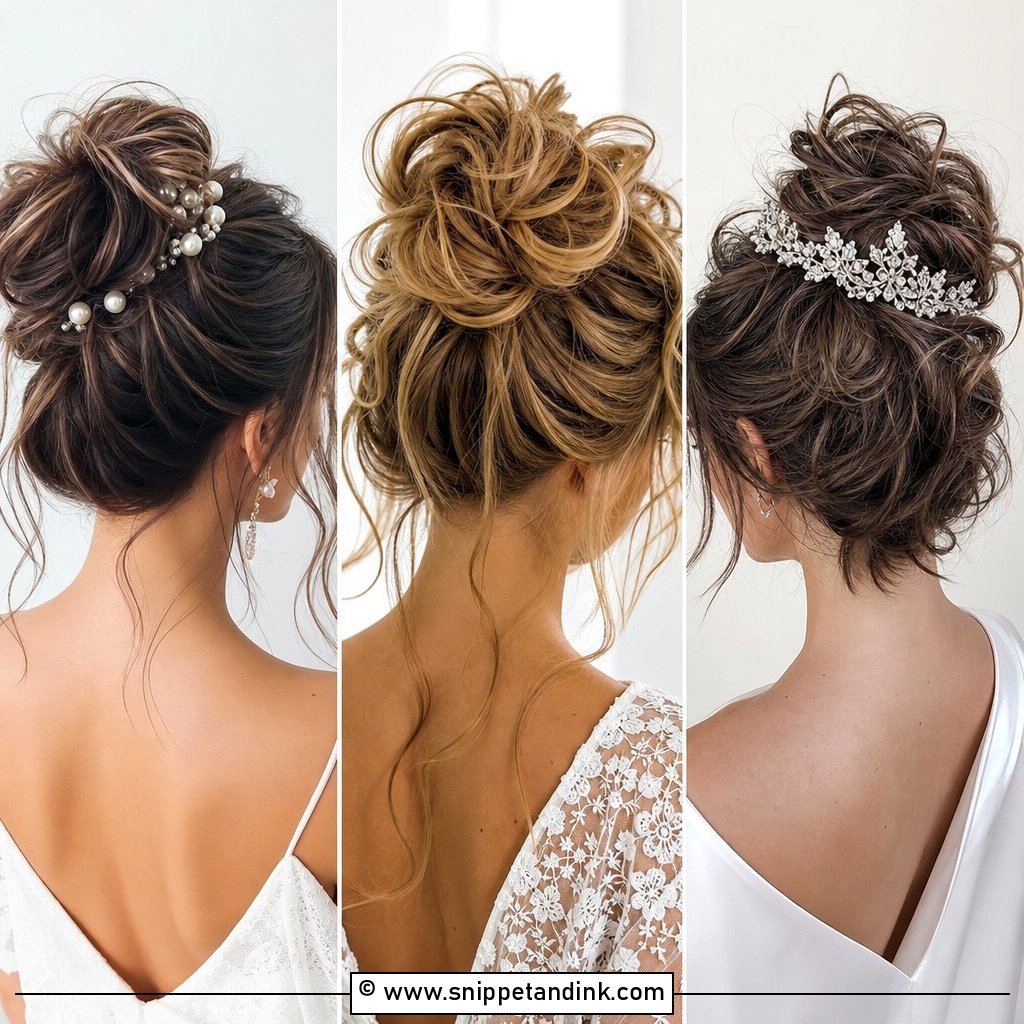
The trouble with a messy bun is that big flowers fall straight through it. Loose, pulled-out hair has nothing firm to grip, so I keep the blooms small: baby’s breath, waxflower or little daisies that nest into the texture rather than sitting on top. It suits outdoor and rustic venues and boho gowns, provided the mess is controlled. Ask your stylist to build a firm core under the airy surface and pin the flowers into that core, never into the loose top layer.
3. Sleek Wedding Bun With Flowers
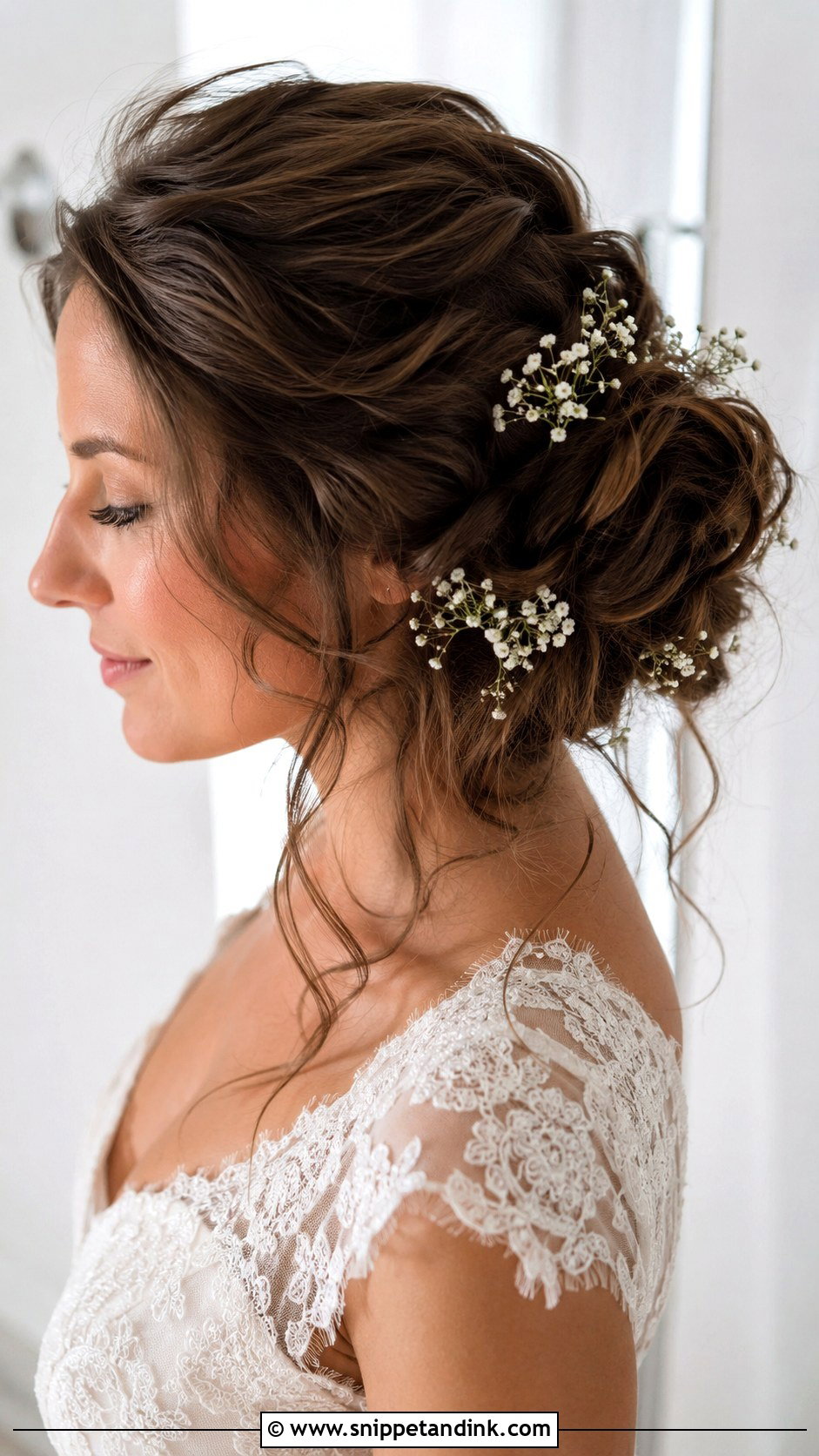
Sleek hair shows every flower stem, so this is where wiring and taping really matter. The hair is smoothed back into a neat bun with one small floral detail, a single orchid, one rose or a few floral pins, beside a satin gown or cathedral veil. Because the shape is tight and controlled, it copes with humid weather better than looser styles. I’d ask your stylist to spray and add shine before the flowers go in, since hairspray browns delicate petals. Matching the accent to a bloom from your bouquet ties the two together quietly.
4. High Wedding Bun With Flowers
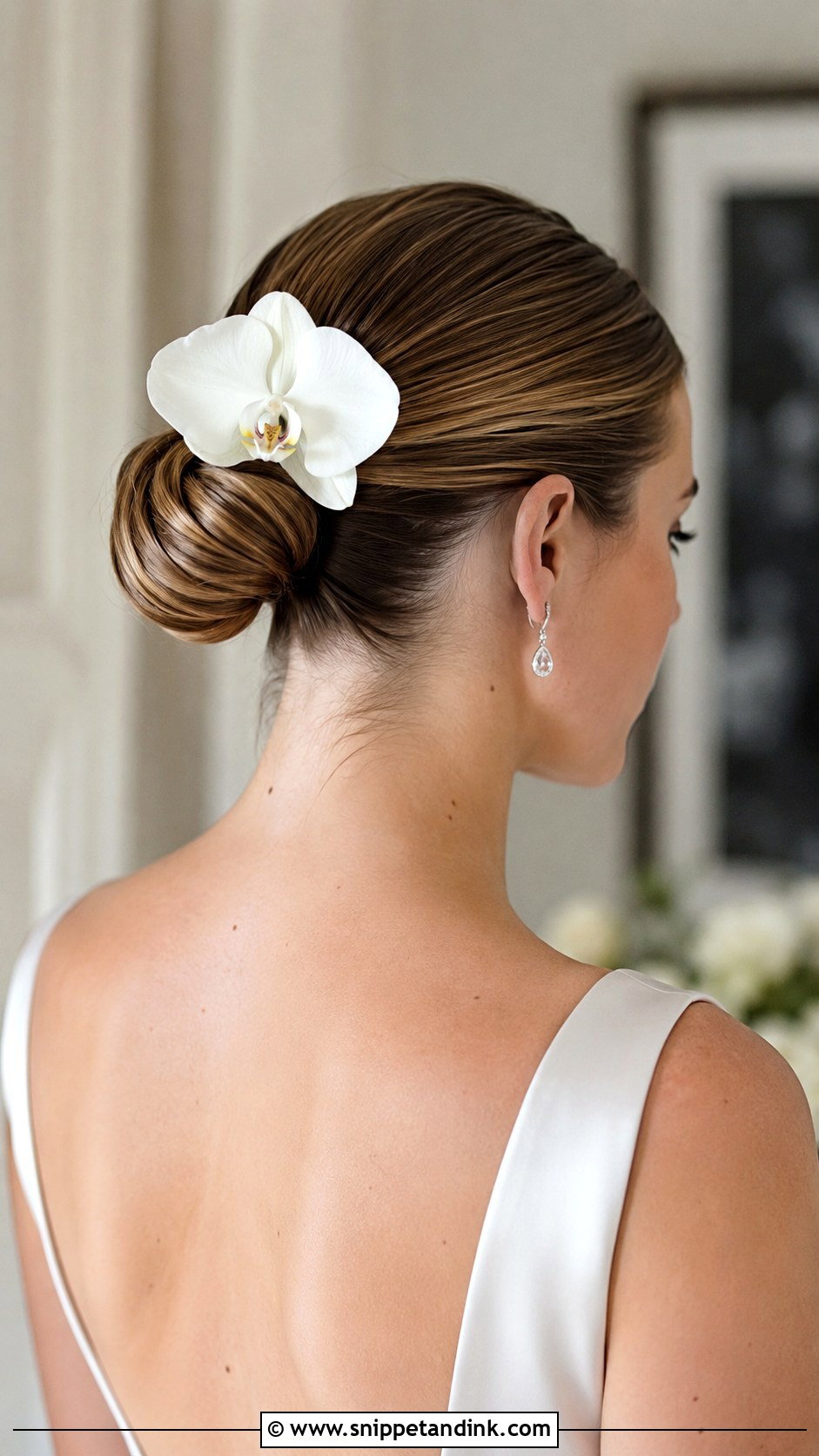
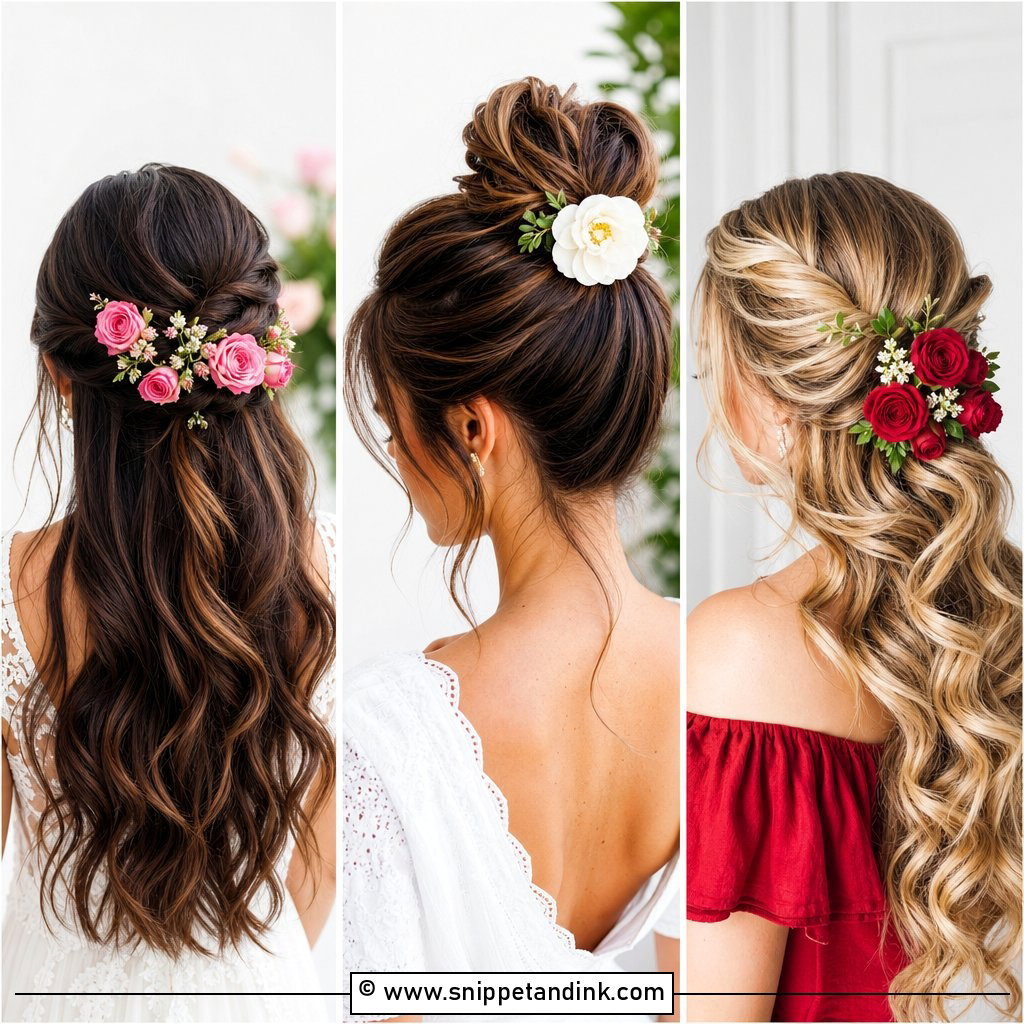
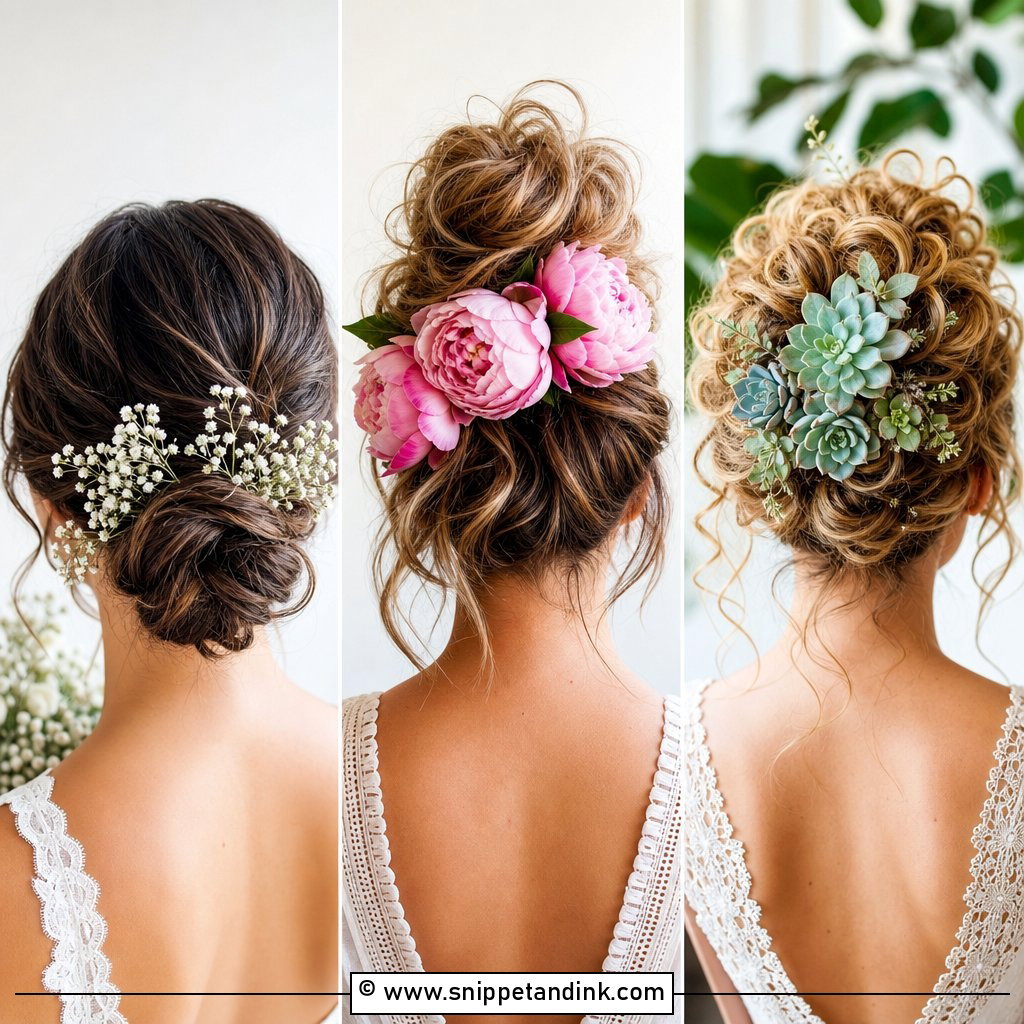
A high bun lifts the hair off a detailed bodice, an open back or dramatic sleeves, and it shows earrings well in photos. It can be smooth like a ballerina bun or softly textured. Flowers go on one side or around the back so the weight doesn’t pull the bun forward, which is a real risk with heavier blooms placed on top. Keep the arrangement light and the bun firm but not tight; a high bun is already pulling against the scalp for many hours before any flowers are added.
5. Braided Wedding Bun With Flowers
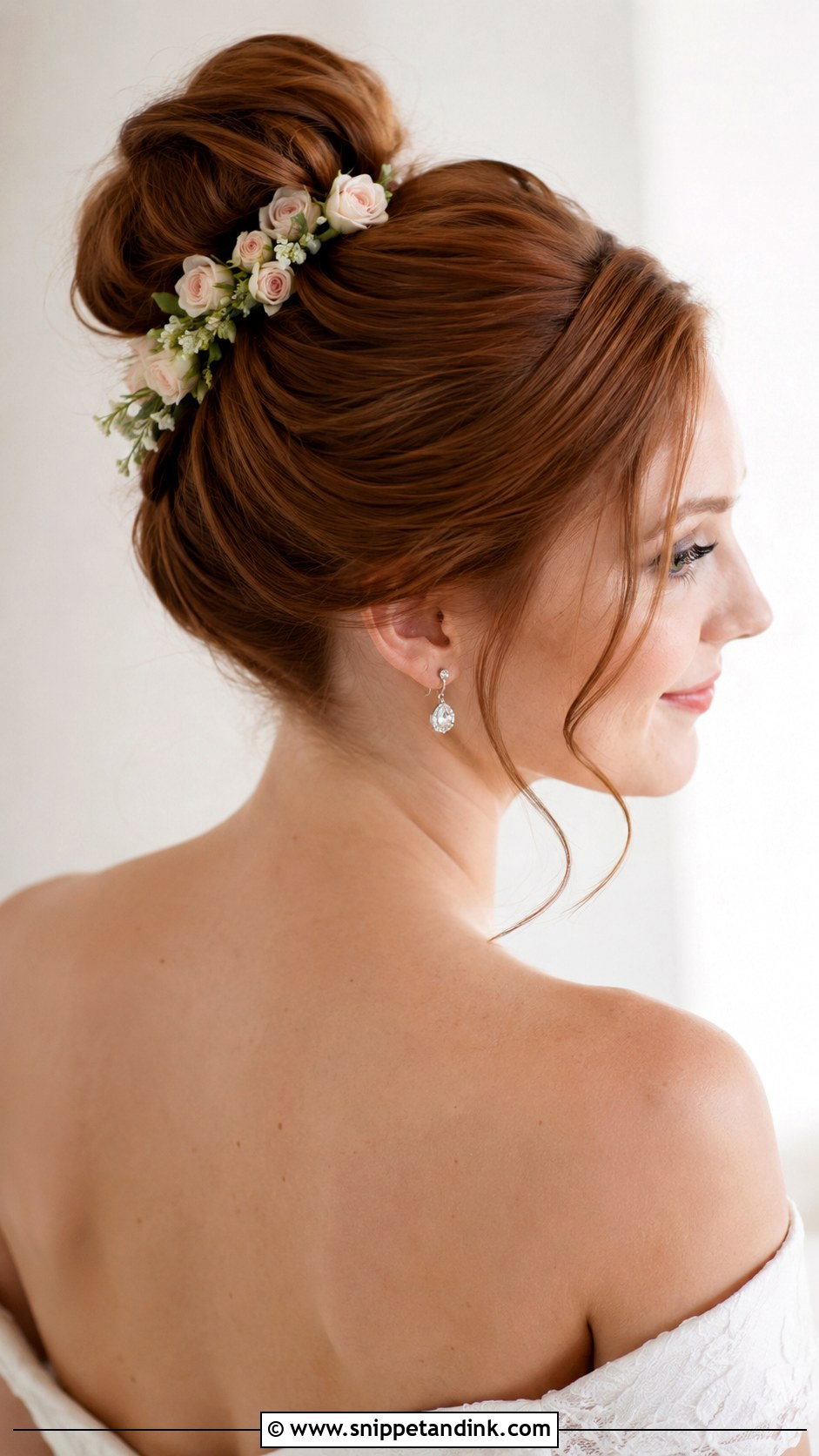
Braids give flowers something to hold. The braid can wrap the bun, lead into it from the side or form a soft crown before everything is pinned low, and stems tuck into the plaits as if they grew there. Baby’s breath, mini roses and small jasmine blooms all slot in easily. I cut stems very short for braids, so I always send a few spares; one or two tend to get crushed while the stylist works. Thick or highlighted hair and lace or floral-embroidered gowns show this best.
6. Chignon Wedding Bun With Flowers
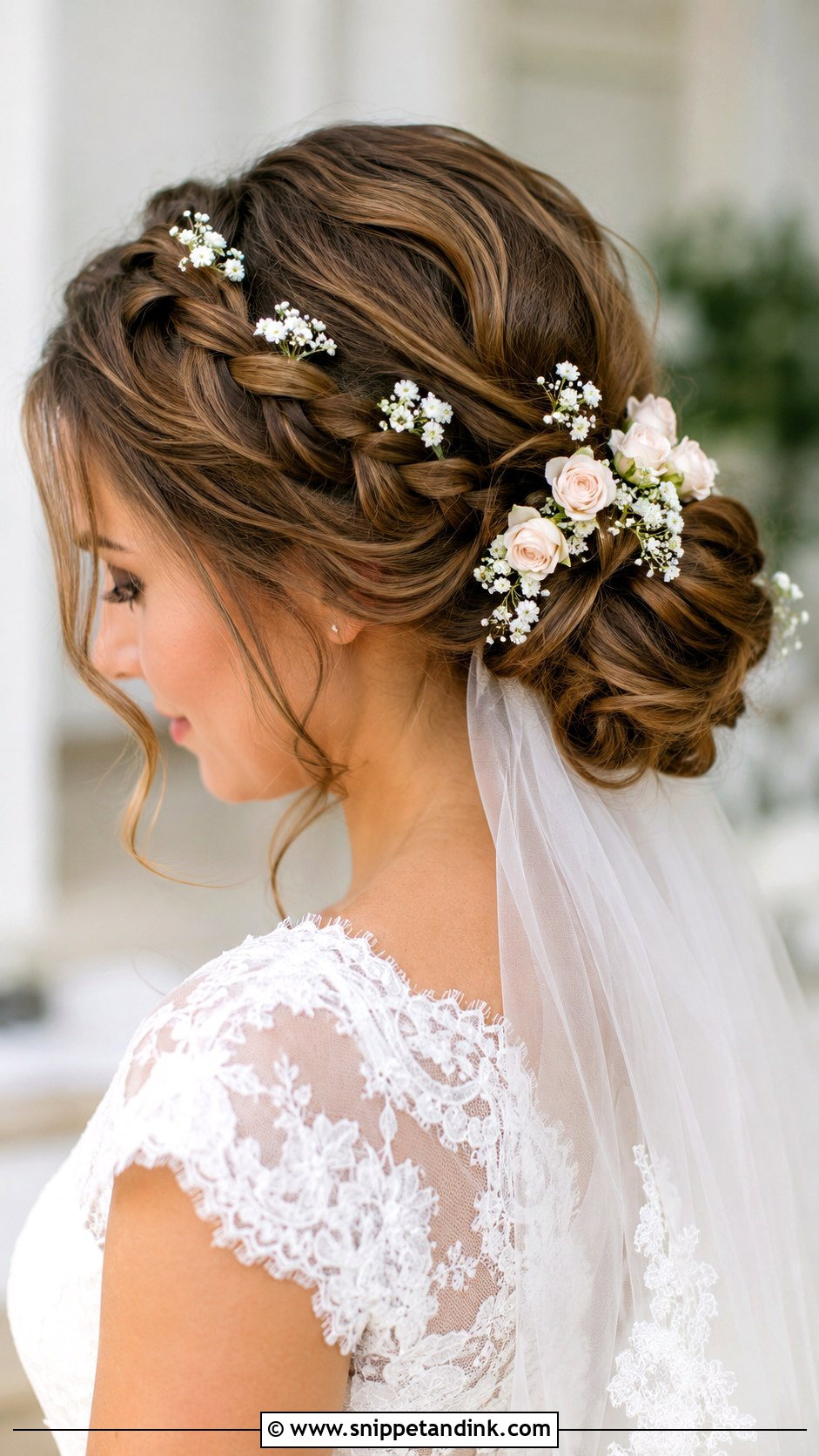
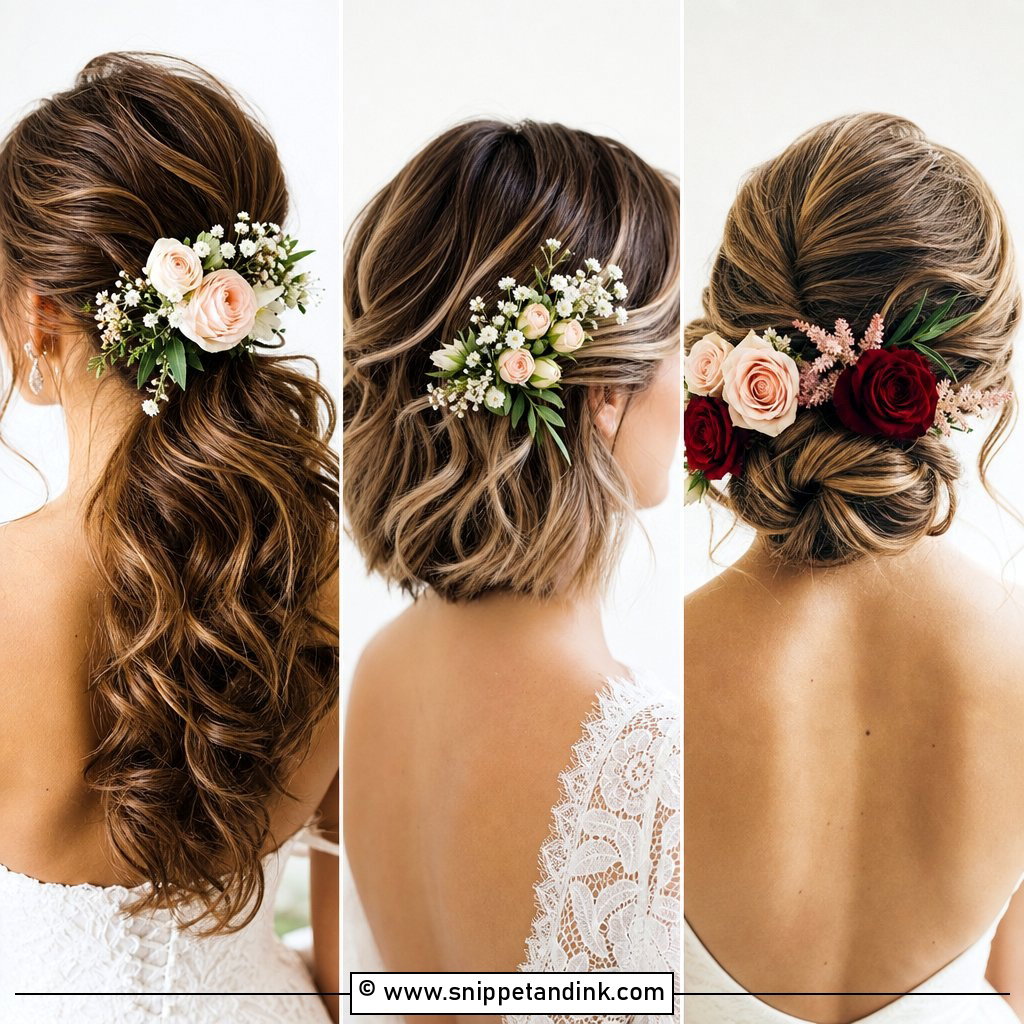
The chignon is the classic: a smooth roll or tuck sitting low at the nape, refined without feeling stiff. Flowers sit on one side, underneath the roll or along its curve. Blush garden roses, ivory orchids and a few sprigs of greenery are the combination I’m asked for most. Because the chignon is dense, it gives both the veil and the flower picks a firm base, so it’s the safest shape for anyone nervous about flowers slipping.
7. Side Wedding Bun With Flowers
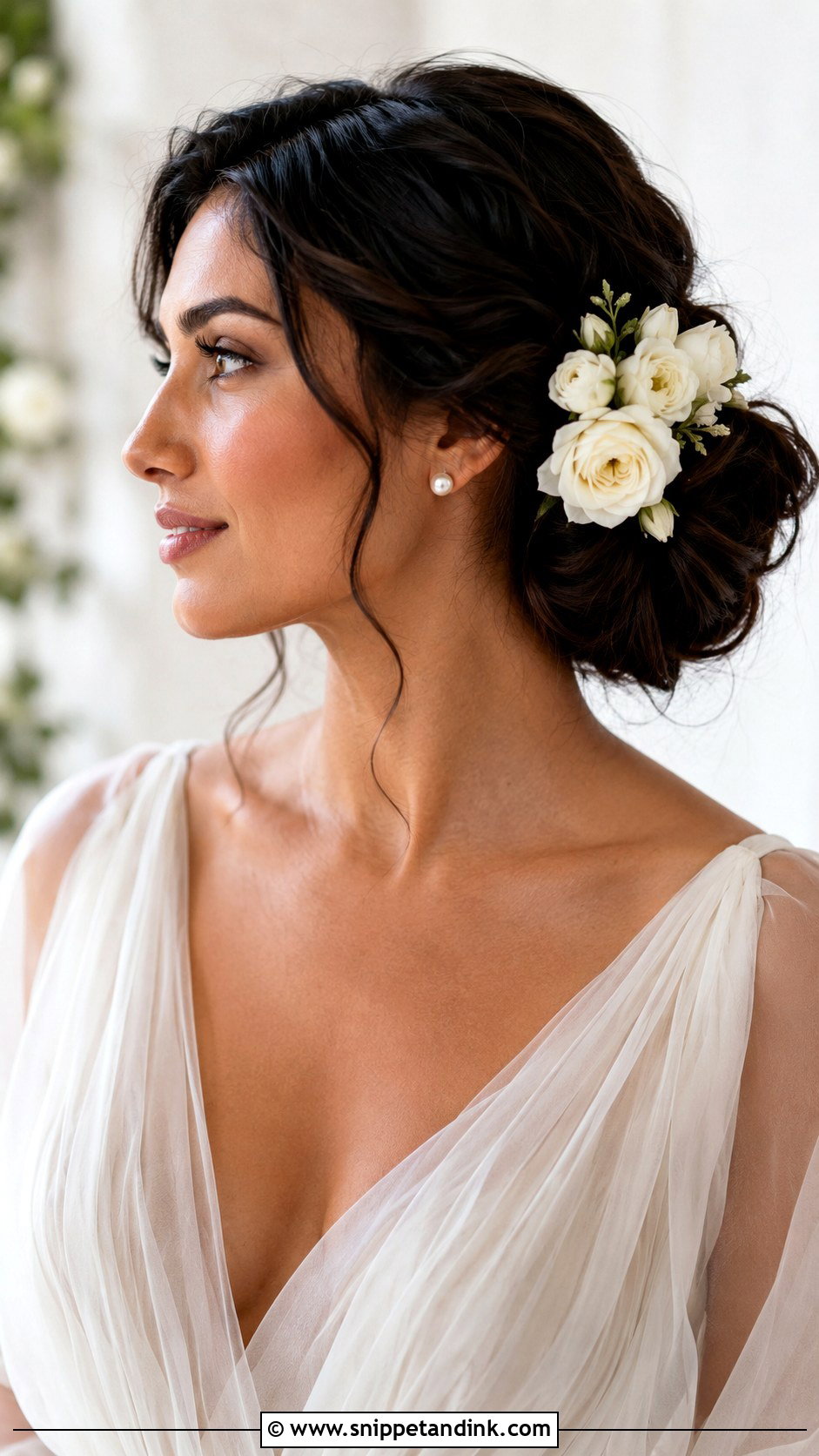
Set off-center near the nape, a side bun puts the flowers where the camera sees them, so the floral detail shows in face-on portraits without you turning around. The flowers cluster on the fuller side for balance, and side parts, soft waves and loose tendrils sit naturally with it. Scale is the decision here. I size the blooms to the bun, so small roses, ranunculus or baby’s breath rather than one big head that dwarfs it. Ranunculus is pretty but softer than a rose, so I’d keep it for cooler days.
8. Curly Wedding Bun With Flowers
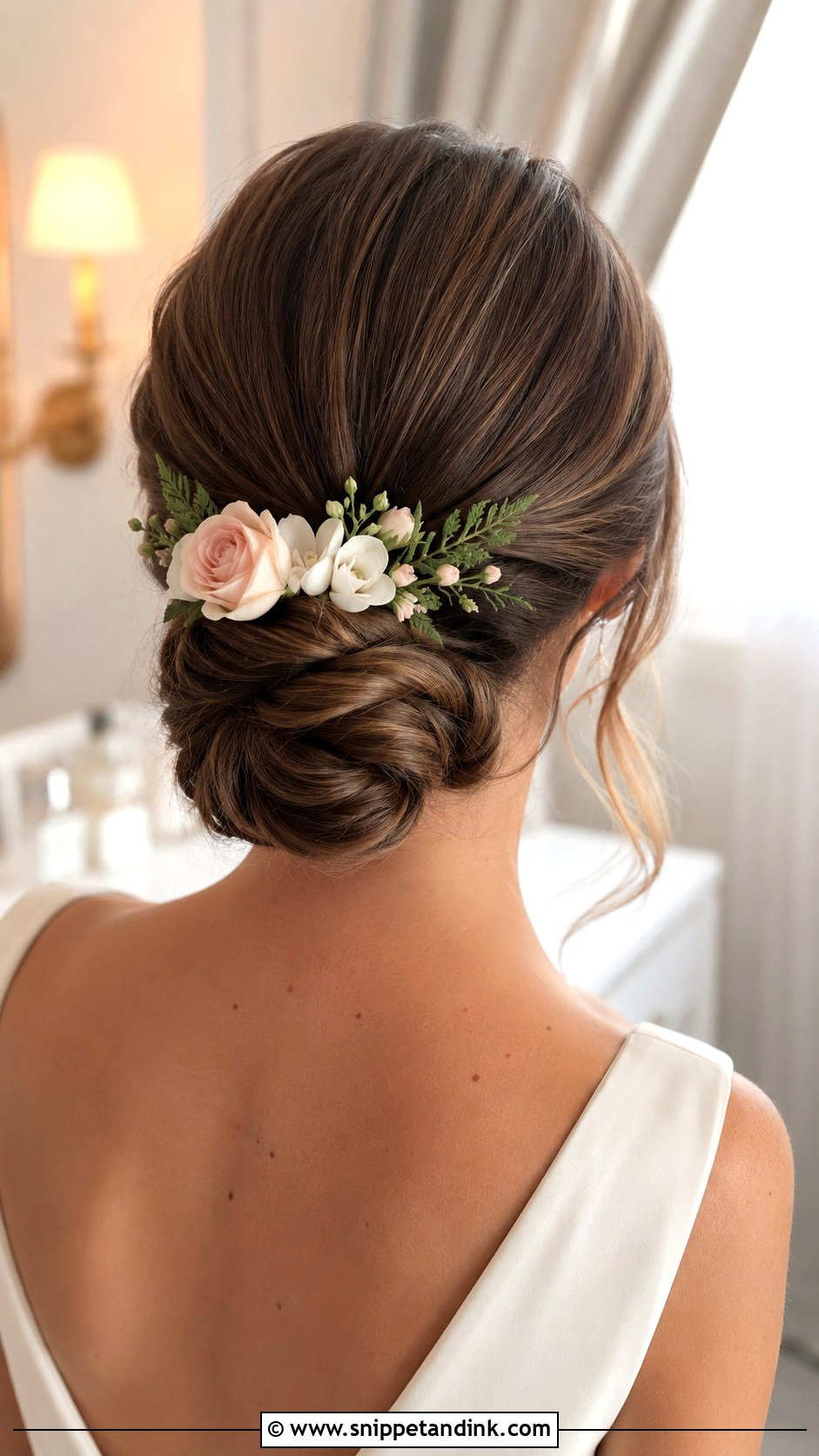
Curls hold flowers well because the stems have texture to grip, whether the bun sits low, mid or high. The flowers should go between the curls, not on top of them, so they look grown into the style. Small blooms are kinder here, since larger heads flatten the very texture you’re showing off. Ask your stylist to use your usual curl products and keep heavy spray off, and to do that before the flowers go in; sticky product dulls petals quickly. It suits naturally curly hair, wavy hair and set curls equally.
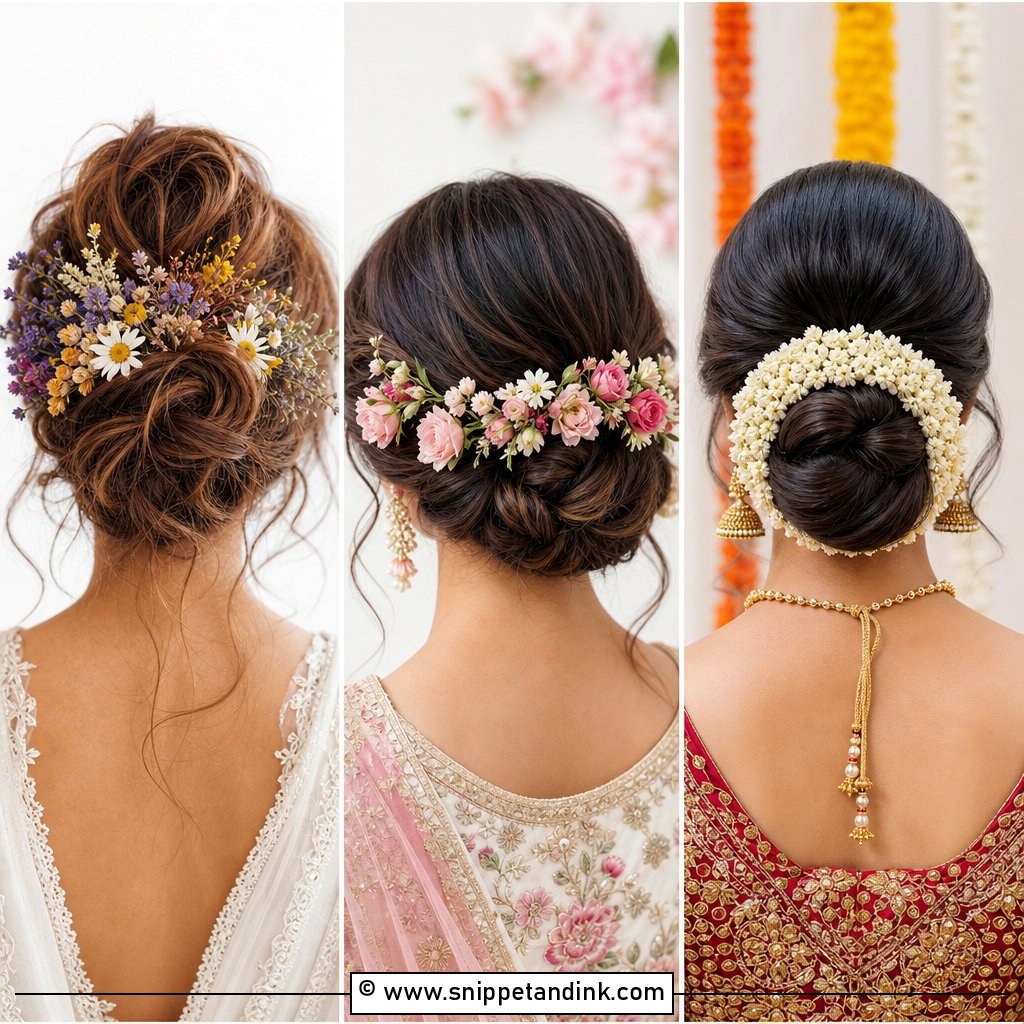
9. Indian Wedding Bun With Flowers
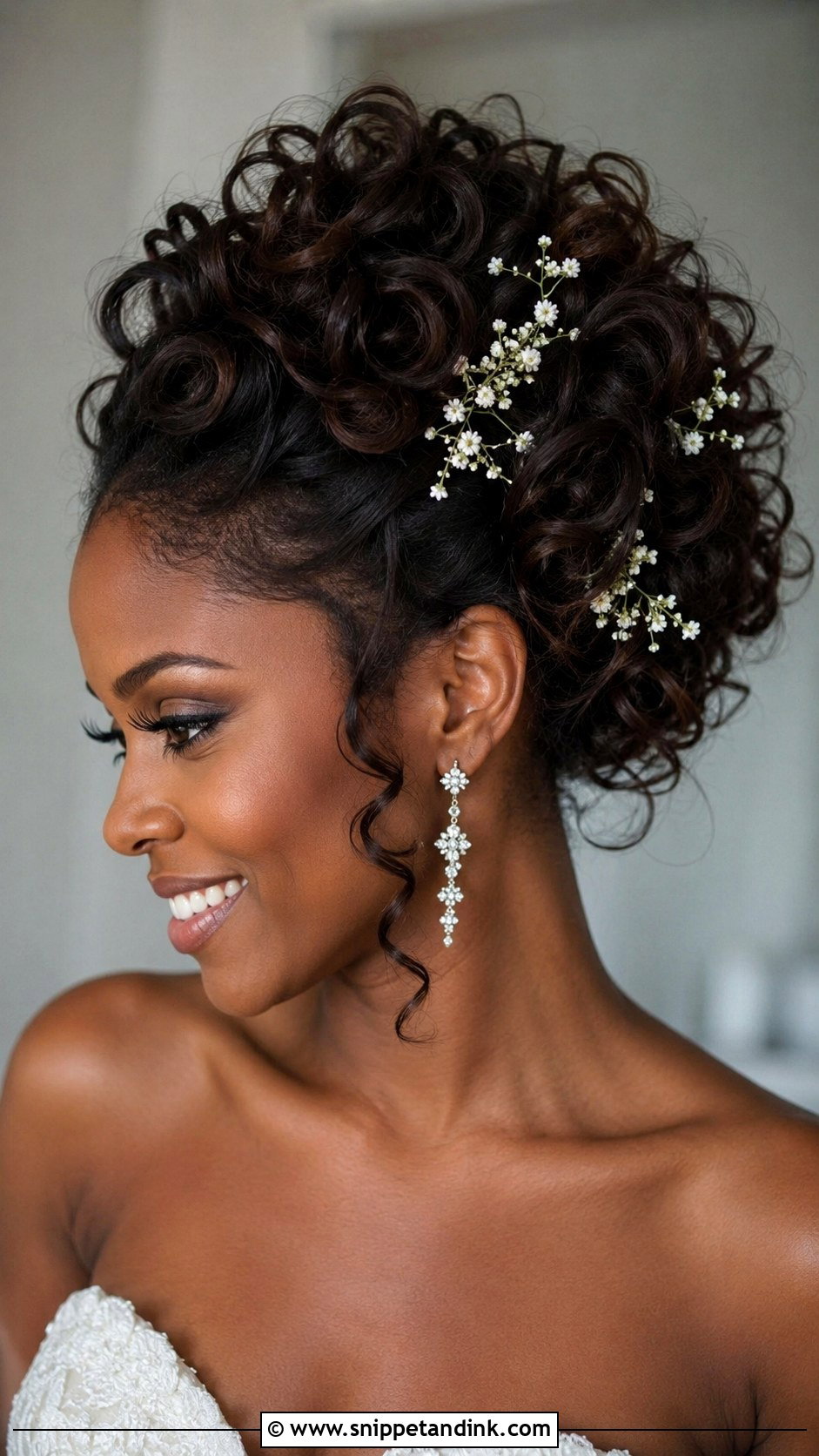
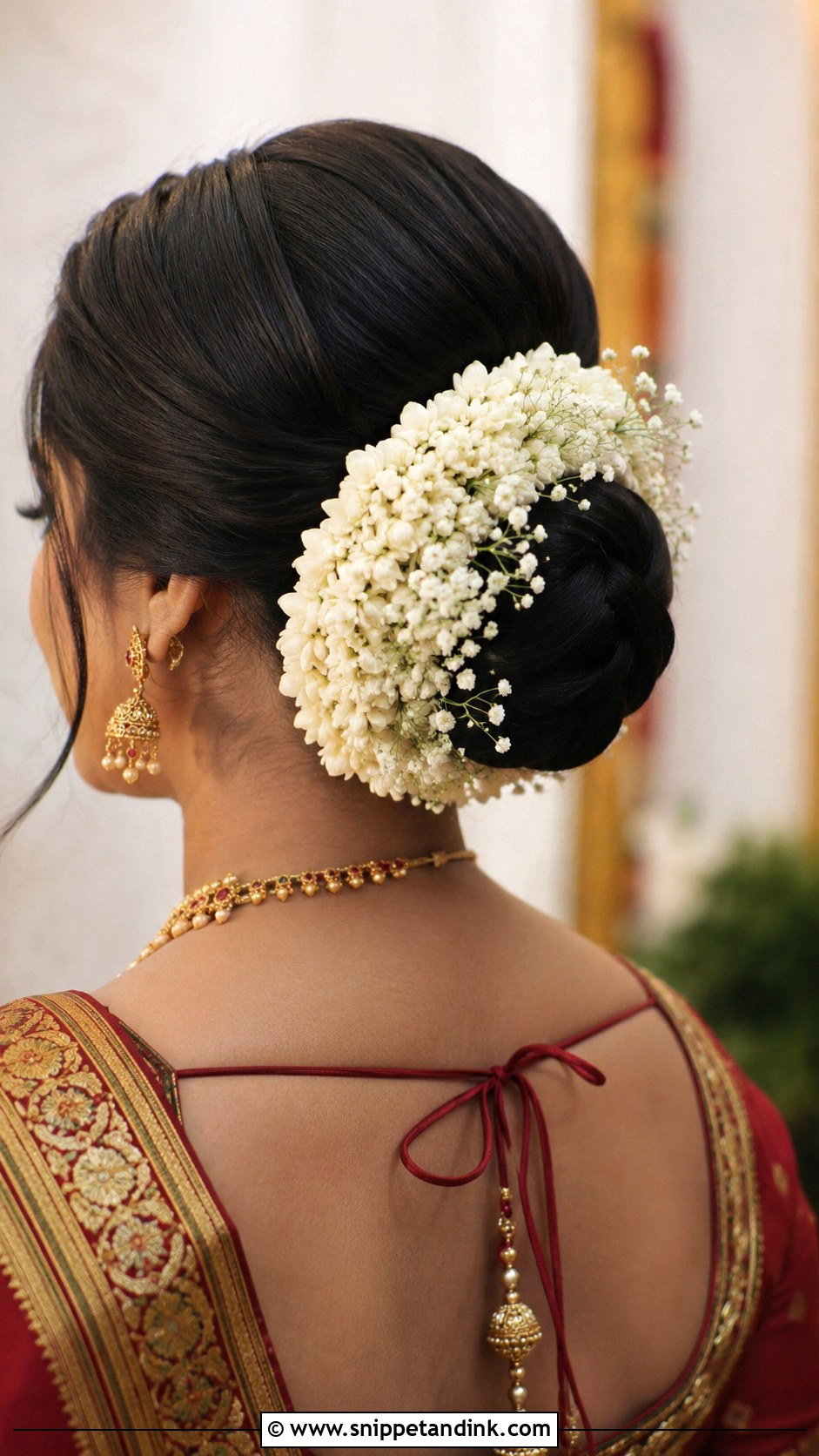
An Indian wedding bun with flowers is often the fullest floral work I do for hair, built around jasmine, roses or a gajra wrapped round a sleek or padded bun. The flowers can circle the bun, cover the back entirely or frame the jewelry, beside a lehenga or saree, tikka and heavy earrings. Fresh jasmine is chosen for its scent, but its buds open and brown within hours of picking. I string it as late as I can, keep it in damp cloth in the cooler, and suggest a second strand for a long reception. The stylist needs to tie it to the bun itself, not to loose hair.
10. Rose Wedding Bun With Flowers
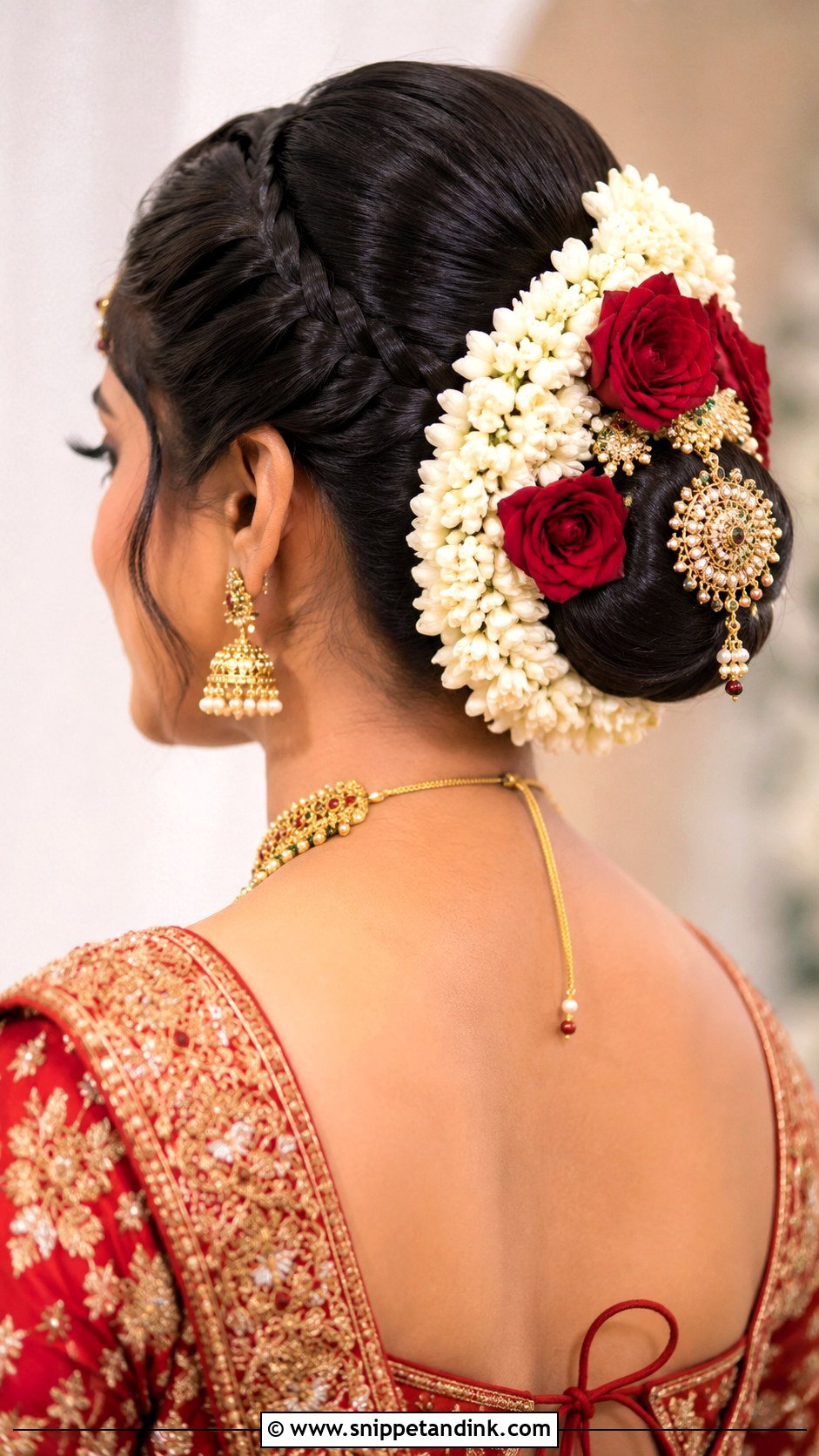
Roses are the easiest flower to match to everything else, because they come in so many shades: white for a classic look, blush for softness, peach for warmth. The bun under them can be smooth, textured or braided. Big garden roses make a bold statement but they’re heavy and open fast in heat; mini and spray roses hold their shape for far longer out of water. Keep the placement balanced so the bun doesn’t tilt to one side by the evening.
11. Baby’s Breath Wedding Bun With Flowers
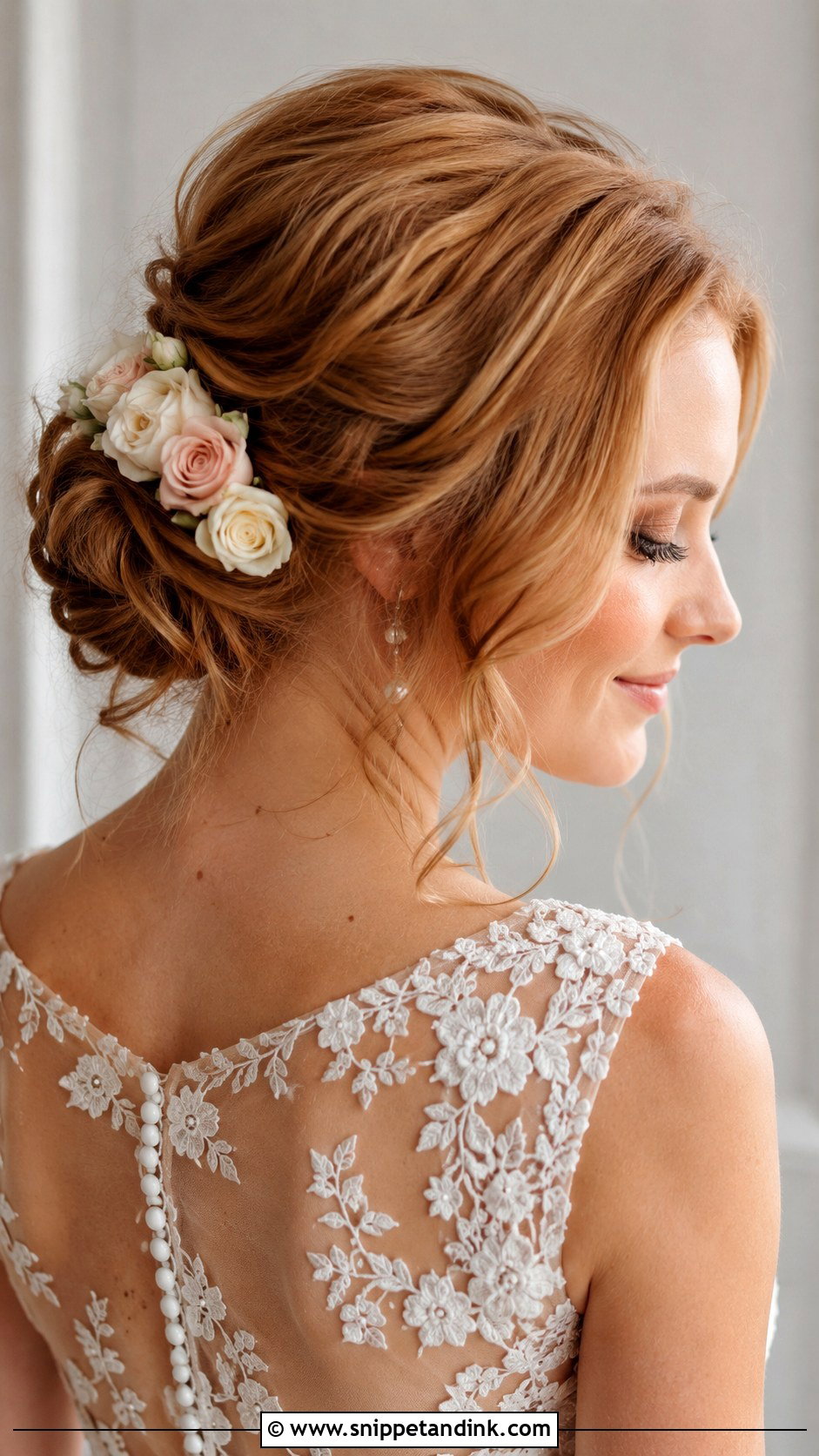
Baby’s breath is light enough to scatter through a bun, around a braid or along the back of a low updo without adding any weight. It suits nearly every setting, from barns and gardens to chapels, and pairs easily with pearls and lace. Use small clusters rather than one big bunch, so it reads as scattered, not stuffed. One honest note: fresh baby’s breath has a faint musty smell that some people notice up close. If you’re sensitive to it, ask for a dried or preserved version, which looks almost identical in photos.
12. Orchid Wedding Bun With Flowers
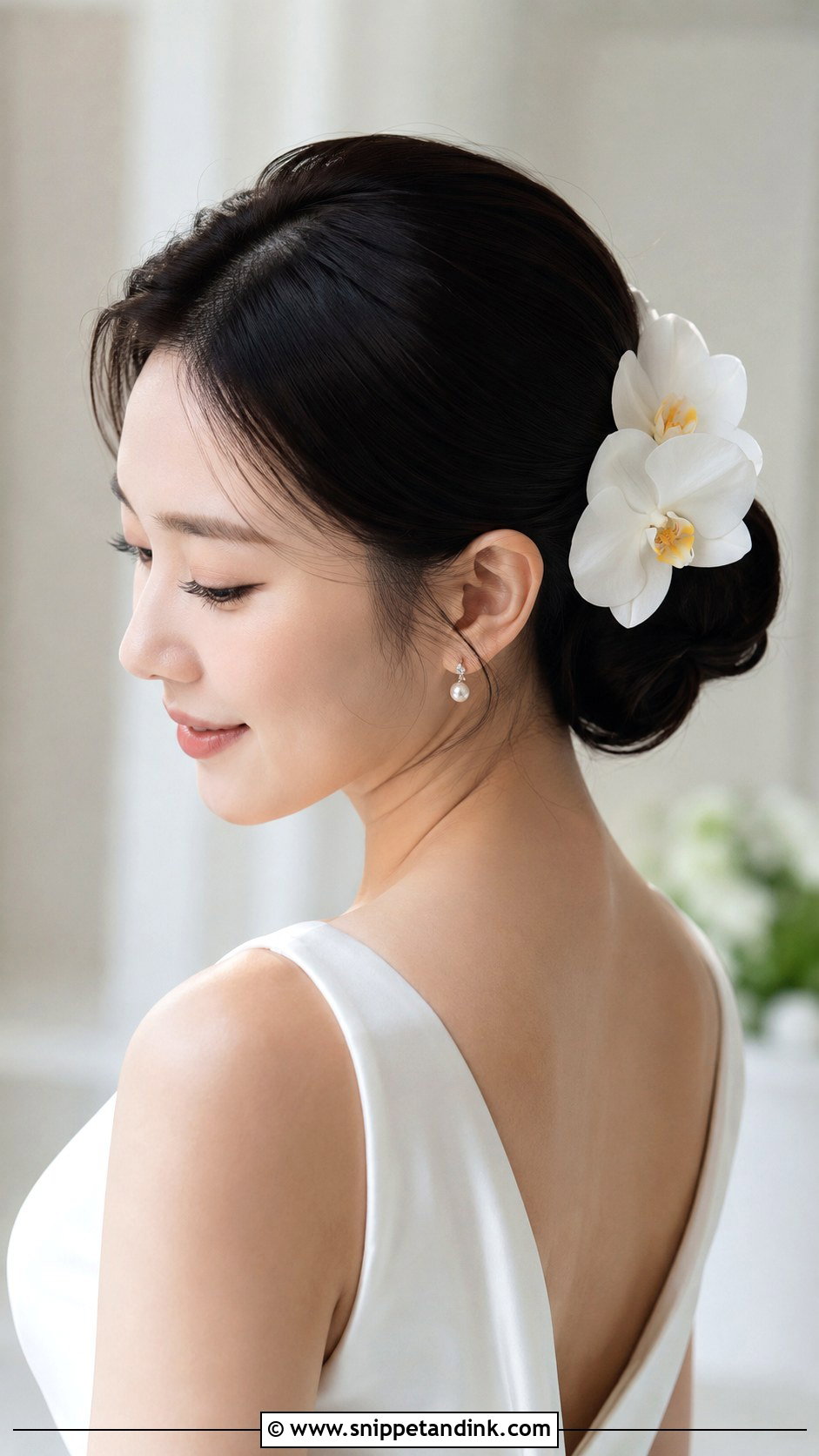
Orchids are my favorite bloom to put in hair, because they’re light, waxy and last for hours out of water. Their clean shape suits polished buns, tropical weddings and evening ceremonies alike. One or two on the side of a low bun look refined; several around it feel more dramatic. White is classic, and soft pink or purple adds color without shouting. Placement matters, as each bloom is broad; keep the bun neat underneath so the orchids are the only accent. Simple gowns and silk carry them best.
13. Jasmine Wedding Bun With Flowers
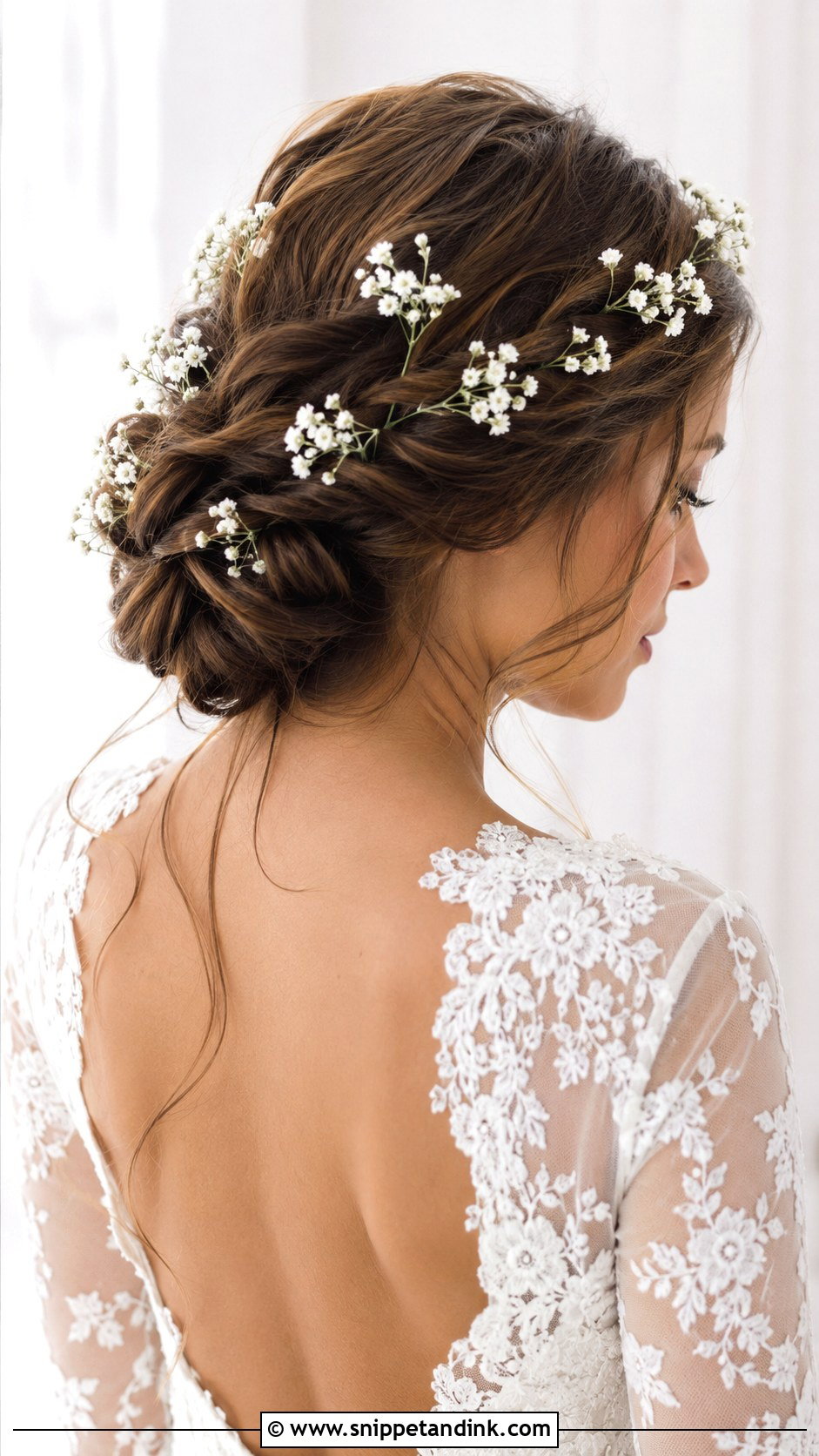
A jasmine wedding bun is the one guests remember by scent as much as sight. Jasmine can wrap the bun as a gajra, sit in small clusters or layer with roses for something fuller, and for many families it carries real meaning at traditional and cultural ceremonies. The bun underneath can be sleek or lightly textured. Secure the strands close to the bun so they don’t loosen and sag through the day. Against dark hair the white flowers show beautifully, though they’ll begin to cream and brown by evening, which is entirely natural.
14. Boho Wedding Bun With Flowers
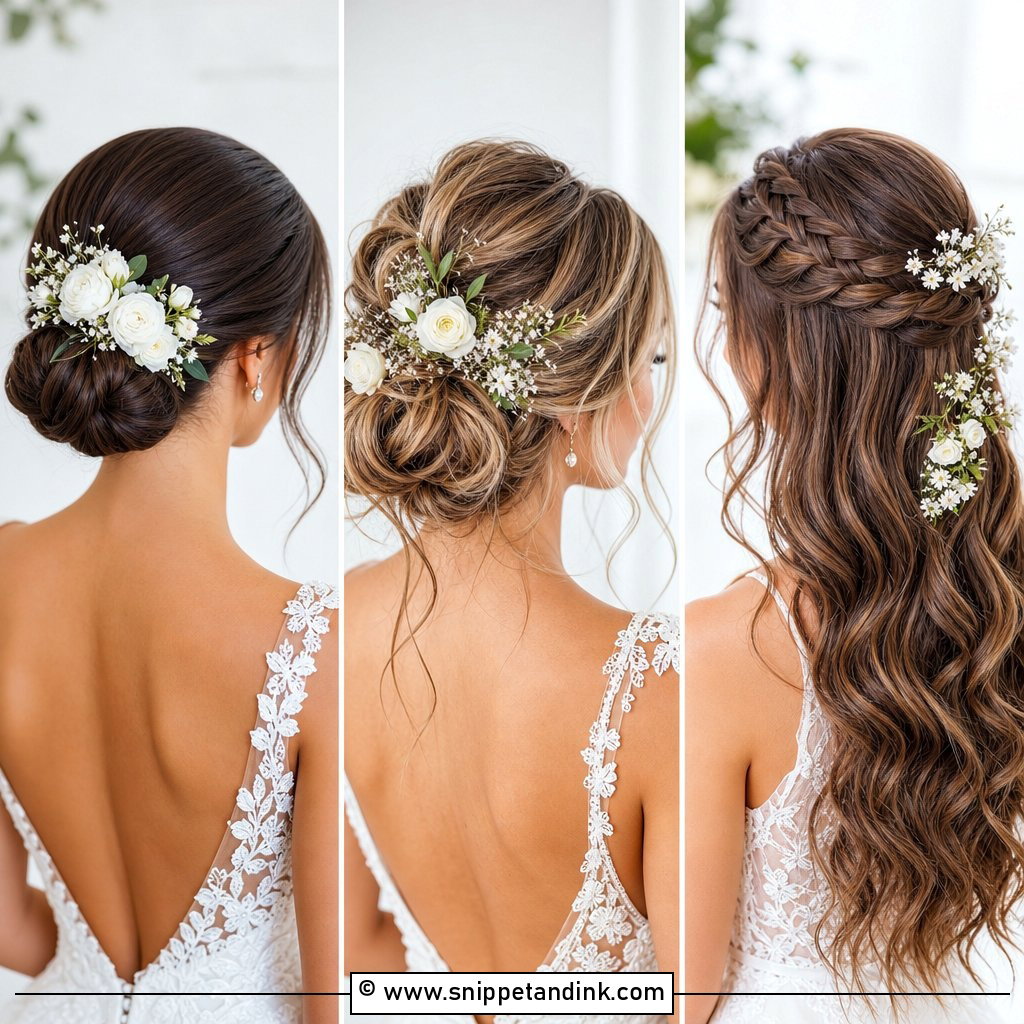
Boho is loose by design: soft waves, gentle volume and a few face-framing pieces, with wildflowers, dried stems, baby’s breath, daisies or small roses tucked in an organic pattern. Woodland, beach and outdoor ceremonies suit it, as do lace dresses. Dried flowers are worth considering here; they don’t wilt at all and suit the relaxed look. Whatever you choose, the pins and stems need to be secure even though the style looks casual. Muted, natural tones keep it from looking busy on camera.
15. Full Floral Wedding Bun
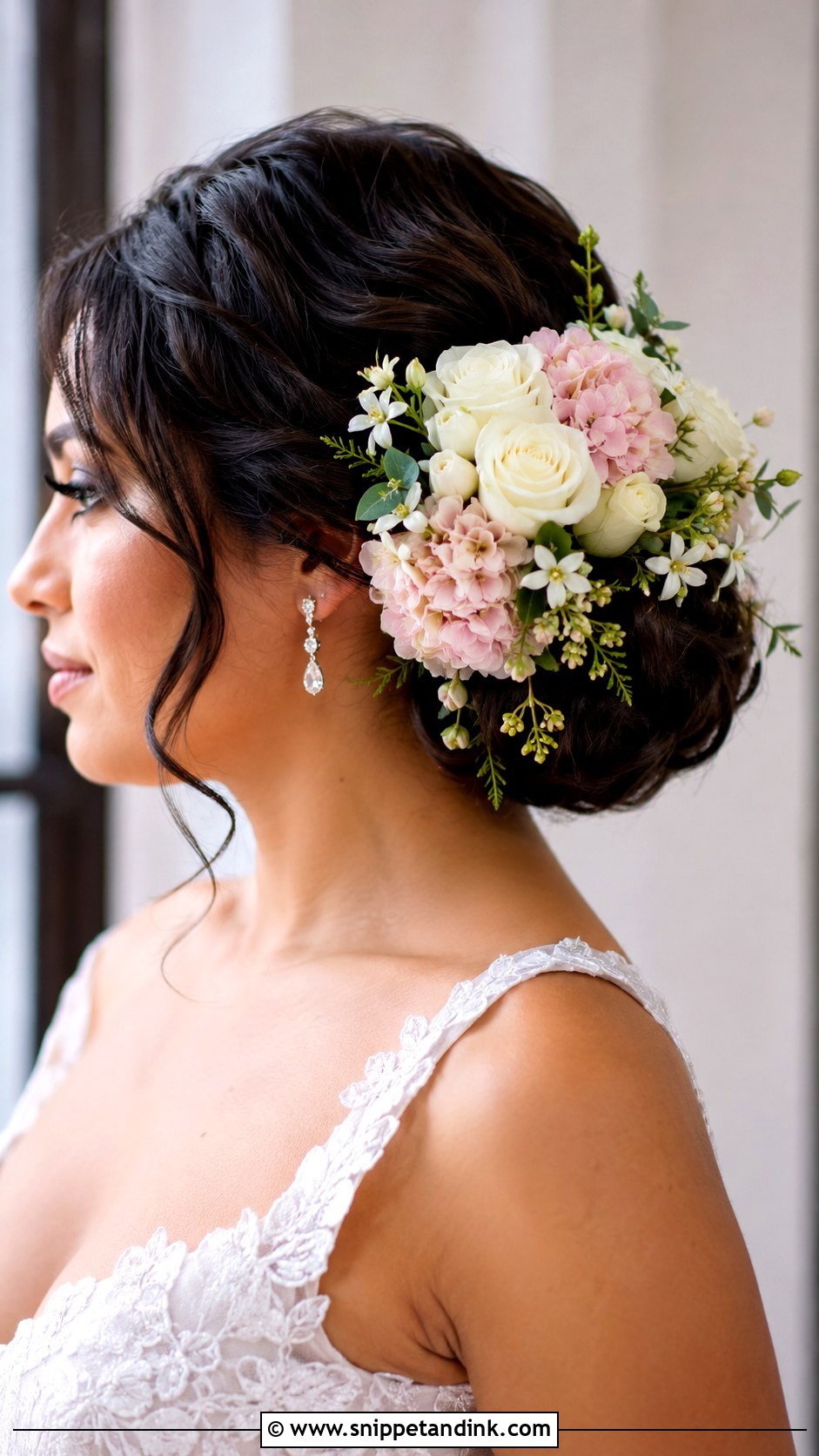
A full floral bun turns the back of your head into the main event, covered or framed with blooms rather than finished with a few. Roses, hydrangeas, jasmine, orchids, or mixed florals can all work depending on the dress and theme. It’s at its most striking from behind, which makes it a natural choice if the veil comes off before the reception. This is heavy work, so the bun needs a padded or very firm base. I’d leave hydrangea out unless the flowers go in at the last possible minute, since it wilts quickly once it’s away from water. Keep the front simple so the back stays the focus.
From the Florist’s Cooler to the Pins in Your Bun
Hair pieces should be ordered with the bouquet, not added at the last minute, because I need to know how your stylist is building the bun. Pieces for a sleek bun are wired short and tight; pieces for a braid need very short stems; a full floral bun may need a small foam-free base made to the size of the bun.
On the morning, I deliver hair flowers in a separate box lined with damp tissue, and I’d ask you to keep them in a fridge until they’re needed, away from fruit, which speeds wilting. Your stylist should finish all spraying first and add the flowers last. A light mist of plain water in the afternoon refreshes most blooms; hairspray never does.
Pollen and pale gowns
Lilies and some open-centered flowers shed pollen that stains silk and ivory fabric. I remove the anthers from anything with exposed pollen before it goes near your hair, and I’d tell you honestly if a flower you love is a risk to the dress. Mention any allergies too; a bloom sitting by your face all day is very different from one in a centerpiece.
Hold the Flowers Against Your Hair Before You Order
Flowers in a bun can be quiet or bold, traditional or modern, and the bloom decides as much as the bun shape. Orchids keep a sleek bun polished; baby’s breath softens a messy one; jasmine and roses bring tradition and scent. Before the day, ask for a sample stem or a silk stand-in at your hair trial to test comfort, placement and hold. Bring photos of your bouquet to both your florist and your stylist, so the hair flowers are planned as part of the same order rather than as an afterthought.
You'll Like These Ideas:


Leave a Reply