
Lifting hair off the shoulders does a lot of quiet work on a wedding day. Hair up wedding hairstyles keep the neckline open, put earrings on show and hold their shape through hugs and dancing in warm weather. “Up” covers a wide range, though, from sleek buns to braids, curls, locs and ponytails. This list goes through twenty of them with notes on hair type, accessories and how each one wears over a long day, for brides, bridesmaids, mothers and guests.
Chair Minutes for a Sleek Pony Versus a Crown Braid
Brides often choose an updo without knowing how long it takes, and the morning schedule pays for it. These are rough ranges for one person once the hair is already clean and dry. Every stylist works at a different pace, and very long, very thick or extension-heavy hair adds time.
- Sleek low ponytail or sleek bun: usually the quickest, around 30 to 45 minutes, most of it spent on smoothing.
- Classic or textured low bun, chignon, French twist: often 45 minutes to an hour, because the hair is curled before pinning.
- Braided buns, crown braids, pinned curls and vintage sets: commonly an hour or more, since the curls or braids must be built and set first.
- Natural hair and locs: the styling itself may be quick, but stretching, moisturizing or retwisting usually happens a day or more before.
For a bridal party, I schedule the bride near the end so her hair is the freshest in the photos, but never last, so there’s a buffer if anything runs over. If several people want braided styles, add an extra stylist rather than squeezing the schedule. Rushed braids are loose braids.
1. Low Bun Wedding Hairstyle
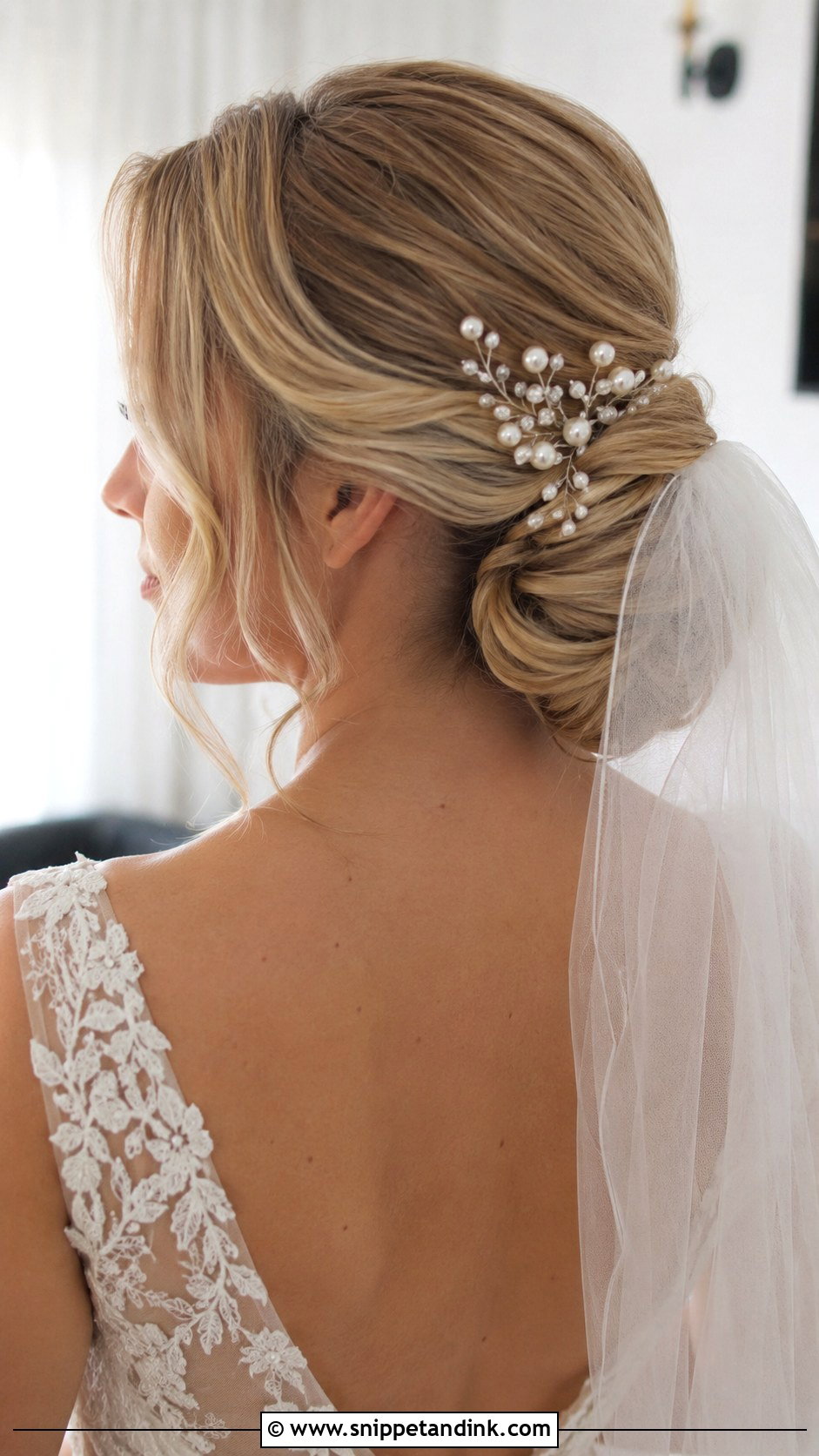
There’s a reason the low bun keeps showing up at every kind of wedding. Sitting at the nape, it gives a veil, pearl pins, combs or a hair vine a solid place to attach, and it keeps strapless, high-neck and open-back dresses clear. Loose pieces at the cheeks make it softer; a compact smooth bun makes it formal. I adjust the build to density: fine hair gets curled first so it fills out, while thick hair gets split into two smaller sections so the bun doesn’t sit heavy on the neck.
2. Textured Low Bun Wedding Hairstyle
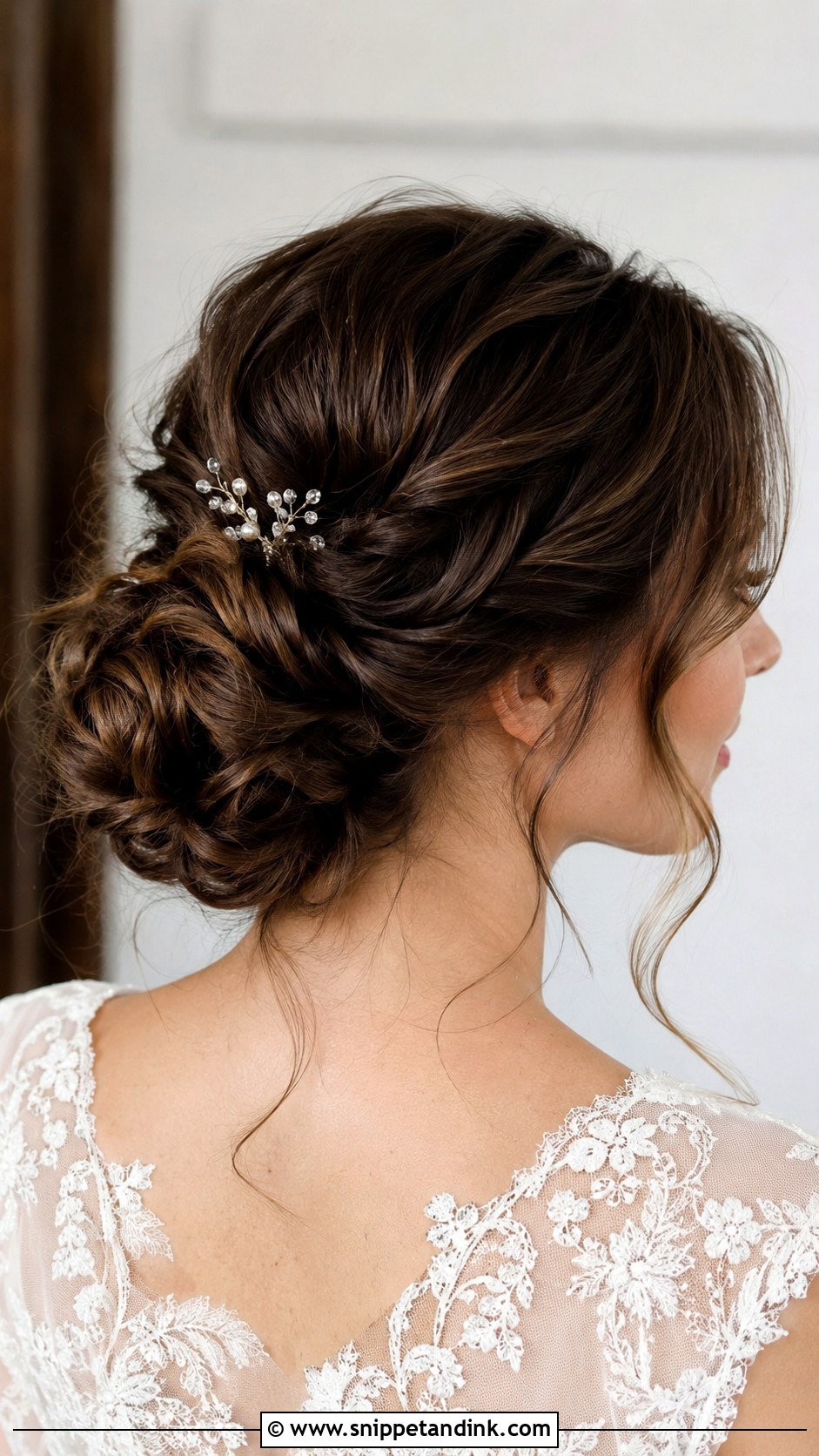
Curling first, then pinning loosely, turns the classic bun into something with air in it. The crown gets a little lift and the back stays relaxed, which looks romantic on camera while still holding all day. Outdoors, this is the version I’d choose over a sleek one, because a breeze moving a few strands looks intended rather than undone. Let the curls cool fully before pinning; warm curls fall out within the hour. A slim veil comb or a couple of pearl pins is enough.
3. Sleek Bun Wedding Hairstyle
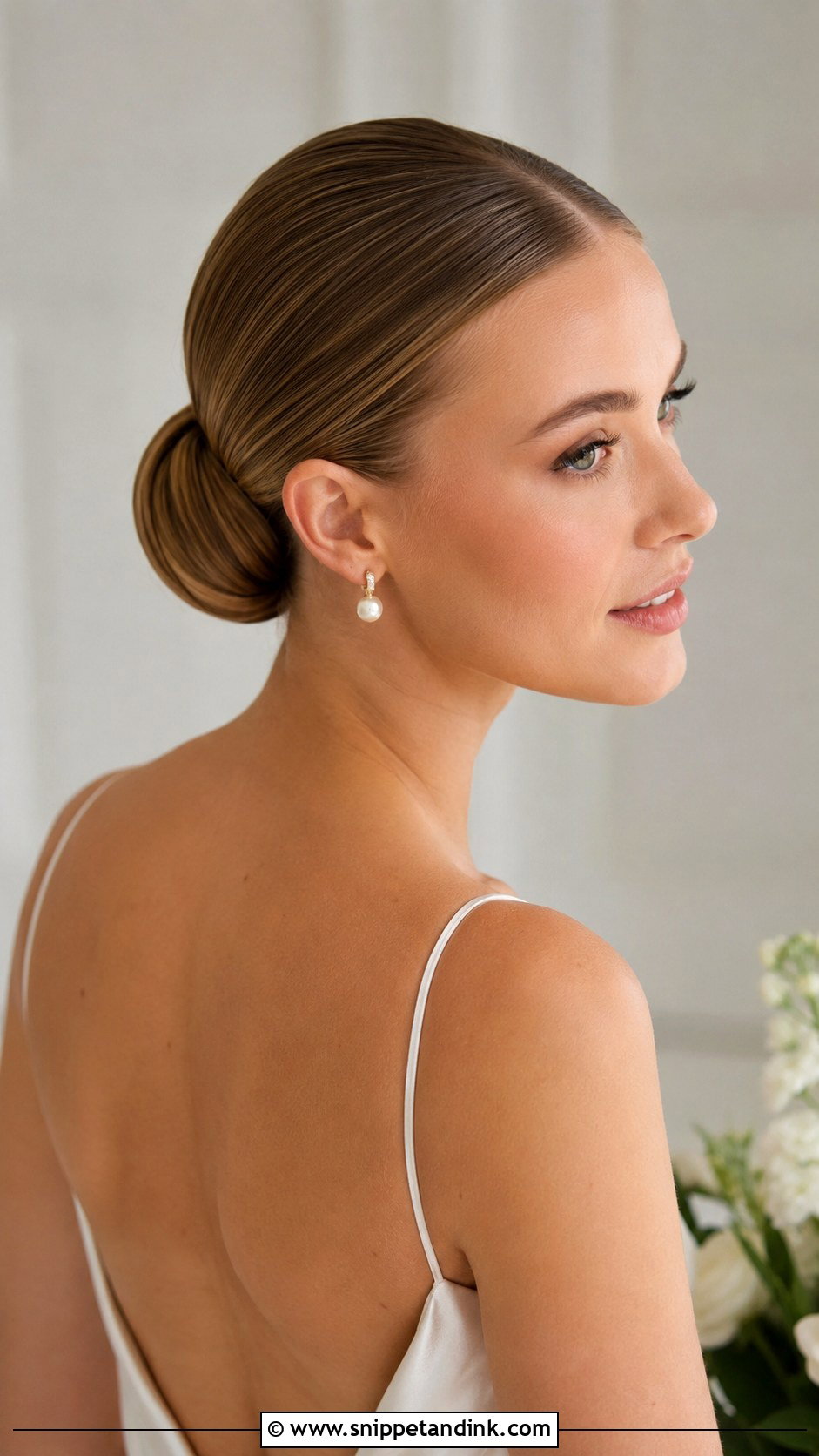
Smoothing every strand back with a control cream and pinning it into a neat bun suits structured gowns, satin and bold earrings. Placement changes the effect: low at the nape is calm, mid-height is more fashion. A center part reads modern, a side part softer. In humidity it’s one of the most reliable choices I know, because there’s no curl to drop. The catch is that it shows everything, so a bride with lots of short regrowth around the hairline should expect a few visible wisps.
4. High Bun Wedding Hairstyle
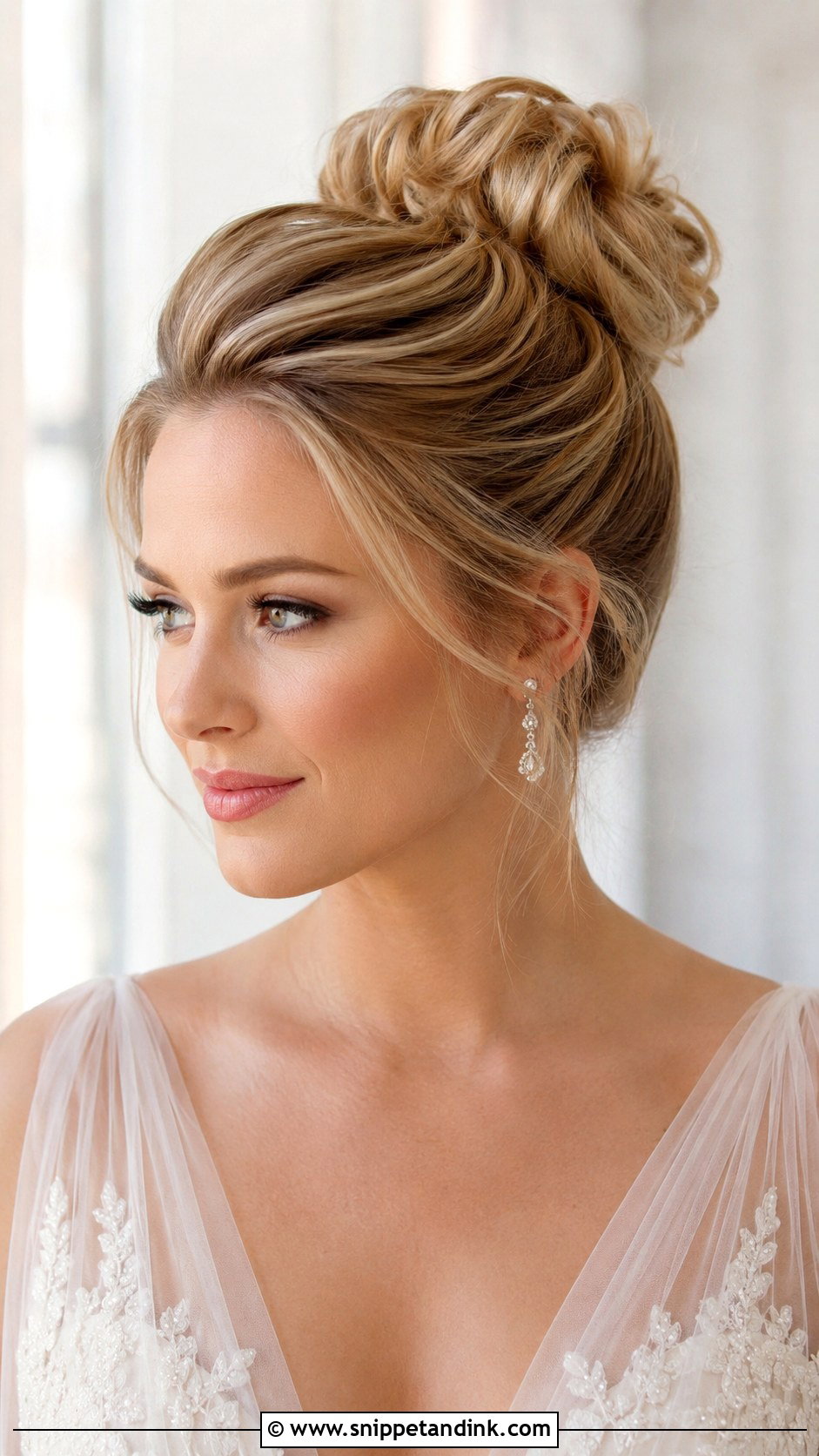
Set above the crown, a high bun lengthens the neck and gives the whole look a ballerina line. Ball gowns, halter necklines and dramatic veils sit well with it. I’d only skip it if you plan to wear the veil all evening, since a high bun pushes the comb either onto the bun or under it. Fine hair usually needs a padding or extension for the bun to look full. With thick hair I shape the bun in two layers so it stays balanced on the head instead of pulling backward.
5. Messy Bun Wedding Hairstyle
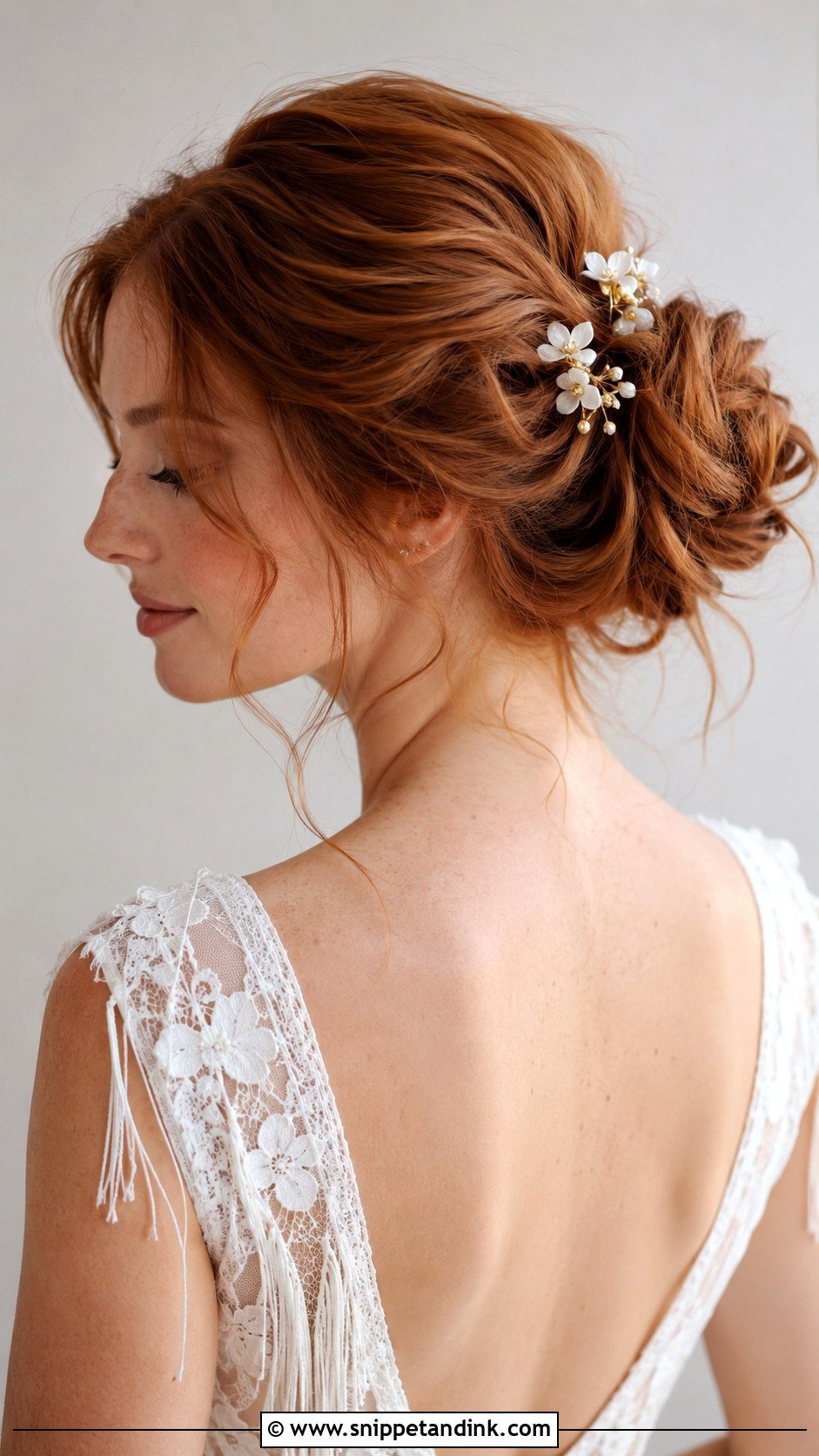
Mess that looks accidental is the hardest kind to pin. I curl everything, tease a little at the crown, and place each section in a loose gathered shape so the airiness is planned. That’s why it suits barns, beaches, lace and boho dresses so well: if a piece shifts during the day, nobody can tell. Leave a couple of tendrils at the face, and add tiny flowers or pearl pins if you want more bridal detail.
6. Chignon Wedding Hairstyle
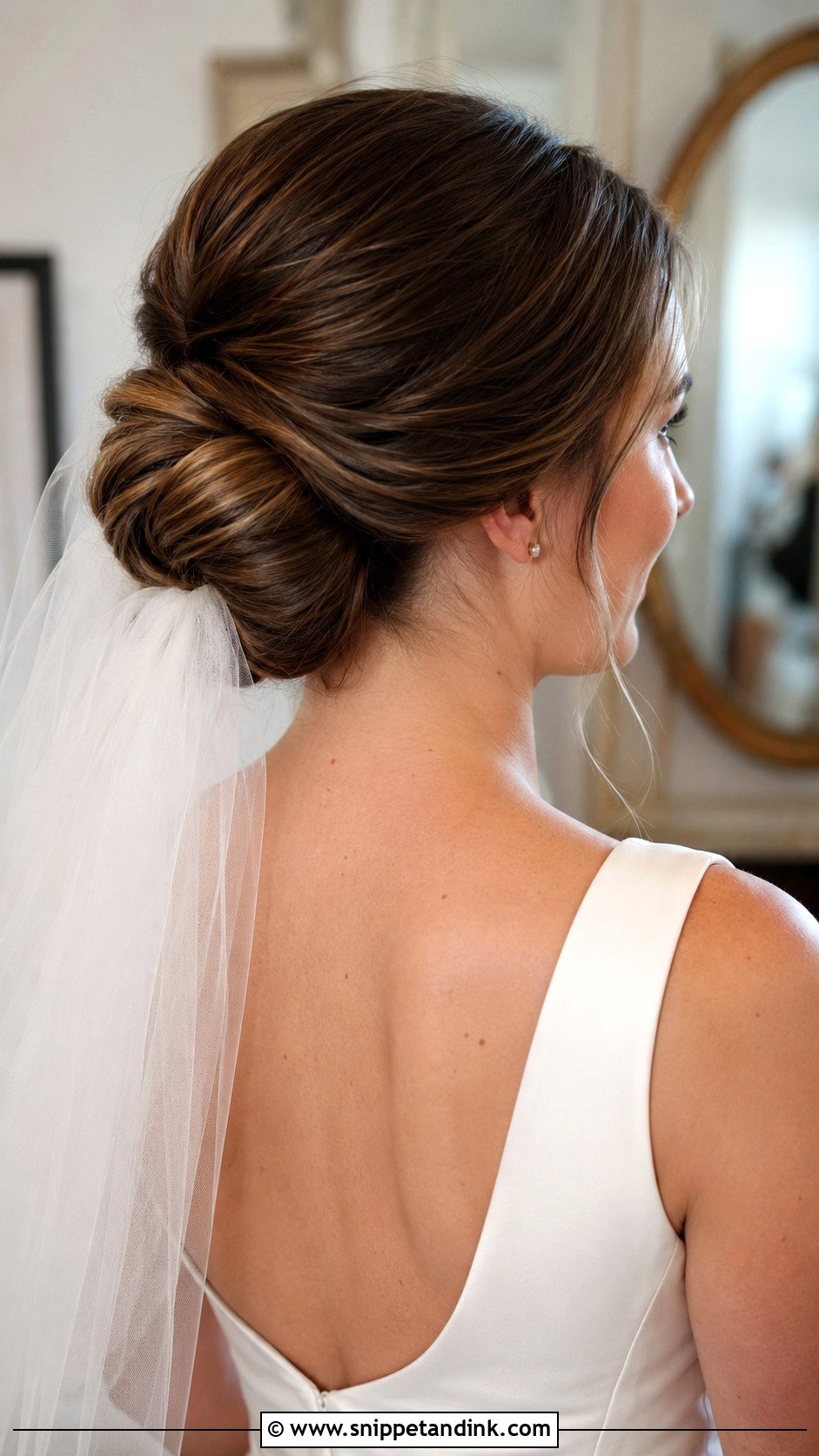
A chignon differs from a plain bun in its fold. The hair is rolled or tucked into a low, smooth shape instead of wrapped round, which gives a cleaner outline from behind. It belongs in church ceremonies and ballrooms and with classic gowns, and a veil can sit above or below it. For softness, a little texture at the crown helps; for structure, smooth the front and tuck it behind the ears. The fold needs pins worked inside it, not just around it, or the roll opens up by evening.
7. French Twist Wedding Hairstyle
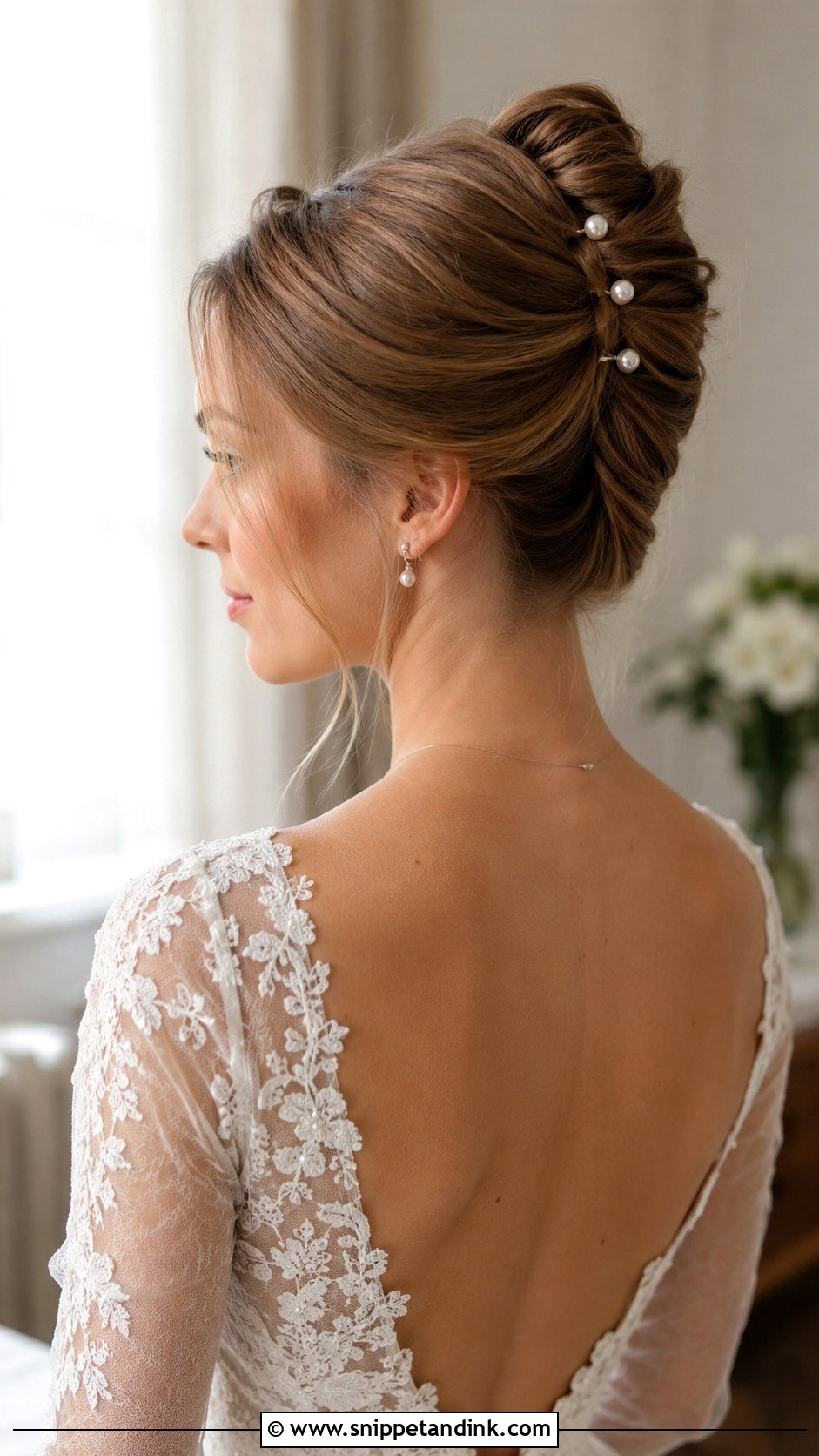
Sweeping the hair up into a vertical roll down the back of the head gives a French twist its vintage feel. It works on medium to long hair with fitted gowns, lace sleeves and pearls. Sleek is formal; slightly undone is more current. Silky, freshly washed hair is the main obstacle, because the roll slides open. I add grip with a texture spray and a light backcomb inside the twist before I close it, then lock the seam with crossed pins.
8. Braided Bun Wedding Hairstyle
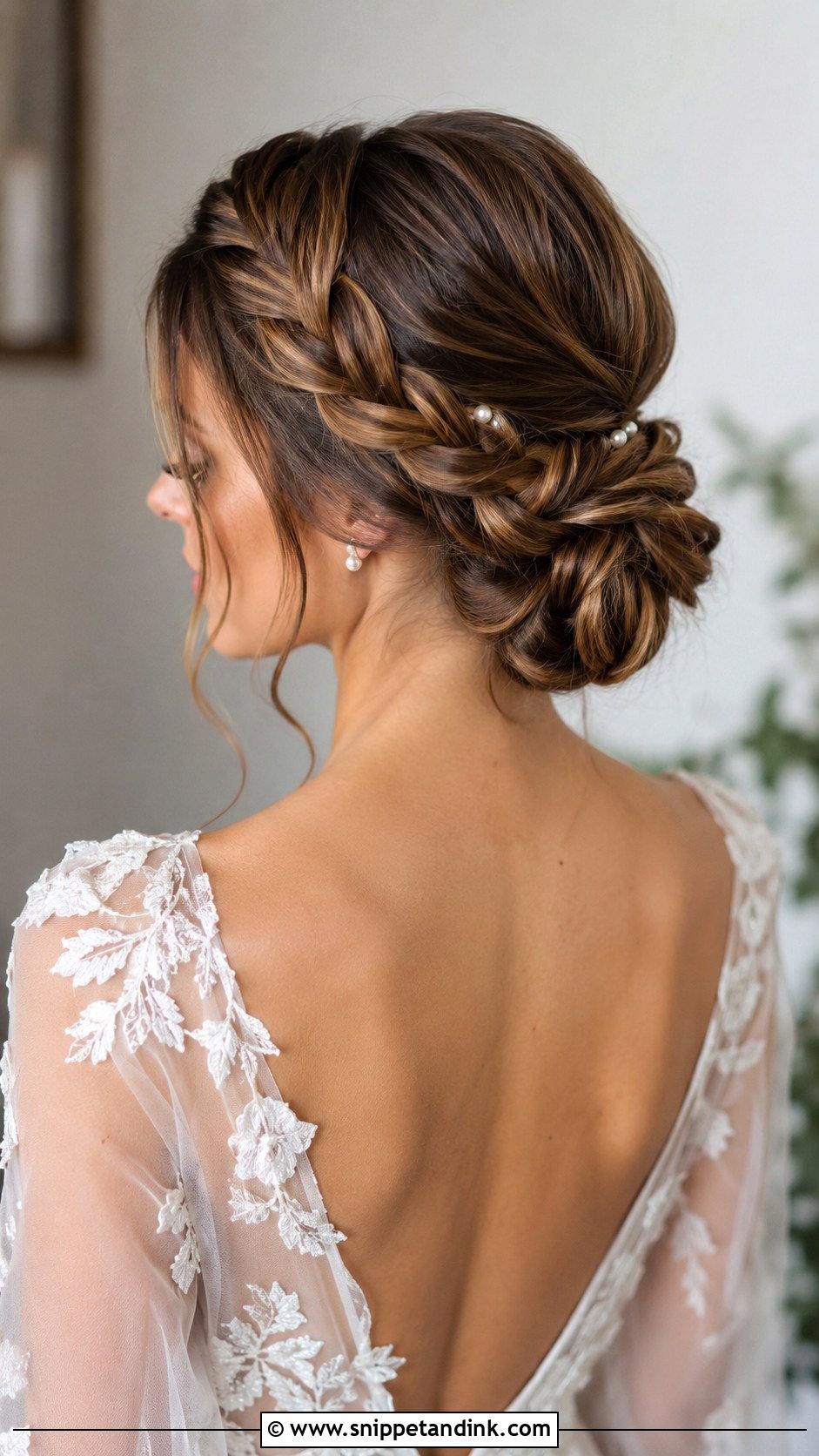
Braiding into a bun is the best trick I know for thick hair that refuses to sit still. The braid holds a lot of hair in a narrow line, so it controls bulk while adding pattern, and it looks finished from every angle a photographer might shoot. It can wrap the bun, cross the crown or blend into the pinned shape. I braid firmly and then pull the edges apart gently so the braid looks fuller without loosening at its core. Pearl pins or a small comb are plenty.
9. Crown Braid Wedding Hairstyle
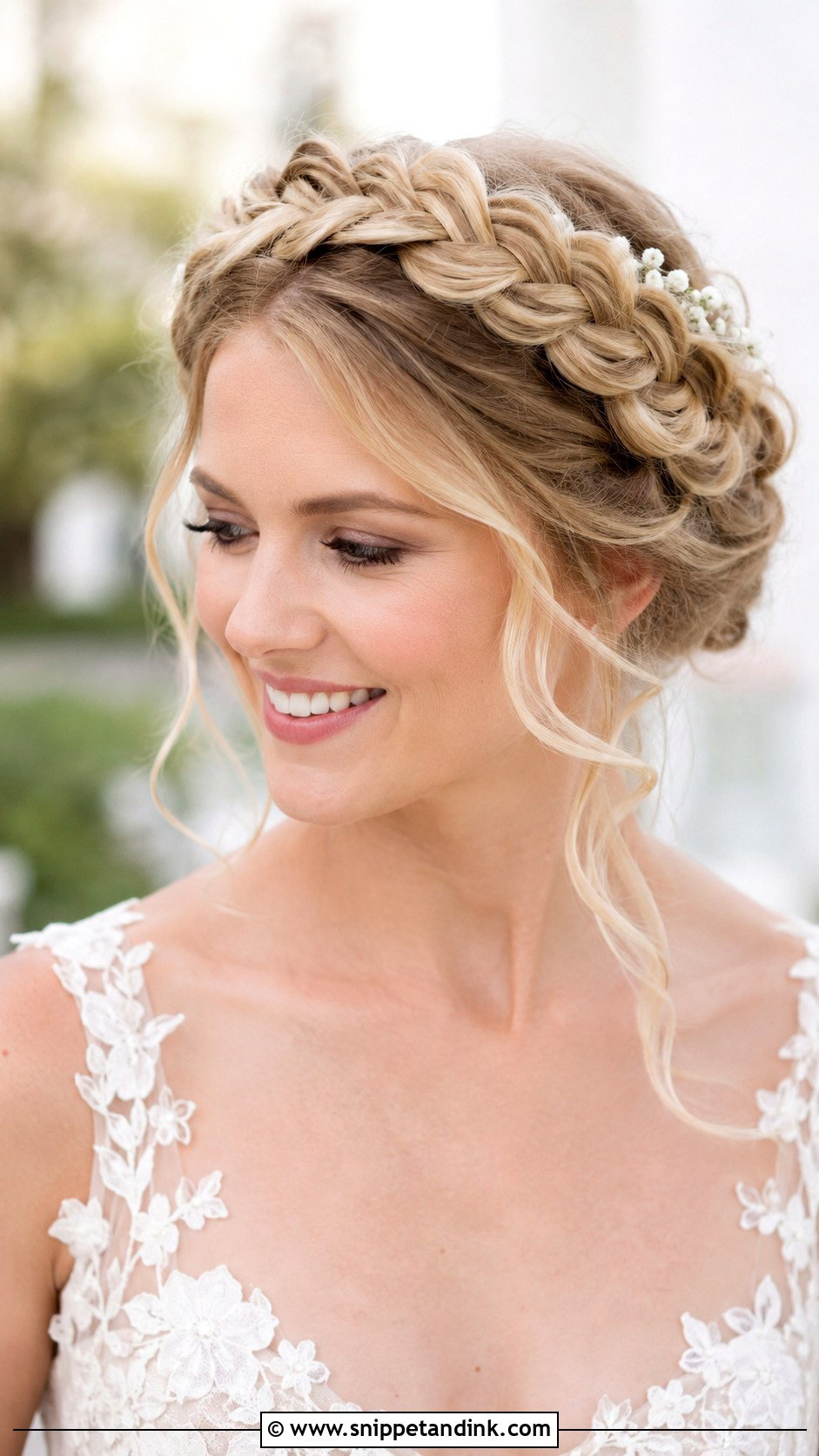
Wrapping a braid around the head like a halo keeps every strand lifted while still looking soft, which is why it’s a favorite at barns, gardens and destination weddings. It braids fullest on wavy, curly, or textured hair, since the natural volume fills each section. Straight, silky hair needs texture spray or second-day grip. Small flowers or crystal clips tuck neatly into the braid. If you like softness, leave a couple of curls out at the temples.
10. Twisted Updo Wedding Hairstyle
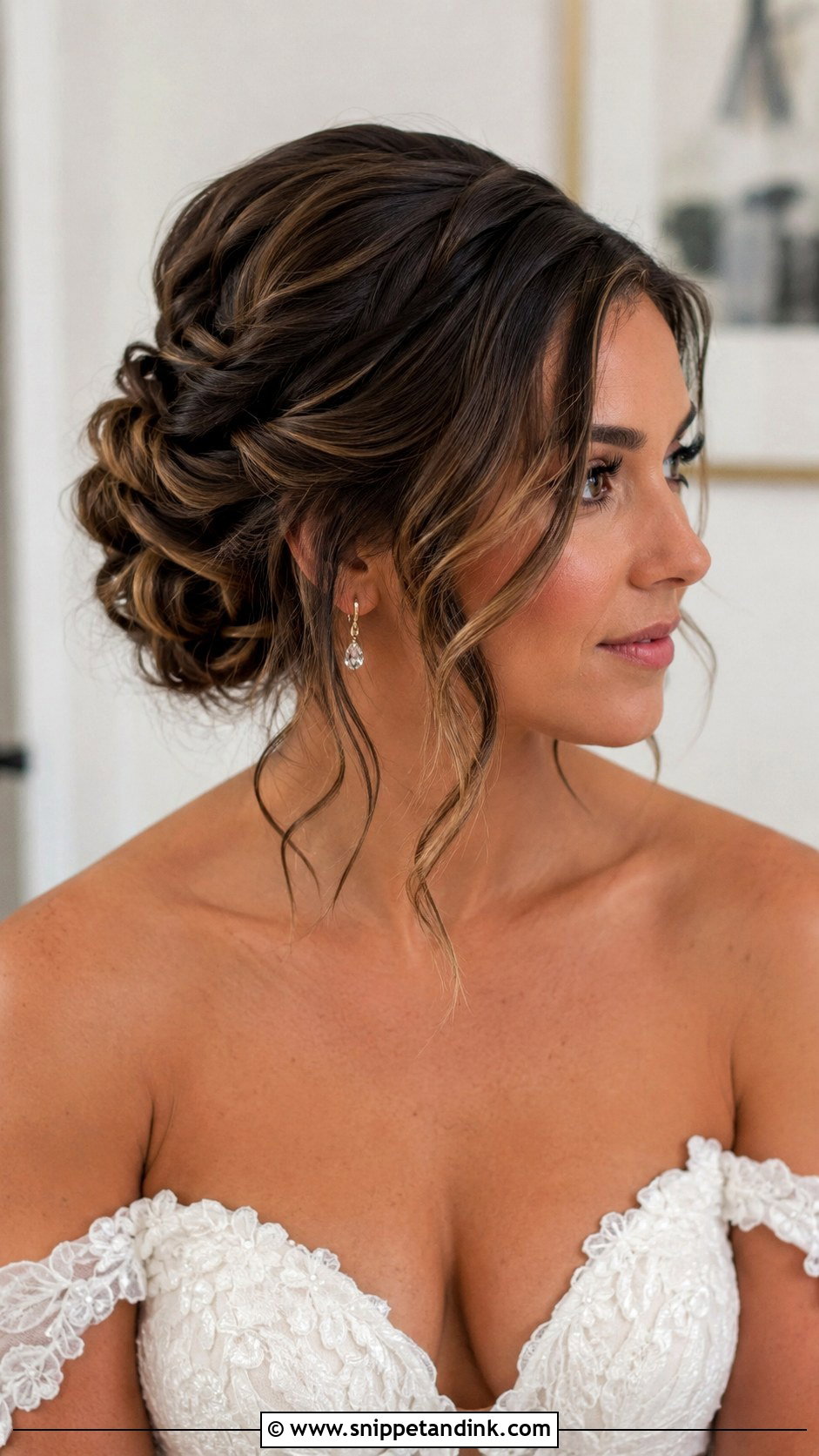
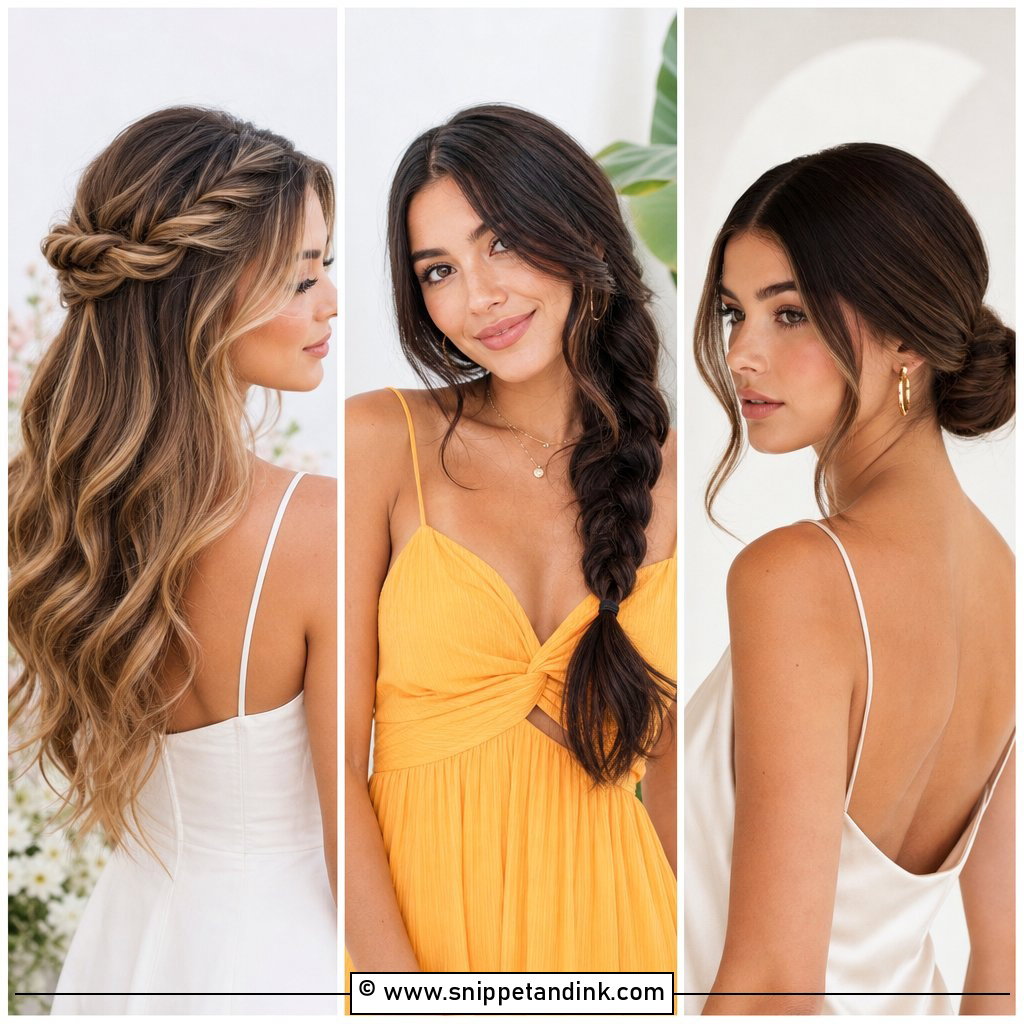
Twists give you texture without the time and tension of a full braid. Sections are twisted back and pinned into a bun or gathered shape, and the result has movement from front, side and back. Highlighted hair shows it off best, because each twist turns a different tone toward the light. On one-color dark hair, I make the twists slightly larger so the pattern still reads in photos. Keep them loose for a garden or smoother for a formal room.
11. Curly Updo Wedding Hairstyle
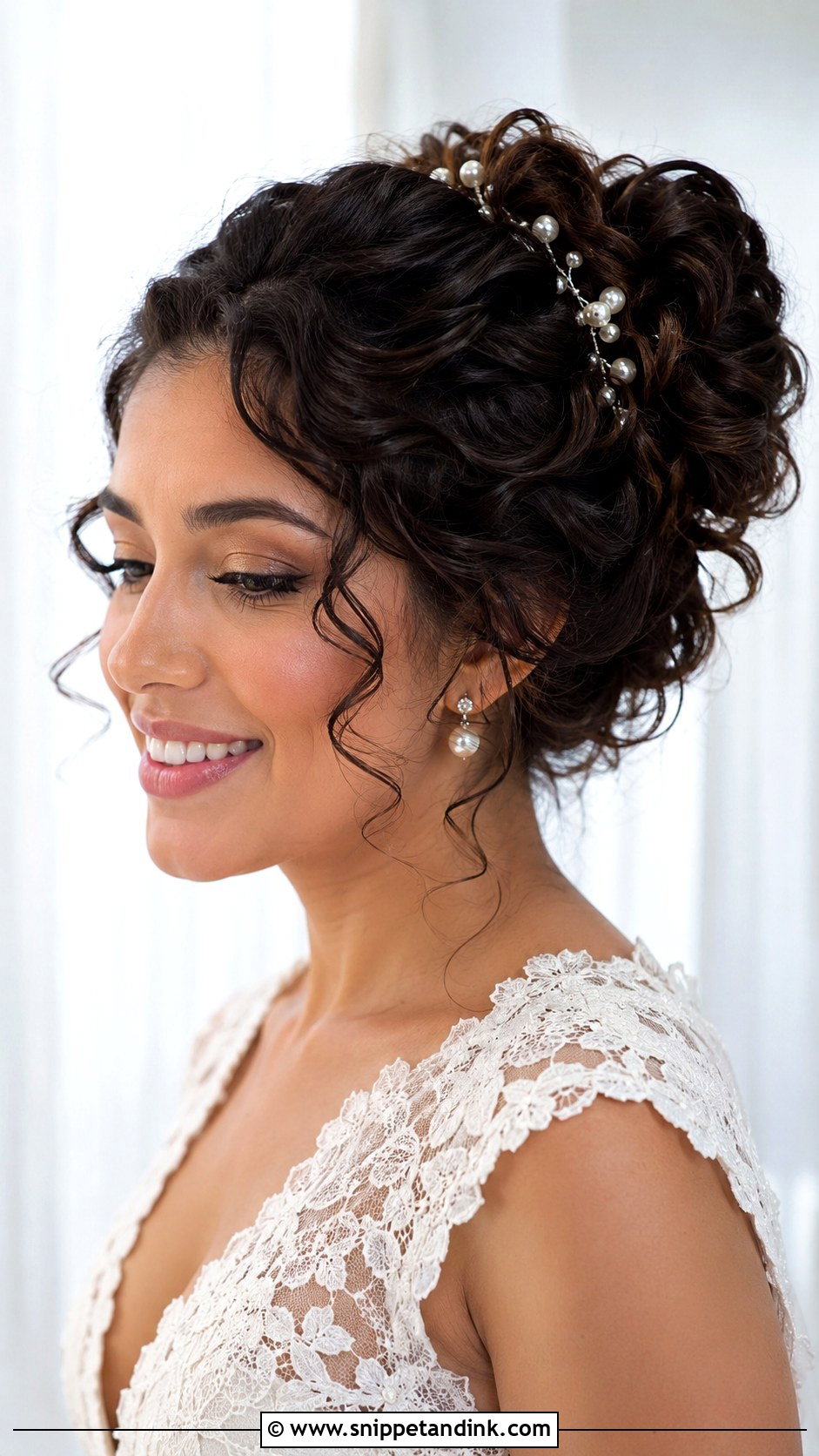
Pinning curls up without smoothing them away keeps the bride looking like herself, only dressed up. The shape can sit low, high or gathered at the back depending on length and curl pattern. Shine depends on preparation the day before: moisture, a defining product and as little handling as possible afterward. On the morning, I work with the curl clumps as they are and pin in clusters so they don’t separate into frizz. Two curls pinned back at the face soften it.
12. Natural Hair Updo Wedding Hairstyle
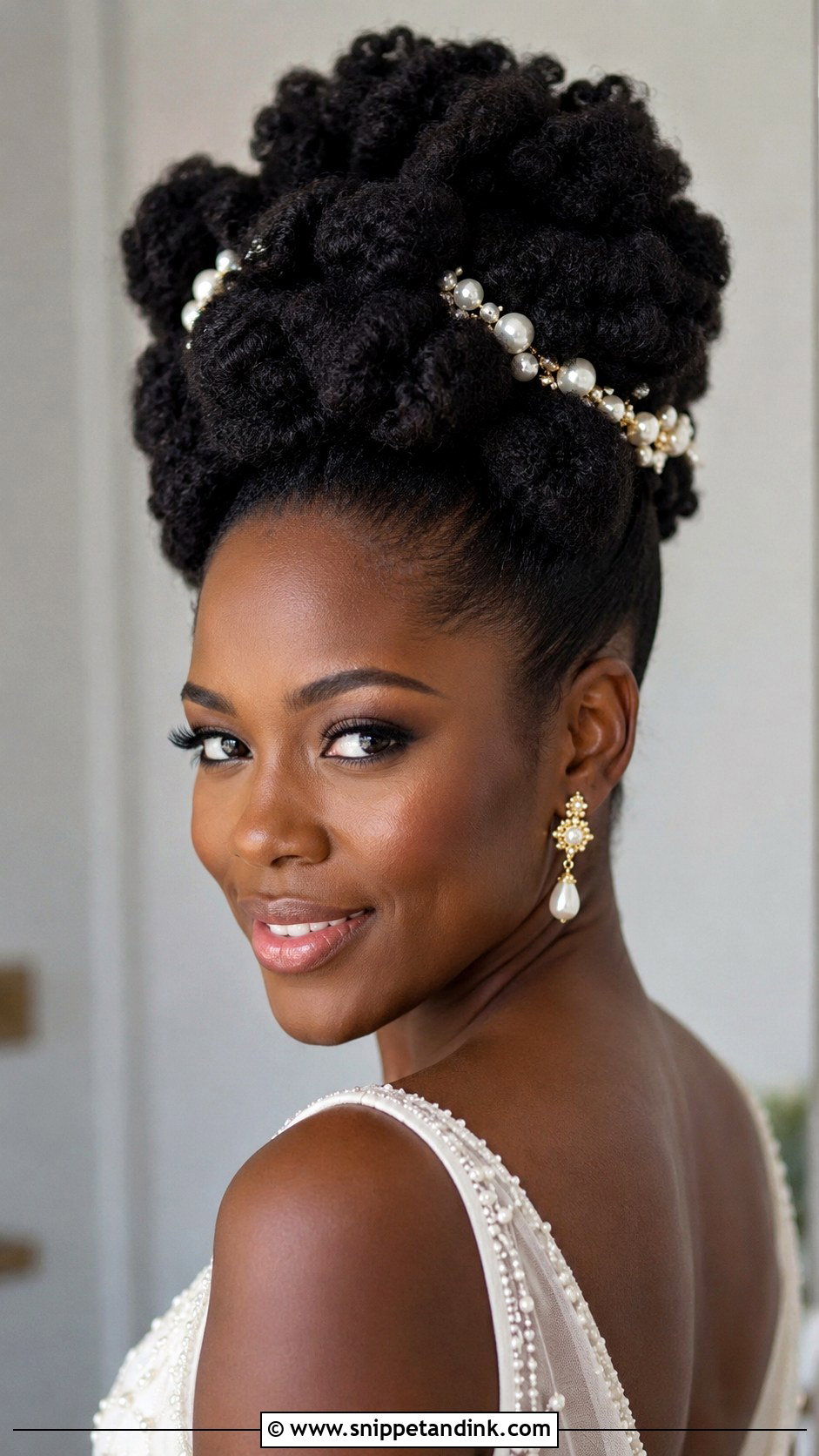
A natural hair updo can be one of the strongest bridal shapes there is. Coils, curls, twists or stretched hair can become a high puff, a sculpted bun, a pinned crown or an elegant roll. Moisturized natural texture holds pins very well, so this style lasts through the whole celebration. I’m careful with tension at the edges, which are the most fragile part, and I’d rather add a small piece of matching hair for fullness than pull the hairline tight. Gold cuffs, pearl pins, a crystal comb or fresh flowers finish it.
13. Loc Updo Wedding Hairstyle
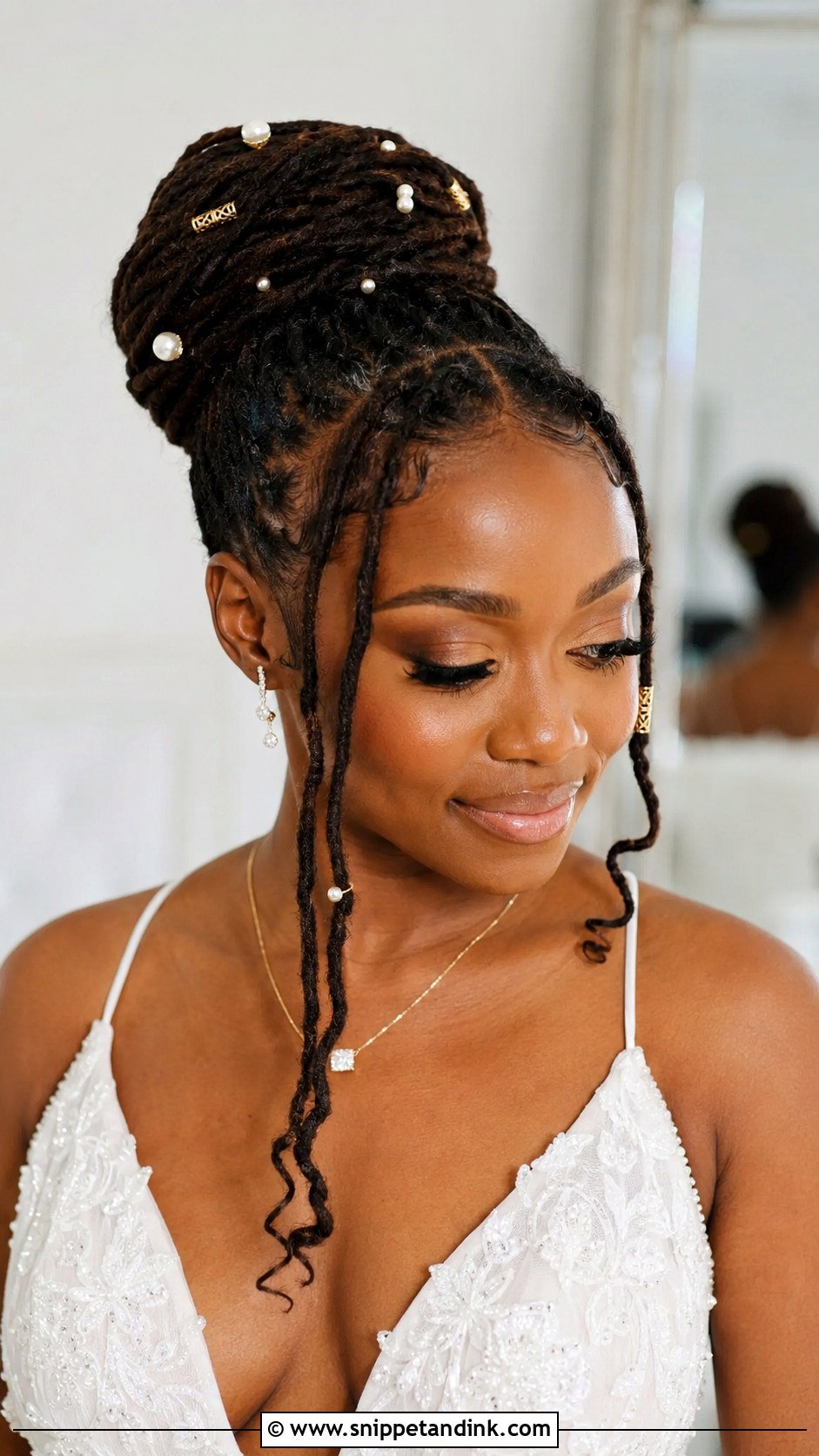
A loc updo wedding hairstyle can be wrapped into a high bun, tucked into a low chignon, twisted into a crown or pinned into a vertical shape. Locs already have texture, so they need very little product. They also hold structure for hours. Weight is what I plan around: long, mature locs gathered in one place get heavy, so I spread them across several anchor points and avoid tight pins at the root. Gold cuffs, pearl pins or a veil tucked under the shape suit it.
14. Ponytail Updo Wedding Hairstyle
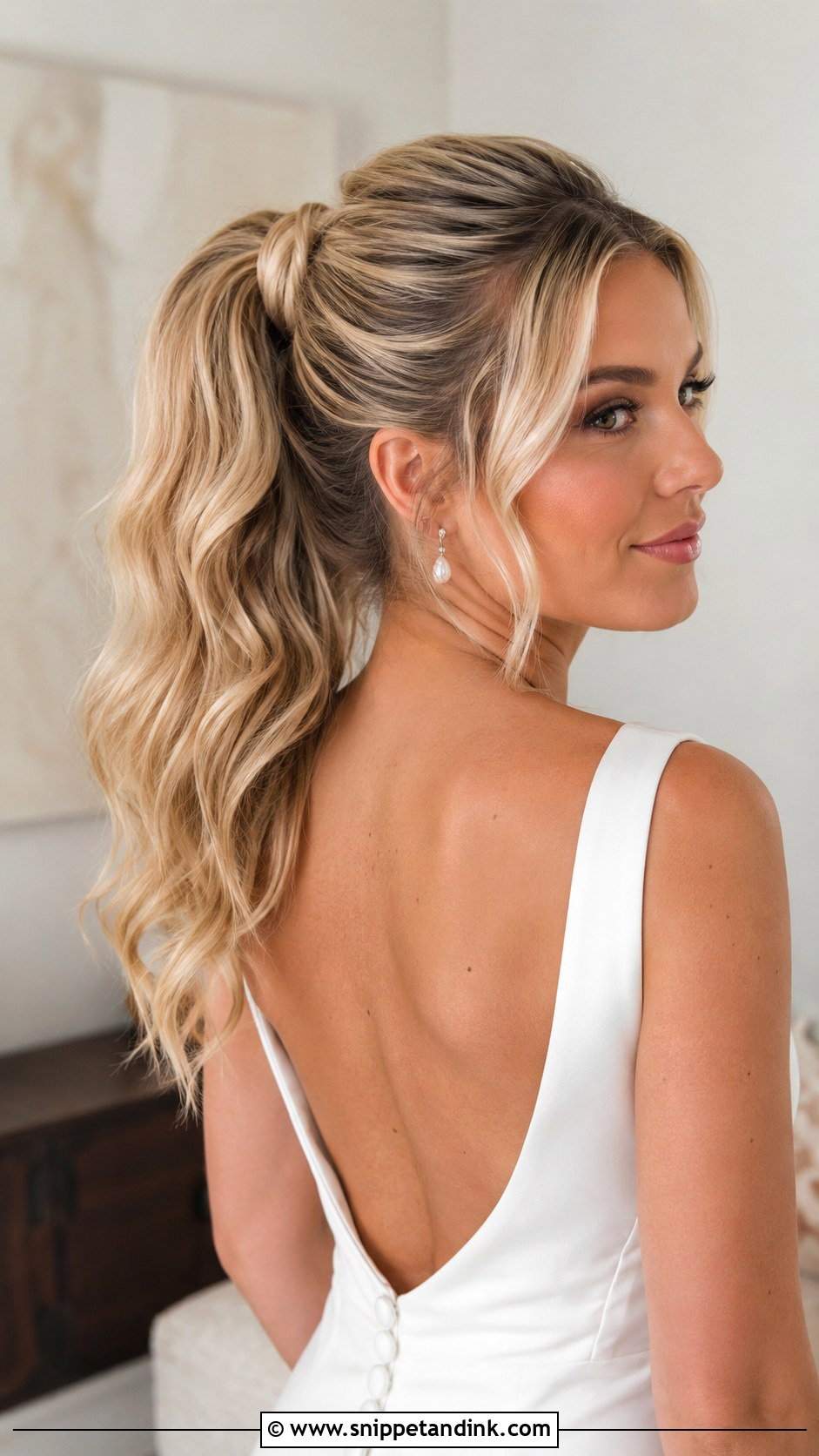
This isn’t the ponytail you wear to the gym. A wedding version has smooth roots, curled lengths, wrapped hair around the base and some lift through the crown. Low reads soft and polished; high reads fresh and a bit glamorous. Long hair or extensions give it the swing that shows up in dancing photos. I tie it with two elastics so it doesn’t sag, and I check that a high one doesn’t press against a veil comb. A pearl clip or bow finishes it.
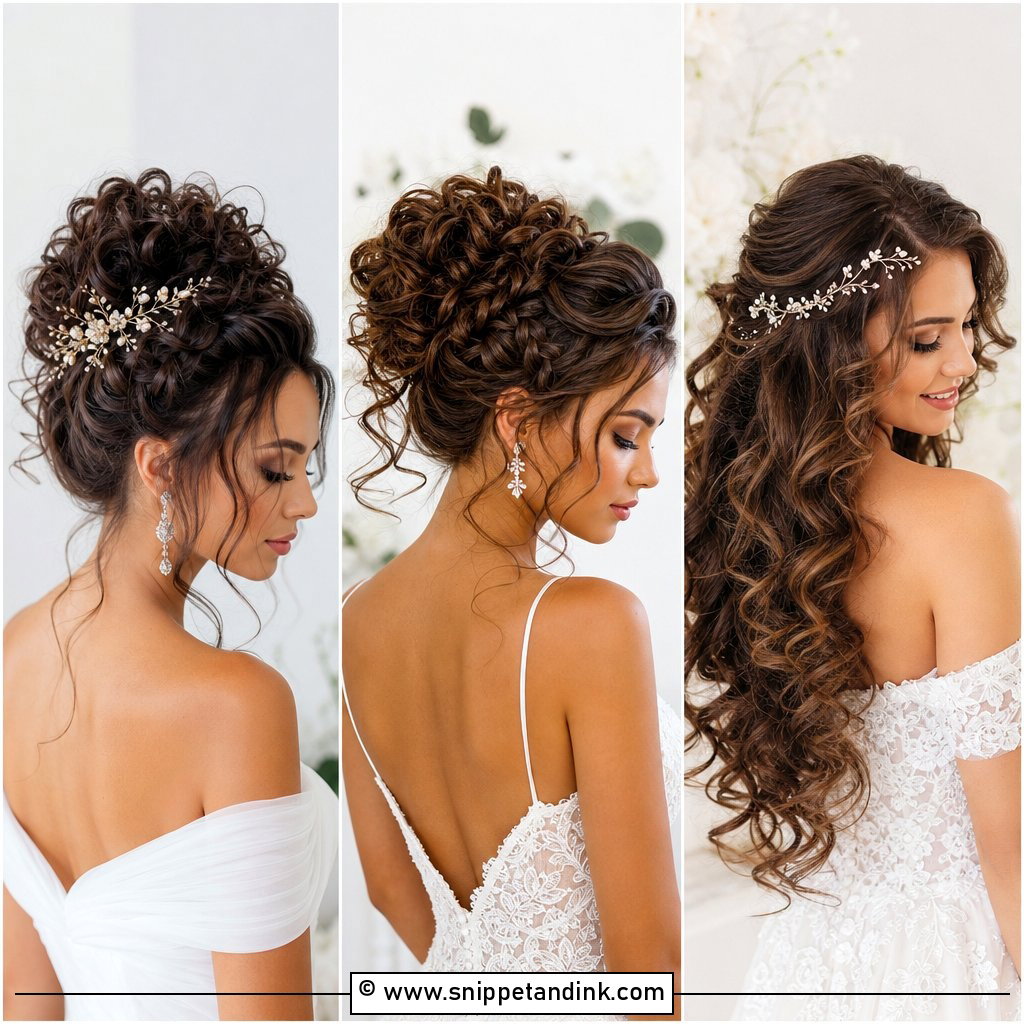
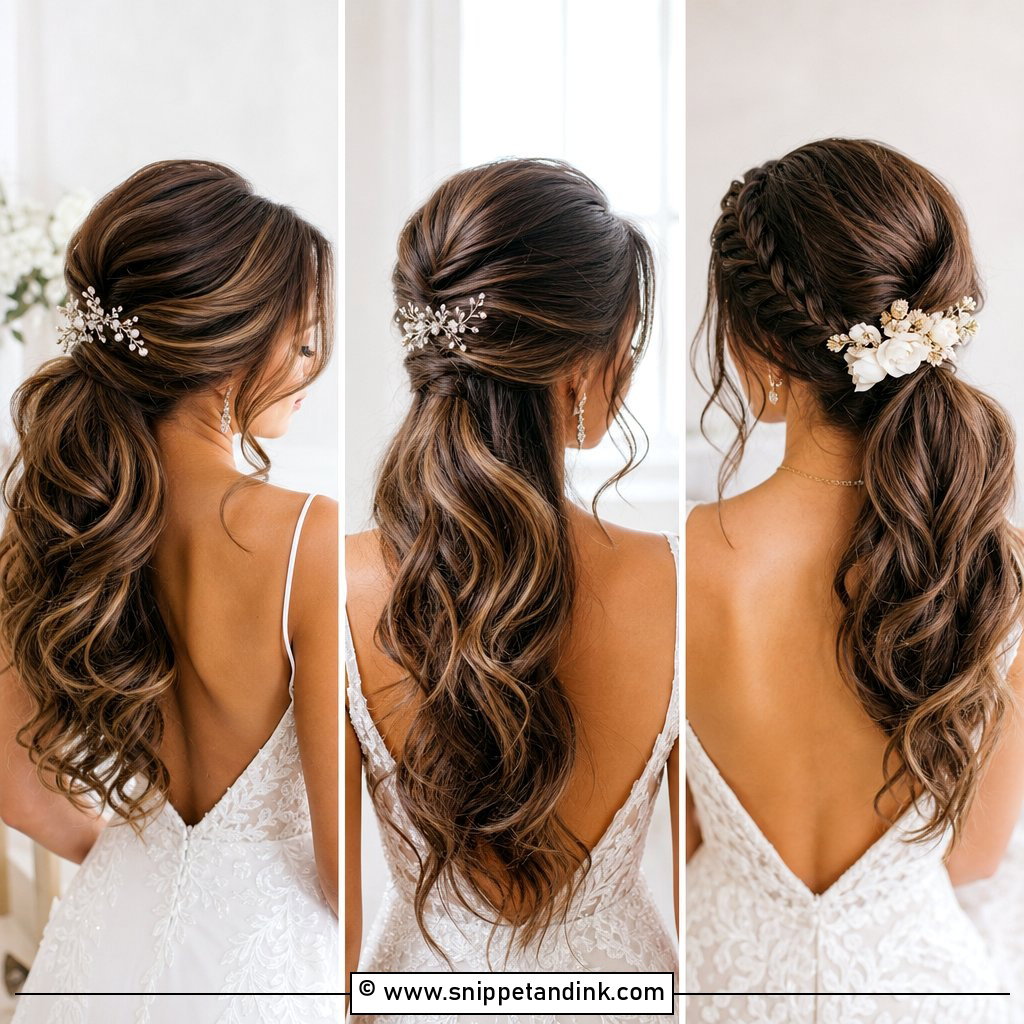
15. Half Up Bun Wedding Hairstyle
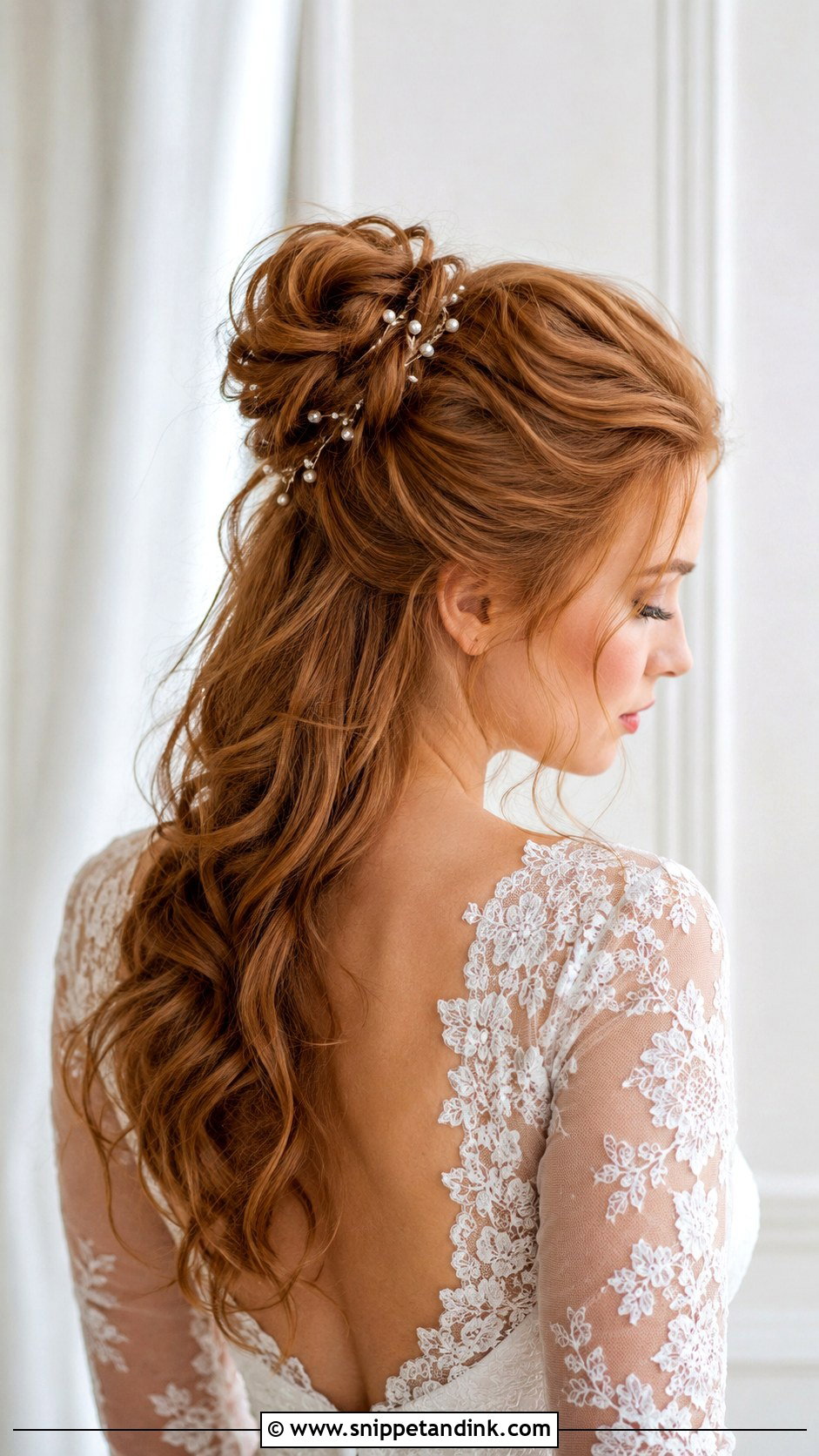
Some brides feel exposed with every strand pinned up, and the half up bun solves that. The top section becomes a bun, twist or knot, and the lower lengths stay curled or waved. It flatters most face shapes and suits medium and long hair. The lower curls will relax over the day, so I set them with a firmer spray and leave the bun itself lighter. It can be sleek, braided or textured to match the dress.
16. Side Bun Wedding Hairstyle
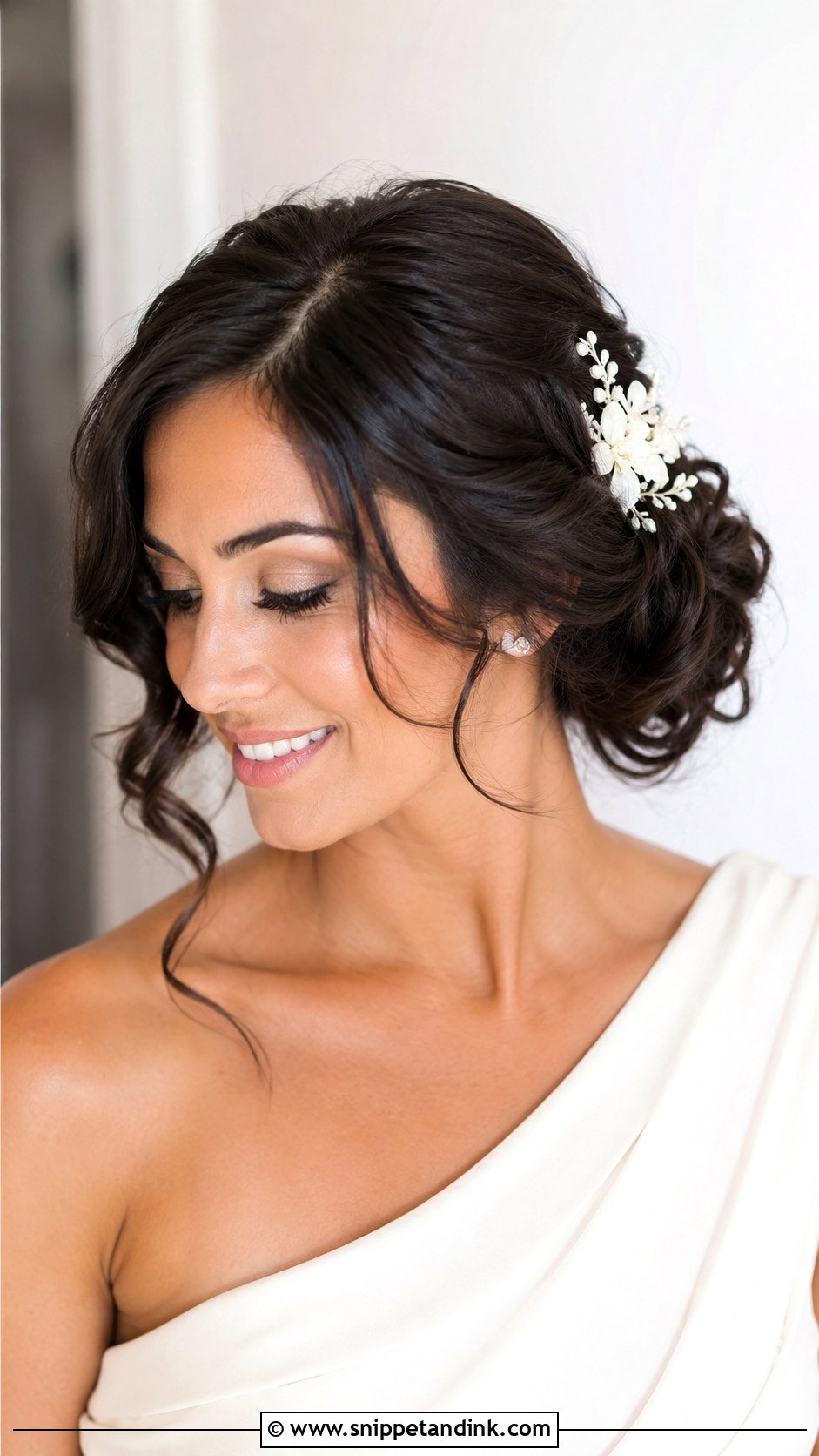
Placing the bun near one side of the nape keeps the detail visible from the front, which a centered bun hides. That’s why it suits one-shoulder dresses, side-parted hair and vintage gowns. Put the bun on the bare-shoulder side so the dress strap and the hair don’t crowd each other. It can be smooth or loose. Over a long day, side buns tend to drift down, so I anchor them a little higher and more firmly than they look in the final mirror check.
17. Low Ponytail Wedding Hairstyle
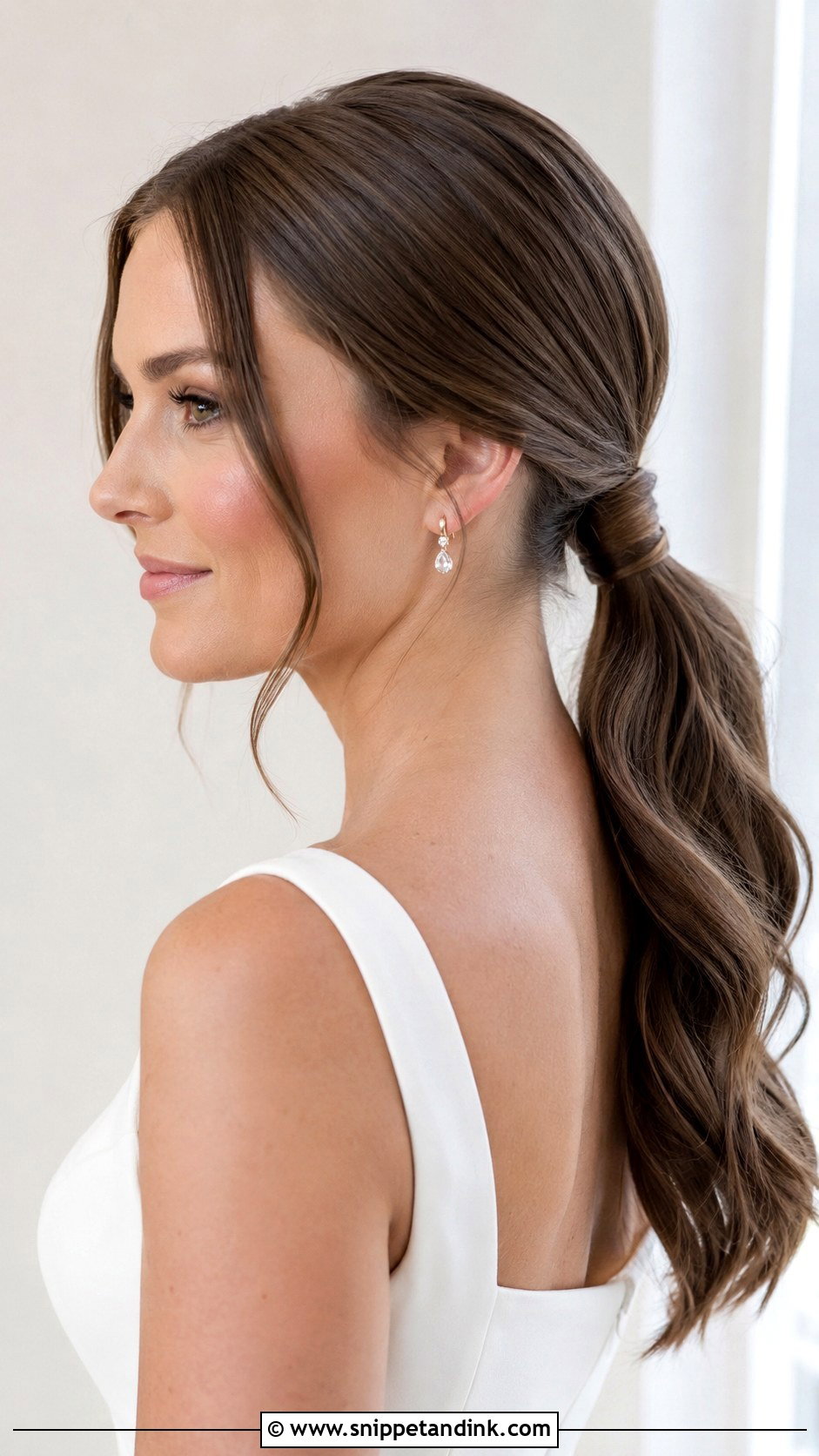
Tying hair low at the nape with a wrapped base is simple, and it ends up surprisingly bridal. Clean lines work with modern gowns, square necklines and slip dresses. Straight reads sleek; curled reads softer. It sits under a veil easily, because the comb can go just above the base. A light shine spray helps the length catch the light, but use it sparingly on fine hair, which goes flat and separated with too much.
18. Vintage Updo Wedding Hairstyle
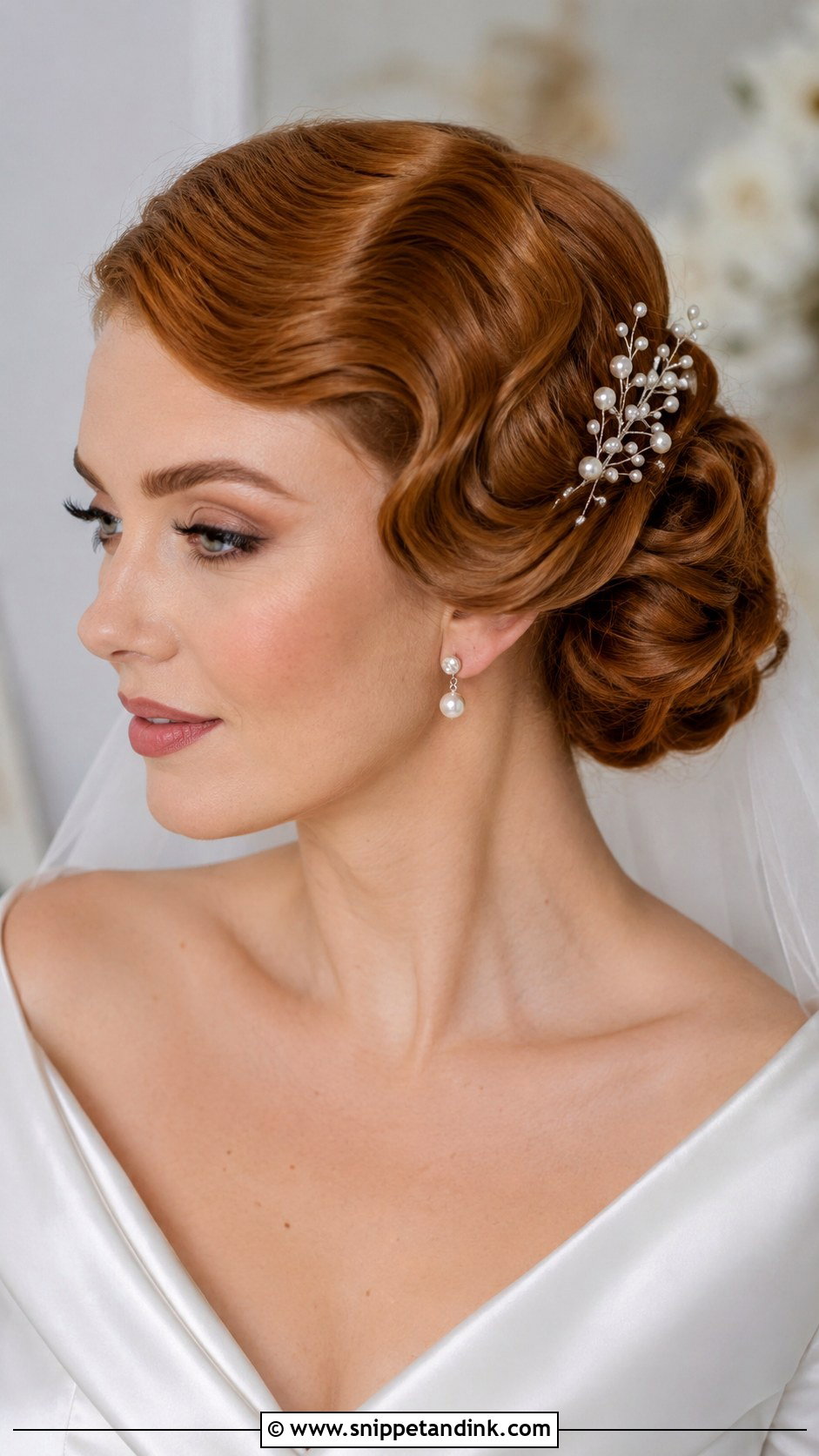
Old-Hollywood updos come from soft rolls, sculpted waves and tucked curls, and they pair naturally with red lipstick, satin, birdcage veils and pearls. A deep side part is usually part of it. The curls are set first and brushed out before shaping, and that brushing step decides everything: brushed and airy looks current, unbrushed looks costume. Because it isn’t tied to this year’s trends, it ages well in photos.
19. Boho Updo Wedding Hairstyle
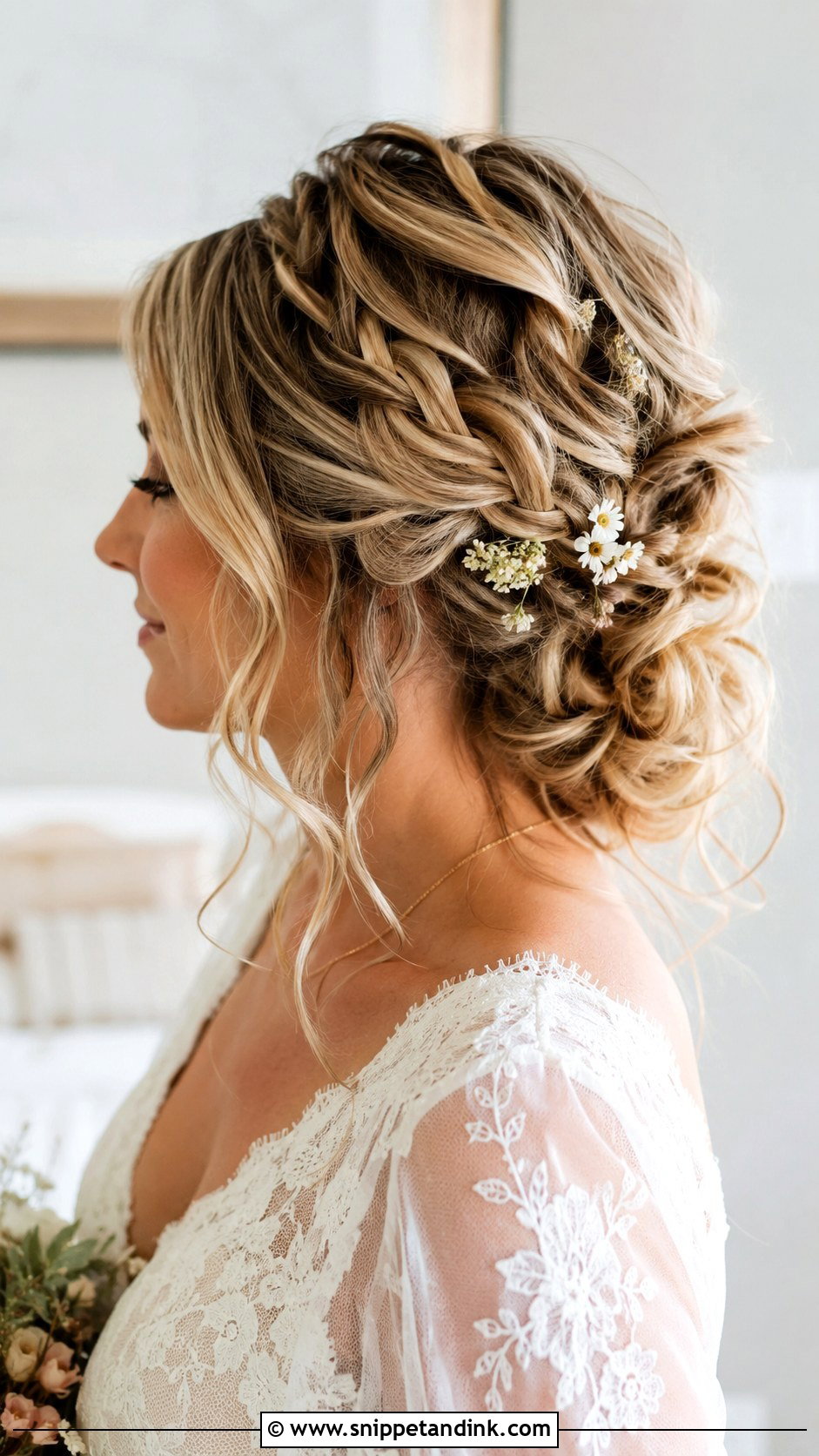
Loose waves, small braids, twisted sections and face-framing pieces pinned into a low or mid-height shape make a boho updo. It should look touchable and a little imperfect while staying secure underneath, which means the pins do more work than the finish suggests. Outdoor, beach and mountain venues suit it, along with lace and flowy fabric. Small flowers, pearl pins or a delicate hair vine make it bridal.
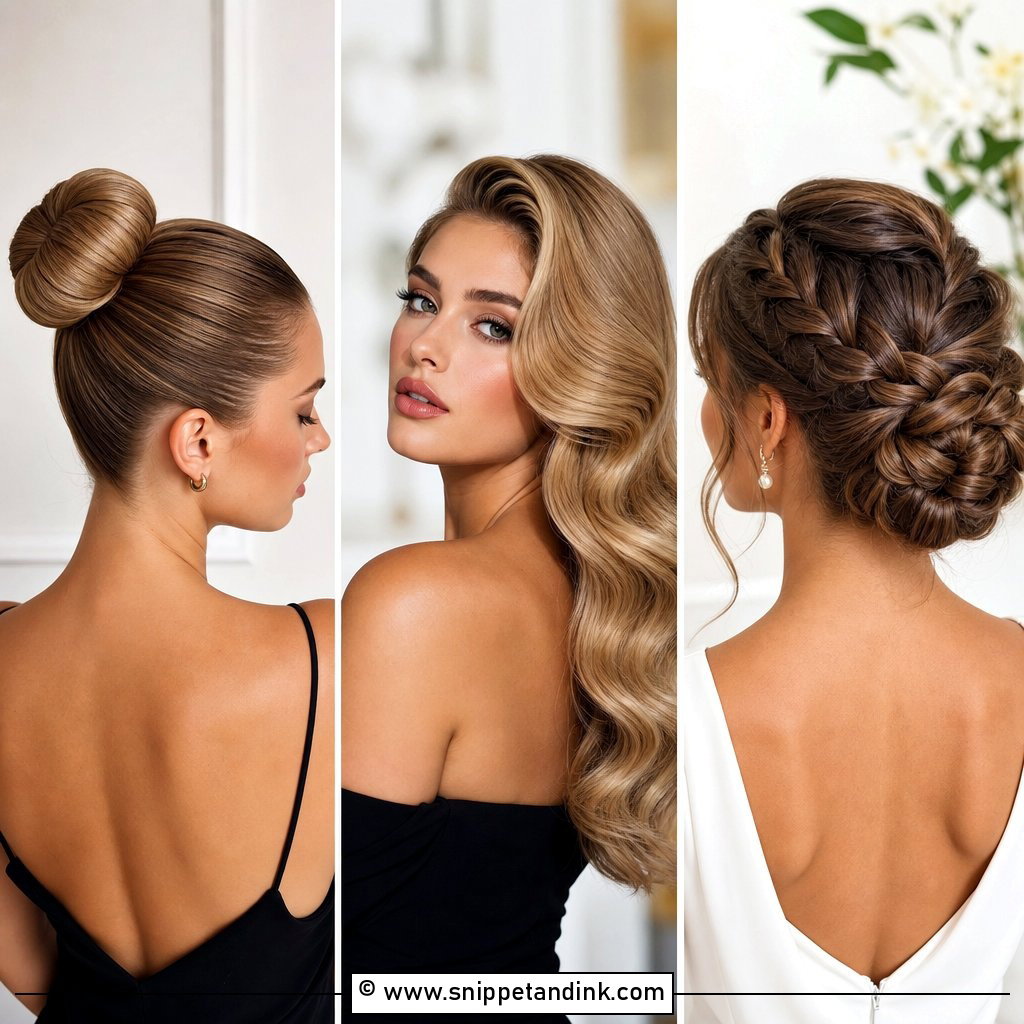
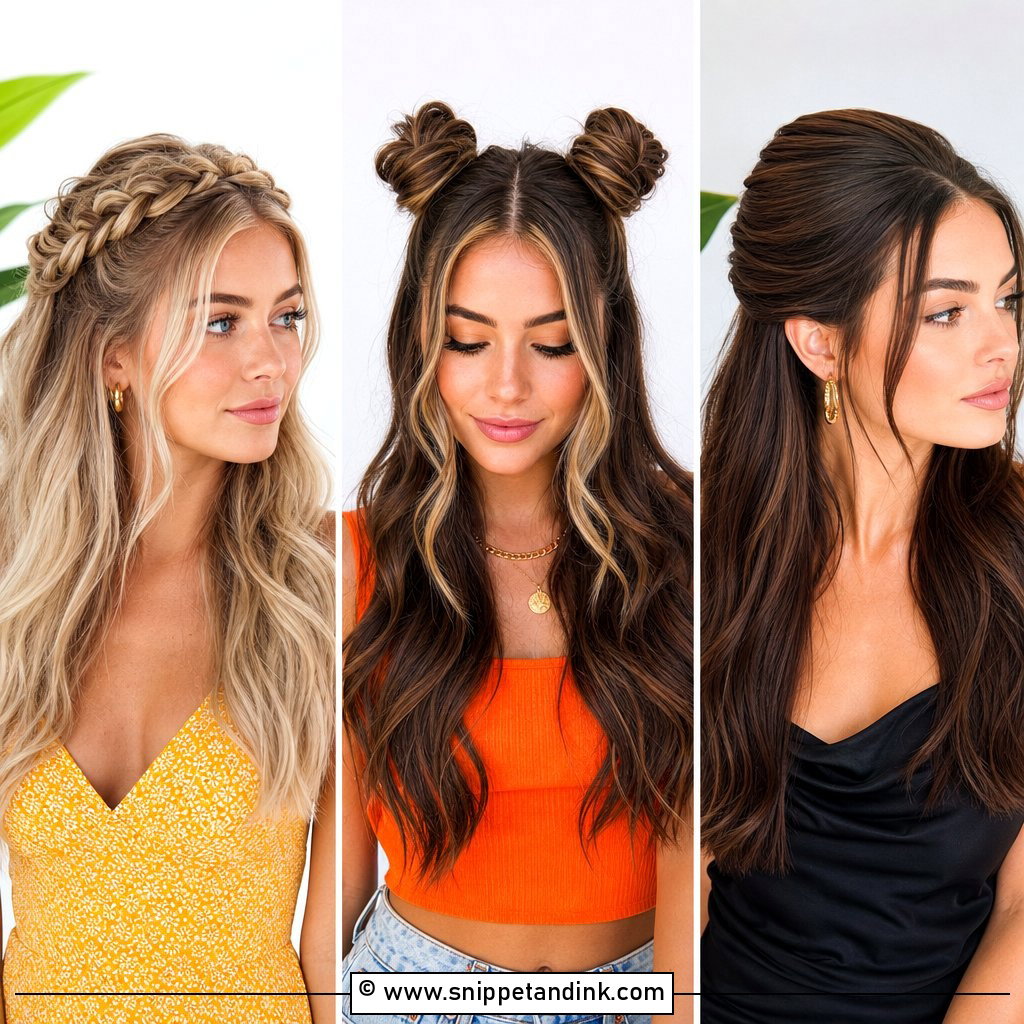
20. Pearl Updo Wedding Hairstyle
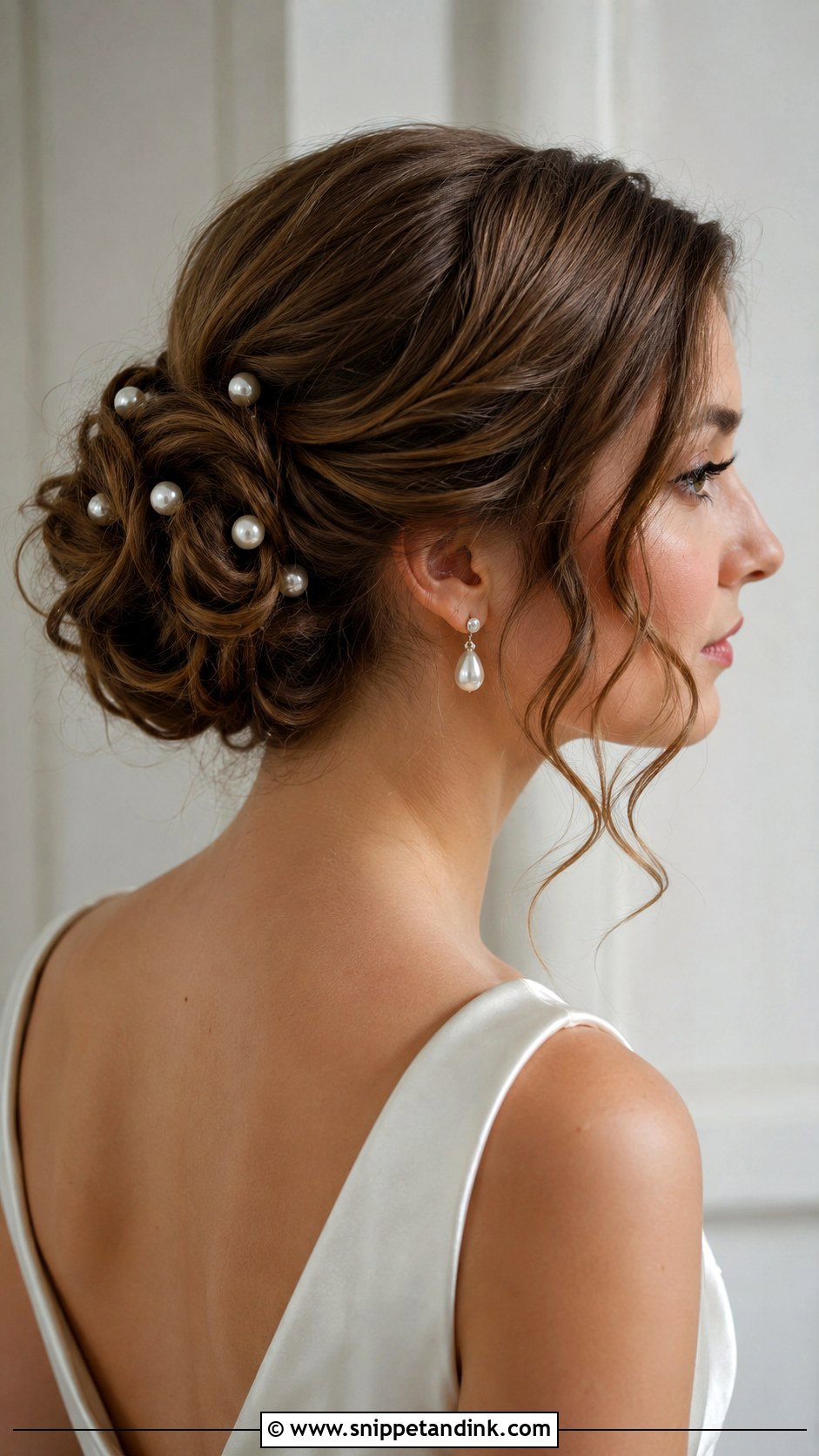
Pearls can go into a low bun, a chignon, a braid, a sleek bun or a textured style, and they catch light gently in close-ups without glare. Placement decides the effect. A few scattered pearl pins look delicate; a pearl comb is more of a focal point. I place them after the final spray so the finish doesn’t dull them, and I keep the base style tidy enough that the pearls look placed rather than lost. Satin, lace, tulle and simple modern gowns all suit them.
Tension, Headaches and Why Tighter Isn’t Safer
The most common complaint I hear about wedding updos isn’t that they fell. It’s that they hurt. A secure updo and a tight updo are different things, and the difference matters for comfort and for your hairline.
Where the pain comes from
Headaches usually come from a few pins pulling a small amount of hair at the scalp, or from one heavy bun hanging off a single point. Spreading the weight over several anchors and pinning into the base, not into the scalp, fixes most of it. If something pinches during your trial, say so straight away. It won’t settle, it will get worse.
Protecting edges, curls and locs
The hairline is the most fragile hair you have, and repeated pulling there can lead to thinning over time. For natural hair, I’d rather lay the edges gently and add volume elsewhere than drag them back hard. For locs, avoid pins pushed through the loc itself and keep wraps snug, not tight. The night before, sleep on a satin pillowcase or in a scarf so curls and stretched hair keep their shape.
Letting it down
Take pins out slowly and massage the scalp where the bun sat. Some tenderness for an evening is normal after a long day of wear. Pain that lingers into the next day means the style was built too tight, and it’s worth mentioning to your stylist if you’ll see her again for another event.
Is Your Updo Still Comfortable at Hour Six?
An updo earns its popularity by staying put, clearing the neckline and lasting from ceremony to last dance. The right one for you depends on your texture, neckline, accessories and venue, and on how it feels after hours of wear, which no mood board can show. A sleek bun feels modern, a textured chignon softer, and braids, pearls and ponytails each bring their own mood. Book a trial, wear the result through the rest of that day, and pay attention to how your scalp feels by evening.
You'll Like These Ideas:


Leave a Reply