
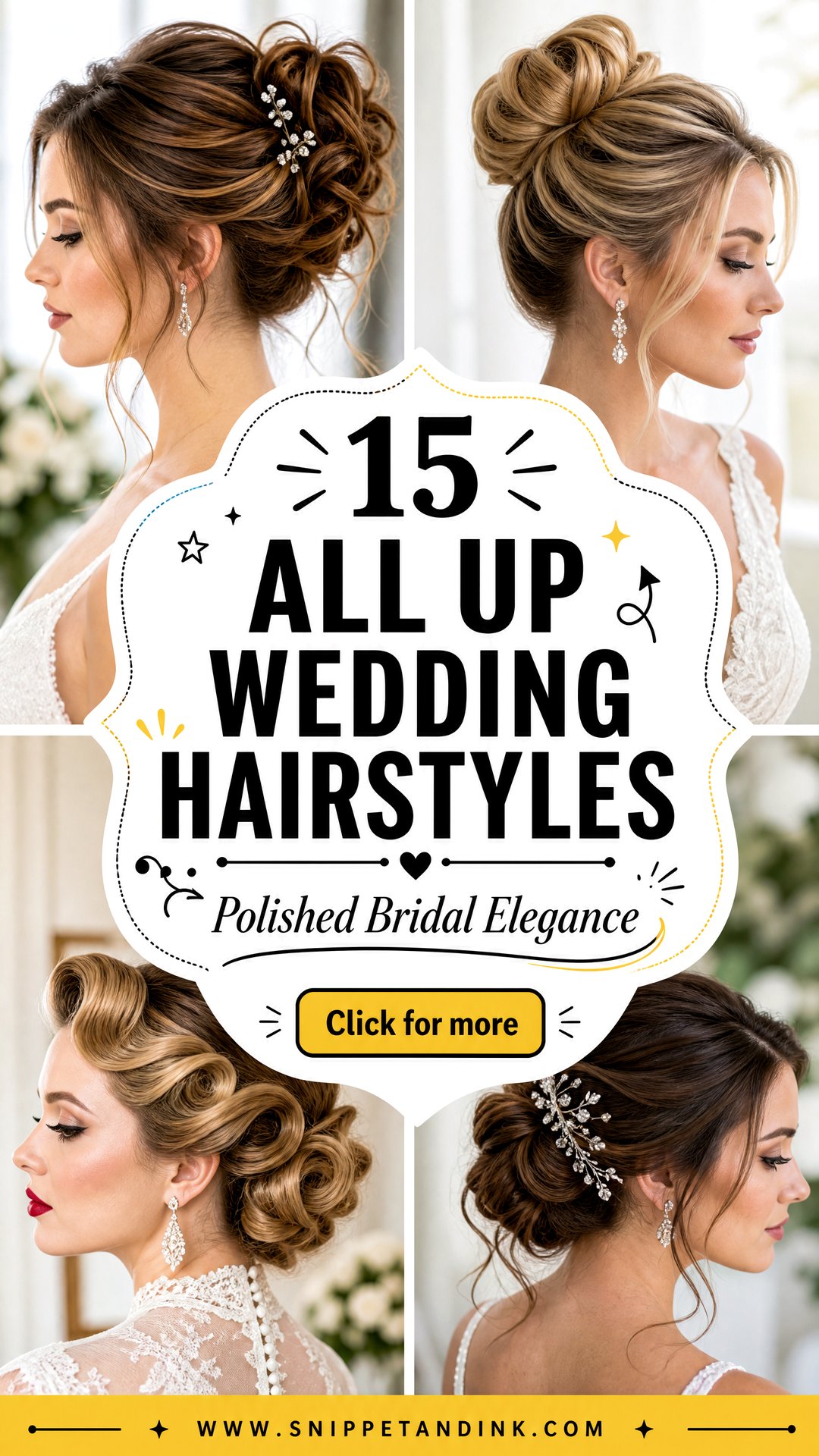
An updo is the style I trust most for a long wedding day. Once everything is pinned up, you stop thinking about your hair: no strands stuck to lip gloss, no curls dropping by the speeches, no hair tangled in a necklace clasp. It also clears the neckline, so a lace back, a halter strap or a pair of heirloom earrings actually gets seen. The fifteen looks below run from sleek and modern to soft, vintage and boho. For each one I’ve noted the dresses, hair textures and settings it suits, plus what I watch for when I build it, so you can picture it on you rather than on a model.
How Your Hair Should Arrive at the Salon Chair
Most updos that collapse early were doomed before the first pin went in. Squeaky-clean, freshly conditioned hair is too slippery to grip, so I ask straight or wavy-haired brides to wash the evening before and skip heavy masks or oils for a few days. Curly and coily hair is different: it usually needs a proper hydrating wash so the curls hold their shape, so ask your own stylist what she wants.
- Arrive with hair completely dry. Damp roots make a bun sag and add a long drying stretch to a tight morning.
- Wear a button-front shirt so nothing has to come over your head afterward.
- Bring your veil, comb or hairpiece to the trial and the wedding. Placement changes how I build the whole style.
- If you’re adding clip-in extensions for volume, have them color-matched and wear them at the trial too.
Short hair is the one real exception. A true all-up style needs roughly shoulder length or longer. Above that, I can usually manage a tucked roll or a small twist at the nape, but a full chignon will need extensions or a padded form.
1. Low Chignon Wedding Hairstyle
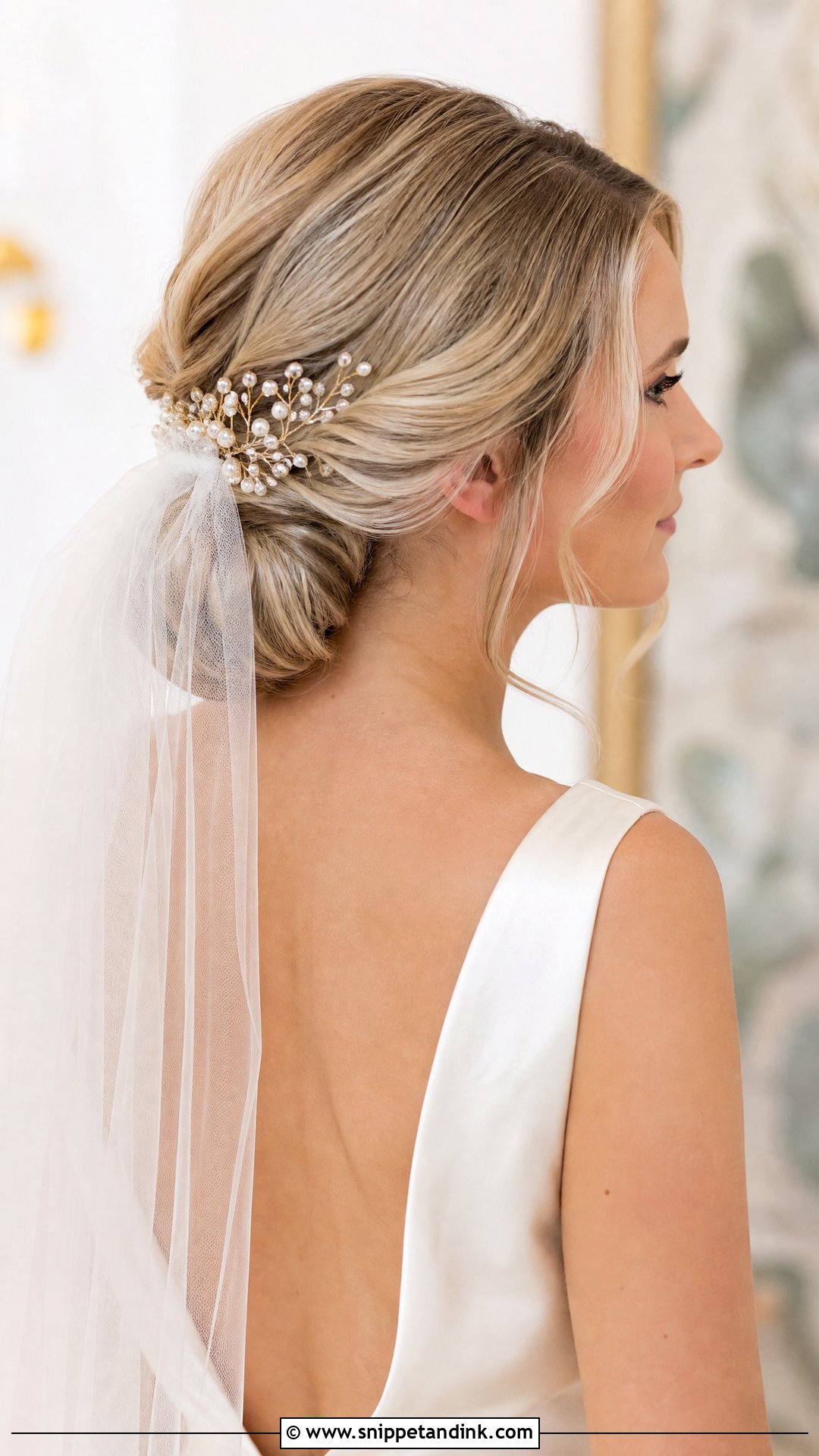
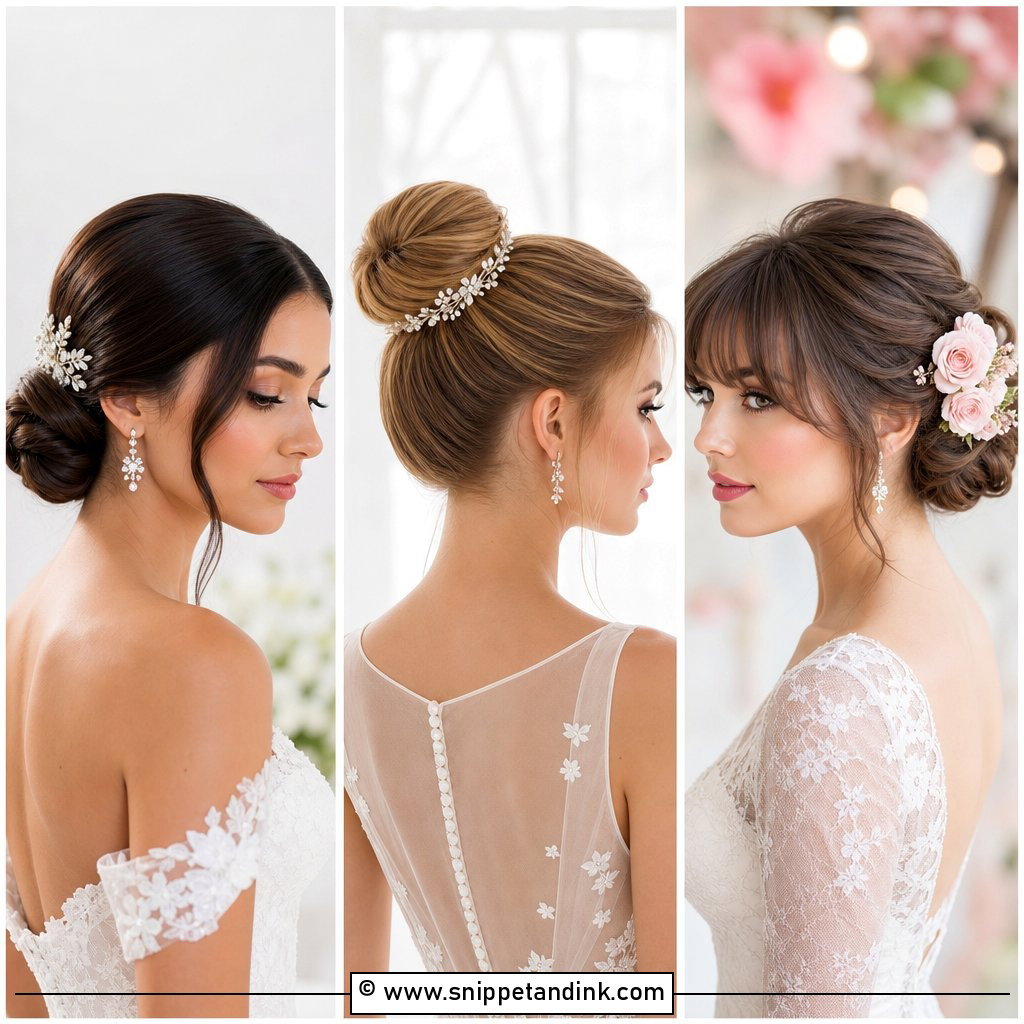
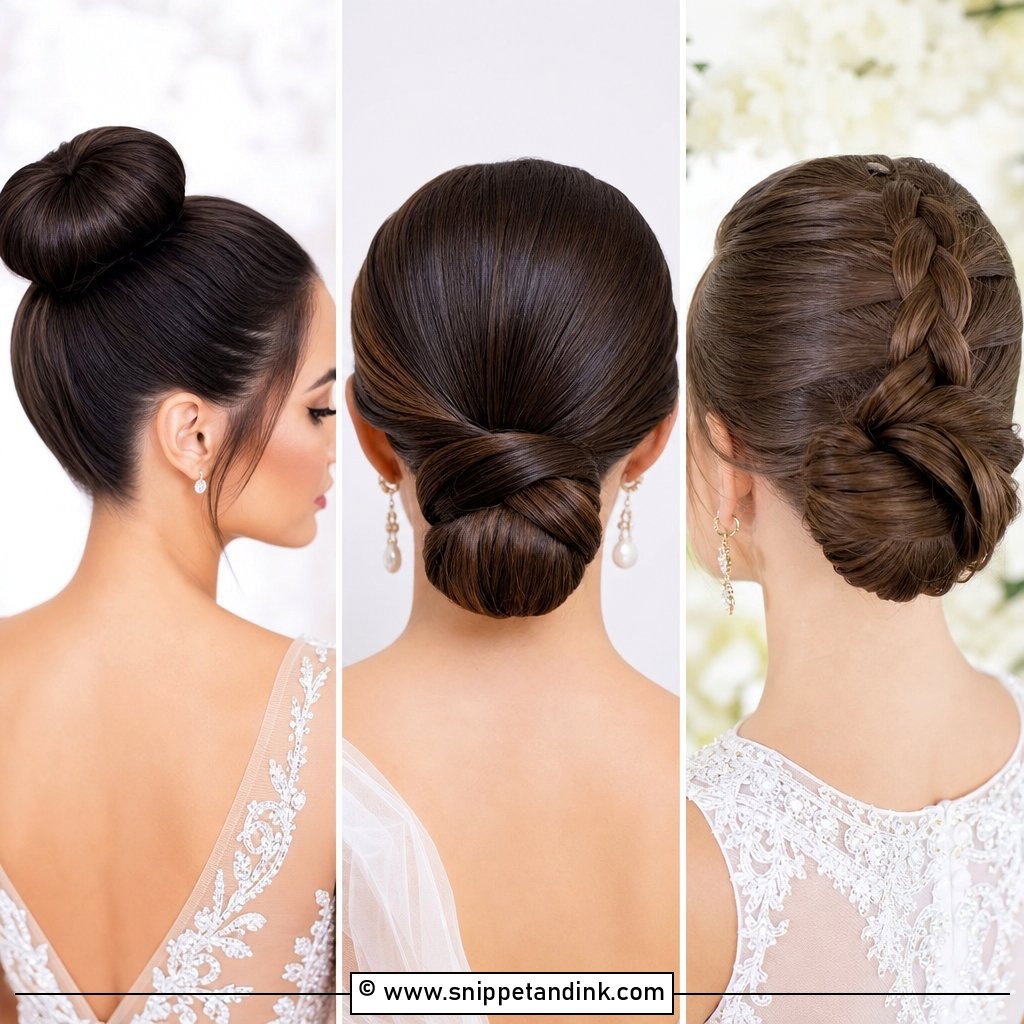
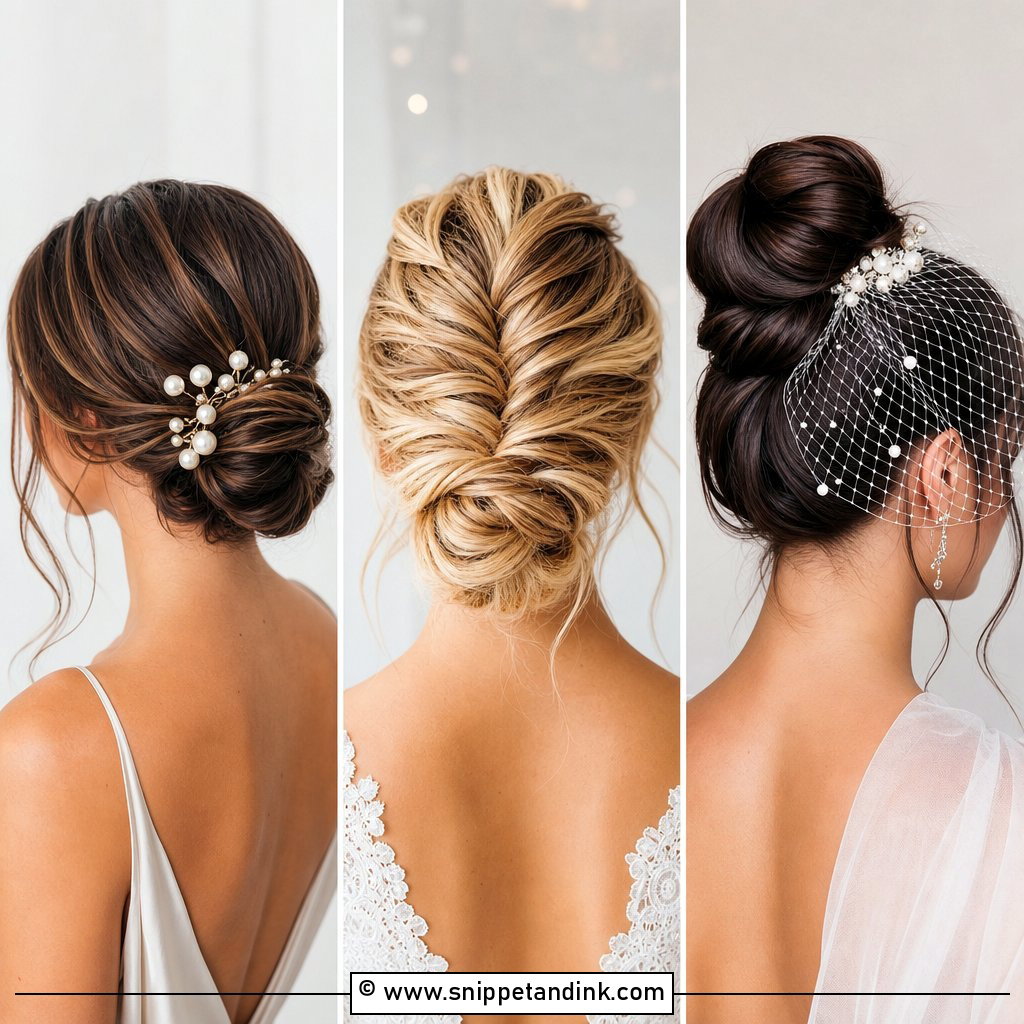
The low chignon is the updo I’m asked for most, and it earns that because it sits at the nape where the head naturally carries weight, so it rarely feels heavy by evening. It sits well under open backs, lace necklines, off-the-shoulder sleeves and long veils. Worn sleek with a center part it reads clean and classic; with loose pieces at the cheeks it softens. It needs medium to long hair. On fine hair I’ll usually hide a small padded form or a few clip-in wefts inside the bun, because a chignon built from thin hair alone shrinks to the size of a walnut. Finish with pearl pins, a delicate comb, or a veil tucked just above the bun.
2. Sleek Bun Wedding Hairstyle
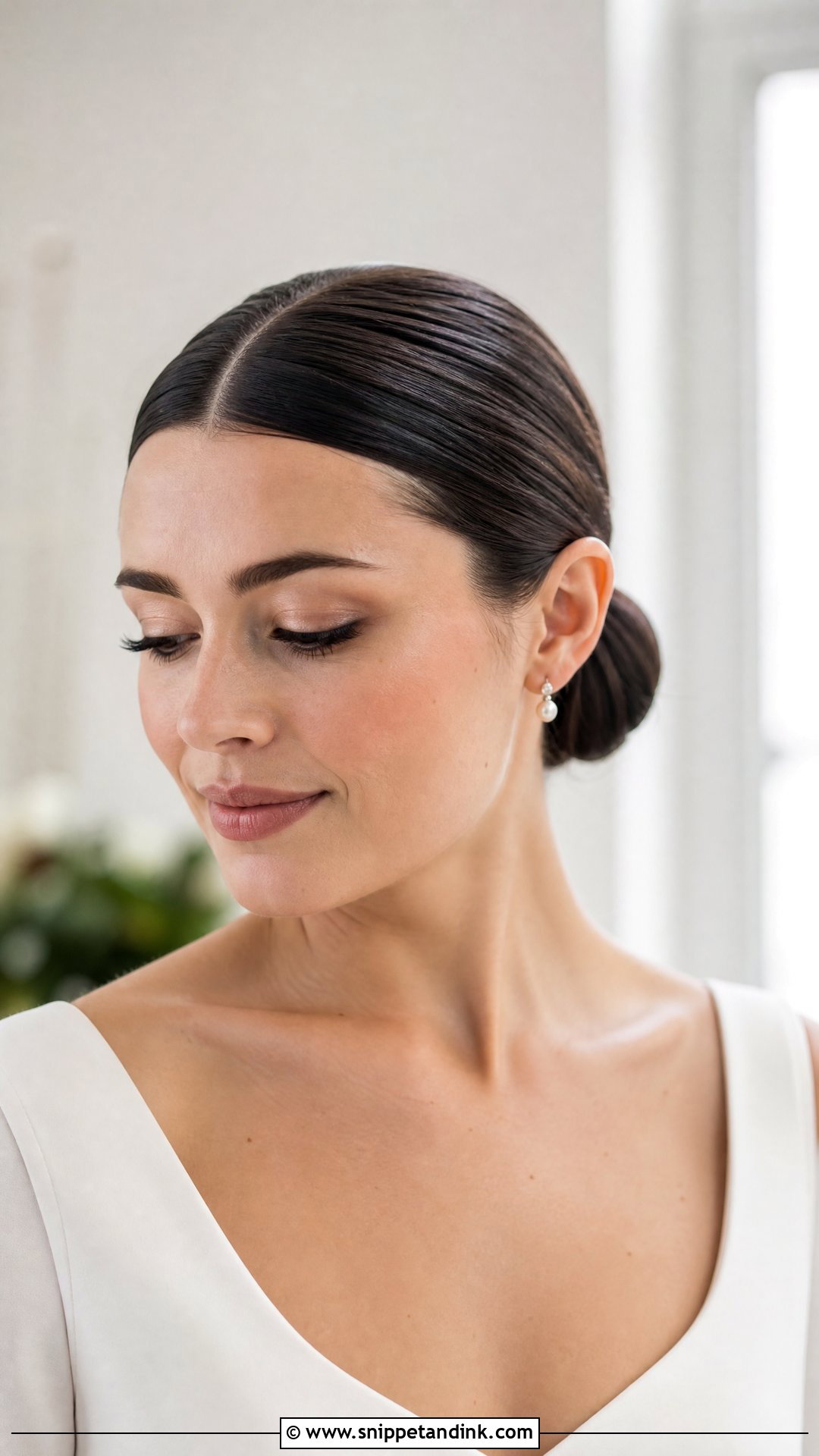
A sleek bun is all about the prep, not the bun. I smooth the hair with a light cream and a boar bristle brush, set the part, and anchor everything to a tight elastic before shaping, because any bump at the crown shows in flash photos. It suits minimalist dresses, structured satin gowns, high necklines and bold earrings, and it’s my go-to for humid weather since nothing is left loose to frizz. The honest downside: it shows every gap in a hairline and doesn’t flatter everyone at full height. If you’re unsure, sit it low and finish with just a touch of shine spray.
3. Messy Bun Wedding Hairstyle
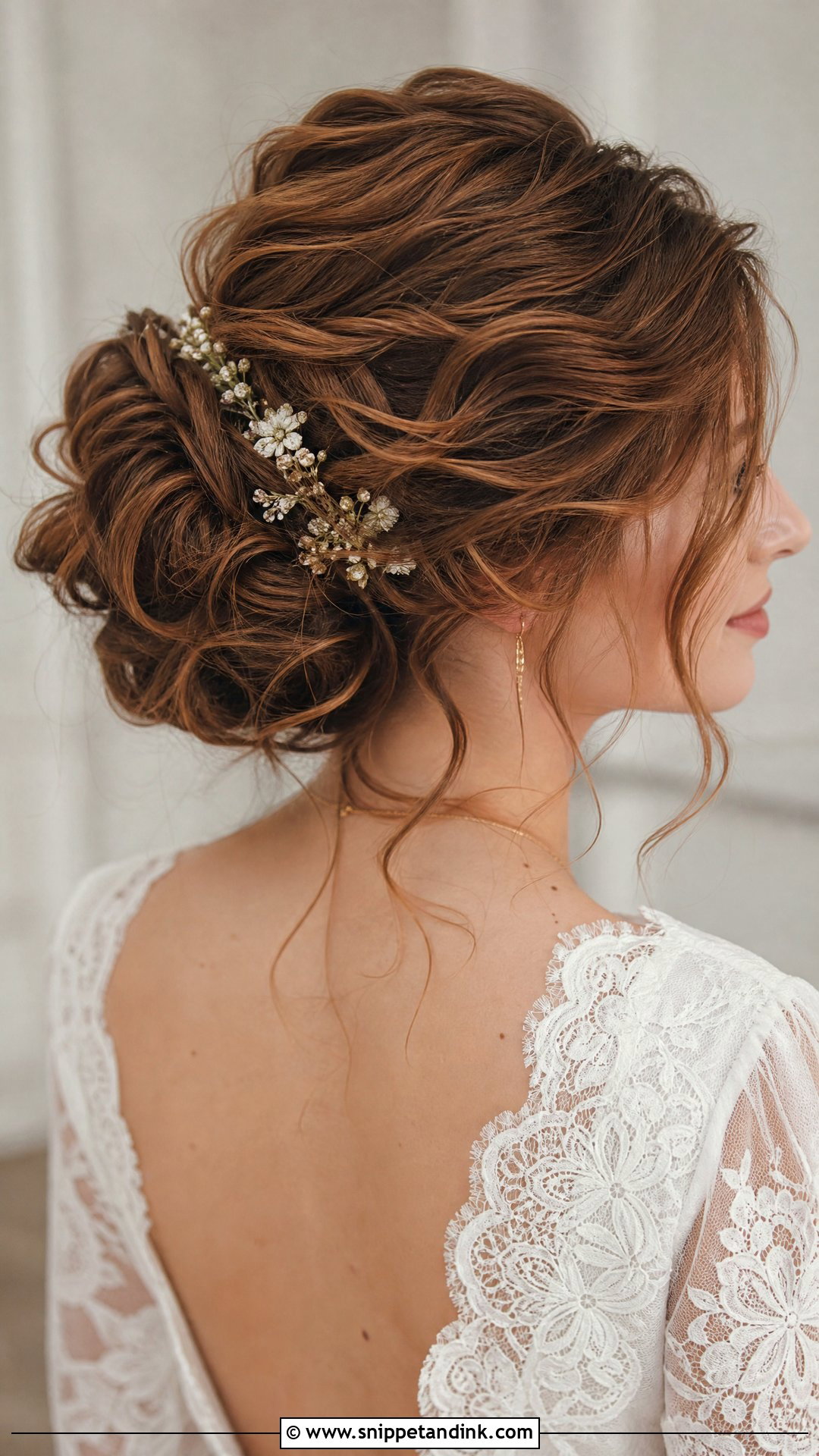
There is nothing rushed about a good messy bun. I curl or wave the hair first, set it to cool, then pin it loosely around a hidden anchor so the airy shape is actually locked in. It belongs at garden weddings and outdoor ceremonies, with lace gowns, tulle skirts and boho styling. Because I can control volume at the crown and pull softness around the face, it adapts to most face shapes. Very straight, silky hair is the exception: without texture spray and a hot tool, the loose pieces slip out within an hour. Tiny flowers, pearl pins or a vine accessory make it read as bridal.
4. Textured Updo Wedding Hairstyle
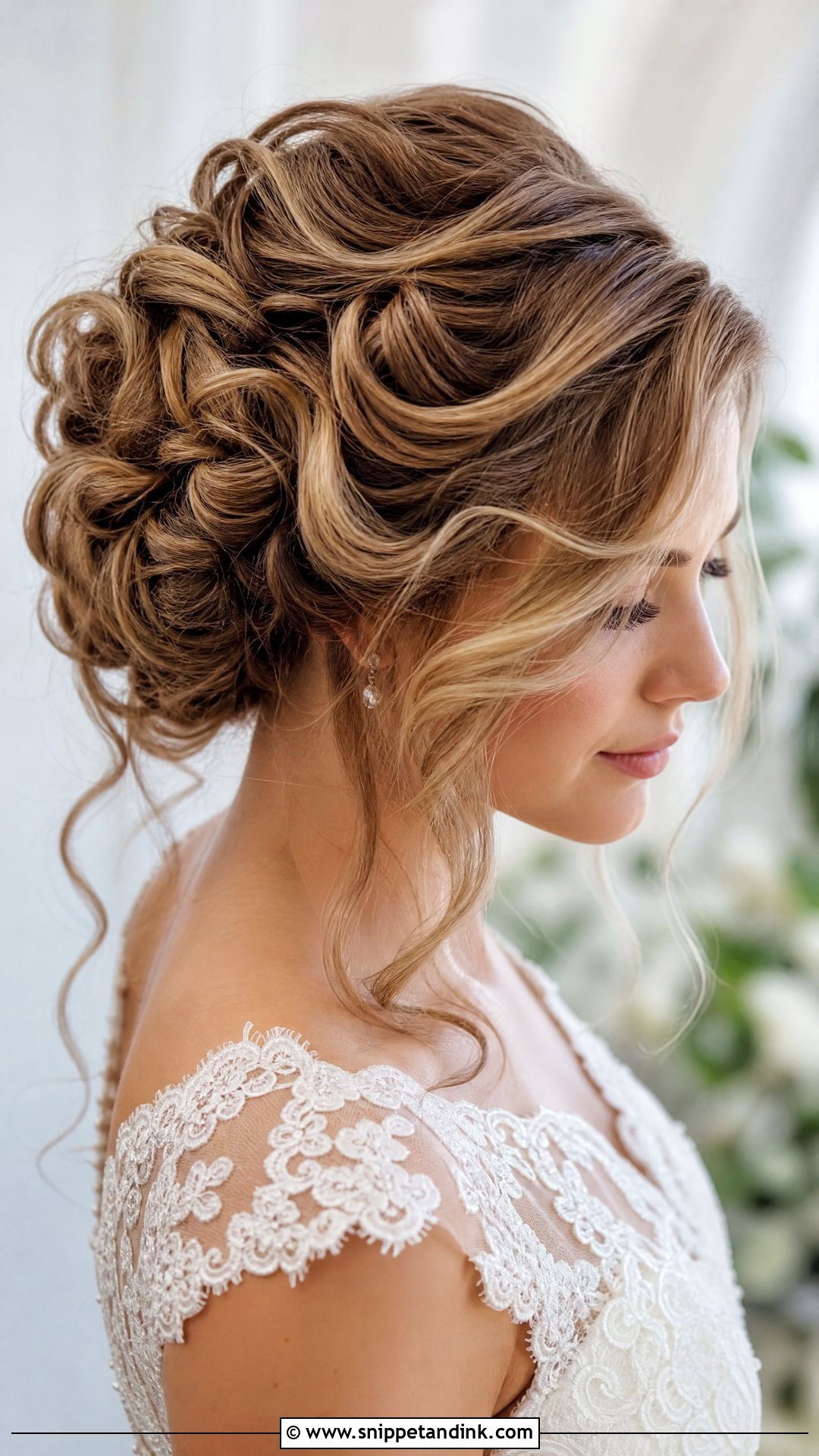
Waves or curls go in first, then the hair is pinned into a lifted, balanced shape with visible texture through the sides and back. The appeal is movement without wearing your hair down, and the sculpted ridges catch light from different angles in photos. Thick hair, layered cuts, highlights and dimensional color all suit it, because every twist and wave shows the variation in tone. I build these over a small ponytail base so the loose-looking sections are actually pinned into something solid. It pairs naturally with floral lace and soft veils.
5. French Twist Wedding Hairstyle
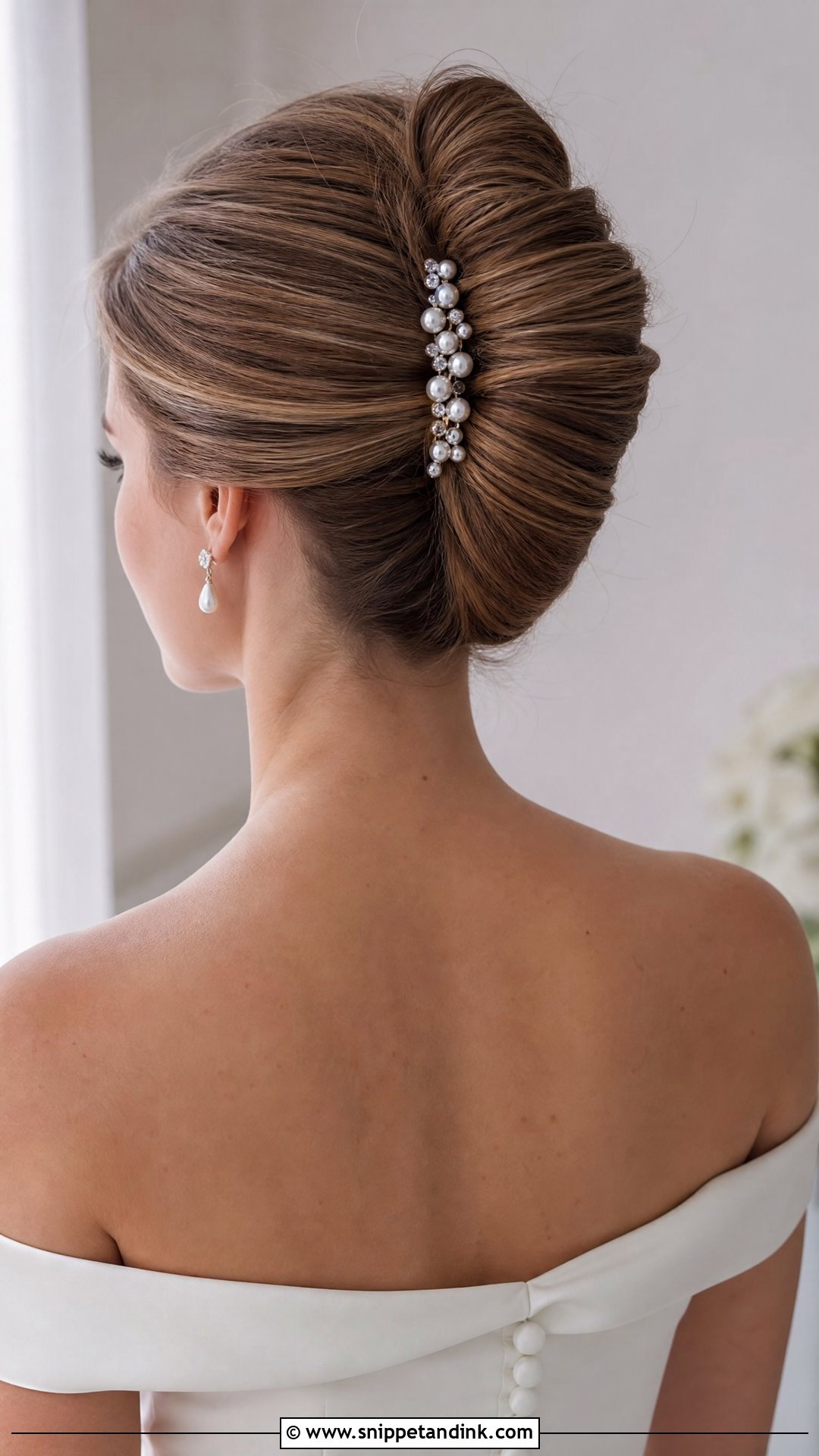
A French twist is a vertical roll swept up the back of the head, and that single upward line lengthens the neck more than any bun can. It sits well with strapless gowns, bateau necklines, halters and dramatic earrings. The classic version is glassy and smooth; a modern one keeps some texture, gentle volume and a few wisps near the face. One thing I tell brides early: a twist needs a fair amount of hair to tuck into itself, so blunt bobs and heavy long layers make it tricky. A pearl comb or sculptural pin set along the seam is enough decoration.
6. High Bun Wedding Hairstyle
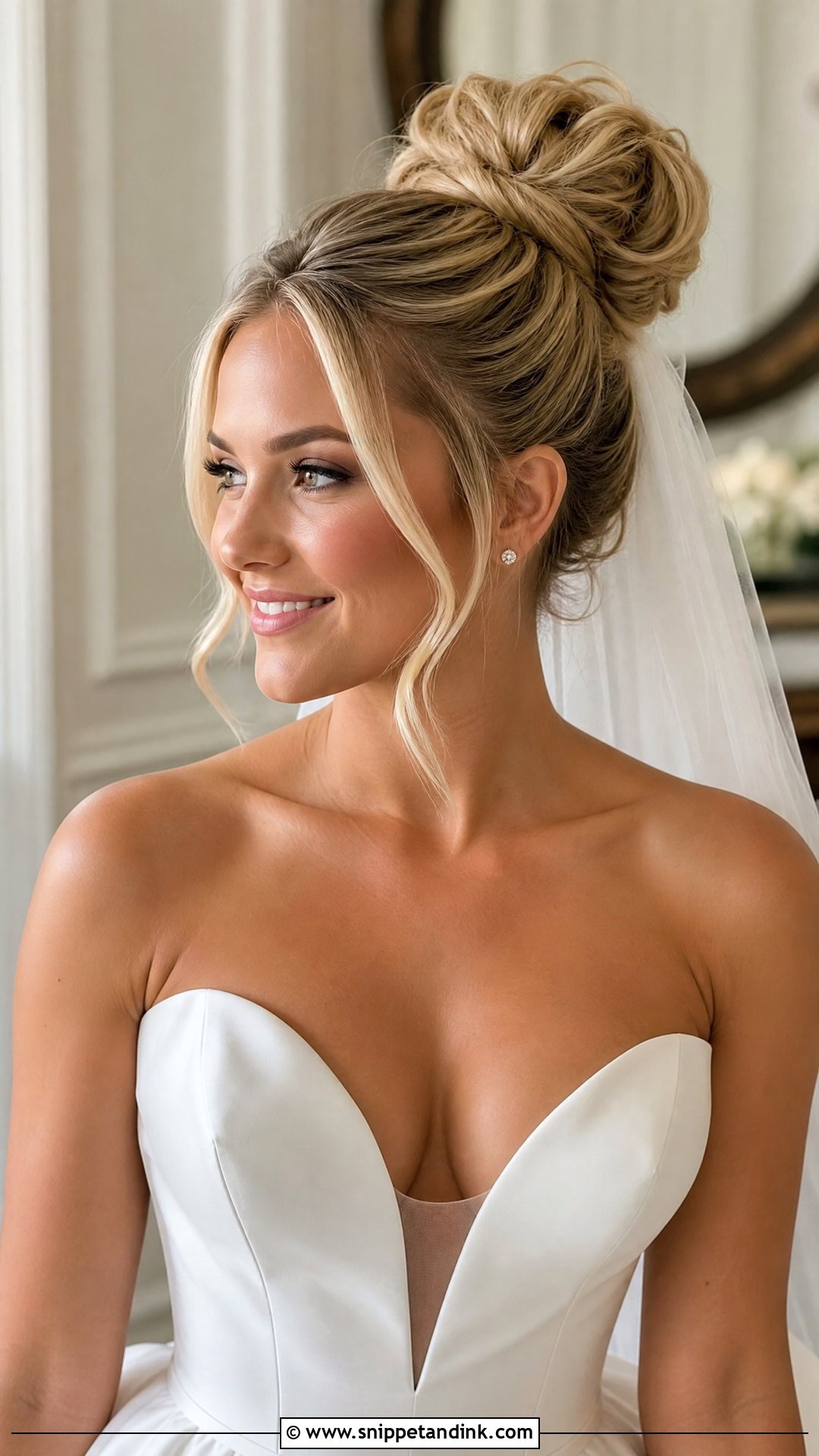
Sitting high on the head, this bun adds height and pulls the eye up to the cheekbones and neckline. Ball gowns, dramatic skirts, high collars and statement veils carry it best, because the proportions balance. It can be smooth and ballerina-like or slightly textured. Long, thick hair makes a naturally full bun; fine hair needs padding or extensions for shape. I’d be cautious here if your veil attaches at the crown, since a high bun and a crown-set veil compete for the same spot. Keep the front clean for a formal look, or leave a few tendrils if you want it softer.
7. Braided Updo Wedding Hairstyle
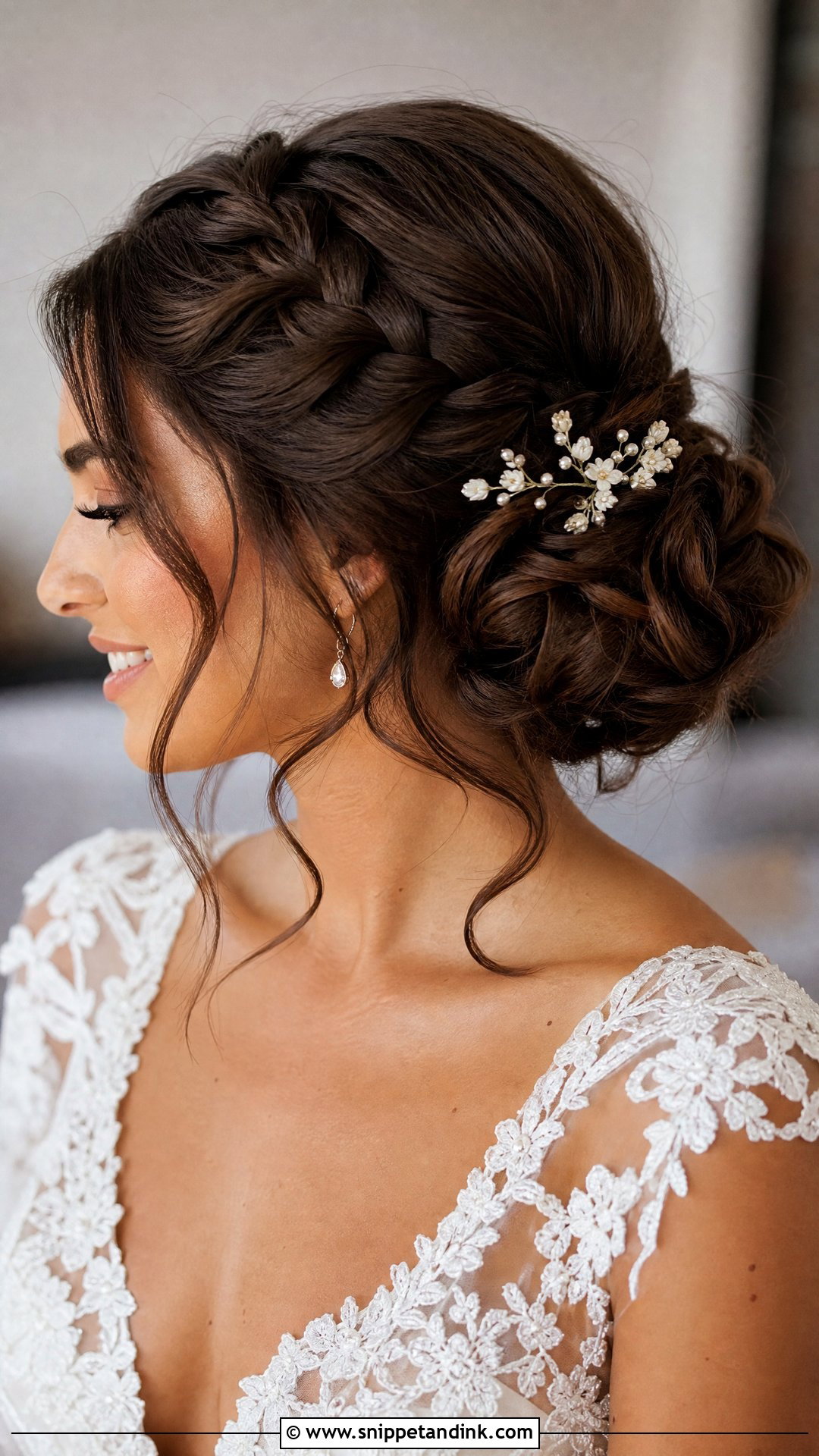
Braids do a practical job in an updo that people overlook: they grip. A braid wrapped around the crown, crossed into the bun or framing the back holds short layers that would otherwise slide out of a smooth style by mid-afternoon. That makes this one of my safest choices for rustic venues, gardens and beach ceremonies, where wind and humidity test everything. It suits boho dresses, and braids show off balayage or highlights because the woven sections expose the contrast. I pancake the braid gently after pinning so it reads full in photos rather than tight. Small flowers or pins finish it.
8. Side Bun Wedding Hairstyle
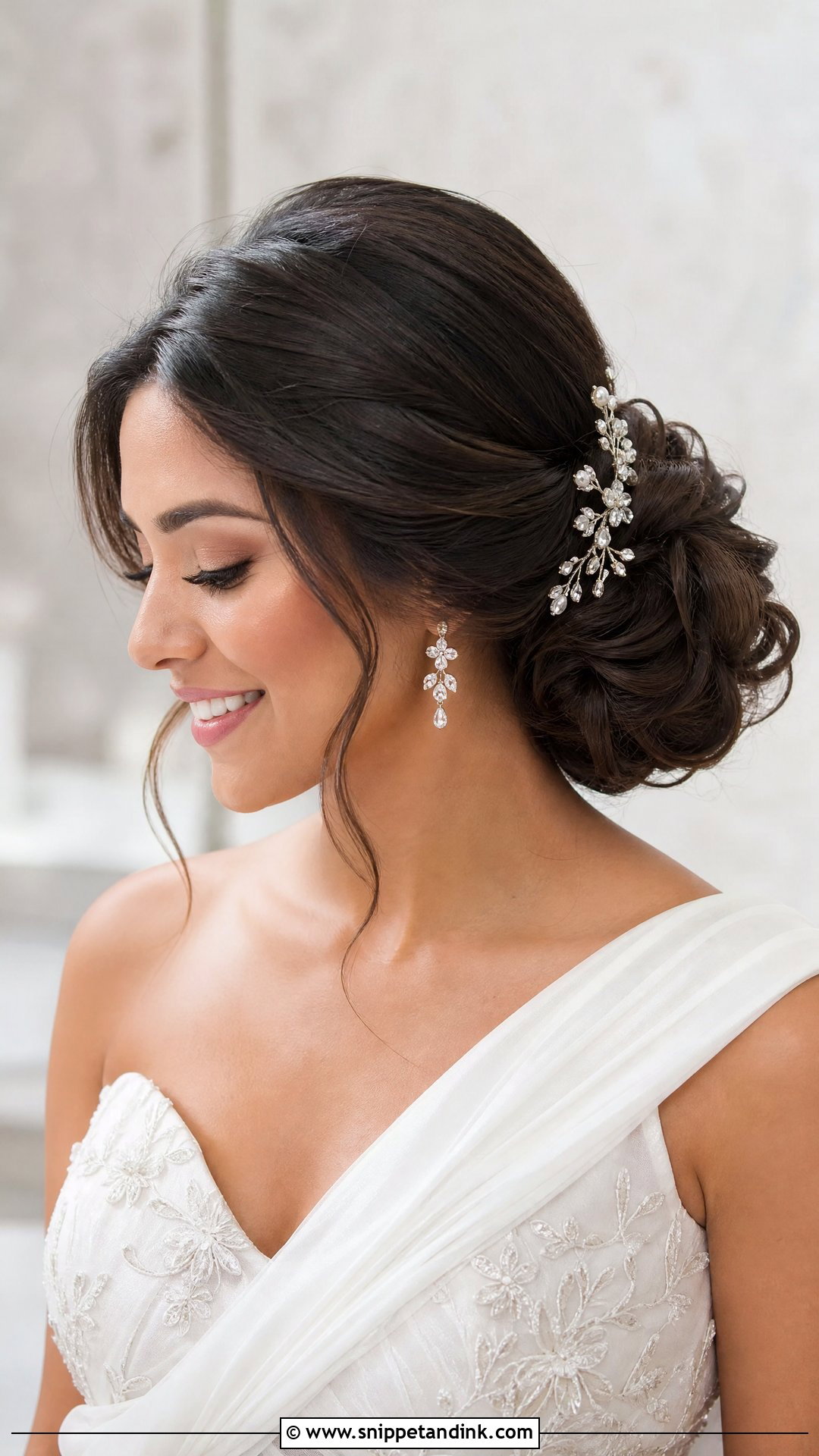
A side bun is easy to see from the front and in photos, which is its real advantage over a centered chignon that hides behind your head in straight-on shots. It sits low near one side of the nape with a slightly vintage feel, and pairs with one-shoulder gowns, asymmetrical necklines, soft lace and crown-placed veils. It can be sleek, curled, twisted or softly undone. Think about which side your partner will stand on and which is your better profile before we pin it. I always add a little volume on the opposite side so the head doesn’t look lopsided.
9. Curly Updo Wedding Hairstyle
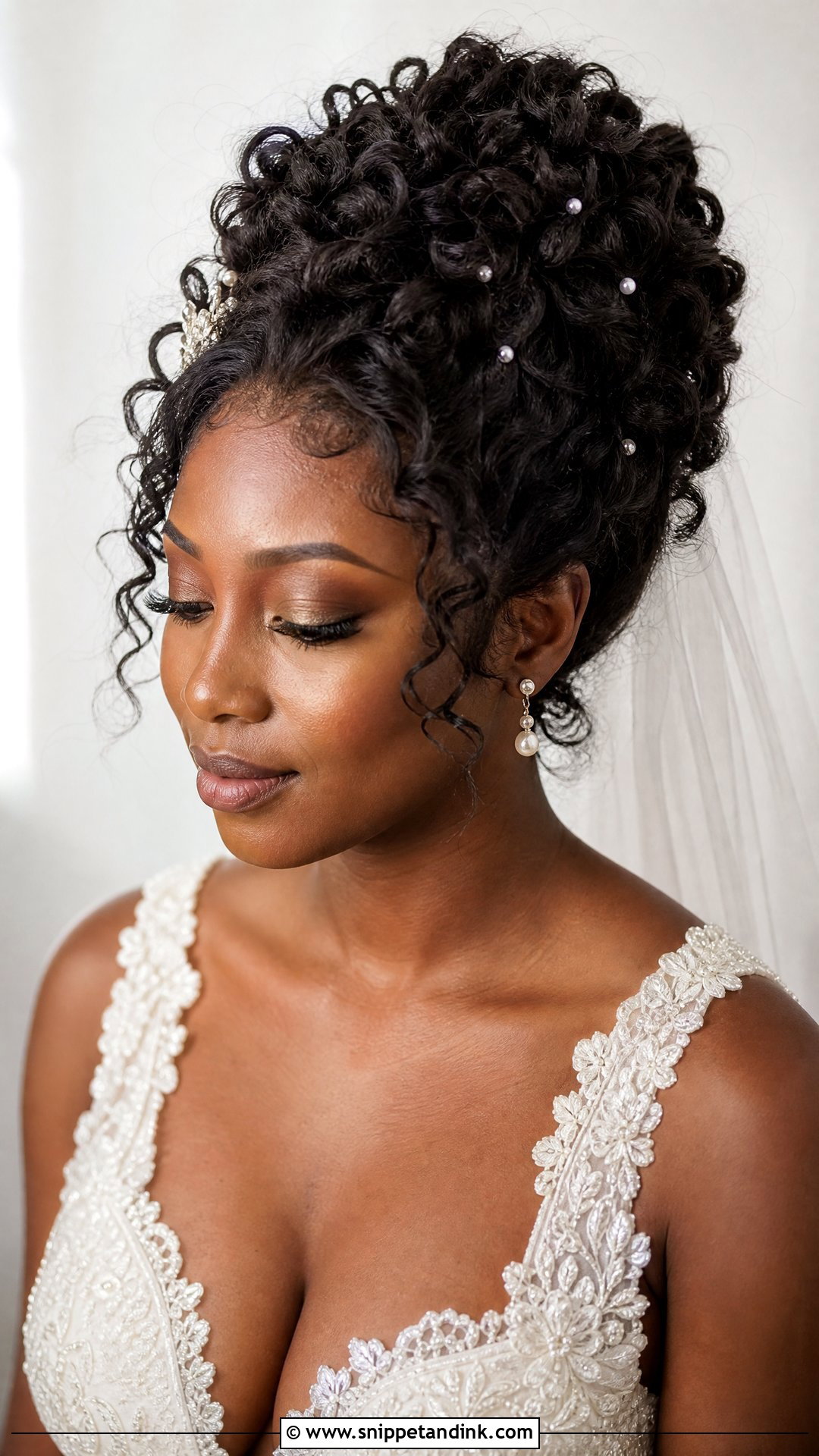
With a curly updo, my job is to shape the curls into a bridal silhouette without brushing them out or flattening them. It works on naturally curly hair, coily hair, or straight hair curled before pinning. It can sit high, low or centered depending on the dress and face shape. Definition depends on prep: a hydrating wash, a curl cream and a flexible-hold product, then I pin in clumps rather than separating strands, which is what keeps curls from turning into frizz by evening. Pearl pins, floral accents, or a veil tucked underneath keep the curls visible and full.
10. Vintage Updo Wedding Hairstyle
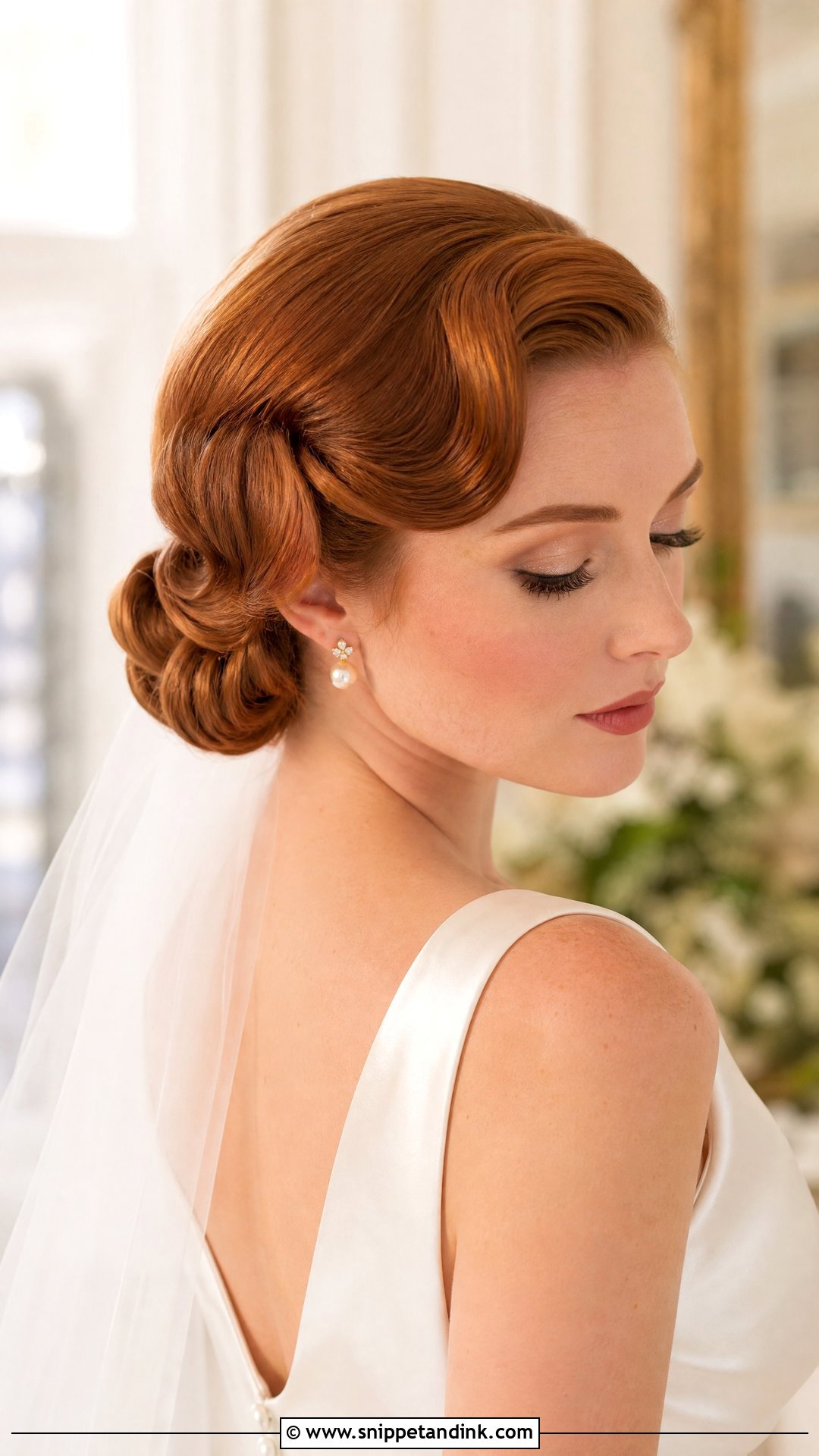
Brides who come to me for old-Hollywood polish, retro softness usually want one of a few shapes: sculpted waves at the front, a rolled bun, soft pin curls or a tuck at the nape. These belong with satin gowns, lace sleeves, birdcage veils, pearls and red-lip makeup. The finish should be intentional and smooth but still move when you turn your head; set waves that are sprayed rock hard look like a costume. A deep side part does most of the vintage work. A ballroom, city hall or estate setting suits it especially well.
11. Twisted Updo Wedding Hairstyle
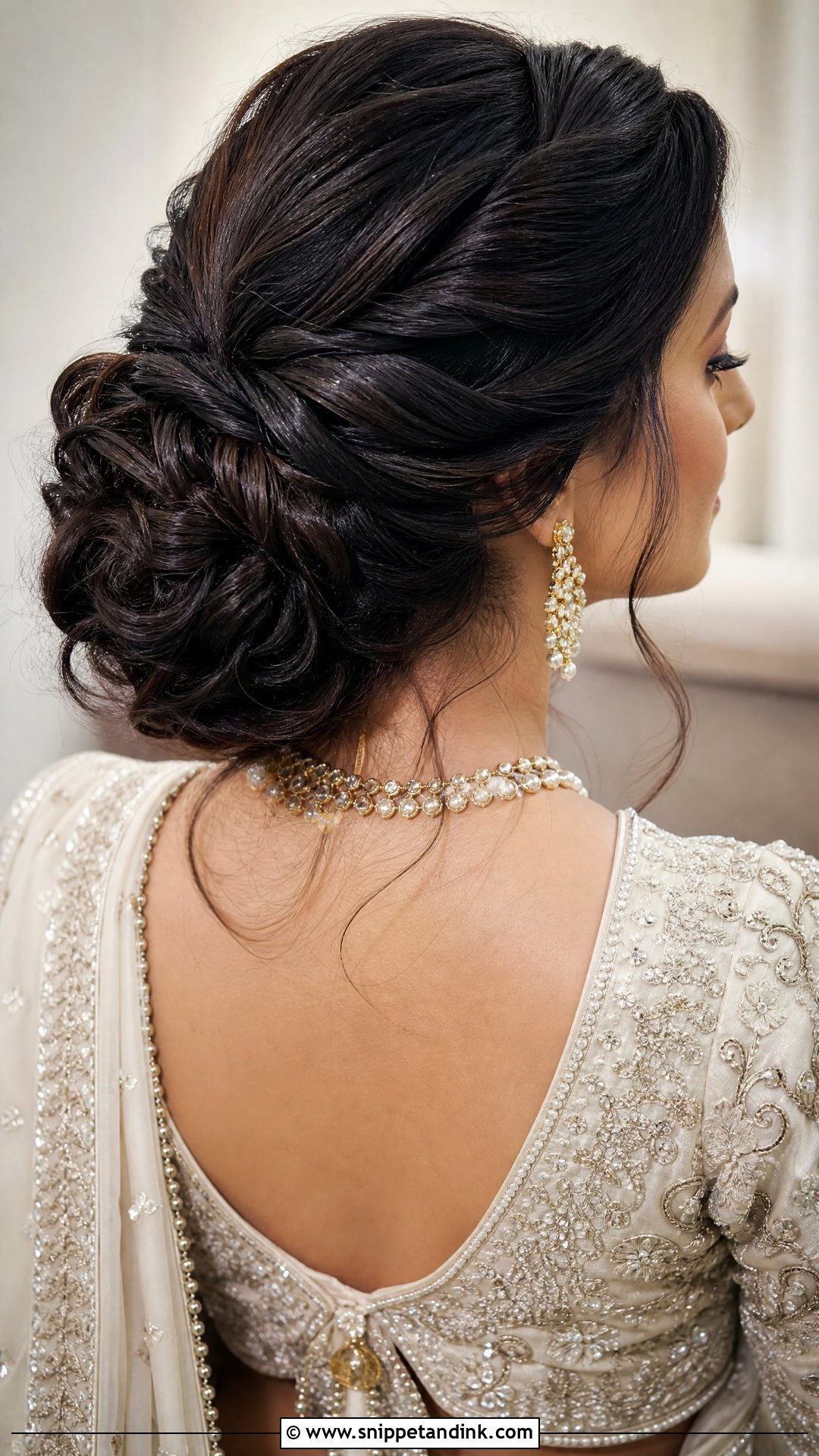
This is the style I suggest to brides who want detail but don’t like the look of braids. Instead of one plain bun, I twist individual sections and pin them together so movement runs through the back and sides. Medium to long hair works, and it adapts to fine, thick, straight or wavy textures, because each twist can be sized to the hair you have. Highlights and balayage benefit most, since twisting exposes the color contrast. Leave the front loose for a softer feel, or smooth the sides down for something more polished.
12. Crown Braid Wedding Updo
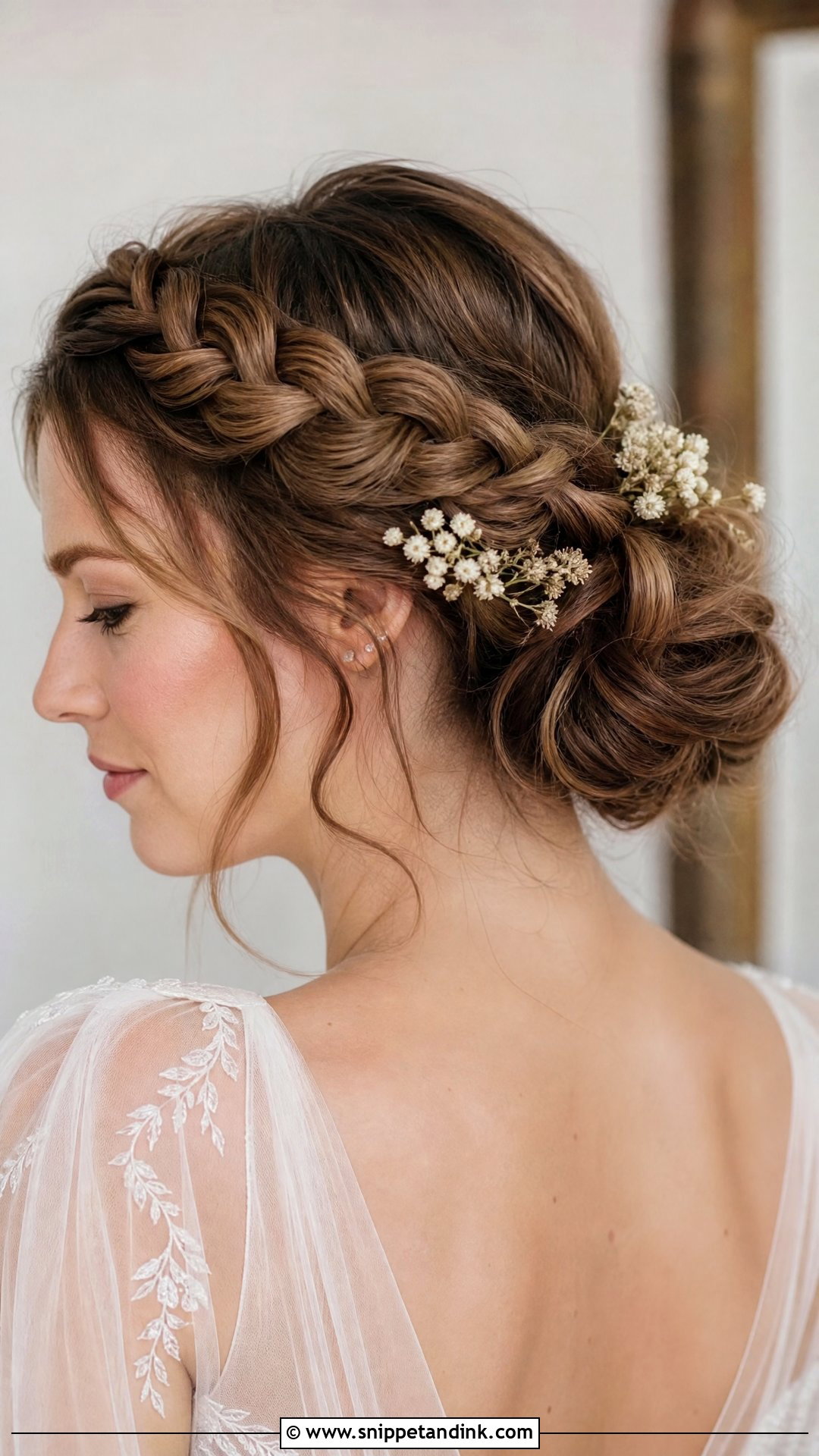
A crown braid feels a little fairytale while keeping every strand up. The braid wraps around the head or across the top, and the remaining length is tucked or shaped into a low bun. It suits outdoor weddings, floral dresses, soft tulle and a gentle boho look, and a veil can sit underneath the braid with small flowers woven through. The mistake I see most is a braid pulled too tight and flat, which looks like a school plait. I braid loosely, then pull each loop outward so the band is about twice its original width.
13. Low Bun With Face Framing Pieces
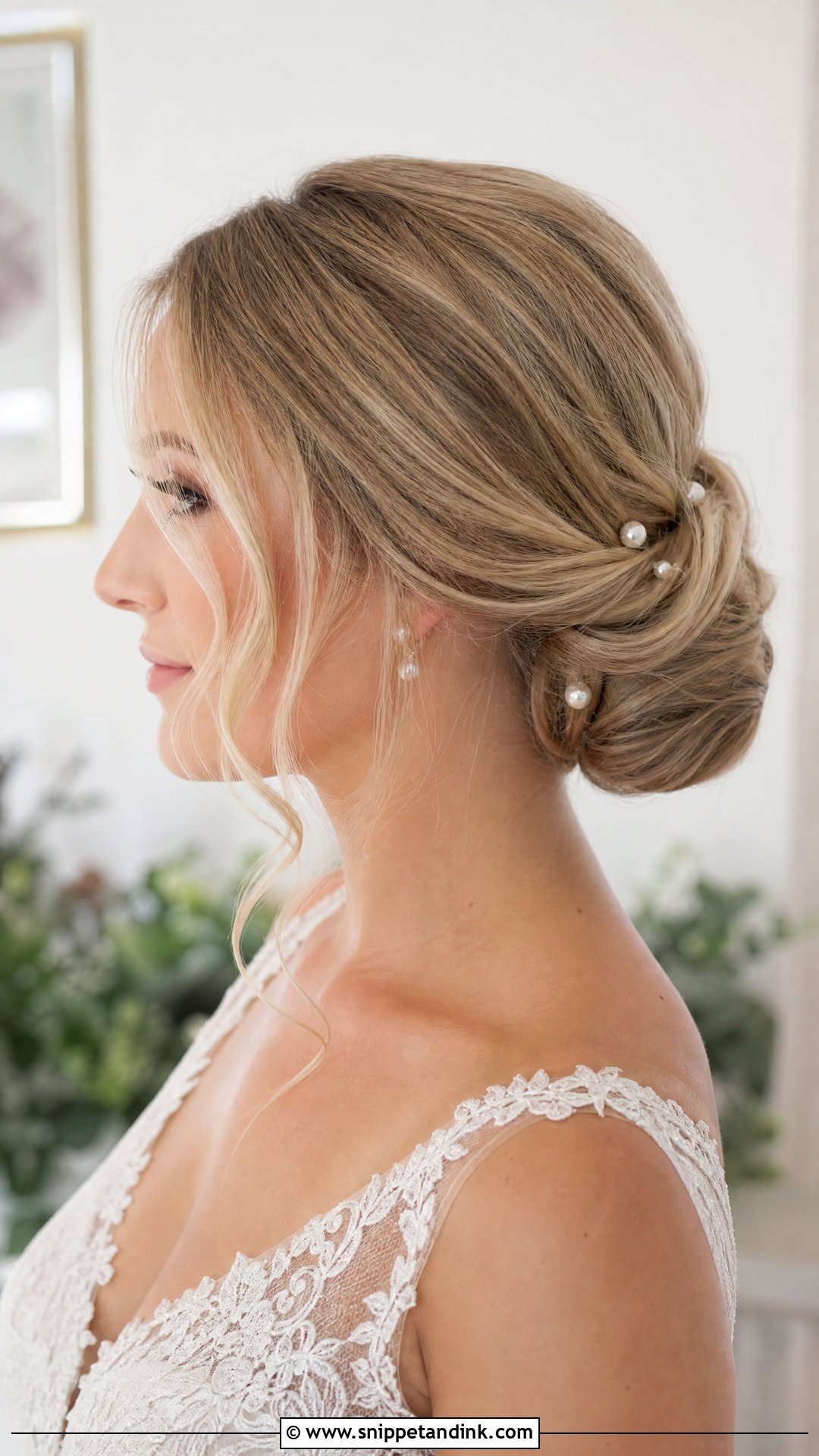
If you normally wear your hair down, this is often the updo you’ll feel most like yourself in. The bun handles security, and the loose pieces around the face stop the look from feeling severe. It works with center parts, side parts, curtain bangs and soft layers. The face-framing strands are where I spend the most time, since random wisps look like the style is falling apart. I cut them out deliberately, curl them away from the face and set them with a light spray so they stay where they belong. A few pearl pins or a sheer veil complete it.
14. Pearl Bun Wedding Hairstyle
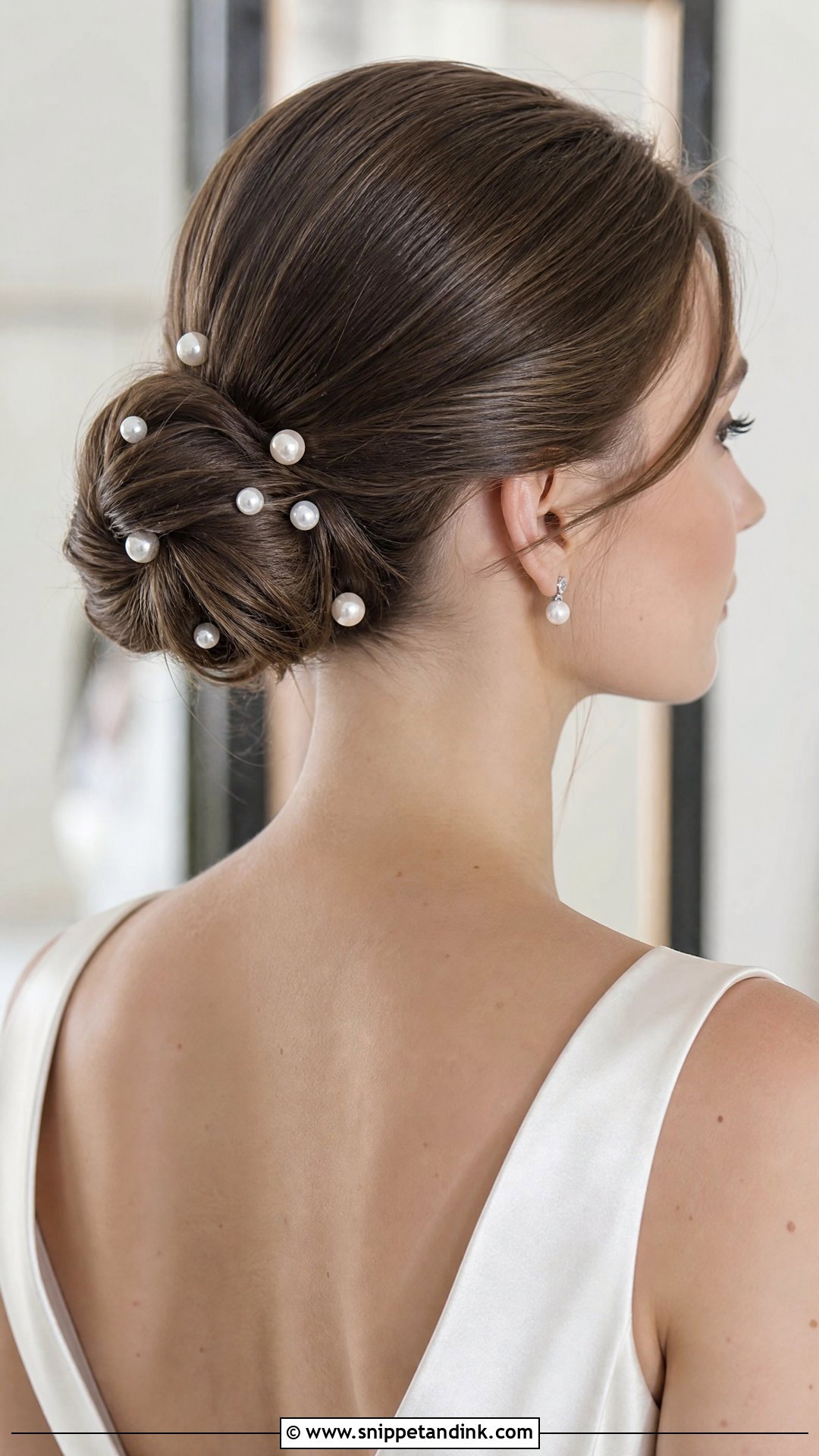
Pearls answer a common question: how do I get detail in my hair without a busy style? The bun can sit low, mid-height or high, finished with pearl pins, pearl combs, or tiny scattered pearls worked through the shape. A simple dress is the best partner, because the hair adds interest without fighting the gown, and it sits nicely beside pearl earrings or a pearl-trimmed veil. Place them with restraint. I usually start with five or seven spaced across the bun and stop when it looks balanced from the back, not when the packet is empty.
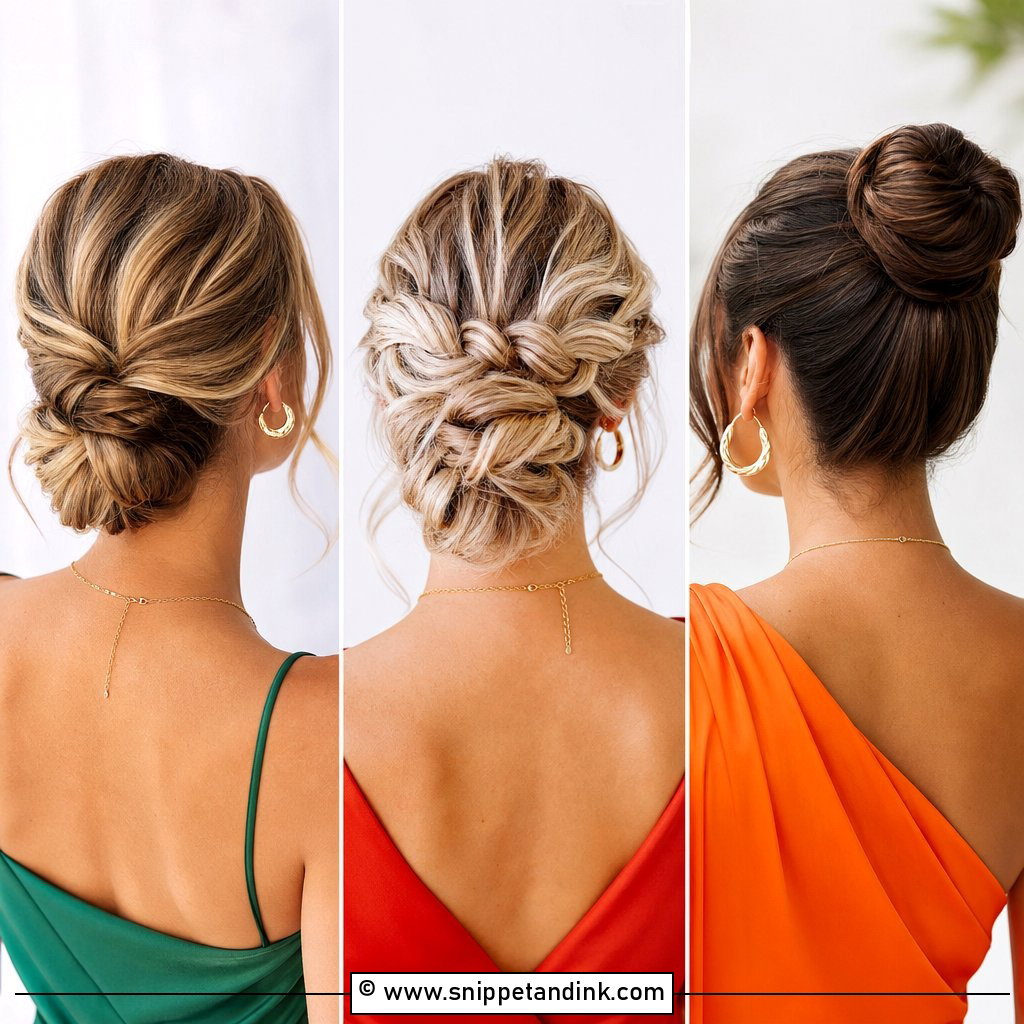
15. Floral Updo Wedding Hairstyle
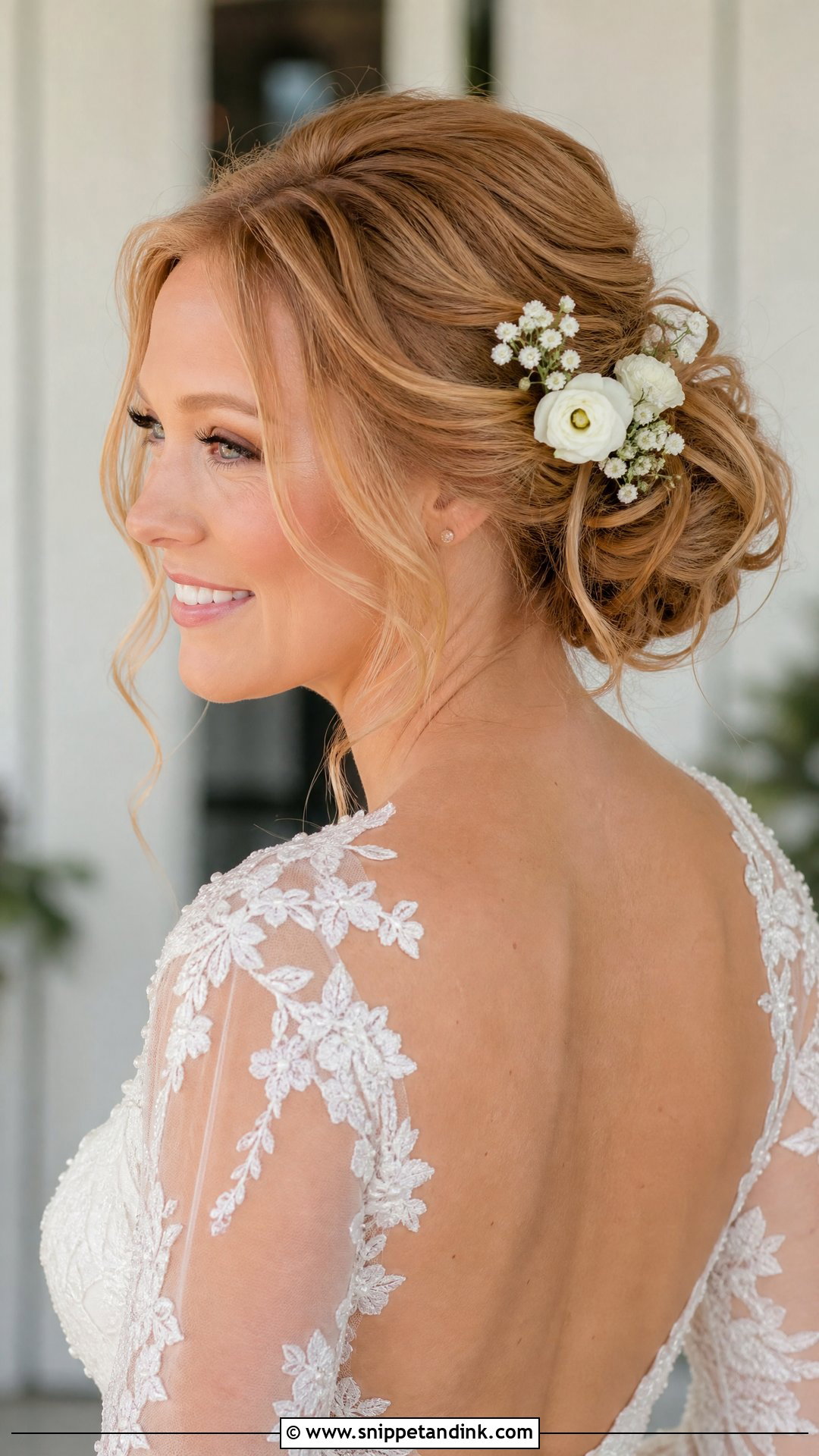
Fresh flowers in an updo suit spring and summer, gardens and outdoor ceremonies, and they work with textured buns, twists, braids and loose romantic shapes. The practical limit is weight and wilt. Blooms need to be small, light and sturdy enough to stay out of water for hours, so I ask the florist for wired, hardy stems rather than anything delicate that droops by the reception. Tiny blooms read more refined than oversized ones. Matching them to your bouquet and colors is easy if your stylist and florist talk before the day, not on the morning itself.
From First Pin to Last Dance, What Holds Up
A wedding updo often has to last twelve hours or more, through hugs, a veil coming out, a breezy photo session and a crowded dance floor. The ones that make it share a few habits.
Structure underneath, softness on top
I start almost every updo with a hidden base, a small ponytail or a tight anchor braid, so every later pin has something to lock into. The visible texture is pinned onto that foundation rather than holding itself up. Messy buns and textured styles need this most, since they look loose but can’t actually be loose.
Plan the veil exit
Veil removal is where buns get pulled apart. Before I leave, I show a bridesmaid exactly which comb or pins to take out, and in which direction. A veil set underneath the bun usually slides out cleanly; one set above it can drag the top section loose if it’s yanked.
A small rescue kit for a bridesmaid’s bag
- A dozen bobby pins and a few U-pins matched to your hair color
- A travel-size flexible hairspray, not a crunchy one
- A tail comb for tucking flyaways back in
- Two clear elastics, in case a braid end works loose
One honest warning: a heavy, tightly pinned updo can give you a headache by late afternoon. If your scalp is sensitive, tell me at the trial. A slightly lower placement or fewer pins at the crown usually fixes it without losing the shape.
Let Your Neckline Settle It
All of these hold well, clear the neck and let your dress, jewelry, veil and makeup do their work. If you’re still stuck between two or three, start with the dress. A high neck or busy lace back usually wants a low, simple bun, while a strapless or plunging gown can carry height, braids or a twist. Then weigh the weather and your own hair: fine, slippery hair needs padding and texture; thick hair needs extra pins and time. Book a trial, take photos from the front, side and back, and wear the style for a few hours afterward. If it still feels comfortable and still looks like you at dinnertime, that’s your updo.
You'll Like These Ideas:


Leave a Reply