
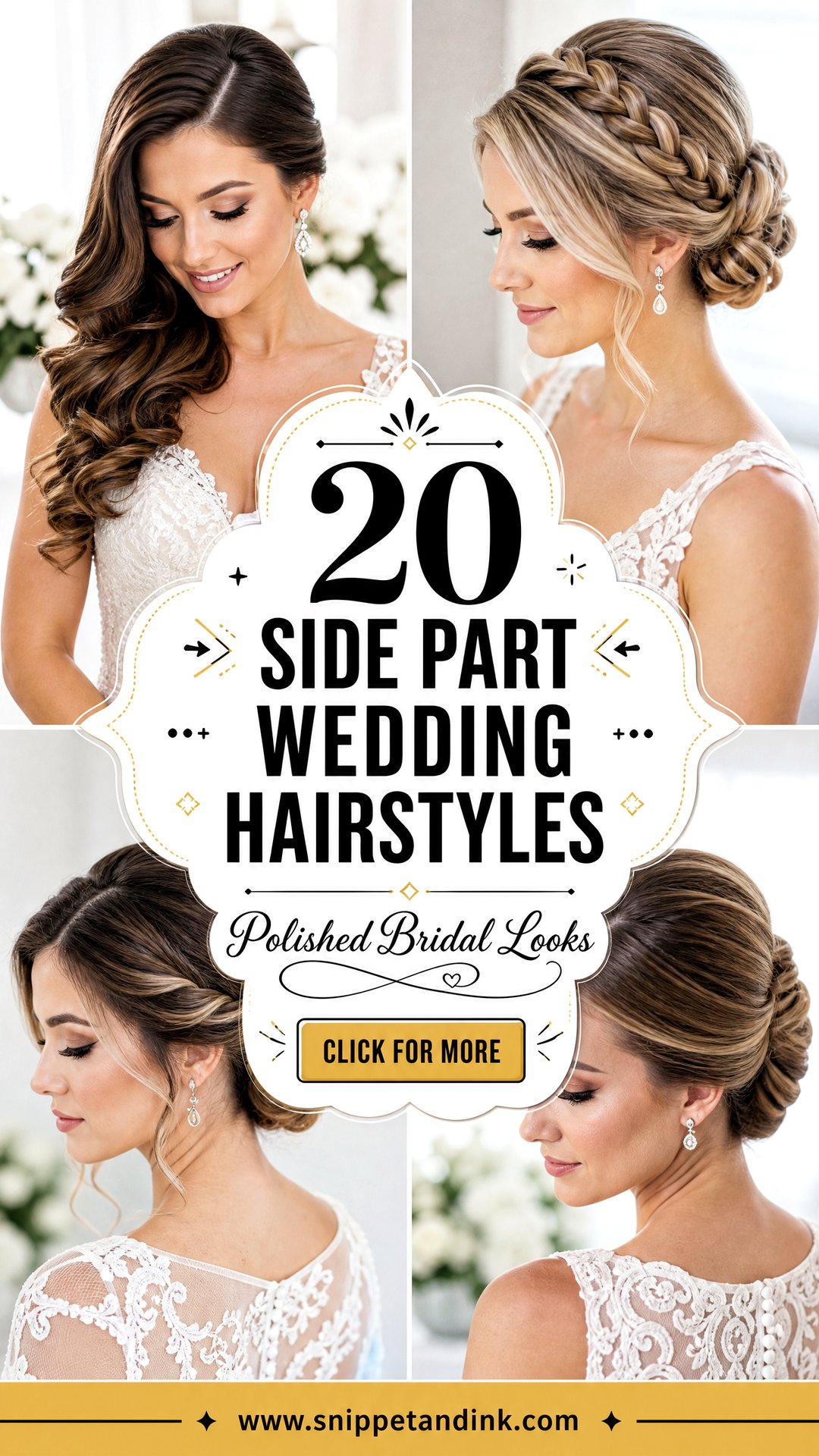
A side part is one of the smallest decisions in bridal hair and one of the most visible. Moving the line two centimetres off center changes where the volume sits, which cheekbone catches the light and how a veil or comb settles. I like it for brides who feel a center part reads too severe, and it works across waves, low buns, braids and short cuts. Below are twenty ways I’d style hair to one side, from shoulder-length bobs to long hair worn down, with notes on how each one holds up once the dancing starts.
Deciding Which Side Your Part Goes On
Most brides already have a natural part, and I usually work with it. Hair grows in a direction at the crown, and fighting it means the part keeps splitting back to its original place by the afternoon. At the trial I wet the front hairline, push everything straight back and see where it falls open on its own. That is almost always the side to deepen.
There are times I switch sides on purpose. If you want the volume on the side that faces guests during the ceremony, think about where you will stand at the altar. For a church ceremony, the bride often stands on the left of the couple as guests look at them, so the right side of your face is turned toward most of the room. A part on that side sends the waves away from the camera, which is not always what you want.
If you need to train a new part
- Start two to three weeks ahead: blow-dry the front in the new direction every wash.
- Sleep with a small clip holding the front section across.
- A cowlick at the hairline rarely moves fully; I would rather soften the part slightly than force it.
How deep to go depends on the style. For waves I place the part roughly in line with the arch of the eyebrow. For a sleek bun I keep it a little shallower, since a very deep part pulls the hair tight across the crown and can show scalp on fine hair.
1. Deep Side Part Soft Waves
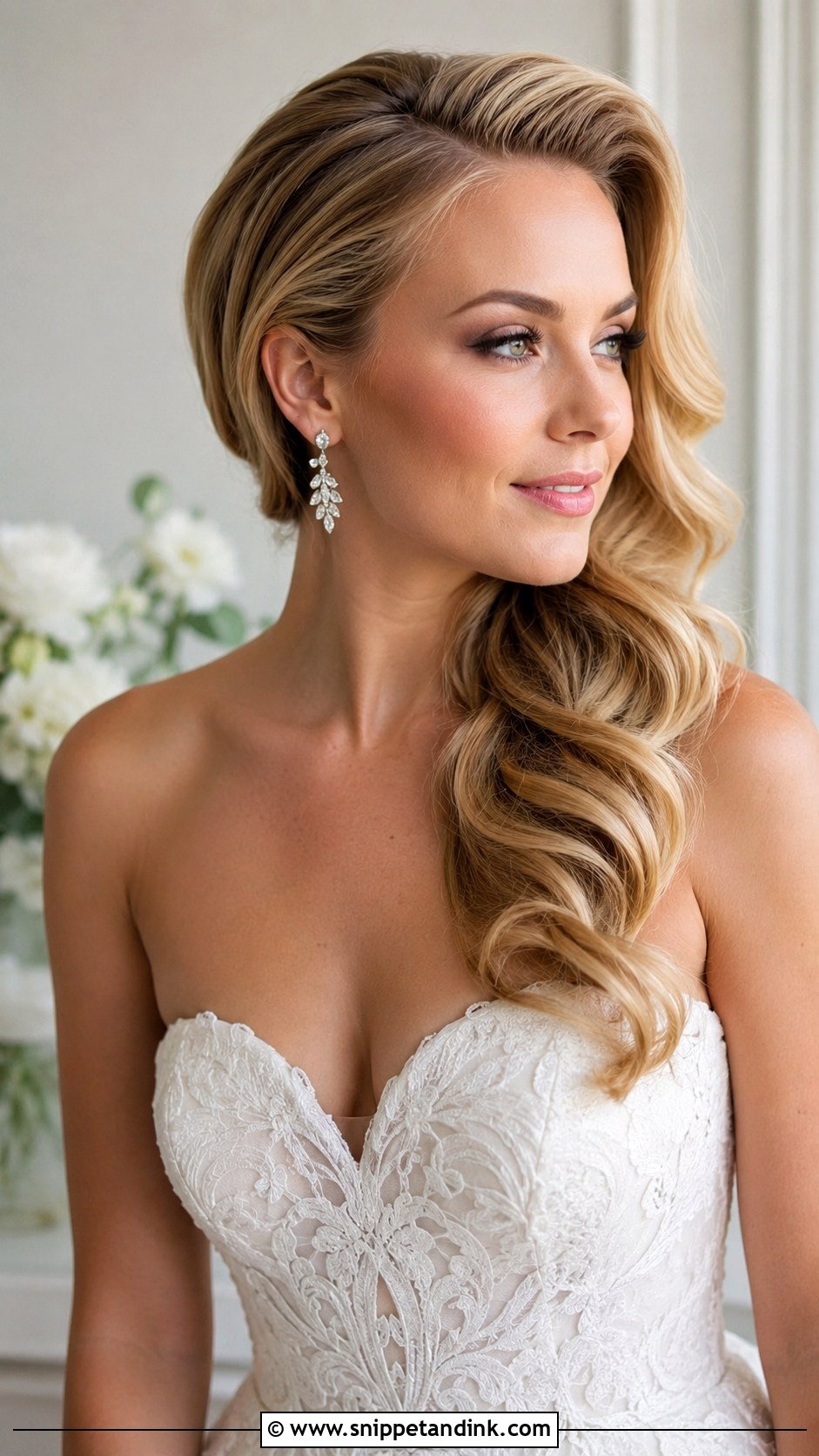
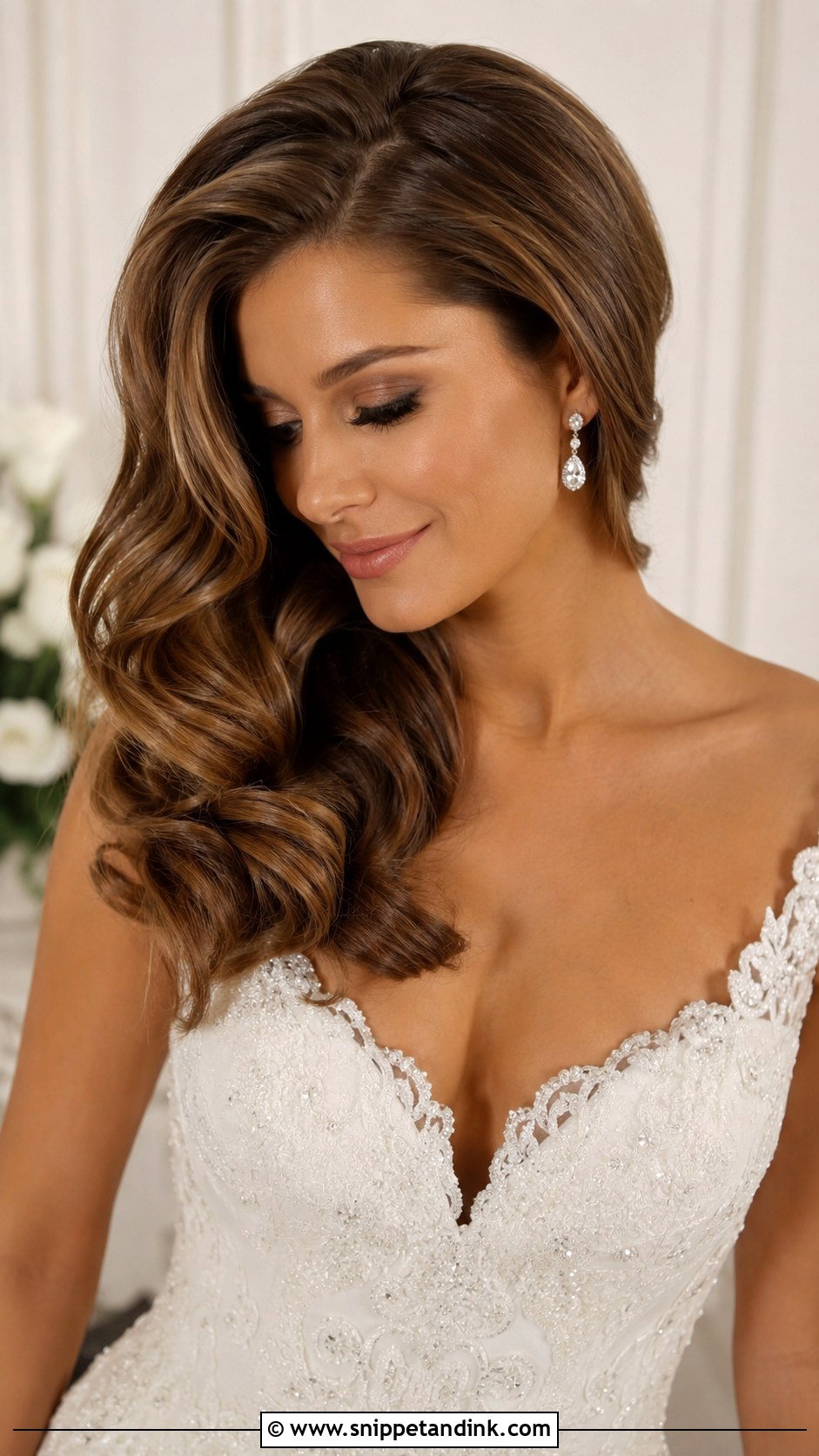
Deep part waves are the style I get asked for most, and the part is what makes them work. Shifting the line toward the temple lifts the crown on the heavy side without any backcombing. I wand each section away from the face so the waves open up rather than closing over the eye. They sit well with a strapless gown or a detailed back because all the movement collects on one shoulder. A light shine mist at the end, never oil, keeps them from going flat by the reception.
2. Side Swept Low Chignon
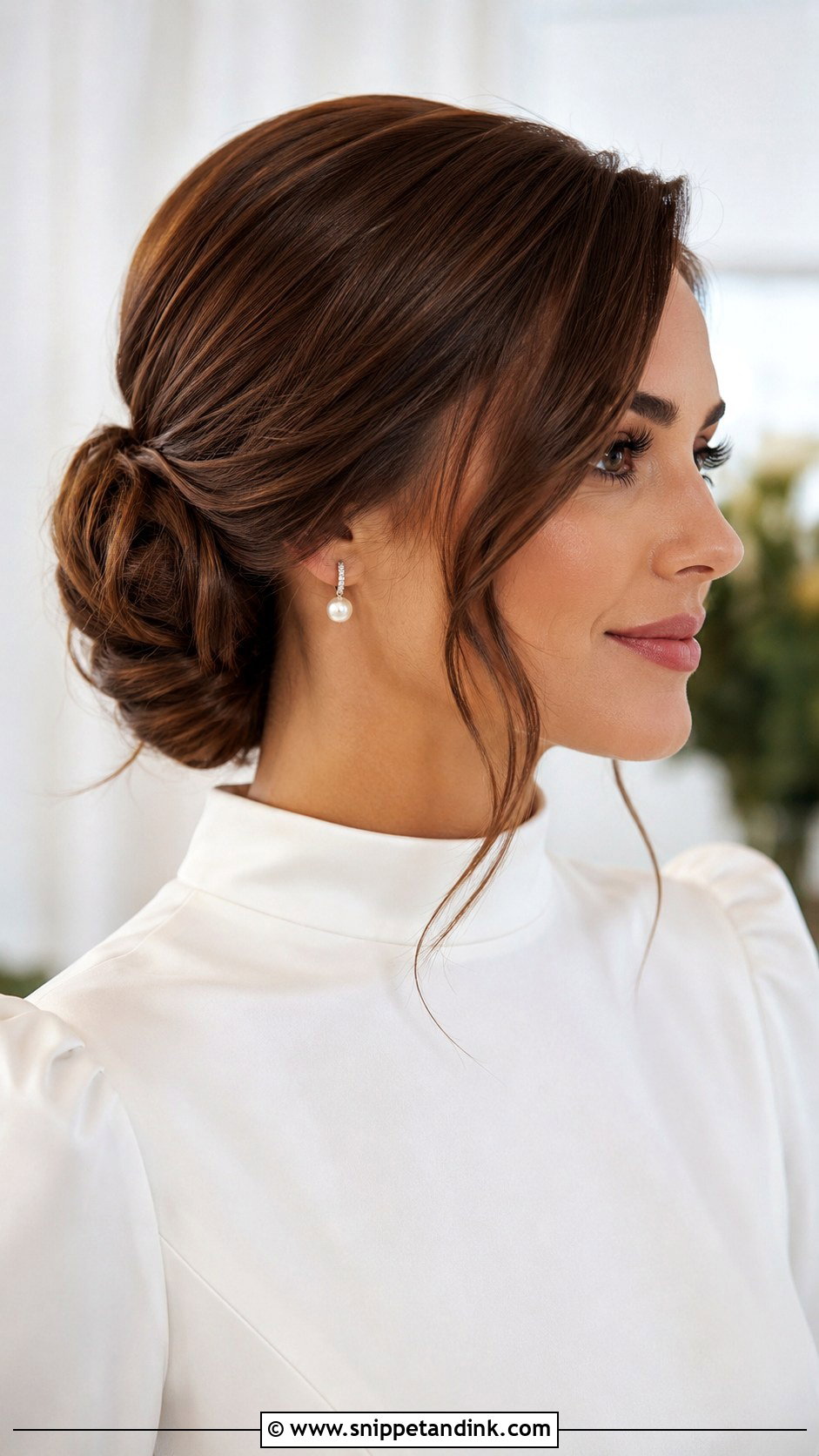
An off-center chignon is the updo I trust for long, emotional days. I set the deep part first, then twist the length into a knot that sits just behind the ear on the lighter side, which balances the extra height on the heavy side. A few tendrils at the temple stop it looking strict. Because the weight sits low at the nape, it handles hugs and a high neckline well, and it leaves the ears clear for statement earrings.
3. Side Part Low Ponytail
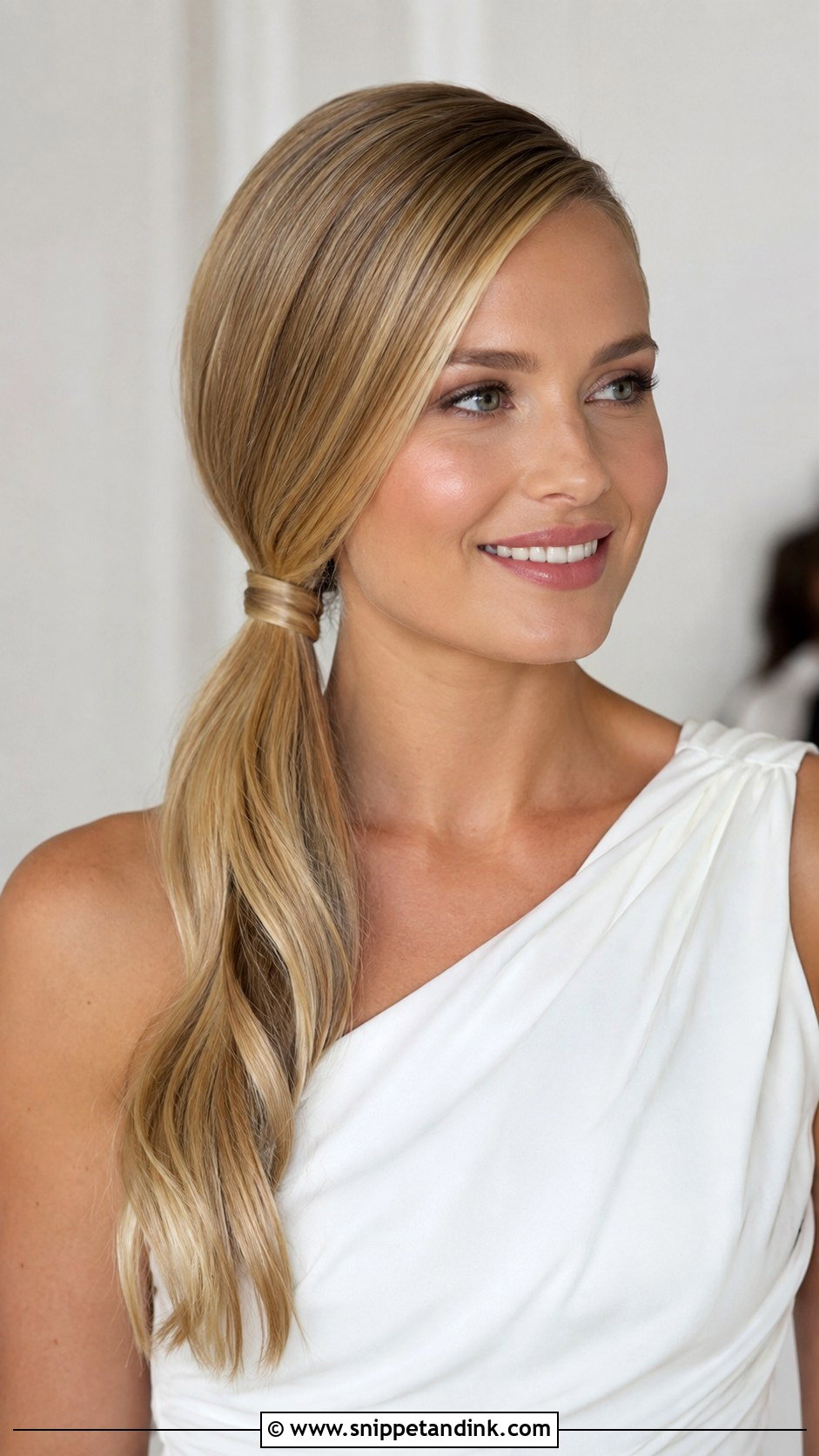
People underestimate the low side ponytail until they see it with a one-shoulder gown. I place the elastic below the ear on the side the hair falls, then wrap a strip of hair around it and pin the end underneath so no band shows. That placement matters: tie it too high and it pulls the part flat. Waves or sleek, both work. It is quick to create, which helps when the morning schedule is tight.
4. Side Swept Curls Over One Shoulder
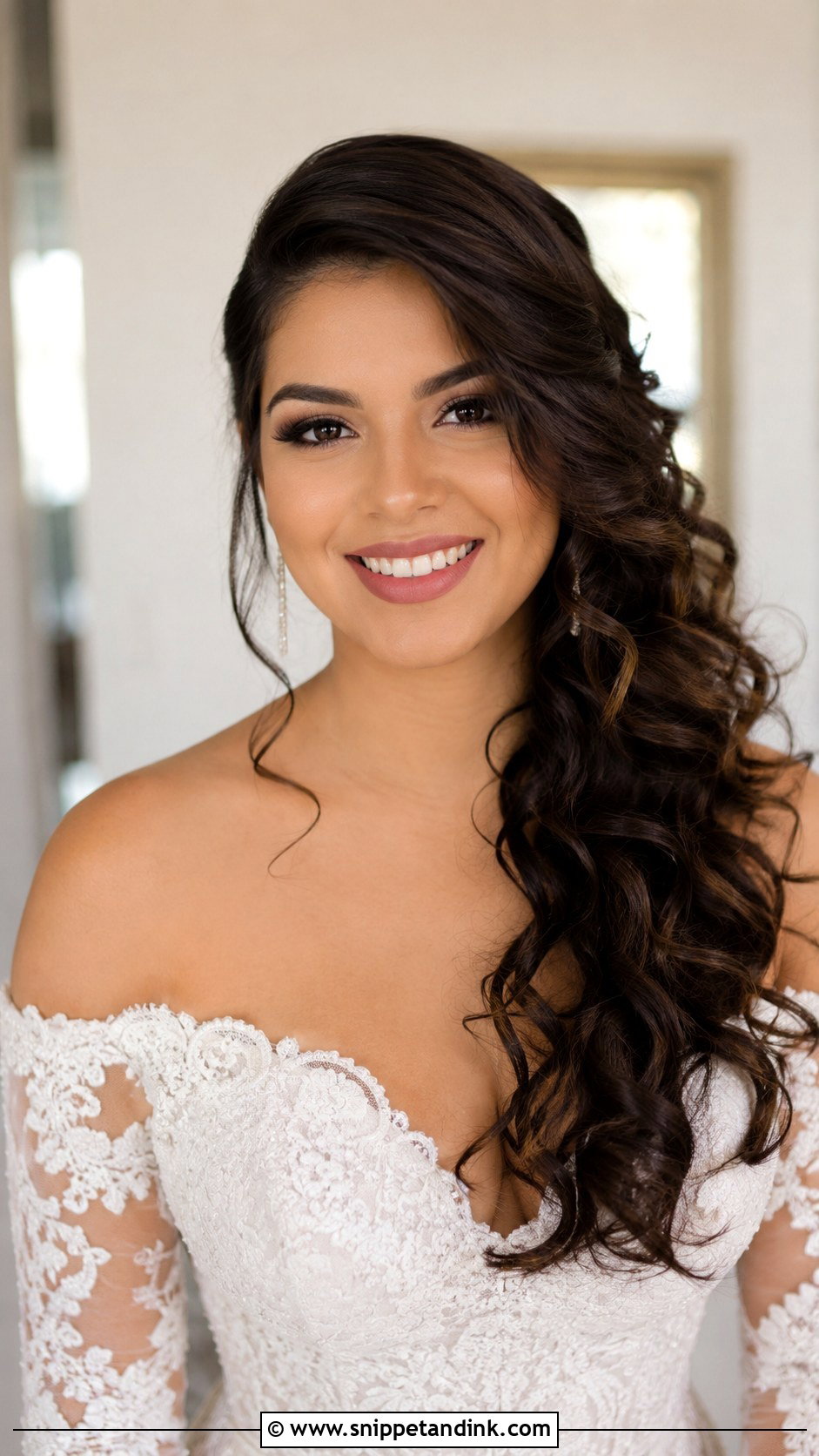
These are the loose, bouncy curls most brides picture when they think of hair worn to one side. I curl tighter than the finished result, let every section cool in a pin curl, then brush them out with fingers. The trick on the swept side is to pin the opposite side back behind the ear with two crossed grips, otherwise the hair keeps trying to drift back to center. Long hair suits it best, and outdoor ceremonies with a breeze are the real test, so ask for a firmer hold spray if yours is on a lawn.
5. Side Part Fishtail Braid
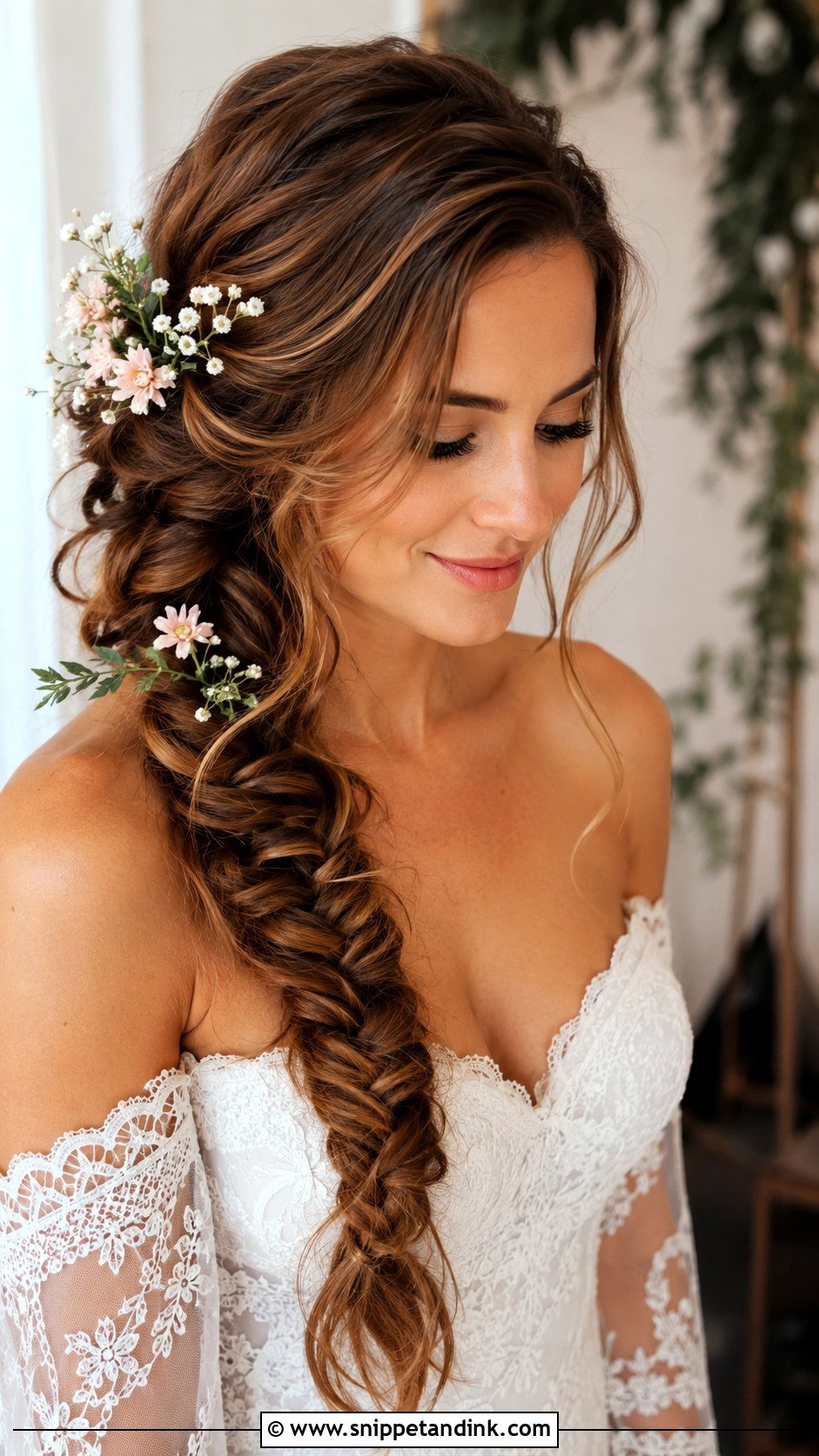
A fishtail over the shoulder needs at least shoulder-blade length to look like a braid and not a stub. I start the braid low and slightly behind the ear so it drapes forward naturally instead of twisting across the neck. Pancaking the edges gives that soft texture, but I do it gently on fine hair, where pulling too hard creates gaps. Small blooms tuck in neatly between the plaits, which makes it a good fit for rustic or outdoor ceremonies.
6. Vintage Side Part Finger Waves
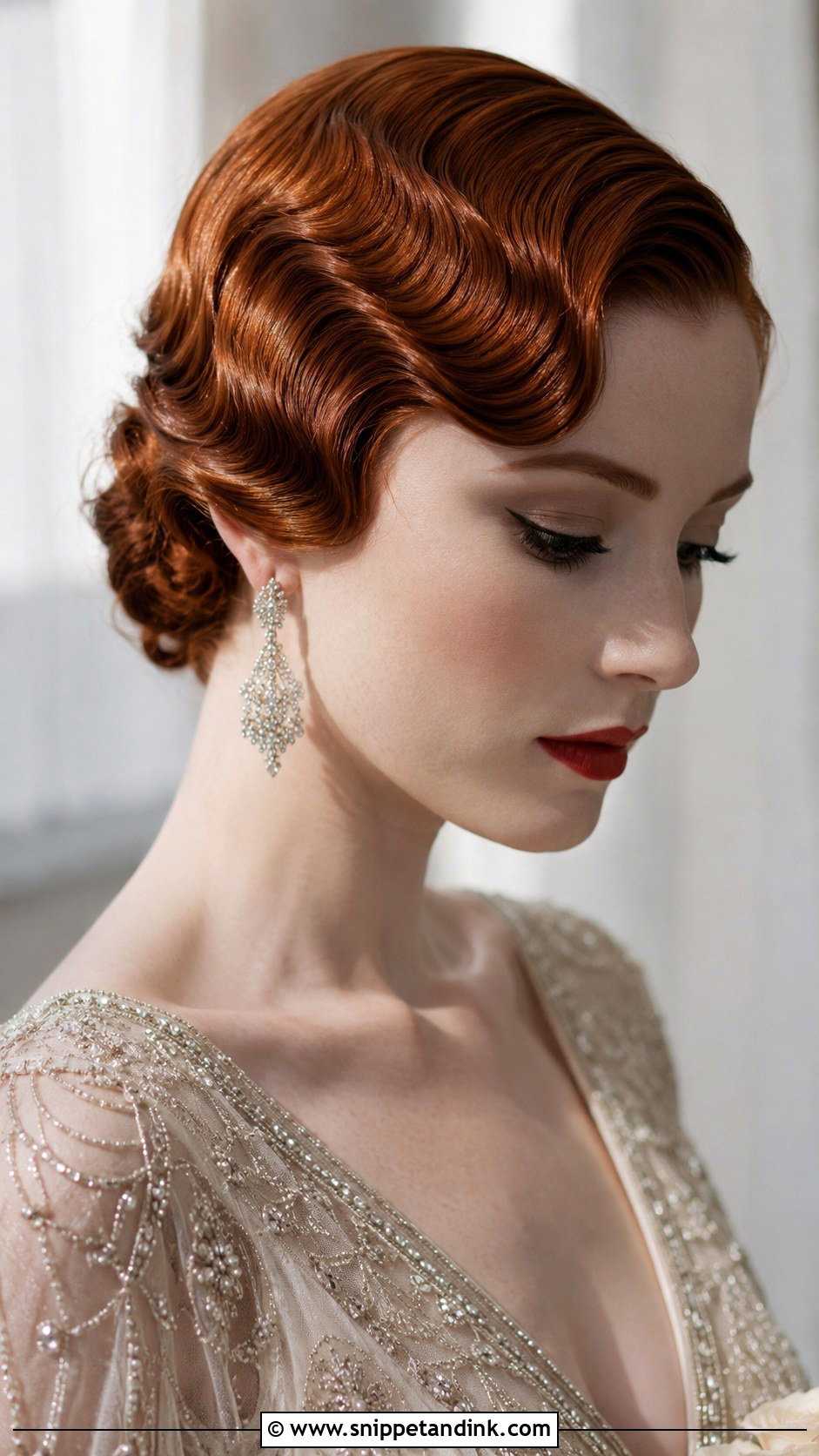
Finger waves are a technical style, and I only recommend them if your stylist has done them before. The waves are sculpted wet with setting lotion and clips, then left to dry fully, ideally under a hood dryer, so they keep their S-shape for hours. They suit art deco gowns and bold earrings, and the deep part adds most of the drama. The honest downside: they are hard to fix if they get rained on, so I’d plan an umbrella for any outdoor photos.
7. Side Part Half Up Half Down
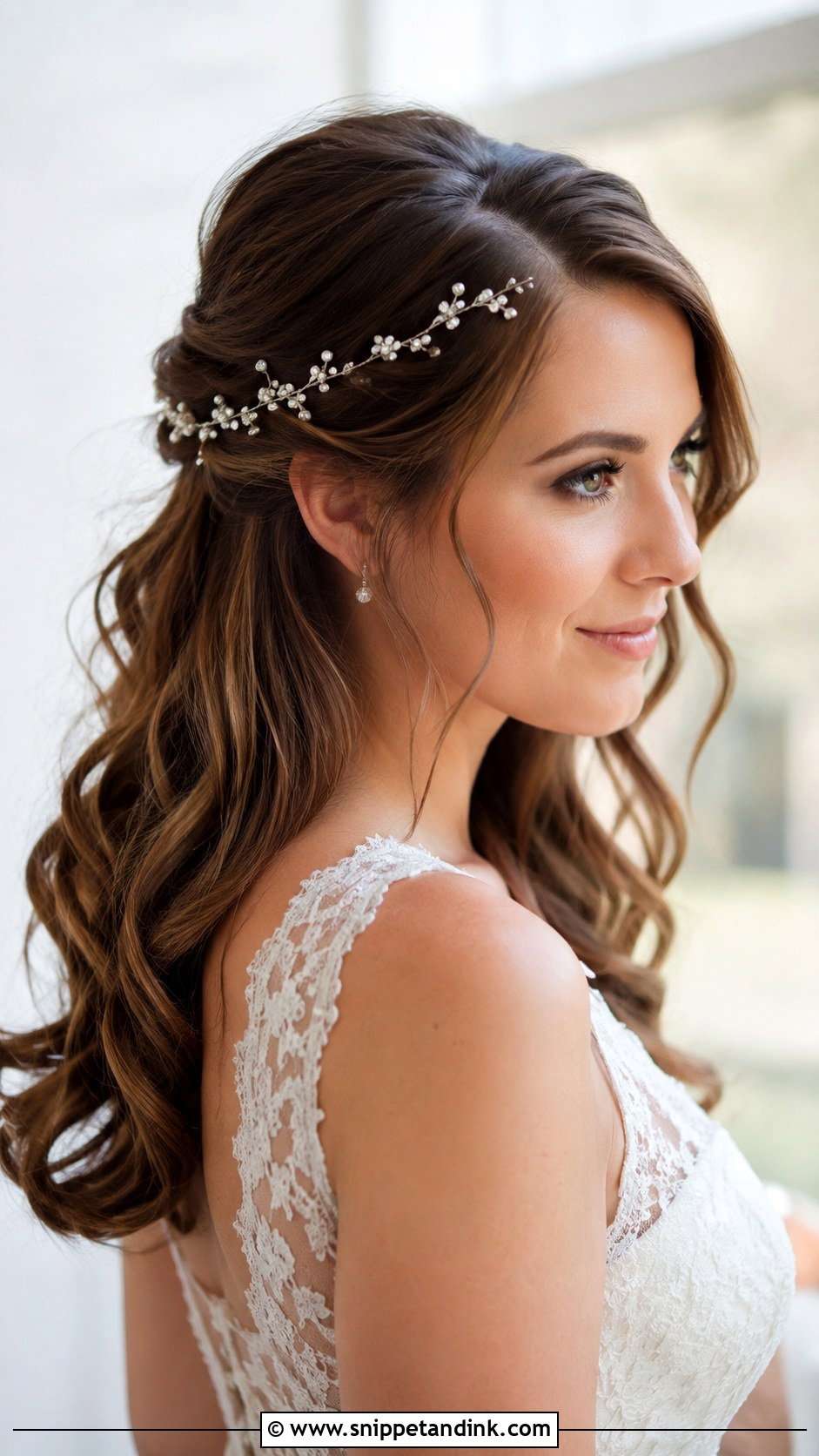
Half up, half down with a side part keeps hair out of your eyes while your length still shows. I secure the top section slightly off center so it lines up with the part rather than fighting it. For heavy hair I build a small anchor of crossed grips first, then attach a clip or hair vine to that, because the accessory alone will slide by evening. Soft waves through the lengths finish it. The face shape question barely matters here; the neckline matters more.
8. Sleek Side Part Low Bun
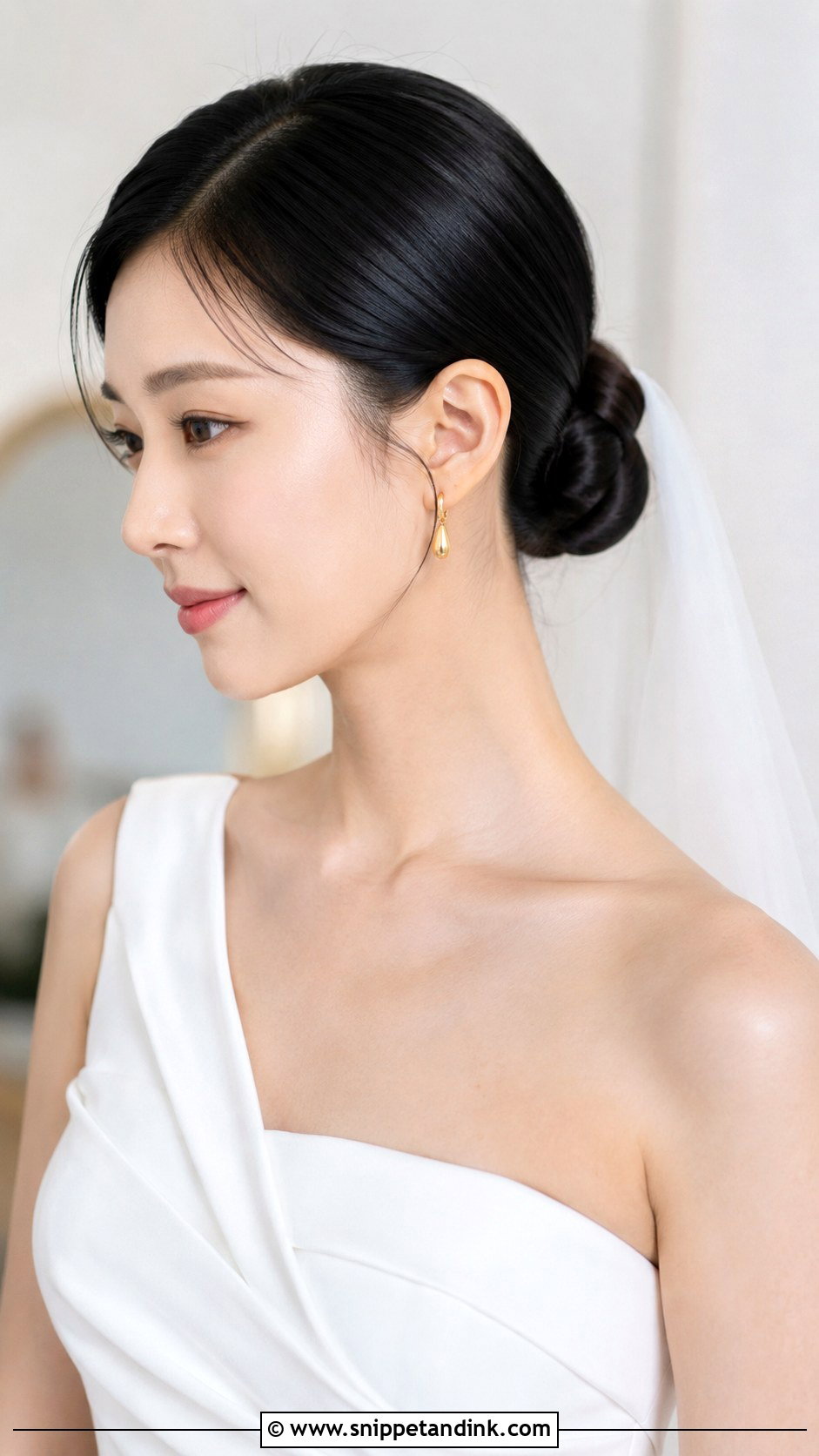
A sleek low bun lives or dies by the part line. I draw it with the tail of a comb on damp hair, then smooth everything with a firm cream and a boar bristle brush before the bun goes in at the nape. Any bumps at the crown show in close portraits, so this is the style where I take the most time. It is very clean with modern gowns and big jewelry. If your hair has a strong cowlick at the front, I’d test this one at the trial before committing.
9. Side Part Braided Updo
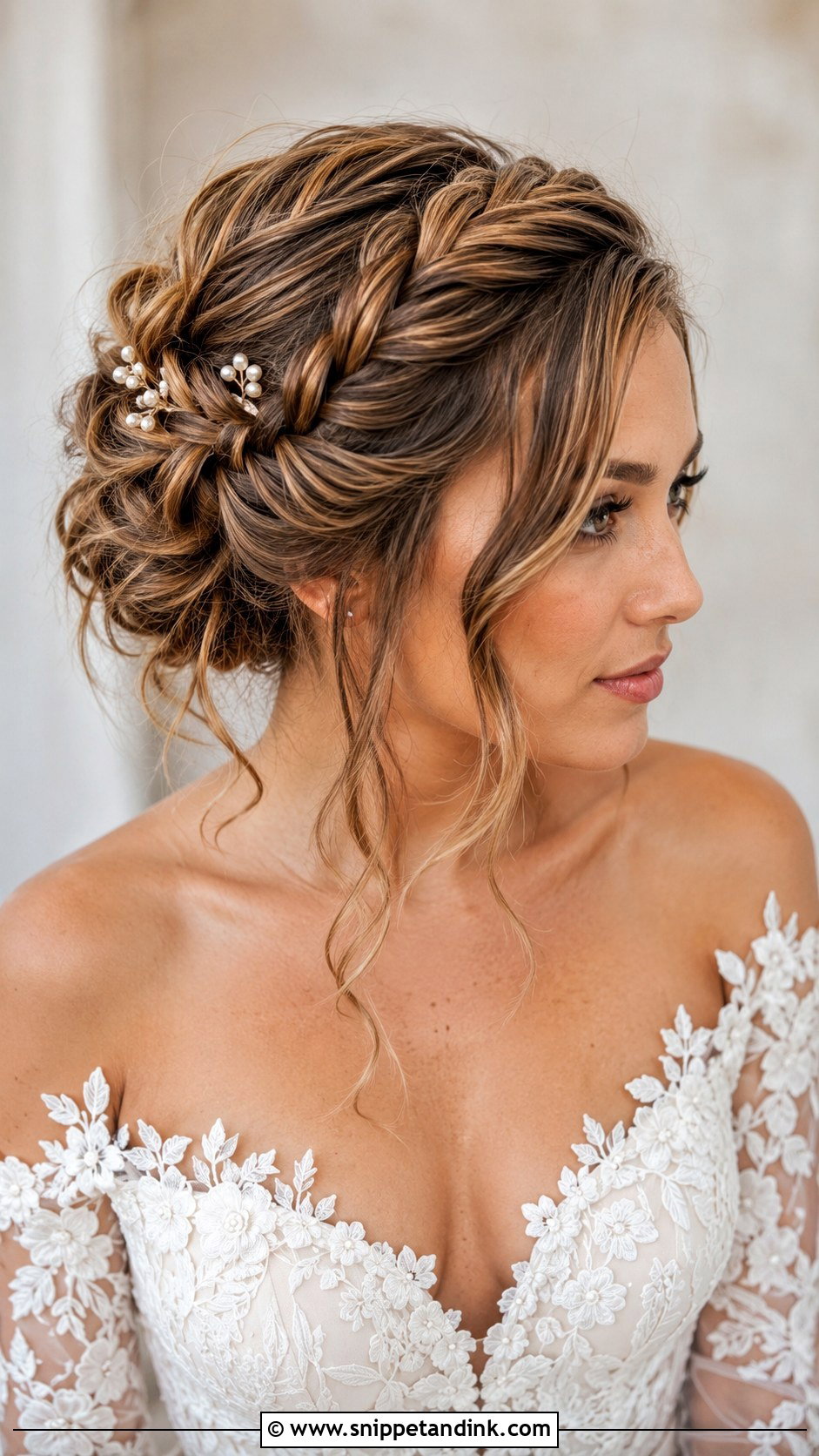
Side braids that wrap into an updo give a lot of grip, which is why they last so well. I braid along the heavy side of the part, then pin the braids into a loose arrangement at the back so the texture shows from every angle. A couple of loose pieces near the face soften it. Pearl pins and tiny flowers sit well inside the braids. This one is a good choice if your hair is slippery and refuses to hold a plain twist.
10. Side Swept Pixie Cut
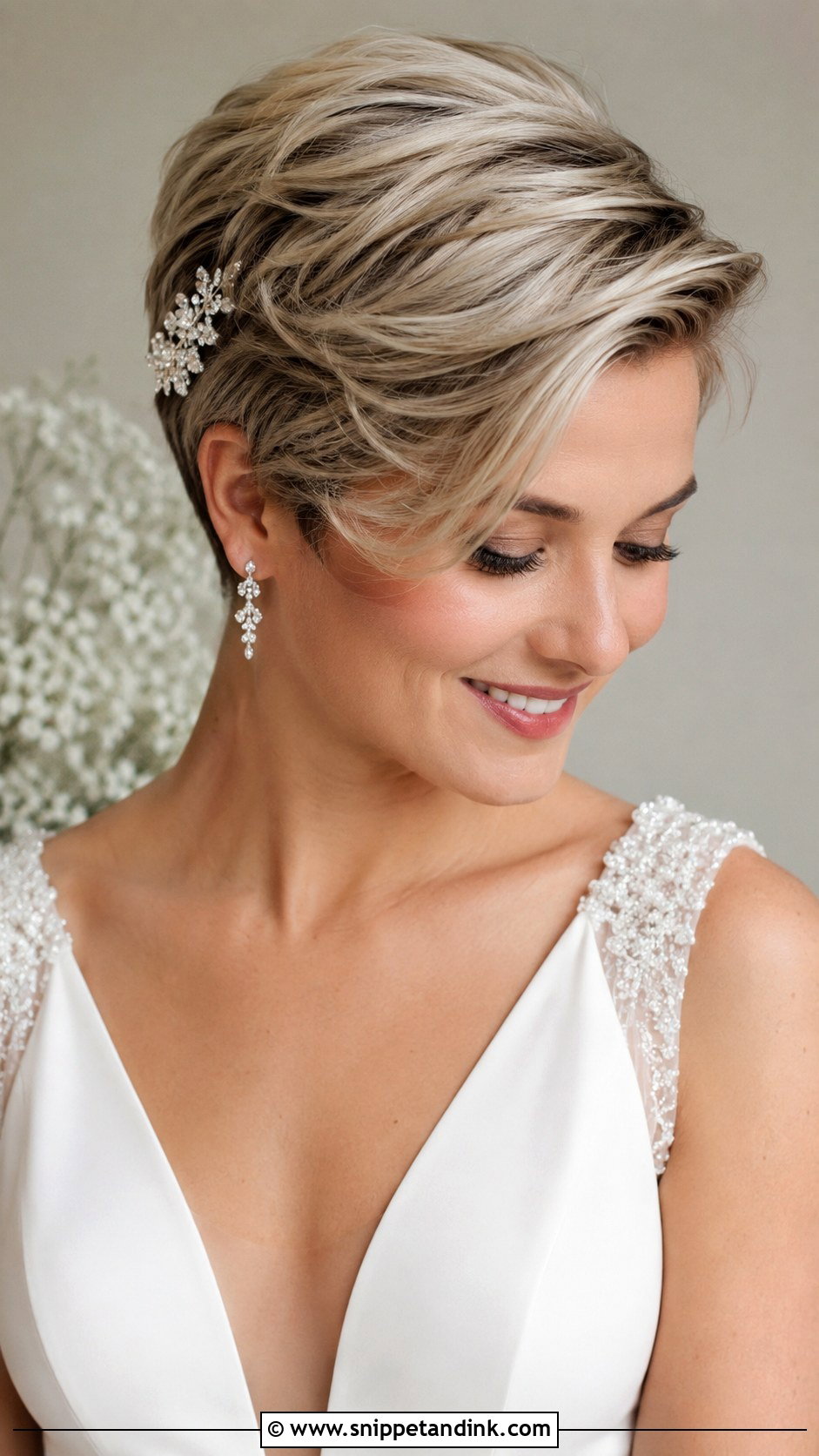
Short hair takes a side part very well. A side-swept pixie cut just needs lift at the top and a defined part, and I use a small amount of matte pomade so it doesn’t look wet in flash photos. The main thing I check is the timing of the last trim: about a week before the wedding gives the edges a chance to settle. A small jeweled clip on the deep side is enough decoration.
11. Side Part Loose Bun With Tendrils
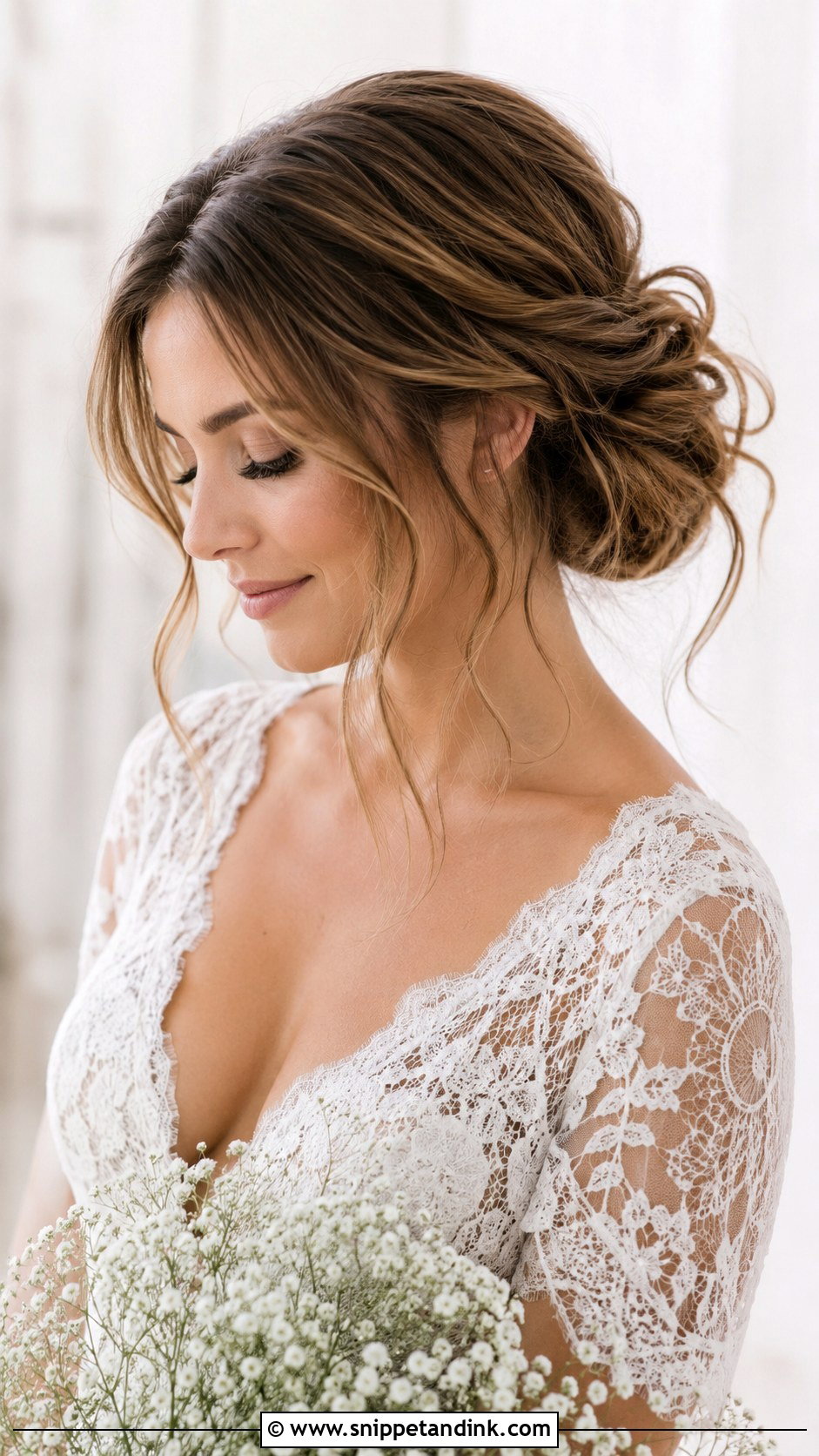
This bun is meant to look slightly undone, with soft tendrils framing your face, but it is pinned as firmly as any formal updo. I build the shape first with hidden grips, then pull pieces loose afterward. Doing it the other way round is how loose buns collapse by mid-afternoon. It suits outdoor and boho weddings, and baby’s breath holds up better in it than softer flowers that wilt in warm hair.
12. Deep Side Part Straight Sleek Hair
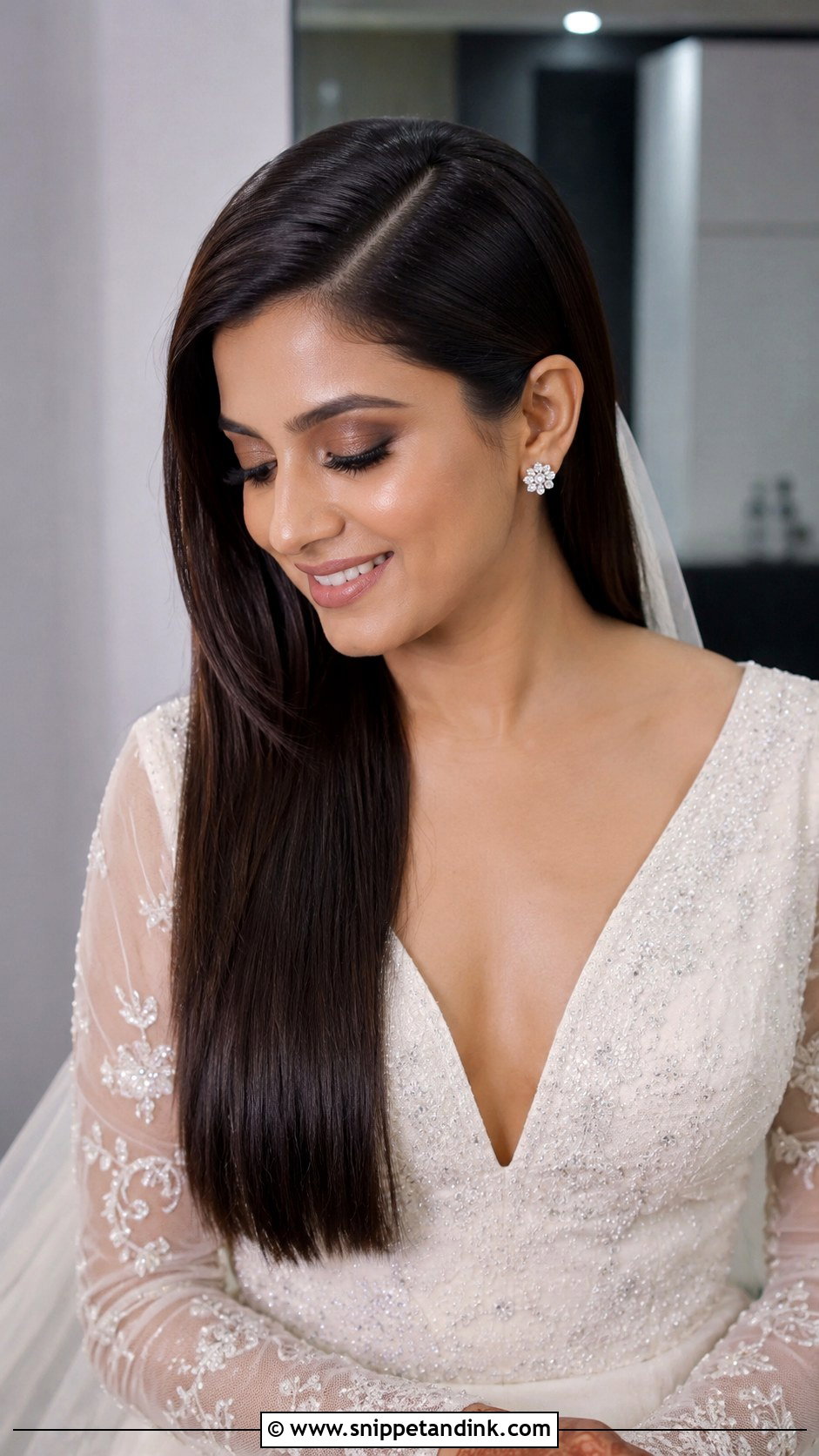
Straight, glossy hair with a sharp part is simpler to look at than to execute. Flat ironing has to be done in thin sections, and I finish with a small amount of serum on the ends only, because serum near the root makes the part separate and look greasy by evening. It is a strong match for a minimalist gown. Very humid venues are the risk, since straight hair shows frizz faster than curls do.
13. Side Part Hollywood Waves
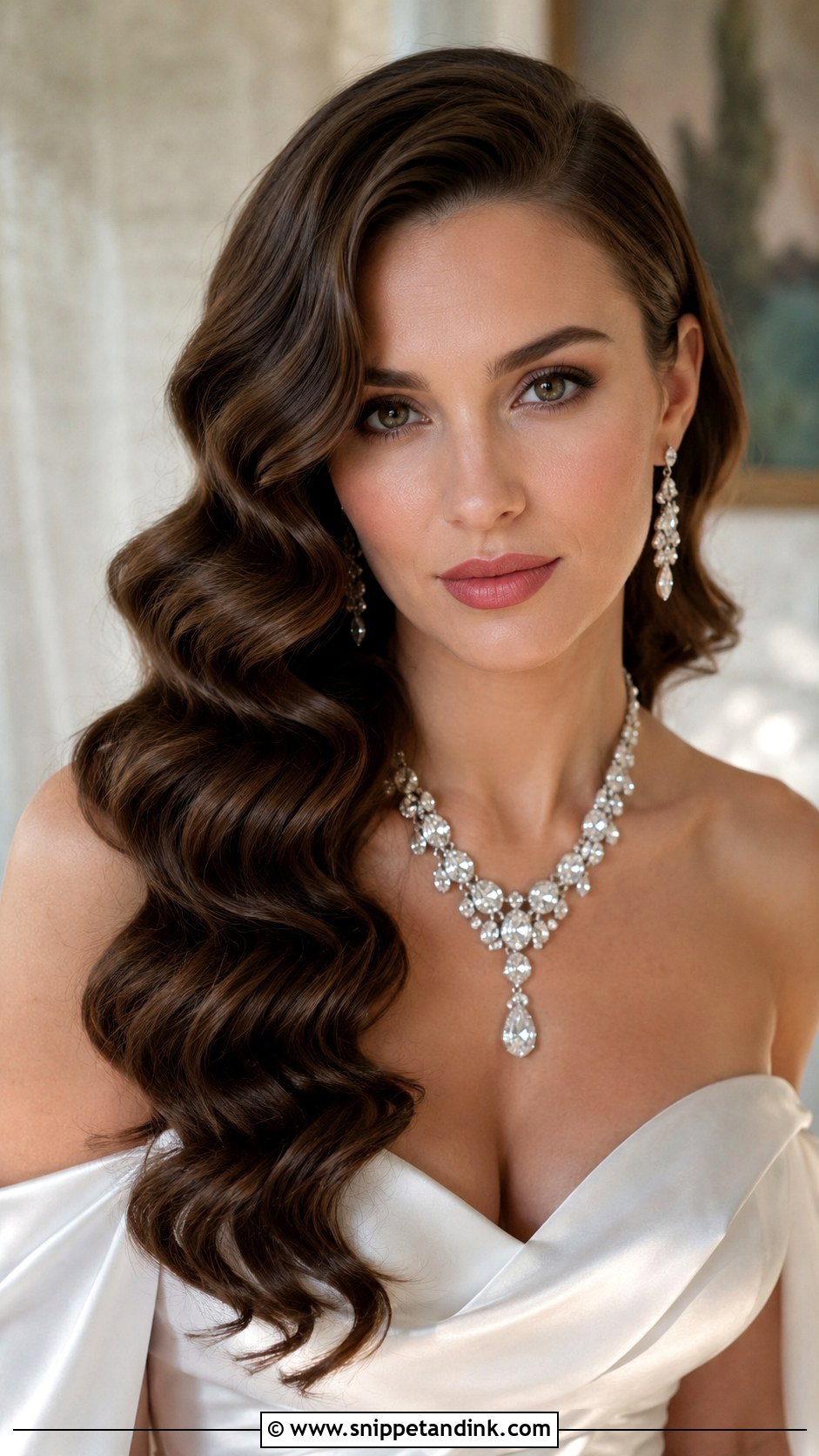
Hollywood waves are uniform, glossy and sculpted, which gives you a showstopping, movie-star moment on a formal day. I set every curl in the same direction with a large barrel, pin it to cool, then brush the whole length into one continuous wave. Mixing curl directions breaks the pattern, so this is not a style to rush. The deep part is essential; centered, the waves look like ordinary curls.
14. Side Part Twisted Updo
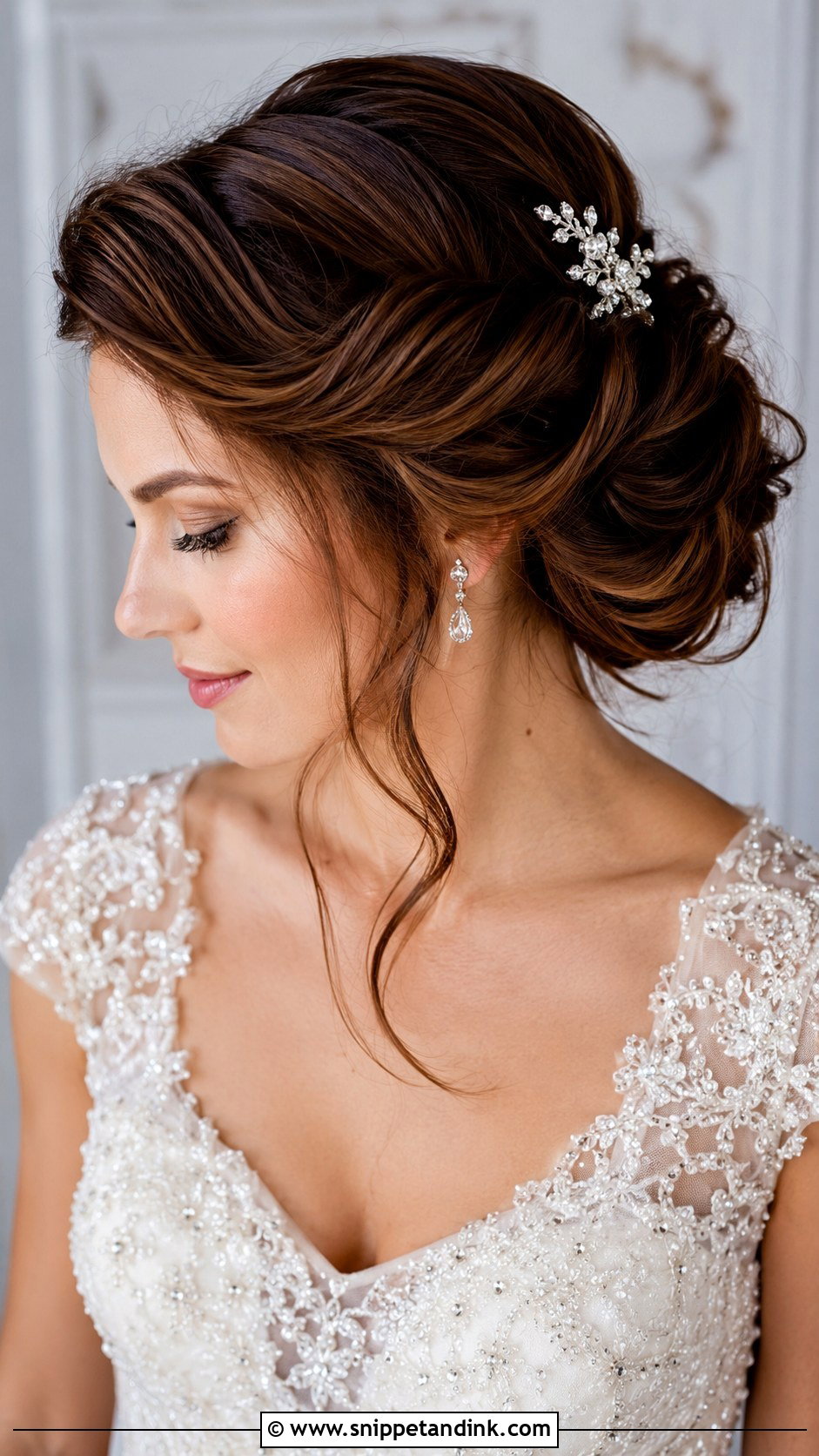
Rolled twists give texture without the time a braid takes. I twist from the heavy side of the part across the back and pin each roll along the opposite side, which keeps the asymmetry going all the way around. It suits medium to long hair with some grip. If your hair is freshly washed and silky, I’d ask you to wash the day before instead, because clean, slippery hair unrolls.
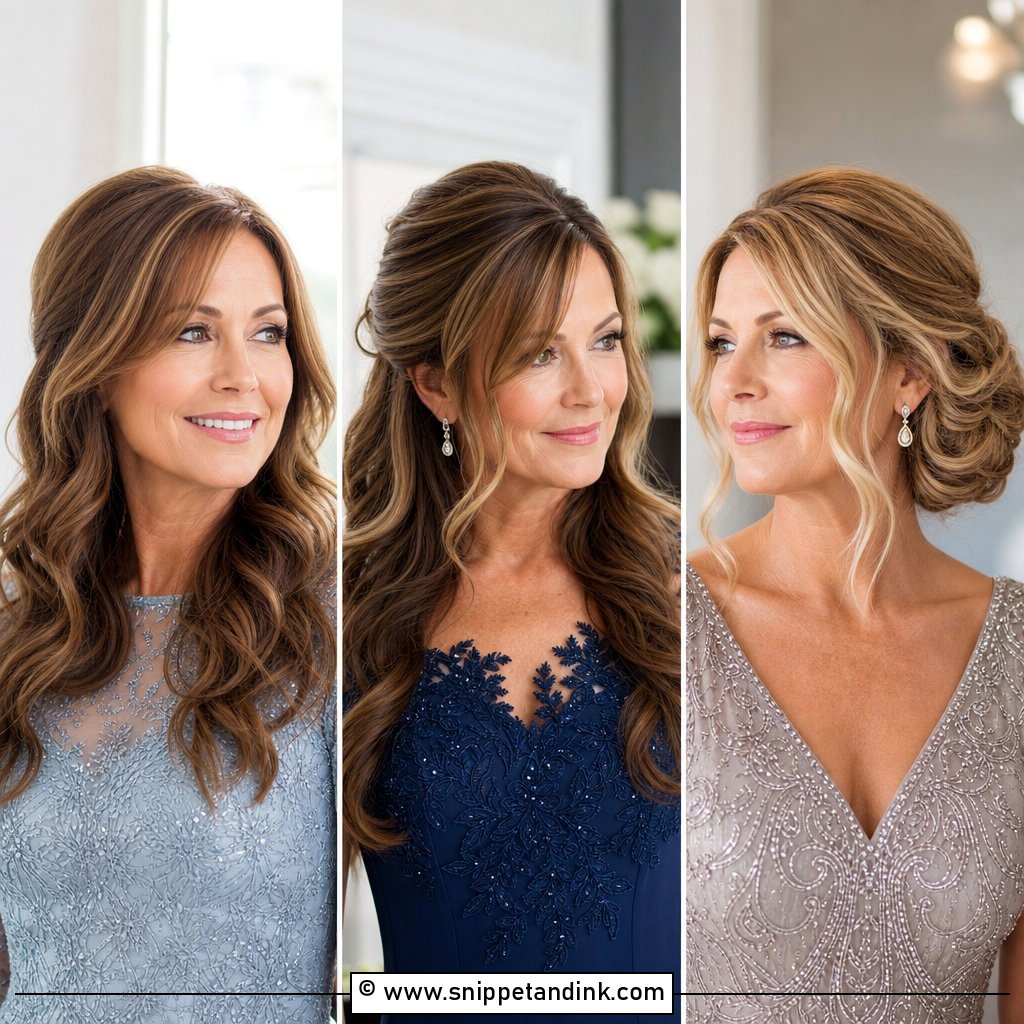
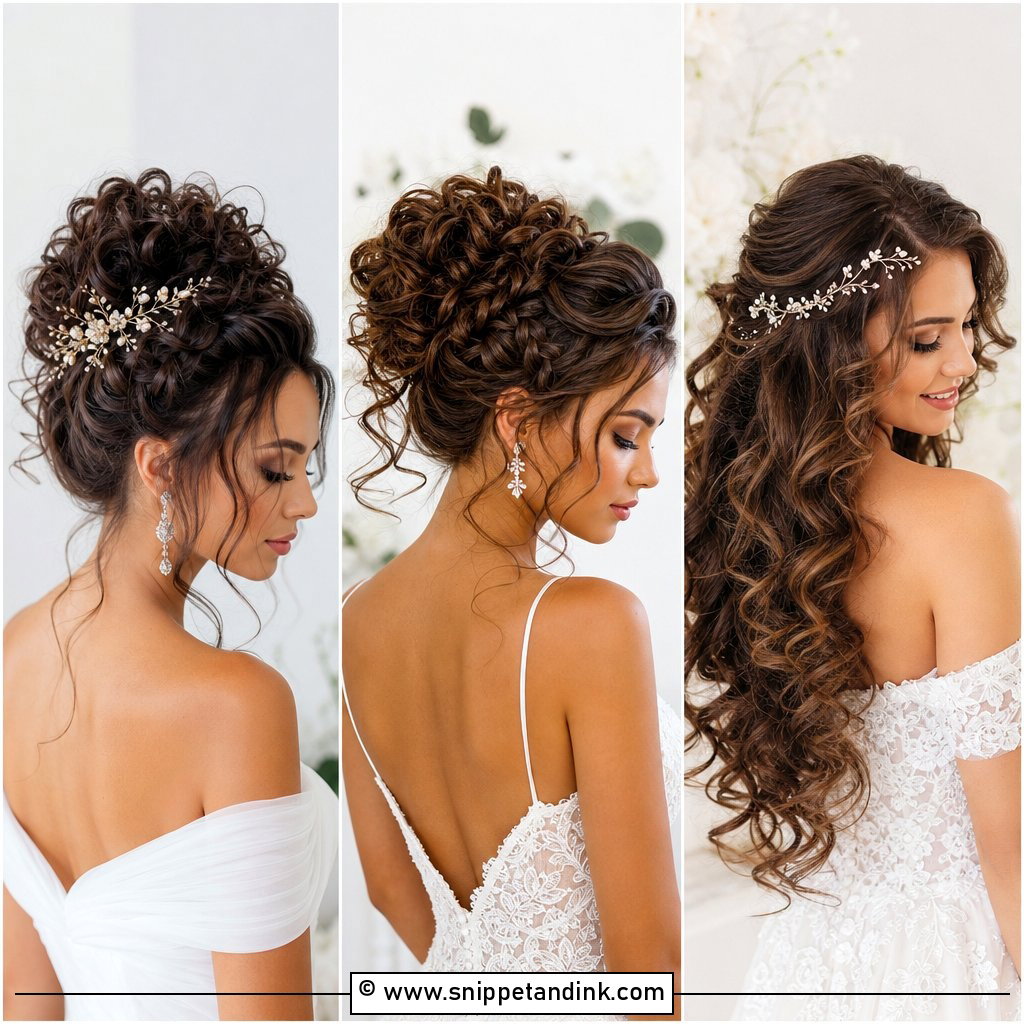
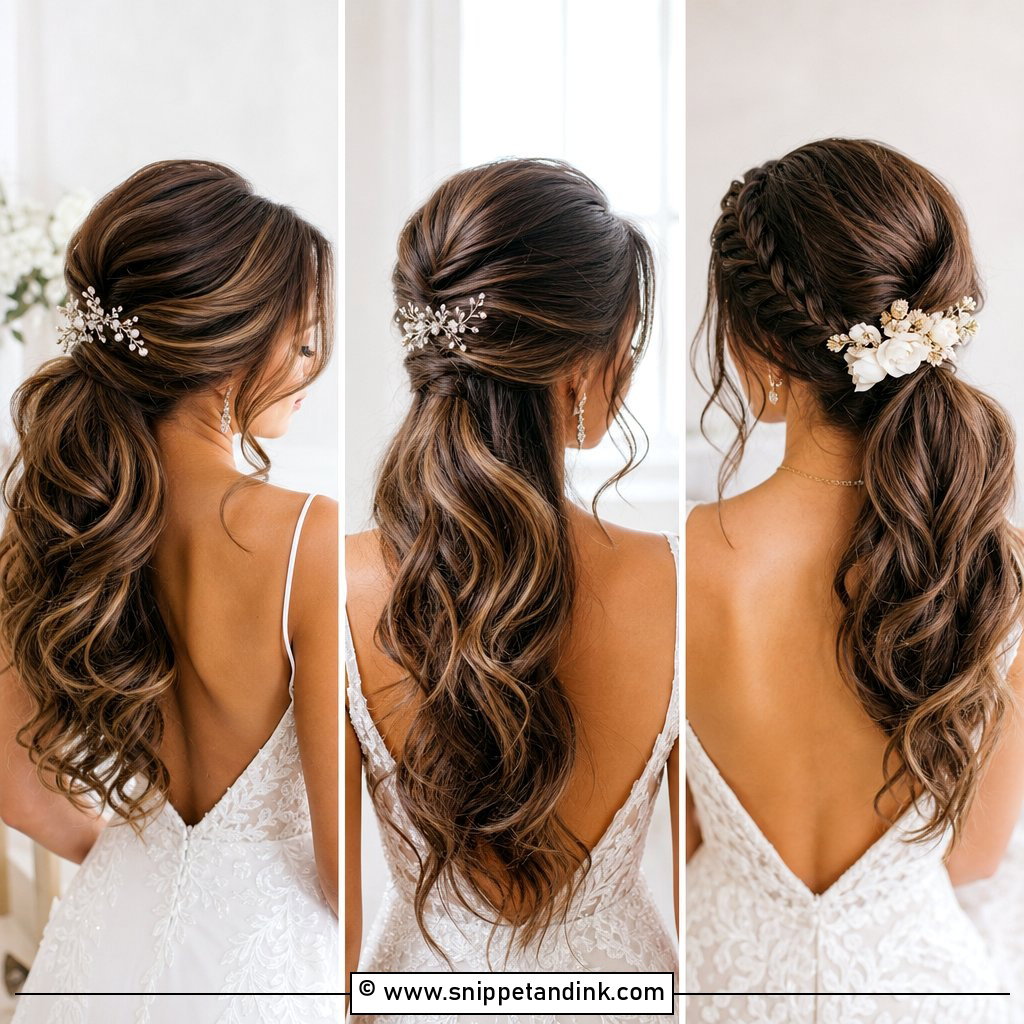
15. Side Part Boho Waves With Flowers
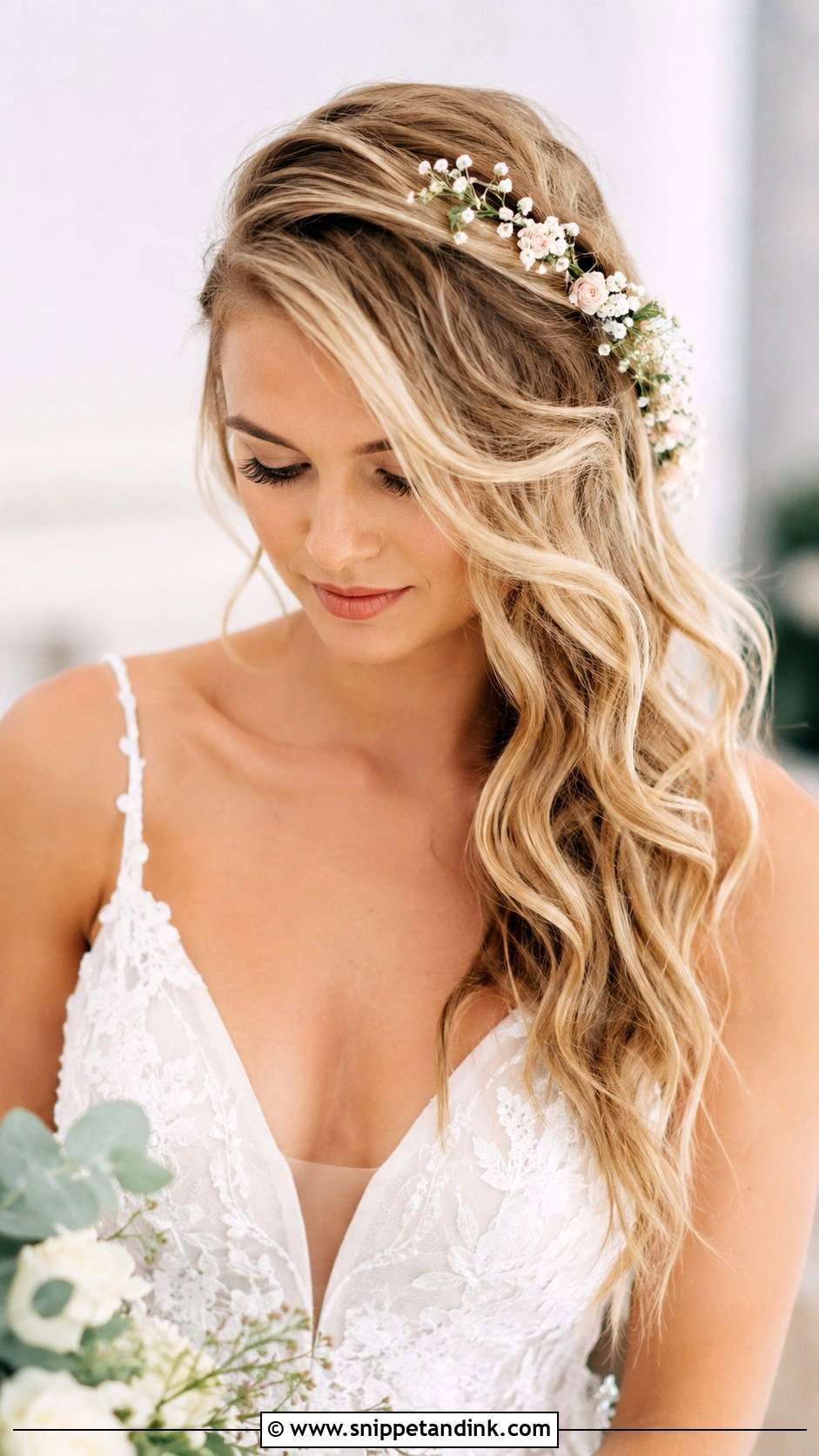
Fresh flowers along the part look natural only if they are wired or pinned to a base. I place small blooms and greenery right at the parting line so they read as part of the style, then let relaxed waves fall to one side. Ask your florist for flowers that tolerate a few hours out of water; spray roses and wax flower are far sturdier than gardenias, which brown quickly when handled.
16. Side Part Low Side Ponytail With Curls
A curled low ponytail suits brides who want something between down and up. I tie it low over the shoulder, curl the length after it is secured and hide the elastic with a wrapped strand. Curling after tying matters, because curls set before the ponytail get crushed in the band. Asymmetric and one-shoulder gowns pair well with it, and a small decorative tie can replace the wrap if you prefer.
17. Side Part Bob With Soft Curls
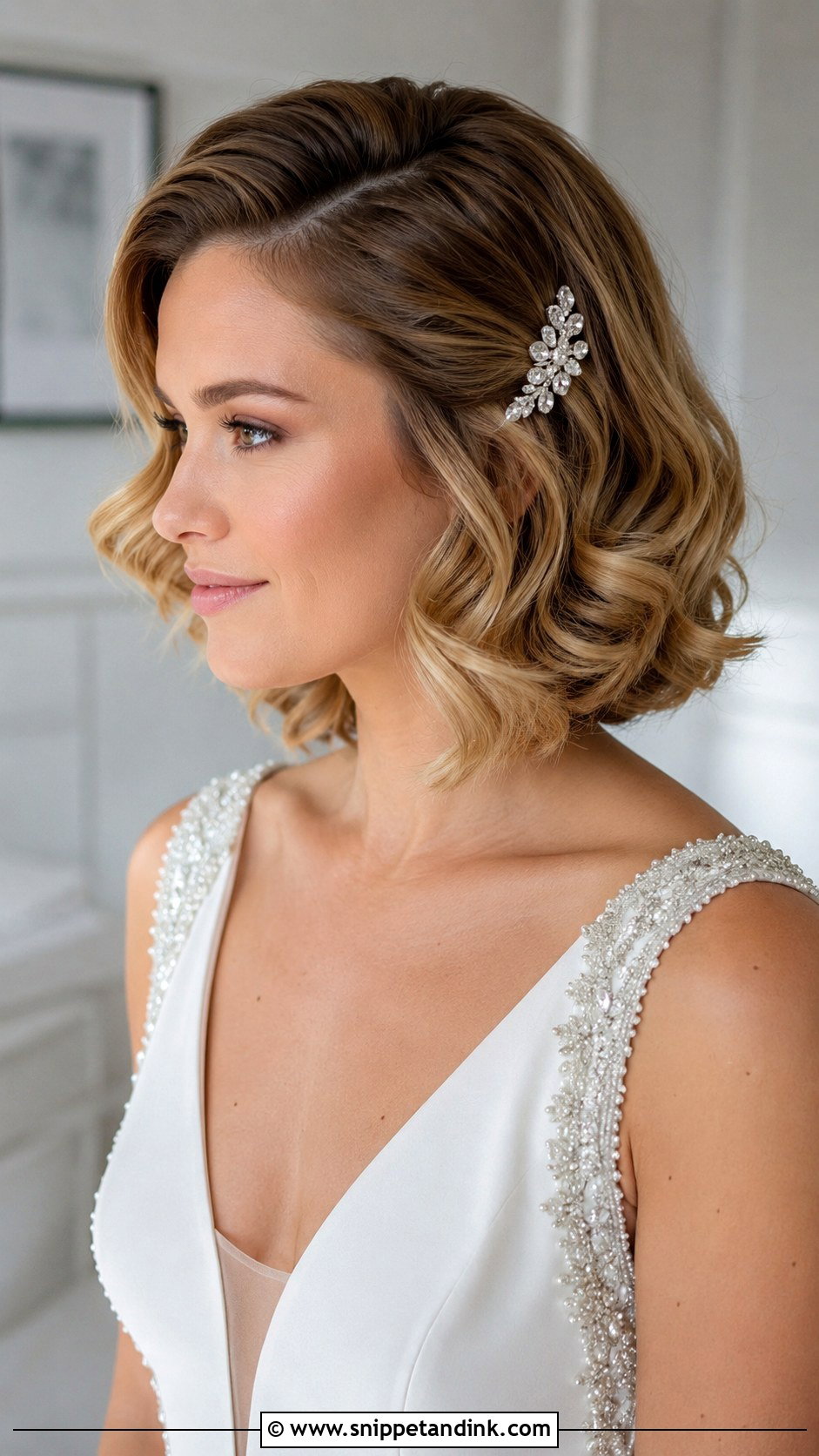
Bobs carry a side part well because the length naturally frames the face. I curl a chin-length bob in alternating directions so the curls do not merge into one block, then add texture spray at the root. A clip on the deeper side is plenty. The curled bob also grows out of a recent cut nicely, so you do not need a trim the day before.
18. Side Part French Twist
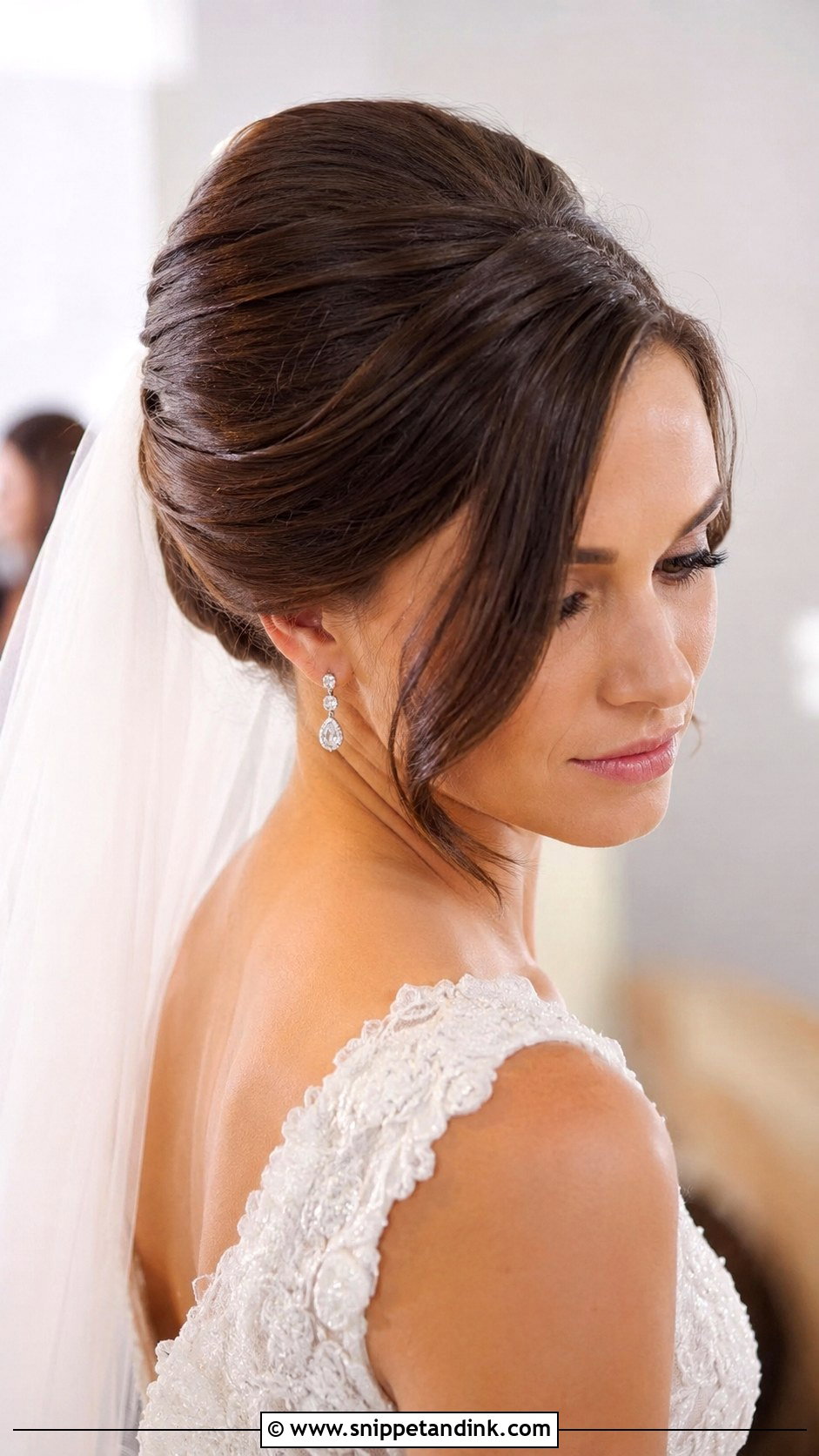
A French twist with a side part loses some of its formality, which I like. I sweep everything toward the heavy side, then roll the twist vertically up the back and lock it with long pins pushed into the seam. A veil comb slides into that seam securely, which makes this one of the easiest styles to wear with a long cathedral veil. Medium to long hair with some thickness works best.
19. Side Part Crown Braid
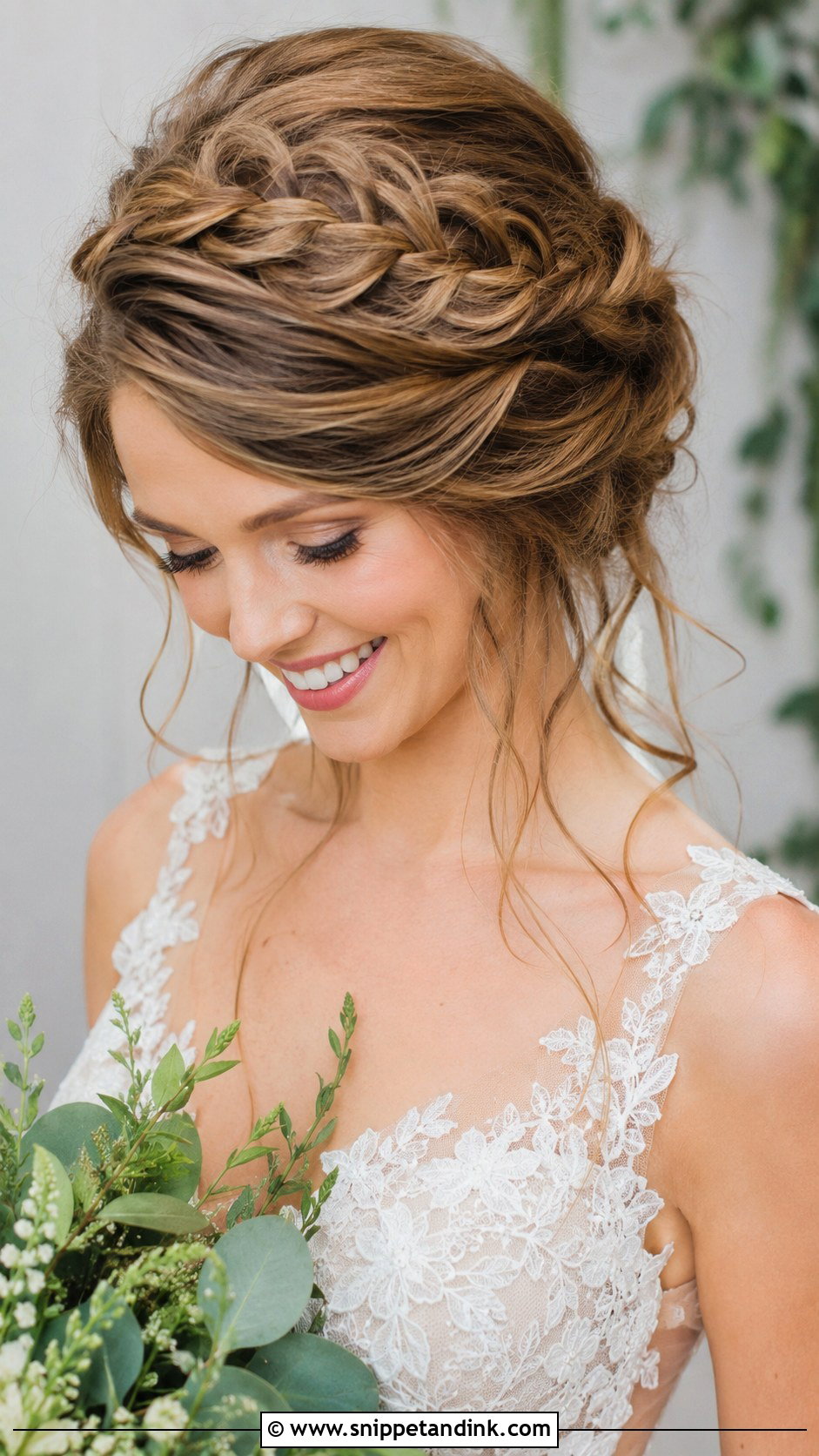
A crown braid from a side part reads as a halo when the braid starts low behind the ear on the heavy side. I pin it with grips placed along the braid, every few centimetres, because a crown braid sags at the back if it is only anchored at the ends. Tucked greenery or small blooms work well in it. It needs medium to long hair; shorter lengths usually need a clip-in braid to go all the way round.
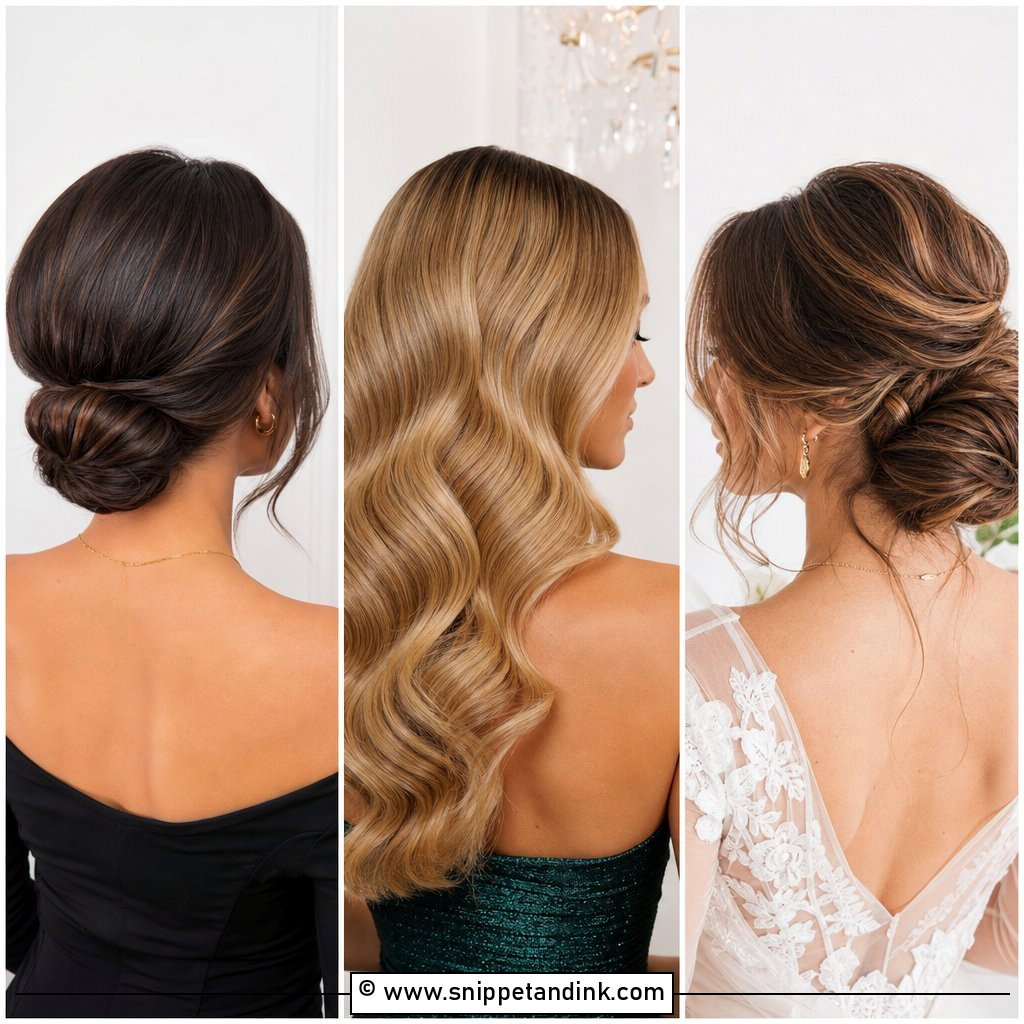
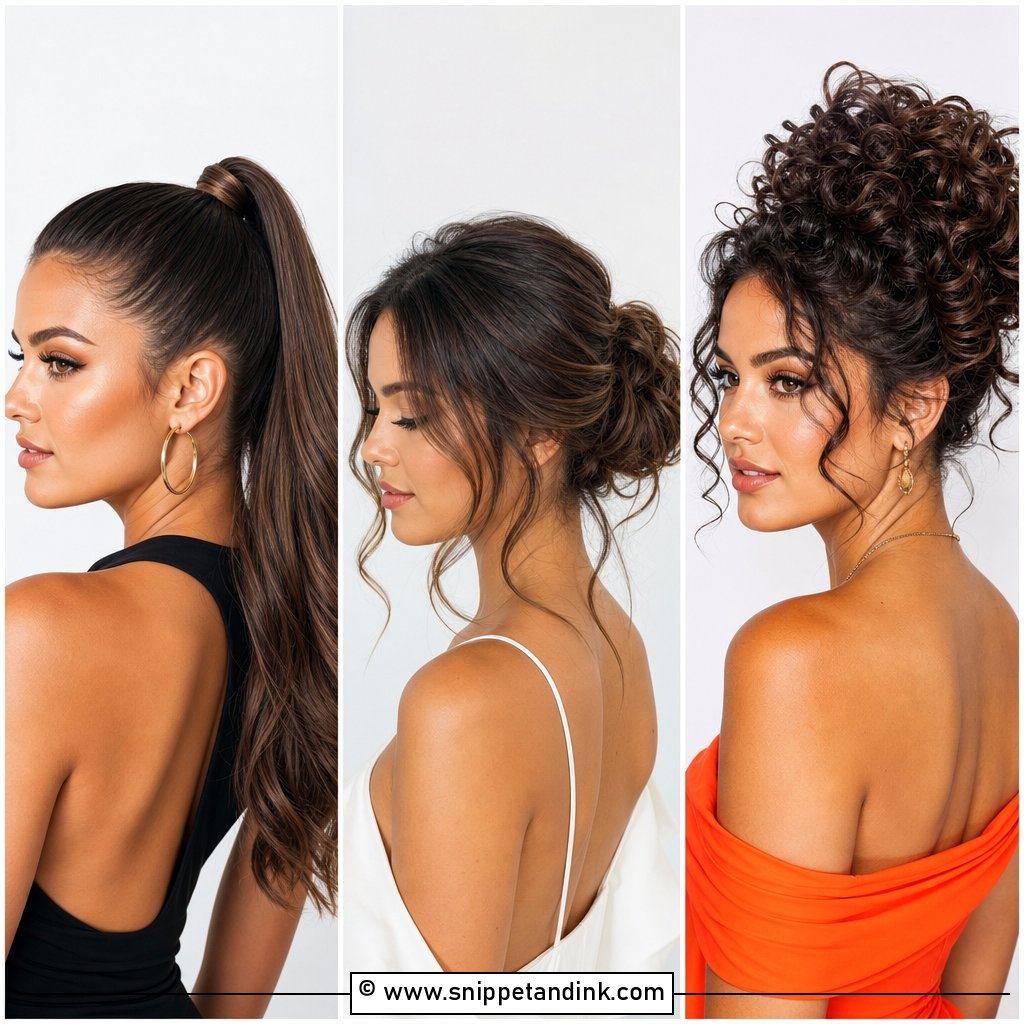
20. Side Part Voluminous Blowout
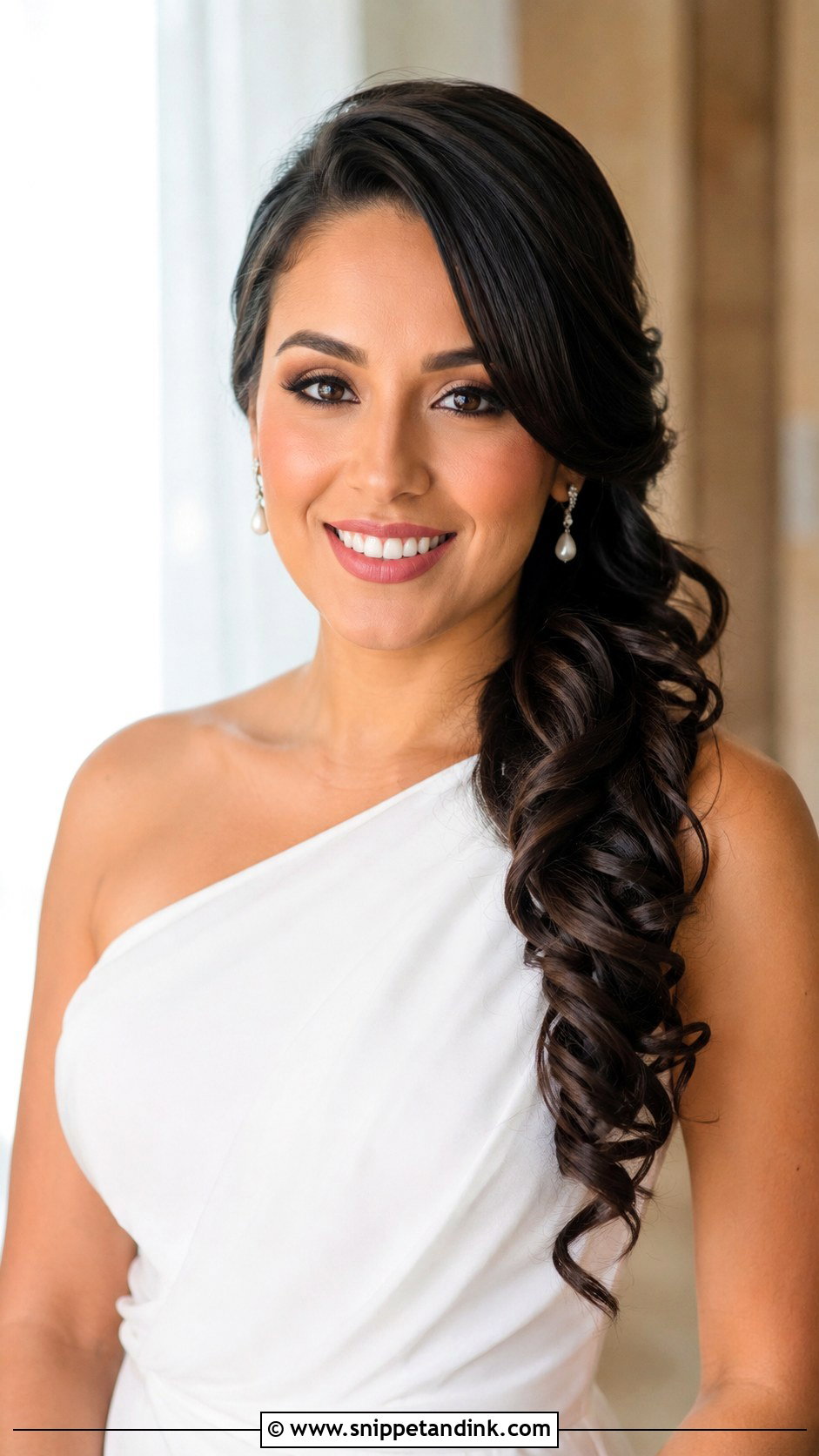
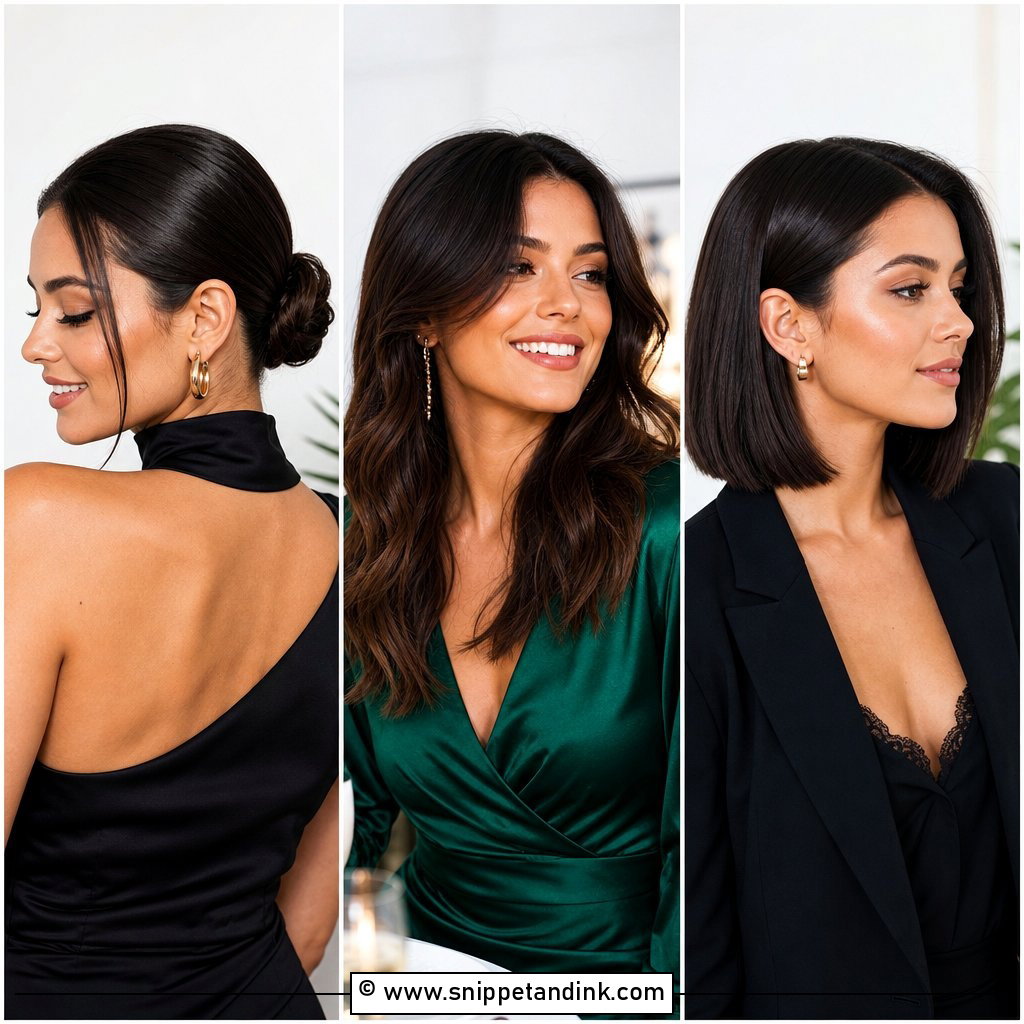
Big blowouts are the hardest style here to keep alive for ten hours. I build root lift with a round brush and mousse, set the hair in velcro rollers while you do makeup, and leave the rollers in as long as the schedule allows. The deep part adds fullness to one side. The voluminous blowout drops more in humidity than any updo, so I’d keep a small round brush and dry shampoo with the maid of honor for a touch-up before the reception.
Heavy Side, Light Side and a Long Day
Every side part creates a heavy side and a light side, and that imbalance is what I plan around. Hair on the heavy side has more weight pulling it down, so curls there drop first. I curl that side with a slightly smaller barrel and pin it to cool for longer.
On the light side I almost always hide two crossed grips behind the ear. You will never see them, but they stop the hair slowly migrating back to center during hugs. If you want to wear a veil, I place the comb on or just behind the light side, where it balances the weight instead of piling more onto the heavy side.
What goes in your touch-up pouch
- Six bobby pins that match your hair color
- A small travel hairspray
- A tail comb to redraw the part line
- Blotting papers, since an oily hairline makes the part separate
Thick hair can feel heavy on one side by evening. If you know your hair gives you headaches when it is pulled one way for hours, choose a low ponytail or chignon so the weight sits at the nape rather than hanging off the scalp at the part.
Matching the Part to the Rest of the Look
A side part changes more than people expect: where the volume falls, how a veil sits and which side of your face faces the camera most. Start with the neckline of your gown, then think about your hair texture and how long the day is. Book a trial, wear a top with a similar neckline and take photos from both sides. That one session usually tells you whether you are a sleek bun person or a loose waves person.
You'll Like These Ideas:


Leave a Reply