
A ponytail is the bridal style that hides the least. There’s no bun to tuck mistakes into and no curls to cover a bump at the crown, so the whole look depends on a smooth base and a band that doesn’t move. Get those right and it’s one of the most comfortable things you can wear for a twelve-hour day. Below are 25 bridal ponytails, from sleek high ponies to a soft low knot wrapped in pearls and braided versions trailing down the back, with notes on the base, the placement and what each one needs to hold.
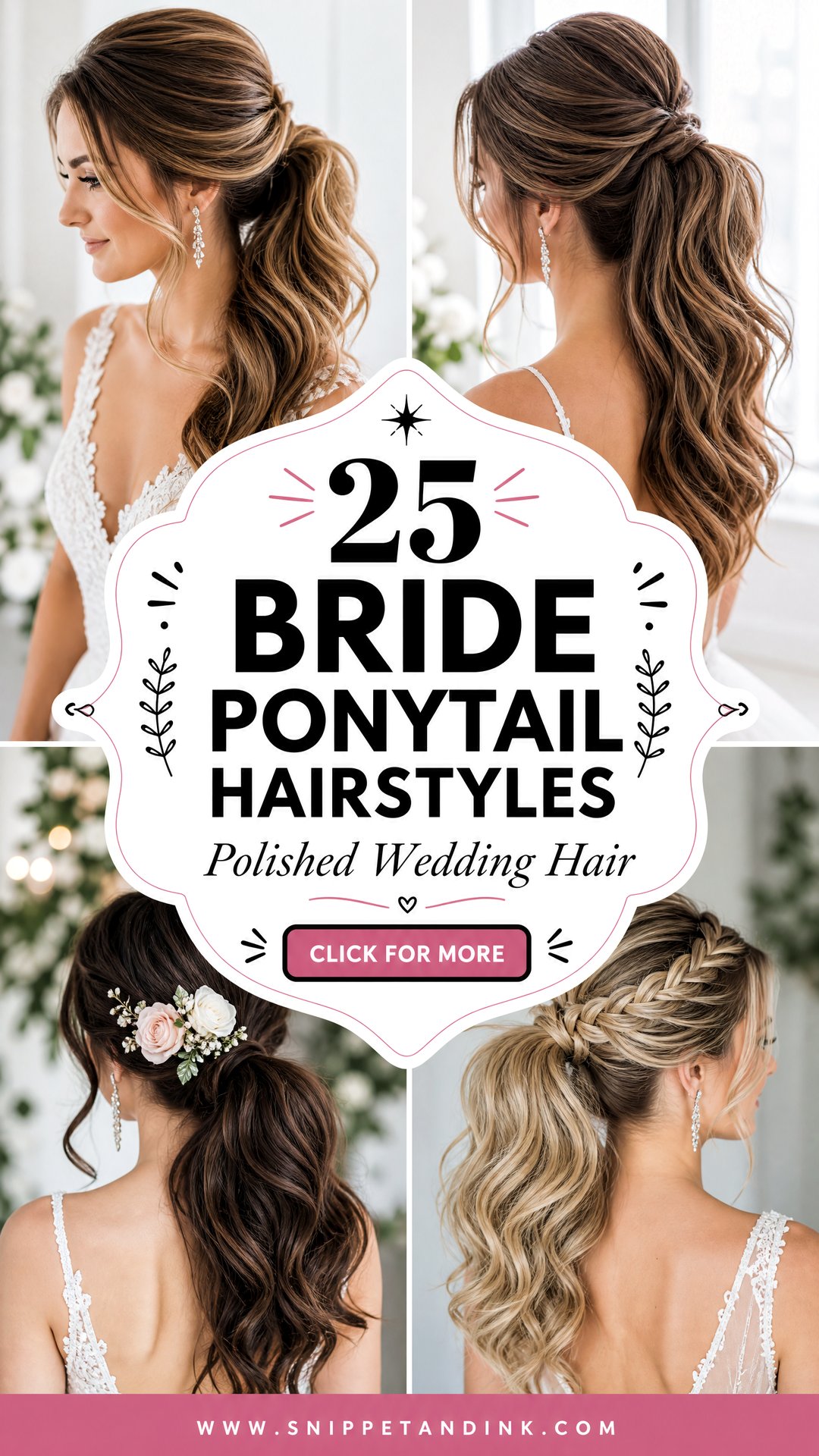
Where the Elastic Sits Changes Everything
Placement matters more than any accessory. A high ponytail lifts the face and gives the most swing, but it puts the full weight of your hair on the crown. A mid-height one, roughly in line with the top of the ears, is the most comfortable for long days. A low one at the nape is classic and pairs most easily with a veil.
I usually find the height by tilting the head back slightly and drawing an imaginary line from the cheekbone up past the ear; a pony sitting on that line tends to flatter most faces. But your gown and veil decide the rest. A low pony suits a long veil and a high collar. A high pony suits strapless and open backs.
Securing It So Nothing Slips
- Start with hair that’s fully dry and washed the day before, since silky clean hair lets a band slip.
- Use two bands: a soft one to gather, then a stronger one over it.
- Hide the bands with a wrap of your own hair, pinned underneath with a single grip pointing up into the base.
- Add two crossed pins under the base if you’re wearing a veil or heavy accessory.
1. Sleek Low Bridal Ponytail
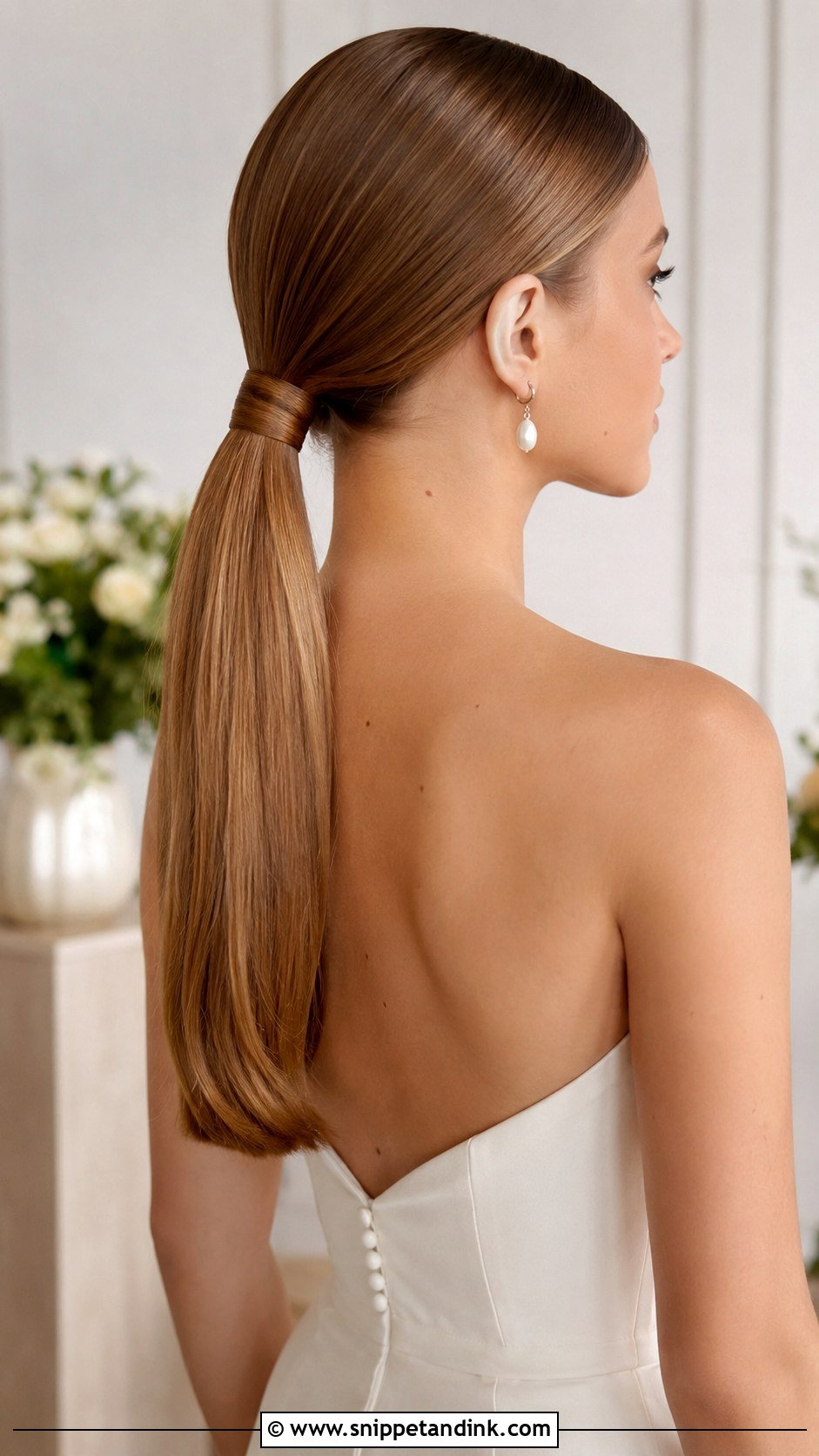
The sleek low ponytail is where I’d start anyone who wants clean lines. I brush the hair back with a boar bristle brush, gather it at the nape, and tie it with a strong band before wrapping a thin strand around to hide it. The wrap is pinned underneath with a single grip pointing up into the base. Minimal gowns and modern venues suit it. A small pearl pin at the nape adds a little light.
2. High Sleek Ponytail for Brides
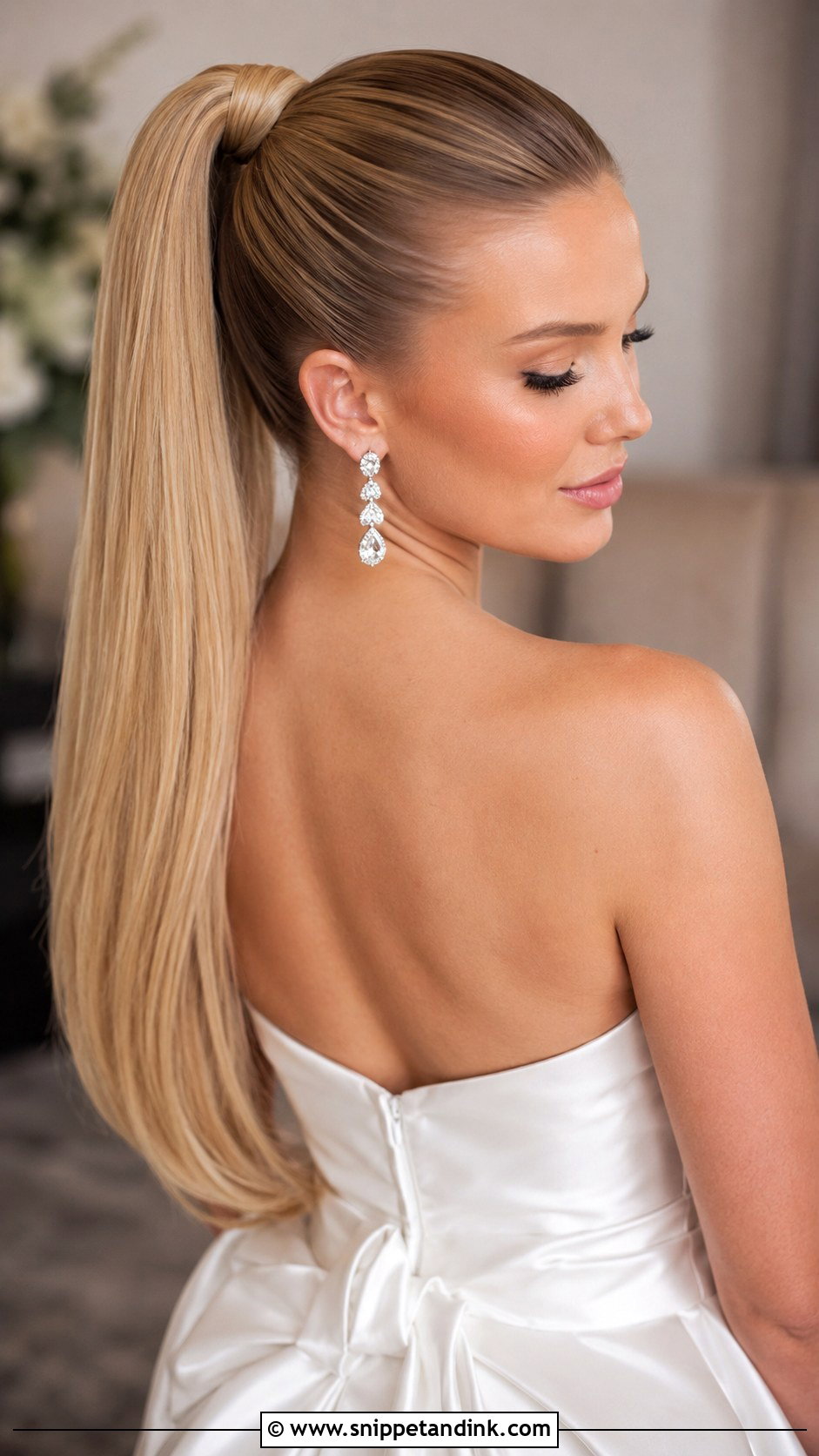
High and sleek on the crown lifts the whole face and swings dramatically as you walk. It’s the most demanding ponytail to wear all day, because the weight hangs from the highest point of your head. I’d suggest it for straight or extension-lengthened hair, strapless gowns and statement earrings. If your hair is long and thick, let me know at the trial whether it starts to ache after an hour; dropping it a couple of centimetres often fixes that without losing the look.
3. Bubble Ponytail for Weddings
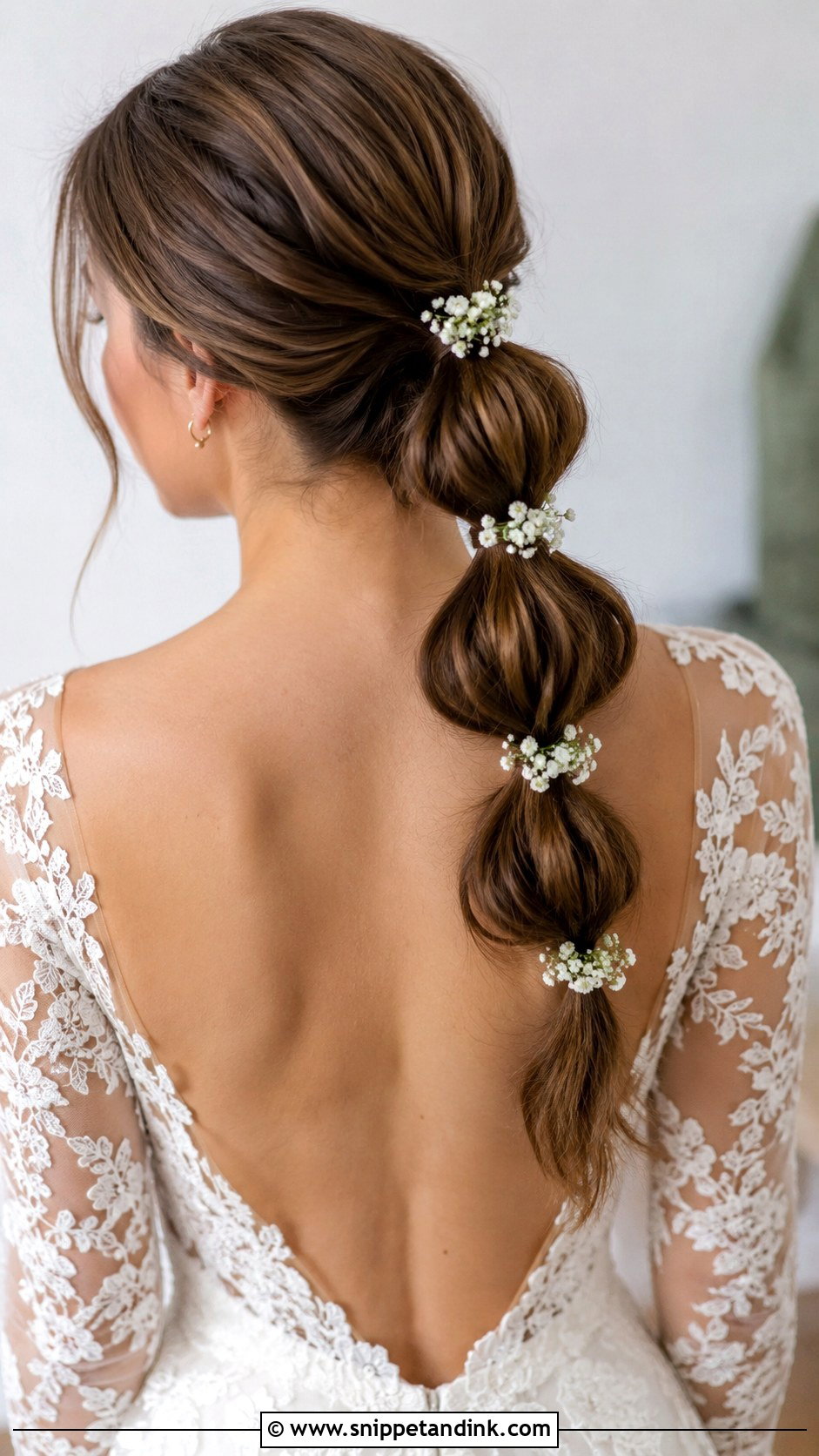
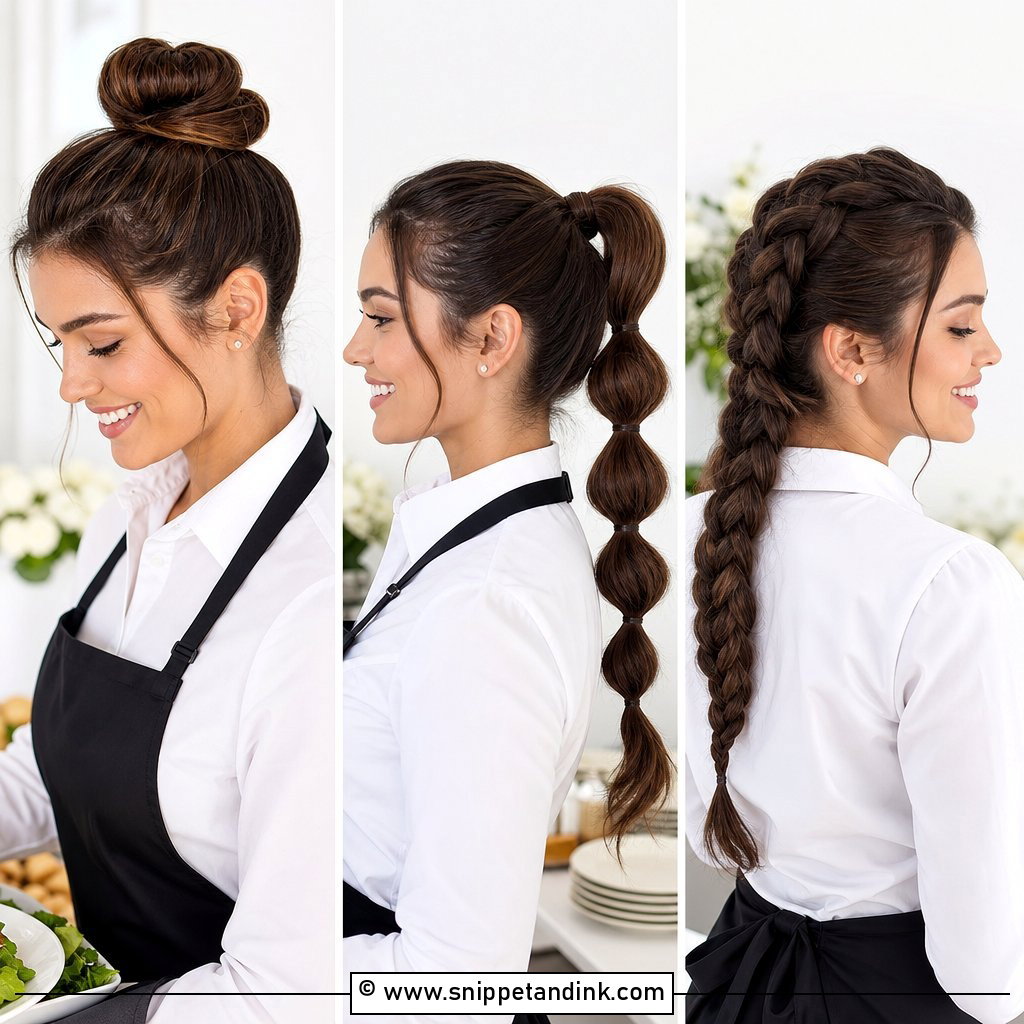
A bubble ponytail is tied with small elastics down its length, each section gently puffed out into a rounded bubble. I space the elastics slightly closer toward the ends, where the hair thins, so the bubbles look even. Keep it sleek for a city wedding or tuck tiny flowers between the bubbles in a garden. Once the elastics are in, it barely moves.
4. Braided Bridal Ponytail
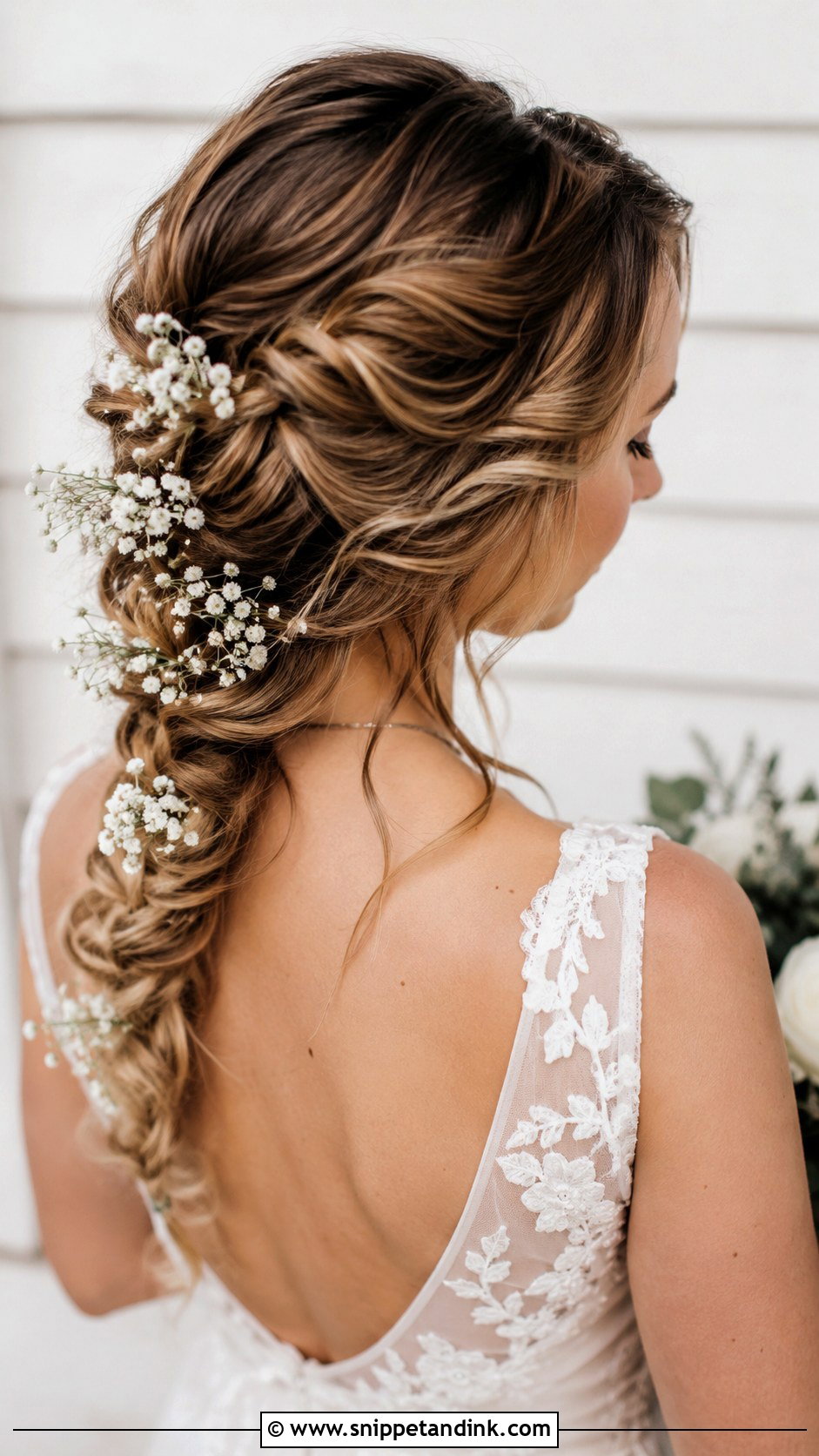
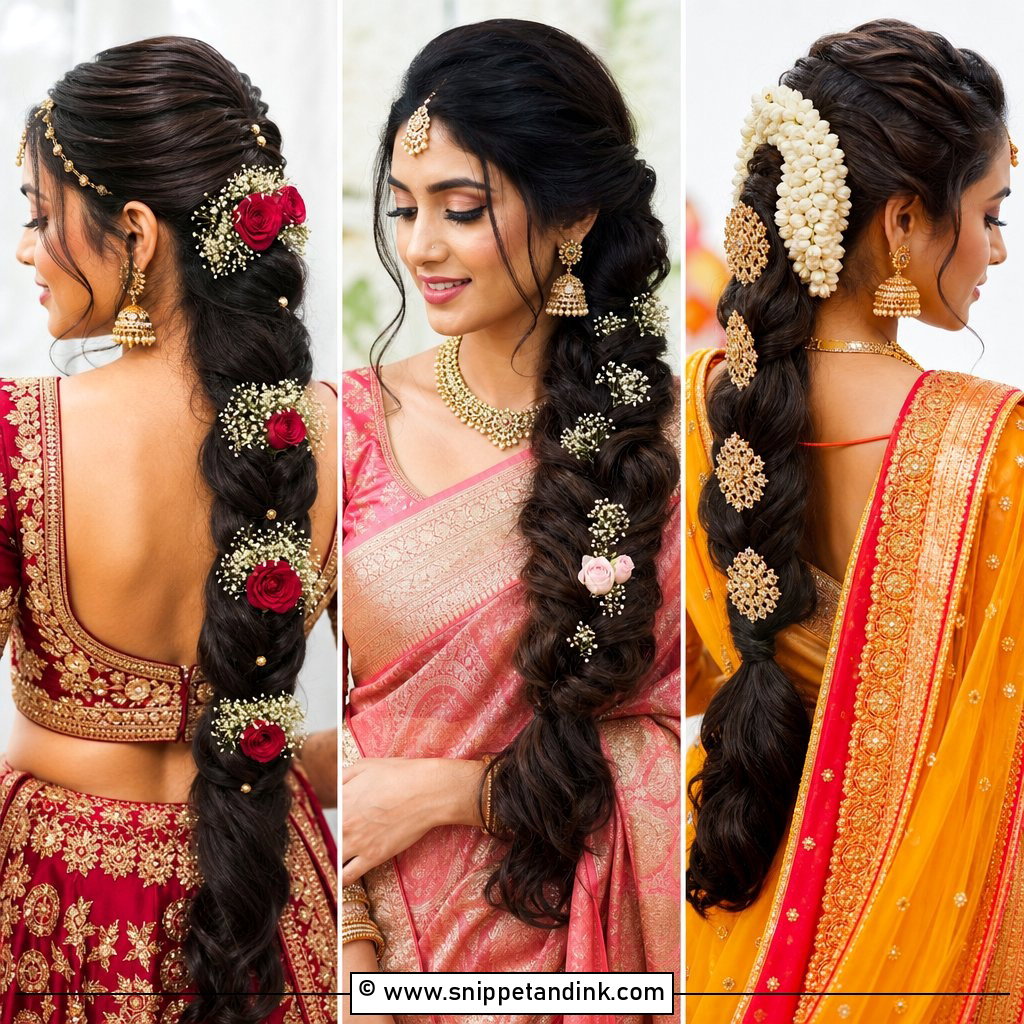
Running a soft braid down from a gathered pony adds texture and a handmade feel. I tie the ponytail first, hide the band, then braid, so the base stays tight even as I loosen the plait. Pulling the edges gently makes the braid look fuller. Baby’s breath or small roses tuck along it for bohemian and rustic weddings.
5. Curly Ponytail for Brides
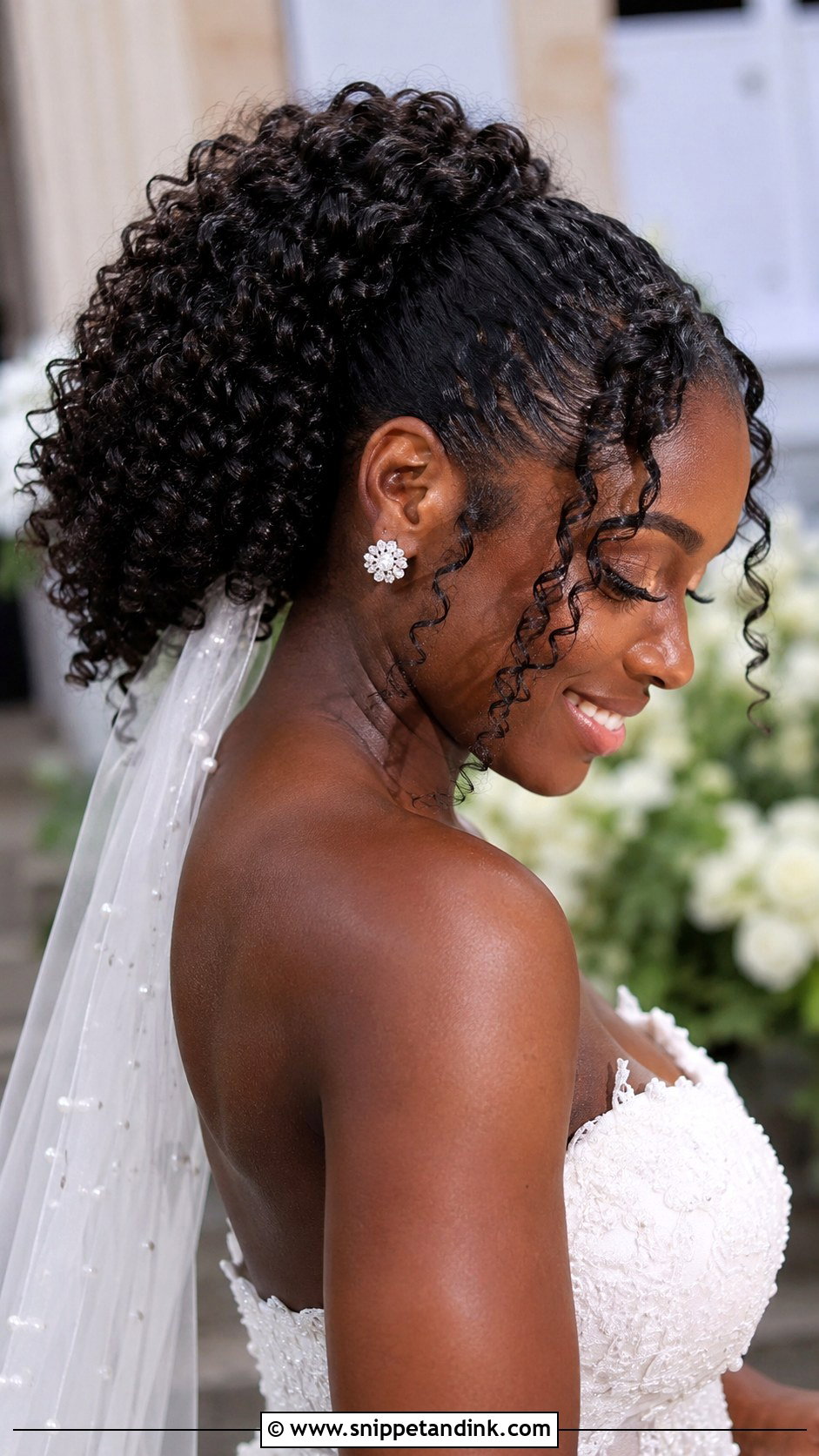
Bouncy curls gathered into a ponytail give instant height and volume. Tight coils and loose spirals both work. With natural curls, I smooth the edges and gather the hair while it’s still slightly damp with styler, then leave the curls alone to set, since brushing dry curls turns them into frizz. A few loose pieces around the face soften it. Refresh with a light water-based mist before the ceremony.
6. Low Ponytail With Bow
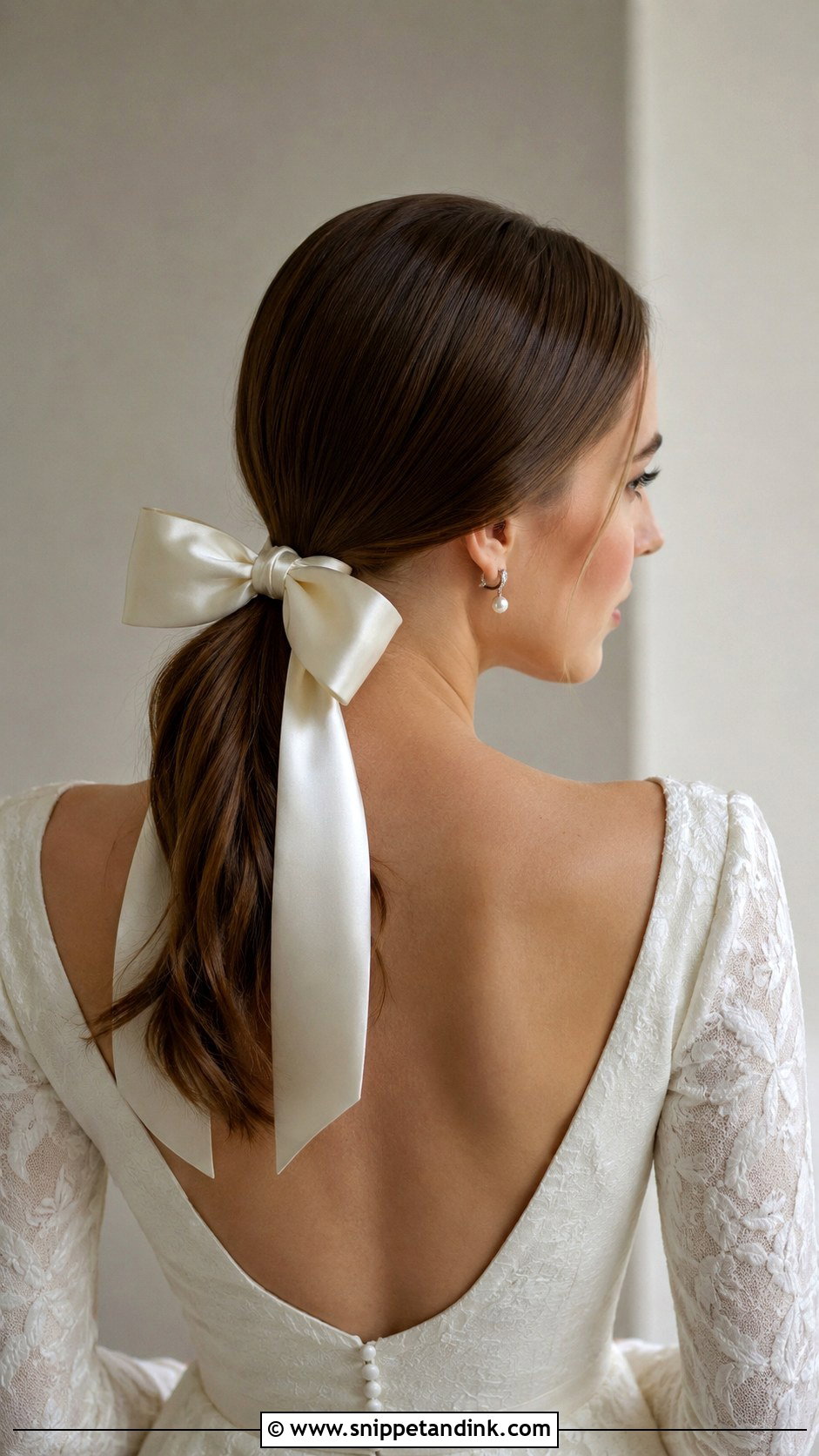
A satin or velvet bow at the base of a low pony adds a vintage note and hides the elastic. Ivory or blush picks up most gown colours. I attach the bow with a clip or pins through the back, never just tied around the hair, because a tied bow slides down through the day. It pairs well with classic gowns and simple makeup.
7. Side Swept Bridal Ponytail
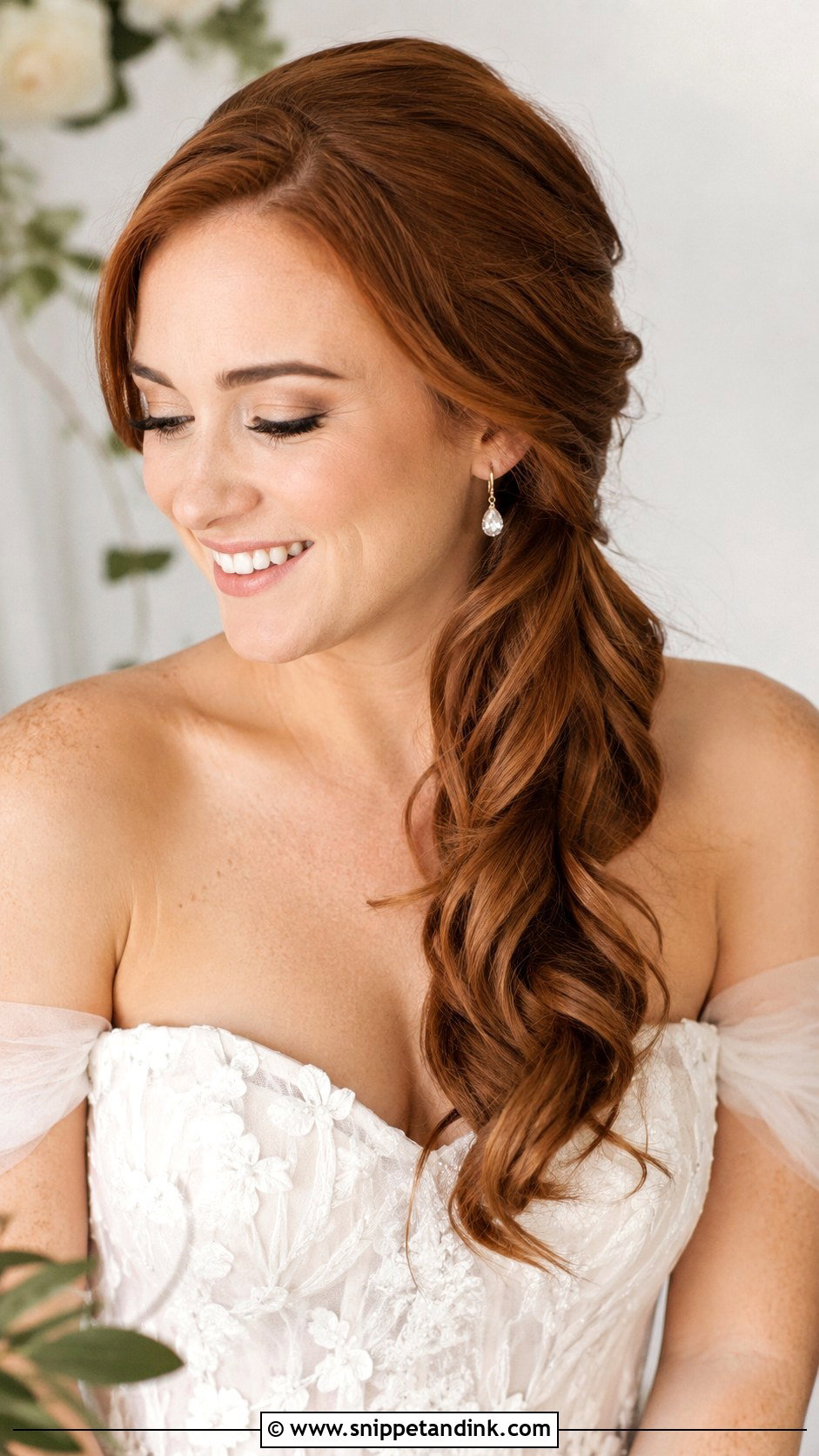
Draping the ponytail over one shoulder shows off one earring and any detail on the opposite shoulder of your gown. Gentle waves give it an old Hollywood feel. The ponytail itself is tied low and slightly off-centre, then pinned on the opposite side behind the ear, so it doesn’t swing back to the middle when you turn. It’s very flattering in over-the-shoulder portraits.
8. Pearl Accented Ponytail
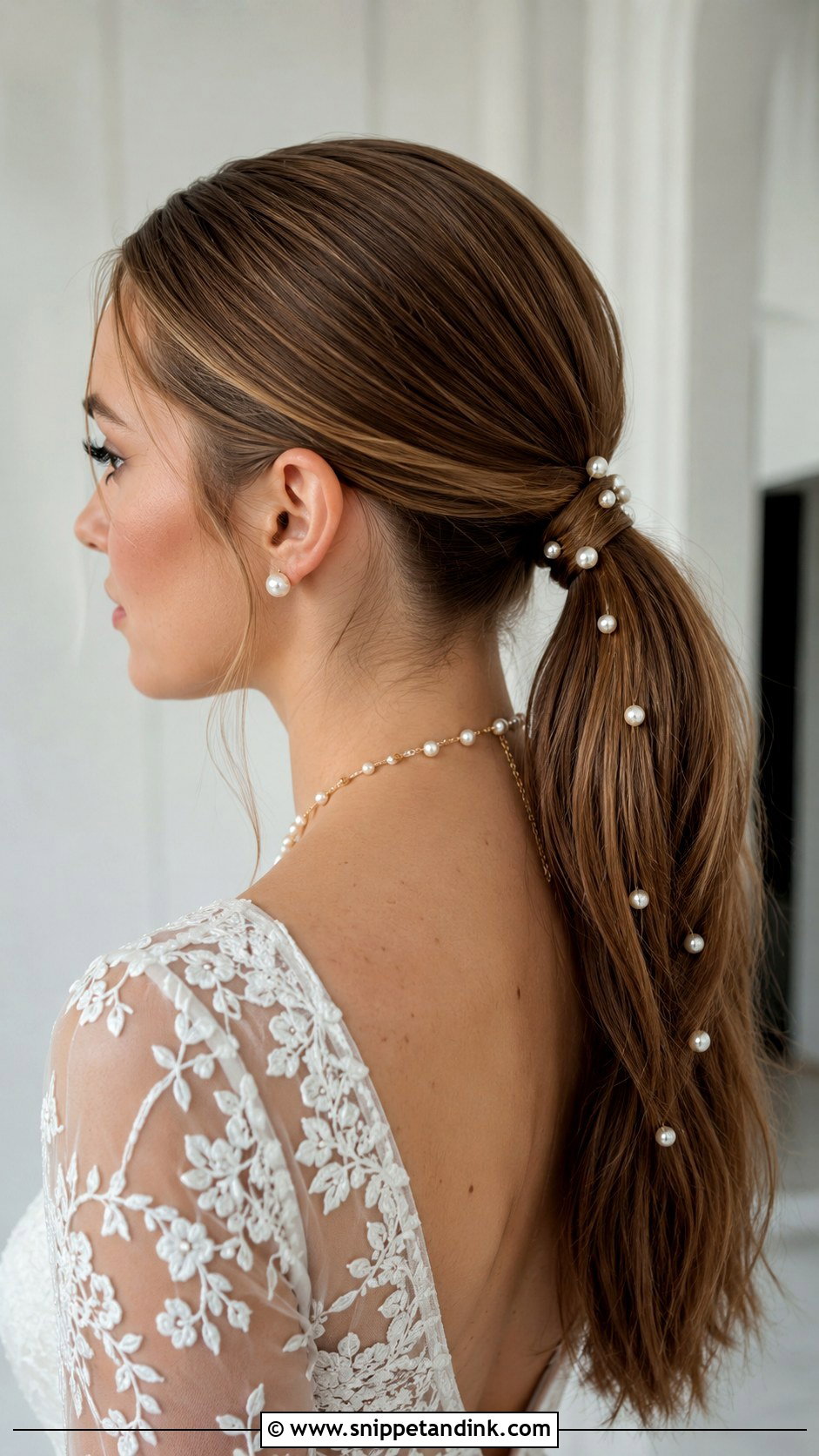
Pearl pins or a beaded hair tie make a plain sleek pony read as bridal. Clustered at the base, they replace a hair wrap; trailed down the length, they move with the hair. I place each pin into the band or a small twist so the pearl’s weight doesn’t drag it down. Lace gowns and pearl jewellery pick up the theme. They add sparkle without competing with a veil.
9. Messy Textured Ponytail
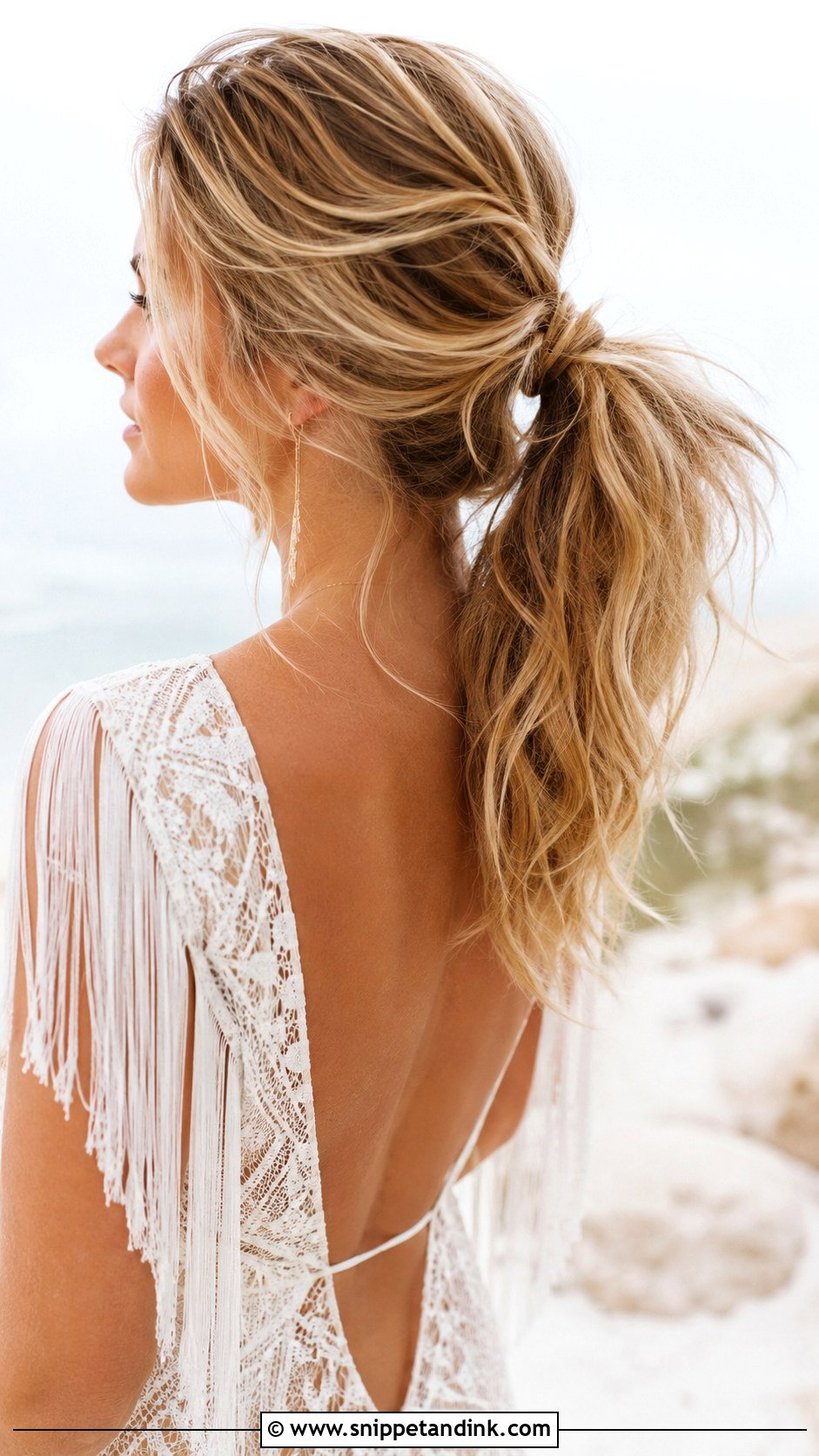
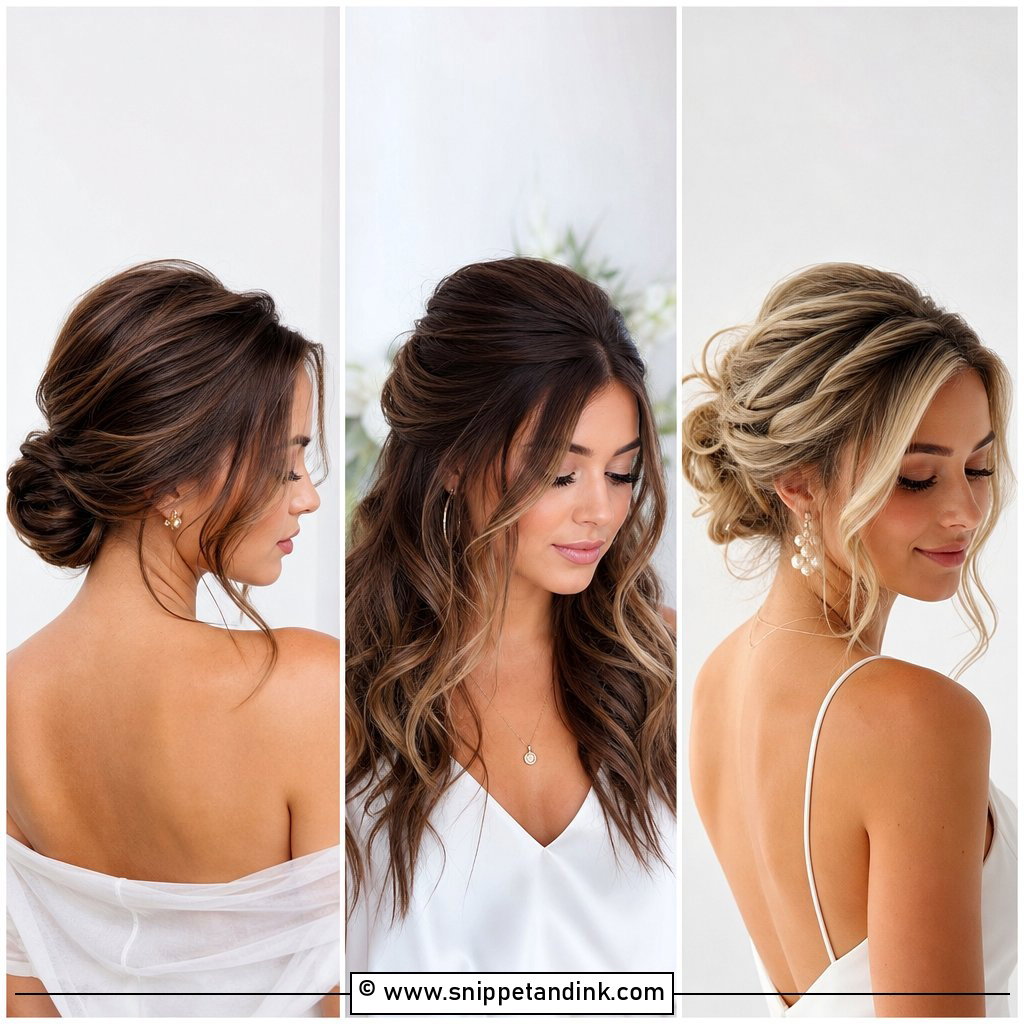
The messy textured ponytail is the one I suggest to brides who hate the feeling of tight styling. I curl the hair first, tease the crown lightly for height, gather it loosely, and pull pieces out around the face with my fingers. Boho, beach and garden weddings suit it. It holds up well through a long day precisely because it’s meant to look a bit undone.
10. Half Up Ponytail for Brides
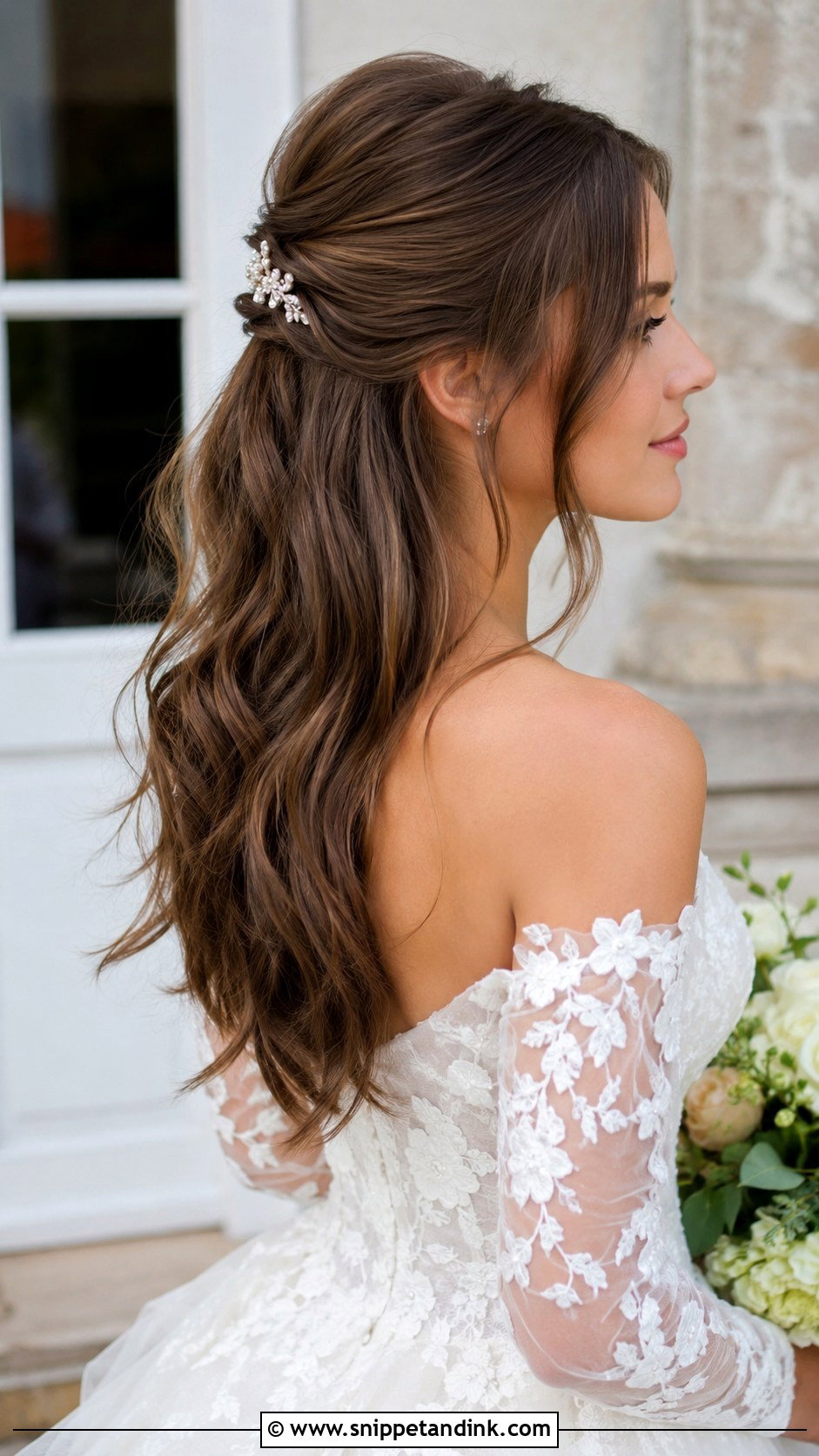
Pulling the top section into a pony while the rest falls free keeps hair off your face but shows off length and curls. I tie the top section a little behind the crown rather than right on top, so it doesn’t add unwanted height. A decorative clip or small flowers can sit where the pony meets the loose hair. It works with most gowns and venues.
11. Fishtail Braid Ponytail
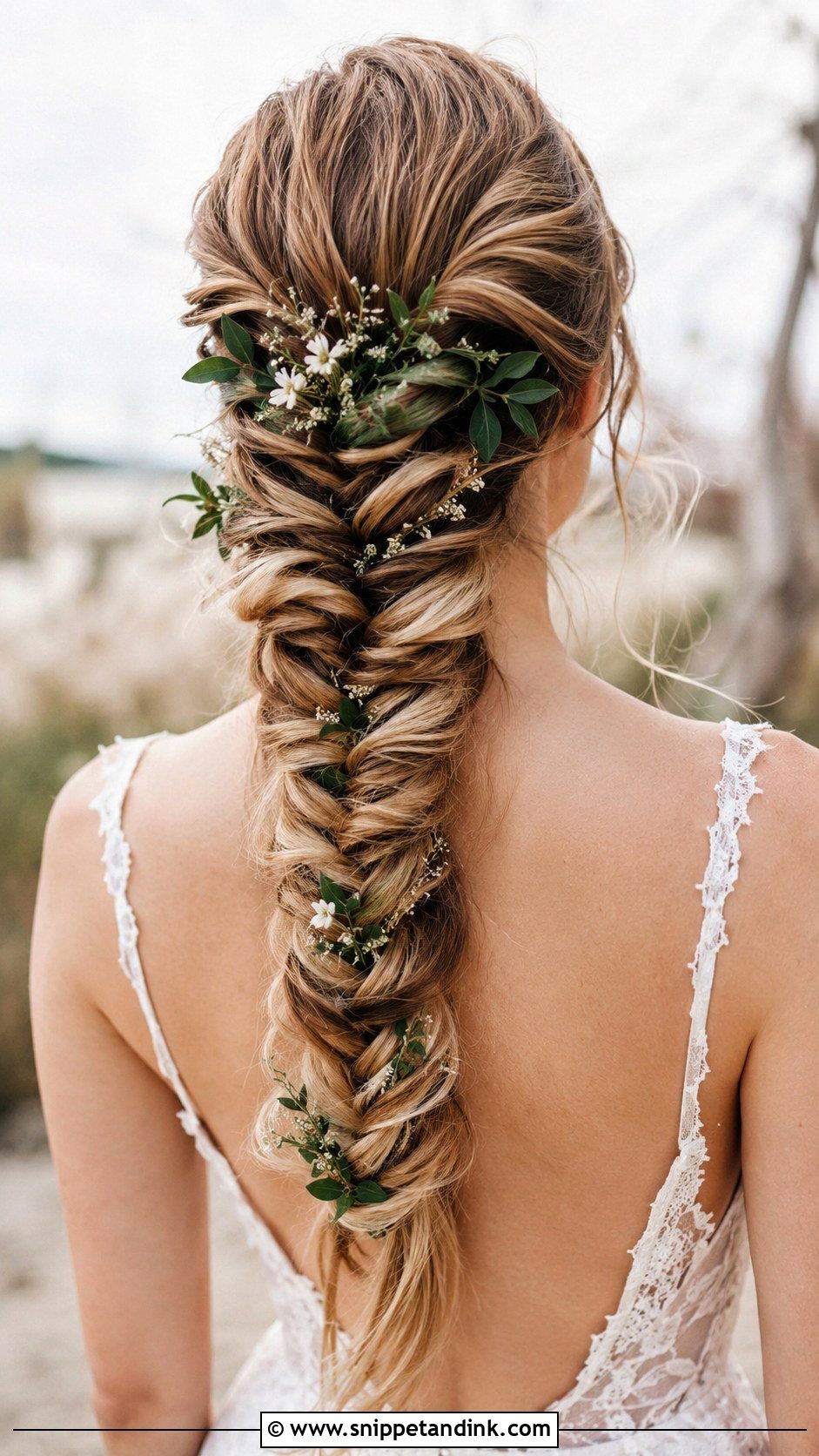
A fishtail braid worked through a ponytail looks intricate but is quick in practice. I gather the hair into a pony first, then fishtail the length and loosen the edges for a fuller look. Rustic, outdoor and free-spirited weddings suit it, with small blooms or greenery tucked into the plait. It stays very secure and keeps the detail visible down your back.
12. Voluminous Bridal Ponytail
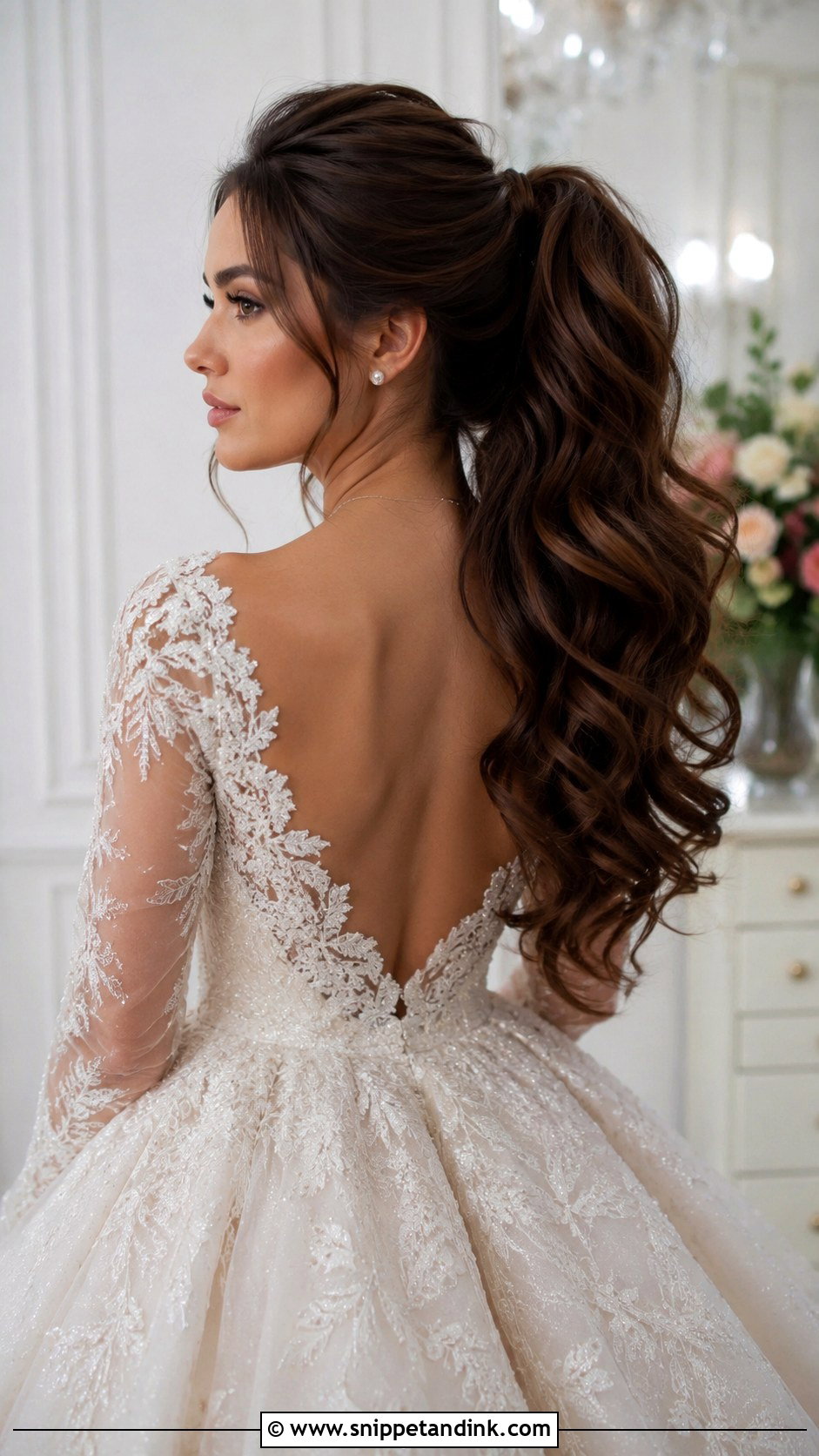
A voluminous ponytail needs body built in before it’s tied, with a blow-dry at the root and teasing underneath the crown, never on top. Extensions add thickness to finer hair. I keep the crown smooth so the volume reads as intentional rather than messy. It suits ballroom and formal weddings, and it gives real impact without an updo.
13. Ponytail With Face Framing Pieces
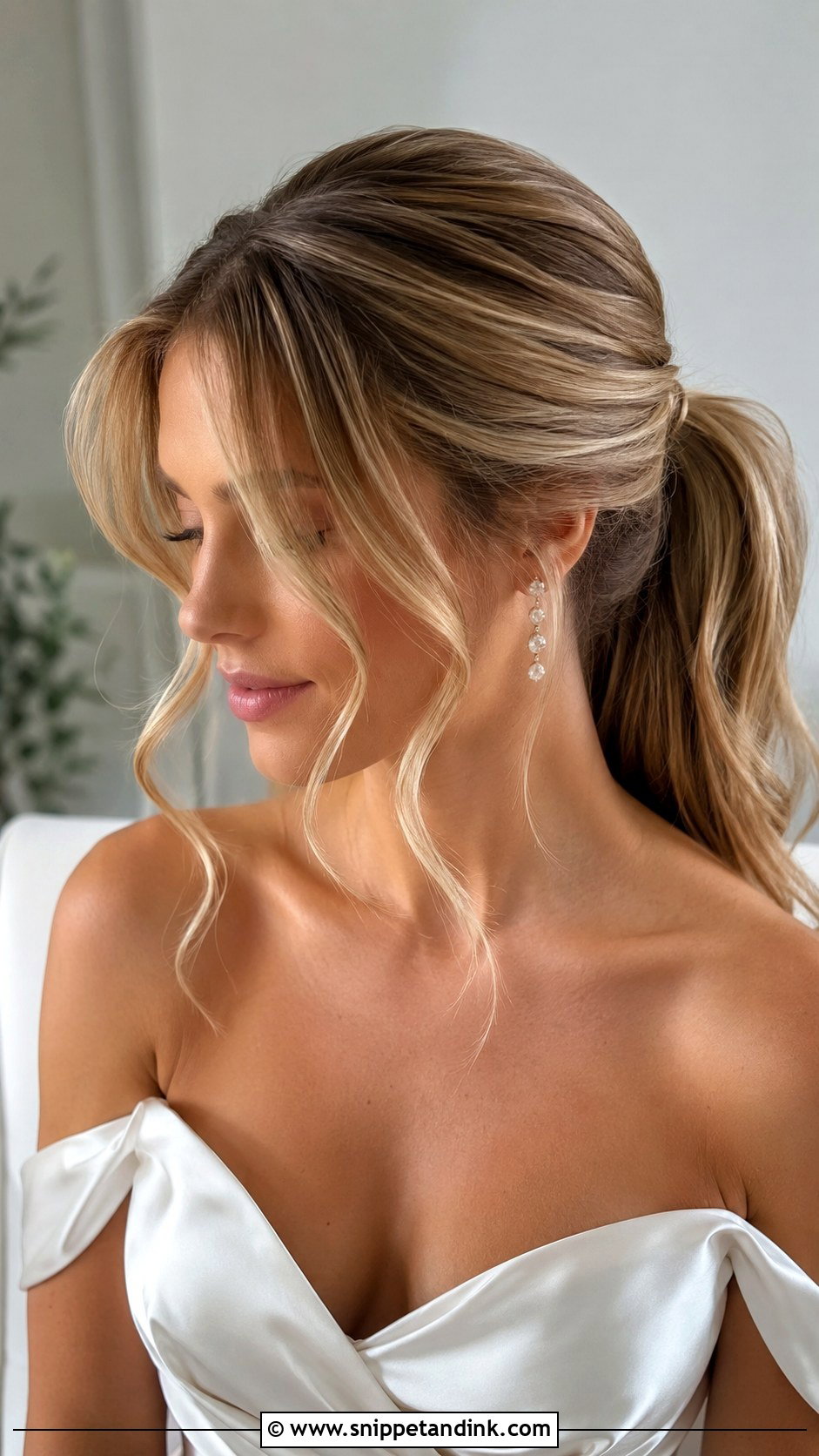
Leaving a few strands loose at the temples softens a sleek pony. The trick is restraint: two fine pieces on each side, cut or curled to fall around the cheekbones, look deliberate; thick sections look like they escaped. Curled pieces add movement, straight ones feel modern. It suits most face shapes.
14. Wavy Low Ponytail
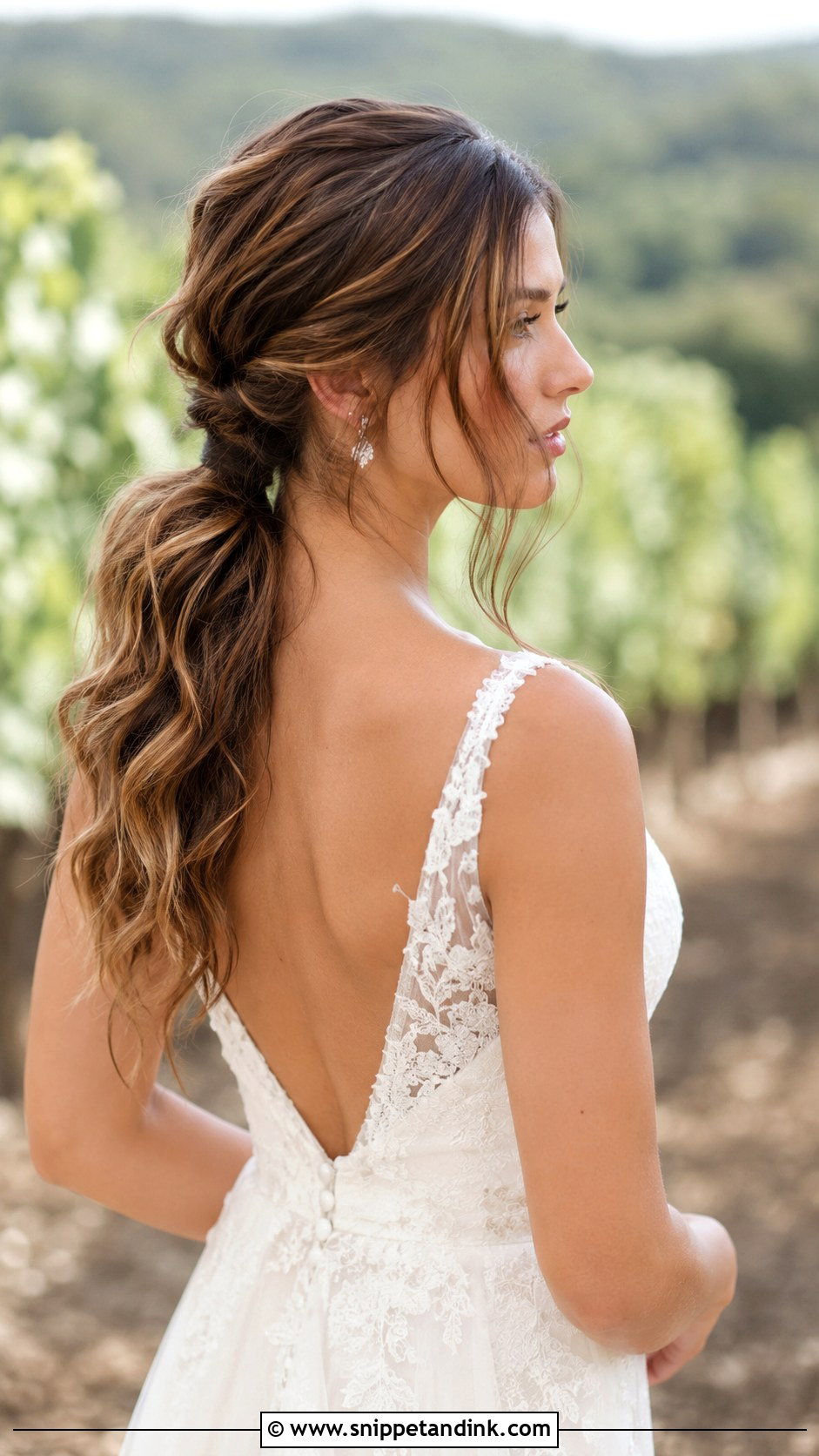
Loose waves through a low ponytail mix polish with movement. I curl the length before tying, so the waves sit naturally rather than being forced in after. The top stays smooth, and a strand wrapped around the base hides the elastic. It suits coastal, garden and vineyard weddings.
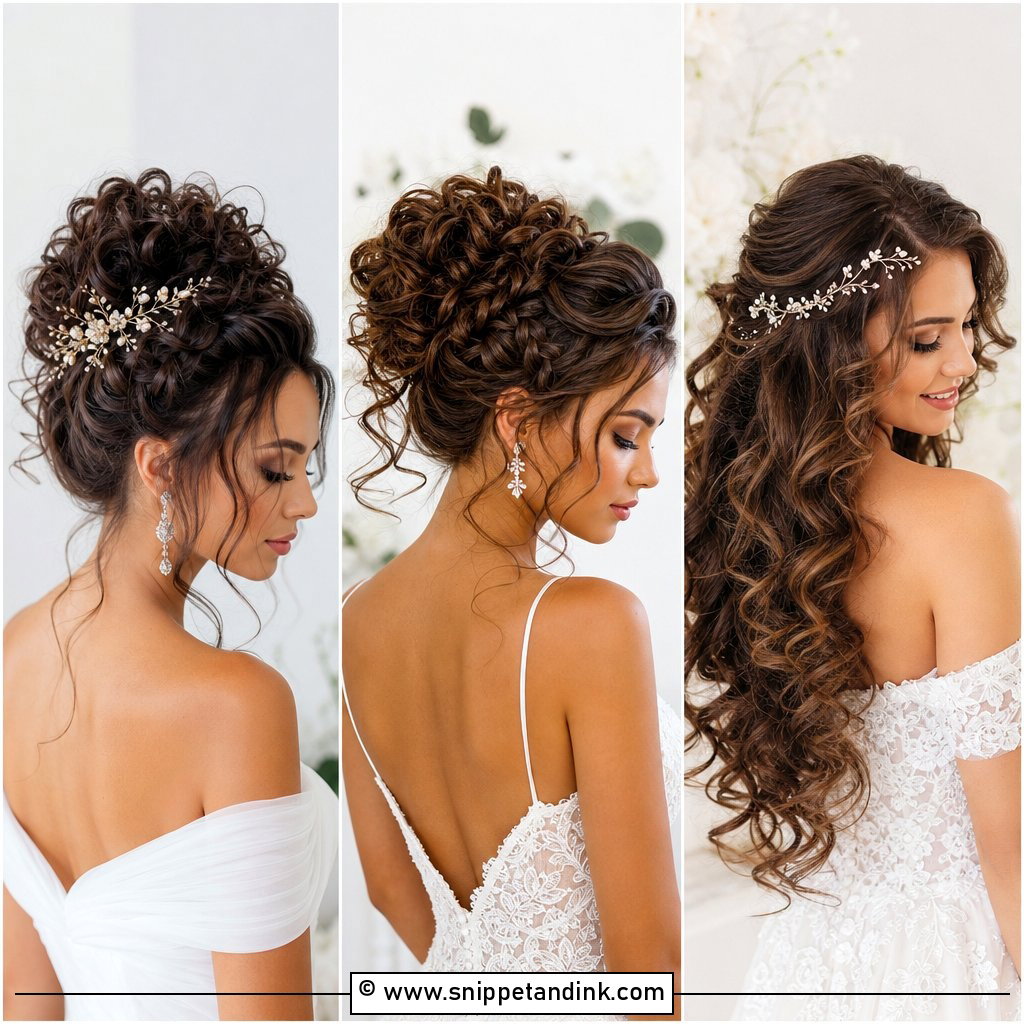
15. Sleek Ponytail With Middle Part
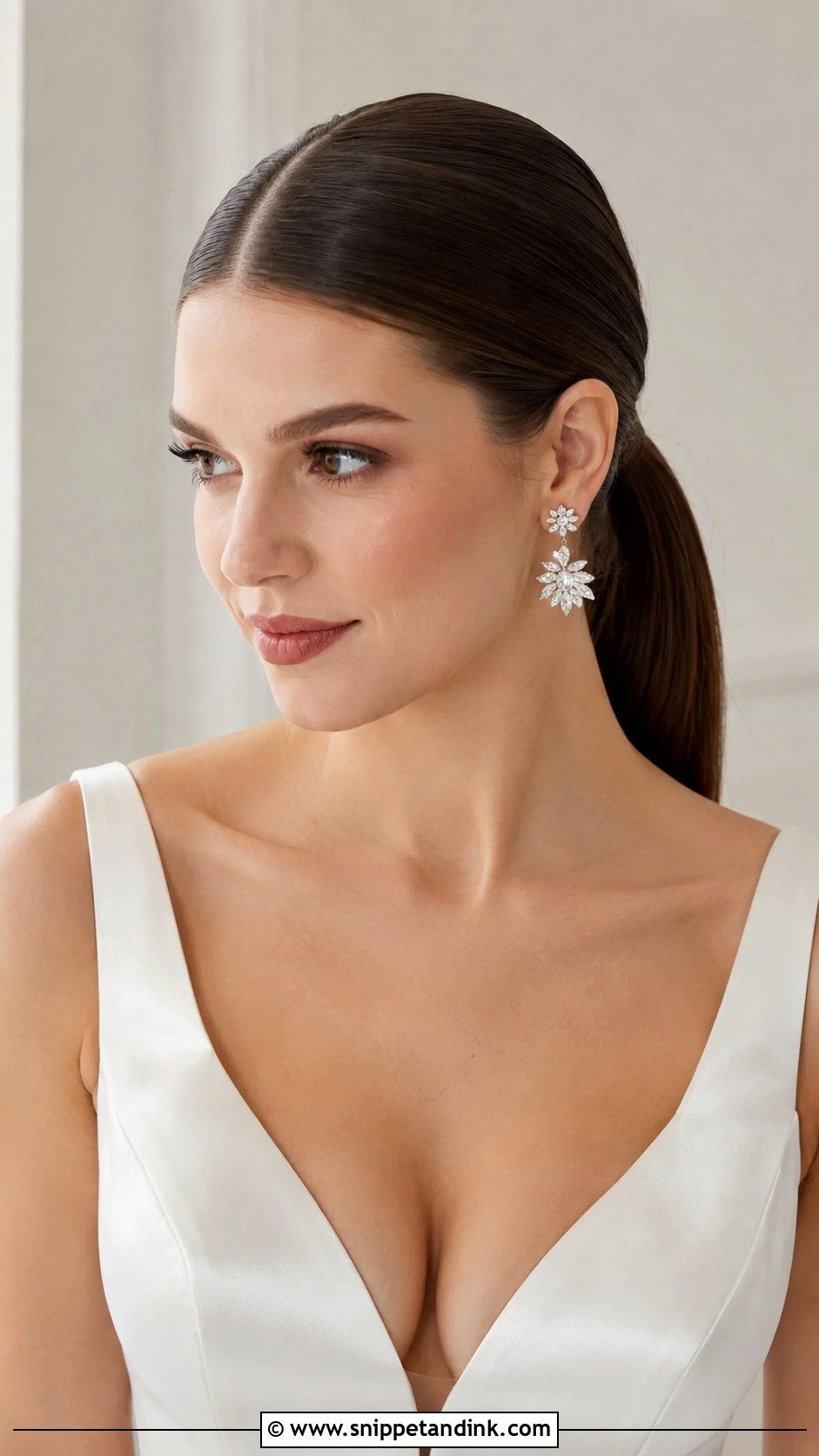
A sharp middle part with a sleek pony is symmetrical and editorial. I map the part from the bridge of the nose back with a fine-tooth comb, then smooth each side down with a little serum before gathering. Any unevenness at the hairline shows here, so I check from both sides. Satin gowns and statement earrings pair well.
16. Bohemian Ponytail for Brides
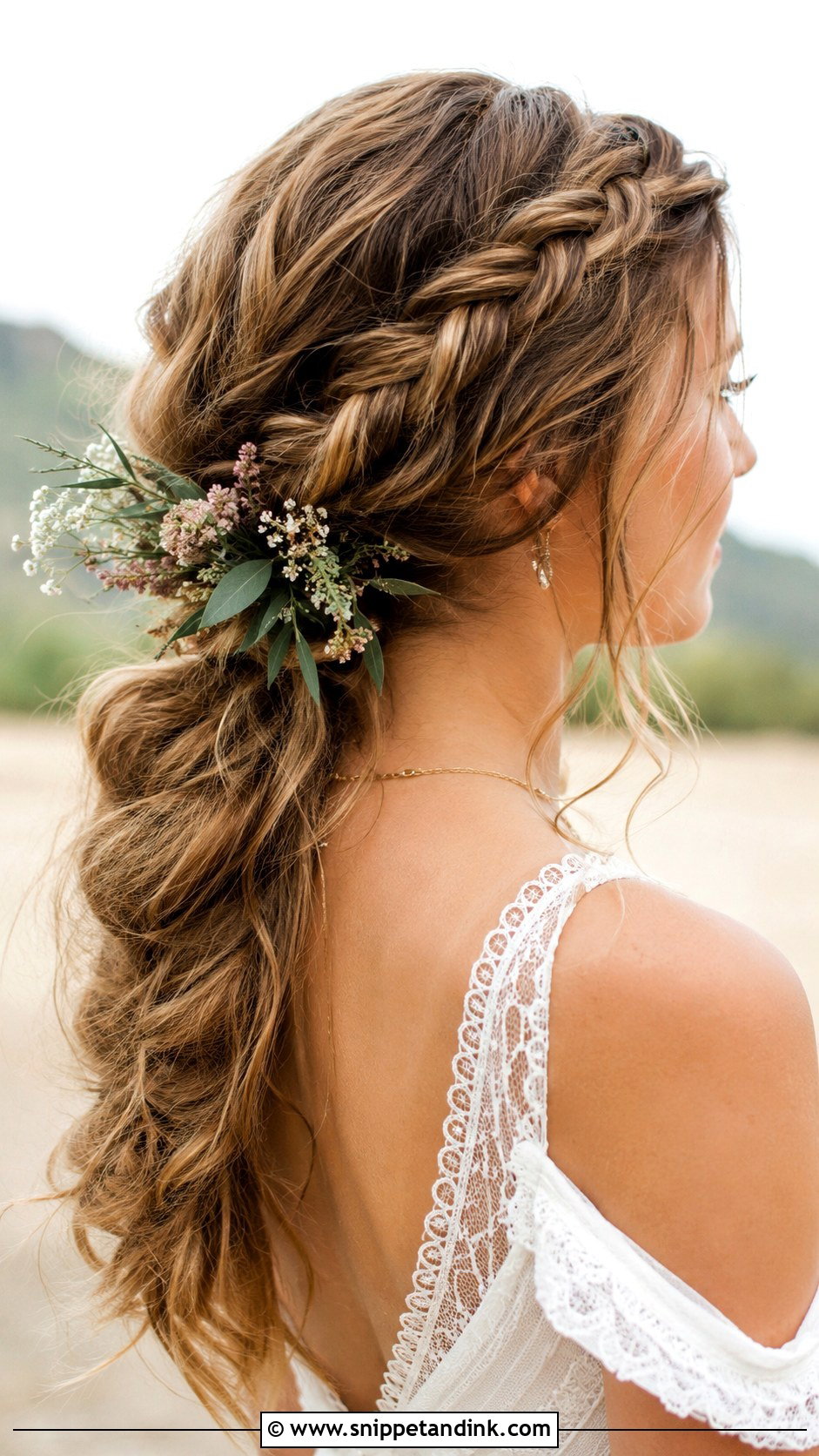
A bohemian ponytail mixes soft waves, loose braids and a few flowers. It celebrates texture, so I use a dry texture spray rather than strong hairspray, which would flatten it. Let pieces fall around the face. It’s made for outdoor and festival-style weddings, and it looks at home against rustic, garden or beach backdrops.
17. Ponytail With Hair Vine
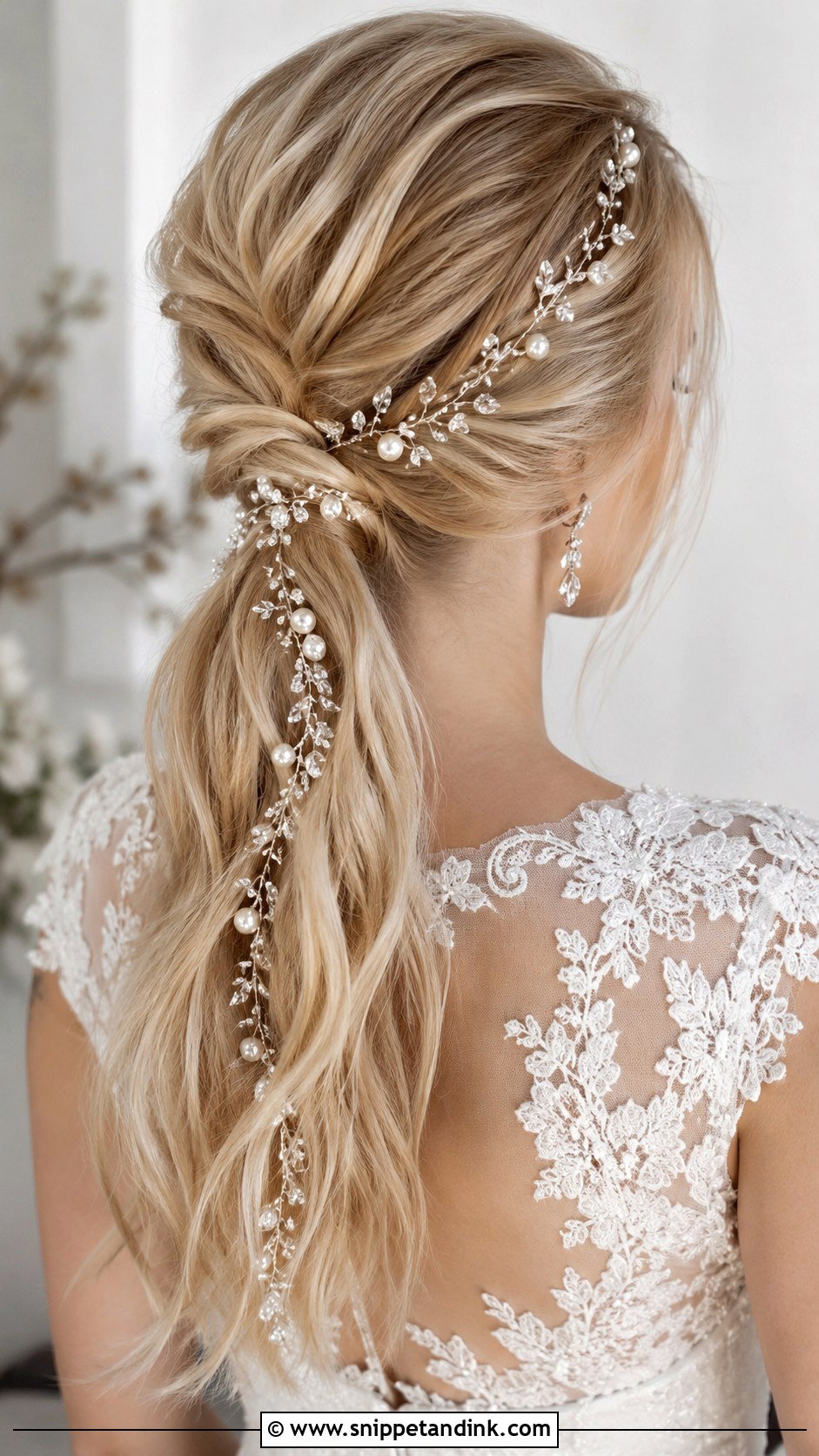
A hair vine with crystals, pearls or small leaves can run along the crown or twist down the length of a pony. Match the vine’s metal to your jewellery. I secure it with small pins every few centimetres; without them, a vine slides as the ponytail swings. It works with sleek and textured ponies, and it’s a lighter alternative to a traditional headpiece.
18. Twisted Ponytail for Brides
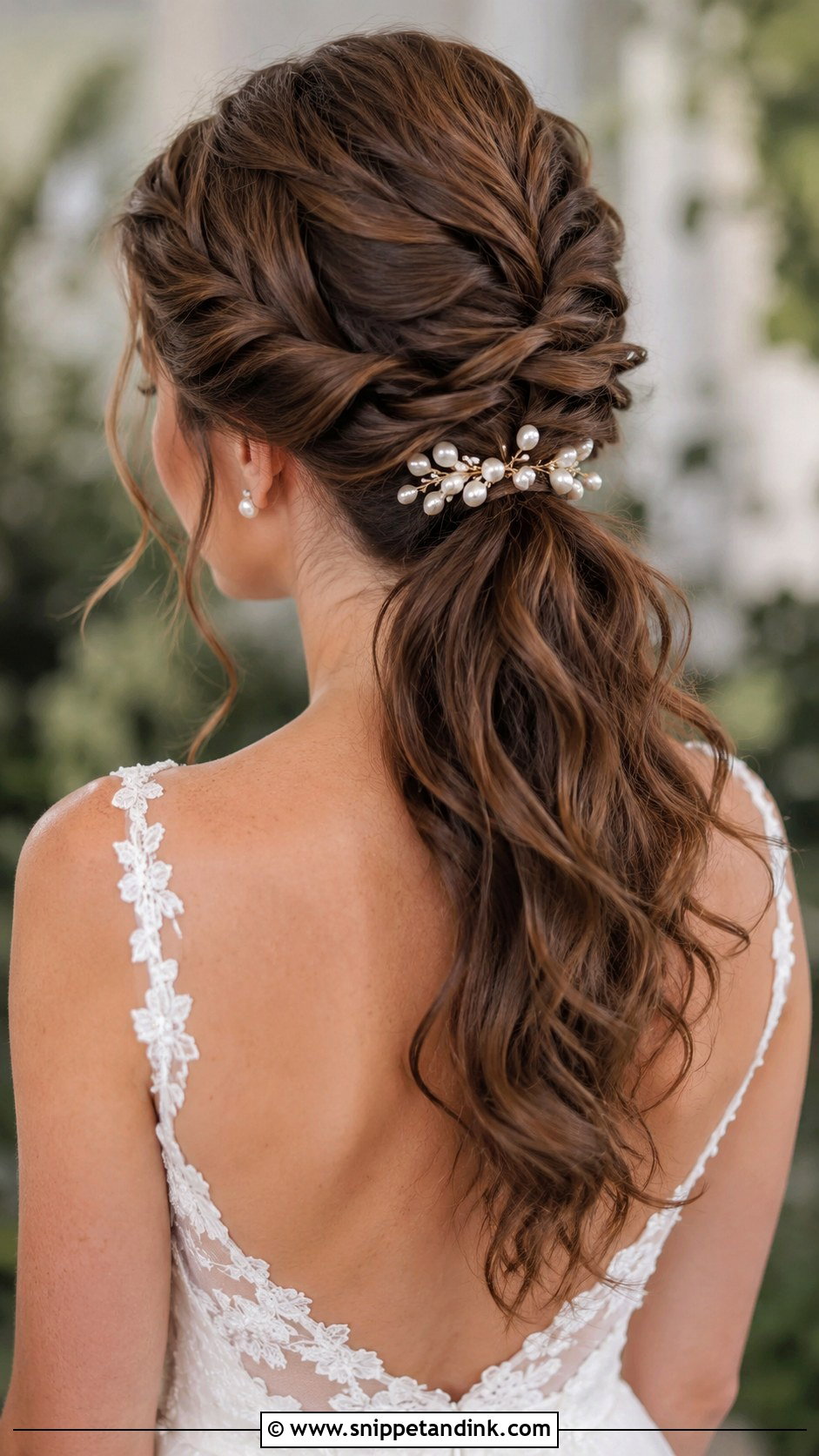
Twisting sections toward the pony adds texture without the formality of an updo. The twists also lock the hair in, so it’s more secure than a plain ponytail. I loosen them slightly for fullness. Small pearls or flowers can tuck between twists. It suits garden and classic weddings.
19. Low Ponytail With Veil
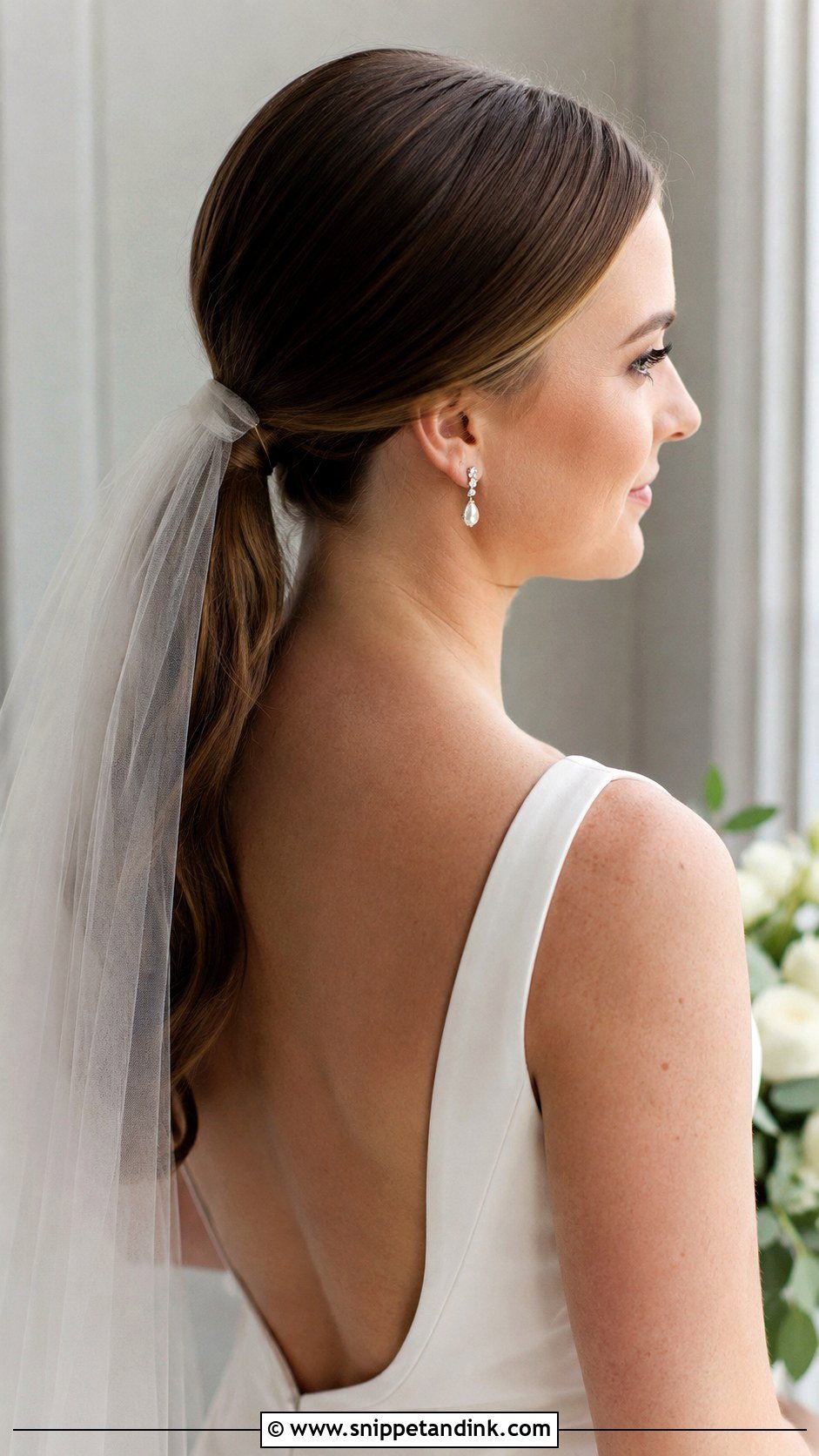
A veil with a low ponytail is a traditional pairing that turns into a second look once the veil comes off. The comb slides in just above the band, gripping the gathered hair, which is far more secure than loose hair. I add two crossed pins under the comb for a long or heavy veil. After the ceremony, you still have a neat pony for the reception.
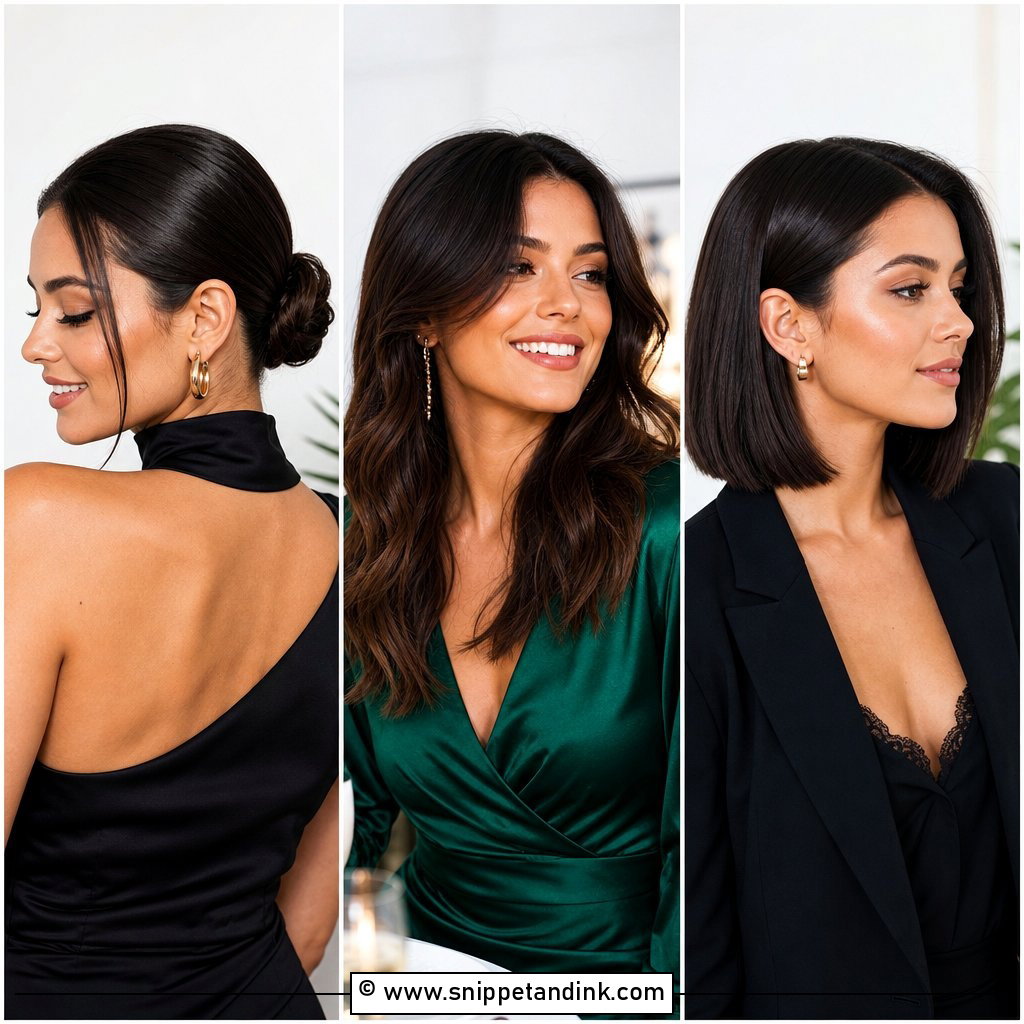
20. Ponytail With Loose Curls
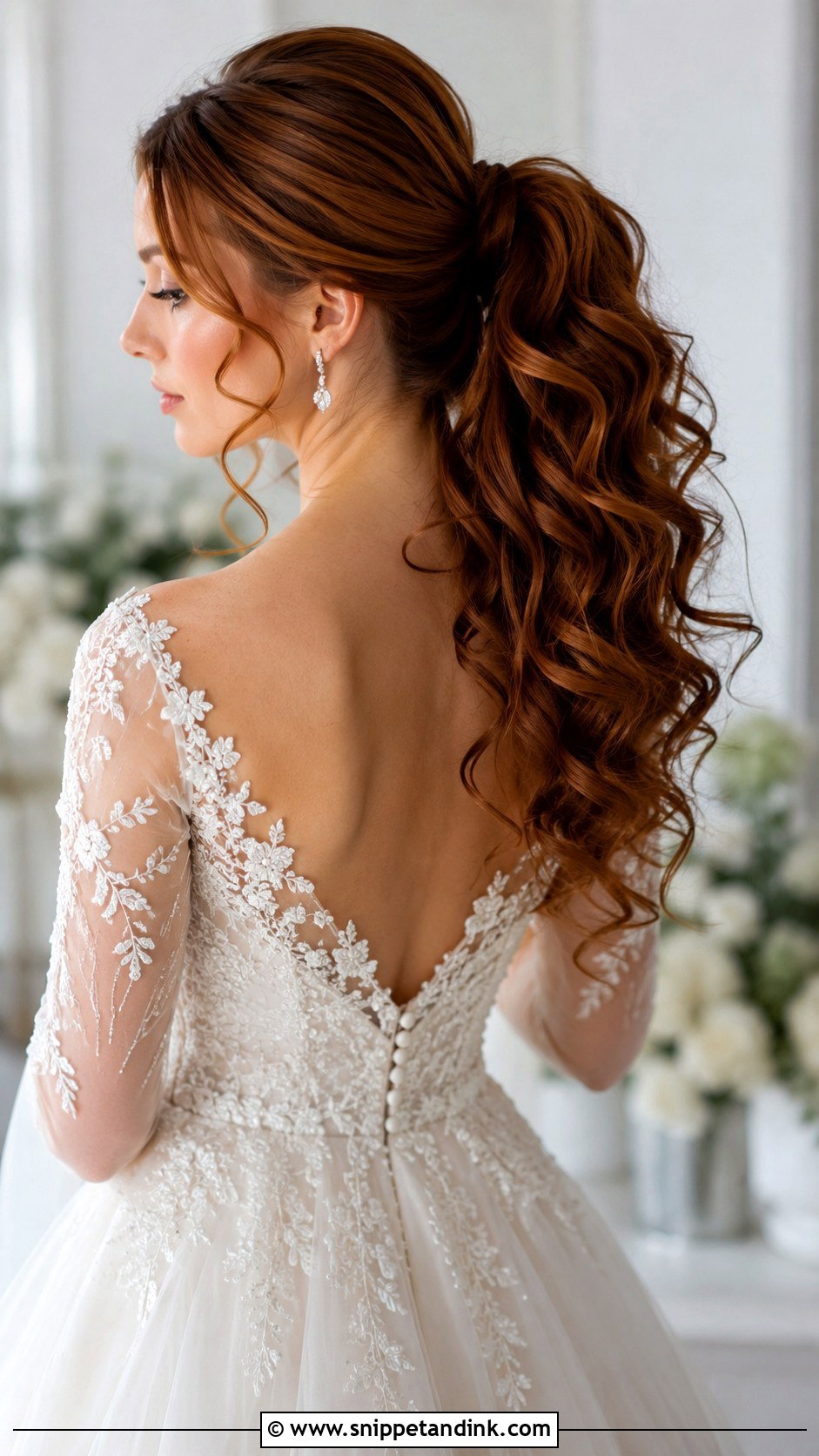
Loose curls spilling out of a ponytail give glamour and movement. A large barrel curling iron gives relaxed spirals. I curl after tying, so the curls fall from the band rather than being flattened by it. Keep the top smooth, and leave a few curls loose around your face. It fits formal and fairytale weddings.
21. Ponytail With Flowers
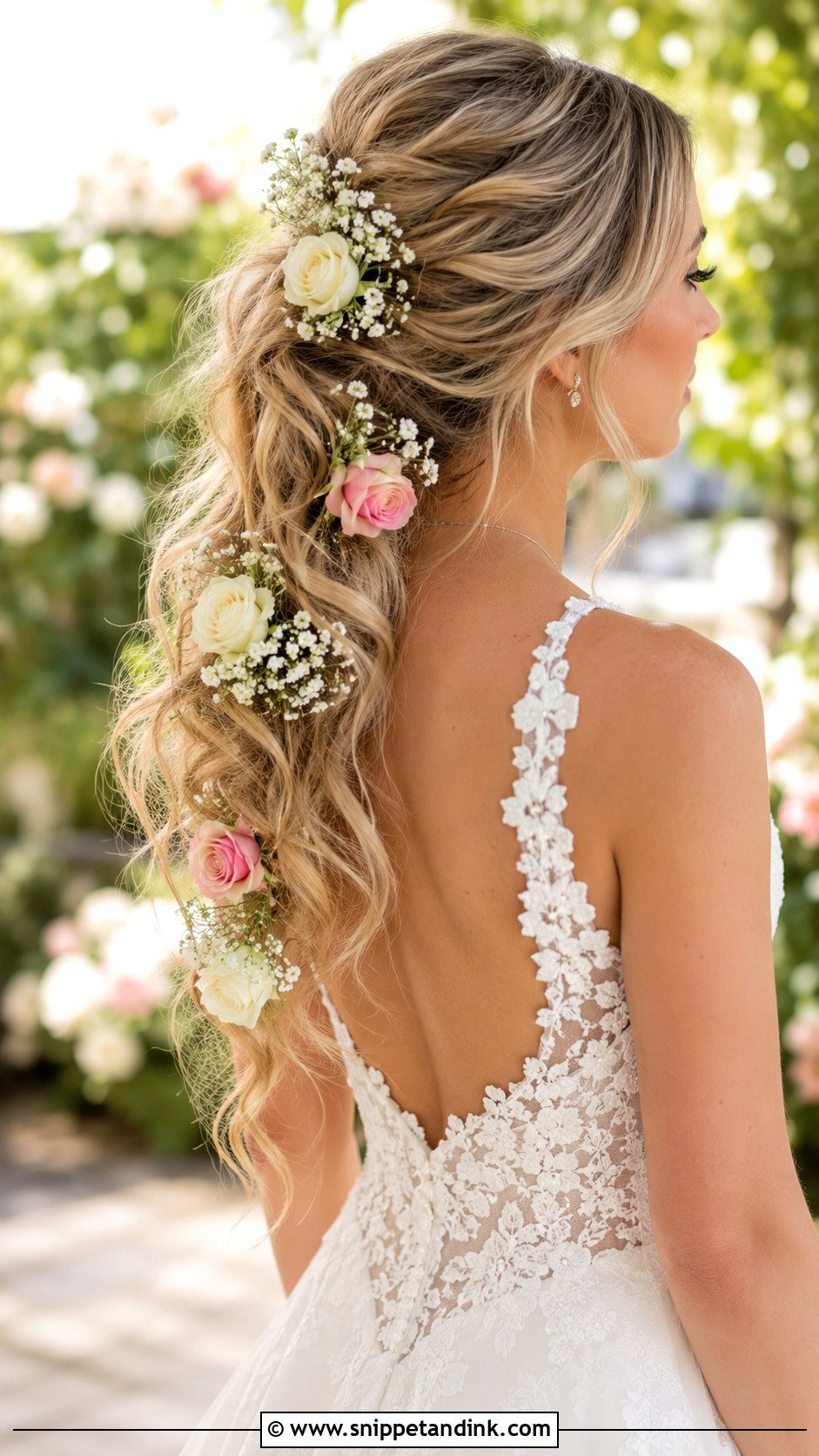
Fresh or silk flowers along a ponytail suit spring and summer weddings. Matching your bouquet ties it together. Baby’s breath, roses and small wildflowers all work. Fresh stems need to be sturdy enough to last without water, so I ask the florist for blooms that hold up for hours, and I pin each stem rather than just tucking it in.
22. Slicked Back Ponytail for Brides
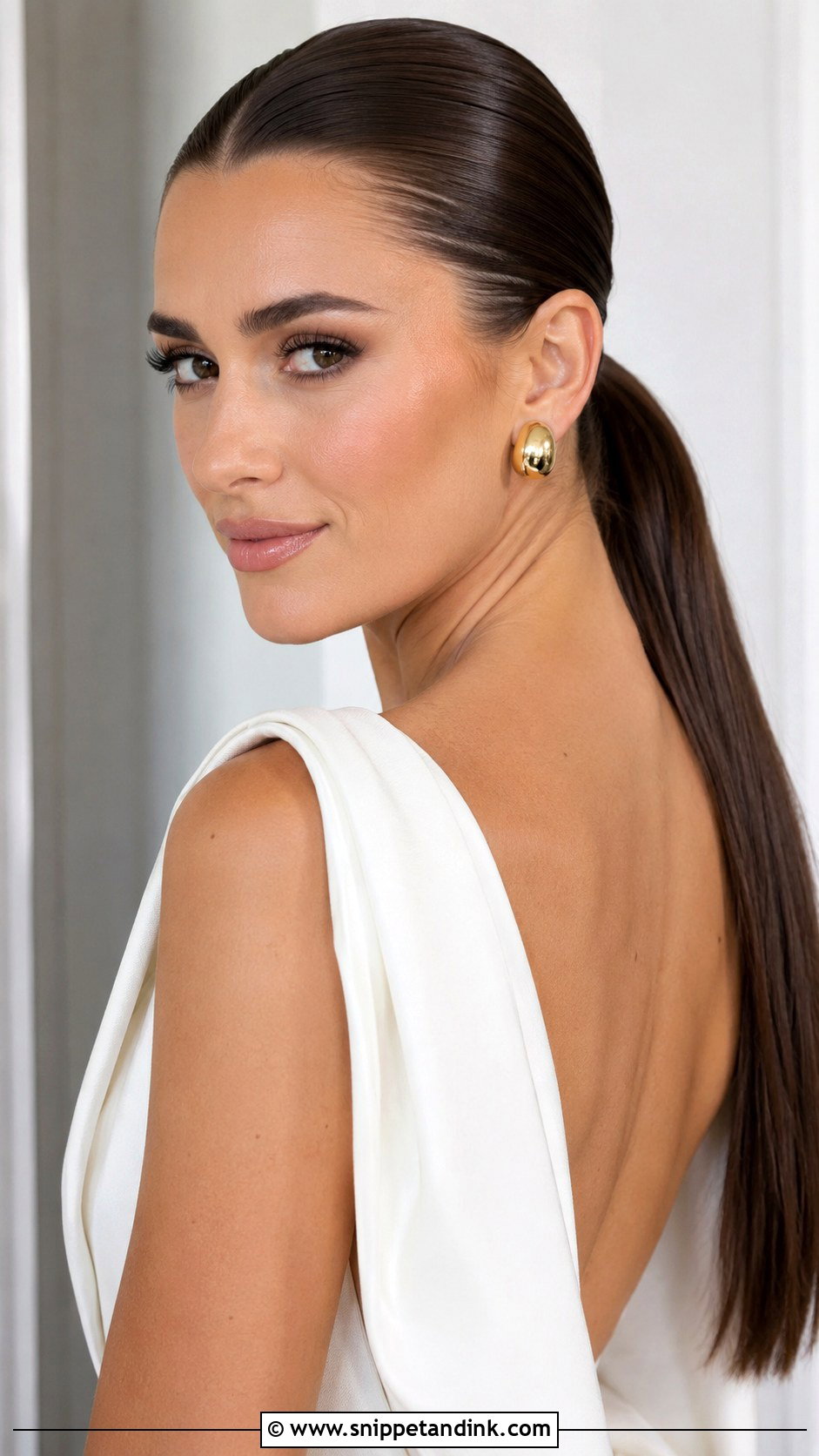
A slicked-back ponytail has no parting and no loose pieces, just a glassy wet-look finish. It suits contemporary brides and bold makeup. Strong gel and a smoothing brush create the surface; I apply the gel in sections so it doesn’t flake. The honest caveat: it’s unforgiving of fine baby hairs, which need their own gel and a toothbrush to lie flat.
23. Ponytail With Braided Crown
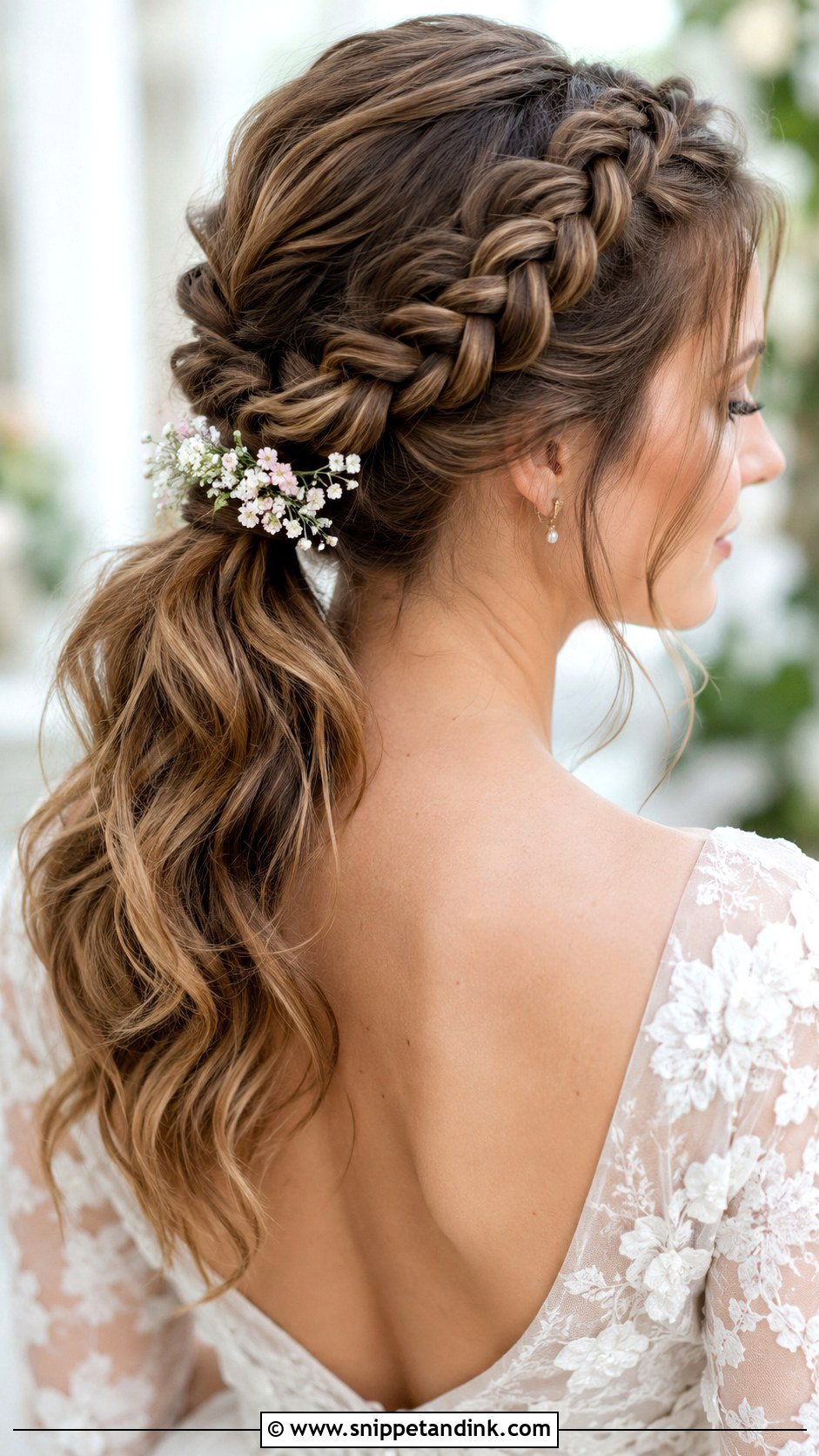
A braided crown circling the head before the hair gathers into a soft pony gives a halo effect. It keeps hair off your face and adds detail. I start the braid behind the hairline so it doesn’t pull at the temples, then gather the rest into a pony at the back. Loosen the braid and tuck in tiny flowers for bohemian and garden weddings.
24. Textured High Ponytail
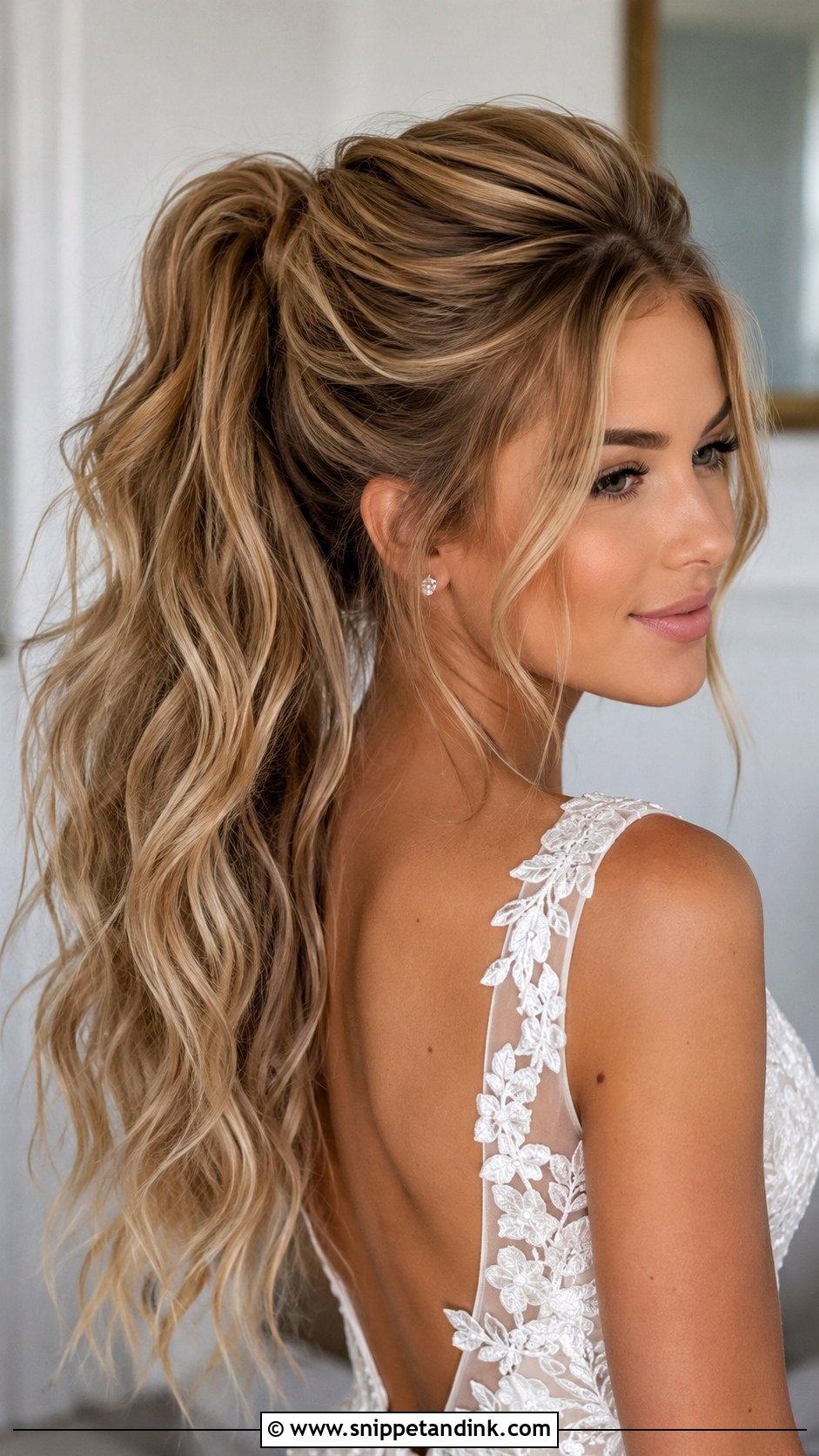
A textured high ponytail combines height with movement. Tease the length lightly for volume and let a few pieces fall. Raising the pony lengthens the neck and shows off jewellery. It suits indoor and outdoor weddings. The same weight warning applies as for any high pony, so test it for comfort at your trial.
25. Sleek Ponytail With Statement Earrings
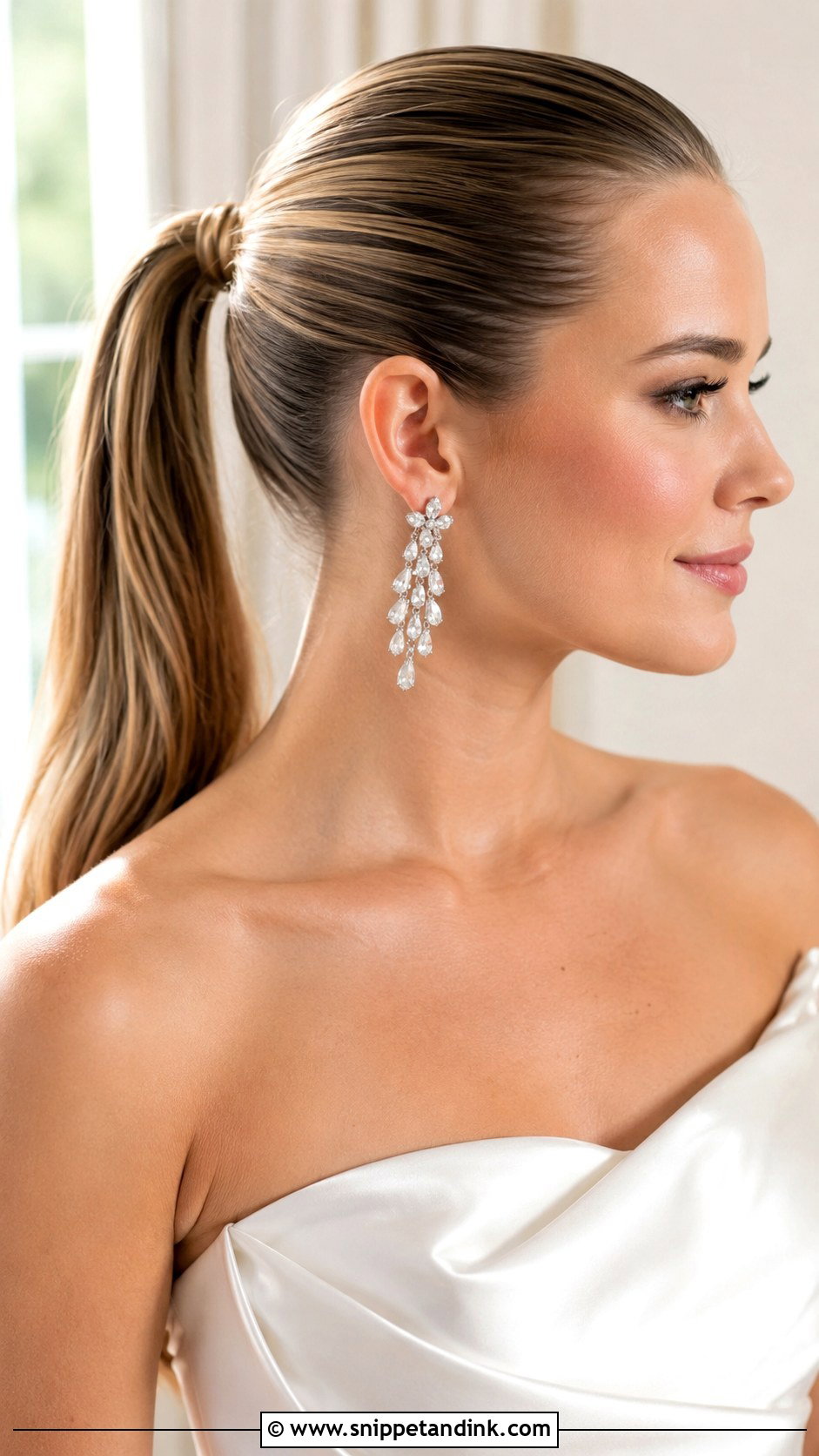
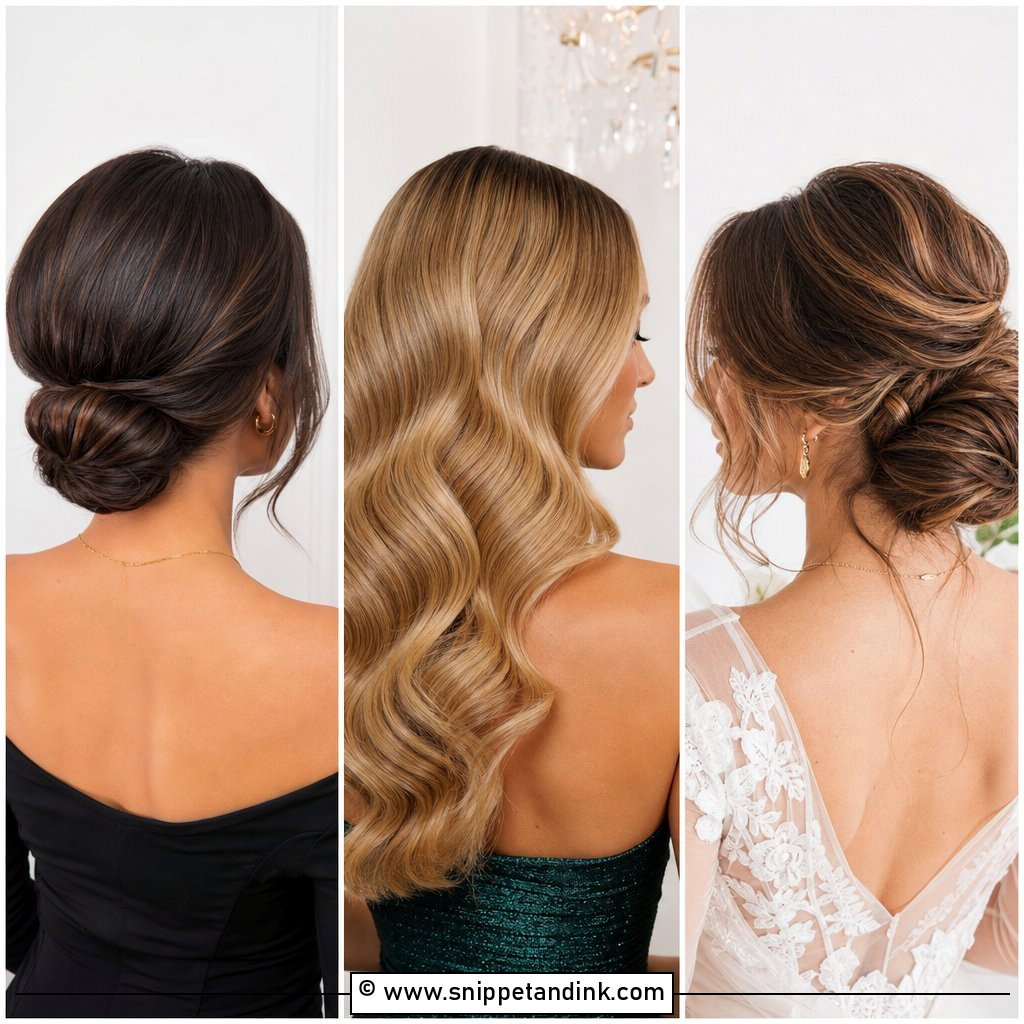
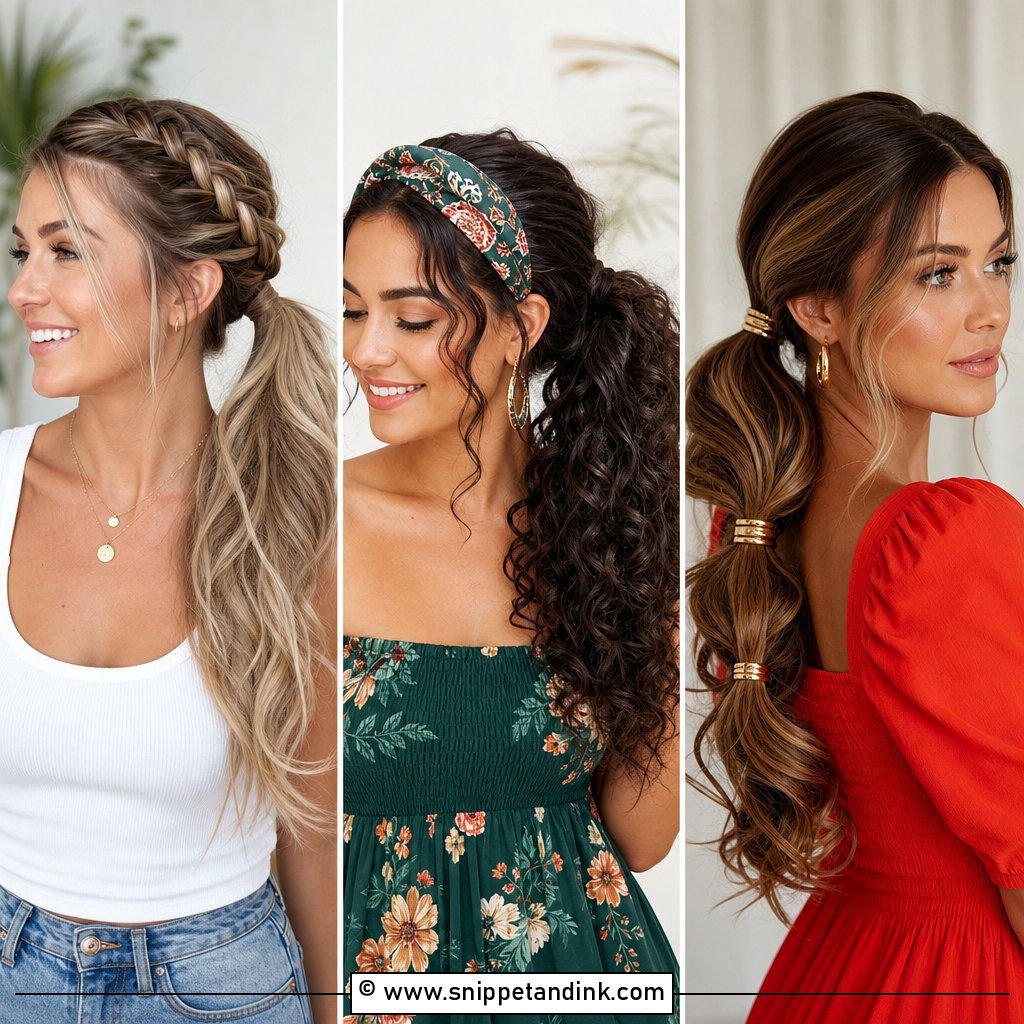
A sleek ponytail is the plainest frame for chandelier or crystal earrings. With nothing around the ears, the jewellery becomes the focal point. I smooth the hair back completely, checking the hairline above the ears where flyaways tend to show. It suits modern and glamorous weddings.
Faking Length and Thickness With Clip-Ins and Wraps
Many of the fullest bridal ponytails in photos involve extensions. A ponytail wrap or a few clip-in wefts can double the length and thickness of a pony in minutes. They’re especially useful for fine hair, where a natural pony can look thin from behind.
Colour matching is the part I spend most time on. Bring the extensions to the trial so we can check them in daylight. If your hair has highlights or grown-out roots, choose a blend that matches the lengths, not the root. Human hair extensions take heat and curl like your own; synthetic ones can melt or frizz under a hot iron.
Tight Curls and Coils
Curly and coily hair often makes the best ponytail volume without extensions, but the hairline needs care. Pulling too tightly at the edges every day can stress the hair there, so for the wedding I’d gather it firmly but not painfully, and lay the edges gently with a light gel. If you plan a sleek pony on naturally curly hair, test it at the trial; it may need a silk press or a careful blow-dry first, and humidity will reverse that faster than you’d like.
A Ponytail Lives or Dies by Its Base
A ponytail can be as bridal as any updo, as long as the base is solid and the placement suits your gown, veil and comfort. Think about your neckline, whether you’ll wear a veil, and how many hours you’ll be on your feet. Then test it at the trial, ideally wearing it for a few hours afterward, so you know how it feels by evening.
You'll Like These Ideas:


Leave a Reply