
Bangs change a wedding style more than almost any other detail, because they sit exactly where everyone looks. When I plan a bridal look around a fringe, I start with the fringe itself, since a soft curtain shape and bold blunt bangs ask for completely different handling on the morning. Curtain pieces need lift and direction from a round brush. A blunt line needs to lie flat and stay clean. Below are 20 looks I’d happily recreate, with notes on what each one needs from your hair, how it sits with a veil and where it tends to give up.
When to Cut Bangs Before the Wedding
The date of your last fringe trim matters almost as much as the style. Freshly cut bangs sit higher and stiffer than they will a week later, and the cut edge looks harsh in close-up photos. Here is the calendar I give brides.
If you already wear bangs
- Keep your usual trim schedule through the engagement so the shape stays consistent.
- Book the final trim five to ten days before the wedding, never the day before.
- Ask for the same length you had at your trial, since your updo or waves were planned around it.
- If you trim at home between appointments, stop doing it in the last month.
If you have never had them
Cut them at least two to three months ahead. That gives you time to learn how they behave, to have a trial with them, and, if you hate them, to let them grow toward a curtain shape that can be swept aside. Closer than that, I’d rather you try a clip-in fringe at your trial. A good one blends into your own hairline, and you get the look without living with the decision.
1. Low Bun With Curtain Bangs
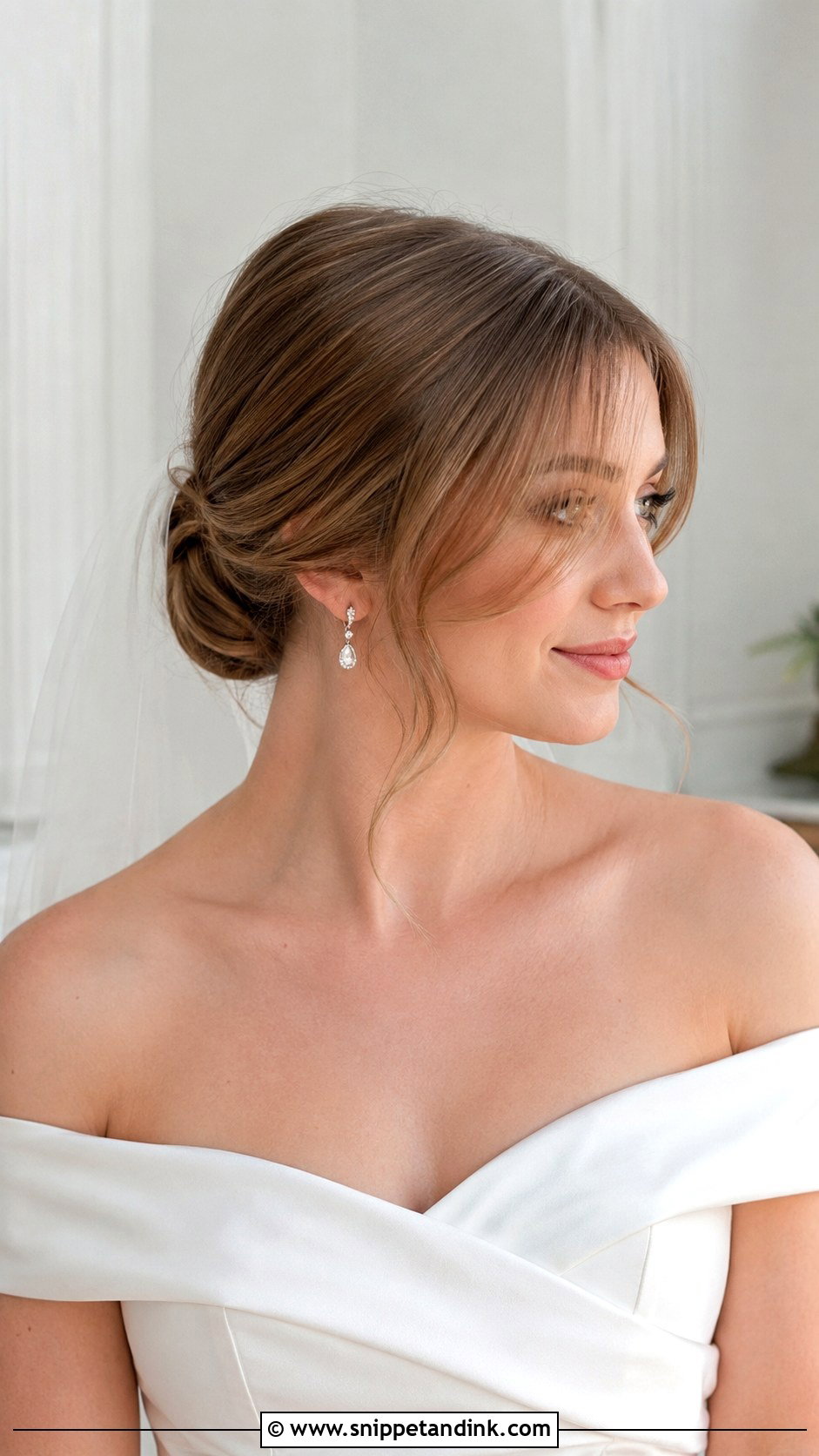
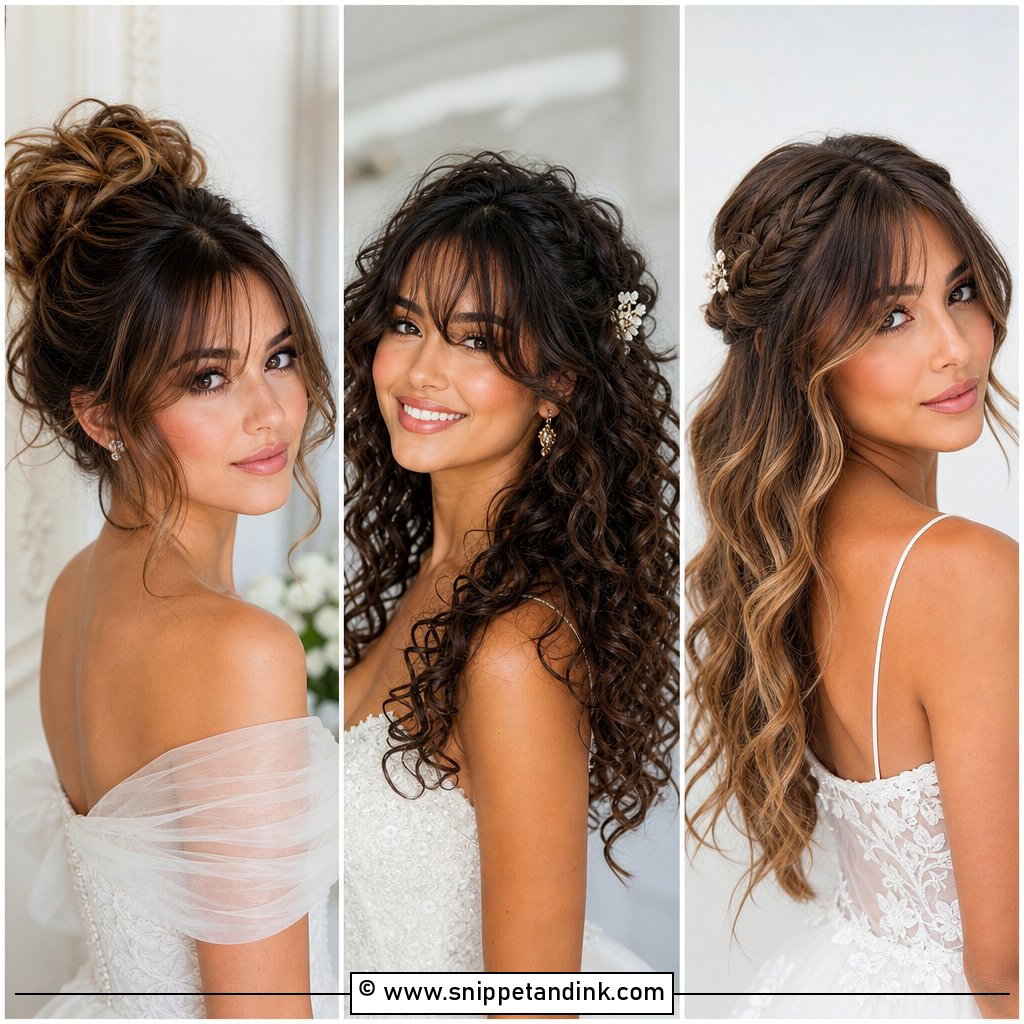
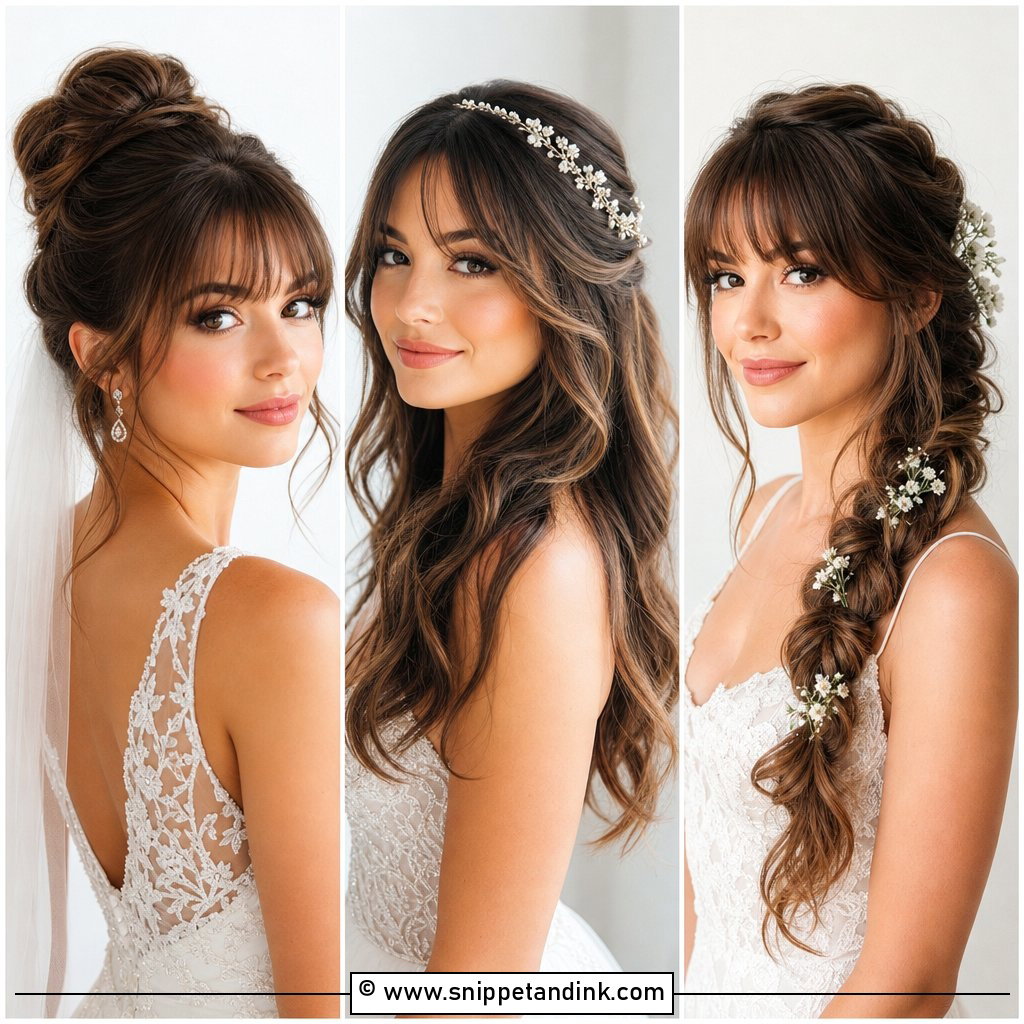
A low bun is the most forgiving partner for a fringe, and pairing it with soft curtain bangs framing your face keeps the interest at the front. I set the curtain pieces first, while the rest of the hair is still down, blowing them out over a medium round brush and letting them cool in a velcro roller. The bun then sits at the nape, where a veil comb slides in just above it. If your curtain bangs are mid grow-out and hitting the jaw, I tuck the ends behind the ear rather than forcing them to swing.
2. Half-Up Half-Down With Wispy Bangs
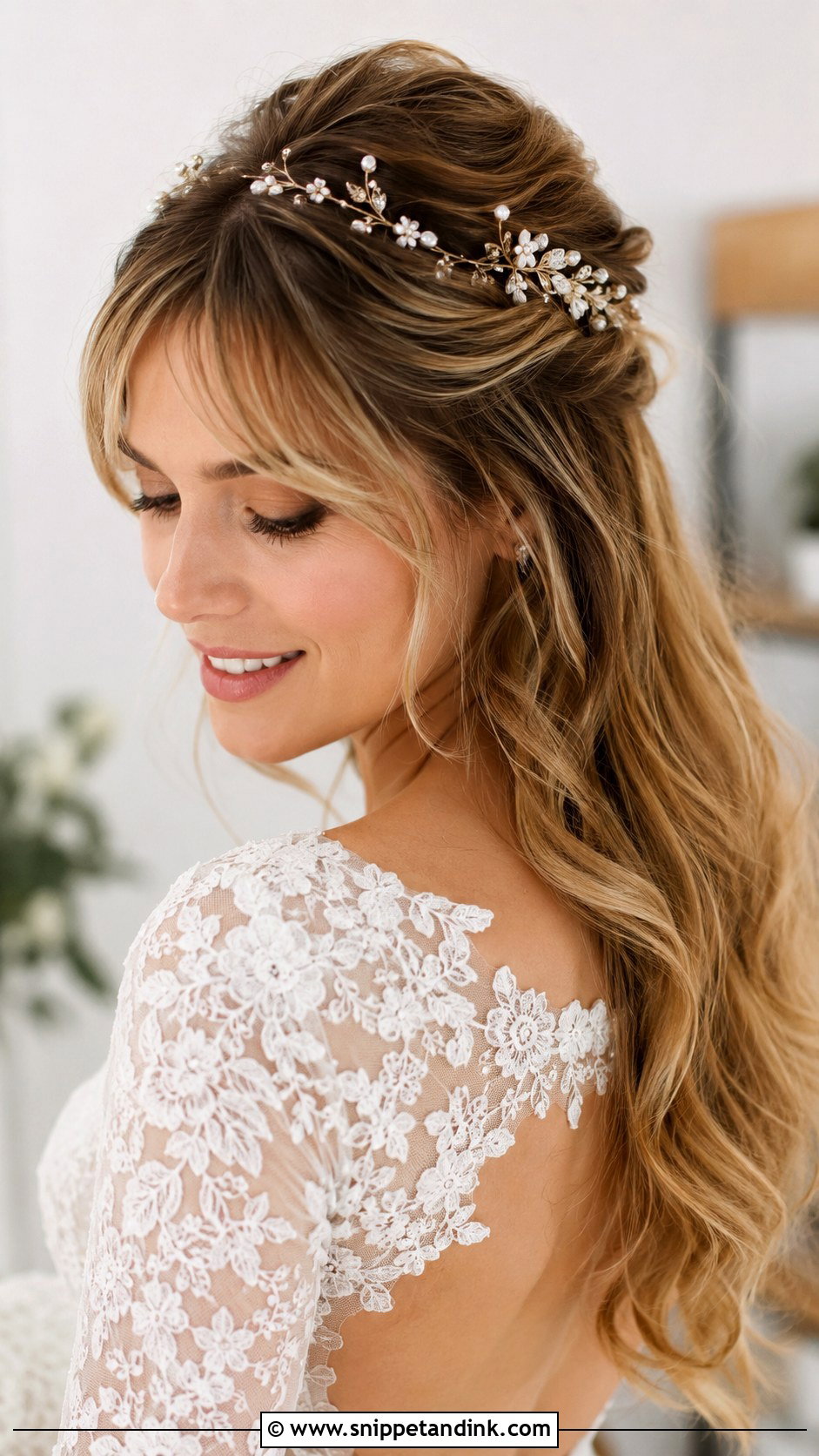
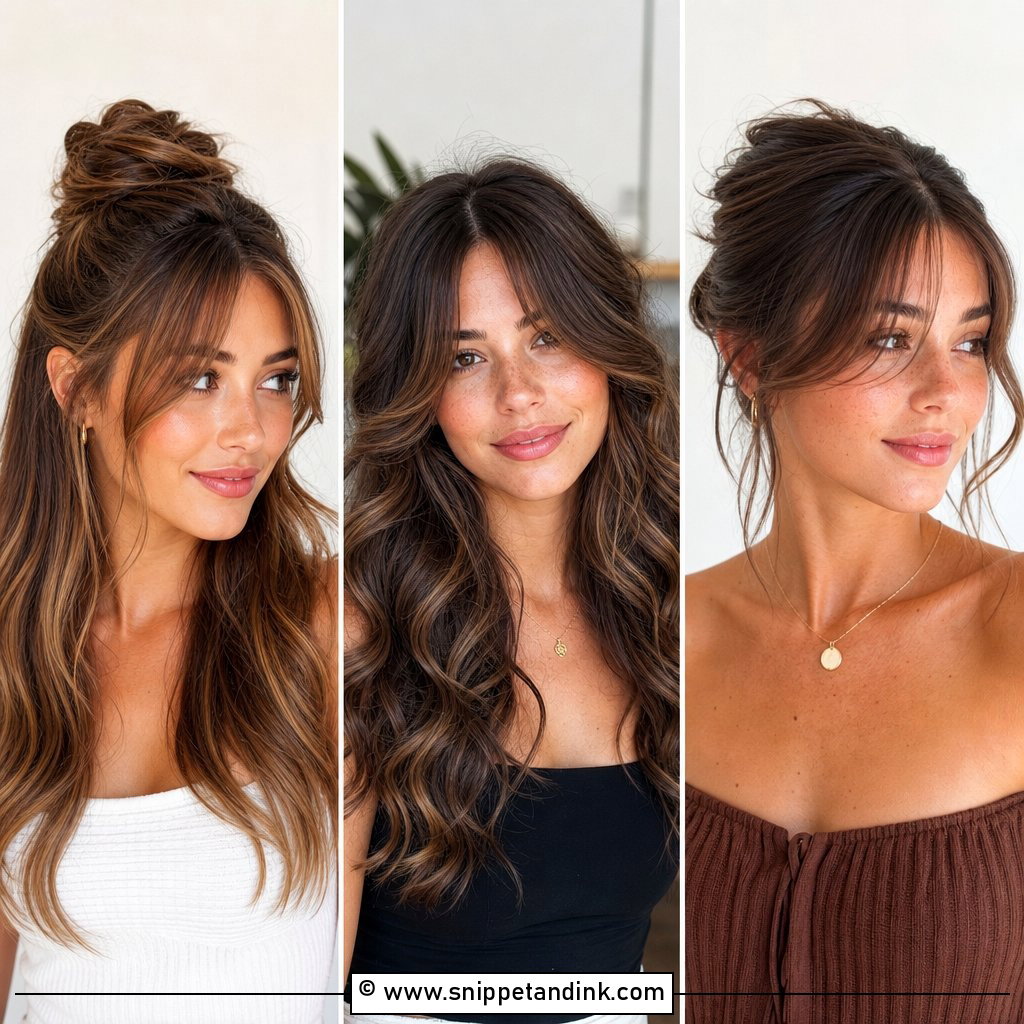
Half-up is where wispy bangs earn their place, because the pinned top section would otherwise look a little bare from the front. Wispy fringes are thin by design, so they separate quickly once your forehead warms up. I keep product on them to almost nothing: a pea of light mousse at the root and a dusting of dry shampoo. The top section is held with two crossed bobby pins hidden under a small twist, which won’t slide the way a single pin does.
3. Glam Waves With Long Side-Swept Bangs
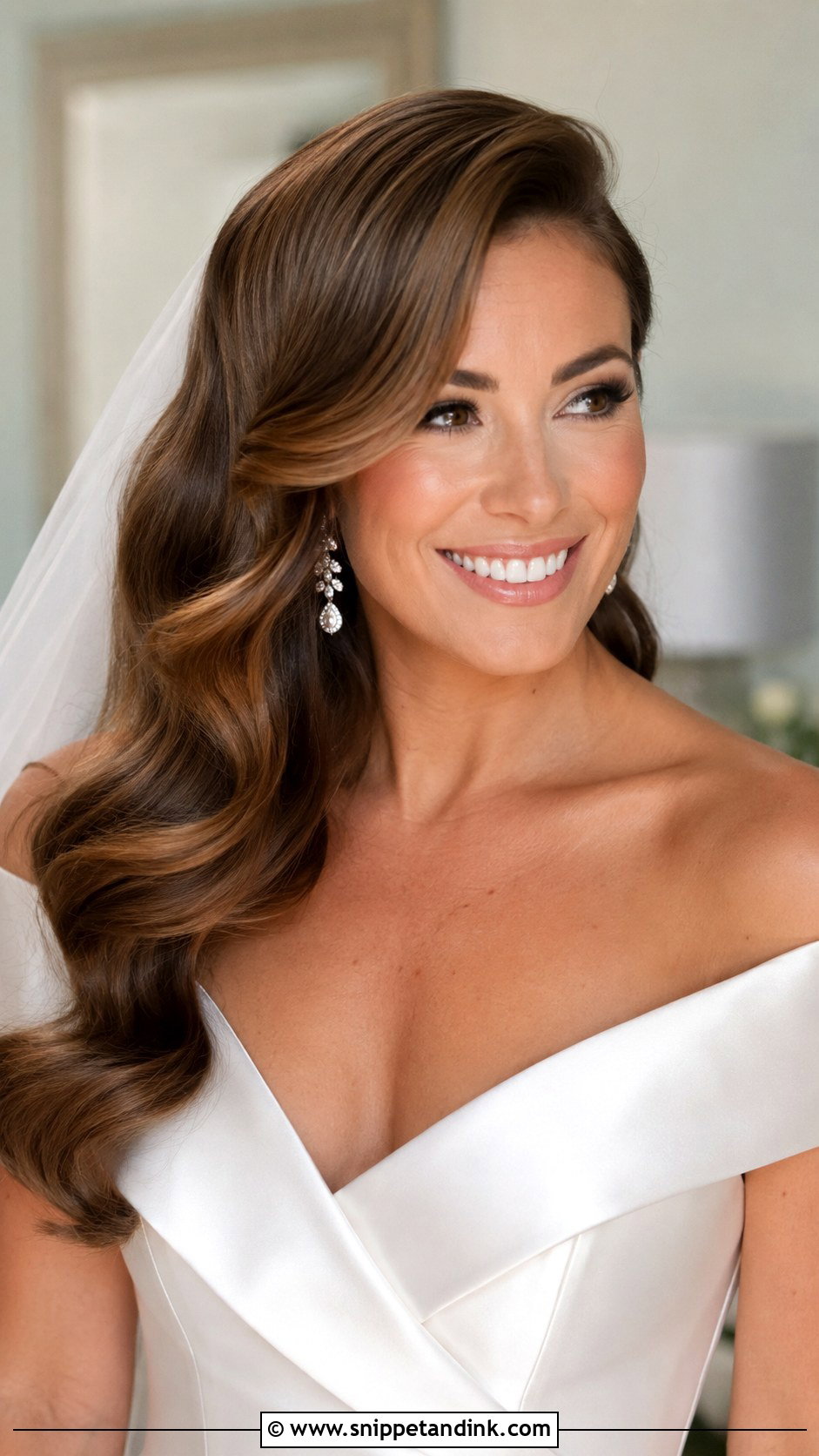
Side-swept bangs long enough to meet the cheekbone can melt straight into a Hollywood wave. The fringe has to be curled in the same direction as the first wave, away from the face, or you’ll see a break where the two meet. I brush the set out with a boar bristle brush and clip each S-bend while it cools. This needs real length below the shoulders and suits smooth, heavier hair. On very fine hair the waves drop within a few hours unless they’re set on rollers first.
4. Romantic Updo With Blunt Bangs
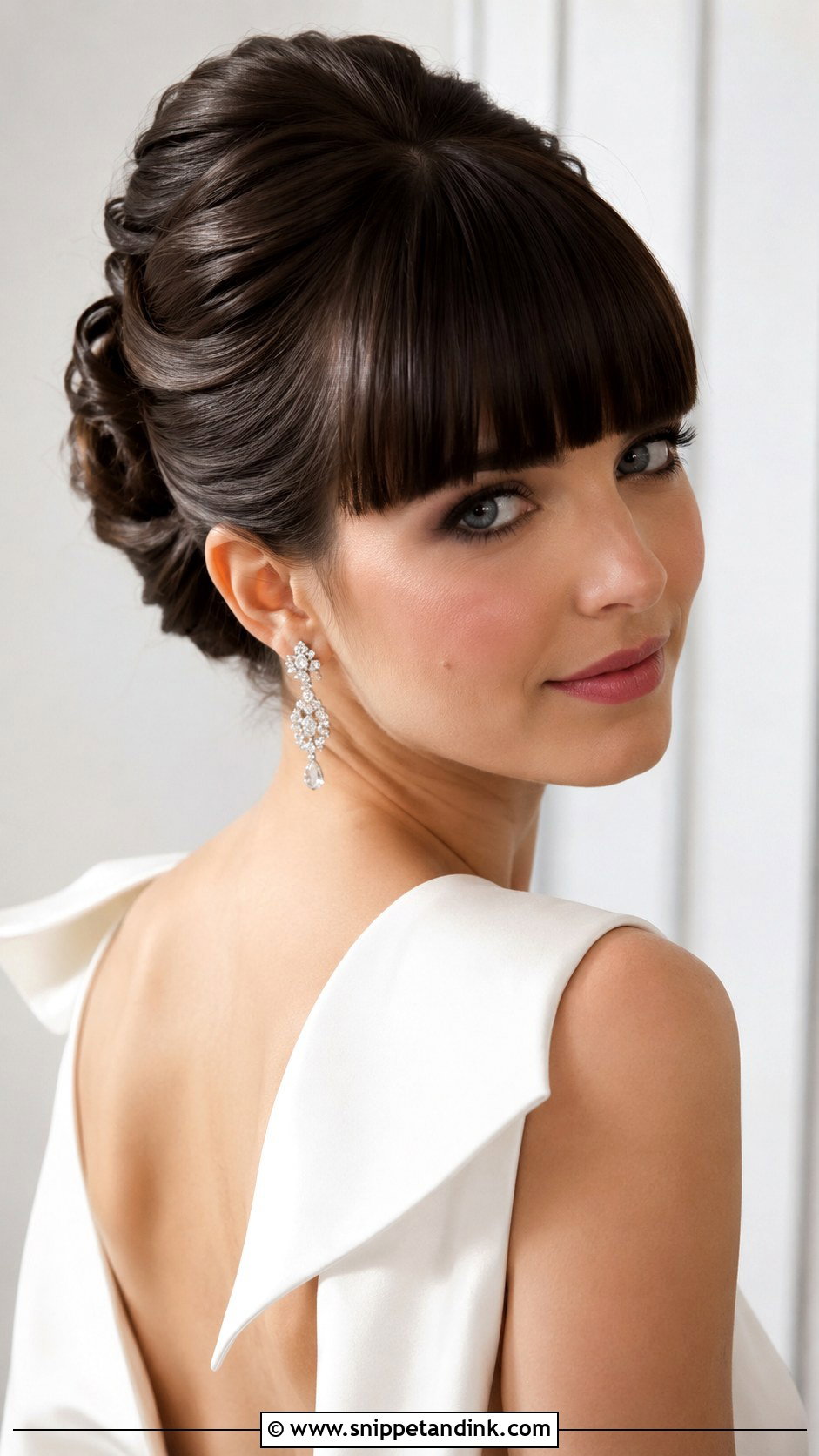
A blunt fringe with a loose updo is a contrast look, and the contrast only works if the fringe is truly sharp. I’d book the fringe trim about a week out, never the day before, so the line softens from freshly cut to settled. At the back I twist and pin loose sections rather than smoothing them. Straight or lightly wavy hair holds that clean line best. A strong cowlick at the front hairline will fight a blunt cut all day, and I’d go for a side sweep instead.
5. Loose Low Ponytail With Curtain Bangs
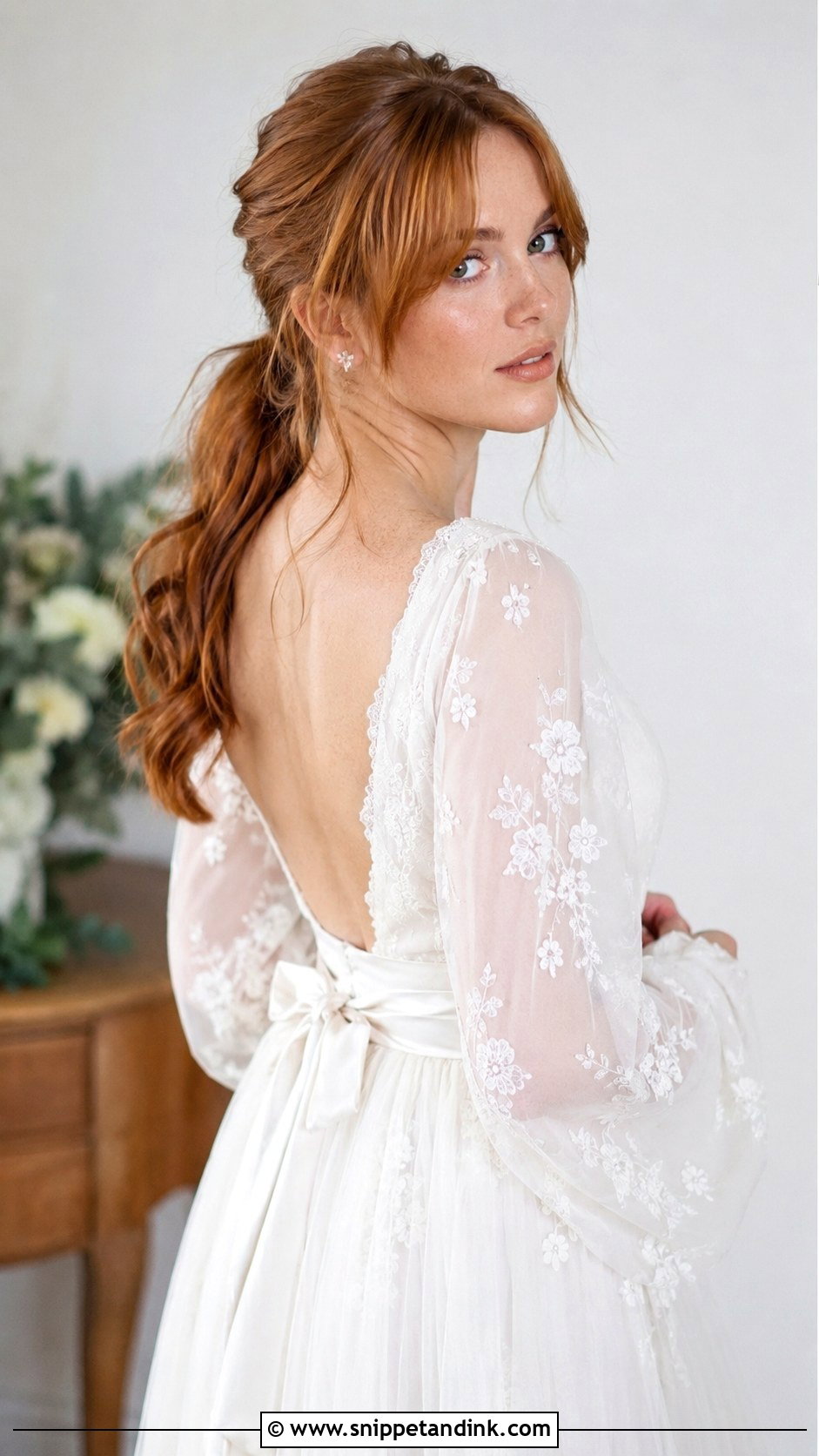
A low ponytail looks casual, but it’s held up by more structure than you’d guess. I tie it with a small elastic, wrap a section of hair over the base and push a pin upward through the wrap into the elastic, then pull pieces loose only once everything is anchored. Curtain bangs here should look a little undone too, so I finish them with fingers instead of a brush. On thick hair, two elastics stacked close together stop the ponytail sagging by evening, and a ribbon tied over the top hides both.
6. Sleek Bun With Blunt Bangs
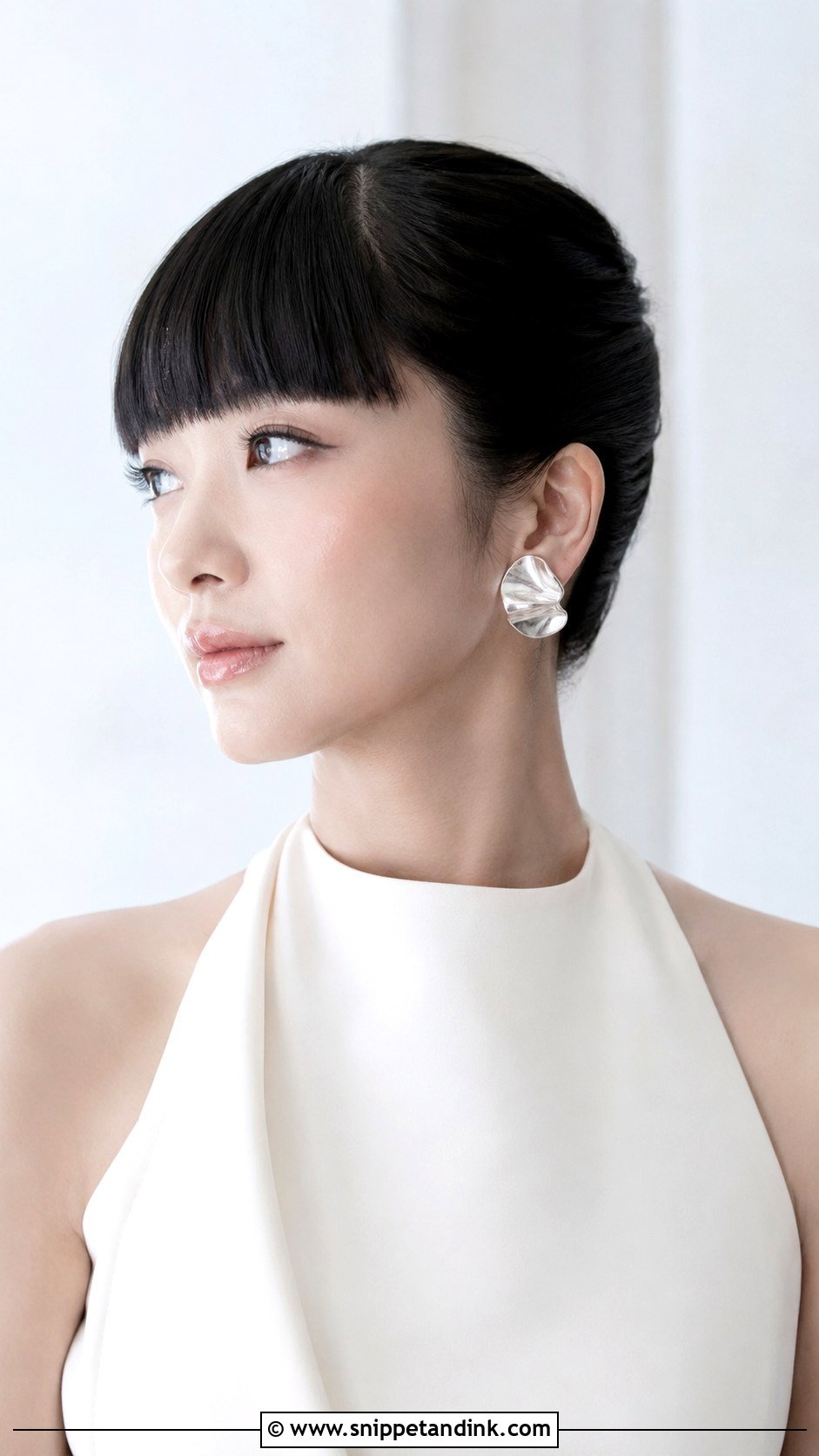
This is the most exposing style on the list. Every strand shows, so frizz at the hairline or a gap in the fringe is obvious in close-ups. I smooth the back with a firm gel and a dense brush, place the bun high enough that it doesn’t crowd a veil comb, and leave the fringe dry and almost product-free so it doesn’t clump into sections. Clean necklines and bold earrings suit it. I’d steer you away from it if your fringe was cut recently and the edges are still springing up.
7. Boho Braided Updo With Curtain Bangs
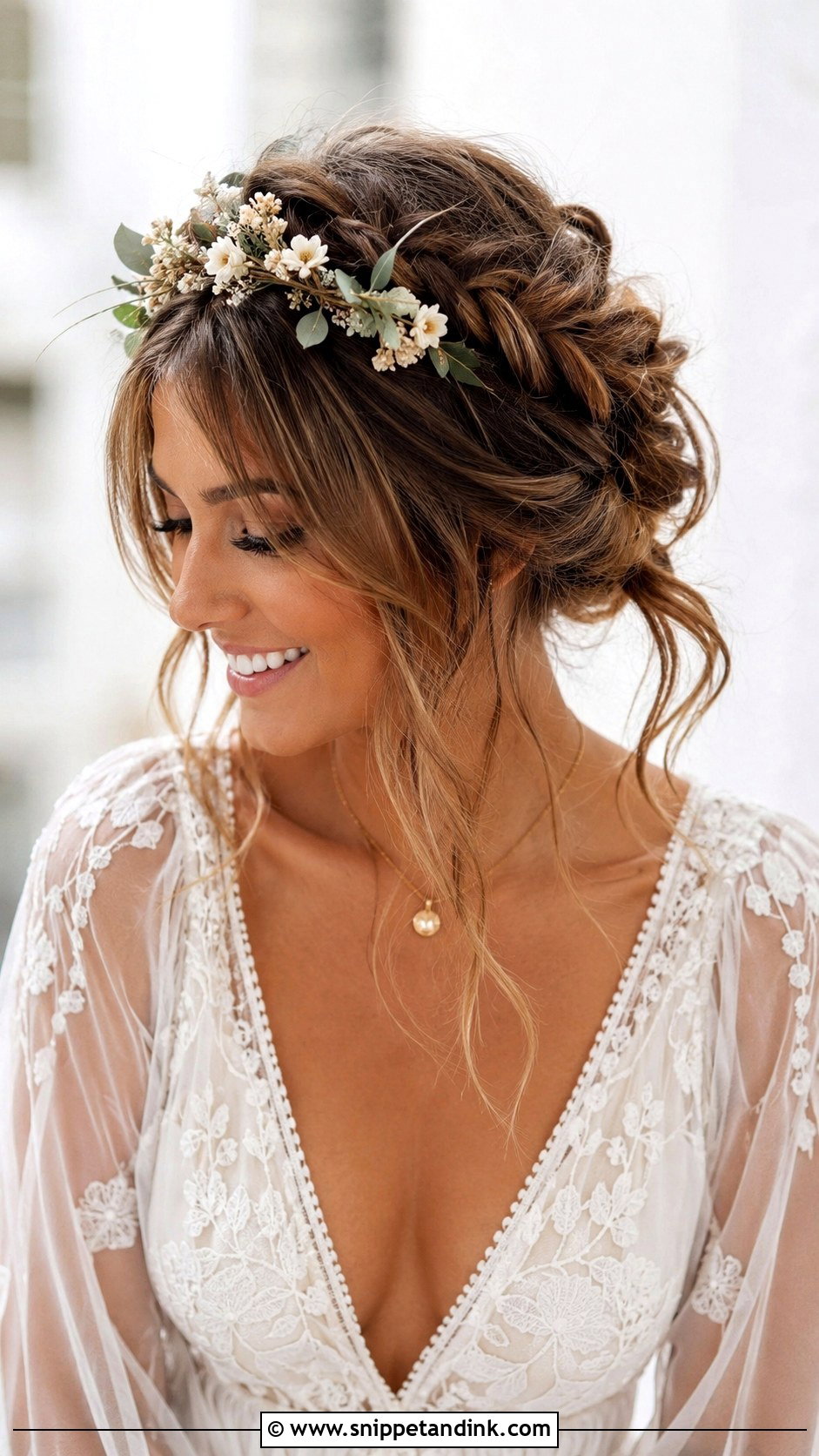
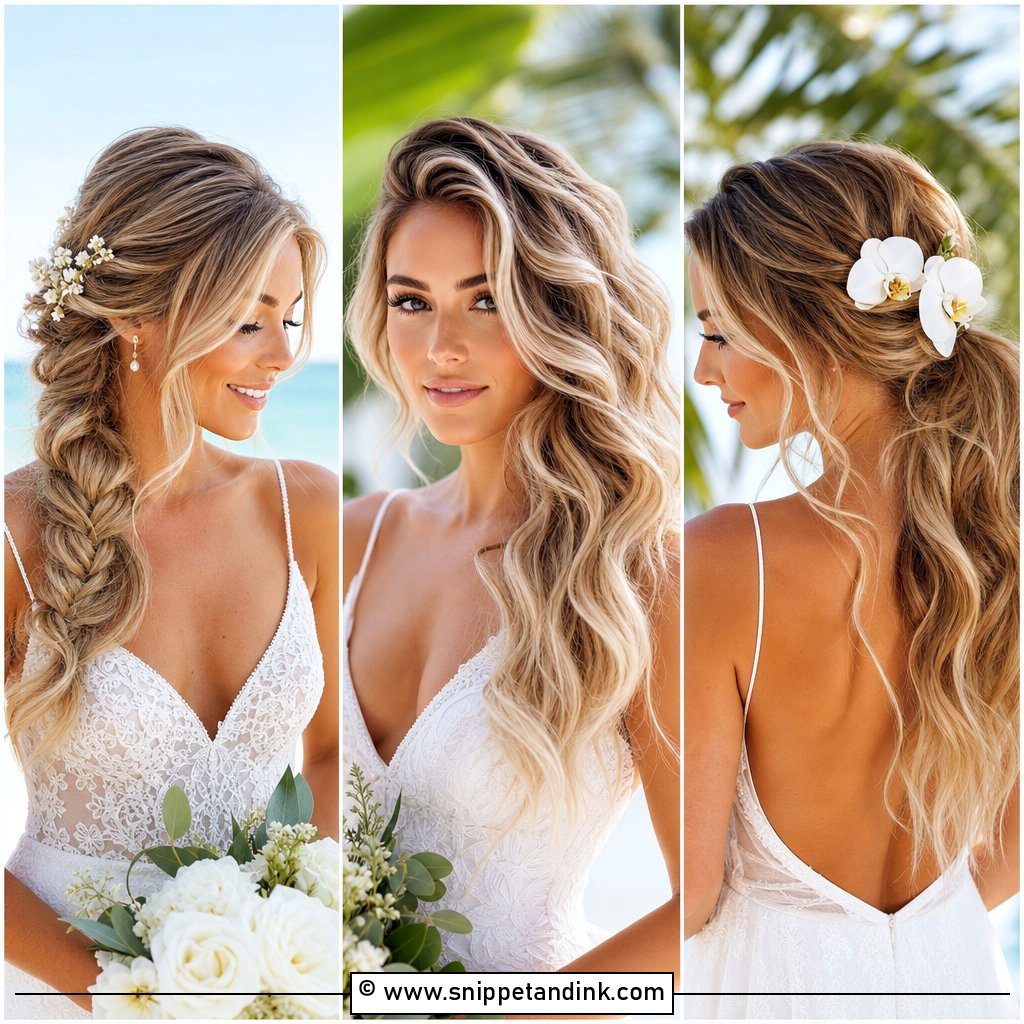
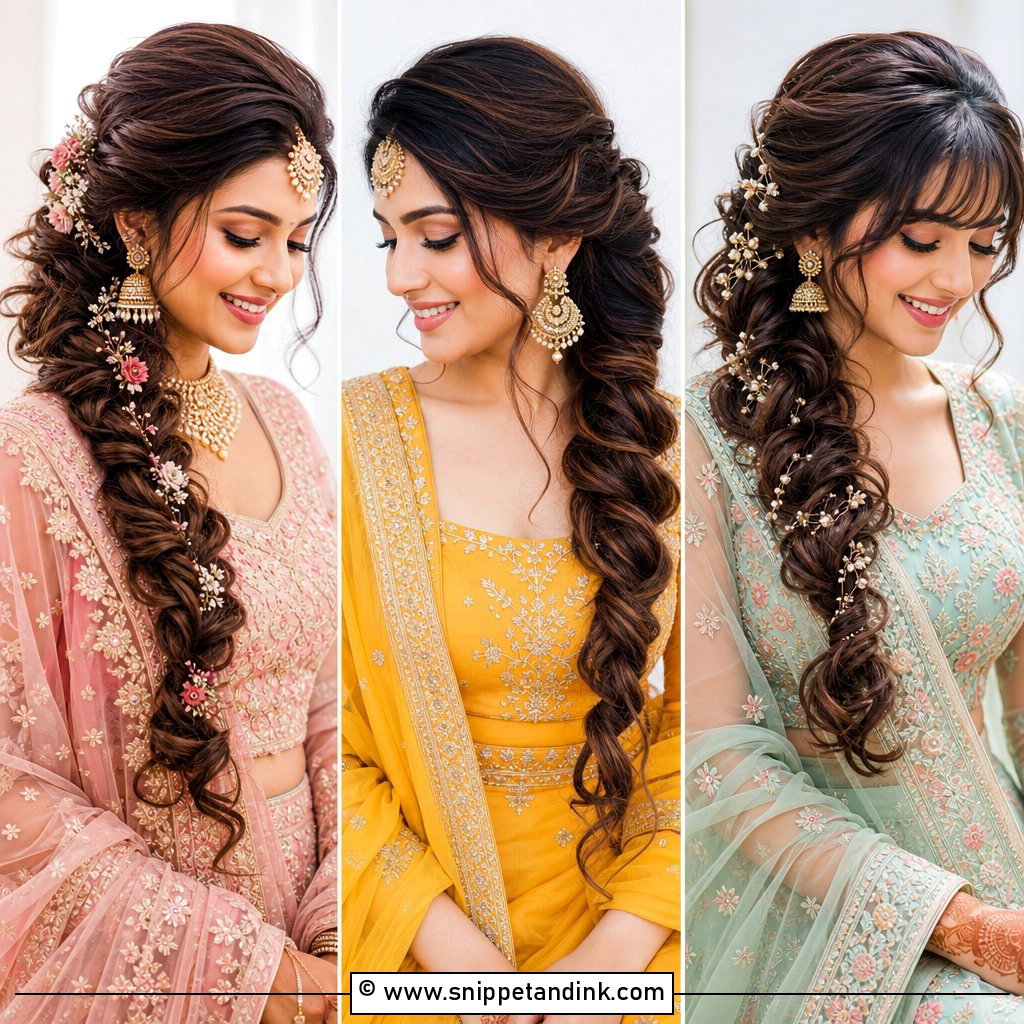
Braided updos give curtain bangs somewhere to blend, which helps if your fringe is growing out and the side pieces no longer sit evenly. I braid loosely, then pull at the outer loops to widen each braid before pinning it into the updo. On a hot beach, dried flowers hold up better than fresh ones pressed against a warm scalp. The whole look relies on grip, so freshly washed silky hair needs a texture spray first or the braids slowly slide out.
8. Soft Curls With Wispy Bangs
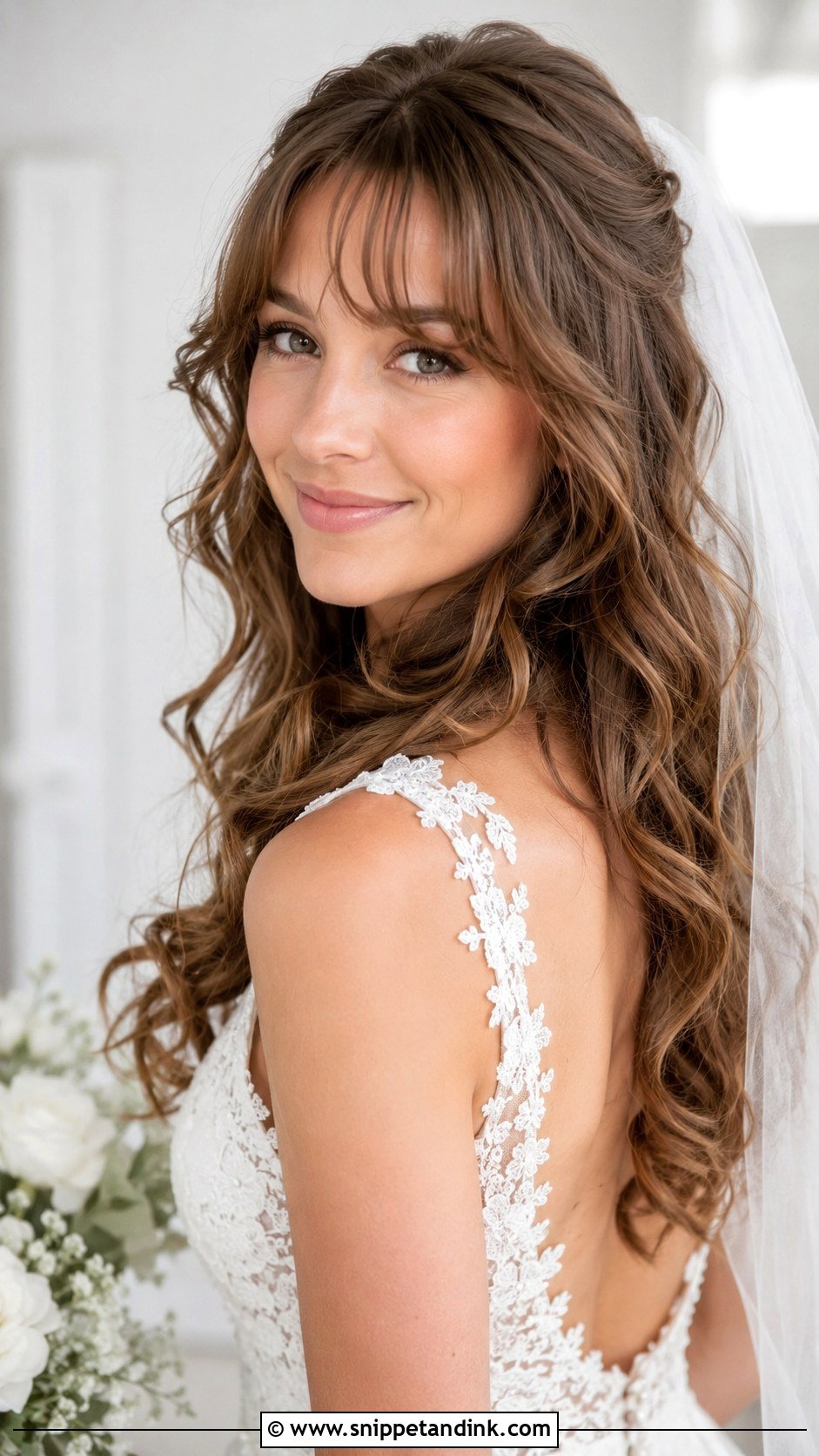
Soft curls with a wispy fringe is a style brides often bring in as a photo, and the photo usually shows a fringe with almost no weight. If yours is dense, I separate it into tiny twisted pieces rather than cutting anything on the wedding morning. Curls on medium to long hair need to be pinned up in their barrel shape to cool, or they relax into loose waves before the ceremony. A hairpiece placed just behind the ear keeps the frame clear of the fringe.
9. Vintage Updo With Side Bangs
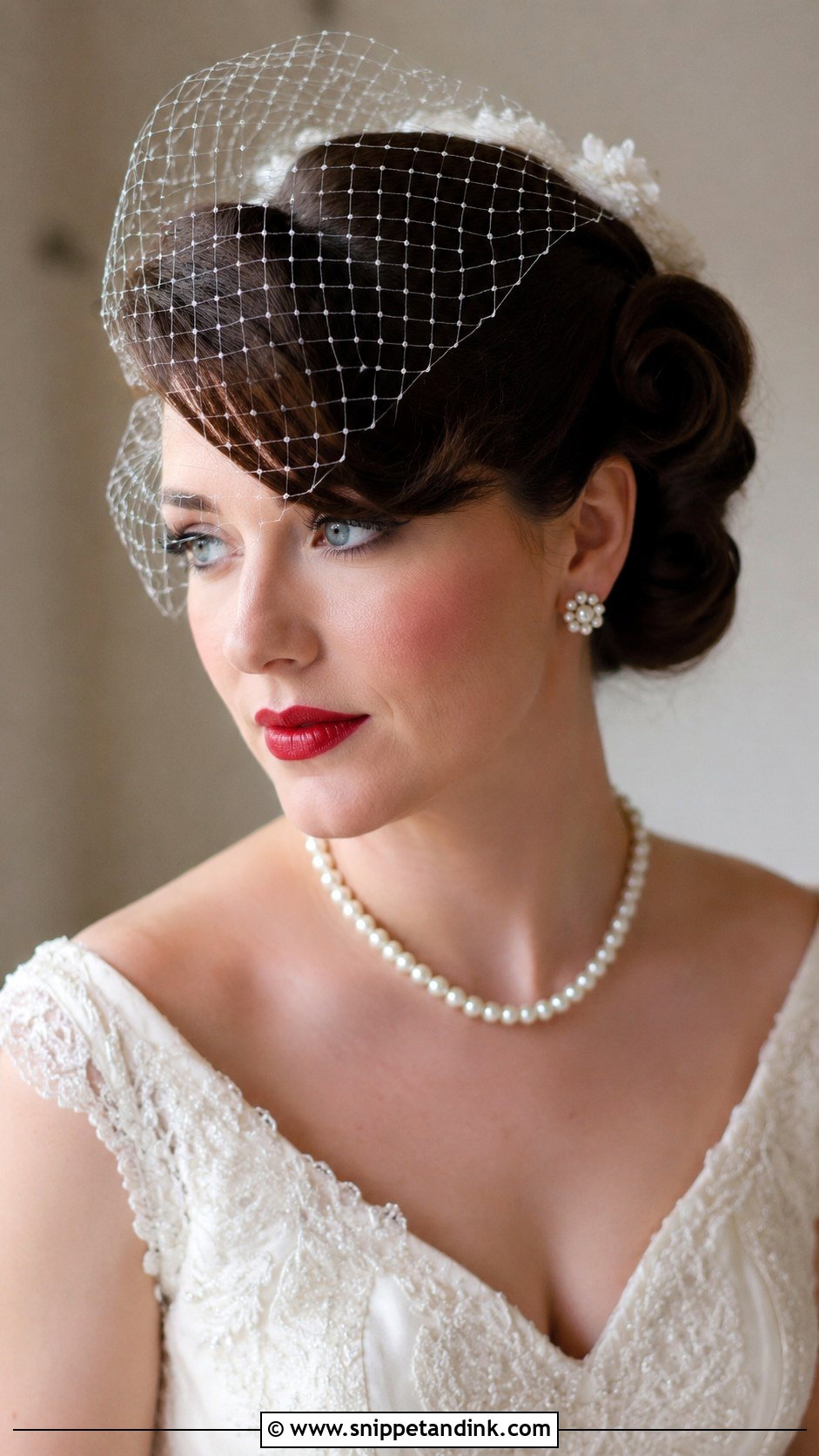
Vintage updos are built from a set: hot rollers or pin curls first, then brushing and shaping into rolls. The side bangs are styled into a soft wave that curves across the forehead and tucks behind one ear, the shape you know from 1940s portraits. It takes patience and plenty of pins, so allow extra chair time. A birdcage veil or pearl pins suit it best. A long cathedral veil can feel slightly at odds with such a structured shape.
10. Beachy Waves With Curtain Bangs
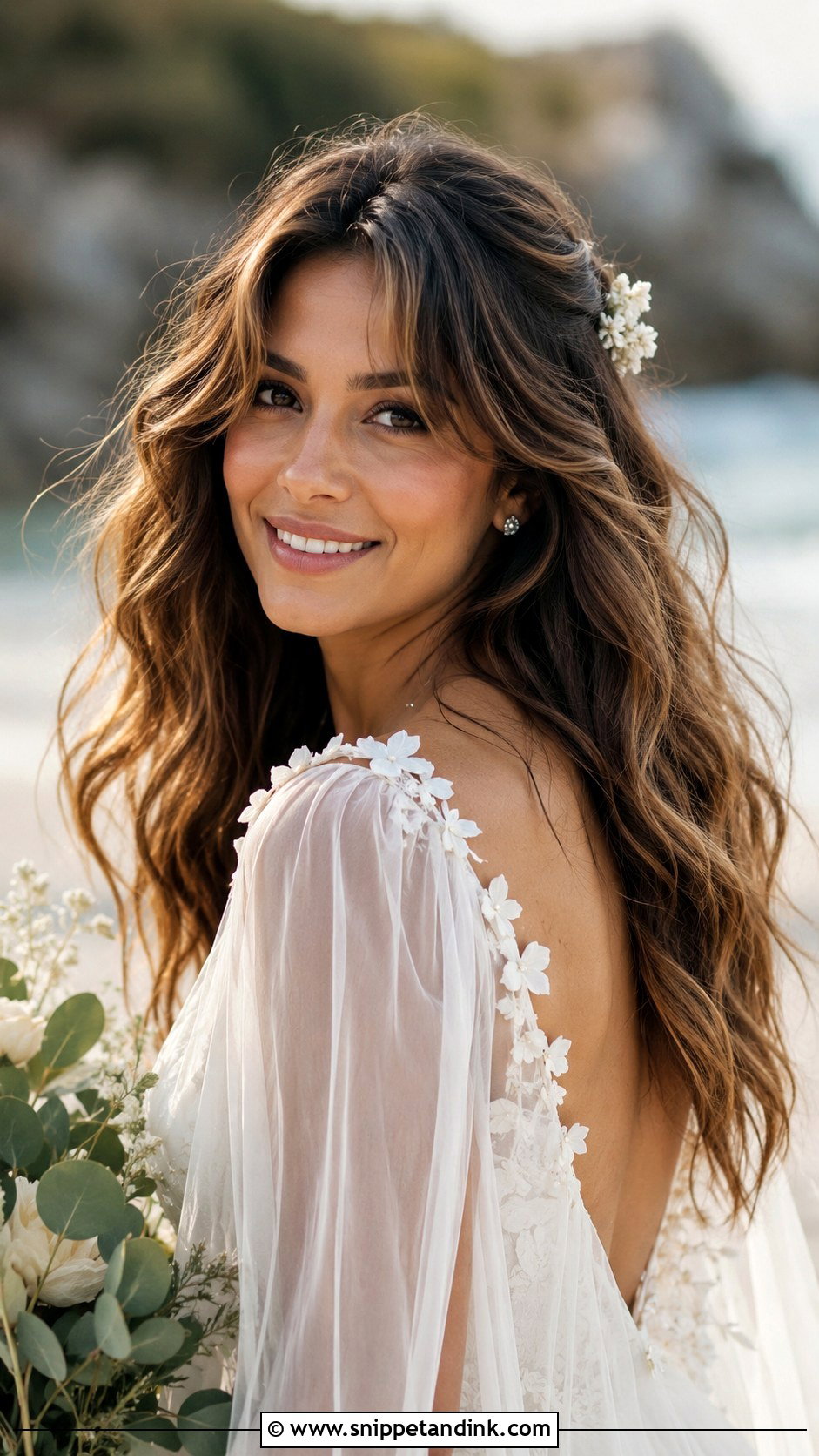
Beach waves are mostly about what you don’t do: no tight curls, no heavy shine. I create tousled, textured waves with a twisted flat iron and leave the last inch of each section straight so it reads lived-in. Curtain bangs get a quick round brush blow-out and nothing more. Sea air flattens volume within an hour or two, which suits this look, but wind is another matter. On a clifftop I’d skip a long veil entirely.
11. Braided Crown With Wispy Bangs
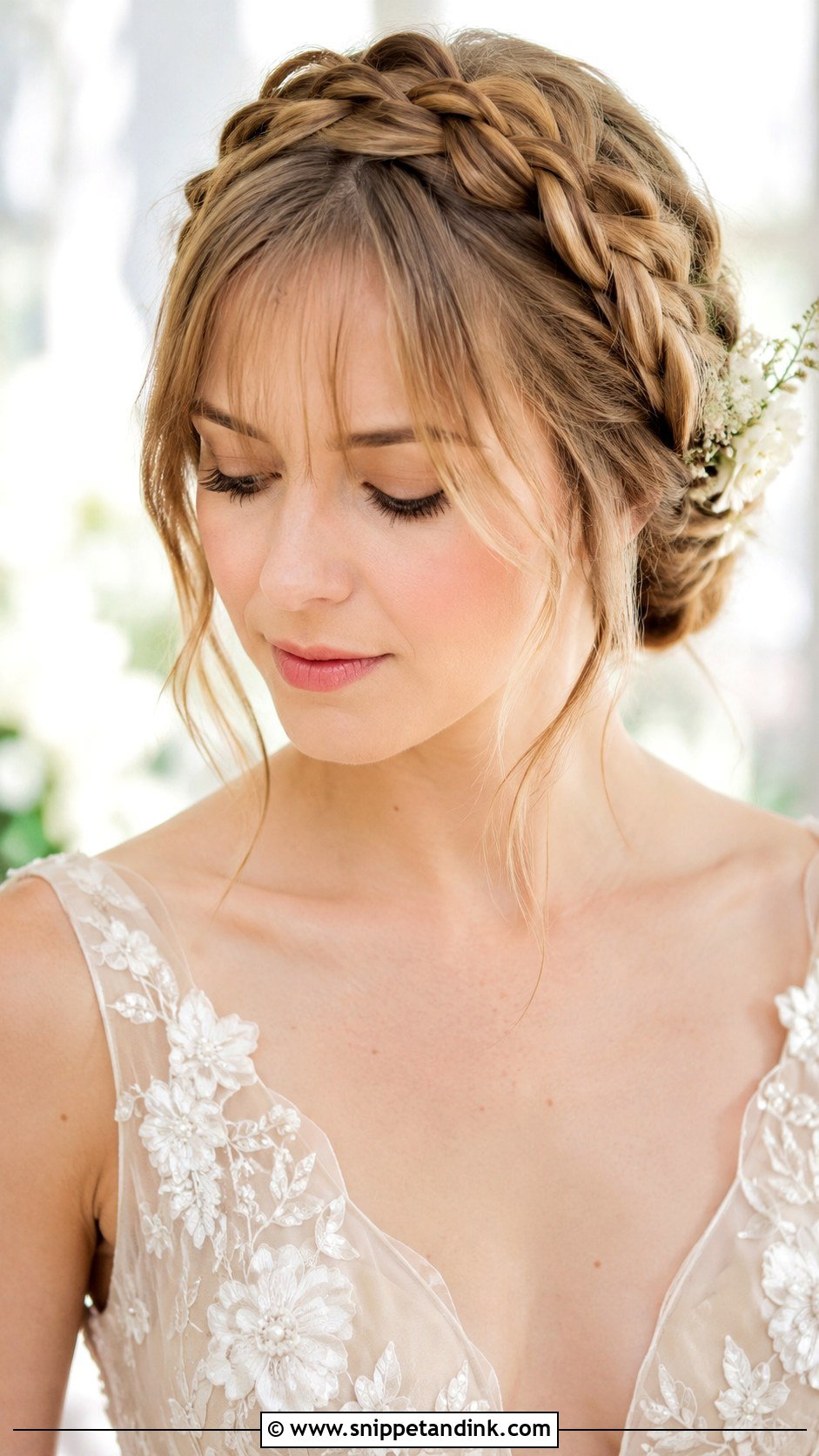
A braided crown keeps every bit of hair off your face, so the only softness left at the front comes from the wispy fringe. I start the braid behind one ear and work around the head at a slight angle so it sits like a halo rather than a headband. It needs hair at least past the shoulders; shorter hair can still get the look with a clip-in braid laid over your own. Flowers slot neatly into the outer loops, which is where I pin them rather than across the top.
12. Sleek Straight Hair With Blunt Bangs
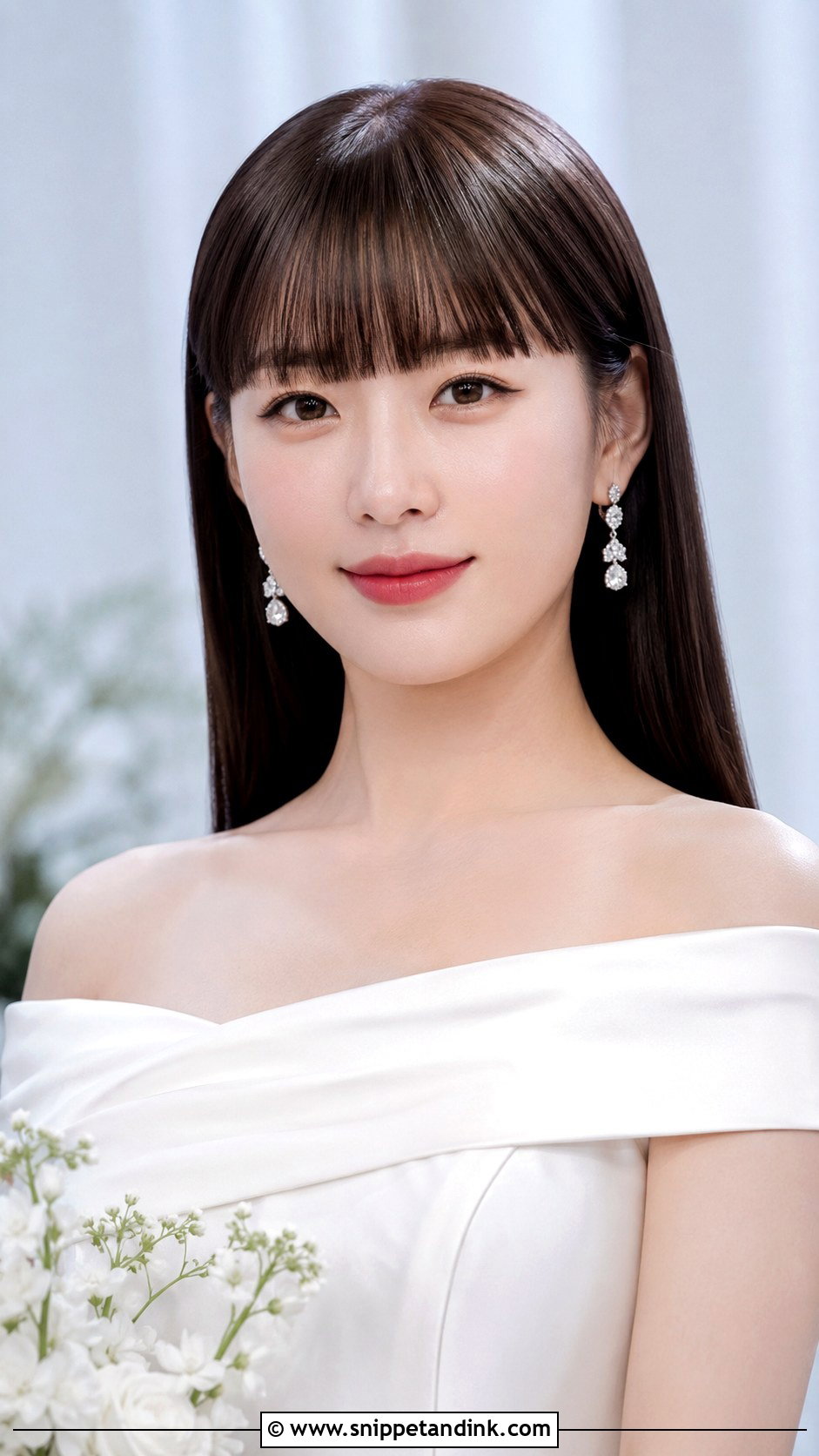
Sleek straight hair with a blunt fringe has nothing to hide behind, so the prep matters more than the styling. I give it a smoothing blow-dry, a single light pass with the flat iron and a shine spray held well back so the roots don’t go greasy. Naturally straight hair suits it best. Curly or wavy hair can reach this finish, but humidity will undo it fast. Keep blotting papers handy, because forehead oil shows on a straight fringe sooner than on any other style here.
13. Textured Updo With Curtain Bangs
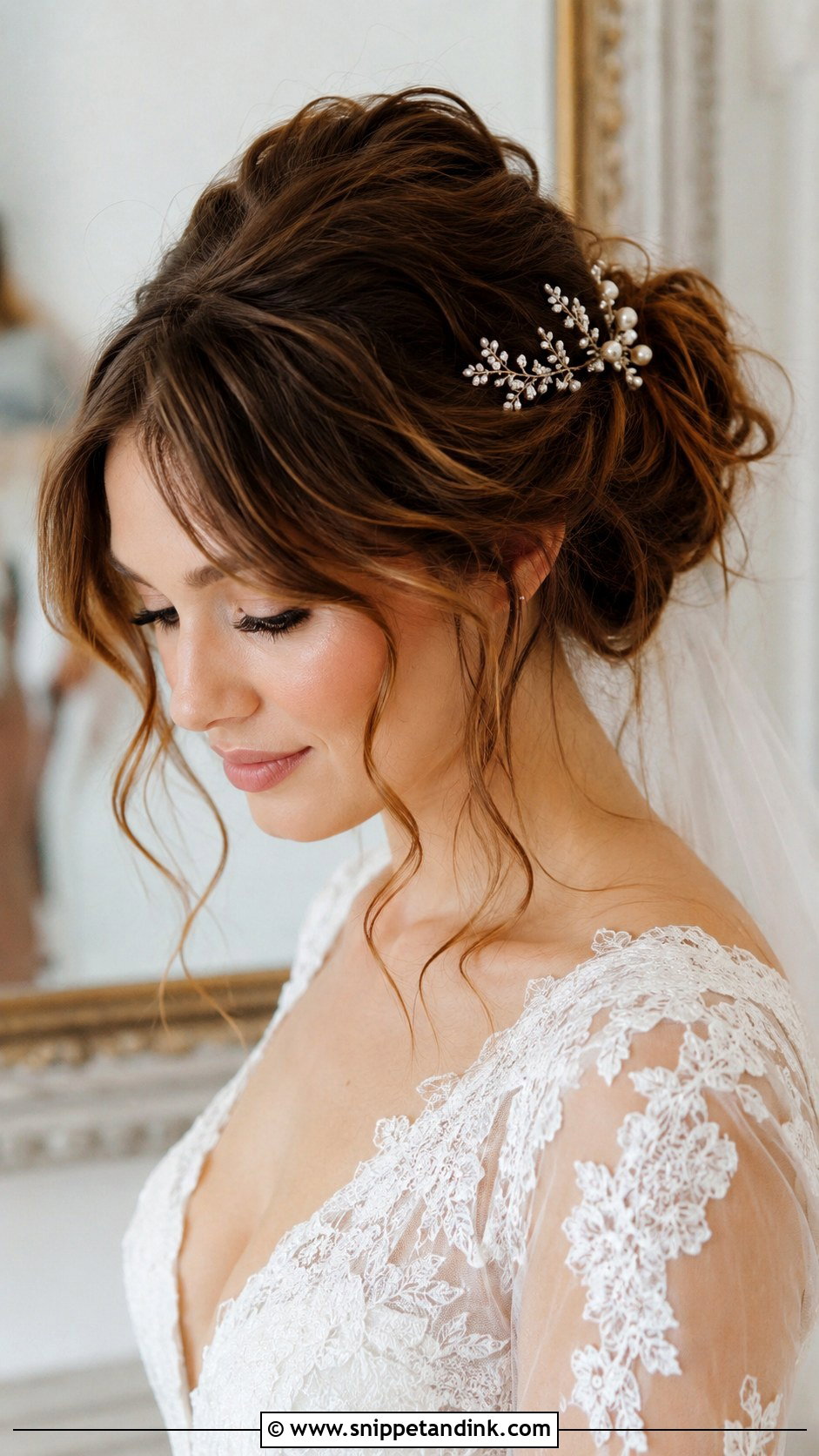
Piecey updos are easier to wear for ten hours than sleek ones, because nothing has to stay perfect. I prep with texture spray, build the back in loose loops, and only pull short tendrils at the temples once the structure is secure. Curtain bangs blend into those tendrils, so the front looks relaxed while the back is firmly pinned. With a heavy veil, I set the comb lower into a base of crossed pins so the weight sits on anchored hair, not loose loops.
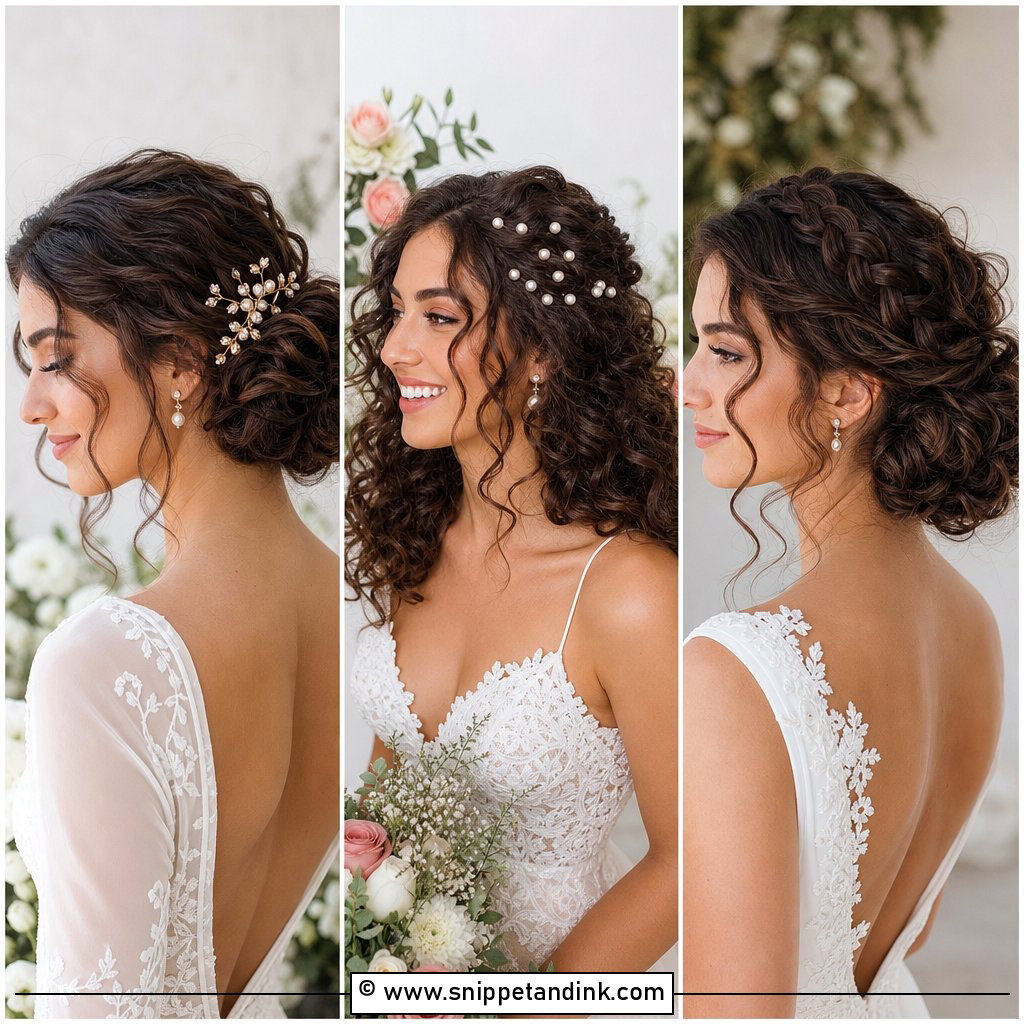
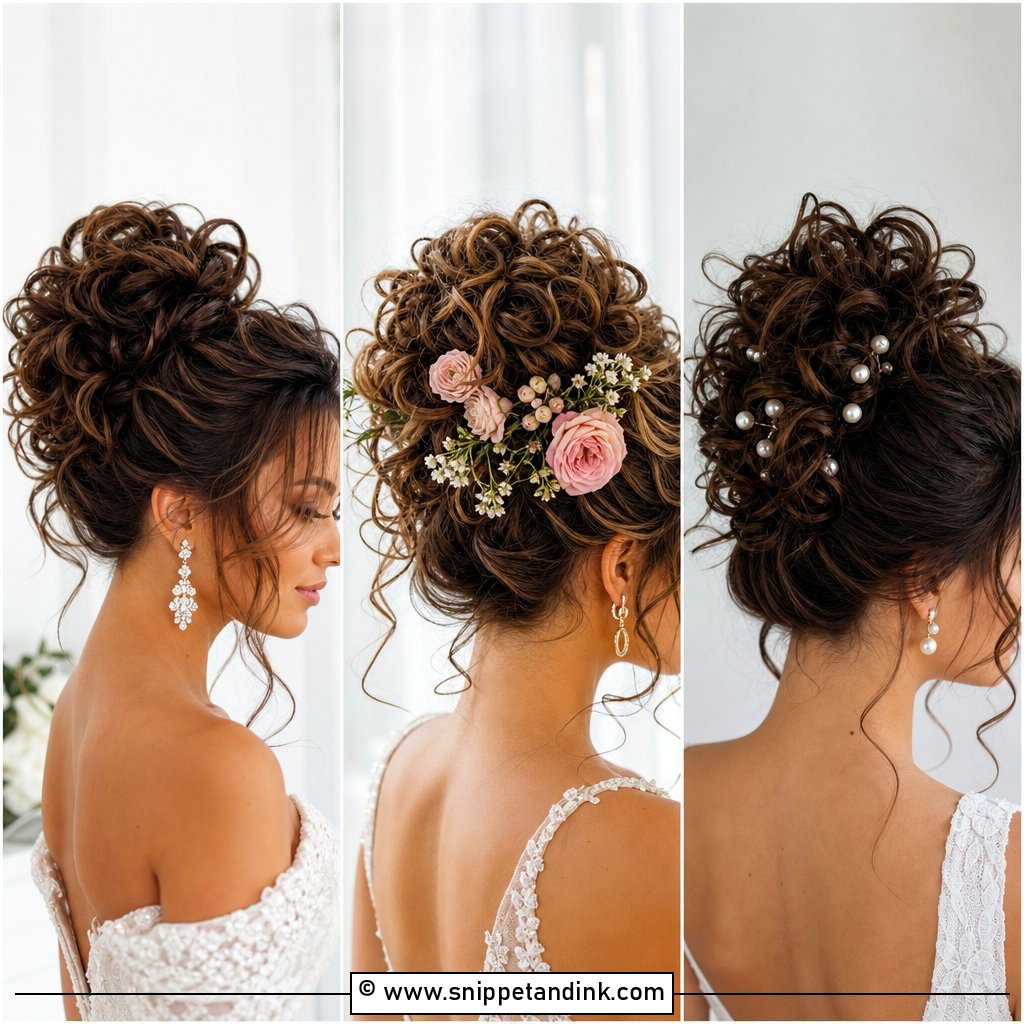
14. Voluminous High Bun With Curtain Bangs
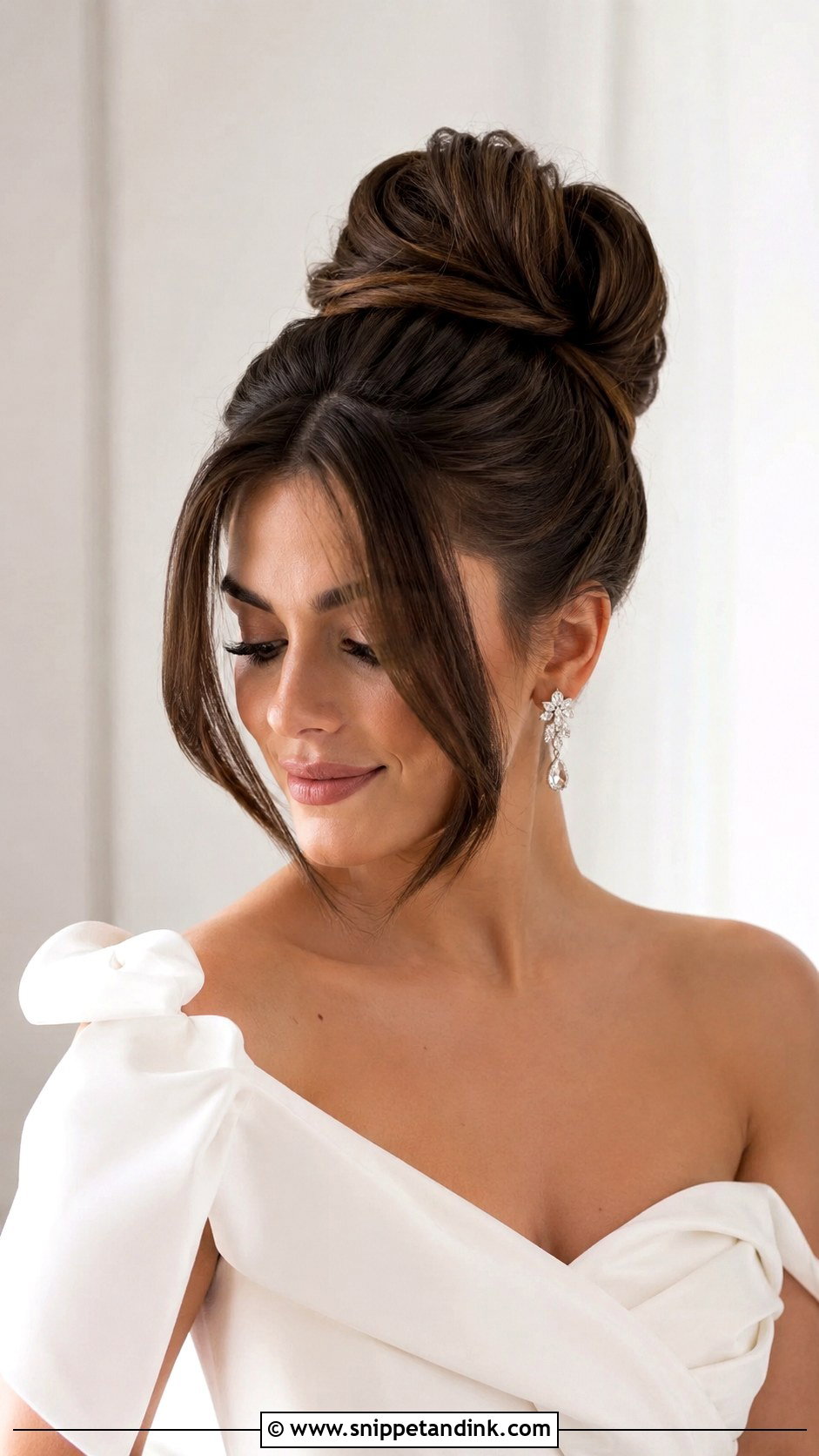
A high bun adds height, so the fringe has to balance it. With a voluminous high bun, I give curtain bangs extra lift at the root so the face isn’t dwarfed by everything above it. The bun is usually built over a donut or padding, especially on fine hair. Expect it to add a couple of inches to your height. The veil also has to go under the bun rather than on top, which changes how it falls at the back.
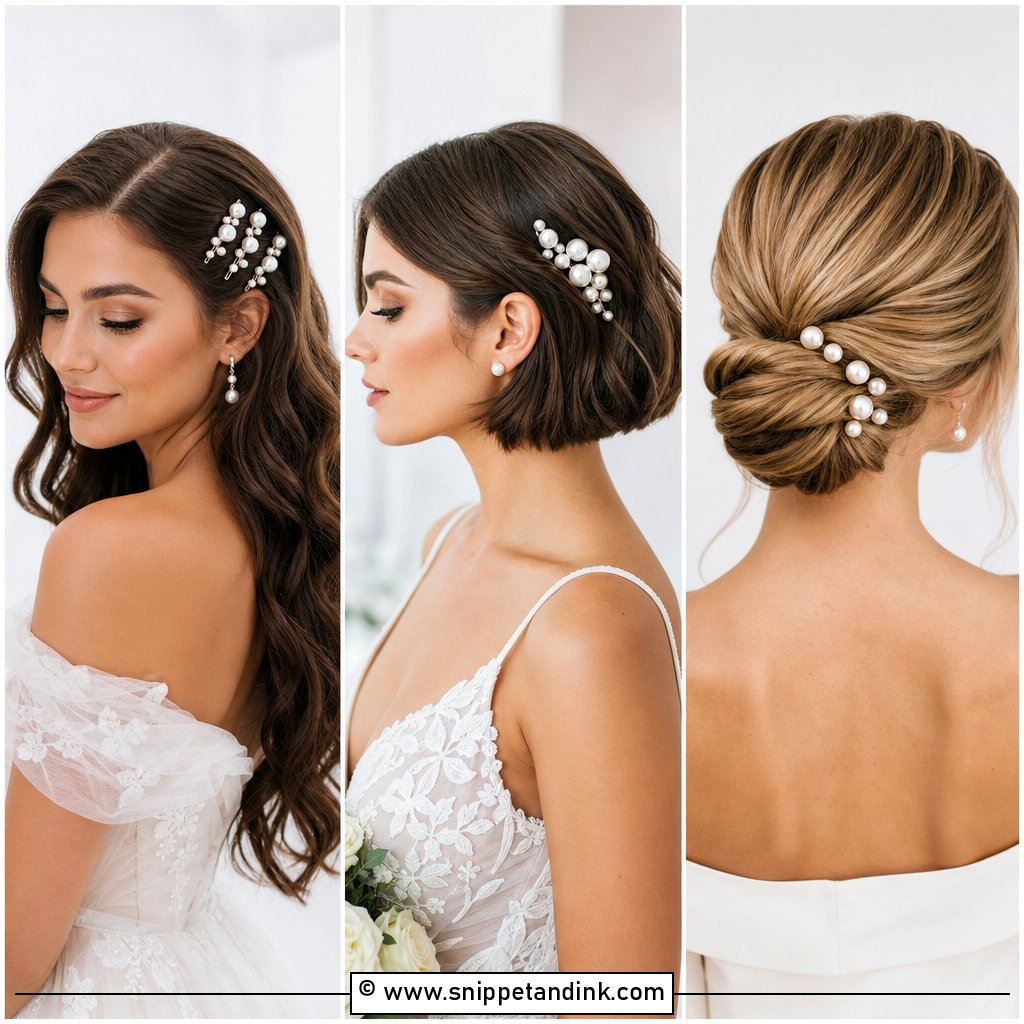
15. Low Chignon With Side-Swept Bangs
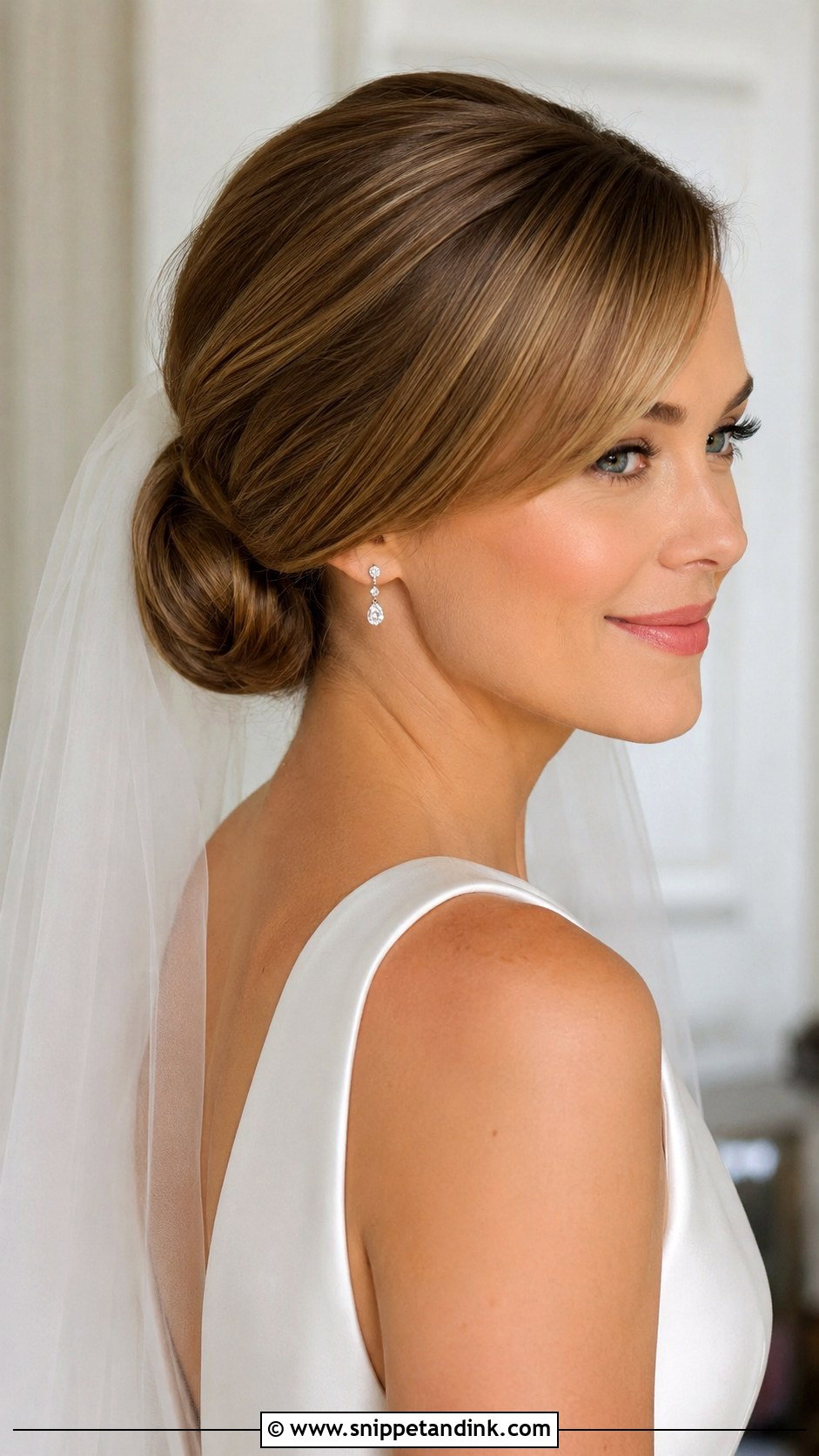
If you want something that won’t move at all, a low chignon is my answer. I roll the hair and secure it with U-pins, which hold weight better than bobby pins in thick hair. Side-swept bangs here are smooth, so I set them with a little cream and a vented brush in the direction they’ll fall. Almost any veil works, since the comb sits just above the roll. One caution: a deep side sweep can droop into one eye by the reception, so I set it a touch higher than you’ll like in the mirror.
16. Half-Up Braided Style With Curtain Bangs
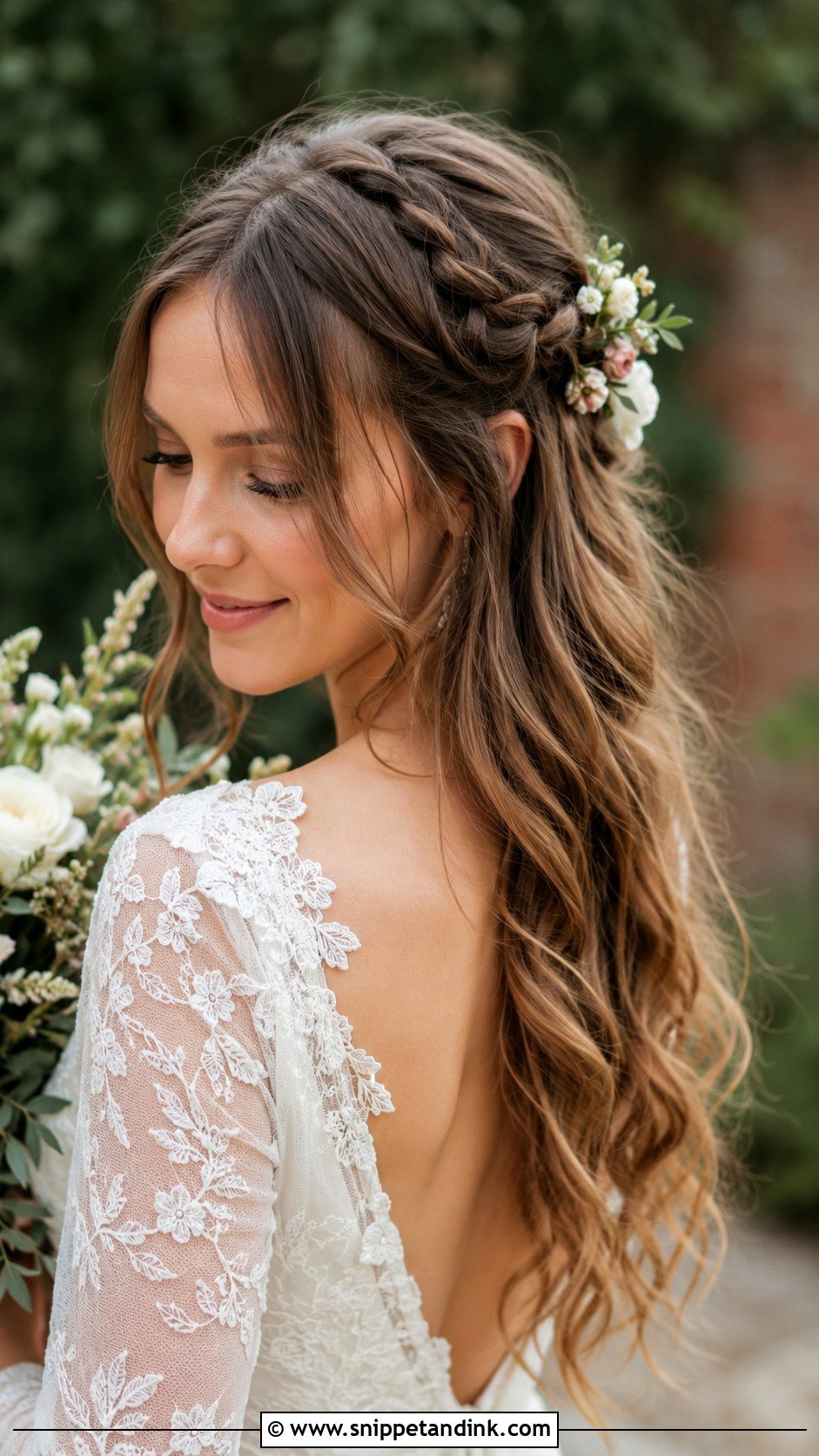
Half-up braids hold better than a simple pinned-back section, because the braid gives the pins something solid to grip. I braid from each temple and join the two at the back, which hides the pins. Curtain bangs sit in front of the braid line, so they have to be shaped before the braids go in. On very thick hair, I add texture to the lengths below so they don’t look heavy against a delicate braid.
17. Bridal Bob With Blunt Bangs
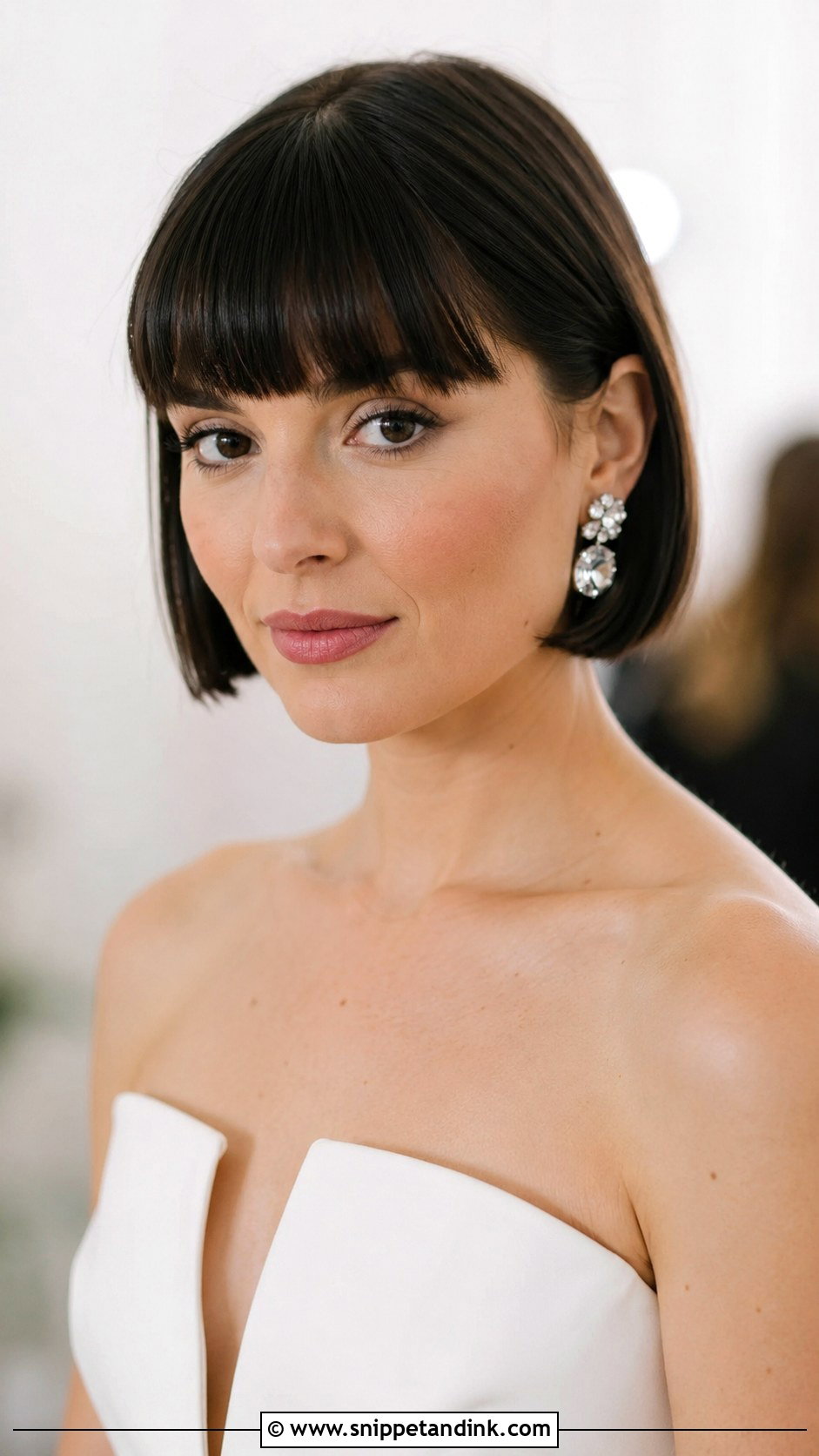
Short hair gives you fewer options on the day, but a bridal bob with blunt bangs doesn’t need many. The cut does most of the work, so book the trim about a week before and ask your stylist to keep the exact shape you had at your trial. On the morning I smooth with a round brush and add a slight bend at the ends. A small clip above one ear is all the decoration it needs, and there are no pins to pull out after midnight.
18. Romantic Curls With Curtain Bangs
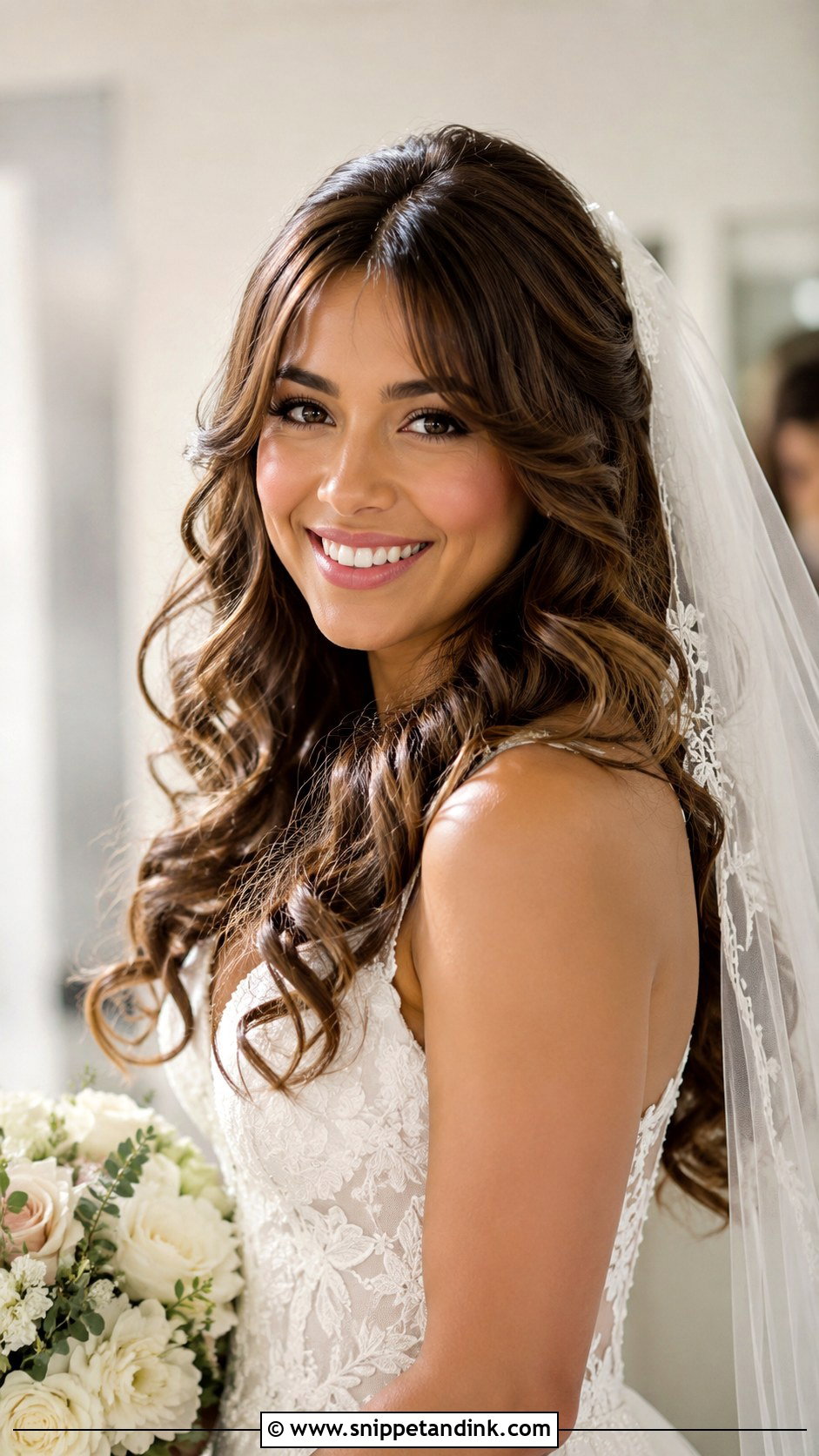
Curtain bangs break up the length of long curls at the front, which stops them looking like a wall of hair. I curl the fringe pieces away from the face first so they open into the curtain shape, then work through the rest of the head in larger sections. I’d avoid it on very fine hair at a humid summer wedding, where curls loosen fast. Place the veil toward the crown so it doesn’t flatten the curls underneath.
19. Twisted Updo With Wispy Bangs
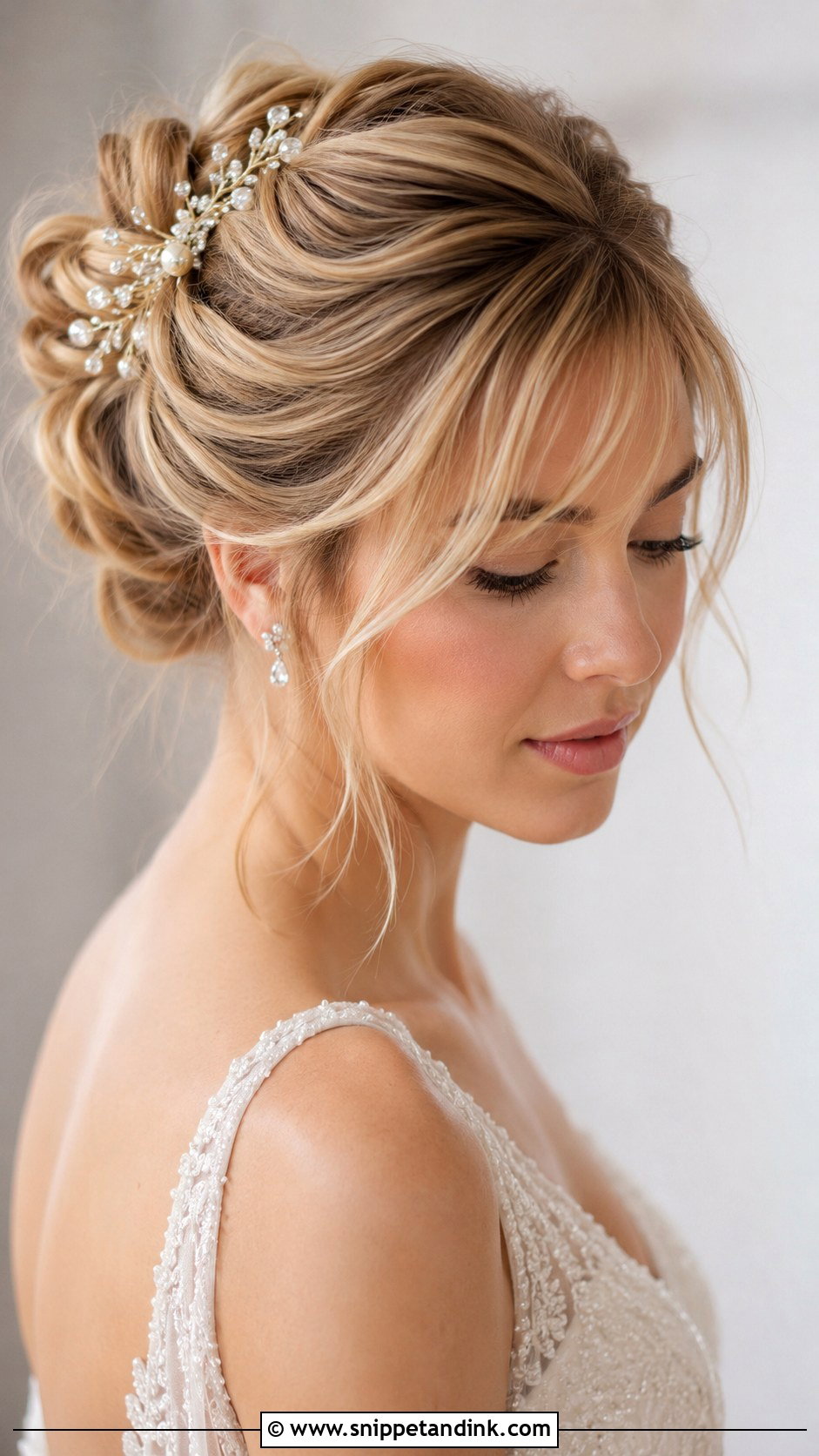
Twisted updos look intricate, but they’re built from simple rope twists pinned into place. Each twist is secured with pins crossed through its base, so the shape survives hours of hugs. Wispy bangs keep the front light, and I pull loose pieces around the face only after the updo is pinned. The risk is over-pulling: if too many strands come free, the updo starts to look unfinished by late evening.
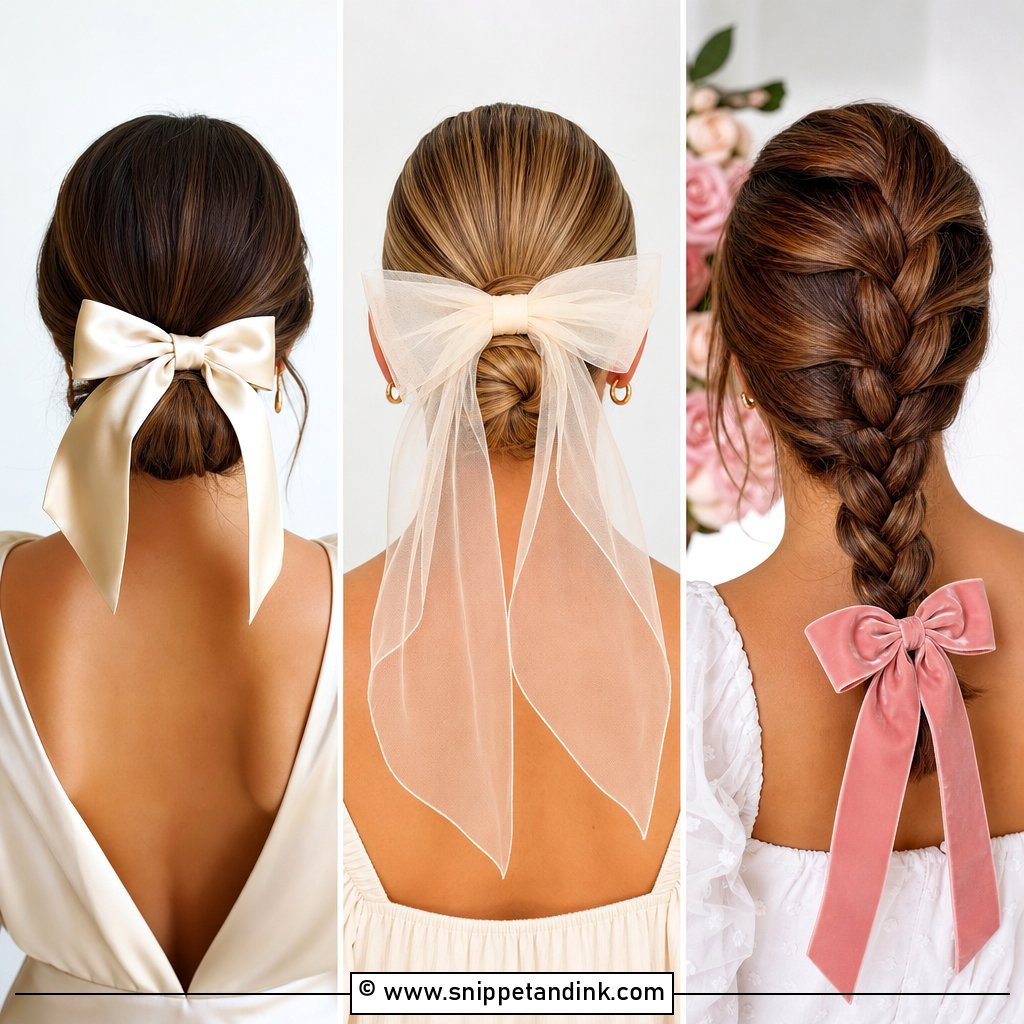
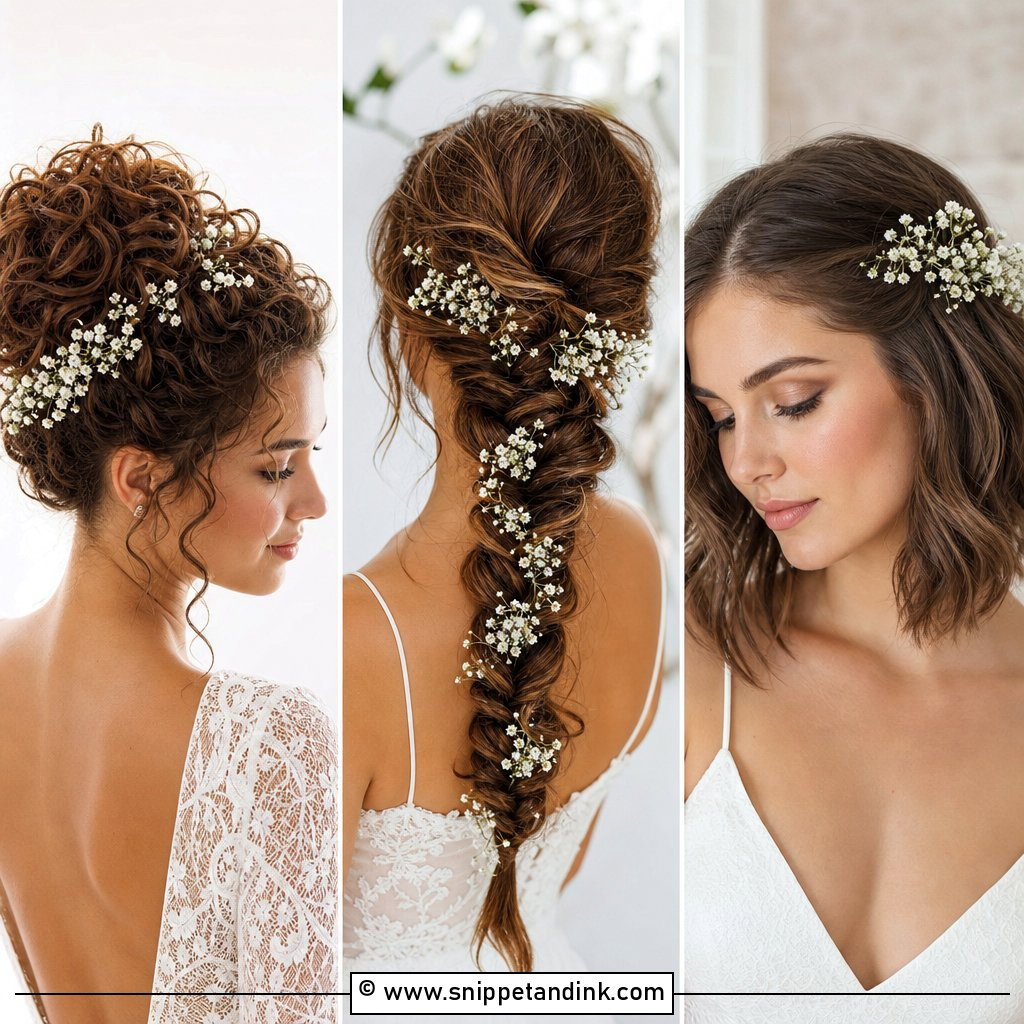
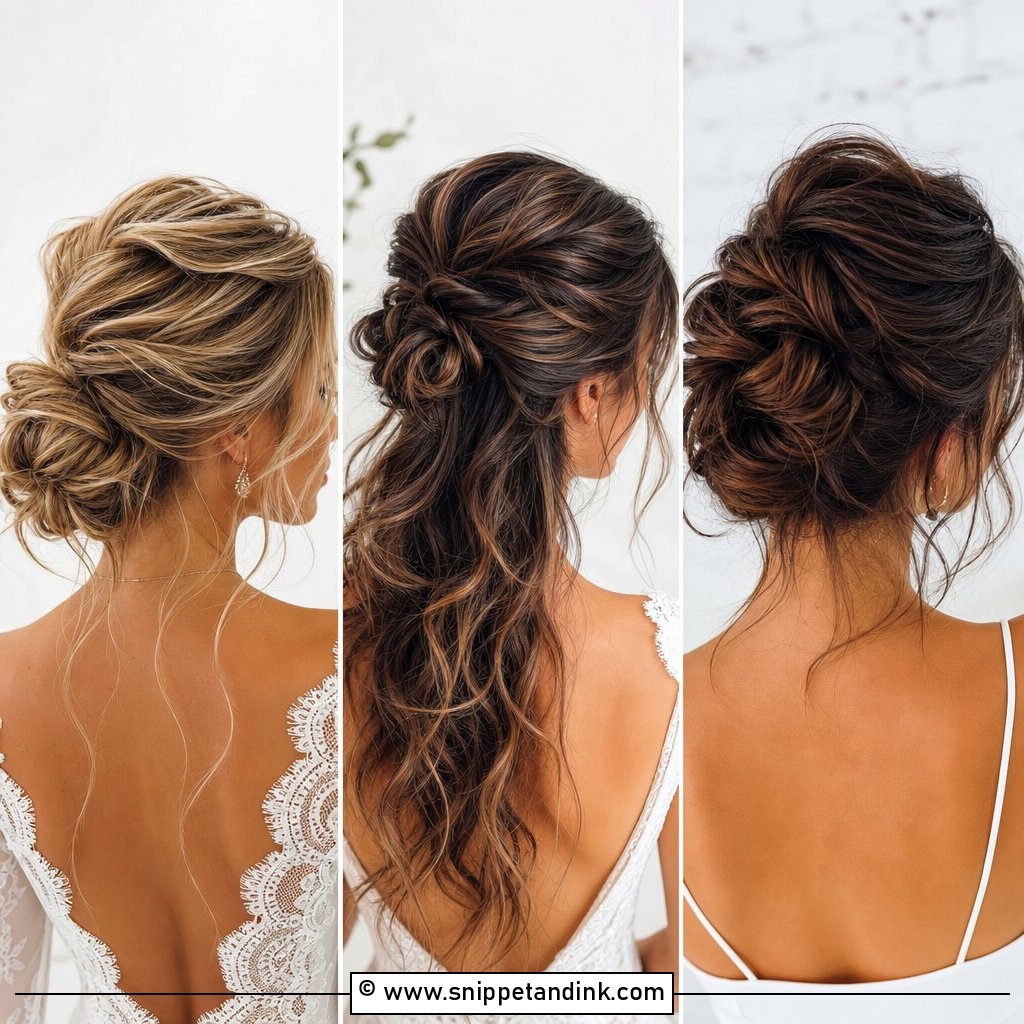
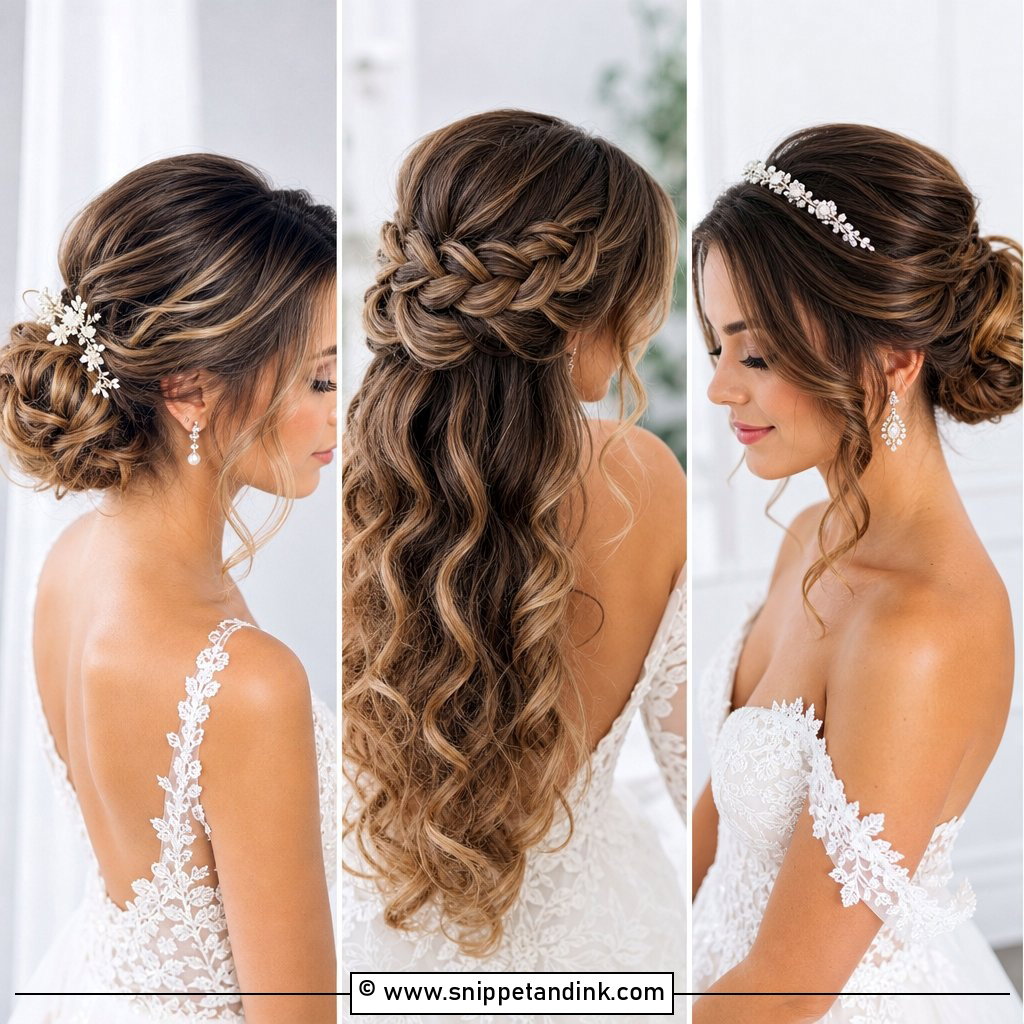
20. Flower-Adorned Updo With Curtain Bangs
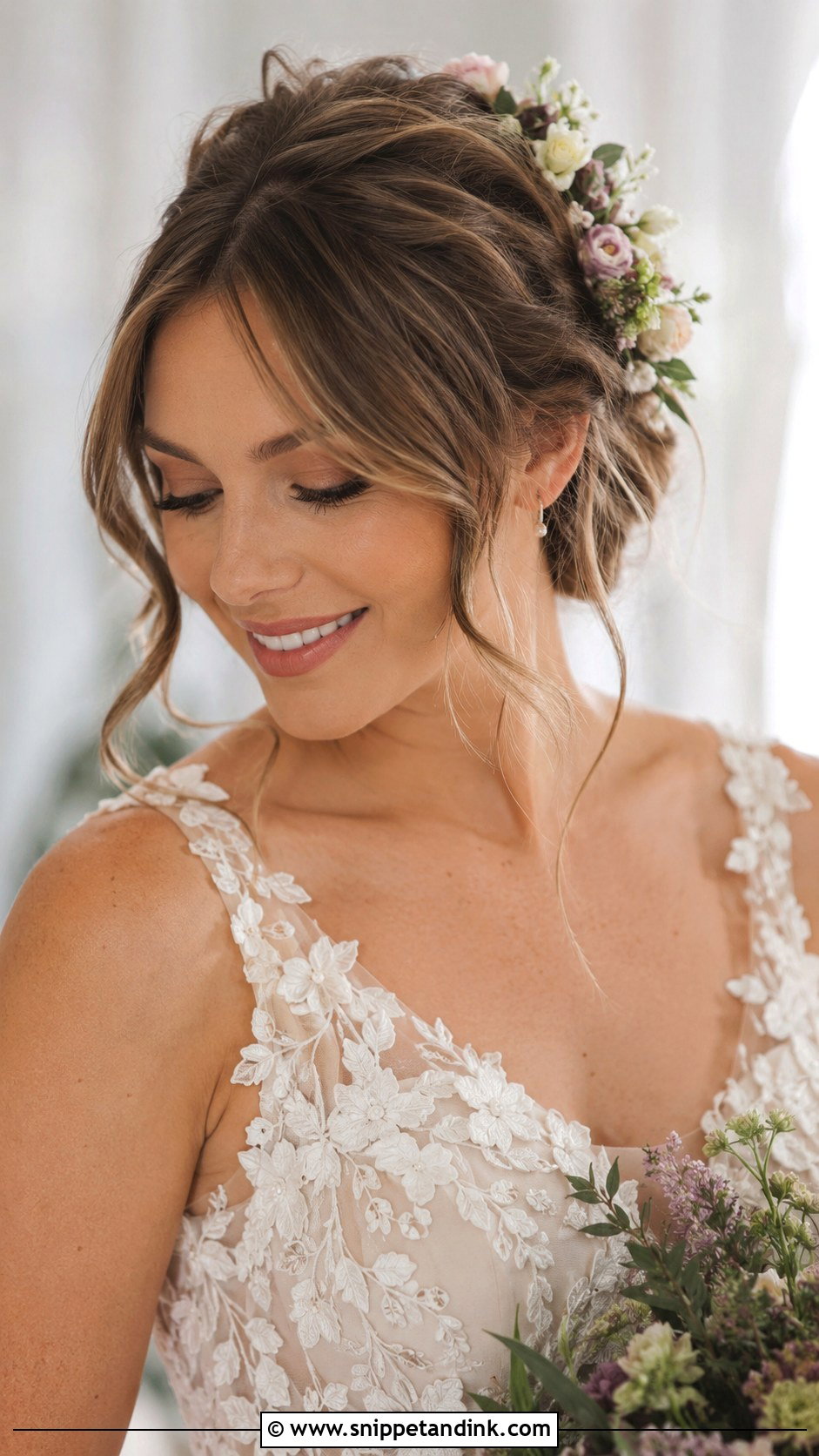
Flowers in an updo go in last, after the hairspray, because spray can brown petals. Fresh blooms need a florist who understands hair work: wired stems, small heads and flowers that cope for hours without water, such as spray roses, wax flower or baby’s breath. Silk flowers are the safer choice in real heat. Curtain bangs keep the front soft so the flowers don’t carry the whole look. I avoid tucking blooms along the hairline, where they compete with the fringe.
How a Fringe Gets Through Makeup, Heat and a Veil
Bangs fail in predictable ways on a wedding day, and I can usually spot the cause at the trial.
Skin oil and foundation
Your forehead produces oil all day, and a fringe soaks it up along with foundation and powder. By evening, bangs that started fluffy can split into thin, greasy strands. I ask the makeup artist to keep the forehead light, then finish the fringe with dry shampoo at the roots and on the underside. Pack blotting papers and press them on your skin, not on the fringe itself.
Humidity
Damp air makes curly fringes spring up and makes straight ones go limp. For an outdoor summer wedding I use a light hold product rather than a heavy cream, and I let the fringe cool completely before anyone touches it. A curtain or side-swept shape forgives a little movement. A blunt line doesn’t.
The veil comb
A comb placed too close to the hairline drags the fringe roots backward and flattens them. I set it a few inches behind the fringe area, anchored into crossed pins so the weight can’t pull forward. If your veil is long and heavy, try it with your fringe at the trial, because that is when the problem shows.
Your Cowlick Gets a Vote Too
The right wedding hairstyle with bangs depends less on the picture you love and more on how your own fringe behaves. Notice where it falls when you’ve done nothing to it, whether it splits at a cowlick and how it reacts to a humid afternoon. Bring that to your trial along with your photos. A good stylist will tell you honestly which of these looks your fringe can hold for a full day, and which ones it will quietly abandon by the first dance.
You'll Like These Ideas:


Leave a Reply