
Glam waves keep coming back on red carpets for a simple reason: they look good from every angle and make hair look healthier than it probably is. At a wedding they give you the softness of hair worn down with far more polish than everyday curls. The versions that last have shine, a clear shape and real structure underneath, enough to get through the ceremony, the portraits and hours of hugging. Right now the brides in my chair are asking for glossy waves, slightly softer Hollywood waves, deep side parts and sculpted texture that still moves. Fifteen versions follow, plus how I actually build the wave and which side of your face it should favor at the altar.
Curl Direction Makes or Breaks the S-Shape
A true glam wave isn’t a set of curls brushed out at random. I build it so the curls join into one continuous ripple, and knowing the steps helps you tell whether your stylist is going for that or a looser texture. Both are fine; they just give different results.
- Curl everything the same way. For classic waves, each section is wrapped in one direction, usually away from the face on the part side. Alternating directions gives beachy texture, not a sculpted ripple.
- Pin and cool. Each curl is pinned up while it cools. Hair holds the shape it cools in, so this step is what keeps the wave in place for hours.
- Brush it out. Once cool, the curls are brushed with a soft bristle brush until they merge into waves. It looks alarmingly fluffy for a minute, then it falls into shape.
- Set the ridges. For the sharpest version, I press the wave peaks with flat clips, spray lightly, then remove the clips once it has set.
This takes time. A full sculpted wave on long hair can run past an hour, so if you’re sharing a stylist with a bridal party, make sure your slot reflects that. At the trial, ask which version you’re getting, sculpted or brushed, so the result on the day isn’t a surprise.
1. Hollywood Waves Bridal Hair
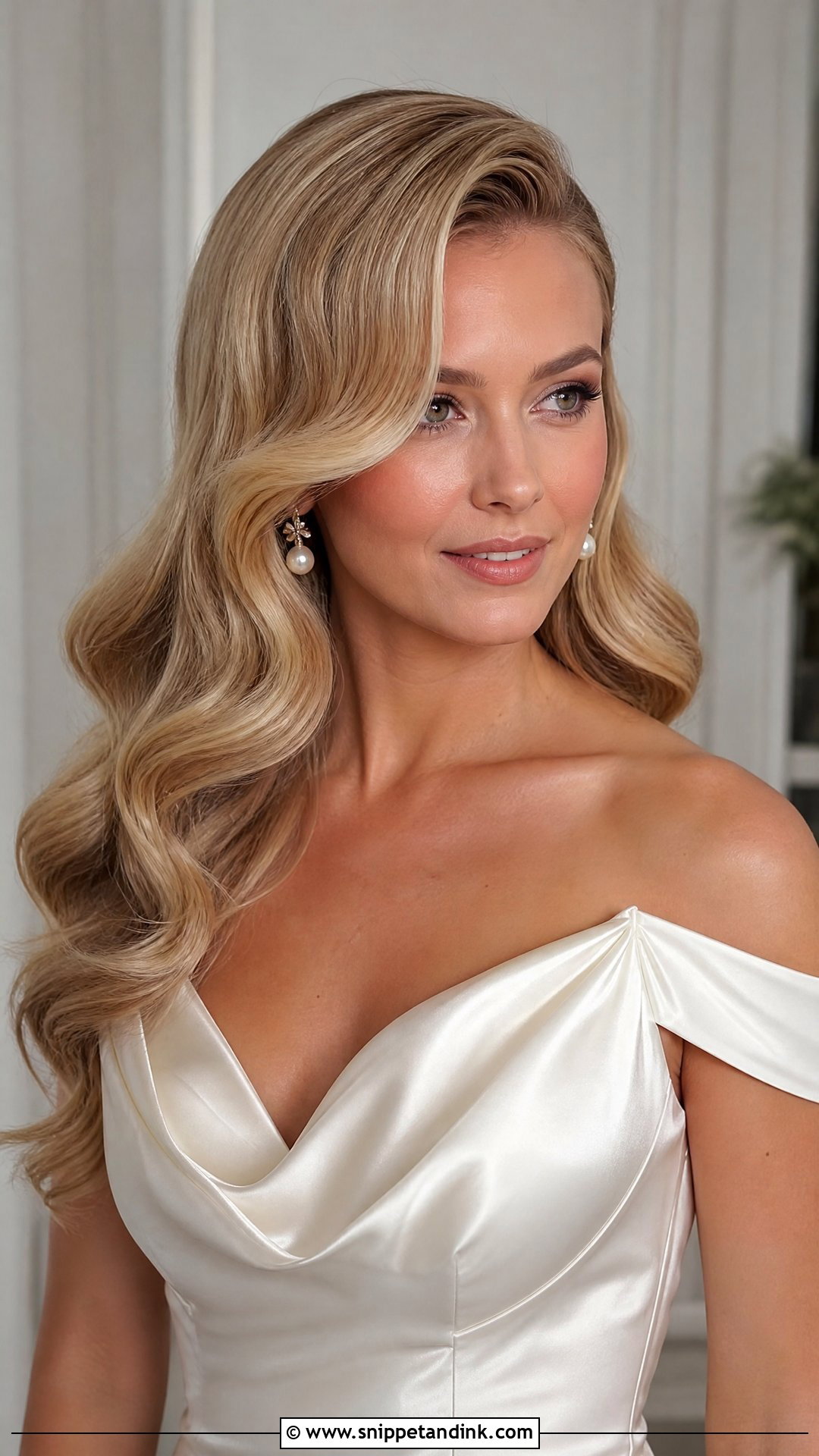
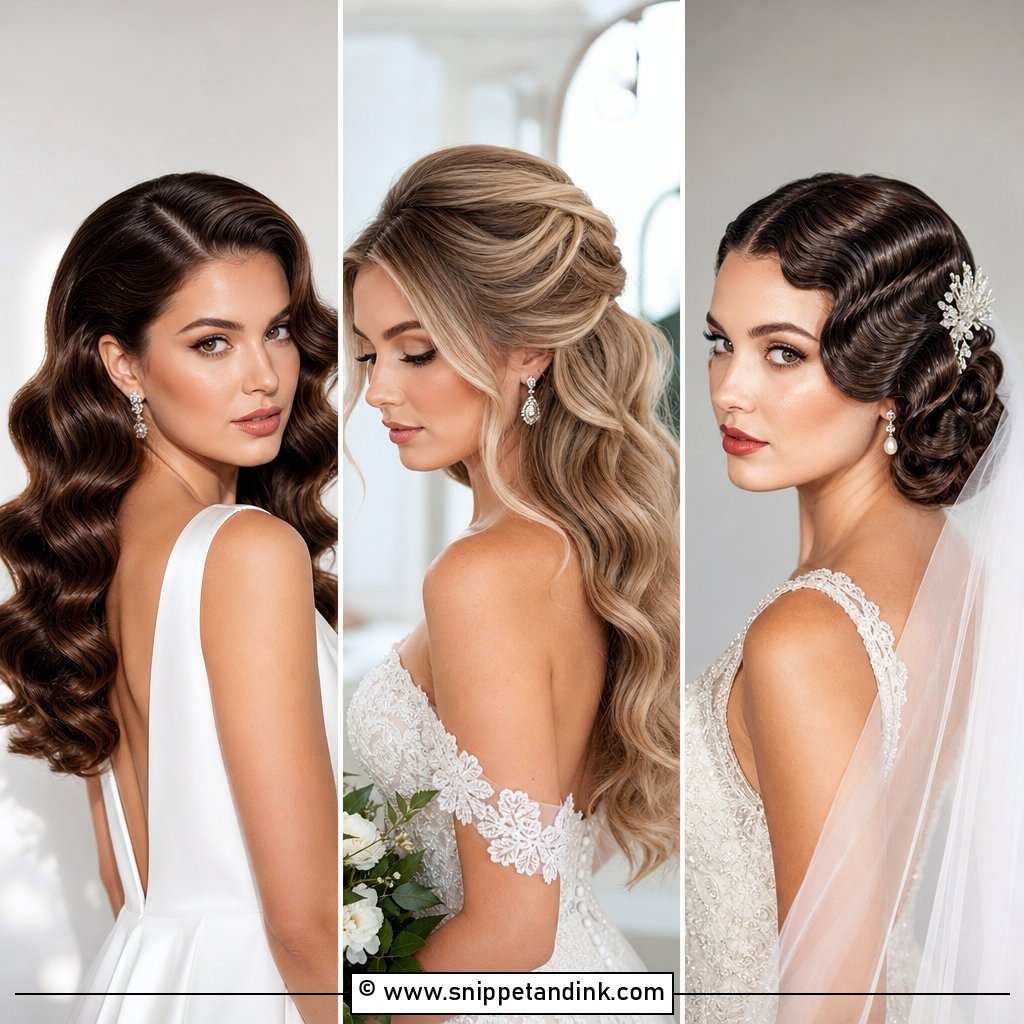
The classic. Hollywood waves need medium to long hair, because the smooth, repeated S-shape needs enough length to complete at least two ripples. A deep side part makes it feel more red-carpet, while a softer part reads more modern. Shine is the whole point, so I prep with a smoothing cream and finish with a brush, never fingers, which break the pattern. Strong hold goes underneath, a touchable finish on top. Satin gowns and off-the-shoulder necklines are its natural partners.
2. Side Part Glam Waves Bridal Hair
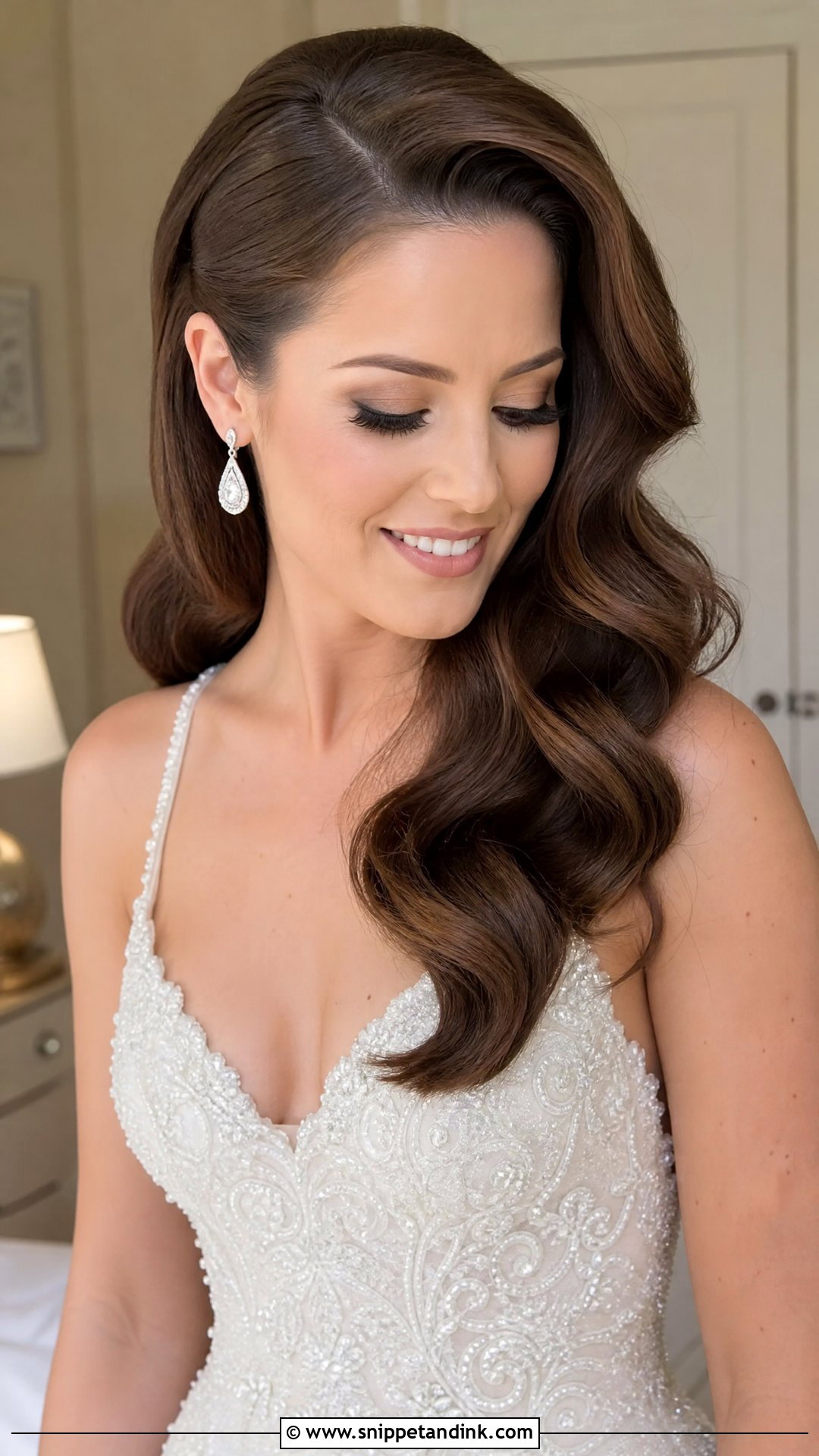
Moving the part to one side lifts the crown and lets the waves sweep over one shoulder or wrap around both sides of the face. It frames the cheekbones and leaves room to tuck one side behind the ear, which is why I suggest it to brides wearing statement earrings. I set, cool and brush the waves before the final spray; spraying hot curls locks in frizz. It suits a formal wedding without looking severe.
3. Long Glam Waves Bridal Hair
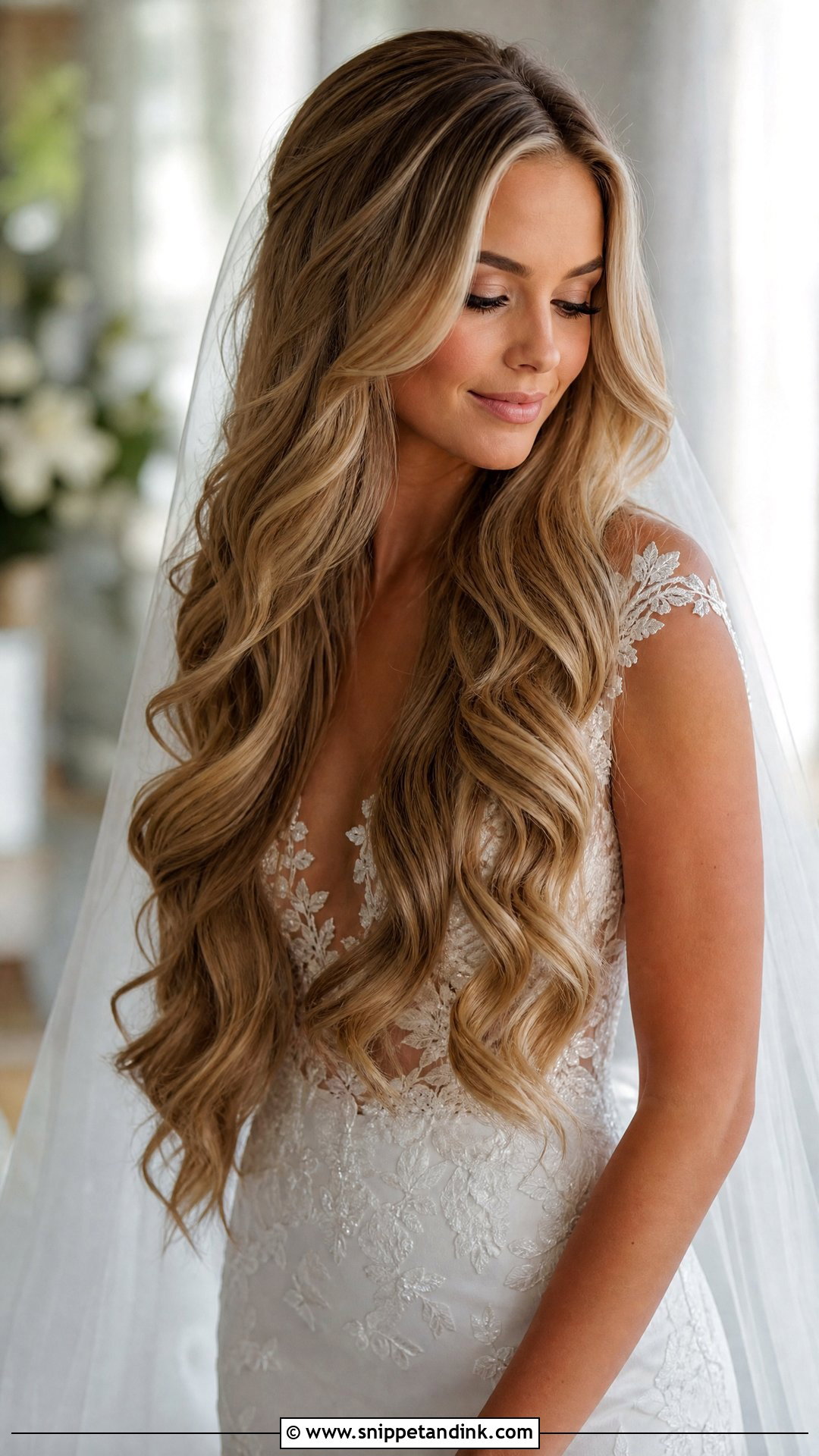
Long waves can start at the cheekbones for a romantic shape or lower through the mid-lengths for something smoother and more modern. Length alone isn’t enough, though. Hair that thins toward the ends makes the waves look uneven from top to bottom, so I often add a few extension wefts for density rather than length. Long hair also shows every split end in close-ups, so a trim a few weeks before is worth it. Fitted gowns, lace and dramatic veils all balance well against it.
4. Soft Glam Waves Bridal Hair
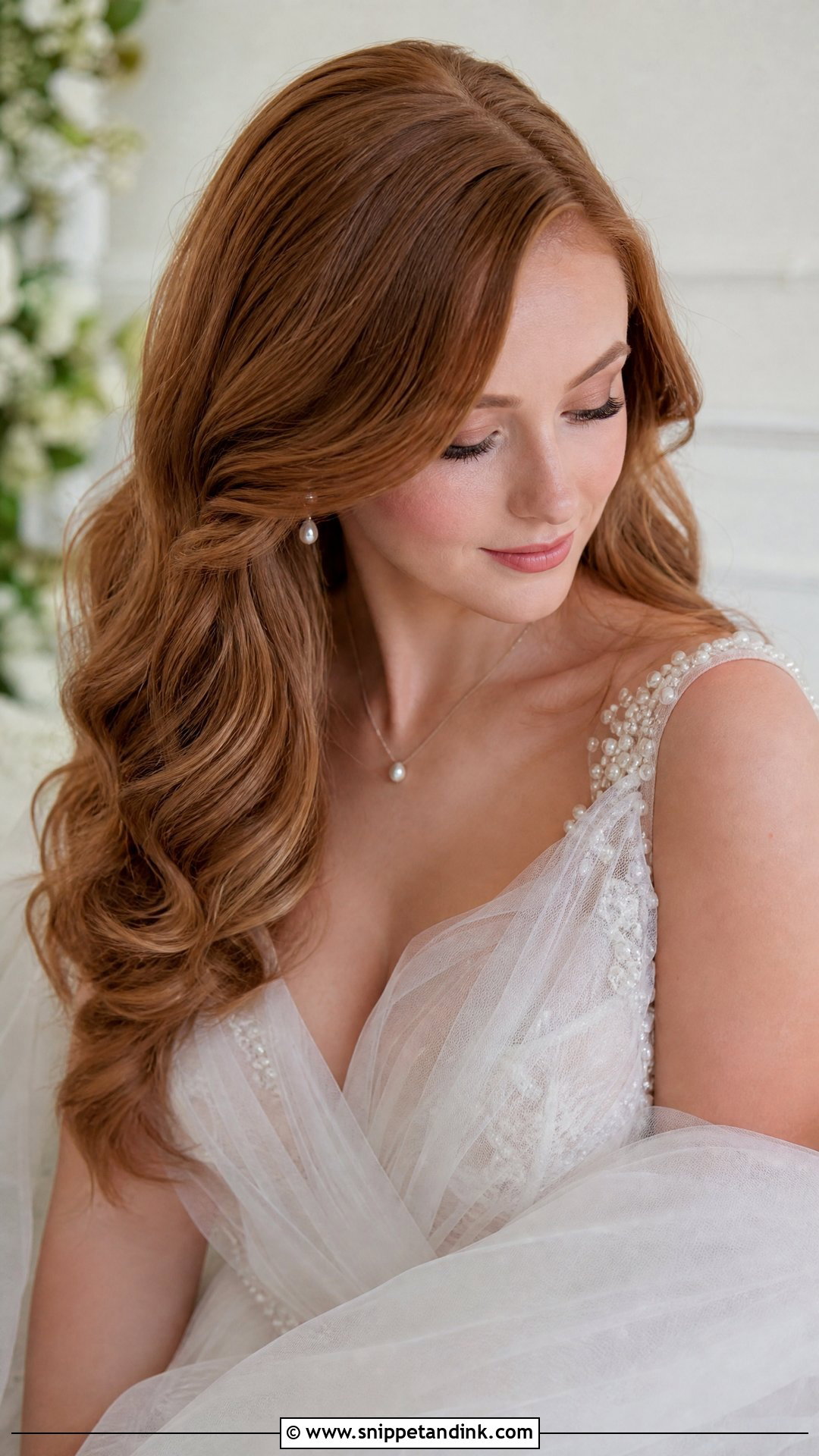
Soft glam is for the bride who wants polish without anything that looks sculpted. The waves are still deliberate, just lighter and looser than Hollywood waves. I curl with a larger barrel, smooth the roots, and brush the ends out further so the bends relax. It suits outdoor and garden weddings, where a perfectly sculpted set can look out of place. If you usually wear your hair down, this is the closest thing to your normal hair on its best day.
5. Glam Waves With Veil Bridal Hair
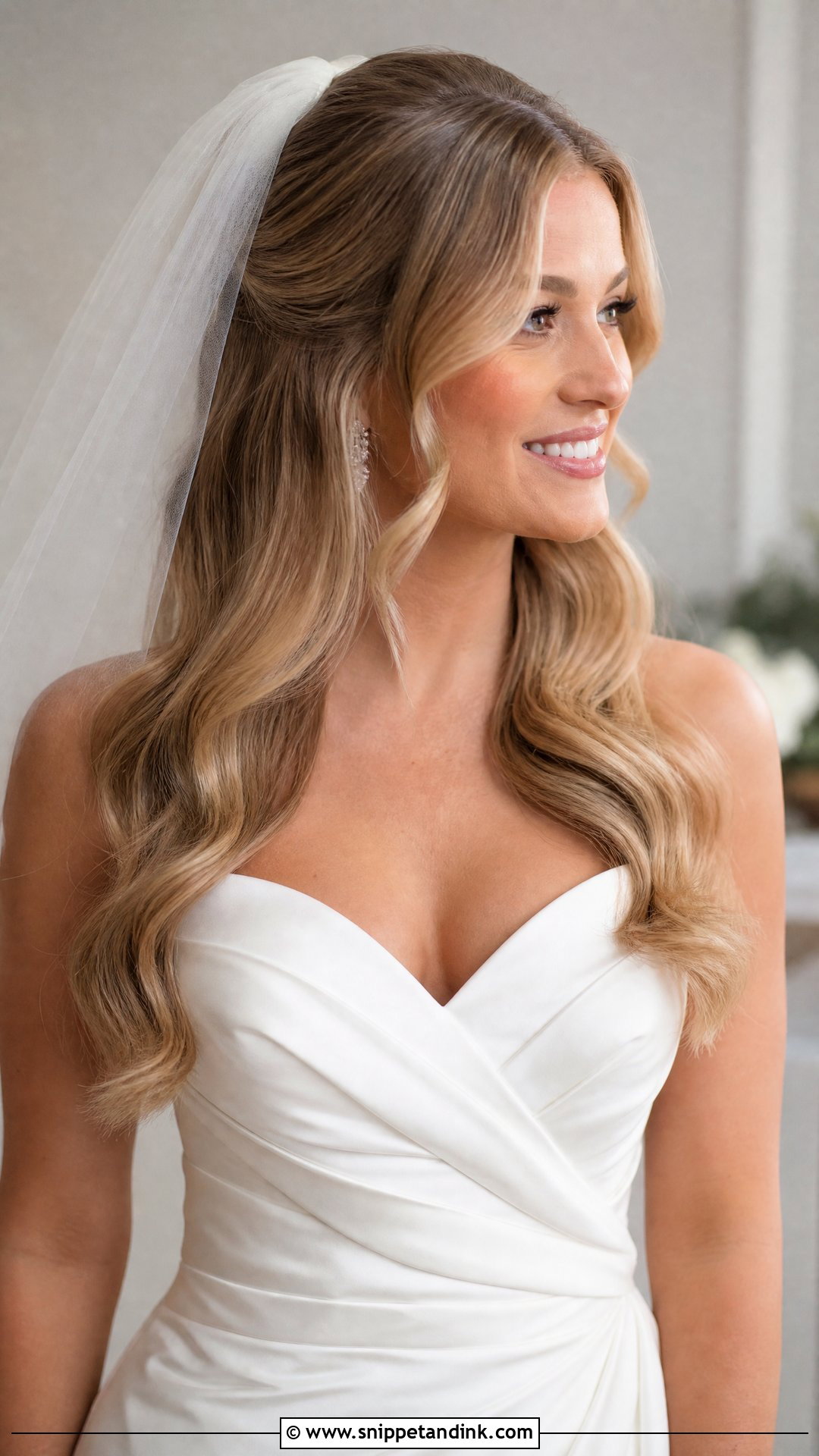
Waves and a veil need to be planned together, because the veil can flatten the crown and hide the pattern you paid for. I arrange the waves first, then slide the comb in at the crown for a traditional look or lower for a softer one. Cathedral and fingertip lengths in soft tulle float well over waves. A heavy veil is a different story: I build a small pinned base under the comb so its weight doesn’t drag the top flat by evening.
6. Glam Waves With Hair Comb Bridal Hair
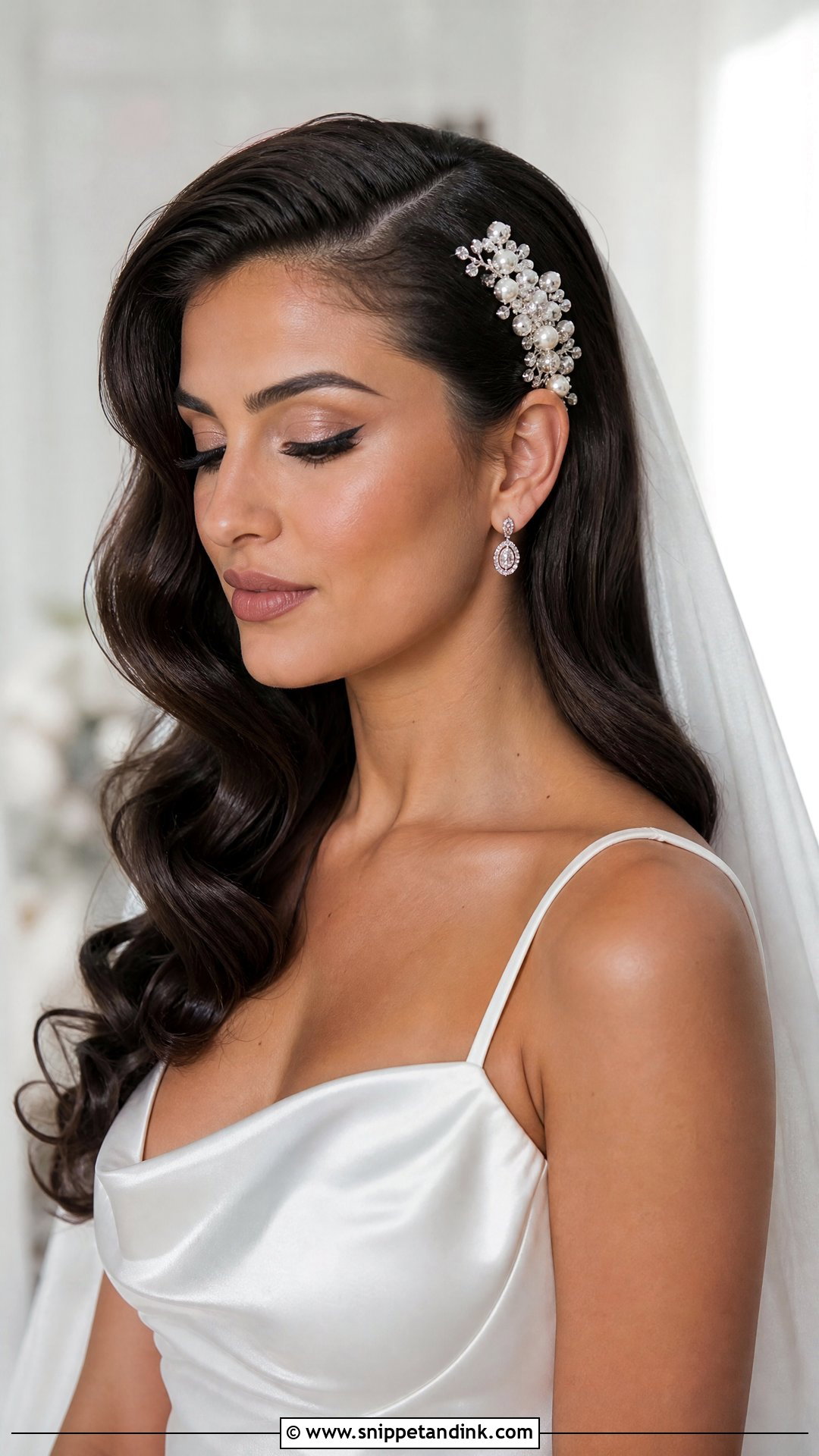
A comb adds detail without stealing attention from the waves. I place it above one ear, at the back curve of the head or just behind the part, and with side-swept waves it doubles as an anchor that holds the sweep in place. Match it to your dress: pearls if the gown has pearl details, crystal if it has beading. The waves around it need to be smooth and defined, otherwise the comb looks like it was dropped in by accident.
7. Half Up Glam Waves Bridal Hair
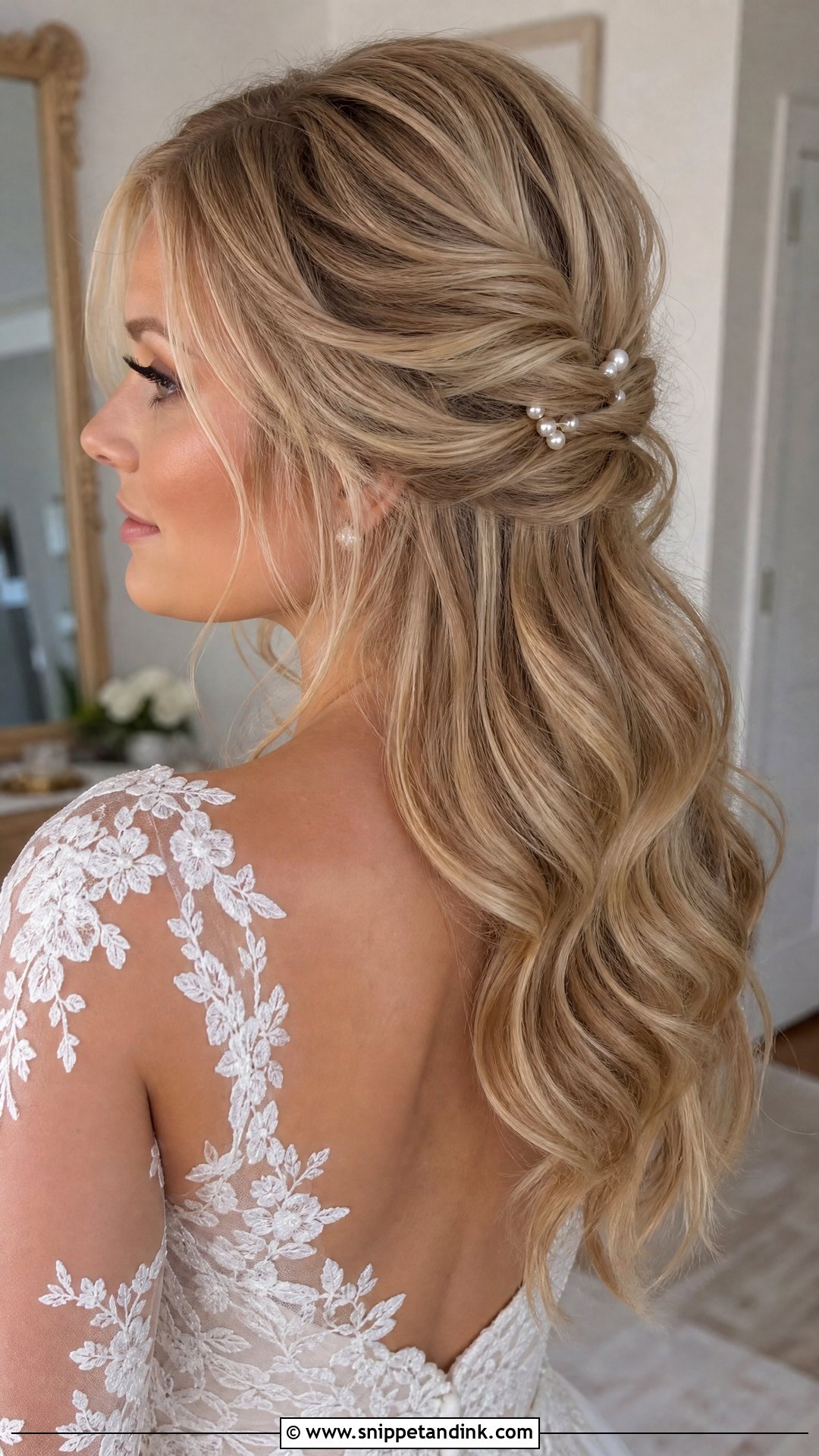
Pinning the top section back controls the face area and still leaves glossy waves through the length. I lift, twist or pin it, and anchor it on a hidden elastic so a veil or comb can grip it. It’s the version I recommend if you know you’ll fidget with your hair during the ceremony. Keep the crown softly lifted, not a stiff bump, and make sure the waves underneath blend into the top section rather than starting abruptly below it.
8. Glam Waves Ponytail Bridal Hair
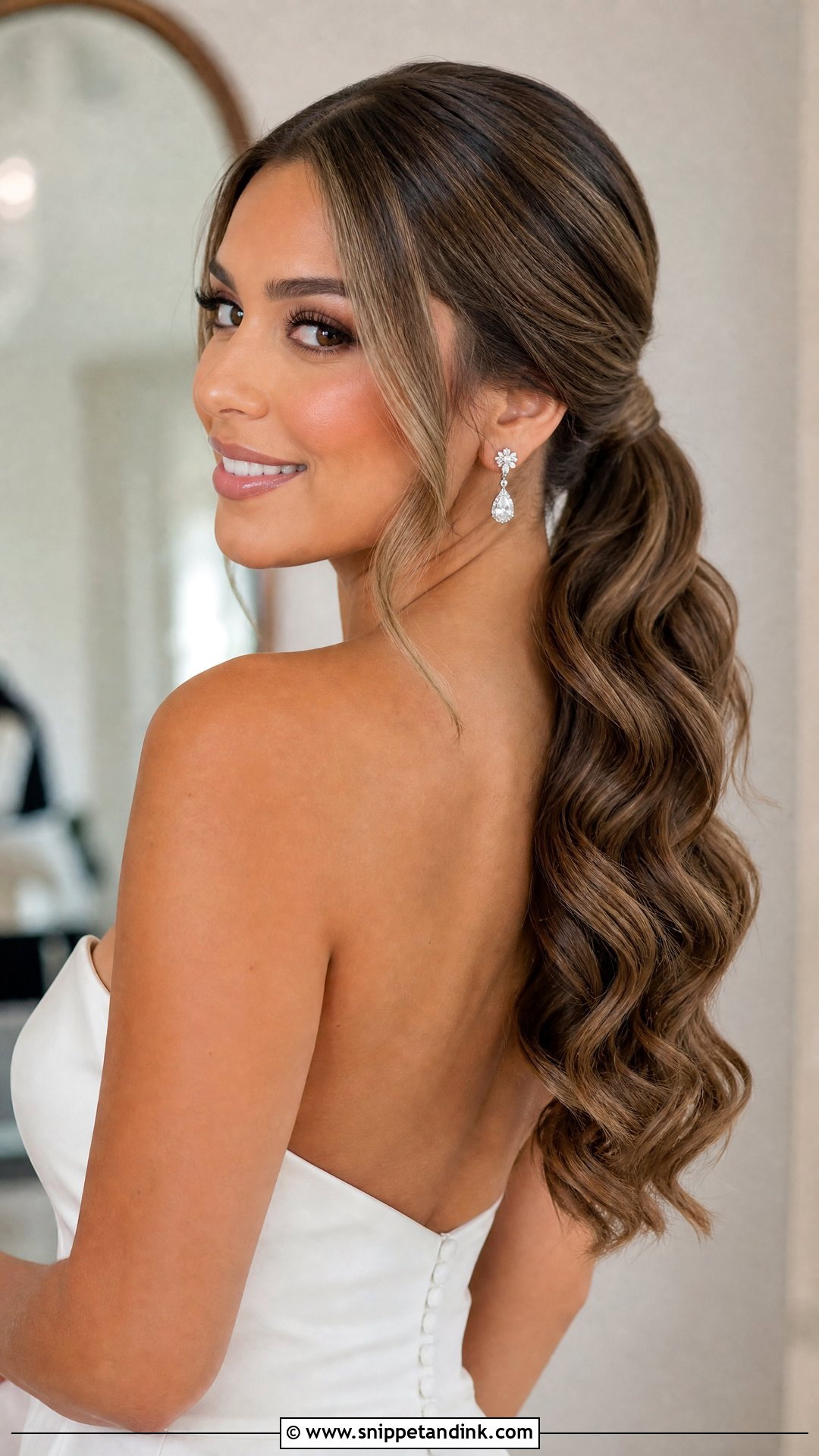
Waved ponytails surprise brides at trials; they look far more formal than people expect. I smooth or softly part the front, gather the hair at the nape or a little higher, and wrap a strand around the base to hide the elastic. The tail needs full, bouncy waves from top to ends, or it looks thin hanging against the back. It keeps hair off high necklines and detailed bodices, and it’s my pick for warm-weather weddings and brides who plan to dance.
9. Glam Waves With Middle Part Bridal Hair
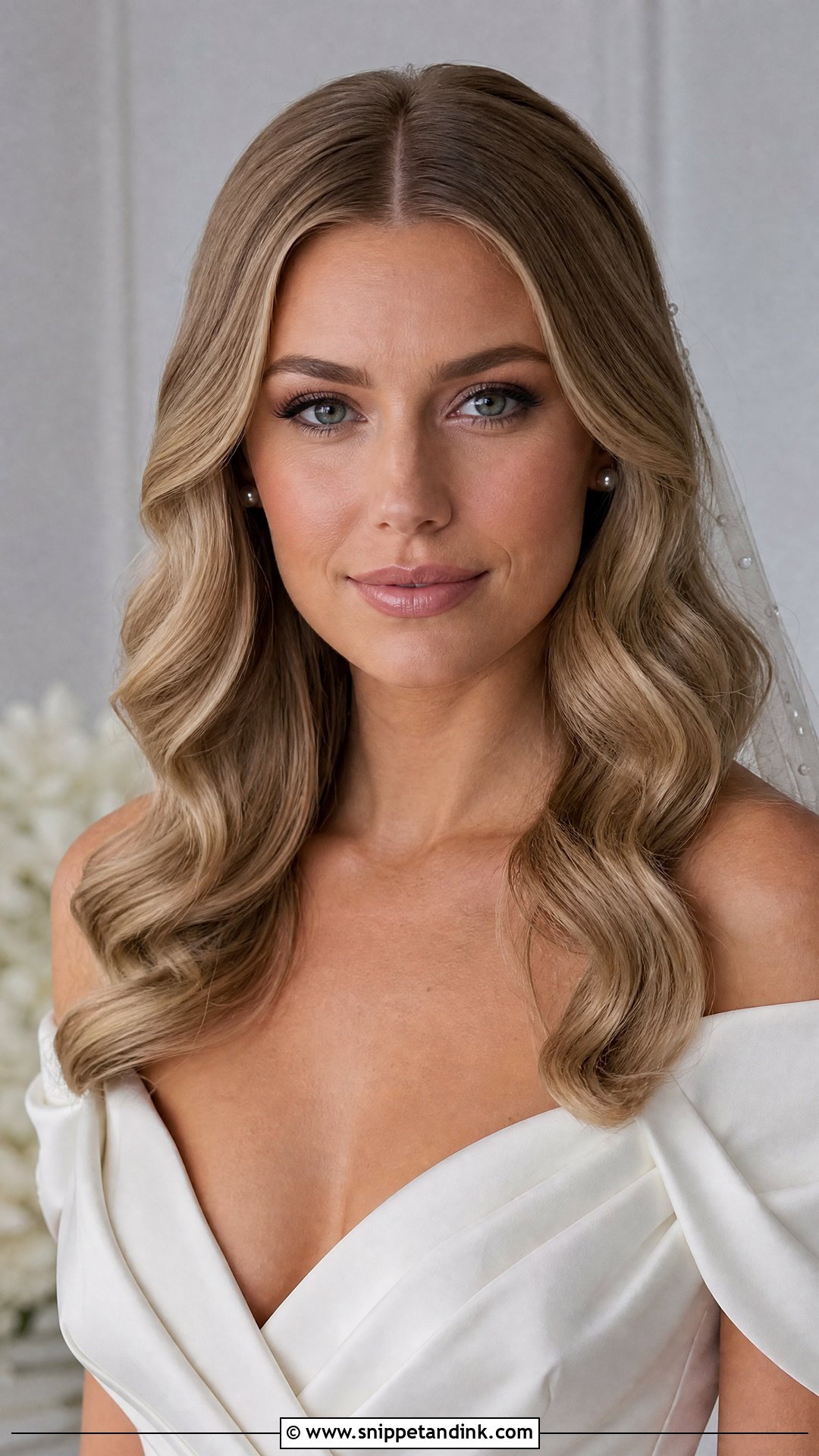
A middle part gives the face symmetry and the whole look a cleaner, more editorial line. I start the waves lower, around the cheekbones or jaw, so the top stays smooth. The trap is flatness: a center part on fine hair can collapse against the head, so I lift the roots with a round brush before curling. Simple gowns, sleek veils and pearl jewelry suit it. It’s less forgiving of an asymmetric face than a side part, and I’ll be honest at the trial if it isn’t flattering.
10. Short Glam Waves Bridal Hair
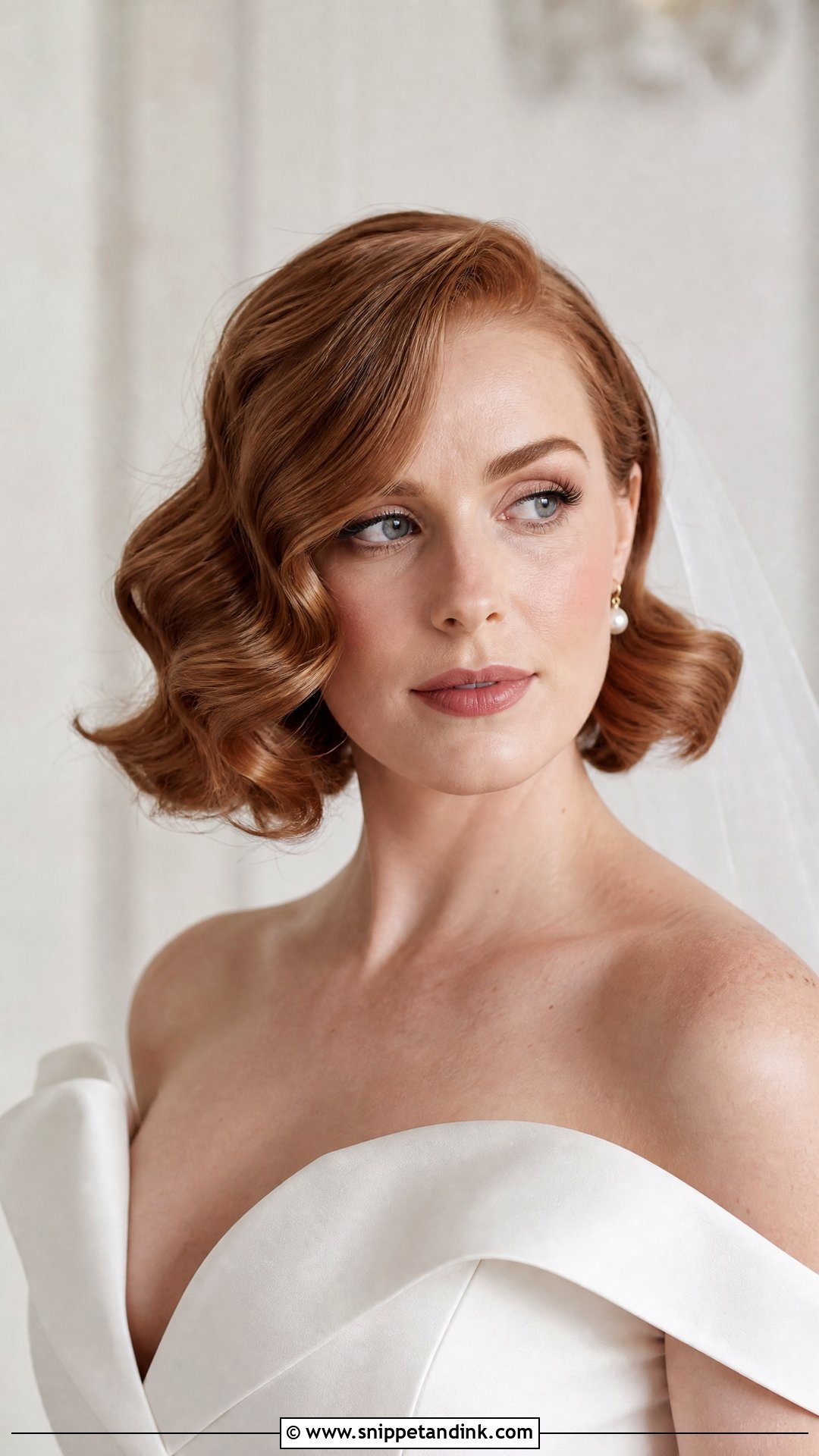
Short hair doesn’t need extensions to wear glam waves. A chin-length bob, shoulder-length cut or short lob looks finished with sculpted waves and a glossy surface, and the shorter length actually defines the pattern more clearly around the face. A deep side part brings a vintage feel; a soft middle part keeps it current. I use a smaller iron than on long hair, since a wave needs room to turn. Birdcage veils and pearl clips suit it, and the ends must be clean, so trim about two weeks ahead.
11. Medium Length Glam Waves Bridal Hair
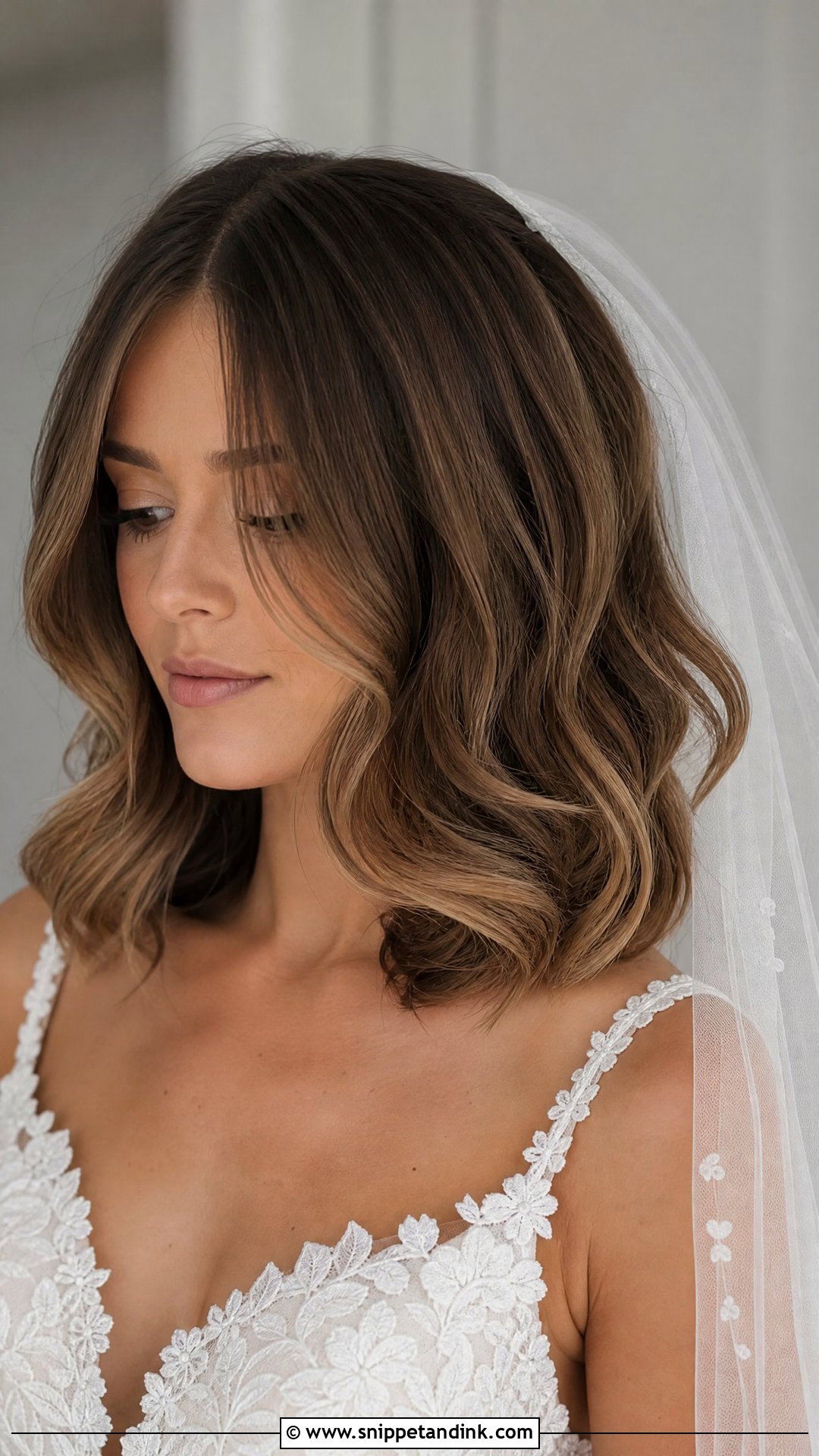
Collarbone or shoulder length might be the most comfortable length for waves. It holds a curl well, shows the dress neckline and doesn’t pull on your scalp all day. The risk is uneven ends, so I shape the waves to finish at the same point rather than flicking in different directions. A few face-framing bends soften the jaw. Veils, combs and pins all sit easily.
12. Blonde Glam Waves Bridal Hair
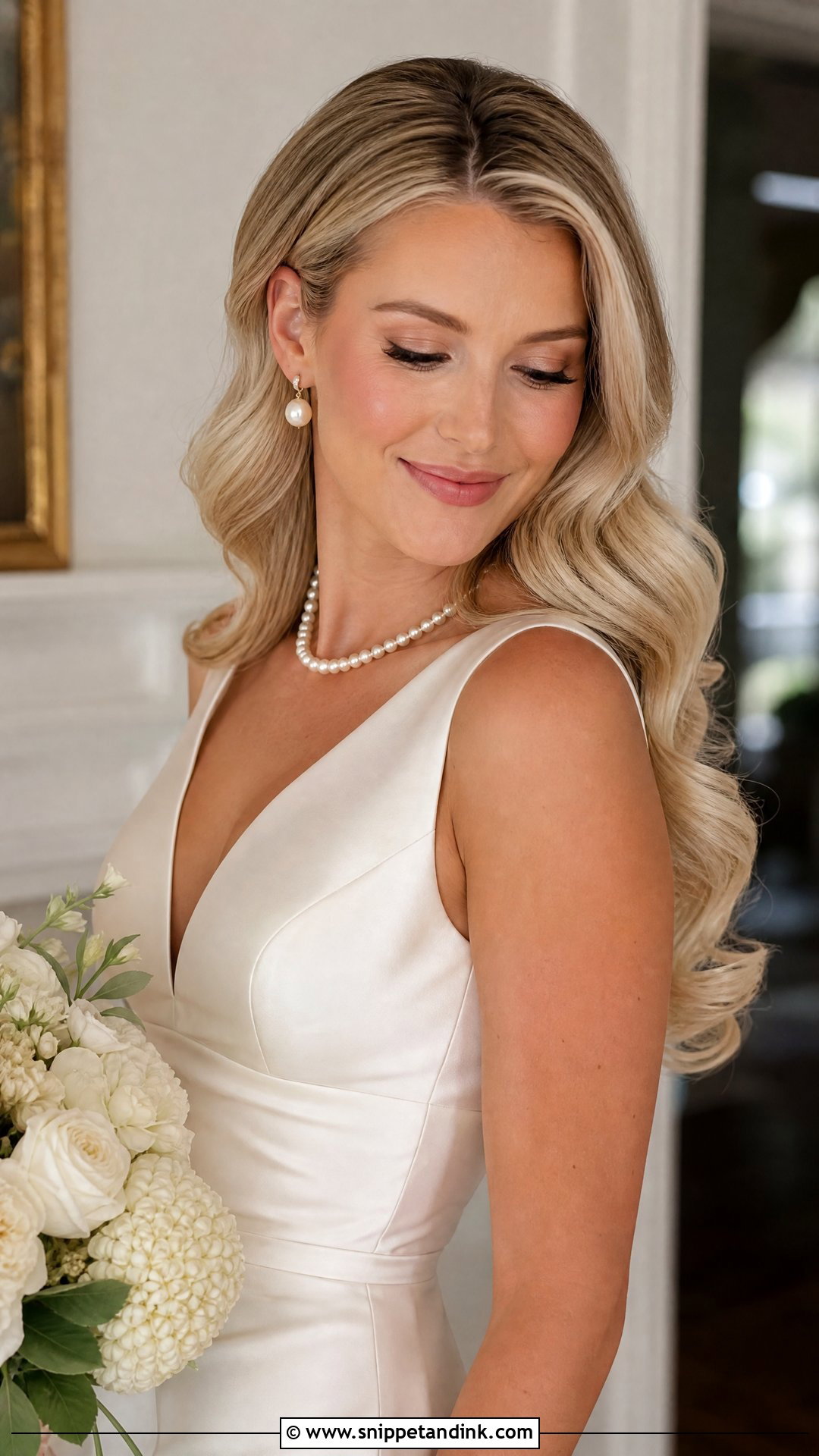
Blonde hair catches light, which is why it reads so well in bright photos. Waves show off the dimension of highlights, lowlights, balayage and a soft root shadow. Very light or bleached blonde is often porous, so it can look dry and frizz faster than darker hair. I use a moisturizing cream and a heat protectant before curling, and I keep the heat lower to avoid that slightly fried shine. Large, brushed waves reflect the most light.
13. Brunette Glam Waves Bridal Hair
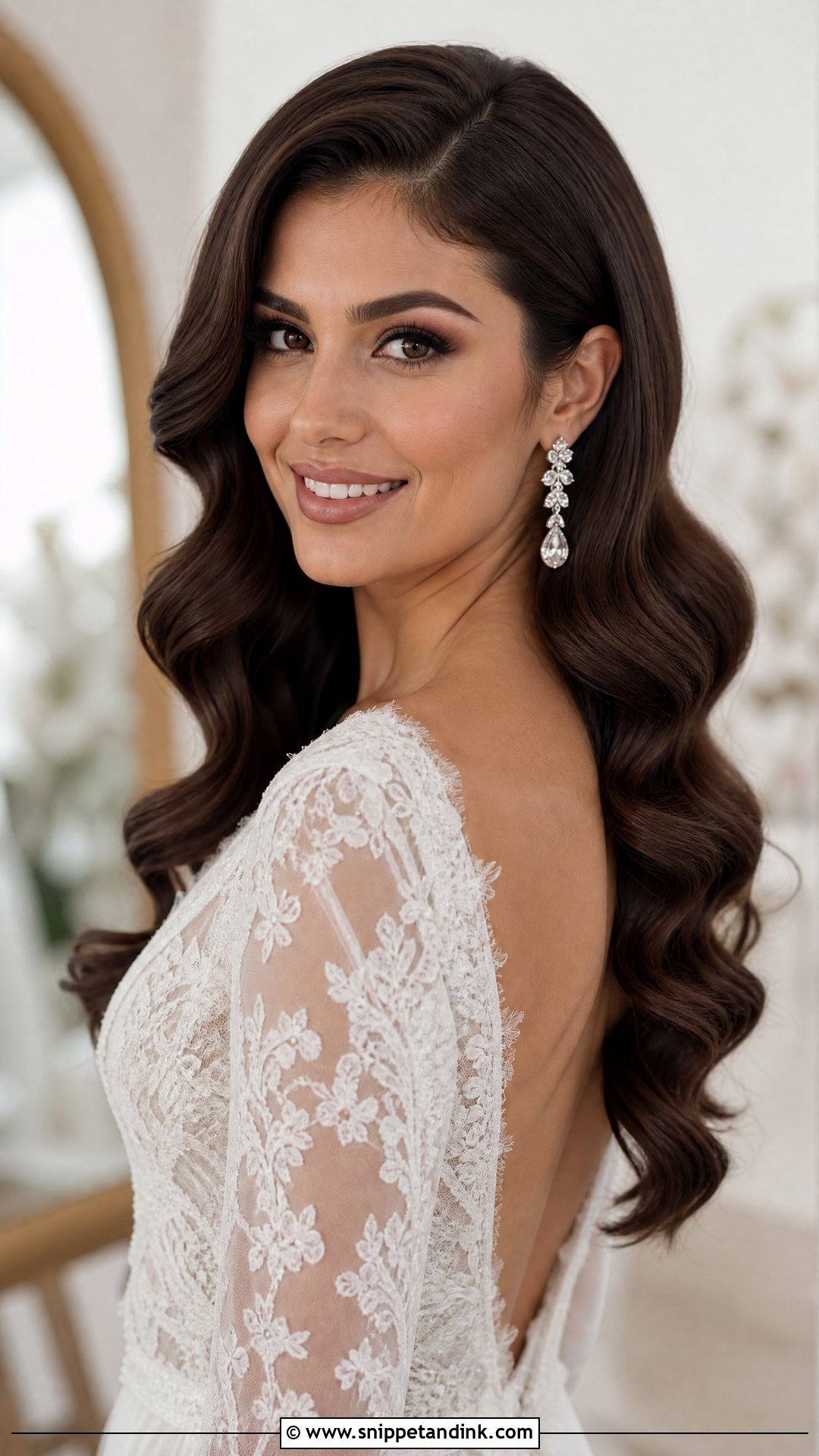
Dark hair reflects shine well, especially when the waves are smooth and brushed into a clear shape. Chocolate brown, espresso, chestnut and caramel tones all take glam waves easily. A few soft highlights help the pattern show from a distance, though one glossy shade looks just as good up close. On brunette hair, frizz and dull ends are more visible than on blonde, so a smoothing serum and a gloss a week or two before matter more than extra volume.
14. Glam Waves With Pearl Pins Bridal Hair
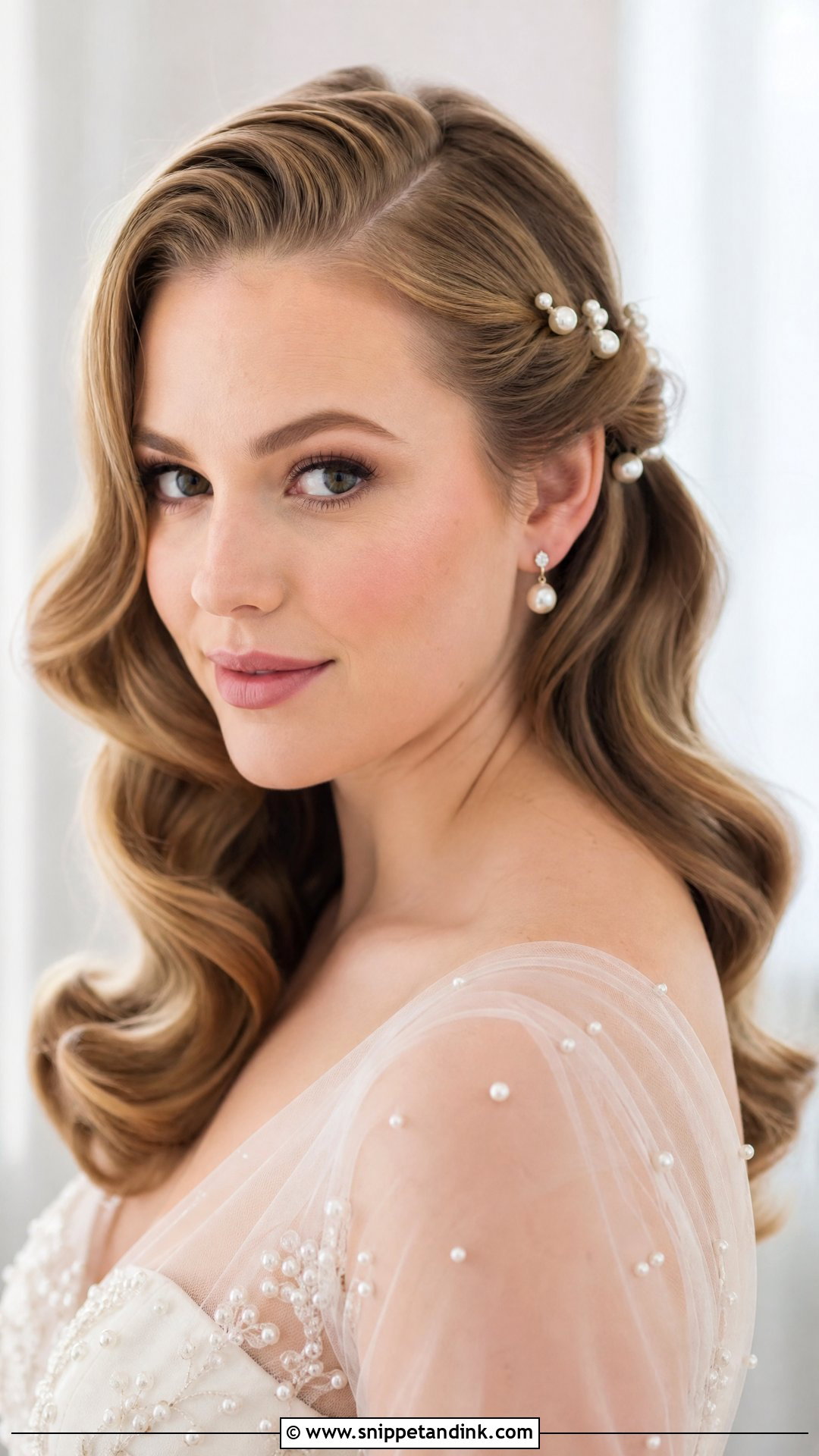
Pearl pins work best when the waves are smooth enough for the pearls to sit clearly on the surface; on very textured hair they disappear. I scatter them along one side, near the tuck behind the ear, or around the lower crown, and push each one in against a hidden bobby pin so it can’t slide out of the curl. Keep the placement light. The waves are the feature, and the pearls should be the punctuation.
15. Glam Waves For Outdoor Wedding Bridal Hair
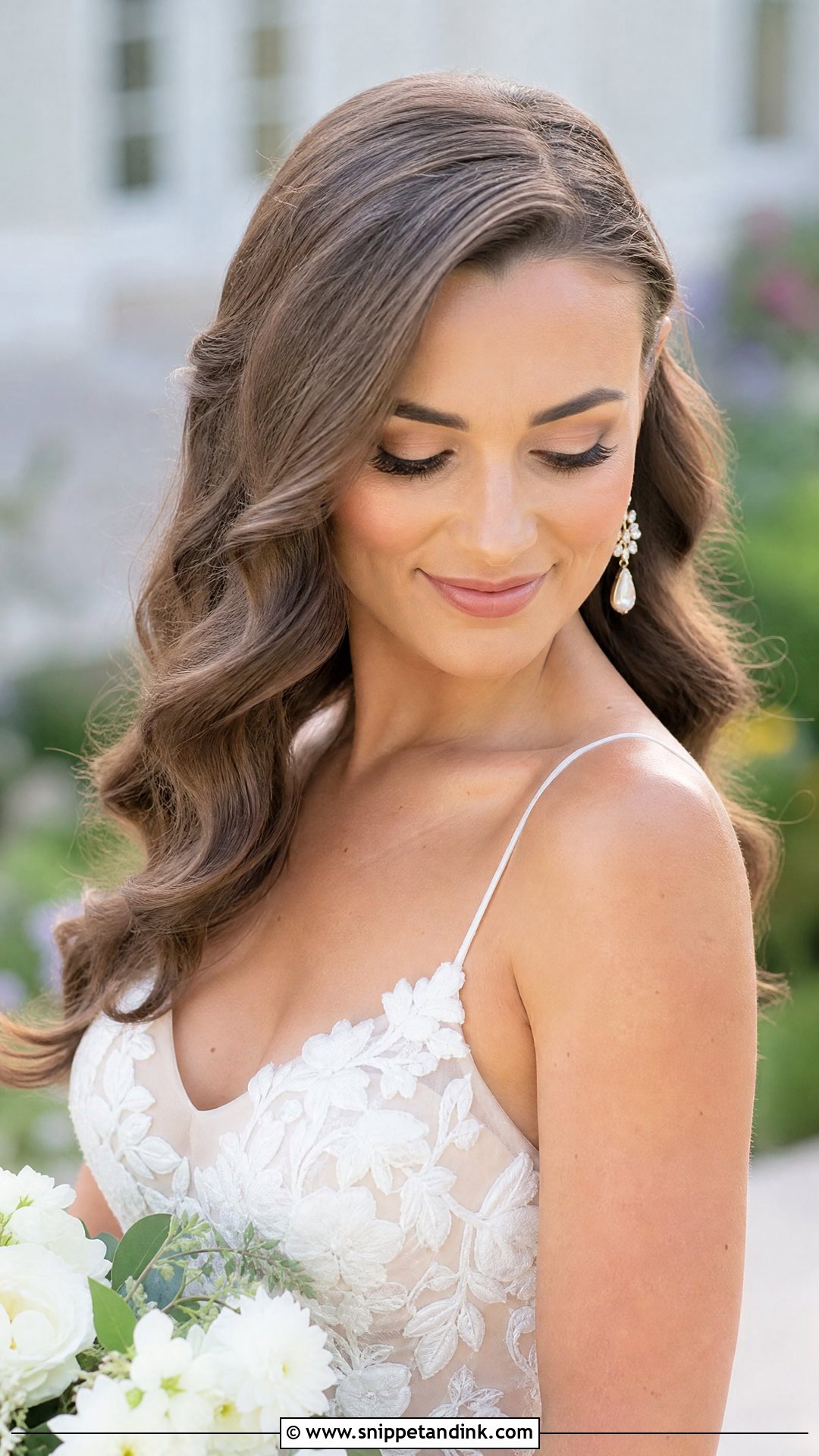
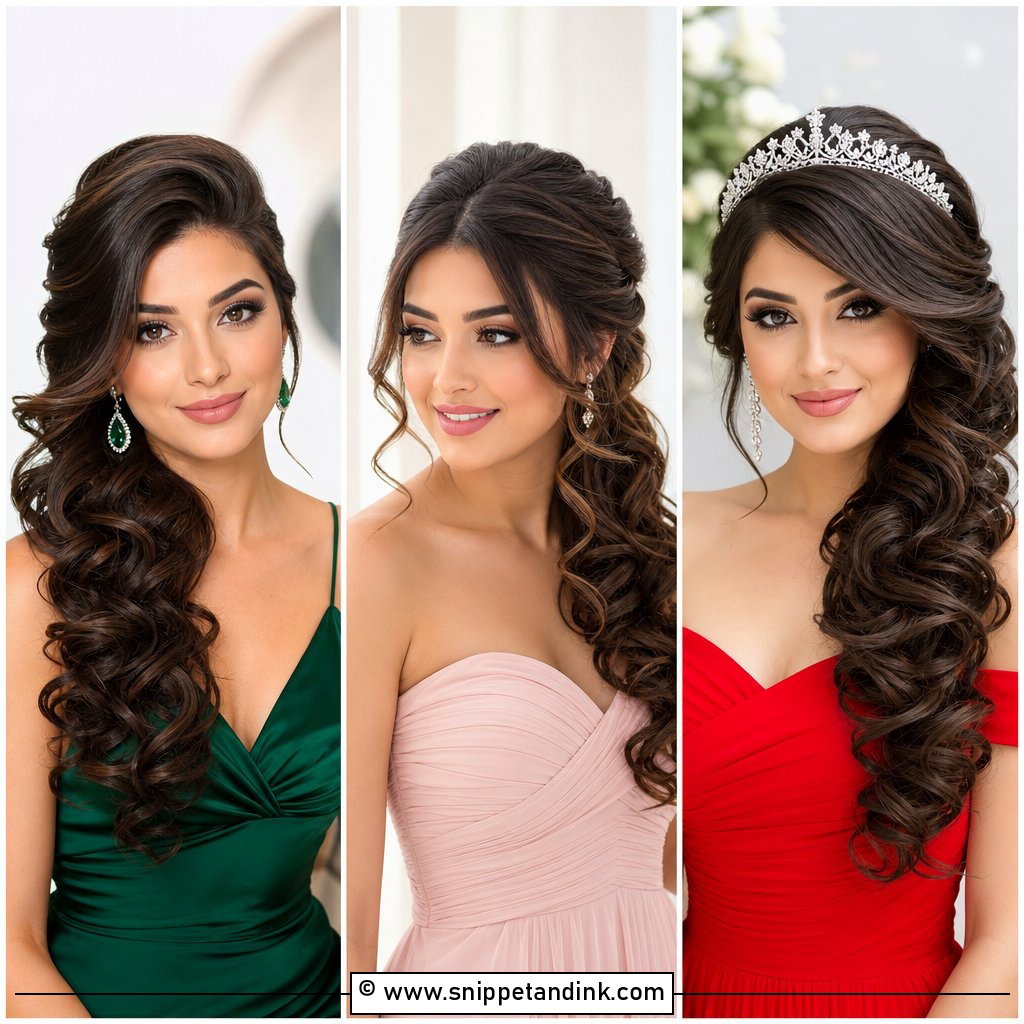
Outdoors, wind, humidity and heat soften curls much faster than in a ballroom, so the prep changes. I work an anti-humidity product through before curling, set every section in a pin curl, and finish with a flexible spray rather than a hard one, which cracks in wind. Softer waves age better outside than perfect ones, because they still look intentional as they drop. A side sweep, half-up detail or a few hidden pins can control the face-framing pieces at gardens, coastal venues and rooftops.
Which Side Gets the Sweep at the Altar?
Side-parted waves are lopsided by design: one side full and swept, the other flatter or tucked behind an ear. That’s flattering in a portrait, but during the ceremony you’ll be seen mostly from one side for twenty minutes or more, and I want that to be the good side.
I ask every bride where she’ll stand and where the photographer plans to shoot the vows from. If guests and camera will mostly see your left profile, the fuller sweep goes on the left. Get it wrong and the bulk of the waves faces the officiant while the camera gets the tucked side and an earring.
Checking the back view
Processional and recessional photos are almost all from behind, and waves often look denser from the front than from the back, where hair splits around the shoulders. I always hand the bride a mirror to check the back at the trial. If it looks thin, a couple of hidden wefts or a soft half-up section fills it in. Under flash or bright sun, a glossy finish reads as healthy, while a matte texture spray can look dry.
Smooth Roots, Glossy Ends, Steady Hold
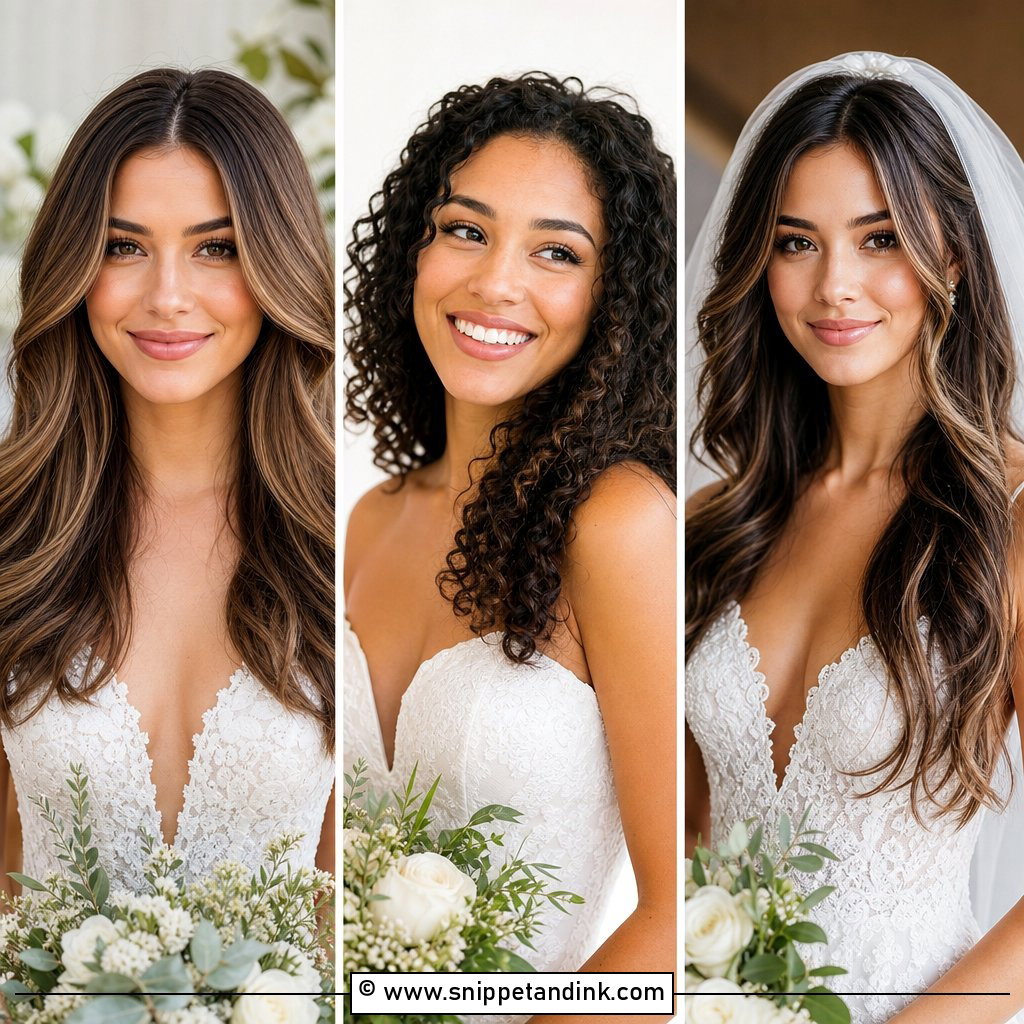
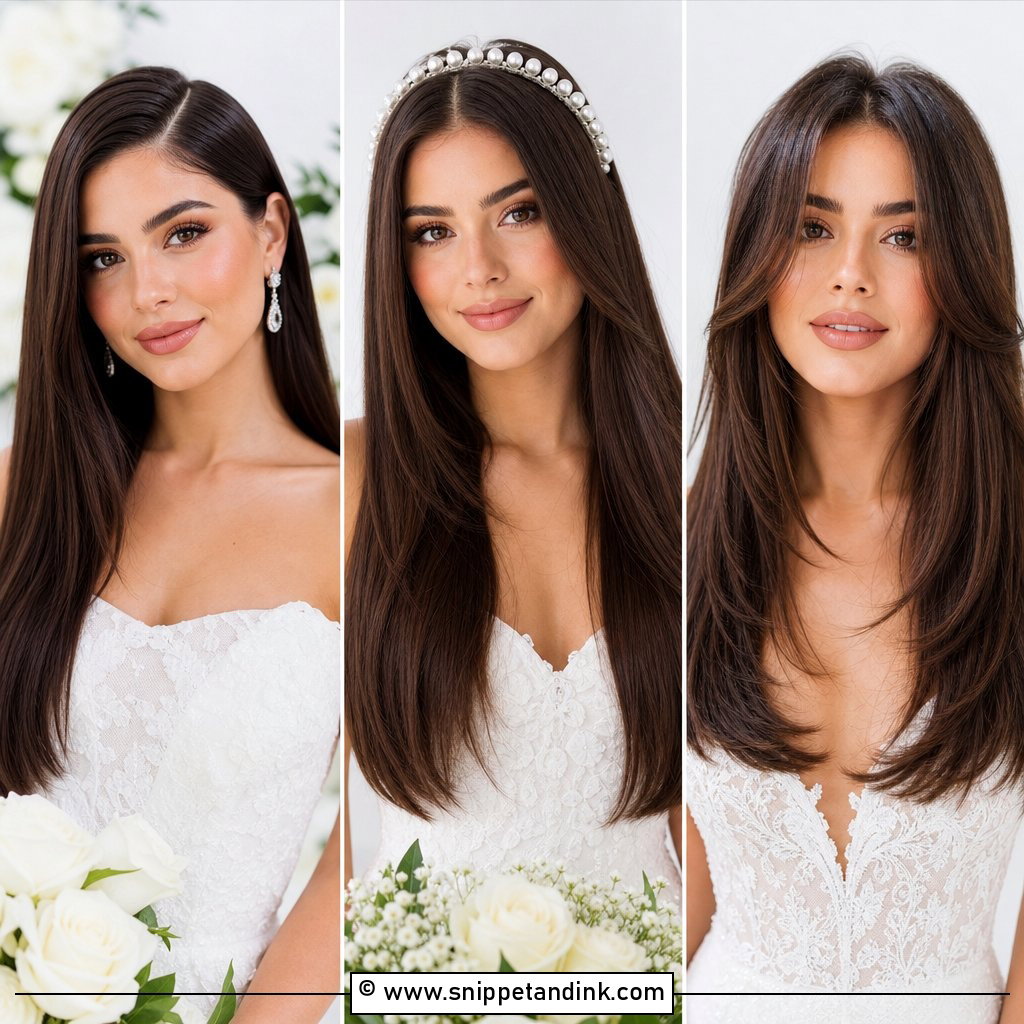
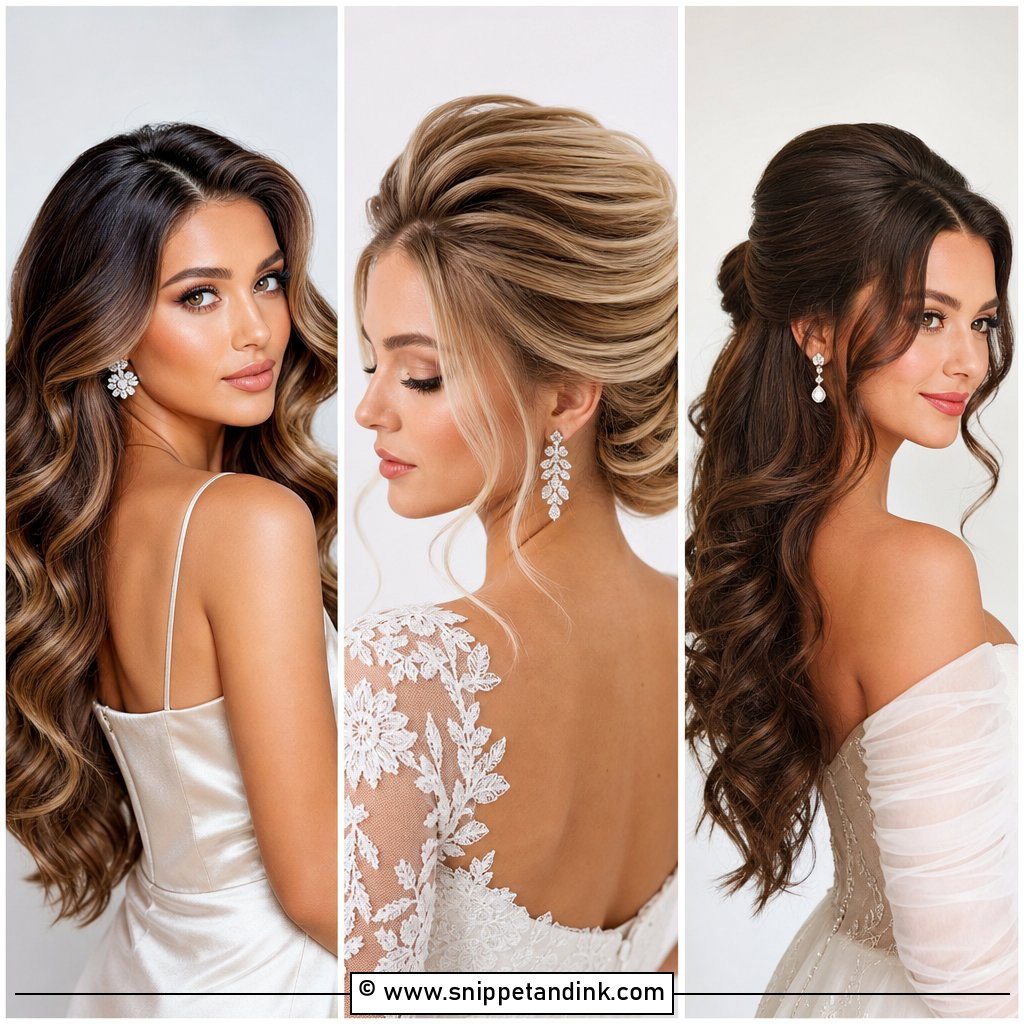
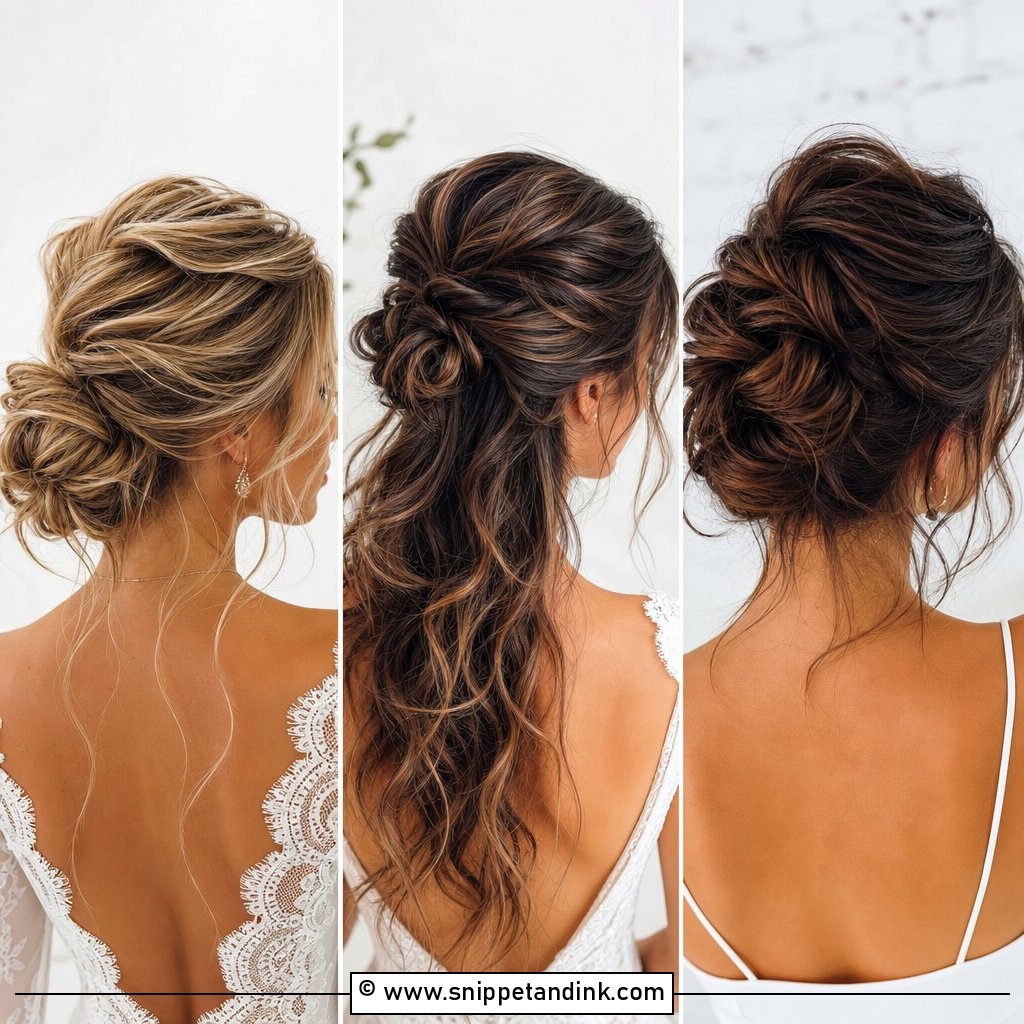
Glam waves hold their place because they look classic and current at the same time. Hollywood waves, loose soft glam, a half-up shape, a waved ponytail or a short waved bob can each be tuned to your dress and venue. What separates good from great is prep, shine, hold and a wave size that suits your length. Bring your veil and accessories to the trial, ask me how the shape will cope with your venue and season, then wear it home and see how it looks by dinner.
You'll Like These Ideas:


Leave a Reply