
Brides with a fringe often arrive at their consultation ready to pin it away, and I usually talk them out of it. Your bangs are part of how your face looks every day, so a wedding style that hides them can make you look oddly unlike yourself in photos. Done well, bridal hair works with bangs rather than around them, whether yours are curtain, wispy, side-swept, blunt or micro. The fringe frames your eyes; the rest of the style handles the dress, the veil and the venue. Below are 15 ways to wear them, plus how I set a fringe so it still sits right after hours of hugs and a warm room.
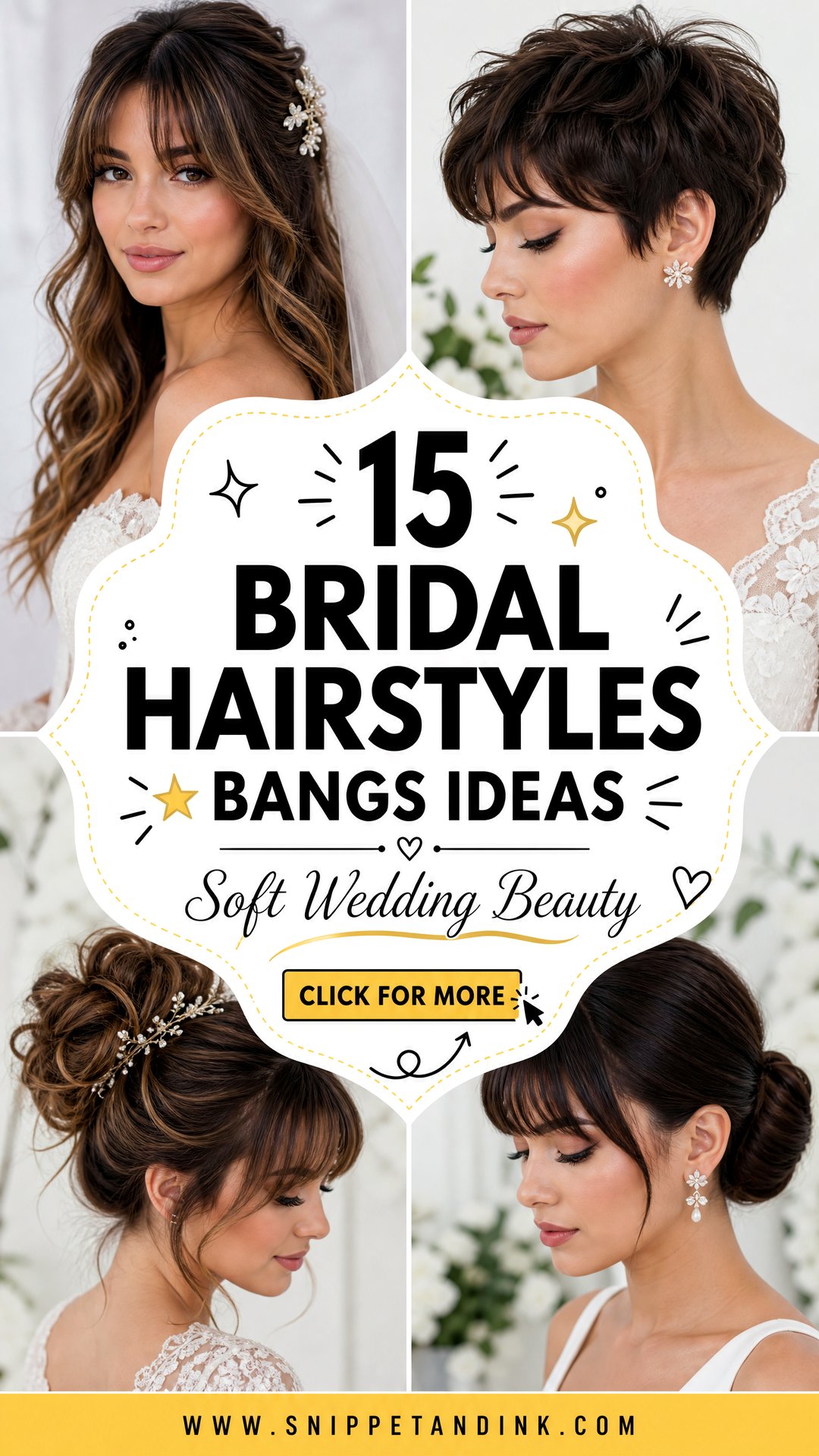
How I Set a Fringe to Survive Tears and a Warm Room
Bangs sit right on the forehead, the oiliest part of the face, and that’s what undoes them. By mid-afternoon, skin oil and foundation start to separate the fringe into strands. Crying during vows does the same thing faster. Here is my sequence on the morning:
- Wash the fringe on the wedding morning even if the rest of your hair is second-day. It takes five minutes and gives the cleanest start.
- Blow-dry with a small round brush, root first, then let the fringe cool around a large velcro roller while makeup is done.
- Ask your makeup artist to set the forehead with powder before the roller comes out, so the fringe isn’t resting on fresh foundation.
- A light dusting of dry shampoo on the underside of the fringe soaks up oil before it shows.
Give your bridesmaid blotting papers and a mini dry shampoo for touch-ups. Pressing a blotting paper to the forehead under the fringe after the ceremony keeps it lifting away from the skin for the reception.
A blusher veil is the other fringe hazard. Lying over the bangs during the processional, it presses them flat against the forehead. I set the fringe with a touch more lift if a blusher is planned, and whoever lifts the veil should raise it straight up and back rather than dragging it over the hair.
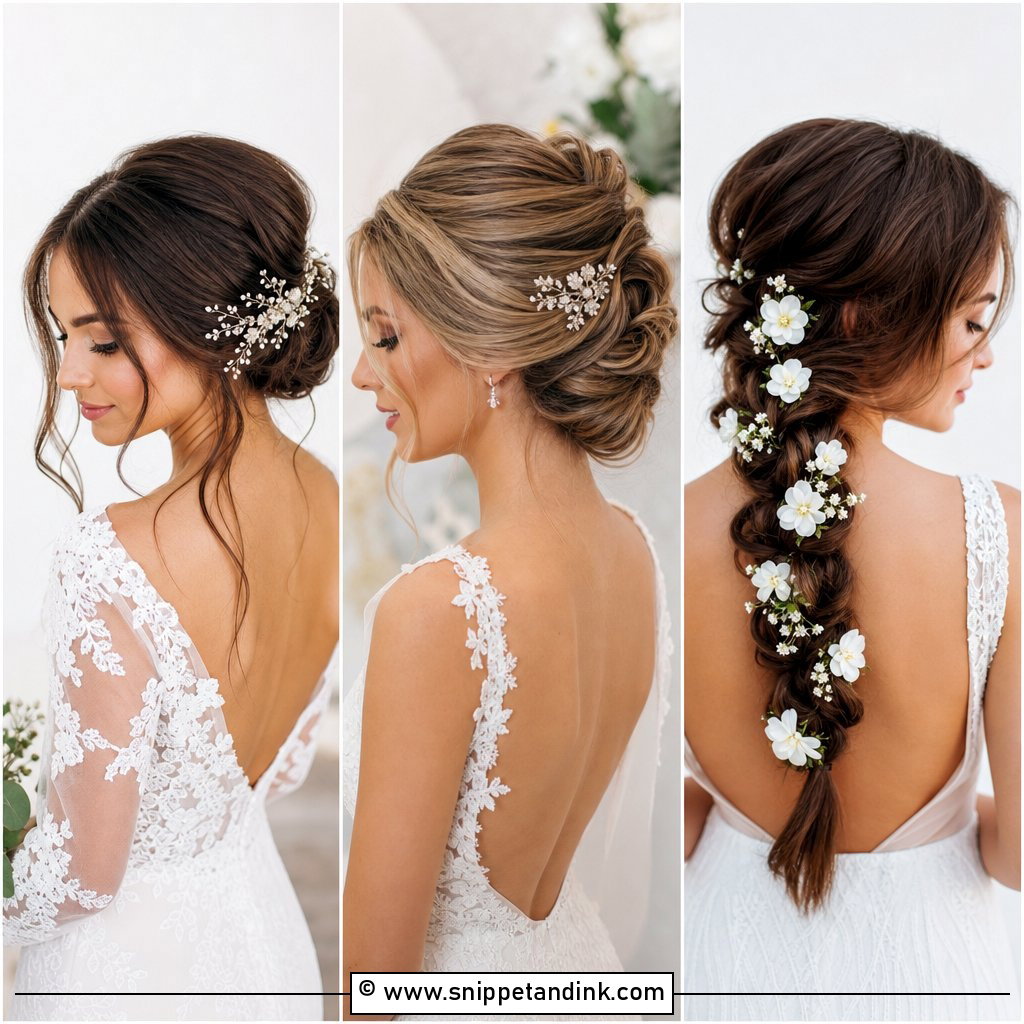
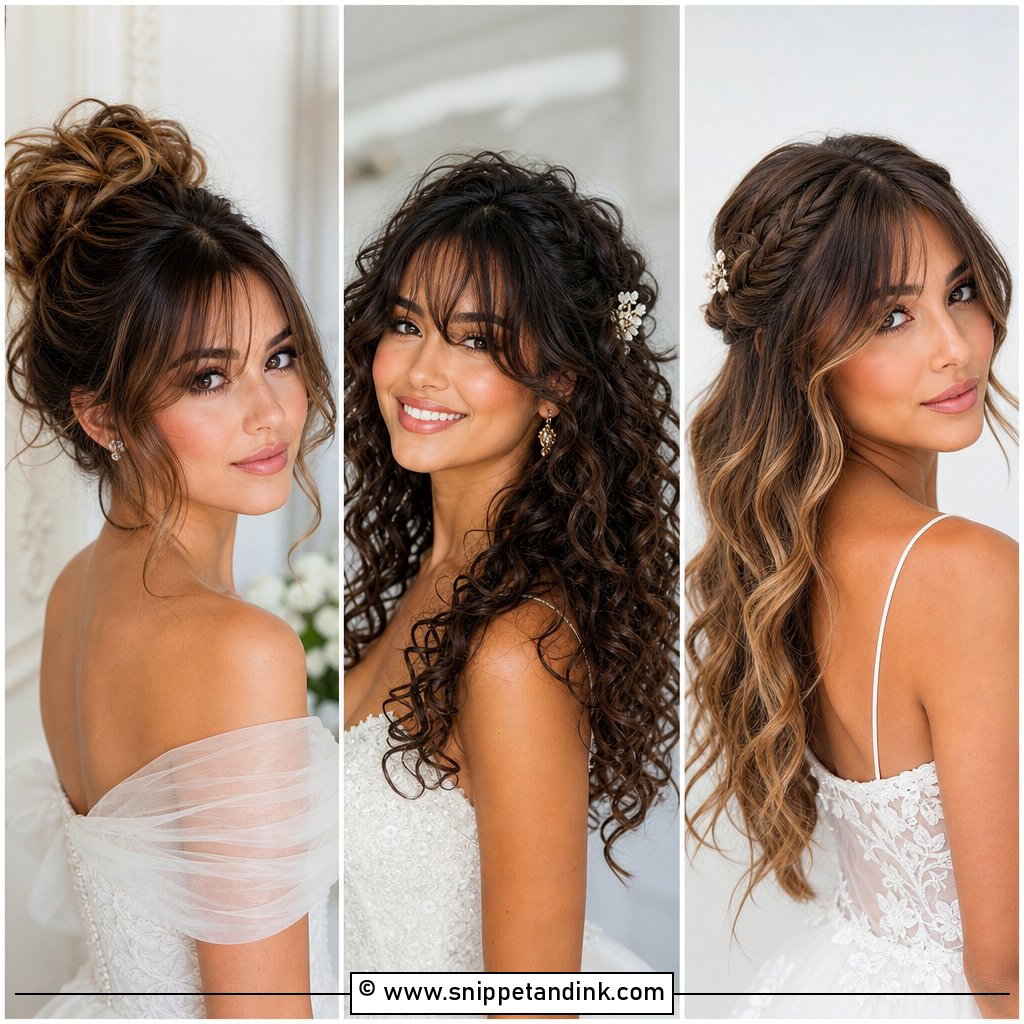
1. Bridal Updo With Curtain Bangs
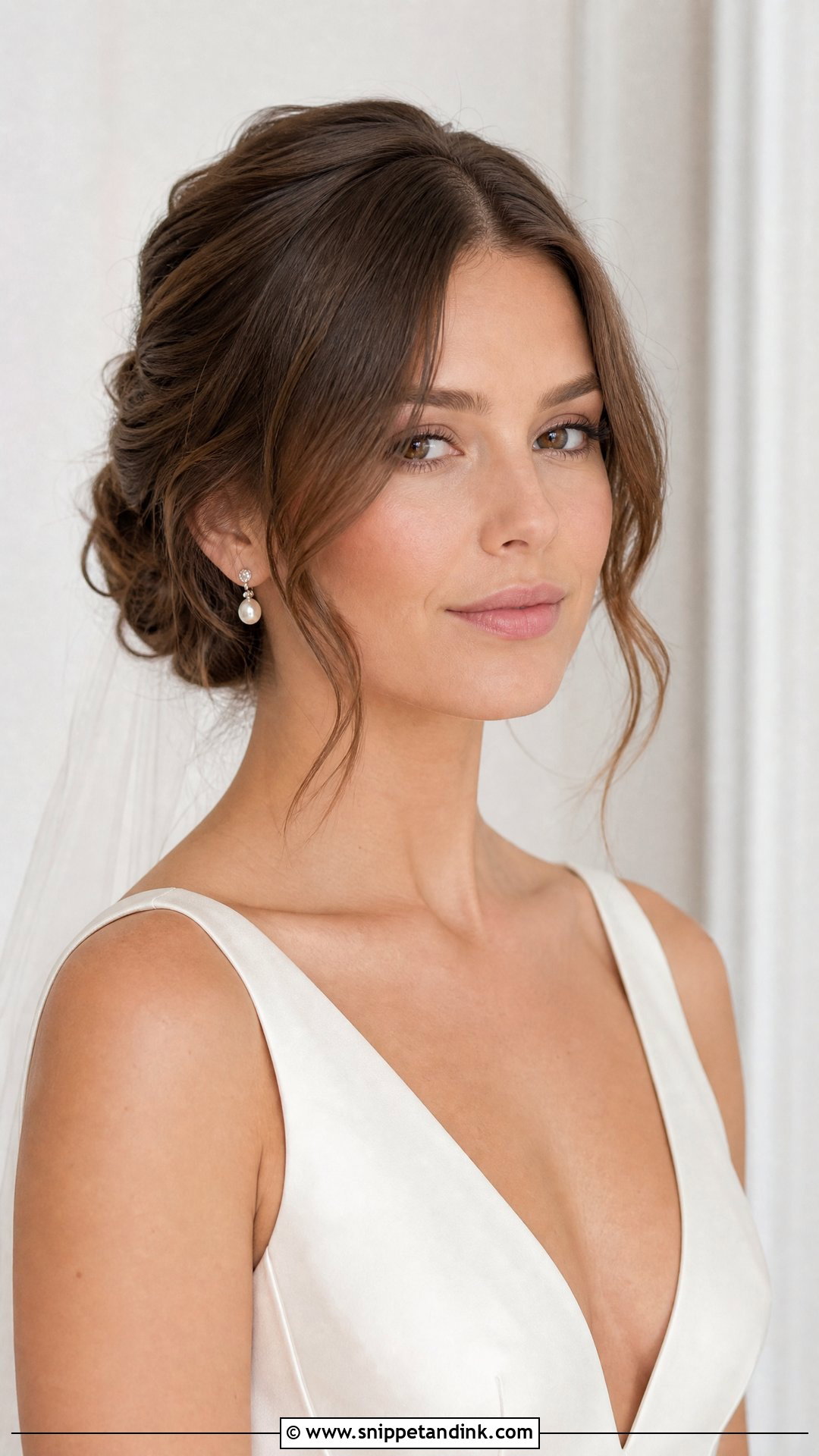
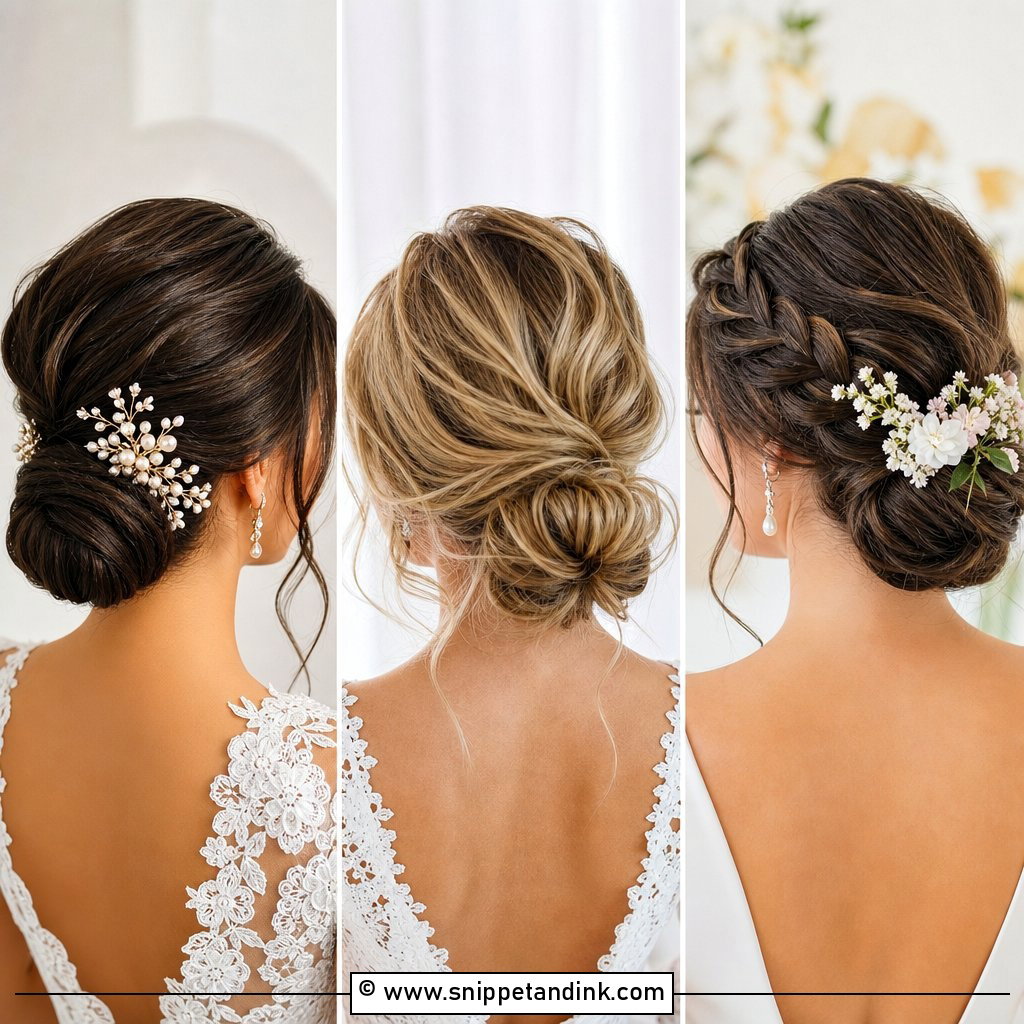
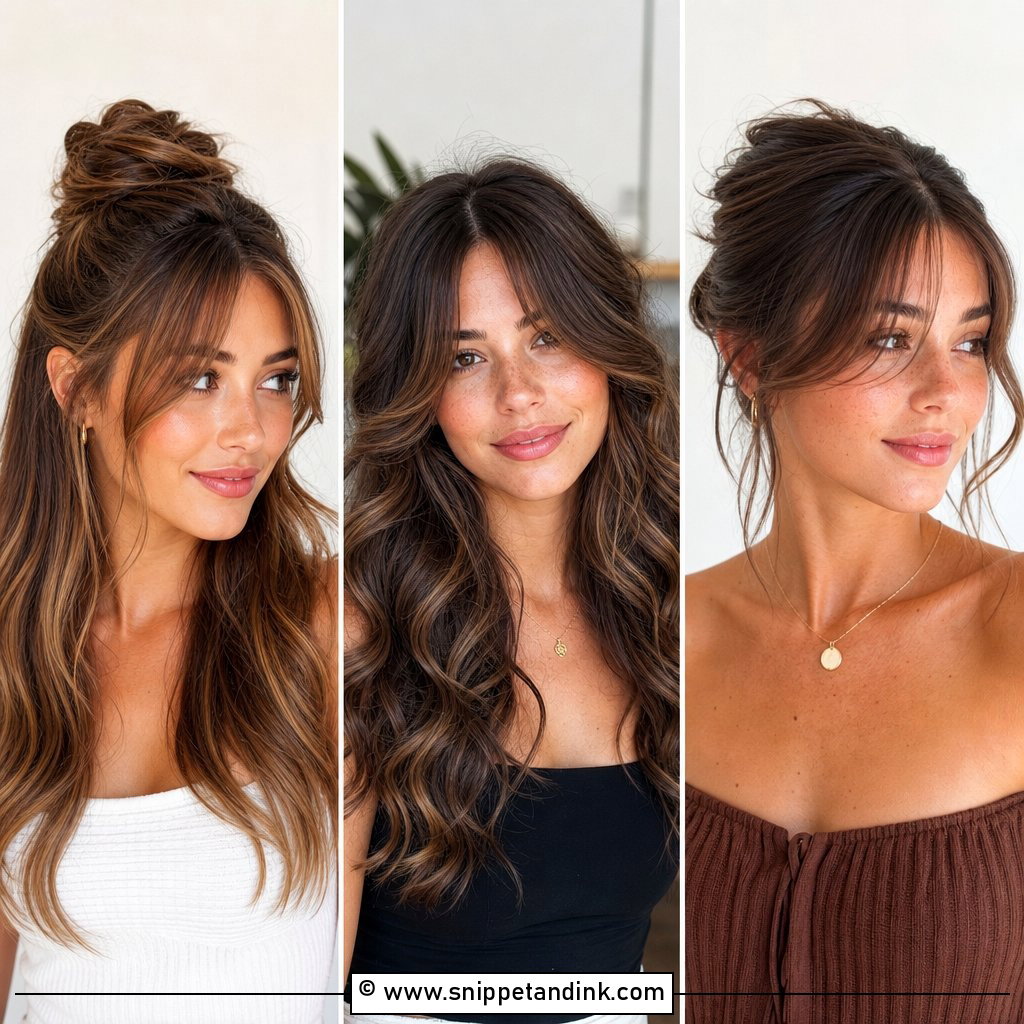
The easiest fringe to style for a wedding is curtain bangs, because they already part in the middle and blend into face-framing pieces. I blow-dry them with a small round brush, smooth at the root and bending outward at the ends, then let them cool before touching them. The updo behind can be a low bun, a textured chignon or a twisted back section; any of them keeps the neck clear for earrings and a veil.
2. Bridal Low Bun With Wispy Bangs
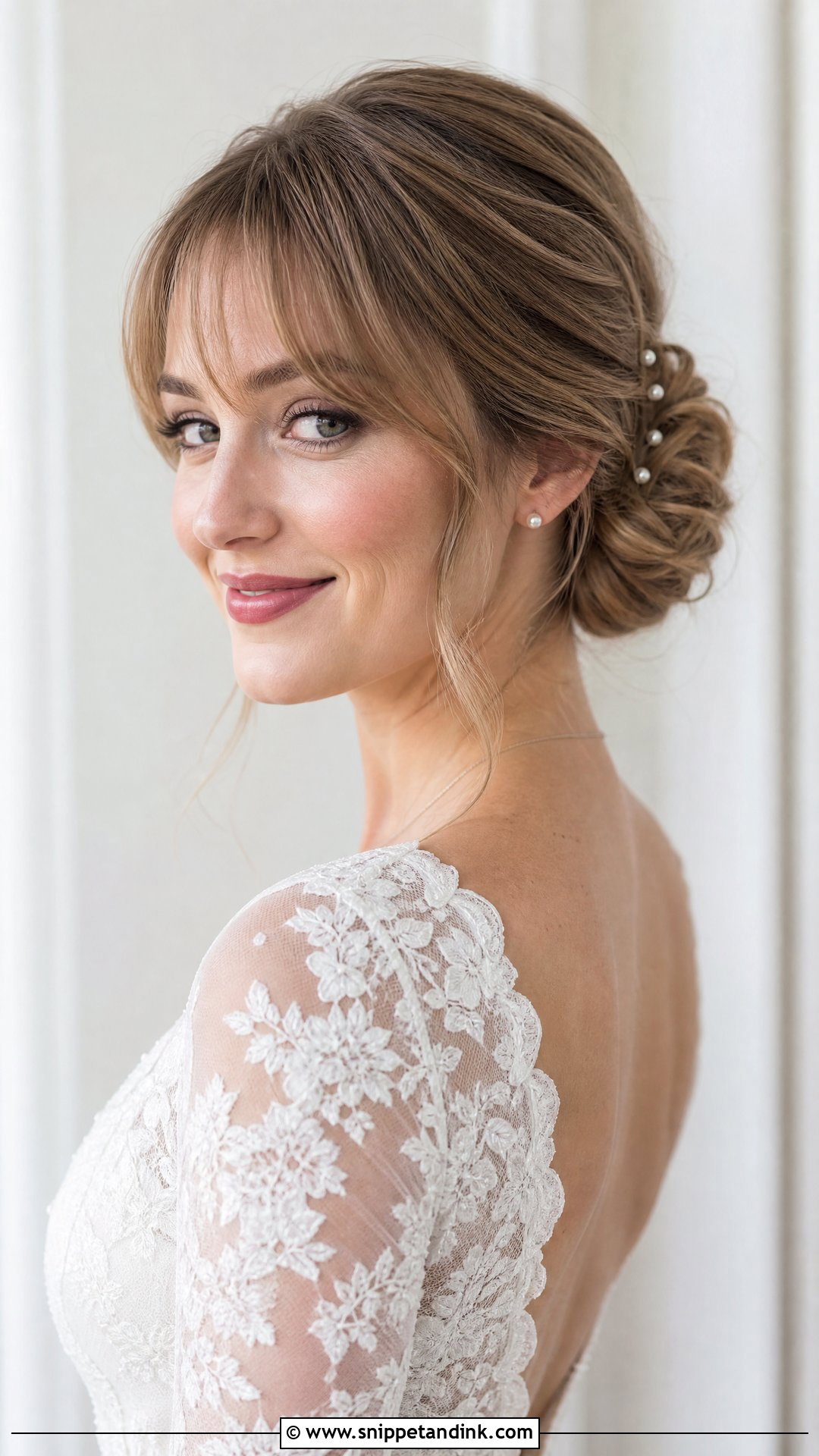
Wispy bangs are the most fragile kind. Too much spray and they clump into three stiff strands; too little and they part in the wrong place by lunch. I use a tiny amount of light paste rubbed between my fingers, never gel, and keep them airy so they move. The low bun sits near the nape and shows its shape best from the side. Pearl pins or a slim comb above the bun keep the accessory away from the fringe, which is already doing enough at the front.
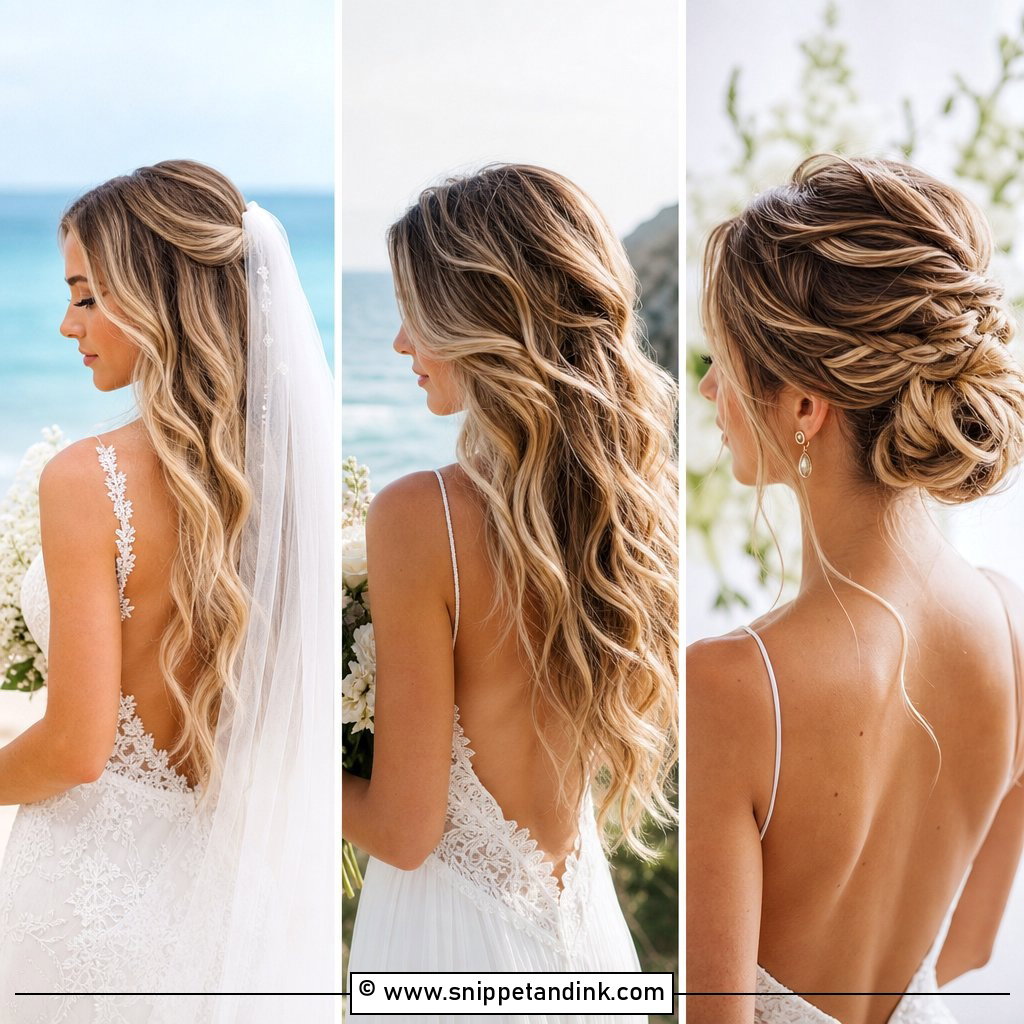
3. Bridal Half Up Hair With Bangs
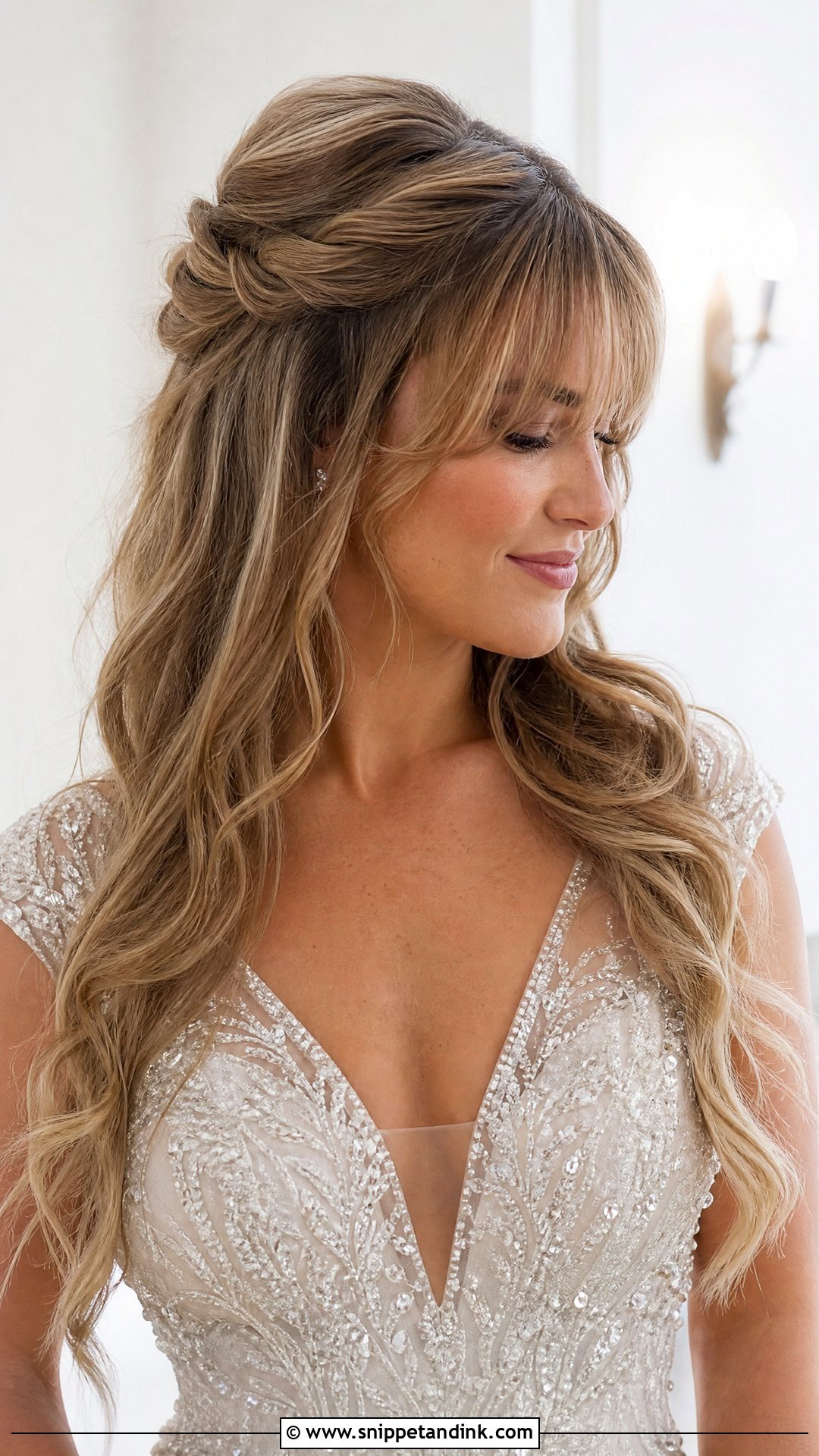
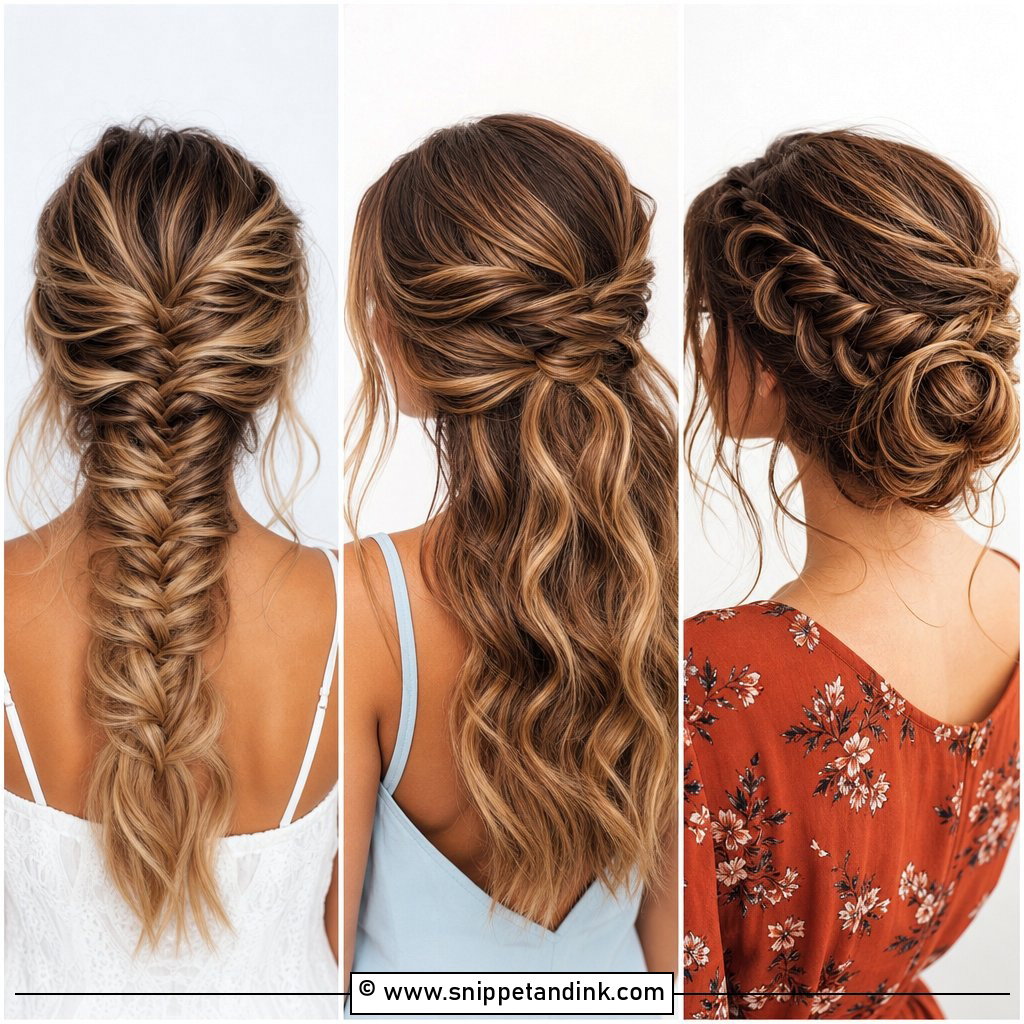
Half up styles give a fringe the most room. The top section is twisted, braided or pinned at the back, and the rest falls in waves. From the front, the bangs make the style look complete even before you see the back, which matters because most of your close-up portraits are face-on. Curtain and long side bangs blend in most easily. The pinned section gives a veil comb a firm place to sit.
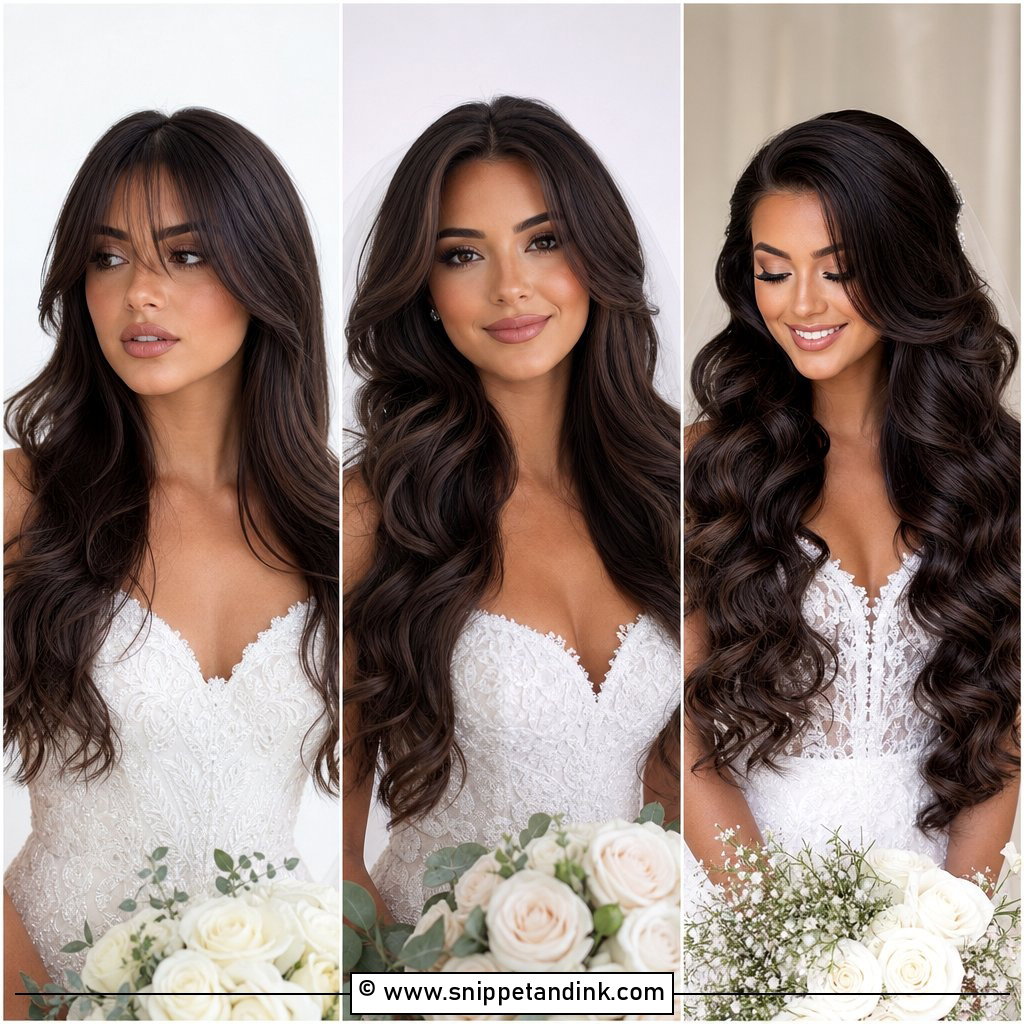
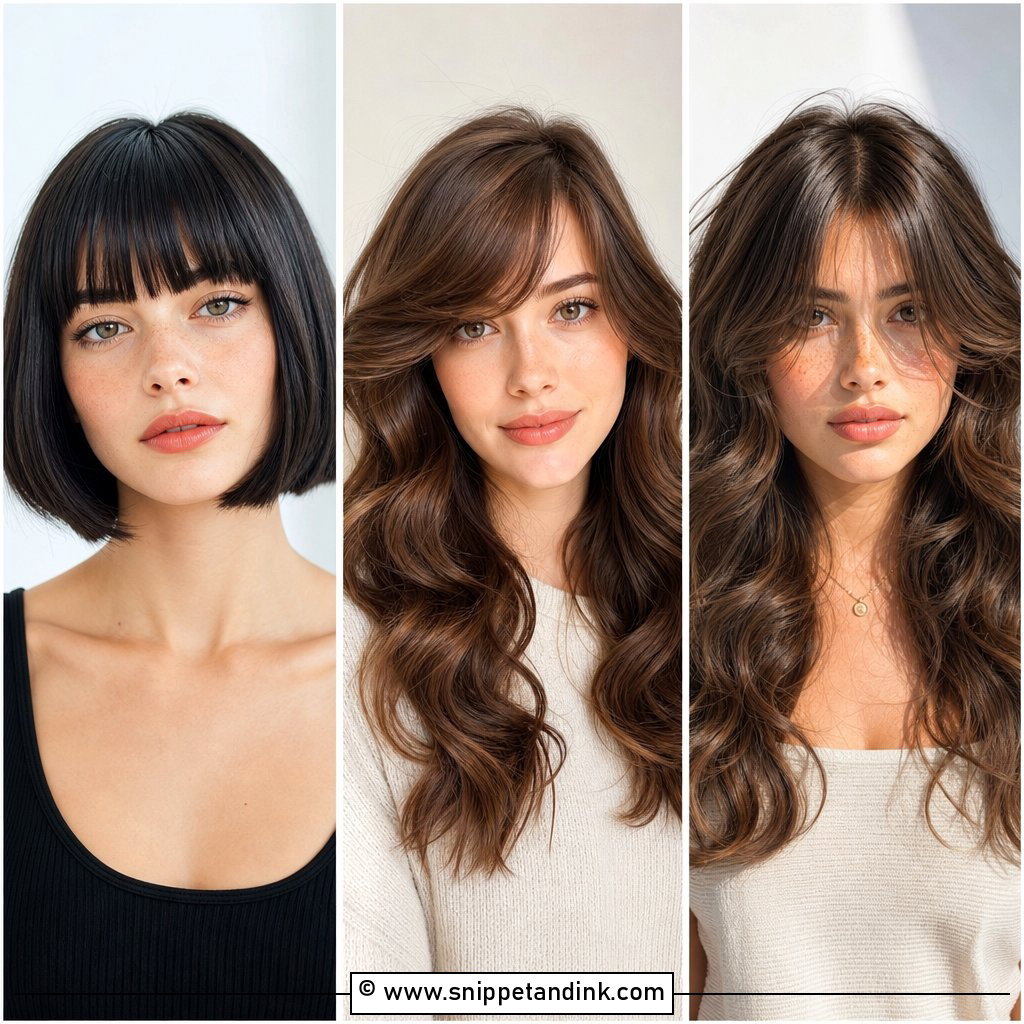
4. Bridal Loose Waves With Curtain Bangs
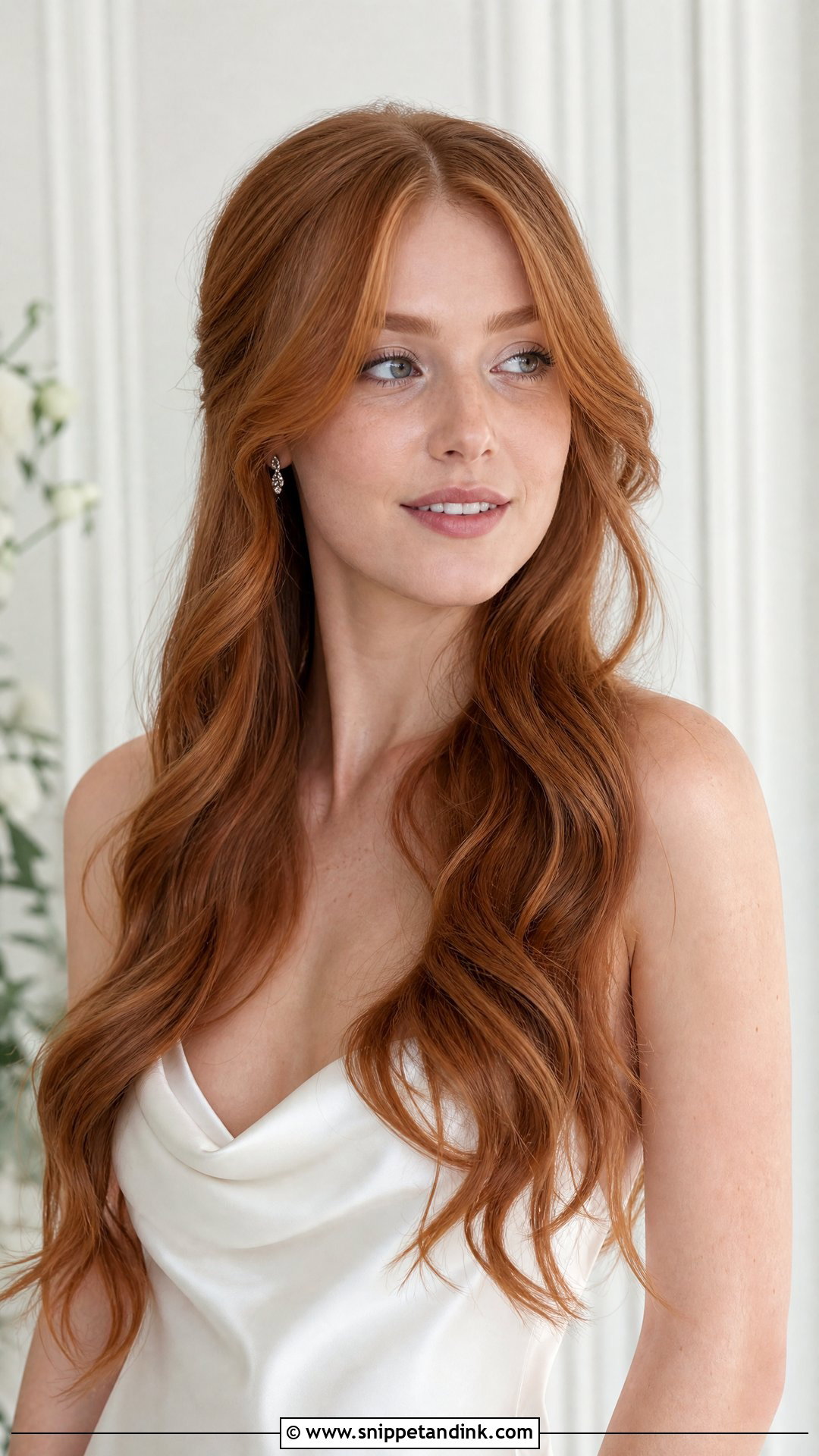
Curtain bangs and loose waves can look like the same effort as a weekday blow-dry if the waves are too beachy, so I keep them brushed and smooth. The middle part matters: I check it in the mirror from straight on, because a part that’s slightly off center pulls one side of the fringe longer than the other. Light root lift and a flexible spray keep it soft. Hidden pins just behind the hairline hold the fringe in place in wind without showing. Strapless and simple satin gowns suit it.
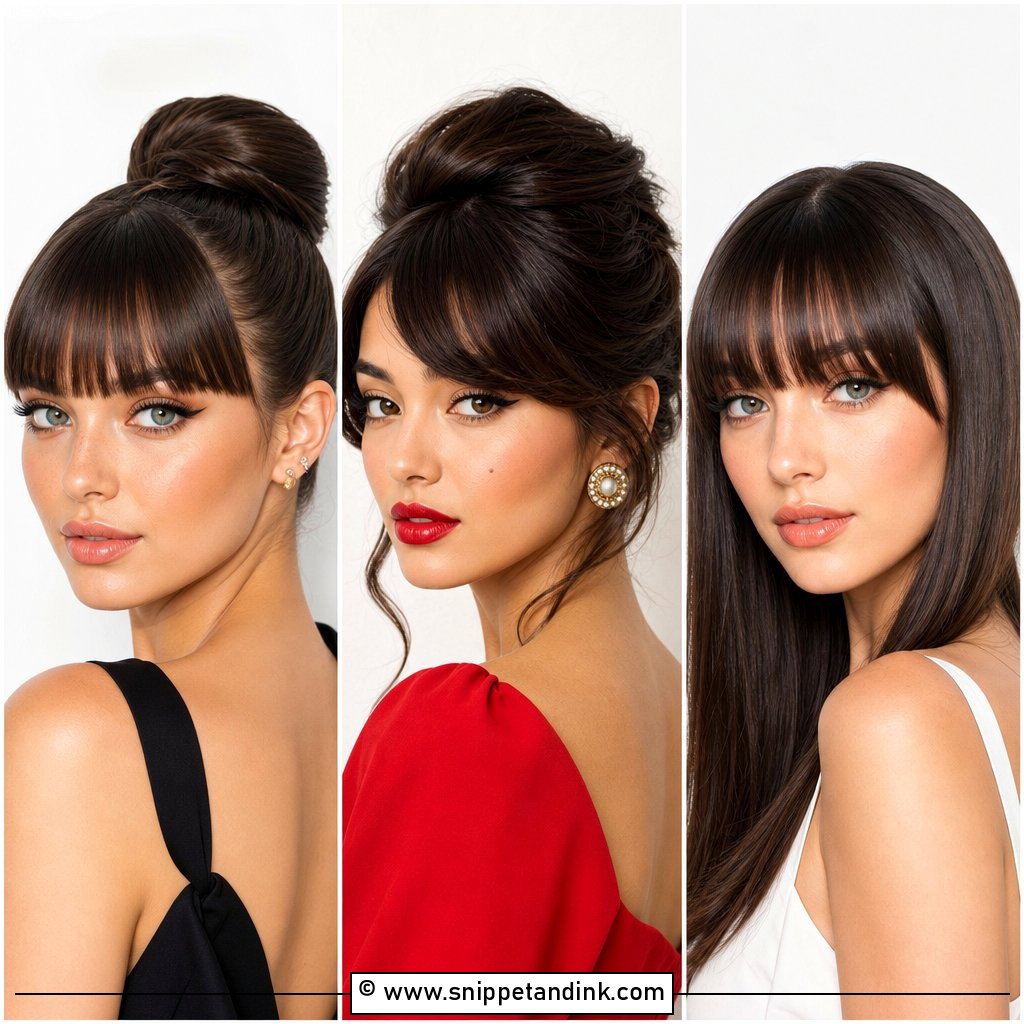
5. Bridal High Bun With Blunt Bangs
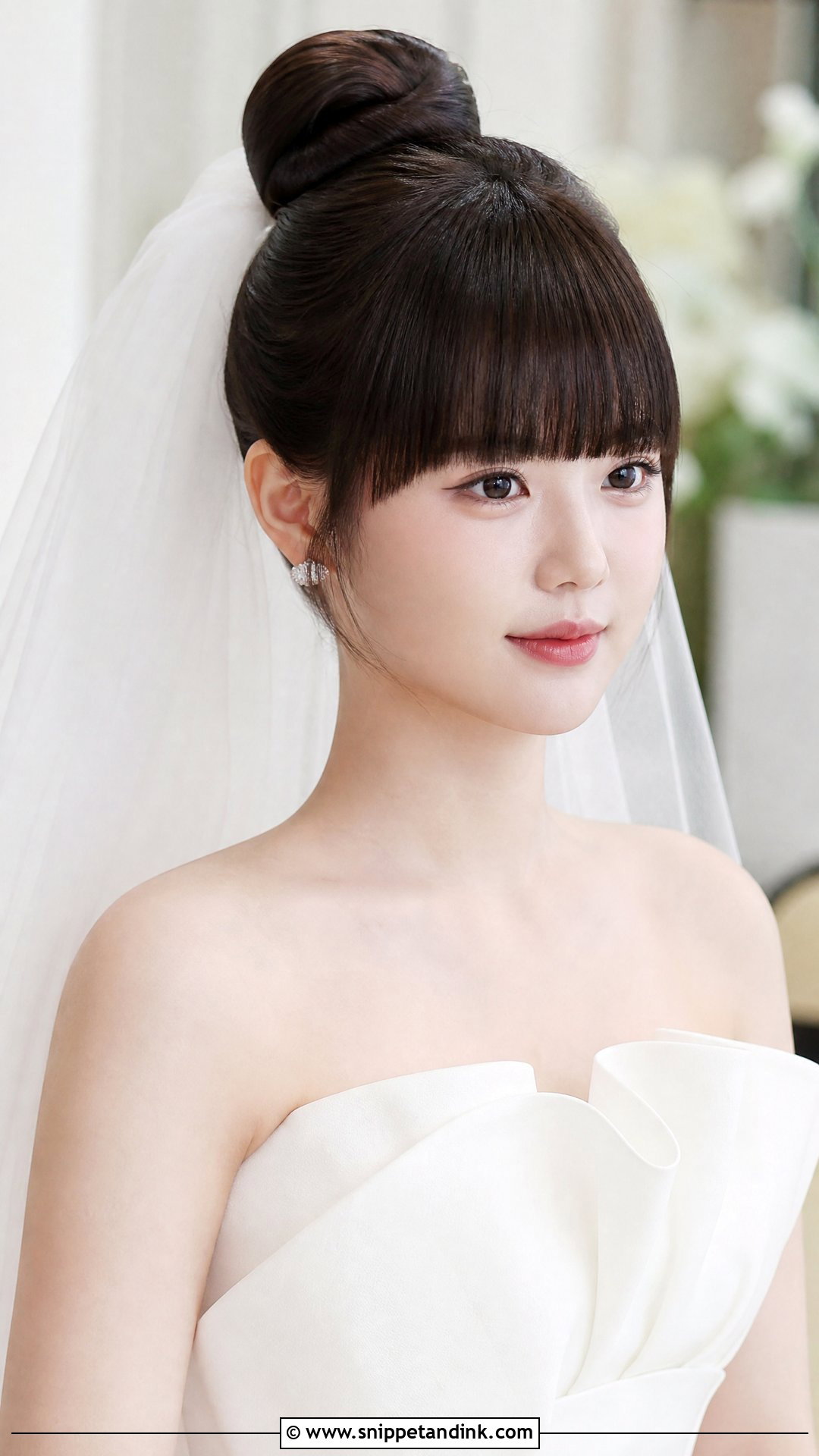
Blunt bangs leave no room for error, so timing the trim is everything. I’d have them cut about a week before the wedding, sitting at or just above the brows; a cut the day before can look sharp and freshly chopped in close-ups, and a cut three weeks before will be in your eyes. The high bun gives height, and the straight fringe frames the face like a bracket. It suits square necklines and minimal accessories. Smooth the bun for the classic version or loosen it slightly if the overall look feels too strict.
6. Bridal Chignon With Side Bangs
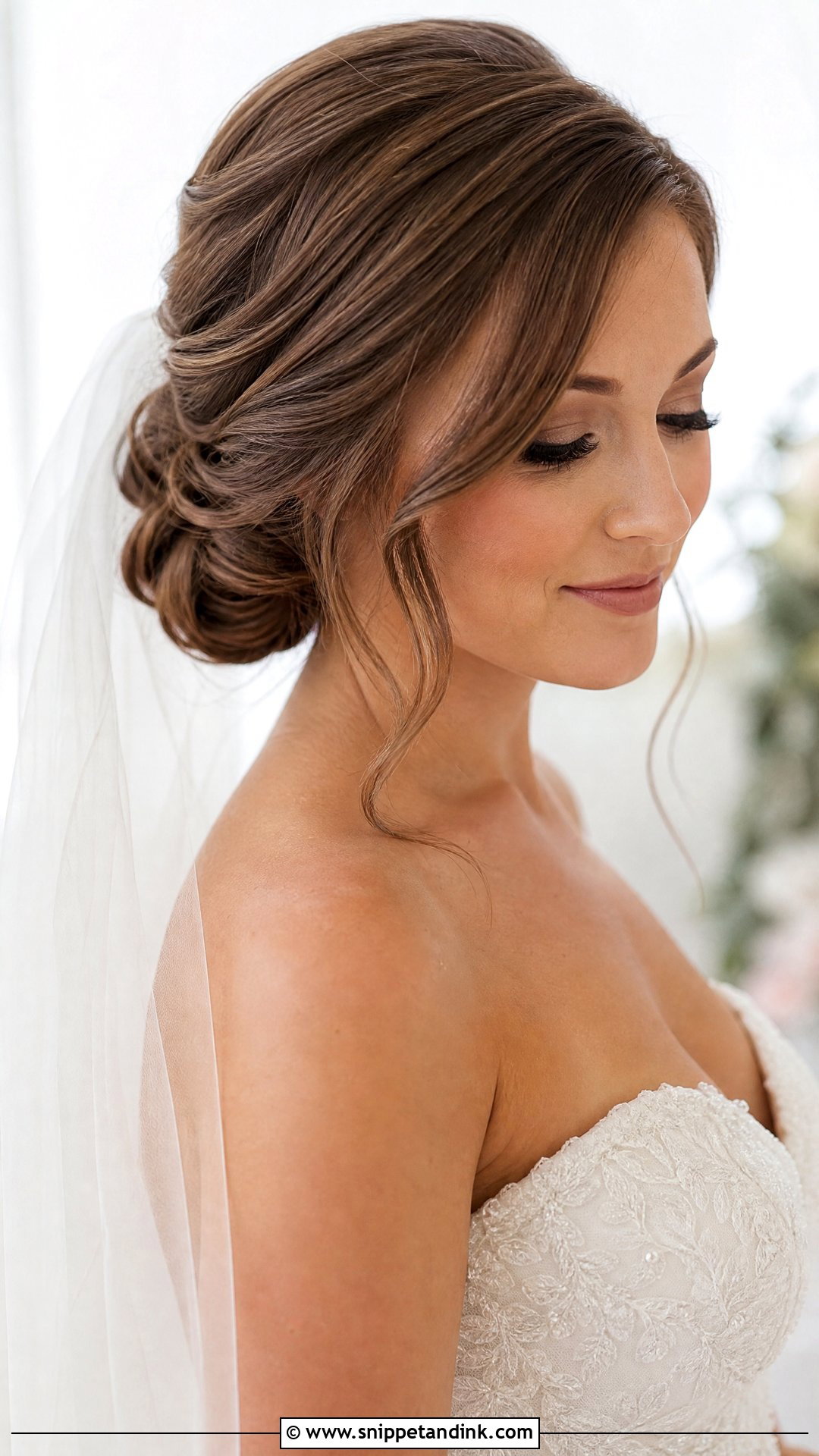
Side bangs are what I suggest to brides who are halfway through growing a fringe out. The longer pieces sweep across the forehead and tuck into the low chignon, so any awkward length simply blends in. The chignon sits close to the head and takes a veil or comb easily. I blow-dry the fringe in the direction of the sweep, then pin it lightly at the temple until the last minute so it sets in that shape.
7. Bridal Ponytail With Bangs
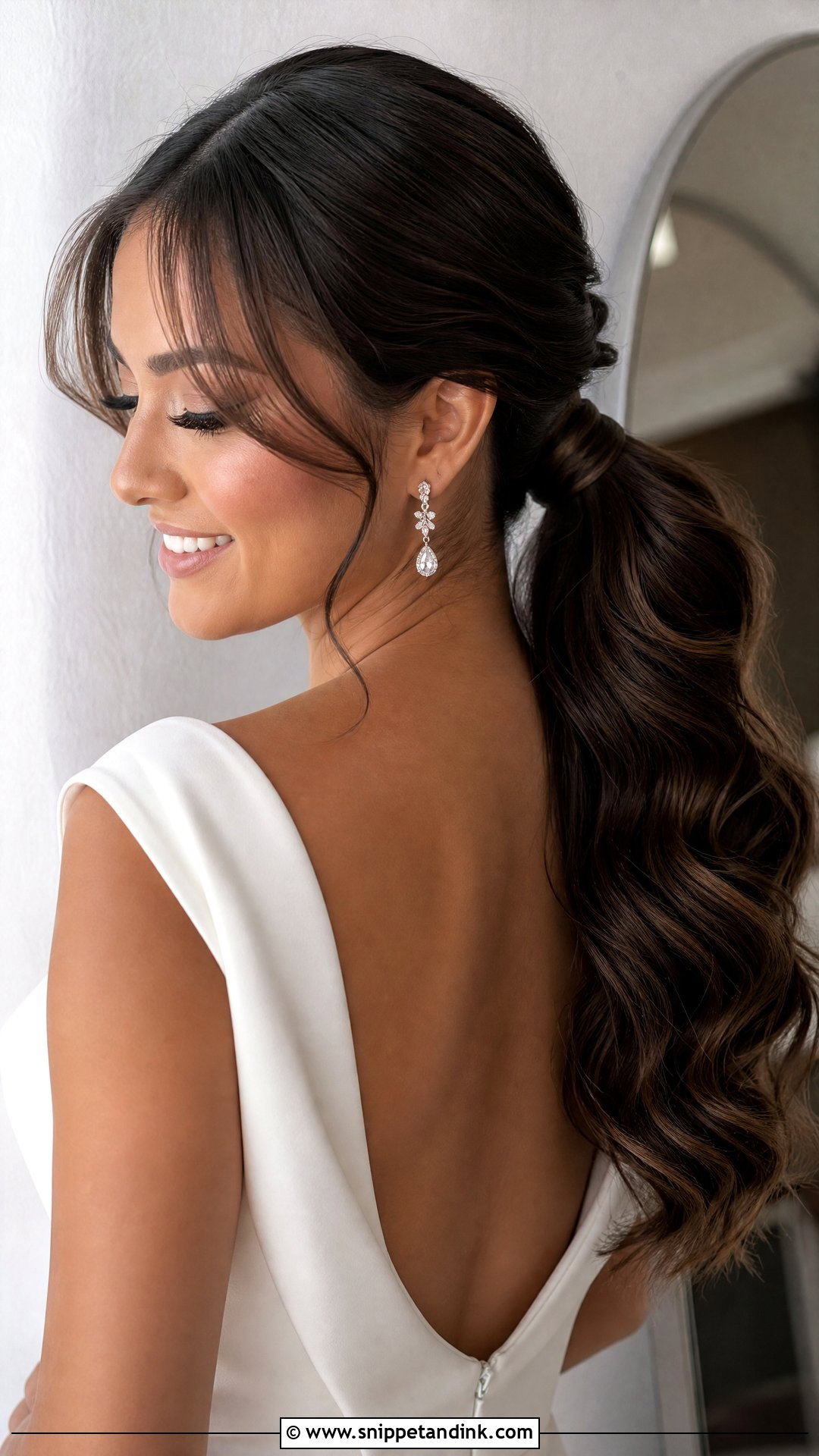
Bangs keep a ponytail from looking scraped back, which is the usual worry with this style. High ponytails feel lifted; low ones read softer. I pull the ponytail back with the fringe sectioned off and clipped away first, so I don’t accidentally drag fringe hairs into the base and leave a gap at the front. Loose waves fill out the tail, and a wrapped section hides the elastic. Warm-weather weddings and long dancing nights suit this best.
8. Bridal Braided Crown With Bangs
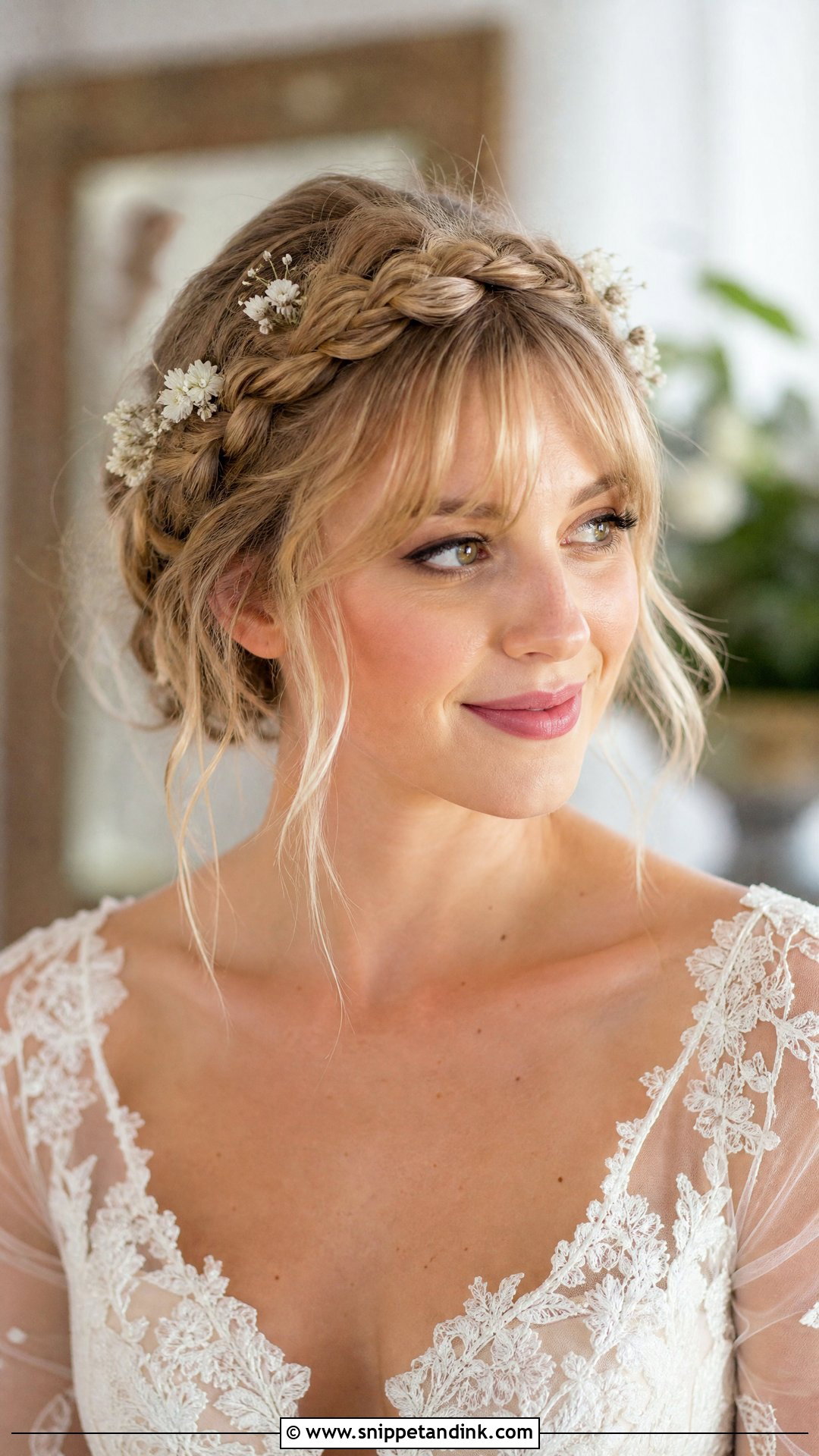
Braided crowns can tip into costume territory when the front is scraped clean. Leaving the bangs loose and shaped around the face keeps it grounded. The braid wraps around the head or crosses the crown and gives the back its detail. Wispy, curtain and longer fringe all work. I start the braid behind the fringe line so the two don’t fight, and pull the braid slightly loose for fullness. Tiny floral or pearl pins finish it.
9. Bridal Bob With Bangs
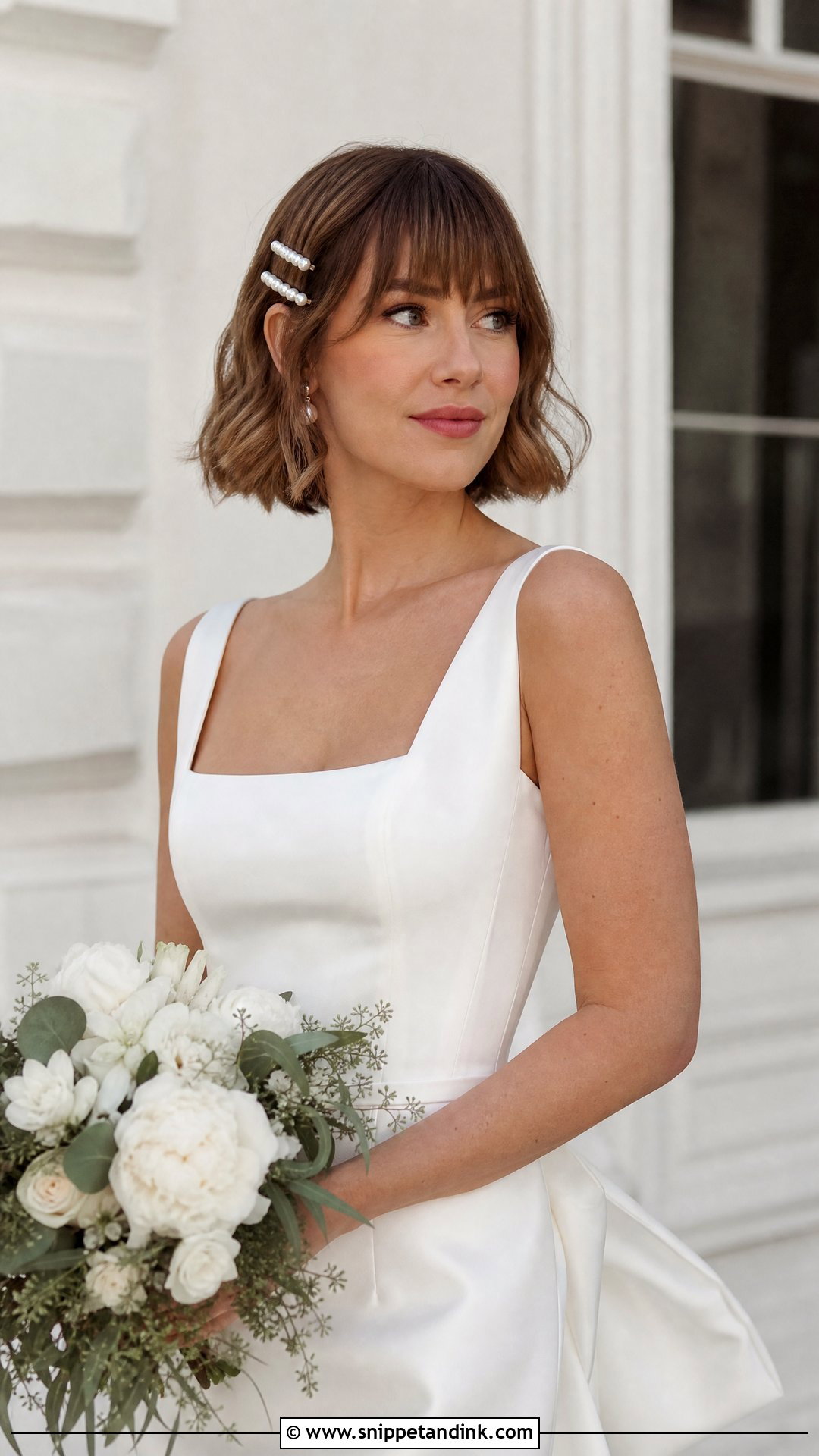
A bridal bob with bangs doesn’t need extensions or an updo to feel like wedding hair; it needs a precise shape. Chin or jaw-length bobs can be sleek, tucked, softly waved or curved under for a vintage line. I add a little smoothing cream to the ends so they don’t flick out in humidity. A headband, pearl clips, a short veil or a small side comb all sit comfortably on a bob without swamping it.
10. Bridal Pixie Cut With Bangs
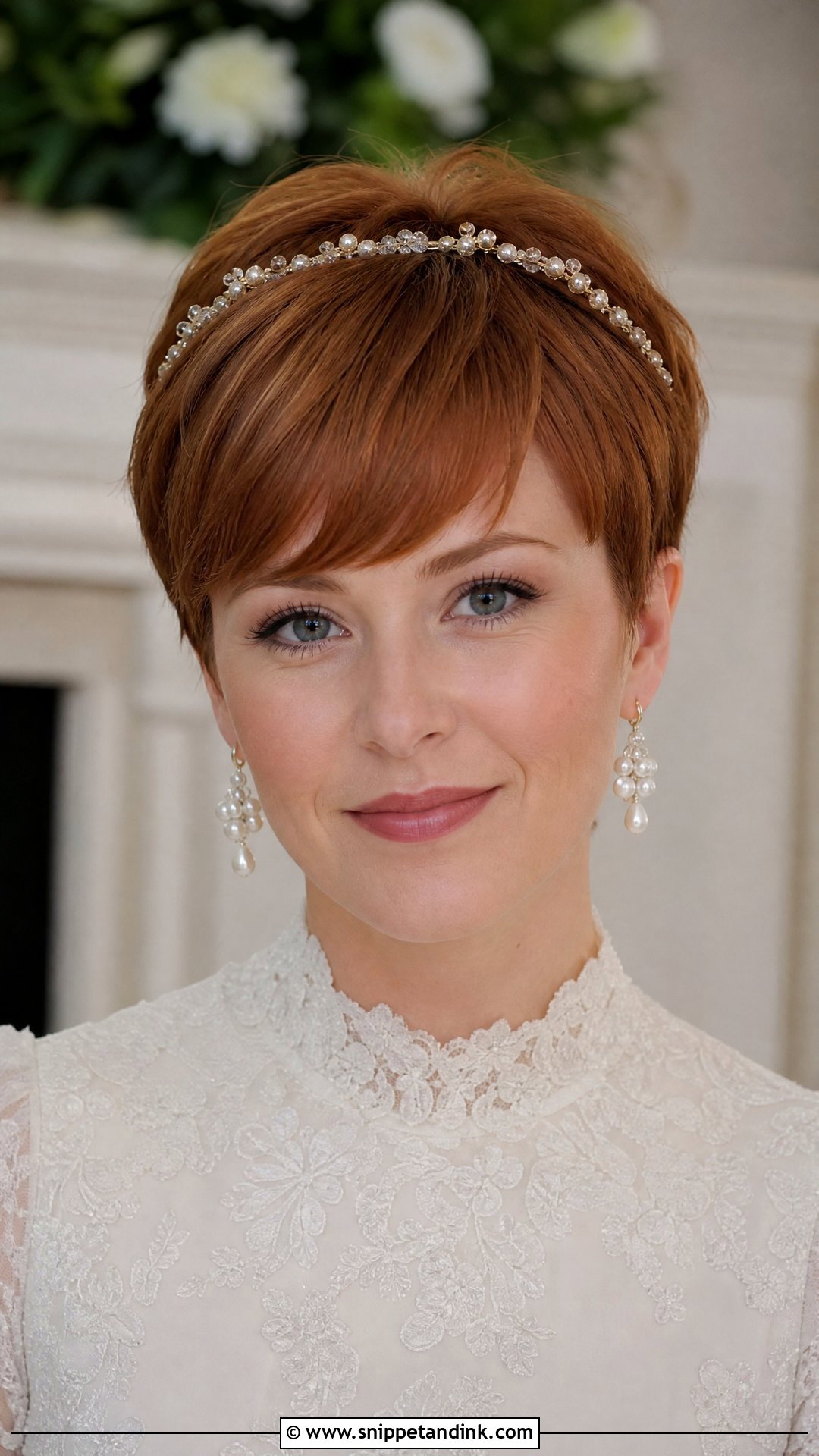
On a pixie, the fringe is most of the style. I focus on shape and shine: a touch of volume at the crown, smoothed sides and a fringe swept to one side or textured with a little wax. Statement earrings and high necklines show well with this cut, as do slim headbands and short veils pinned at the back. If you want it trimmed, have it done about a week before so the edges have softened.
11. Bridal Hollywood Waves With Side Bangs
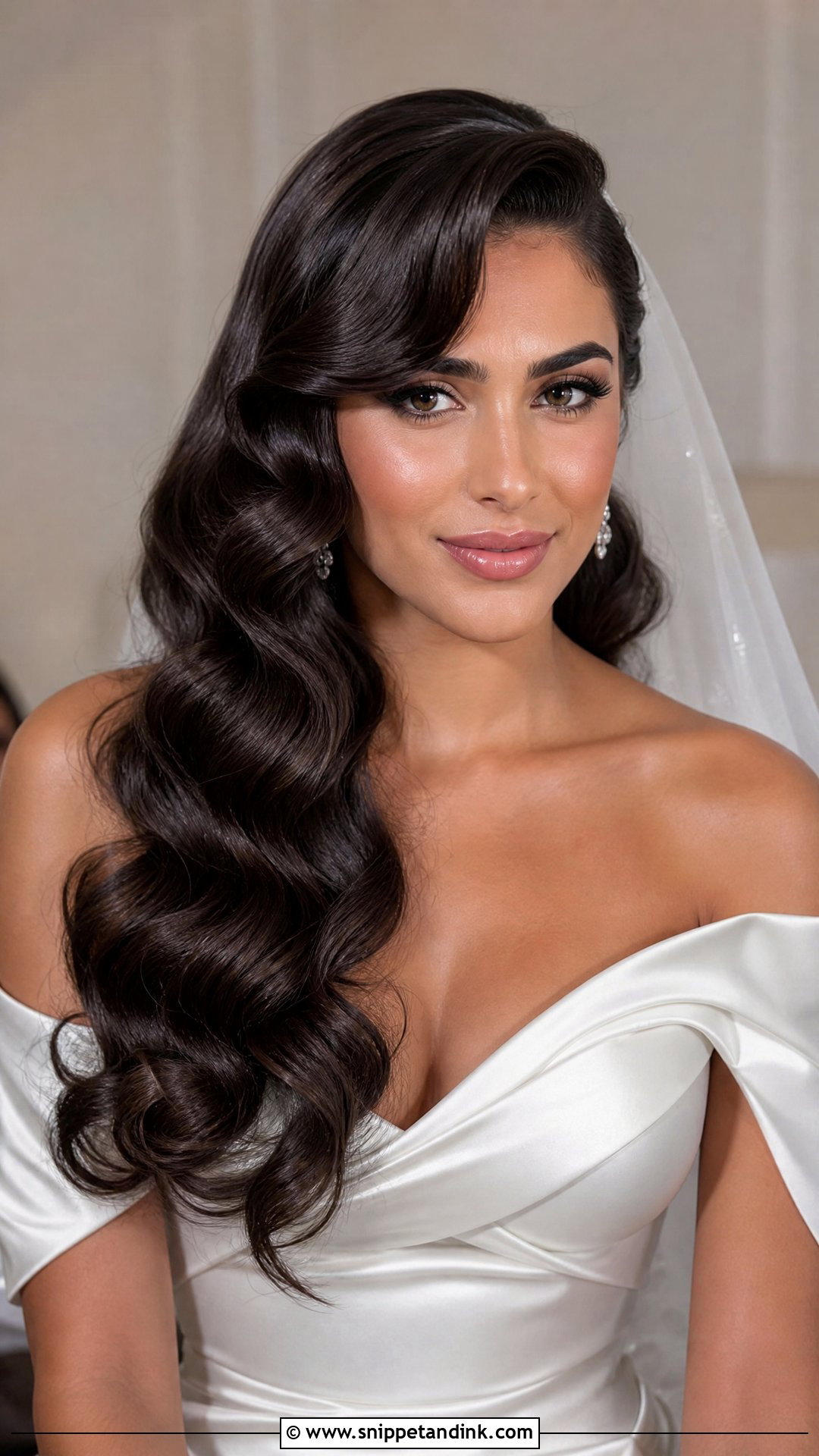
Side bangs and Hollywood waves sweep in the same direction, which is why they blend so well. I set the waves and the fringe as one pattern, curling the bangs away from the face and brushing everything into one continuous curve. A deep side part adds drama. This needs medium to long hair and suits fitted gowns and off-shoulder necklines. Keep the fringe a little softer than the rest so it still moves when you turn your head.
12. Bridal Messy Bun With Bangs
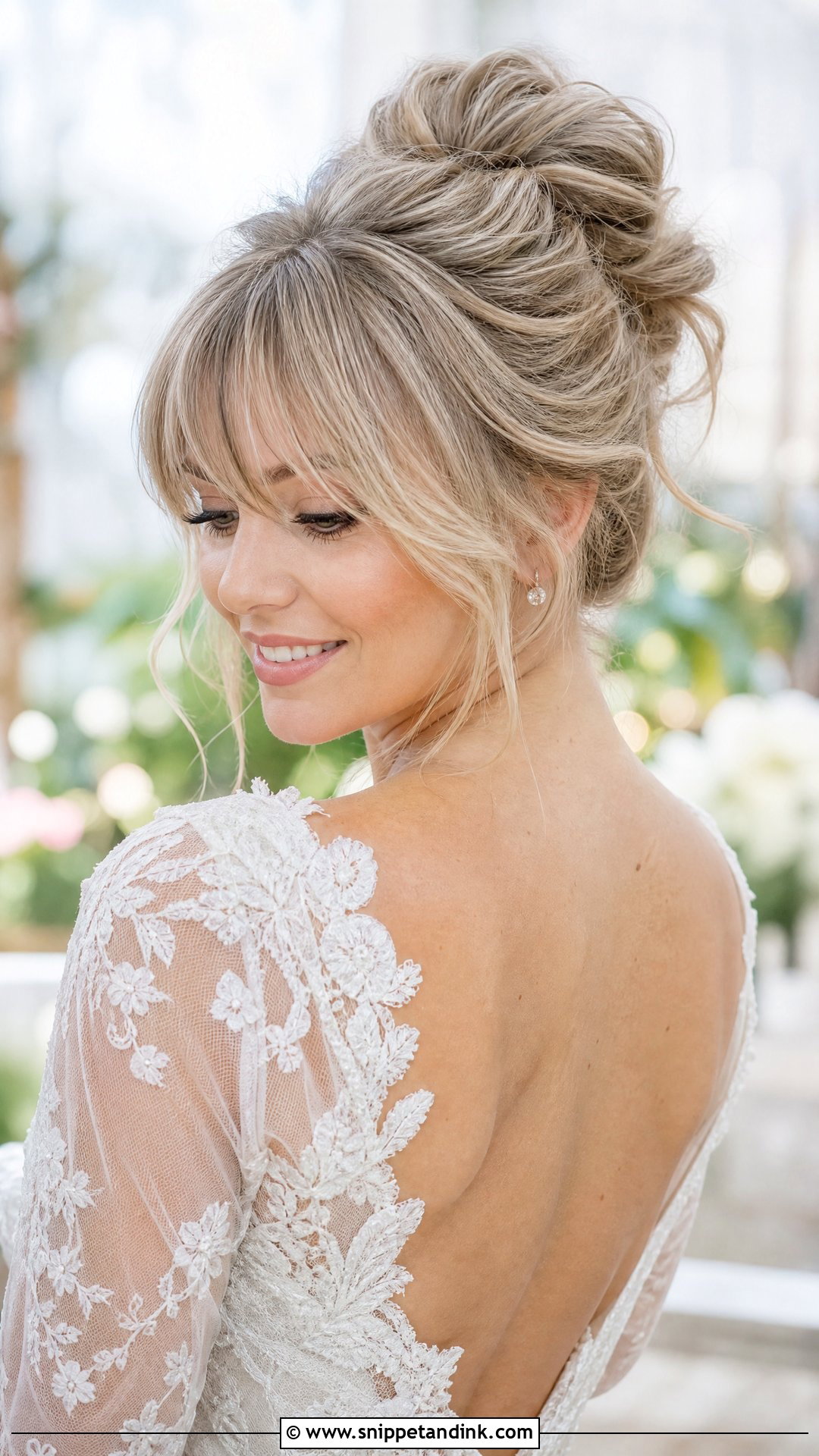
The difference between a messy bun and a rushed one is whether the loose pieces connect to the fringe. I pull a few strands out near the temples so the bangs blend into the bun instead of looking like a separate decision. Wispy bangs and curtain bangs echo the airy bun best. I set the bun with hidden grips and a flexible spray, so it holds through a long day but still looks soft up close. Lace and outdoor venues suit it.
13. Bridal Sleek Bun With Bangs
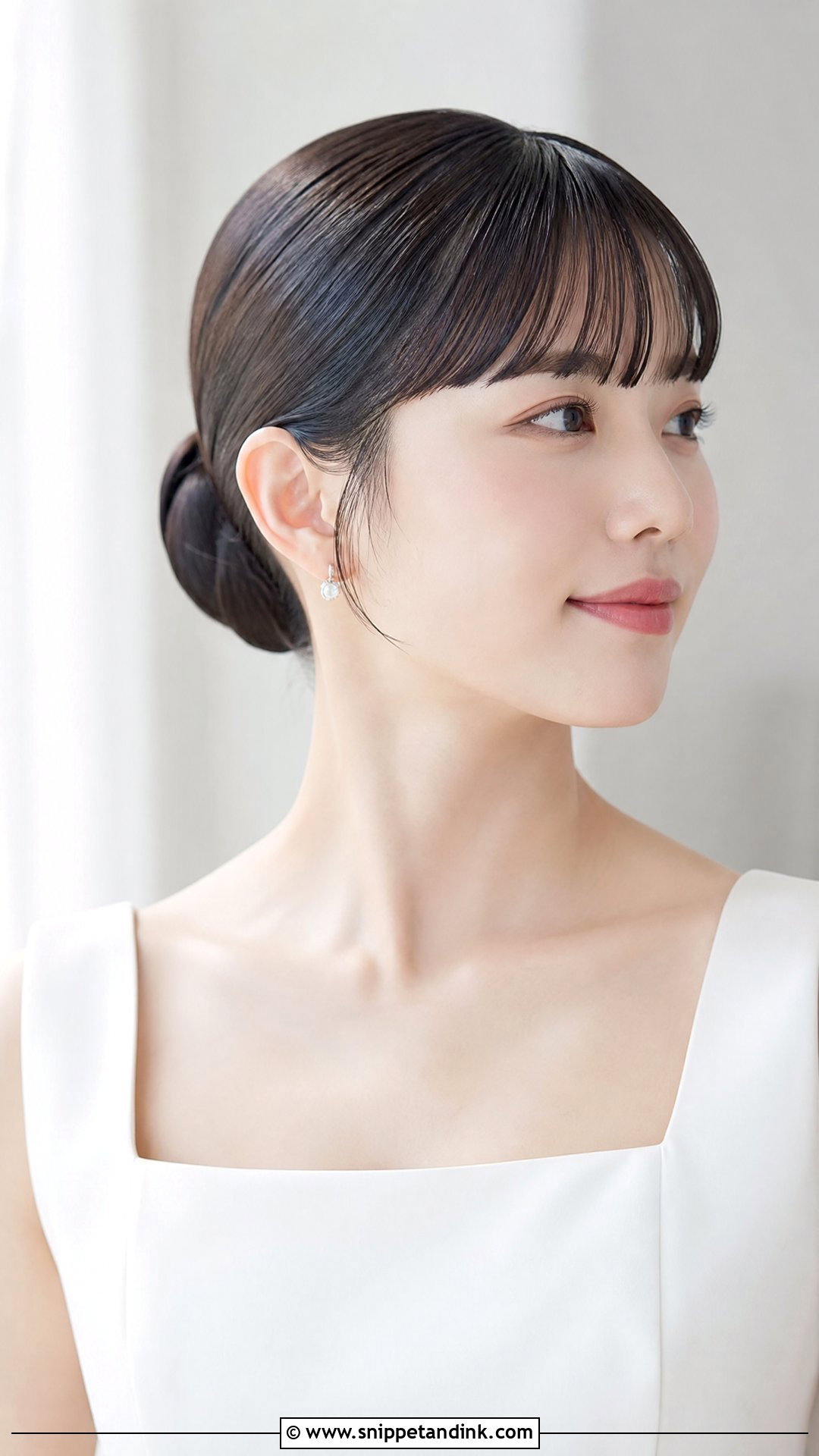
With a sleek bun, the bangs take the edge off what can otherwise feel severe. The bun can sit low, at mid-height or high; what matters is a smooth, controlled finish. Blunt bangs push the look toward fashion, side bangs keep it gentler. I’m careful with shine spray near the face; too much on the fringe looks greasy by the evening, so I spray the bun and only mist the bangs from a distance. Satin and structured dresses suit it.
14. Bridal Long Curls With Bangs
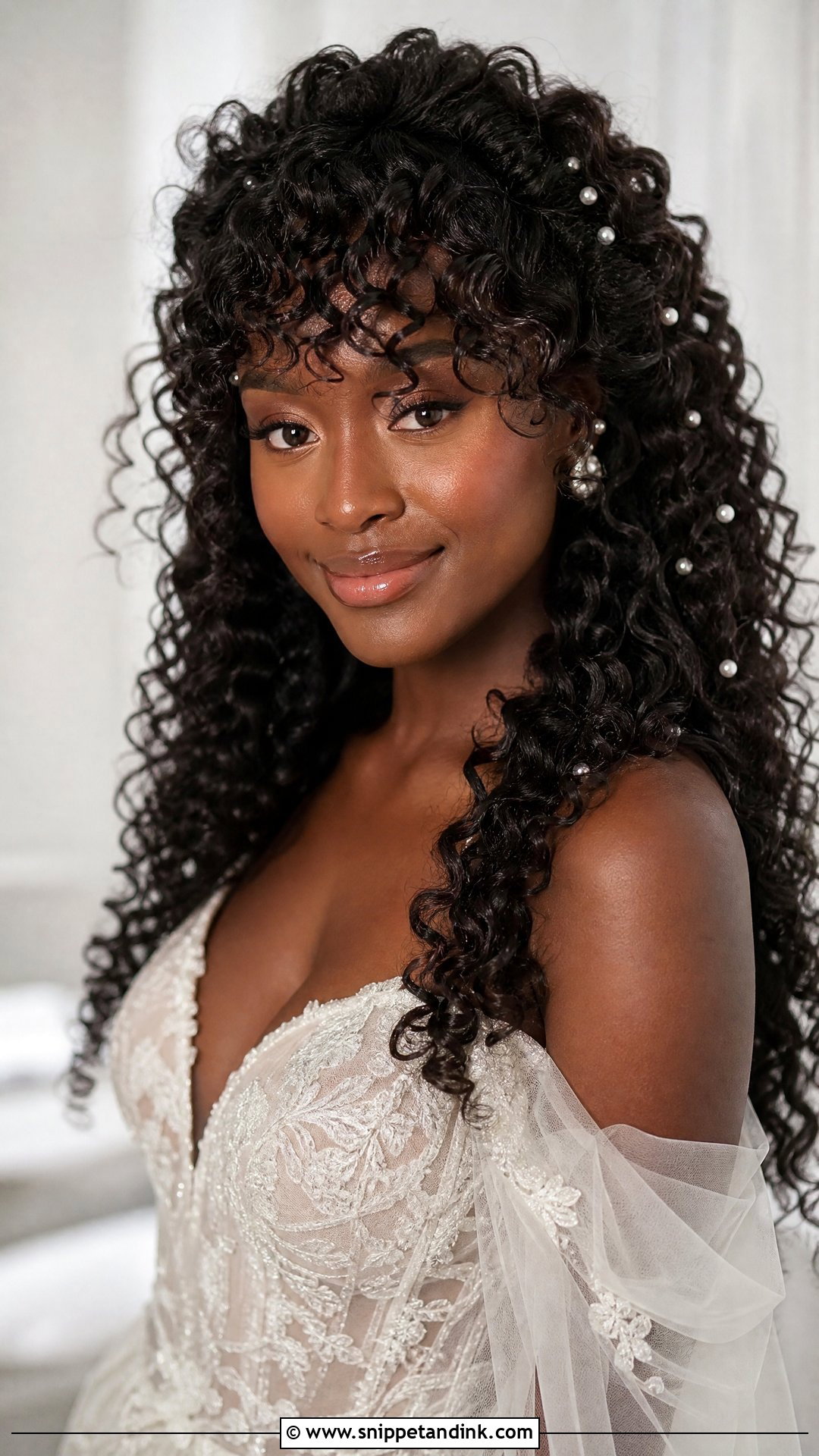
Long curls can swallow a face, and bangs pull attention back up to the eyes. Curtain bangs blend into curls with little effort; naturally curly bangs need the most care, because they shrink as they dry. I style curly fringe slightly longer than it looks wet. Lightweight products keep curls defined without weighing them down. Veils and floral combs both sit well in this much hair.
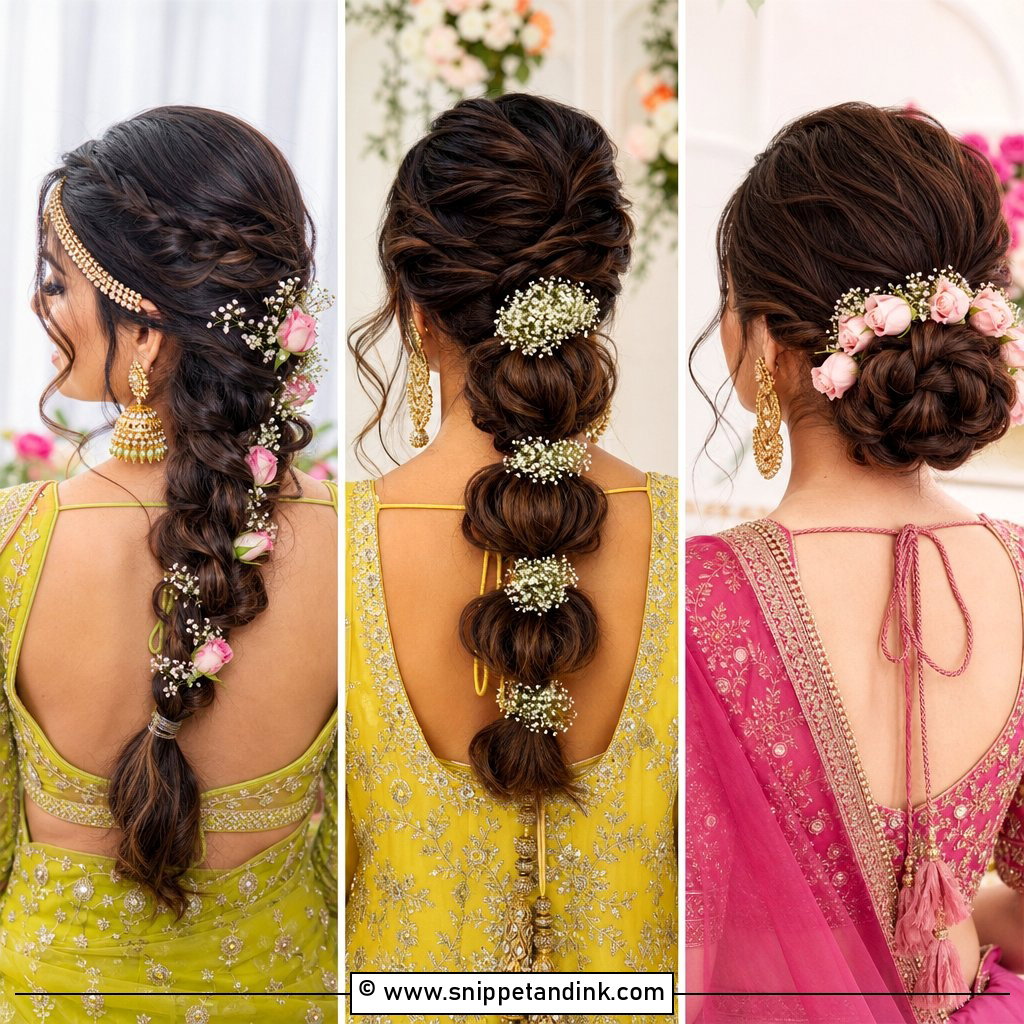
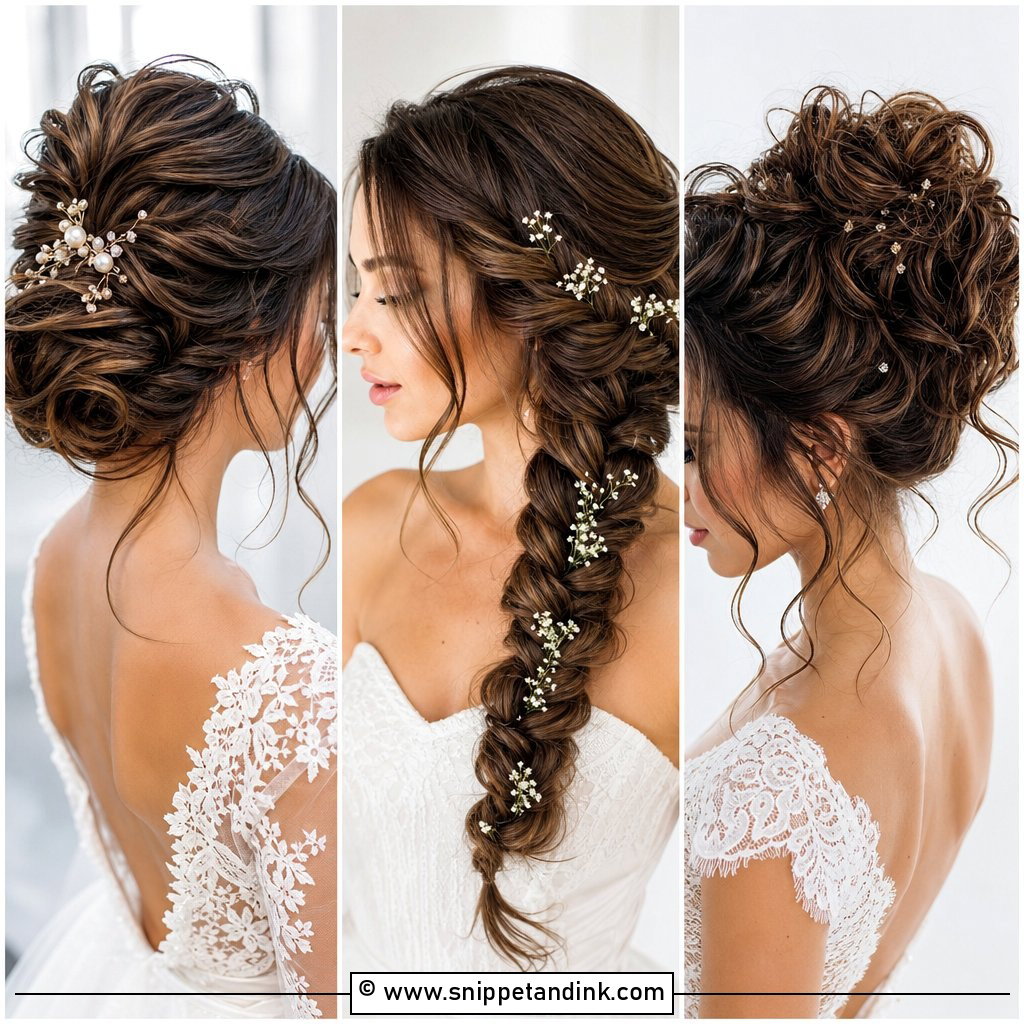

15. Bridal Micro Bangs With Updo
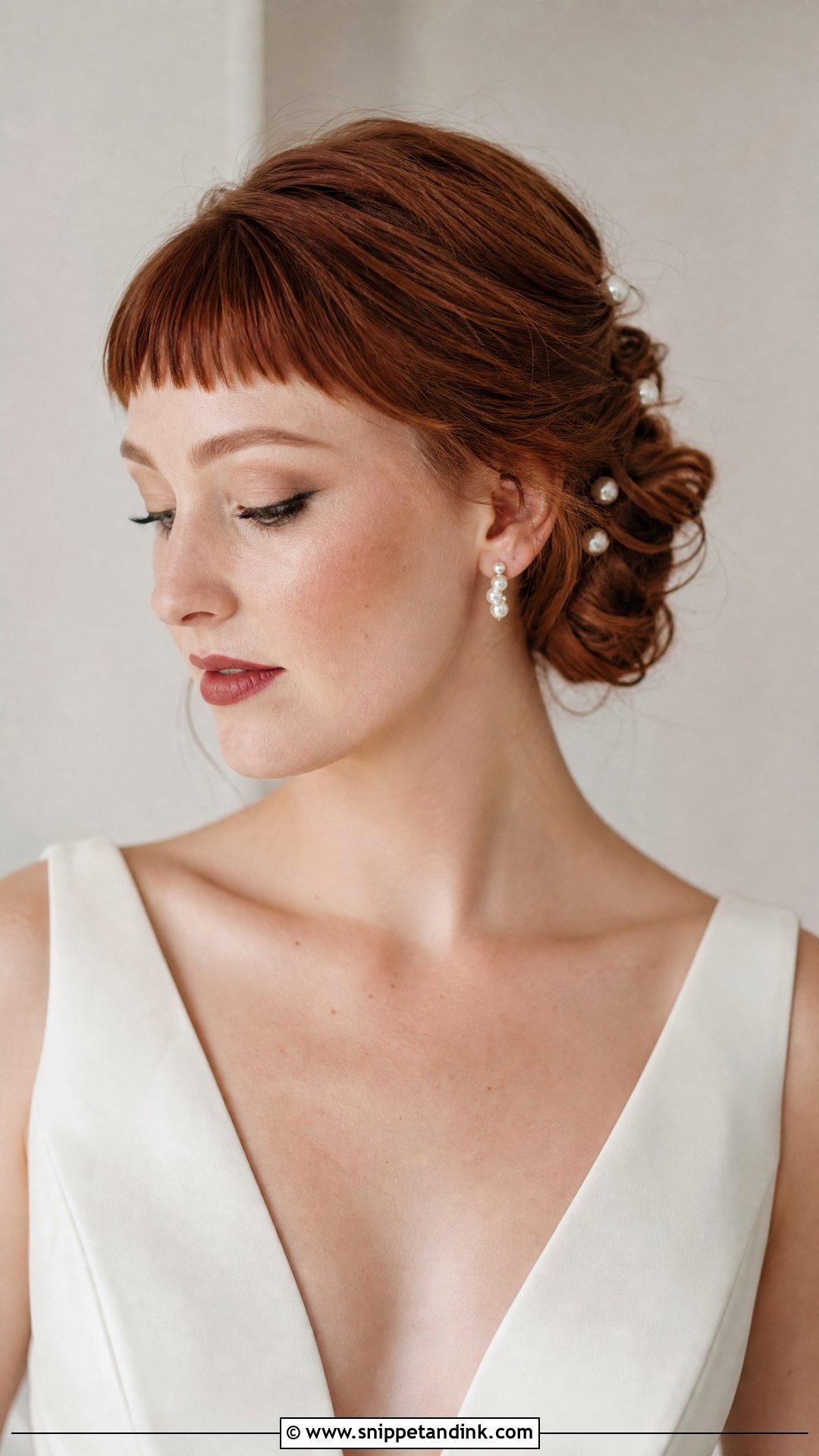
Micro bangs are a commitment, and I’d only suggest them to a bride who already wears them or has had them before. They put all the focus on brows and eyes, so brow shaping matters as much as the hair. A low bun, twisted chignon or textured knot keeps the rest soft so the fringe doesn’t read harsh. I keep accessories minimal and the fringe smooth. City weddings and clean-lined dresses suit it.
Should You Cut New Bangs Before the Wedding?
If you’ve never had a fringe, I’d say no, unless you have at least two to three months to live with it. New bangs take a few washes to settle, and you need time to learn how they fall, where your cowlicks are, and whether you even like them. A fringe you regret can’t be undone in a week.
Growing one out is easier to manage. At the awkward eyebrow-to-cheekbone length, I’d style it one of these ways:
- Swept to the side and pinned at the temple, which hides the uneven length in the chignon or bun.
- Split into curtain bangs and blended into face-framing waves.
- Twisted back into a half up section, where shorter pieces are hidden by longer hair.
Whatever stage you’re at, tell your stylist where your cowlick is. It decides which way the fringe wants to fall, and fighting it all day is a losing battle.
Your Fringe Is Part of Your Face, So Keep It
Bangs don’t need hiding on your wedding day; they’re often the reason a style looks like you. Curtain bangs, blunt fringe, wispy bangs, side bangs, curly bangs and micro bangs each pair with different styles above, depending on your dress, hair length and texture. Bring photos of yourself with your fringe styled how you like it, wear the veil at the trial, and check the fringe again after an hour. If it’s still sitting where it started, you’re ready.
You'll Like These Ideas:


Leave a Reply