
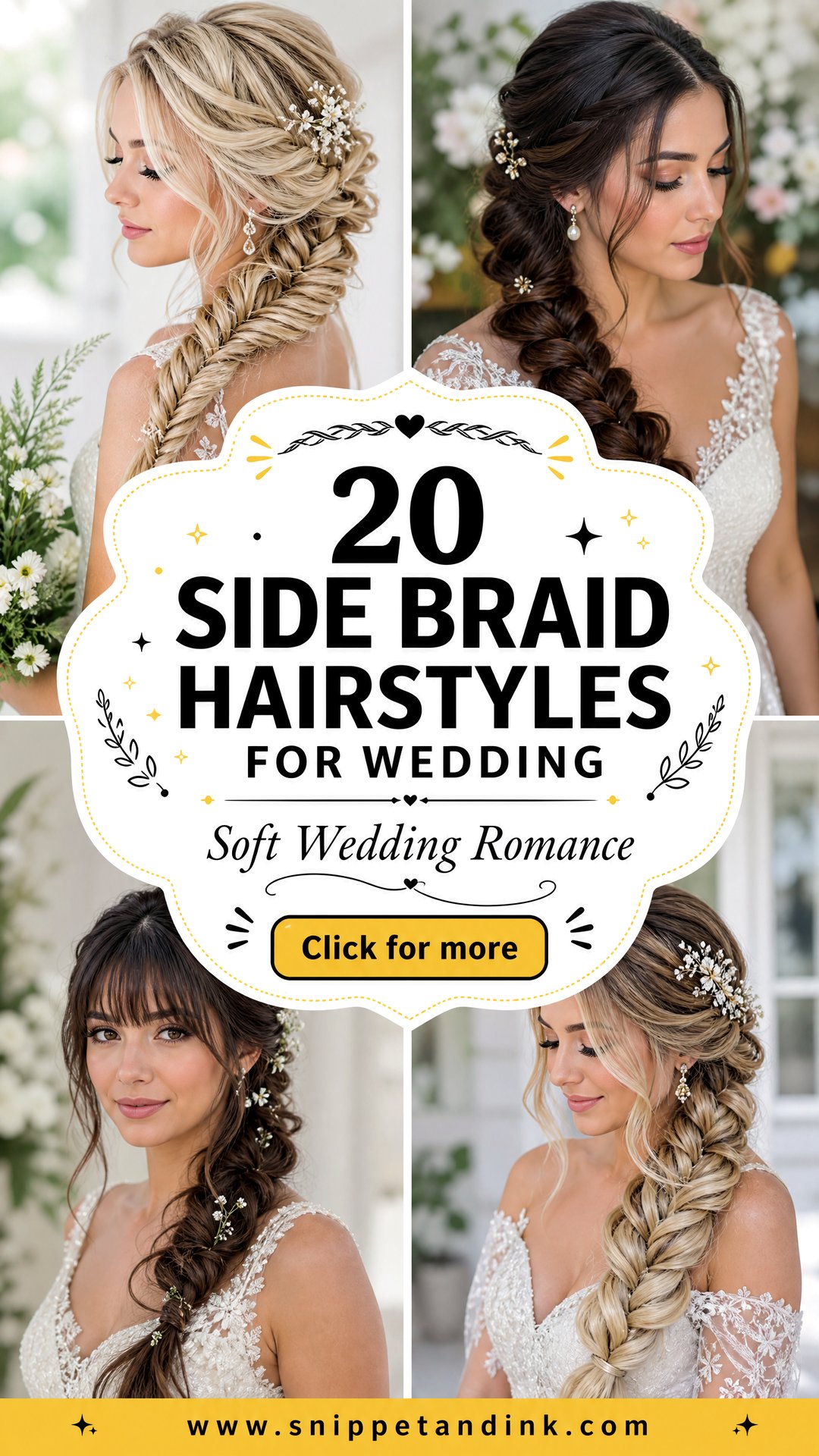
A side braid is one of the most practical bridal styles I do, and it rarely gets credit for that. With the hair gathered over one shoulder, nothing blows across your face during outdoor vows, nothing gets crushed when you lean back for photos, and hugs don’t pull it apart the way they do loose curls. It also leaves one side of the neck bare for earrings and gives a veil something to sit behind. The 20 versions below run from fine fishtails to full boho ropes, with notes on how each is built and what kind of hair holds it, at a beach ceremony or in a ballroom.
Which Shoulder Should the Braid Sit On?
It sounds like a small decision, but a side braid is only fully visible from one side, so I settle it before anything else at a trial. Three things decide it.
- Your natural part. Most hair already prefers to fall toward one side, and a braid swept that way sits flatter and stays put longer.
- The ceremony layout. Find out which side of the aisle you’ll stand on and which shoulder will face your guests while you face your partner. Most ceremony photos are taken from that side.
- Your best earring side and any dress detail. A one-shoulder strap or a shoulder embellishment usually looks better with the braid on the opposite side, so the two don’t crowd each other.
Cowlicks and growth patterns at the nape matter too. If hair at the back grows strongly in one direction, braiding against it creates a bump I can’t fully smooth out, and I’d rather move the braid than fight it all day.
1. Loose Side Braid for Wedding
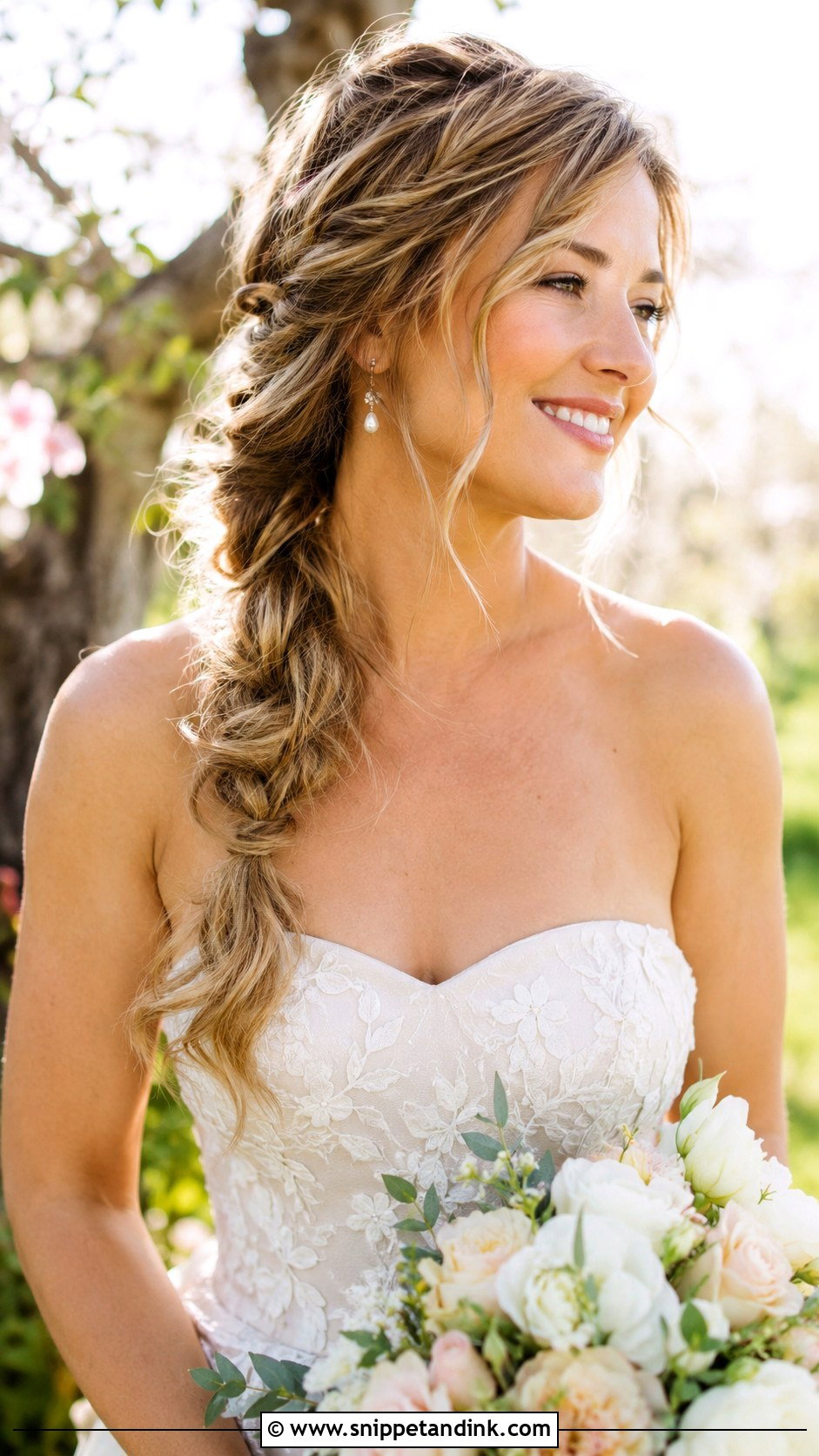
Loose doesn’t mean unsecured. I curl the hair lightly, braid with moderate tension, tie it with a clear elastic and only then pull each loop outward for fullness. Braid it slack from the start and it slides apart by the reception. Leave a few face-framing pieces free and curl them separately. A flowy gown in a garden suits it, with a floral crown or a few pearl pins, and it sits well on most face shapes and textures.
2. Side Fishtail Braid for Wedding
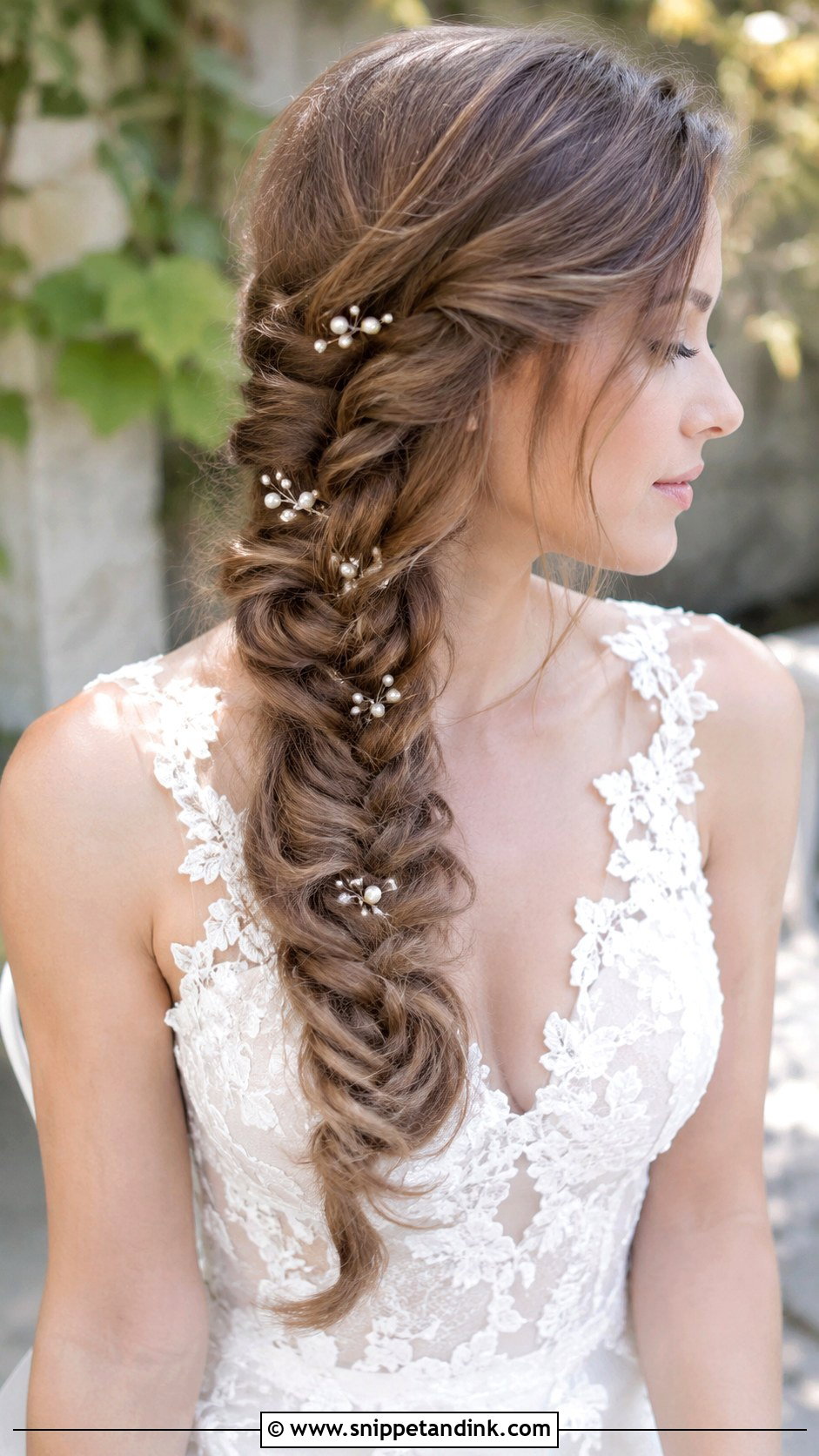
It looks complicated, but a fishtail is only two sections, with a thin strand passed from the outer edge of one to the other, again and again. The thinner the strands, the finer the herringbone; thick strands make it look like an ordinary plait. Start from a low side part and keep your hands close to the head for the first few passes so it doesn’t sag. Once it’s tied, tug the edges gently to widen it. Lace dresses and boho themes suit it, and tiny flowers or pearls tucked into the weave catch the eye up close.
3. Boho Side Braid for Wedding
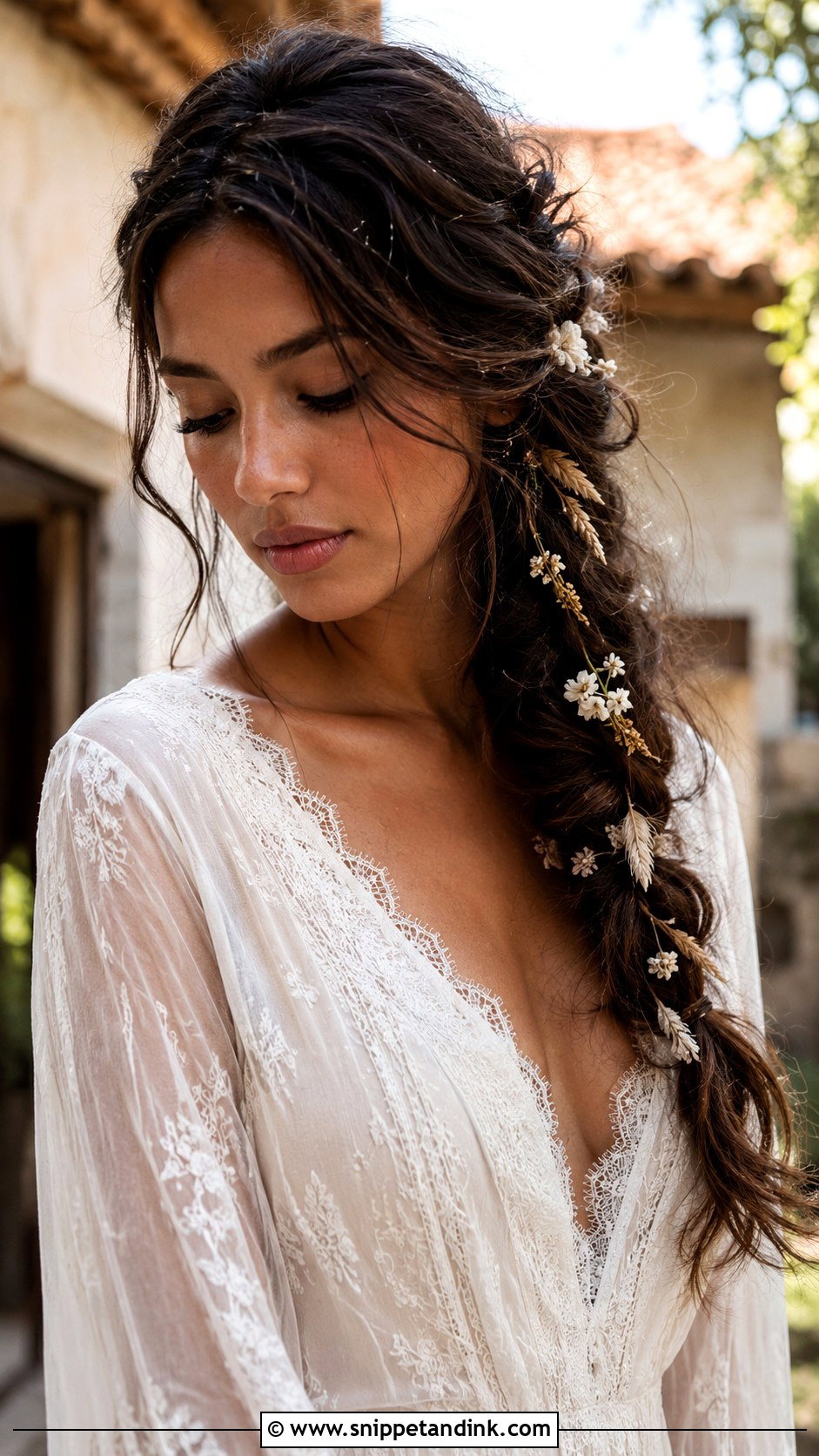
This version runs on the hair’s own texture, so I let wavy and curly hair lead and only add a light wave to straight hair. Small twists or mini braids worked into the main braid give it depth. Loosen it generously and let wispy strands fall at the face. Dried flowers, greenery or thin gold pins finish it. Lace, flowing and vintage-inspired gowns at outdoor, rustic or beach weddings are its home, and it’s forgiving: if a piece falls out at hour six, it simply looks like part of the style.
4. French Side Braid for Wedding
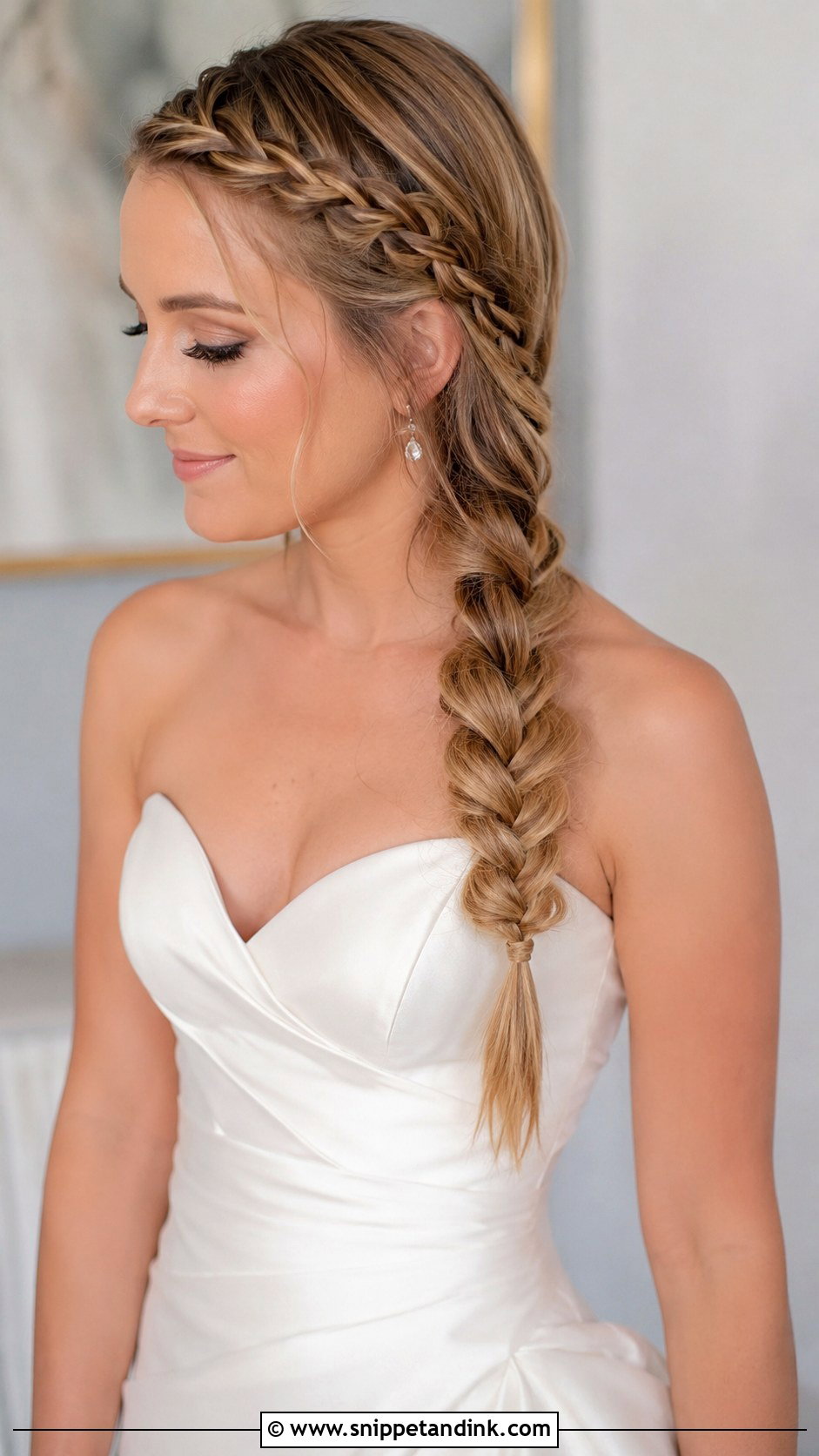
A French braid picks up hair as it travels, so it stays close to the scalp and grips far better than a plain three-strand. I start at the temple on the heavier side of the part and pick up hair on a diagonal toward the opposite ear, which is what carries it to the side. Pull the edges gently once it’s tied. It’s my first suggestion if you expect a lot of dancing or a windy venue, and it sits as comfortably with a sleek formal gown as with a relaxed outdoor dress.
5. Side Braid With Curls for Wedding
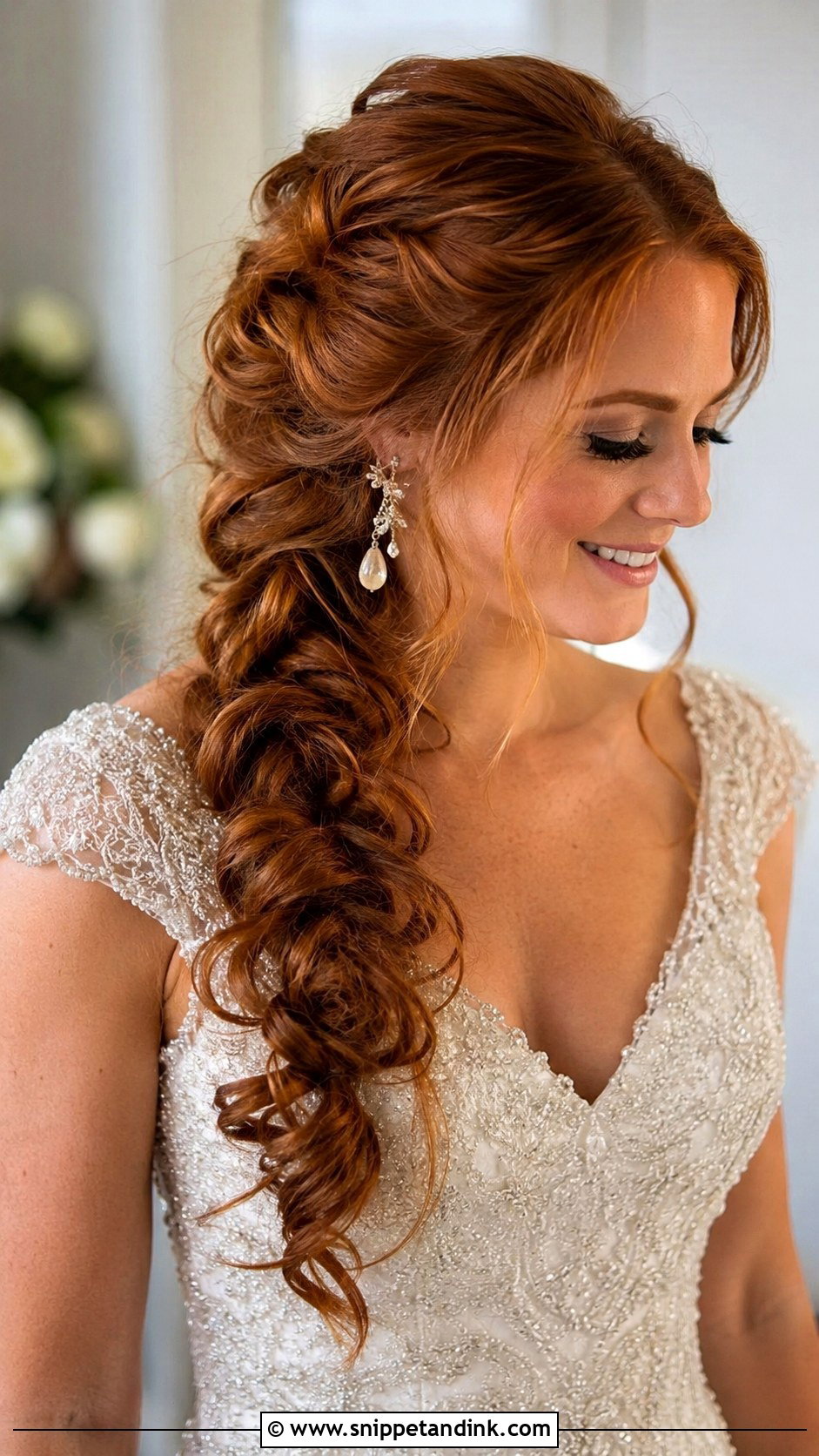
Curl the hair first, then braid only one section along the side and let the rest fall loose. That half-up approach keeps hair off your face while still showing the curls and the length. The braid gives the style structure, so curls that drop a little later in the day still look intended. Statement earrings and a flowing veil sit well with it, on medium to long hair. On tight natural curls, I braid the section smooth and leave the rest of the curl pattern exactly as it is.
6. Dutch Side Braid for Wedding
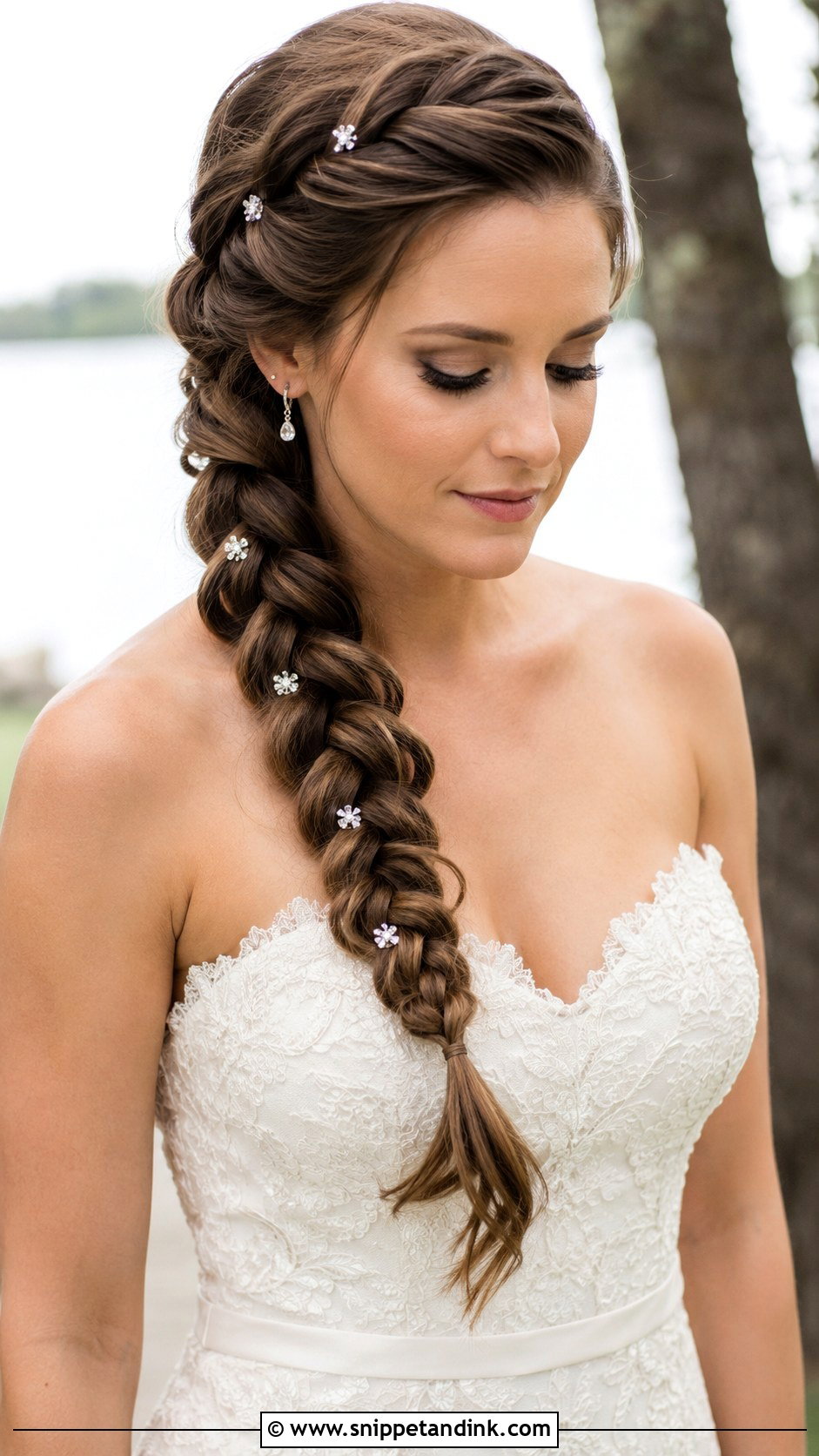
The Dutch braid crosses strands under rather than over, so the braid sits raised on top of the hair instead of lying flat. Swept to one side, that ridge catches the light and shows up from the back of the room. Loosen the edges for width but keep the base tight, because the Dutch braid’s grip on the scalp is what makes it outlast a long outdoor day. Small pearls or crystal pins along the ridge add sparkle. On very fine hair I add texture spray first, or the raised effect looks thin.
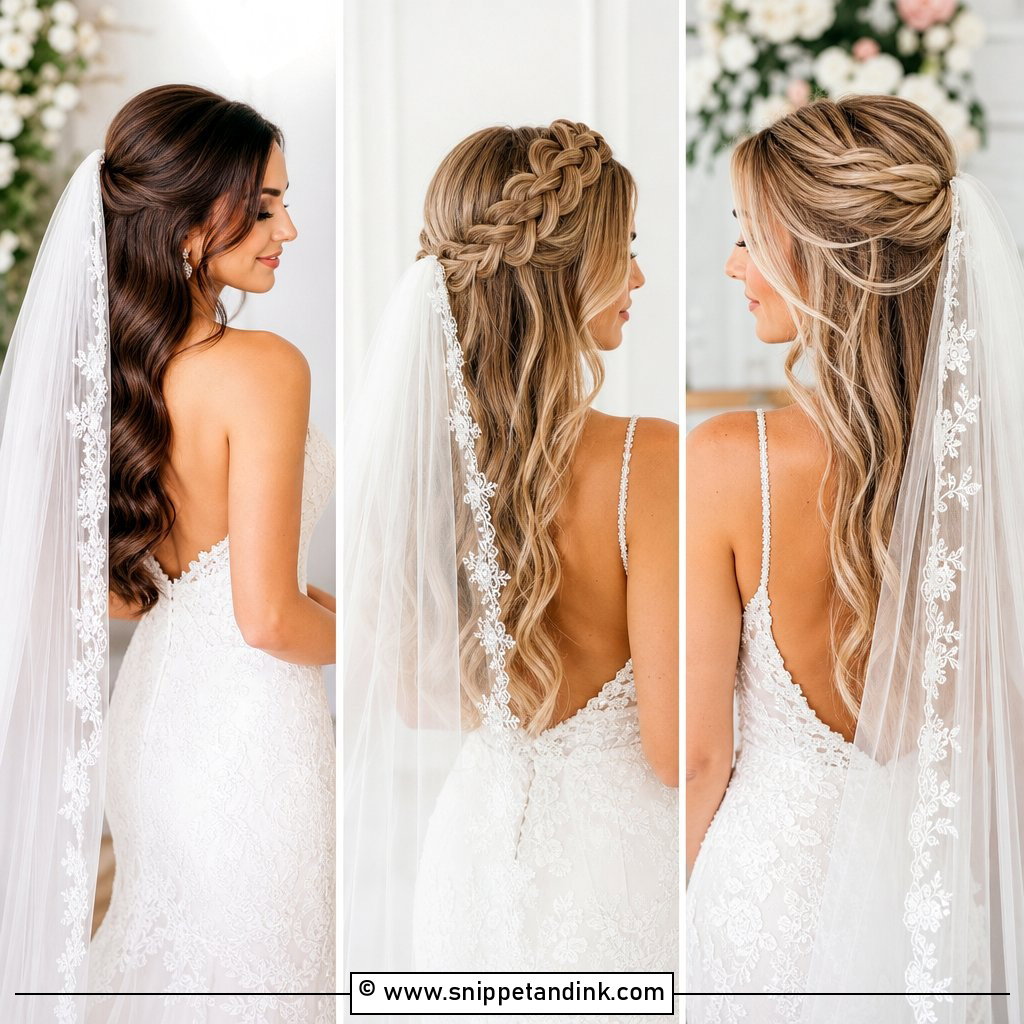
7. Side Braid With Veil for Wedding
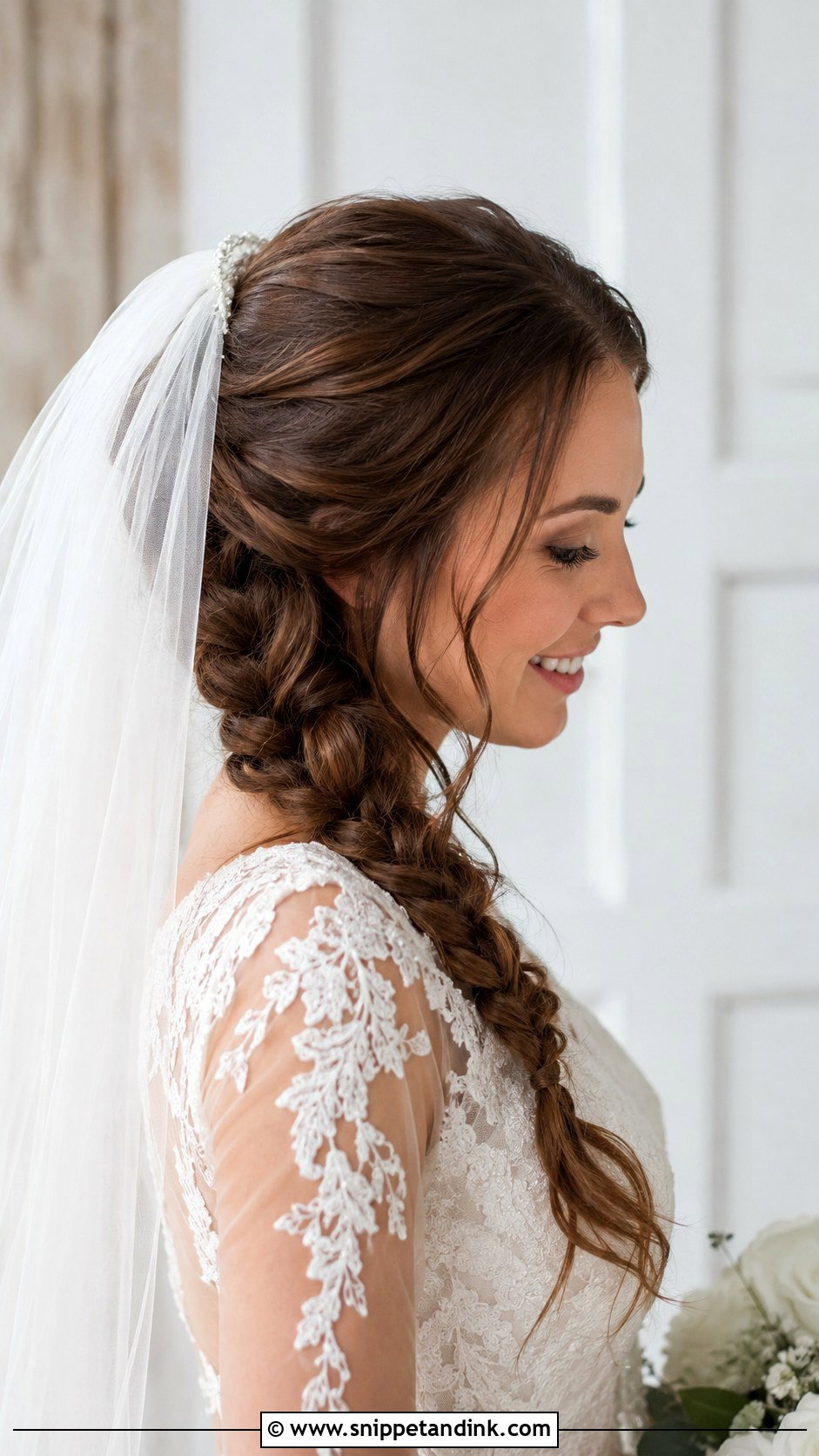
A veil and a side braid get along better than most brides expect. The braid sits low over one shoulder, and the veil comb goes in just behind the crown, centred or on the opposite side, so it isn’t fighting the braid’s weight. I anchor the comb into a small hidden pinned section, since a comb pushed into loose hair will slide. After the ceremony the veil comes out and the braid stays in place for the reception. Cathedral lengths and shorter veils both sit well with it.
8. Messy Side Braid for Wedding
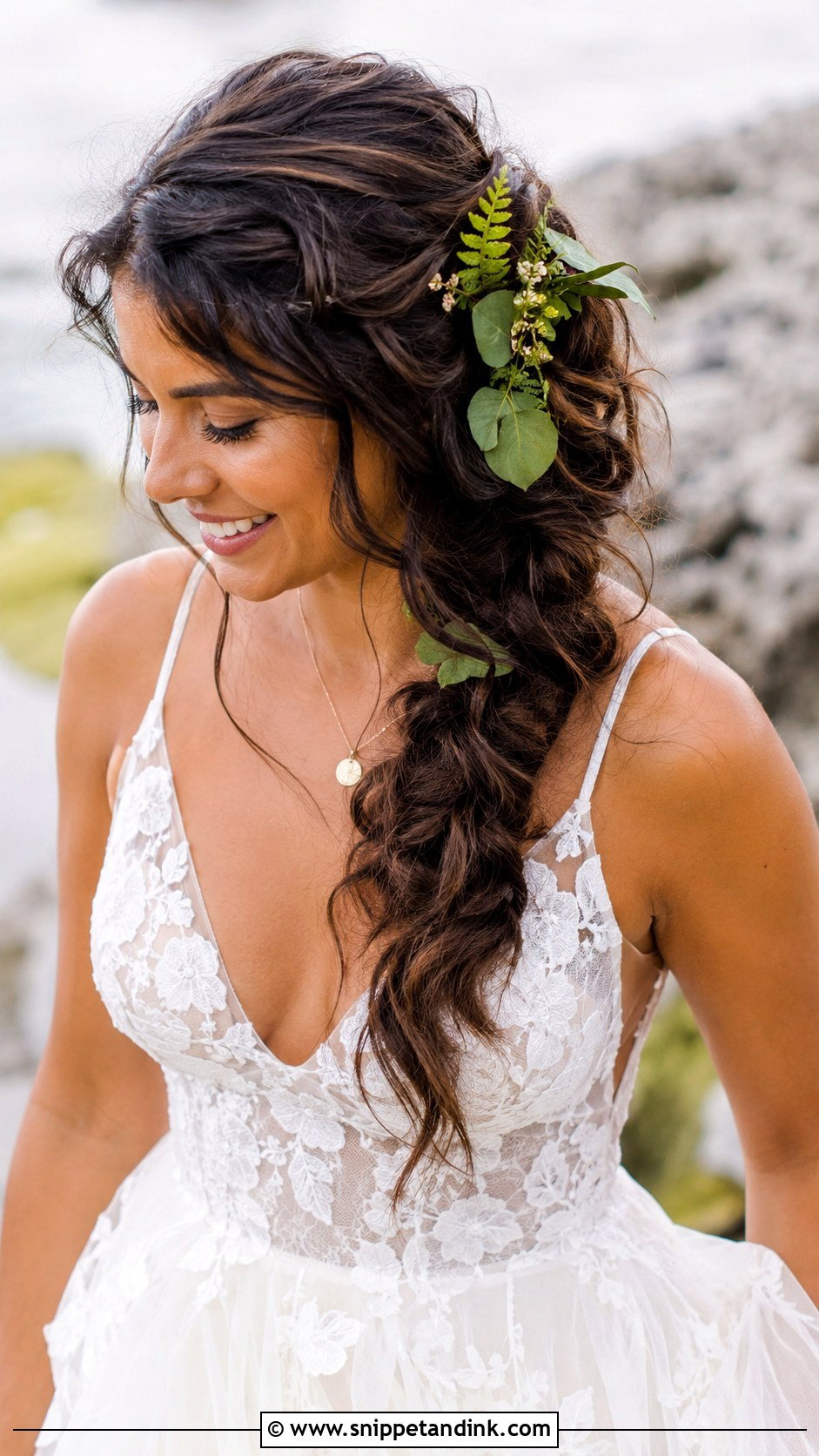
Undone on purpose is still planned. I braid gently, tie it off, then pull out chosen pieces at the face and along the braid rather than waiting for it to fall apart on its own. Second-day hair or texture spray gives those loose strands enough grip to stay where you put them. Keep accessories minimal, a few small flowers or a sprig of greenery at most. Boho, garden and beach weddings are where it feels right, and it’s comfortable all day.
9. Side Braid Updo for Wedding
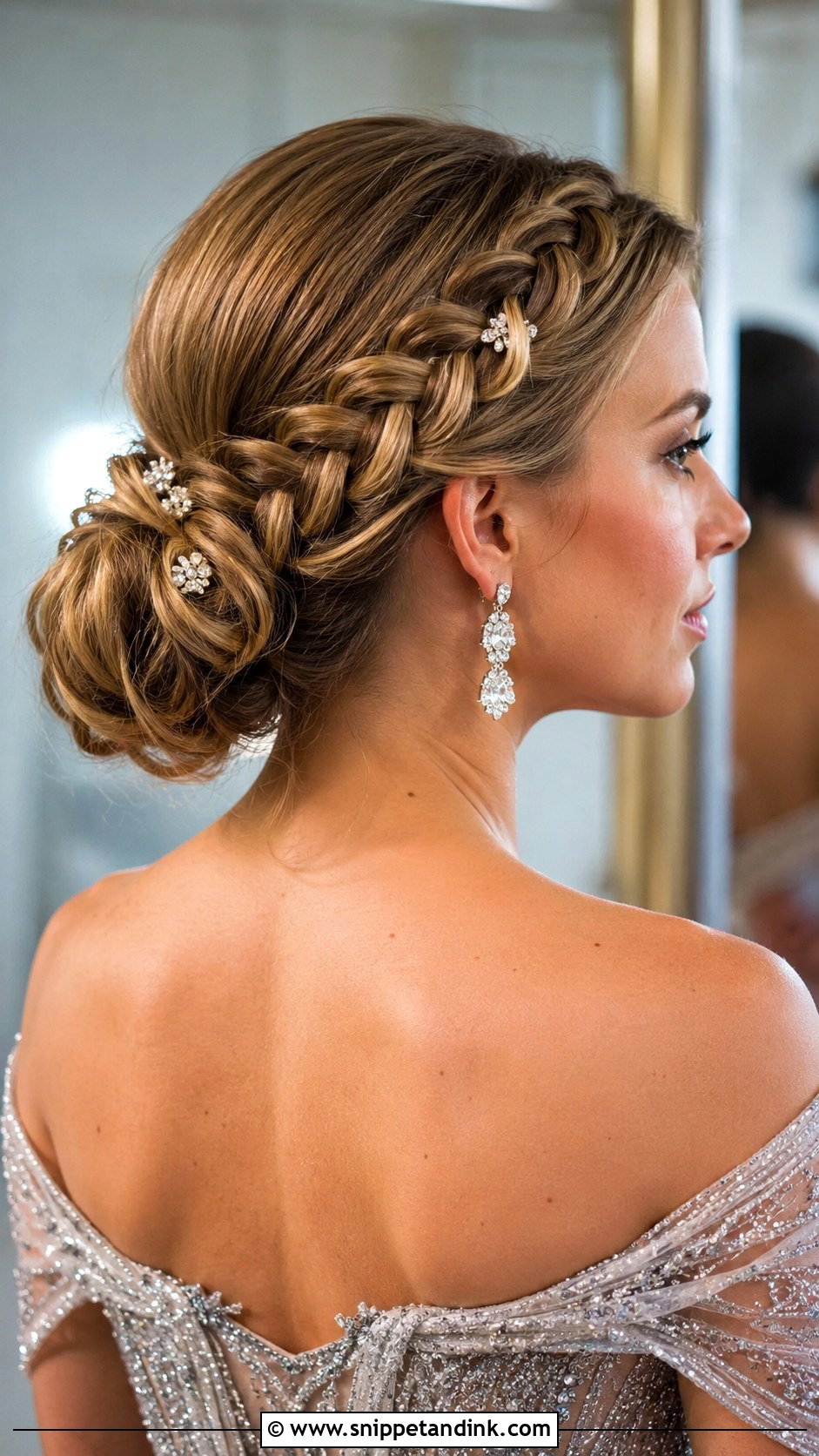
Braid to one side, then wrap the braid into a low bun or twisted shape near the nape and pin it. The pins go through the braid into the base, not only into the outer loops. With the hair completely off the neck, it’s a real comfort at a summer wedding, and the gown’s neckline and your earrings stay on show. Pearls, jewelled pins or fresh flowers can be added at the nape. It holds through dancing and suits a formal ballroom or a refined outdoor ceremony.
10. Half-Up Side Braid for Wedding
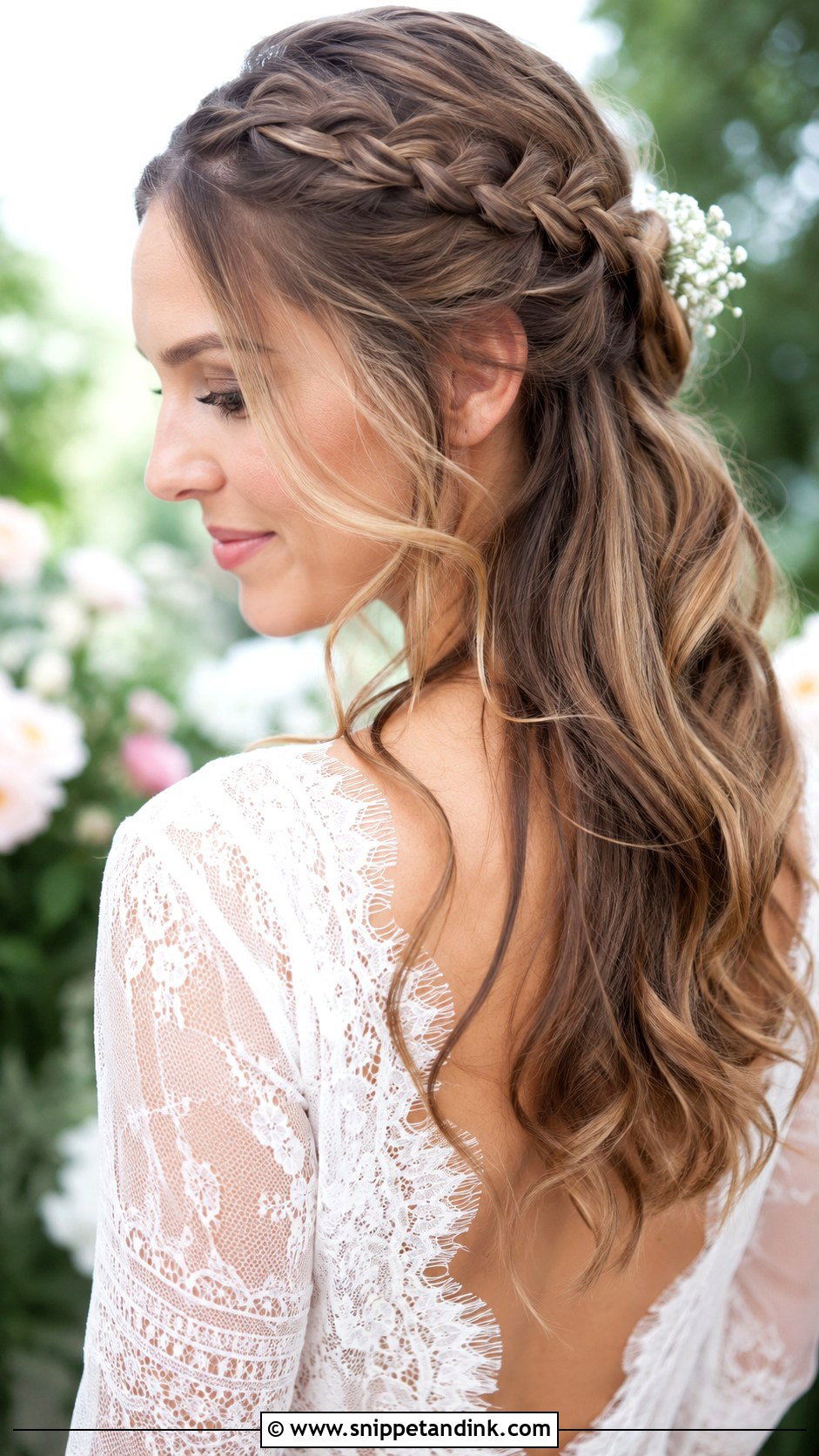
Can’t decide between up and down? Here only the top section is braided, carried across and pinned behind one ear, while the rest falls free. Strands stay off your face, and your length and curls still show. I usually pair it with loose curls. The one thing to watch is the pin point behind the ear, which carries all of the braid’s tension, so I cross two pins there. It fits nearly any theme from boho to classic.
11. Side Braid With Flowers for Wedding
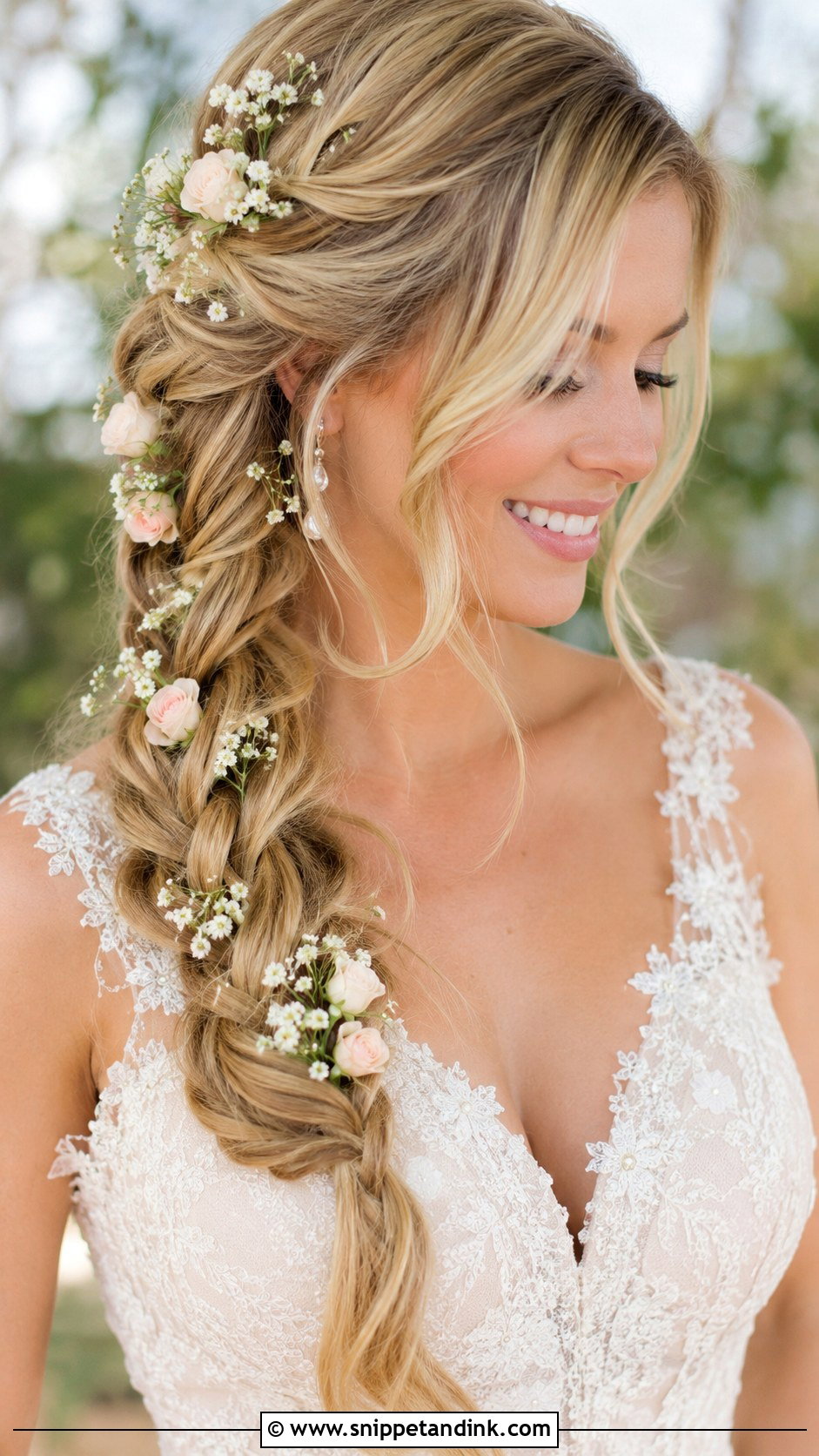
Fresh flowers in a side braid tie the hair to the bouquet. Braid first, then tuck small blooms such as baby’s breath, spray roses or wildflowers between the strands, wiring or pinning the stems so they don’t drop. Ask your florist to prepare these alongside the bouquet: hardy, small-headed flowers last for hours out of water, while soft petals bruise and wilt against warm skin. I add them last, as close to the ceremony as possible. Garden, rustic and outdoor weddings suit it best.
12. Twisted Side Braid for Wedding
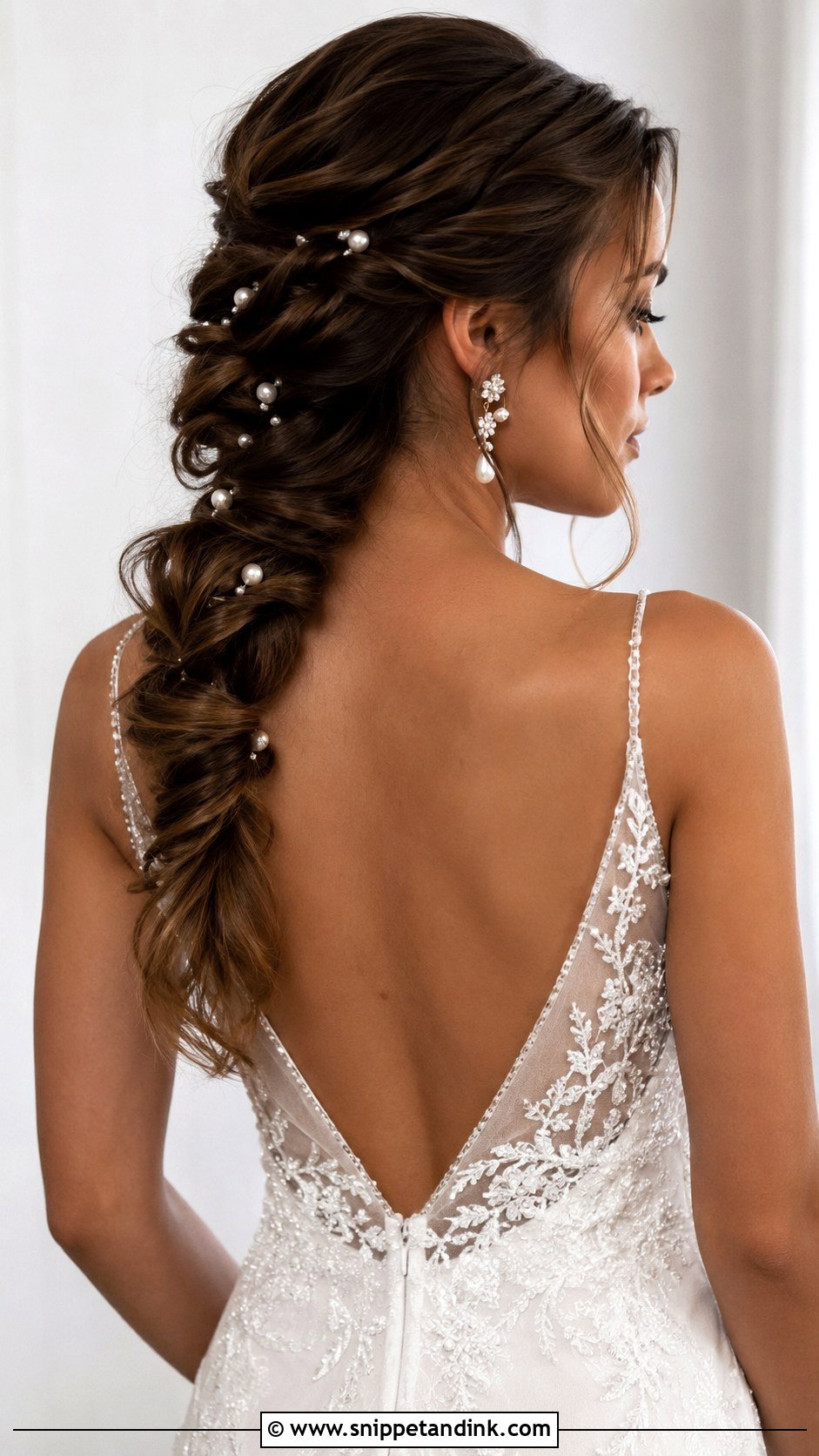
Rope twists in place of a braid give a thicker, glossier result. Split the hair into two sections, twist each in the same direction, then wrap them around each other the opposite way; that counter-twist is what stops the rope unravelling. Loosen the edges for extra fullness. Bold makeup, statement earrings and formal or modern weddings suit it, and jewelled pins or pearls can be added. Most hair types can wear it, though very silky hair needs texture spray or the rope untwists by evening.
13. Side Braid for Short Hair Wedding
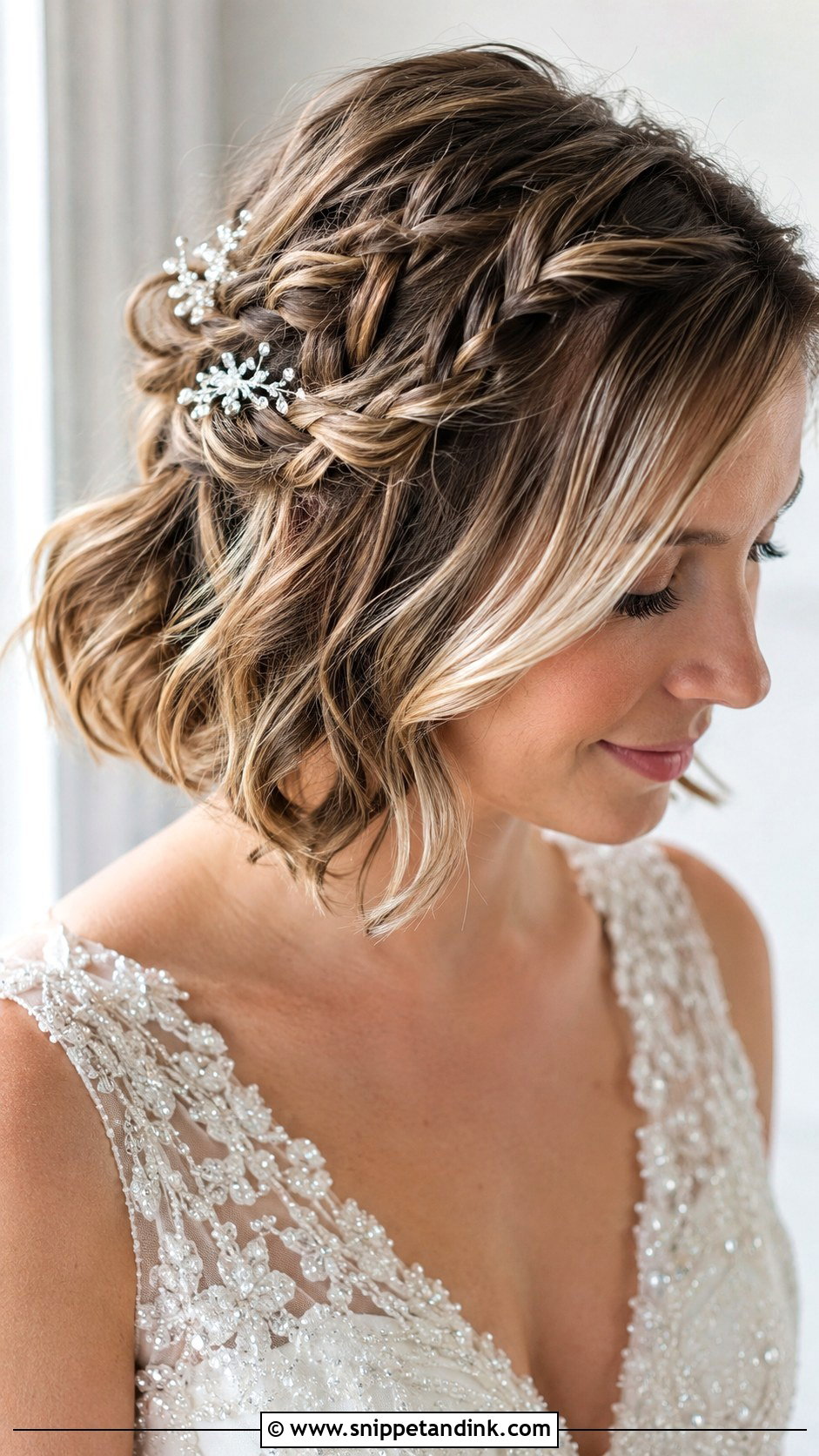
Short hair can still wear a braid, just not a long one. I braid small sections near the temple and pin them back behind the ear, which gives the look of a side braid without needing length. Wave the remaining hair for movement, and finish with small flowers or sparkly pins. It holds well on bobs and lobs. On very short cuts, a single thin braid tucked behind the ear is often enough.
14. Crown Side Braid for Wedding
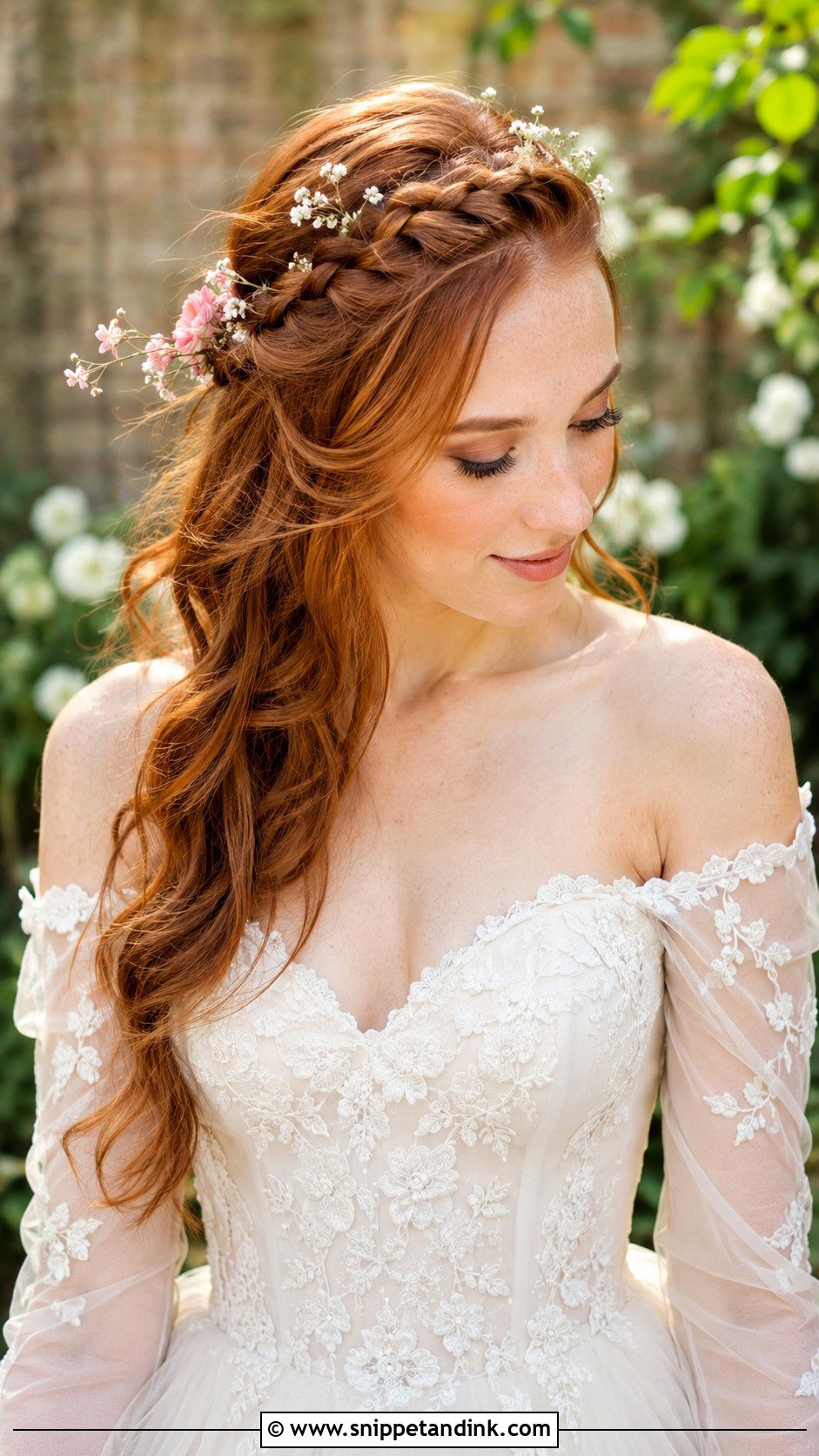
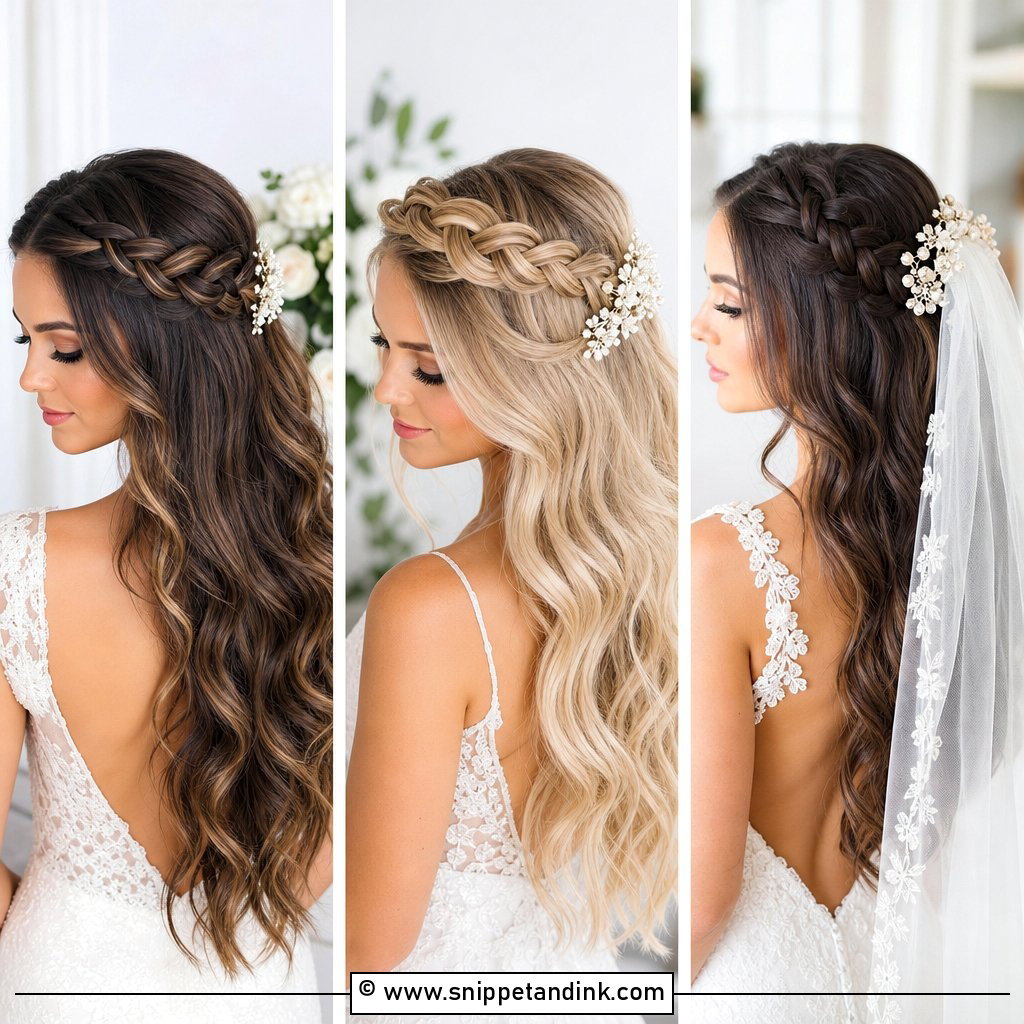
This braid runs along the hairline from one side, over the top and down toward the opposite shoulder, framing the face like a halo. That shape gives it a fairytale quality. I braid it Dutch-style so it sits raised and visible from the front. Leave the ends flowing or pin them into a low bun. Small flowers or jewelled accents along the braid add sparkle. It needs some length; shoulder-length hair can manage it only if the braid finishes low near the opposite ear.
15. Side Braid With Pearls for Wedding
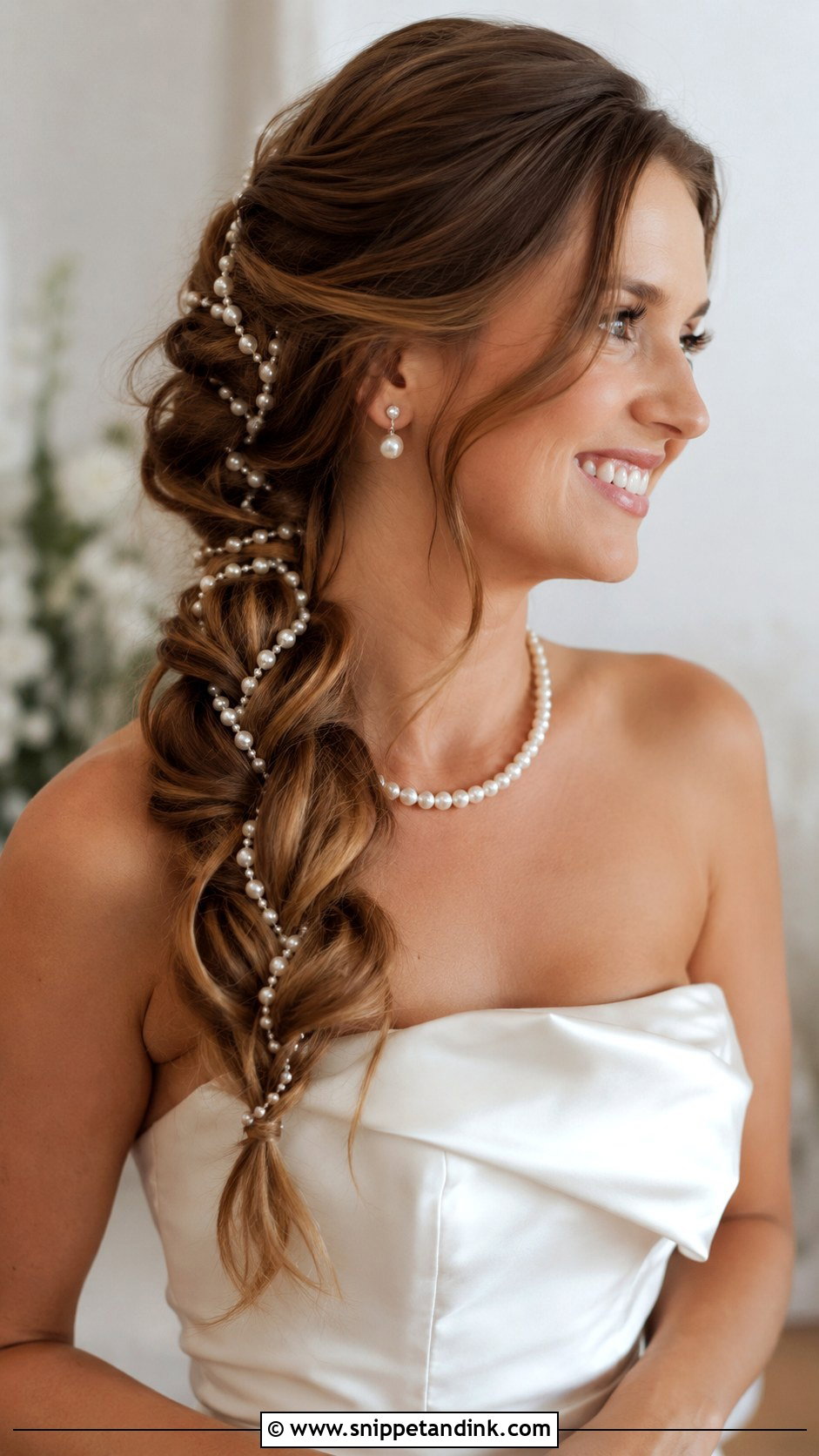
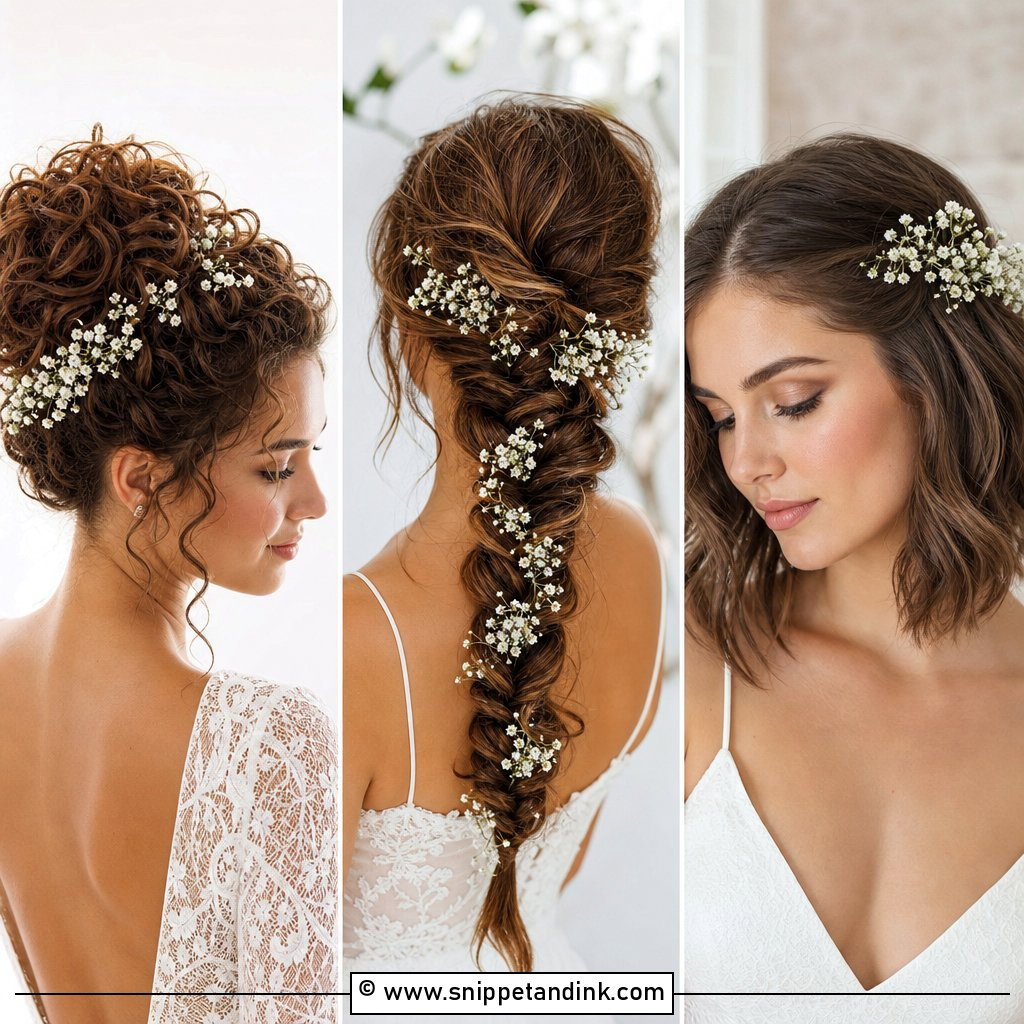
Pearl pins go in after the braid is finished, slid into the loops at an angle so the open end hides inside the braid. Strands of pearls can be woven through while you braid, but they add weight and need securing at both ends. I space pins slightly unevenly so they don’t look like a row of buttons. Matching pearl jewellery ties it together. Classic, formal and modern weddings all suit it, with a sleek gown or a romantic one.
16. Low Side Braid for Wedding
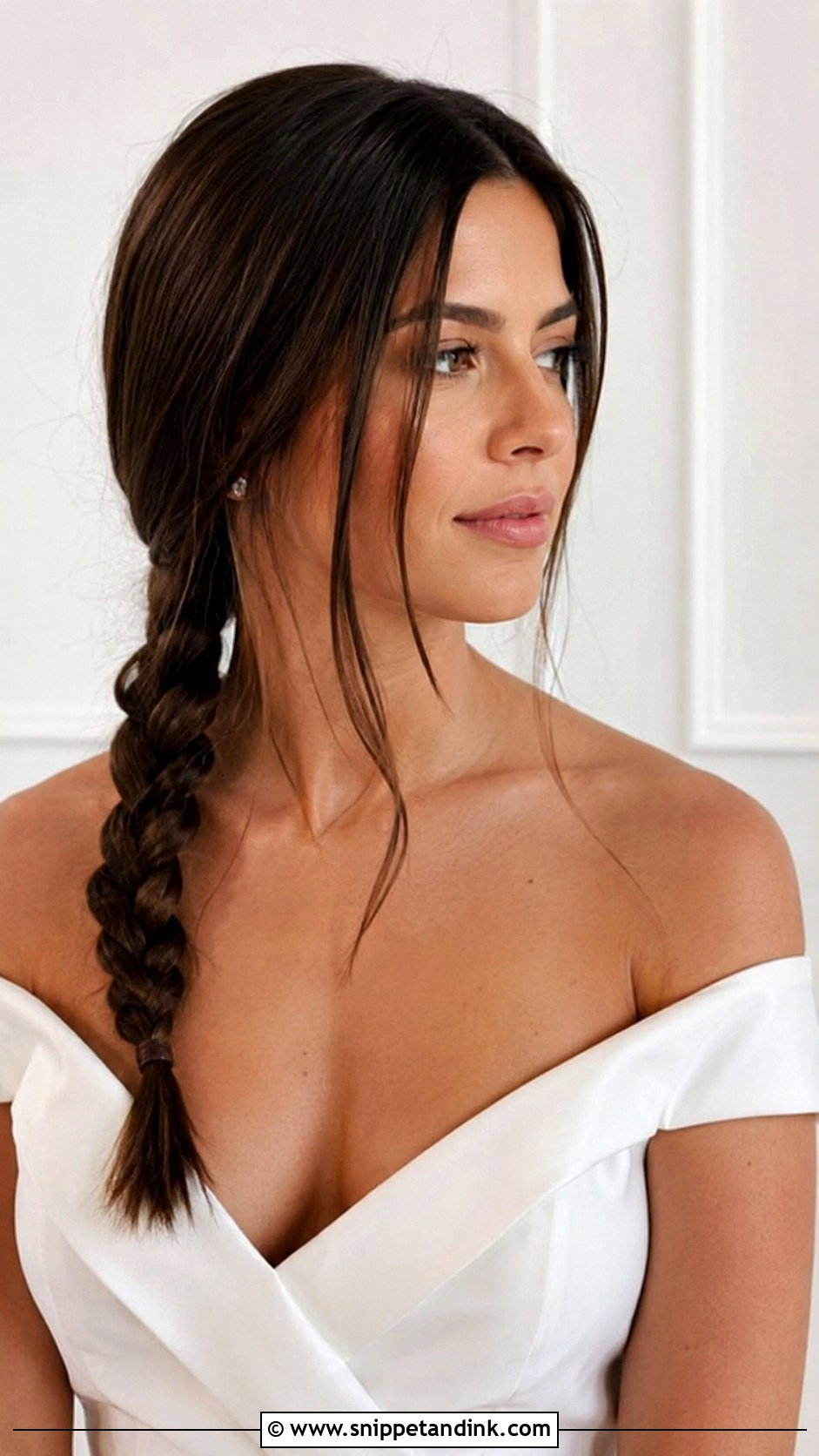
Sometimes simplicity speaks loudest. Here the braid starts at the nape and drapes over one shoulder, so there’s almost no visible braiding at the head; it’s clean and understated. Secure it low with a clear elastic, then pin the top of the braid to the hair behind the ear so it doesn’t swing toward your back. Leave a couple of face-framing strands. Sleek modern gowns and simple jewellery suit it, and one flower or pin is plenty.
17. Waterfall Side Braid for Wedding
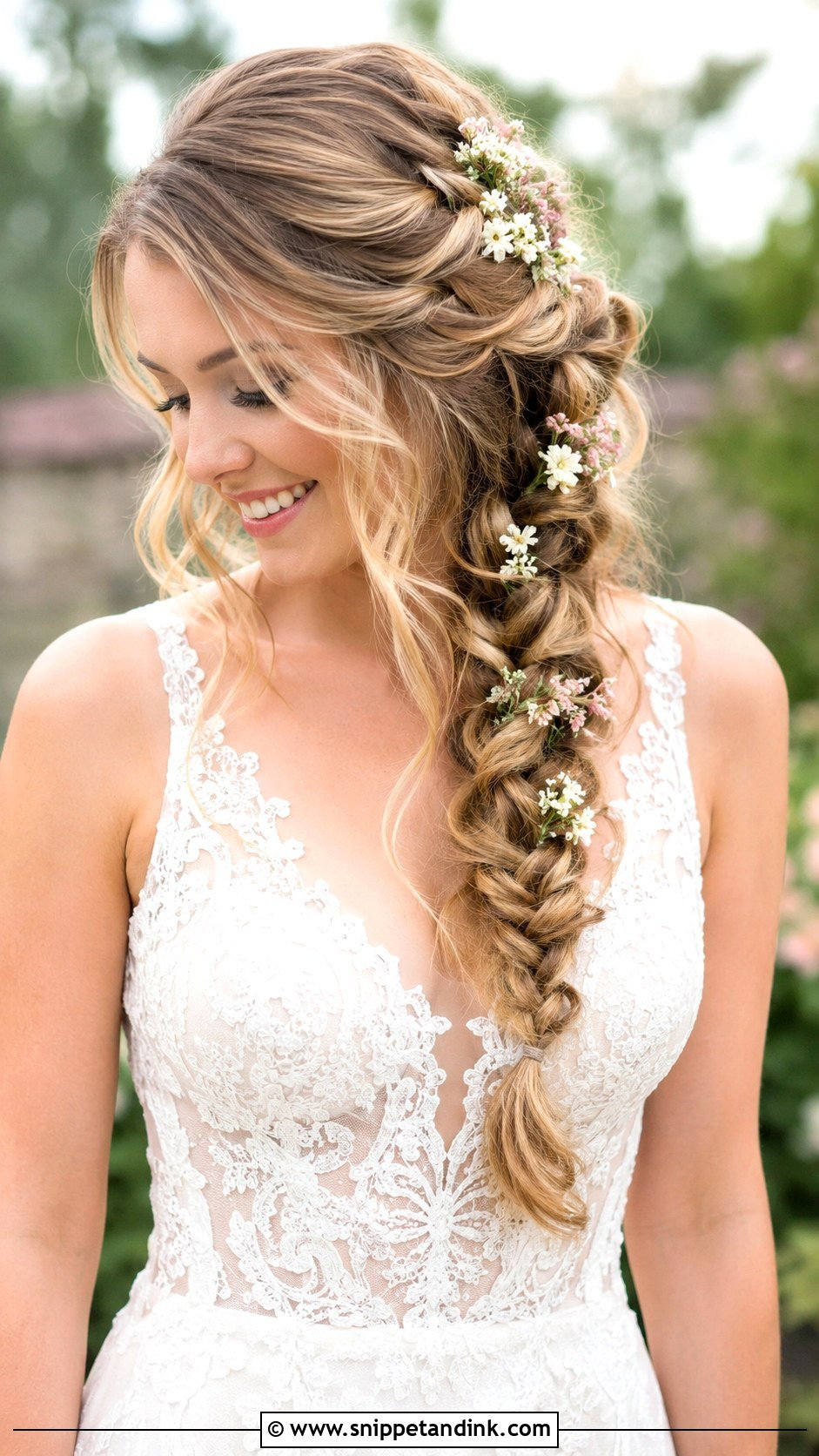
The waterfall braid drops a strand at each pass and picks up a new one, so hair spills through underneath like water. Carrying it across to one side makes the cascade visible from the front. It’s fiddly, and on layered hair the dropped strands can look choppy, so I curl the loose hair afterwards to blend it. Long, wavy hair suits it best. Loose curls and small flowers go with it at boho, garden and fairytale-themed weddings.
18. Side Braid With Bangs for Wedding
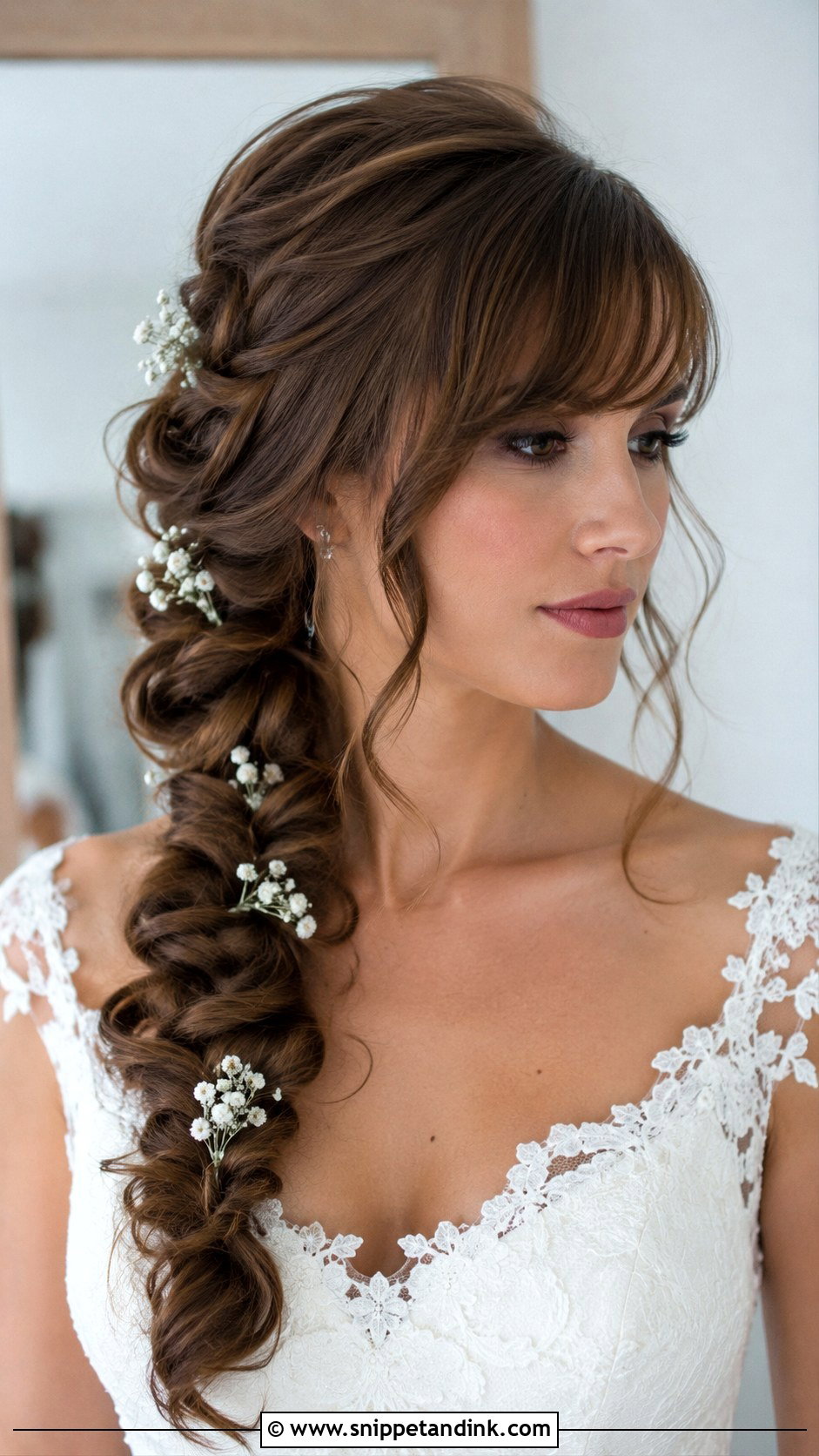
If you have bangs, braid everything else to one side and let your fringe frame your face. Give the bangs a slight bend with a round brush or keep them sleek, but don’t curl them tightly, because they separate in warm weather. I set the forehead makeup with powder before the fringe goes down; oil from the skin is what makes a fringe split by evening. Round and heart-shaped faces suit it, at classic and boho weddings alike, and small flowers or pins can go along the braid.
19. Side Braid With Extensions for Wedding
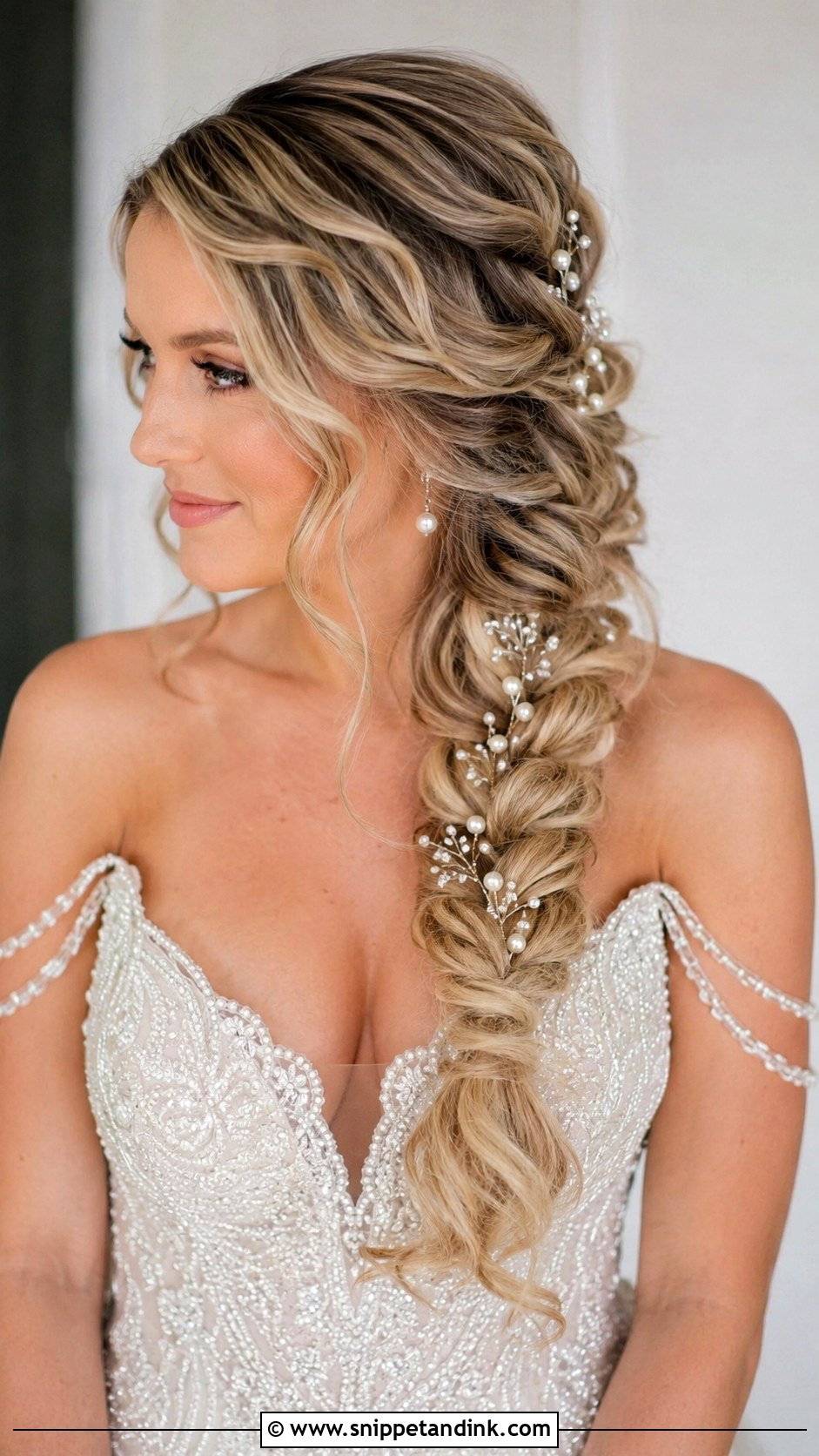
Extensions are behind a lot of the full, thick bridal braids you see. Adding clip-in extensions gives extra length and volume, and inside a braid the clips hide easily. I place the wefts lower than usual, below the line where the braid begins, and match the colour to your ends rather than your roots. Wear them at your trial so the blend can be checked. Finer or shorter hair gains the most, and curls, pearls or flowers can be added for formal and boho weddings alike.
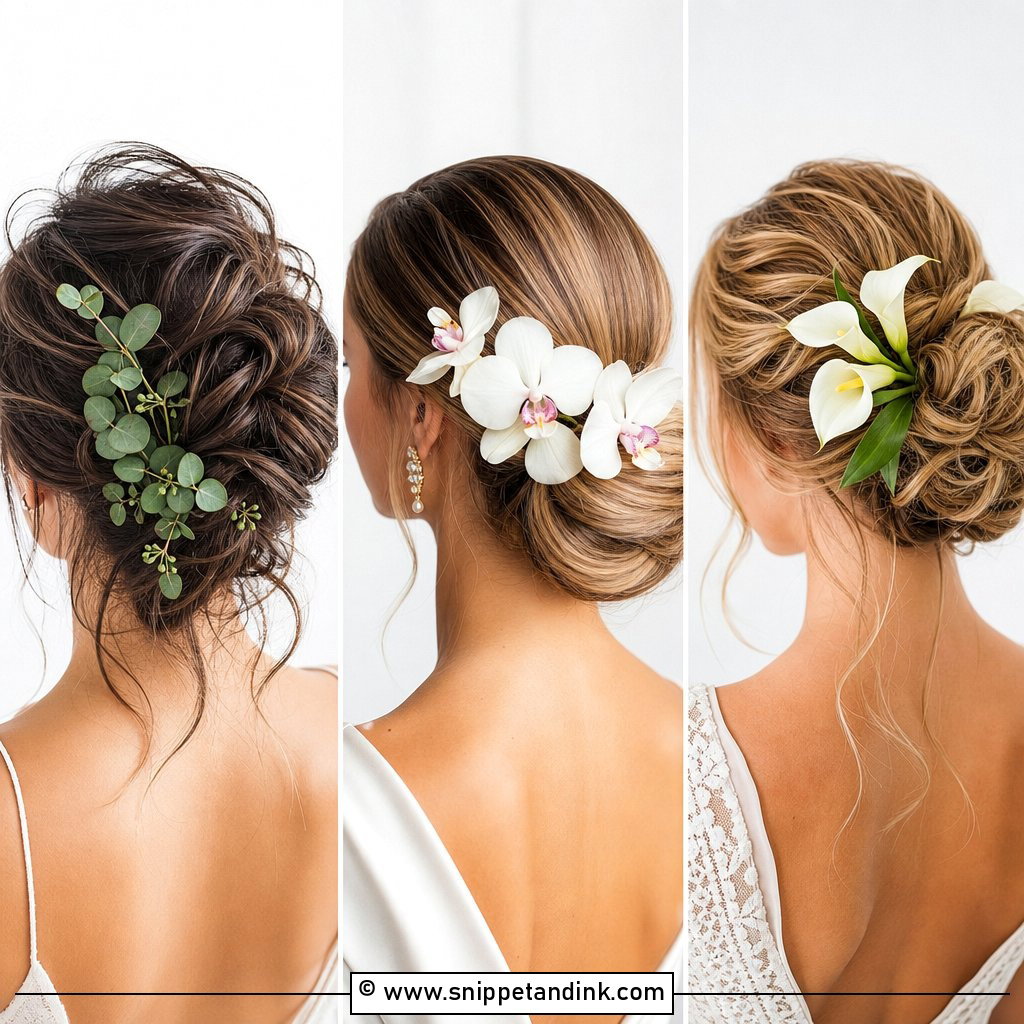
20. Vintage Side Braid for Wedding
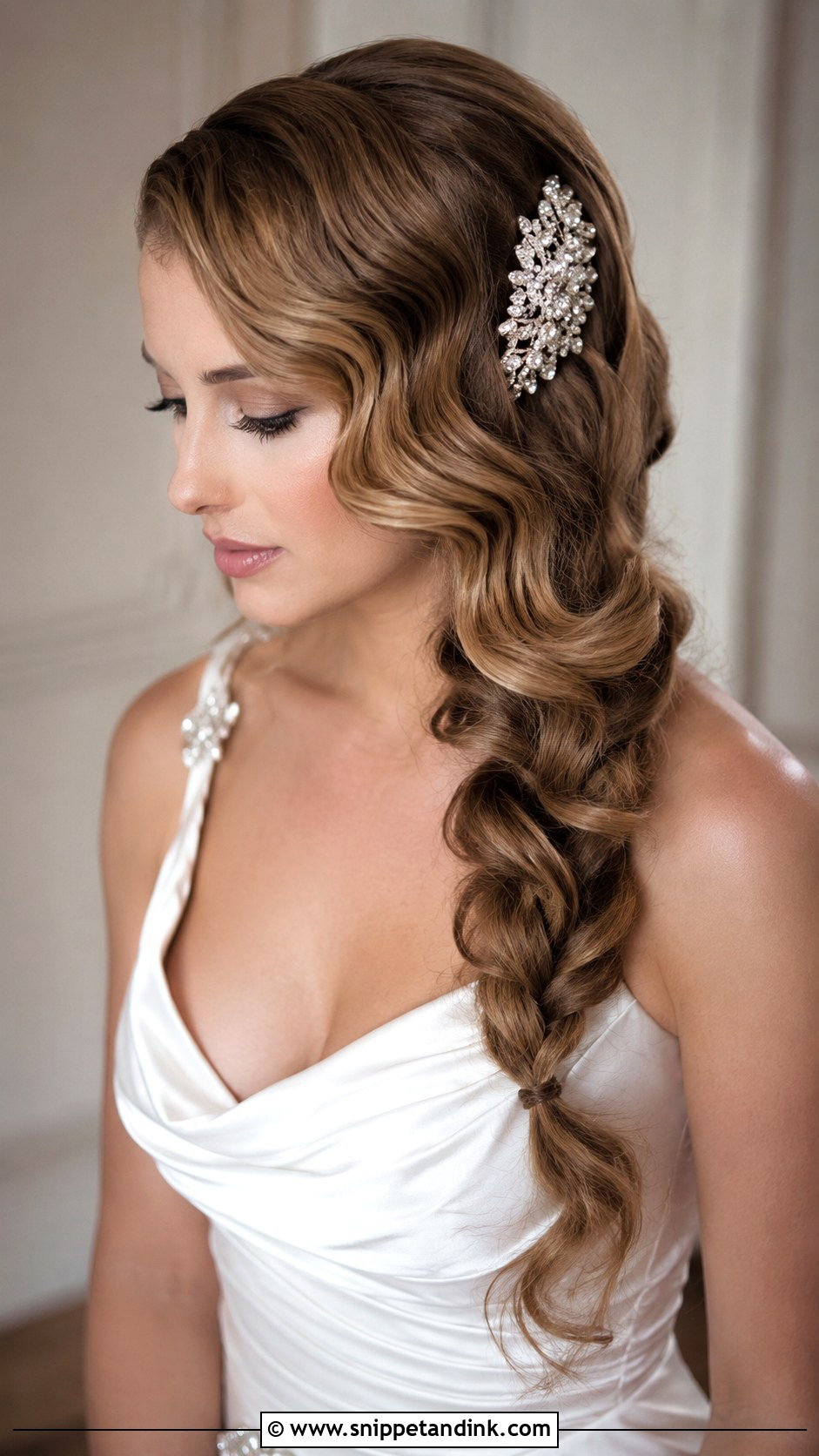
Set waves at the front and a soft braid at the side give this its old-world feel. I set the front in finger waves or brushed-out pin curls first, then braid the remaining hair loosely to the side so the two textures meet behind the ear. The waves need a firm setting lotion and must cool completely before brushing, or they flatten in a warm room. Pearl pins or a jewelled comb finish it. Classic, formal and themed weddings suit it, with statement jewellery and a refined gown.
A Braid at Hour Ten: What Loosens First and How I Prevent It
Side braids put all their weight on one side of the head, so the scalp on that side feels the pull by evening and the top of the braid tends to drift backward. I fix both with an anchor: a small section pinned flat behind the ear, which the braid passes over and is pinned into.
- Slippery, freshly washed hair loosens fastest. Wash the night before and add texture spray at the start.
- Pancake the braid only after it’s tied off, holding the end so the loops don’t slide.
- Clear elastics vanish in photos, but they snap more easily, so I wrap a small piece of hair over each one and pin it.
- In humidity, the loose face pieces go first. Curl them with a smaller iron than the rest and set them with spray.
A Small Repair Kit for Your Bridesmaid
Give one person a few bobby pins in your hair colour, two spare clear elastics and a mini hairspray. If a loop pulls loose during hugs, it can be tucked back and pinned in seconds, and nobody will see it in the reception photos.
Let the Gown and the Venue Decide How Loose to Go
A side braid can be as fine as a fishtail or as full as a twisted rope, and the right one depends mostly on your gown and venue. Lace and outdoor settings take a looser braid; structured gowns and ballrooms suit a tighter French or Dutch base. Every version here can be adapted to your hair’s length and texture, and flowers, pearls or a veil can tie it to the rest of the day. Settle the details at your trial, photograph it from both sides, and you’ll walk down the aisle knowing how it will hold.
You'll Like These Ideas:


Leave a Reply