
Gold is the colour I’m asked for most by Indian brides, and it is also the easiest to get slightly wrong. A bright yellow gold chrome next to antique temple jewellery looks cheap; a rose gold set beside 22-carat kundan looks pink. So before we talk about designs, I look at the jewellery. Kundan, temple pieces, zari borders and mehndi all carry their own shade of gold, and the manicure should sit in the same family. The twenty ideas below cover foil, chrome, glitter, pearls, 3D work and hand-painted motifs, with notes on how each one wears.

Yellow, Rose or Antique: Read Your Jewellery First
Bring your bridal jewellery, or clear photos of it in daylight, to the nail appointment. Gold comes in many shades, and the eye notices when the nails are a different family from the bangles right beside them.
- Kundan and bright 22-carat sets: a warm yellow gold in foil or metallic gel.
- Temple and antique pieces: antique gold or bronze-gold, often with a matte base.
- Polki and uncut diamond sets: a softer champagne gold.
- Diamond or white metal jewellery: rose gold or champagne rather than deep yellow.
Foil, Chrome, Leaf or Metallic Gel
Each gold medium behaves differently. Metallic gel polish is the most durable and easiest for tips and lines, but it can show faint brush strokes. Chrome powder gives a true mirror shine, though it needs a perfectly smooth base and wears first at the edge. Foil and gold leaf give an uneven, handmade texture and must be sealed fully under gel. Ask your artist which one they’re using for each part of the design.
Skin tone matters too. Warm and olive skin usually suits yellow and antique gold, while very cool or rosy skin can look better with champagne. I swatch two shades on a tip held against your hand before deciding.
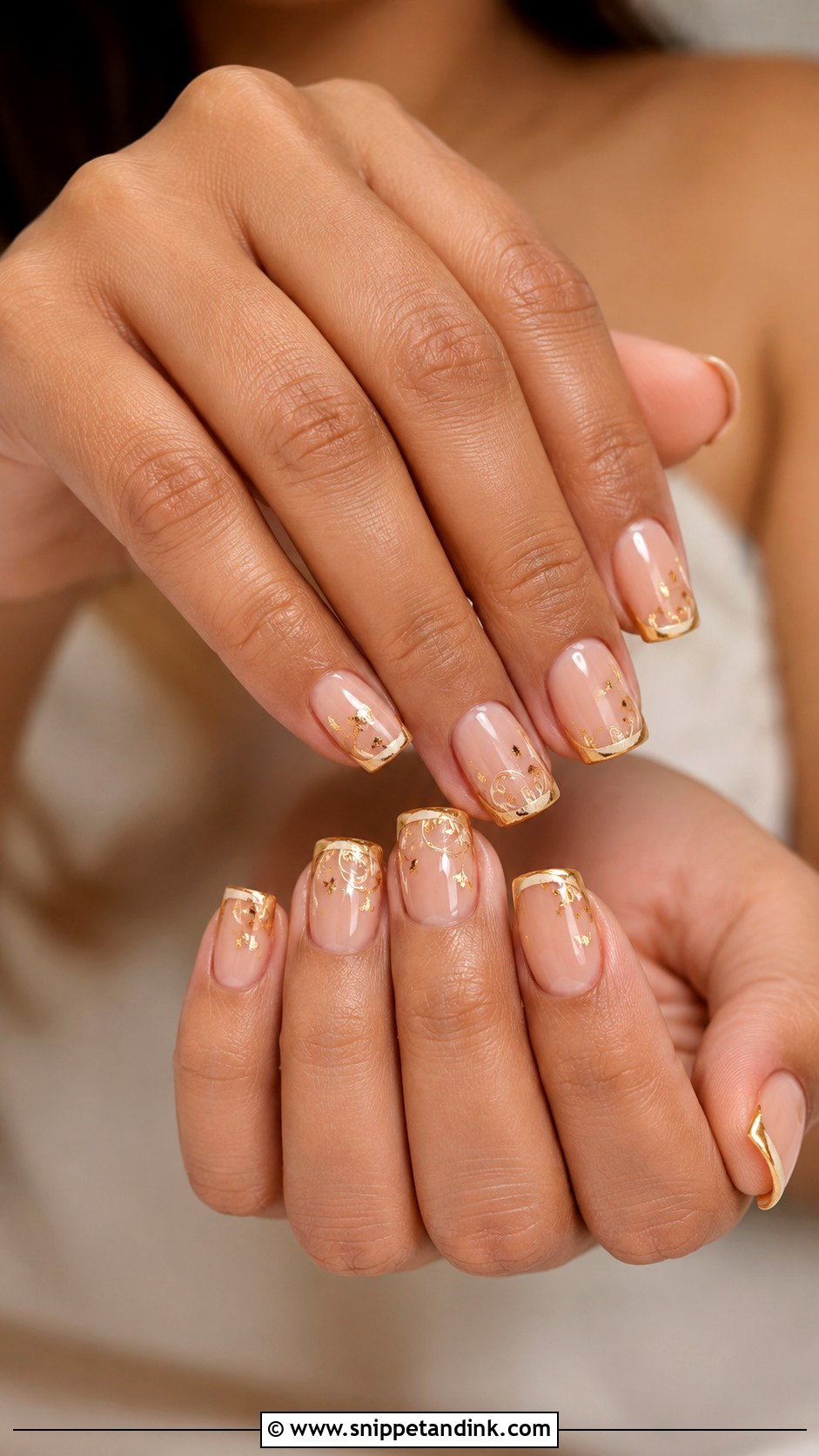
1. Gold French Tip Indian Bridal Nails
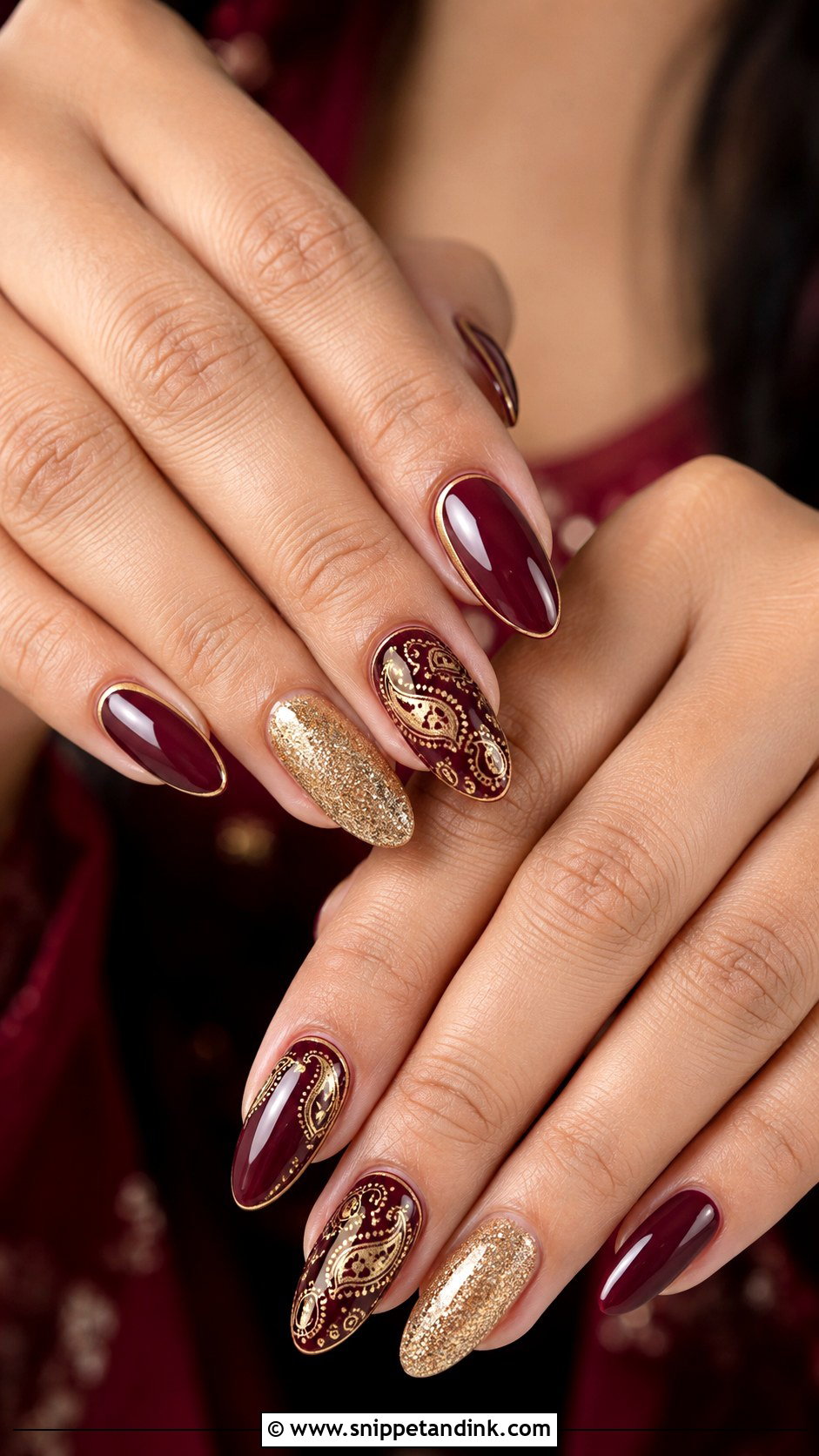
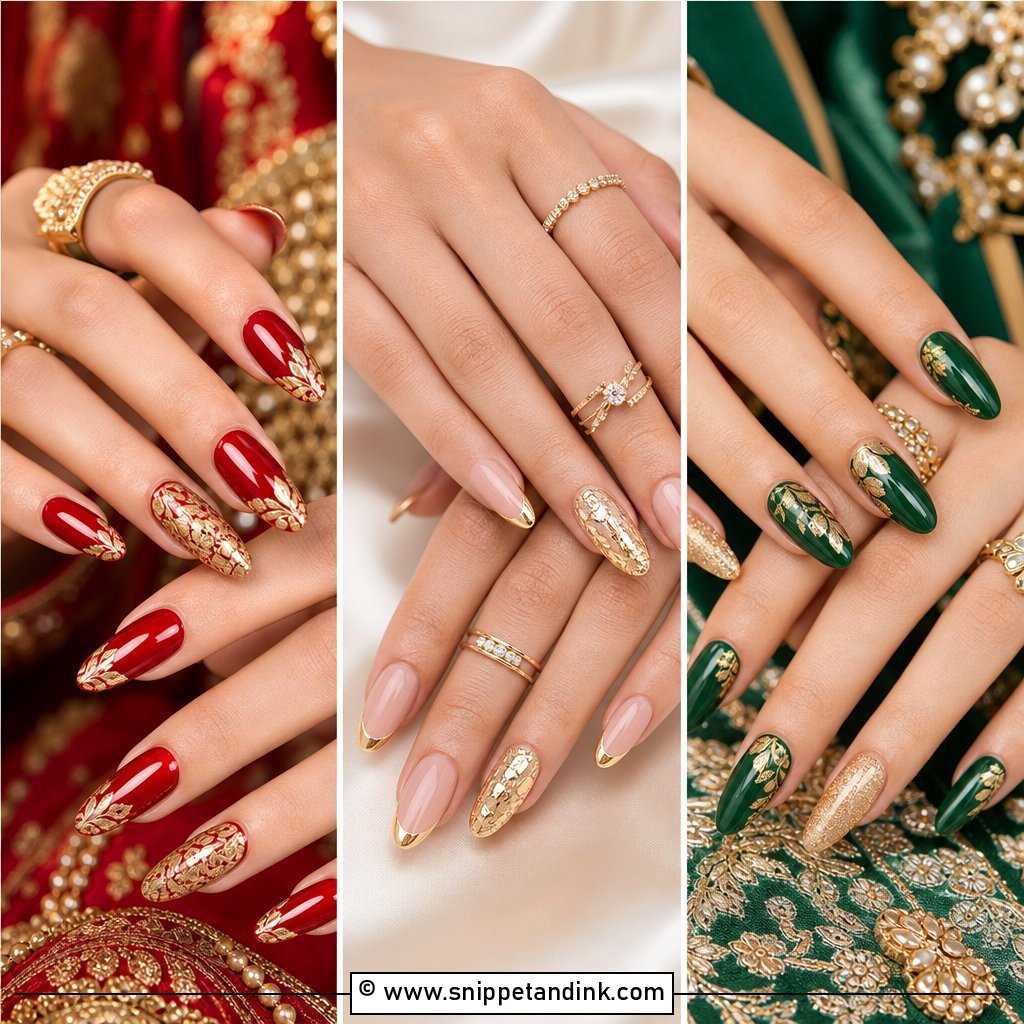
Gold French tip Indian bridal nails keep the nail bed soft and put the shine at the edge, so they suit almost any outfit colour. A nude, blush, milky beige or sheer peach base works underneath. I paint the tip with a metallic gel rather than foil, because foil cracks along a curved smile line. A thin gold curve or a small paisley on the ring finger adds an Indian touch. Almond and oval soften it; square looks sharper.
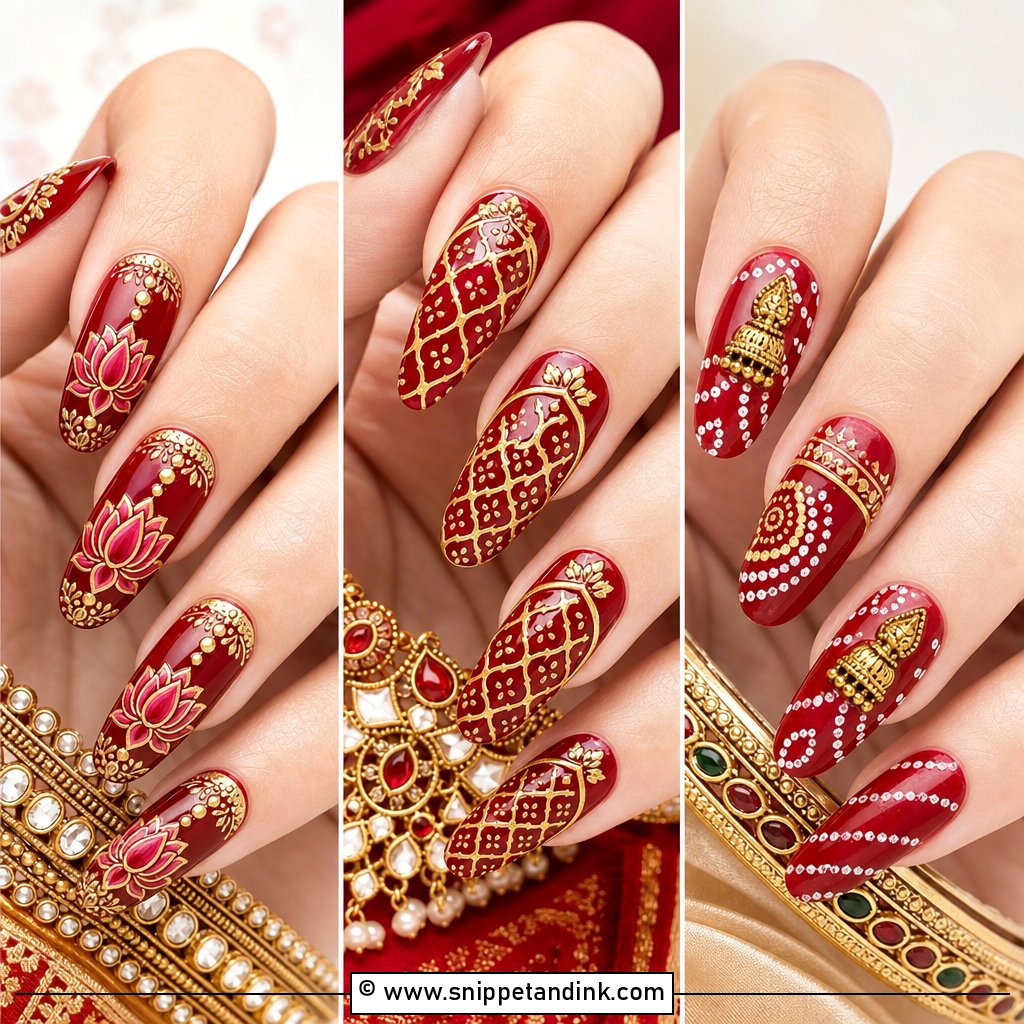
2. Red And Gold Indian Bridal Nails
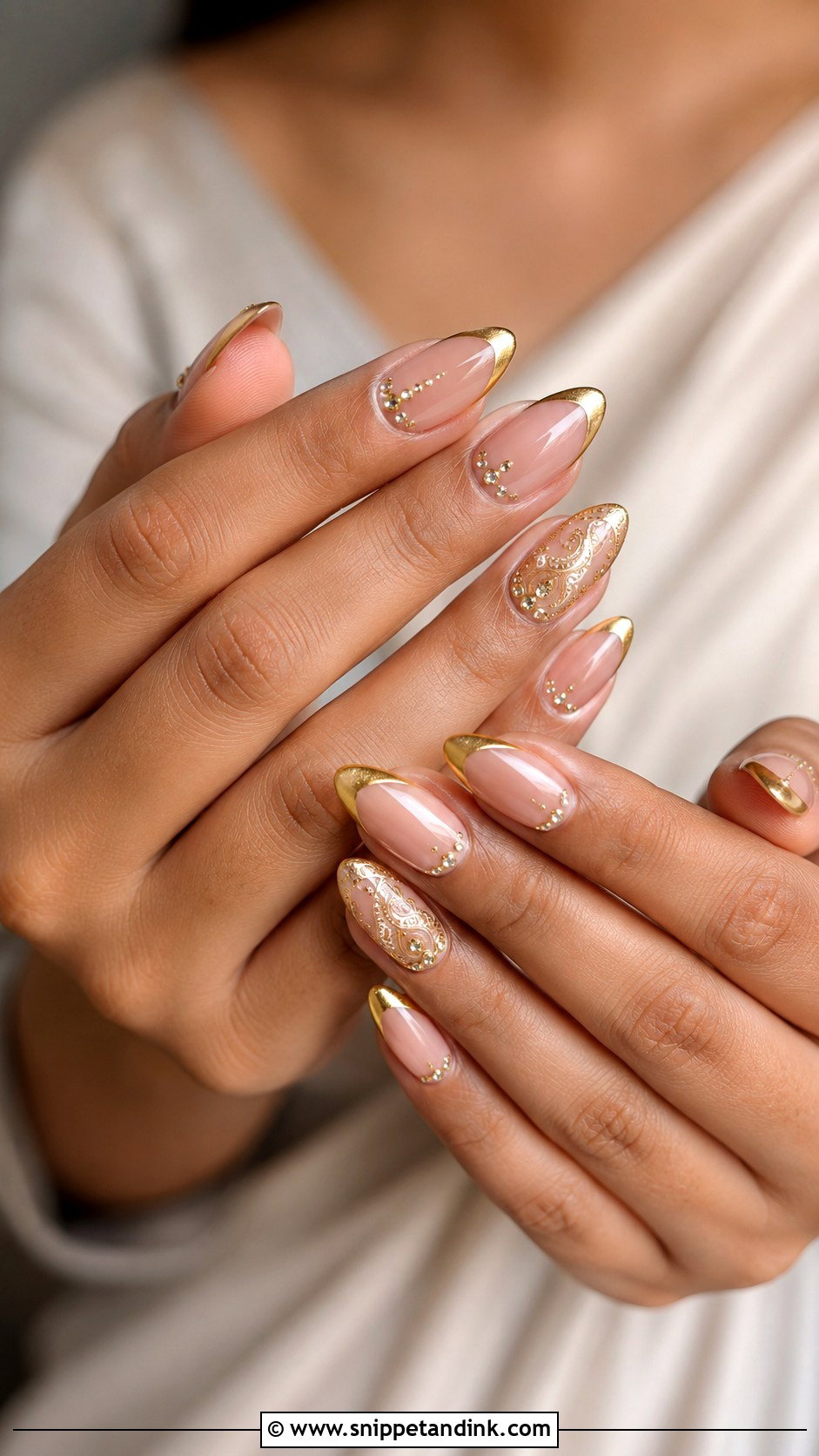
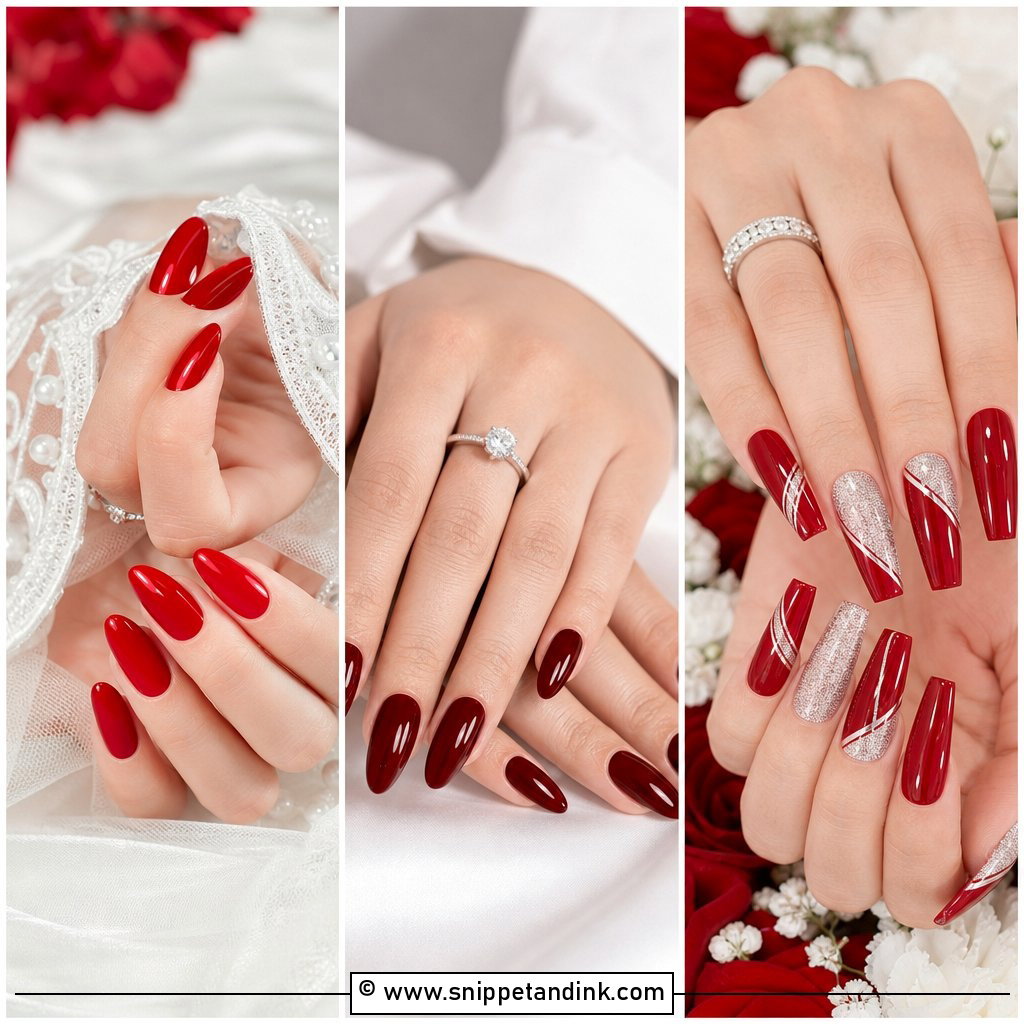
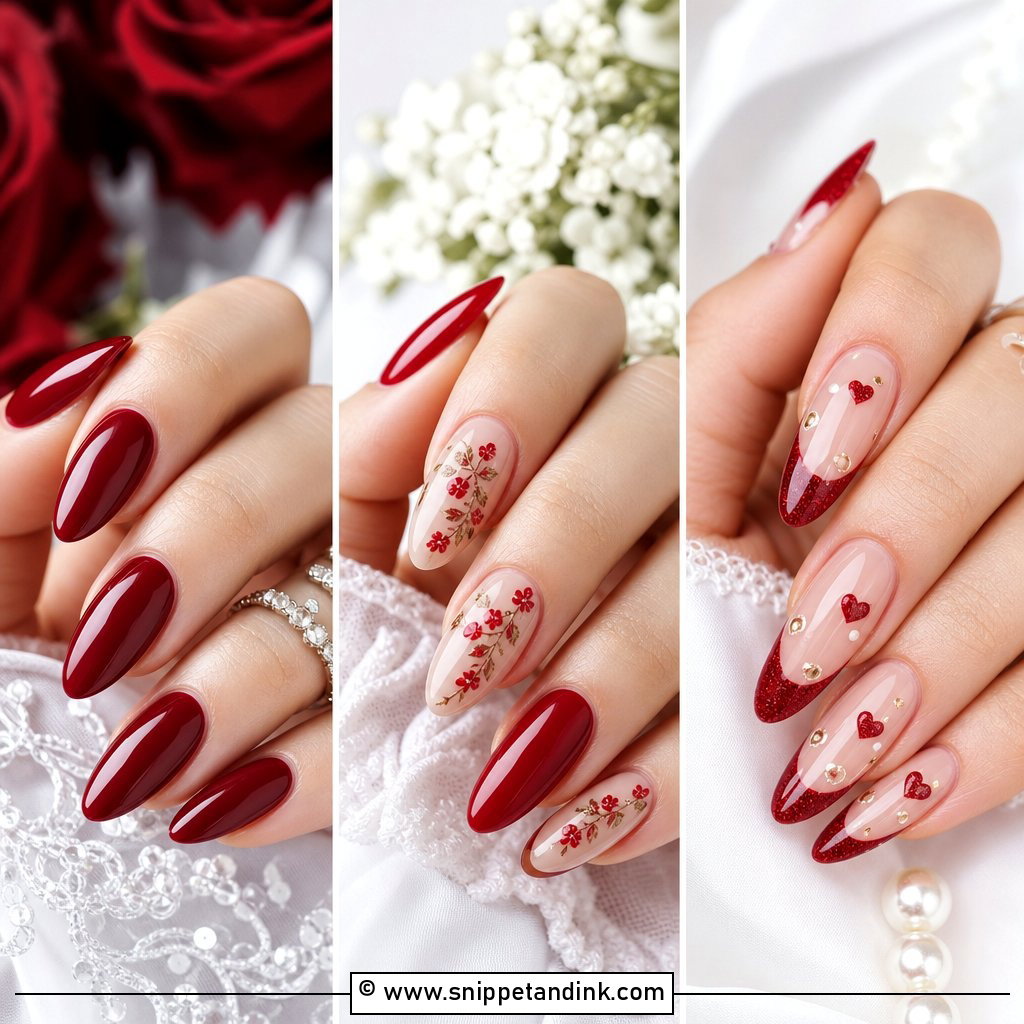
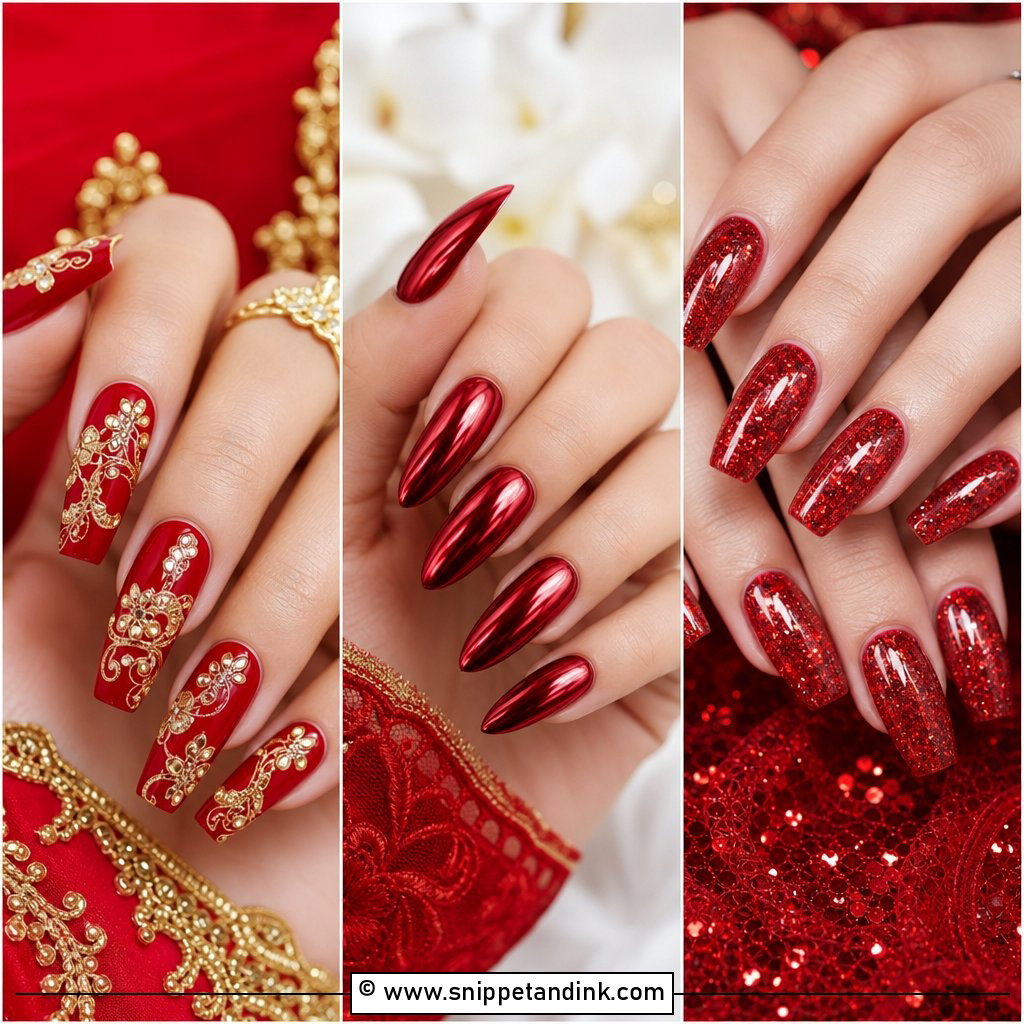
Red and gold match more traditional outfits than any other pairing. The base can be sindoor red, ruby, maroon or wine; I choose it to match the lehenga or saree in daylight, since venue lighting shifts reds. Gold foil, gold tips or fine lines finish it. Chunky stones on every nail are the usual mistake. Glossy red on most nails, gold on two, and one detailed motif looks far richer.
3. Gold Chrome Indian Bridal Nails
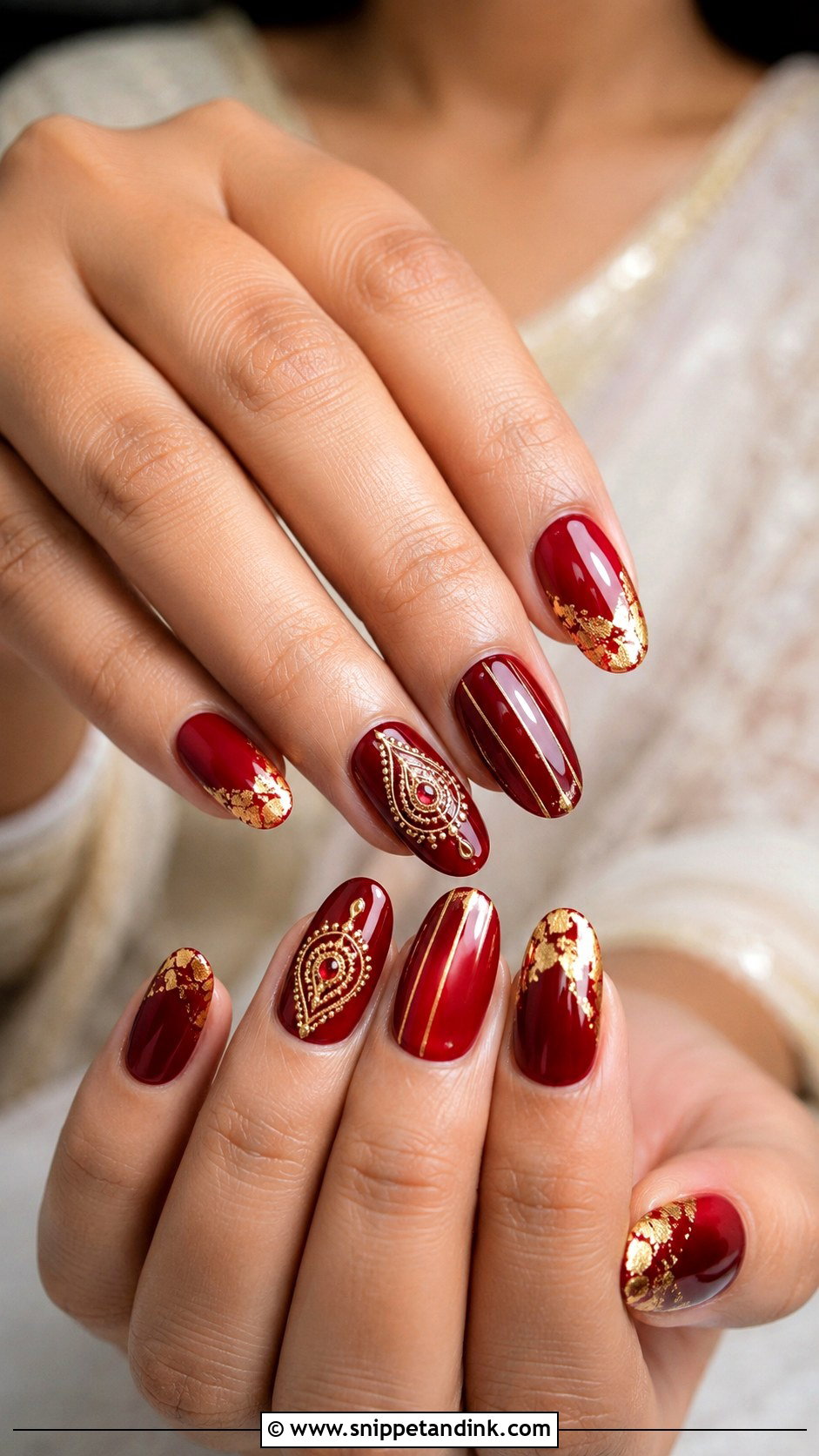
Gold chrome Indian bridal nails have a true mirror finish because the powder is buffed onto a cured gel layer and then sealed. That process also means every ridge in the nail shows, so I build a smooth base first. Full chrome on every nail is bold; over a nude or champagne base, or as chrome tips only, it softens. Chrome is the finish most likely to wear at the free edge, so I wrap the top coat over the tip. Coffin, almond and stiletto suit it.
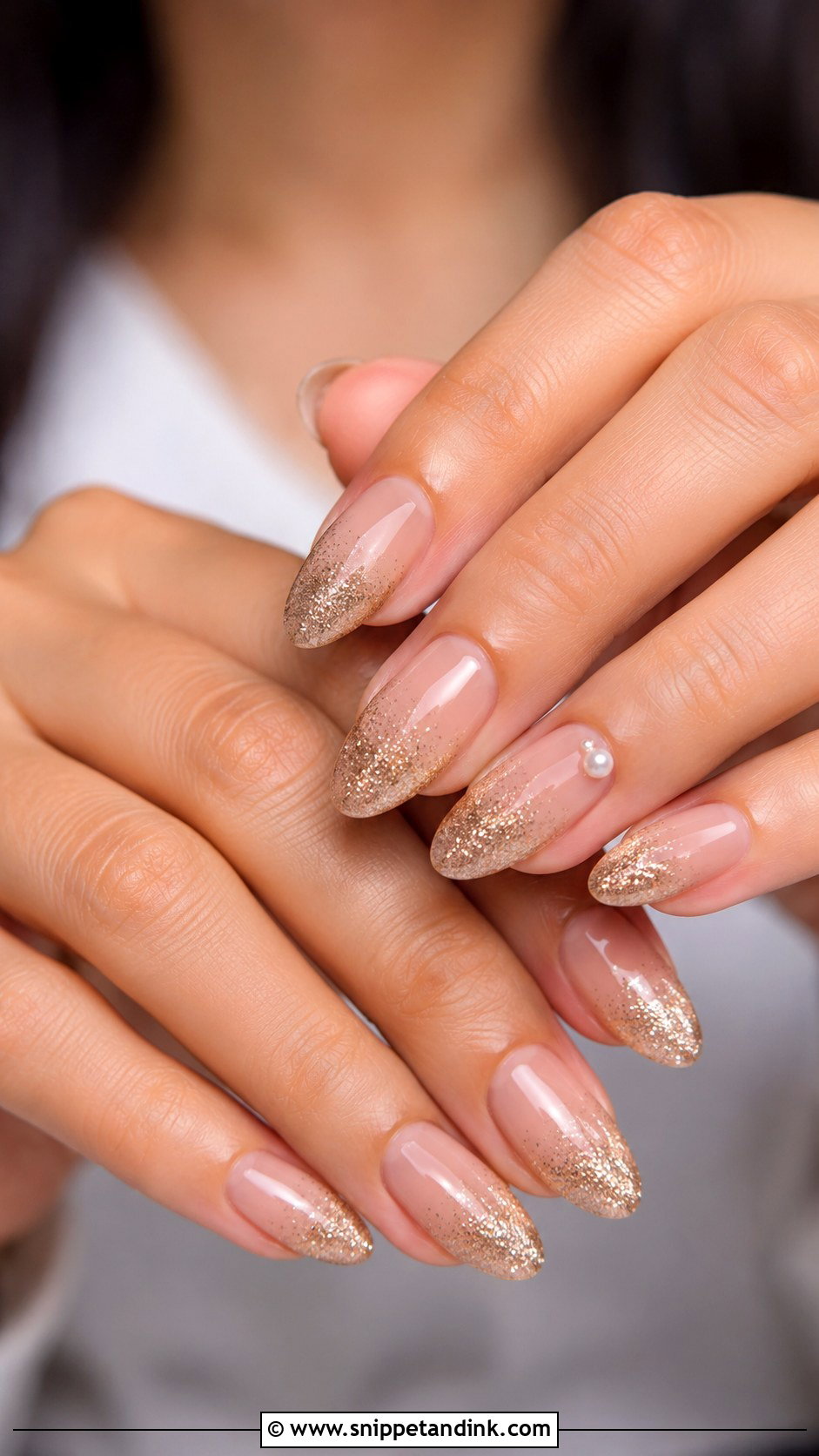
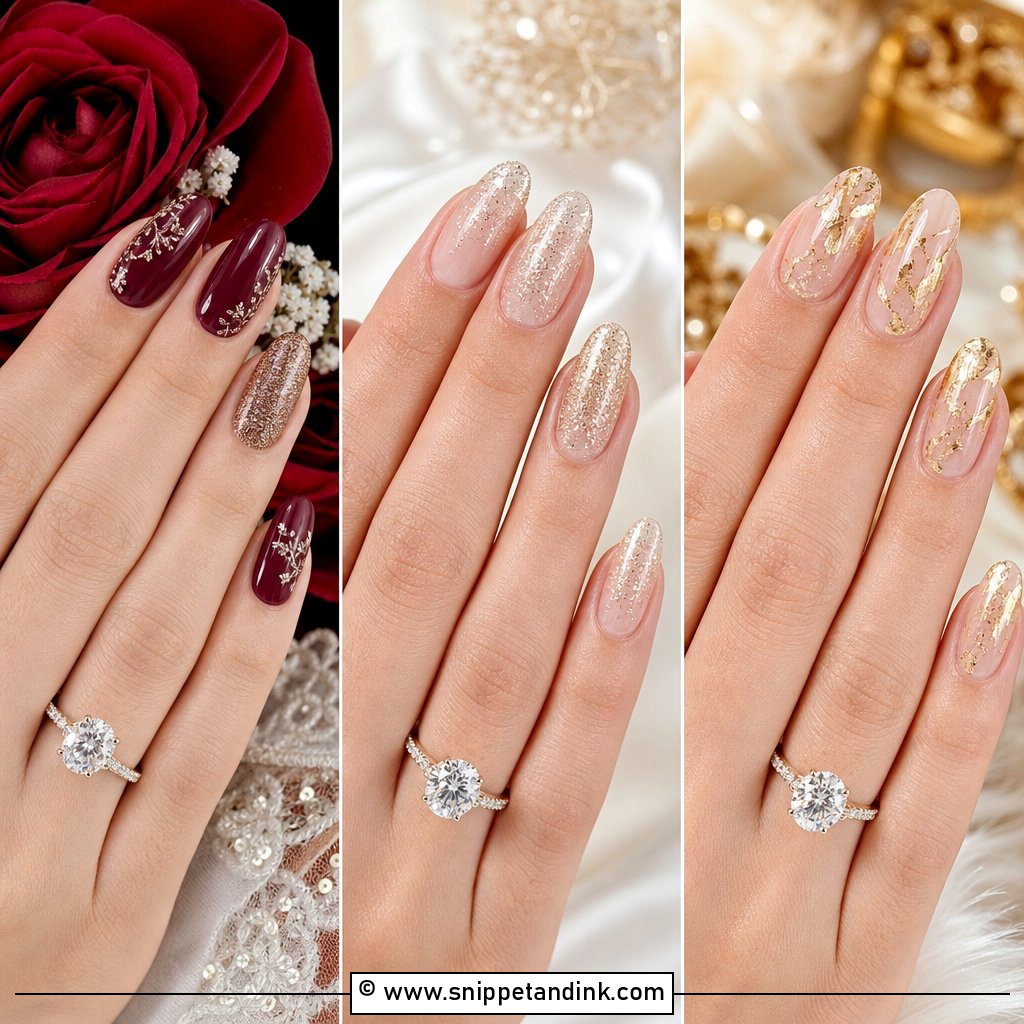
4. Gold Glitter Ombre Indian Bridal Nails
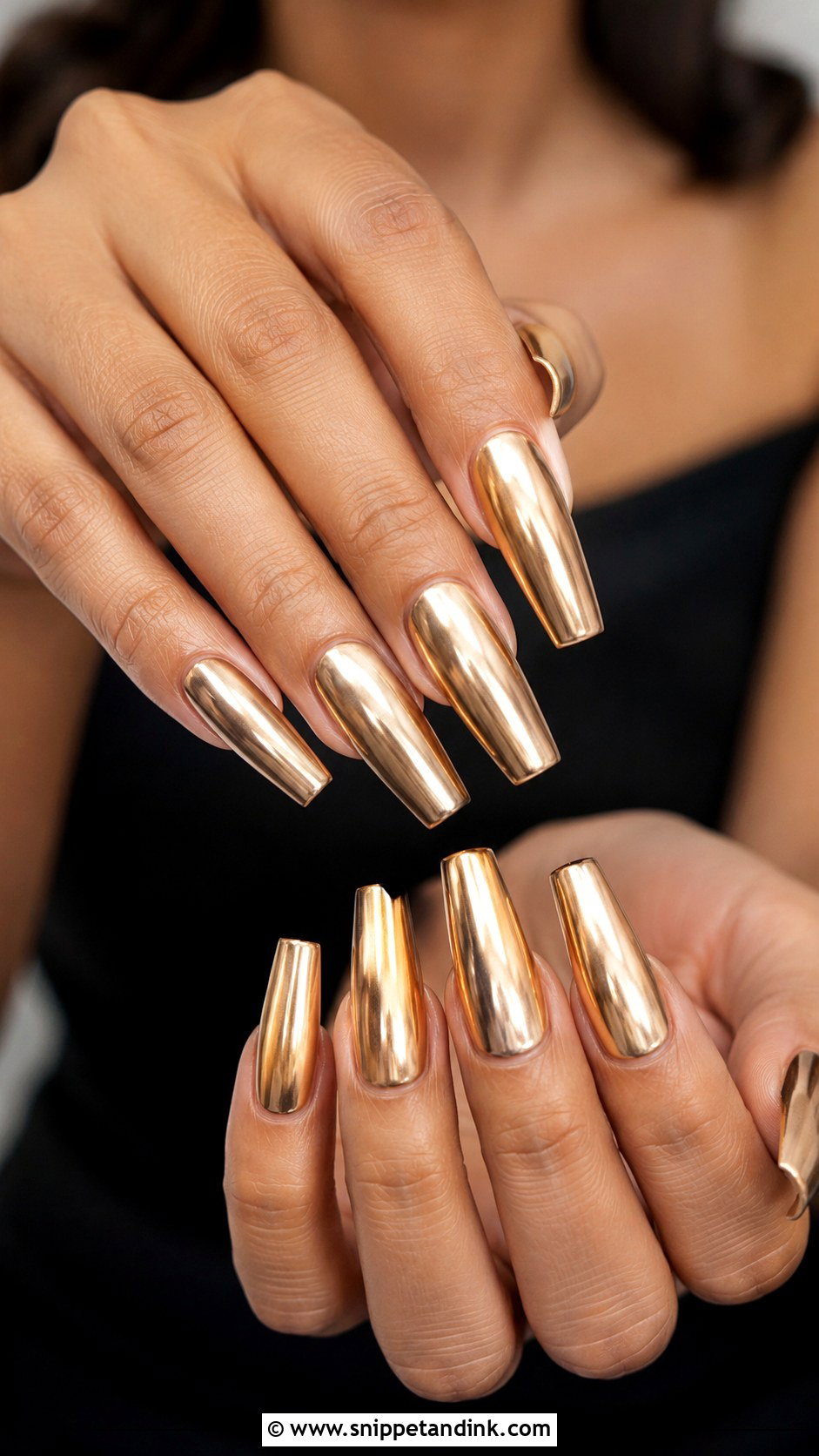
Gold glitter ombre Indian bridal nails fade sparkle from the tip toward the middle over a soft nude, blush or peach base. This set is the most practical gold design for a busy wedding week, because a small chip at the tip disappears into the glitter. The fade also makes nails look longer on almond and oval shapes. I use fine gold glitter in gel, sealed with a thick top coat so the surface stays smooth. One foil accent or a tiny pearl adds bridal detail.
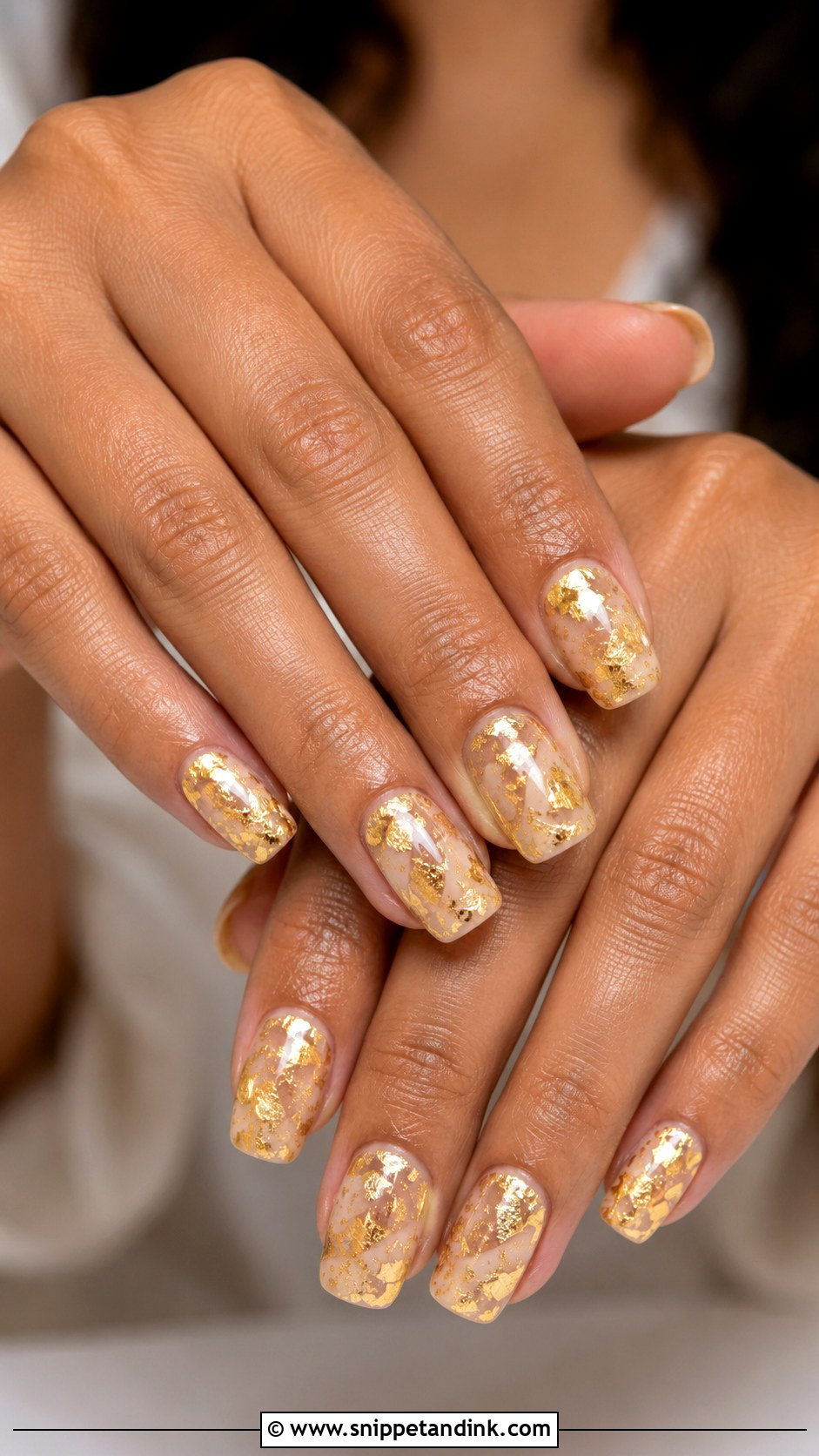
5. Gold Foil Indian Bridal Nails
Foil gives broken, uneven flecks of gold, so each nail comes out a little different. I press it onto a tacky gel layer and then encapsulate it, because unsealed foil lifts and catches on fabric. Scattered lightly over nude it looks delicate; packed over red or brown it looks antique. It catches light like real metal, which suits zari borders and sequined dupattas. Short and medium lengths carry it well.
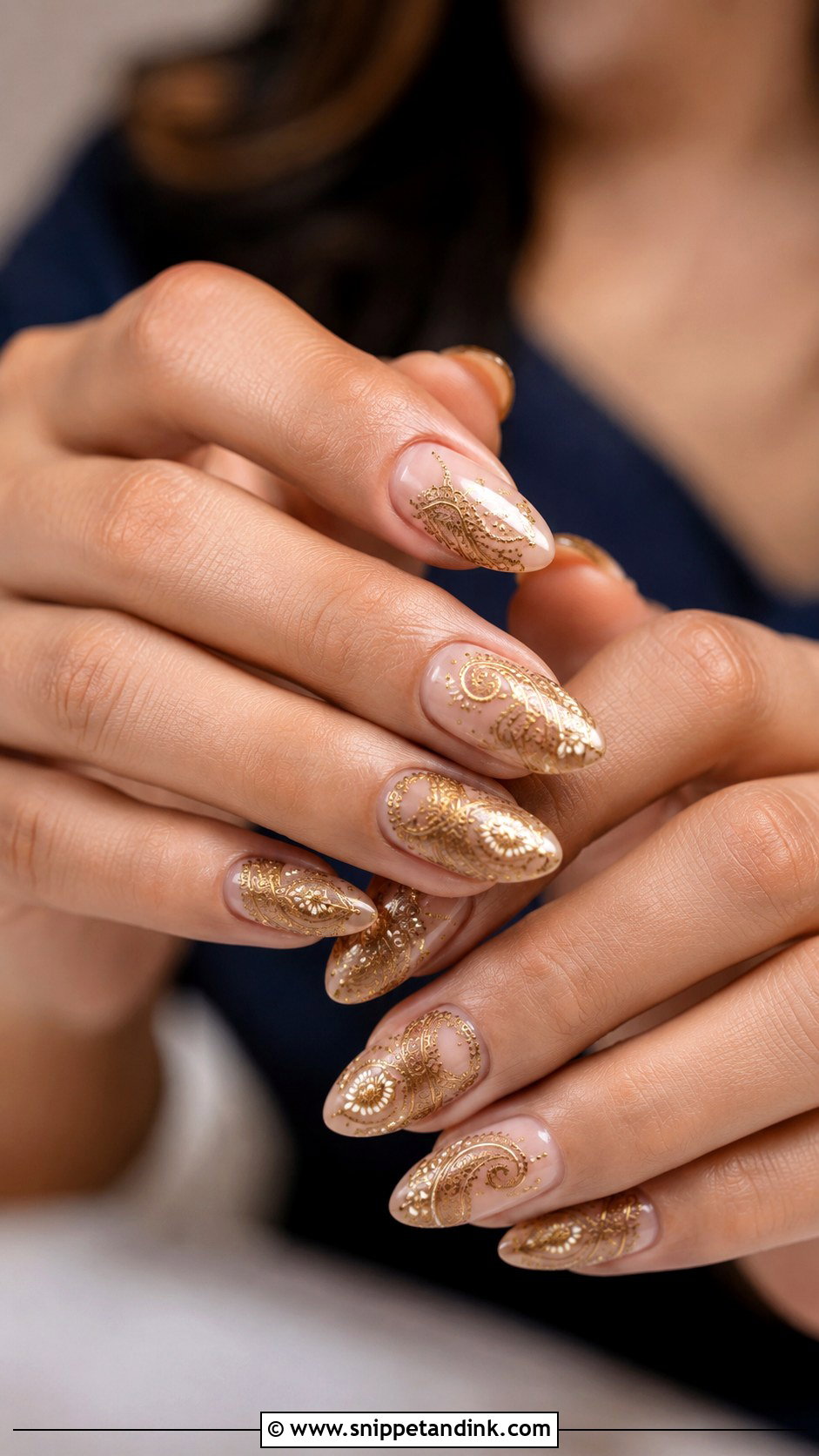
6. Gold Mehndi Indian Bridal Nails
Gold mehndi Indian bridal nails translate henna patterns into fine gold lines, dots, paisleys and lace curves over a nude, red, ivory or clear base. Gold striping gel holds a finer line than metallic polish, and it doesn’t spread before curing, so the detail stays crisp. Painting all ten nails takes a long appointment. Two accent nails keep it subtle and save time. I’d match the motifs to your actual mehndi design if you can bring a photo.
7. Nude And Gold Indian Bridal Nails
Nude and gold suits brides whose bangles, rings and mehndi already carry the look. The nude shade decides whether it works: beige or peach on fair warm skin, rosy brown on cooler medium skin, caramel or deep brown on darker skin. A nude that is too pale makes hands look grey in photos. Gold tips, foil flakes, chrome edges or fine swirls keep it festive. It carries over well into engagement and reception events.
8. White And Gold Indian Bridal Nails
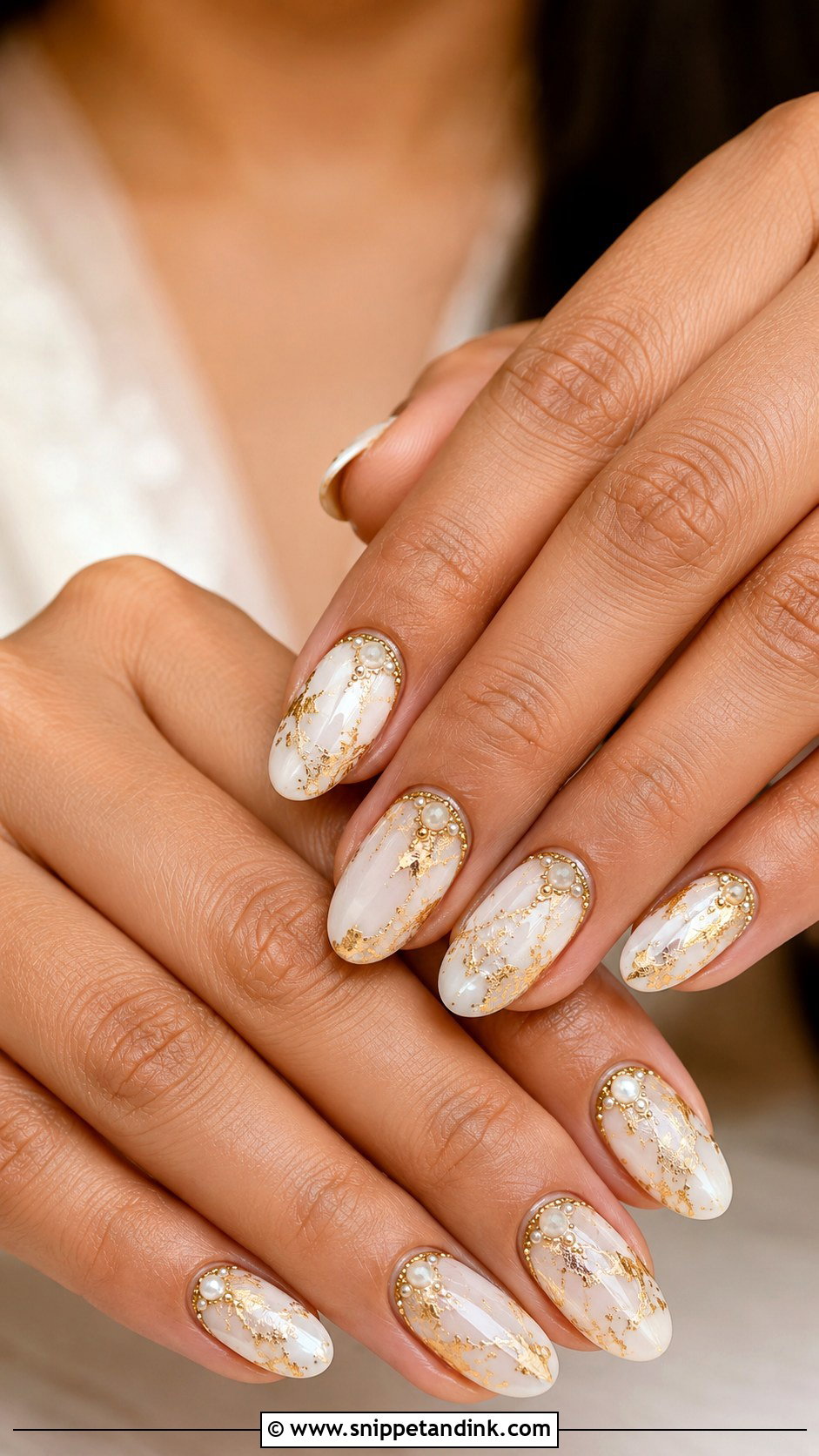
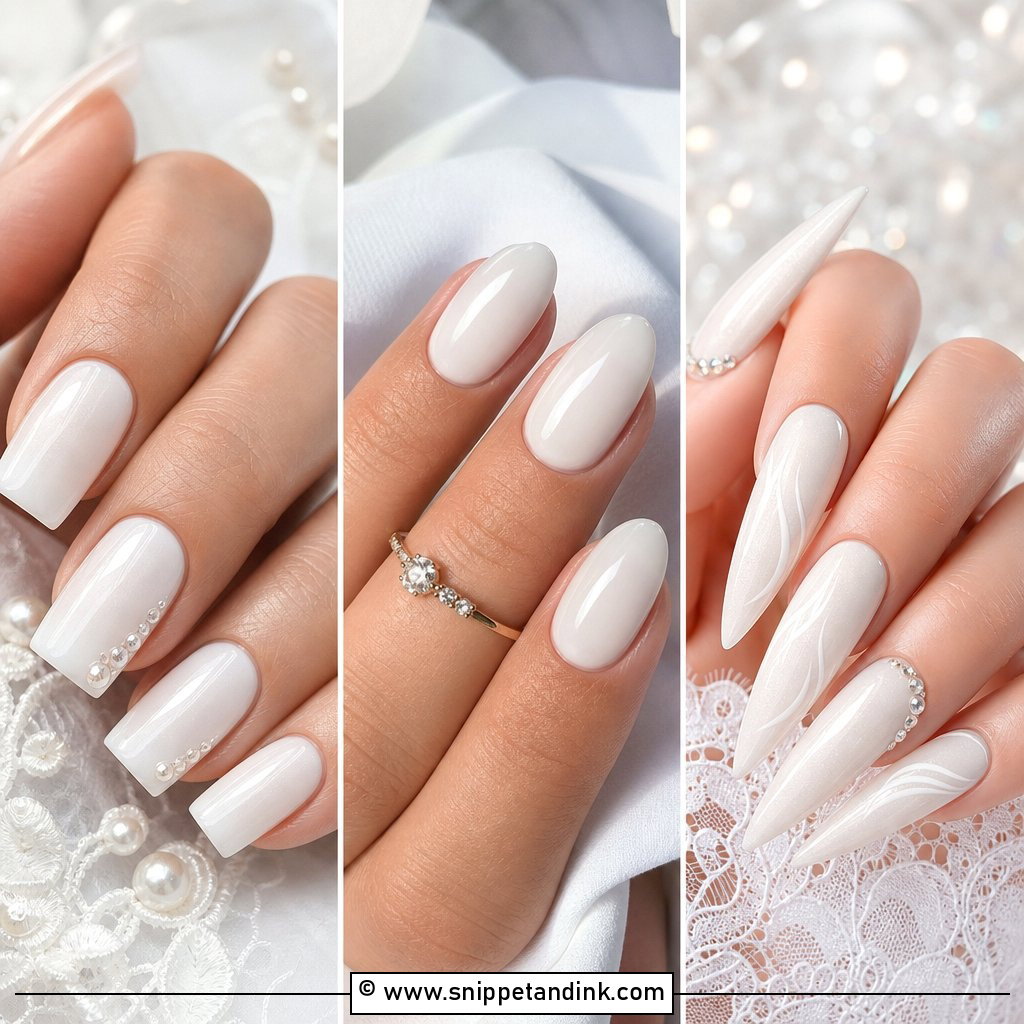
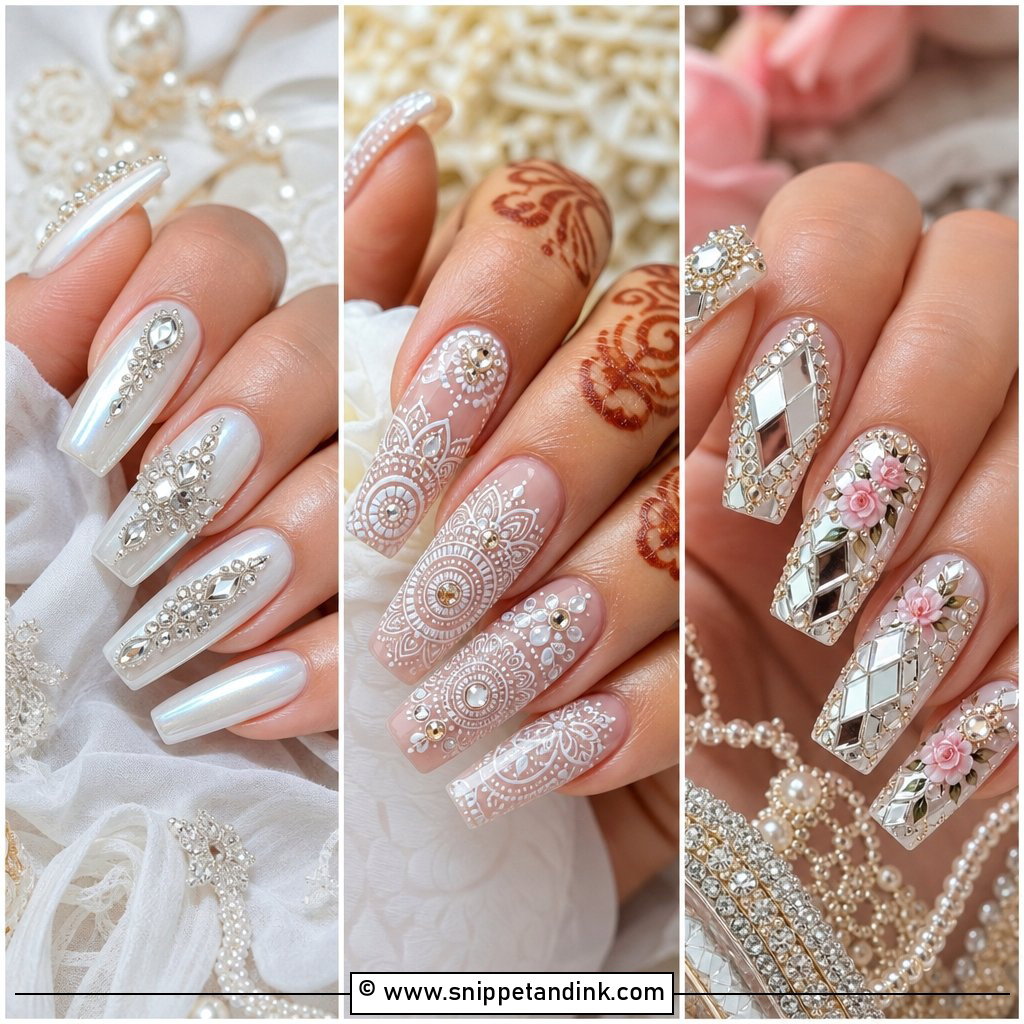
White with gold looks fresh against ivory lehengas, pastel outfits and pearl or kundan jewellery. I rarely use opaque white; a milky white or soft pearl base looks more refined and hides regrowth better. Gold foil, cuticle lines, tips or tiny crystals add warmth. This is a good middle ground when red feels too strong but you still want a traditional feel. Almond and oval soften it; square makes it crisp.
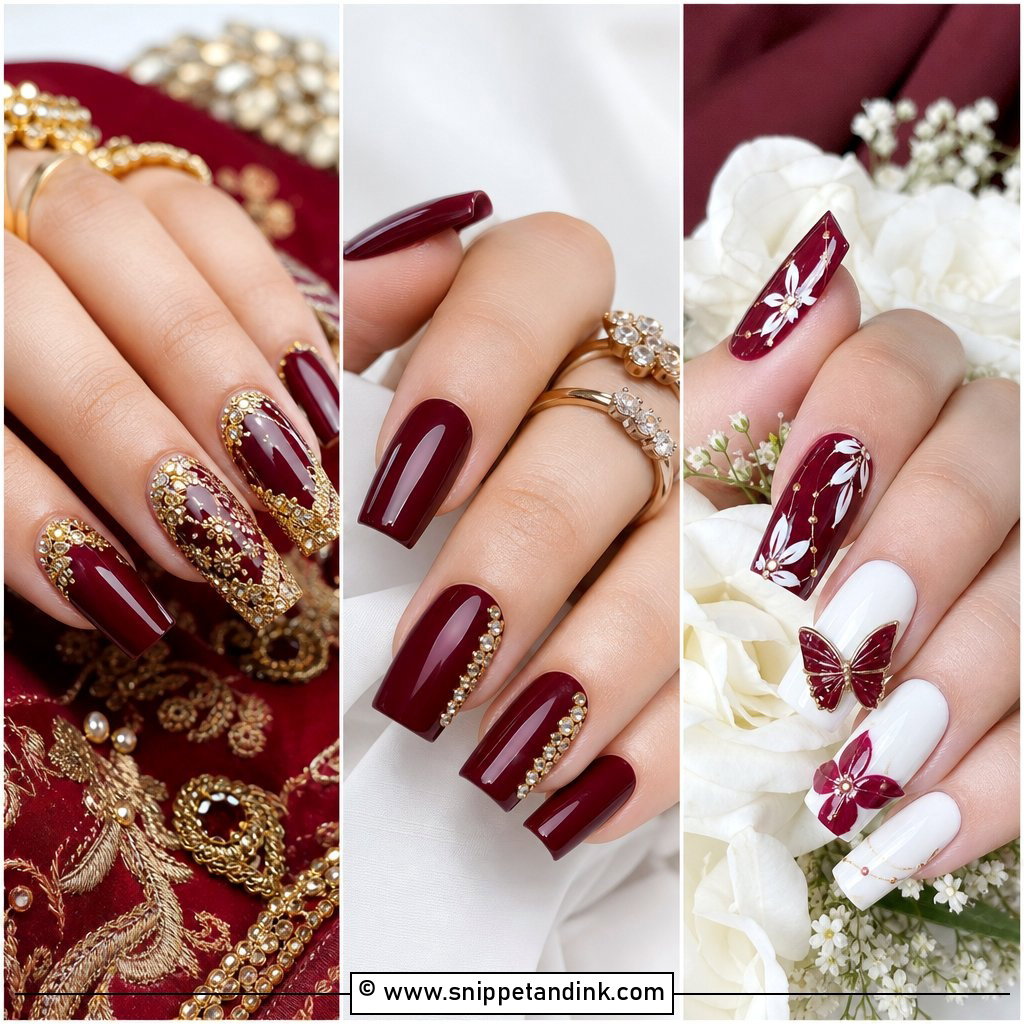
9. Maroon And Gold Indian Bridal Nails
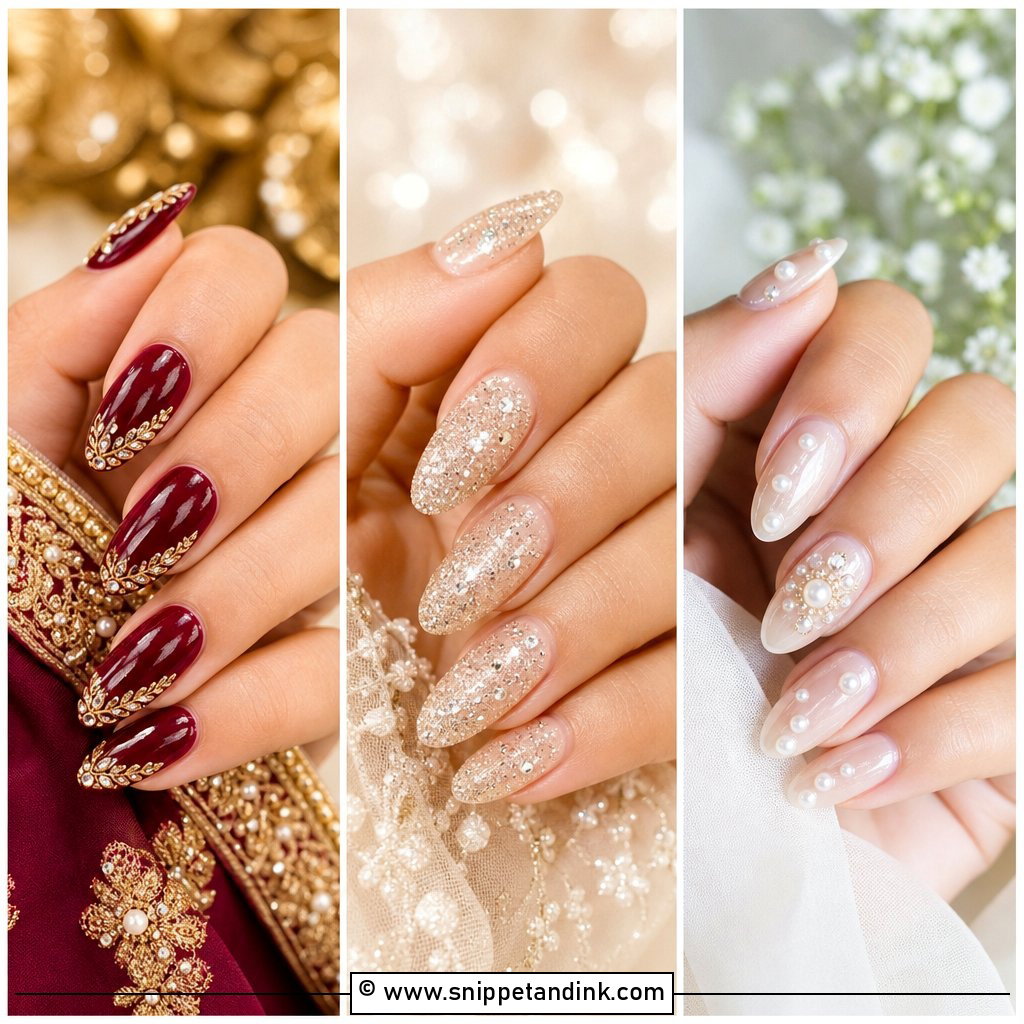
Maroon and gold Indian bridal nails suit velvet lehengas, red sarees and antique jewellery. Maroon is deep enough that gold lines read clearly against it, which makes it the best base for hand-painted paisley, mandala or lattice work. You can alternate glossy maroon with gold glitter nails or keep the art to one or two fingers. Dark shades show uneven cuticle work, so I take extra care at the edges. Almond and coffin flatter it.
10. Gold Pearl Indian Bridal Nails
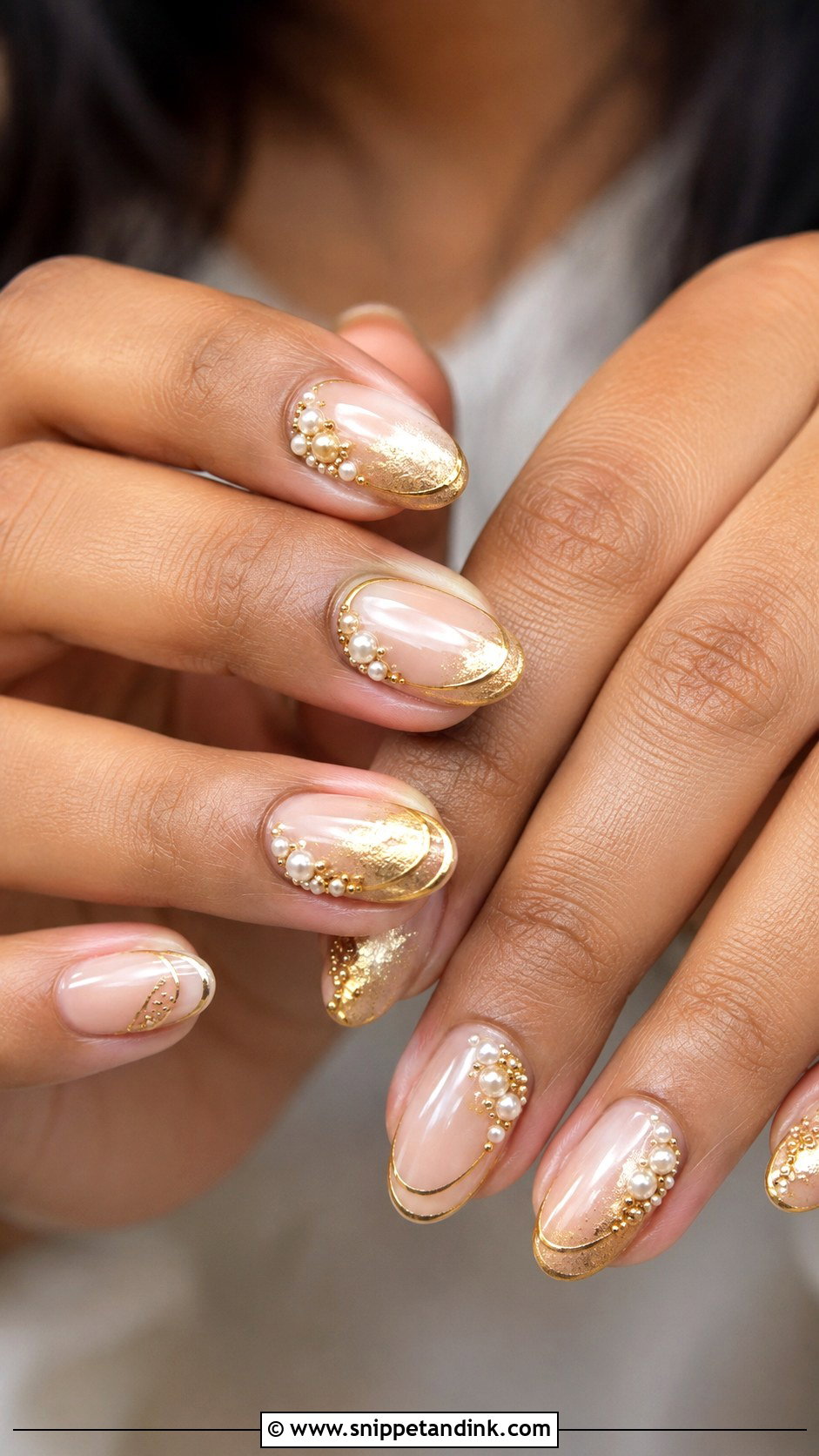
Pearls with gold soften a manicure and echo pearl chokers and pastel lehengas. The base is usually sheer nude, blush, ivory or champagne, with gold as foil, fine lines or metallic tips. I set small flat-backed pearls near the cuticle, where they’re less likely to snag on dupatta net or hair. Raised pearls on the tip get knocked off quickly. Short almond, medium oval and soft square all suit it.
11. Gold Kundan Indian Bridal Nails
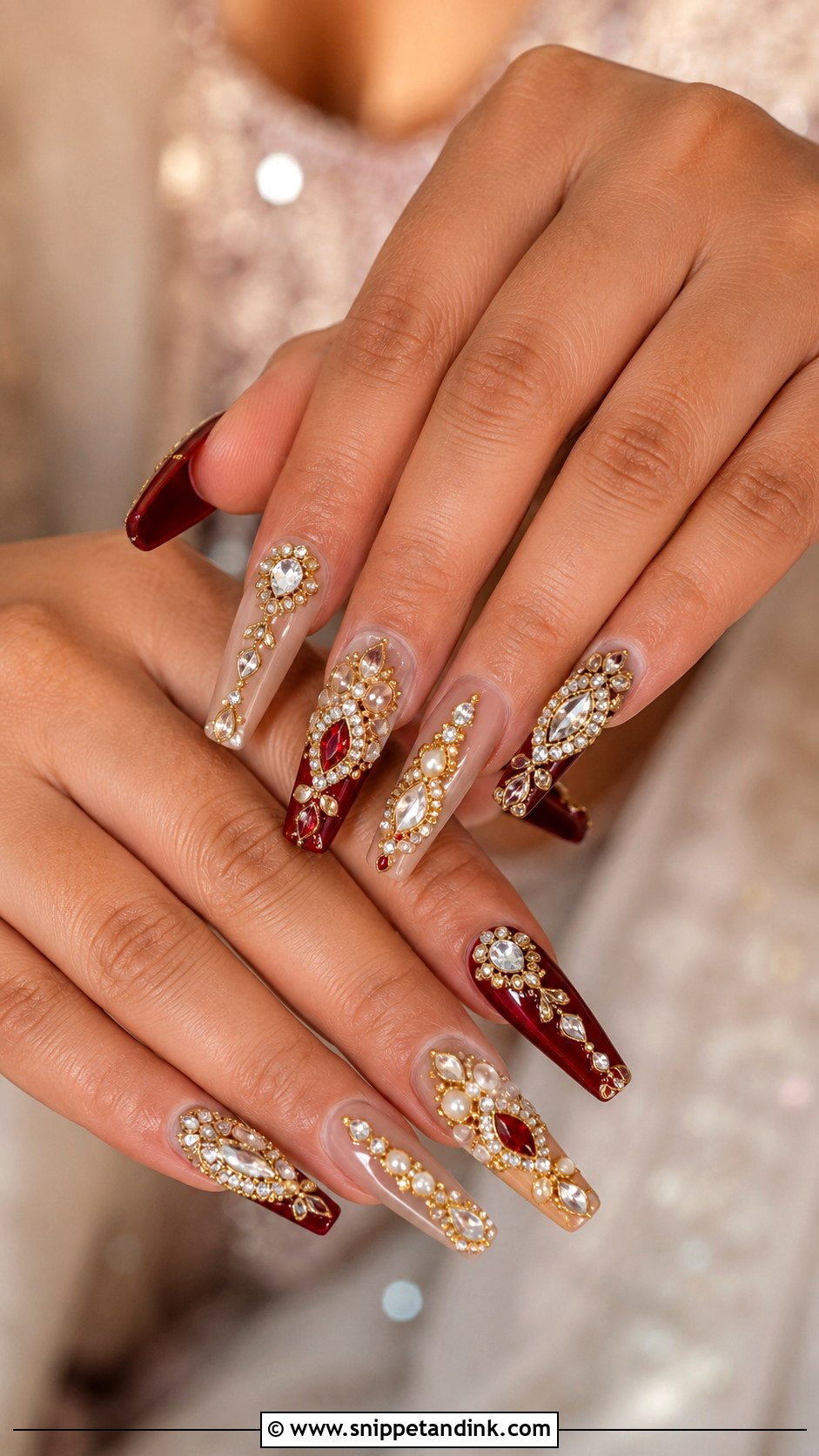
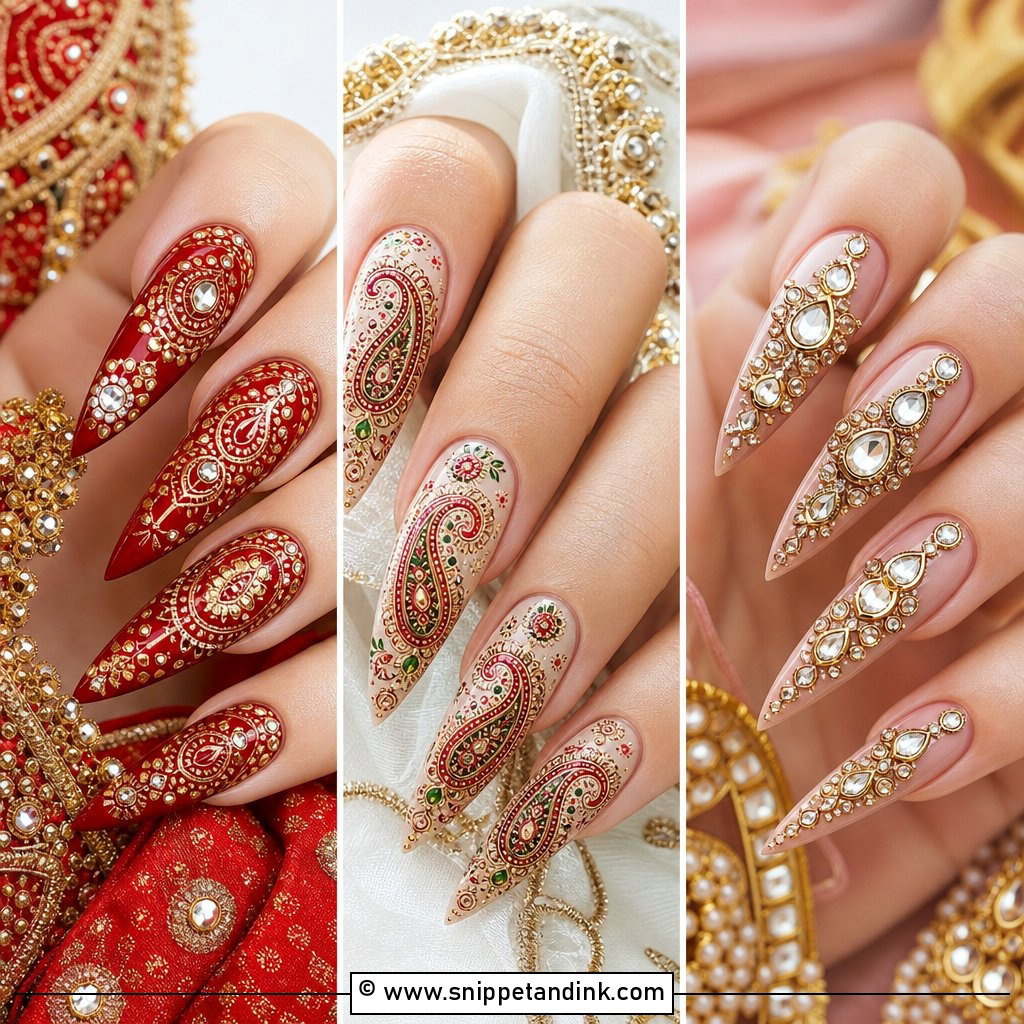
Kundan-style nails imitate jewellery, with tiny crystals, pearls and gold outlines set in patterns. I build them on two accent fingers and keep the base nude, ivory, deep red or champagne so the stones stand out. A full kundan set on all ten nails is heavy, slow to apply and hard to live with: stones catch on clothing and jewellery clasps. Longer almond and coffin shapes give enough surface for detail.
12. Gold Mandala Indian Bridal Nails
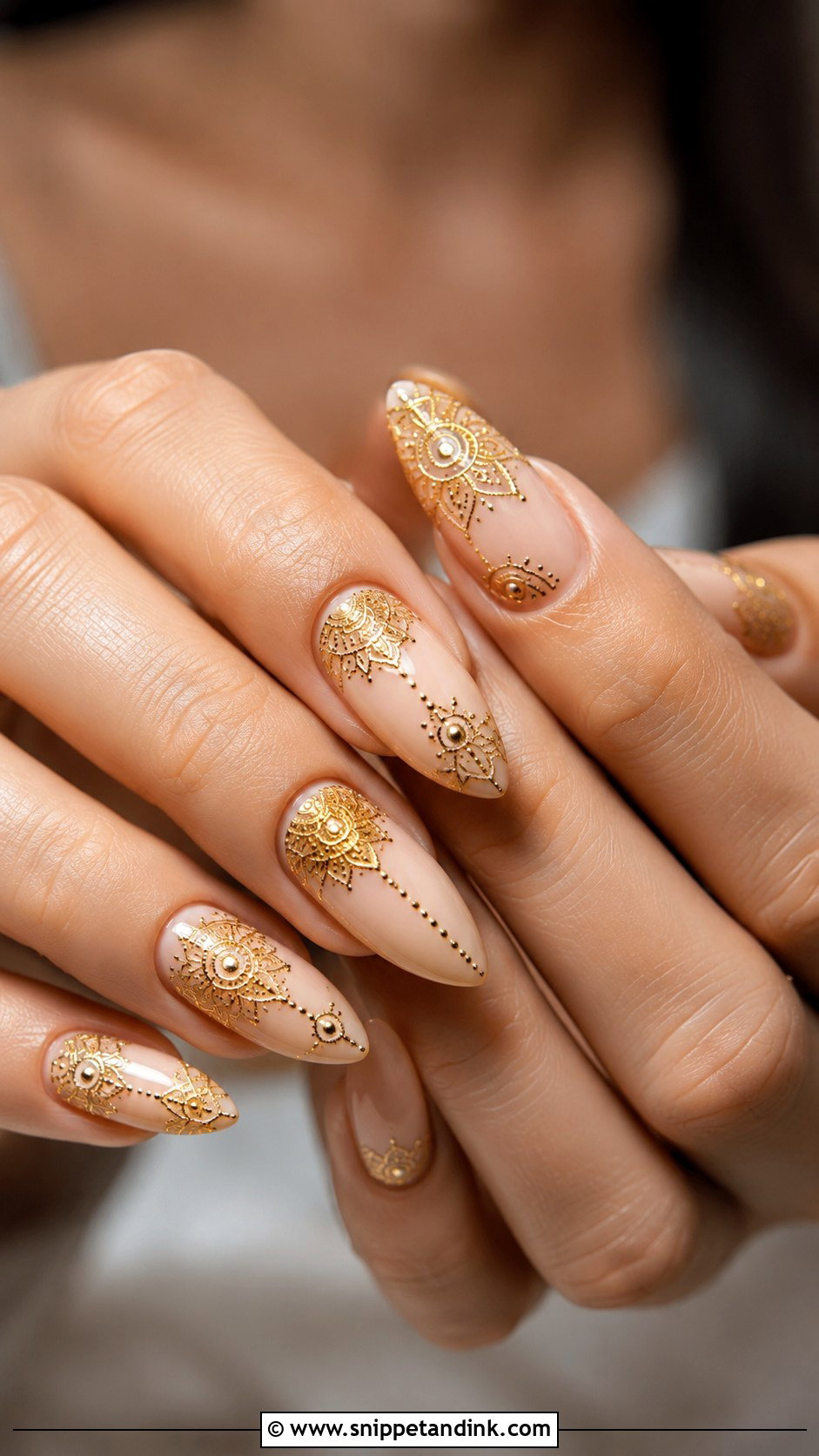
Mandalas need symmetry, so I use a dotting tool and build outward from a centre point. A mandala placed at the centre or near the cuticle reads clearly over maroon, ivory, brown, blush or clear polish. They sit naturally with mehndi, which shares the same circular motifs. If your outfit is heavily embroidered, keep mandalas to one or two accent nails; with a simpler outfit, a full set adds richness.
13. Gold Paisley Indian Bridal Nails
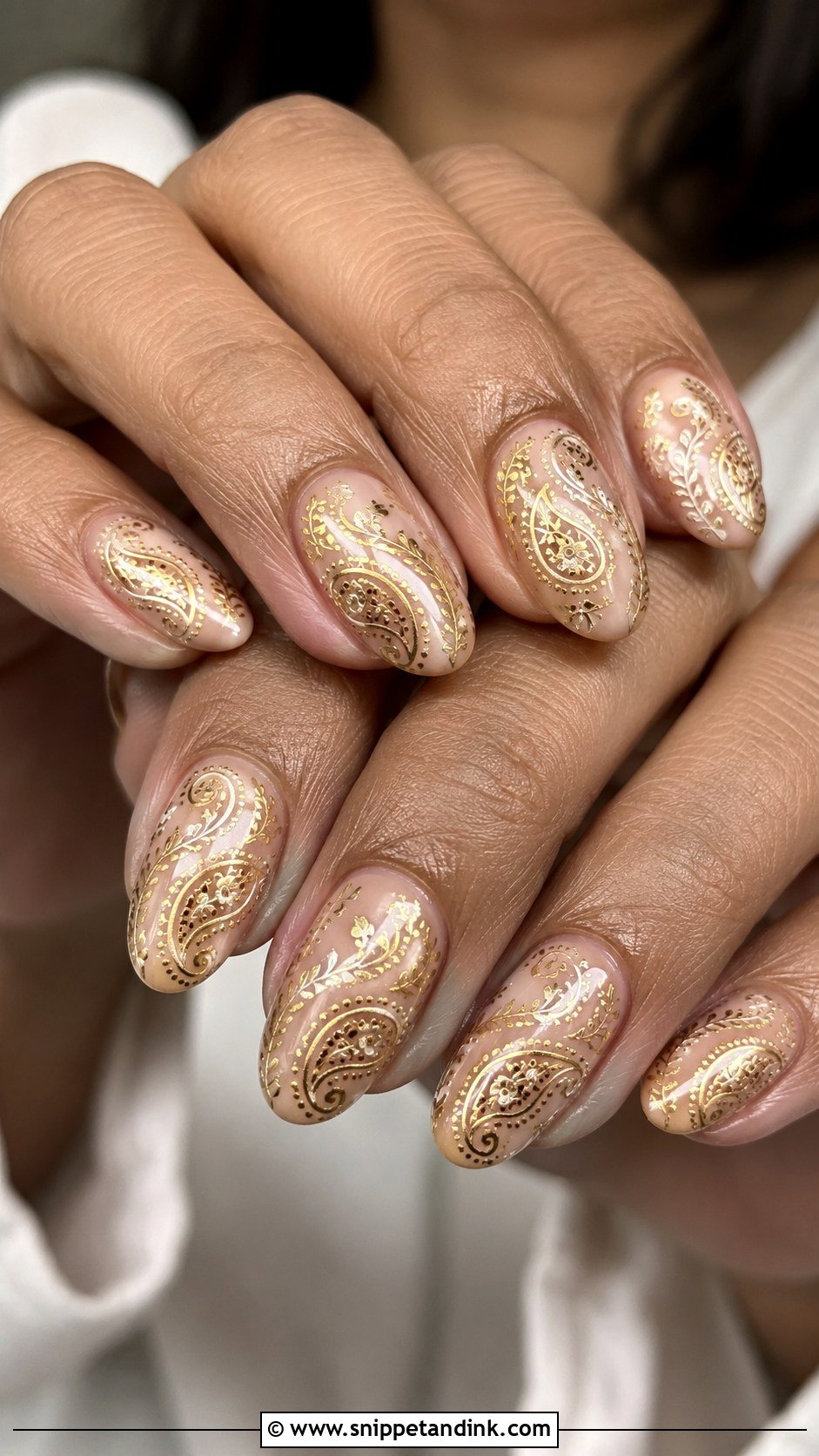
Paisley comes from Indian textiles, jewellery and mehndi, so it looks right on a bridal manicure. Fine gold curves, dots and leaves sit over red, nude, ivory or pink. Clean paisley needs a steady hand and a fine liner brush, so look at an artist’s past hand-painted work before booking this design. Almond and oval shapes follow the curve of the motif. Match it to paisley embroidery on your dupatta if you have it.
14. Gold Lace Indian Bridal Nails
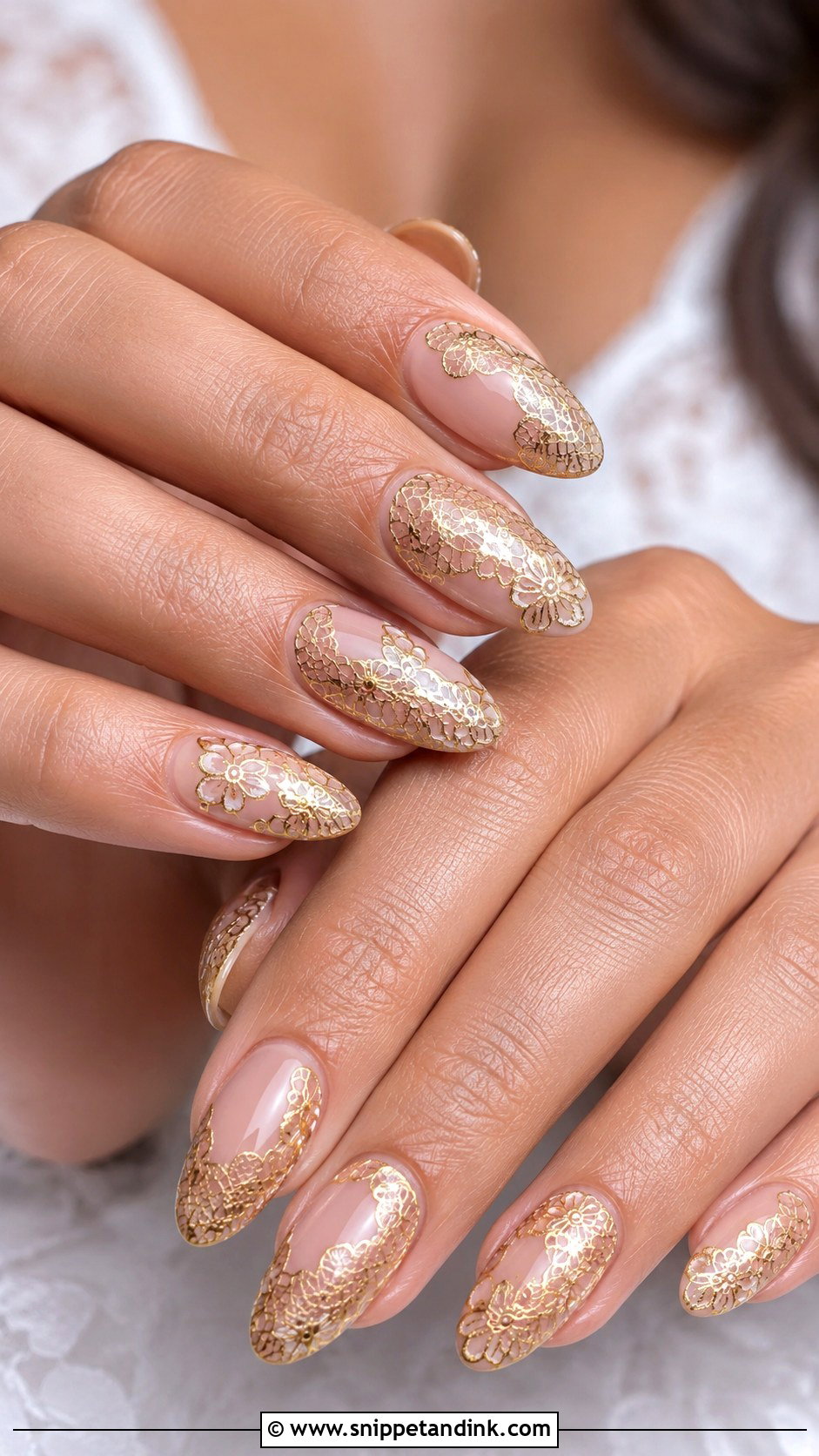
Lace art uses fine gold lines, mesh and floral curves with plenty of bare base showing. That negative space keeps it light, so it suits net dupattas, lace blouses and soft makeup. A nude, blush, ivory or sheer base works. I paint the lace on two or three nails and finish the rest with a thin gold edge, which stops the set looking busy. It takes time, so plan a longer appointment.
15. Gold Marble Indian Bridal Nails
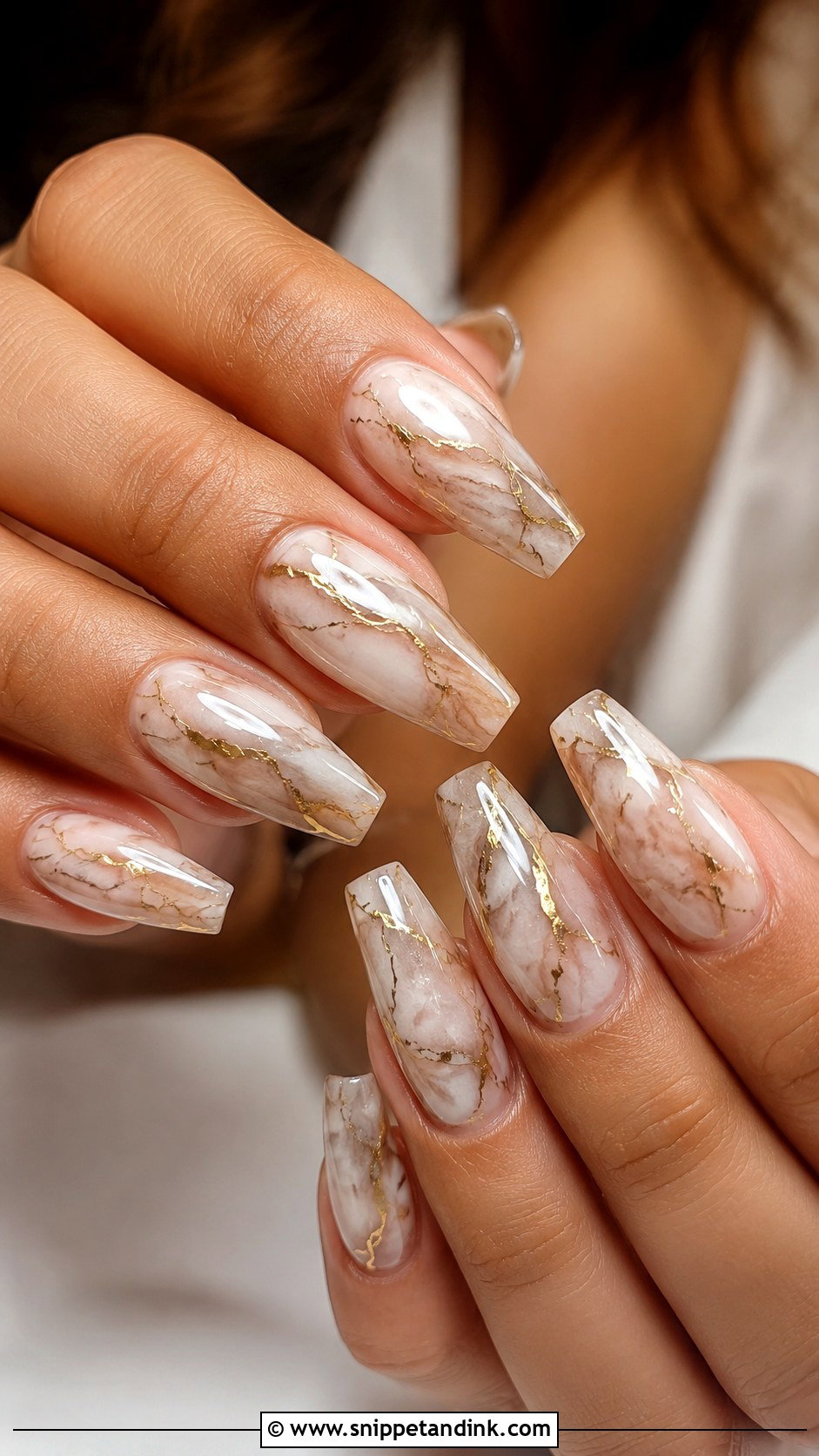
Gold marble runs fine gold veins through a white, nude or blush marble base. I build the marble with gel blooming and add gold with a striping gel or foil crackle. Keep the marble warm. Grey marble next to Indian bridal jewellery looks cold and clinical. This design suits receptions, engagements and fusion outfits, and it still looks stylish weeks after the wedding. Almond, coffin and square all work.
16. Gold Cuticle Indian Bridal Nails
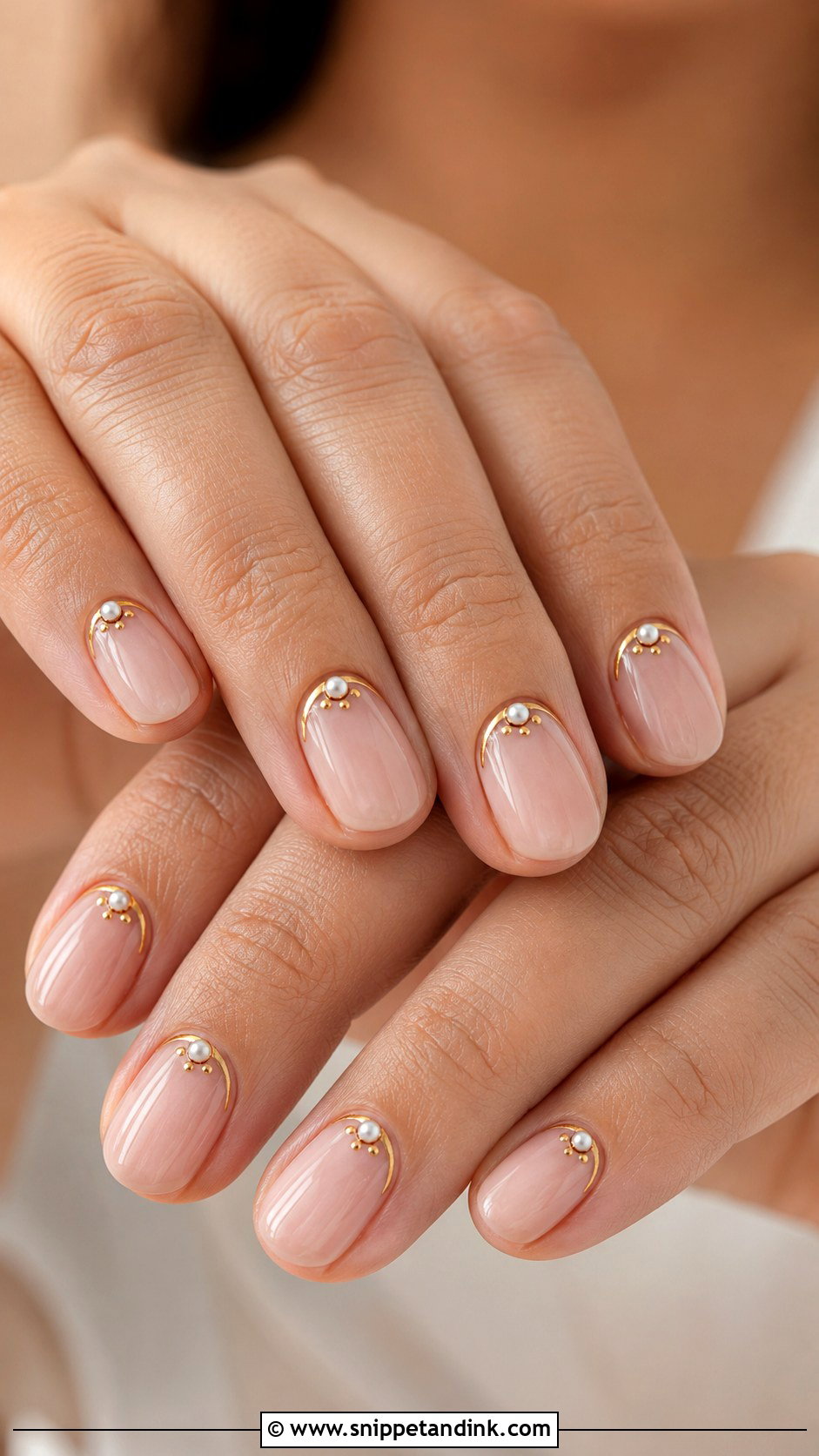
Gold cuticle Indian bridal nails put a fine gold curve, dots or foil at the base of the nail, almost like a ring for each finger. The rest stays nude, blush, ivory, sheer pink or soft brown. Because the colour sits at the cuticle, regrowth shows as a gap under the gold. That’s why I place the line slightly up from the cuticle, so a week of growth doesn’t spoil it. One tiny crystal adds a bridal finish.
17. Gold Swirl Indian Bridal Nails
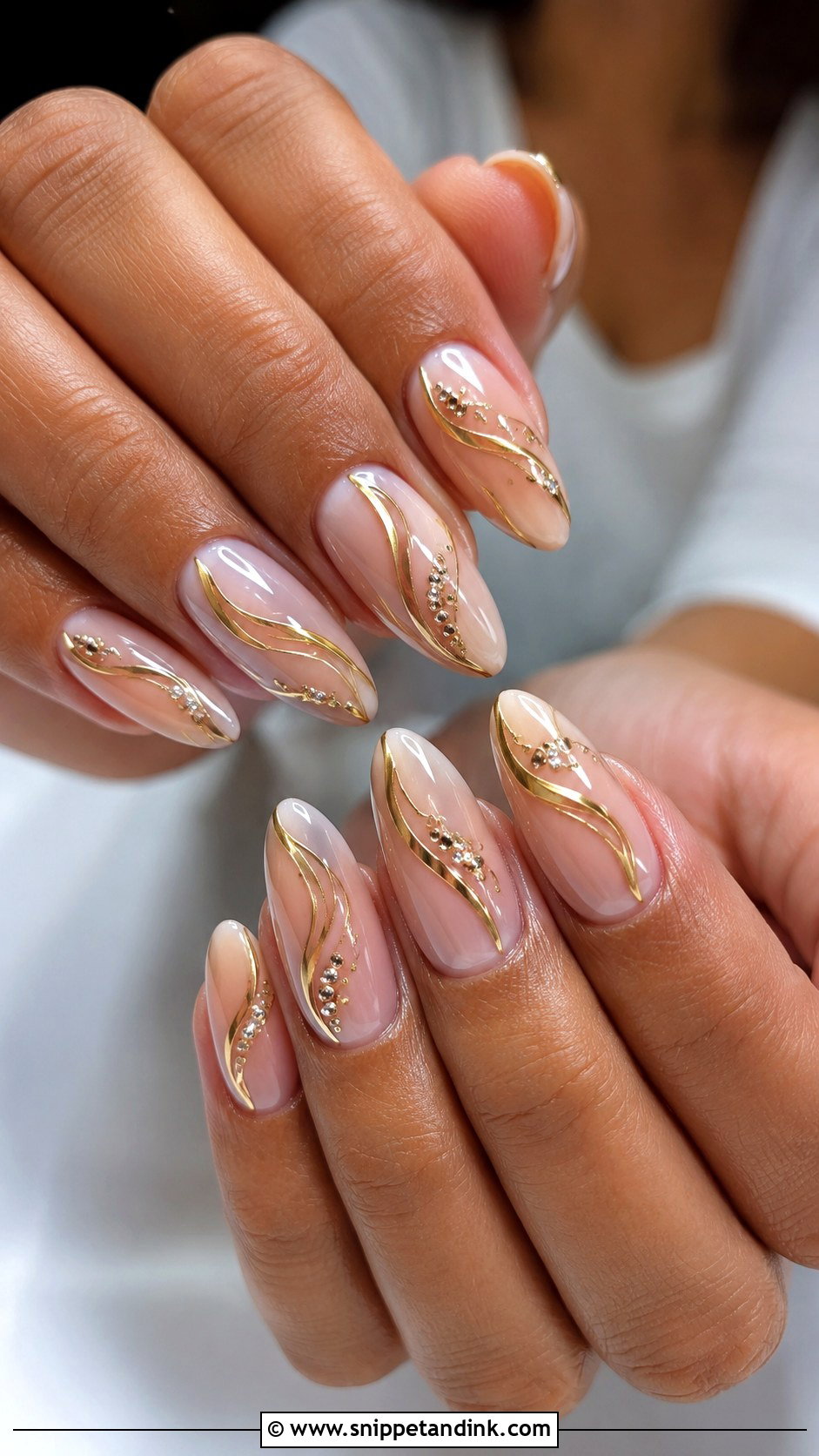
Gold swirls look fluid rather than traditional, so they sit well with modern lehengas, draped sarees and reception gowns. I paint them over sheer nude, milky pink, ivory or caramel. Thin, airy lines look clean; adding dots and crystals makes them more formal. Medium almond nails suit the movement best, because the curves follow the shape of the nail.
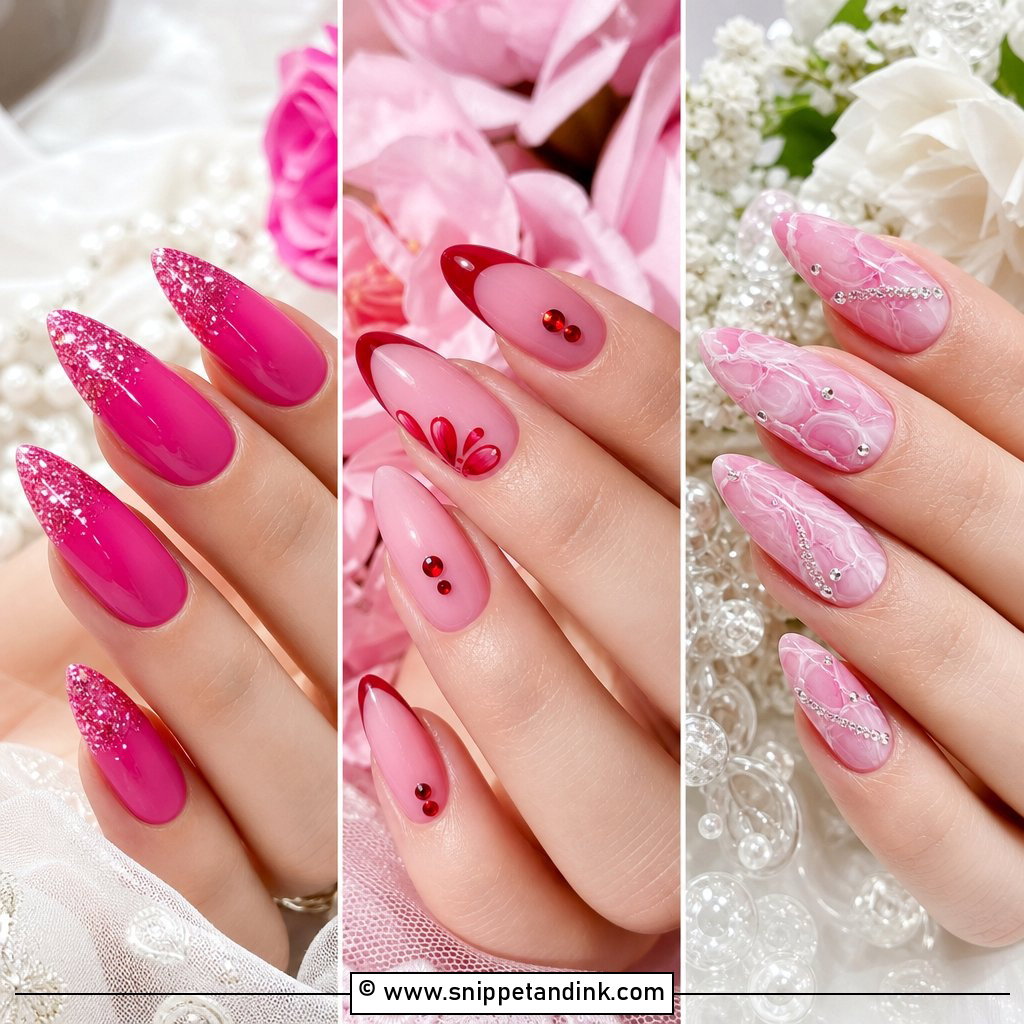
18. Rose Gold Indian Bridal Nails
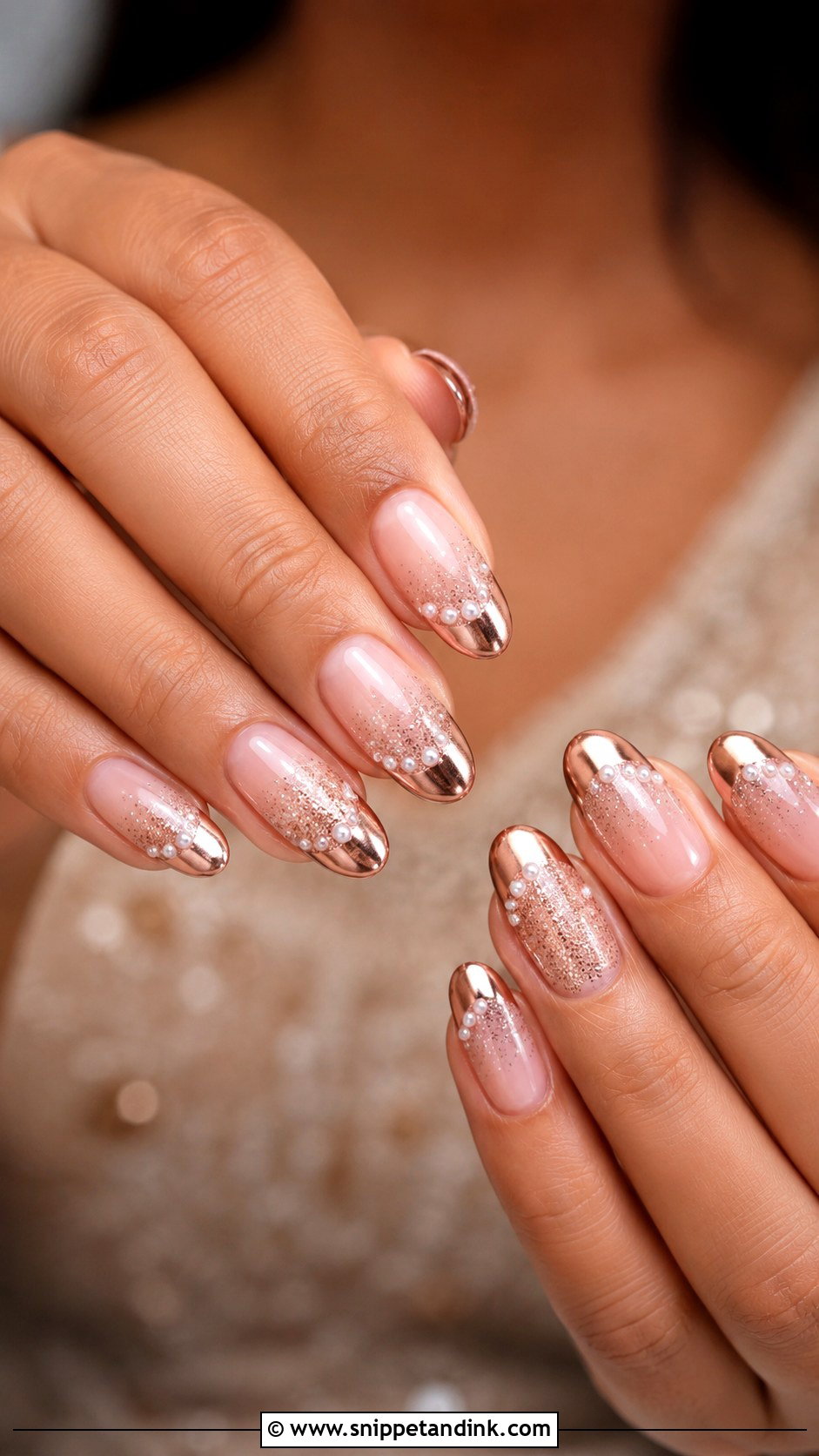
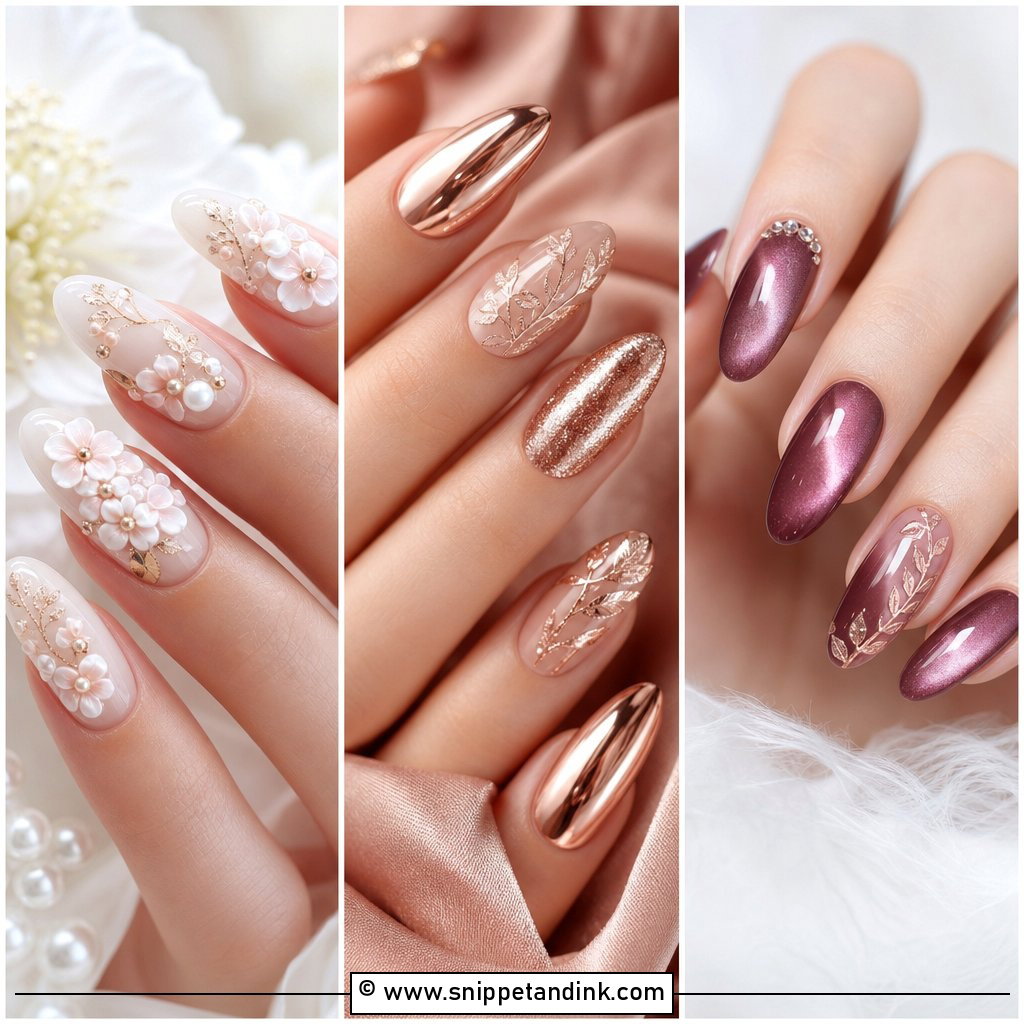
Rose gold is softer and pinker than yellow gold, and it flatters many skin tones. It belongs with blush lehengas, peach sarees, champagne outfits and diamond or rose gold jewellery. Chrome, glitter ombre, foil, tips or pearls all come in rose gold. I’d avoid it next to traditional yellow-gold kundan, where the two metals clash. Almond, oval or soft square keep it polished.
19. Antique Gold Indian Bridal Nails
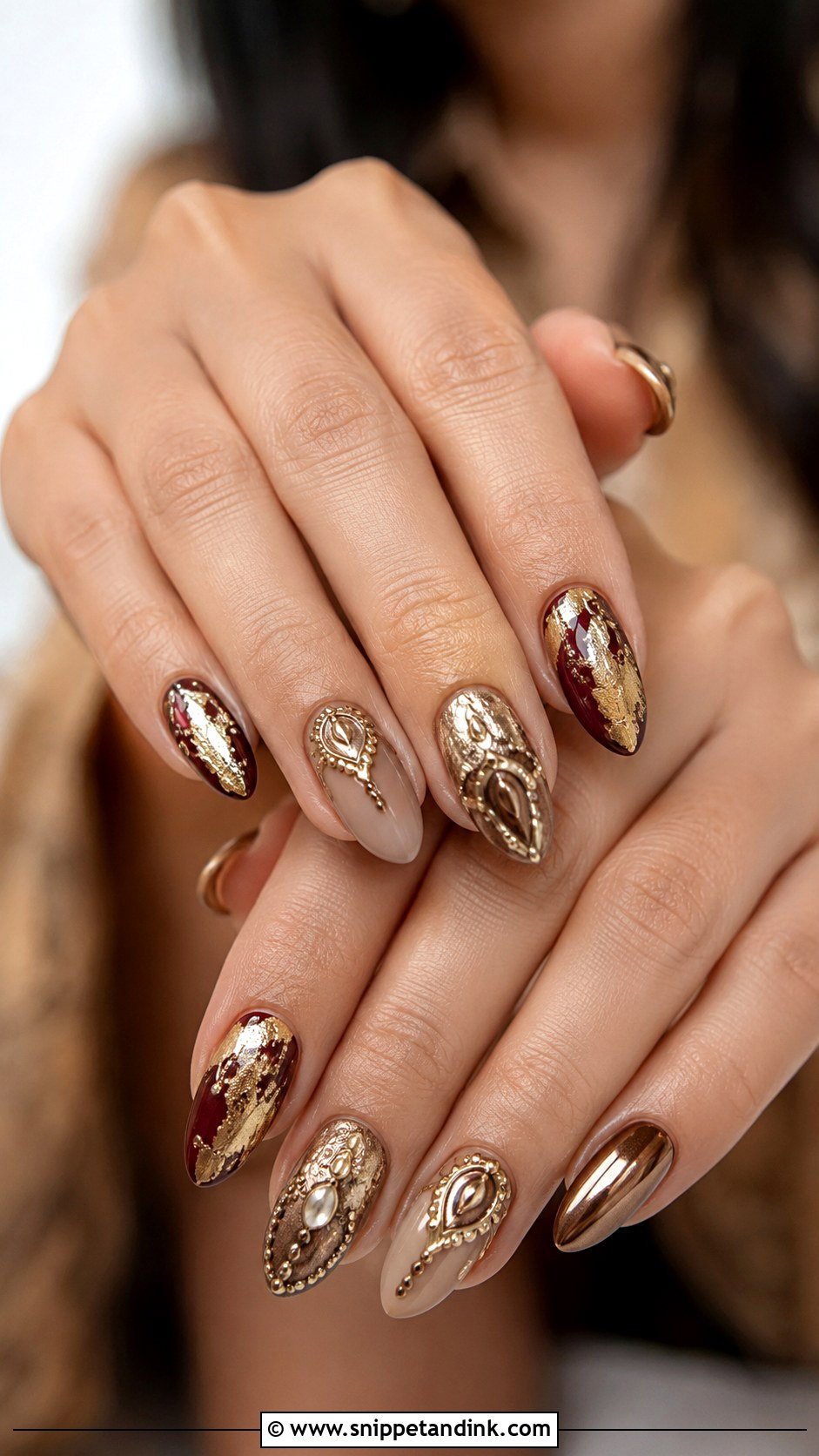
Antique gold is warmer and duller than bright yellow, which makes it the right match for temple jewellery and heritage silk sarees. It suits maroon, emerald, mustard, rust and ivory outfits. Bronze-gold chrome, antique foil or textured metallic tips create it. A matte base with antique gold details looks especially regal. It also sits more quietly beside heavy bangles and dark mehndi than a mirror finish does.
20. Gold 3D Indian Bridal Nails
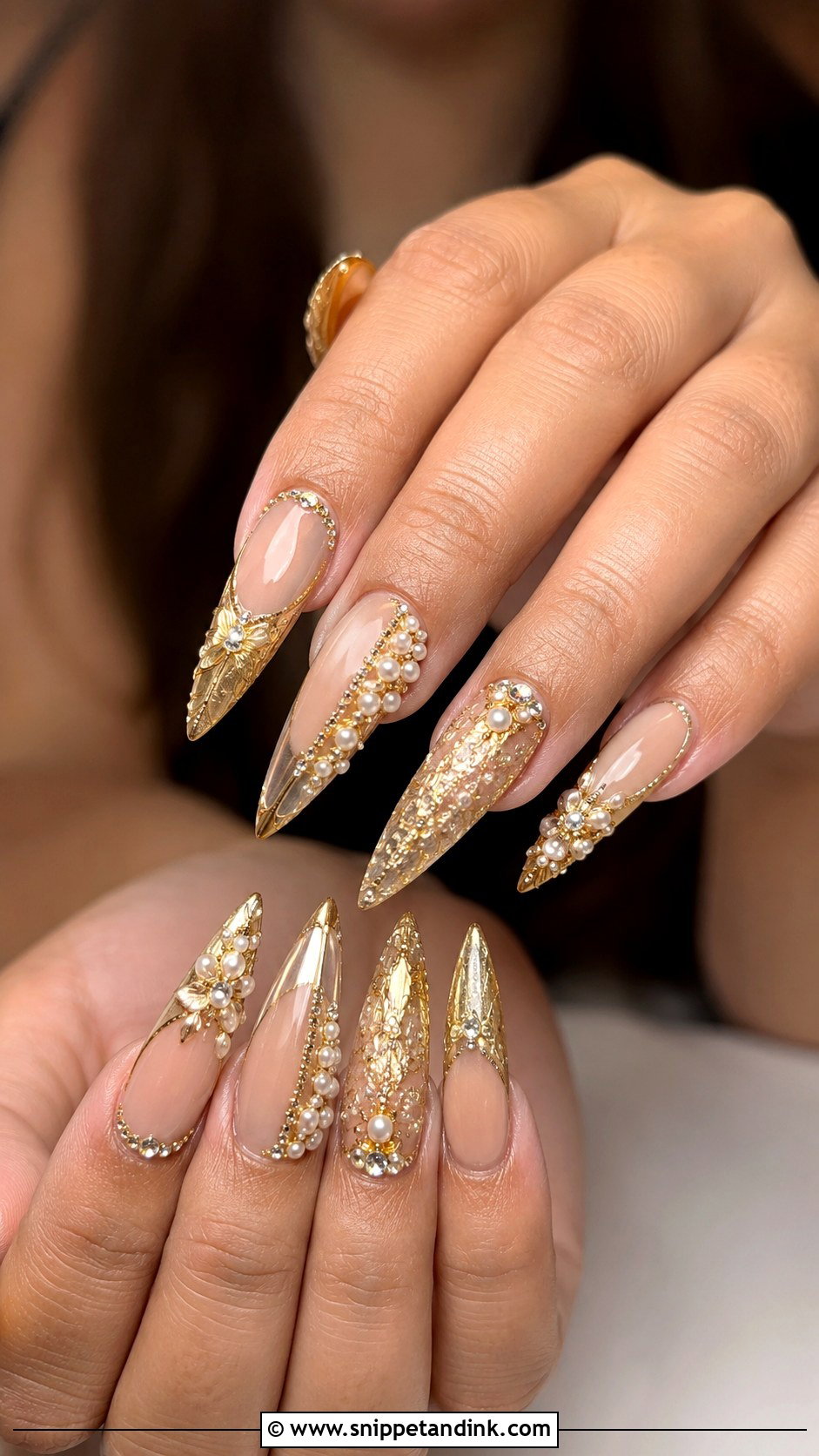
3D work builds raised gold gel patterns, pearl clusters, crystals or small charms onto the nail. Placement is everything: I keep the raised accents on one or two nails and finish the rest in simple gold chrome, nude or tips. Raised details catch on hair, dupatta net and sari pleats, so I’d only do a full 3D set for a bride who’s used to wearing them. Longer almond, coffin or stiletto shapes give enough room.
How Gold Wears Across Haldi, Mehndi and the Wedding
An Indian wedding is rough on a manicure. Hands go into haldi paste, sit under henna for hours, and greet a few hundred guests. Gold finishes show wear in specific places, and knowing them helps you plan.
- Chrome and metallic tips wear at the free edge first, from typing and handling.
- White and very pale bases can pick up a yellow tint from turmeric paste; a glossy top coat wipes clean more easily than matte.
- Raised 3D pieces and pearls are the first to pop off during a busy day.
- Regrowth shows fastest under cuticle designs and dark bases.
Book your set two or three days before the first event so any lifting shows up while there’s still time for a fix. Carry nail glue for loose stones, a soft file for a snagged edge and cuticle oil for the evening. When the wedding is over, have gel, foil and 3D work removed properly. Peeling it off takes layers of nail with it.
Gold That Works With Your Jewellery, Not Against It
Gold nail art can be quiet or full regal; what matters is that it suits your jewellery tone, outfit colour, mehndi and nail length. Red with gold is classic, nude with gold is soft, chrome is modern, and kundan or paisley art is the most traditional. For several days of events, pick a design that works with more than one outfit. Detailed or 3D art deserves a trial before the wedding week.
You'll Like These Ideas:


Leave a Reply