
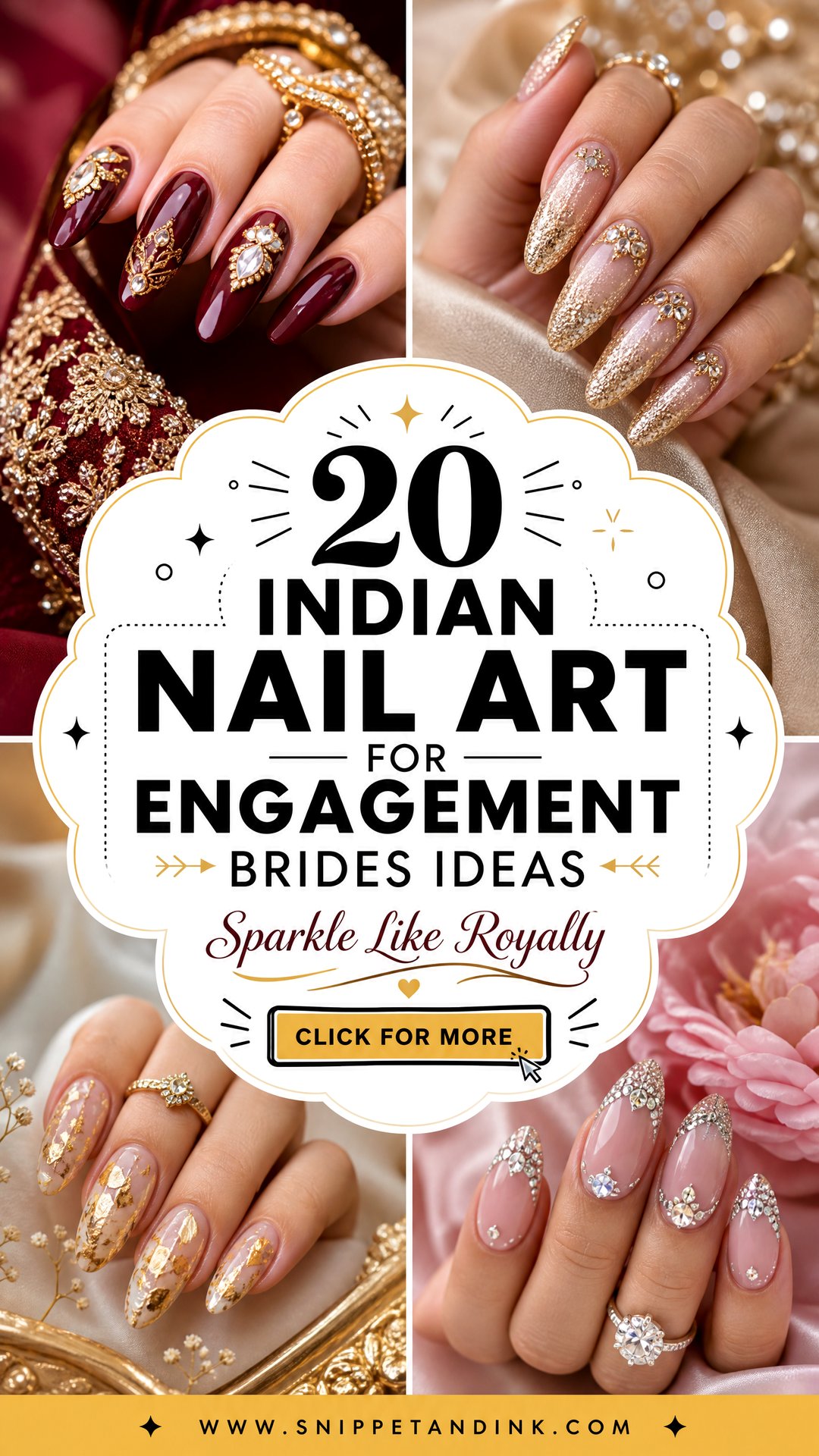
An engagement manicure for an Indian ceremony has a harder job than most nail appointments. Your hands get photographed next to the ring, held during the ring exchange, pressed into elders’ palms, and wrapped around a dupatta through two or three outfit changes. So the sets below are full manicures planned as a whole hand, not a single accent nail. I lean on the shades and details that sit well beside bridal jewellery: maroon, red, rose gold, pearl, chrome, mehndi linework, kundan-style stones and nude bases. The aim is a set that suits your lehenga, saree, sharara or Indo-western outfit and still lets the ring be the brightest thing in the frame. If you are still deciding on a direction, these Indian engagement nail designs are a good second place to look.
Gel First, Mehndi Second: Getting the Order Right
The question I get most from engagement brides is which appointment comes first. My answer is almost always nails before mehndi, by a day or two. Gel acts as a barrier over the nail plate, so henna paste that gets on the nails wipes off instead of staining them orange. It also means no acetone soak near freshly stained skin, and acetone plus scrubbing is one of the quickest ways to dull a new stain.
If your mehndi has to come first, give the stain at least a full day to darken before the manicure, and tell your nail artist. I’ll skip cuticle soaking and harsh exfoliation, and work with a dry manicure so the henna on the fingers isn’t lifted.
How far ahead to book
- Trial set: two to four weeks before, so you can see how the shade looks beside your outfit fabric and how the length feels while you type and eat.
- Final set: two to three days before the ceremony. That leaves time to fix a lifted corner or a lost stone without the nails looking grown out.
- Extensions: if you are adding length for the first time, wear a shorter set at the trial. New length takes a few days to get used to.
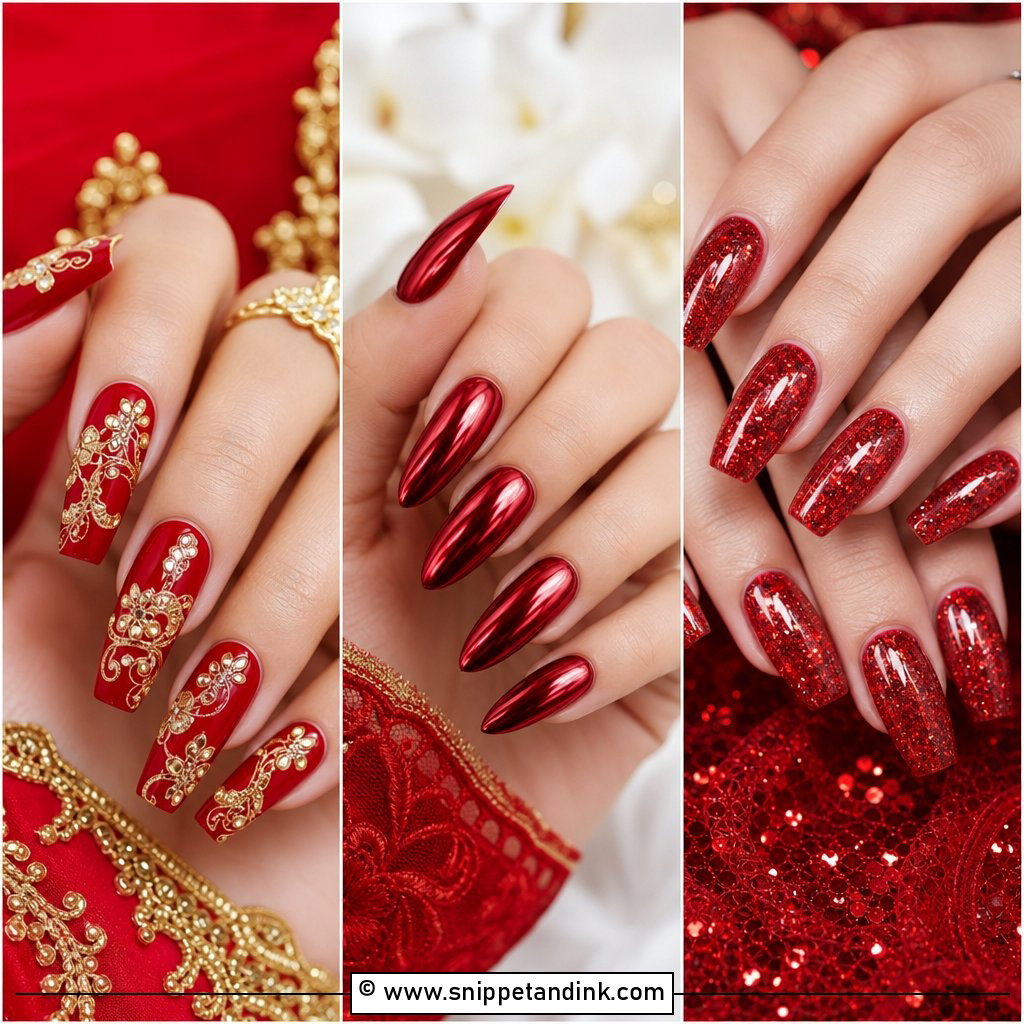
1. Red Bridal Engagement Nails
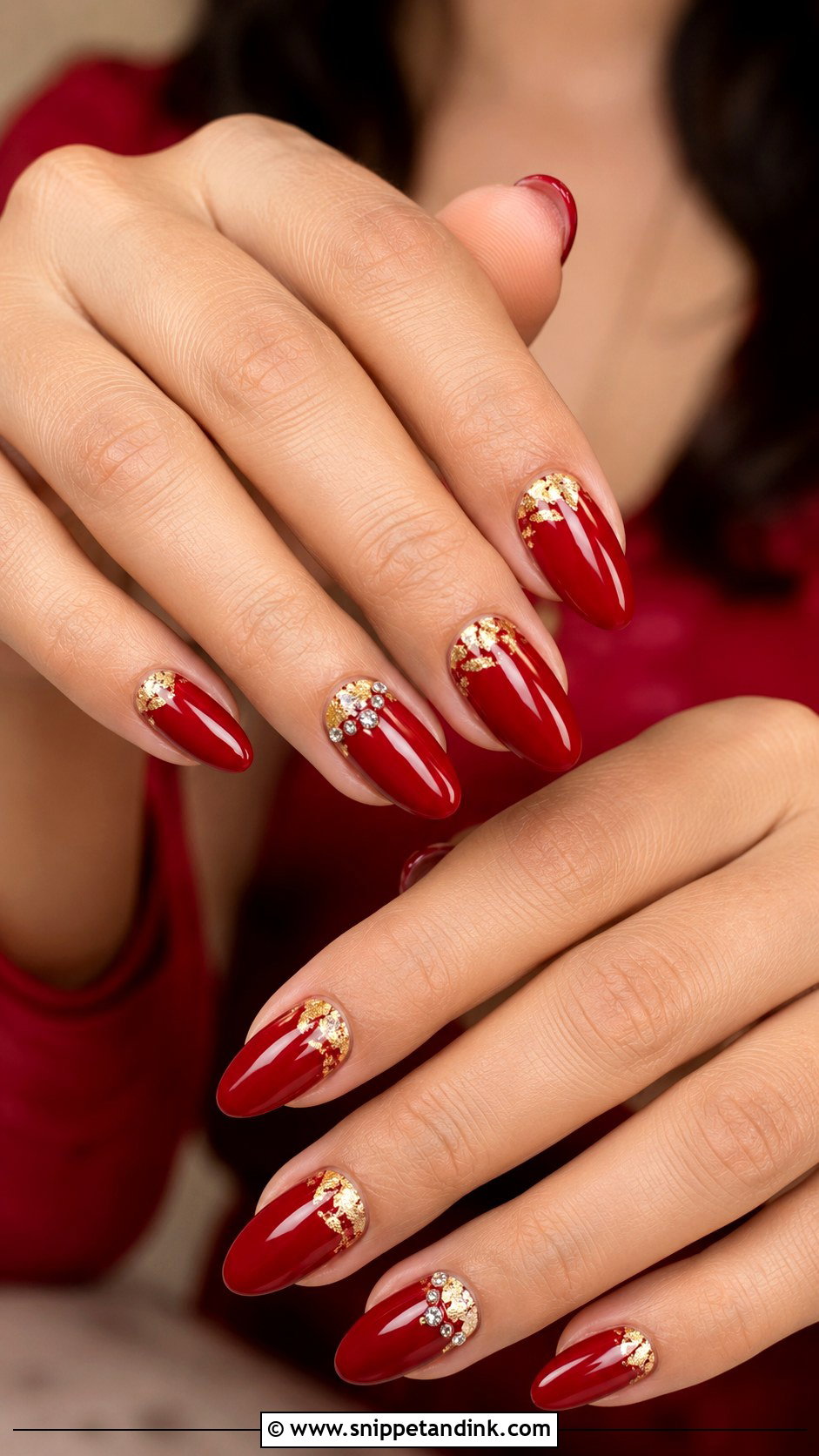
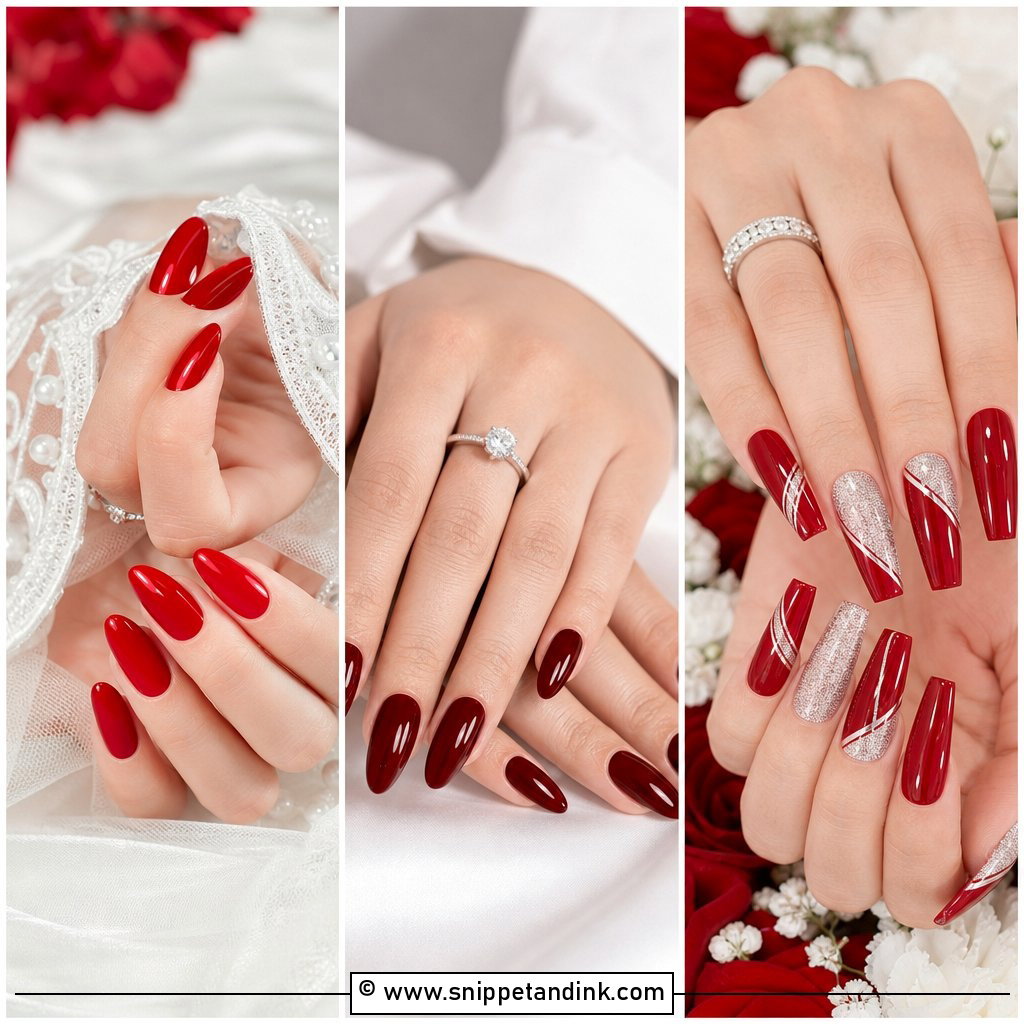
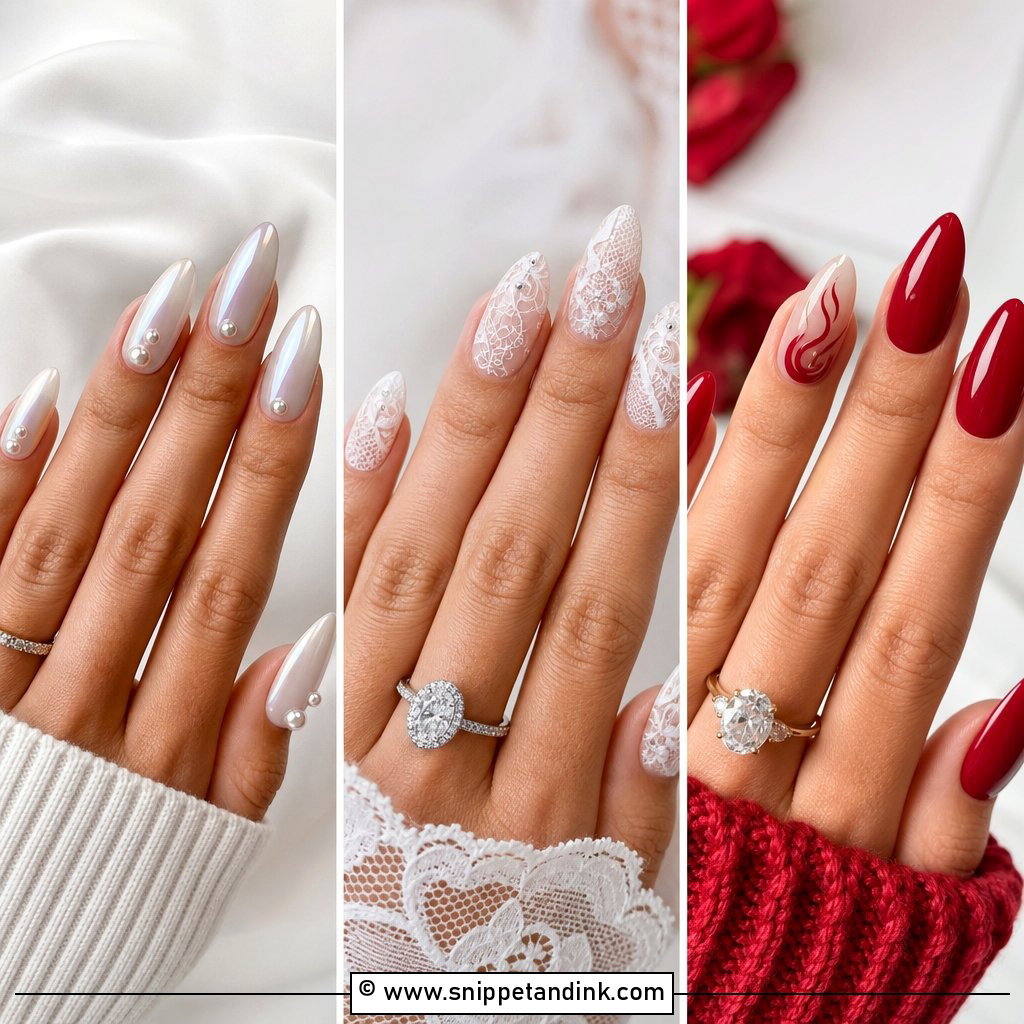
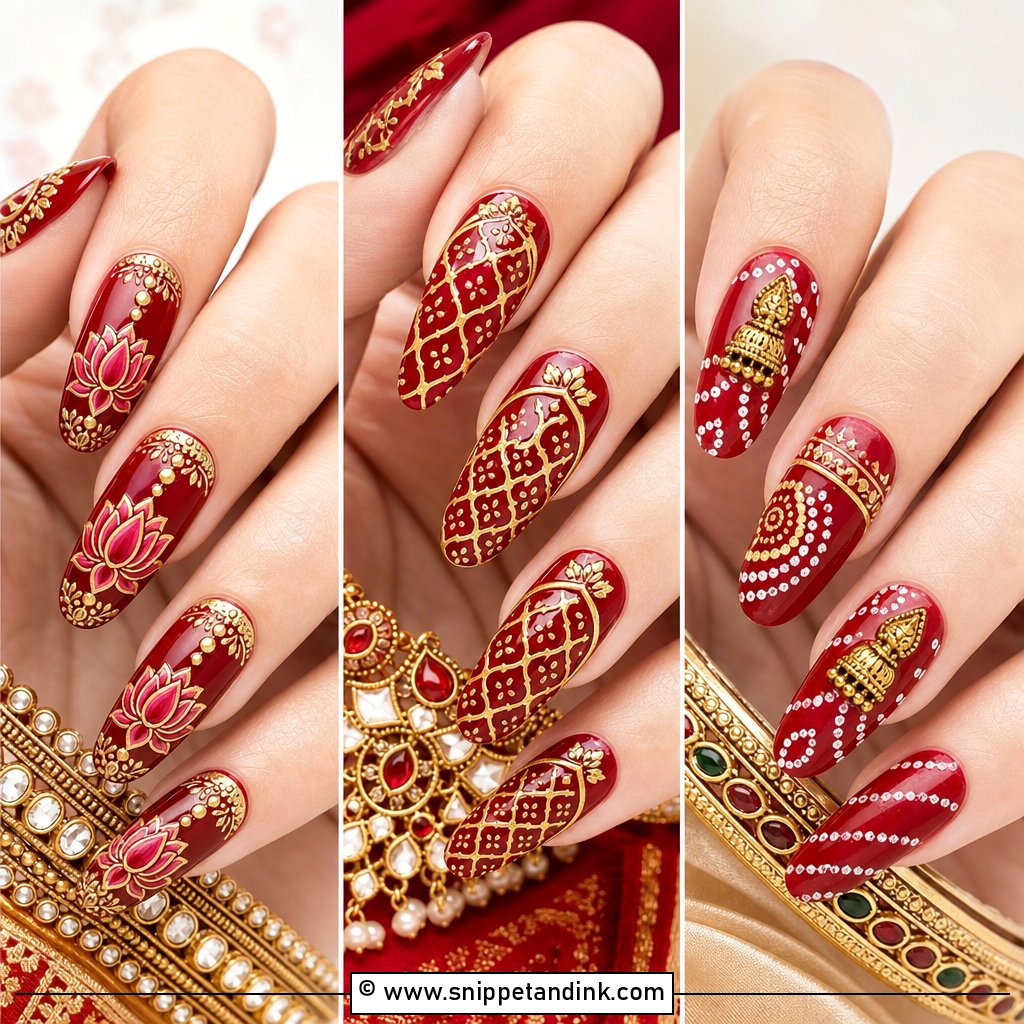
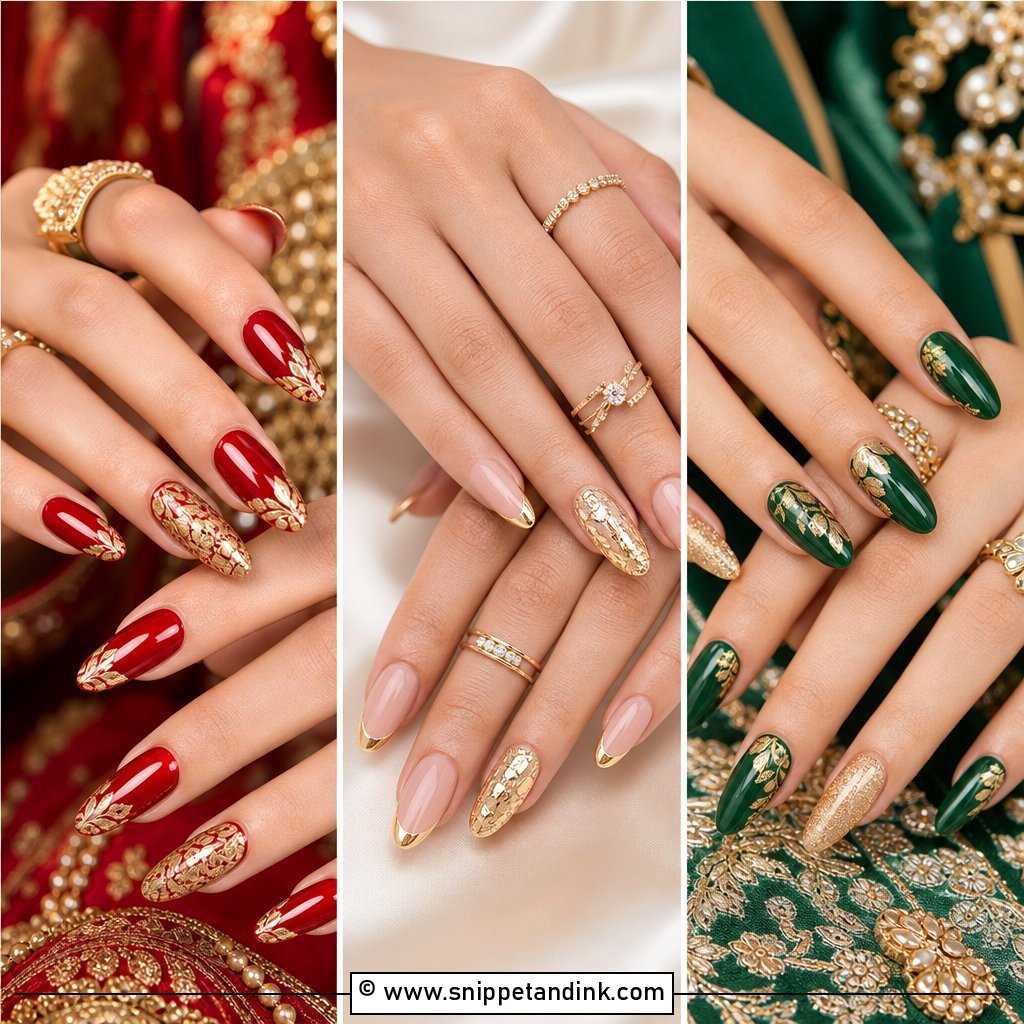
Red is the shade I mix least and check most, because a red that looks right on the bottle can turn orange next to a maroon lehenga or pink next to a tomato-red one. I hold the swatch against your outfit fabric before anything goes on. Once the shade is settled, a glossy base with fine gold foil near the cuticle and a few rhinestones on the ring fingers is enough. Almond or oval at medium length gives room for the detail. With a dark, detailed mehndi stain, red warms the whole hand and doesn’t fight the pattern.
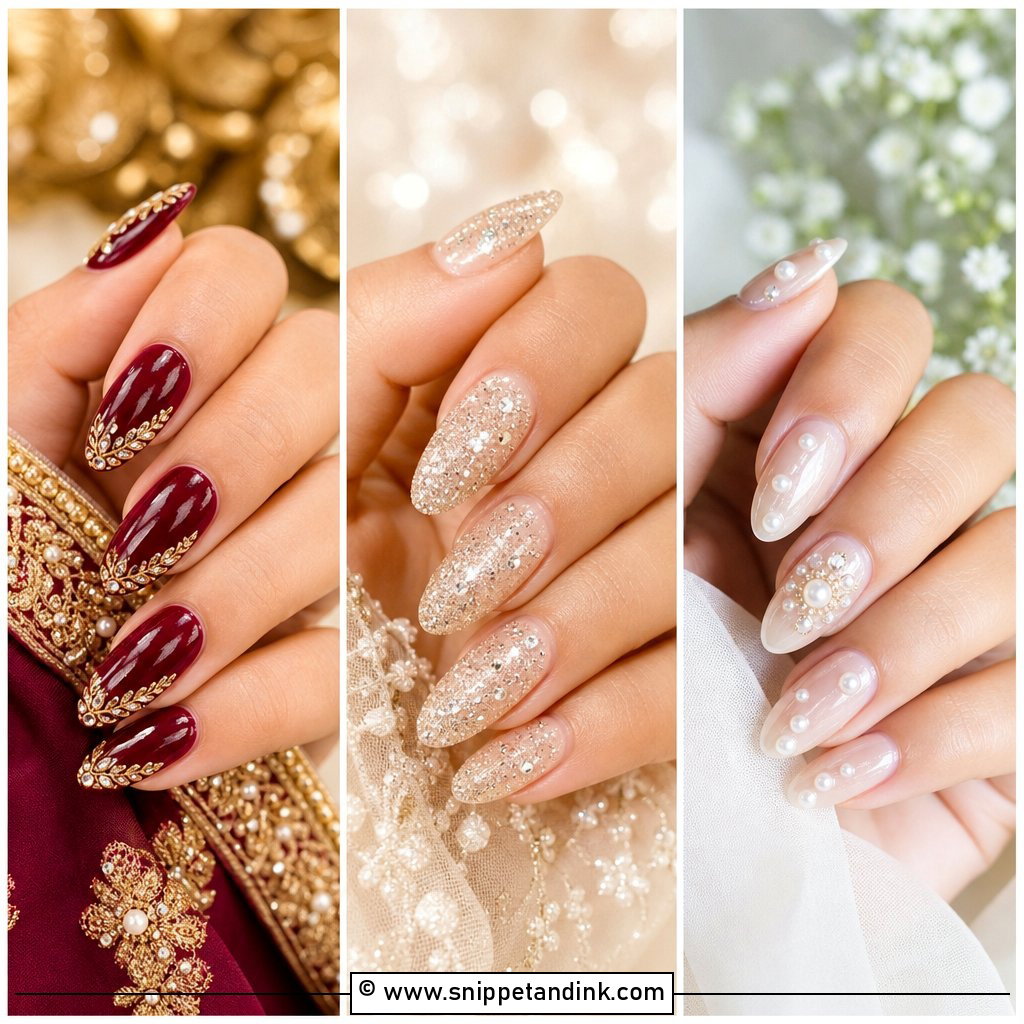
2. Maroon Bridal Engagement Nails
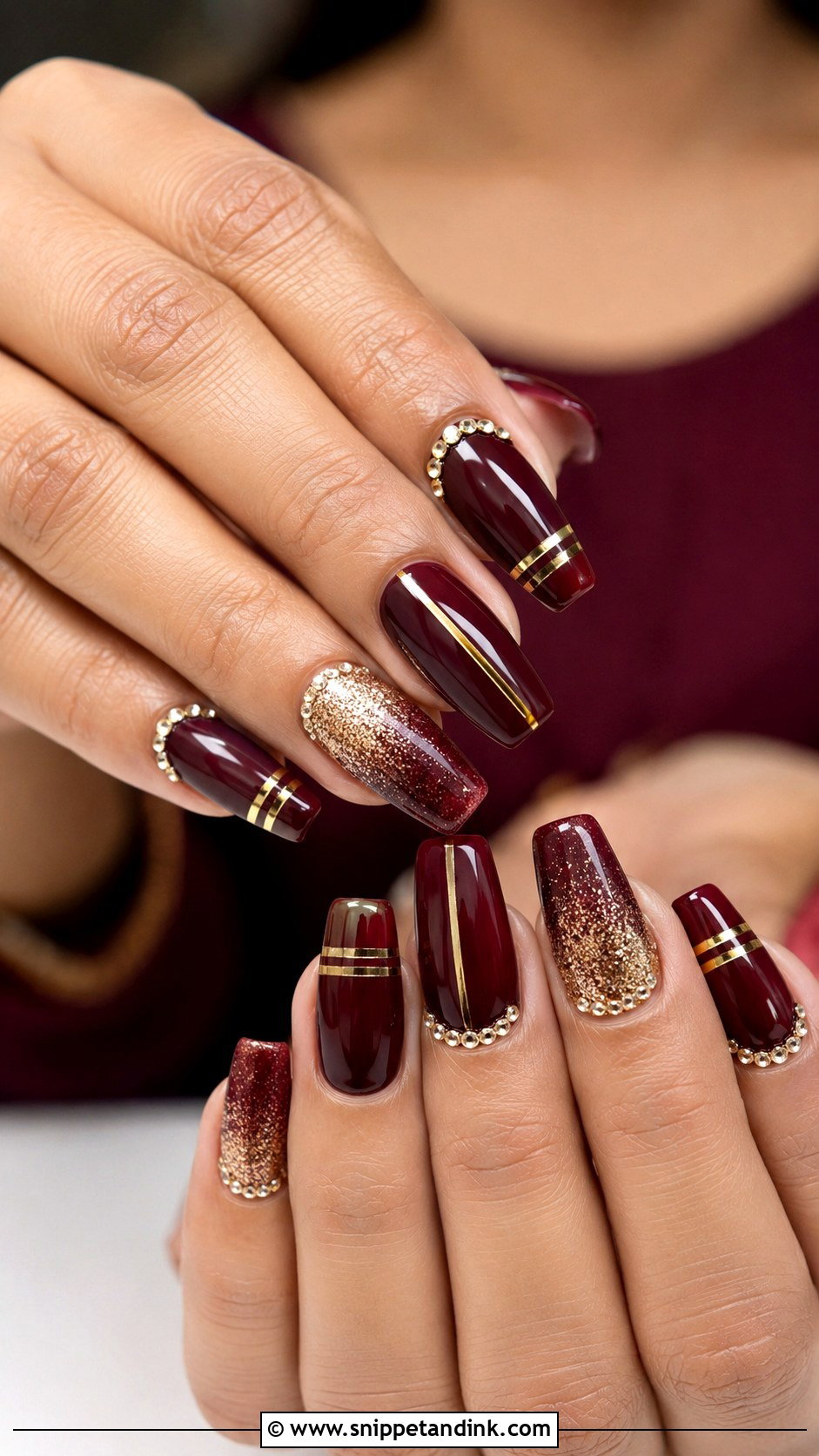
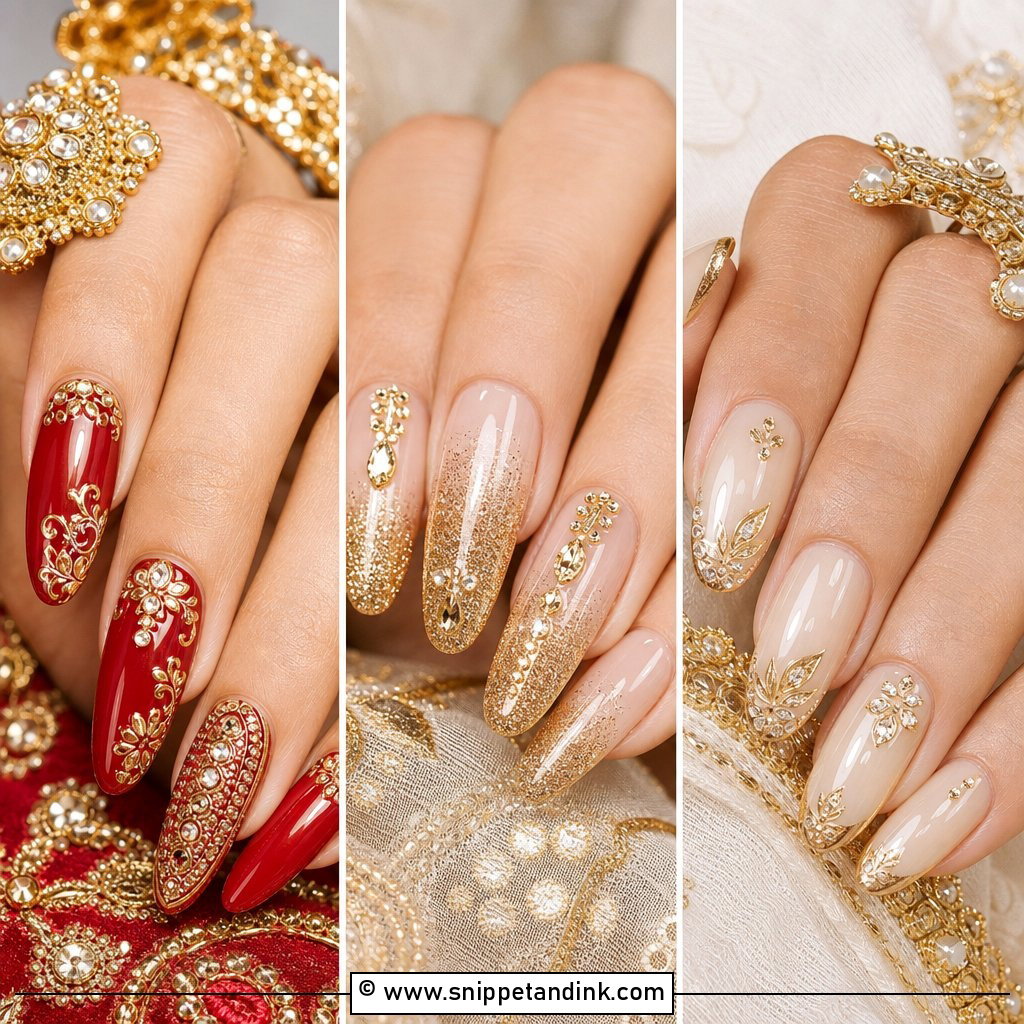
Maroon is the colour I suggest for evening functions, because it holds its depth under warm hall lighting where brighter reds go flat. A full set might be glossy maroon with thin gold striping, one or two glitter fade nails, and a couple of small crystals near the cuticle. Dark shades are unforgiving on the cuticle line, so I spend extra time there; a shaky edge shows clearly in a ring close-up. Against diamonds, kundan or polki, the contrast does a lot of the work. Coffin or almond suits longer nails, and rounded tips keep short nails neat.
3. Nude Mehndi Engagement Nails
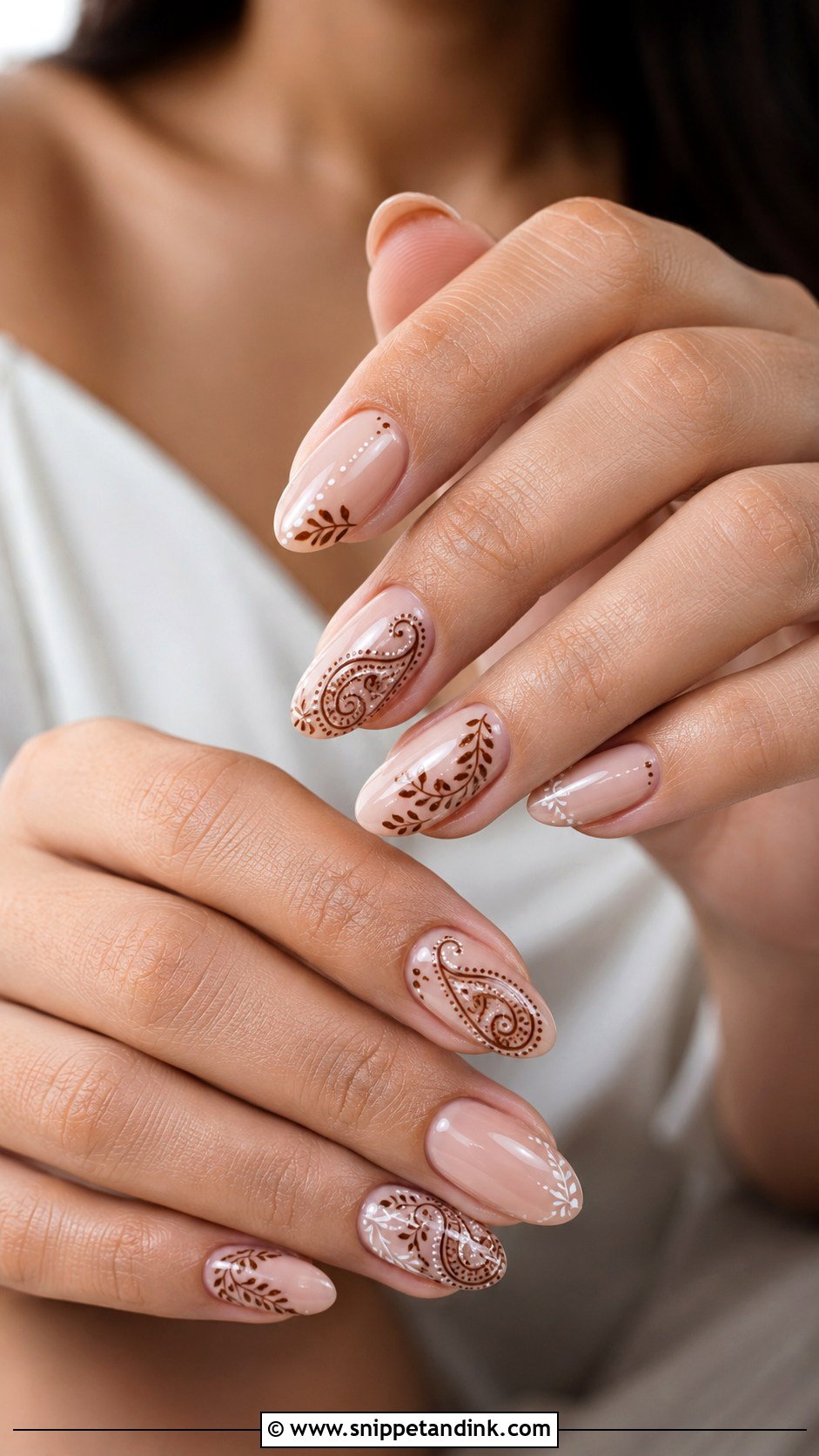
This is the set I reach for when a bride wants a henna reference but already has heavy embroidery or jewellery competing for attention. I match the nude base to the skin of your fingers rather than your face, since hands often run a shade warmer. The motifs go on two or three nails only: a paisley, a few dots, a curved vine in brown or white, painted with a fine striping brush. The other nails stay plain and glossy. Done this way, the nails echo your real mehndi quietly instead of crowding it.
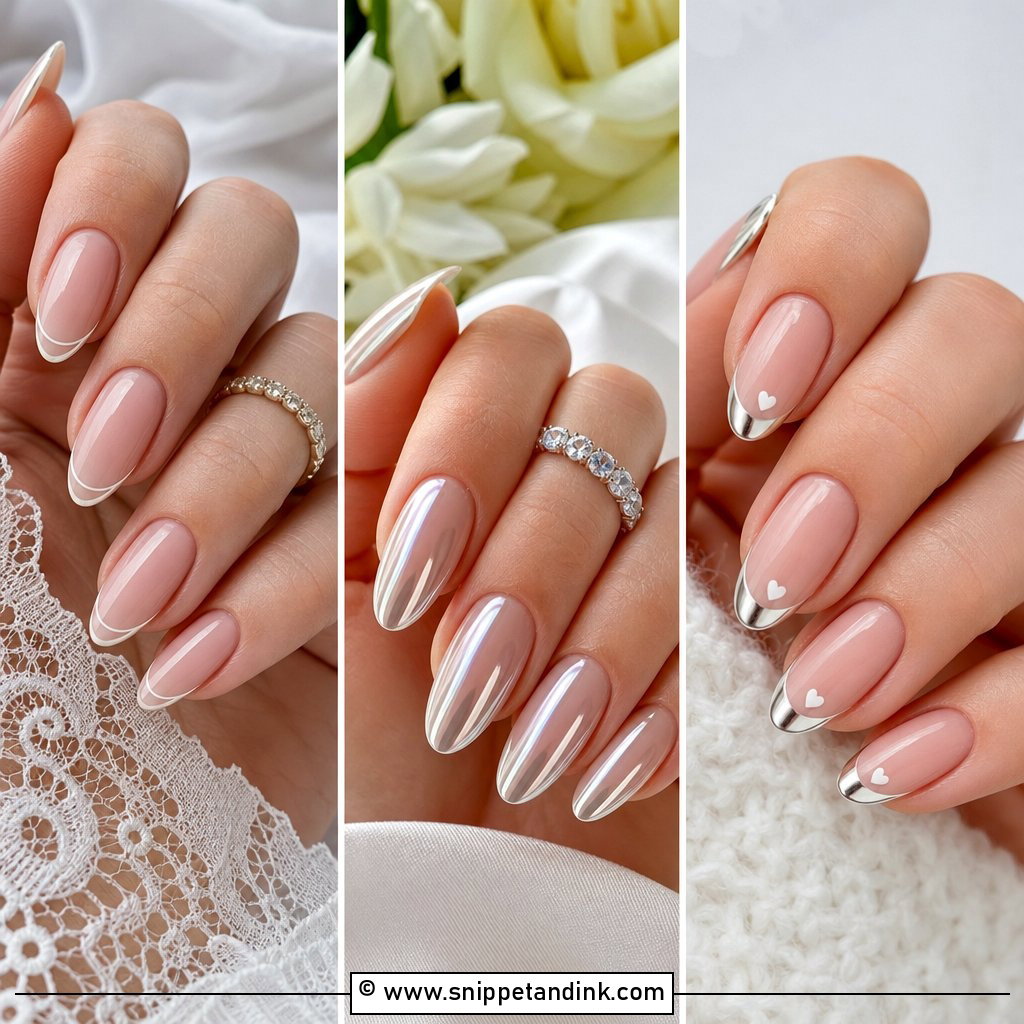
4. Gold French Engagement Nails
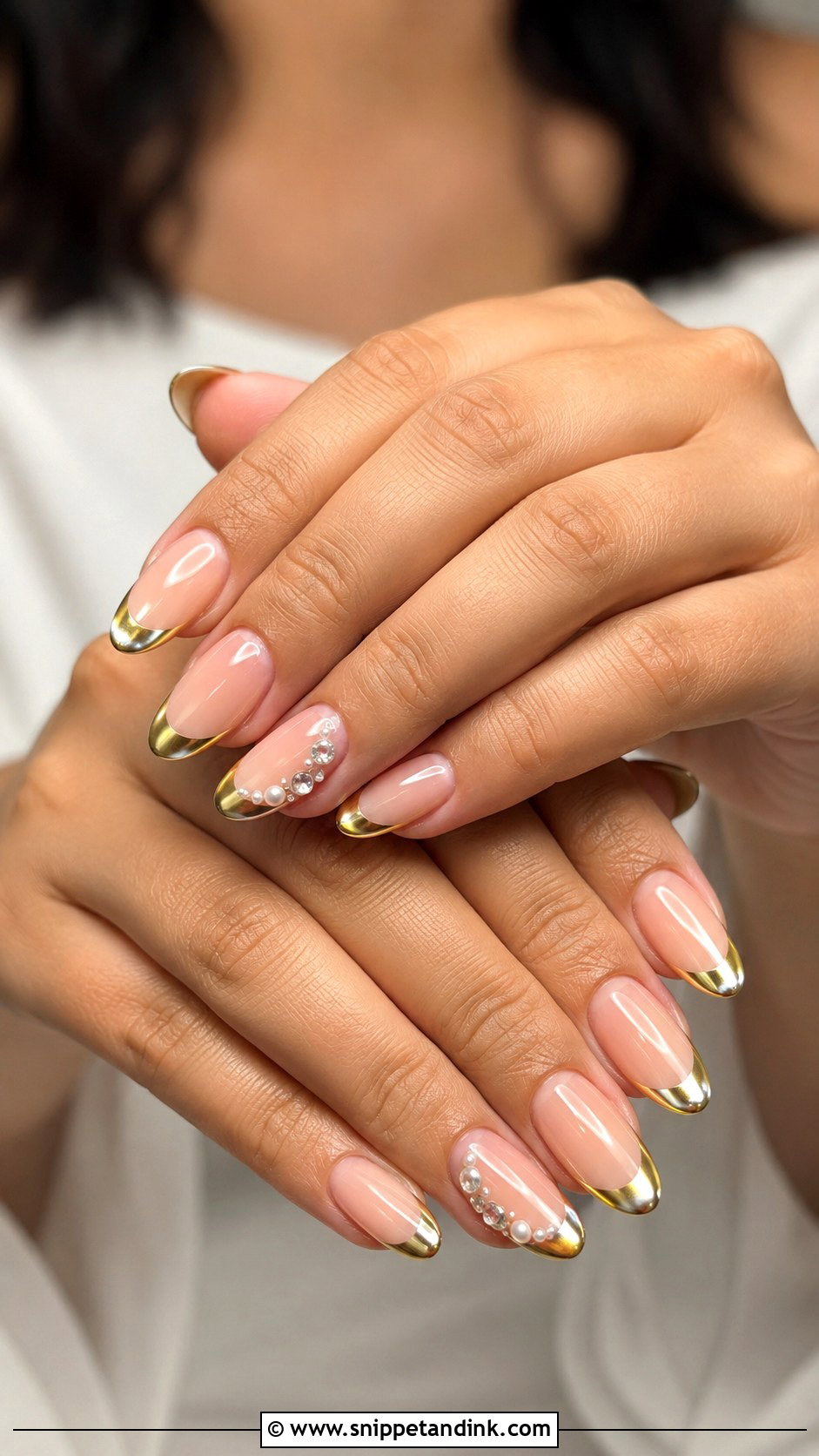
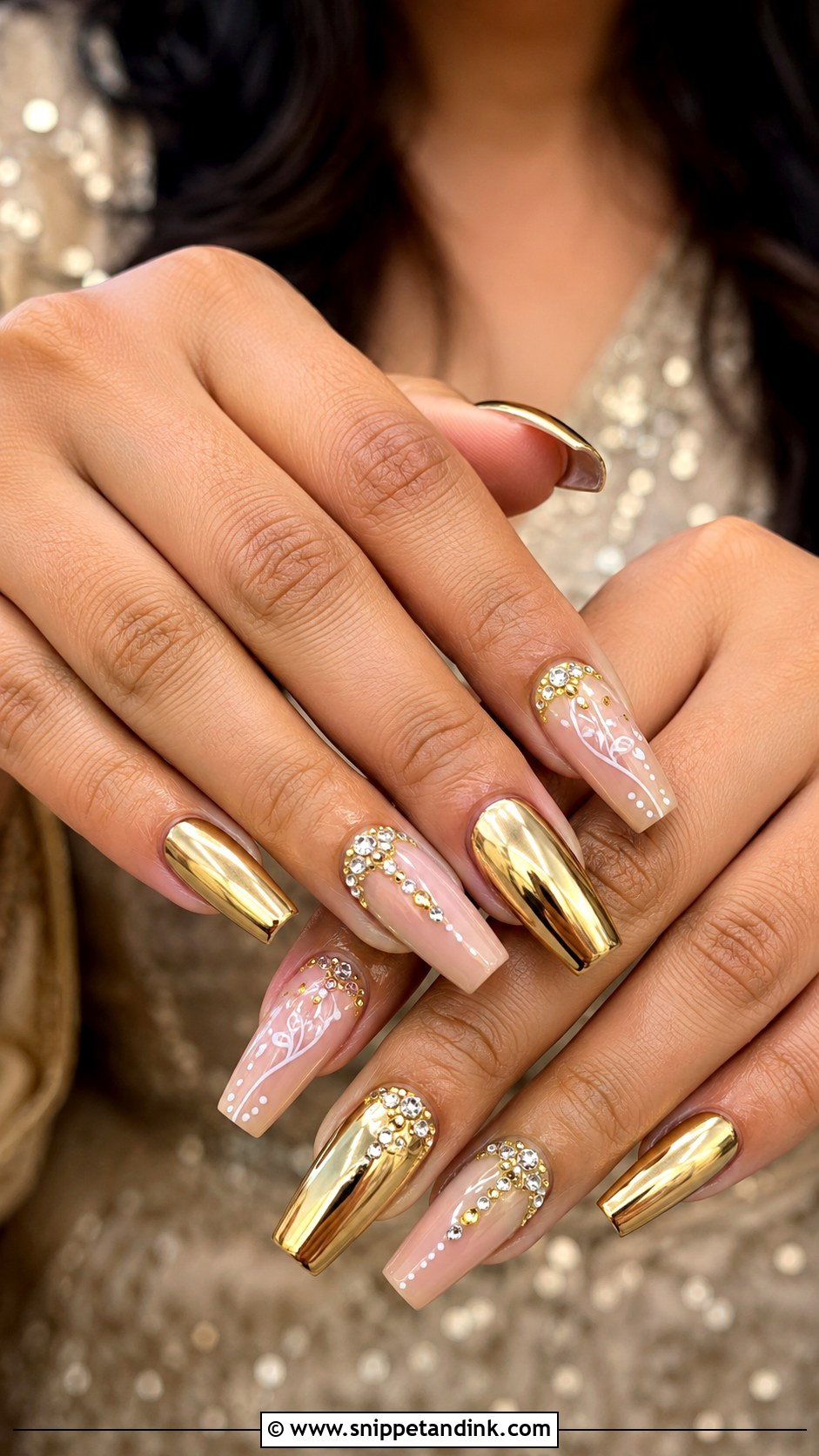
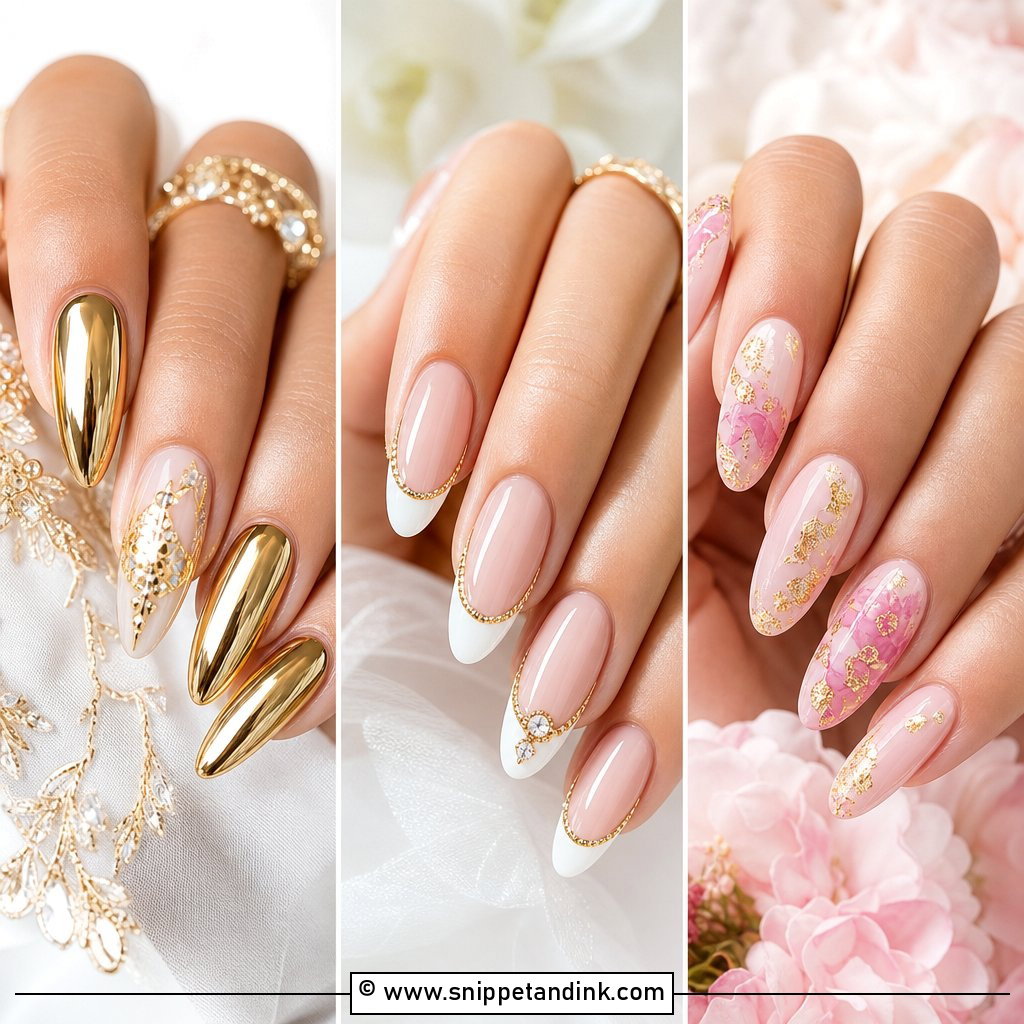
A gold tip is easier to live with than a white French, because it reads as jewellery rather than a contrast line. I paint metallic gold tips over a sheer pink or nude, keeping them thin if your nail beds are short so the fingers don’t look cut off. Deeper tips catch more light but need a longer free edge to look balanced. Pearl dots or two tiny stones on the ring fingers finish it. It sits naturally with temple jewellery, bangles and champagne outfits, and it grows out tidily, so it still looks fine at the reception a week later.
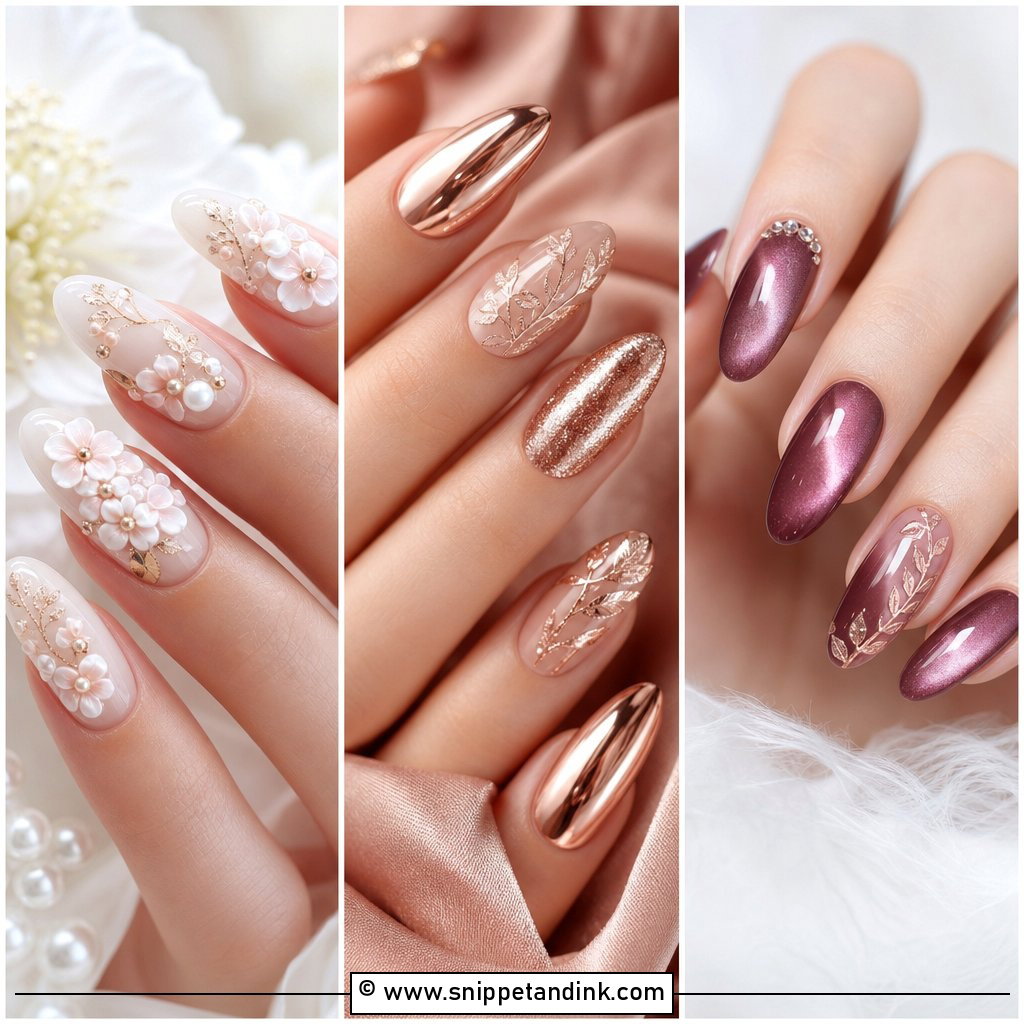
5. Rose Gold Chrome Engagement Nails
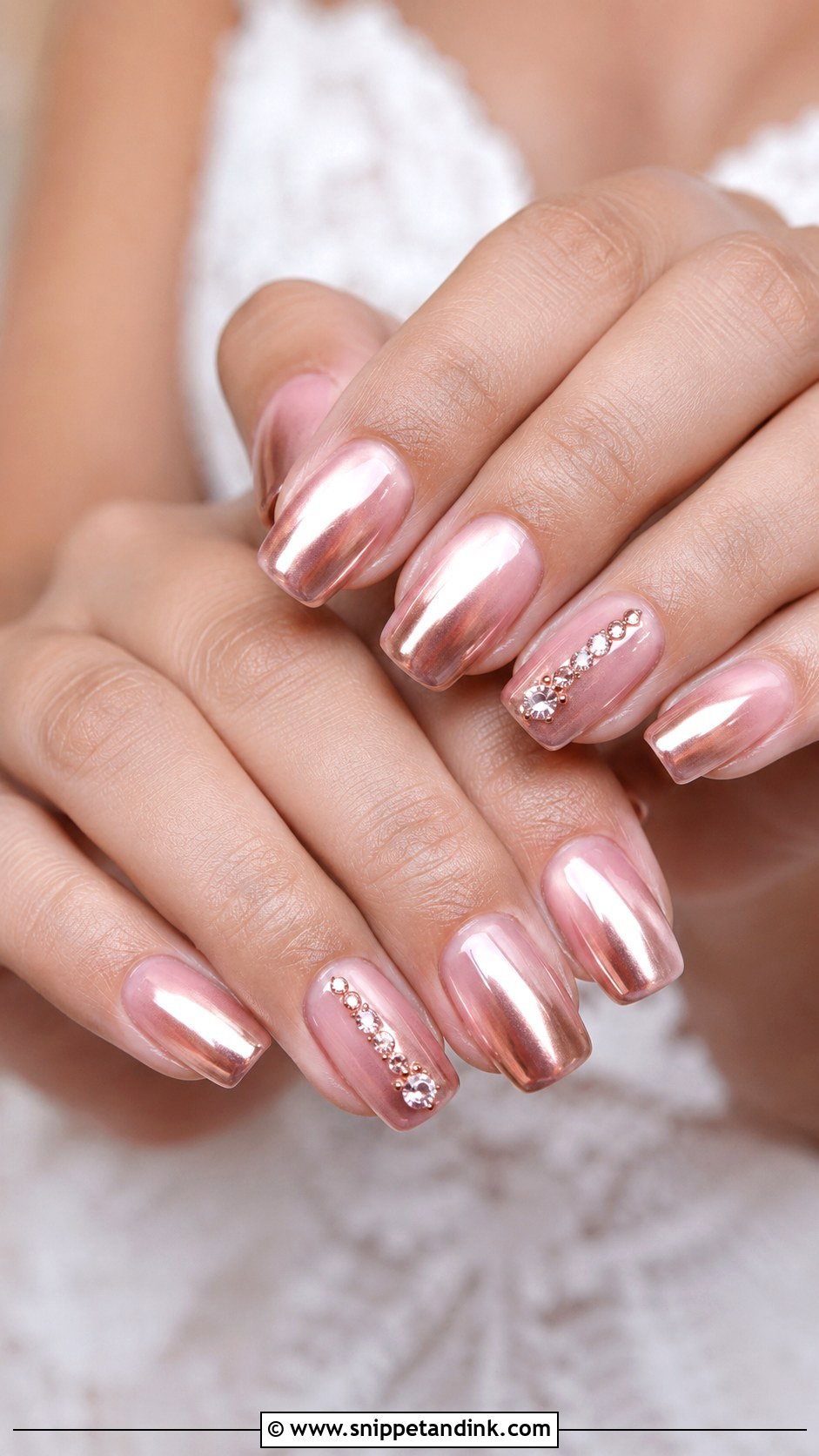
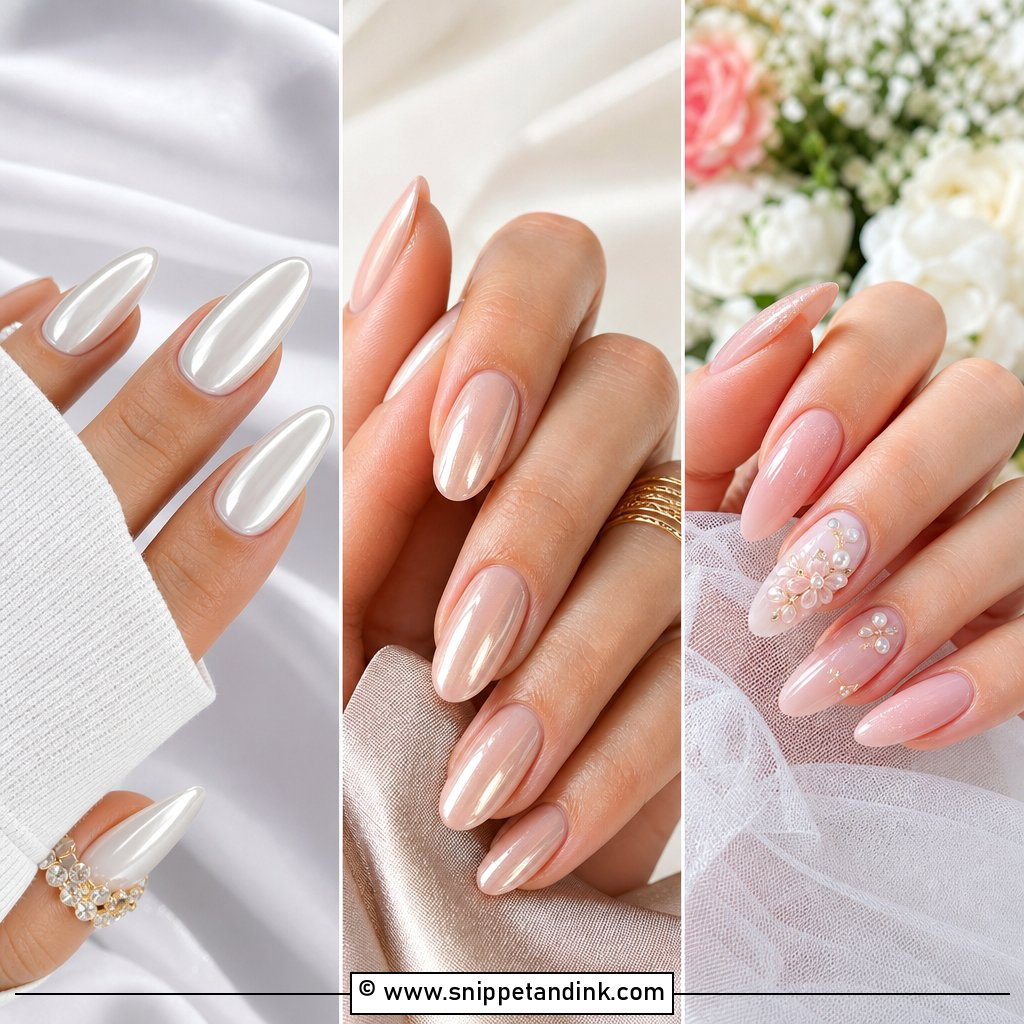
Chrome powder needs a no-wipe top coat underneath and a properly cured layer before it is buffed in, otherwise it goes patchy, and rose gold shows patchiness more than most. Over a sheer pink, it gives a warm sheen that suits many skin tones because it sits between warm and cool. I like it with soft ombre tips and one crystal nail per hand. Blush lehengas, peach sarees and diamond sets all sit comfortably next to it. Almond or squoval keeps the shine from looking too sharp.
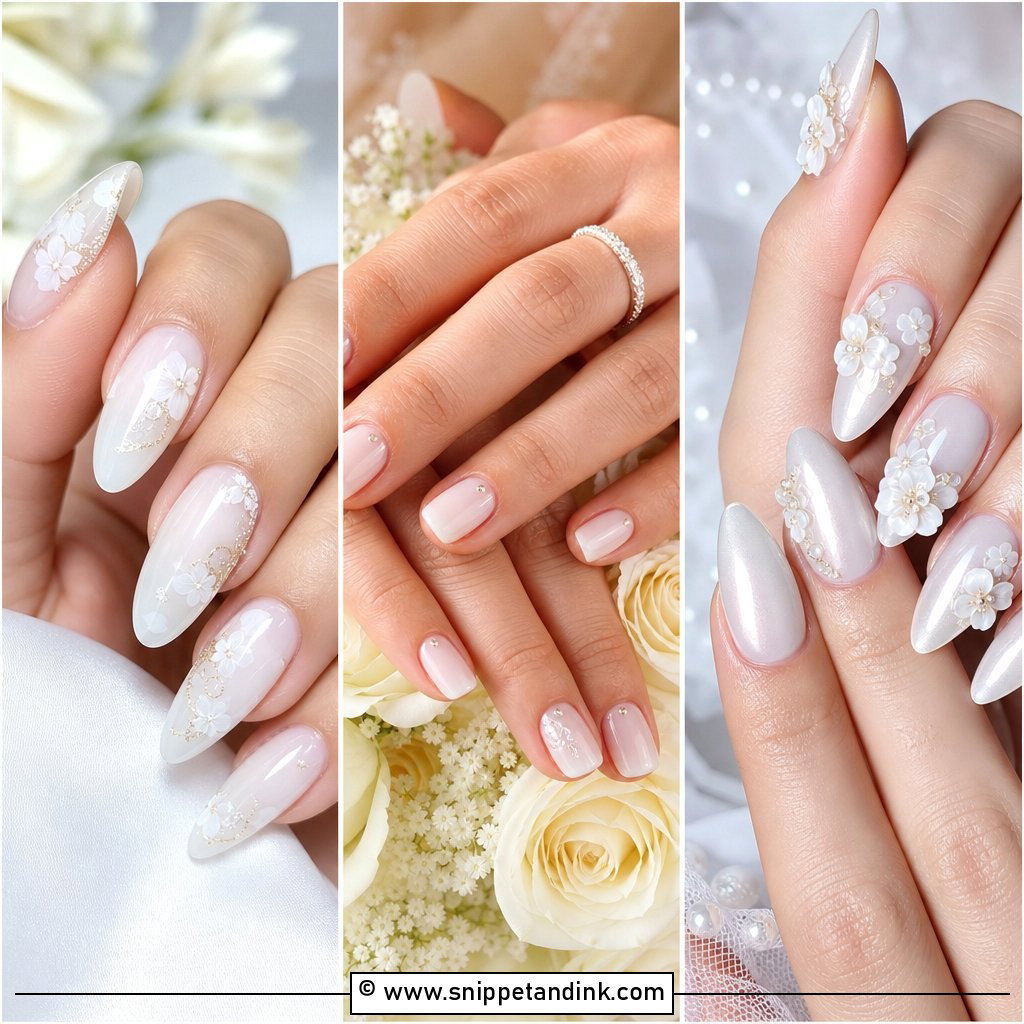
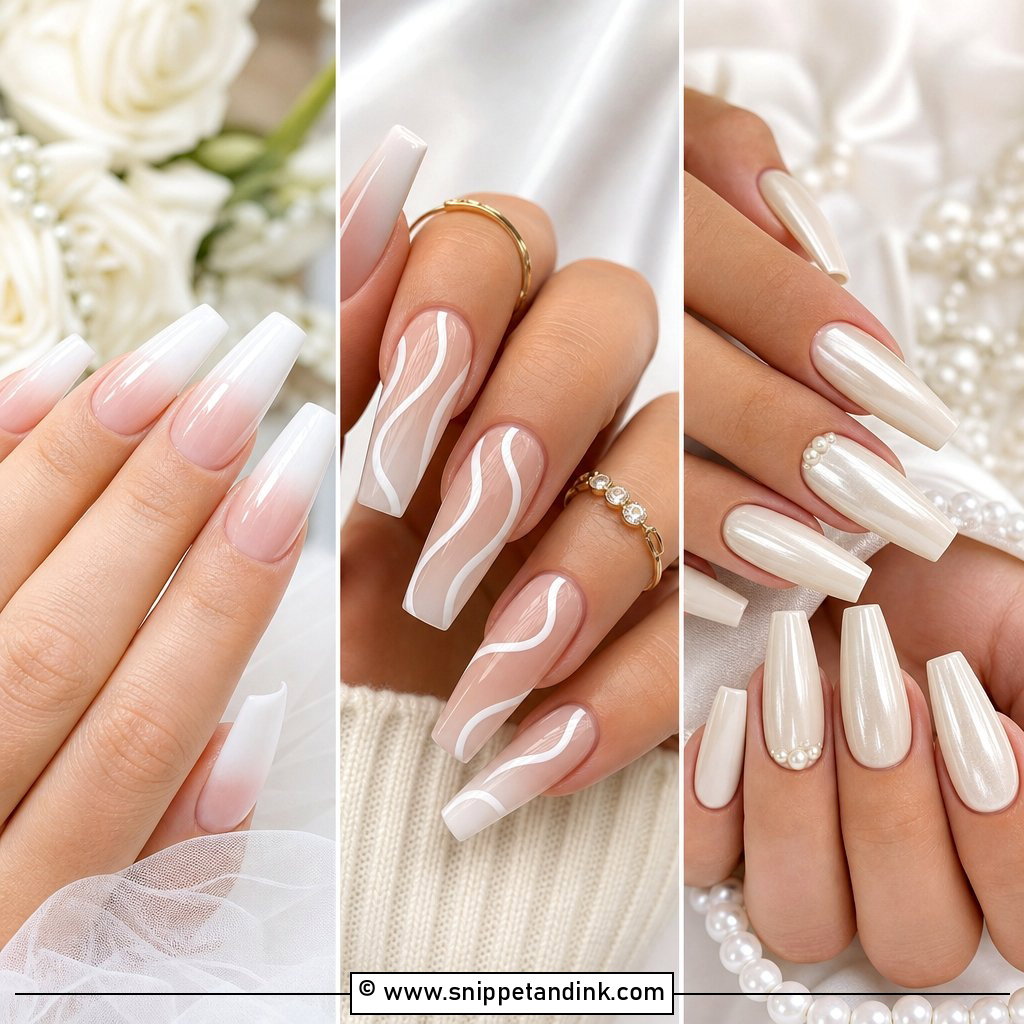
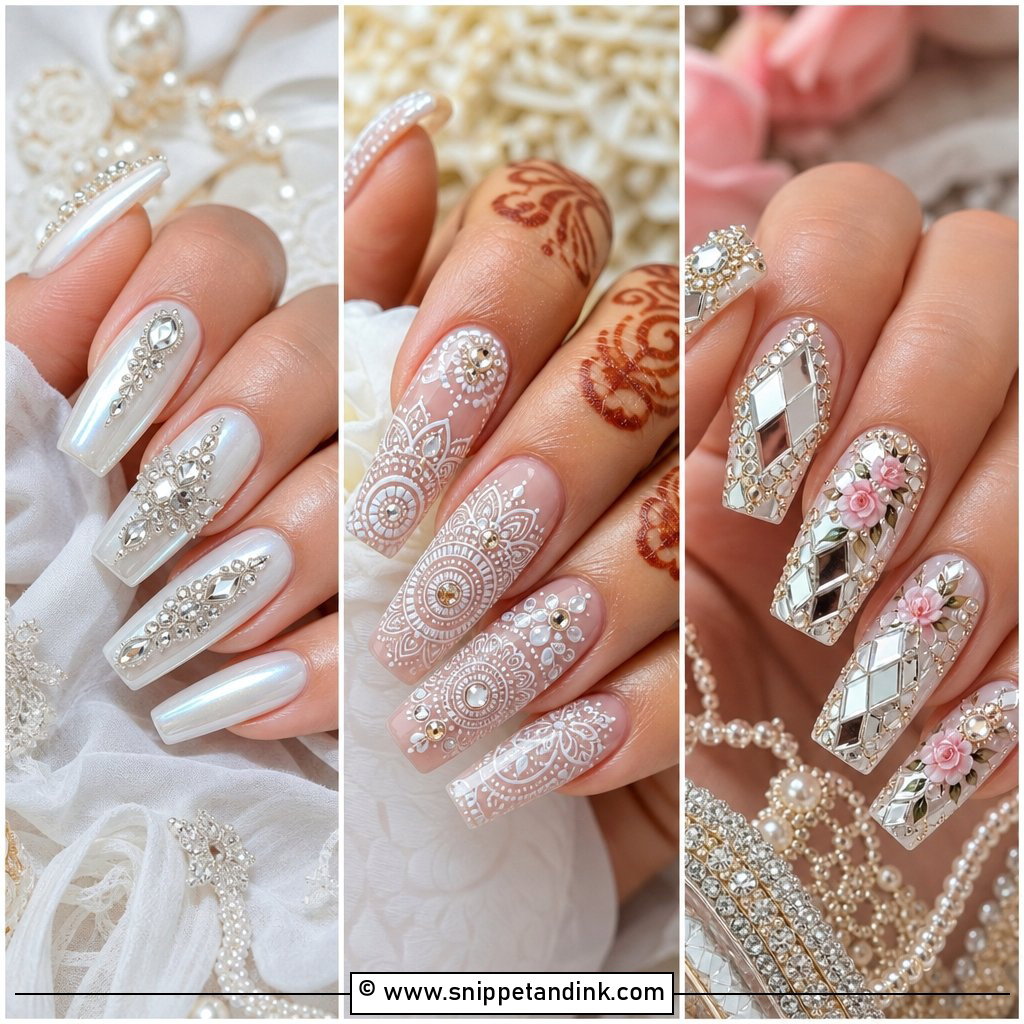
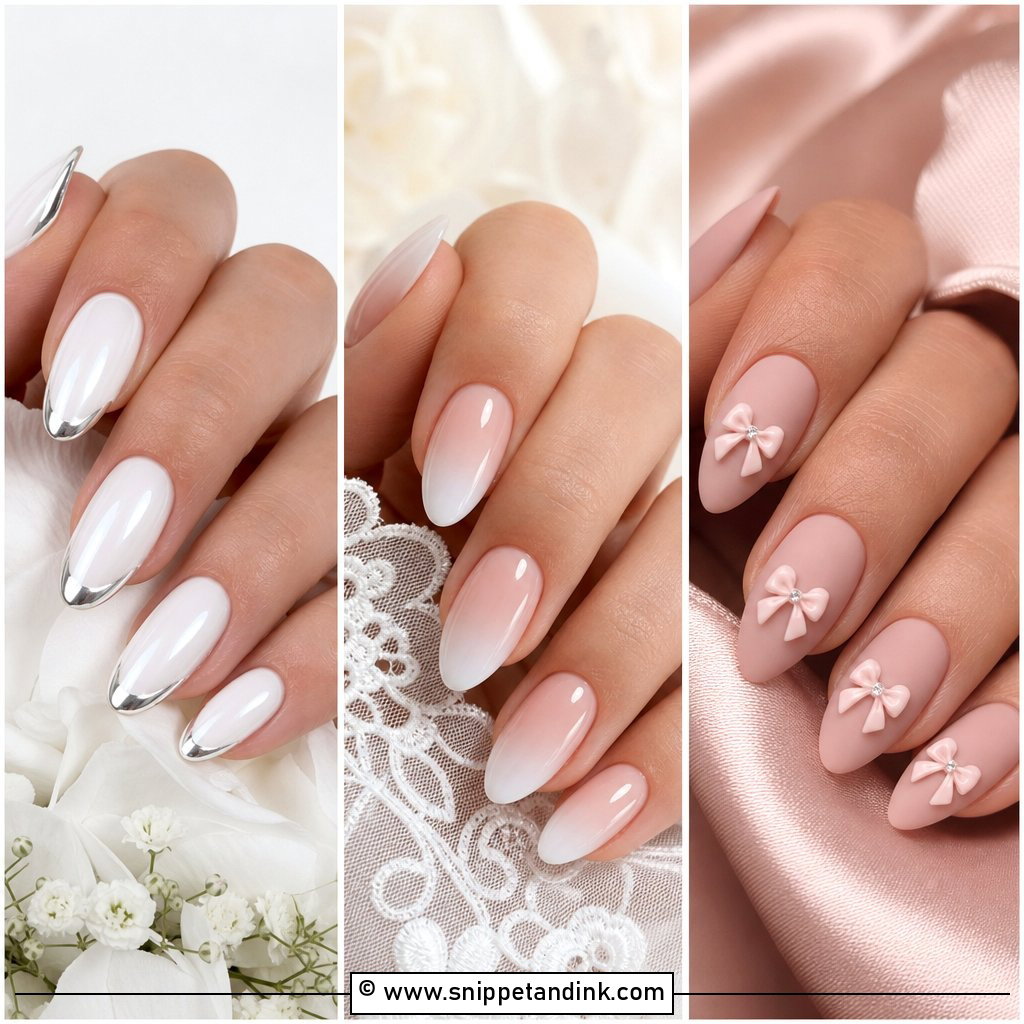
6. Pearl White Engagement Nails
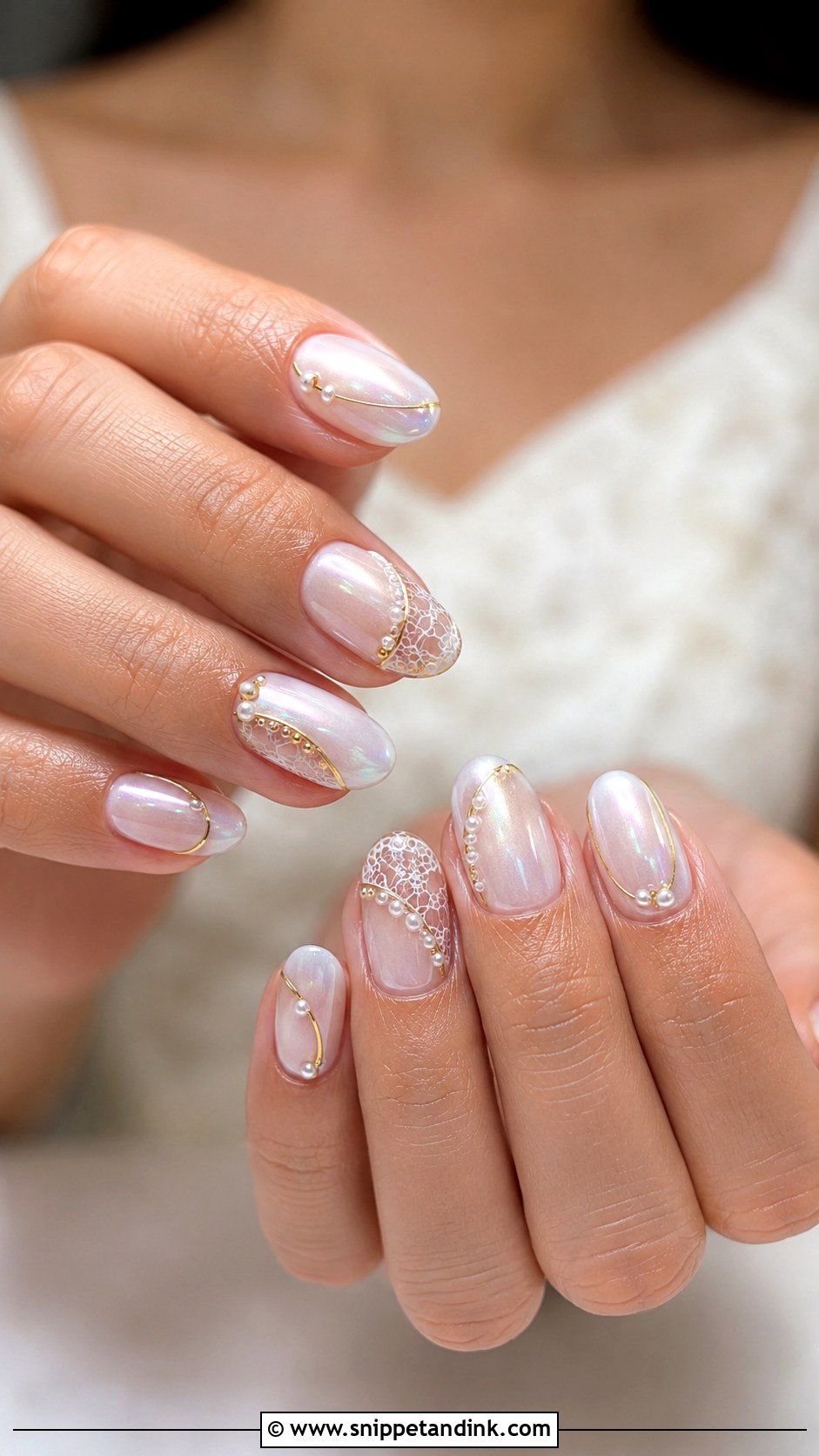
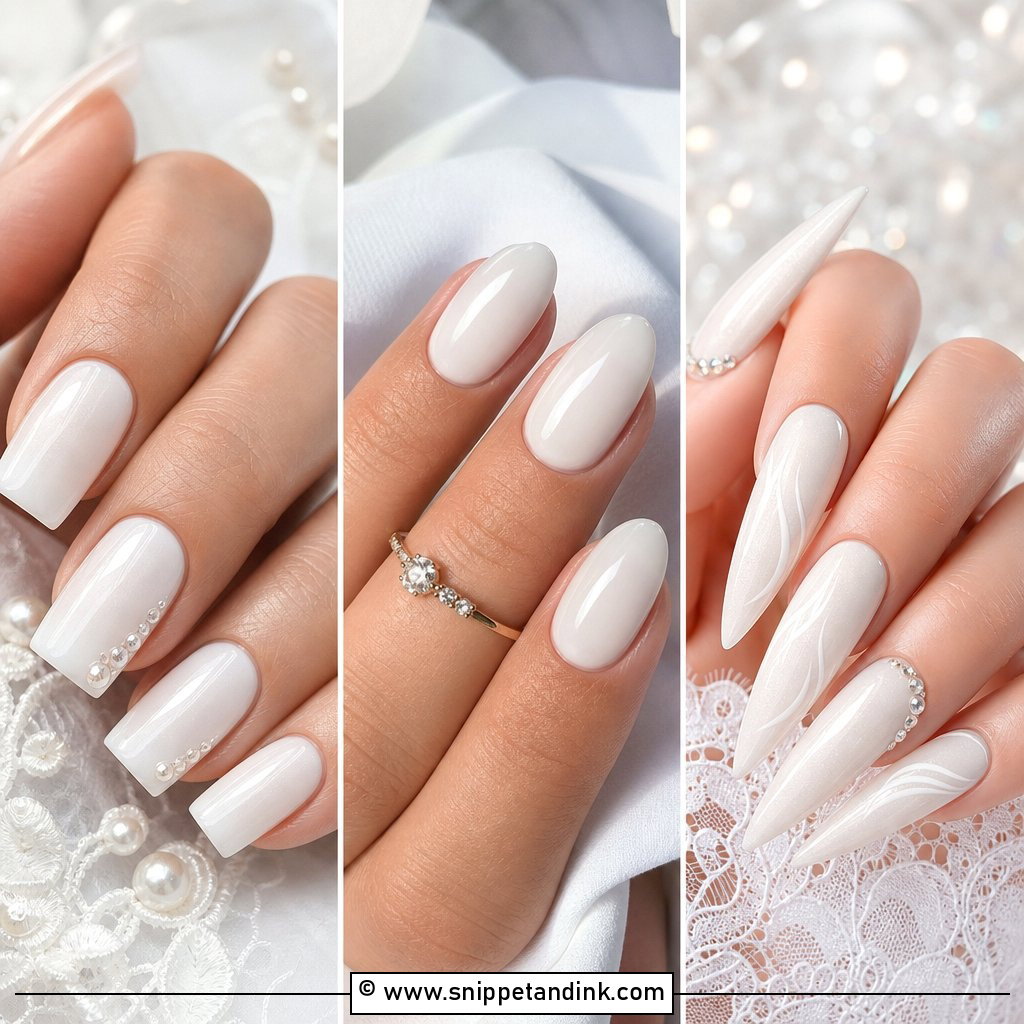
Pearl white is a milky base with a pearlescent top layer, and the milkiness matters: a solid white looks chalky in flash photos, while a translucent one looks clean. To give it an Indian bridal feel, I add tiny pearls, gold micro-lines or a lace-style pattern on two accent nails. It sits quietly beside pastels, ivory sarees and dense embroidery because it doesn’t introduce another colour. The one thing I warn about is turmeric from a haldi function, which can tint a pale gel yellow; if your haldi comes after the manicure, keep a cleansing wipe handy.
7. Kundan Bridal Engagement Nails
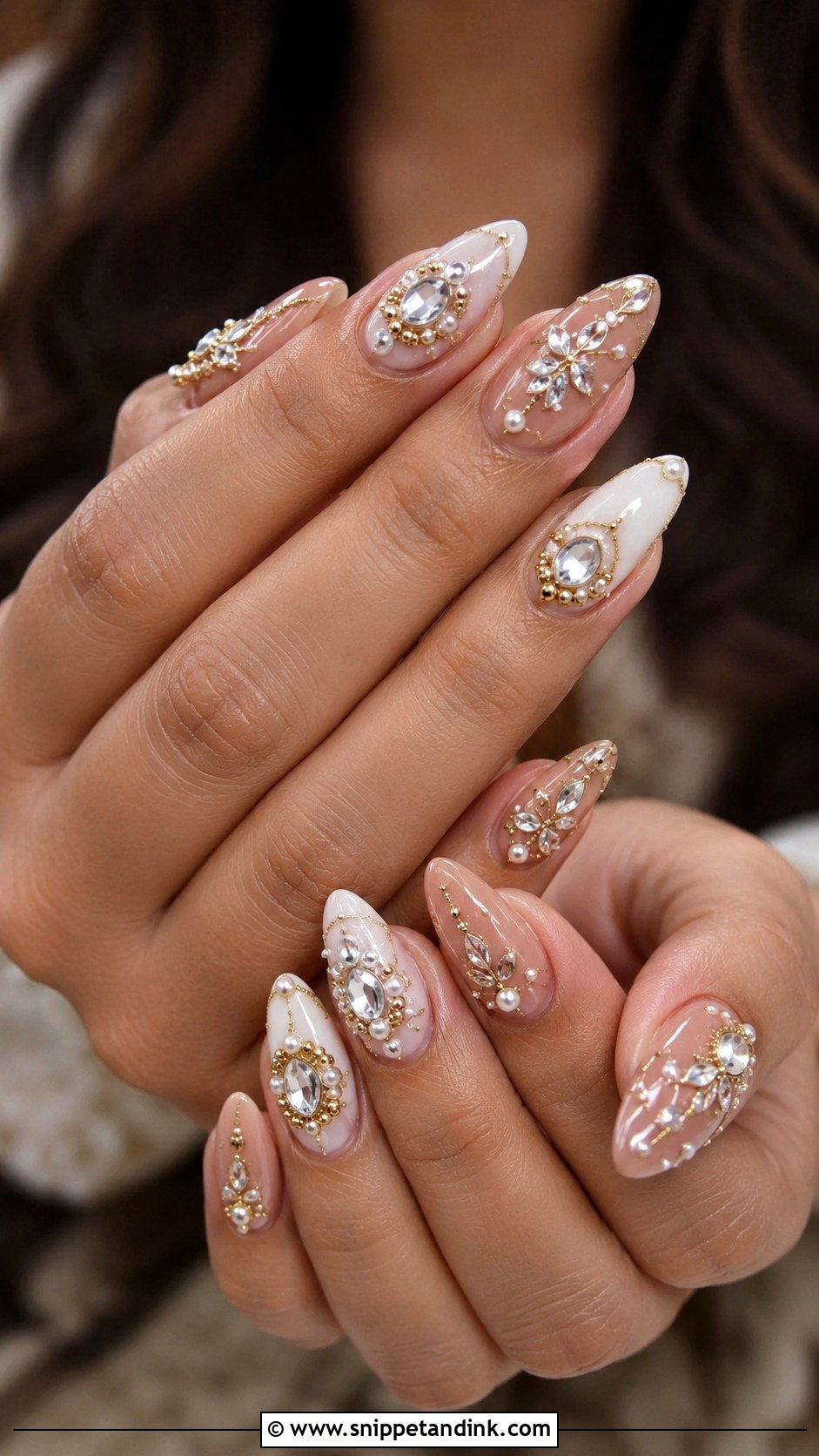
Kundan nails are built like a small piece of jewellery: a nude, blush, ivory or maroon base, then gold beads, clear crystals and pearl dots arranged in a setting pattern. The common problem is height. Stones stacked too high catch on net dupattas and hair, so I set them low and flood the gaps with builder gel. Next to polki and stonework lehengas, the effect is rich and very bridal. I keep the embellishment to two or three nails and leave the rest glossy, which also makes the set easier to repair if a stone pops.
8. Pink Glitter Engagement Nails
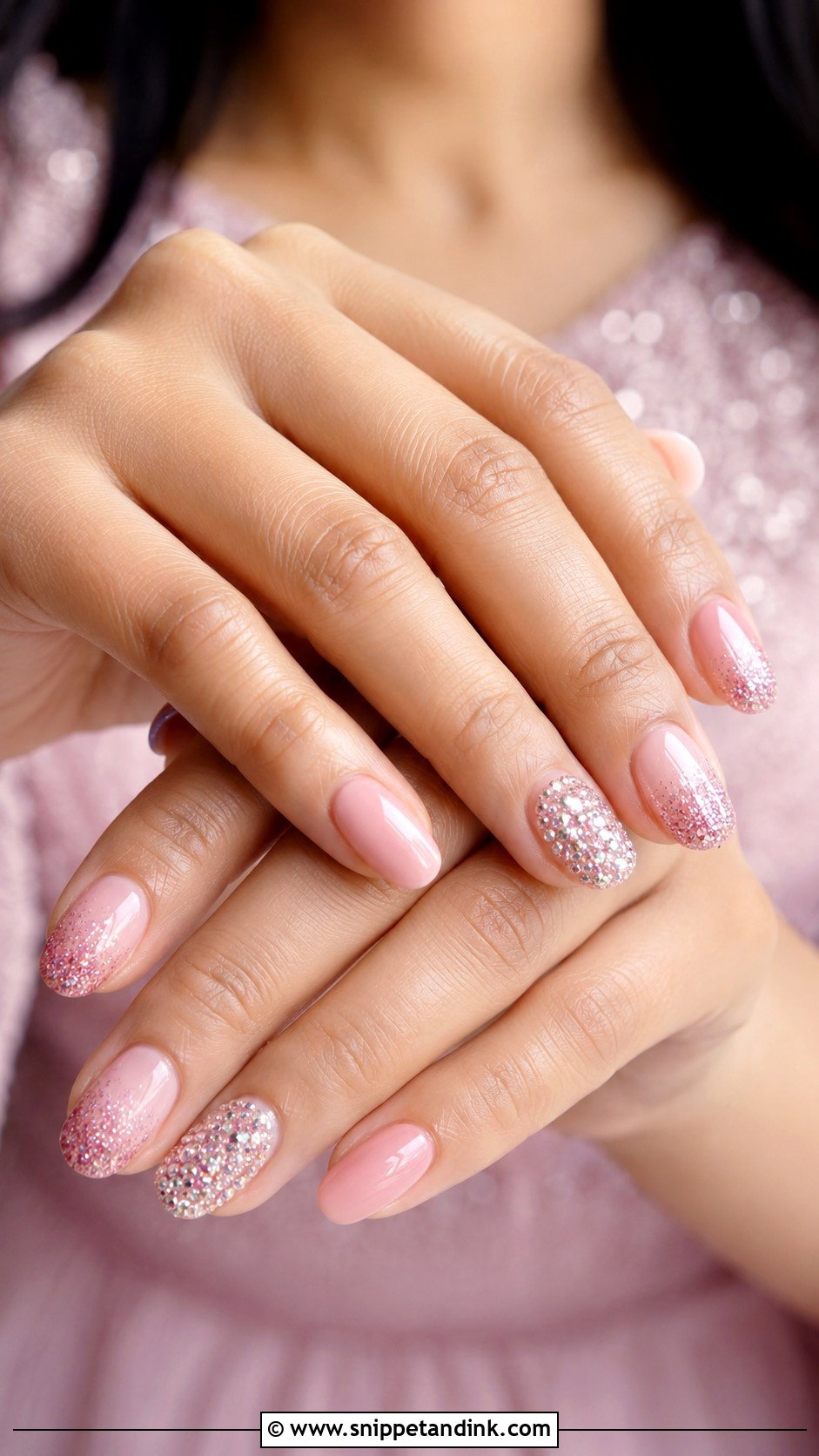
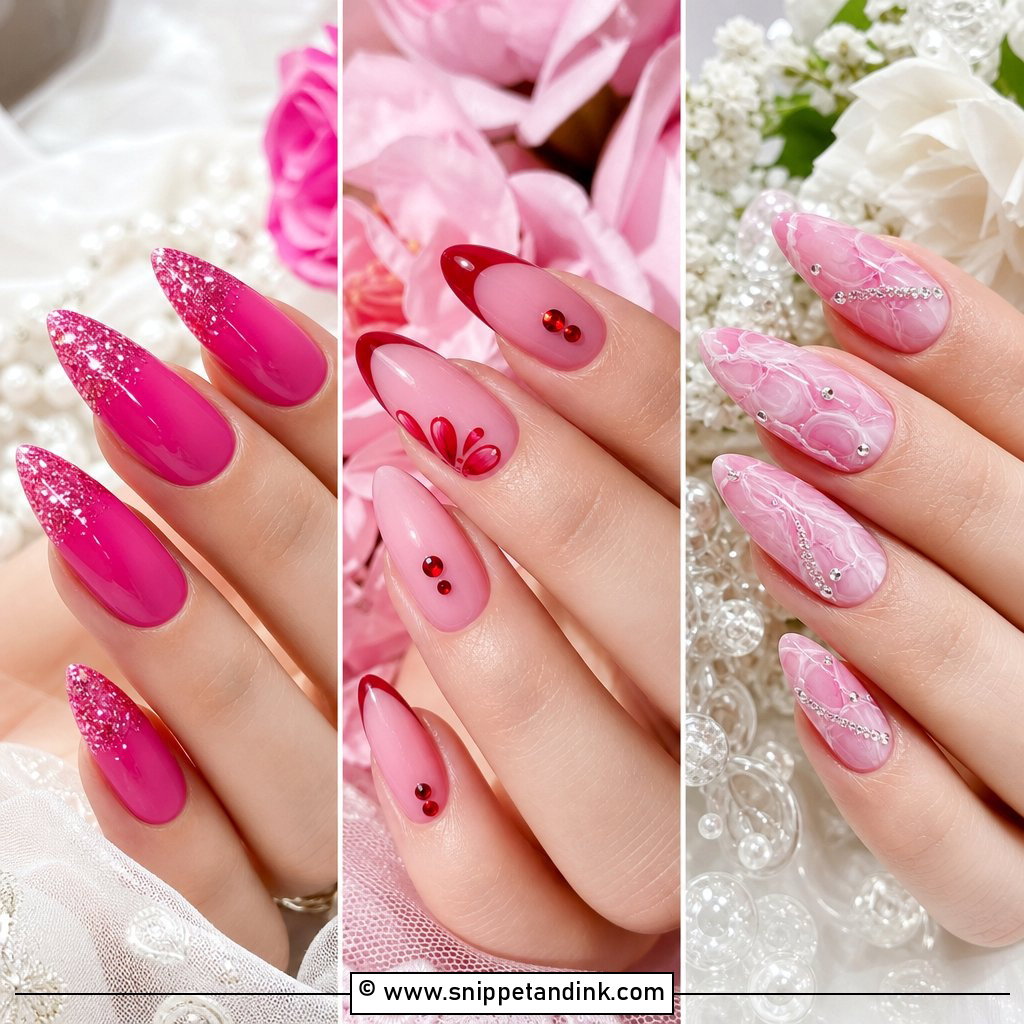
Glitter pink is a daytime set for me. In natural light fine glitter flickers softly, while chunky glitter can look like a party manicure in close-ups. A full set could be pink ombre glitter on a few nails, glossy blush on the rest, and one ring-finger accent with small stones or silver foil. It suits pastel lehengas, floral embroidery and rosy makeup. Short almond or oval shapes keep it from tipping into cute.
9. Ombré Bridal Engagement Nails
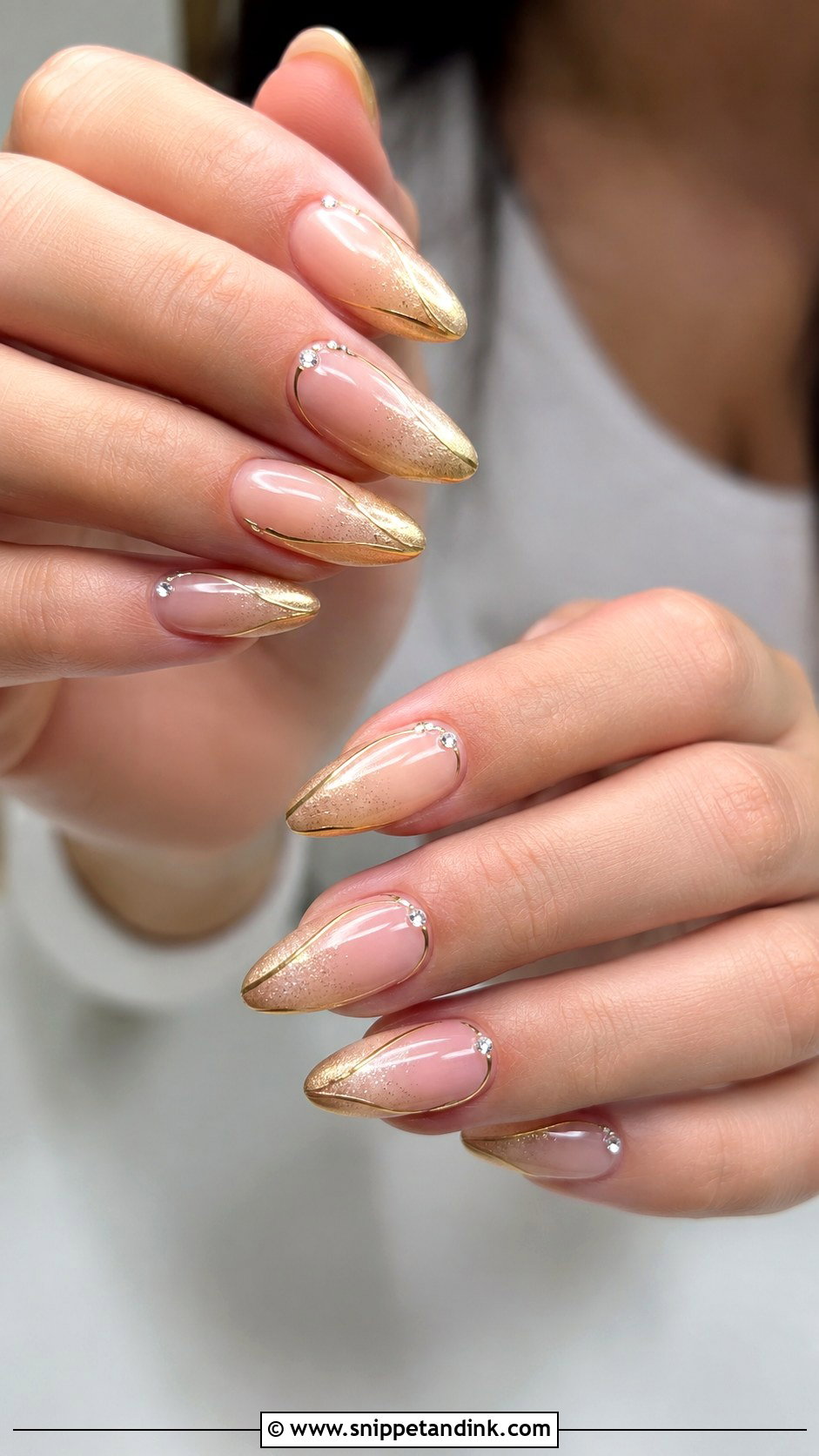
Ombre is the most forgiving design on this list, which is why I often suggest it when the ceremony is more than ten days away. With a nude base at the cuticle, regrowth hardly shows. Nude to gold, pink to white, peach to champagne and maroon to glitter all work for Indian outfits. I build the fade with a sponge or a brush blend in thin layers; a thick single layer leaves a visible band. The gradient also makes short nails look longer. Finish with a gloss coat, and add a few cuticle stones only if the outfit is simple.
10. Champagne Glitter Engagement Nails
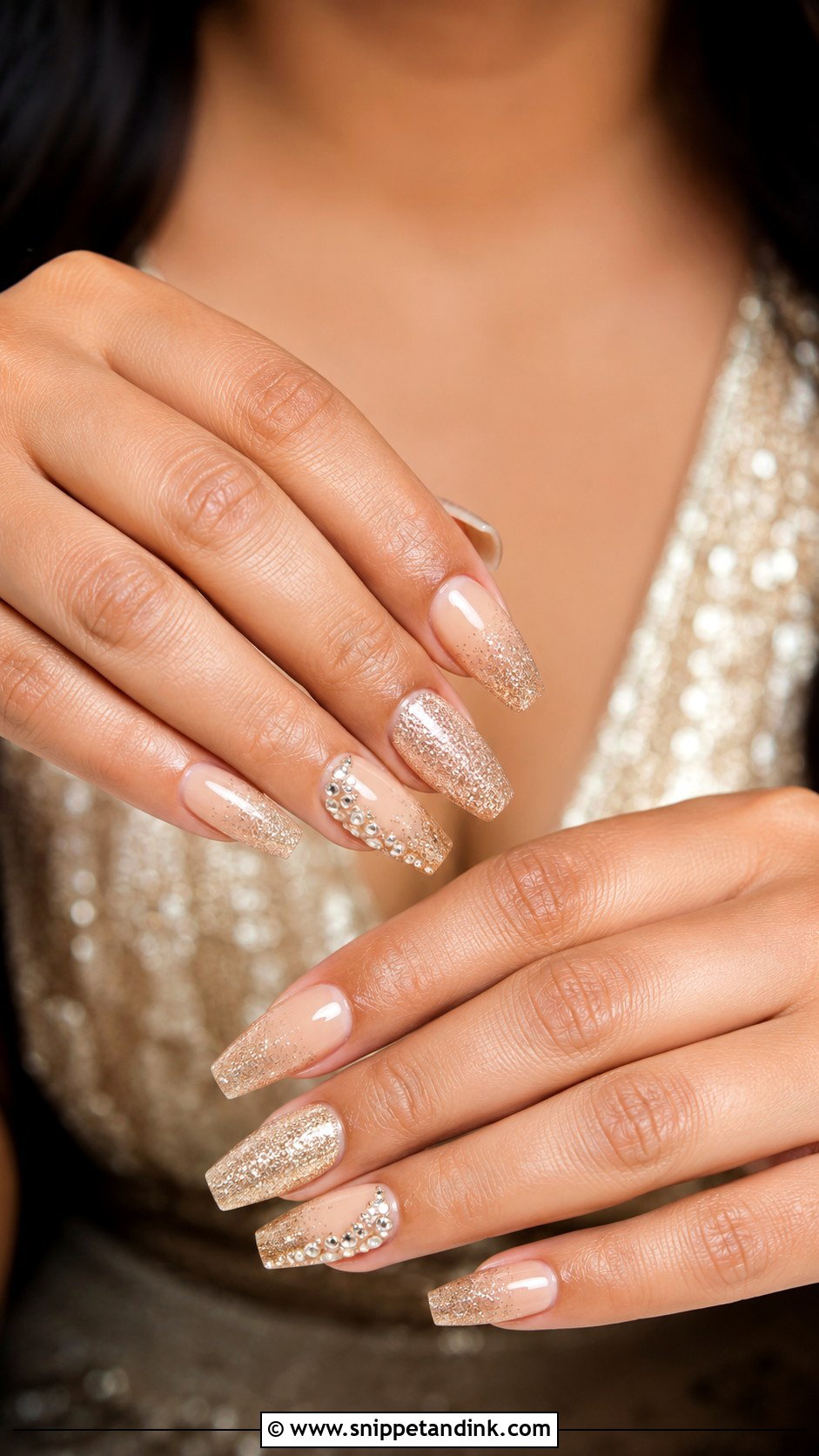
Champagne sits between gold, nude and beige, so it is the shade I use when an outfit mixes warm metallics with soft colour. Zari, sequins and embroidered fabric all pick it up. My usual set is full champagne shimmer on most nails, a nude with glitter tips on one or two, and a crystal accent on the ring hand. It looks rich without getting loud. Beige, ivory, peach and muted pastel outfits suit it best. Medium almond or coffin shapes give the shimmer enough surface to show.
11. Floral Bridal Engagement Nails
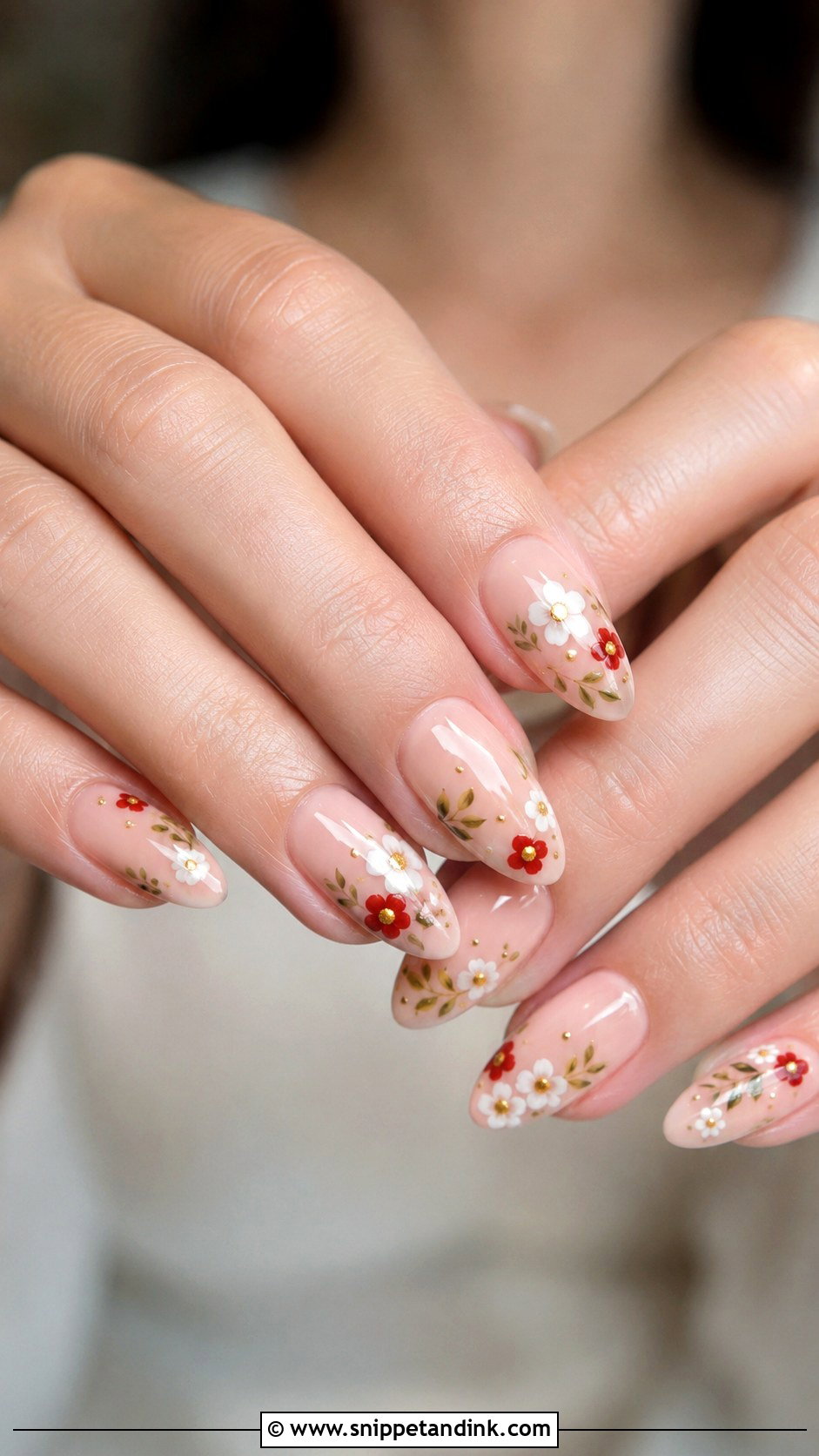
Hand-painted flowers are where the skill of the artist shows, so ask to see close-ups of their floral work before booking. I paint small blooms in red, white, gold or pastel on two or three nails over a nude, pink, ivory or sheer peach base, and leave the others plain or lightly shimmered. Painting every nail makes the hand look busy next to henna. A gold dot or a pearl in the centre of each flower adds a festive touch. This set fits floral lehengas and garden functions, and almond or oval shapes keep the petals in proportion.
12. White Chrome Engagement Nails
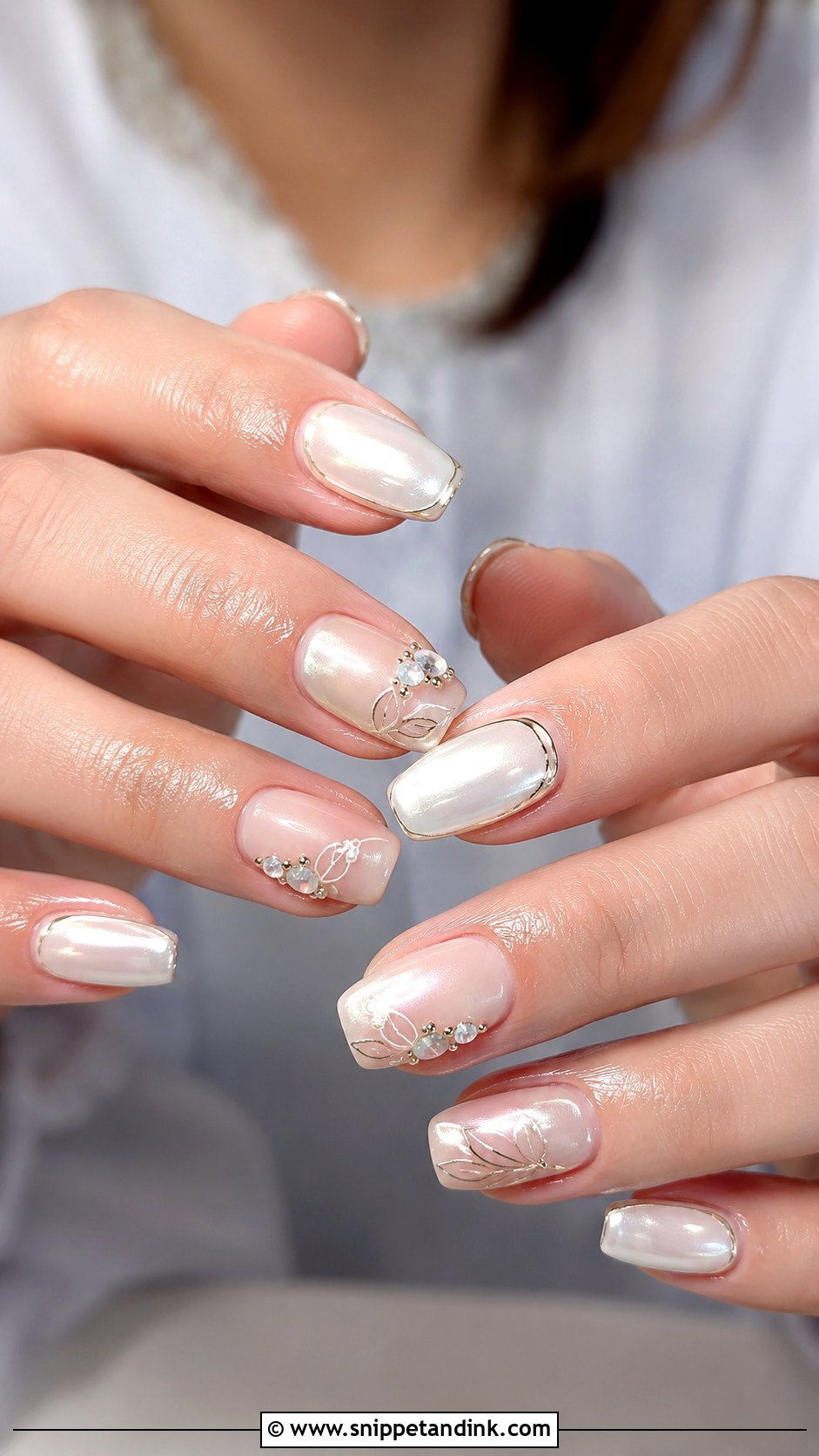
White chrome is milky white or sheer ivory with a pearl or glazed powder on top, and it reflects light in a way that makes the ring look brighter beside it. It is also the finish that shows every bump, so the base has to be levelled properly first. For an Indian touch I add a thin gold outline, small crystal clusters or a little mehndi-style linework on the ring fingers. White, silver, lavender, pastel and champagne outfits suit it. If you normally wear plain polish and want one step up, this is a good choice.
13. Gold Foil Engagement Nails
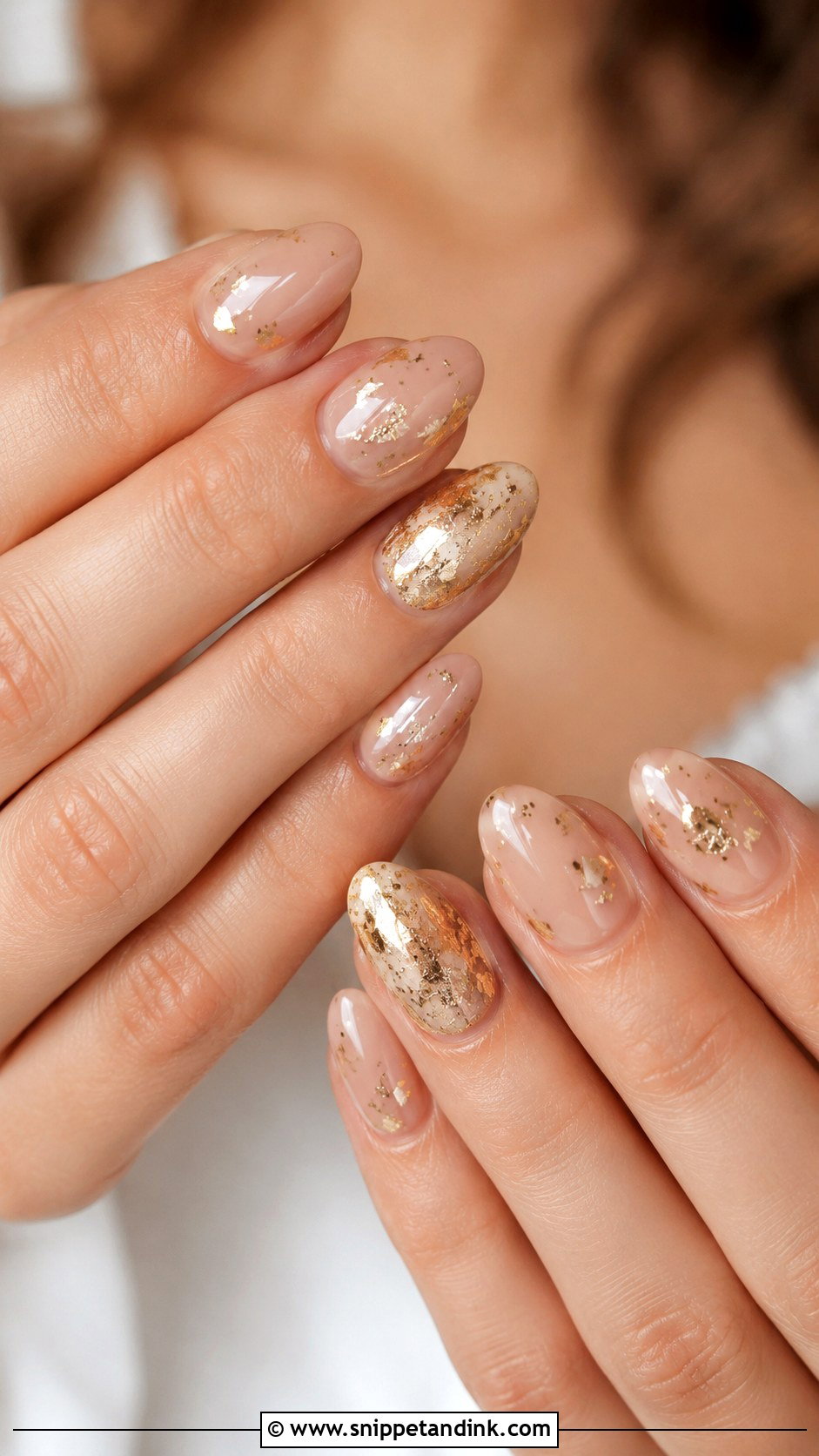
Gold foil gives the warmth of heavy embellishment while the nail surface stays completely flat. I press irregular pieces into tacky gel over a nude, blush, ivory or maroon base and seal it under a glossy top coat, so nothing catches on fabric. The foil can be scattered evenly or concentrated on the ring fingers. Zari borders, gold embroidery, kundan and warm makeup all sit well beside it. Because the surface is smooth, it is one of the most comfortable sets to wear through a long day.
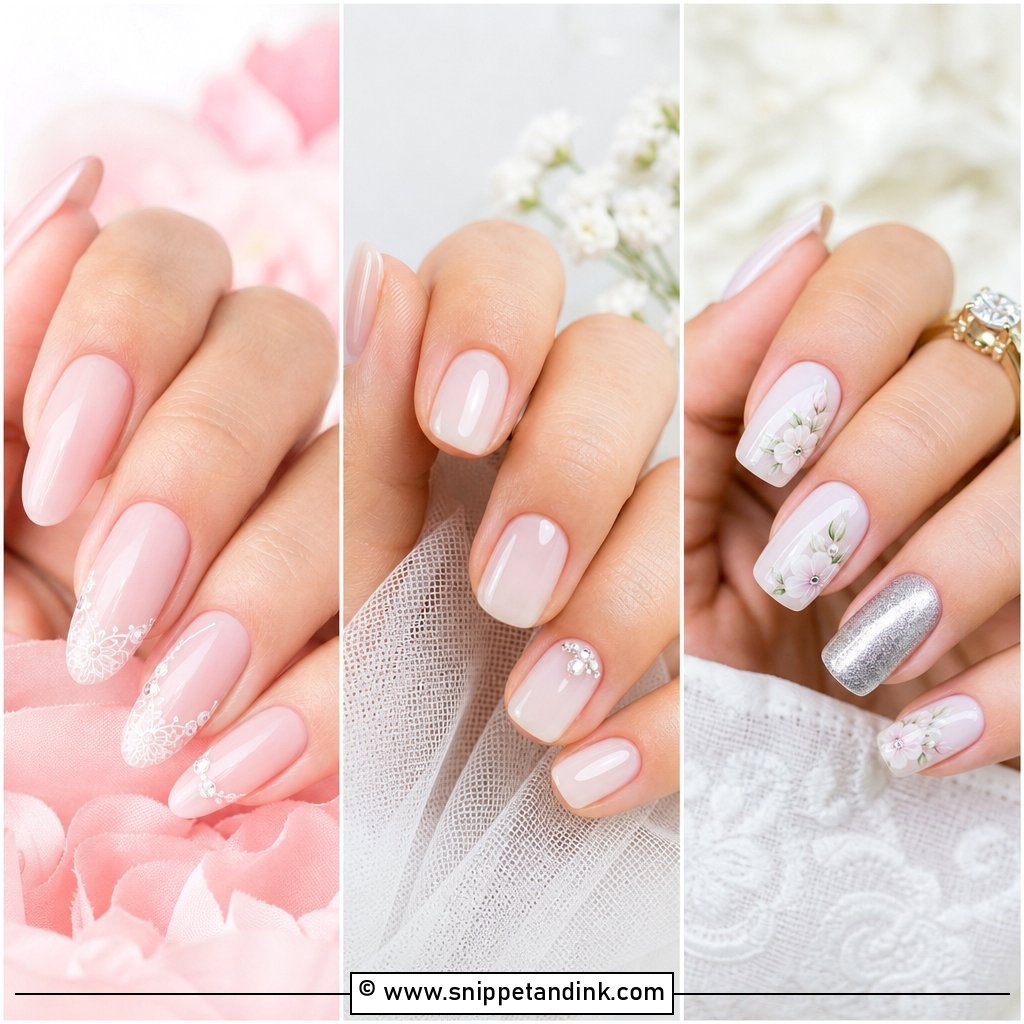
14. Minimal Bridal Engagement Nails
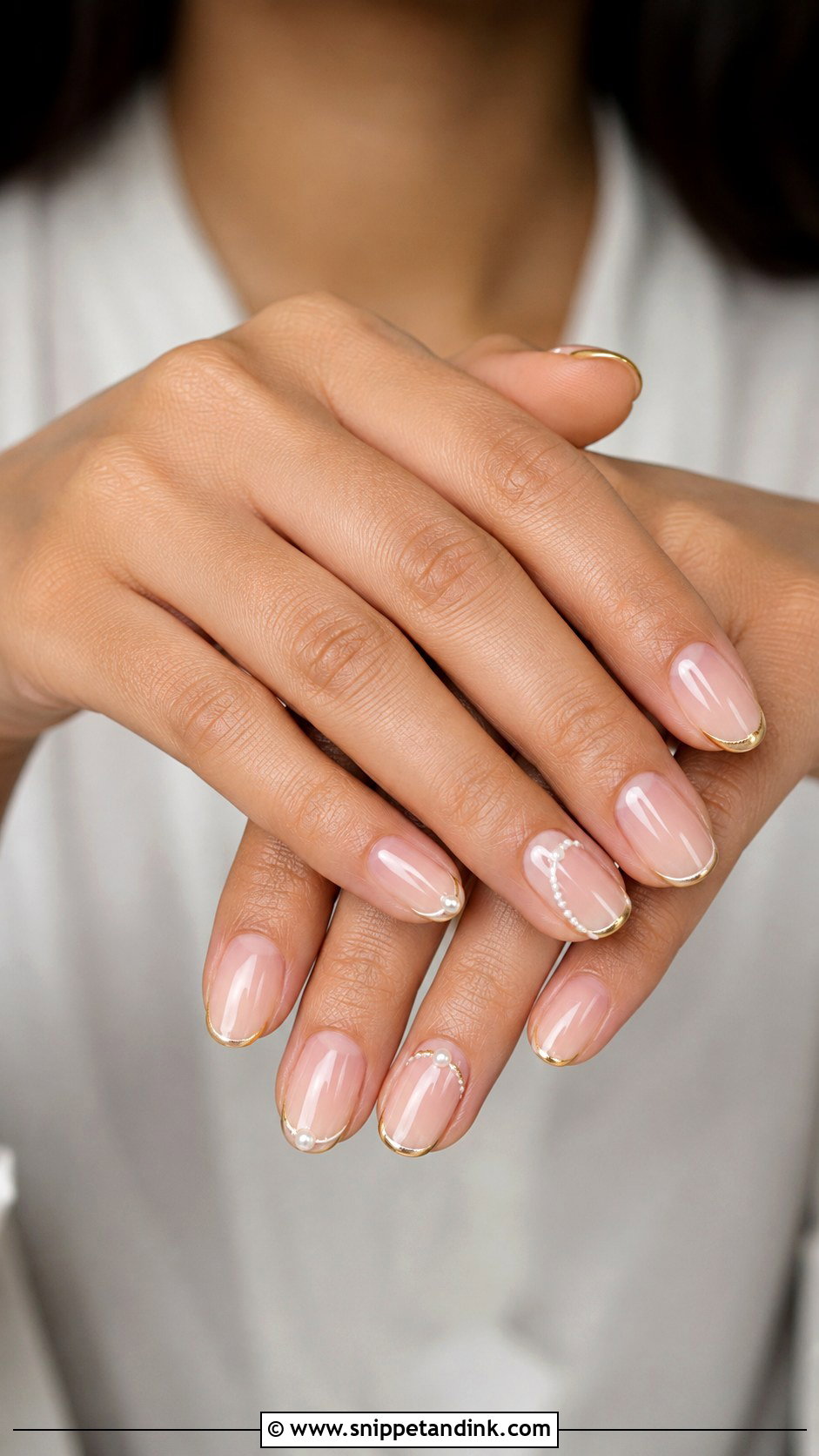
Not every bride wants art on her nails, and a minimal set often photographs better beside a detailed mehndi. I start with a sheer pink, nude or milky base and add one refined detail: micro gold French tips, a few tiny pearls, a small crystal or a fine white line. The ring and the henna stay the focus. It suits intimate ceremonies and pastel outfits. Short to medium oval nails keep it polished.
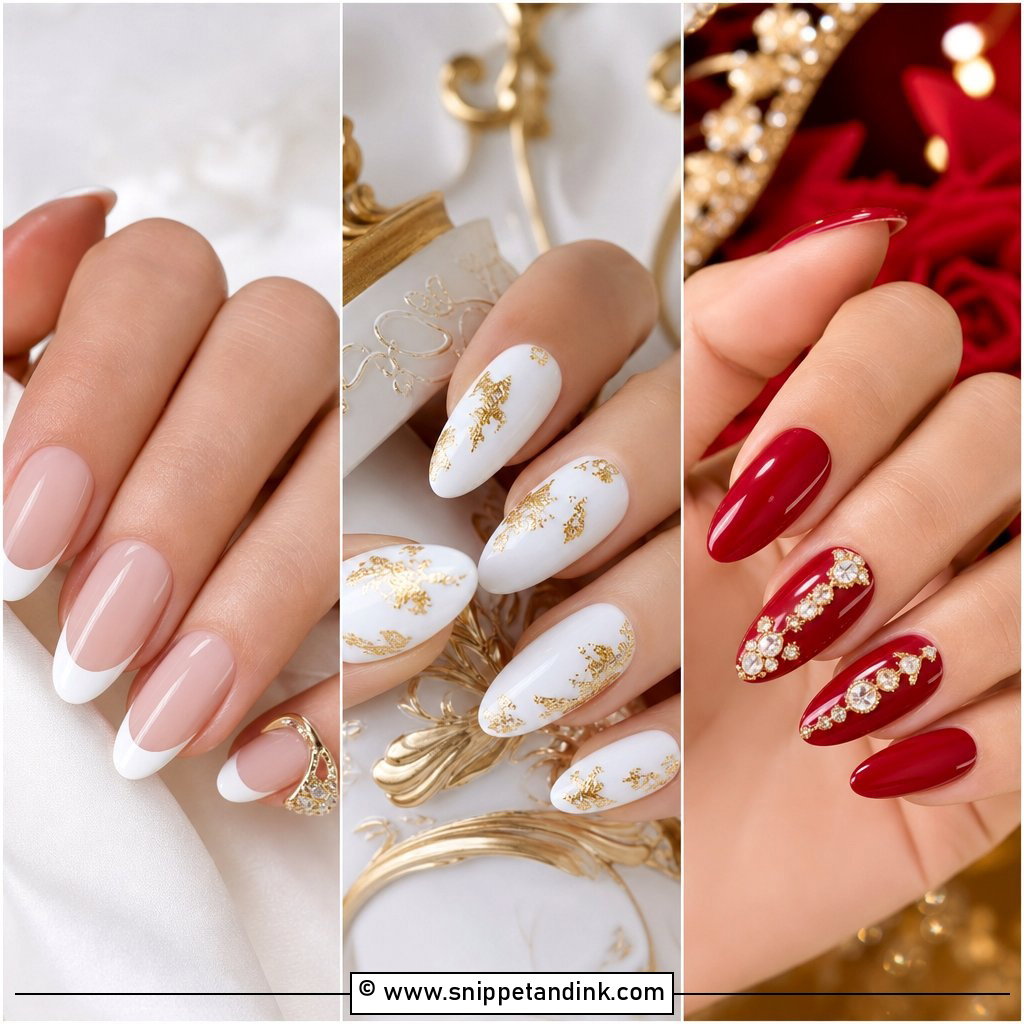
15. Peach Bridal Engagement Nails
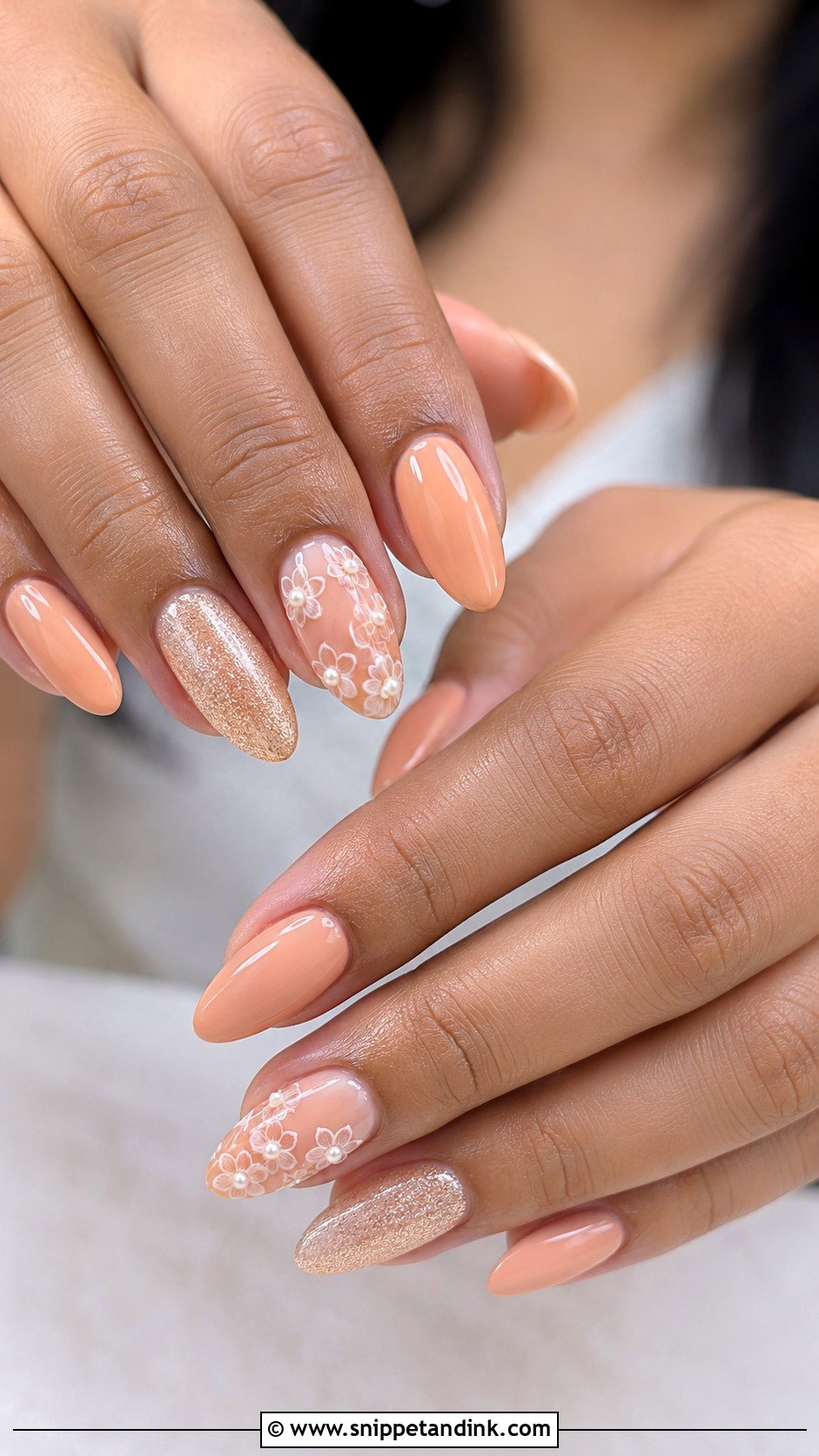
Peach is my answer when a bride wants colour but red feels too heavy. It works with coral lehengas, peach sarees, floral prints and gold jewellery. To make it bridal, I add champagne shimmer, a few pearl accents or white florals on a couple of nails. Peach also behaves well across lighting: fresh in afternoon daylight and warm under evening bulbs, which helps if your ceremony runs from one into the other. Almond, oval and squoval shapes all suit it.
16. Pastel Bridal Engagement Nails
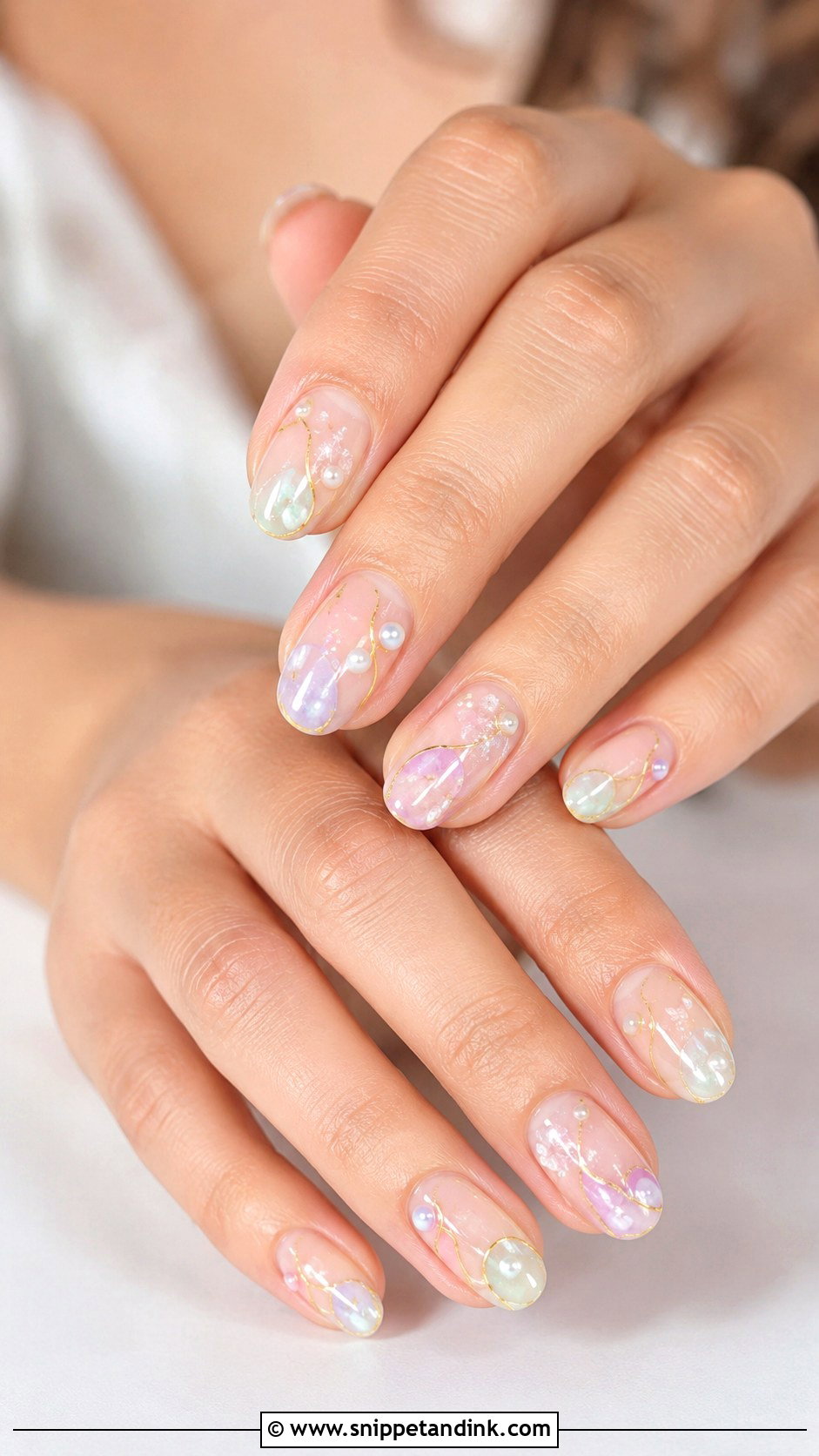
Pastel nails are mostly about matching undertone, not shade. A lavender with a grey cast can look dull next to a lavender lehenga with a pink cast, so I match against the fabric itself. Mint, lavender, powder blue, blush and sage all work as the main shade over a sheer nude, with fine gold lines and a small pearl or crystal. Keep the design airy or it starts to look playful. Lighter shades also contrast well with dark mehndi. If your outfit uses several pastels, I pick one for the nails and let gold tie them together.
17. Mirror Gold Engagement Nails
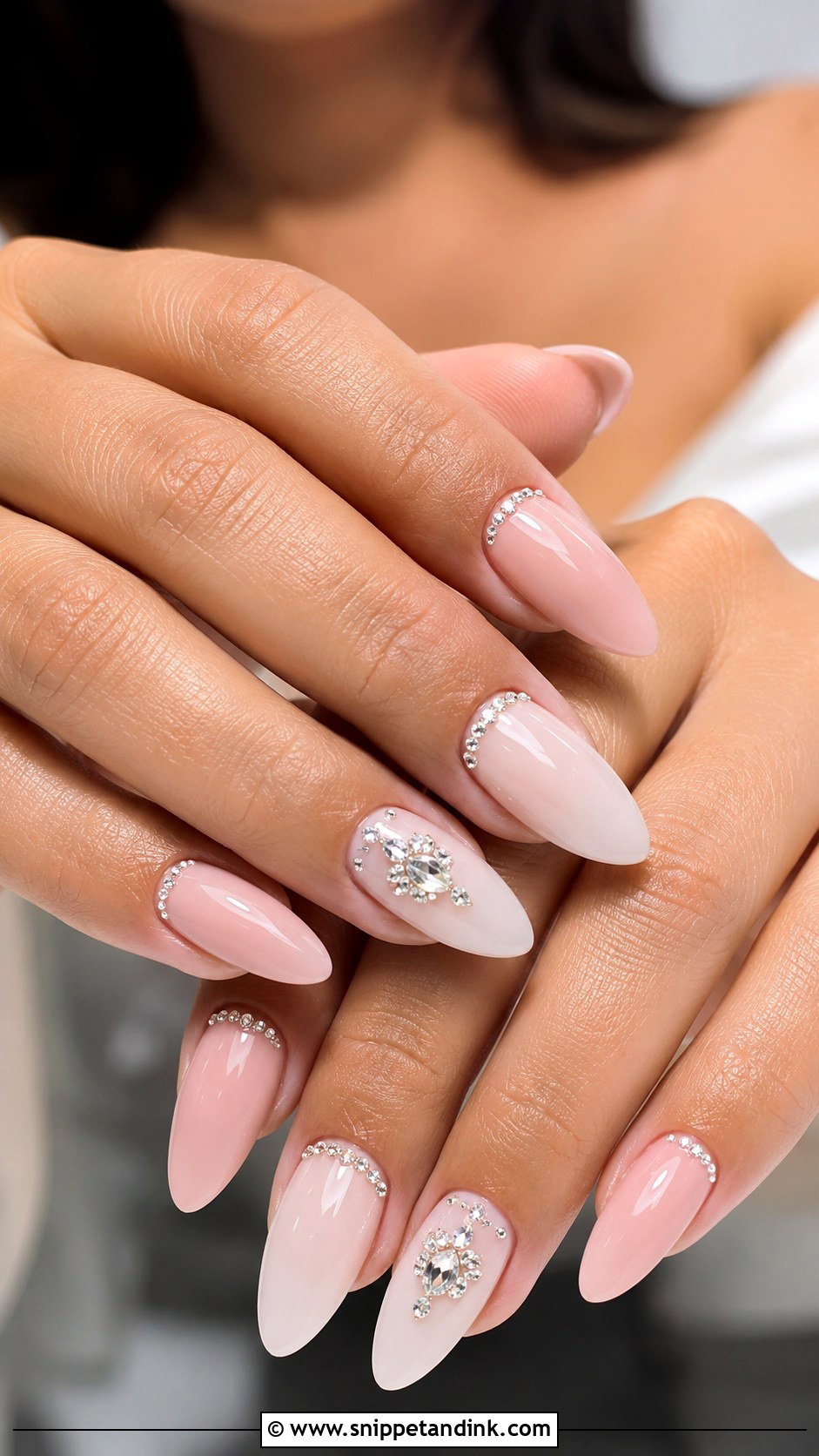
Mirror gold reads like jewellery from across a room. You can use it on every nail or alternate it with nude for more balance. I add crystal dots or thin white detail only if a bride wants it softer. It needs a very smooth base, because mirror chrome magnifies every ridge. Gold lehengas, metallic embroidery, heavy bangles and evening lighting all suit it. Since the finish is already loud, keep the shape clean and the length practical; almond, coffin and square all hold it well.
18. Burgundy Bridal Engagement Nails
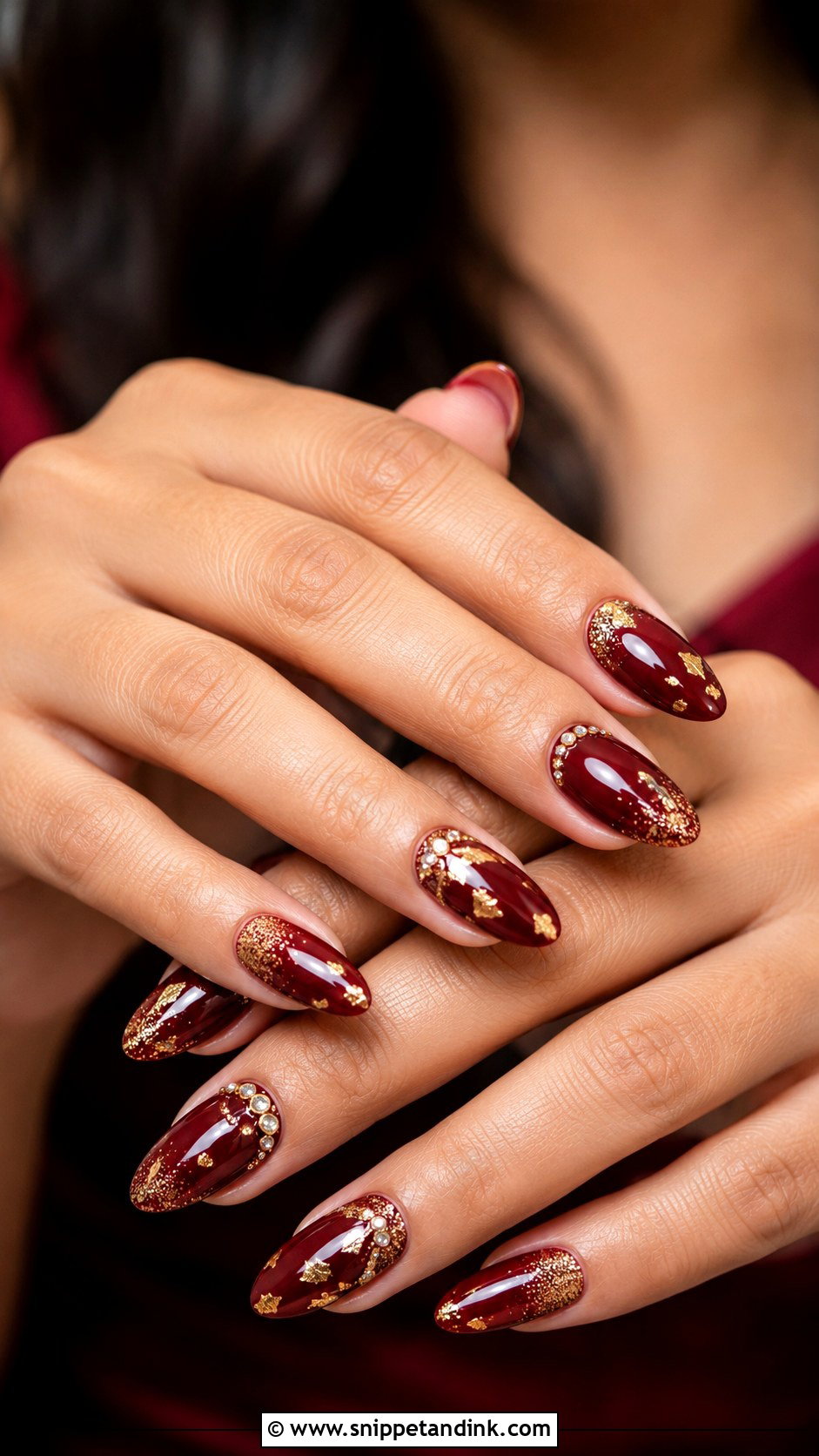
Burgundy sits a little lighter and more wine-toned than maroon, which is useful in winter and with wine-coloured outfits. A typical set is glossy burgundy, a gold glitter ombre on one or two nails and a single accent with rhinestones or foil. The dark base makes diamonds and pale stones look brighter in hand shots. If your outfit already has heavy embroidery, I keep the art very light. A thick gloss top coat deepens the colour noticeably.
19. Henna Pattern Engagement Nails
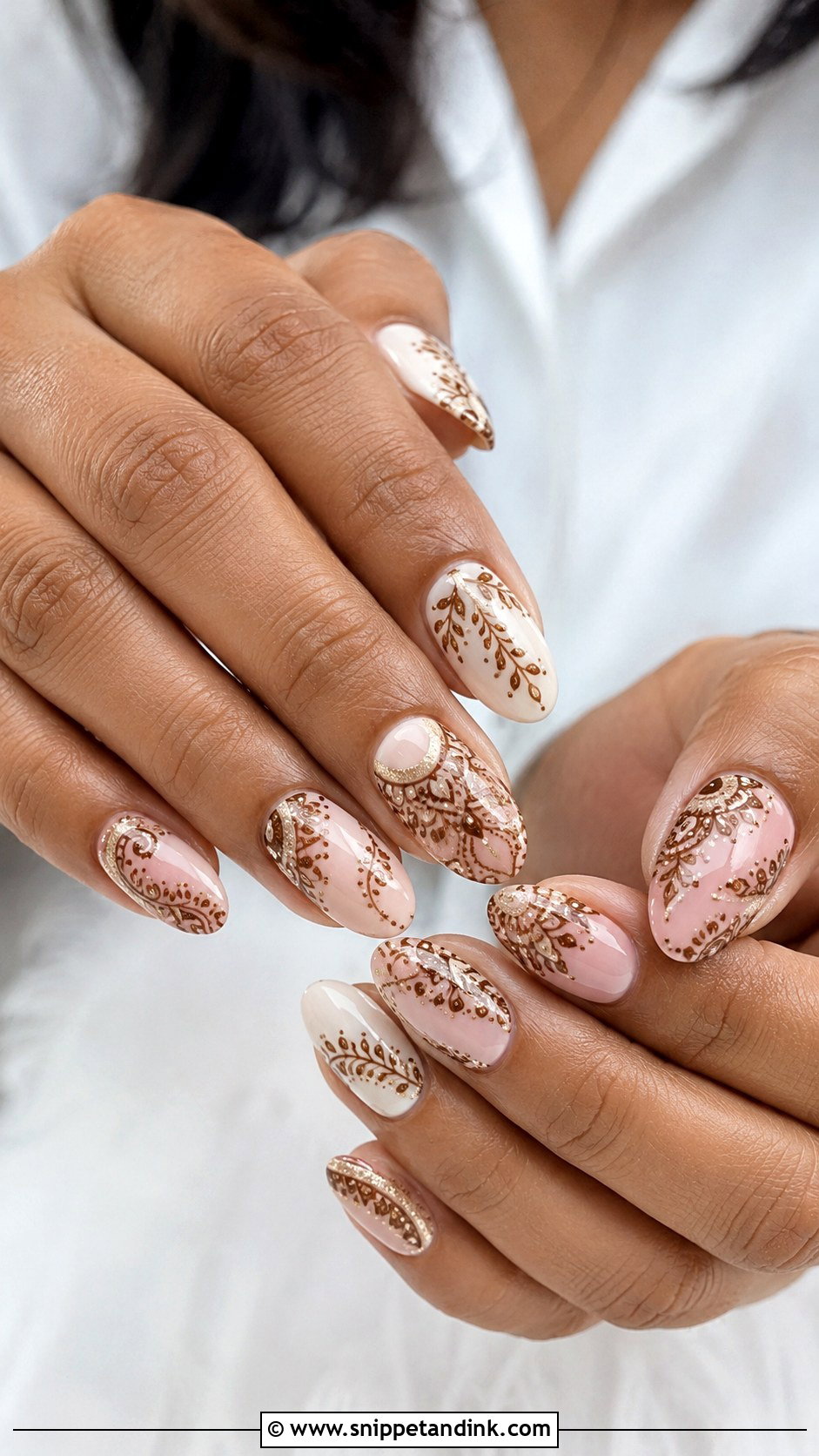
Painting henna motifs on a nail means scaling them right down, so I keep each nail to one main element, a paisley, a small mandala or a vine with a few dots, rather than shrinking a whole mehndi design. Brown, gold or white lines over a nude, ivory or blush base all work, and mehndi motifs inspired by finger designs translate especially well. I put the most detail on the ring fingers and keep the rest simple so the set balances against the real henna. Almond and oval shapes give the lines the most room.
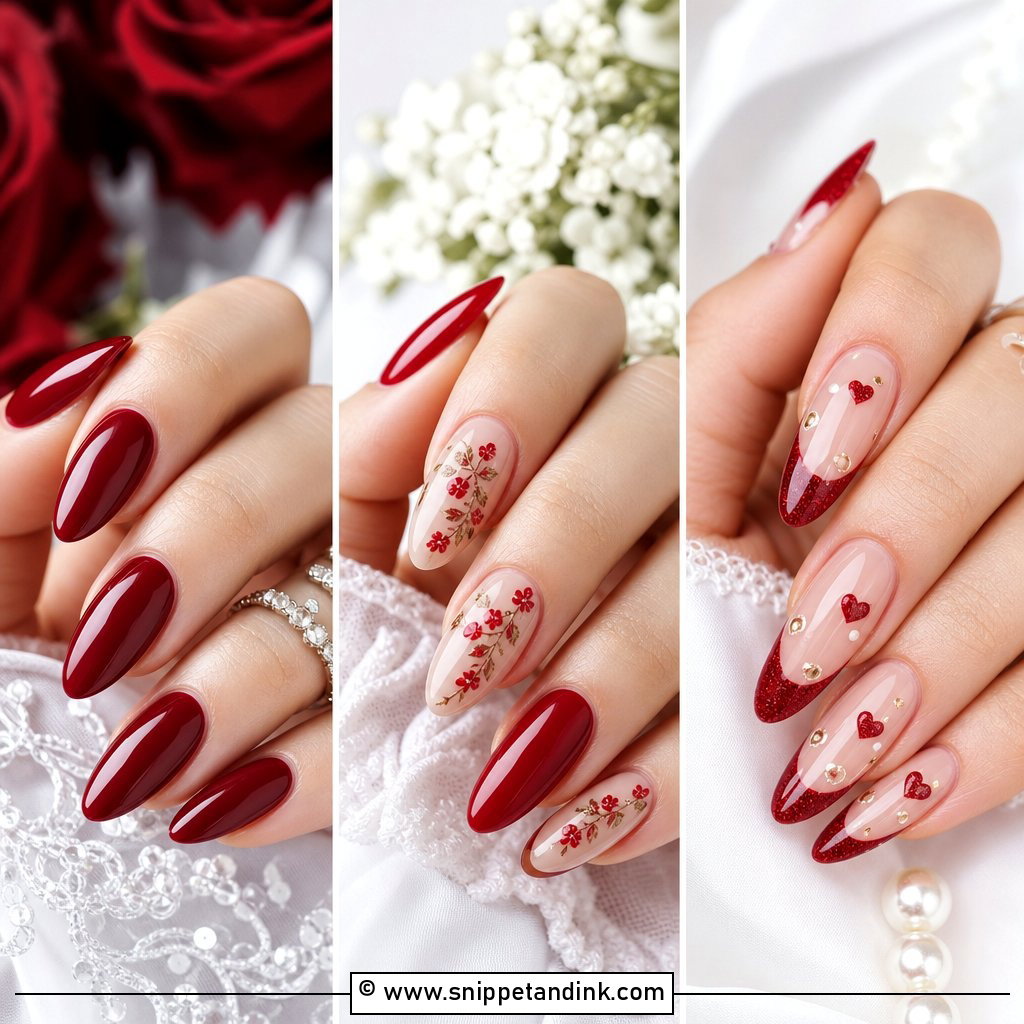
20. Diamond Accent Engagement Nails
Crystals near the ring need to look placed, not sprinkled. The base can be nude, blush, milky white, red or maroon depending on the outfit, with small stones around the cuticle, along a French line or in a tiny cluster on the ring fingers. I count how many stones go on each nail before I start, because overcrowding is the usual mistake. Solitaires, diamond sets, kundan and embellished sleeves all sit well beside it. Ask your artist for flat-back crystals sealed under gel so they last the ceremony.
Stones, Net Dupattas and the Ring Exchange
An engagement day asks a lot of a manicure. You will pin and re-pin a dupatta, hold a heavy lehenga skirt on stairs, accept gifts, and put a ring on someone else’s finger in front of a camera. Raised work that looks wonderful in a still photo can catch on net fabric and snag it within an hour.
When I plan a set with stones, I keep anything raised away from the free edge and the sides of the nail, because those are the parts that brush fabric. Flat-back crystals go near the cuticle or in the centre, sunk into builder gel so only the top facets show. Pointed-back chatons look sharper but sit higher, and I only use them on an accent nail that won’t touch the dupatta much.
Small things that save the day
- Run a fingertip over each nail at the end of the appointment. If it catches on your skin, it will catch on silk.
- Keep a small nail file and a few spare stones in your clutch. A tiny dab of nail glue holds a stone for the evening.
- For ring photos, slightly curved fingers show the nail shape better than a flat hand, and almond shapes look longest at that angle.
- Chrome and mirror finishes bounce flash. If your photographer works with on-camera flash, a gloss finish is the safer choice for close-ups.
Matching the Set to Your Fabric, Ring and Henna
Start with what is already on your hands on the day: the ring, the bangles and the mehndi. Red, maroon, gold and kundan read as traditional, while chrome, pearl, pastel and minimal sets feel more modern. When the outfit is heavily worked, a softer manicure keeps the hands from looking crowded. When the outfit is plain, glitter, foil or crystals can carry more of the festive feel. Plan length and shape around how you actually use your hands day to day, because you will be wearing this set long after the photos are taken.
You'll Like These Ideas:


Leave a Reply