
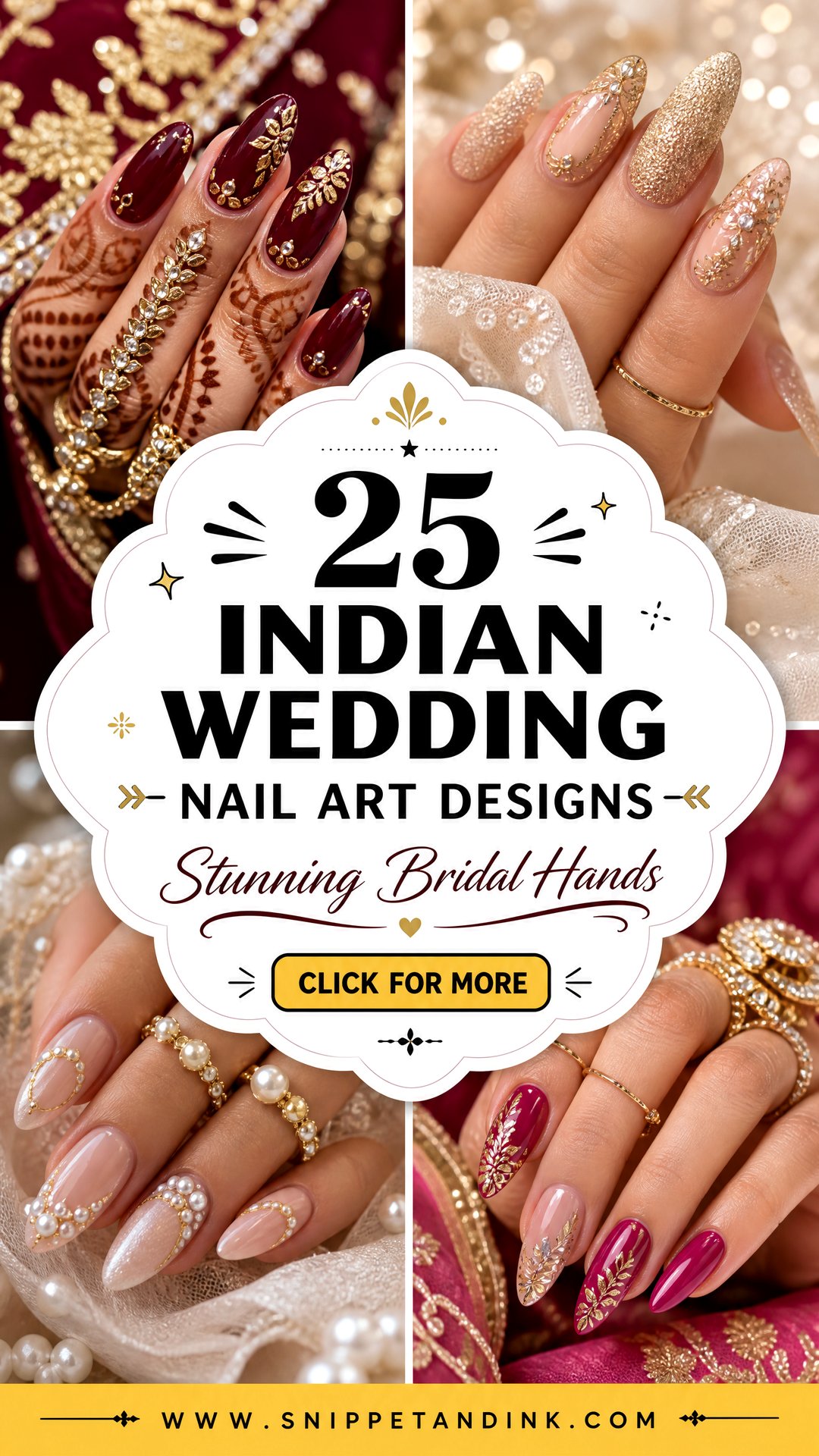
An Indian bridal manicure has more to work around than almost any other set I do. It sits next to heavy jewelry, a dense mehndi stain, embroidered fabric and several days of ceremonies, so the nails have to read as festive without competing with the lehenga, saree, sharara or anarkali. The palette I reach for most is rich red, deep maroon, champagne gold, pearl chrome, henna-inspired patterns, kundan details and skin-matched nudes that let the mehndi do the talking. Some brides want full stones and foil; others want a clean set that still holds up in ring shots, at haldi and on the reception stage. Below are 25 sets I’d happily put on a bride or a guest, from heavy traditional work to quiet short nails, with notes on which shapes and lengths each one needs.
Mehndi First or Nails First? Planning the Manicure Around a Week of Events
I always do the bridal set before the mehndi, never after. Nail prep involves filing around the cuticle, dehydrating the nail plate and wiping it with alcohol or a cleanser, and none of that is kind to a fresh henna stain. Gel also acts as a shield: henna paste that touches a gelled nail wipes off, whereas paste on a bare nail plate leaves an orange tint that won’t come out for weeks.
Because a gel manicure comfortably lasts two to three weeks, there’s no need to squeeze it into the night before. Most of my brides come in one to three days before the first function. That leaves time to fix a lifted corner, and it keeps the cuticles looking freshly done for the haldi and mehndi photos.
If you’re wearing more than one set
- Keep the base the same and change only the topper: a nude gel with pearl chrome for the mehndi, then foil and stones added on top before the wedding. Adding art over cured gel takes far less time than a full soak-off.
- Avoid soaking off and reapplying between events. Repeated acetone dries the skin and fades the henna stain around the fingertips.
- Haldi is the riskiest event for pale shades. If your main bridal set is white or milky, book it after the haldi or wear a darker, temporary set for it.
- Bring a photo of your outfit embroidery and your mehndi artist’s design to the appointment. I match metals and motifs from those, not from a screen.
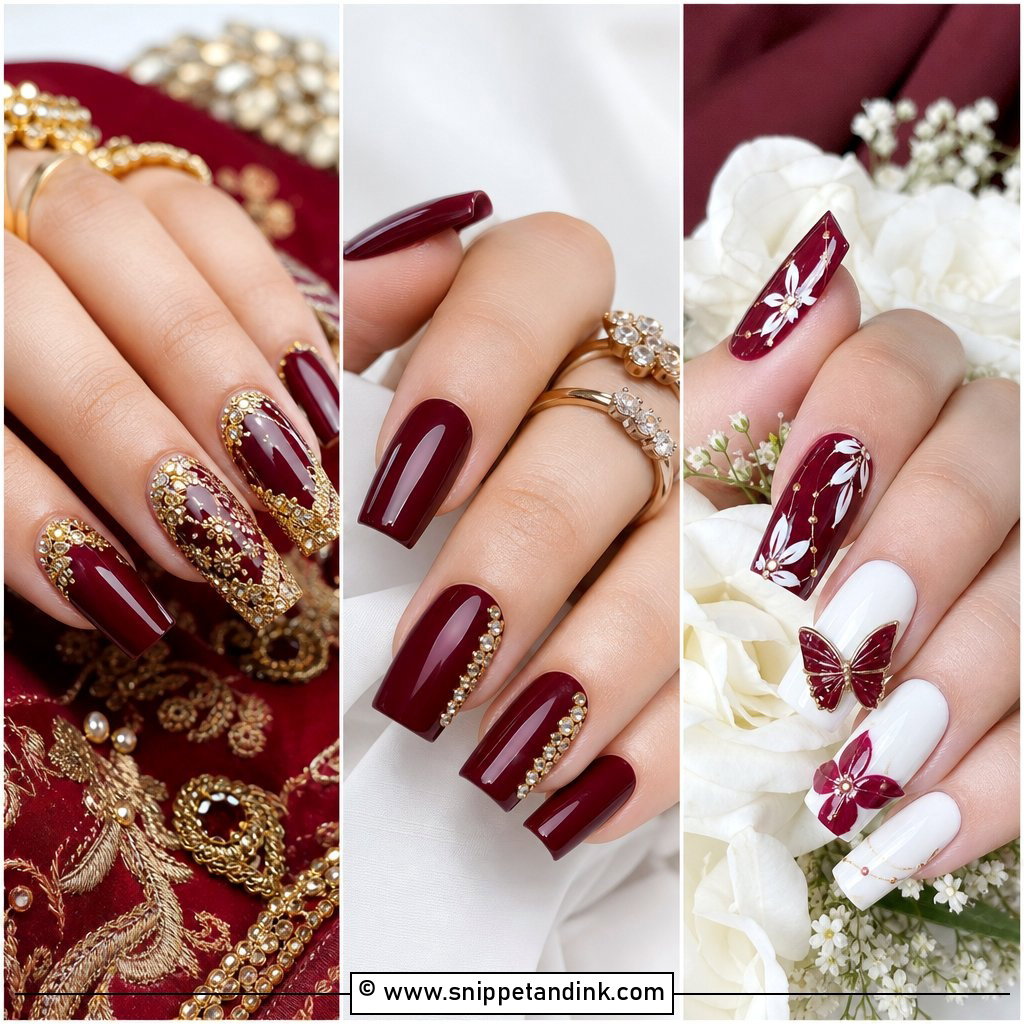
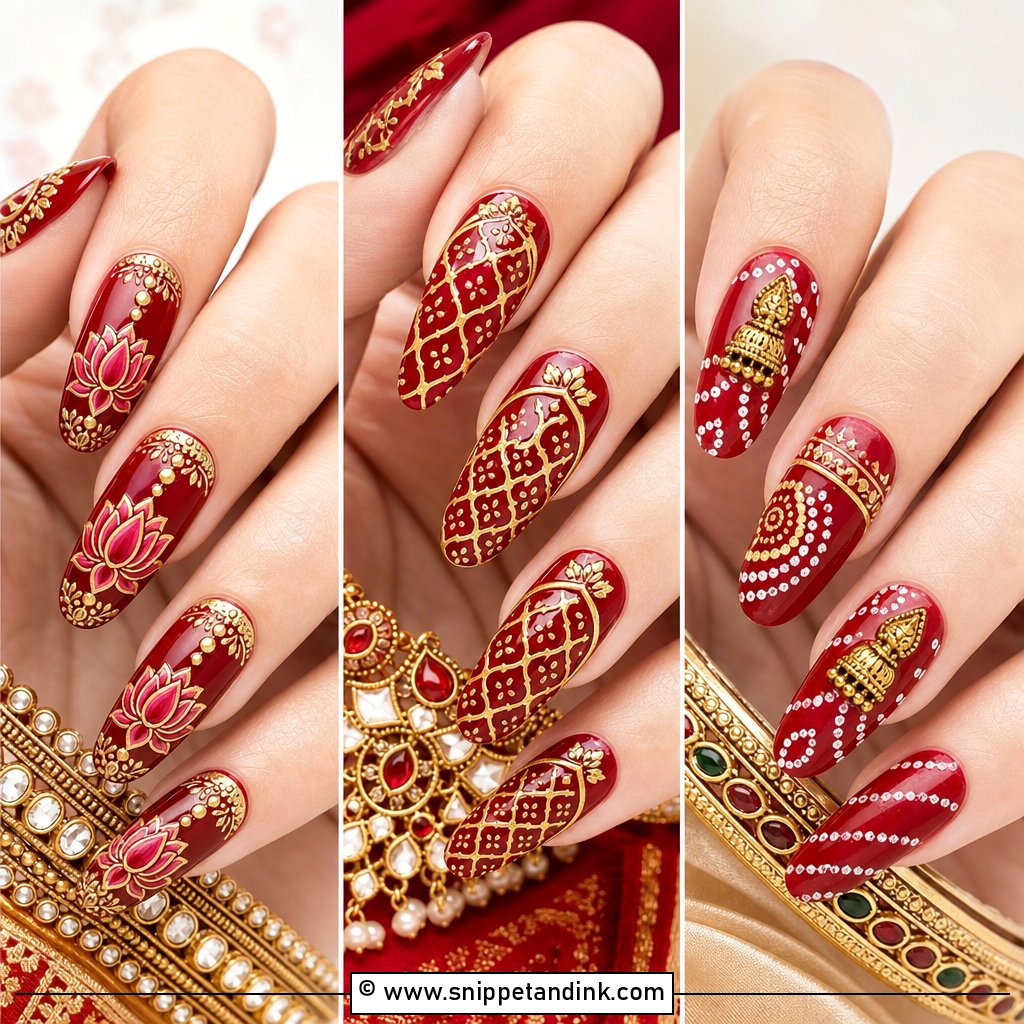
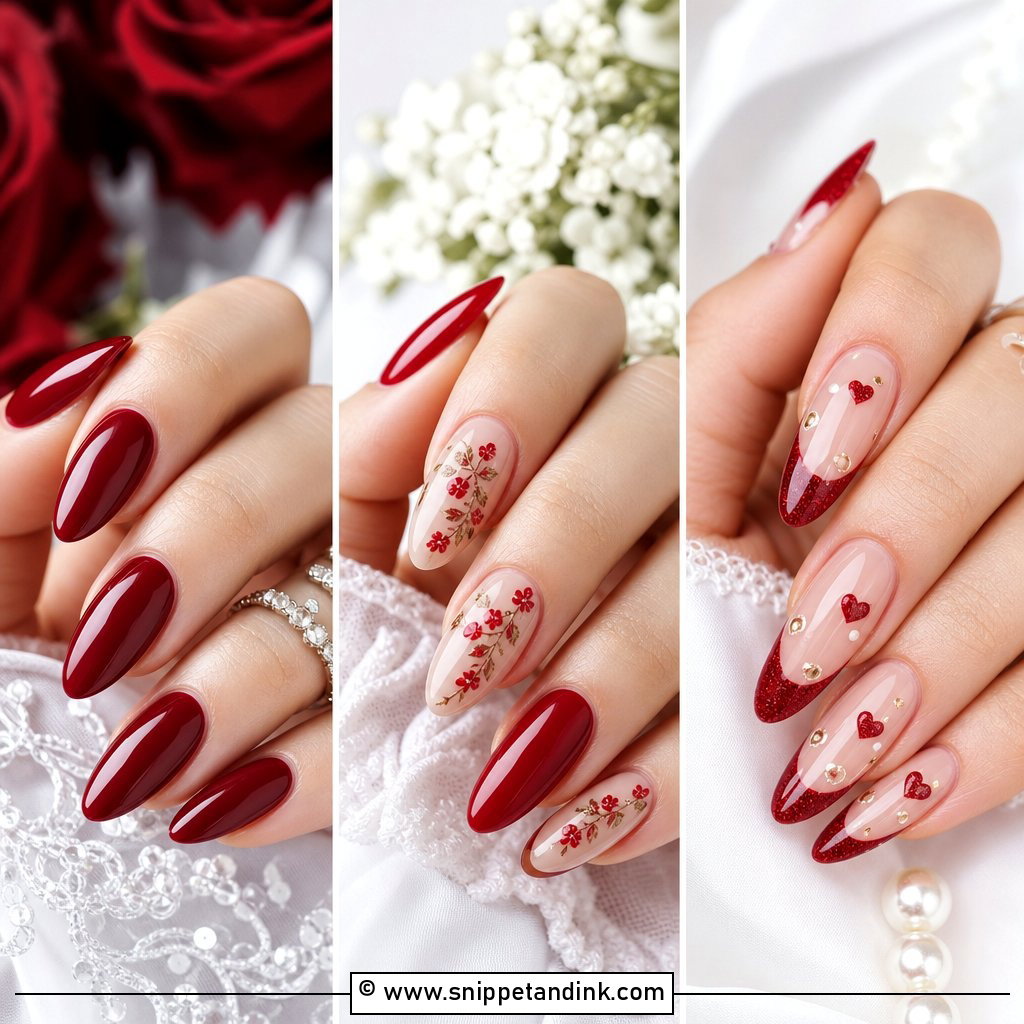
1. Red And Gold Indian Bridal Nails
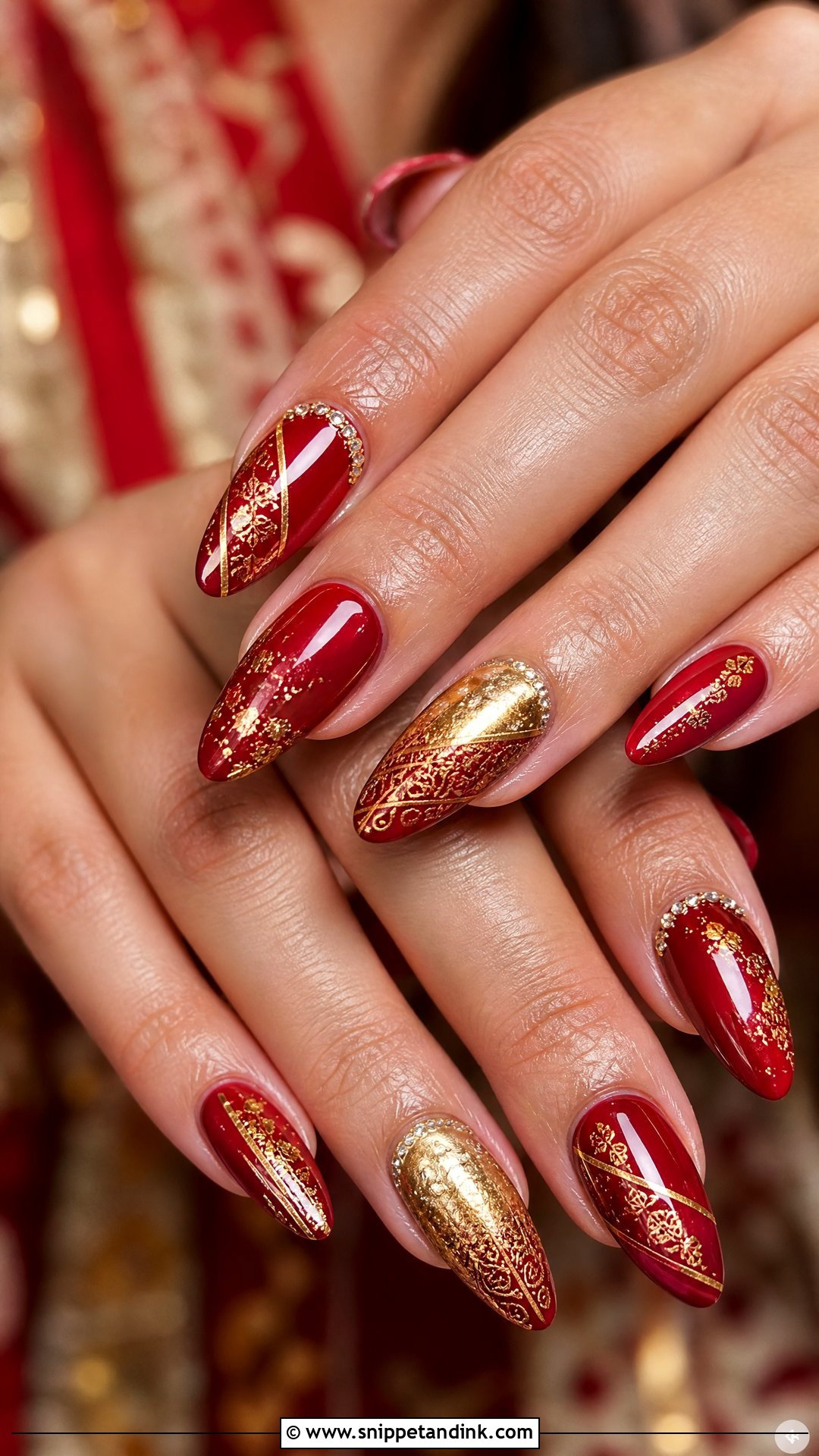
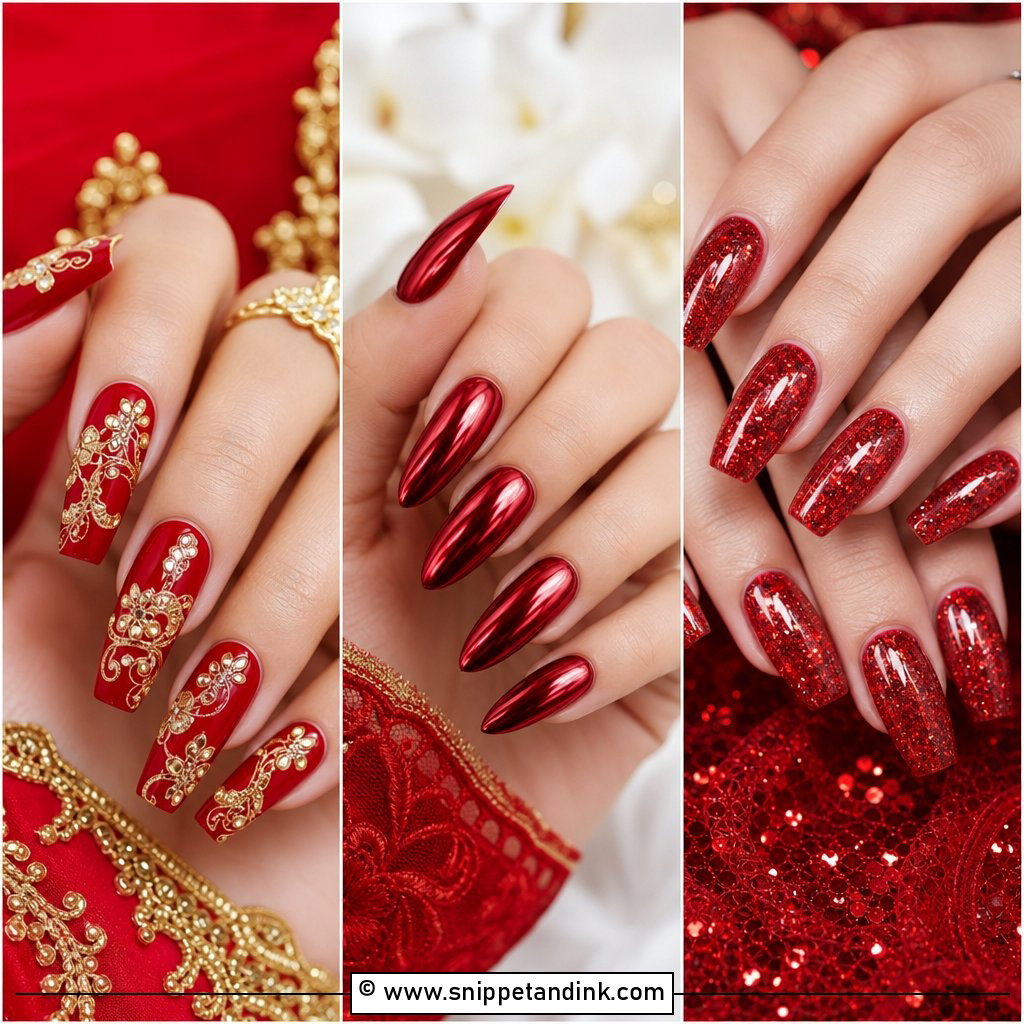
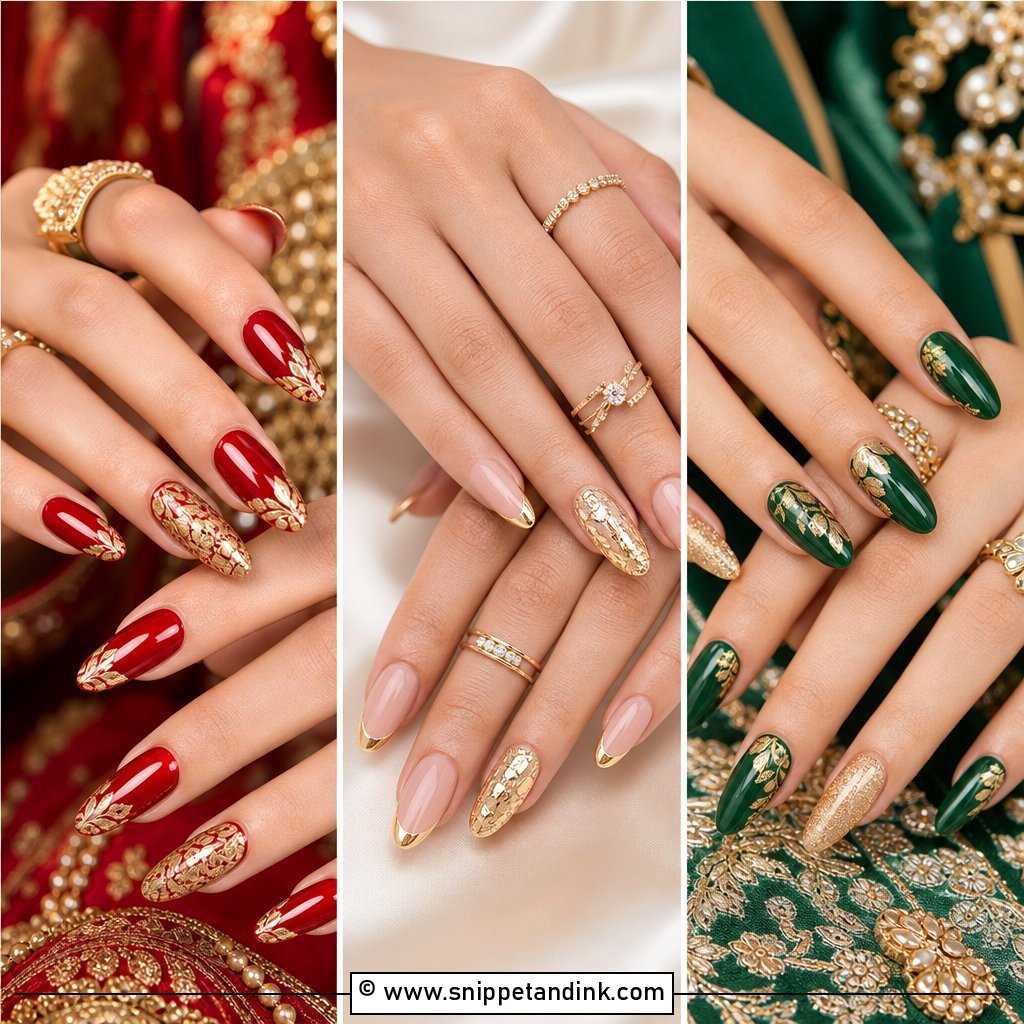
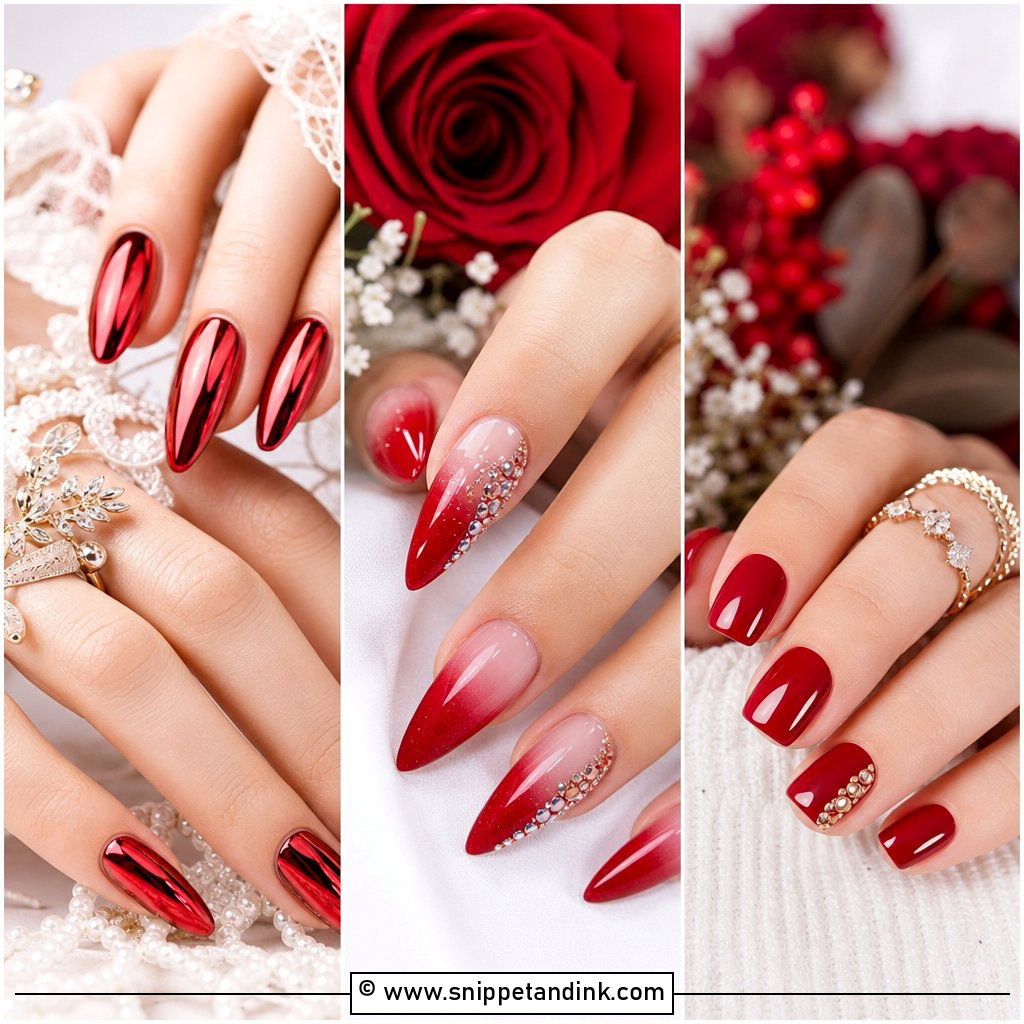
Red with gold is the set most families expect to see, and it earns that place. I lay a deep bridal red base, then add fine foil, thin zari-style lines or a few small crystals close to the cuticle. The mistake I see most is too much gold: once it covers more than about a third of the nail, the red disappears and the hand looks busy against a full mehndi stain. Almond and oval shapes soften the strong color. With heavily embroidered outfits I keep the gold to hairlines; with a plainer lehenga, one or two accent nails can carry a paisley or a small mandala.
2. Maroon Indian Wedding Nails
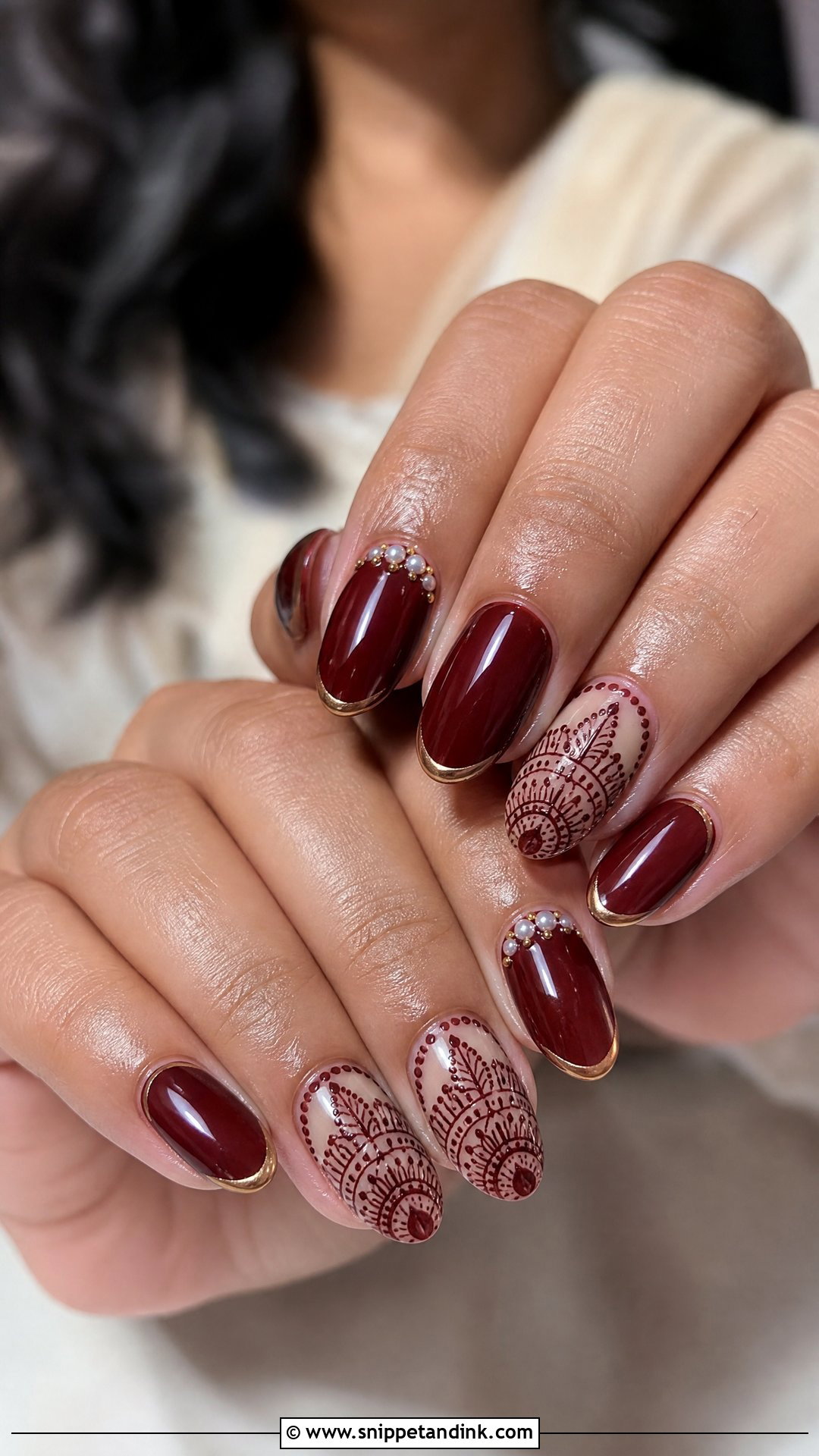
Maroon reads richer and a little more grown-up than bright red, and it hides chips far better, which matters across four or five events. I finish it with a gold chrome edge, a couple of tiny pearls or fine mehndi-style lines on one or two accent nails. It sits naturally next to velvet, wine-toned silk, antique gold and darker makeup. On short square nails maroon looks modern; on long almond it turns regal. Ask for a high-shine gel topcoat, because a dark shade shows every brush stroke and ridge in a close-up, and the gloss hides them.
3. Mehndi Inspired Bridal Nails
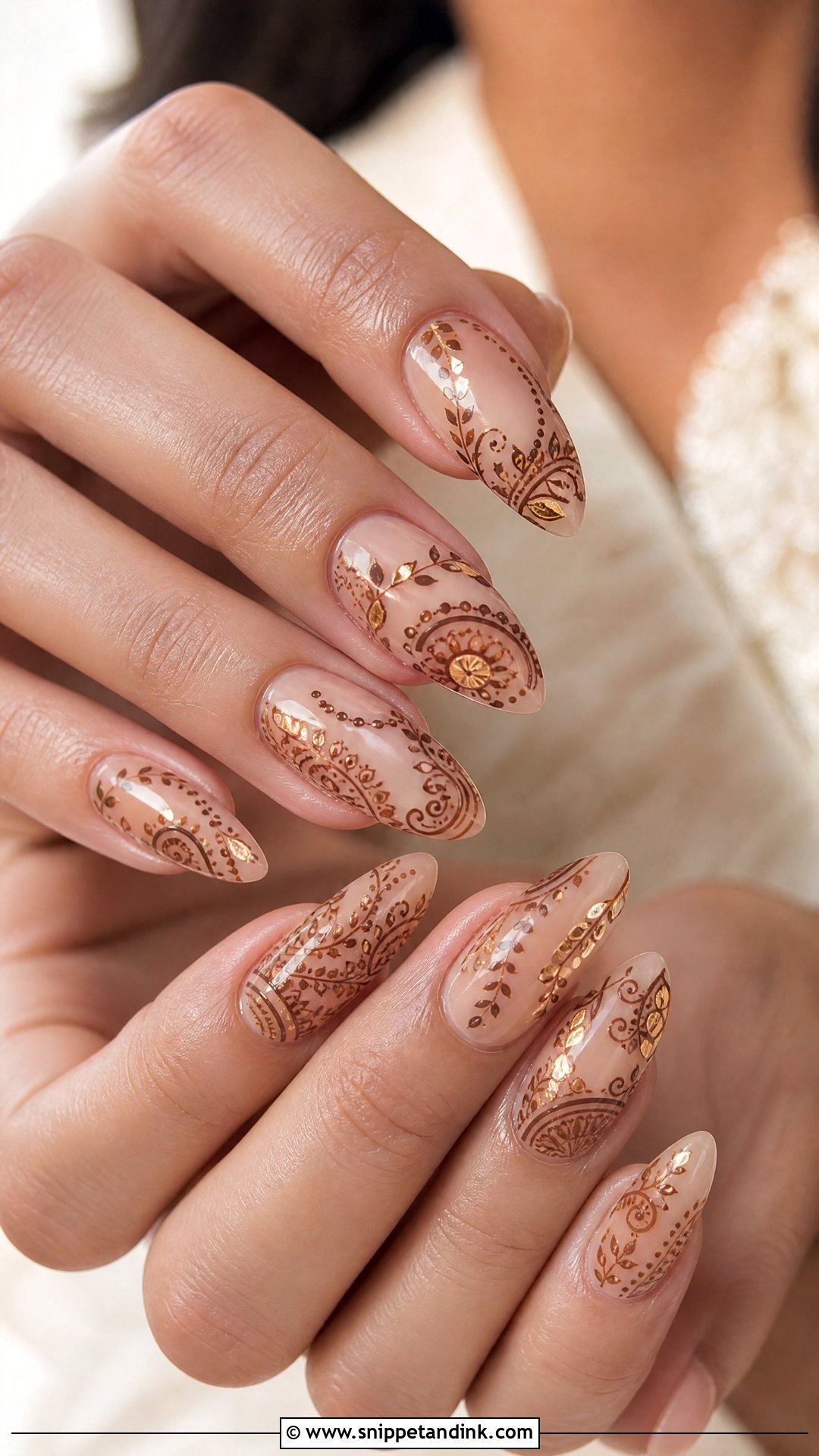
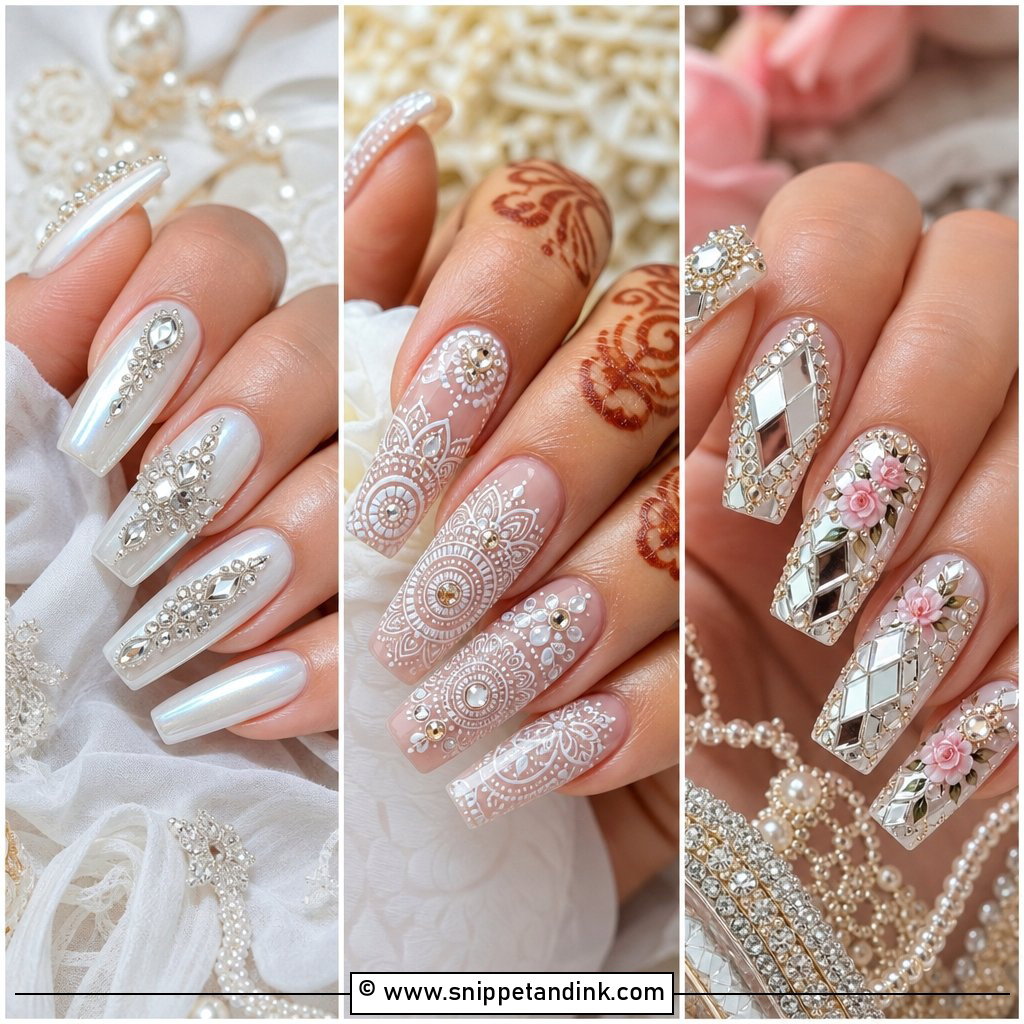
Here the manicure echoes the henna instead of competing with it. I start on a sheer nude, beige or blush base and work brown, white or gold fine lines over it: paisleys, dot rows, vines, small mandalas and lace curves. The trick that keeps it from looking like a sticker sheet is varying the placement on each nail while staying within one motif family. I’d ask to see your mehndi artist’s design first so the curves on the nails rhyme with the ones on your hands. Almond, coffin or oval nails give me enough room; on very short nails the line work turns into dots.
4. Gold Chrome Indian Wedding Nails
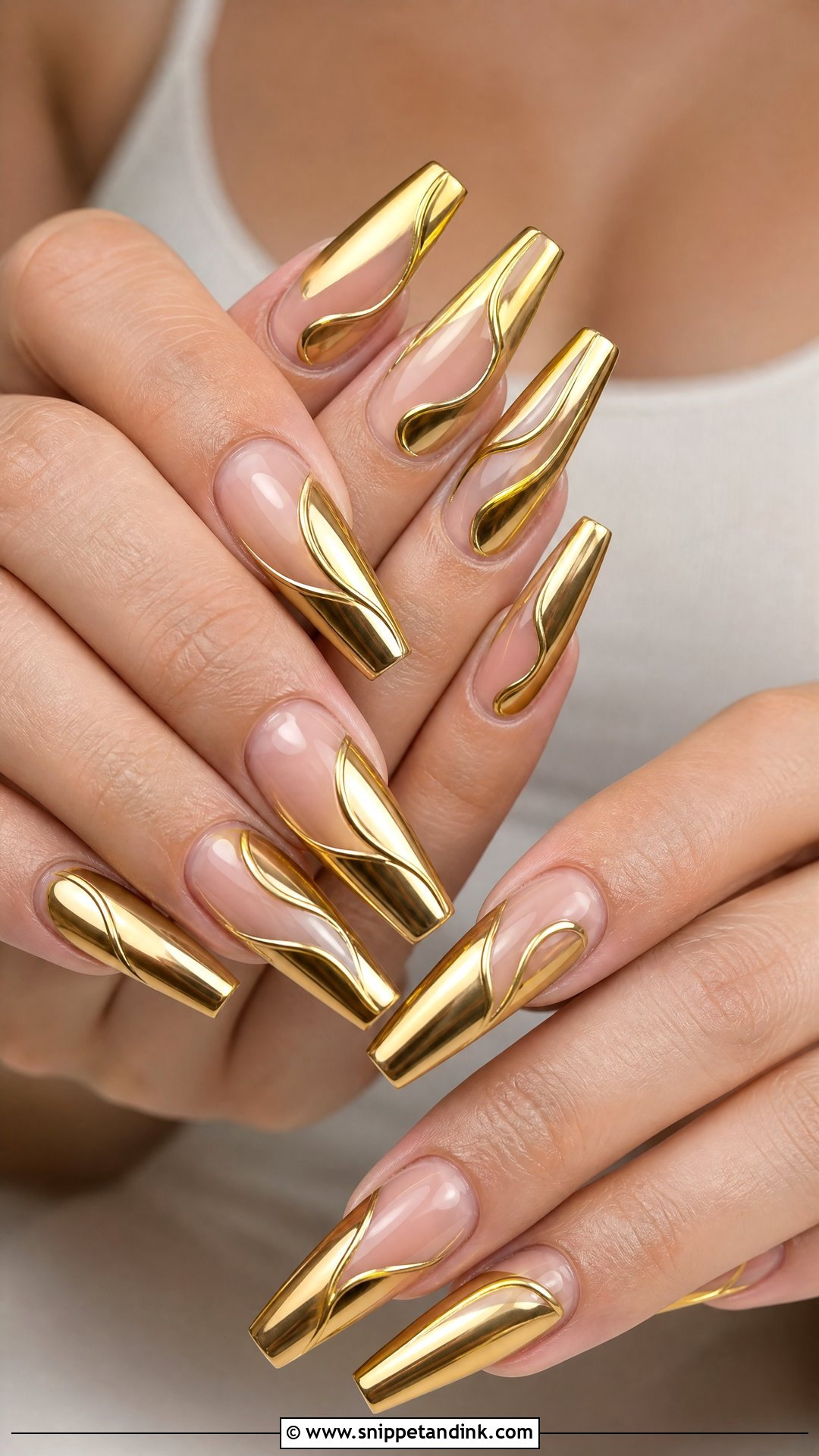
Chrome gives a smooth metallic glow that looks far more expensive under stage lights than loose glitter does. I can do it as a full gold chrome set, chrome French tips, or chrome swirls over nude. It suits gold lehengas, ivory outfits, champagne sarees and kundan sets. Yellow gold chrome can look brassy on some skin tones, so I often switch to a champagne powder, which reads warmer and softer. Chrome also highlights every bump on the nail, so the gel base has to be built perfectly smooth first, and I keep the shape sleek, almond or coffin, so the reflection runs cleanly down the length.
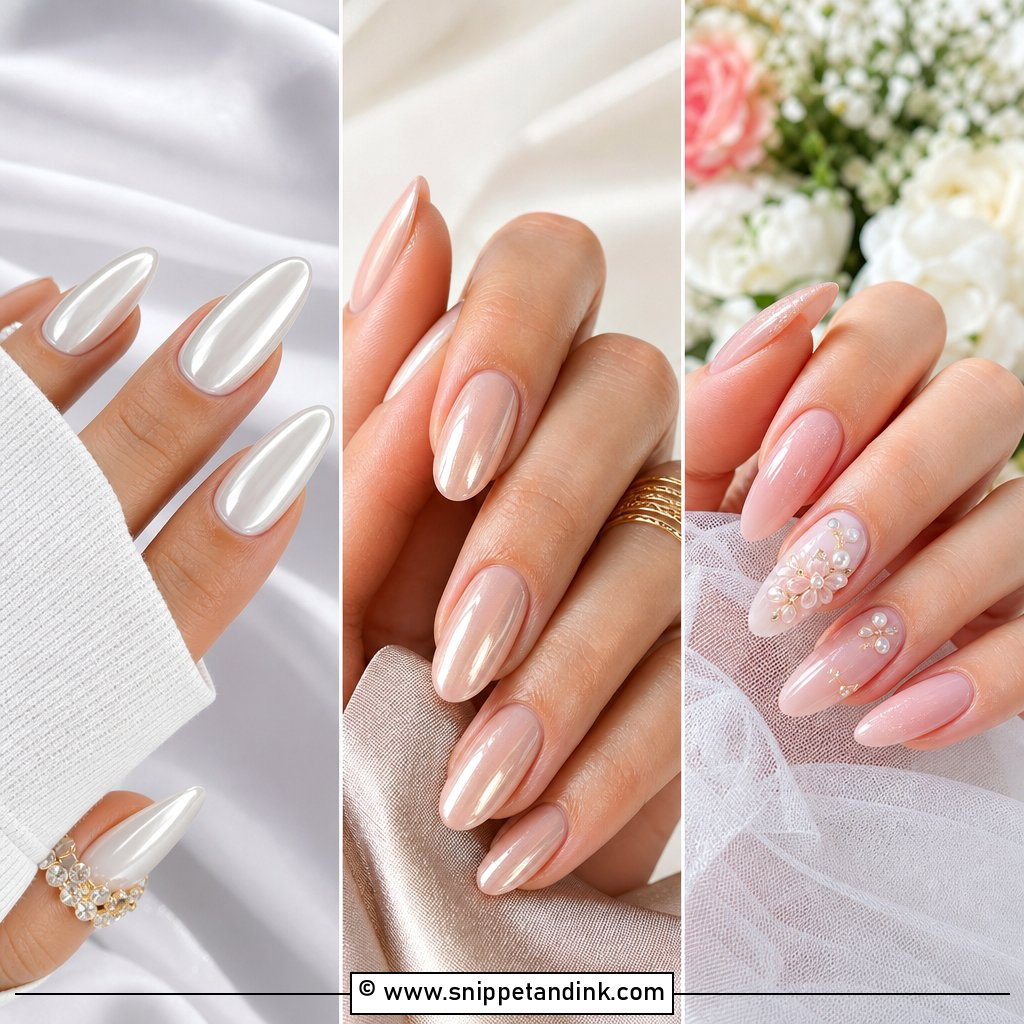
5. Pearl Chrome Bridal Nails
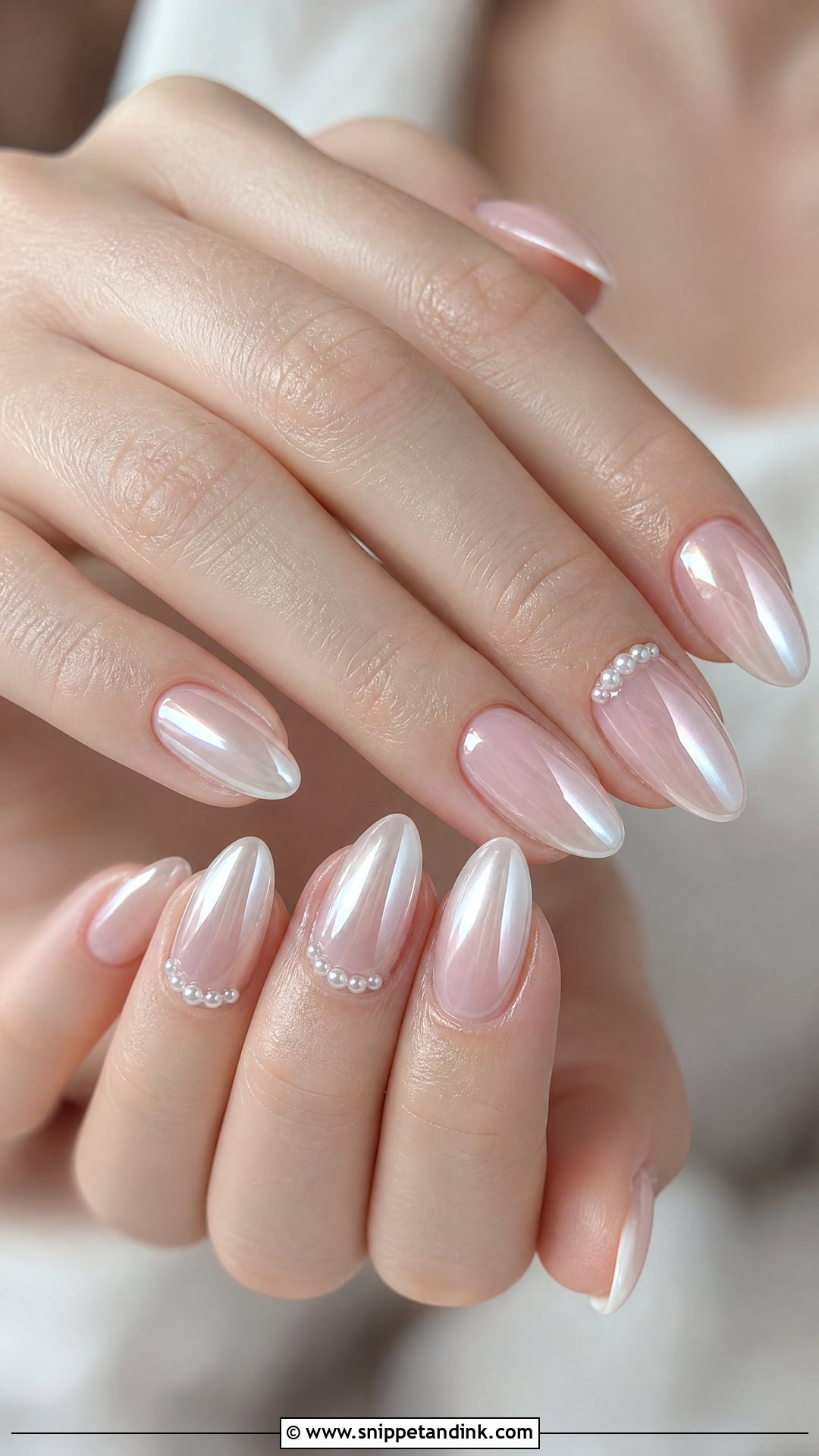
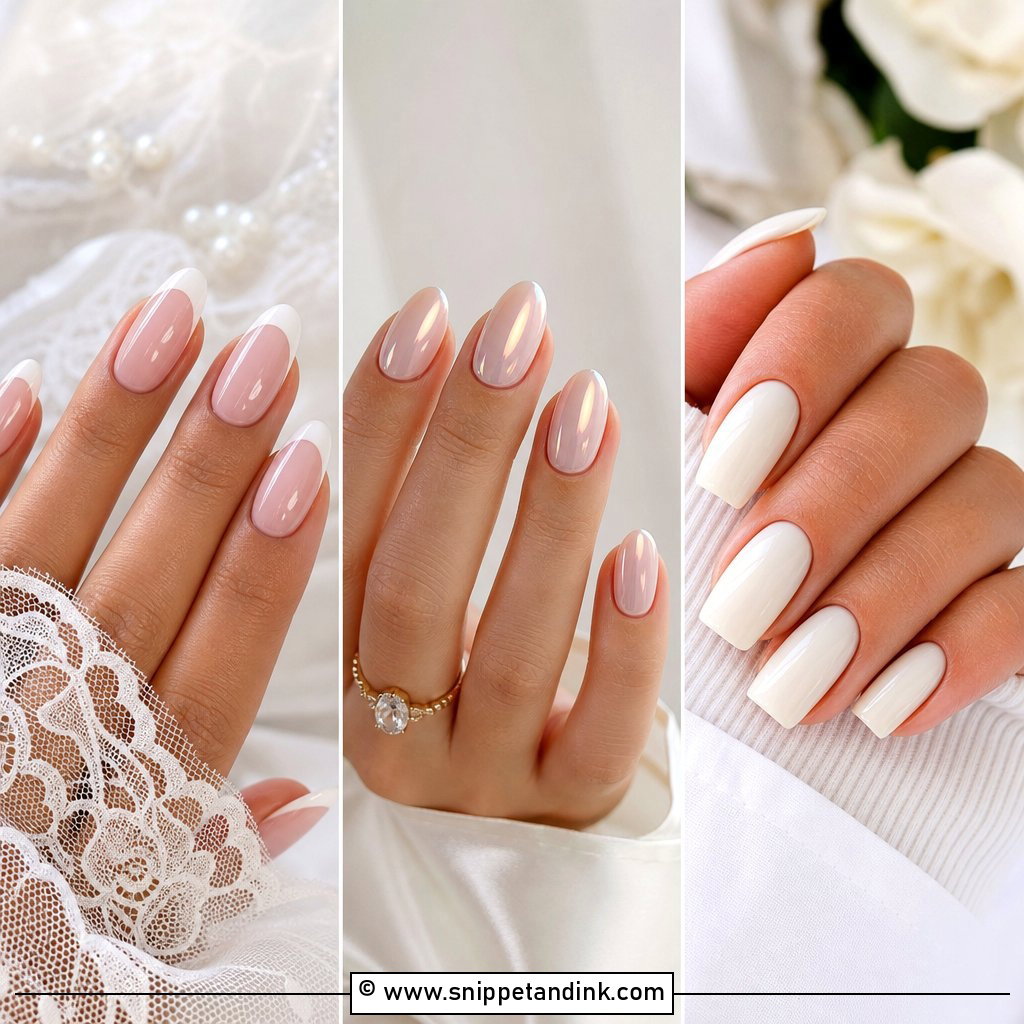
Pearl chrome is the set I recommend most when a bride wants one manicure to carry her through every event. A milky white, sheer pink or nude base gets a rub of pearl powder, and the result catches light quietly, which is exactly what ring photos need. It sits well with pastel lehengas, ivory sarees, blush outfits and a western reception gown. I sometimes add a few tiny pearls at the cuticle. The one caveat: over a very sheer base, pearl powder can look slightly grey on deeper skin, so I build the base a coat more opaque.
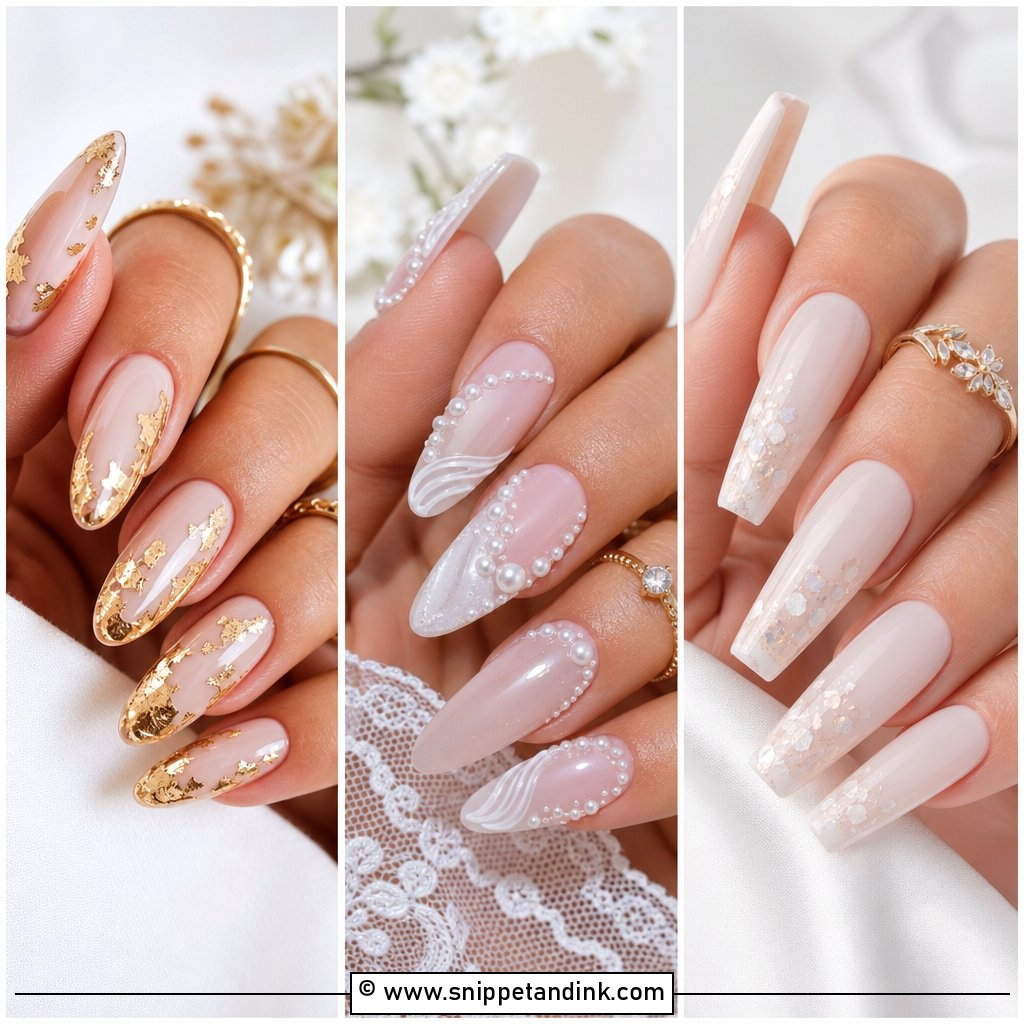
6. Nude Nails With Gold Foil
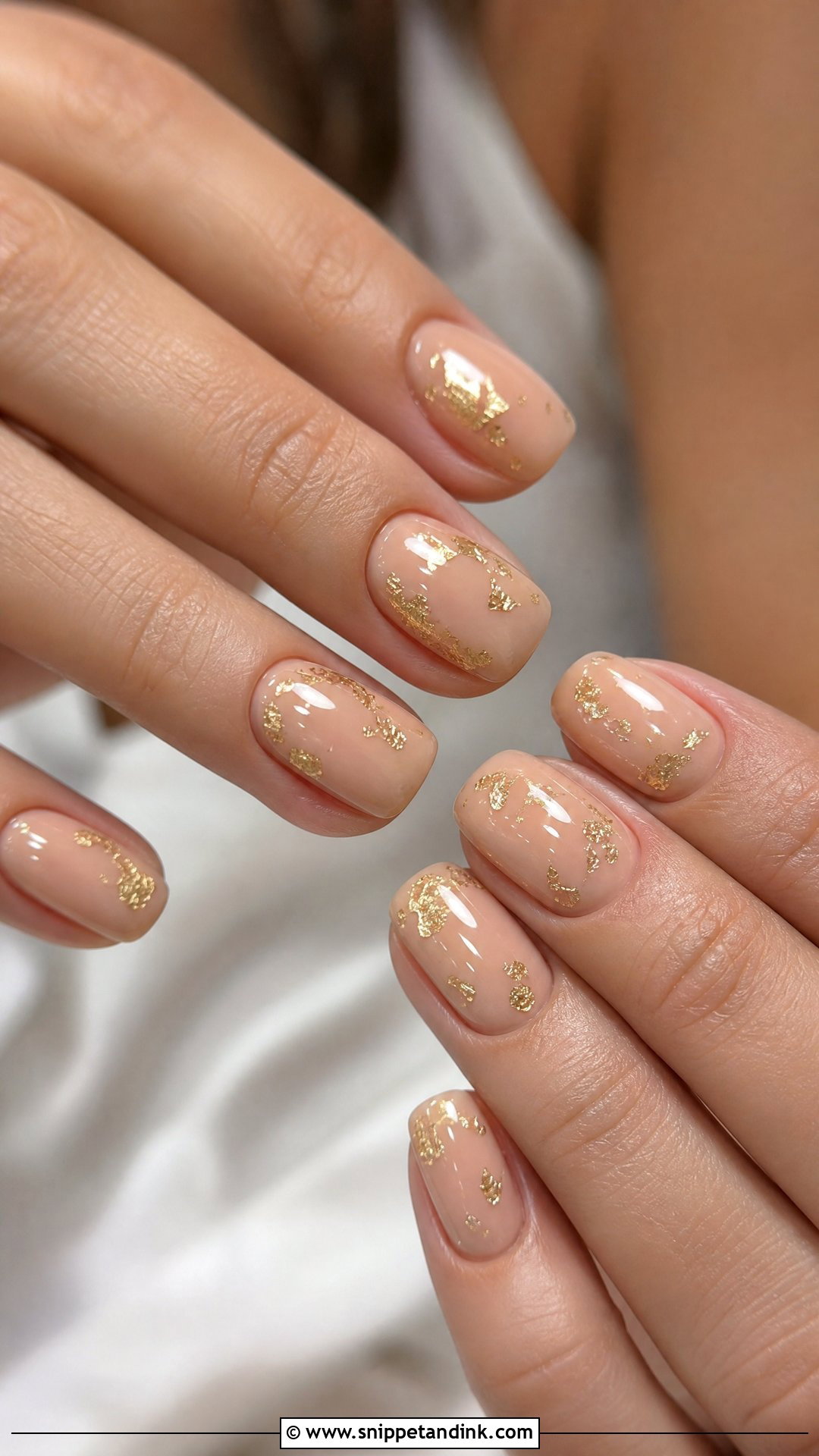
Nude with scattered gold foil is festive without being loud, which makes it as useful for guests as for brides. Getting the nude right is the whole job. Too pale a beige makes deeper hands look chalky, so I match it to the skin on the back of the hand: warm caramel on deeper tones, peachy or rosy beige on lighter ones. The foil can sit at the tips, run down one side or float lightly across the nail. Mirror work and gold embroidery pick it up nicely.
7. Red French Tip Indian Wedding Nails
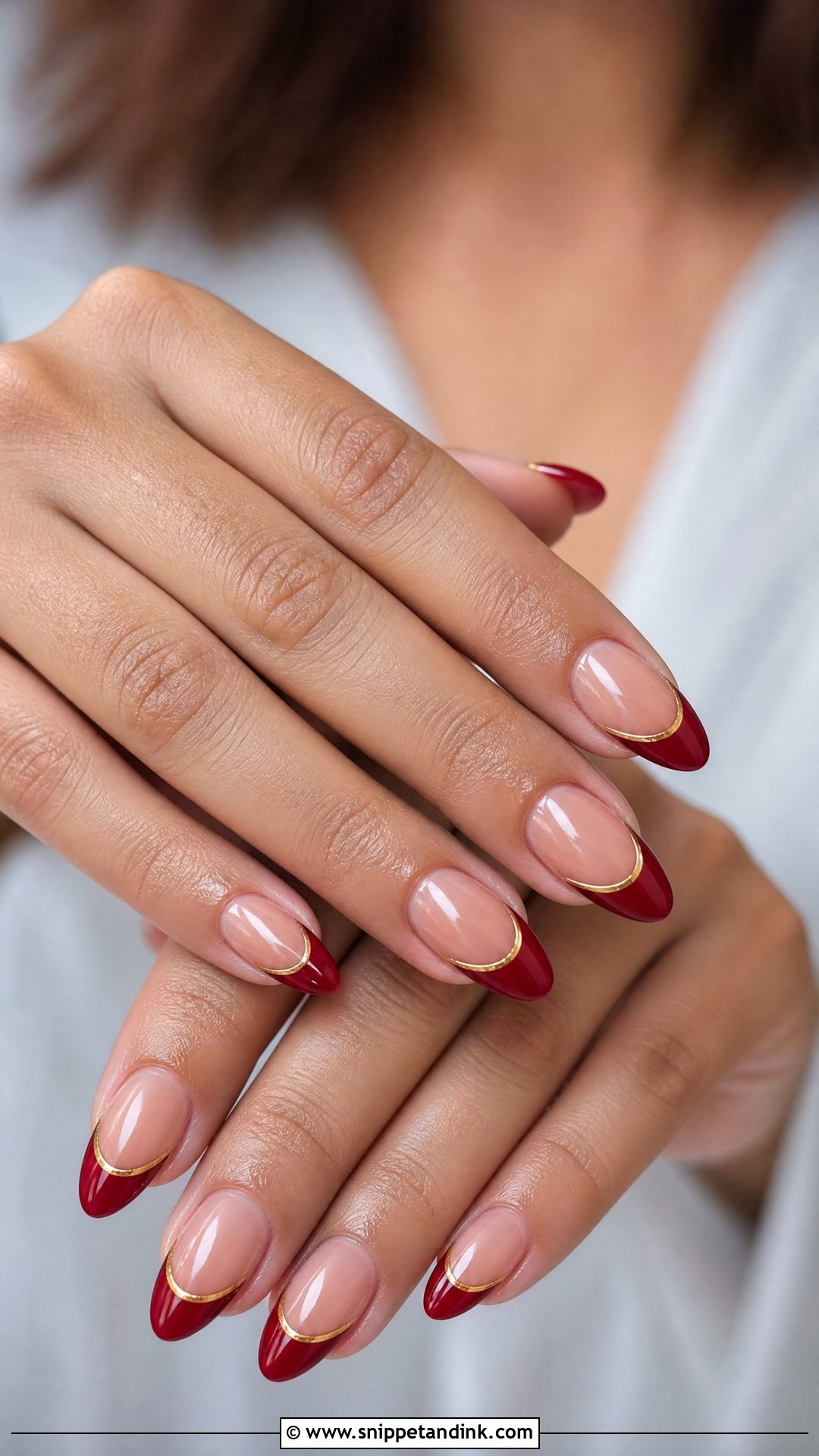
Red tips over a sheer nude or soft pink base give you bridal red with a cleaner, more modern outline. Depending on length I cut the tip classic, deep curved, V-shaped or micro-thin; micro tips are the only version that works on very short nails. A fine gold line under the red edge is what makes the set feel Indian-wedding rather than office French. It’s an easy set to repeat across sisters and bridesmaids too, since each person can take the tip depth that suits her length. Red tips do show growth less than a full red nail, which helps over a long wedding week.
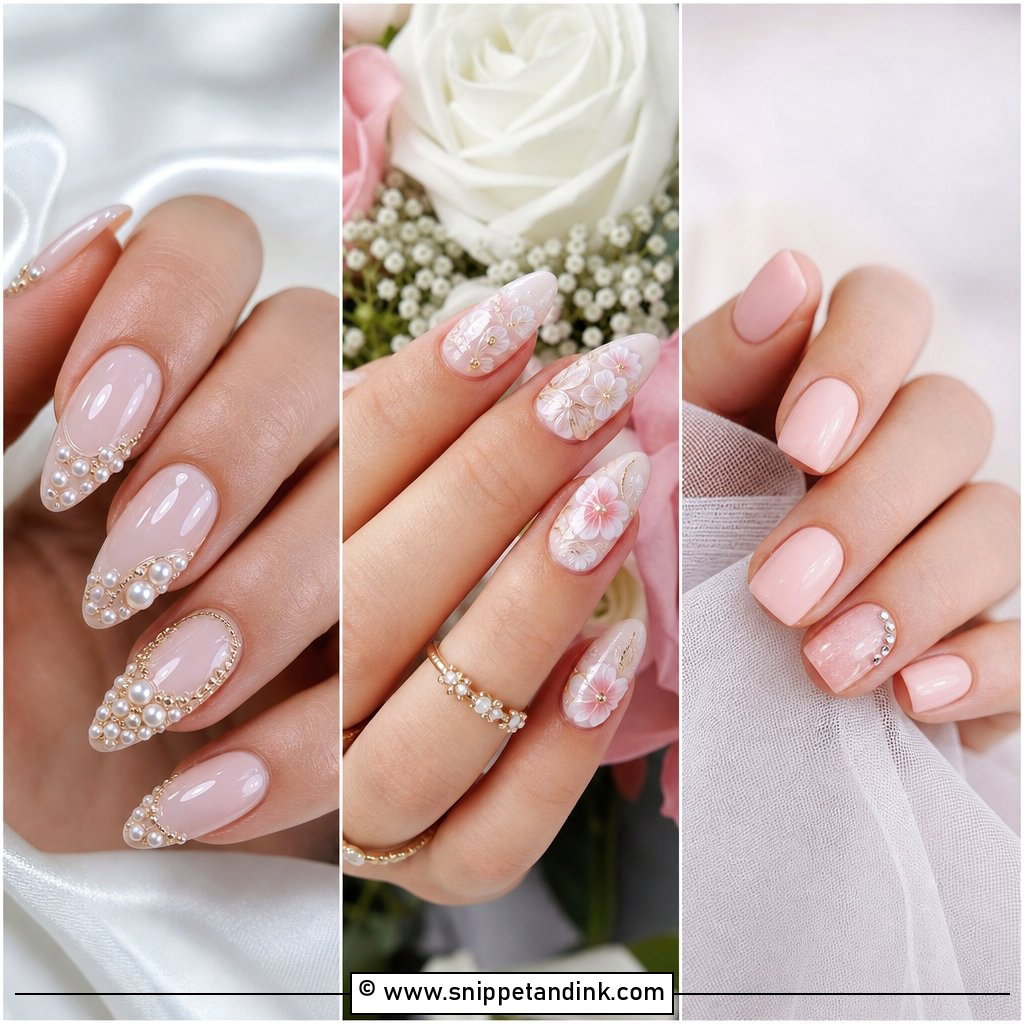
8. Kundan Bridal Nail Art
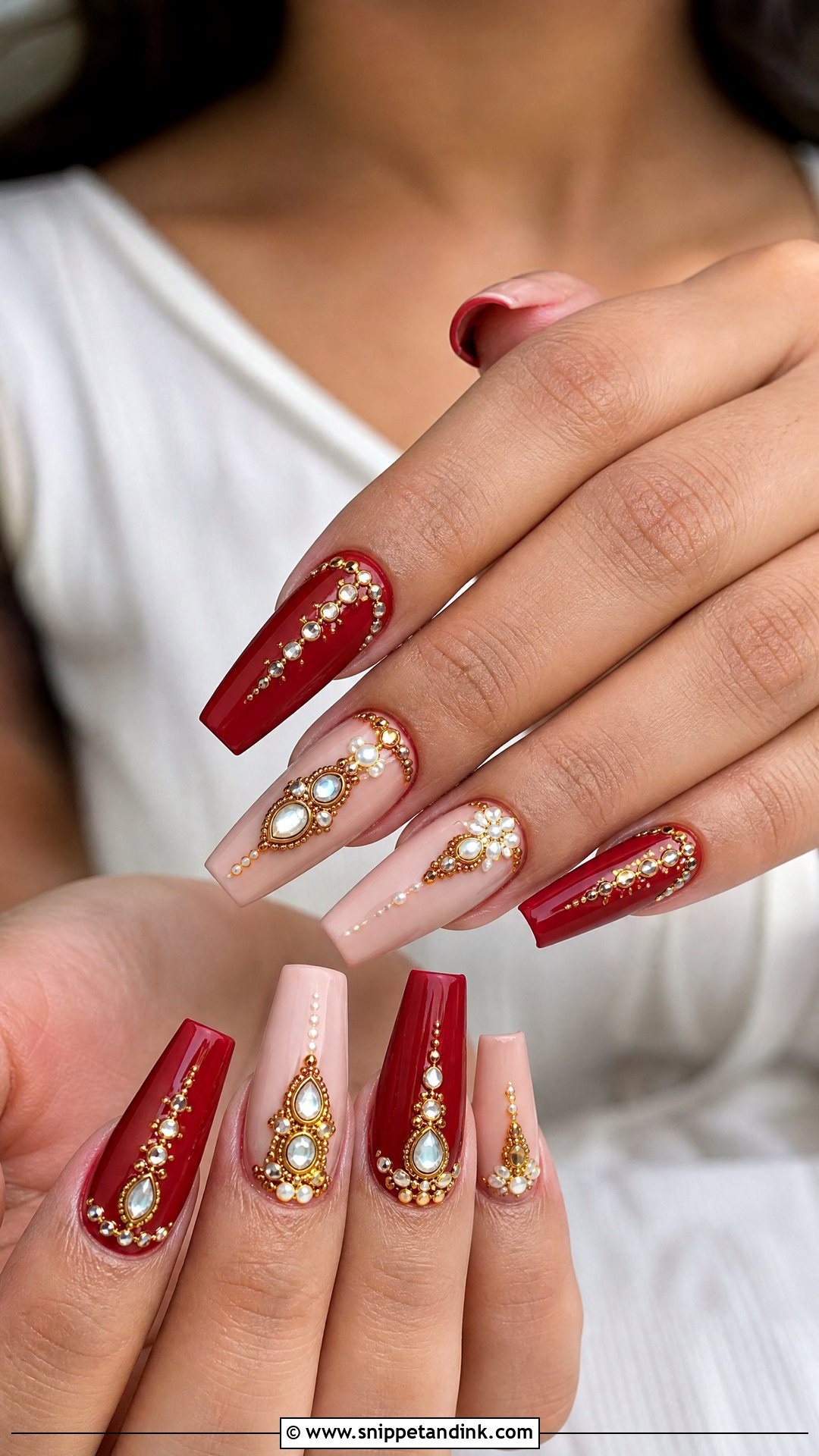
Kundan nails borrow from jewelry setting: small flat-backed stones, pearls, gold beads and crystals arranged the way a goldsmith would frame them. I keep the heavy work to one or two nails per hand, with the rest in red, nude, maroon or pearl chrome. Stones that stand too proud catch on dupatta netting and bangles, and pulled threads are a real risk on a heavy lehenga, so I sink them into builder gel and cap the edges. This needs gel extensions or a strong builder overlay underneath; regular polish will not hold the weight for more than a day.
9. White And Gold Indian Wedding Nails
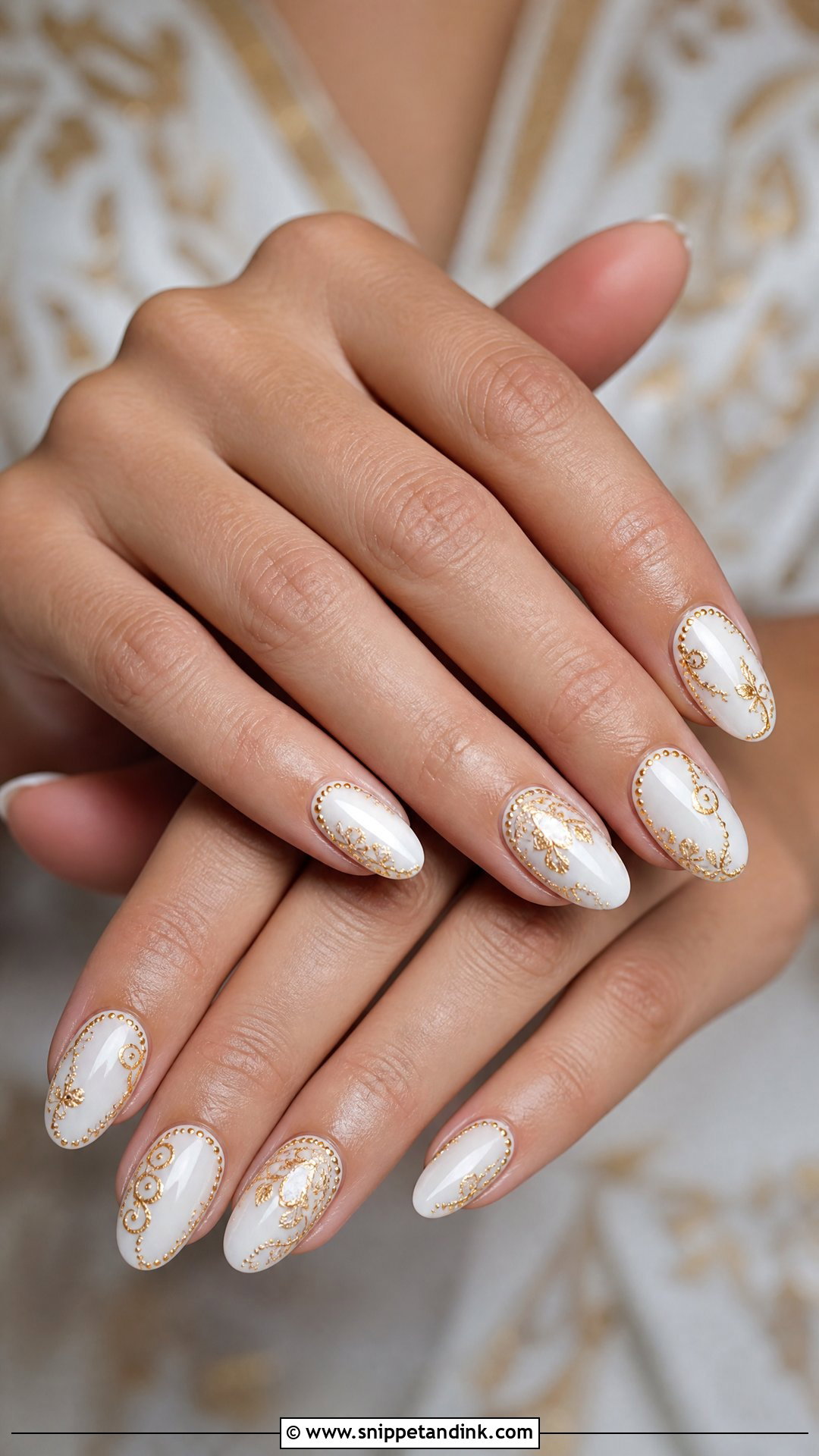
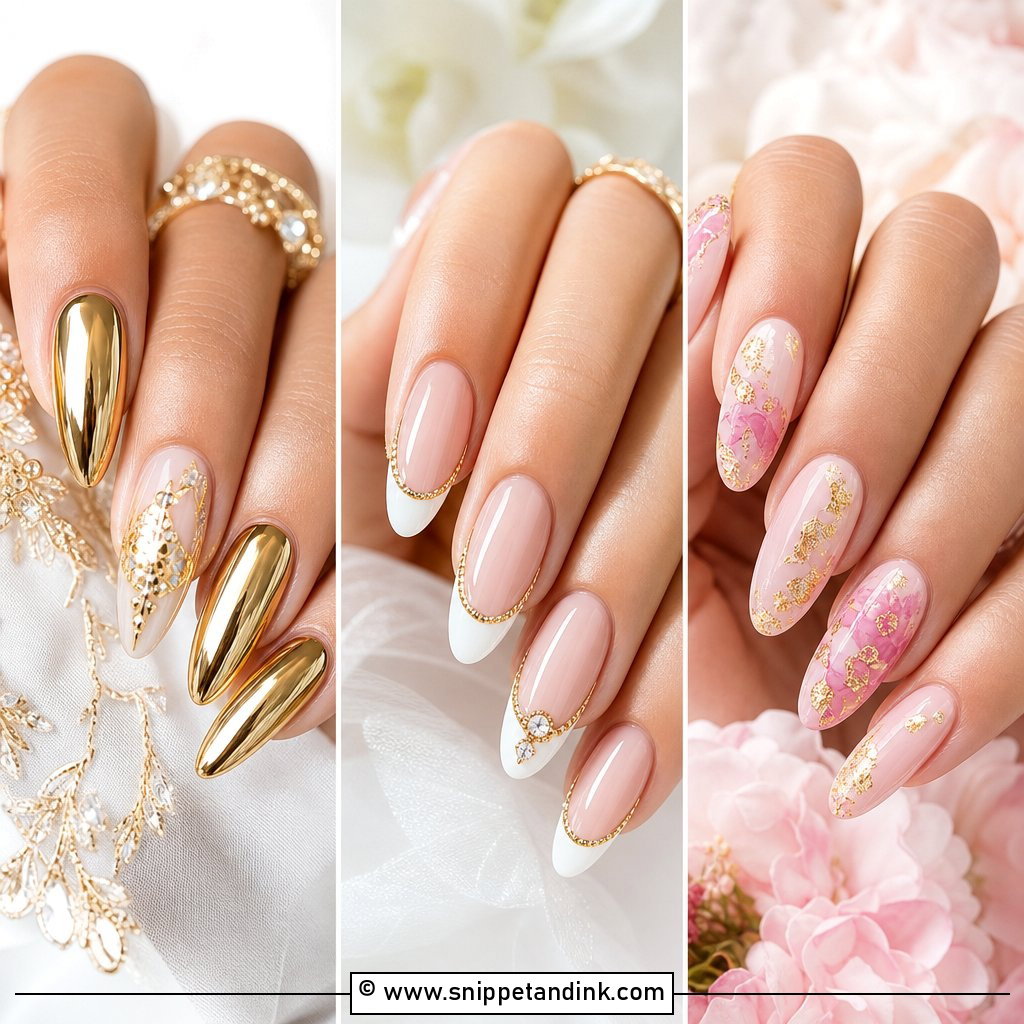
White and gold looks bright and clean, and it’s my first suggestion for ivory, cream, pastel or gold outfits. Thin gold swirls, foil flakes, French tips or tiny dotted borders all sit well on it. Against a dark henna stain, the white gives the strongest contrast of any set here, so the mehndi reads clearly in photos. Stark white can look harsh, so I usually mix a milky white that flatters more skin tones. One warning: light shades are the most likely to pick up a yellow tint from turmeric at haldi, so book this one after the haldi if you can.
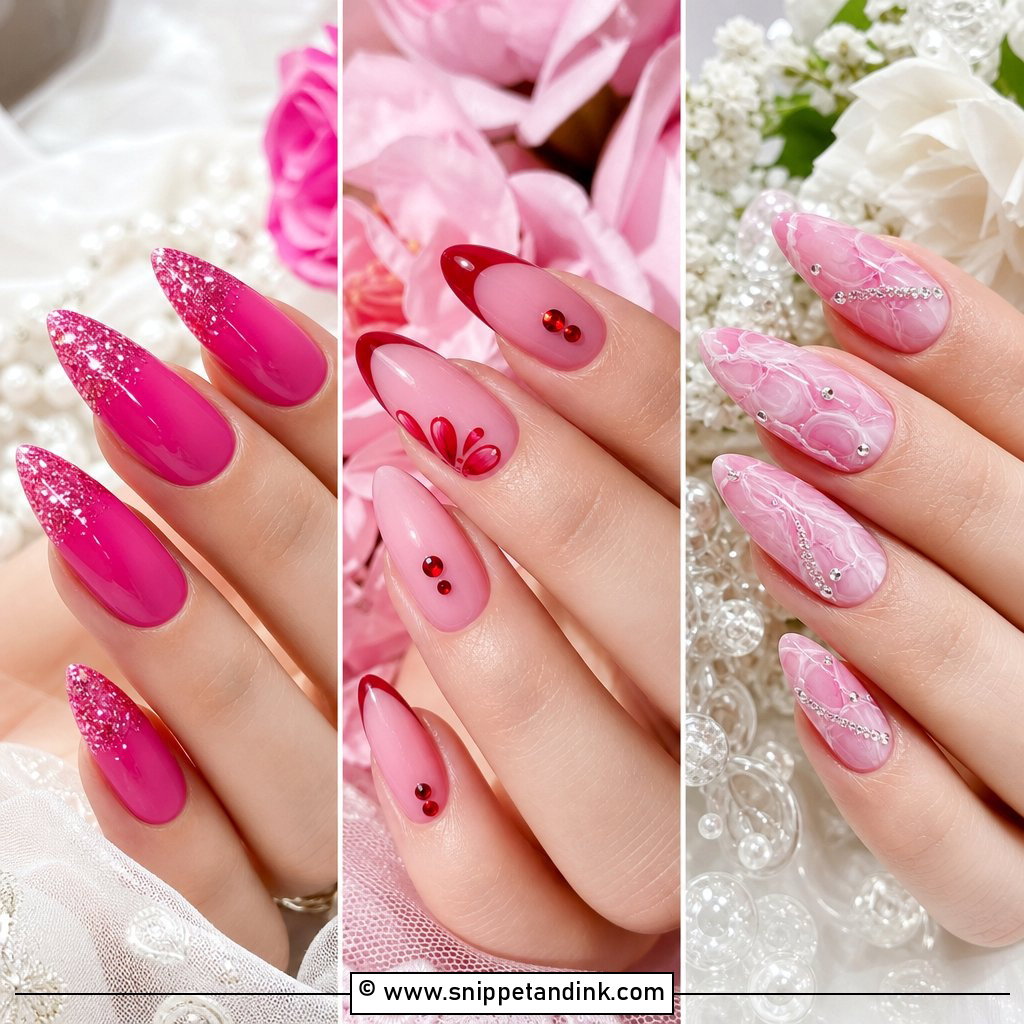
10. Pink Indian Wedding Nails
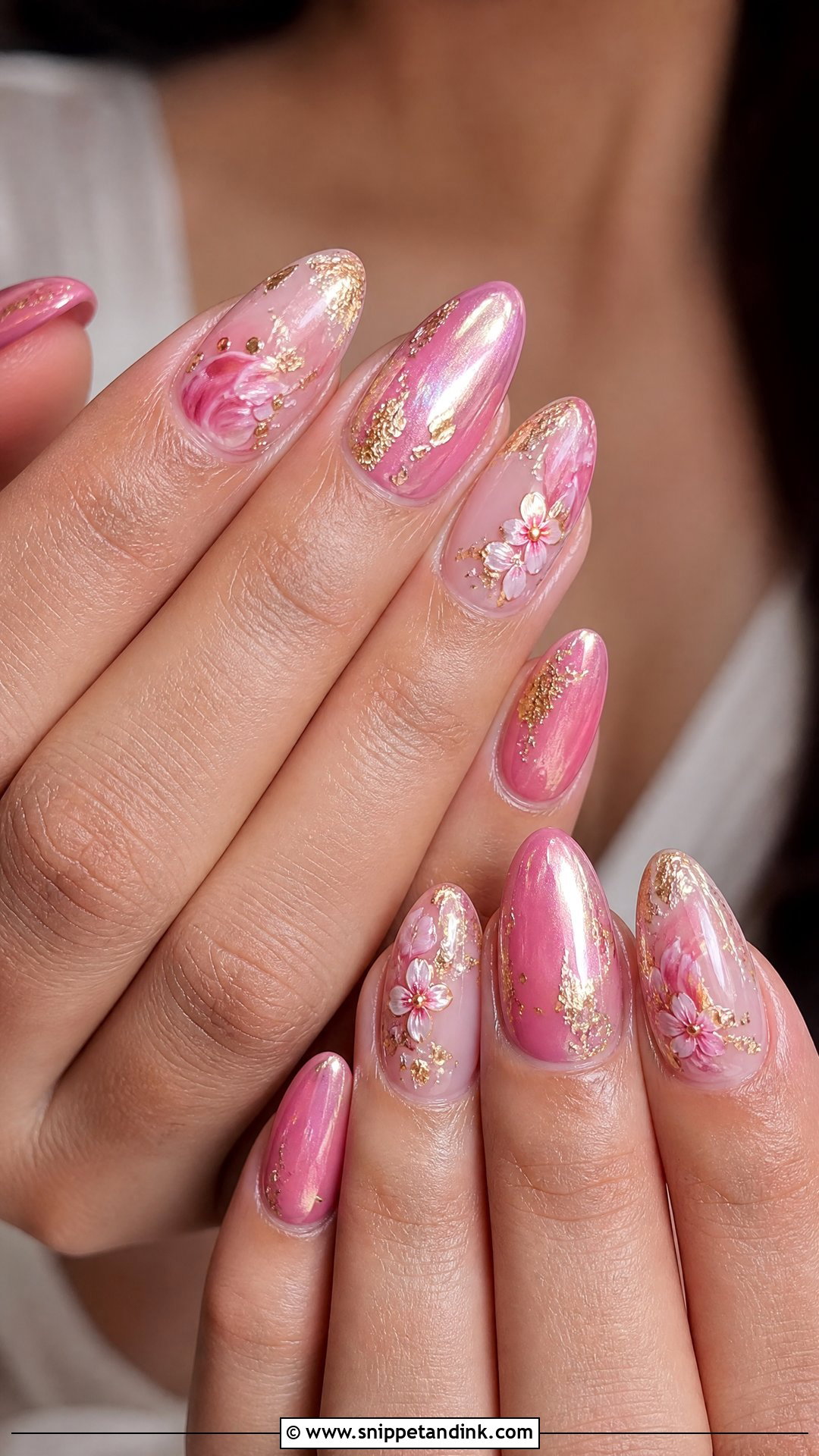
Pink Indian wedding nails cover a huge range, so I start by asking which event they’re for. Blush suits a daytime ceremony; rose, rani pink or magenta carries more energy at the sangeet and reception. Gold foil, pearl chrome, glitter tips or small florals finish the set. If you’re wearing pink yourself, don’t try to copy the exact fabric shade, because nail gel rarely matches dyed silk under different lights. Pick one tone from the outfit, often a deeper thread in the embroidery, and the hands look coordinated rather than matched.
11. Burgundy Bridal Nails With Gold Details
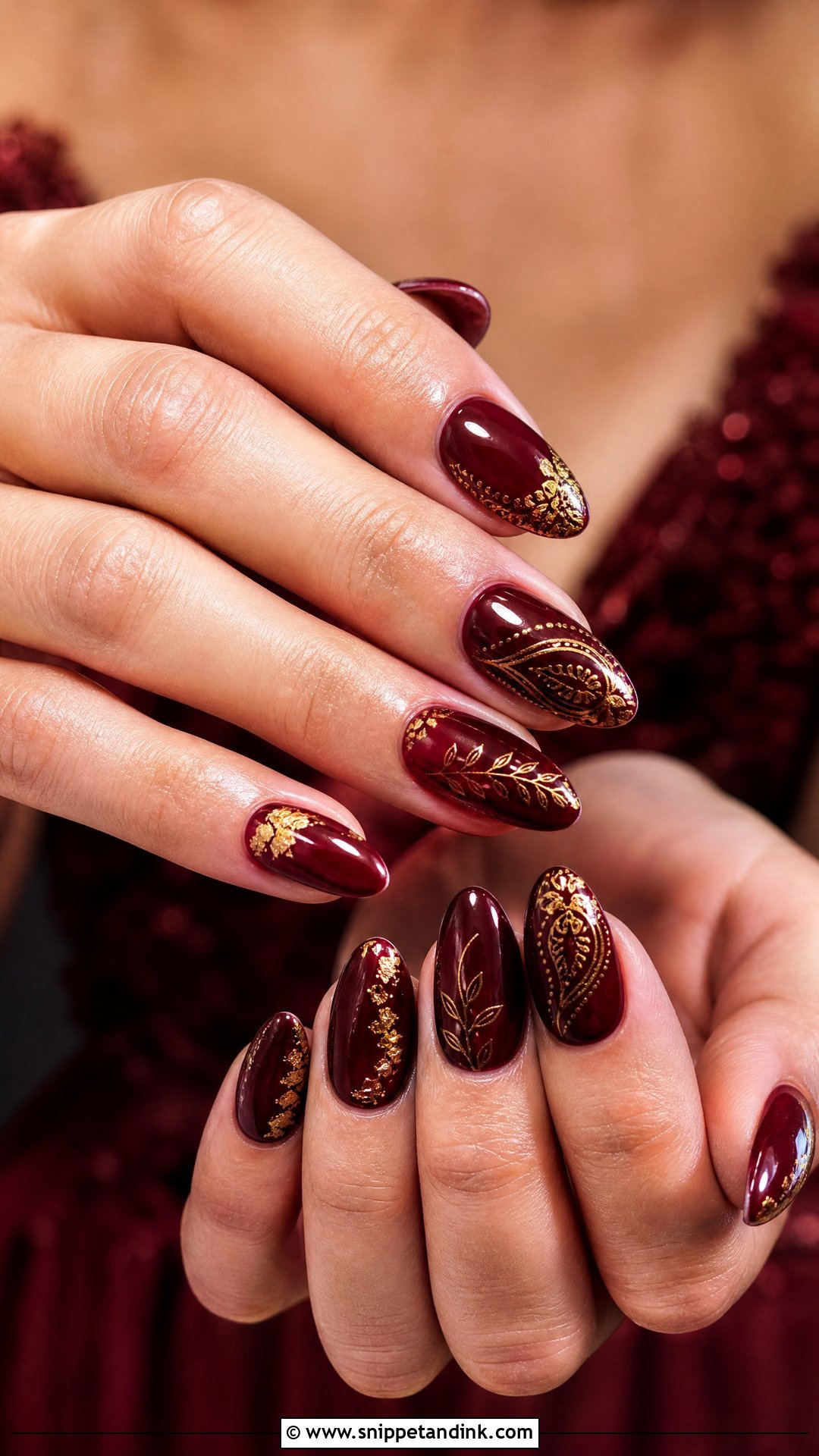
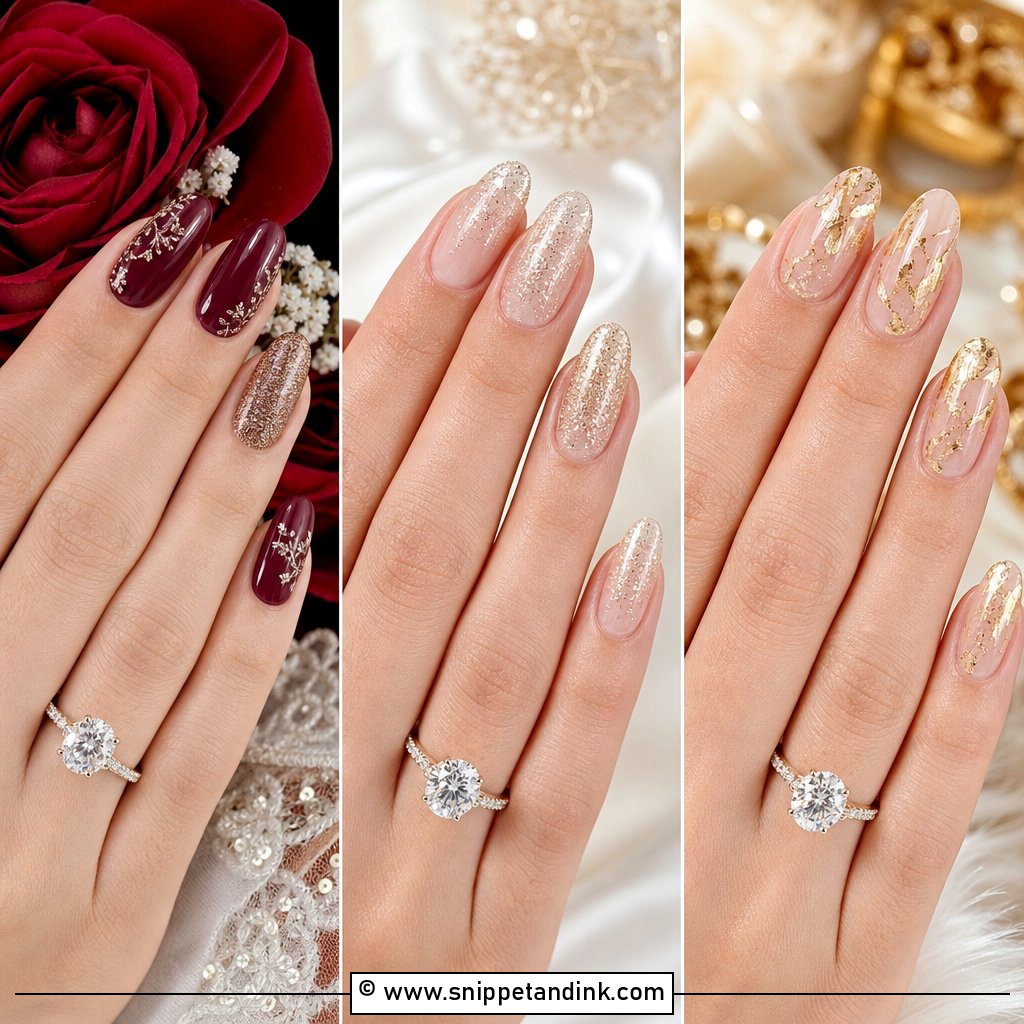
Burgundy is my evening and winter shade. The deep wine color looks dramatic under warm lighting, and gold lines or foil keep it traditional. It works with burgundy lehengas, antique gold and smoky eye makeup. I keep most nails glossy burgundy and save gold paisleys, leaf work or a glitter fade for the accent nails, on an almond or coffin shape. It also handles heavy mehndi well: the stain sits a shade lighter than the polish, so the nails still read as a separate element instead of disappearing into the henna.
12. Champagne Glitter Wedding Nails
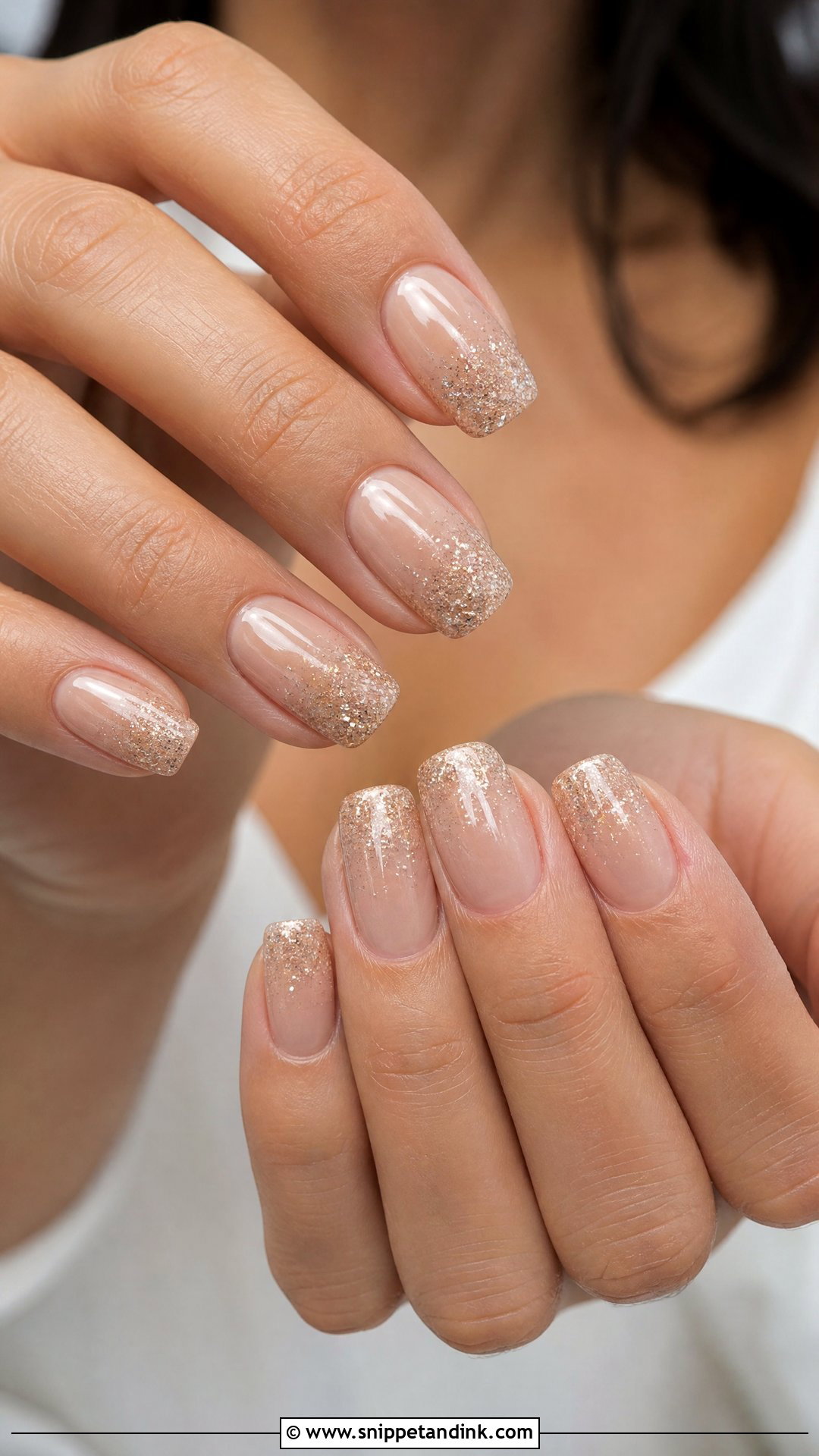
Champagne glitter is sparkle that doesn’t shout. The gold-beige tone sits easily next to ivory, beige, blush and pastel, so I use it for brides, bridesmaids and guests alike. You can wear it full, as an ombre at the tips, or fading out from the cuticle over nude. I always use fine glitter: chunky pieces leave a bumpy surface that catches on fabric and needs a thick topcoat to bury. On short nails shimmer adds interest without length. Finish with plenty of glossy topcoat, since glitter under a thin coat looks dull in flash photography.
13. Almond Indian Bridal Nails
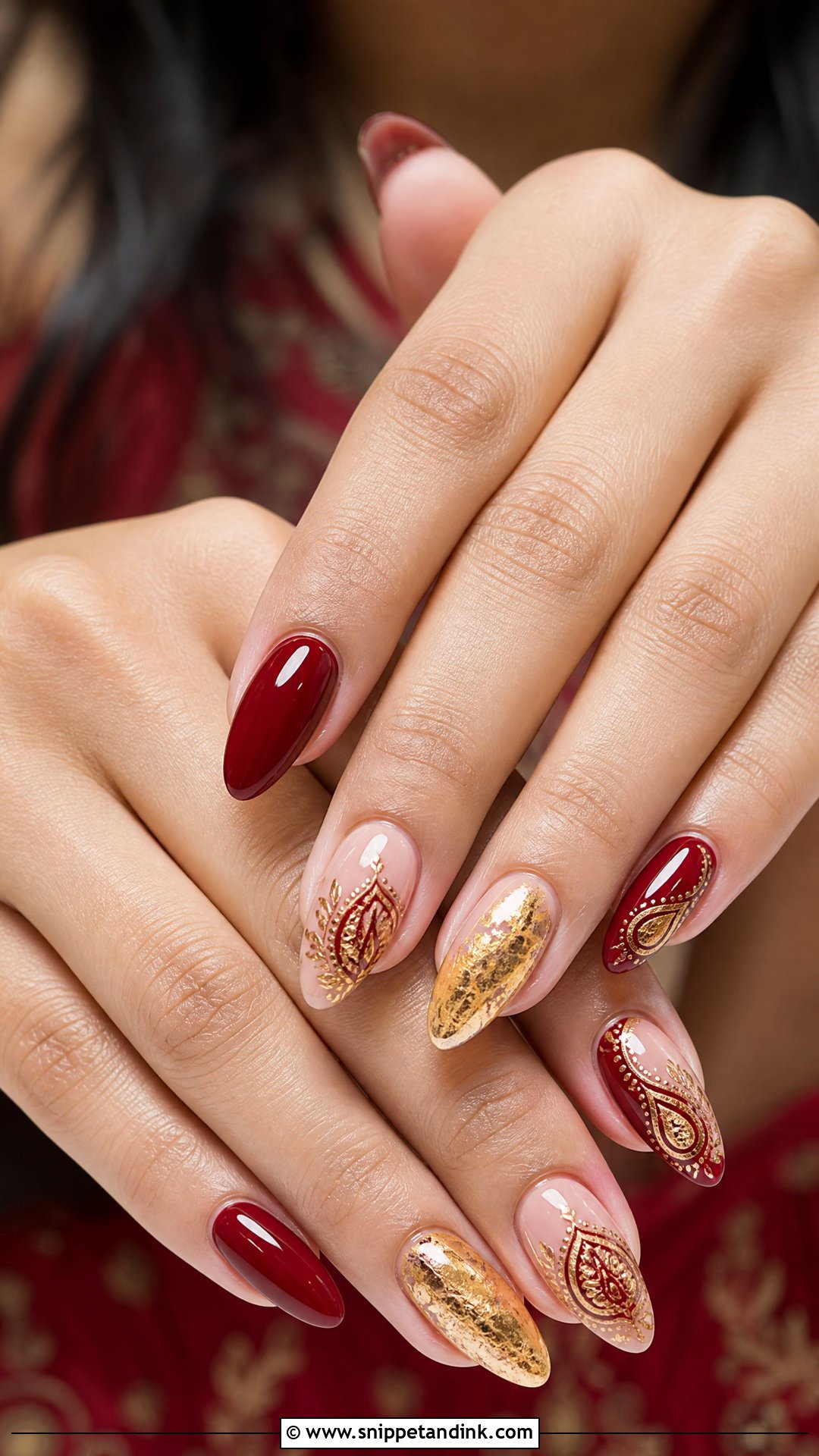
Almond is the shape I suggest most for Indian brides. The taper lengthens the fingers and sits neatly alongside mehndi, rings, bangles, and hand jewelry without snagging the way a square corner can. Pair it with any of the classic palettes: red with gold, nude with pearl, maroon with chrome, pink with glitter. There’s enough surface for paisleys, French tips or a careful stone. Medium length is the practical sweet spot; very long almonds are stronger than coffins at the edges but still make fastening a hook-back blouse awkward.
14. Short Indian Wedding Nails
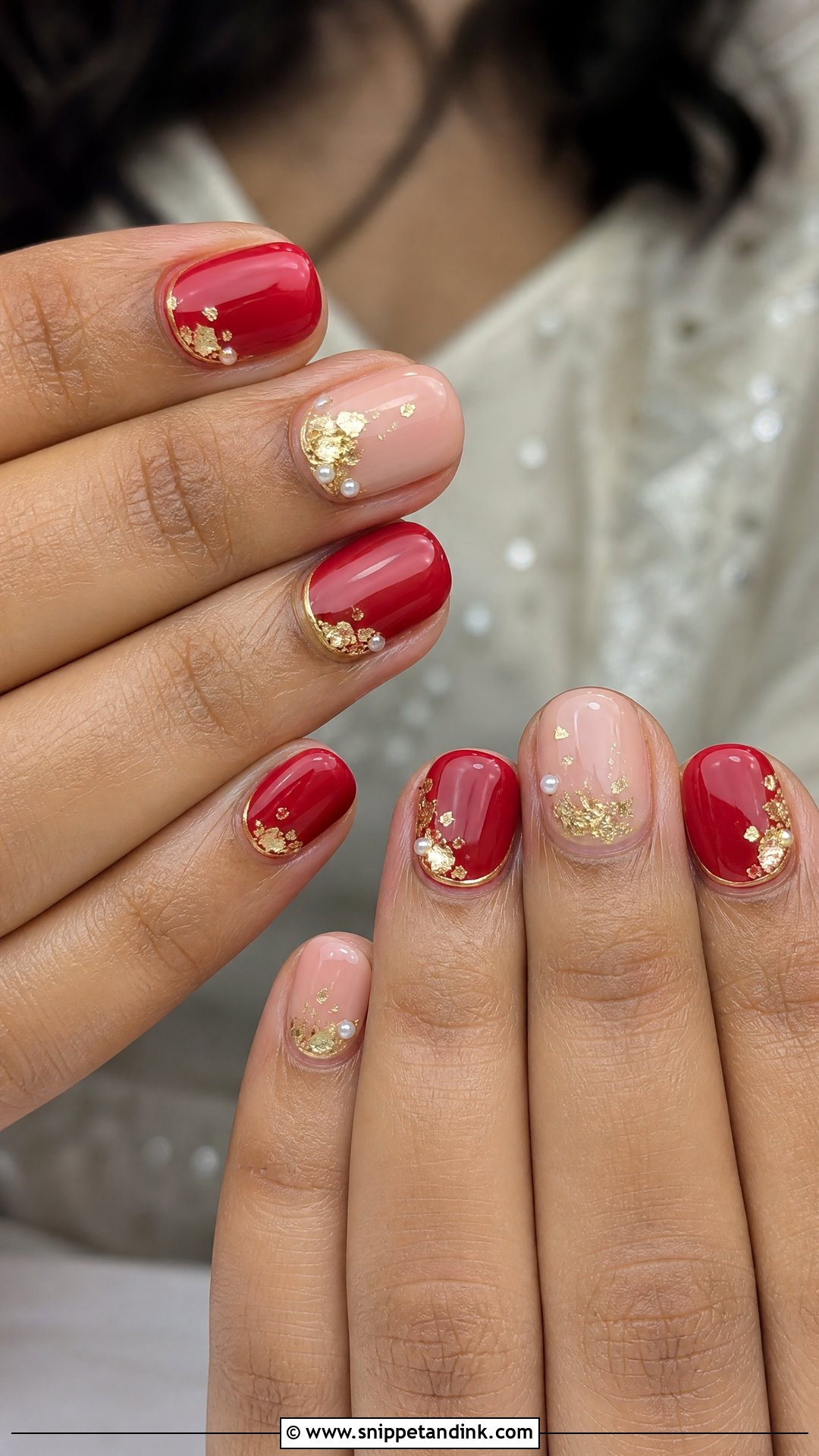
Short nails can carry a bridal set just as well as long extensions, and they suit brides who never wear length and don’t want to learn on the wedding week. The secret is clean color, small details and a high gloss. Try red gel polish with gold foil, nude with tiny pearls, maroon with a gold cuticle line, or a milky chrome. I shape short nails as a rounded square or soft oval. Big stones crowd a short nail, so I switch to fine glitter, micro French tips or tiny mehndi patterns instead.
15. Coffin Indian Wedding Nails
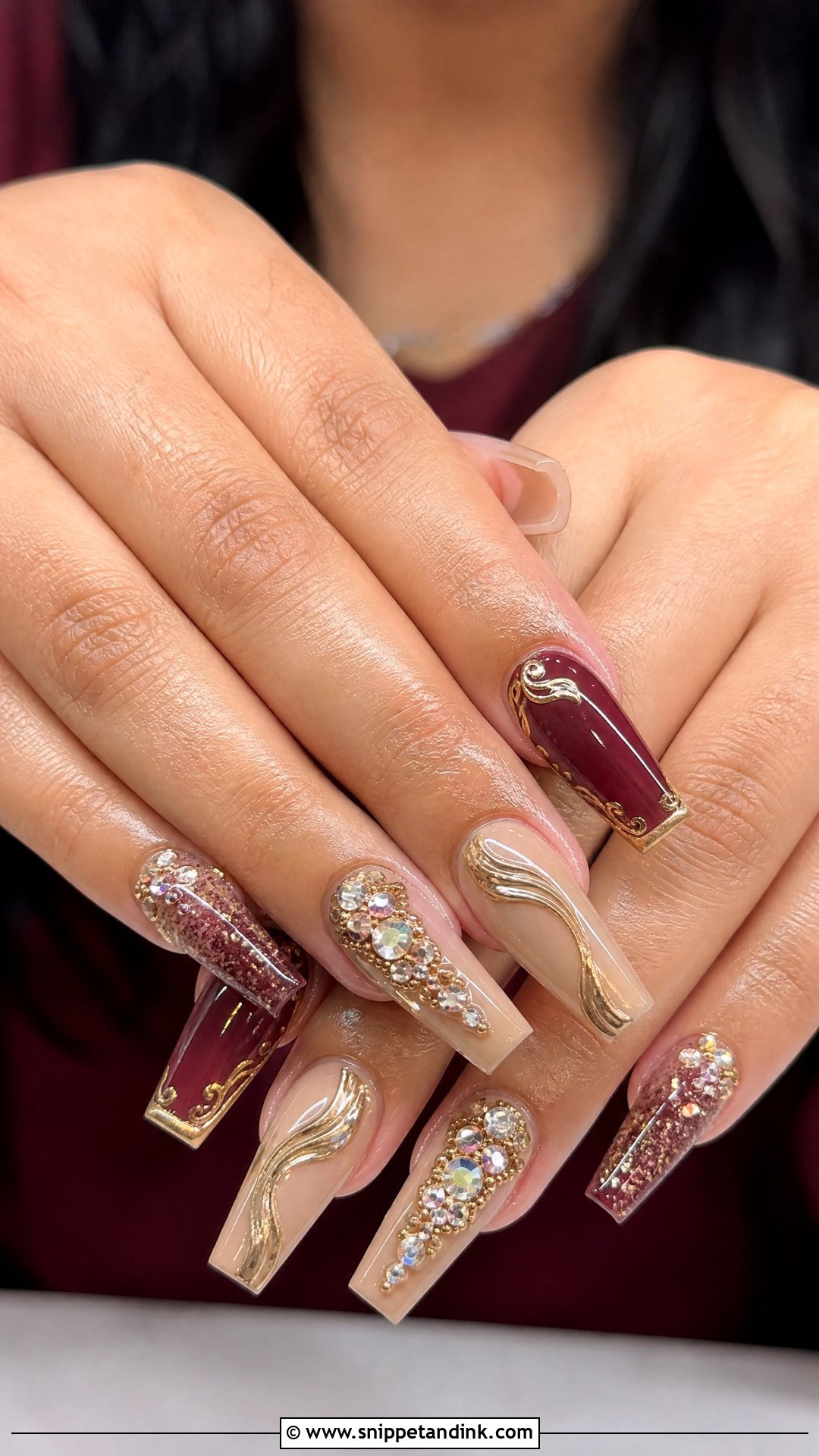
Coffin is the shape for a bride who wants her nails to be part of the styling, not an accessory to it. The long flat tip gives room for paisleys, stones, foil, ombre, chrome and glitter. Because length already makes a statement, I decorate two nails and leave the rest glossy or softly ombre. Red, maroon, nude, gold and pearl chrome all look strong on it. I’d steer you away from coffin if you’ve never worn extensions: the square corners catch on lehenga netting, and putting on a chooda or doing up jewelry clasps takes practice.
16. Floral Indian Wedding Nails
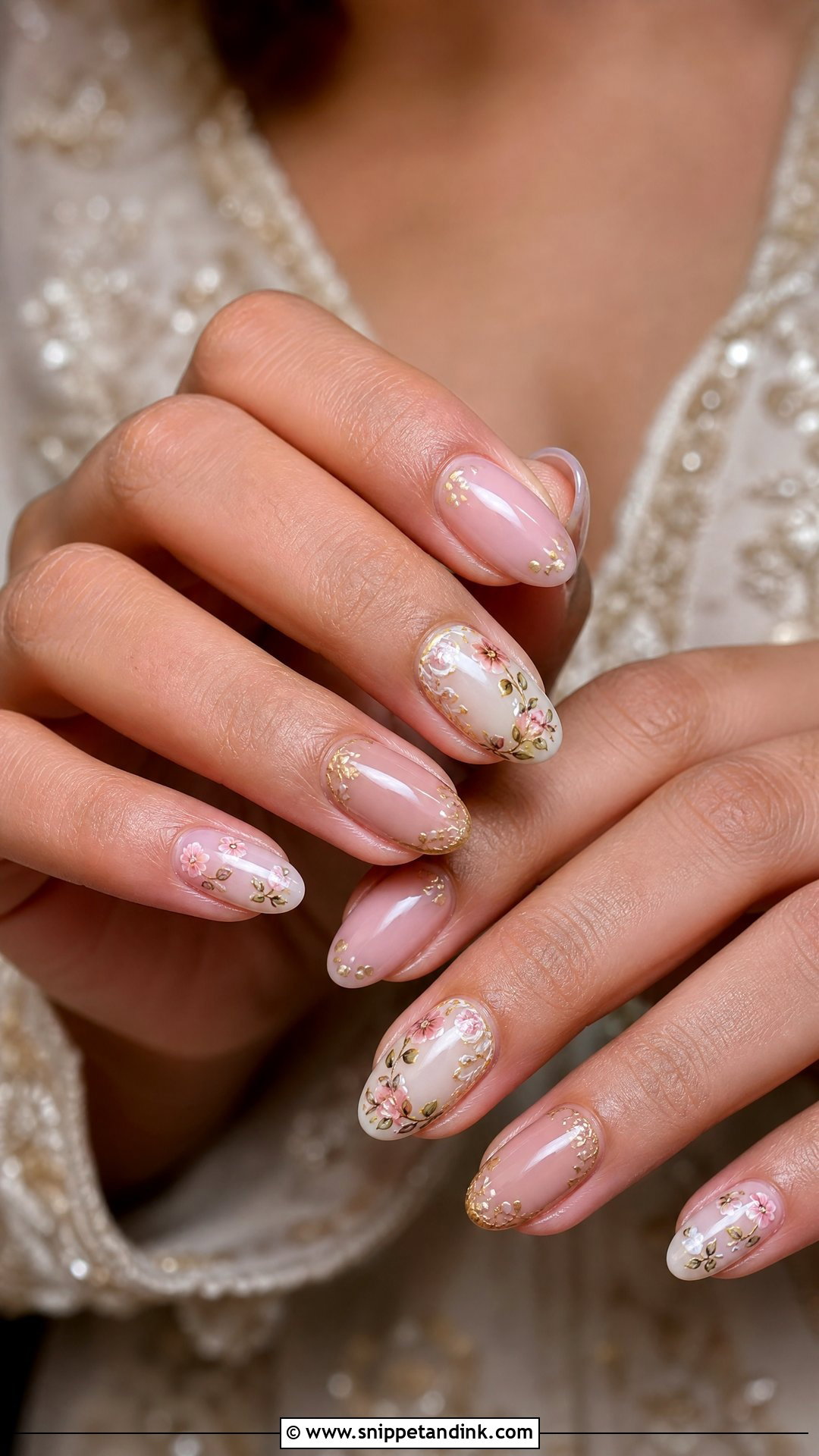
Florals belong to the mehndi, haldi and daytime events. I paint tiny flowers, pressed-flower effects, gold outlines or pastel petals over nude, and for a more traditional finish I add gold dots or leafy vines lifted from the outfit’s embroidery. Pink, peach, ivory and nude bases suit it best. Keep the flowers small and spaced: big blooms read as cartoonish in a hand photo. A glossy top looks fresh, while matte feels modern but marks more easily, so I’d only go matte if the set only needs to last a day or two.
17. Haldi Ceremony Yellow Nails
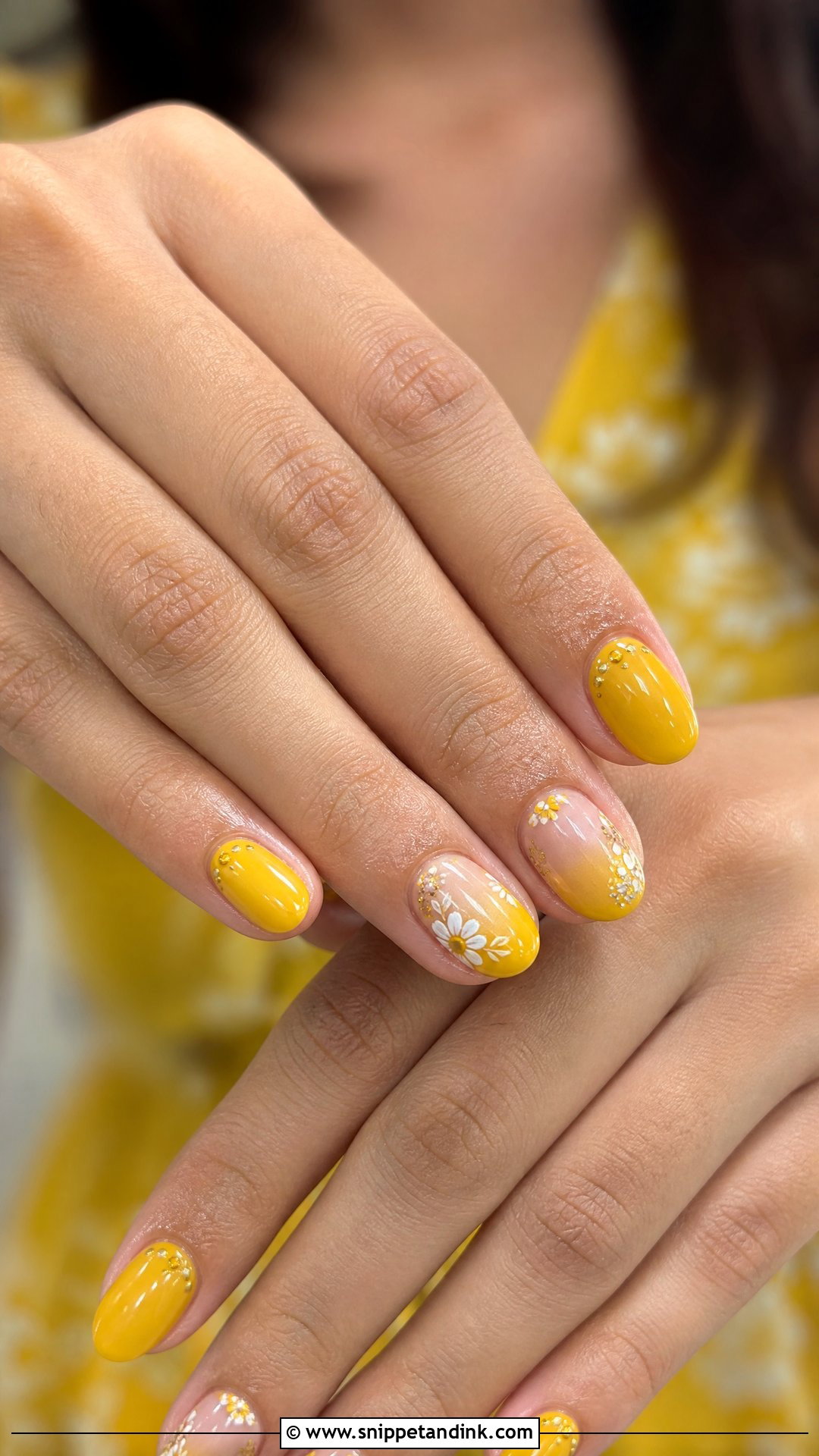
Yellow nails for haldi look joyful in the pre-wedding photos, but the shade has to suit the outfit: mustard, marigold, pastel or golden yellow. White florals, gold dots or a soft ombre make it feel bridal. Turmeric paste stains porous surfaces, and regular polish picks it up fast; a fully cured gel topcoat resists it much better, so this is a gel-only set for me. Keep nails short or medium, since haldi is messy and a lot of paste ends up under long free edges. Many brides change to the main bridal set straight after.
18. Sangeet Glitter Nails
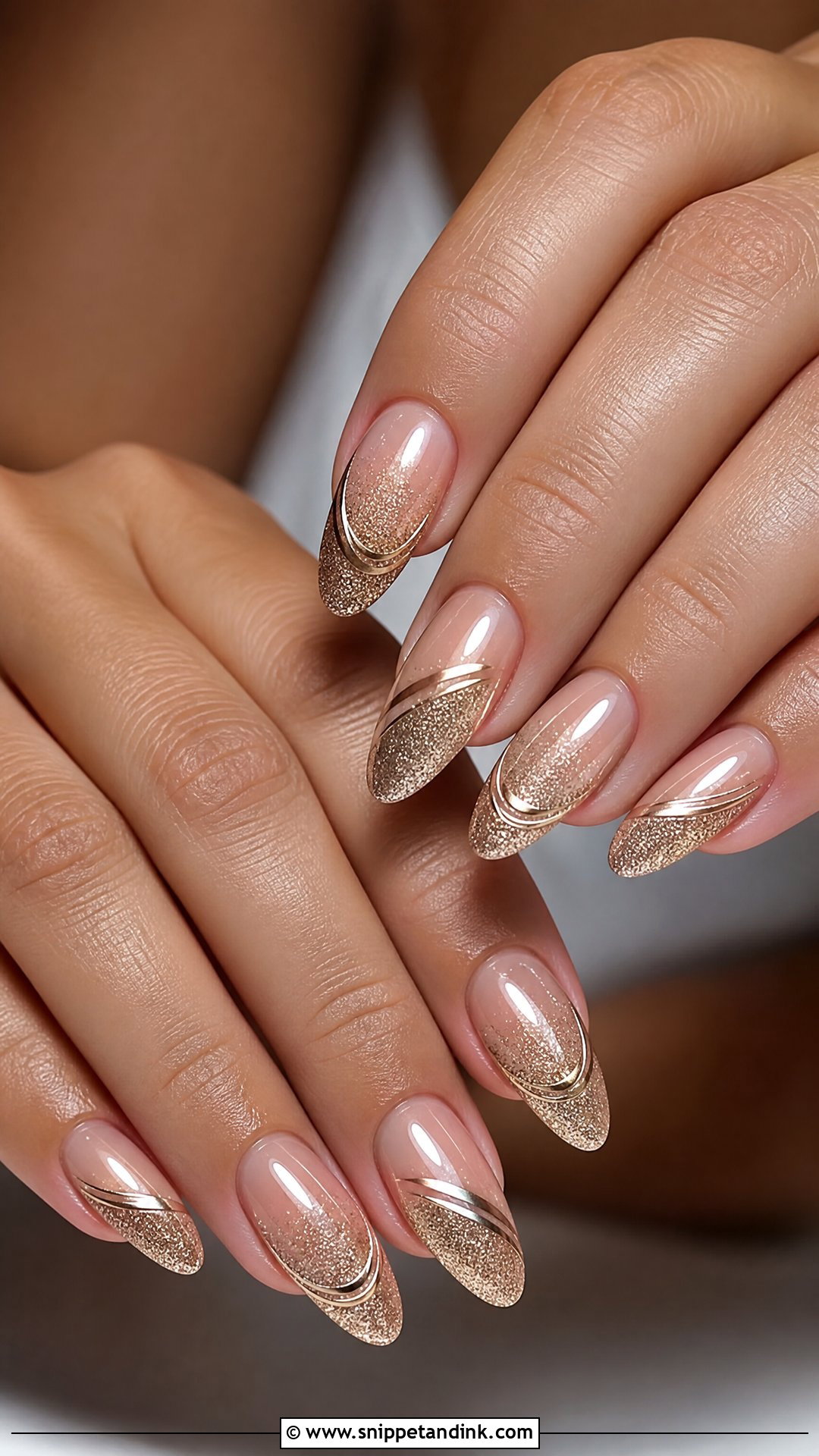
The sangeet is the one event where I encourage more sparkle. Full glitter, glitter French tips, ombre, or shimmer with chrome accents all work, with gold, rose gold, silver and champagne the easiest to wear and hot pink or red glitter for the bolder bride. If the outfit has sequins or mirror work, I match the glitter tone to that embellishment. Keep the base simple so the nails don’t fight the outfit. Expect plenty of clapping and dancing, so I cap the free edge with extra gel to stop glitter chipping at the tips.
19. Reception Pearl Nails
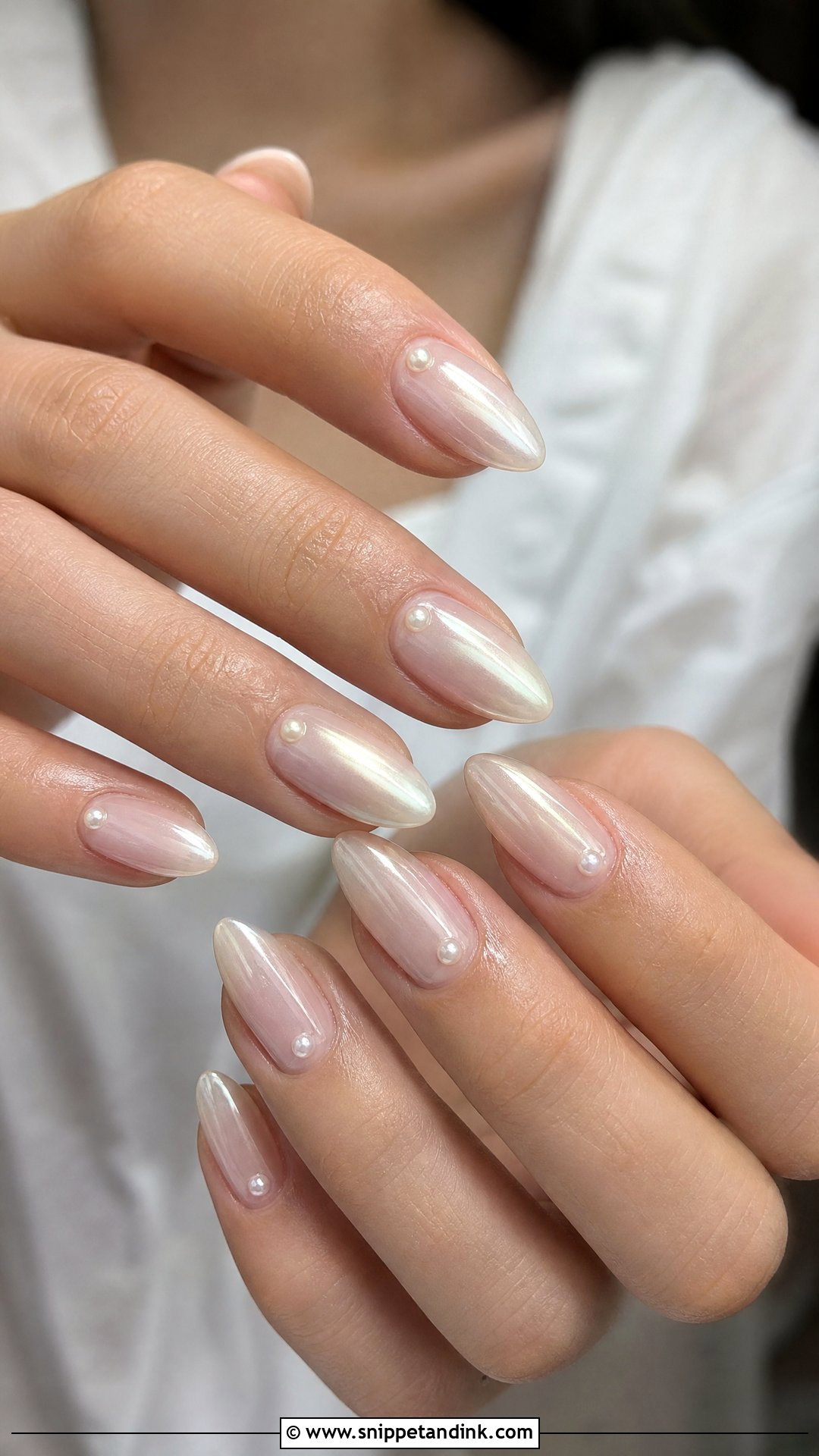
Pearls are softer than glitter but still dressy enough for evening photographs, which is why so many brides switch to them for the reception. A sheer nude, pink or milky white base takes tiny pearl accents at the cuticle, along a French line or on one statement nail. They sit well with gowns, sarees, lehengas and diamond sets, and especially with silver, ivory, blush or champagne outfits. Half-pearls with flat backs are the ones to ask for; round pearls stand too high and pop off. I seal them under gel so nothing rubs against skin or fabric.
20. South Indian Bridal Nails
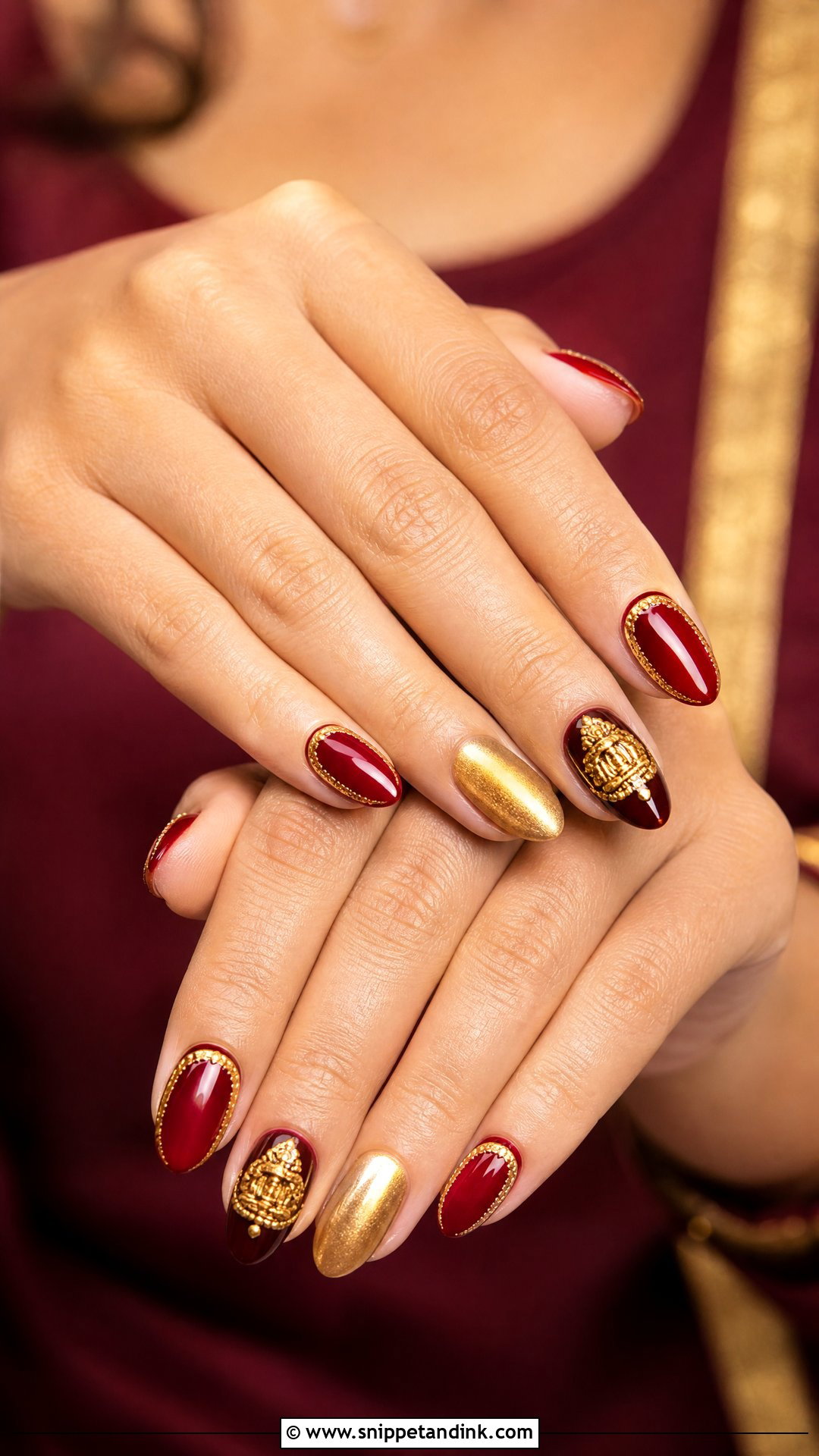
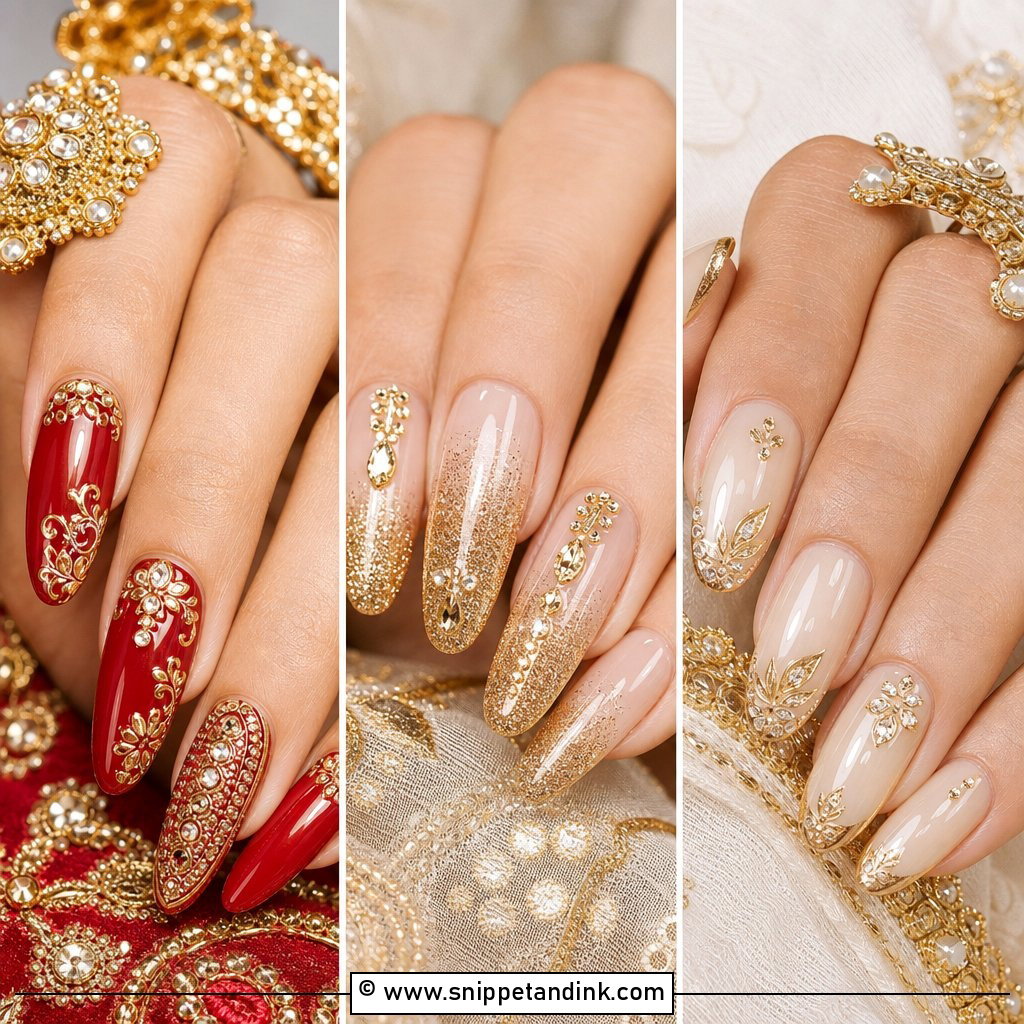
South Indian bridal hands carry silk, temple jewelry and often heavy gold bangles, so the nails need classic depth rather than novelty: red, maroon, gold or deep pink. A glossy red base with gold borders looks traditional; maroon with tiny temple-inspired gold motifs looks regal. If the saree border is green, purple or orange, one accent nail in that border color ties the hands to the drape. Short to medium oval nails make sense here, because pleating and handling a Kanjeevaram’s weight is easier without length. Keep the art restrained so the jewelry stays the focus.
21. Rajasthani Bridal Nail Art
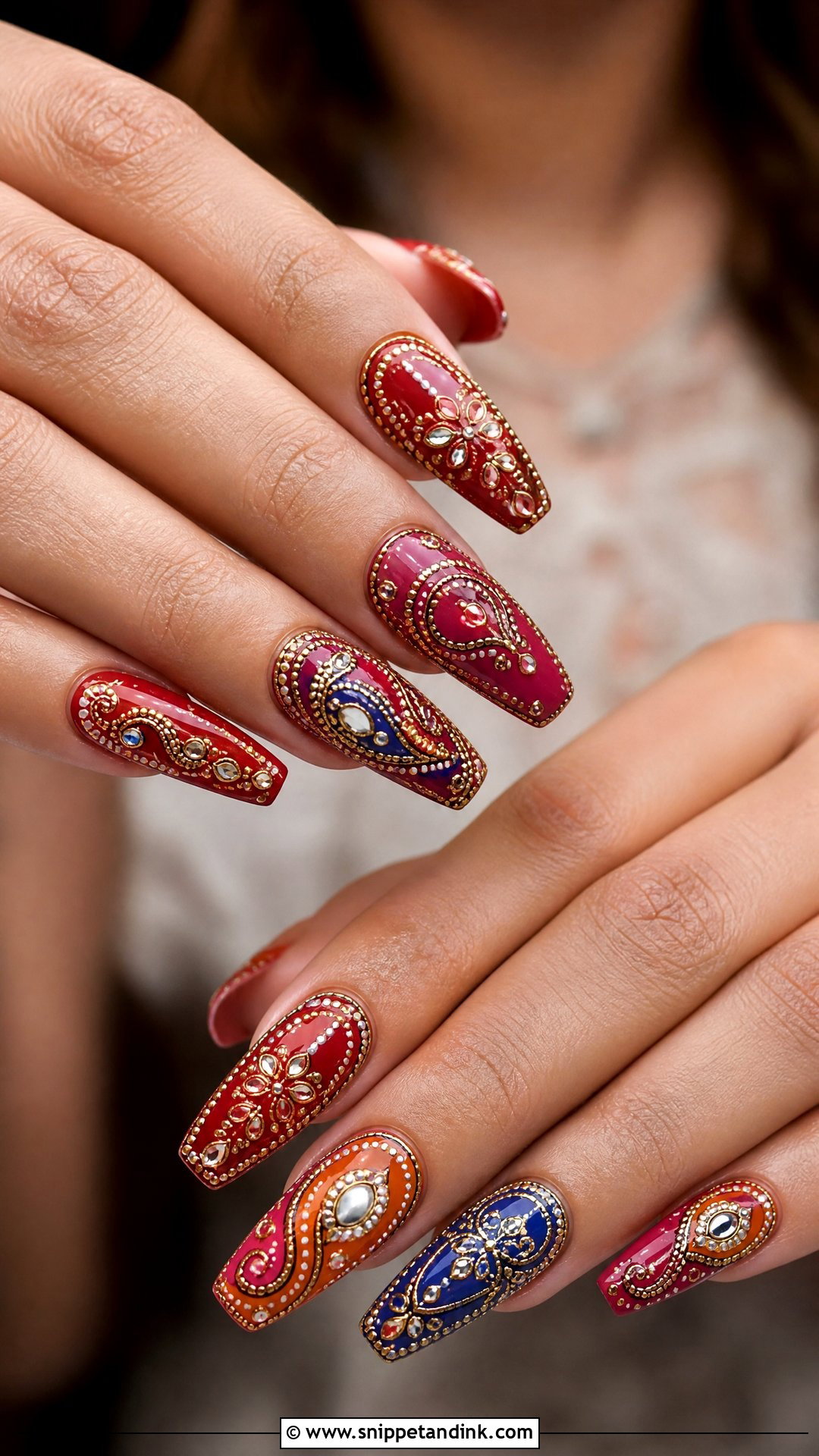
Rajasthani bridal nail art borrows from royal color, mirror work, bandhani dots and fine gold detailing. Deep red, orange, magenta, royal blue and gold all fit. I build it on a nude or red base with tiny dotted borders, gold paisleys and mirror-effect foil. It matches gota patti and mirror-work lehengas especially well. Bandhani dots are the part that goes wrong: they need to be evenly spaced, which takes a dotting tool and patience, and uneven dots look careless in close-ups. Almond or coffin gives enough length for the pattern.
22. Punjabi Bridal Nails
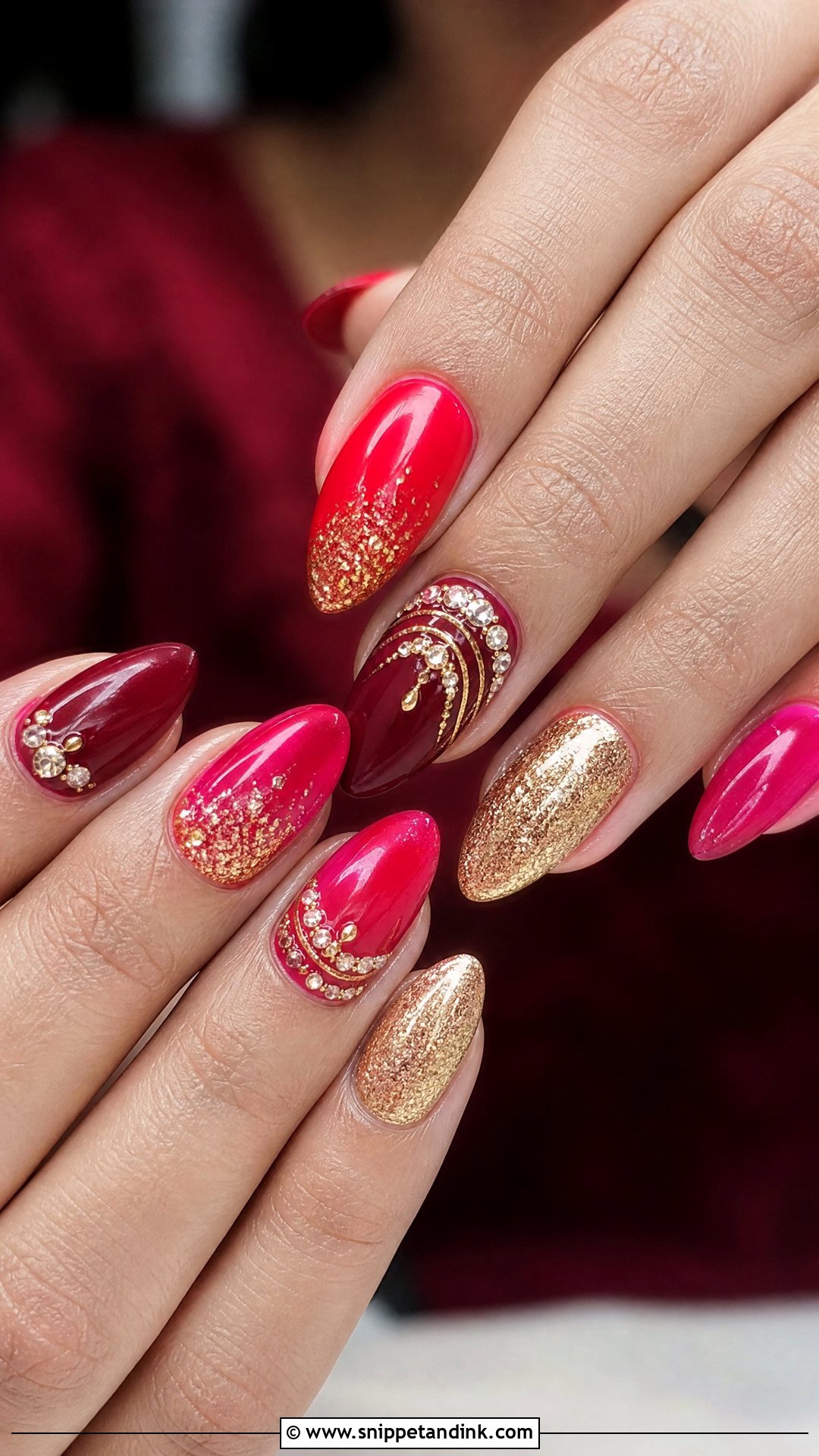
Punjabi bridal sets usually lean bold: glossy red, deep maroon, hot pink, gold glitter or rhinestones that pick up the kaleeras, chooda and embroidery. A red base with a gold glitter ombre is the classic; pink French tips with gold chrome outlines or maroon with a few crystals give it a modern turn. With that much jewelry already on the arm, I pick one nail theme and stick to it. Medium almond, coffin or square all work, though I’d keep length moderate, because the chooda goes on and stays on, and long nails make that first fitting fiddly.
23. Muslim Wedding Bridal Nails
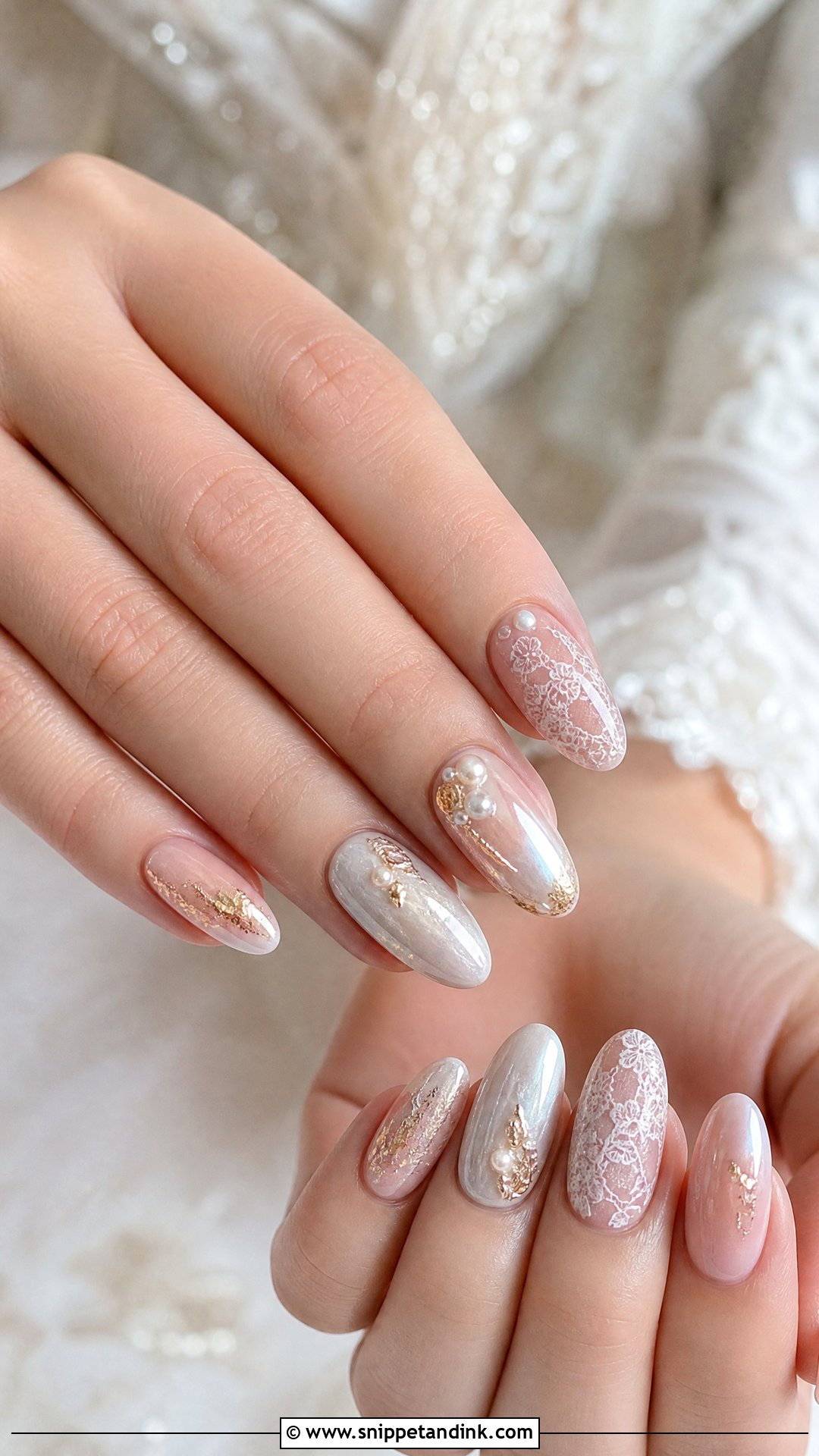
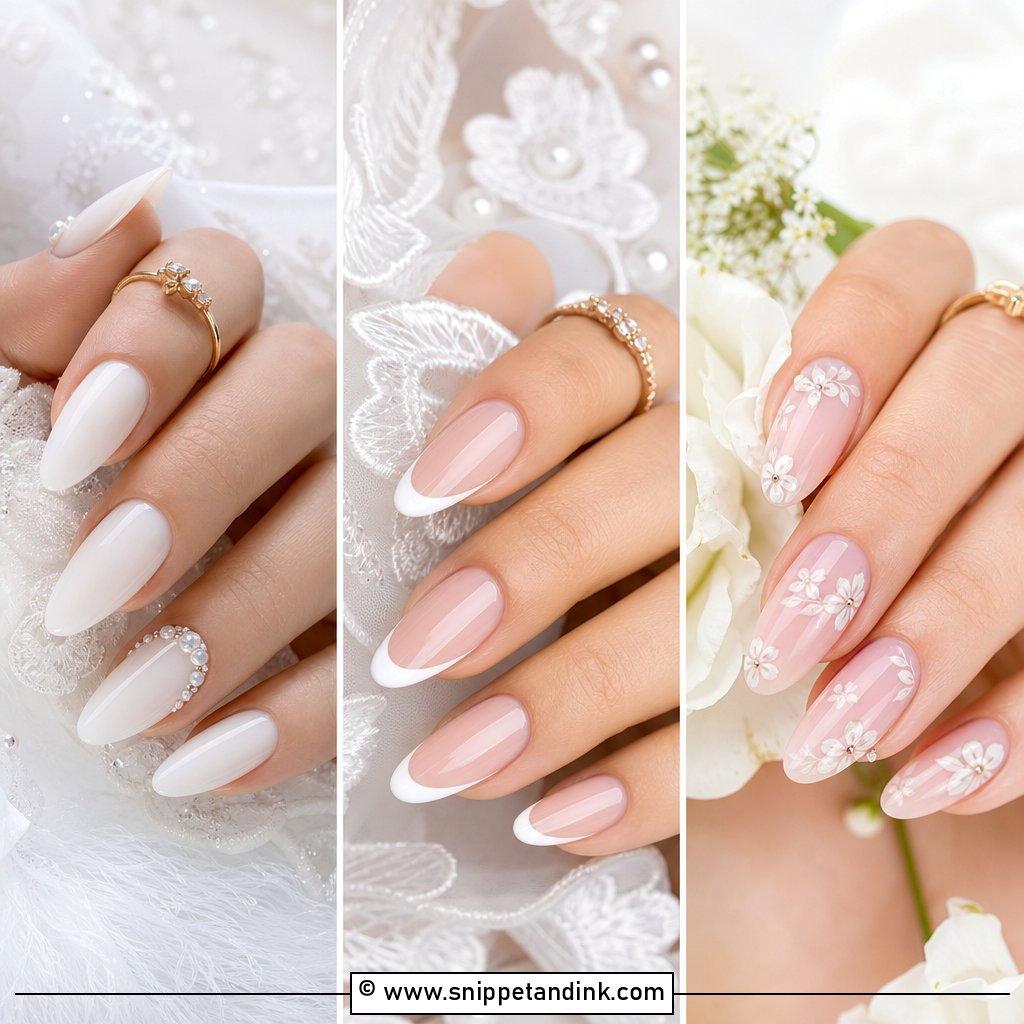
Muslim bridal nails often go soft and detailed rather than heavy: nude with gold, pearl chrome, pink shimmer, white French tips or lace-style art. They pair with shararas, ghararas, lehengas and embroidered dupattas. I take the metal from the outfit: silver work suggests pearl or silver chrome, gold work suggests champagne, nude or gold foil. Fine mehndi-style lines over a sheer base look traditional. Almond or oval keeps it graceful. Some brides prefer breathable or removable polish around prayer times, so it’s worth raising with your nail tech early.
24. Indian Wedding Guest Nails
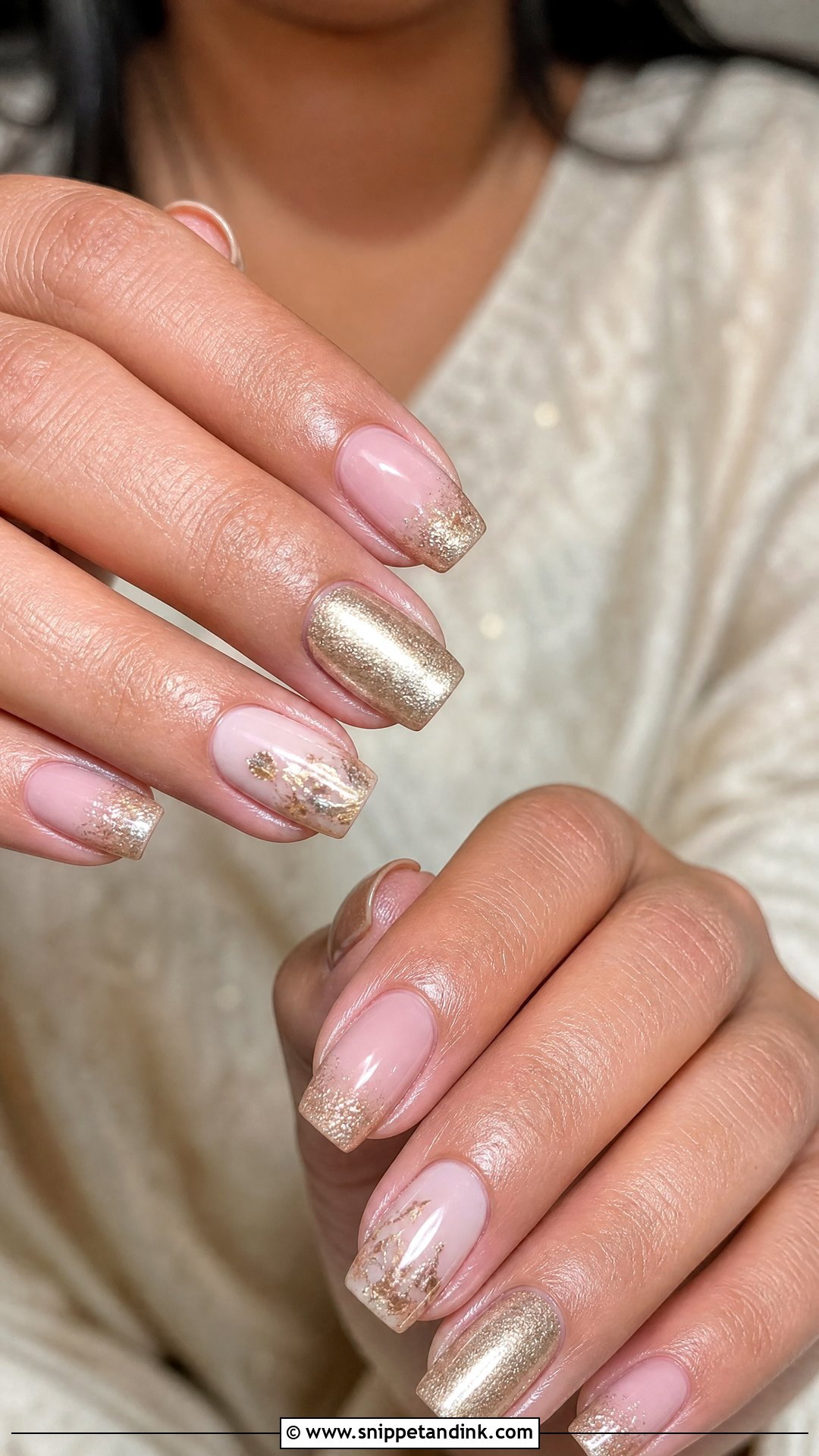
As a guest, the job is to look festive while the bride stays the center of attention. Good options: nude with gold foil, pink chrome, champagne glitter tips, soft maroon, or French tips with a metallic edge. I match the manicure to the outfit’s embellishment rather than its base color, so gold foil with gold jewelry, pearl chrome with pastels and ivory. Skip heavy bridal stones and full red-and-gold sets unless the family has asked for full glam. One glossy set with a single special detail almost always looks right.
25. Minimal Indian Bridal Nails
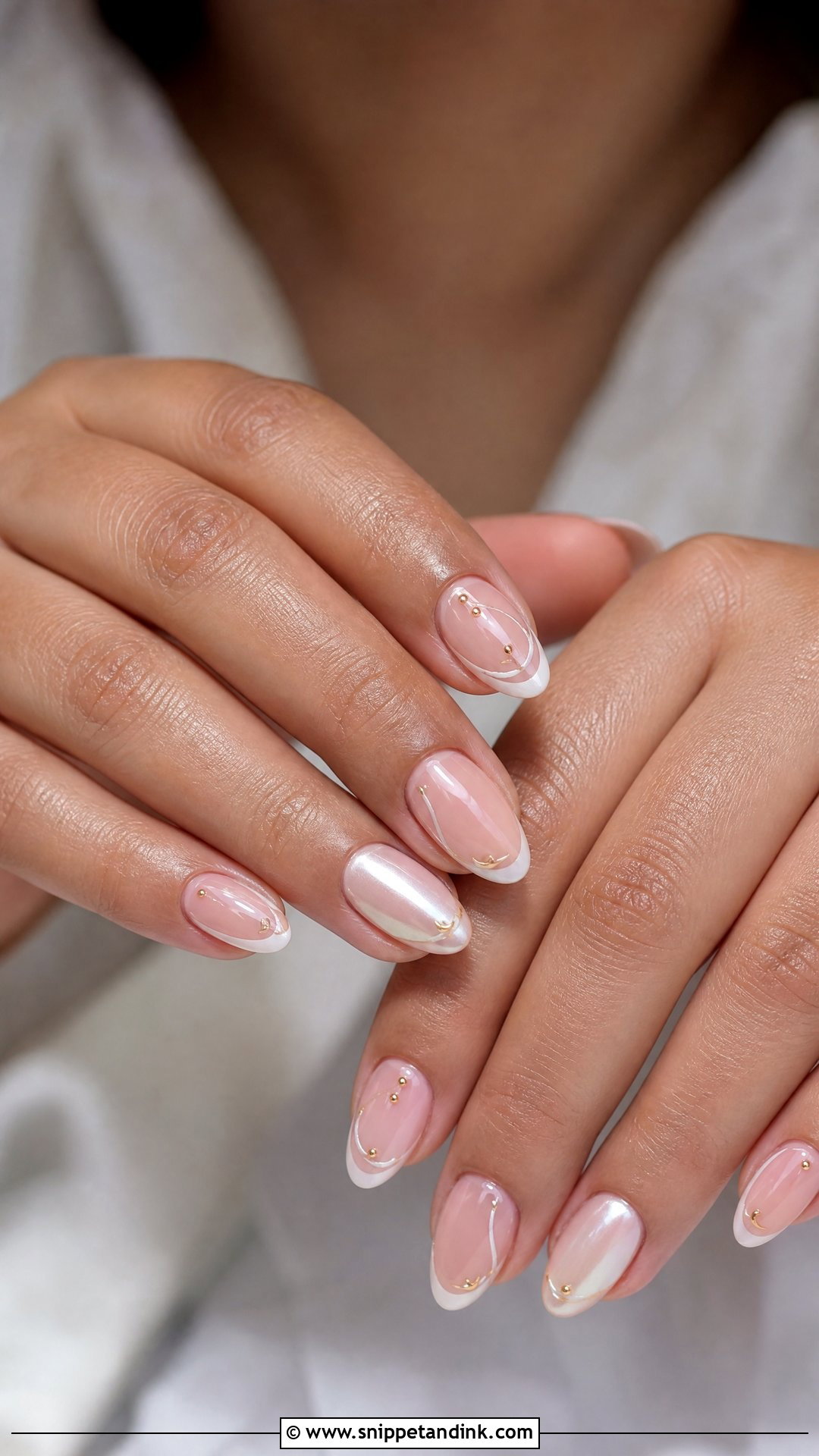
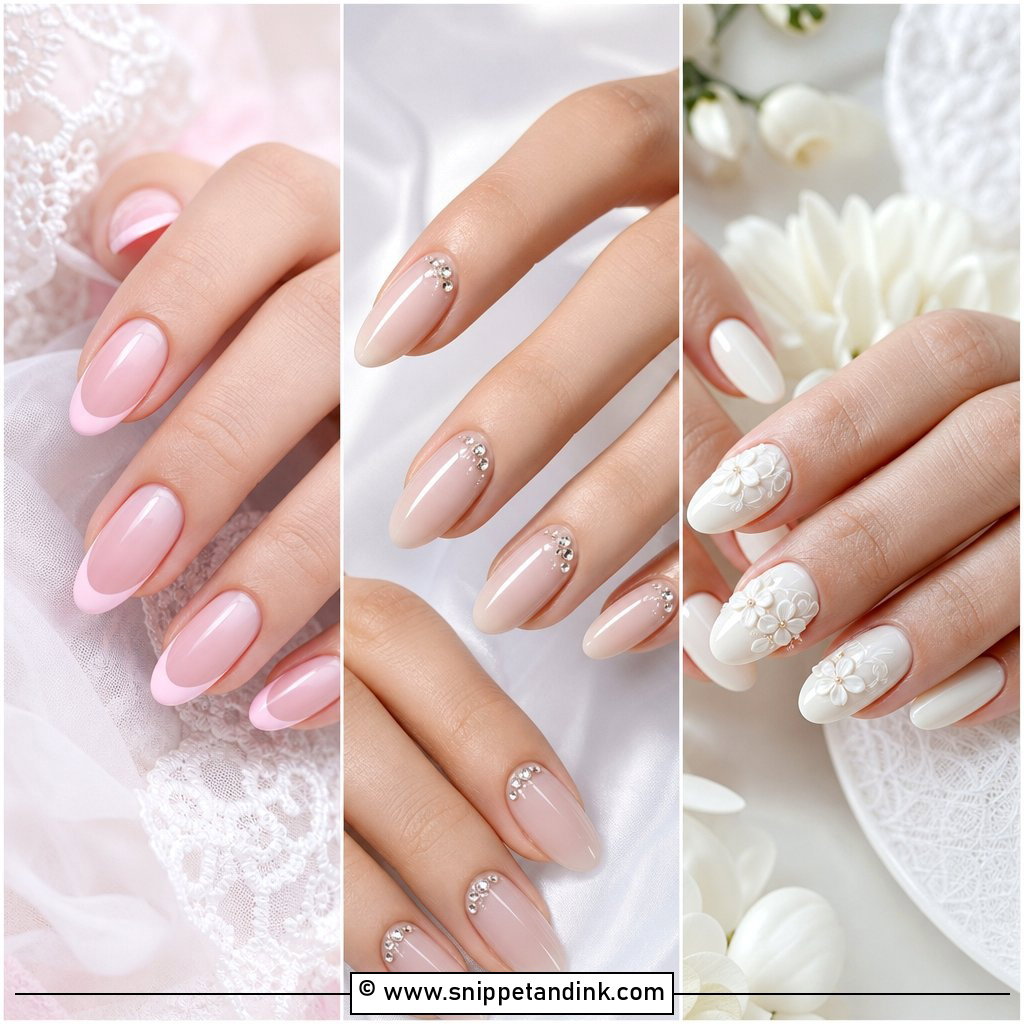
Minimal sets suit the bride whose outfit, jewelry and mehndi are already heavily worked. The base is sheer pink, nude, milky white or soft beige, with delicate details: micro French tips, tiny gold dots, pearl chrome, thin swirls or one small initial. Because nothing here is tied to a trend, these sets look right in the album years later. The finish is where minimal nails succeed or fail; any lumps or uneven cuticle lines show immediately, so I spend more time on prep for a simple set than for a busy one.
When a Stone Pops Off Between the Sangeet and the Pheras
Over a week of dancing, gift-handling and bangle changes, something usually gives, most often a stone on a thumb or an index finger. The worst thing you can do is pick at a lifting edge. Once you pull gel up, you take layers of the natural nail with it, and the nail underneath looks white and thin in every photo after.
Ask your nail tech for a small envelope of the exact stones and pearls she used, plus a tiny tube of nail glue. A dot of glue and a fresh stone pressed on with a toothpick will hold for the rest of the wedding. A lifted corner can be filed gently flat and sealed with a clear topcoat until you can get back to the salon.
What to pack in the bridal clutch
- Nail glue and the spare stones from your appointment
- A fine buffer and a small glass file for snagged edges
- Cuticle oil, since repeated hand washing and sanitizer leave the skin around gel looking dry in close-ups
- A clear quick-dry topcoat for sealing a chip
One more thing from experience: glass and lac bangles slide on more easily if you tuck your thumb into your palm and let someone else roll them over your knuckles. Pushing them on with long extensions is how tips crack on the wedding morning.
Matching the Set to the Event, Not Just the Outfit
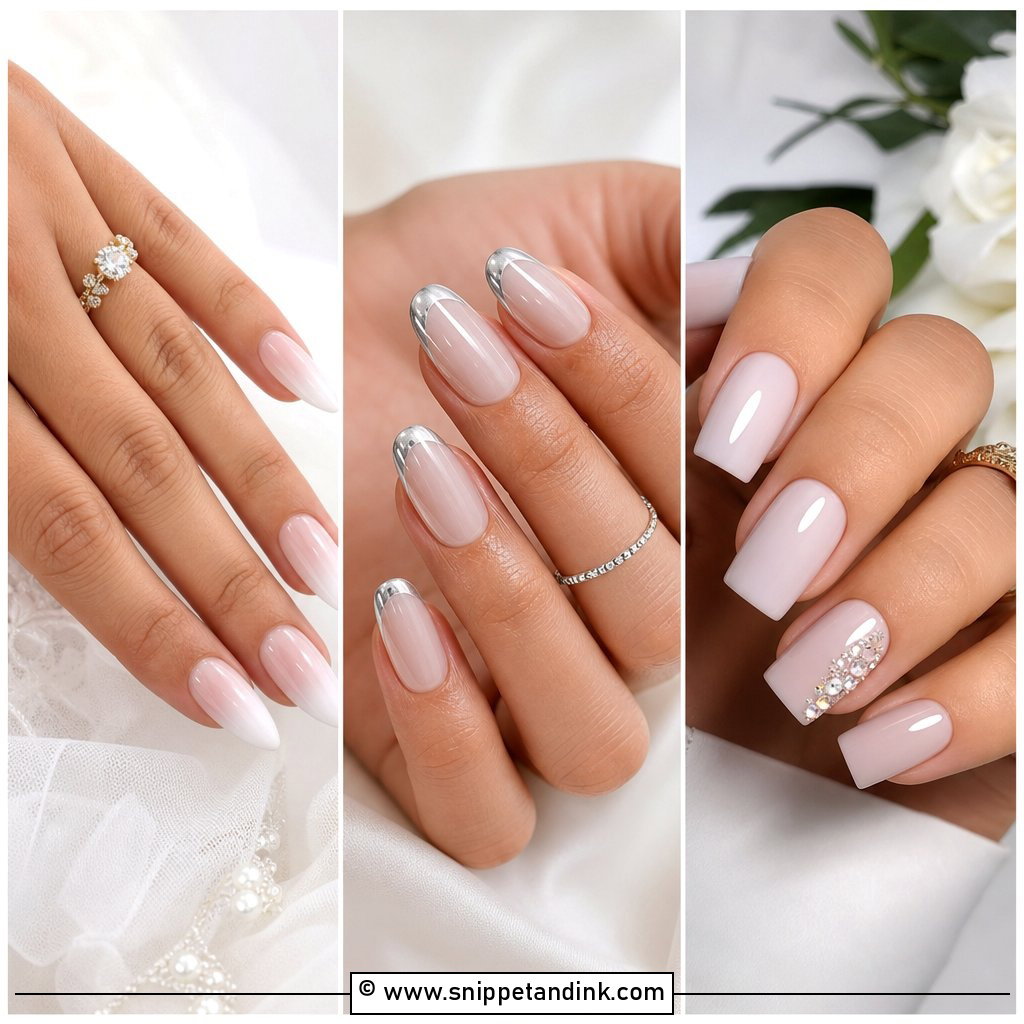
Red and gold will always be the traditional answer, while pearl chrome, nude with foil and micro French sets bring a quieter modern look. For brides, the right manicure has to suit the events on the calendar, the jewelry, the mehndi and the length you can actually live with for a week. For guests, a polished set with one metallic or shimmer detail is enough. Maroon, pink, champagne or henna-inspired, the test I use is simple: can you fasten your blouse, put on your bangles and hold your partner’s hand without thinking about your nails? If yes, it’s the right set.
You'll Like These Ideas:


Leave a Reply