
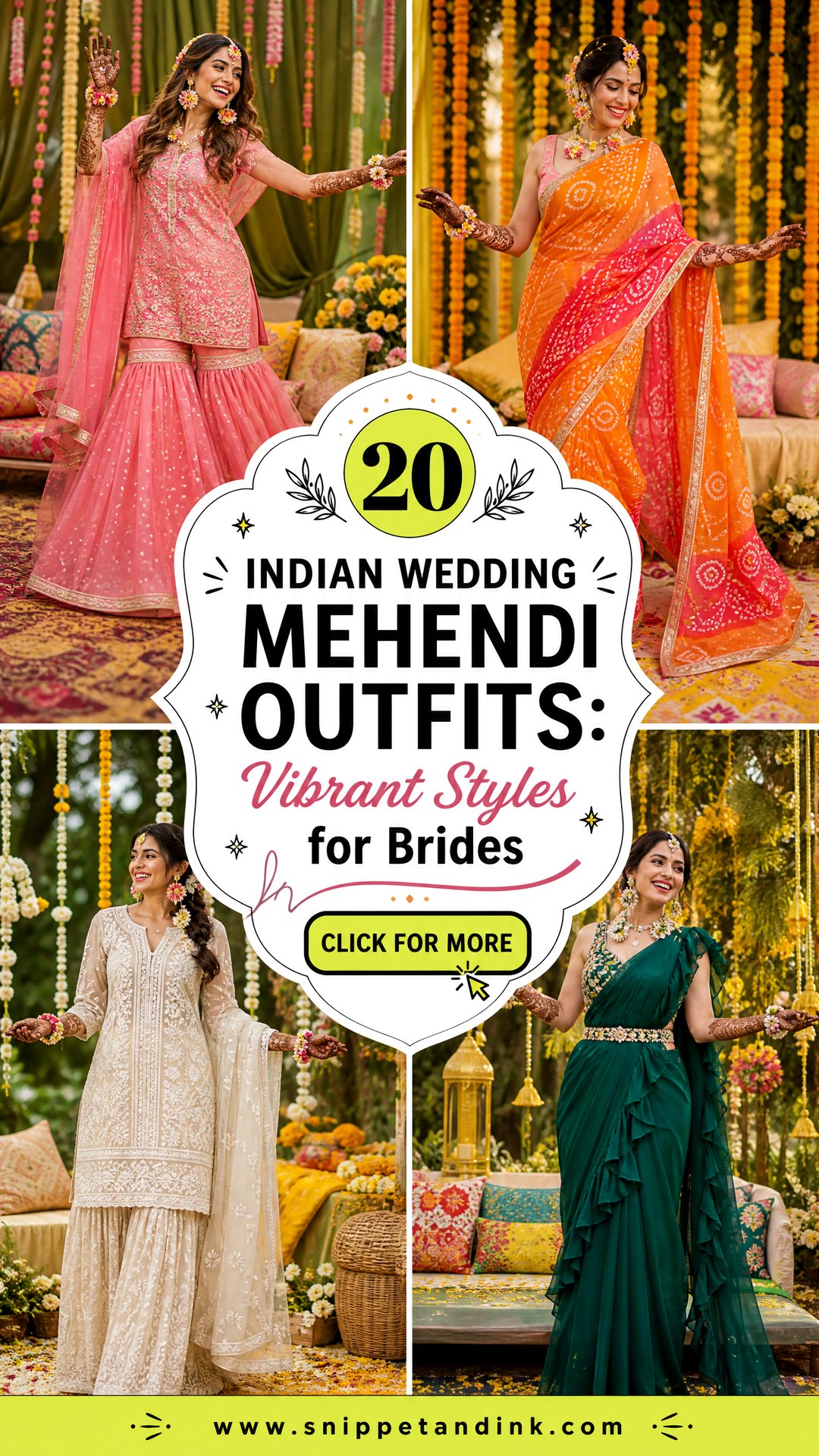
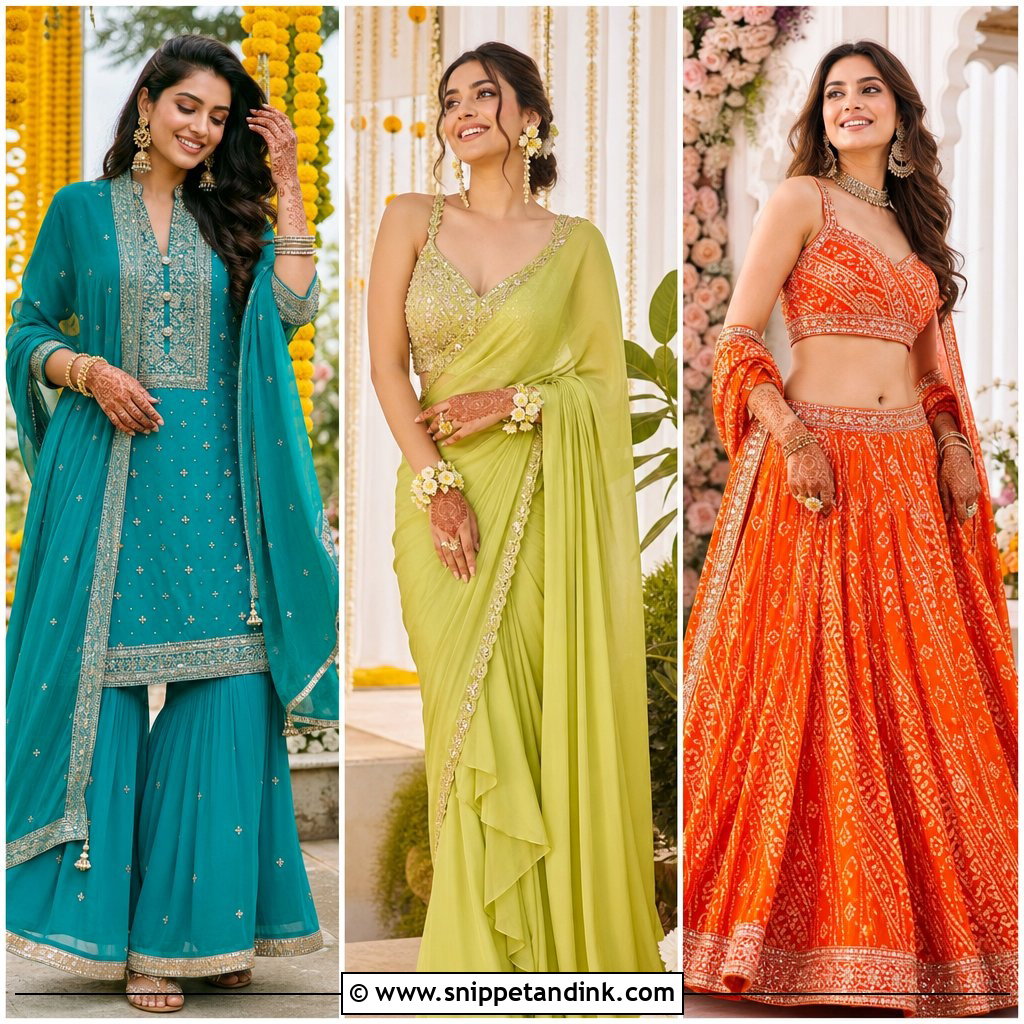
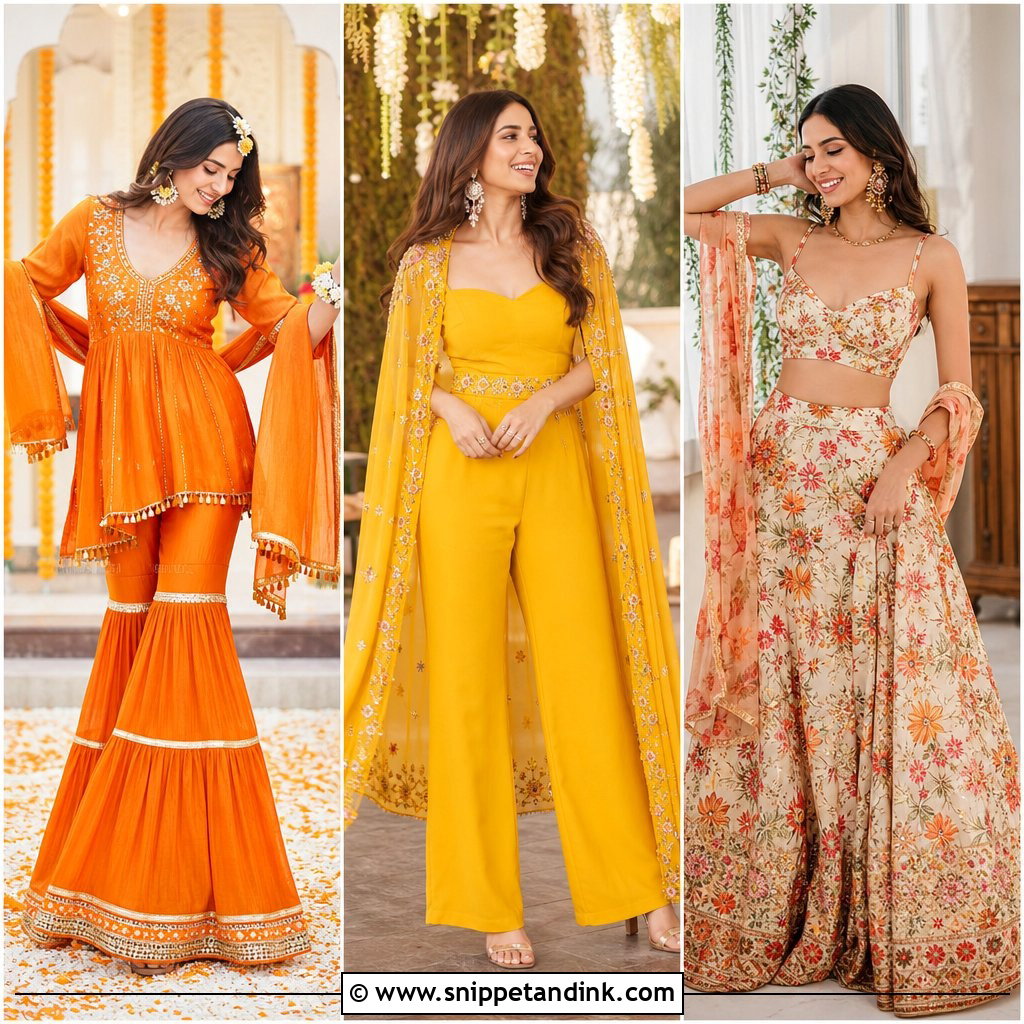
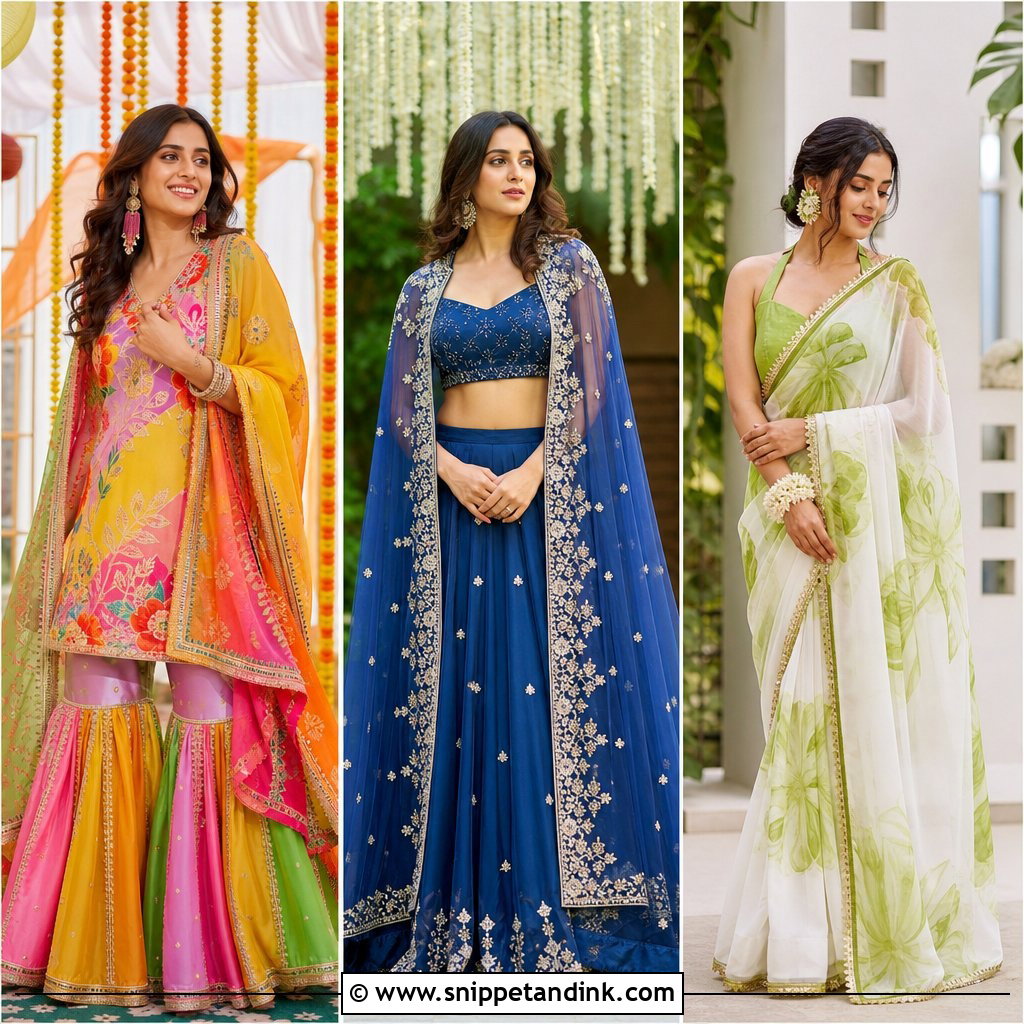
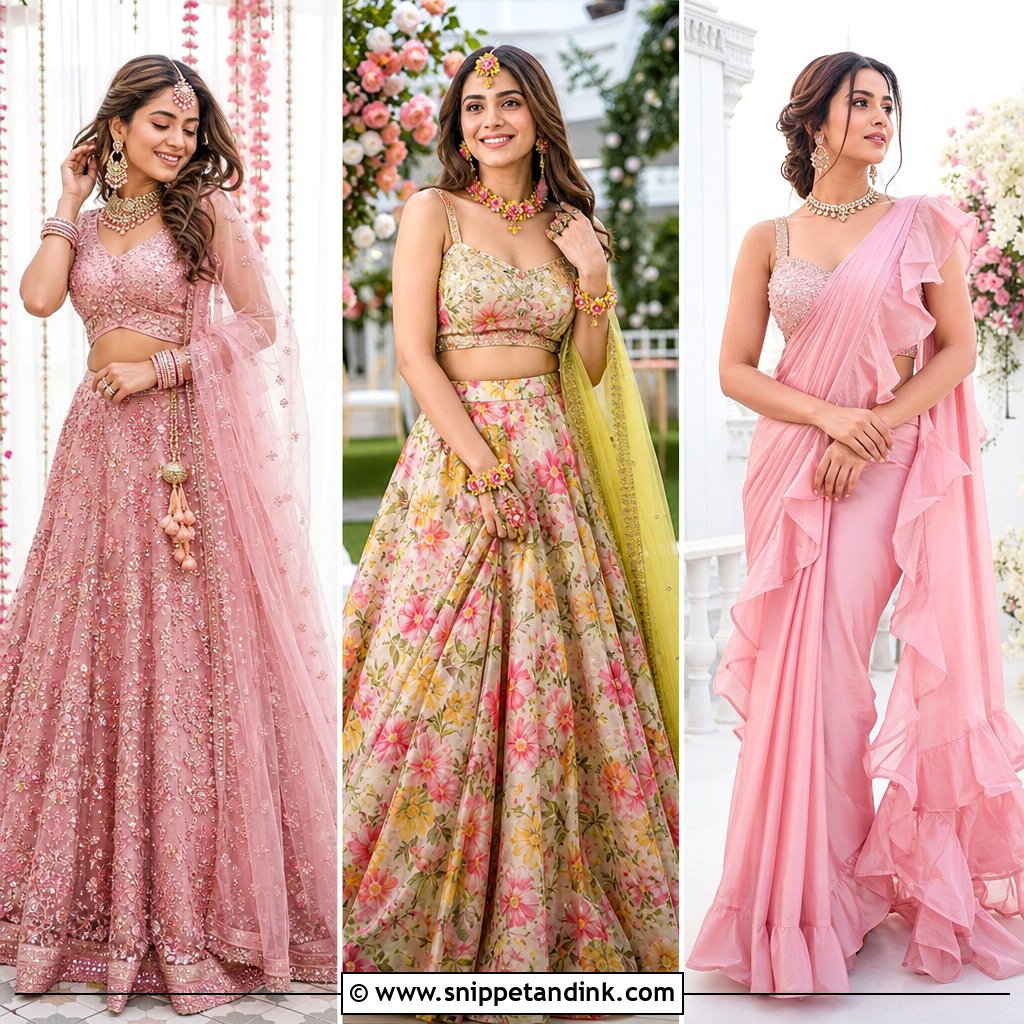
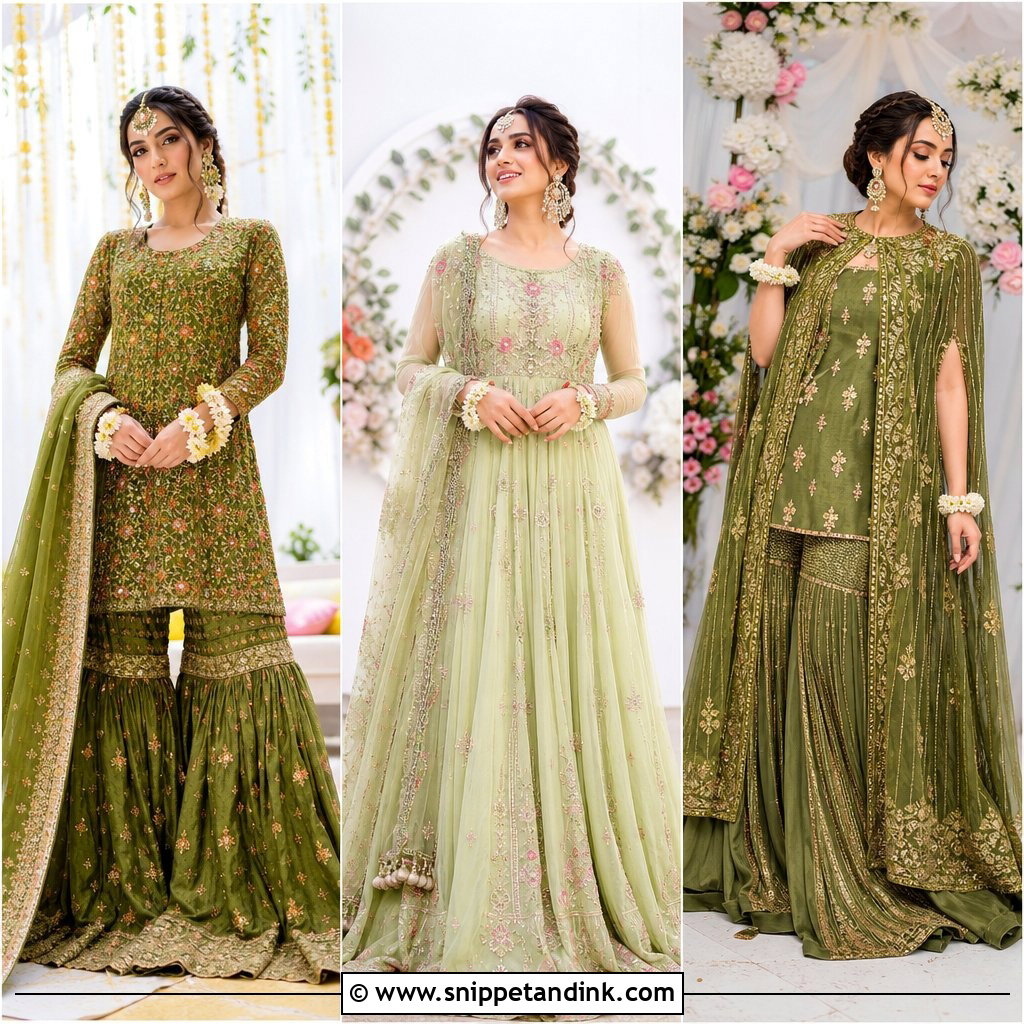
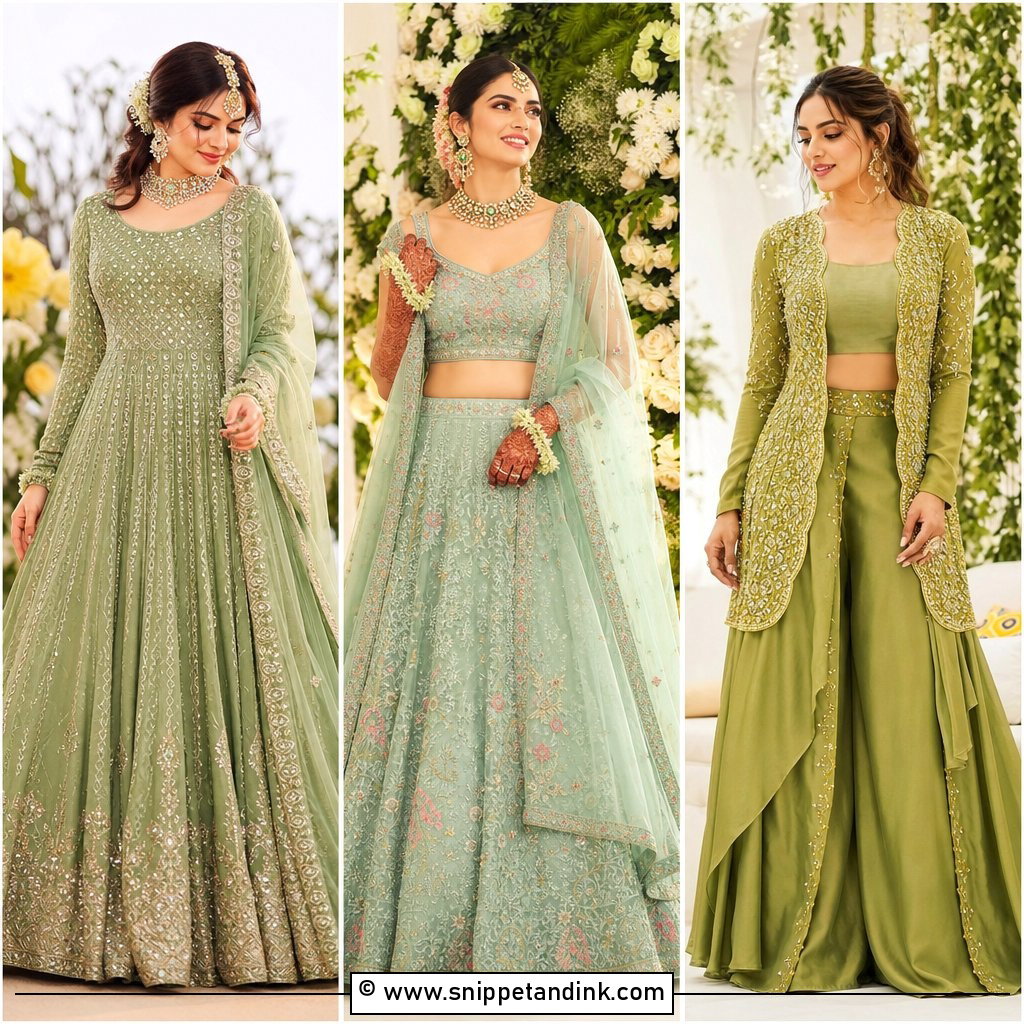
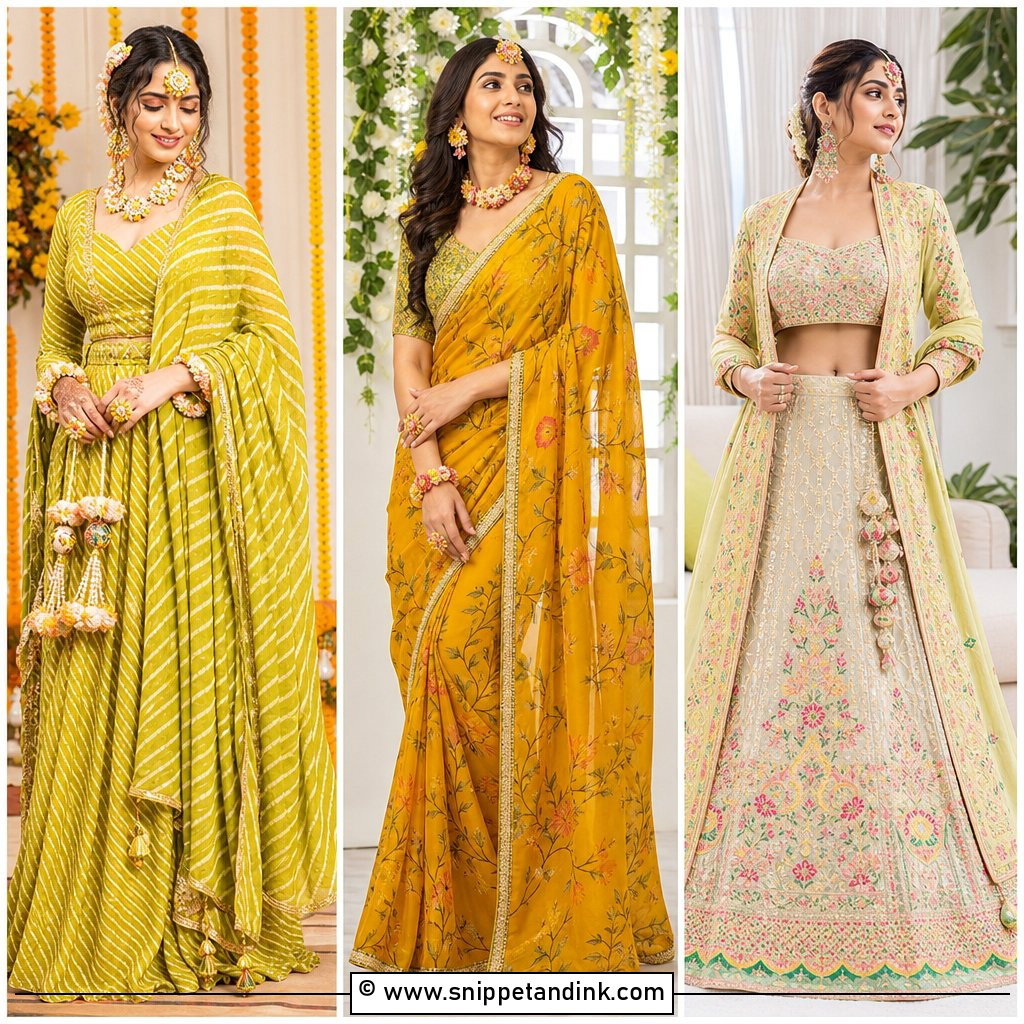
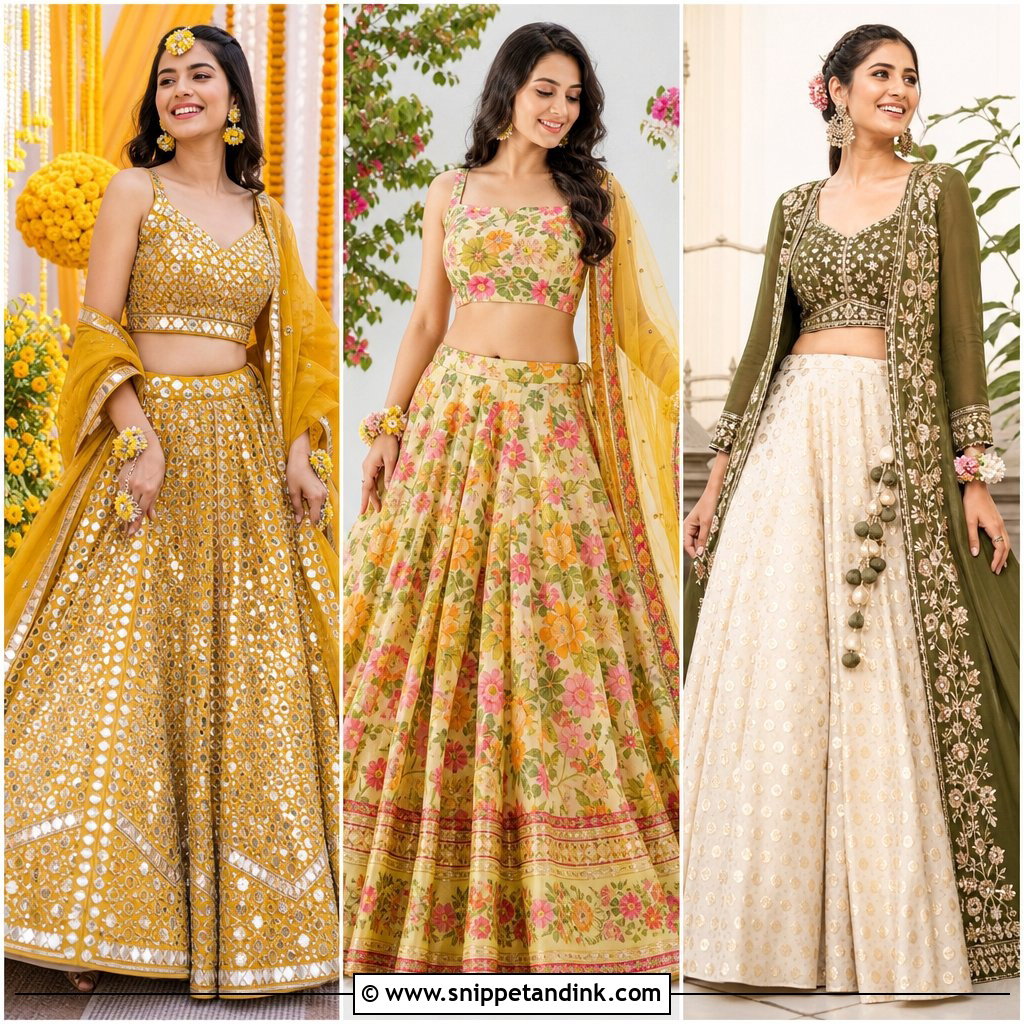
I spend most of a mehendi function sitting knee to knee with the bride, and I can tell within a minute whether her outfit was chosen with the henna in mind. Full sleeves have to be rolled and pinned, a heavy dupatta slides onto wet paste, and a stiff skirt makes cross-legged sitting miserable for three hours. The outfits below are lehengas, shararas, sarees, Anarkalis and a few fusion sets in georgette, organza, chiffon and cotton silk. Green is traditional, but yellow, pink, coral and blue are just as common now. Whatever the color, the bride needs short or elbow-length sleeves and a dupatta that stays off her hands. Sisters, bridesmaids and guests can be a little freer.
Dressing for the Hours the Paste Needs
Bridal henna on both hands and feet can take several hours to apply, and then the paste should stay on for as long as possible, ideally six hours or more, for the darkest stain. That means the bride spends most of the function sitting, often with her hands held still in front of her. Her outfit has to be comfortable in that position.
Sleeves, necklines and fastenings
Short or elbow-length sleeves are best. If your design goes above the elbow, sleeveless is easier still. Avoid back fastenings you can’t reach once your hands are covered, and use the restroom right before we start.
Where you’ll sit
Ask what seating there is. A low sofa or swing usually means a flared lehenga is fine; floor cushions favor shararas, ghararas and dhoti pants. Your feet need to be bare and reachable if they’re being done, so plan the hem to sit above the ankle or be easy to tuck.
1. Green Mirror Work Lehenga Mehendi Outfit
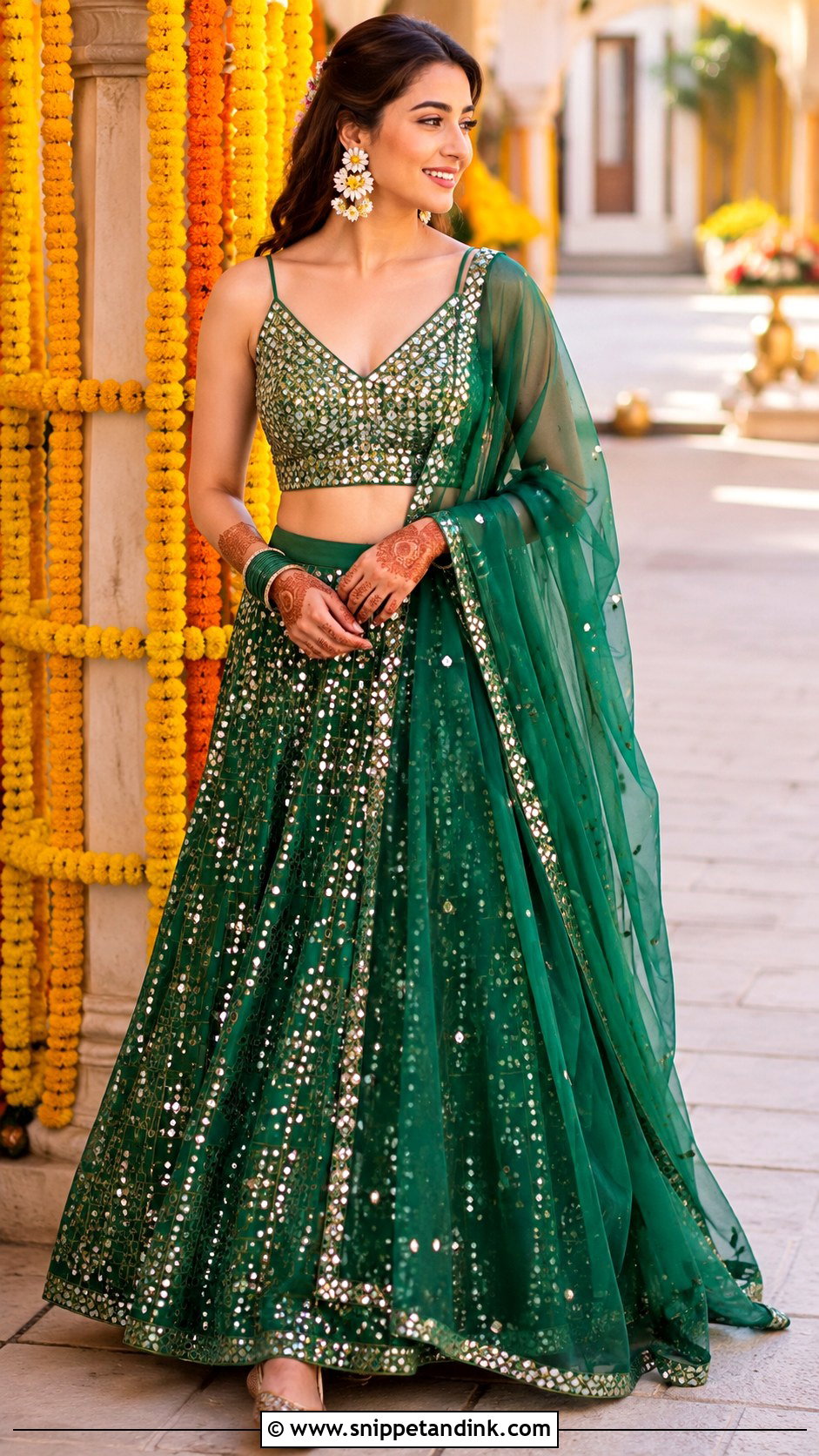
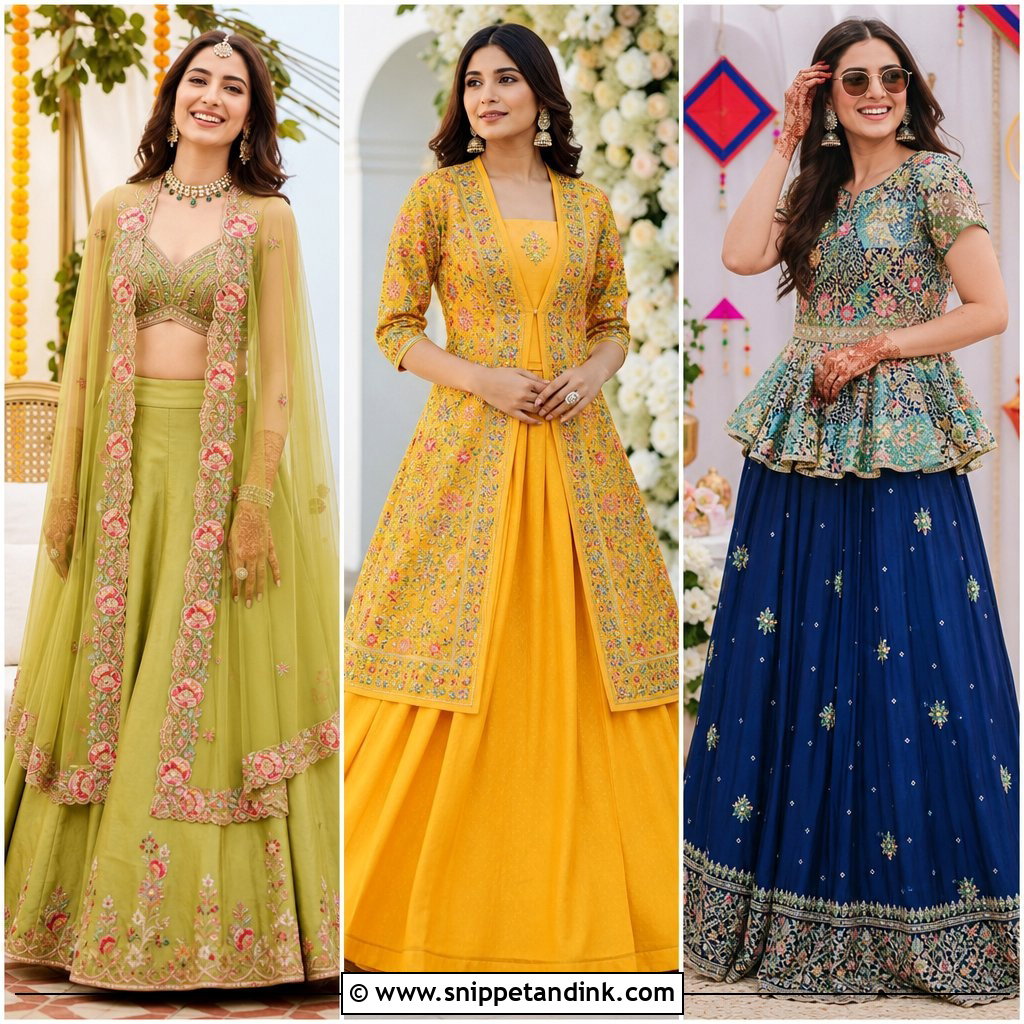
Scattered mirror work on a light georgette skirt is easier to sit in than dense panels, which press hard little edges into your legs on a floor cushion. Pair the green lehenga with a short-sleeve choli, and drape the net dupatta over one shoulder only, so both hands stay open for me. Floral earrings, slim bangles and gold juttis are enough. A braid with small flowers keeps hair off wet paste on the forearms. Brides can go fuller in the skirt and wear a statement necklace; guests should keep the embellishment lighter.
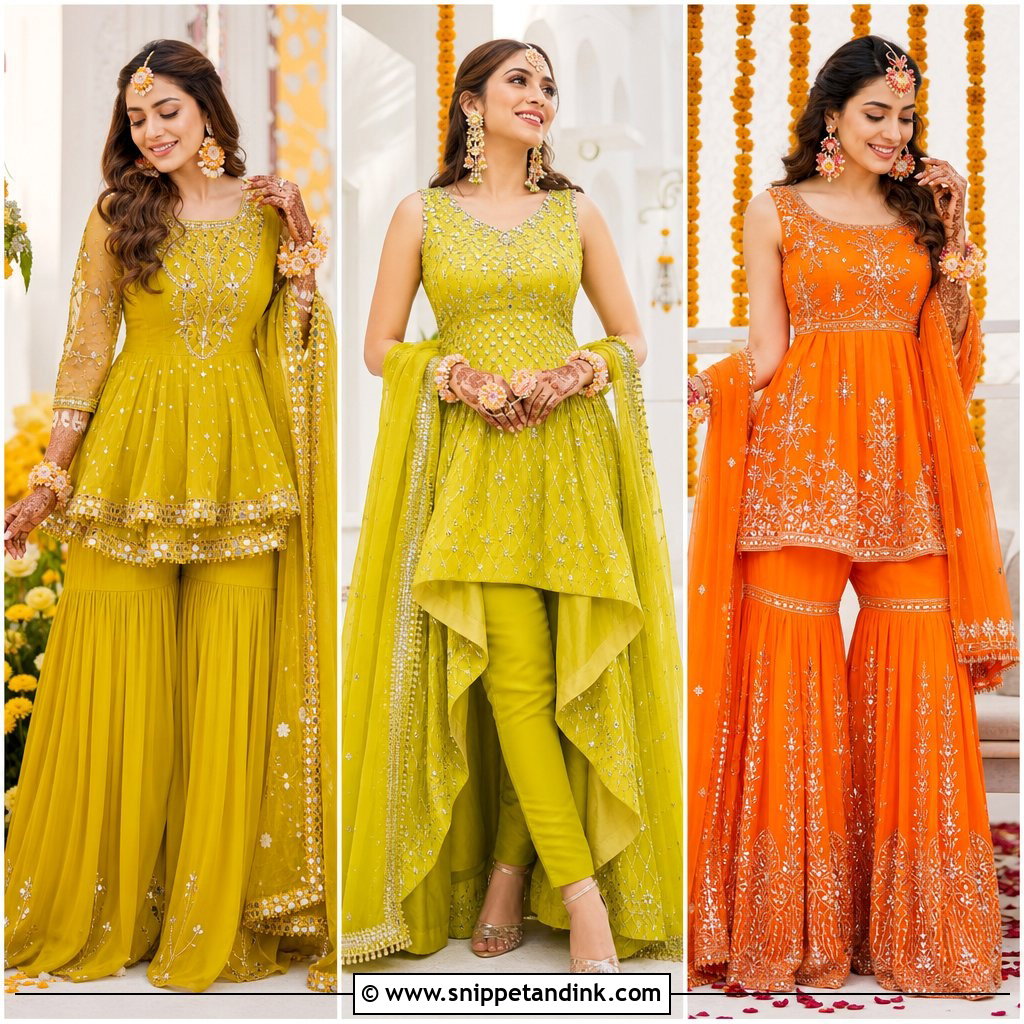
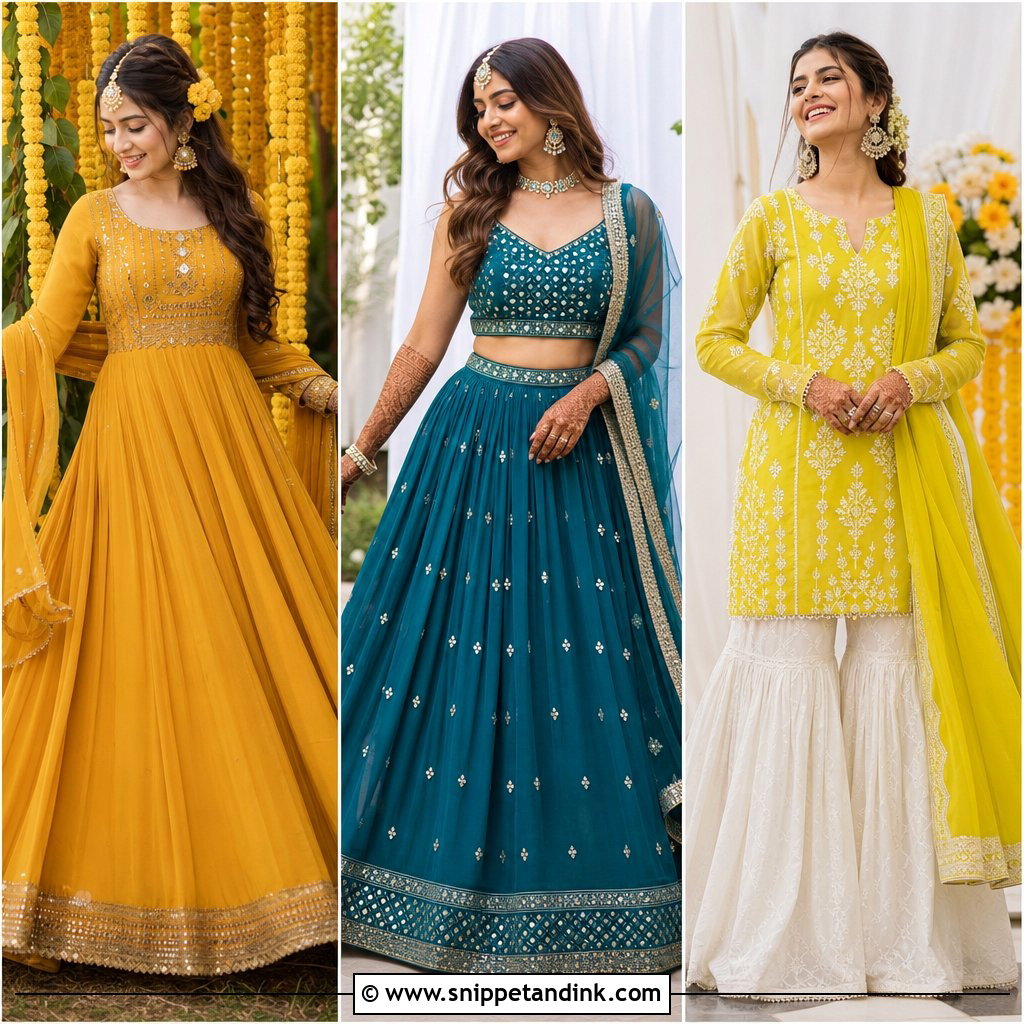
2. Yellow Floral Sharara Mehendi Outfit
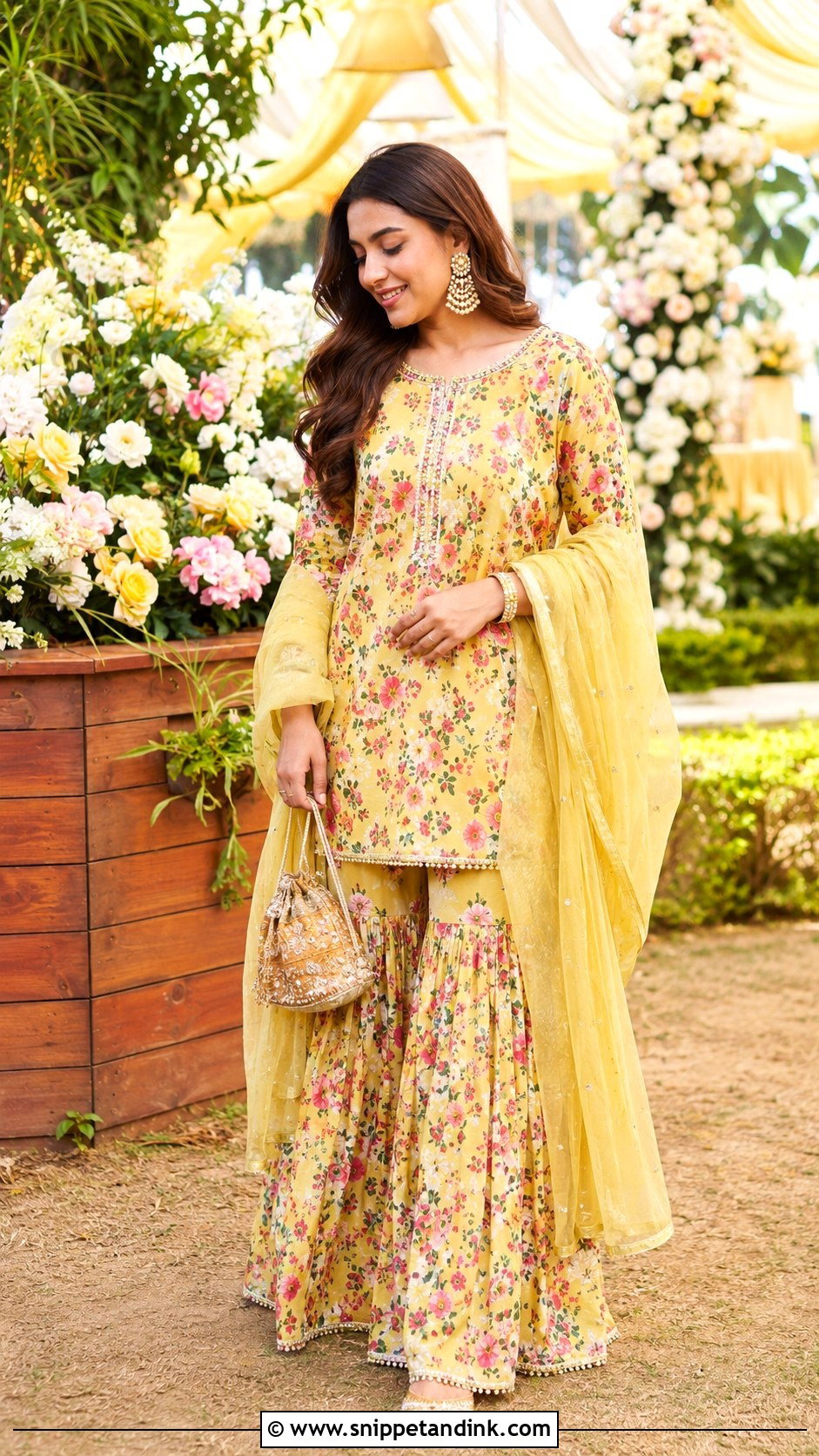
Yellow suits a daytime mehendi function, and a floral short kurta with a wide sharara lets you shift position without fighting a skirt. The detail I care about is the chiffon dupatta: pin it neatly behind the shoulders before we start, because a loose one drifts forward onto fresh henna and smears it. Pink, orange or green florals give contrast. Pearl or enamel earrings, a small potli and cushioned juttis suit a long day. Brides can add gota borders, floral jewelry and a more dramatic sharara flare.
3. Mint Organza Anarkali Mehendi Outfit
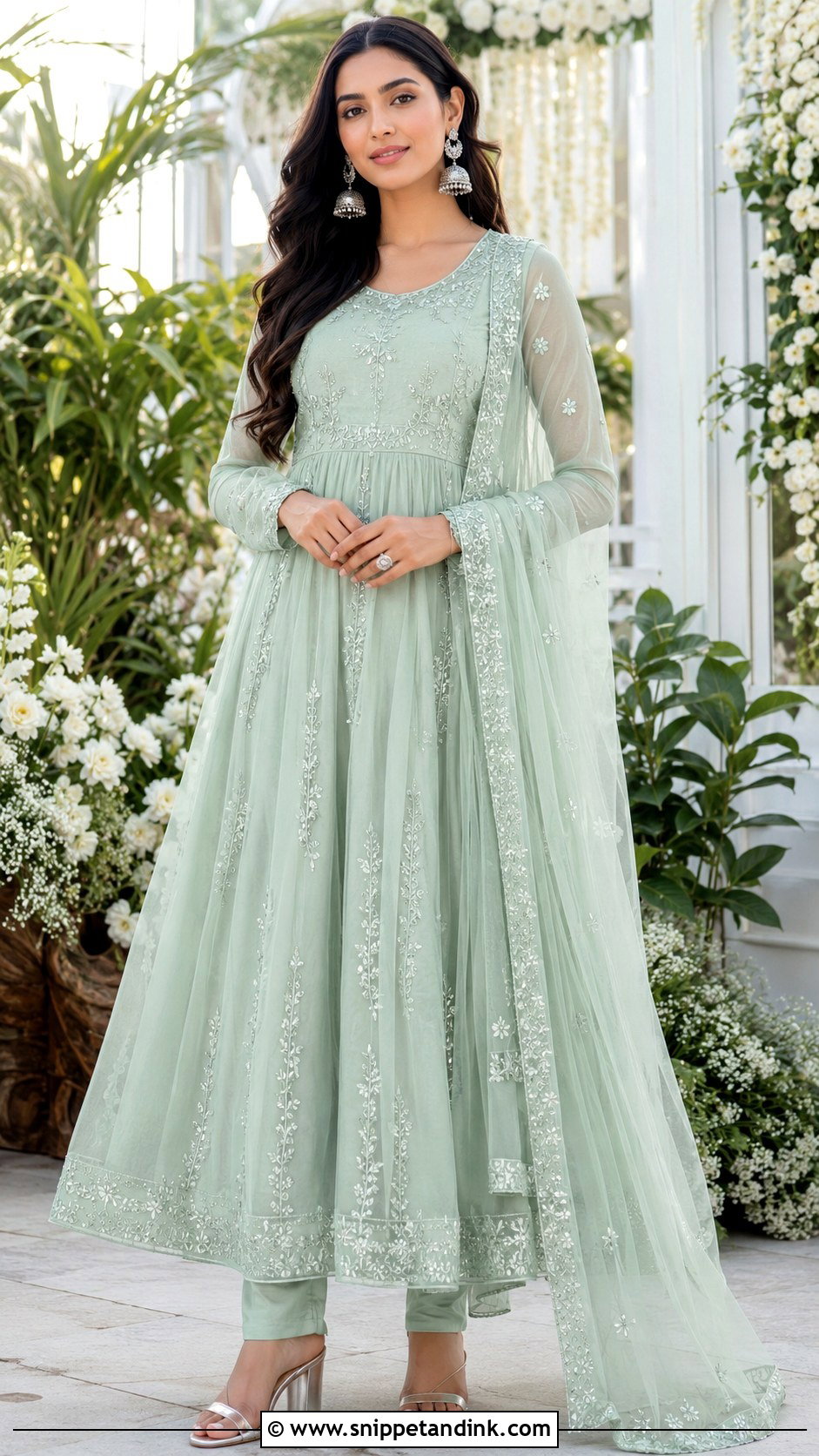
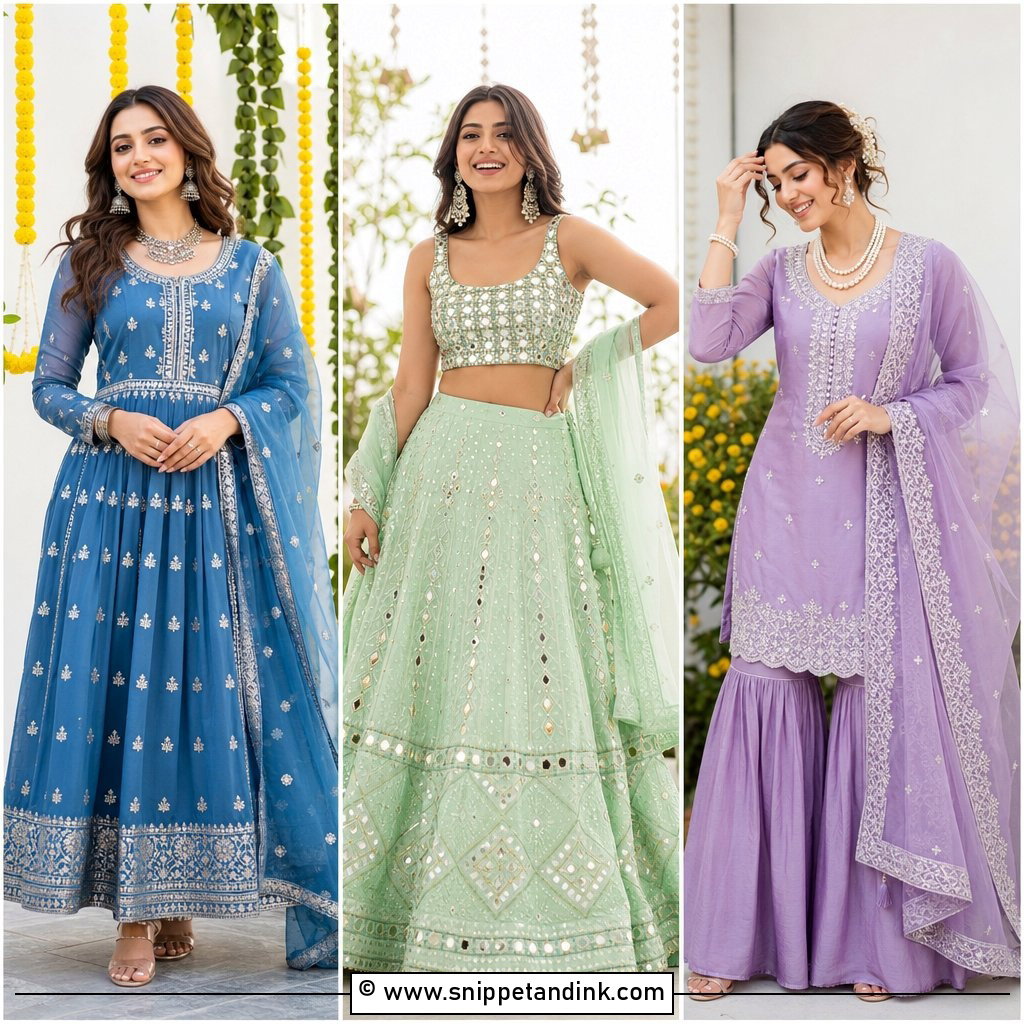
A mint organza Anarkali is graceful, but organza is crisp and slightly scratchy, so check for a breathable cotton lining before you sit in it for hours. Elbow-length sleeves are ideal for me: they leave the full hand and forearm clear, and they cover the upper arm if the family prefers. Narrow pants and a sheer dupatta with a fine border keep it light. Silver jhumkas and block heels add a little shine. Keep the hair simple, a loose bun or side braid, so nothing hangs near your wrists. Mint sits well against white flowers and greenery in a garden.
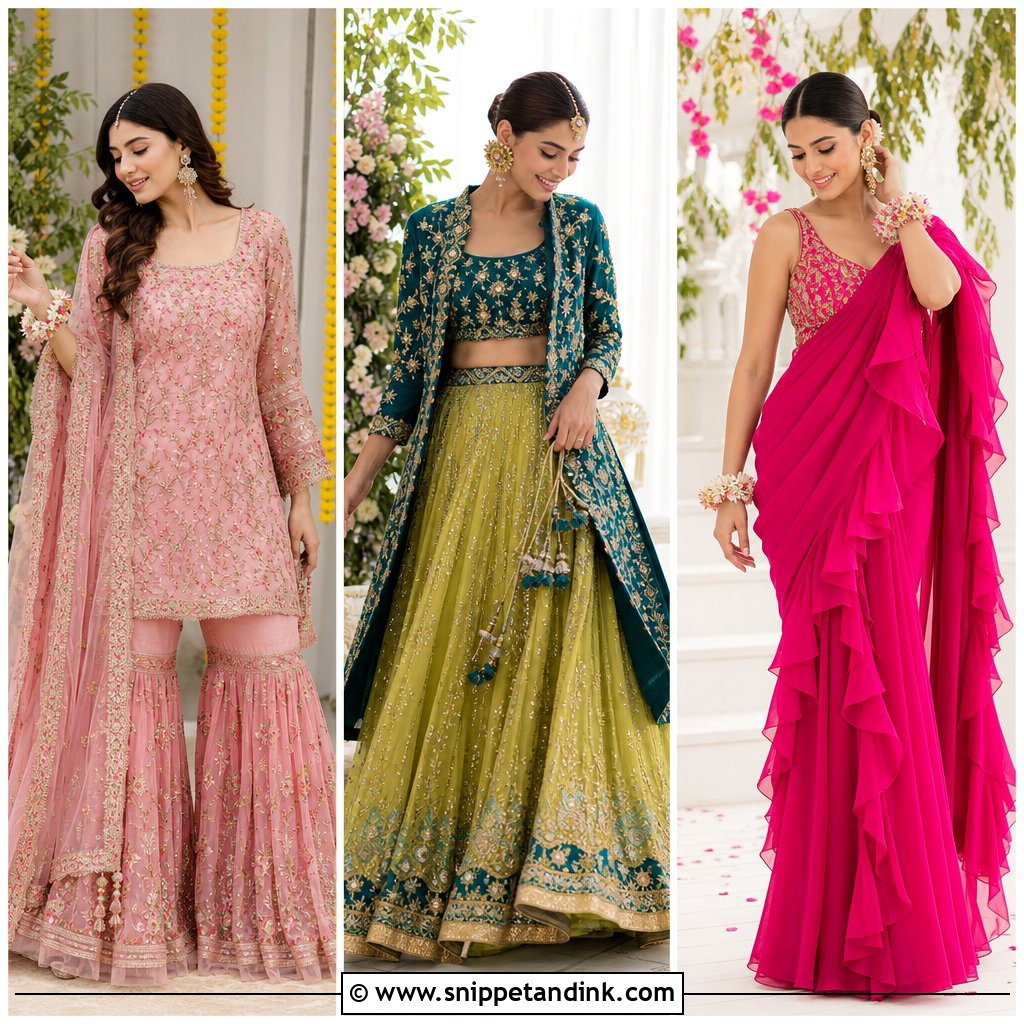
4. Pink Gharara Mehendi Outfit
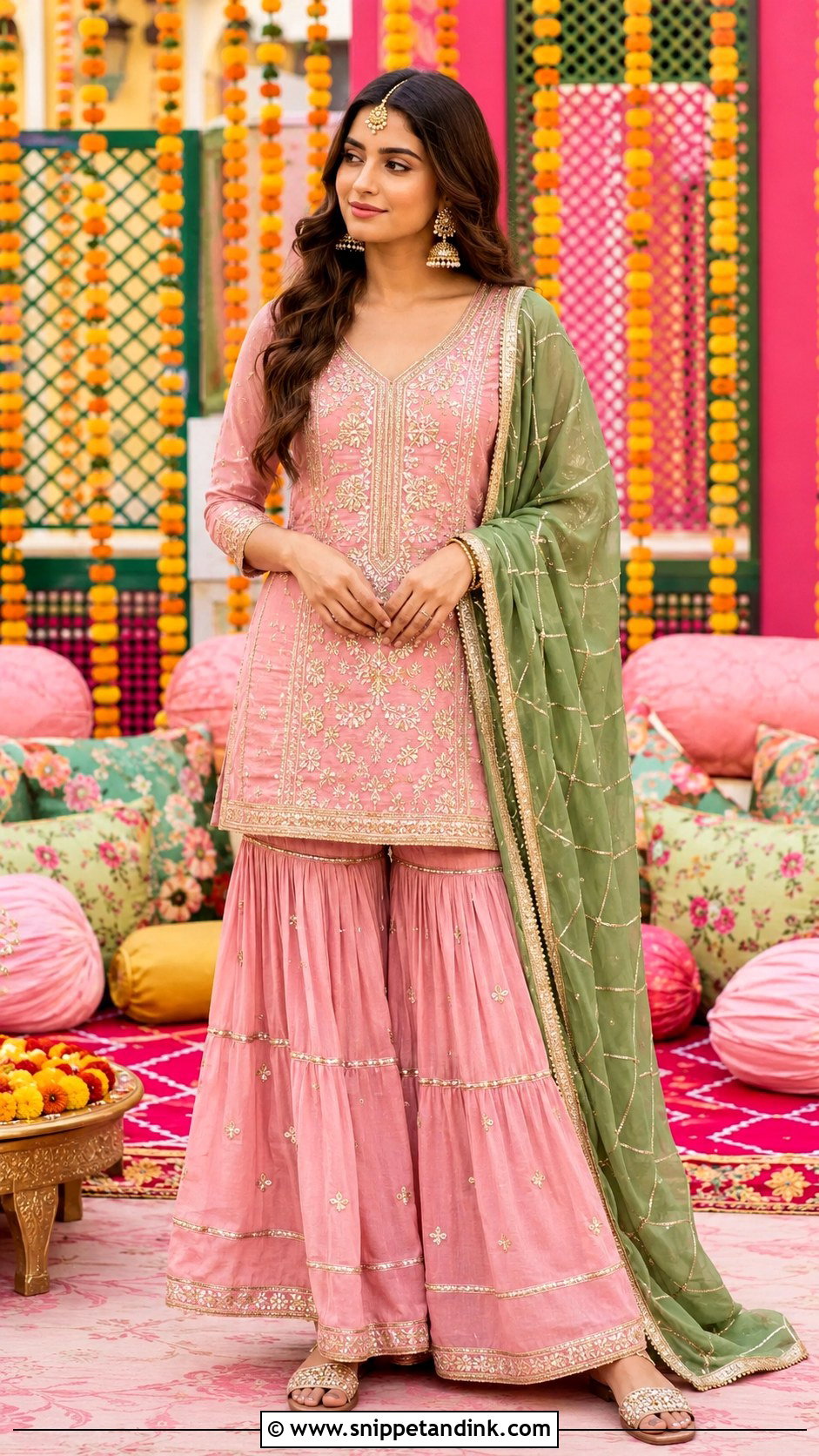
Gharara pants gather just below the knee and then flare, which makes them roomy for sitting on the floor. Pair a pink knee-length kurta with gota patti details and a green or orange dupatta for contrast. Since the pants already carry the drama, keep the necklace minimal or skip it. Gold jhumkas, a maang tikka and flat embellished sandals finish it. A sleek braid or half-up style balances the volume below. It’s comfortable through a long session and festive enough for dancing afterwards.
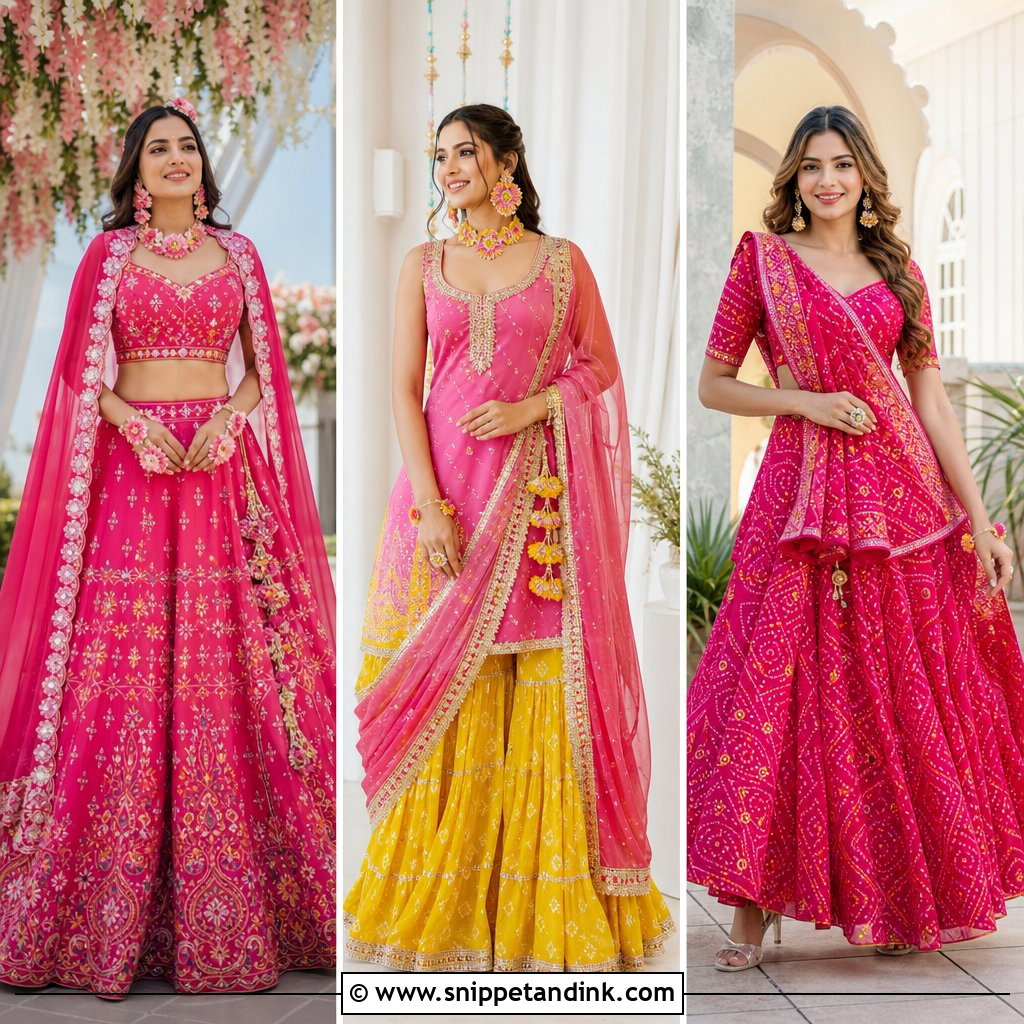
5. Multicolor Patchwork Lehenga Mehendi Outfit
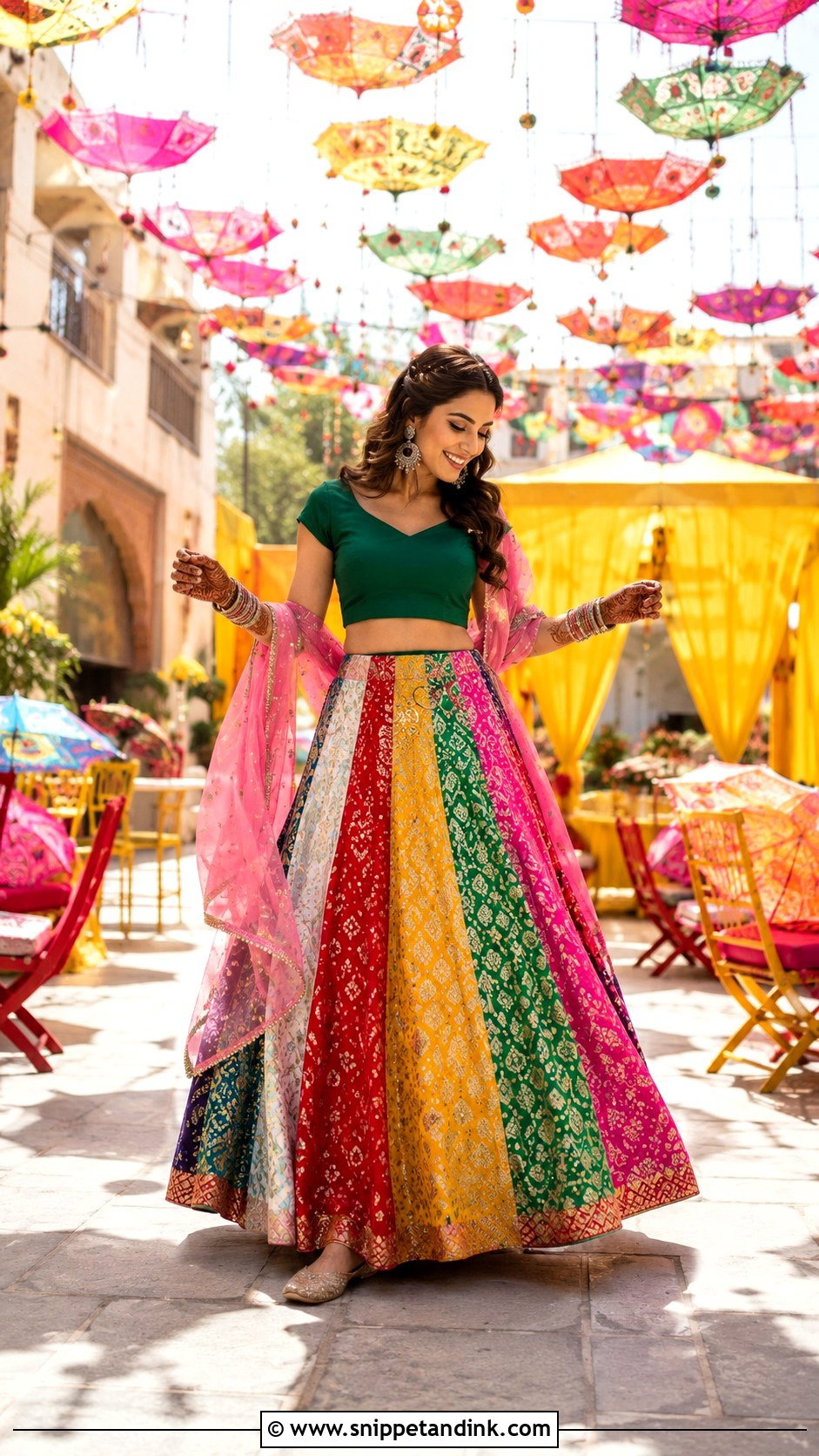
A multicolor patchwork lehenga has one practical advantage nobody mentions: a stray dot of henna on a busy skirt disappears. Combine floral prints, bandhani panels, mirror work or embroidered borders in the skirt, then ground it with a solid choli in green, pink, blue or orange. A light dupatta in one of the skirt’s colors keeps it organized. Oxidized silver earrings, stacked bangles and neutral juttis are enough. Skip the big necklace; the patchwork carries the detail. A loose braided ponytail keeps it relaxed.
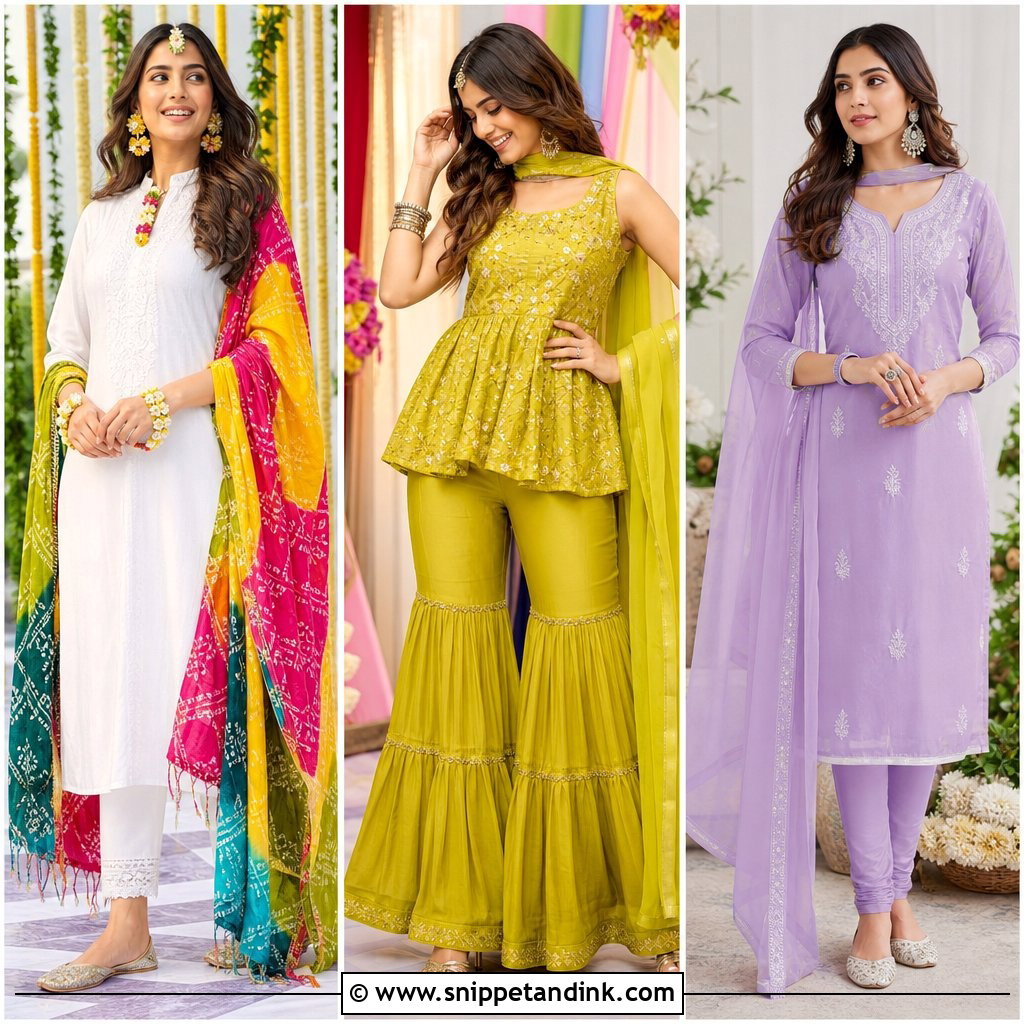
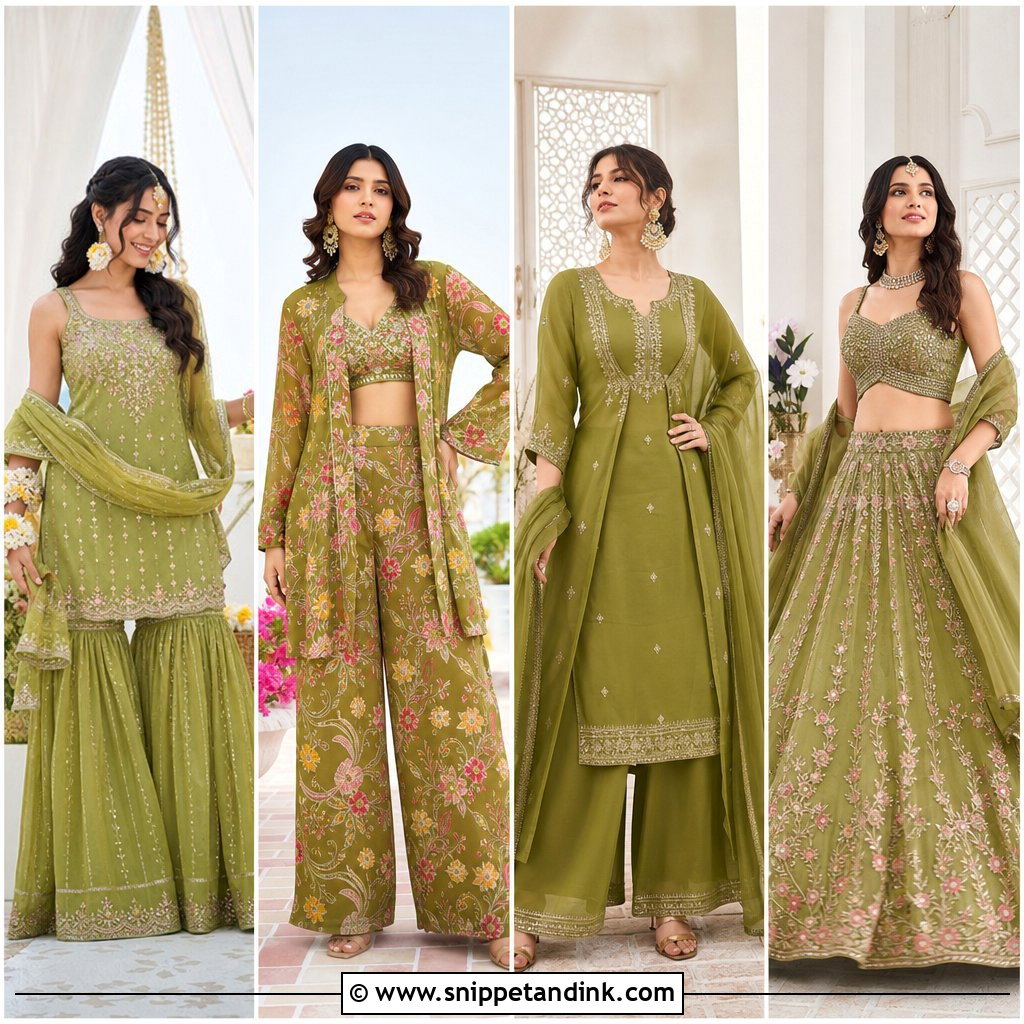
6. Lime Green Palazzo Suit Mehendi Outfit
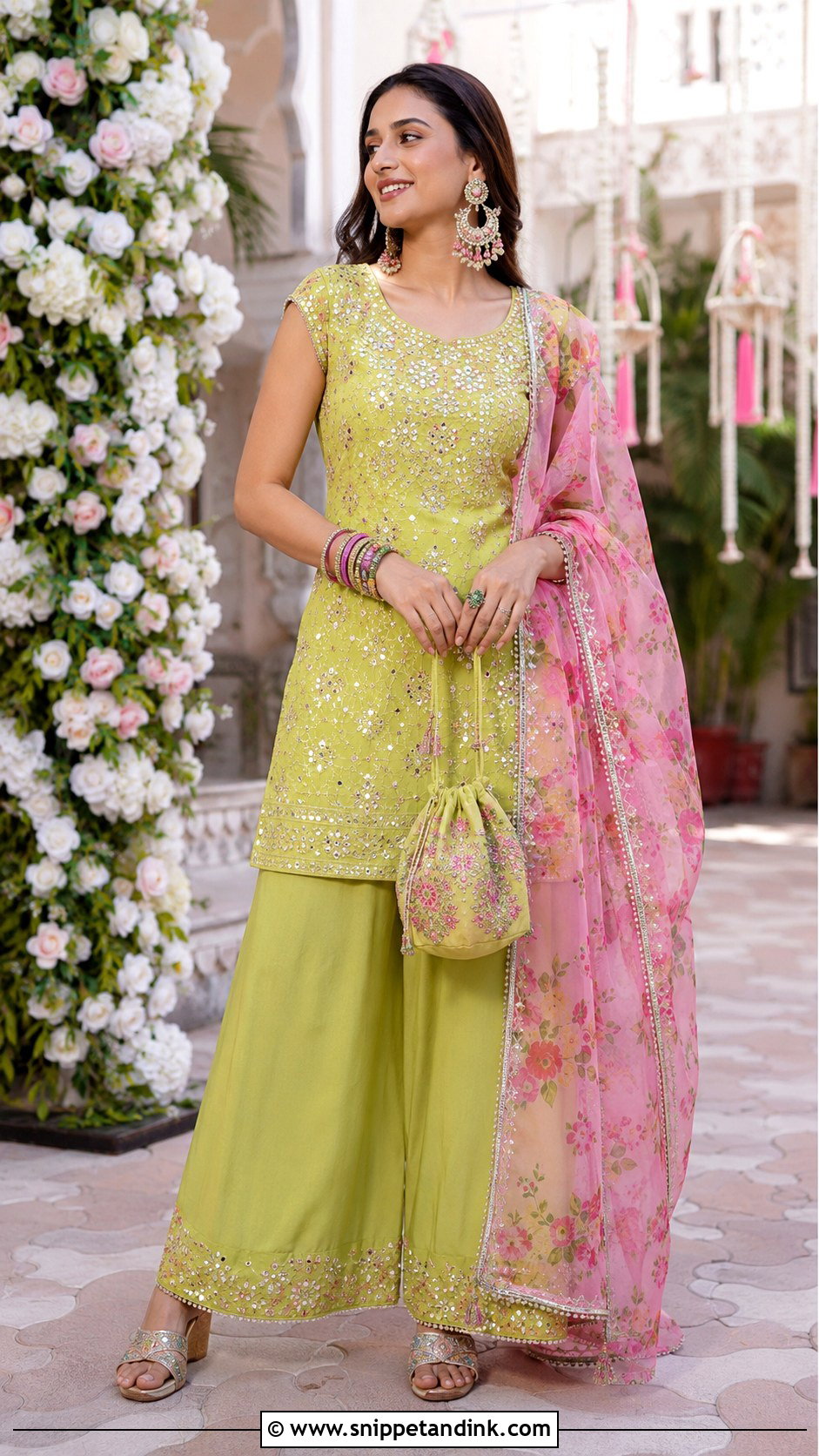
Lime green is loud, and a printed organza dupatta with pink florals or blue borders softens it. Choose a sleeveless or cap-sleeve kurta with a little mirror work at the neckline, and wide palazzos in the same green. Sleeveless is the easiest of all for an arm design that runs past the elbow. A crossbody potli keeps your phone close without needing your hands, which matters once the paste is on. Low wedges suit an outdoor or at-home function. Guests can keep the embroidery simple; close family can add a belt and heavier earrings.
7. Orange Bandhani Saree Mehendi Outfit
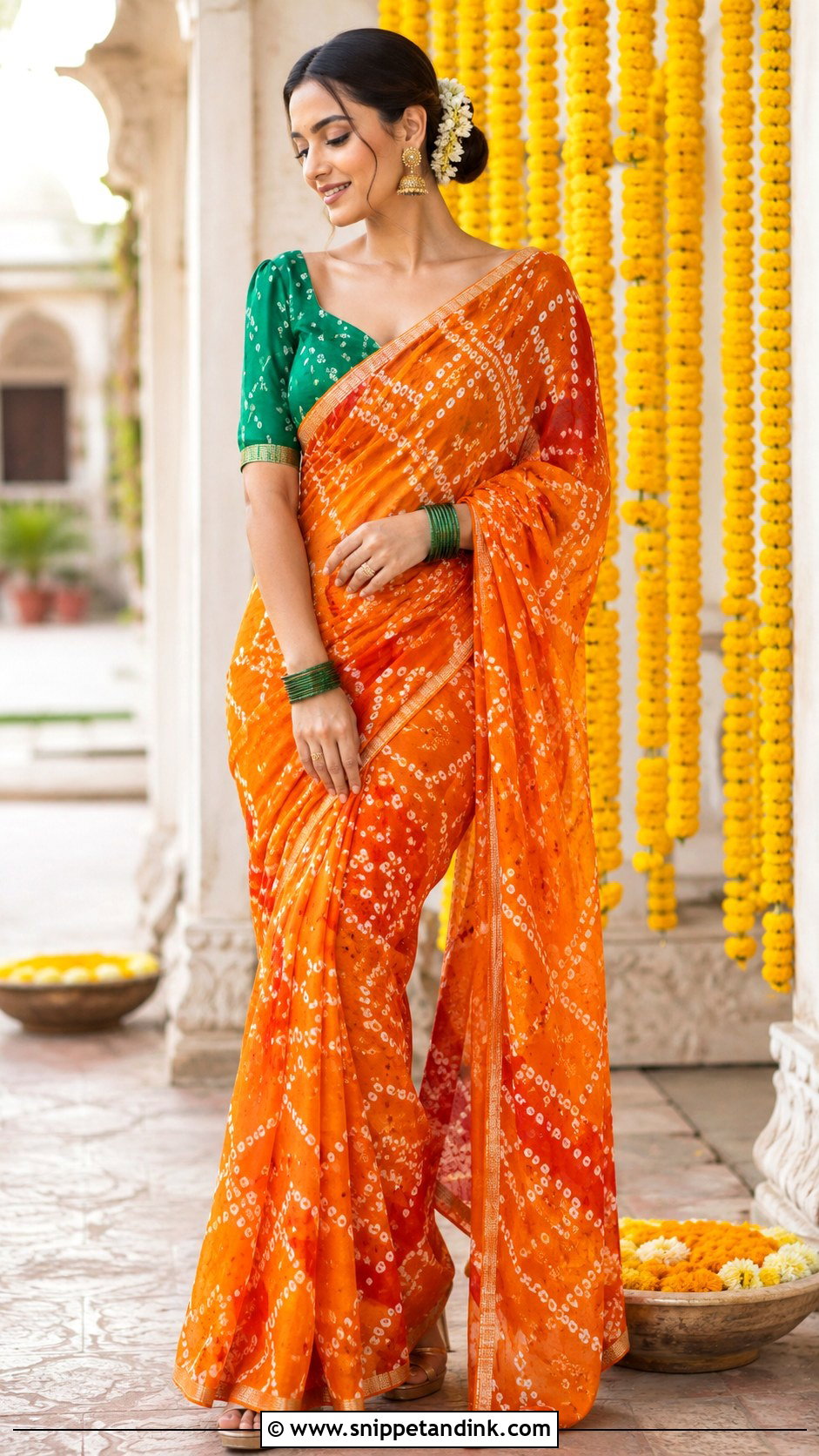
An orange bandhani saree in georgette or chiffon brings tradition without embellishment weight. A narrow gota border and a contrasting green blouse with elbow-length sleeves look festive. With a saree, the pallu is my main worry: it must be pinned securely at the shoulder, because sliding it back with henna-covered hands is impossible. Pleats need firm pins too if you’ll dance later. Gold jhumkas, green bangles and a low bun with fresh flowers finish it. Orange and green look vivid against marigolds.
8. Floral Printed Lehenga Mehendi Outfit
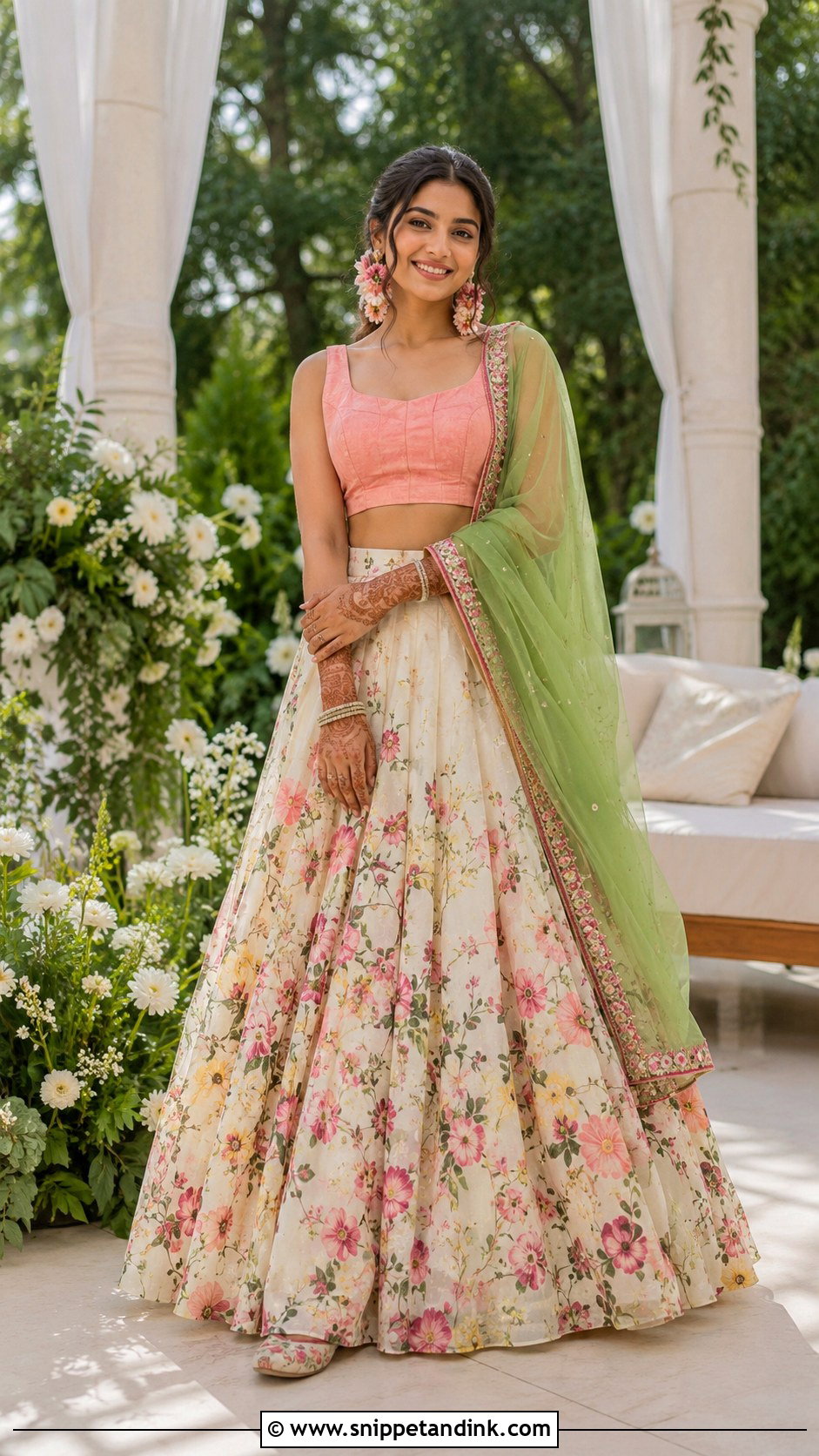
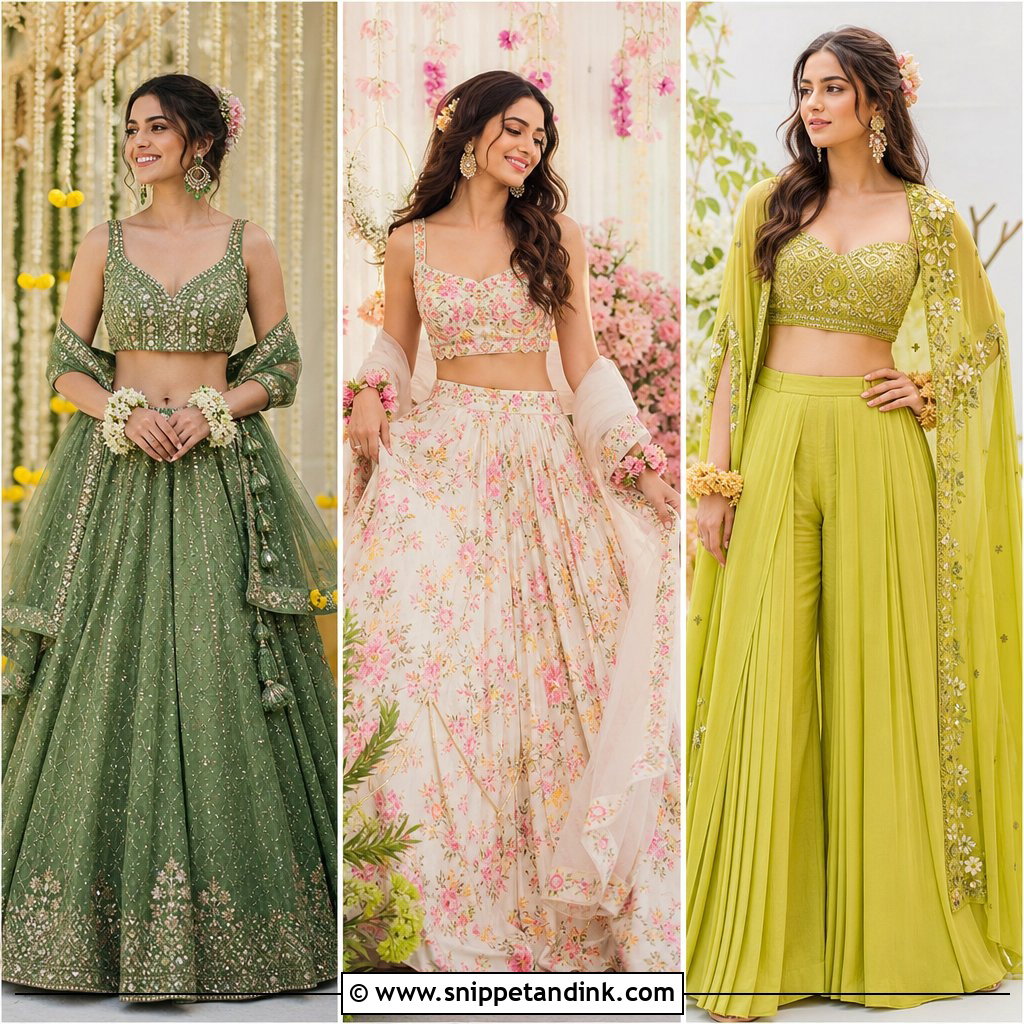
Medium-scale flowers on a light lehenga skirt feel airy at a garden mehendi. Pair it with a solid cropped blouse that picks up one color from the print, and a sheer dupatta with a slim border. Heavy embroidered motifs would add weight you don’t need for a day of sitting. Loose waves and fresh makeup suit the soft print. Brides can add a floral choker or decorated belt for definition; guests and bridesmaids can wear smaller earrings and skip the necklace. Pastel juttis or low block heels keep you steady on grass.
9. Teal Peplum Sharara Mehendi Outfit
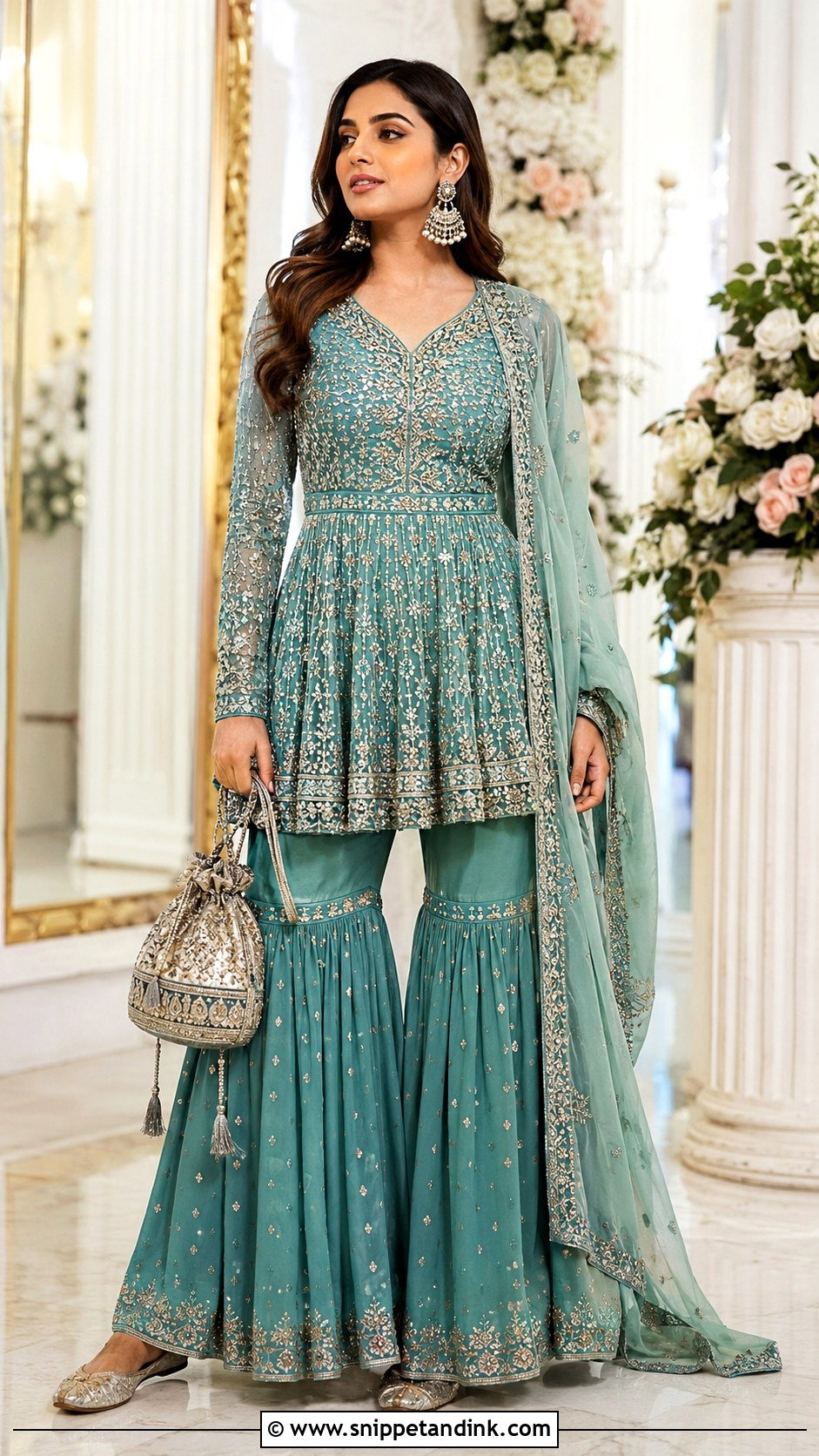
Deep teal suits an evening or indoor mehendi, where reflective embroidery stands out under lights. A fitted peplum top defines the waist and a flared sharara moves well when you dance. Keep the sequins modest around the neckline and hem. Secure the dupatta behind one shoulder, in teal, mint or a contrasting pink. Silver chandelier earrings, metallic juttis and a structured potli complete it. Sisters of the bride or groom often want exactly this: distinct from the bride, still easy to wear.
10. Ivory Chikankari Kurta Mehendi Outfit
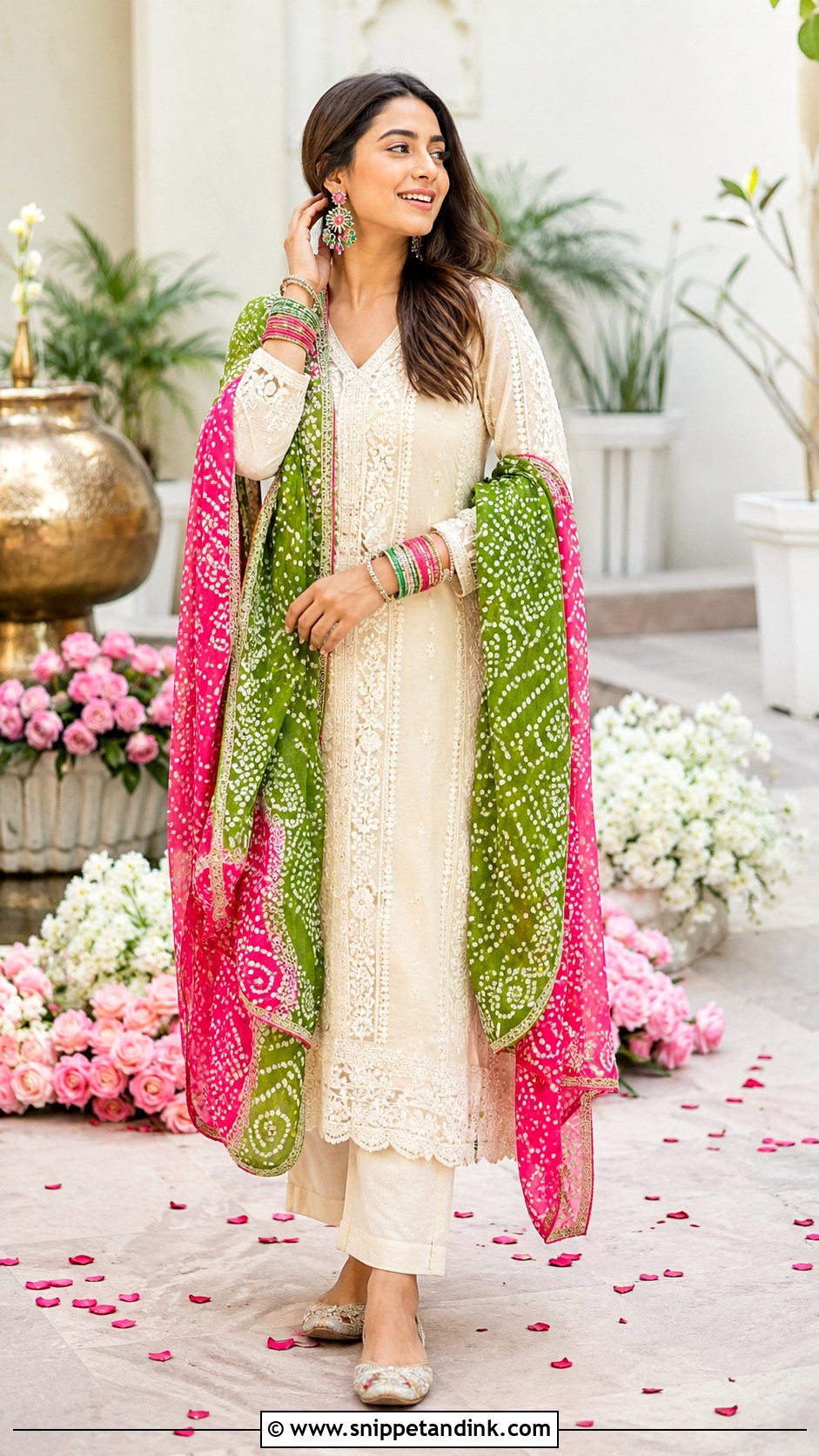
Ivory chikankari is a quiet choice, and honestly the riskiest one at a mehendi. Henna paste stains pale cotton orange-brown, and a smudge on ivory is very hard to remove. If you love it, add a vivid green, yellow or pink bandhani dupatta and keep well clear of anyone with wet hands. A long cotton or georgette kurta with lining and straight pants or a soft palazzo is comfortable. Take your bangles off before your own henna starts. Check first whether the family has asked for brighter colors, as some do for every attendee.
11. Fuchsia Draped Saree Mehendi Outfit
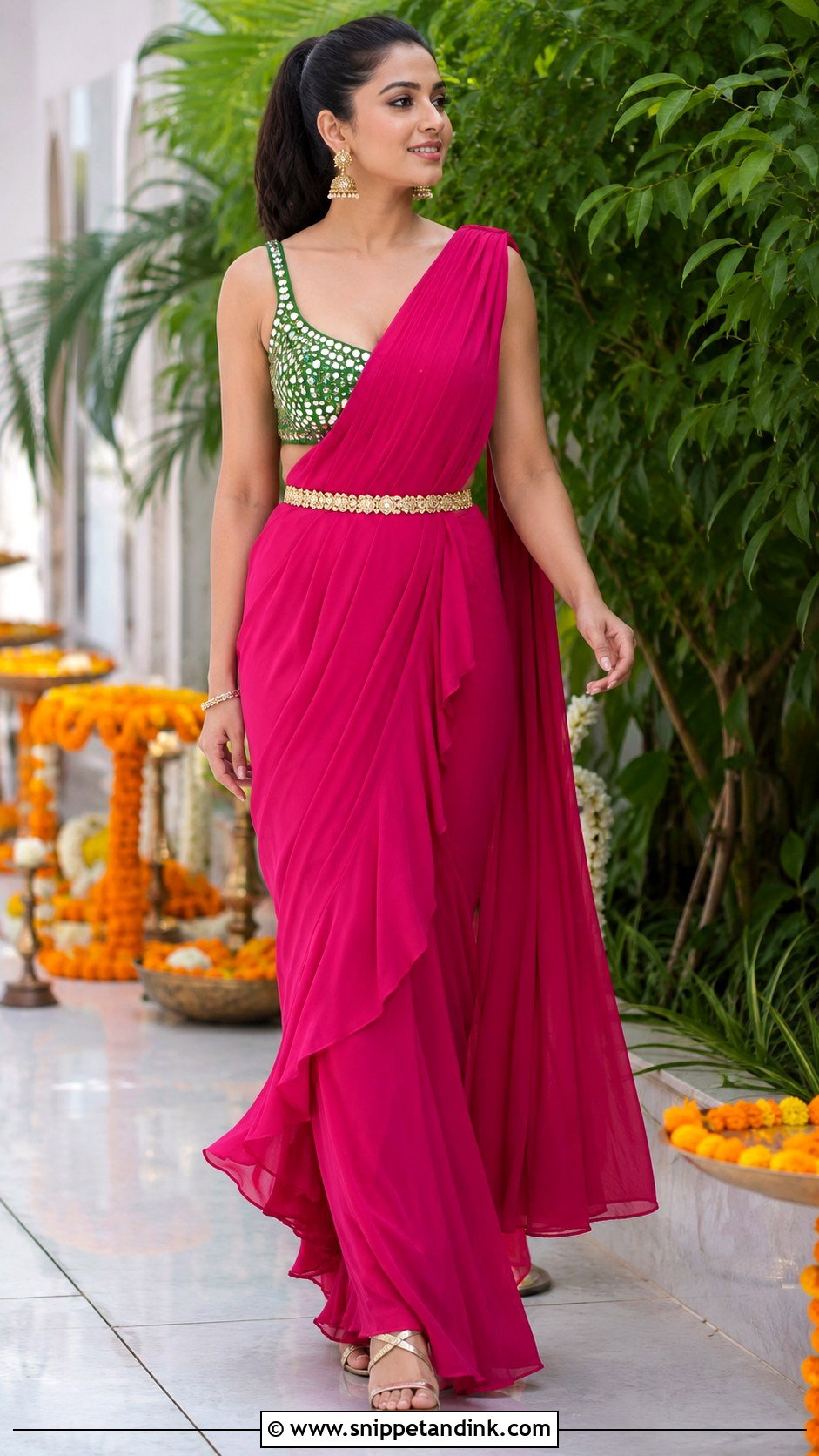
A pre-stitched fuchsia saree in georgette or crepe gives saree color without the pleating, and its pleats won’t drop while you’re sitting still. Pair it with a green embroidered blouse or a matching one with mirror detail. The pallu should be pinned behind the arm, not across the hands. A sleek bun or high ponytail keeps hair off the wet design on your arms. Gold earrings, a slim waist belt and low block heels finish it. The strong pink looks vivid beside green foliage and marigolds.
12. Sage Green Cape Set Mehendi Outfit
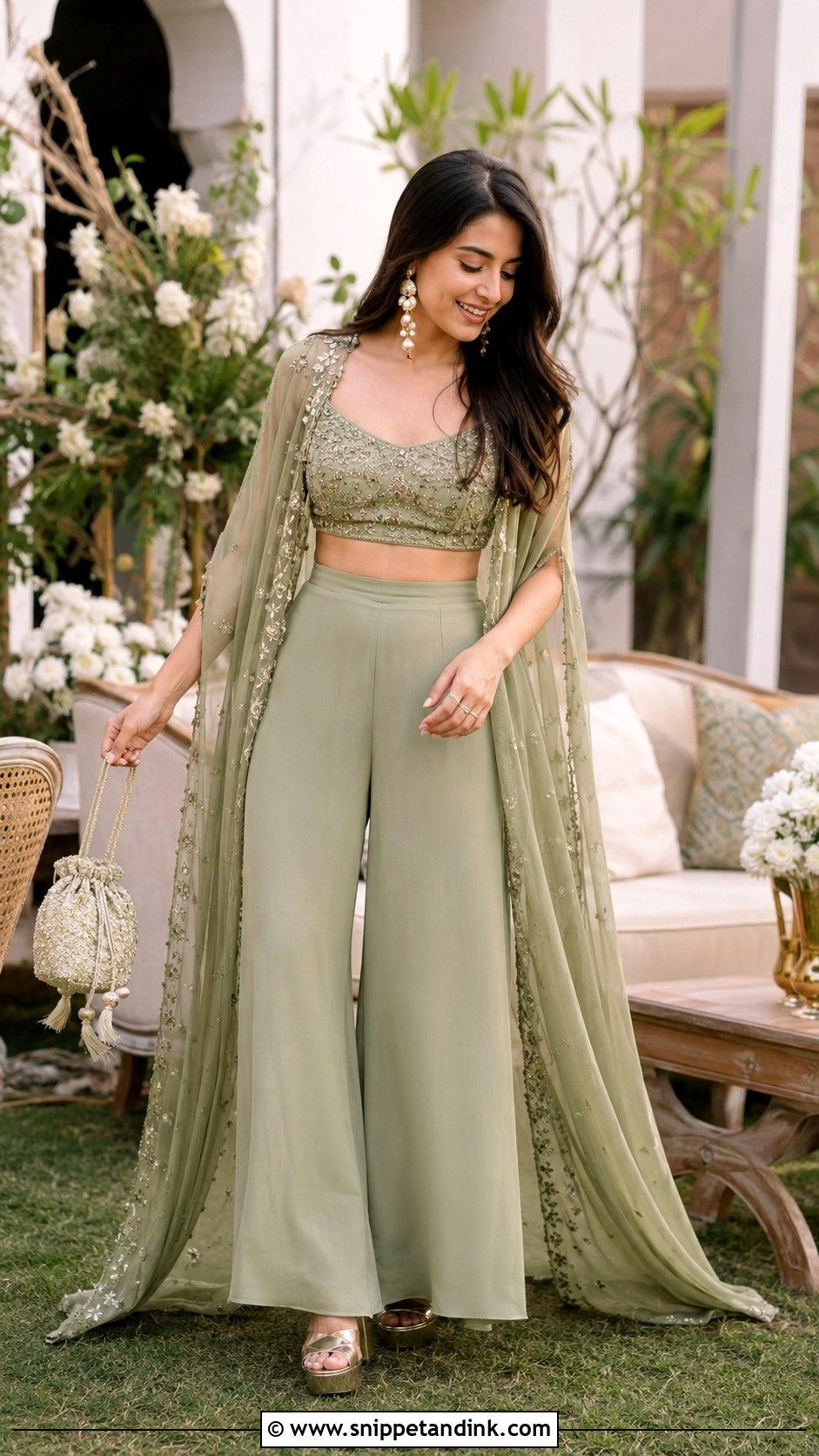
A cape set looks modern, and the cape needs open sleeves or front slits, otherwise the fabric brushes your forearms all session and lifts the paste before it sets. Wear a cropped embroidered top with high-waisted palazzos and a sheer sage cape. Pearl embroidery or fine mirror work adds texture without weight. Carry a potli with a wrist strap, or hand it to someone while your henna dries. Metallic platforms, drop earrings and soft waves or a low bun suit bridesmaids, sisters and modern brides at an outdoor celebration.
13. Mustard Dhoti Pant Mehendi Outfit
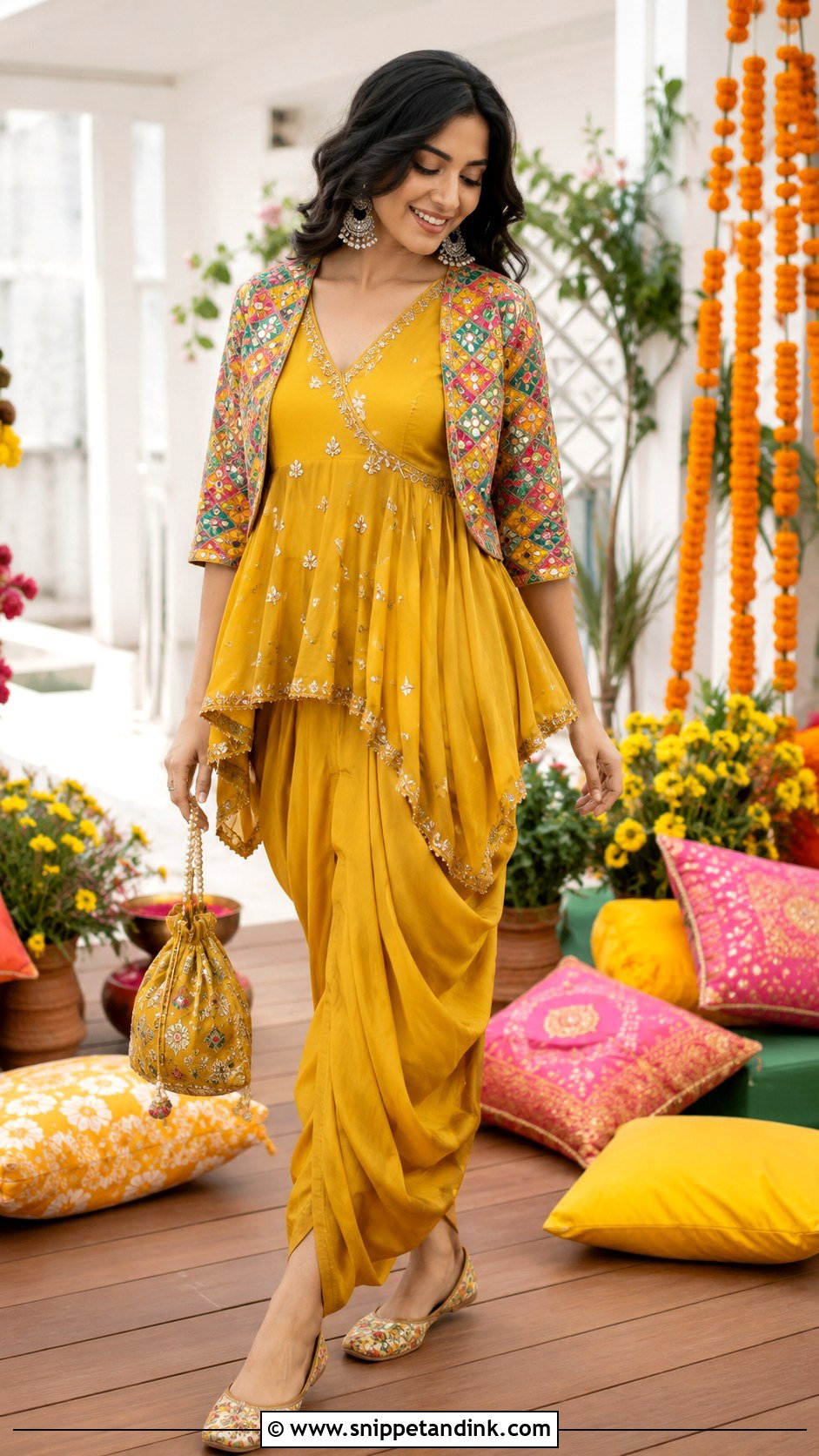
A mustard dhoti pant set is the easiest thing on this list to sit cross-legged in, which is why I like it for guests who’ll be on floor cushions for games and dancing. Pair the draped pants with a short embroidered kurta or asymmetric peplum top, and swap the dupatta for a light printed jacket so both arms stay clear. Green, pink and rust embroidery make it festive. Get the waist fitted and the ankles not too long. Oxidized earrings, embroidered flats and a side braid finish it.
14. Blue Crop Top Skirt Mehendi Outfit
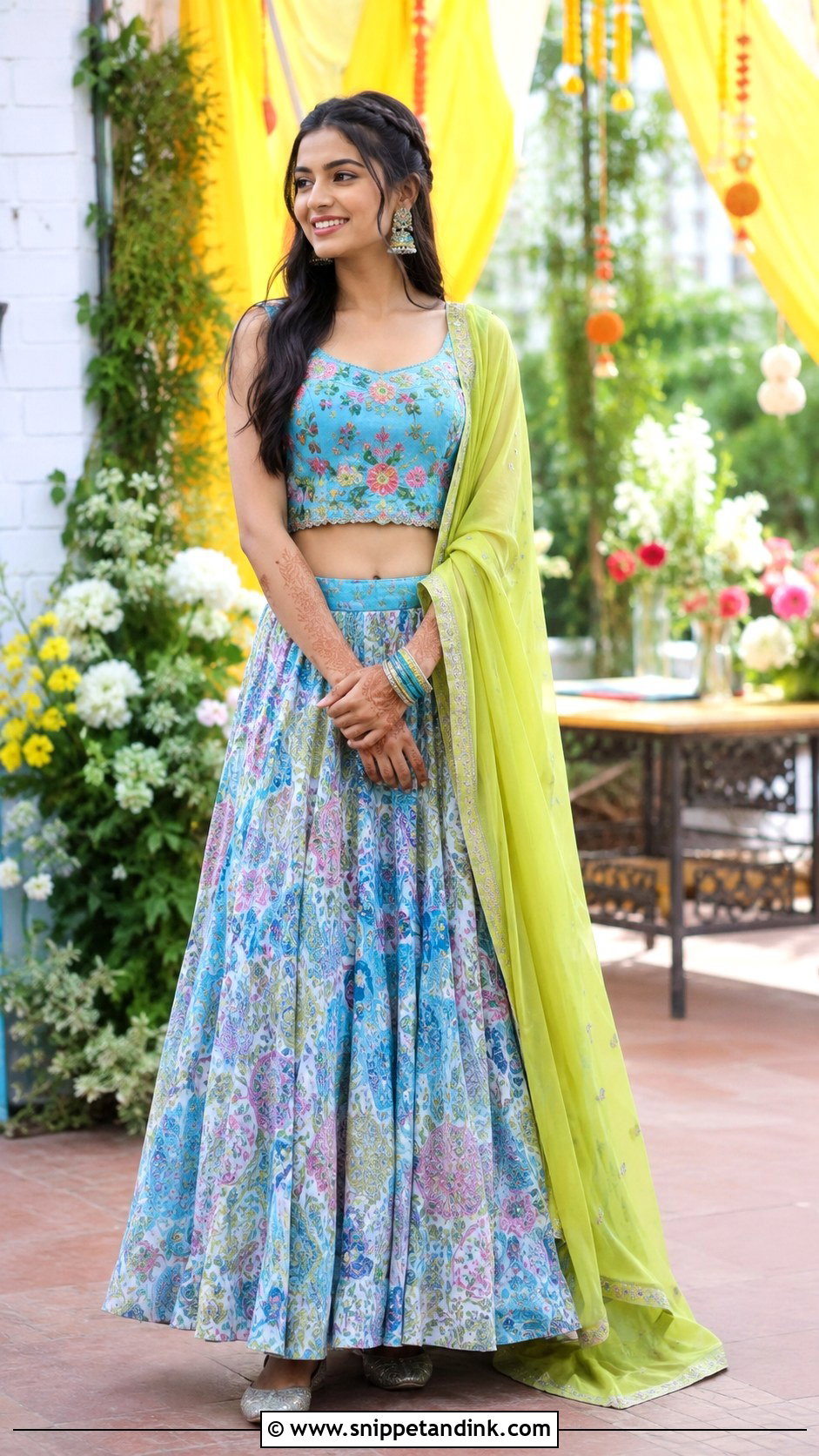
Blue stands out at a function where half the room is in green and yellow. A turquoise or cobalt crop top with floral embroidery and a flowing printed skirt keep you cool. Add a lime green, pink or soft yellow dupatta to tie it into the day’s palette. Enamel jhumkas, slim bangles and silver juttis are enough. A braided half-up style keeps hair back. Bridesmaids can all wear the same blue in different shapes. Brides may add a waist belt, floral necklace or a more detailed blouse.
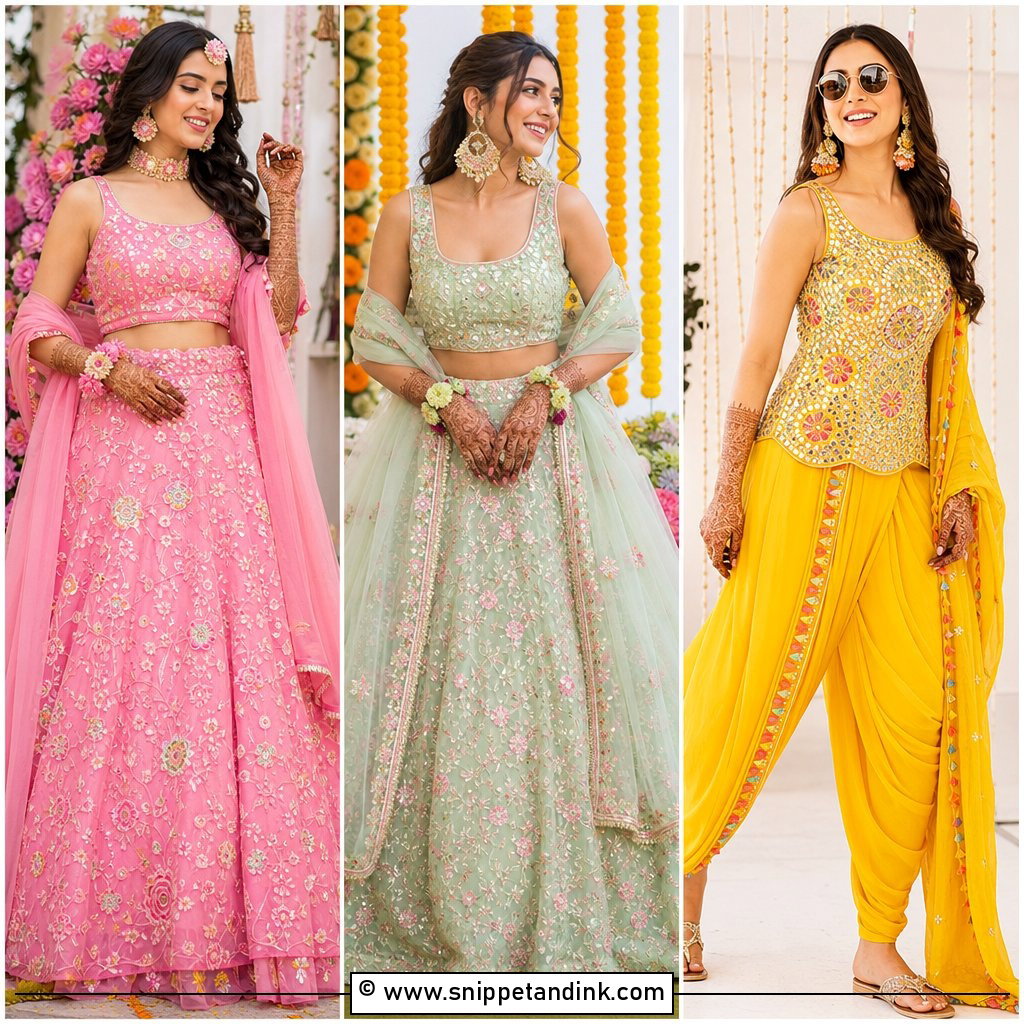
15. Lavender Jacket Lehenga Mehendi Outfit
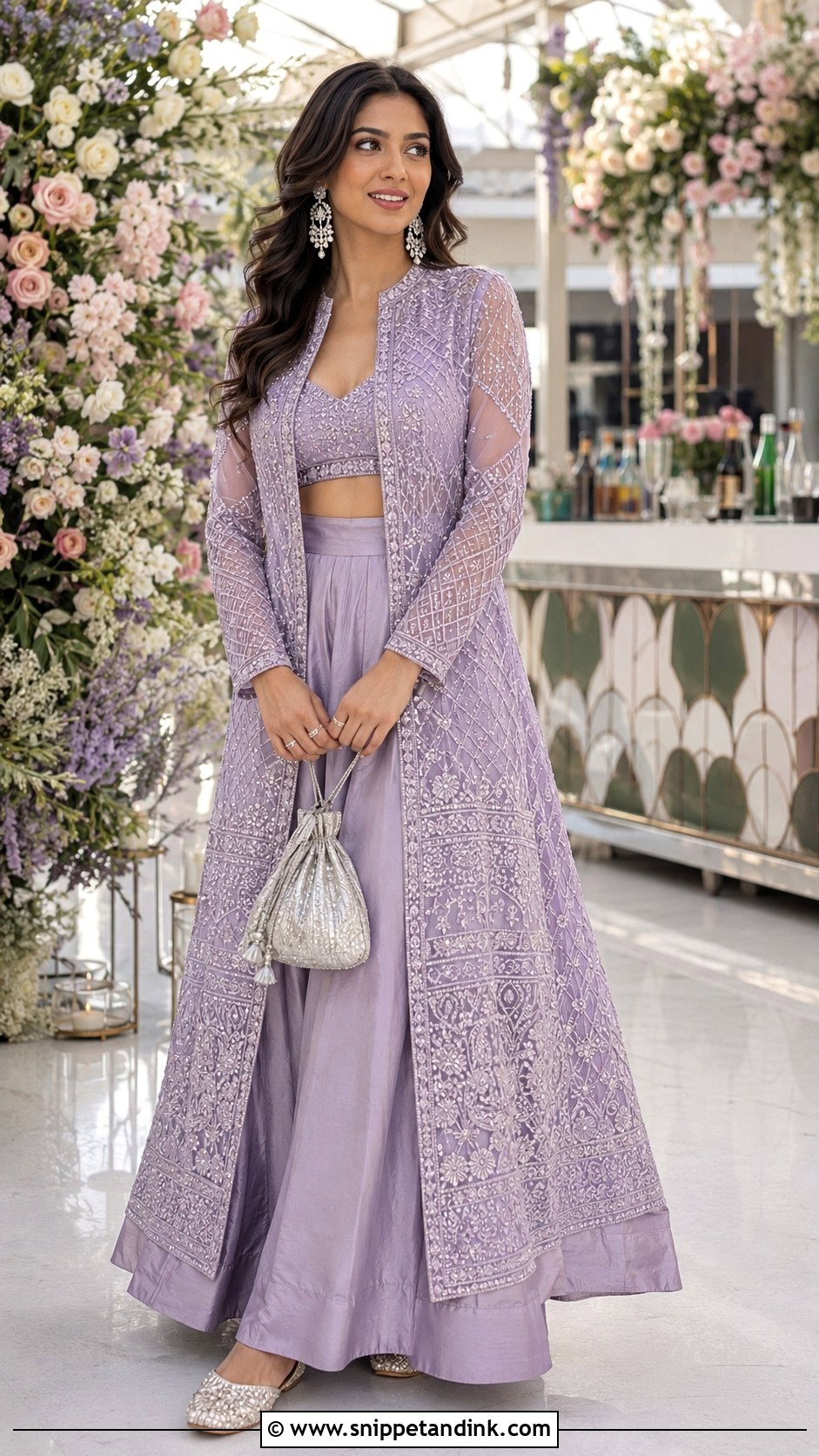
Long jackets need three-quarter sleeves or shorter at a mehendi, or the cuffs drag across your wrists. Layer an open-front embroidered jacket over a simple lavender lehenga and fitted blouse. Mint, silver and pale pink threadwork suit lavender. The extra layer helps in cool weather or an air-conditioned hall, and covers more for guests who prefer it. Keep the skirt and blouse plain so the jacket can lead. Crystal earrings, metallic juttis, a small silver potli and a smooth ponytail suit the modern shape.
16. Coral Salwar Suit Mehendi Outfit
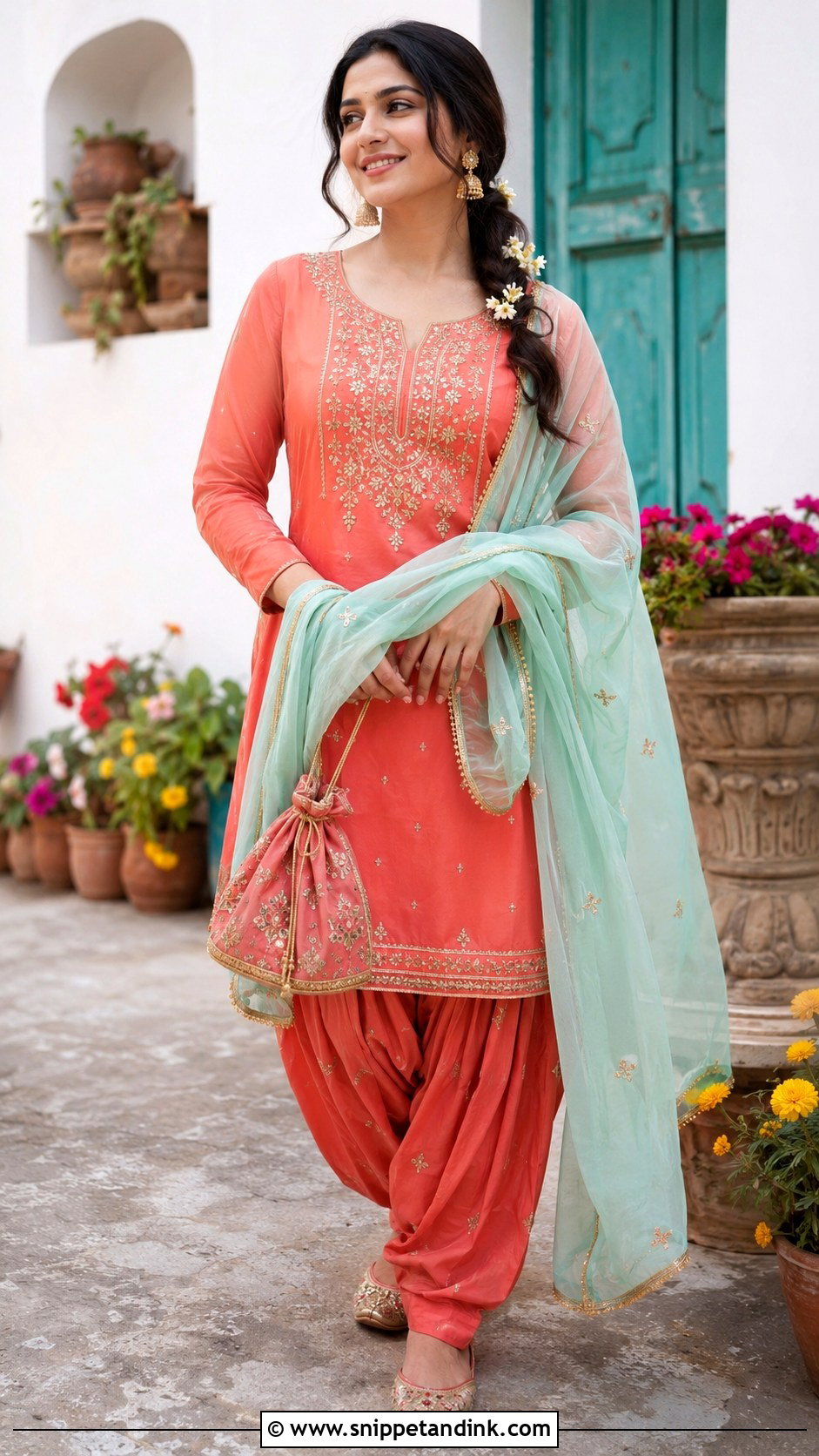
Salwar pants are the most forgiving thing to sit in for hours, and a coral salwar suit works for guests of every age. A straight or slightly flared kurta with gold threadwork, pleated salwar and a mint or yellow chiffon dupatta with a narrow embellished edge keep it bright. Pin the dupatta so your hands stay clear. Longer sleeves or a higher neckline make it more modest, though long sleeves will need to be pushed up if you’re having your own henna done. Gold jhumkas, embroidered flats and a low braid with tiny flowers finish it.
17. Green Banarasi Lehenga Mehendi Outfit
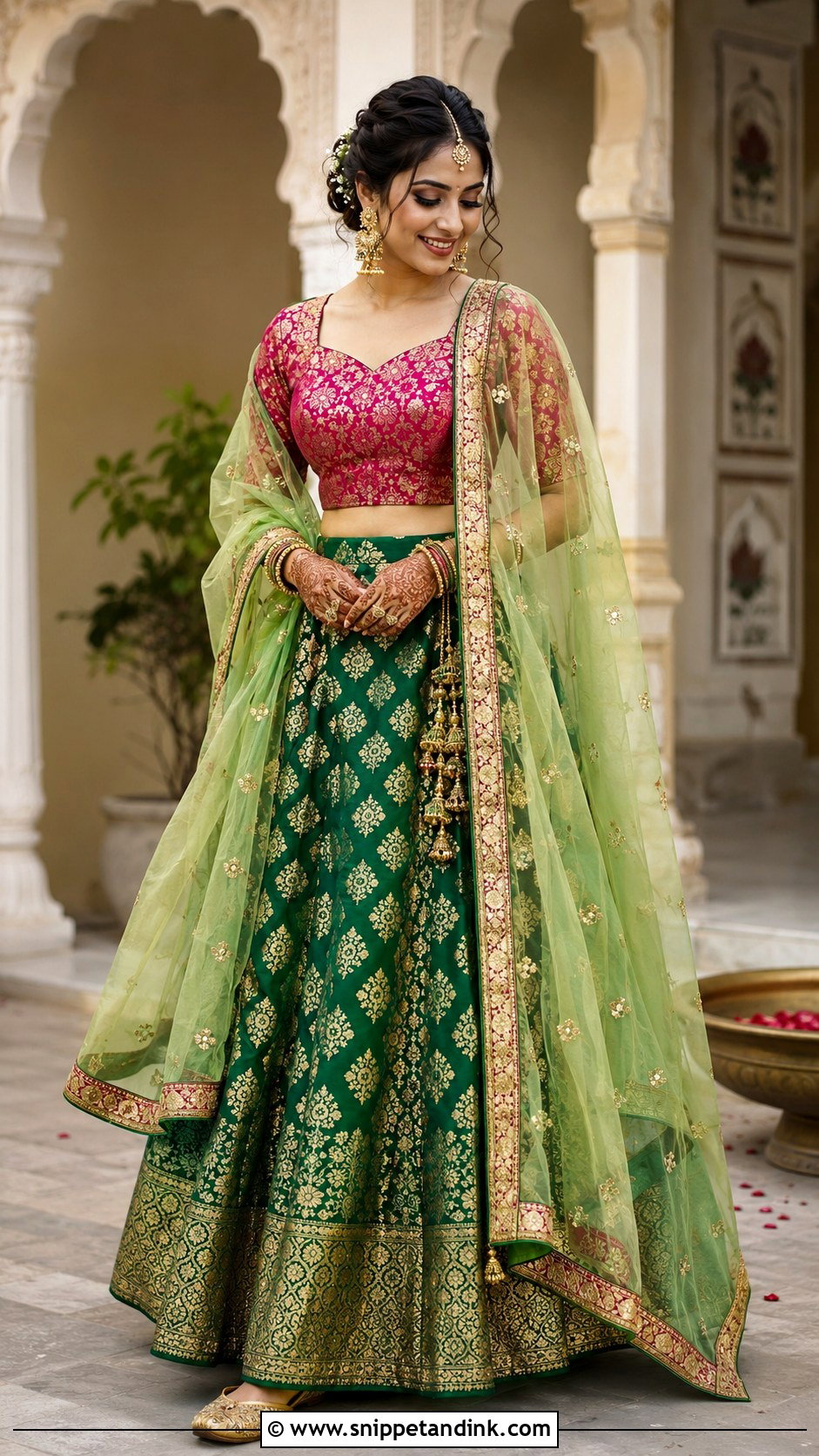
Banarasi brocade is woven silk, and it suits a formal mehendi evening for a bride who wants something heritage-inspired. Choose a moderate flare and delicate gold motifs rather than bridal volume, and pair it with a plain silk blouse in green, mustard or deep pink plus a light organza dupatta. Silk is the fabric I’d most protect from wet paste, because henna stains it permanently. Keep the dupatta well back. Antique gold earrings, a small maang tikka and a center-parted bun suit it; don’t pile on dense necklaces and heavy bangles at once.
18. Pastel Embroidered Co-Ord Mehendi Outfit
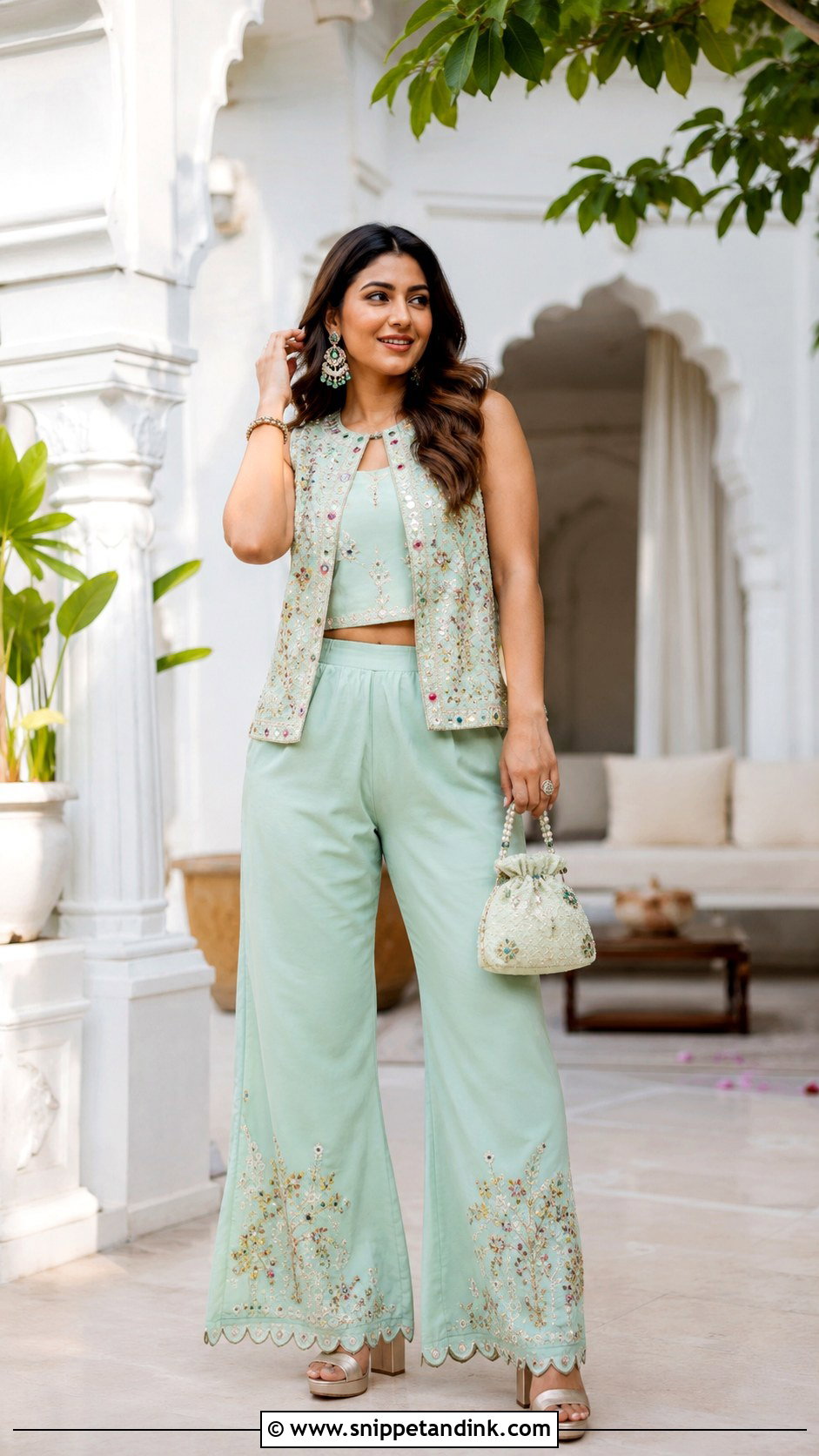
A pastel co-ord set is the simplest fusion option for a guest wearing Indian occasion clothes for the first time. A cropped kurta or fitted tunic with matching wide-leg pants in mint, peach, lilac or powder blue, plus a sleeveless embroidered jacket or short cape, makes it wedding-ready. Mirror work and thread embroidery add play. Block heels, statement earrings and a mini potli finish it. The pieces separate easily for later, and nothing trails near your hands.
19. Rani Pink Anarkali Mehendi Outfit
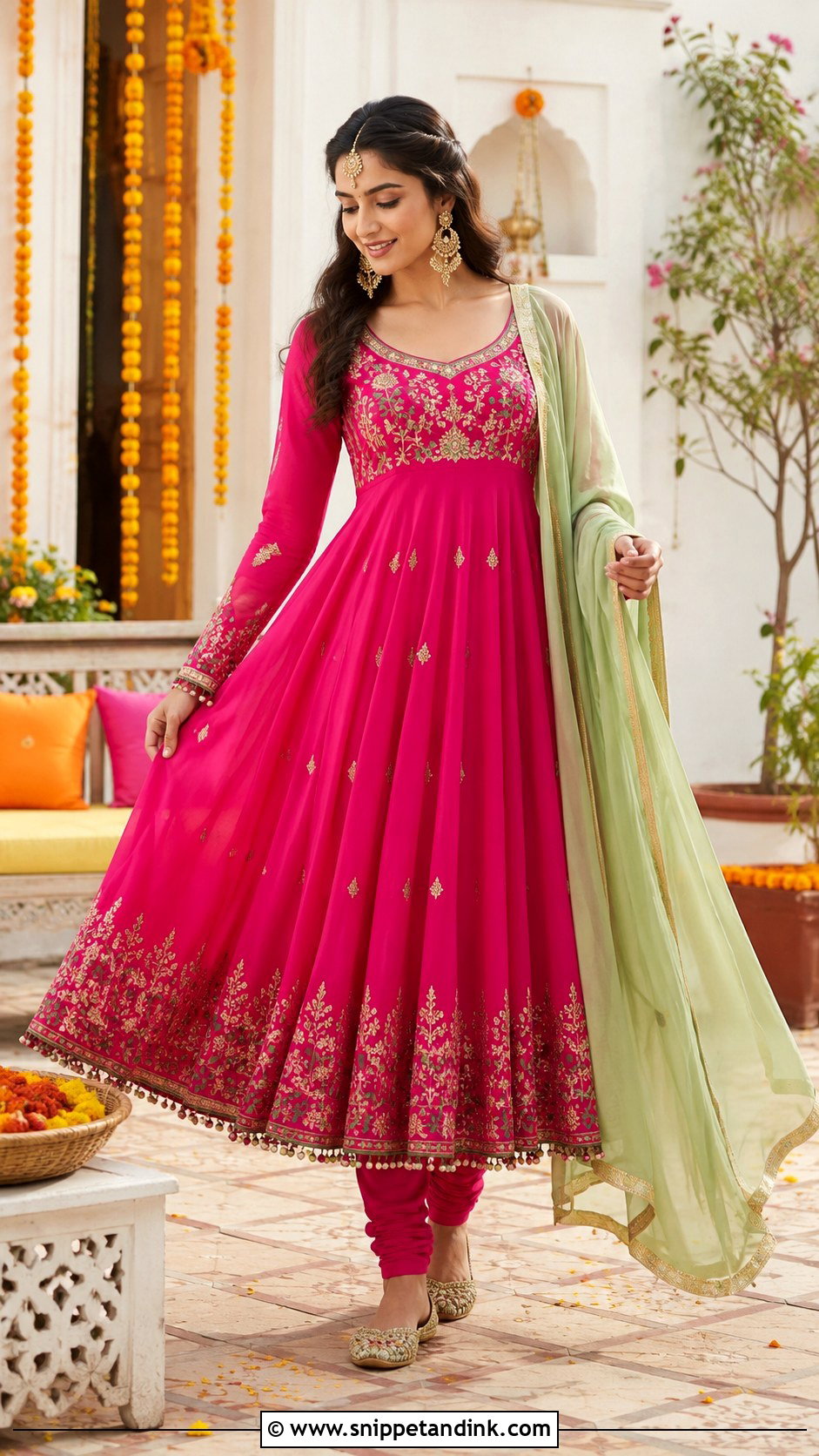
Rani pink is a deep, vivid pink that holds its color in daylight and under evening lights. A flowing Anarkali with a fitted bodice and gold or green embroidery at the neckline suits a classic look, and a light green dupatta gives the traditional contrast. The skirt falls from the waist, so it’s comfortable on many body types. I ask brides in Anarkalis to wear elbow-length sleeves, not full, because rolling a fitted sleeve up stretches it. Gold chandbalis, embellished juttis and a low bun keep it traditional.
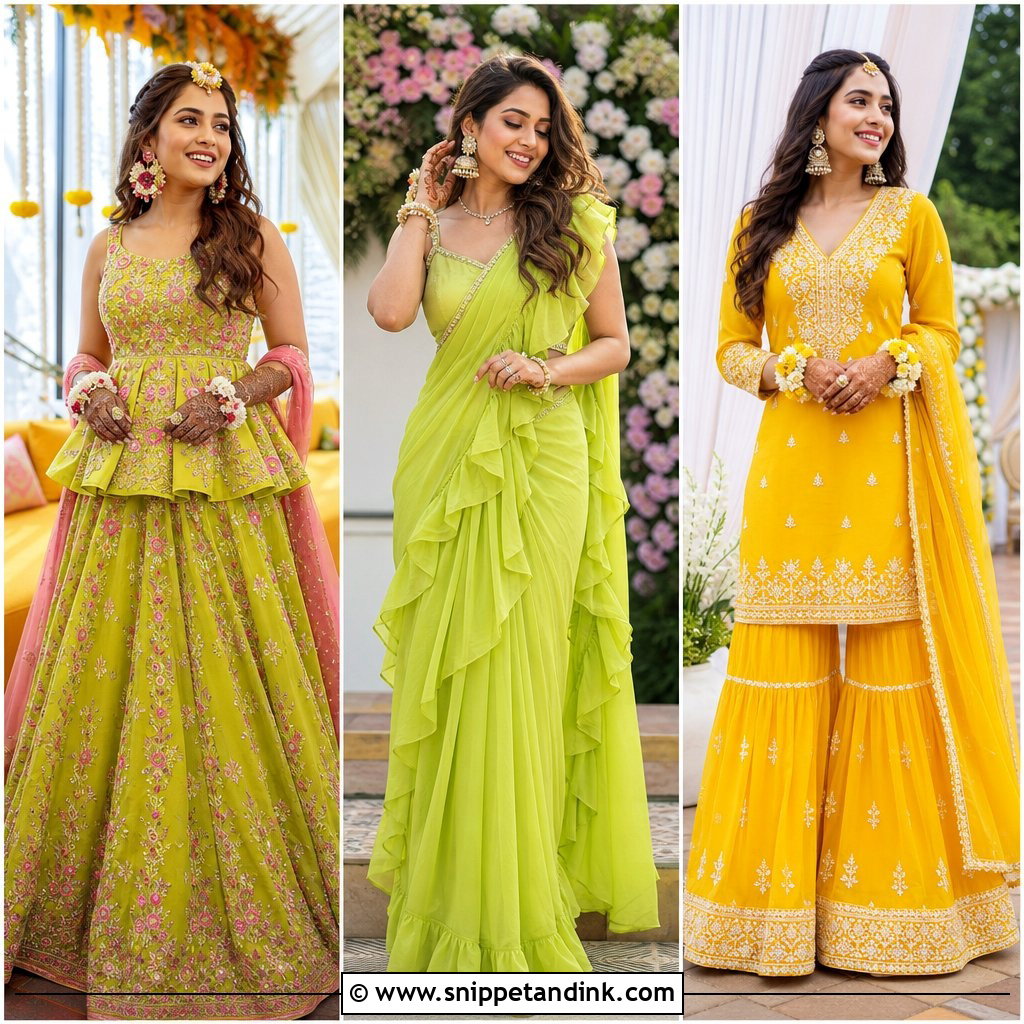
20. Emerald Pre-Draped Saree Mehendi Outfit
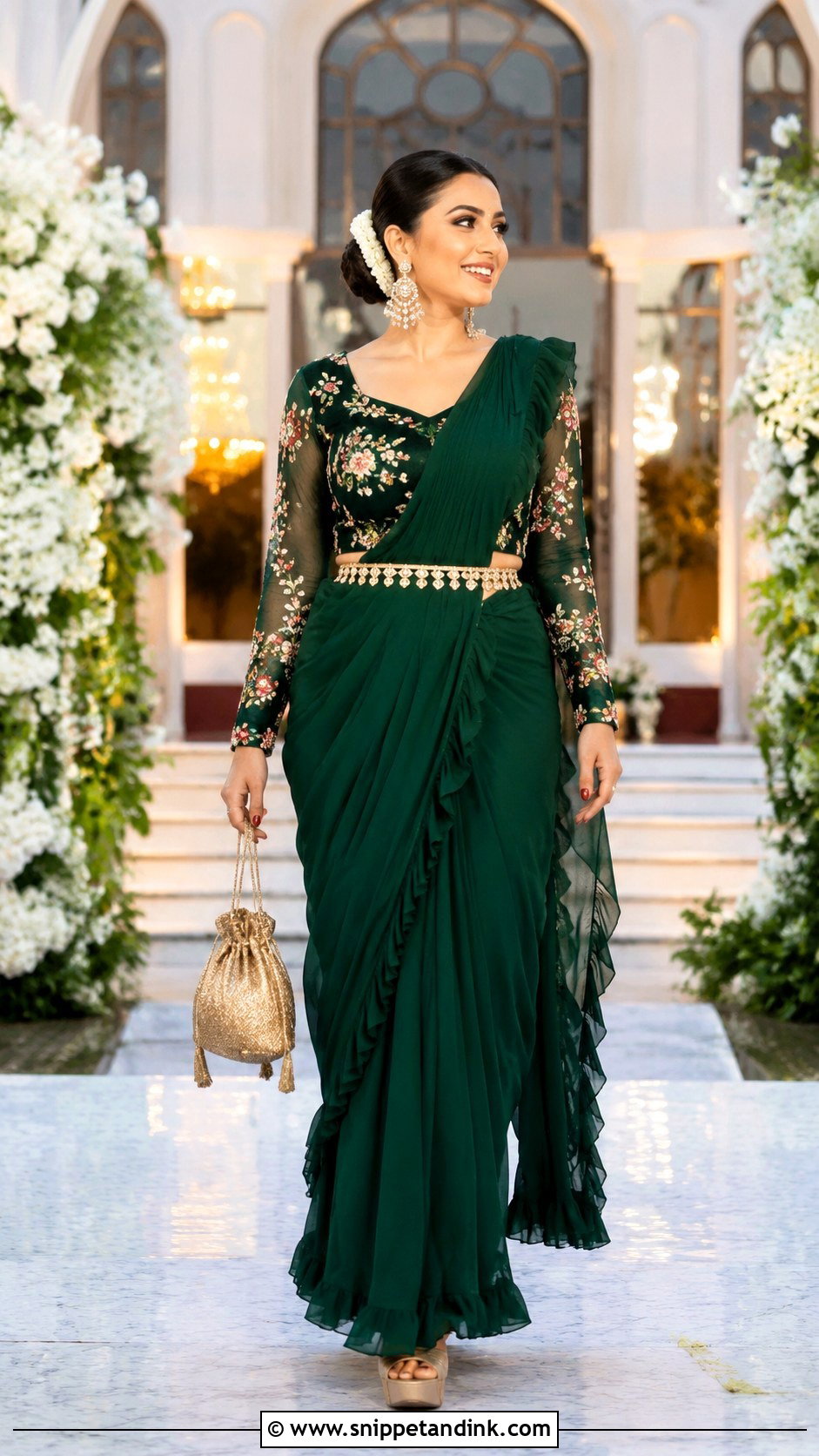
Emerald looks rich under evening lights, and a pre-draped saree in crepe or georgette with a secure waistband stays neat while you sit for hours. Pair it with a sleeveless floral blouse, a mirror work one or an elbow-length gold embroidered blouse. Pin the pallu behind the shoulder, well away from your hands. A slim belt, chandelier earrings and platform heels finish it, with a sleek ponytail or flower-trimmed bun. Brides can add a floral choker; guests can rely on earrings and a small metallic potli.
If Henna Gets on Your Outfit
It happens at almost every function. Act fast. Let a wet smear dry, then lift it off with the blunt edge of a card rather than wiping, because wiping pushes the dye deeper into the weave. Rinse the spot from the back of the fabric with cold water. Hot water sets the stain.
Washable cotton and georgette often respond to a dab of liquid detergent worked in gently, then another cold rinse. Silk, brocade and zari need a dry cleaner, and you should tell them it’s henna. Some marks on pale silk never fully come out, which is the honest reason I suggest darker or printed fabrics for the bride.
Changing Clothes After Your Henna Is Done
The paste is still on when the function ends, and the stain darkens over the next day or two. Have someone help you out of your outfit and into a loose, front-opening top you don’t care about. Keep your hands away from water as long as you can, and expect the color to deepen by the next day.
Comfortable Enough to Sit Still for the Henna
A mehendi outfit has to let you sit, wait, dance and celebrate, often in that order. Lehengas and shararas in green remain classic, and floral skirts, cape sets, co-ords and pre-draped sarees give plenty of variety. Think about the venue, the weather and your role before you decide. Above all, keep your sleeves short, your dupatta pinned back and your shoes comfortable. Then let the henna dry undisturbed and enjoy the day.
You'll Like These Ideas:


Leave a Reply