
A mehendi outfit has a harder job than the wedding outfit. You’ll wear it while someone holds your arm still for hours, while relatives pull you up to dance, and while wet paste sits a few inches from the fabric. When I style a bride for this function, I start with three questions: how much henna is going on, where she’ll be sitting, and how hot the room will be. The looks below range from green lehengas to shararas, draped sarees and fusion sets, and each one is judged on how it behaves on the day, not only on the hanger.
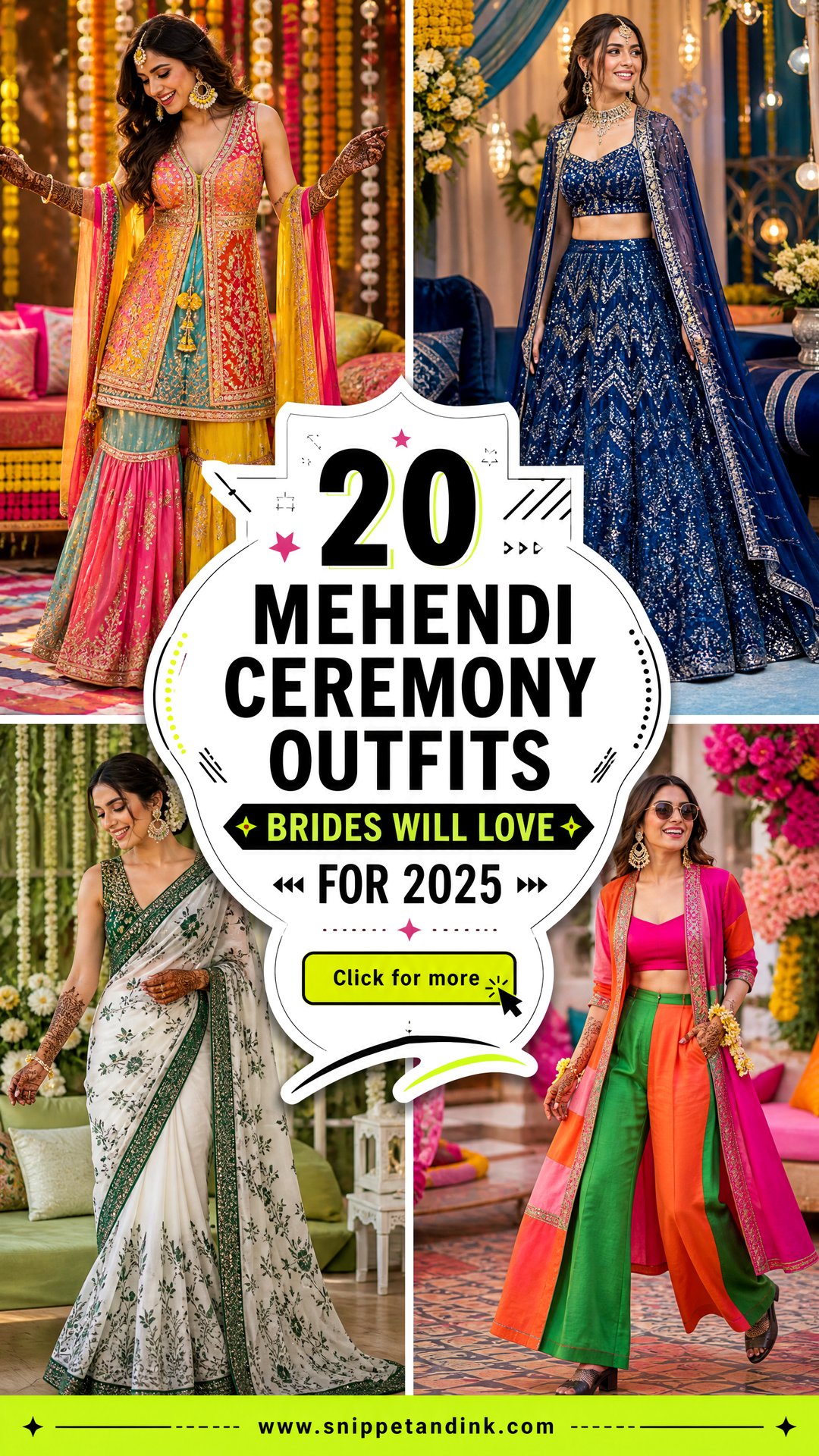
Dressing for Four Hours With Your Arms Held Out
Bridal henna that covers the hands, wrists and feet often takes several hours to apply, and you’ll spend most of that time seated with one arm extended. Before I choose a single colour, I want to know whether the bride will be sitting on a chair, a low stool or a floor cushion, because that decides the silhouette more than anything else.
- Sleeves: sleeveless or short is easiest. If you want three-quarter sleeves, plan for henna that stops at the wrist.
- Armholes: raise your arm and twist your palm upward in the fitting room. If the blouse pulls, the artist will be fighting it all afternoon.
- Waist: a lehenga skirt with a drawstring is more forgiving over a long sit than a tight hook closure.
- Bathroom trips: once your hands are covered you can’t manage a heavy skirt or a pleated saree alone. Pick something a cousin can help with in under a minute.
Some brides have their henna applied in a plain kaftan earlier in the day, then change into the outfit for the party. I like this option when the design is very full, because it keeps the outfit clean and the bride comfortable. The trade-off is fewer photos of the application itself, so decide which matters more to you.
1. Green Floral Lehenga Mehendi Outfit
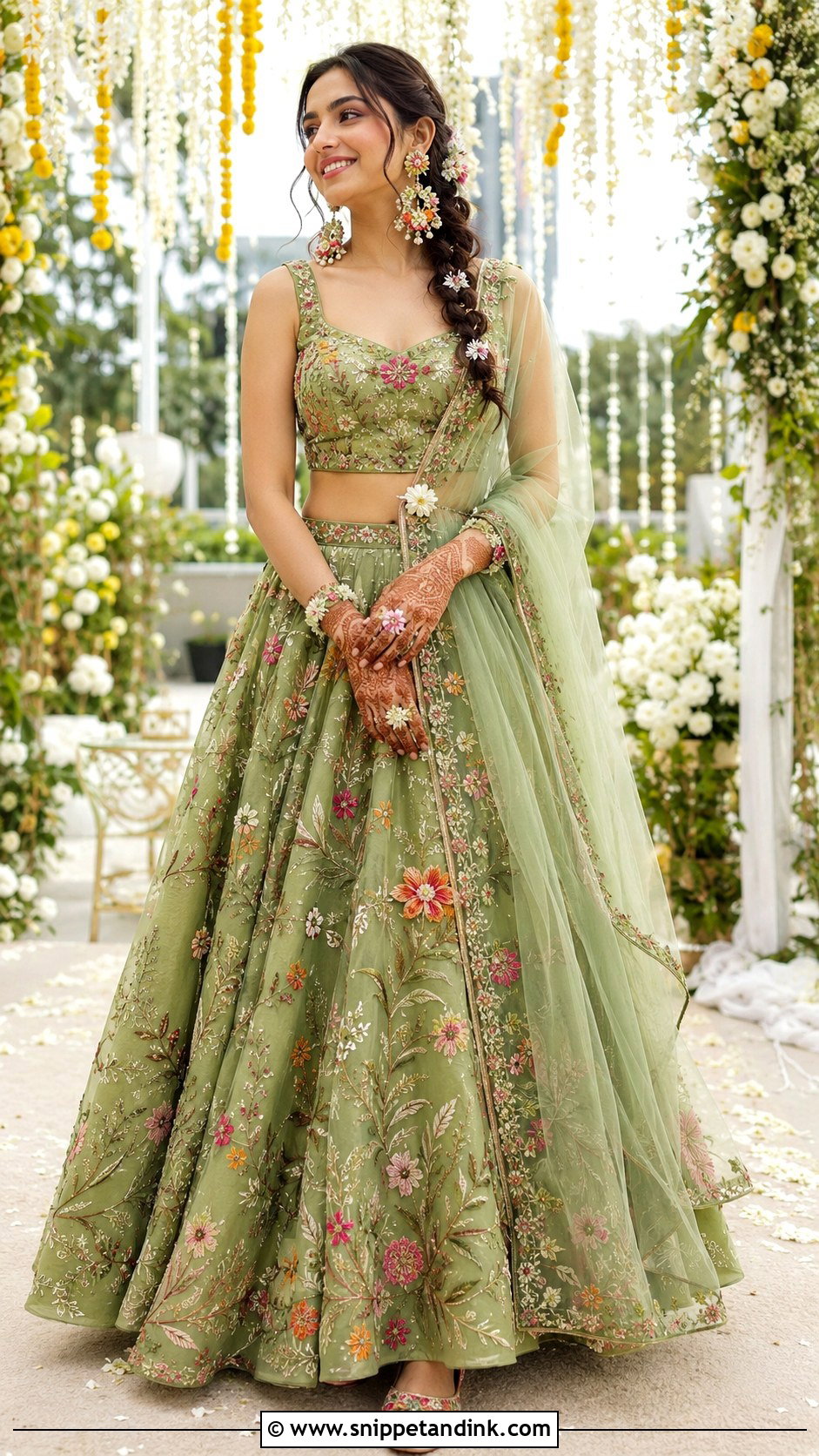
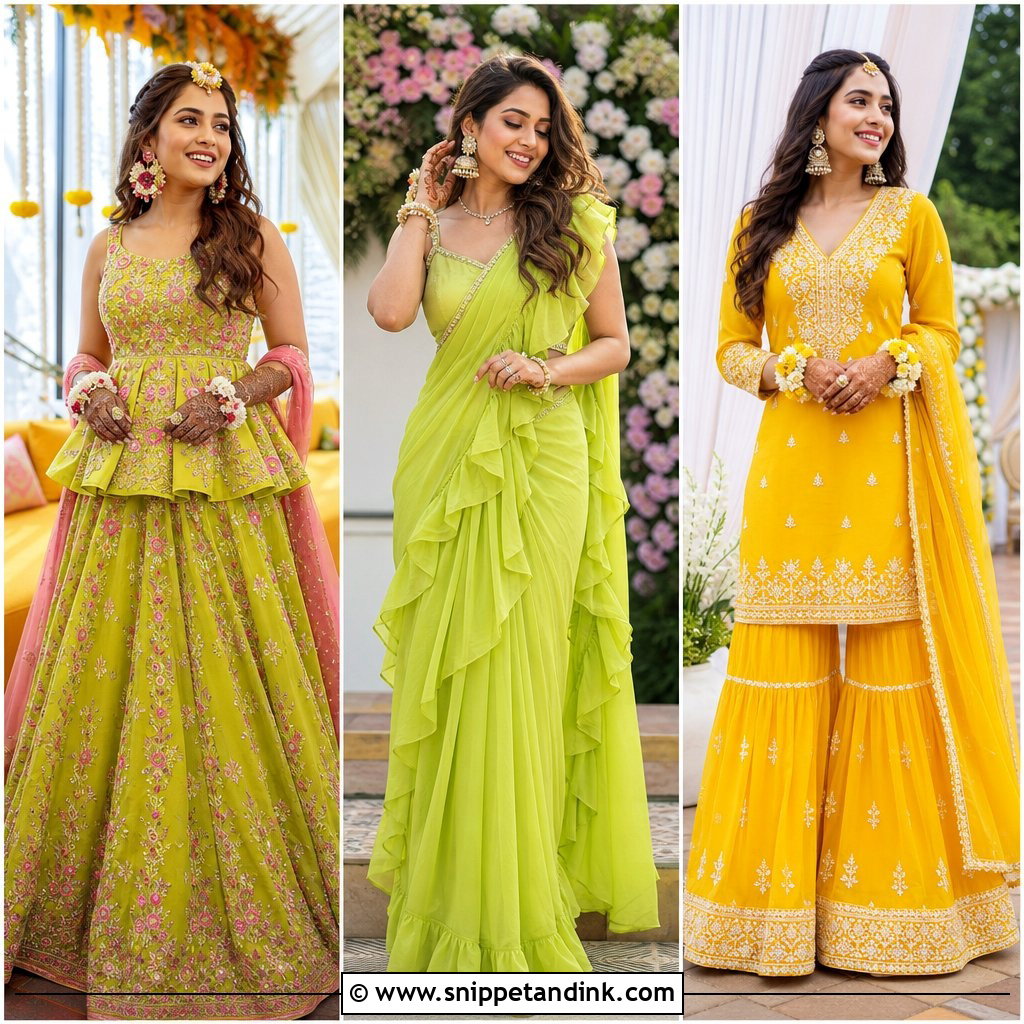
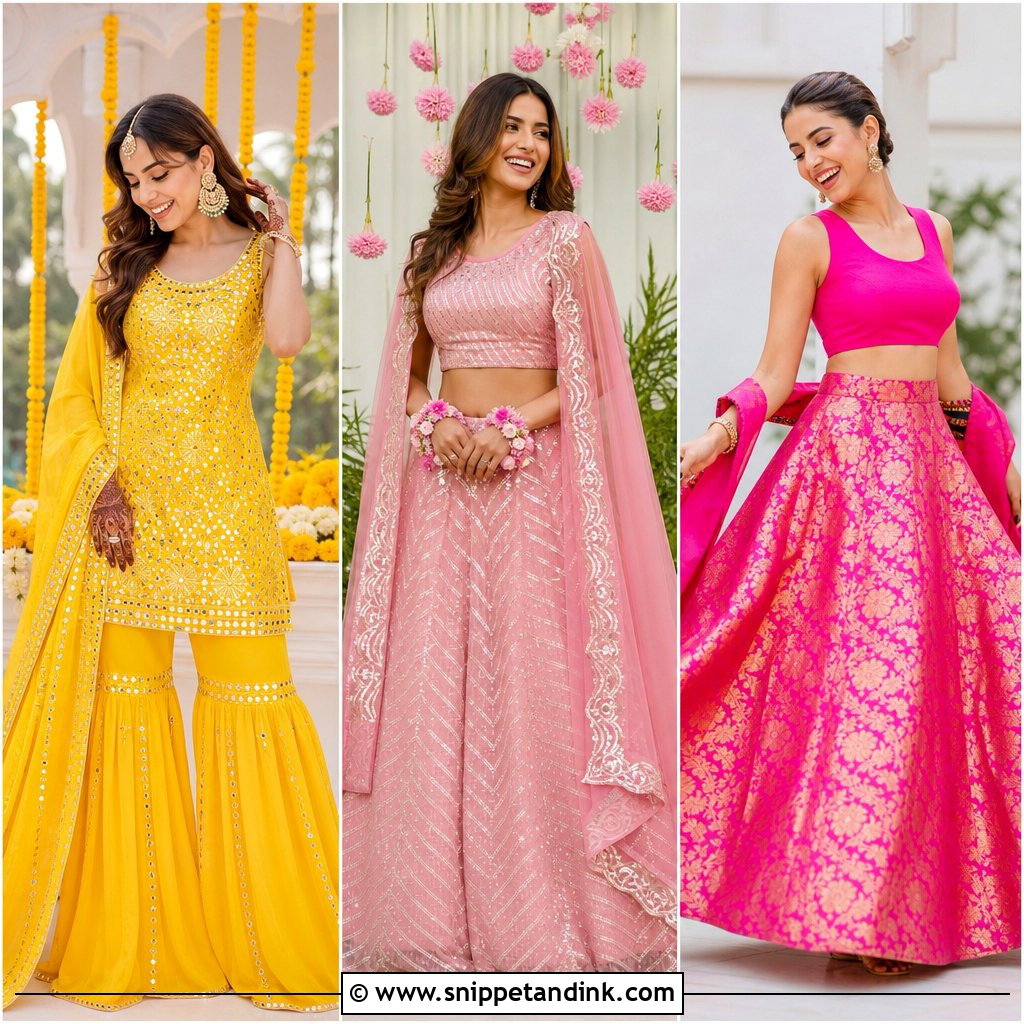
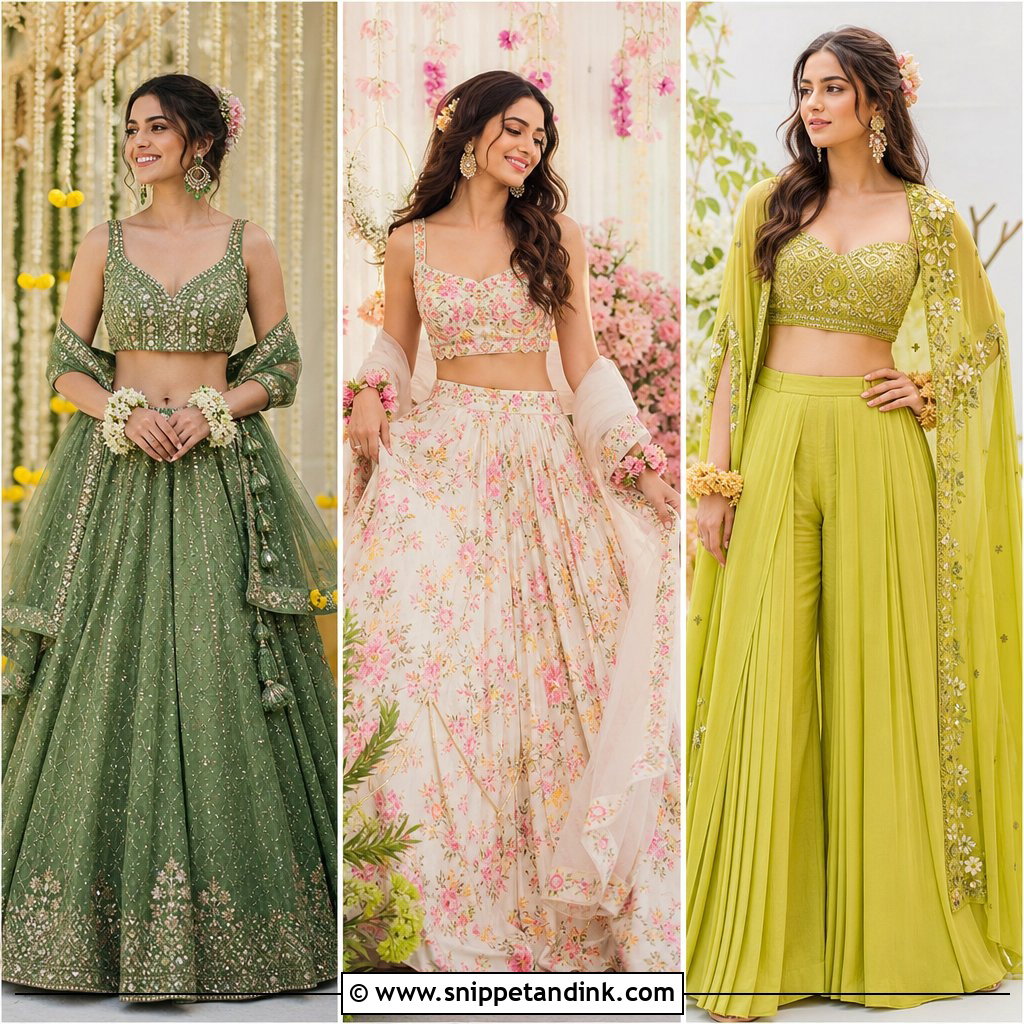
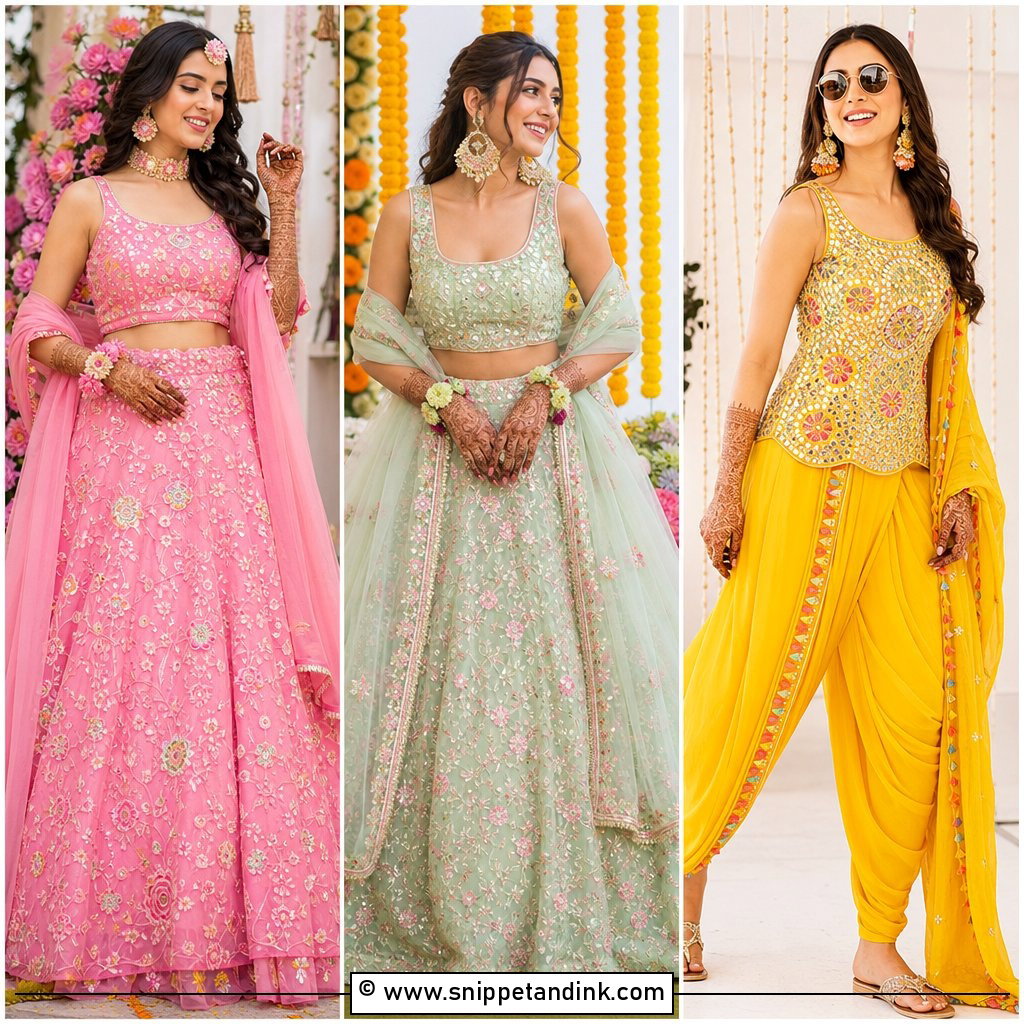
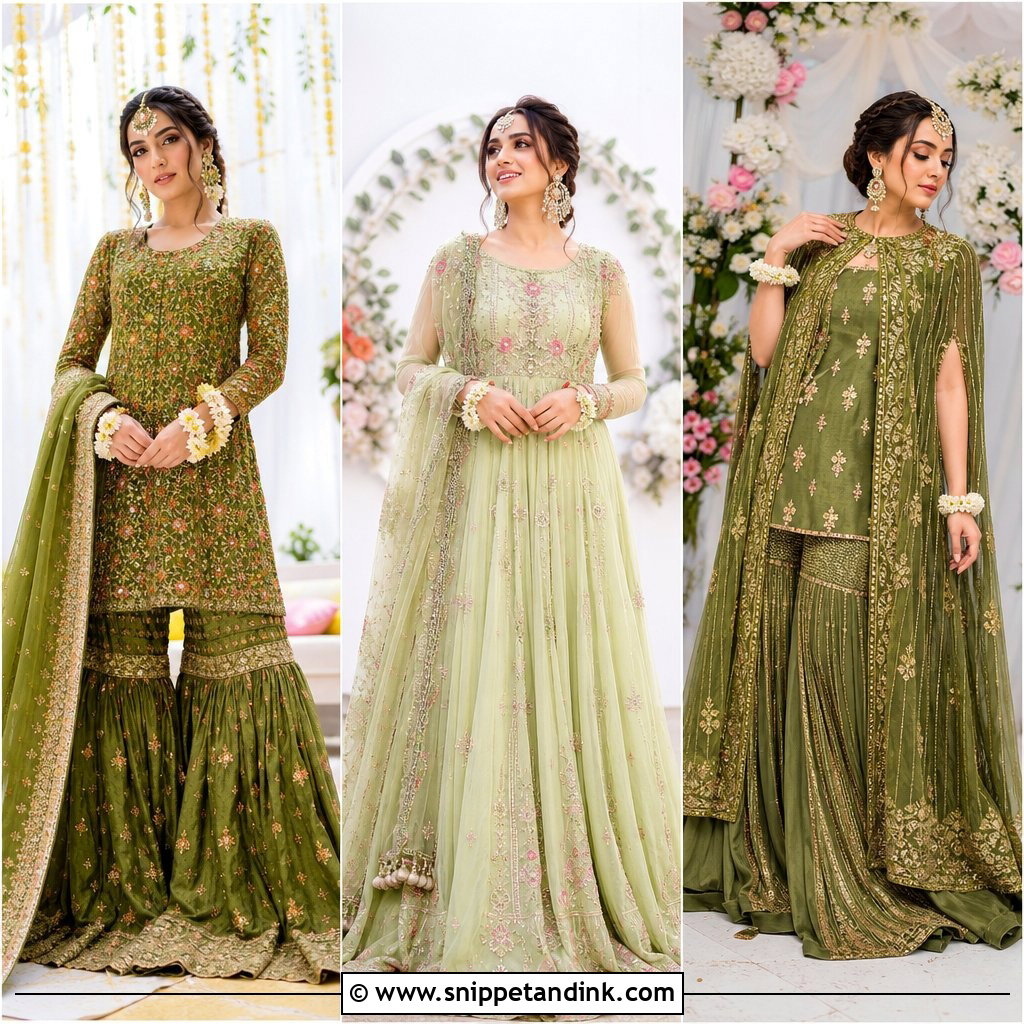
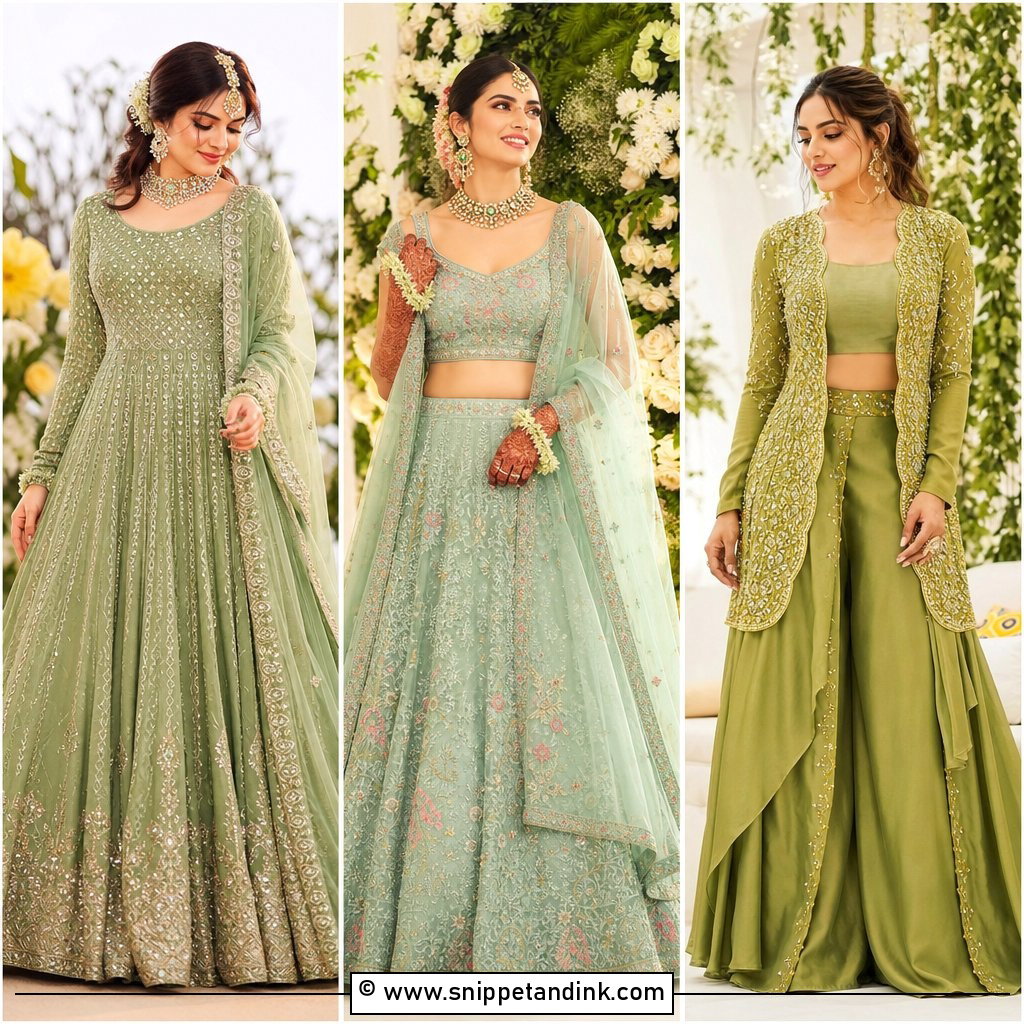
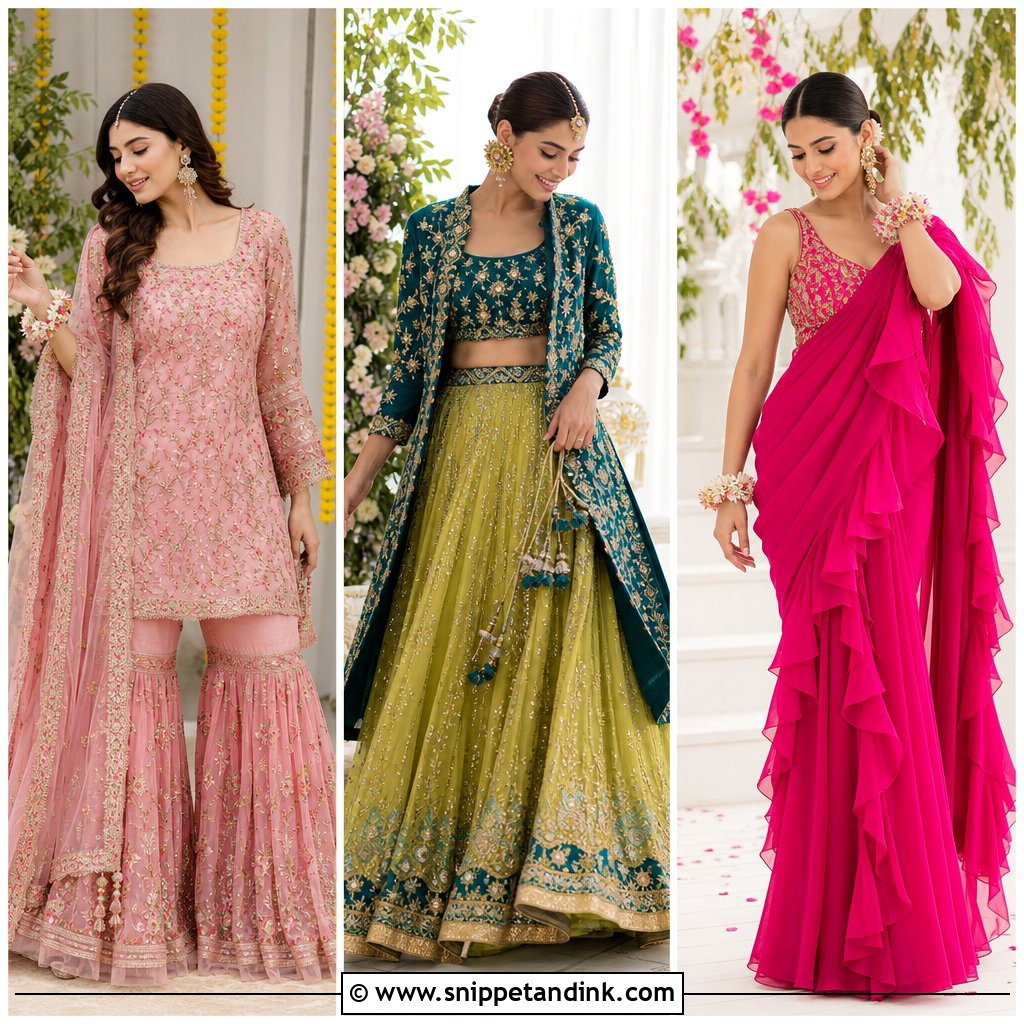
Green is the colour most families expect at a mehendi, and a floral lehenga carries it without looking like a uniform. I’d pick organza or georgette over raw silk here, because a full silk skirt traps heat when you sit cross-legged for a long application. Keep the blouse sleeveless so the artist can reach above the elbow, and drape the net dupatta from one shoulder into the waistband so it can’t slide into wet paste. Floral earrings, a fine maang tikka and juttis are enough; the bangles go on once the henna has dried. If the party is outdoors, emerald or leaf green reads better in daylight than a pale mint, which can wash out.
2. Yellow Mirror Work Lehenga Mehendi Outfit
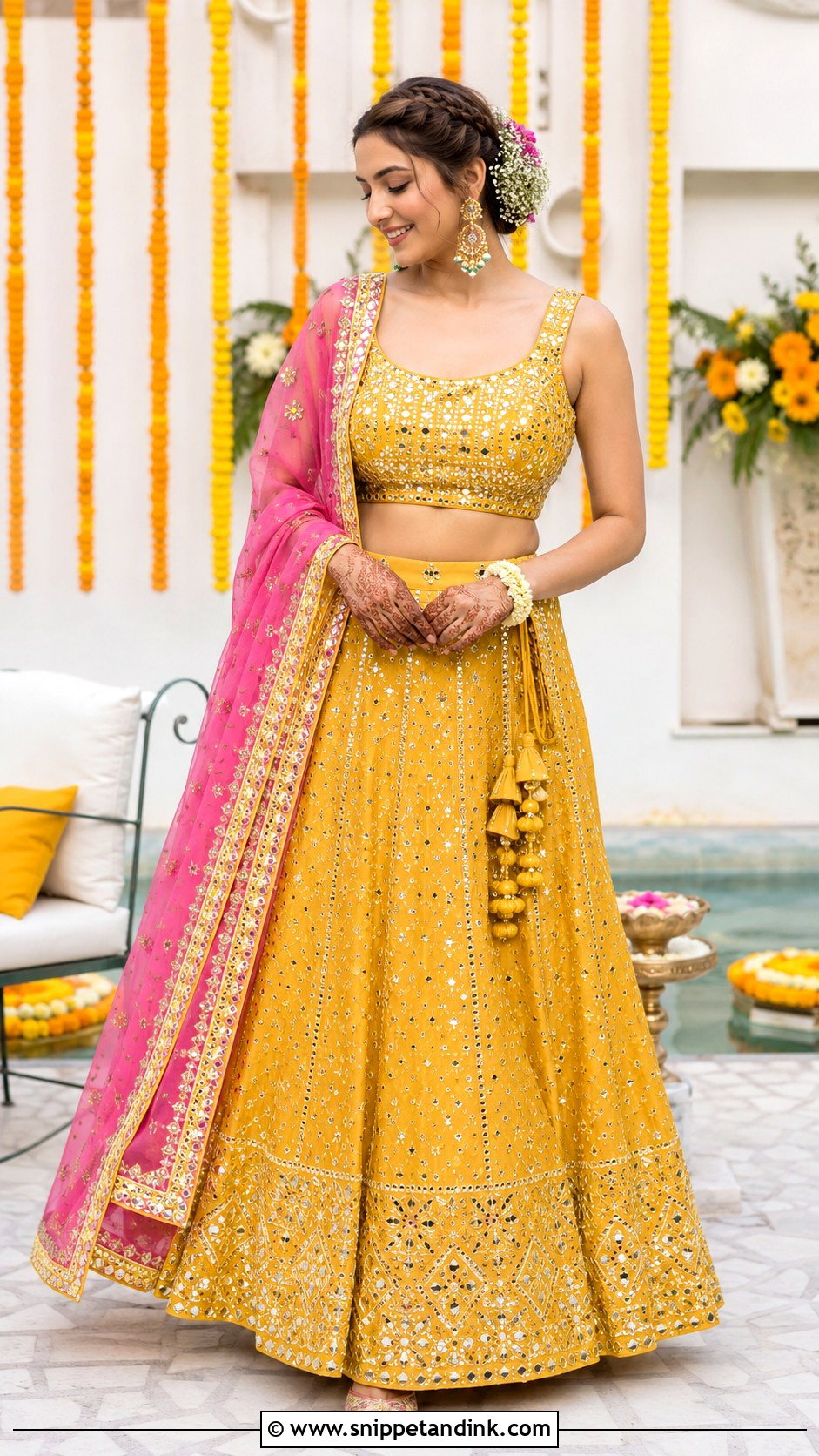
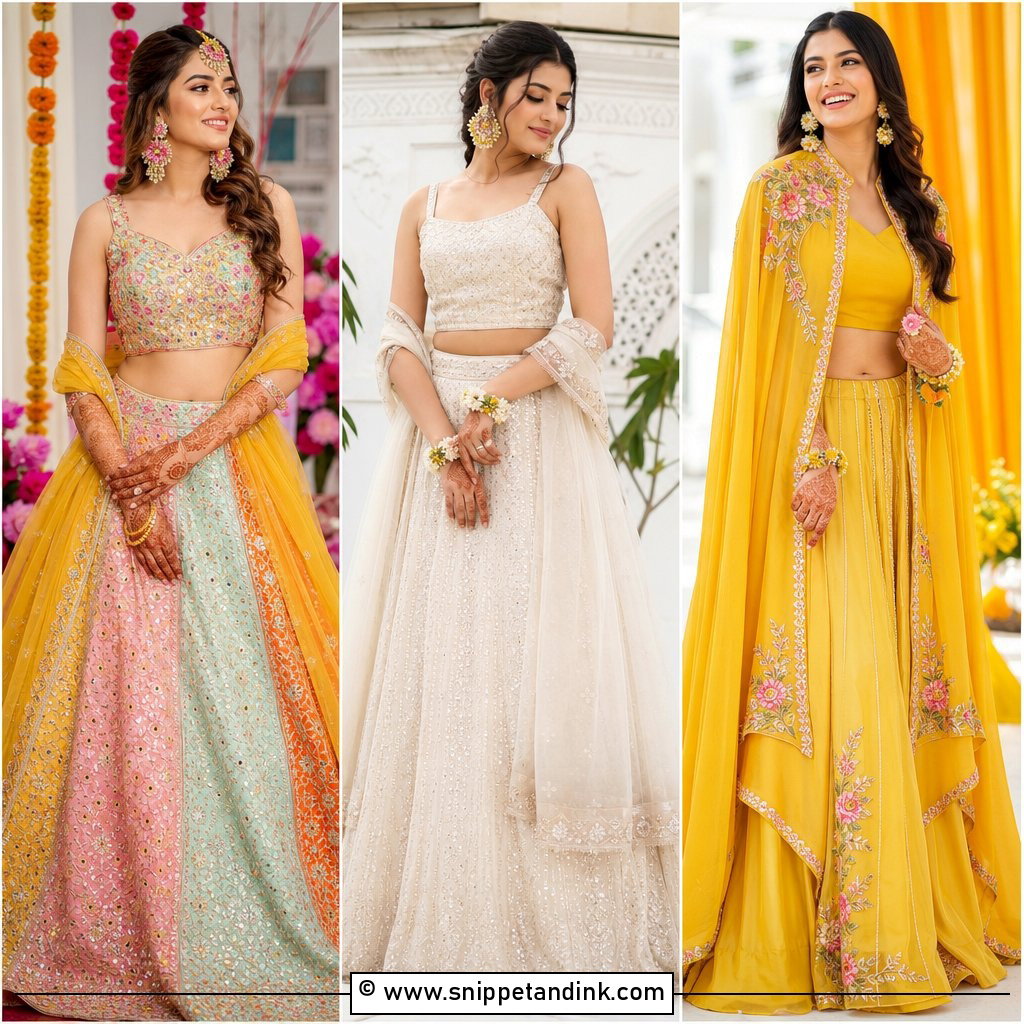
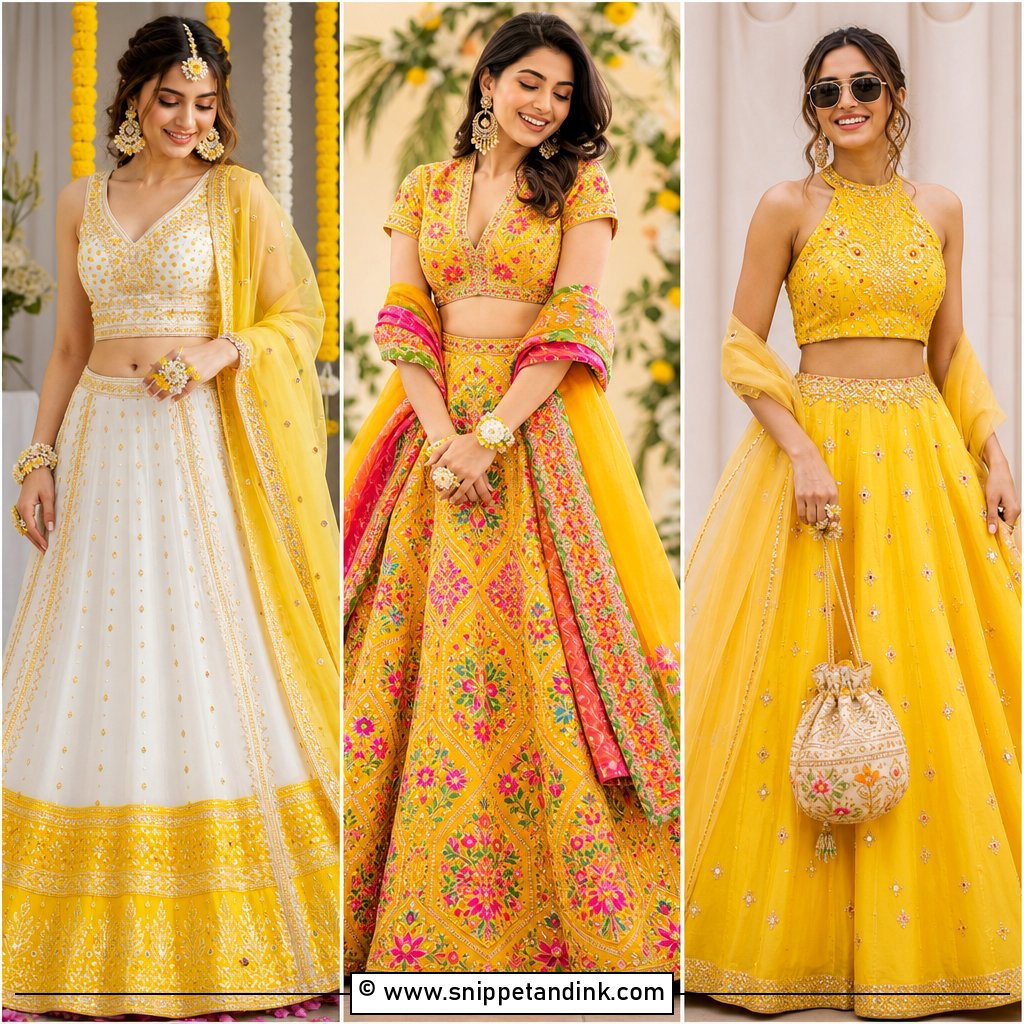
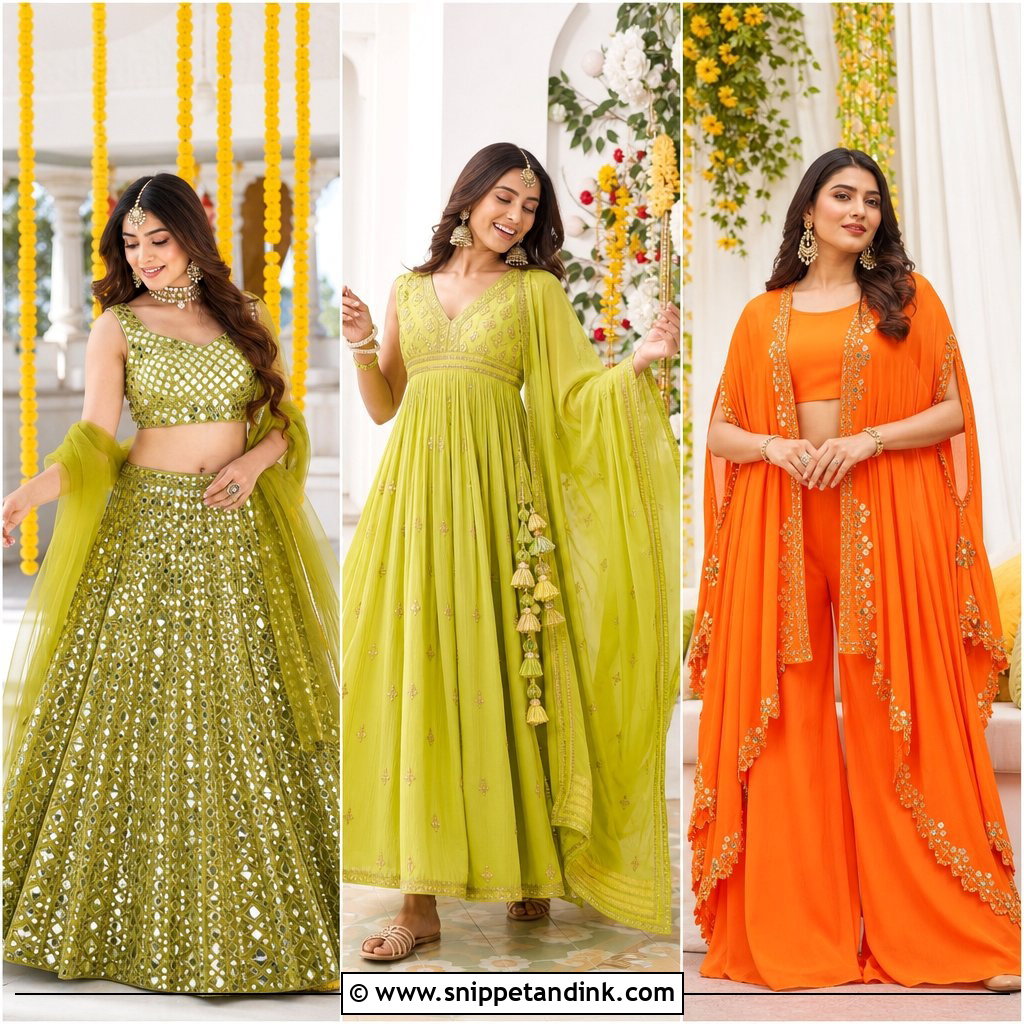
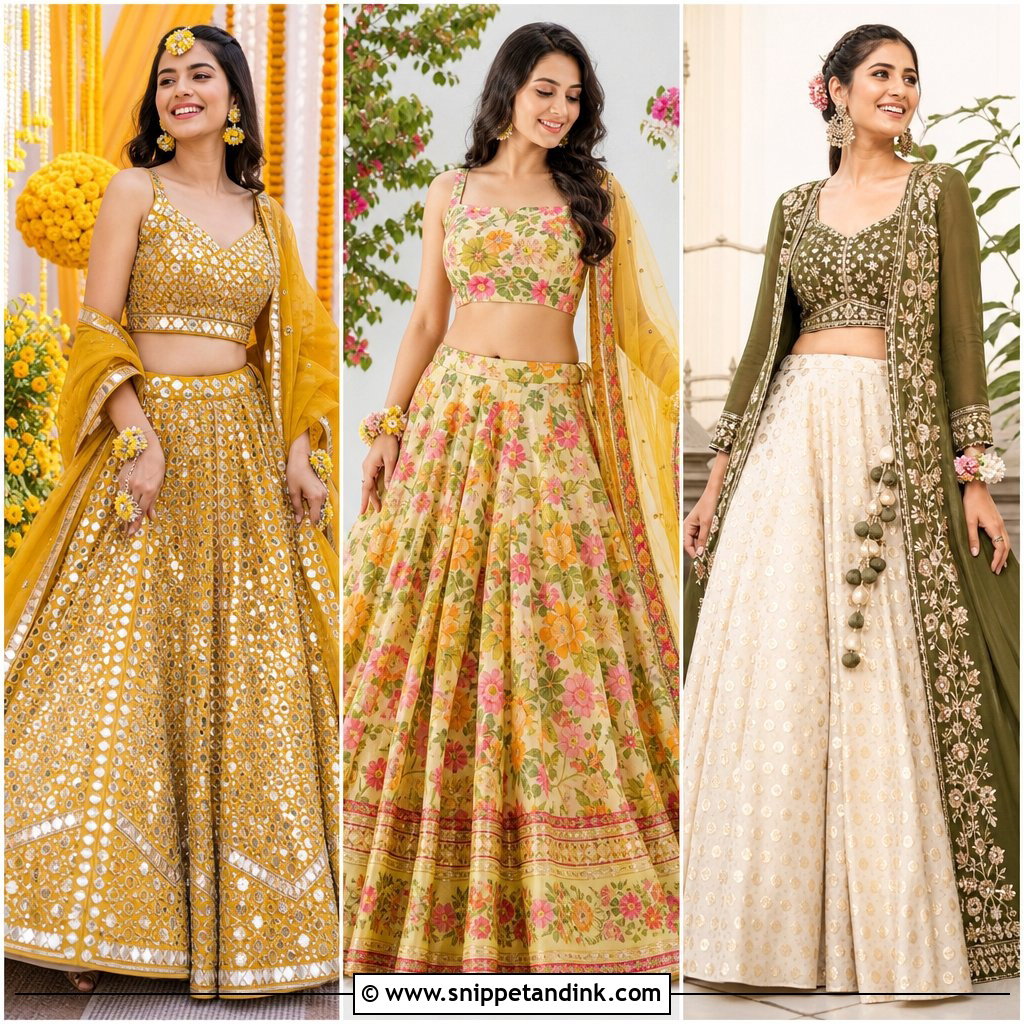
Mirror work is the reason to choose this one: it catches every light source in the room and gives a yellow lehenga its sparkle without heavy zardozi. Check the size of the mirrors before you buy. Large ones press into the backs of your legs when you sit, and their edges can snag a net dupatta. Small, evenly spaced mirrors on mustard or sunshine yellow behave much better. I pair it with a wide-strap cropped blouse, a contrasting pink or green dupatta, kundan earrings and cushioned juttis. Keep the wrist area free during the henna session, then add bangles afterward so the finished design stays visible.
3. Pink Sharara Mehendi Outfit
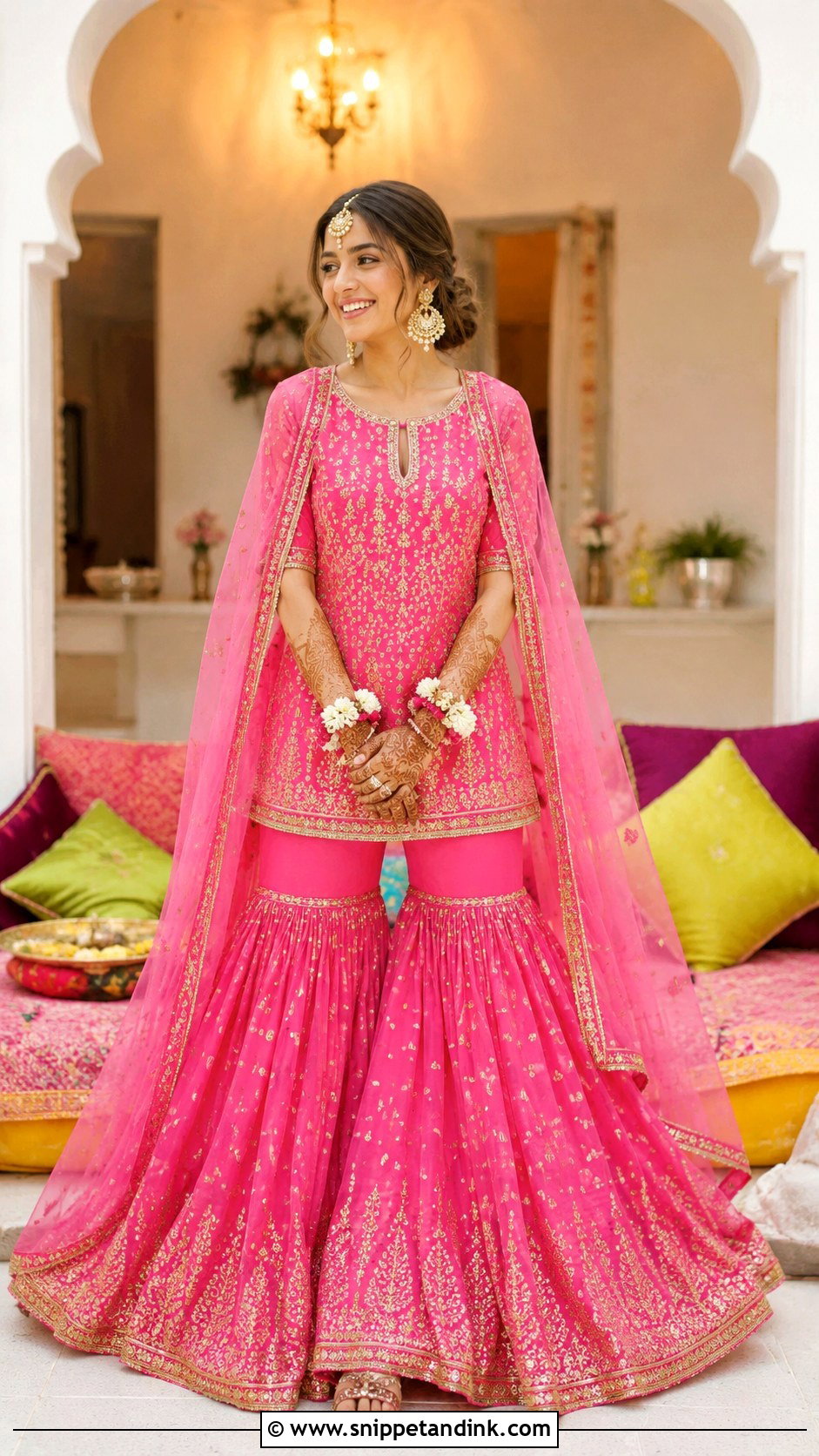
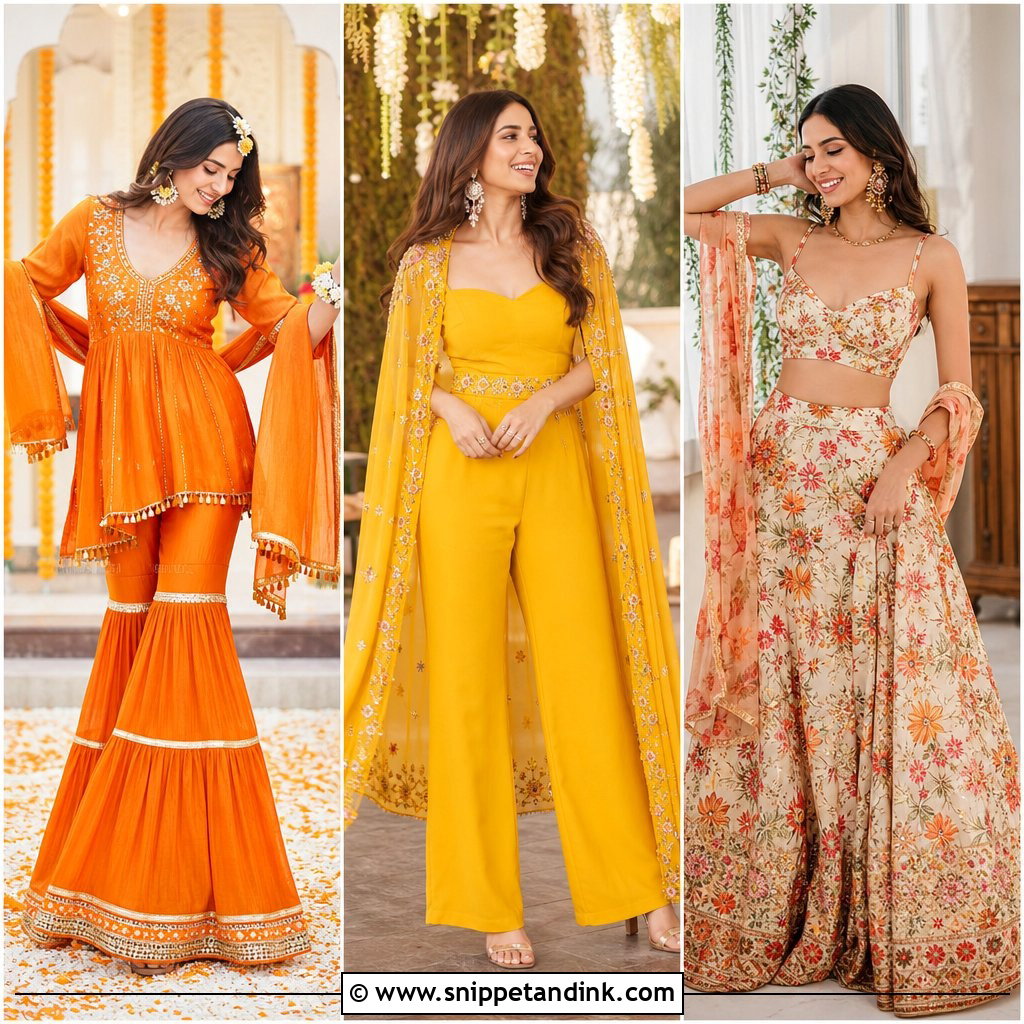
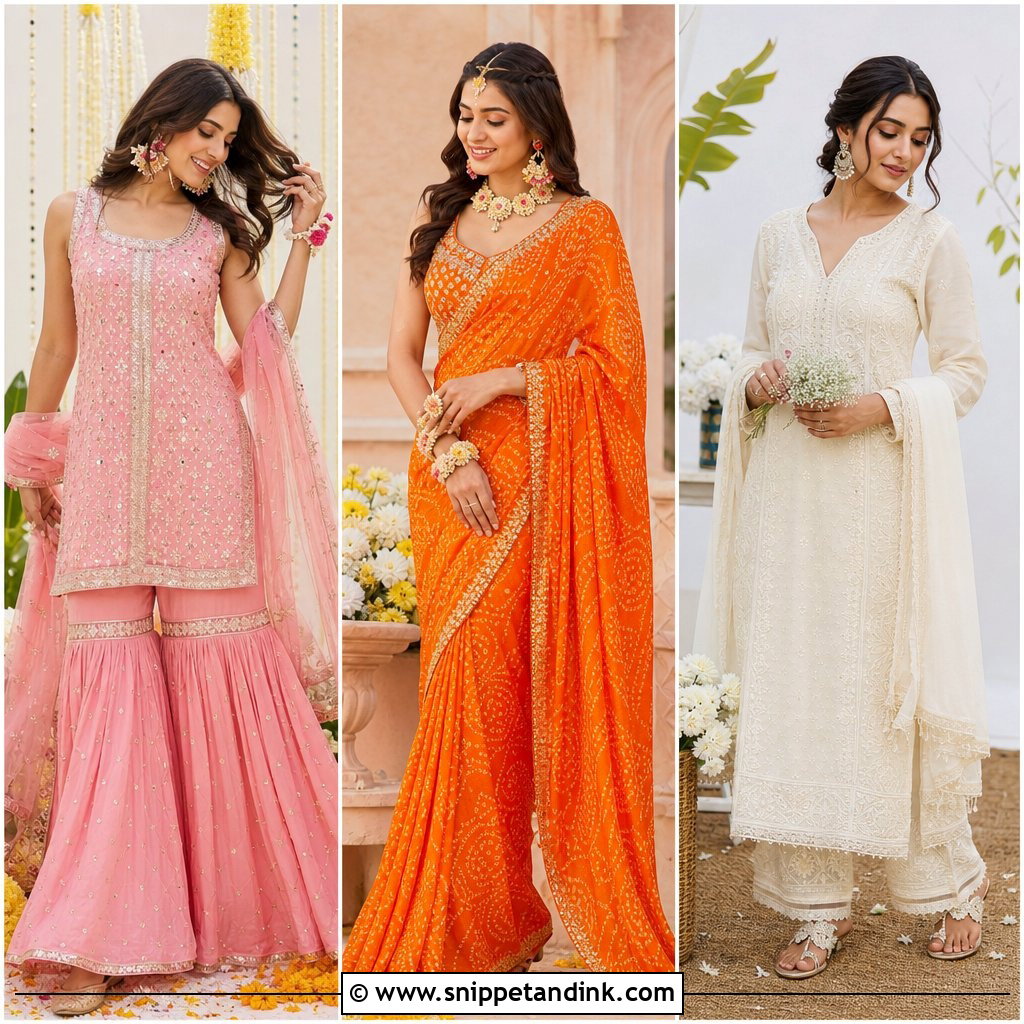
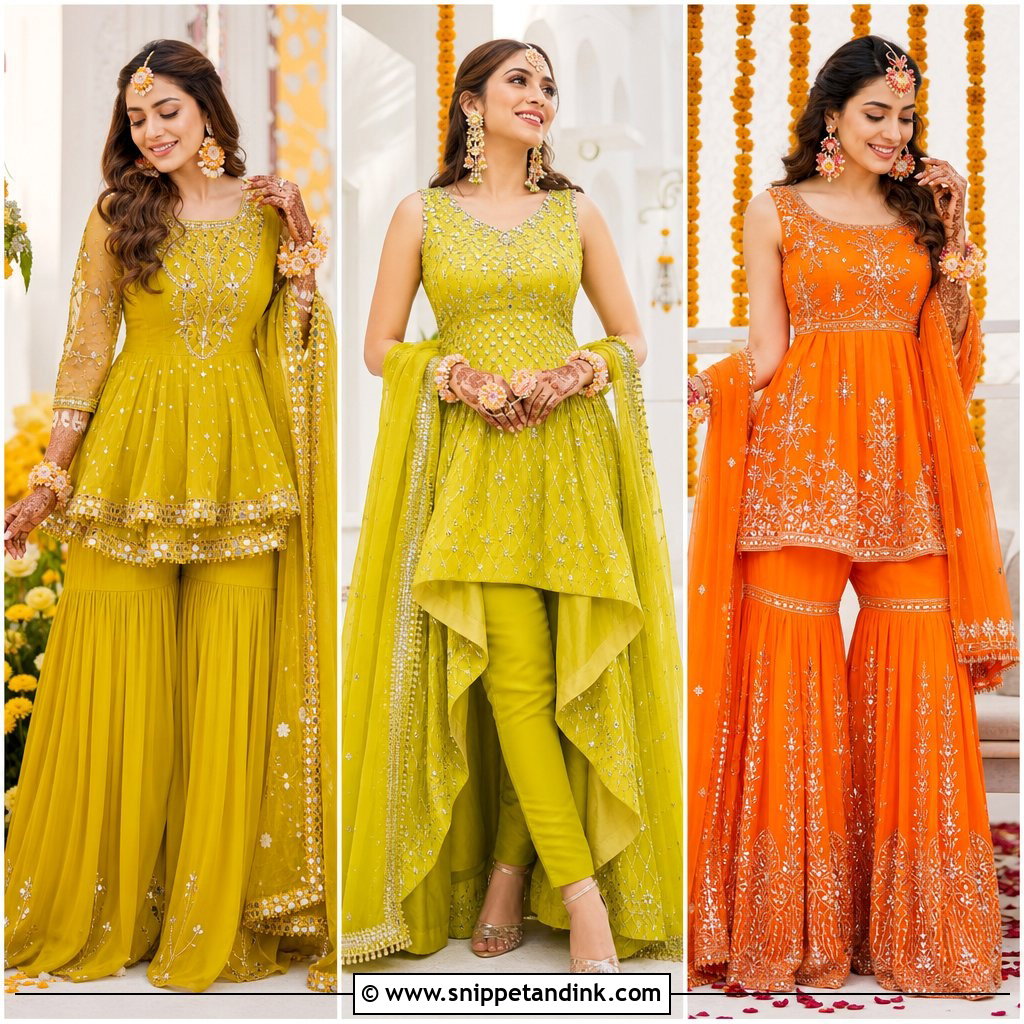
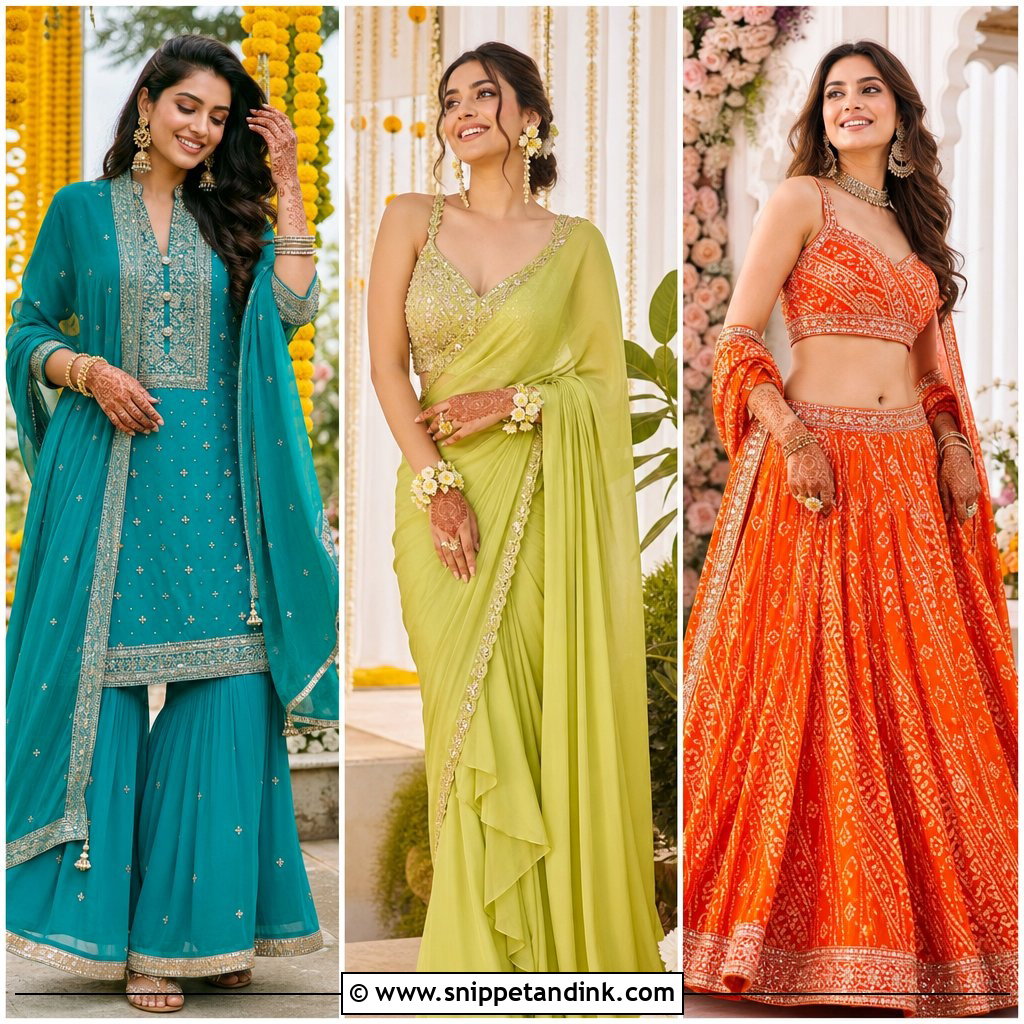
A sharara is my go-to for the bride who intends to dance properly. The split legs let you kneel, sit on a floor cushion and climb onto a stage without gathering up a skirt. Ask for wide-flared pants in rani pink, rose or fuchsia under a short kurti with gota patti borders, and check that the kurti length clears the knee flare so the shape still reads in photos. Pin a sheer dupatta behind the shoulders. Chandbali earrings and a small passa finish it, and flat embellished sandals keep you steady on courtyard tiles.
4. Multicolor Gharara Mehendi Outfit
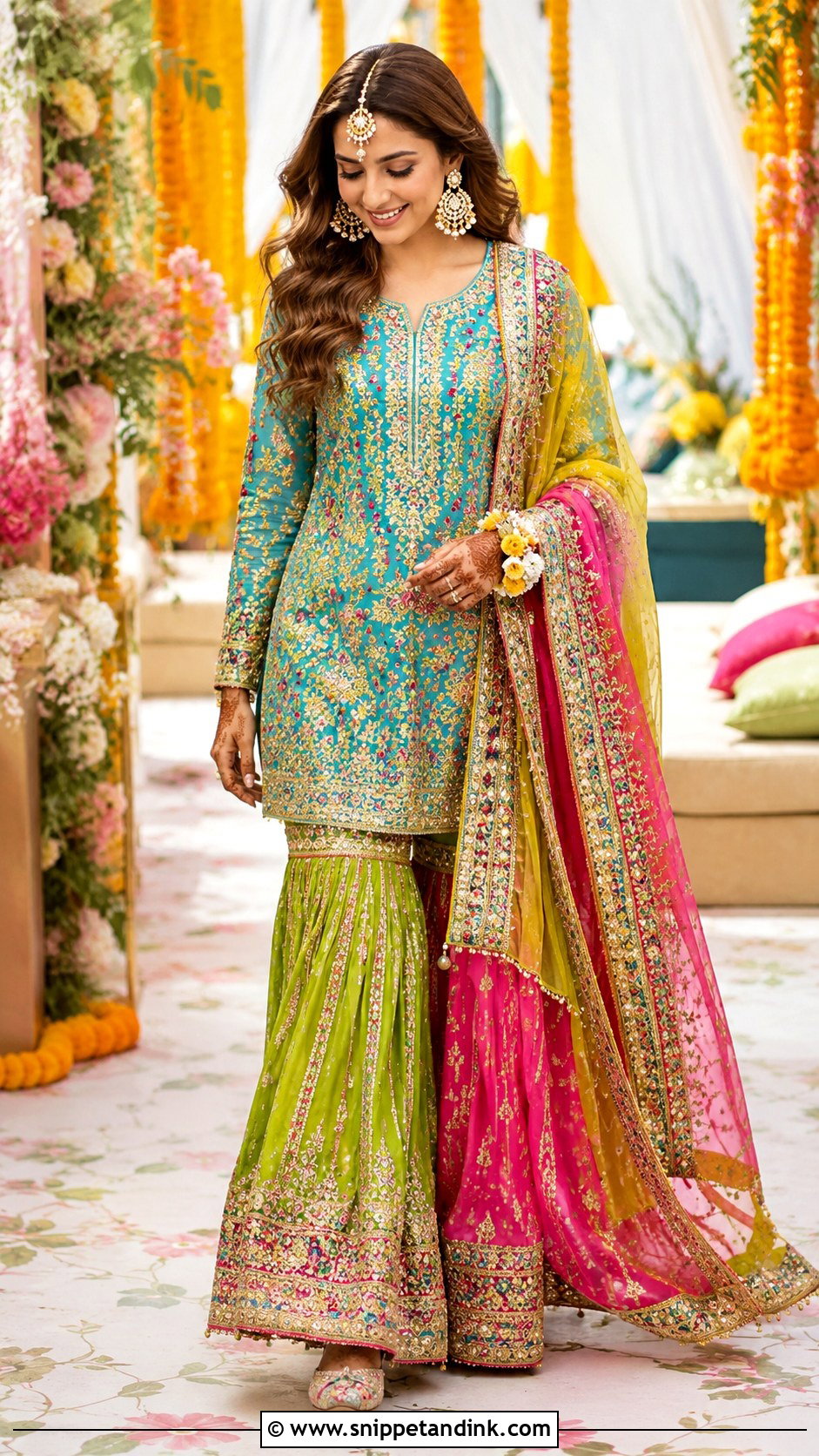
Why settle for one festive shade when a multicolor gharara can reflect the entire mehendi palette? The defining detail is the knee seam, where the narrow upper leg meets the flare, and a good tailor will place it slightly above your actual knee so it doesn’t pull when you sit. Start with a short kurti in green, pink or turquoise with panels or tassels, then let one contrasting dupatta tie the colours together. Because the garment is already busy, I keep the neckline bare and the earrings light, usually polki. Make sure the juttis are closed at the toe; open sandals catch the flared hem.
5. Lime Green Palazzo Set Mehendi Outfit
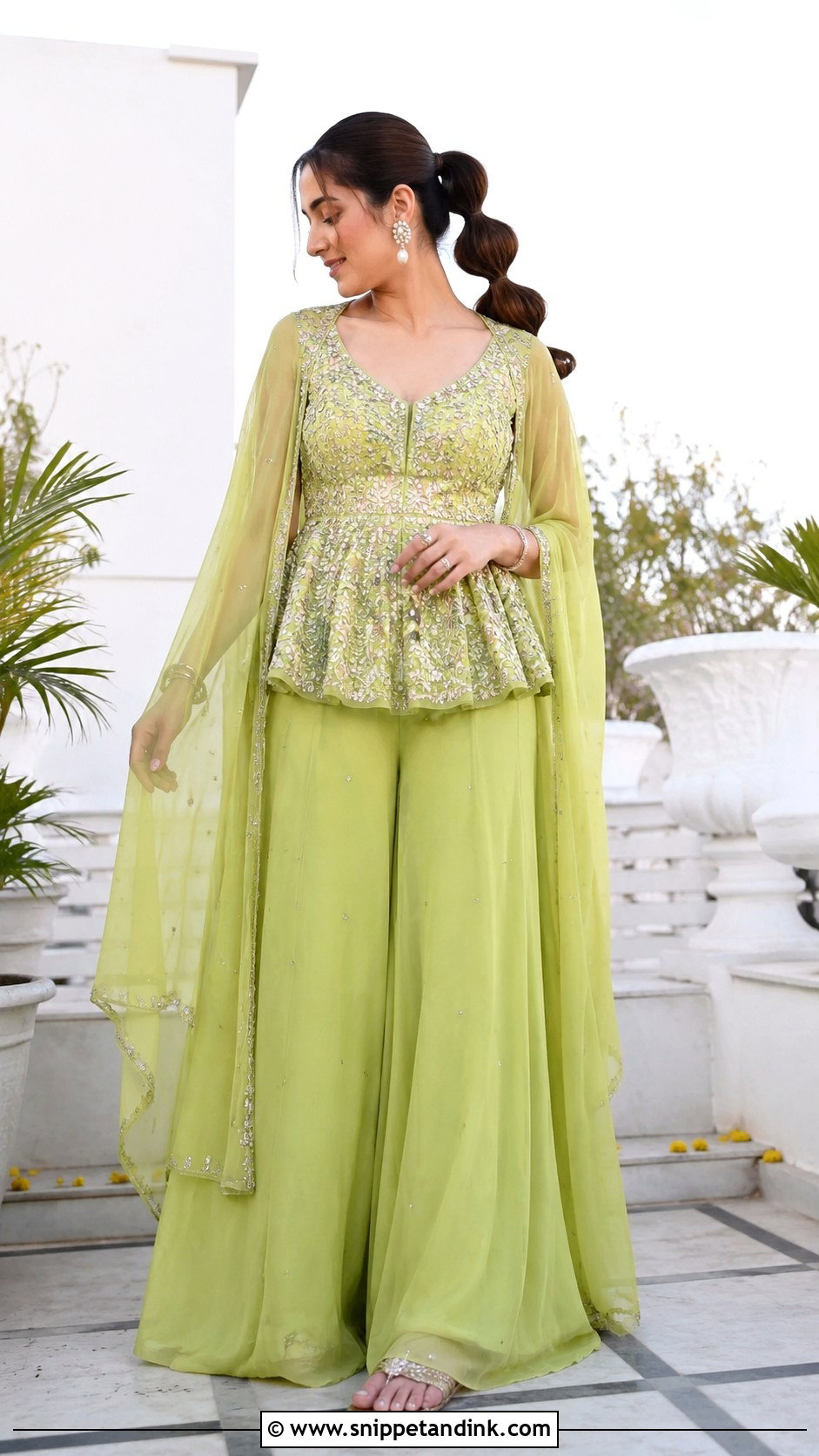
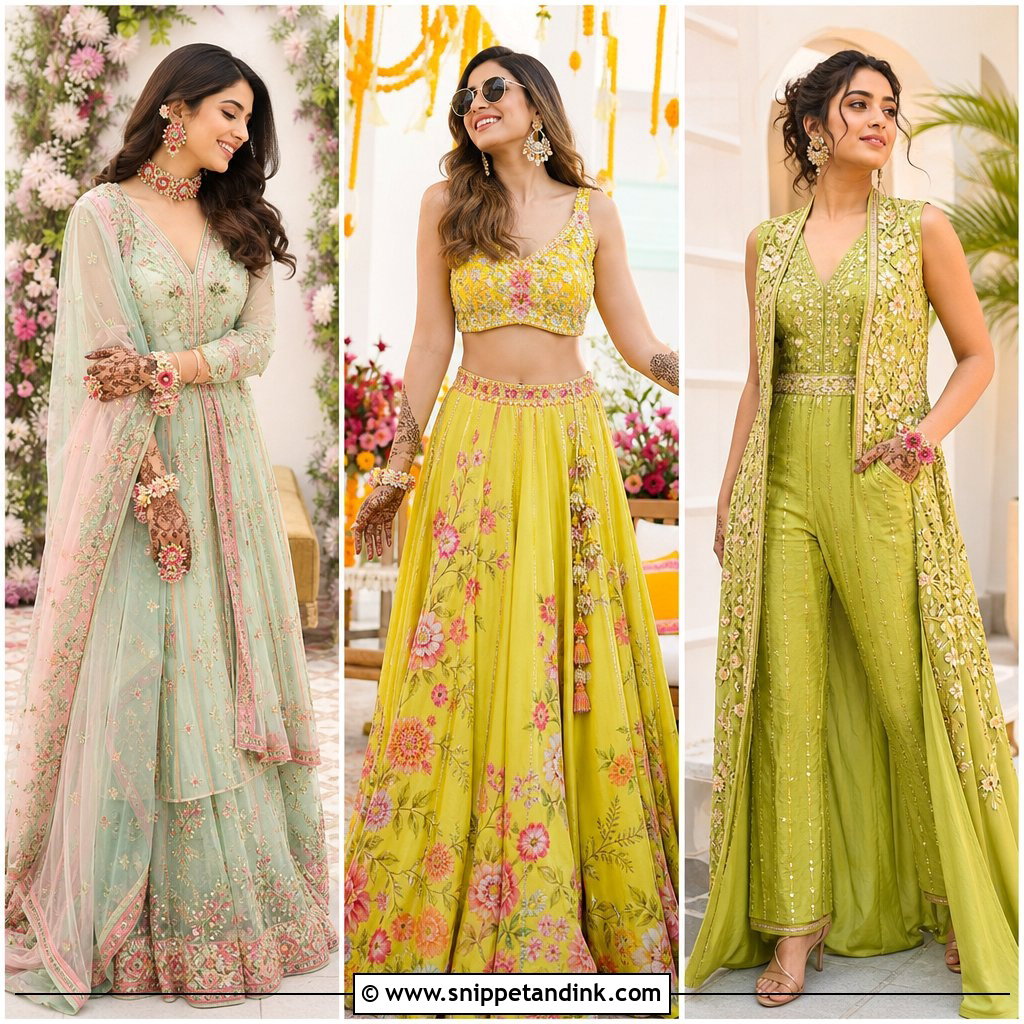
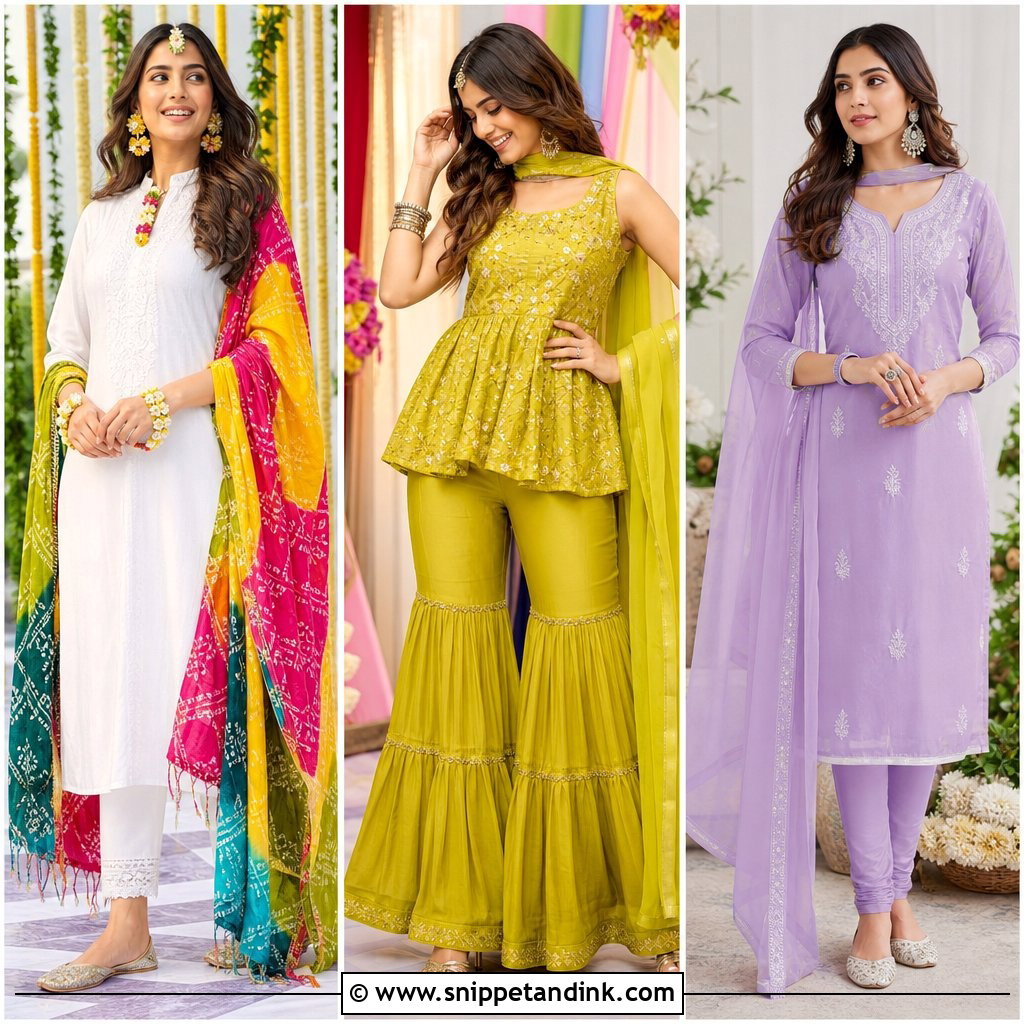
Lime green is loud in the best way at a daytime function, but it’s unforgiving under warm indoor bulbs, where it can look yellowish. Build it around wide palazzos and a cropped or hip-length embroidered kurta, or swap the kurta for a structured peplum if you want a defined waist. Georgette and crepe resist creasing better than cotton silk during long sitting. I calm the colour with pearls or white florals, and I always suggest a braid or bubble ponytail for this look, because loose hair falling forward is the thing that slows a henna artist down most.
6. Purple Anarkali Mehendi Outfit
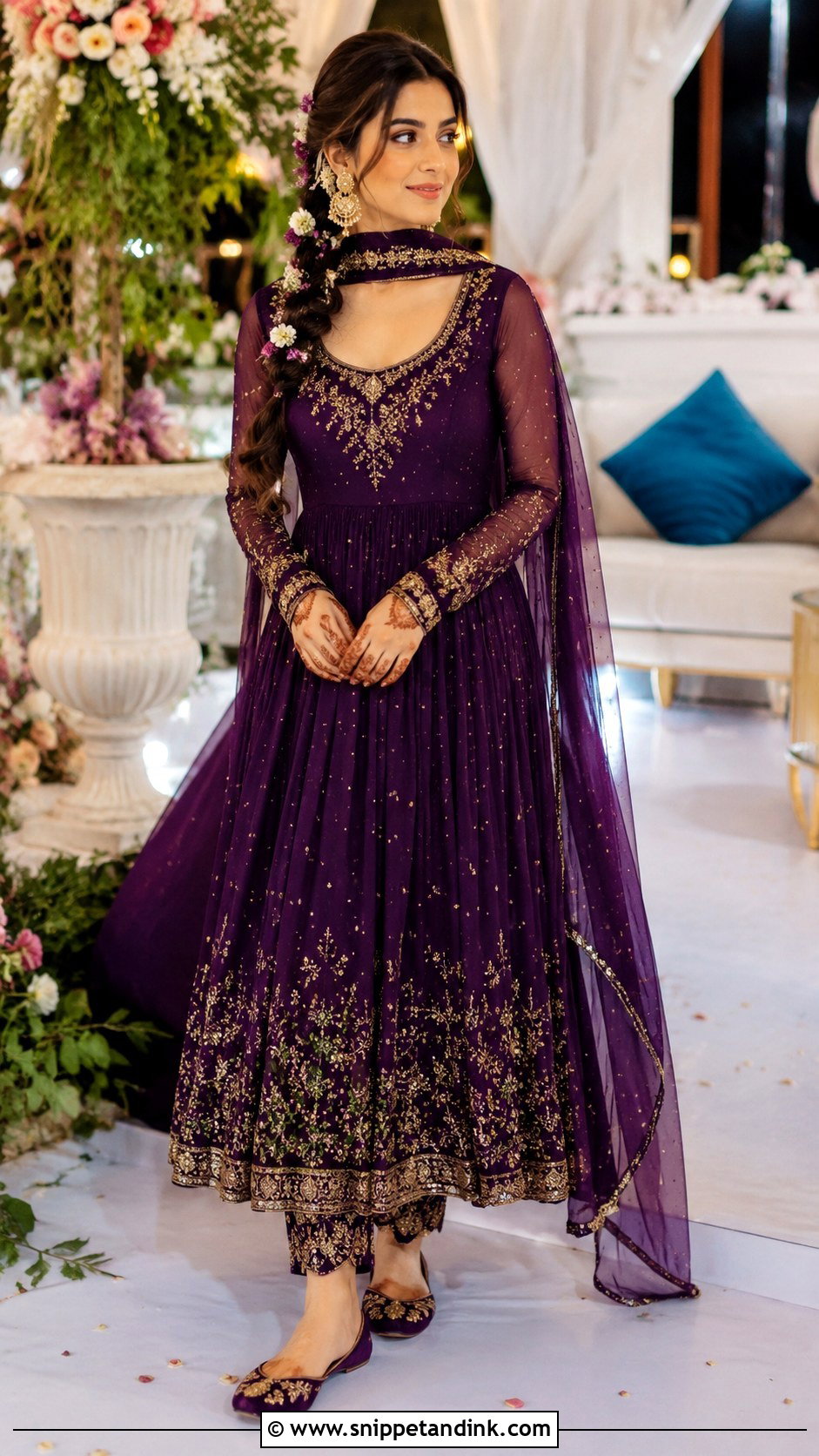
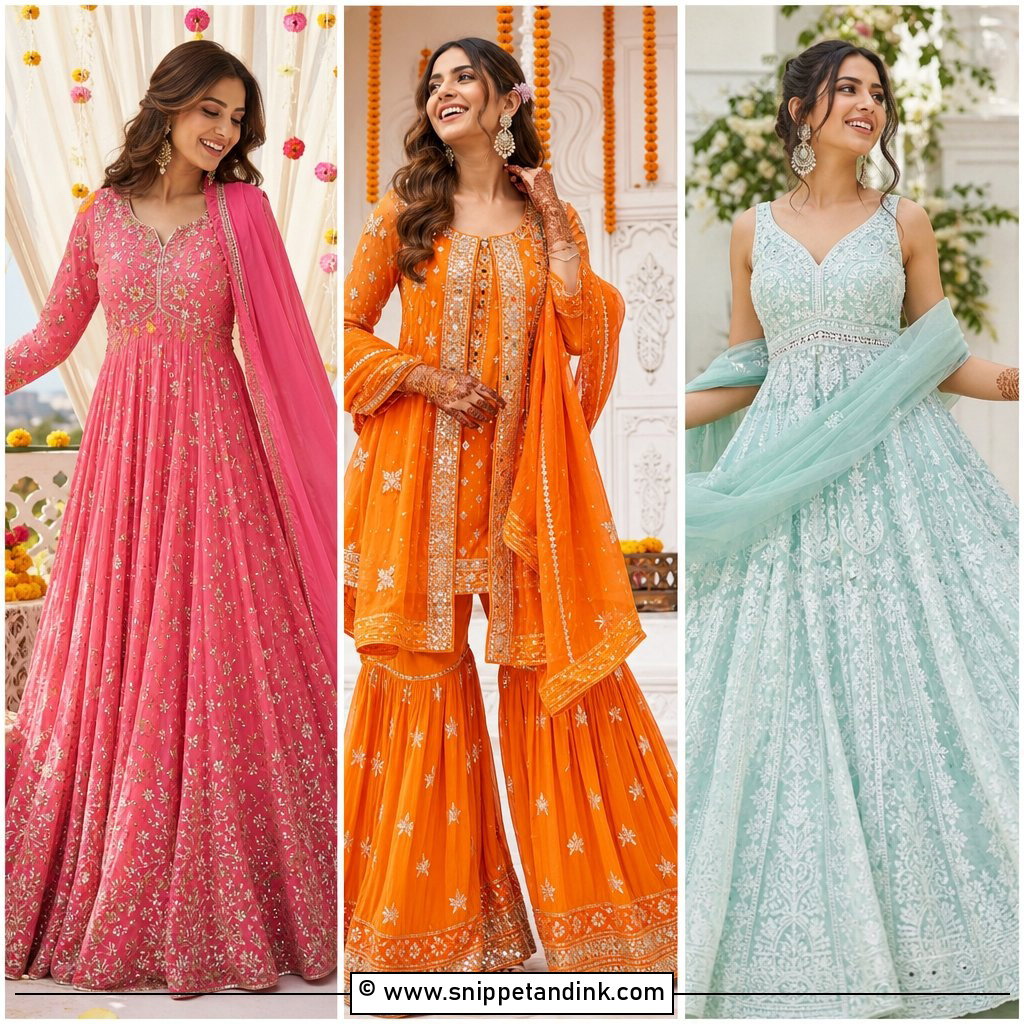
Purple is the colour I suggest when a bride is tired of seeing herself in green and yellow at every function. Select a flowing Anarkali with a fitted bodice and generous armholes; tight armholes are the hidden problem with Anarkalis, because the artist needs your arm raised and rotated for the inner wrist and palm. Plum and grape work for evening, lavender for daytime. Small mirrors or coloured thread keep a dark purple from looking formal. Secure the dupatta behind the shoulders and save the statement ring for after the paste comes off.
7. Orange Draped Saree Mehendi Outfit
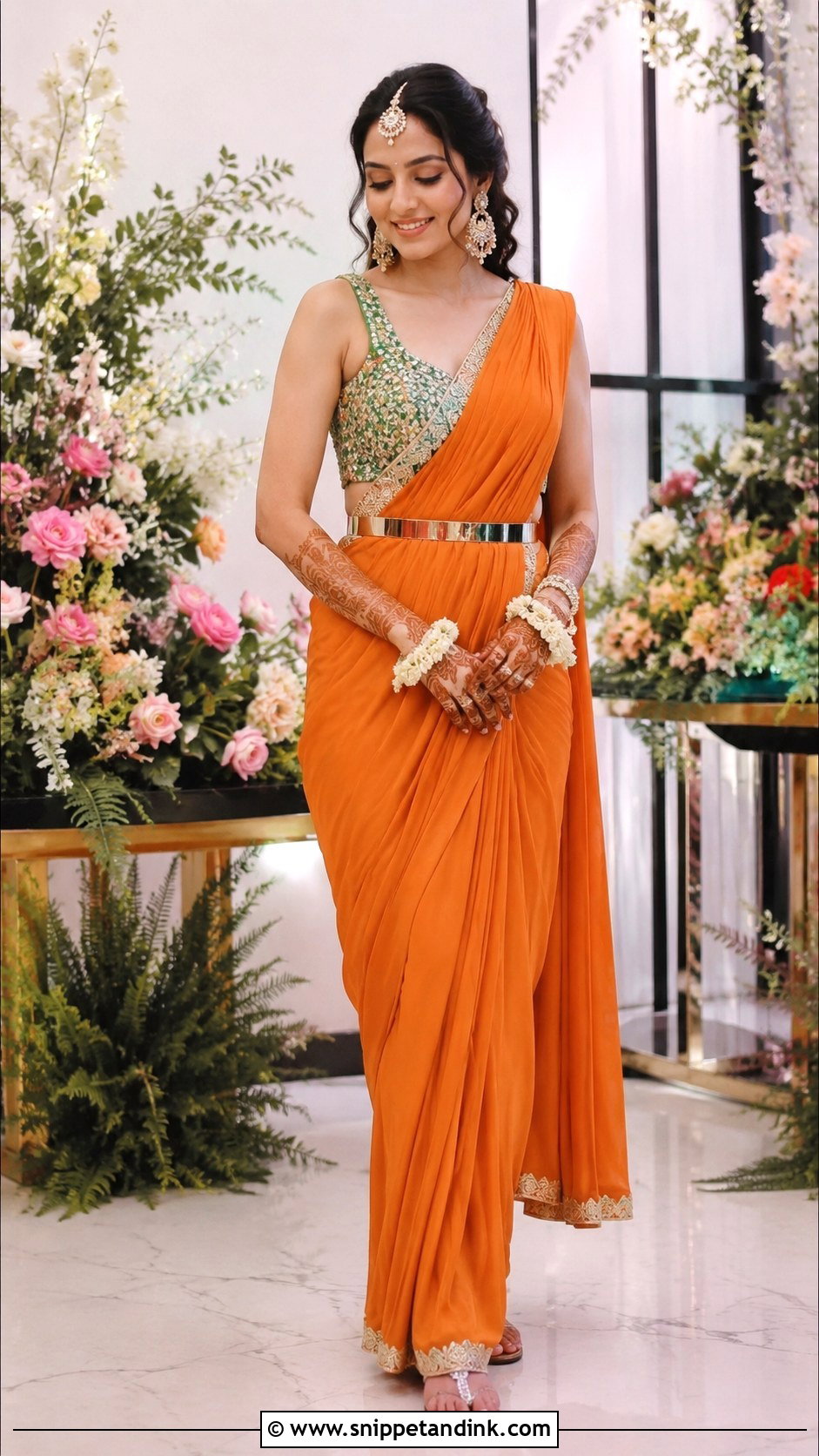
A pre-stitched drape gives you the line of a saree without the risk of a pleat working loose while your hands are full of wet henna. That’s the whole argument for it. I’d look at ruffled or dhoti-style drapes in coral, tangerine or burnt orange, with a sleeveless embroidered blouse in a contrast such as pink or green. Because the pallu is stitched, one safety pin at the shoulder holds it all evening. A slim belt helps the drape sit at the waist. If the blouse neckline is detailed, skip the necklace and let the earrings carry the jewellery.
8. Ivory Floral Lehenga Mehendi Outfit
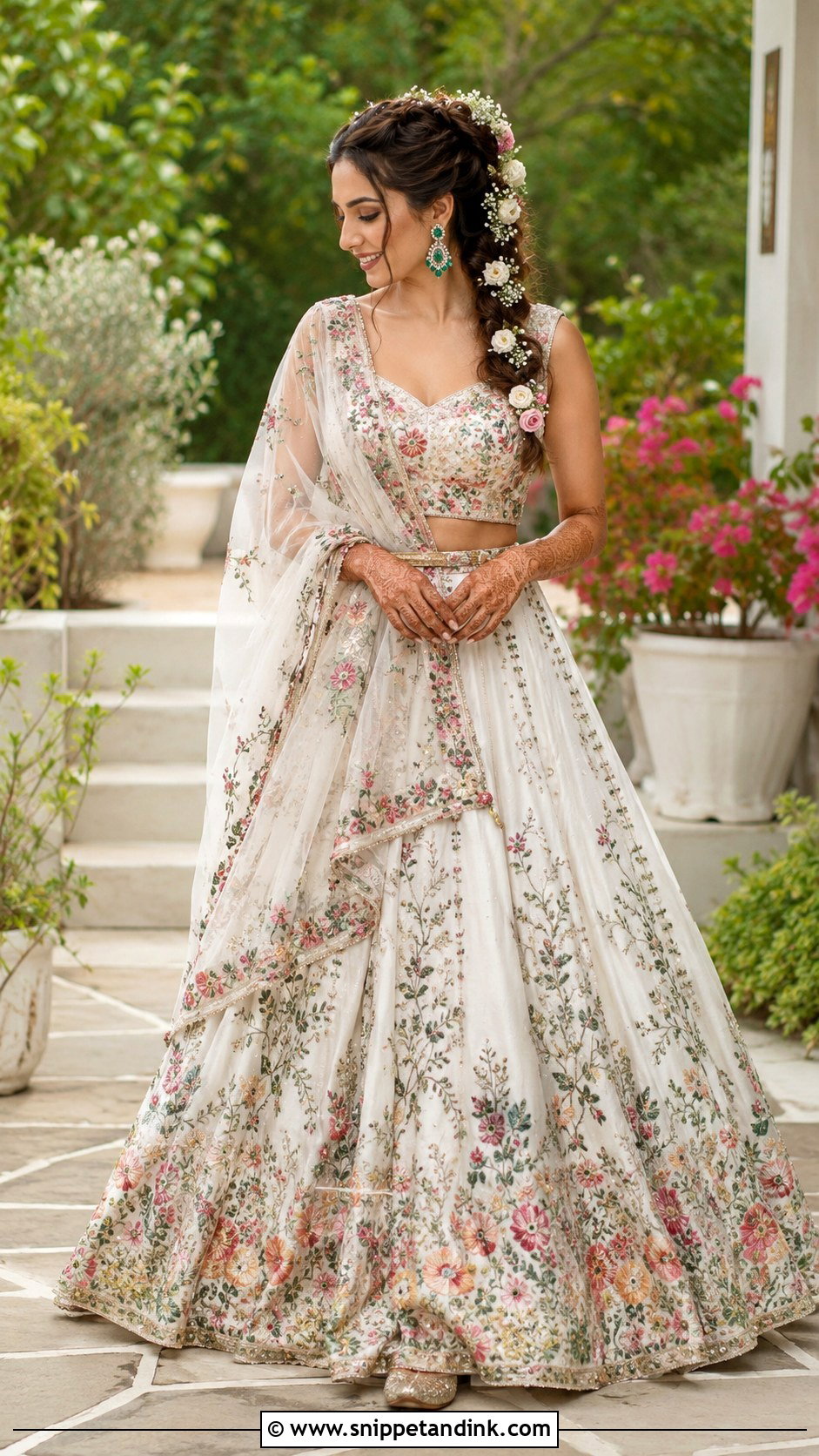
Ivory is the risky choice at a mehendi, and I’m honest with brides about that. Henna paste stains pale fabric quickly and the mark rarely lifts completely. If you love it, pick an off-white skirt that’s heavily covered with pink, green, yellow and blue flowers, so a small mark disappears into the print. Short sleeves or wide straps, a sheer floral dupatta pinned at the waist, emerald earrings and metallic juttis complete it. Fresh flowers in a relaxed braid suit the garden mood, and colourful bangles go on after the henna dries.
9. Teal Jacket Lehenga Mehendi Outfit
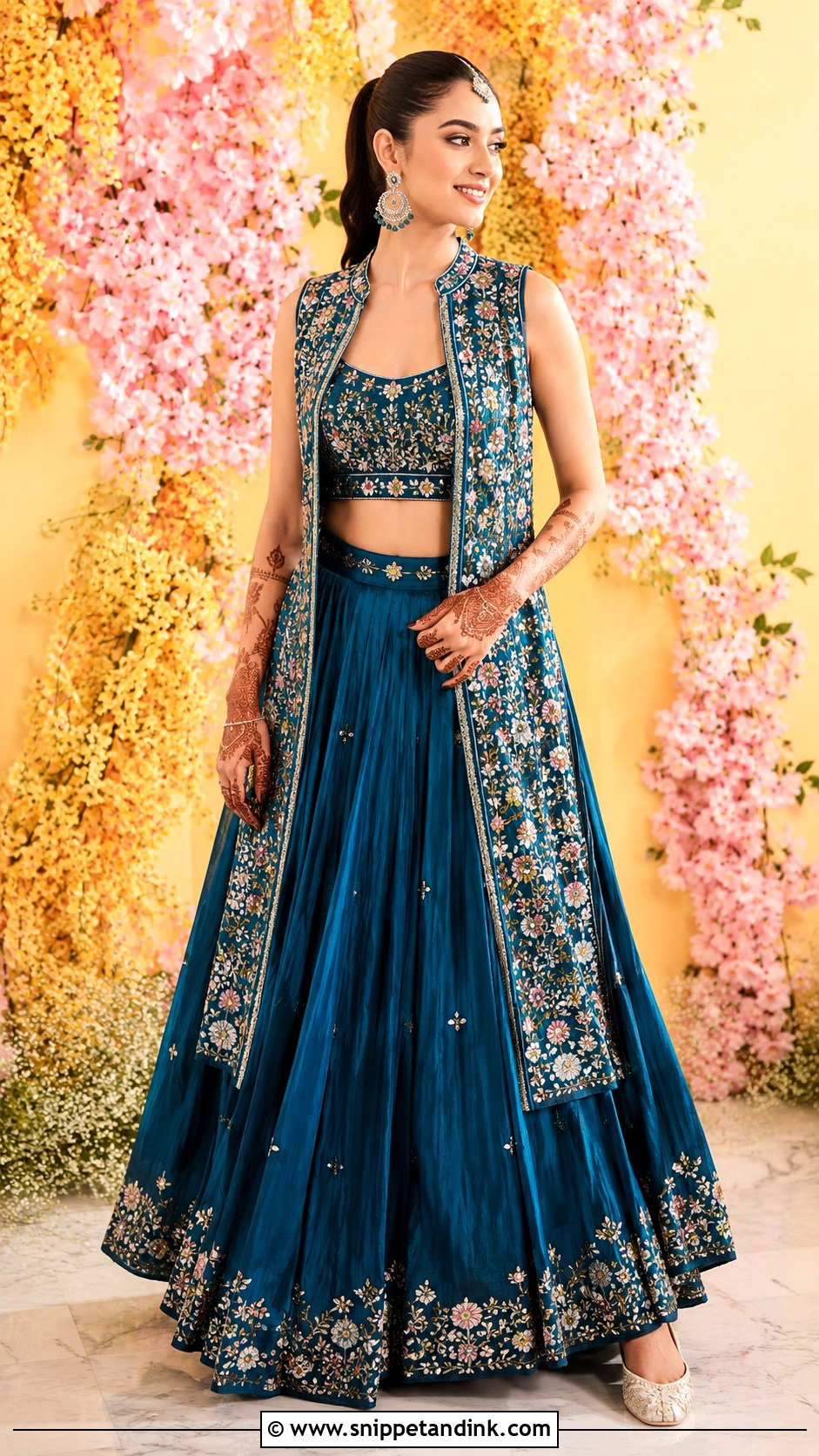
The jacket replaces the dupatta, which means one less piece of fabric drifting toward your hands. I like a teal, turquoise or peacock-blue skirt with a fitted crop top and a sleeveless jacket that falls to the knee or ankle, worn open so the waist still shows. Look closely at the jacket’s armholes: if they’re cut close, they rub against the inner arm where fresh henna sits. Silver-toned earrings, a coordinating headpiece and embroidered flats are plenty. A sleek ponytail keeps the line of the jacket clean from behind.
10. Rani Pink Bandhani Saree Mehendi Outfit
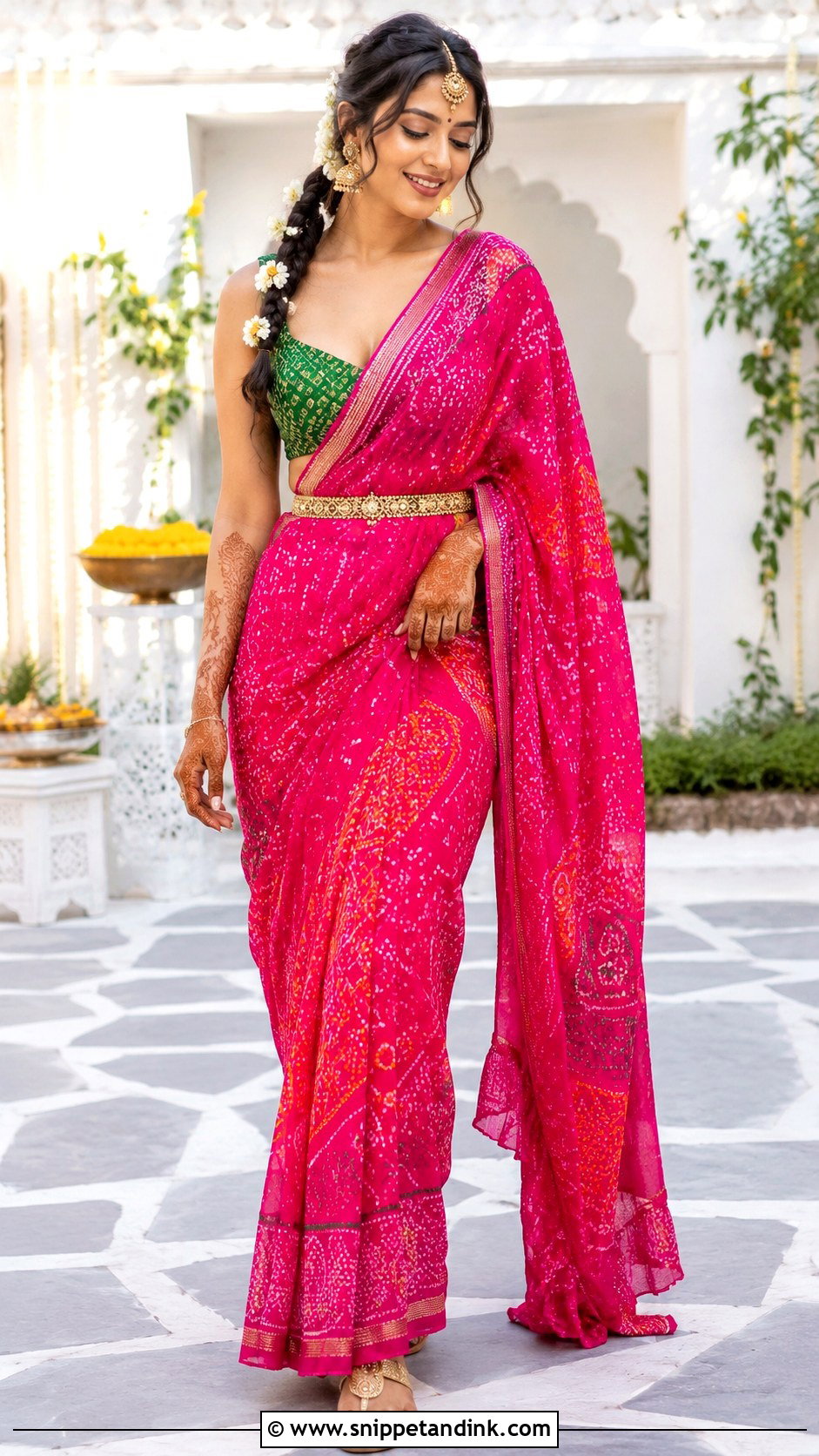
Bandhani is tie-dyed by hand, and the tiny resist dots give it a texture that cameras pick up well, even in rani pink, which can otherwise look flat. Choose a lightweight saree with a contrasting green, orange or yellow border. The drape needs to be secured properly before you sit for henna: I pin the pleats at the waist and again at the shoulder, and add a thin belt if the fabric is slippery. Jhumkas, a small bindi and gold juttis keep it traditional. A flower braid or low bun keeps the shoulders clear.
11. Mint Crop Top And Skirt Mehendi Outfit
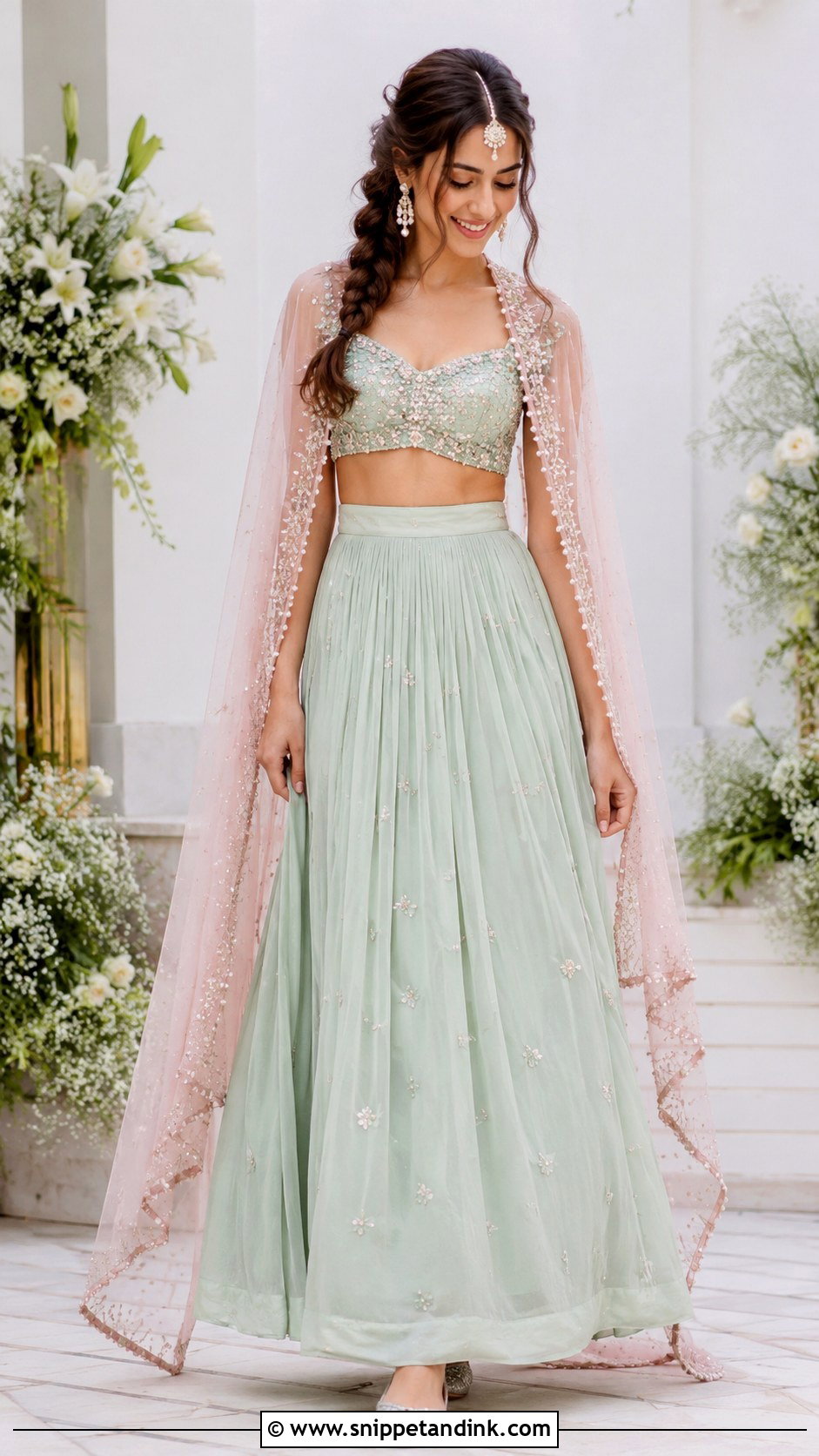
Mint is a spring and summer colour, and it can disappear against a bright marigold backdrop. The fix is contrast inside the outfit itself: a crop top with clearly defined appliqué, pearls or sequins over a plain flowing skirt, so the two pieces don’t merge into one pale block in photos. Add a light cape or dupatta in blush or ivory. Pearl drop earrings, a delicate headband and silver flats suit it, and a loose braided ponytail keeps it fresh rather than formal.
12. Mustard Kurta And Dhoti Pants Mehendi Outfit
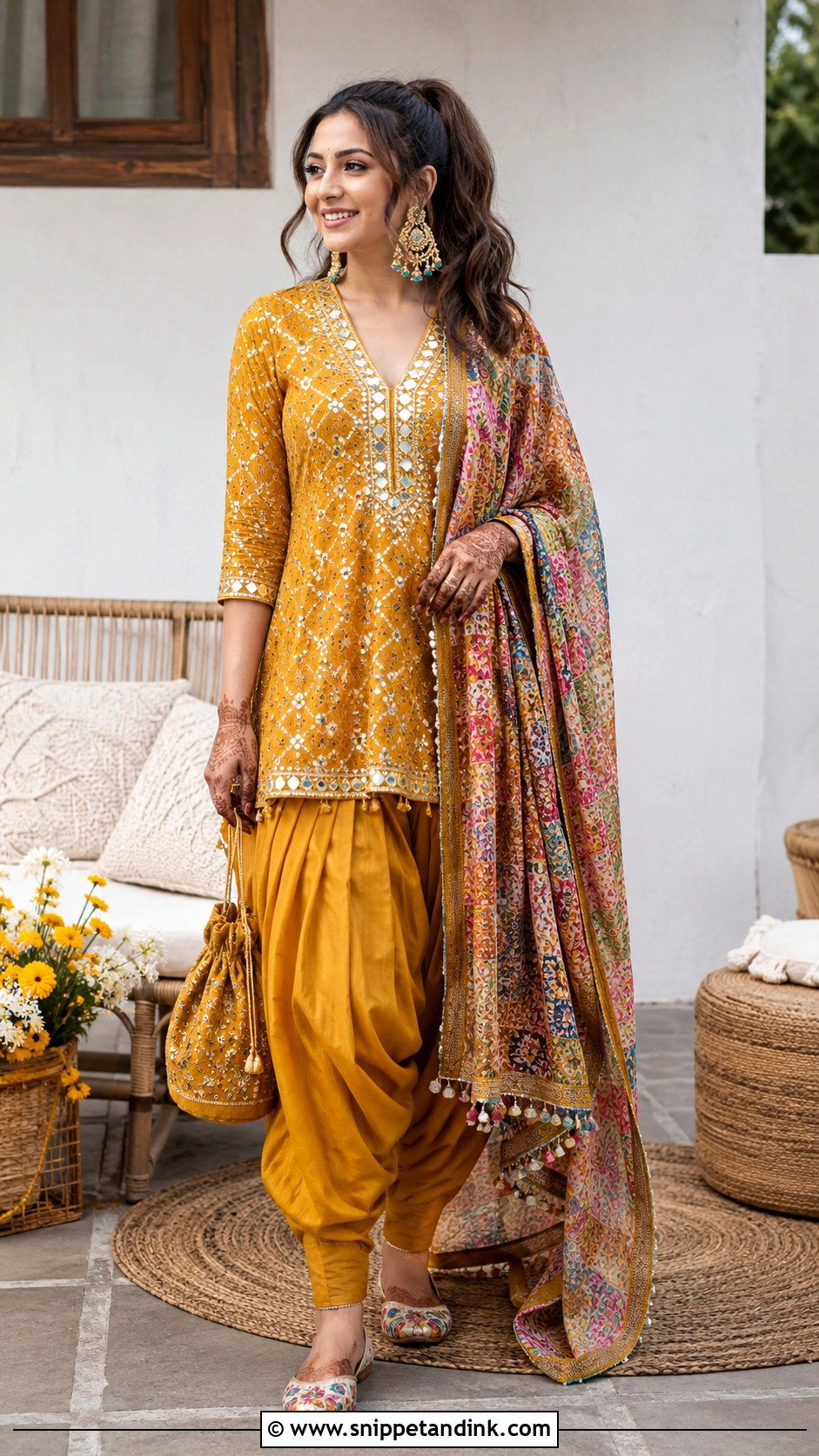
Comfort takes center stage in a mustard kurta and dhoti pants combination. Dhoti pants have extra fabric gathered at the crotch, which is exactly what lets you sit cross-legged on a low stool for hours without strain. Pair them with a short fitted kurta in mirror work or gota trim; an asymmetrical hem shows off the drape of the pants nicely. A printed dupatta, a potli and embroidered juttis finish it. I’d use this look for a home function or a daytime courtyard where you’ll be on the floor as much as on a chair.
13. Blue Cape Lehenga Mehendi Outfit
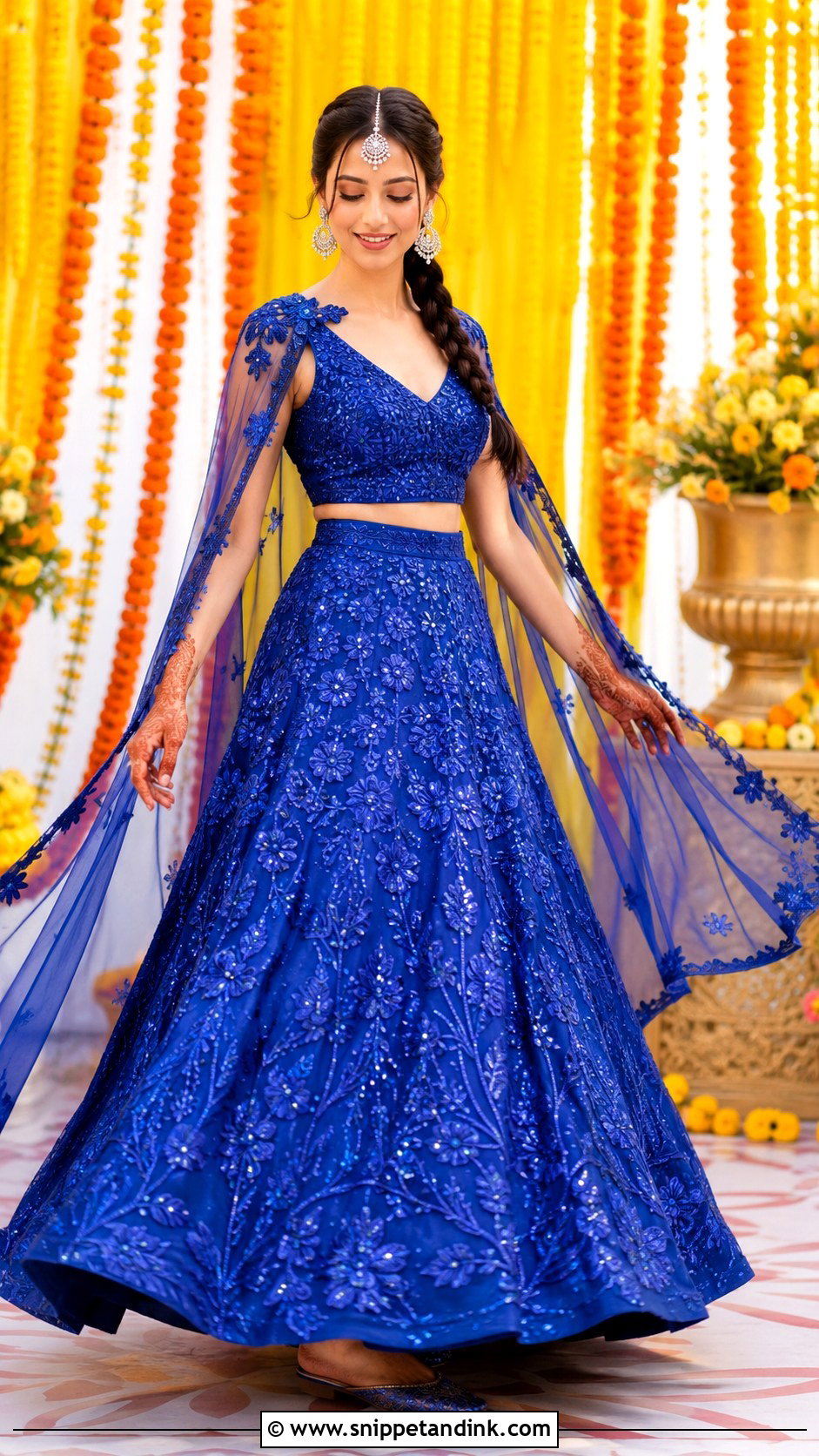
A sheer cape gives you the drama of a dupatta without the dangling end. The thing I check at a fitting is where the cape falls at the arm: it should sit back from the shoulder so your hands, wrists and forearms stay completely clear. Choose a cobalt, royal or sky-blue skirt with colourful embroidery at the hem, a sleeveless blouse, and a cape with scattered sequins or a worked border. Silver jewellery and flat sandals suit the cool tone. Against orange and pink decor, this blue reads strongly on camera.
14. Red Printed Lehenga Mehendi Outfit
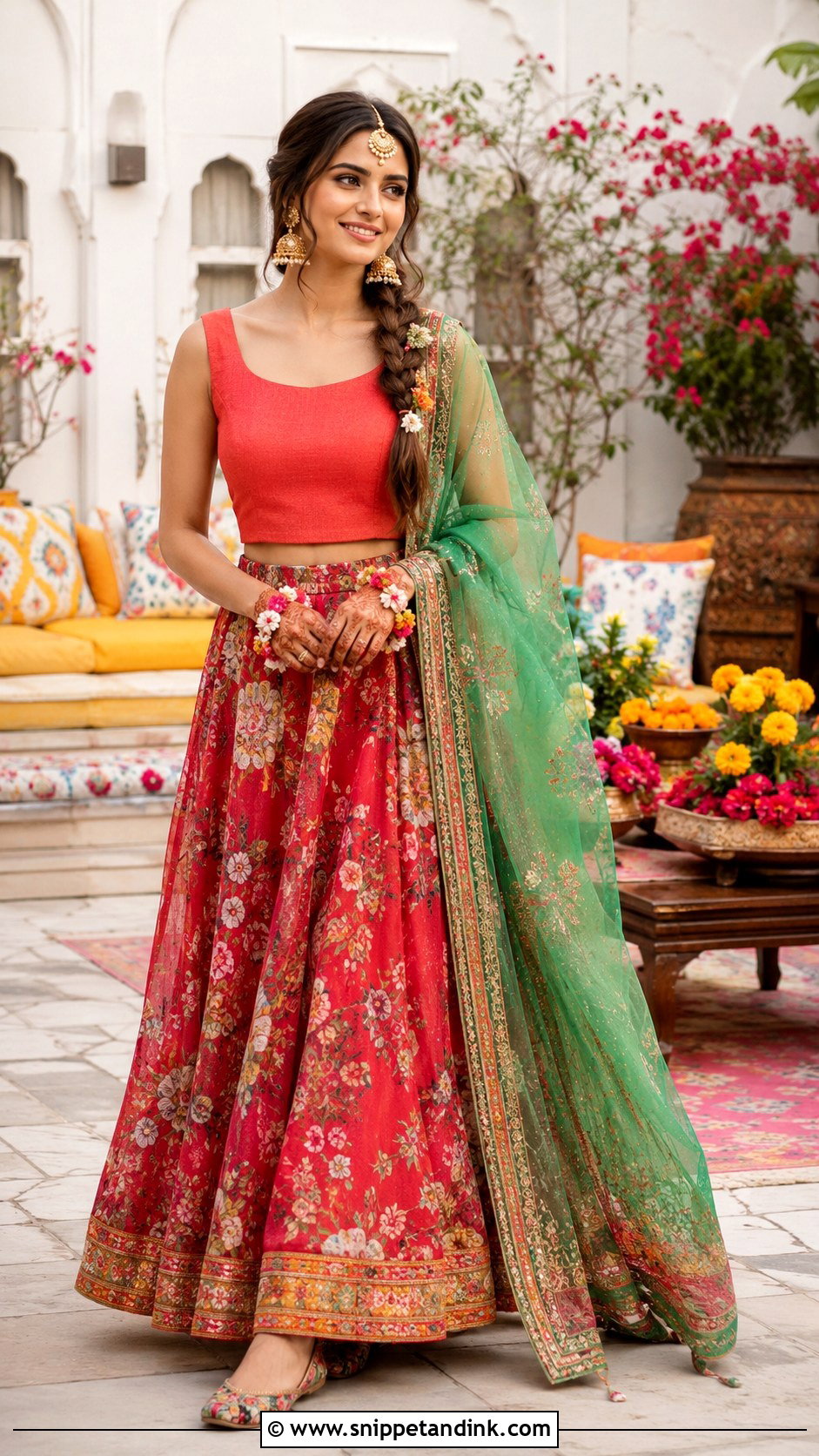
Red at the mehendi works if it doesn’t compete with the wedding lehenga. Print is the way to separate them. I’d save heavy embroidery and zari for the ceremony and go with a breathable skirt in floral or geometric prints here, with a plain fitted blouse in red, coral, pink or green picked from the pattern. A narrow-bordered dupatta keeps the bulk down. Gold jhumkas, a small headpiece and embroidered flats are enough, and a side braid keeps the mood relaxed.
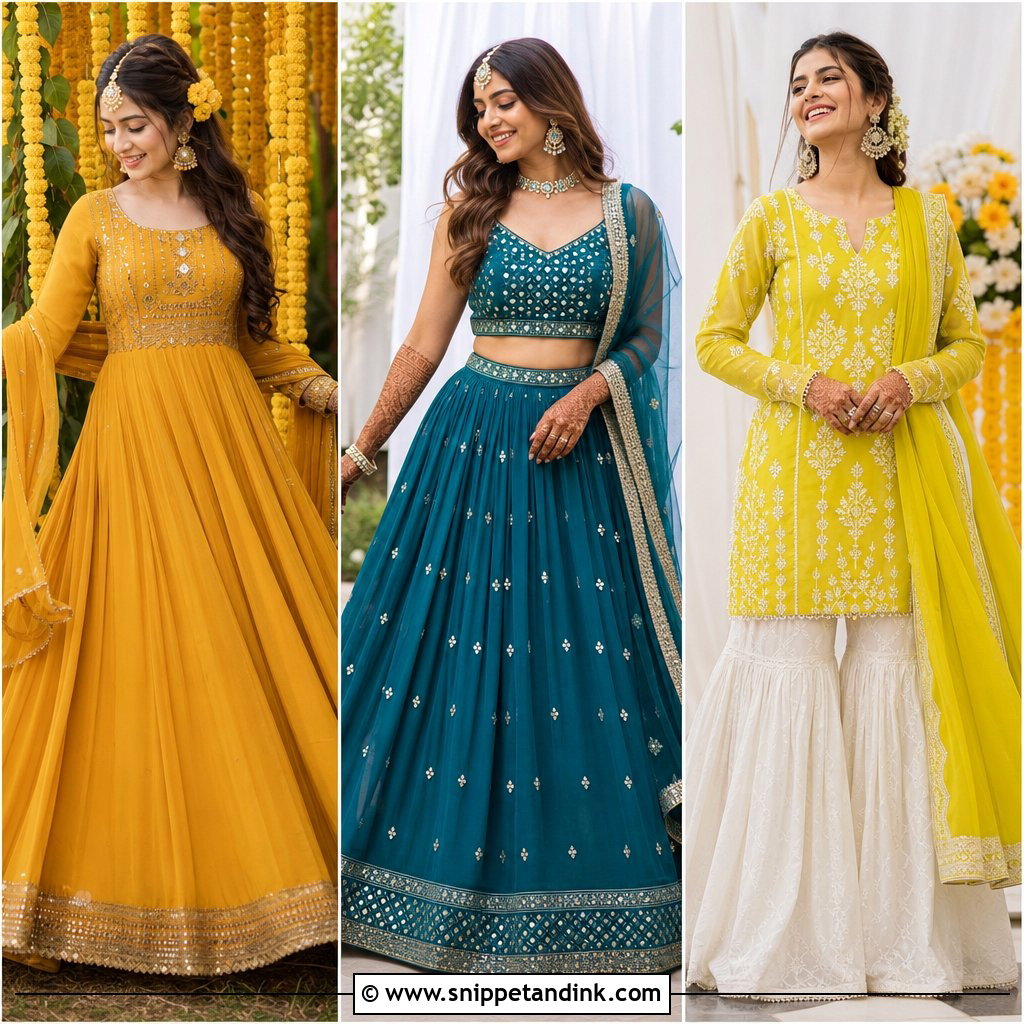
15. Pastel Peplum Sharara Mehendi Outfit
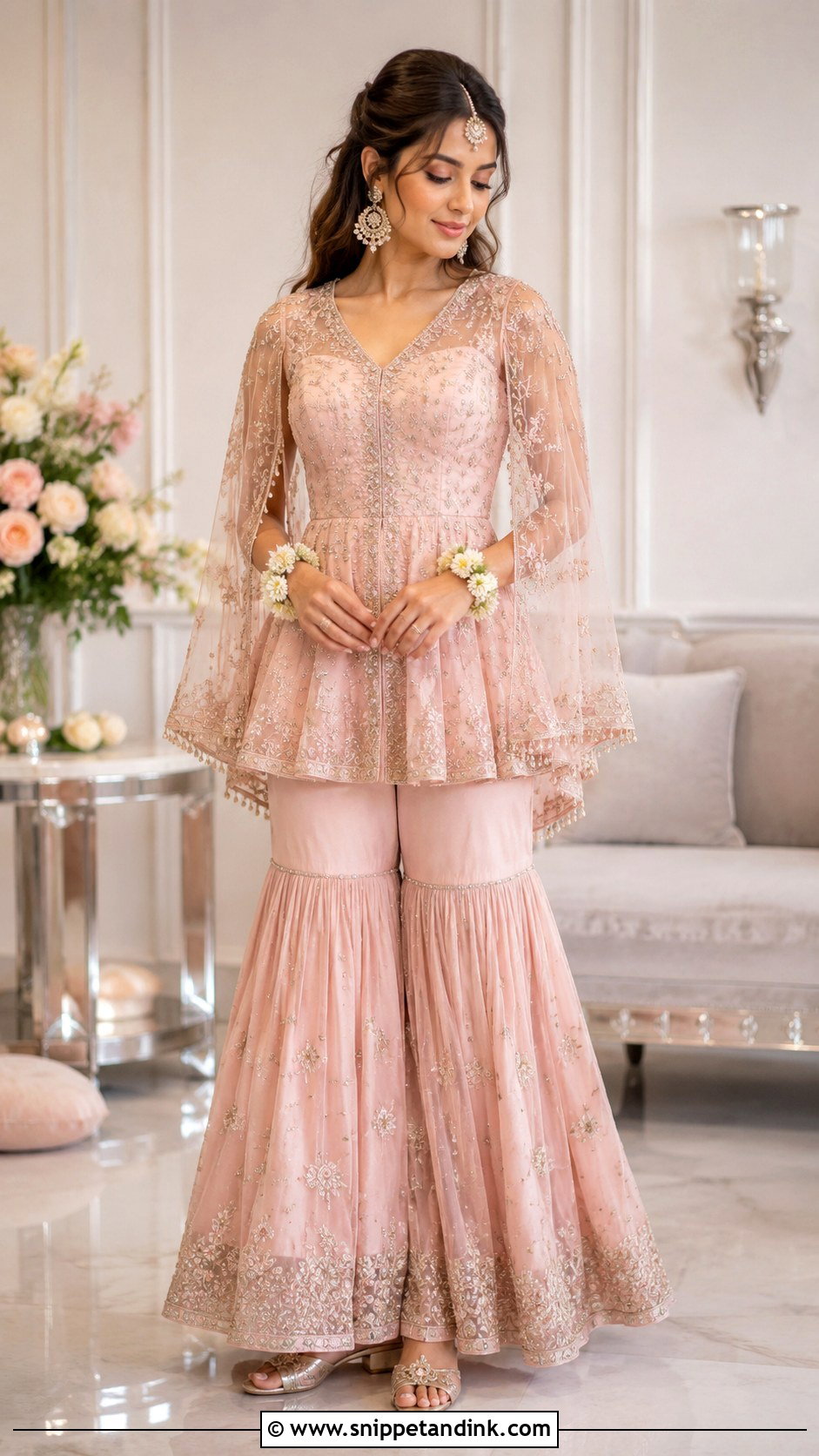
The peplum gives a pastel outfit a waist, which is useful because pale georgette sharara sets can look shapeless when you’re sitting. Choose a fitted peplum top in blush, lilac, peach or powder blue, and let floral embroidery, small mirrors or pearls give the colour enough presence on camera. A short cape or a dupatta pinned behind both shoulders works better than a loose one. With chandelier earrings already in play, I keep everything else minimal so the peplum detail shows. A half-up style or high ponytail completes it.
16. White And Green Saree Mehendi Outfit
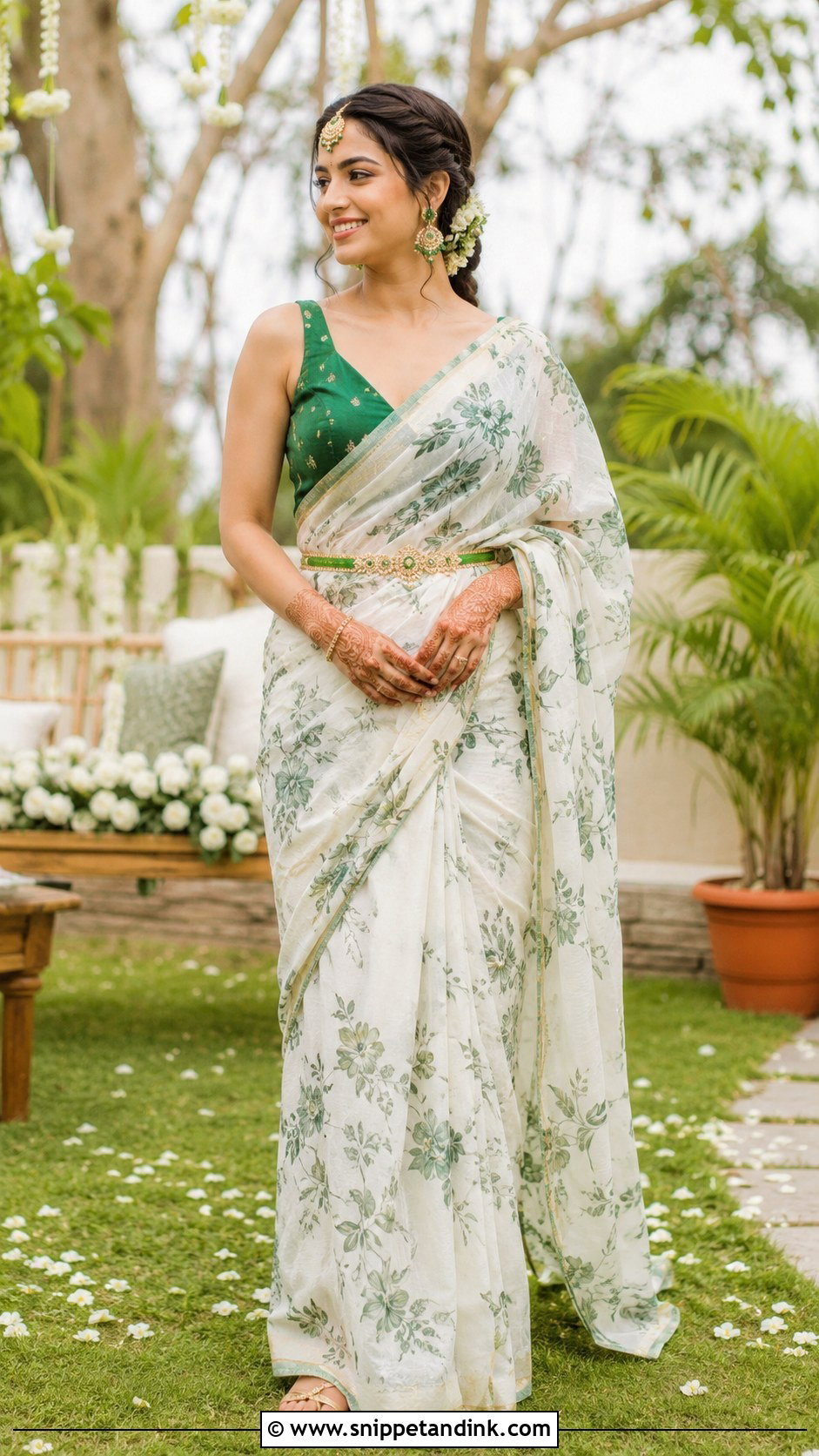
White with a vivid green border is crisp and traditional, but it carries the same stain risk as ivory, so plan where you sit. I’d keep this bride away from the buffet and the henna station until her paste has dried and flaked. Pick a white or cream saree with a green border or botanical pallu, and wear a green sleeveless blouse to tie in the mehendi colours. Pin every pleat. Green stone earrings, a floral tikka, a slim belt and gold flats complete it, with small white flowers in a low braid.
17. Boho Co-Ord Mehendi Outfit
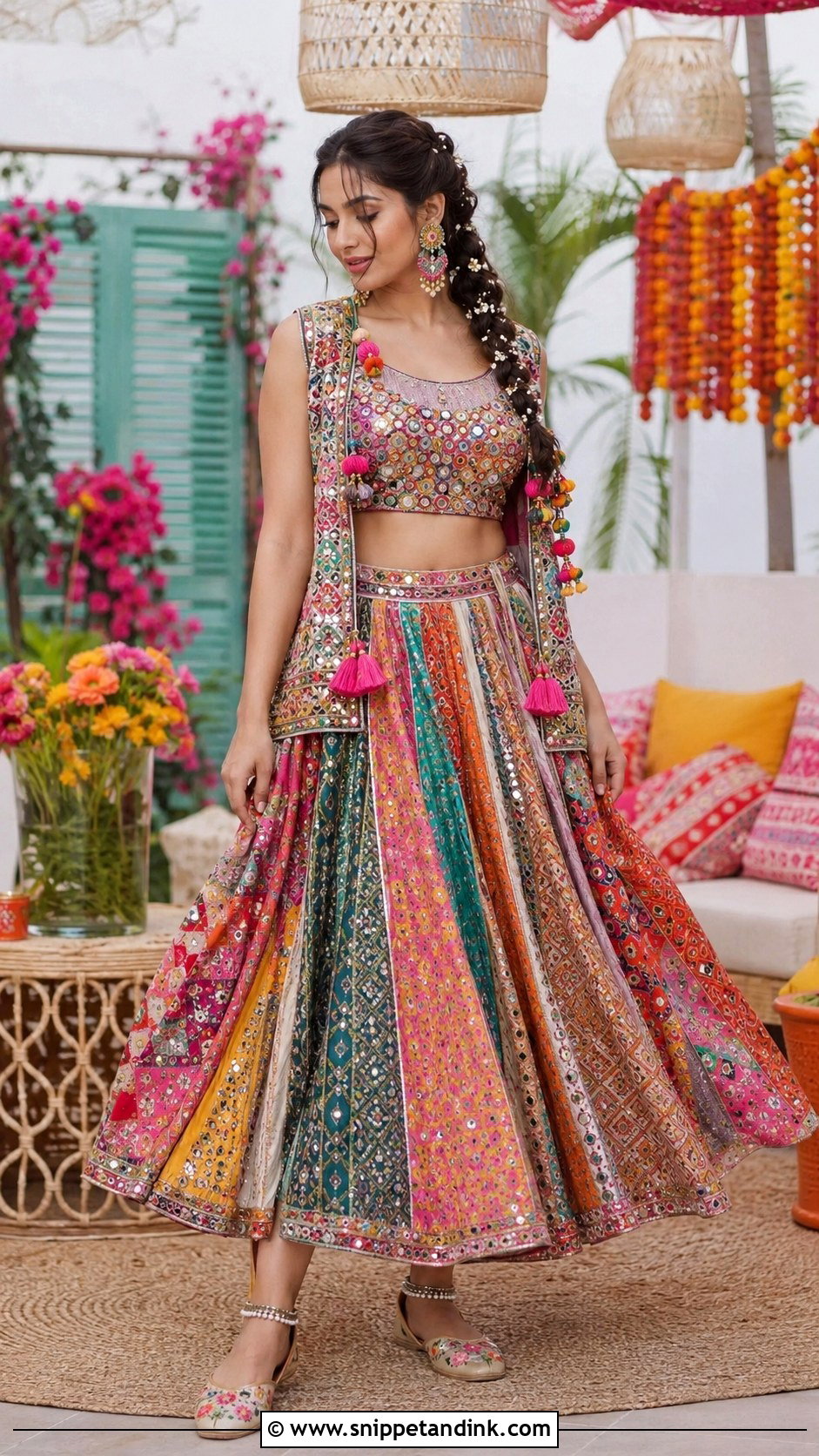
Boho co-ords are the most personal look here, and also the one most likely to snag. Shell, mirror and tassel trims catch on lace, dupattas and other people’s jewellery, so I hand-check every embellishment and resew anything loose before the day. The set itself can be a cropped blouse with a flared skirt or wide-leg pants, layered with a fringed cape or embroidered vest. Statement earrings, a pearl braid, anklets and flats work with it. It suits an outdoor setting with floor cushions far better than a formal hall.
18. Banarasi Silk Saree Mehendi Outfit
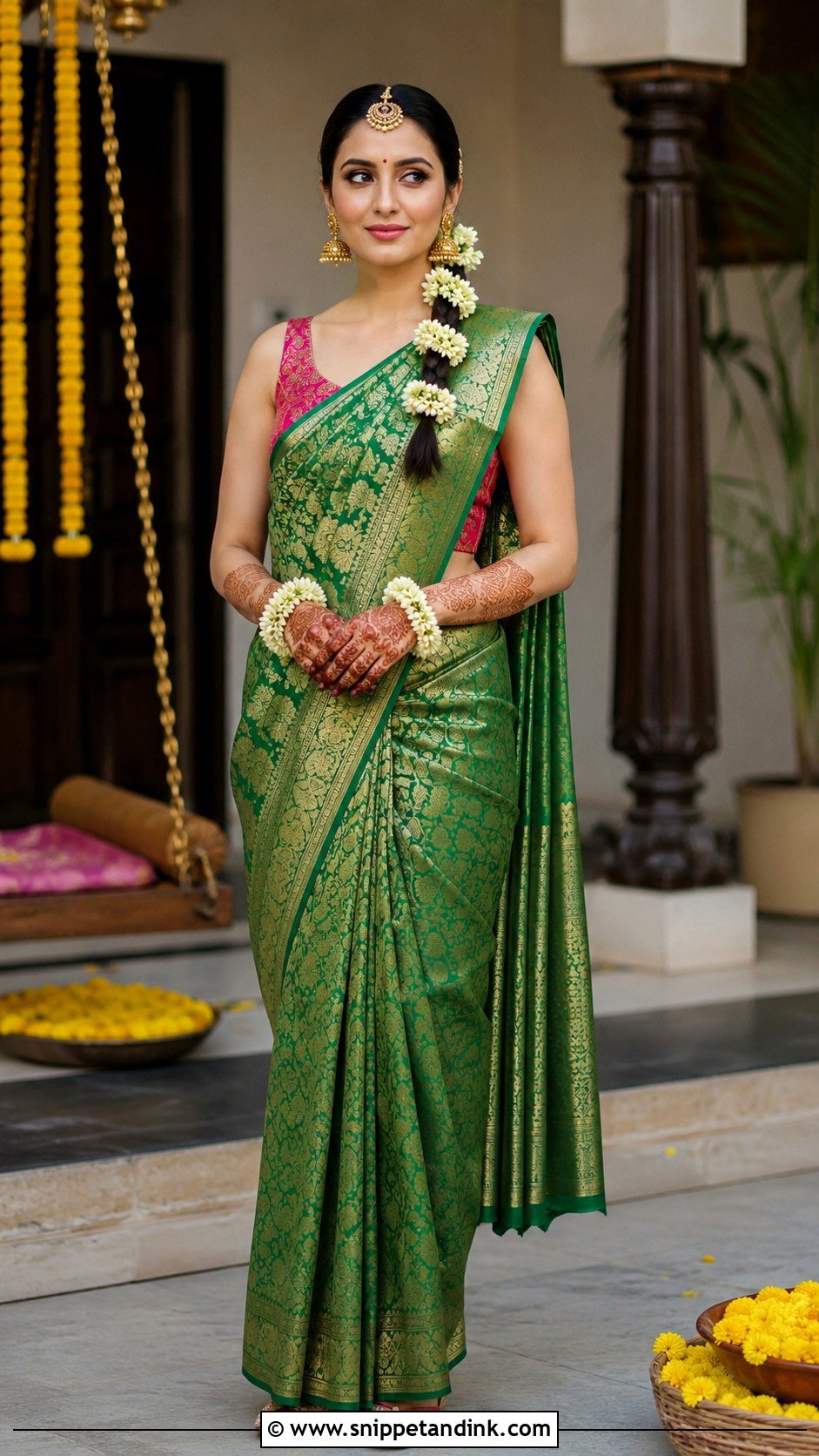
A Banarasi saree is woven with zari, so even a lighter weave has weight. That’s why I steer brides toward the softer Banarasi georgette or organza versions for a long mehendi rather than the full silk they might wear later. Green, yellow, pink or purple all work. Pair it with a contrasting sleeveless blouse that leaves room for arm henna, and pin the pallu at the shoulder. Gold earrings, a maang tikka and brocade juttis suit it. It’s the most meaningful choice when the saree is a family piece, and it can be worn again for years.
19. Asymmetrical Kurta And Skirt Mehendi Outfit
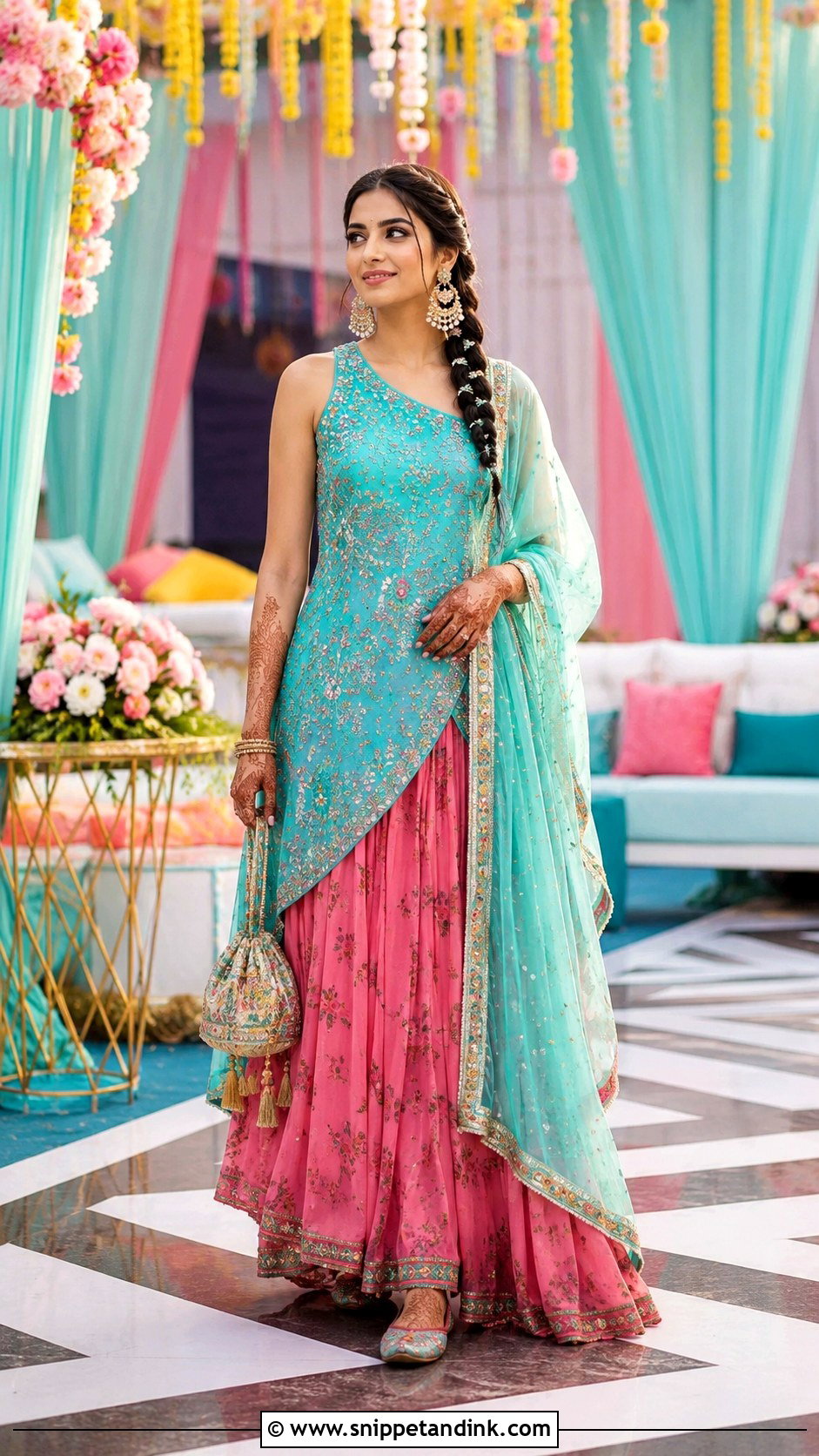
An asymmetrical kurta paired with a full skirt gives you the movement of a lehenga with more coverage at the midriff. Ask for a hem that’s short on one side and longer on the other so the printed skirt still shows. Green with pink, or mustard with turquoise, suit a colourful setting. Keep sleeves short or skip them entirely. I only add a dupatta here if the outfit looks unfinished without it, and then just over one shoulder. A compact potli and a sleek braid keep attention on that uneven hemline.
20. Color Block Pant Set Mehendi Outfit
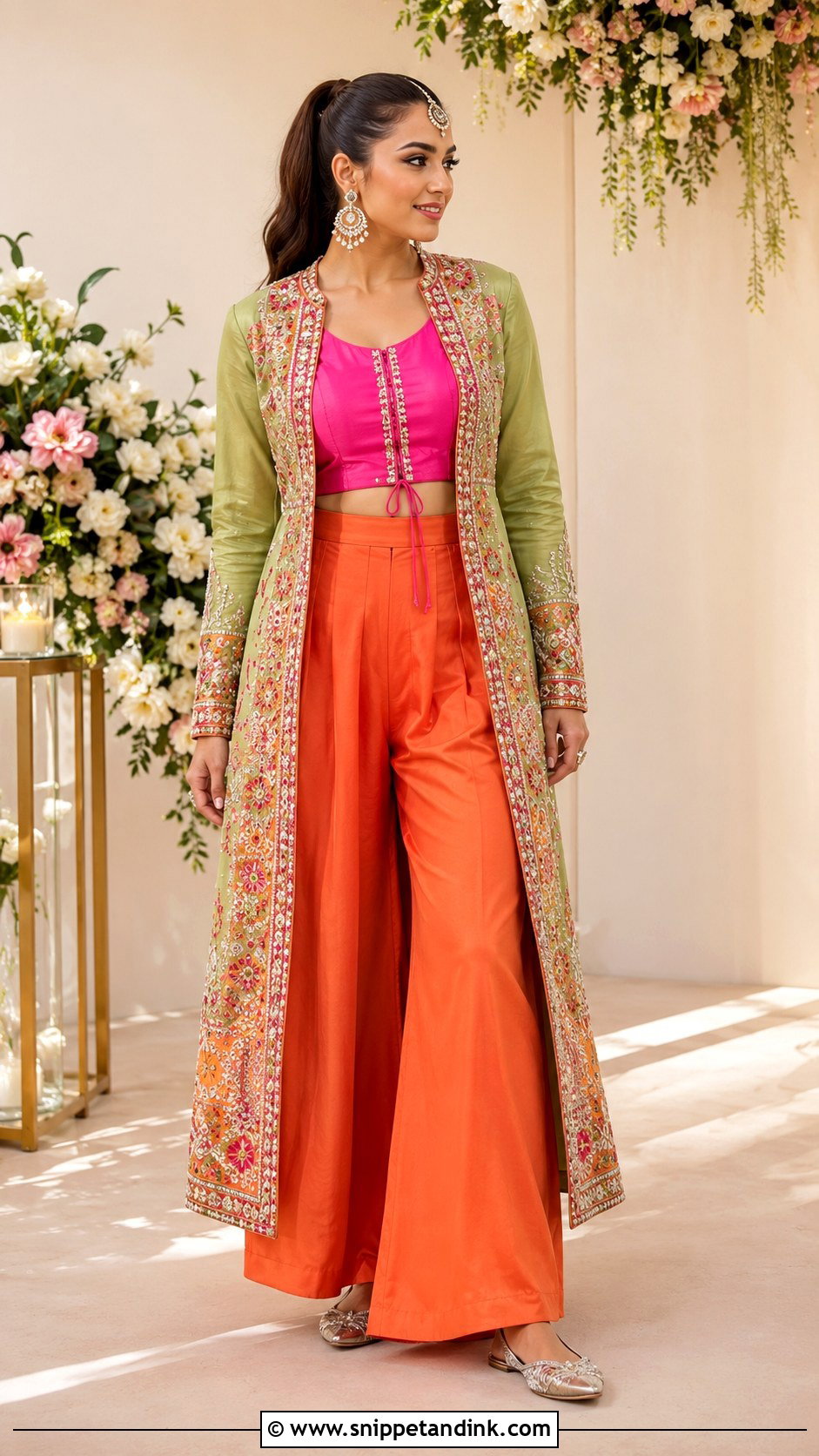
Colour blocking is the sharpest option on this list and the least traditional. Combine wide-leg trousers in one strong shade with a cropped blouse or tunic in another: pink with orange, green with blue or purple with yellow. A long embroidered jacket gives it the ceremonial weight it otherwise lacks. Hem the trousers to just brush the top of your flats; any longer and you’ll step on them dancing. I’d choose this for a modern venue and a bride who prefers tailored fusion wear over a lehenga.
If Wet Paste Touches Your Outfit
It happens at nearly every mehendi: a hand brushes a dupatta or a cousin leans in for a hug. Henna dye bonds to natural fibres such as silk and cotton much as it does to skin, so speed matters. Don’t rub. Lift the paste off with the edge of a dry tissue, blot gently, and leave the rest alone until the event is over.
On the day, a small mark on a printed or embroidered area usually vanishes in photos. Afterward, take the garment to a dry cleaner who handles silk and zari and tell them it’s henna, not food. I wouldn’t try home remedies on embroidered pieces, since water and bleach can lift dye from the base fabric and tarnish metallic thread.
Jewellery and the Drying Stage
Once the paste has set, many artists dab on a lemon and sugar mix to keep it moist and help the stain darken. It’s sticky, and it will glue a loose dupatta edge straight to your arm. I hold back rings, bangles and hand harnesses until the paste has been scraped off, and I keep the dupatta pinned well away from the wrists until then.
Telling the Mehendi Outfit Apart From the Wedding Lehenga
Your family will photograph you at every function, and the albums look flat when every outfit is the same weight and colour. I usually separate the mehendi from the wedding in at least two ways: a lighter fabric, prints or mirror work instead of heavy zari, a different colour family, or a different silhouette such as a sharara or co-ord. Keep the headline jewellery for the wedding and wear florals, kundan or silver-toned pieces here. That way each event has its own look in the photos, and you aren’t wearing your heaviest outfit twice.
Picture Yourself in It at Midnight, Still Dancing
Lehengas give you volume, shararas and dhoti pants give you movement, and sarees and fusion sets sit somewhere in between. Whichever you lean toward, run the same checks: sleeves that leave your arms free, a dupatta that’s pinned rather than floating, and shoes you can stand in for hours. The mehendi look should feel clearly different from your wedding outfit while still marking you out as the bride. If you’re torn between two, I’d pick the one you can sit in more easily.
You'll Like These Ideas:


Leave a Reply