
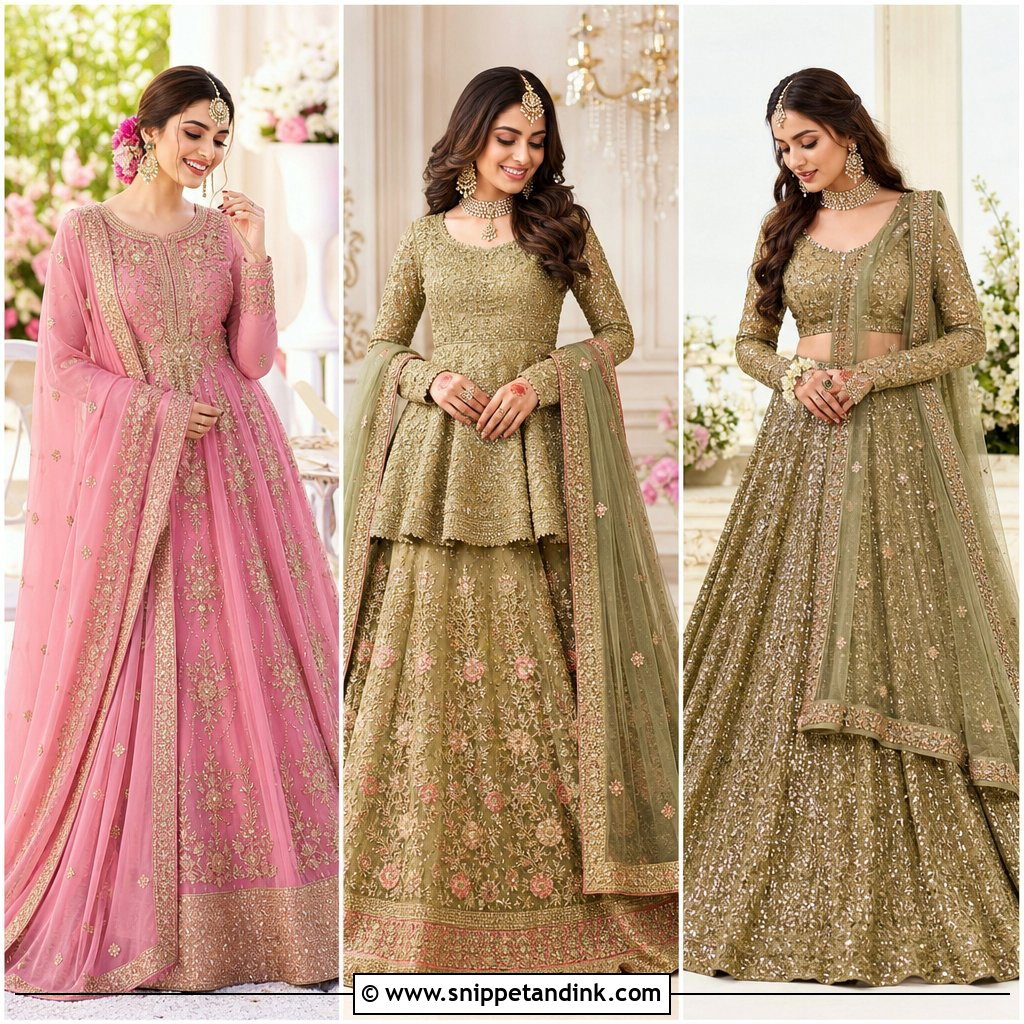
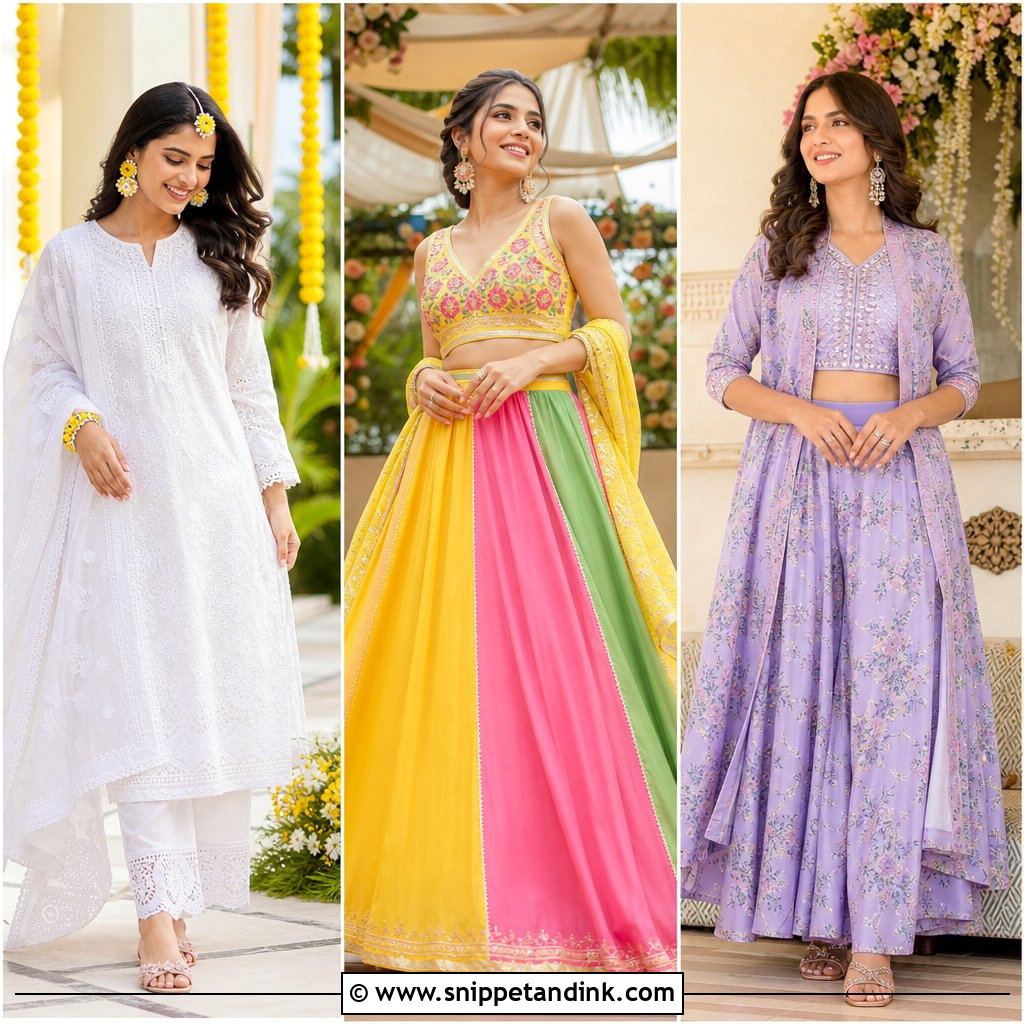
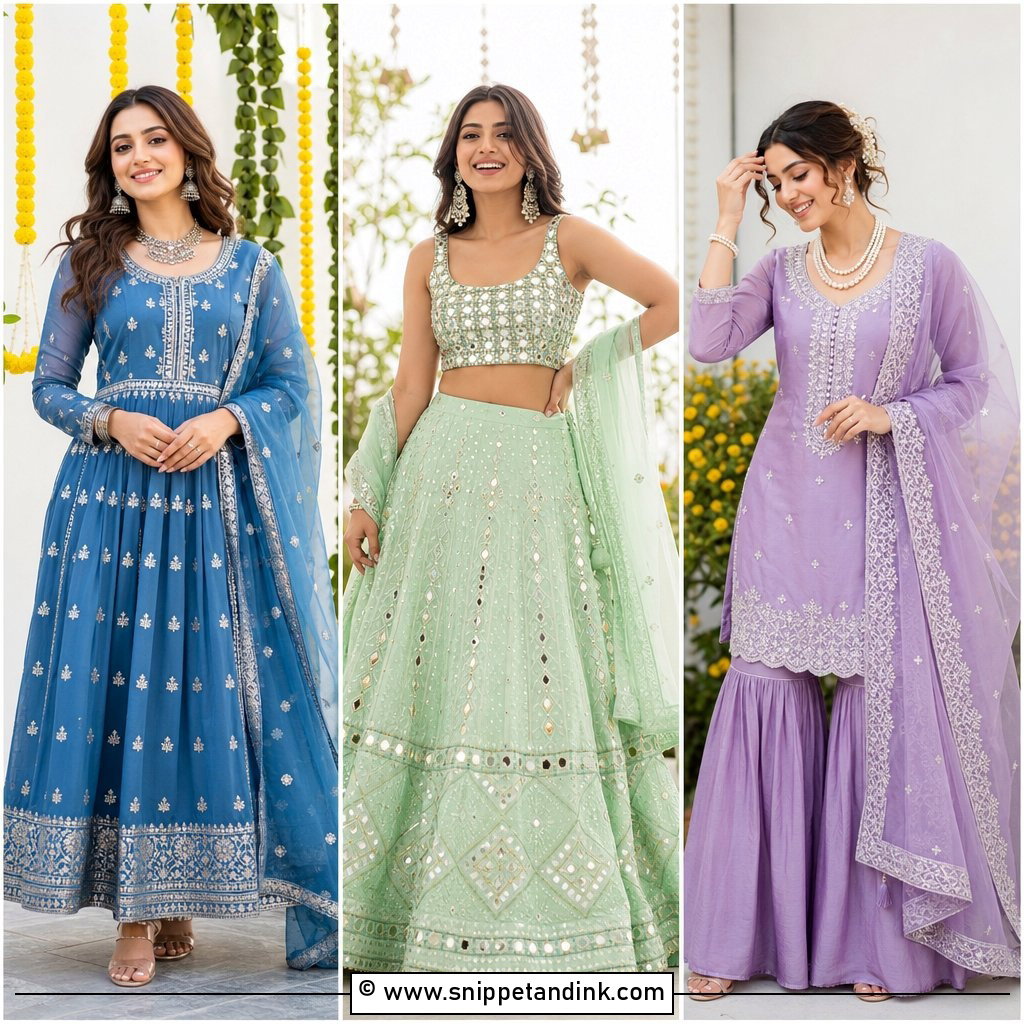
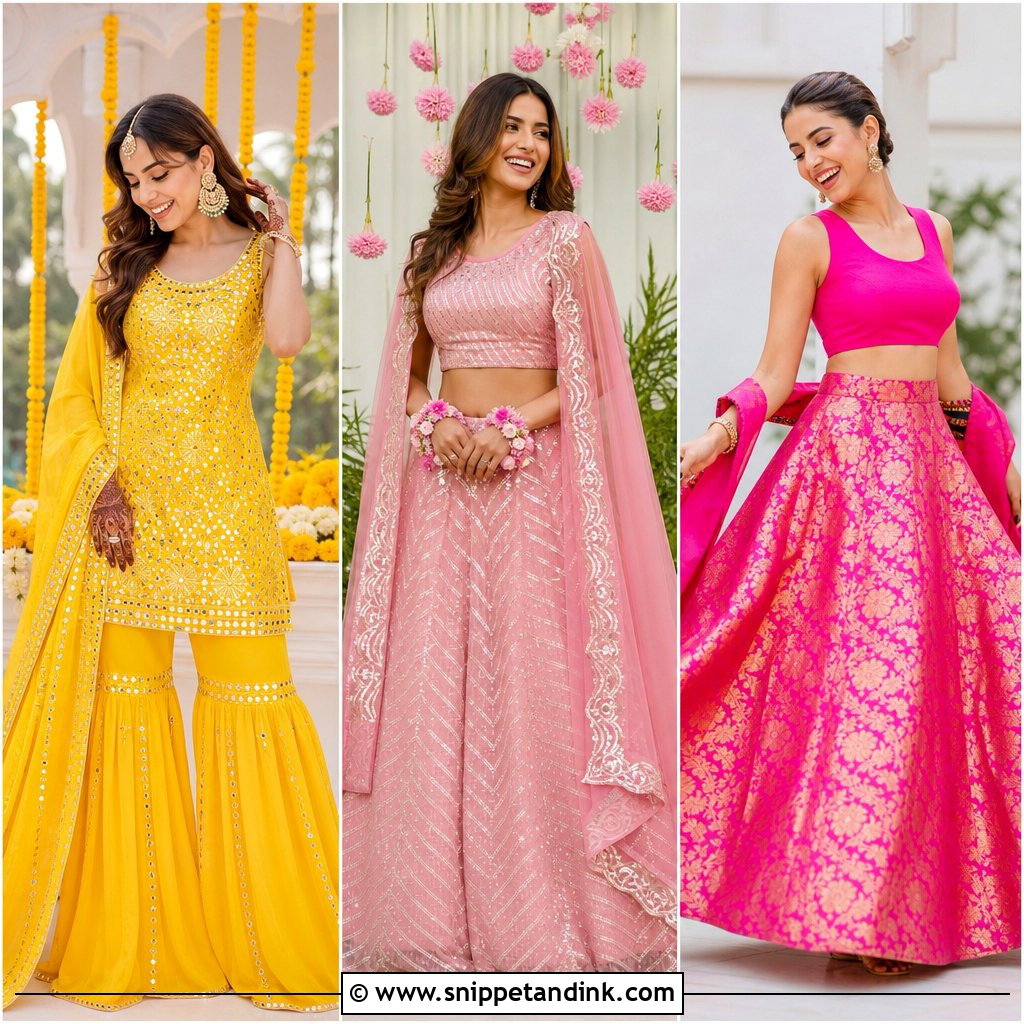
A bride’s mehendi outfit has a stranger job than her wedding outfit. It has to let her sit on a low seat for hours, show off her arms in close-up photos, and still feel like a bridal look when the dancing starts. What I’m putting together for brides right now leans light: lehengas in georgette and organza, shararas, cape sets, floral prints, mirror work and gota, mostly in greens and yellows, with a few fusion cuts for brides who’d rather skip the skirt. Below are 25 outfits I’d happily dress a bride in, each with the practical detail that decides whether it works on the night.
Your Hands Will Be Dark Brown on the Night, Not Orange
Most brides picture their outfit next to a rich orange-red stain. On the night itself, though, your hands and arms are covered in drying paste, which is a dark greenish brown. The stain only appears once the paste comes off, starts orange, and deepens over the next day or two. That’s why mehendi is usually held a day or two before the wedding, so the colour peaks for the main event.
So I judge an outfit against two things. For the ceremony photos, contrast with dark paste matters: yellow, orange, light green, pink and ivory all make the design read clearly, while very dark olive, deep brown or maroon swallow it. For the days after, think about the stain against your wedding outfit, not the mehendi one.
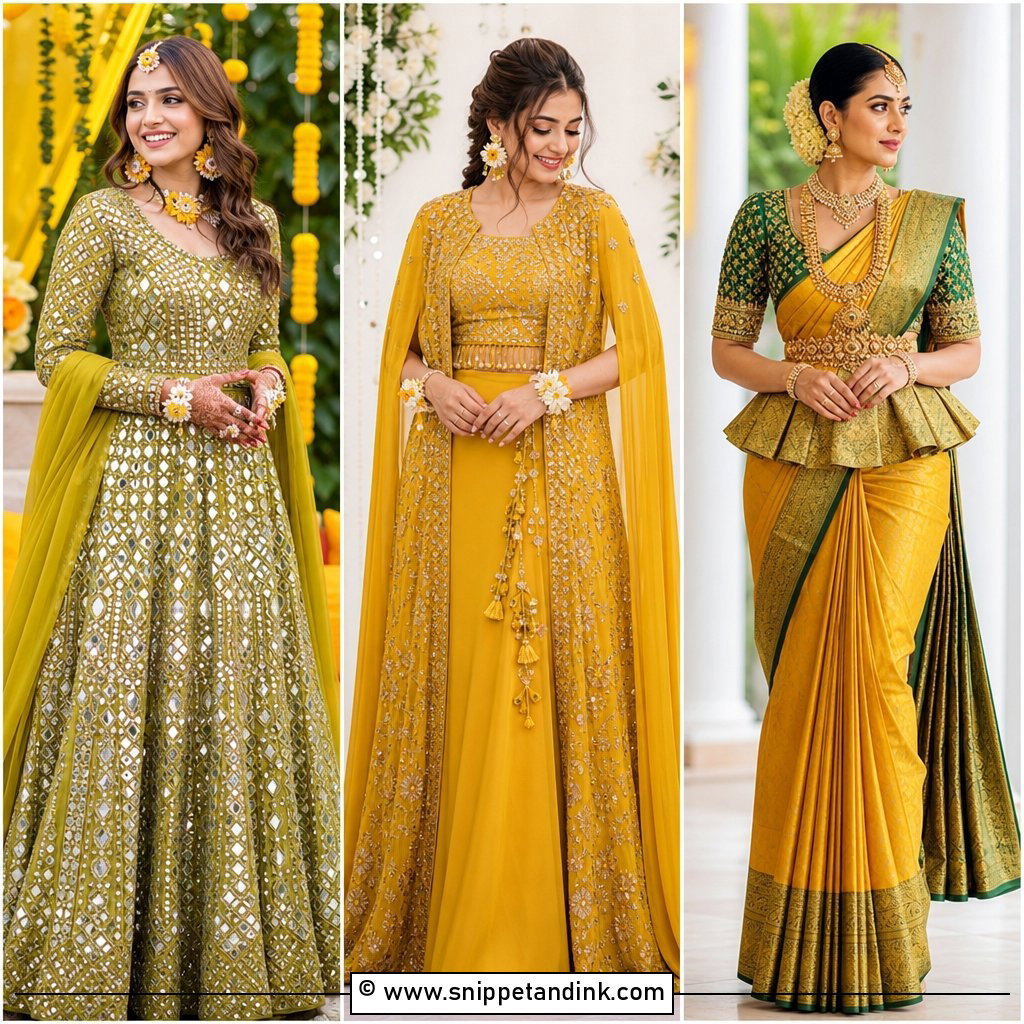
Design density matters too. A full-coverage bridal design up to the elbows is already a lot of pattern. With that, I’d choose a solid or large-motif outfit. If your henna is minimal, a busy print or patchwork skirt has room to carry the look.
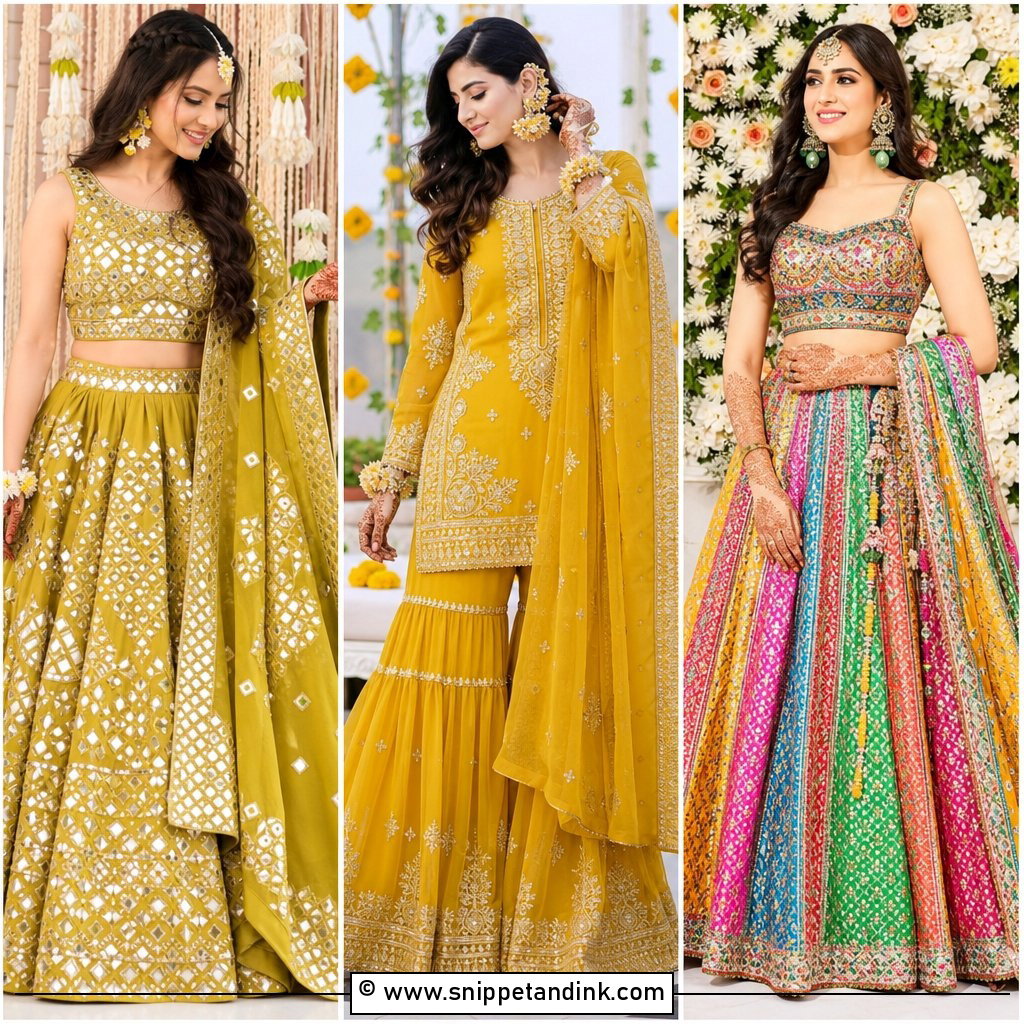
1. Yellow Mehendi Lehenga
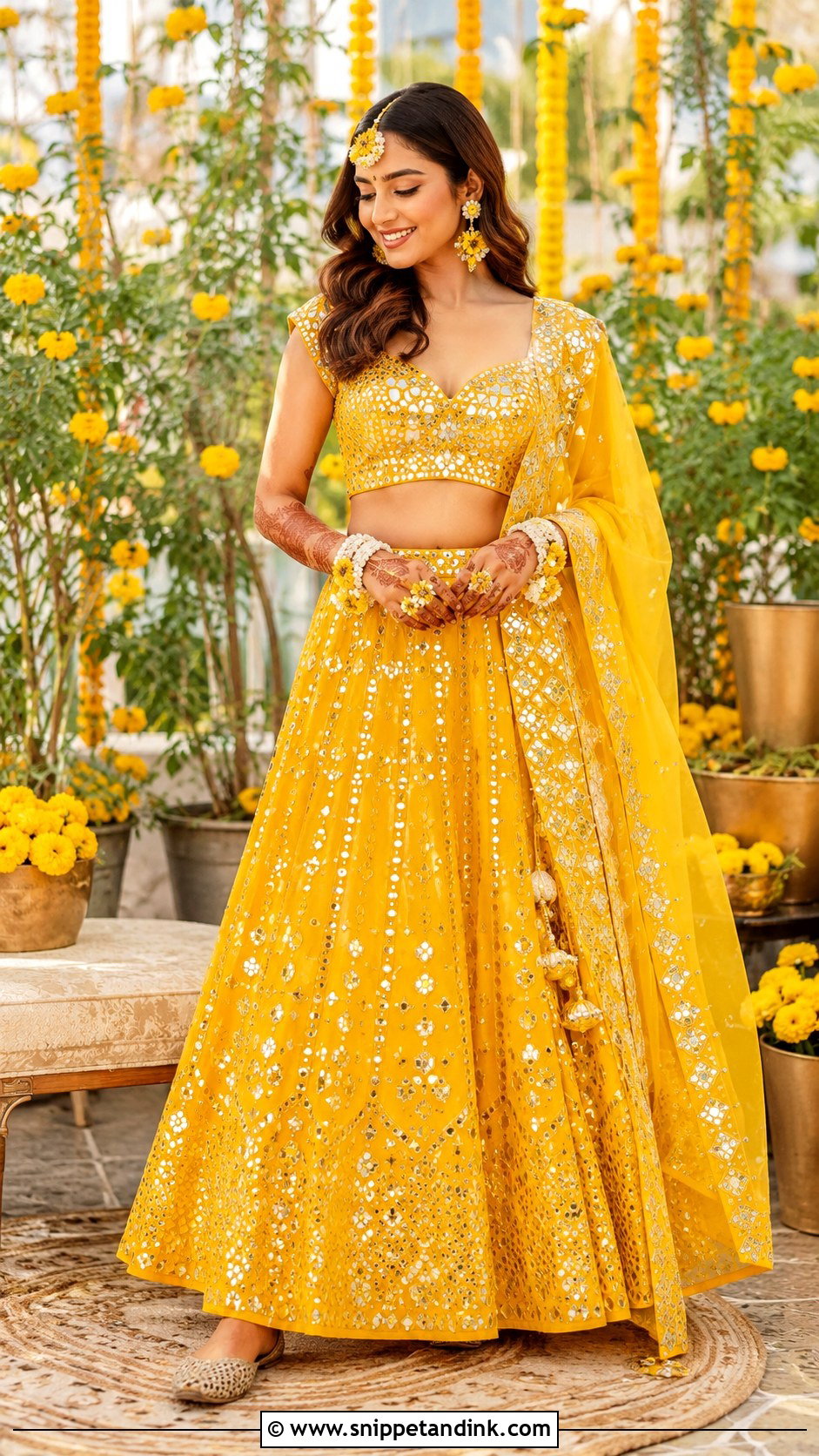
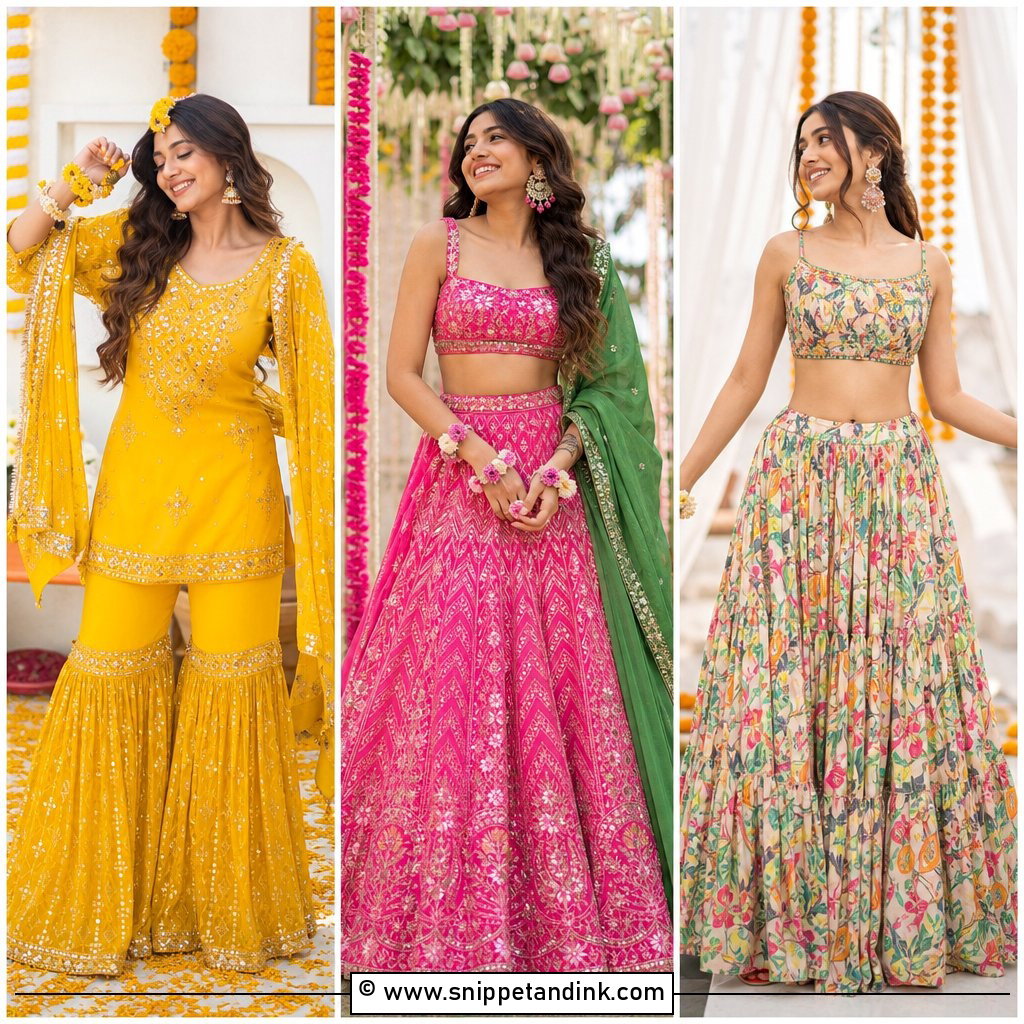
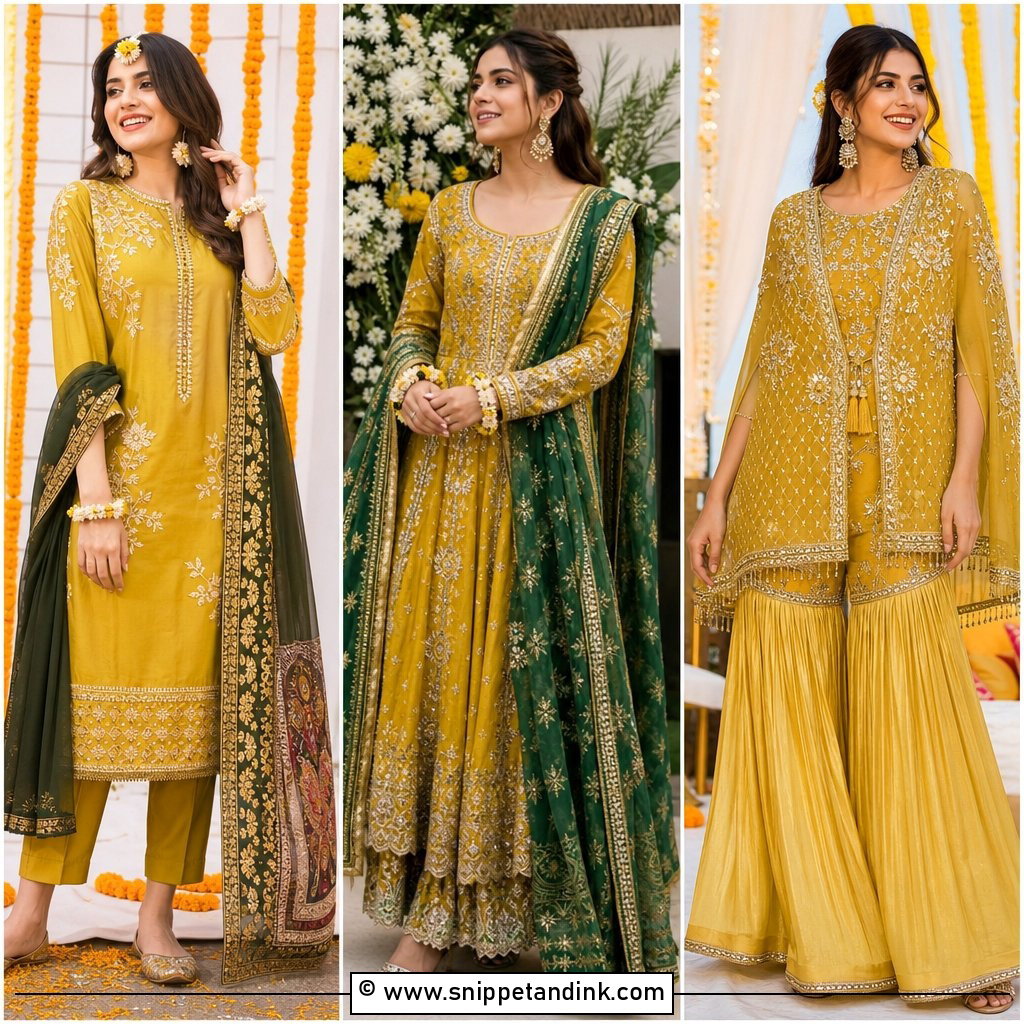
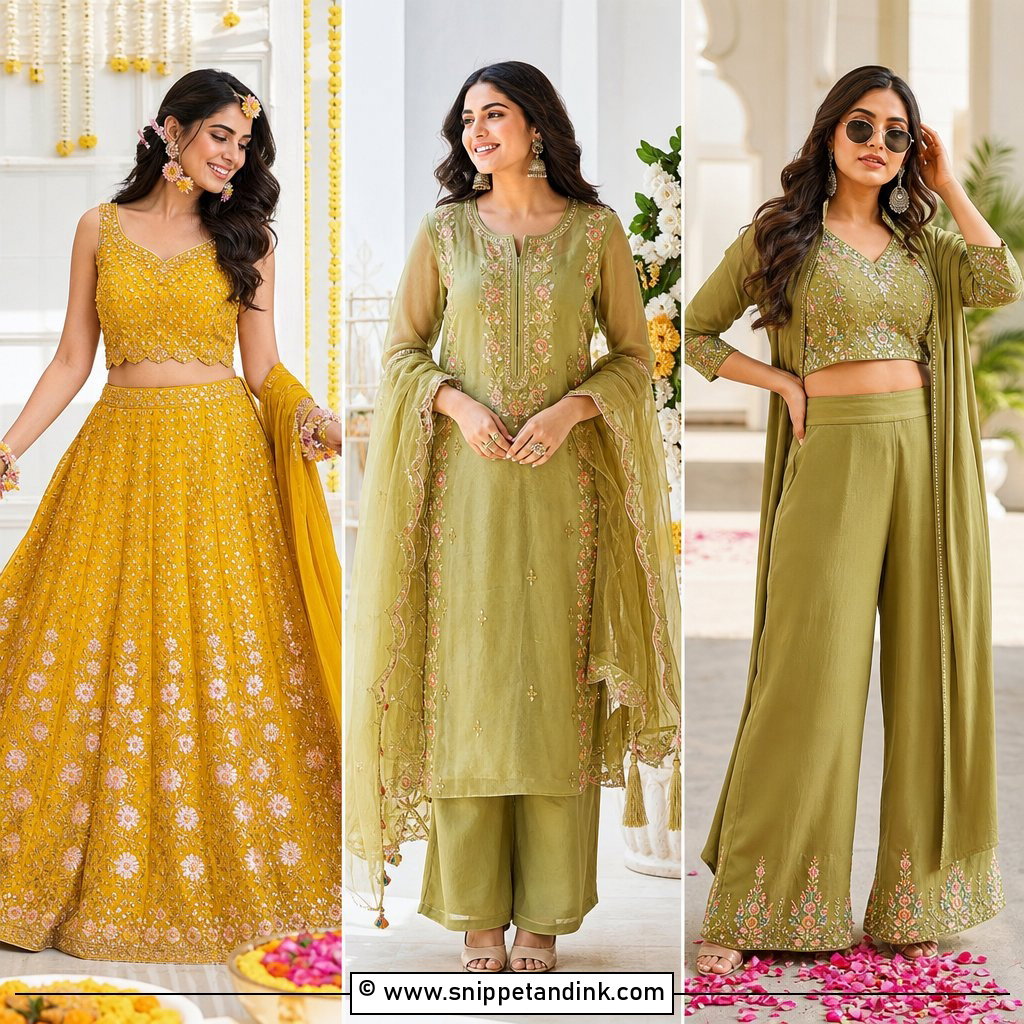
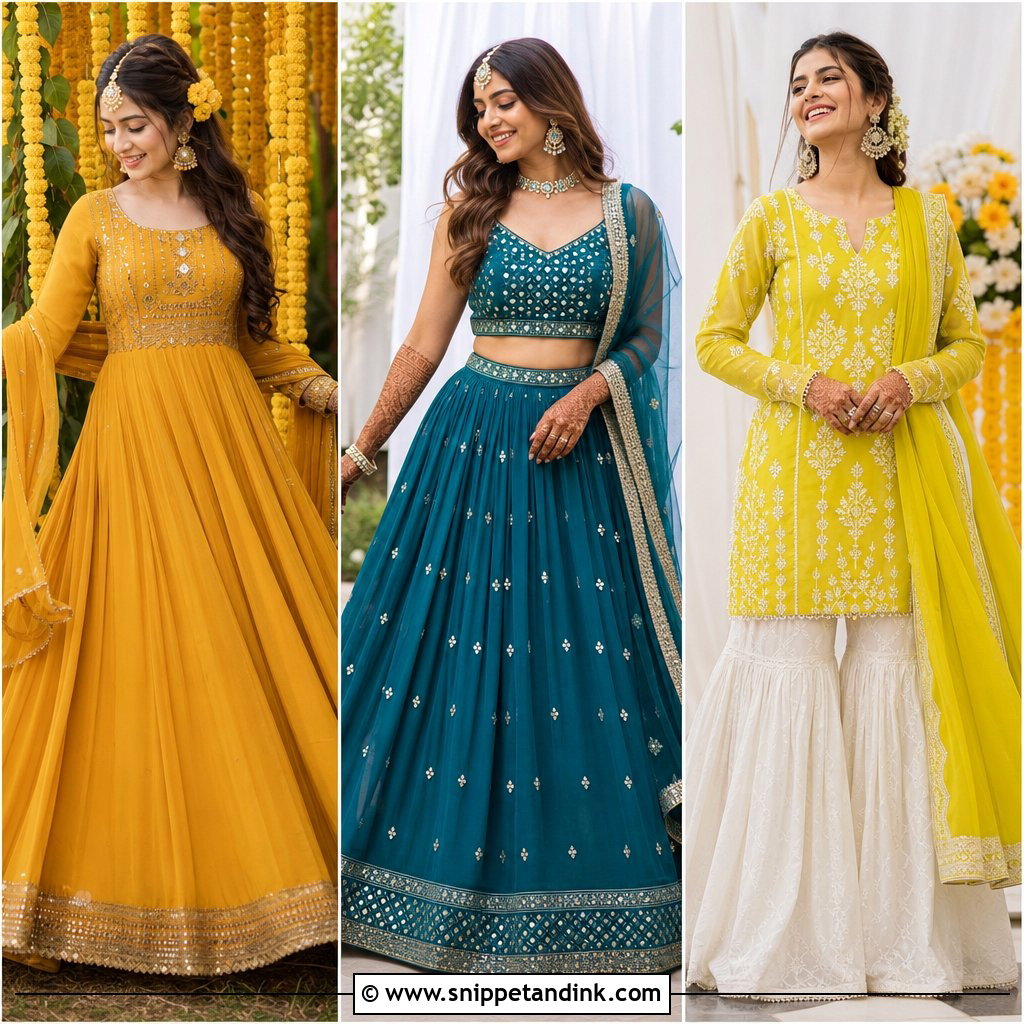
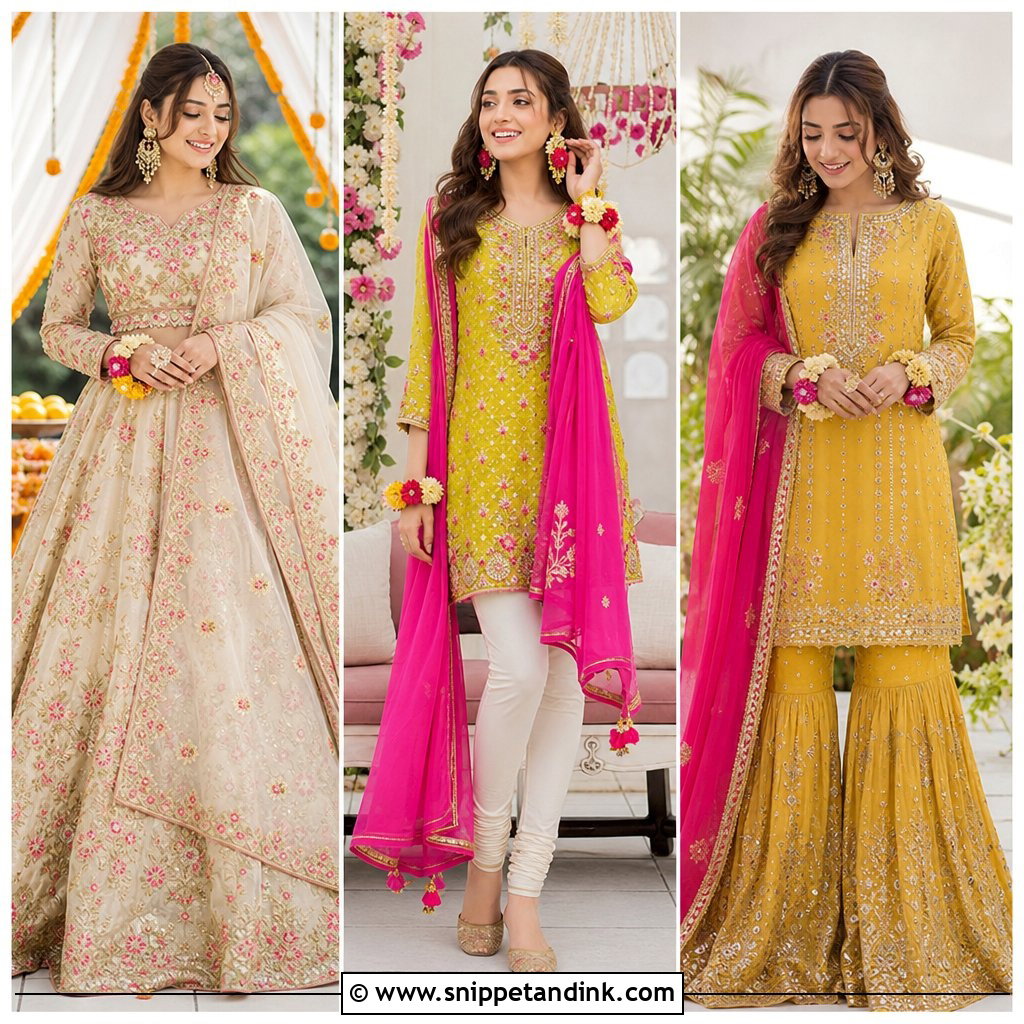
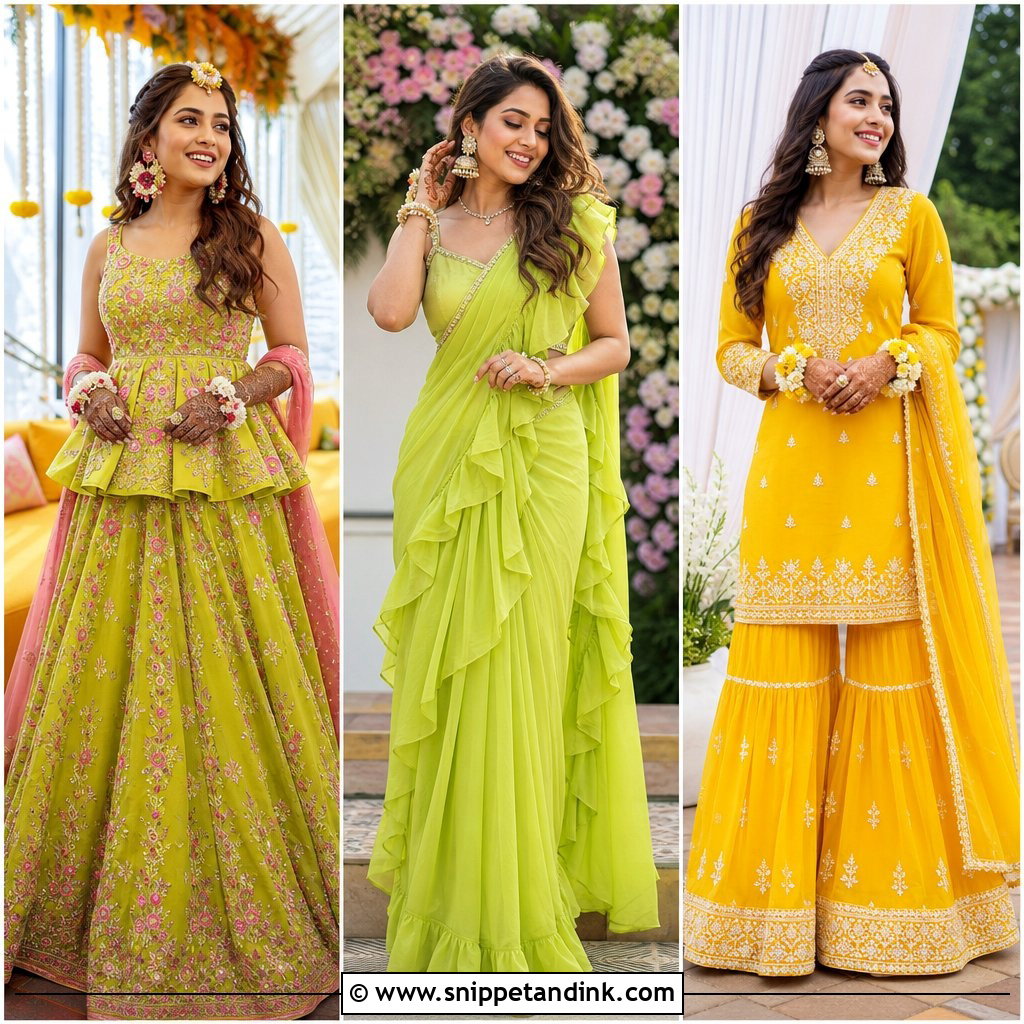
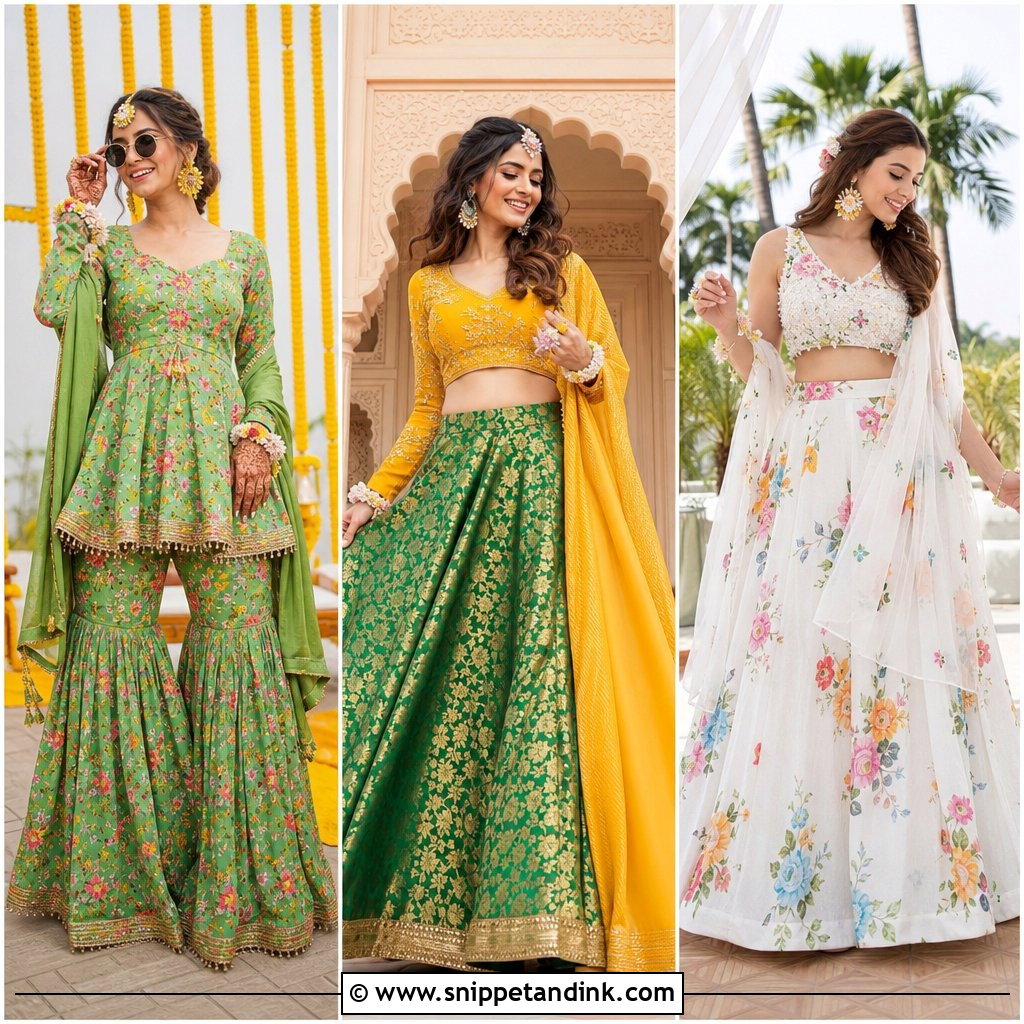
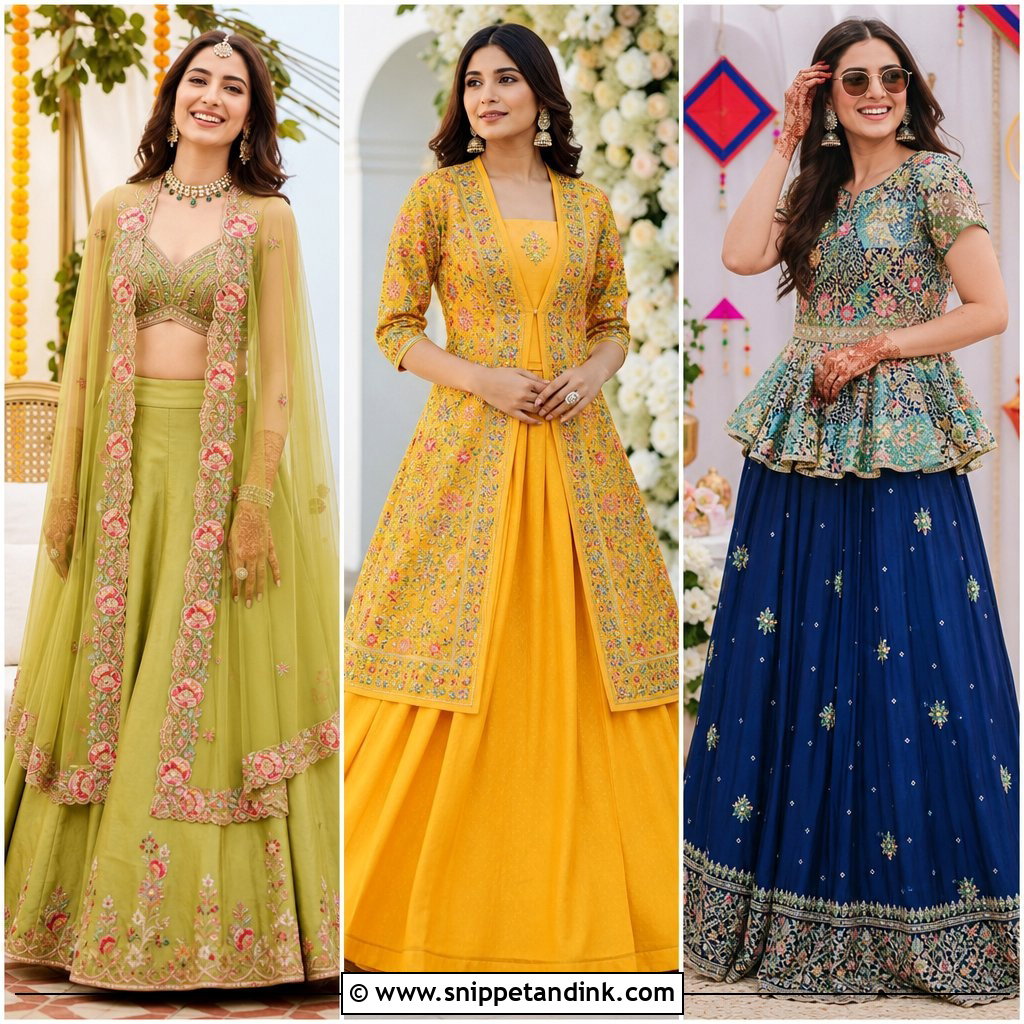
There’s a reason a yellow mehendi lehenga keeps coming back: it reads joyful from across a garden and sets off both the dark paste and the stain that follows. Go for georgette, organza, cotton silk or Chanderi so you can sit without the skirt fighting you. Mirror work, gota patti or small sequins give enough shine. I keep the blouse short and pin the dupatta at one side so it stays off your lap. Floral jewelry and embellished juttis finish it, and marigold décor does the rest.
2. Green Mehendi Sharara
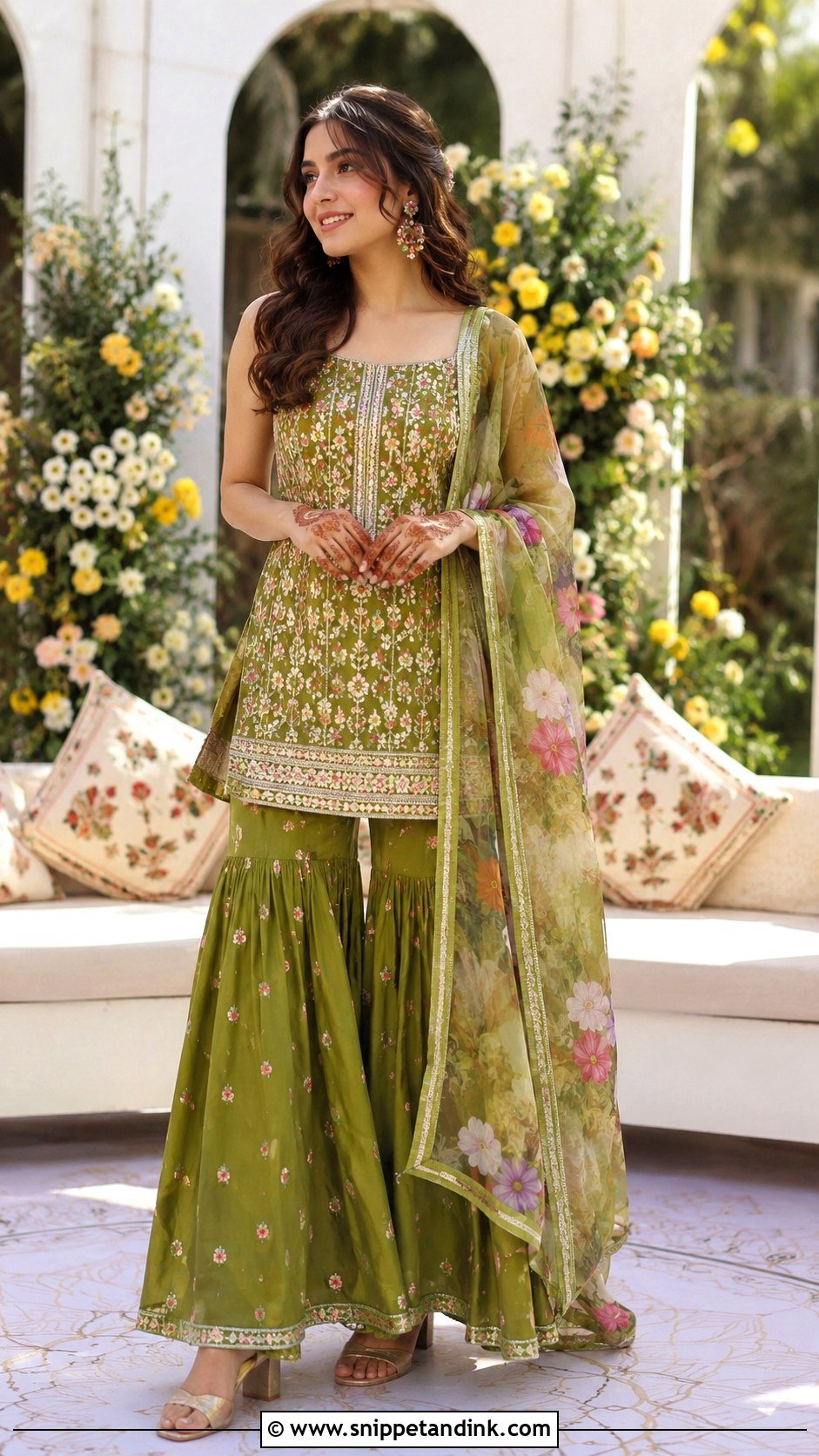
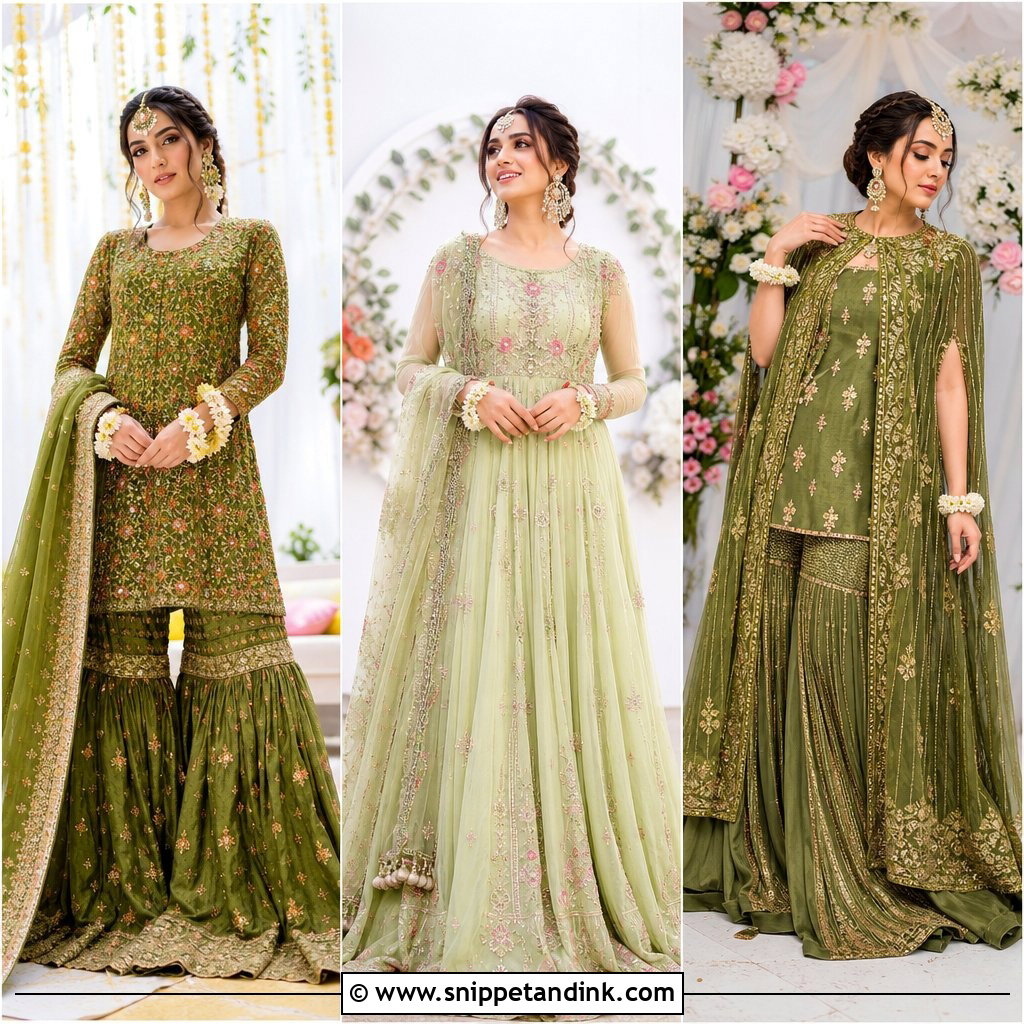
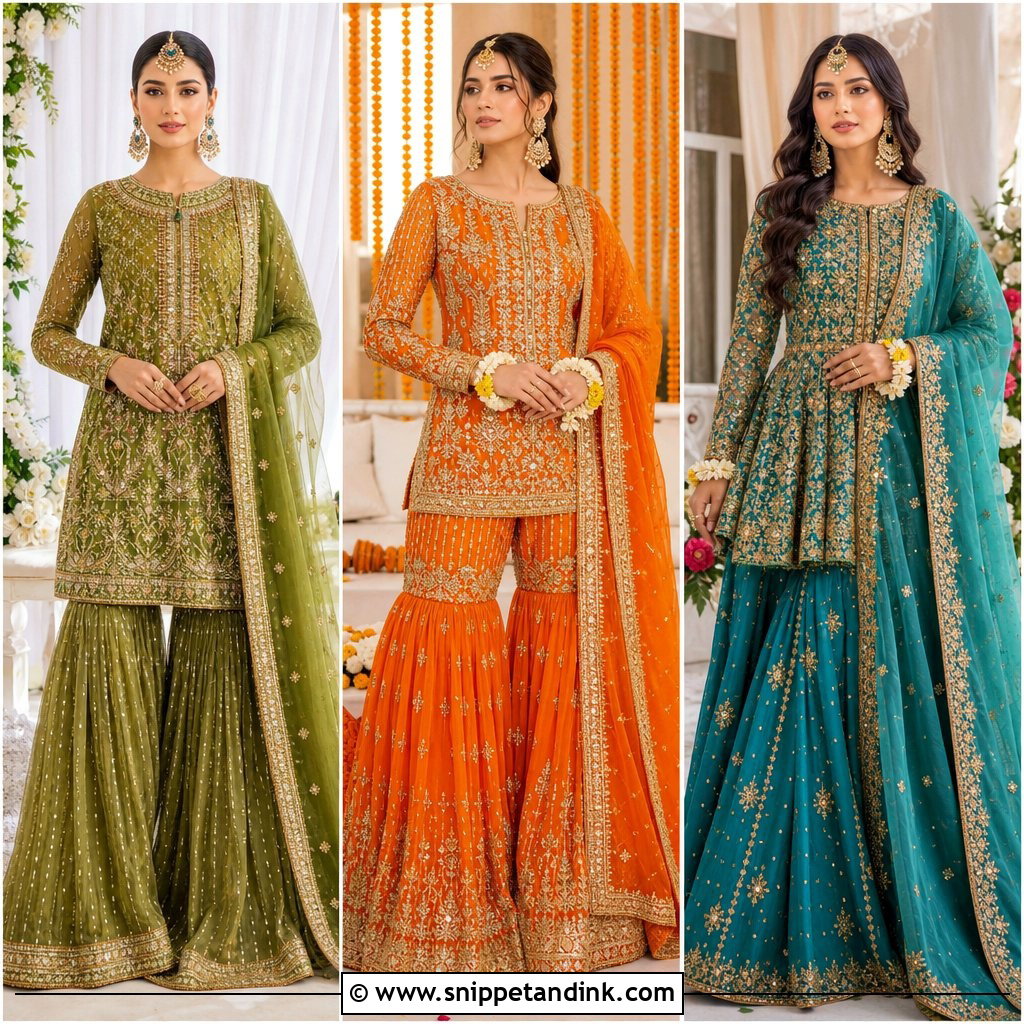
Green ties in naturally with the henna itself and with new beginnings, which is why so many families love it for this function. A short kurti over wide sharara pants gives volume without weight. Lime and mint flatter warmer complexions in daylight; deep mehendi green and olive hold up better at night. If your skin has cool undertones, try pistachio held up to your face before ordering. Mirror work, scalloped borders or a printed organza dupatta add detail, with kundan earrings and block heels or juttis.
3. Floral Mehendi Lehenga
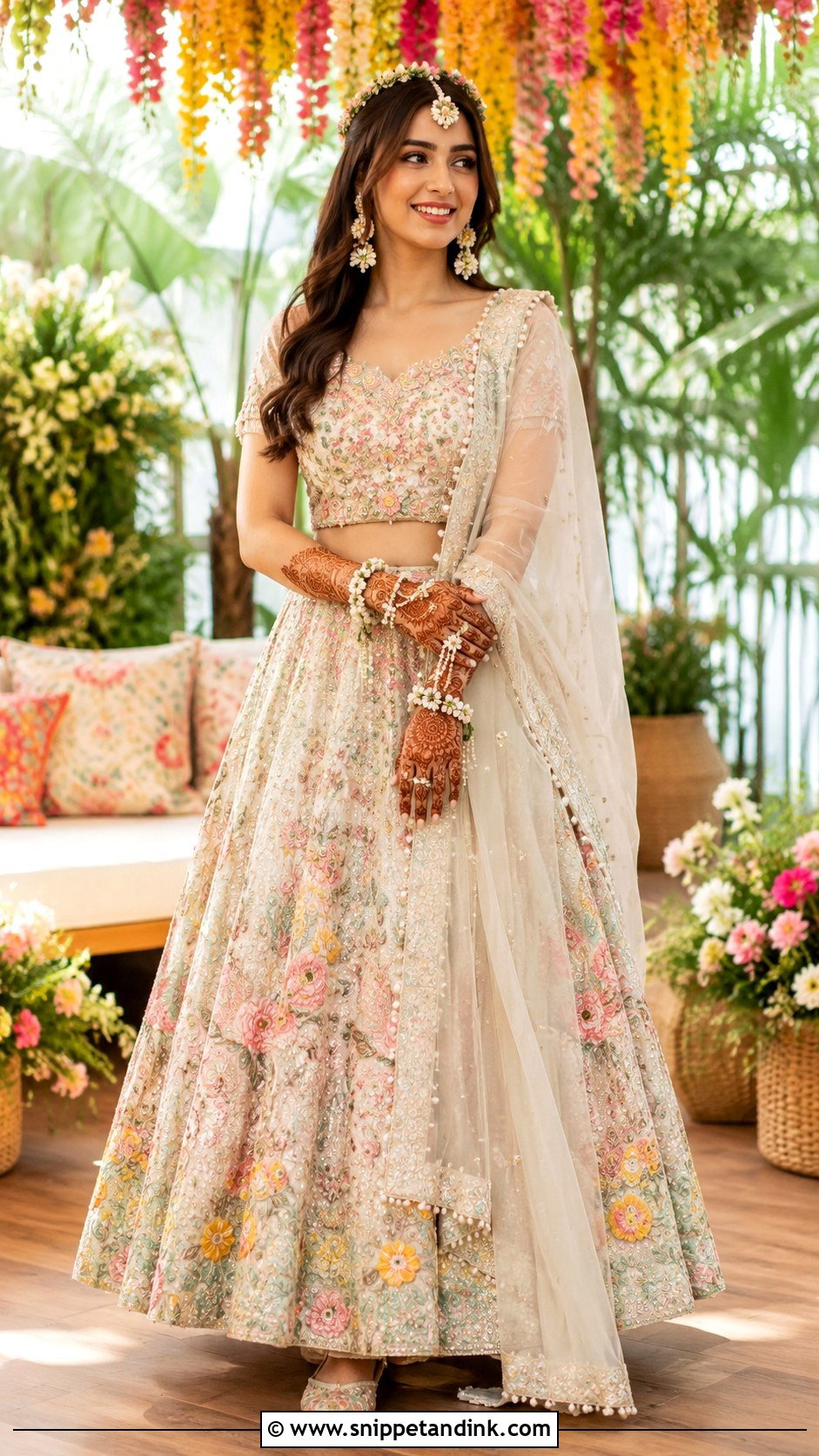
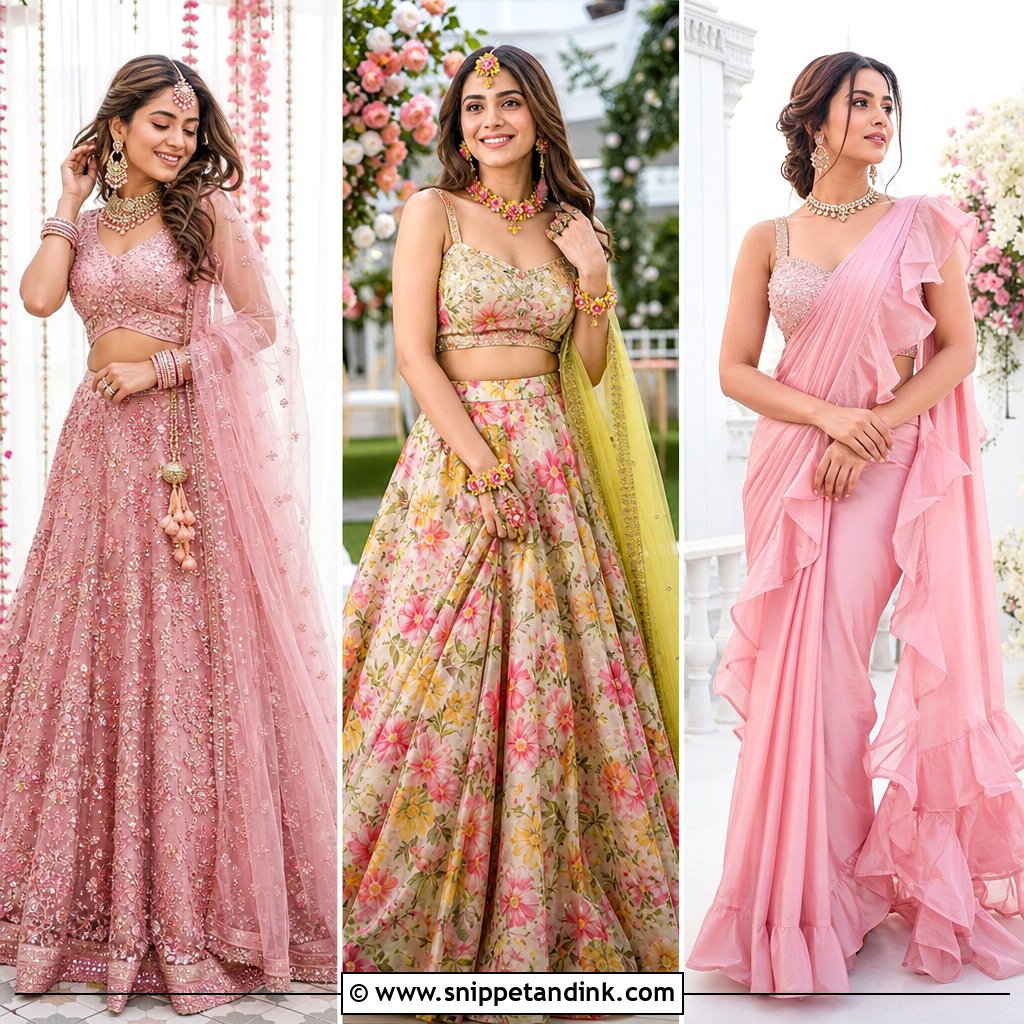
Printed lehengas are usually far lighter than worked bridal pieces, and on a four-hour day that matters more than people think. Let the print carry the statement in yellow, pink, green, peach or ivory, and add a blouse with delicate embroidery to make it read bridal. Choose a dupatta narrow enough to leave your arms visible. Floral jewelry, pearl accents and dewy makeup suit a morning or afternoon ceremony. My one caution: a small busy print next to a dense bridal henna design can look cluttered in close-ups, so I steer intricate-henna brides toward larger florals.
4. Mirror Work Mehendi Lehenga
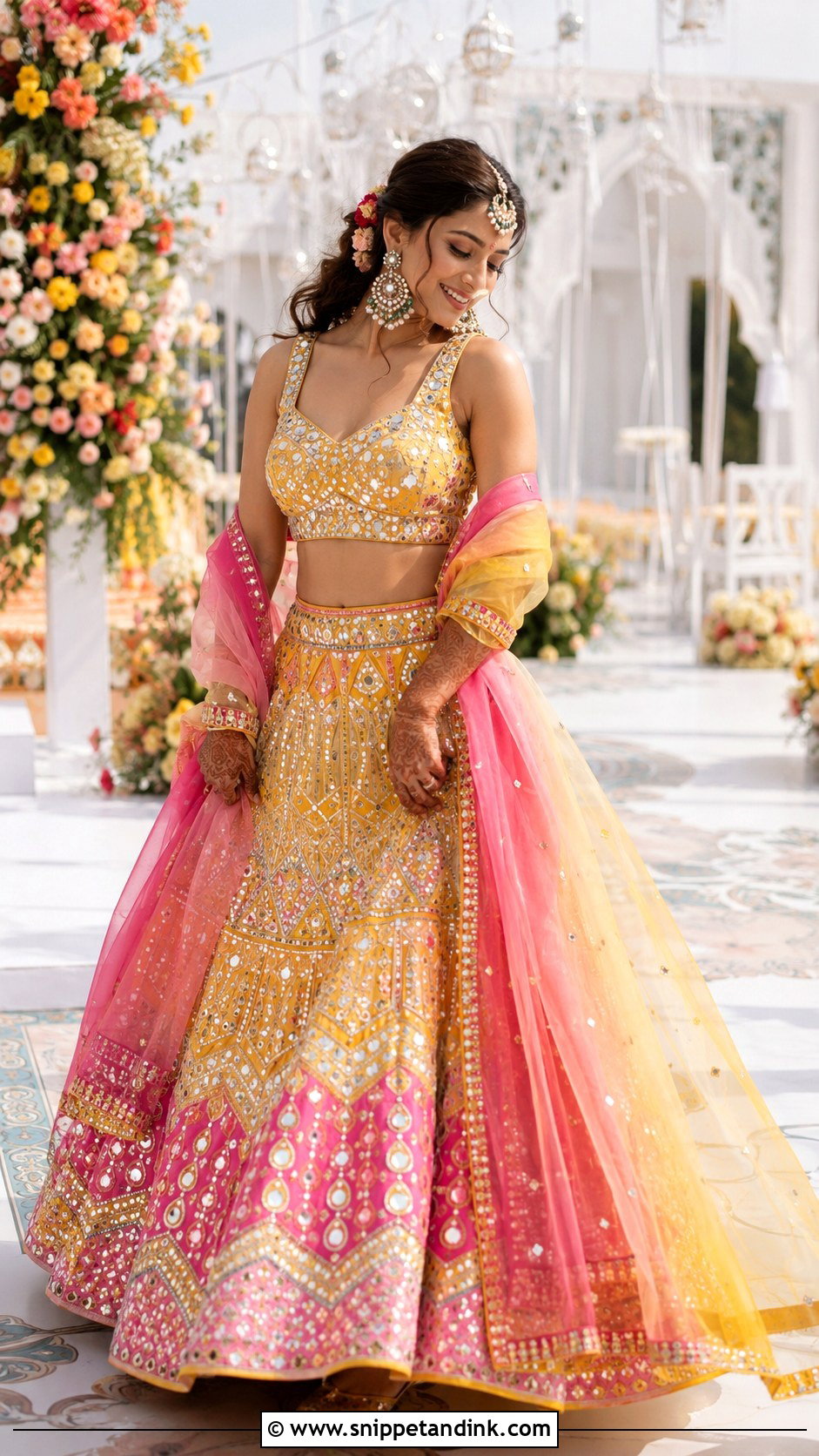
Mirror work catches sunlight, so outdoors it does the job of a lot of jewelry. Yellow, green, orange or fuchsia all carry it well. Keep the skirt breezy and the blouse supportive, because real glass mirrors add weight at the neckline and hem. Drape the dupatta away from the hands. Small chandbalis and a maang tikka are enough with all that shine, and bangles on one wrist only, after the paste comes off. It’s a strong pick if you want a bold bridal feel without a full wedding lehenga.
5. Gota Patti Mehendi Anarkali
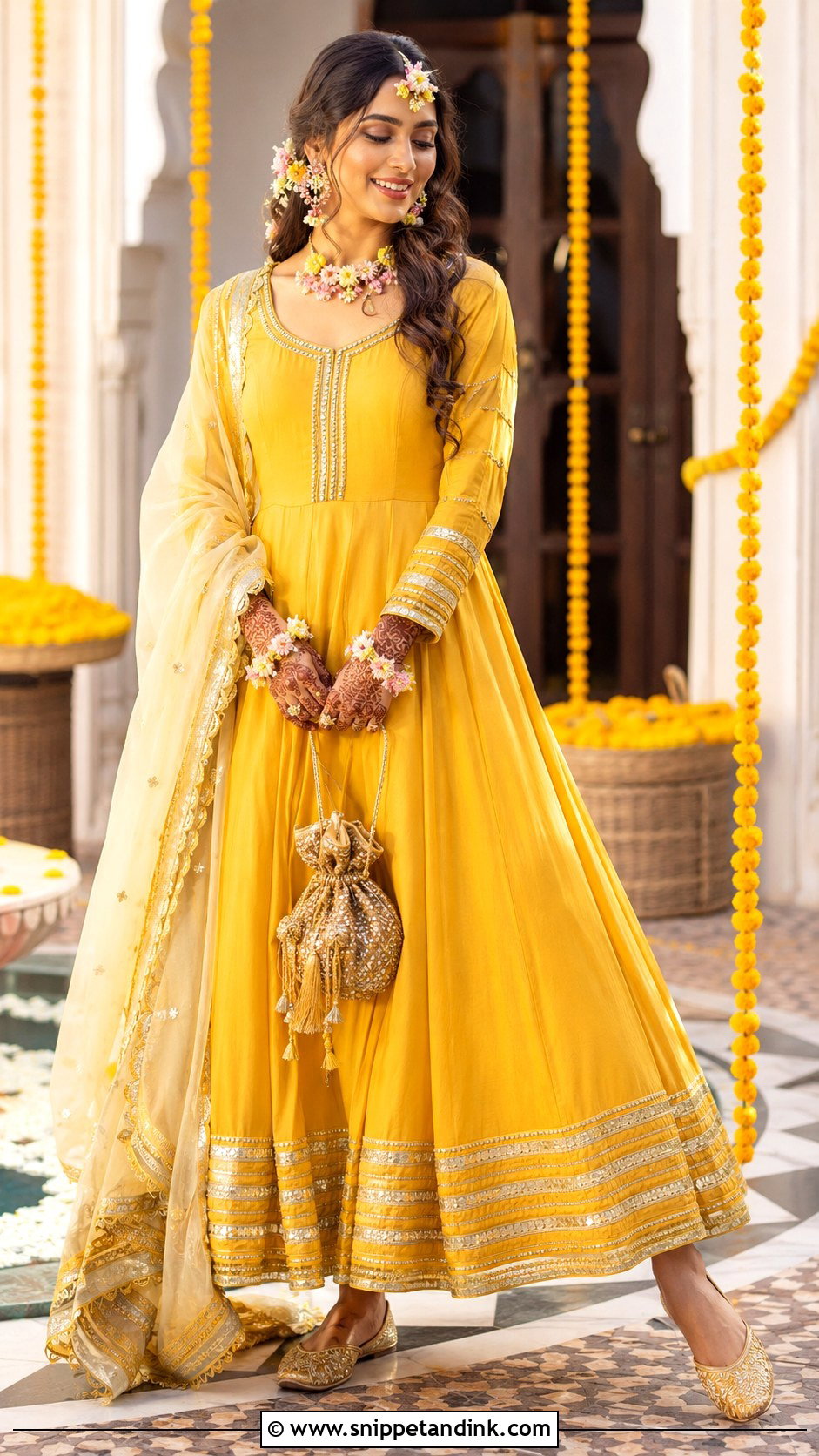
Brides who’d rather wear a suit than a lehenga often land here. The Anarkali’s flare moves when you walk and settles neatly when you sit, and gota trim gives a traditional finish. Yellow, mango, parrot green and coral are the shades I reach for. Sleeveless, cap or short sleeves keep the henna on show; anything longer creases at the elbow once it’s pushed up. A light dupatta pinned at the shoulder, a potli, fresh flower jewelry and soft waves complete it.
6. Multi Color Mehendi Lehenga
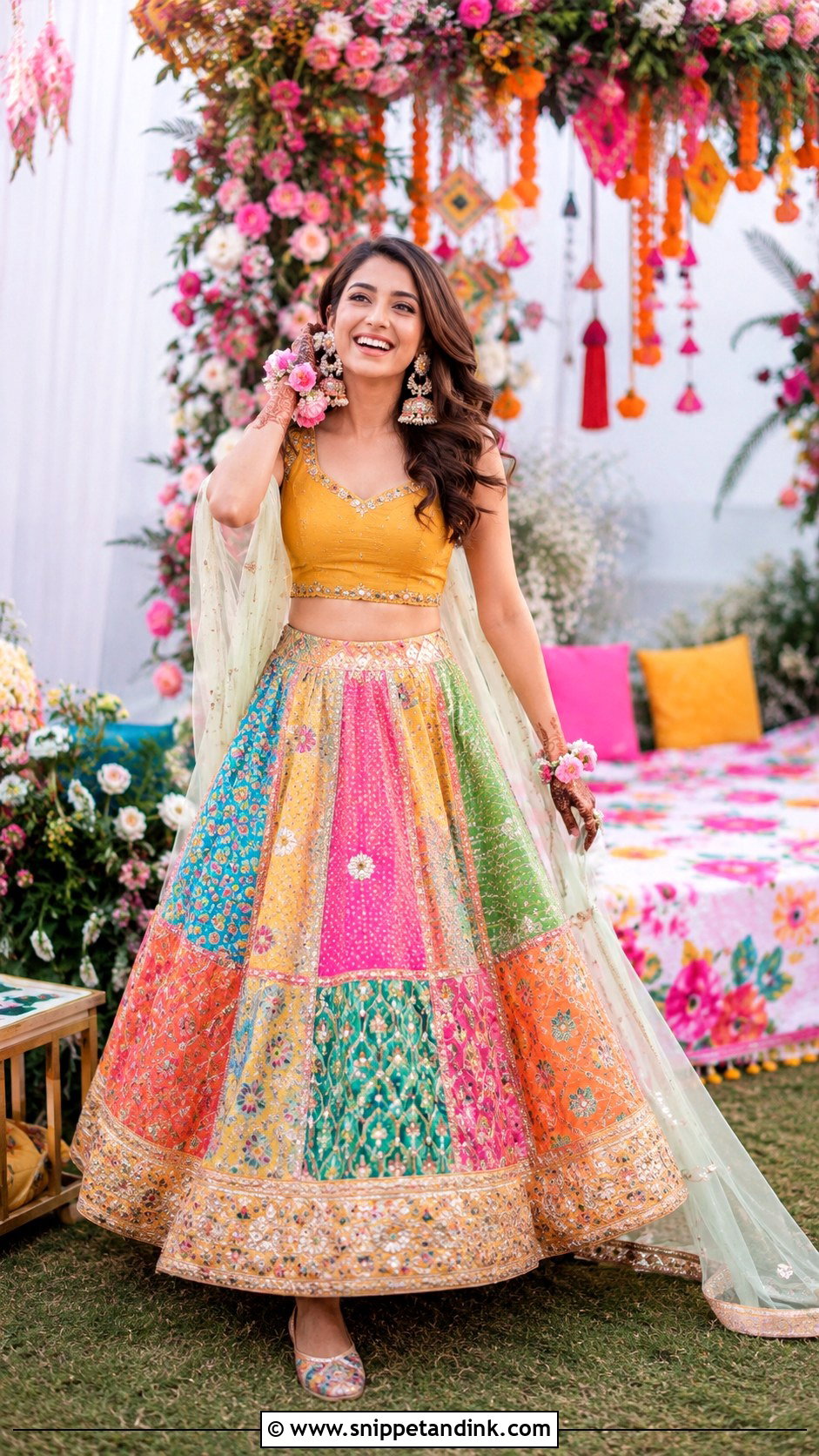
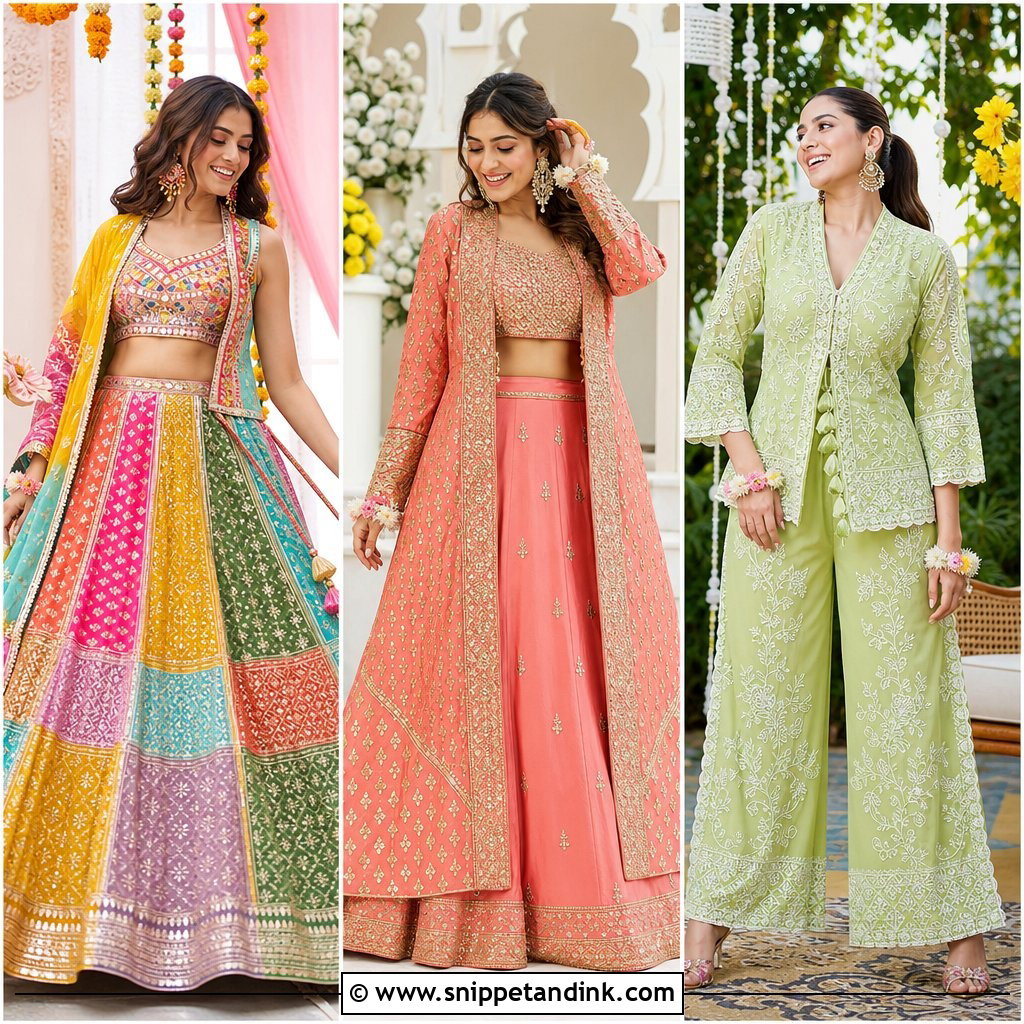
Panels of yellow, pink, green, orange and blue, with mirror work, patchwork or folk prints, give you a high-energy look in one piece. The skill is in restraint around it. I pick one colour from the skirt for a solid blouse and keep the dupatta quiet. Statement earrings and a simple maang tikka are all the jewelry it needs; layering more makes the whole thing noisy in photos. Floral backdrops and colourful seating suit it.
7. Cape Mehendi Lehenga
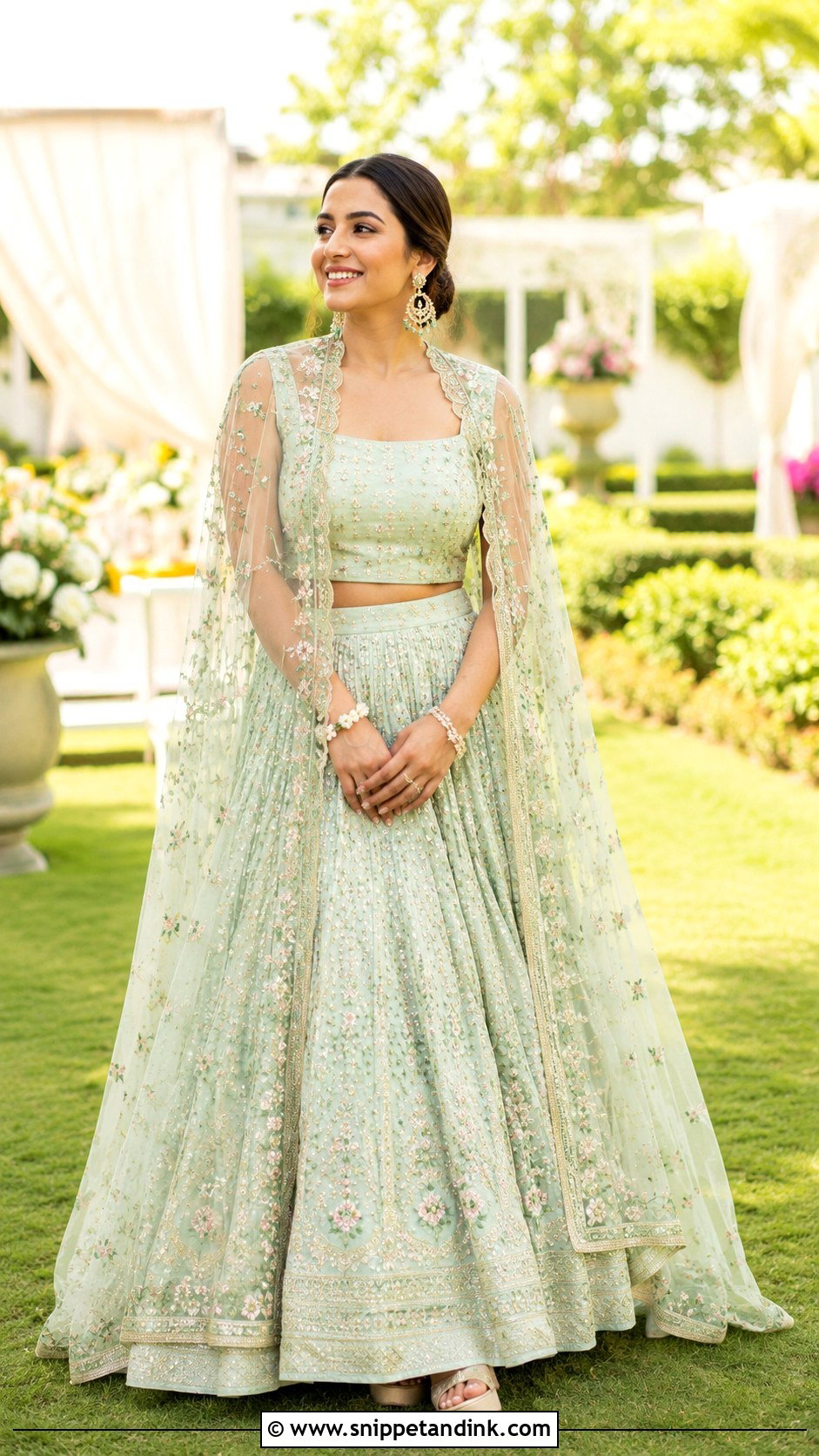
The cape frames the shoulders and keeps your hands free, so there’s no dupatta to rescue every time you greet someone. Organza, net or chiffon over a simple blouse and skirt in soft yellow, mint, blush or ivory with colourful embroidery works well. Have the tailor tack the cape to the blouse at the shoulders, otherwise it slides forward each time you lean toward the artist. Sleek earrings, a clean hairstyle and heels you’ve broken in finish it.
8. Peplum Mehendi Sharara
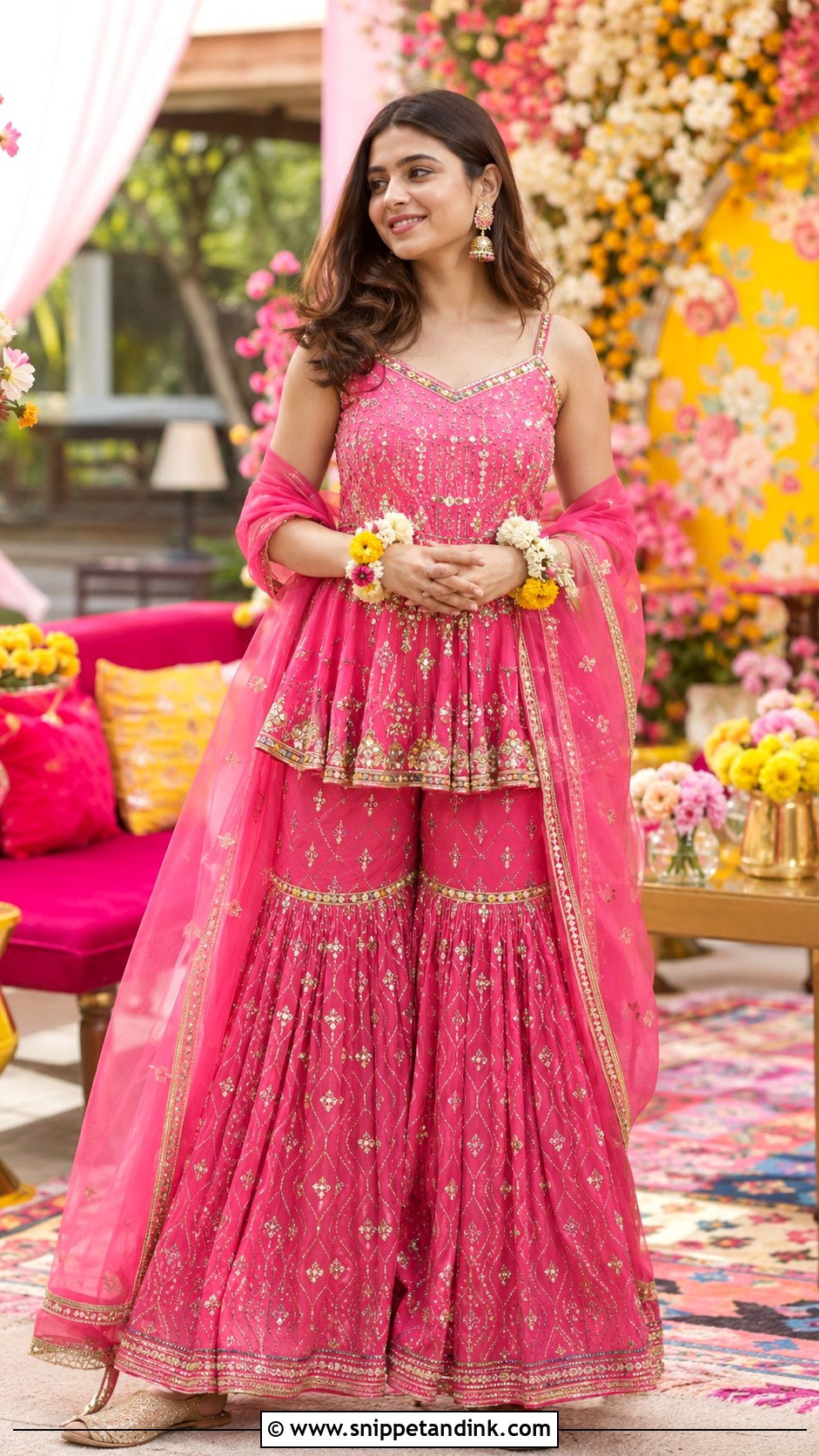
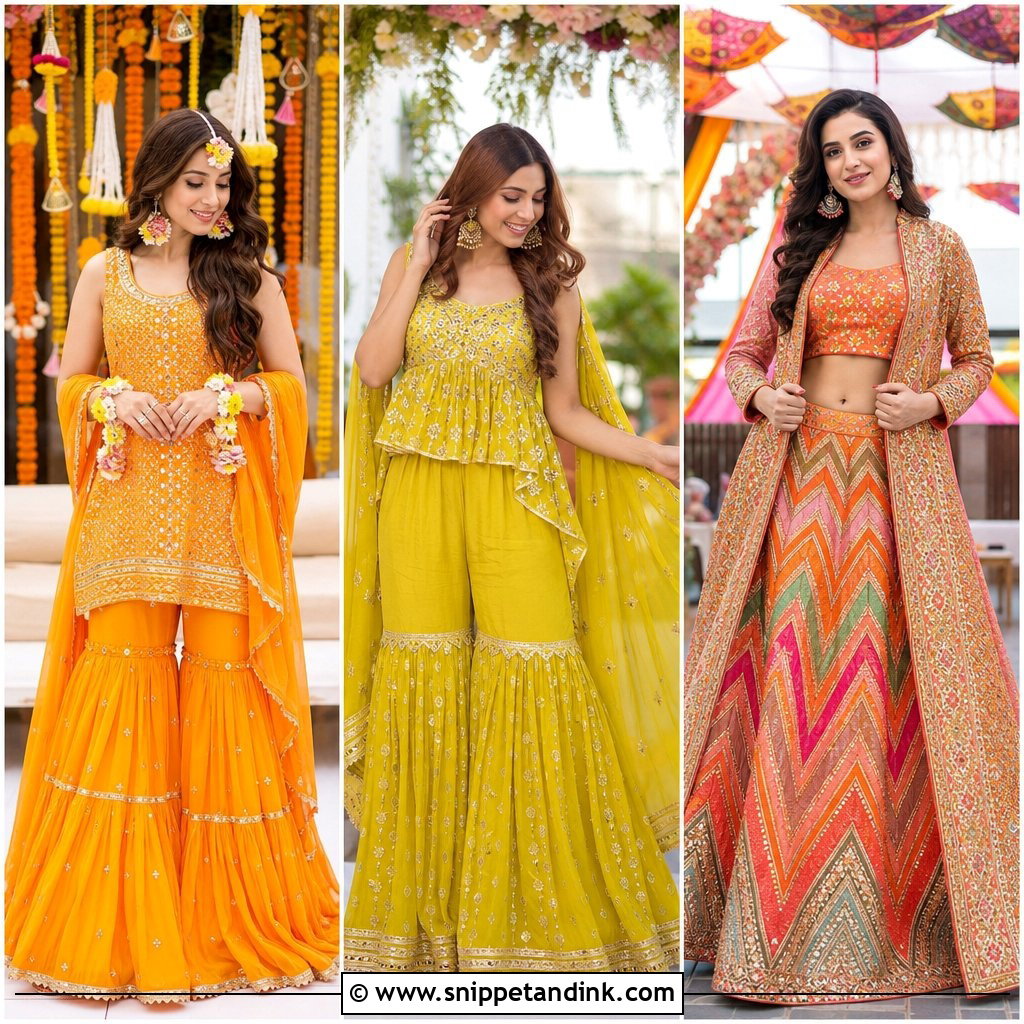
A peplum mehendi sharara gives shape at the waist and room in the legs, which is a good combination for a long function. Bright yellow, emerald, rani pink or floral prints all suit it, with mirror borders or gota along the neckline and sleeves. At fittings I make sure the peplum ends at the high hip; if it’s longer, it crumples when you’re seated. A sheer dupatta, statement earrings, a passa for a regal touch and embellished flats complete the outfit.
9. Orange Mehendi Lehenga
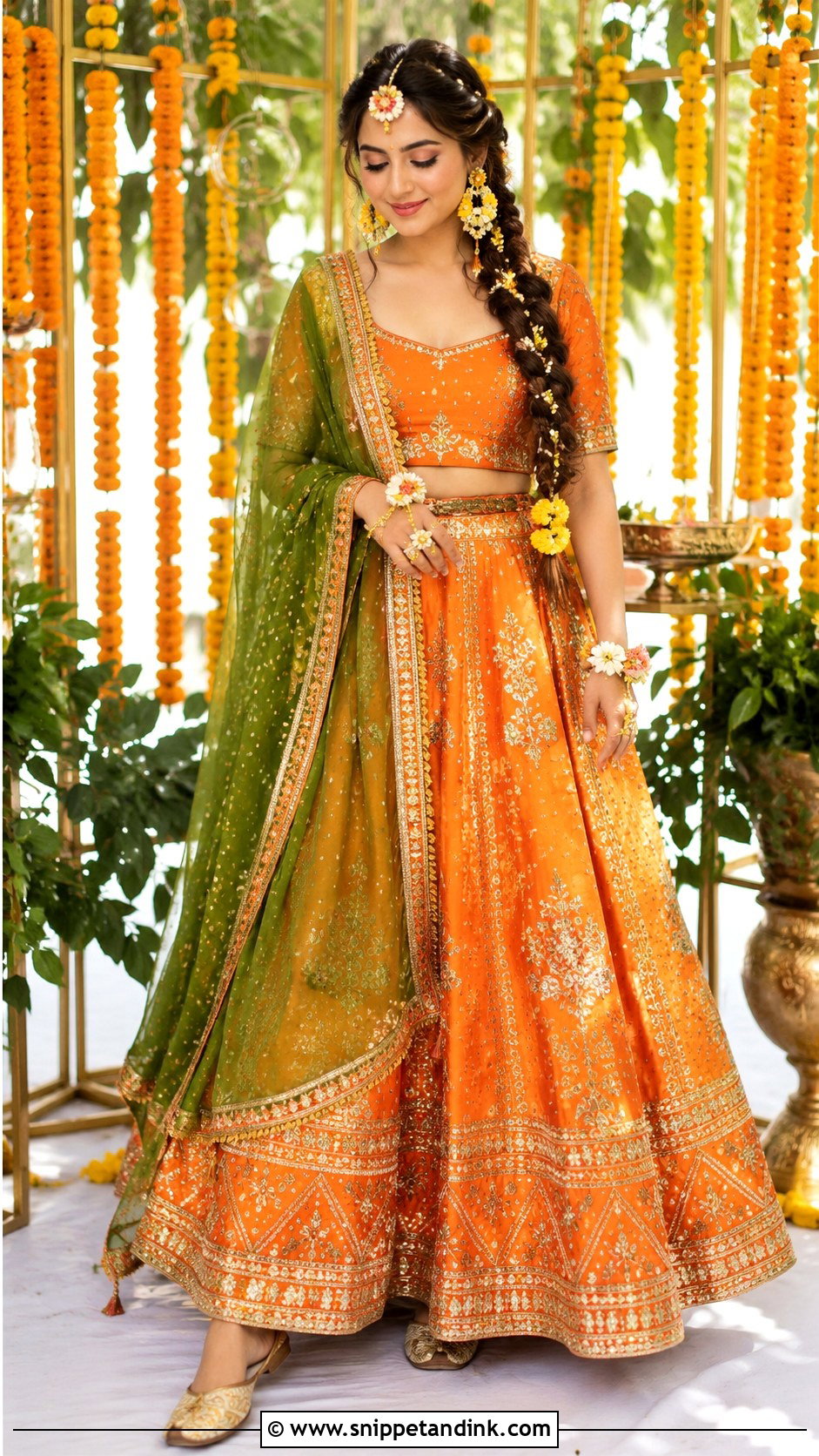
Orange gives a warm contrast against a deep stain, and tangerine, marigold, burnt orange and mango all feel festive. Outdoors, keep the fabric breathable. Gold gota, mirrors or thread embroidery lift it without weight, and a green or pink dupatta creates a colour-block effect. On the night itself, the paste on your hands is dark brown, not orange, so orange actually gives the best contrast at the ceremony too. Floral jewelry, gold juttis and a soft braid suit it.
10. Pink Mehendi Sharara
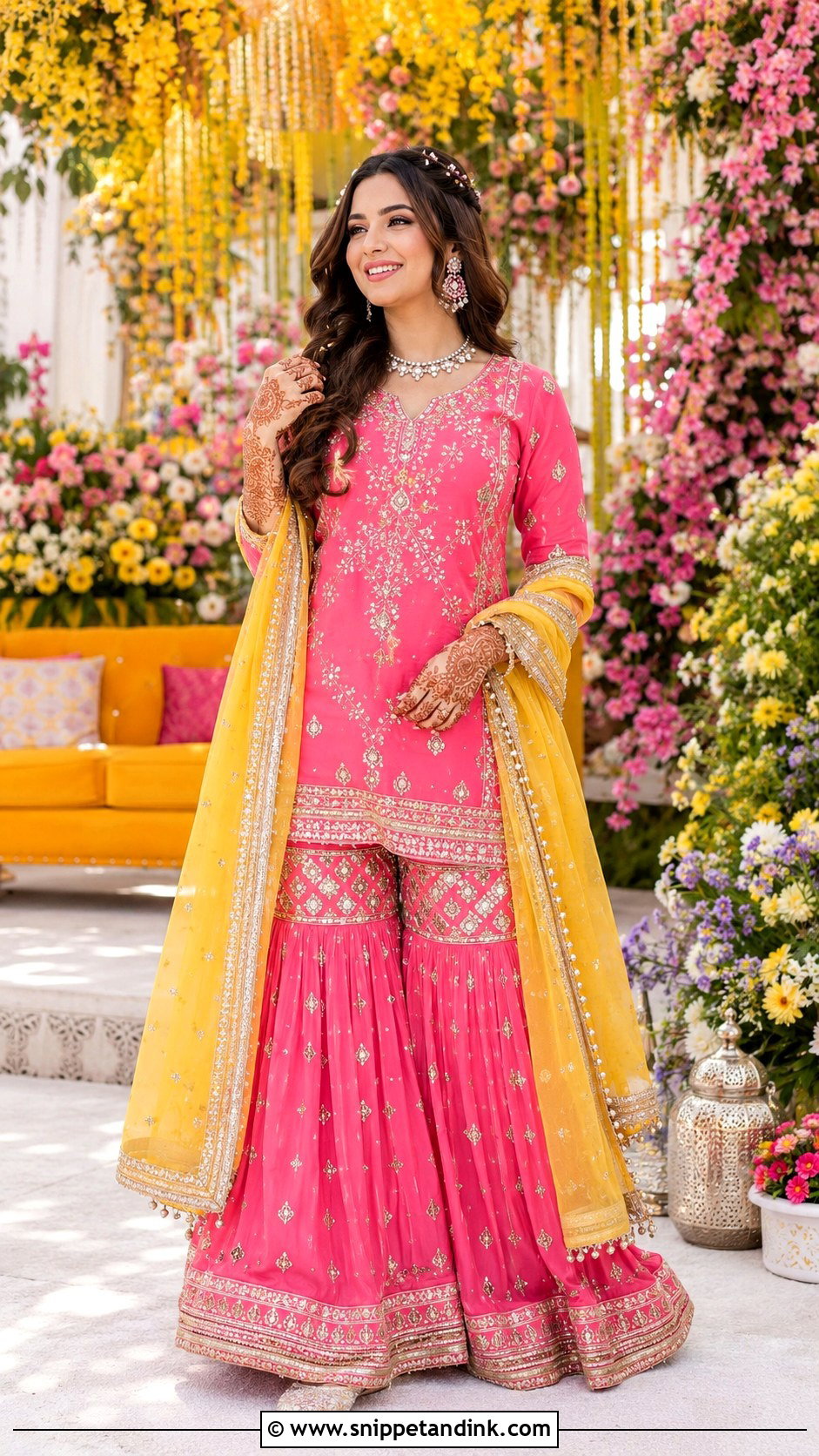
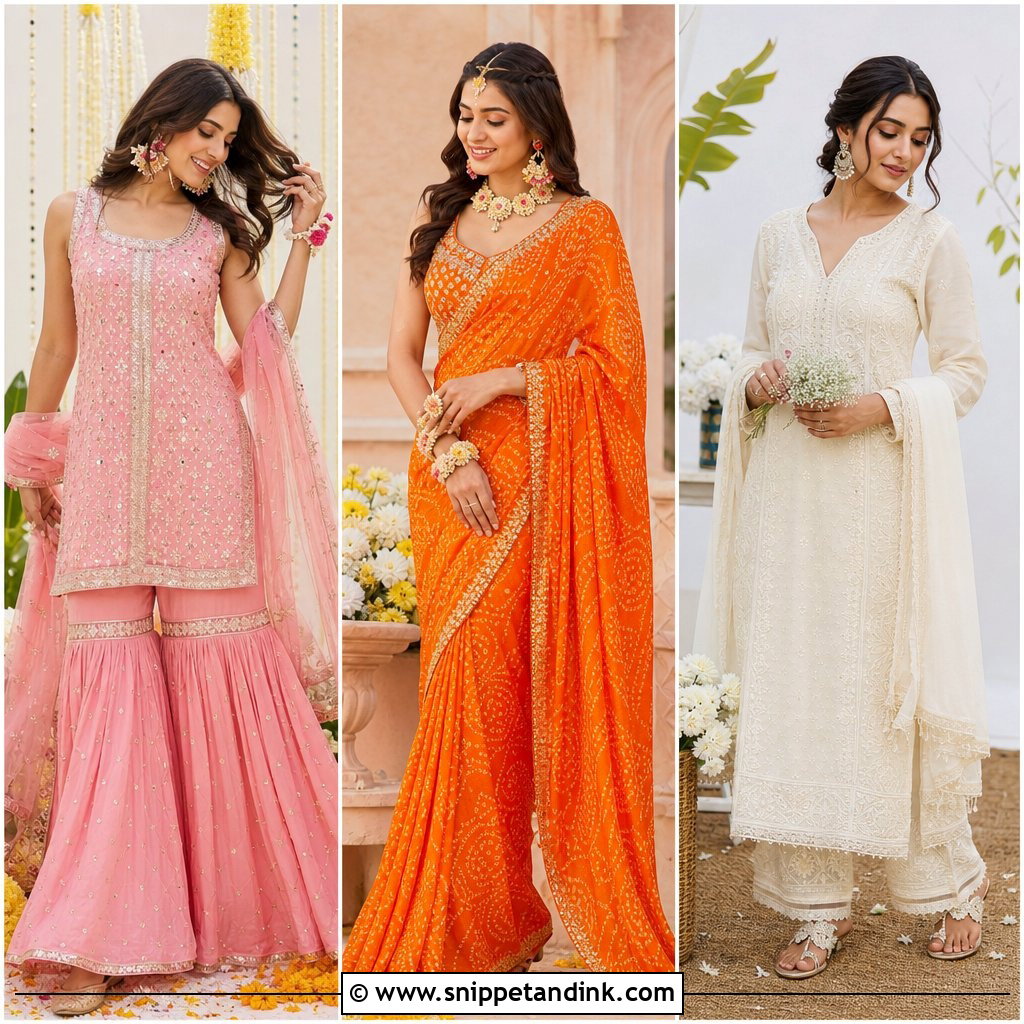
Hot pink reads bridal; blush belongs at a softer garden function. Either way, a short embroidered kurti with flowing sharara pants feels dressed up and stays comfortable. A yellow, green or orange dupatta adds contrast. Shararas pool nicely around you in seated photos, which is part of their appeal. I’d pair it with pearl jewelry and floral bangles, saved for after the henna.
11. White And Yellow Mehendi Lehenga
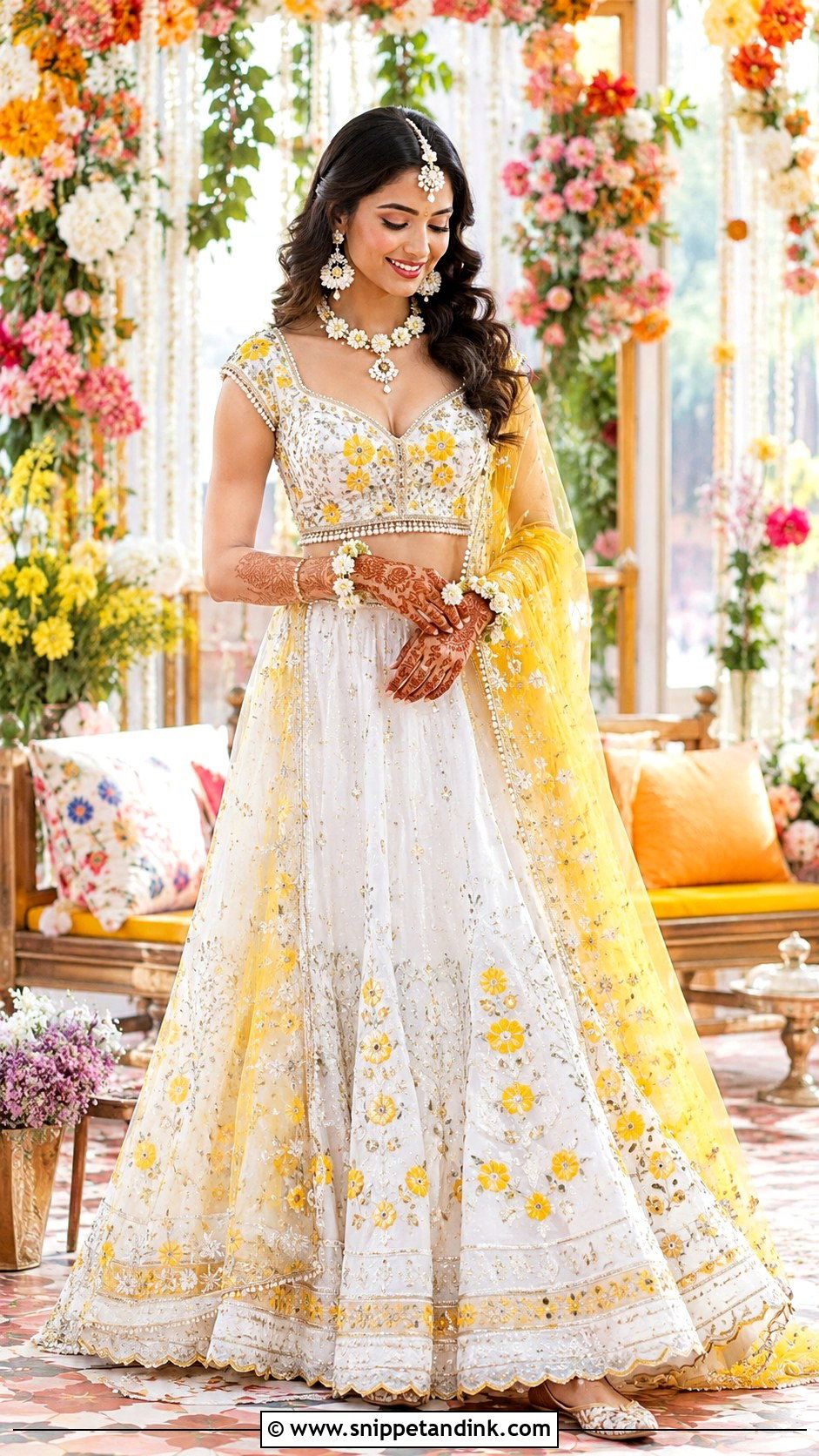
White with yellow embroidery or prints keeps the look airy for a daytime event. To make it bridal, add real detail: mirror accents, gota borders, tassels or a statement blouse. A yellow dupatta brings colour near the face, which helps in photos. Be realistic about the white base, though. A smear of paste on white fabric is very hard to remove, so sit on a cloth and keep your hands well clear of your lap while it dries.
12. Pastel Mehendi Lehenga
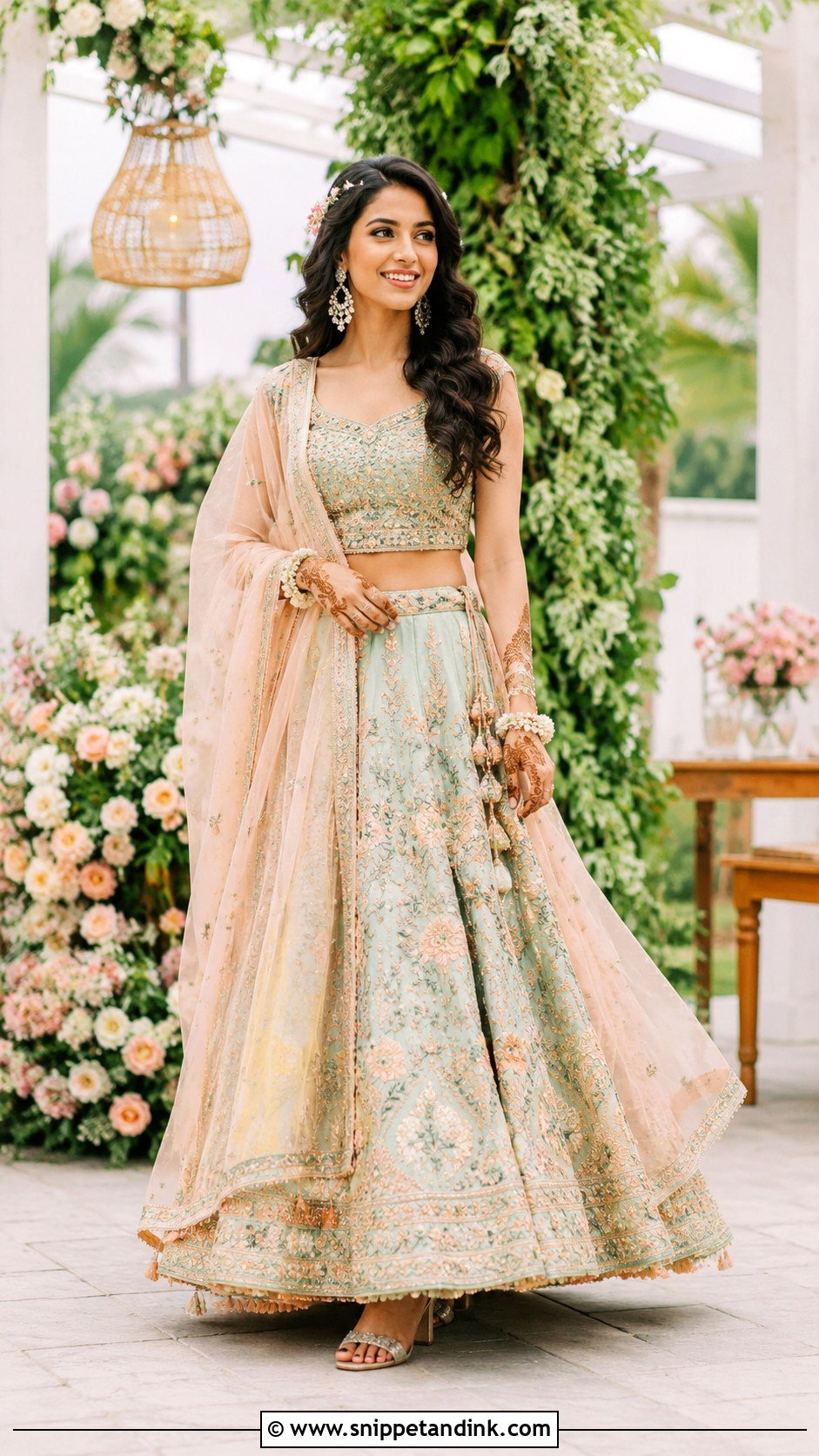
Soft colours only feel bridal when there’s enough detail on them. Mint, powder blue, peach, lilac and pale yellow need mirror work, coloured threadwork or floral appliqué, or they slip into guest territory. Pearl jewelry, soft curls and a light dupatta suit garden and resort venues. Check the shade in warm light before you order, since some pastels look grey under yellow bulbs once the sun goes down.
13. Bandhani Mehendi Lehenga
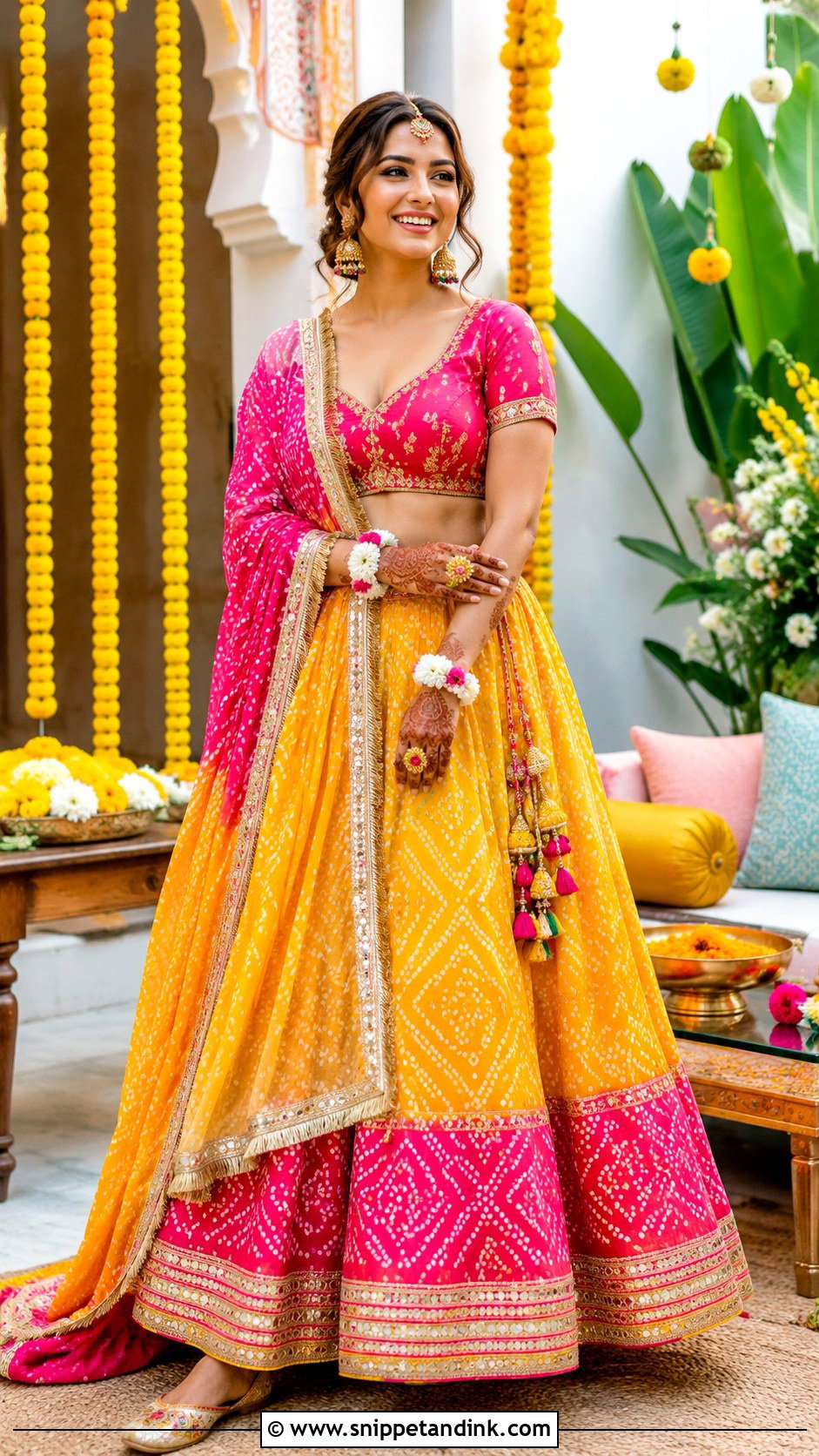
A bandhani mehendi lehenga brings heritage and colour without heavy embroidery. Each dot is a tiny bound point of cloth that resisted the dye, which gives the fabric its texture. Yellow, green, orange, red-pink or multicolour, with a contrasting blouse, gota borders and tassels, looks fully bridal. Because the textile is busy, keep jewelry to a maang tikka, jhumkas and bangles. Bright bandhani can bleed when wet, so keep damp henna well away and dry clean it afterwards.
14. Chikankari Mehendi Sharara
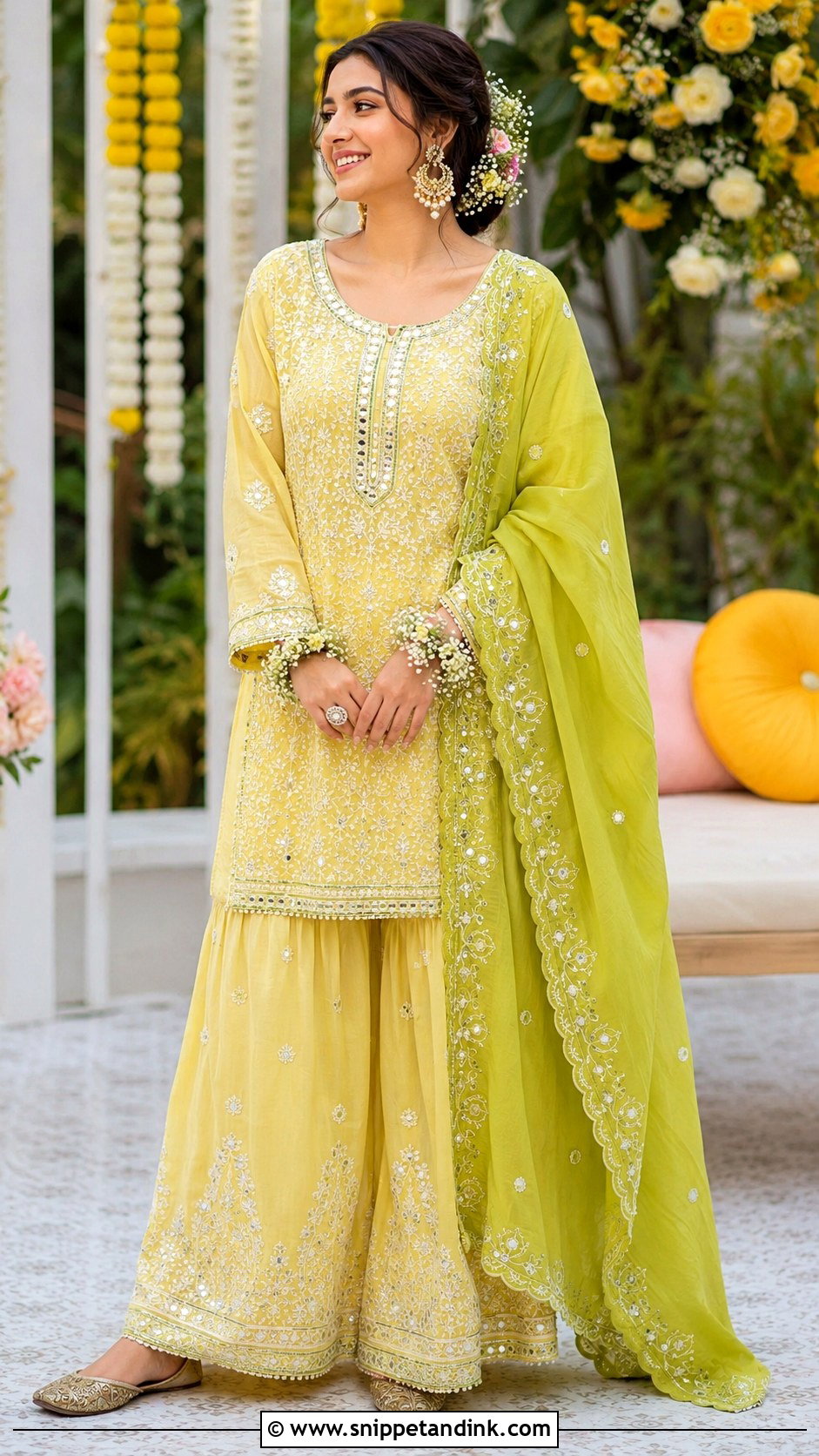
Chikankari is fine shadow and stitch work on light cotton or georgette, and it’s one of the most breathable options for a summer mehendi. On its own it can look quiet for a bride, so I look for sets with mirror highlights, coloured threadwork or a bright dupatta. Pastel yellow, mint, ivory, peach and sage suit the embroidery. Pearl earrings, floral hair accents and juttis finish the look. Delicate chikankari snags on rough bangles and on sequinned bags, so watch what sits against it.
15. Printed Mehendi Co Ord Set
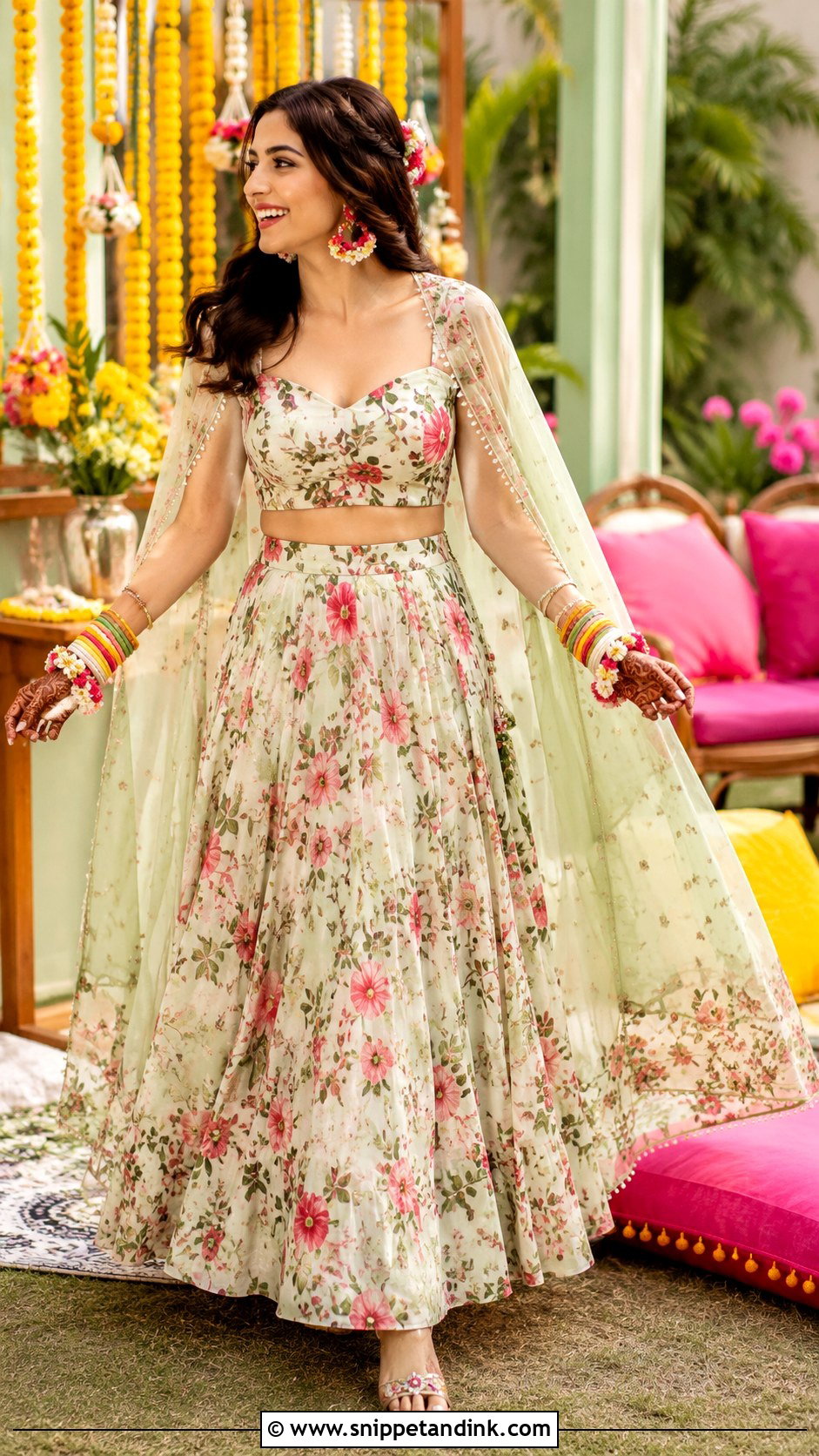
A printed mehendi co ord set is the comfort-first choice, built from a crop top and skirt, a peplum and pants, or a kurta and palazzos. Bright florals, block prints or abstract motifs in mehendi colours keep it festive, and a dupatta or cape makes it read bridal. Save statement rings and bangles until the henna is dry. Backyard functions and destination weddings suit it best; at a large formal event it can look underdressed beside the guests.
16. Palazzo Mehendi Suit
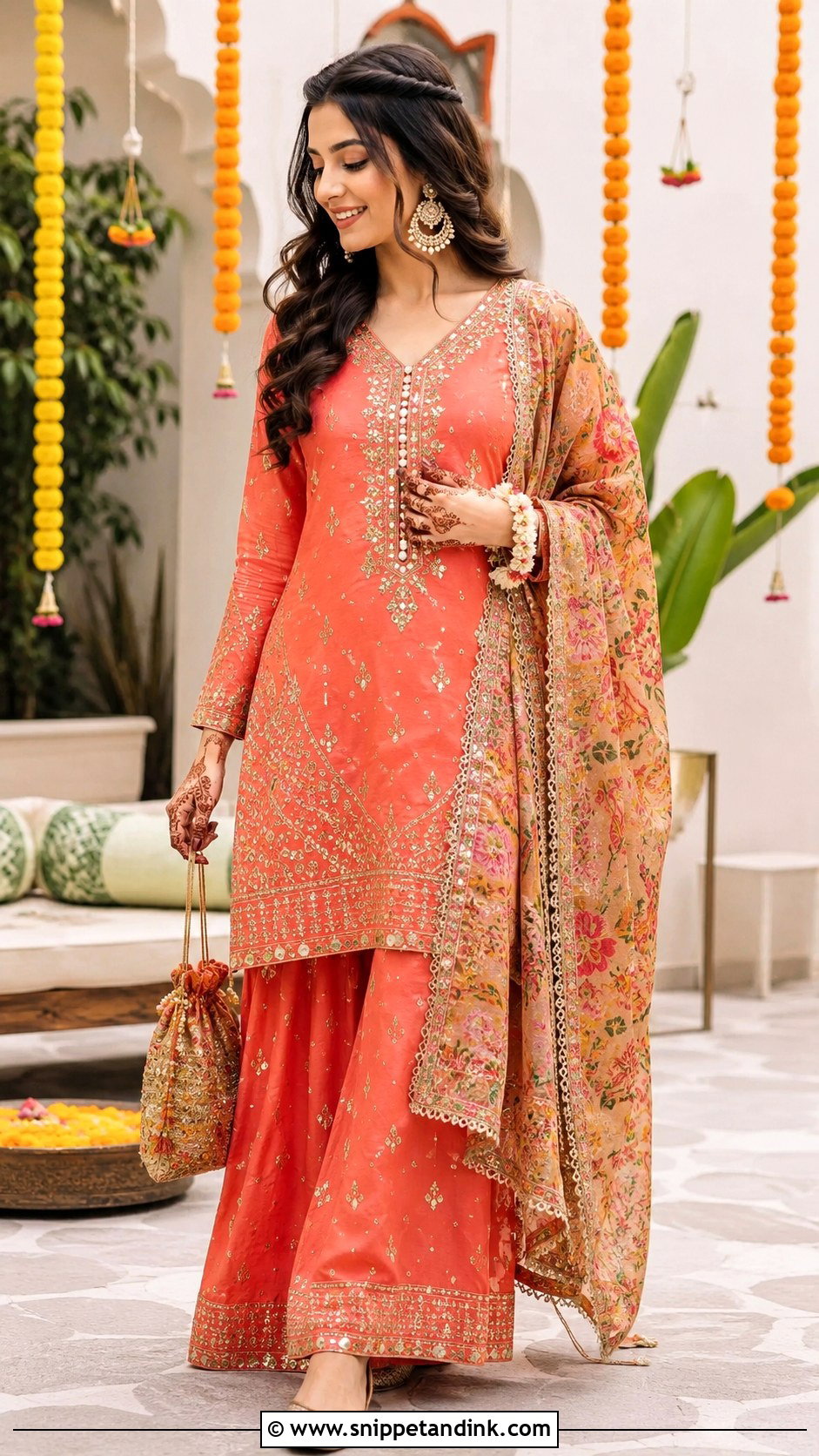
Wide palazzos are easy to sit in, and with a short or straight kurta they give more coverage than most lehengas. Look for embroidery at the neckline, hem and sleeves in yellow, green, coral or fuchsia. A printed or embroidered dupatta adds movement. Fit the kurta for sitting, not standing: side slits need to start high enough that the hem doesn’t strain across your lap. Juttis, chandbalis and a small potli complete it.
17. Ruffle Saree Mehendi Look
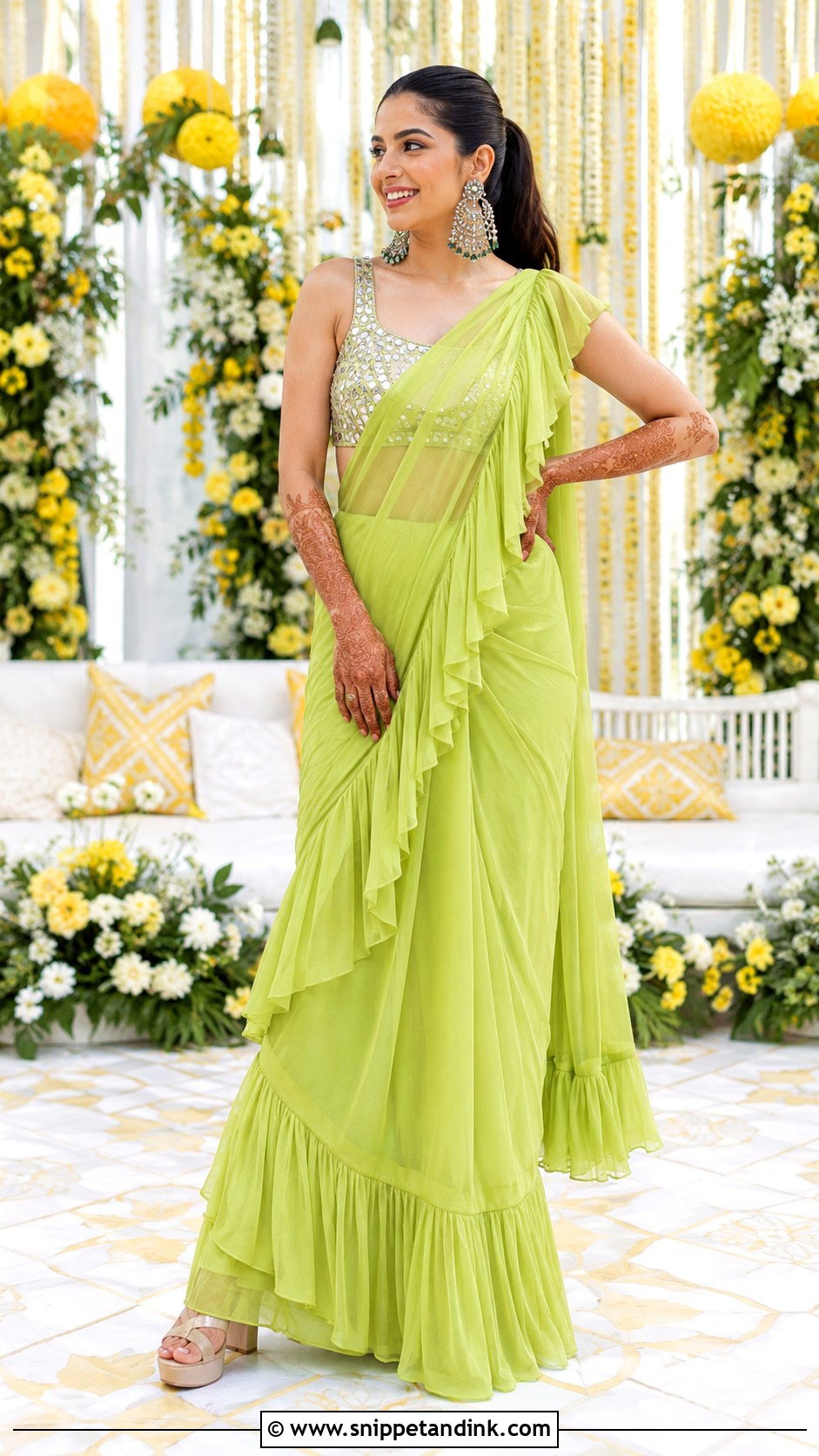
Pre-draped ruffle sarees stay put while you move, which solves the main worry about a saree at a mehendi. Yellow, lime, pink, peach or floral prints keep it cheerful, with a statement blouse in mirror work or tassels. Pin the pallu at the shoulder and again at the waist so your arms stay clear. A sleek ponytail or braid works better than open hair, which falls forward into wet paste.
18. Dhoti Mehendi Set
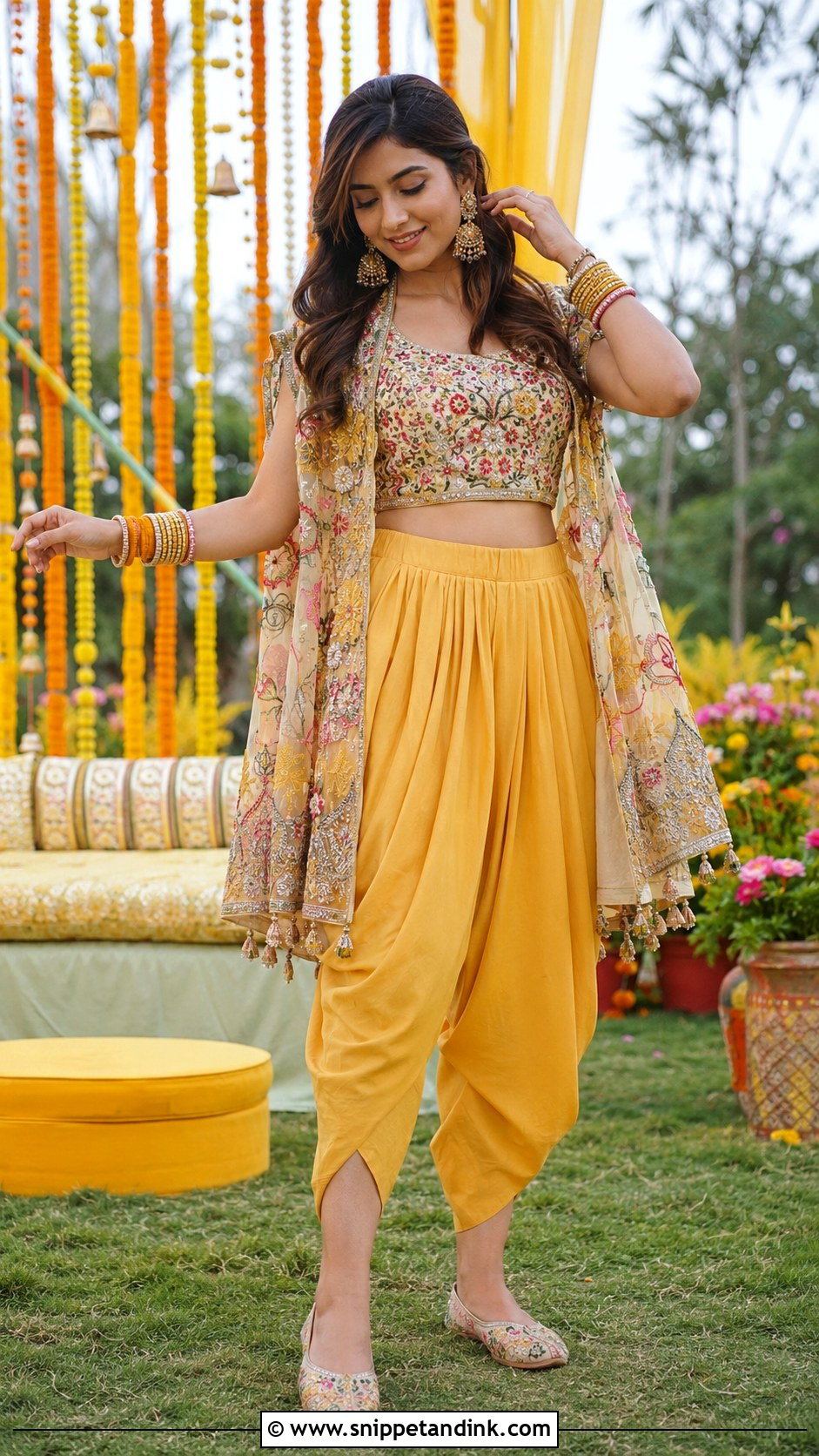
Draped dhoti bottoms move with you, and a short kurti, jacket or crop top keeps the top half modern. Bright yellow, green, orange or pink, or a printed set with mirror accents, all suit the event. A lightweight cape or jacket replaces the dupatta and keeps you hands-free. You can sit cross-legged in a dhoti without hitching anything up, which few bridal outfits allow. Statement earrings and embroidered flats finish it.
19. Jacket Mehendi Lehenga
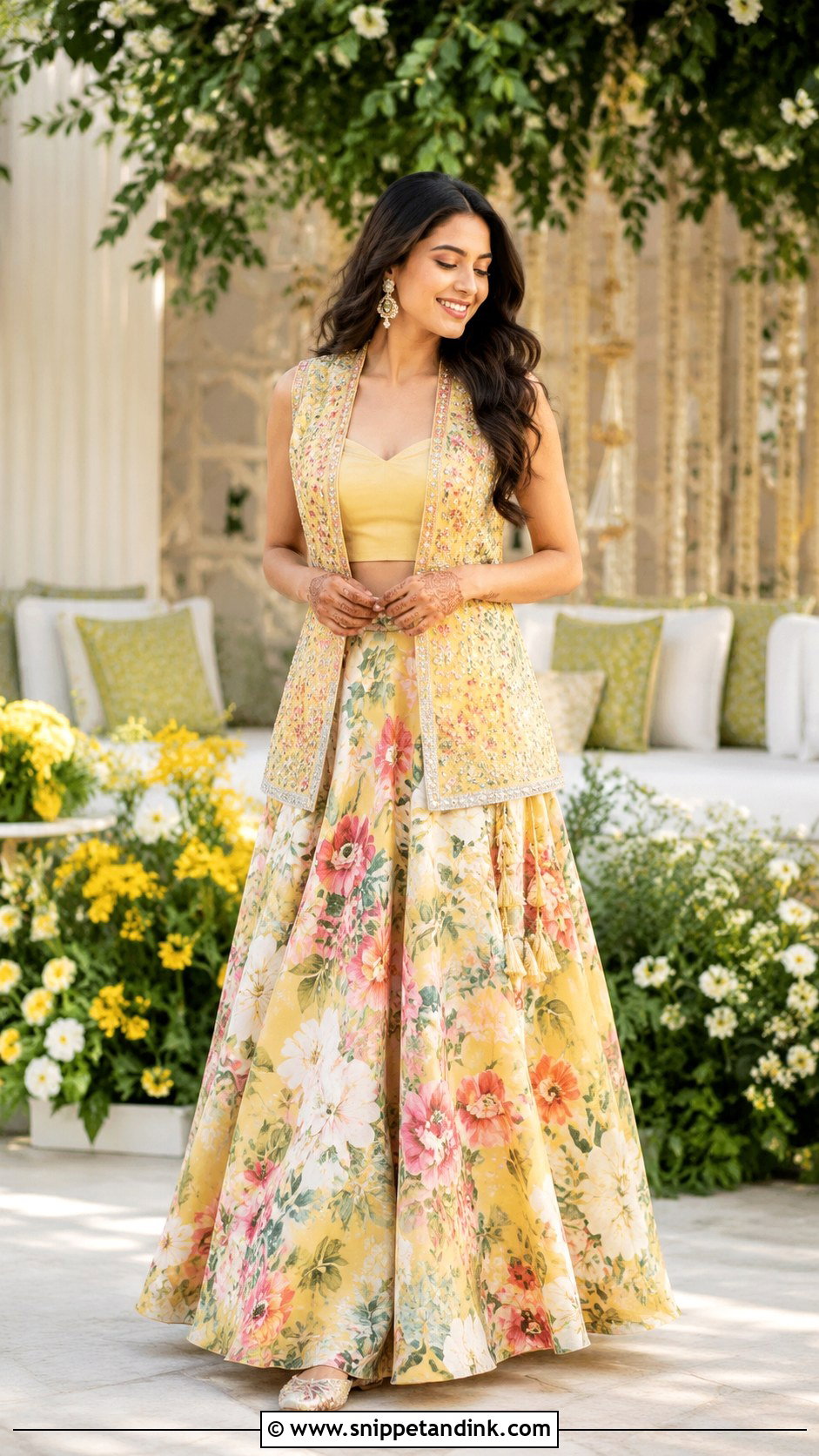
An embroidered jacket over a blouse and skirt adds detail and coverage without a dupatta. Cropped, long or sleeveless all work, but for henna I prefer sleeveless, or a jacket that slips off easily. Try a floral printed skirt with a mirror work jacket, or a solid lehenga with a colourful embroidered layer, in yellow, green, ivory or pink. Keep jewelry neat so the jacket stays the focus. In full-length photos it gives a structured line most mehendi outfits don’t have.
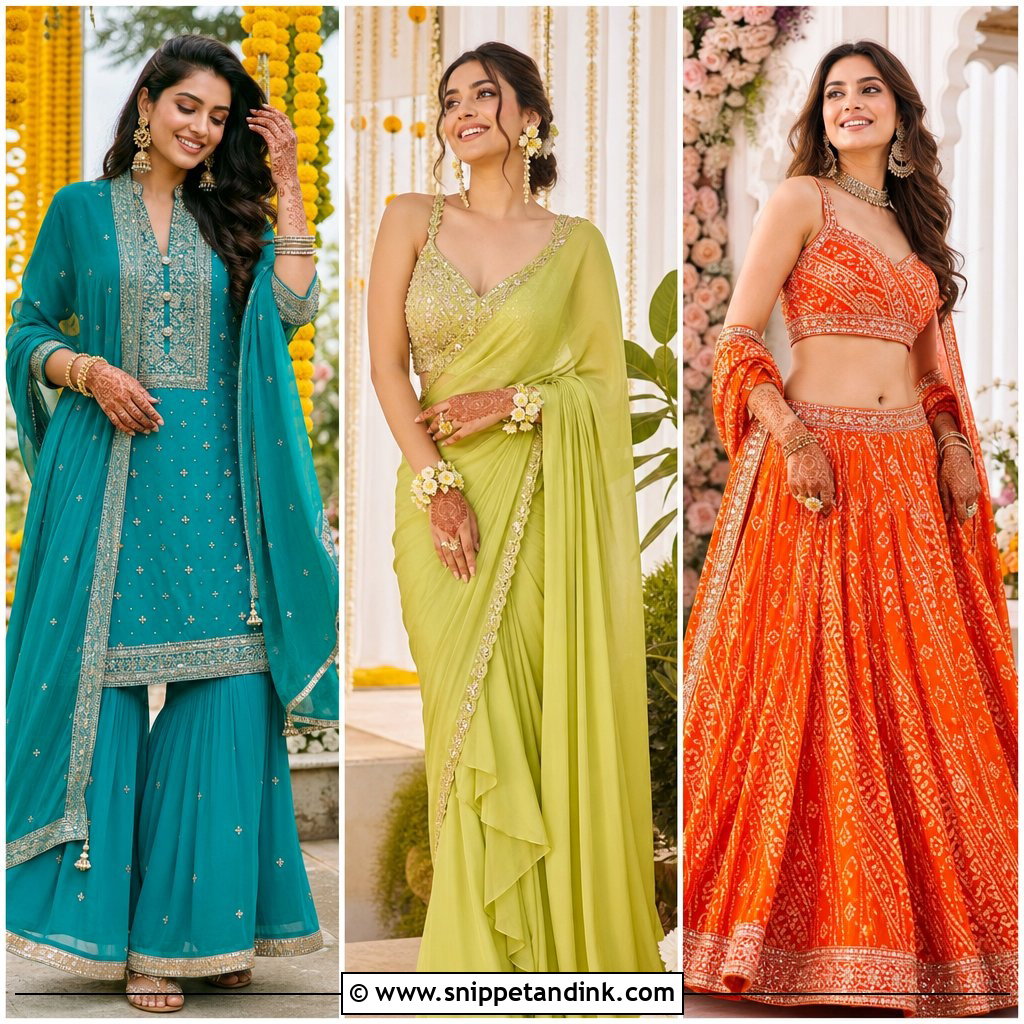
20. Short Kurti Mehendi Gharara
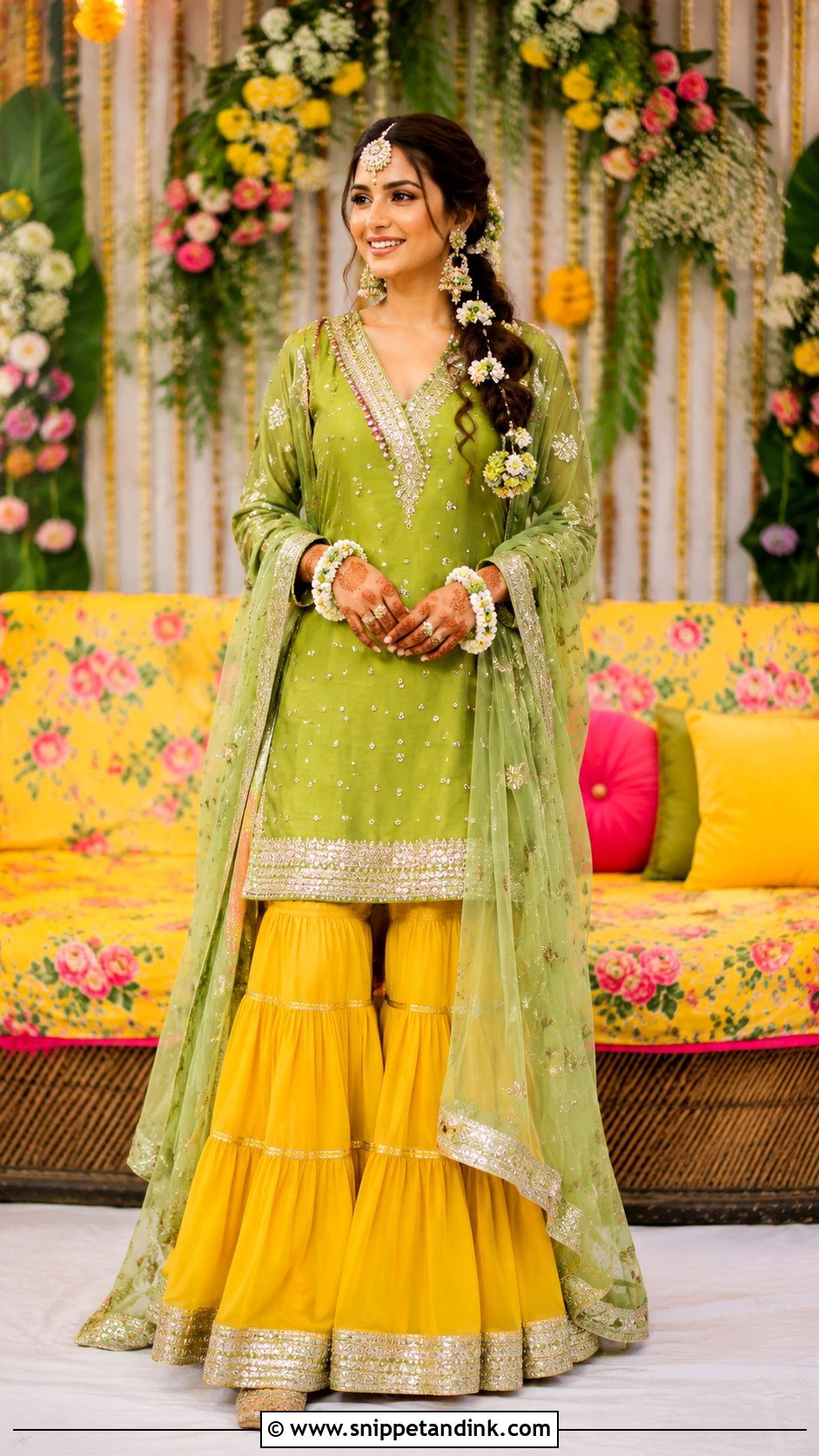
A short kurti mehendi gharara is fitted through the thigh and flares out below the knee, joined by a decorative band. That join should sit right at the knee; if it falls lower, walking becomes a shuffle. Yellow, green or pink with gota patti, zari borders or mirrors suits the classic shape. A short kurti keeps proportions balanced, and a soft dupatta, jhumkas, a passa and a maang tikka complete it.
21. High Low Mehendi Dress
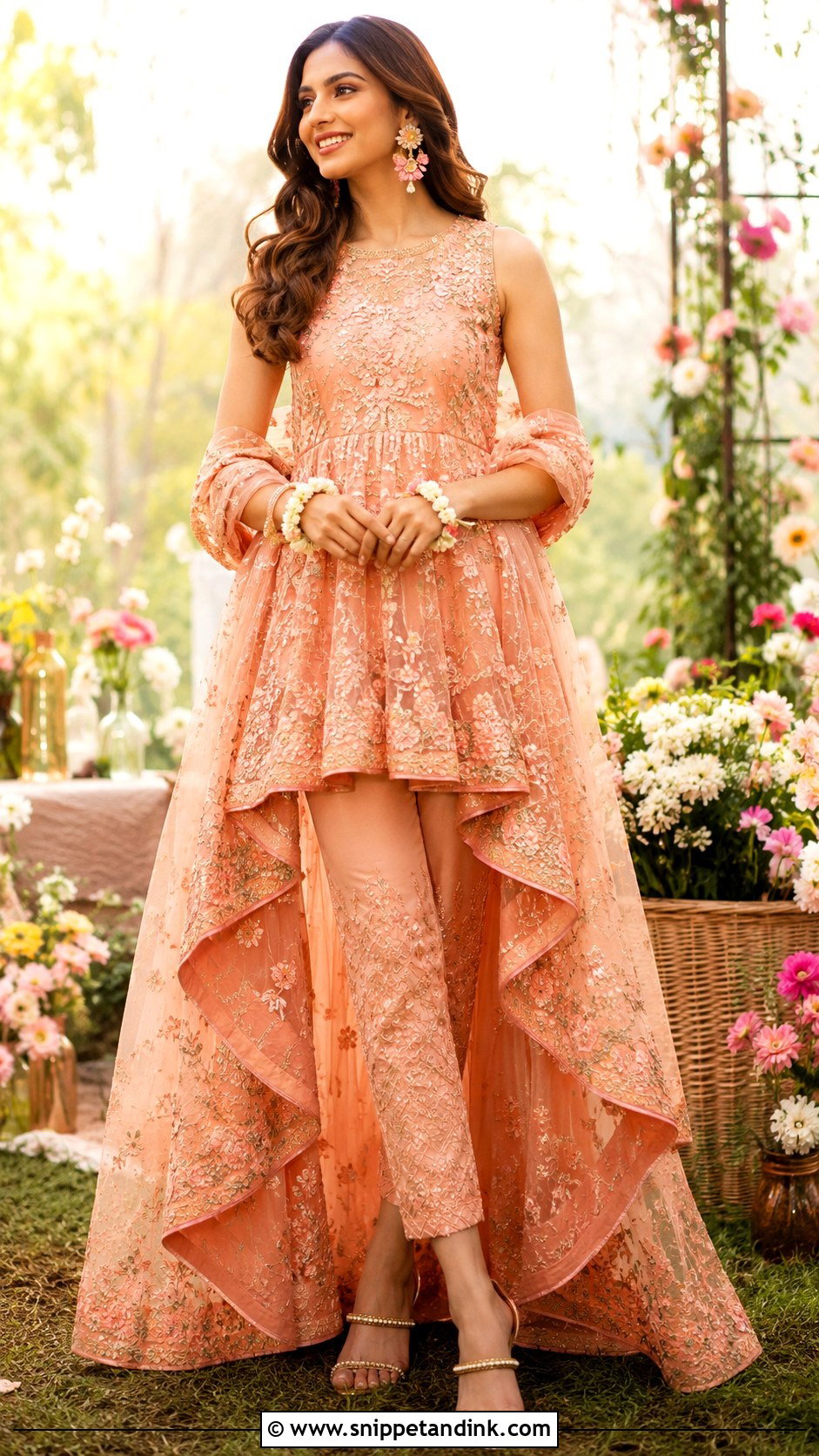
Shorter in front and longer behind, a high-low dress shows your feet, which matters if you’re having foot henna. Embroidered, printed or cape-style versions in yellow, green, peach or multicolour all work, worn over slim pants or dhoti pants, or alone if it’s structured. Check that the back hem clears the floor when you sit, or it’ll drag through dust and paste. Floral earrings and comfortable heels or juttis keep it light.
22. Velvet Mehendi Lehenga
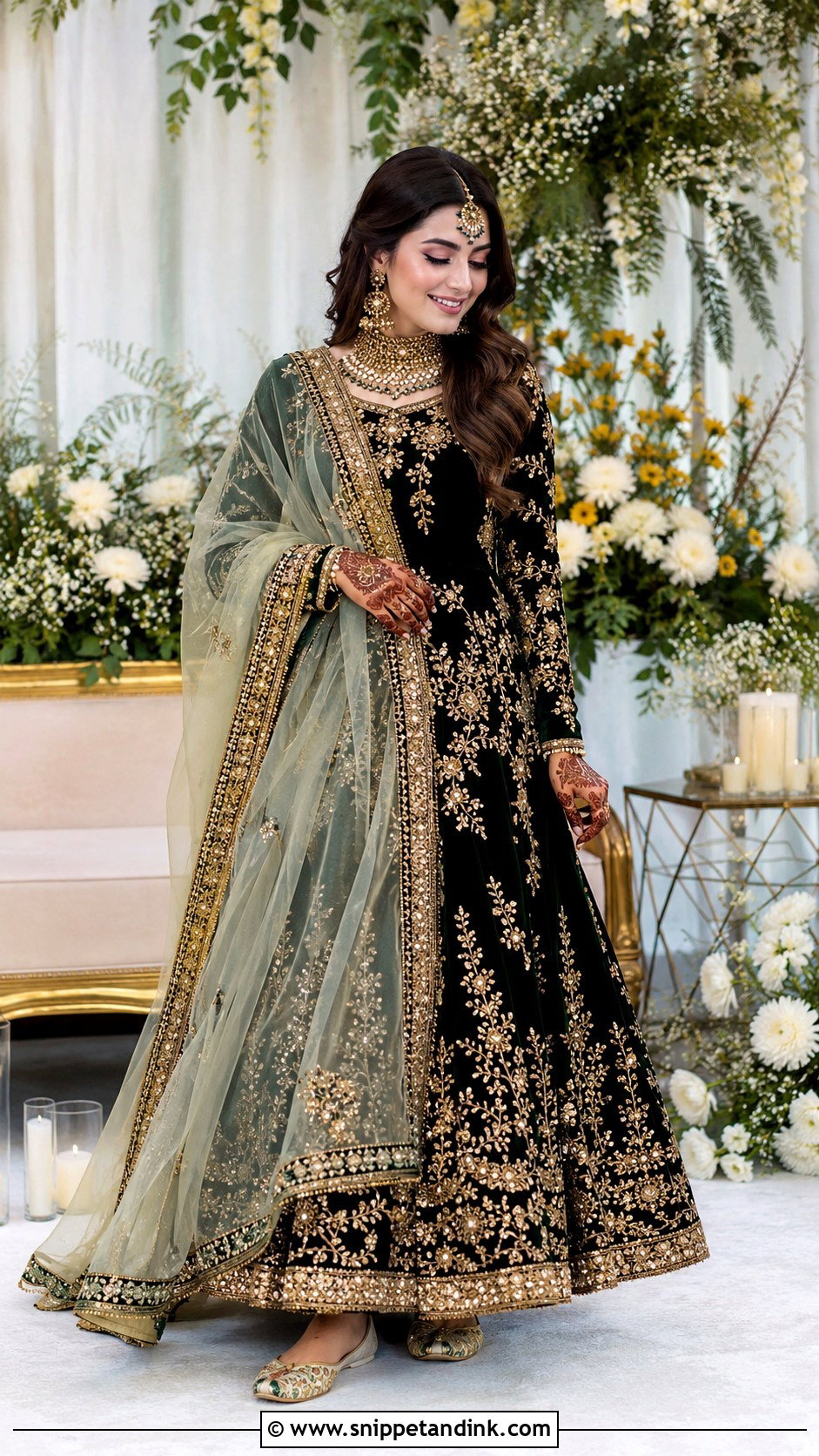
Save velvet for cooler weather or an evening indoors. It looks rich on its own, so the embroidery can stay light. Deep green, mustard, magenta, teal and rust all suit it. Velvet is warm and heavy, so I choose a smaller skirt flare and a sheer dupatta rather than a second dense layer. It also marks easily if you press on the pile, so sit on a smooth cushion and don’t rest damp hands on it. Gold jewelry and embroidered juttis complete the royal mood.
23. Organza Mehendi Lehenga
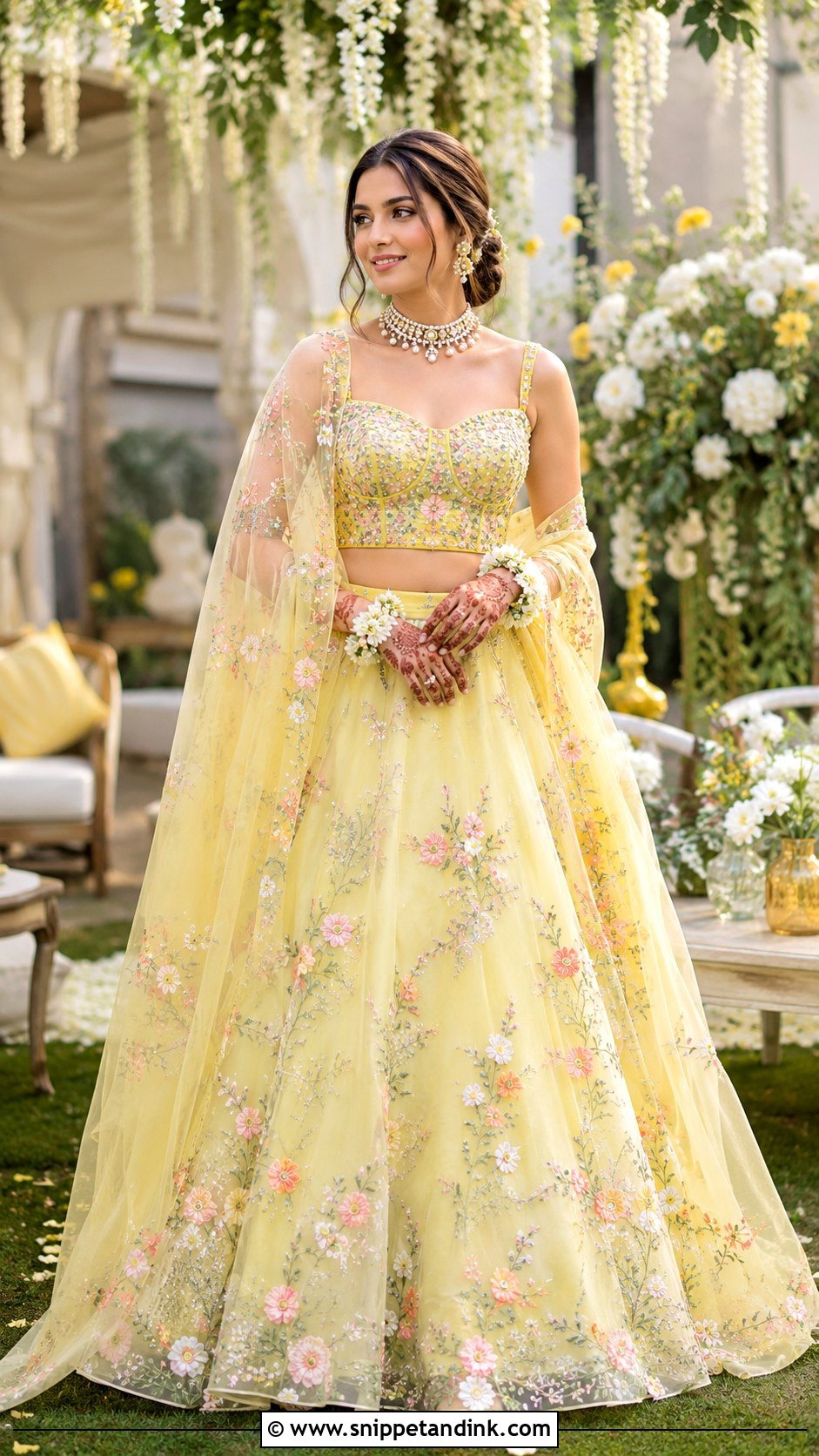
Organza holds volume while staying light, so a skirt can look full without weighing much. It’s crisp, which means it creases sharply where you sit; steam it right before you dress and again between functions if you can. Floral prints, thread embroidery or delicate sequins all sit well on it. Lemon yellow, mint, blush or ivory with bright accents, a structured blouse, a sheer dupatta and pearls or light kundan suit garden and daytime functions.
24. Boho Mehendi Lehenga
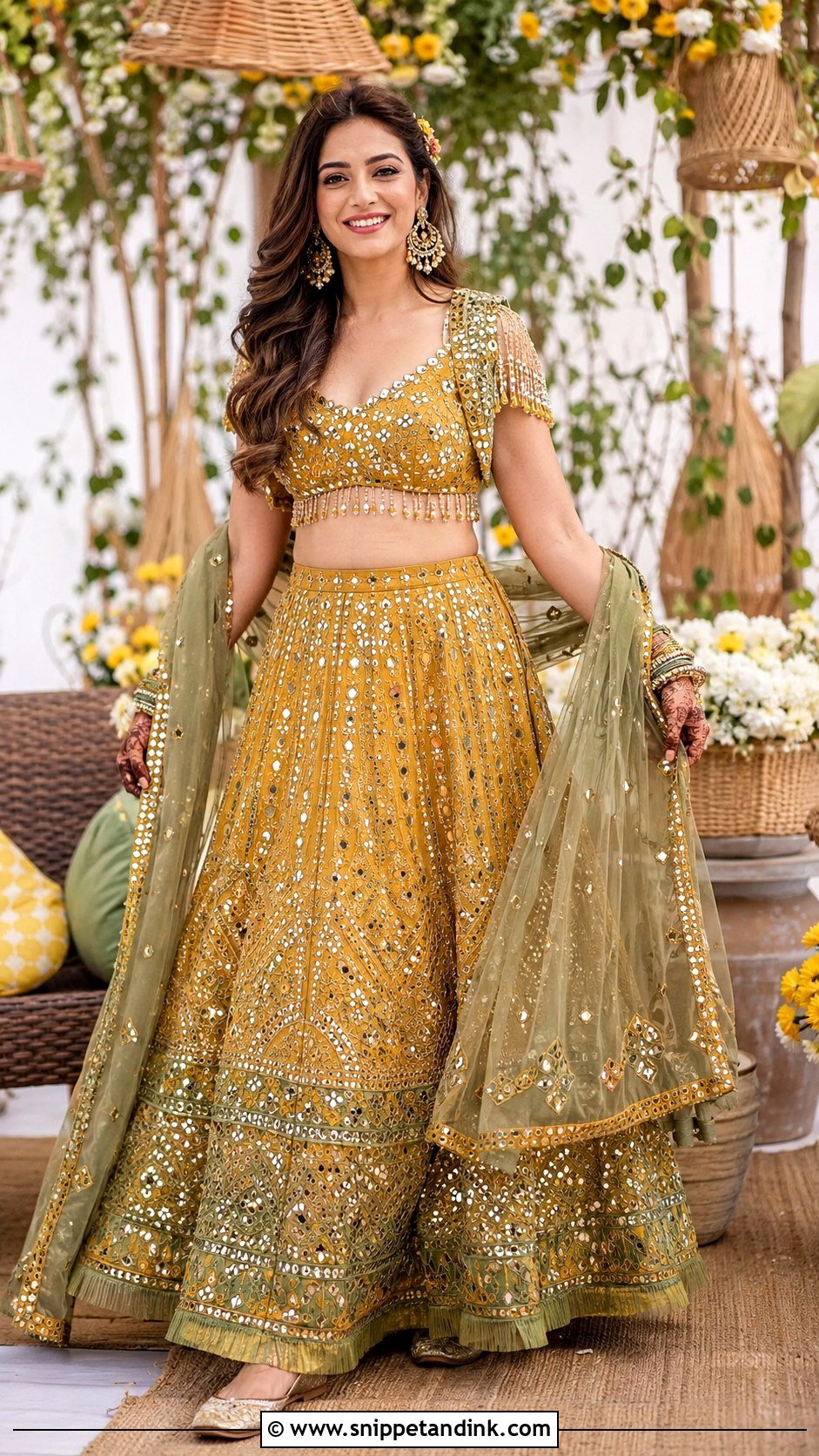
A boho mehendi lehenga mixes mirror work, tassels, thread embroidery, cowrie-style details, patchwork or folk prints in earthy shades like mustard, olive, rust, pink and turquoise. Keep the blouse comfortable and the dupatta light, or switch to a cape. Cowries and tassels hanging near the wrists will swing into fresh henna, so I keep those trims on the skirt and back. Stacked bangles go on after the paste is off. Poolside and outdoor functions suit it.
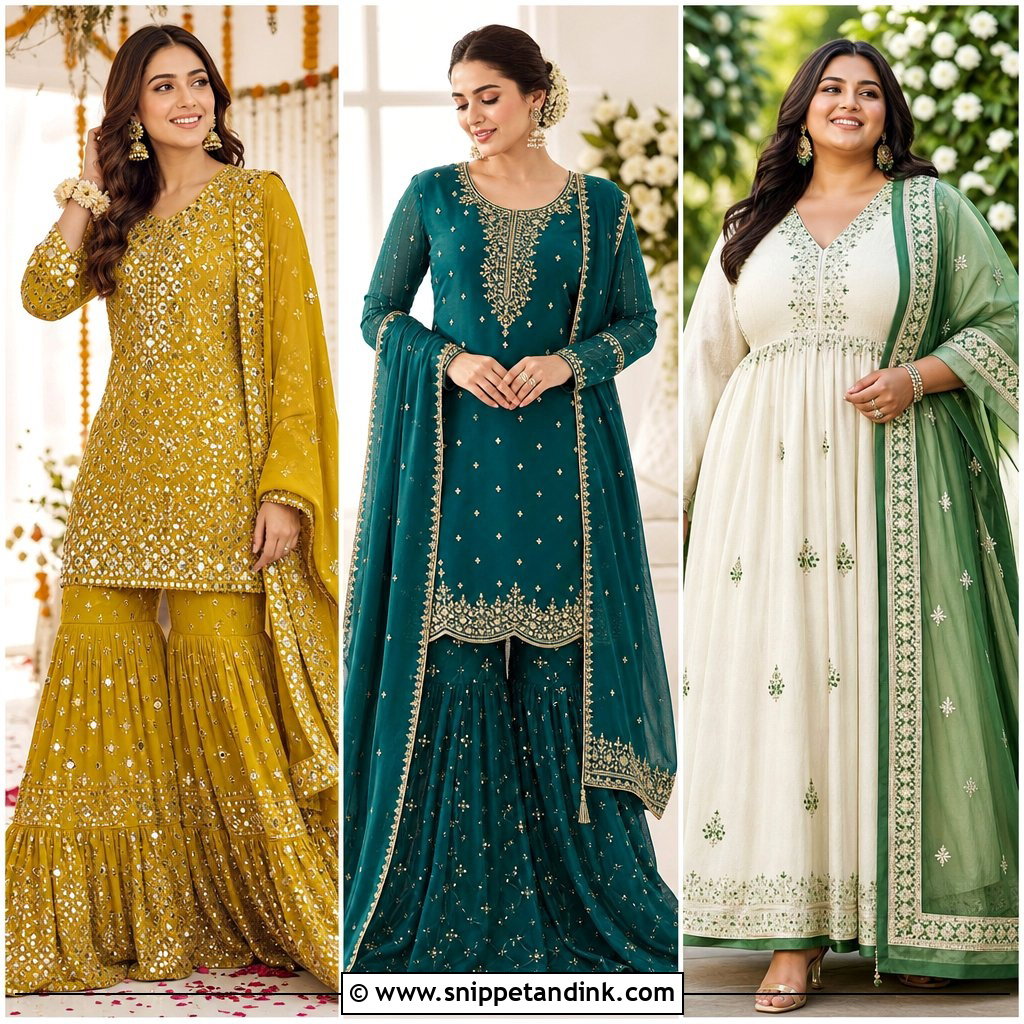
25. Minimal Mehendi Saree
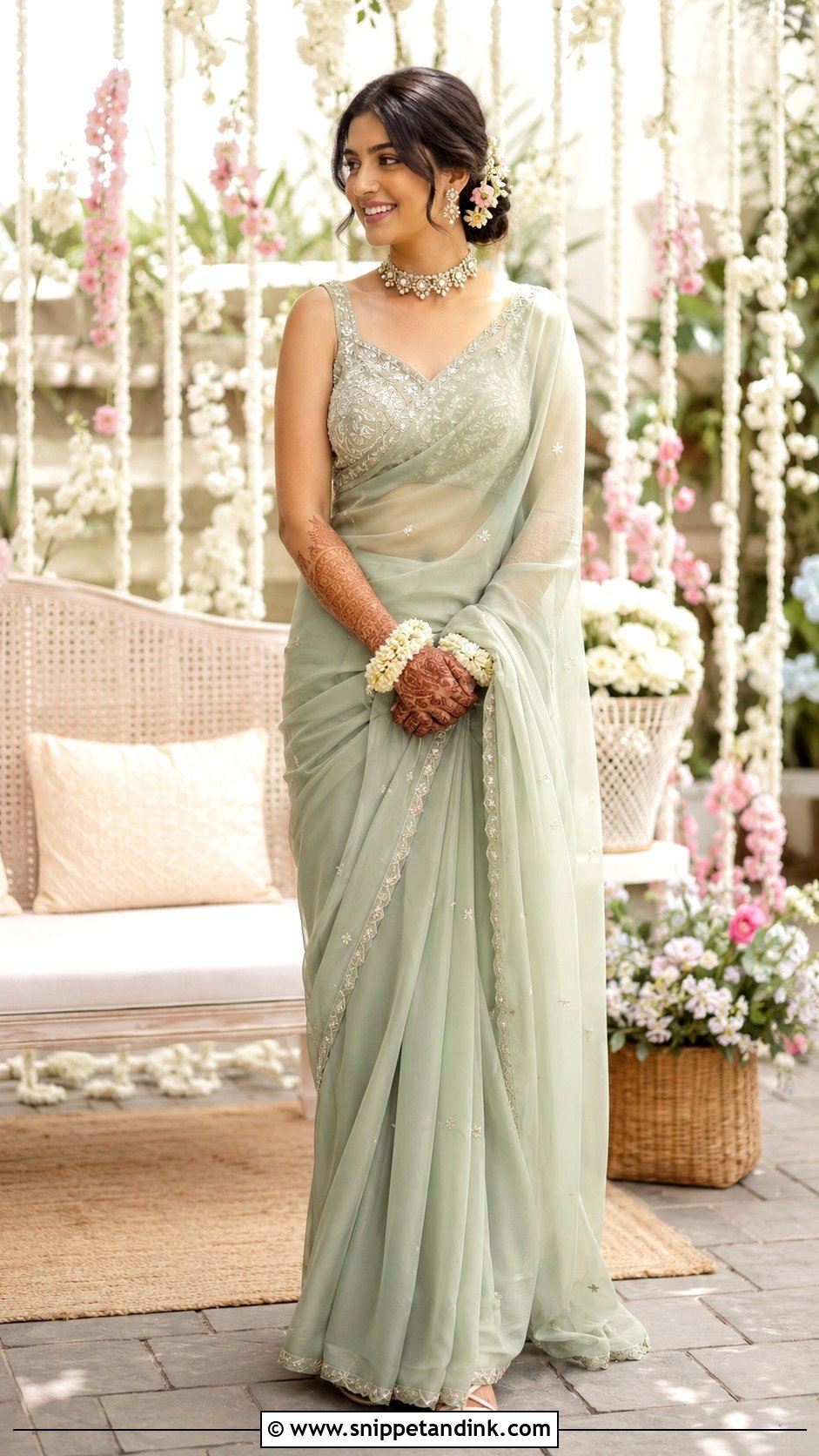
Clean lines suit a bride who doesn’t want fuss. A light saree in yellow, green, peach or a floral print relies on its blouse to look bridal: sleeveless, halter, square-neck or embroidered. Pin the drape firmly so your arms stay visible for the artist. Pearl jewelry and fresh flowers in the hair are plenty. Intimate ceremonies and smaller family gatherings suit this kind of restraint.
A Realistic Timeline From Order to Pressing
Mehendi outfits are often left until last because they’re the lighter look, and that’s when brides end up with a rushed fit. Timings vary a lot by maker and season, but this is the order I plan in:
- Made-to-order pieces: place the order around two to three months ahead, longer in peak wedding season. Ask the boutique for its current lead time in writing.
- Ready-to-ship outfits: buy at least a month ahead so there’s time for alterations and a backup if the colour isn’t what the photos showed.
- First fitting: wear the blouse and sit, lift your arms and reach forward. Raise any sleeve, armhole or slit problems here.
- Final fitting: about a week before, with your actual shoes and any heavy earrings, so the hem and dupatta length are set correctly.
- The morning of: steam, never iron, over mirrors, gota or sequins, and pre-pin the dupatta so it goes on in seconds.
Have the safety pins, a lap cloth and a steamer ready before the artist arrives, because once the paste is on, you won’t be fixing anything yourself.
Sit in It, Dance in It, Then Decide
My test for any mehendi outfit is simple: sit on a low stool in it for ten minutes, dance a little, then hold your arms out as if the artist were working. A classic yellow lehenga, a green sharara, a floral skirt, a cape set or a fusion cut can all pass. Light fabrics, drapes pinned in two places and accessories that stay off your wrists make the long function easier. Then think about how the colour sits beside dark paste and, later, the stain. Choose the one that does both and you’ll forget about the outfit and enjoy the evening.
You'll Like These Ideas:


Leave a Reply