
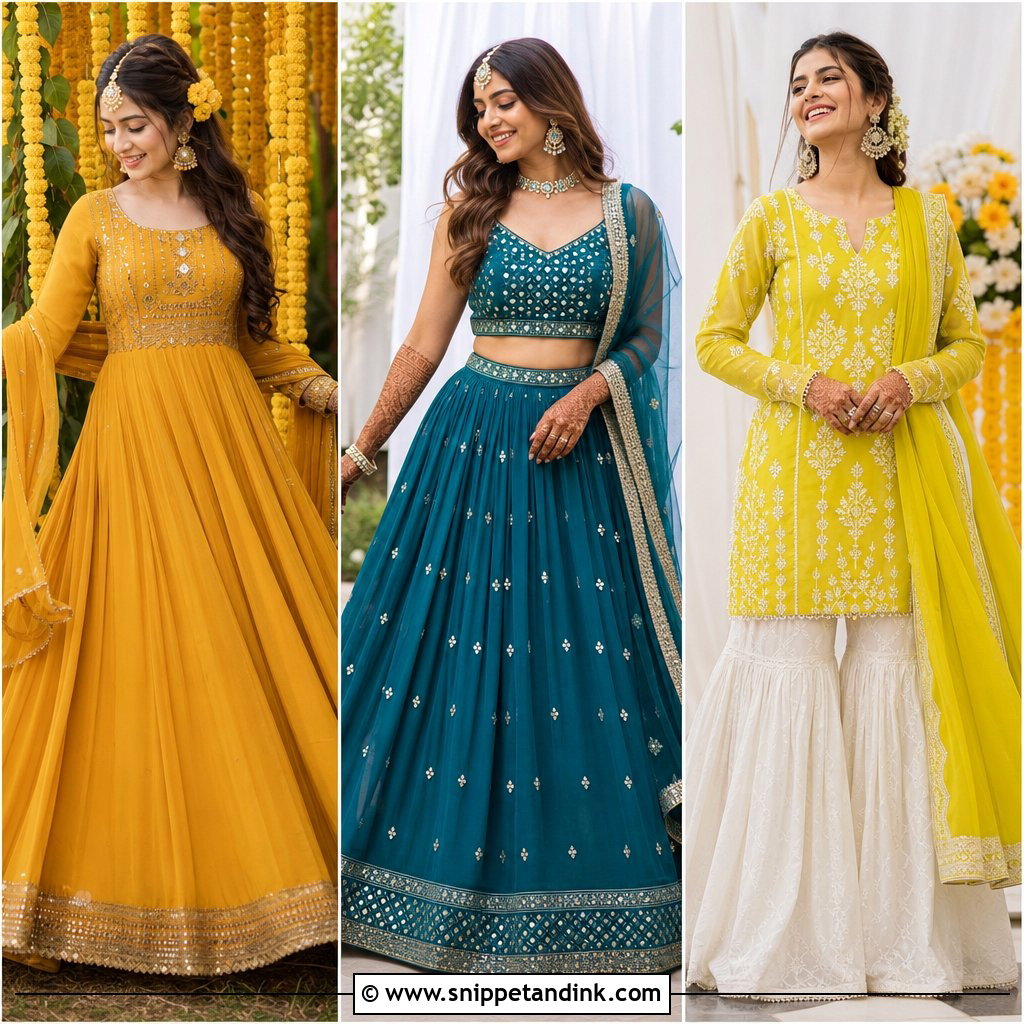
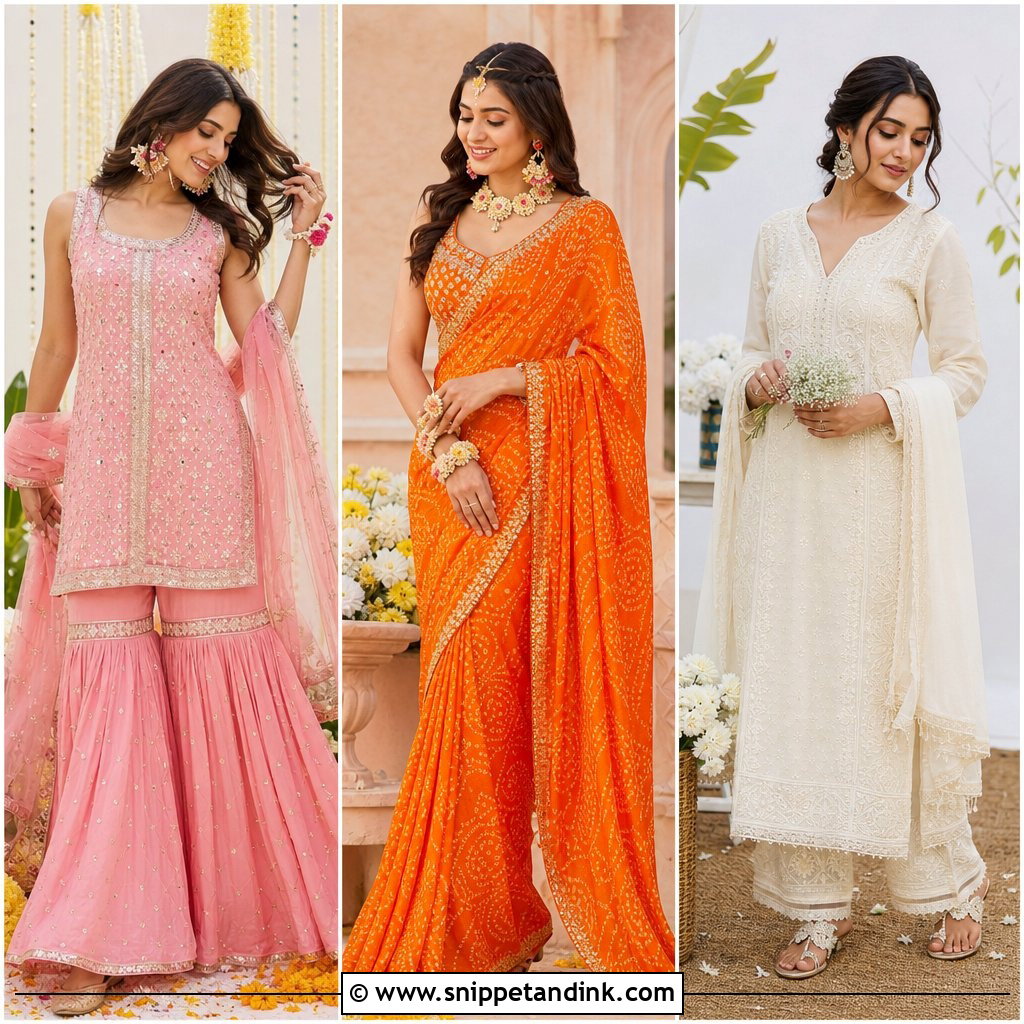
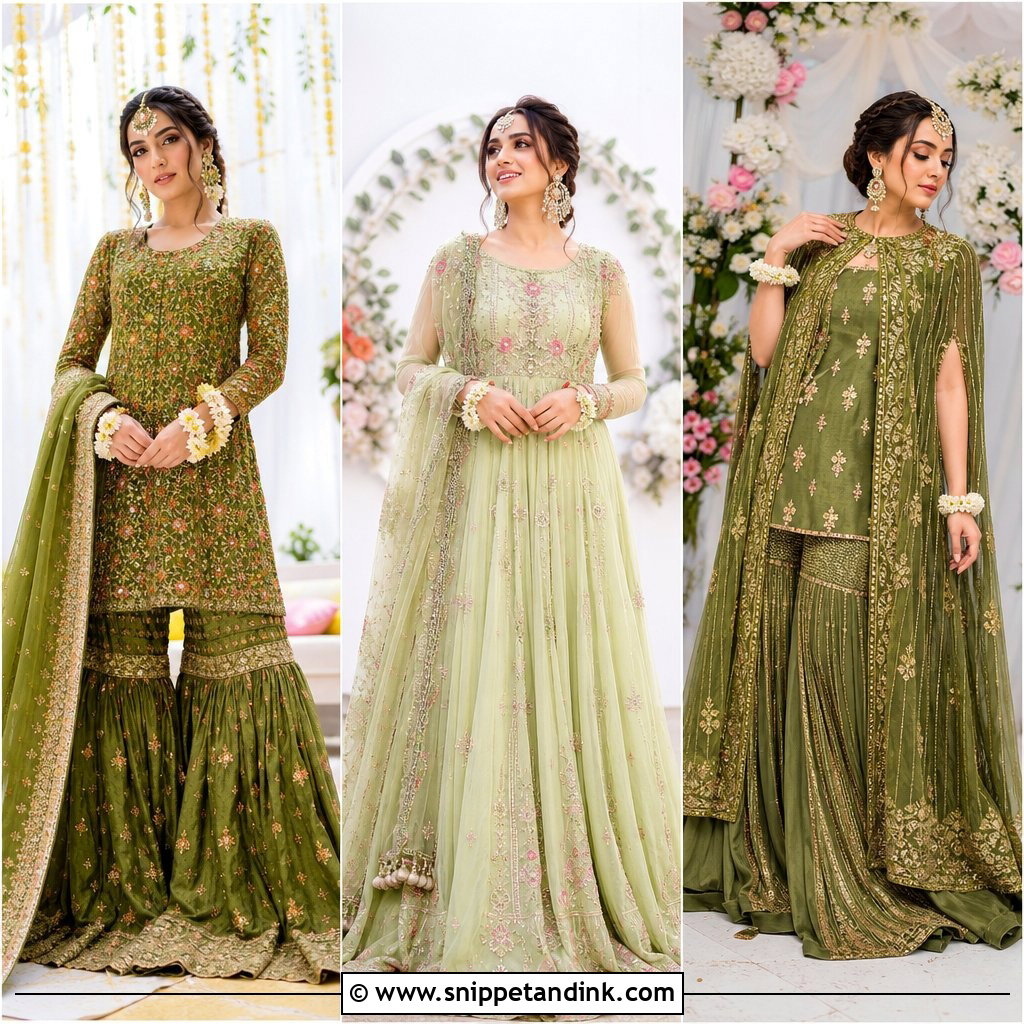
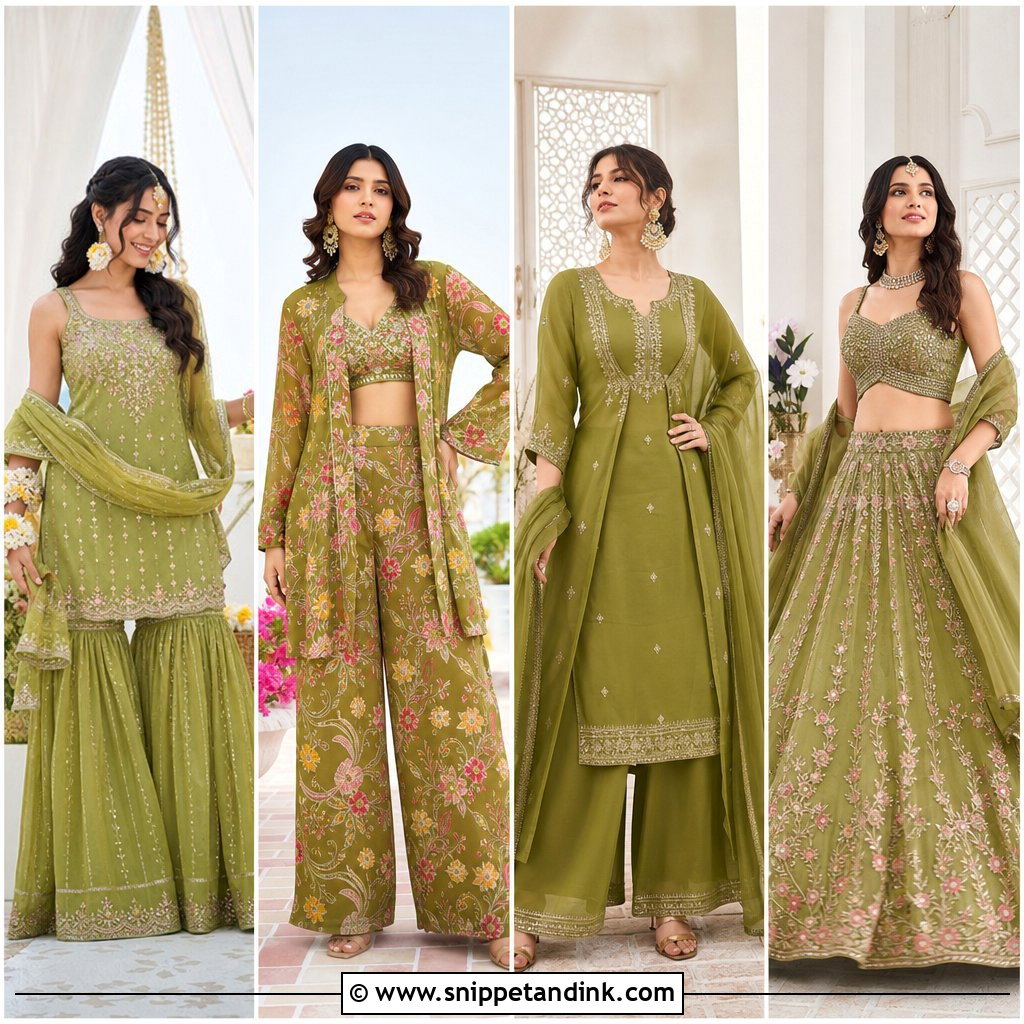
I spend most of a mehendi sitting knee to knee with the bride, so I see every outfit from the angle that matters: how it behaves during hours of henna, then photos, then dancing with wet paste on both hands. Below are twenty bridal looks, from floral lehengas and mirror-work shararas to draped sarees, cape sets and modern separates. Green and yellow are still the classic colors, but coral, pink, blue, lavender and multicolor palettes all work. Light fabric and an easy shape matter more than anything, because you’ll be sitting still for a long time and then moving a lot. For each outfit I’ve noted what it means for the henna on your hands and feet.

Dressing Around Wet Henna on Hands and Feet
A full bridal design on both hands and feet takes several hours, and you’ll sit still for most of it. Before you settle on an outfit, I’d ask you to picture yourself in it on a floor cushion with your arms out and your feet resting on a towel.
- Sleeves: bridal henna often runs to the elbow or beyond, so sleeves should stop above the elbow or roll up easily and stay there.
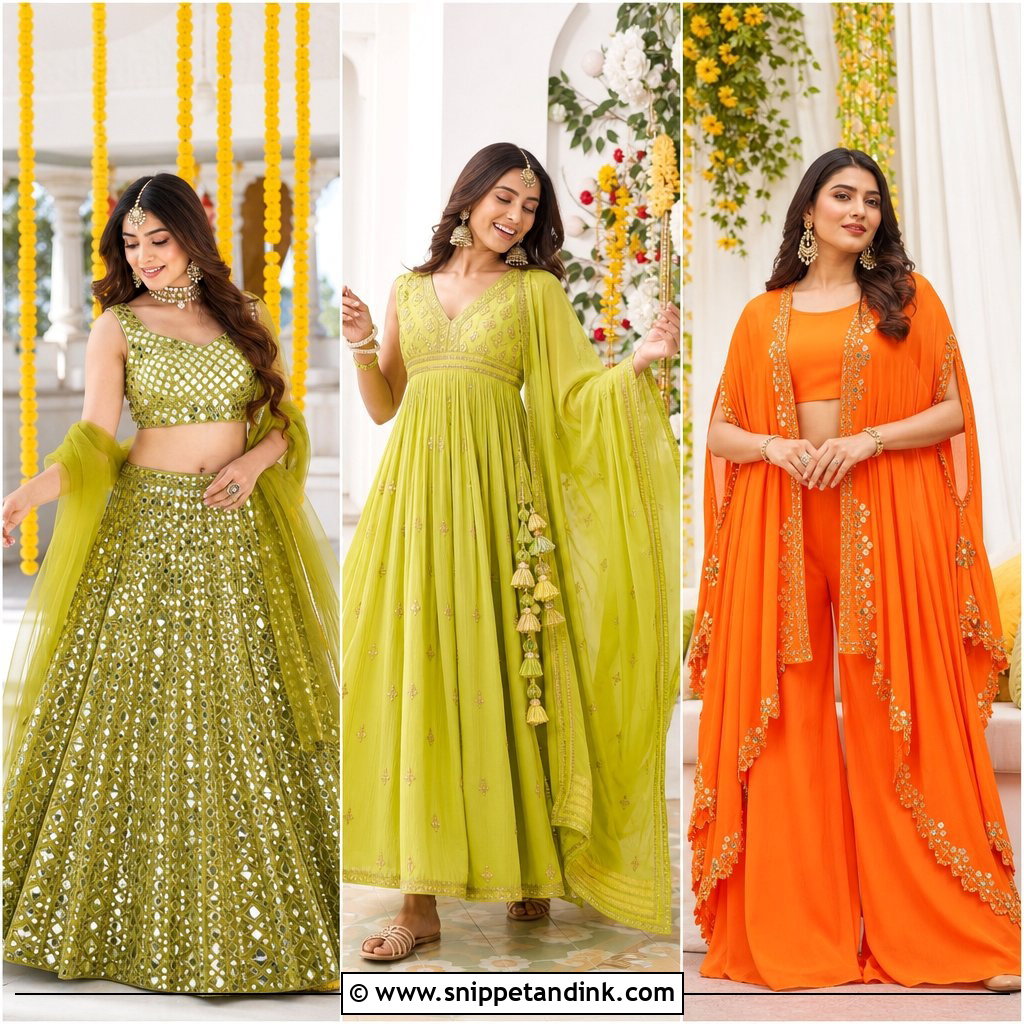
- Hems: feet designs go up the ankle and sometimes the calf. Lehenga skirts need to lift clear, and pants should roll or be cut wide.
- Closures: a back zip or hooks you can’t reach become a problem. Plan to be dressed before application and have a helper for the rest of the night.
- Dupatta: pinned firmly before we start, never draped loose over the arms.
- Footwear: open sandals or bare feet until the paste is off. Closed juttis smudge a fresh foot design.
Henna paste stains fabric orange and the lemon-sugar seal is sticky, so the darkest or most forgiving part of the outfit should be what sits in your lap.
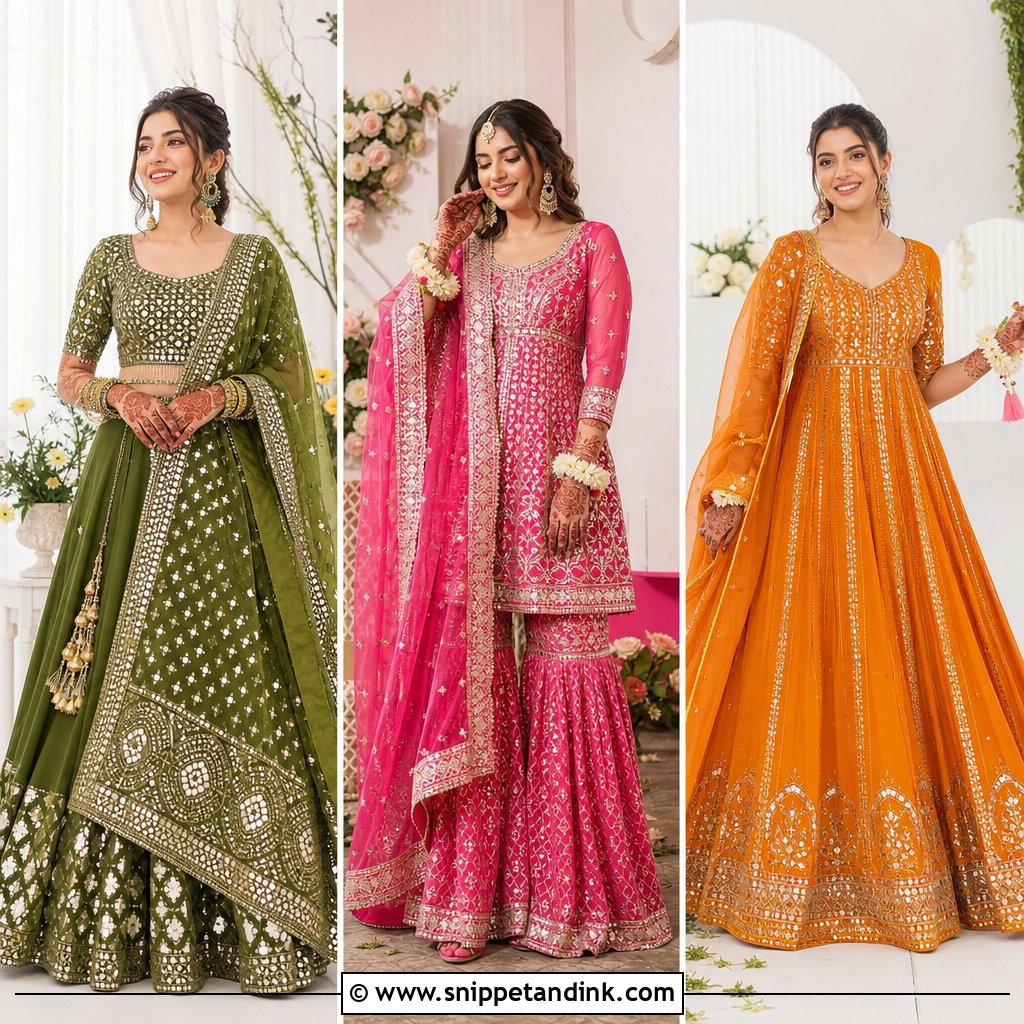
1. Green Mirror Work Mehendi Lehenga
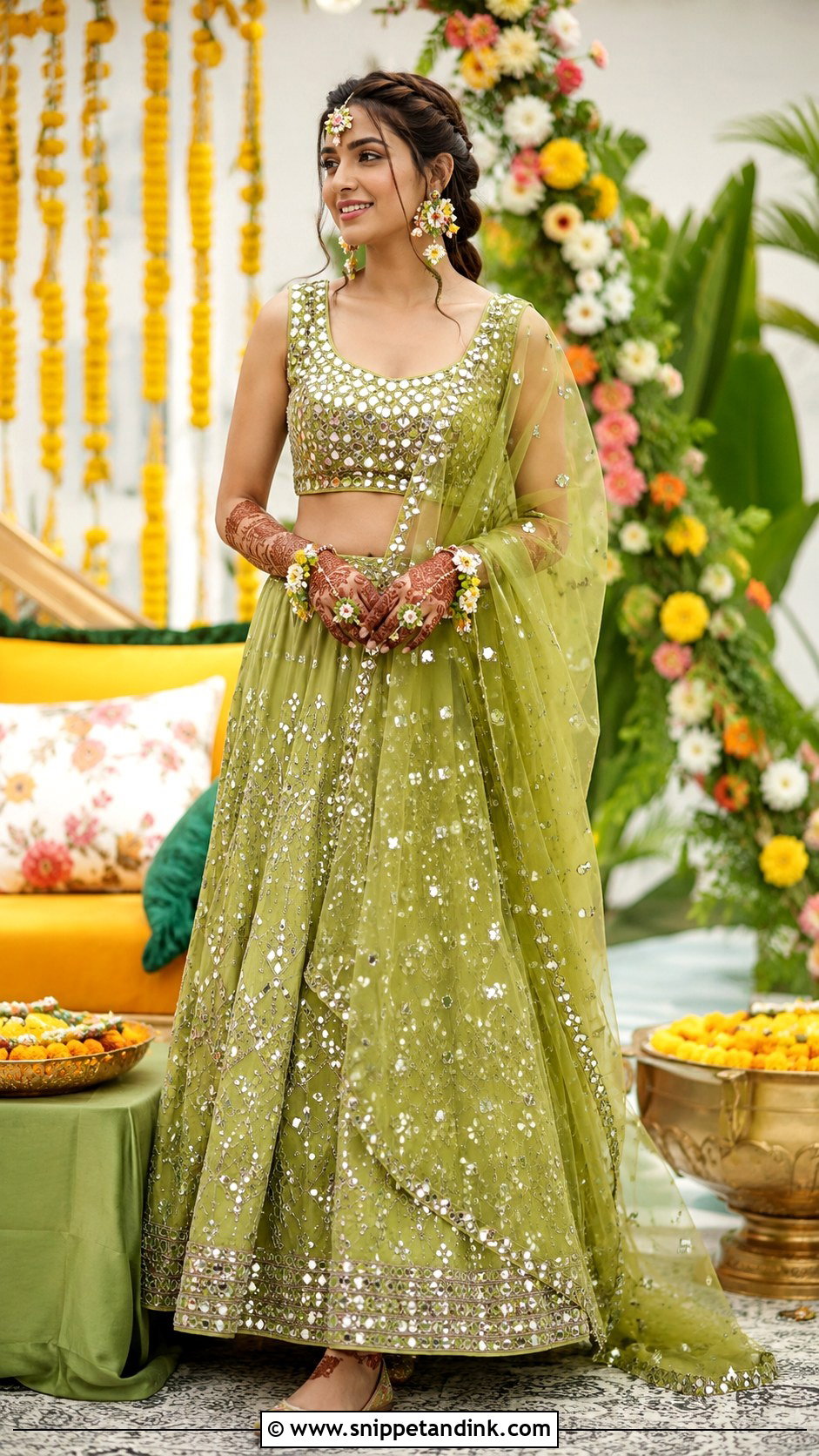
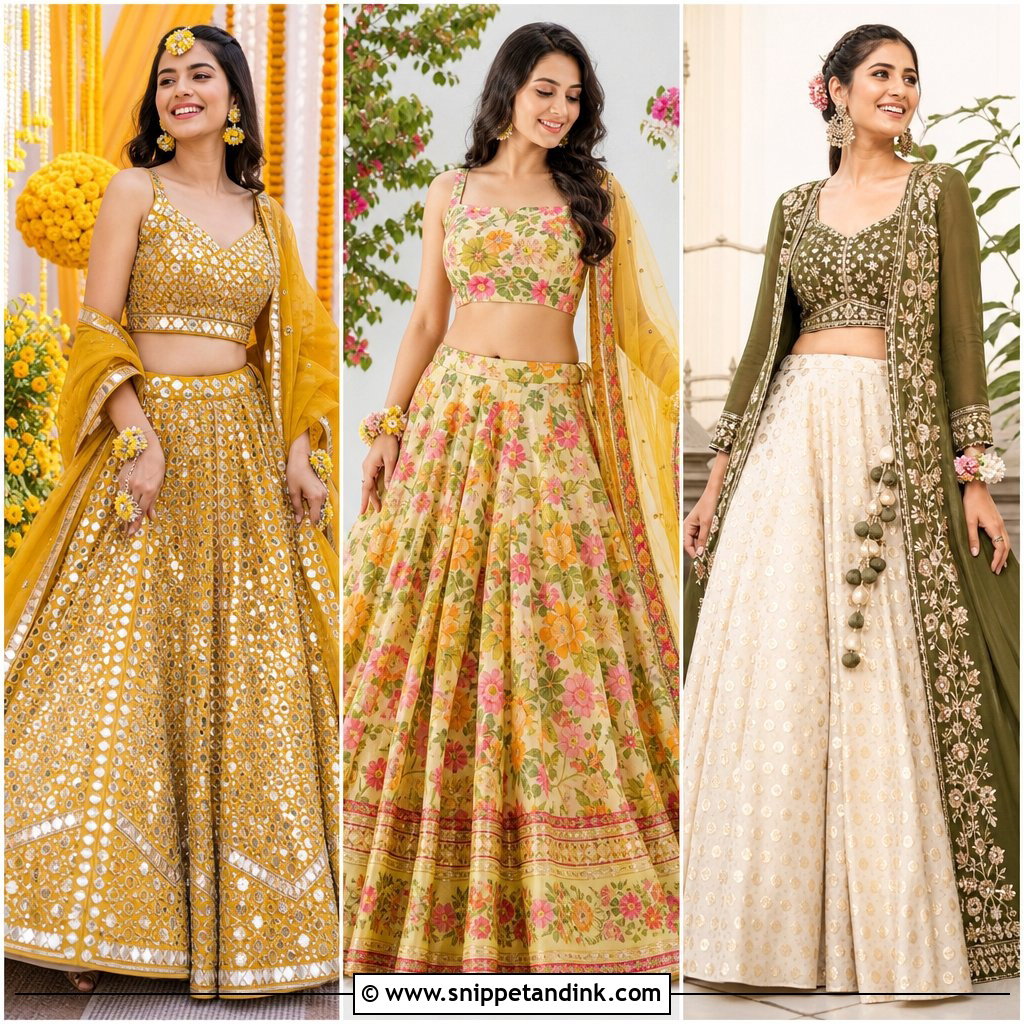
Green mirror work is the most traditional mehendi look and still one of my favorites to work beside, because a sleeveless blouse leaves the whole arm free for the design. Choose a light georgette or soft raw silk skirt with scattered mirrors rather than dense embroidery; heavy mirror panels are cold and stiff to sit on for hours. Pin a light dupatta over one shoulder. Floral earrings, a fine maang tikka and soft juttis finish it, with a loose braid threaded with small flowers. If you want more coverage, a short sleeve that stops above the elbow still leaves room for a full bridal design.
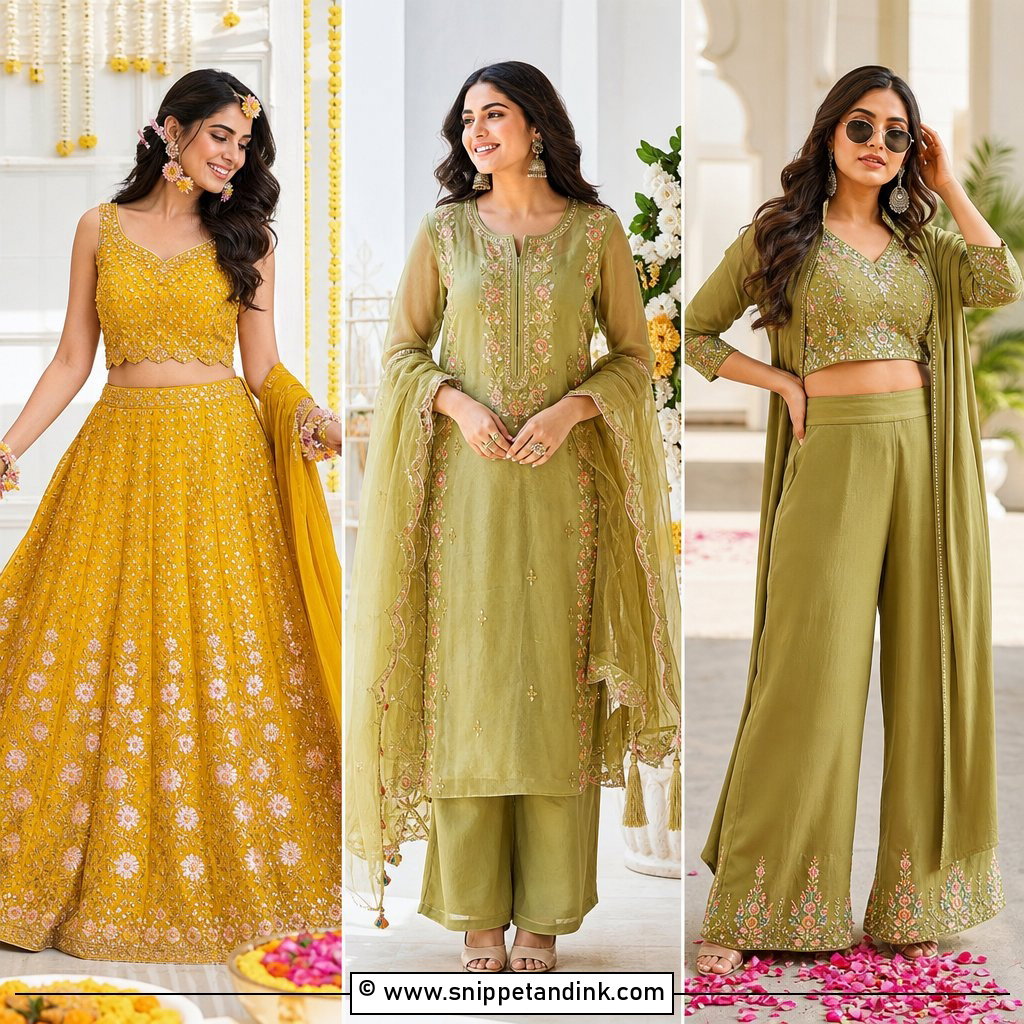
2. Yellow Floral Mehendi Lehenga
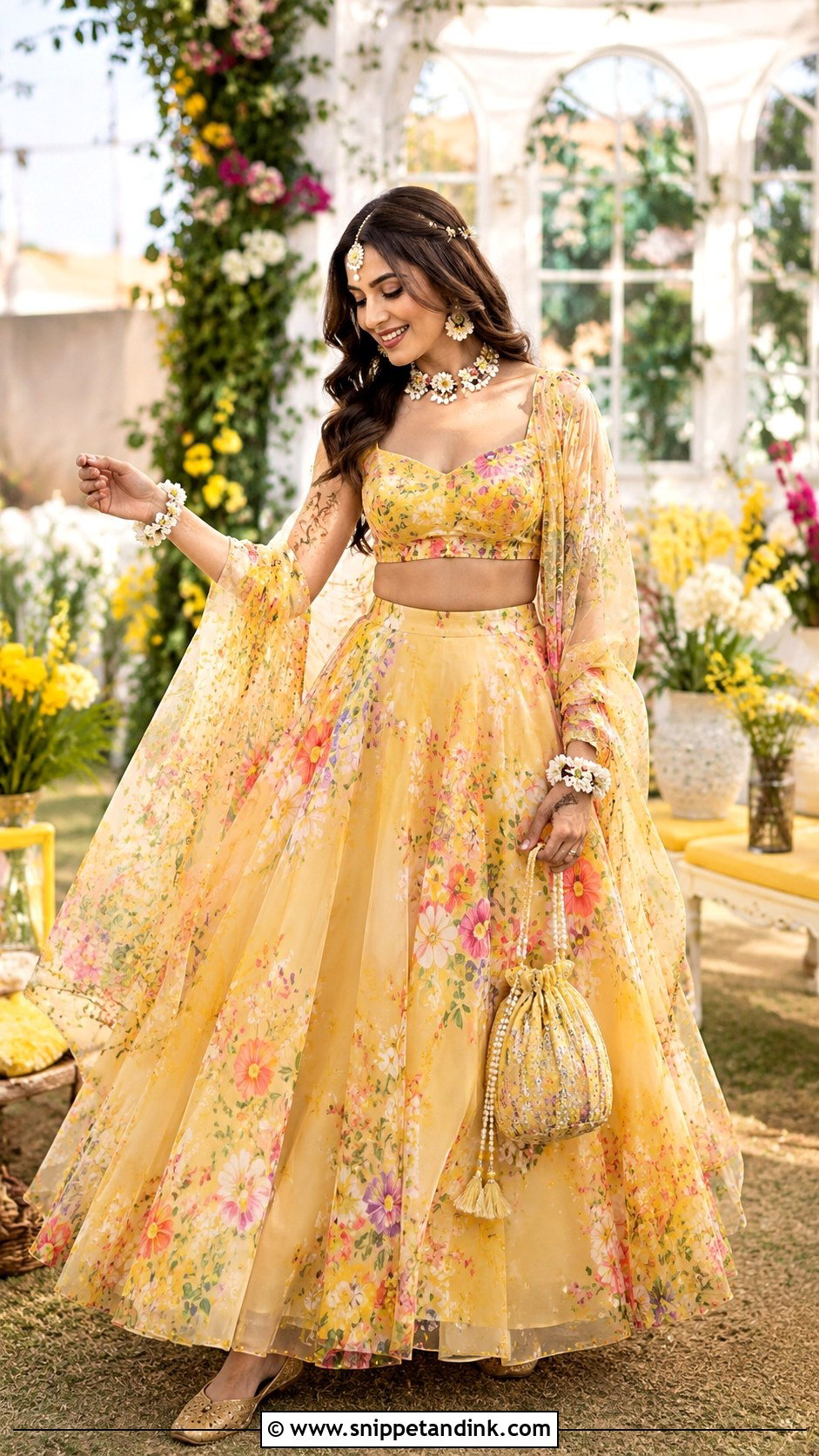
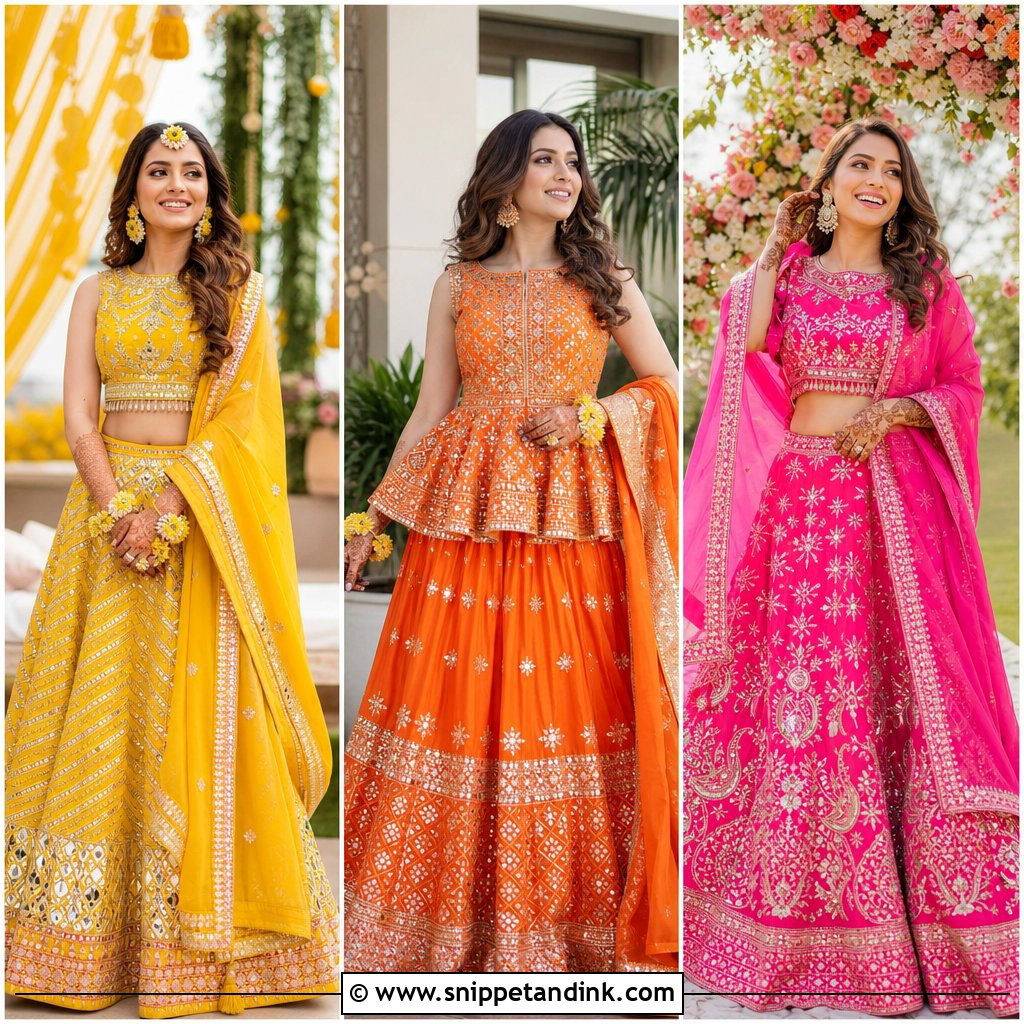
A yellow lehenga with fresh florals suits a daytime mehendi in a garden or on a lawn. A flowing organza or crepe skirt printed with pink, green or coral flowers pairs with a cropped blouse with subtle threadwork, pearls or a few sequins. Skip the heavy dupatta: a sheer floral drape pinned at shoulder and waist won’t slide down onto wet paste. Pearl and flower jewelry, gold juttis and a relaxed ponytail or textured braid finish it, plus a small potli. Organza is crisp, so a smear of henna sits on top and can often be flicked away once dry, which is more than I can say for raw silk.
3. Multicolor Patchwork Mehendi Lehenga
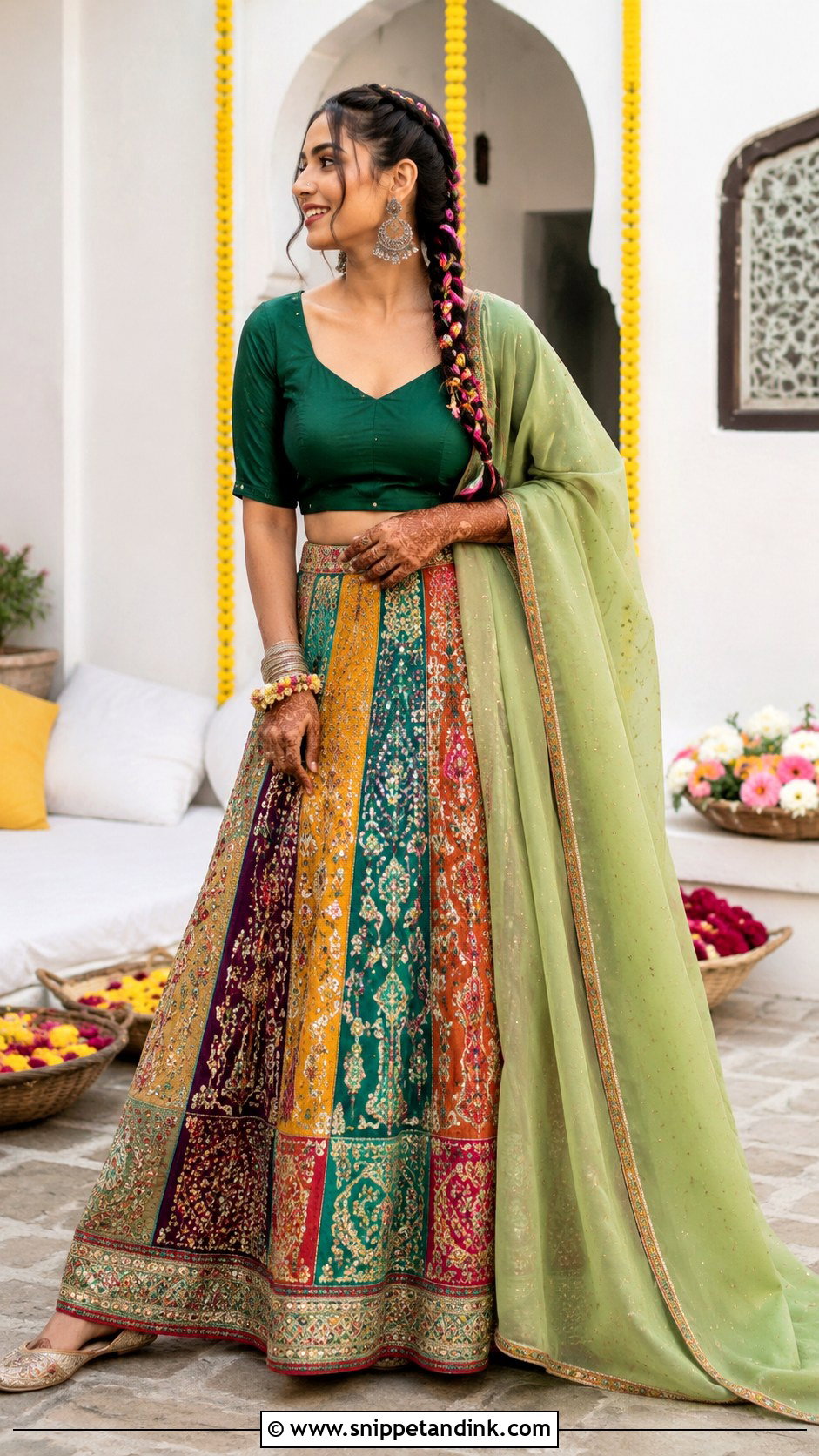
Patchwork suits a bride who finds a single color too predictable. A multicolor patchwork lehenga with jewel-toned panels, patterned borders, mirrors and restrained gota needs a solid blouse in emerald, magenta or turquoise and a dupatta in one grounding color. Put stacked bangles on before I start, and only on one wrist, or leave them off until the paste is dry. Oxidized silver earrings and neutral gold or beige juttis keep it grounded, and a long braid with colorful threads matches the boho mood. Keep the neckline and makeup clean; the skirt is already busy.
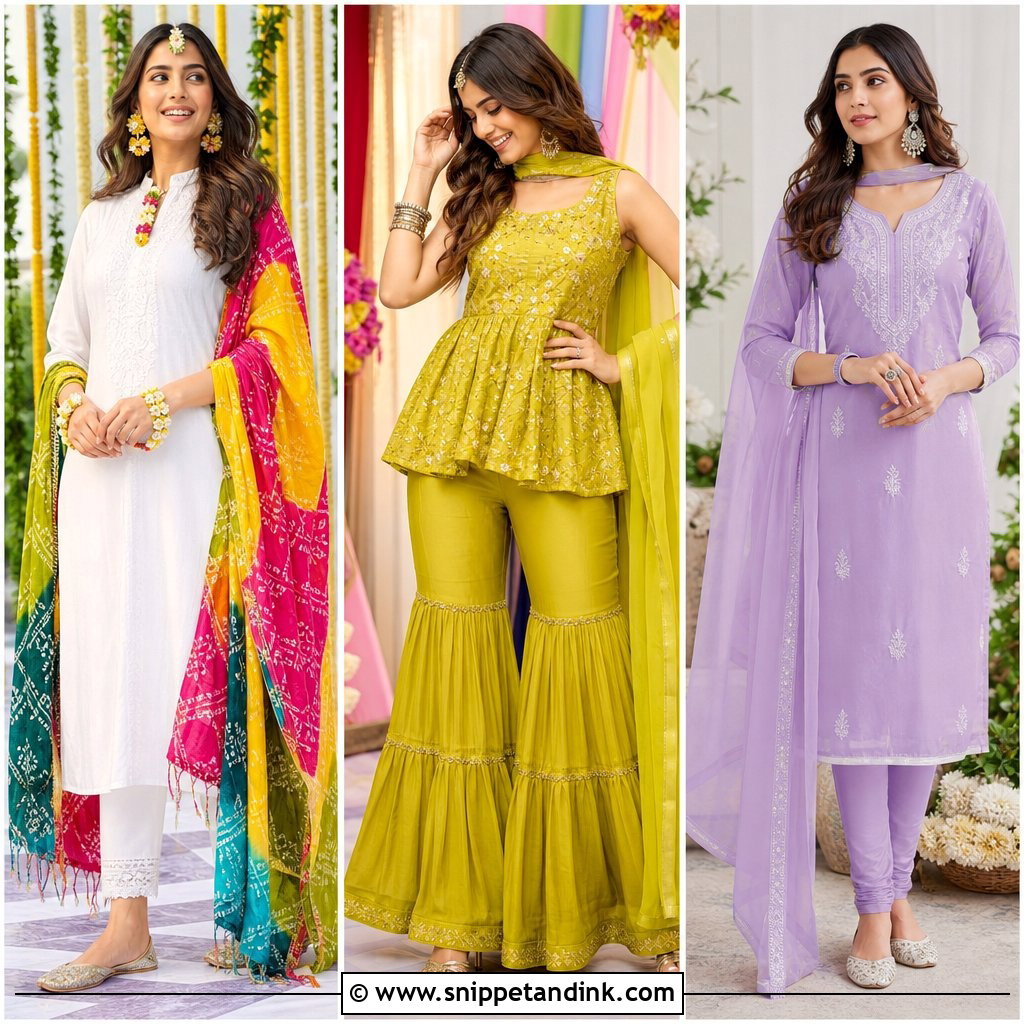
4. Lime Green Mehendi Sharara
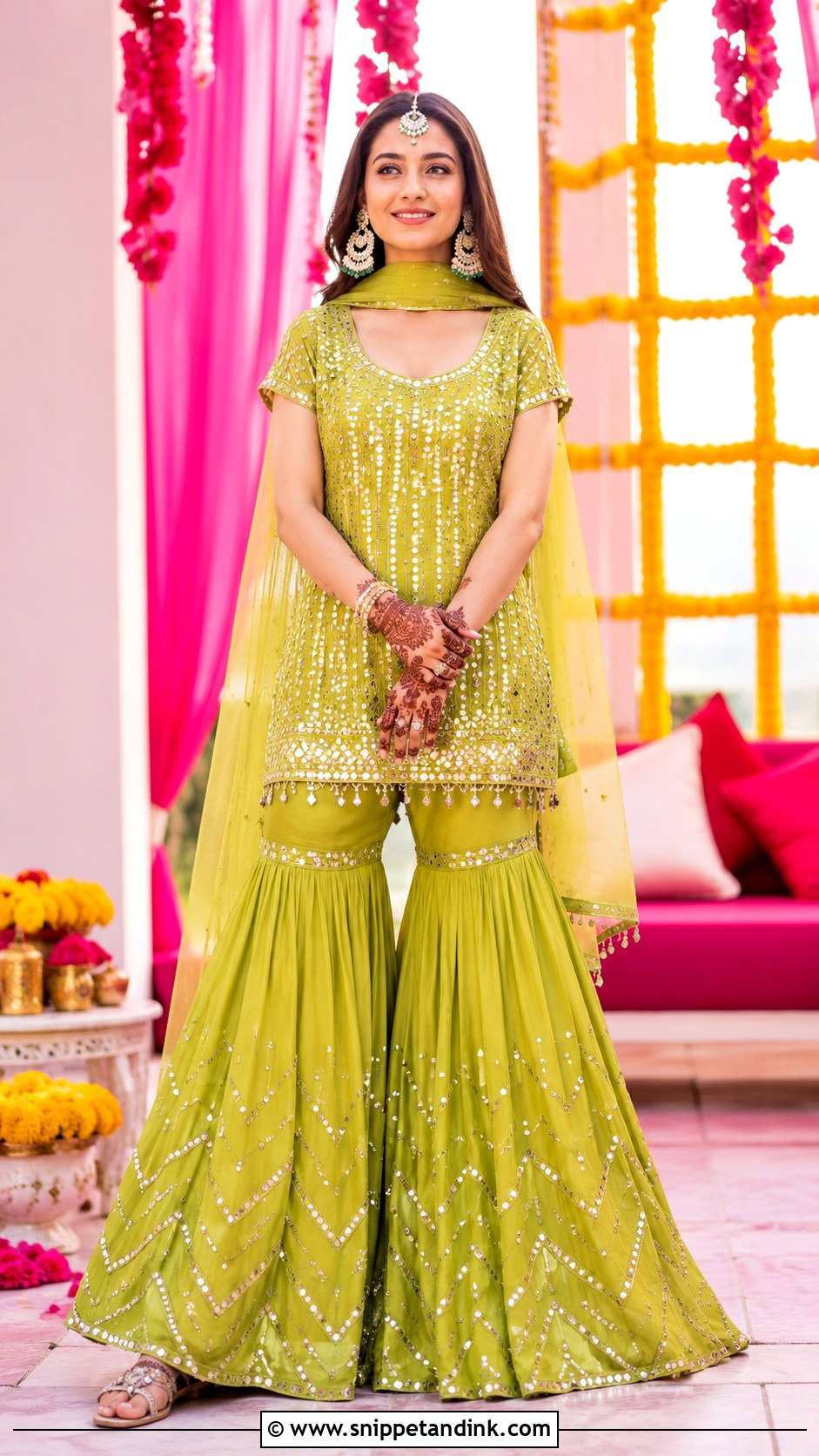
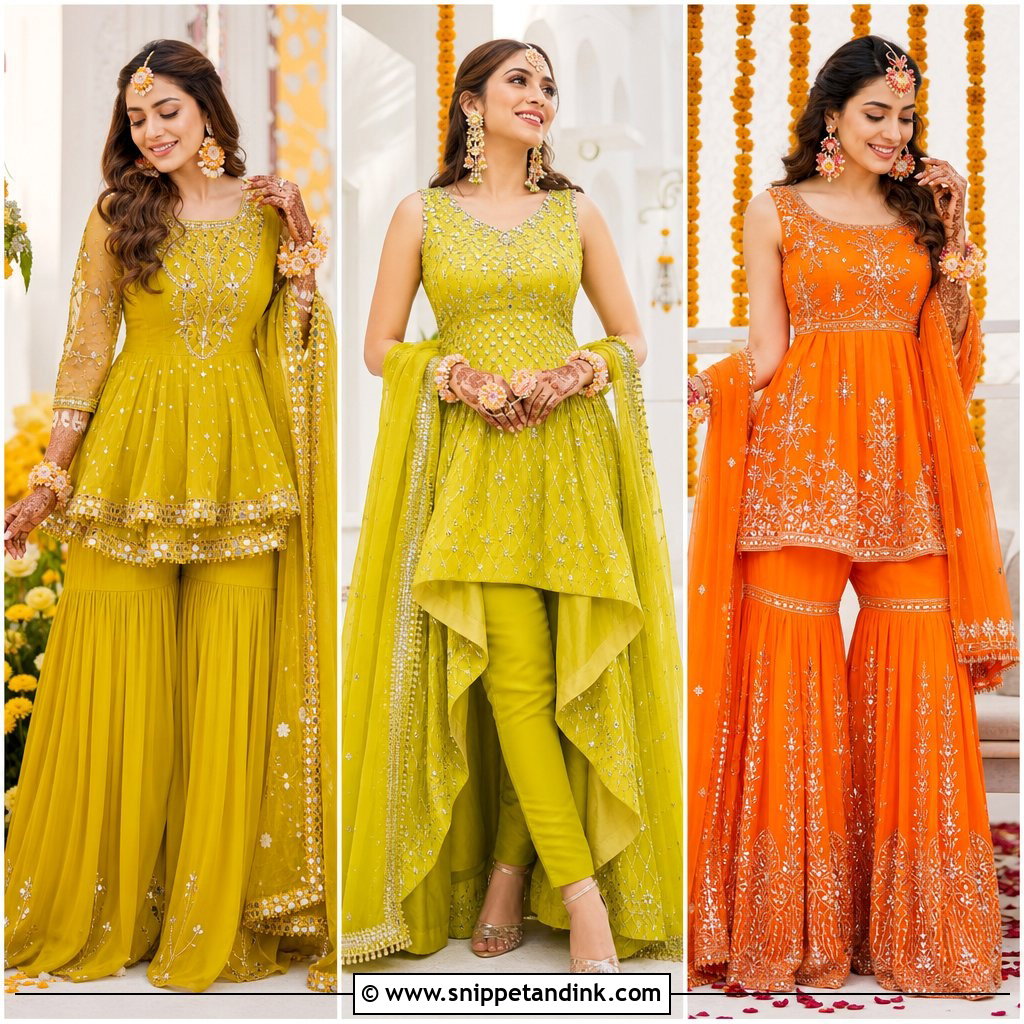
A sharara gives you volume without managing a full lehenga skirt, and the wide legs make it easy to sit cross-legged while I work on your feet. Light georgette with small mirrors, colorful threadwork or fine gota borders keeps lime green bright, and a short kurti balances the flare. Drape a sheer dupatta behind the shoulders so your hands and forearms are clear. Floral chandbalis, a small tikka and embellished flats suit it, with a side braid or half-up style. A kurti with a shaped waist or a slight peplum gives more definition. Lime is striking against yellow, pink and orange decor.
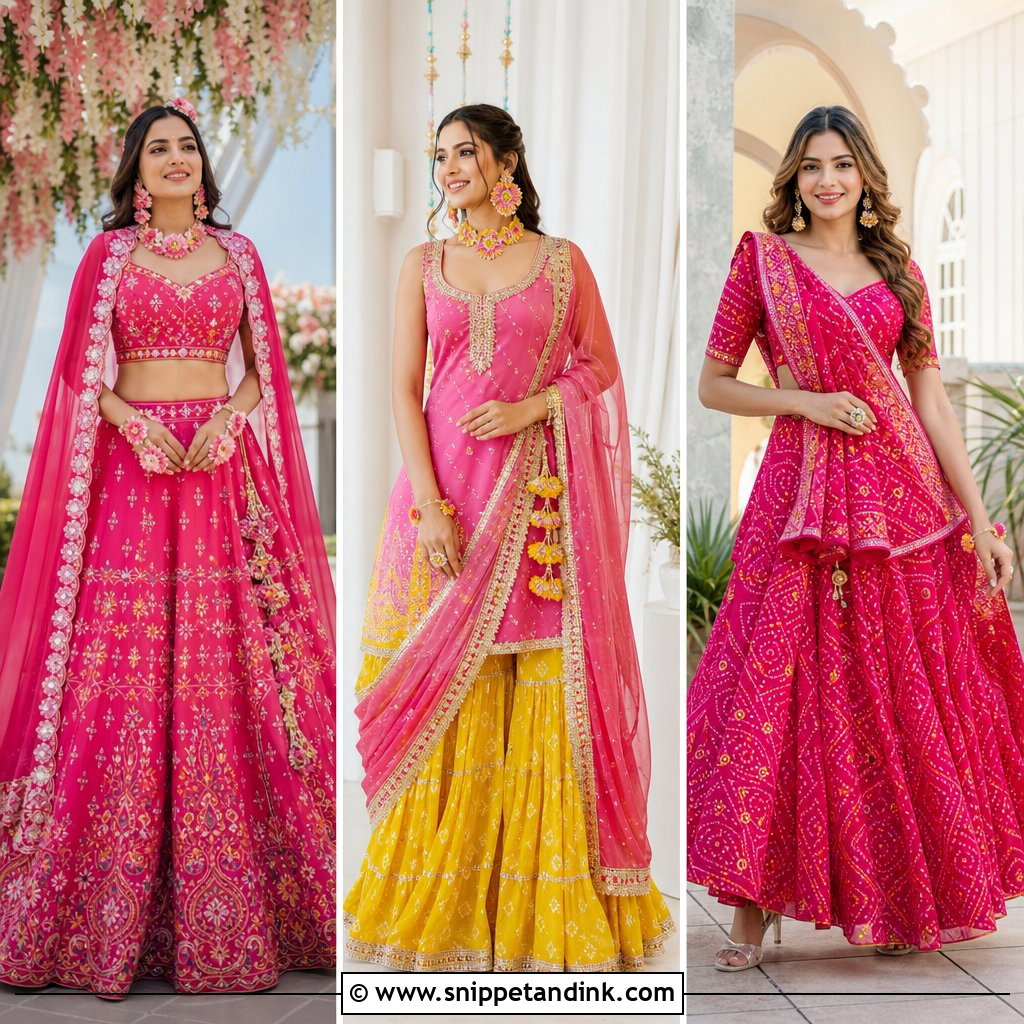
5. Pink Embroidered Mehendi Gharara
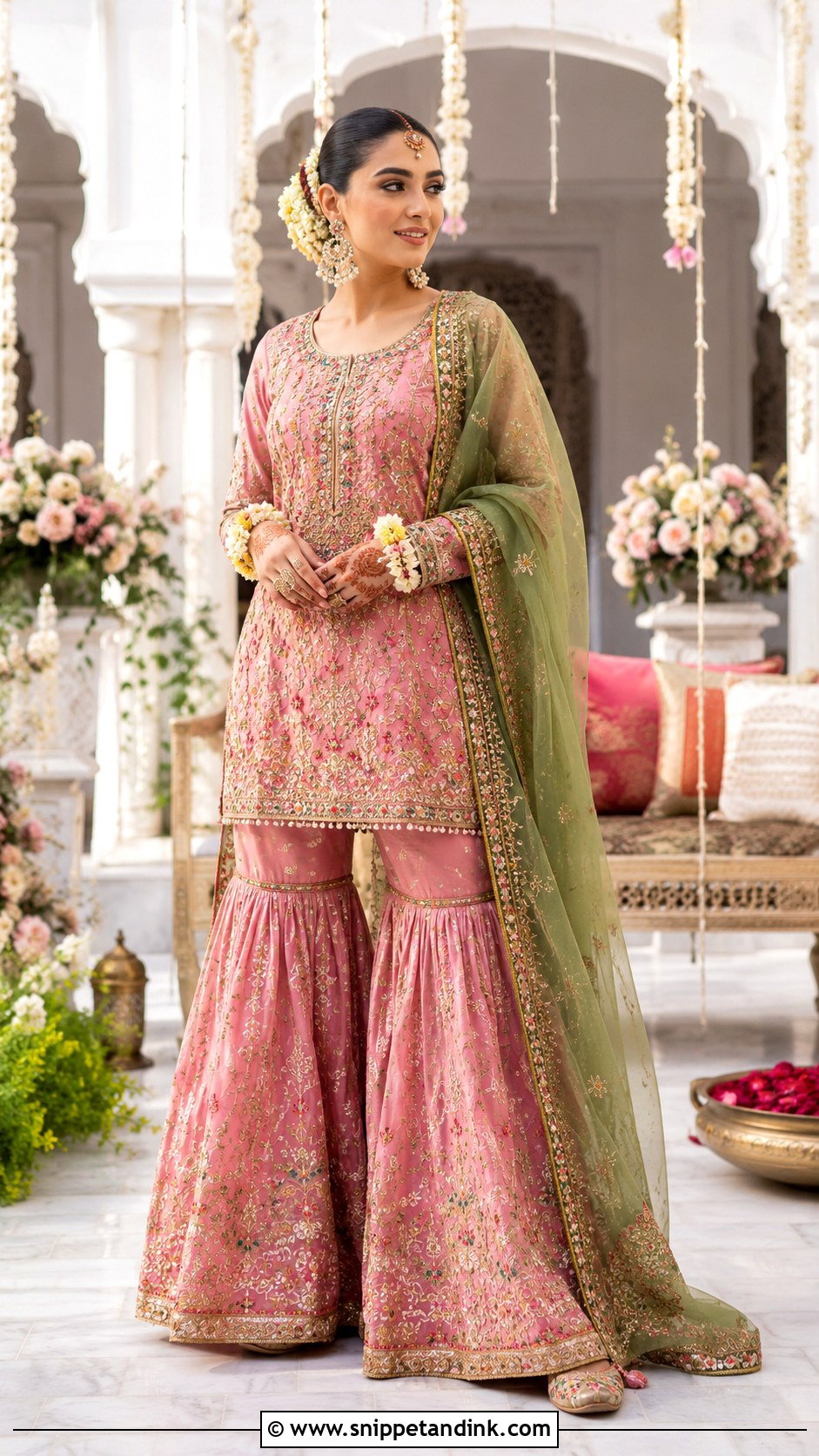
Pink ghararas have a nostalgic grace. A short kameez with delicate zardozi, resham or gota over flared gharara pants works in soft rose or brighter rani pink, and a green or orange dupatta ties it back to mehendi colors. Kundan earrings, a matching passa and cushioned juttis finish it. Have someone pin the dupatta firmly before we start; a loose one slips forward, and the bride instinctively catches it with a hand that’s covered in fresh paste. Soft waves or a center-parted braid suit the shape. It’s a good alternative to a lehenga, with heritage-inspired tailoring that stays comfortable through a long evening.
6. Orange Bandhani Mehendi Lehenga
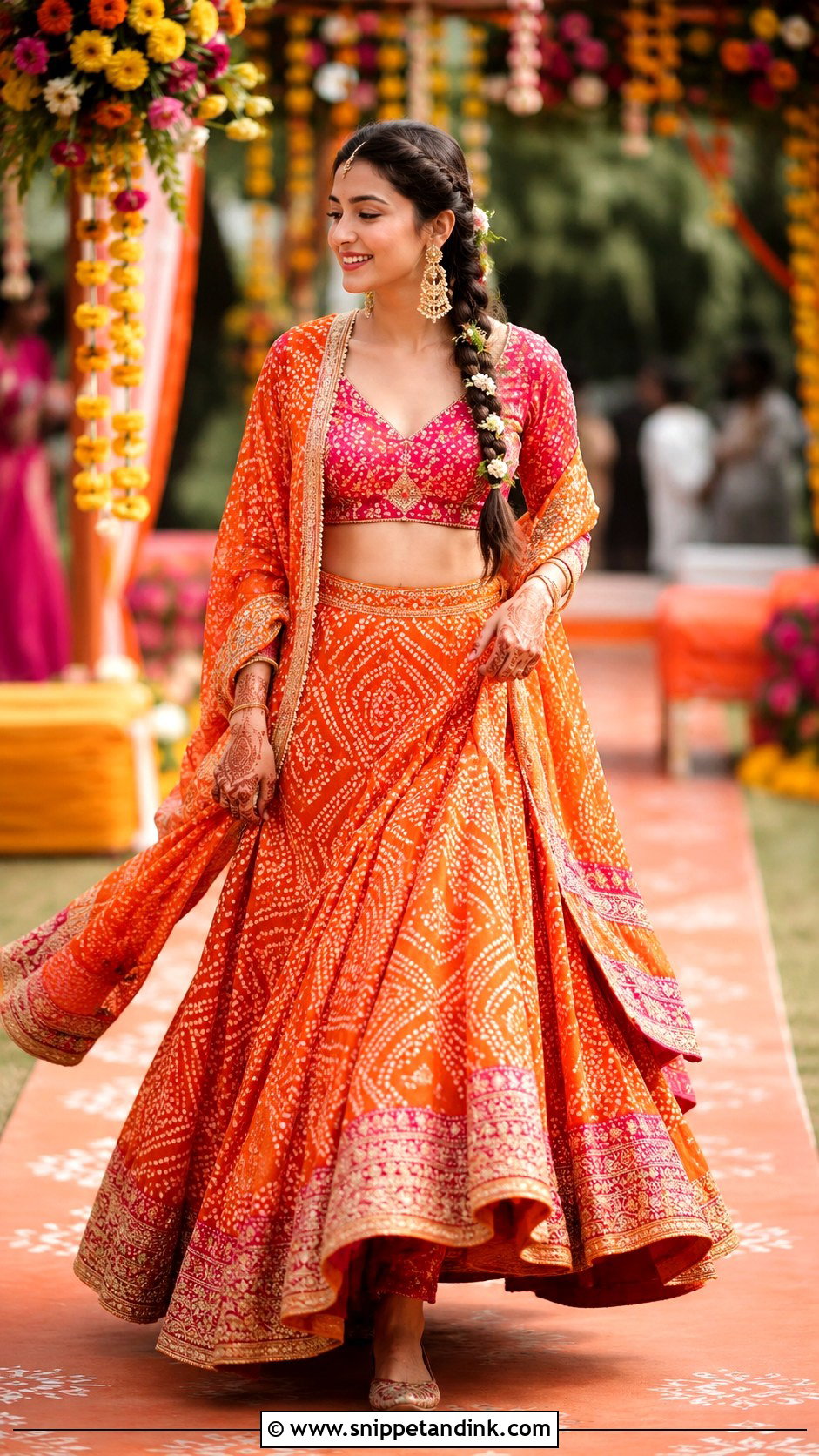
Bandhani is tie-dyed by hand, and that regional craft gives a rich orange lehenga movement and pattern on its own. A light bandhani skirt in orange, rust or tangerine pairs with a pink or green blouse, with small mirror borders and gota for bridal shine. Drape a bandhani dupatta loosely over one shoulder, well away from your hands. Gold chandbalis, a borla or maang tikka and embroidered juttis complete it, and a braid with fresh flowers in the outfit colors suits it. One practical note from my side: bright bandhani dyes can bleed when damp, so keep wet lemon-sugar sealant off the fabric. It suits a courtyard or outdoor celebration.
7. Mint Green Cape Mehendi Set
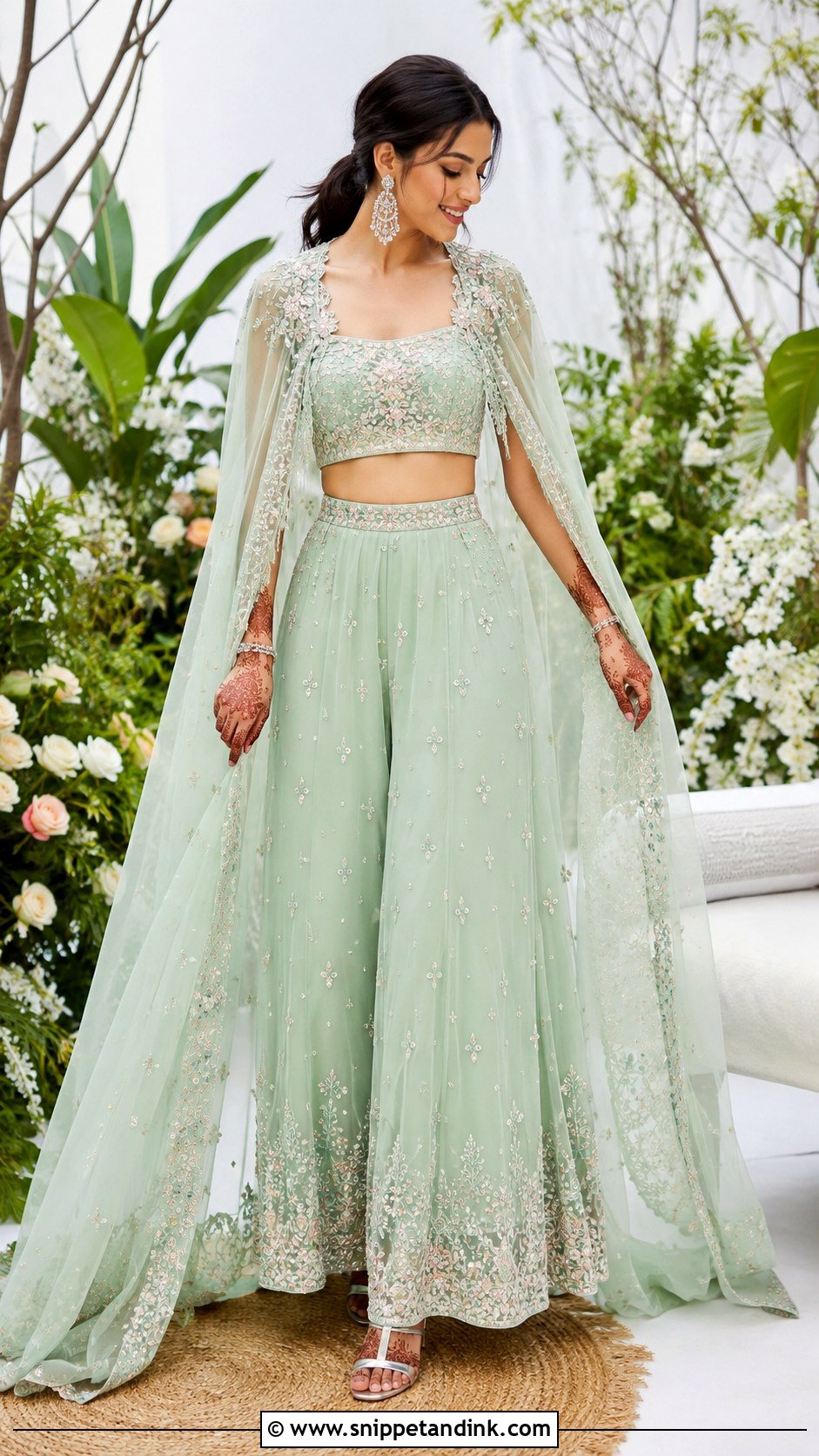
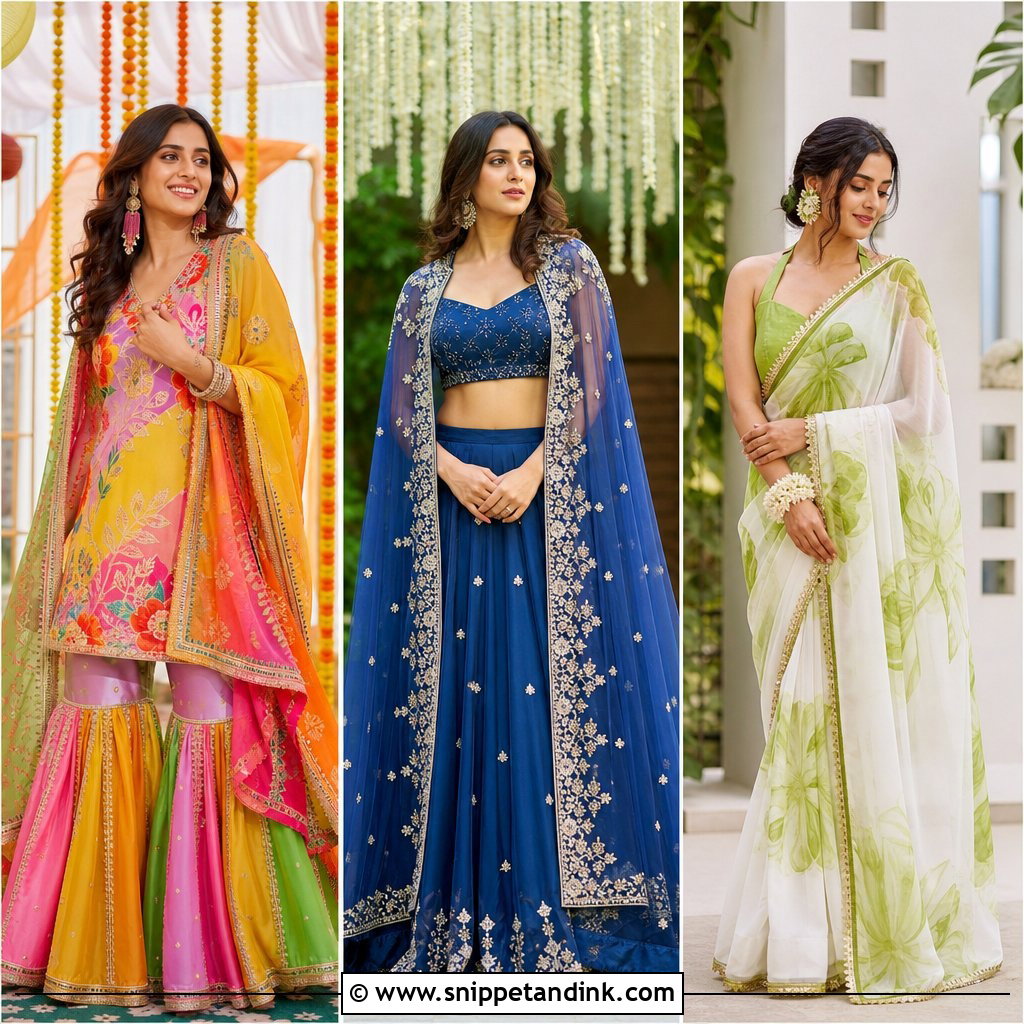
A cape set gives a modern line and leaves the front of the body free, which makes my job easy. A fitted embroidered blouse with palazzos or a lightly flared skirt, plus a sheer floor-length cape, moves well in photos. Floral threadwork, pearls or small reflective accents keep it light. Statement earrings, a slim headpiece and silver or champagne sandals suit it, with a polished low ponytail so the cape doesn’t fight the hair. Watch the cape when you sit: it pools on the floor beside you, right where the henna cones and tissues end up. Mint green looks fresh at a garden mehendi.
8. Fuchsia Dhoti Pant Mehendi Set
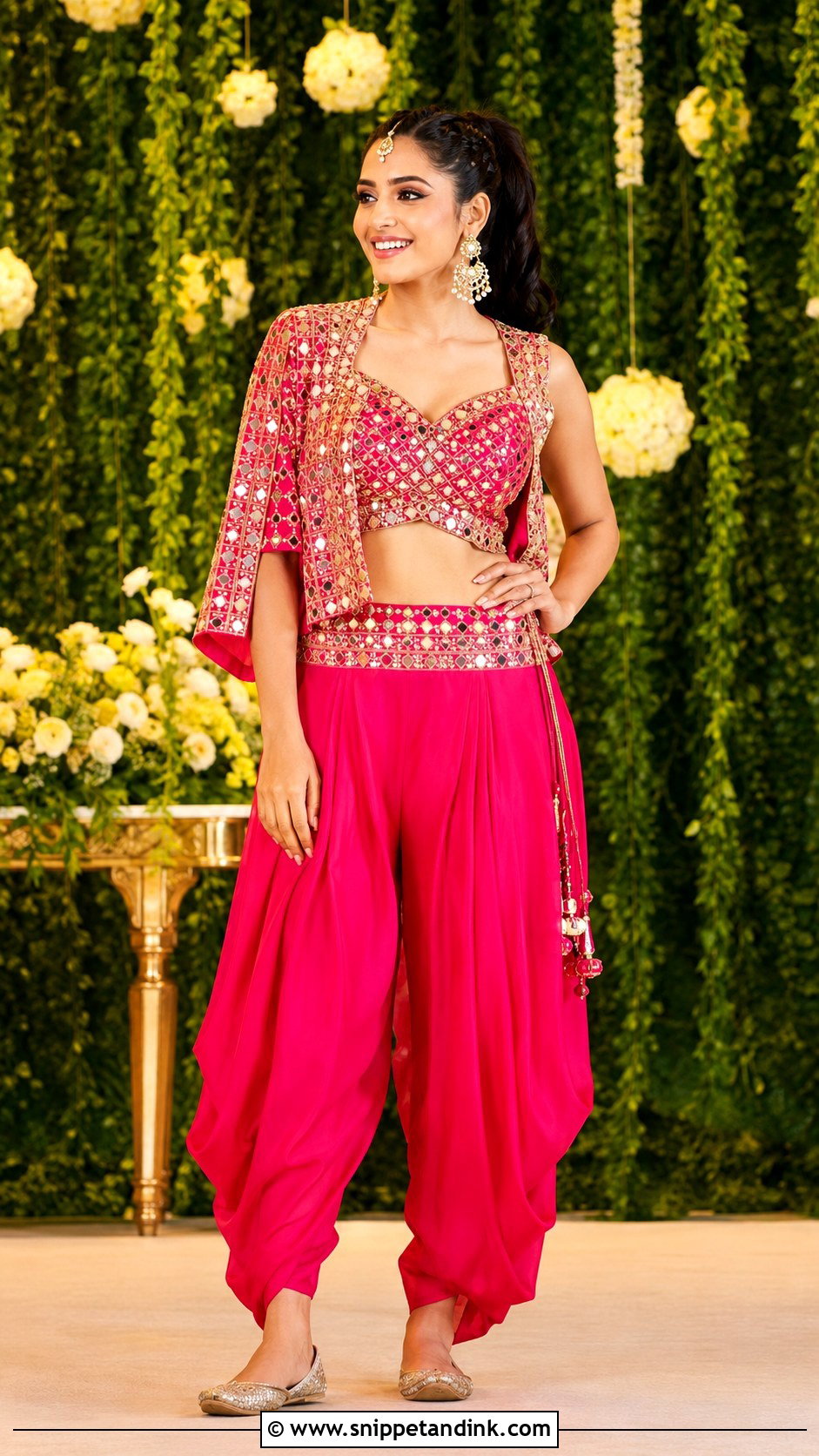
Dhoti pants are built for dancing. A fuchsia dhoti pant set with a cropped embroidered blouse and short asymmetric jacket has drama but is easier to handle than a wide skirt. Light crepe or georgette with mirror work at the jacket, waist or neckline suits it. Bold earrings, a small tikka, metallic juttis and a compact potli finish it, with a high braided ponytail. With this many layers, skip big necklaces and heavy wrist jewelry. The jacket sleeves are the catch: if they’re full-length, roll or pin them above the elbow before I start, because they won’t come back down cleanly over wet henna.
9. Ivory Floral Mehendi Saree
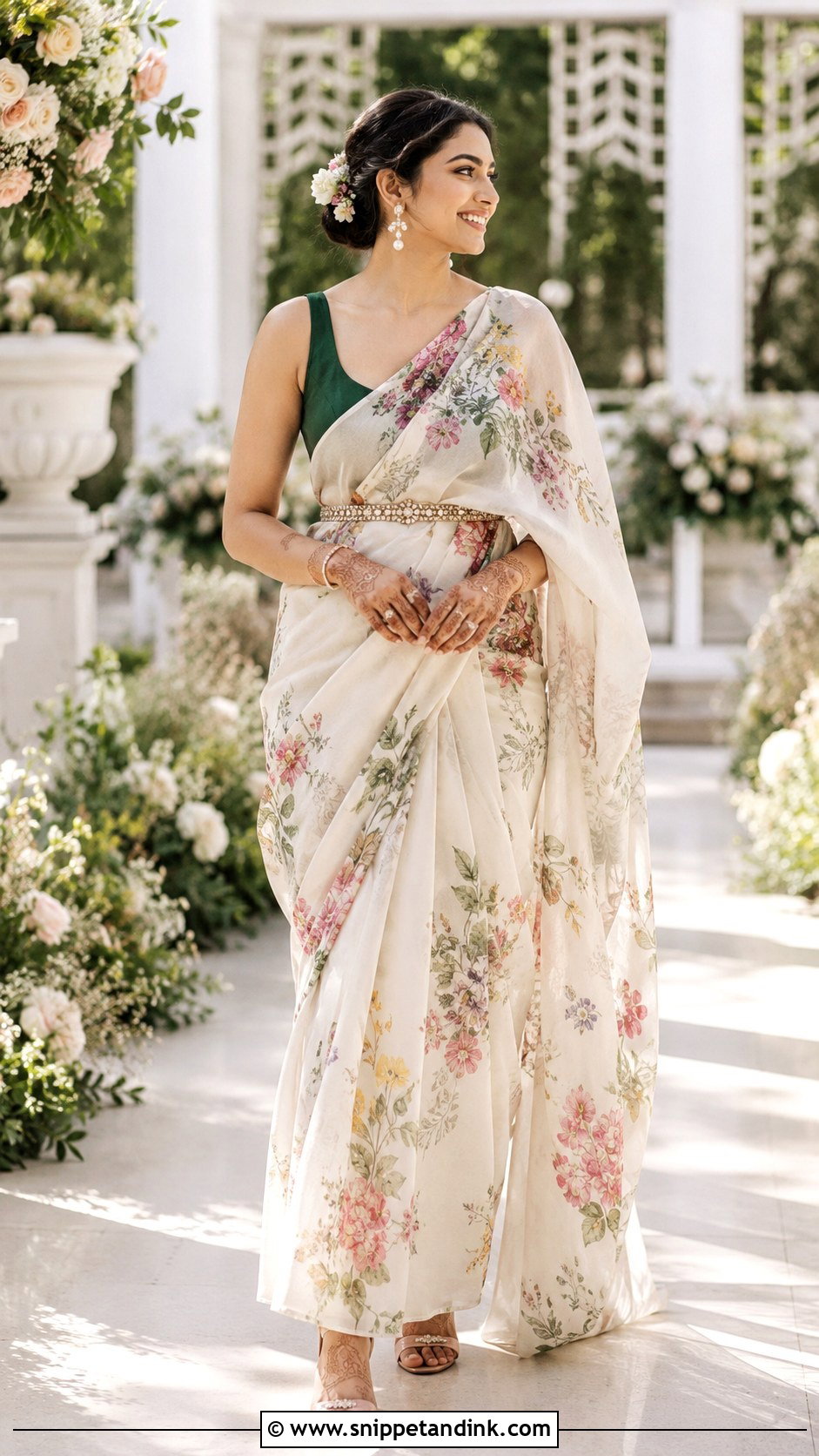
Ivory is unexpected at a mehendi, and a printed organza saree with green leaves and pink, yellow or coral flowers keeps it festive. Pair it with a contrasting sleeveless emerald or fuchsia blouse. Here I’ll be honest: ivory and fresh henna are a risky pairing, since a single brush of paste leaves an orange mark on pale fabric. Secure the pleats and pin the pallu well back before application. Pearl earrings, floral hair accessories and low block heels finish it, with a sleek bun or soft braid. A slim belt holds the drape at the waist.
10. Emerald Pre-Draped Mehendi Saree
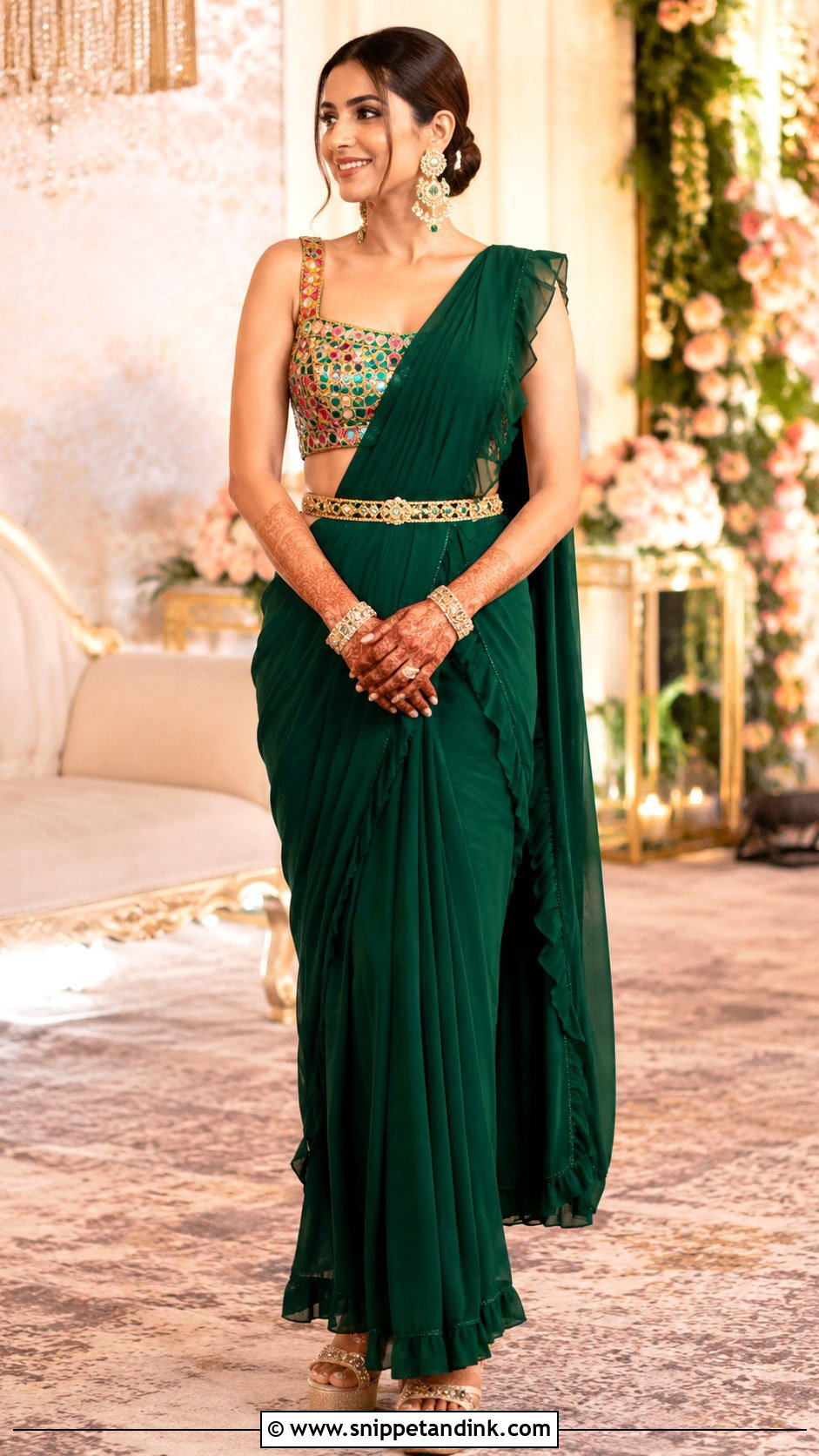
A pre-draped saree removes the biggest problem with sarees at a mehendi: re-pinning a pallu with paste-covered hands. Deep emerald georgette with a structured waist and soft pleats looks regal, especially under evening lighting. Pair it with a mirror-work, beaded or multicolor blouse that sets you apart from guests. Kundan earrings, a fine waist belt and embellished block or platform heels finish it, with a smooth ponytail or low bun. The secured shoulder drape means you won’t need anyone to fuss with it while you sit for henna.
11. Powder Blue Mehendi Anarkali
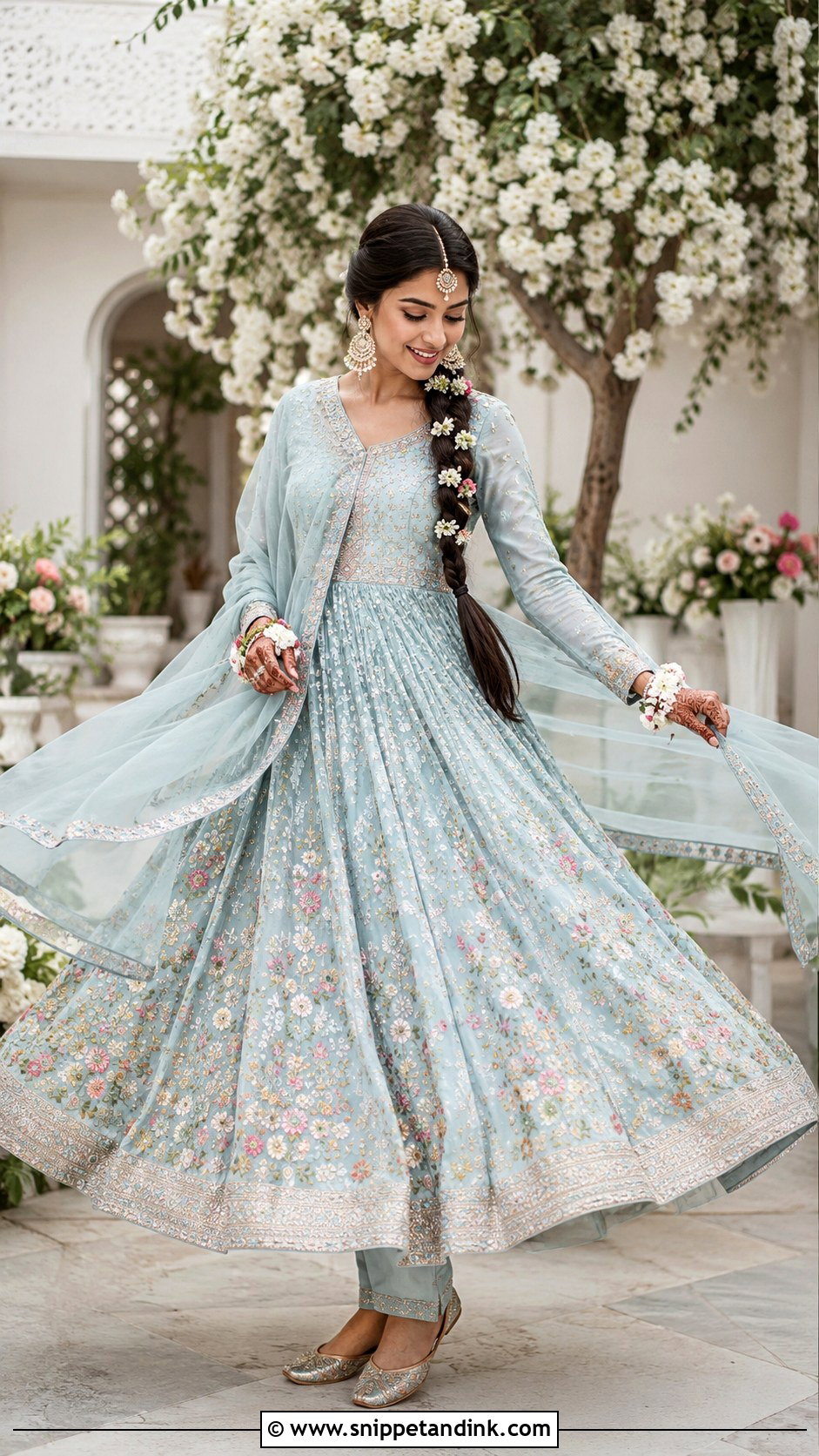
Powder blue is calm and unexpected, and it makes multicolor embroidery and flower jewelry stand out. A floor-length Anarkali in chiffon, georgette or soft silk with a fitted bodice and flowing skirt suits it, with threadwork at the neckline and hem. Narrow pants, a dupatta pinned at the back and silver juttis finish the outfit, along with statement earrings, a small tikka and a loose braid with tiny flowers. Avoid stiff cancan underneath. During application the skirt has to fold around you, and a rigid underskirt pushes the fabric forward into your lap and toward your hands.
12. Coral Peplum Mehendi Sharara
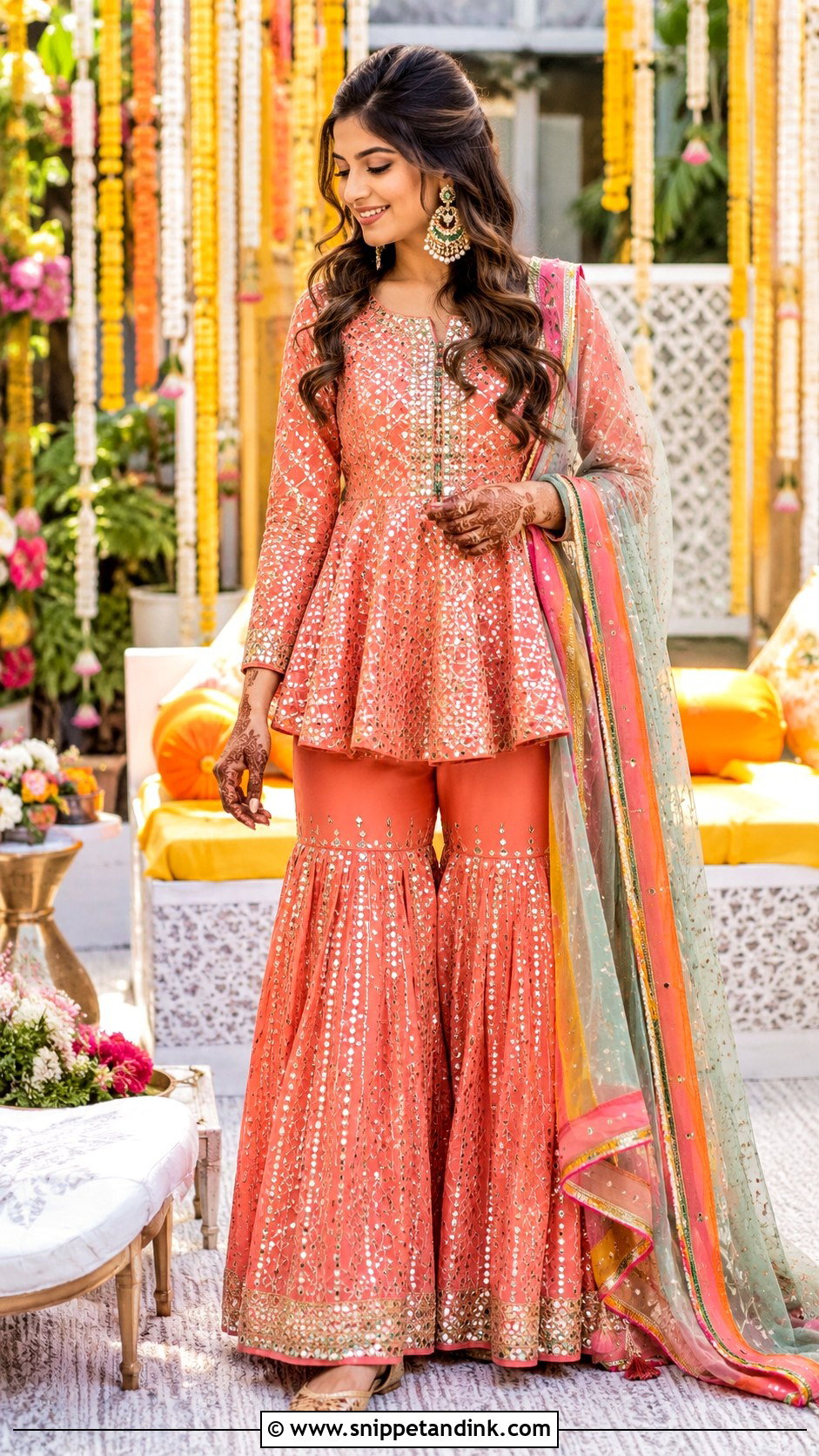
Coral is warm without being the expected yellow or green. A fitted peplum top with mirror work over wide sharara pants in the same color gives structure above and volume below. A sheer dupatta with a multicolor border can be pinned behind the shoulders. Meenakari earrings, a floral ring and gold juttis suit it, but put the ring on after the paste comes off, since a ring leaves a blank band in the design. A softly curled half-up style keeps it romantic. Fresh coral with pink undertones works by day; deeper coral suits the evening.
13. Lavender Palazzo Mehendi Set
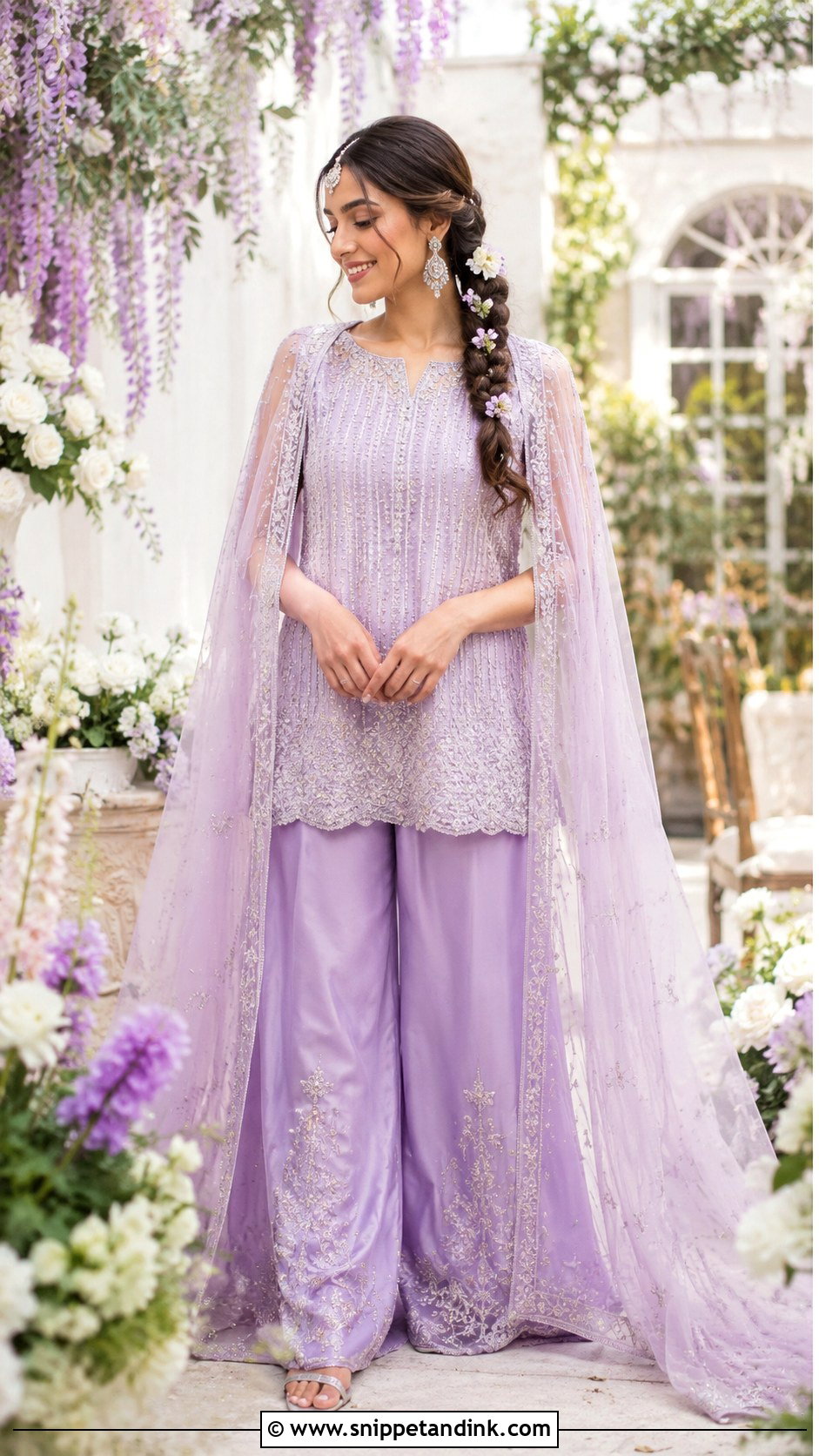
Lavender suits a pastel mehendi and gives you a different palette from the traditional one. Fluid palazzos with a short embroidered kurta and a sheer cape or light dupatta keep it airy. Silver threadwork, tiny pearls and muted green florals suit the cool tone. Add crystal earrings, a headband-style tikka and silver flat sandals. Keep your hands and wrists bare until the henna has dried; bracelets smudge paste and leave gaps. A side-swept braid with small white flowers finishes it. It suits a bright garden with white, lilac or green decor and moves freely for dancing.
14. Teal Jacket Mehendi Lehenga
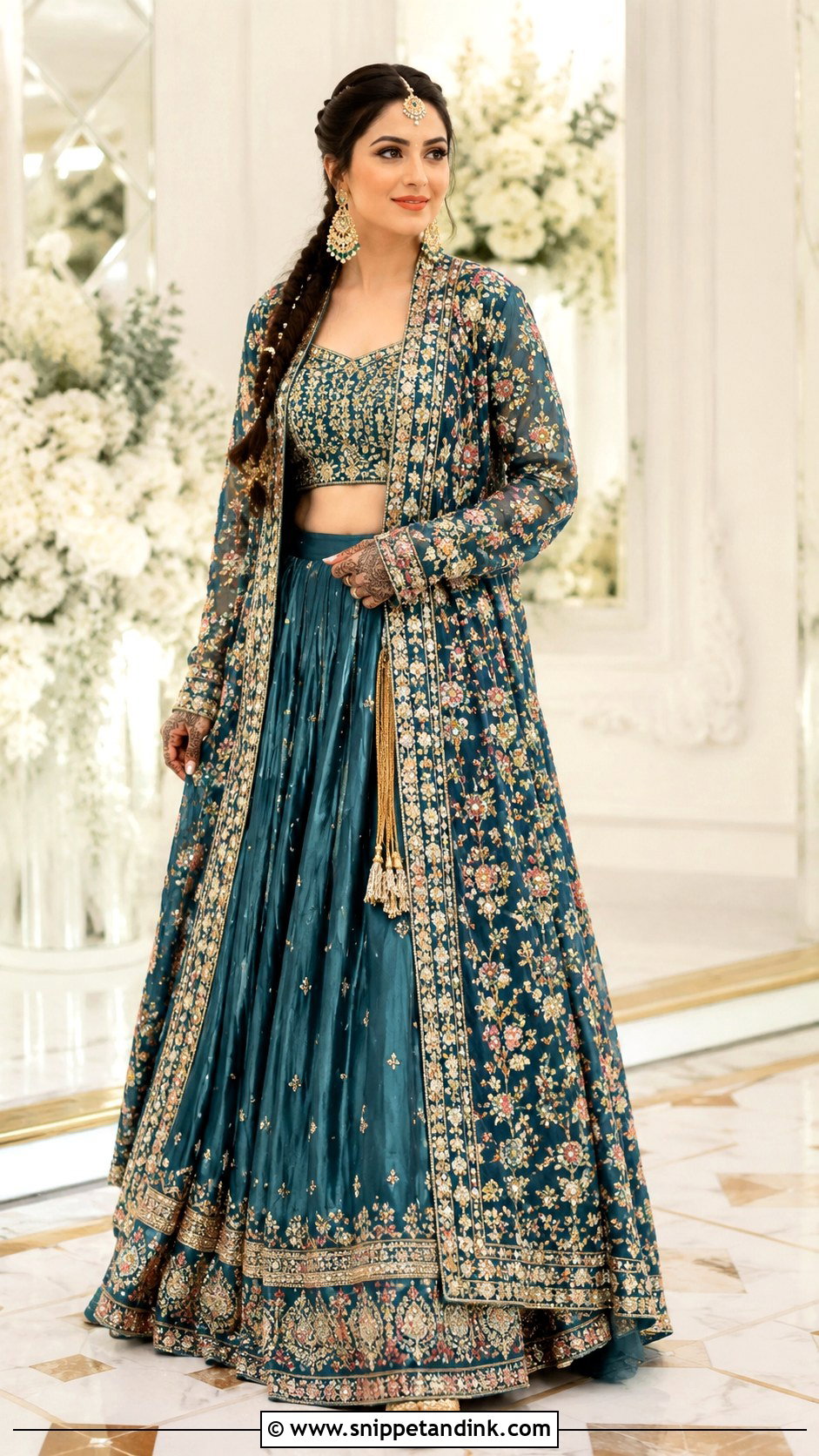
A jacket lehenga makes an entrance, and the jacket can replace a dupatta, which means less loose fabric near wet henna. A flowing teal skirt and fitted blouse with a light embroidered jacket to the knee or ankle works well; an open front keeps the waist and blouse visible. Multicolor florals, mirrors or fine gold thread brighten the deep teal. Kundan studs or medium chandbalis, a small tikka and comfortable gold juttis finish it, with a sleek braid. Choose jacket sleeves that end above the elbow or can be slipped off during application. It suits cooler venues and evening functions.
15. Mustard Kurta Skirt Mehendi Outfit
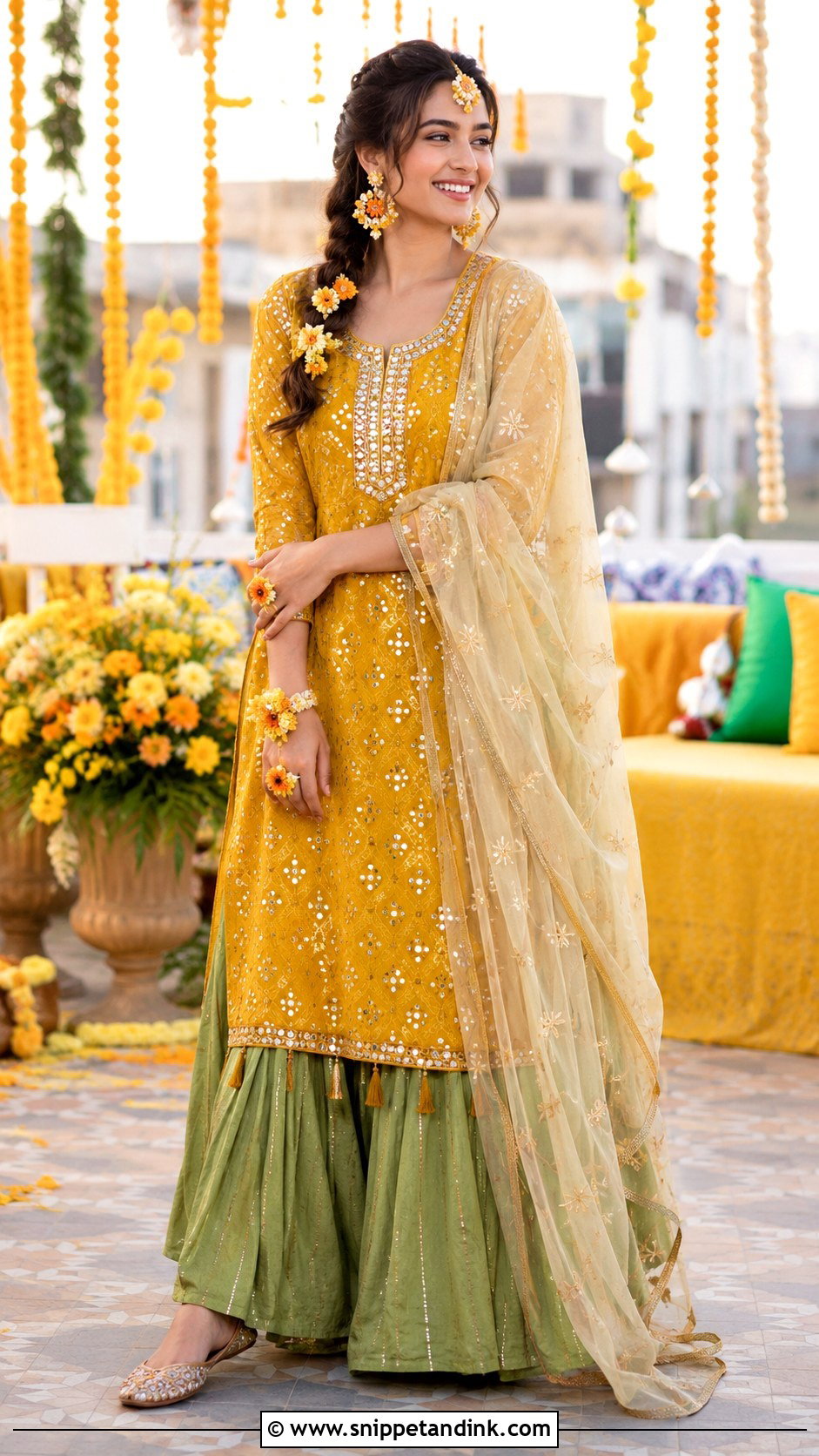
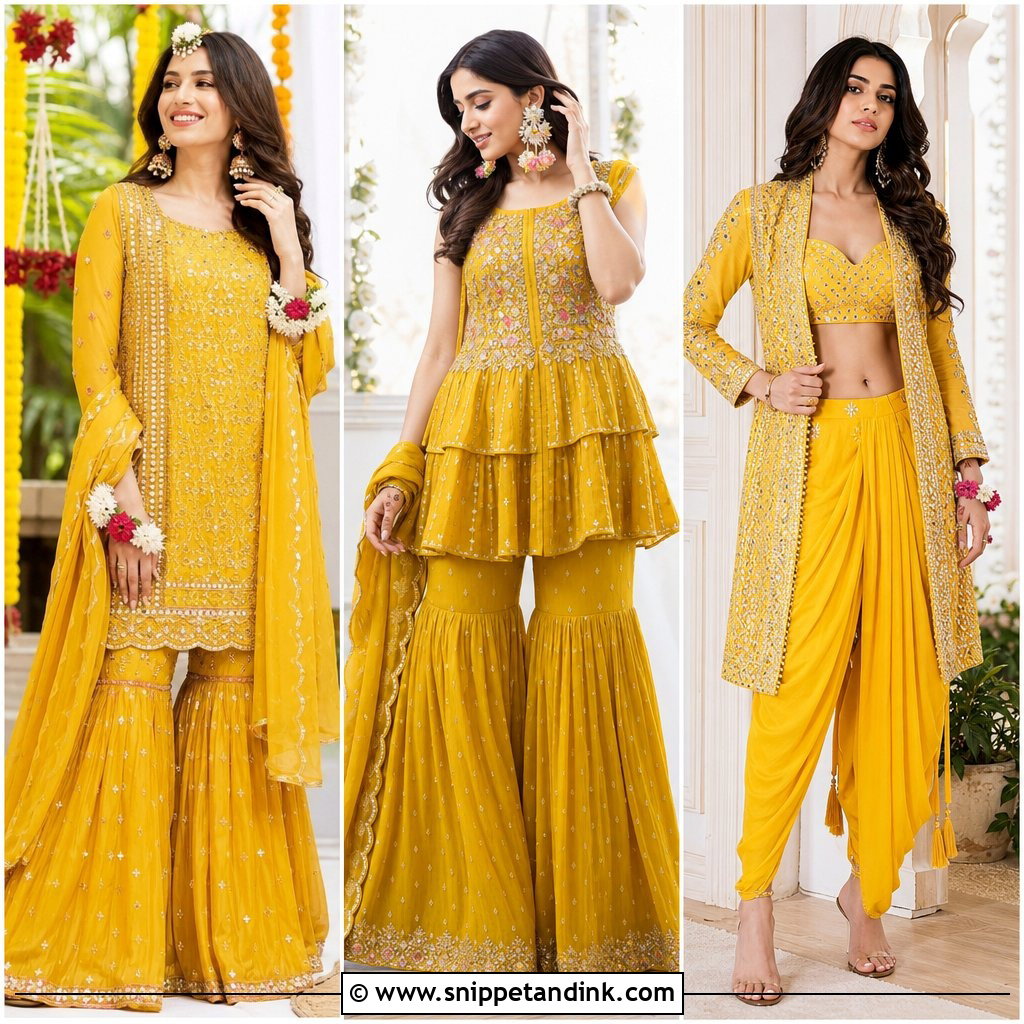
A mustard kurta and skirt is relaxed and very wearable. A short or mid-length kurta with mirror work, gota or floral embroidery over a mustard, green or pink skirt gives a cheerful layered effect. Pin a light net dupatta over one shoulder, or skip it if the kurta is detailed enough. Floral earrings, a small tikka and embroidered flats finish it, with a low braid of marigold-style flowers. Keep the skirt soft and only moderately full so you can draw your knees up when I do your feet. It’s an easy choice for a small home, terrace or courtyard mehendi.
16. Hot Pink Ruffle Mehendi Saree
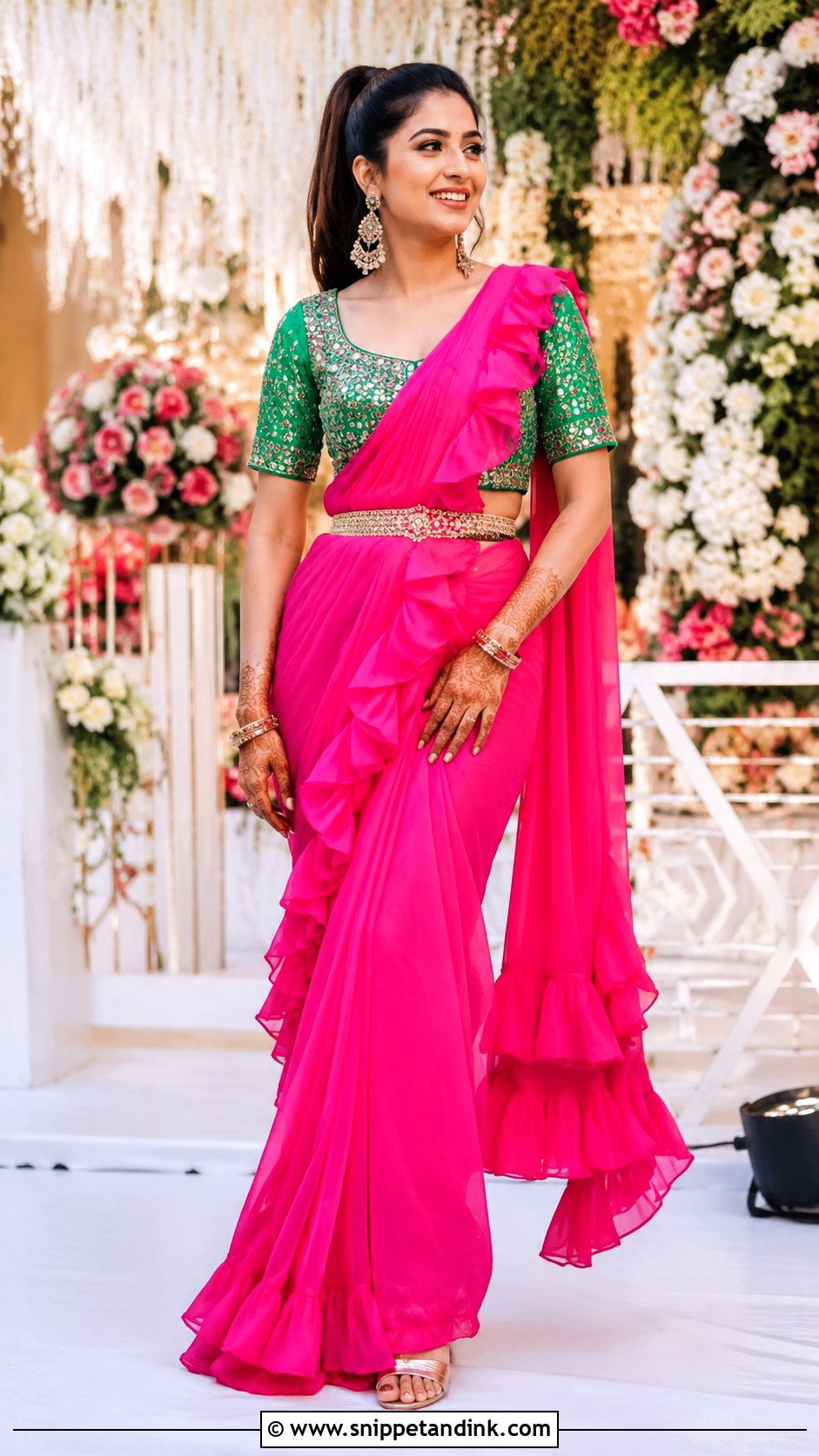
A hot pink ruffle saree is all movement and color. Pick a pre-stitched or easy-drape version in light georgette so the ruffles stay soft. A green, orange or multicolor mirror-work blouse gives bold contrast. Secure the pallu at the shoulder and waist so it can’t swing into fresh henna; ruffled edges are especially good at catching paste. Statement earrings, a slim belt and low metallic heels finish it, with a high ponytail or neat braid. Skip the heavy necklace and let the blouse carry the detail.
17. Green And Yellow Mehendi Half Saree
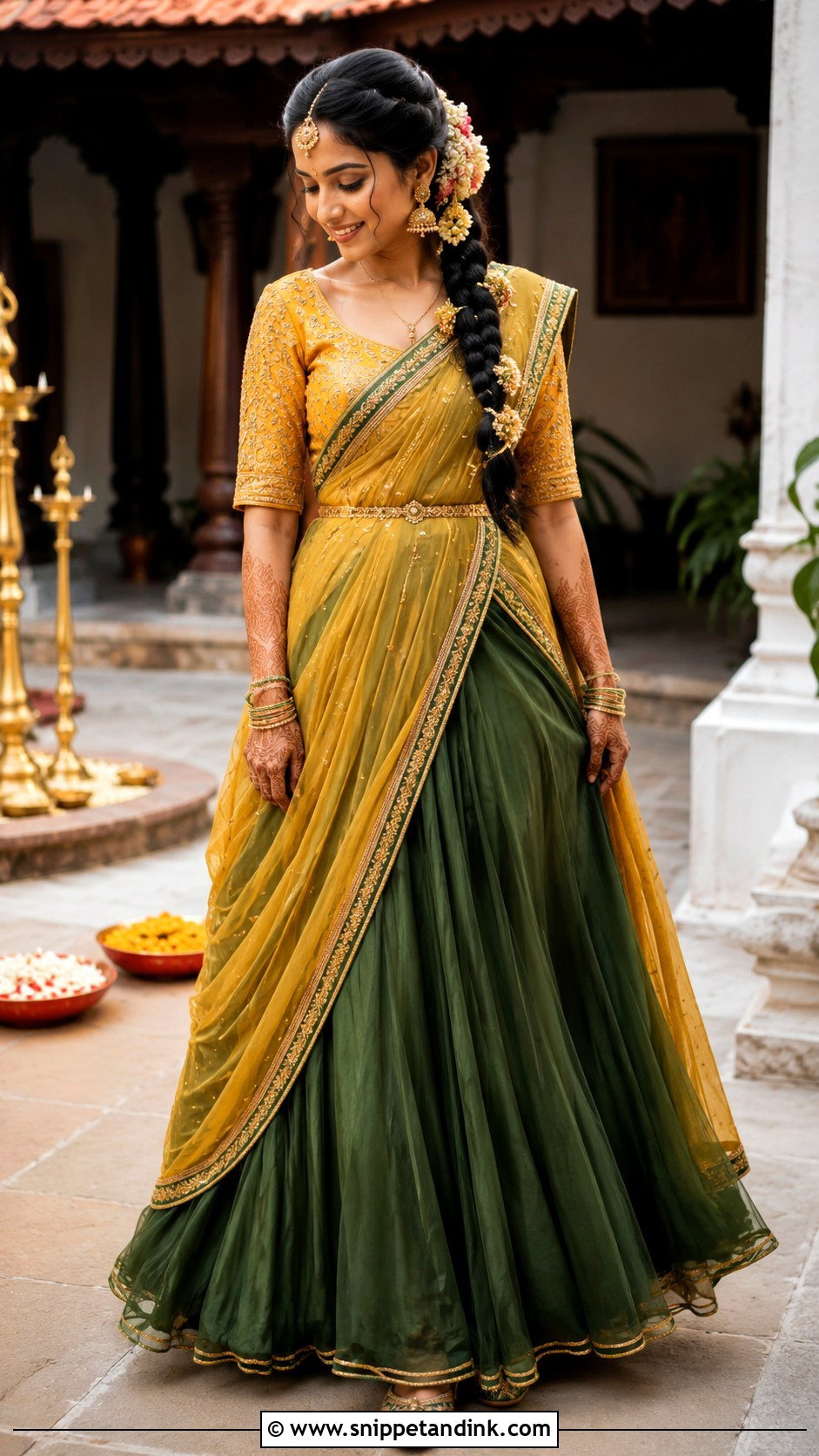
A half saree in green and yellow celebrates South Indian dressing without the weight of a formal silk saree. A flowing green skirt, a yellow embroidered blouse and a light dupatta draped in saree style, linked by gold borders, small mirrors or floral threadwork, look bright and bridal. Secure the drape at the shoulder and waist so it stays neat while you receive henna. Temple-style earrings, a subtle waist belt and gold juttis finish it, with a long braid decorated with flowers or jewelry. It moves more easily than a heavier ceremonial outfit.
18. Pastel Floral Mehendi Co-Ord Set
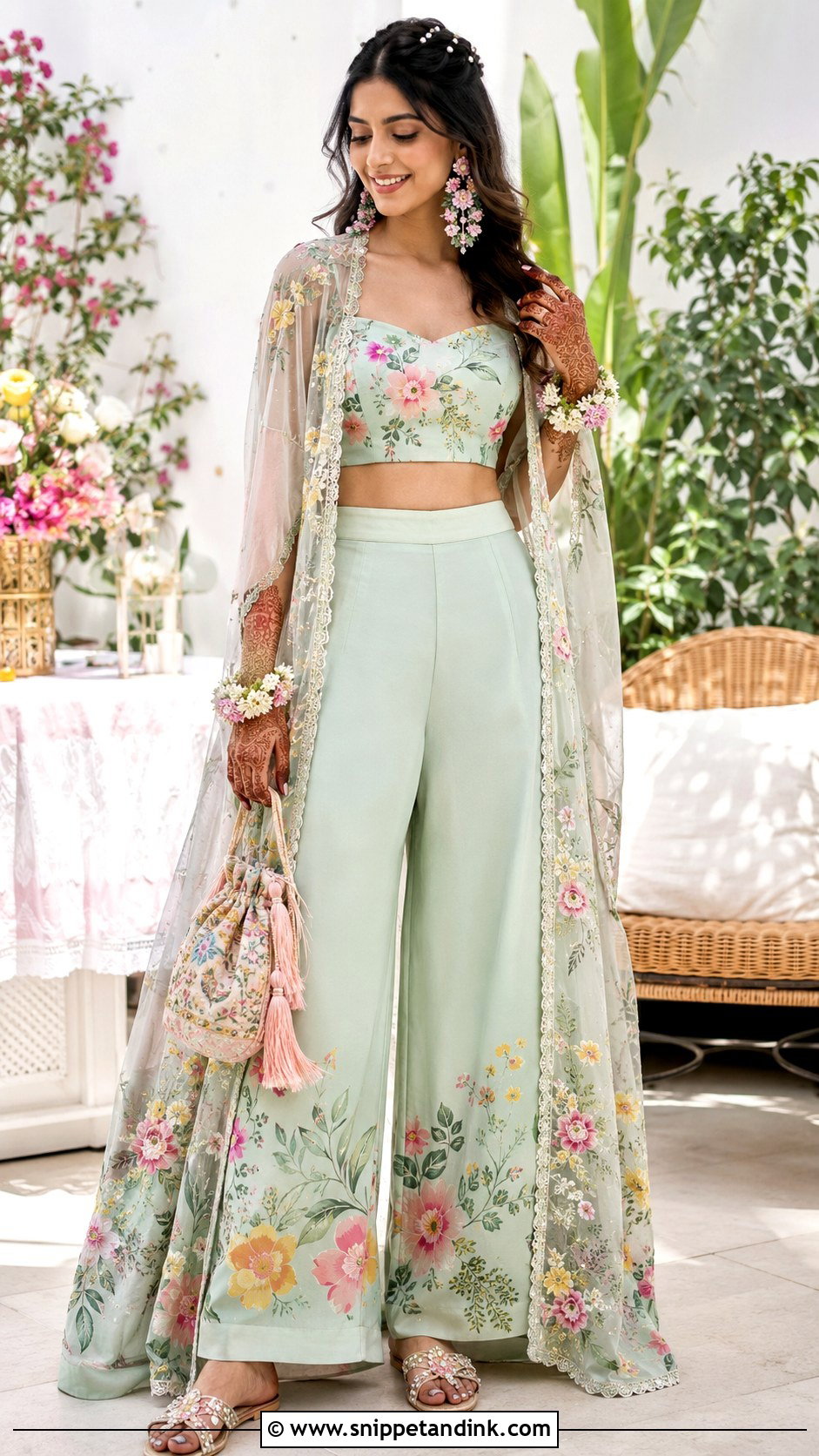
A co-ord set is my suggestion for a small mehendi where you want to look styled but relaxed. Wide-leg pants or a softly flared skirt with a cropped top, plus a detachable cape, sheer jacket or light shoulder drape, give bridal movement. Mint, blush, peach or powder blue with botanical prints looks fresh by day. Floral earrings, pearl hairpins, embellished flats and a small potli in one of the print’s stronger colors finish it. Avoid tight sleeves and stiff waistbands; you’ll be sitting still for a long time, and anything that pinches gets worse each hour. It suits a brunch, garden or destination mehendi.
19. Ombre Drape Skirt Mehendi Outfit
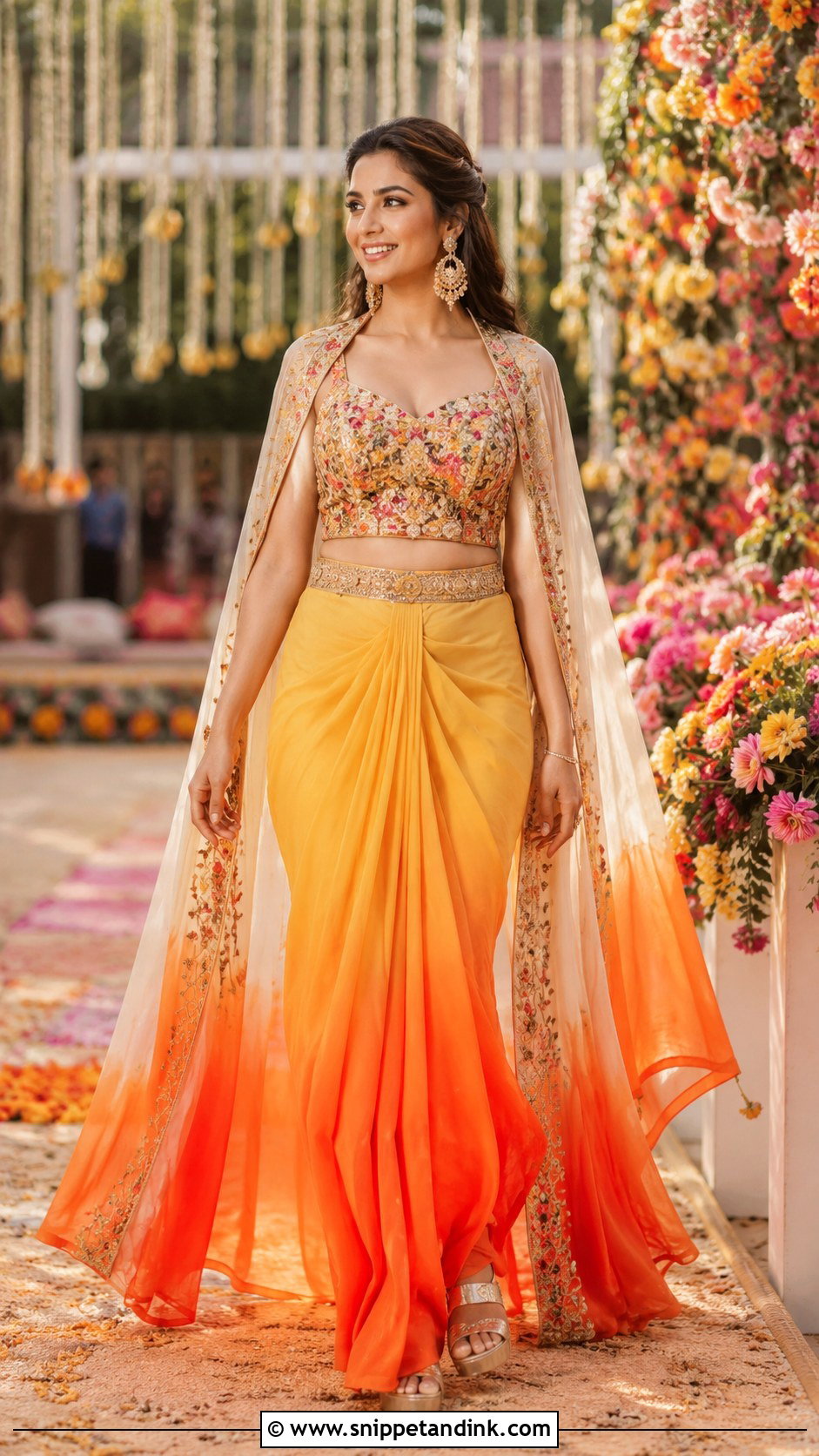
An ombre drape skirt gives flowing color without a lehenga’s structure. Choose one that moves from yellow to orange, mint to teal or pink to purple, and pair it with a fitted embroidered blouse and a light shoulder cape or attached drape. The asymmetric folds look striking in full-length photos. Metallic earrings, a slim waist belt and platform sandals suit it, with a smooth half-up style. Check the waistband is secure and the train manageable if you plan to dance, because hitching a skirt up with henna-covered hands isn’t possible.
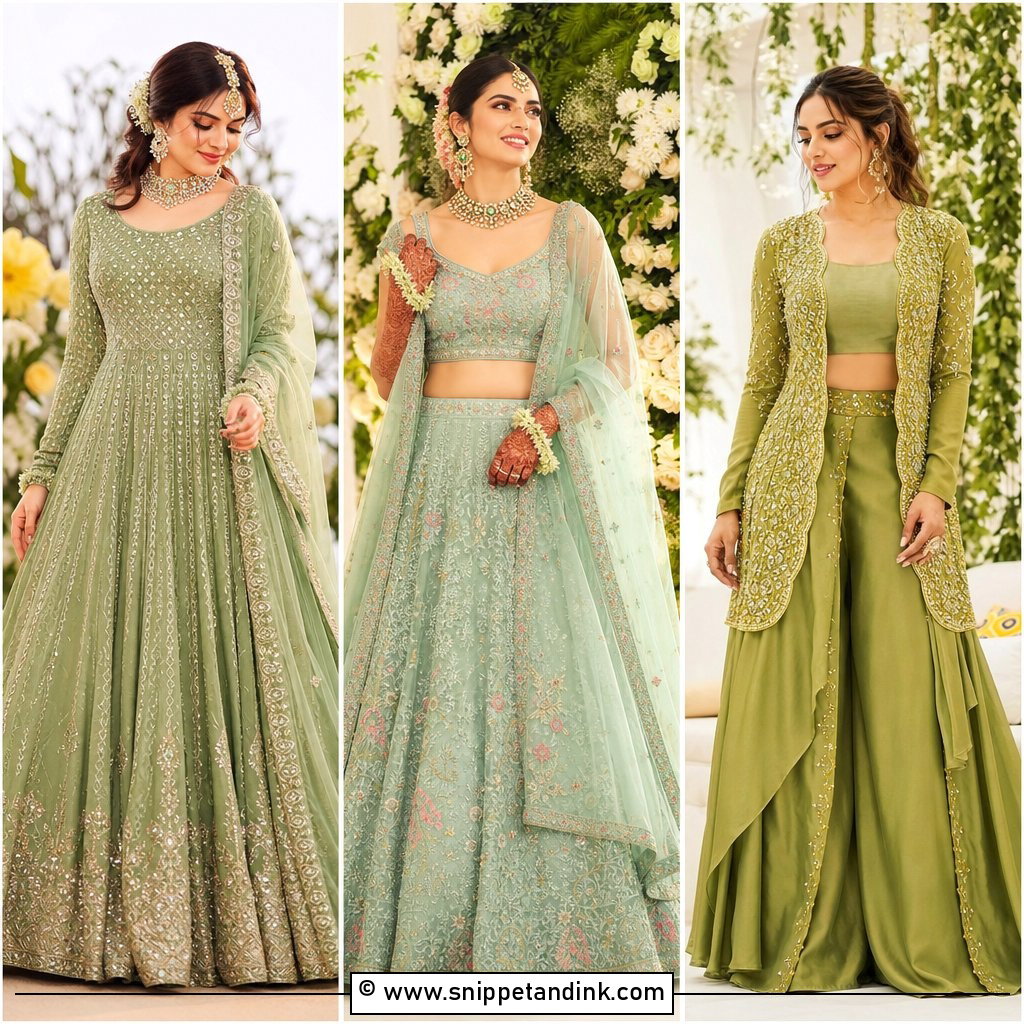
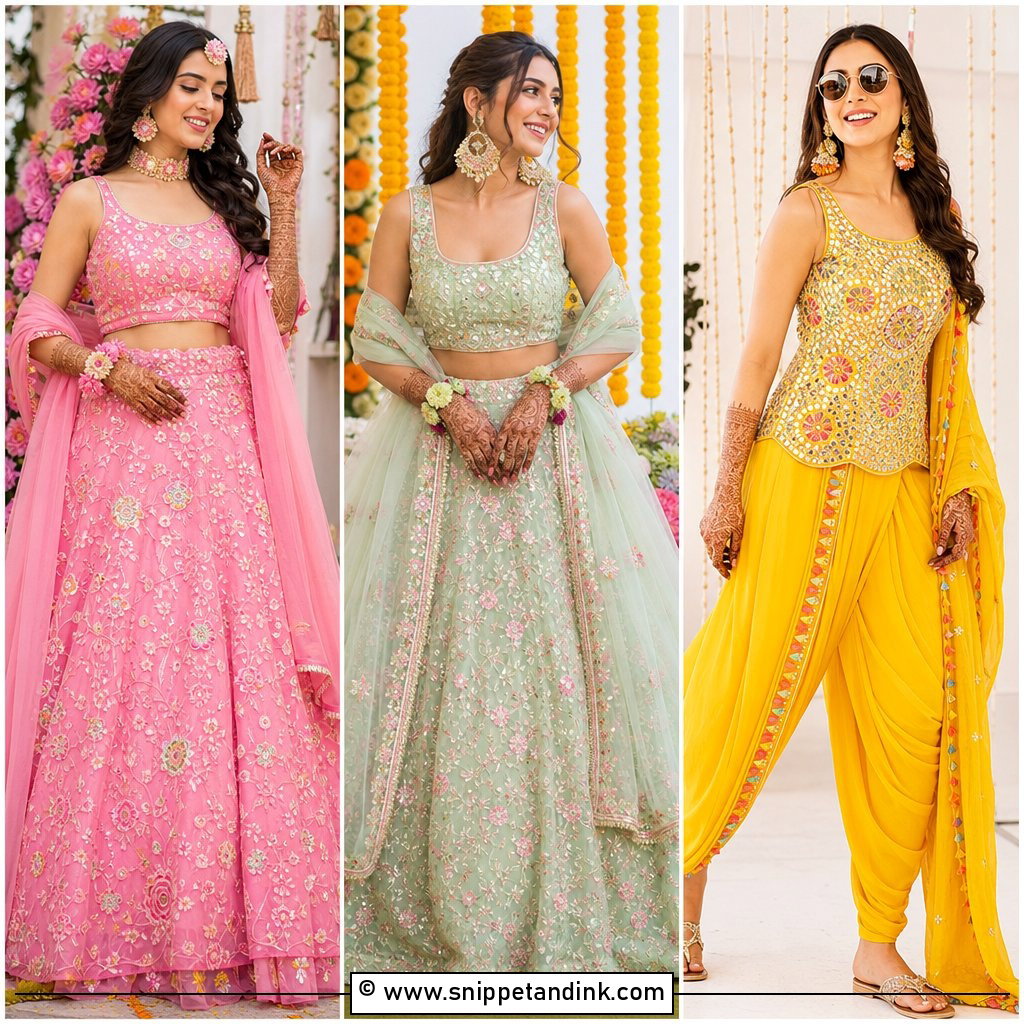
20. Mehendi Jumpsuit With Cape
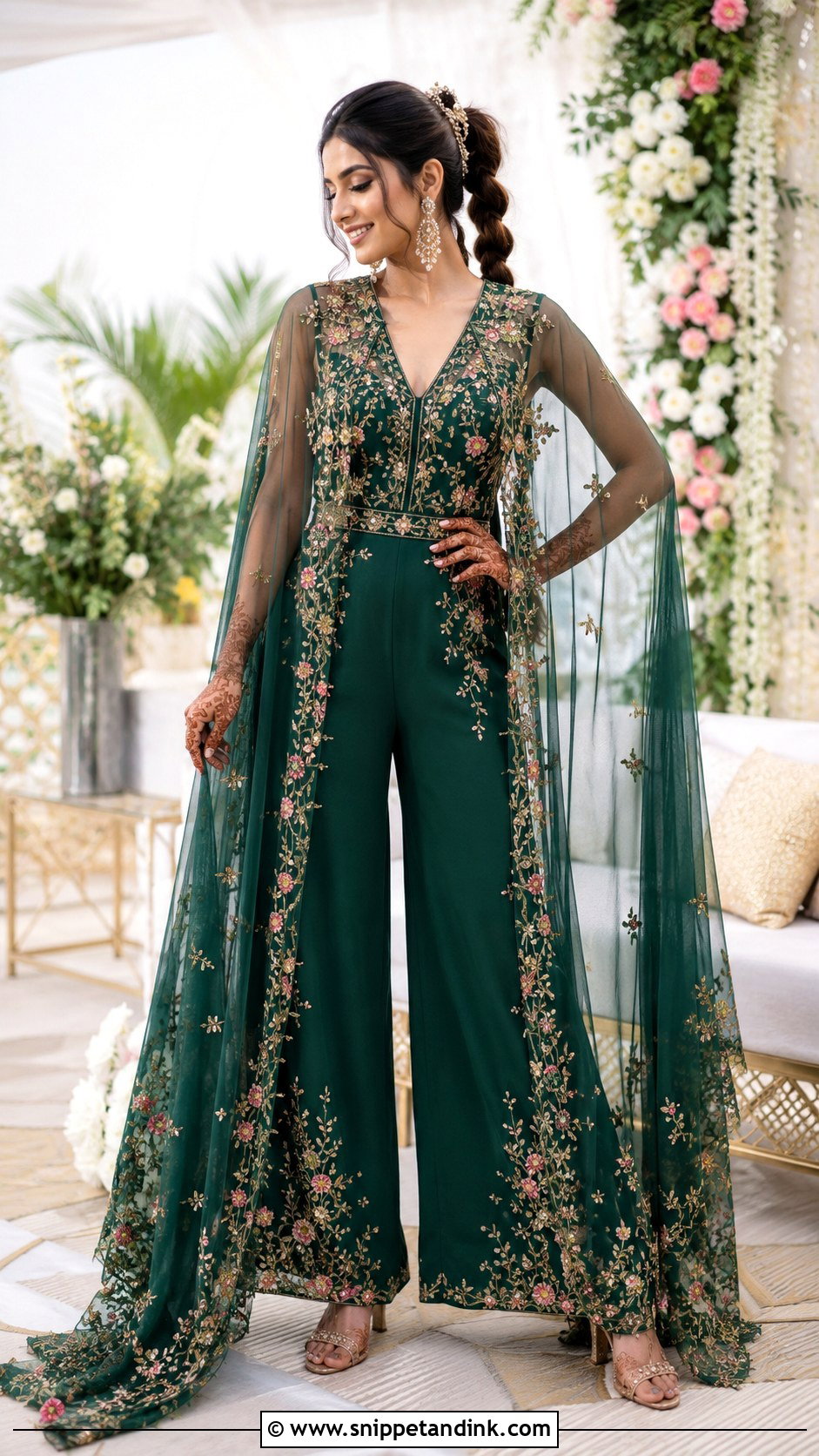
A jumpsuit with a cape is the most practical bridal mehendi outfit I see, and the most different from a lehenga. A wide-leg jumpsuit in emerald, lime, turquoise or fuchsia with embroidery at the bodice and waist, plus a detachable sheer cape with florals, mirrors or a decorative border, gives drama and freedom. Long earrings, a delicate hair accessory and embellished block heels finish it, with a structured ponytail or sleek braid. Avoid sleeves that reach the hands. Plan ahead for bathroom trips, though: a back-zip jumpsuit is impossible to manage alone with wet henna, so choose a front closure or bring a helper.
After the Last Cone: Your Outfit and the Paste Overnight
For the deepest stain, I ask brides to keep the dried paste on for several hours, ideally overnight, and to avoid water for as long as possible afterward. That affects how you get through the rest of the evening in your outfit.
Changing out of the mehendi outfit with paste still on is the moment most stains on clothing happen. Have someone else undo hooks, zips and pins, and step out of skirts rather than pulling them over your head. Wrap your hands loosely in cotton or wear thin cotton gloves if you have to sleep in it.
If paste gets on the outfit
Let it dry completely, then lift it off with a blunt edge. Wiping wet paste spreads it into the weave. On washable cotton, rinse the mark in cold water from the back; on silk, embroidered or mirror-work pieces, leave it for a professional cleaner and tell them it’s henna. Expect a light mark to remain on very pale fabric, which is the best reason to choose color for this event.
Plan the Sleeves Before You Plan the Color
The best mehendi outfit is one you can sit in for hours and then dance in. Lehengas give classic volume; shararas, ghararas, jumpsuits and co-ord sets give more freedom; sarees and half sarees work beautifully when the drape is secured away from your hands. Color can follow tradition or your own taste. Whatever shape you choose, make sure the fabric breathes, the embellishment is manageable, the fastenings are reliable and the shoes are supportive. Then add jewelry and hair accessories that suit the outfit rather than crowd it.
You'll Like These Ideas:


Leave a Reply