
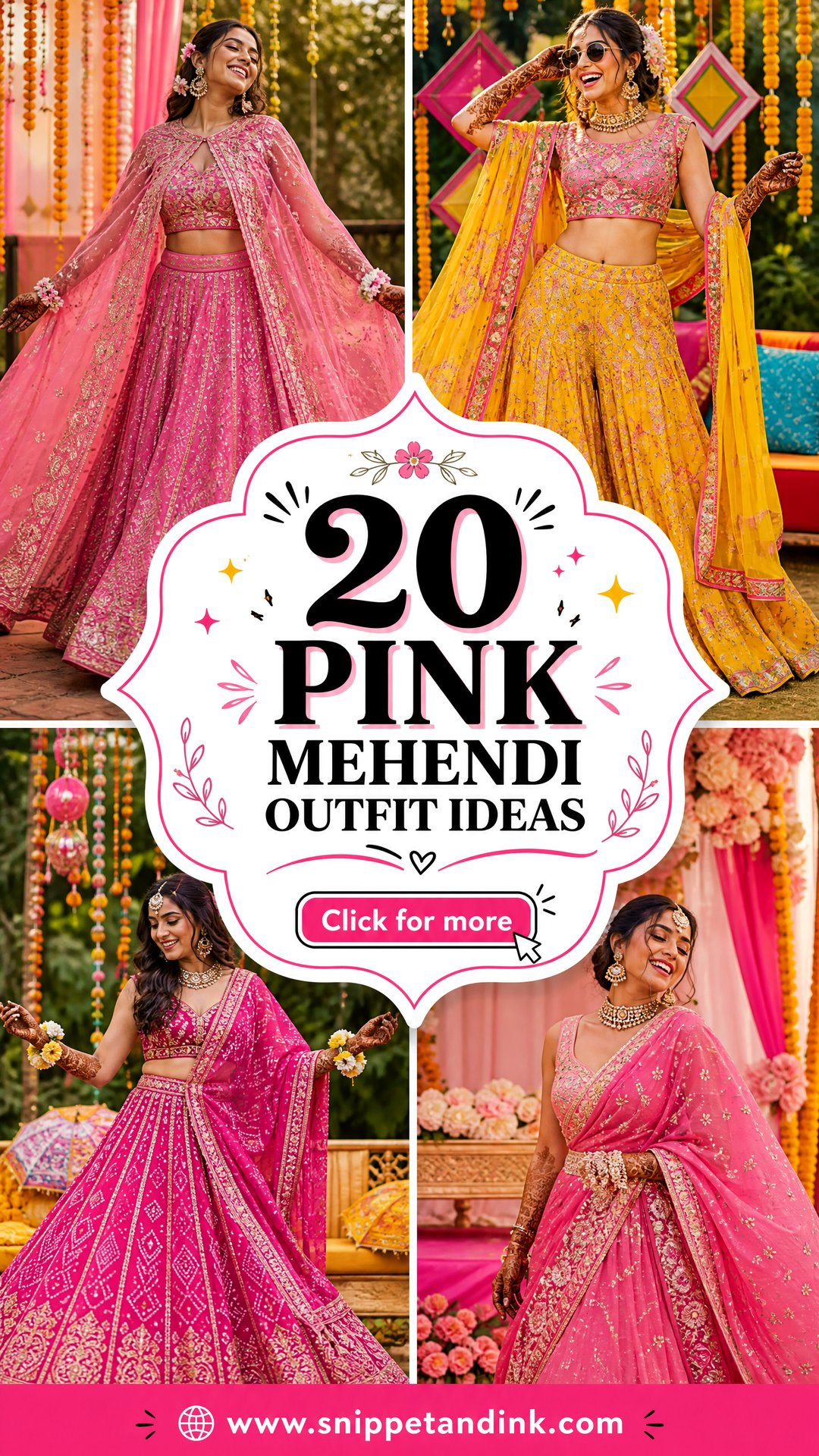
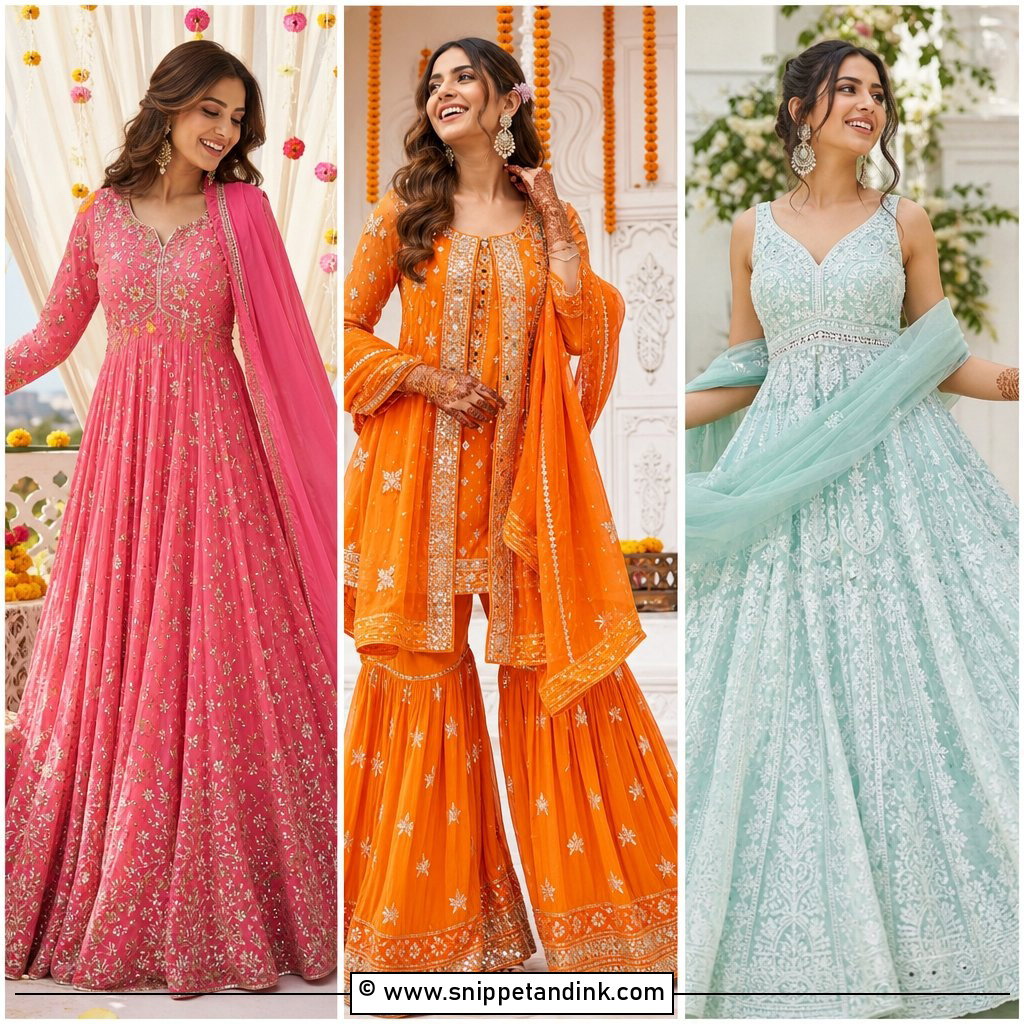
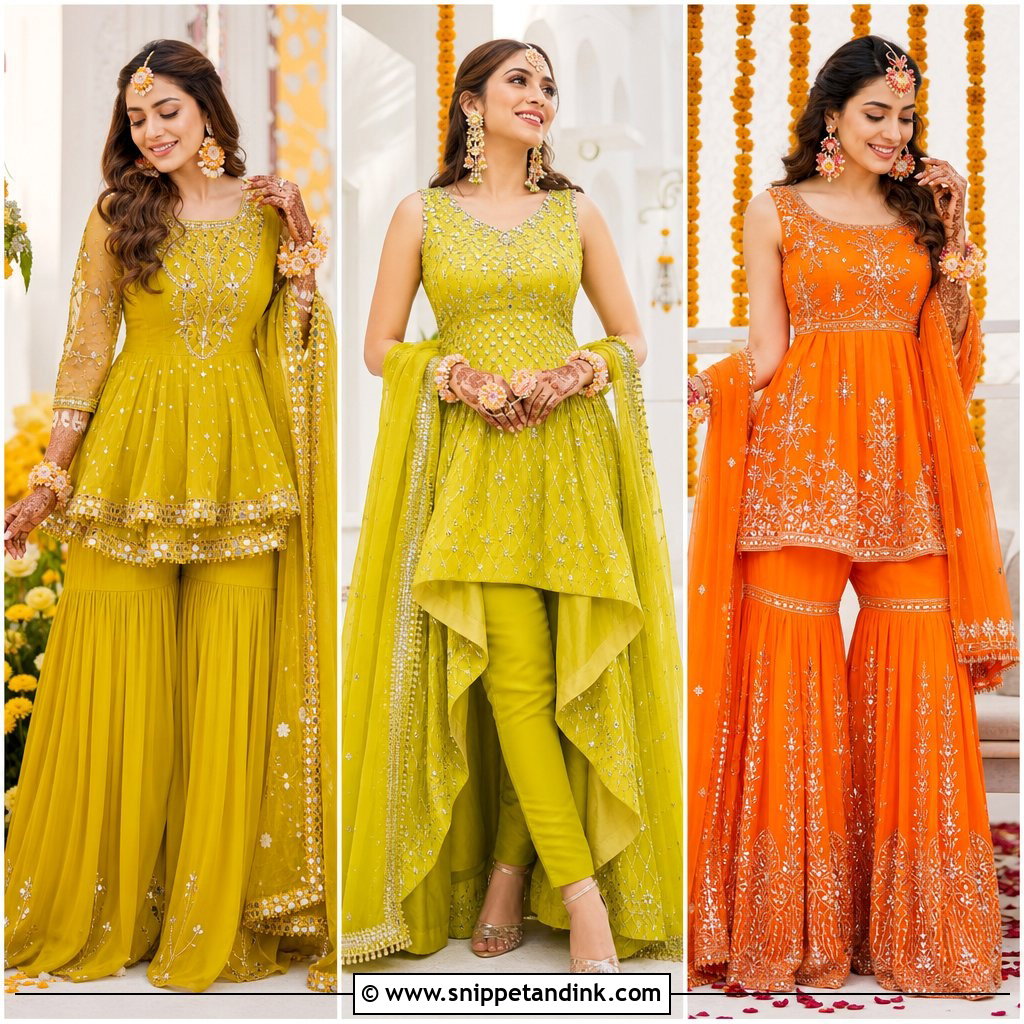
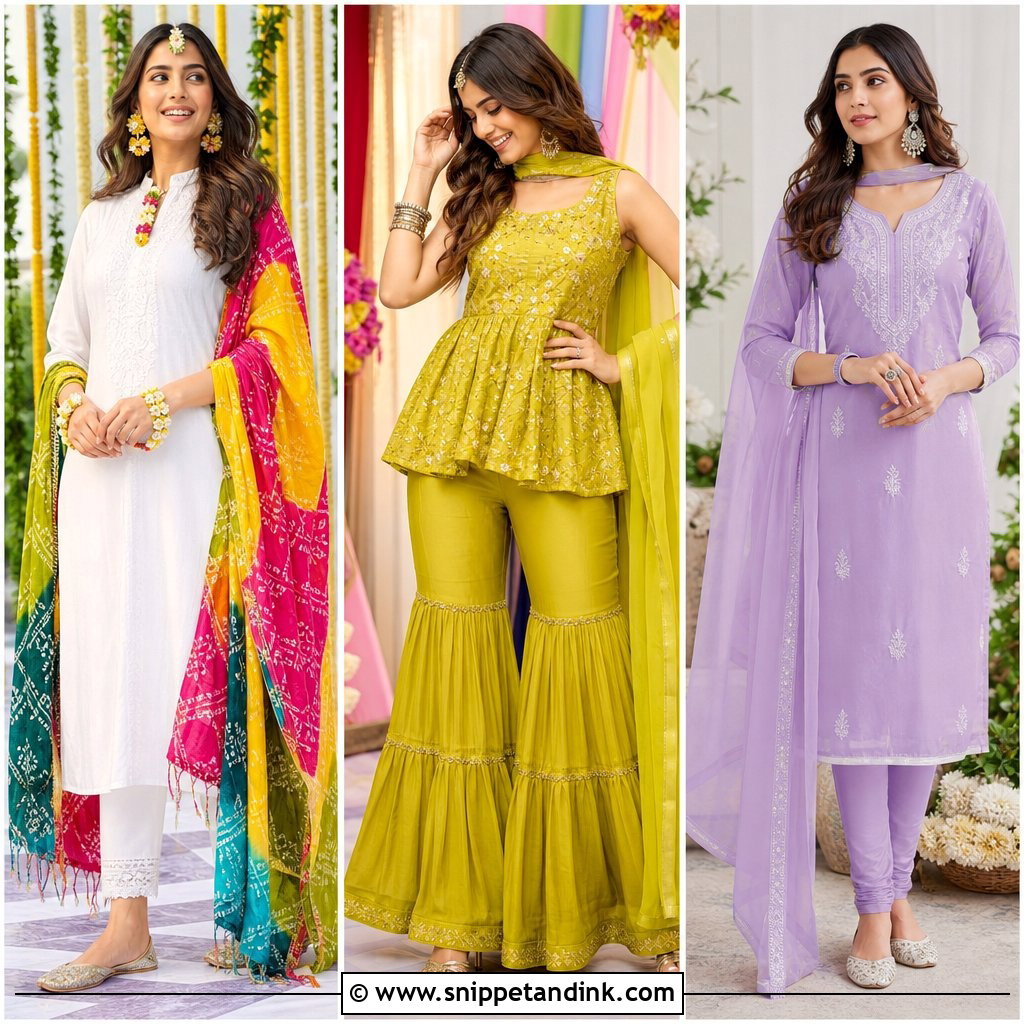
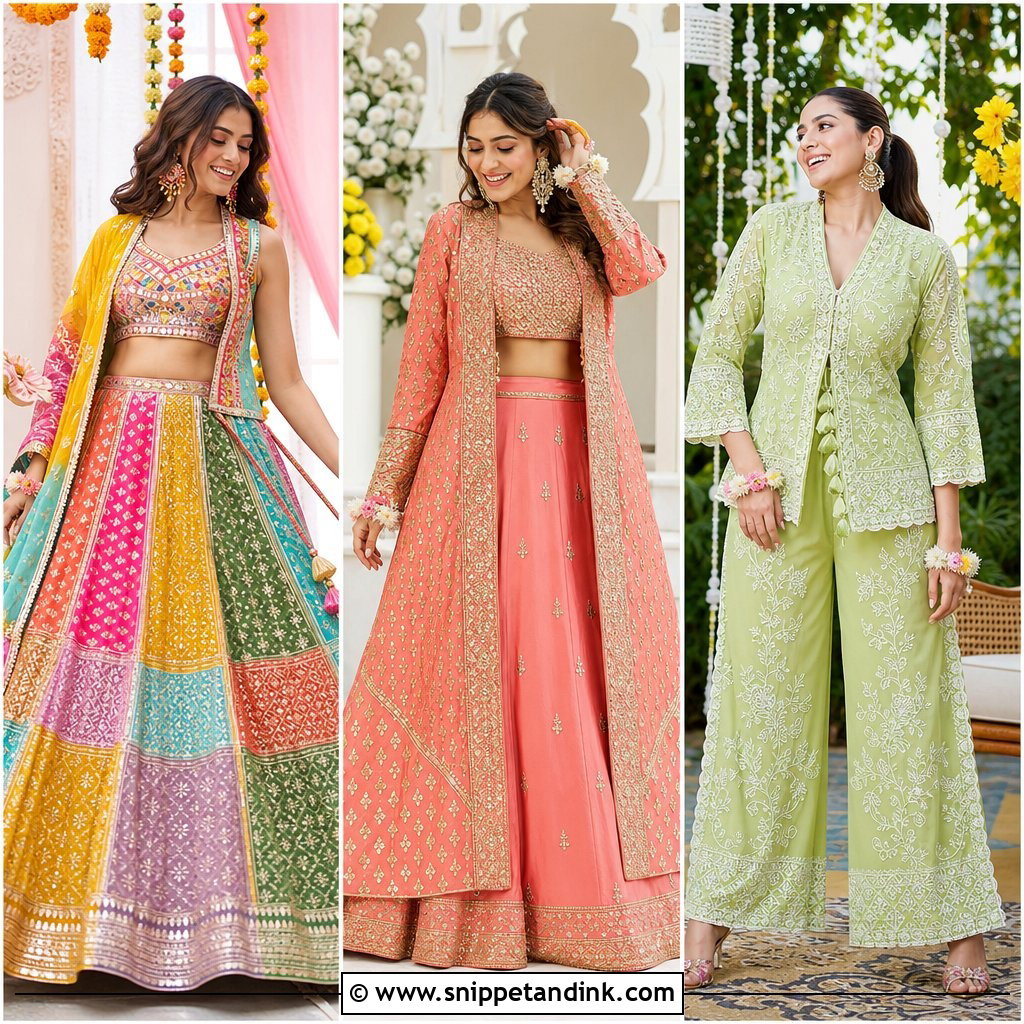
Pink is the colour I reach for most when a family wants the mehendi to feel lighter than the wedding itself. It sits happily next to marigold decor and green henna paste, and it flatters a wide range of skin tones once you pick the right depth. The outfits below are complete looks for the bride and for bridesmaids, sisters, and wedding guests, from blush lehengas to rani pink sarees and Indo western separates. The one test I apply to all of them is practical: can you sit on a low cushion for a couple of hours with your arms held out while the artist works? If the answer is no, the outfit is wrong for this function, however pretty it is on the hanger. Each idea includes the shoes, jewellery, hair and dupatta placement I would pair with it.
Matching the Pink to Your Skin and the Hour of the Mehendi
Pink has a temperature, and that matters more than the exact name on the label. Blue-based pinks such as fuchsia, magenta and rani look crisp on deeper and cooler skin tones. Warm pinks with a coral or peach cast suit olive and golden skin, which can look slightly grey next to icy pastels. If you are unsure, hold the fabric under your chin in daylight; the right pink makes your skin look rested, the wrong one makes the area under your eyes look darker.
Then think about when the function happens. Afternoon mehendis in full sun can bleach out pastels in photographs, so I nudge clients toward a mid-tone or add gold work to give the fabric some definition. Evening events under fairy lights and warm bulbs do the opposite: they push everything toward orange, so a deep rani or a cool blush will hold its colour better than a peachy pink.
A quick fabric check
- Georgette and chiffon: light and breathable, but they cling when damp and show sweat marks in pale shades.
- Organza: holds a shape and catches light, though it crushes if you sit on it for hours.
- Cotton silk: the most comfortable for daytime and easy to clean, with a matte finish.
- Raw silk: rich colour, but water and henna marks are hard to remove from it.
1. Pastel Pink Mehendi Lehenga
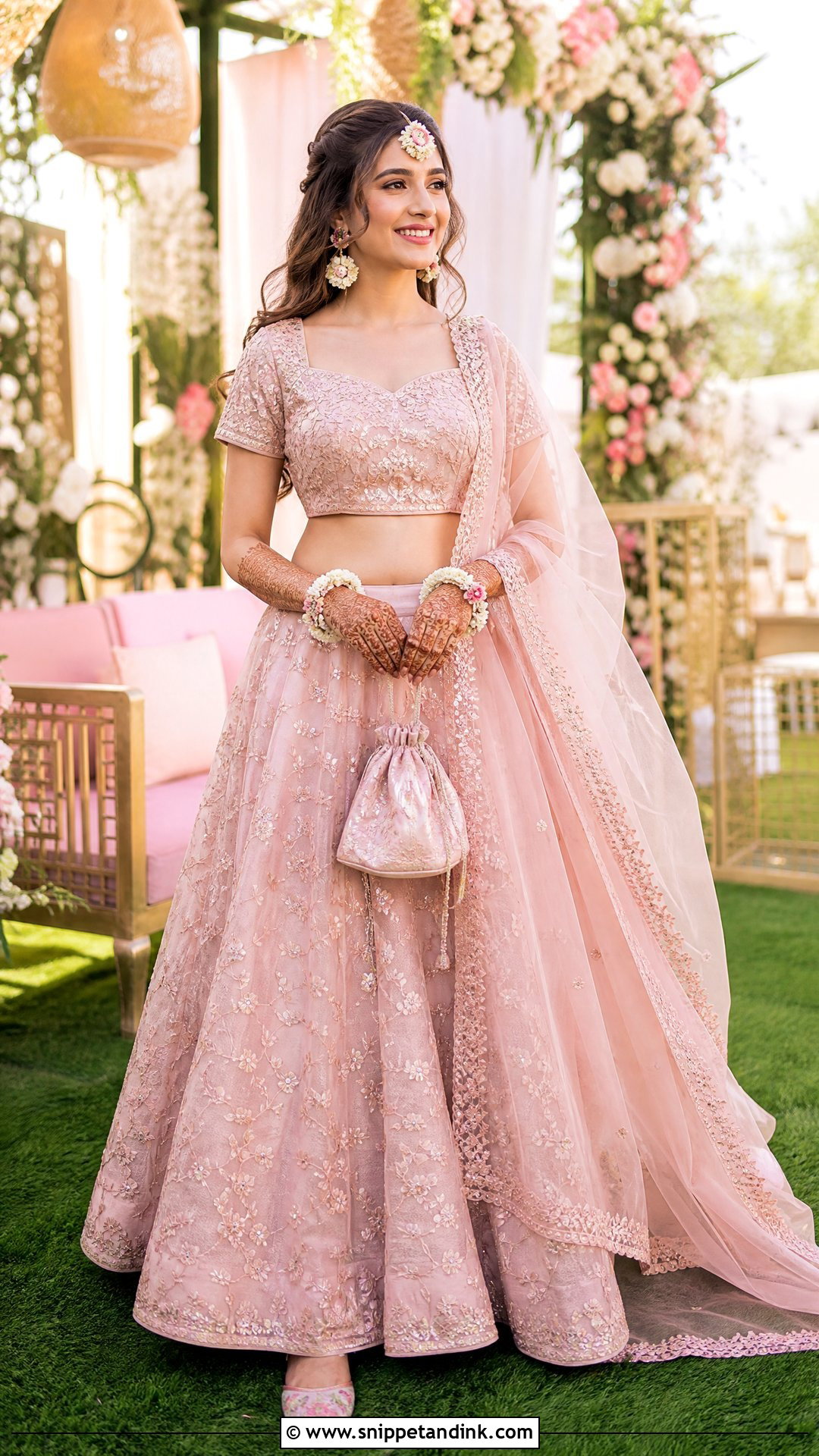
Pastel pink reads soft in daylight, but it washes out under warm tent lighting, so I look for a lehenga with a little sheen, such as organza or raw silk, to keep it from going flat. Light floral embroidery is enough here; dense work makes the pastel look heavier than it is. A fitted short-sleeve blouse leaves your forearms clear for the artist, and a sheer dupatta over one shoulder stays out of the way. Pearl drops, a floral maang tikka and a small potli finish it. Choose embellished juttis over heels, because mehendi seating is usually on the floor or on low bolsters and heels make getting up awkward. A loose braid with tiny flowers suits a bride who wants a quiet look, and it coordinates well across a pastel bridesmaid group.
2. Hot Pink Mehendi Sharara
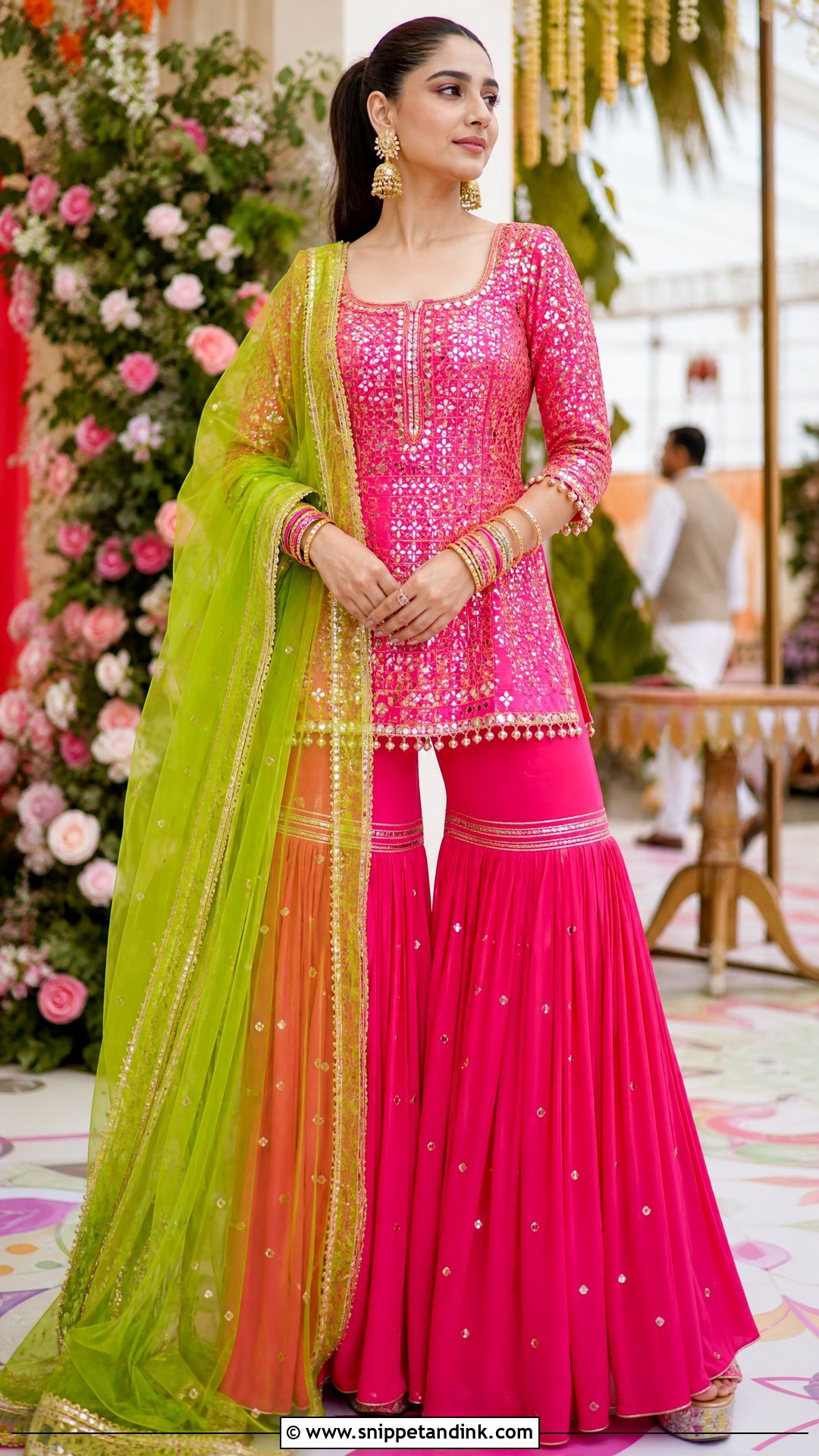
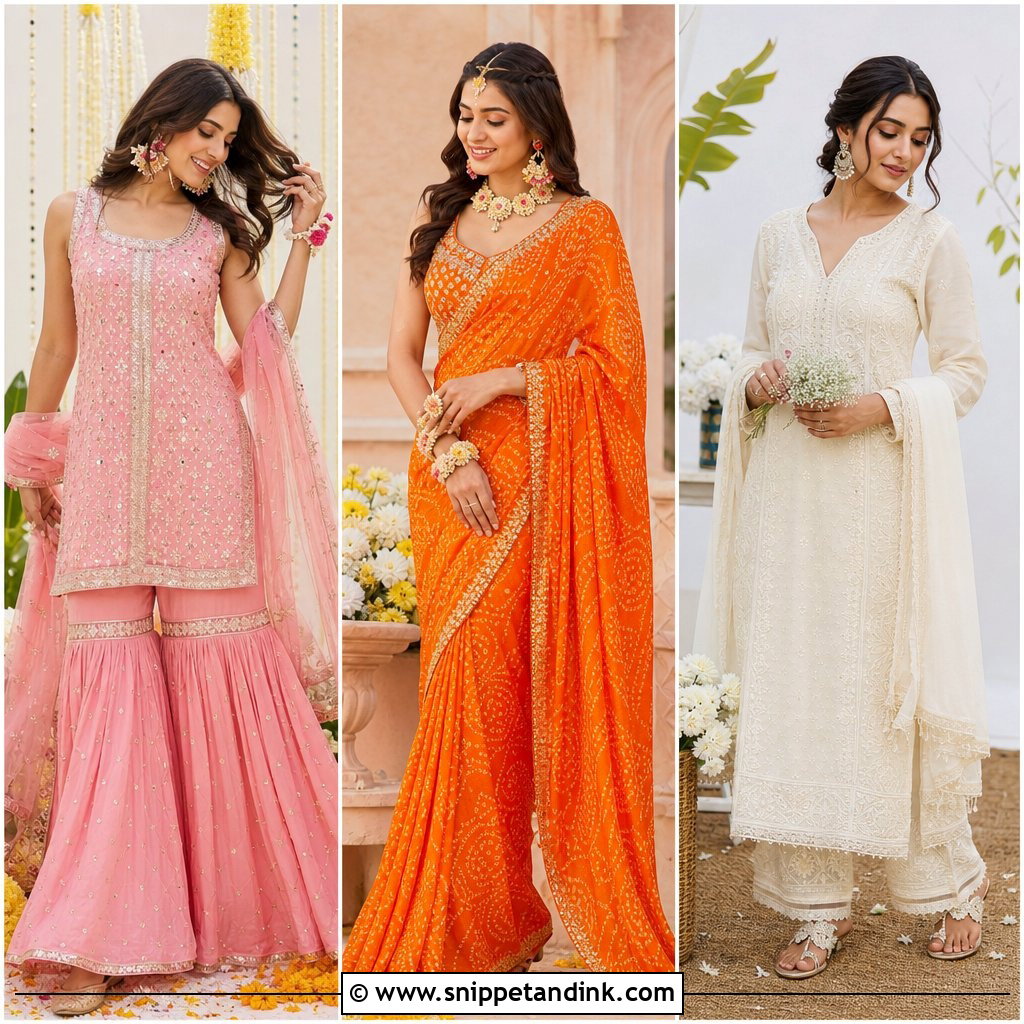
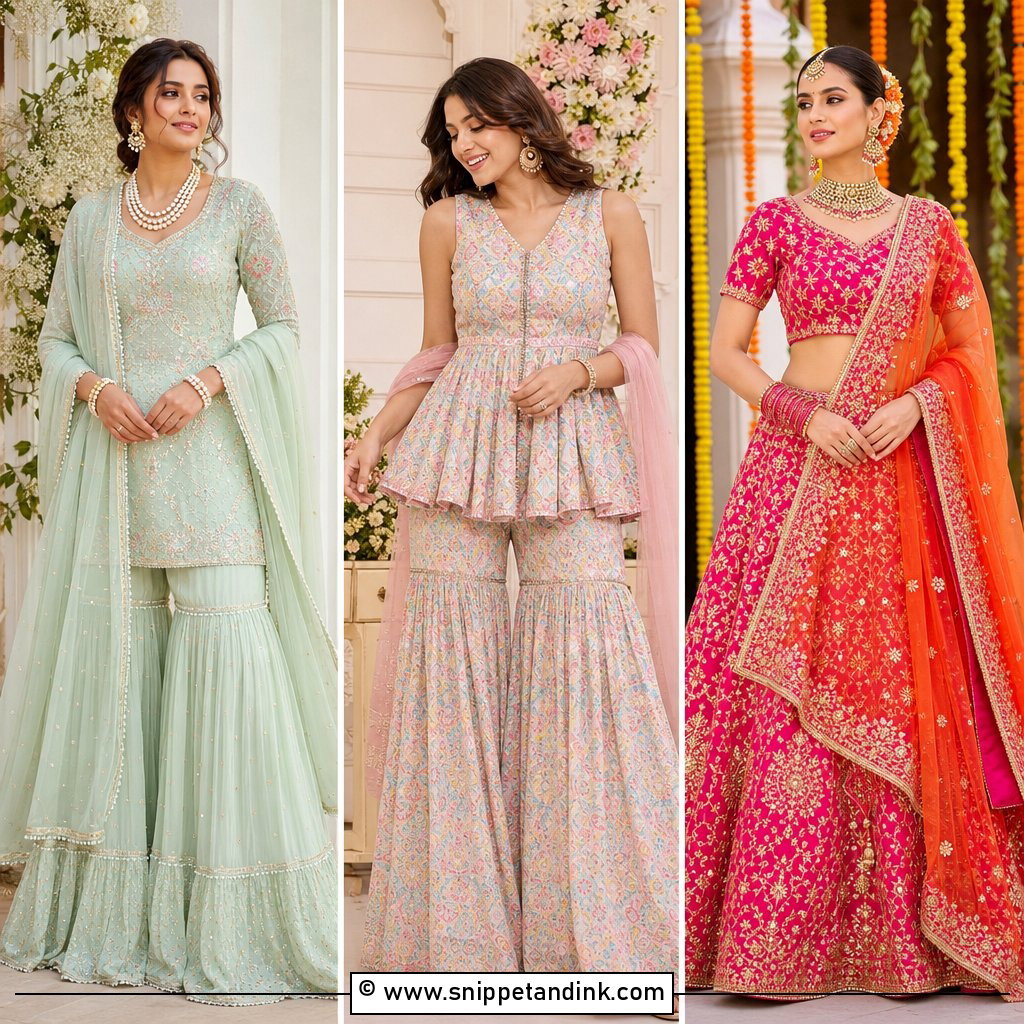
Hot pink carries itself, so you can skip heavy embroidery entirely. I build it on a short kurti featuring mirror work or gota trim, then add a sharara in a fabric light enough to swing when you dance. A lime or orange dupatta pulls in the traditional mehendi colours; a matching pink one gives a cleaner line. Gold jhumkas and platform juttis are comfortable for hours. One habit I insist on: keep the bangles in your bag until the henna has dried, because glass bangles drag across wet paste and smear the design. A sleek ponytail stops the volume of the sharara from overwhelming you, which is why this one suits sisters and guests more than the bride.
3. Blush Pink Mehendi Anarkali
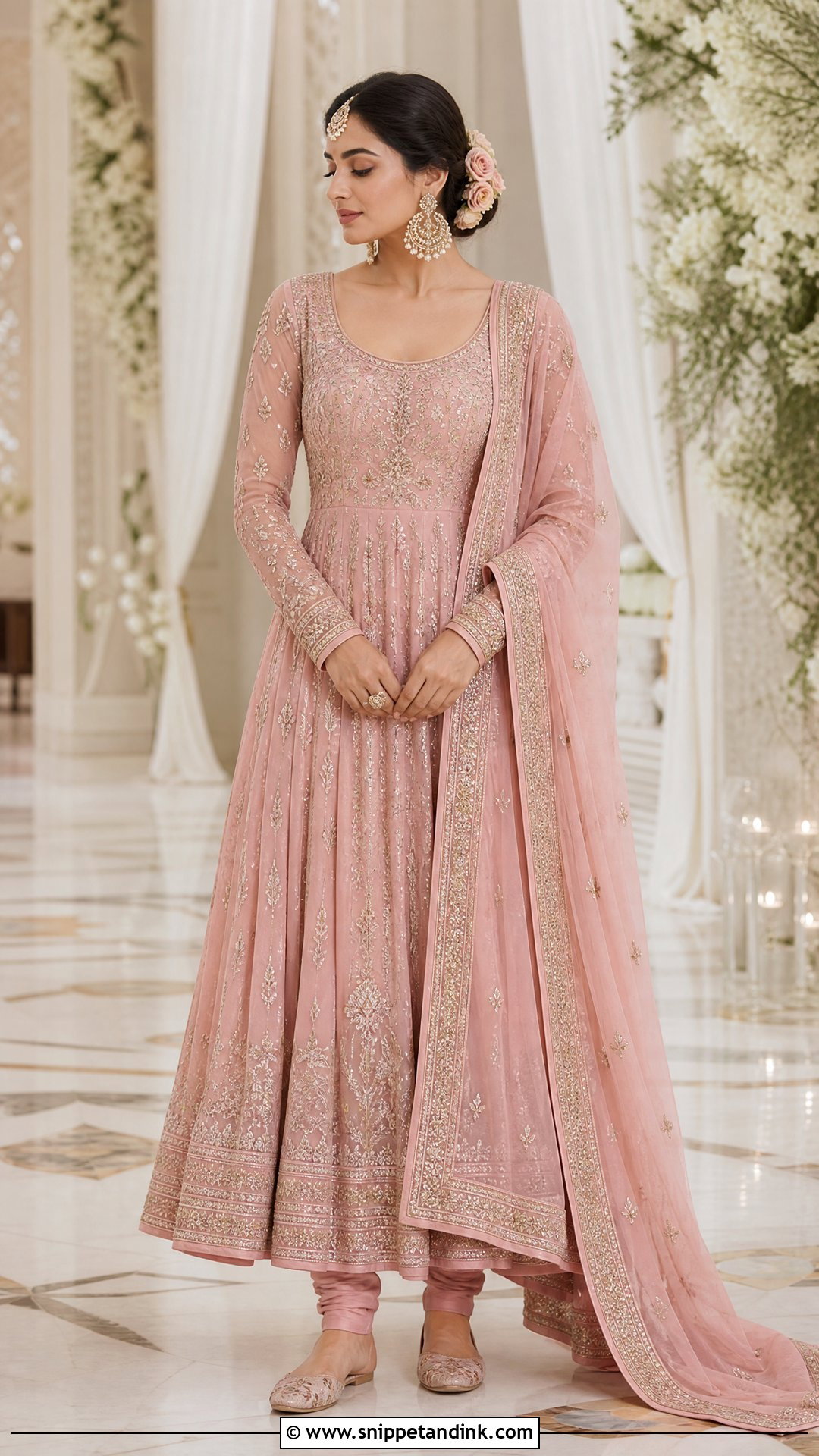
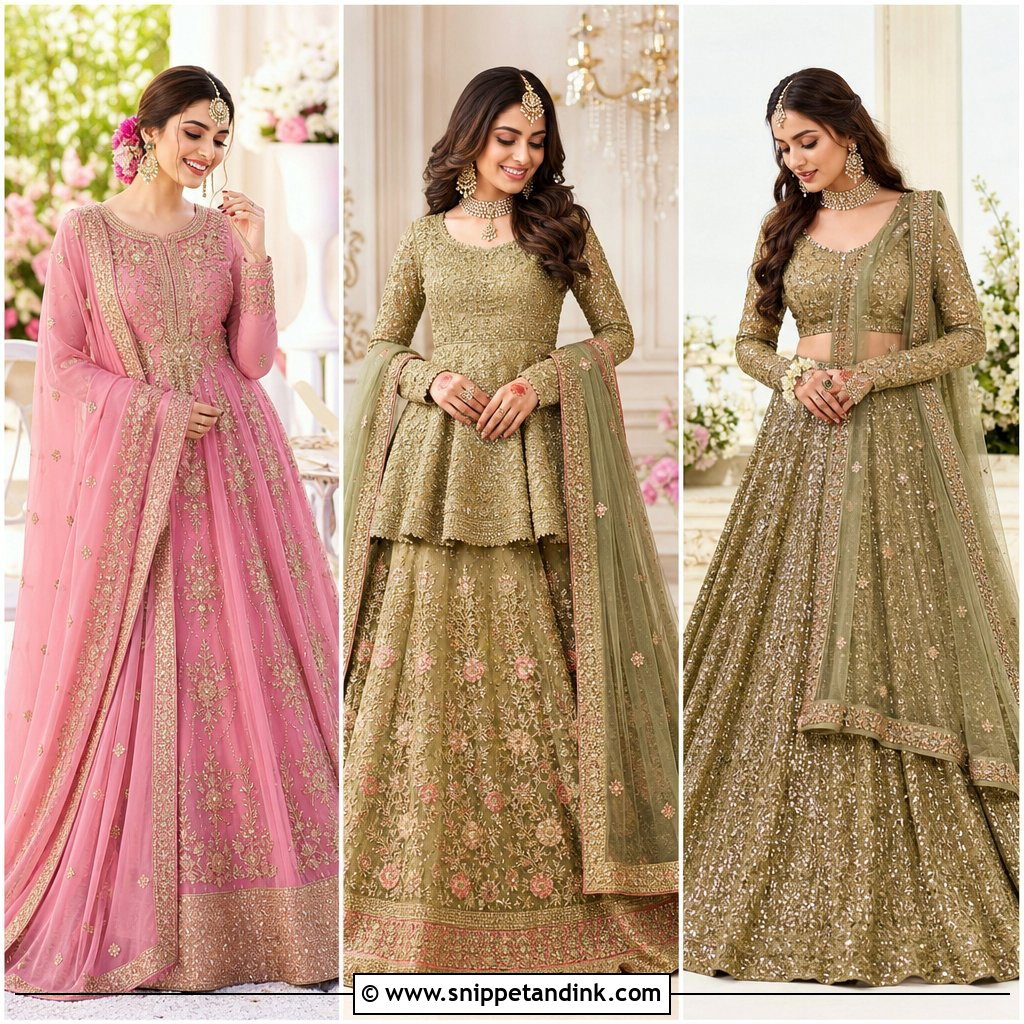
An Anarkali is what I suggest to brides who dread managing a lehenga skirt on the floor. The flare pools around you when you sit, so nothing bunches under your knees. Calf or floor length both work; check that the waist seam sits at your natural waist, because a seam that rides high pulls the whole flare forward when seated. Thread embroidery or a narrow gold border keeps blush festive without drowning it. Fitted churidars, a lightweight dupatta pinned to one shoulder, pearl chandbalis and embroidered flats complete it. A low bun with fresh flowers feels traditional, soft waves less so. I like it most for an indoor mehendi or a formal family evening.
4. Rani Pink Mehendi Saree
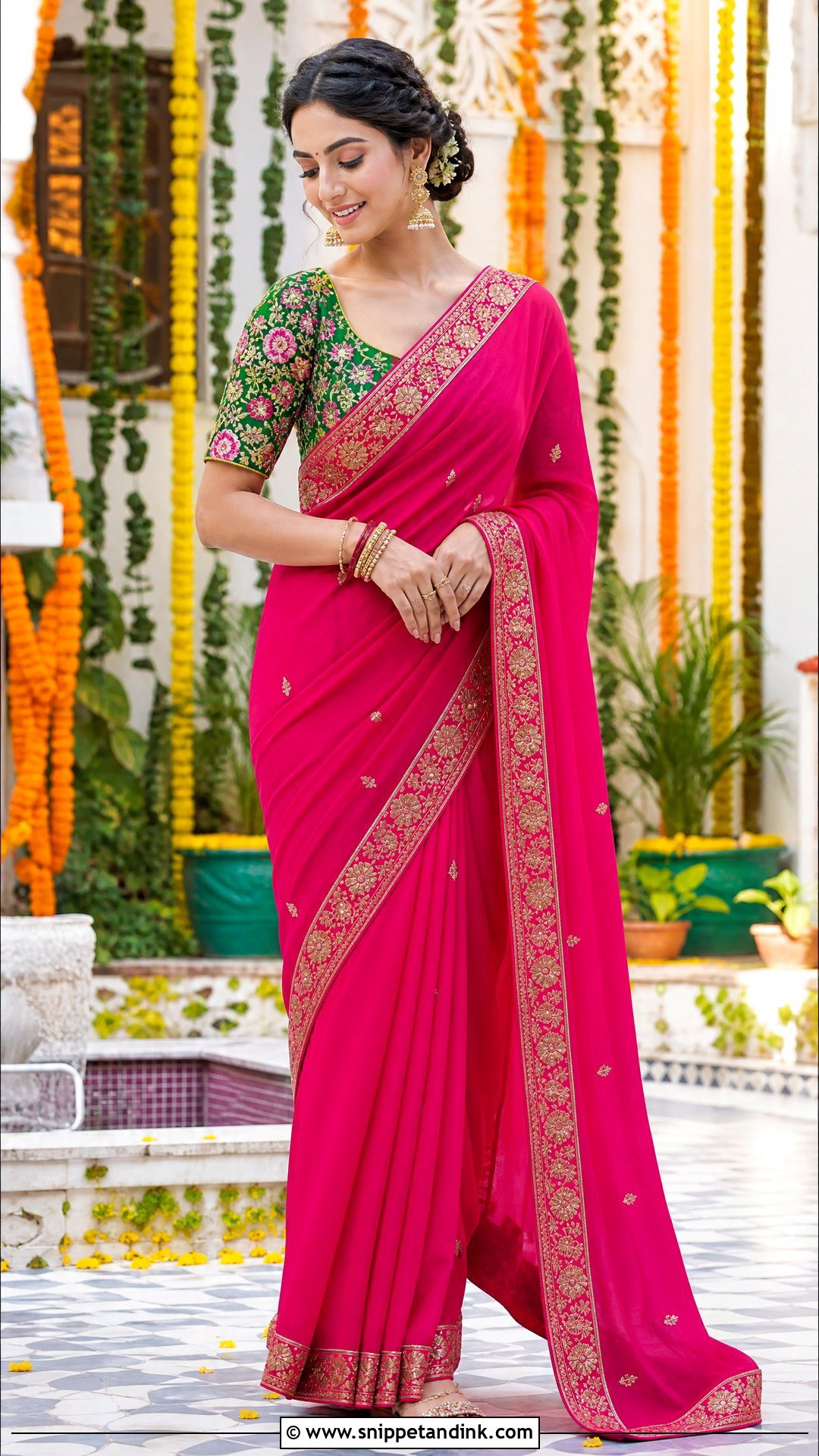
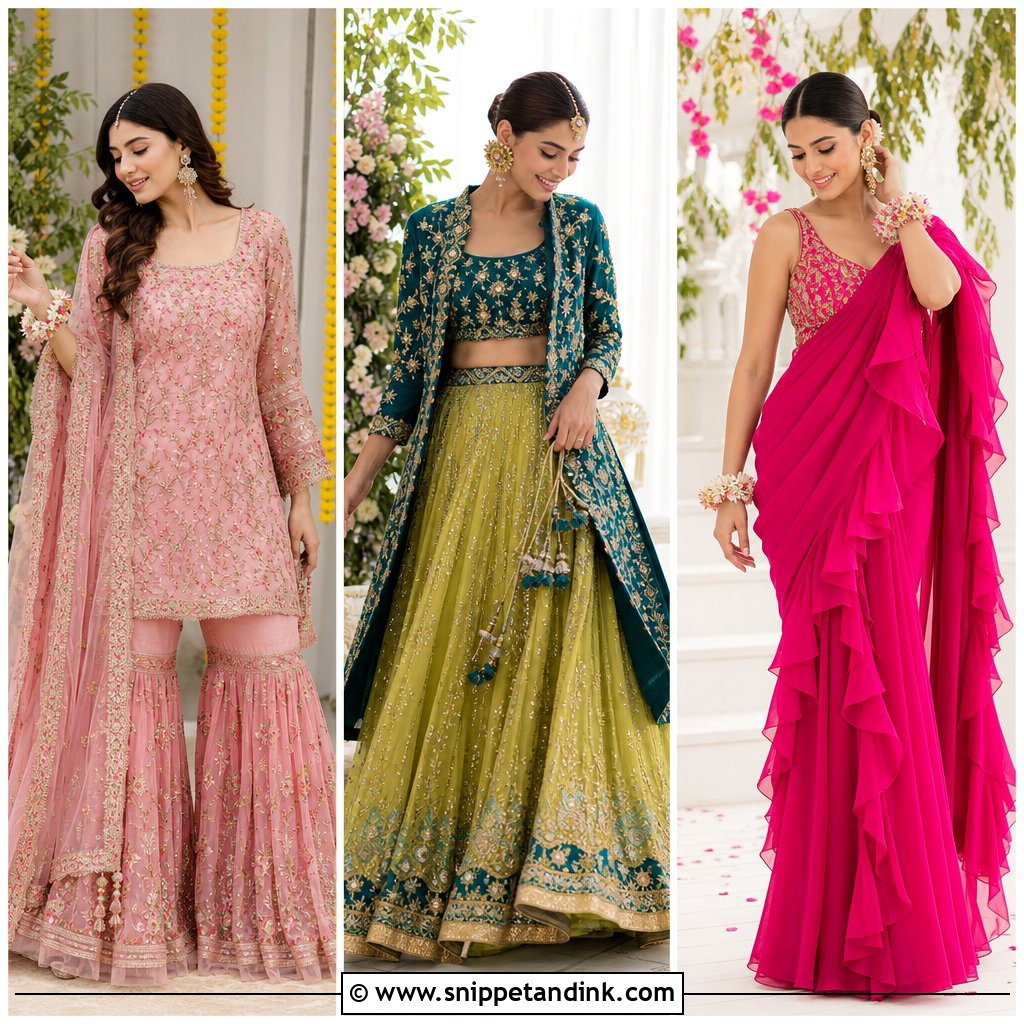
Rani pink is one of the few shades that holds its colour in both harsh sun and dim evening light. For a mehendi I steer clients to a pre-draped saree or light georgette, because a traditional six-yard drape loosens every time you twist toward the henna artist. Pair it with a green, orange or floral-print blouse in short sleeves or sleeveless so your arms are free. Statement jhumkas and a small bindi carry the jewellery; leave the bangle stack off until application is done. Low block heels are fine if there is chair seating. Before you leave the house, pin the pallu at the shoulder and again at the waist. Fiddling with a slipping pallu with wet henna on your palms is the most common mishap I see at these events.
5. Dusty Pink Mehendi Palazzo Suit
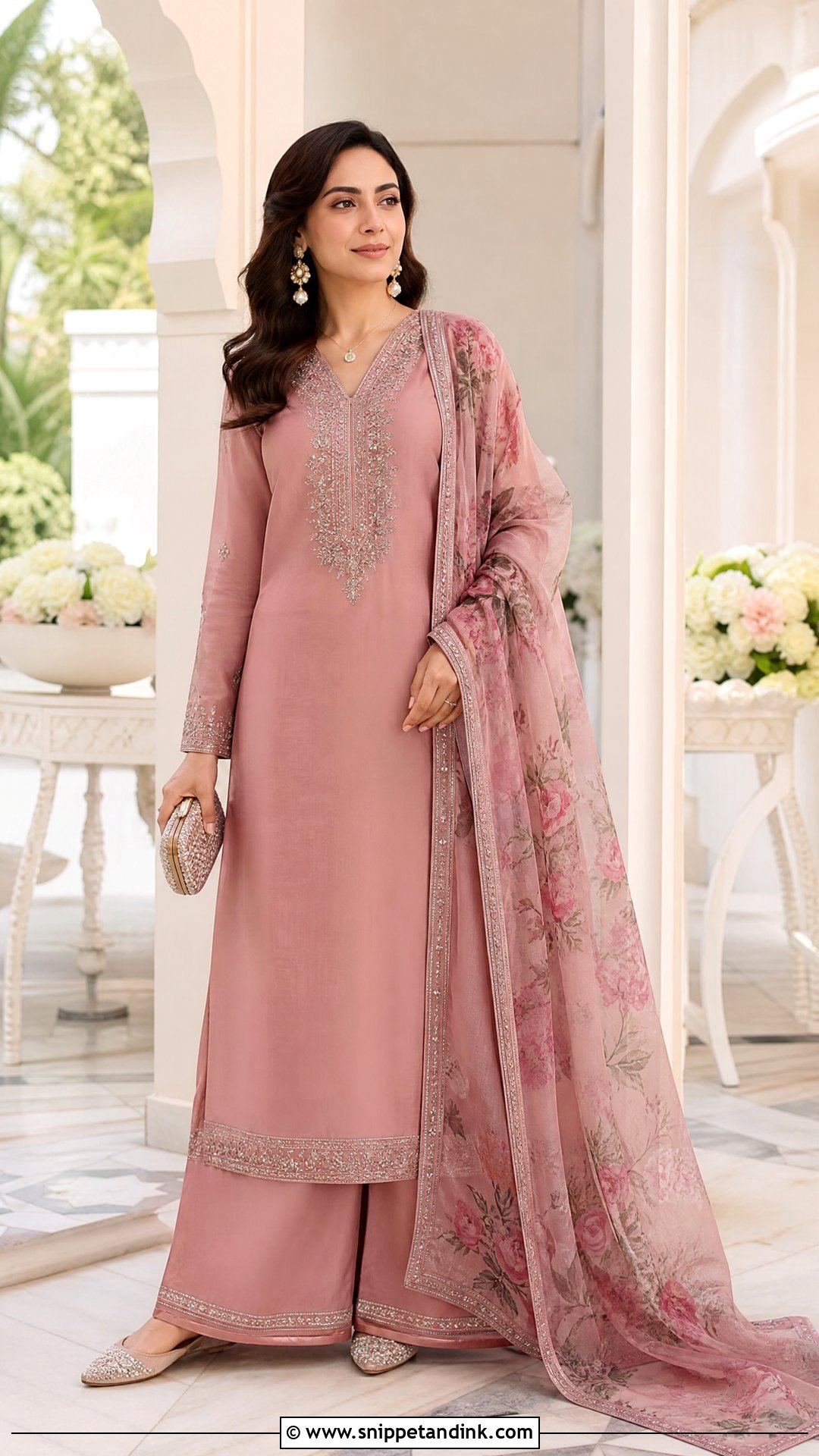
Dusty pink is my pick for anyone who finds bright pink too loud but still wants to look dressed. A straight or slightly flared kurta with subtle zari or pearl work keeps it refined. Wide-leg palazzos are the real reason I recommend it: you can sit cross-legged for henna without anything cutting into your waist or knees. An organza dupatta with green and ivory accents adds interest. Medium earrings, a delicate pendant and pointed mules are enough. It works well for older relatives and anyone who wants modest coverage, as long as the three-quarter sleeves are loose enough to push past the elbow. Try that in the fitting room; fitted sleeves that stop halfway will smudge a fresh design.
6. Pink Mehendi Gharara
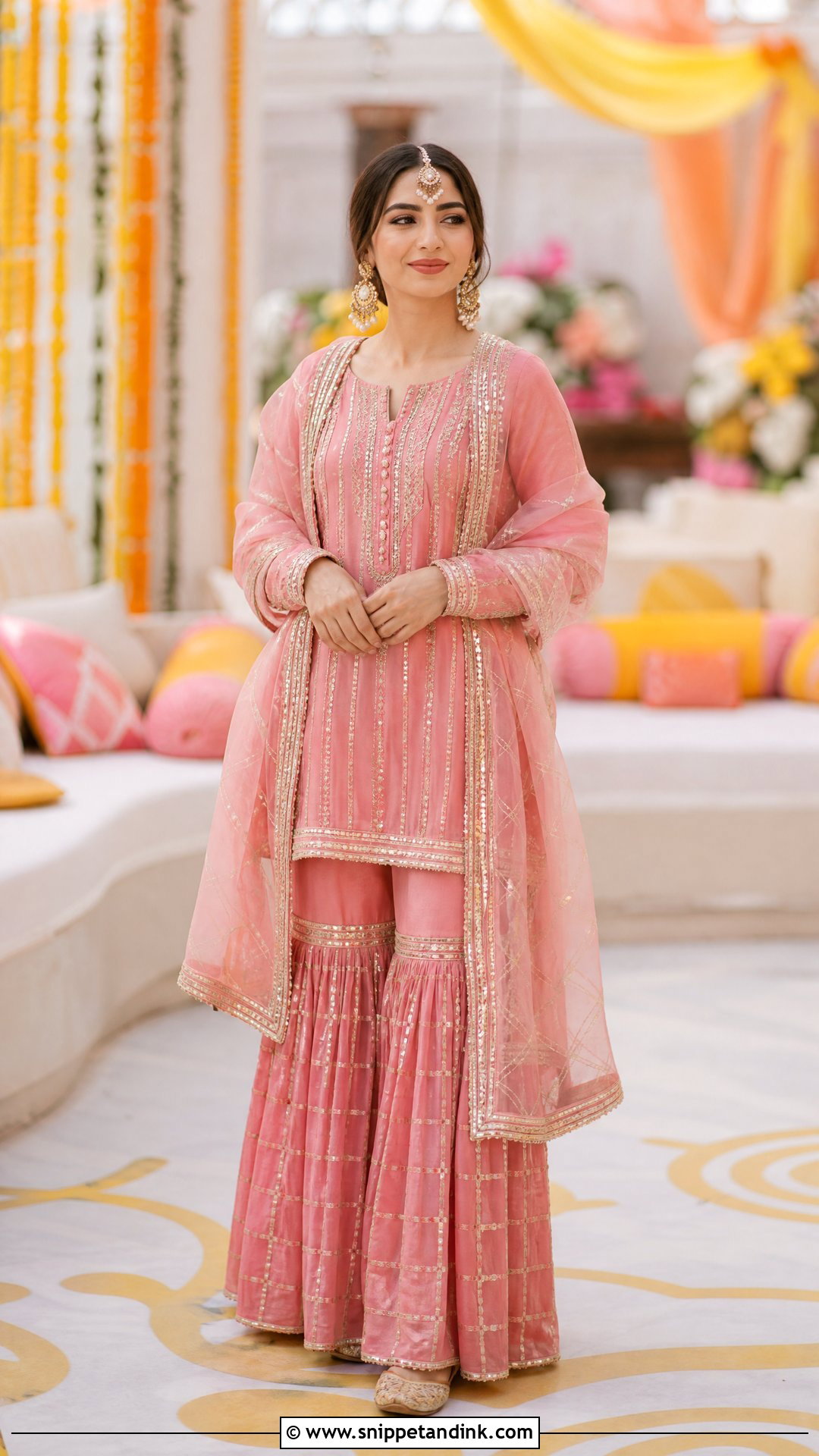
A gharara only looks right if the knee seam sits at the knee, so I always check the hem length with the shoes you will actually wear. Too long and the gathers drag on the floor; too short and the flare starts at mid-calf and loses its shape. Pair it with a short kameez so the seam stays visible, in rose for a softer feel or fuchsia for more punch. Gota patti borders and small mirror details suit the silhouette without weighing it down. Drape the dupatta behind both arms when the artist starts so your hands stay free. A passa, drop earrings and embellished khussas finish the look. It belongs naturally at Pakistani mehendis and family dholki functions.
7. Pink Floral Mehendi Lehenga
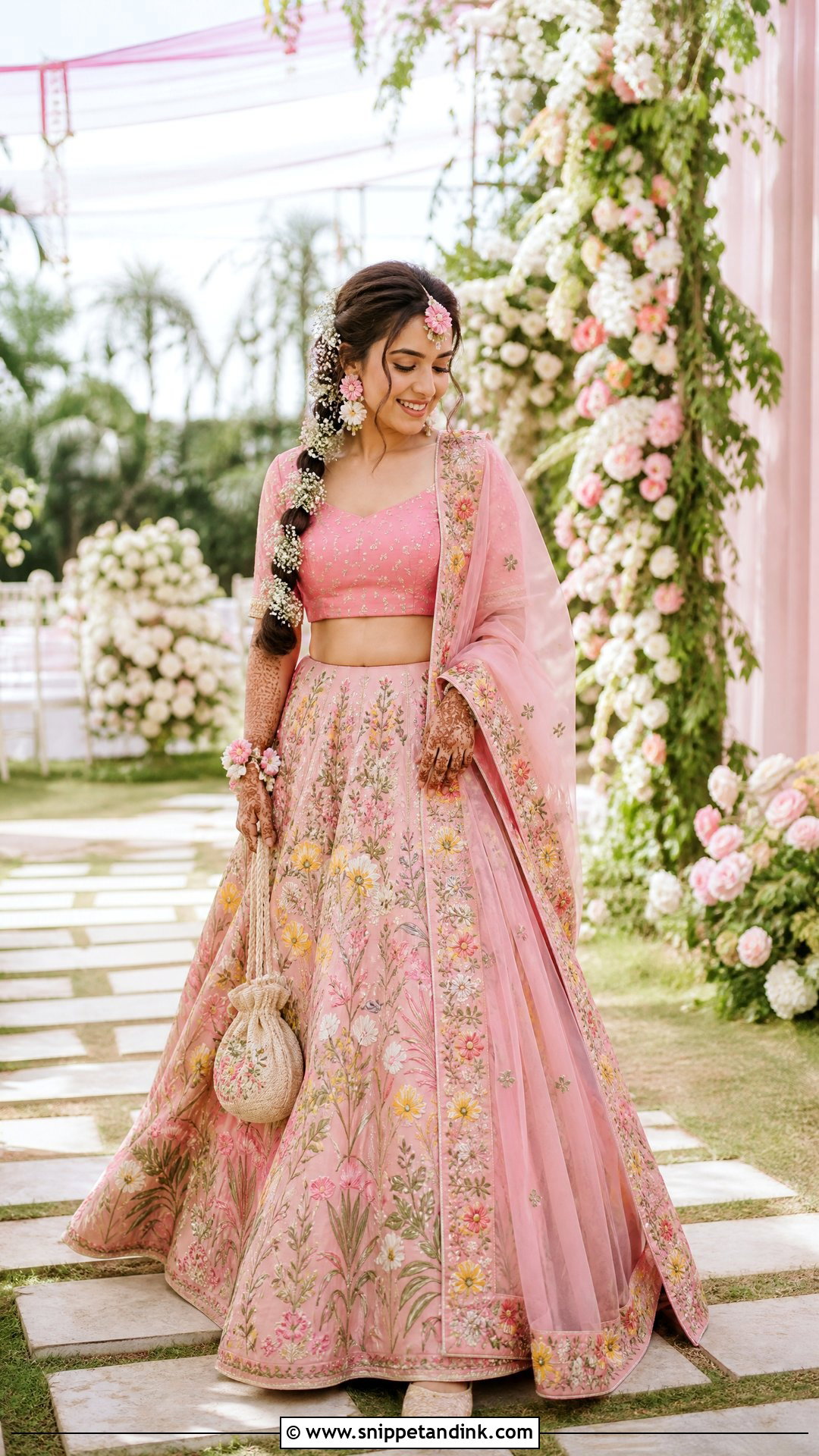
A floral lehenga does half the decorating for a garden mehendi. Look for pink printed or embroidered with green leaves and small yellow and white blooms, then calm it down with a solid pink blouse with a simple neckline and short sleeves. A sheer dupatta with only a narrow floral border keeps the prints from fighting. Flower earrings and a matching tikka continue the theme, but I hold back wrist florals until after the henna, since fresh flowers shed pollen and petals onto wet paste. Neutral juttis and a woven potli keep the rest quiet. A fishtail braid with a few blooms tucked through is the easiest hair for an outdoor afternoon.
8. Pink Mirror Work Mehendi Set
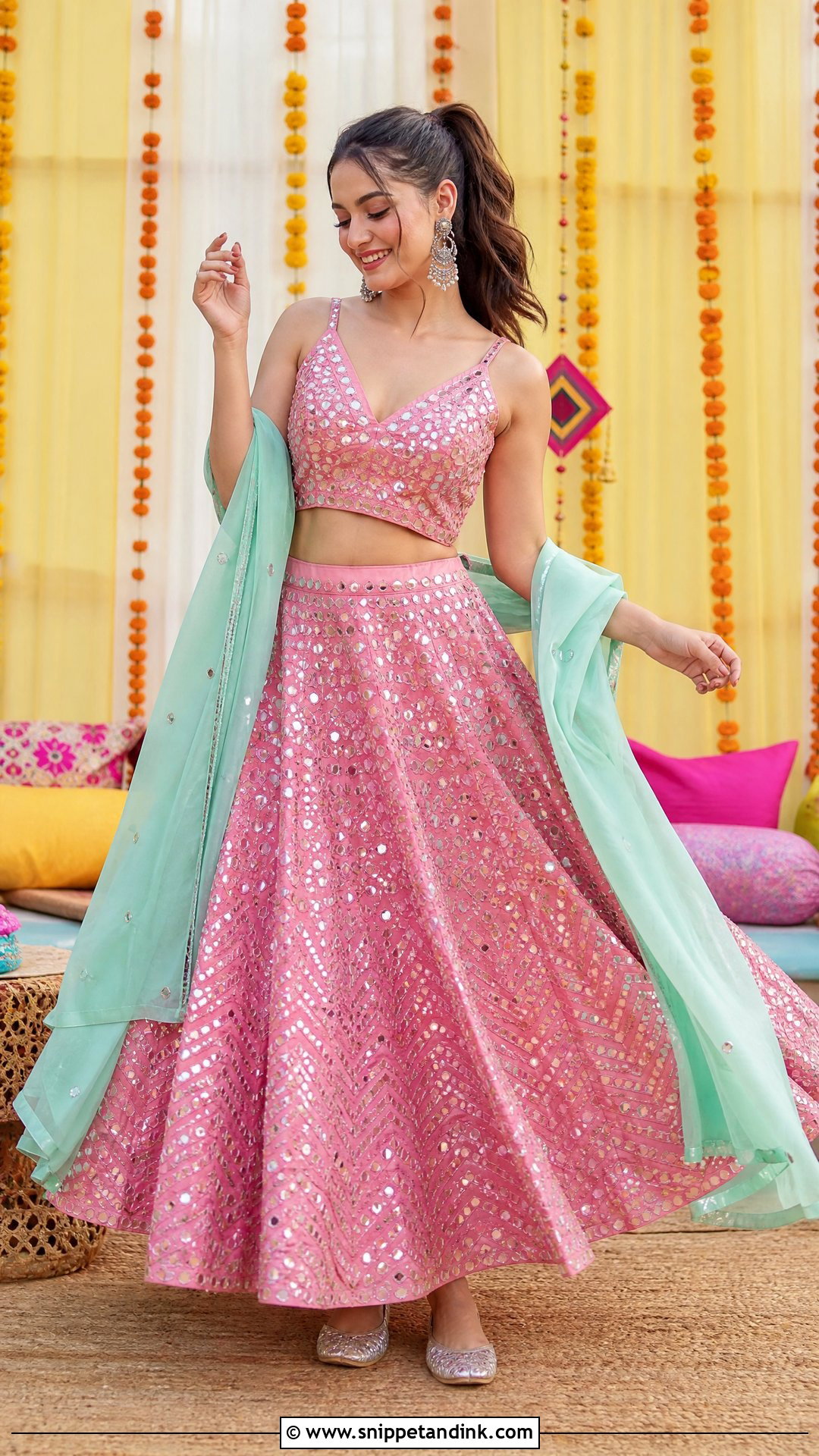
Mirror work catches every light at a dance-heavy mehendi, but it has a practical downside: the small glass pieces snag loose hair and fine jewellery chains. So I keep hair up in a high ponytail or textured braid with this set, and skip a necklace if the blouse neckline is already worked. Choose a cropped blouse with secure straps and an A-line skirt or palazzos, with the mirrors concentrated at the neckline, waist and hem rather than all over, which can feel scratchy on the inner arms when you sit. A plain pink or mint dupatta keeps it from looking busy. Oxidized silver earrings and metallic juttis suit the youthful mood, and it is a natural fit for bridesmaids and younger guests.
9. Pink Mehendi Crop Top And Skirt
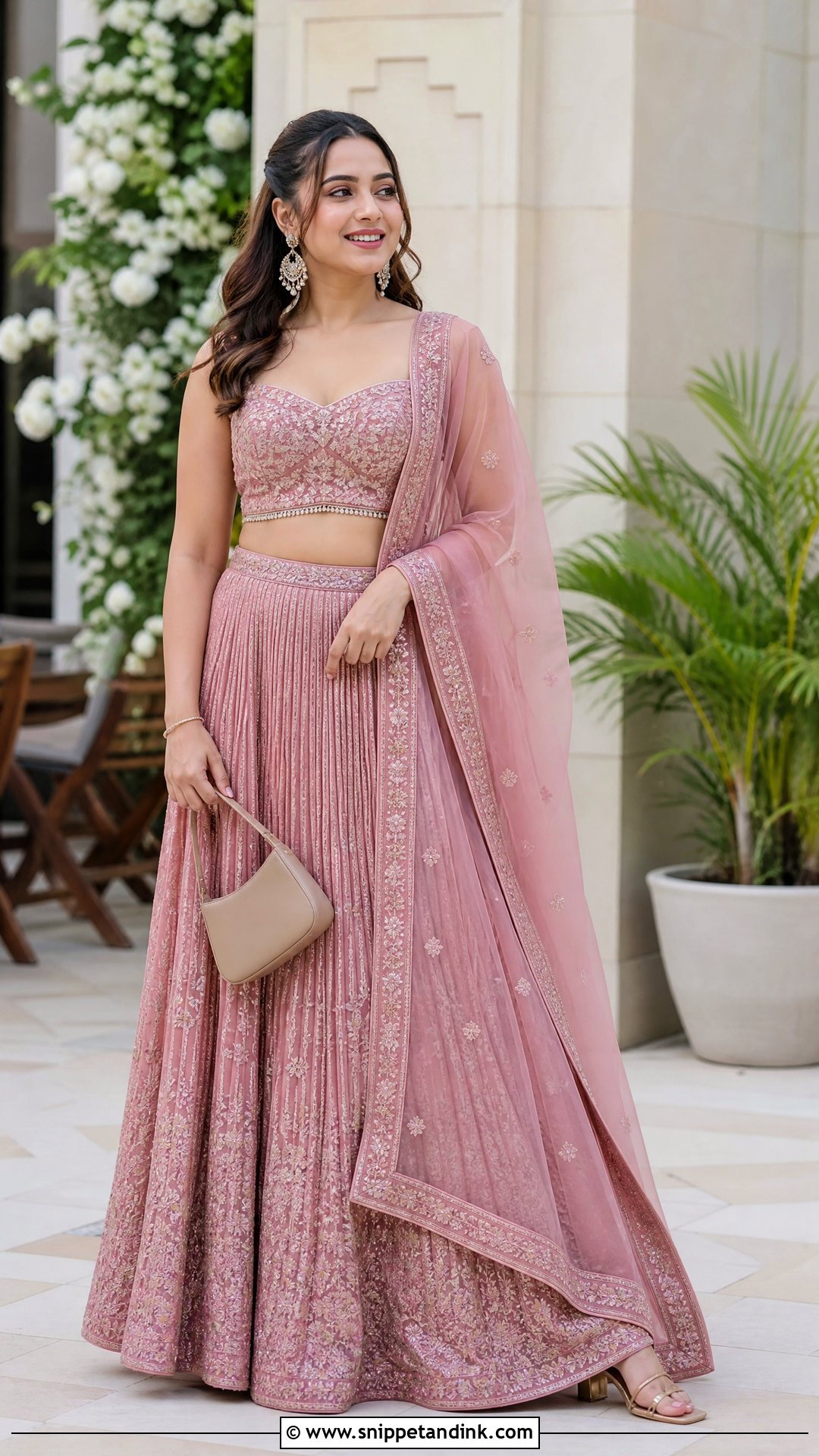
Separates are the easiest outfit to make comfortable, because you can size the top and skirt independently. I pair a high-waisted skirt with soft pleats and a structured pink crop top cut with enough length that it stays put when you raise your arms for henna. Floral threadwork or a scalloped hem adds festivity without tipping into bridal. A dupatta draped diagonally or a short organza overlay works for the modern version. Statement earrings and low block-heel sandals are enough; save any cuff until the henna has dried. Loose curls or a half-up style match the relaxed shape. It suits friends and cousins who want traditional colour in a simpler cut.
10. Pink Mehendi Jacket Sharara
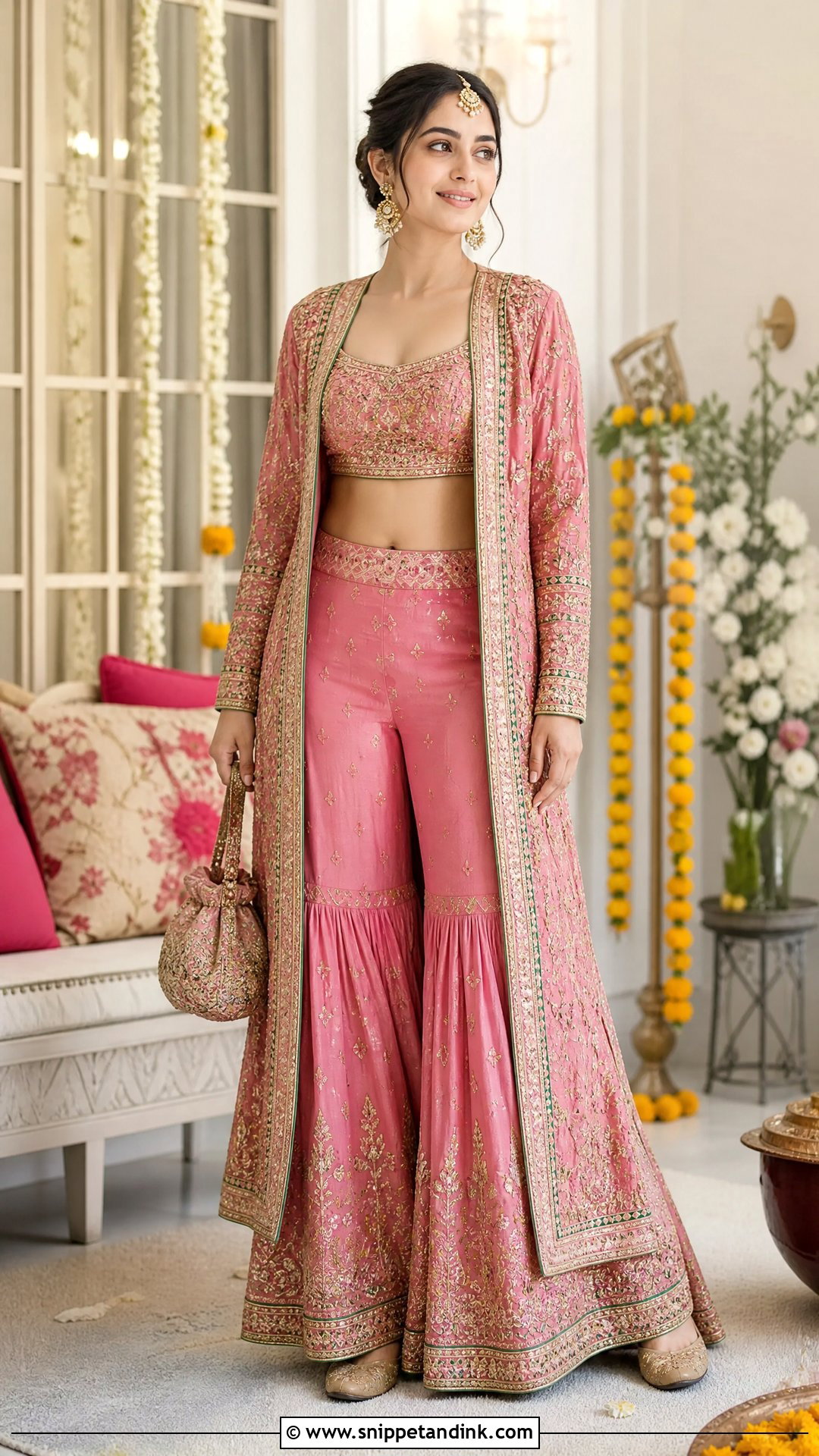
Adding a long jacket over a sharara gives you structure and a vertical line, which helps shorter wearers look taller next to the flare. Start with a simple fitted blouse and high-waisted sharara in matching pink, then layer an open-front jacket with floral embroidery or green piping. The jacket is warm, though, so I only suggest it for evening or air-conditioned venues; at a summer afternoon mehendi you will want to shed it within the hour. Because the jacket is the statement, keep to small chandbalis, a delicate tikka and neutral footwear. Carry a compact potli rather than a shoulder strap that rubs the embroidery. A neat ponytail keeps the neckline clear, which suits a sister or a bride hosting a relaxed mehendi at home.
11. Pink Mehendi Dhoti Pant Set
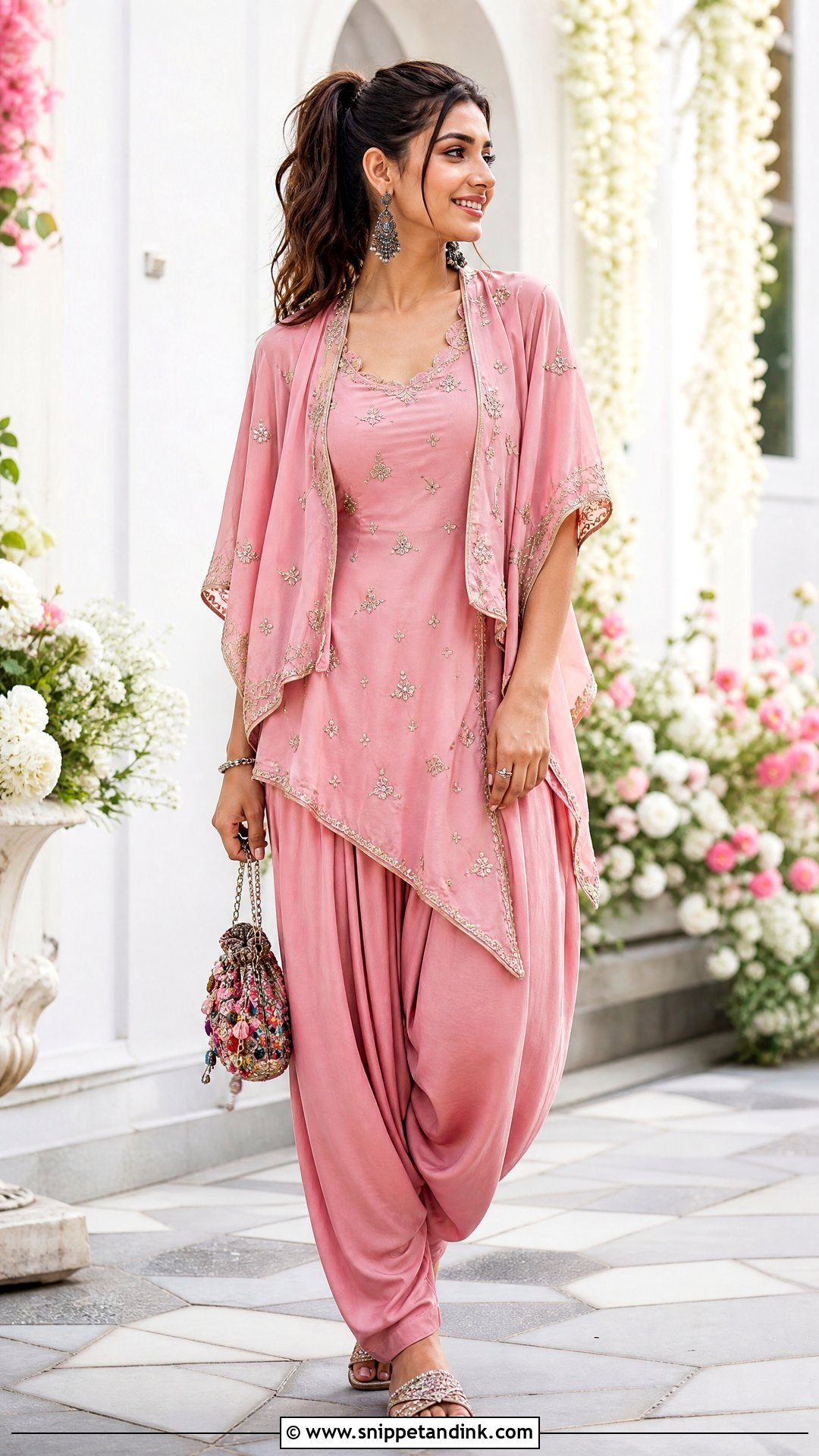
Dhoti pants are the most forgiving bottom for long hours of sitting and dancing, because the gathered drape has room built in. Pair them with a short embroidered kurta or asymmetric tunic in cotton silk or soft crepe, both of which breathe outdoors in the day. A short cape or narrow one-shoulder drape adds dimension without falling over your hands. Oxidized earrings, a beaded bag and kolhapuri-style sandals keep the look playful. One fitting note: dhoti drape varies a lot between makers, and some sit very low in the crotch, so sit down and crouch in them before buying. A messy braid or high ponytail fits the young, energetic feel of this set.
12. Pink Mehendi Cape Lehenga
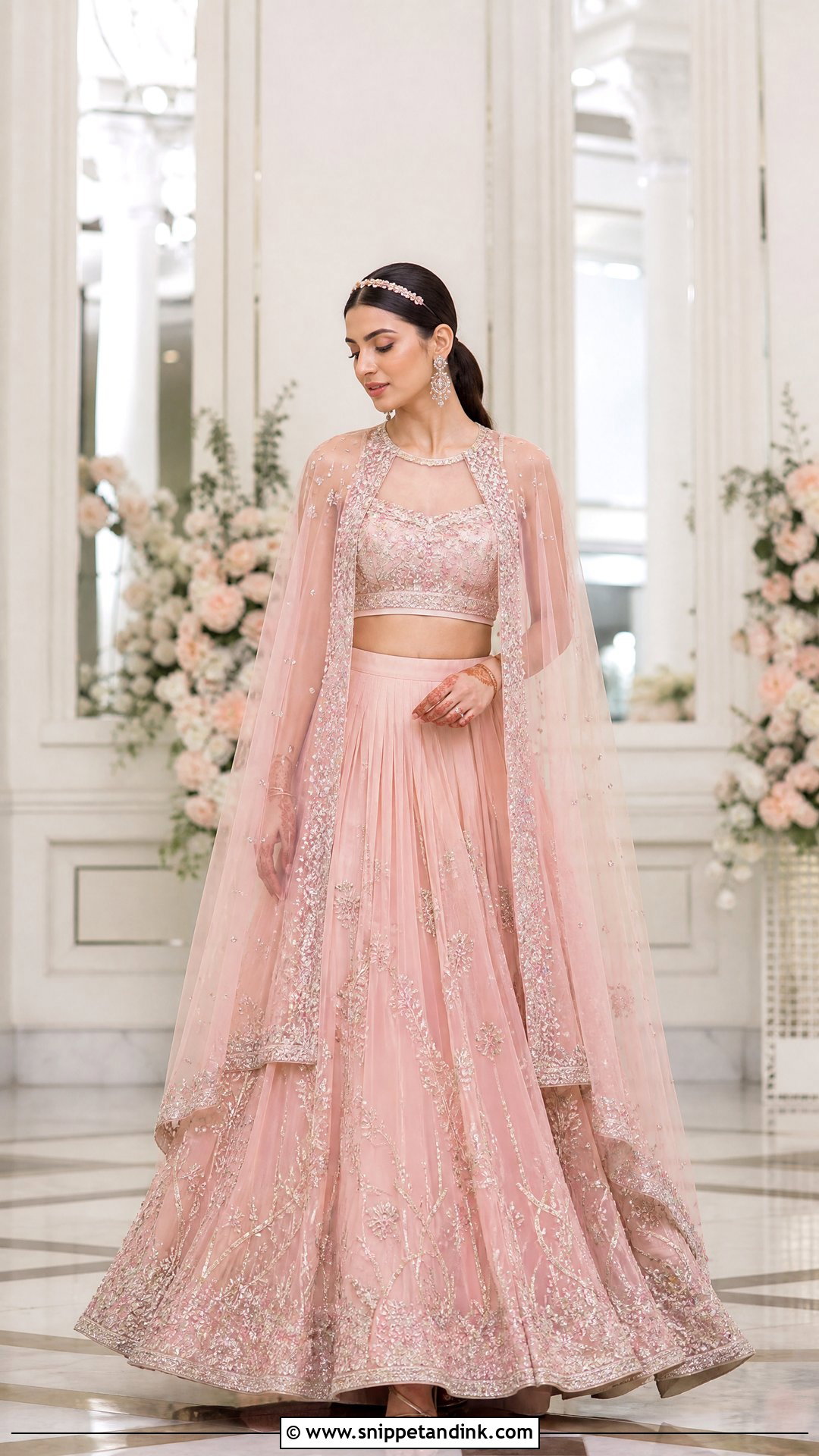
A cape solves the dupatta problem completely, which is why I suggest it to brides who know they will be busy greeting guests. Pair a flowing pink skirt with a fitted blouse and a sheer cape ending at the waist, hip or knee. Light embroidery at the cape edges frames the outfit instead of hiding it. Blush on blush reads refined, while a hot pink cape over a printed skirt is bolder. One thing to check before you commit: the cape sleeves or shoulders must let you lift your arms forward to shoulder height, because that is the position you will hold for the artist. Crystal earrings, a delicate headpiece and metallic sandals suit it; skip the large necklace. A sleek low ponytail keeps the cape line clean.
13. Pink Mehendi Kurta And Churidar
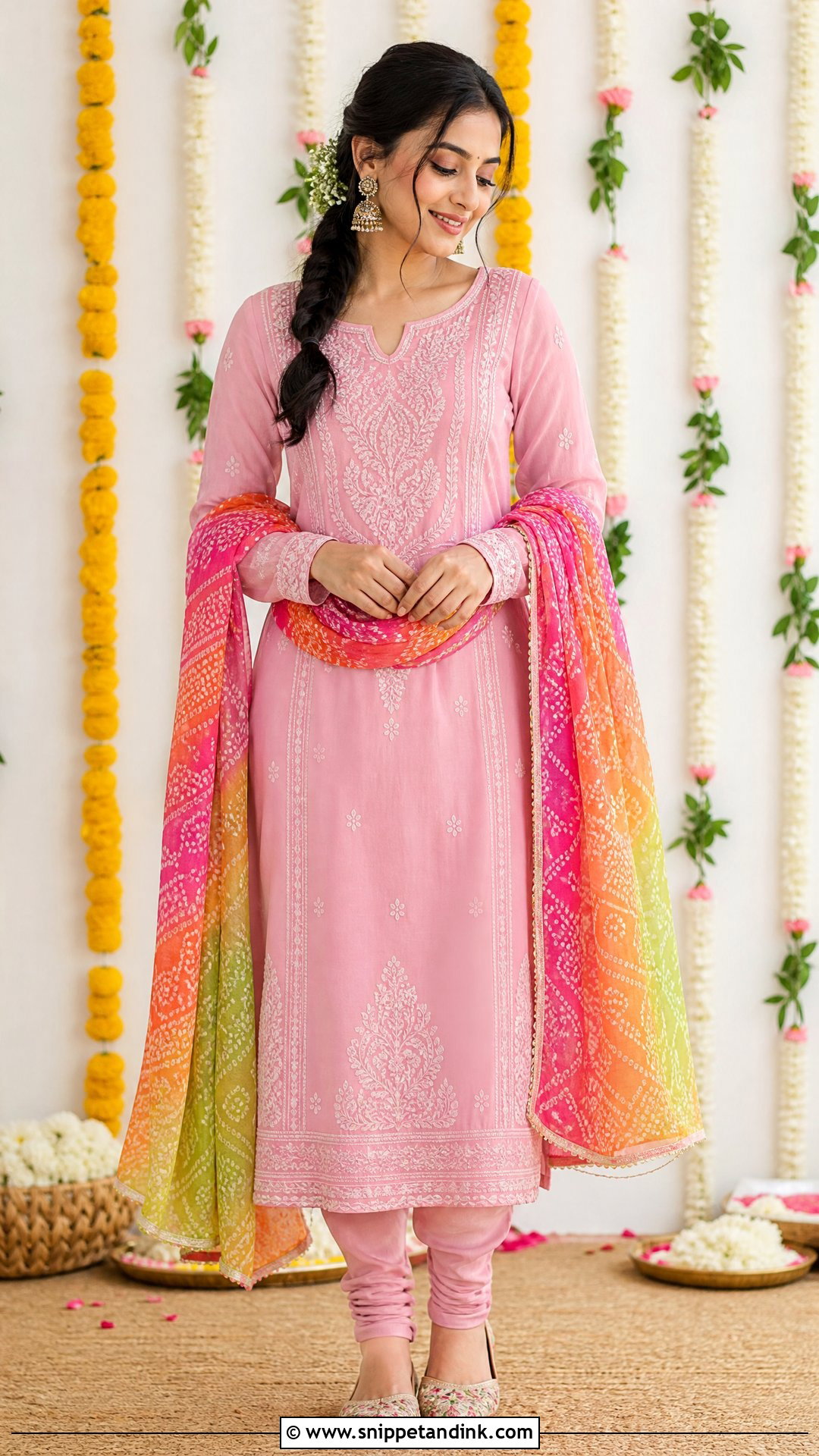
A kurta and churidar is the outfit I recommend when someone wants something dependable they can wear again. Choose a knee or calf-length kurta with side slits, which matter more than people think, since they let the kurta fall open when you sit on the floor instead of pulling tight across your thighs. Keep embroidery to the neckline, cuffs and hem, and match the churidar to the kurta for an unbroken line. A bandhani or leheriya dupatta brings in contrast. Jhumkas, a small bindi and embroidered juttis complete it. If the sleeves are long, check that they fasten above the elbow before booking your henna slot. A low braid suits the clean silhouette, and it works well for intimate home ceremonies.
14. Pink Mehendi Peplum Sharara
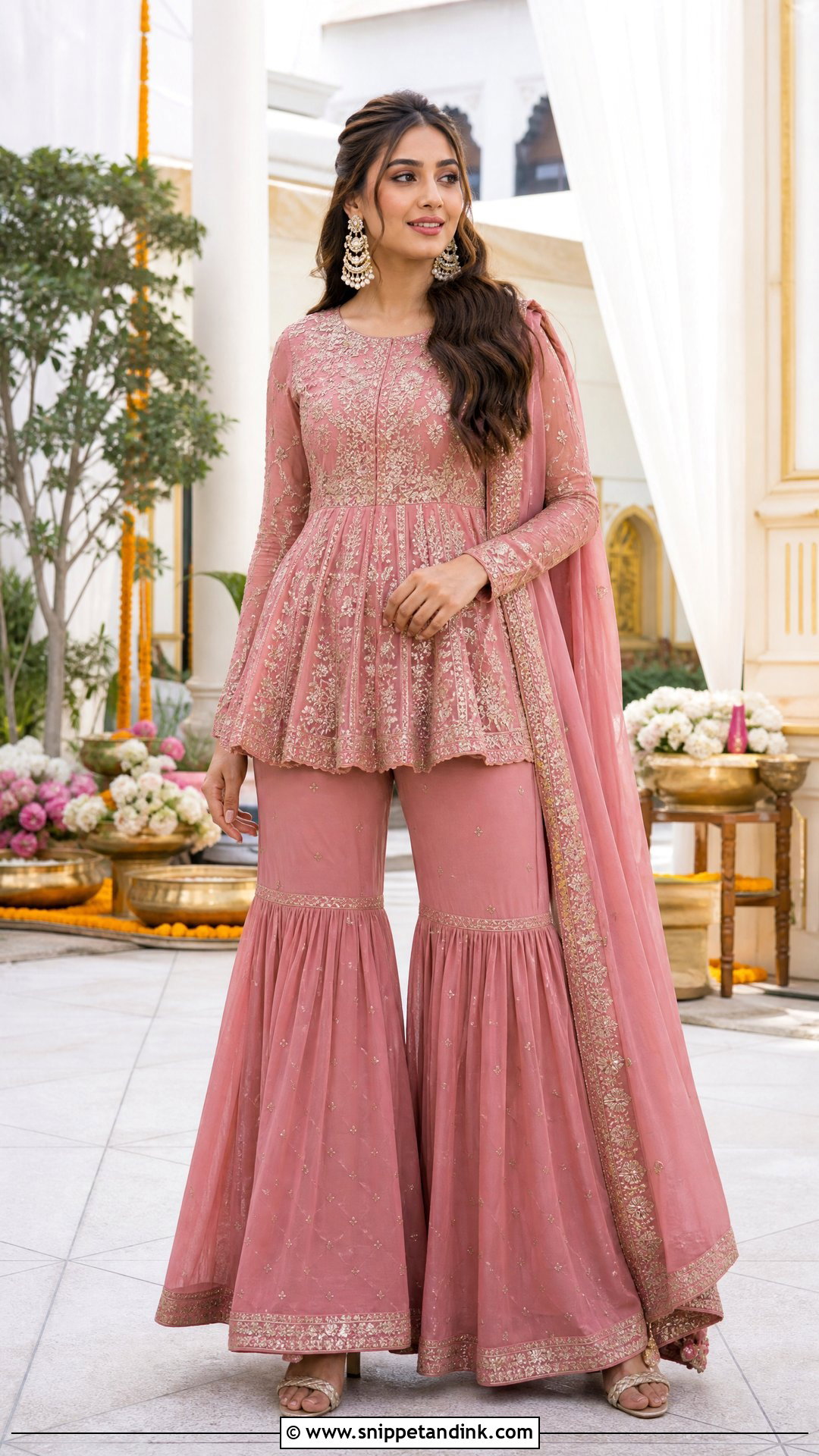
The peplum gives a defined waist and soft coverage over the hips, so I often suggest it to clients who are self-conscious in a crop top. Choose a structured bodice with comfortable sleeves and embroidery at the neckline or hem, then pair it with a lighter sharara so the bottom half does not compete. A narrow dupatta looped behind the arms keeps the front detail visible. Statement chandbalis and block-heel sandals are enough jewellery and footwear; any ring waits until the henna has set. A note on fit: a peplum with a stiff flare can poke out awkwardly when you sit, so a softer, bias-cut flare is kinder for a mehendi. Half-up hair keeps it contemporary for bridesmaids and close family.
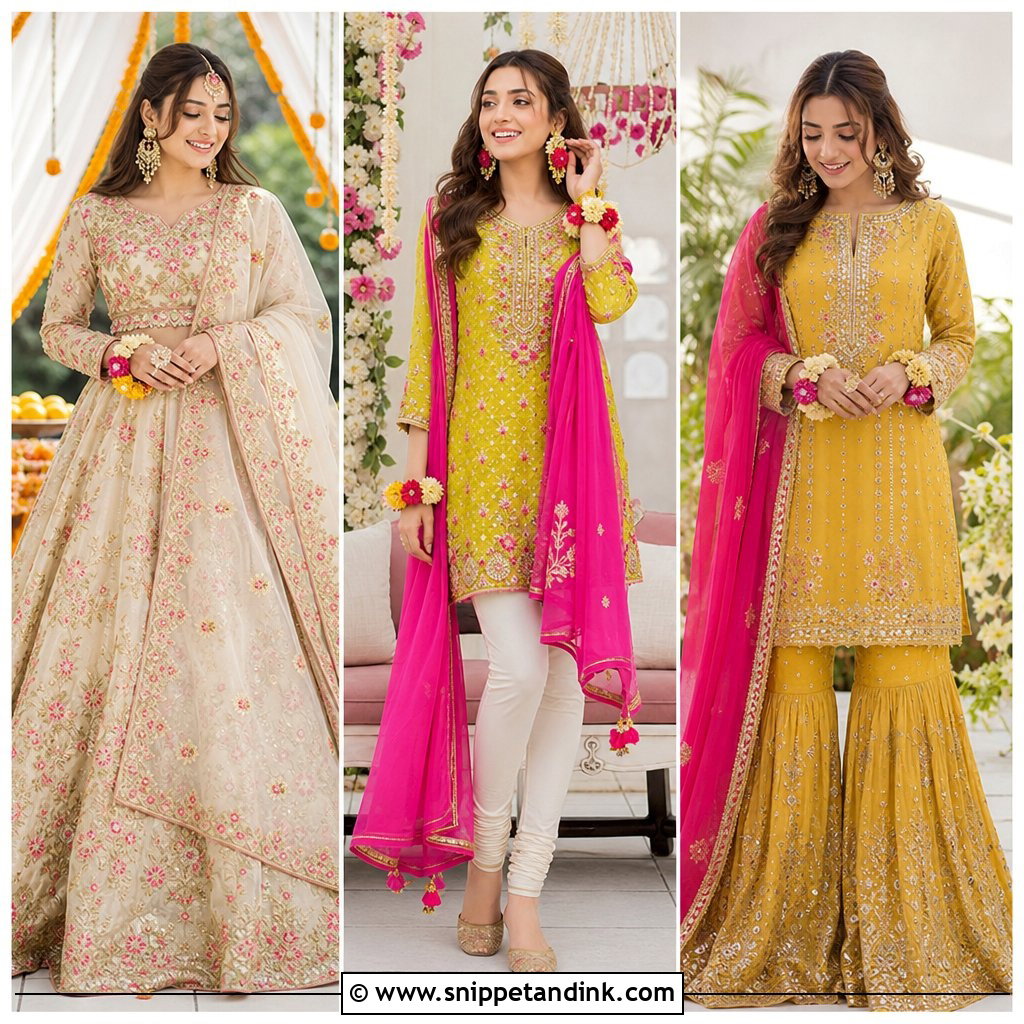
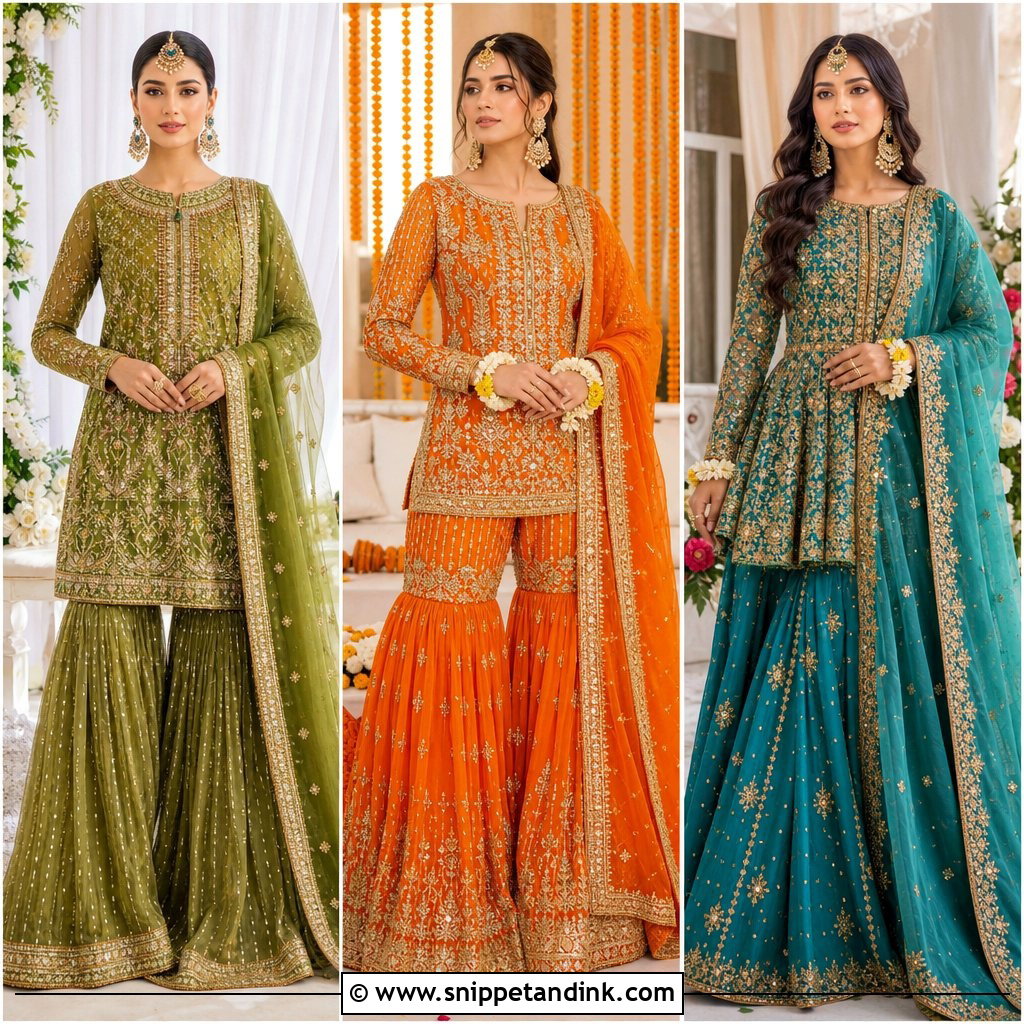
15. Pink And Green Mehendi Lehenga
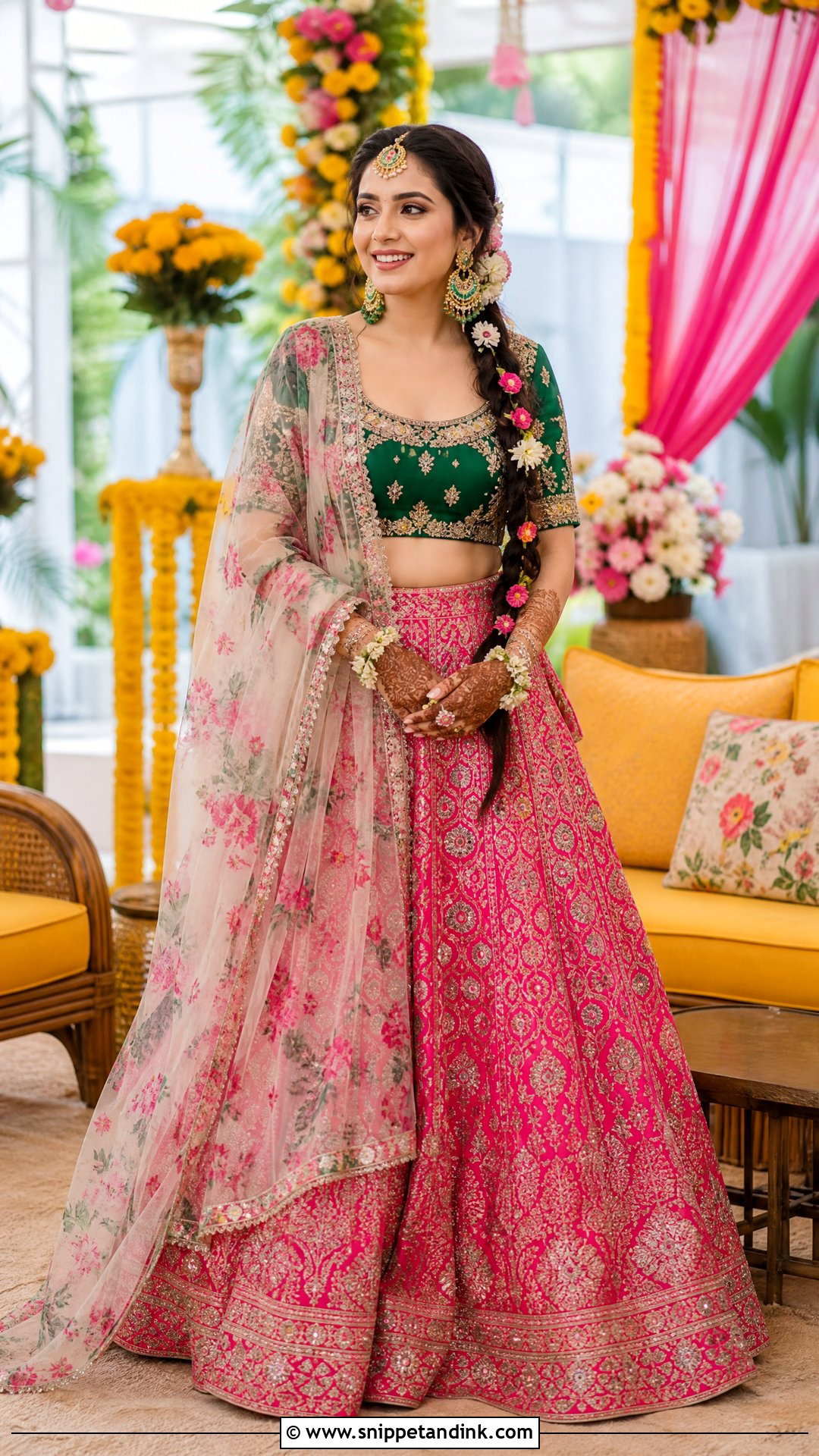
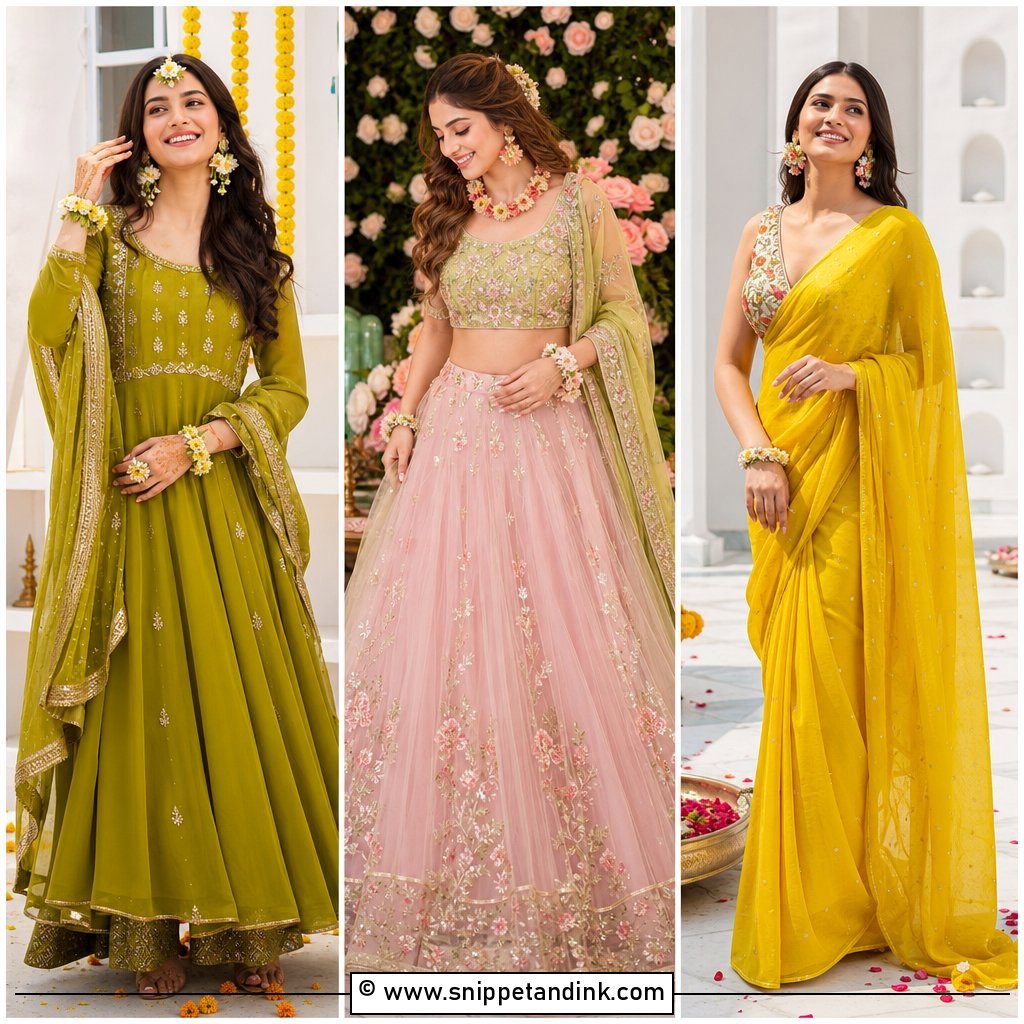
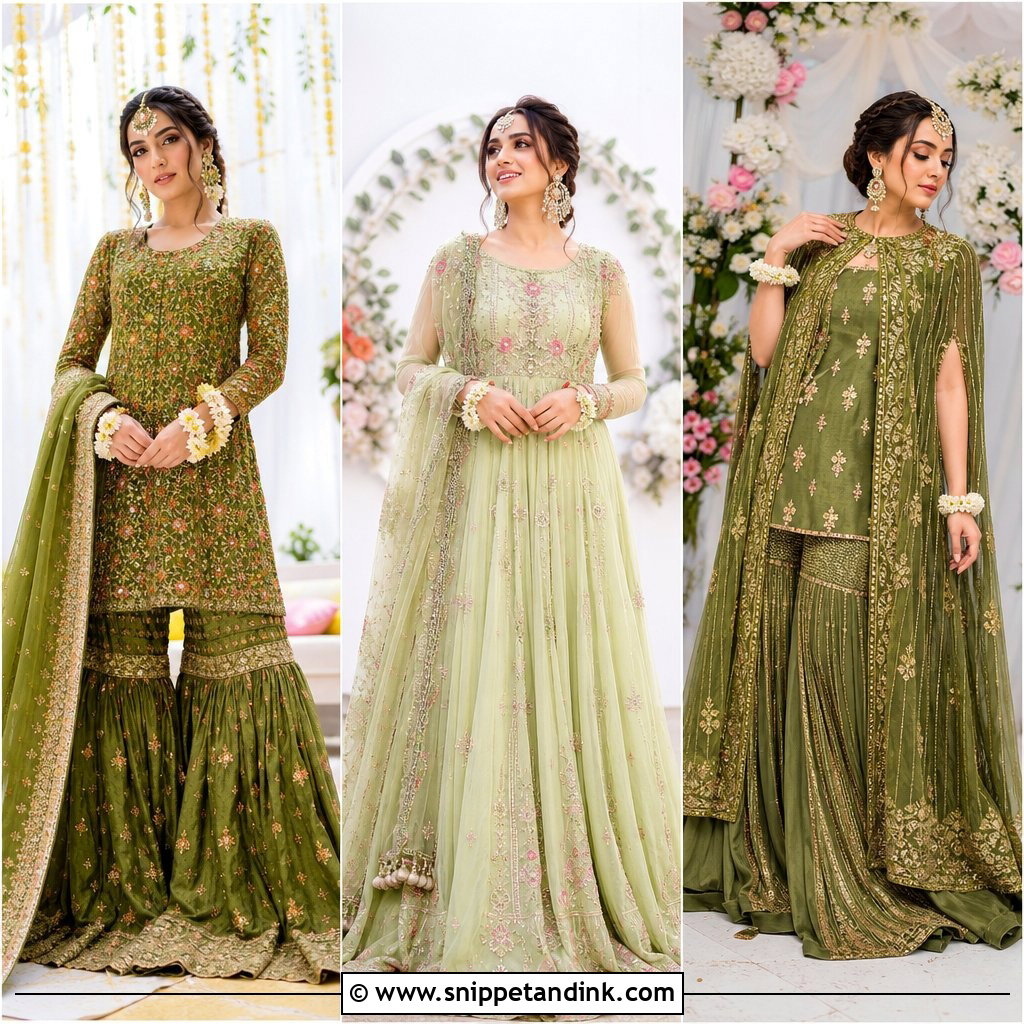
Pink with green is the combination that looks most at home among mehendi decor, partly because the henna paste itself is green. Pair a bright pink lehenga with a bottle green, lime or mint blouse depending on how loud the event is, and let a floral or bandhani dupatta tie the two together. Small repeats of each colour across the pieces make it look planned rather than mismatched. Green stone earrings, a gold tikka and pink juttis carry it through. Keep bangles removable so your forearms are clear. When I style a group in this pairing, I give everyone the same pink and let the green shade vary, which looks coordinated without being uniform.
16. Pink And Yellow Mehendi Sharara
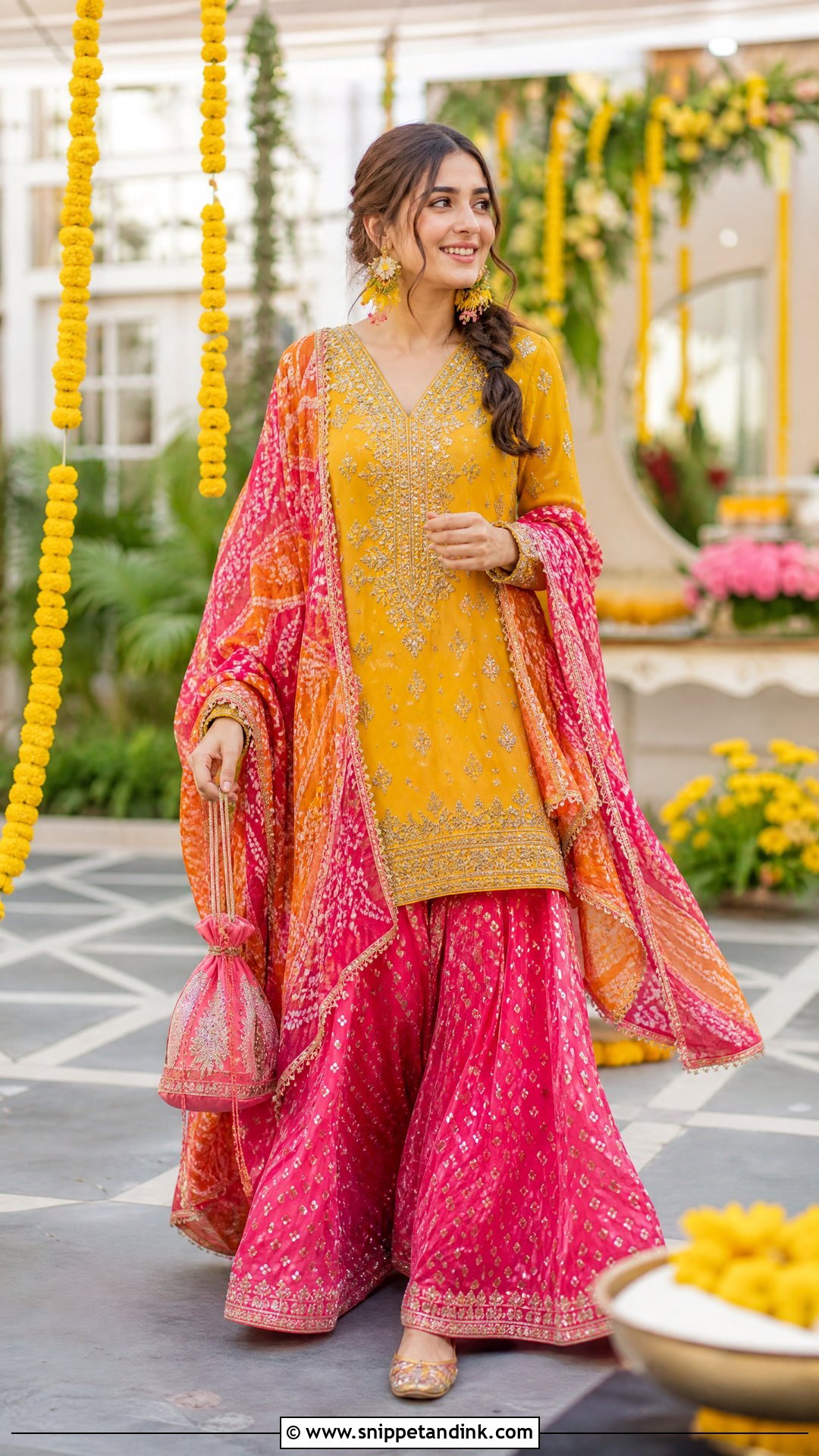
Pink and yellow is a daytime pairing; under evening lighting the yellow can go muddy, so I save it for afternoon functions outdoors. Start with a yellow embroidered kurti over a pink flared sharara, or flip it with a pink kurti and marigold bottoms if you prefer depth. A dupatta that carries both colours in its print or border links the pieces. Flower earrings, gold juttis and a matching potli complete it. Keep makeup fresh, with a rosy lip and soft definition, since bright colour blocking already gives the face plenty of energy. A loose braid keeps the mood relaxed for bridesmaids and cousins.
17. Pink Bandhani Mehendi Lehenga
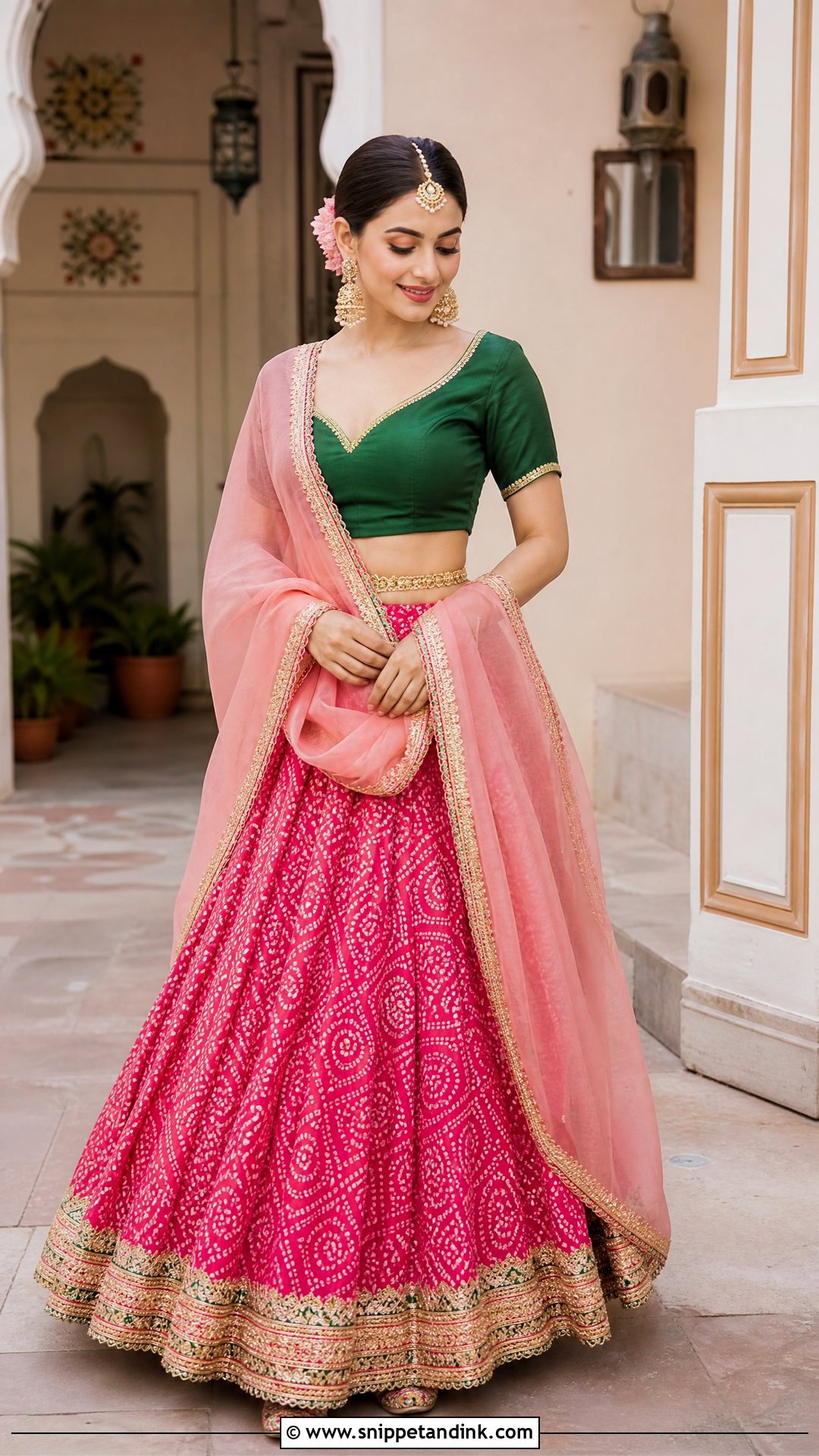
Bandhani carries its own pattern, so it needs no heavy embellishment on top. I look for a light skirt in rani pink, magenta or rose with small tie-dye dots, and anchor it with a solid blouse in pink, red, orange or green. A plain organza dupatta with a gota border keeps the patterns from multiplying. Gold jhumkas, a borla-style headpiece and embroidered mojaris complete the regional feel. A waist belt can hold the dupatta, but choose a slim flexible one; a rigid belt digs in once you sit for an hour. Genuine bandhani can bleed dye when damp, so wear dress shields and avoid splashing water near it.
18. Pink Indo Western Mehendi Jumpsuit
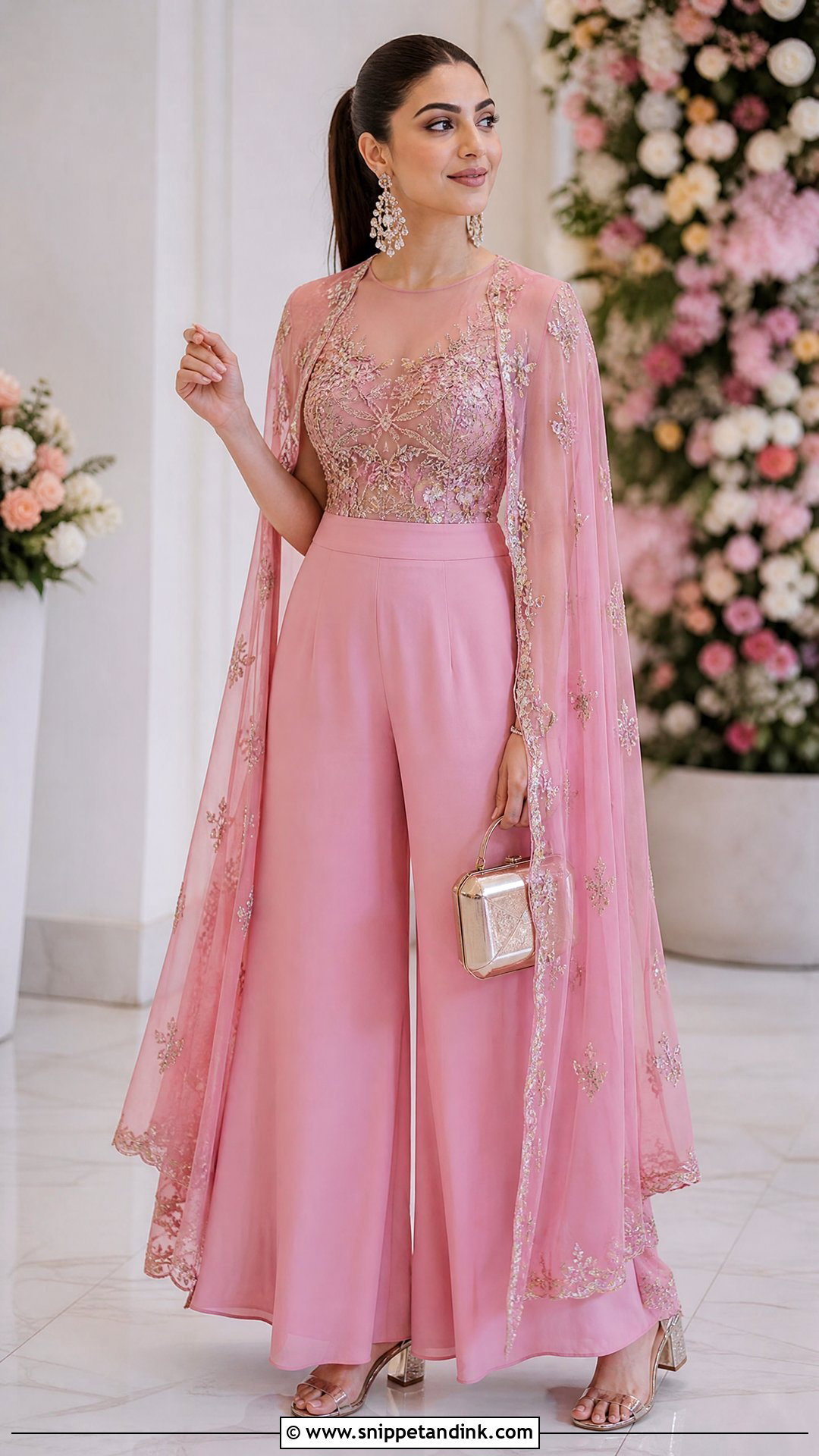
A pink Indo Western jumpsuit is one garment to manage instead of three, which many guests appreciate. Choose a wide leg with a fitted waist and embroidered bodice, then add a detachable cape or short jacket for festivity. The honest drawback is the bathroom: with henna drying on both hands, a jumpsuit with a back zip is very hard to get in and out of alone, so look for a side zip or a wrap front, or plan your henna slot after a break. Chandelier earrings, a structured mini bag and metallic block heels suit the clean lines. A sleek ponytail keeps the silhouette tidy, and it fits friends and bridesmaids at a contemporary celebration.
19. Pink Mehendi Salwar Suit
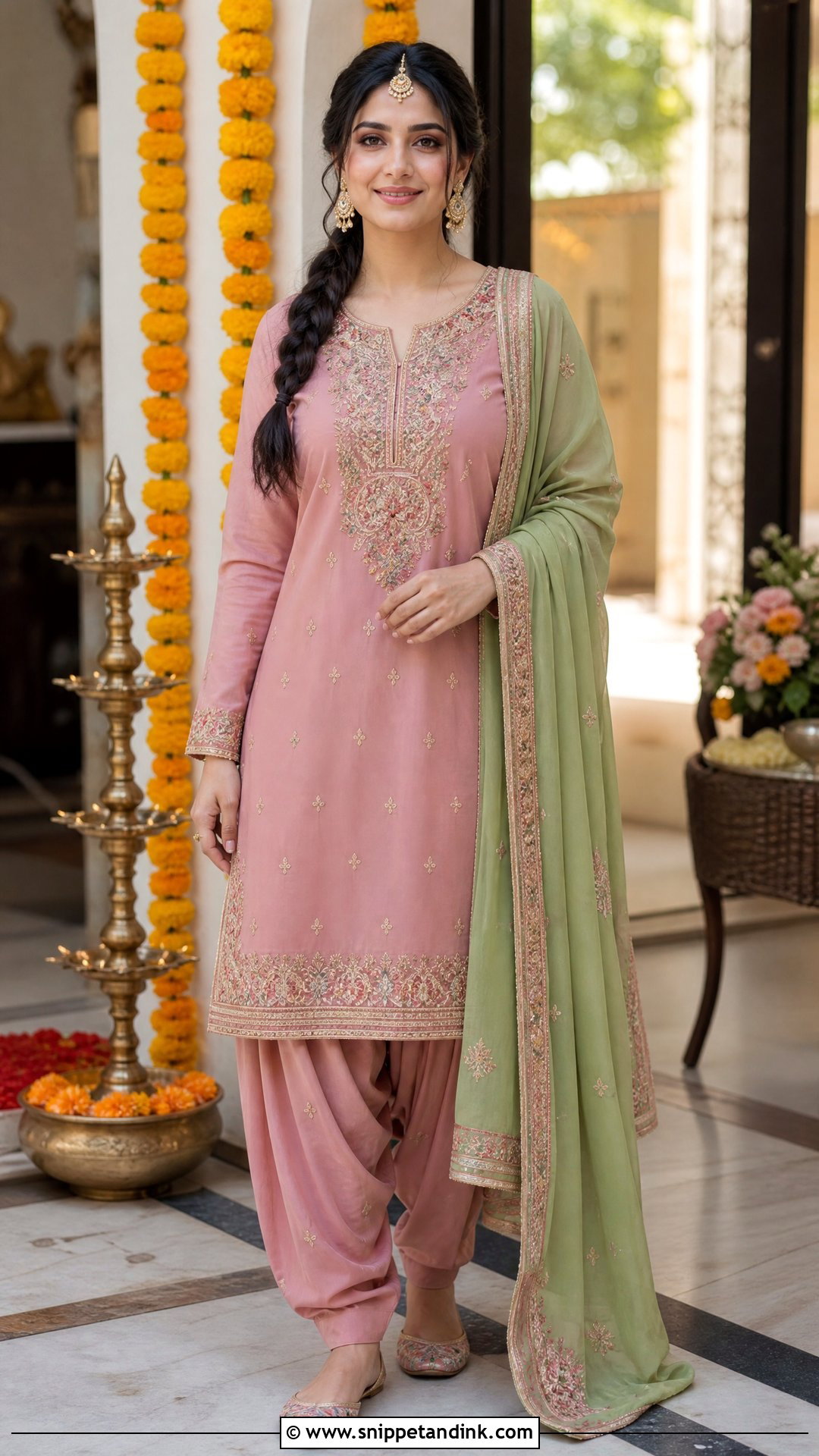
A salwar suit is the most comfortable thing on this list for a long, floor-seated mehendi. The gathered salwar lets you sit cross-legged without strain, and a short or mid-length kameez keeps it light. I choose cotton silk for a casual afternoon and georgette with light embroidery for a dressier evening. A green dupatta adds energy; pink on pink is quieter. A passa or small tikka, drop earrings and flat khussas finish it, with necklaces kept minimal if the neckline already has zari. A side braid suits the easy shape. It adapts across ages and body types, so it is the outfit I suggest most often to aunts and older guests.
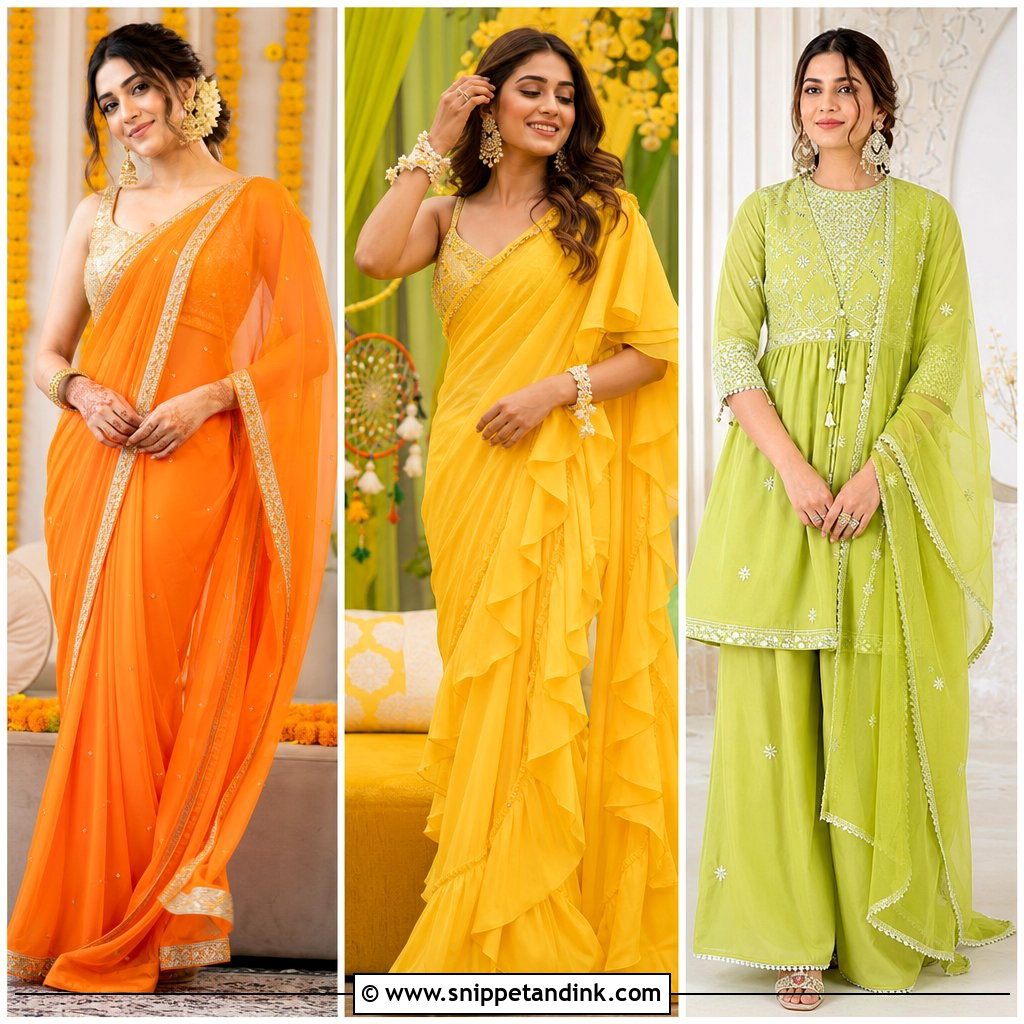
20. Pink Mehendi Saree Lehenga
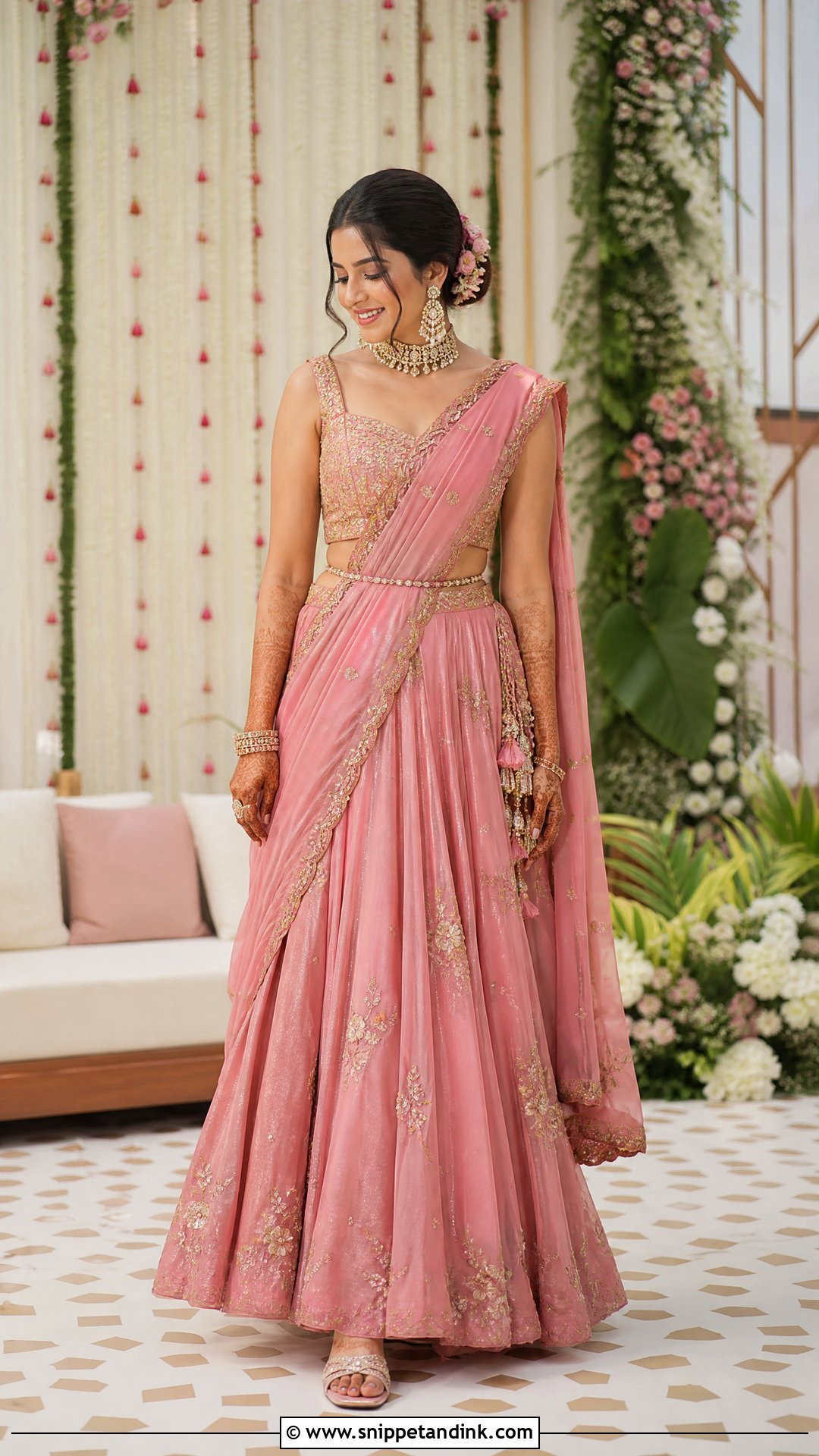
A saree lehenga gives you the look of a drape with the security of a skirt. I recommend the pre-stitched version for mehendi, because the drape is sewn in at the waist and will not unravel when you twist toward the artist or dance afterwards. Pair it with a matching blouse or a green, gold or yellow contrast. Fasten the attached drape at the shoulder with a brooch or safety pin underneath, even if it feels secure. A choker, matching earrings and low block heels complete it. A sleek bun with flowers turns it bridal; soft curls keep it relaxed for a guest. It is a good middle ground for relatives who love a saree but not the pinning.
Protecting Pink Fabric From Henna Paste
Fresh henna paste stains fabric, and pink shows it badly because the stain dries to an orange-brown. The bride will sit for the longest, so I always pack an old dupatta or a cotton sheet to drape over her lap while the artist works. Dried paste flakes off as it cracks, and those crumbles land in the folds of a skirt where they rub in when you stand.
If paste does land on your outfit, do not wipe it. Let it dry, then lift the crust off gently with a blunt edge such as a credit card, and brush away the dust. Rubbing wet paste pushes the dye deeper into the weave. Once you are home, rinse the spot from the back with cold water; hot water sets the stain. Delicate silks, raw silk and anything with zari should go to a dry cleaner who handles ethnic wear, and tell them it is henna so they treat it properly.
What to carry in your potli
- Safety pins and a couple of small brooches for a slipping dupatta.
- A soft cloth or old scarf for your lap.
- A zip pouch for bangles and rings removed before application.
- Tissues for blotting, never for rubbing paste.
Ask a sister or friend to be your hands for the evening. With paste on both palms, you cannot fix a pallu, adjust earrings or eat without help, and having one person assigned saves a lot of awkward moments.
The Shade Matters Less Than Your Sleeves
Pink works for almost every role at a mehendi, from a pastel bridal lehenga to a guest in a salwar suit or jumpsuit. Pick the depth of pink by time of day and lighting, then let your role decide how much embroidery you wear. What actually makes or breaks the outfit is practical: arms that clear the elbow, a dupatta that stays put, shoes you can stand up in from a floor cushion, and bangles that wait in your bag until the paste has dried. Get those right and the shade almost takes care of itself.
You'll Like These Ideas:


Leave a Reply