
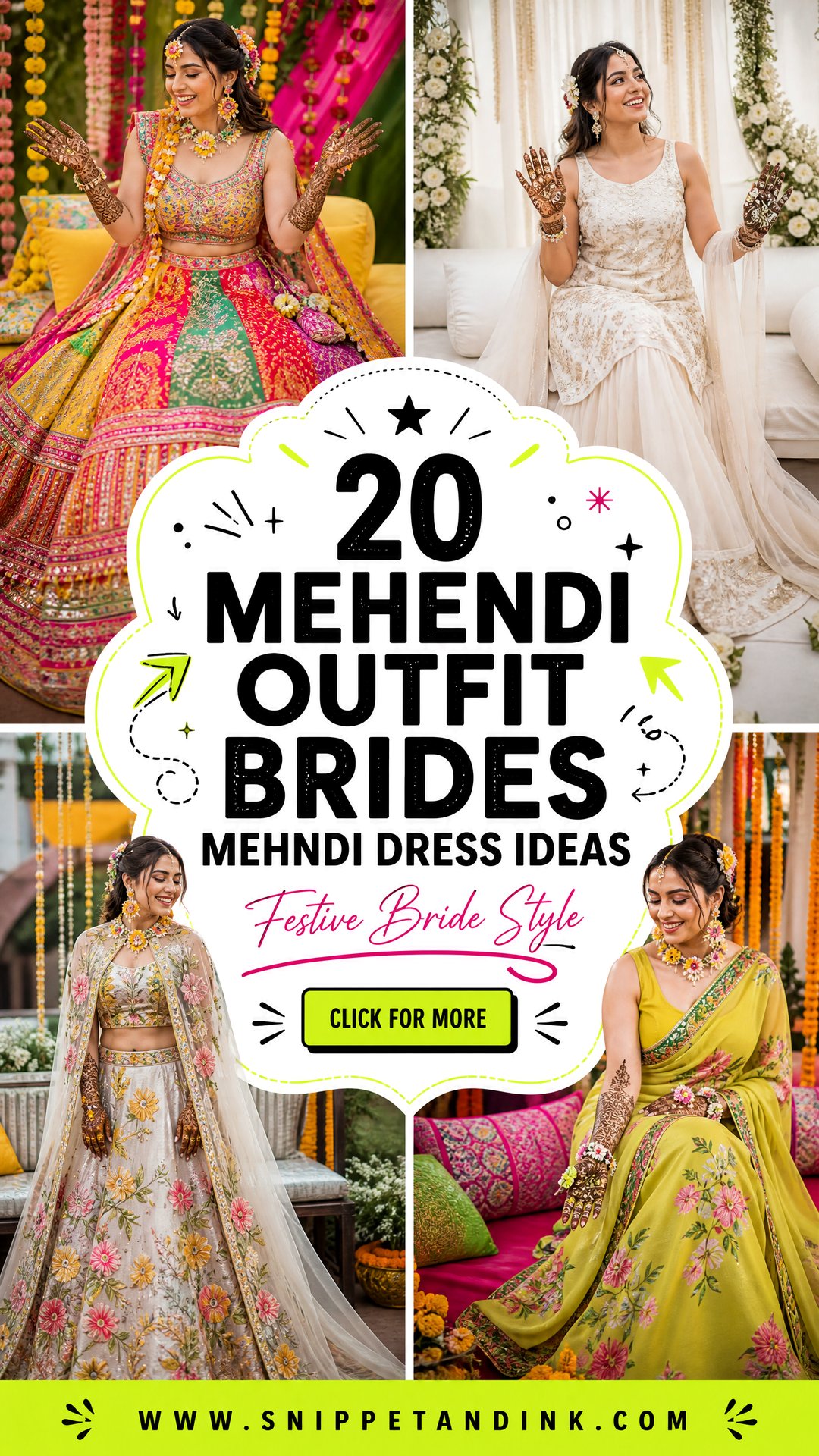
The outfit that works best at a mehendi is rarely the heaviest one in the wardrobe. It’s the one you can sit in for hours, dance in afterward, and that frames your hands instead of hiding them. Bright greens and yellows, mirror work, shararas, light lehengas and sleeves that stop short of the henna keep coming up with the brides I dress, mostly because they solve those practical problems. Contrast and breathable fabric matter as much as embroidery. Below are twenty dresses and outfits I’d consider, with honest notes on each.
Your Stain Starts Out Orange, So Test Colors Against That
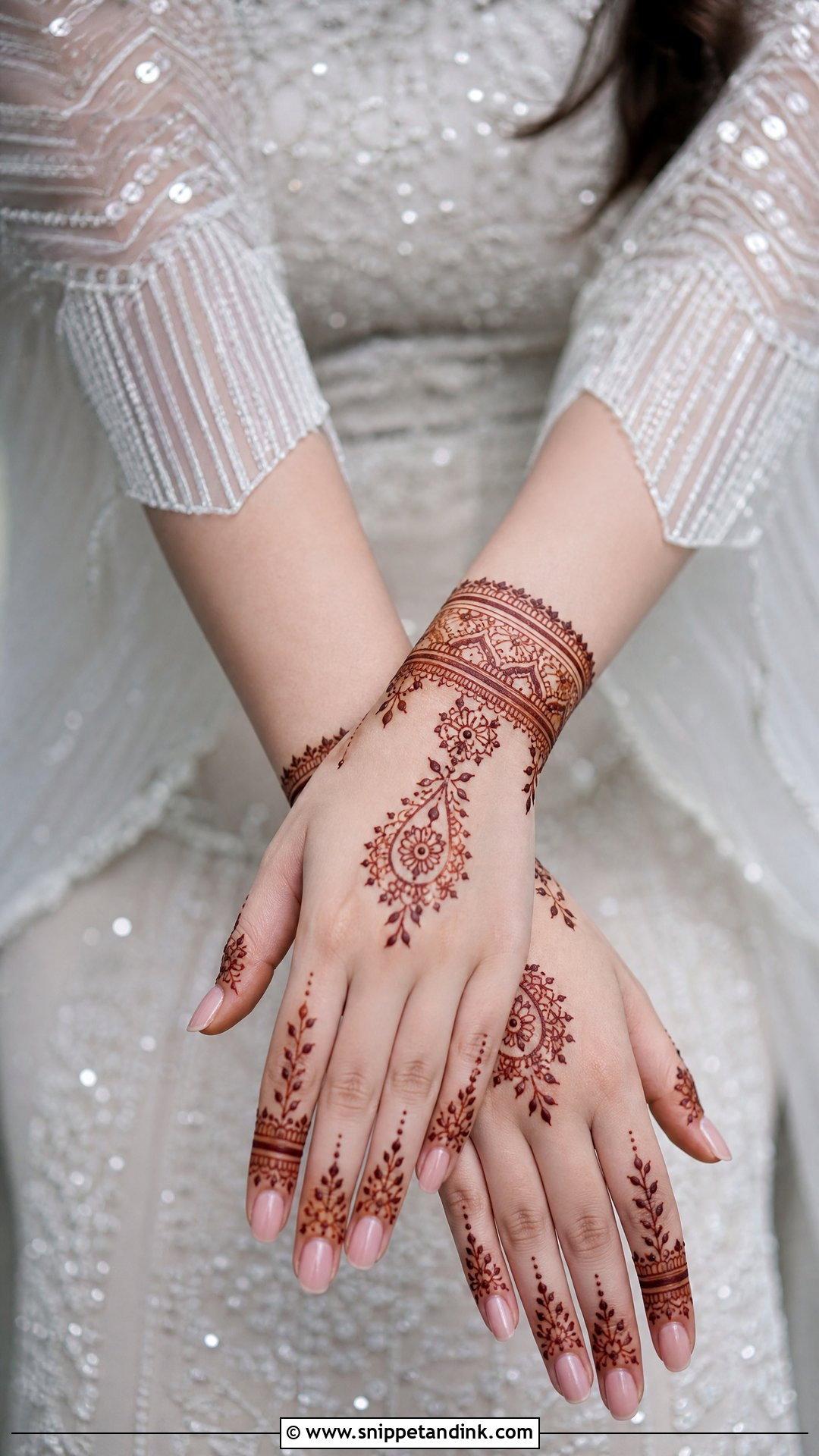
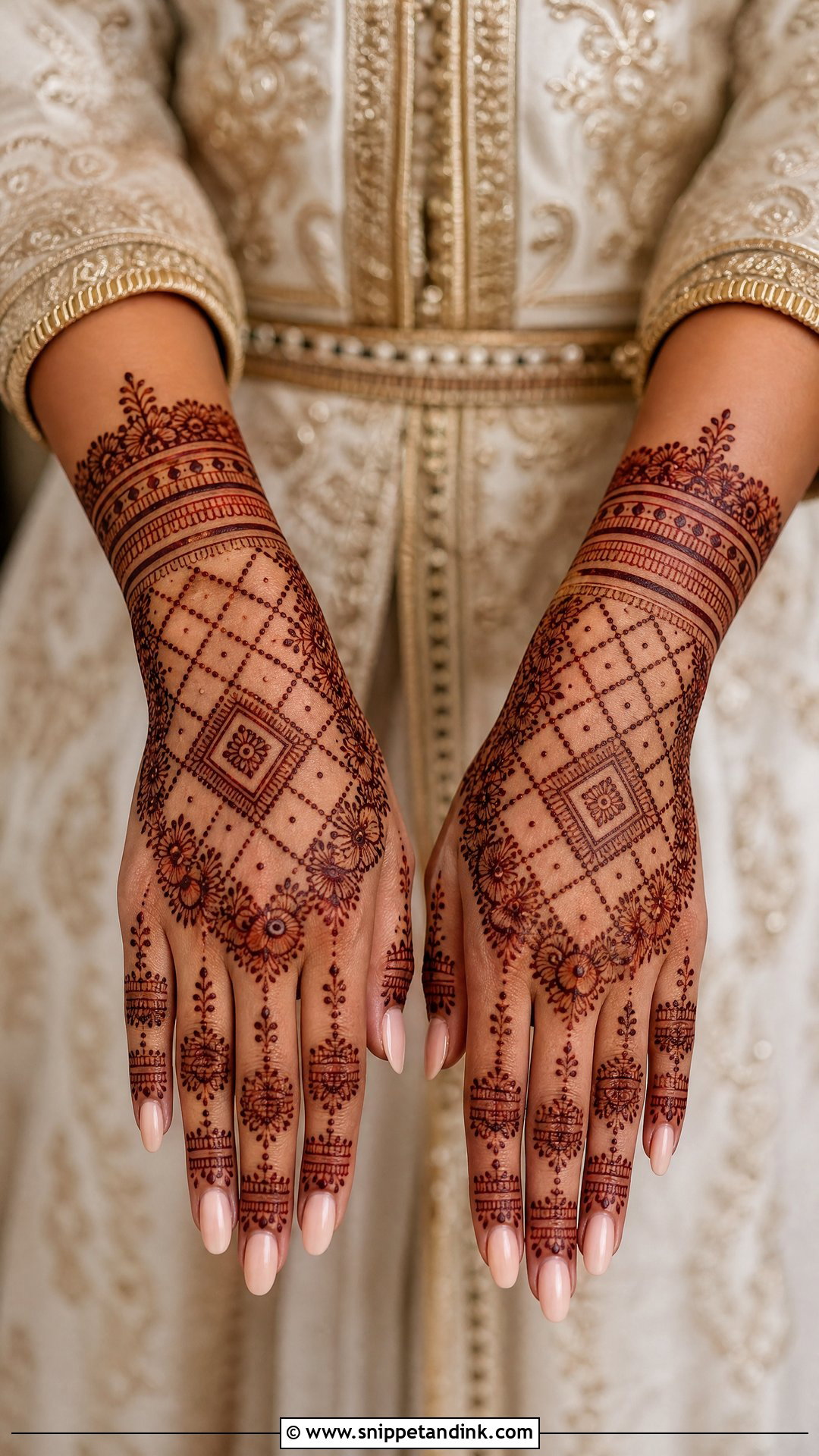
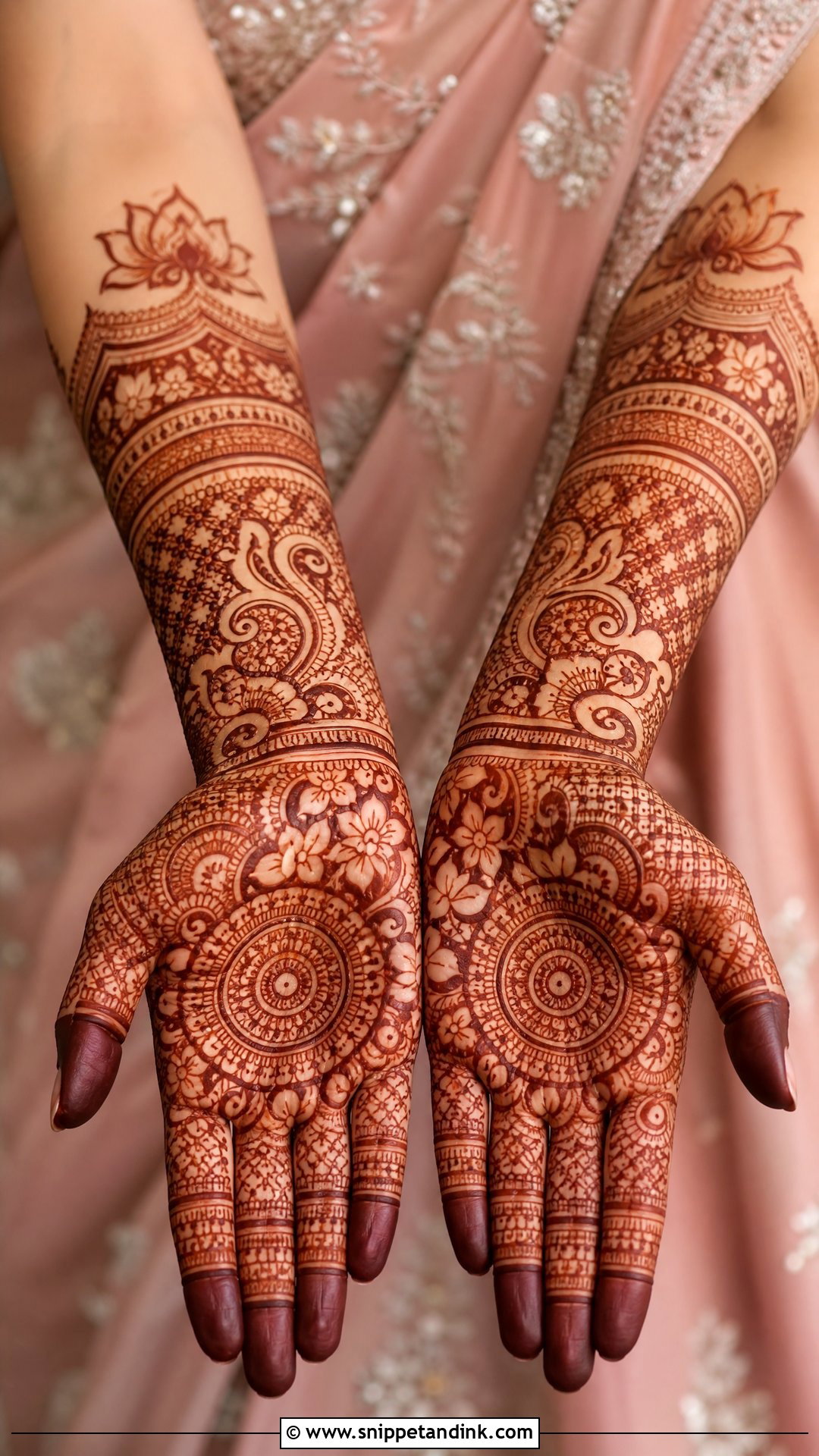
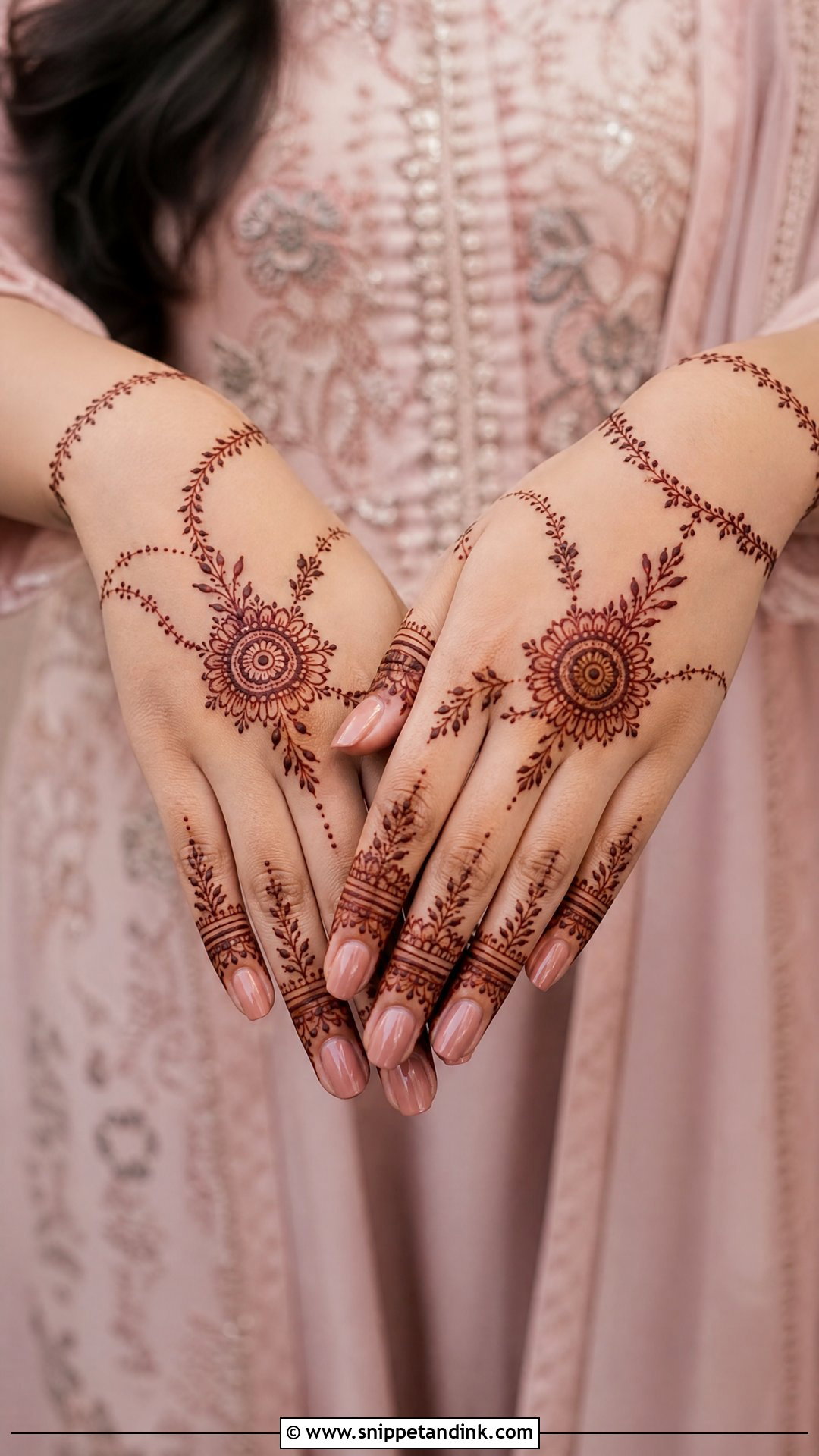
Henna doesn’t come off the skin looking maroon. When the dried paste is scraped away, the stain is a bright orange that darkens over the next day or two toward reddish-brown. During the function your hands show the dark green or brown of the paste, and photos taken right after removal show orange. The outfit has to look right next to all three.
What each stage pairs with
- Wet paste, during the event: greens disappear into it, so put a contrasting dupatta or bangles nearby.
- Fresh orange stain, in photos that night or the next morning: ivory, pink, teal and deep green flatter it, while a bright orange outfit can look flat beside it.
- Darkened stain, by the wedding: almost everything works, but white, pastels and yellow give the strongest contrast.
Before you order, hold a fabric swatch next to your hand in daylight, and if you can, next to a friend’s two-day-old stain. It takes a minute and saves a lot of disappointment.
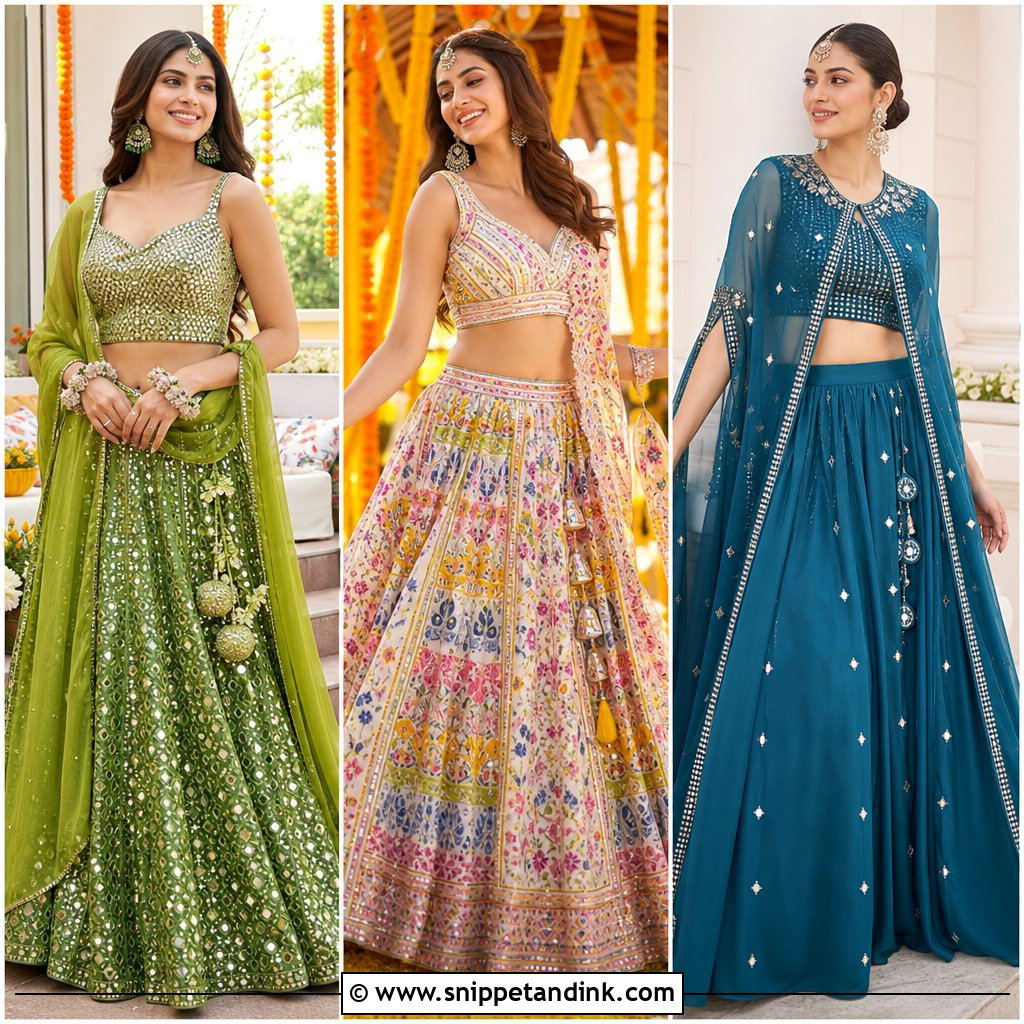
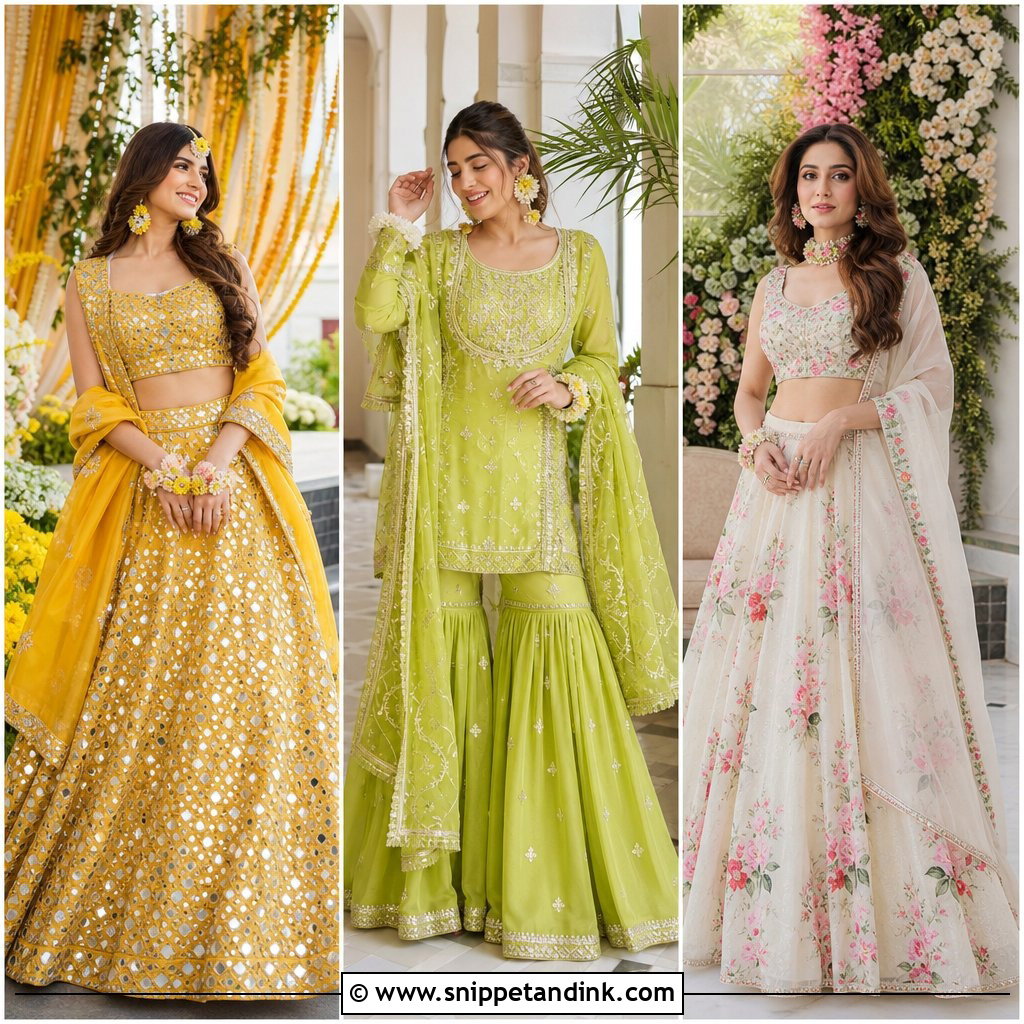
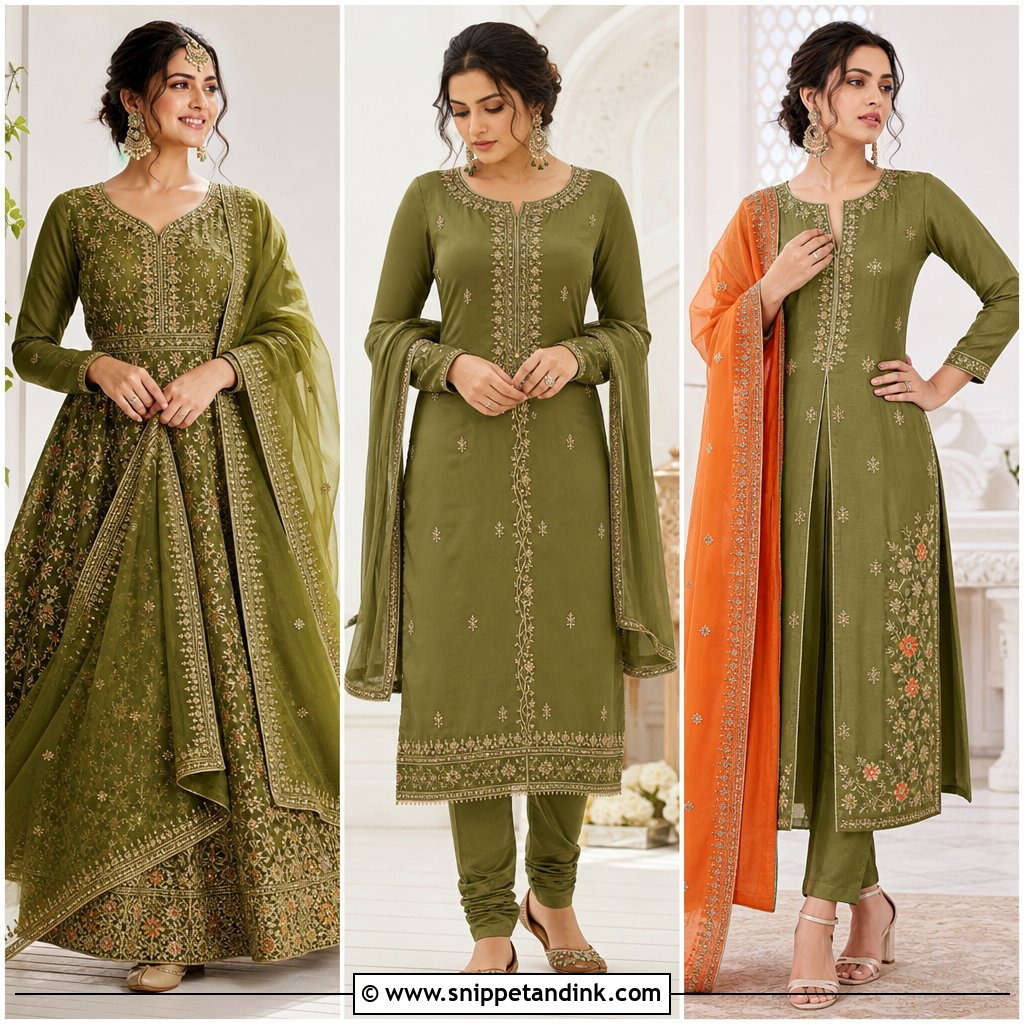
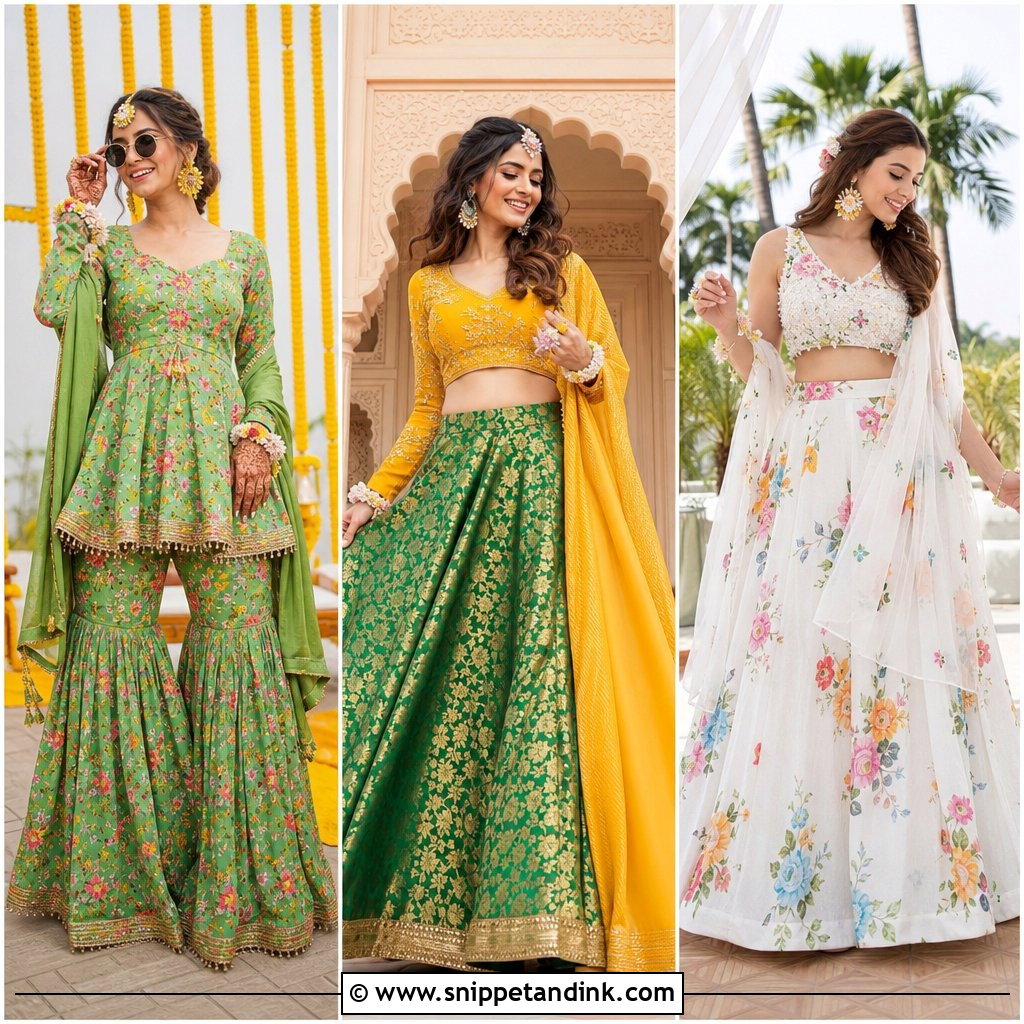
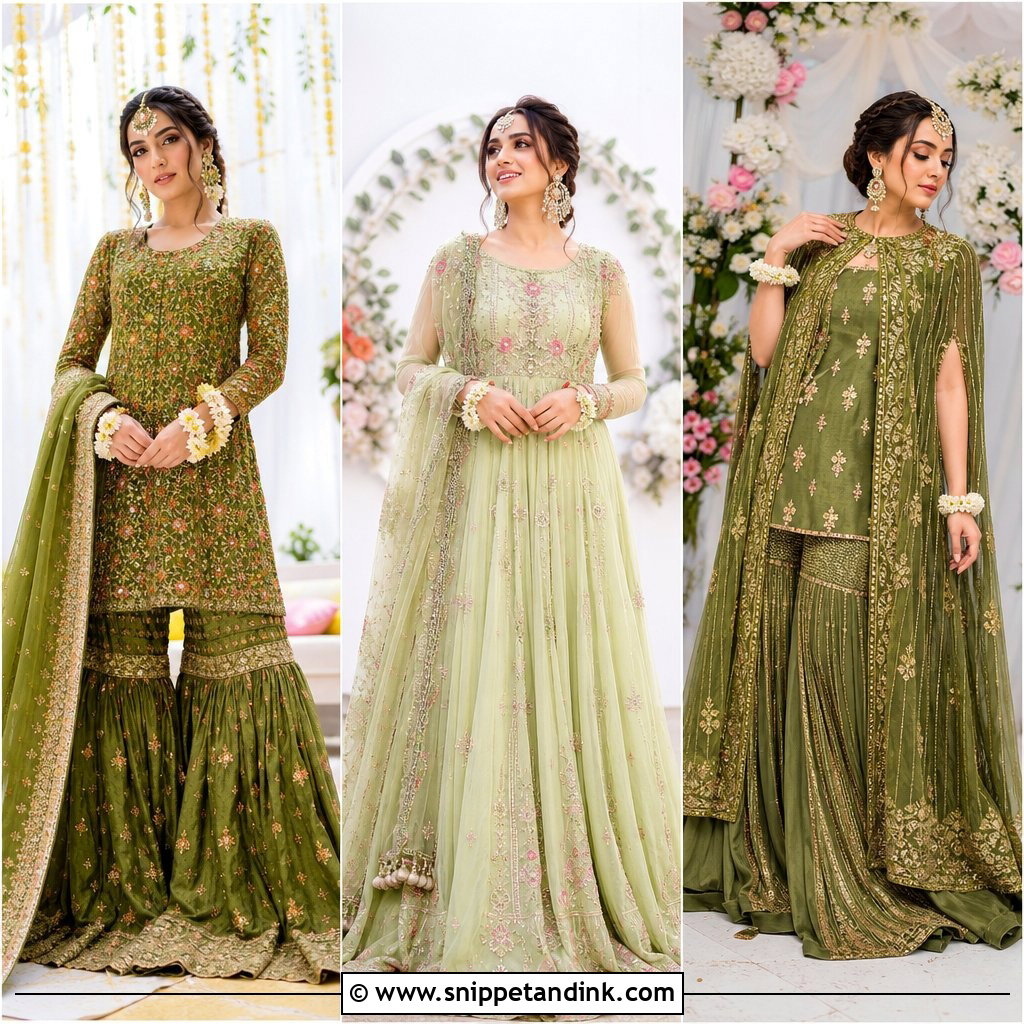
1. Green Mehendi Lehenga For Bride
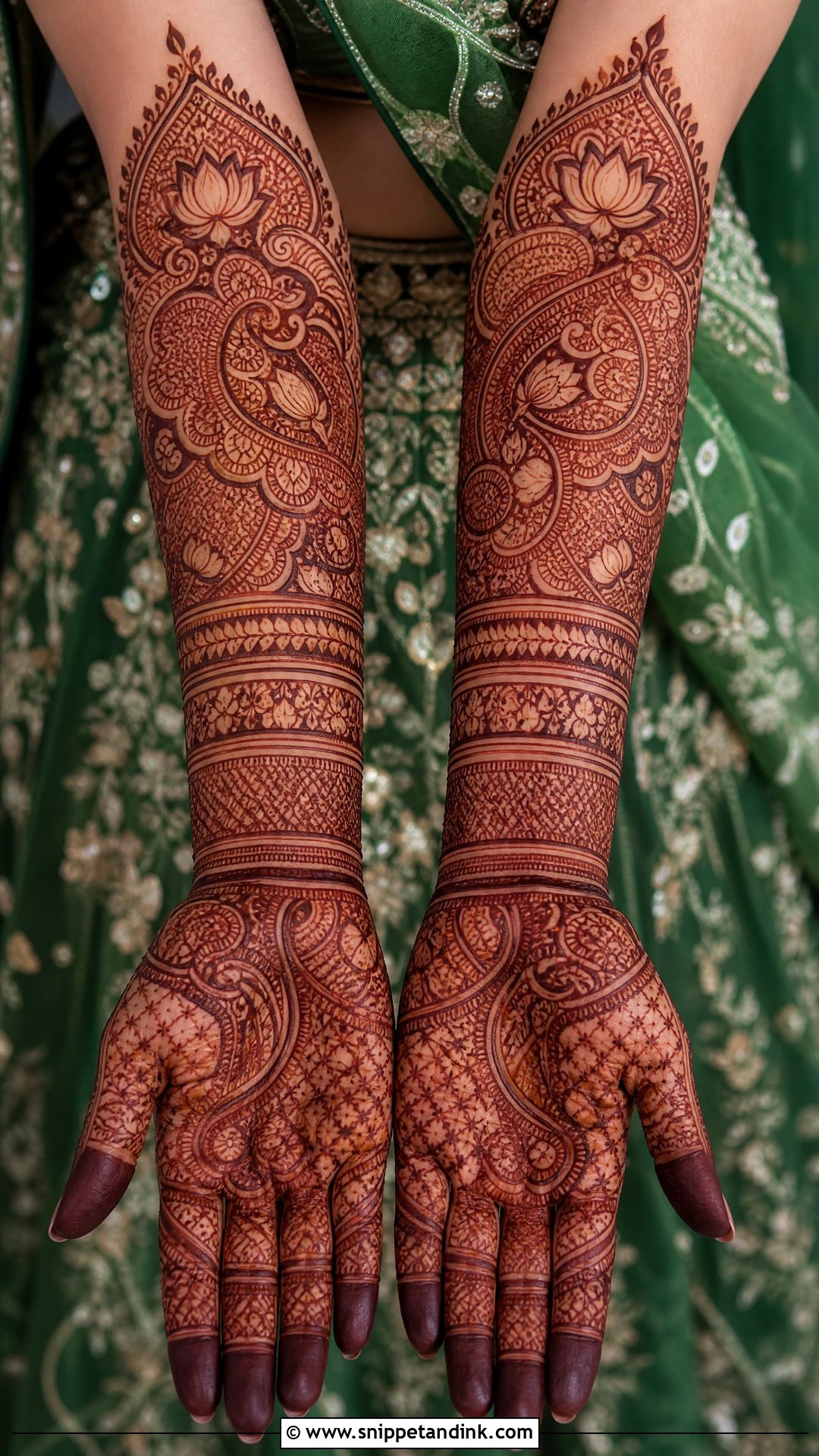
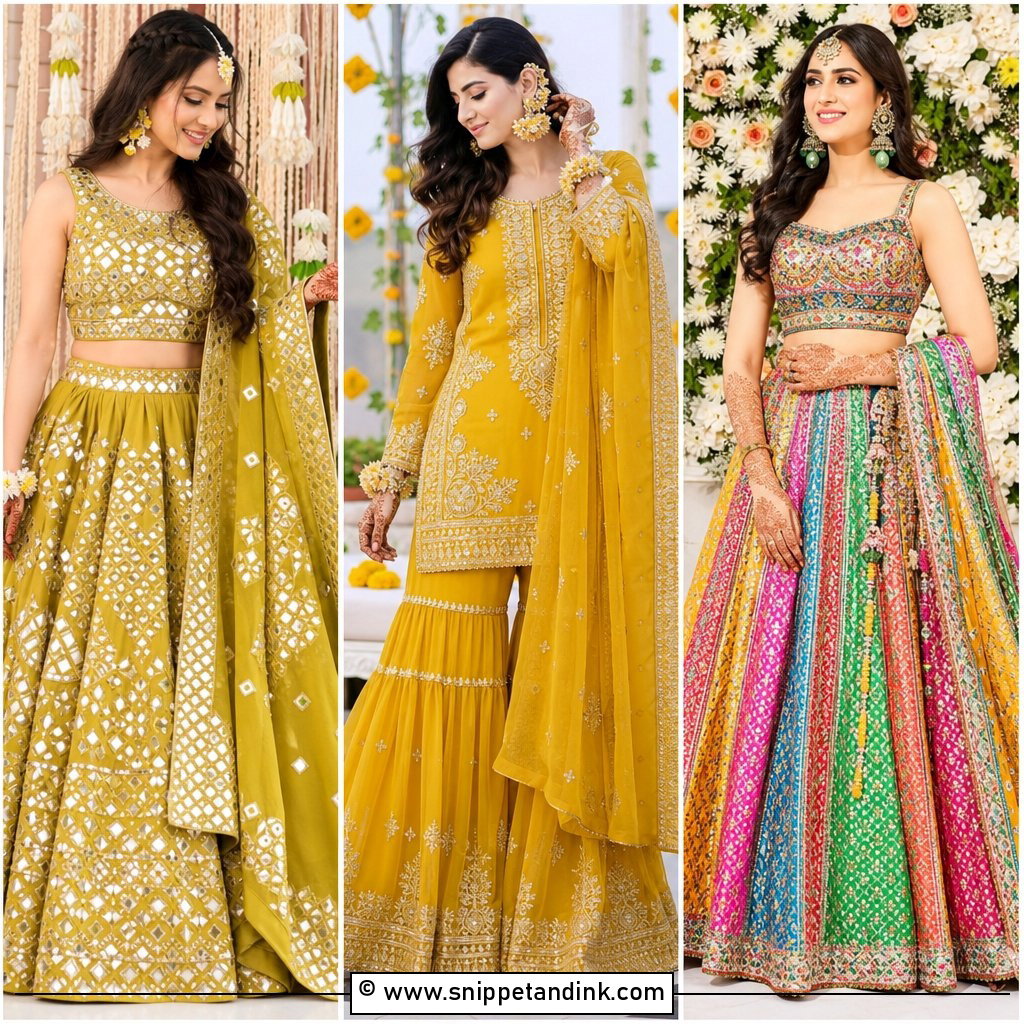
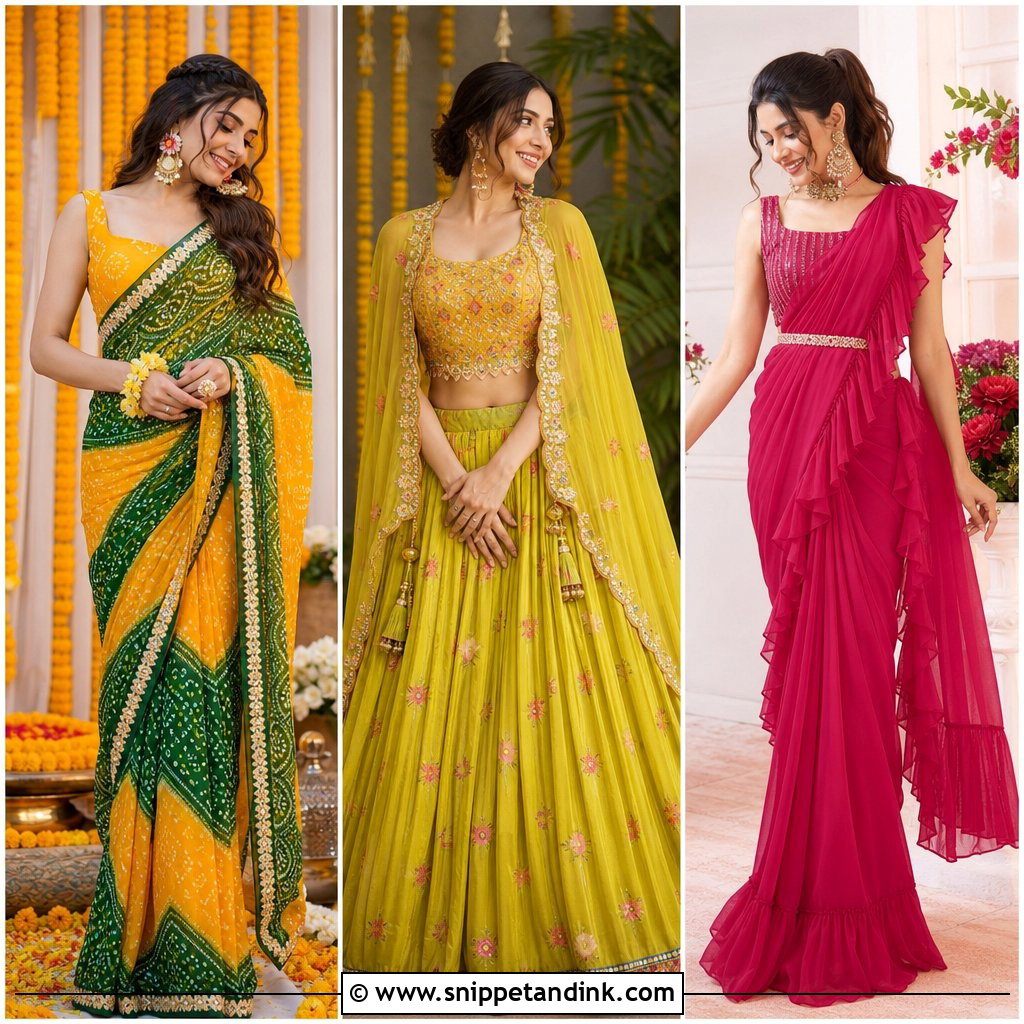
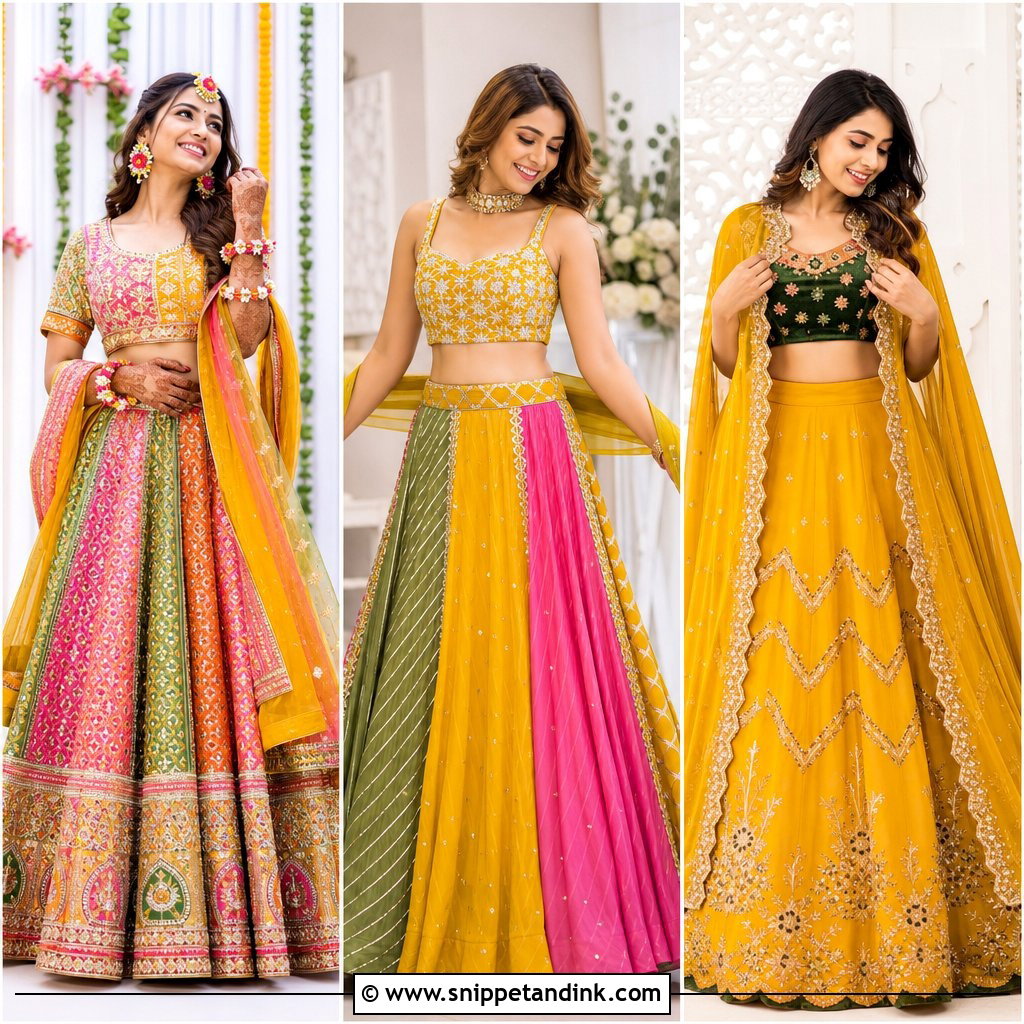
Green ties straight to the ceremony, and it’s the color an elder relative is least likely to question. Each shade behaves differently: lime and parrot glow in sunlight, while emerald deepens under evening lights. Mirror work, gota patti or thread embroidery all suit it. I keep the blouse sleeveless or short-sleeved and pin a light dupatta on one shoulder. Floral jewelry, loose waves or a braid, and warm makeup keep it lighter than a wedding-day look.
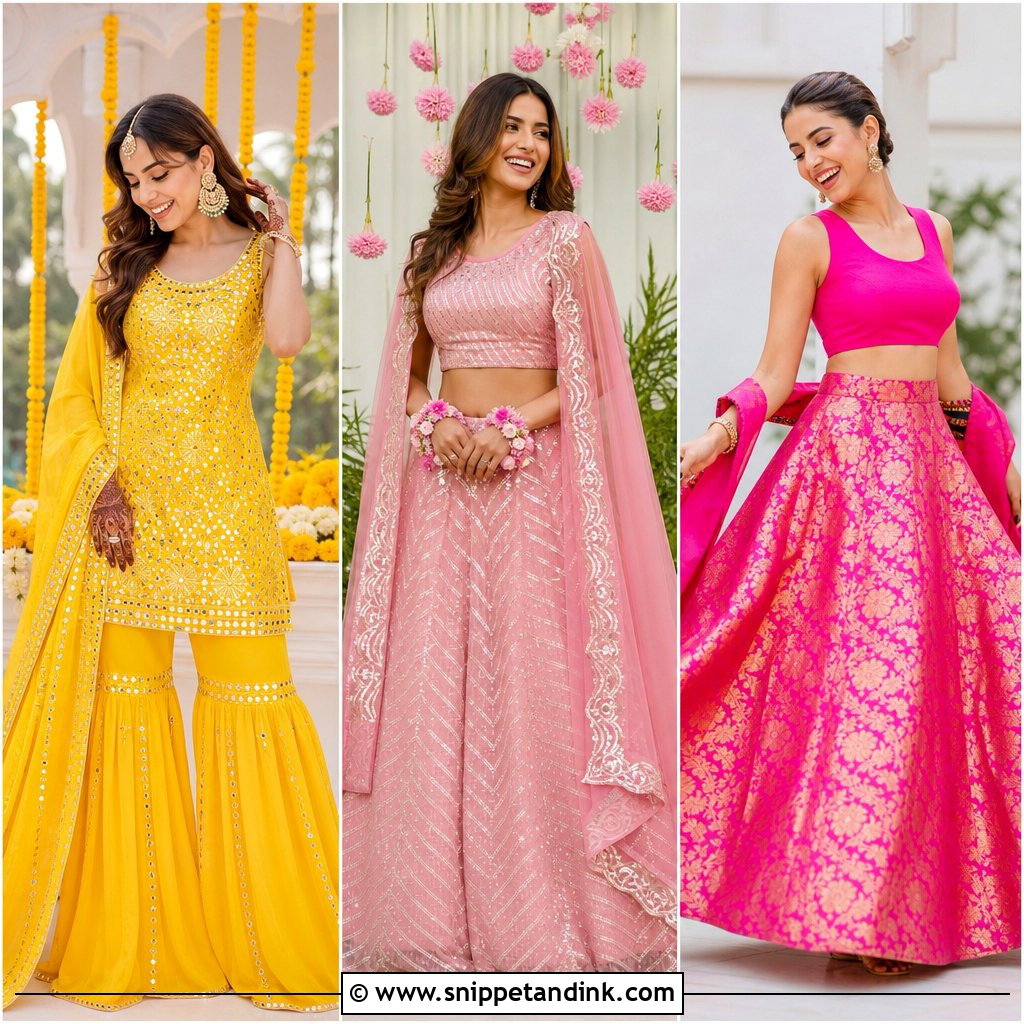
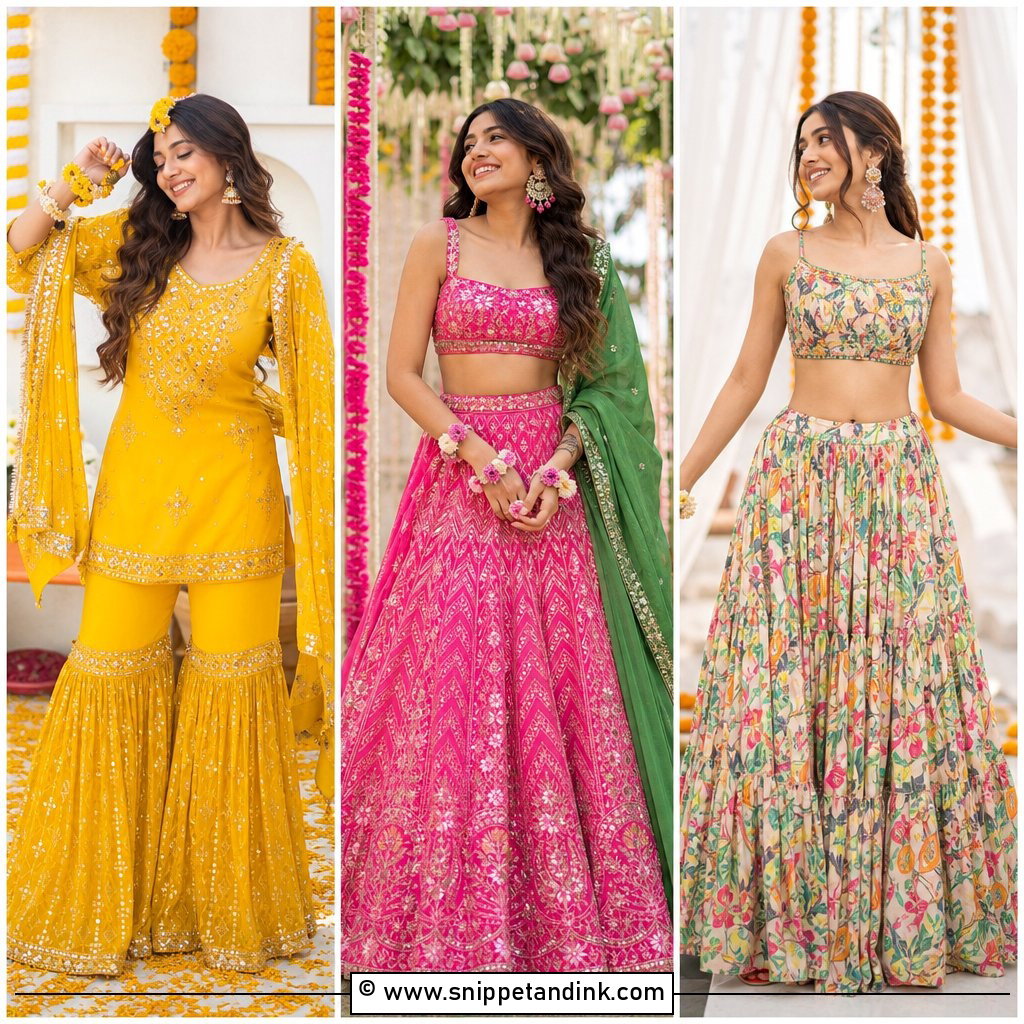
2. Yellow Mehendi Dress For Bride
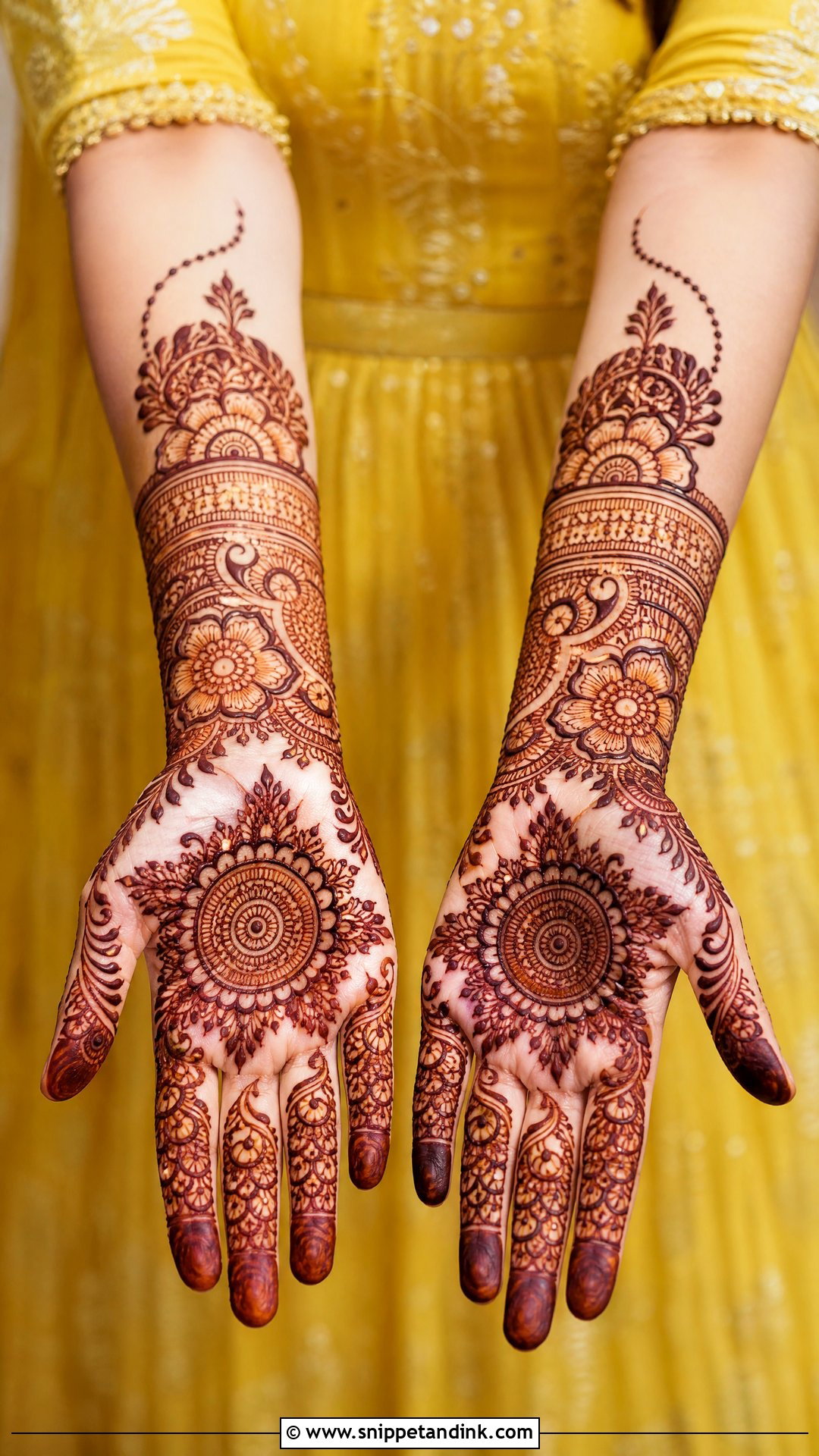
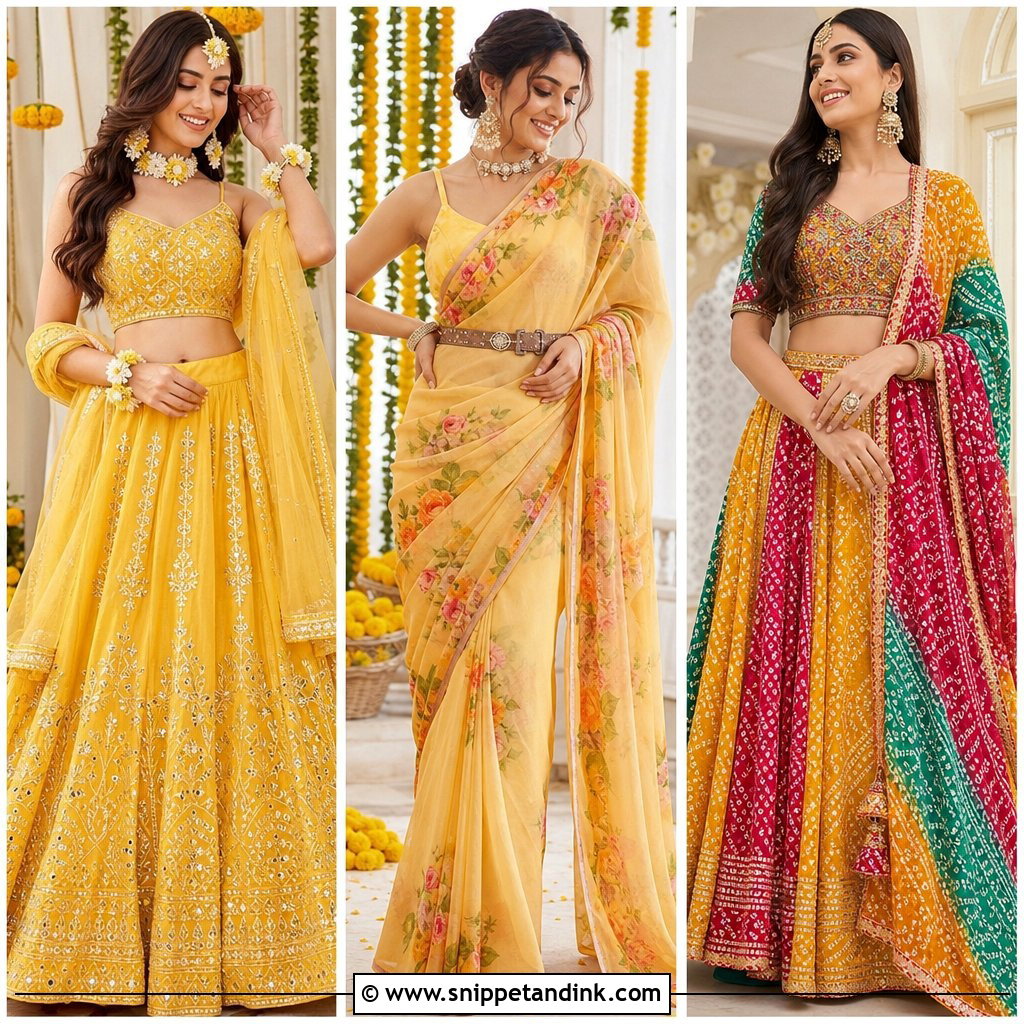
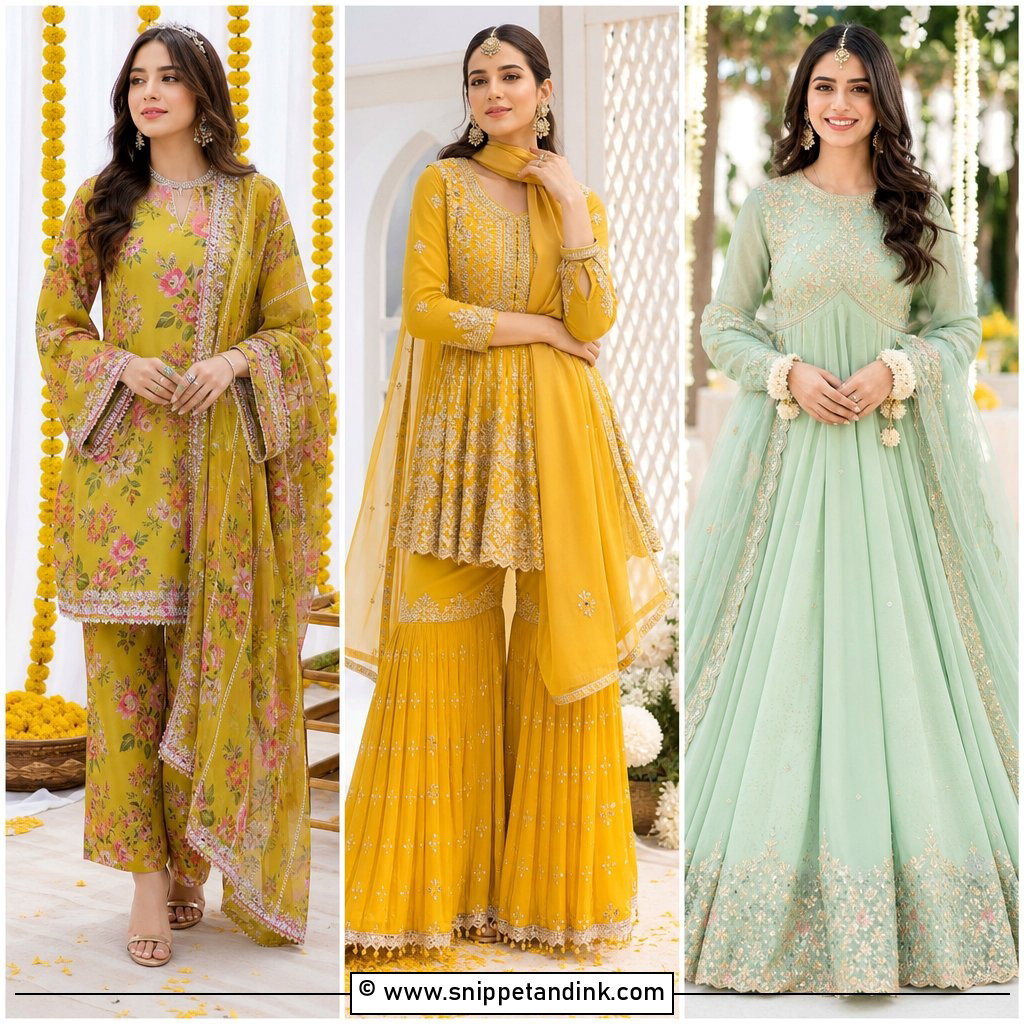
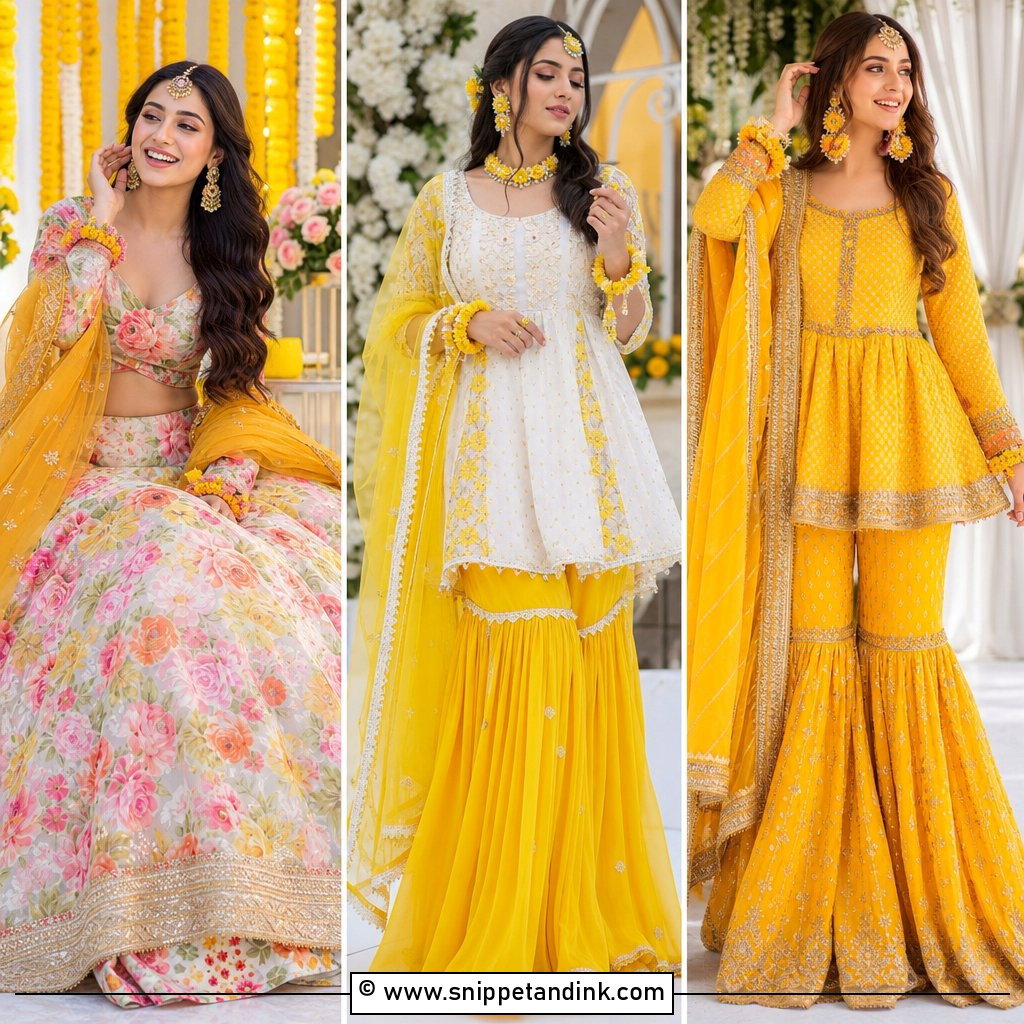
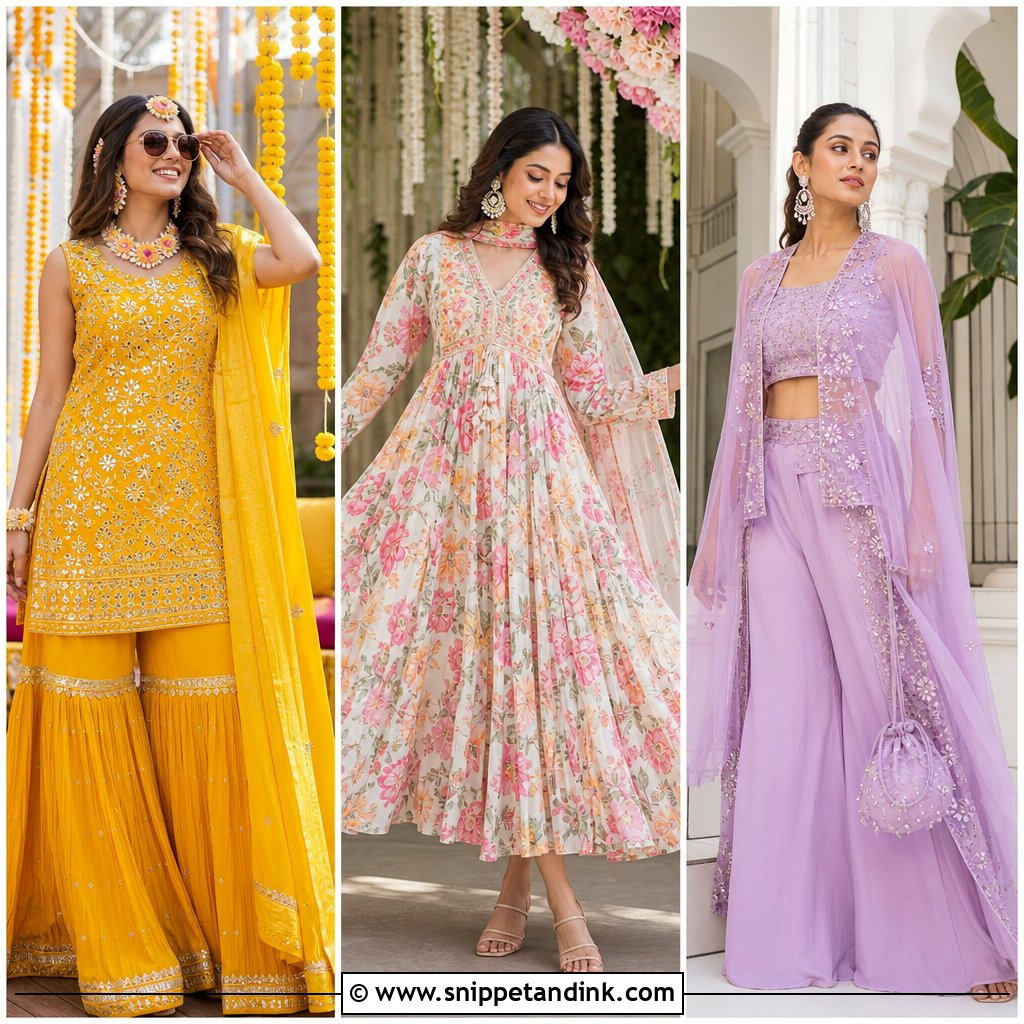
Yellow is the sunny option, and a yellow mehendi dress sits well beside a reddish-brown stain. It can be a lehenga, anarkali, sharara or flowy skirt set. Mustard reads traditional; lemon reads young. Because yellow is also the haldi color, I usually add mirror details, sequin borders or floral embroidery so the mehendi outfit doesn’t look like a repeat of the day before. It’s loud by itself, so balance the jewelry with fresh flowers, pearls or light kundan.
3. Pink Mehendi Lehenga For Bride
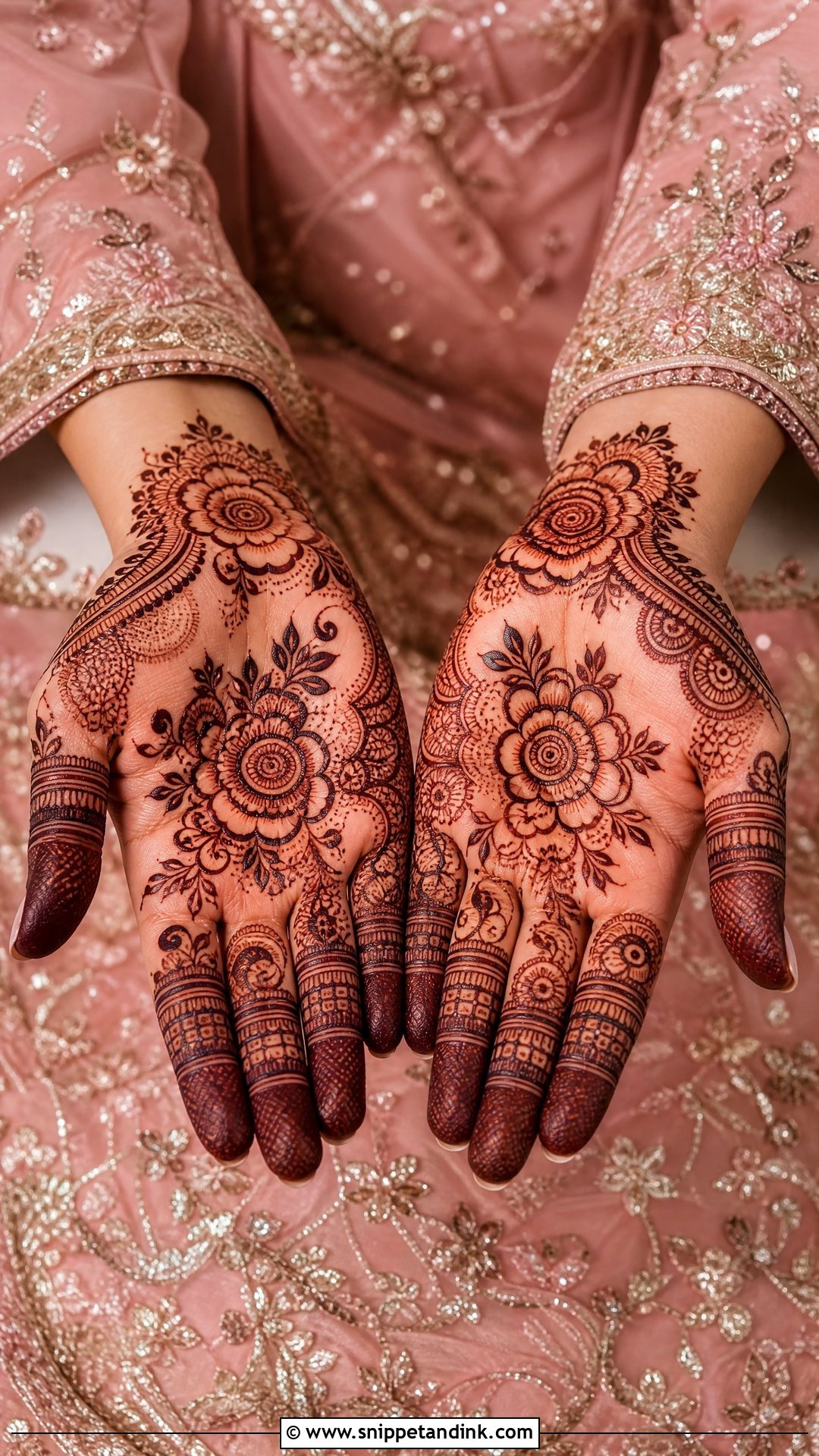
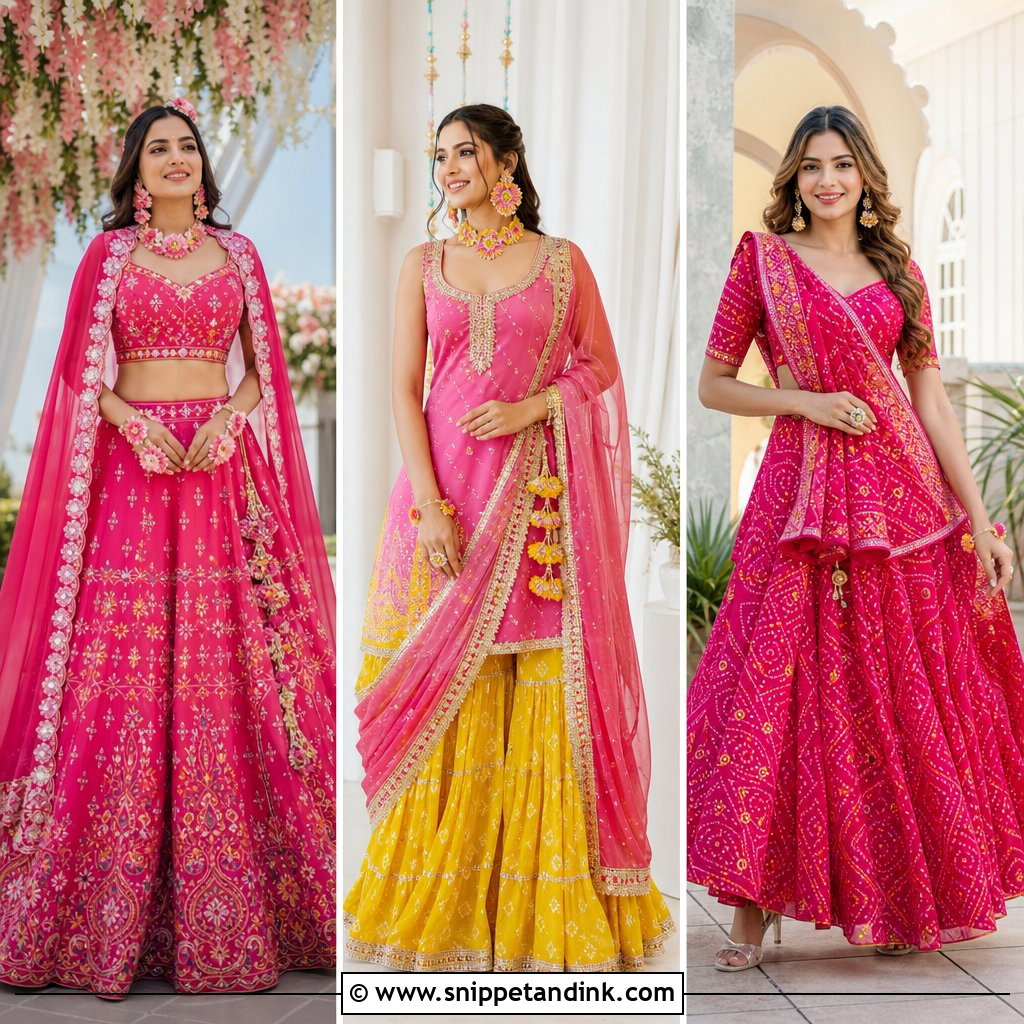
Pink is the easy alternative for a bride who doesn’t want green or yellow. Rani pink with mirror work is bold; blush with floral embroidery is quieter and more modern. Cap sleeves, straps or a cropped blouse leave room for arm henna. A contrasting green dupatta pulls it back toward tradition if the family expects that. Fuchsia can overpower cool, fair skin in daylight photos, so try the exact shade on, outdoors, before you order.
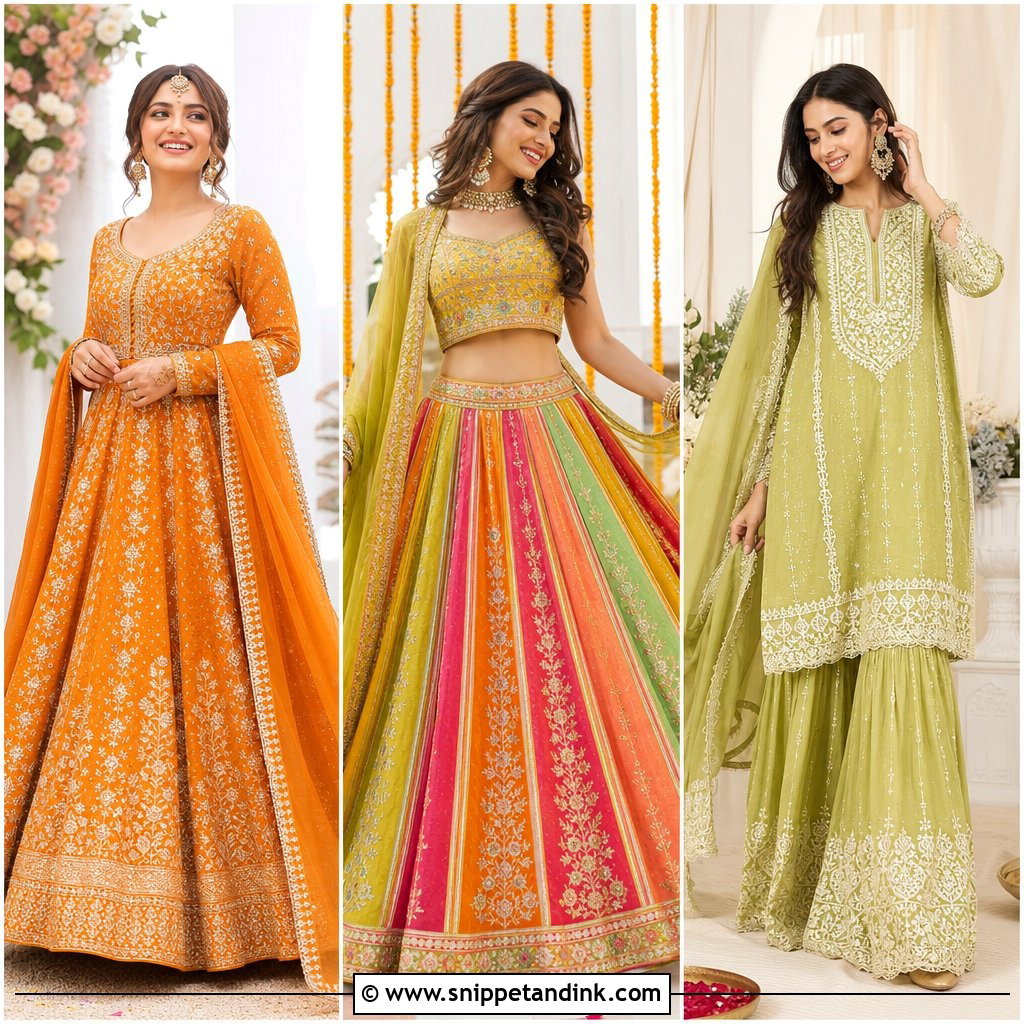
4. Orange Mehendi Outfit For Bride
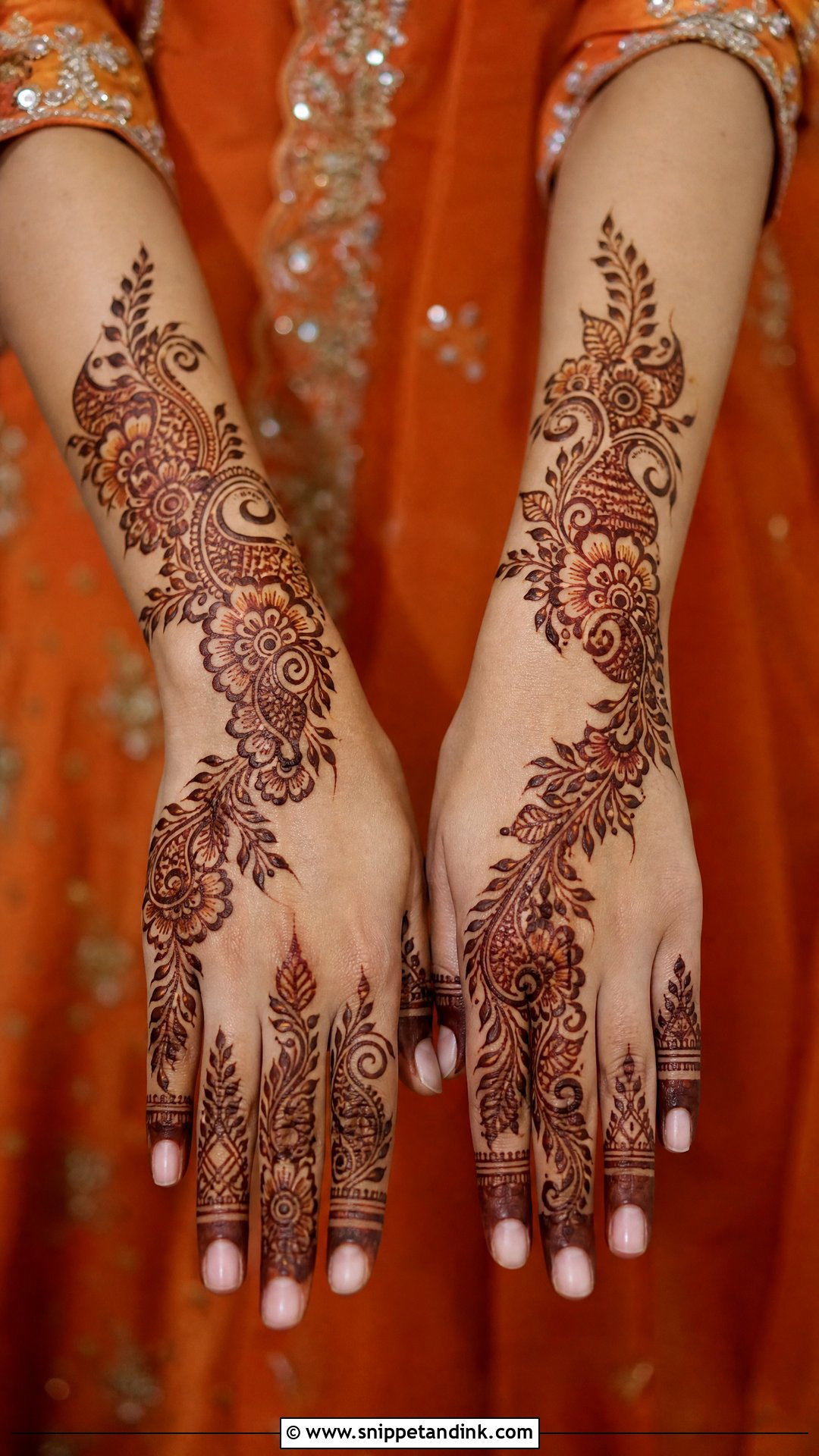
Orange glows outdoors and carries festive warmth without the formality of bridal red. Burnt orange lehengas, mango shararas and tangerine anarkalis all take gold, mirror or gota work, and the color sits right beside a maroon stain. Green bangles, marigold-toned florals or kundan earrings balance it. I’d keep the dupatta light so it stays out of the artist’s way while you sit.
5. Multicolor Mehendi Lehenga For Bride
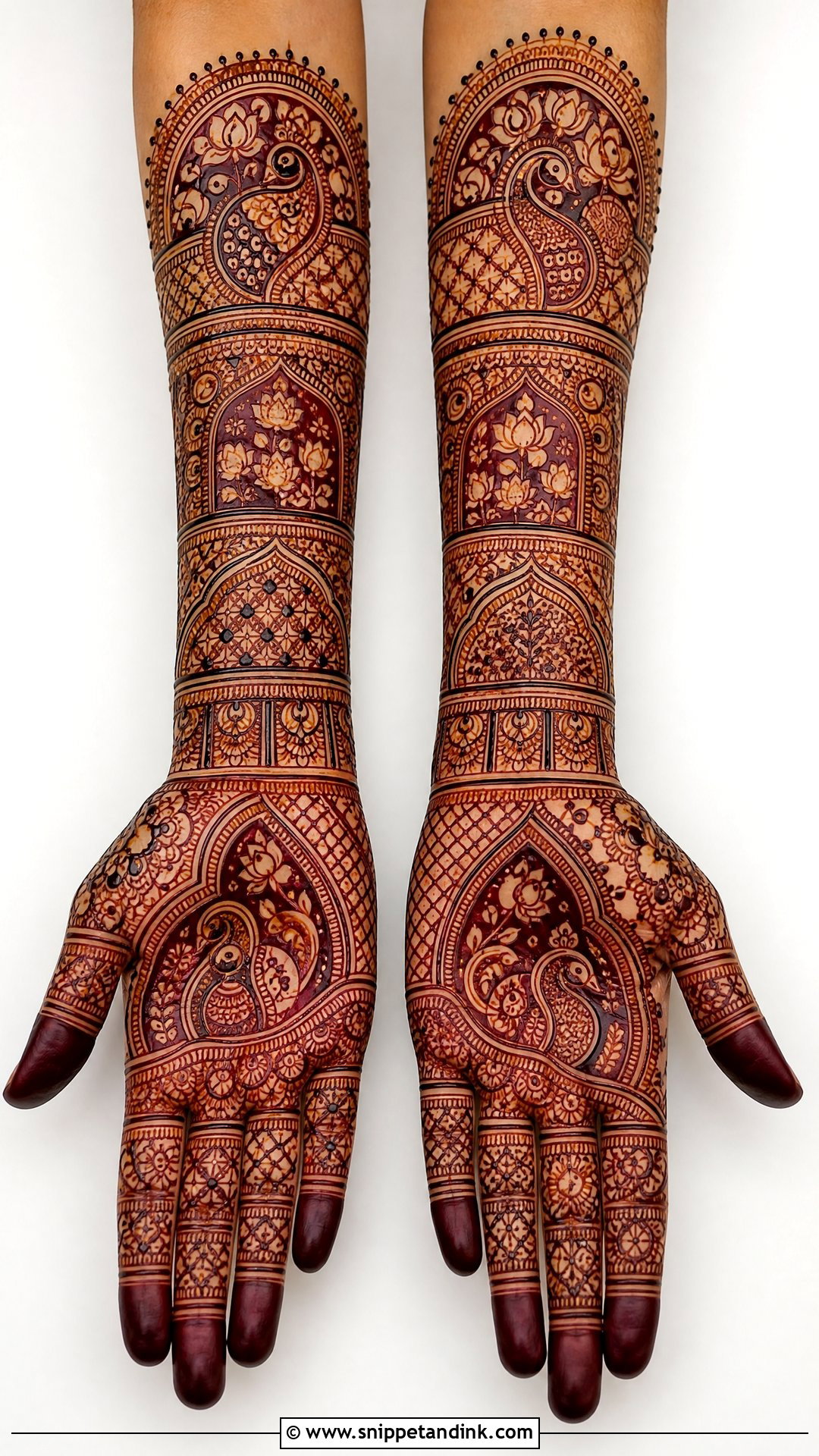
Panels of green, yellow, pink, orange and blue make this the most cheerful option here, and it suits music, dancing and bright decor. The risk is clutter. With so many colors in the skirt, I keep the blouse and dupatta to one or two of those shades, usually a mirror-work choli and a light net dupatta, then finish with floral jewelry. It also helps a bride stand apart from guests in colorful outfits without resorting to a heavy bridal lehenga.
6. Mirror Work Mehendi Outfit For Bride
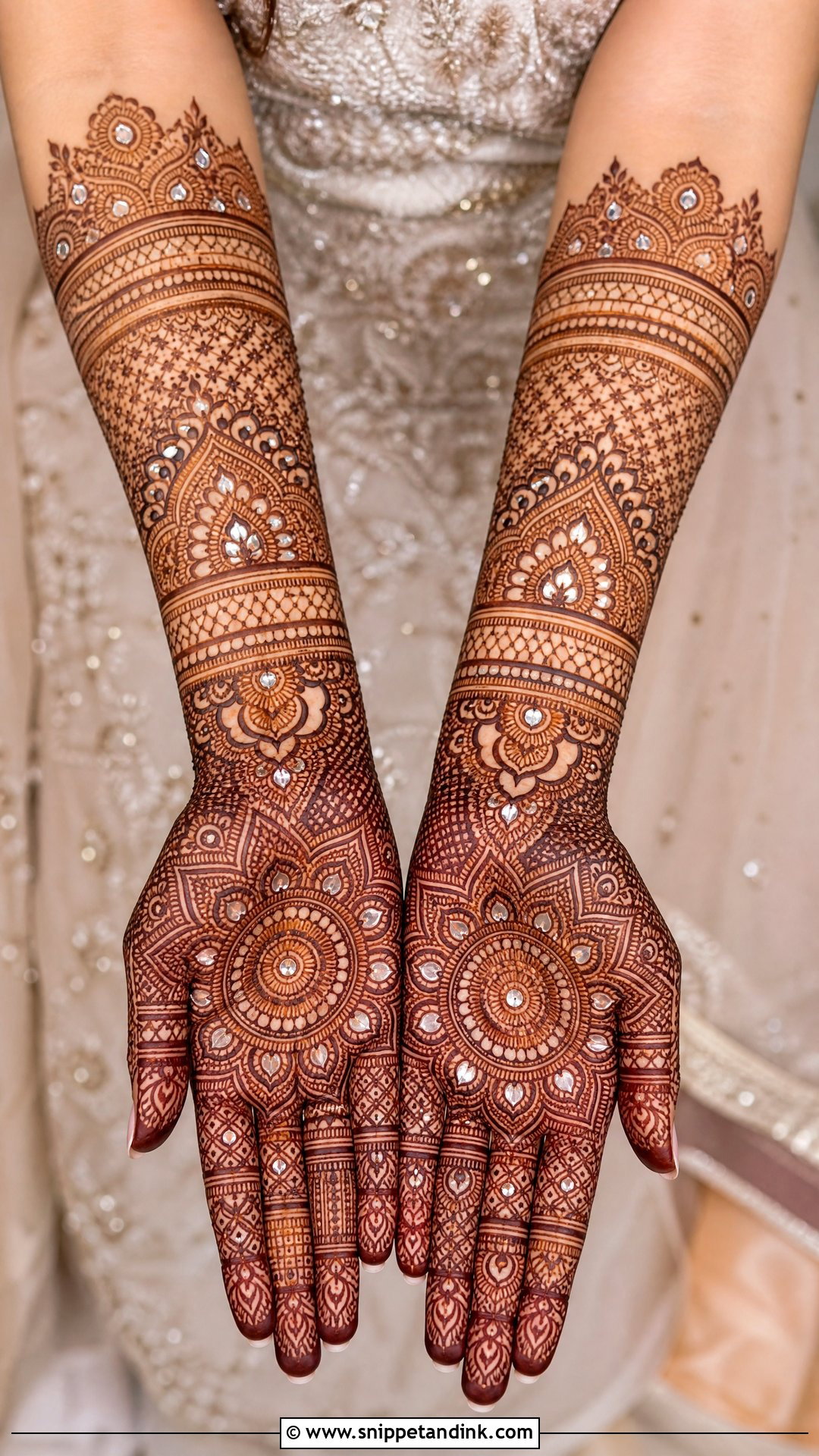
Sparkle without heavy stones is why a mirror work mehendi outfit is so popular, and it reads well in daylight and under evening lights alike. Choose a lehenga, sharara or jacket set on a light base such as cotton silk, georgette, organza or lightweight raw silk, because the mirrors themselves add weight. A short blouse or sleeveless kurti keeps the henna simple. The mirrors throw a lot of light, so keep the rest neat: soft curls or a flower braid and minimal kundan.
7. Floral Mehendi Lehenga For Bride
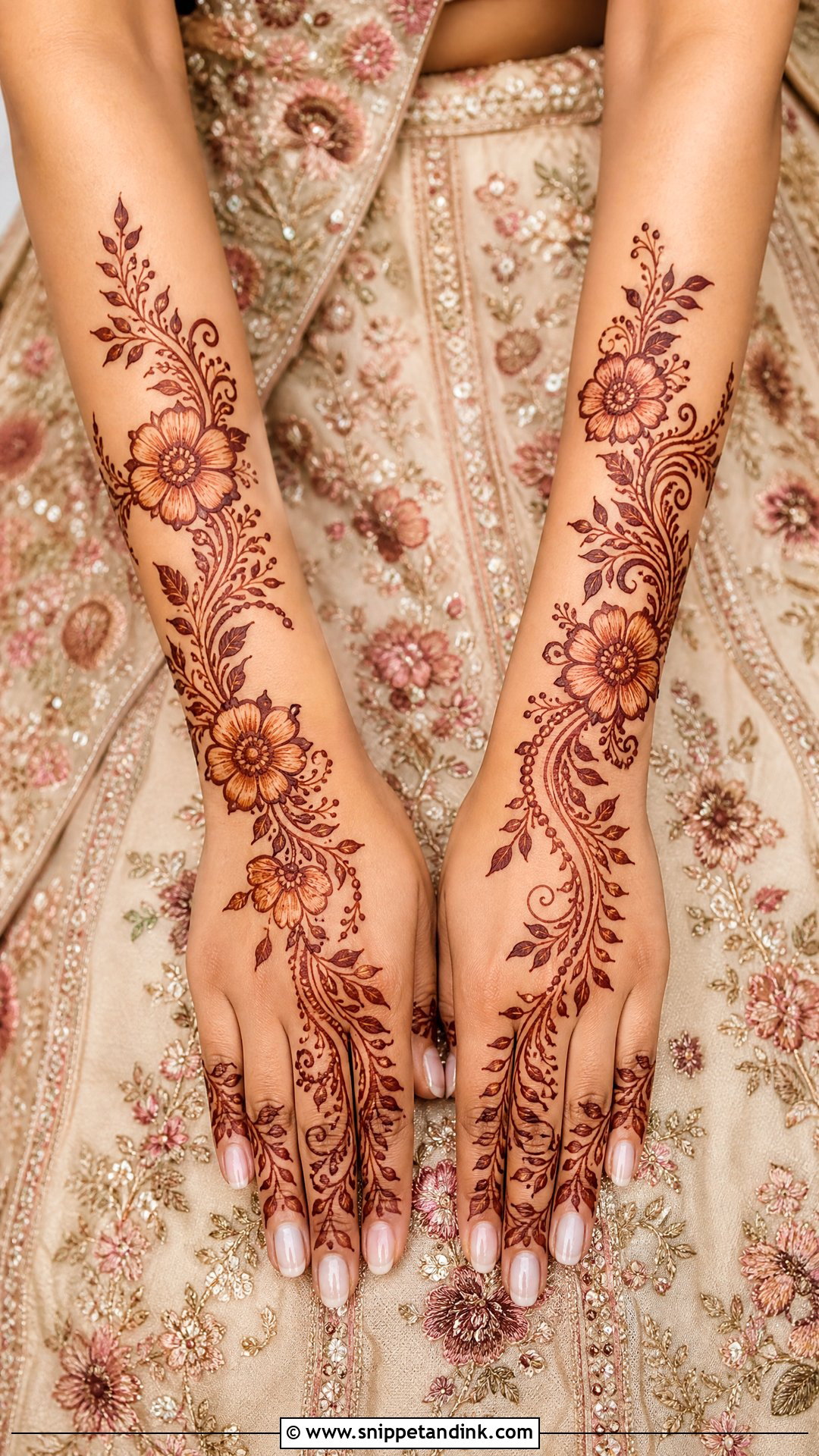
Florals give a garden-party feel, and the way they’re made sets the formality: printed is the most relaxed, embroidered is dressier, raised 3D flowers are the most elaborate. Those raised flowers can catch on the artist’s sleeve or crush when you sit, so I’d keep them on the dupatta or blouse rather than across the lap of the skirt. Pastel florals feel soft; bright pink, yellow and green feel festive. Floral jewelry, dewy makeup and braided hair suit it, and a floral dupatta adds charm without much weight.
8. Sharara Mehendi Dress For Bride
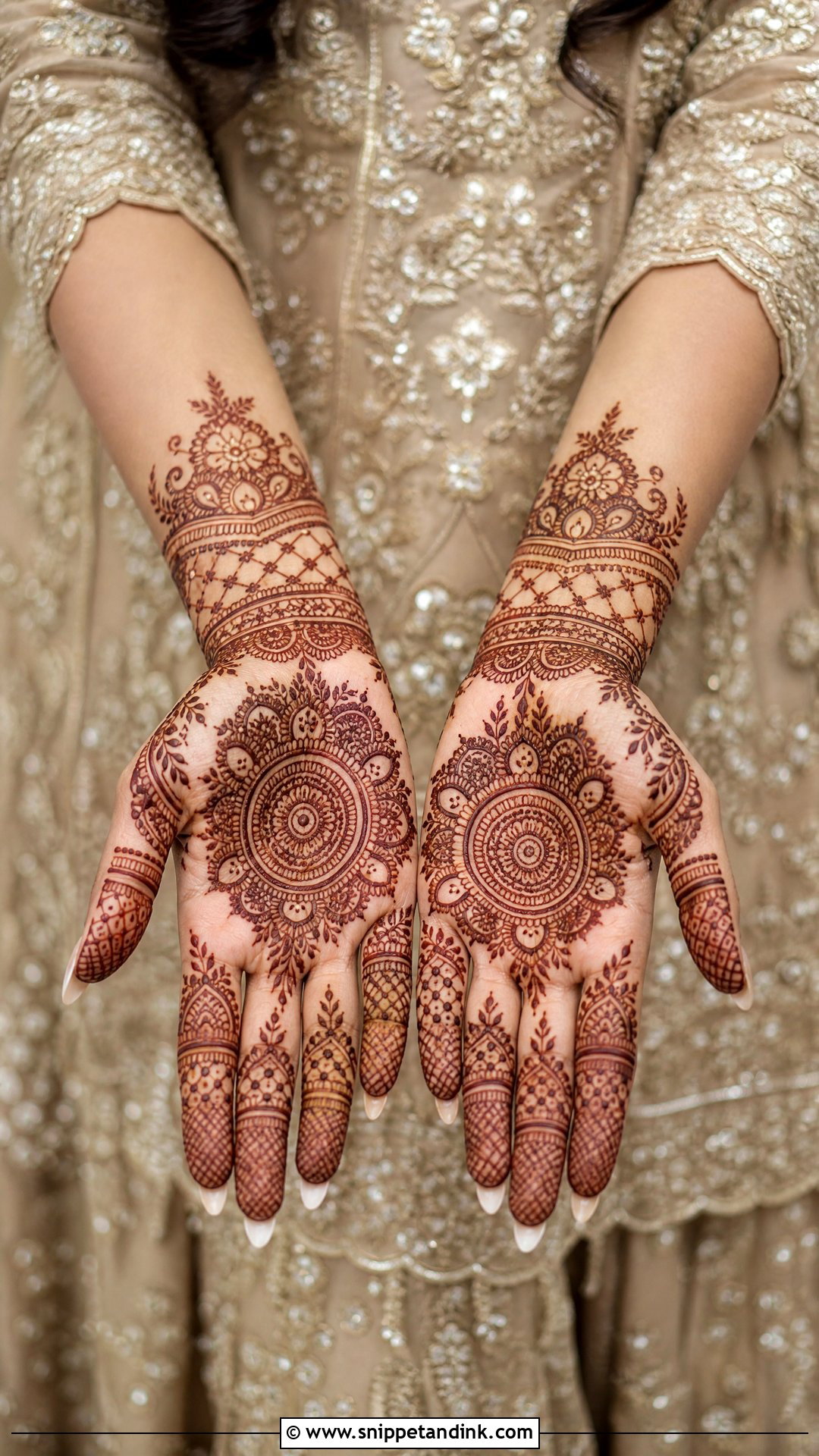
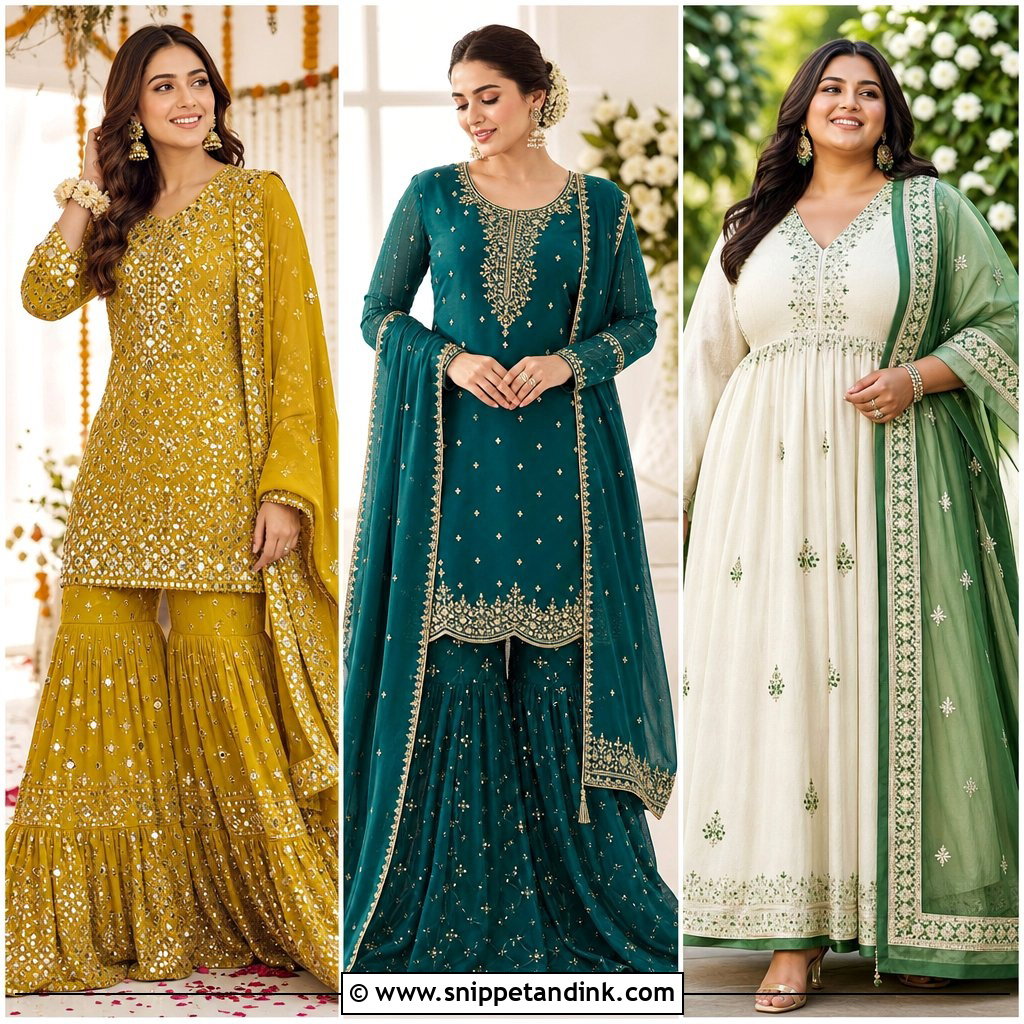
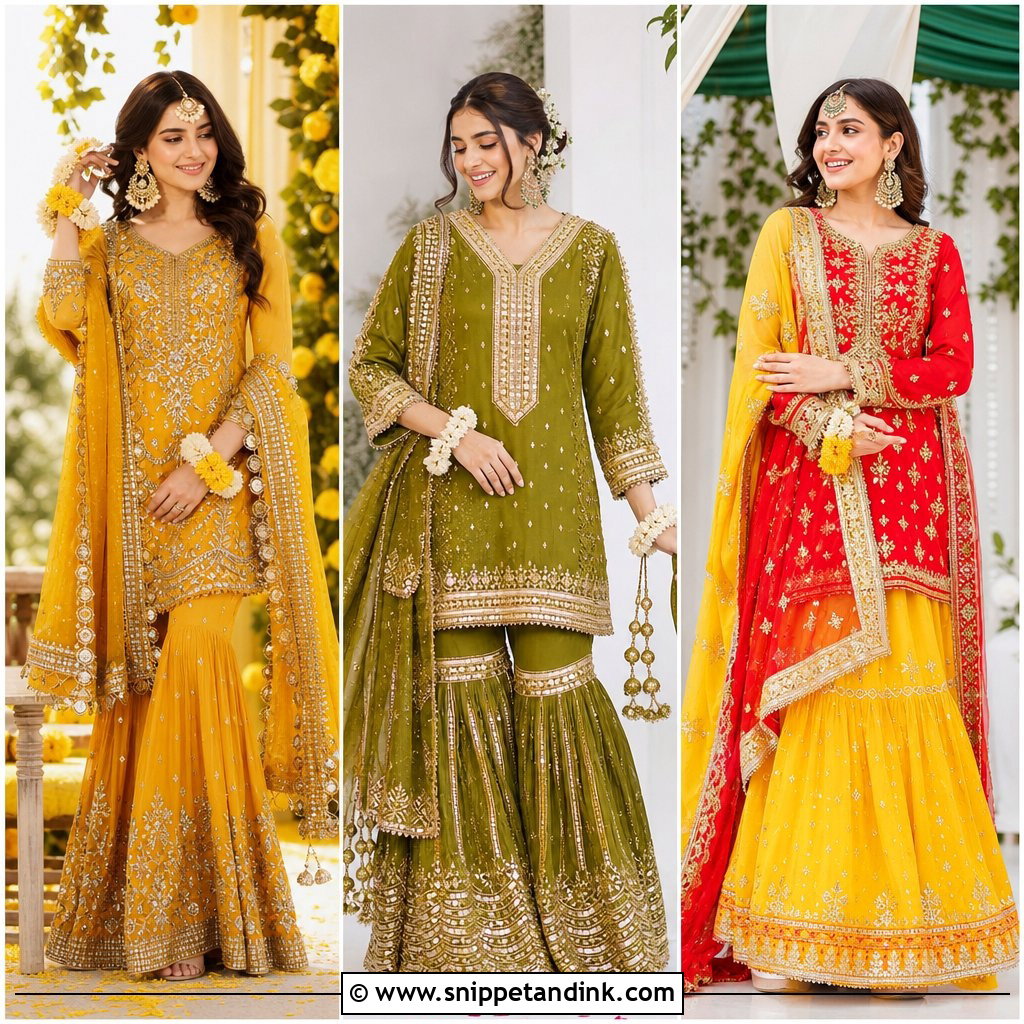
Less restrictive than many heavy lehengas, a sharara makes the long sitting noticeably easier. The wide bottoms move well, and a short kurti keeps the look festive. Green with gold embroidery, yellow with gota or a pastel with mirror details are all good combinations. Statement earrings and a maang tikka go on before the henna; bangles wait until it dries. You get a traditional silhouette with a looser, easier feel.
9. Gharara Mehendi Outfit For Bride
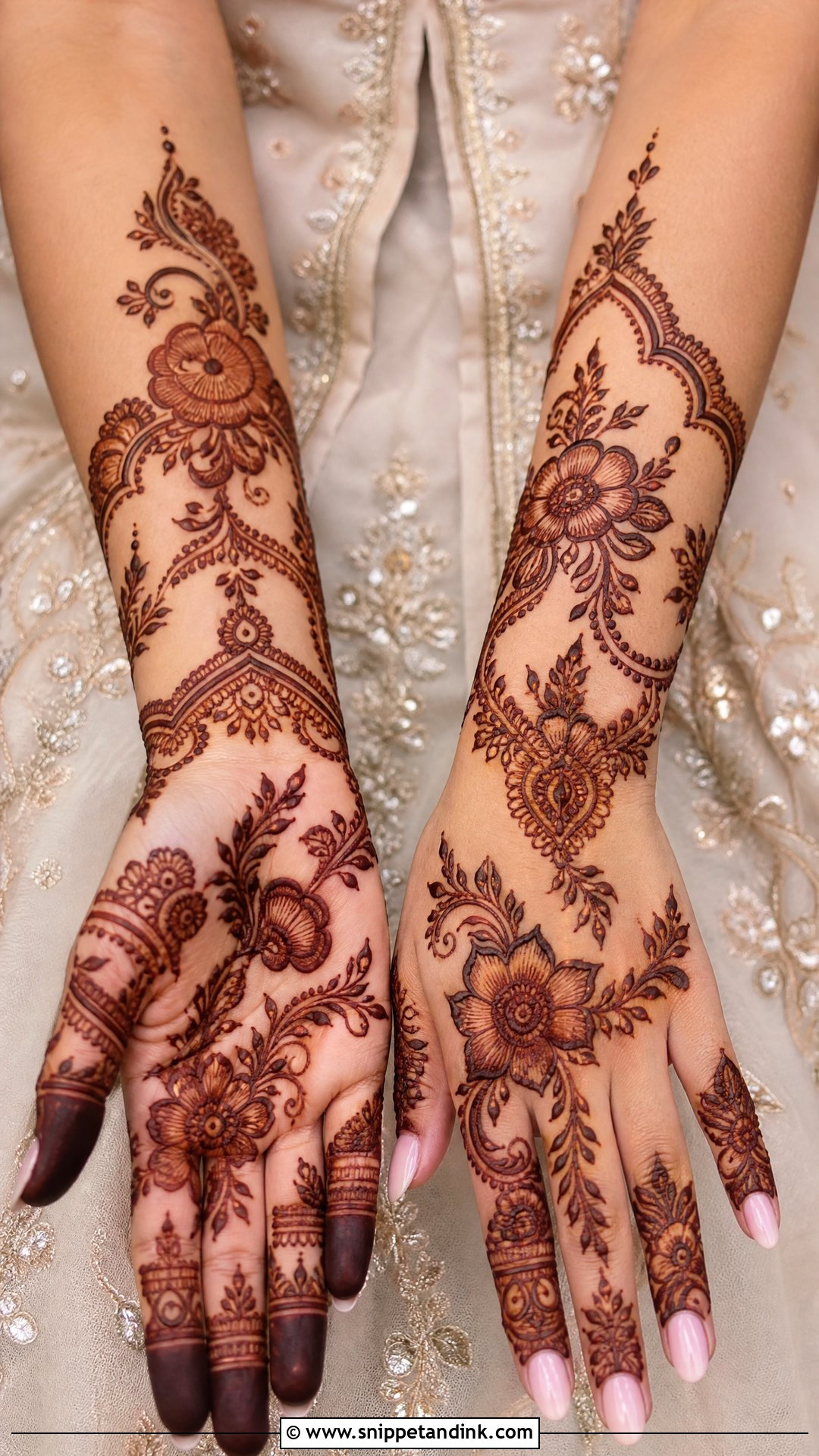
A gharara mehendi outfit has an old-world quality that suits brides drawn to traditional South Asian dress. The fitted upper leg and the flare below the knee make a dramatic shape in photos. Mehendi green, mustard, teal, pink or ivory with bright borders all work, topped with a short kurti in gota, zardozi or mirror work. Ghararas already carry plenty of detail, so the dupatta should be lighter. They’re a natural fit at Pakistani mehndi events. Jhumkas and a sleek bun finish it.
10. Anarkali Mehendi Dress For Bride
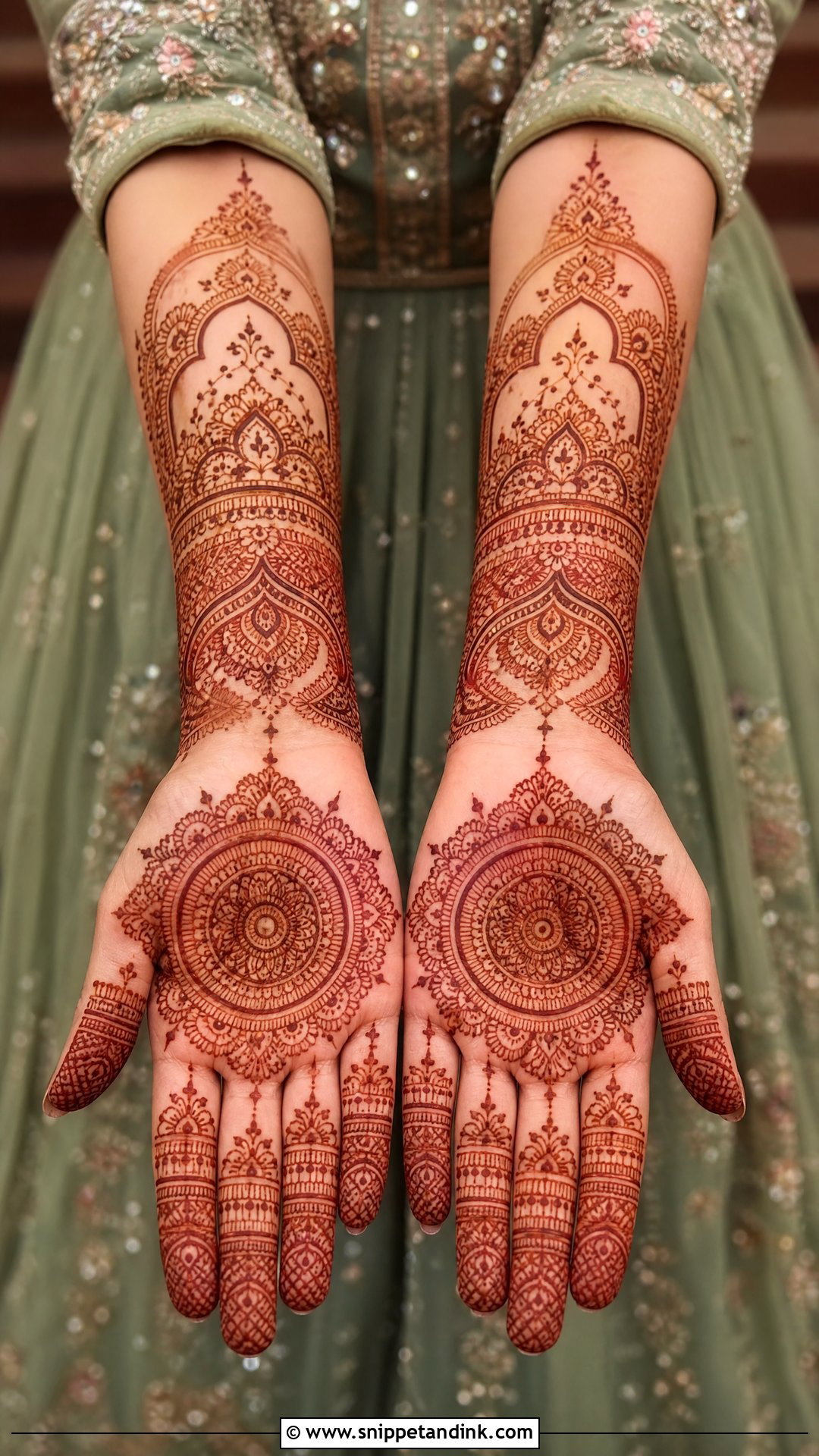
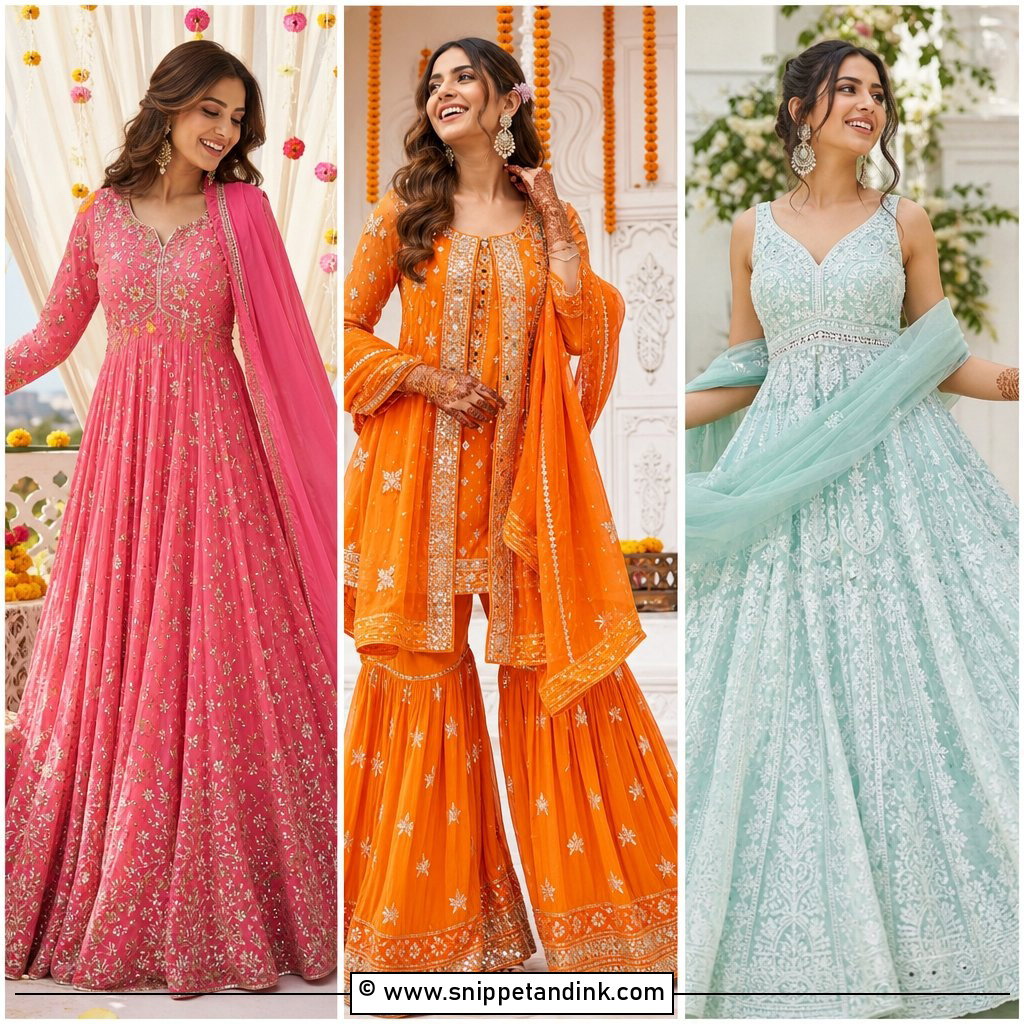
Anarkalis are easy to manage during henna because there’s only one piece to think about, and the flowing skirt settles over your knees when you sit. Bright yellow, green, orange or pink with mirror borders, gota or floral embroidery all work. For full-hand henna, choose sleeveless or short sleeves; elbow sleeves only work if the design stops at the wrist. Drape the dupatta lightly over one shoulder or pin it at the back. Chandbalis, soft makeup and a flower braid complete it.
11. Indo Western Mehendi Outfit For Bride
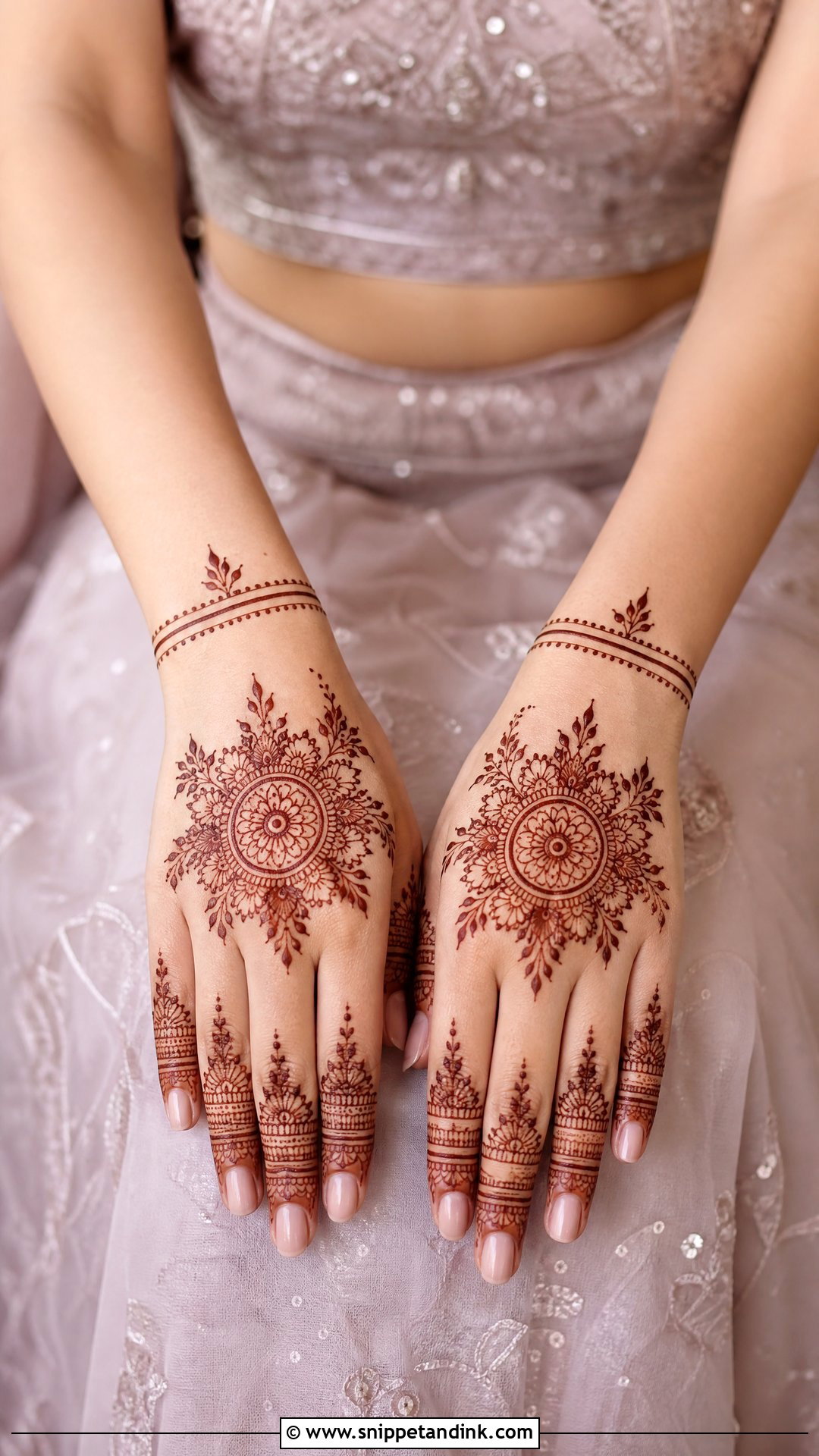
An Indo western mehendi outfit mixes modern shapes with traditional detail: a crop top with palazzos, a cape lehenga, a dhoti skirt set or a jacket outfit. Bright colors and playful embroidery keep it tied to the ceremony. It suits a bride who plans to dance, host games or move around a lot. Keep sleeves short, or pick a cape that lifts off easily during the henna. Statement earrings, sleek hair and comfortable shoes finish it.
12. Pastel Mehendi Outfit For Bride
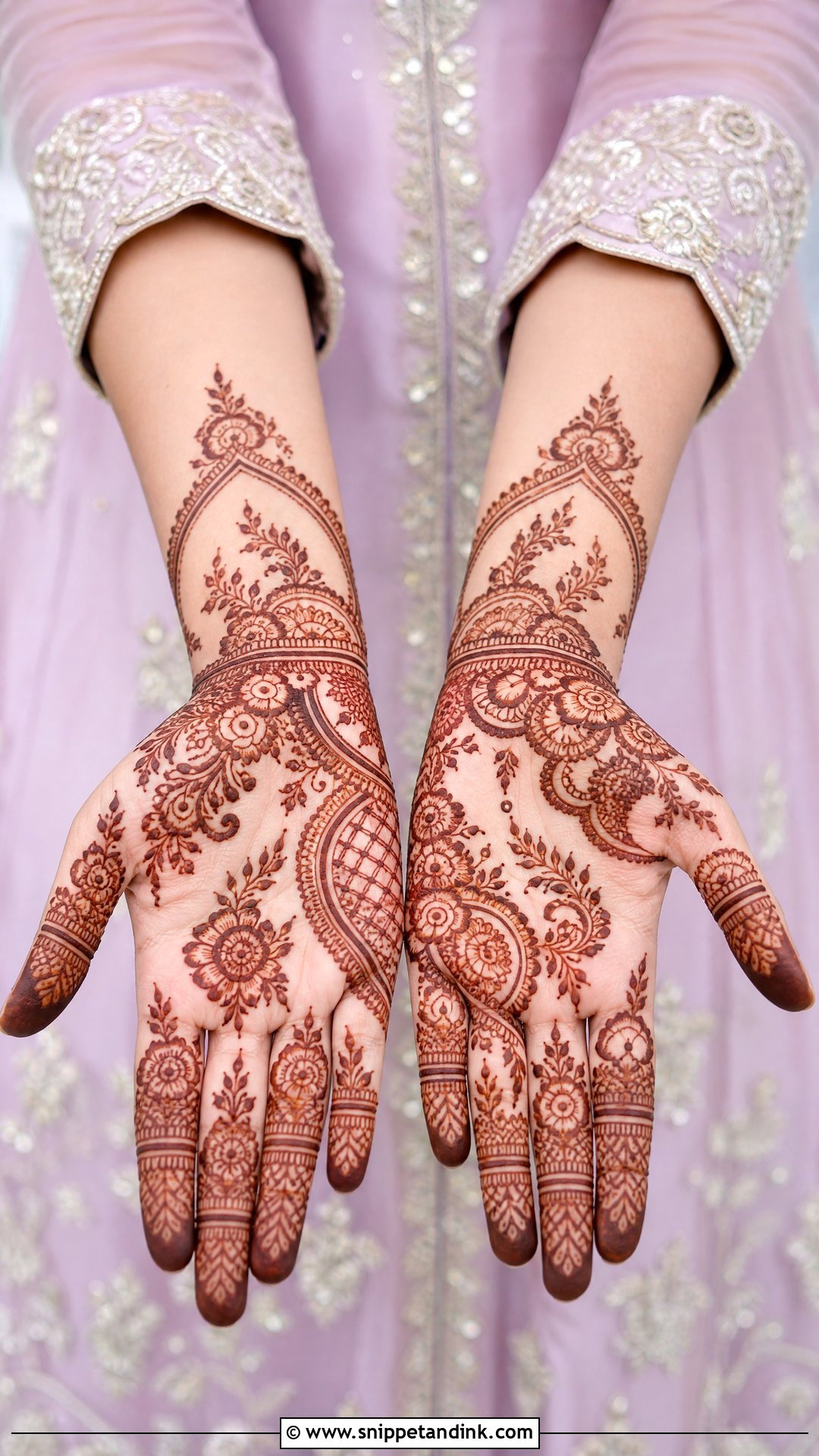
Mint, peach, powder blue, lavender and blush look elegant against a rich stain. To keep pastels ceremonial, look for mirror work, pearl embroidery, light sequins or colored thread. The first thing I check with a pastel is whether the bride blends into the guests; if she does, I give the outfit one strong element: a bright dupatta, floral jewelry or bold earrings. It suits daytime functions, beach weddings and small home ceremonies. Rosy cheeks and defined eyes stop the makeup from going pale alongside it.
13. White Mehendi Outfit For Bride
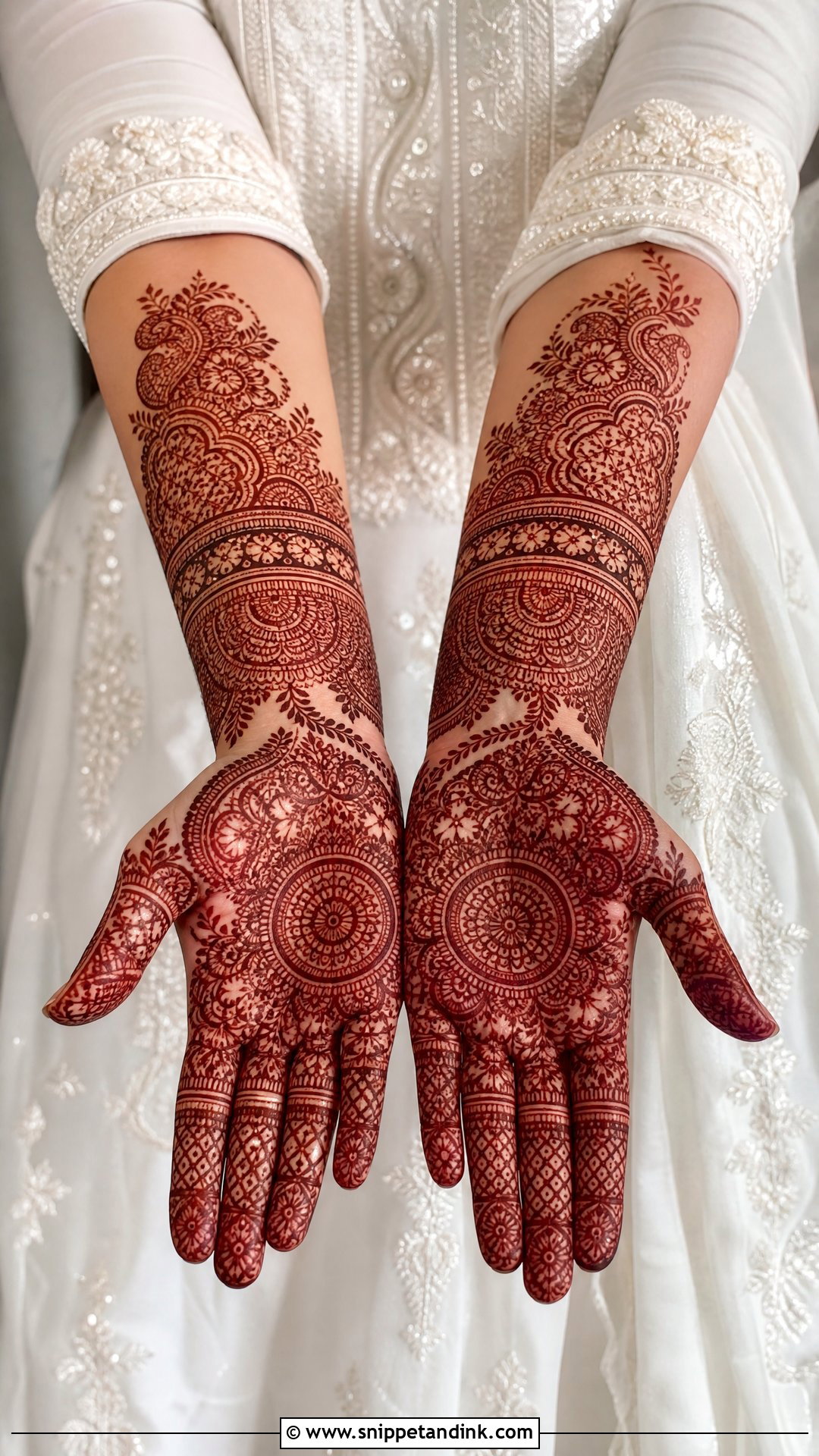
White against deep maroon henna is a striking contrast, and it’s the cleanest background for close-ups of the hands. Ivory lehengas with colored embroidery, white shararas with mirror work and chikankari anarkalis all work; bring in color through a multicolor dupatta, floral jewelry or green bangles. The practical caution is obvious: fresh paste and sealant mark white instantly, so a protective cloth over the lap during application isn’t optional. In some families white carries associations with mourning, so check the mood at home first. Avoid very sheer fabric and long sleeves.
14. Chikankari Mehendi Dress For Bride
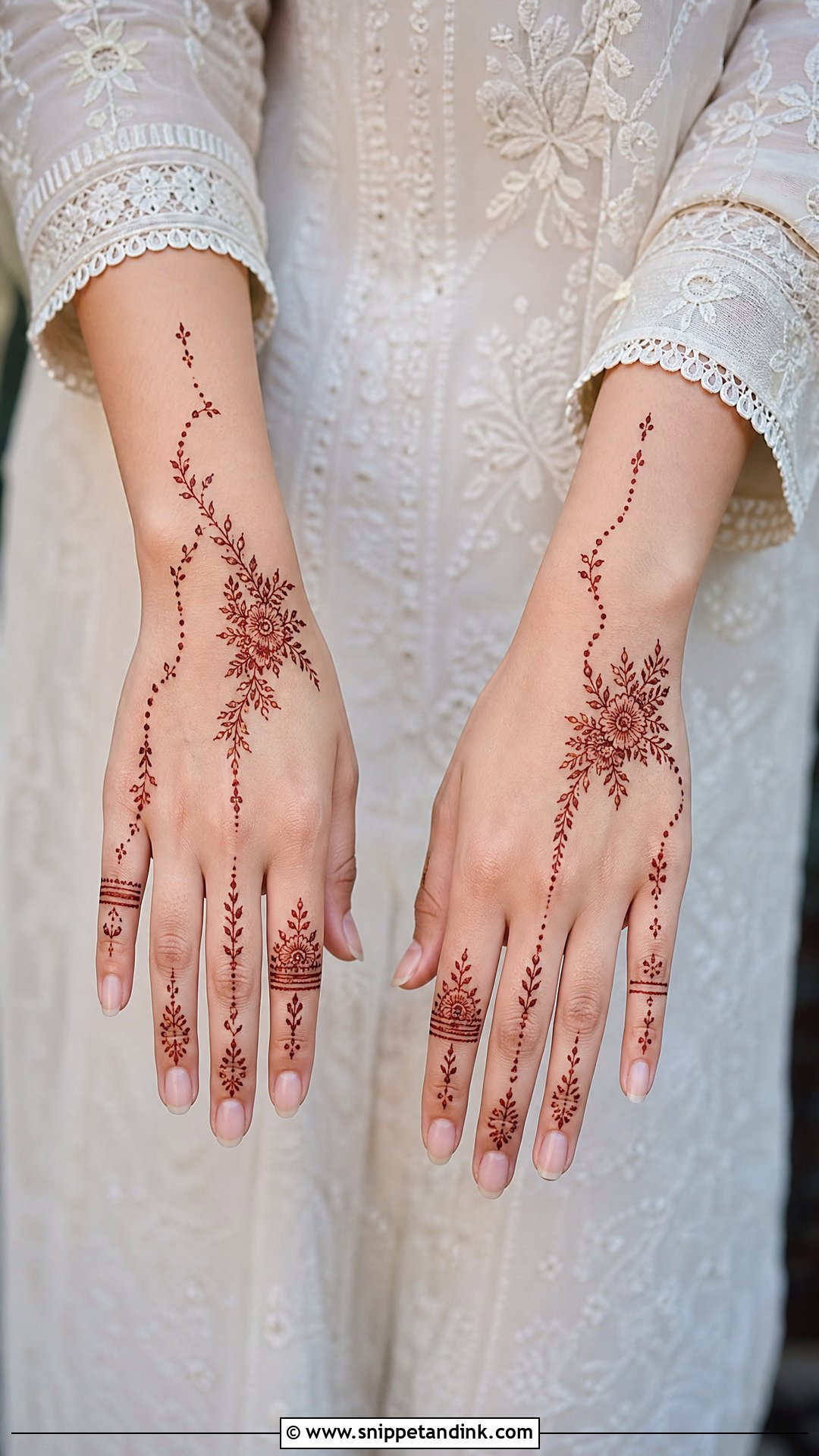
Chikankari is fine hand embroidery traditionally associated with Lucknow, worked on light cotton, georgette or muslin, so a chikankari mehendi dress stays cool in warm weather and through long sitting hours. White, lemon, mint, peach and pastel pink suit it. For more festivity, look for pieces with mirror work, mukaish or light sequins, in an anarkali, sharara or lehenga shape. The threadwork is delicate, so pair it with fresh flowers, pearls or light kundan rather than heavy jewelry that could snag it.
15. Bandhani Mehendi Outfit For Bride
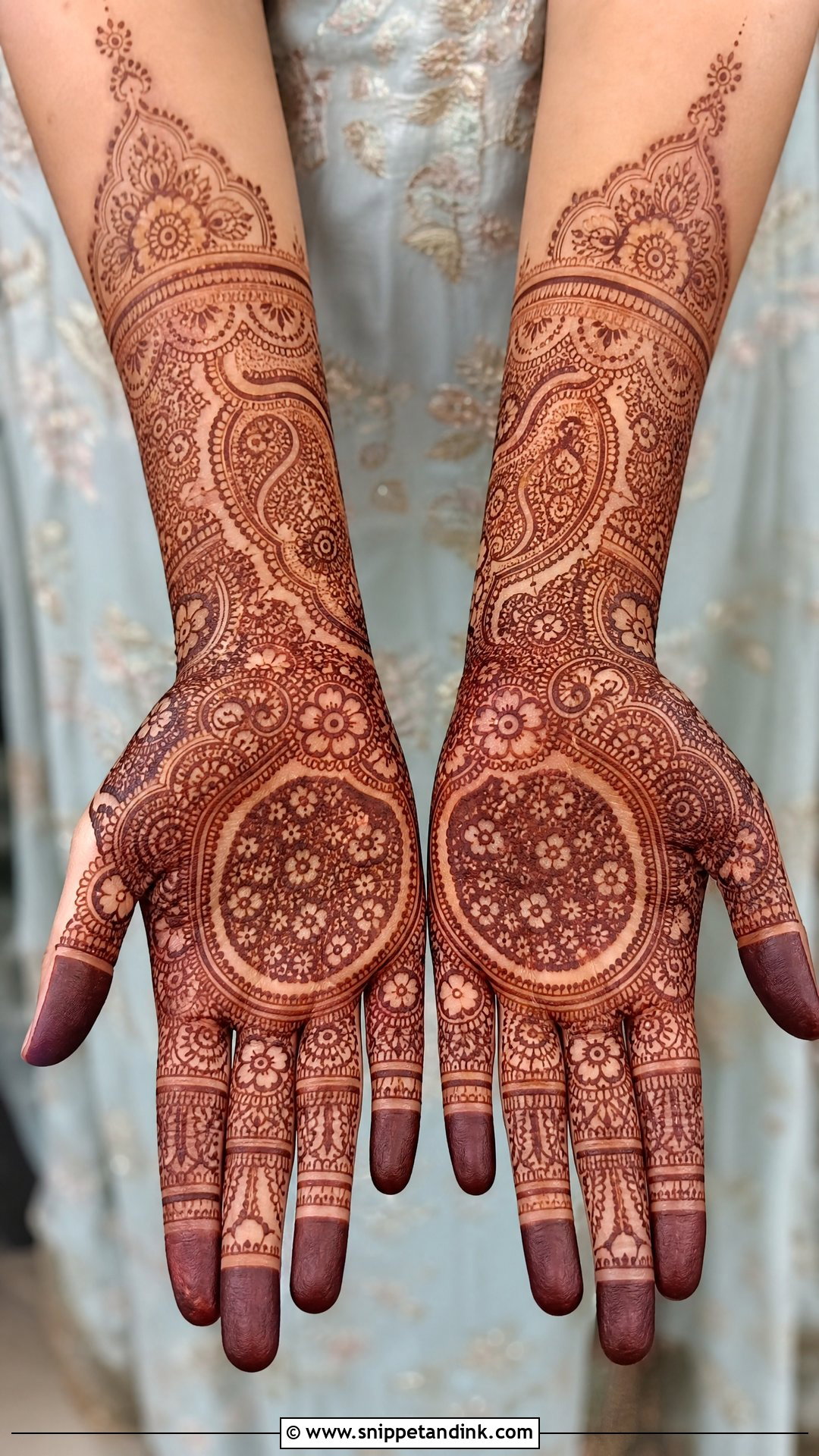
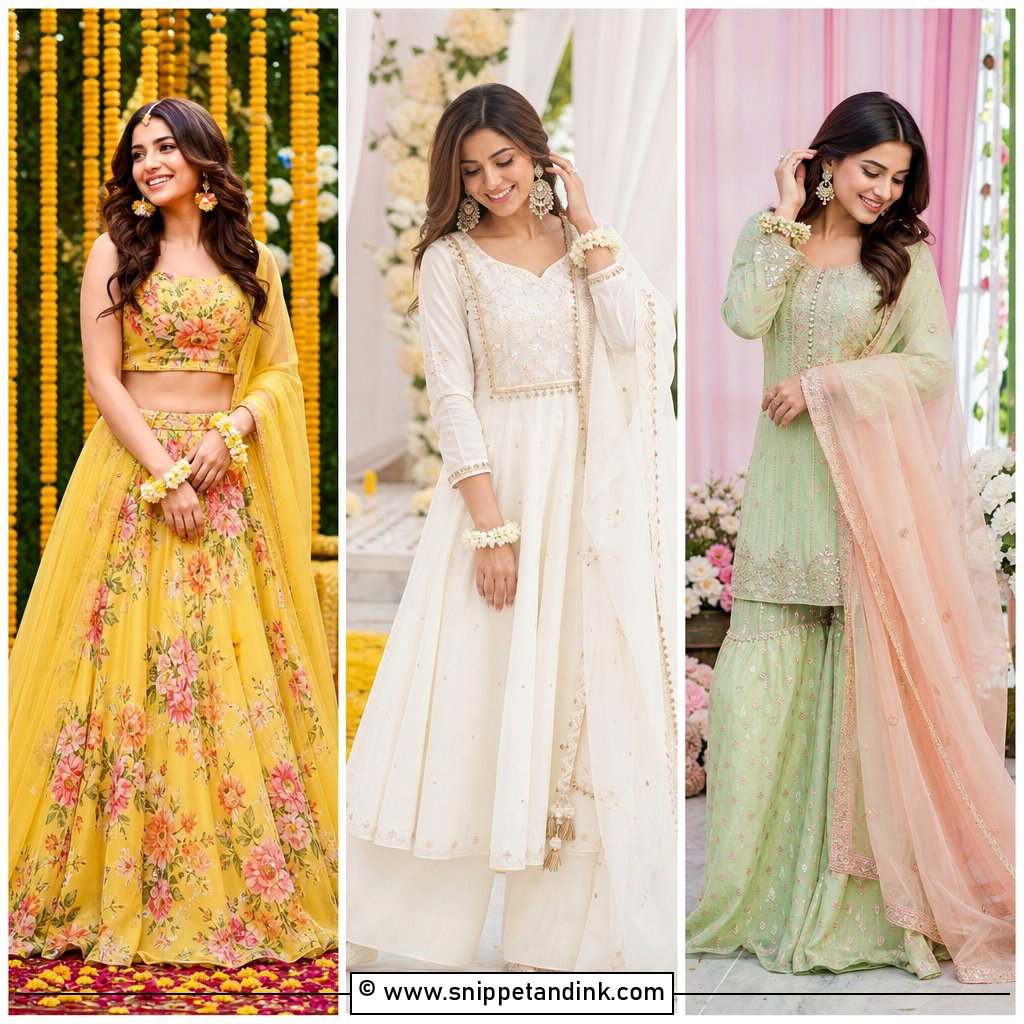
Bandhani’s dotted tie-dye looks festive in yellow, green, pink, orange and red. Wear a bandhani lehenga with a solid blouse, a bandhani sharara set, or just a bandhani dupatta over a plain embroidered outfit. It has deep roots in Rajasthani and Gujarati dress, and mirror work, tassels, gota or shell details suit it. The pattern already has movement, so keep the jewelry balanced. One care note: strong bandhani dyes can bleed when damp, so keep it clear of a wet henna sealant.
16. Phulkari Mehendi Outfit For Bride
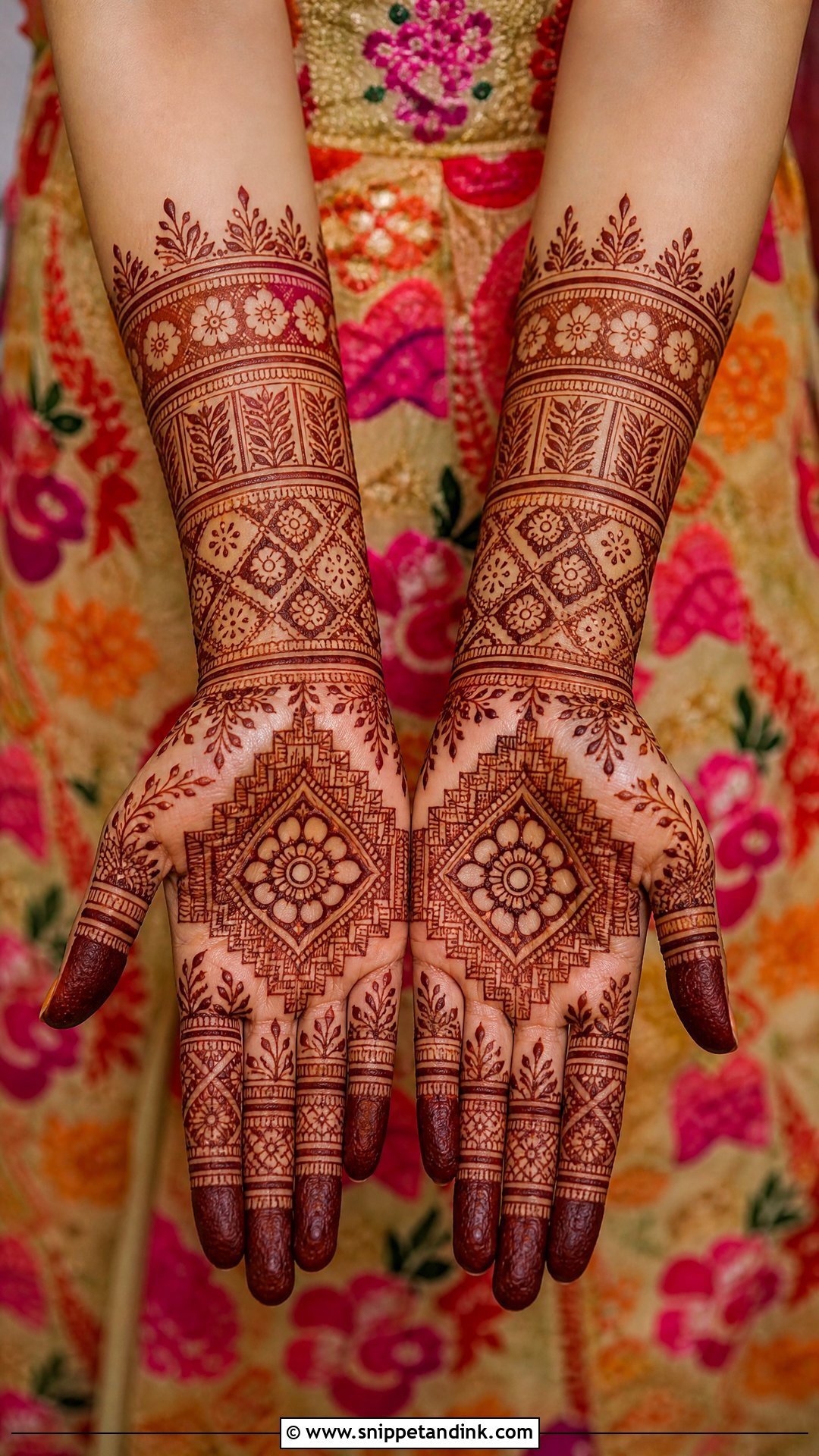
Phulkari is Punjabi floral embroidery worked in bright silk floss, and it brings instant color. A phulkari dupatta over a yellow suit, a green lehenga with phulkari borders or a full phulkari jacket set all work. Keep the silhouette comfortable and let the embroidery supply the color. A paranda in the hair, jhumkas, and bangles once the henna dries finish it. It’s at its best at home mehendis and dholki nights.
17. Cape Mehendi Outfit For Bride
A cape can often replace a dupatta entirely, which leaves your arms freer during application. Wear a sheer cape over a lehenga, with a crop top and palazzos, or over a sharara set, in mirror work, sequins, thread or floral detail. I steer brides toward shorter capes, which are easier for sitting and dancing; a long one trails straight into the henna area. Sleek hair and statement earrings suit the clean line.
18. Jacket Mehendi Outfit For Bride
A jacket mehendi outfit gives structure without any draping. A long embroidered jacket over a crop top and skirt, a short mirror-work jacket with palazzos, or a printed jacket over a solid lehenga all look polished. The jacket adds detail while leaving the hands free, as long as it’s sleeveless or loose in the sleeve. Green, yellow, orange or pink keeps it festive. If the jacket is heavily worked, keep the blouse plain. It’s a good pick for winter or evening mehendis, when an extra layer is welcome.
19. Saree Mehendi Outfit For Bride
Draped silhouettes suit some brides better than anything else, and a light georgette, organza, chiffon or silk-blend saree is far easier to sit in than a stiff one. Yellow, green, rani pink, orange and ivory all work, with a sleeveless or short-sleeve blouse. I pin the drape securely and often add a waist belt, which holds the pleats and pallu better than pins alone and looks current. Folded onto cushions, it’s much less bulky than a lehenga.
20. Co Ord Mehendi Outfit For Bride
Matching sets bring comfort with a fashion edge: crop top and skirt, kurti and palazzo, or an embroidered tunic and pants. Mirror work, gota borders, floral prints or thread embroidery make them read bridal, and bright color helps. They’re usually lighter than lehengas and easy to dance in. Bold earrings, floral hair accessories and juttis or wedges complete the look. They make the most sense at small mehendis, destination weddings and for brides who like relaxed styling.
Packing the Outfit Away So It Lasts Past the Wedding
The mehendi outfit is often the one brides wear again, at a sister’s or a friend’s function, so it’s worth putting away with some care. Embroidered pieces don’t fail all at once; they dull, crease and tarnish slowly in the wrong storage.
- Air it on a hanger for a day before storing, so sweat and perfume don’t settle into the fibers.
- Check for paste or oil marks straight away and take any to a dry cleaner who handles embroidered work. Scrubbing gota or zari at home usually makes it worse.
- Wrap it in soft cotton or muslin, not plastic. Plastic traps moisture, and the metallic finish on gota and zari dulls faster inside it.
- Store heavy lehengas folded flat rather than hanging, because the weight of the skirt can stretch the waistband over months.
- Lay tissue between folds over mirror work so the mirrors don’t scratch one another, and refold along different lines every few months.
- Chikankari without metal work can often be hand-washed gently; anything with mukaish or sequins should go to the dry cleaner.
Green and Yellow Are Safe, but Not the Only Answer
Green and yellow remain the classic partners for henna, while pink, orange, pastels, white, mirror work, shararas, capes, jackets and co-ords give you room to play. Let the venue, the season, the length of the ceremony and how much henna you’re having decide the shape. Short sleeves, breathable fabric, a secure dupatta and easy movement matter as much as color and embroidery. Go with the one you’ll still want to dance in at midnight.
You'll Like These Ideas:


Leave a Reply