
Soft curls balance an Indian bridal look better than almost anything, because heavy embroidery and layered jewelry need something gentle around them. The trouble is that Indian bridal hair works harder than most: it carries a maang tikka, often a matha patti or passa, sometimes a gajra, and usually a dupatta pinned over the head for hours. Every one of those pulls on the curls. Below are fifteen ways to wear them across the mehendi, sangeet, pheras, cocktail and reception, open, half up, pinned and swept, with notes on how each holds under the weight it has to carry.
Bring Your Jewelry and Dupatta to the Hair Trial
A curl that looks perfect on bare hair can collapse once a tikka, matha patti and pinned dupatta go on. The jewelry and fabric add weight and friction, and the curls underneath have to be built for them. That’s why I ask Indian brides to bring every head piece to the trial, plus the heaviest dupatta of the week.
- Maang tikka and matha patti: they decide the part. A center part has to be exactly where the jewelry sits naturally, not where the hair usually falls.
- Passa or jhoomar: it hangs on one side, so the curls on that side need to sit slightly back to show it.
- Dupatta: I’ll practise the drape over the head and pin it into the hairstyle, then you move around for ten minutes so we can see what slips.
- Gajra: a fake one is fine for the trial if fresh flowers aren’t available, as long as it’s a similar length.
Expect the crown to be teased and pinned more firmly than you’d like for a loose curly look. That hidden structure is where the jewelry and dupatta pins go, and it’s the reason the curls below can stay soft. If the head piece is very heavy, ask your stylist to split its weight across two or three anchor points instead of one.
1. Indian Wedding Soft Curls With Maang Tikka
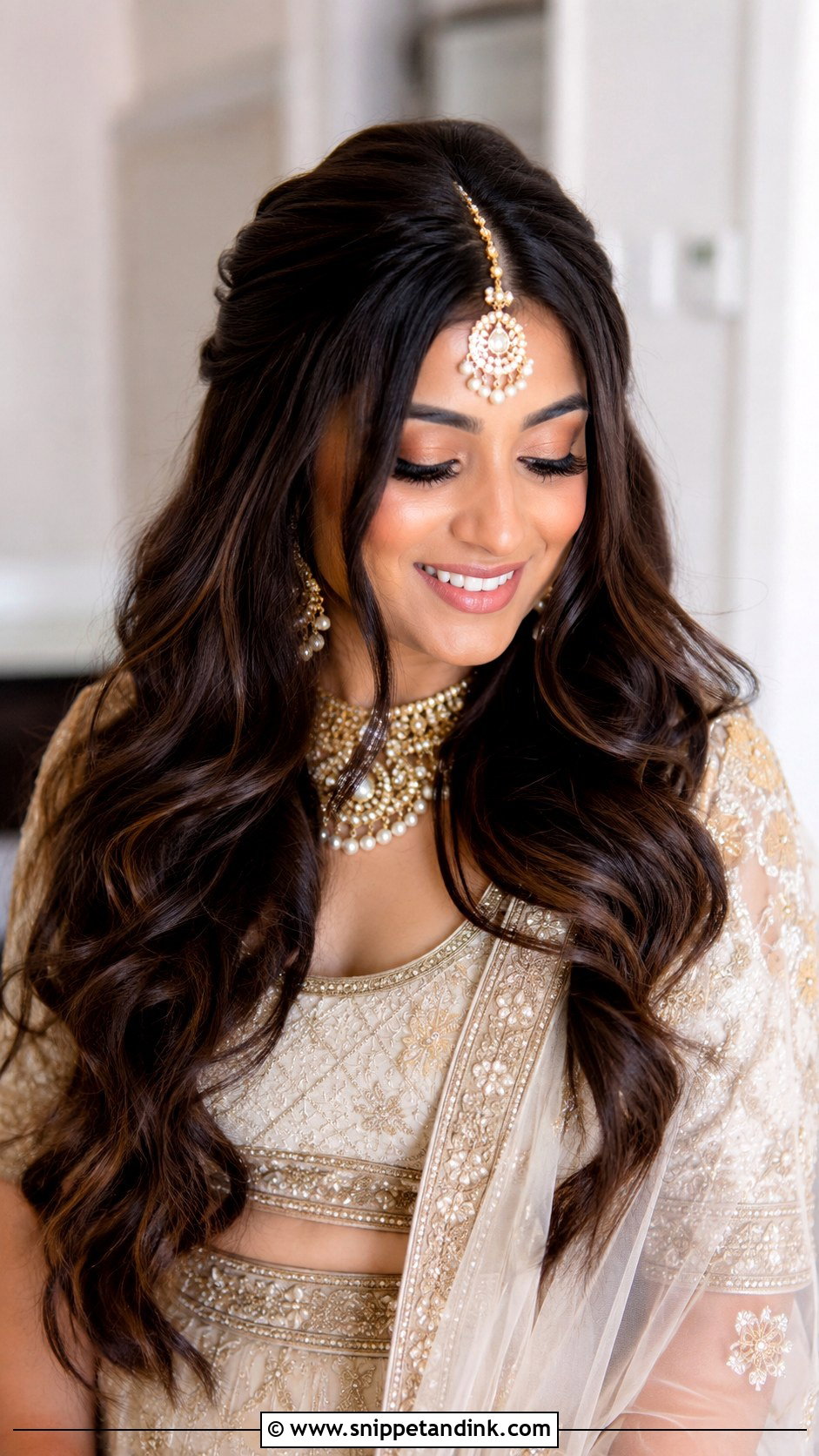
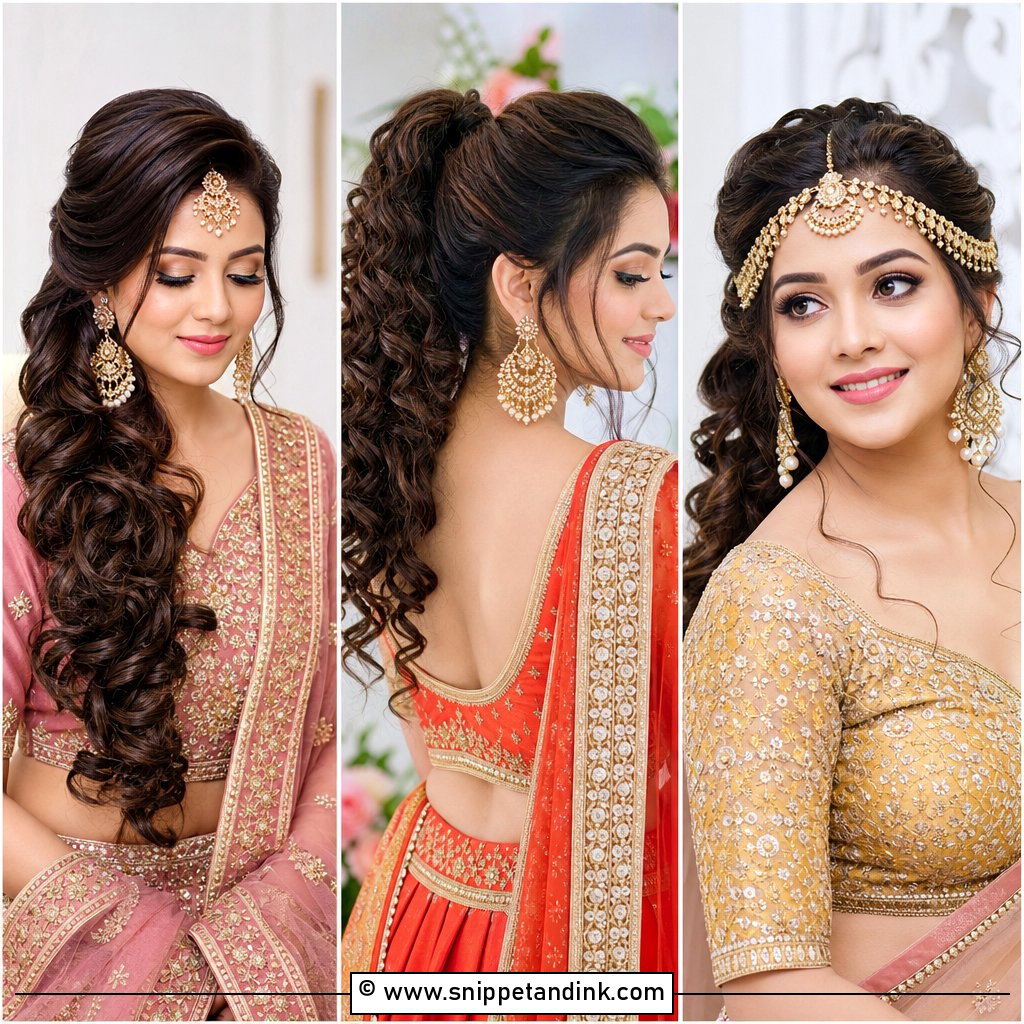
The tikka needs a clean center part and a firm hook point, and the curls take care of the rest. I pin the chain to a small hidden section at the crown rather than straight onto loose hair, otherwise the pendant drifts off center by the second ritual. Curls framing the face soften the gold. For a maang tikka look worn with a lehenga, saree or sharara, I brush the curls out into loose waves rather than ringlets and add a little lift at the crown so the jewelry sits forward. A flexible spray keeps them touchable through the ceremony.
2. Indian Wedding Open Soft Curls
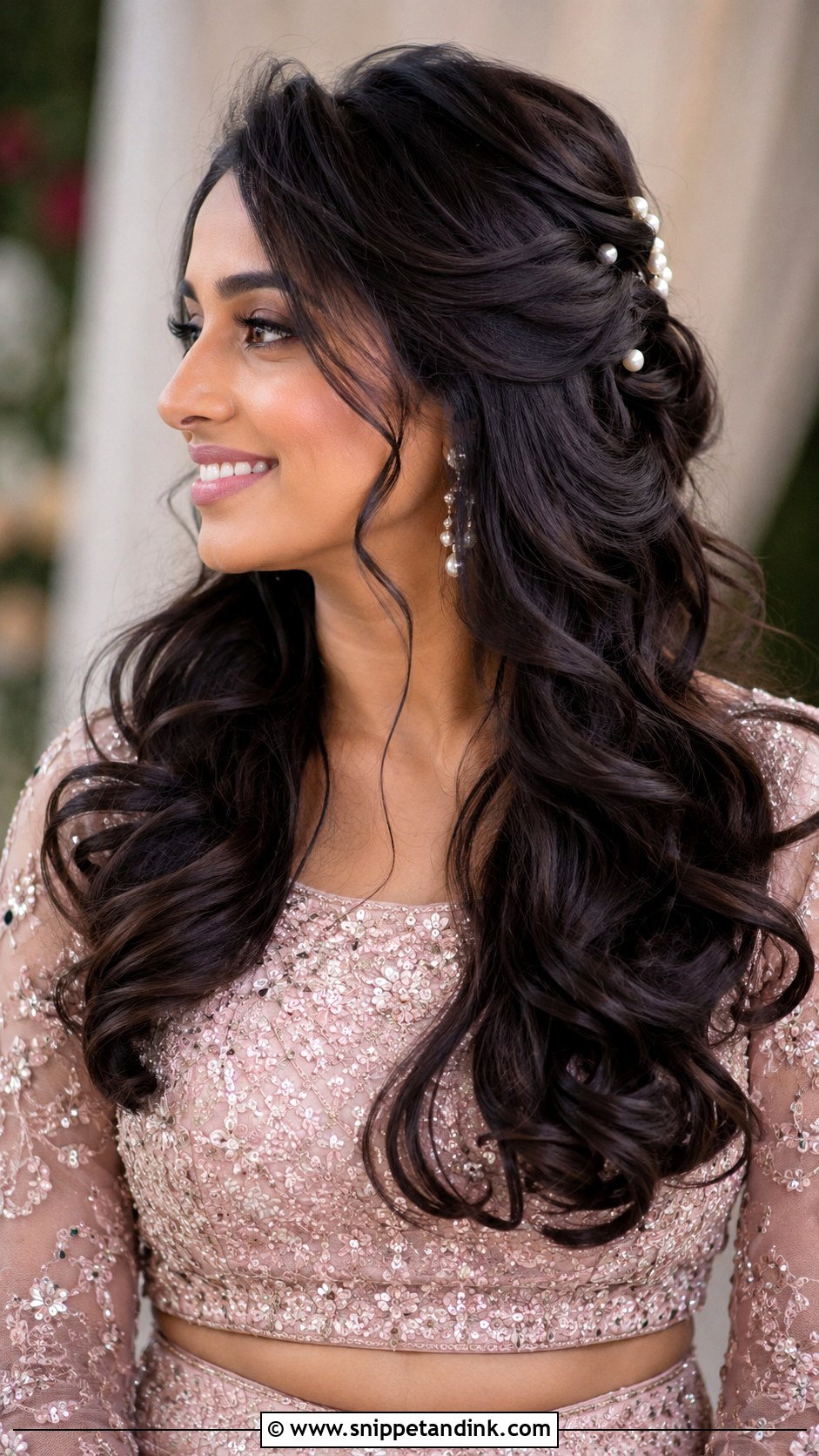
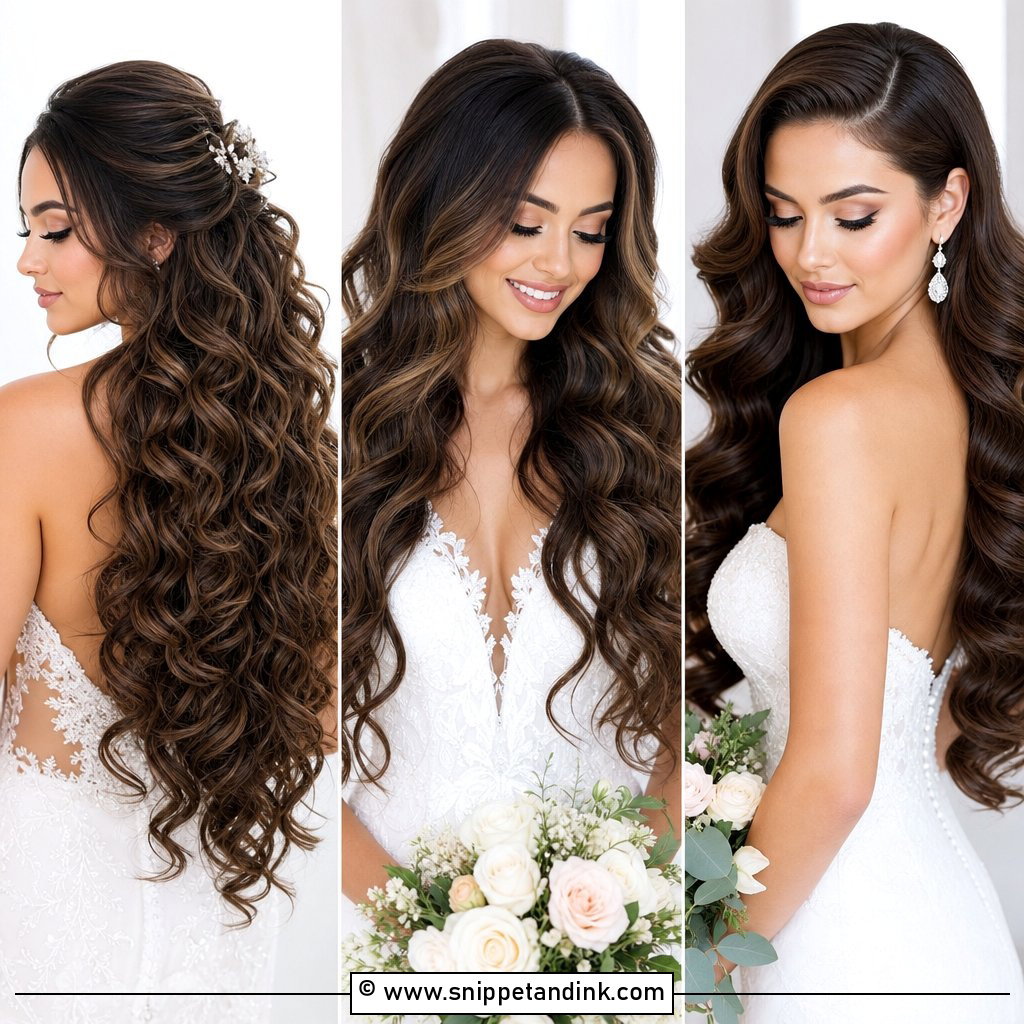
Open curls suit the evening functions best: the reception, the cocktail night, a destination wedding where flowing hair matches the mood. Brides, bridesmaids and guests can all wear them. The finish should have defined curls and a little volume at the roots, and a center or soft side part changes the feel completely. I’d only choose open hair for a daytime ceremony in summer if the venue is air-conditioned, since loose curls on a warm neck drop and stick fast. Pearl pins, tiny floral clips or a delicate passa can add detail.
3. Indian Wedding Half Up Soft Curls
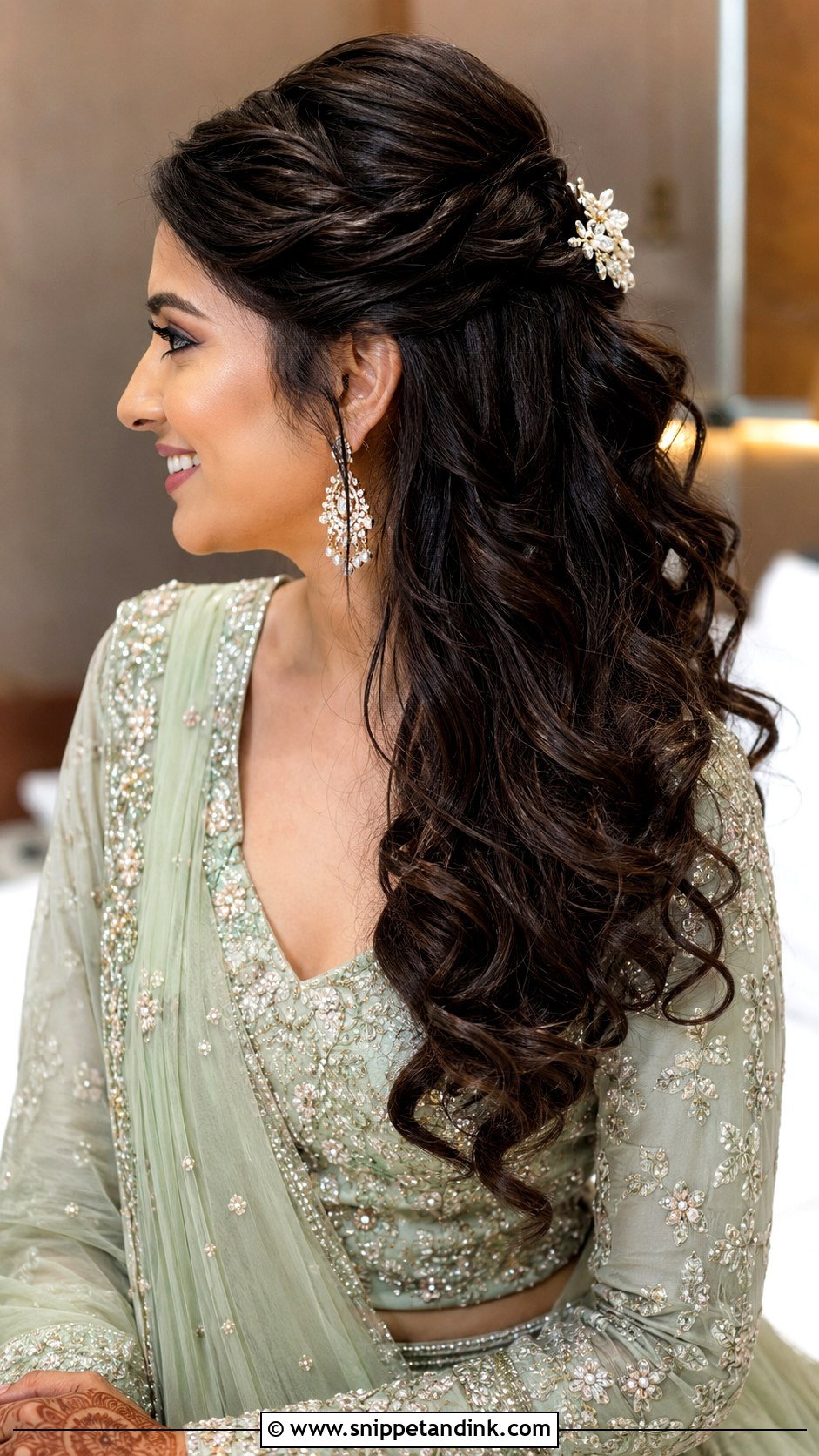
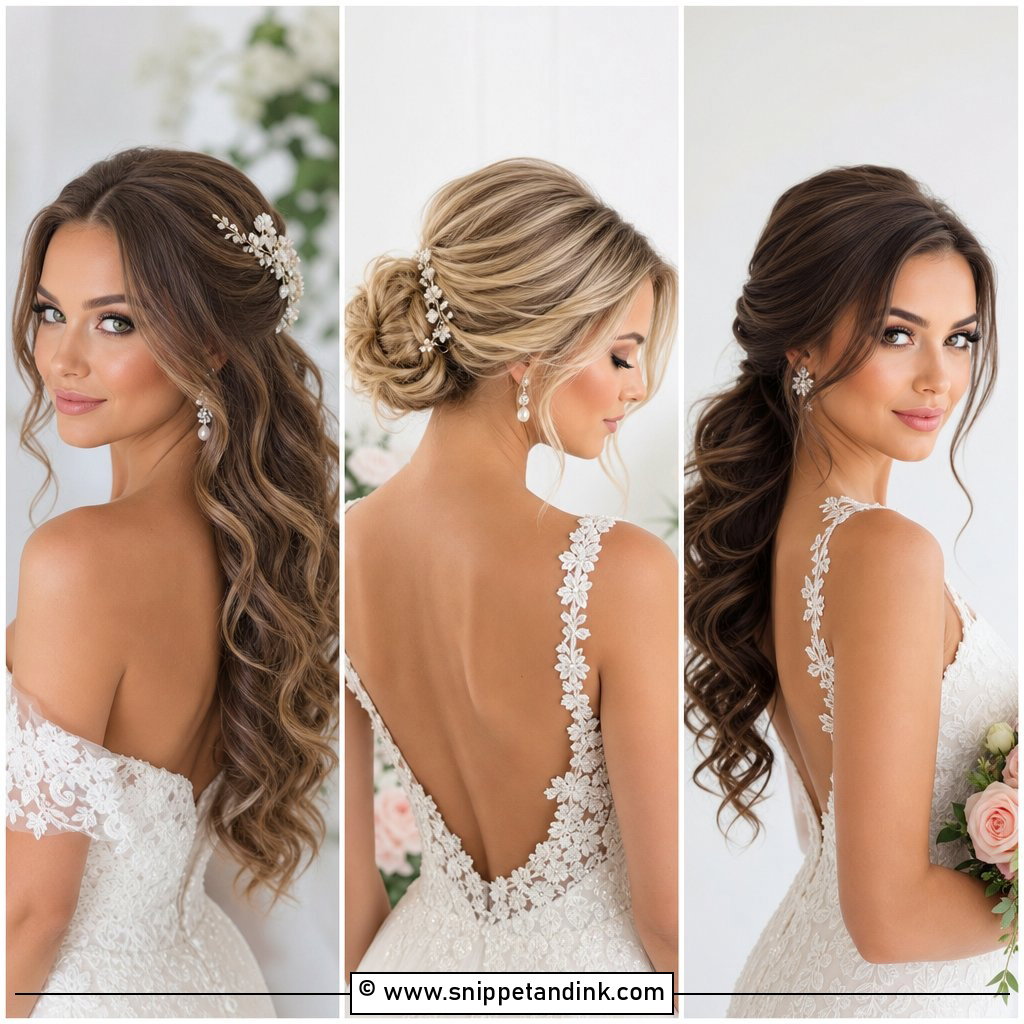
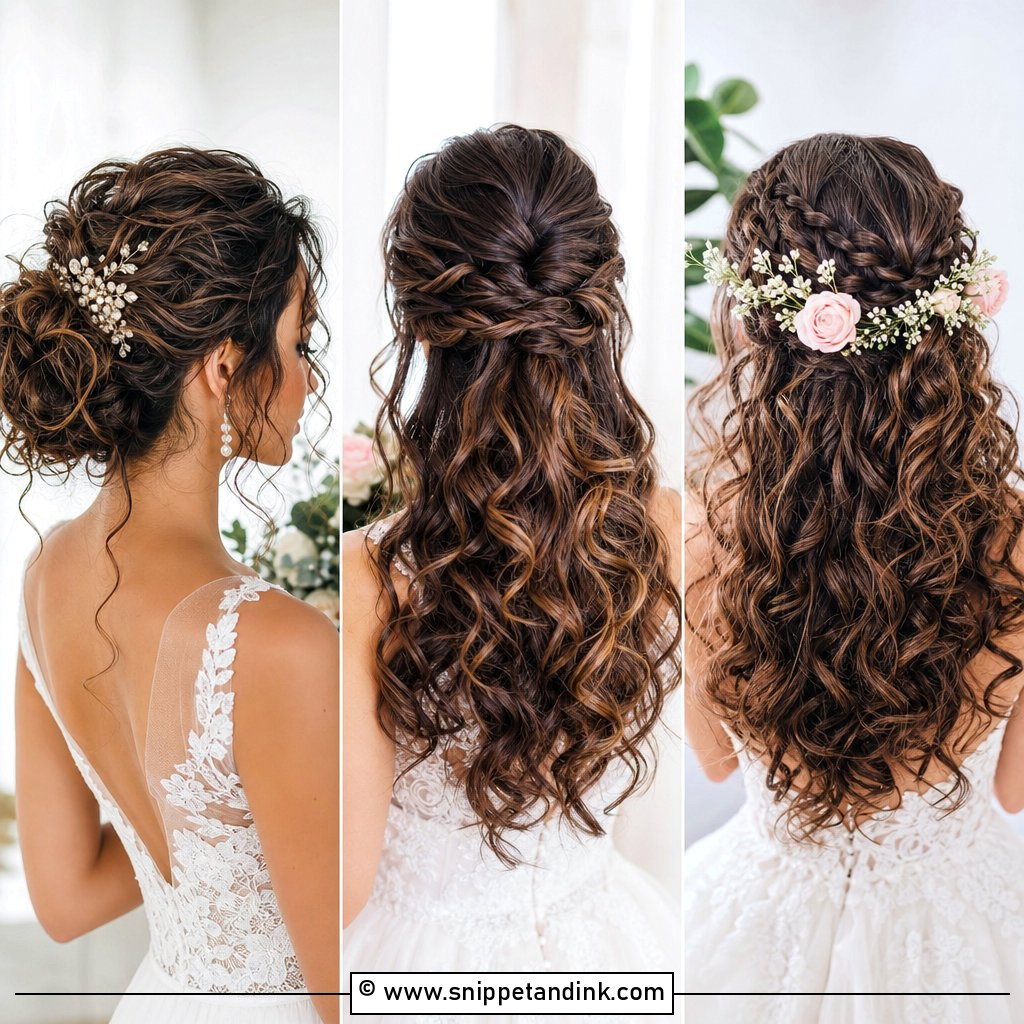
Half up is the most practical of these for a long ceremony. The top section stays put, the lower curls stay full, and nothing falls into your face during the rituals. It also gives maang tikka, matha patti or jeweled pins a secure base. I tease the crown lightly and twist the sides back, never just pin them, because a twisted section holds a dupatta pin far better. The curls then fall over the shoulders, and it works with lehengas, gowns and sarees alike.
4. Indian Wedding Side Swept Soft Curls
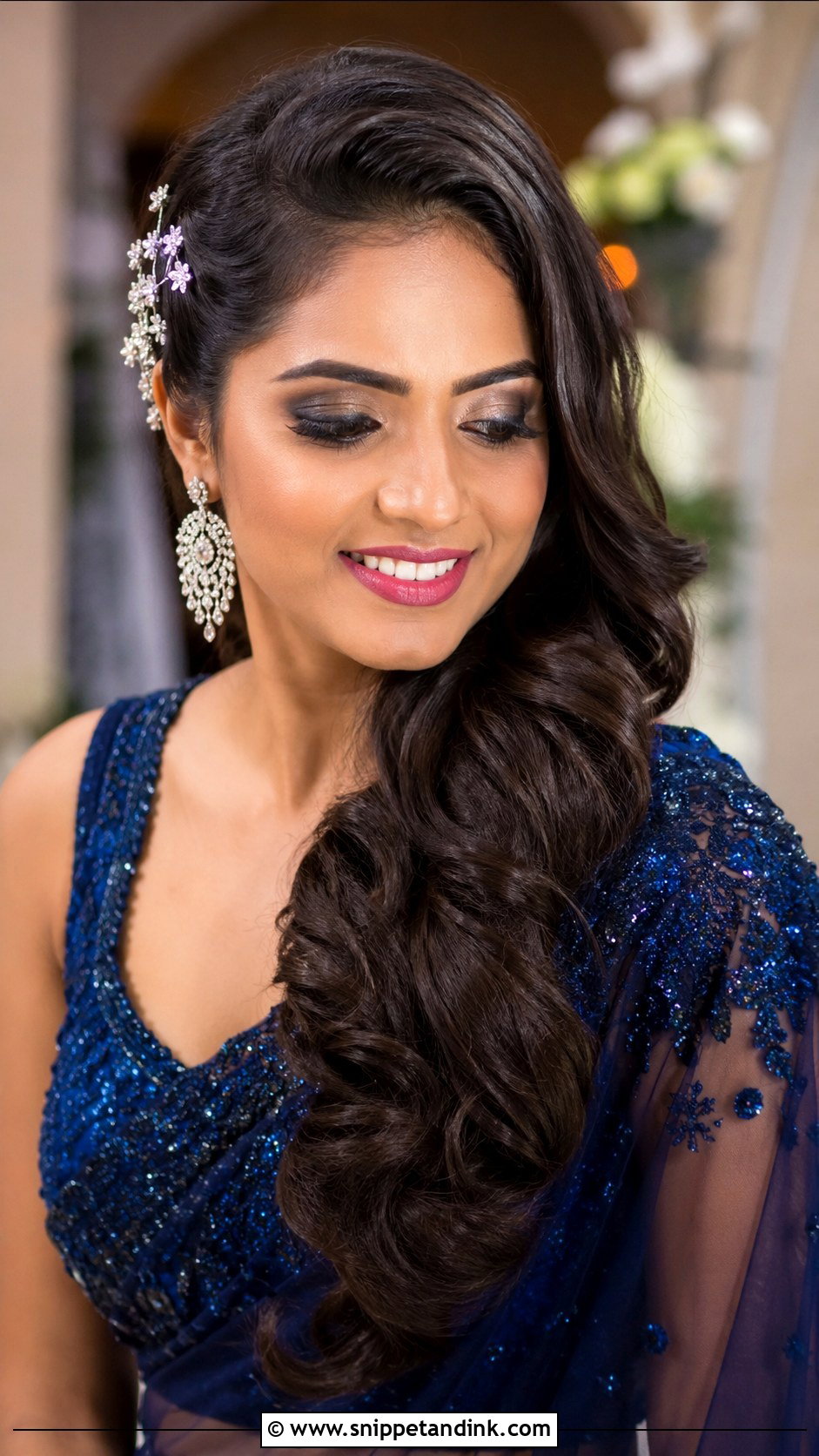
Sweeping the curls to one side gives a glamorous outline for the sangeet, reception and formal portraits. One side frames the face, the other shows off earrings and a blouse neckline. The curls should be large and smooth, brushed into one flowing shape. I pin the tucked side with crossed pins under the top layer, then cover them with a pearl clip or a jeweled piece matching your outfit. One-shoulder blouses, deep necklines and a dupatta worn on the opposite shoulder suit it. If the dupatta falls on the same side as the curls, the two will fight all evening.
5. Indian Wedding Soft Curls Low Bun
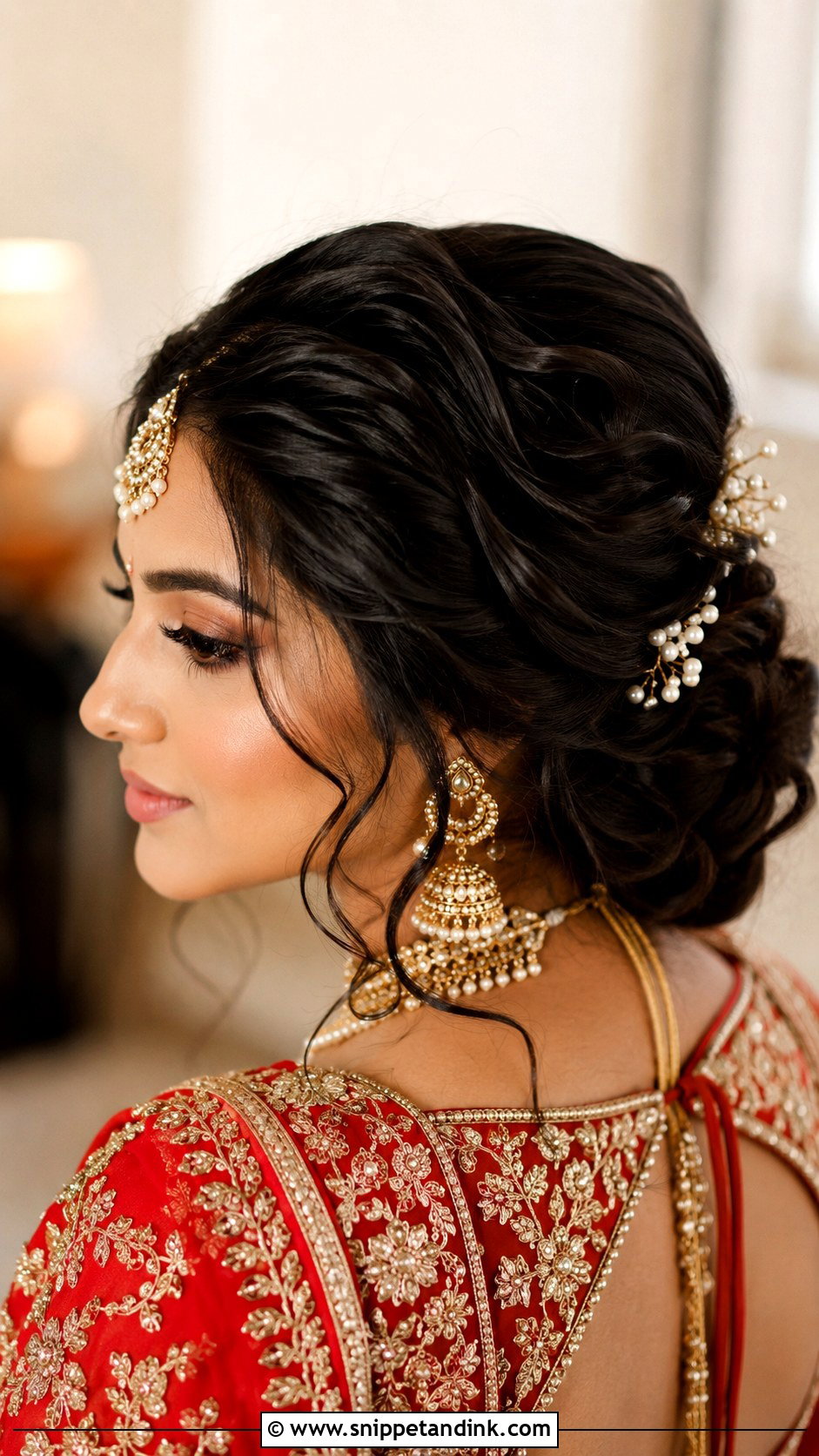
A low bun of curled pieces is my choice for a bride who has to sit through long rituals in heat. Gathered at the nape, it keeps the neck free while the curls give the bun texture instead of a tight finish. Veils, dupattas, gajra and heavy jewelry all sit securely around it. Leave a couple of face-framing curls to keep it soft. For the pheras and family photos it barely moves. Jasmine, roses or pearl pins around the bun dress it up, and the bun is the strongest base for a heavy dupatta in this list.
6. Indian Wedding Soft Curls With Gajra
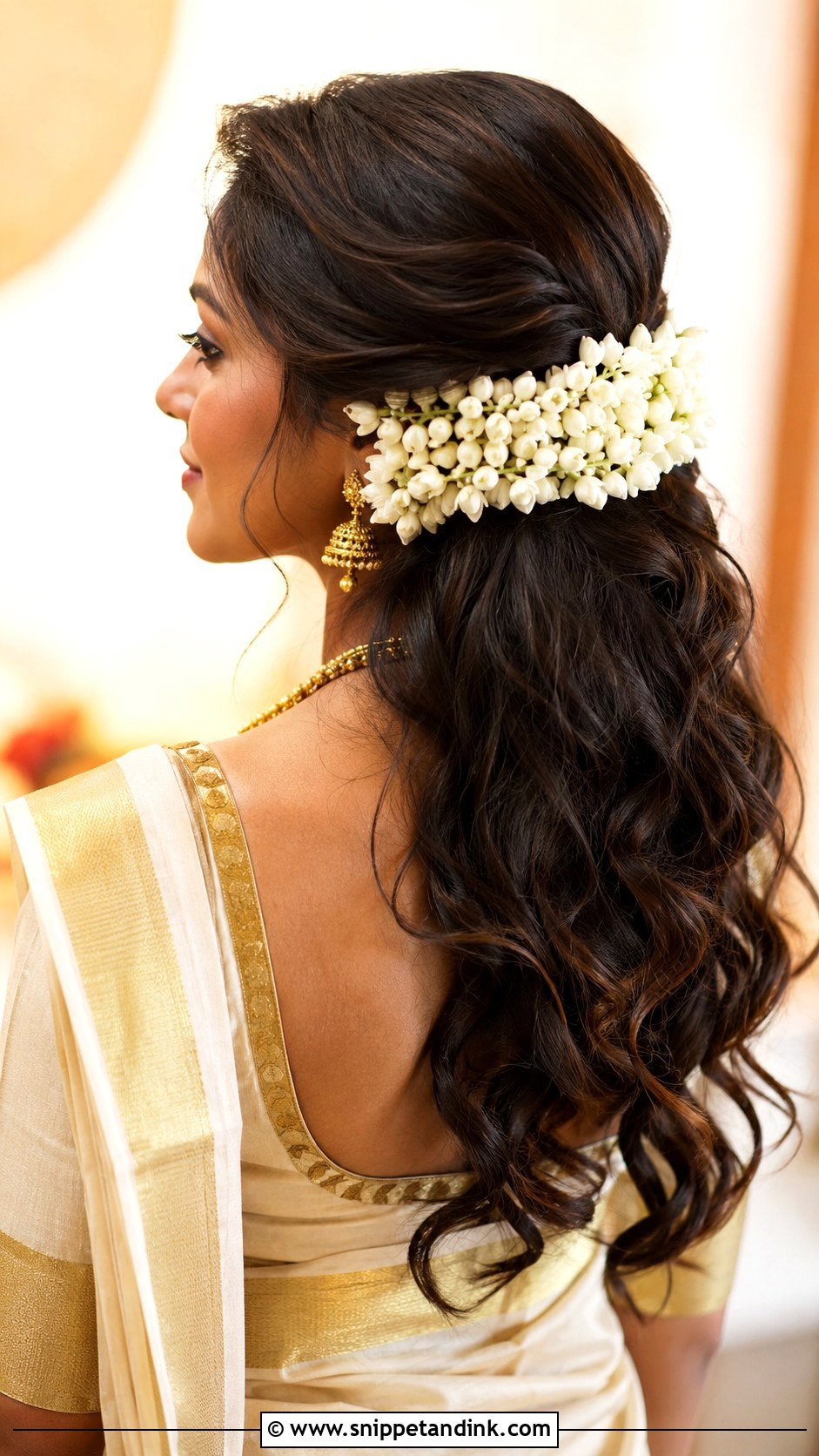
Jasmine and curls feel traditional and fresh together, and soft curls with gajra can be worn open, half up or with a loose low bun wrapped in flowers. South Indian ceremonies and daytime functions suit it especially, since fresh blooms glow in daylight. A full gajra is heavier than it looks, and wet stems can dampen the curls they rest on. I pin the gajra to a twisted section or the bun, never to loose curls, and keep it slightly away from freshly curled lengths. A center part and soft crown volume keep the balance.
7. Indian Wedding Soft Curls Ponytail
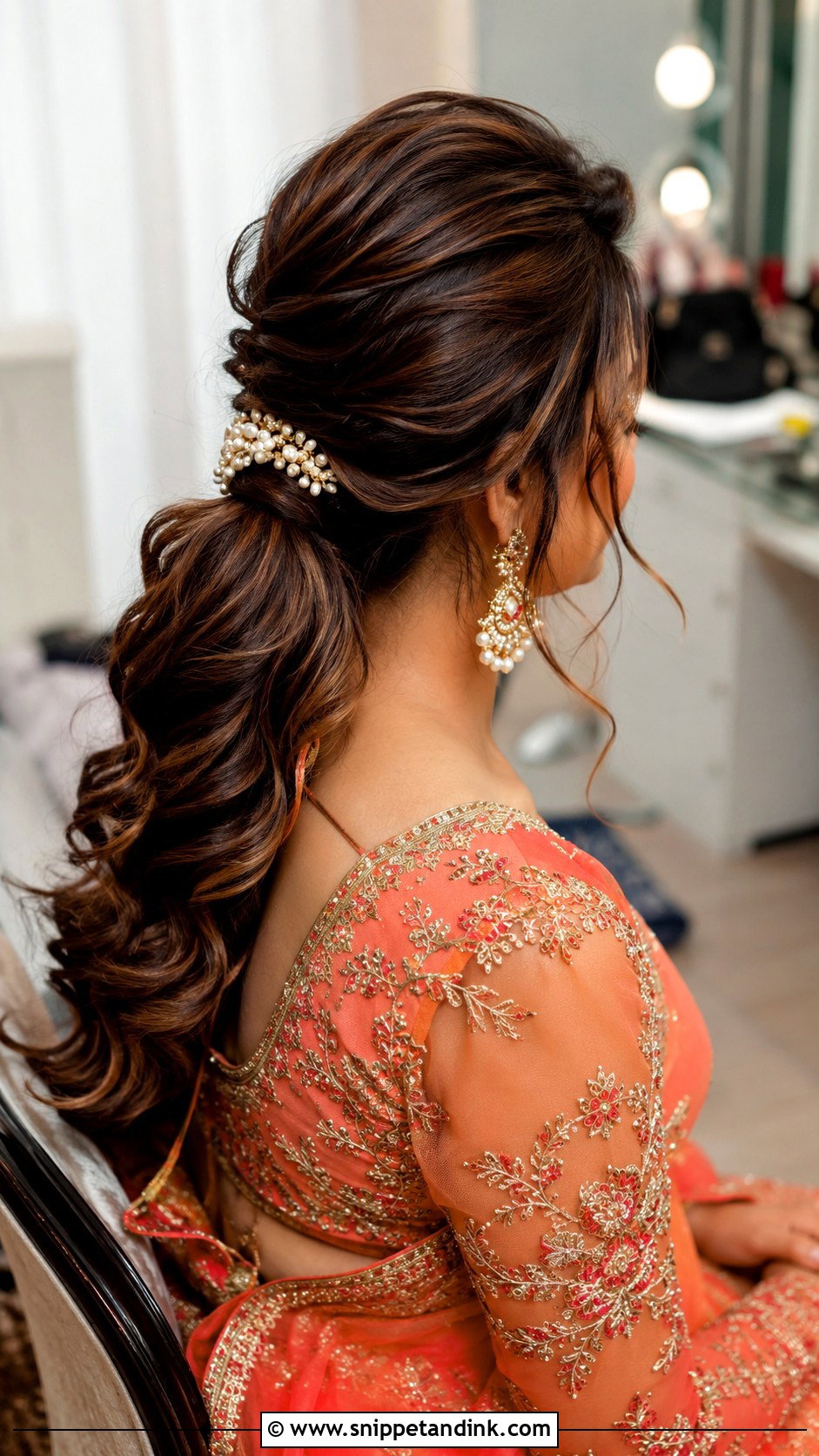
A curled ponytail gives movement without loose hair falling everywhere, which makes it handy for the sangeet, mehendi or reception when you’re dancing. Low looks graceful, mid-height is more playful. Curls through the length make it full, and a wrapped section hides the elastic; I use two elastics because curled hair is heavy at the ends. Pearl pins, a jeweled clip or tiny flowers near the base make it festive. Backless blouses and detailed dupattas suit it, as the neckline stays visible.
8. Indian Wedding Soft Curls With Braided Crown
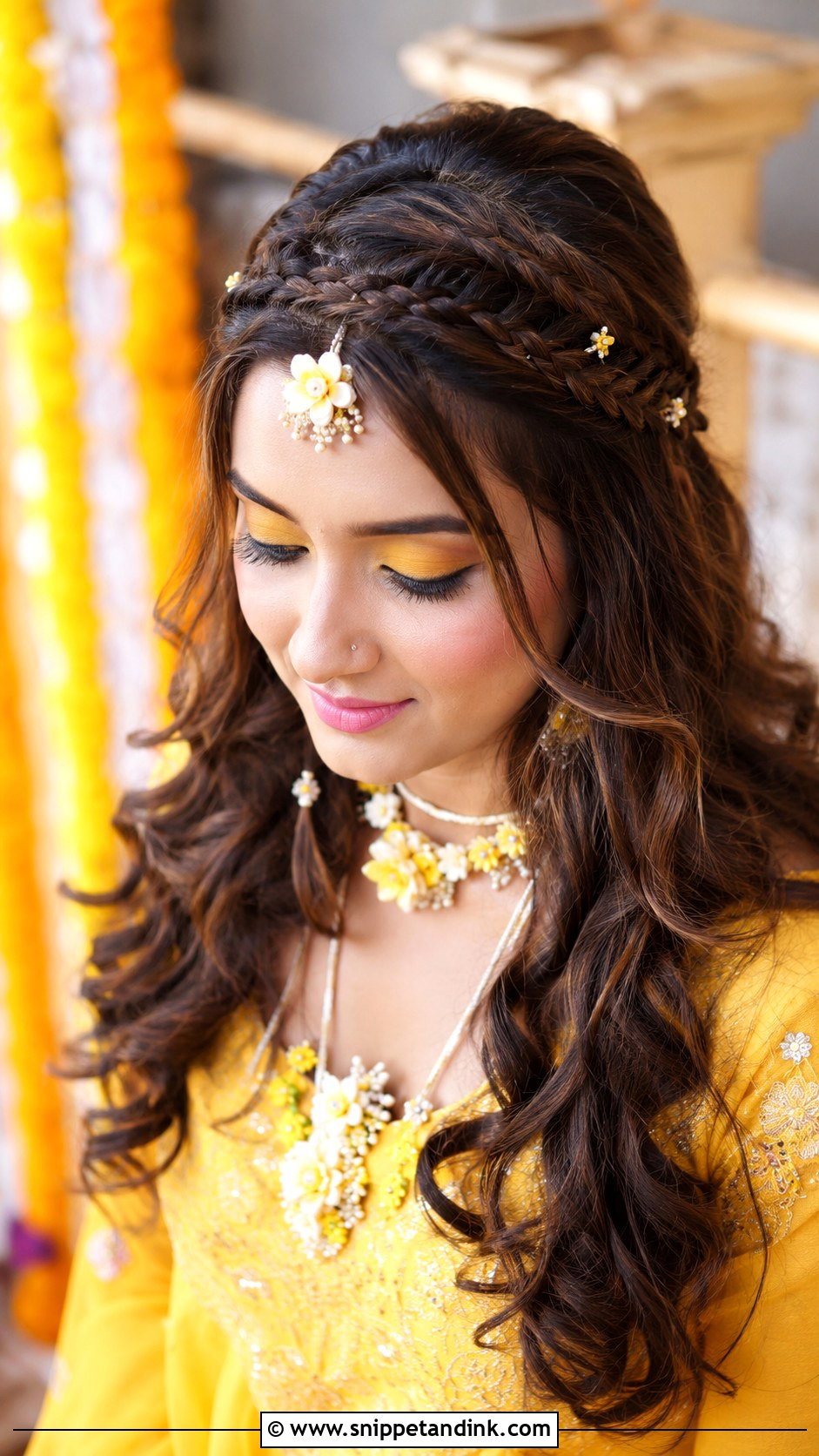
The braided crown sits across the top of the head like an accessory, while curls fall freely below. It’s a youthful choice for the mehendi, haldi and outdoor functions, and the braid doubles as a firm place to pin flowers or a light dupatta. Thin braids look delicate, fuller ones give texture; I pancake the braid gently before pinning so it looks wider. Small flowers or pearls along it echo soft embroidery. For the haldi, keep accessories you don’t mind getting turmeric on.
9. Indian Wedding Soft Curls With Matha Patti
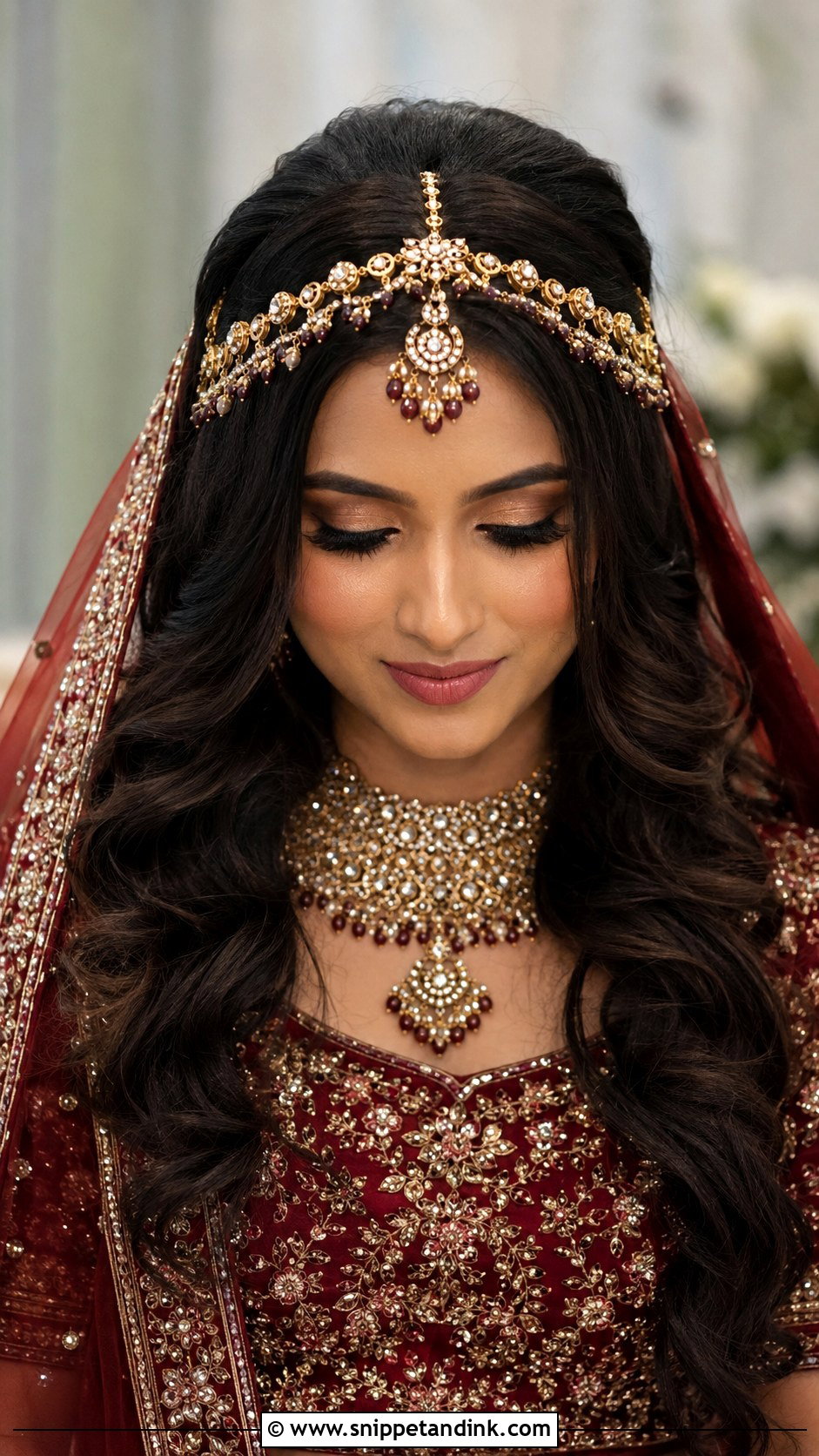
A matha patti draws every eye to the forehead, so soft curls with matha patti should be neat and balanced rather than voluminous. A middle part is essential; the side chains need equal tension to sit level. I anchor each side chain with a pin hidden under a curl just above the ear, which stops the piece sliding down the forehead. Gentle volume at the crown prevents the hair looking flat under the jewelry. Lehengas, heavy dupattas and traditional makeup suit it. If the piece is large, skip extra clips.
10. Indian Wedding Soft Curls With Fresh Flowers
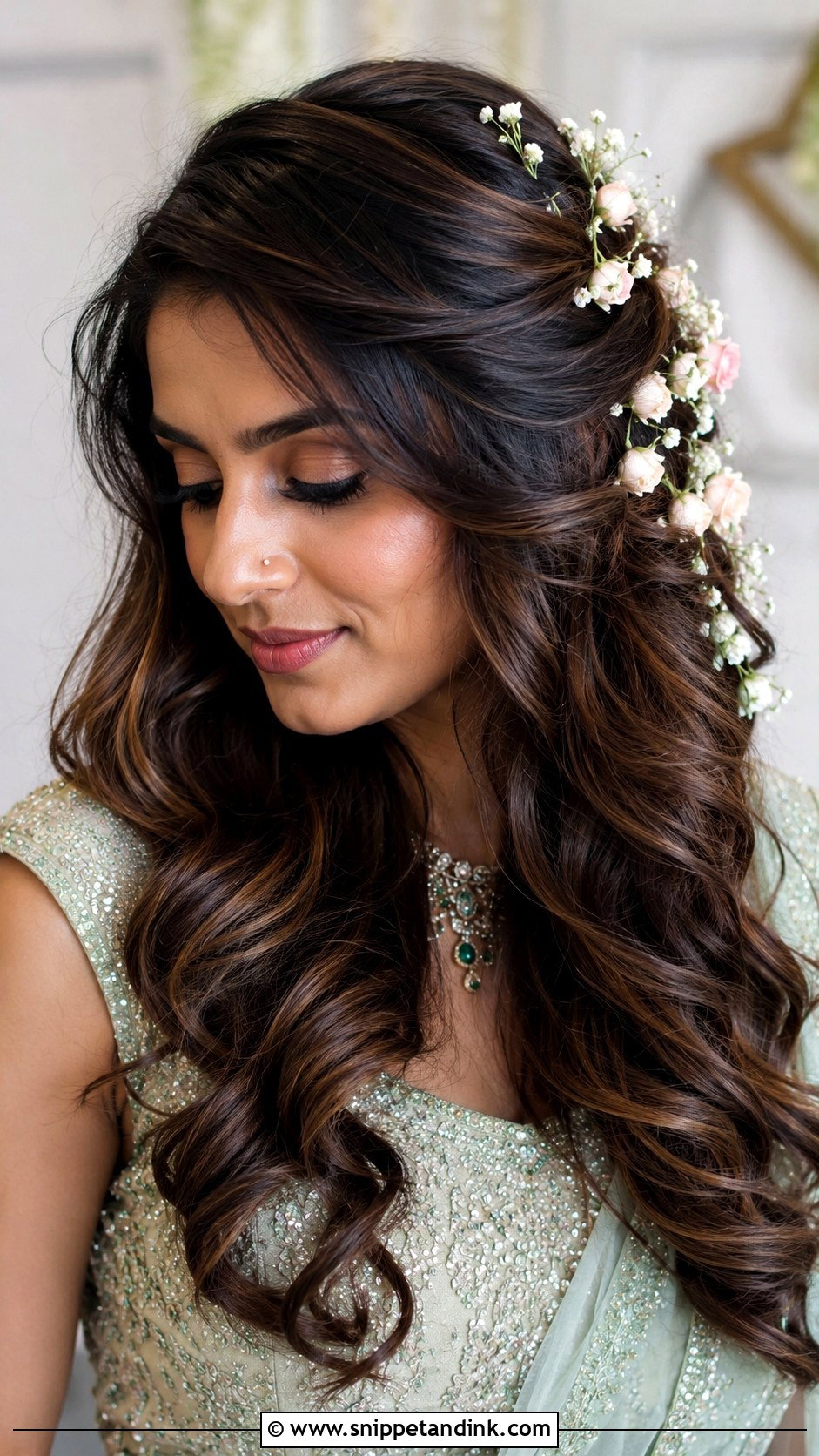
Fresh flowers suit brides and guests at the haldi, mehendi, garden and daytime functions. They can sit along one side, tuck into a half-up twist or scatter through open curls. Pick blooms to match the outfit, such as jasmine, baby’s breath, roses or orchids. Orchids and roses hold up better in heat than very delicate petals. The curls should be light rather than stiff with product, because spray on petals turns them brown. A few face-framing pieces soften the cheeks, and the flowers bring color and texture to every photo.
11. Indian Wedding Soft Curls With Dupatta
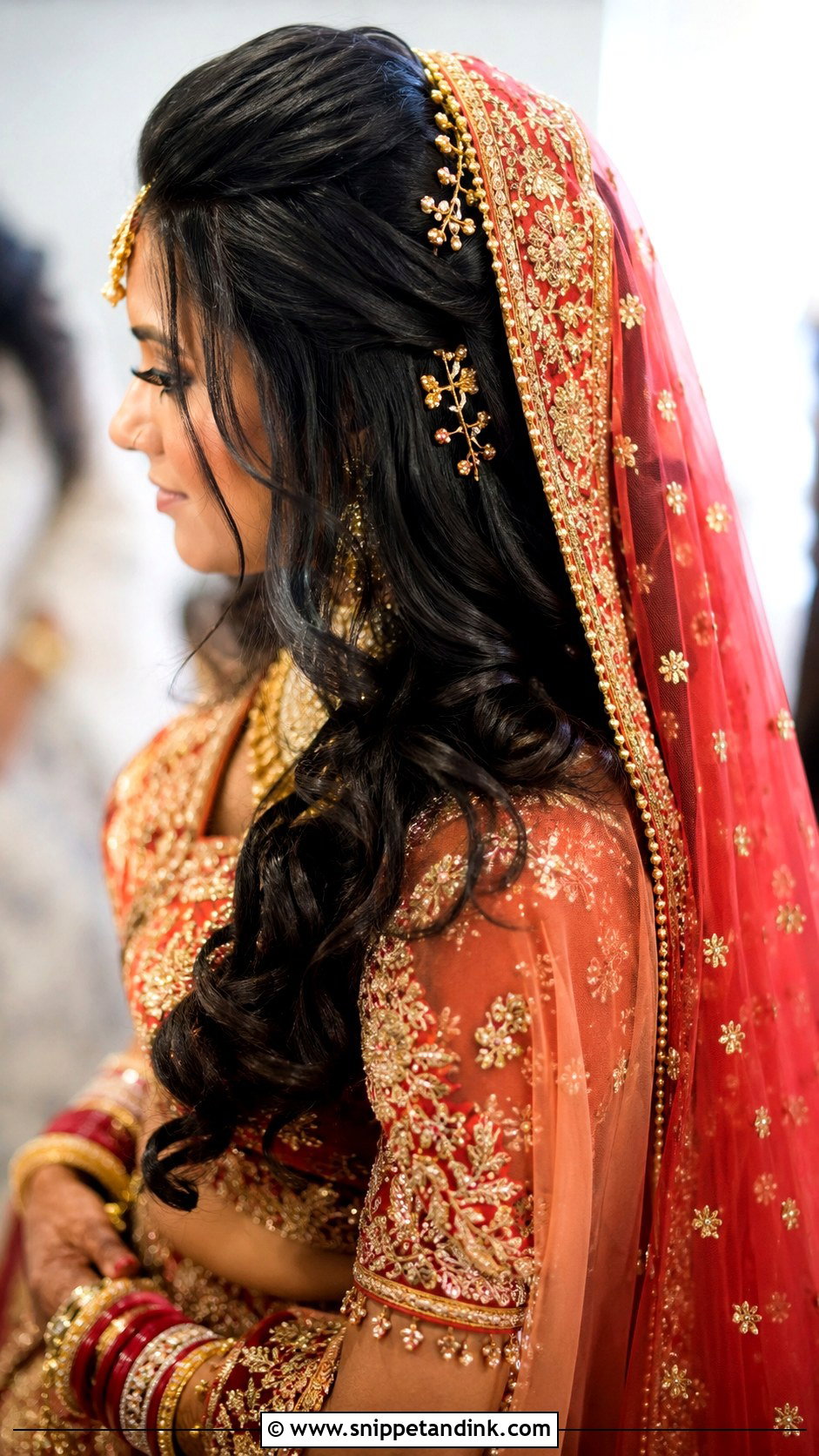
Curls under a dupatta need hold more than anything else. When the dupatta is pinned over the head for the pheras, it presses down on the crown and slides against the curls each time you move. A half-up base or a firmly pinned crown takes that weight without flattening the hair. I set the dupatta pins into that base and through the fabric at the back, never into loose curls. Keep the front smooth and the ends curled, so the curls still show below the fabric. Ask for a practice drape at your trial with the actual dupatta.
12. Indian Wedding Soft Curls For Long Hair
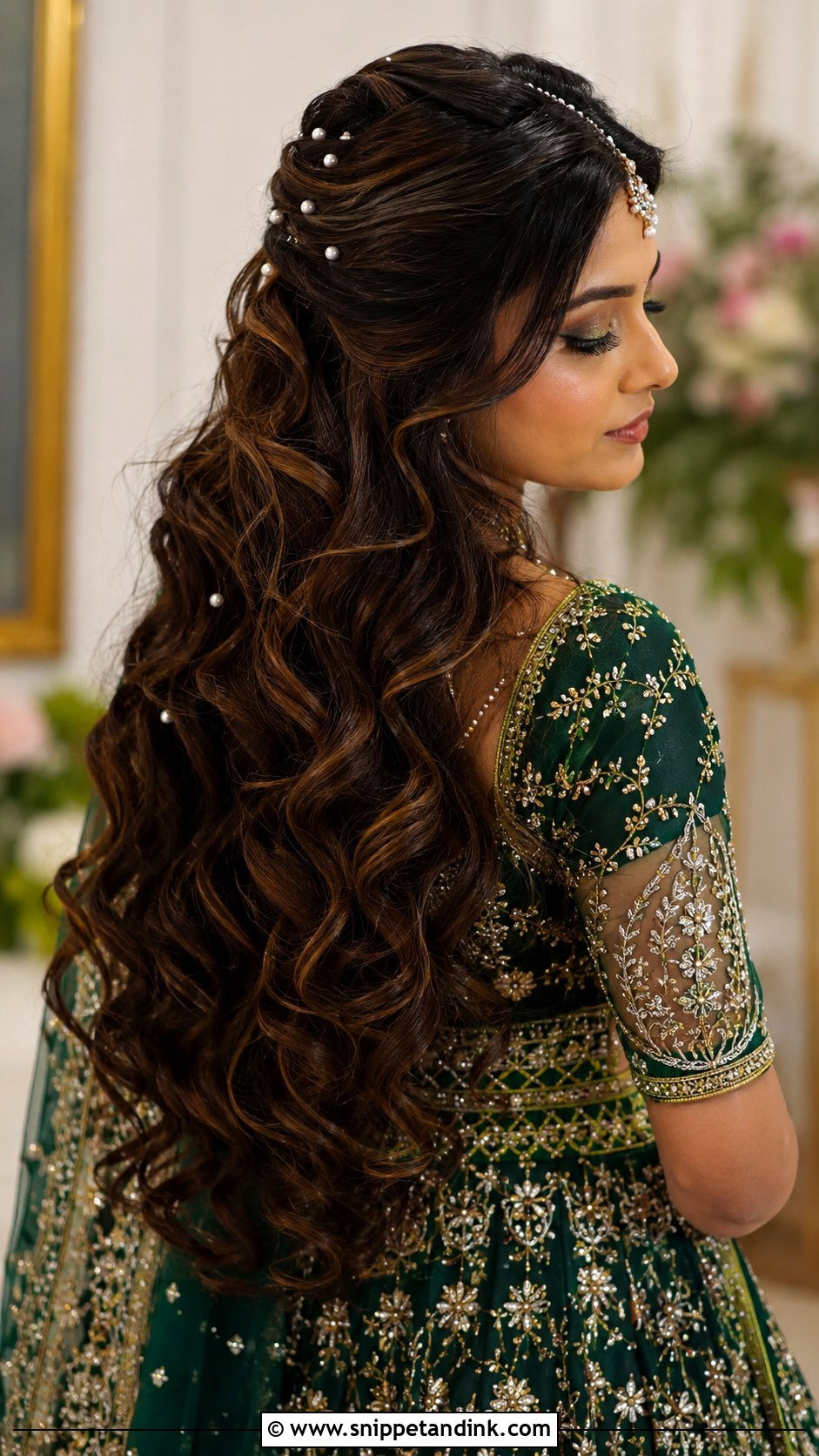
Long hair gives room for wide, smooth curls from the mid-lengths down, and the movement is dramatic in photos. Brides, sisters and guests all wear it. The prep makes or breaks it: heat protectant, a setting spray before curling and a drop of serum on the ends. Long, thick Indian hair is heavy, and curls drop under that weight faster than on shorter hair, so I curl tighter than the finished look and pin each curl to cool. Face-framing layers soften it, and a maang tikka, pearl pins or a side clip add detail.
13. Indian Wedding Soft Curls For Medium Hair
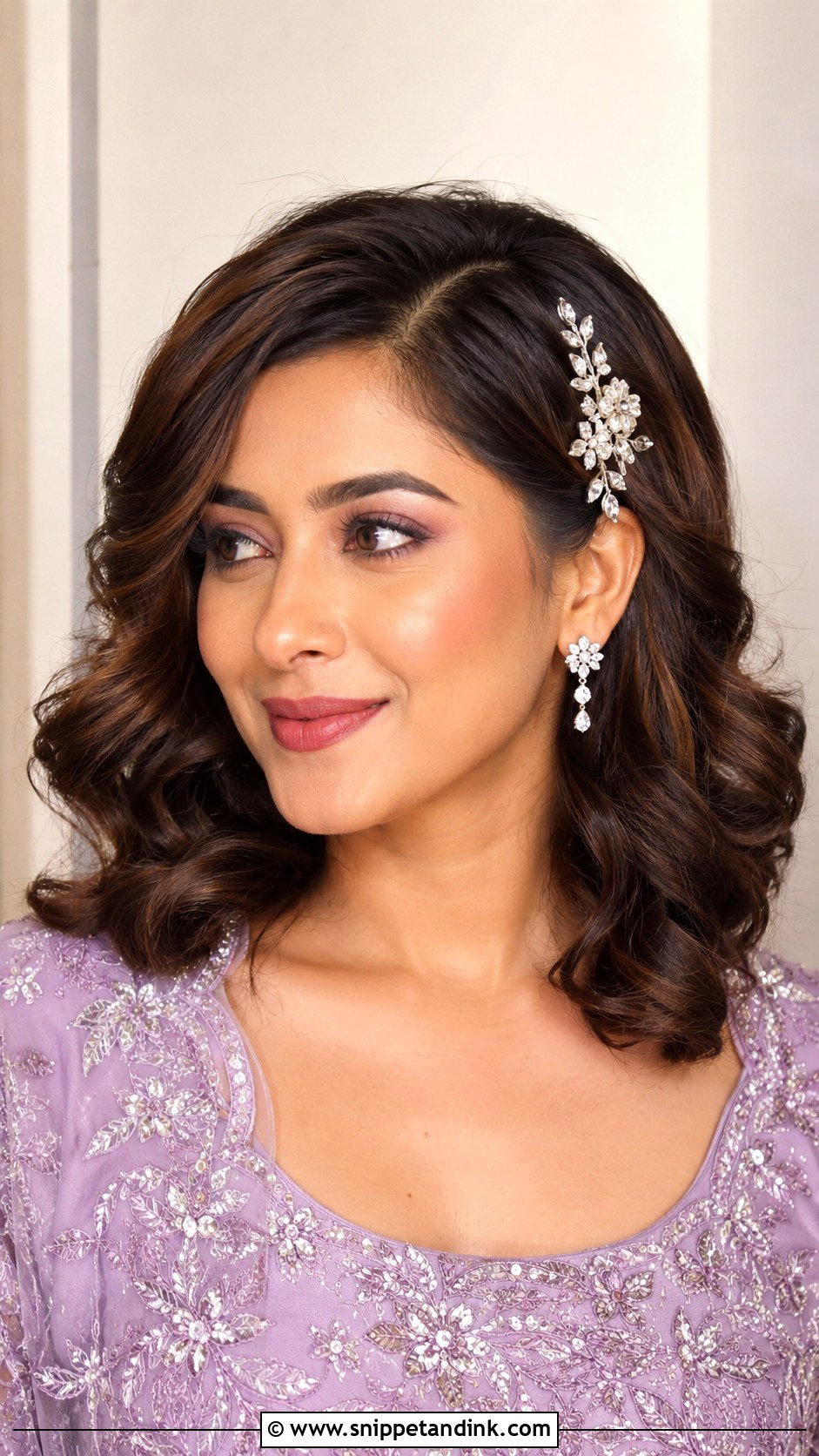
Medium hair, shoulder to collarbone, looks fuller than you’d expect when curled in alternating directions and lightly brushed out. Guests, bridesmaids and brides who keep their hair at this length can all wear it. A side part gives volume, while a center part feels more traditional. A half-up twist, small braid or jeweled clip makes it festive. I keep the ends softly curled rather than flipped out, which tends to look dated with a saree. Medium hair can struggle under a heavy dupatta, so a small braid at the crown is a good hidden anchor.
14. Indian Wedding Soft Curls For Short Hair
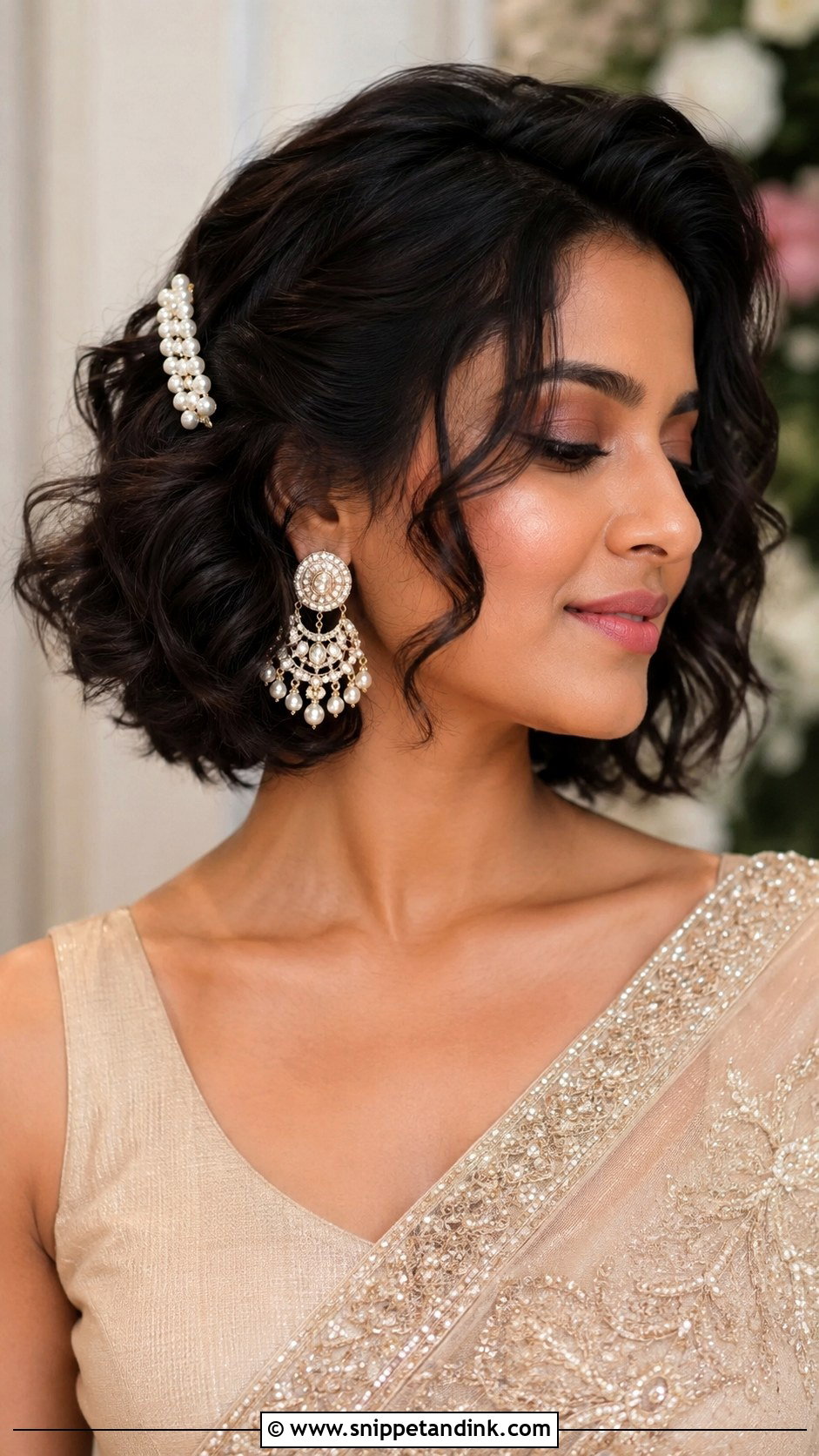
A curled bob, lob or shoulder-skimming cut can look just as festive as long bridal hair. Short curls frame the face and leave room for statement earrings. I add crown volume and curl the front away from the face to open it up. Accessories carry more weight at this length: a small maang tikka, side clip, pearl barrette or fresh flowers make short curls wedding-ready. Heavy jewelry is harder to anchor in short hair, so a lightweight tikka with a hidden clip is the safer choice.

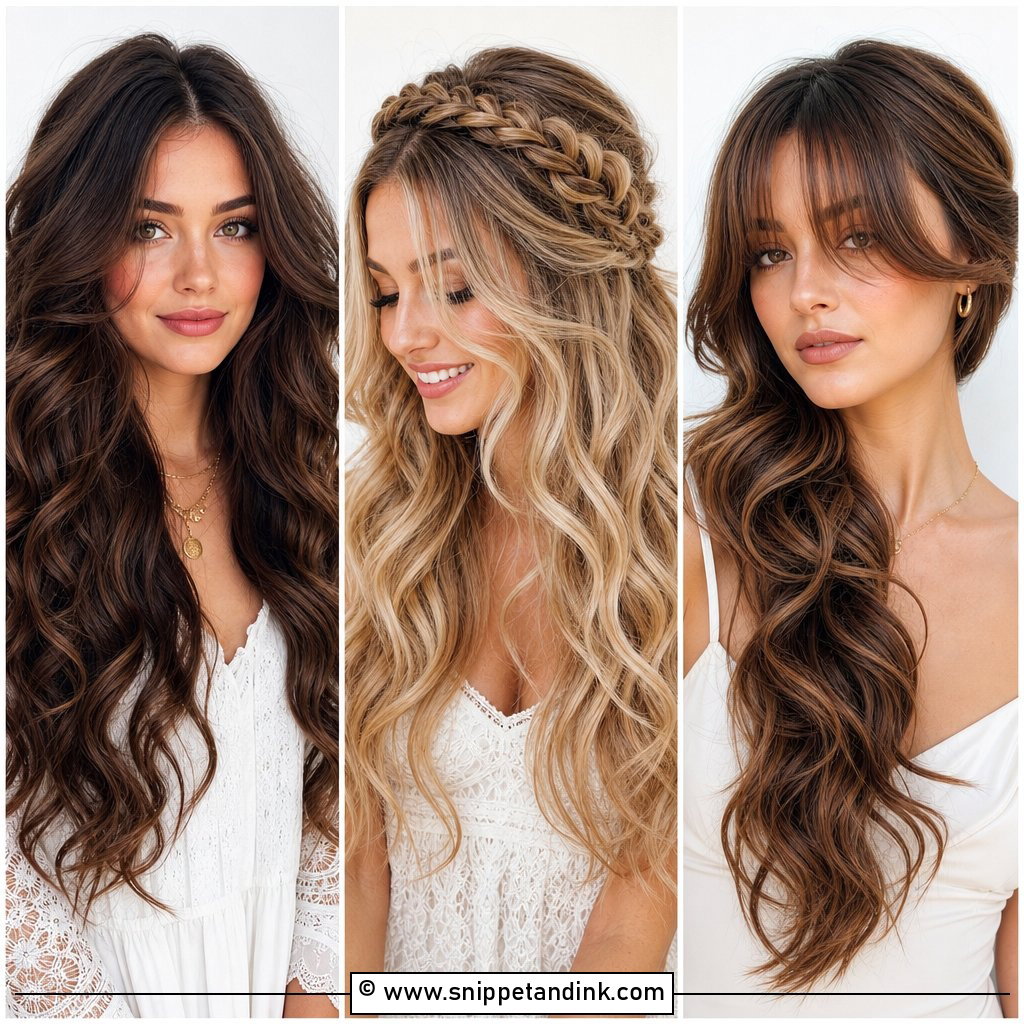
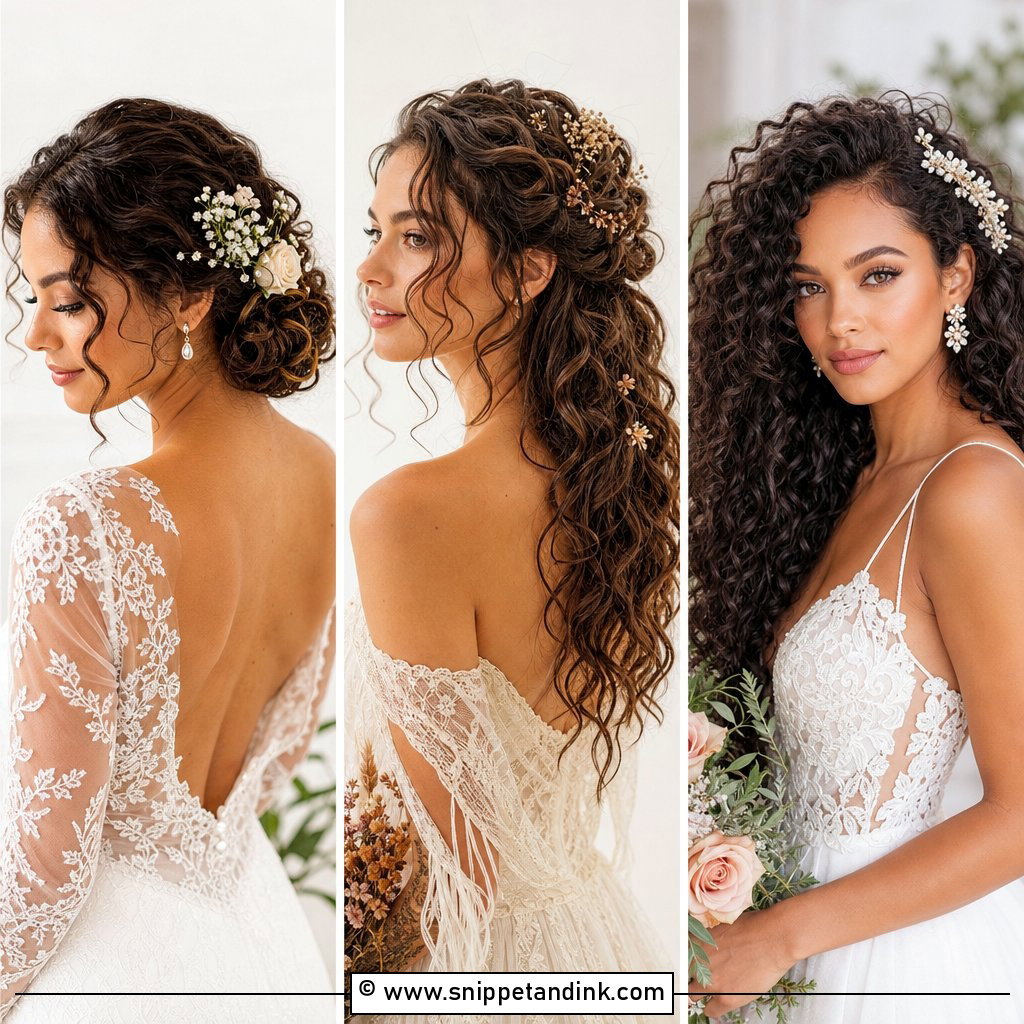
15. Indian Wedding Soft Curls Reception Hairstyle
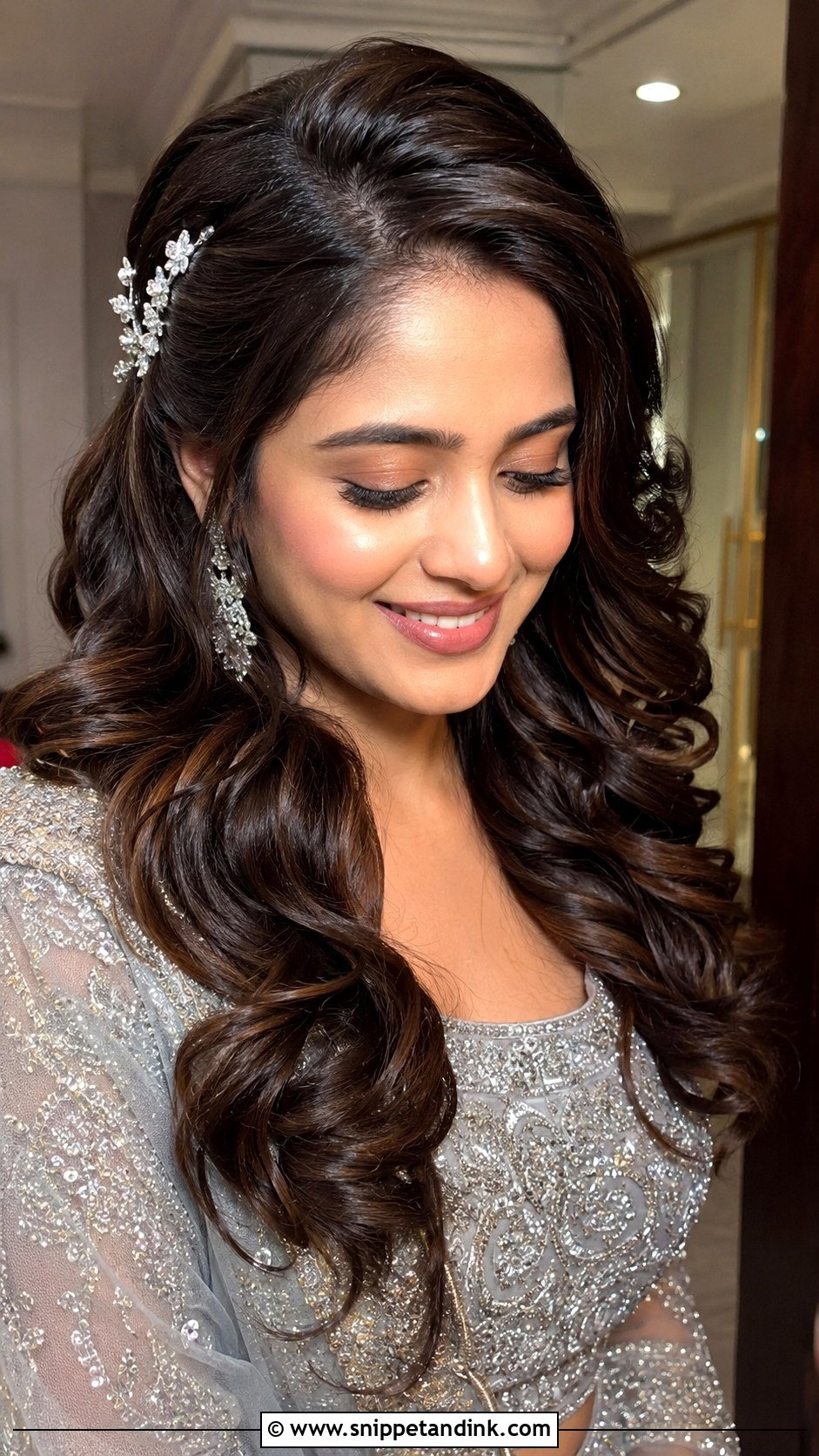
Reception hair can be the most glamorous of the week, and it has to survive hours of photos and dancing. Open, side swept or half up with extra shine all suit the gowns, embellished lehengas and modern sarees worn that evening. I ask for smooth roots, lifted crown volume and large curls that blend into each other. A crystal clip, pearl comb or sleek accessory gives a formal finish. If it follows a long ceremony the same day, I refresh the curls rather than restyling from scratch, which is quicker and kinder to the hair.
Three or Four Days of Curls Without Frying Your Hair
Most Indian weddings run over several days, and many brides want curls for every function. Curling the same hair hot every morning for four days leaves it dry and frizzy by the reception, which is when the photos matter most. A little planning keeps it healthy.
Space out the heat
Choose a braided or bun style for the haldi and mehendi, where turmeric and henna are going to get in your hair anyway, and save the full curls for the sangeet, wedding and reception.
Refresh rather than redo
After an evening function, loosely twist the hair into a high bun or a silk scrunchie before sleeping. Next morning, only the front and any fallen sections need the iron again.
Wash with care
After the haldi, rinse the paste out thoroughly but keep the shampoo gentle. Turmeric can tint light or highlighted hair yellow if it’s left in for long, so a quick rinse straight after the ceremony is worth it. Use a heat protectant every time you curl.
Share your schedule with your stylist ahead of the week, so they can plan which days get the full curl set and which get a lighter refresh.
Curls for Every Function, From Haldi to Reception
Soft curls bend to whatever an Indian wedding asks of them, traditional, modern, simple or glamorous. They take a maang tikka, matha patti, dupatta, gajra, flowers, pearls and jeweled pins, which makes them easy to adapt for each function. Open curls feel romantic, half up feels secure, and buns or ponytails give control for long events. Plan each look around the outfit, jewelry, face shape and the comfort you’ll need for that particular ceremony. Prepared and anchored properly, the curls hold from the first photo to the final dance.
You'll Like These Ideas:


Leave a Reply