
Korean bridal hair is built on soft polish: a smooth crown, a controlled shape at the back and a few loose pieces near the cheeks so it never looks stiff. It sits comfortably with hanbok-inspired ceremonies, a plain white gown or a studio portrait session. The first thing I plan for is hold, because much of the hair I style for these looks is straight, glossy and heavy, and that kind of hair lets go of a curl faster than people expect. Every style below is one I’d happily build, with notes on where each tends to go wrong.
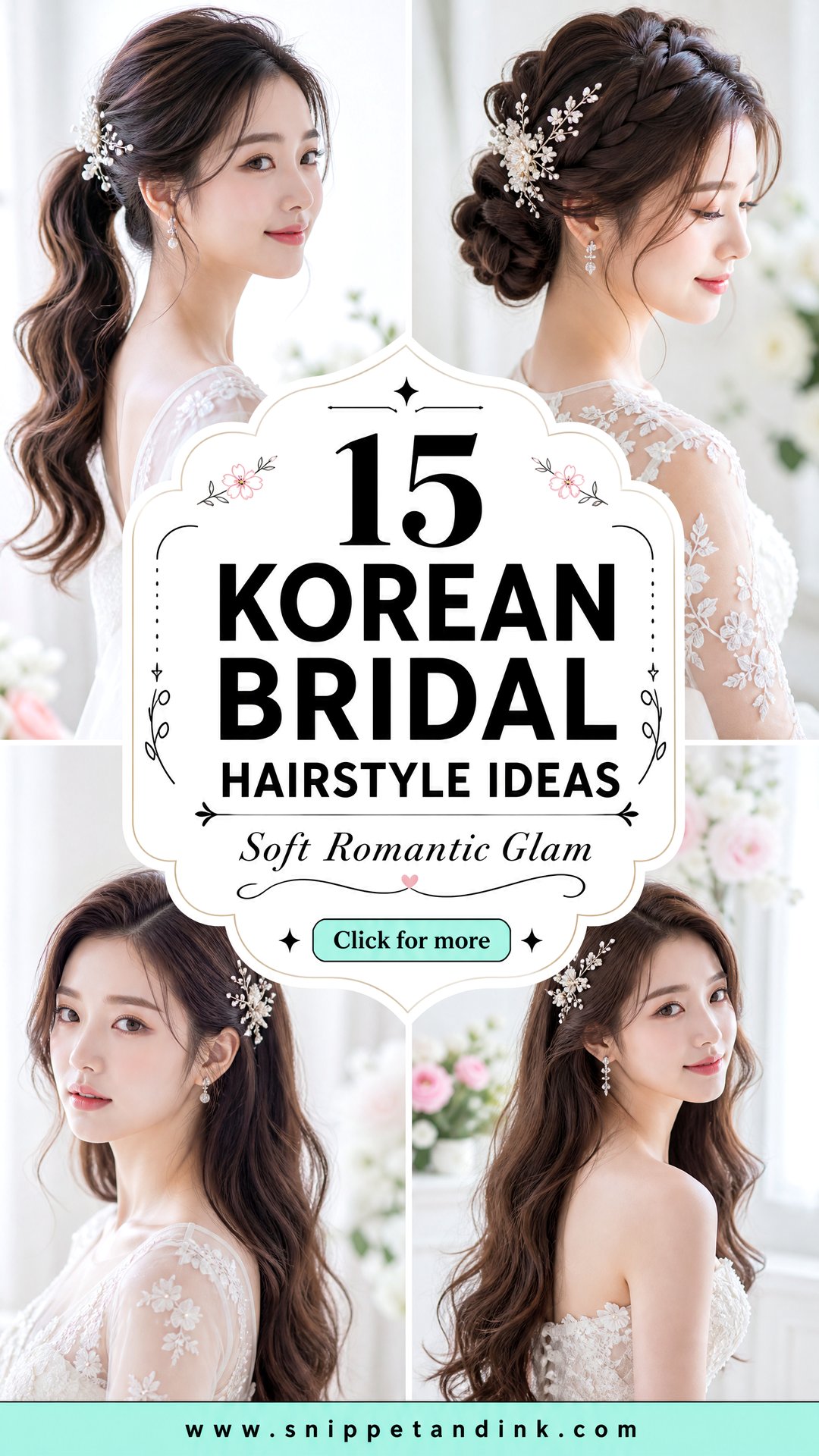
Straight, Heavy Hair and the Wave That Won’t Stay
A lot of the hair I style for these looks is straight, thick and glossy. It’s strong hair that takes heat well, but that smooth surface is exactly why curls slide out and pins slip. When a soft Korean style fails, it usually fails early, in the first couple of hours, so the preparation matters more than the finishing spray.
- Wash the day before, not the morning of. Freshly washed straight hair is too slippery to hold a pin, and one day of natural oil gives it grip. If your roots get oily fast, use dry shampoo the night before.
- Skip smoothing serums and shine oils on the morning. They make the hair look glossy in the mirror and then let every curl drop.
- Let each curl cool before anyone touches it. I set curls in pinned loops while they cool; brushing out warm hair is the quickest way to lose the shape.
- Expect waves to relax noticeably over the day, so they should look slightly too defined when you leave the chair.
Fine hair has the opposite problem
If your hair is fine rather than thick, it usually holds a curl well but there isn’t enough of it to fill a bun. I’ll add a small padding piece or a few clip-in wefts matched to your color, or build the bun around a braid so it has bulk without looking stuffed.
1. Korean Bridal Low Bun
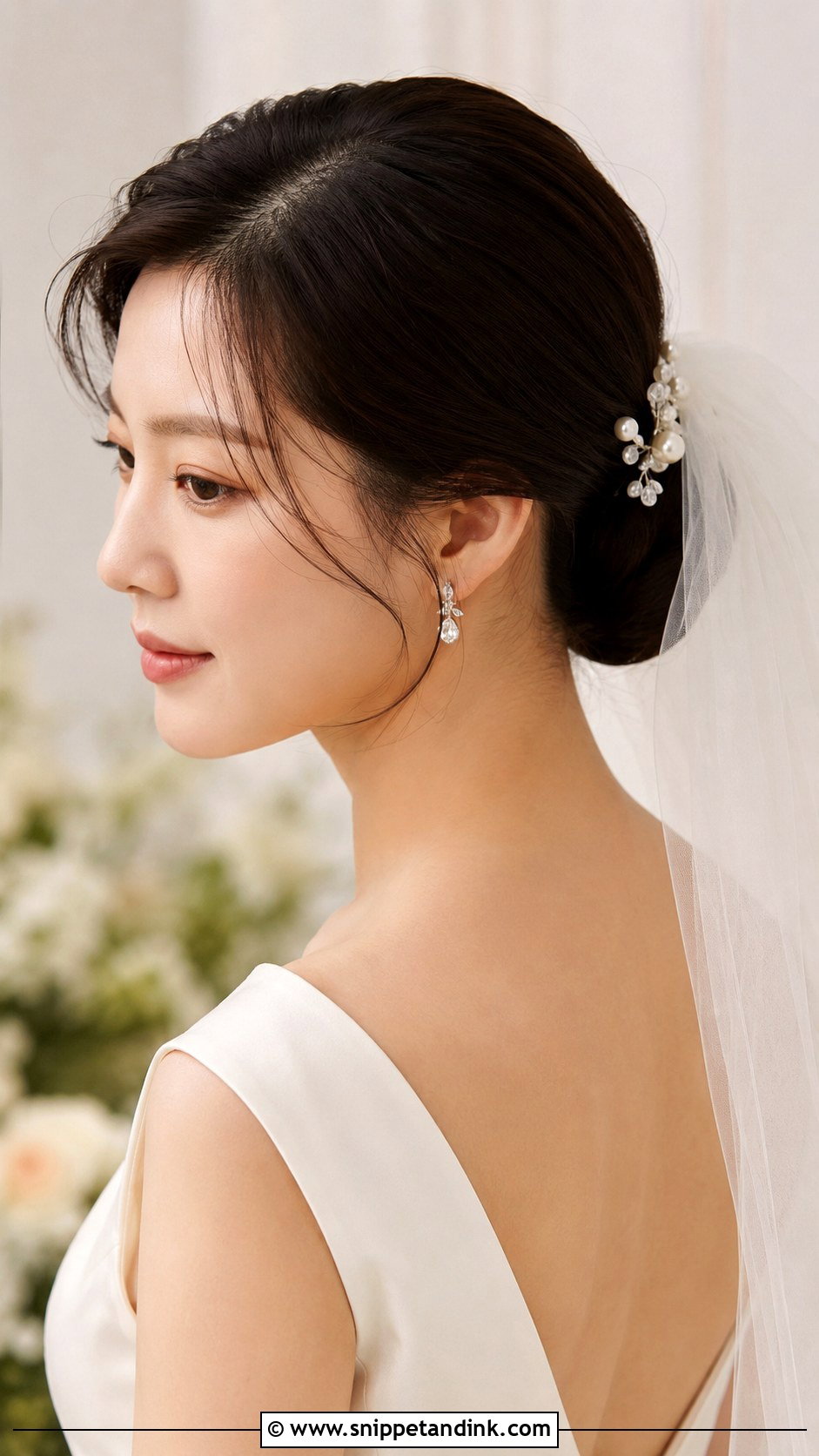
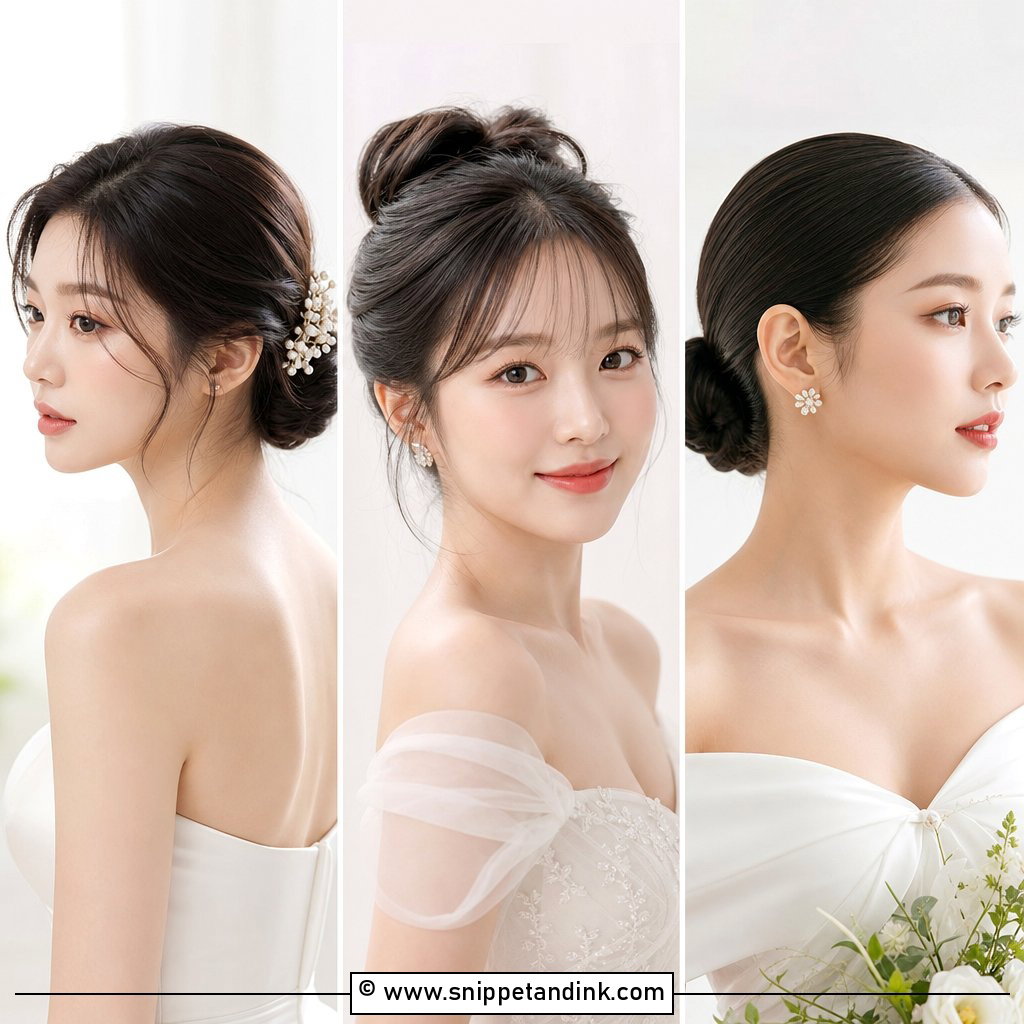
This is the style I reach for when a bride wants to stop thinking about her hair by noon. The bun sits at the nape with a smooth crown and two soft pieces near the cheeks, so it works under a veil, with pearl pins and with a high neckline. On straight hair I set the base with a small elastic and a padded section underneath, because a bun pinned straight onto slippery hair starts sliding by the first dance. Ask for a little lift at the roots rather than a flat finish; without it, bright studio lighting can make the head look small against a full gown.
2. Korean Bridal Half Up Hair
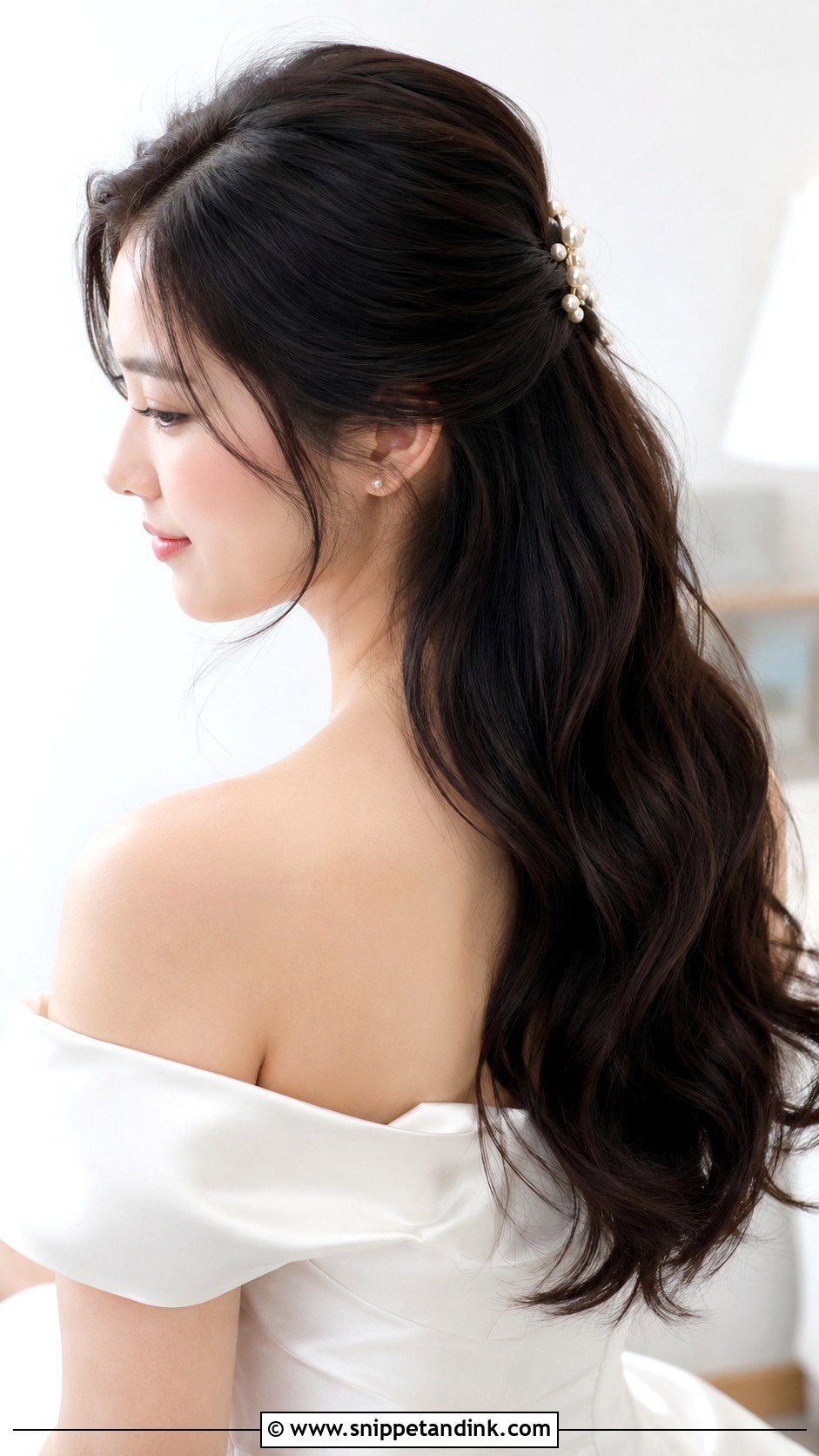
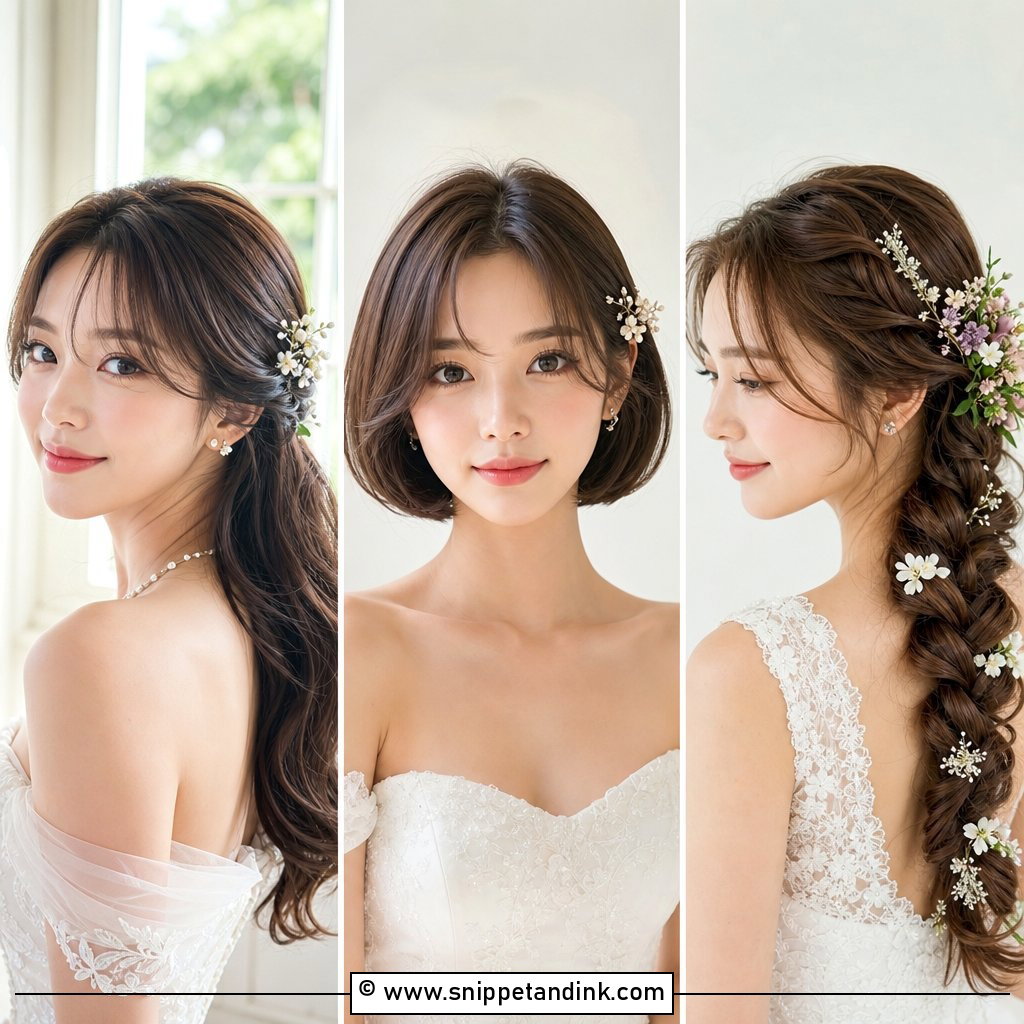
Half-up gives you movement around the shoulders while the top section stays put. I lift and secure the crown at the back, then bend the lengths into loose waves. It opens the face, which suits oval and heart shapes, and a round face can wear it too if the front pieces fall below the jaw. The weak spot is the join: on fine hair the pinned section can show a gap, so I criss-cross two bobby pins under a small clip. Keep accessories small, since a big comb pulls the eye away from the waves.
3. Korean Bridal Chignon
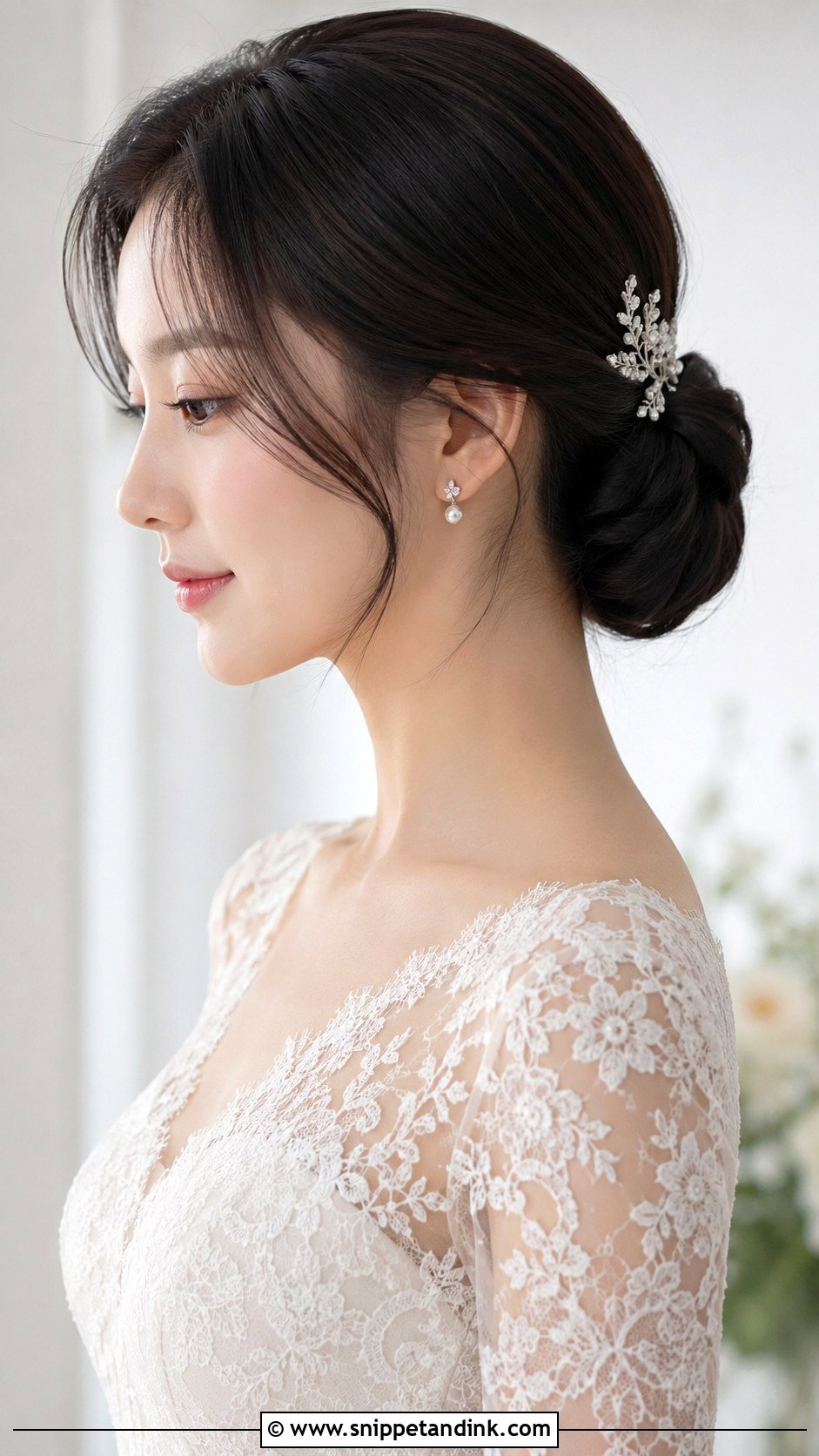
A chignon reads as more formal than a bun because of how it’s made. The hair is twisted and tucked low in curved sections, so you see folds instead of a round knot, and it takes a middle part, side part or wispy fringe equally well. I’d steer a bride with very short layers away from this one. Layers shorter than the nape pop out of the twists and need so many pins that the shape turns lumpy. One crystal comb or a few pearl pins is enough decoration.
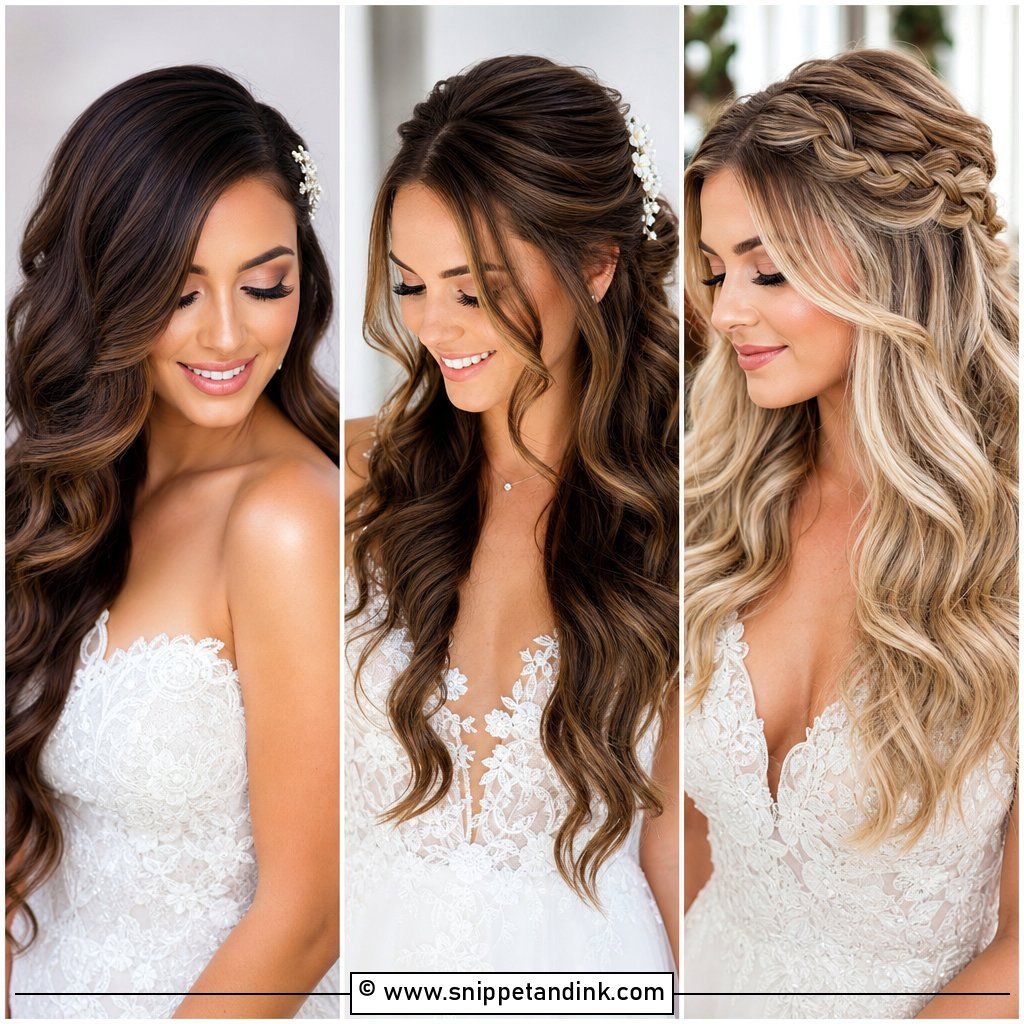
4. Korean Bridal Soft Waves
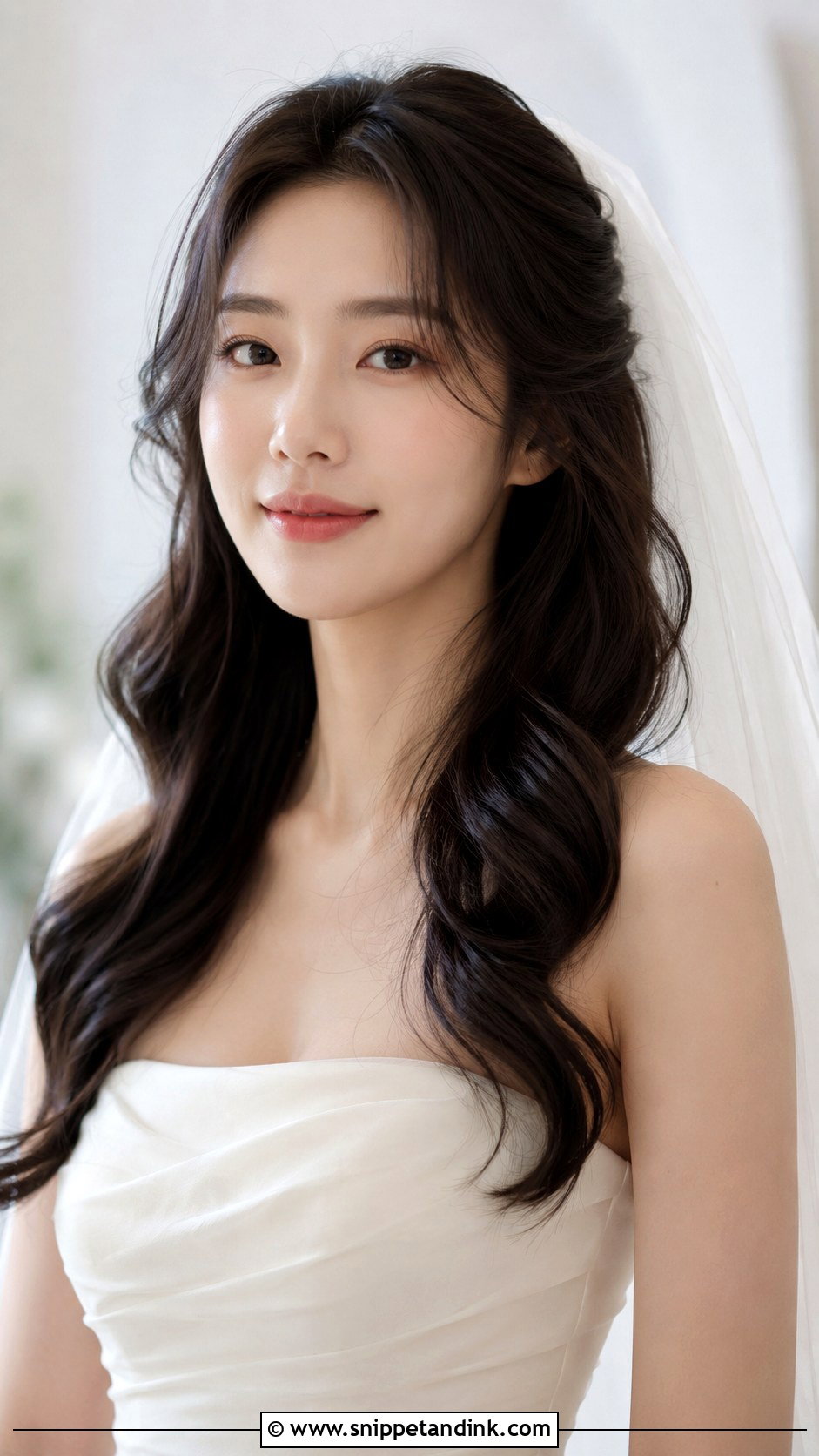
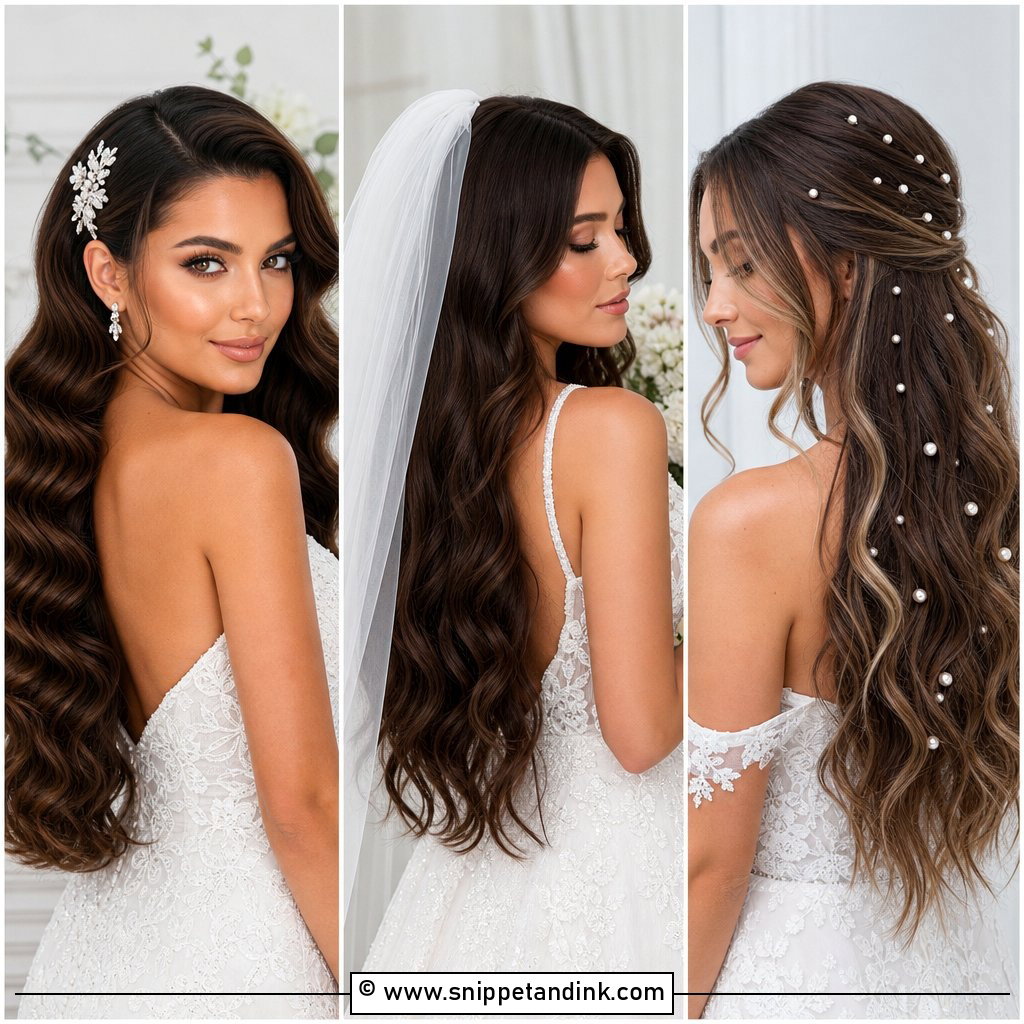
Loose waves are the hardest look here to keep, not the easiest. Straight, coarse hair often drops a curl within a couple of hours, so I curl in small sections, let each one cool fully in a pin curl and only brush out once the hair is cold. The finish should be smooth bends through the mid-lengths, never ringlets. Medium to long hair carries it best, and it sits well against strapless, square-neck or plain satin dresses. A light veil pinned at the back of the crown won’t flatten the waves if it goes in after the brush-out.
5. Korean Bridal Sleek Bun
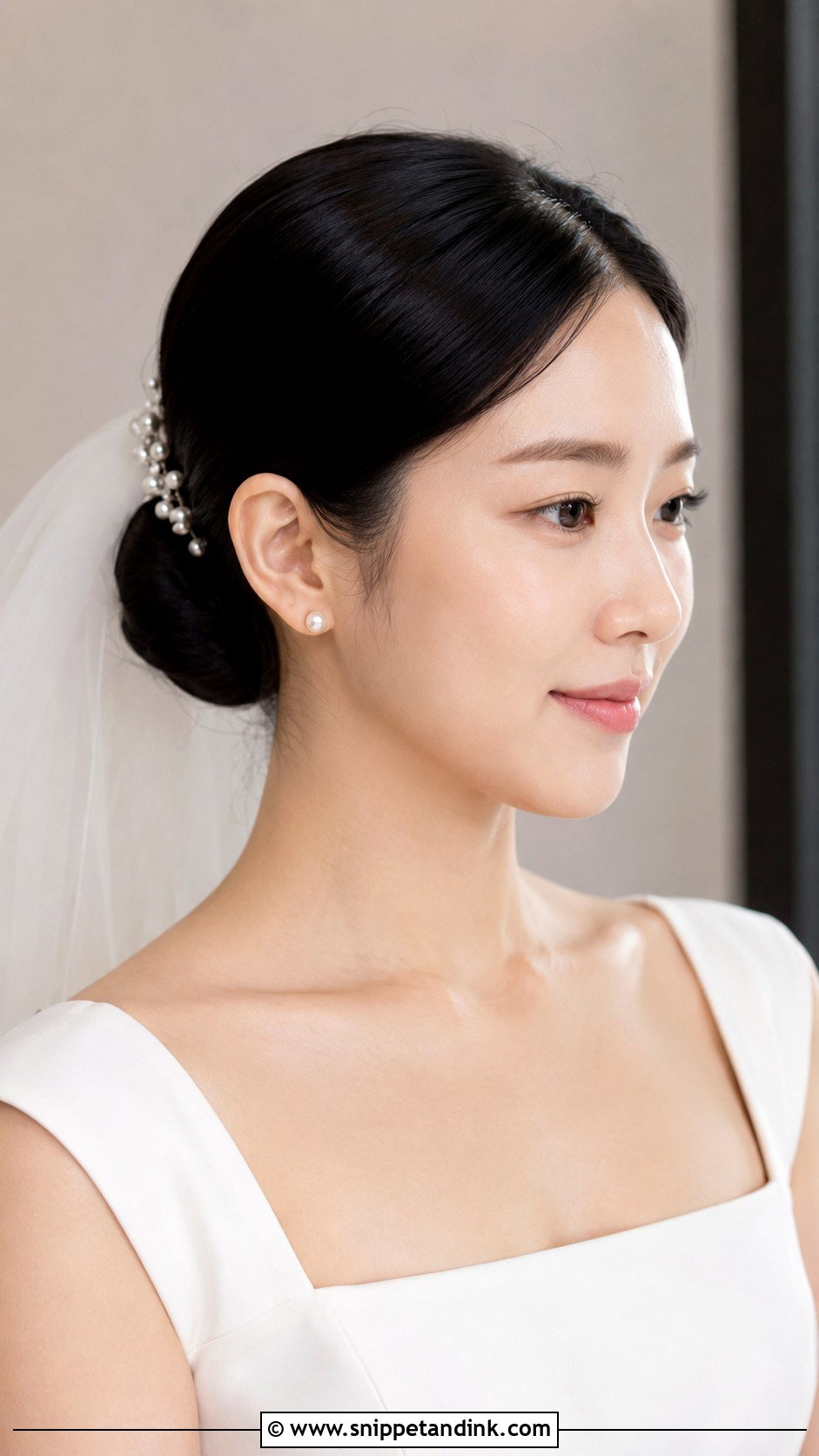
Minimal dresses and clean makeup are what this bun is made for. I brush the hair smooth, part it precisely and gather it at the nape or just above, with no flyaways and no curls to manage. The risk is severity. Pulled completely flat, it can look harsh in close-ups, especially on a narrow face, so I keep a slight lift at the crown and size the bun to the face. Pearl earrings or a sheer veil soften it enough.
6. Korean Bridal Ponytail
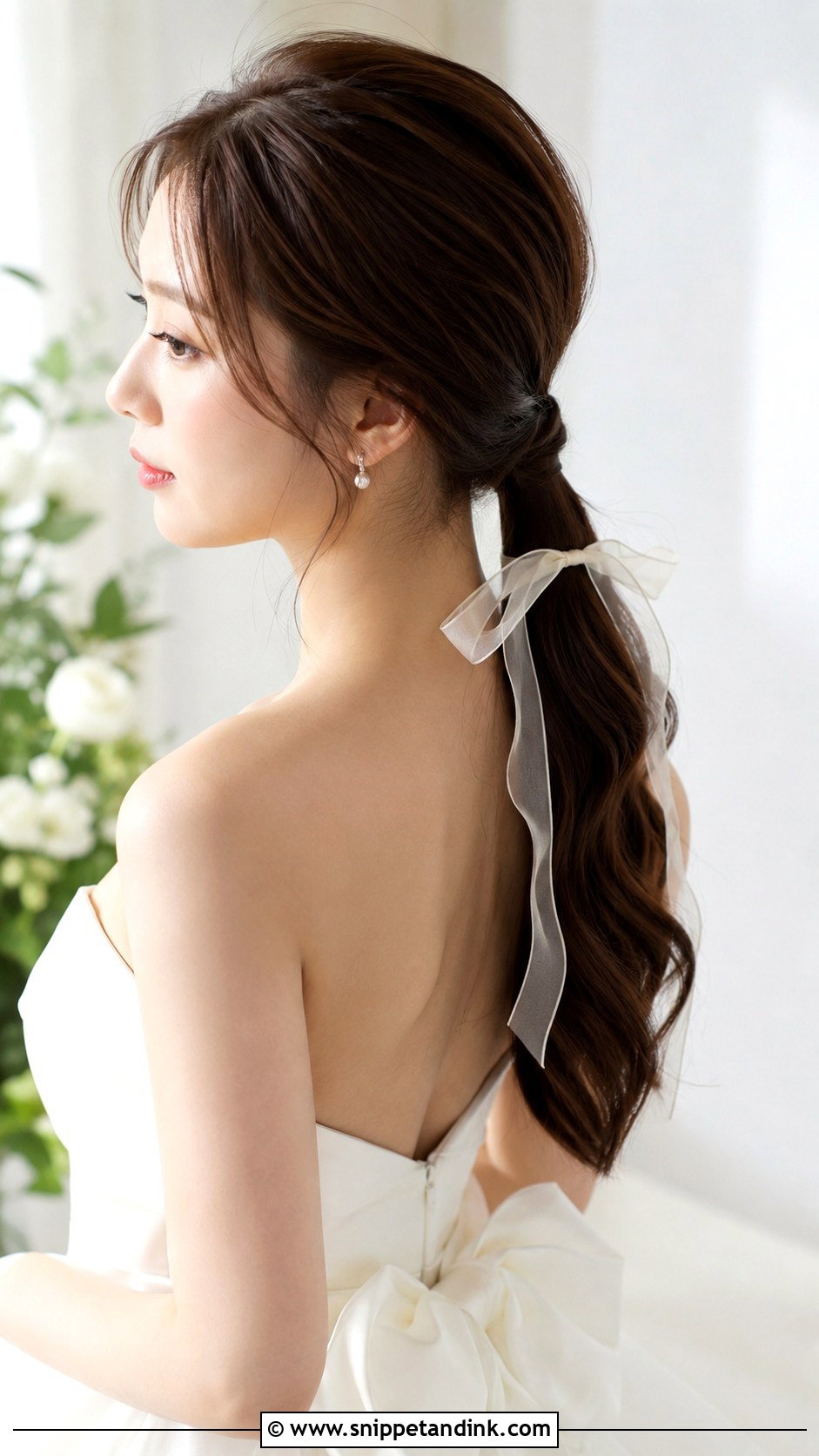
A ponytail is my answer for the bride who knows she’ll dance all night. Low reads more formal; mid-height feels younger and lifts the face a little. I wrap a strand around the base to hide the elastic, and I tie two elastics a finger apart so the weight of the tail doesn’t drag it down over the evening. It goes well with clean gowns, bow details and a simple veil clipped just above the tie. Keep the front smooth and slightly curved so it still reads as bridal.
7. Korean Bridal Braided Updo
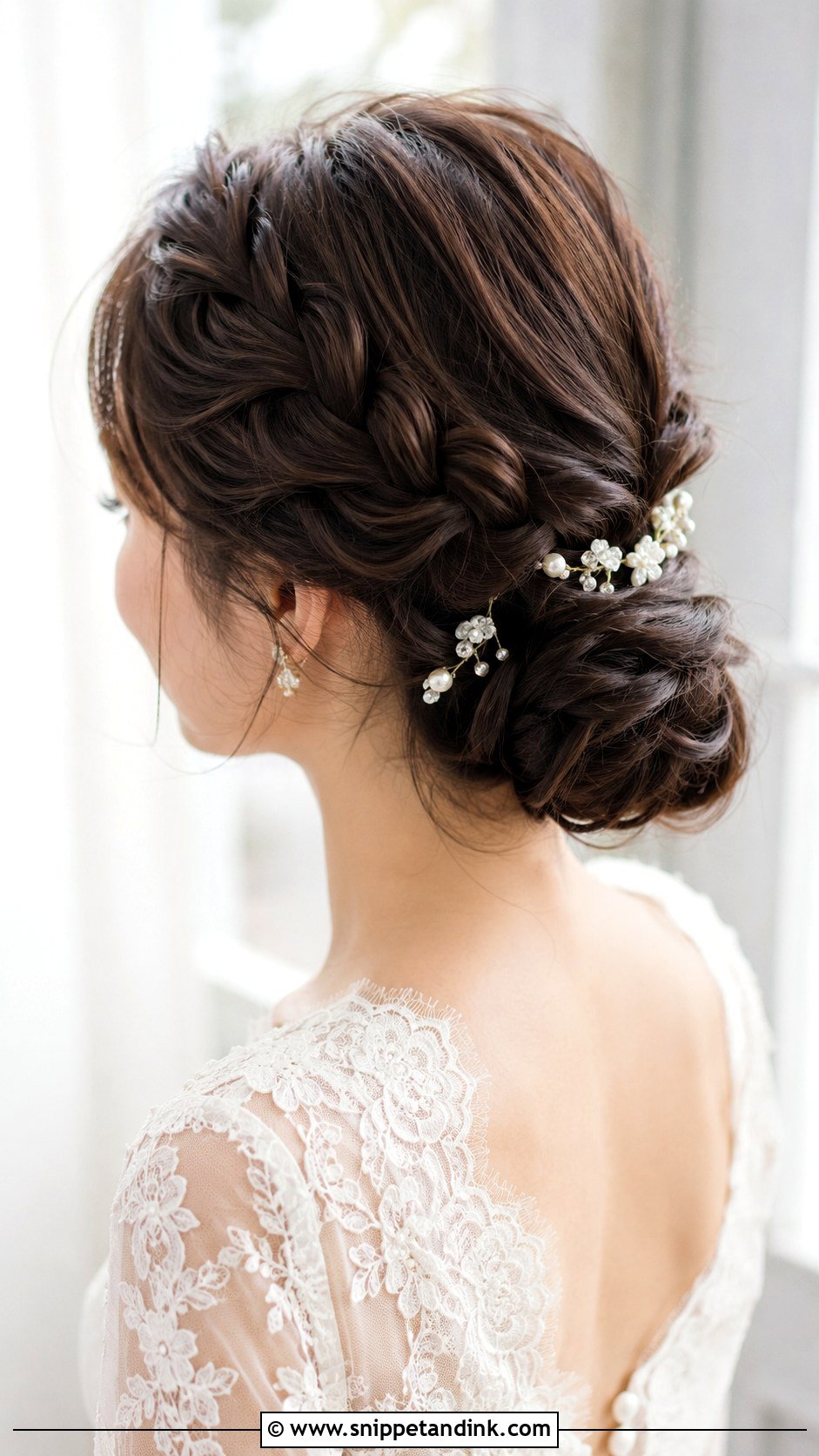
A Korean bridal braided updo adds texture without tipping into a messy, boho look. The braid can be woven into a low bun, wrapped around the crown or tucked into a chignon. It’s also a practical fix for fine, slippery straight hair, because the plait gives pins something to grip. I braid fairly tight, then ease the edges out a little so it looks soft without losing its hold. Small pearl pins or tiny white flowers along the braid are what show up in close-ups.
8. Korean Bridal Side Part Hair
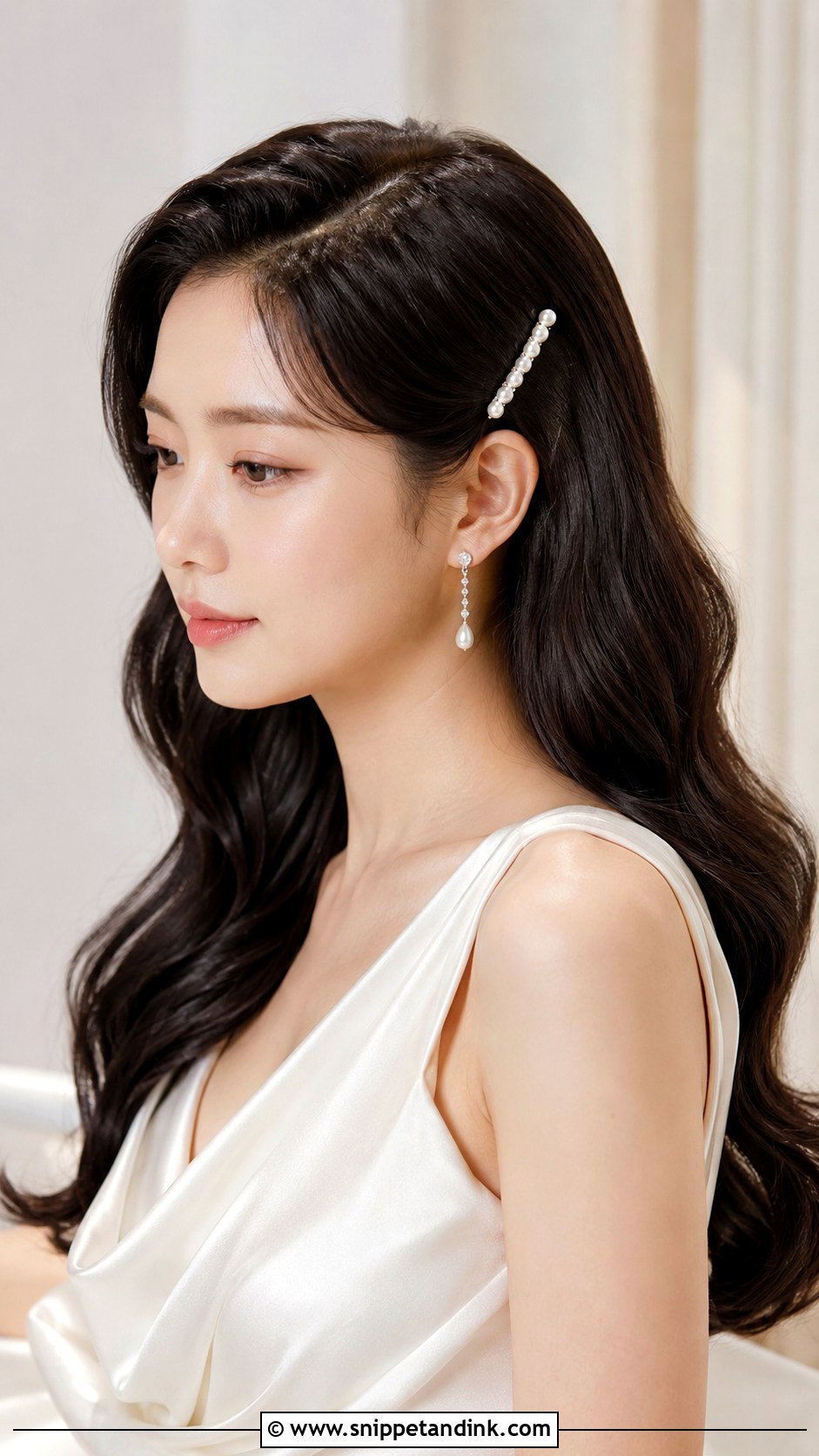
Moving the part to one side adds a little asymmetry, which can sharpen the cheekbones and jaw in photos, and a round face often looks longer with it. It works with low buns, chignons, waves and ponytails; I like it best with one side tucked behind the ear under a small accessory. Test one thing at the trial. If your hair has always been parted in the middle, the new side can flip back by evening, so I blow-dry it in the new direction and hide a flat pin behind the ear.
9. Korean Bridal Middle Part Bun
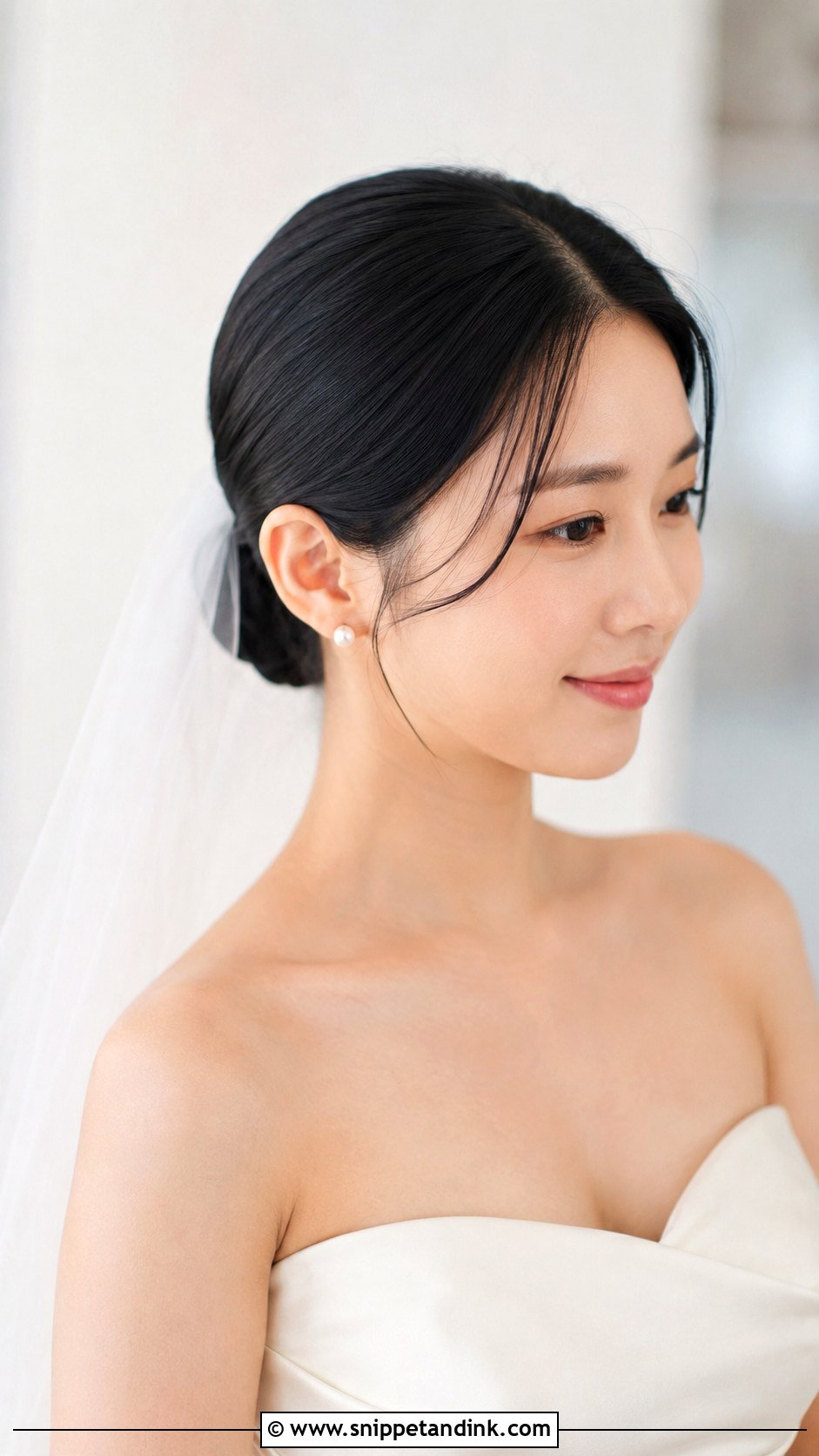
The center part is the most current version of the low bun, and also the least forgiving. Any unevenness in the hairline or a cowlick at the front shows straight away, so I check both before agreeing to it. When it suits you, it frames the face evenly and lets a long veil, pearl earrings and a simple gown do the talking. It holds up very well under symmetrical studio lighting. I usually add a gentle bend to the front pieces near the temples so it doesn’t look flat.
10. Korean Bridal Loose Updo
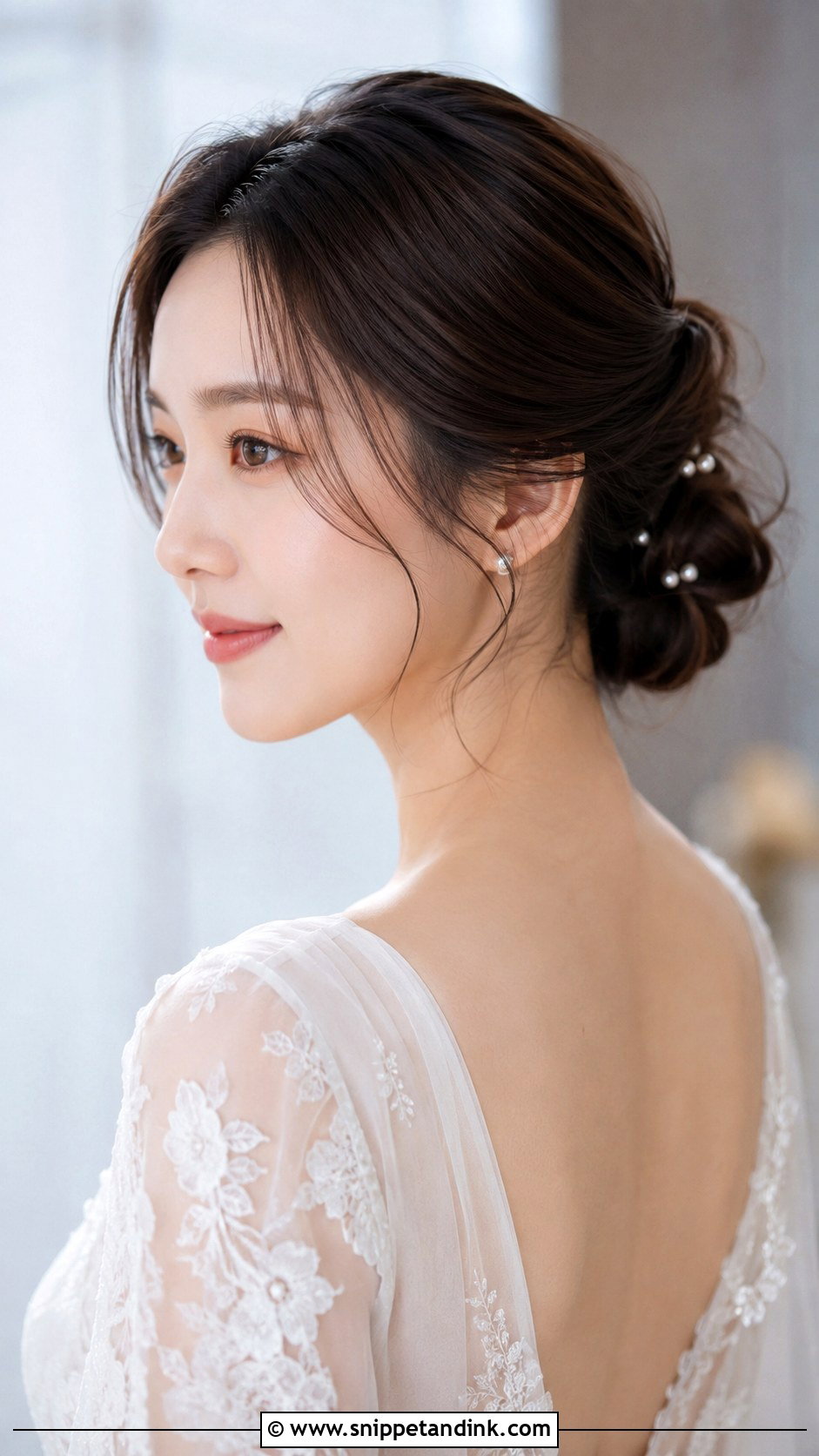
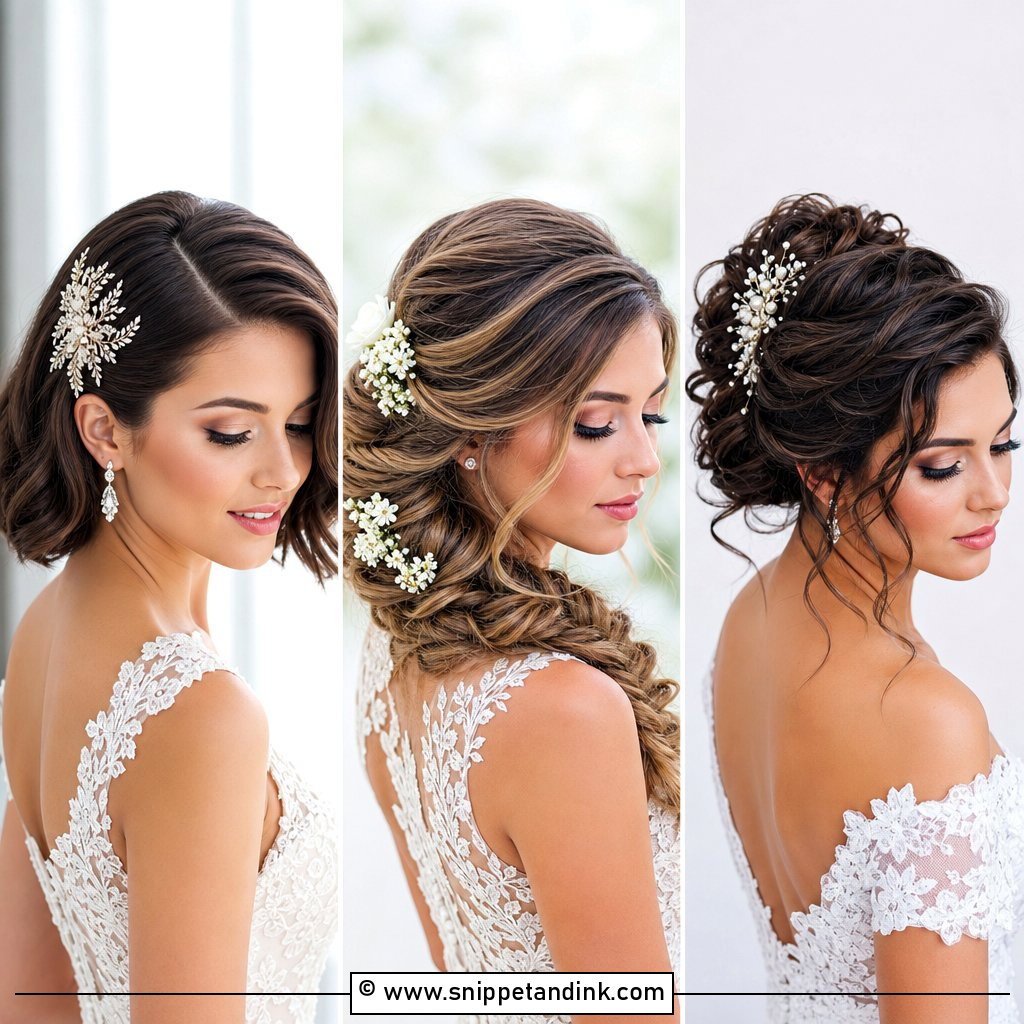
A loose updo has to be tight on the inside. I pin the inner structure firmly, low or at mid-height, then pull out the outer shape so it looks airy and slightly undone. It suits outdoor ceremonies, spring weddings and dresses with lace or chiffon. Balance matters more here than with any other look on this list: too loose and it reads as half-fallen by the reception. If the venue is humid, tell your stylist, because texture spray that looks right at ten in the morning can puff up by dinner.
11. Korean Bridal Short Hair
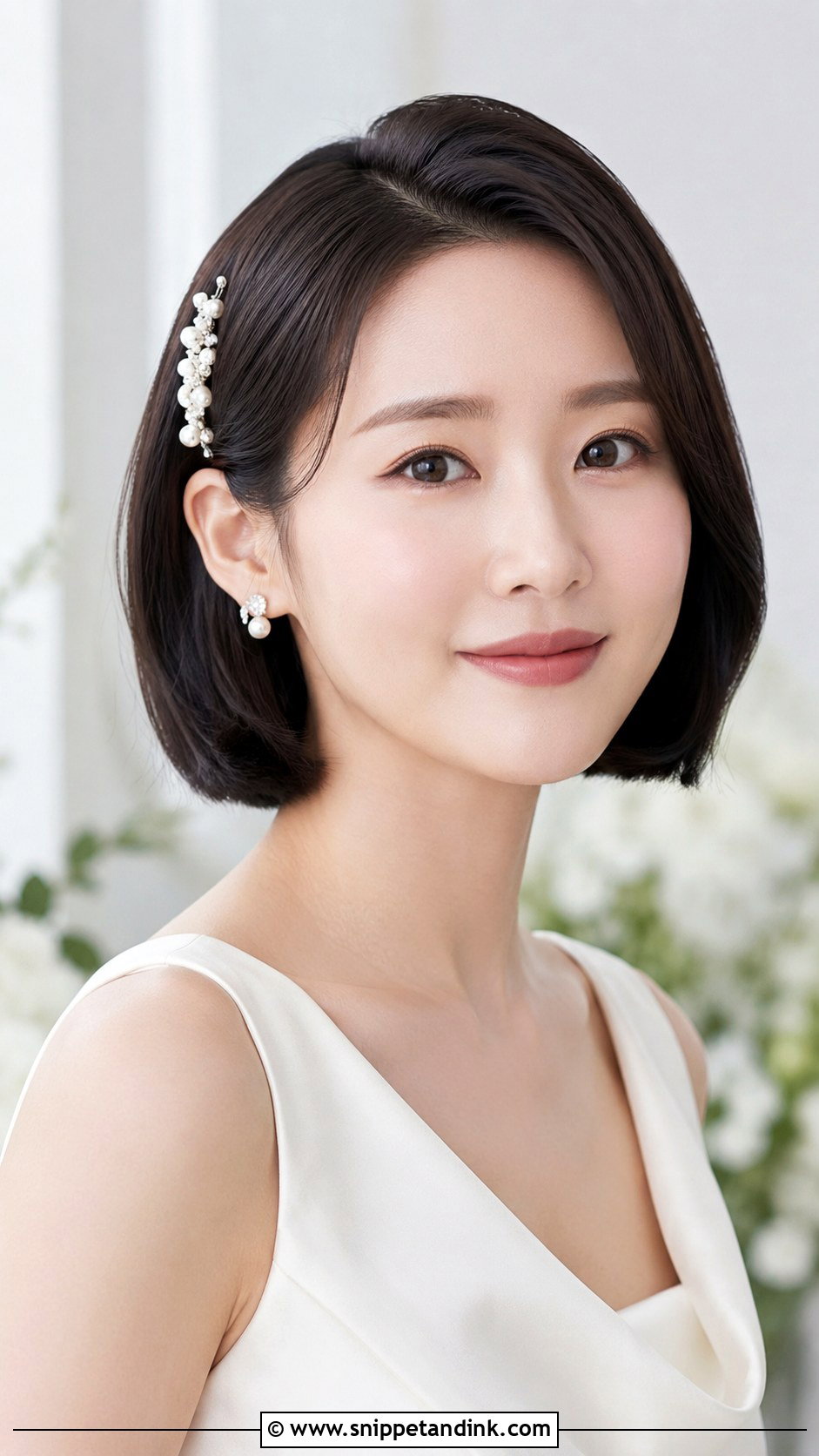
Short hair can look very polished, and it spares you extensions. A bob or lob can be curled under, waved softly or tucked behind one ear with a bridal clip. Get your trim about two weeks before the wedding rather than the day before, so the ends have settled and don’t look freshly cut. Shine and clean ends matter most. A birdcage veil, pearl barrette or slim headband is enough to make it bridal.
12. Korean Bridal Long Hair
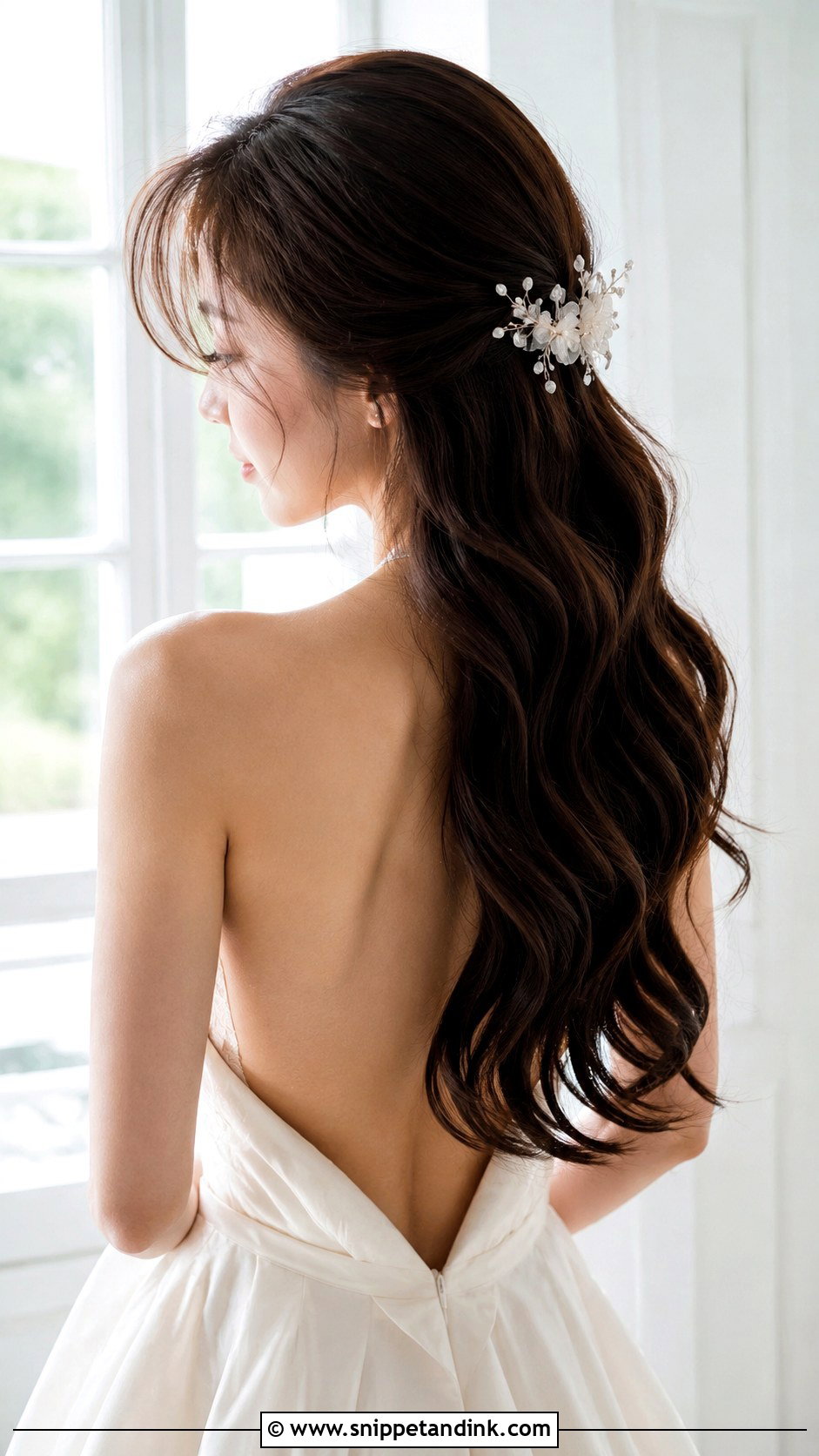
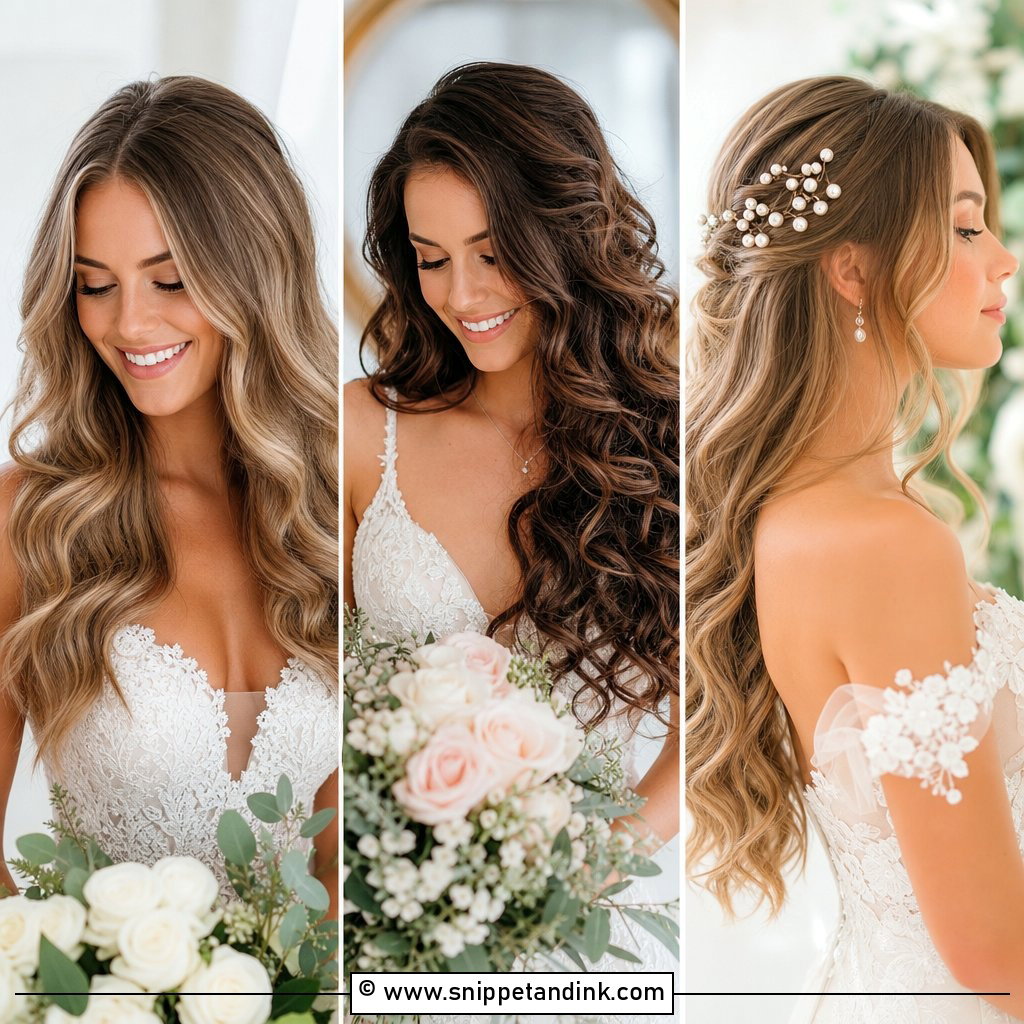
Korean bridal long hair gives you the most options: waves, half-up shaping, braids or a low ponytail. It also carries the most weight, and weight is what pulls curls out. I build waves in layers starting underneath and use light products, since heavy creams and oils flatten long straight hair within the hour. Go for long, flowing bends instead of tight curls. Be aware that loose long hair will cover a low back detail when you’re photographed from behind, so decide which one you want seen.
13. Korean Bridal Hair With Veil
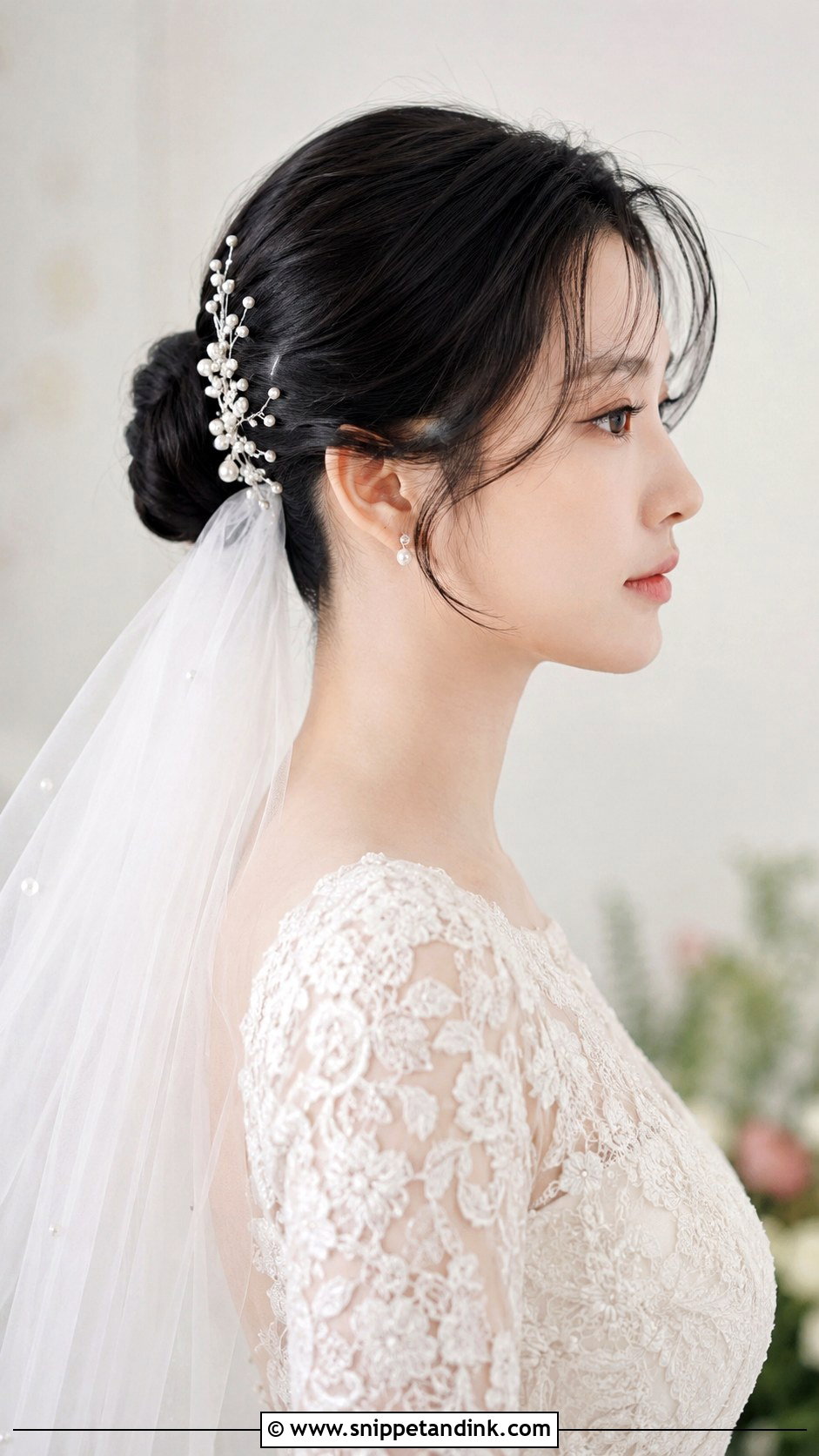
I plan the hairstyle around the veil, not the other way round. With a low bun or chignon, the veil comb goes either just above the bun or tucked underneath it, and that choice changes how the bun is built. With half-up waves, the comb sits at the crown or behind the pinned section. Bring the actual veil to your trial: a long cathedral veil pulls far harder on its comb than a short one and needs a firmer base. Leave a couple of soft pieces at the face so you still look gentle when it’s lifted.
14. Korean Bridal Hair With Tiara
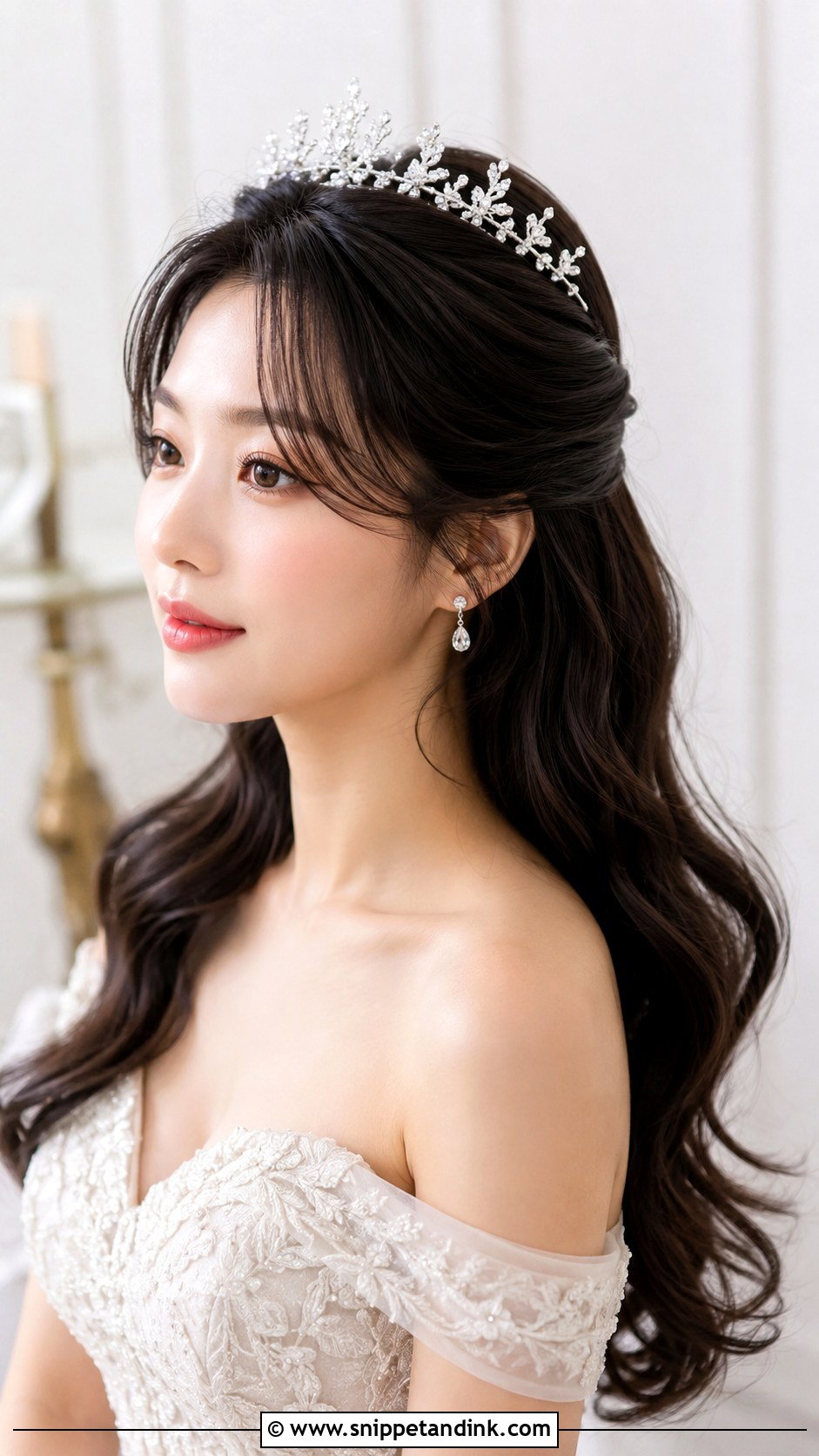
A tiara gives you a soft princess feeling without a dramatic hairstyle underneath. It sits best on smooth waves, a neat low bun or a polished half-up style. I keep crown volume low, because backcombing under a tiara pushes it up and makes it look perched. Most tiaras have small loops or combs at each end, and I pin through those into a hidden braid so the tiara doesn’t shift when people hug you. If it’s very sparkly, keep the earrings plain.
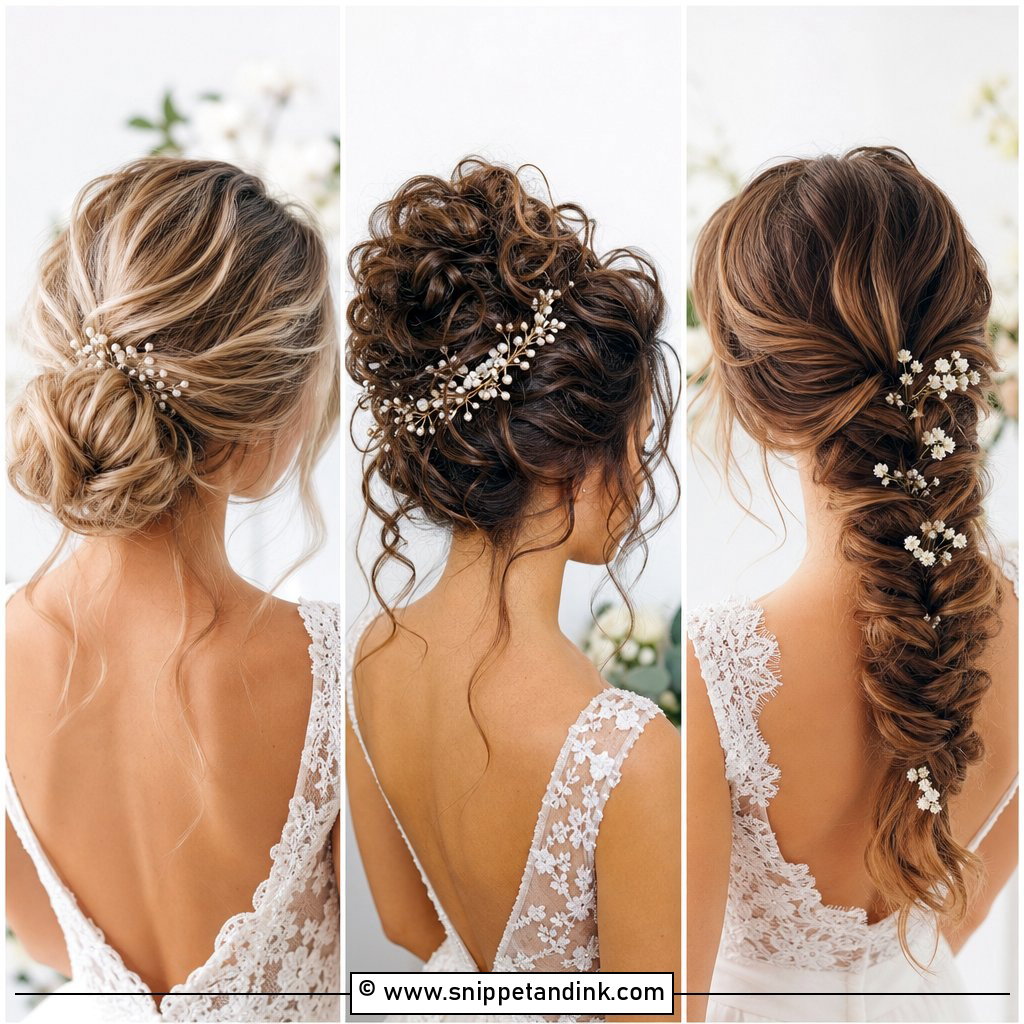
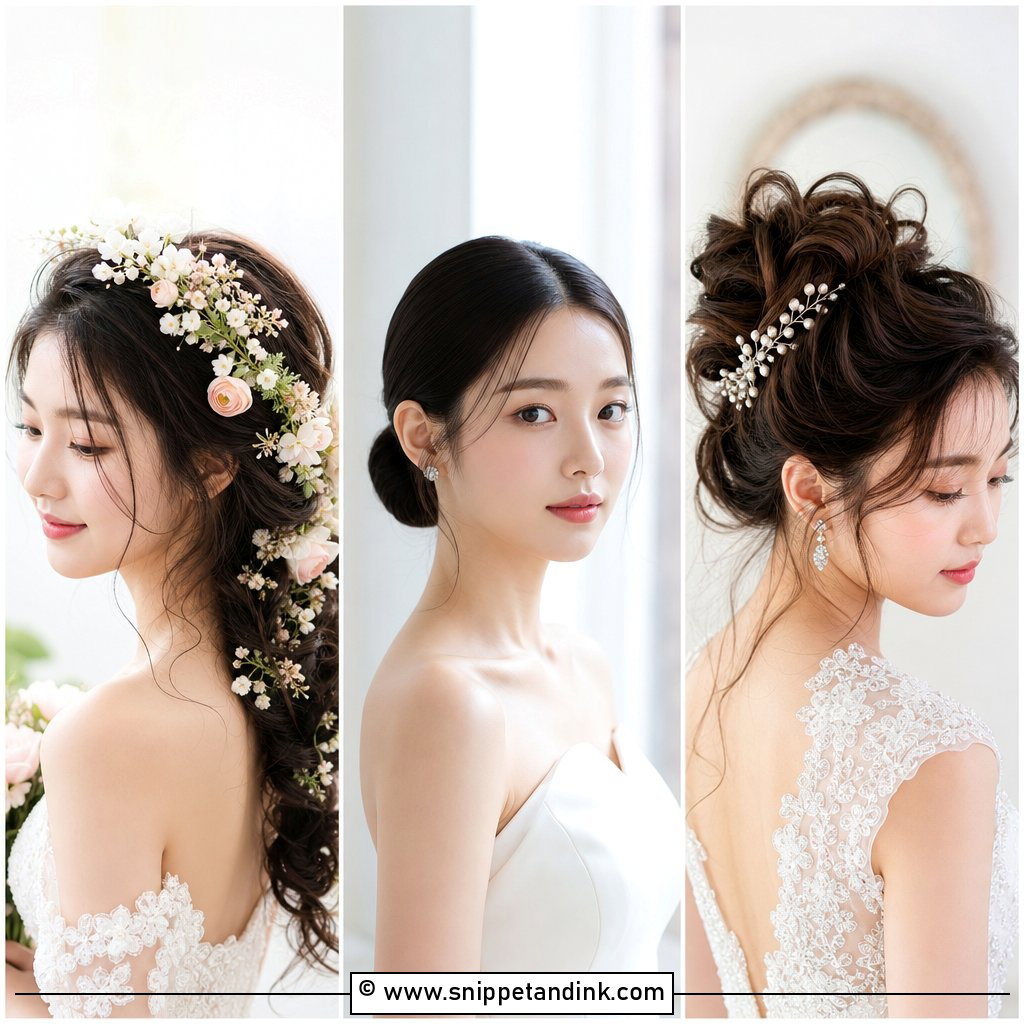
15. Korean Bridal Hair With Flowers
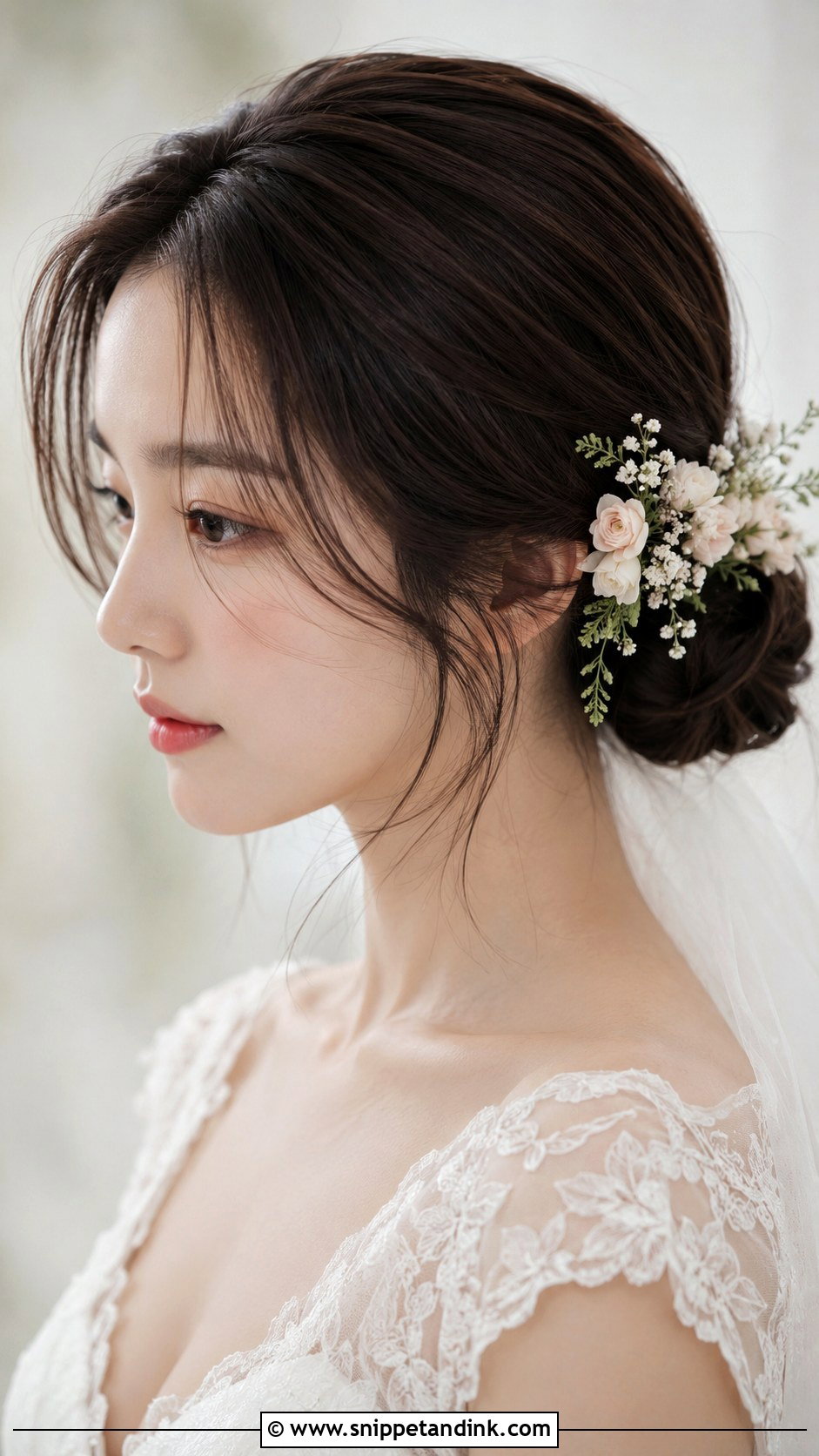
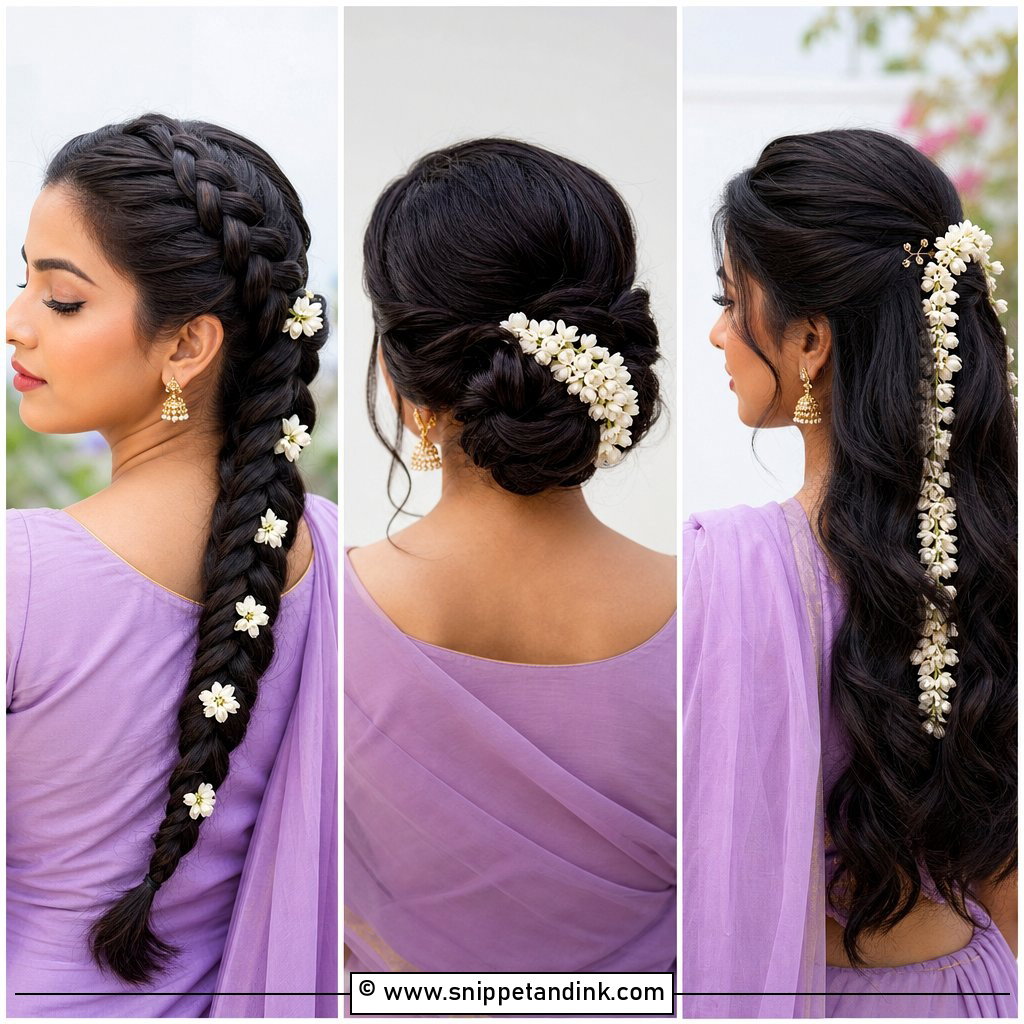
Small flowers suit these styles better than big blooms, which overwhelm the soft shape. Tuck them around a low bun, along a braid or into the pinned section of half-up waves; white, cream, blush and pale pink sit well with Korean bridal makeup. Fresh flowers wilt faster in hair than in a vase because they have no water, so I use hardier ones like spray roses or wax flower, or good silk stems for a long day. Place them where the camera will see them. A flower on the side facing away from your partner vanishes from the ceremony photos.
Switching Into Hanbok for the Pyebaek
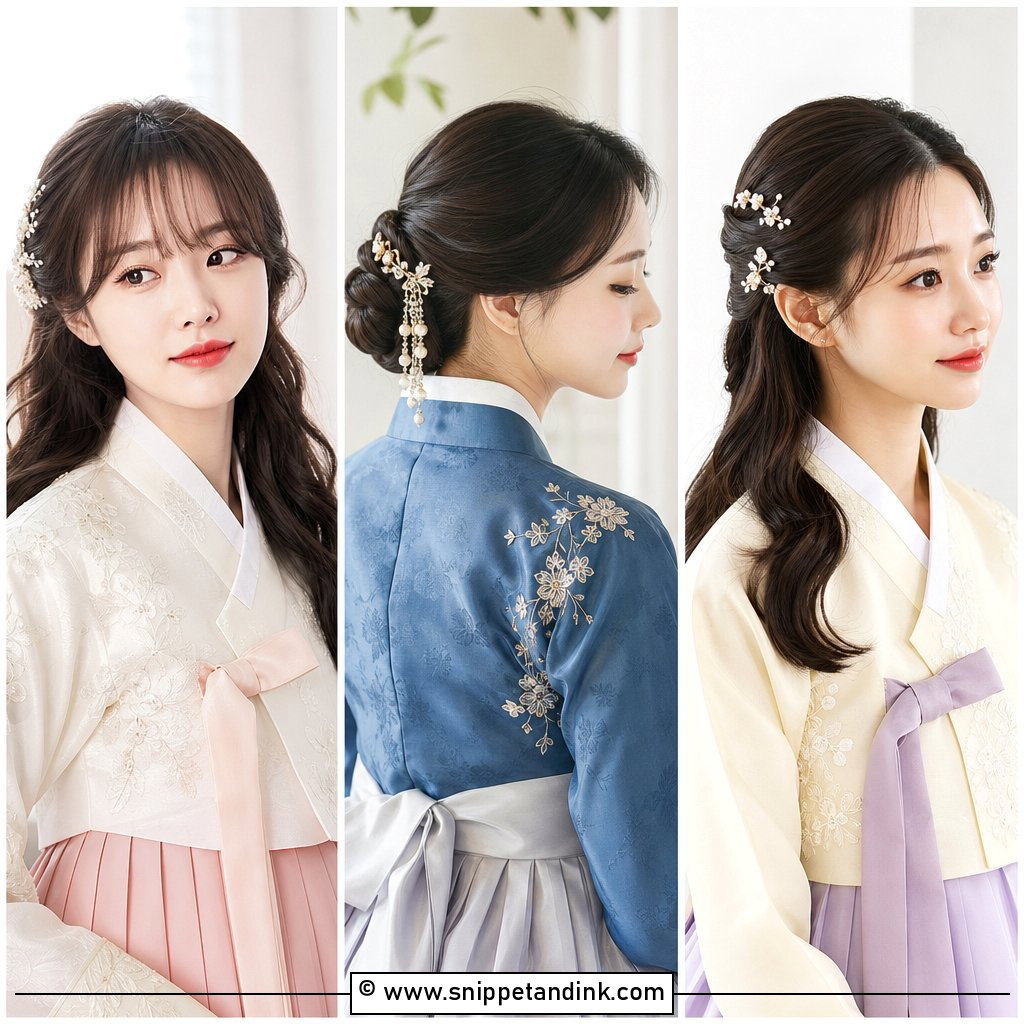
Many couples hold a pyebaek, the family ceremony after the wedding, and the bride often changes into hanbok for it. The traditional hair is a smooth, low bun with a center part, held by a long ornamental pin called a binyeo pushed through the bun.
If you’re changing out of a gown, put the hair change into the schedule. Taking half-up waves down into a low bun takes me roughly fifteen to twenty minutes. Going from a low bun to a binyeo bun is much quicker because the base is already there, so if you know a pyebaek is coming, a bun or chignon for the main ceremony saves time later.
Working around the collar and a jokduri
The jeogori collar sits close at the back of the neck, so a large bun right at the nape can rub against it and get pushed out of shape when you bow. I sit the bun a little higher than I would for a gown. If you’re wearing a jokduri, the small black ceremonial crown, it pins on top of the head, so the crown of the hair needs to stay smooth and flat for it to sit level. Deep bows are part of the ceremony, so do two or three at the trial and check that nothing moves.
Settle the Part and the Pins at Your Trial
Most of what makes these looks work is small: where the part sits, how many pieces come down at the front, how big the accessory is and how much lift there is at the crown. Bring a few reference photos to your trial, wear a top with a neckline close to your dress, and ask your stylist directly how the style will cope with heat, hugging and a full day of photographs. A confident, specific answer is a good sign. If the trial look doesn’t feel like you, say so then; it’s far easier to change it in a trial than on the morning itself.
You'll Like These Ideas:




Leave a Reply