
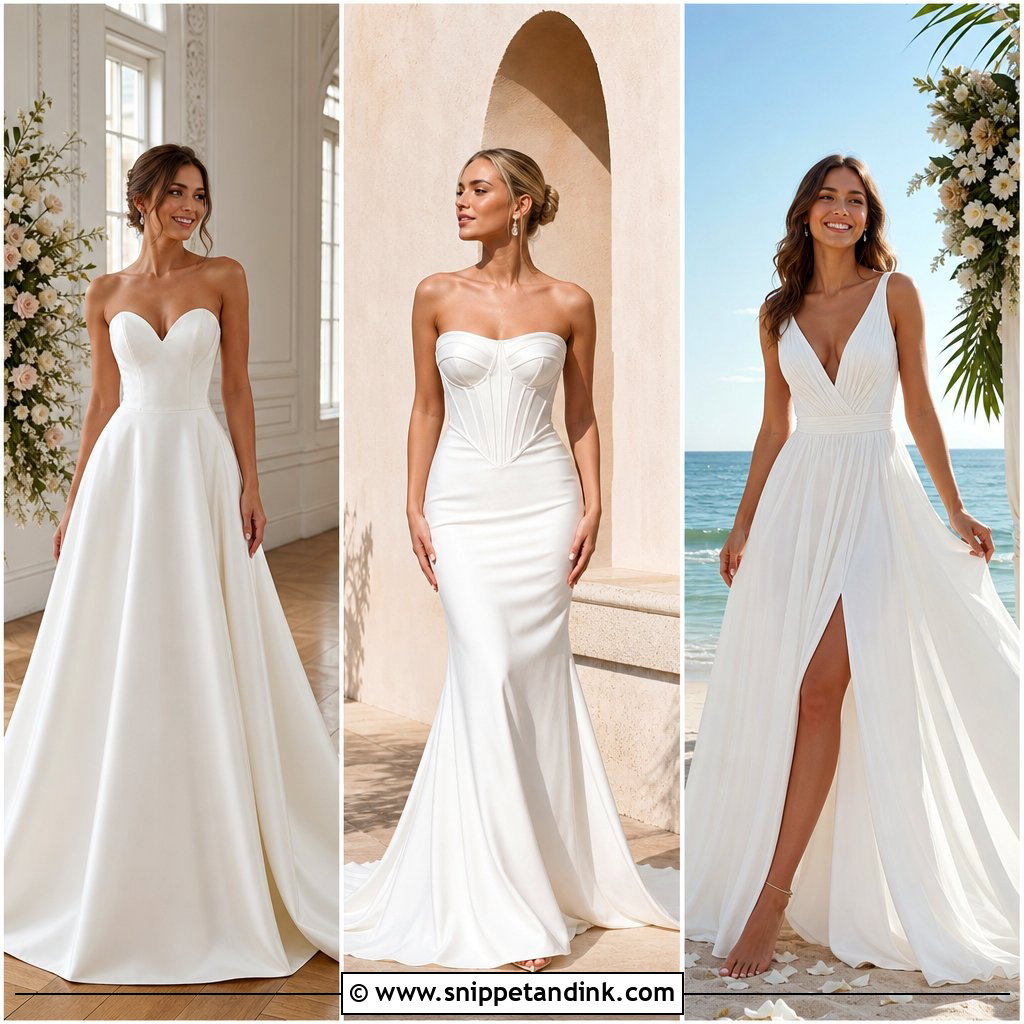
Many brides planning a Korean wedding end up with two outfits, sometimes three: a Western gown for the ceremony, a hanbok for paebaek, and a modern fusion dress for portraits or the reception. That changes how I run fittings, because each piece has a different job. A ceremonial hanbok is built on colour, volume and embroidery that carries meaning, while the modern versions lean on ivory silk, pale tones, tulle or a narrower skirt. Below are the looks I return to most, with notes on how each one actually wears over a long day.
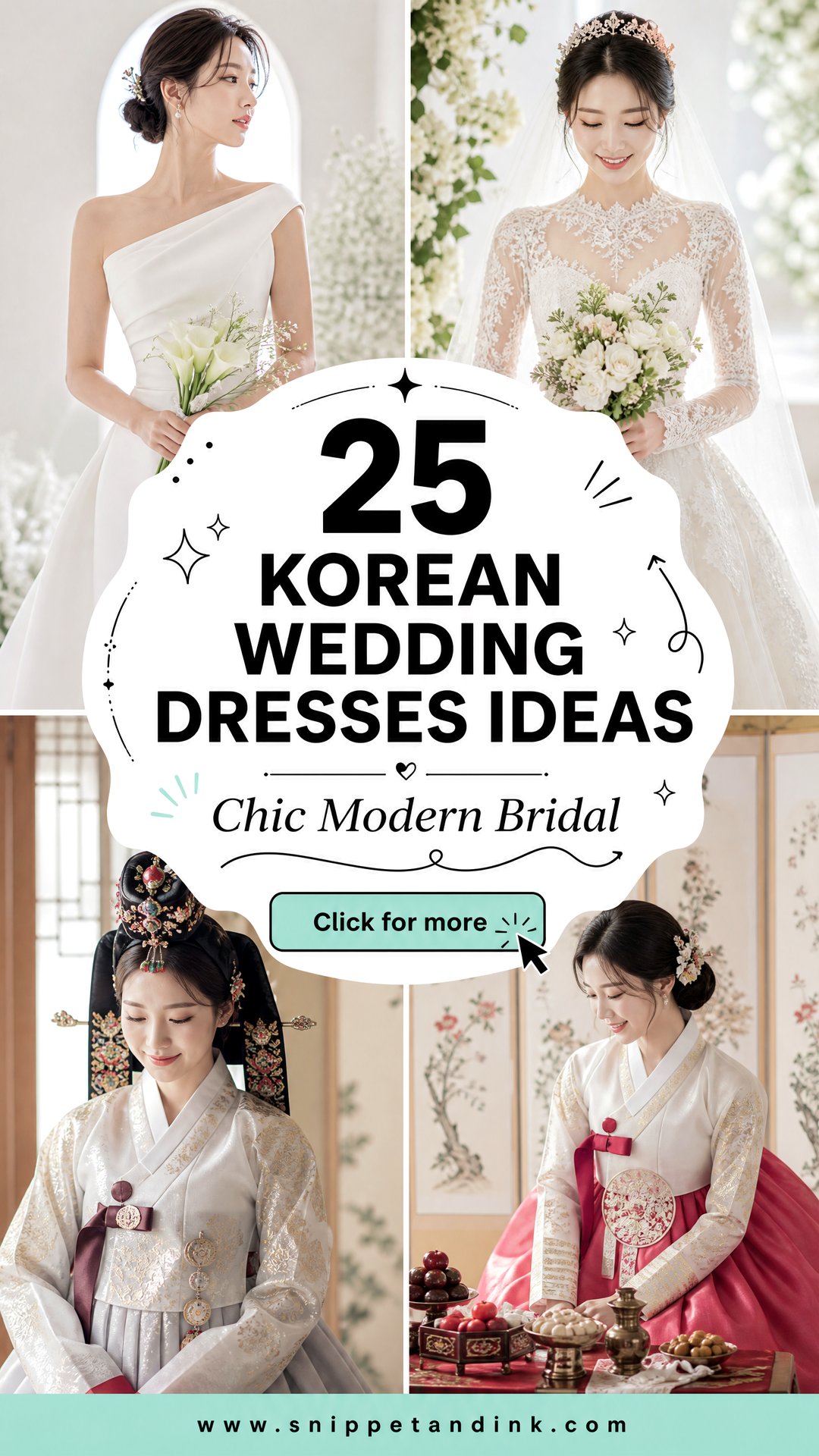
Splitting the Day Between a Gown and a Hanbok
Paebaek is traditionally a family ceremony held after the main wedding, which is why so many brides plan a second outfit for it. The change itself needs planning. A ceremonial hanbok with goreum ribbons, a full chima and a headpiece takes longer to put on than people expect, and most brides need someone who knows how to tie the ribbon so it lies flat.
Rent, buy or have one made?
- Renting is common for paebaek, and many hanbok shops rent full ceremonial sets with headpieces. Book early for busy wedding months and ask whether the set will be adjusted to you or only sized.
- Custom hanbok is cut to your measurements in the fabric you choose. Allow several weeks, longer if the embroidery is done by hand, and aim to have it finished around the same time as your gown’s final fitting.
- Ready-made pieces work for modern fusion dresses, less so for ceremonial sets, which rarely sit right without some tailoring.
Whichever route you take, I’d give the change a real block in the timeline and keep your hair and makeup artist close by. Swapping a veil for a jokduri or hwagwan almost always means re-pinning, and that’s the moment a rushed schedule shows.
1. Traditional Korean Wedding Dress
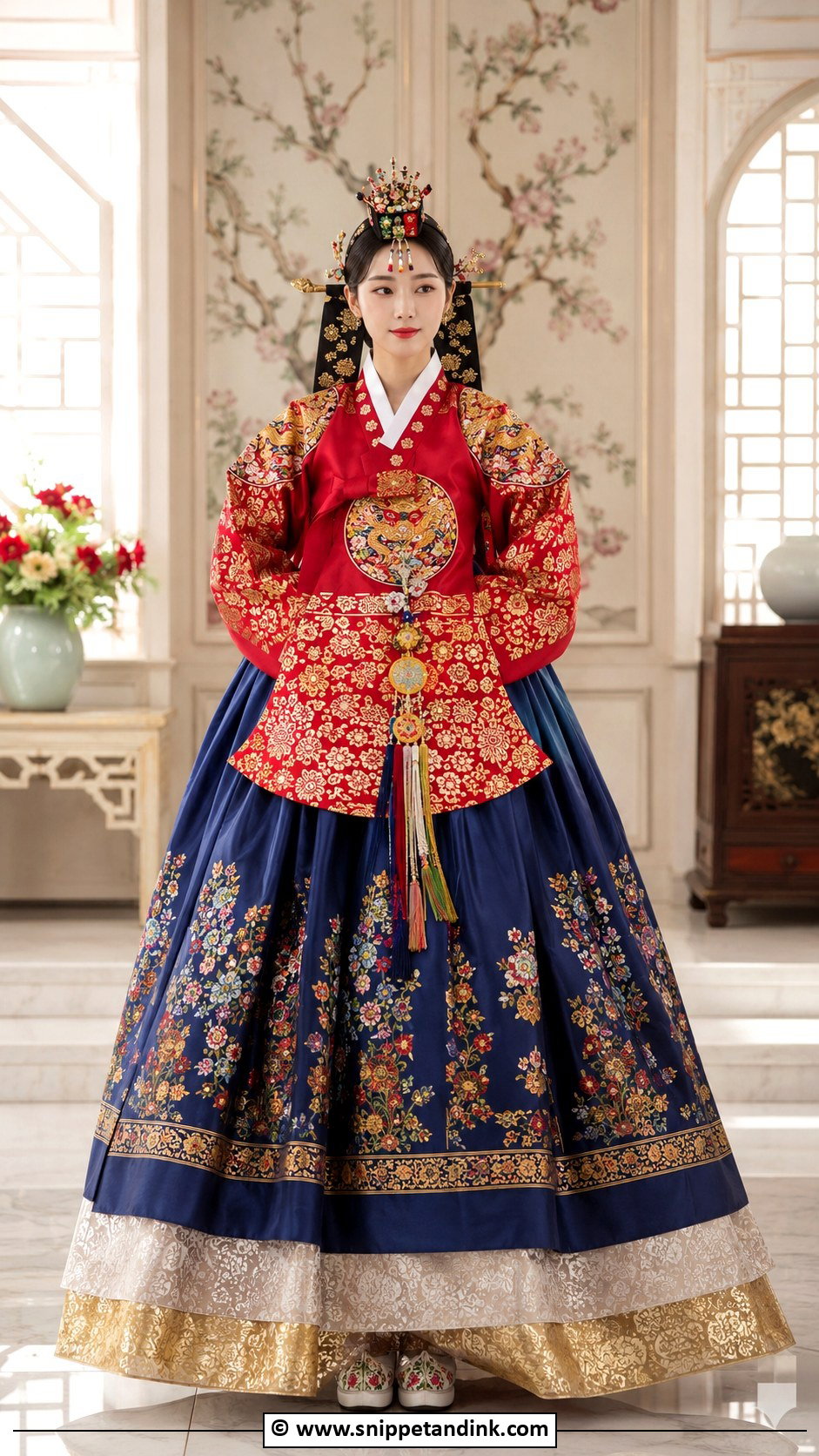
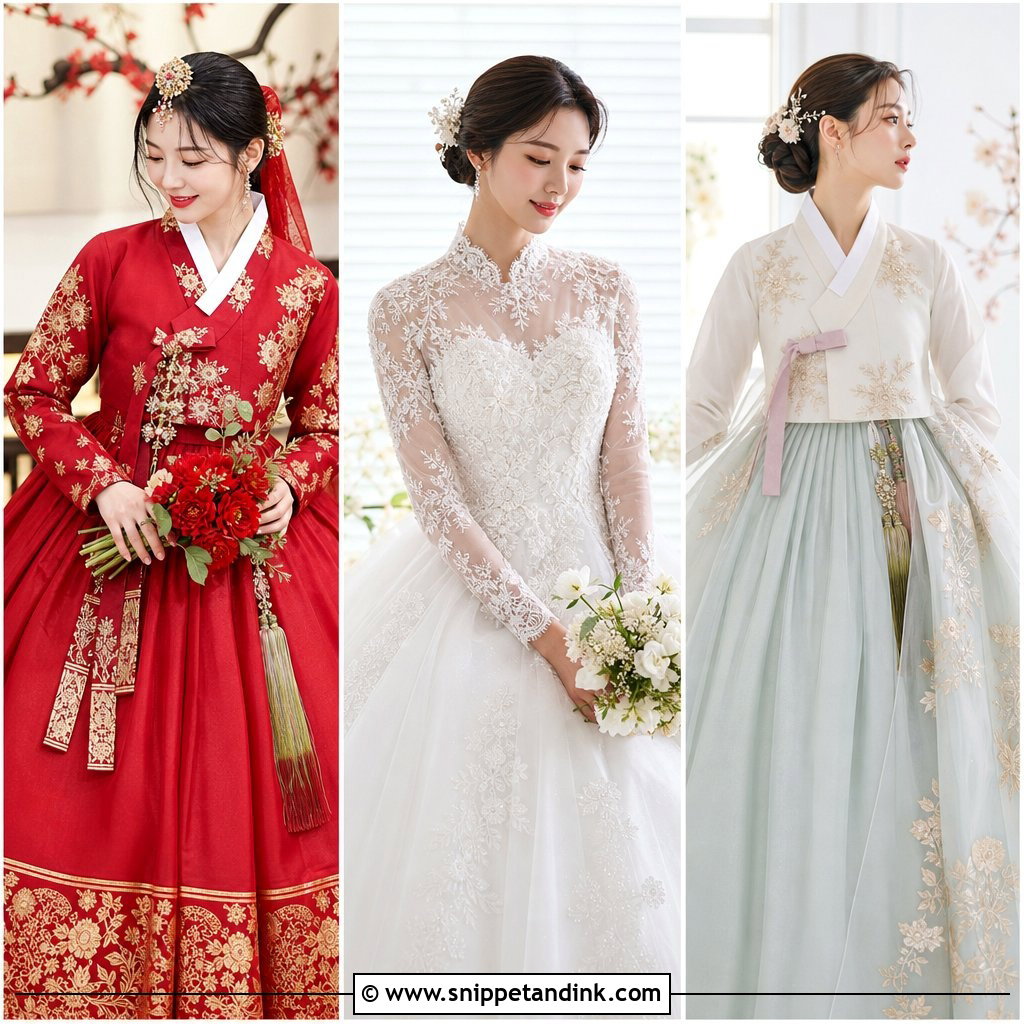
This is the most ceremonial option, centred on a richly colored bridal hanbok with a full chima, a structured jeogori and dense embroidery. Red, blue, gold and deep green appear most often because they read as formal and carry symbolic weight. A jokduri or hwagwan, embroidered shoes and hair drawn smoothly back finish it. The first thing I check is the jeogori length against the chima’s high band: if the jacket rides up when the arms lift, the band shows and the line breaks. Fine fabric and restrained embroidery keep it from tipping into costume.
2. Modern Korean Wedding Dress
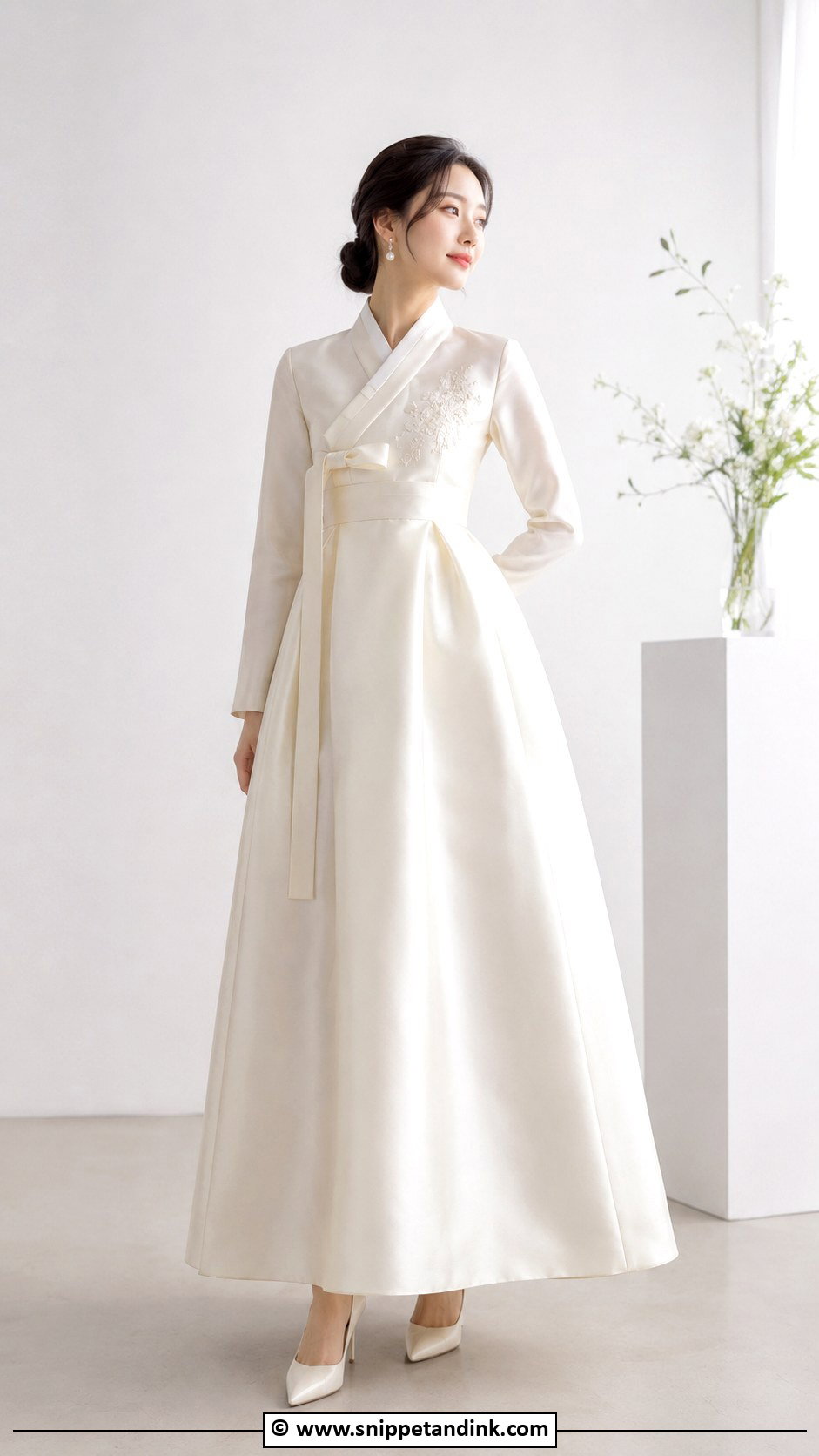
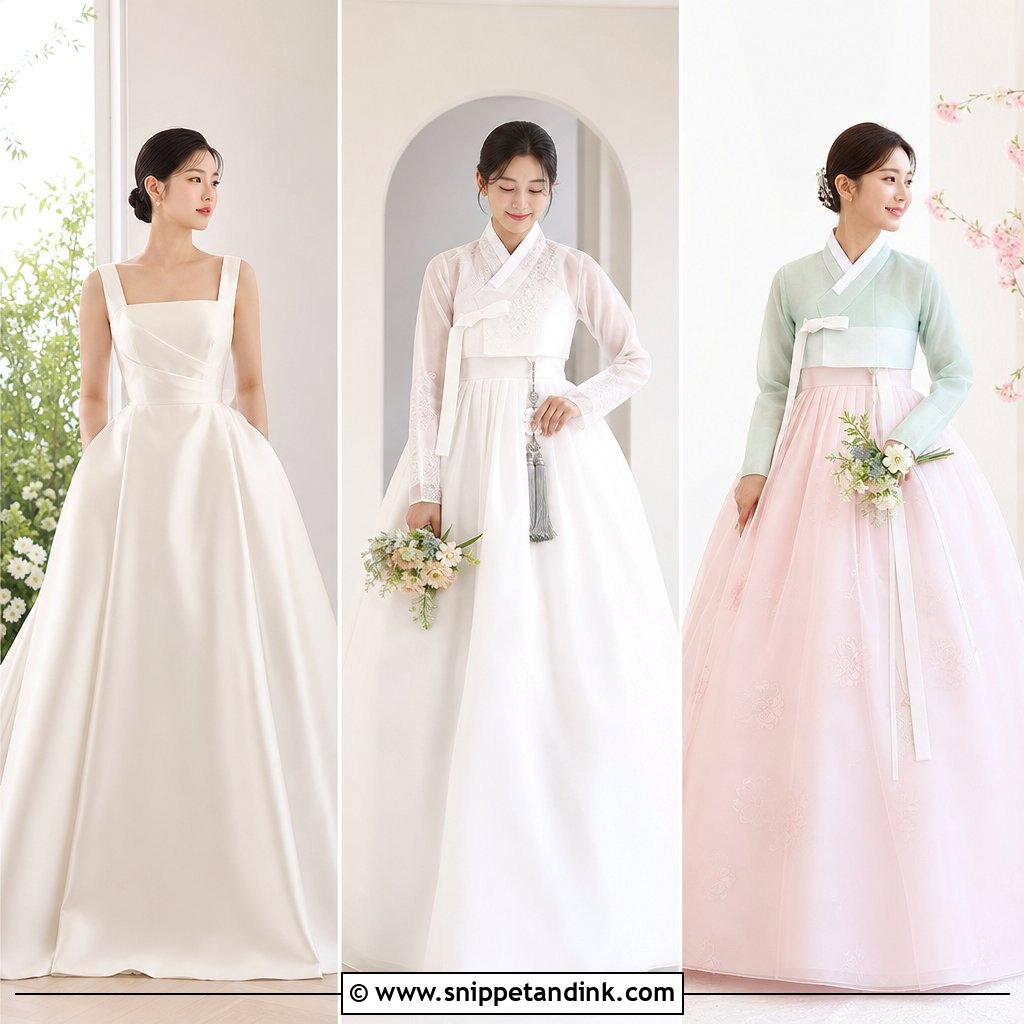
Picture the hanbok’s shape translated into bridal tailoring: an ivory or champagne gown with a fitted bodice, a soft high waist and an A-line skirt, with the jeogori reduced to a wrap top or a cropped jacket. Pearl earrings, satin heels and a low bun are usually all it needs. I like it for city weddings and studio shoots. One warning from fittings: a wrap bodice in slippery satin gapes when you sit, so ask for a hidden snap or a small stitch at the crossover.
3. Korean Hanbok Wedding Dress
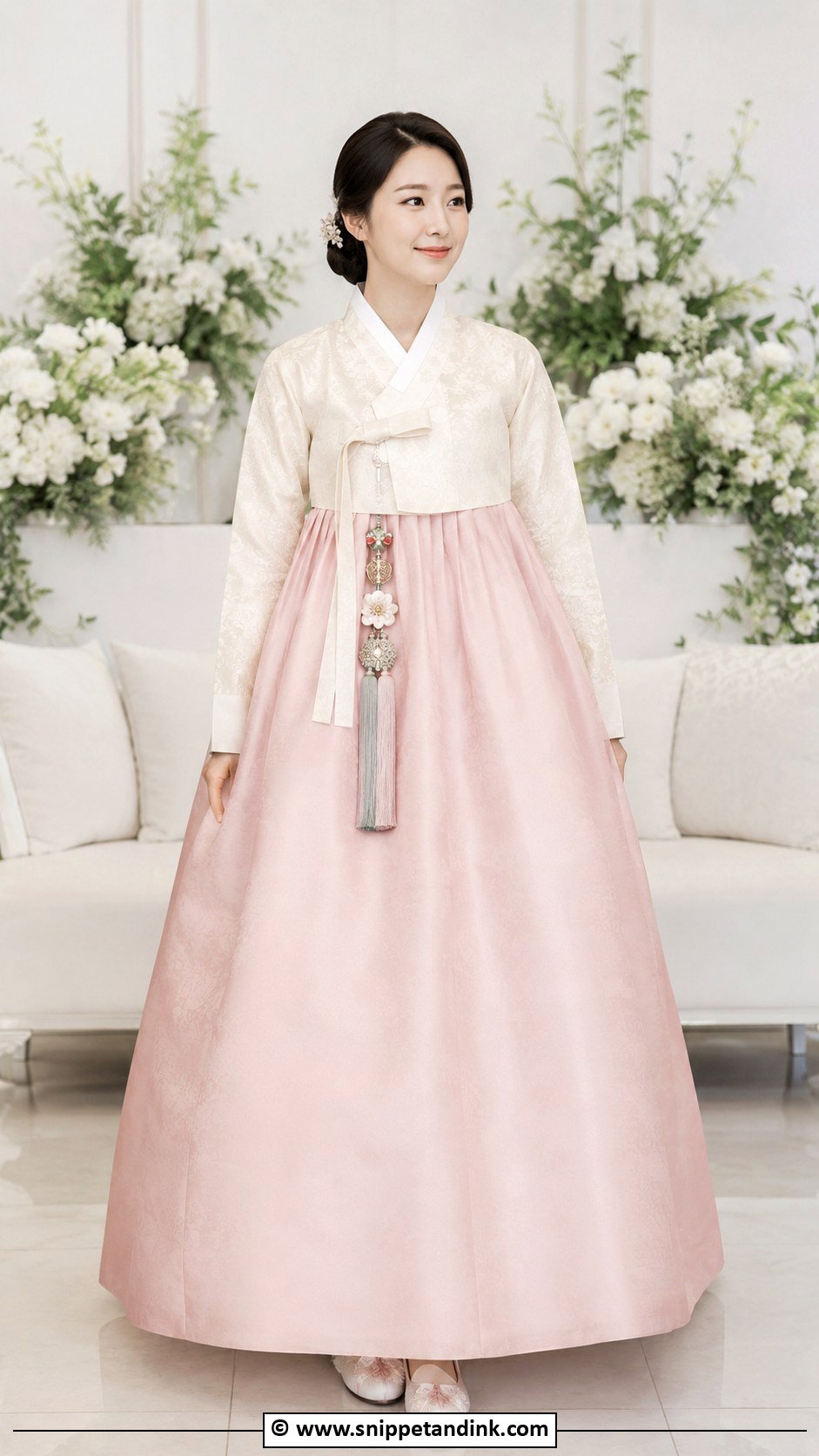
A full bridal hanbok gives you a bell of skirt that holds its shape in every pose. The set is chima, jeogori, a norigae hanging from the ribbon and traditional shoes. For a wedding I’d look for silk, organza or jacquard rather than the shiny polyester common in casual rental sets; the difference shows in how the skirt catches light. Soft pink, cream and pale blue read gentle, while jewel tones feel more formal. Plenty of brides wear it for the family rituals and change into a Western gown for the main ceremony, which is exactly how I’d plan it.
4. White Korean Wedding Dress
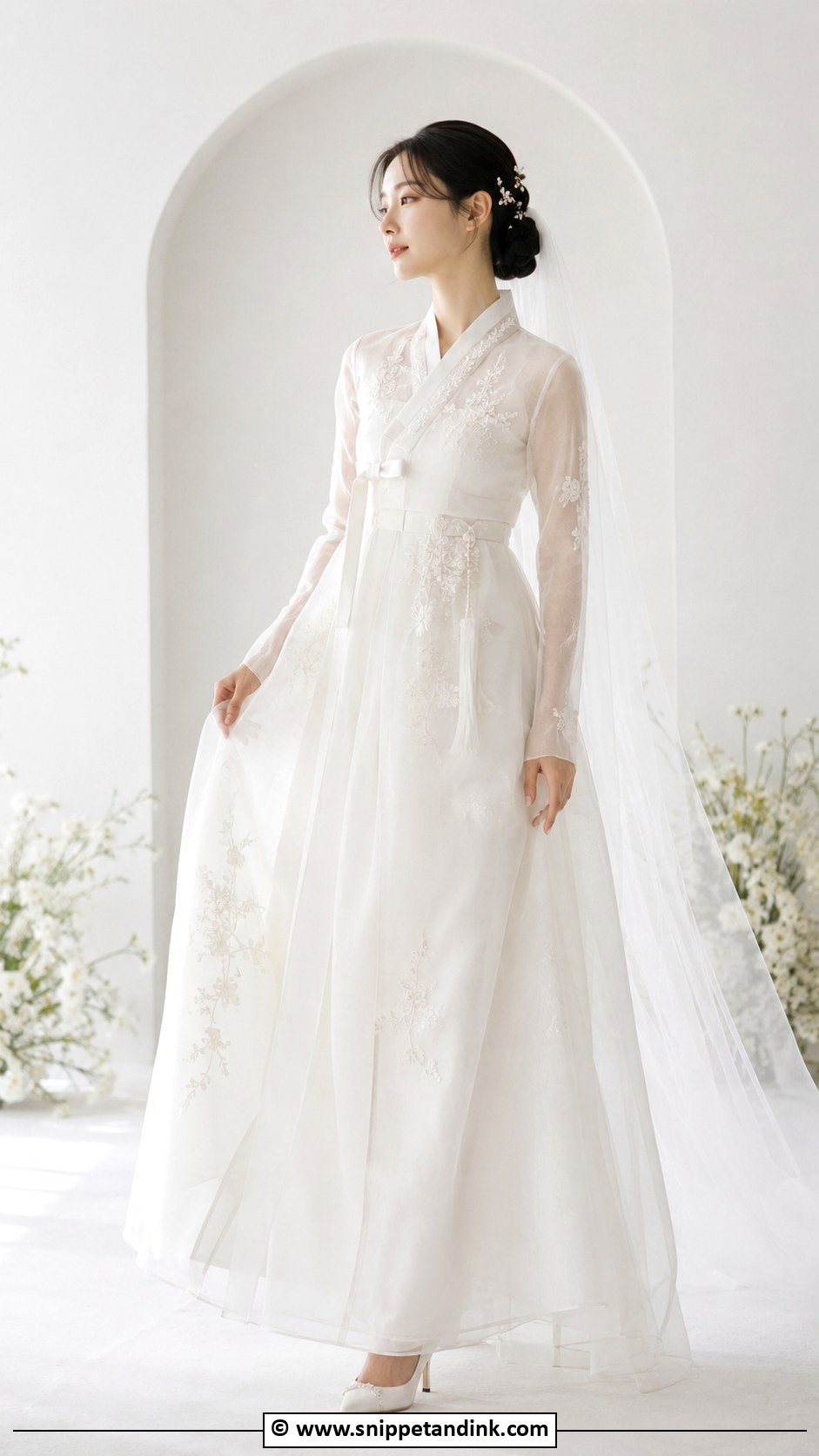
White sits a little outside tradition, since historic Korean bridal dress was strongly coloured, so it’s worth a conversation with family if paebaek matters to them. Done well, it looks very bridal: a white hanbok skirt, a soft wrap jeogori and embroidery in silver or pearl thread, with satin heels, a clean veil and pearl pins. The risk is flatness. Pure white silk with no texture looks blank in daylight, so I push for jacquard, tone-on-tone embroidery or a sheer organza layer over the skirt.
5. Red Korean Wedding Dress
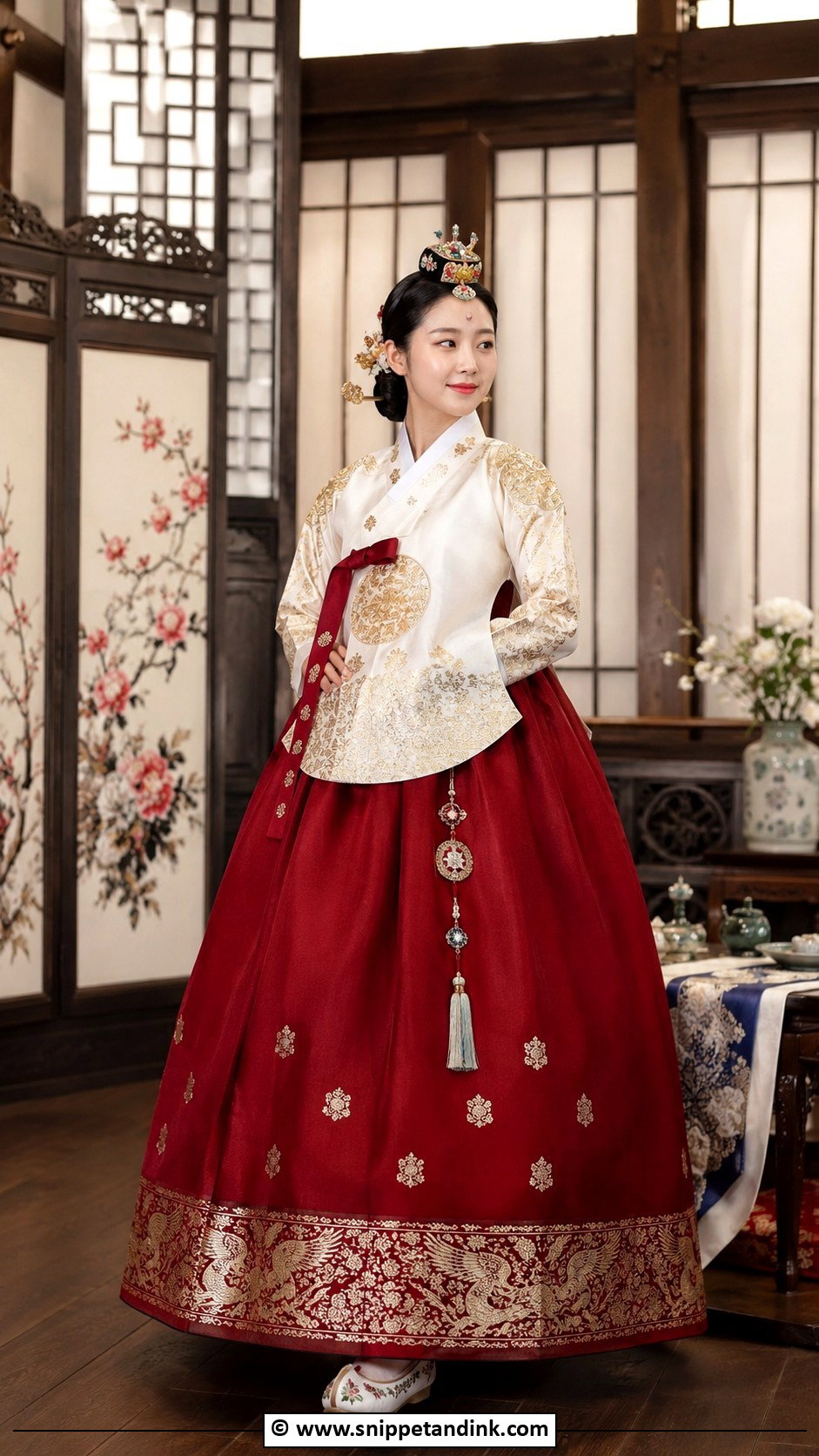
Red is the classic ceremonial colour and works best as a traditional hanbok or a hwarot-inspired outfit with gold embroidery, a full skirt and ornate sleeves. Because the colour does so much, I keep the makeup controlled: even skin, defined eyes and a lip that sits beside the red rather than fighting it. For a softer modern take, put a deep red chima under an ivory jeogori. The contrast keeps the red but takes some of its weight away from the face.
6. Pink Korean Wedding Dress
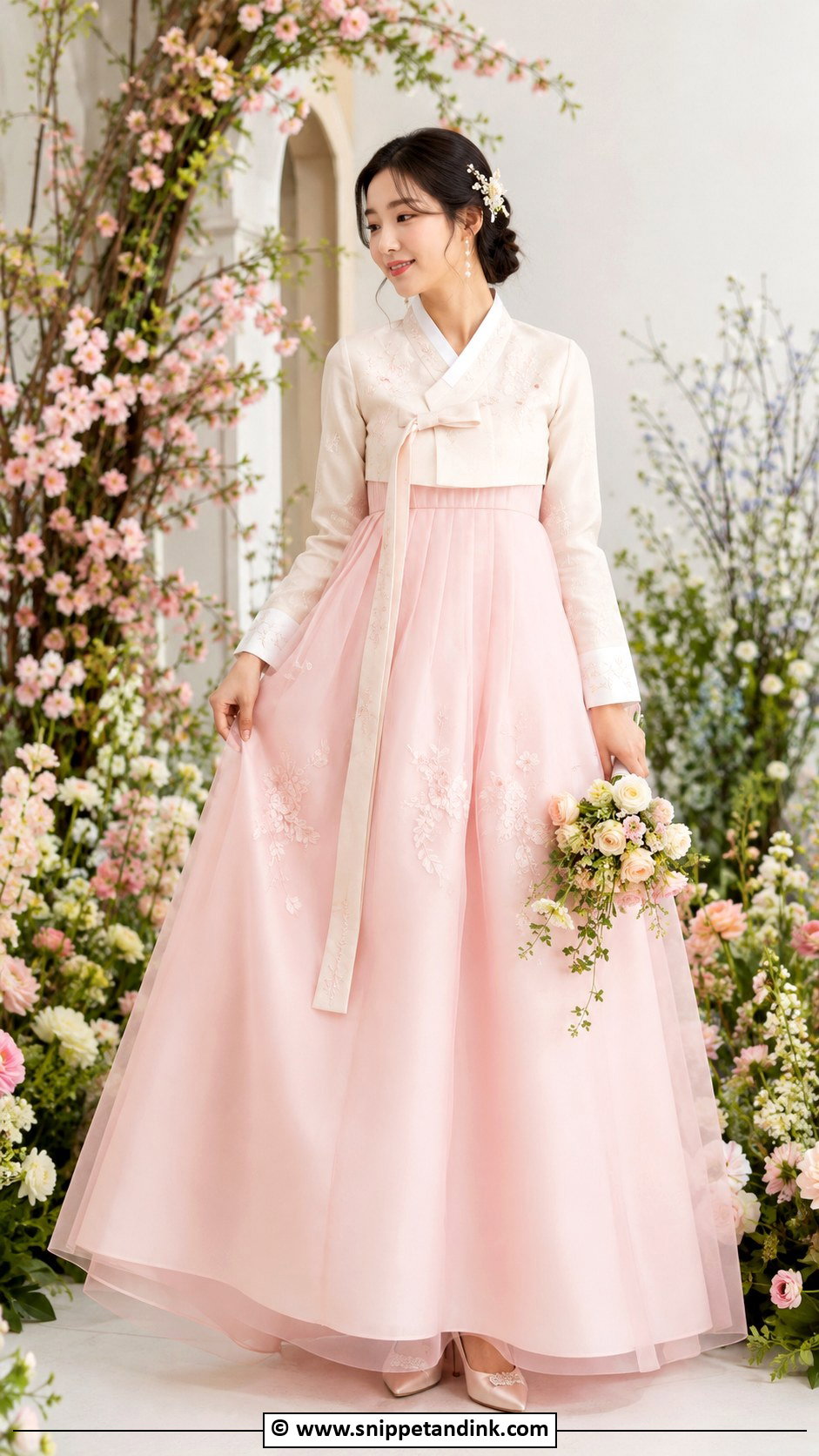
Pink is the easiest colour here to wear, and blush, dusty rose and peach all suit a full chima under a cream jeogori. I’d test the exact shade against your skin in daylight before committing, because cool pinks can make warm skin look sallow on camera while peach tends to forgive more. Pearl earrings, satin shoes and a small floral pin are enough. A sheer overlay or a little floral embroidery adds a modern note, as long as the bodice stays plain so the whole thing doesn’t turn sugary.
7. Blue Korean Wedding Dress
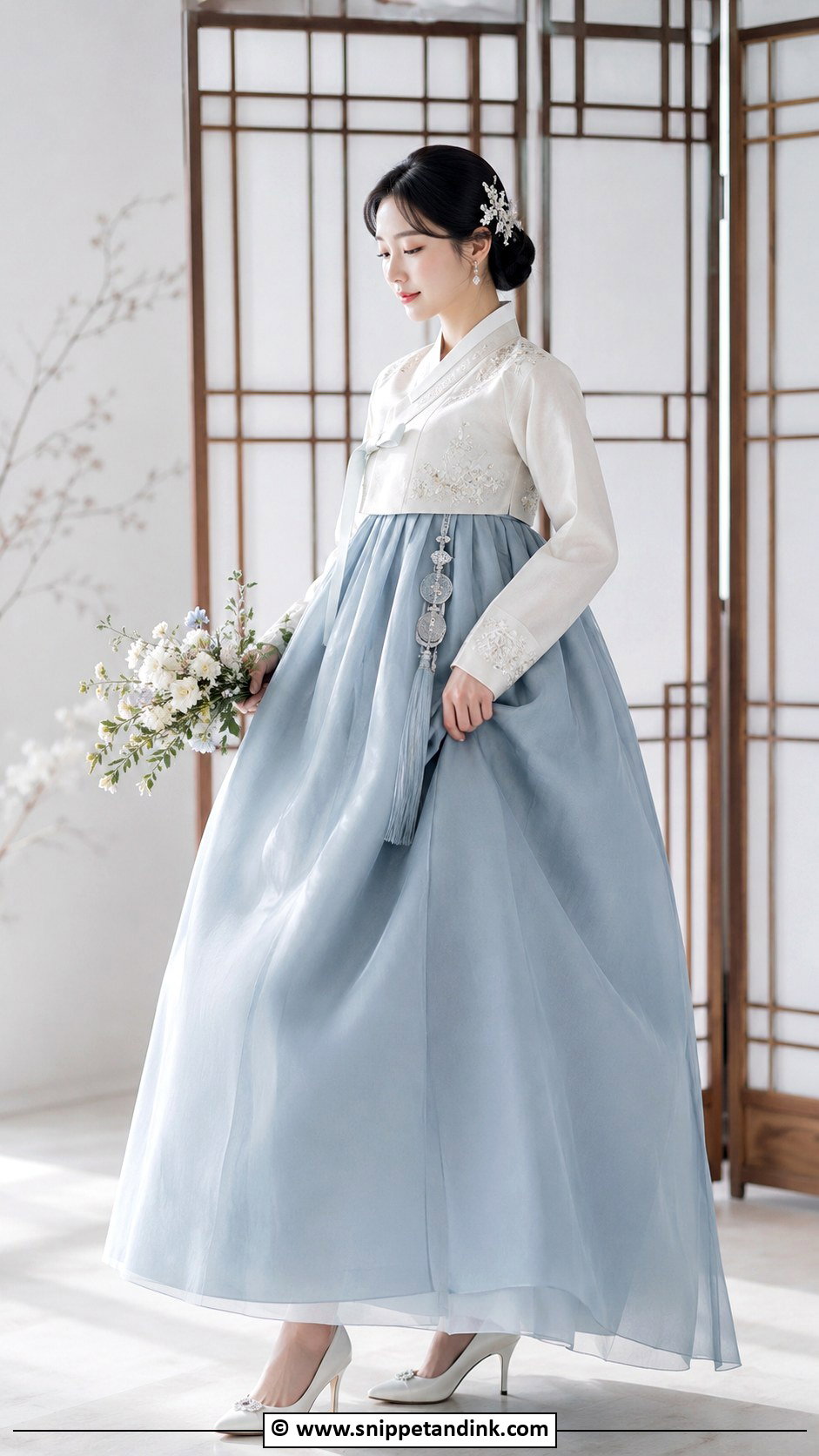
Pale blue reads airy; navy or royal blue reads formal. The simplest way in is a blue chima with an ivory jeogori, silver jewellery and sleek hair. Silk or satin is worth the money in this colour, because flat blue polyester goes dull in photos while silk shifts tone as it moves. Something I watch for: very pale blue drifts toward white under cool studio light, so for an indoor shoot a slightly deeper shade holds its colour better.
8. Ivory Korean Wedding Dress
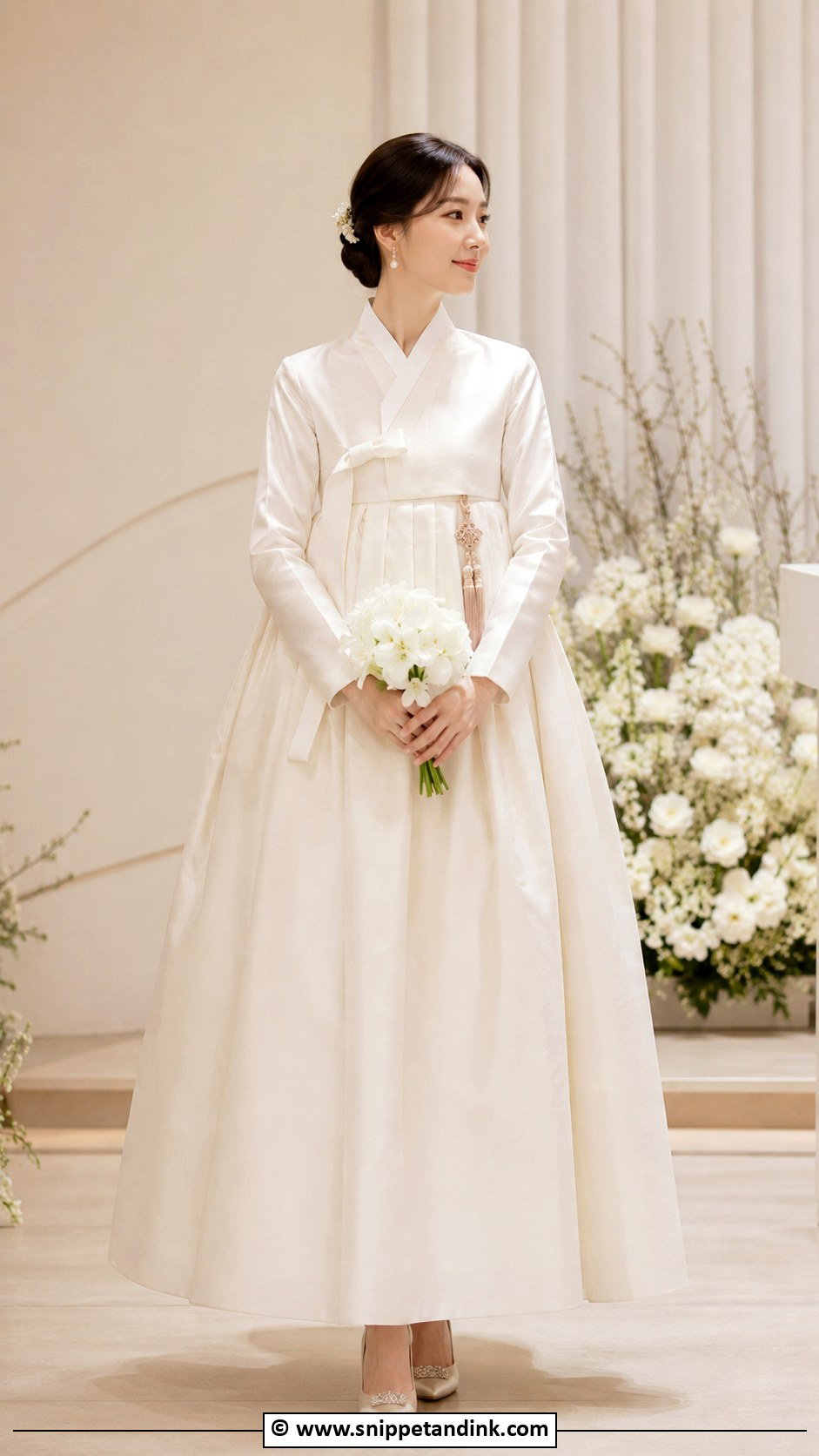
Ivory gives you warmth without the glare of bright white, and it suits more skin tones because it’s softer next to the face. It works in silk, lace, jacquard and organza, so it fits both a traditional hanbok and a fusion gown. My usual pairing is an ivory wrap top over a matching skirt, pearl accessories and beige heels. Bring a fabric swatch to your shoe and veil appointments. Ivories vary a lot, and two slightly different creams side by side make one of them look dirty.
9. Silk Korean Wedding Dress
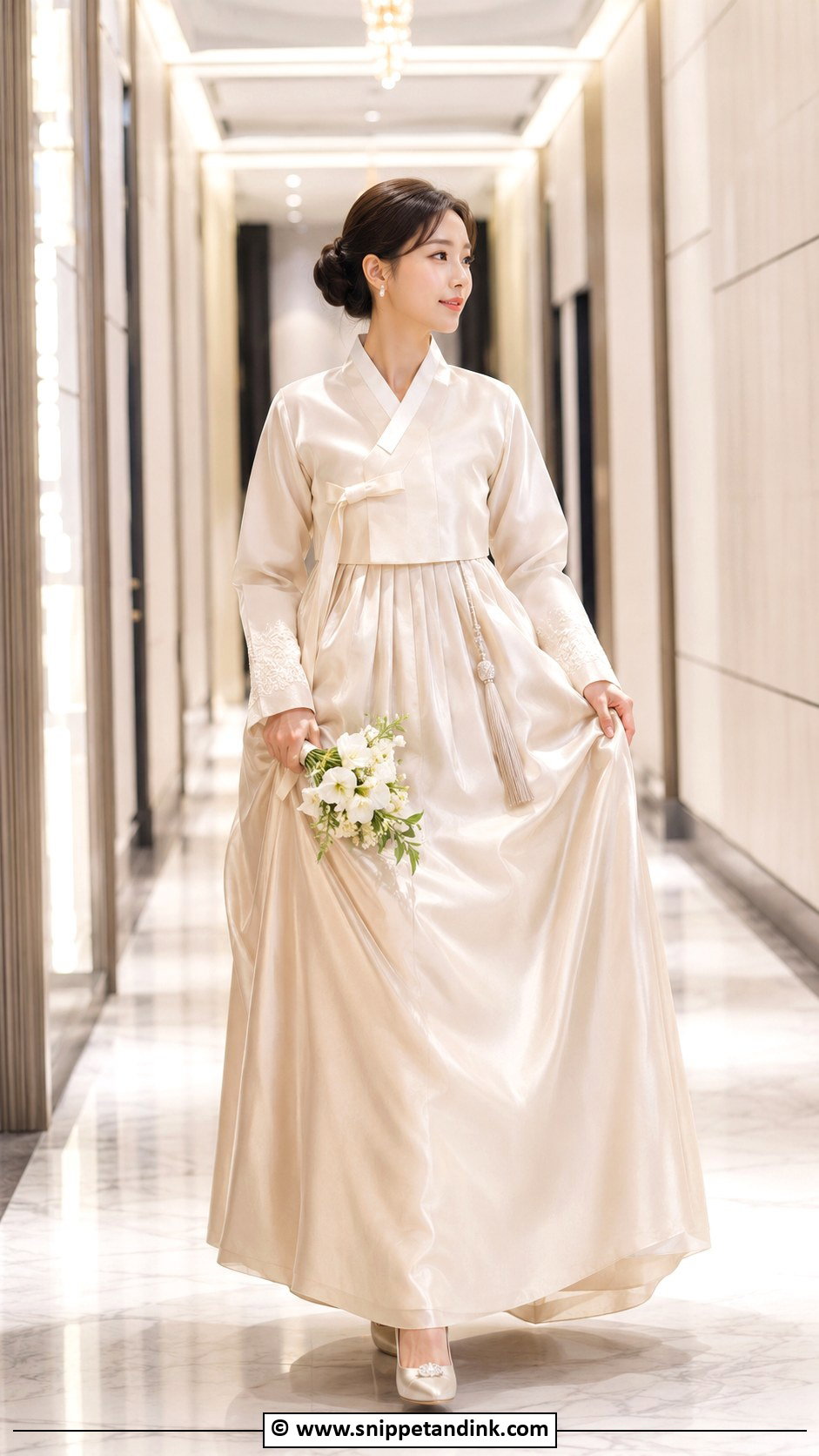
Silk earns its price in movement. A silk chima swings and catches light in a way nothing else imitates, which is why ivory, blush, champagne and pale blue look so rich in it. The full set is a silk skirt, a smooth jeogori, an embroidered norigae and silk or satin shoes. What I warn brides about is creasing. Silk marks wherever you sit, so have the skirt steamed right before portraits and never ride in the car on a folded skirt.
10. Lace Korean Wedding Dress
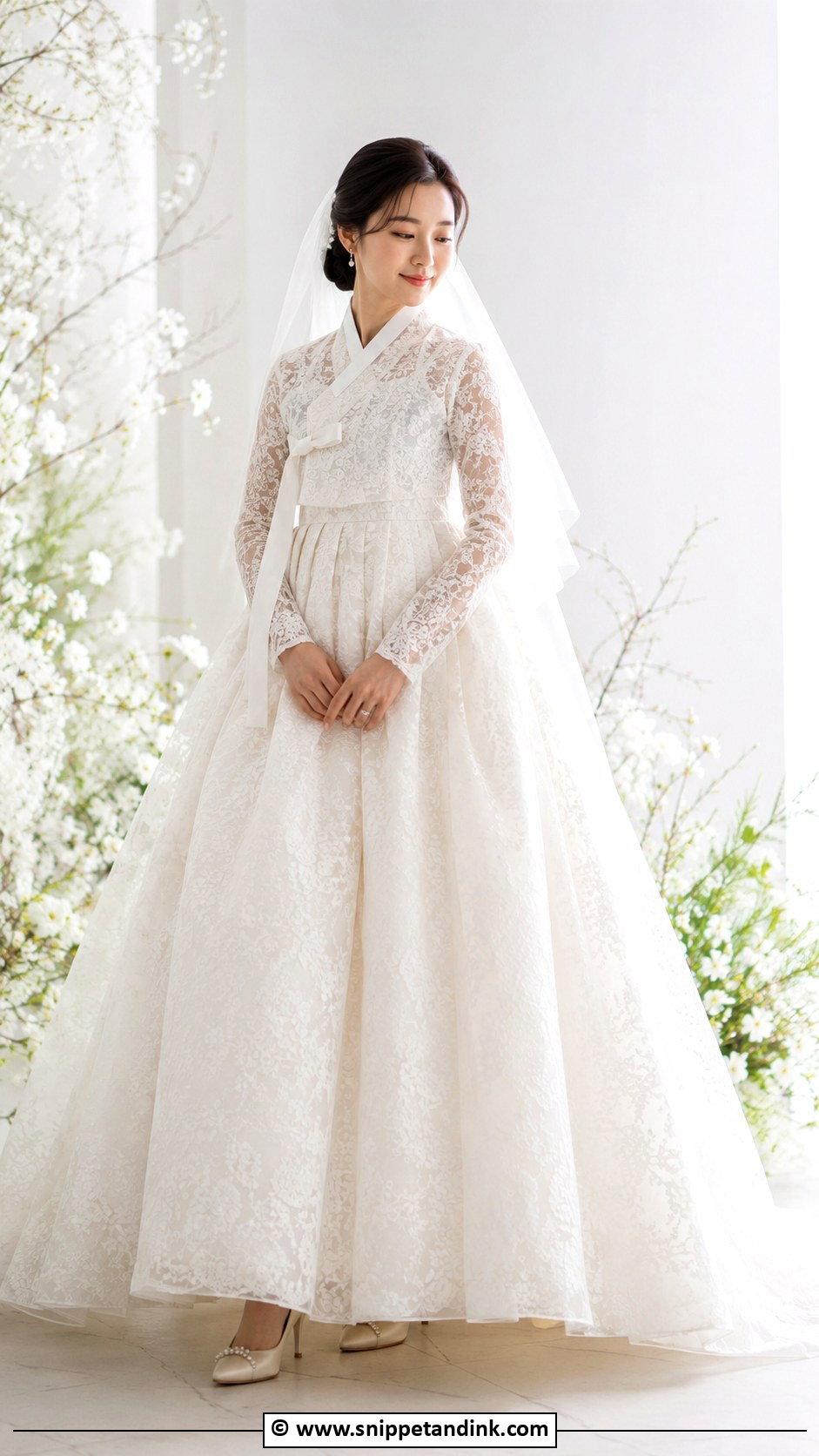
Lace bridges two traditions, putting a familiar wedding-dress texture on a Korean shape: a hanbok-cut gown with a lace jeogori, a full ivory skirt and scalloped sleeve edges. I prefer the lace kept to one zone, either the jacket or a sheer overlay on the skirt, not both. Heavy corded lace also stiffens the sleeve, and that fights the soft curve that makes a jeogori sleeve look right.
11. Satin Korean Wedding Dress
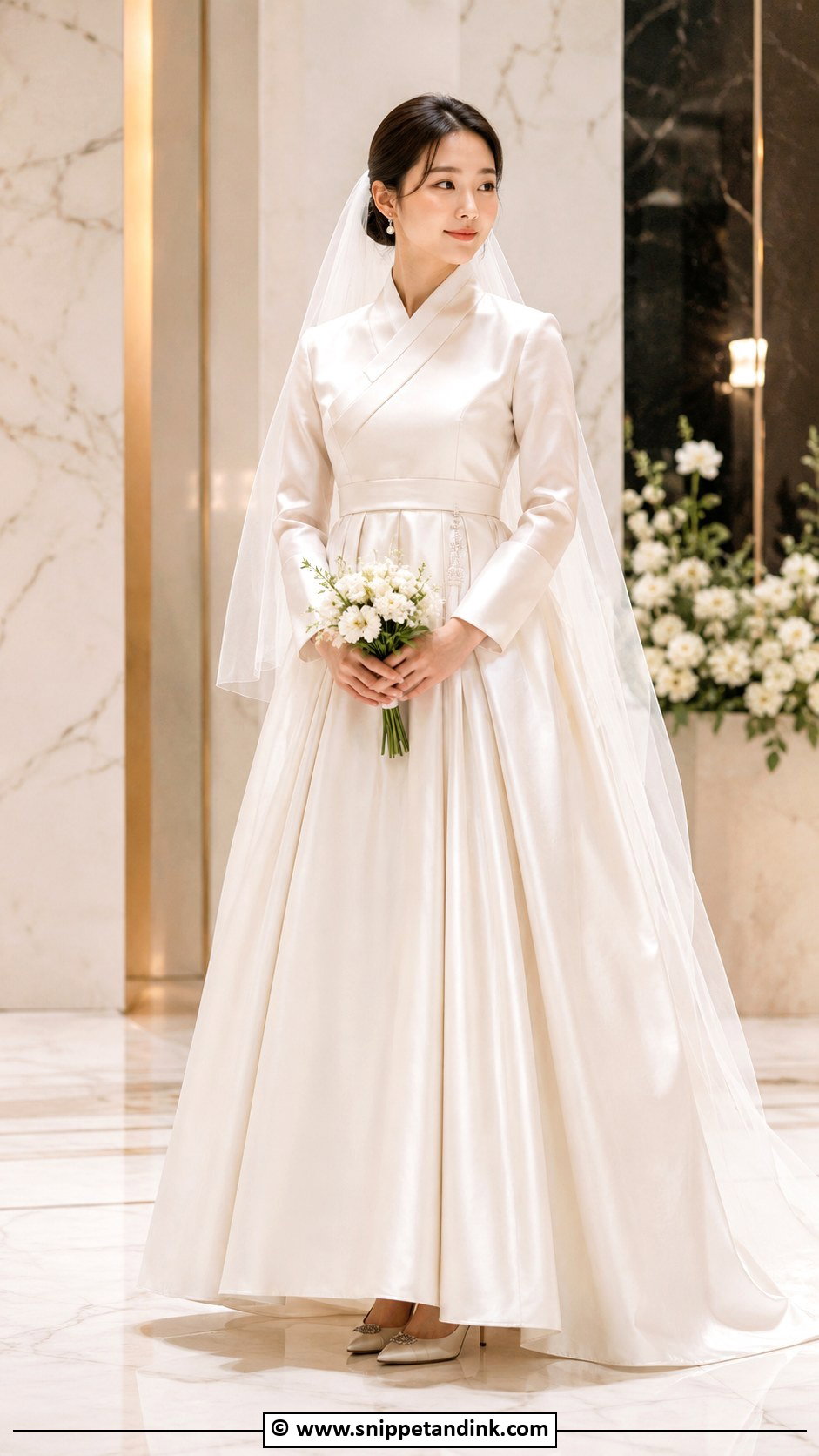
Satin suits a bride who wants clean lines and nothing stuck on. A satin hanbok-inspired gown with a wrap bodice, softly structured sleeves and a long A-line skirt sits well in hotels and modern venues, and champagne, soft gold and muted blush look rich in it. The honest drawback is that satin shows every wrinkle and every seam that’s slightly off. The bodice fit has to be precise, so I’d budget for an extra alteration appointment with this fabric.
12. Tulle Korean Wedding Dress
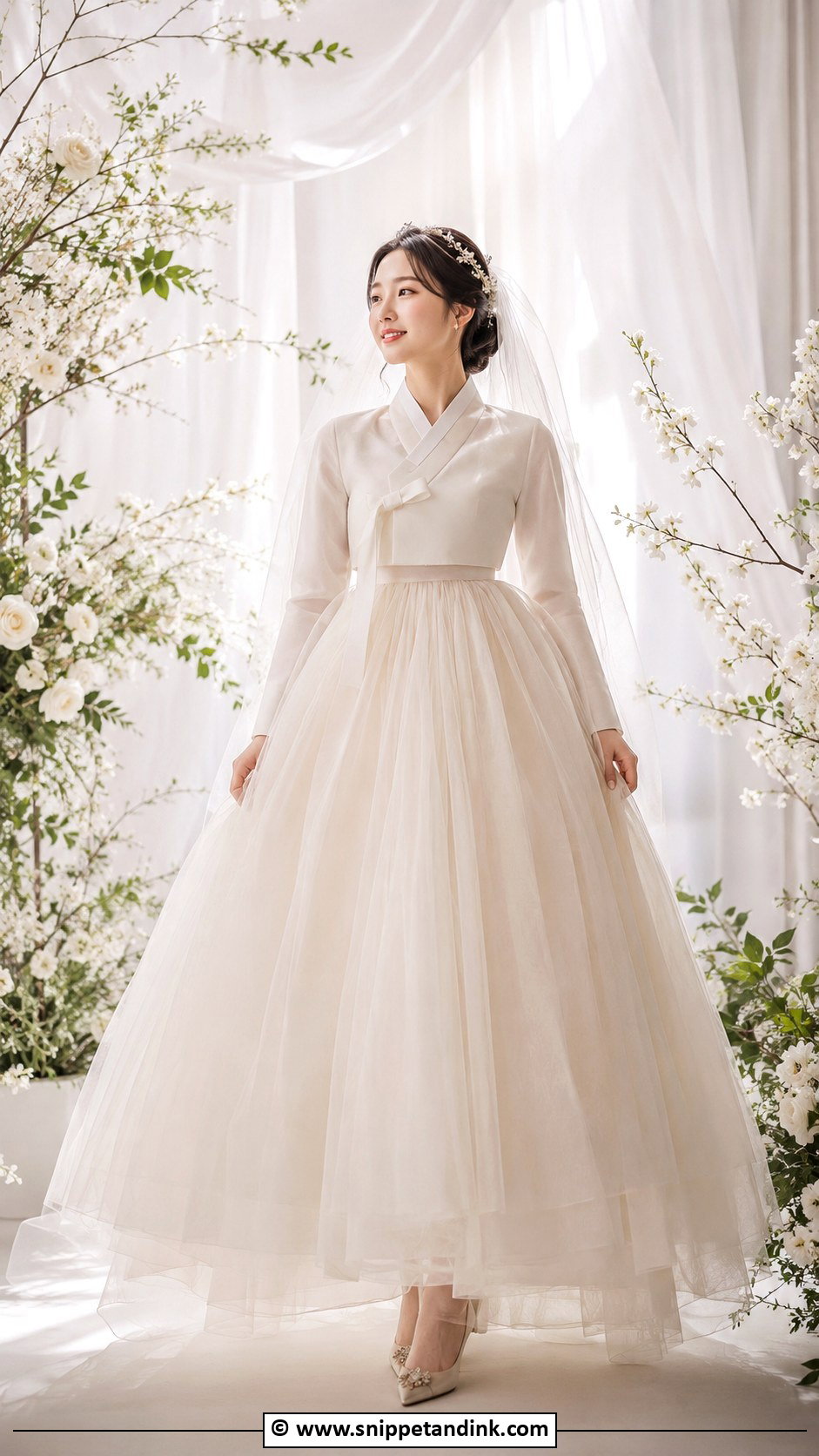
Layered tulle turns the chima from a bell into a cloud, and it’s lighter to wear than a silk skirt of the same size. Keep the jeogori or wrap bodice structured and plain so the volume stays below the waist. Tulle has one practical catch: it snags on rough paving, bouquet wire and beaded bracelets. I’d keep anything on the wrists smooth and carry a few small safety pins for quick repairs.
13. Embroidered Korean Wedding Dress
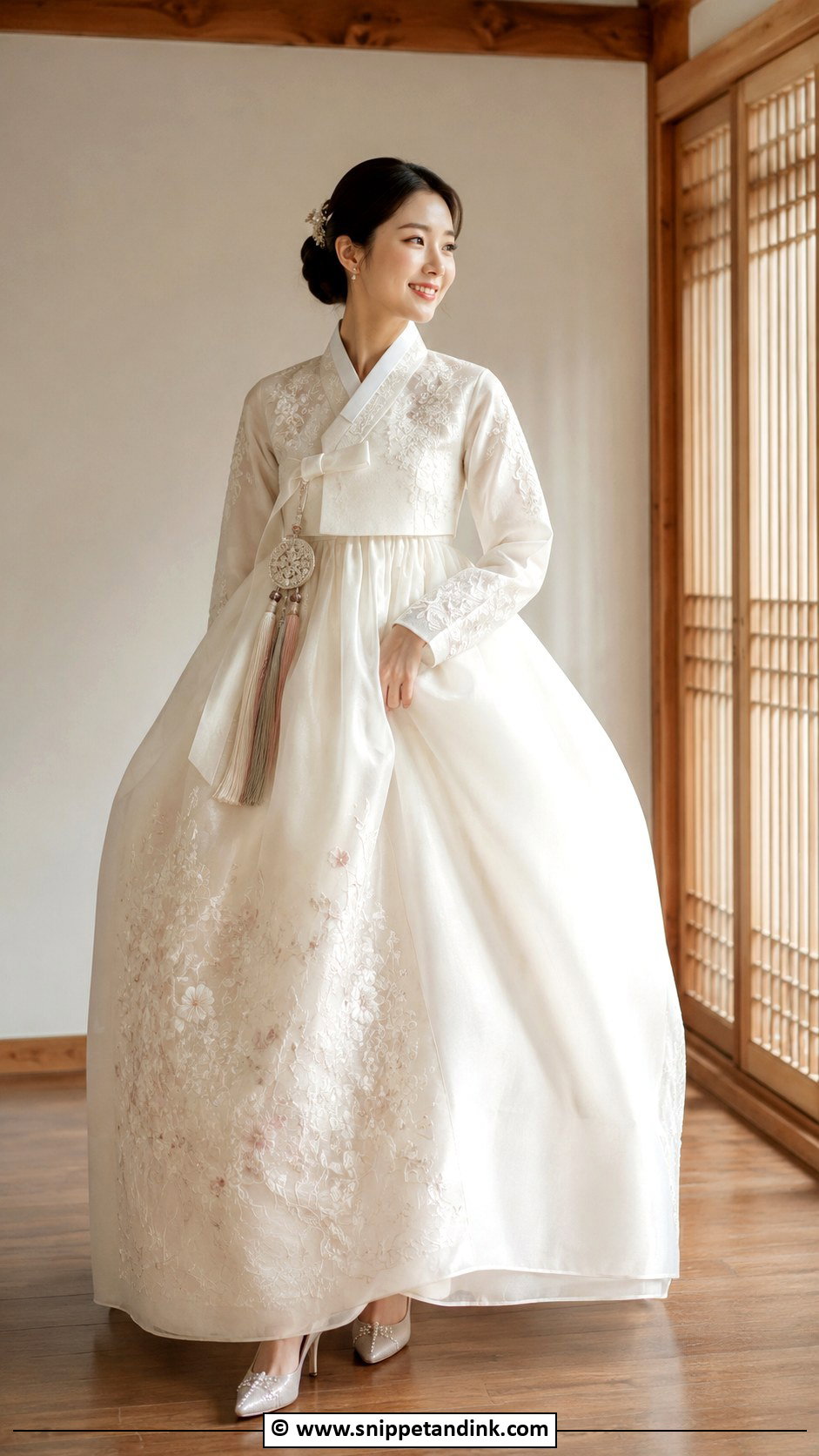
Embroidery is where Korean bridal dress carries its meaning, with motifs on the sleeves, bodice, skirt or outer robe. A full ceremonial look adds traditional shoes, a norigae and a headpiece. For something more modern, ivory silk with fine floral embroidery gives you the detail without the bold colour. I always ask where the embroidery sits before we pick jewellery, because a busy necklace over an embroidered collar cancels both out. In close-ups, hand embroidery shows a depth that printed motifs can’t match.
14. Floral Korean Wedding Dress
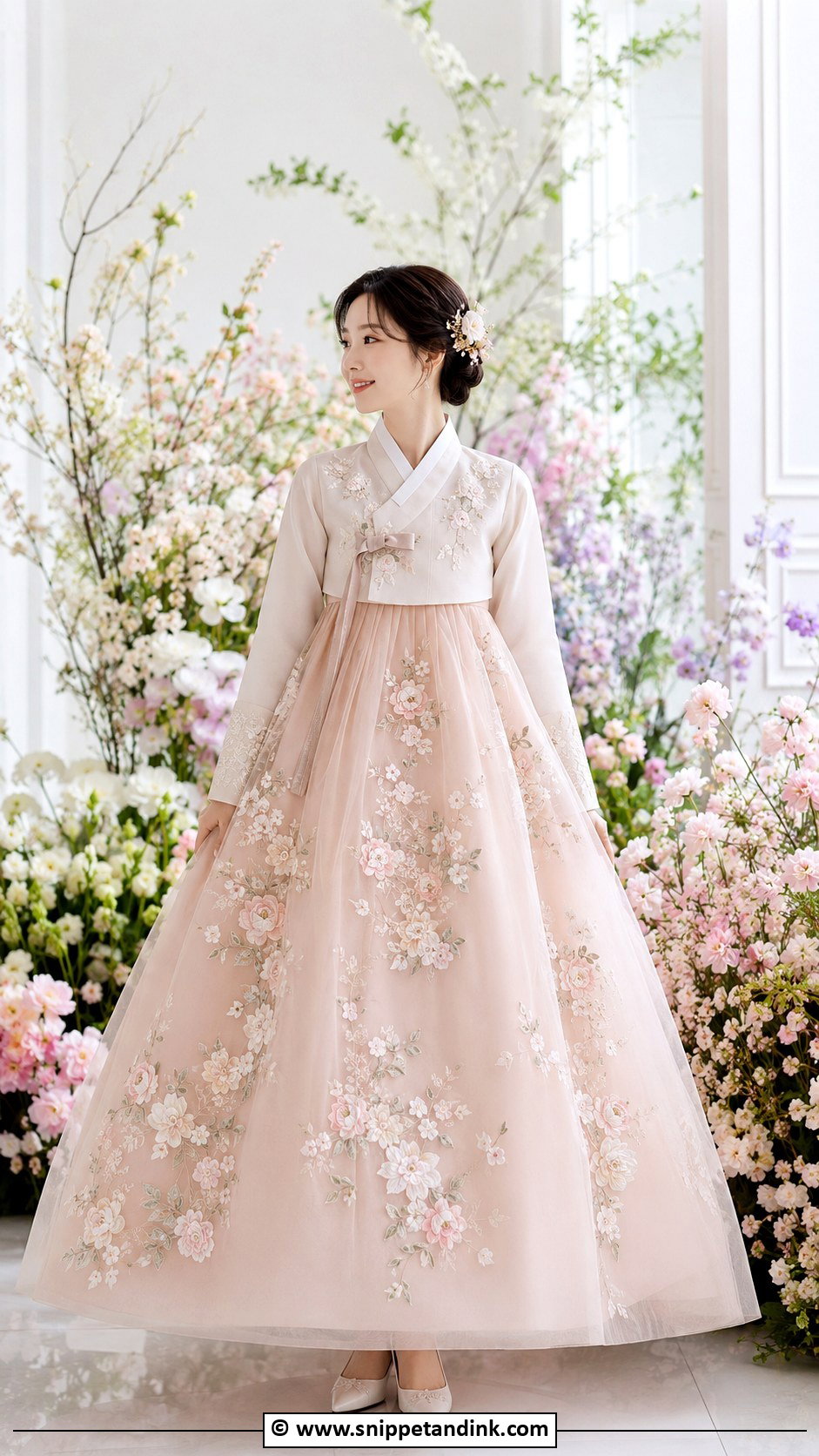
Florals can arrive as embroidery, a jacquard weave, painted organza or lace appliqué. On soft pink or ivory they read fresh without losing formality, and a low bun with a small floral comb ties the head in. Pick one floral element and stop there. A floral skirt, floral sleeves and a floral hairpiece together start to look like wallpaper. Garden venues and spring portraits suit this one best.
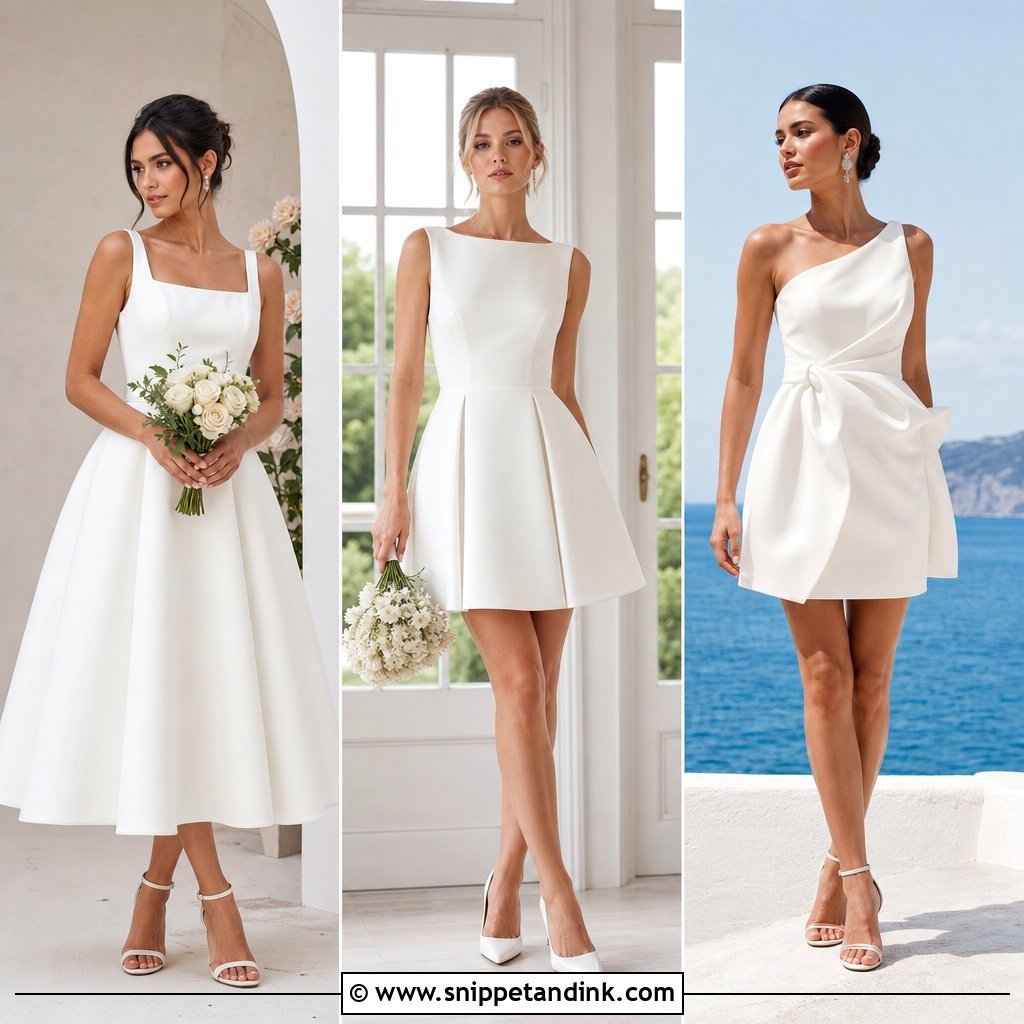
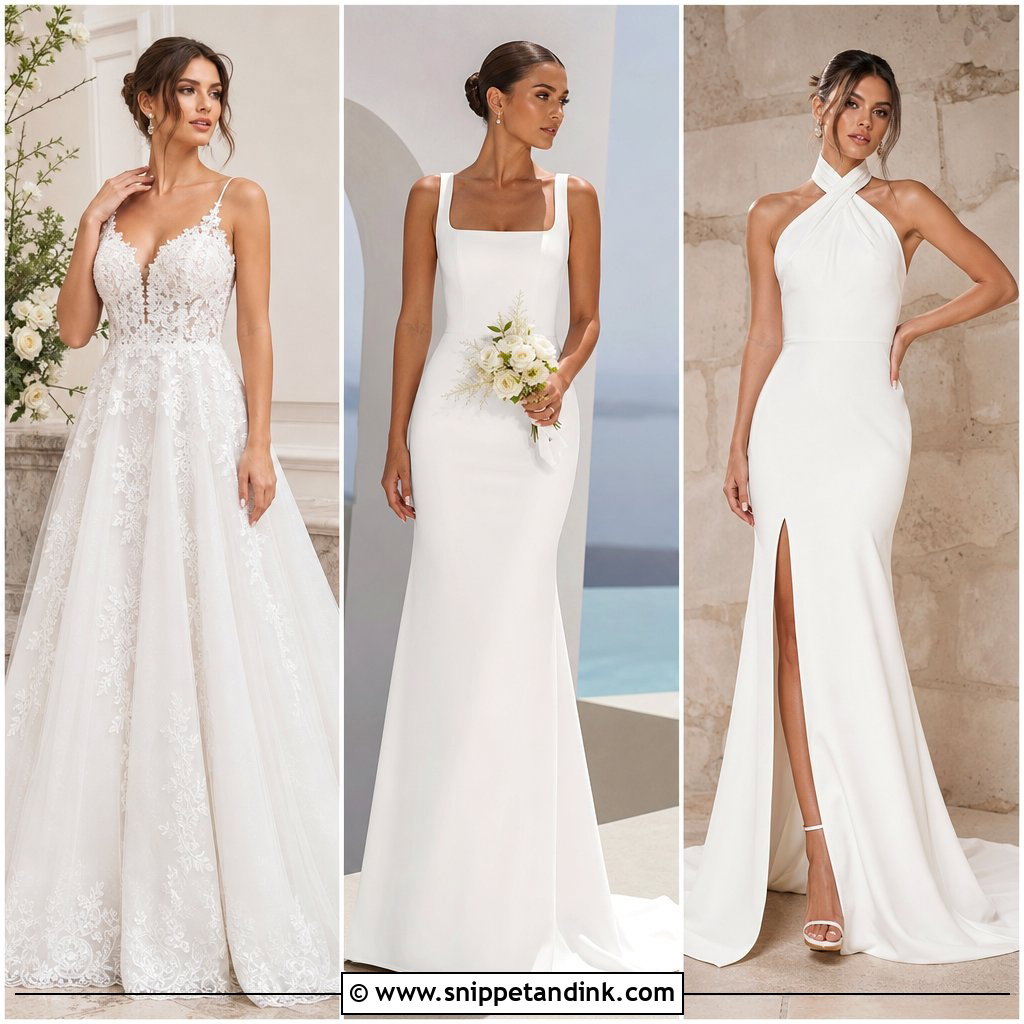
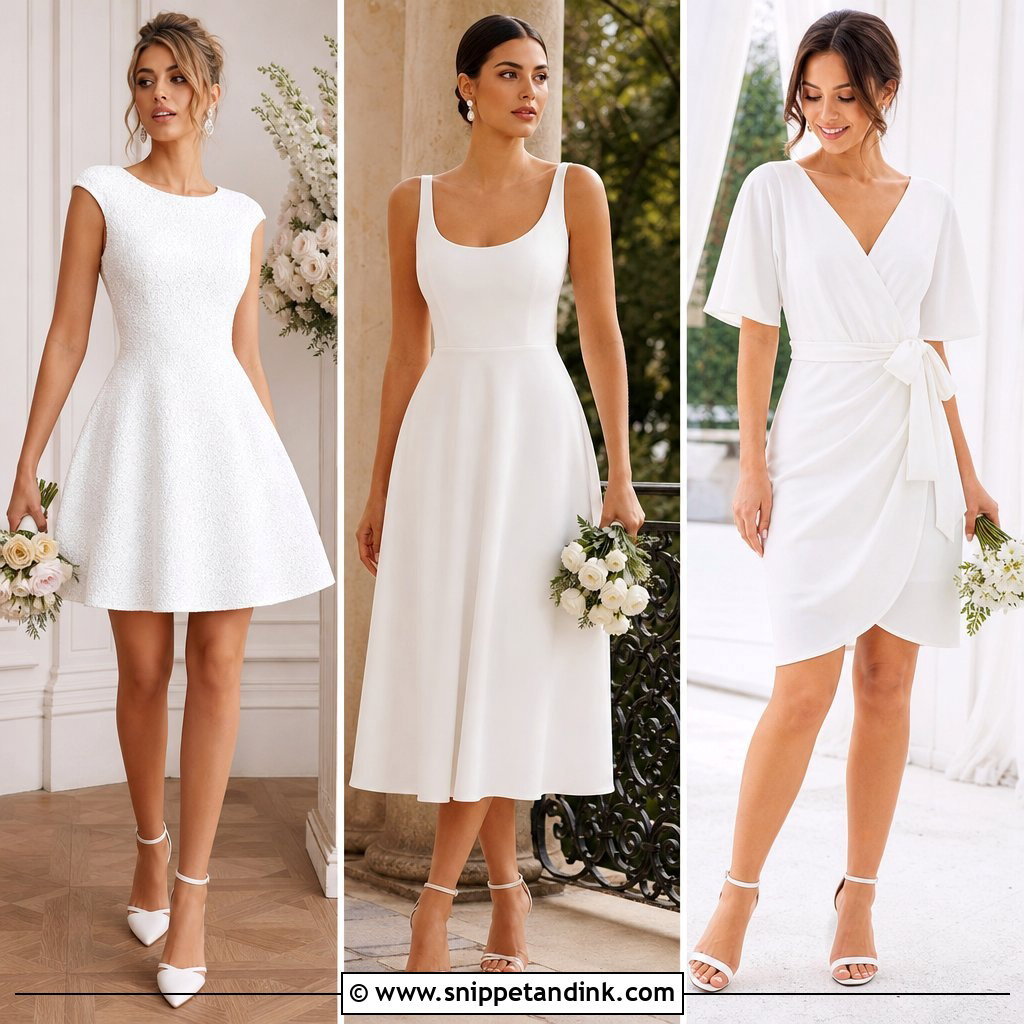
15. Minimal Korean Wedding Dress
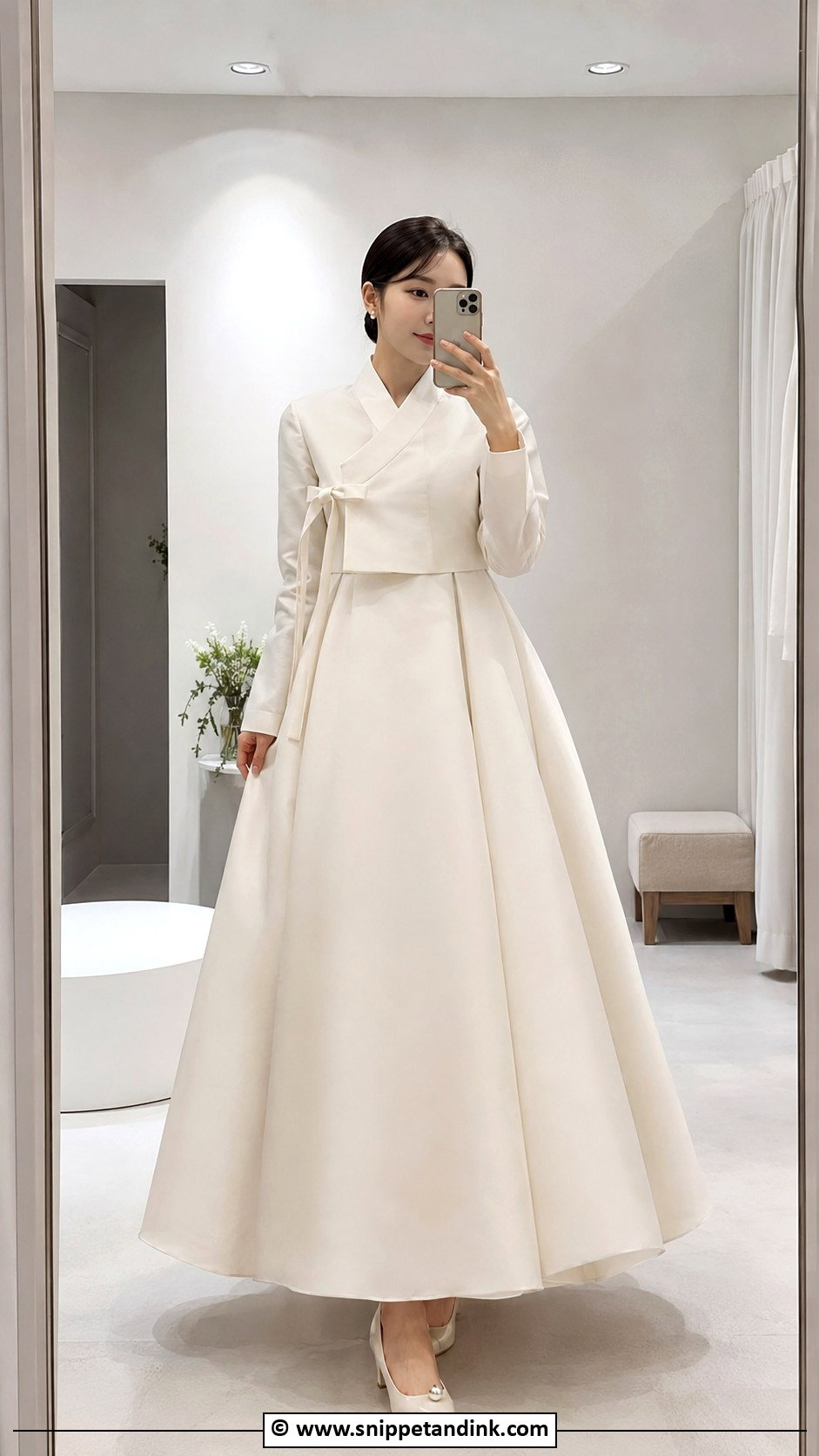
With almost no decoration, the shape and the fabric have to do everything: a smooth ivory or white skirt, a simple wrap top, sleek hair, pearl studs, low satin heels and a plain veil. Because nothing distracts the eye, cheap fabric and loose seams show immediately. This is the dress where I’d spend on silk, satin or a structured crepe rather than on accessories. It suits small weddings, civil ceremonies and pared-back venues.
16. Luxury Korean Wedding Dress
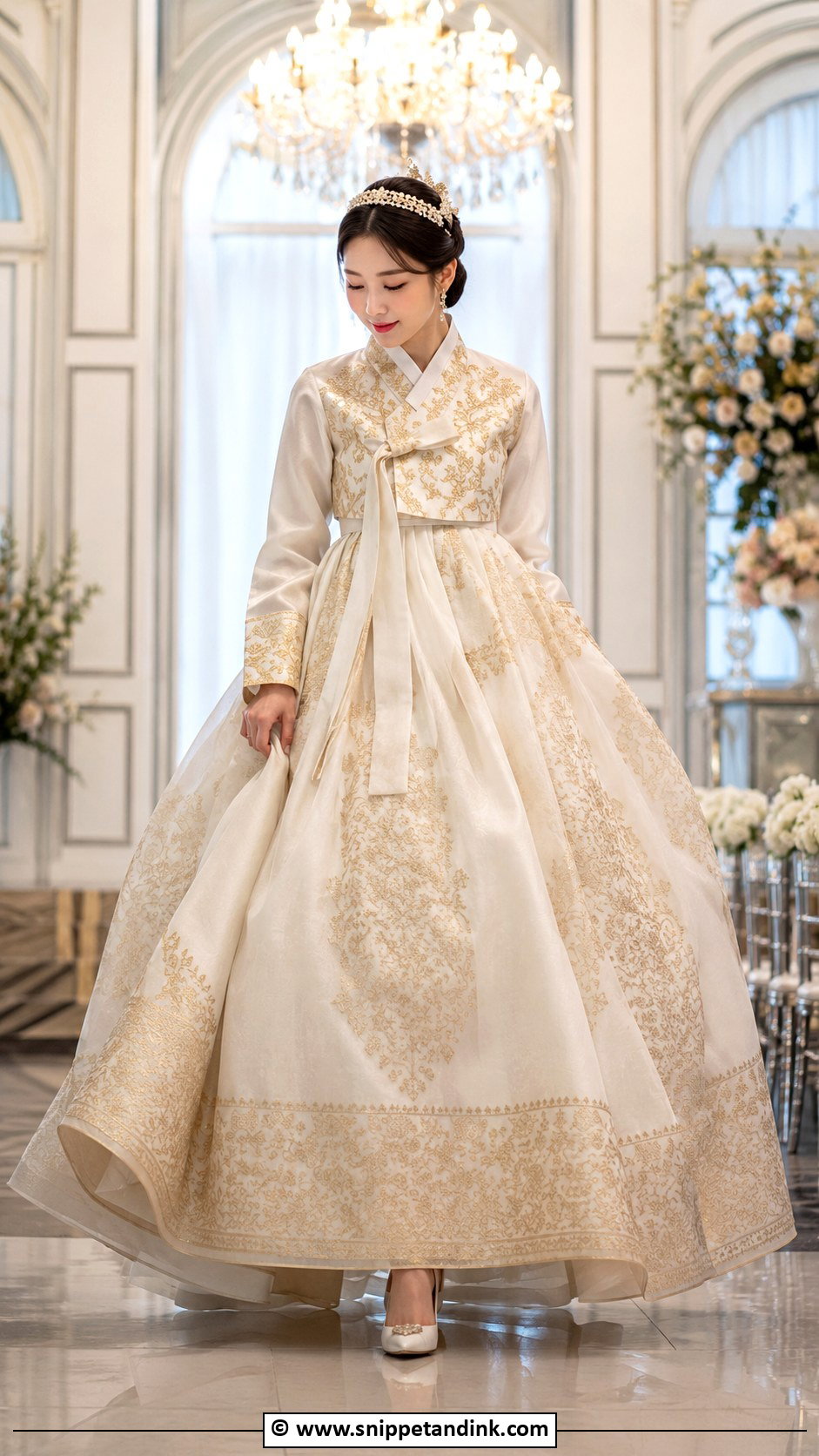
Luxury comes from fabric, fit and detail, not from piling things on. Think of a silk hanbok-inspired gown with ornate embroidery, gold thread, pearl accents or jacquard texture, plus a refined updo and a headpiece. My rule at styling appointments is a seesaw: if the dress is heavily worked, the jewellery steps back; if the fabric is plain, one standout piece comes in. Gold-thread embroidery is also heavier than it looks, so check that the shoulders still feel comfortable after an hour, not just in the mirror.
17. Simple Korean Wedding Dress
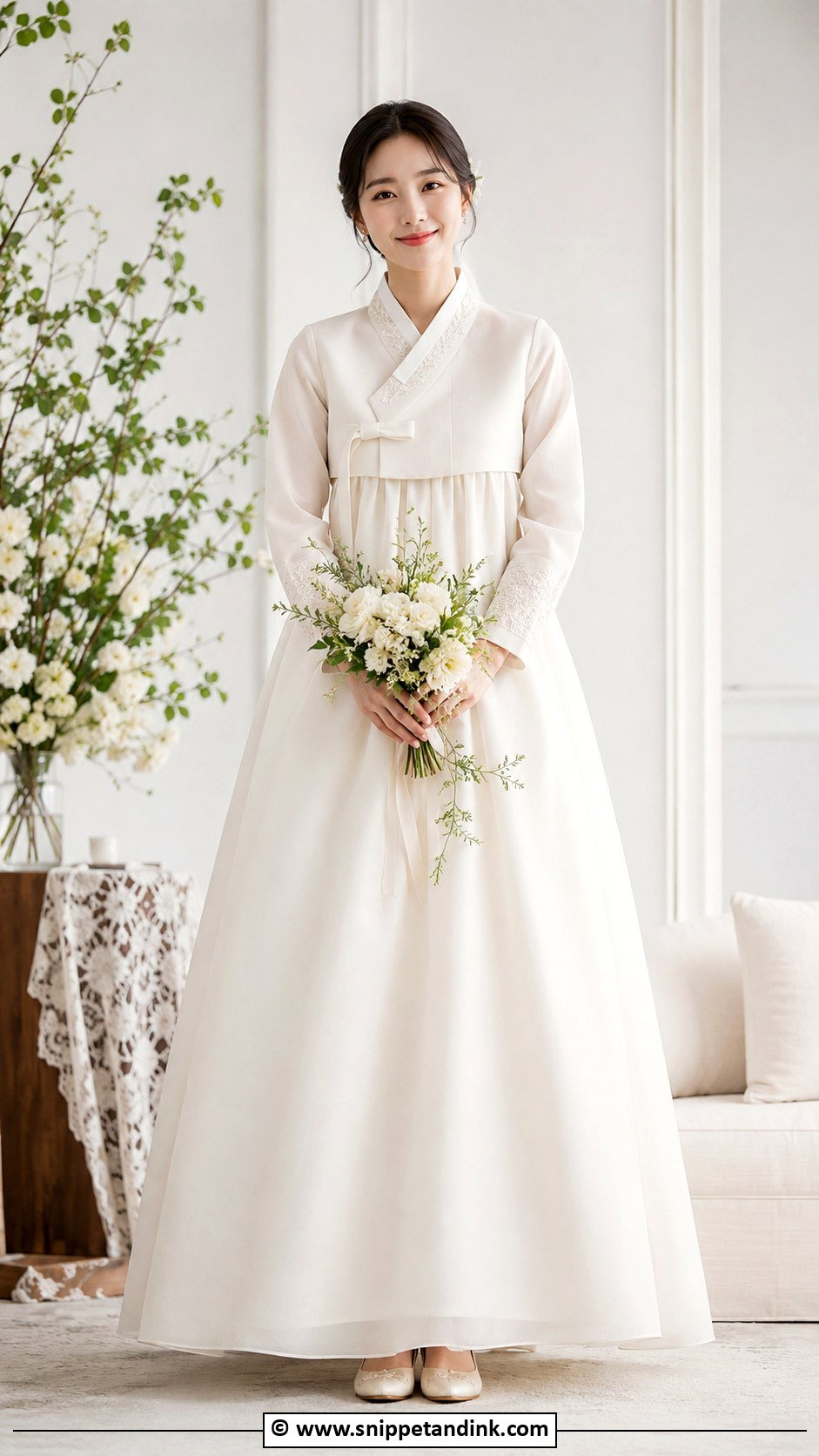
This is the comfort outfit. A soft A-line hanbok-inspired dress with a light jeogori, relaxed sleeves, low heels or embroidered flats and natural makeup. It’s very practical as a change after a heavy ceremony gown, or for outdoor photos where you’ll be walking a lot. Plain fabric still needs one considered detail, such as a norigae or a fine trim, or it can read as a guest outfit.
18. Korean Wedding Dress With Veil
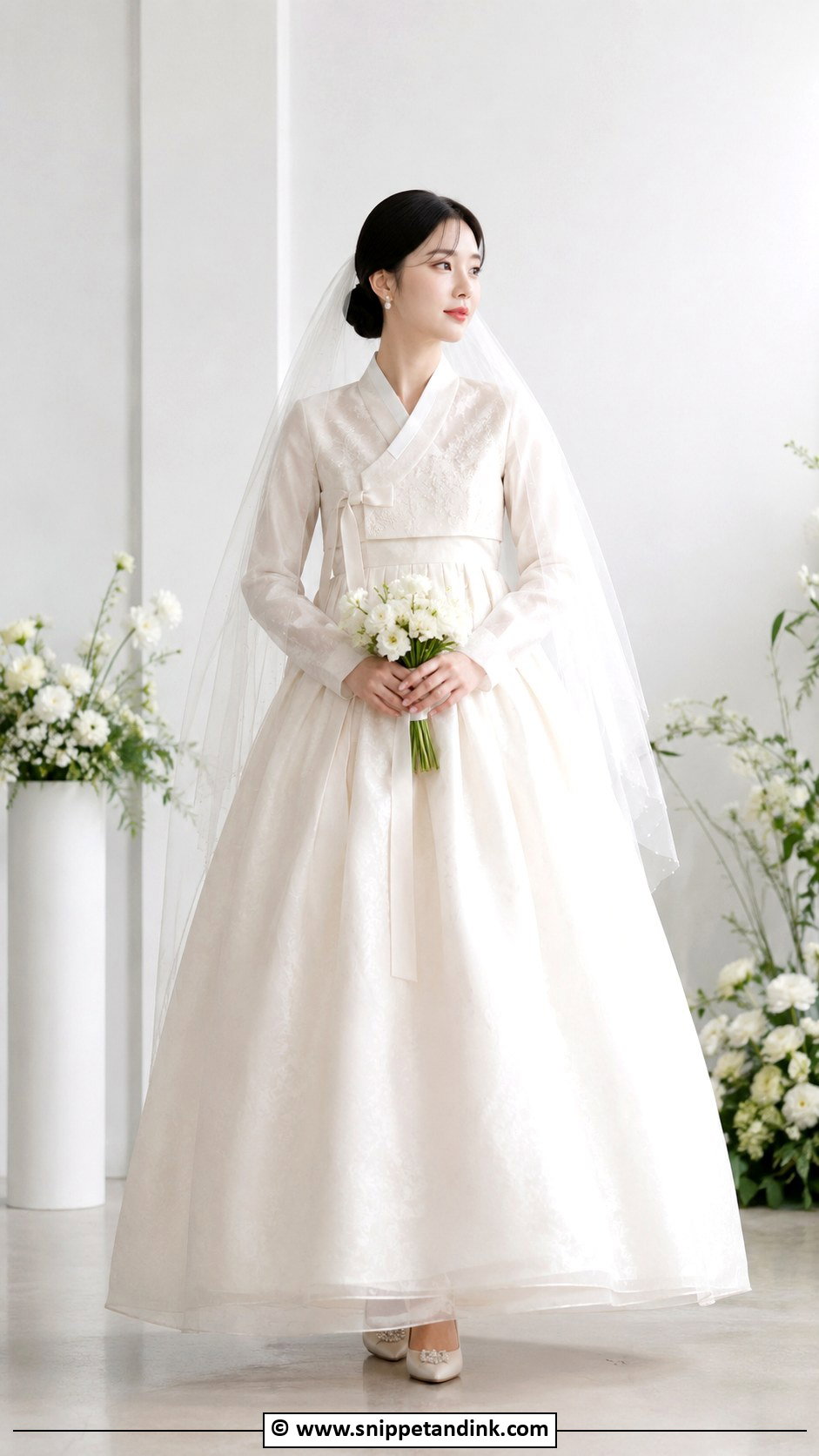
A veil on a hanbok-inspired gown mixes Korean and Western bridal cues. With a full chima, a fingertip length works best; a cathedral veil tends to pool on top of the skirt and flatten its shape. The bun needs to sit low enough to anchor the comb without tugging, and I’d test that at the hair trial with the actual veil, not a sample. Choose a single layer of soft tulle so it falls with the skirt instead of sitting stiffly over it.
19. Korean Wedding Dress With Hwagwan
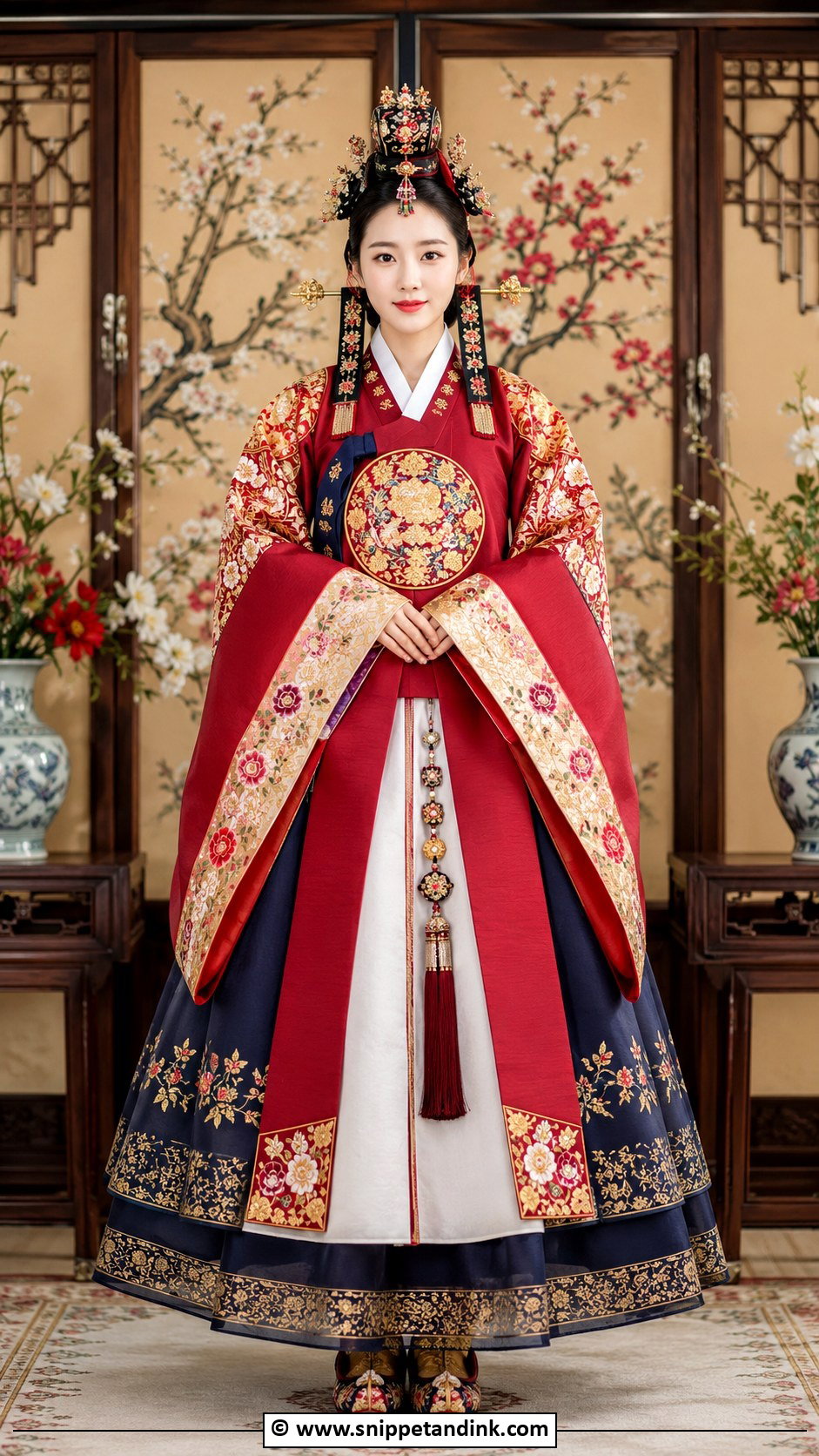
The hwagwan is an ornate bridal crown, so the rest of the outfit has to match its formality: a richly coloured hanbok, embroidery and traditional shoes. A smooth, firm updo matters because the headpiece needs a solid base and the face should stay open. Pin placement is the detail to discuss with your hairstylist, since a hwagwan perched on soft curls shifts every time you bow. Keep earrings small and skip a necklace altogether.


20. Korean Wedding Dress For Paebaek
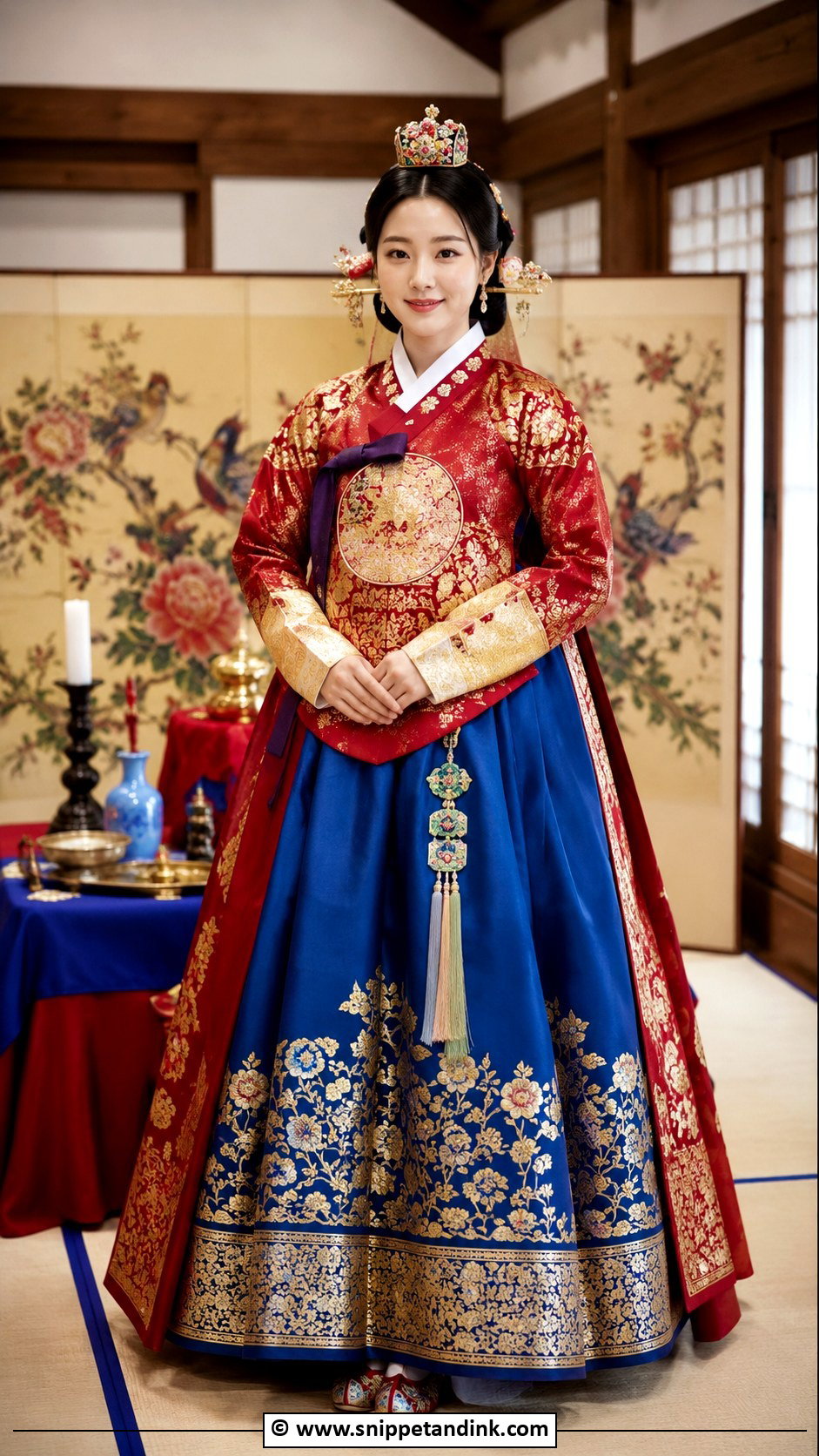
Paebaek involves sitting, deep bows and catching dates and chestnuts in your skirt, so this outfit has to move. Most brides wear a traditional hanbok in strong colours with embroidery, a norigae, embroidered shoes and traditional hair ornaments. Before the day, practise a full bow in the outfit: kneel, lower, rise. If the chima band slips or the sleeves catch, that’s far easier to fix at a fitting than in front of the family. Heirloom pieces, a mother’s norigae for instance, carry real weight in this setting.
21. Korean Wedding Dress For Reception
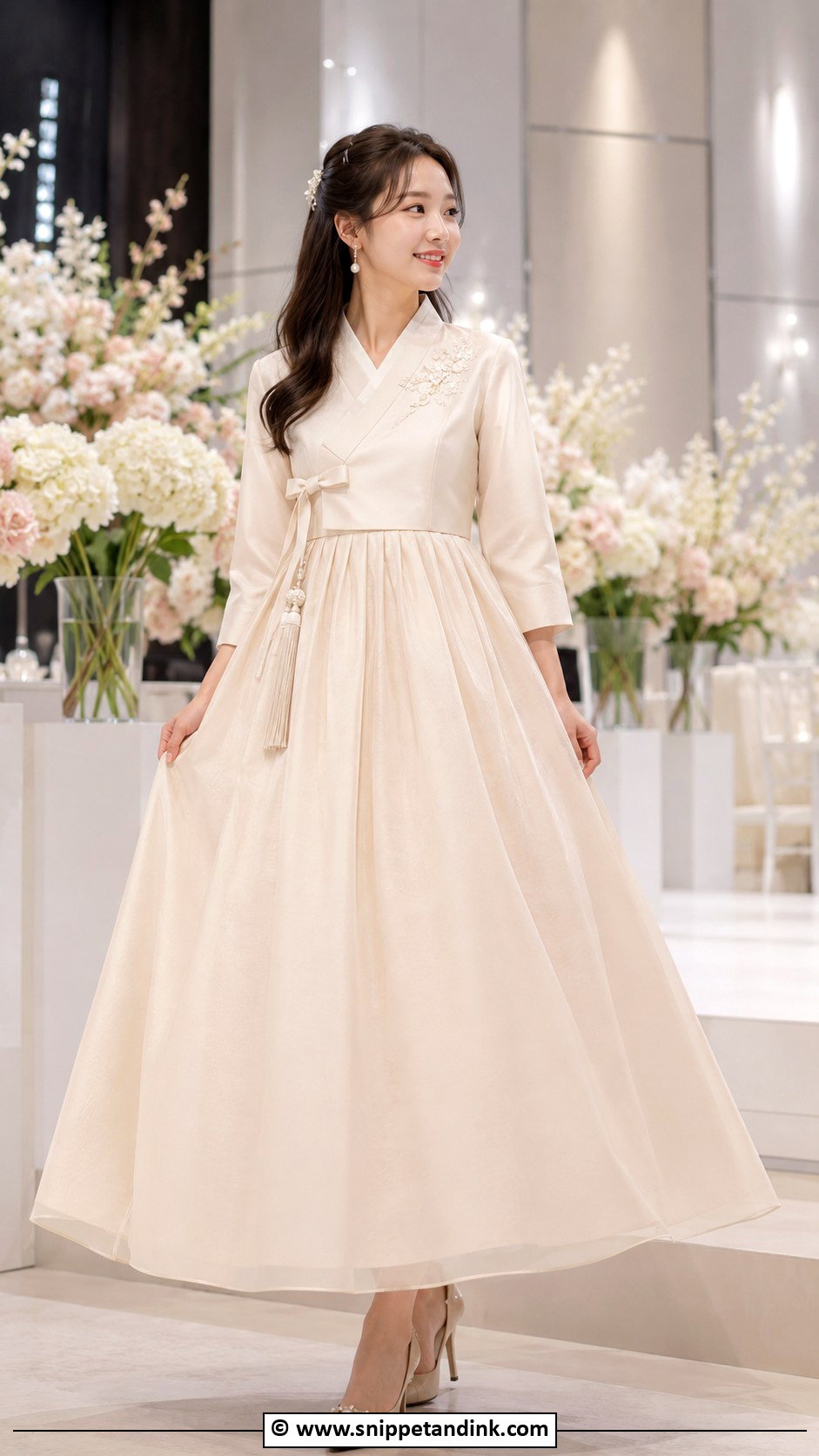
Your reception outfit should be lighter than the ceremony one. A modern hanbok-inspired dress with a shorter train, a softer skirt and simplified sleeves lets you greet tables and dance. Ivory, blush, champagne or pale blue sit well under warm reception lighting. I’d choose crepe, soft satin or organza over ceremonial brocade, and make sure the hair is pinned well enough for a few hours of hugs. A zip closure instead of ties also makes the change much quicker.
22. Korean Wedding Dress For Photoshoot
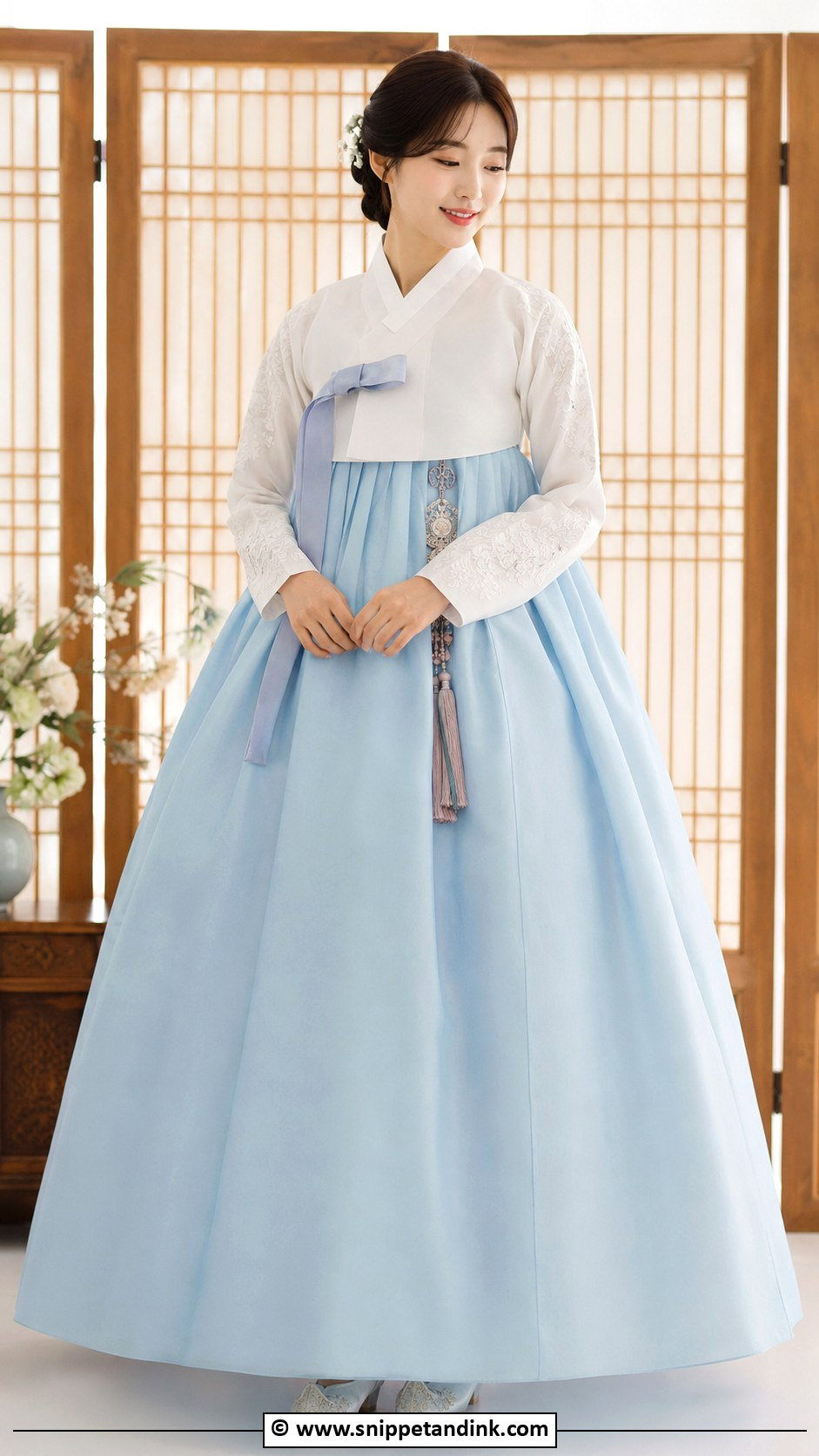
For a shoot, pick the dress for the camera. A full hanbok skirt makes a strong shape in both seated and standing poses, and embroidered sleeves give close-ups something to hold. Outdoors, soft pastels look natural in daylight; in a studio, deeper colours and ornate detail carry more drama. Ask your photographer about the backdrop before the fitting, because a pale skirt against a pale wall simply disappears. The dress that works shows texture from across the room and detail at arm’s length.
23. Korean Wedding Dress For Plus Size Bride
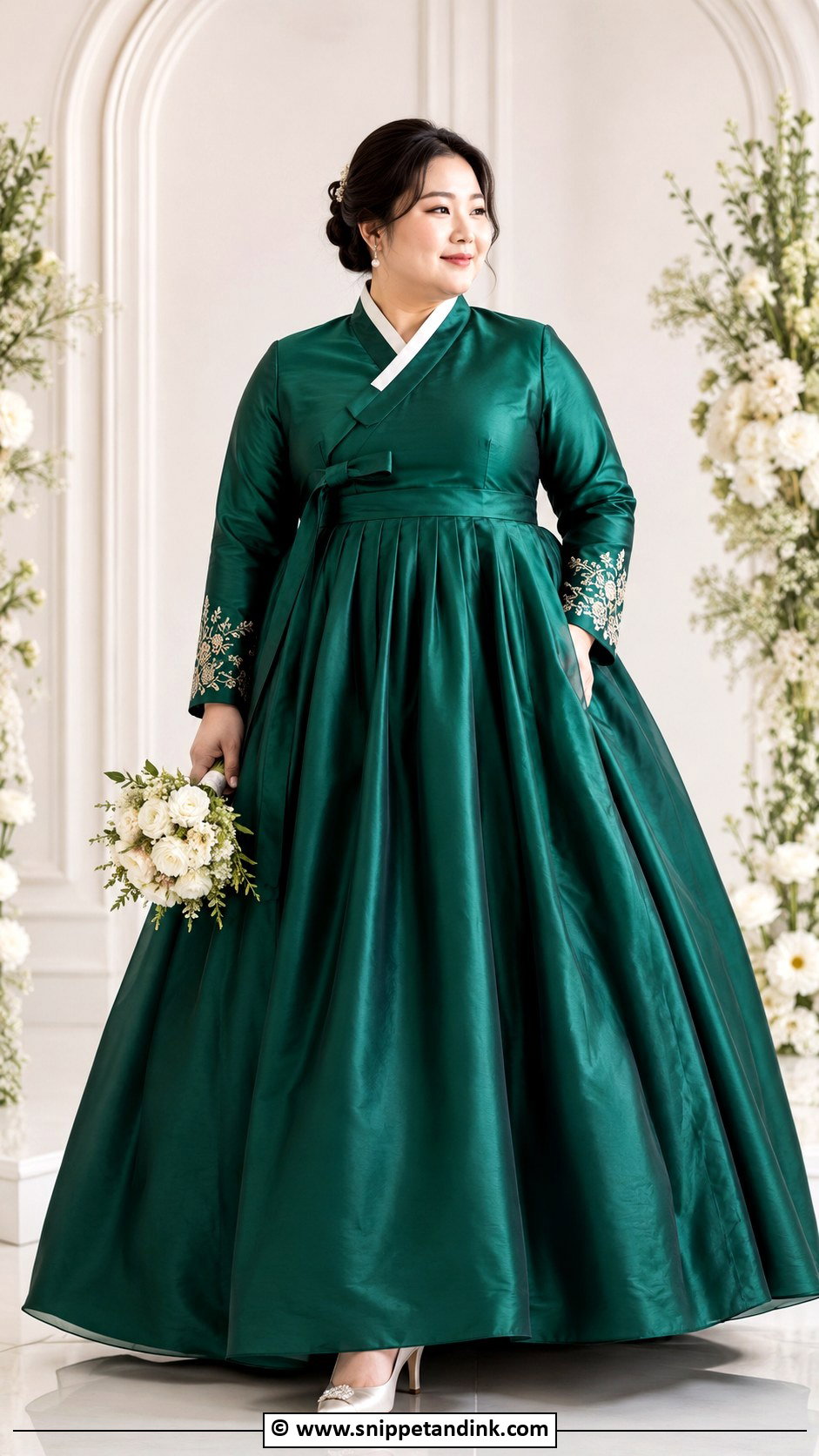
Hanbok shapes are generous to a plus size bride because the high waist and full chima give comfort and balanced volume, and a wrap jeogori defines the upper body. The fabric needs some structure so the skirt skims rather than clings; thin charmeuse tends to grip over the hips. Ivory, blush, navy, emerald and deep red all work. Custom sizing is usually worth it for bust, shoulders and sleeve length, since ready-made jeogori are often cut narrow through the arm.
24. Korean Wedding Dress For Petite Bride
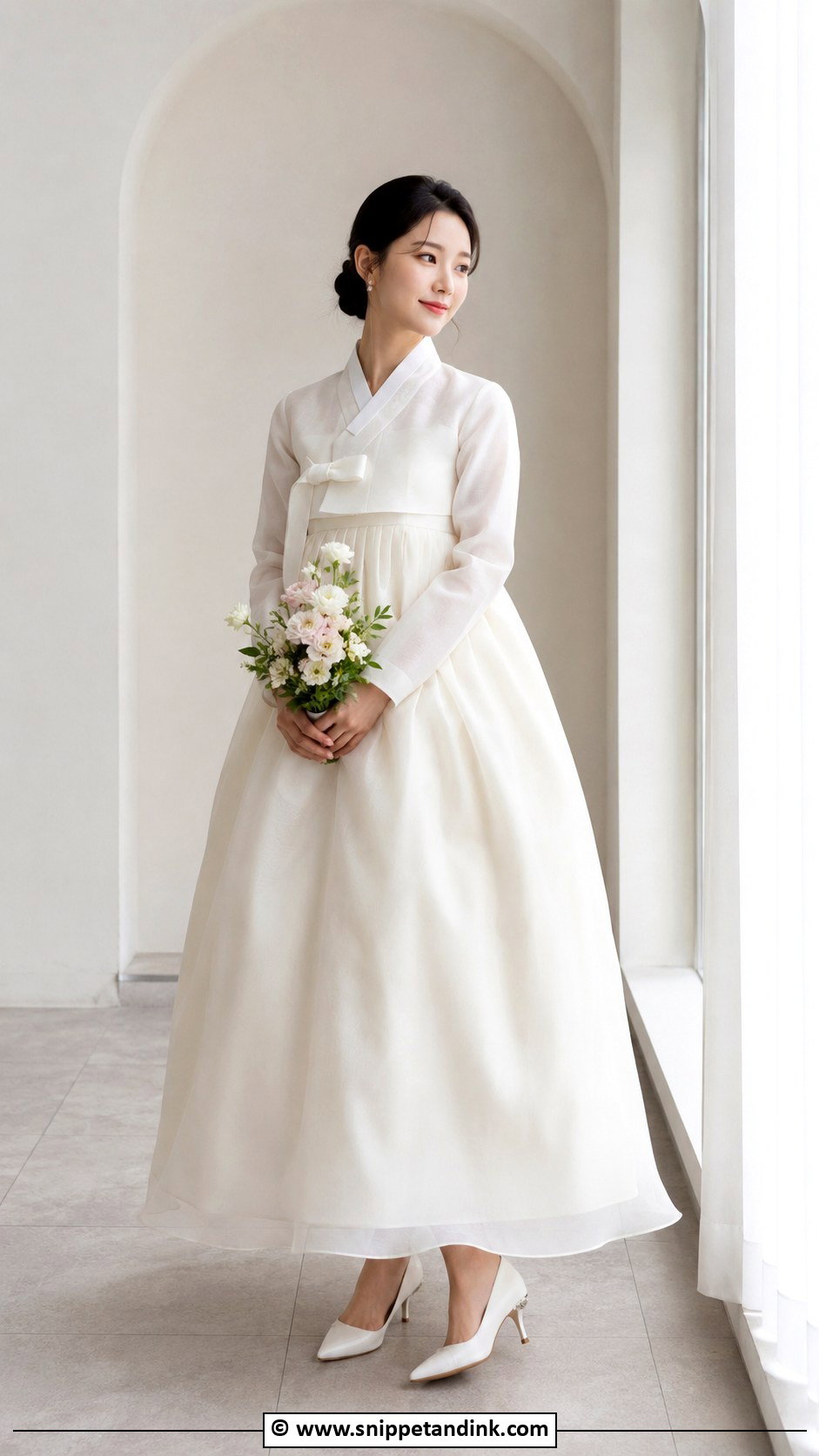
For a petite bride I think in proportion first: a lighter skirt, a shorter jacket and clean vertical lines. Soft ivory, blush, pale blue and champagne avoid overwhelming the frame, and a neat updo with pointed heels adds height. Very wide sleeves and heavy fabric swamp a small frame unless they’re tailored down, so I’d have the sleeve width reduced at the same appointment as the hem.

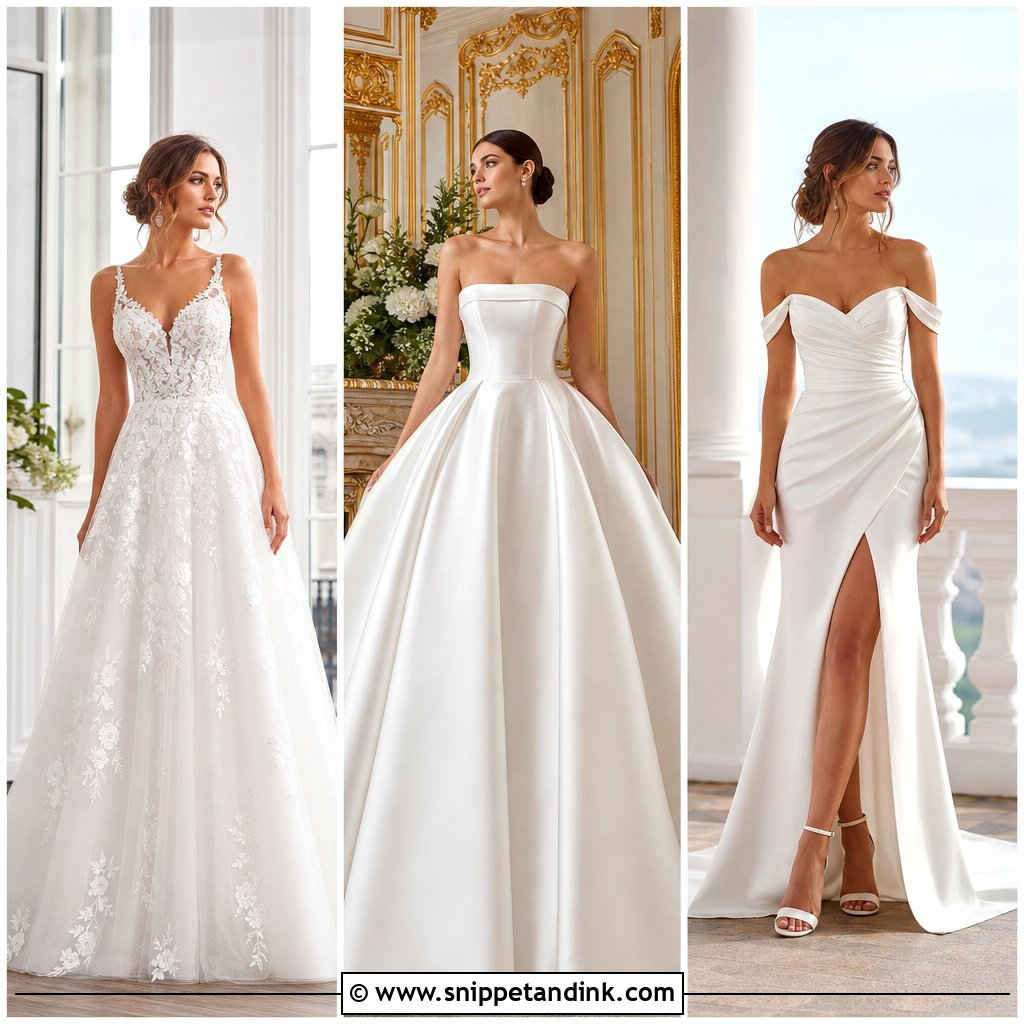
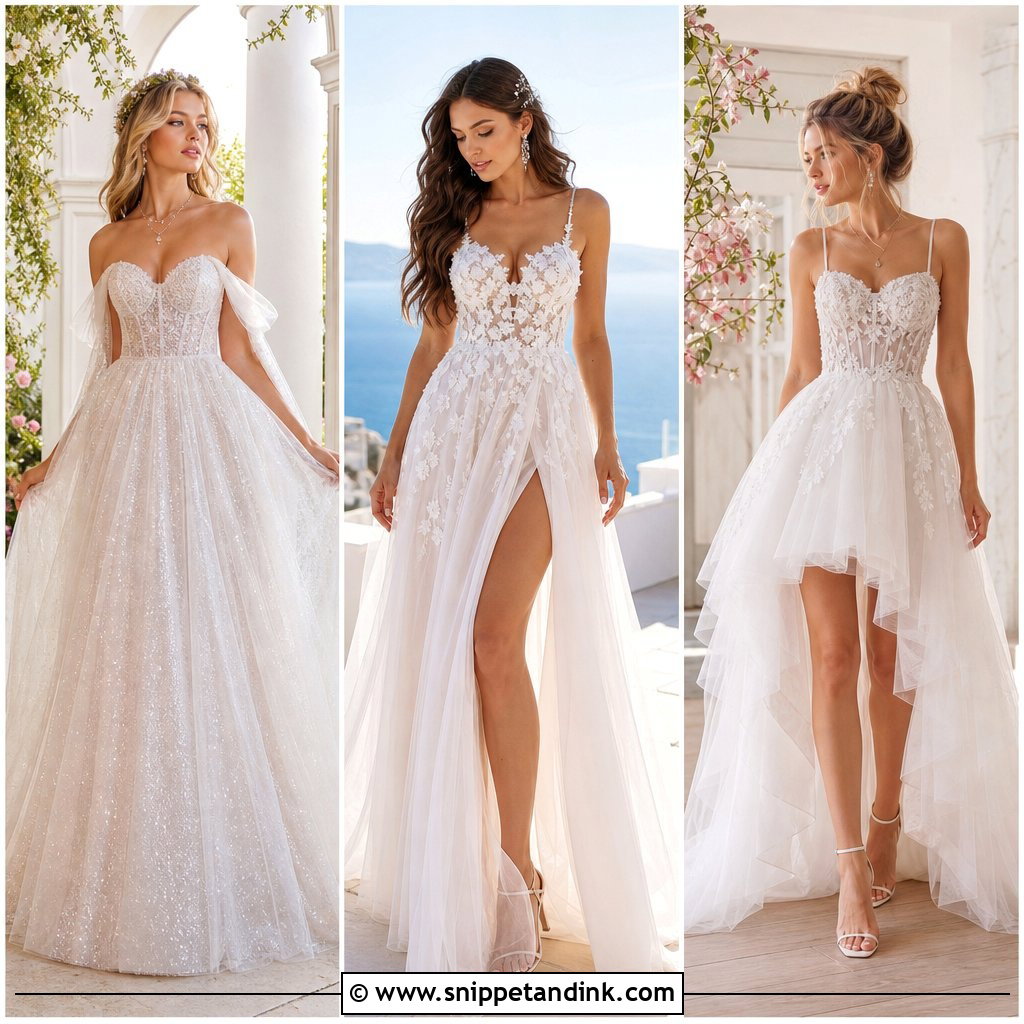
25. Korean Wedding Dress For Modern Bride
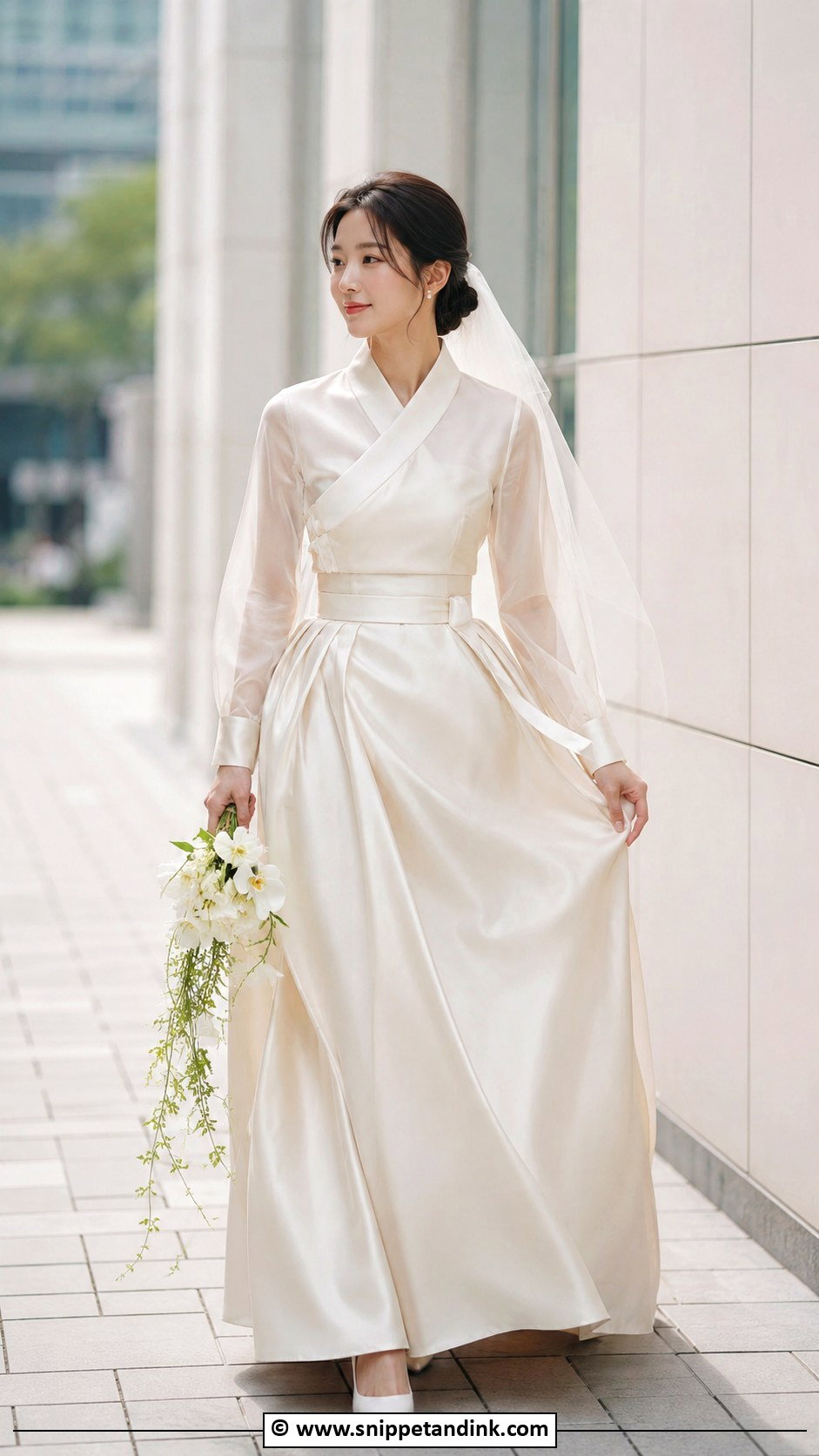
This version keeps the heart of hanbok design, meaning the high waist, the wrap and the curve of the sleeve, and builds it in current bridal fabrics. Ivory satin, pearl details, sheer sleeves or a sculpted wrap neckline make it read as fashion rather than costume. Sleek heels, a simple veil and polished hair finish it. It suits a bride who wants to honour Korean tradition without wearing a full hanbok all day, and it carries from ceremony to reception without a change.
How a Full Chima Behaves Once You Sit, Bow and Walk
A chima wraps around a high band and closes at the back, and in motion it has habits worth knowing. When you sit, sweep the back panel forward so you aren’t pressing creases into silk. On stairs, lift from the side rather than the front, which keeps the wrap closed. During the bow the skirt pools around you, and in photographs that pool is part of the look, so let it happen.
What I keep in the kit for hanbok days
- Double-sided fabric tape for a wrap that keeps opening
- A handheld steamer for silk creases before portraits
- Small safety pins in ivory and gold to secure a goreum that loosens
- Blotting papers, because a high jeogori collar gets warm under lights
Storing a Silk Hanbok After the Wedding
Silk yellows and creases if it’s packed away carelessly. Have it cleaned by someone who handles silk before you store it, because skin oils and makeup on the collar darken with time. Fold the chima along its pleats, pad each fold with acid-free tissue and keep it in a breathable cotton bag, never plastic, which traps moisture. Store it flat somewhere cool and dark, and refold it every so often so the creases don’t set. If the set was rented, ask what condition the shop expects it back in; many prefer to do the cleaning themselves.
Matching Each Outfit to Its Part of the Day
Start with your schedule rather than a picture. Count the parts of your day (ceremony, paebaek, portraits, reception), decide which outfit belongs to each, and only then shop, choosing fabrics that will cope with sitting, bowing and a long evening. How many cultural details you include is a family conversation as much as a style one. Bring the hanbok, shoes and accessories to at least one fitting together, so you judge the whole outfit rather than each piece alone.
You'll Like These Ideas:



Leave a Reply