
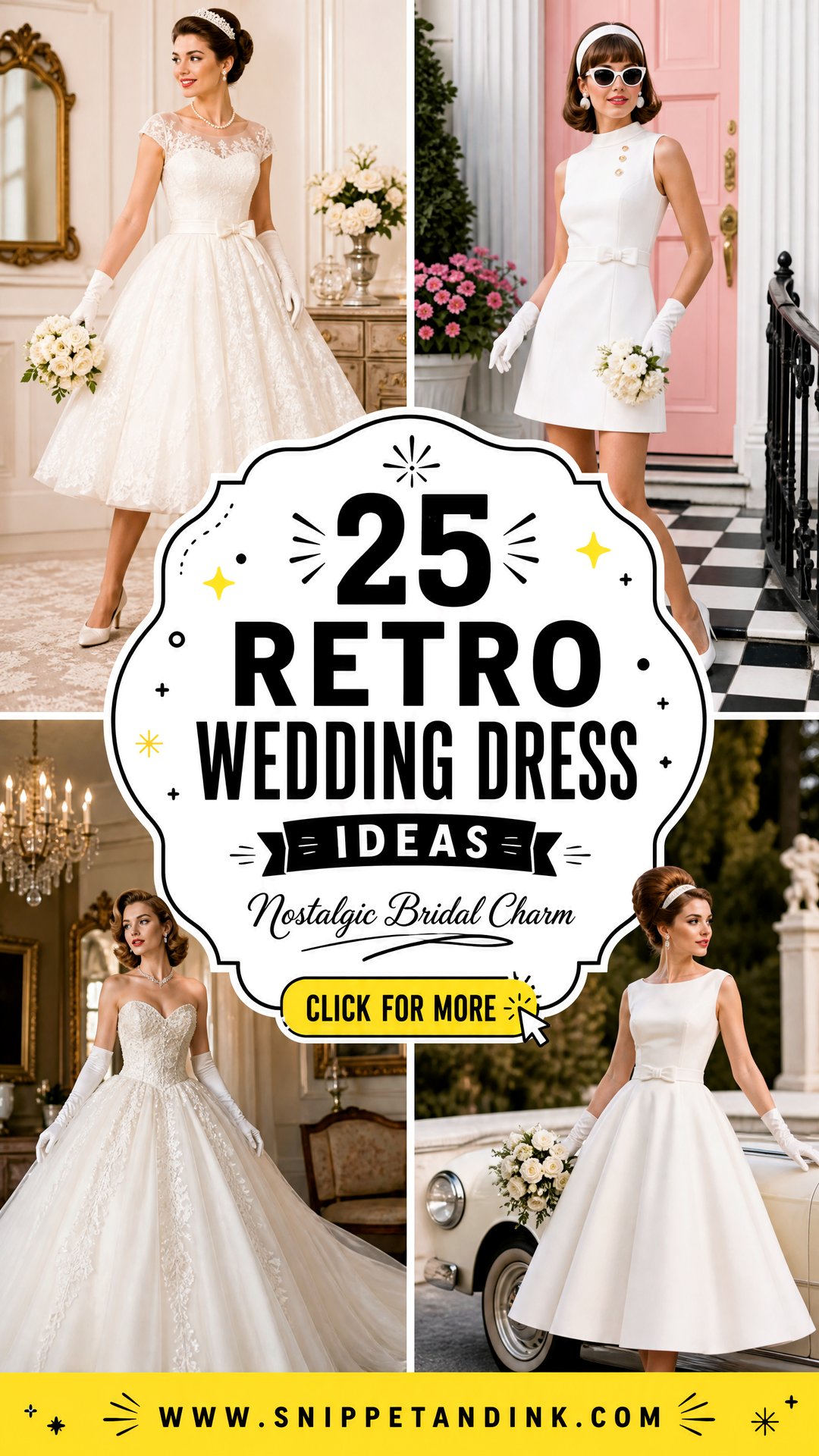
Every decade of the last century left a wedding dress behind, and each one fits the body differently. A 1920s gown hangs straight from the shoulders; a 1950s dress pulls in the waist and pushes out the skirt; a 1990s slip relies on the bias of the fabric and nothing else. That’s why retro bridal is never one look. It might be a drop waist, lace sleeves, a tea-length skirt, pearls, a satin slip, puff sleeves, bows or gloves. I’ve gathered 25 ideas spanning the 1900s to the 1990s, with the fit notes I’d give you for each, plus the right shoes, hair and veil to keep it modern rather than fancy dress.
Real Vintage or a New Gown Cut From an Old Pattern?
A true vintage dress has a history you can’t fake, but it comes with risks a new gown doesn’t. Old silk can shatter along the folds, rayon weakens, and lace yellows unevenly. I go over a vintage gown in daylight, inch by inch, before anyone falls in love with it.
- Underarms, waist and hem: stains and weakened fibers collect where the body touched it most.
- Seam allowances: older gowns were often cut with generous seams, which means they can be let out. Many later ones weren’t.
- Size labels: vintage sizing runs smaller than modern labels, so go by measurements, never the number.
- Smell: a musty odor can mean mildew, which is hard to remove completely.
If the gown needs major work, a reproduction cut from an old pattern in new fabric is often wiser. You get the period shape with the strength to survive a full day of dancing, and alterations are straightforward. Restoring real vintage takes time and a specialist seamstress, so start months earlier than you would with a new dress.
1. 1920s Drop Waist Wedding Dress
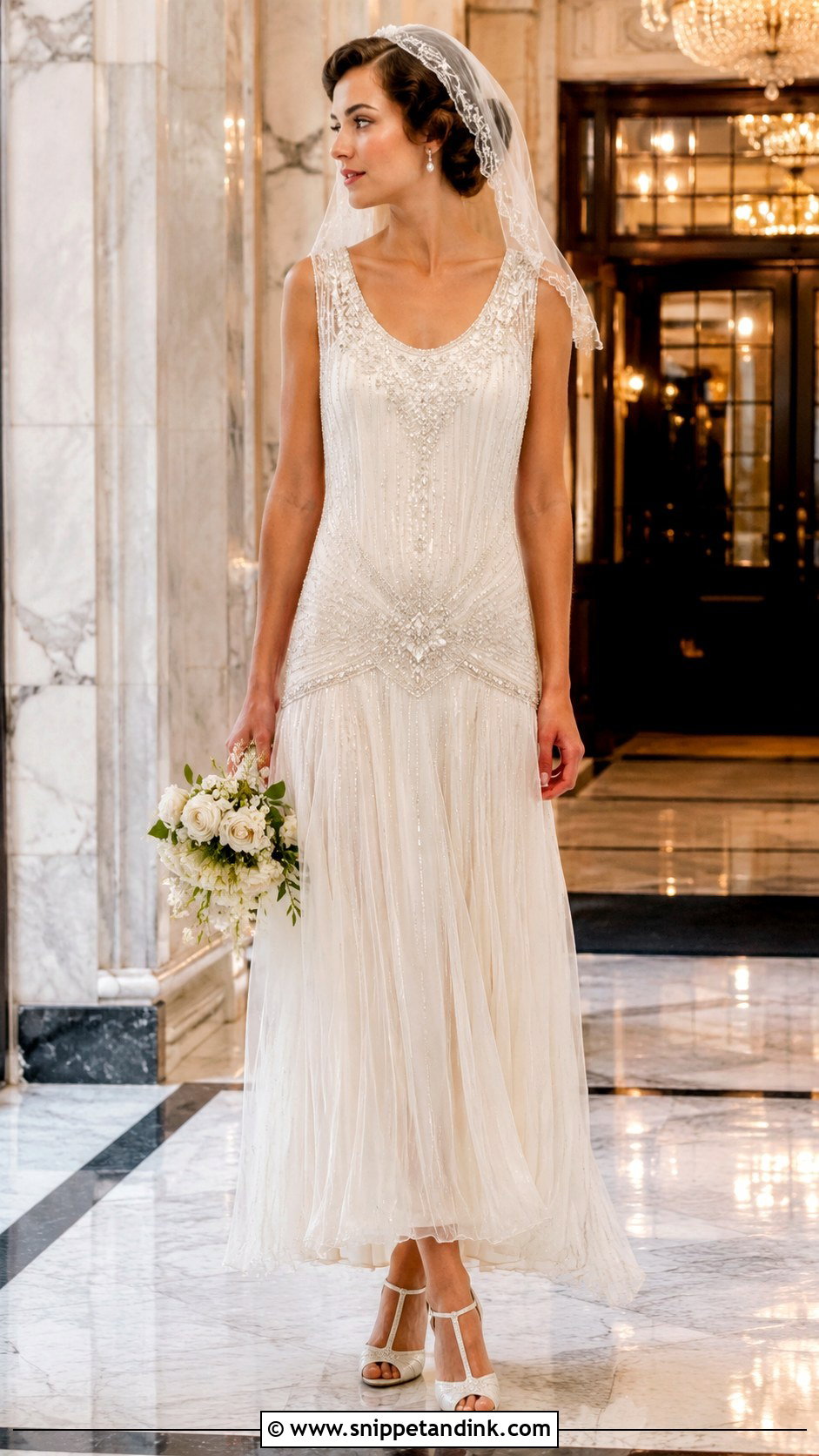
Movement is the whole point of a 1920s drop waist wedding dress. The waist sits low on the hips, the skirt falls loosely, and beading or lace catches the light as you walk. It’s built for straighter figures; on a curvy body, I’d raise the waist seam slightly so it doesn’t sit across the widest part of the hip. Beaded silk is heavy and the threads can break, so check that the beads are individually secured. T-strap heels, pearl drops, a short veil or beaded headpiece and soft finger waves. Ivory, champagne or pearl tones look closest to the originals.
2. 1950s Tea Length Wedding Dress
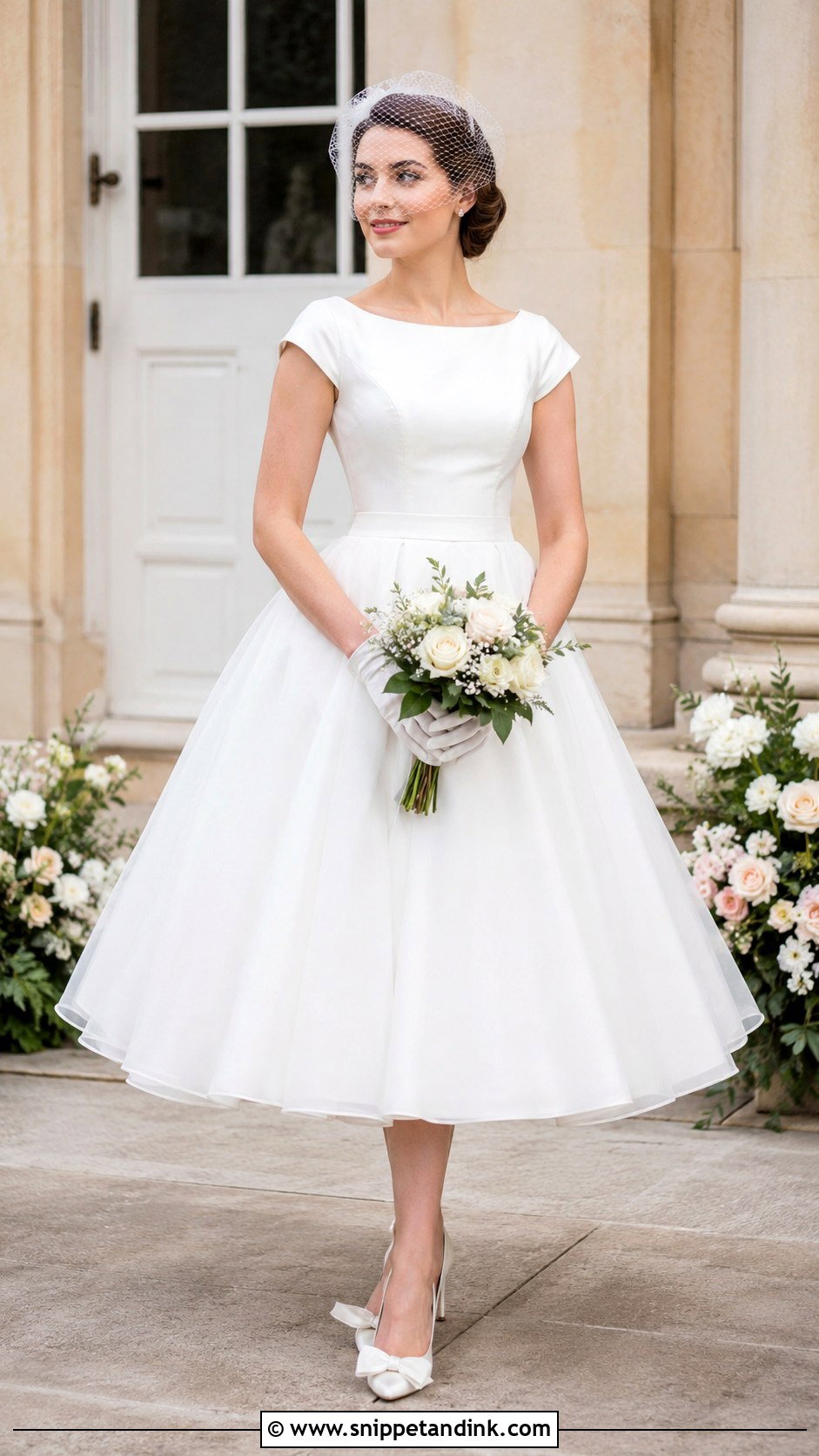
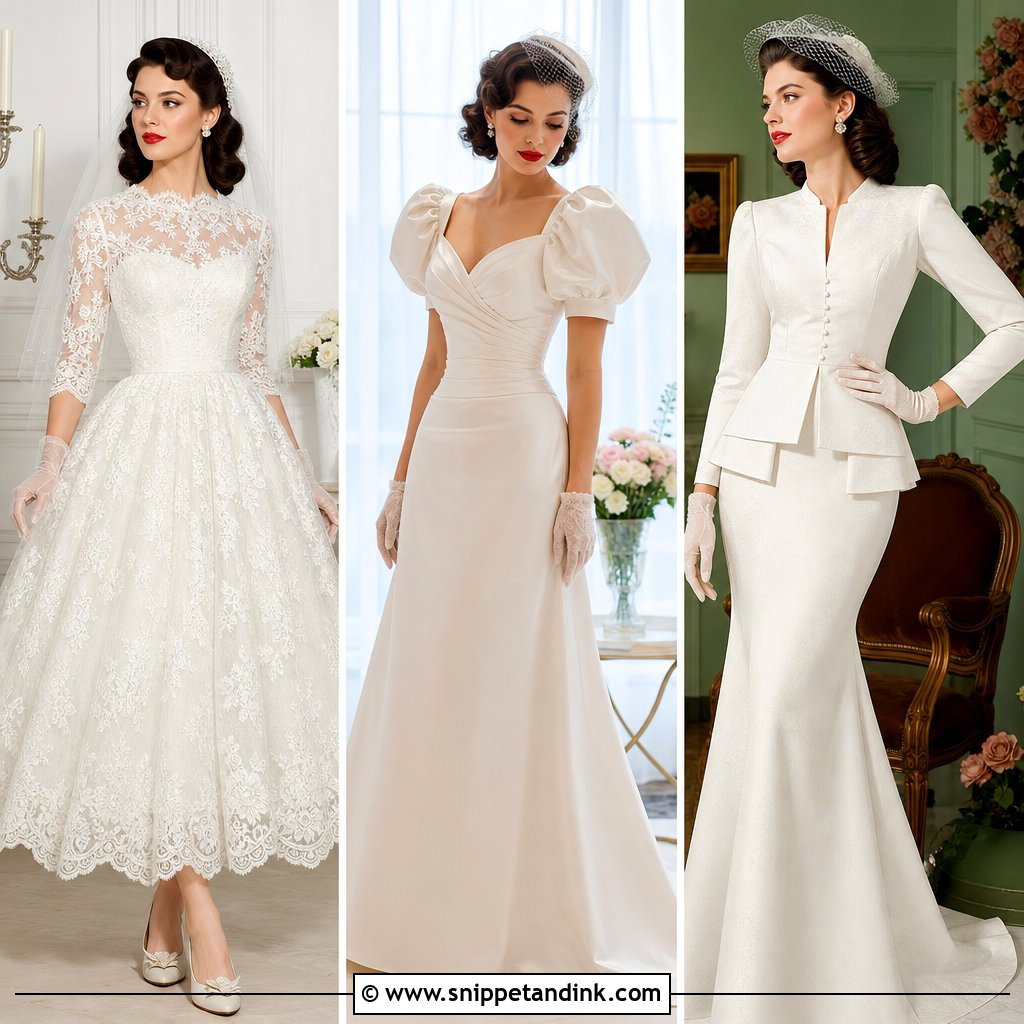
A fitted bodice and a full skirt make a 1950s tea length wedding dress one of the easiest retro shapes to wear. The skirt depends entirely on what’s underneath: without a petticoat, it collapses and looks unfinished, so I bring one to the first fitting and hem the dress over it. Your shoes are on show, which makes satin pumps, bow heels or ankle straps part of the outfit. Pearl studs, short gloves and a birdcage veil, with a compact rounded bouquet. Courthouse weddings, gardens and casual receptions suit it.
3. 1960s Mod Mini Wedding Dress
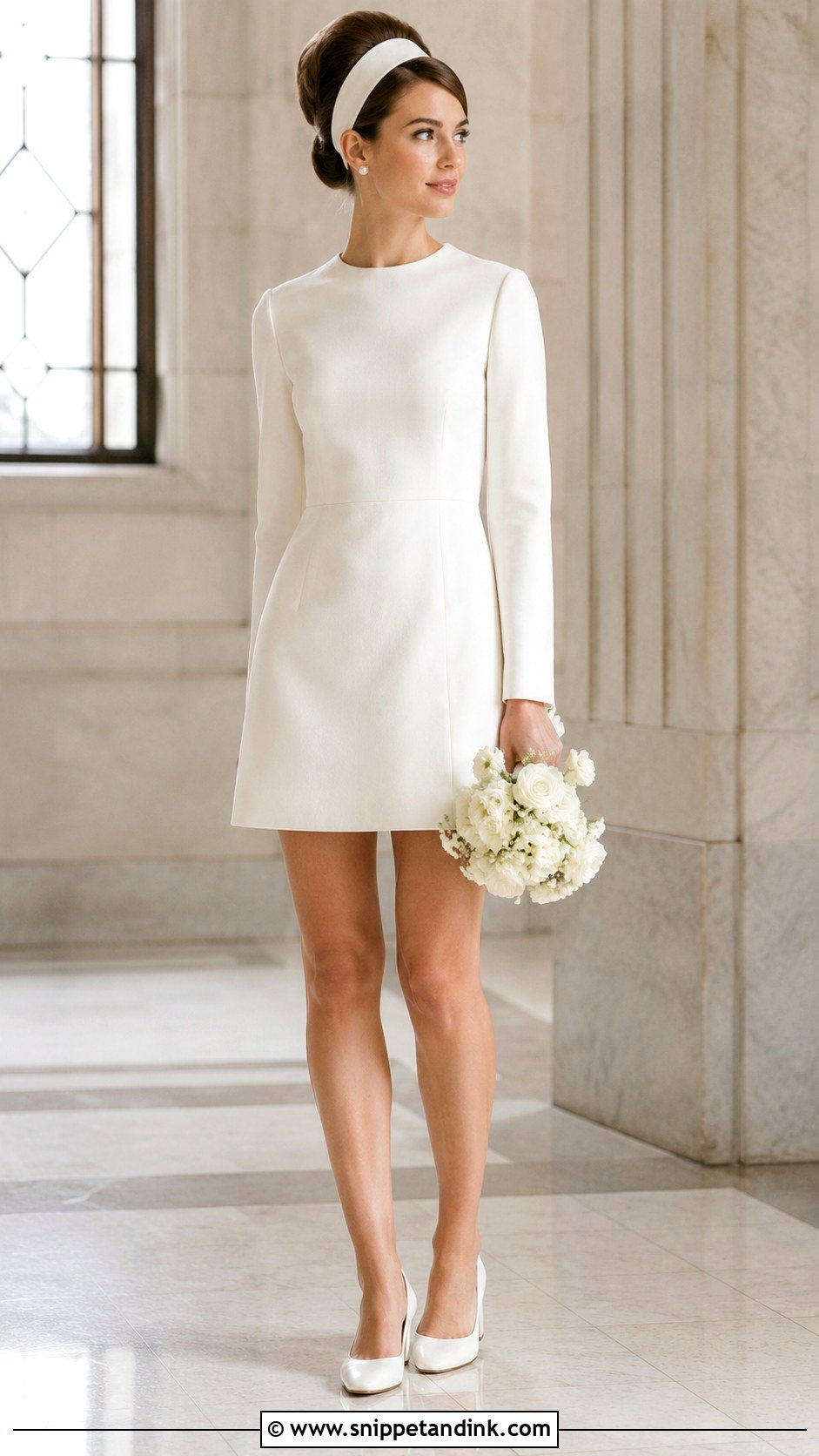
Short and clean, a 1960s mod mini wedding dress works for city halls, elopements, after-parties and reception changes. The shift shape relies on stiff fabric, so crepe, satin or textured jacquard with some body is the difference between mod and a nightdress. Check the hem length sitting down; shifts ride up more than fitted minis. White block heels, pearl earrings and a smooth headband or bow barrette. A short veil adds just enough bridal detail.
4. 1970s Lace Sleeve Wedding Dress
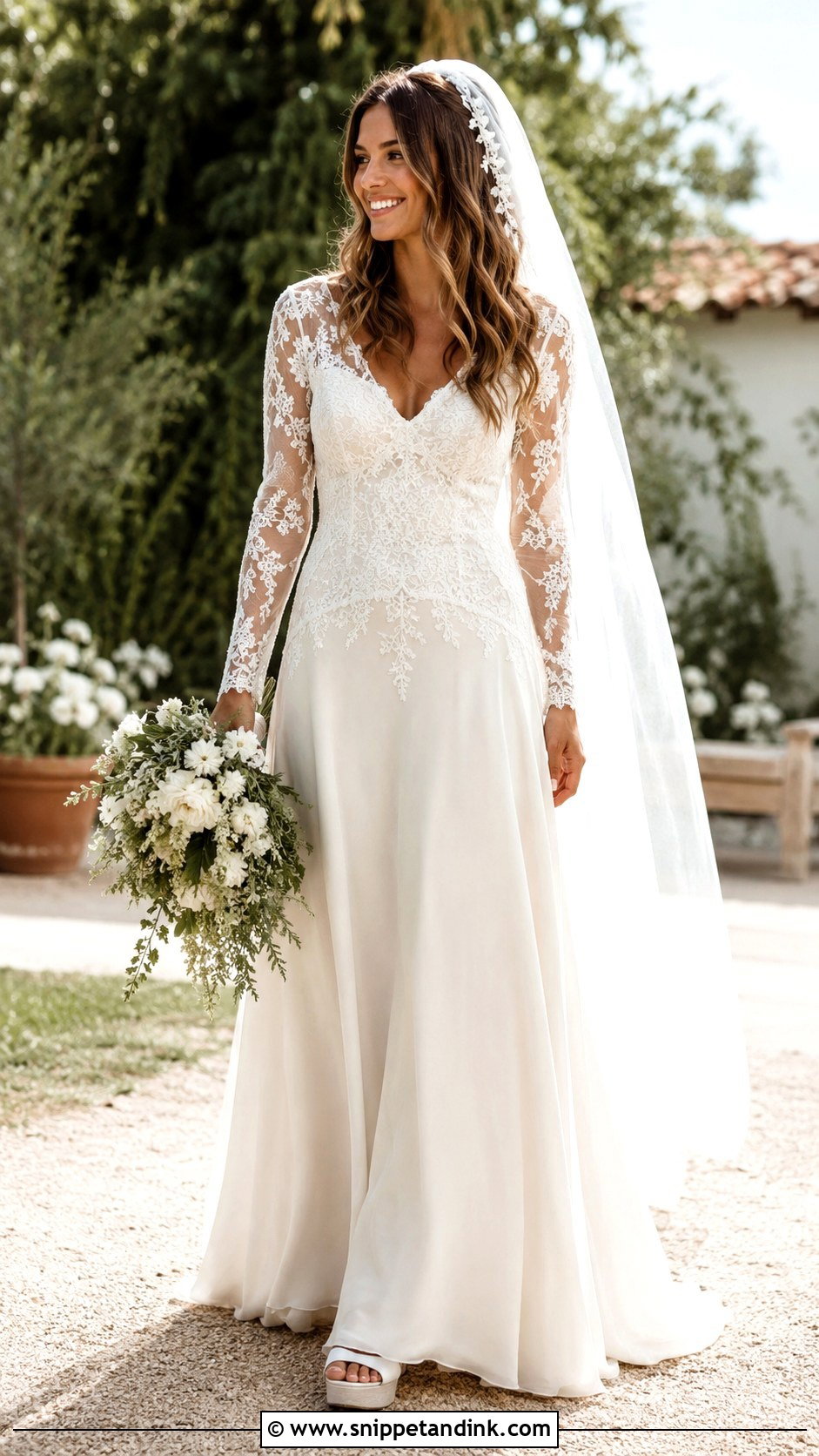
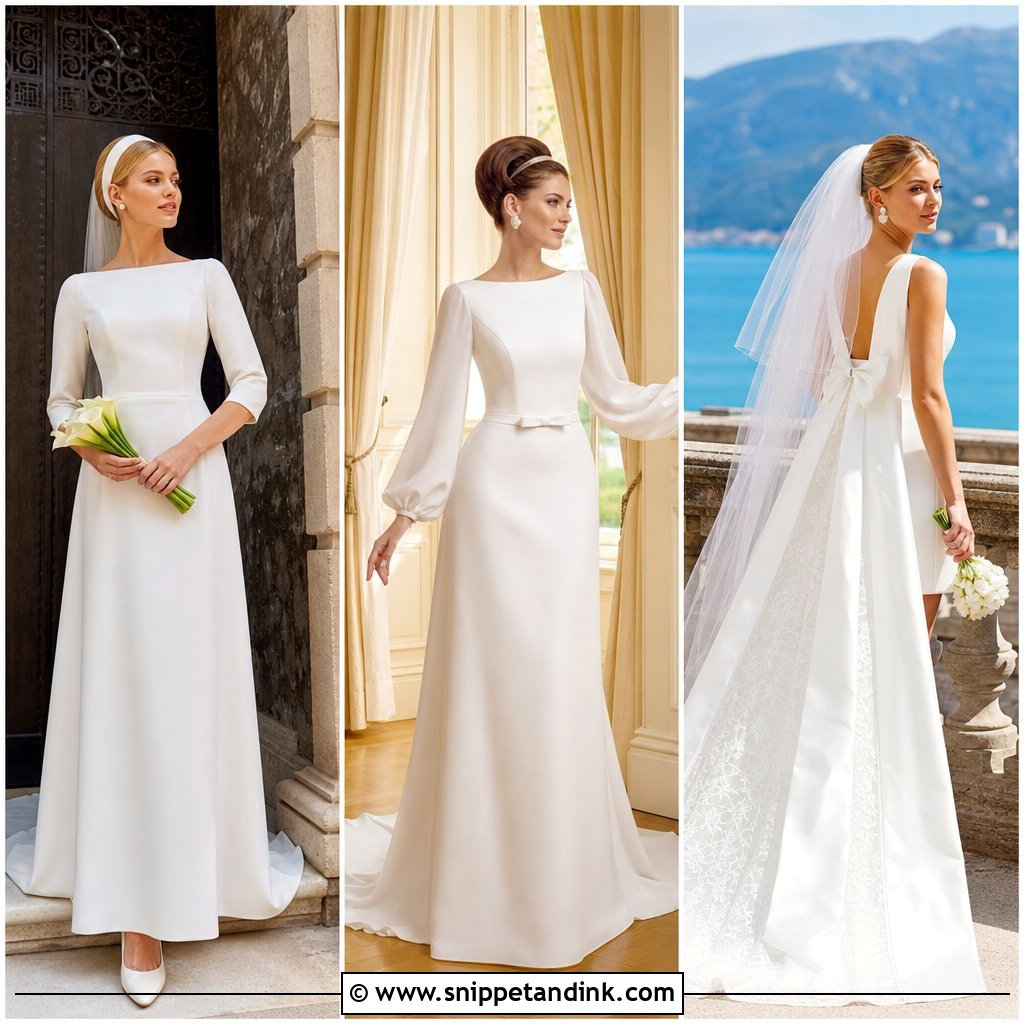
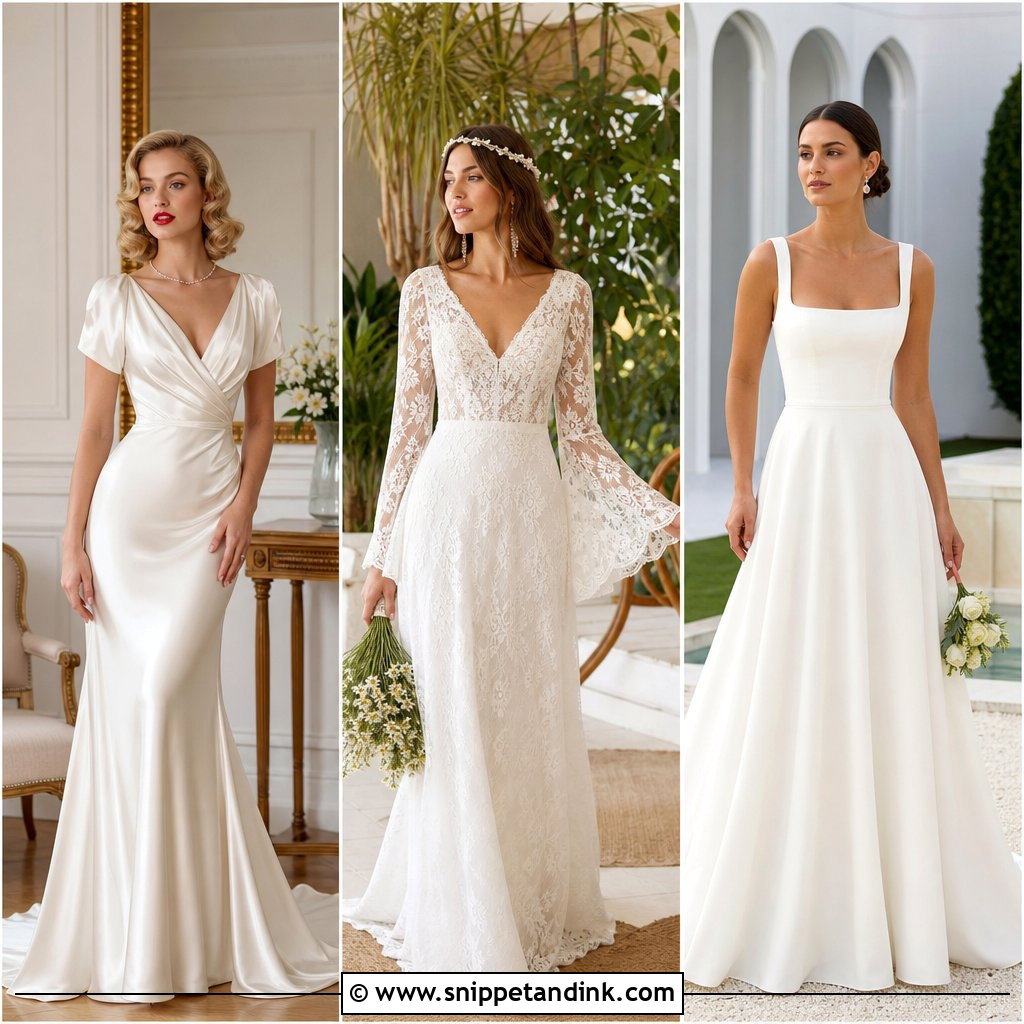
Long lace sleeves, a relaxed skirt and soft shaping through the bodice define the 1970s bride. Crochet or floral lace captures the decade without tipping into costume. I’d watch the cuffs: lace sleeves that are too long catch on the bouquet stems and get dirty by dinner, so I hem them at the wrist bone. Platform sandals, loose waves and a flower-trimmed veil give the full retro feel; pearl jewelry and a white bouquet give a cleaner one. Outdoor and rustic venues in warm weather are its home.
5. 1980s Puff Sleeve Wedding Dress
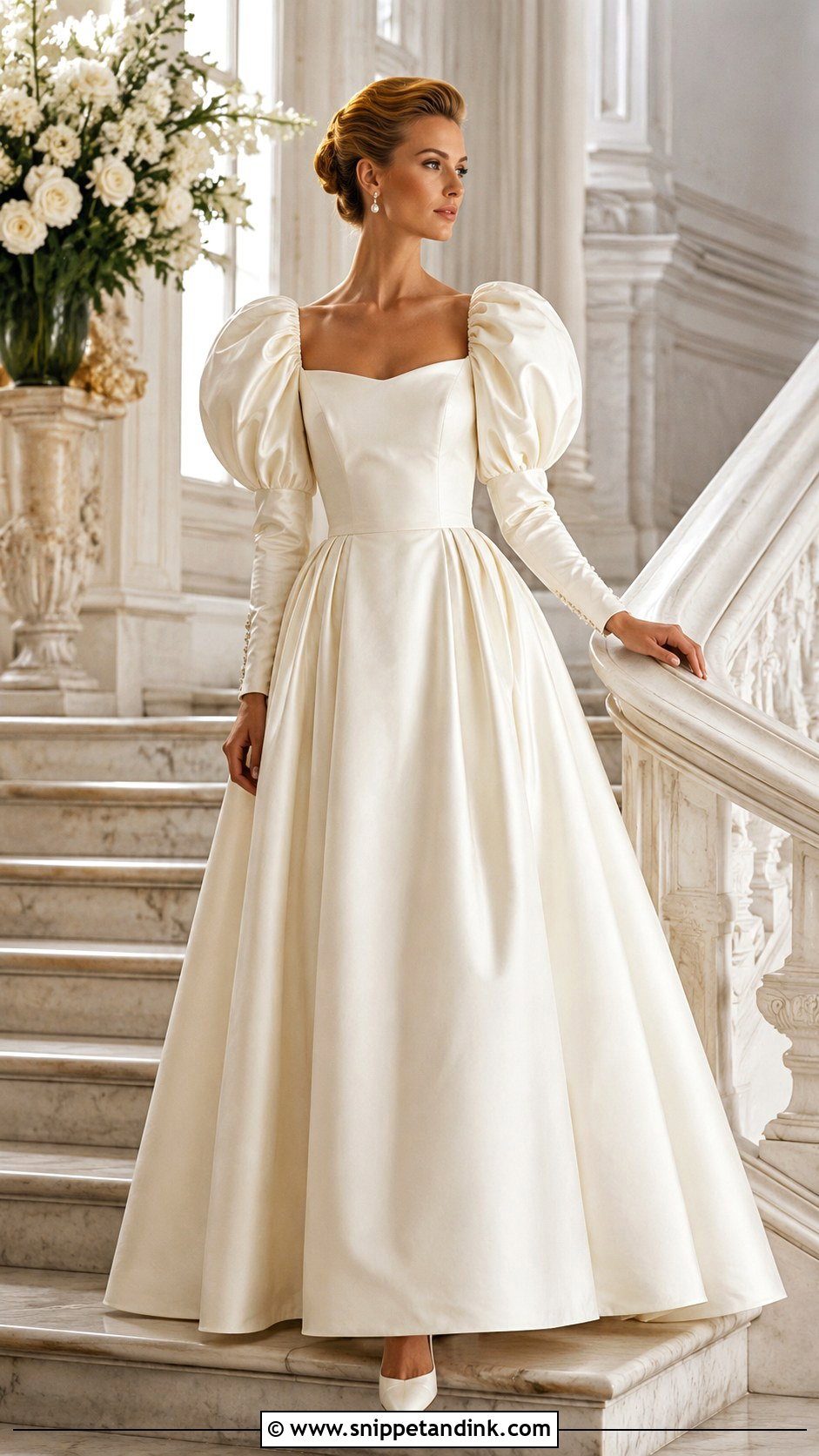
Big sleeves need a quiet everything else. The 1980s gown puts volume at the shoulders and nips the waist, and to keep it current I look for clean fabric, a controlled skirt and very little embellishment. Puffs should sit at the shoulder point, not below it; set too low, they restrict your arms when you lift your bouquet. Pointed pumps, pearl earrings, a sleek updo and a simple veil. It suits ballrooms, grand staircases and formal venues.
6. 1990s Satin Slip Wedding Dress
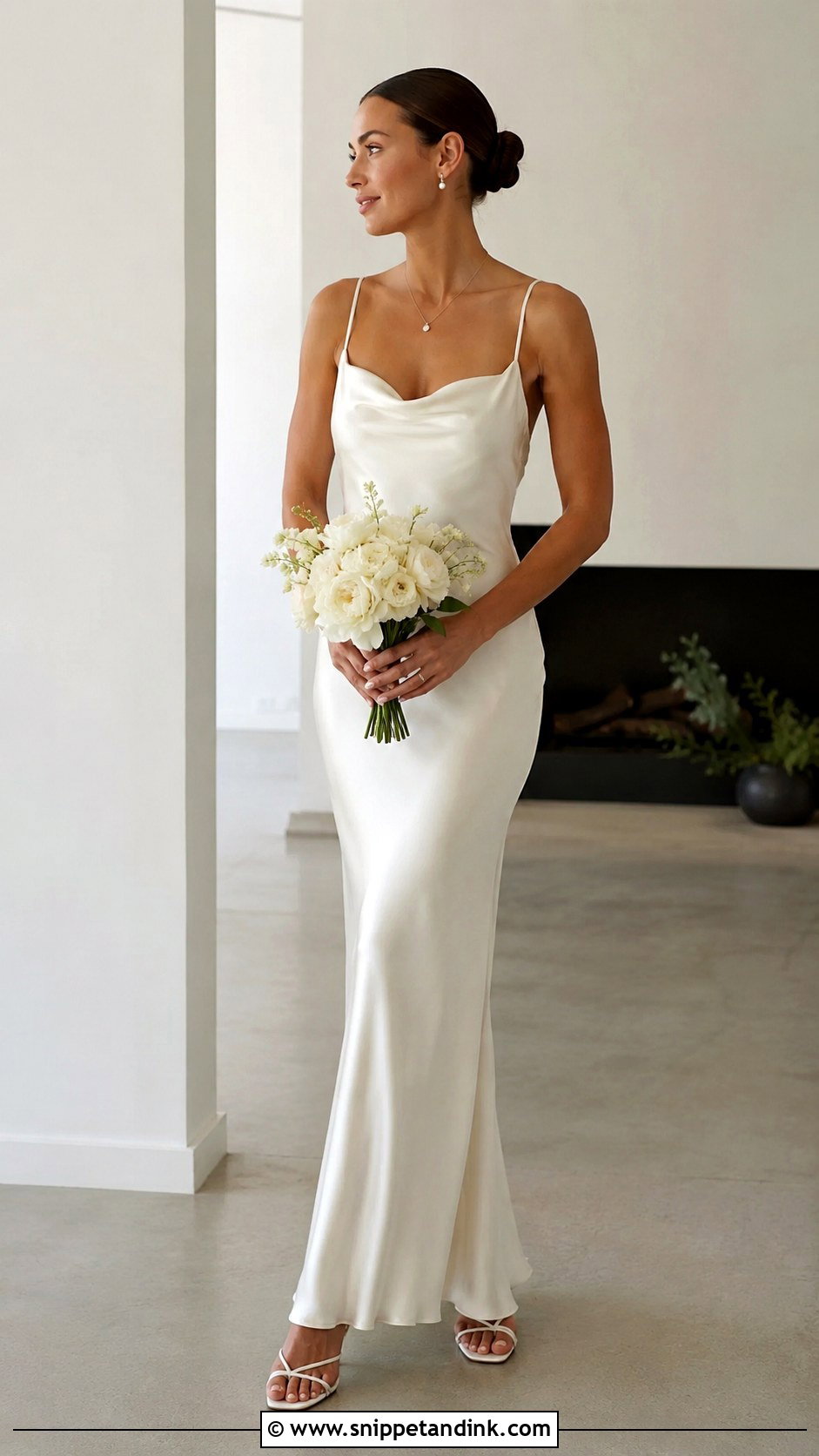
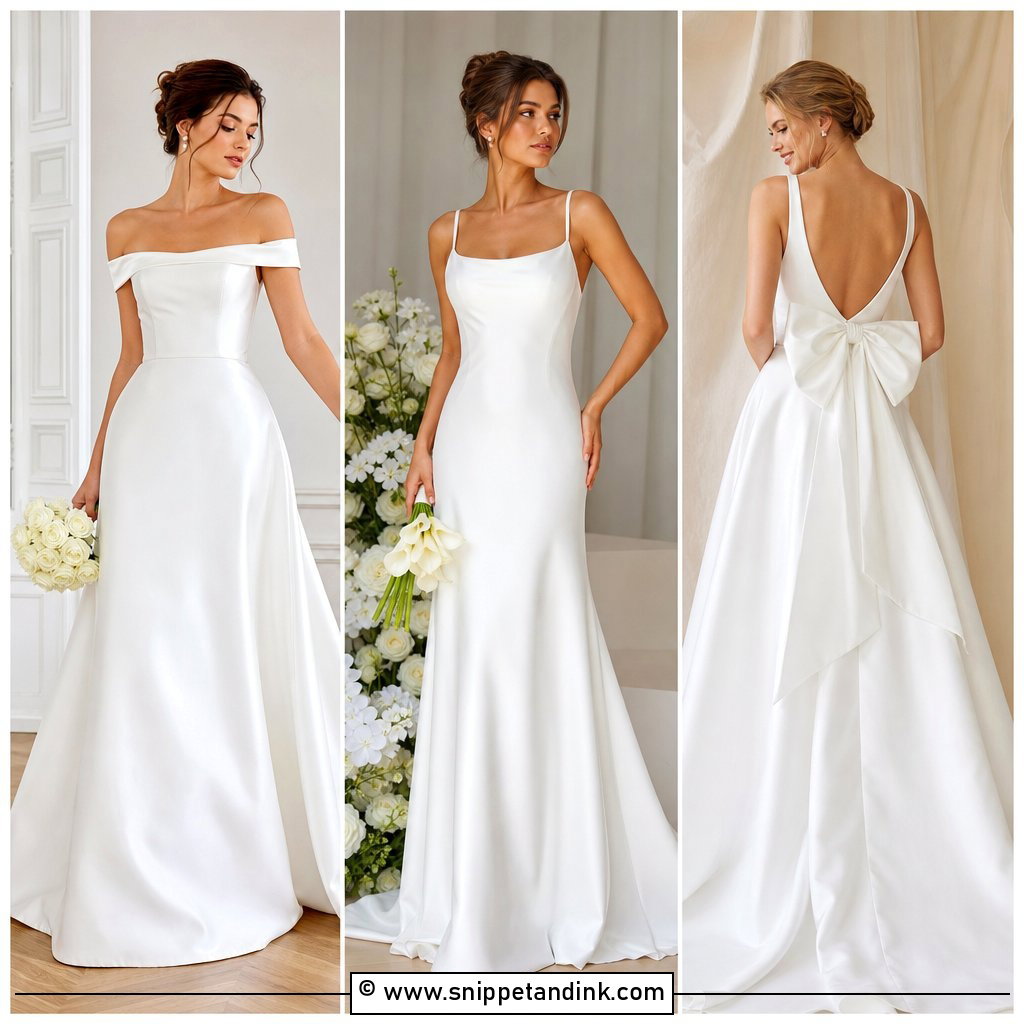
Bias-cut satin skims the body, which is its beauty and its difficulty. A 1990s slip with thin straps shows every line beneath it, so I fit it over the exact underwear the bride will wear. It also stretches slightly along the bias over the day, which is why I’d hem it a little longer than the mirror suggests and check again after an hour of wearing. Strappy heels, a fine pendant, pearl studs and a low bun. A sheer shoulder veil or satin wrap adds bridal softness. Ivory reads softer, bright white sharper.
7. Victorian High Neck Wedding Dress
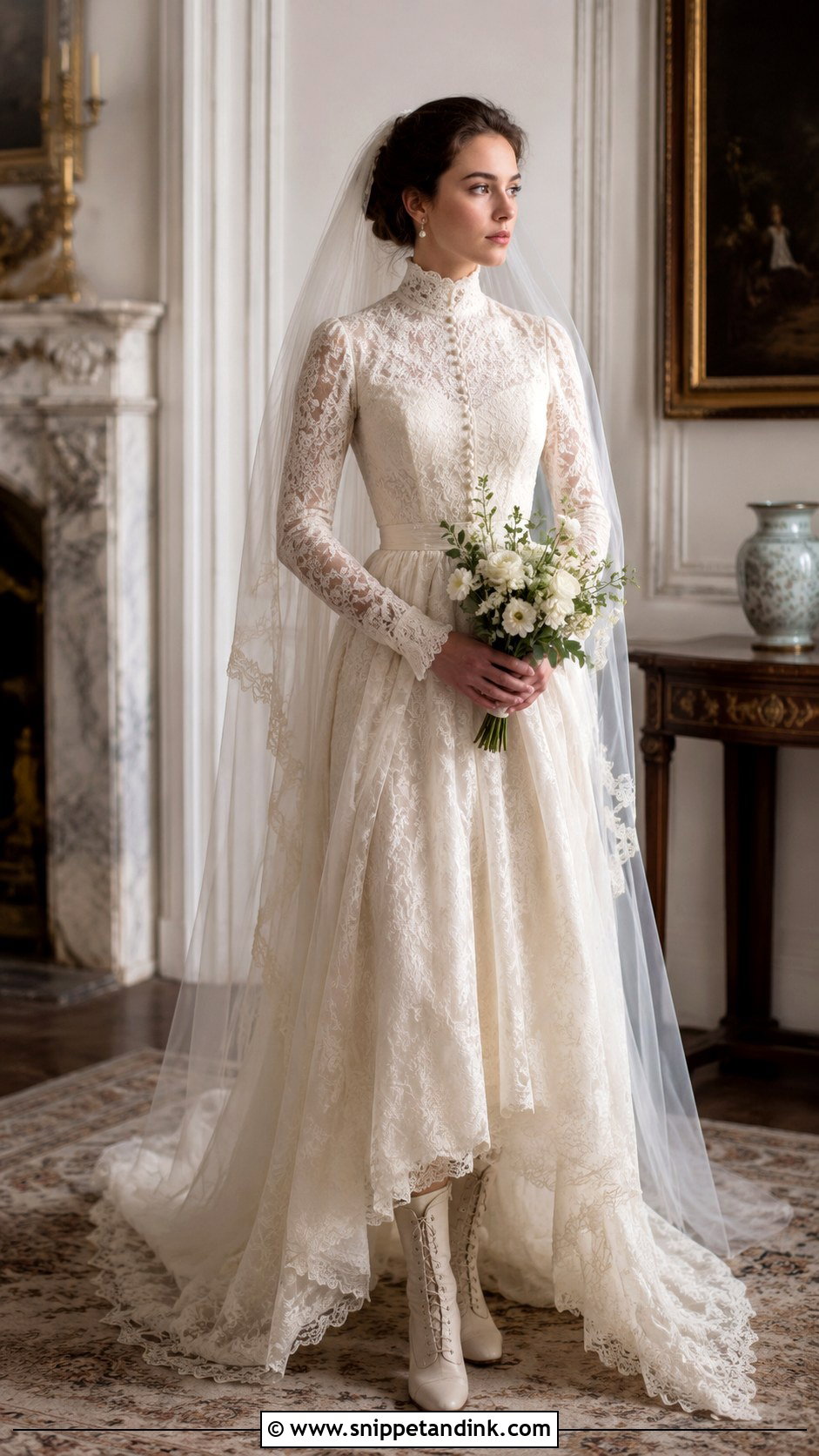
High collars, lace panels, covered buttons and long sleeves give the Victorian look its romance. The collar has to be fitted to the actual neck, with a finger’s room; too tight and it pinches every time you turn your head. Lace-up boots, pearl studs and a long veil with a delicate edge suit it, with a neat bun or braided updo to keep the neckline clear. Lighter lace keeps it modern. Historic homes and autumn or winter ceremonies are where it belongs.
8. Edwardian Lace Wedding Dress
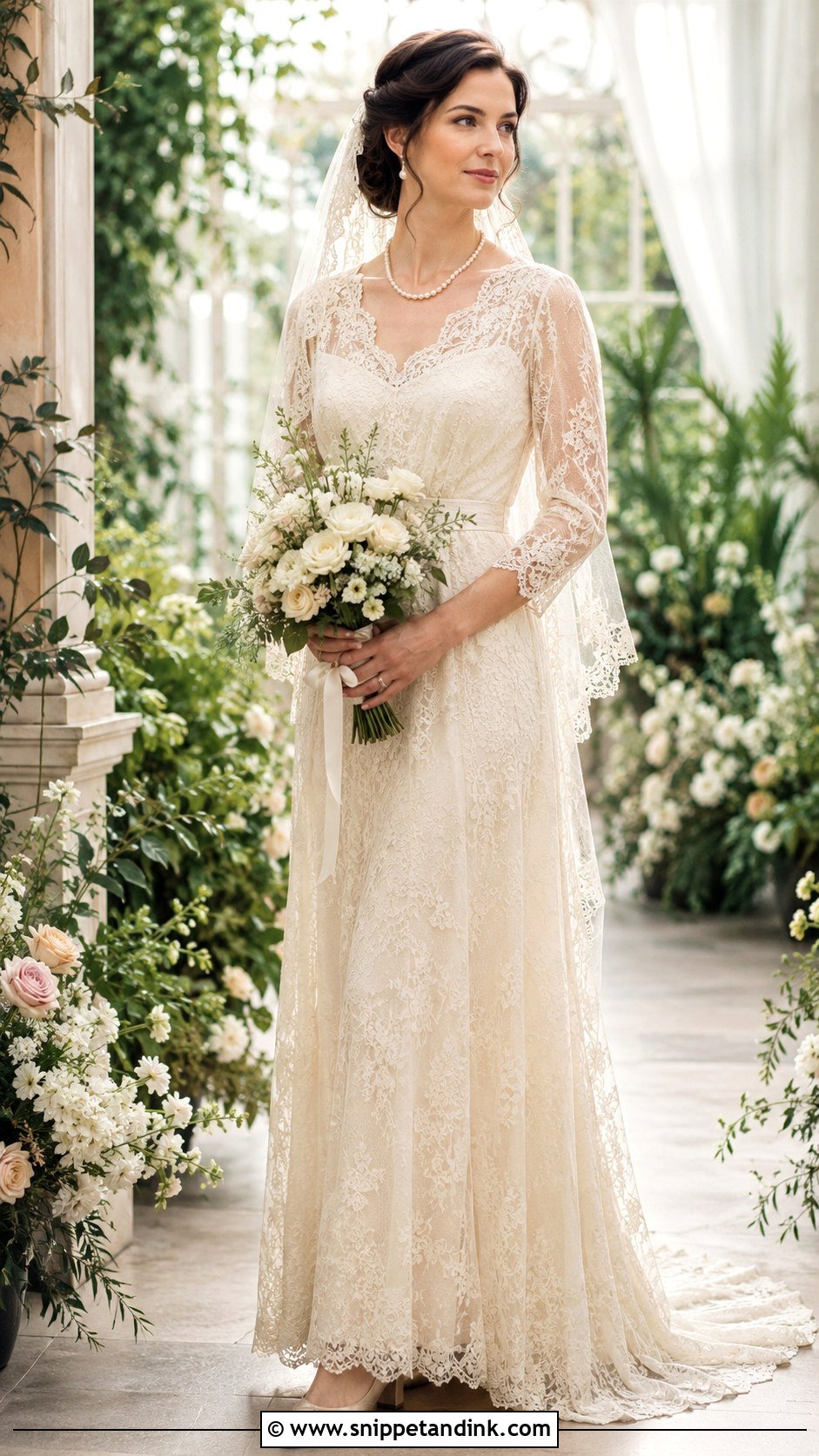
The Edwardian gown is softer than its Victorian cousin: gentle volume, high collars, sheer sleeves and a relaxed waist. Cream or ivory looks truer to the era than stark white. Antique Edwardian lace is often fragile, so if you’re working with a real piece, I’d mount it onto a new base dress rather than wear the original. Low-heeled satin shoes, a lace veil, small pearls and a loose updo with face-framing pieces. Gardens and conservatories show it off.
9. Old Hollywood Satin Wedding Dress
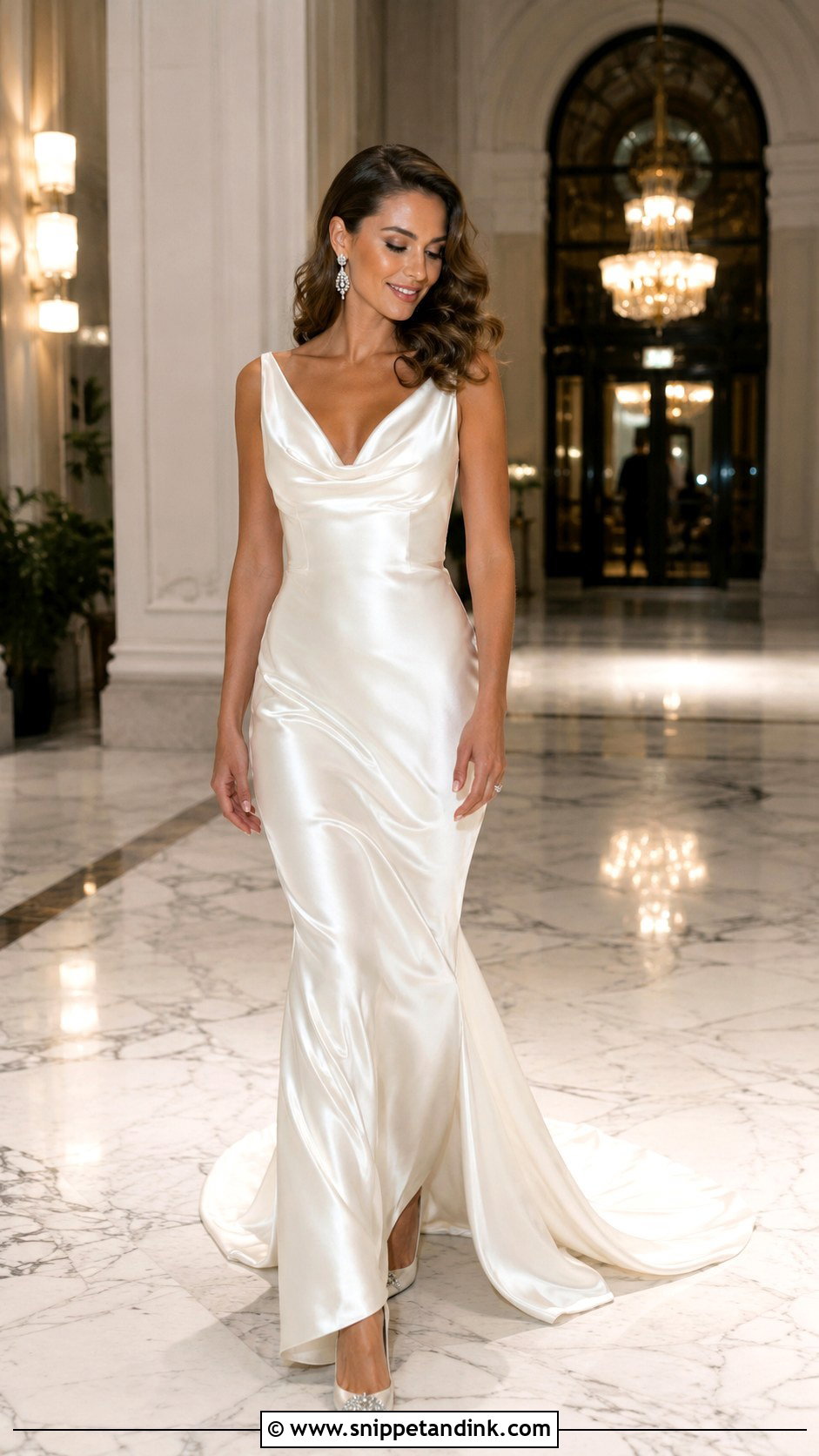
Old Hollywood is about satin, light and a long line. A bias-cut gown, cowl neckline, off-shoulder shape or fitted silhouette with a soft train all fit the brief. Glamour waves, crystal earrings, pointed heels and a long veil. A red lip suits it, but so does a soft neutral. Satin shows every fitting flaw, so most of the work goes into the alteration, not the accessories. Evening ceremonies and hotel ballrooms are its natural setting.
10. Short Retro Courthouse Wedding Dress
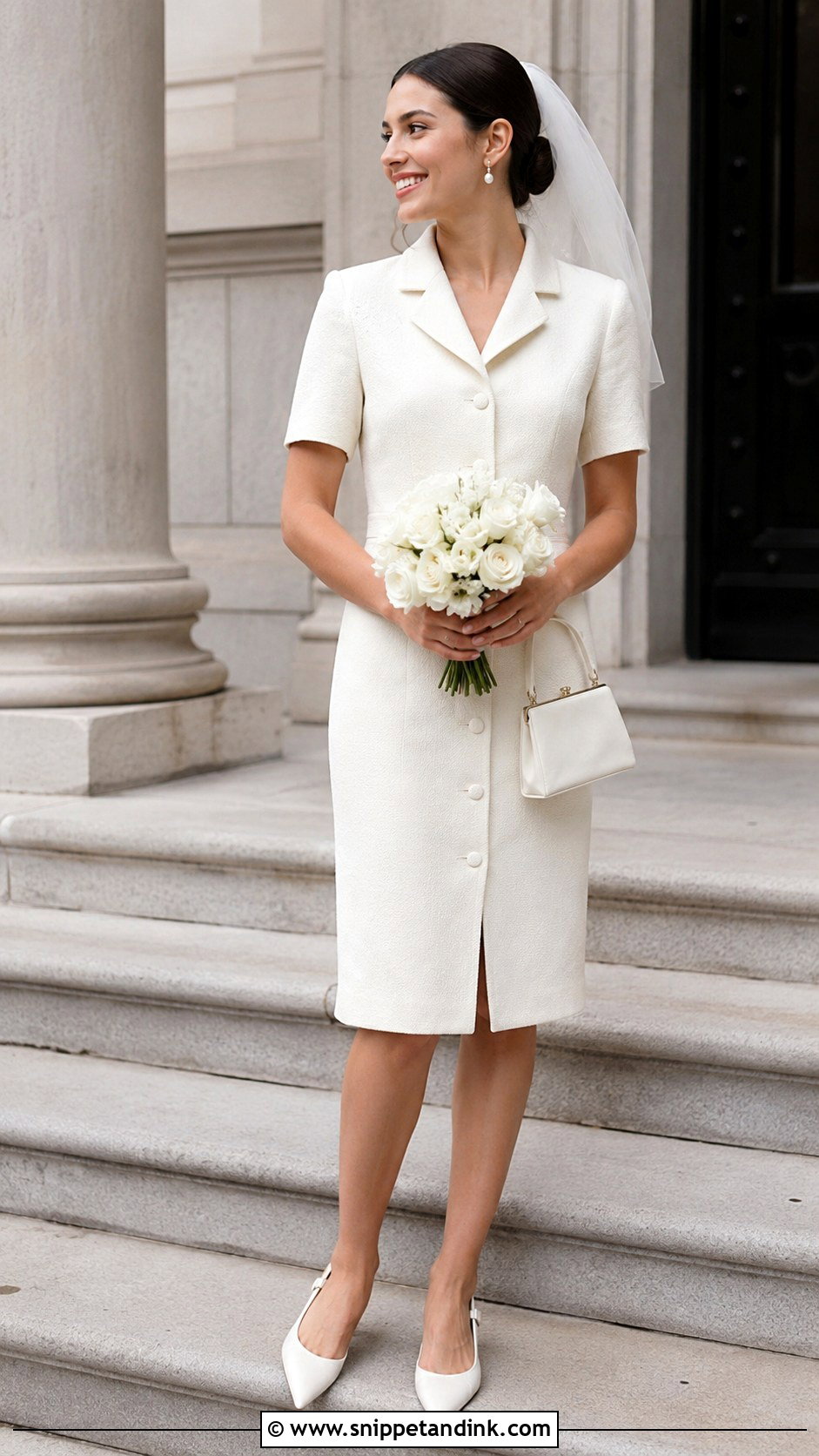
A courthouse dress has to cope with queues, stairs, waiting rooms and street photos. A mini or knee-length dress with tailoring, a bow, lace overlay or vintage collar handles all of that. Slingback heels, a small top-handle bag, pearl earrings and a short veil. A structured blazer earns its place on cool days. Keep the bouquet simple with white flowers or greenery. Break the shoes in first; you’ll be on your feet longer than you think.
11. Retro Ball Gown Wedding Dress
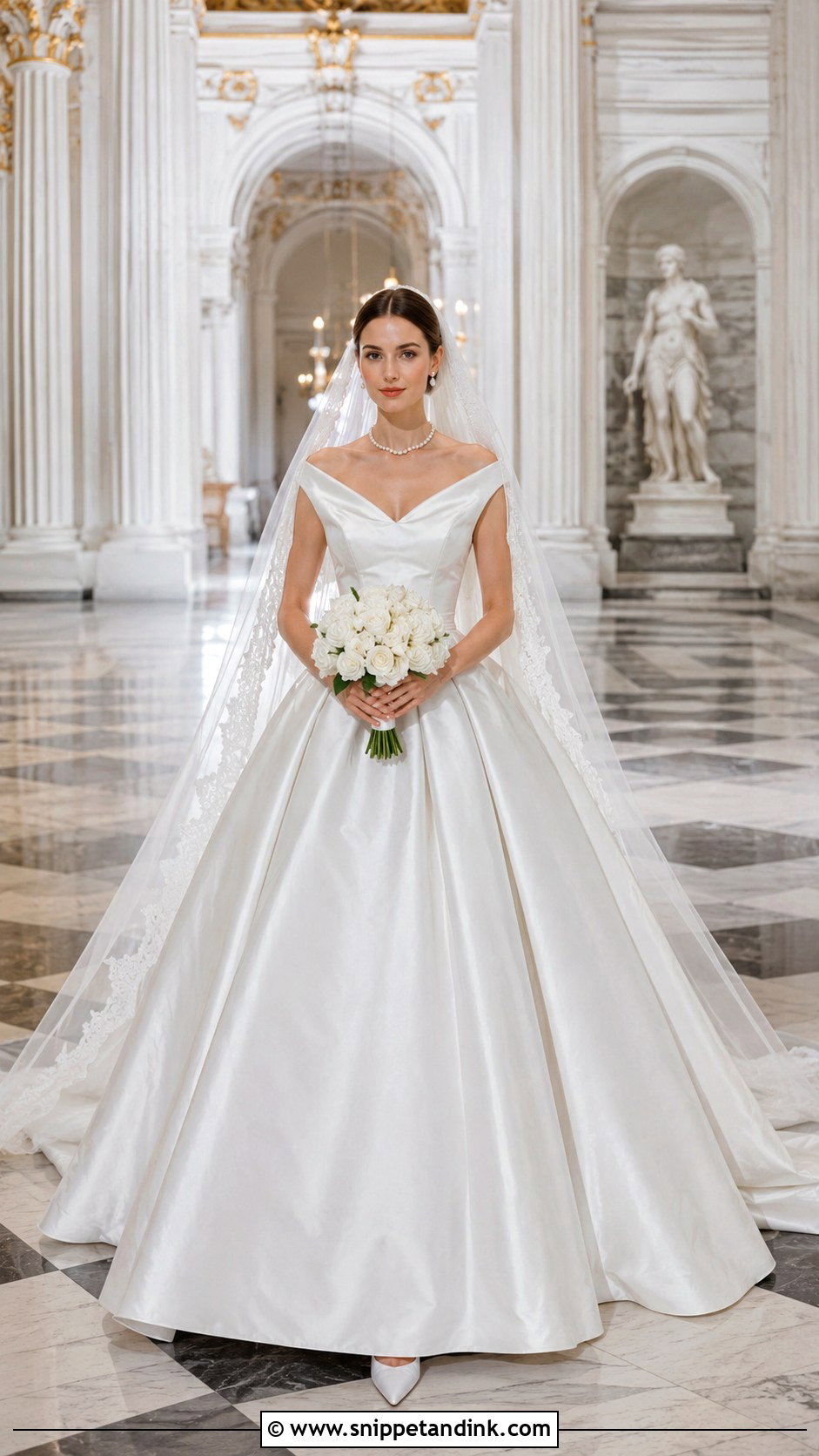
The mid-century ball gown pairs a fitted bodice with a wide skirt. What makes it read retro rather than modern is the detail: covered buttons, a bateau neckline or short sleeves. Satin, tulle and lace all work. The skirt needs a hoop or layered petticoat to hold the shape; check that you can sit and use a bathroom with help before you commit. Pointed heels, pearl jewelry, a cathedral veil and a polished updo for traditional venues.
12. Retro A Line Wedding Dress
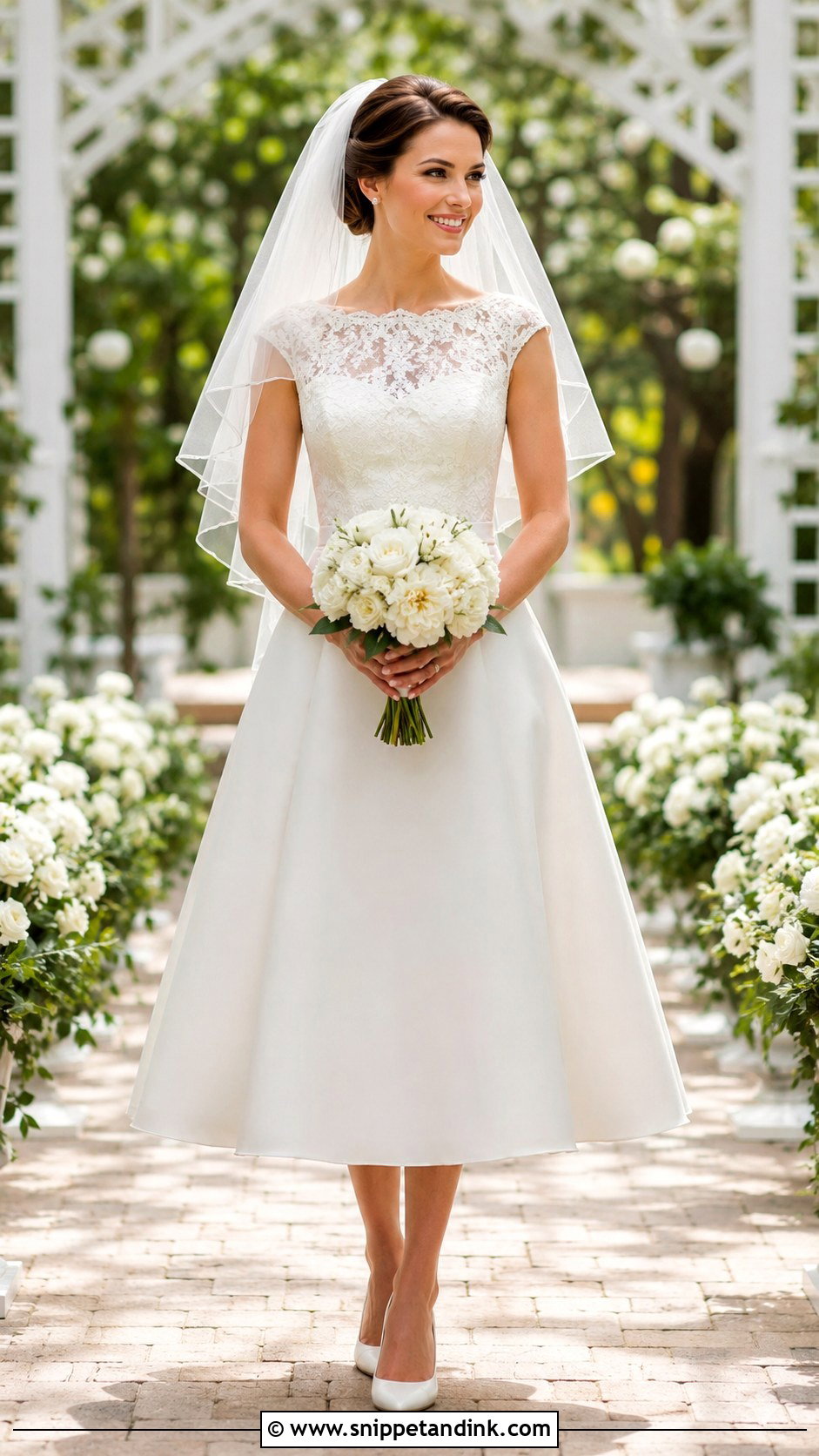
The A-line is the safest retro silhouette because it balances most figures without asking for volume. Lace, satin, organza or Mikado decide how formal it feels. For a stronger mid-century mood, add a sweetheart neckline, cap sleeves, covered buttons or a bow at the waist. I steer brides toward this shape when they love vintage but want something they can move and sit in all day. Classic pumps, pearl studs, a fingertip veil and a soft bouquet.
13. Retro Mermaid Wedding Dress
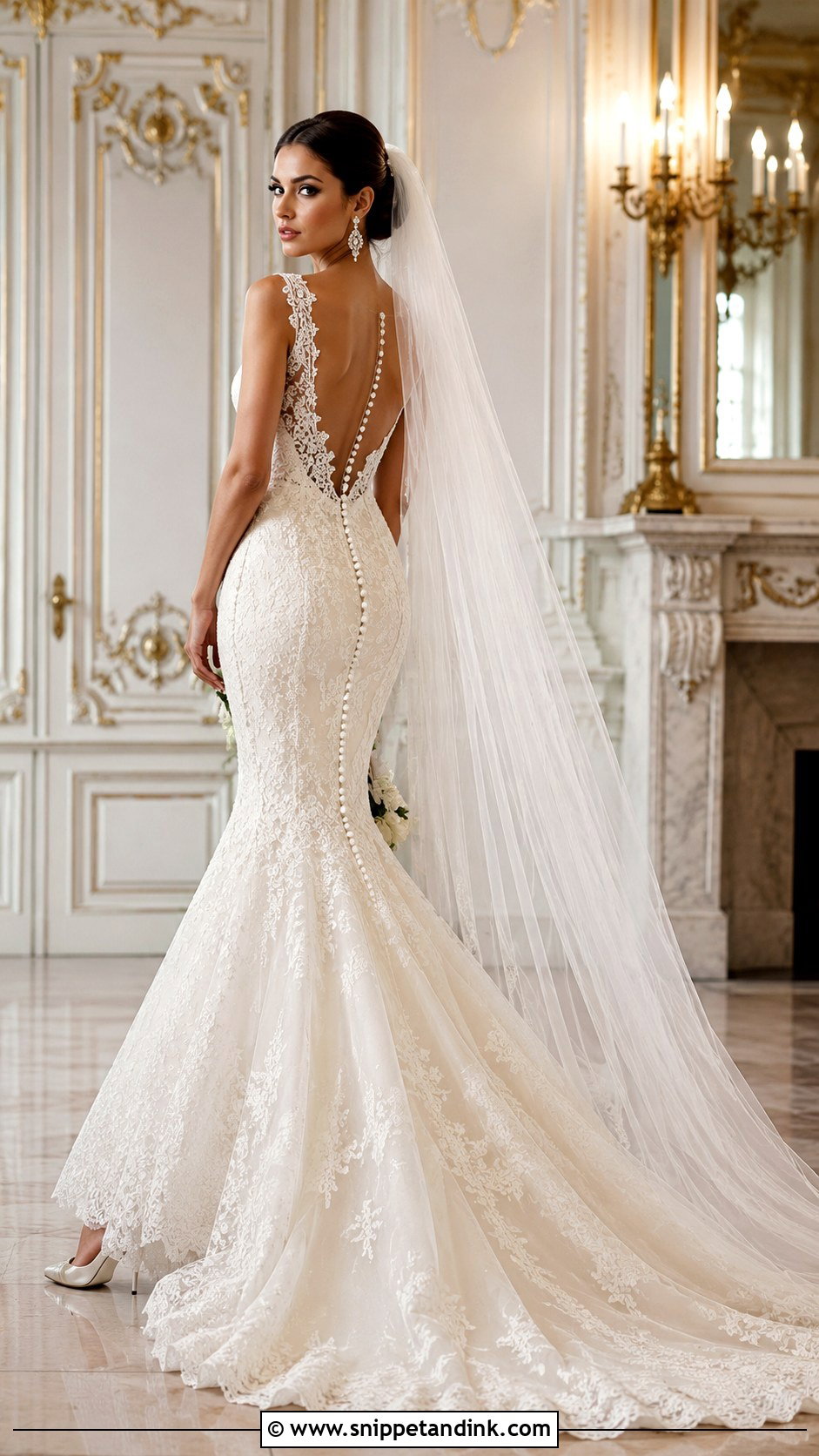
A fitted bodice and hips with a flare near the knee bring vintage glamour into a sharper shape. Lace, satin, off-shoulder sleeves or covered buttons down the back keep it retro. Flare placement decides your walk; I have brides take stairs in the sample before choosing. A fabric with slight stretch or a softer fit-and-flare is kinder over a long day. Crystal earrings, sleek heels and a long veil balance the line.
14. Retro Corset Wedding Dress
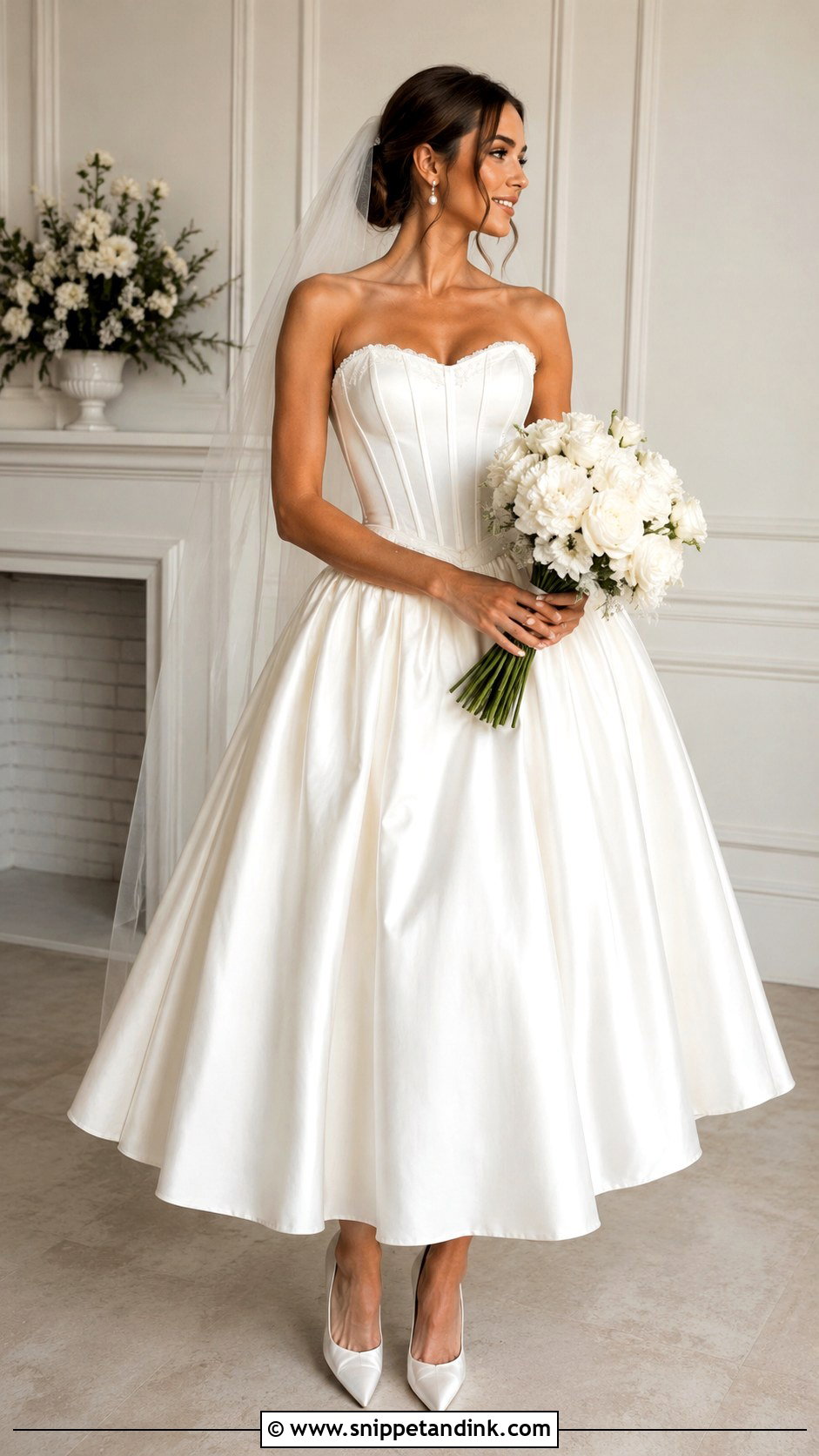
Structure defines the corset bodice, and it can pair with a full skirt, a drop waist, lace overlay or a sleek satin skirt, depending on the decade you’re after. Exposed boning looks fashion-led; covered structure softer and more vintage. I always ask the bride to sit and eat something at the final fitting, because a corset laced for the mirror is too tight for dinner. Pointed heels, pearl earrings and a plain veil, with a gathered bouquet and soft curls.
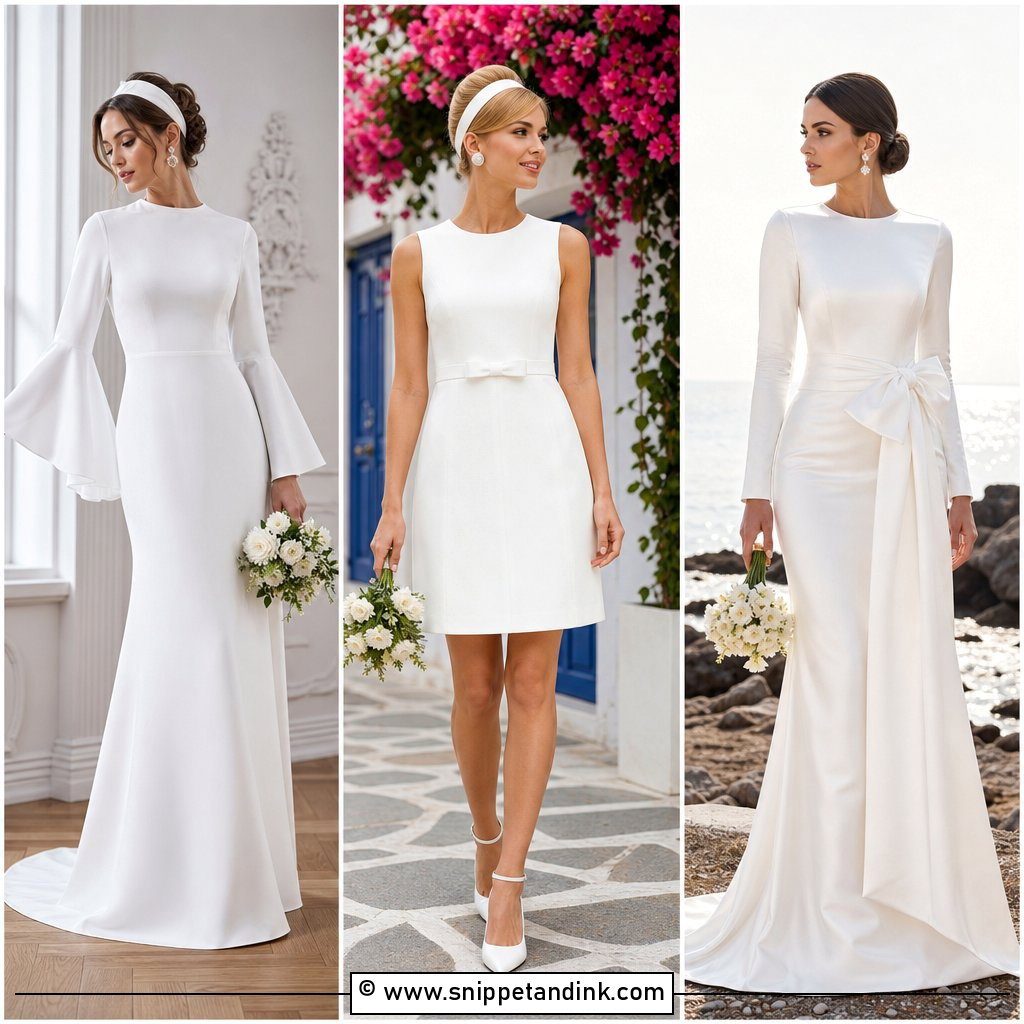

15. Retro Basque Waist Wedding Dress
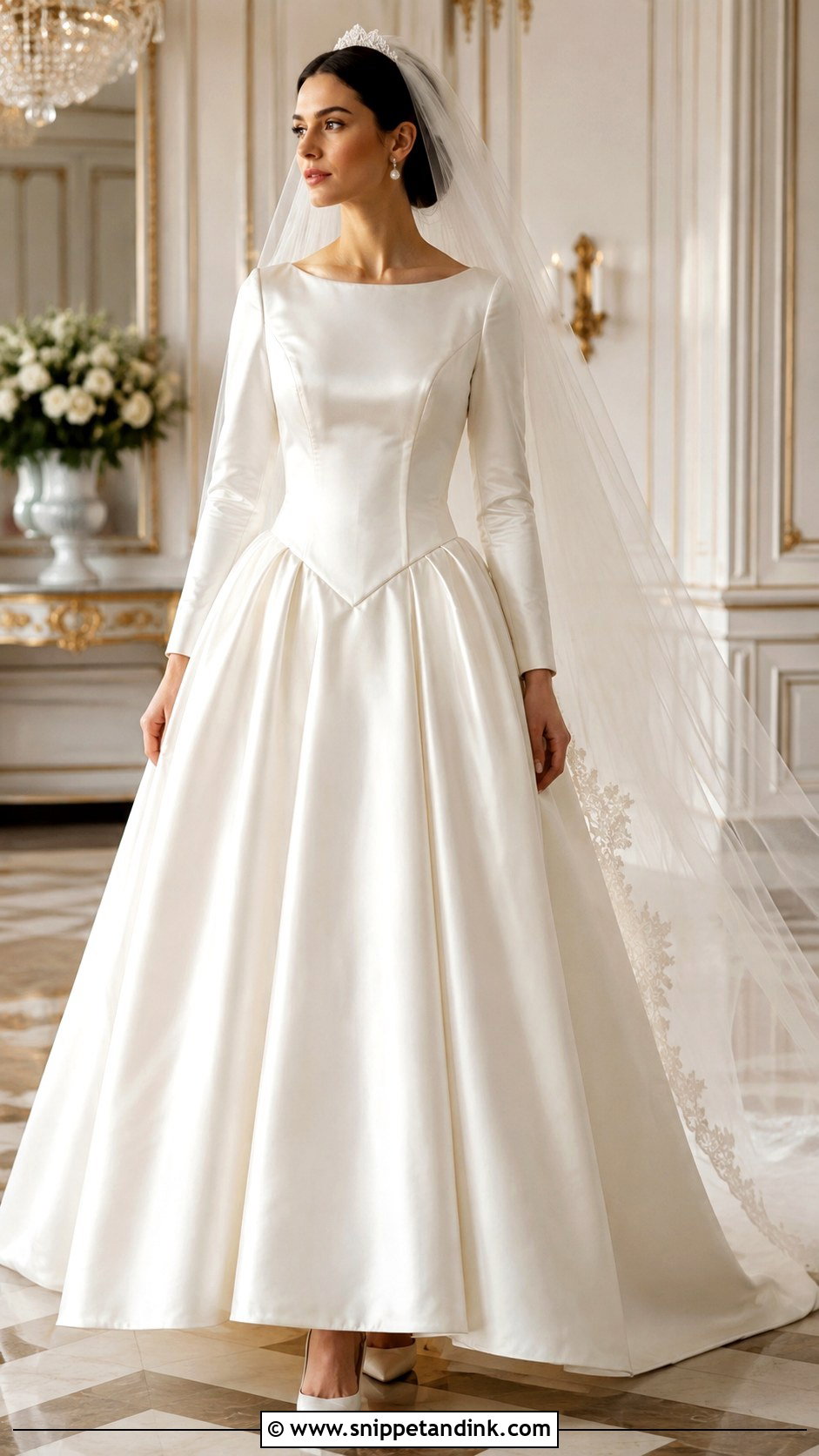
A basque waist dips to a point at the center front, which draws the eye inward and down and lengthens the torso. It suits full skirts and rich satin. On a short torso, the point can overshoot the natural waist, so I mark it at two heights during the fitting before deciding. With a plain neckline, add a fine necklace; with lace or beading, keep jewelry minimal. Elegant pumps, pearls and a long veil for formal venues.
16. Retro Square Neck Wedding Dress
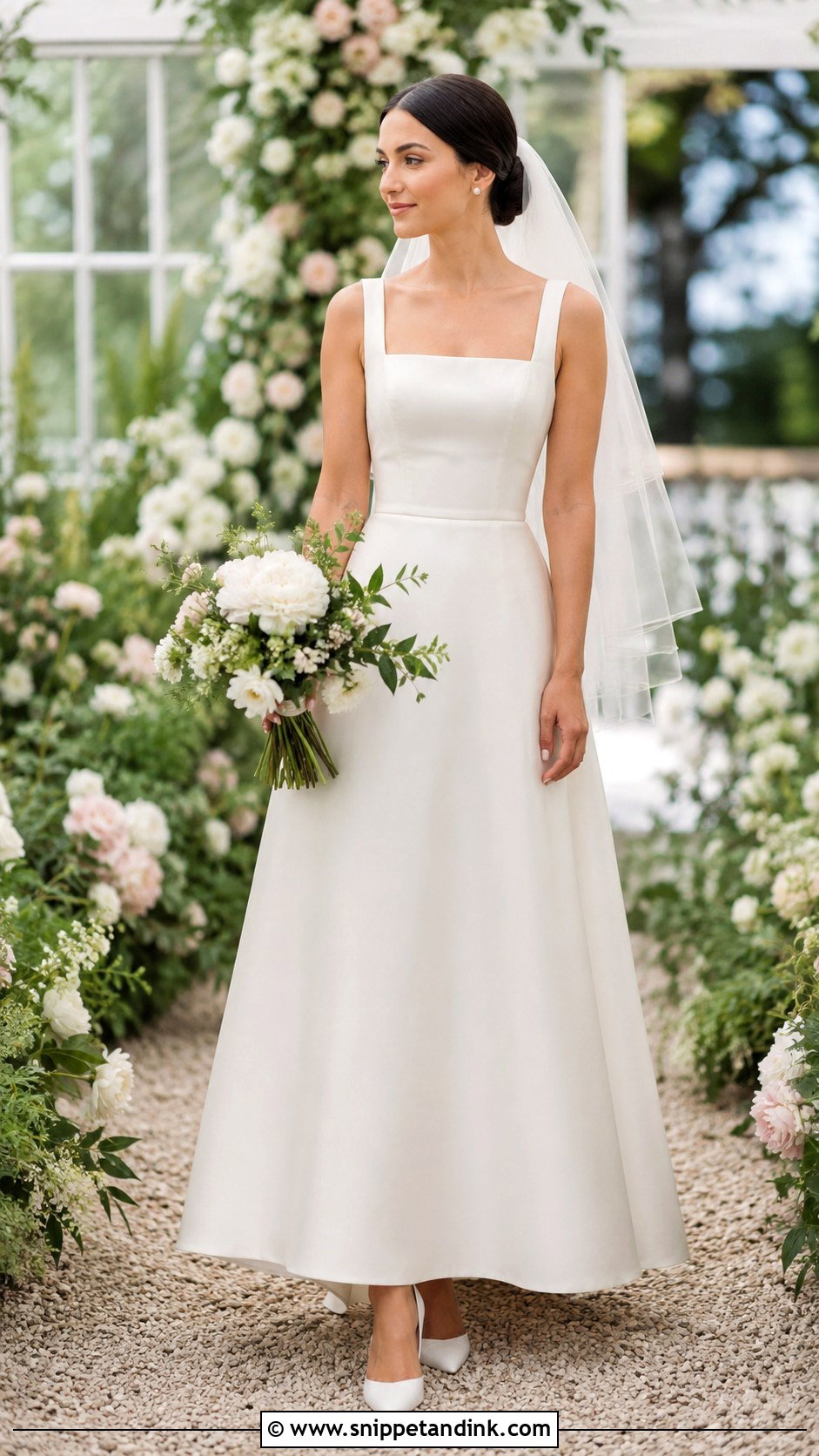
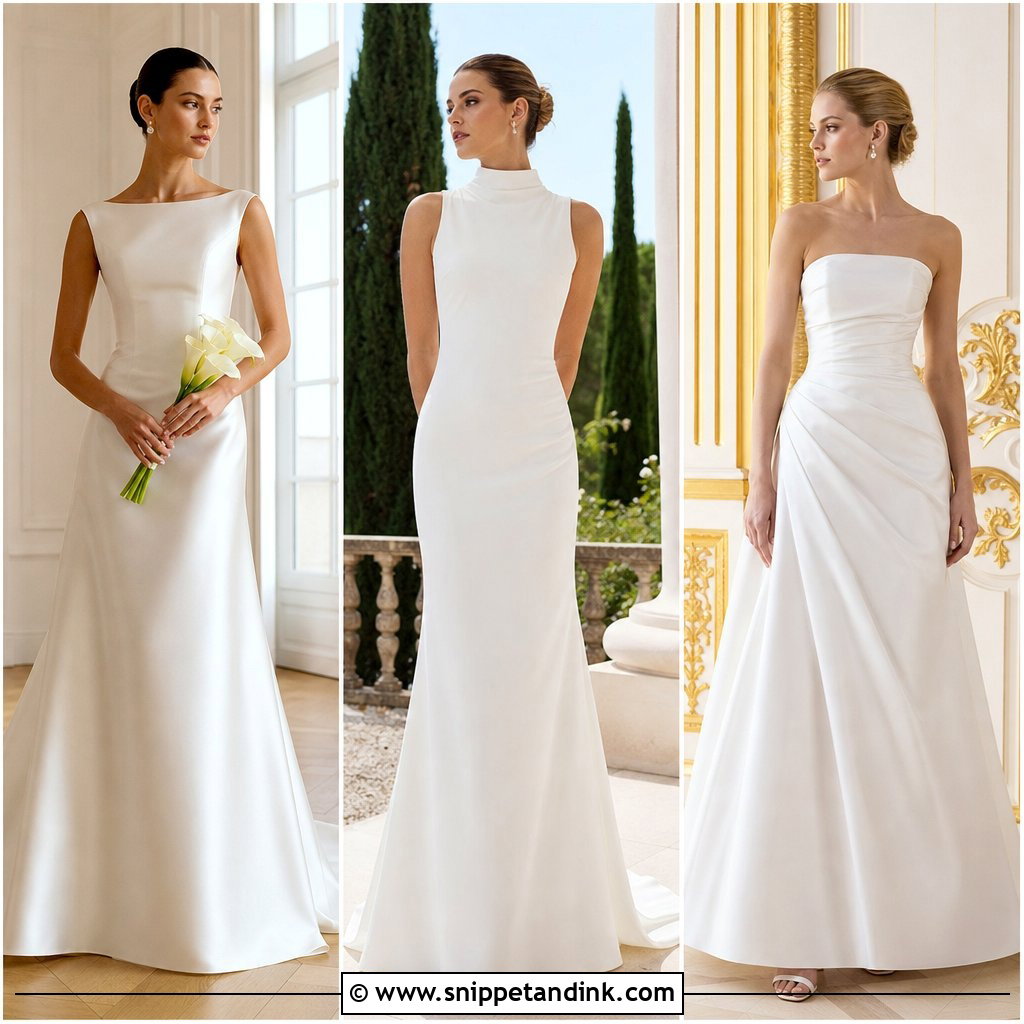
A square neck frames the collarbone and sits well with almost any silhouette. For a 1950s mood, add a fuller skirt; for a 1990s one, a sleek satin column. The corners are the weak point, since soft fabrics let them sag into a curve by afternoon, so I ask for stay tape inside the neckline. Pearl studs, a soft veil, satin pumps and a low bun. It’s an easy neckline to style because it already looks finished.
17. Retro Off Shoulder Wedding Dress
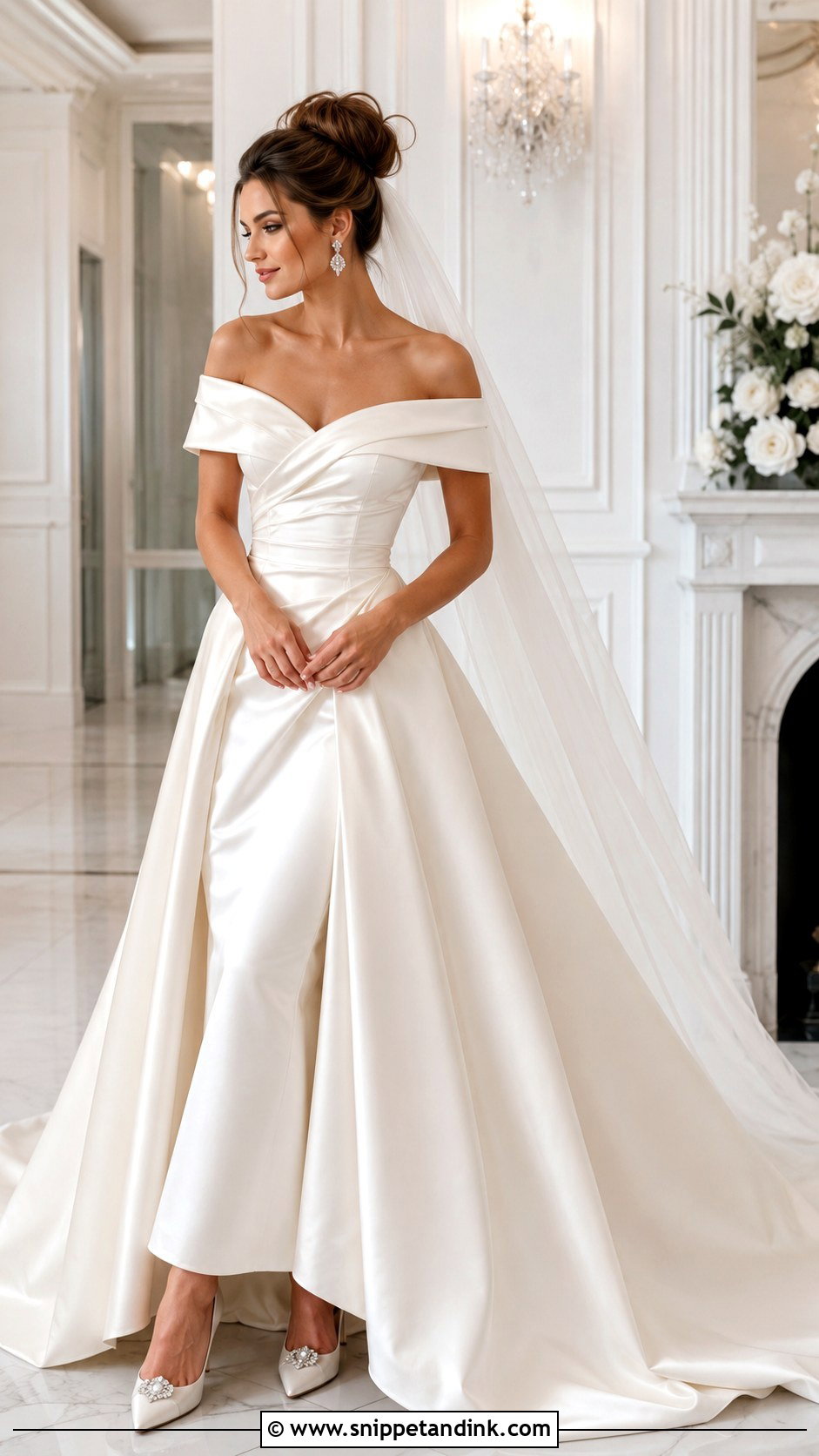
Off-shoulder necklines change era with the fabric: satin leans old Hollywood, lace 1950s, puffed sleeves 1980s. Lift your arms at the fitting. If the band rides toward your neck, it needs taking in or more structure. A structured updo, pearl or crystal earrings and pointed heels; the neckline is already the feature, so the veil stays simple. It suits both fitted and full skirts in formal settings.
18. Retro Long Sleeve Lace Wedding Dress
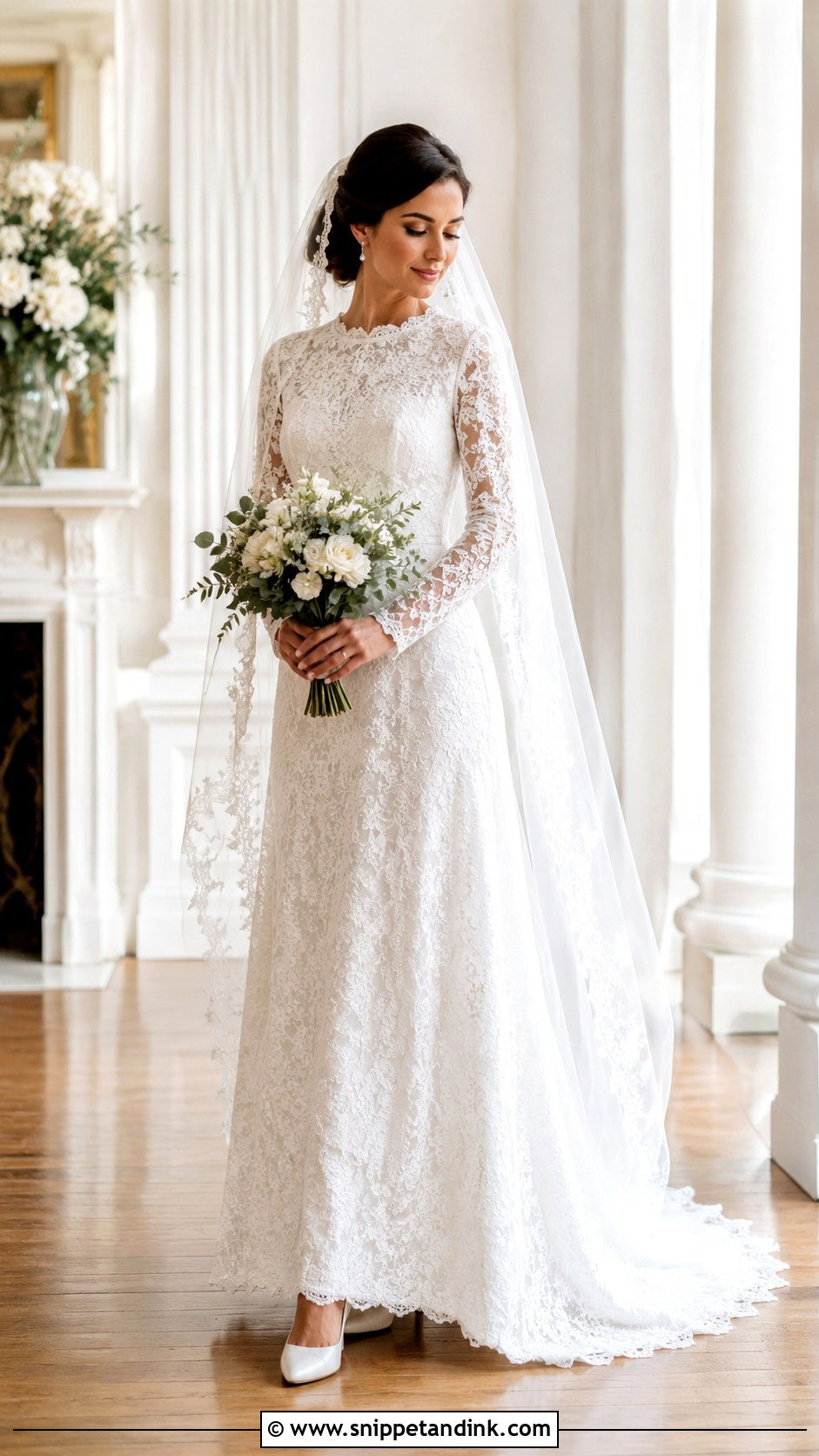
Lace sleeves add coverage and texture in one move. Floral lace reads soft, Chantilly-style lace delicate, heavier lace traditional. Heavier laces suit autumn and winter; lighter ones work in spring. I keep the hairstyle simple so the lace stays the main detail, and match the veil’s lace edge to the gown in daylight, since two ivories rarely agree. Closed-toe heels and pearl earrings finish the look.
19. Retro Bow Wedding Dress
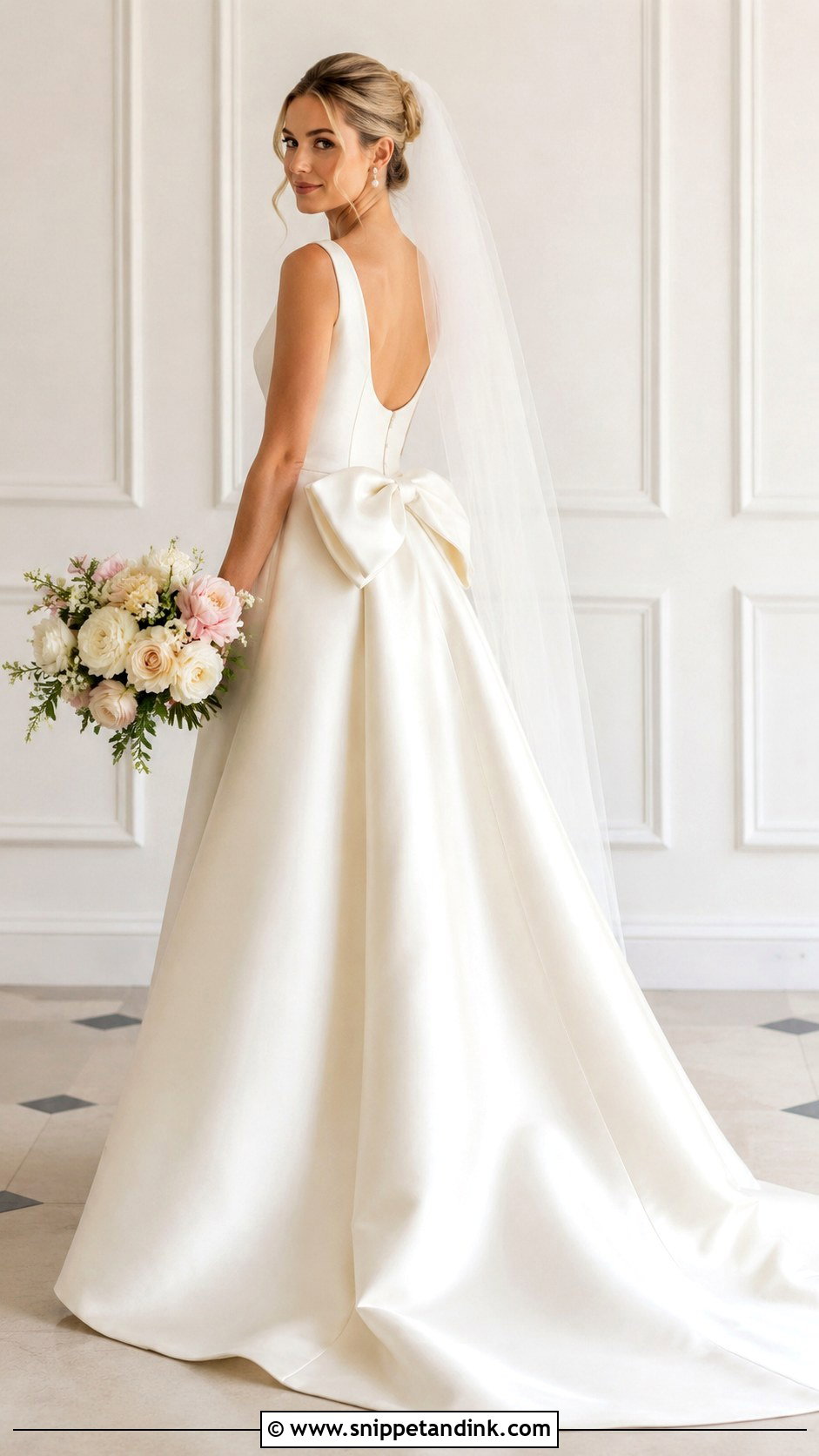
One bow, in proportion, looks modern. The bow can sit at the back waist, shoulder, neckline or train. Structured fabrics like satin, Mikado, taffeta or crepe hold the loops crisply; soft fabrics droop by evening unless the bow is interfaced. A large back bow can crush against a chair, so I check it after the bride sits. Simple heels, small earrings, a clean veil and minimal jewelry around an oversized bow.



20. Retro Pearl Wedding Dress
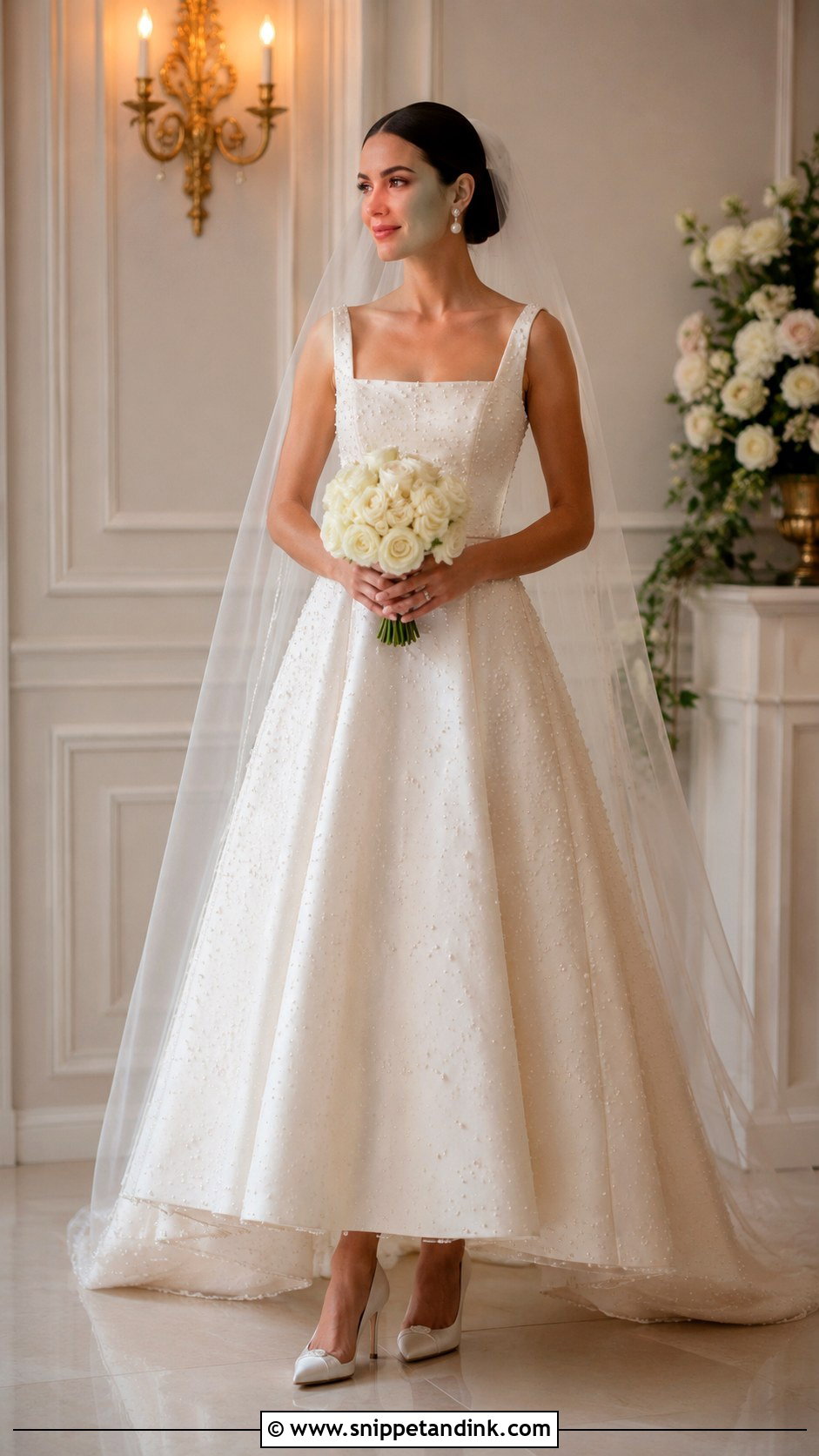
Pearls give a soft glow rather than sparkle, which suits retro gowns better than crystal. They can sit on the bodice, sleeves, neckline, veil or across the skirt. Tiny seed pearls feel delicate; larger ones read bolder. I check that they’re stitched with a backing knot, not glued, since glued pearls drop off during hugs. Pearl earrings, satin heels and a smooth hairstyle, but not pearls everywhere if the gown is already embellished.
21. Retro Tulle Wedding Dress
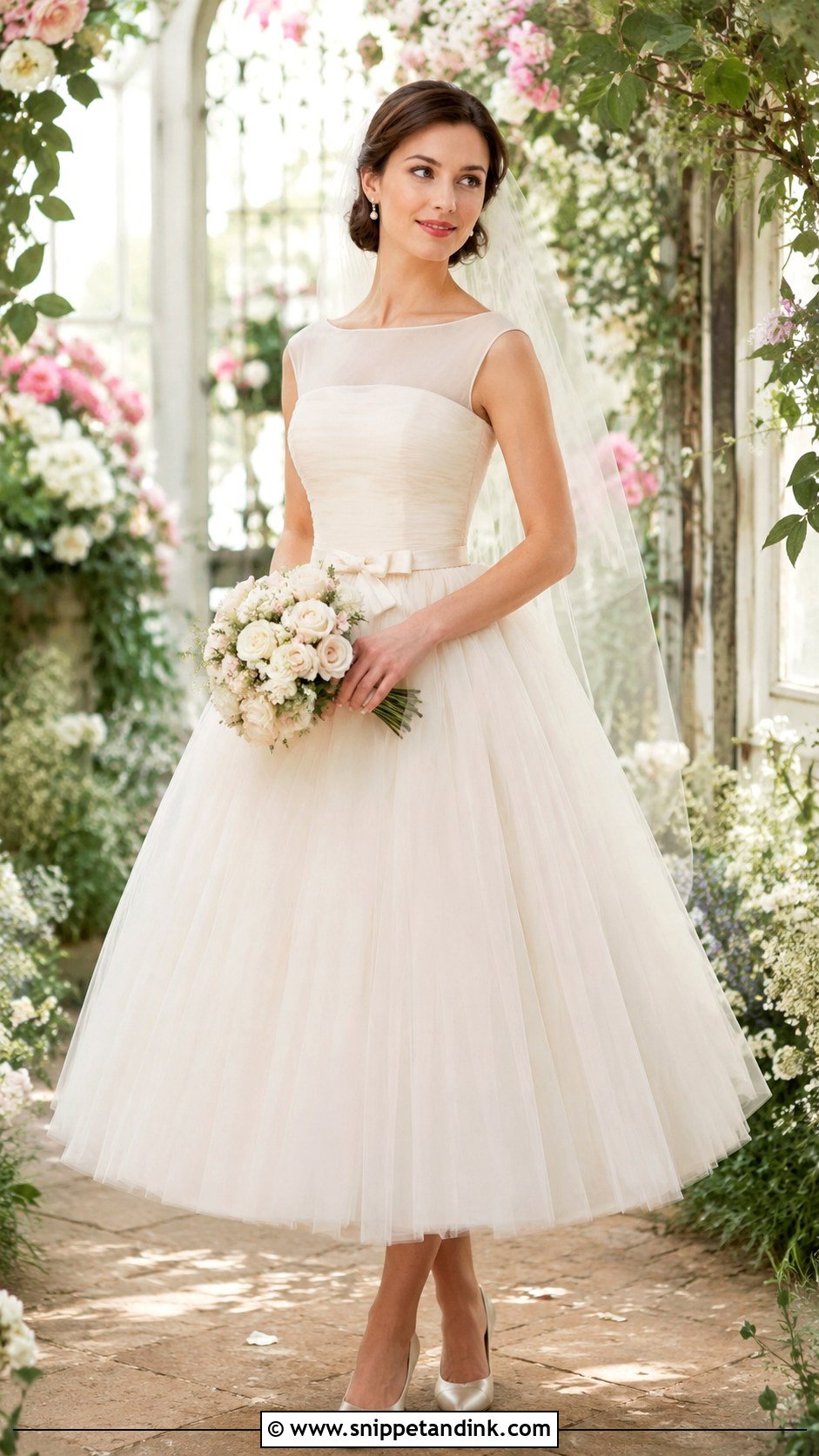
Tulle can be a 1950s tea-length gown, a classic ball gown or a layered A-line. Volume needs balance, so a fitted bodice defines the waist and the accessories stay quiet. Tulle also snags on rough surfaces and catches on beaded bodices, which is worth knowing if you’re adding sparkle up top. Satin pumps, pearl earrings and a veil as soft as the skirt. A petticoat, short gloves or a ribbon belt add more retro charm.
22. Retro Halter Wedding Dress
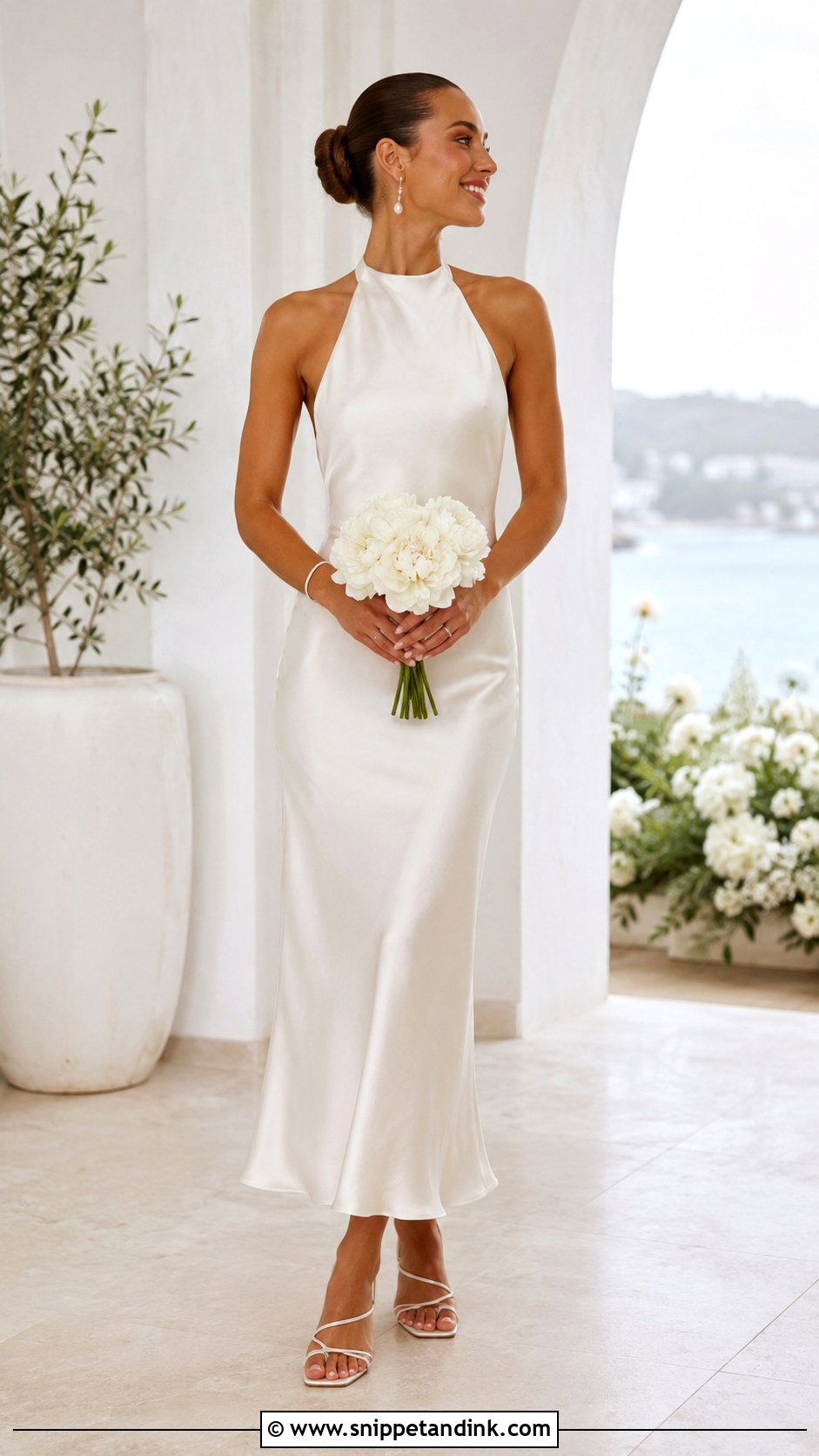
A retro halter wedding dress leans 1970s in crepe, old Hollywood in satin and 1990s in a slim minimal cut. Halters hang from the neck, so on a heavier bust I’d ask for internal support or a wider strap to spread the weight, or your neck will ache by evening. A smooth bun, drop earrings, strappy heels and no necklace. Summer weddings, beaches and modern venues suit it.
23. Retro Cape Wedding Dress
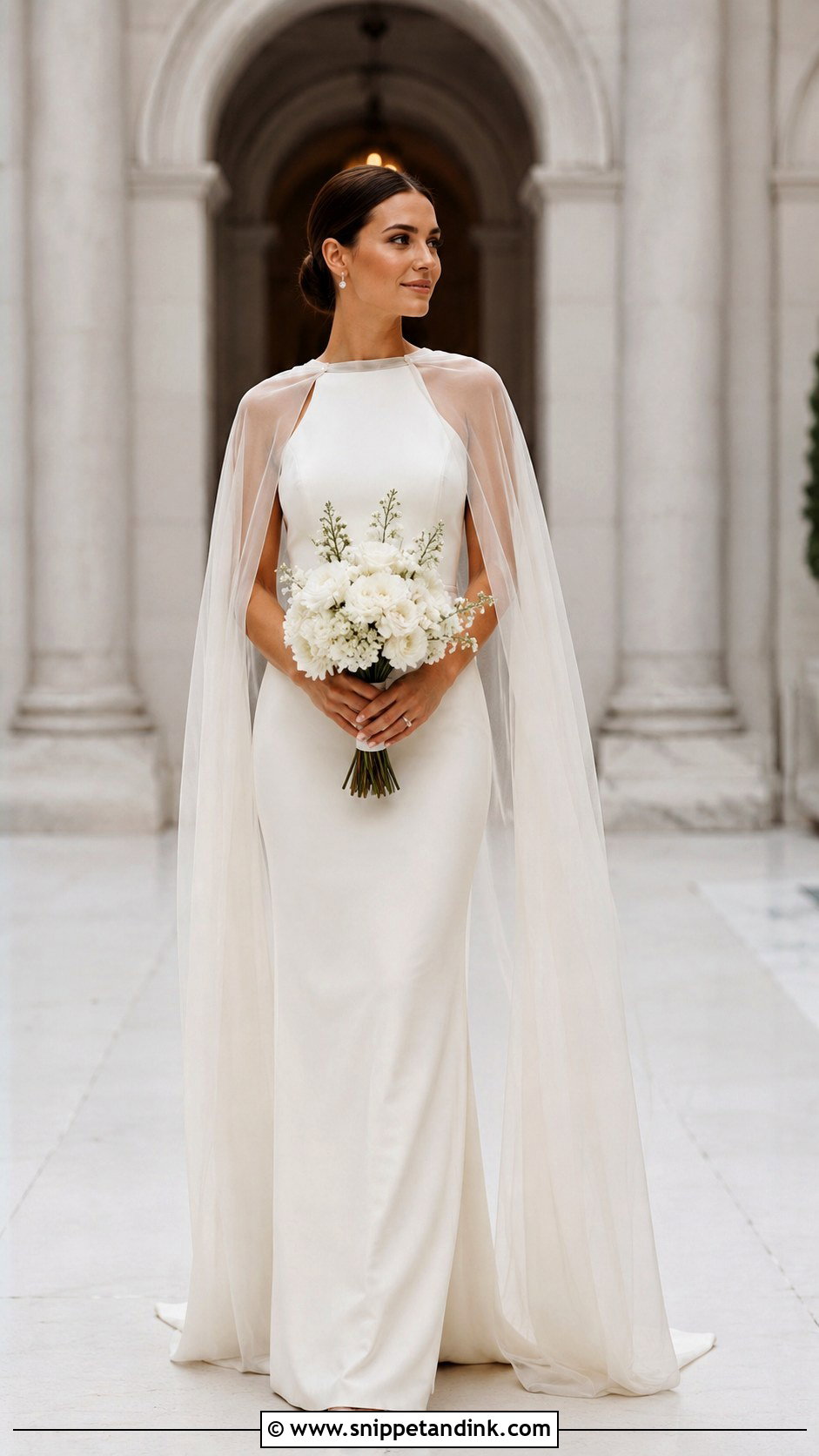
A cape can replace the veil and gives you movement in photos without a long train. Sheer, lace, satin or tulle all work, over a simple column, A-line or crepe gown. I hide the attachment hooks under the shoulder seams so it comes off cleanly for dancing. Outdoors, a long sheer cape catches wind, so I add small hem weights. Pointed heels, small earrings, clean hair and a simple bouquet. Winter ceremonies and grand entrances suit it.
24. Retro Bridal Suit Dress
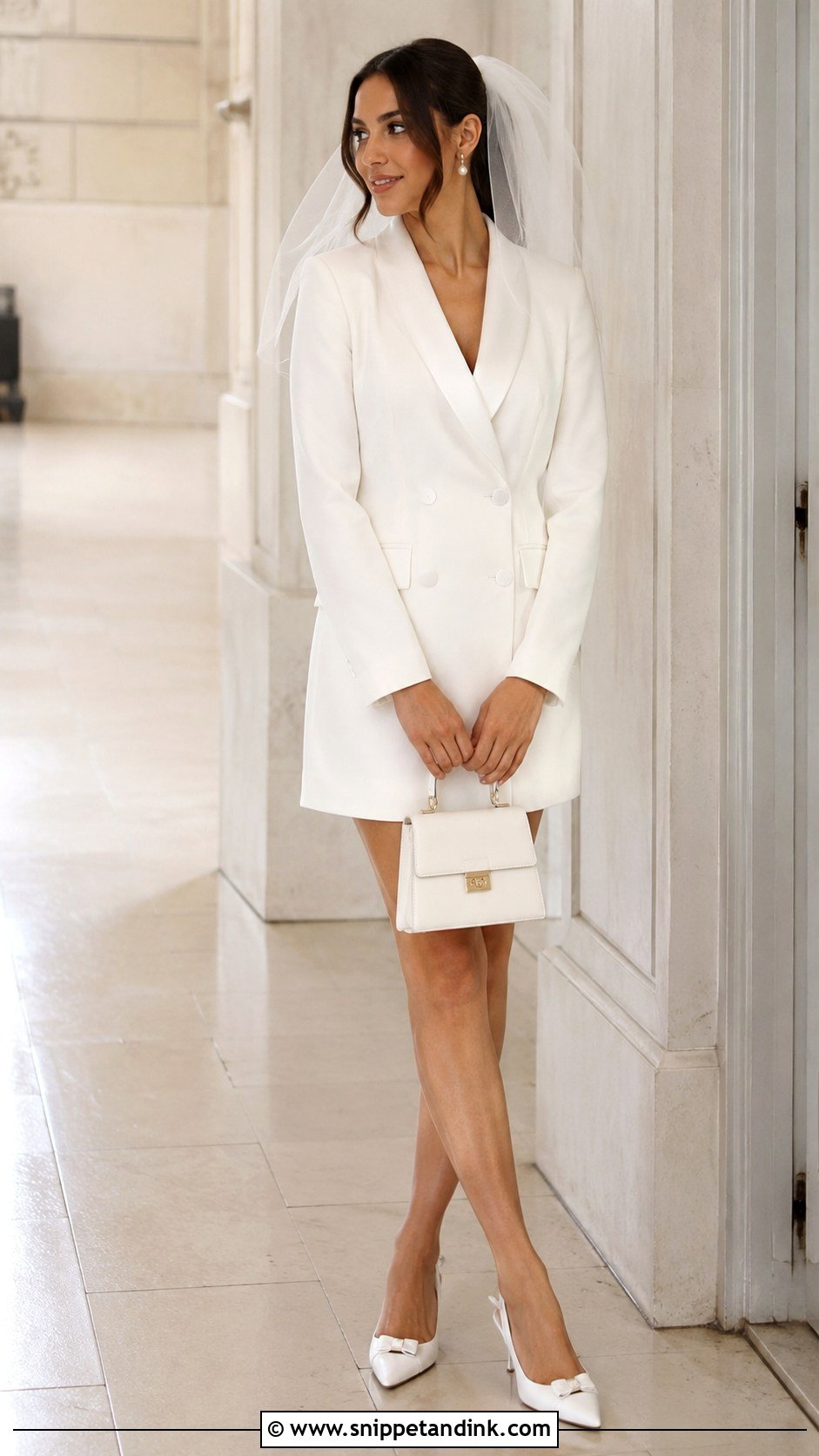
Tailoring gives a bridal suit its vintage edge. A blazer-style mini, a skirt suit or a longline jacket over a simple dress all work, in ivory crepe, satin or textured cloth. The jacket’s shoulder must fit precisely; everything else can be altered, but shoulders are expensive to fix. Slingback heels, pearl earrings, sheer tights if needed and a small structured bag. A short veil or bow headband makes it bridal. Courthouses, elopements and reception changes are where it works best.
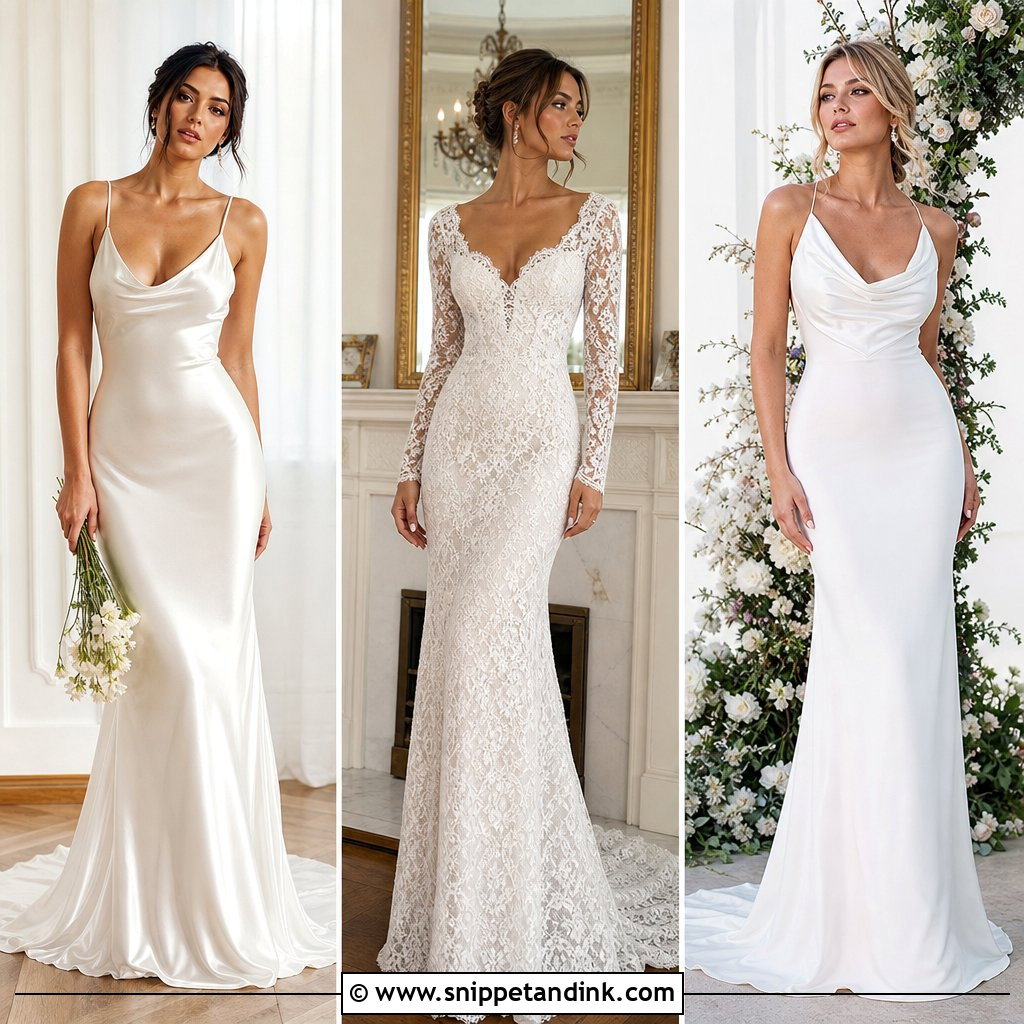
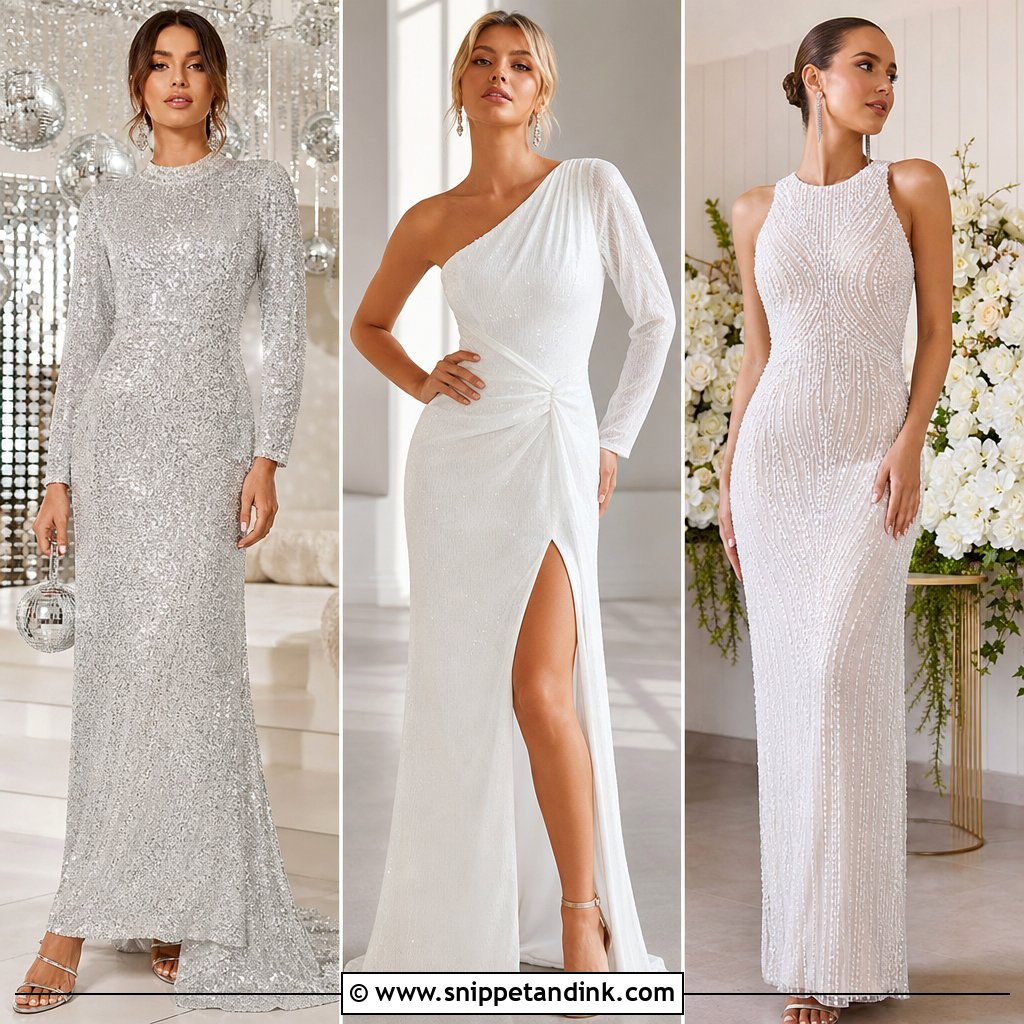
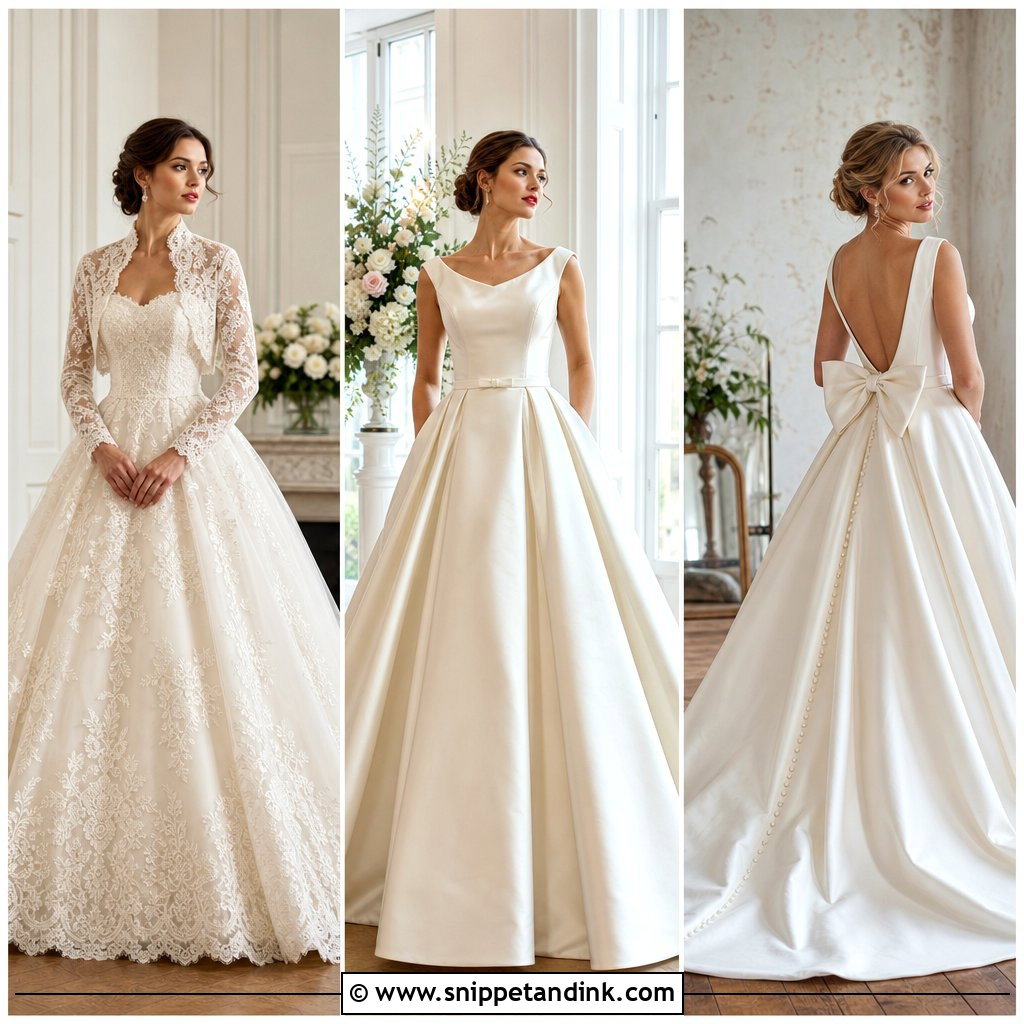
25. Retro Reception Wedding Dress
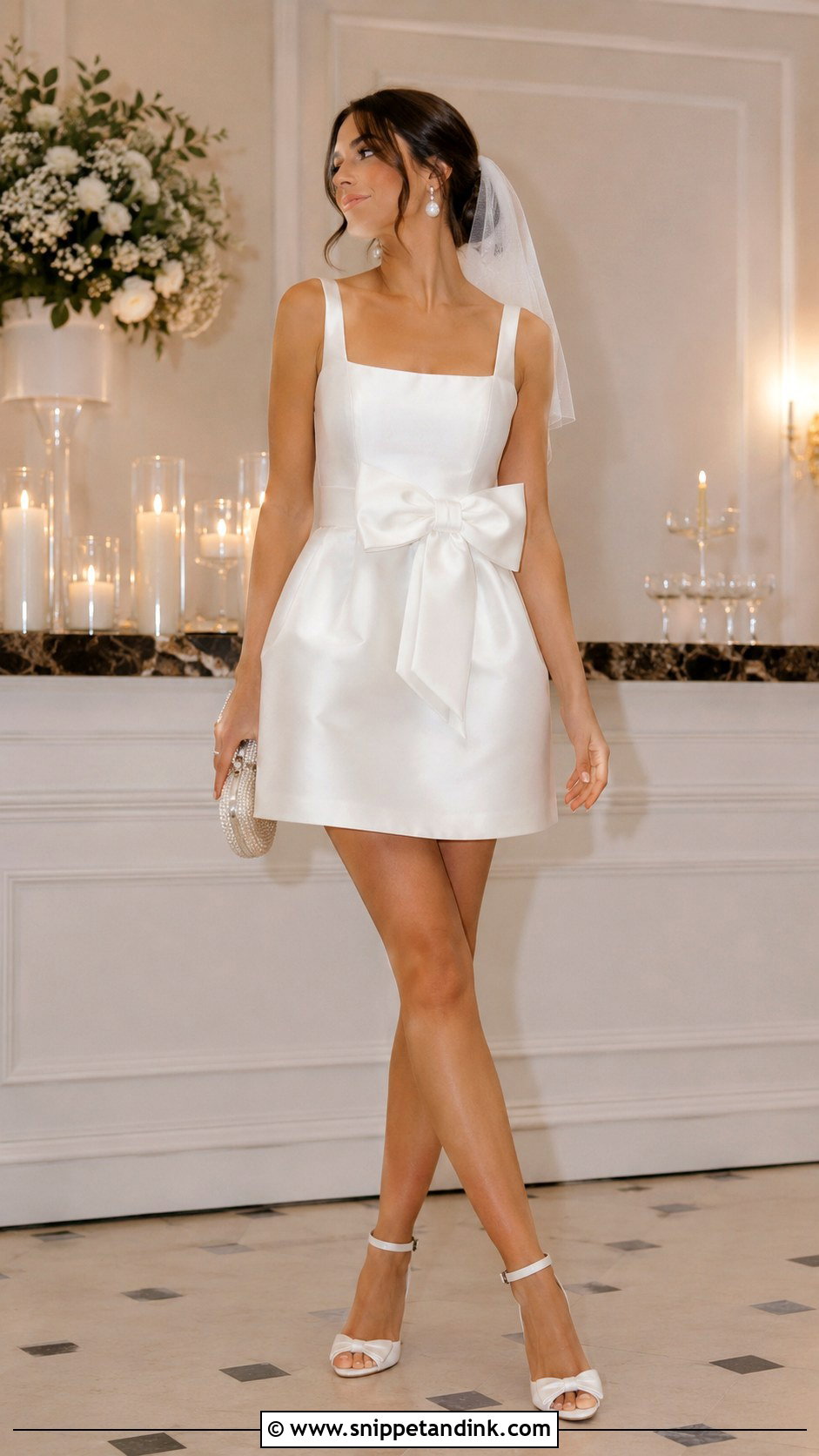
A reception dress should be easy to dance in. Short hemlines, fringe, feathers, bows or a simple satin mini all work, as long as you choose one statement detail. A mod mini suits 1960s lovers; beading or fringe suits 1920s fans. Beaded fringe is heavy and swings hard, so try a few dance moves in it before buying. Comfortable heels, pearl earrings, a mini veil or bow clip and a small clutch.
The Underpinnings Each Decade Expects
Retro gowns were cut for the foundations worn at the time. Put modern shapewear under them and the silhouette goes slightly wrong, which is often the real reason a vintage dress looks off. Here’s what I’d plan for under each era.
- 1920s: a soft, minimizing bra and a smooth slip. Heavy push-up support fights the flat, straight line.
- 1950s: a structured longline bra and a petticoat or crinoline. Without them, the waist and skirt lose their shape.
- 1960s shifts: very little, but the fabric needs to be stiff enough to stand away from the body.
- 1970s lace: a nude slip and a soft bra, so the lace reads against skin, not underwear.
- 1990s bias cut: smooth, no-line pieces in a shade close to your skin, or nothing, since satin shows every edge.
Bring these to your first fitting, not the last. A petticoat alone can change the hem length by a couple of centimeters, and a longline bra moves where the waist seam needs to sit.
Wear the Decade, Not a Costume of It
Any retro gown starts with a decade, a shape and a mood that feels like you. Some brides want lace sleeves; others want a sleek satin slip dress, a playful tea-length skirt or a dramatic puff sleeve. The outfit is bigger than the dress: shoes, veil, jewelry, hair, bouquet and fabric all set the era. You can go fully vintage or add one nostalgic detail to a modern gown. Get the fit and the underpinnings right, and any decade will look like it was made for you.
You'll Like These Ideas:




Leave a Reply