
1960s bridal fashion covered three quite different looks in ten years: polished early-decade gowns, short mod dresses in the middle, and soft romantic shapes by the end. A-lines, empire waists, high necks, short hems, clean fabrics, lace sleeves and bell sleeves all belong to it. What makes these dresses work today is restraint. I tell brides to pick one recognizable retro feature, a collar, a hem length, a pillbox, and let everything else stay modern and comfortable. Courthouse mini, formal lace or plain satin column, there’s a version for most venues and seasons. Each look below has the full outfit and the fitting detail I’d check.
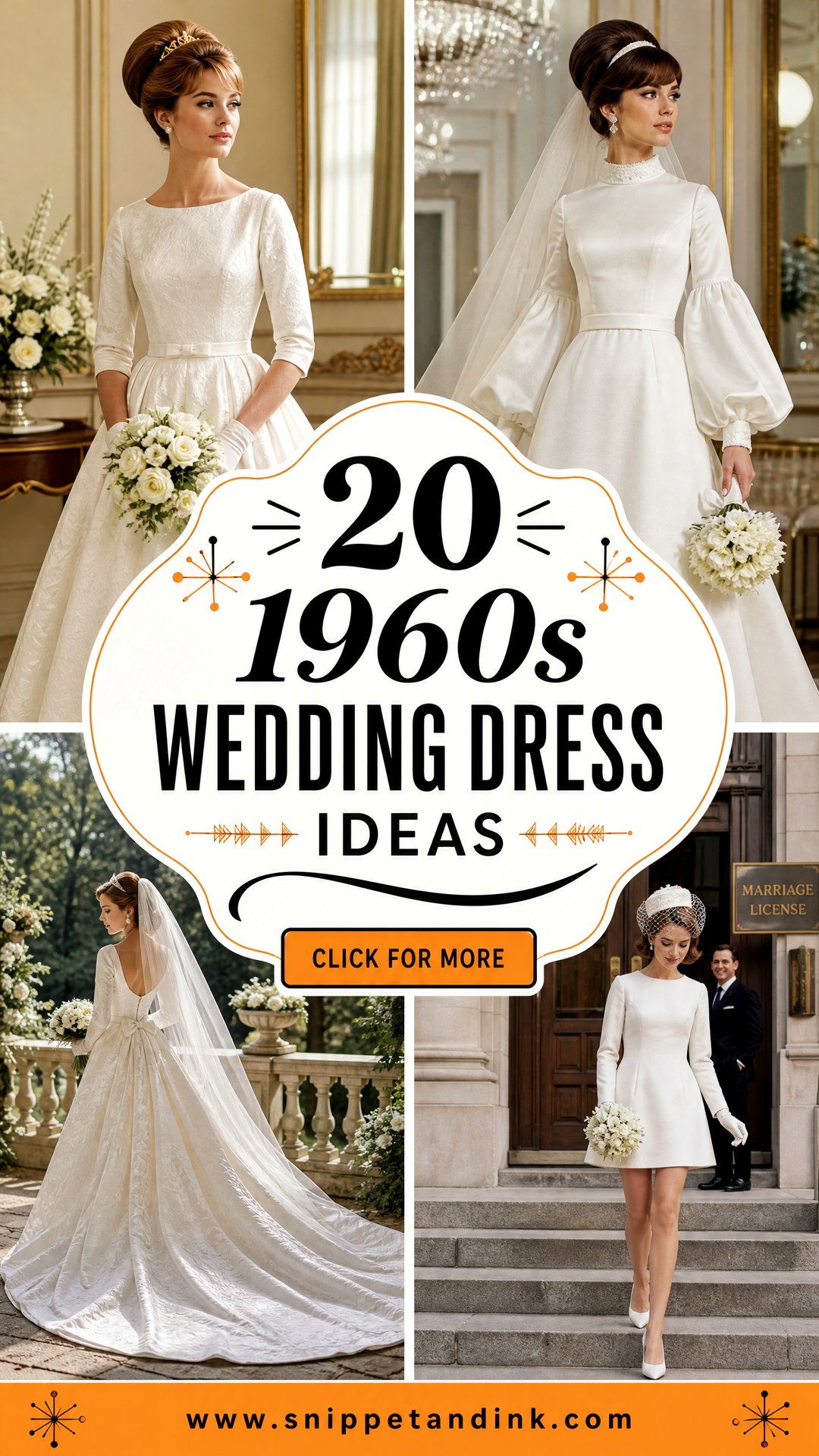
Which Part of the Sixties Are You Dressing For?
Brides often ask for a sixties dress and then show me pictures from three different eras. The decade split into distinct phases, and mixing them is the quickest way to look like a fancy-dress party. Decide which one you’re drawn to first, then shop.
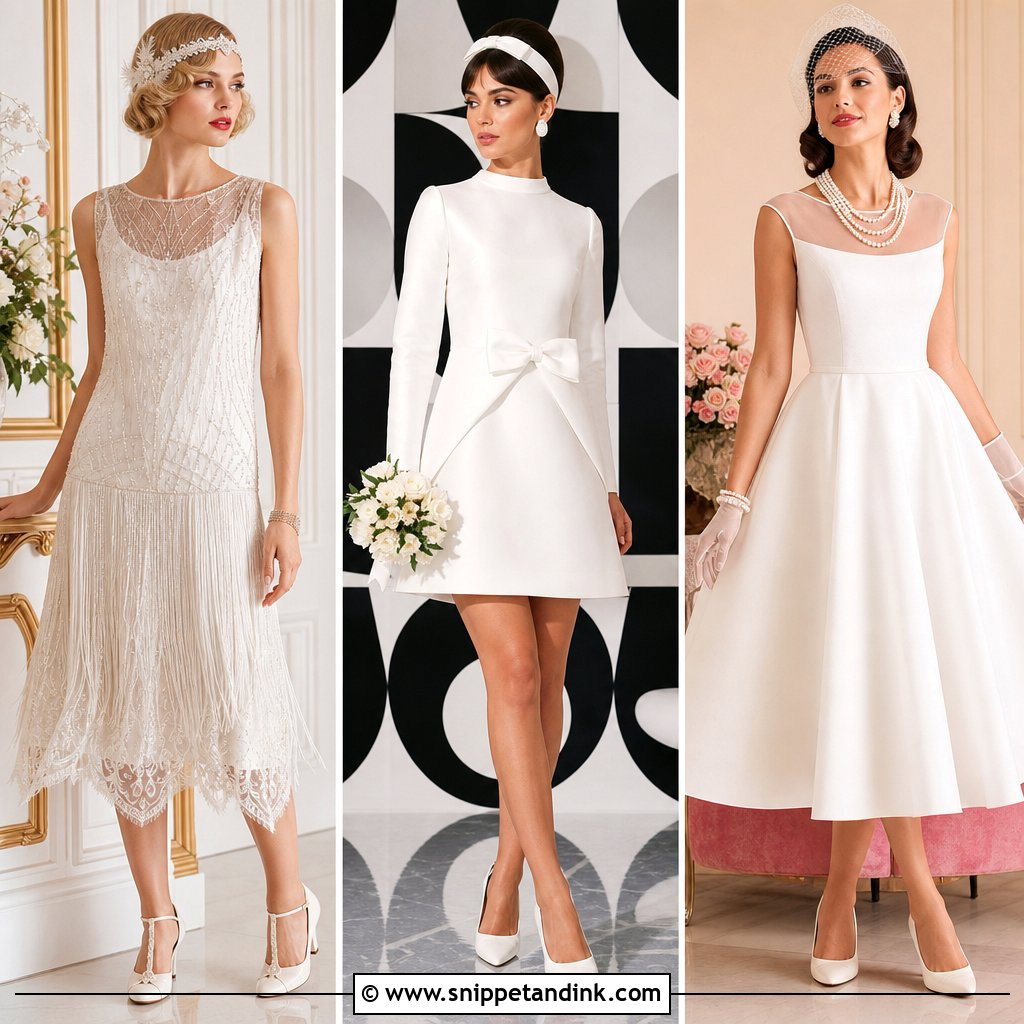
- Early sixties: structured satin, bateau necks, elbow sleeves, gloves, a bouffant and often a pillbox. Polished and formal, with floor-length or tea-length skirts.
- Mid sixties: short A-lines and shifts, clean geometric lines, crepe and heavy satin, Mary Janes or low block heels, a short veil or bow.
- Late sixties: softer and more romantic, with empire waists, bell and bishop sleeves, chiffon, crochet lace, loose hair and flowers rather than hats.
Each phase also has its own hair. An early-sixties gown with long loose waves feels off; a crochet empire dress with a stiff bouffant does too. I bring a picture of the chosen phase to the hair trial so everyone is working from the same reference.
Original dresses from the decade turn up in vintage shops fairly often, and many are in good condition because synthetic blends and sturdy cottons were common. Sizing is the catch. Vintage bridal sizes run much smaller than modern labels, so ignore the tag and take your tape measure.
1. 1960s Mod Mini Wedding Dress
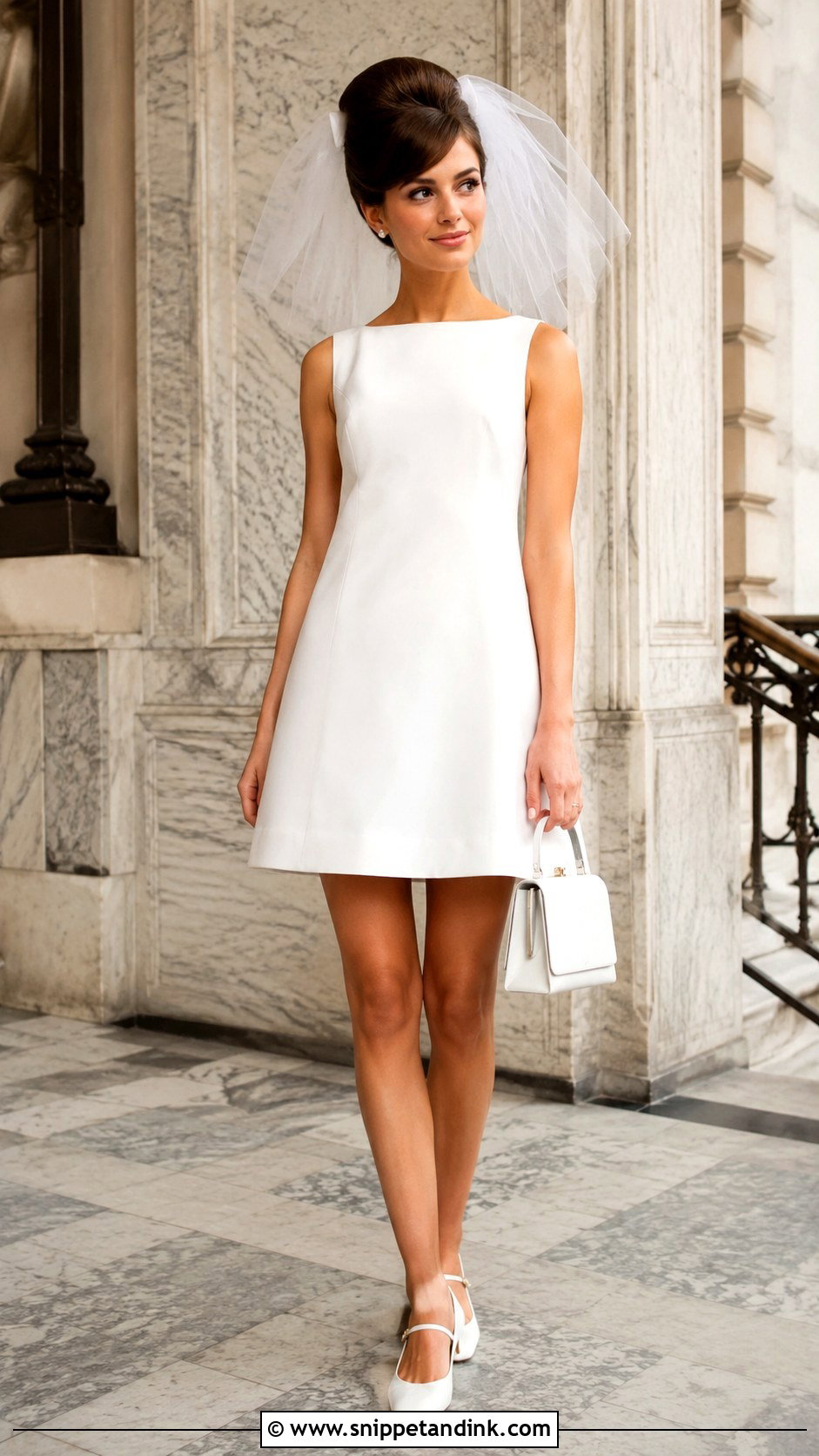
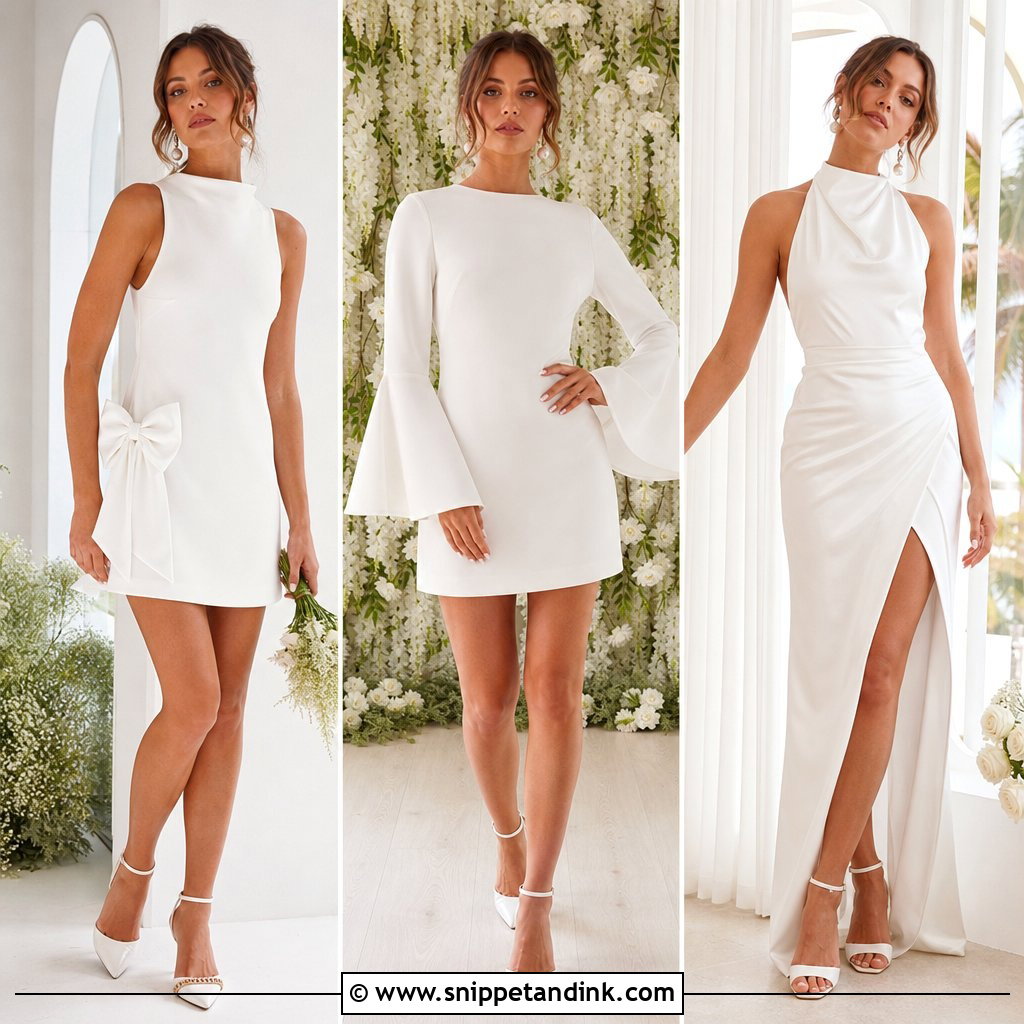
The mod mini is the dress people picture first. It should be a structured A-line that skims rather than clings, with a high bateau neck, a sleeveless bodice and a hem a few inches above the knee. Low block heels or white patent Mary Janes keep it in period, with pearl studs, a small top-handle bag and a short tulle veil set near the crown. A smooth bob, flipped ends or a neat half-up style suit it. A mini this structured needs a fabric with body, like a heavy crepe or a double-faced satin; thin fabric makes the A-line collapse into a slip.
2. 1960s Empire Waist Lace Wedding Dress
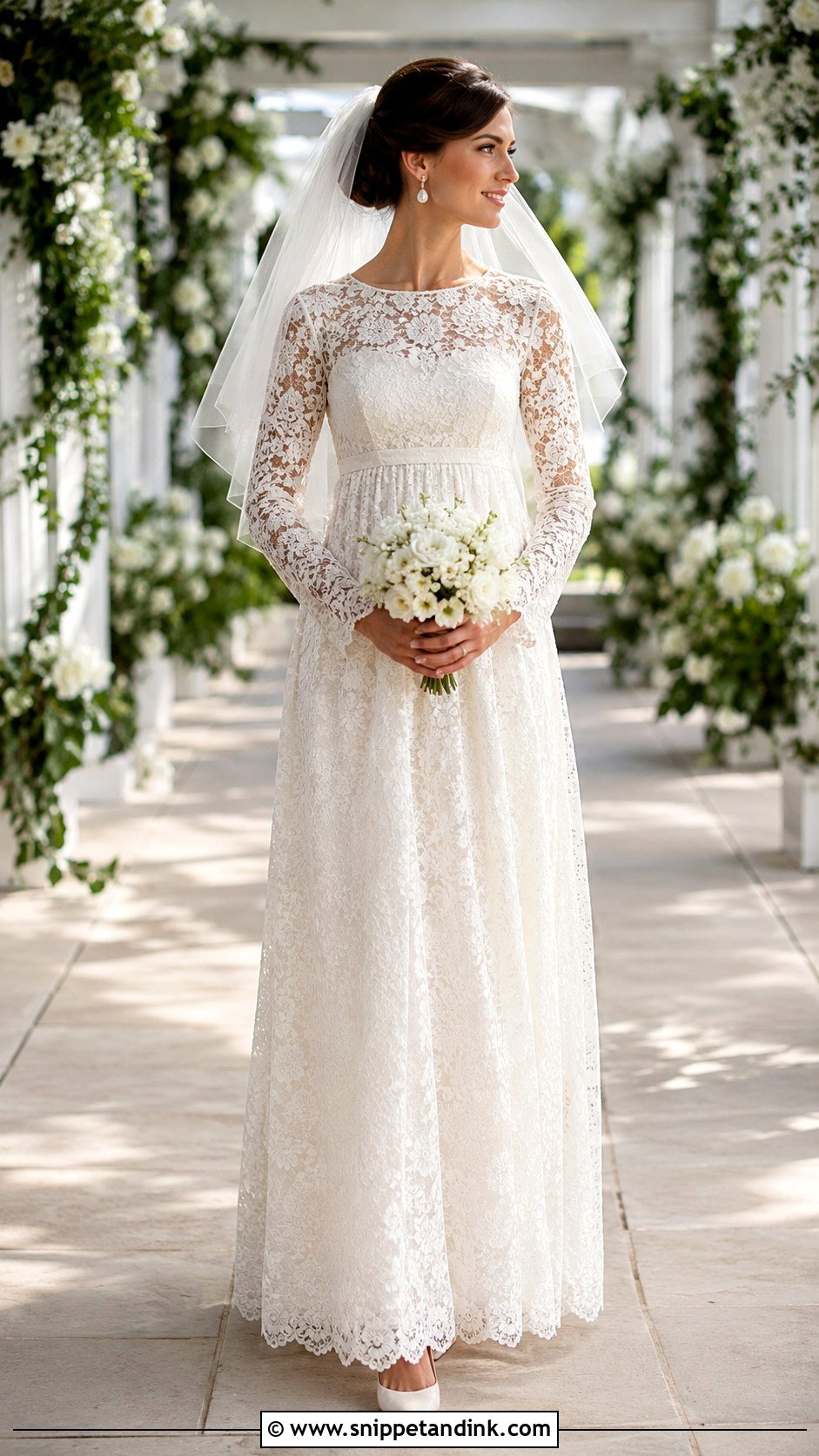
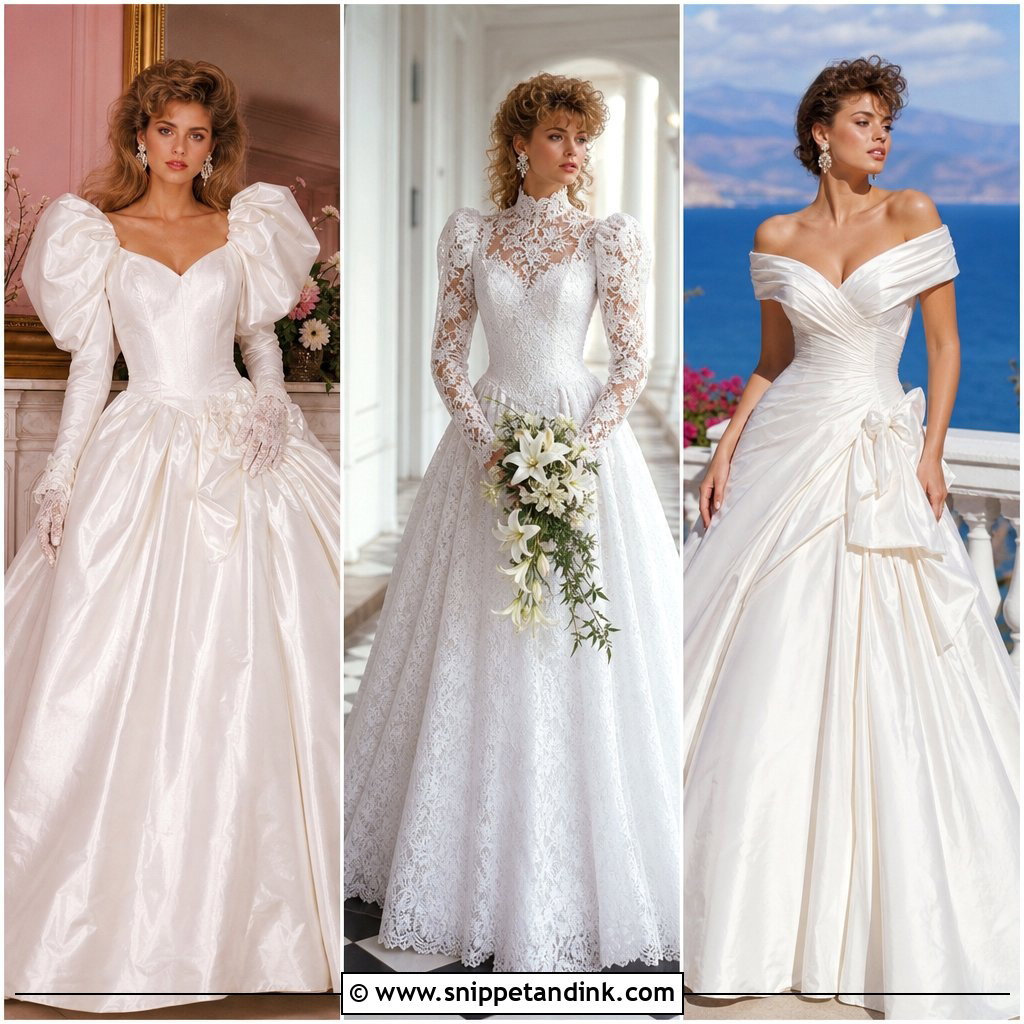
Empire-waist lace is the romantic side of the decade. The seam sits just under the bust and the skirt falls softly to the floor, which lengthens the body and leaves the waist free. Floral lace sleeves give texture without extra decoration. Pointed ivory pumps, fine pearl drops and a narrow ribbon tied under the bust complete it, and a fingertip veil stops short of hiding the raised seam. I’d pick a soft, flexible lace with a light lining here. Stiff corded lace stands away from the body below the bust and spoils the drape.
3. 1960s A-Line Satin Wedding Dress
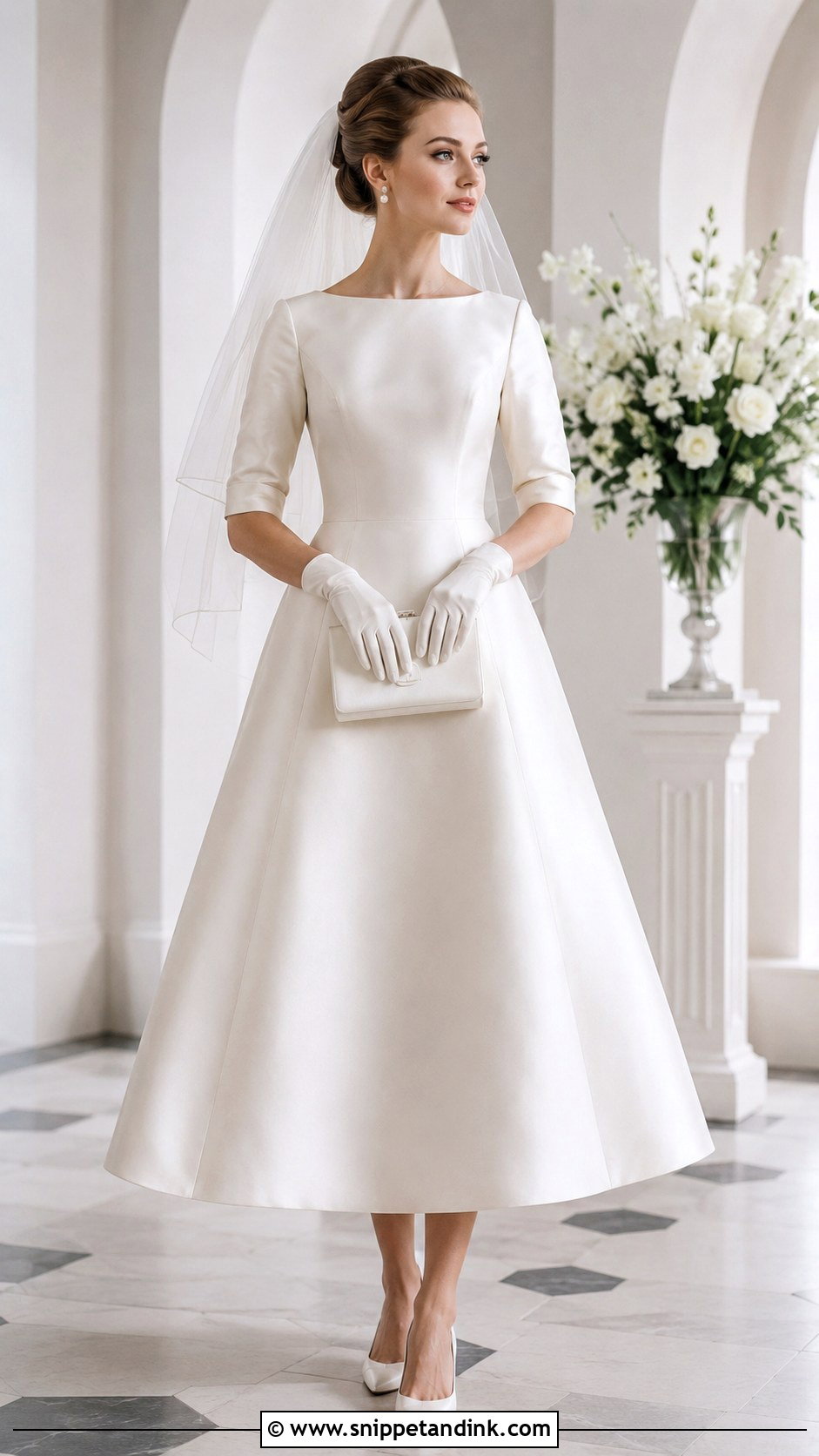
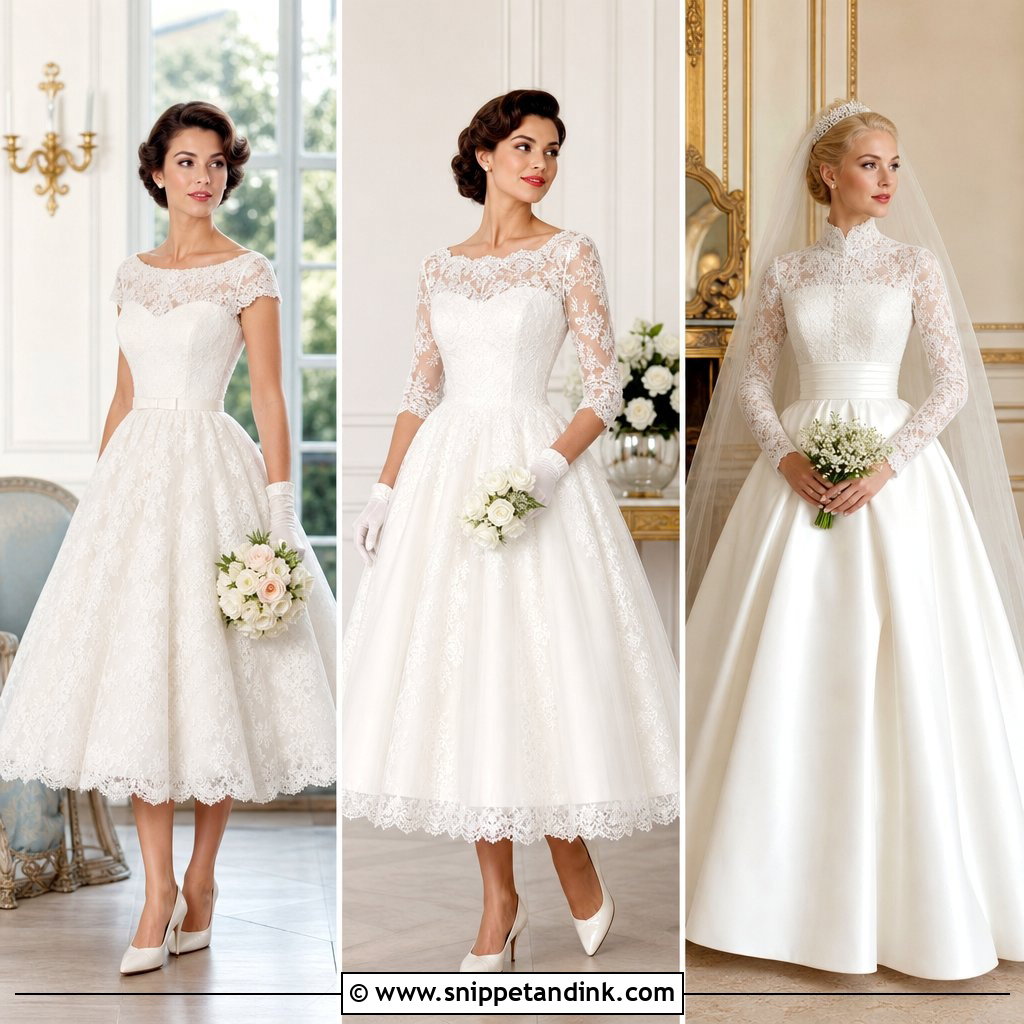
Satin in a simple A-line is the early-sixties formal look: a fitted bodice, a natural or slightly raised waist, and a skirt that widens gradually without a crinoline. A bateau neck and elbow sleeves finish it, with pointed pumps, short gloves, pearl earrings and a structured clutch. A neat low bun or a rounded bouffant keeps the neckline clear. Match metals to the fabric: bright white satin looks best with silver tones, champagne satin with soft gold. Satin shows every pull at the seams, so this is a dress where good tailoring is visible from across the room.
4. 1960s High Neck Lace Mini Wedding Dress
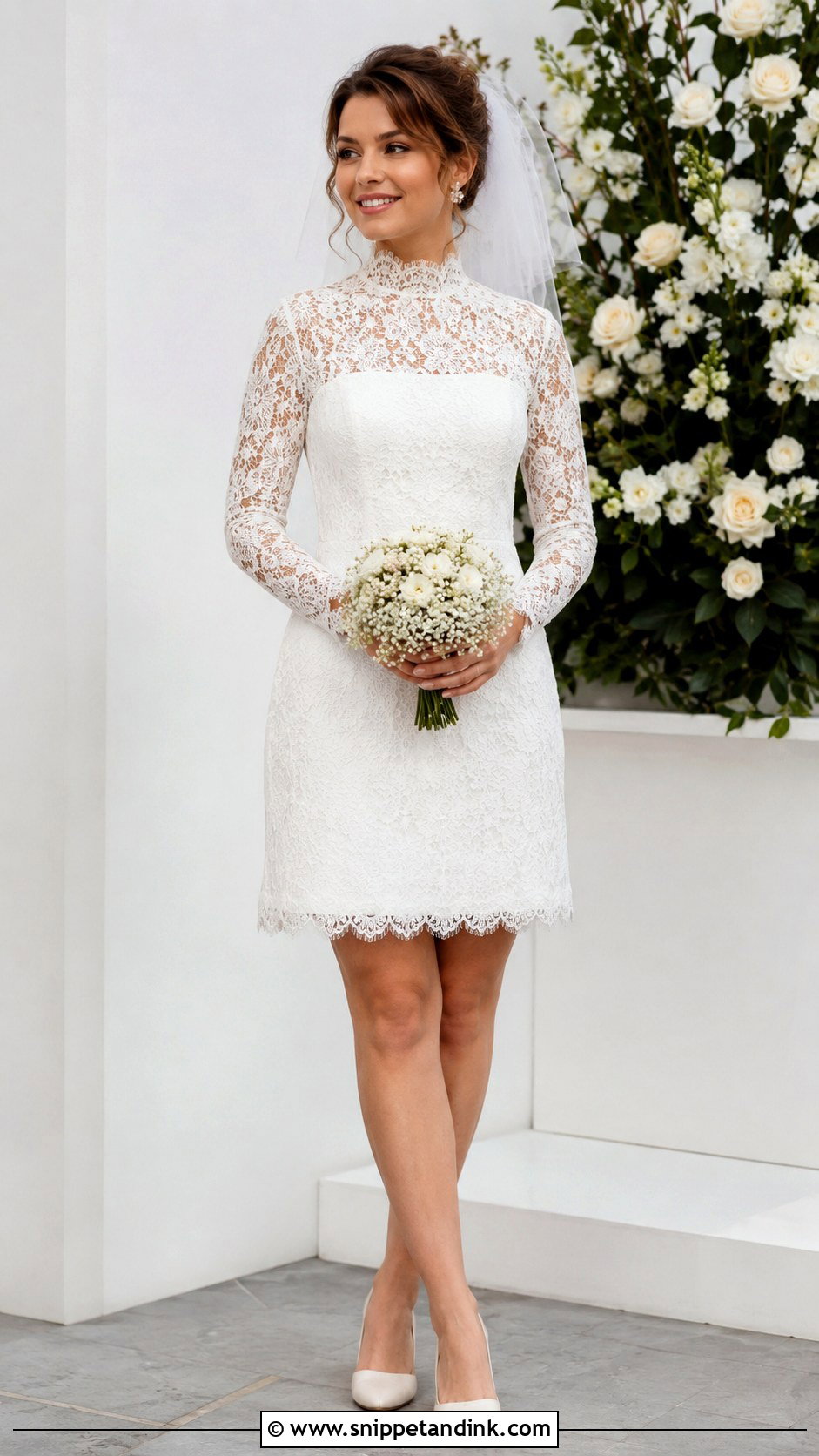
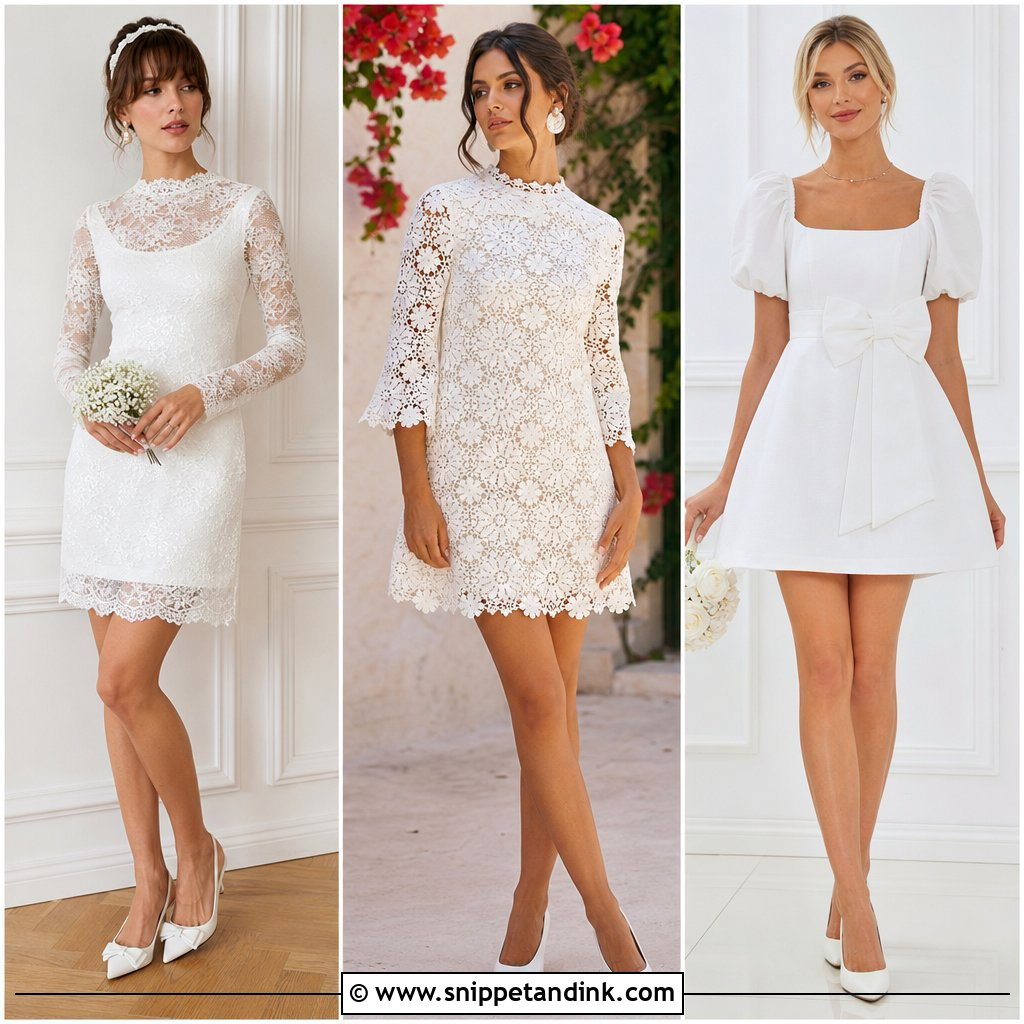
Long sleeves and a high lace neck on a short dress make an appealing contrast, modest on top and playful at the hem. Choose an above-the-knee A-line with a fitted lace bodice and a smooth lining. A scalloped collar or mock neck gives enough detail that jewelry can stay minimal: pearl earrings, a slim bracelet and closed-toe block heels. Keep the bouquet small and the veil short to match the length. In cold weather, an unembellished swing coat ending just below the hem looks right. Sleek hair, up or in a smooth ponytail, shows off the collar.
5. 1960s Tea-Length Wedding Dress
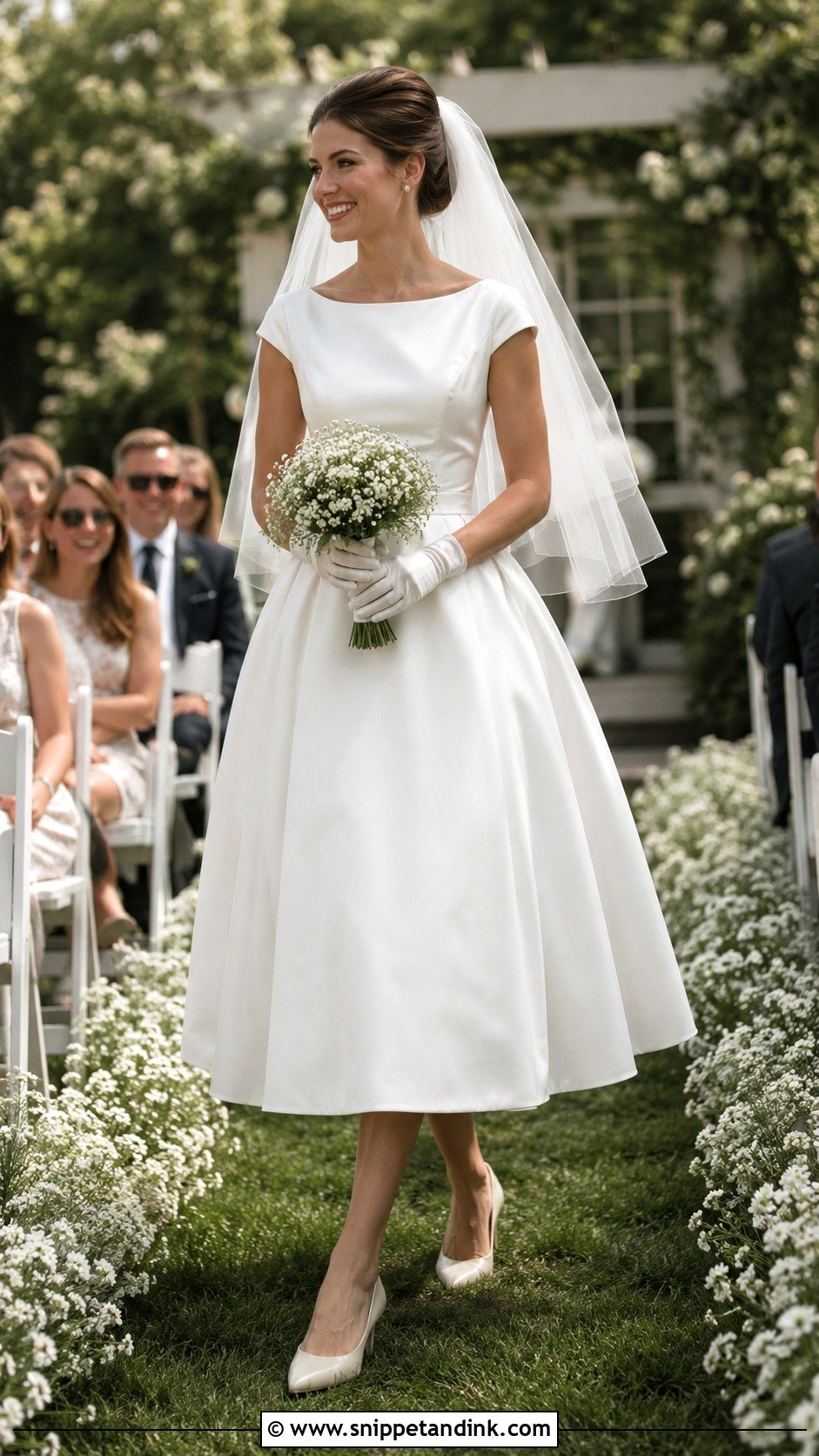
Tea length gives you vintage swing without committing to a mini. A fitted bodice and A-line skirt ending somewhere between knee and ankle, with a boat neck, cap sleeves and fabric with a little structure, carries the sixties feel. The shoes are on show, so choose polished slingbacks or low kitten heels with an almond toe, plus short gloves, pearl studs and a waist-length veil. A narrow belt should match the dress exactly. I check the hem with the bride standing on a step, because tea length looks very different from below, and a hem that hits mid-calf can make the leg look heavier.
6. 1960s Bell Sleeve Wedding Dress
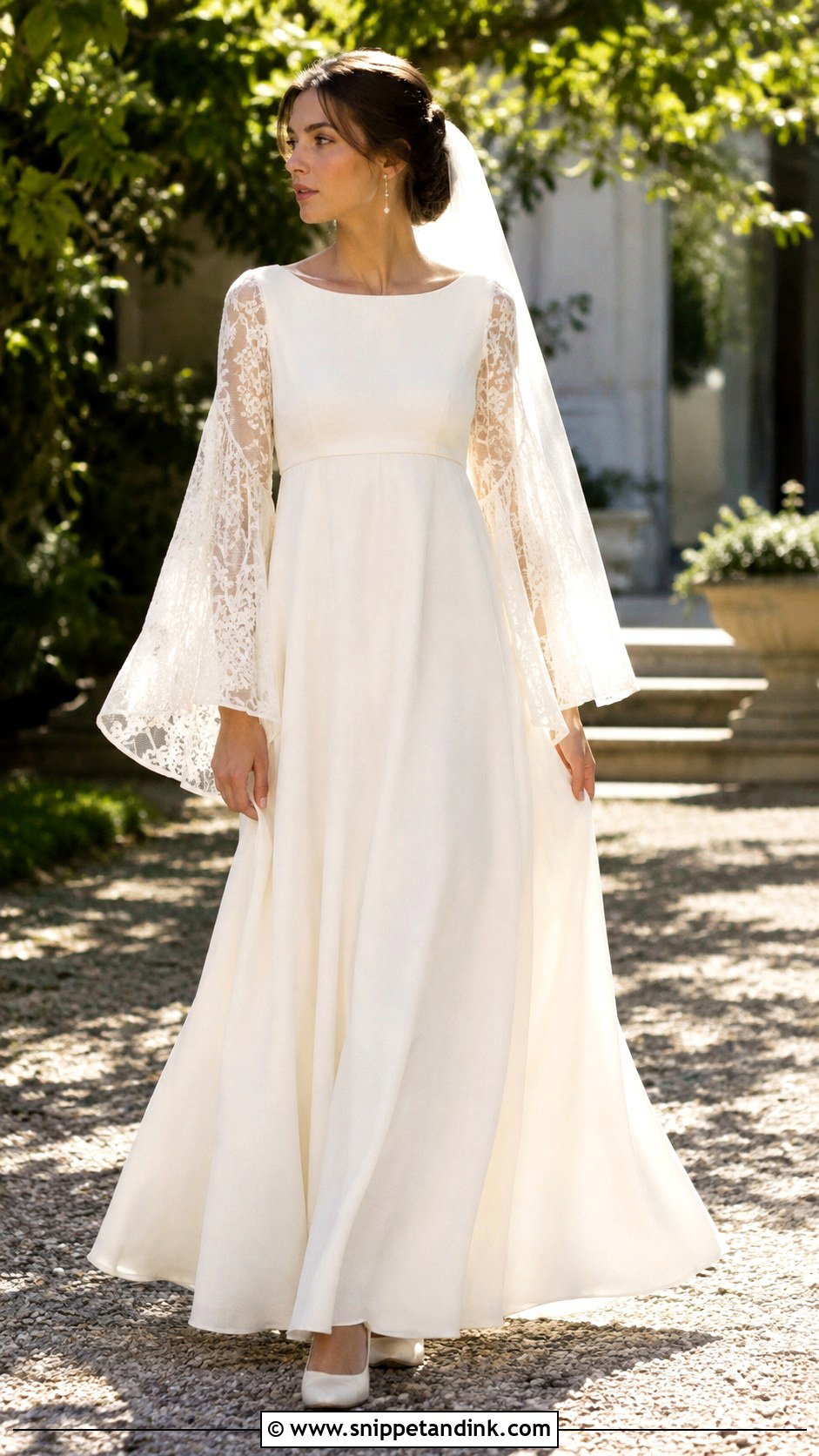
Bell sleeves are the late-decade signature. Build around an empire-waist gown with sleeves fitted to the elbow and widening below it, in soft chiffon, lace or light crepe. Keep the bodice simple and the skirt straight or gently flared so the arms carry the volume. Low satin pumps, small drop earrings and a fine headband or plain veil finish it, with loose waves or a relaxed half-up style. Leave bracelets off; they snag the fabric. Before buying, mime eating, hugging and holding a bouquet in the dress. A wide sleeve that dips into every plate gets tiresome by dessert.
7. 1960s Shift Mini Wedding Dress
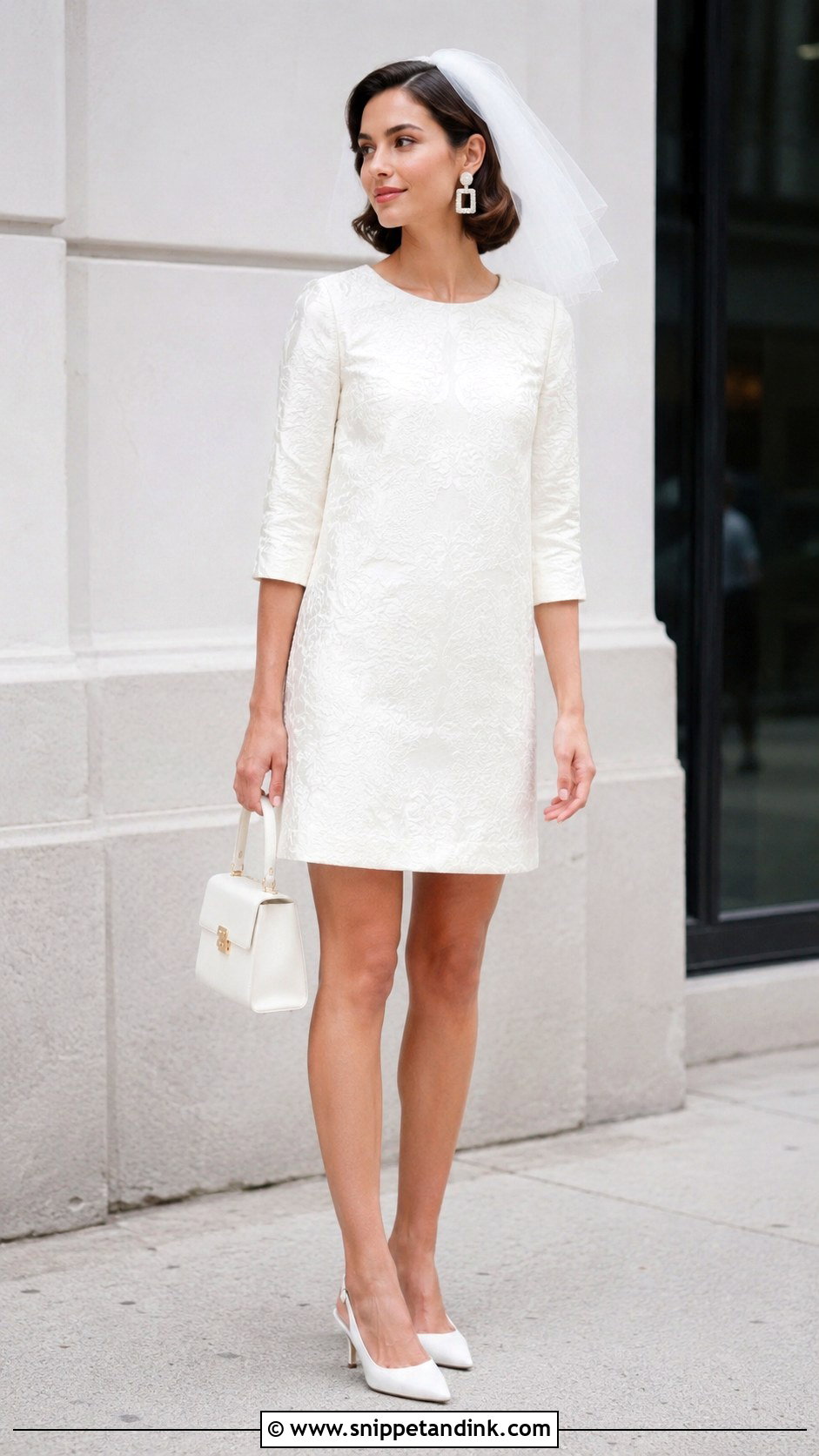
A shift hangs straight from the shoulders with only light shaping at the bust, so everything depends on the fabric. Substantial crepe or textured jacquard hangs cleanly; anything thin clings and creases. A jewel neckline and three-quarter sleeves give coverage, with white slingbacks, a small box bag, geometric earrings and a short veil. A softly teased crown with a neat headband adds period flavor. With no waist seam to adjust, the shoulders and the hem are where all the fitting happens. If the shoulder seam sits even half an inch too wide, the whole dress looks borrowed.
8. 1960s Column Wedding Dress
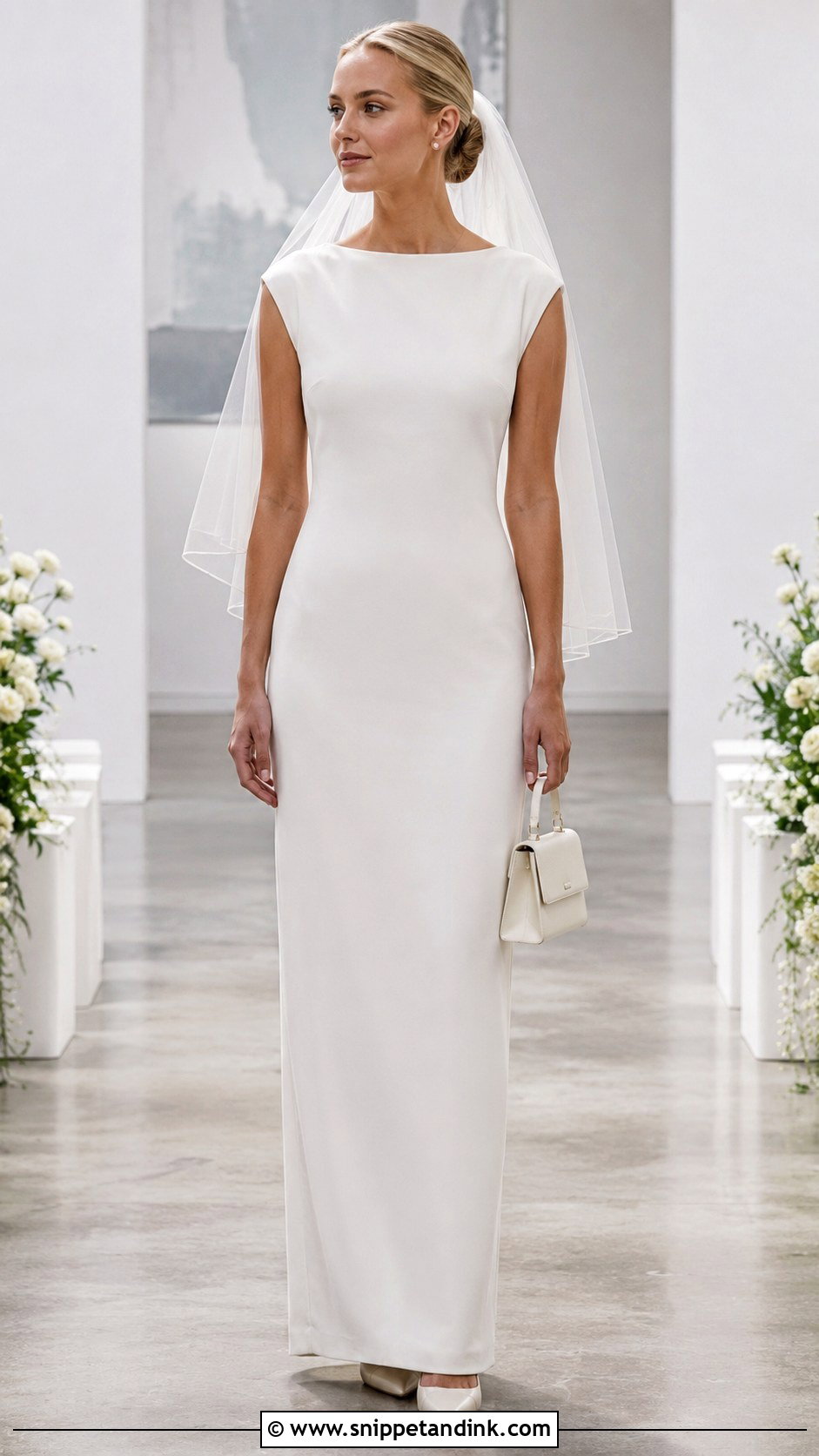
A column gown is the sophisticated end of the sixties. Choose a slim, straight cut in crepe, silk or matte satin, with enough ease at the hem to take a normal step, a bateau neck, a sleeveless bodice and a quiet back detail. Pointed kitten heels, pearl or crystal studs and a structured mini bag complete it, and a detachable short train adds drama for the aisle. A low chignon and an elbow veil keep the line long. Columns show exactly what’s underneath, so bring your intended underwear to every fitting. Seam placement decides whether the fabric falls straight or pulls across the hips.
9. 1960s Peter Pan Collar Wedding Dress
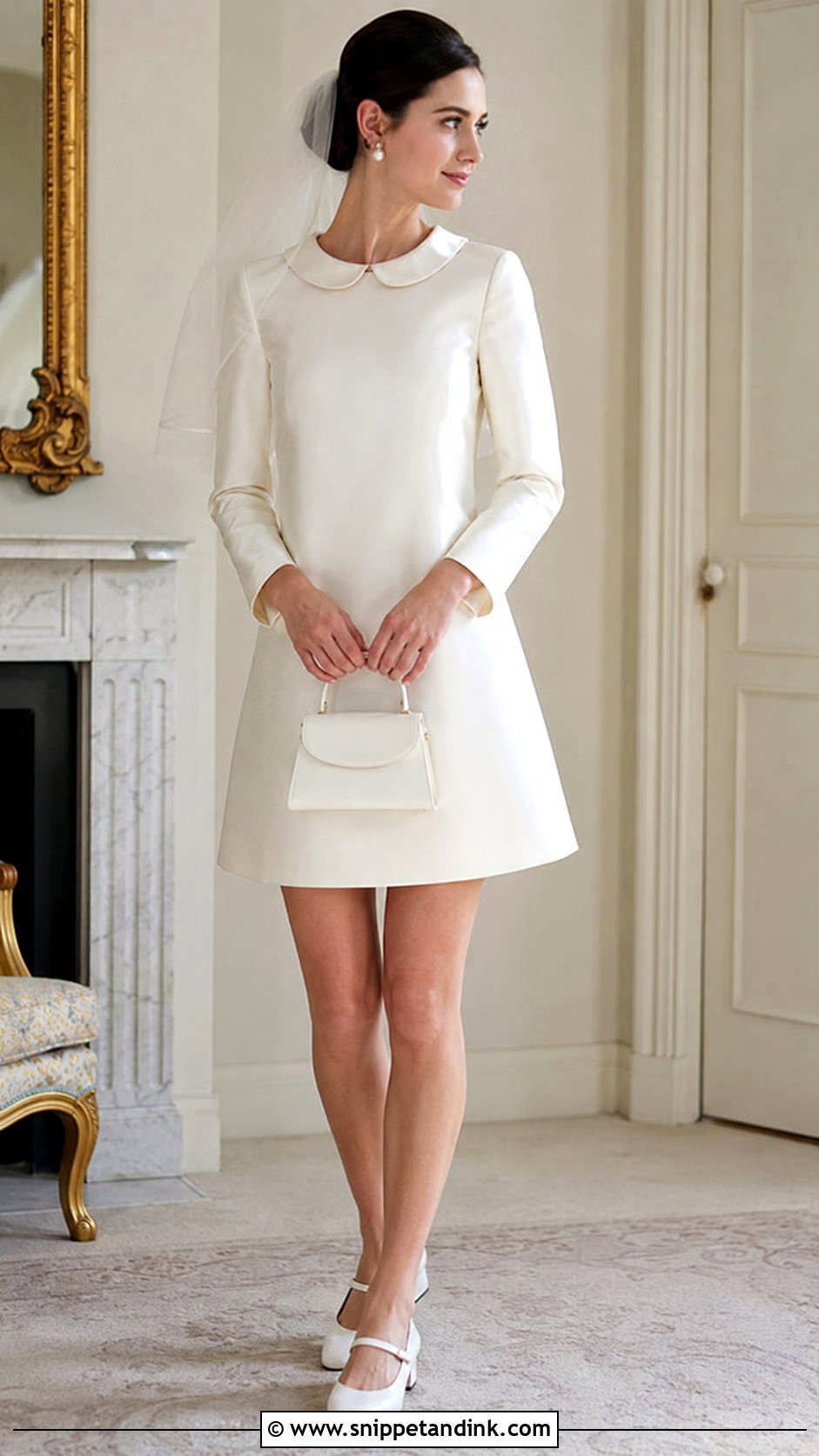
A Peter Pan collar is the sweetest detail of the decade, and it suits a short dress best. Pick a fitted or gently shaped A-line mini with a small rounded collar in matching satin, lace or a contrast texture, with long fitted sleeves to balance the hem. Low Mary Jane heels, pearl studs and a little top-handle bag finish it. A bow at the back of a half-up style echoes the collar, but stop there, or it tips into costume. Skip the necklace. Check that both collar points lie flat and match; a collar that curls up at one edge is the first thing anyone notices.
10. 1960s Three-Quarter Sleeve Wedding Dress
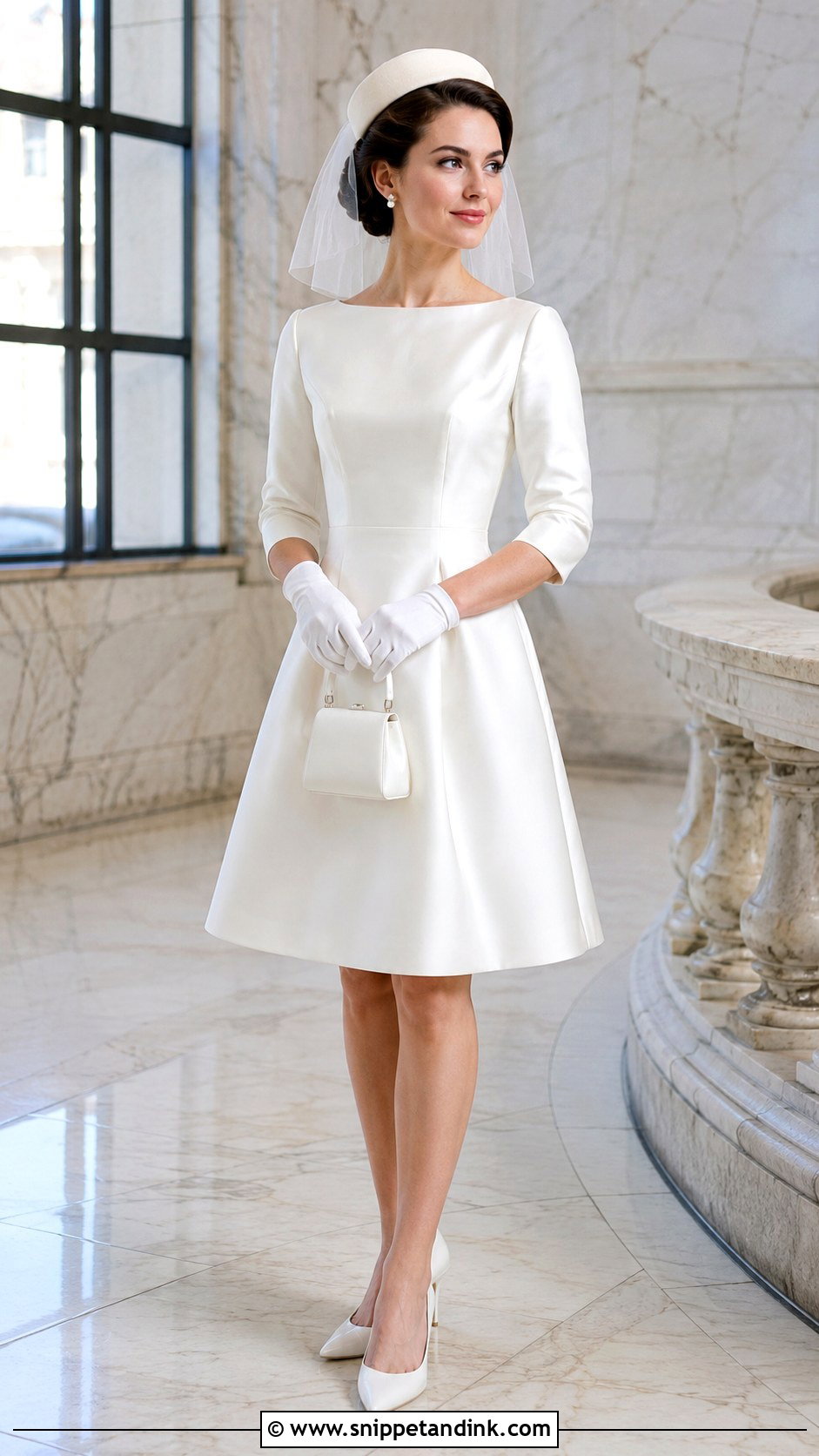
Three-quarter sleeves give coverage without the warmth of full lace. Pair them with a knee- or floor-length A-line, a bateau neck and a softly defined waist, in medium-weight satin, brocade or crepe that holds its shape. Pointed pumps, pearl earrings, short gloves and a neat top-handle bag finish it, and a pillbox-style headpiece with a small veil is the clearest sixties signal you can add. Keep the hair smooth, in a low bun or rounded bob. The gap between sleeve and glove is part of the look, so I fit the gloves and the sleeve together, and I keep the bouquet compact enough not to hide it.
11. 1960s Crochet Lace Wedding Dress
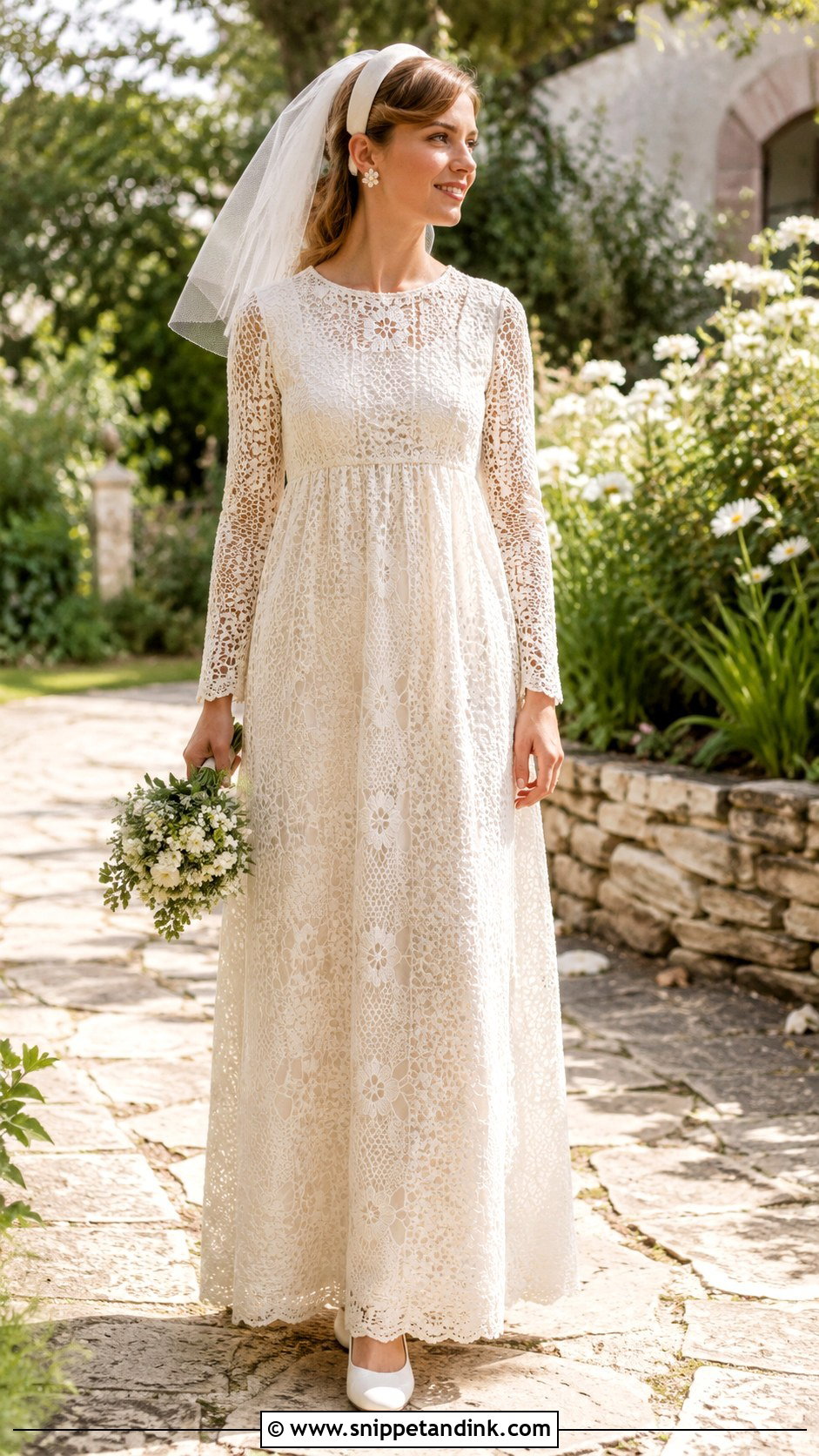
Crochet lace has a relaxed, handmade feel. I’d put it on an empire-waist or simple A-line gown, layered over an opaque slip, with a high neck and long sleeves to keep it bridal and a flowing skirt so the texture doesn’t feel heavy. Ivory block-heel sandals or closed-toe pumps, small floral earrings, a ribbon headband and a fingertip veil suit the mood, along with loose waves and light makeup. Open crochet catches on rings, earring backs and bouquet wire. Match the slip to your skin tone or to the lace itself; a slip in a third shade shows through the holes in every photo.
12. 1960s Bishop Sleeve Wedding Dress
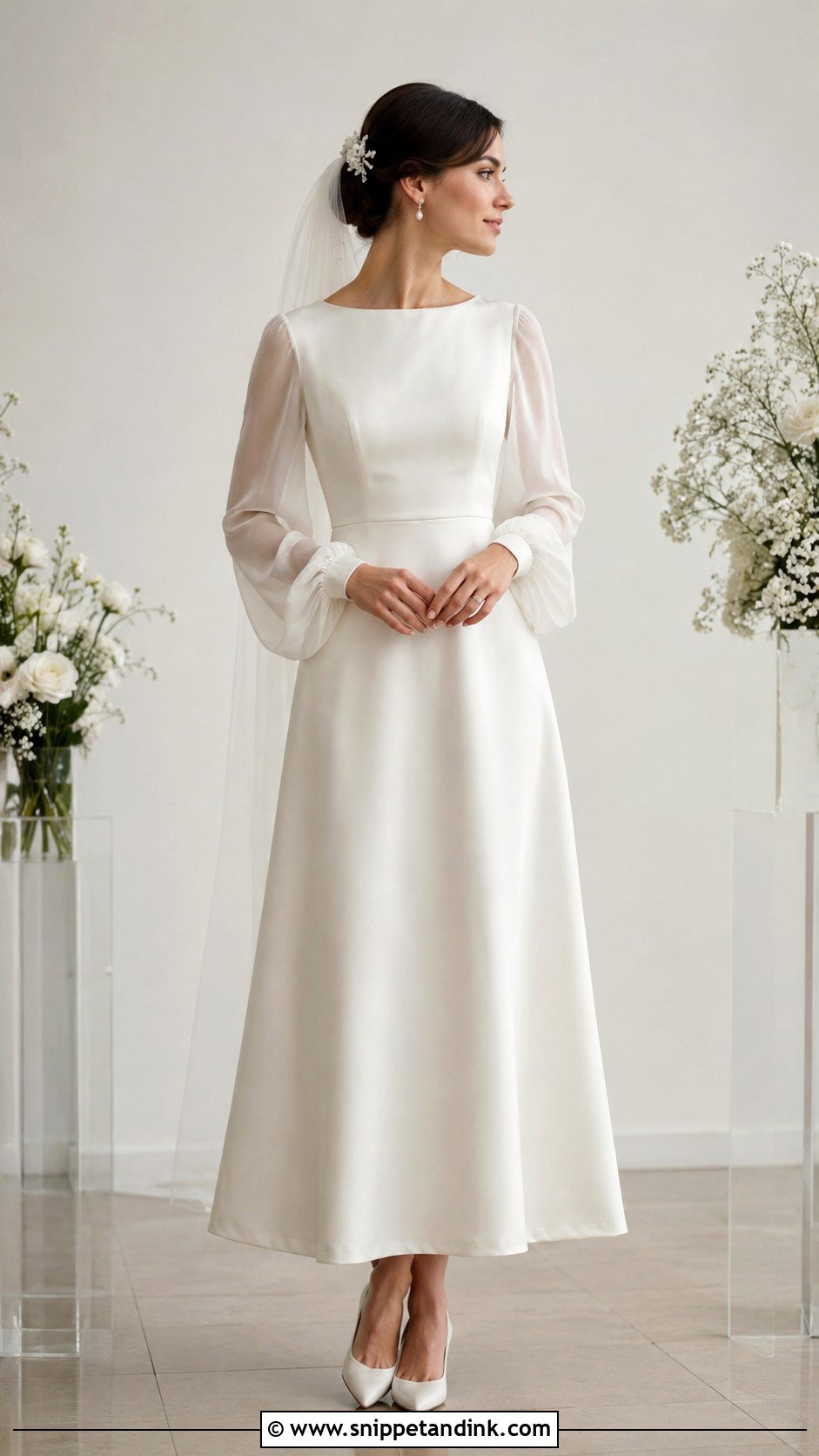
Bishop sleeves billow from the shoulder and gather into a slim cuff, so you get volume with a neat wrist. Sheer chiffon versions on an empire-waist gown are the classic, balanced by a high neck or modest V and a lightly flared skirt. Low pointed pumps, drop earrings and a floral hair comb finish it. Let the veil fall behind the shoulders, not over the sleeves, and keep rings and bracelets minimal near the cuffs. At the fitting, bend your elbows and reach forward. Sleeves cut to length with straight arms pull the cuff halfway up your forearm the moment you lift a glass.
13. 1960s Floral Appliqué Wedding Dress
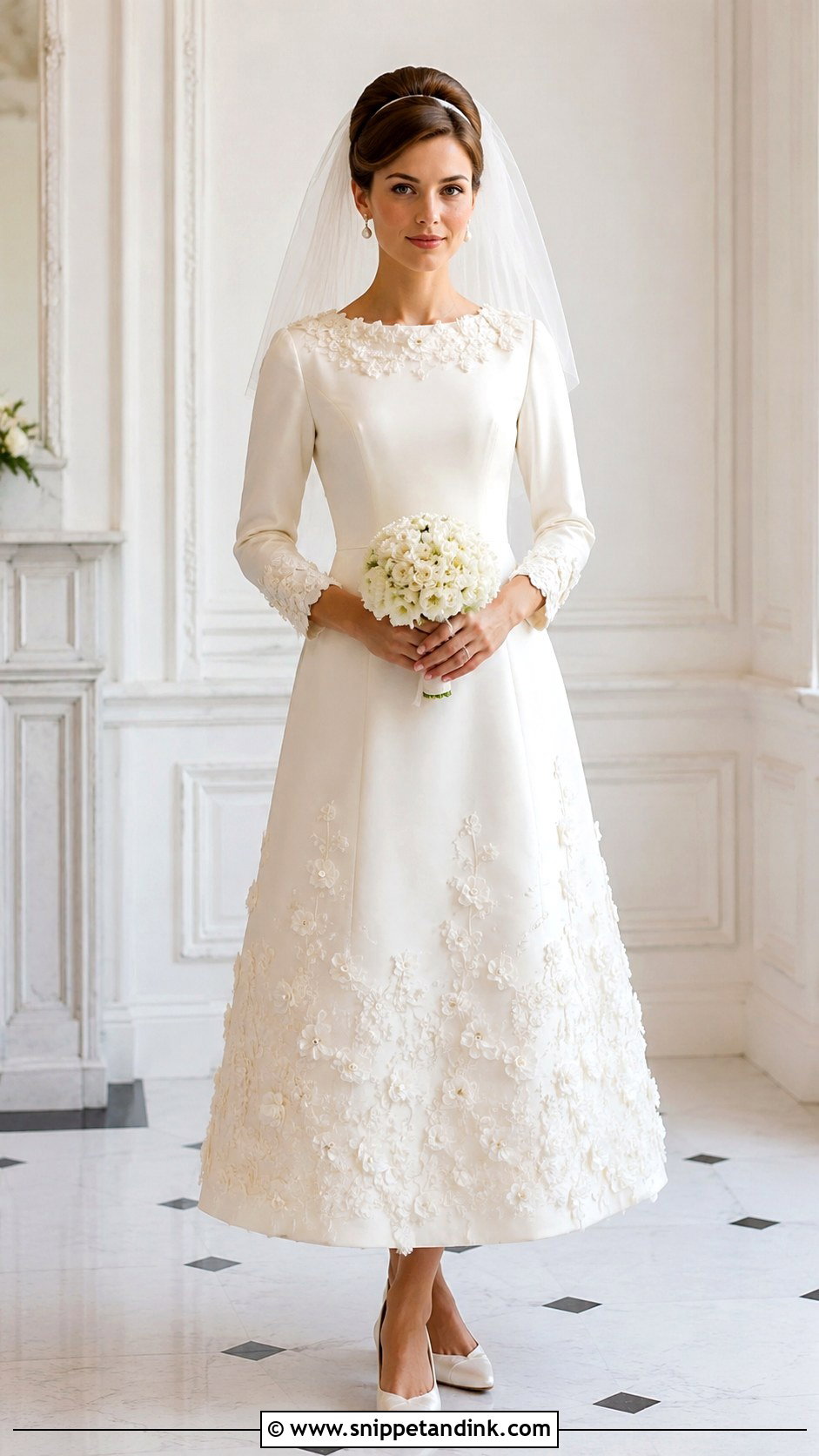
A few floral appliqués can turn a plain sixties silhouette into something detailed. Start with a clean A-line or empire-waist gown and place the flowers in one or two zones, the neckline, bodice, cuffs or skirt, rather than everywhere. Satin pumps, pearl earrings and a plain veil keep the texture in charge, and a smooth updo leaves the neckline visible. With a floral dress, a compact bouquet stops flowers piling on flowers. Repeating one small motif on a headband or bag ties the outfit together. Feel the back of each appliqué before buying, since hard edges scratch through a thin lining.
14. 1960s Wedding Coat Dress
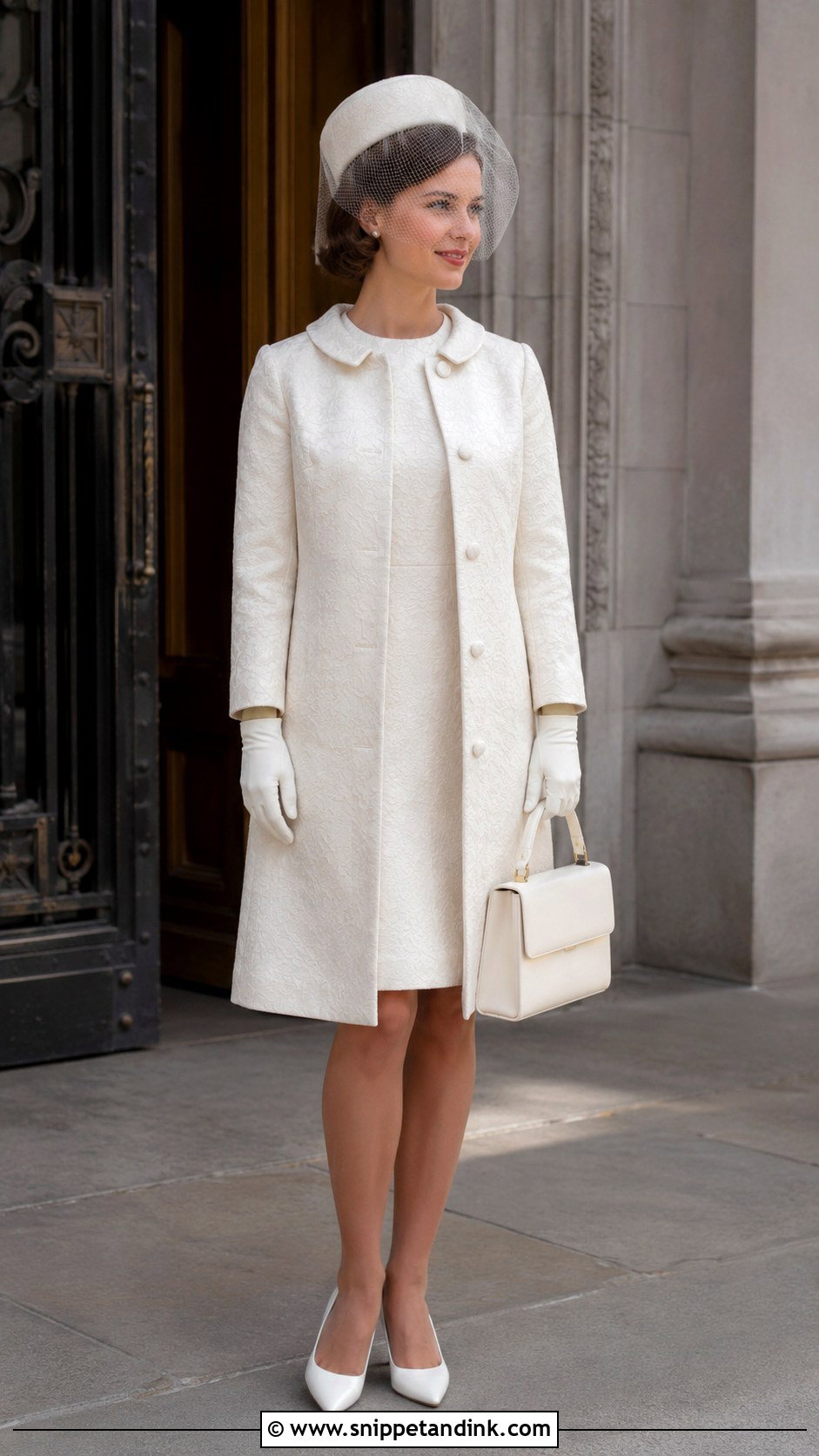
A wedding coat dress gives a structured, tailored look for a city ceremony or a cold month. A knee-length A-line coat in ivory jacquard, satin or textured crepe can be worn on its own or over a sleeveless shift. Covered buttons, a rounded collar and bracelet-length sleeves give the period finish, with pointed kitten heels, short gloves, pearl earrings and a small structured bag. A pillbox or short veil suits the proportions. Wear it buttoned for the ceremony and take it off for the reception. Have both layers fitted together, so the hems line up and the coat has room through the shoulders over the dress.
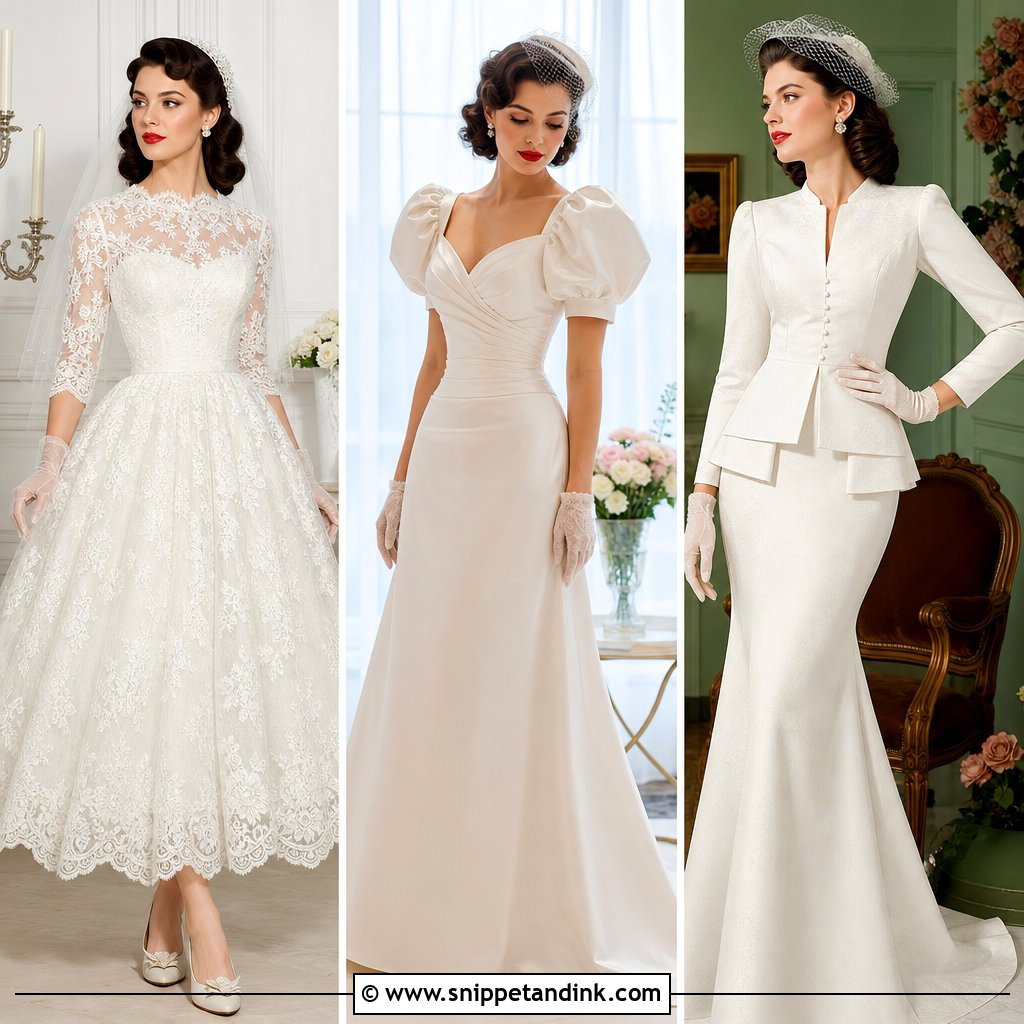
15. 1960s Babydoll Wedding Dress
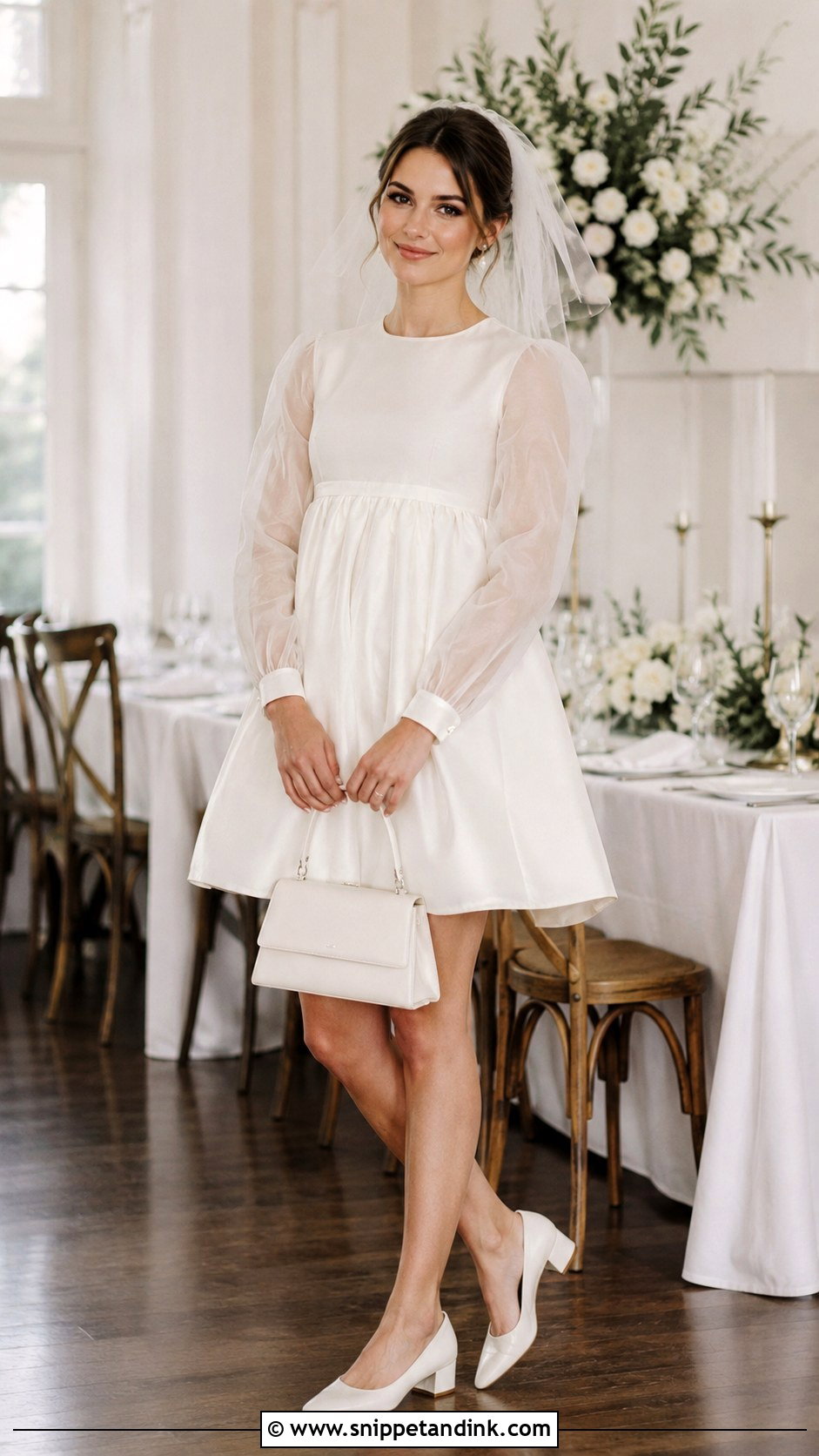
Babydoll dresses are the most youthful shape here. A fitted bodice, a seam just under the bust and a short, softly gathered skirt, with long sheer sleeves and a plain round neck, keep the balance. Low block heels or Mary Janes, opaque tights in cool weather, a small top-handle bag, pearl studs and a short veil behind a smooth headband finish it. I’d avoid ruffles completely; they push the shape from playful into childish. Fit the bust and shoulders precisely, because the loose skirt only looks deliberate when everything above the seam is exact.
16. 1960s Watteau Train Wedding Dress
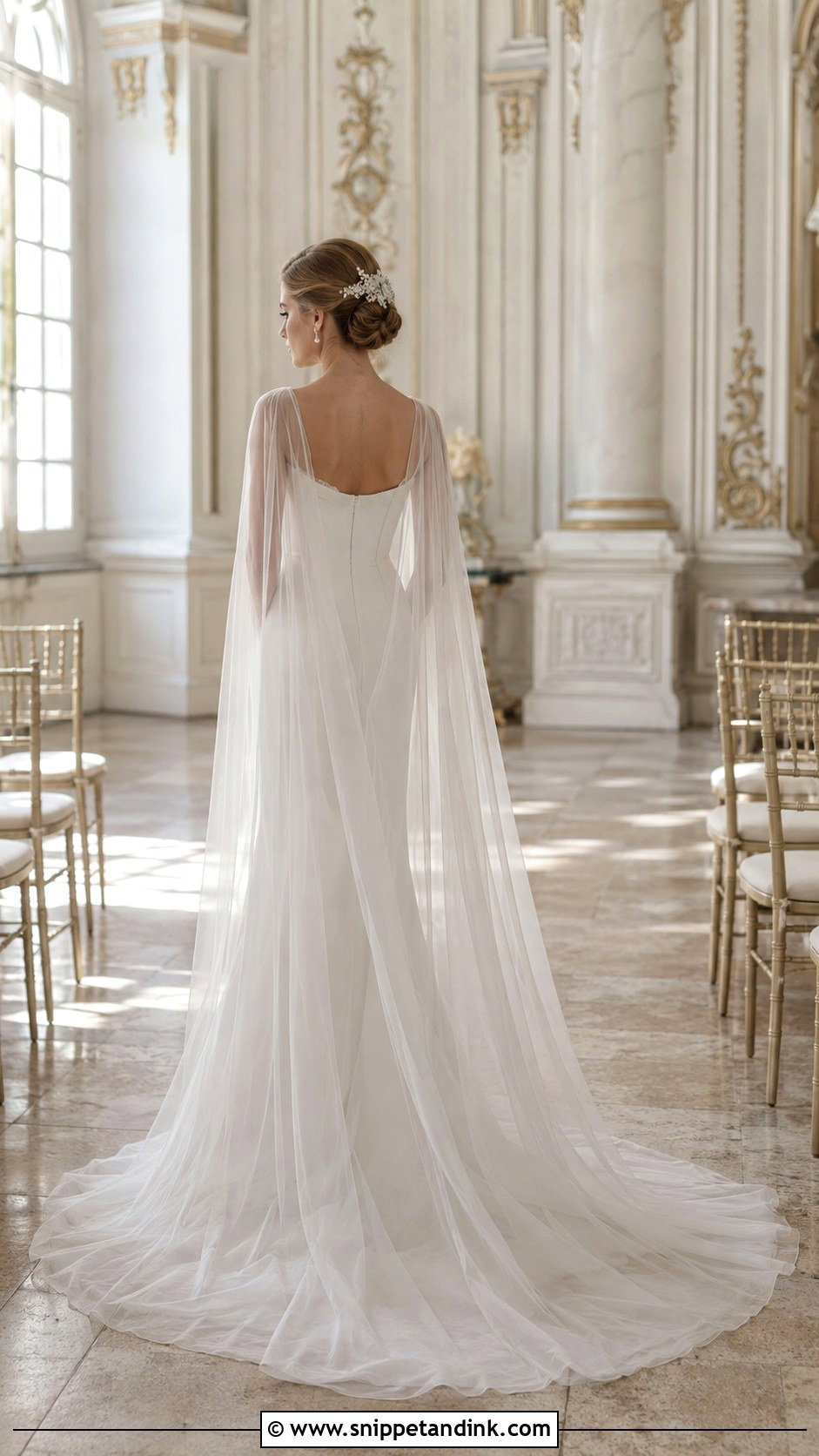
A Watteau train falls from the shoulders or upper back rather than the waist, sweeping behind a streamlined gown. Keep the front plain, a fitted column or gentle A-line, so the back is the event. Lightweight chiffon, organza or lace moves well without dragging the shoulders backward. Low pumps, fine earrings and a short veil or comb set above the train’s attachment complete it, with the hair up. Ask for a discreet wrist loop or bustle for dancing. The weight of the train hangs from the shoulders, so I always check that the neckline doesn’t get pulled back against the throat when the bride walks.
17. 1960s Cap Sleeve Wedding Dress
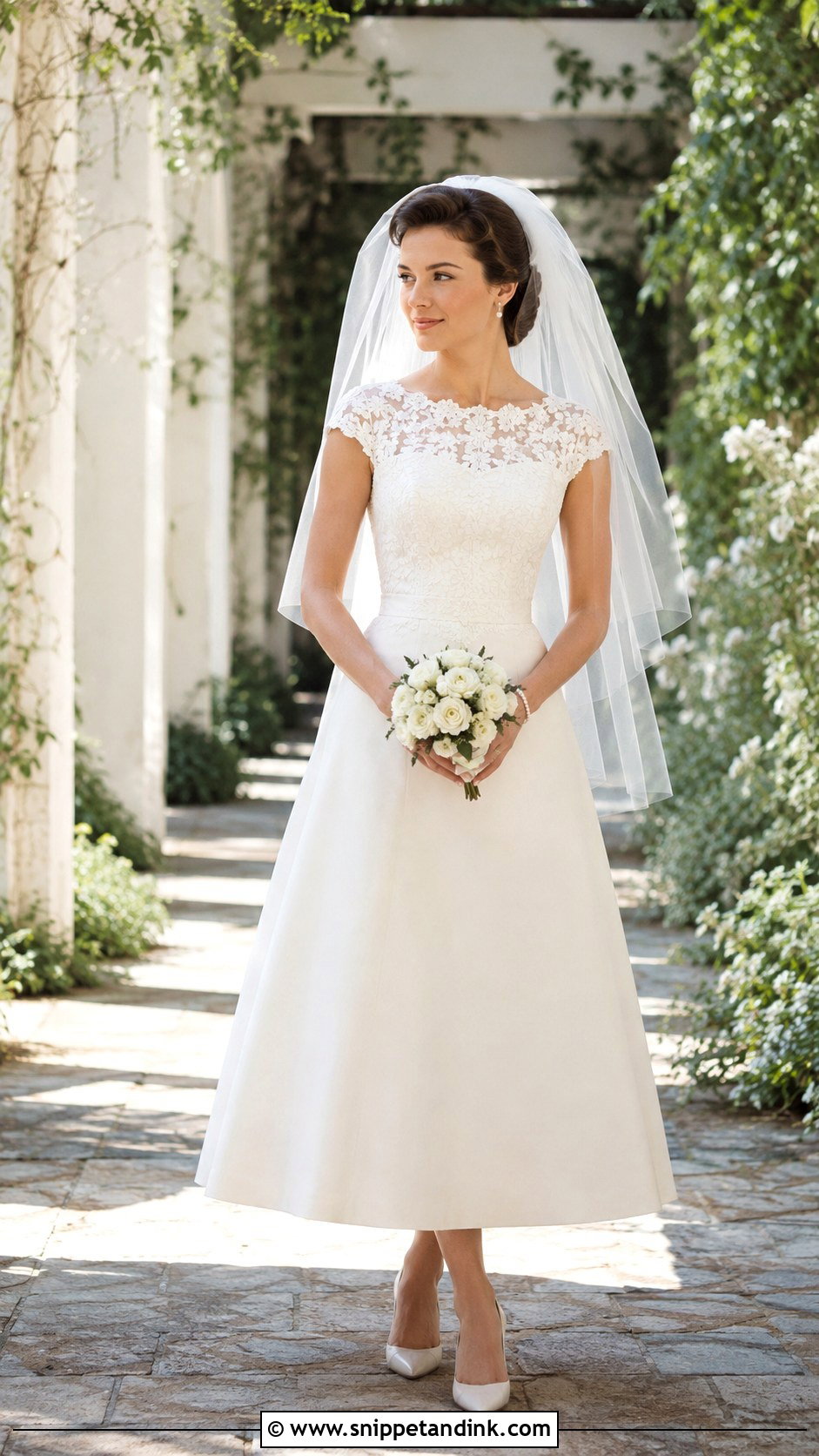
Cap sleeves give a little coverage over a fitted A-line. A lace bodice, defined waist and smooth satin or organza skirt mix texture and structure, and a shallow scoop or bateau neck widens the upper body slightly to suit the small sleeves. Pointed pumps, pearl earrings, a narrow bracelet and a waist-length veil finish it, with a soft bouffant or polished half-up style. Cap sleeves are the most common source of pinching in this decade’s styles. Raise your arms at every fitting and check the underarm; if it digs in, ask for a small gusset rather than living with it.
18. 1960s Square Neck Wedding Dress
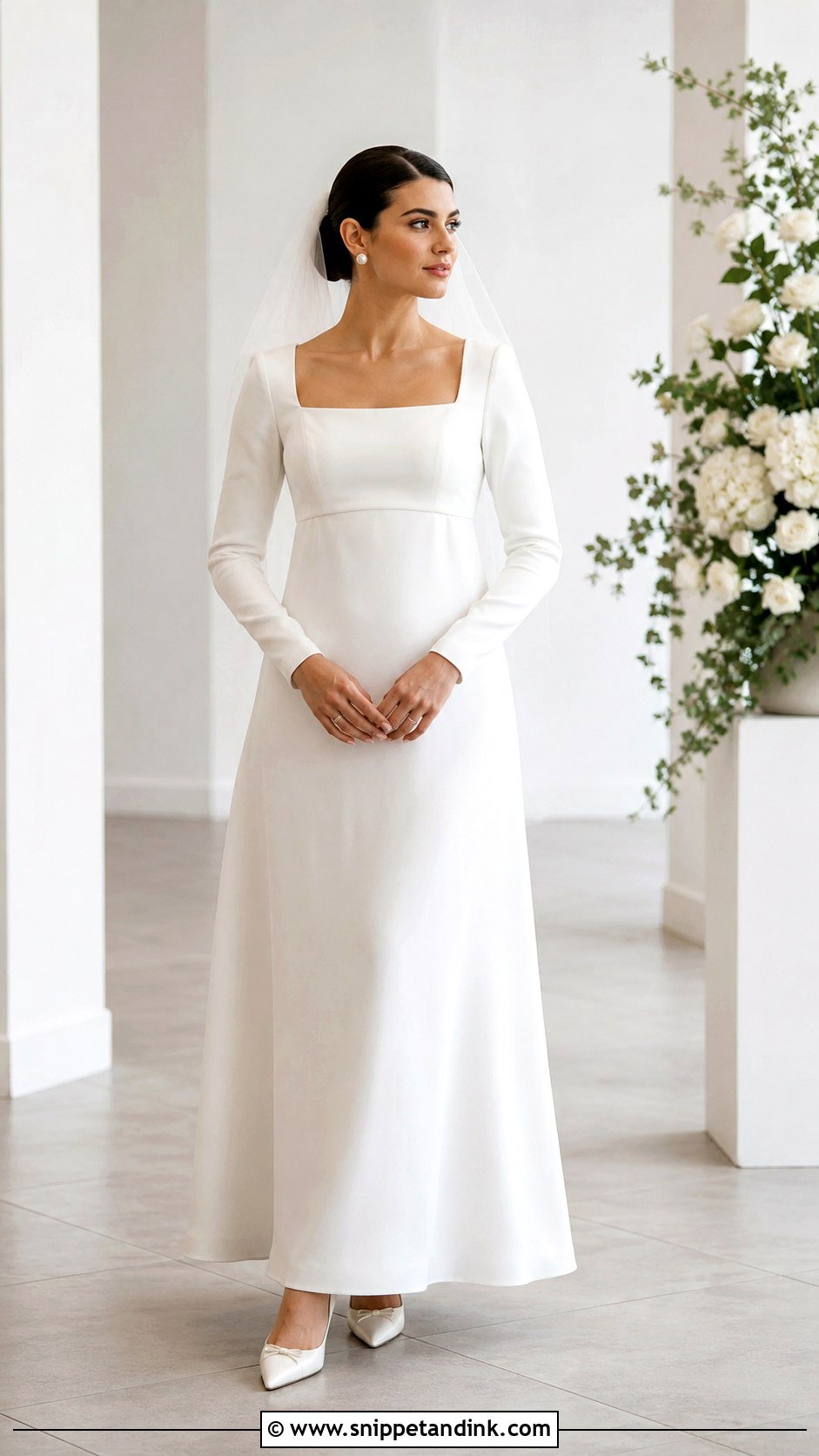
A square neckline frames the face with a crisp line. Pair it with an empire waist, long fitted sleeves and a straight or gently flared floor-length skirt, using one main fabric, crepe, satin or lace, so the shape stays easy to read. A short pendant works only if the neckline is plain; with trim, skip it. Pearl earrings, pointed kitten heels and a fingertip veil complete the outfit, with a sleek low bun. Square necks gape at the corners when you lean forward, so I have the bride sit and reach at the fitting, and add a little internal support where needed.
19. 1960s Wedding Dress With Pillbox Veil
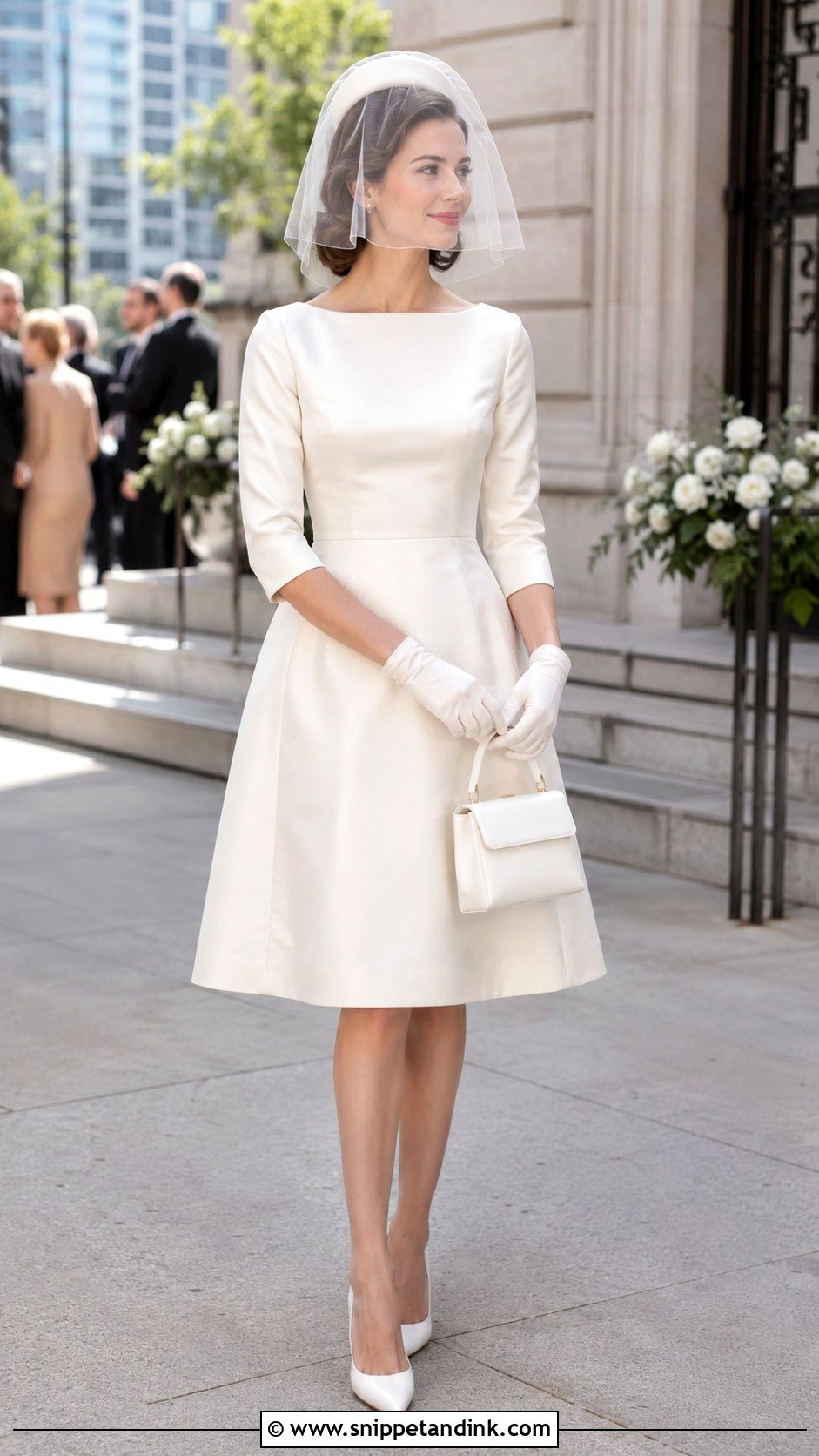
A pillbox headpiece with a short veil is the single strongest sixties signal you can wear. Build around a knee-length A-line with three-quarter sleeves, a softly defined waist and a plain bateau neck. Cover the pillbox in matching satin or a textured fabric, with the veil falling to the eyes or chin. Pointed pumps, short gloves, pearl studs and a structured handbag finish it. Because the hat leads, keep the dress simple. A pillbox sits on a low bun or smooth tucked style; with loose hair it slides. Look at it from the side at your trial, since a hat that suits you head-on can look too large in profile.
20. 1960s Courthouse Mini Wedding Dress
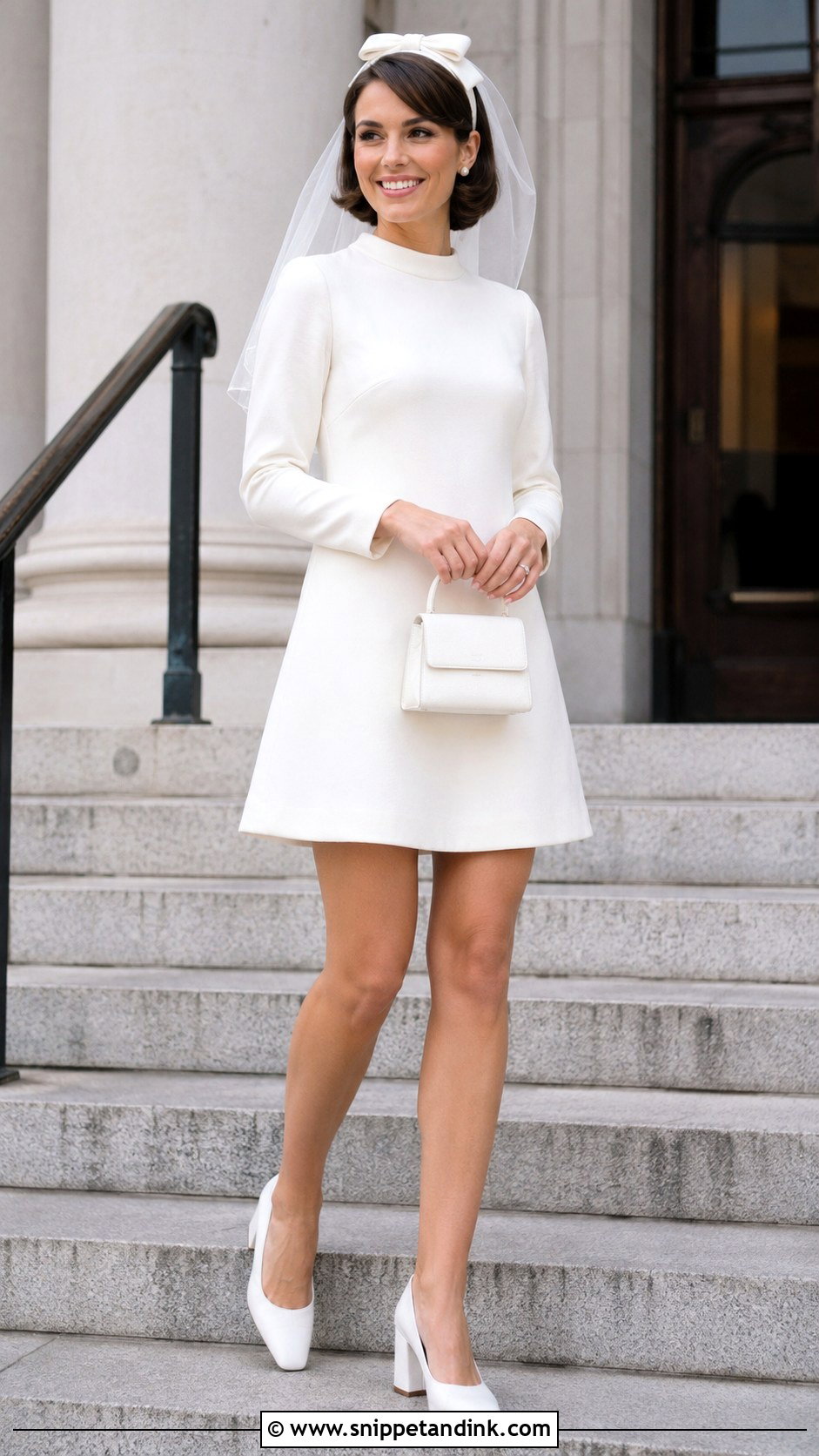
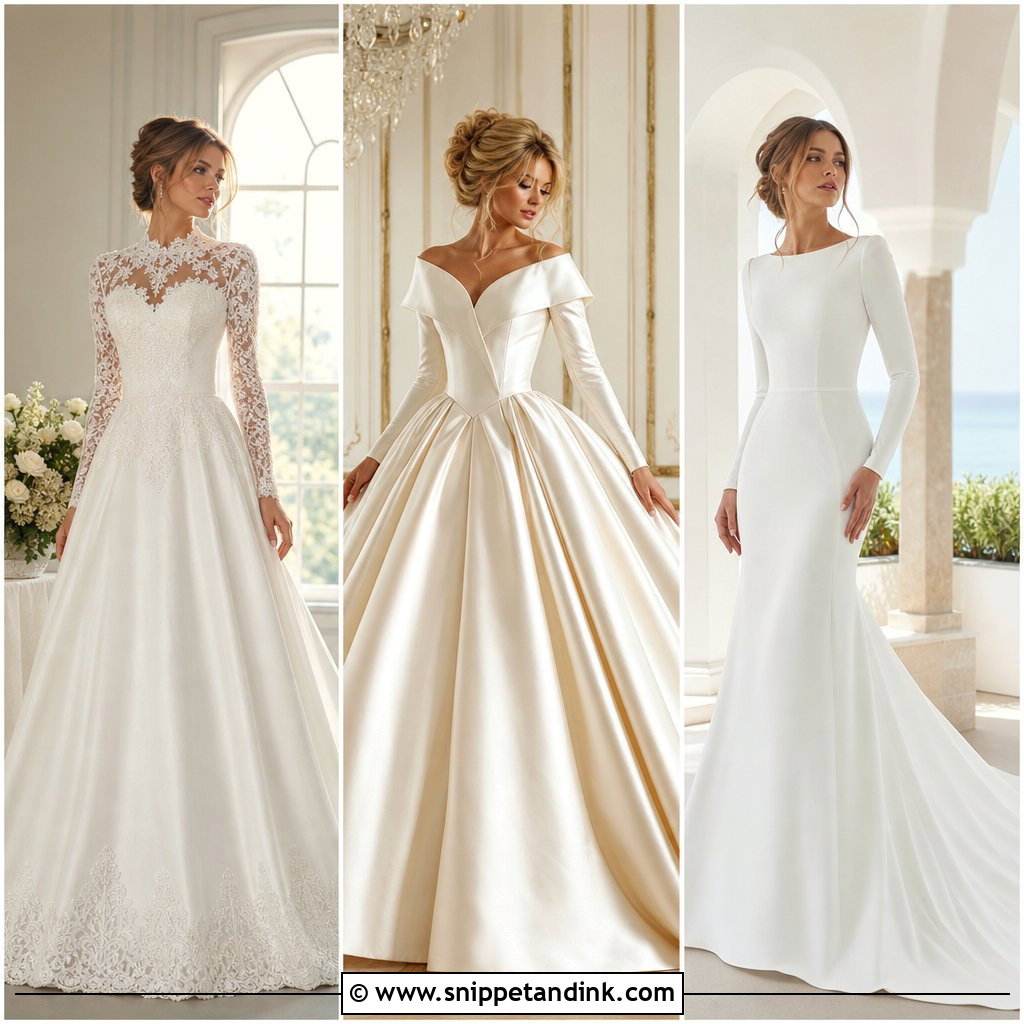
A courthouse ceremony suits a sharp mini. A tailored A-line or shift in ivory crepe, satin or textured jacquard, with a high neck, long sleeves and an above-the-knee hem, feels special without being formal. Block-heel pumps, pearl earrings and a compact top-handle bag big enough for your documents and lipstick finish it, plus a short veil, bow headband or small pillbox. For an outer layer, choose a matching swing coat slightly longer than the dress. Courthouse days involve a lot of standing in corridors and walking between buildings, so I’d choose shoes for that first and looks second.
How Short Is Too Short for a Wedding Mini?
Half the dresses in this list sit above the knee, and the hem that looks right in a mirror is often too short once the day starts. A wedding involves sitting on low ceremony chairs, climbing in and out of cars, walking up steps in front of a photographer and dancing. Every one of those raises a mini.
My test at the final fitting is simple. Sit on a low chair with your knees together, then walk up a few stairs while someone stands at the bottom. If you’re tugging at the hem in either position, lower it. An inch makes a real difference, and most A-line minis have enough hem allowance to let down.
Think about the venue as well. A house of worship or a conservative family gathering may suit a knee-length version of the same dress, with the shorter one saved for the party. Tights help in winter and smooth the leg in photos; sheer ivory or nude ones look the most bridal. And since your legs and shoes are fully in view, wear the shoes at home first so you walk naturally rather than carefully.
Mini, Midi or Floor Length, One Retro Detail Is Plenty
The sixties work best for a bride when one period detail leads and modern comfort does the rest. A mod mini is playful and confident, while an empire waist lace gown is softer and more romantic. Tea lengths, satin A-lines, big sleeves and coat dresses give you more routes into the decade. Once the silhouette is decided, coordinate the shoes, veil, jewelry, hair and bag without stacking several retro references on top of each other. Book alterations in your real underwear and shoes, and walk, sit and lift your arms in the dress before the final fitting is signed off.
You'll Like These Ideas:


Leave a Reply