
Letting your attendants wear different outfits takes a lot of pressure off everyone. Each person gets a shape that suits her body and budget, and nobody is stuck in a strapless dress she’ll never wear again. The catch, from where I stand as a planner, is that a mixed lineup only looks deliberate when it shares one clear thread: a colour family, a fabric, a length, a print or a level of formality. Without that, it looks like six guests who happened to stand together. Mixing colours, textures, patterns and hemlines is now completely normal in bridal parties, so the real work is in the edit. Swatches, an approved palette and simple shopping rules do most of it. Here are twenty ways to build the group, with notes on what tends to go right and wrong.

A One-Page Brief Saves a Hundred Group Texts
Mismatched sounds relaxed, but it usually needs more organising than one dress for everyone. When I plan one, I send the attendants a single page they can keep on their phones and shop from. It covers the decisions people otherwise ask about one by one.
- The approved colours, with brand colour names and a photo of each swatch in daylight.
- Length rule: floor length, midi only, or anything from knee to ankle.
- Fabric rule: what’s in (chiffon, satin, crepe) and what’s out (cotton, jersey, sequins).
- Shoe colour and any practical limits, like no stilettos on a lawn.
- A spending guide, so nobody feels pushed into a dress she can’t afford.
- The date to send a photo of the chosen outfit before ordering, and the date it must be bought.
Timing matters more than people expect. Many made-to-order bridesmaid ranges take about three to four months to arrive, and alterations add a few weeks on top, though this varies a lot by brand. I like everyone ordered around five to six months before the wedding. That leaves time for one person to change her mind or for a delayed shipment without panic.
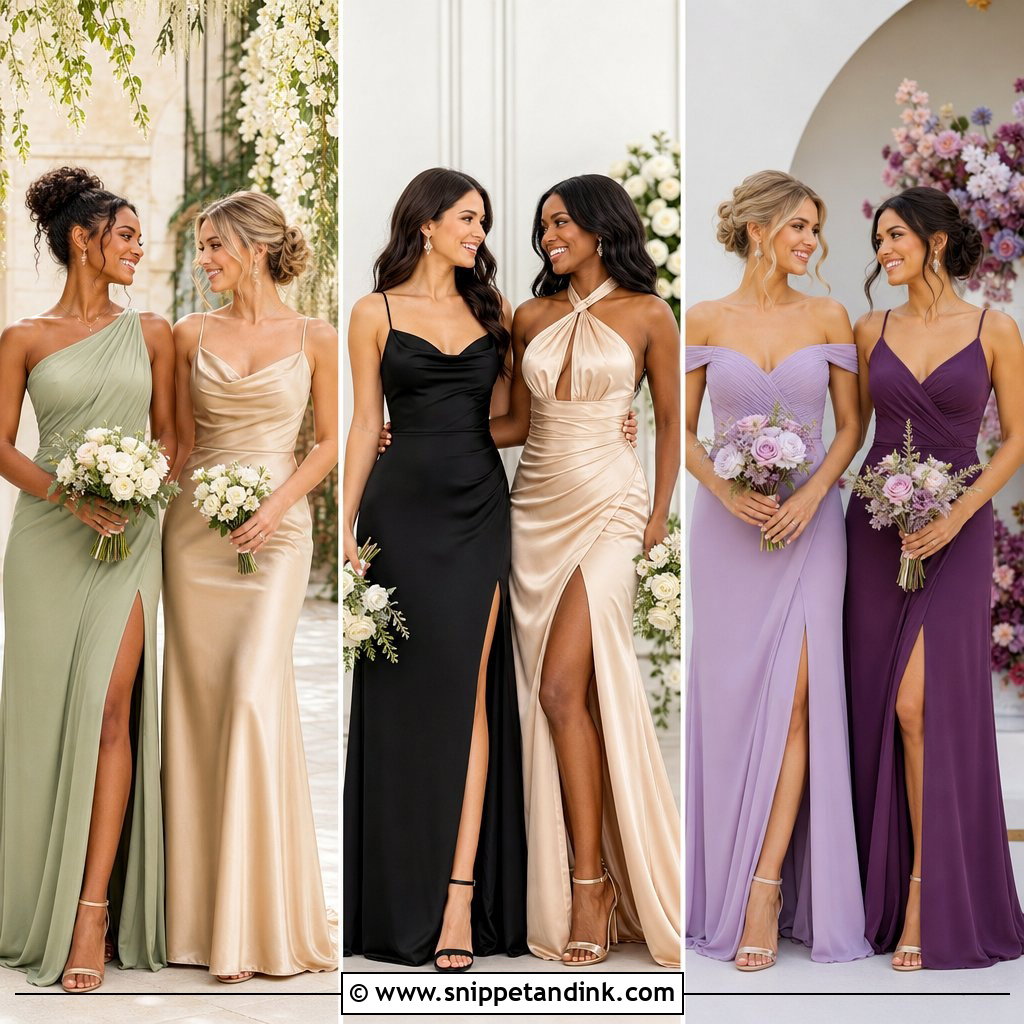
1. Sage Green Mismatched Bridal Party
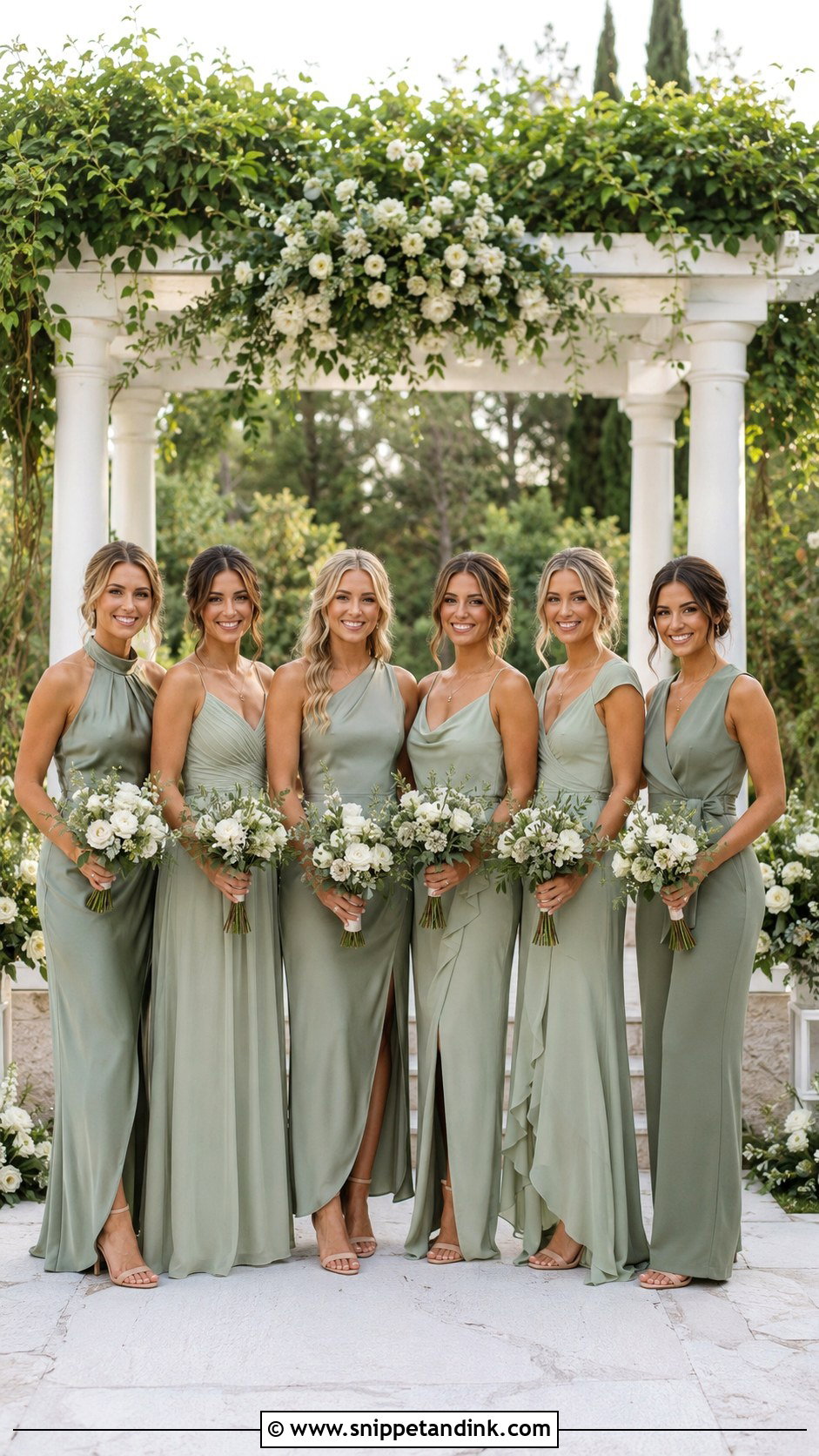
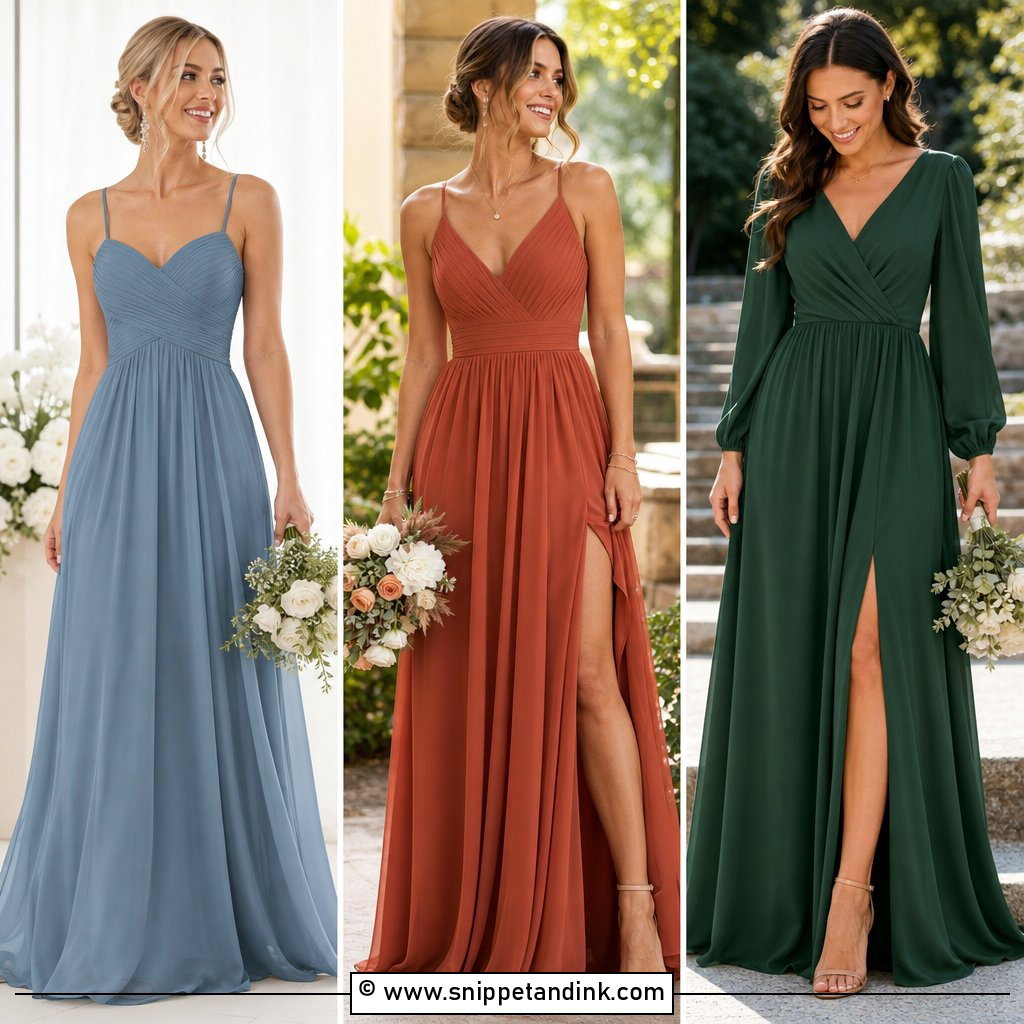
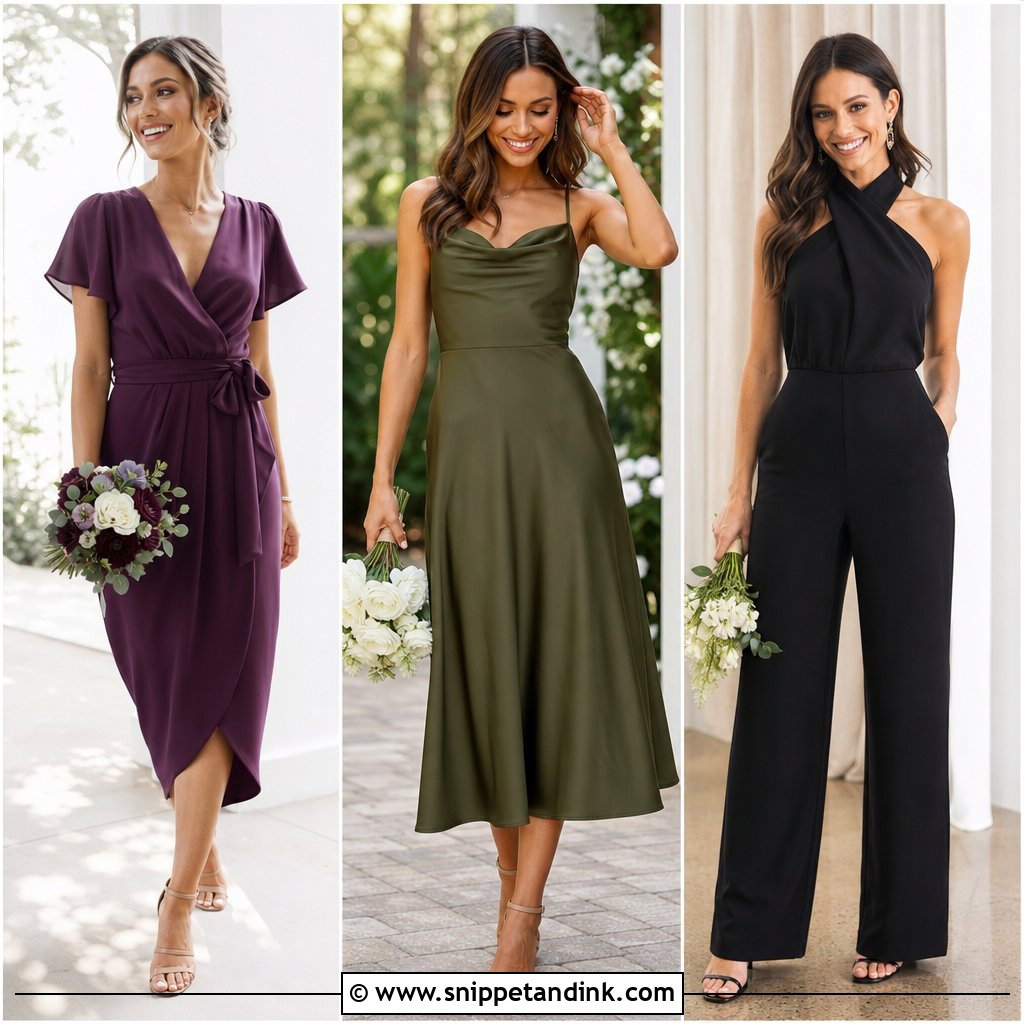
Sage is the colour I’m asked about most for garden weddings, and it’s forgiving on most skin tones. Keep it as the anchor and vary only the cut: a satin cowl-neck gown, a chiffon wrap, a one-shoulder maxi, a flutter-sleeve midi, even a tailored jumpsuit. The trap is undertone. Sage from different brands ranges from grey-blue to almost olive, and a cool and a warm sage side by side look like a mistake. Decide which one you want, then share a sage green bridal party reference so people shop for the same thing. Nude or champagne shoes keep the line soft.
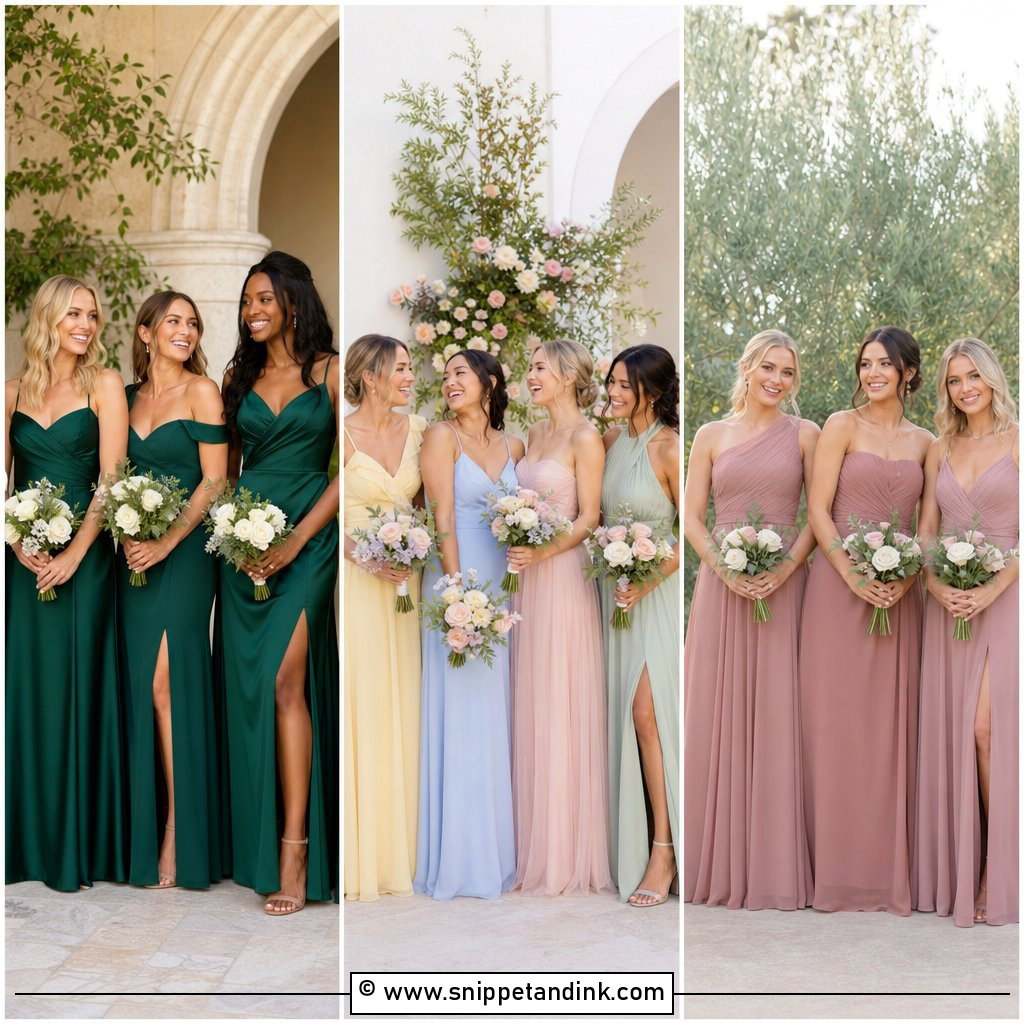
2. Dusty Rose Mismatched Bridal Party
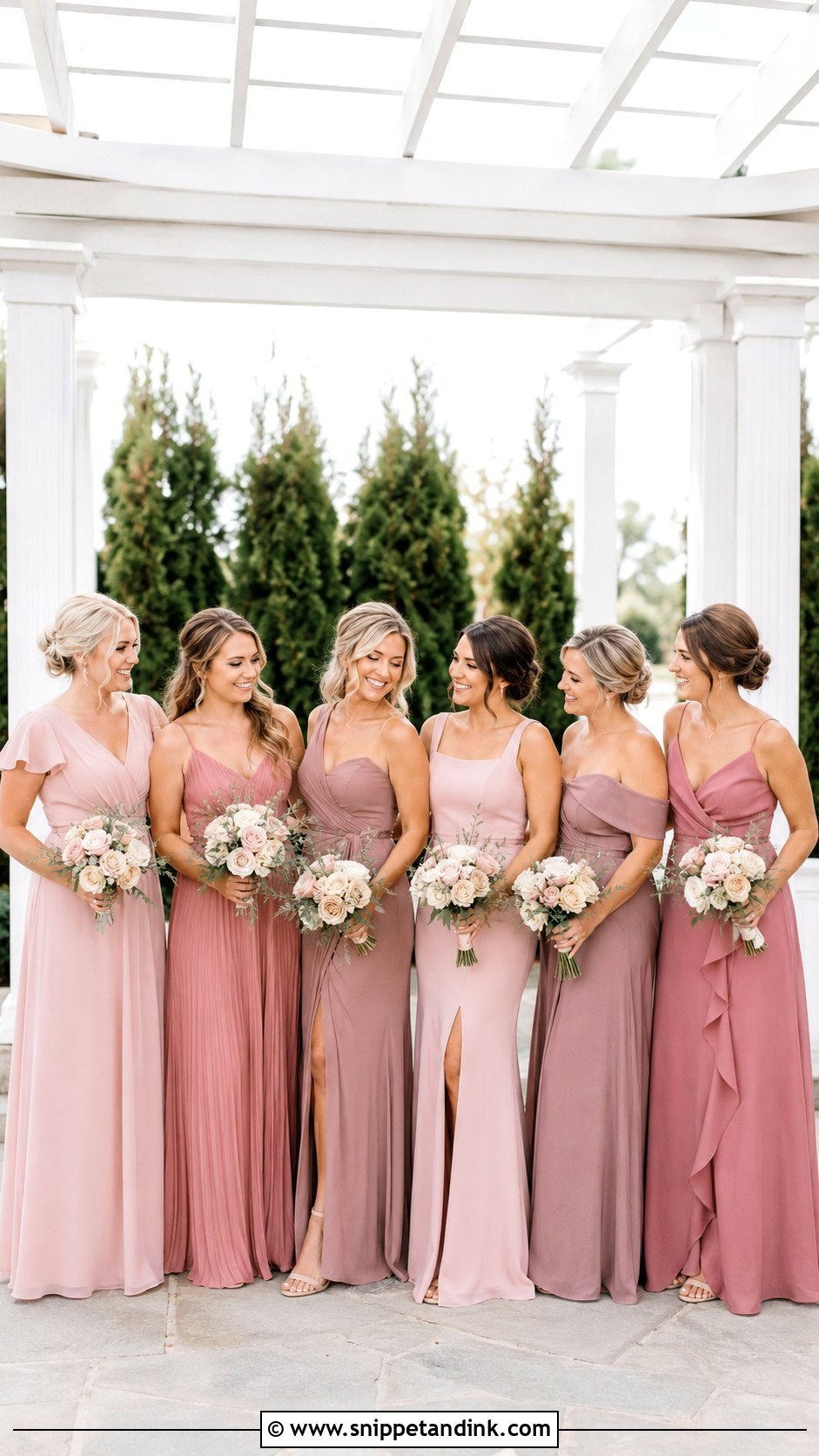
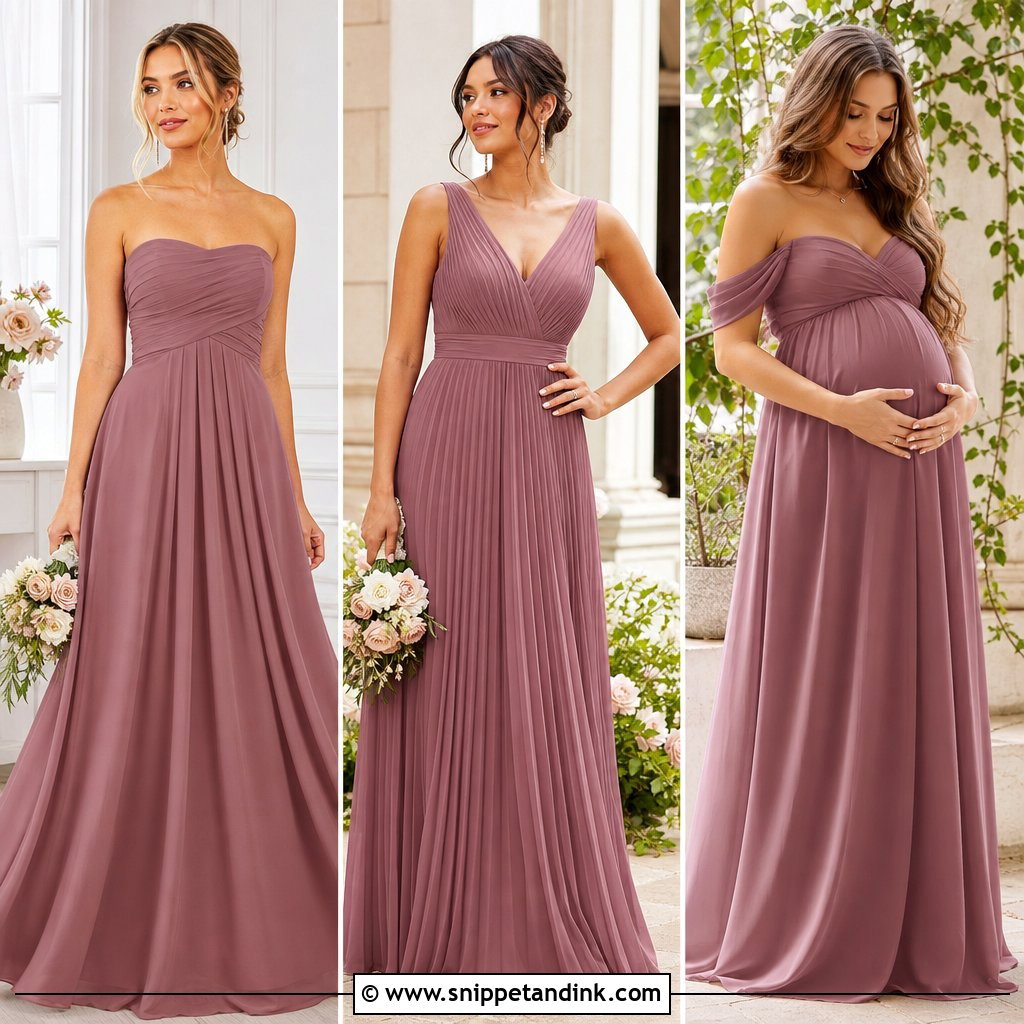
Dusty rose works in any season because it sits quietly next to almost any flower. I’d build it from four related shades, blush, antique rose, muted mauve and a soft berry, and assign each one by name rather than letting people pick. Silhouettes can range freely. Mixing chiffon with satin adds depth, but keep heavy beading out. When I set the lineup, I place the deeper shades at both ends or spread them evenly; if all the darker dresses cluster on one side, the photos look lopsided.
3. Blue Mismatched Bridal Party
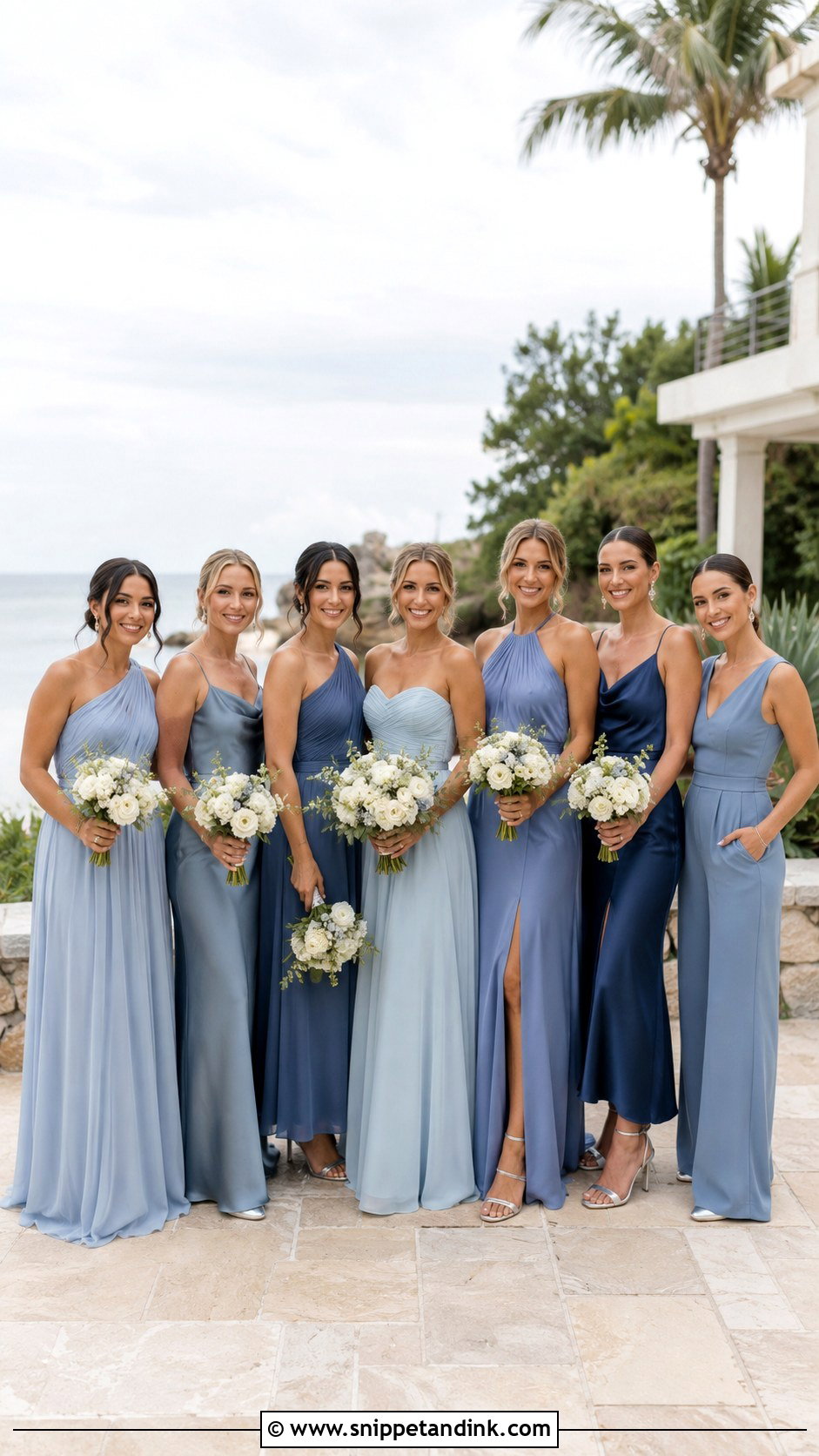
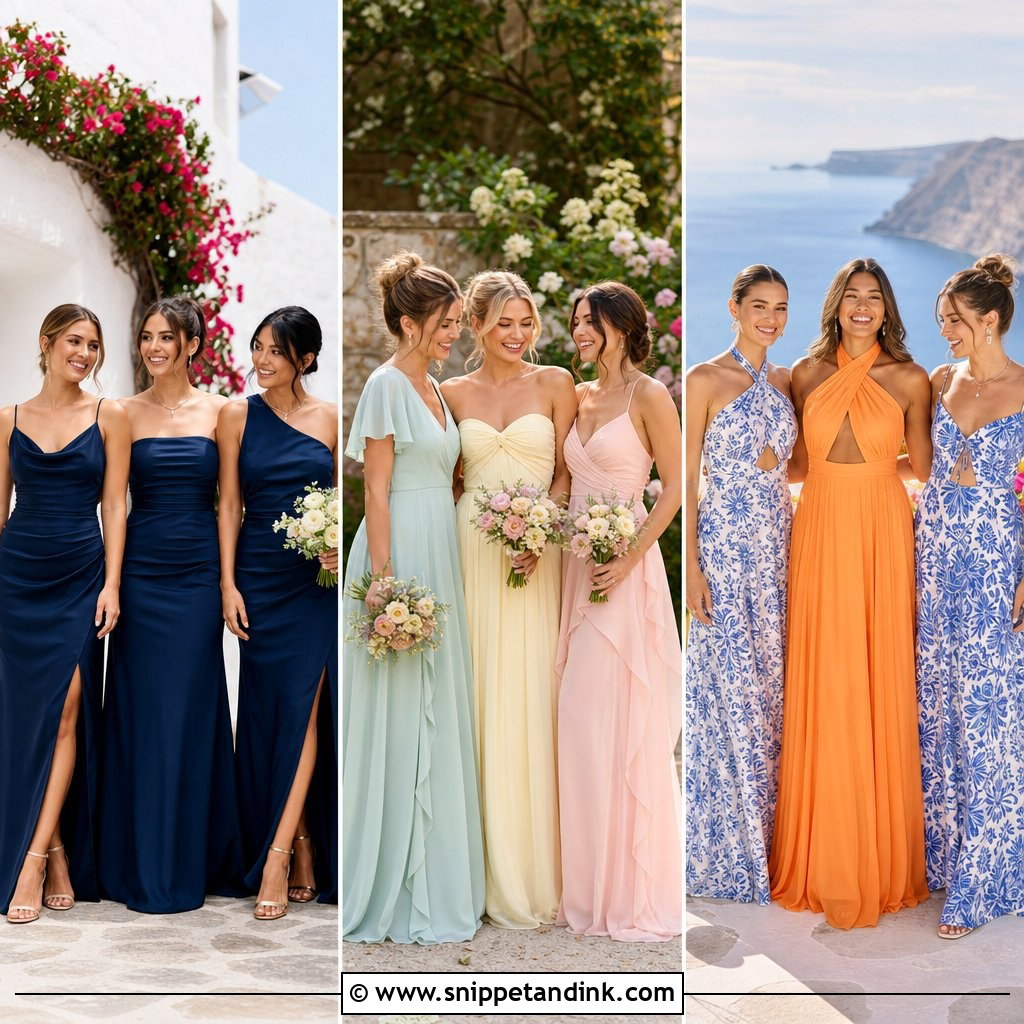
Picture the bridal party in the shifting colours of sky and sea. Shades like powder blue, dusty blue, slate, cornflower and soft navy layer well together in photographs. What breaks it is one bright turquoise, because blues with a green undertone jump out of a muted group. Formal weddings call for floor length; a relaxed coastal day can take midis and smart flats. Silver jewellery suits cool blues. I send everyone a physical swatch for this palette specifically, since blue is the colour that changes most between screens.
4. Jewel Tone Mismatched Bridal Party
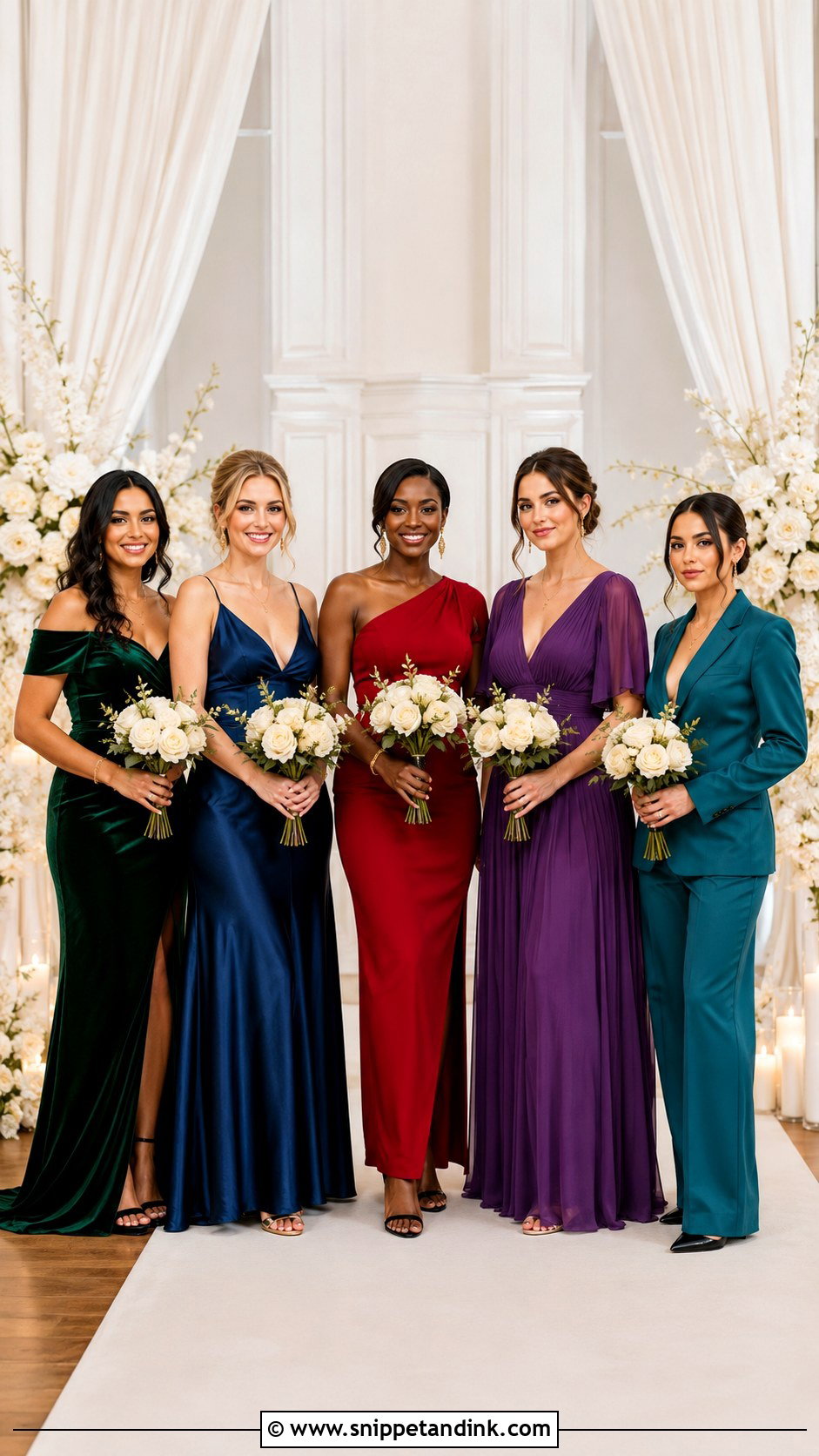
Jewel tones are bold, and they’re easier than they look because each colour is strong enough to stand on its own. Emerald, sapphire, ruby, amethyst, teal and deep magenta can be handed out according to each person’s colouring. Velvet suits cold weather; satin and crepe are lighter for indoor or shoulder-season dates. Gold jewellery warms the whole row. I’d keep prints out of this one entirely, since six saturated colours already give the eye plenty to do, and keep bouquets to cream flowers with dark foliage.
5. Pastel Mismatched Bridal Party
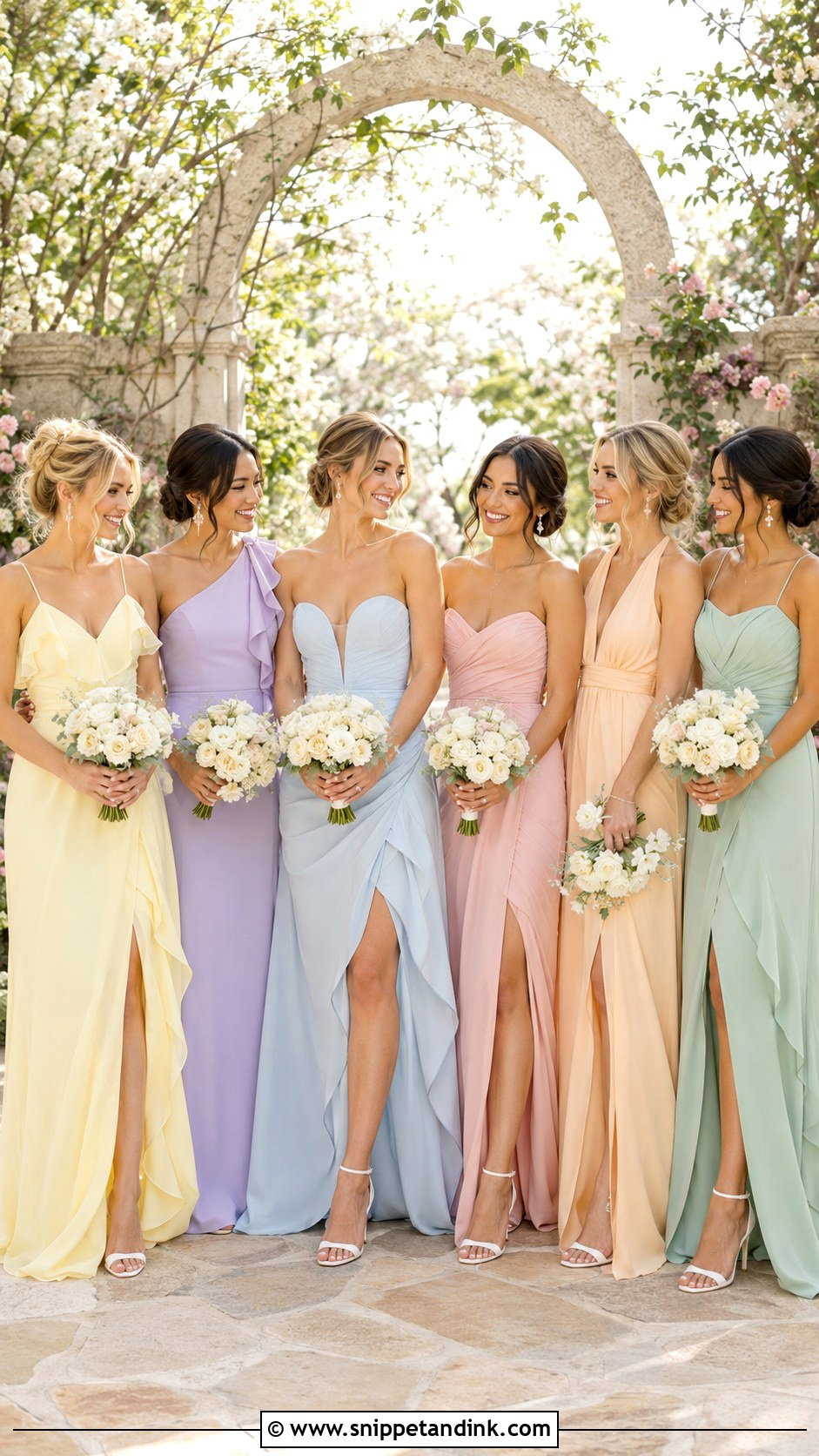
Pastels only look calm when every shade has the same softness. Butter yellow, lavender, powder blue, blush, pale peach and mint can live together, but a single candy-bright pink will spoil the effect. Assign the colours in advance, because otherwise two or three people end up in the most popular shade and someone gets the leftovers. Chiffon, tulle and matte satin all suit this palette. Matching lengths help a lot here, since pastels already ask the eye to move across many colours.
6. Sunset Color Mismatched Bridal Party
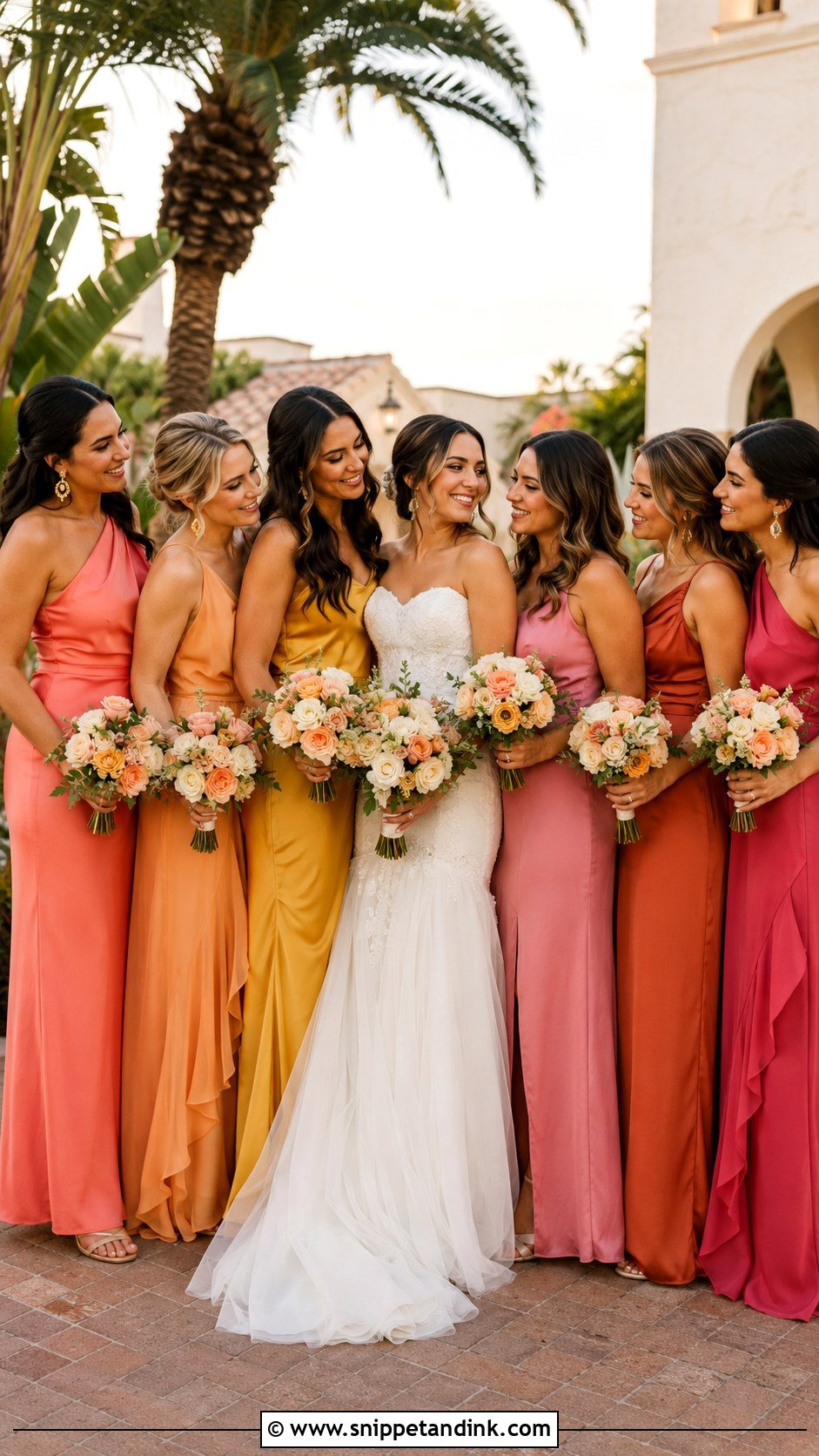
Sunset shades bring warmth to summer and destination weddings. Coral, apricot, marigold, warm pink, terracotta and muted red all share a warm undertone, which is exactly why they work. Before assigning anything, I lay the colours side by side on a board and remove whichever one pulls cool. Satin slips, halter gowns and draped one-shoulder designs give a relaxed yet polished lineup. If most of the group wears strong colour, add one or two lighter outfits so the row has some breathing room, and keep bouquets in cream and peach rather than more orange.
7. Neutral Mismatched Bridal Party
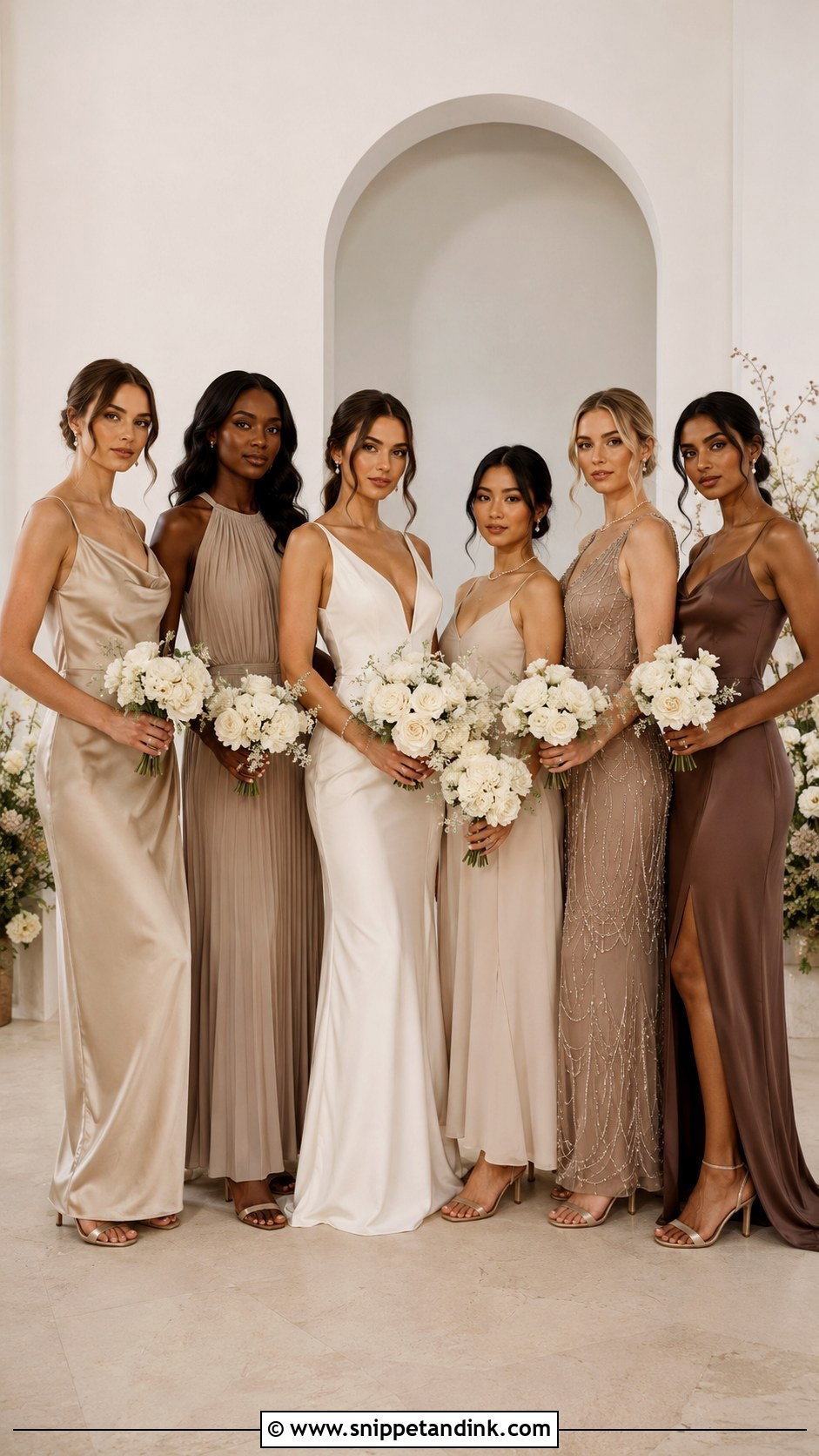
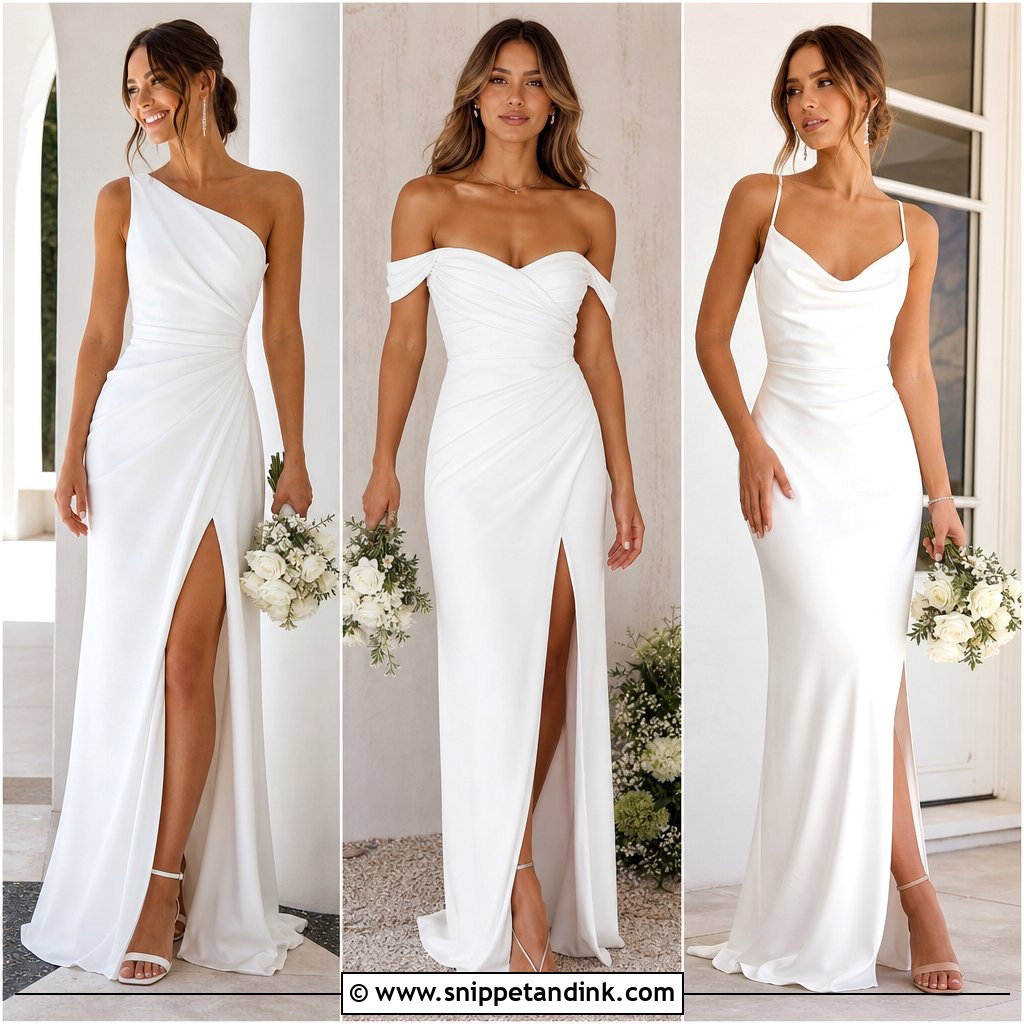
Can beige and taupe carry a whole lineup? Yes, as long as texture does the talking. Sand, mushroom, champagne, warm taupe and soft mocha in satin, pleated chiffon, crepe and a little beading give enough contrast without any colour. Pale neutrals shift in different light, so compare swatches outside in daylight before anyone pays. My firm rule: nothing so light that it reads as bridal white in photos. Include a few medium and deeper shades so the group has definition and doesn’t wash out against a pale venue.
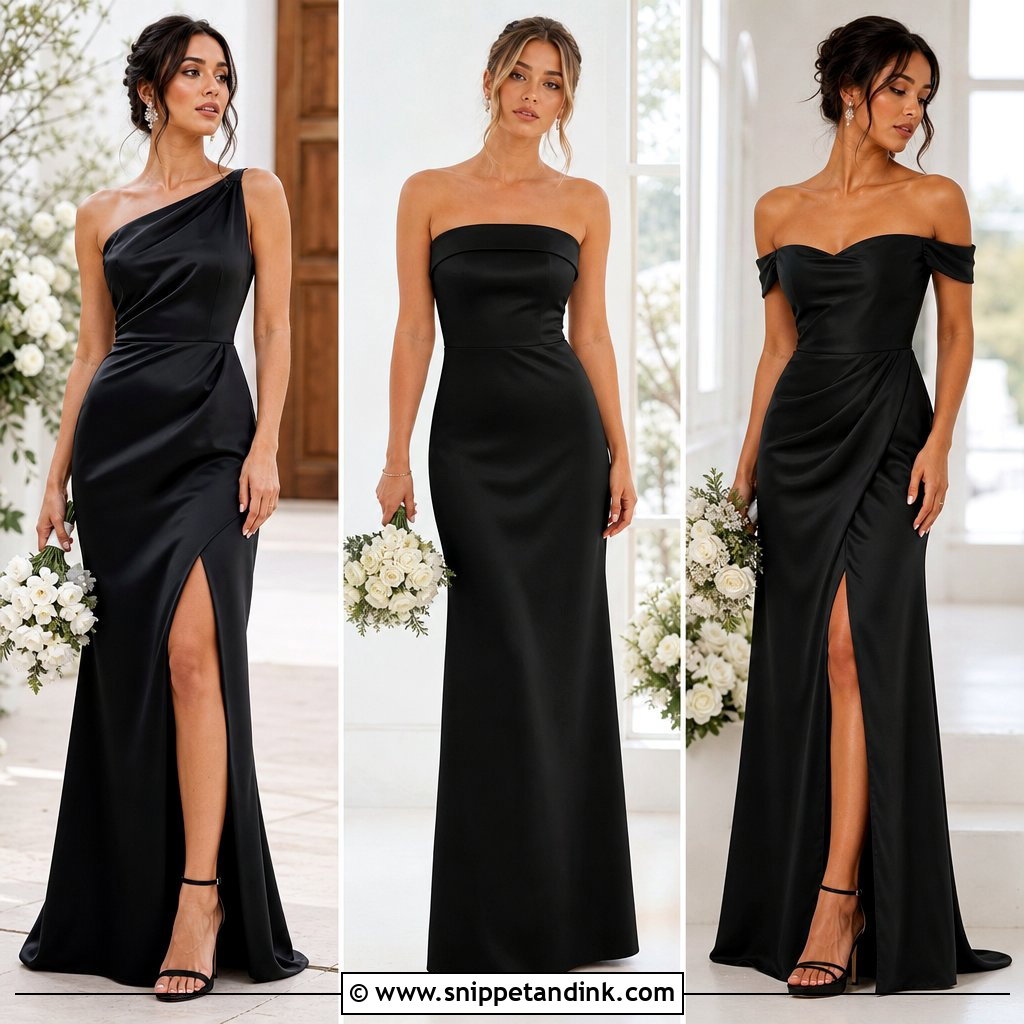
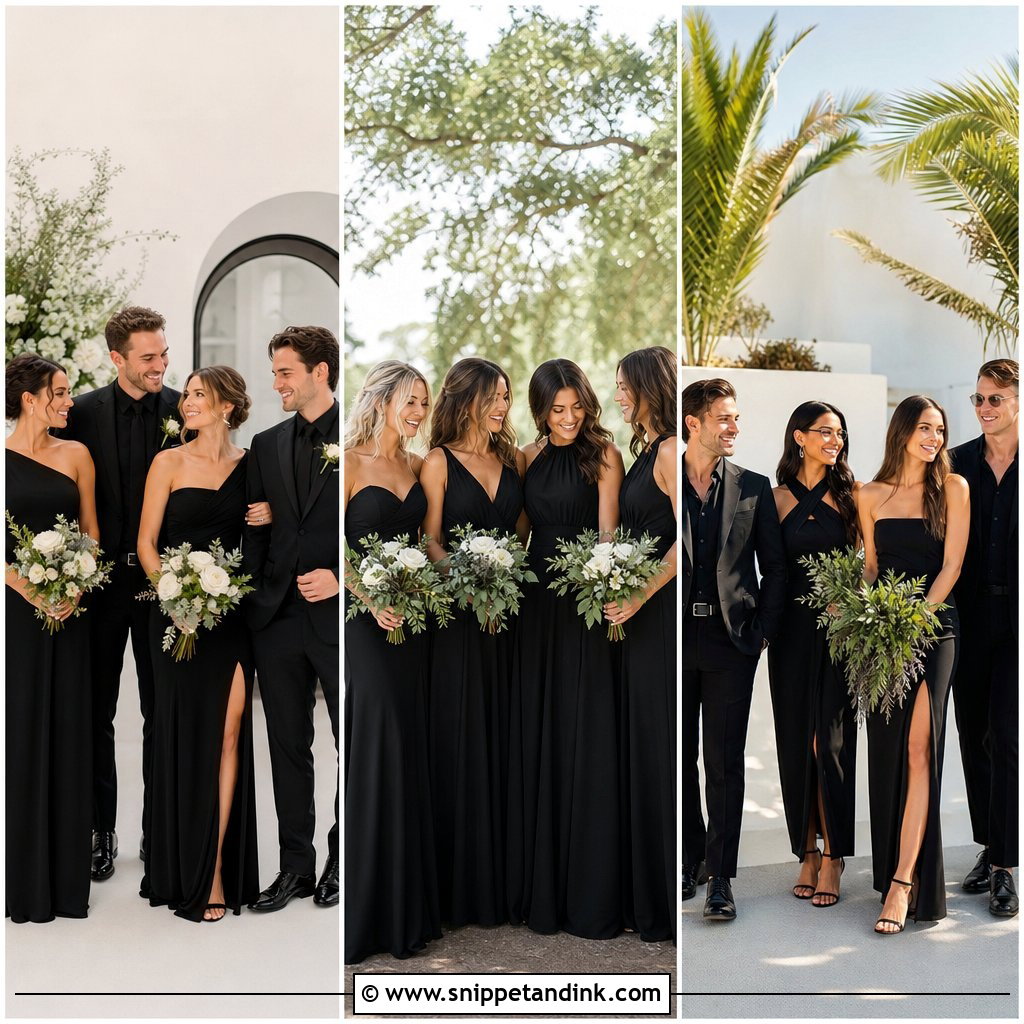
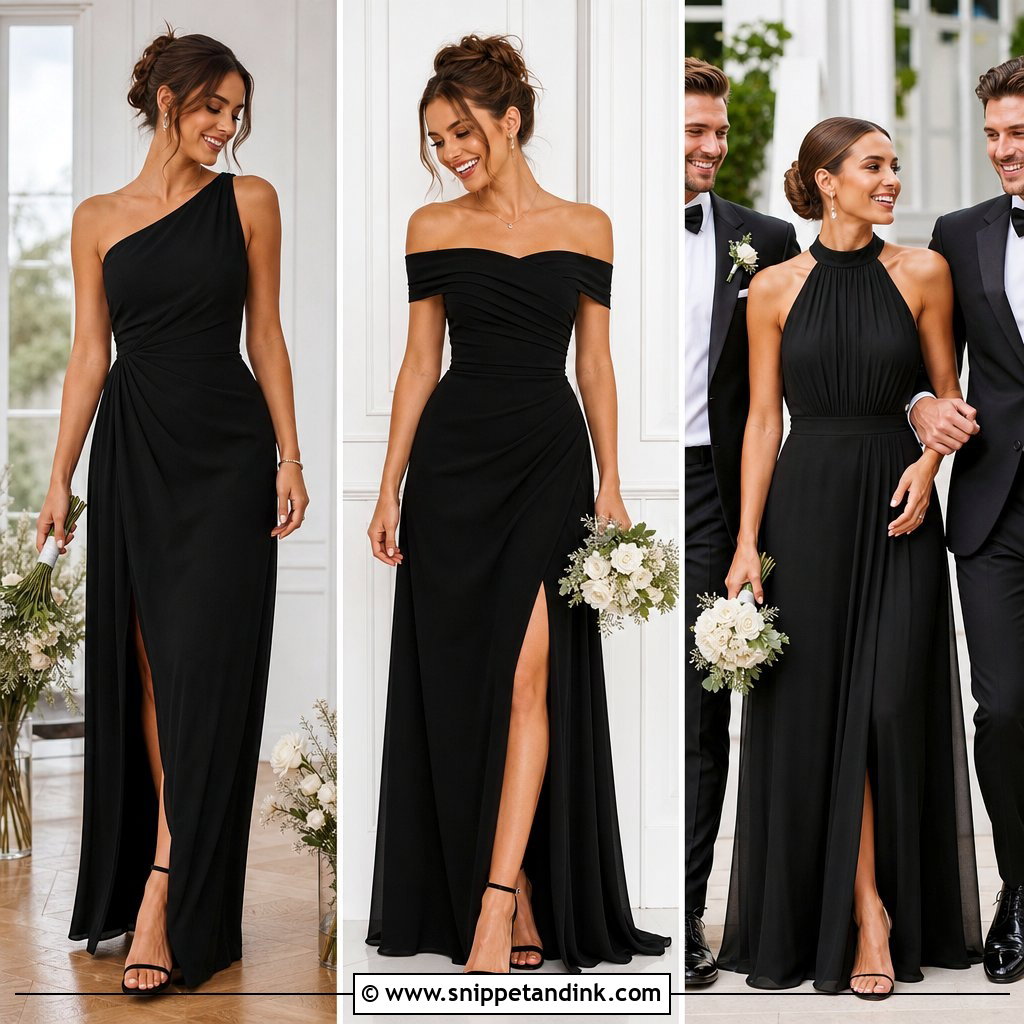
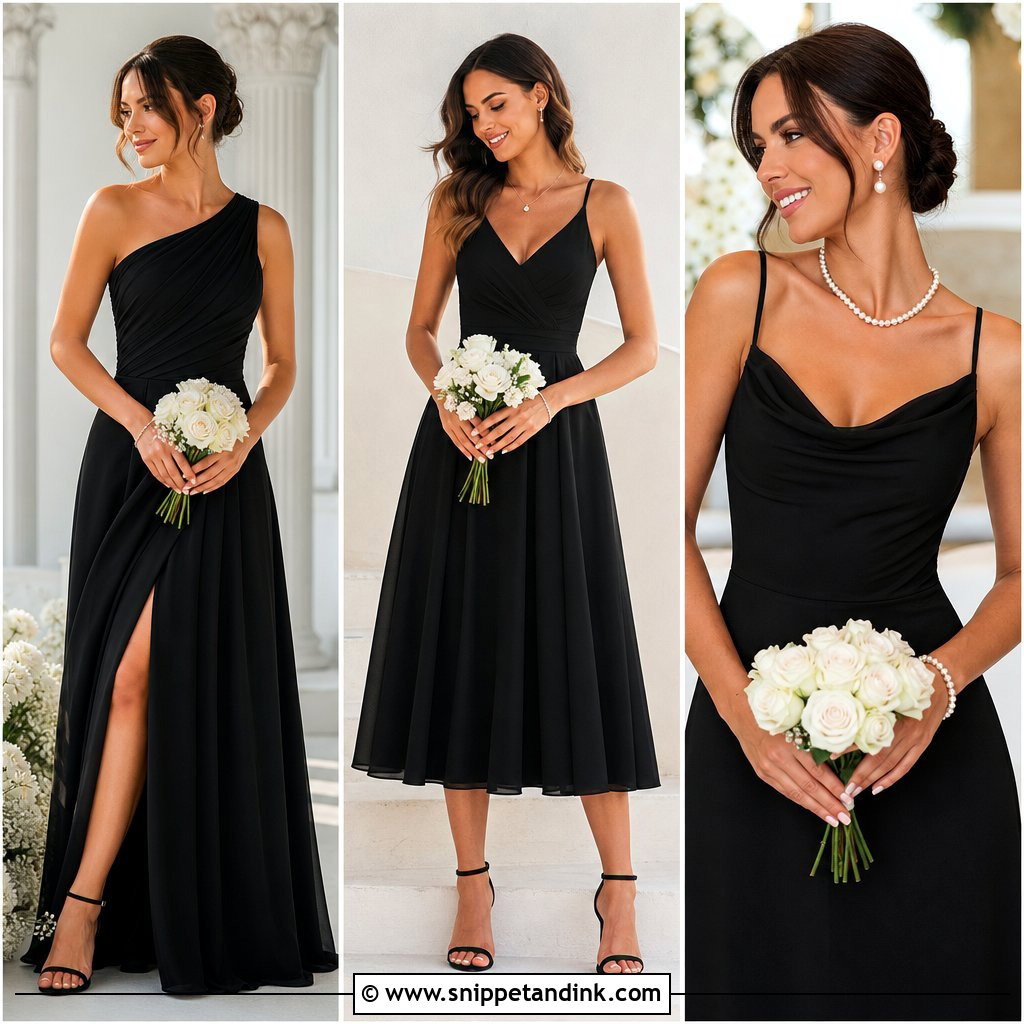
8. Black Mismatched Bridal Party
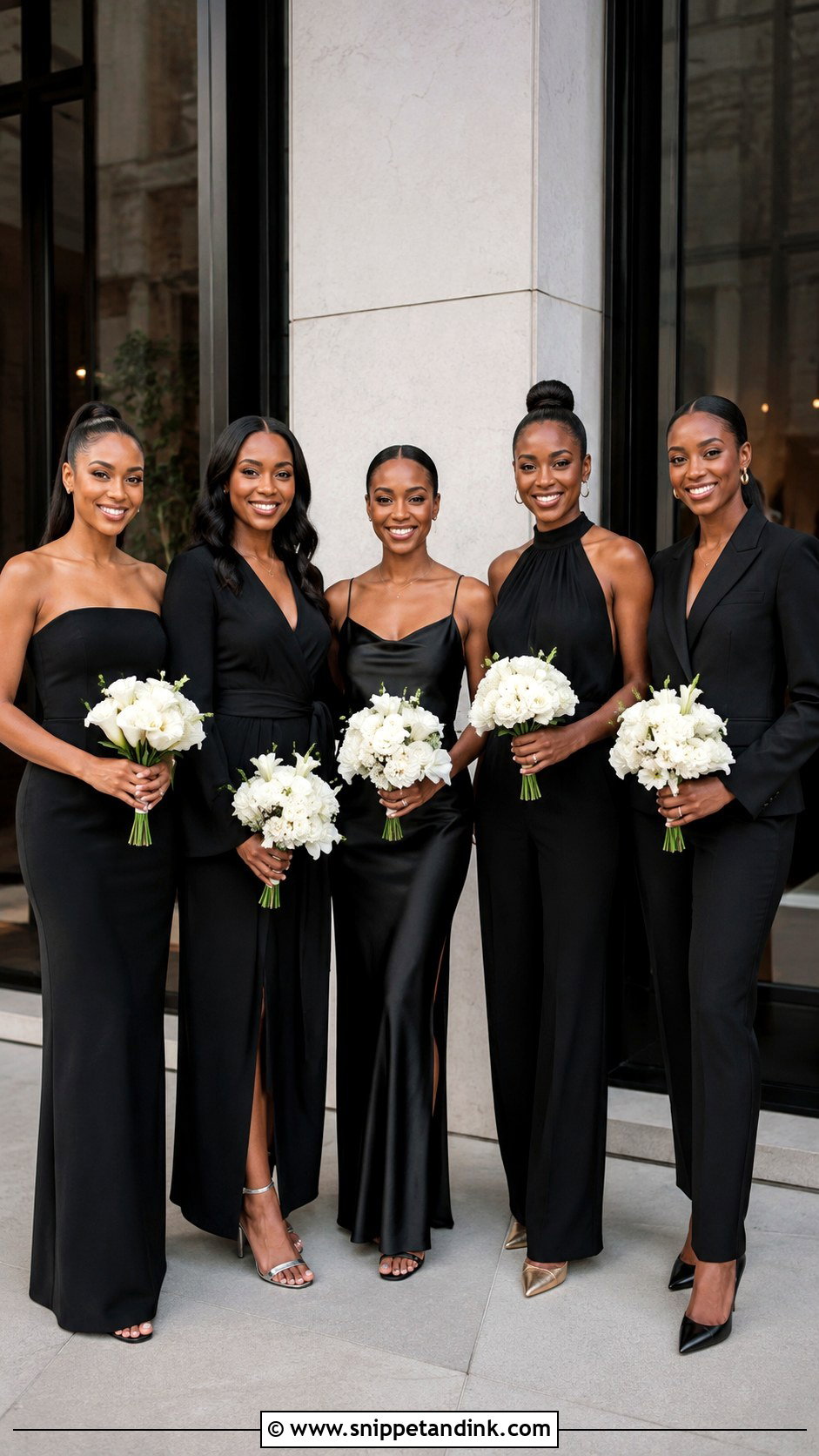
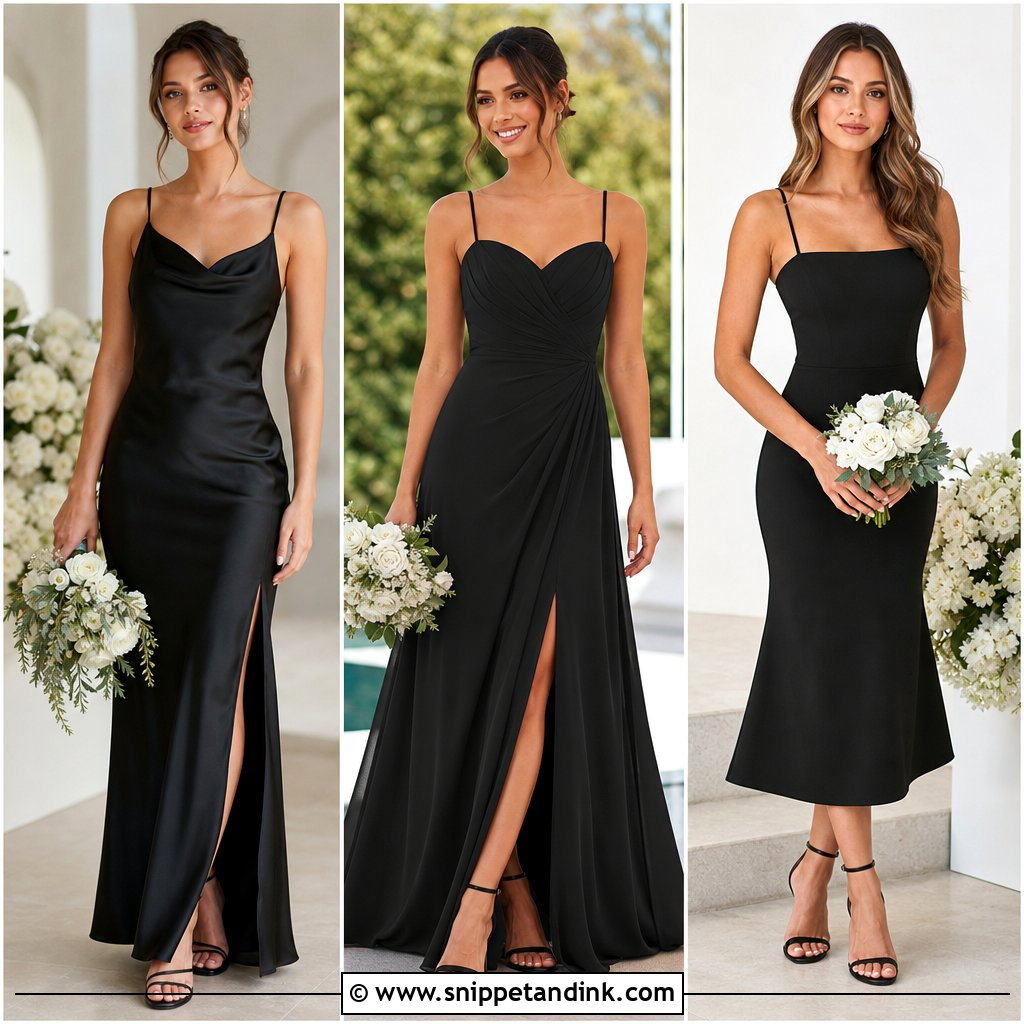
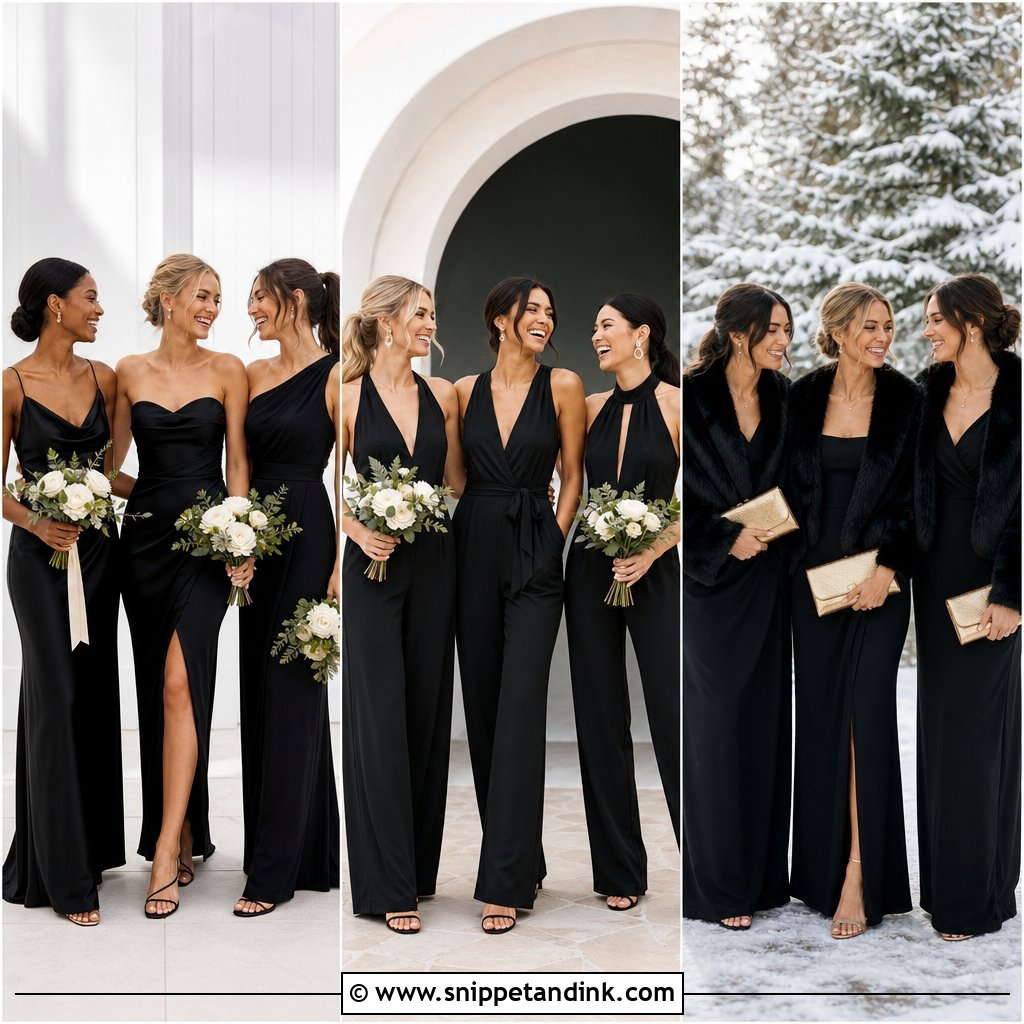
All-black is one of the easiest mixed looks to pull off. Everyone wears black and picks the shape that suits her: a strapless column, a long-sleeve wrap, a satin slip, a jumpsuit, a sharp suit. Where it fails is fabric. A matte cotton dress next to silky evening satin looks like a mistake, so set a minimum level of formality in the brief. Choose one metal for jewellery. When I arrange the line, I alternate sleeves and necklines so similar outfits aren’t bunched together, and white bouquets stand out sharply against the black.
9. Floral And Solid Mismatched Bridal Party
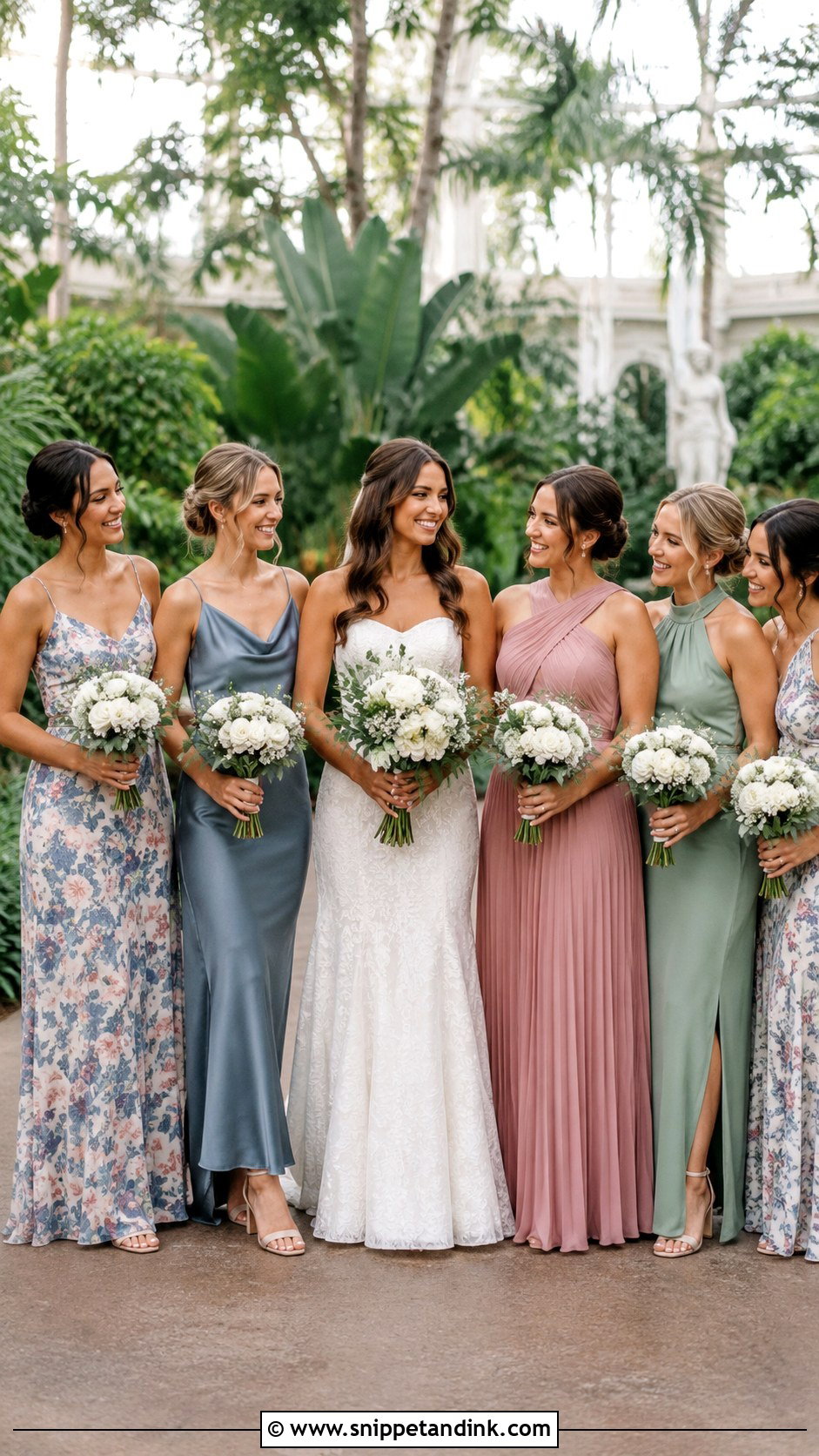
A floral print can set the palette for the whole group. Approve one or two prints, then pull the solid colours straight out of them, so a blue, pink and green floral gown sits naturally beside dusty blue satin, muted rose chiffon and sage crepe. If more than one person wears a print, keep the scale and mood similar; a large tropical pattern next to a tiny ditsy floral clashes. I spread the printed outfits through the lineup so they act as links between the solids. Every solid colour then has an obvious reason to be there.
10. Terracotta Mismatched Bridal Party
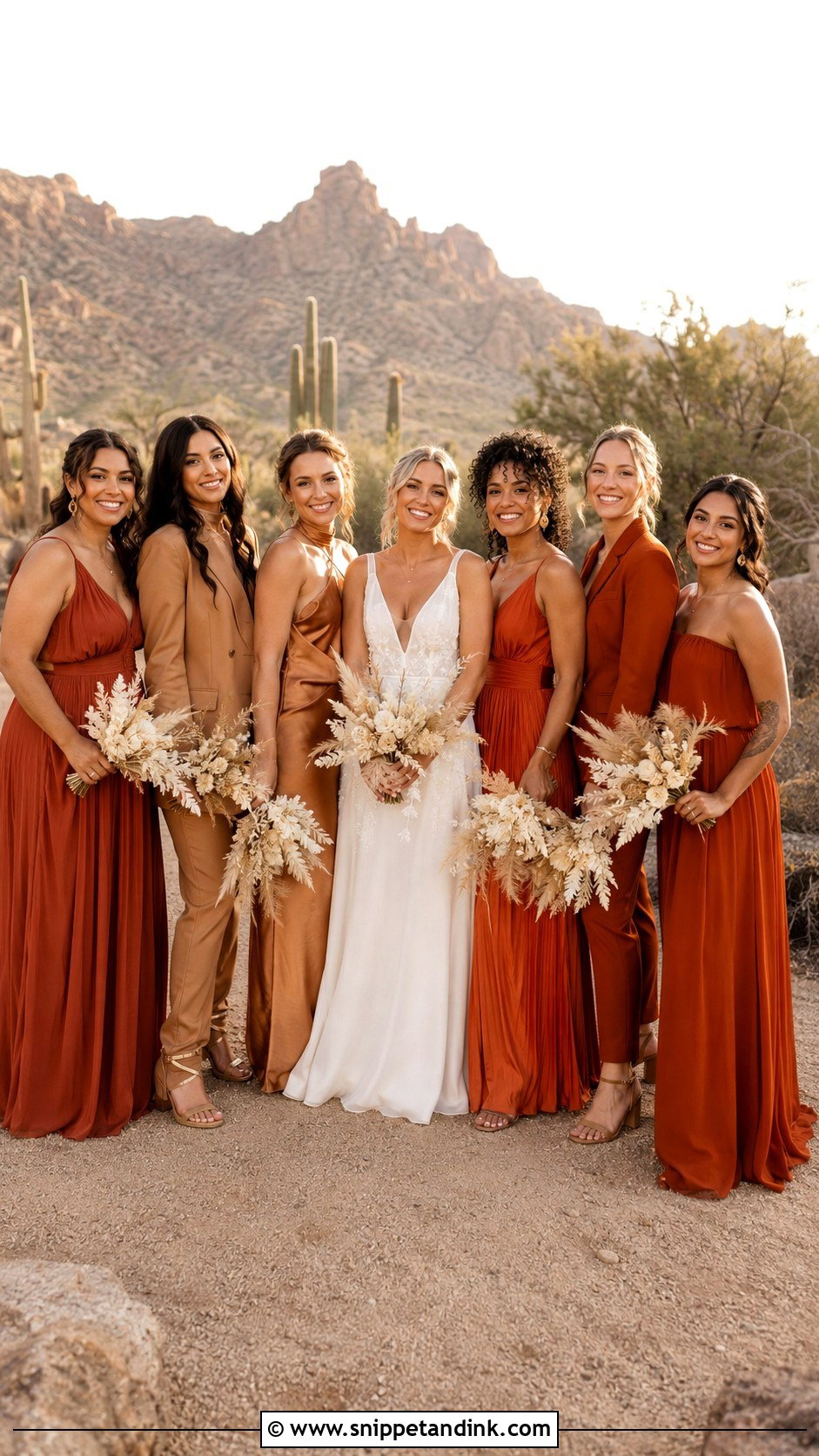
Earthy terracotta suits autumn, desert and rustic venues. Instead of one exact shade, mix clay, cinnamon, rust, burnt orange and copper; matte satin, crepe and velvet make them look rich rather than flat. The colour I ask people to avoid is bright pumpkin, which looks like Halloween beside the softer clays. Leather-toned shoes and warm gold jewellery fit the palette. Balancing light clay with deep rust gives the row depth, and against green trees or desert sand this palette holds its own.
11. Lavender Mismatched Bridal Party
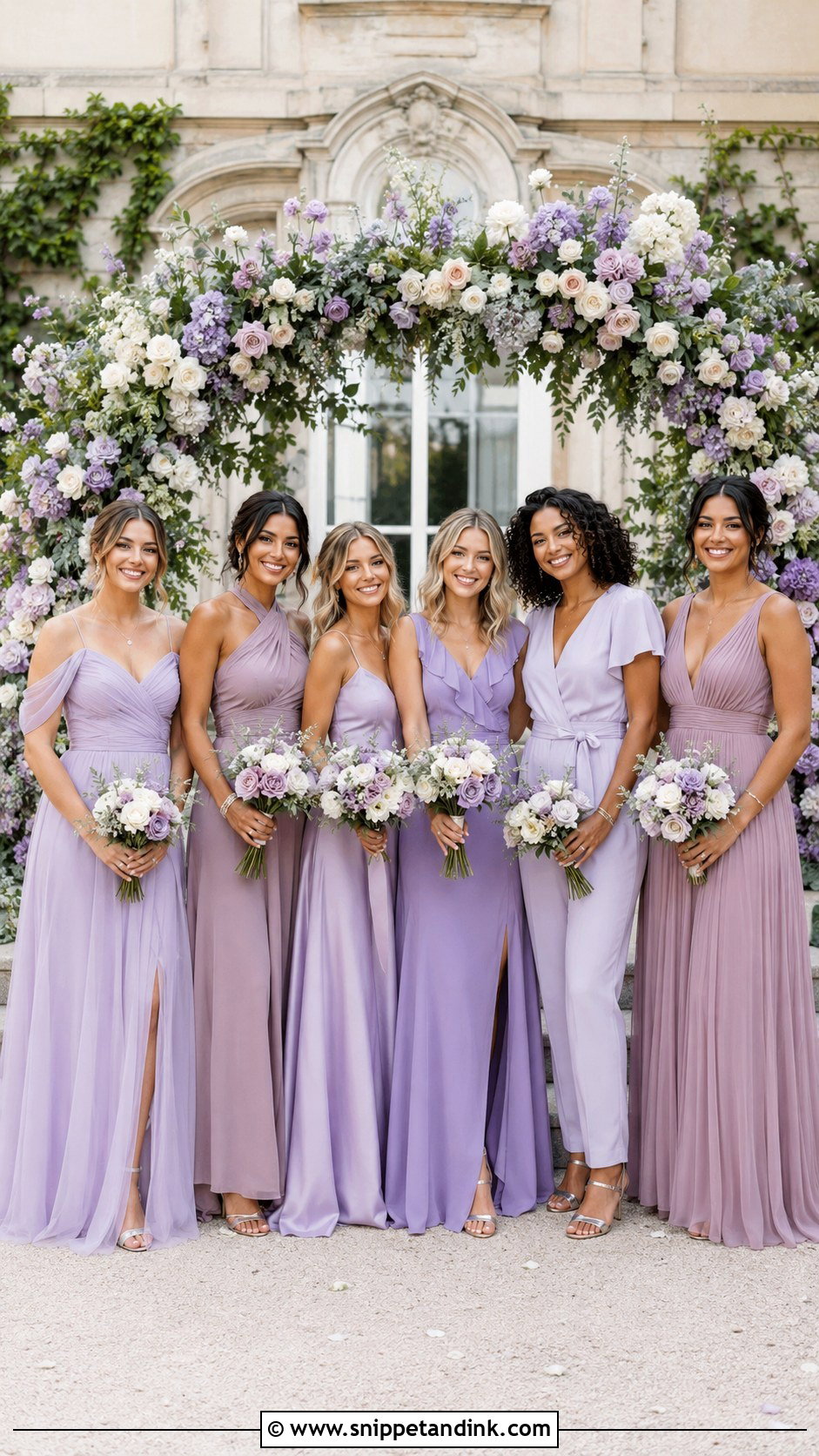
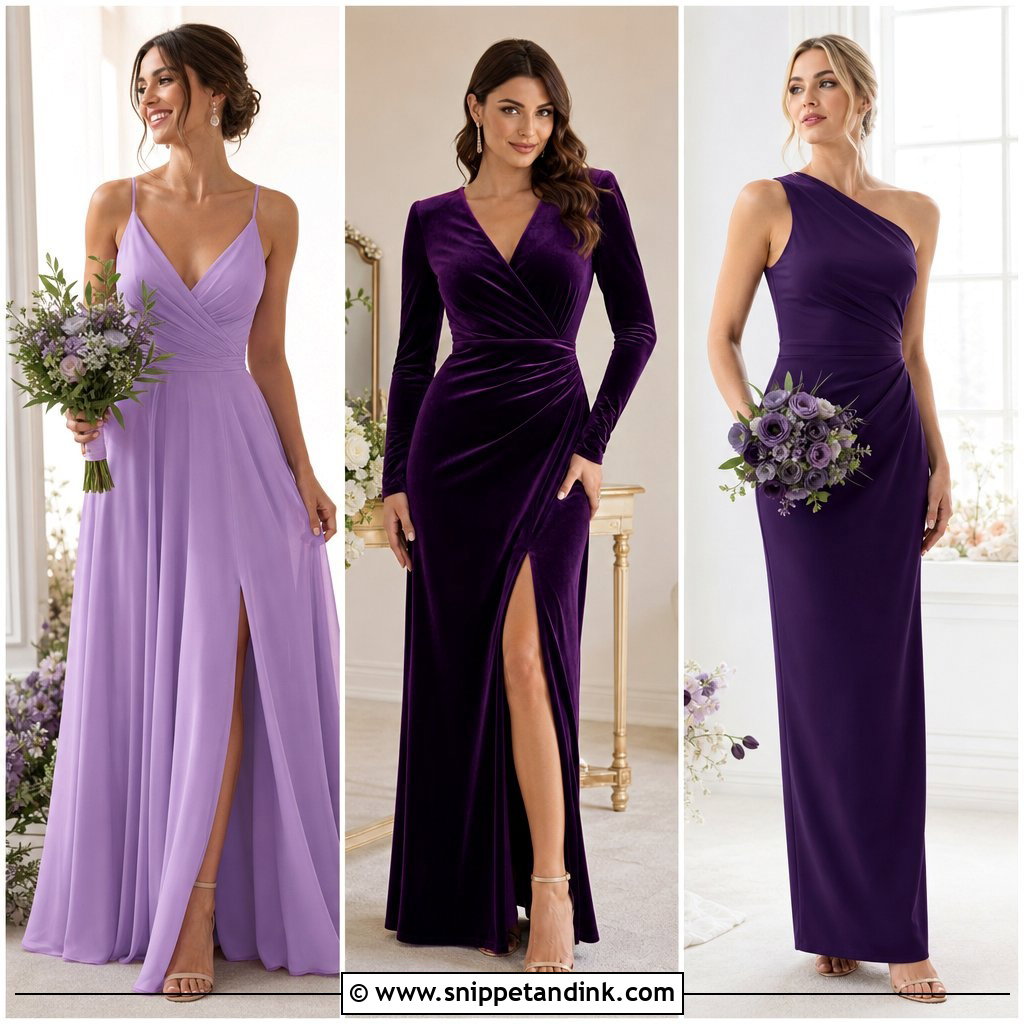
Lavender is the colour I warn people about. It can lean blue, grey or pink depending on the dye and the light, so review swatches together before anyone orders. Within that, pale lilac, dusty lavender, mauve-purple and soft orchid mix well, provided they’re all muted or all clear. Tailored lavender suits or jumpsuits add structure. Silver suits cooler purples and soft gold suits the warmer ones. Spread the deepest purples through the lineup so it looks balanced from every angle at the altar.
12. Green Mismatched Bridal Party
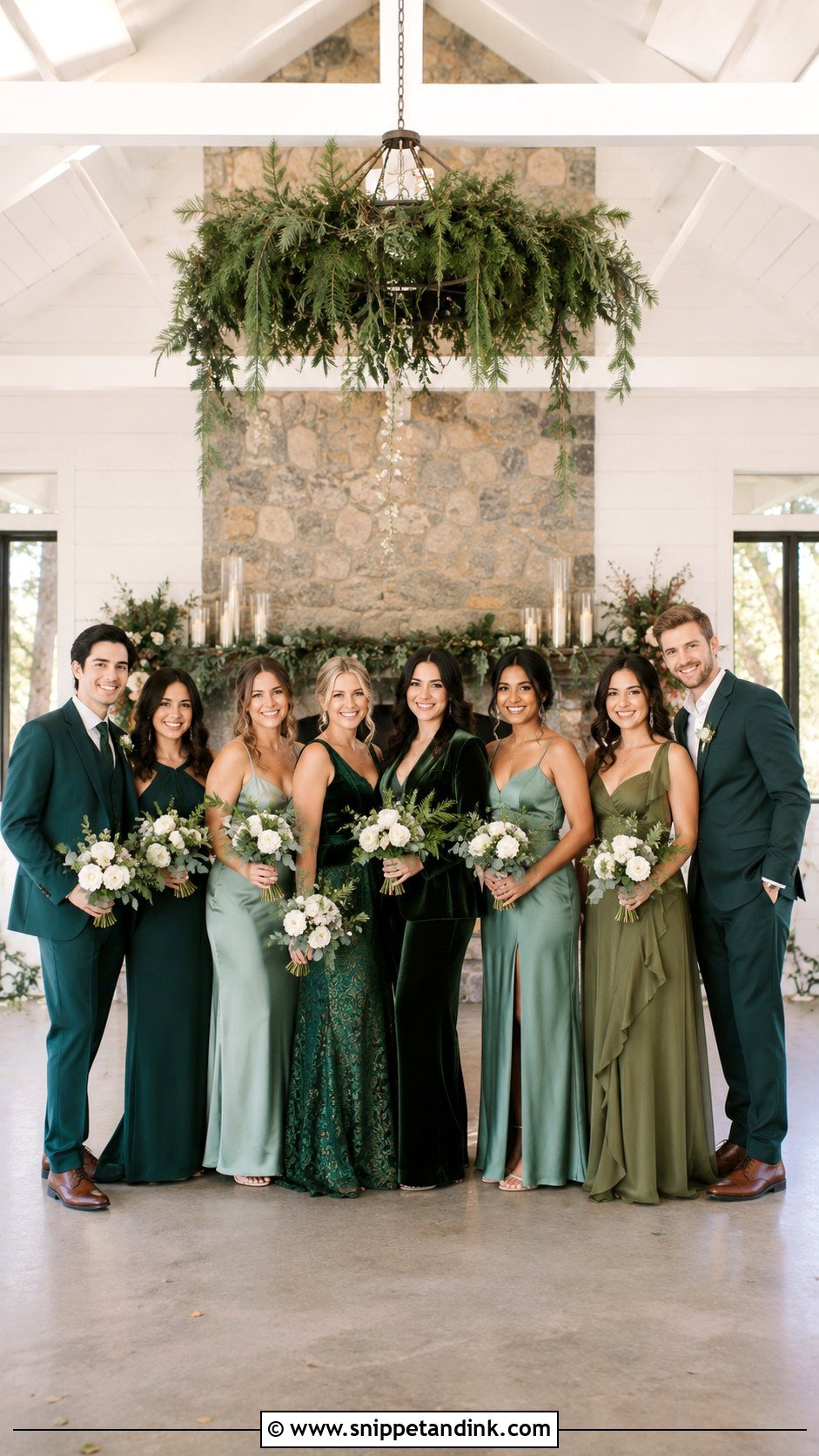
A full range of greens has more depth than sage alone. Mix eucalyptus, olive, moss, fern, emerald and deep forest green, keeping the range tight enough to suit the setting: lighter greens for daytime gardens, deeper ones for formal evenings. With a large group, I assign shades rather than letting people choose, and I often repeat two or three greens rather than giving everyone a different one, which looks more balanced. Keep bouquets mostly white so the whole picture doesn’t turn green, especially if the ceremony is outdoors among trees.
13. Champagne Satin Mismatched Bridal Party
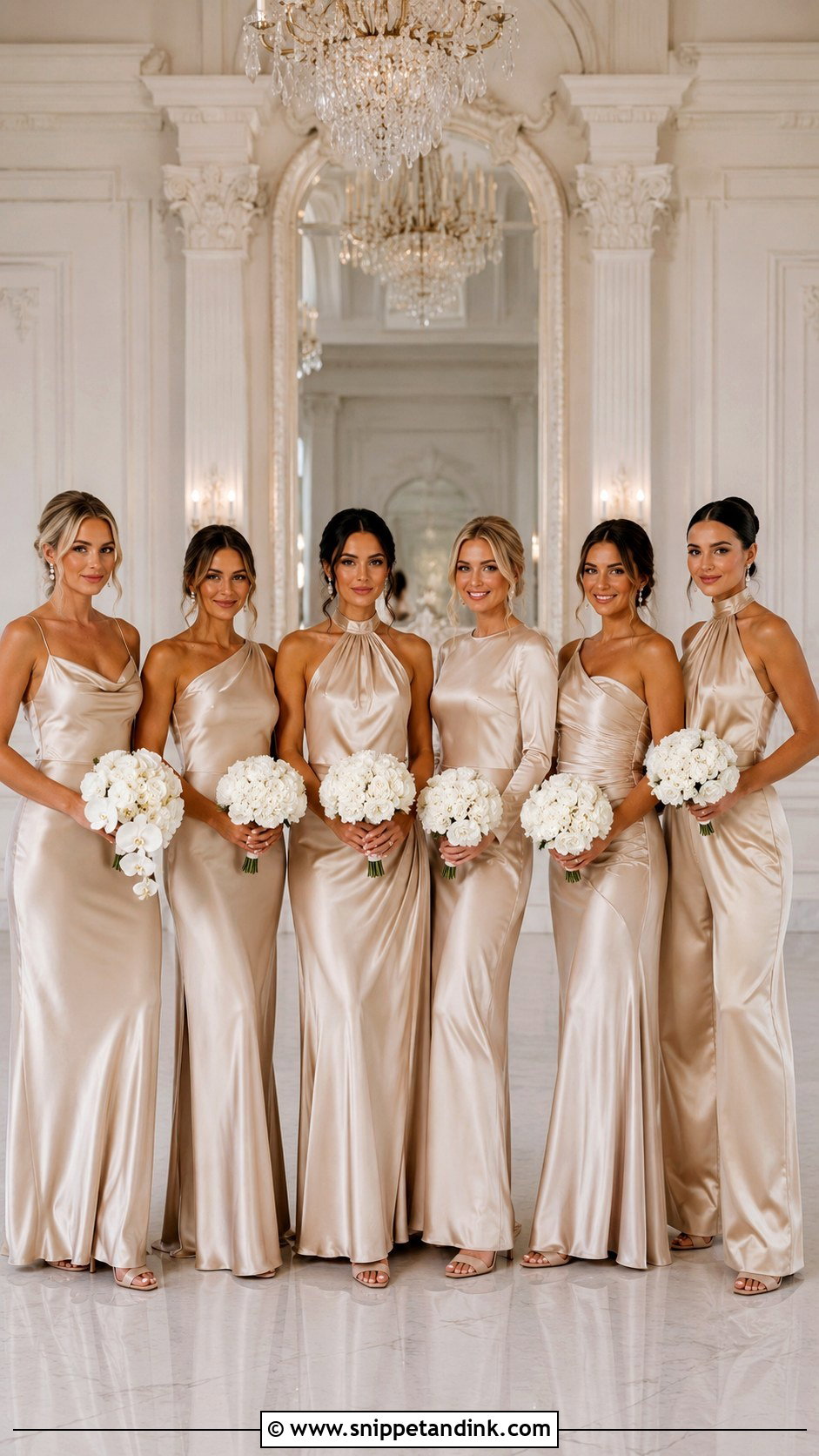
Champagne satin unites a group through fabric and sheen, while the cut varies. The difficulty is that champagne differs wildly between brands, leaning pink, yellow, silver or beige. I’d approve one exact tone from one retailer, or compare swatches very carefully. Cowl-neck slips, one-shoulder gowns, halter maxis and satin jumpsuits all work together when the shine matches. Give the attendants nearest the bride slightly deeper champagne so her dress still reads as white. Satin creases in transit, so book a steamer for the morning or choose a wrinkle-resistant fabric.
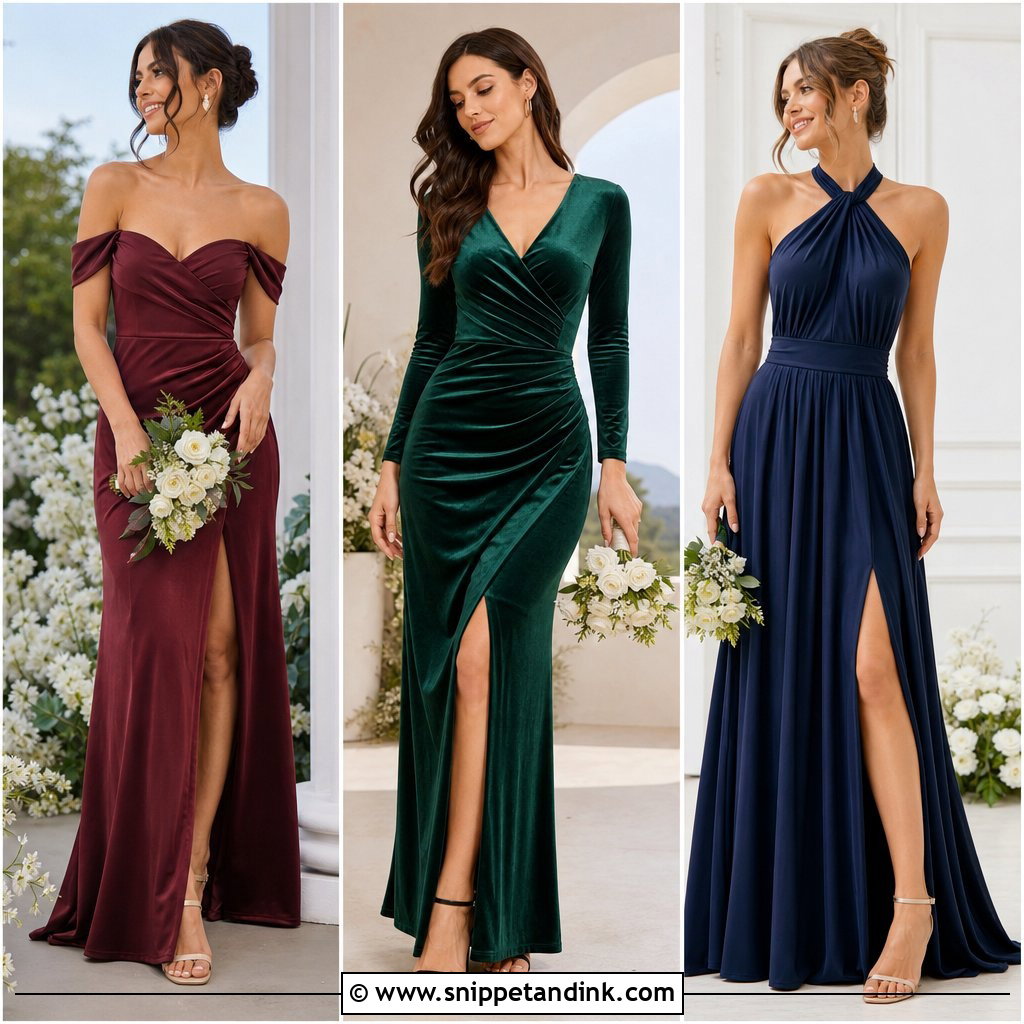
14. Velvet Mismatched Bridal Party
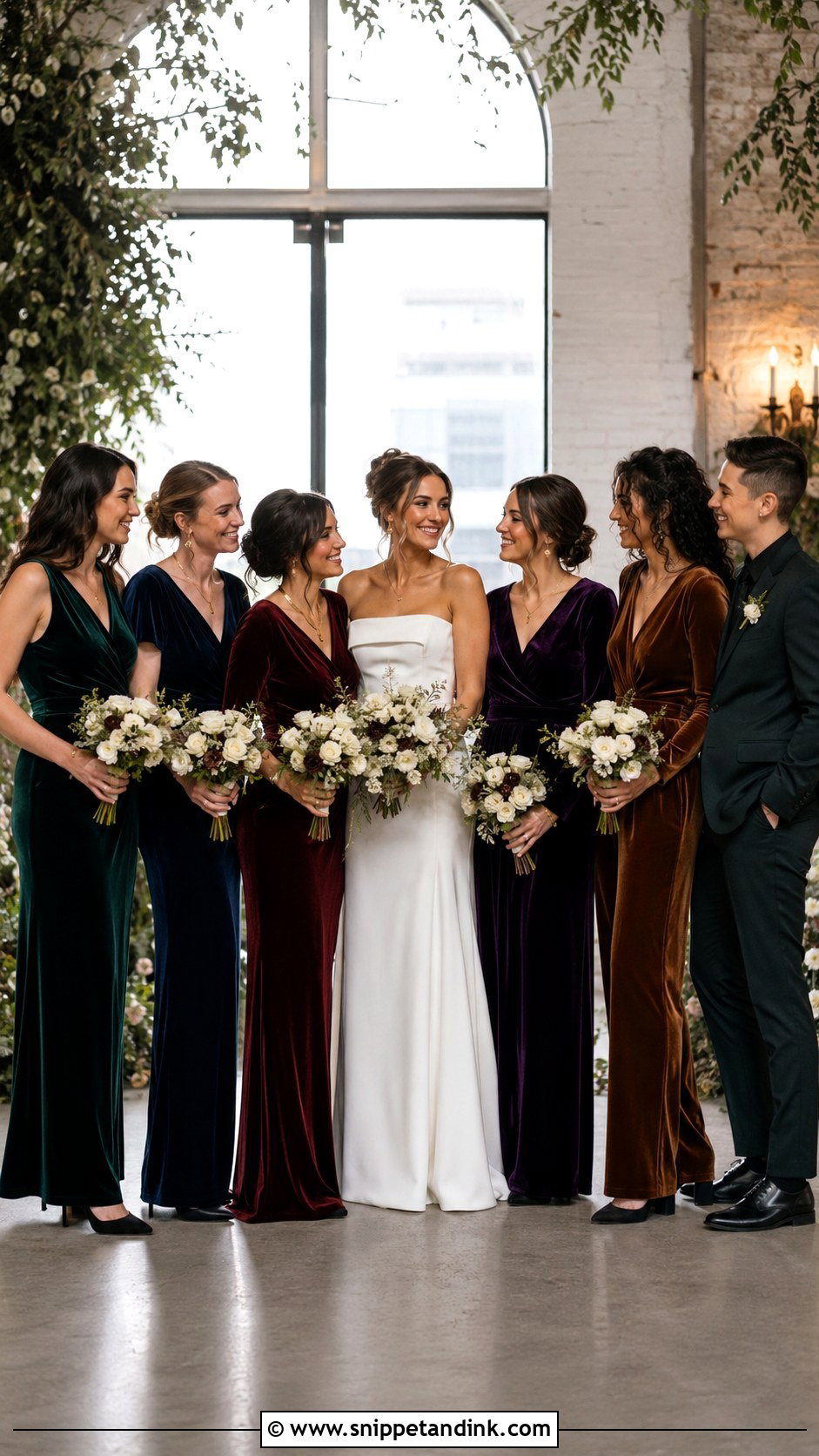
Velvet has enough richness that cool-weather weddings barely need embellishment. Gowns, suits and jumpsuits in one colour family or a jewel palette of emerald, navy, burgundy, plum and chocolate look luxurious together. Necklines and sleeves can vary for comfort. Here’s what catches people out: crushed velvet, stretch velvet and traditional velvet have very different surfaces, and side by side they don’t match even in the same colour. Ask everyone to order a swatch first. Keep accessories simple, since velvet already plays with the light.
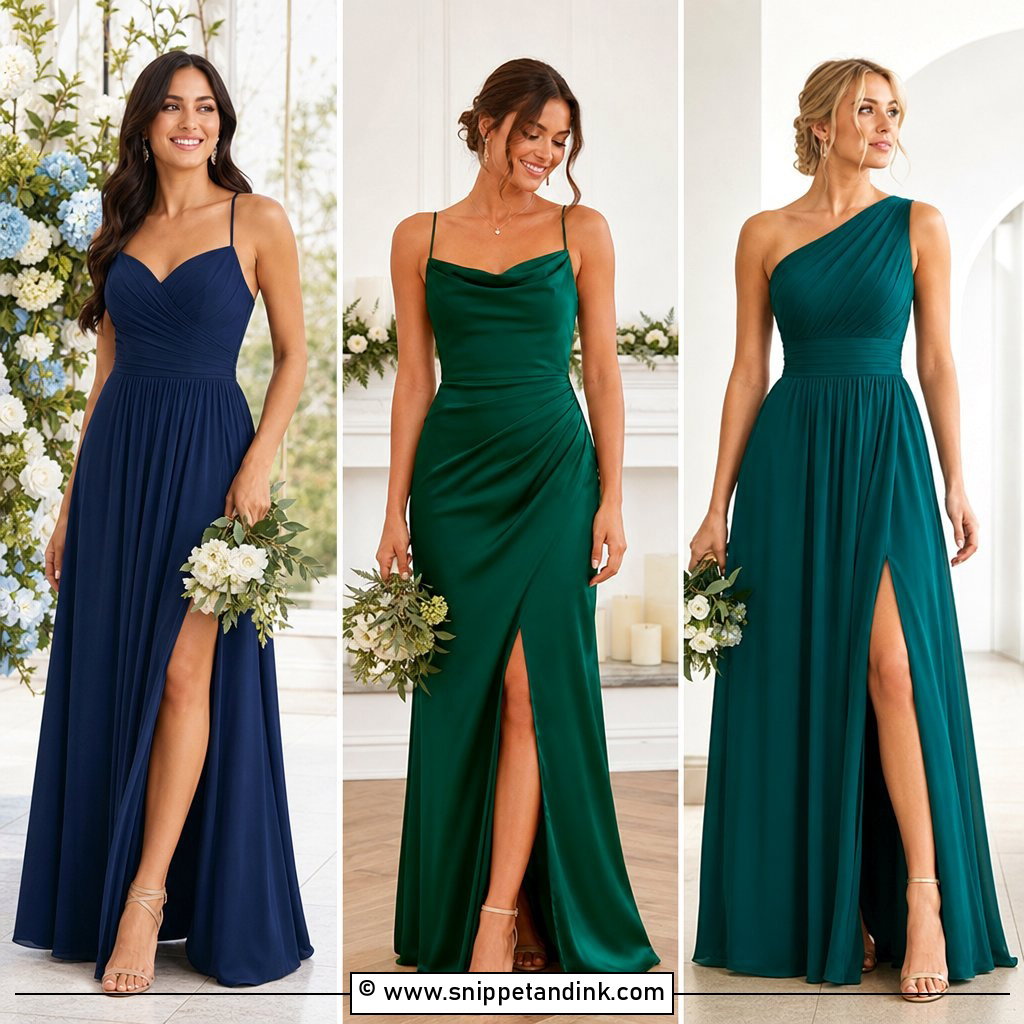
15. Midi Dress Mismatched Bridal Party
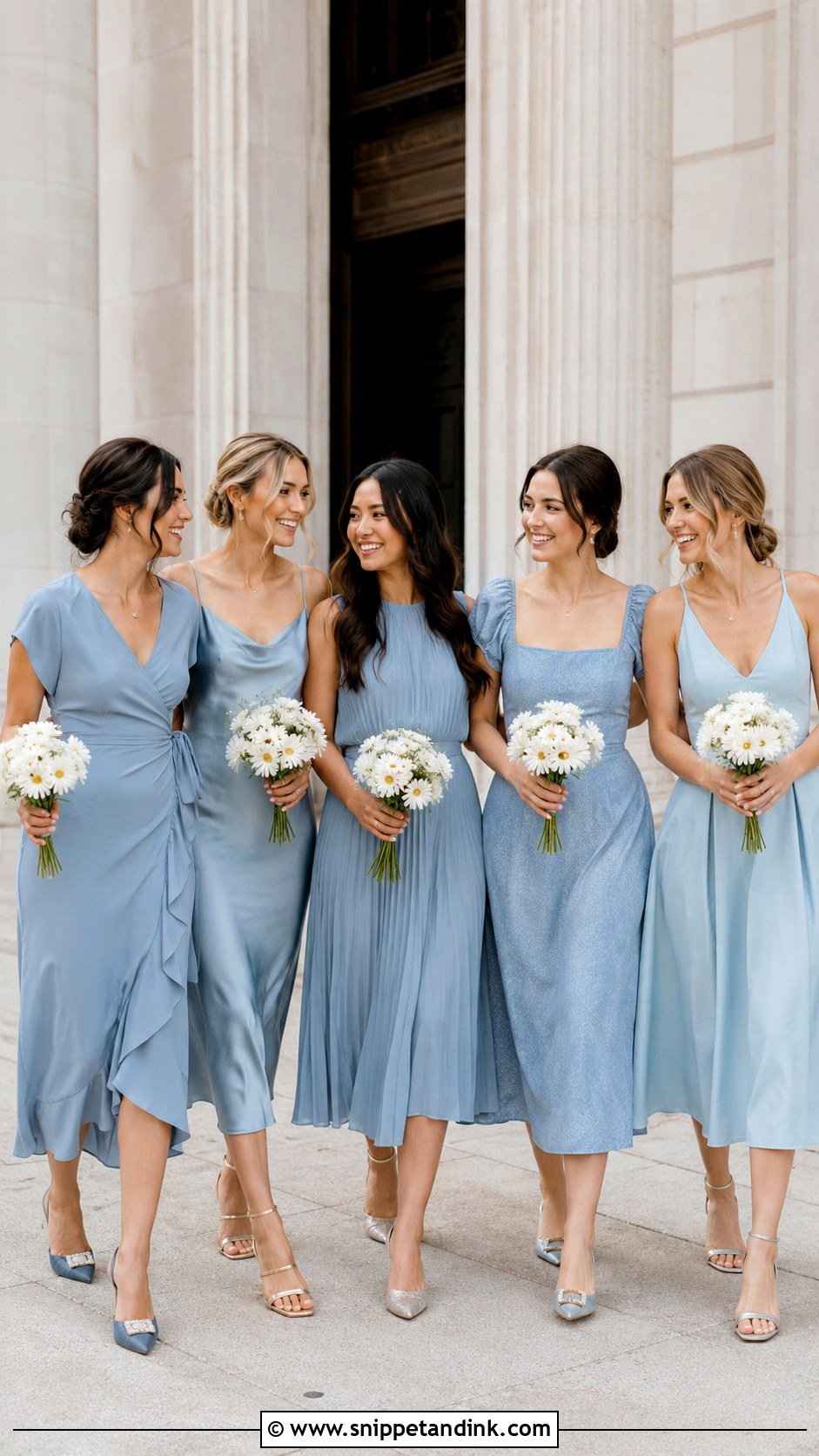
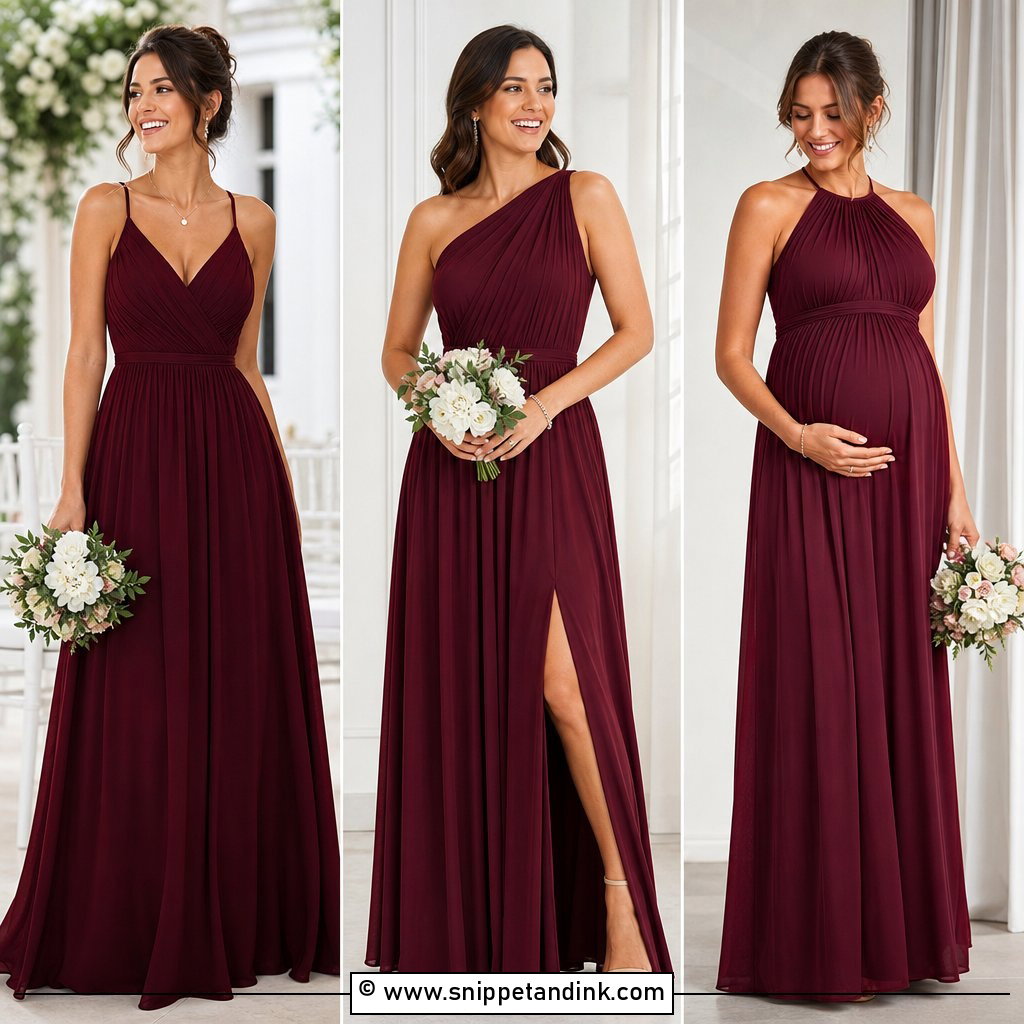
Midis suit daytime, city and courthouse weddings, where floor-length gowns can look overdressed. Pick one colour family and allow fit-and-flare, slip, wrap, pleated and puff-sleeve shapes. Hems can differ a little, but I set a rule that everything falls between the knee and the ankle. Shoes are where midis show the most, so agree on one shoe colour, nude, black or metallic, and let people choose the heel height they can stand in. The main thing to rule out is a casual sundress next to a structured cocktail dress.
16. Same Color Different Dress Bridal Party
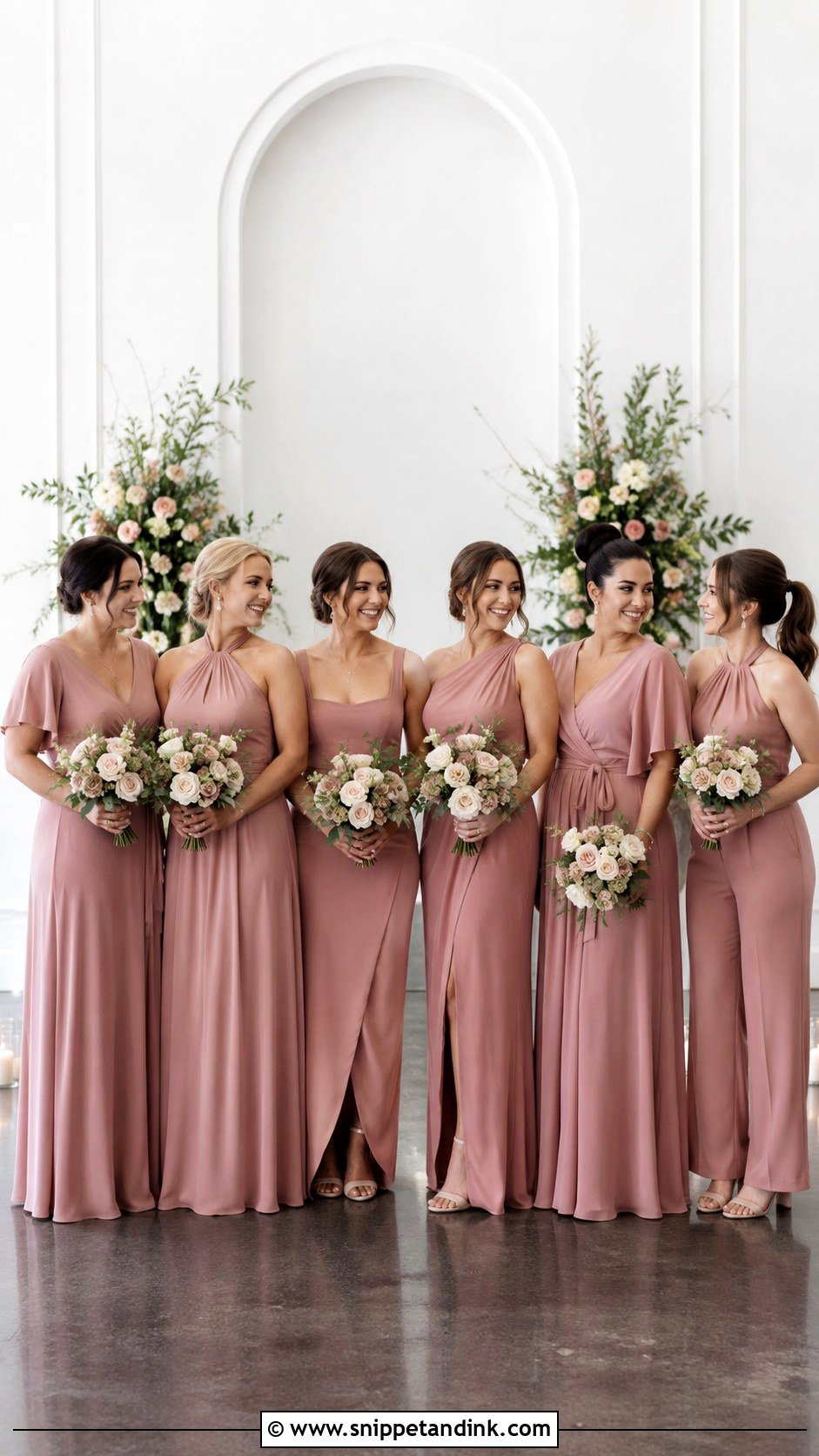
One exact colour and different dresses is the simplest way to go mismatched. Ideally, order everything from the same brand and fabric collection, then let each attendant pick her neckline, sleeve and skirt shape. A wrap gown, halter maxi, square-neck, one-shoulder column and a sleeved style can all appear in one row. This is the option I suggest for groups with very different body types or budgets that are still nervous about colour. Set length and fabric rules before anyone shops, and use matching bouquets to tighten the look further.
17. Ombre Mismatched Bridal Party
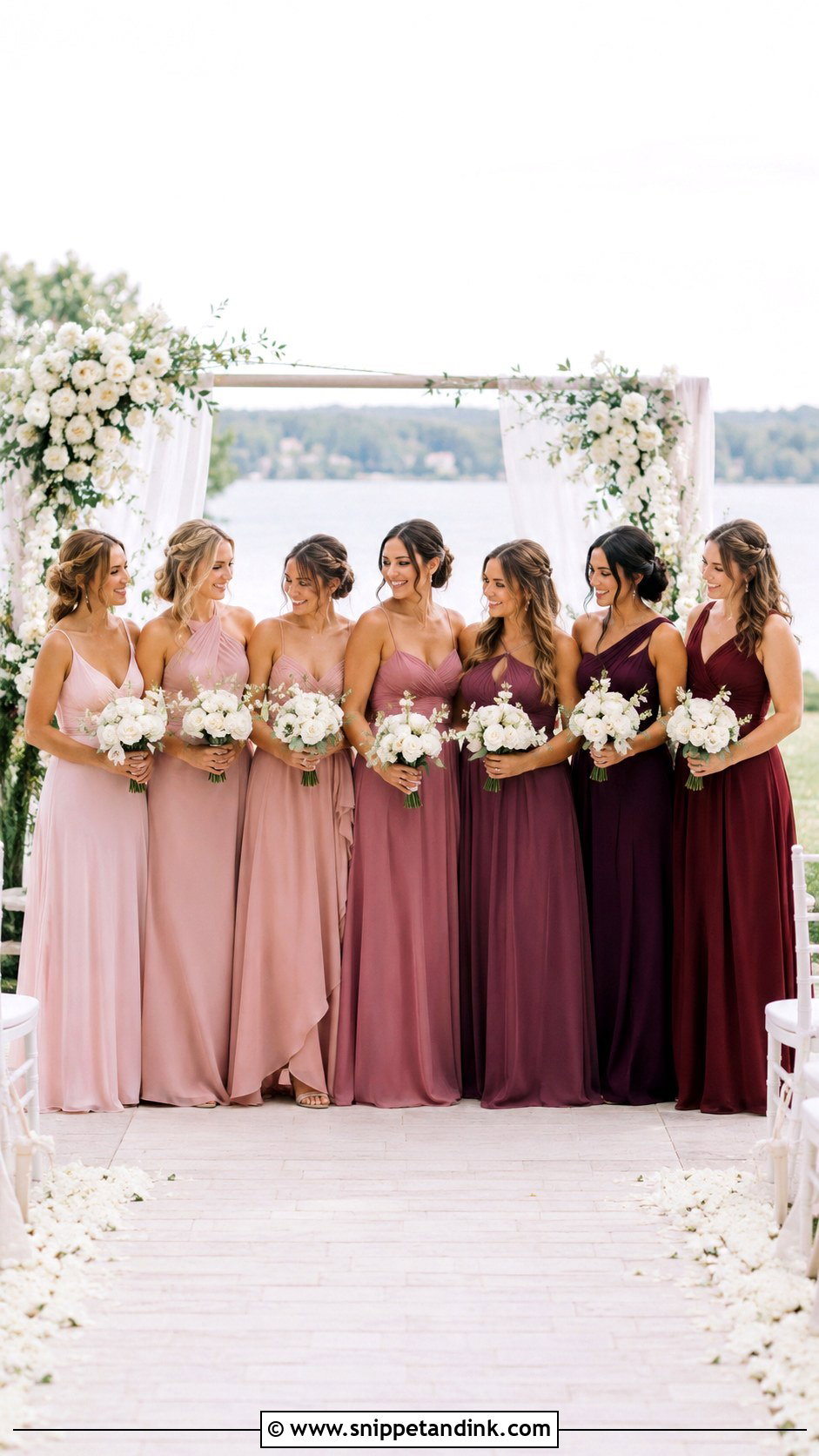
Ombre arranges the group as a gradient, light at one end and dark at the other. Pick one colour family and assign shades from pale to deep, then stand people in that order at the ceremony. Consistent lengths keep the gradient readable. I compare every swatch side by side before buying, because two shades that look different online can be identical in person, and one odd undertone breaks the whole progression. It’s a high-planning option, and a late swap by one person can throw it off. Bouquets can deepen along the line, or stay white for simplicity.
18. Earth Tone Mismatched Bridal Party
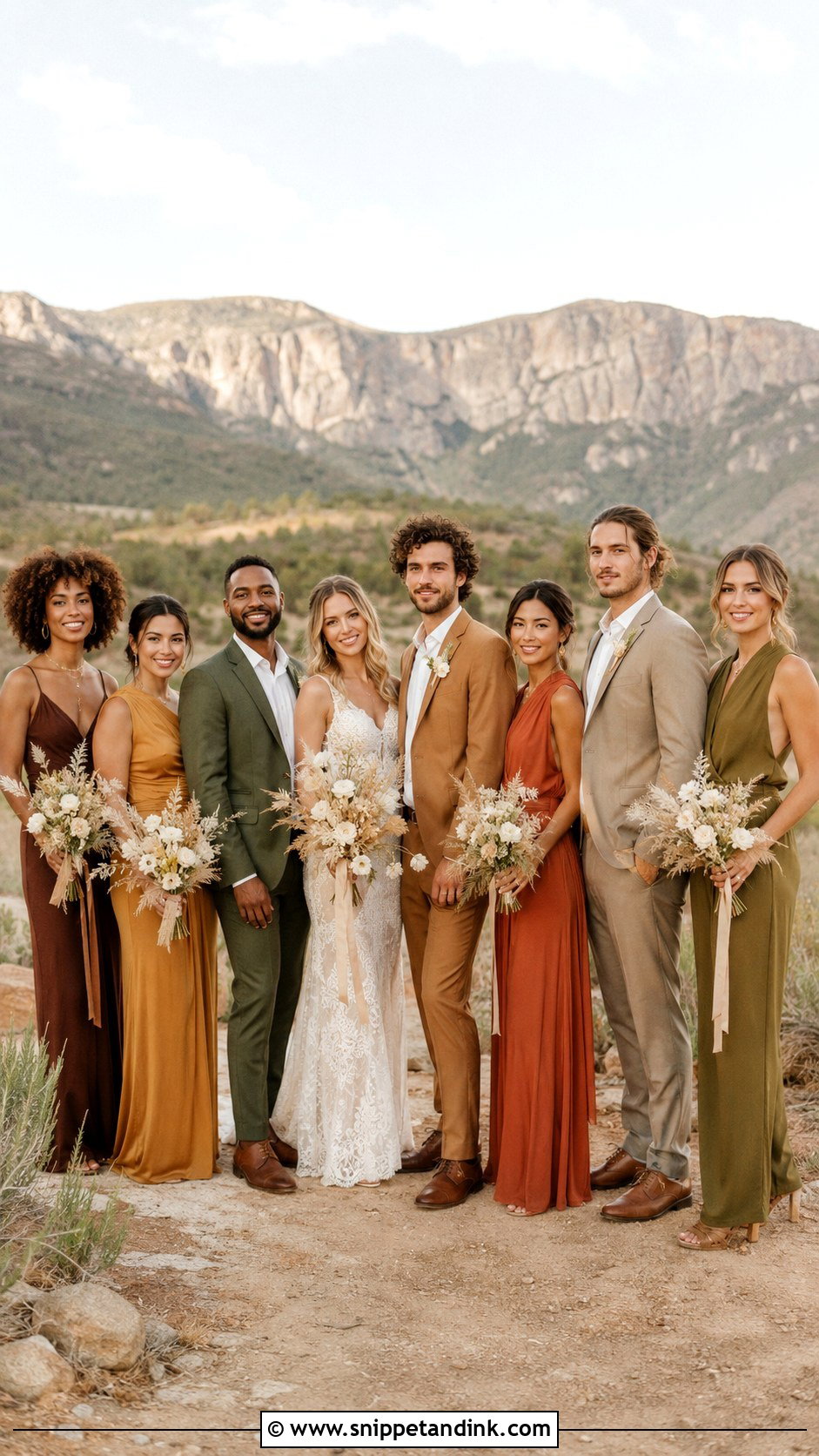
Earth tones give a relaxed palette with plenty of room for choice. Olive, rust, camel, ochre, taupe and chocolate can be mixed across crepe, chiffon, satin and velvet, with jumpsuits and suits in the same shades. Use the venue as your guide: chocolate disappears against dark wood, and camel can vanish into a wheat field. Keep all colours similarly muted so one bright mustard doesn’t take over. Alternate light and dark outfits, or arrange them symmetrically from the centre.
19. Bright Color Mismatched Bridal Party
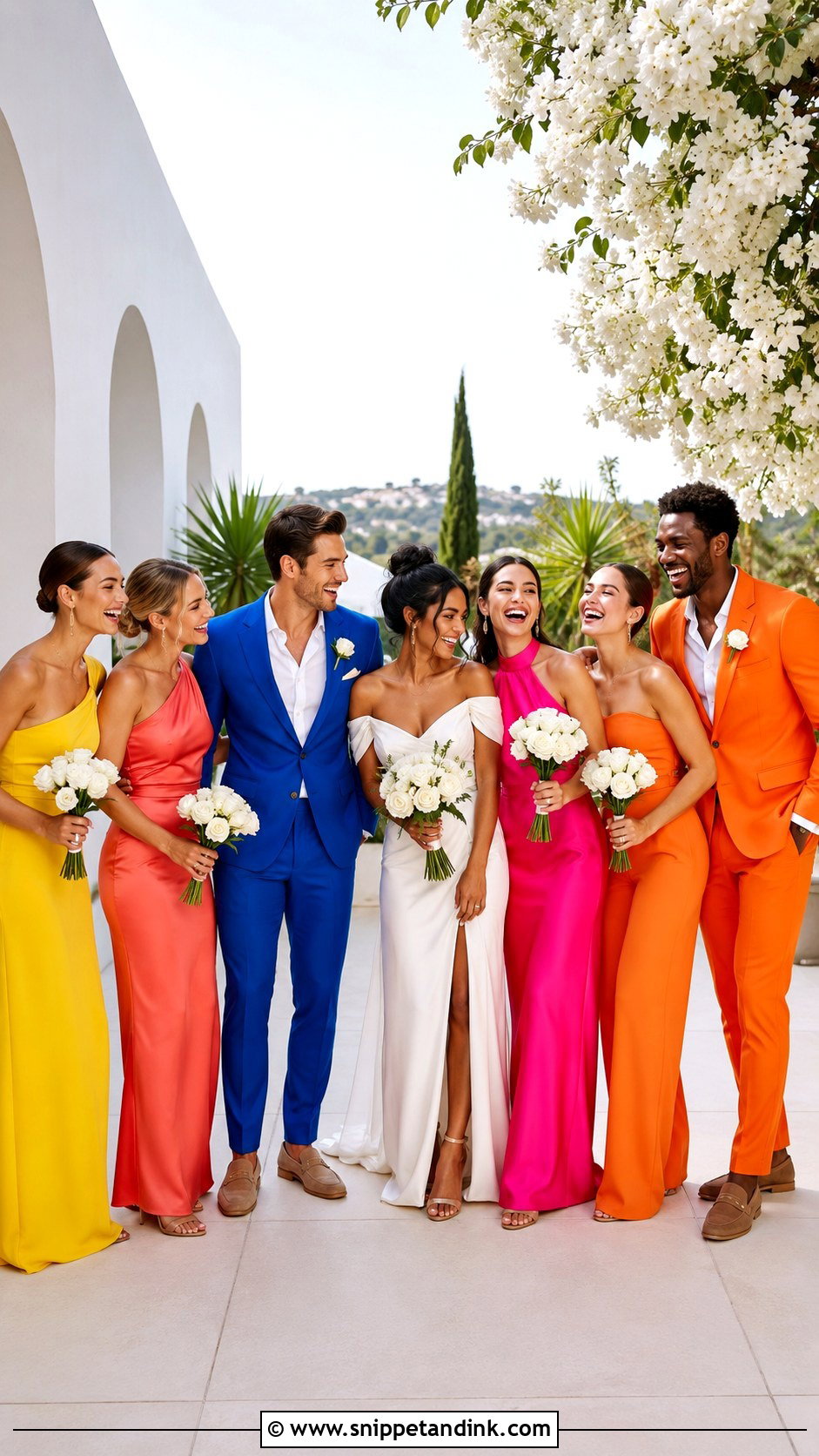
Bright colour can look joyful when it follows a plan. Choose three or four strong shades, such as cobalt, coral, fuchsia and sunny yellow, and repeat them in a larger group rather than adding a new shade for each person. Keep fabrics and lengths similar to control the energy. Before anyone buys, I put a quick mockup together, photos of the actual dresses in one row, because it immediately shows which shade looks neon or dull next to the others. Keep bouquets mostly white so they don’t compete.
20. Mixed Gender Mismatched Bridal Party
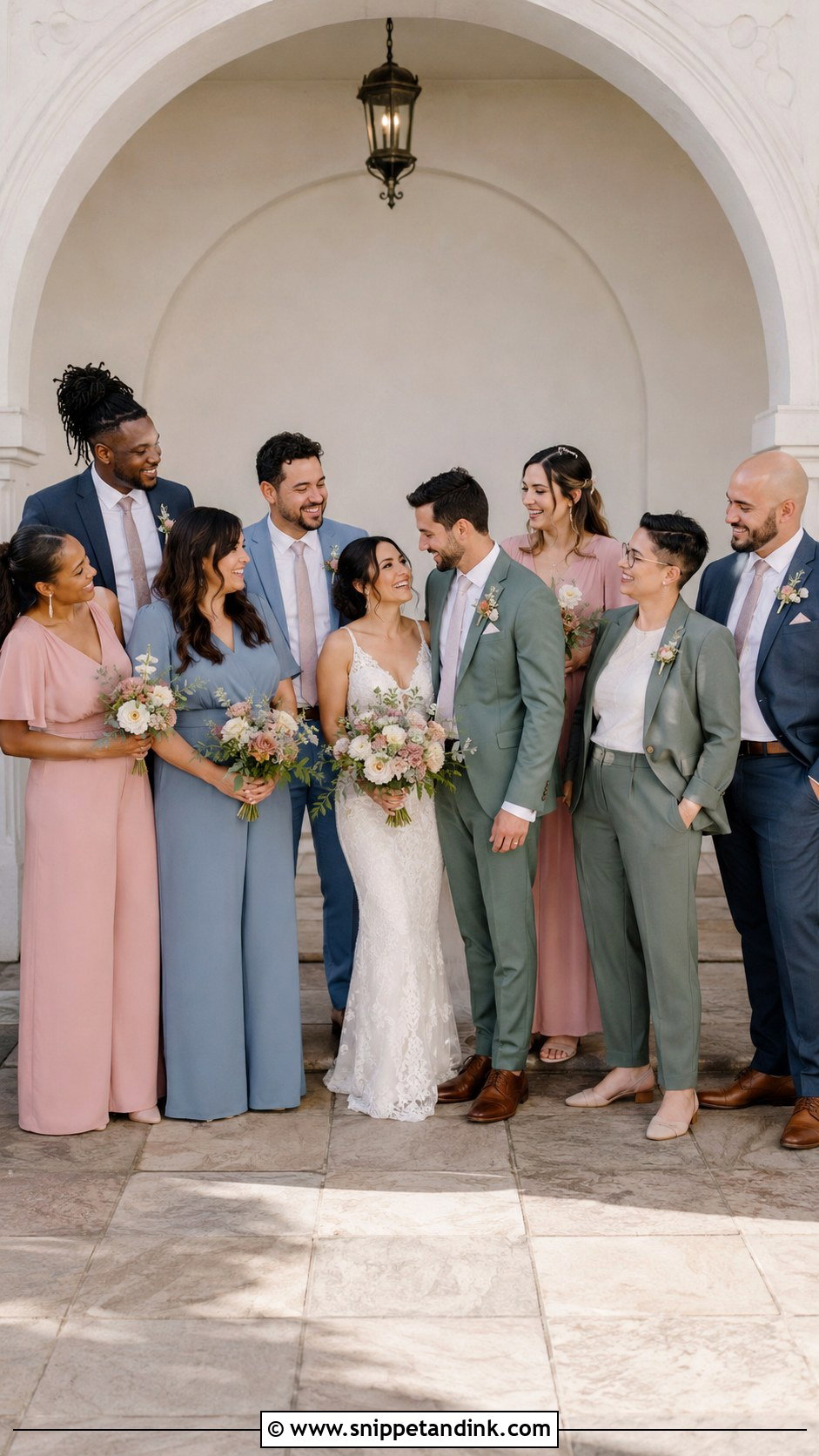
A mixed-gender bridal party comes together when everyone follows the same palette and formality rather than wearing the same garment. Start with two to four approved colours, then list outfit options from gowns and jumpsuits to pantsuits and traditional suits. Repeat colours across garment types: a sage dress can pair with a sage tie, vest or pocket square. Give guidance without assigning outfits by gender, and let each person choose what they’re comfortable in. Matching boutonnieres and bouquets tie the line together in photos.
Where Everyone Stands When No Two Dresses Match
With matching dresses, order hardly matters. With a mixed group, the lineup is where the whole idea succeeds or falls apart, so I plan it on paper before the rehearsal. I start with colour weight: darker or stronger shades either sit at the ends as bookends or alternate evenly, never all on one side. Then I check height, because a tall person in a deep colour next to a short person in a pale one makes the eye jump.
Silhouettes come next. Spread out the similar shapes so two strapless gowns aren’t side by side and three sleeved dresses aren’t bunched at one end. If you’re doing ombre, the order is fixed by colour, and you adjust only by swapping people of similar height. I take a quick phone photo of the line at the rehearsal; problems that are invisible in person show up immediately on a screen.
When someone buys the wrong shade
It happens, usually because a screen lied. If the dress can’t go back, move that person to an end, give her a bouquet or wrap that pulls toward the palette, or pair her with whoever’s closest in tone. Handled quietly, nobody notices in the photos, and it’s far kinder than asking her to buy a second dress.
One Thread, Six Different Dresses
A mixed bridal party works when there’s freedom inside clear limits. Pick one connecting element, such as a colour family, fabric, length, print or formality, and back it up with swatches, examples, a shopping deadline and simple rules. Review choices before purchases are final, but leave room for different bodies, budgets and comfort needs. Shoes, jewellery and flowers can add cohesion without making everyone identical. The step most couples skip, and the one I’d never skip, is looking at all the outfits together in one image before anyone pays.
You'll Like These Ideas:


Leave a Reply