
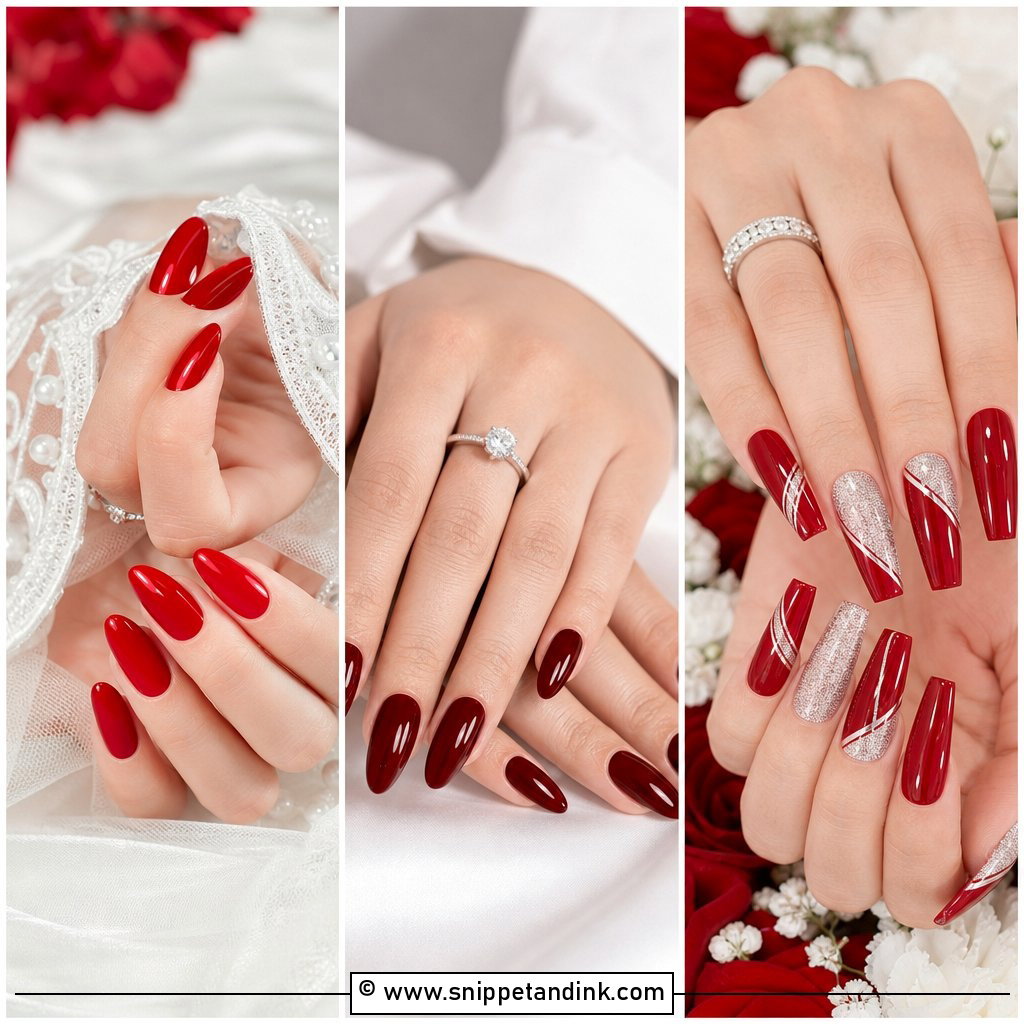
Your hands are in more wedding photos than you’d guess: wrapped around the bouquet, stretched out for the ring shot, signing the register, holding a glass during the toasts. So a bridal manicure has to survive close inspection and a long day of use. Right now most brides I see want soft, refined sets: milky finishes, slimmer French tips, pearl chrome, blush, a little lace or floral art. Picking among them comes down to your dress, your ring metal, your skin tone and how much detail you’ll actually enjoy living with. Here are twenty bridal sets I do regularly, with the practical notes I’d give you in the chair.
Three Months Is Enough Time to Grow Out Bitten Nails
Most of the brides who tell me they hate their hands just need a runway. Fingernails grow roughly three millimeters a month, so starting twelve weeks out gives you a real free edge to shape, even from bitten nails.
- Three months out: stop peeling off gel at home and file damaged layers down gently instead. Book a basic manicure to even out the shape so they grow in the same direction.
- Two months out: a thin builder or rubber base over the natural nail protects the growing edge from bending and splitting. It’s a good fix for nail biters, because a hard coating is harder to chew.
- Six weeks out: decide length and shape, and do your trial. Wear it for a full week of normal life.
- Final week: cuticle oil every night, no new hand products, and your main appointment one to three days before.
If your nails peel or split badly, I’d keep the length modest and let a strengthening gel do the work. Forcing long almond tips onto weak nails is how brides end up with a broken nail on the morning itself.
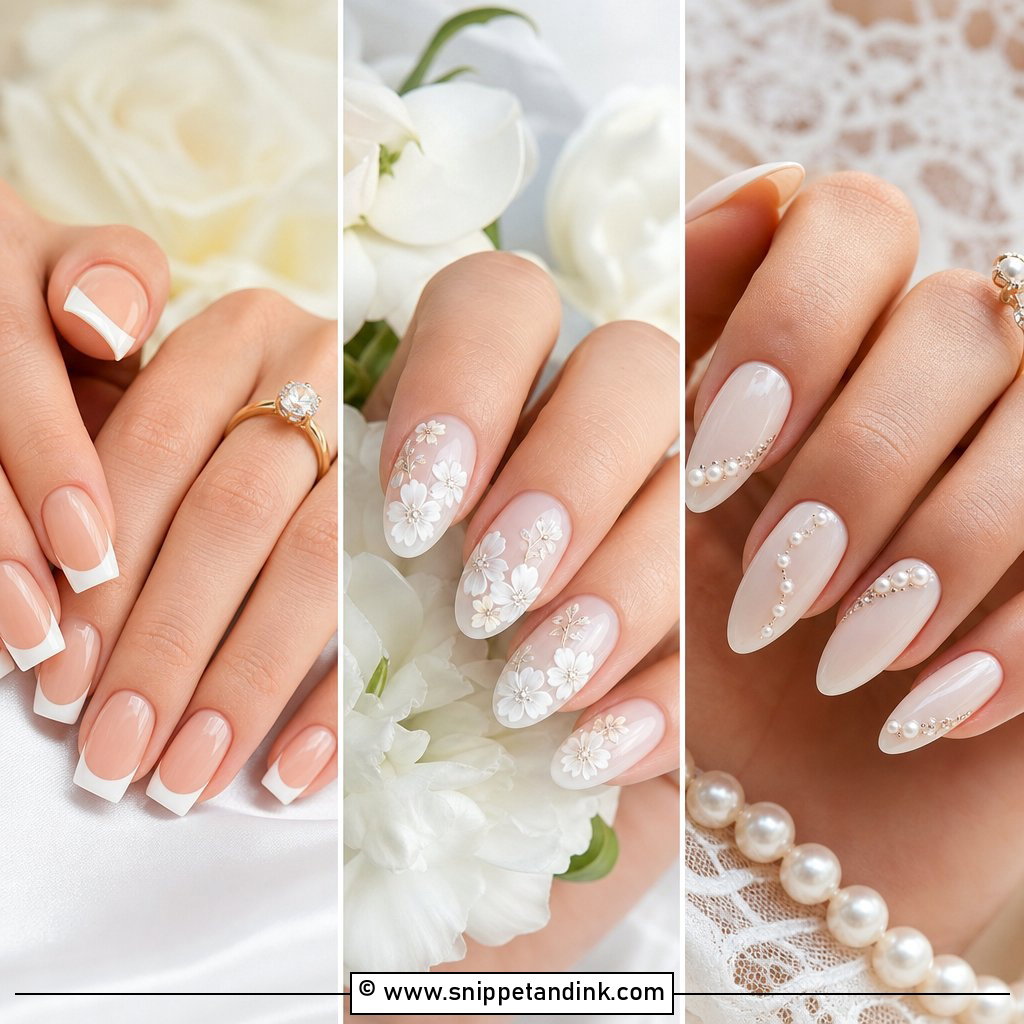
1. Classic French Tip Wedding Nails
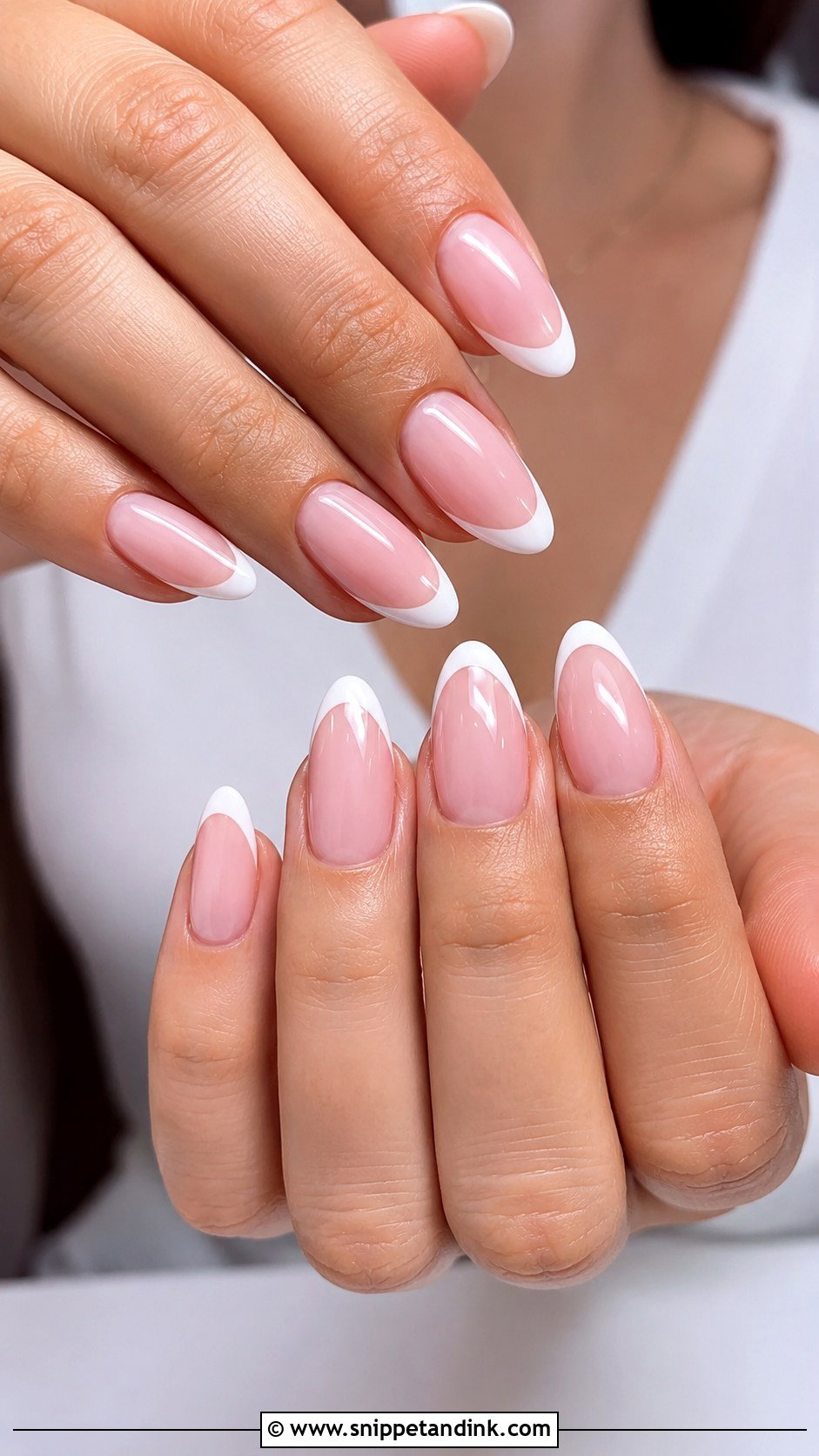
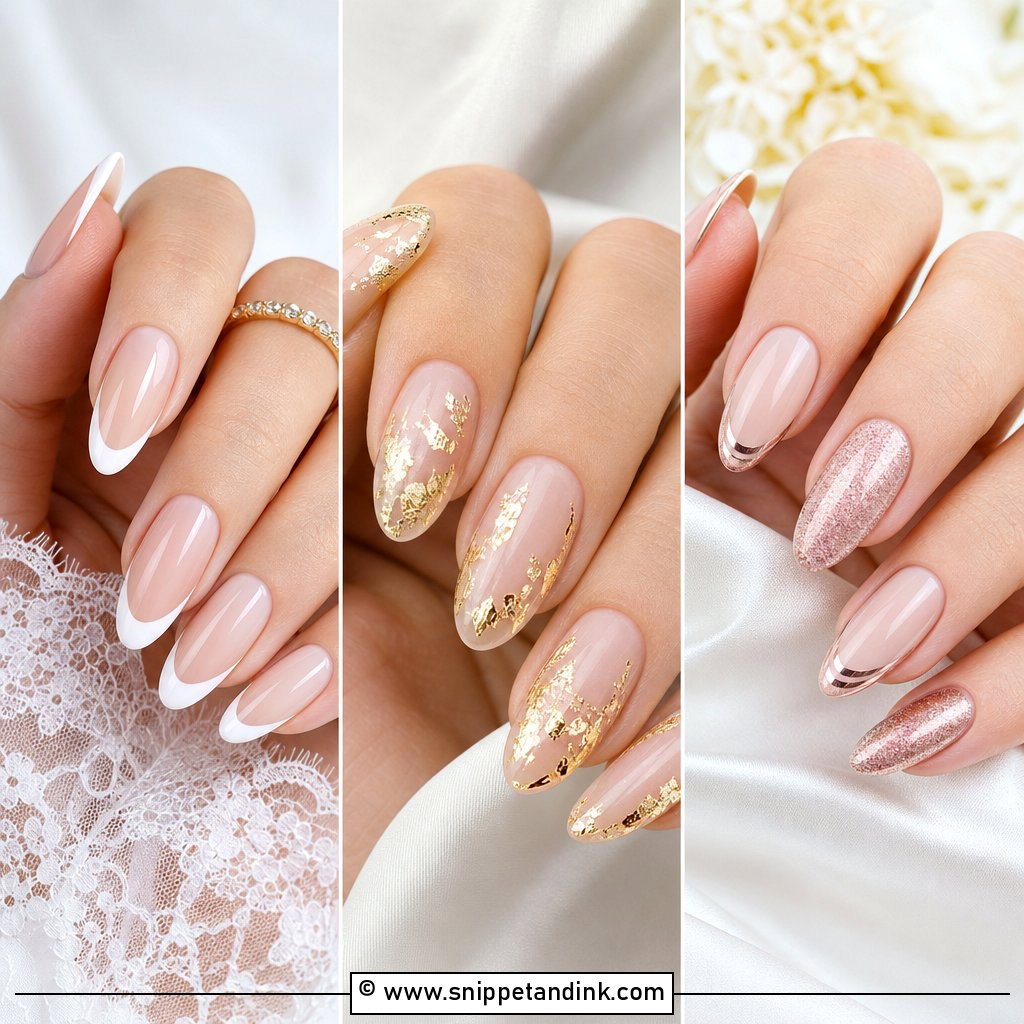
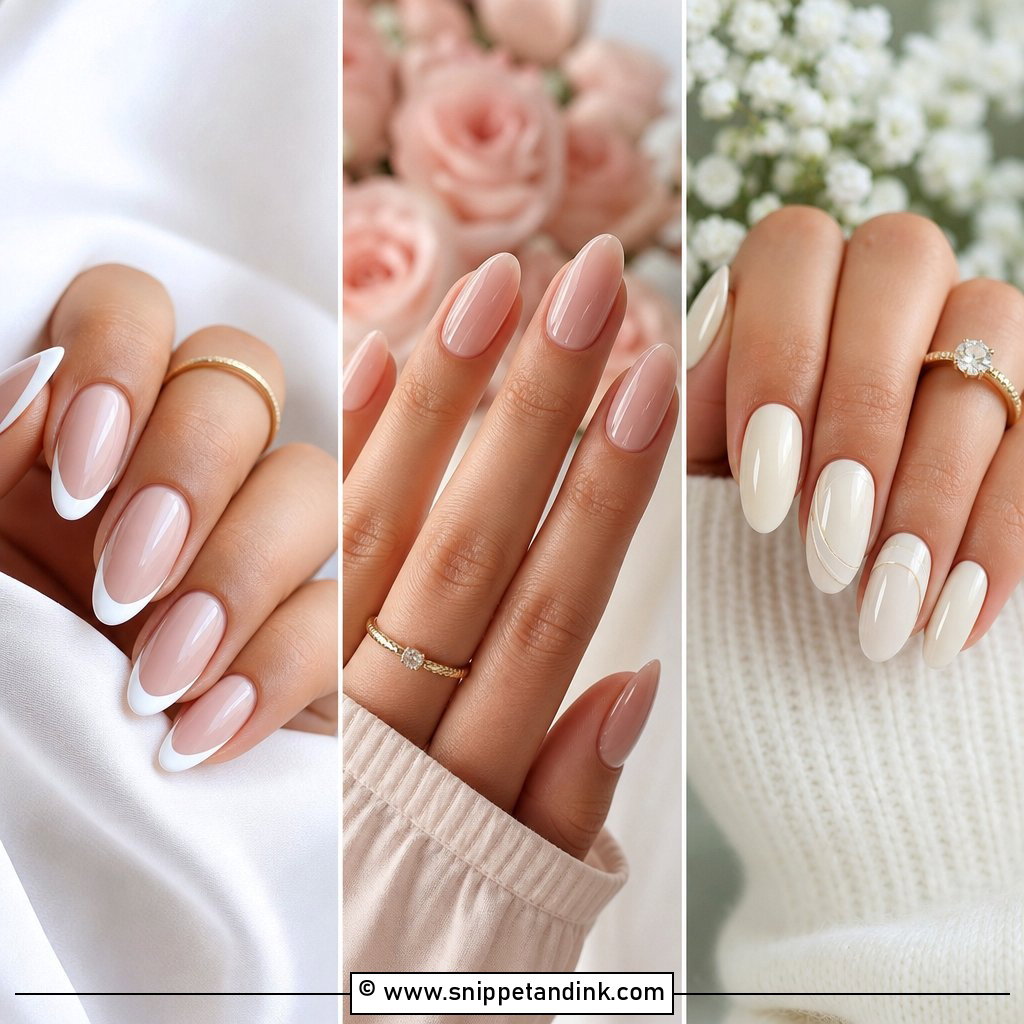
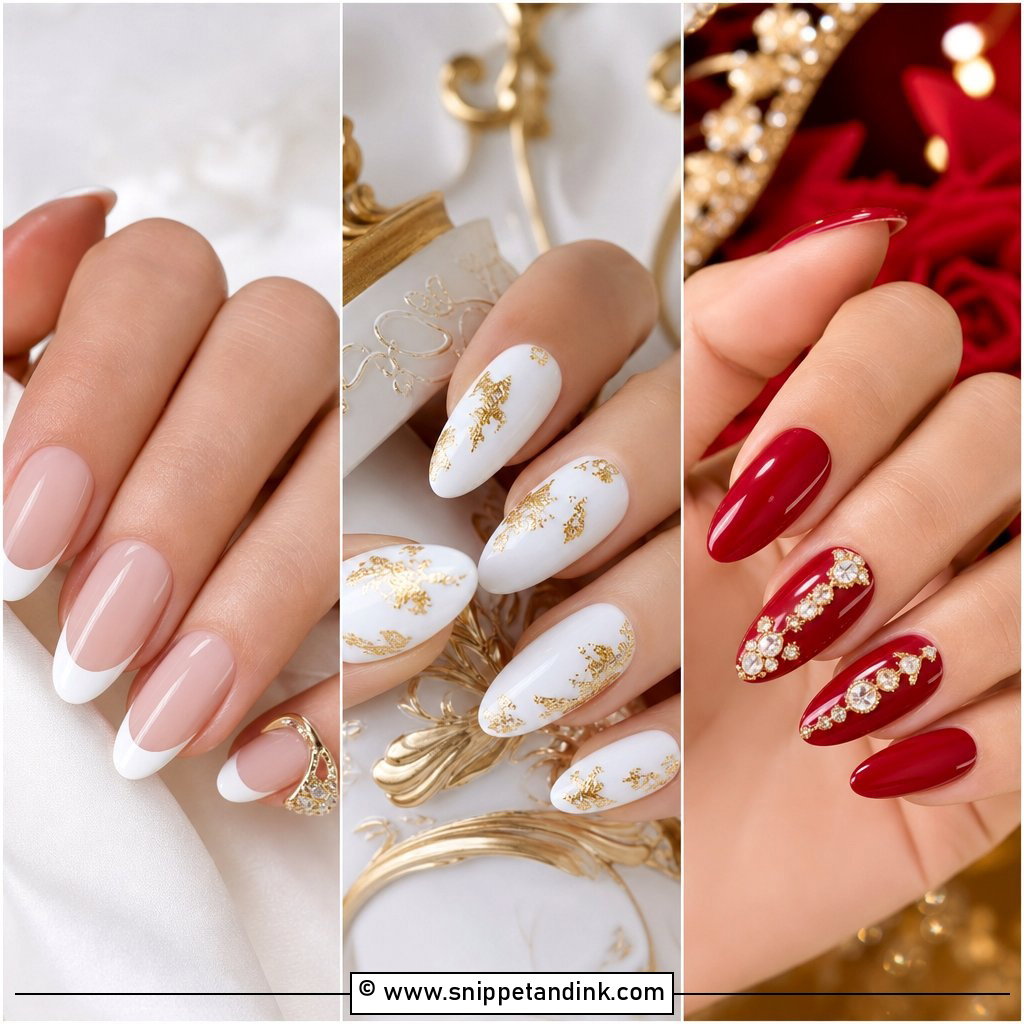
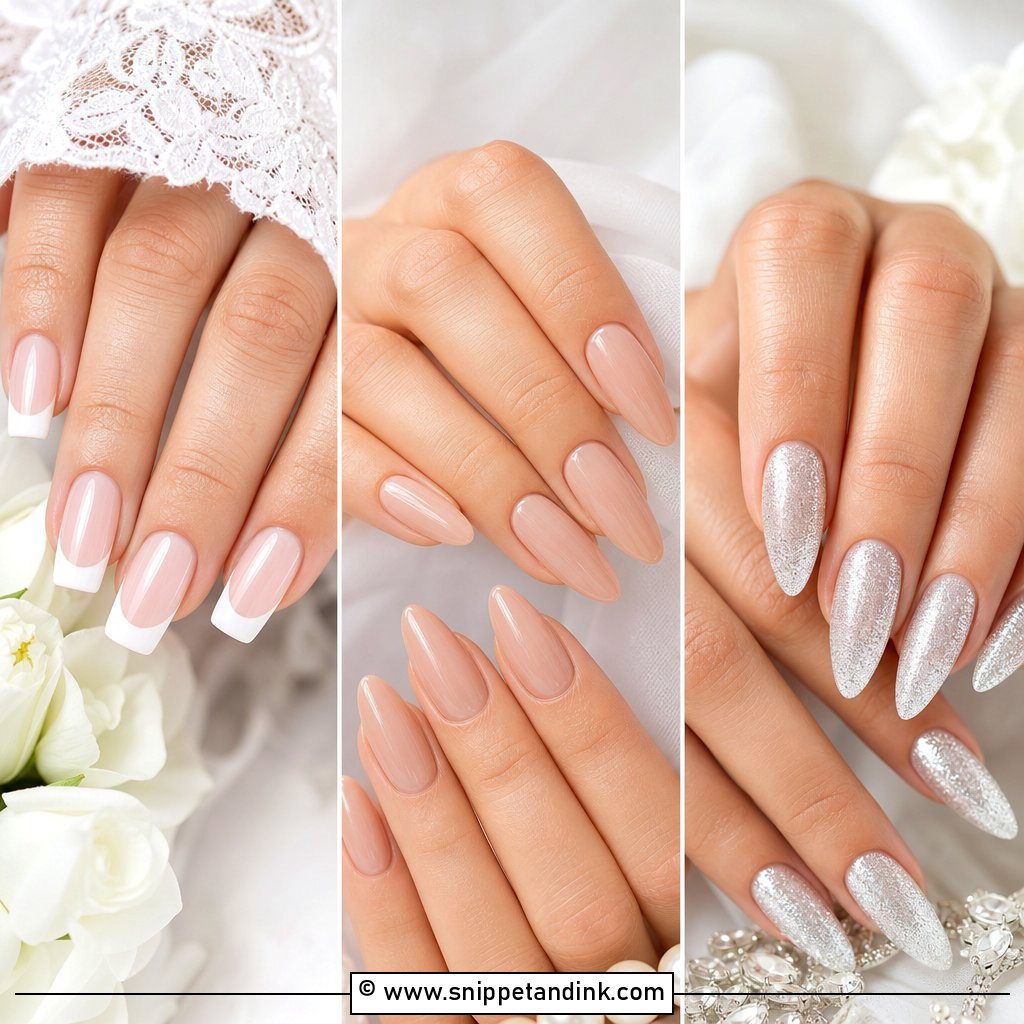
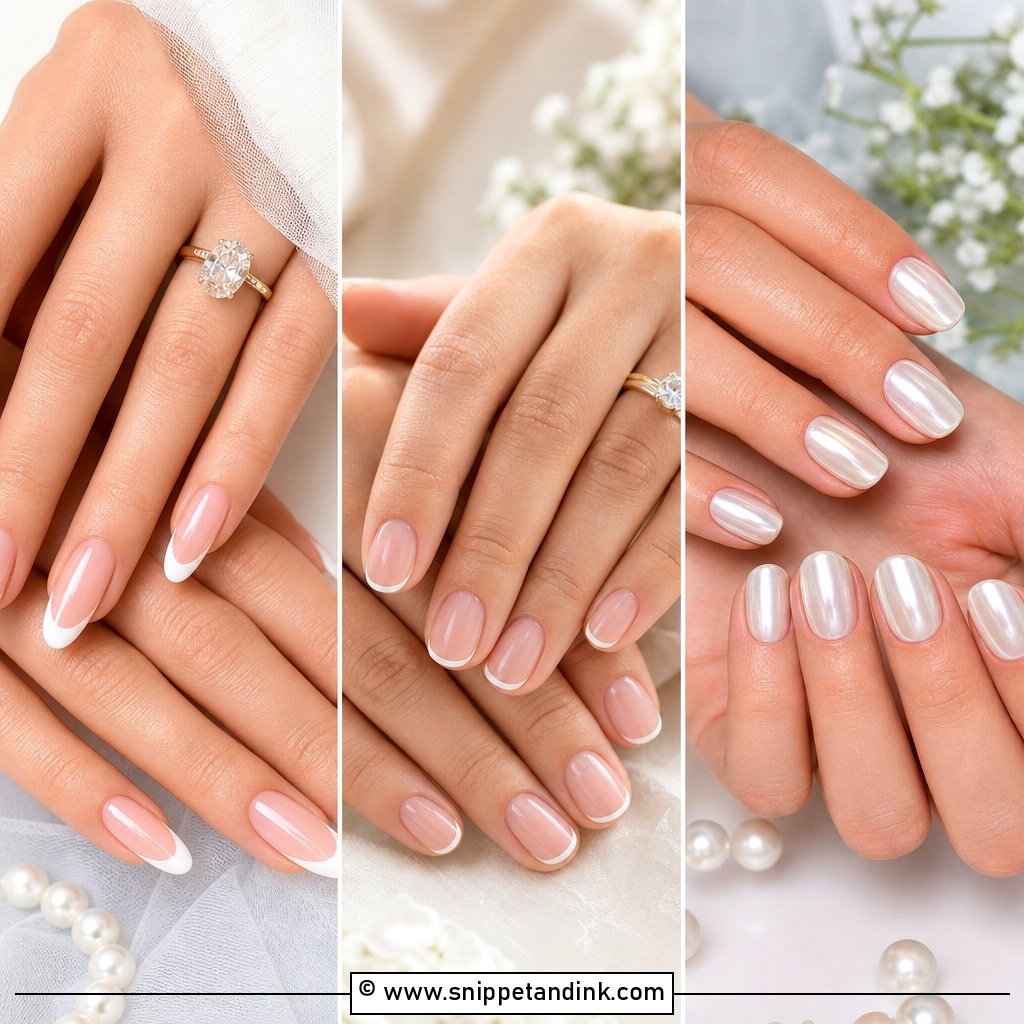
Classic French tip wedding nails are the safe bet, and I say that as a compliment. A soft pink or nude base keeps the hand natural, and the white edge frames the nail without stealing attention from the ring. It adapts to almond, oval, square or squoval, so it works with whatever length you’ve grown. Where brides go wrong is copying a photo taken on longer nails. On a short free edge, a deep white tip eats the nail bed, so I measure the tip against your own nail and keep it proportionate. If stark white feels harsh, a softer white or a slightly blended edge reads gentler.
2. Milky White Wedding Nails
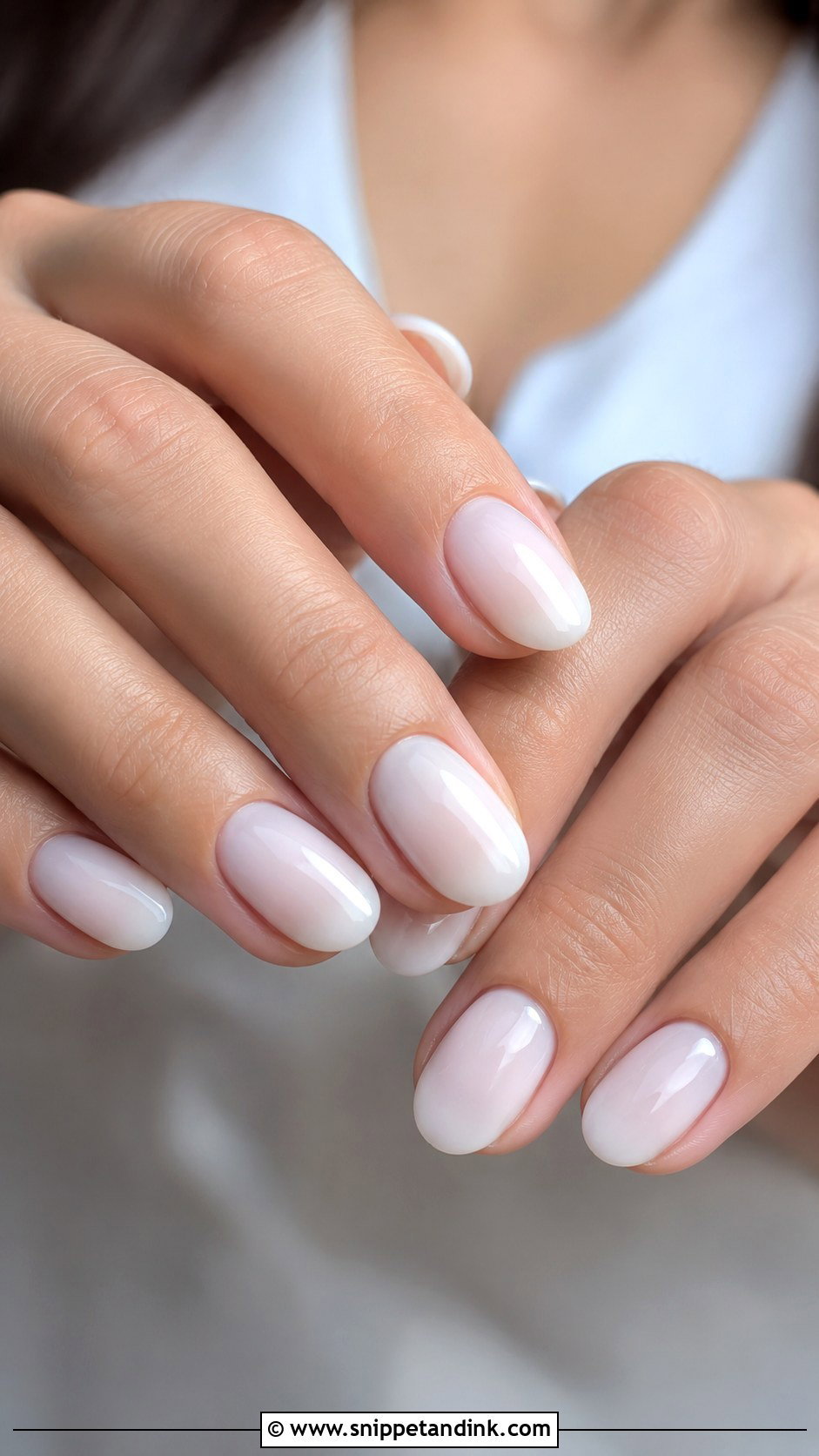
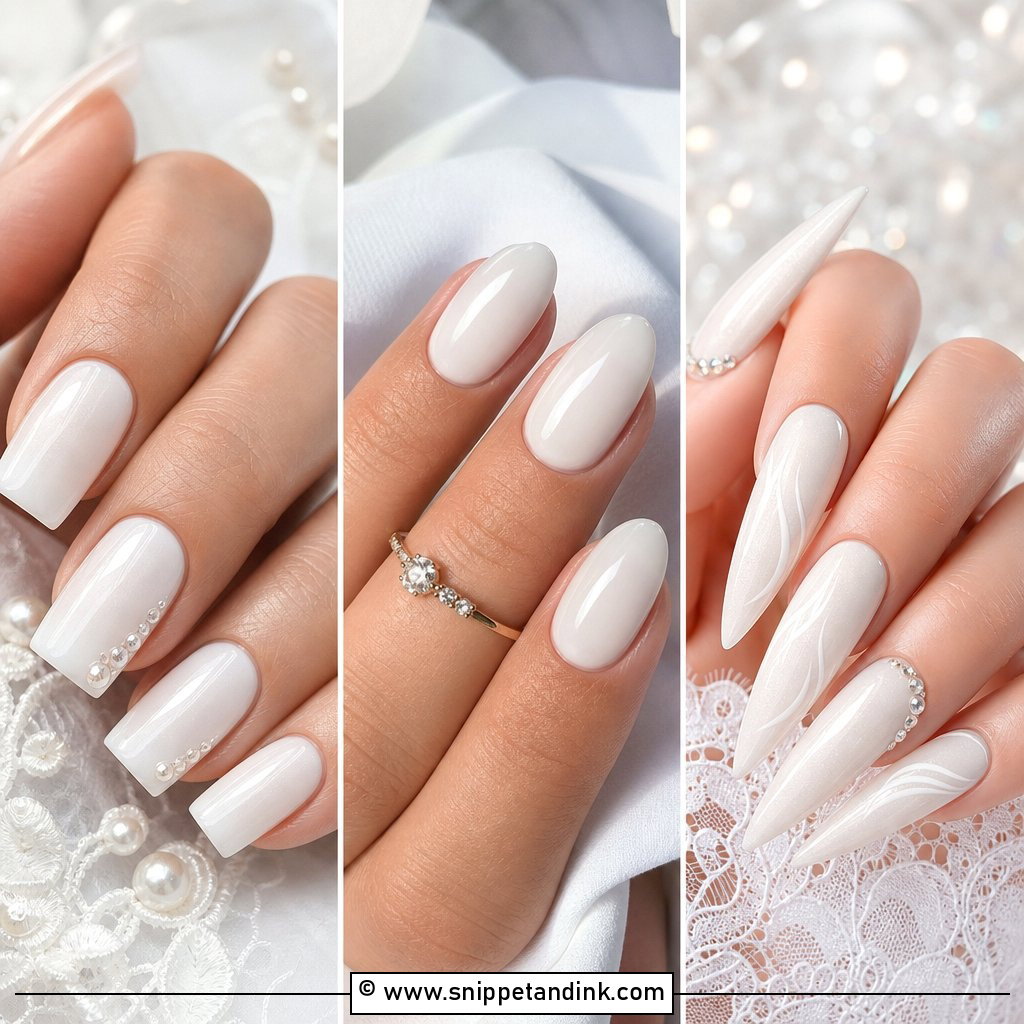
Milky white is less stark than pure white polish, which is why it flatters so many skin tones and sits easily beside lace, satin, tulle or beading. All of its appeal is in the layering. I build it in sheer coats until it looks creamy and even, and I’d rather do four thin ones than two thick ones that pool at the sidewalls. On short nails it looks crisp; on almond or oval it softens the hand. Clean without being plain, it’s one of the easiest sets to wear for two weeks after the wedding too.
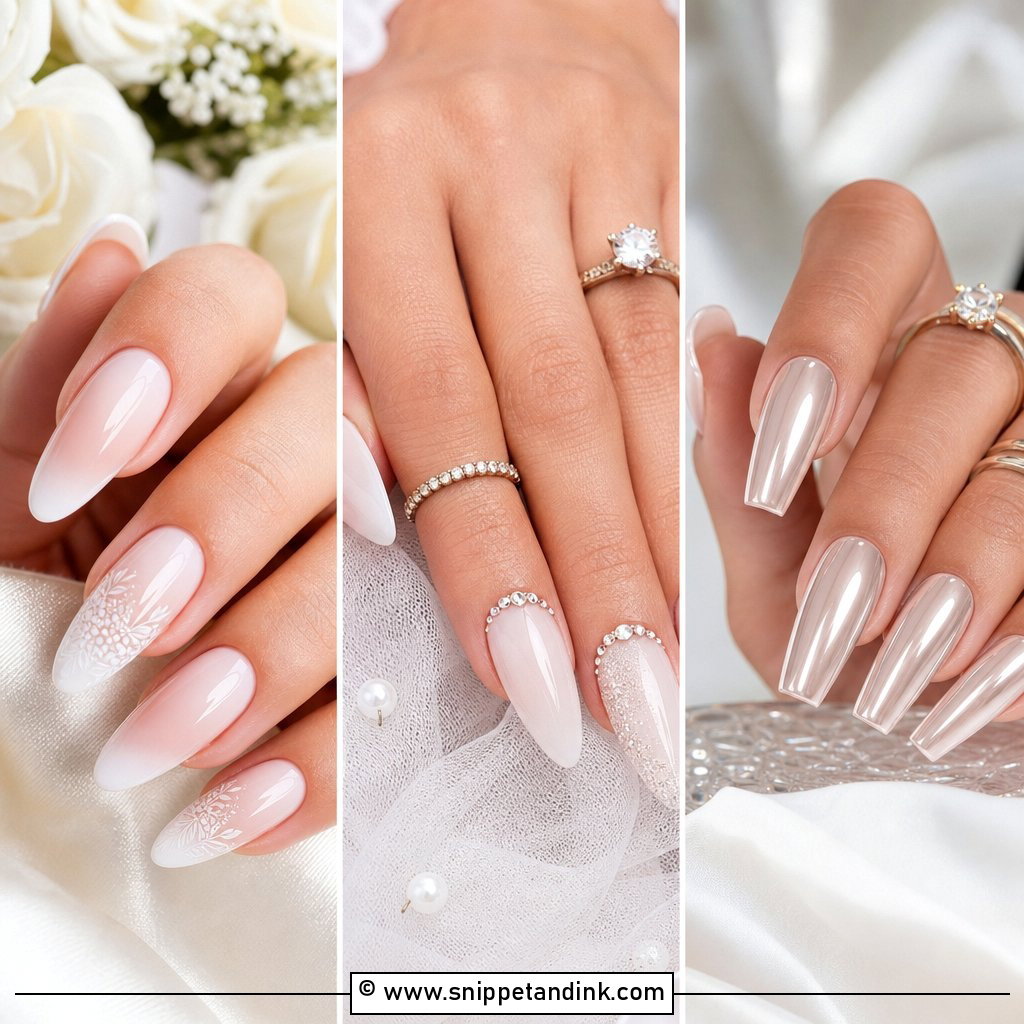
3. Pearl Chrome Wedding Nails
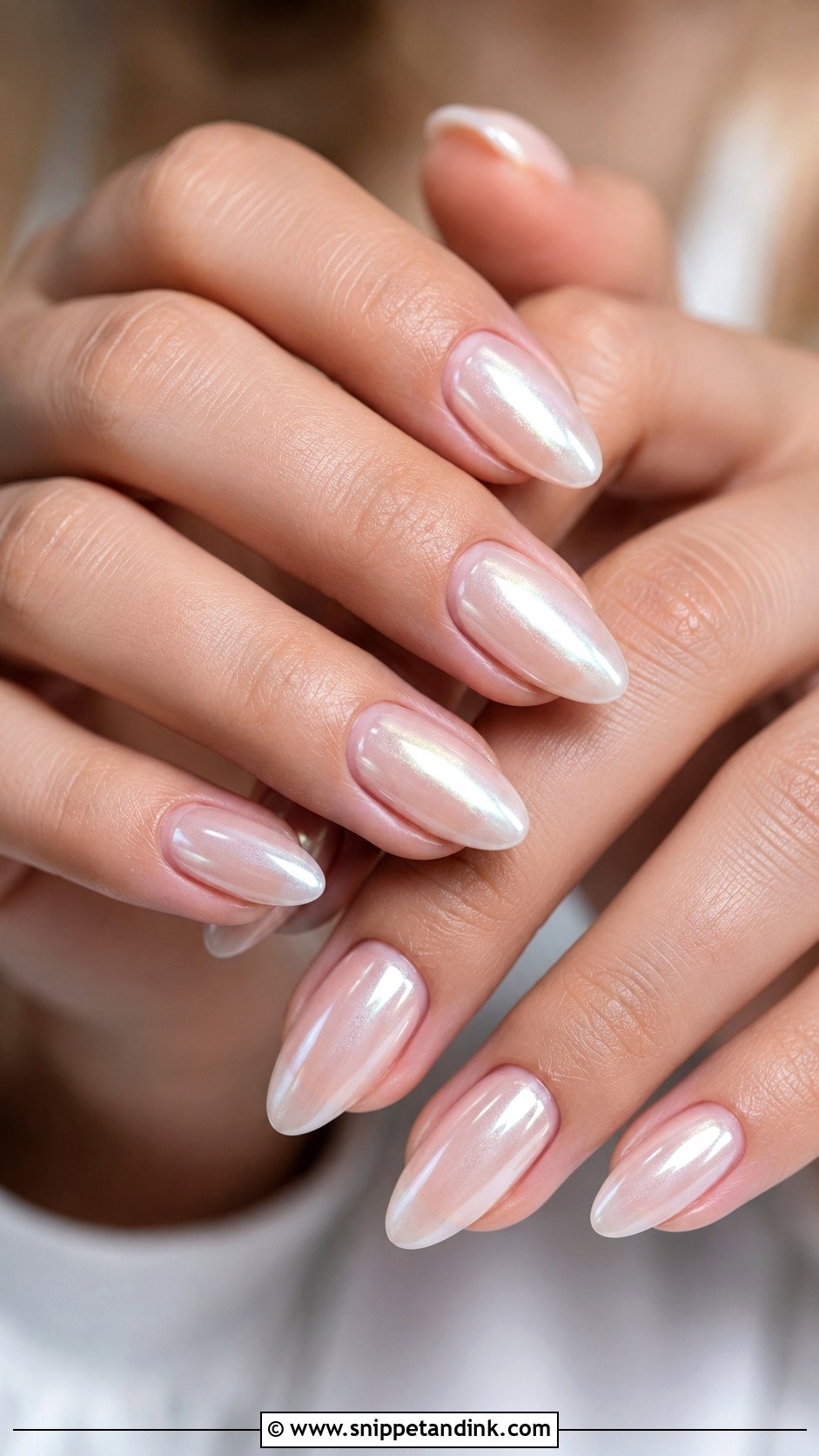
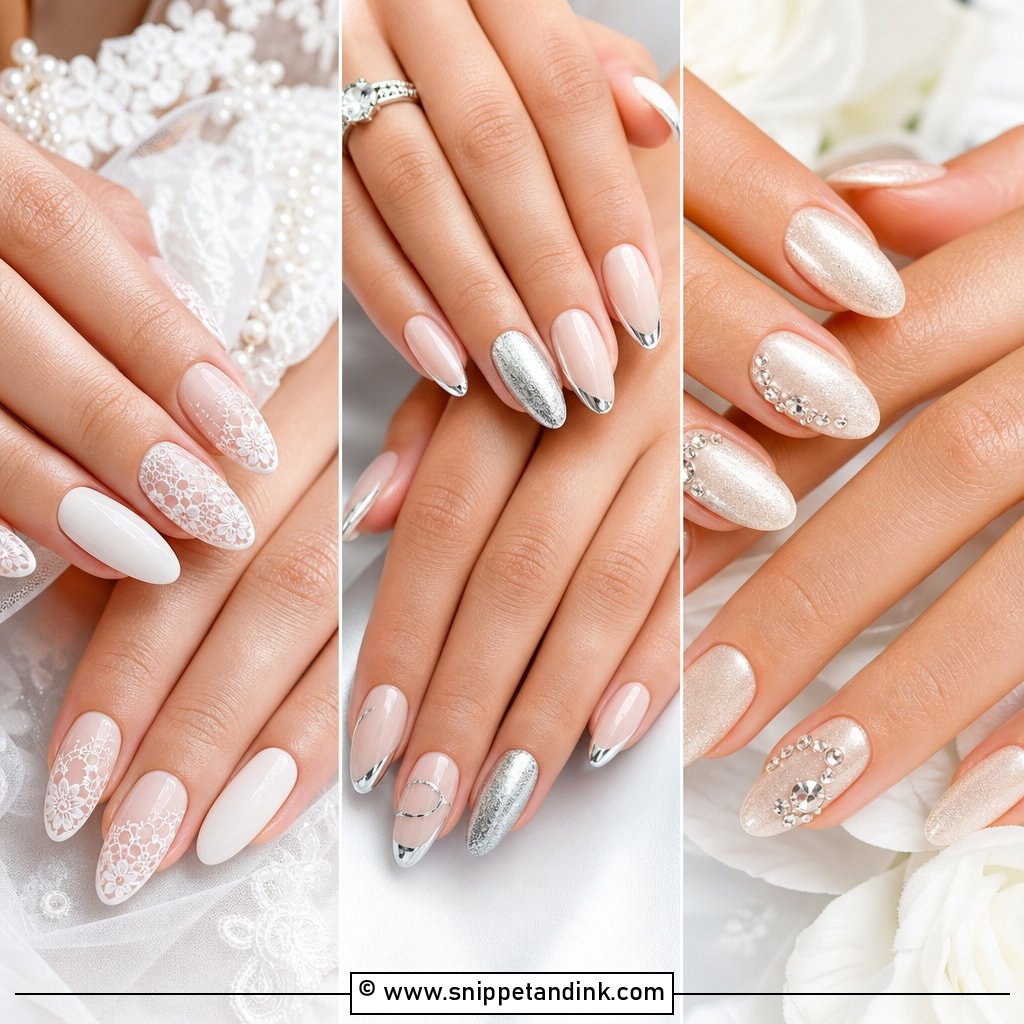
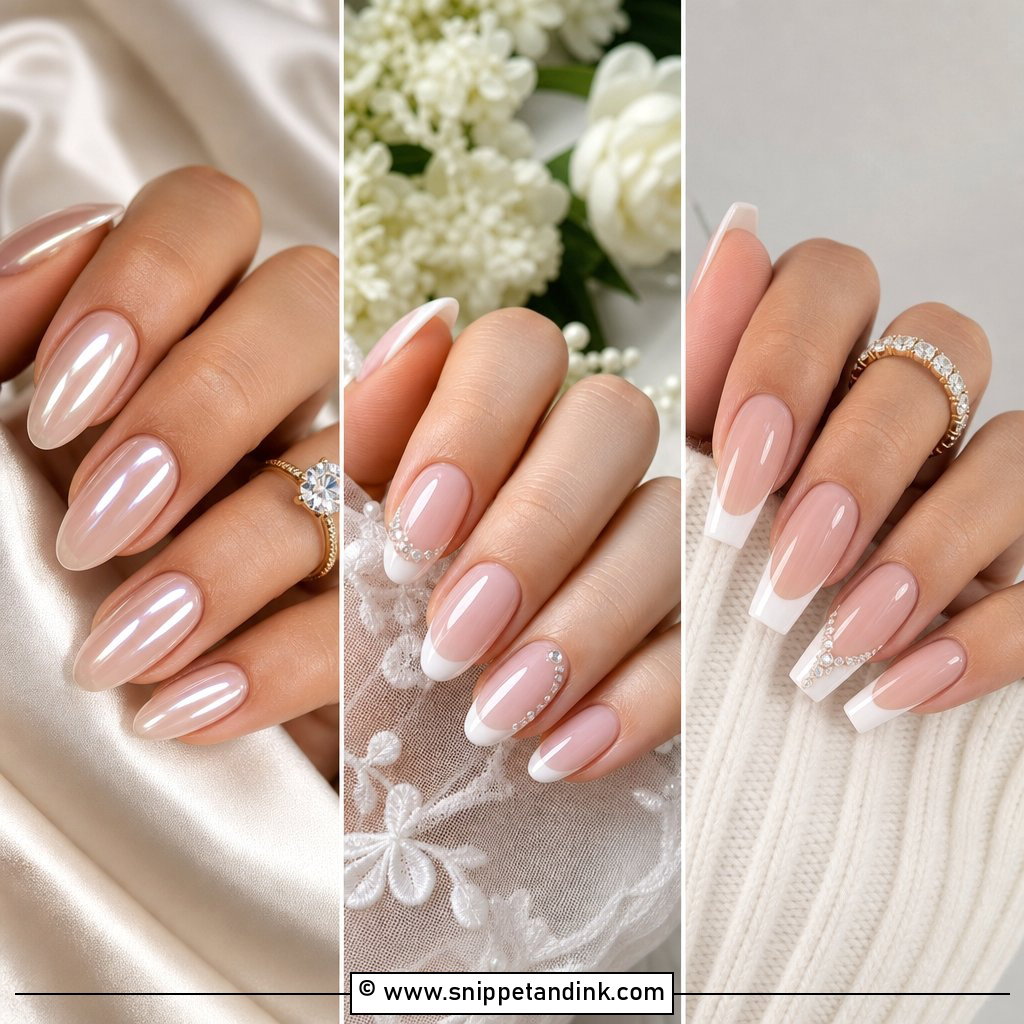
Pearl chrome gives glow without heavy sparkle. It starts on a sheer white, nude or pale pink base, then a fine powder is rubbed over a top coat to leave a soft pearly sheen. I always ask whether you want soft pearl or full mirror, because they’re different products and brides often bring a photo of one while picturing the other. Soft pearl is the bridal one. It sits naturally with pearl earrings, a pearl-edged veil or a plain satin gown that needs one quiet detail.
4. Nude Ombre Wedding Nails
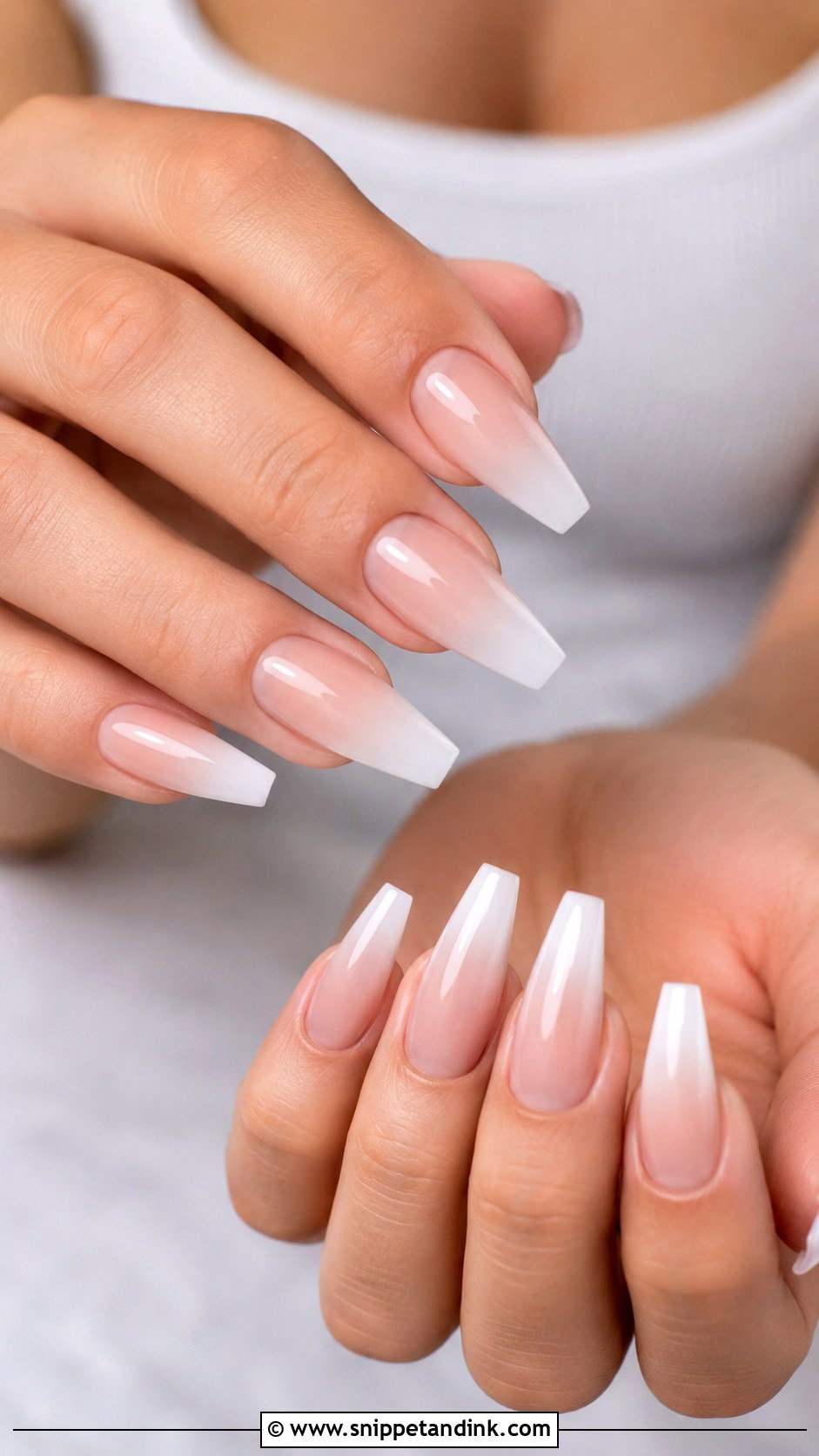
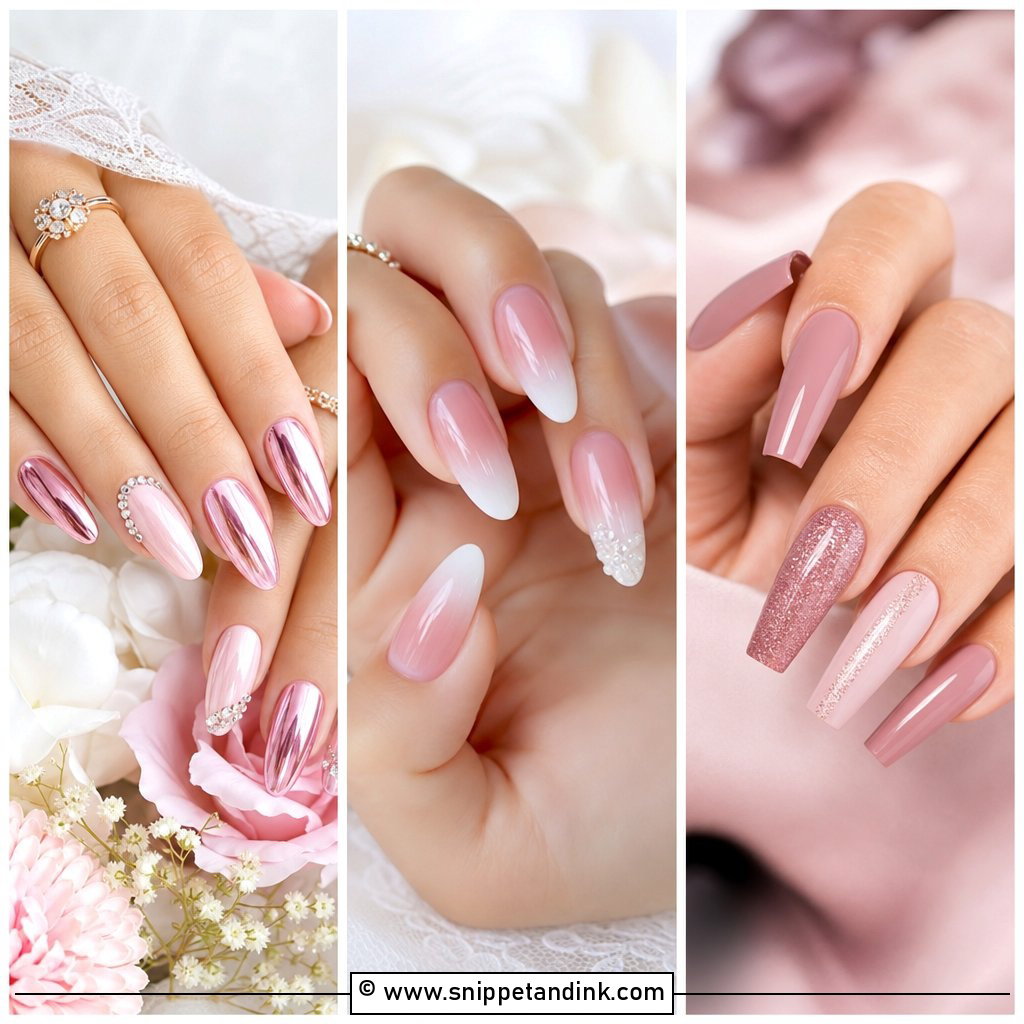
Nude ombre wedding nails fade from natural pink or beige into soft white tips, so there’s no sharp line where the base ends. The gradient visually lengthens the finger, which is why it suits almond, coffin and oval shapes so well. The nude underneath decides whether it works: too pink and it looks like a sunburnt cuticle, too beige and it greys out against pale skin. I swatch the base on your thumb before blending, and I keep the white faint near the middle of the nail. A glossy top finishes it.
5. Blush Pink Wedding Nails
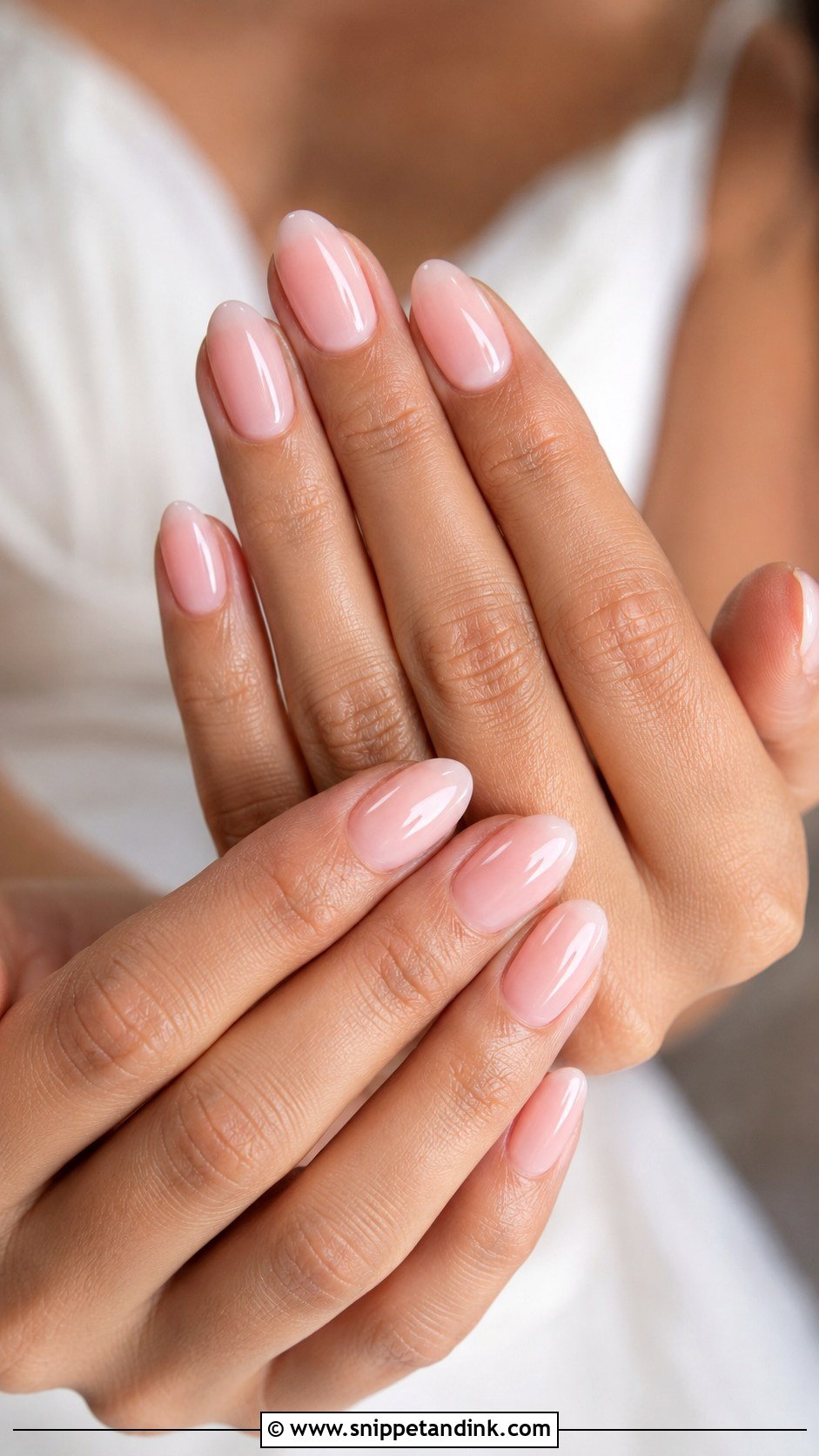
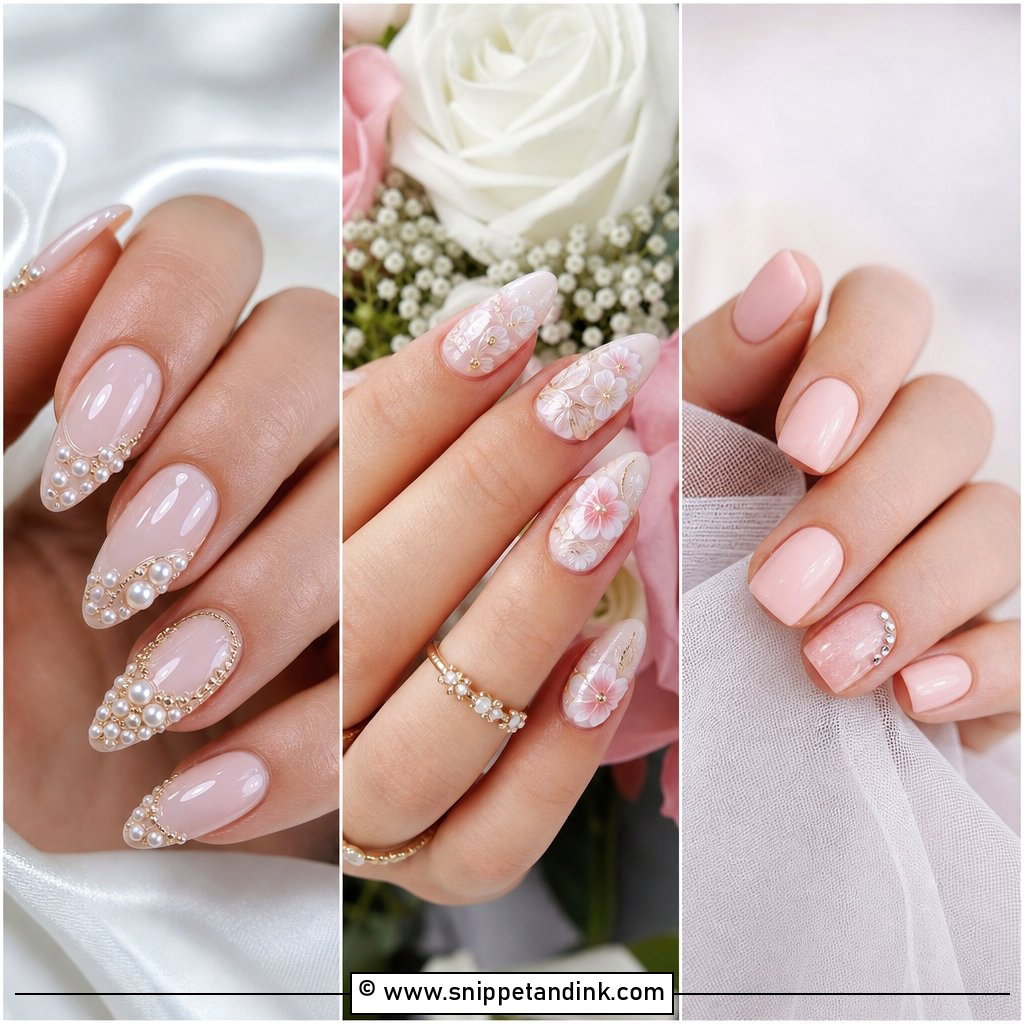
Blush adds warmth without reading as a color. It can be sheer, creamy or slightly milky, and that choice changes the whole set: sheer looks like a healthy nail, creamy looks finished. Fair skin often suits a cool baby pink, while deeper skin glows with a warmer blush or peach-pink. It’s an easy partner for rose gold jewelry and soft makeup. If you’d like detail, a few tiny pearls or a whisper of shimmer is enough, though I’d honestly leave it glossy and plain if your dress is already busy.
6. White Chrome French Tip Wedding Nails
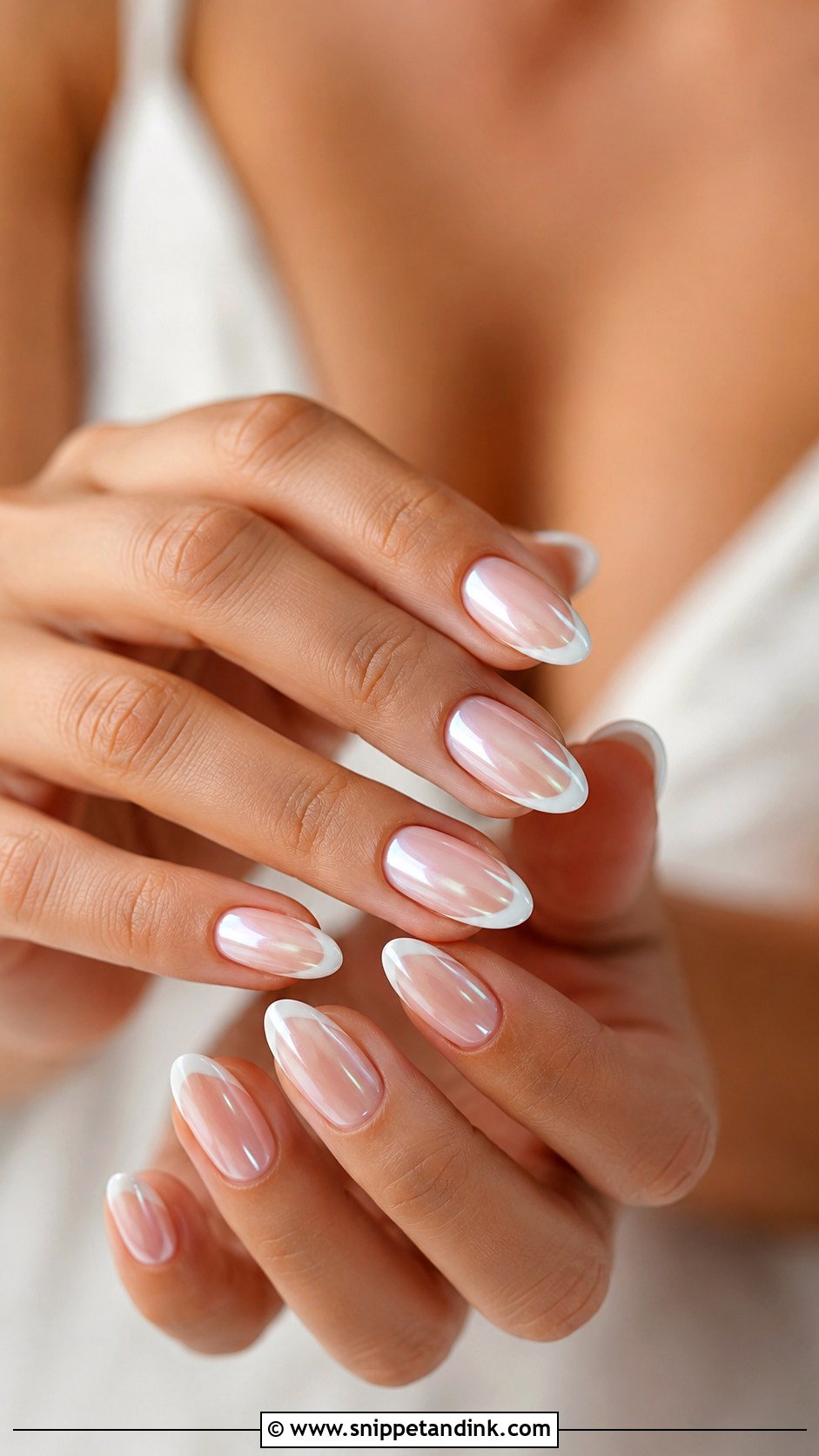
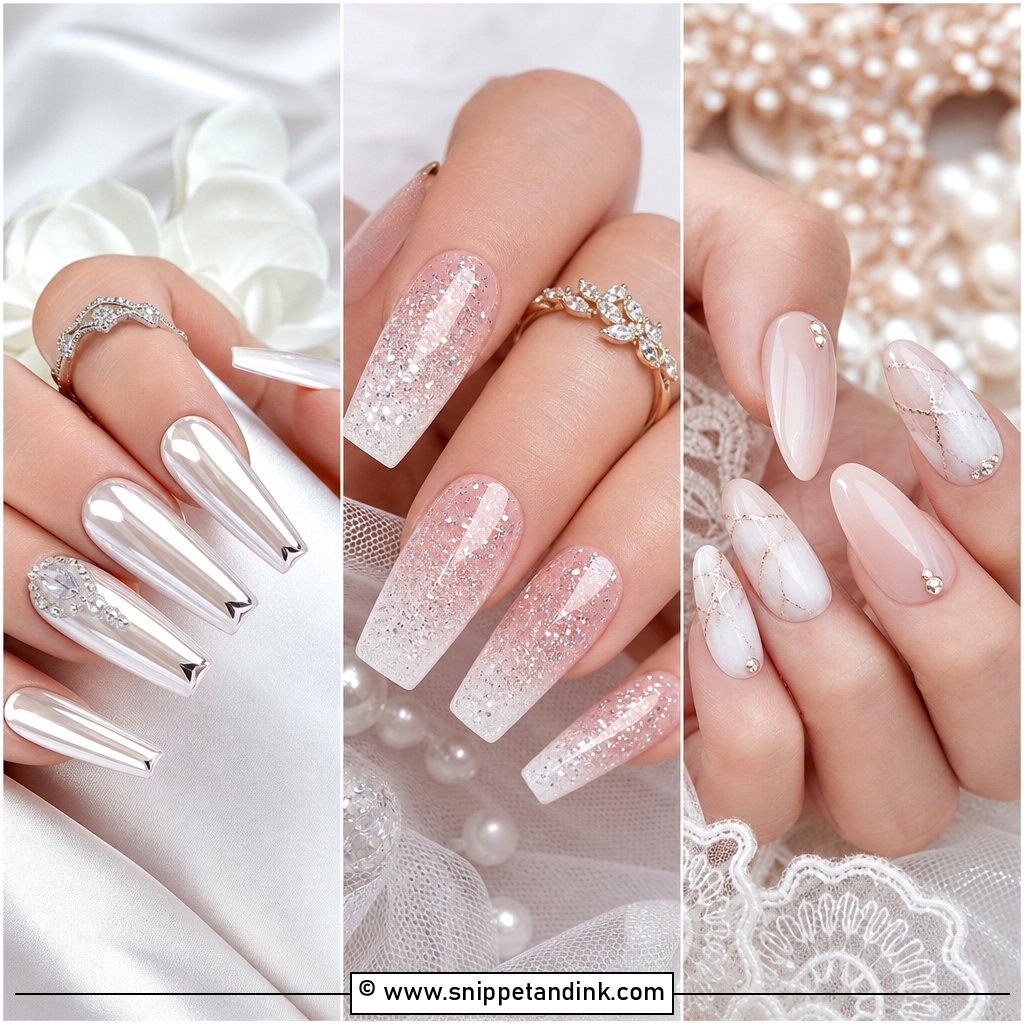
White chrome French tip wedding nails take the classic French and give the tips a pearly reflective finish. You can chrome only the tips for a defined edge, or the whole nail for a glazed effect. Here’s the technical catch: chrome powder needs a smooth, cured surface to grip, so on tips-only I mask the base carefully, otherwise you get stray shimmer creeping toward the cuticle. Almond and square both carry it. It suits diamond jewelry and sleek gowns, and it’s the version I’d suggest to a bride who loves French nails but finds them too familiar.
7. Short Wedding Nails
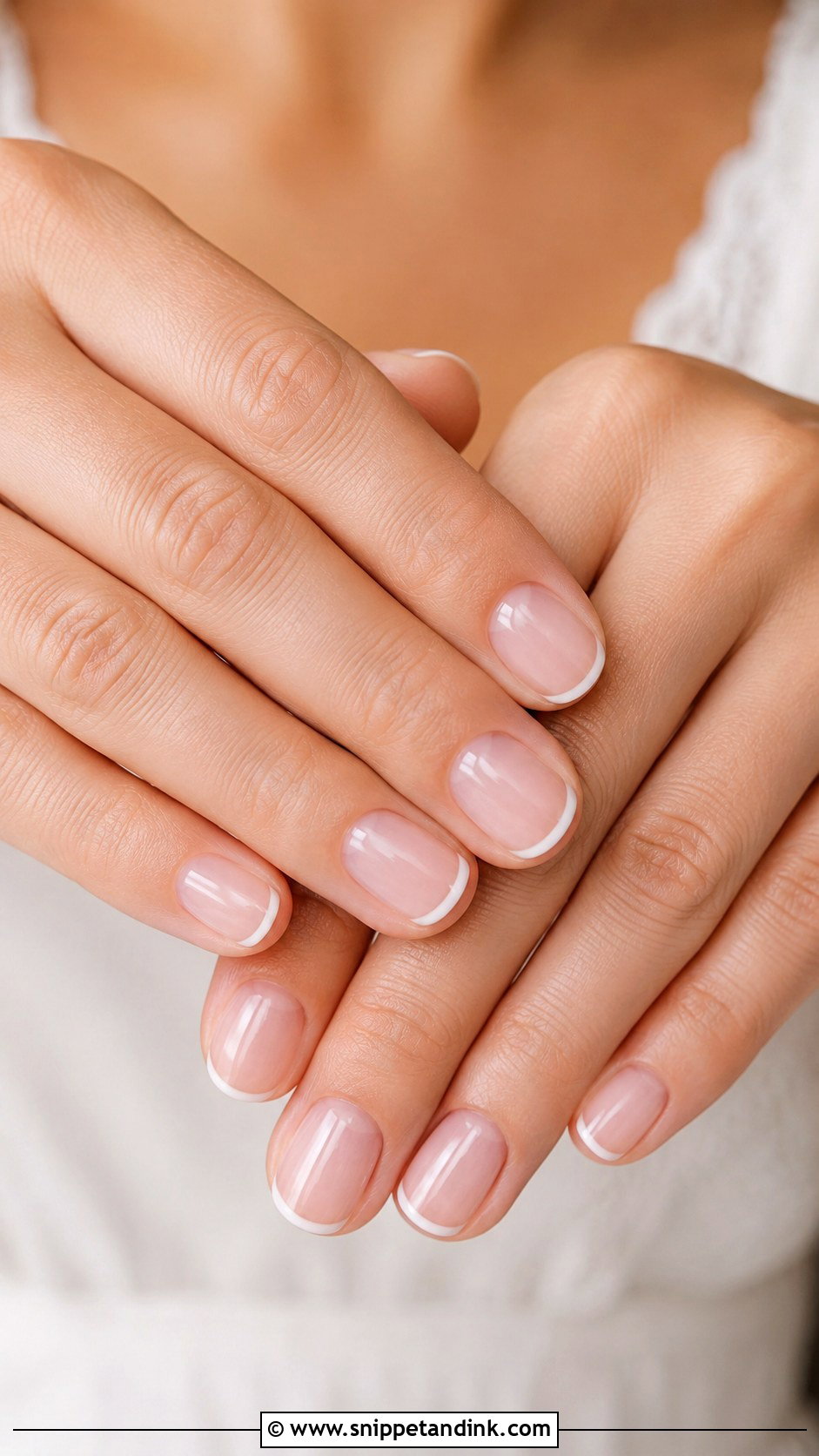
Short nails are what I’d recommend to any bride who has never worn extensions. A short oval, squoval or softly rounded edge feels natural, and you won’t spend the day fumbling with earring backs. Milky pink, sheer nude, soft white and micro French all read well at this length. The finish lives or dies on prep, so expect most of the appointment to go on cuticles and shaping rather than color. If you want a single detail, one tiny pearl or a thin white tip is plenty.
8. Almond Wedding Nails
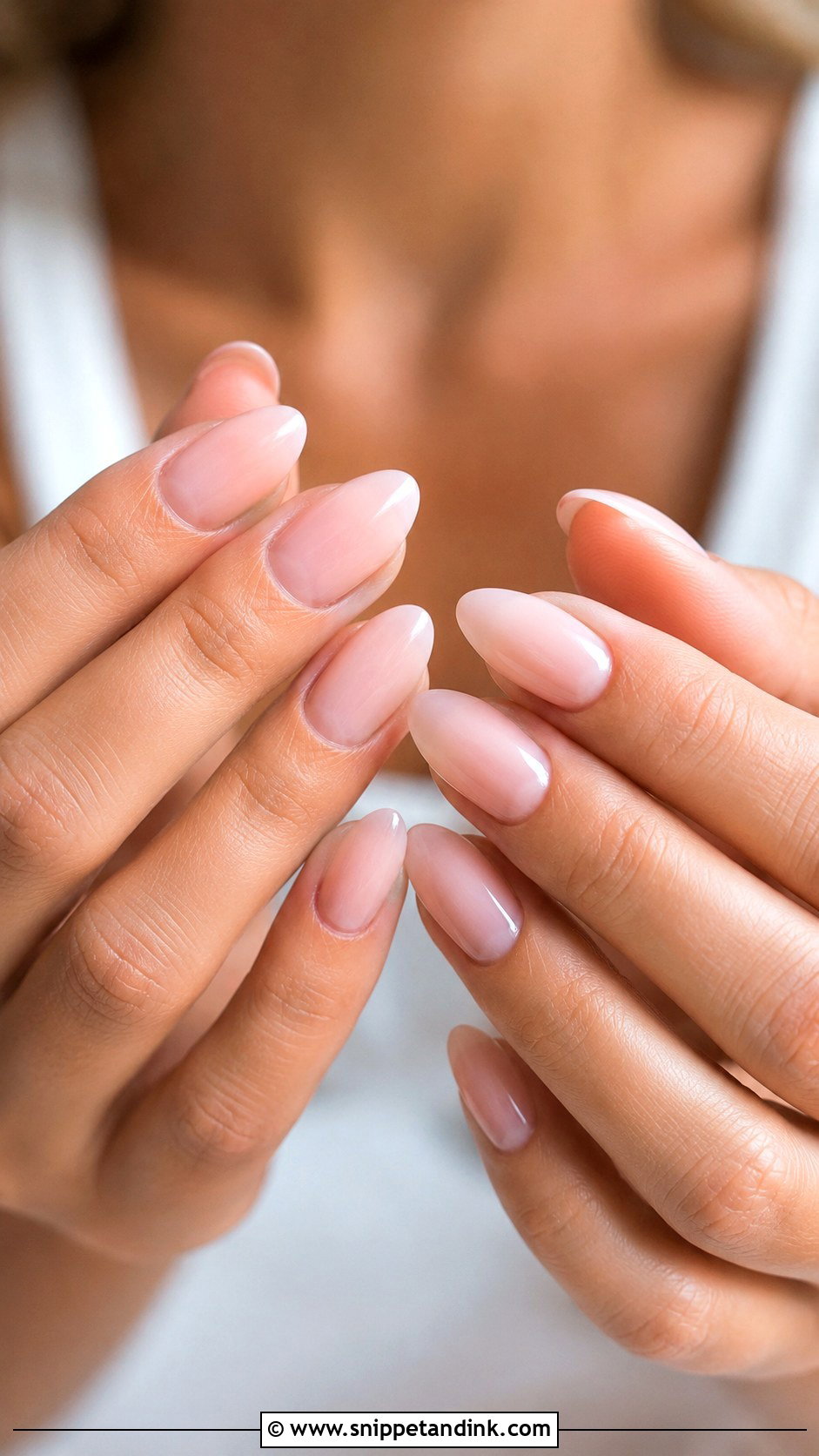
Almond tapers gently toward the tip and lengthens the fingers, and it takes almost any design, from French to pearl chrome to lace or florals. Medium length is the sweet spot. If you’re not used to long nails, a week of wearing them before the wedding tells you whether you can manage zips, contact lenses and phone screens. I keep the point slightly blunted on brides, since a sharp almond can catch fine veil netting. Sheer pink, milky white or a nude ombre are the most bridal pairings.
9. Square Wedding Nails
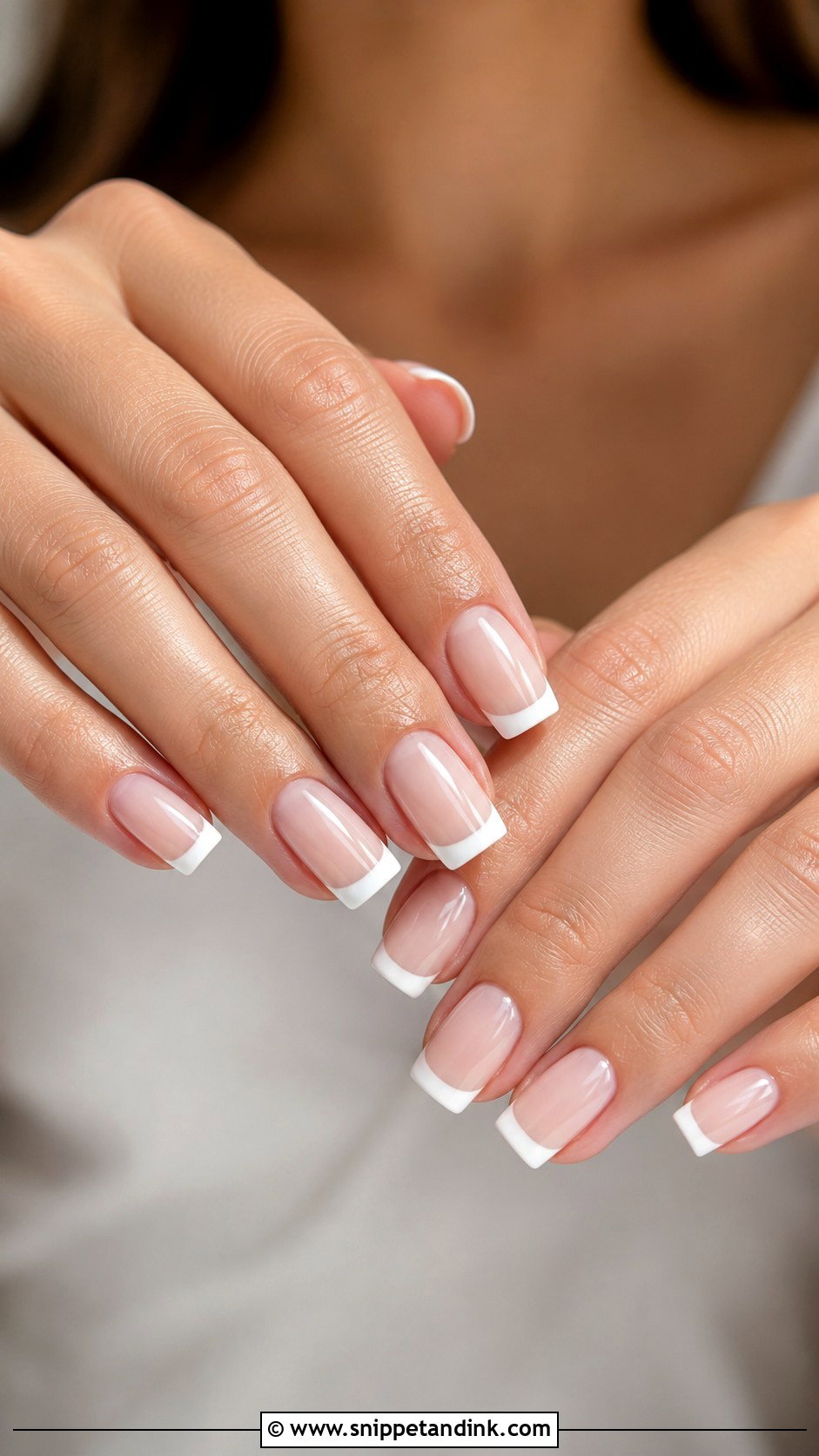
Square feels structured and modern, and it’s the shape I match to sleek or minimal dresses. A soft square, with the corners lightly rounded, wears far better than a sharp one: sharp corners snag tulle and chip first. Classic French tips sit especially well on it because the straight tip follows the straight free edge. Milky white, sheer nude and blush are polished choices too. Short to medium length keeps it wearable for the whole day.
10. Lace Wedding Nails
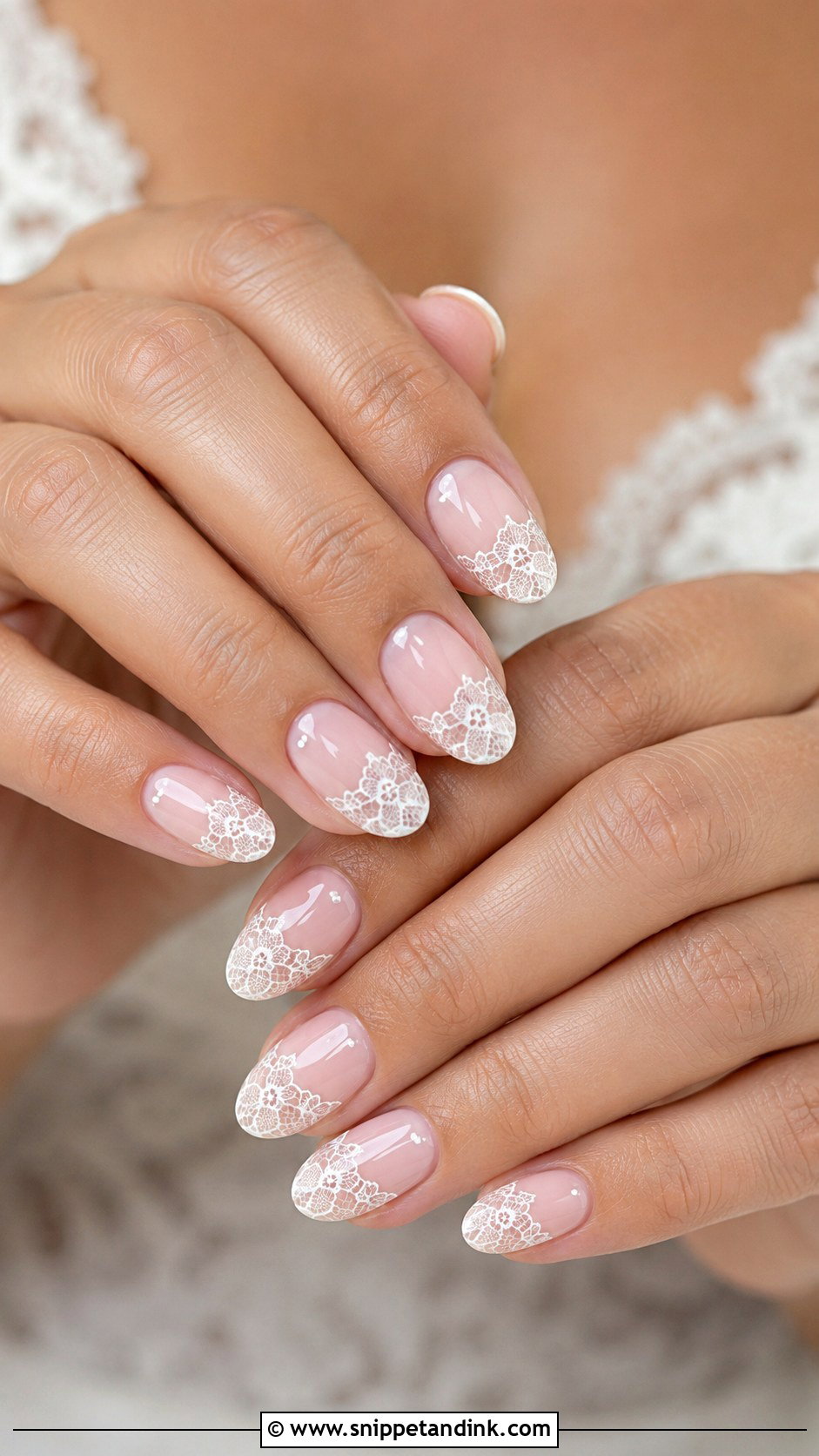
Lace nails tie the manicure to the dress. Fine white lace lines go over a sheer nude, pink or milky base, either on every nail or on a few accents. I paint lace freehand with a long, thin liner and very fluid white, and the hardest part is keeping the lines fine enough on a curved nail. Heavy lines look like a pattern stamp. Oval or almond lets the curves flow. Bring a close photo of your gown’s lace, whether it’s floral, vintage or geometric, and I’ll pull my motif from it rather than inventing one.
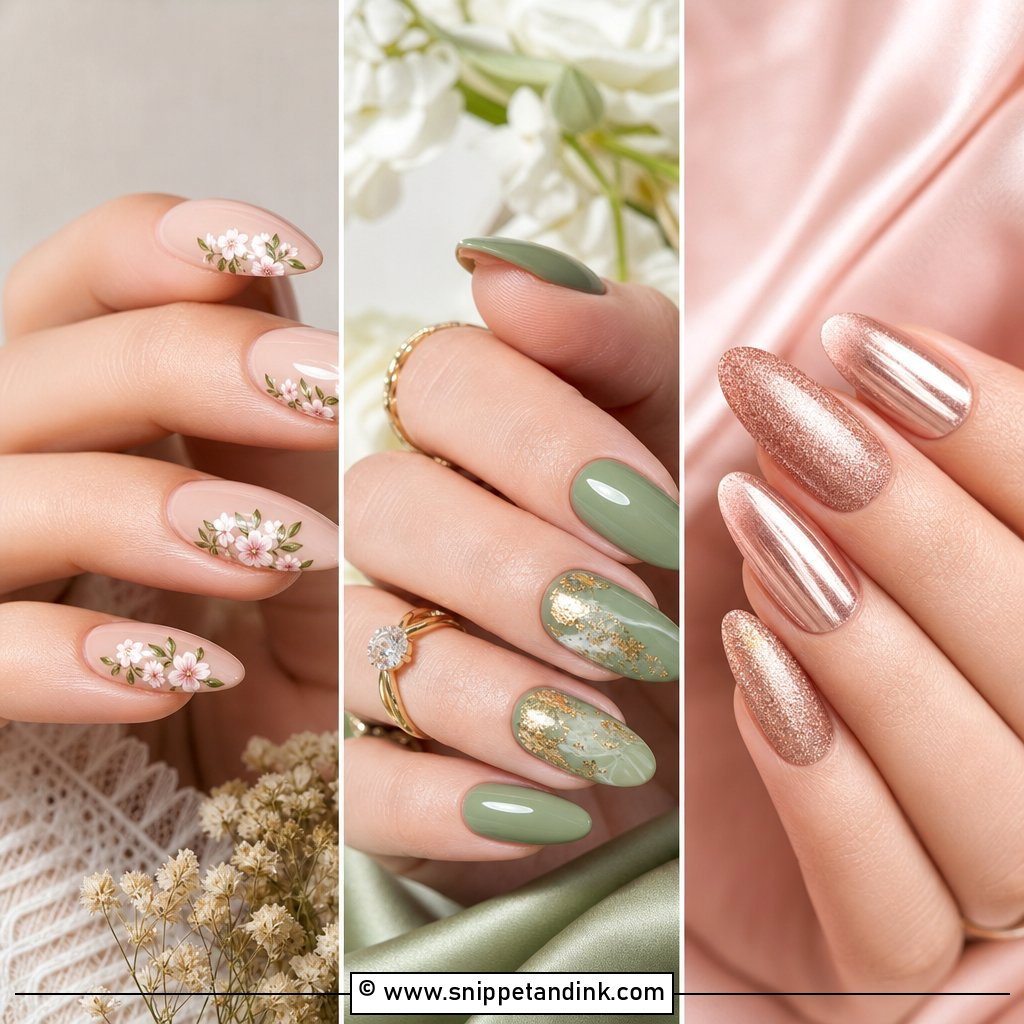
11. Floral Wedding Nails
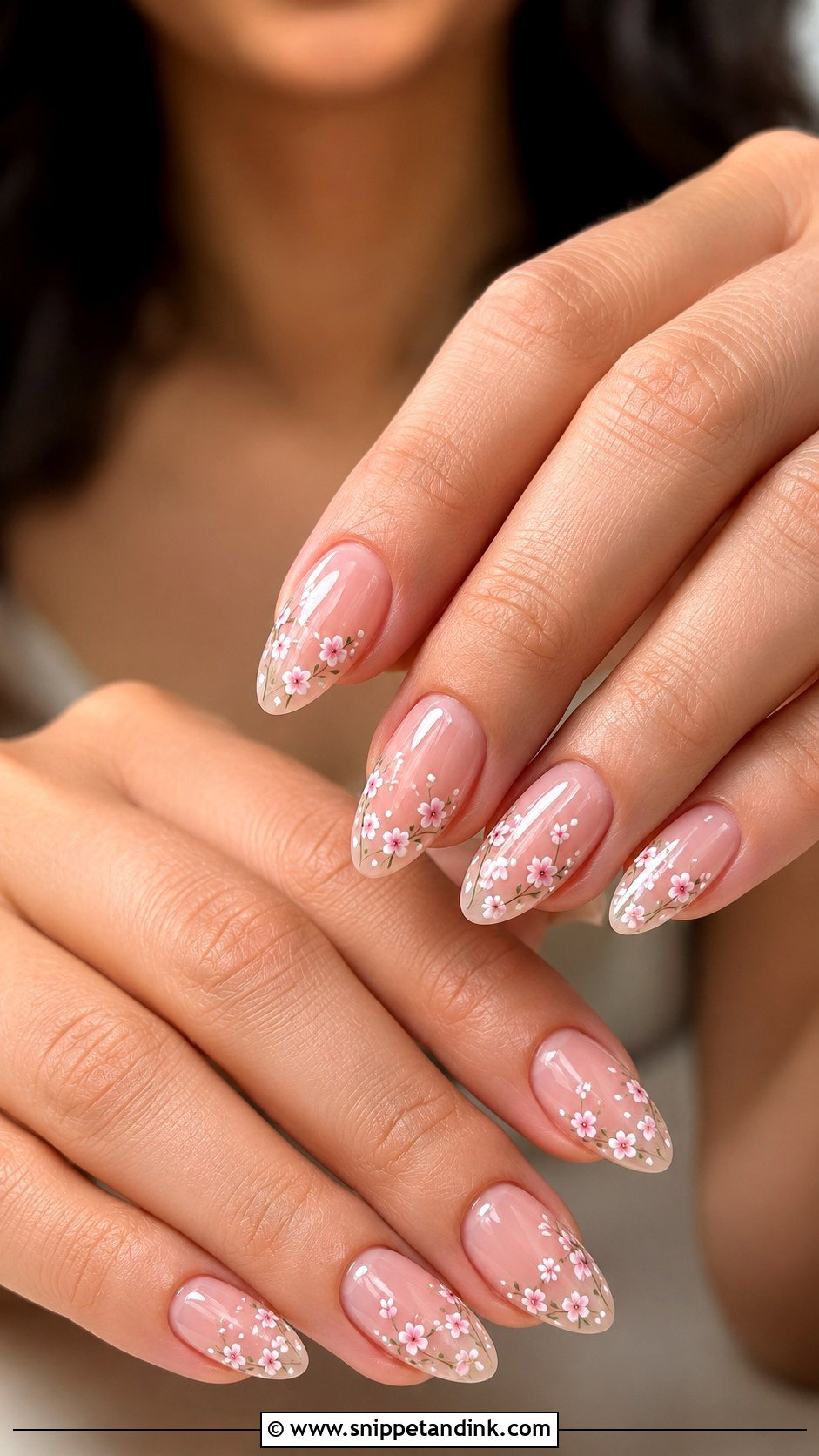
A floral set brings a garden feel without needing bright color. Tiny white flowers, blush petals or sheer pressed-flower effects stay soft on a nude, milky or pale pink base. Spring, summer and outdoor weddings suit it most, but it works year round in pale tones. My advice is to start with one or two accent nails. If you love it at the trial, we add more; if you start with flowers on all ten, the set can feel crowded once the bouquet is in your hand. Thin, airy petals look more refined than thick ones.
12. Pearl Accent Wedding Nails
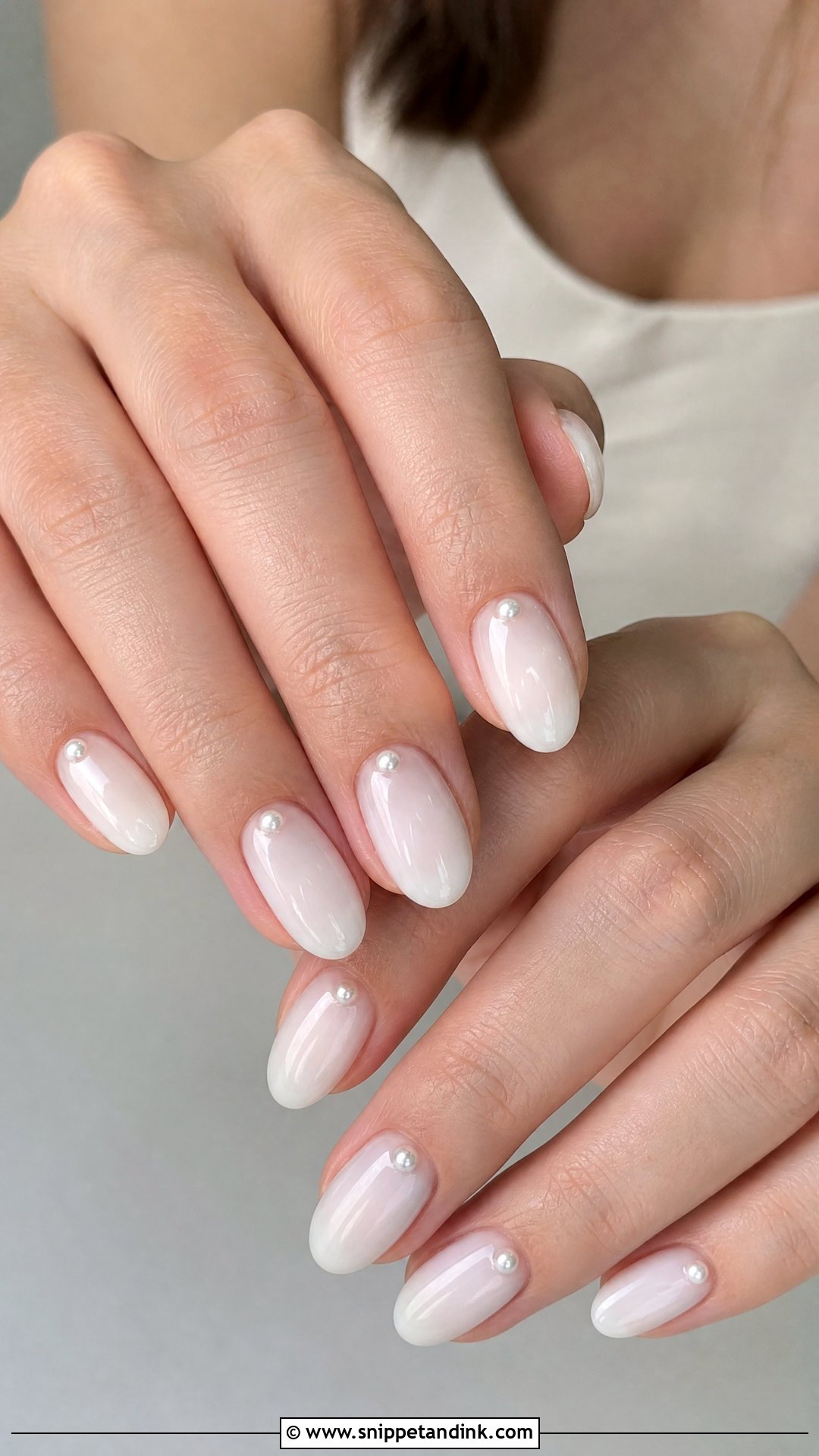
Pearl accent wedding nails add texture quietly. Tiny pearls can sit at the cuticle, along a French line or on a single accent nail over milky white, sheer pink, nude or soft chrome. I set flat-back pearls into a thick gel layer so they sit partly embedded, then seal around them; a pearl stuck on top of polish can pop off the first time you dig in a handbag. Keep them small and few. Three or four across a hand look intentional, a dozen start to feel heavy and catch on knitwear and hair.
13. Glitter Ombre Wedding Nails
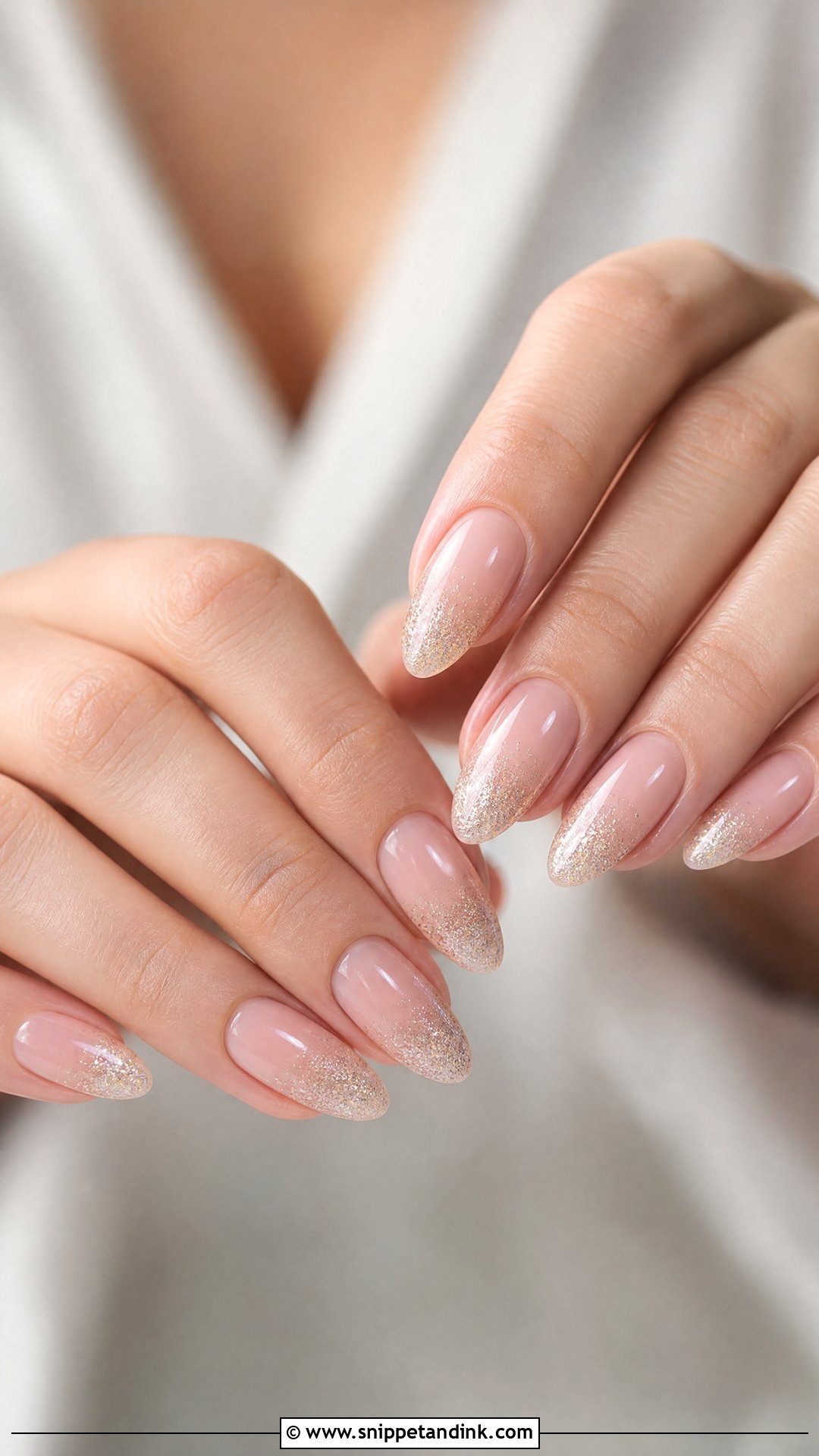
Glitter ombre wedding nails let the shimmer fade from the tip or cuticle into a sheer base instead of covering the nail. That keeps it bridal while still giving the reception a bit of sparkle. Fine silver, champagne, pearl or rose gold particles look delicate in close-ups; chunky glitter turns into dots on camera. Medium almond, oval and coffin show the fade best. If your dress has beading or crystals, this is the set that echoes it, and it’s one where I’d use a slightly thicker top coat so the glitter surface stays perfectly smooth.
14. Sheer Nude Wedding Nails
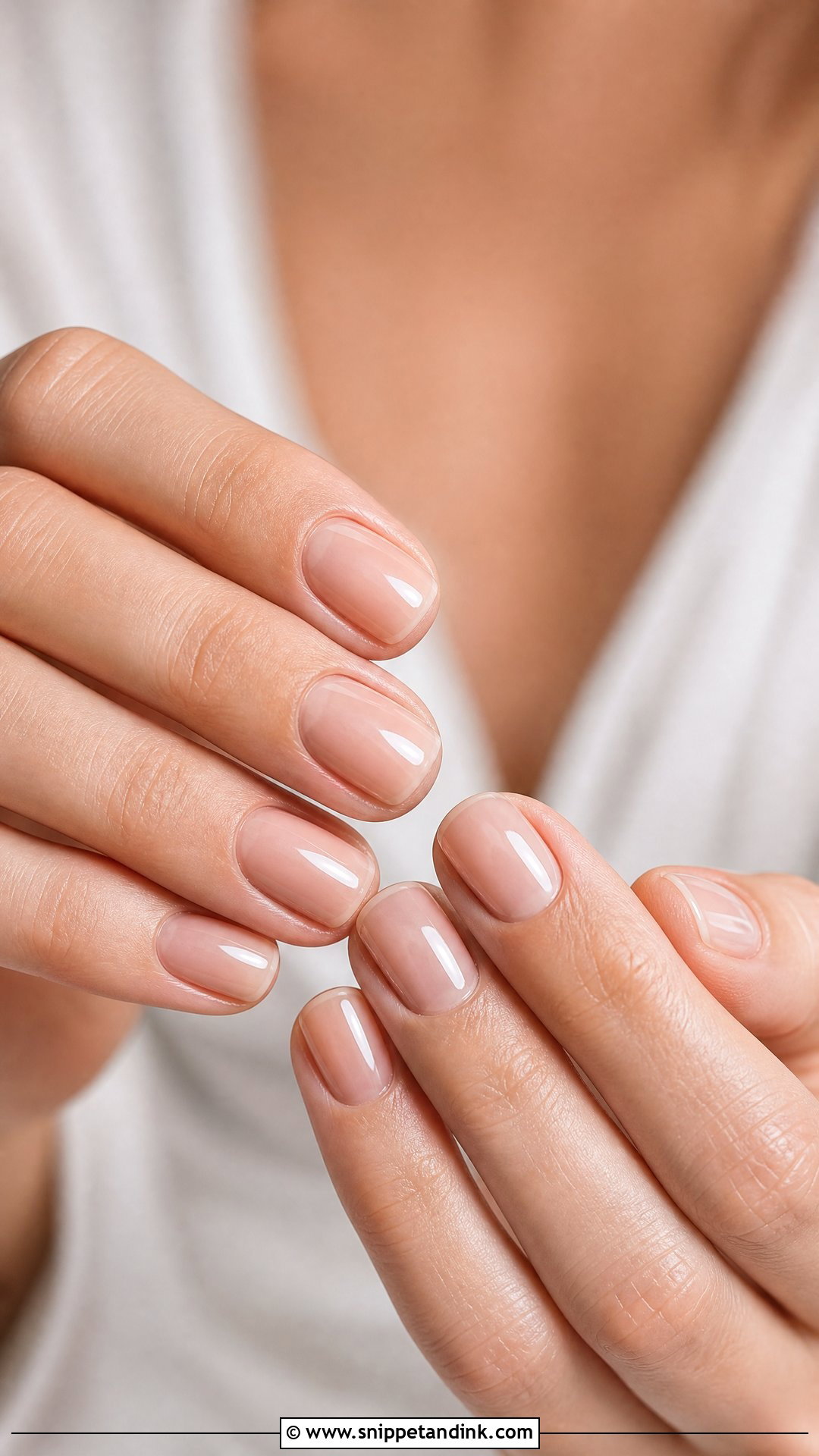
Sheer nude enhances the nail bed instead of covering it. I suggest it when the dress, bouquet and jewelry already have plenty going on and the hands should stay quiet. The shade matters more than with any other set: fair skin often suits a pink beige, medium skin a peachy nude, and deeper skin glows with caramel, cocoa or warm beige sheers. Because it’s sheer, every ridge shows through, so I’ll lightly smooth the nail plate or use a ridge-filling base first. Gloss on top and it’s done.
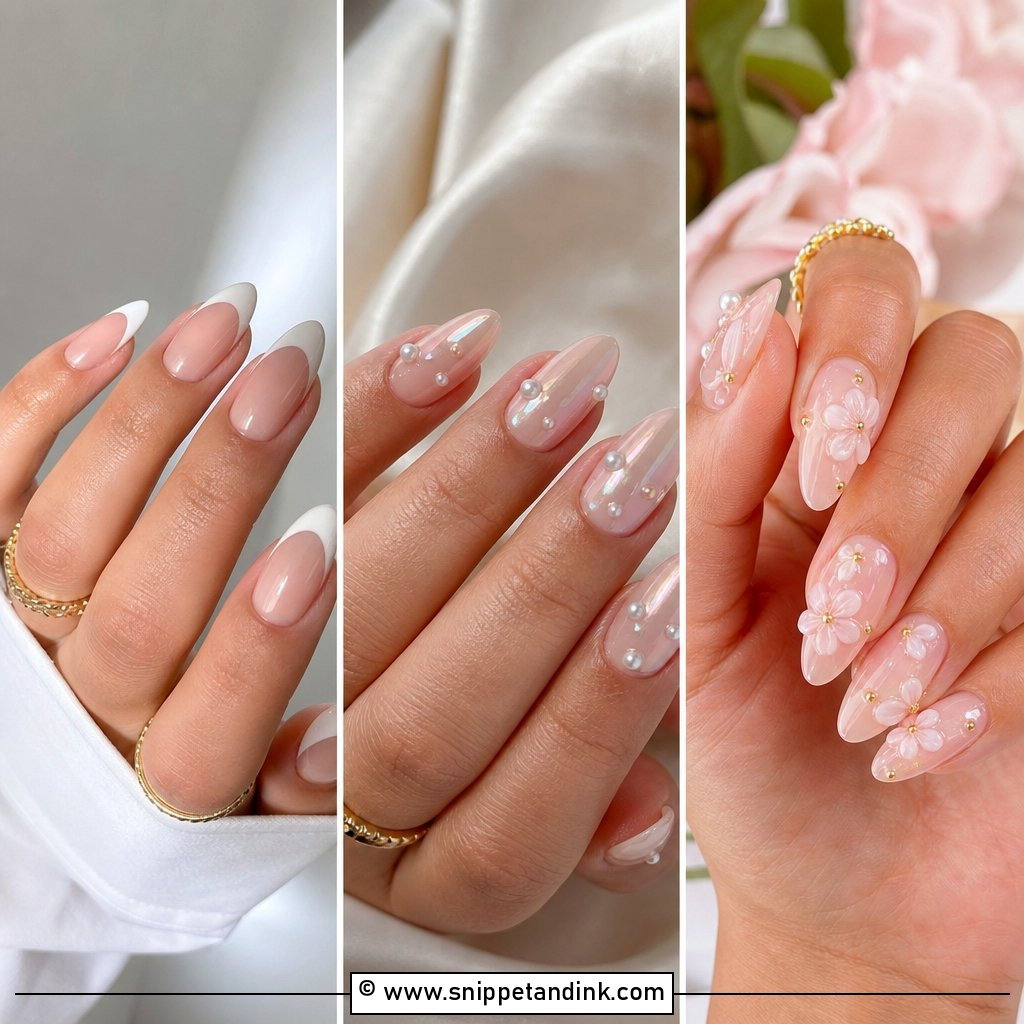
15. Micro French Wedding Nails
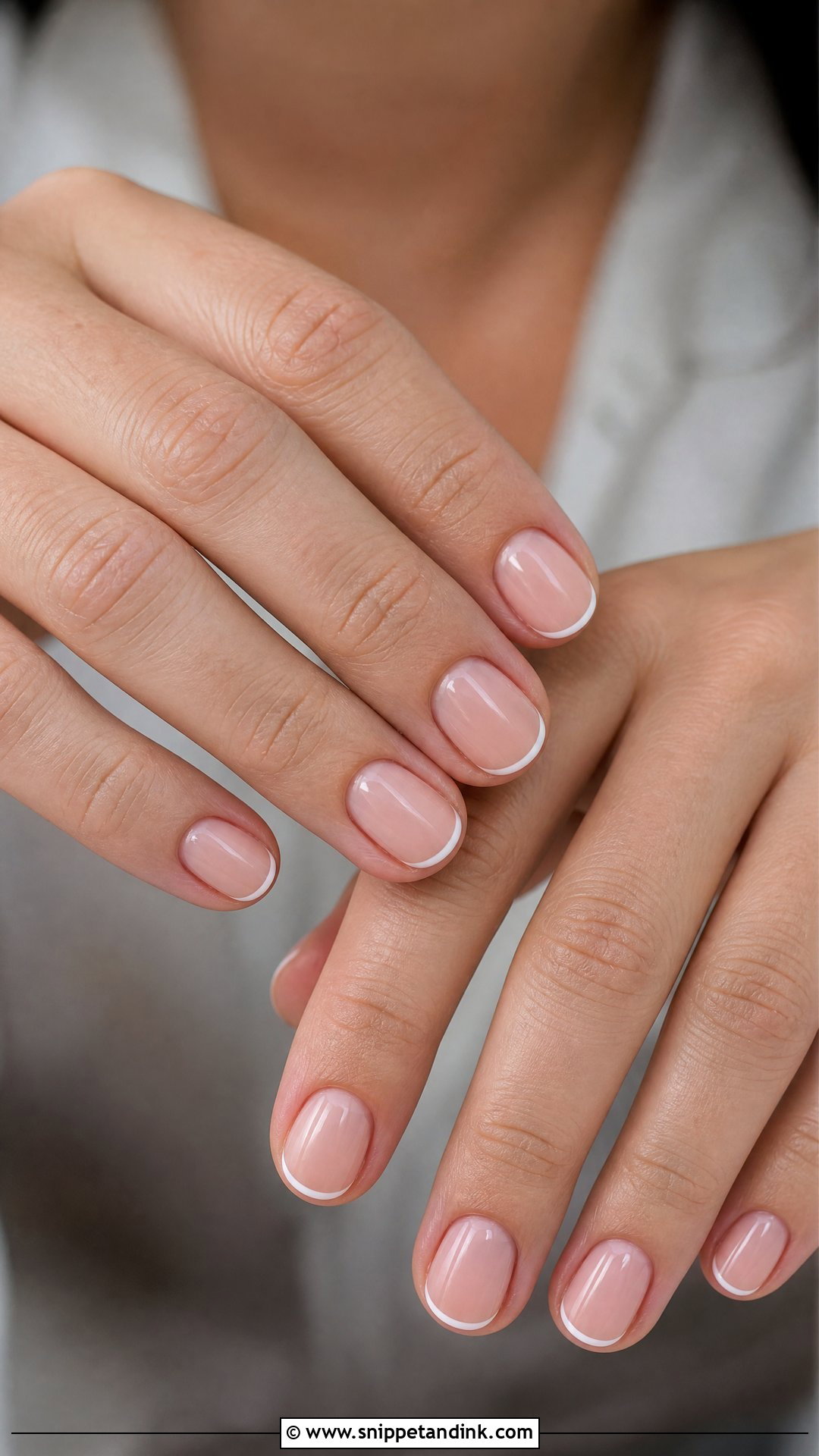
Micro French uses a very thin tip line, which is why it’s my go-to for short nails. It adds definition without shrinking the nail bed. A sheer pink, nude or milky base keeps it soft. For something different, swap the white for ivory, pearl or champagne tips, which can sit more comfortably beside an off-white dress. It’s a difficult line to paint evenly at that width, so check your nail artist’s portfolio for close-up shots of micro tips before you book.
16. Soft Gold Wedding Nails
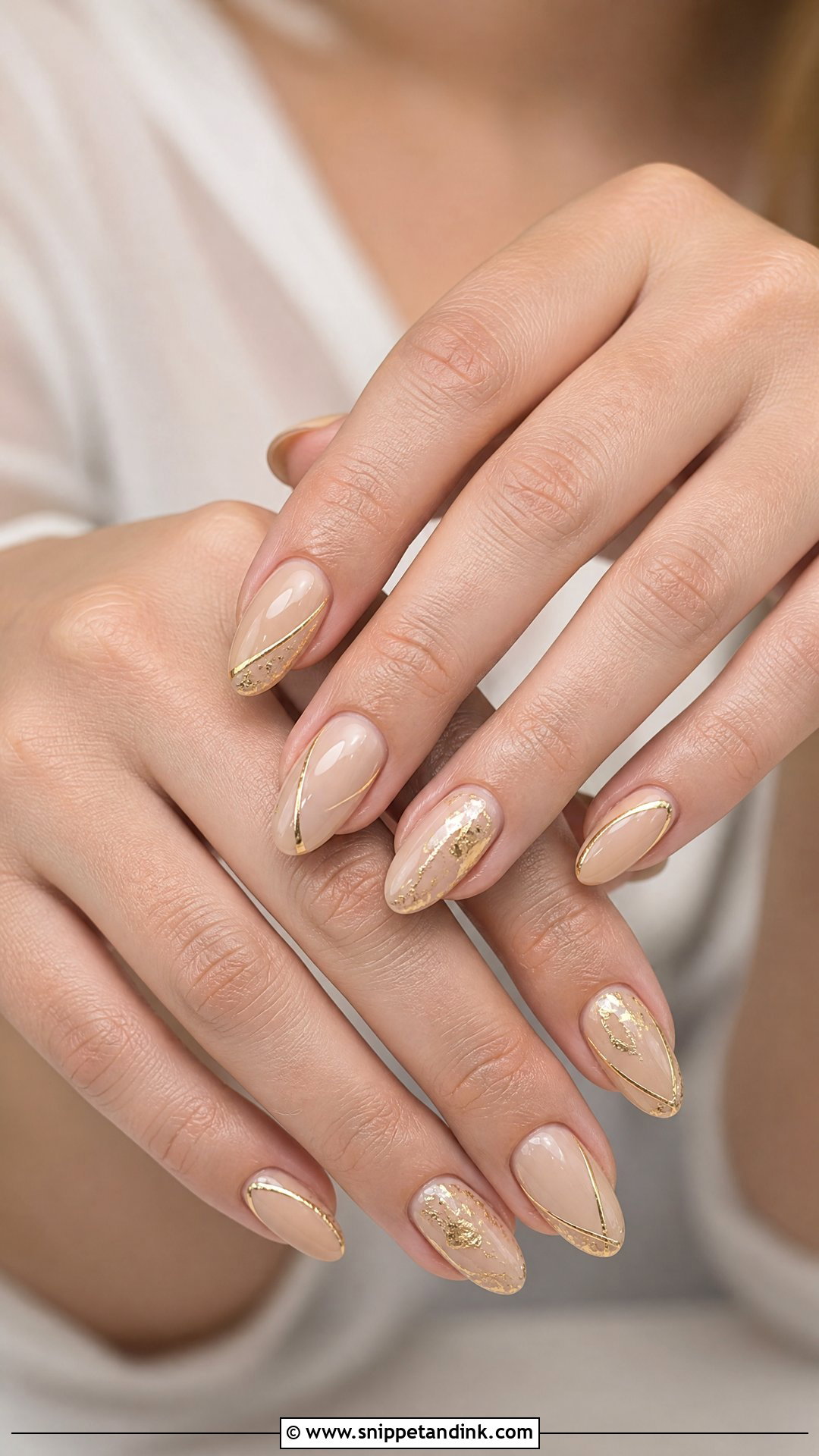
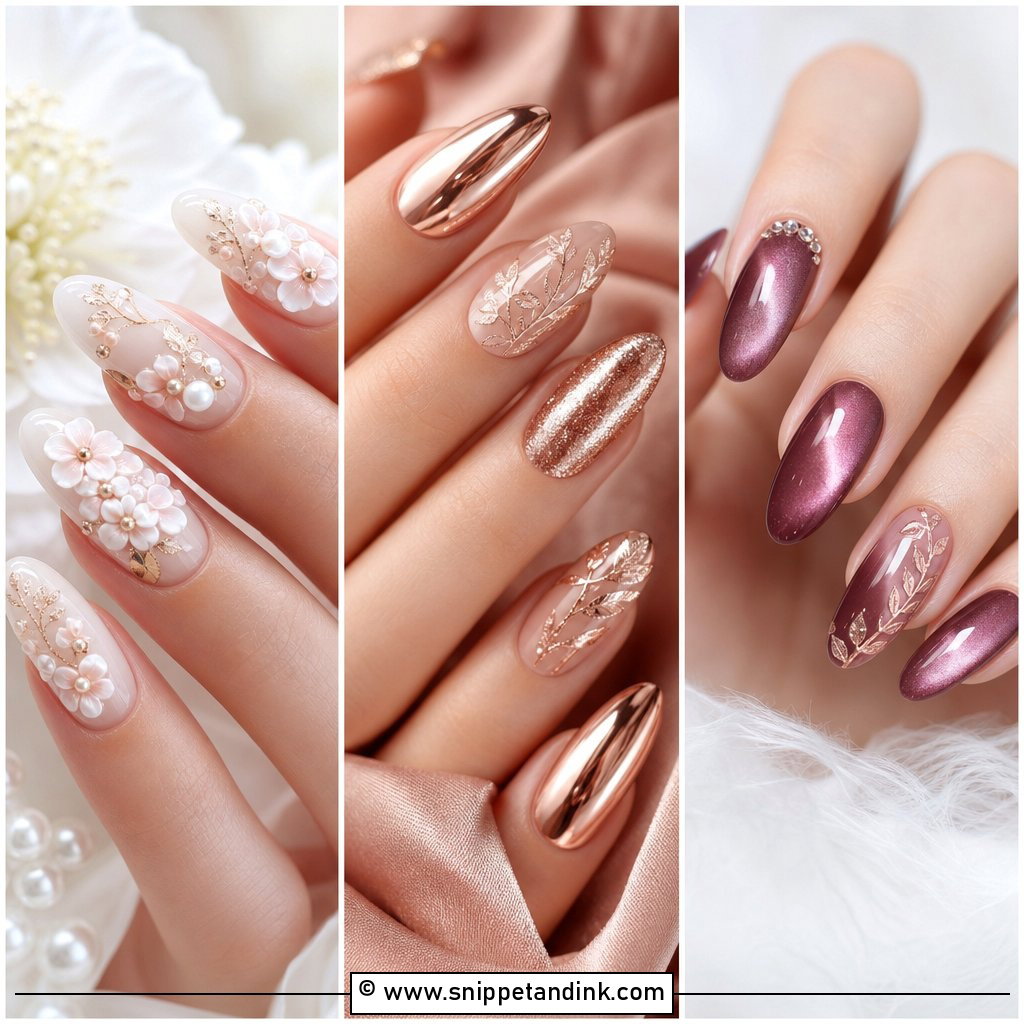
Soft gold suits brides wearing yellow gold jewelry or champagne-toned details. It can be thin gold lines over nude, a few foil flakes or a gold French tip. Restraint is everything. A fine stroke of gold looks expensive, while a nail covered in gold leaf looks costume. Foil lifts at the edges if it’s not fully sealed, so I wrap the top coat over the free edge on those nails. Almond, oval and short square all suit it, with blush, beige, ivory or milky white on the remaining nails.
17. Rose Gold Wedding Nails
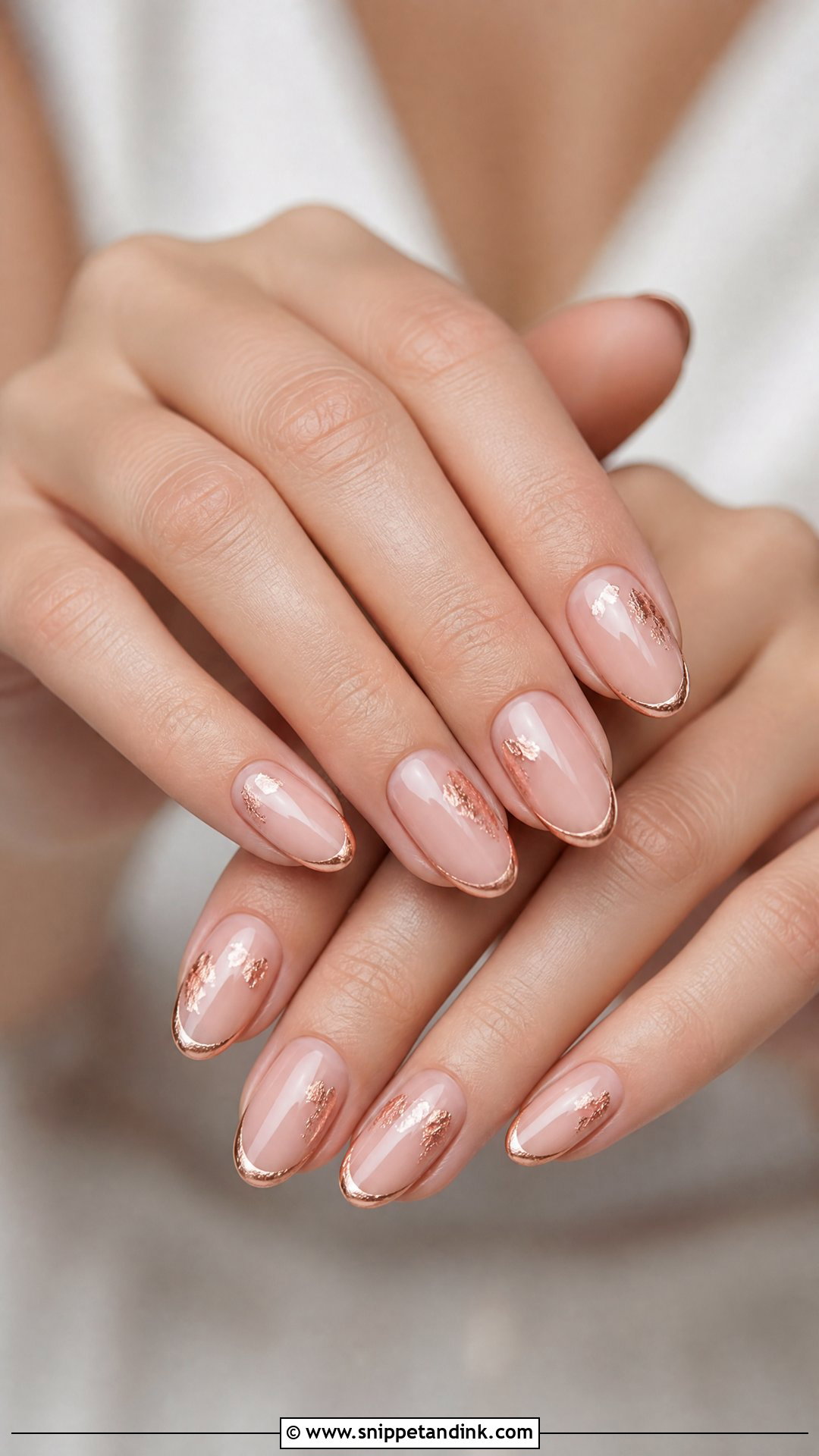
Rose gold flatters a wide range of skin tones and makes most sense if your engagement ring or wedding band is rose gold metal. It can be rose gold foil over sheer pink, a rose gold micro French or a soft shimmer overlay. The shade should read pink-gold, not copper; some rose gold chromes go orange under warm indoor lighting, so I test a swatch under a tungsten bulb as well as daylight. Almond and oval feel softer, short square more modern.
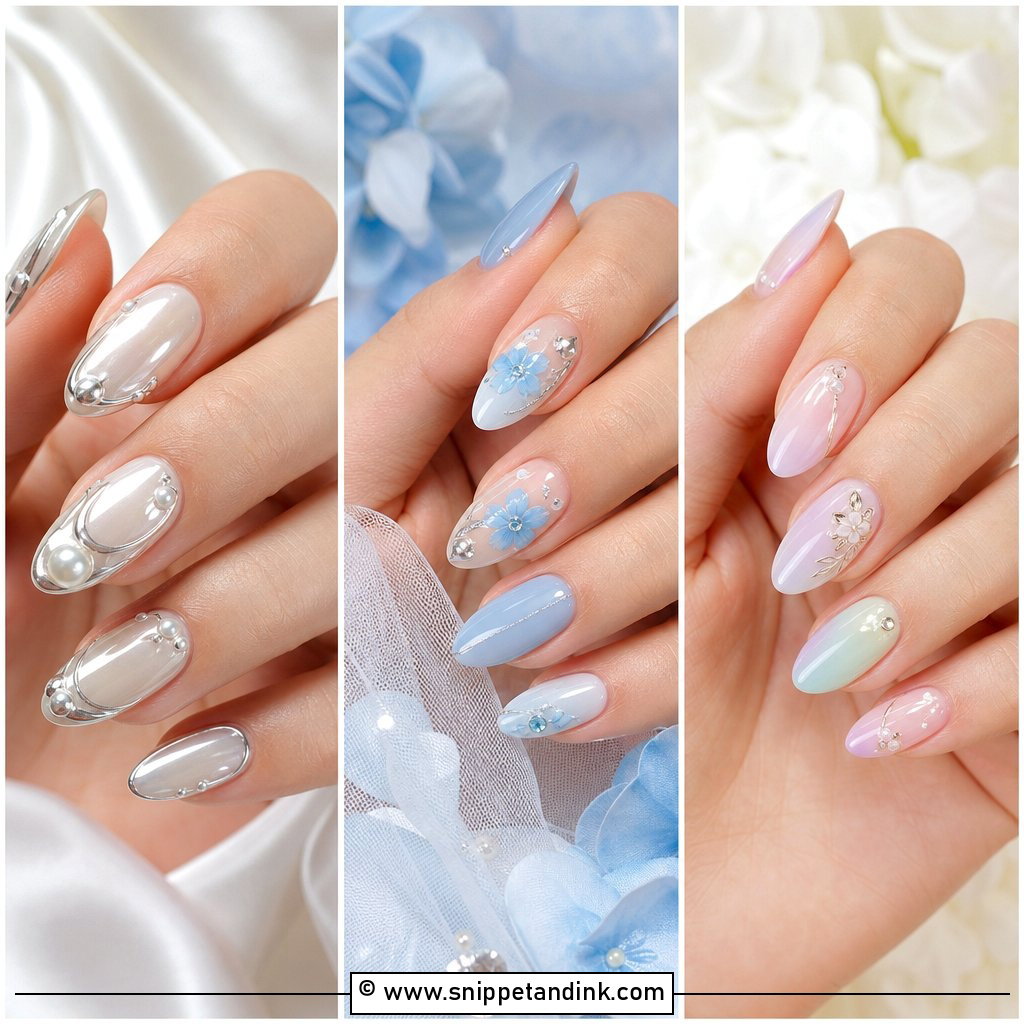
18. Blue Wedding Nails
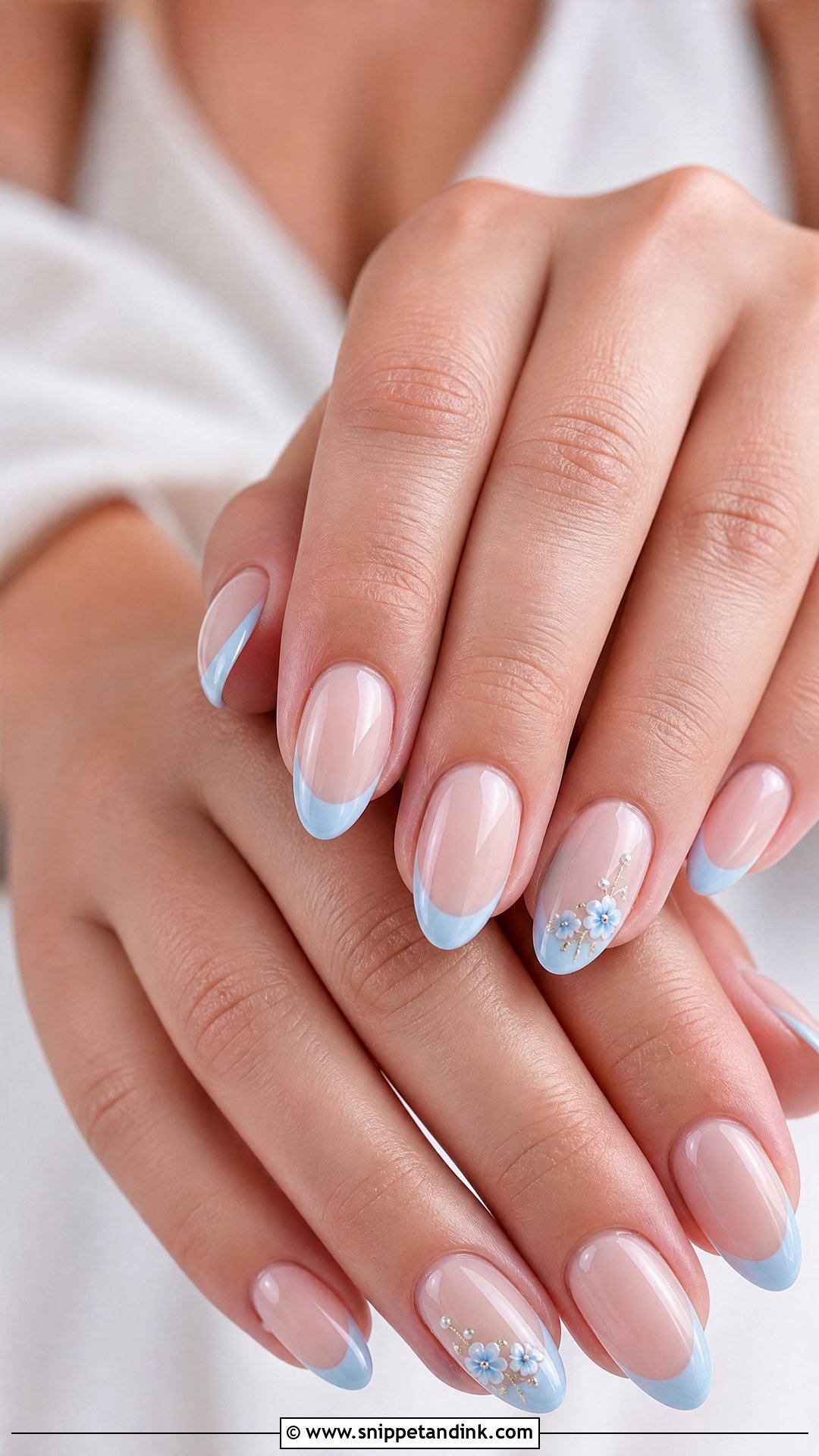
Blue nails are a quiet way to wear your “something blue”. Pale blue, blue-grey and sheer icy blue are the bridal shades; bright blue fights a white dress. You can wear the full set in blue, blue tips over nude, or a single tiny blue flower on the ring finger. Coastal, winter and outdoor weddings suit it particularly well. I’d keep it muted enough that, in a photo with the ring, the stone is still the first thing you see.
19. Matte White Wedding Nails
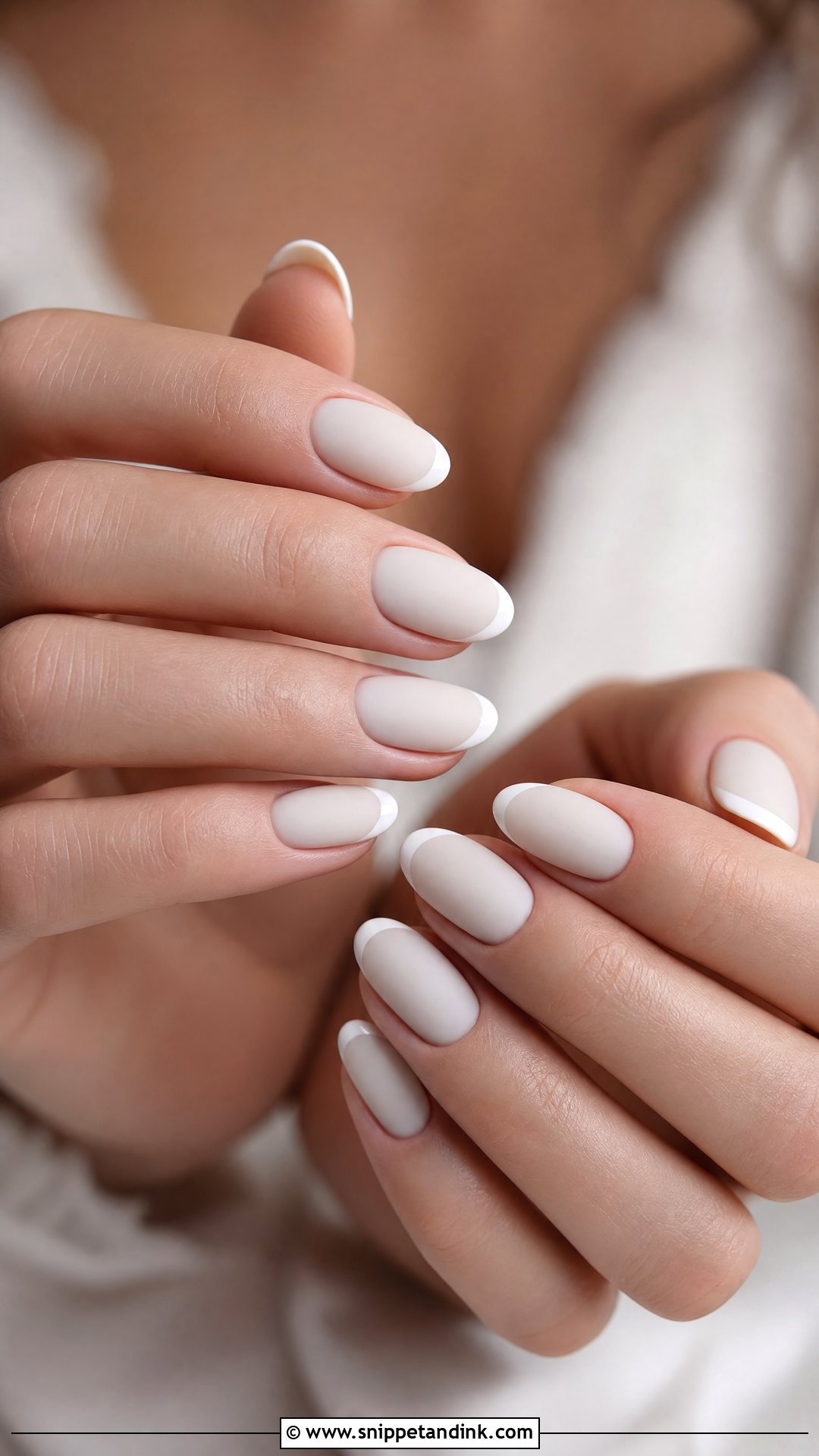
Matte white gives a soft, velvety finish that looks modern on a clean shape. I’d use milky white, ivory or cream rather than bright white, which can look like correction fluid when it’s flat. Almond and oval keep it gentle; square looks more fashion-led. Glossy French tips over a matte base or a single pearl add contrast. Be aware that matte top coats pick up oils, hand cream and even self-tanner, so I book matte sets close to the wedding and tell brides to keep a lint-free wipe with a little alcohol in their kit.
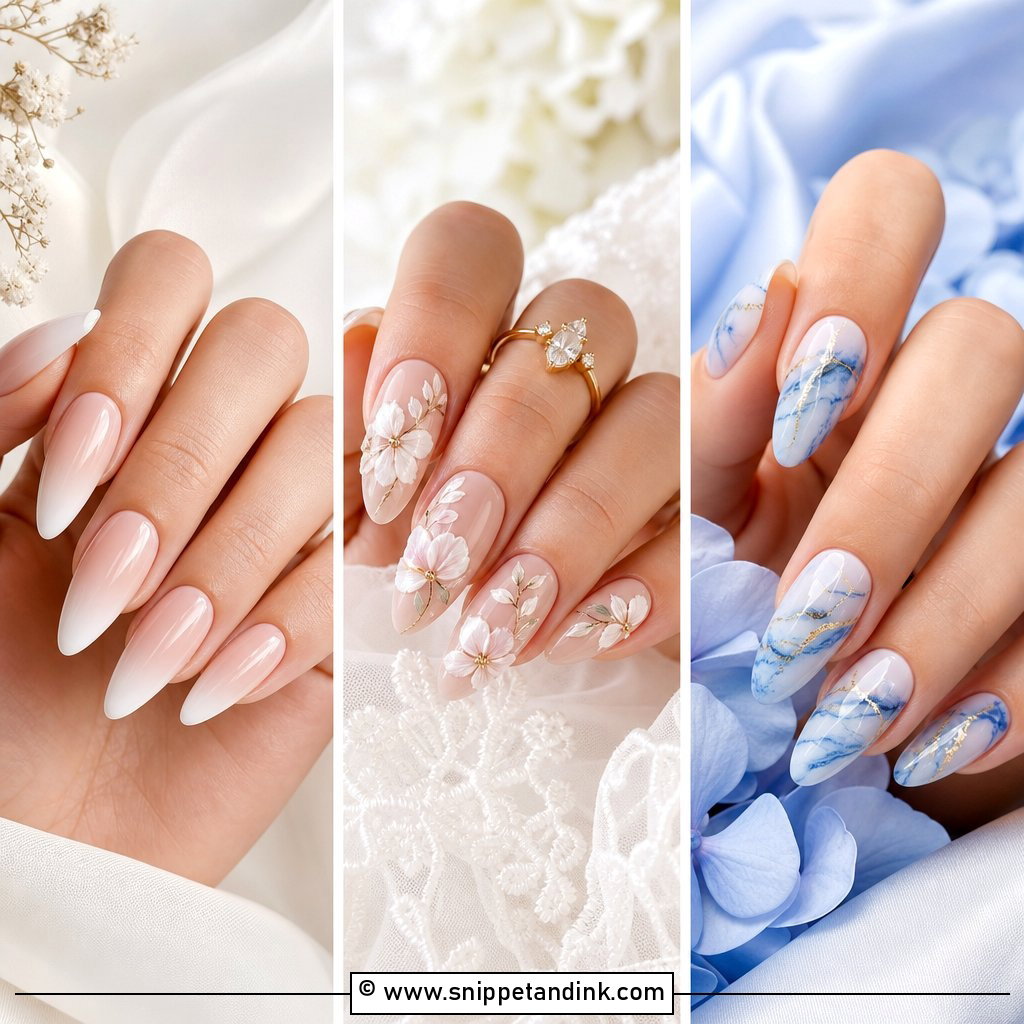
20. 3D Flower Wedding Nails
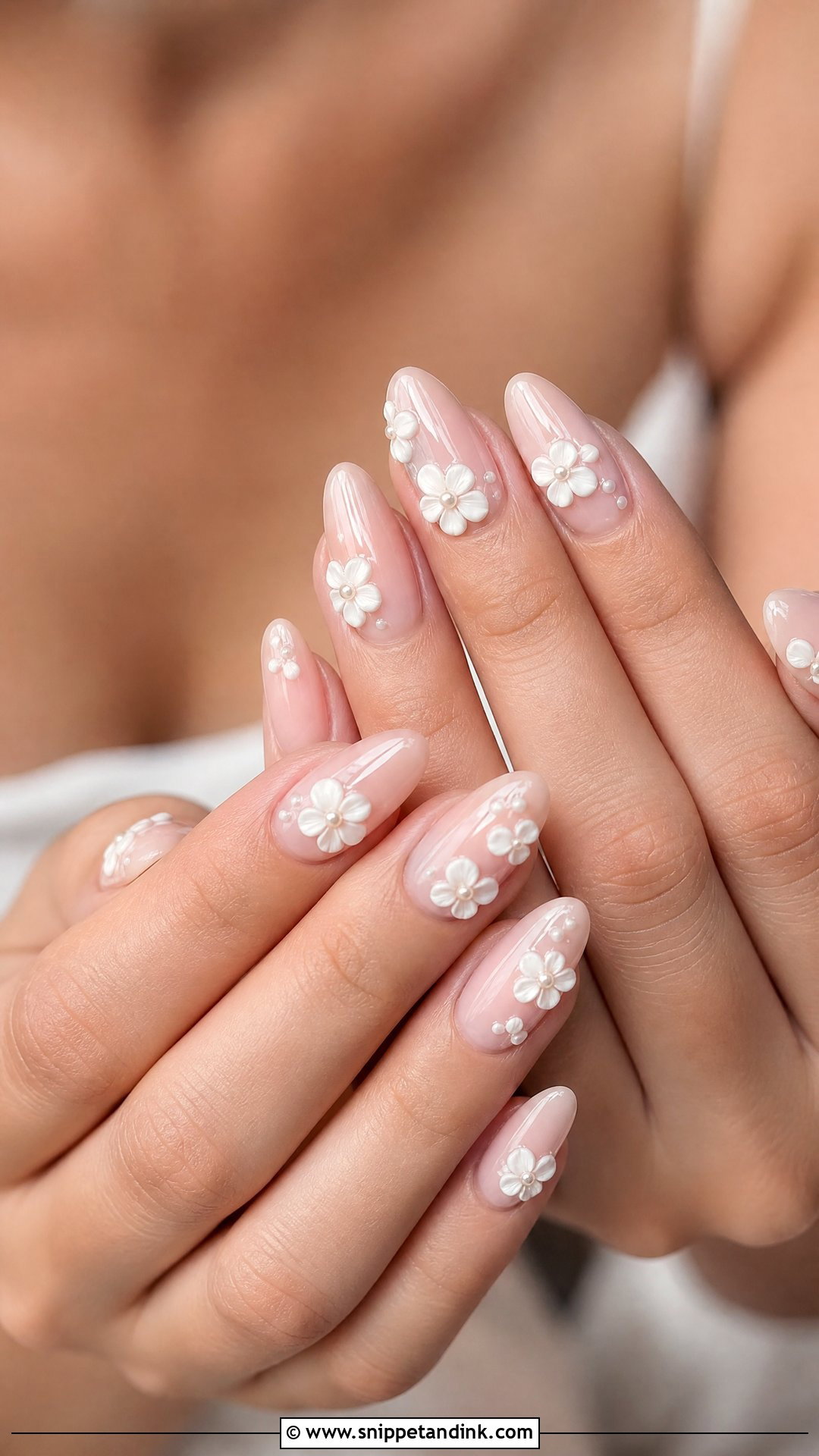
3D flowers add visible texture: tiny sculpted petals on a sheer nude, blush or milky base. I build them from gel or acrylic in small layers and then seal around the edges so nothing lifts. Keep the palette to white, ivory, pale pink or pearl, and keep the flowers small. I’d honestly put them on one or two nails only. Raised art catches veil netting and hair, and if you’re wearing a long cathedral veil, I’d keep the 3D work to the hand that won’t be smoothing it down. Almond or oval suits the softness of the petals.
What Ruins a Fresh Bridal Manicure in the Last 48 Hours?
The set leaves my table perfect. Most damage happens in the two days that follow, and nearly all of it is avoidable.
Spray tan and self-tanner
Tanning solution stains cuticles orange and turns milky or matte finishes muddy. Tan first, then have your nails done, or ask your tanner for barrier cream on your nails and cuticles and wipe your nails straight after the session.
Long soaks and hot tubs
Water softens the natural nail under gel, and when it dries out again the edges can lift. Showers are fine. A long bath or a spa evening the night before is not my favorite plan.
Last-minute DIY
Hot glue, tape, tying favor ribbons and opening delivery boxes with your nails are behind most of the chips I’m asked to fix. Hand those jobs to someone else or wear thin gloves for them.
Book a Trial for Anything Raised, Chromed or Extended
The set you’ll enjoy is the one that feels like your hands, only polished. Classic French, milky white, pearl chrome, nude ombre, blush and fine florals all photograph well and suit most bridal fashion. If you’re drawn to chrome, extensions, pearls or 3D art, I’d strongly suggest a trial, because those are the finishes that surprise people in wear. Bring photos of your dress, ring and jewelry to that appointment so the tone and finish can be matched. The aim is a manicure that frames your hands quietly and lets you stop thinking about them by the time you walk down the aisle.
You'll Like These Ideas:


Leave a Reply