
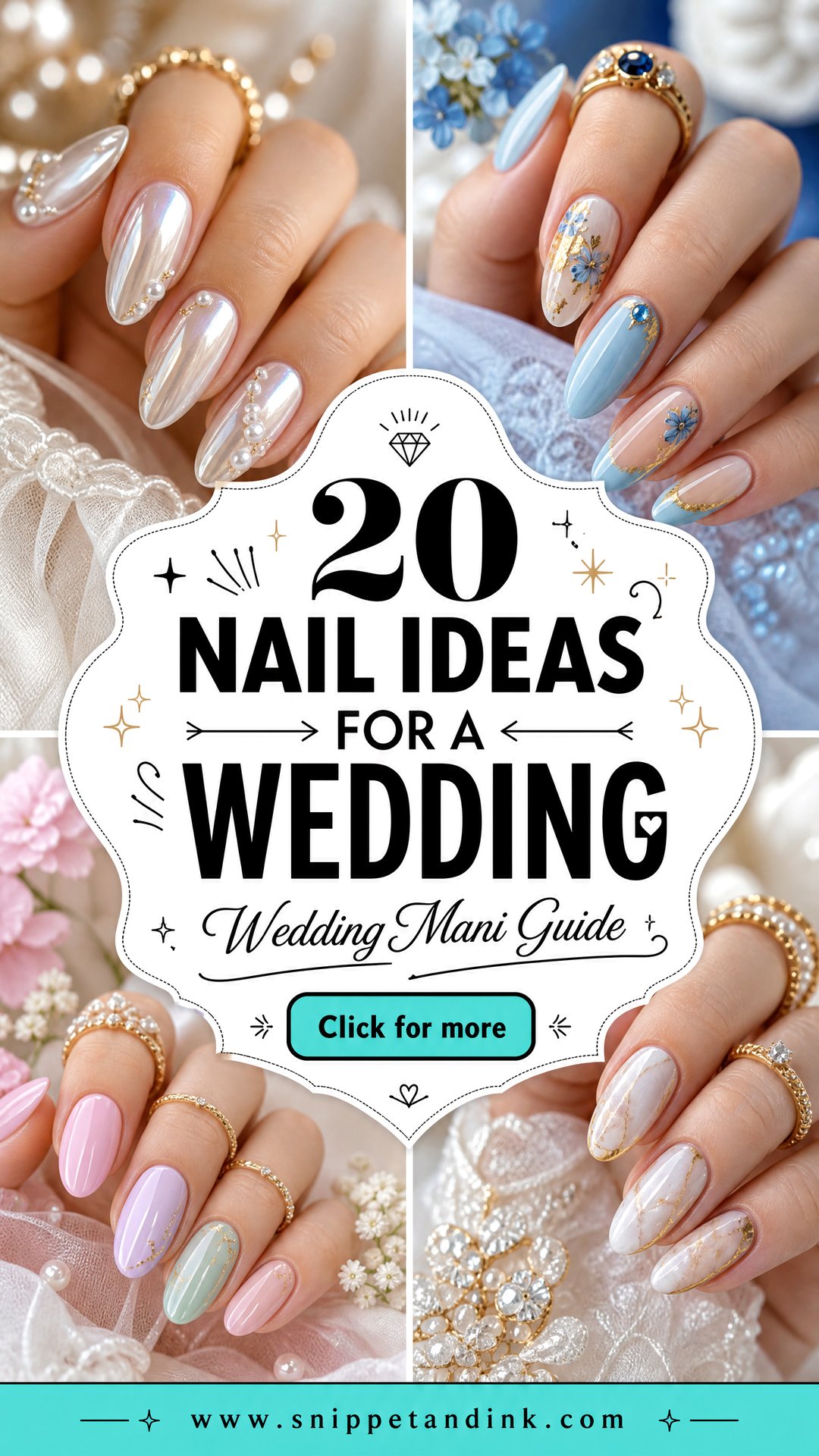
Wedding manicures moved past a single coat of pale pink a long time ago. The sets I do most now are clean bridal nails, soft chrome, slim French tips, small florals, pearls and fine lace linework, plus guest colors that hold their own in photos without shouting. What decides the right set is less the trend than the brief: the dress code, the season, your nail length, your skin tone, and whether your hands will sit next to a big ring or a bouquet all day. Brides tend to land on milky, blush or pearl finishes, while guests have more room for pastels, champagne shimmer and warm neutrals. Below are twenty looks I’d happily put on a client this year, with what I watch for on each one.
Gel, Regular Polish or Press-Ons for a Fourteen-Hour Day
Before we talk shades, decide what the manicure is made of. That choice, more than the color, decides whether your nails still look fresh from the morning hair appointment to the last dance.
Gel polish
Gel is what I put on most brides. It cures hard under an LED lamp in seconds, so there’s no drying time and no dented nail when you’re buttoned into a dress an hour later. It usually lasts around two weeks, which covers a honeymoon. It comes off with an acetone soak, so please don’t peel it, because that takes layers of your own nail with it.
Regular polish
Fine for guests and for anyone who can’t wear gel, but it stays soft underneath for hours even when the surface feels dry. Have it done the day before rather than the morning of, and expect a tiny chip by the end of the night.
Builder layer or soft extensions
If your own nails are short or bend easily and you want almond or coffin length, a structured layer or soft-gel tips give the strength. They take longer than a standard manicure, so book someone whose work you’ve already worn.
Press-ons
Good press-ons sized to each finger are a real option for guests and for brides on a tight budget. Their weak point is grip on oily nail plates, so buff and cleanse properly first and keep the glue in your bag.
For gel, I like to see brides one to three days before the wedding: close enough that no regrowth shows at the cuticle, far enough that a wrong shade or a lifting corner can still be fixed. If you’re trying a shape or chrome you’ve never worn, do a trial a few weeks earlier. And if your skin has ever itched or swollen around the nails after gel, tell your nail artist rather than trying a new brand that week. Gel sensitivity tends to build with exposure, and a gentler formula or plain polish is the safer call.
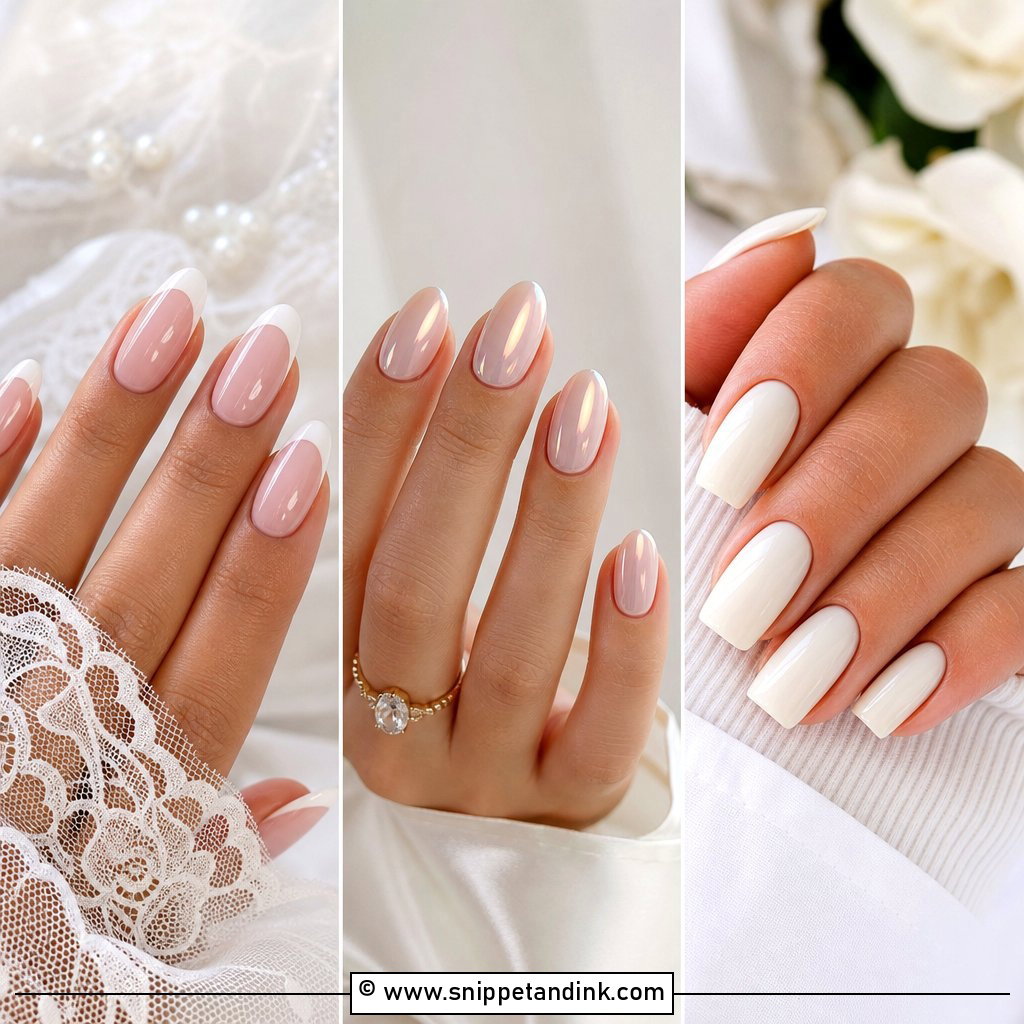
1. Milky White Wedding Nails
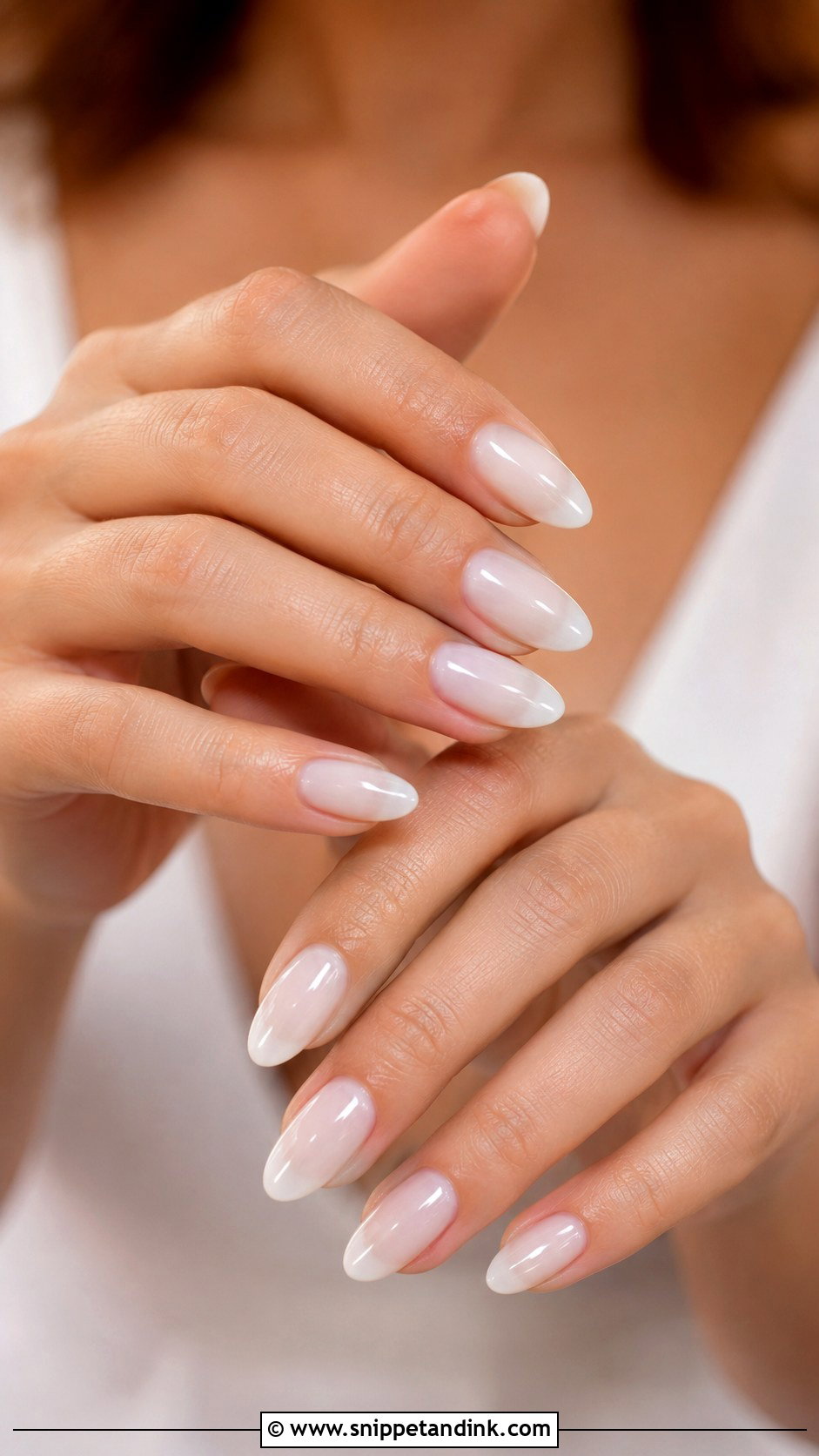
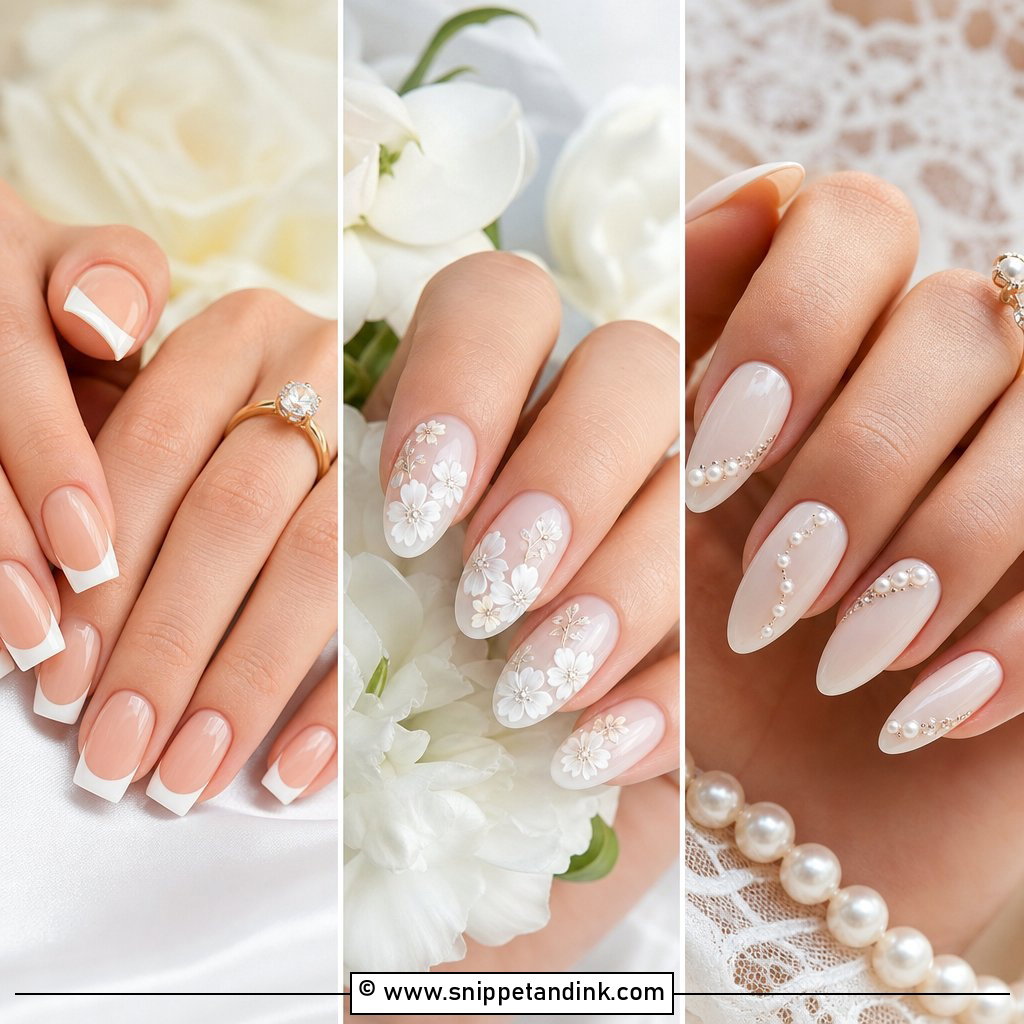
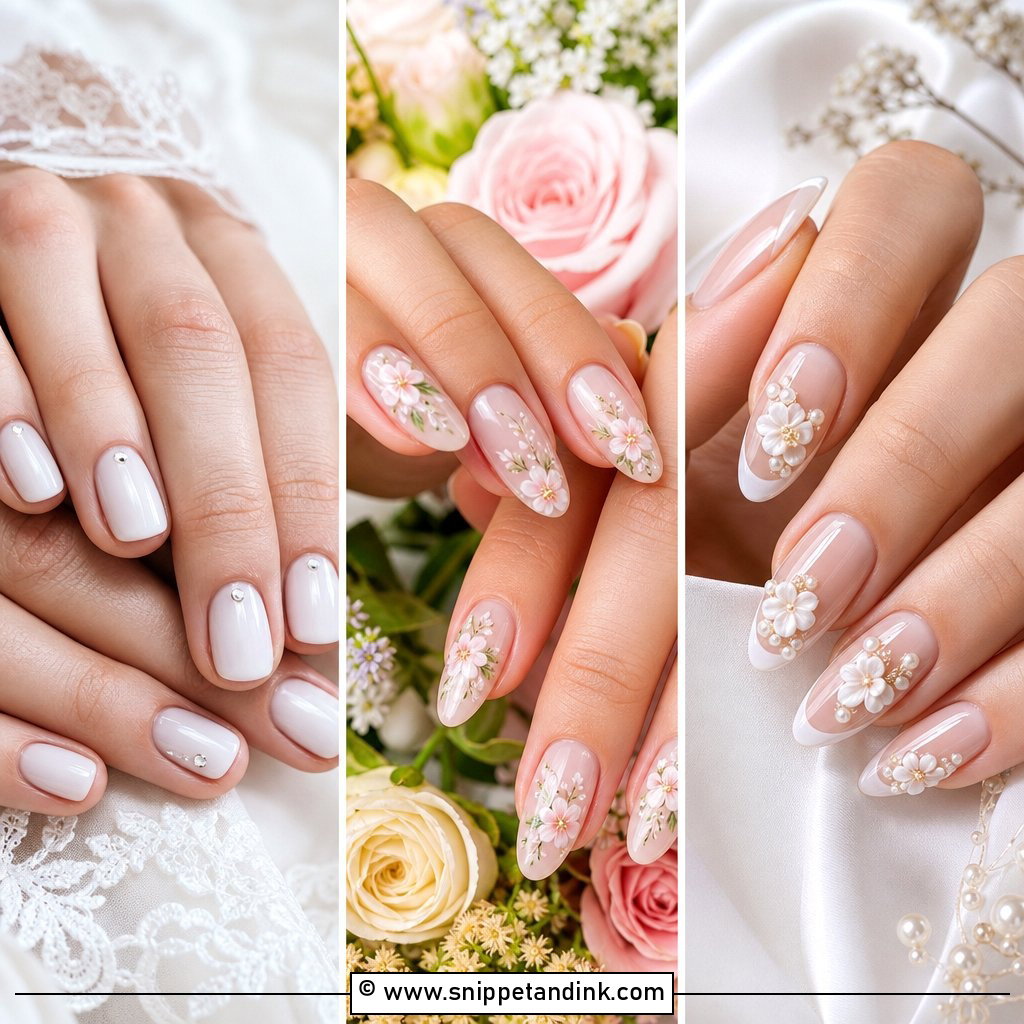
This is the set I’m asked for most at bridal appointments, and the reason is simple: it reads clean and expensive but never blank. The shade sits between sheer white and cream, so it suits most skin tones and rests comfortably beside white, ivory, champagne or blush fabric. The hard part is opacity. Too thin and it looks streaky on camera, too thick and it turns chalky, so I build it in thin layers and check it in daylight before curing the last one. A semi-sheer base with a high-gloss top is the natural version; tiny pearls or a whisper of chrome glaze make it dressier. Whatever the length, a smooth, even shape matters more than any add-on once the ring goes on.
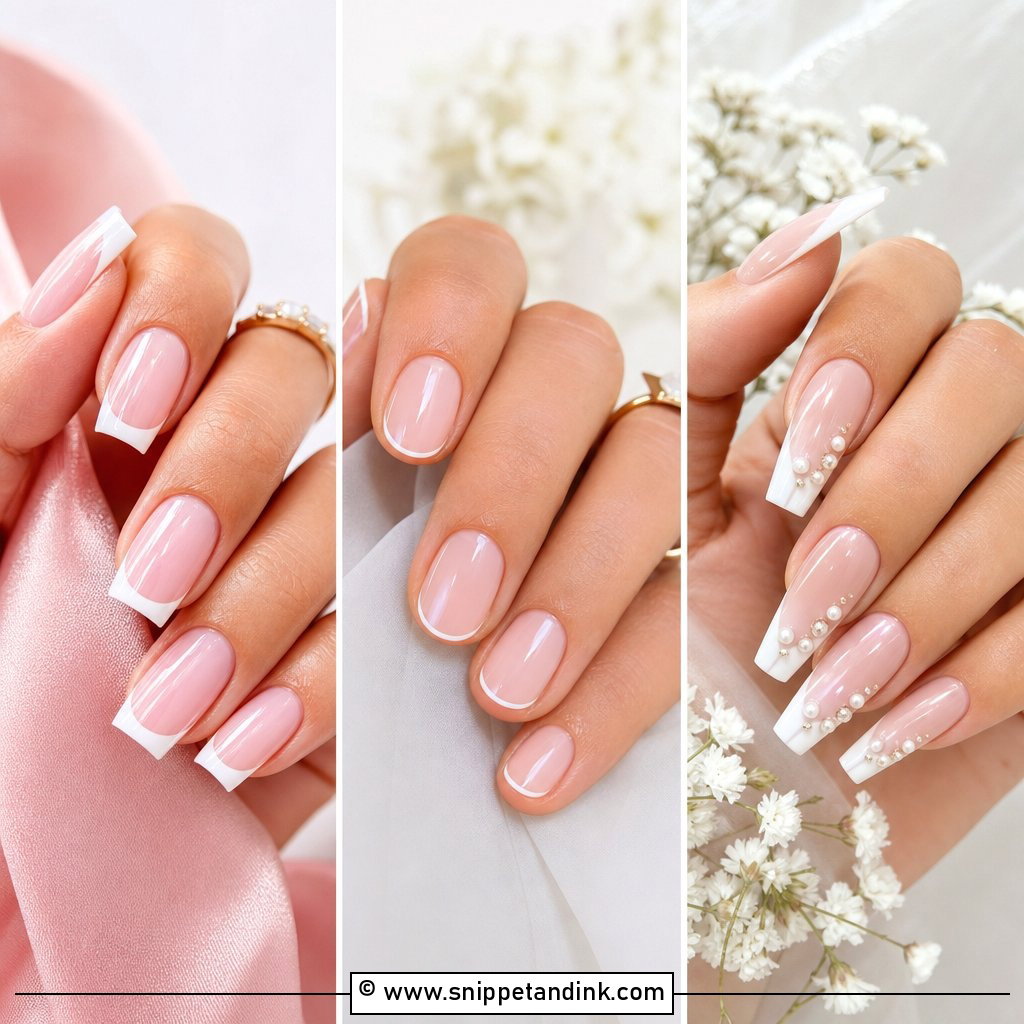
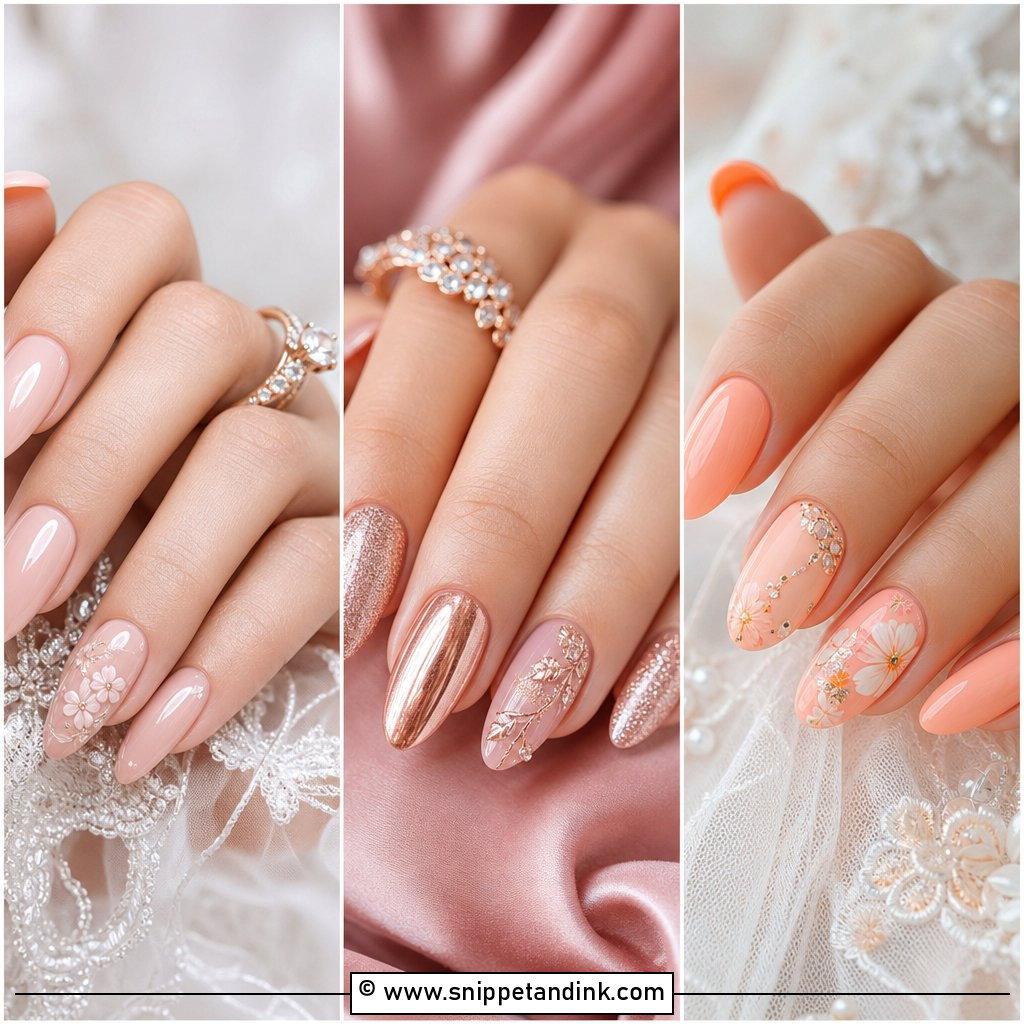
2. French Tip Wedding Nails
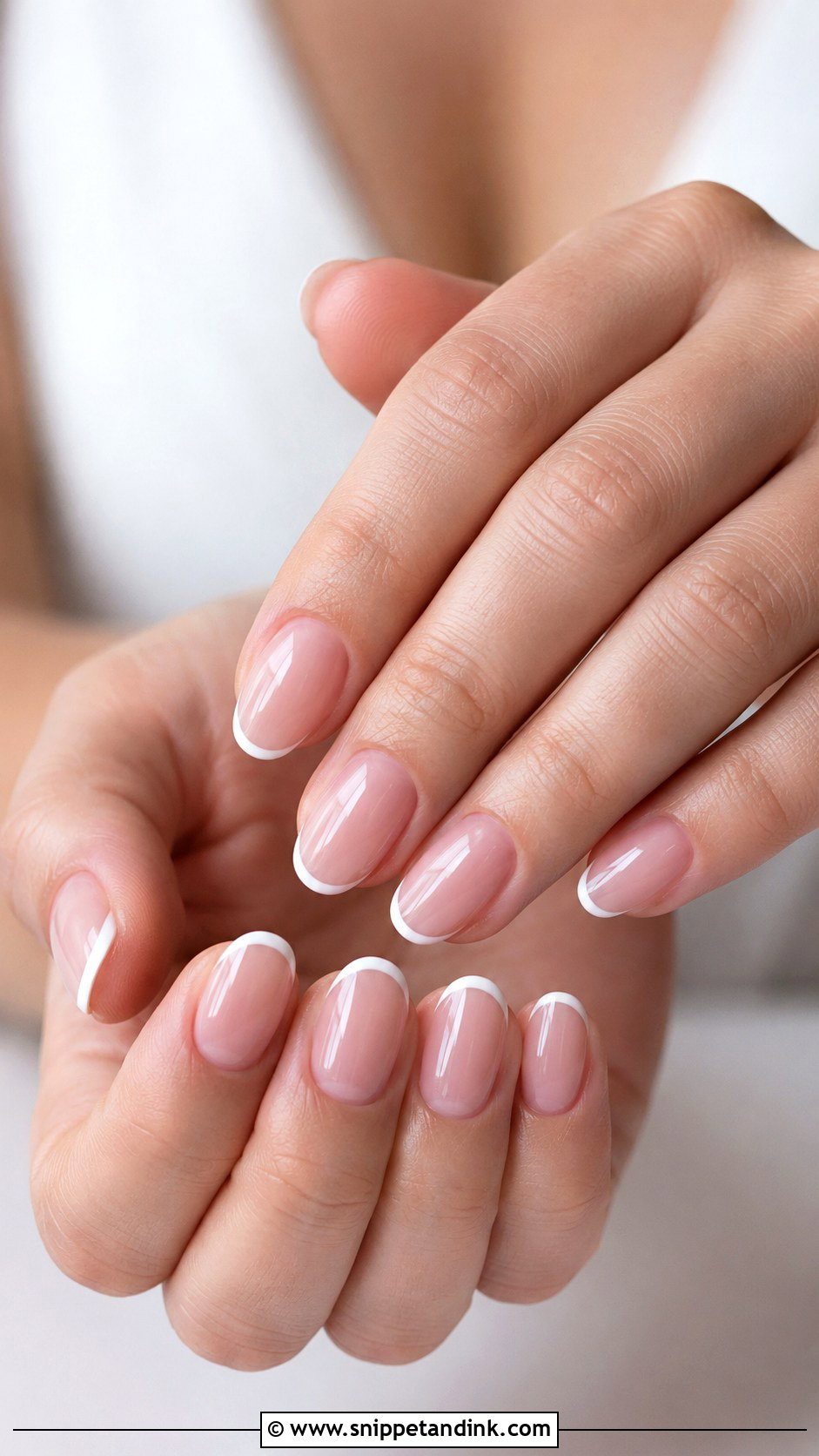
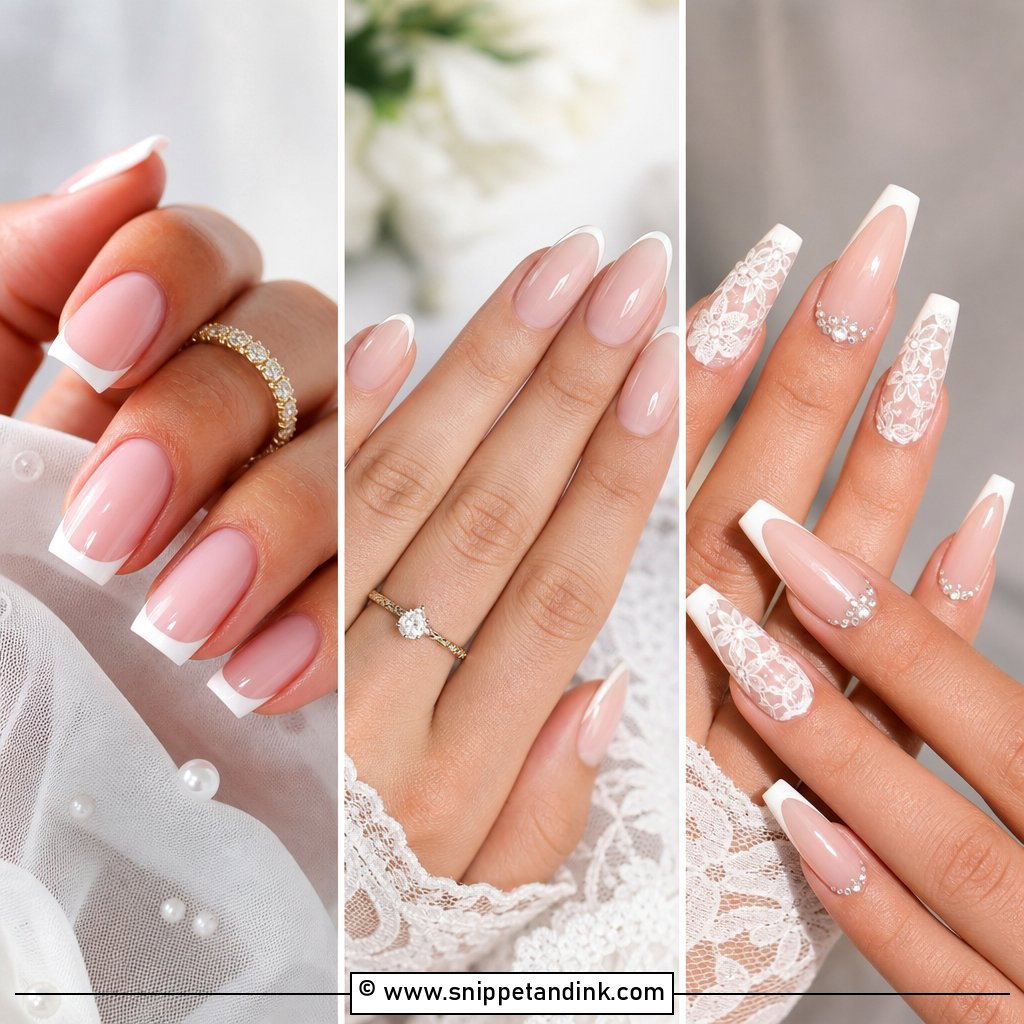
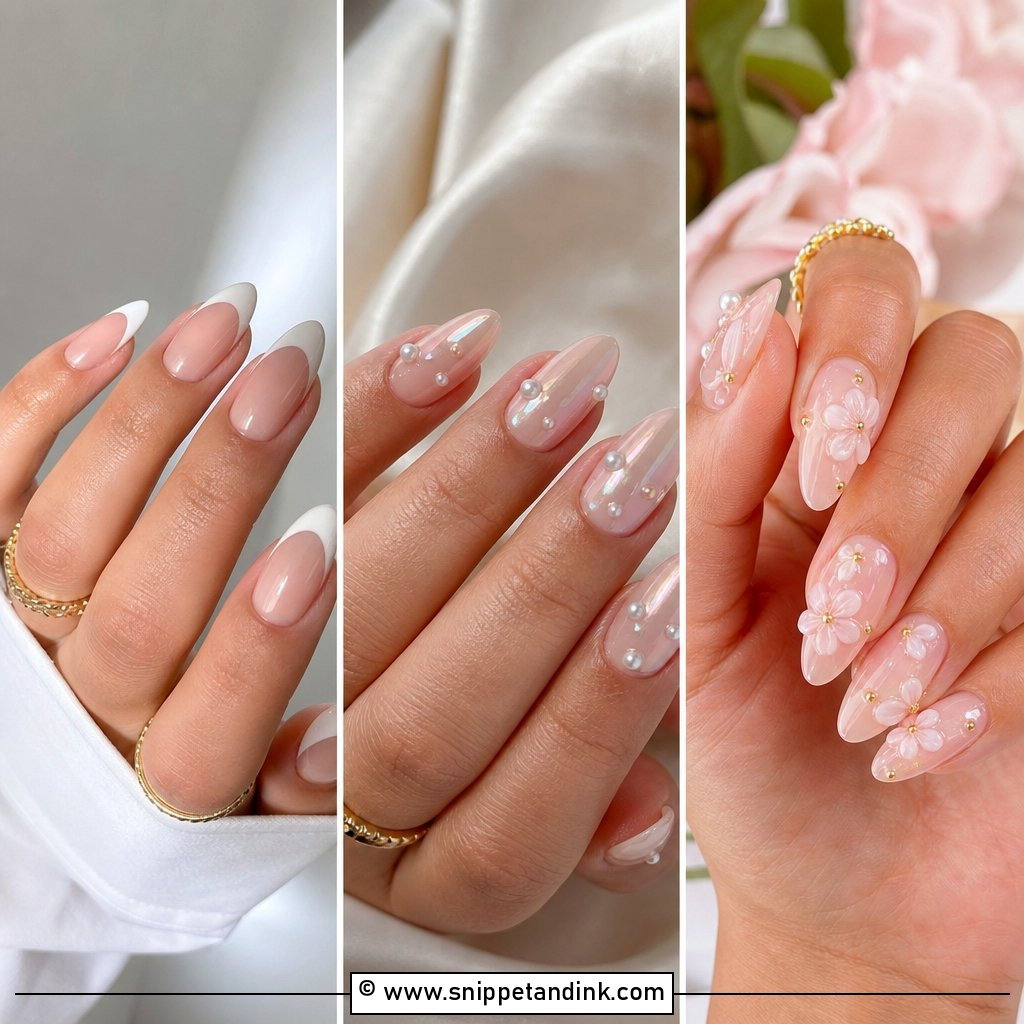
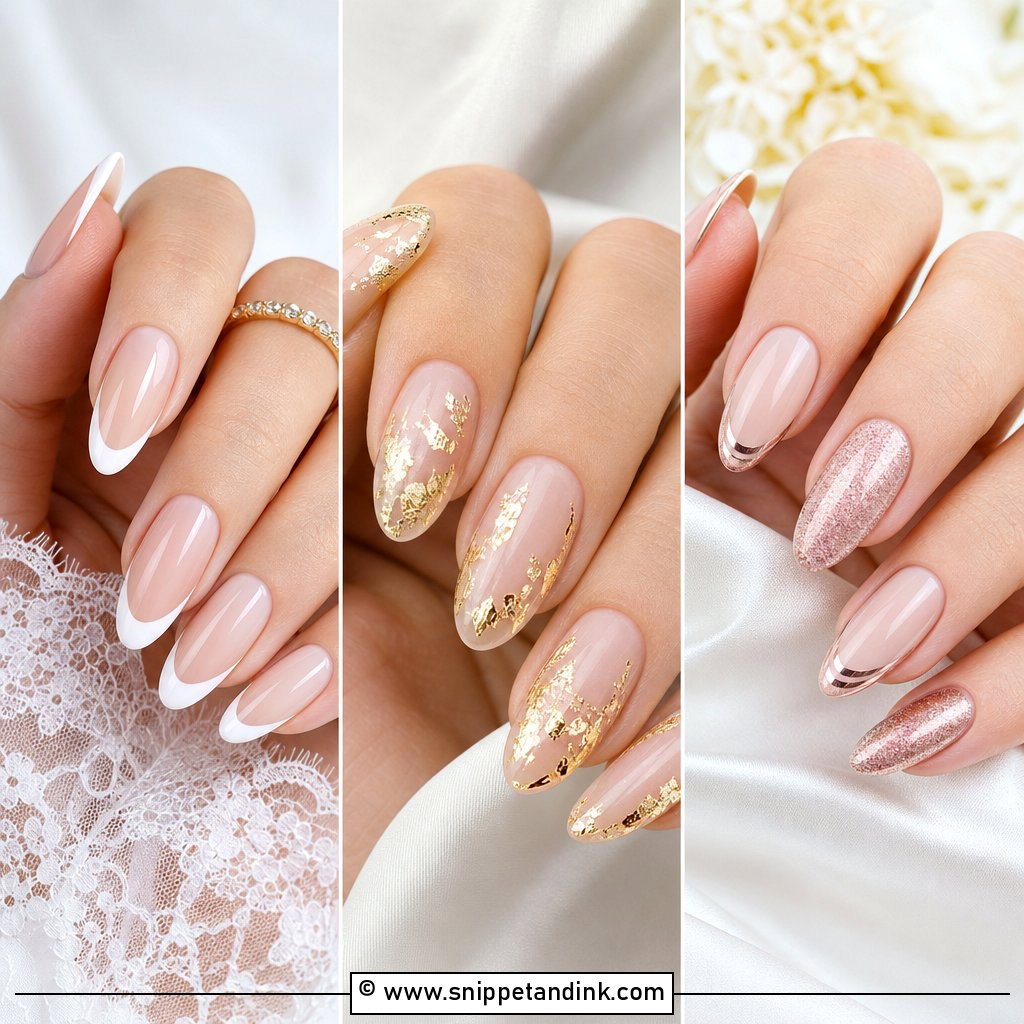
A French tip earns its place because the white line visually lengthens the nail bed, which is why it flatters nearly every hand. A soft pink or nude base with thin white tips is the classic, and a micro French tip, barely a millimetre deep, is the modern take. The mistake I correct most is a tip that’s too thick and too bright, which makes short nails look stubby from across a room. I paint the smile line freehand, keep it level on every finger, and suggest off-white instead of stark white if the dress is ivory. Brides who want length usually go almond or oval; guests often prefer a short square French that survives a day of hugging and carrying bags.
3. Pearl Chrome Wedding Nails
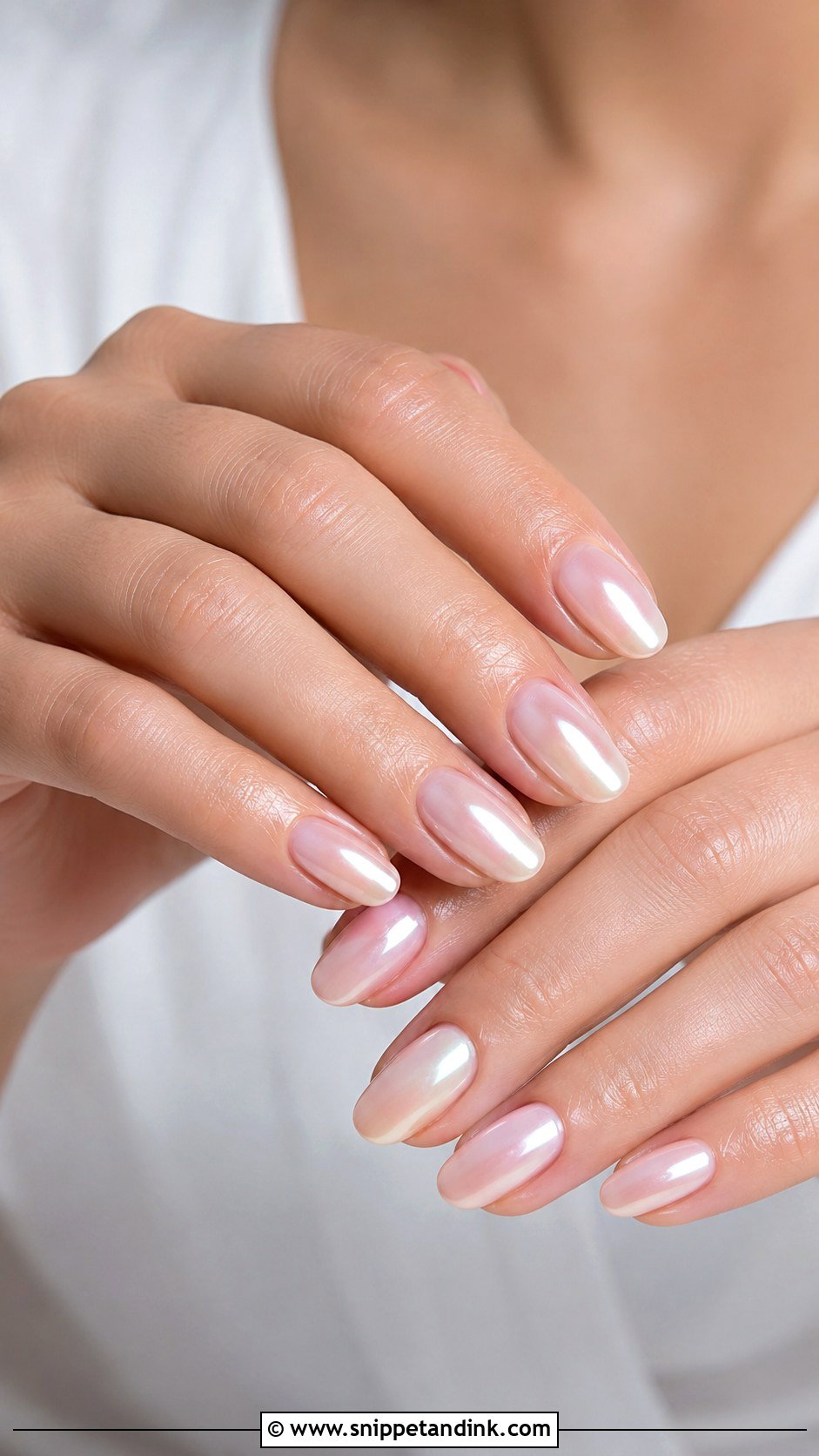
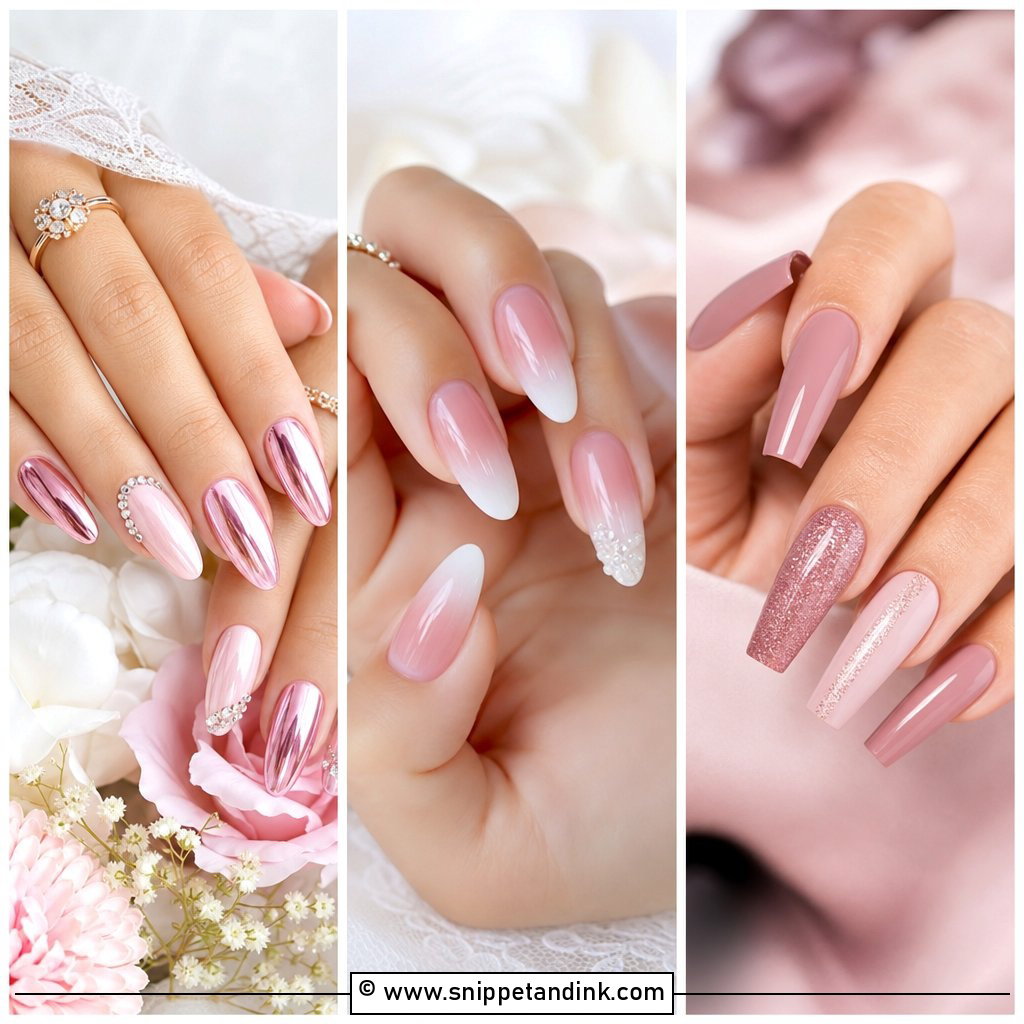
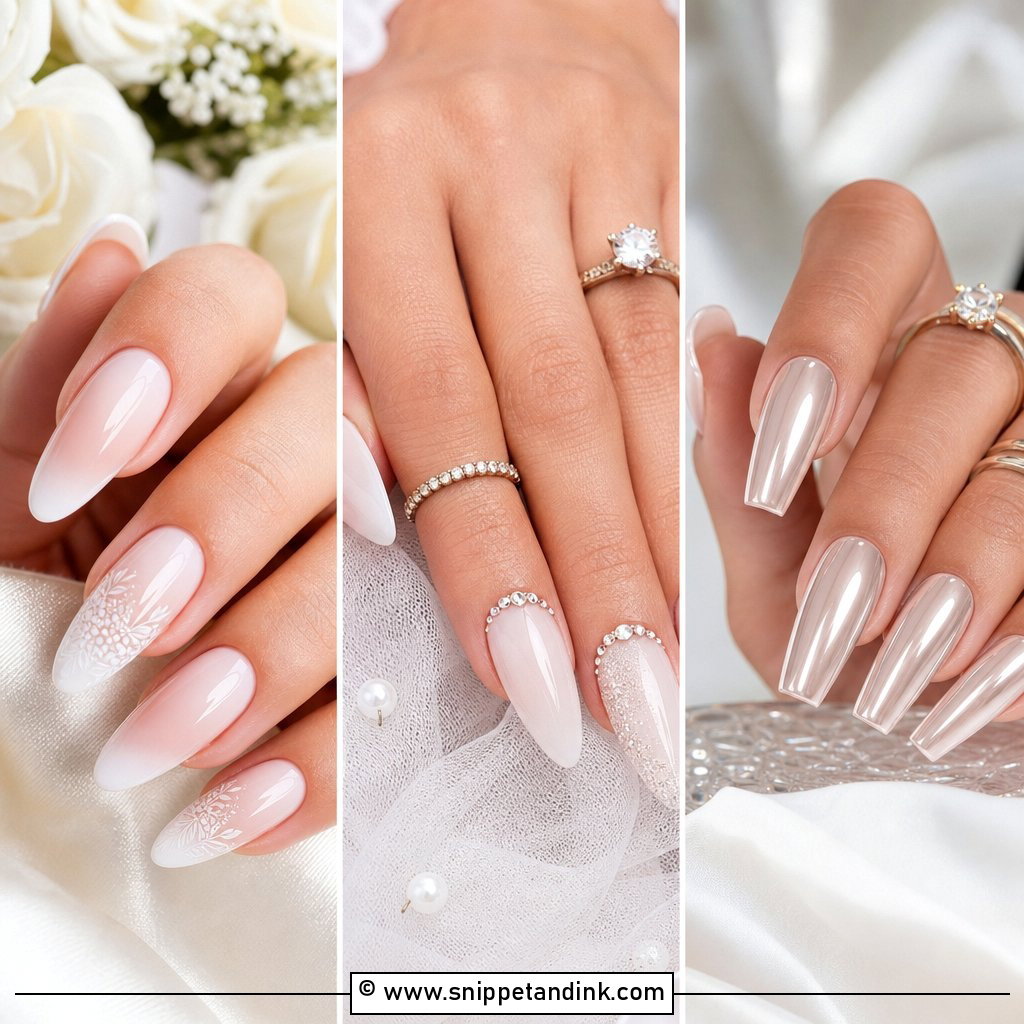
Pearl chrome wedding nails start with a sheer pink, nude or milky base, then a fine pearl powder is buffed over a no-wipe top coat until the surface glows. That buffing is where sets go wrong. Work the powder too long and you get a metallic mirror that fights a soft gown, so I stop as soon as the nail looks lit from inside. Almond, oval and squoval shapes show the sheen best because the curve catches light along its length. It sits naturally beside pearl earrings and satin, which makes it an easy step up from plain polish.
4. Blush Pink Wedding Nails
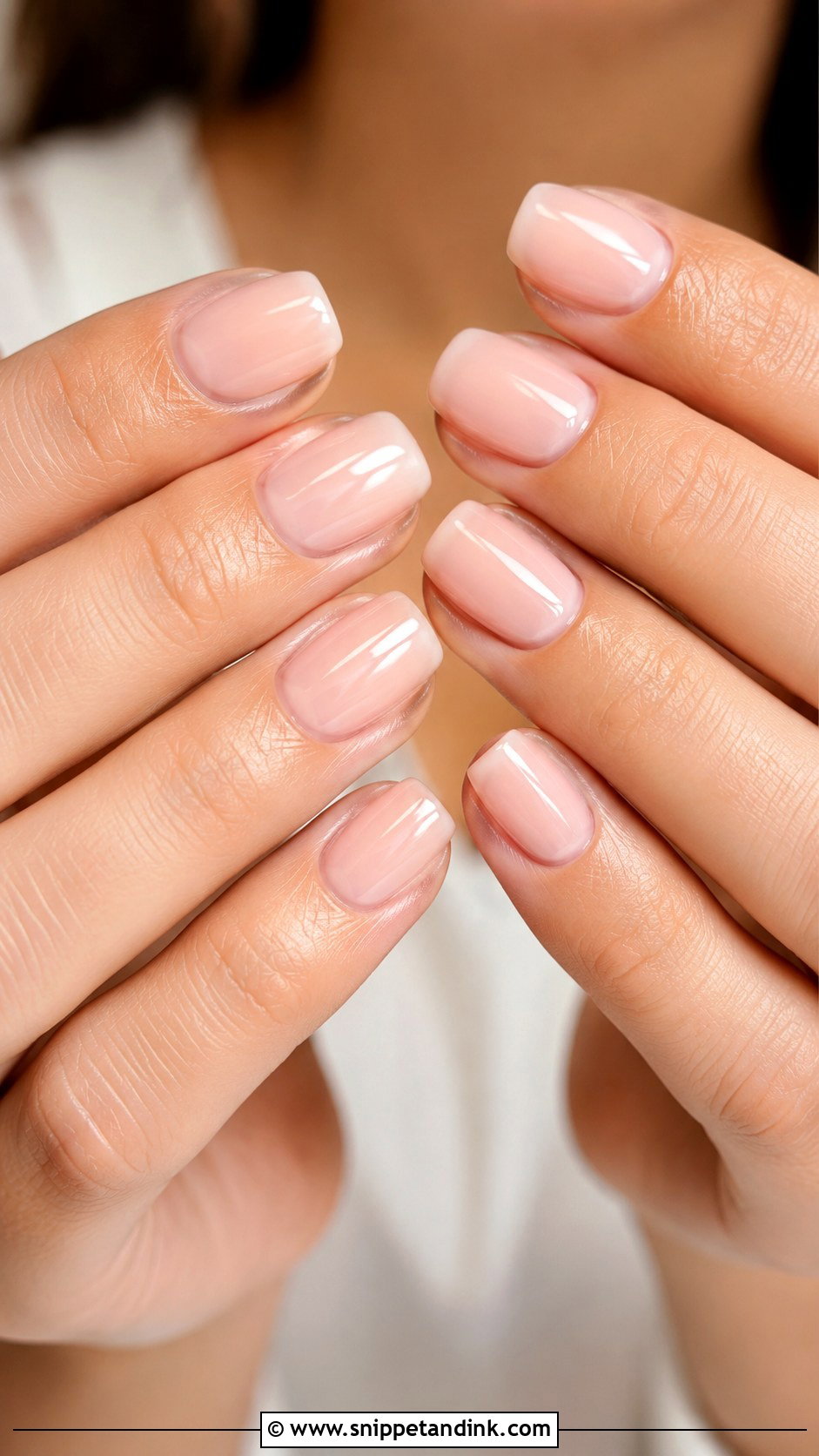
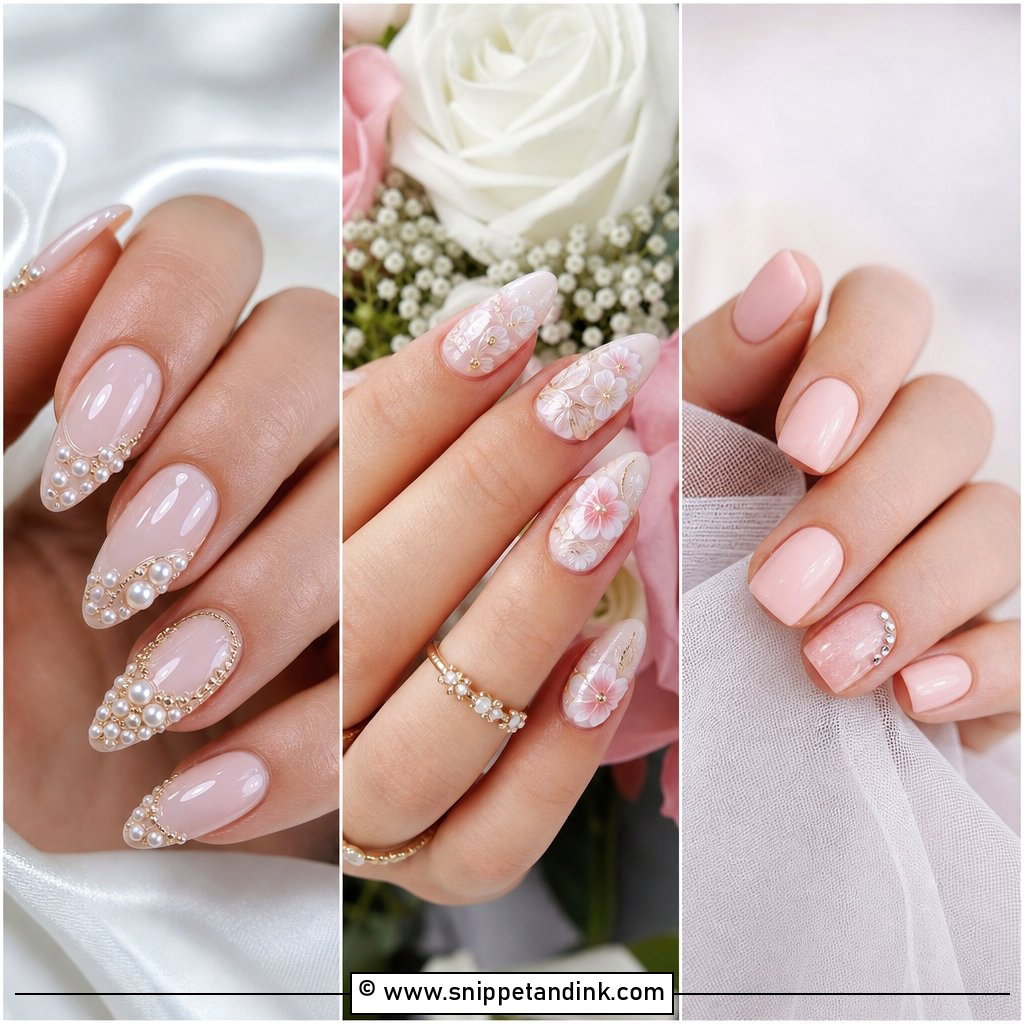
Blush is the shade I suggest when a whole family wants to coordinate. Bride, bridesmaids, mothers and guests can all wear it without anyone’s hands stealing focus, because it gives the nail a healthy flush rather than a color. The decision I talk through is sheerness. A sheer blush lets the natural free edge show, which looks fresh but also shows white spots or ridges; a creamier blush hides them, so I pick based on your nail plate, not the inspiration photo. It works from short rounded nails to long almond, and it stays quiet under an outfit with lace, beading or florals.
5. Nude Wedding Nails
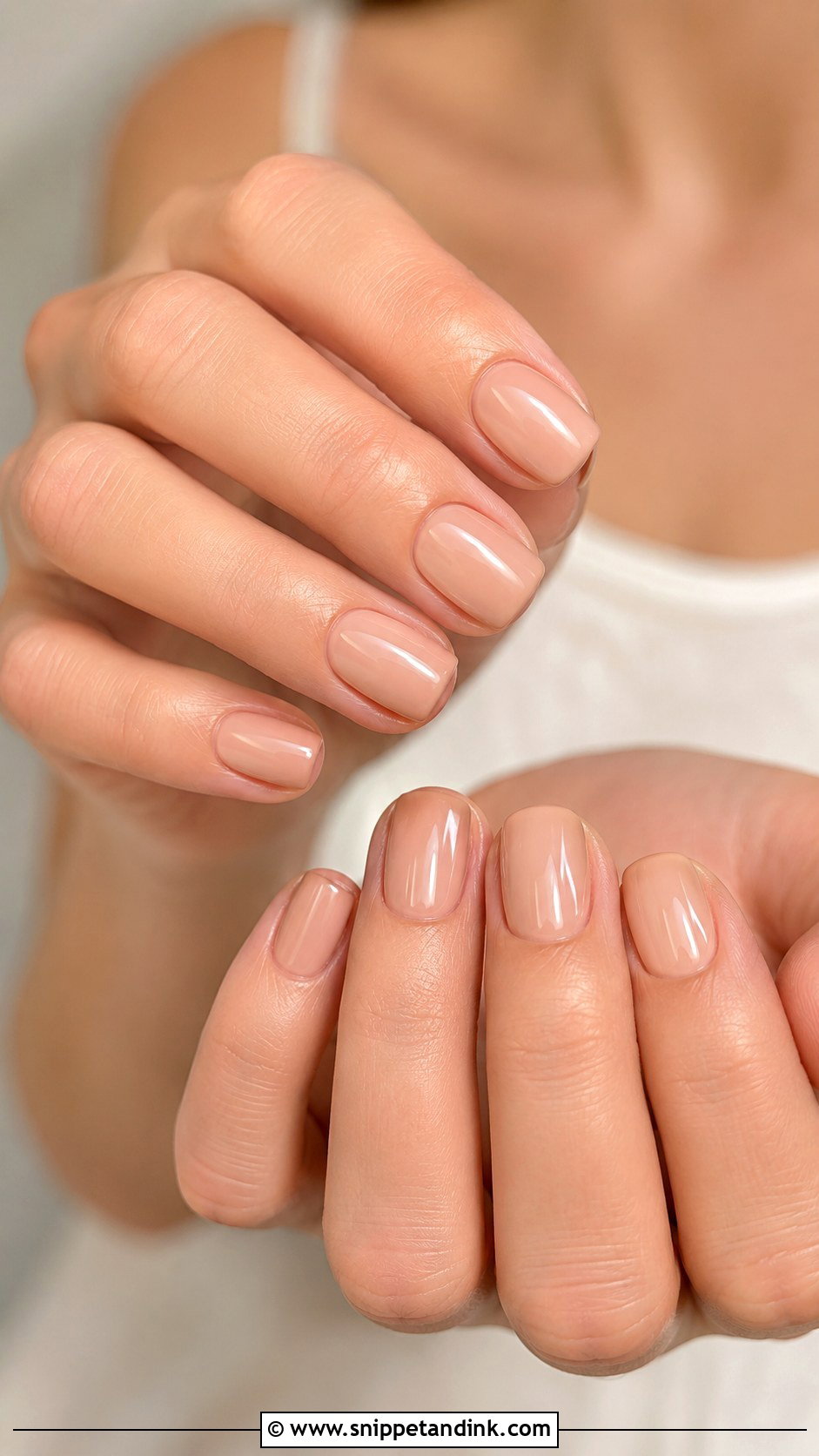
The nude that flatters you is the one closest to your own nail bed, and that’s rarely the beige you’d grab off the shelf. At a consultation I swatch two or three shades on one nail and hold your hand next to the dress fabric. Fair skin usually suits a pink-leaning nude, medium skin a peachy beige, olive skin a warm taupe and deep skin caramel or cocoa. Pick wrong and the fingers look grey in daylight. Because nude has nowhere to hide, the prep shows: neat cuticles, even shaping and a glossy finish do more here than any embellishment. If you want one extra detail, a hairline French tip or a faint shimmer is plenty.
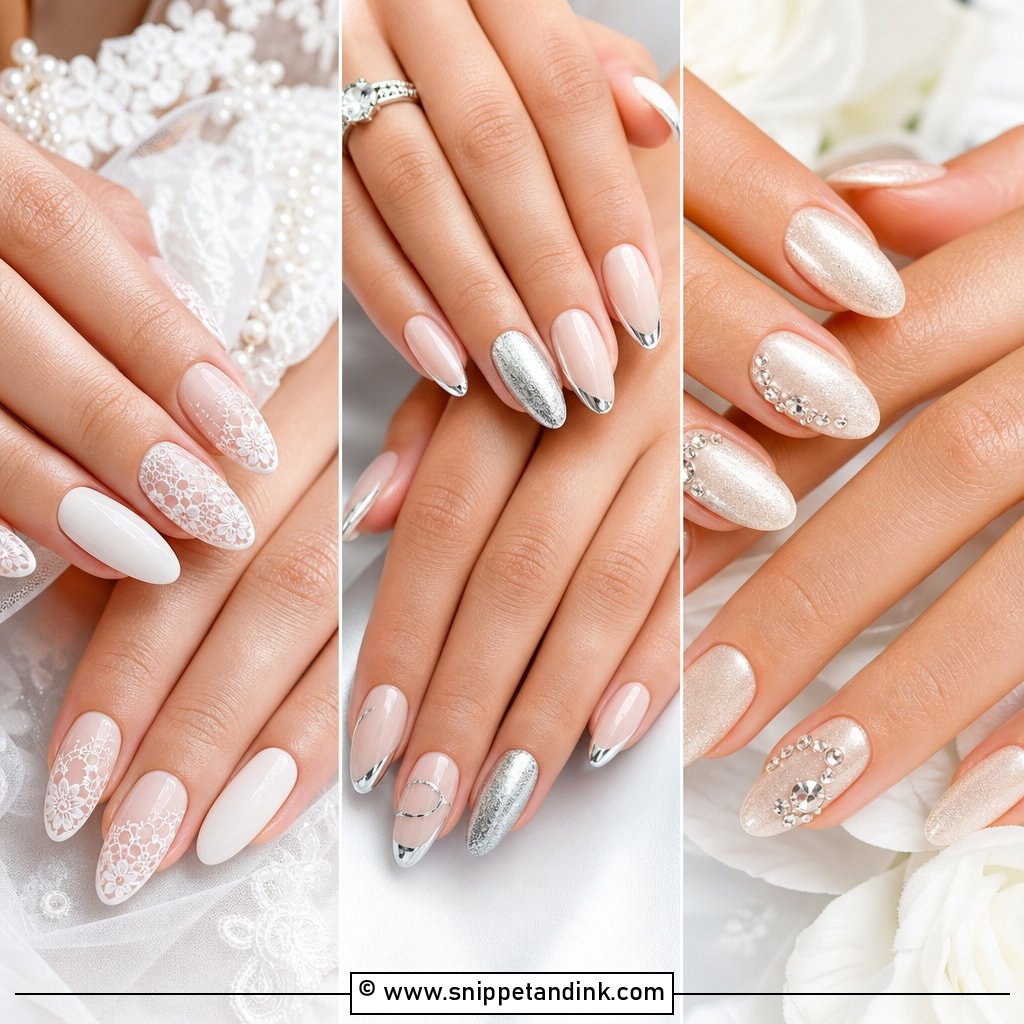
6. Lace Wedding Nails
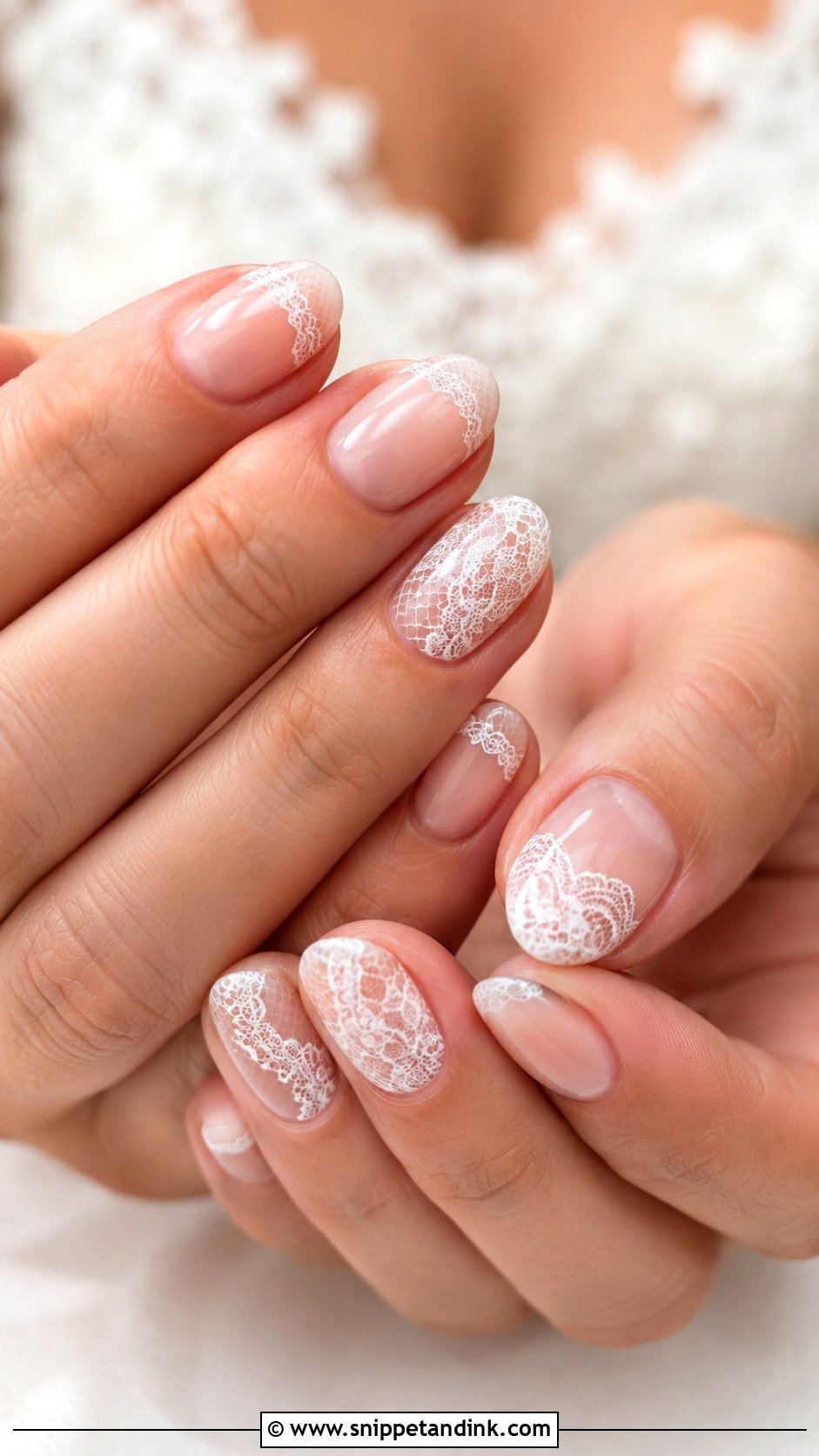
Lace nails make sense when the gown, veil or sleeves already carry lace and you want your hands to echo it rather than introduce something new. I keep the lace to one or two accent nails over a sheer nude, blush or milky base; painted on all ten it starts to look like wallpaper. The work is freehand with a long, very fine liner brush, and the lines have to stay thin, because thick white strokes read as doodles in a close-up. Almond and oval soften the pattern, while square makes it more graphic. If you can, bring a fabric swatch or a sharp photo of your lace so I can borrow its actual motif. That small match is what people notice when the ring and bouquet are in frame.
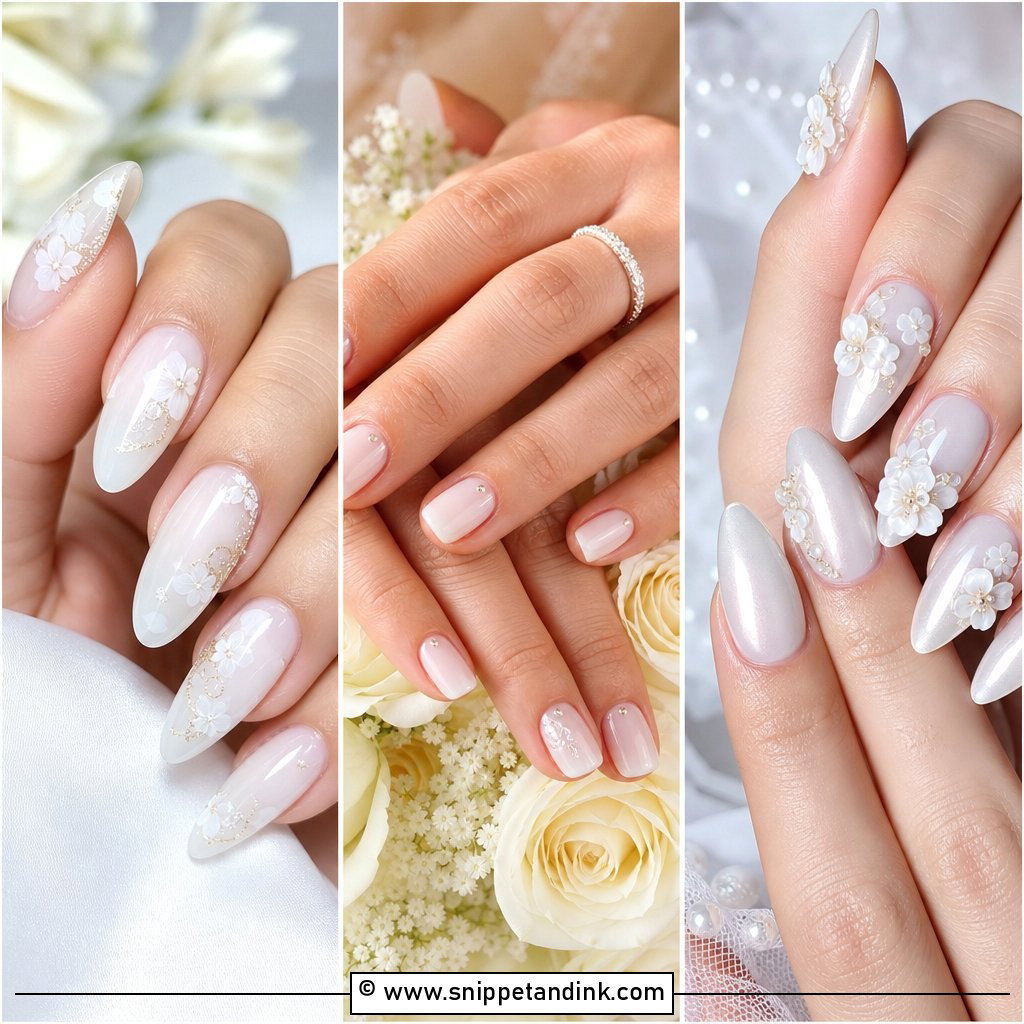
7. Floral Wedding Nails
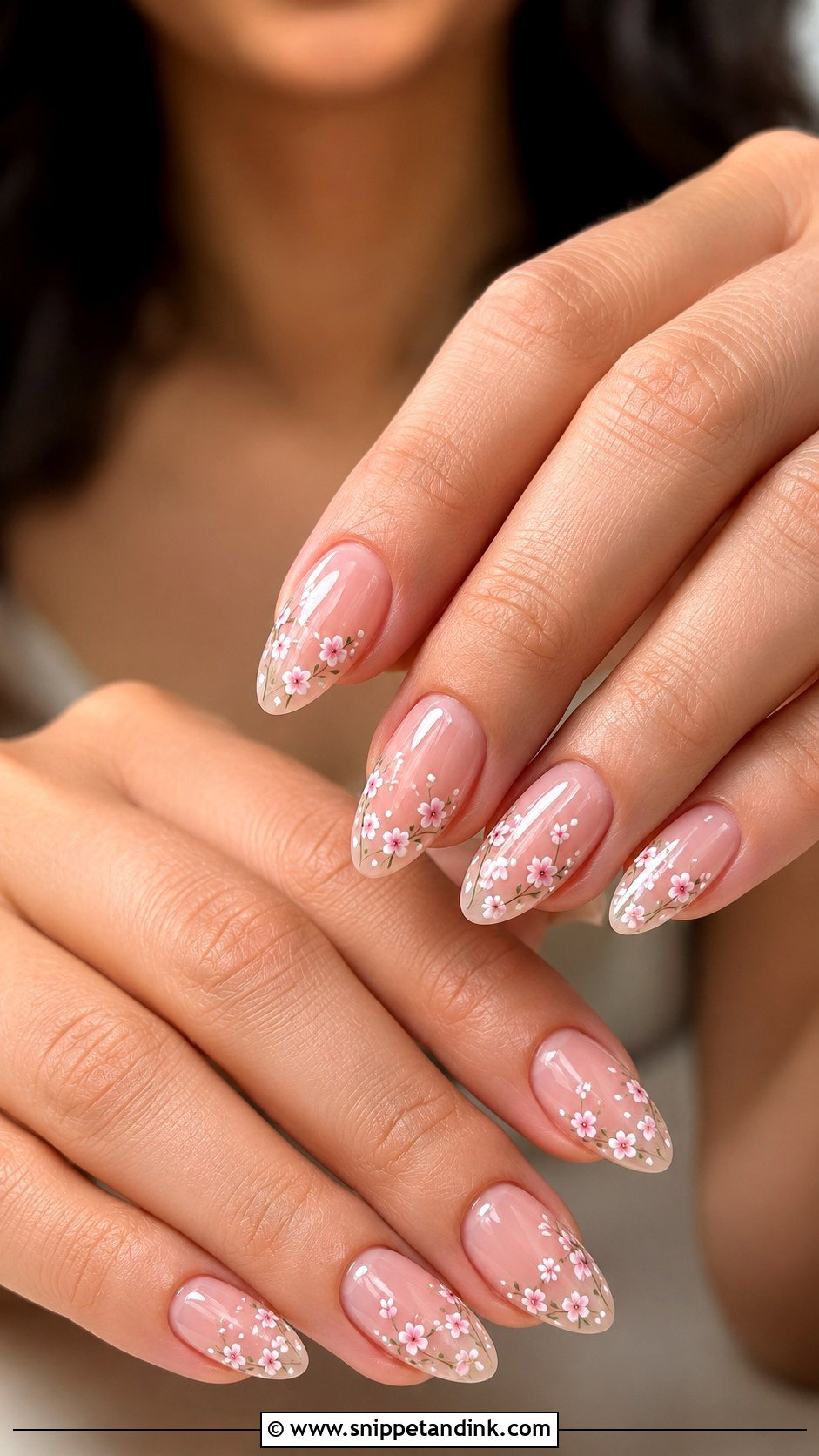
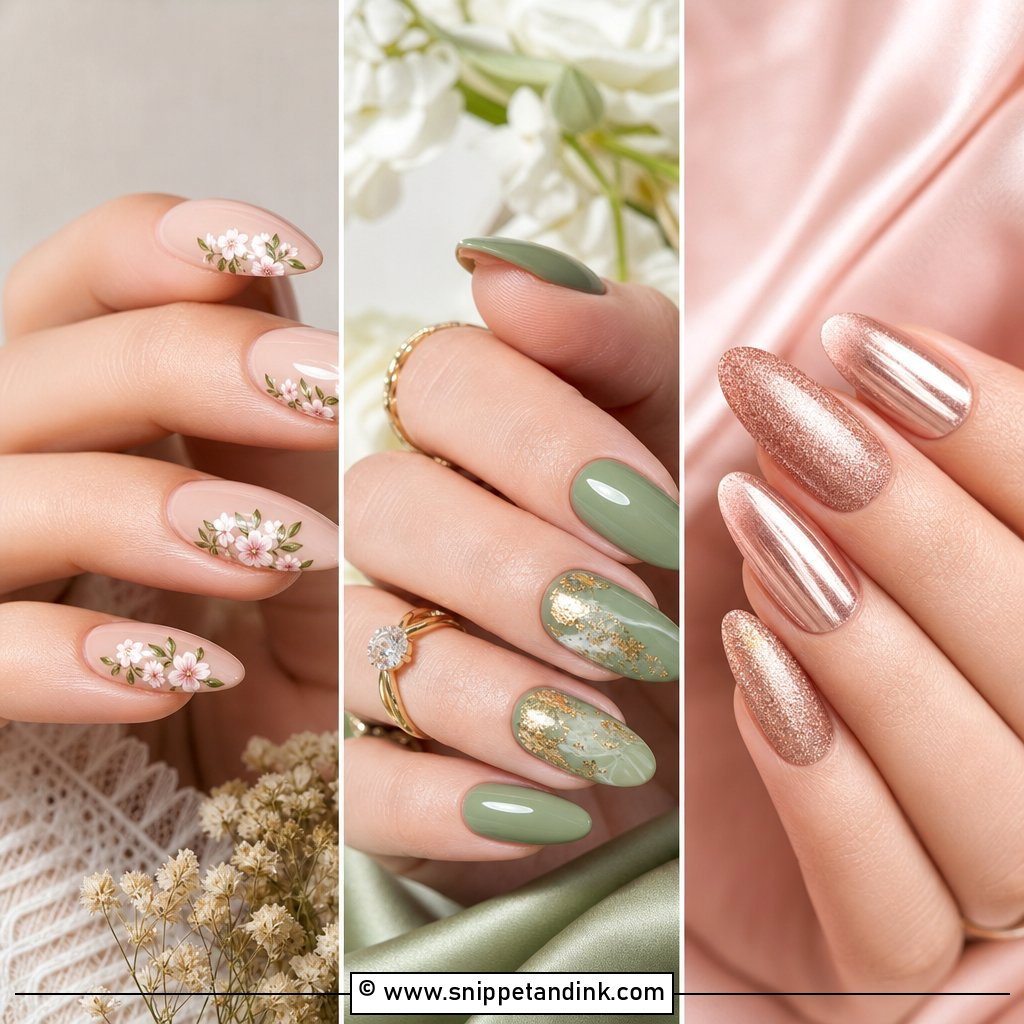
Florals belong to spring, summer and garden weddings, and they’re the easiest design to overdo. Tiny white flowers over a nude base stay bridal; pale pink, lavender or blue petals bring color for guests and bridesmaids. My rule is space. Two or three small flowers per accent nail, with clear base around them, lets the eye read a pattern instead of clutter. I build each petal as a dot dragged in toward the center, which keeps them consistent from one hand to the other. Short ovals, almonds and medium squares all take it well, and it’s a natural nod to floral embroidery on a dress.
8. Ombre Wedding Nails
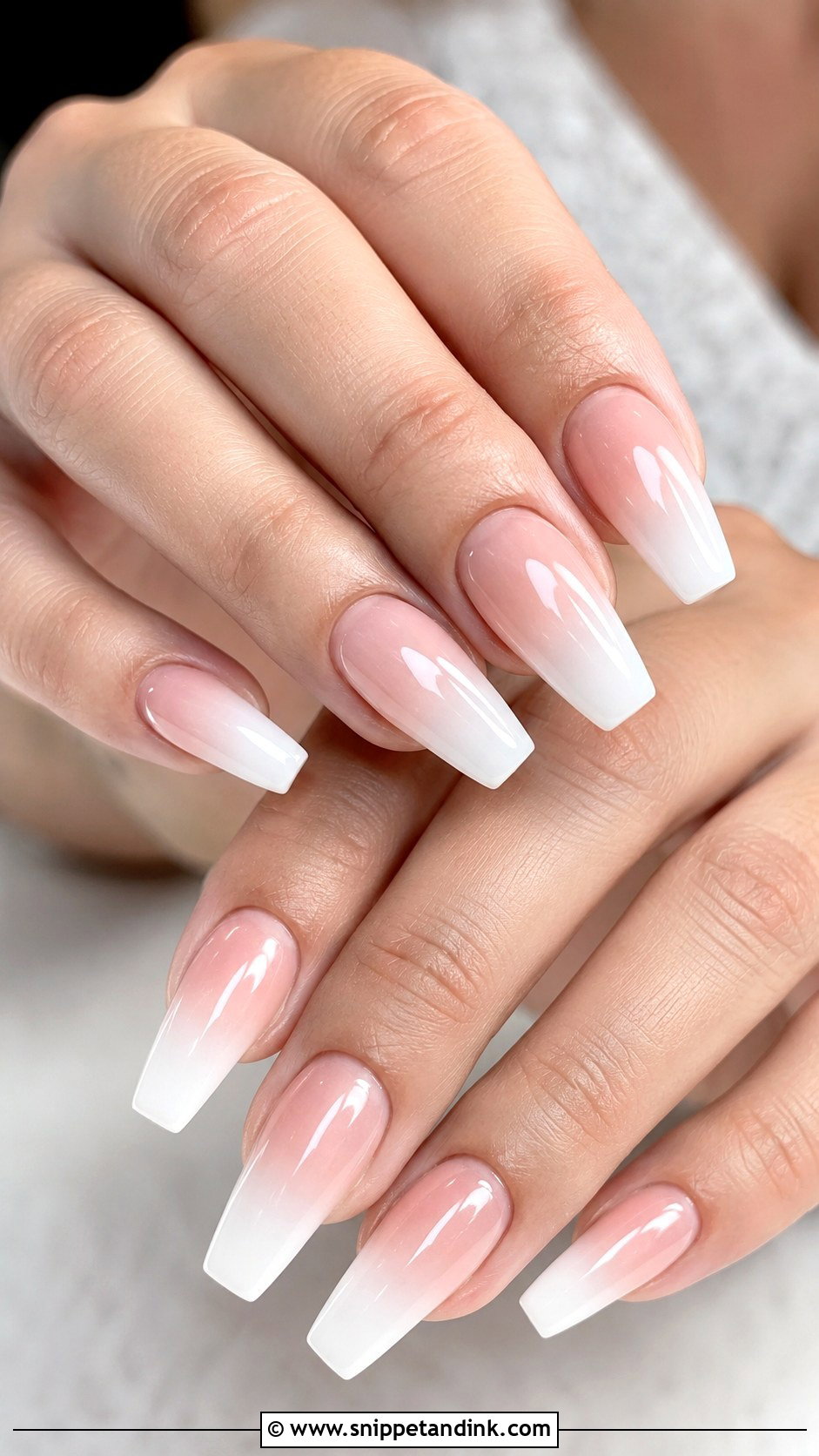
Ombre wedding nails fade from one tone to the next with no hard line, and the version most brides ask about is the baby boomer: pink or nude at the cuticle melting into white at the tip. Think of it as a French manicure with the edge softened. The blend is sponged or brushed in thin gel layers, and the usual fault is a muddy grey band where the two colors meet too heavily. I bring the white up from the tip in several light passes so it stays airy. It needs some length to show the gradient, so medium almond, coffin, oval or square suit it best. Blush to milky white, nude to champagne and pink to pearl are gentler variations.
9. Short Wedding Nails
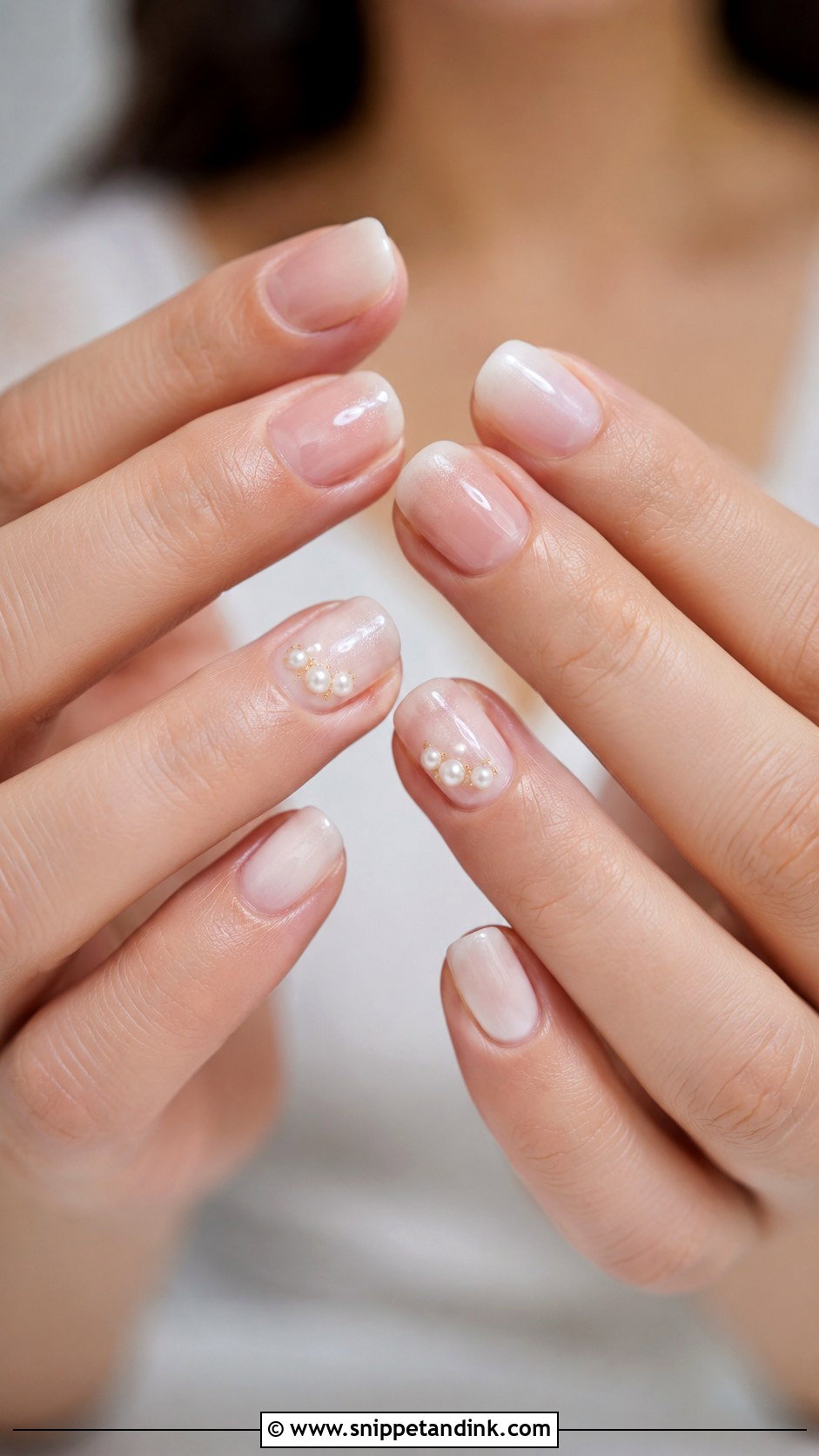
Short wedding nails look every bit as finished as long ones when the shape is precise. Short rounded, squoval or soft square are what I’d suggest, and they’re the practical answer if you work with your hands, wear fabric that snags, or simply dislike length. With less canvas, keep the color simple and add at most a single pearl or a dusting of fine glitter. One thing I always check on short nails is the free edge. If the white tip varies from finger to finger, I file them all to match before any color goes on, because uneven length is the first thing a ring shot picks up.
10. Almond Wedding Nails
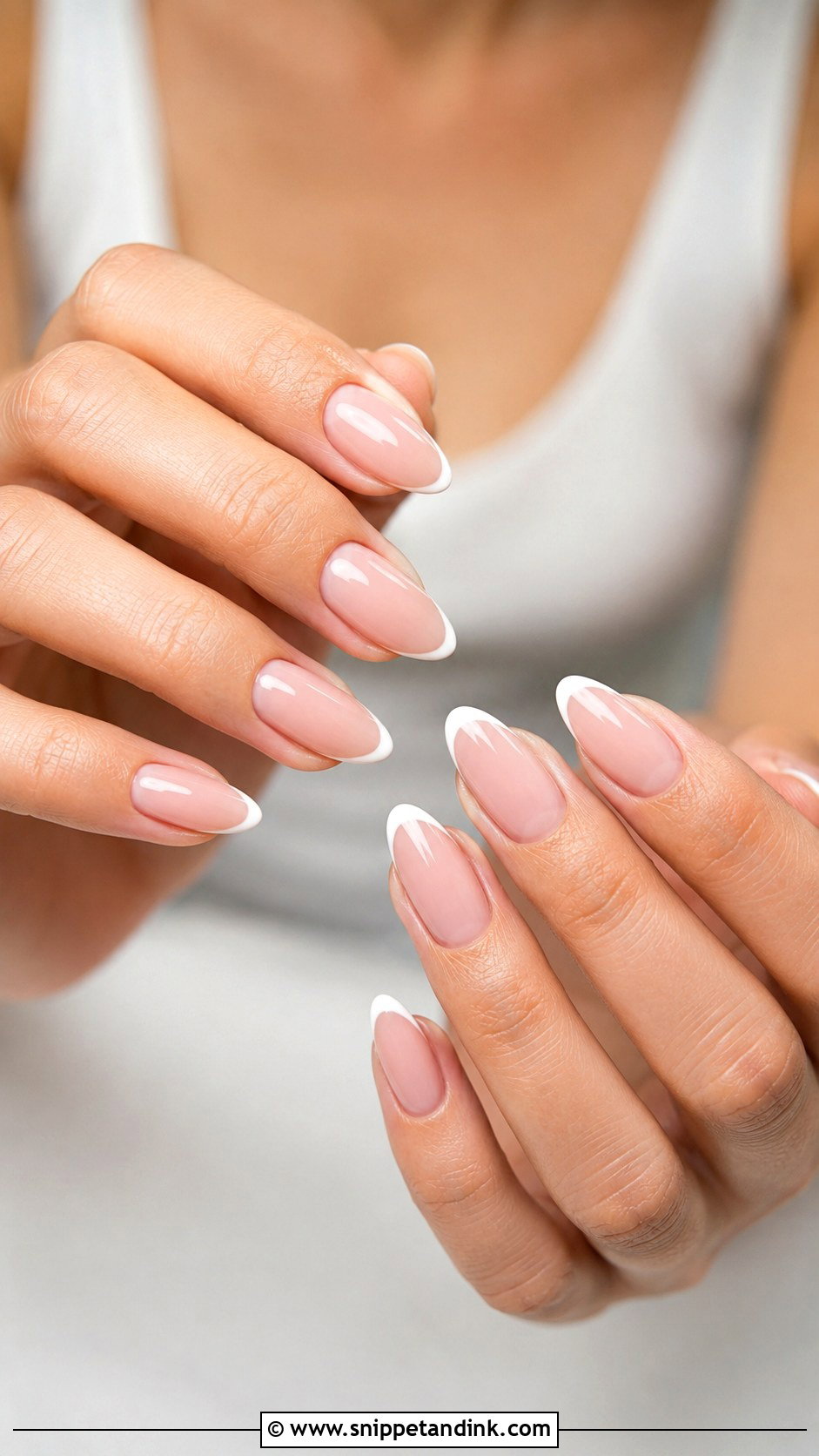
Almond is the shape I recommend to brides who can’t decide. The taper slims the finger and suits nearly every design on this list. Medium length looks the most balanced in photos; very long almond starts to dominate the hand. Ask for a soft, rounded point rather than a sharp one, since it reads gentler and is less likely to catch on tulle. I file almonds from both side walls toward the center and check symmetry by looking straight down at the nail, because an off-center point is obvious once a ring sits below it. A sheer base with soft white tips is the classic pairing, and chrome or pearl gives it a current edge.
11. Square Wedding Nails
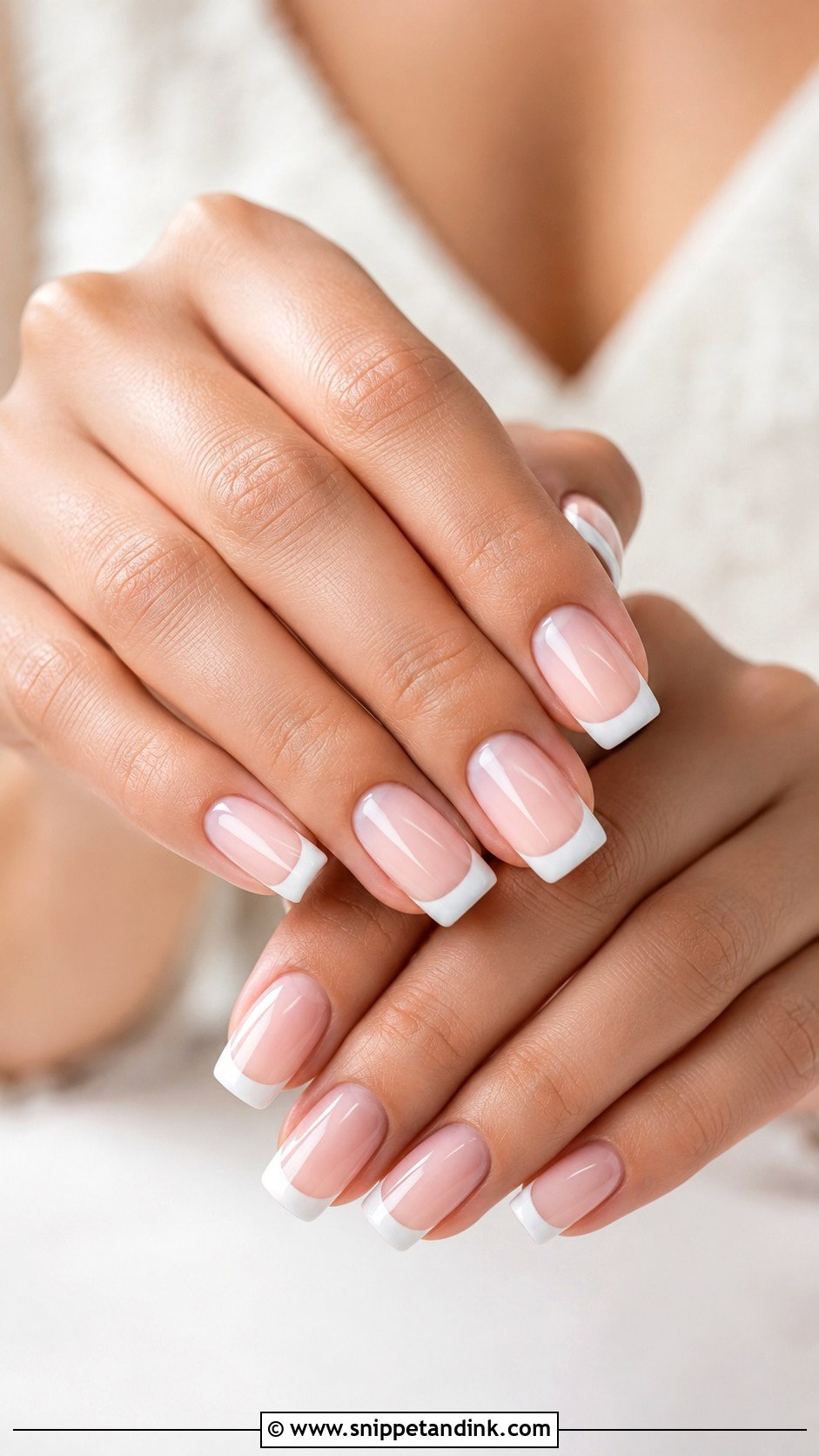
Square gives a crisp, modern line and pairs easily with French tips, nude, blush and milky white gel. The thing I always do is soften the corners. A sharp corner chips first, snags fabric and looks harsh in close-ups, so a square with slightly rounded edges is the version that lasts the day. Short square is the practical choice, while medium square leaves room for chrome, lace or a few tiny flowers. A thin French tip is a favorite on this shape because the straight free edge makes the white line look very clean. Guests after something simple can go champagne or soft pink.
12. Coffin Wedding Nails
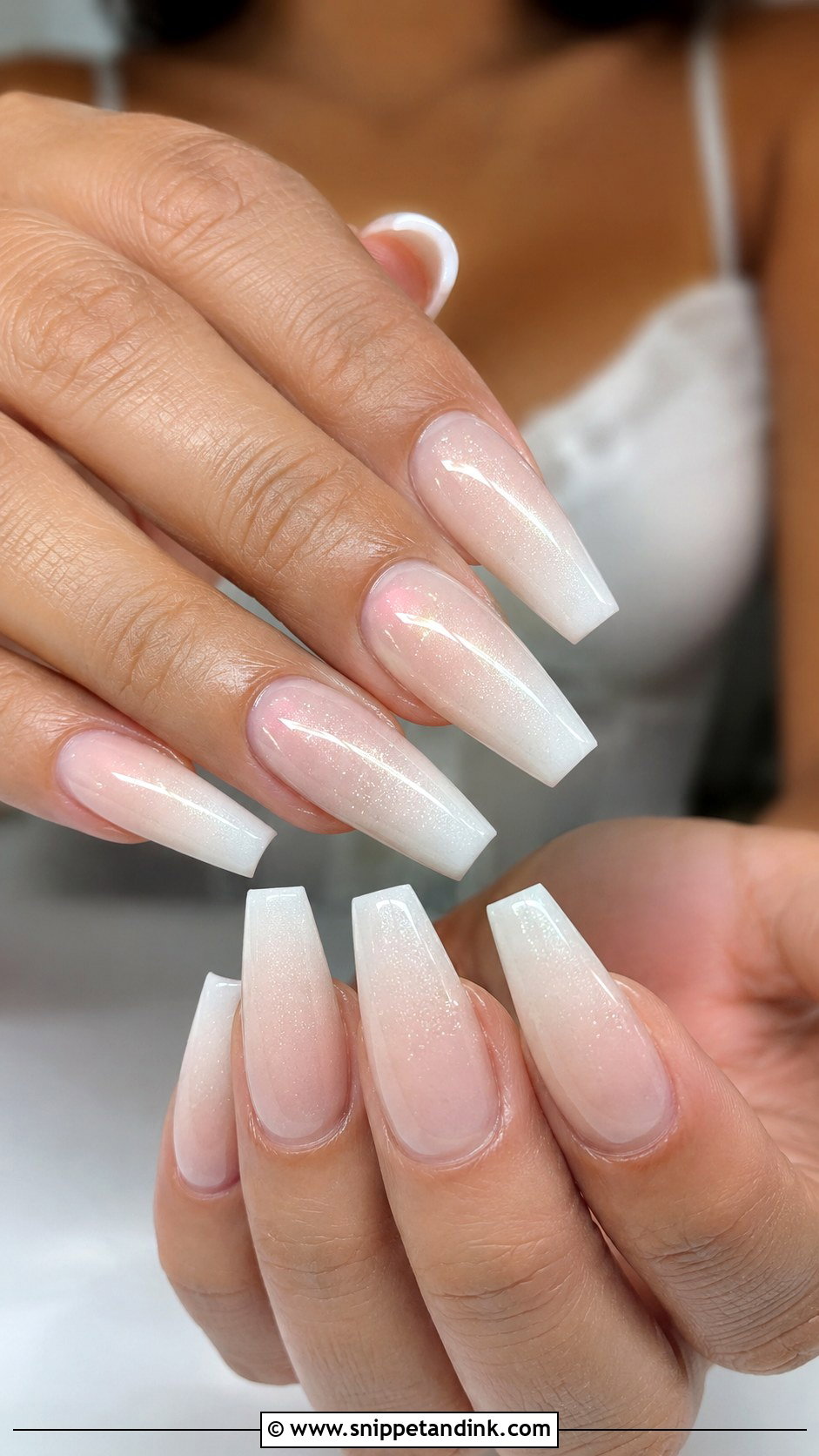
Coffin is the glamorous end of the shape range: tapered sides and a flat tip that give a wide canvas for ombre, chrome, pearls or detailed art. That flat tip is also its weak point. It takes every knock, so it needs structured gel or an extension underneath or it cracks. For a wedding I’d keep the colors soft, such as milky white, nude, blush or champagne, and keep decoration restrained, because long coffin nails already draw the eye. A nude-to-white coffin ombre is a bridal favorite; guests often choose champagne shimmer. I’d steer you away from a long coffin if you’ll be fastening your own earrings and bustle loops on the day.
13. Champagne Wedding Nails
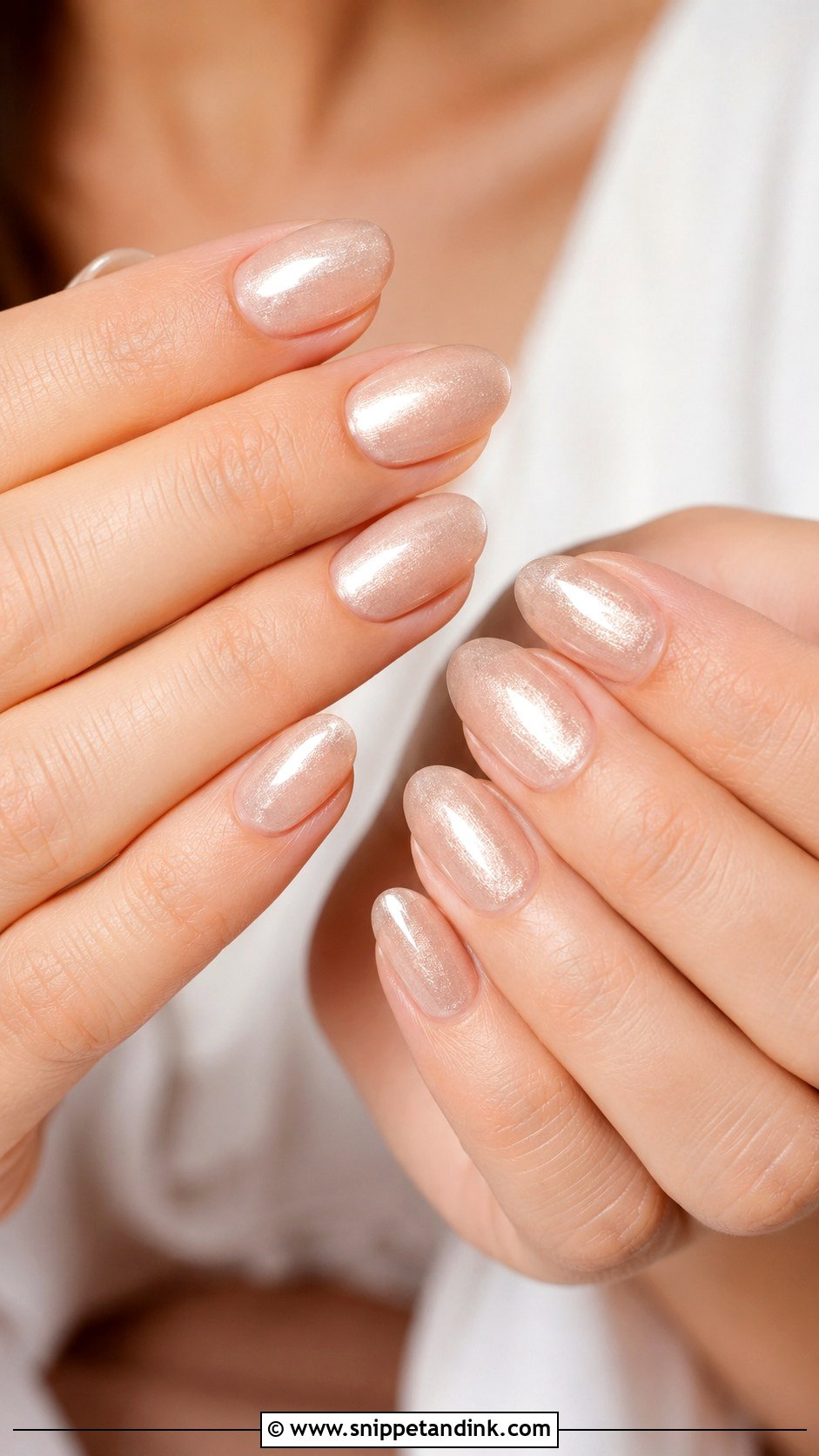
Champagne sits between nude, gold and beige, so it’s the shimmer I reach for when someone wants sparkle that still behaves at a formal wedding. It sits well with cream, ivory, blush, taupe and navy outfits. What I avoid is chunky glitter, because the flakes catch the flash unevenly and look spotty in photos. A finely milled shimmer, or a sheer champagne over a nude base, gives a smooth glow instead. Guests like it because it feels festive without competing with the bride, though a bride wearing gold jewelry and warm makeup can carry it too. Almond, oval and short square all suit it.
14. Rose Gold Wedding Nails
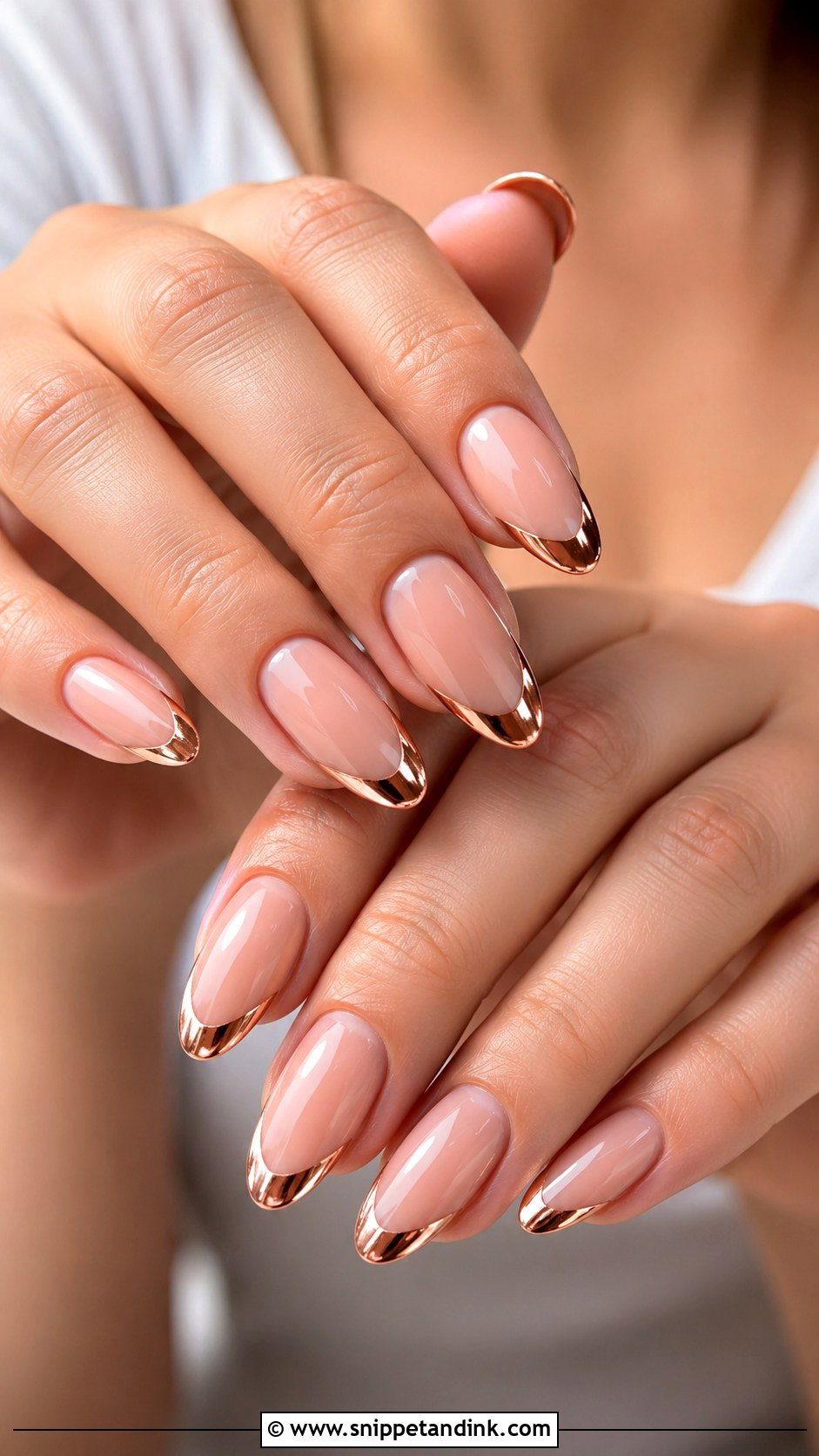
Rose gold holds pink and golden warmth at once, which is why it flatters more skin tones than pure gold or silver. It can go on as a thin tip, a chrome glaze, a scrap of foil or a fine shimmer over the whole nail. Pick one. The sets that look cheap are the ones using rose gold chrome, foil and glitter together. Over a blush, nude or pale pink base it reads modern but still bridal, and if your ring is rose gold it ties your hand together in the ring shot. Foil needs a top coat sealed right over the free edge, or the edges lift by the reception.
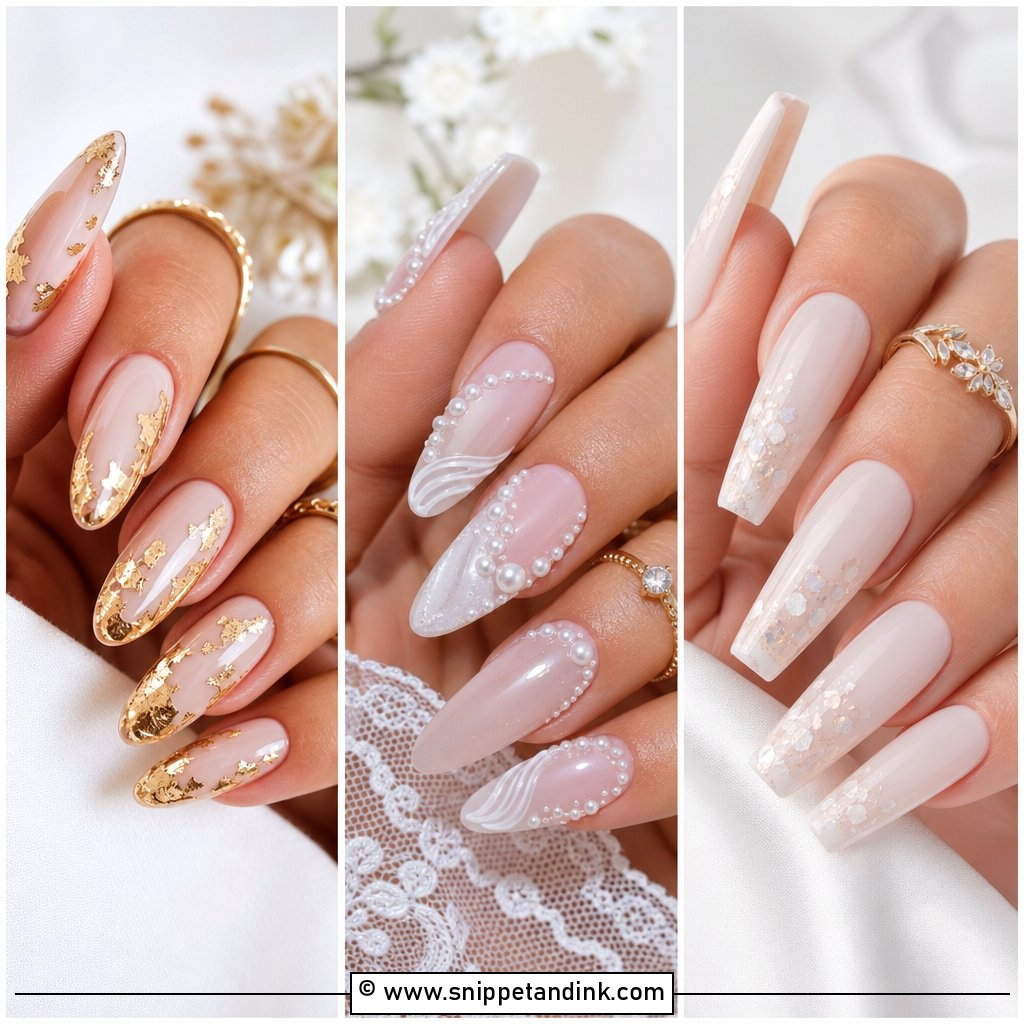
15. Something Blue Wedding Nails
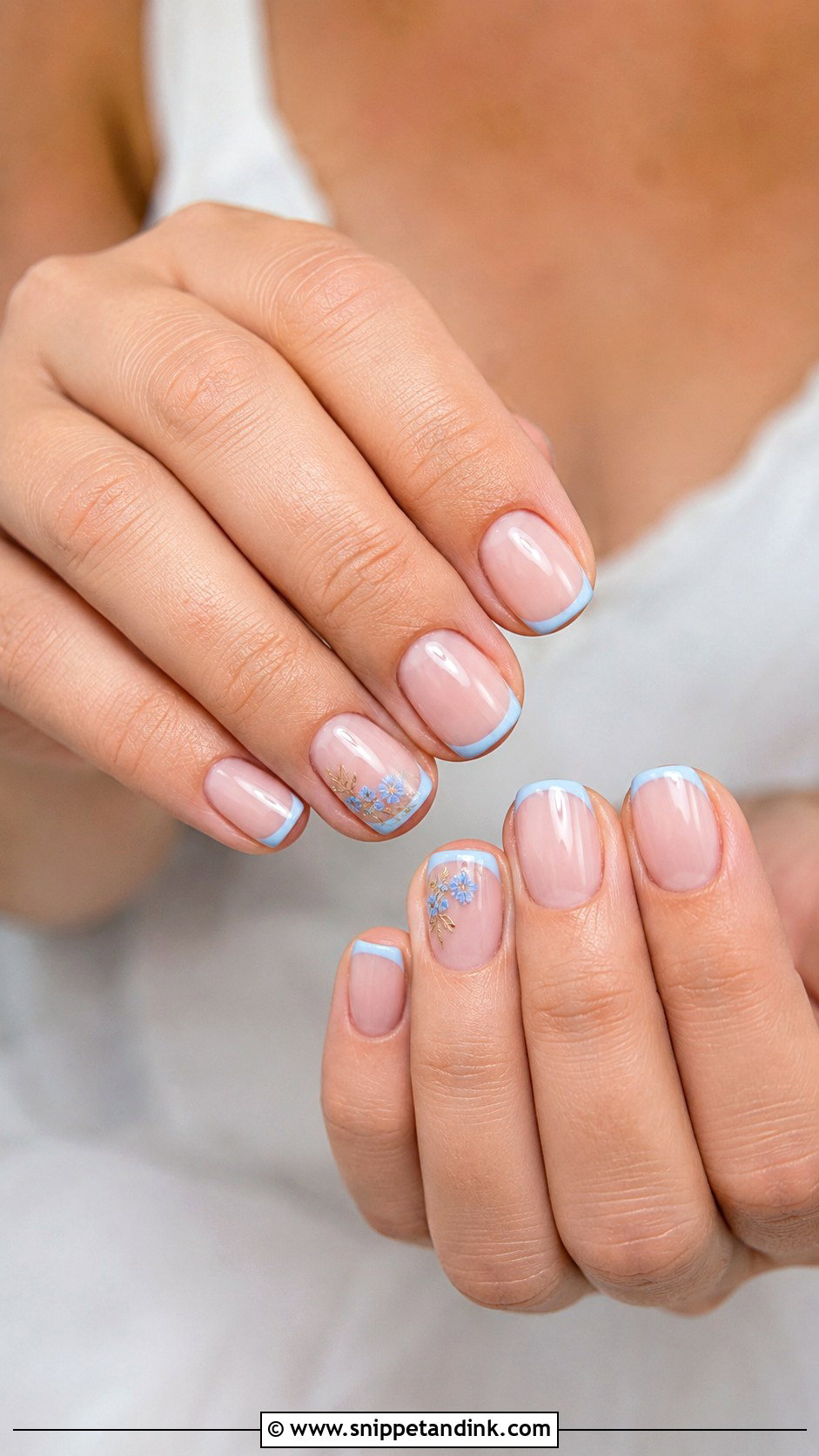
A blue manicure carries the something-blue tradition without adding another accessory. The most wearable version is a sheer nude or milky base with powder-blue micro French tips; one tiny blue flower on the ring finger or a blue shimmer glaze are quieter alternatives. Keep the shade pale. Navy or cobalt pulls the eye away from the ring and starts to look like a guest’s manicure rather than a bride’s. Pale blue tips also suit bridesmaids at spring or coastal weddings, and they look crisp on almond or short square nails under a glossy top.
16. Pastel Wedding Nails
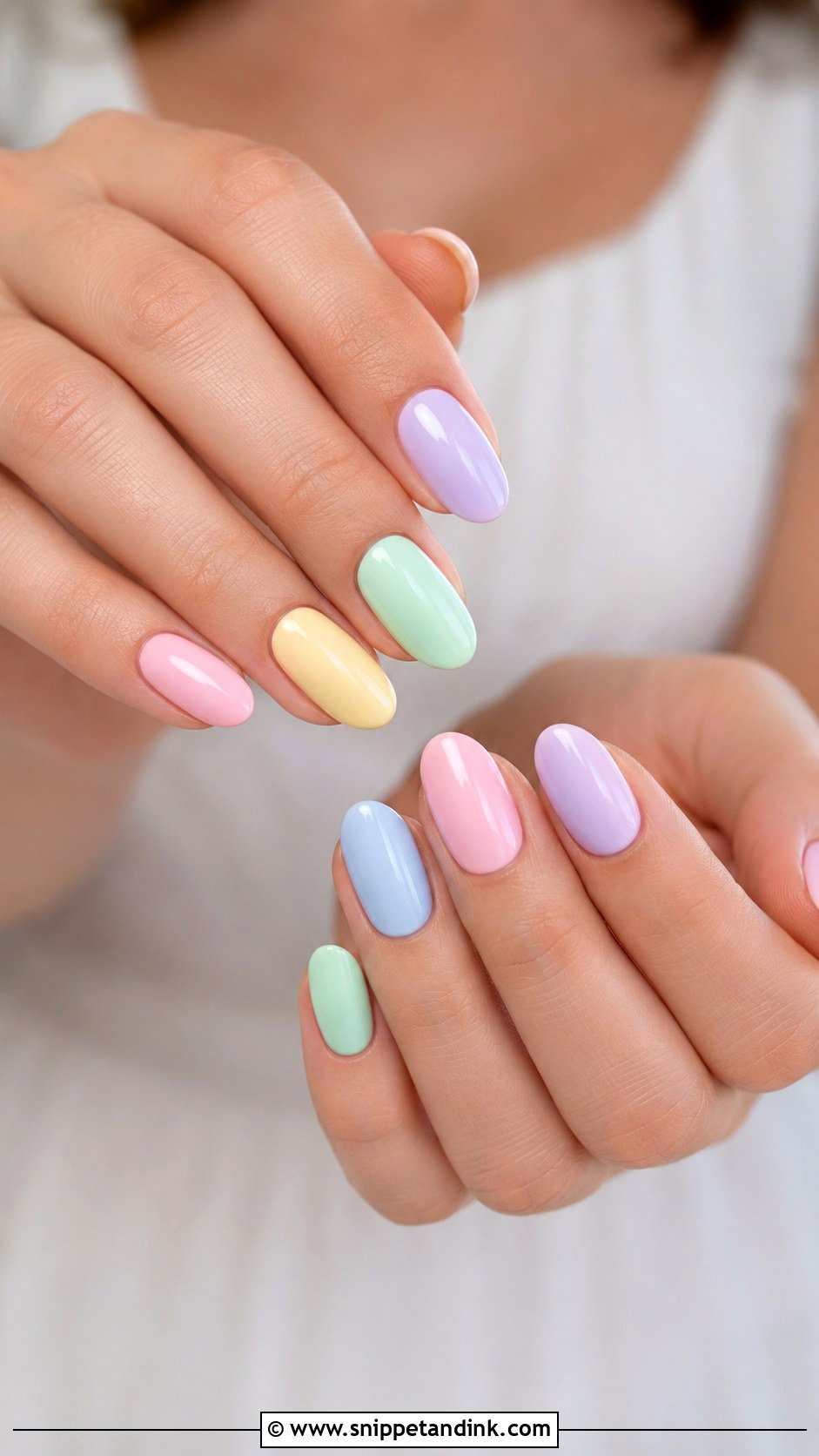
Pastel wedding nails suit spring and summer guests best, as long as you stay with the muted shades: pale pink, lavender, butter yellow, mint or powder blue, never the neon end of the chart. You can wear one shade throughout or give each finger a different pastel, which is fun across a bridesmaid lineup. Pastels are notoriously streaky in the first coat, so I lay a thin white layer underneath. That keeps them opaque without three thick coats that later chip. A glossy finish keeps them fresh next to floral dresses and light summer fabric.
17. Glitter Wedding Nails
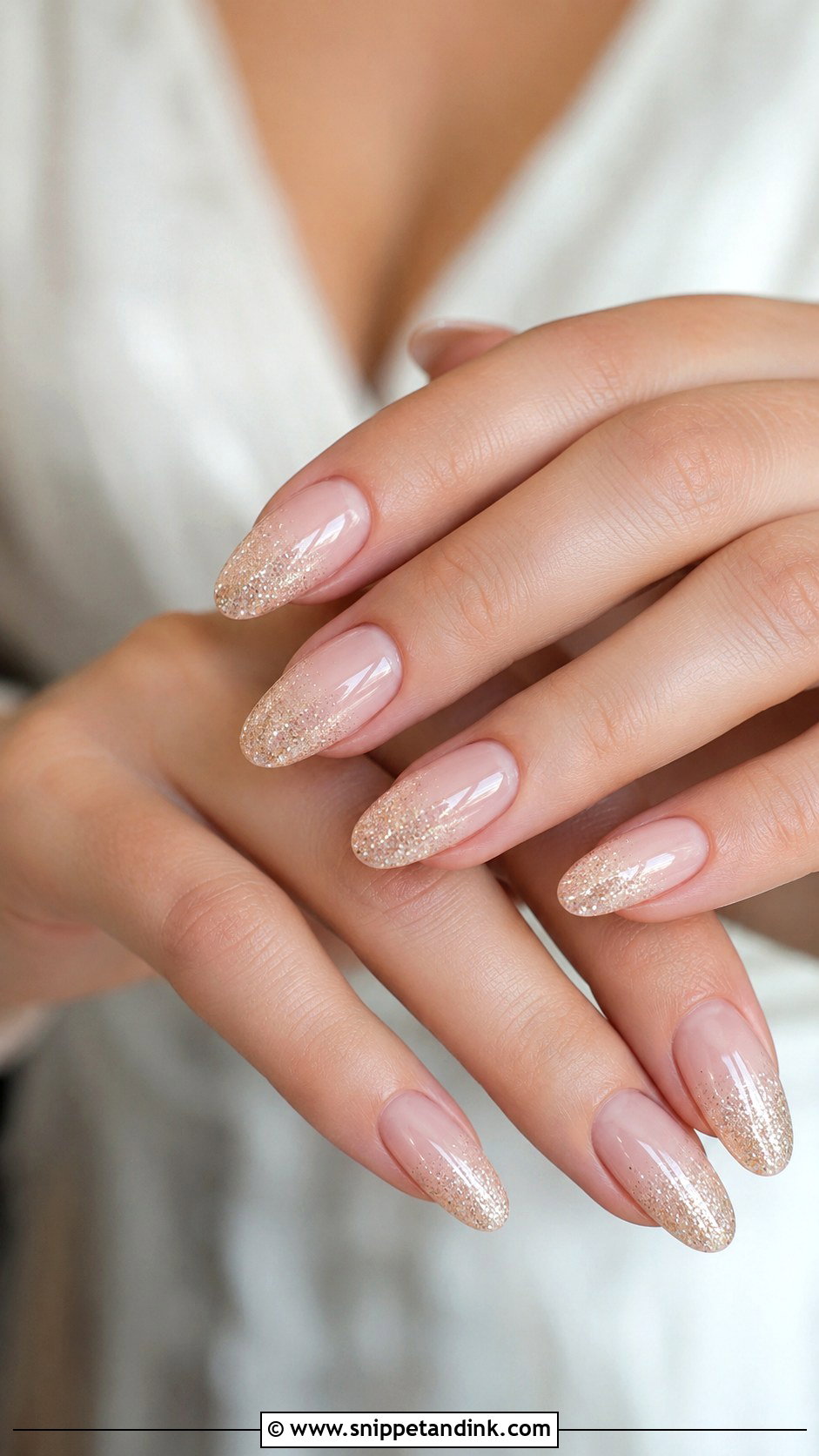
Glitter works at a wedding when it’s fine and placed with intent. A sheer nude or blush base with a delicate fade from the tip or the cuticle reads polished; chunky glitter on every nail reads like a birthday party. Champagne, silver, pearl and rose gold are the shades I keep for weddings. The practical issue is texture. Glitter gel cures bumpy, so I cap it with an extra thick layer and file it smooth before the final gloss, or it catches on tights and hair. Guests like it for a little shine, and brides use it for evening reception photos. It suits almond, oval, square and coffin.
18. Minimal Wedding Nails
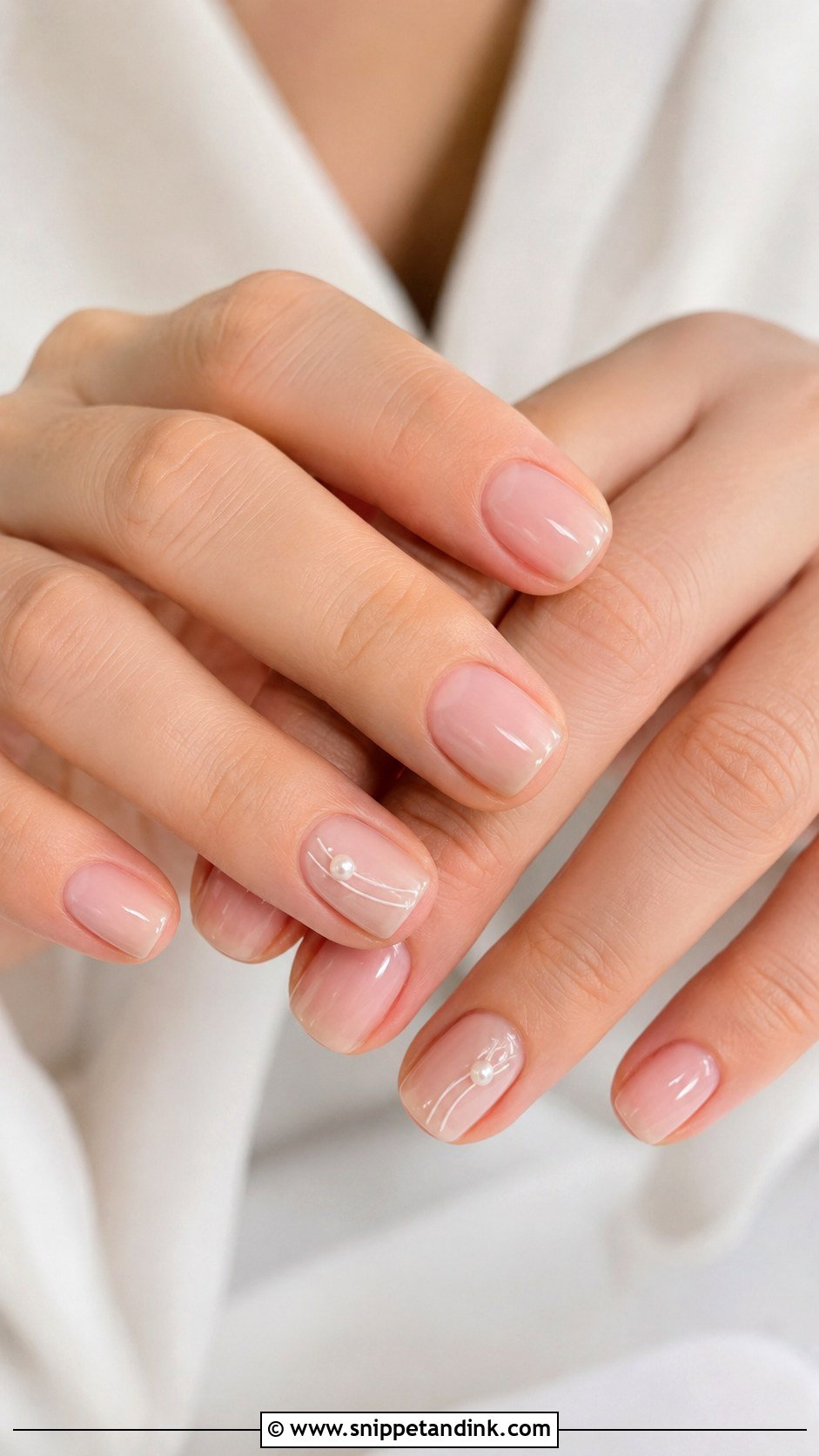
Minimal nails hand the attention to the ring, the dress and the makeup. The set is healthy-looking nails, a flattering base shade and one small detail, like a single pearl, one fine white line or a sheer chrome glaze. With nothing to distract, prep carries the whole look. I spend most of this appointment on cuticle work and on making every nail the same length, and almost none on design. Short and medium lengths suit it best, and a guest who needs something polished but neutral can wear exactly the same set.
19. Velvet Wedding Nails
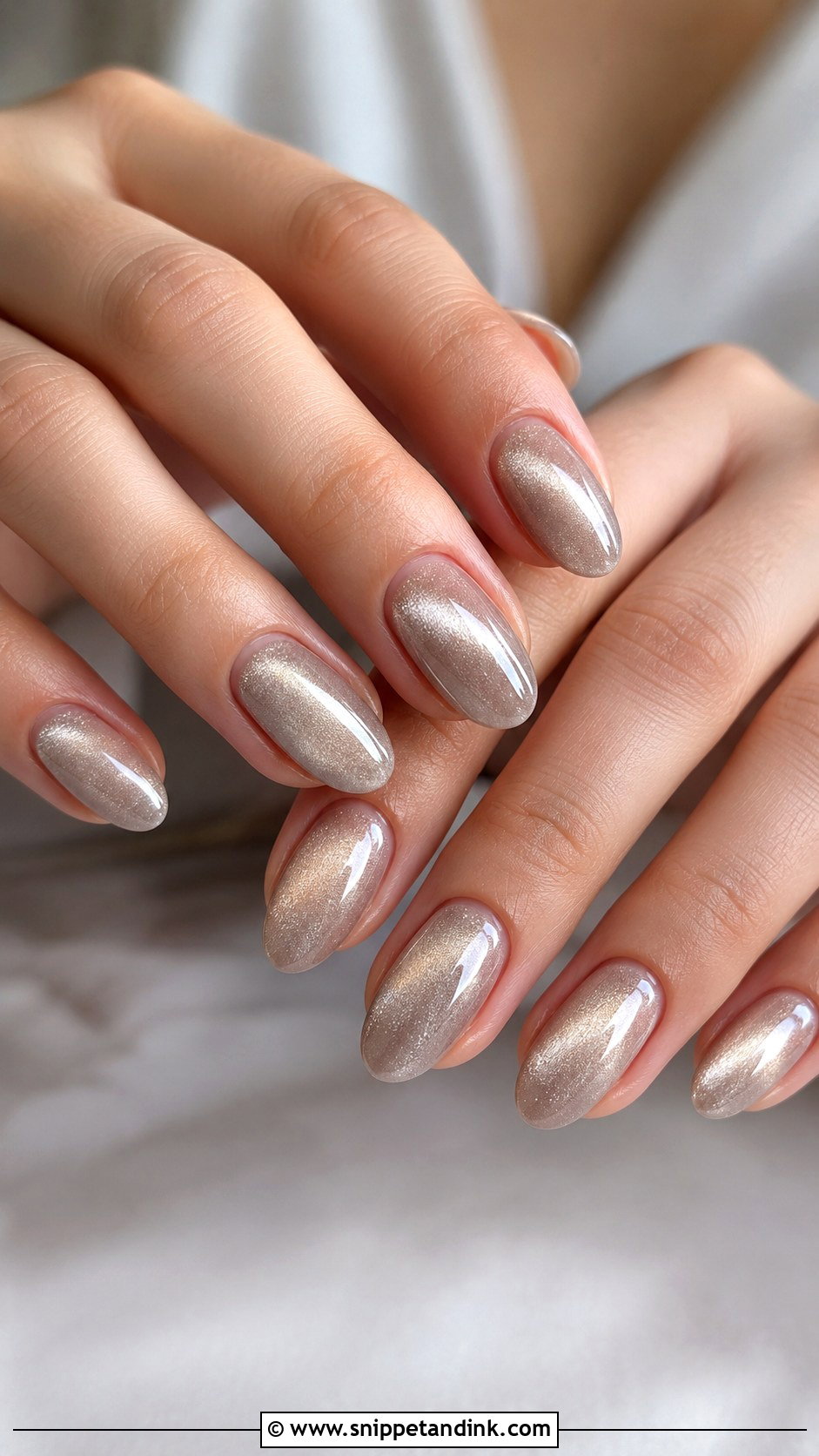
Velvet nails use magnetic gel. Tiny metallic particles in the polish are pulled by a magnet before curing, which creates a soft, shifting glow like light moving across fabric. For weddings I use sheer pink, pearl white, champagne, taupe or soft mauve, and I hold the magnet so the effect spreads wide and diffuse instead of forming a sharp cat-eye stripe. Timing matters here: the particles drift if you wait, so each nail goes under the lamp straight after the magnet. It’s a good pick for evening and winter weddings or for guests bored of plain nude, and brides can wear it in a neutral shade. Almond and oval shapes show the movement best.
20. Marble Wedding Nails
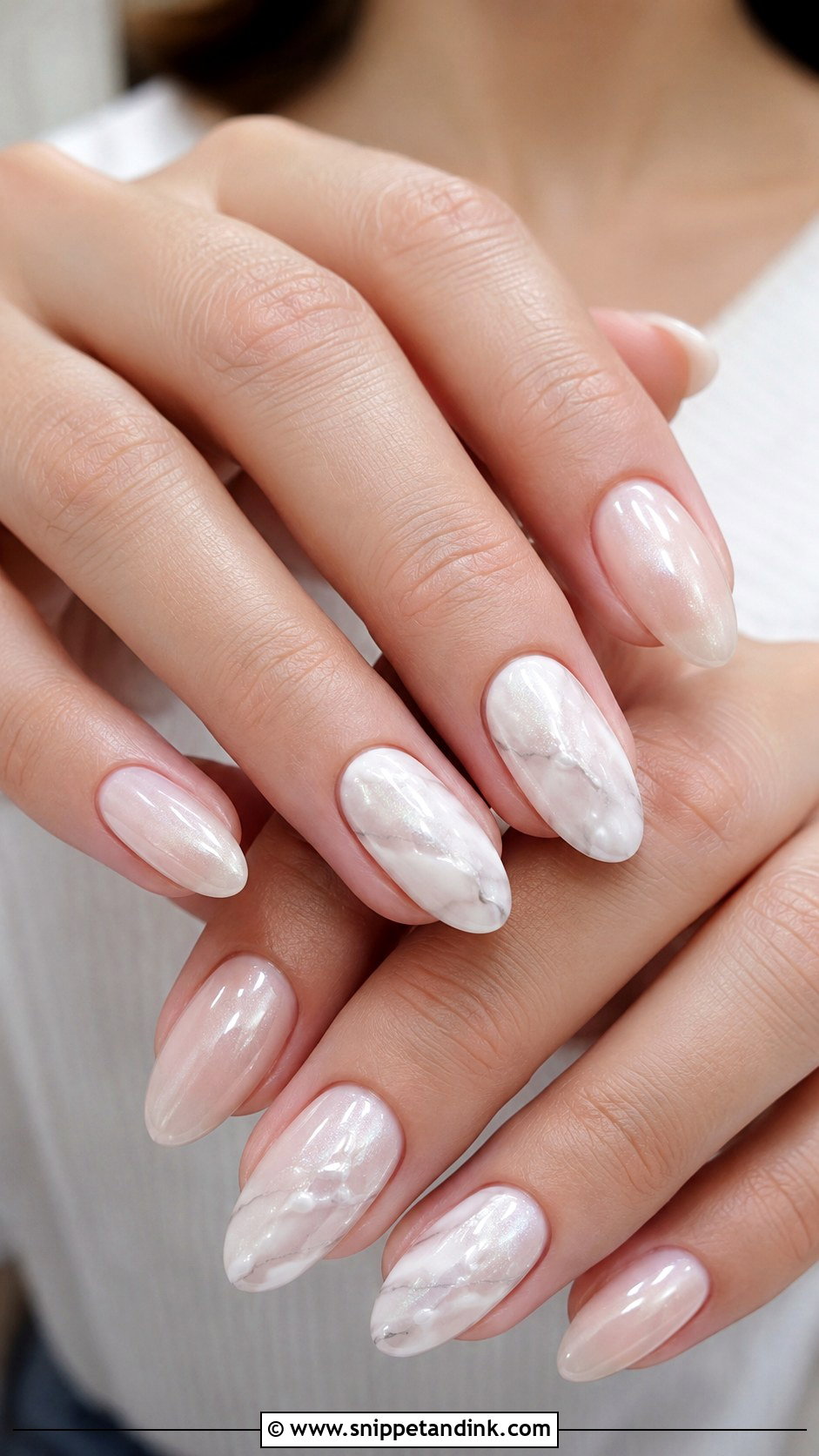
Marble works at a wedding when it looks soft and airy rather than like a kitchen counter. A white, ivory or nude base with faint grey or pearl veining reads polished. I lay the veins into a layer that hasn’t been cured yet, so they bleed slightly at the edges, which is what makes it look like stone instead of drawn lines. Keep it to one or two accent nails with solid milky white, nude or blush on the rest. A little gold or silver foil is fine; much more and the set turns busy. Almond, oval and square all carry it, for brides and guests alike.
Ring Shots Are Taken Inches From Your Cuticles
Photographers shoot rings with a macro lens, so your hands get photographed closer than your face. Any gel flooded onto the skin, dry cuticles or a ridge under the polish shows up larger than life. Most of what makes a ring photo work happens before the color goes on.
- Use cuticle oil every night for the week before, then wipe off any excess on the morning so the skin doesn’t shine in photos.
- Match tone to metal: cool milky whites and pinks sit well with platinum and white gold, warmer nudes and champagne with yellow gold.
- Keep the ring finger plain if the stone is small, since busy art right next to it makes a delicate band disappear.
- Hand cream the night before, not right before photos, or the ring slides and the skin looks greasy.
A Chip Ten Minutes Before the Ceremony
It happens, usually while someone is fastening a necklace or lifting a dress. I give every bride a tiny kit to hand to a bridesmaid: a fine glass file, the exact shade in a small bottle or a matching clear top coat, nail glue if you’re wearing press-ons, and a cuticle oil pen. A snag gets filed smooth rather than picked. A small chip on gel can be filled with a dab of regular polish and a thin top coat, and from more than a meter away nobody will see it.
Hold Your Ring Up to the Swatches
Most wedding nail decisions settle quickly once you look at your hands next to the ring and the dress. Milky white, blush, nude, French tips and pearl chrome are the reliable bridal choices, while champagne, pastel, glitter ombre and velvet give guests and the bridal party more room to play. Shape does as much work as color: short reads clean, almond reads soft, coffin reads glamorous. Bring two or three saved photos, a picture of your outfit and, ideally, the ring itself. With those in front of me, I can usually tell you within minutes which of these will sit right on your hands.
You'll Like These Ideas:


Leave a Reply