
Outdoors, the venue has already done half my job. My work is to pick one visual direction and carry it through the palette, flowers, furniture, lighting, paper and even what the couple wears, then stop before the decor starts competing with the view. A garden can take layered florals; a desert reads best with warm neutrals and a few sculptural pieces. The practical layer matters just as much as the pretty one: shade, decor that won’t blow over, ground guests can walk on in heels, and a weather plan that looks like it belongs. The twenty directions below cover romantic, coastal, rustic, modern and formal, with notes on where each one tends to go wrong.
Stand on the Site at Ceremony Hour Before You Pick a Look
I don’t choose a direction for an outdoor wedding until I’ve stood on the ground at the time the vows will happen. A lawn at ten in the morning and the same lawn at five in the afternoon are two different venues. Here’s what I’m noting on that visit:
- Where the sun sits. If guests face west in late afternoon, they spend the ceremony squinting, and the couple ends up backlit.
- Which way the wind comes from, and whether the ceremony spot is exposed or sheltered by trees or walls.
- The ground itself. Soft lawn swallows stiletto heels, gravel is hard on long hems, and slopes tip chairs.
- Power, water and toilets, and how far each is from where guests will gather.
- What’s already beautiful. A stone wall, an old tree or a view line can become the backdrop and save you building one.
Take photos at that hour and bring them to every vendor meeting. Florists, lighting crews and tent companies all make better decisions from real light than from a brochure.
1. Garden Outdoor Wedding Aesthetic
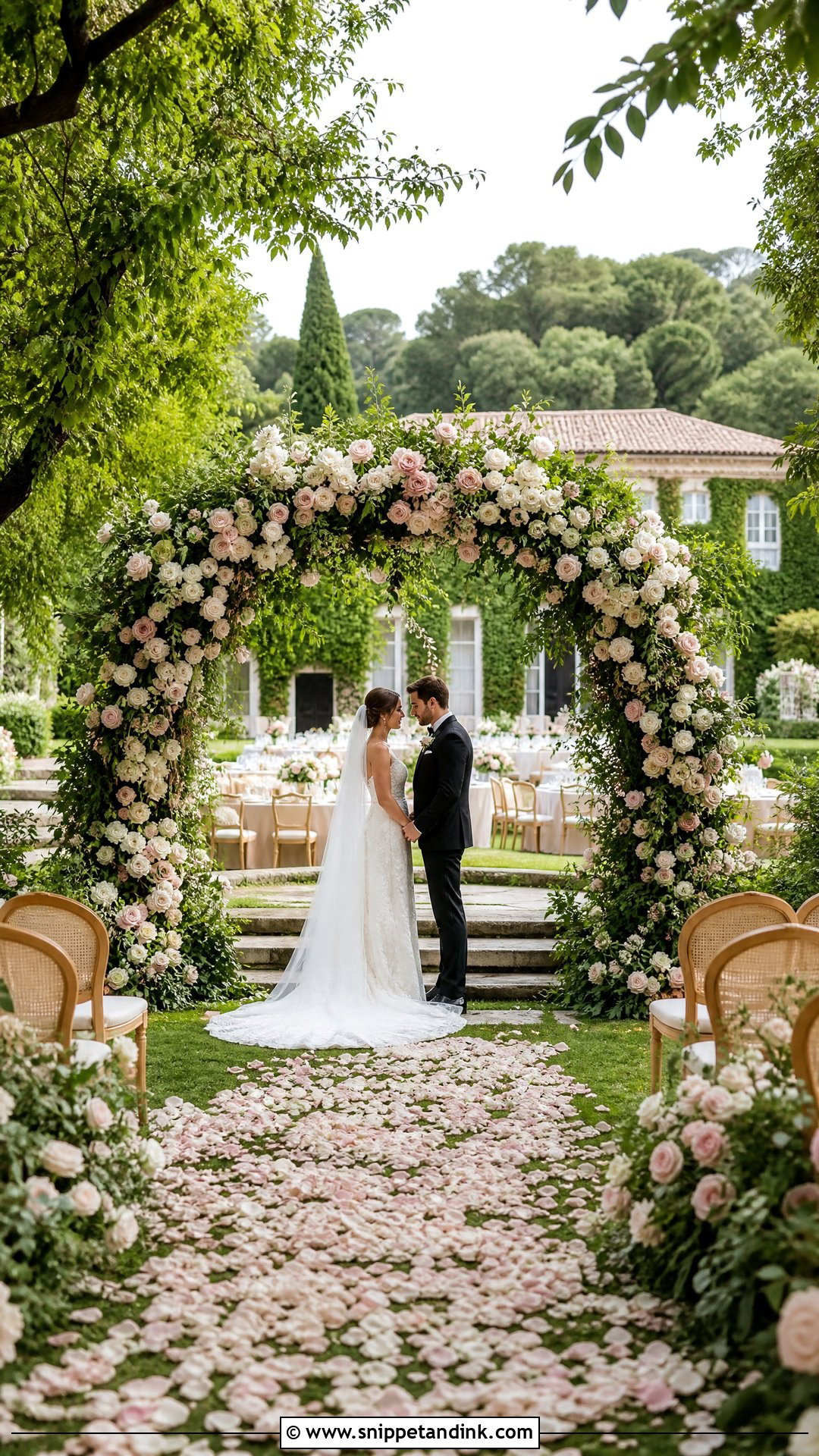
Gardens are the easiest place to overdecorate, because the planting is already doing the work. I’d keep to blush, ivory, sage and a touch of lavender, then let a floral arch, a petal-lined aisle and classic garden chairs set the scene. For dinner, long tables under trees with linen runners, tapered candles and low centrepieces keep sight lines open. Botanical menus tie the paper in. The couple can wear timeless formal attire with a floral accent or two. One thing I check early: what will actually be in bloom that week, since a garden that peaks in May can look tired by August.
2. Rustic Outdoor Wedding Aesthetic
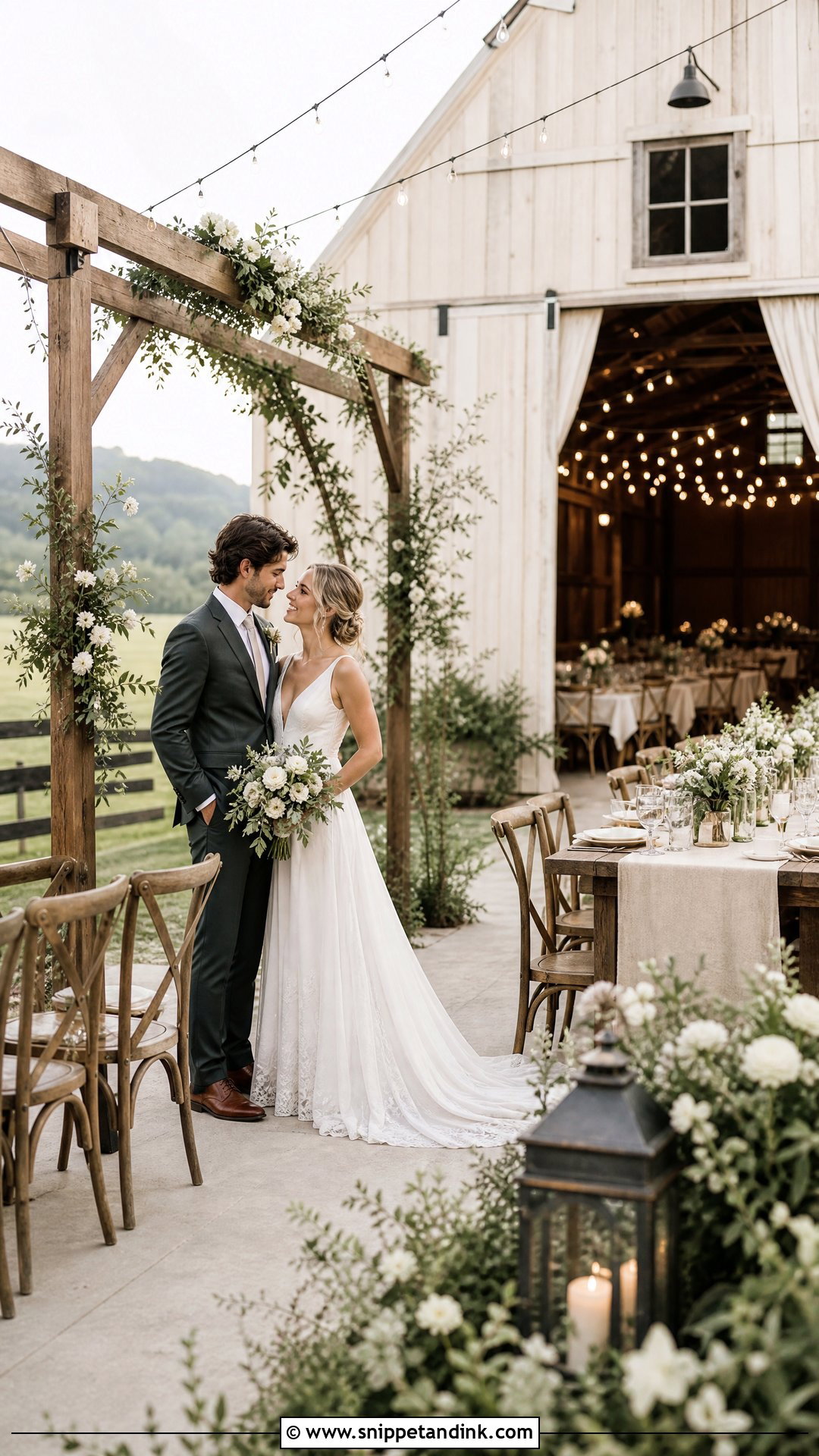
Rustic works when it looks lived-in, not themed. A barn, ranch or open field with wooden chairs, simple aisle flowers and a timber arch dressed in greenery sets the tone. Cream, tan, dusty blue and muted terracotta keep it grounded. At dinner I mix farmhouse tables with linen napkins, ceramic plates and loose seasonal arrangements. Handwritten signs and baskets for programmes, favours or blankets earn their keep. What I steer couples away from is burlap on every surface; it sheds, it smells of storage, and a few well-made pieces say rustic far better. Warm overhead lights and polished tableware keep it relaxed but cared for.
3. Boho Outdoor Wedding Aesthetic
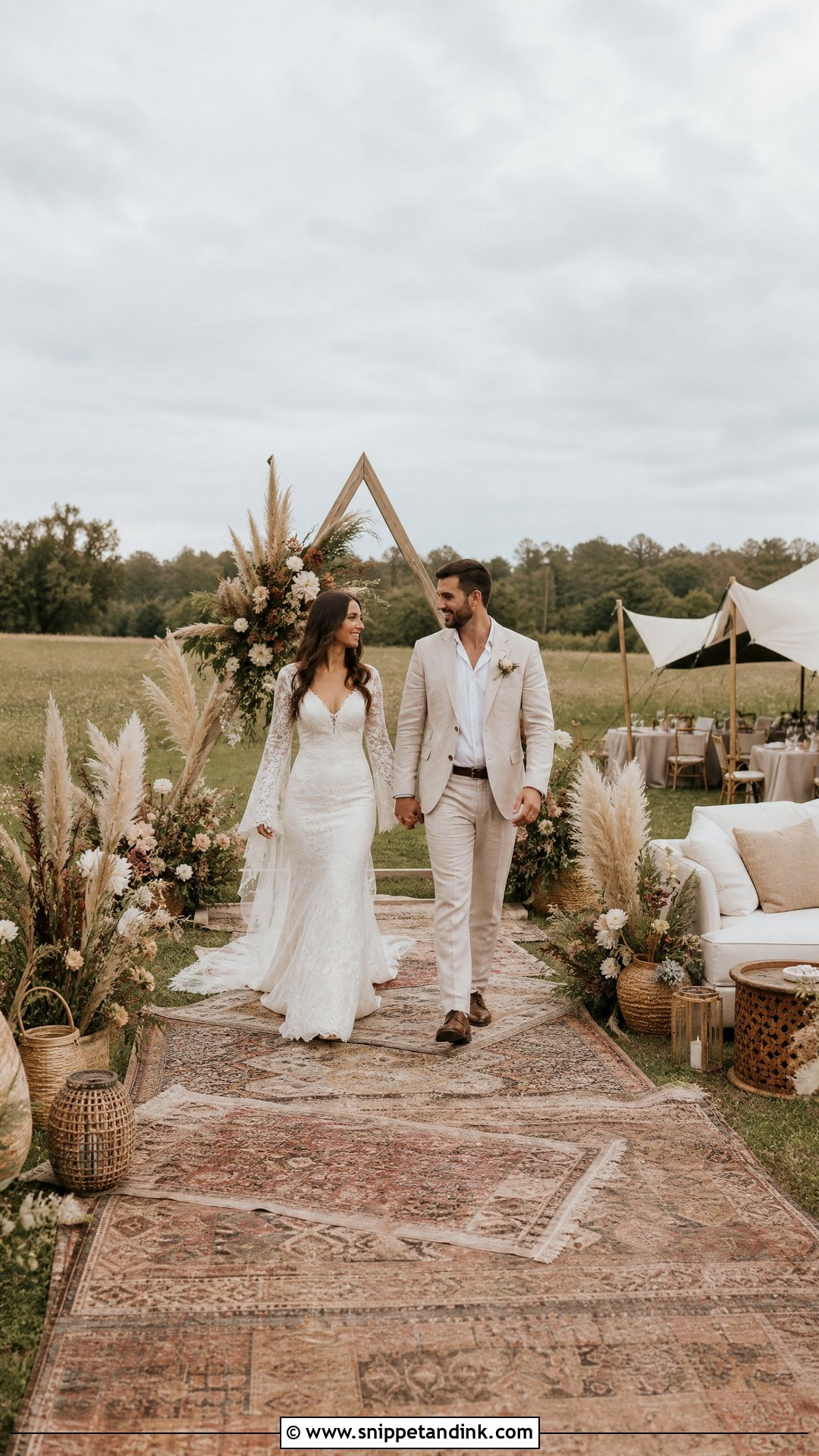
Boho is relaxed, but the layout underneath it can’t be. A meadow, woodland clearing, desert or backyard suits it, with a backdrop of textured fabric, dried grasses and asymmetrical flowers. Rust, sand, cream, mauve and muted gold sit well together. I layer rugs on the aisle and set woven baskets or floor lanterns near the entrance; gauzy runners, coloured glassware and wild centrepieces carry it to the tables. A lounge with low tables and cushions is lovely, though older guests need proper chairs too. Rugs on grass are a trip hazard at the edges, so I tape or pin them down before anyone arrives.
4. Modern Outdoor Wedding Aesthetic
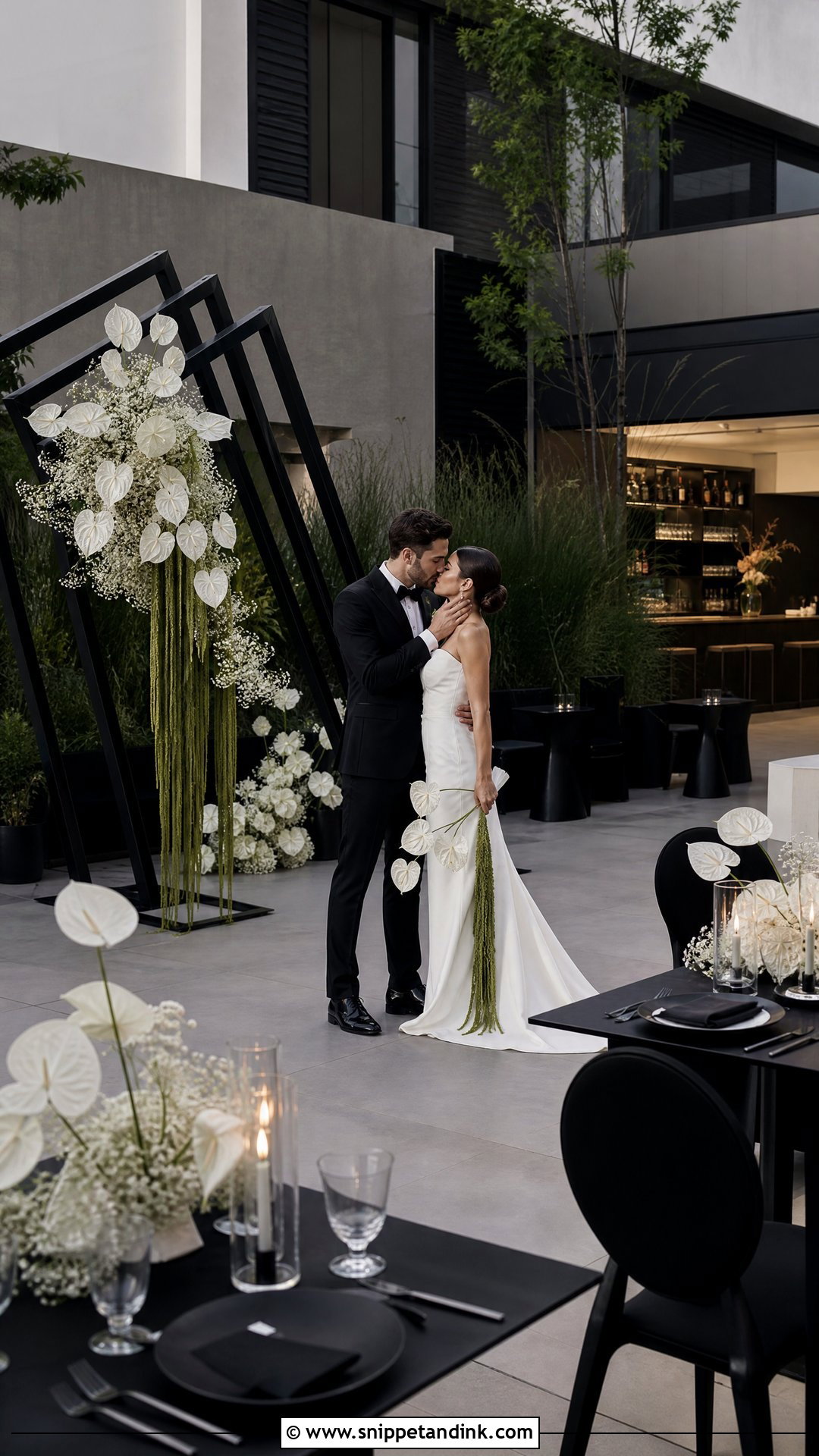
Modern outdoor design is about editing. A rooftop garden, architectural courtyard or sculpture park gives clean lines to work with, and I build around white, black, green and one accent, cobalt or burgundy. A geometric ceremony frame with restrained florals becomes the focal point. Sleek chairs, clear signage and an uncluttered aisle follow it. At dinner: crisp linens, modern flatware, low centrepieces and evenly spaced candles. Rather than lots of small touches, I’d spend on two or three things guests will notice, such as sculptural lighting, a good-looking bar or a striking seating chart. Structured attire finishes the direction.
5. Minimalist Outdoor Wedding Aesthetic
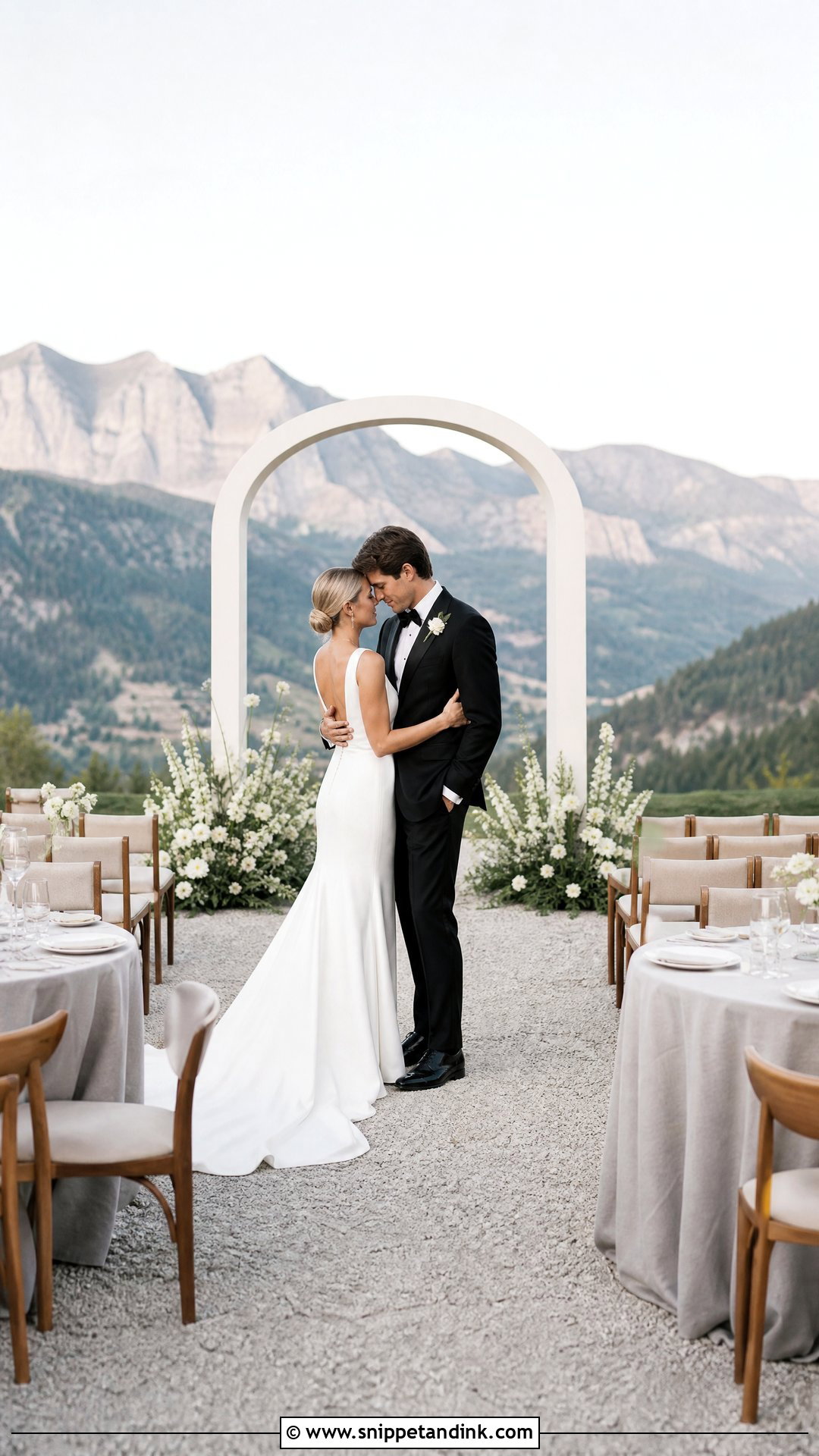
What if the view was the main decoration? Minimalism outside relies on restraint and quality, and it’s harder than it looks, because every stray cable and crate is suddenly visible. A quiet garden, mountain overlook or oceanside lawn works with ivory, soft beige, green and pale grey. Sometimes a simple arch, tidy rows of chairs and two substantial floral installations are all a space needs. Tables stay calm with smooth linens, plain place settings and single-variety flowers. Clean type on invitations, menus and signs keeps the paper consistent. I spend more time hiding cords, containers and service kit at these weddings than decorating.
6. Romantic Outdoor Wedding Aesthetic
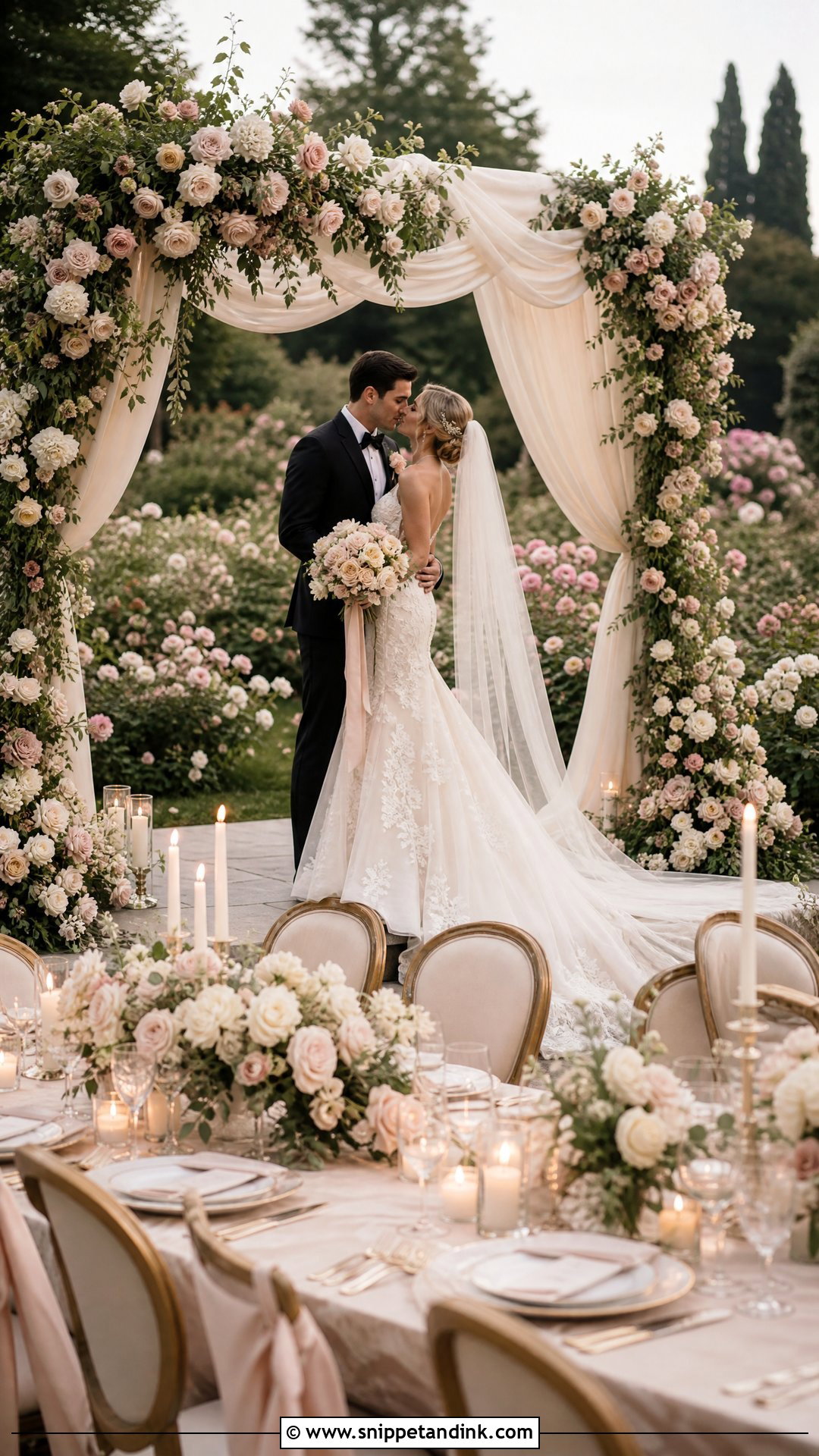
Romance outside comes from movement and light. A rose garden, historic estate or tree-lined lawn gives the backdrop; blush, champagne, ivory, peach and muted green make the palette. I frame the ceremony with a flower-covered arch and set aisle arrangements low so they look as if they’re growing from the ground. Flowing linens, classic tableware and centrepieces at varied heights fill the reception. Tapered candles need glass hurricanes outdoors, or one gust and they’re out. Ribbon on bouquets, menus or chairs adds gentle movement in the breeze. Repeat the same few flowers throughout so it all reads as one story.
7. Coastal Outdoor Wedding Aesthetic
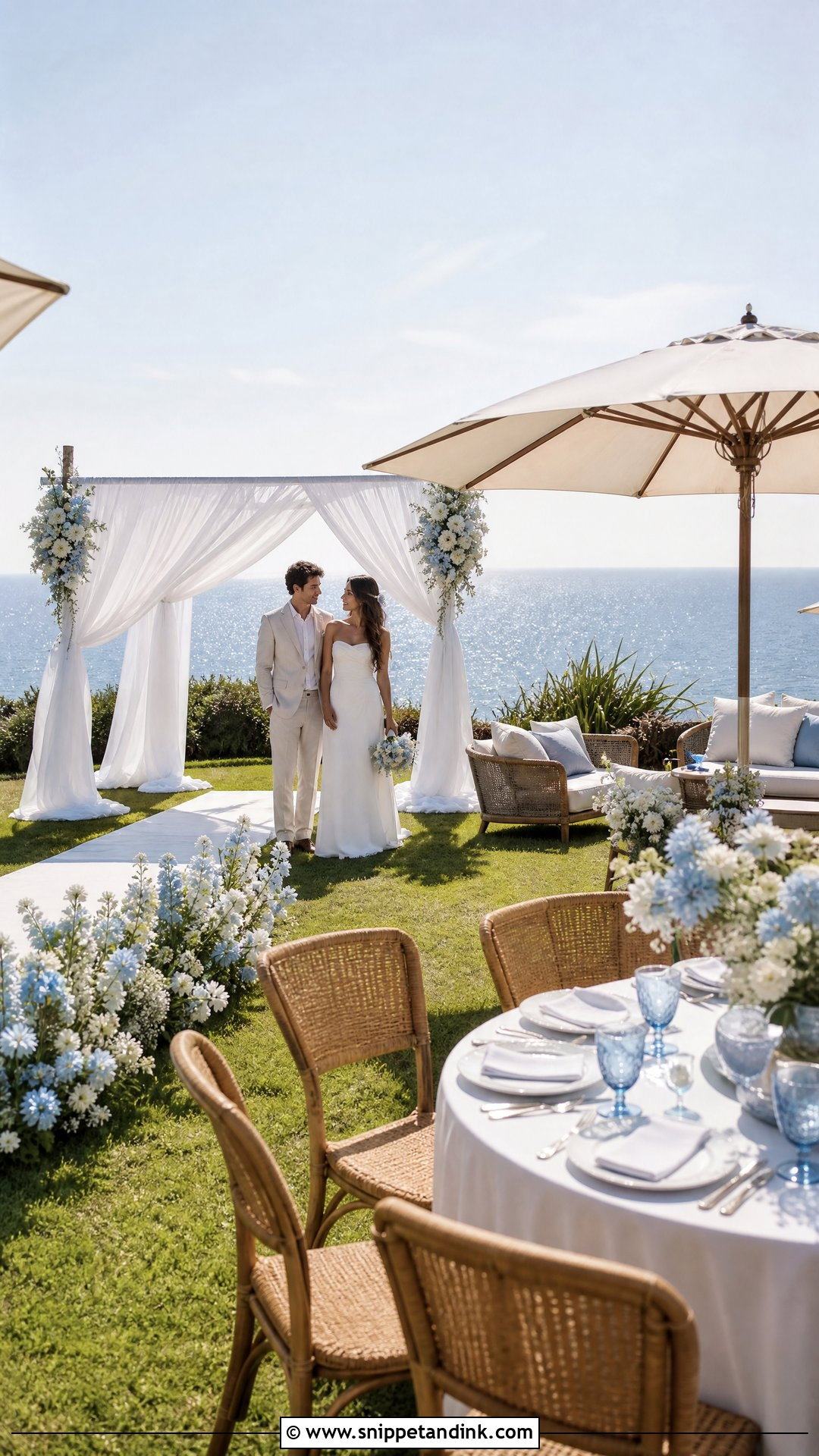
Coast weddings look most expensive when they skip the anchors and rope. A seaside lawn, beach terrace, marina or coastal garden suits white, sand, pale blue and navy. I build the arch from light fabric and a little greenery so it frames the water instead of blocking it. Sea breezes are constant, not occasional, so aisle markers need weighted bases and anything paper needs clipping down. Linen tablecloths, woven chargers, white flowers and blue glass carry it to dinner. Lightweight formal attire suits the heat and sand. Shaded seating, cold drinks and soft evening light that doesn’t compete with the sunset finish it.
8. Forest Outdoor Wedding Aesthetic
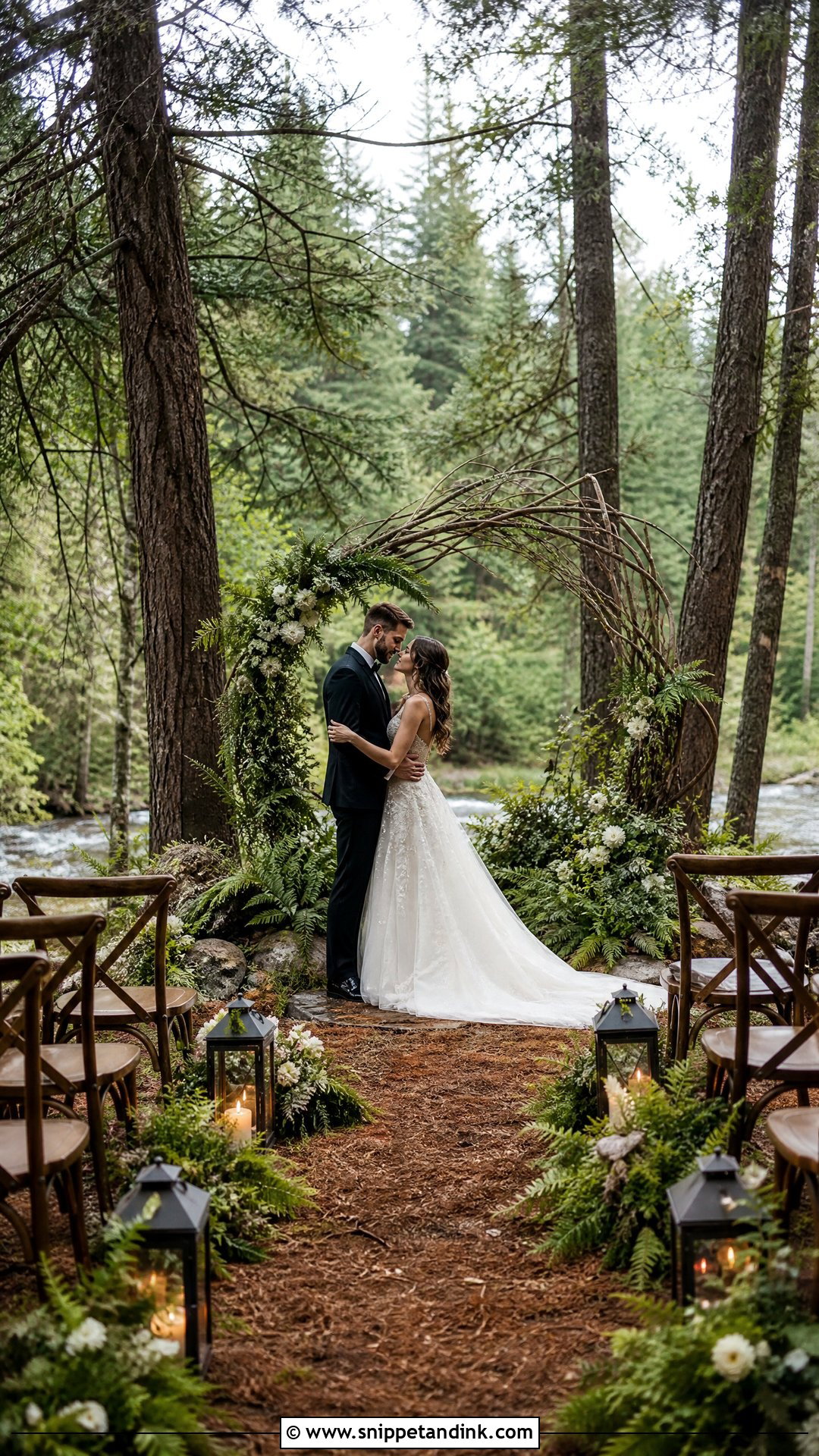
Forests give you dappled light and a ceiling of leaves, but they also give you roots, uneven ground and very dark paths after sunset. I only take on a woodland site with established paths, a level ceremony space and reliable access. Deep green, ivory, brown and muted copper melt into the setting. Wooden chairs face a simple branch or floral arch; lanterns, ferns, moss-style arrangements and candle clusters guide guests without staging the forest. Textured linens and stoneware suit the tables. Raised flooring where the ground is soft, lighting on every path and an enclosed backup are non-negotiable here.
9. Vineyard Outdoor Wedding Aesthetic
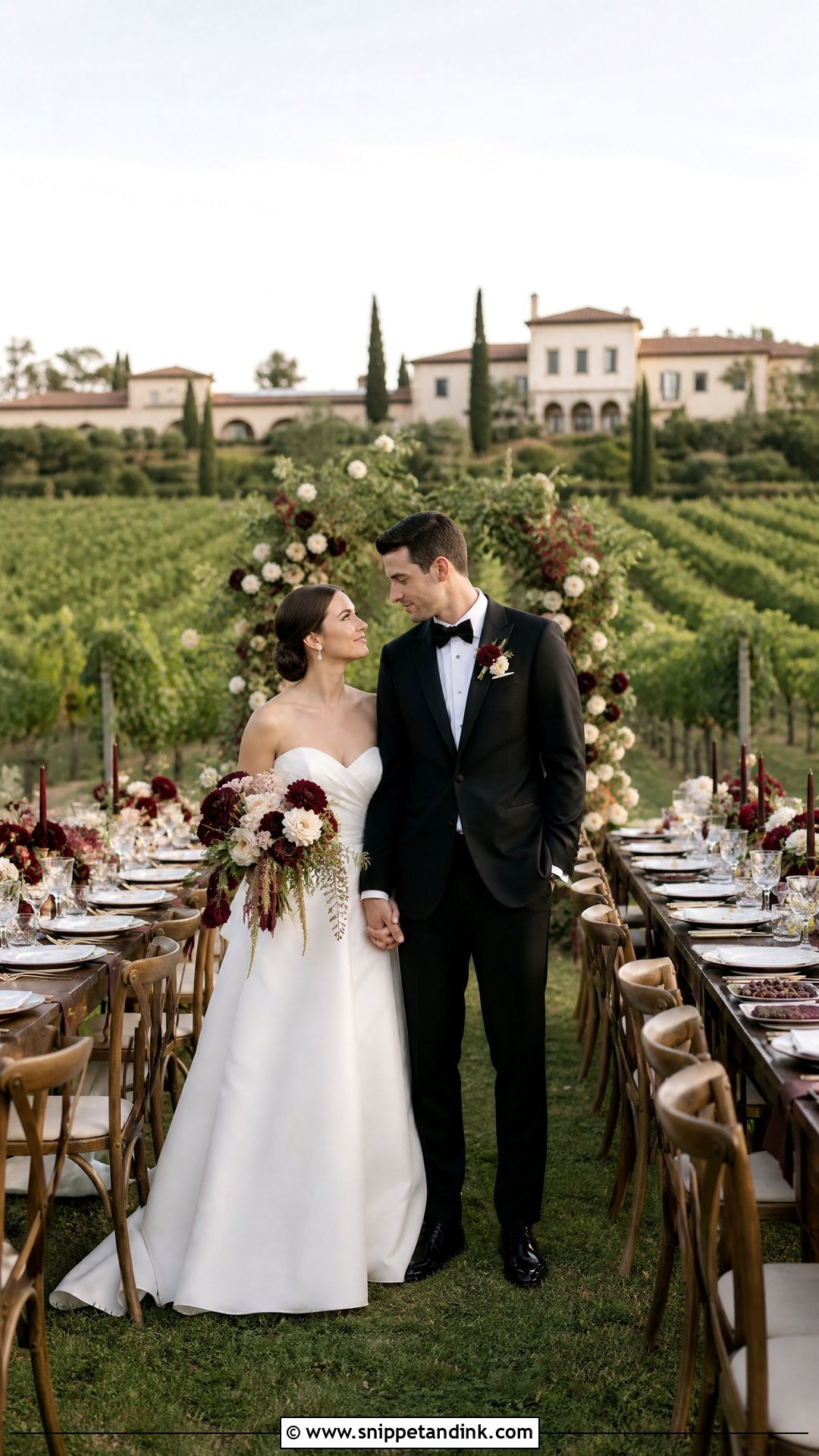
Vineyards look relaxed and refined at once, as long as nobody is sitting in full sun. I place the ceremony where it catches the rows of vines but keeps guests shaded, which usually means checking the sun’s position at the actual ceremony hour. Burgundy, dusty rose, olive, cream and warm wood suit the setting. Barrel-style details only work if the venue genuinely has that character; otherwise they look themed. Linen runners, garden flowers, a little fruit and elegant place settings fill the tables, with a classic seating chart and an understated bar. As evening comes, overhead lights and candles turn the rows into an intimate dining room.
10. Desert Outdoor Wedding Aesthetic
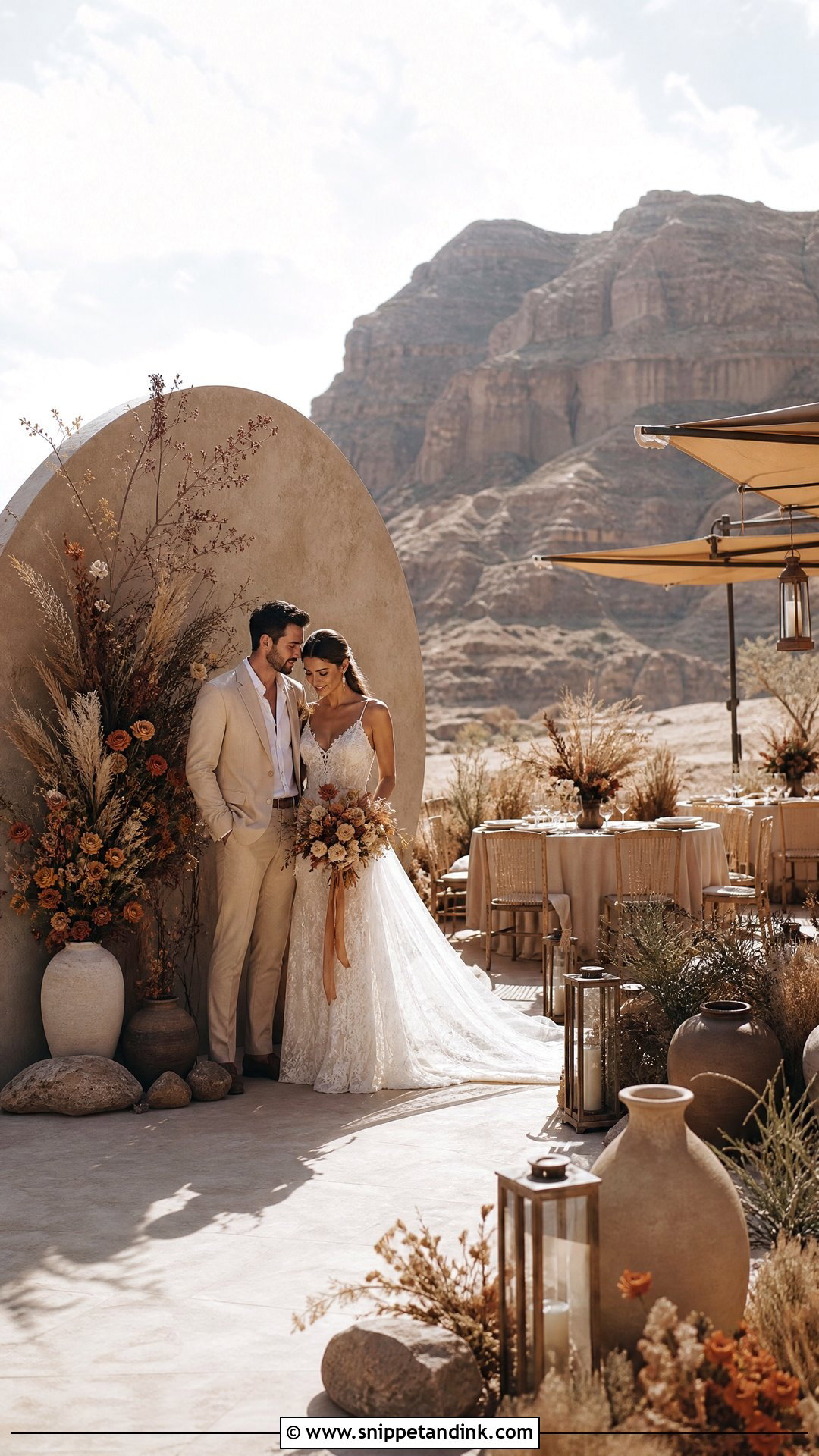
Desert design is mostly about respecting heat and wind. A canyon property, desert resort or landscaped venue with safe paths gives the base; sand, clay, cream, peach and muted pink carry the palette. A curved ceremony structure or a low arrangement of dried grasses enhances the landscape without hiding it. Neutral linens, ceramic vessels, stone accents and restrained flowers keep the tables grounded. Lightweight decor will shift or fly, so I weight everything. Breathable attire and shoes for firm ground matter, and so do shade, water stations and something warm for after dark, since desert evenings cool quickly. Lanterns and soft overhead lighting show off the terrain after sunset.
11. Tropical Outdoor Wedding Aesthetic
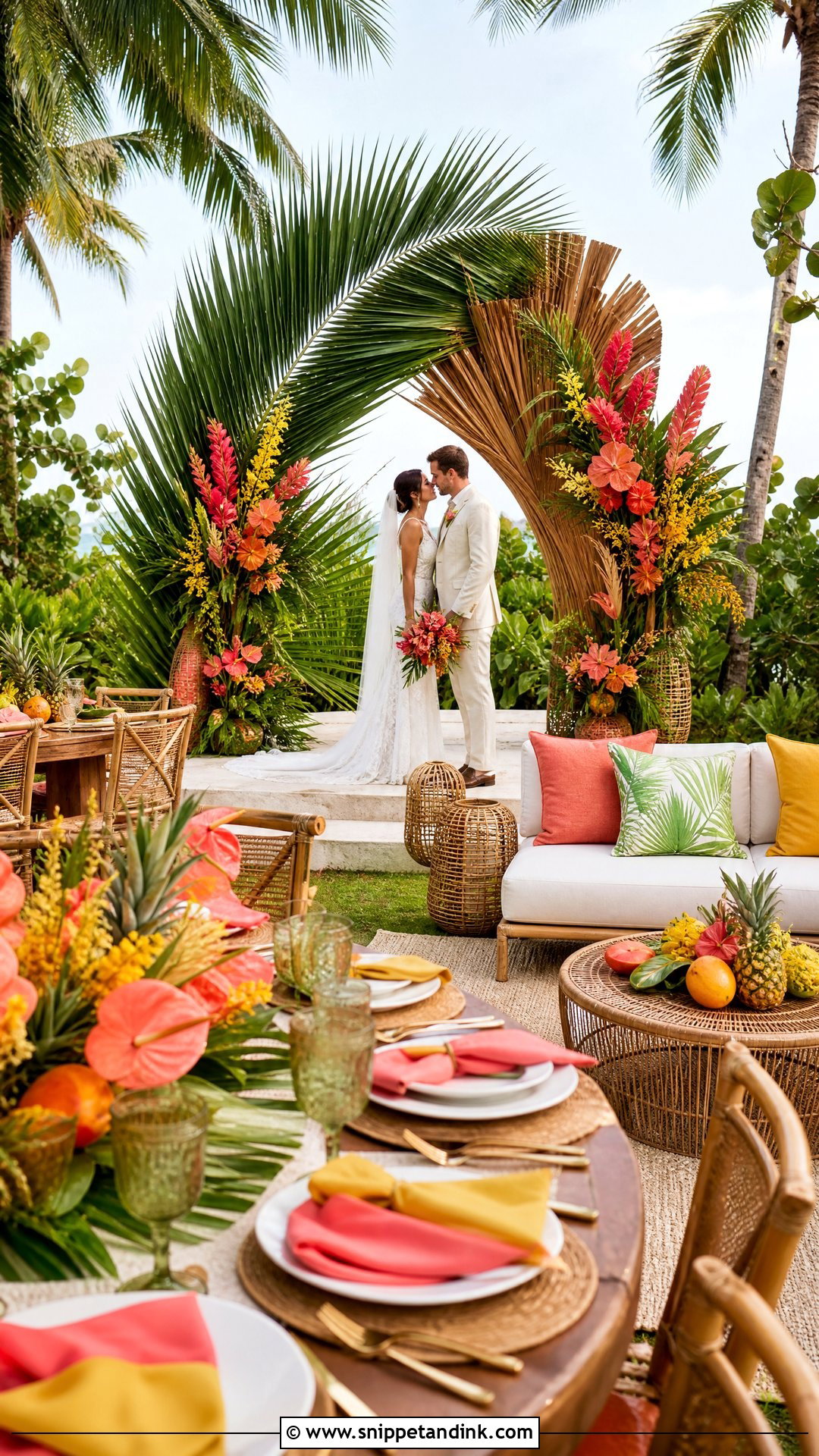
Tropical decor is the one style where I lean into bold colour. A botanical resort, island garden or palm-lined venue supplies the base; green, white, coral, yellow and a little pink build on it. Palm leaves and bright flowers make an asymmetrical ceremony backdrop, with bamboo-style chairs and woven details. Patterned napkins, tropical fruit accents and low arrangements keep conversation easy across the table. Humidity is the challenge. Tropical flowers like anthuriums and orchids cope with it far better than garden roses, and shaded lounges, chilled drinks and discreet fans keep guests comfortable. Keep the signage simple and let the plants lead.
12. Cottagecore Outdoor Wedding Aesthetic
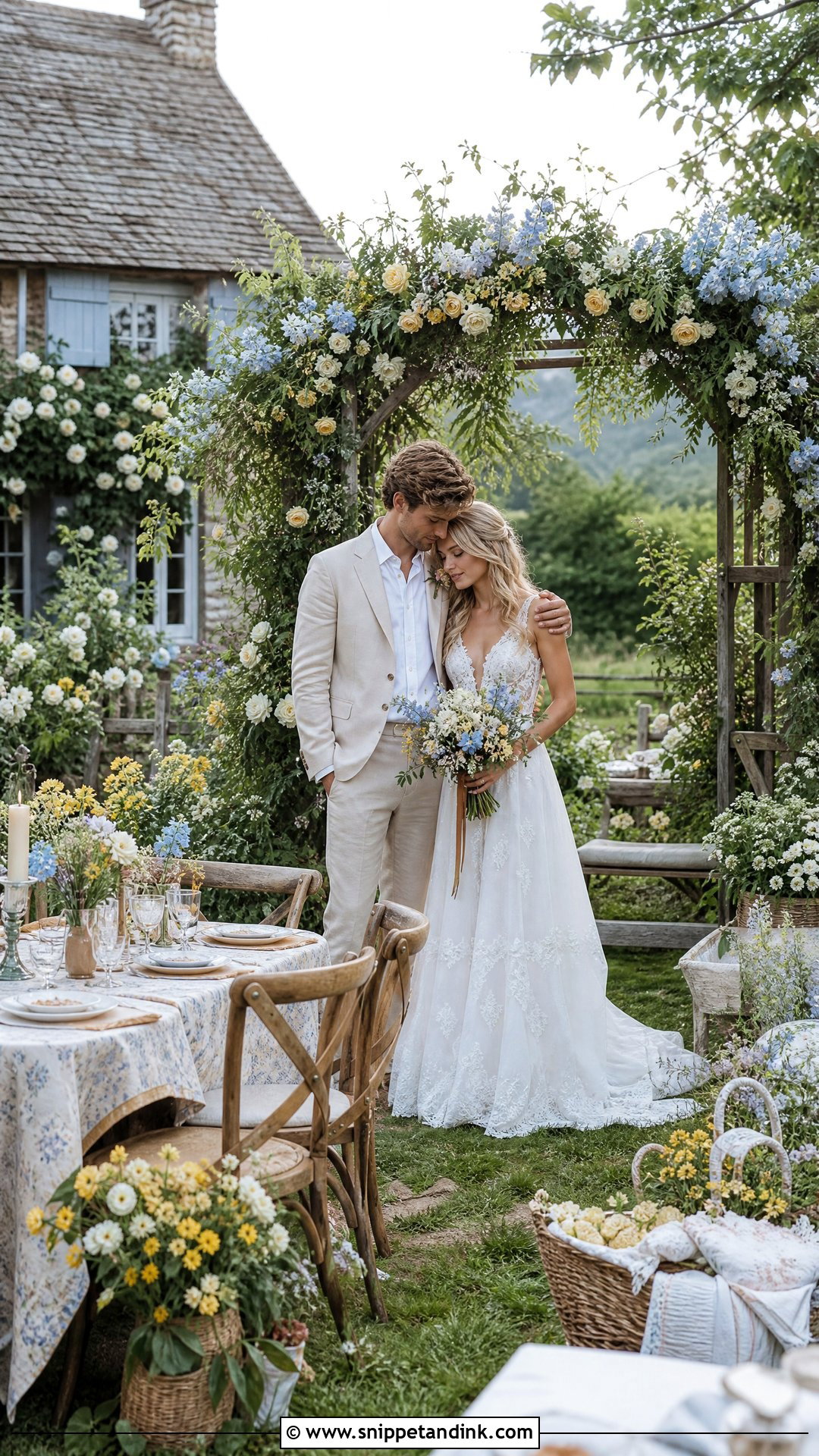
Nostalgia is the whole point of a cottagecore outdoor wedding aesthetic, and it needs a flower-filled setting: a cottage garden, orchard, farmhouse lawn or a small backyard. Soft yellow, faded blue, blush, cream and leafy green feel welcoming. Wooden chairs, loosely gathered flowers and an arch that looks overgrown set the ceremony. At the tables I use floral linens, mismatched china, bud vases and handwritten place cards. Embroidered napkins and vintage frames add character in small doses. The look should feel collected over years, so I avoid buying a matching set of anything. Relaxed lawn seating and garden drinks finish it.
13. Vintage Outdoor Wedding Aesthetic
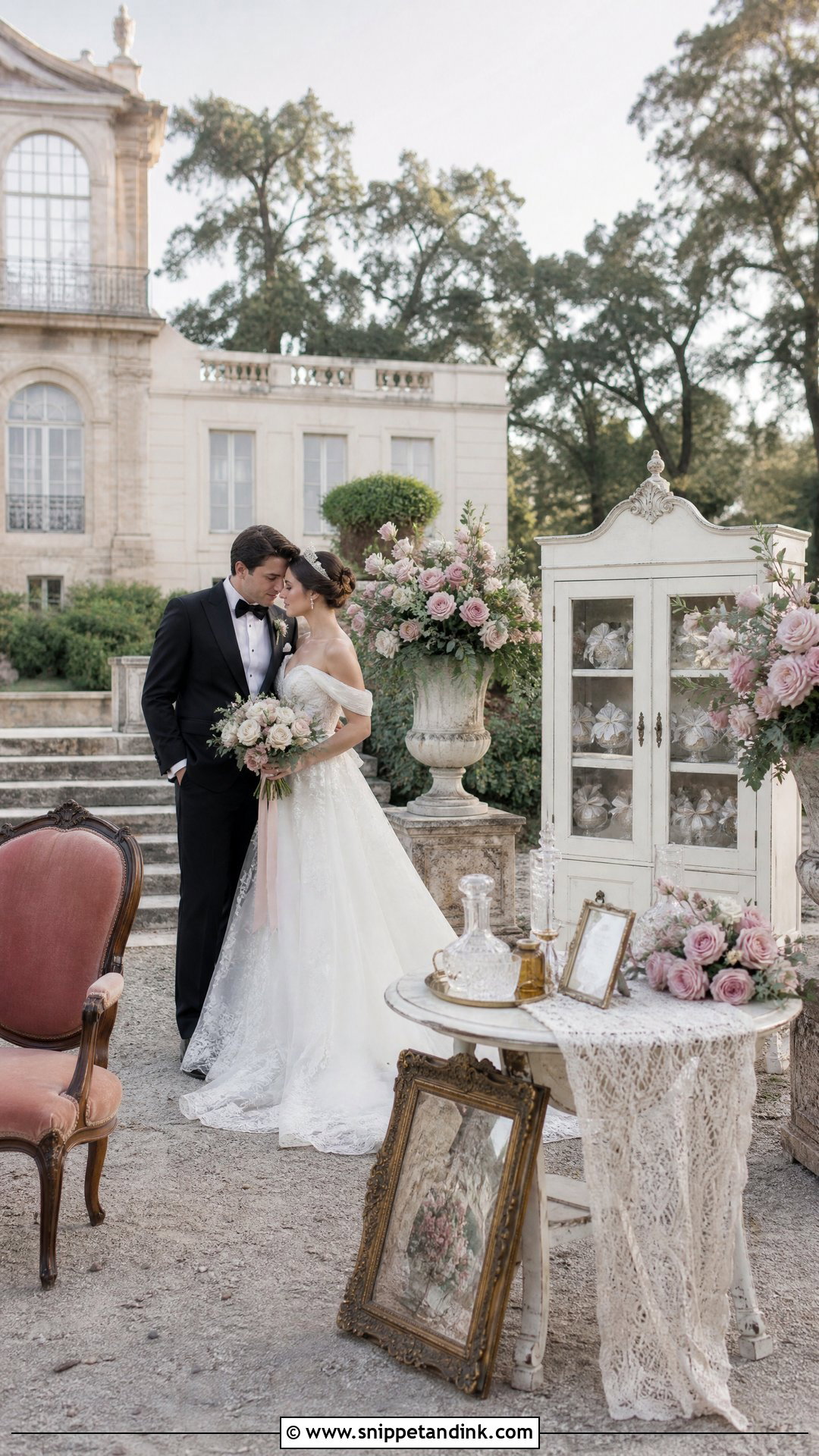
Vintage gets messy when it mixes eras. I always pick one period, or at least one visual direction, before sourcing a single piece. A historic home, estate garden or tree-covered courtyard suits antique white, dusty rose, muted blue and brass. Vintage-style chairs, framed signs, floral urns and classic tableware set the scene, with lace accents and pressed glass on the tables. A restored cabinet can display favours and an ornate frame can hold the seating plan. I rent large pieces rather than buying, and every delicate object on uneven ground gets secured, because old glass and grass are a bad combination.
14. Mediterranean Outdoor Wedding Aesthetic
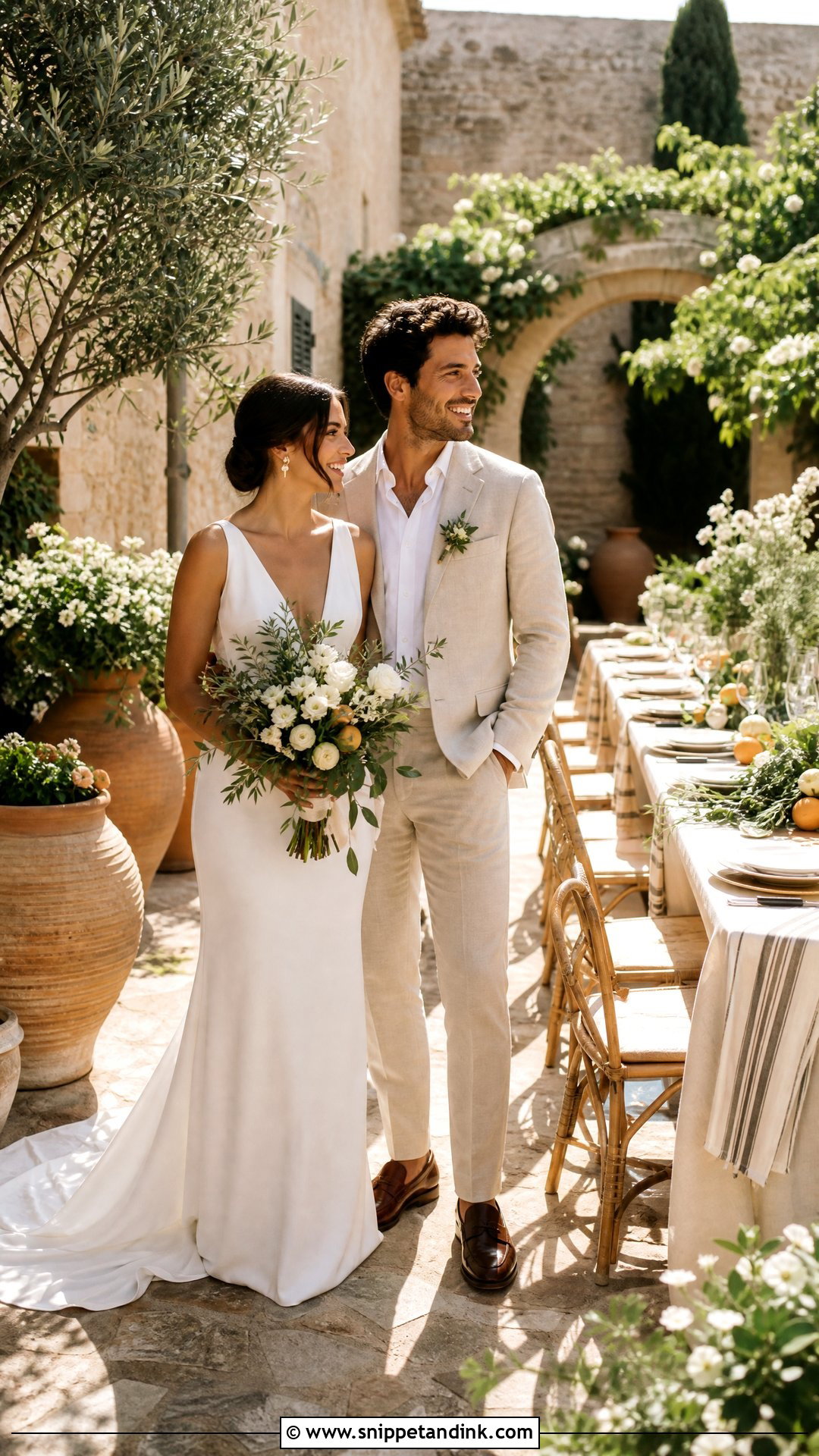
Long, slow dinners are the heart of a Mediterranean outdoor wedding aesthetic. A courtyard, olive grove, villa-style property or stone terrace gives the backdrop, and white, terracotta, olive, lemon and clear blue run through everything. Greenery, clay vessels and simple white flowers frame the ceremony. For dinner I set long tables with natural linens, ceramic plates, herbs, citrus and tapered candles; woven chairs and striped textiles add pattern. Real lemons and herbs look generous but wilt and drop leaves in direct sun, so I place them last. Shared dishes and overhead lights on the architecture finish the evening.
15. French Country Outdoor Wedding Aesthetic
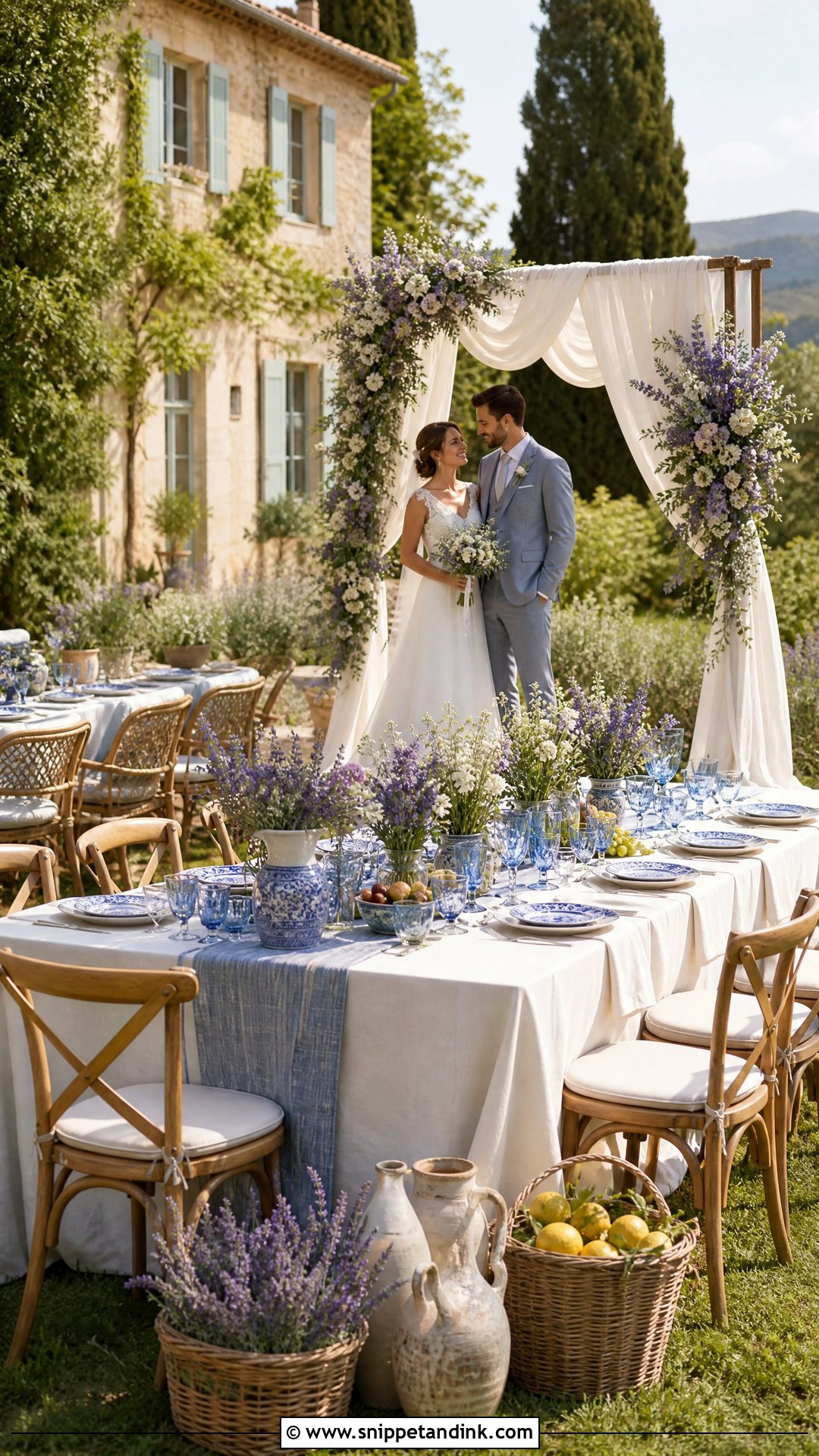
French country sits between rustic and formal. An estate lawn, lavender field, orchard or stone courtyard works with cream, dusty blue, lavender, pale yellow and sage. Classic wooden chairs, garden flowers and a simple fabric-draped arch shape the ceremony. At dinner, long tables carry linen runners, blue-and-white tableware and loose arrangements in ceramic vessels, with bistro chairs and understated menus. Baskets, herbs and small fruit arrangements support it. The mistake I see most is filling every surface. Empty space on a table makes the flowers and china look chosen rather than piled on.
16. Wildflower Outdoor Wedding Aesthetic
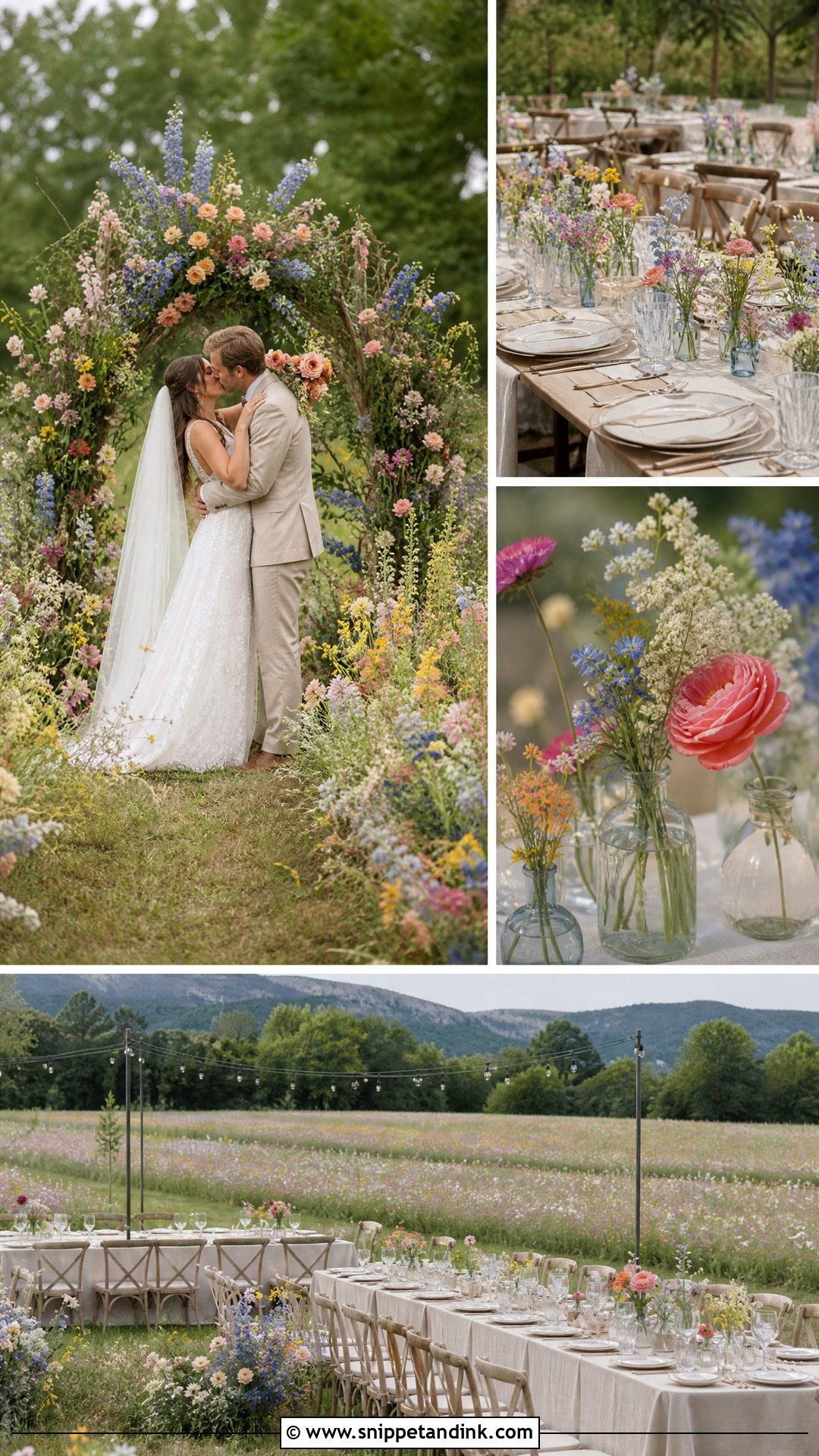
Wildflower designs look natural only when the palette is controlled. I’d pick a handful of colours, maybe pink, yellow, blue, coral and green, rather than every shade the meadow offers. A meadow, mountain field or relaxed garden suits it. Low floral clusters along the aisle should look as if they’ve come up from the ground, and meadow-style arrangements can repeat at the backdrop and the reception entrance. Bud vases, neutral linens and simple glassware let the flowers lead. True wildflowers wilt fast once cut, so I lean on seasonal garden varieties with the same loose shape and repeat a few key blooms across bouquets, signs and tables.
17. Black Tie Outdoor Wedding Aesthetic
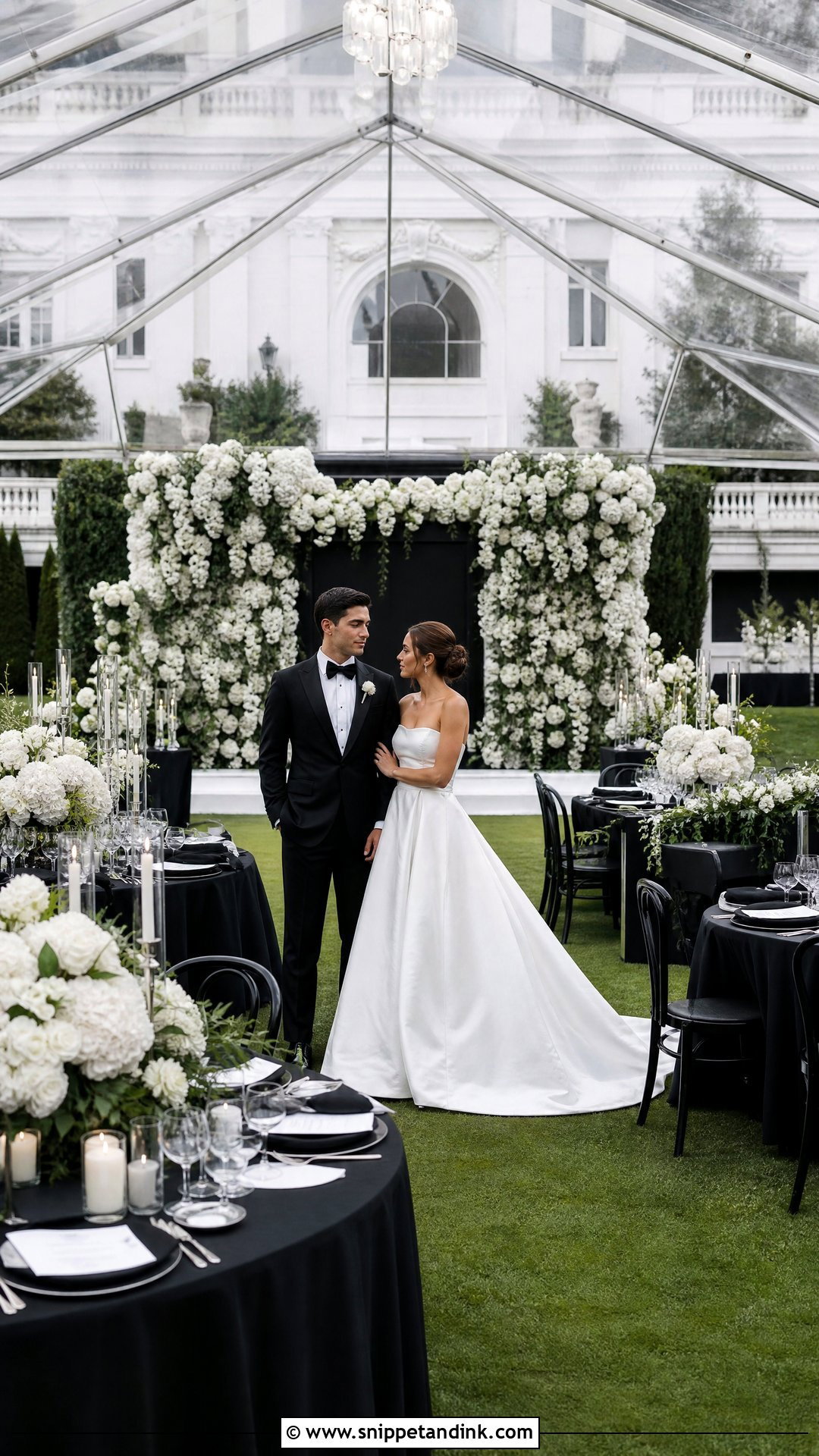
Black tie can absolutely work outdoors, but only with proper infrastructure. I look for an estate, museum garden, manicured lawn or tent with solid flooring and good facilities. Black, white, ivory and deep green form the base, with metallics for brightness. A structured ceremony backdrop, symmetrical florals and neat rows of chairs set the tone; full-length linens, formal place settings, printed menus and layered candlelight carry the reception. A clear-top or sailcloth tent protects guests without losing the view. Service areas, generators and weather kit go behind coordinated screens. Formal guests in heels need firm pathways, so I’d budget for flooring before extra flowers.
18. Whimsical Outdoor Wedding Aesthetic
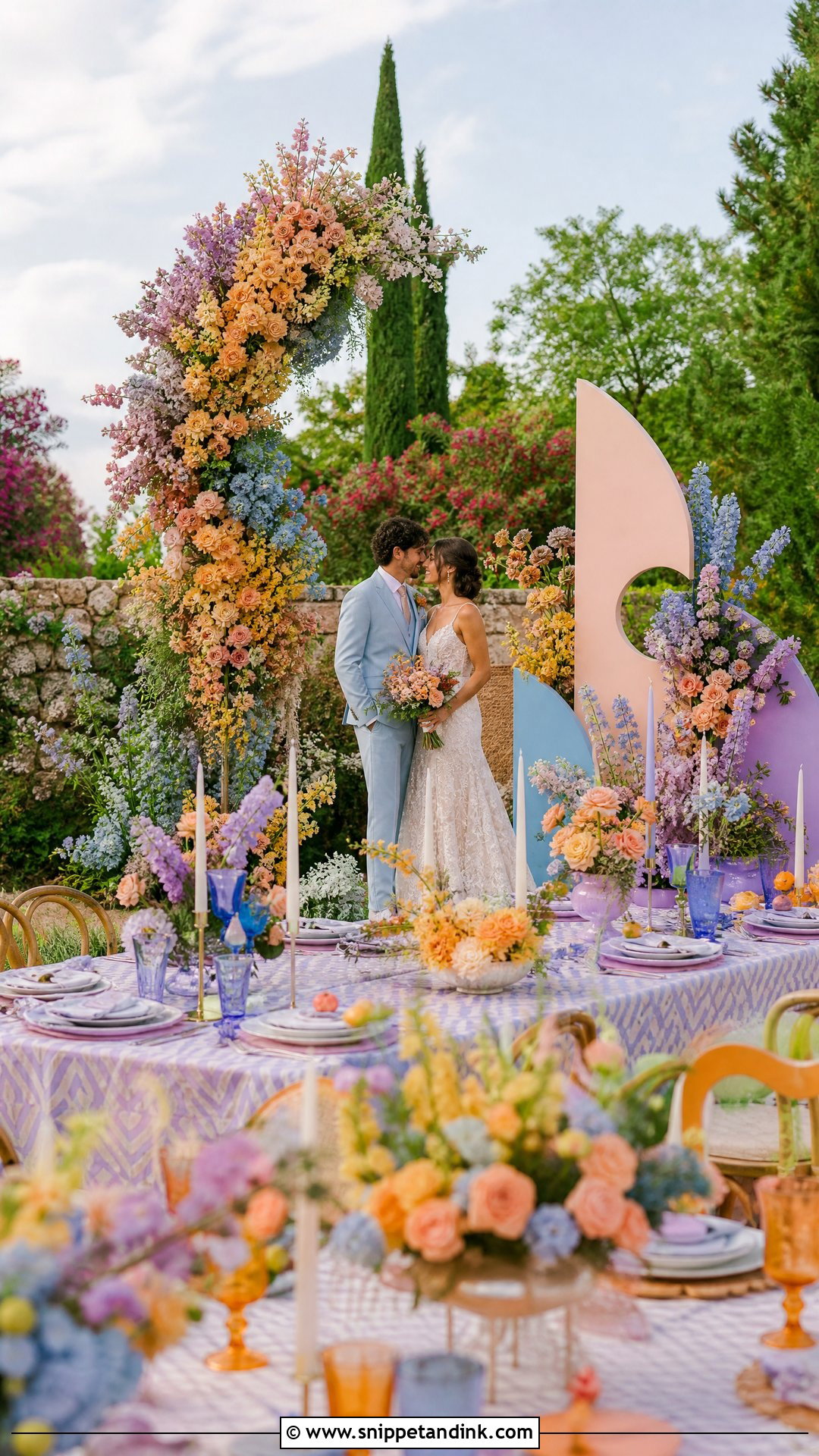
Whimsy needs more discipline than you’d expect. A garden, orchard, private field or artistic venue gives room to play, but I begin with a fixed palette such as lilac, peach, yellow and sky blue, and repeat the same shapes and colours everywhere. Curved signs, colourful flowers, patterned linens and oddly shaped place cards bring the fun; an asymmetrical ceremony piece adds movement. Mixed candles, cheerful glassware and a small surprise at each seat keep tables lively. Fashion can join in with colourful accessories. Playful installations still need to be secured, and walkways kept clear, or whimsical quickly becomes chaotic.
19. Autumn Outdoor Wedding Aesthetic
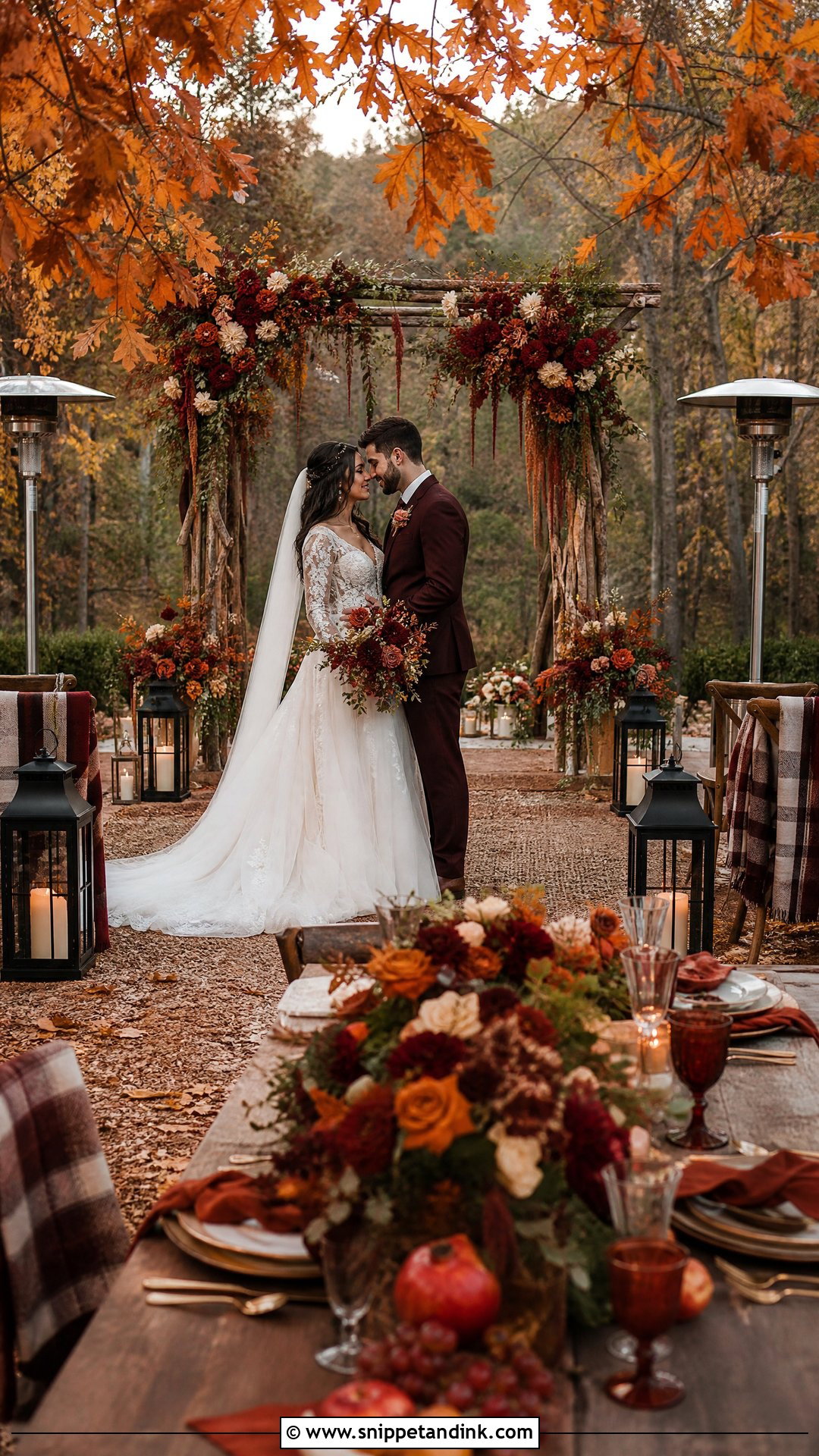
Cool air and turning leaves set the scene for an autumn outdoor wedding aesthetic. A woodland estate, orchard, vineyard or mountain venue suits rust, burgundy, amber, cream and dark green. I line the aisle with foliage, seasonal flowers and sturdy lanterns, and set tables with textured linens, ceramics, pears or figs and candleholders at varied heights. Tailored attire, closed shoes and good outer layers suit cooler days. Light goes earlier than couples expect in autumn, so schedule portraits before the sun drops, then rely on path lights and overhead strands. Blankets in baskets, discreet heaters and a covered option keep guests comfortable.
20. Spring Outdoor Wedding Aesthetic
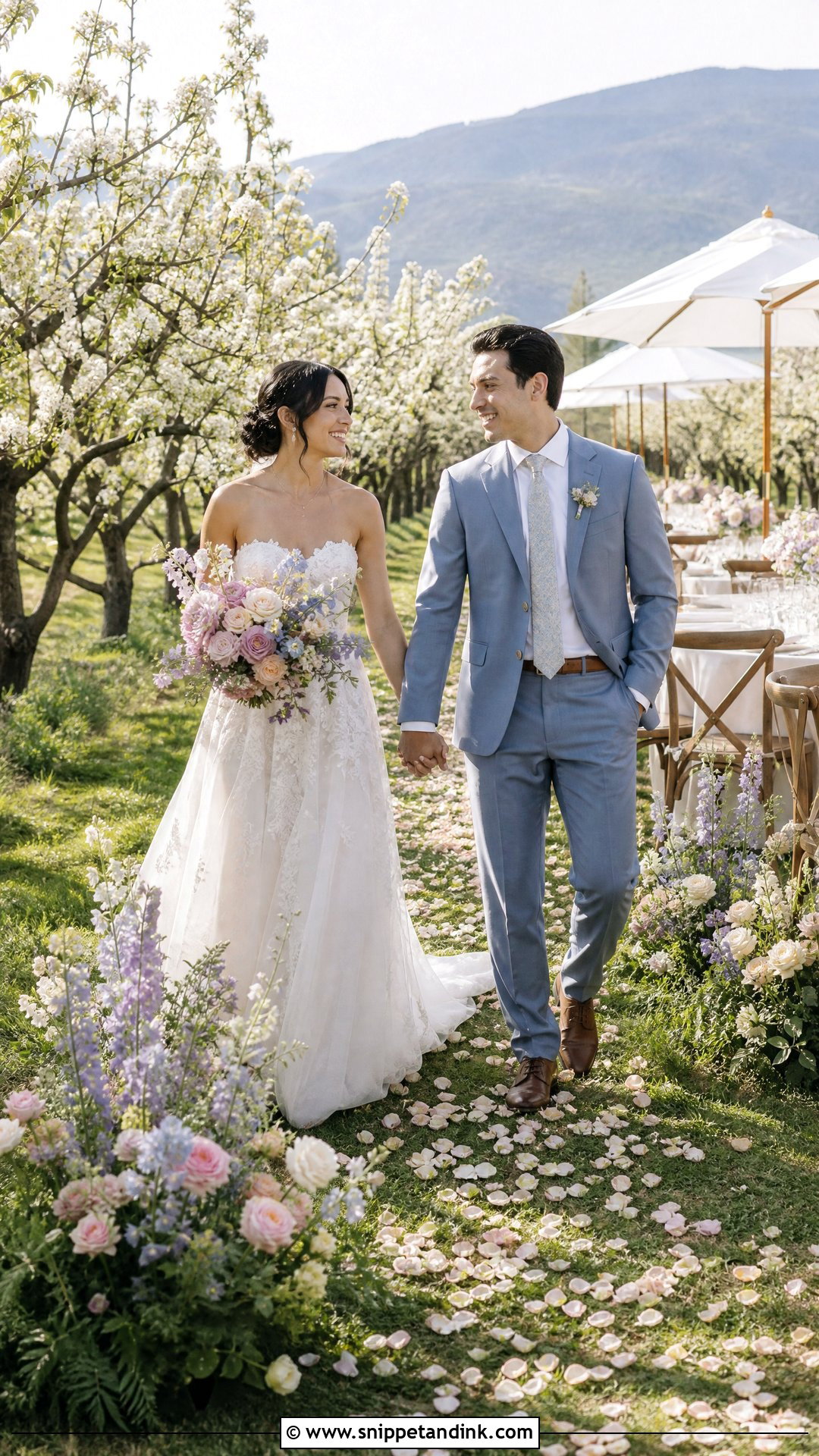
Spring palettes risk turning sugary, so I always anchor them with plenty of fresh green. Blush, lilac, pale blue and butter yellow suit a flowering garden, courtyard, orchard or park. Flowering branches and airy blooms around the ceremony look wonderful but catch the wind, so I anchor them firmly. Light linens, clear glass, pastel candles and low centrepieces fill the tables. Spring weather changes by the hour; softly tailored attire and practical shoes help. I’d design the umbrellas, covered walkways and tent into the palette from the start. When the rain plan matches the colours, it looks intentional rather than last-minute.
Wind, Heat and Rain: Decor That Survives Five Hours Outside
Wind
Arches and frames need weights, sandbags or stakes hidden at the base, never just their own feet. I use heavy-bottomed vases, glass hurricanes around every flame and clips on anything paper. Many venues restrict open flames outdoors, so I check the rules before ordering a single candle, and switch to good-quality LED candles where needed.
Heat
Some flowers collapse in hot sun within an hour or two. Hydrangeas, sweet peas and many garden roses are the usual casualties, while orchids, proteas, anthuriums, carnations and many succulents hold up well. I install the most delicate pieces as late as possible and keep them shaded until guests arrive. Clear-top tents trap heat like a greenhouse on sunny days, so they’re best for evenings or cooler seasons.
Rain
Book the tent or indoor backup at the same time as the venue, not as an afterthought, and design it in the same palette with the same linens and lighting. Decide on a call time, usually a day or two before, so everyone sets up for one plan rather than both.
Let the Landscape Do Half the Decorating
Every outdoor design I’ve loved started from the setting and grew through a few consistent decisions. Pick one direction, keep the palette tight and repeat the same materials across ceremony, reception, paper, flowers and attire. Let a garden, forest, coast, vineyard or desert supply the texture instead of hiding it. Treat comfort as part of the design, too: shade, stable flooring, path lighting, weather cover and a basket of blankets can all look good when they’re planned early rather than added the week before. Romantic, rustic, modern, tropical or formal, the strongest version is the one that feels like it belongs exactly where it’s standing.


Leave a Reply