
Formal weddings feel memorable when every piece points the same way, from the invitation in the post to the last car pulling away. In my planning work, “fancy” has very little to do with spending without a plan. It comes from choosing one clear mood and repeating it with discipline: sculptural flowers, layered lighting, considered stationery, dressed tables, comfortable places for guests to sit, and a few personal touches kept refined. The style can be classic, modern, garden, glamorous or softly romantic. Below are thirty ideas, each written as a working concept with the practical catch I’d raise in a planning meeting, so you can adapt them to your venue, budget, season and taste.
Spend Where Guests Linger Longest
When couples ask me how to make a wedding feel expensive without an unlimited budget, I start with time, not money. Guests spend a few seconds at your entrance, a few minutes at the ceremony arch and two or three hours at their dinner table. That’s where I’d put the money first.
- Lighting. Warm, layered light changes a plain room more than any single arrangement. Candles, uplighting and dimmable fixtures come before extra flowers.
- The dinner table. Good linens, real glassware and a comfortable chair are noticed by every guest, all evening.
- Food and service. Well-paced service and food that arrives hot is what guests talk about afterwards.
- One showpiece. Then choose a single wow moment, such as a floral ceiling, a champagne tower or a dressed staircase, rather than five smaller ones.
Things that photograph well but are seen briefly, like elaborate welcome signs or ceremony-only installations, are where I suggest couples save, or reuse pieces across the day.
Rentals are the other quiet saver. Chargers, chairs, linens and glassware often look nearly the same at different price tiers once a table is lit by candles, so I compare samples in the venue’s own evening light before choosing the premium option.
1. Luxury Ballroom Wedding
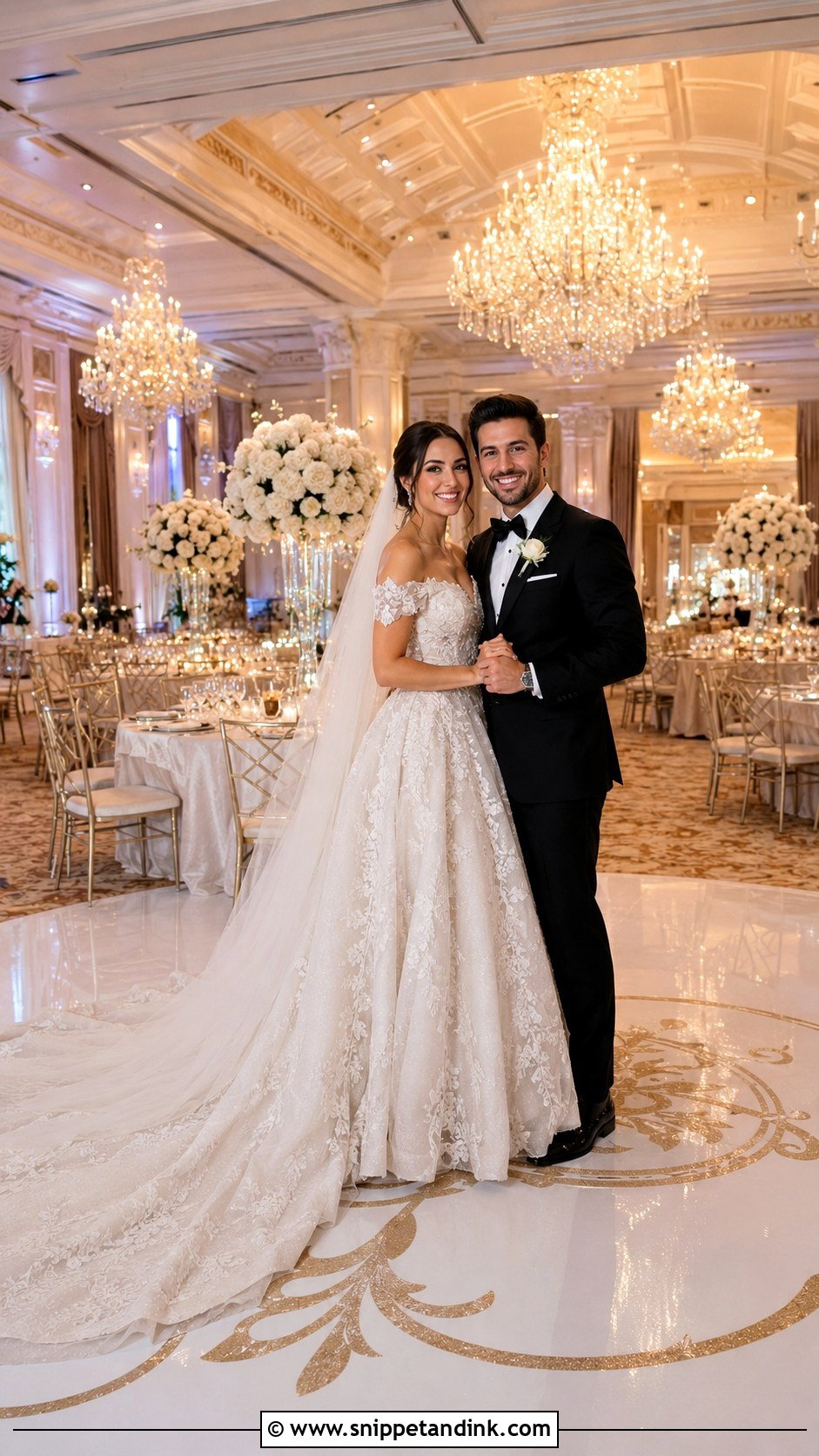
Ballrooms give you half the design for free. When I scout one, I look for high ceilings, chandeliers, good floors and detailed moulding, because those are things you’d otherwise pay to fake. Build on them with tall centerpieces, pressed linens, gold or silver accents and a soft neutral palette. Round tables with layered place settings give the classic layout, and a custom dance floor makes the room feel like yours. Candlelight, live music and a seating chart near the door finish it. Carry the same look through the invitation, the table numbers and the cake display so nothing feels borrowed.
2. Garden Wedding With Formal Tables
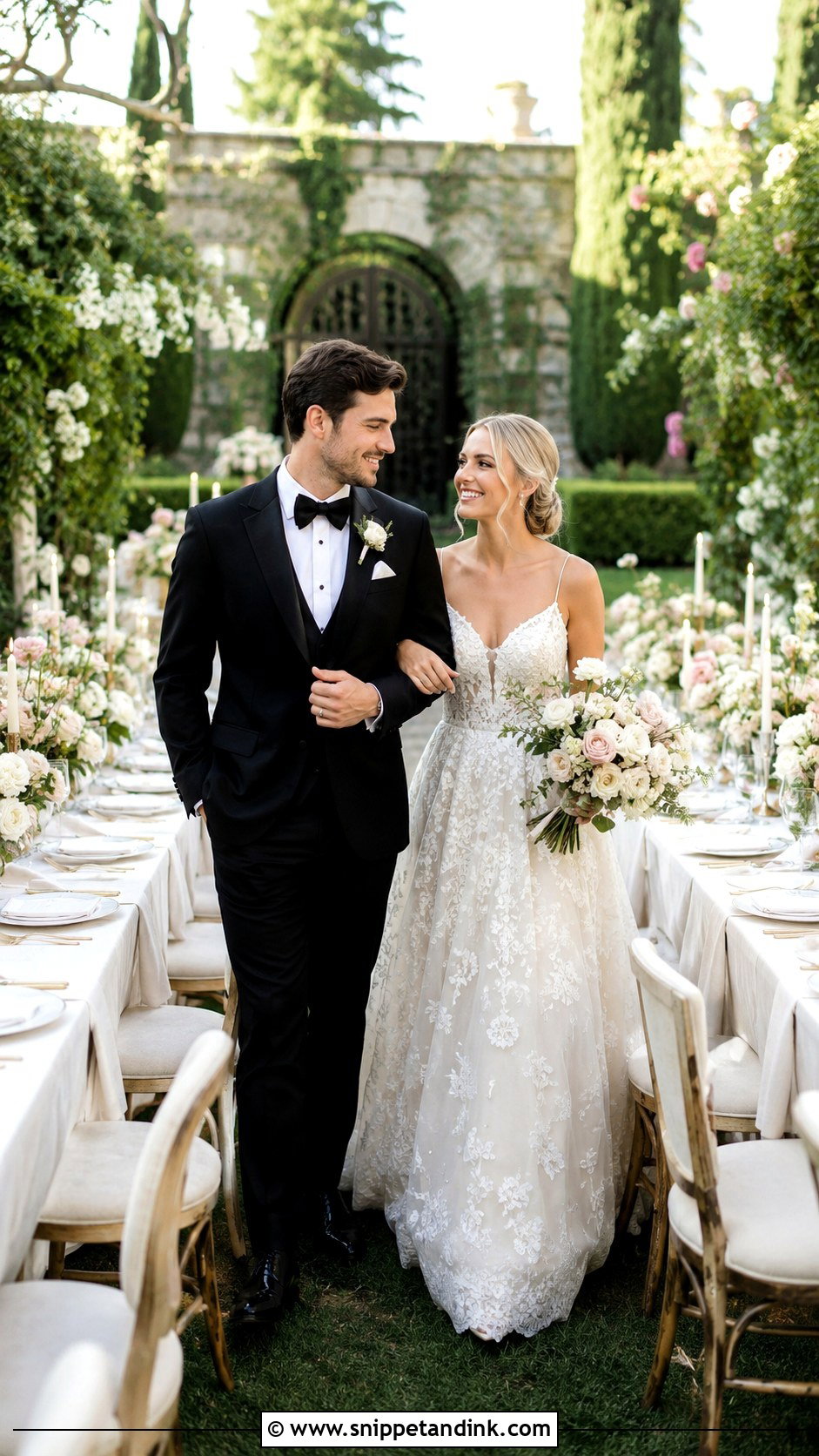
Gardens turn formal the moment the tables get structure. Long dining tables with crisp linens, real china, tall tapers and full but tidy arrangements do it. Ivory, blush, green and pale blue sit well against foliage. Upholstered or good wooden chairs replace folding ones. Tie the ceremony to dinner with a floral arch and a dressed aisle, and skip the string lights if you want it formal. My planning caveat: outdoor formality depends on a weather plan, so price a tent or an indoor fallback before you fall in love with the lawn. Spring and early summer give the fullest greenery.
3. Black Tie Wedding Reception
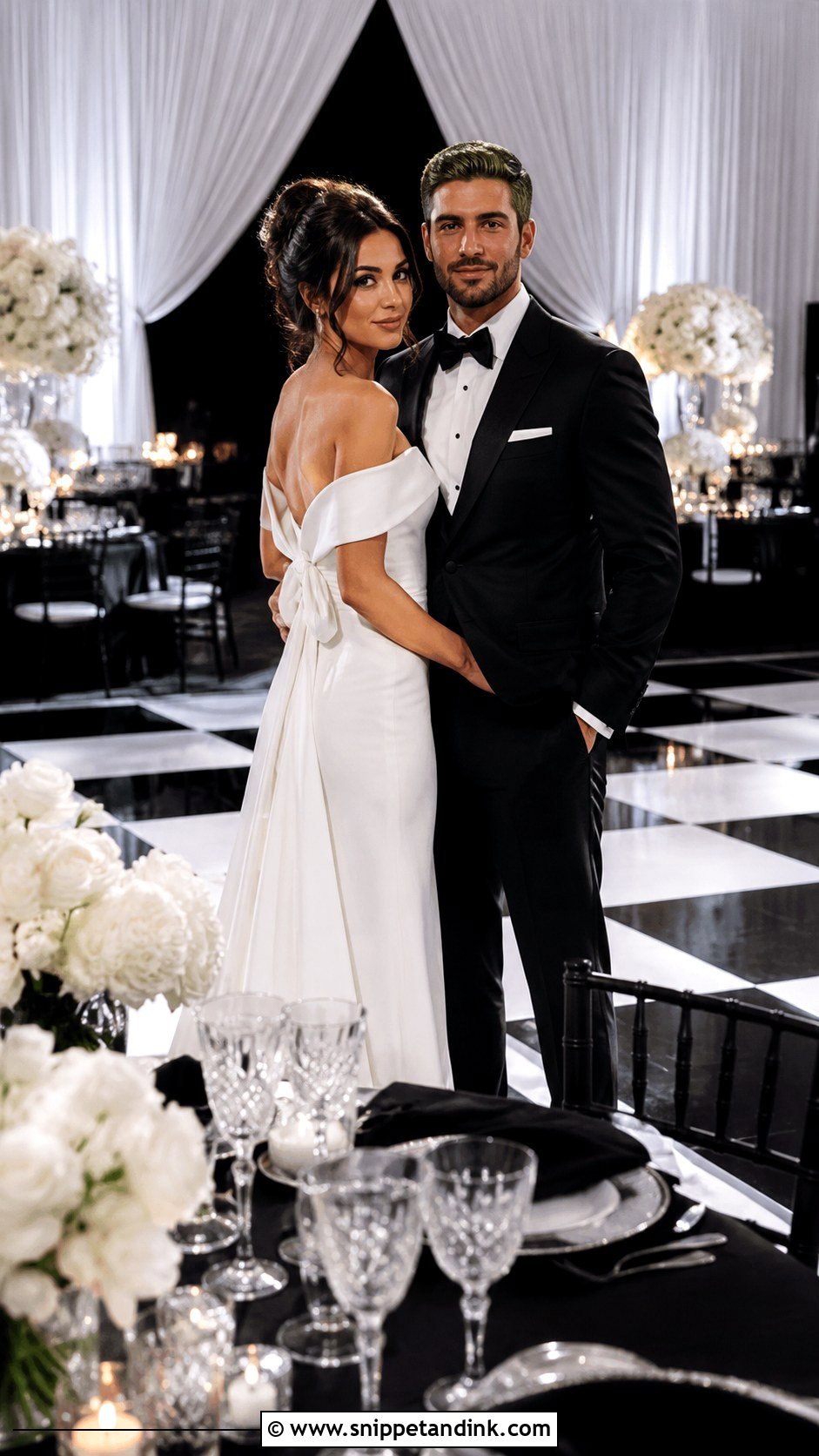
Putting “black tie” on the invitation does a lot of the work for you, because guests arrive dressed for the room. Keep the decor sleek in black, white, ivory and metallics: black menus, white flowers, crystal glassware and polished flatware. A black-and-white dance floor, generous draping and low candlelight give it a filmic feel. Hotels, historic venues, museums and private clubs suit it. I always remind couples that the dress code works both ways; if you ask guests for black tie, the bar, food and service should match that expectation all night.
4. All White Wedding Decor
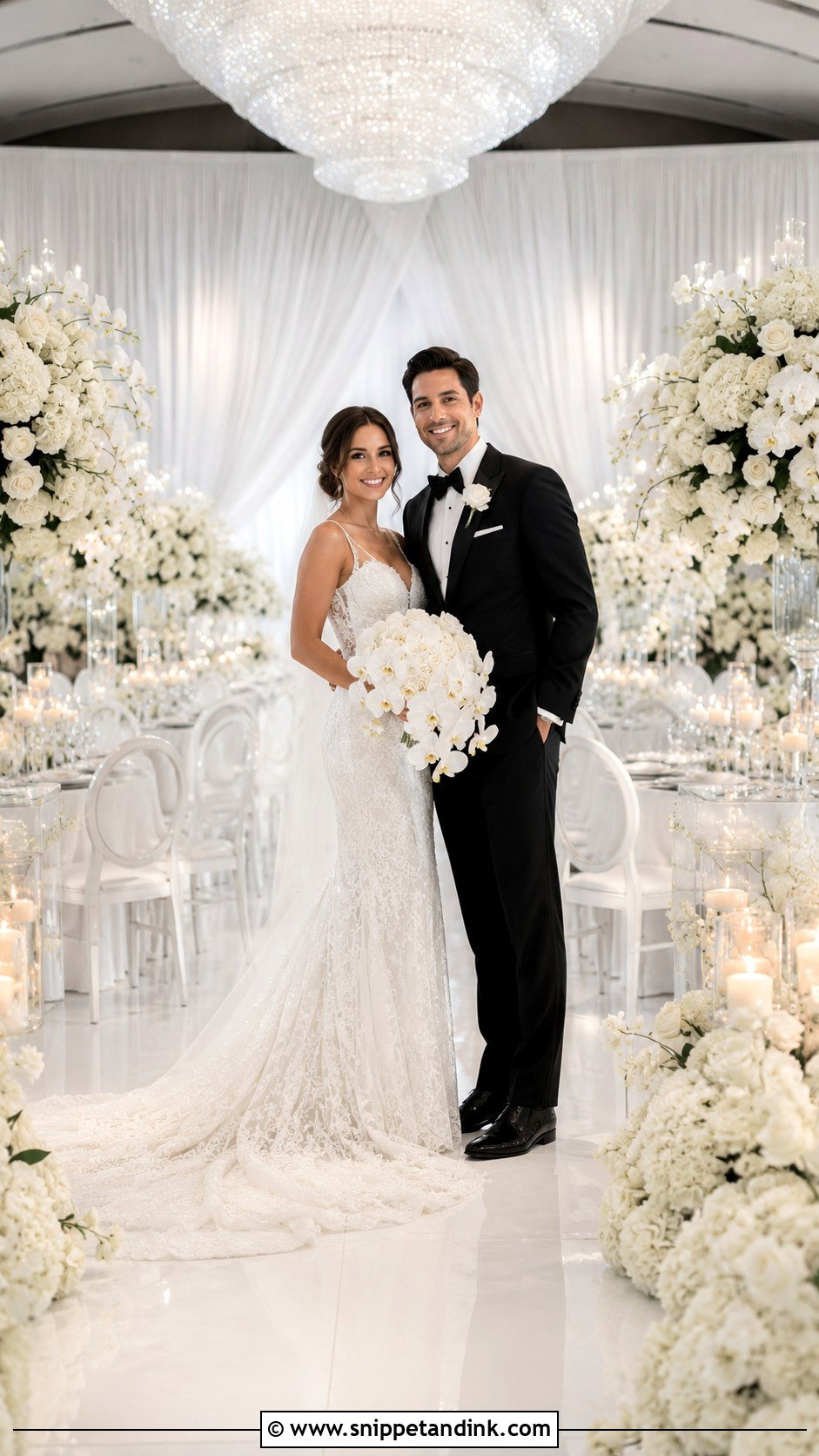
All white only looks expensive when it has texture; flat white looks like a blank hall. Mix roses, orchids, hydrangeas, ranunculus and baby’s breath for depth. Ivory linens, white chairs, white candles and clear glass keep it bright. Pleated napkins, embossed menus, ceramic chargers and sculptural arrangements add layers. Ballrooms, tents, galleries and modern rooms all suit it. Lighting is the hidden factor: keep it bright through dinner and warm only for the party, because whites turn yellow under amber light and look dingy in photos.
5. Gold And Ivory Wedding Theme
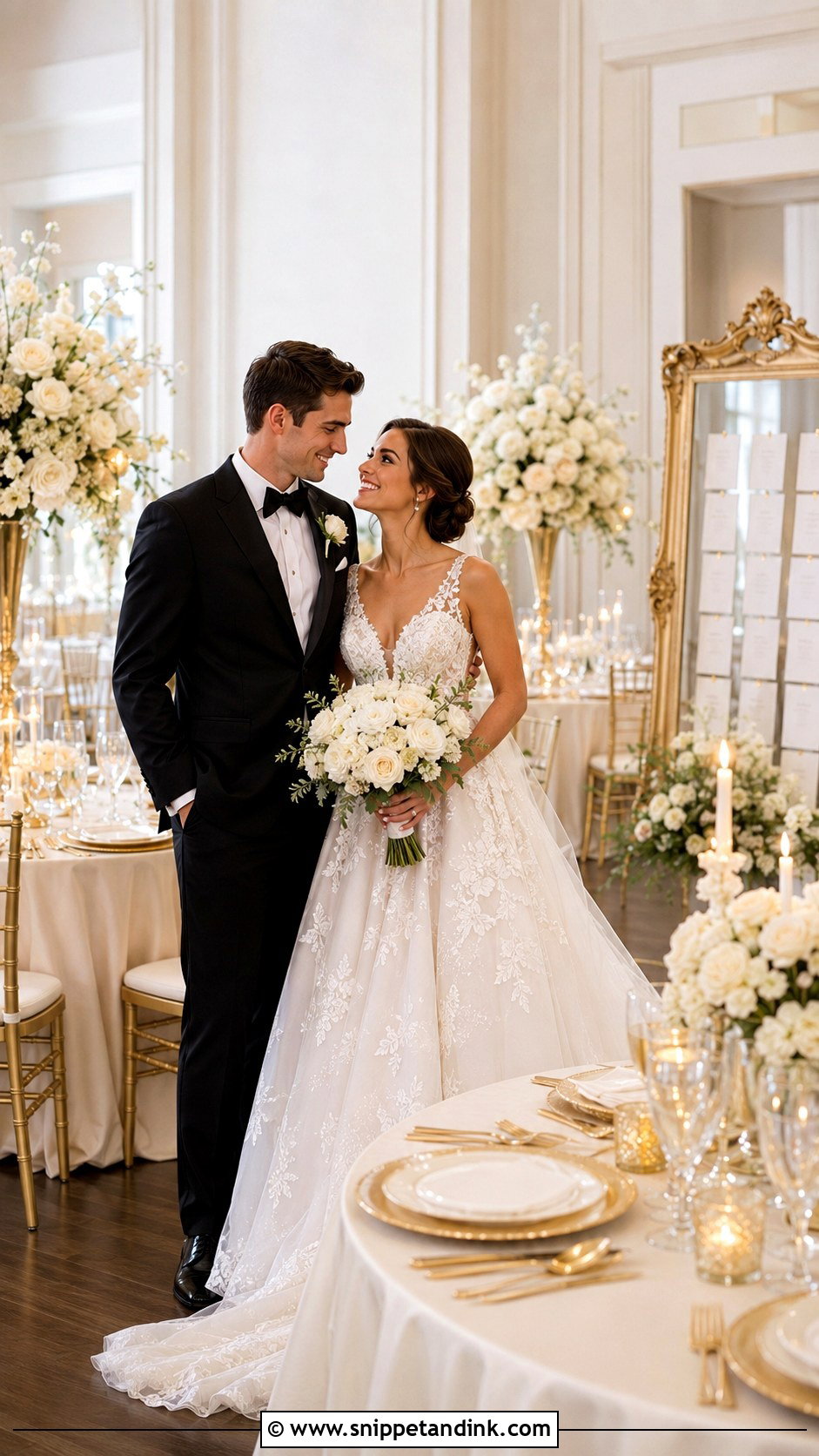
Gold and ivory is the most forgiving formal palette I work with. Ivory keeps it soft, gold adds warmth. Gold-rimmed chargers, gold flatware, ivory flowers, cream linens and fine candleholders build it, and a gold-framed seating chart or mirror welcome sign makes a good first impression at the door. It suits daytime and evening. Skip glitter and very shiny fabric. Brushed, champagne or antique gold looks current and hides the mismatch you get when rental items come from different suppliers.
6. Crystal Chandelier Wedding
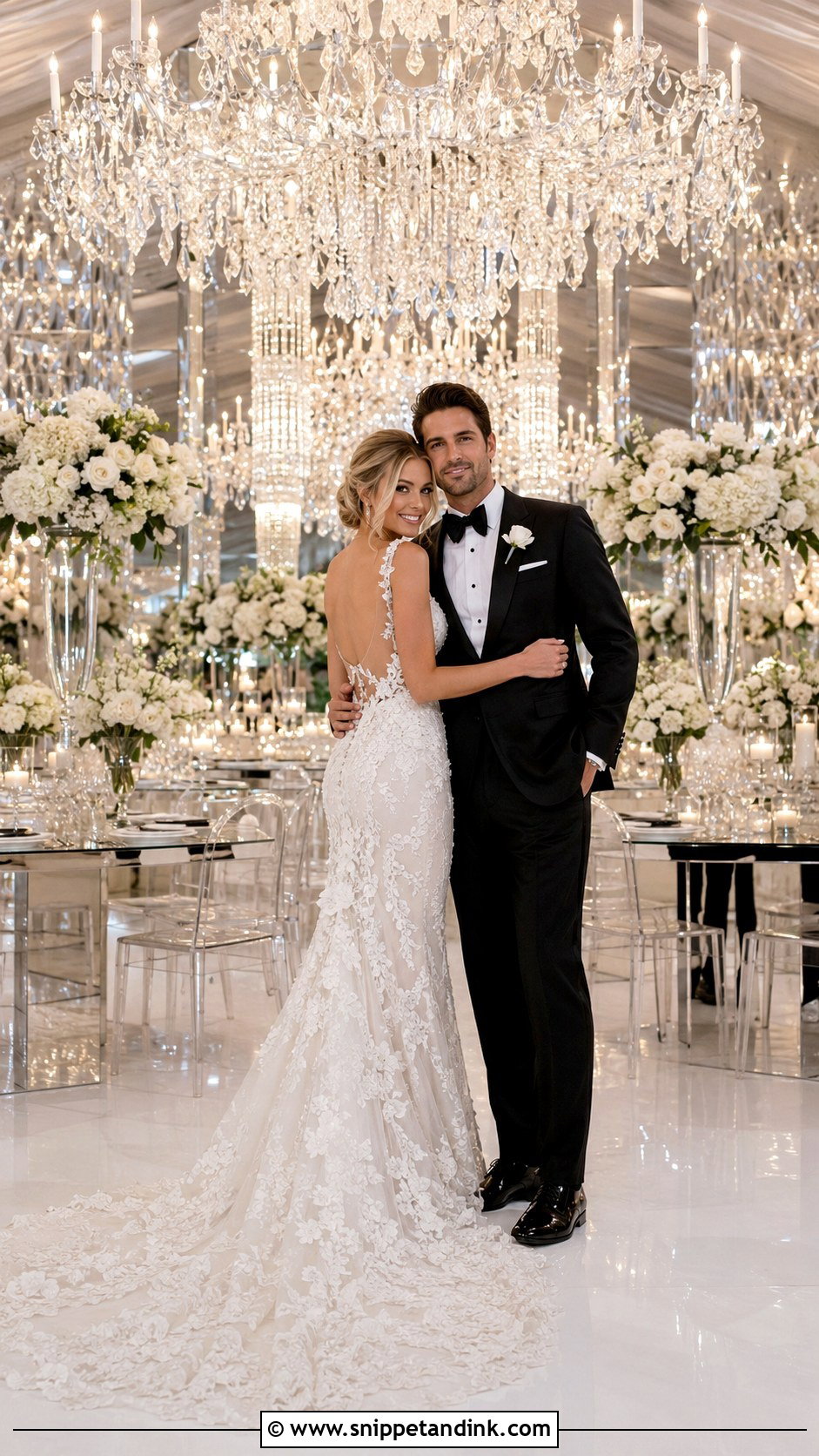
Chandeliers create drama from above, which is valuable because most decor sits at table height. If the venue already has them, design around them and keep the rest calm. If not, rented chandeliers can hang over the dance floor, the sweetheart table or the dining tables. White flowers, mirrored details, crystal glassware and candlelight complete it. Before you book rentals, ask the venue where its rigging points are and who is insured to hang anything; many rooms only allow approved riggers, and that adds labour cost.
7. Floral Ceiling Wedding
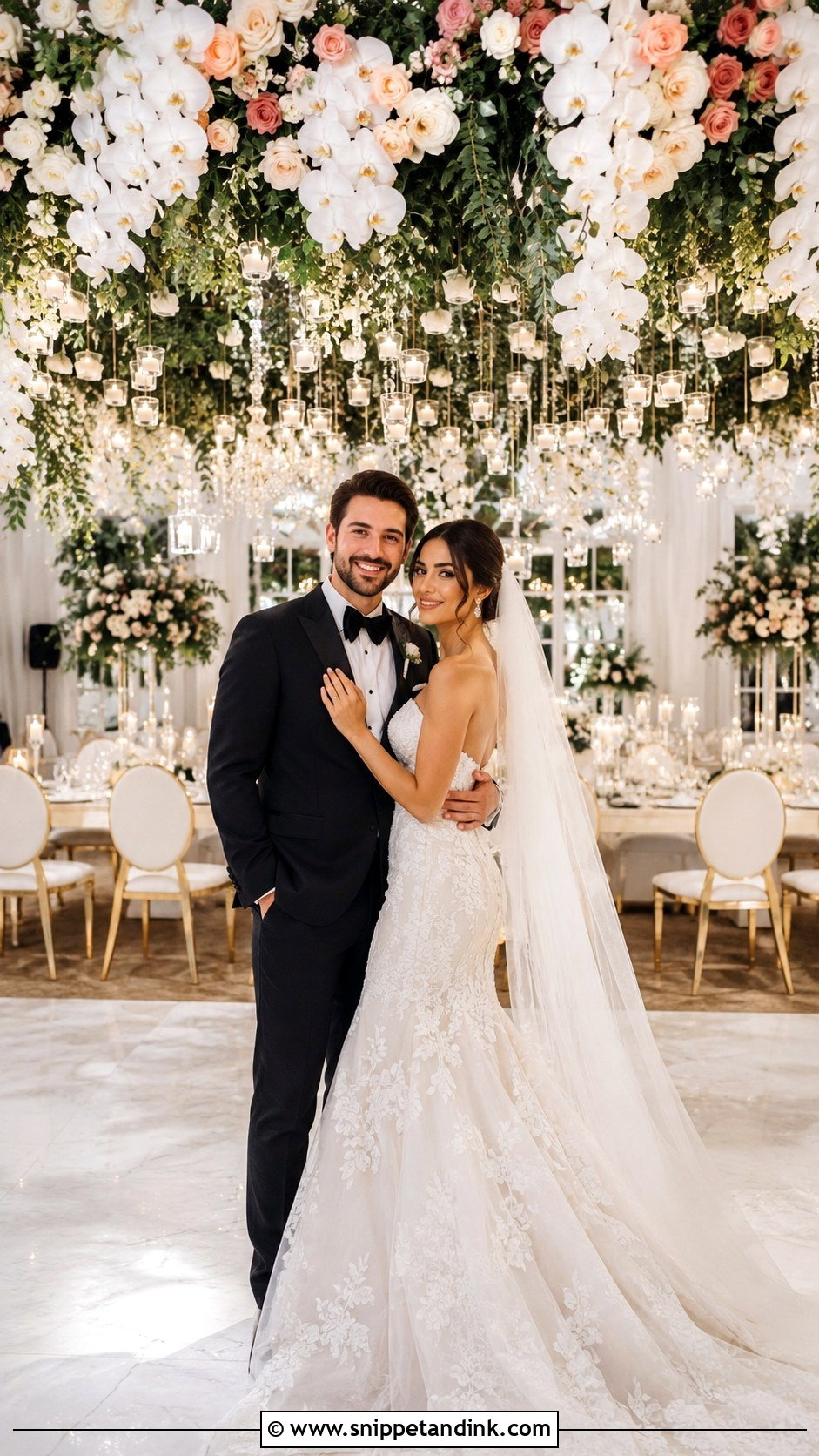
Floral ceilings are the idea guests photograph most and the one that needs the most planning. Hanging blooms, greenery or suspended floral clouds can sit over the dance floor, the tables, the aisle or the bar. Choose one direction: white orchids, blush roses, meadow flowers or greenery with hanging candles. Simplify the centerpieces so the ceiling leads. The room needs height and somewhere safe to hang weight, and installation usually means early access to the venue and a crew on site, so confirm your load-in window before you design it.
8. Candlelit Wedding Dinner
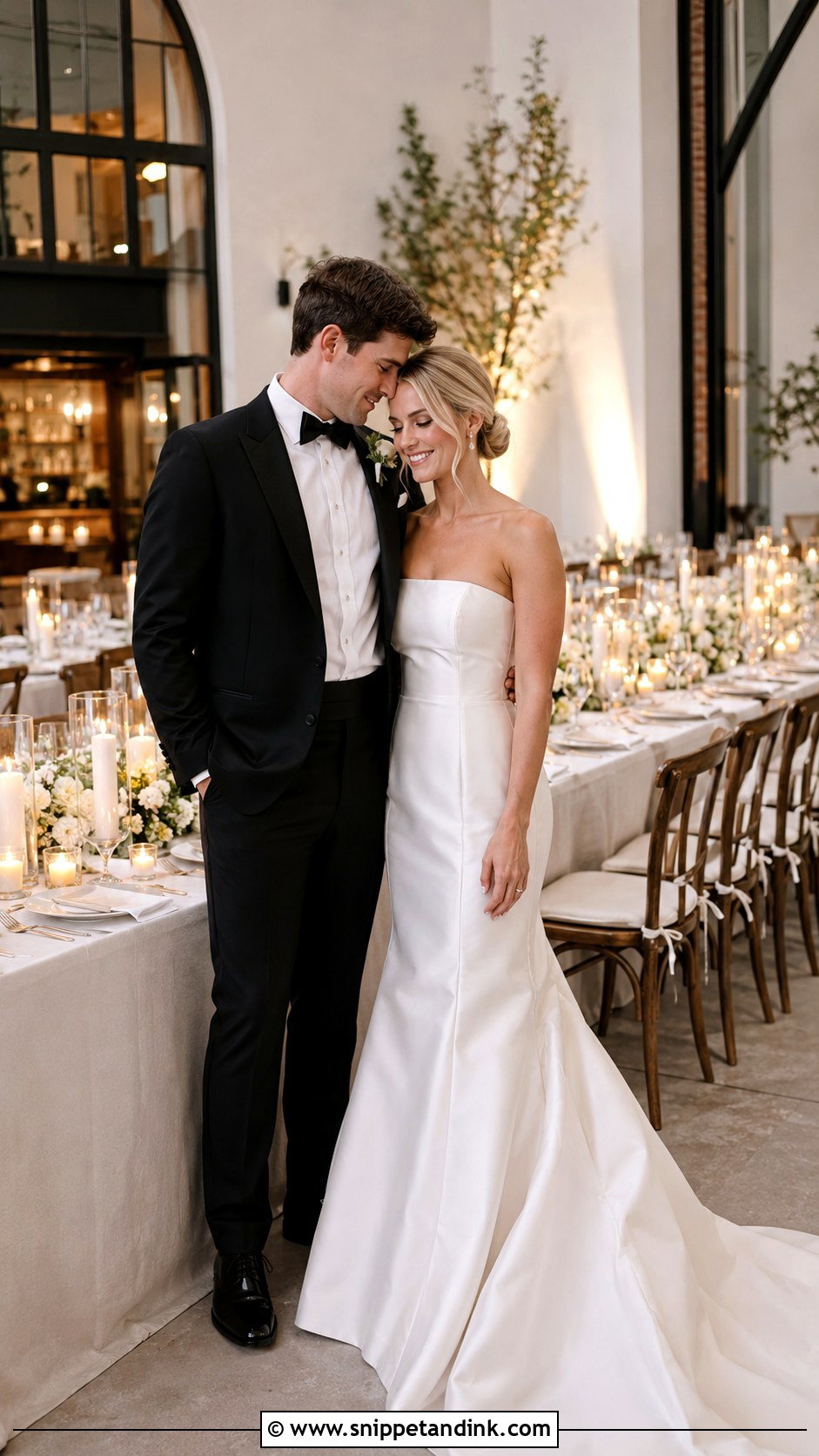
Candlelight is the cheapest way I know to make a room feel expensive. Mix tall tapers, pillars and votives along long tables or in clusters, and keep flowers low so guests can see each other. Rich linens, simple menus and good glassware complete the table. Historic halls, tents, courtyards and restaurants suit it, especially in autumn and winter. Check the fire rules first: many venues only allow candles enclosed in glass, and some ban open flame entirely, in which case quality LED candles are the fallback.
9. Champagne Tower Wedding
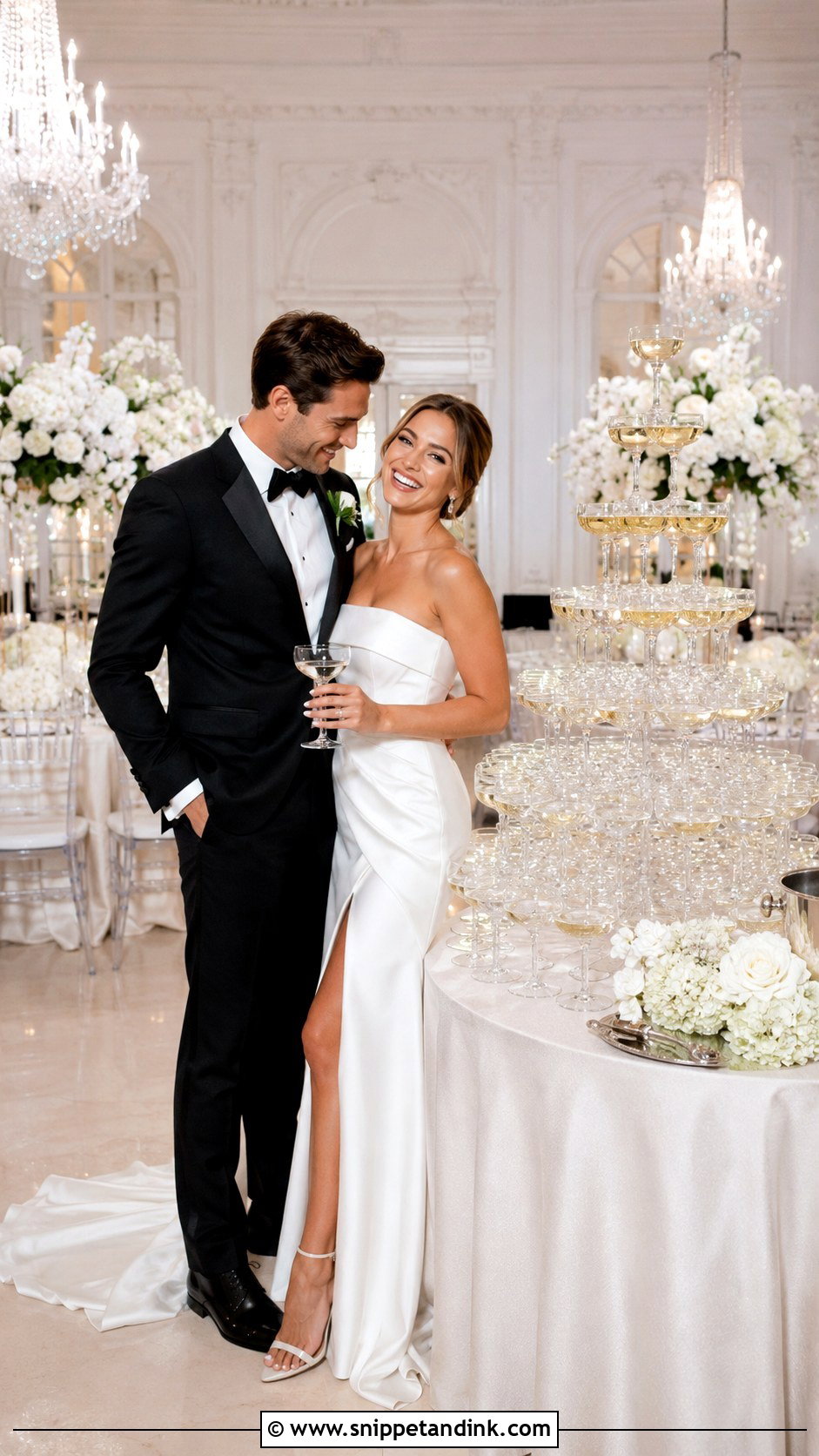
Champagne towers give one big moment without a complicated build. Use it for cocktail hour, the grand entrance or the first toast. Set it on a sturdy, level table with a pressed linen, a few flowers and good coupes, and clear the surrounding area so it photographs well. Art Deco, black-tie, vintage and ballroom themes suit it. Two practical notes from planning these: the table must not wobble at all, and the person pouring should be staff who’ve done it before, not a groomsman.
10. Designer Wedding Invitation Suite
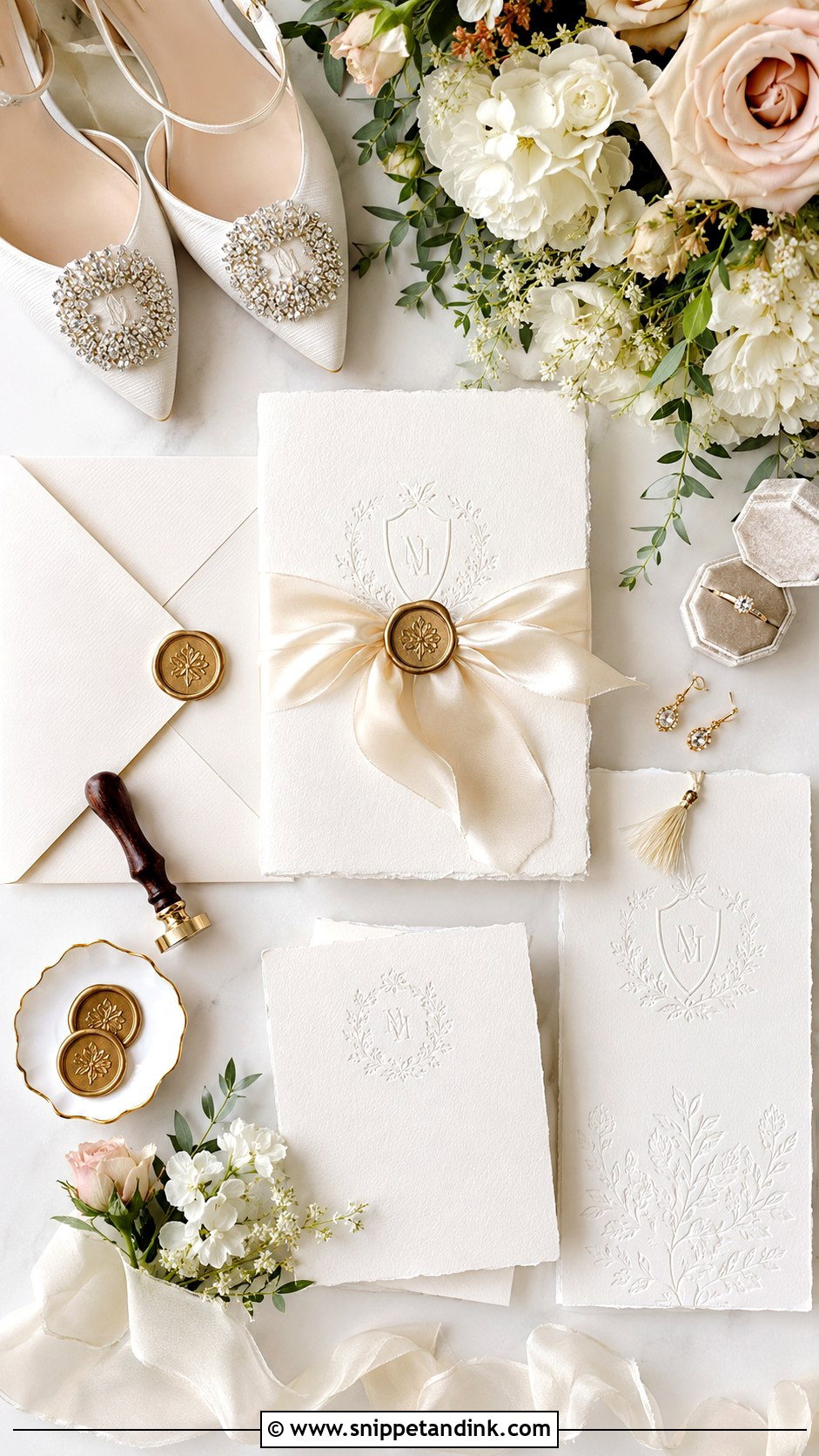
A designer wedding invitation suite is the guests’ first look at your wedding, weeks before they arrive. Thick paper, letterpress, calligraphy, wax seals, ribbon, illustration or a refined monogram set the tone. Match the colors and mood of the day: botanical details for a garden, classic type and formal spacing for a ballroom. Then carry the same design into menus, escort cards, programs and thank-you notes. I build stationery deadlines into the master timeline, since custom printing and calligraphy can take weeks and invitations usually go out two to three months ahead.
11. Statement Wedding Entrance
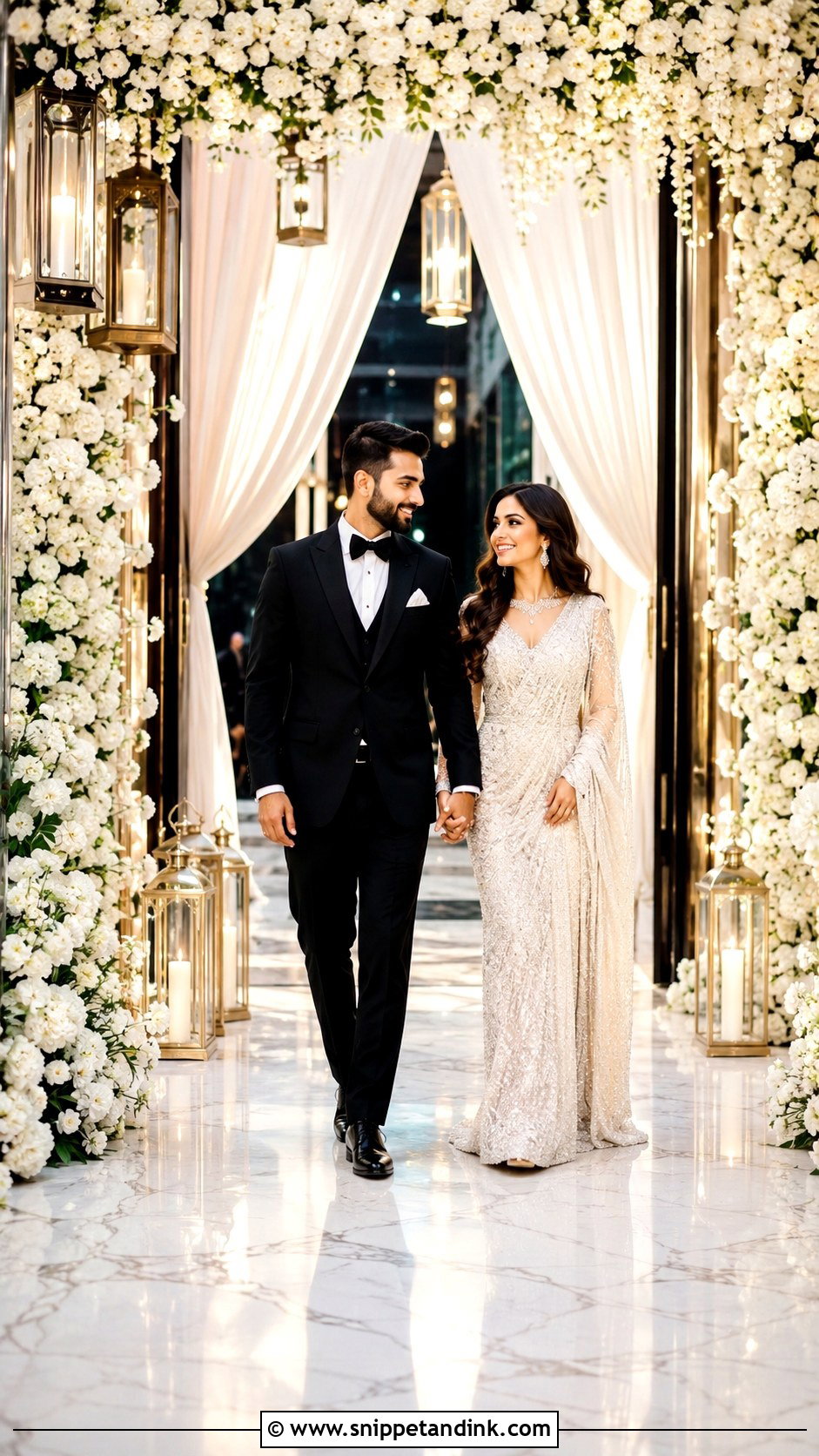
The entrance sets expectations in the first ten seconds. A floral arch around the doorway, a draped tunnel, a custom welcome wall, lantern-lined steps or a framed sign can all do it. Match it to the style: white flowers and fine lettering for classic, clean panels and sculptural pieces for modern, greenery for a garden. Guests photograph this spot constantly, so keep it uncluttered. In my experience the doorway is also a pinch point, so anything decorative must leave room for guests, staff and catering trolleys to pass.
12. Elegant Wedding Aisle
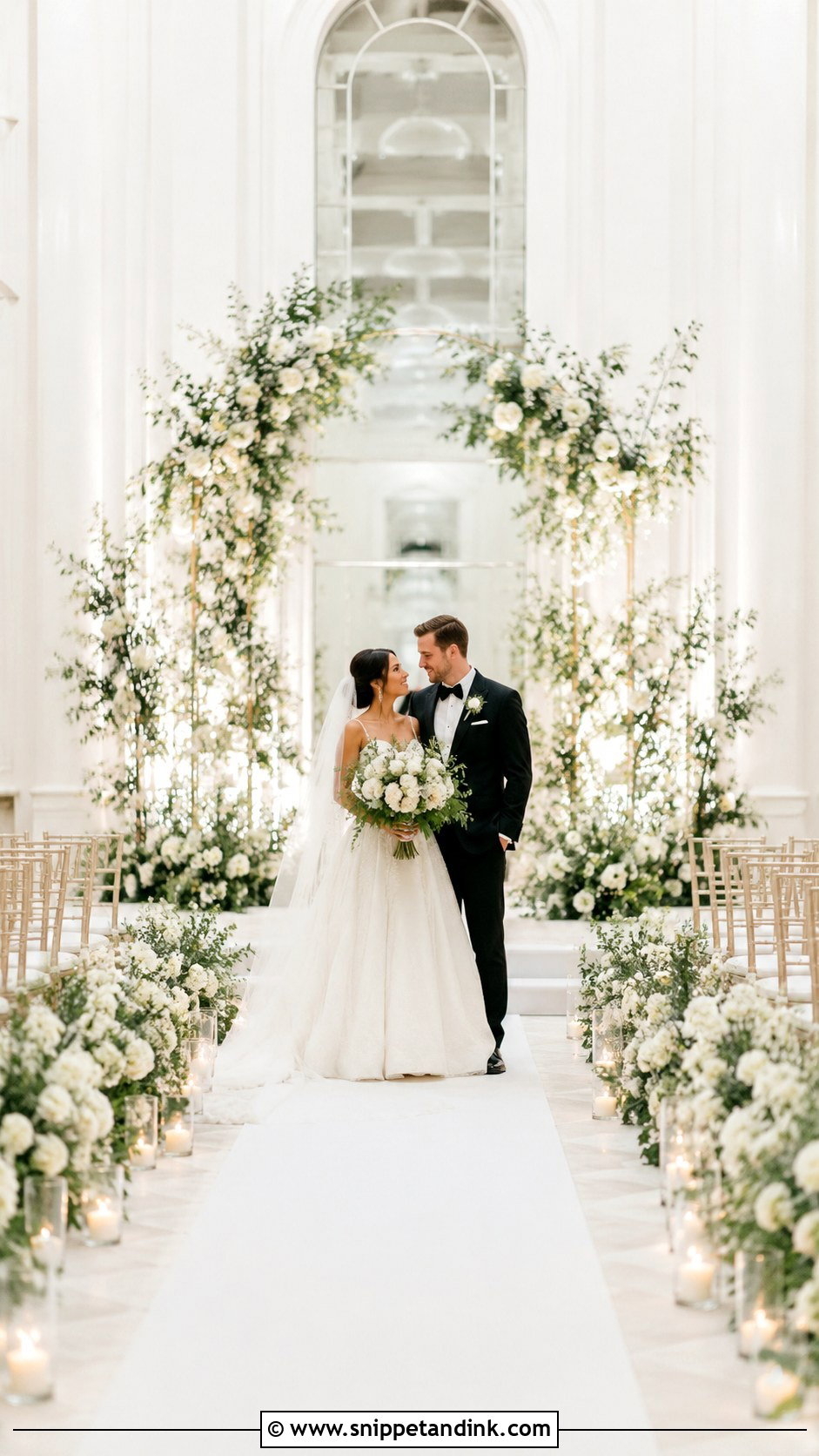
A good aisle frames the couple without stealing from them. Start with a clean runner, then add flowers, candles or low greenery on both sides. Outdoors, let the setting show and use flowers to mark the path; indoors, pedestal arrangements near the front add height. Match the chairs to the design, whether gold, clear, white padded or wood. Runners on grass tend to wrinkle and slip, so I either stake them down well or skip them outdoors.
13. Floral Arch Wedding Ceremony
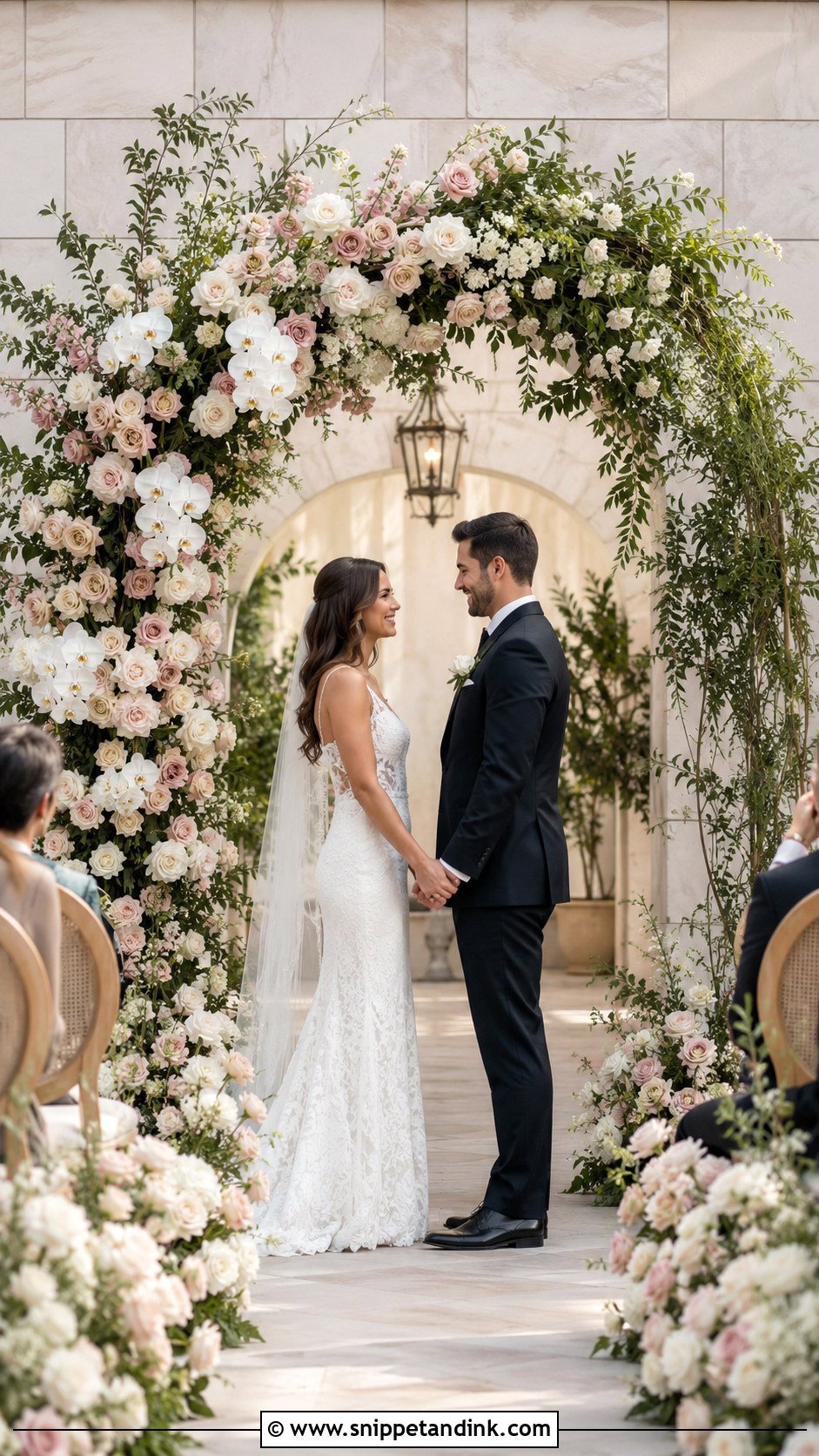
Arches turn formal through scale and depth. Build with flowers suited to the season and venue, and give the arch dimension rather than a flat face. Asymmetric arches look modern, full round ones romantic. White and green never dates; soft color makes it more personal. Echo it with aisle flowers so it doesn’t look stranded. Afterwards, I usually have the florist move it behind the sweetheart table, the cake or the photo area, which gets two uses from one budget. Plan who moves it and when, since that happens during cocktail hour.
14. Luxury Wedding Tablescape
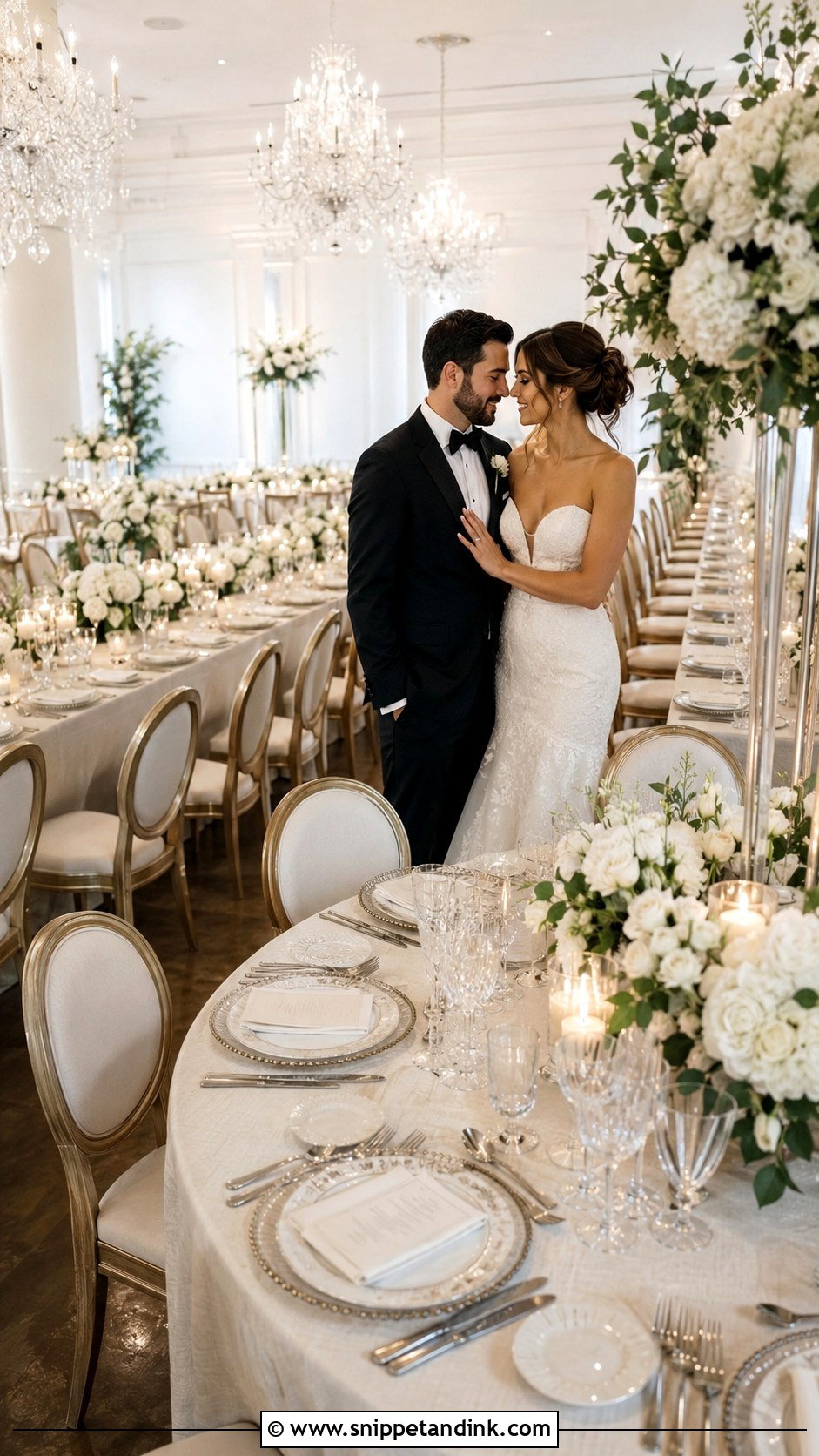
Tablescapes are where guests spend most of the evening, so I’d spend there before anywhere else. Layer quality linens, chargers, dinnerware, polished flatware, glassware, cloth napkins, printed menus and place cards. Round tables suit one strong centerpiece; long tables suit repeated smaller arrangements and candles. Keep the palette focused and repeat it. Texture matters: velvet ribbon, linen napkins, ceramic plates or glass chargers. Do a mock-up table with your rental company to check spacing; chargers and glassware for three wines take more room than people expect.
15. Velvet Lounge Wedding
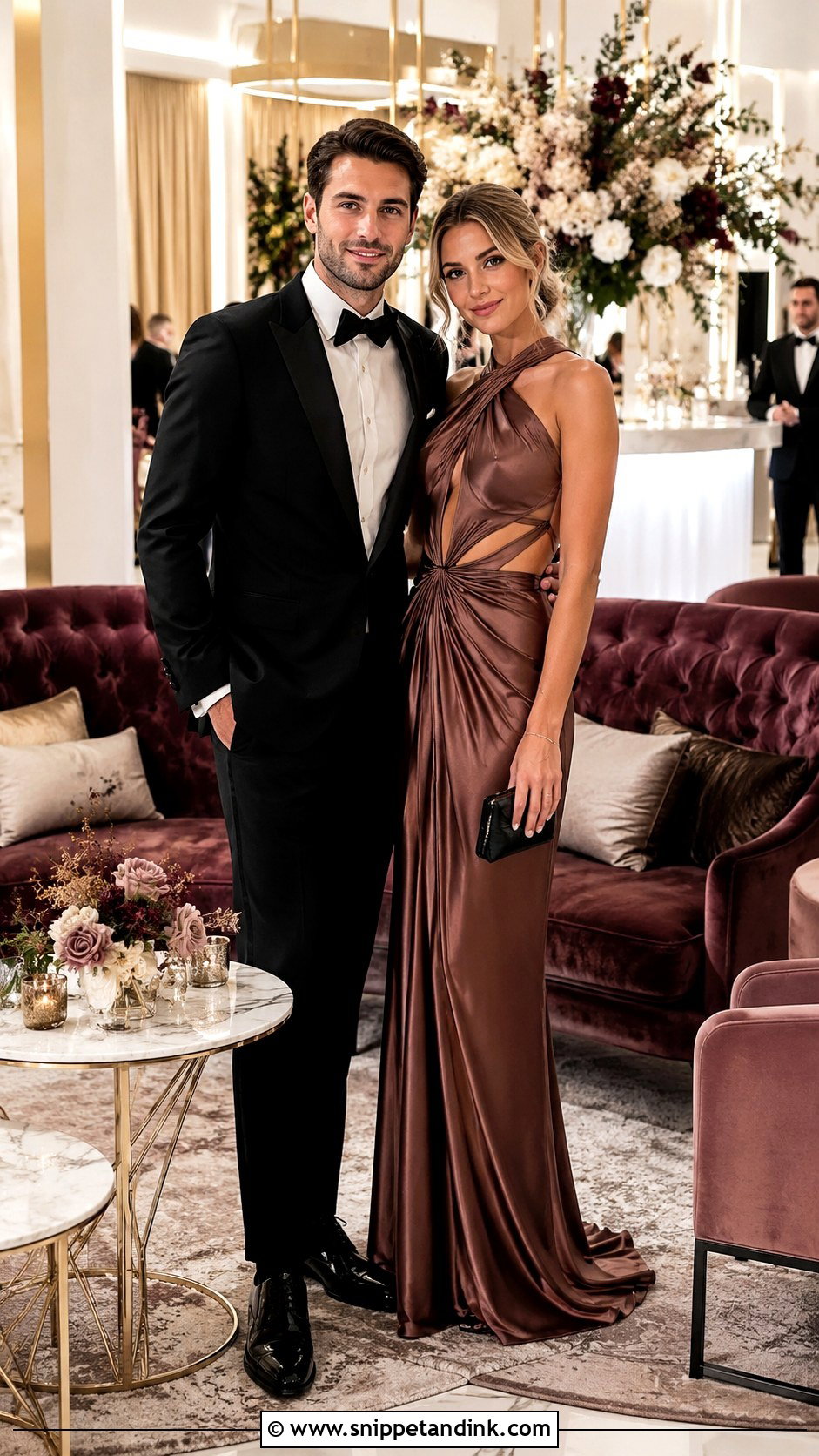
A lounge gives guests somewhere comfortable to sit when they’re not at dinner or dancing, and it makes the reception feel like a thought-through event rather than a banquet. Velvet sofas, armchairs, marble or gold side tables, flowers and soft rugs build it. Match the colors to your palette: ivory, blush, emerald, navy or taupe. Place it near cocktail hour, the dance floor or a photo backdrop. Older guests use these areas more than anyone, so I put at least one lounge near the dance floor but away from the speakers.
16. Grand Staircase Wedding Photos
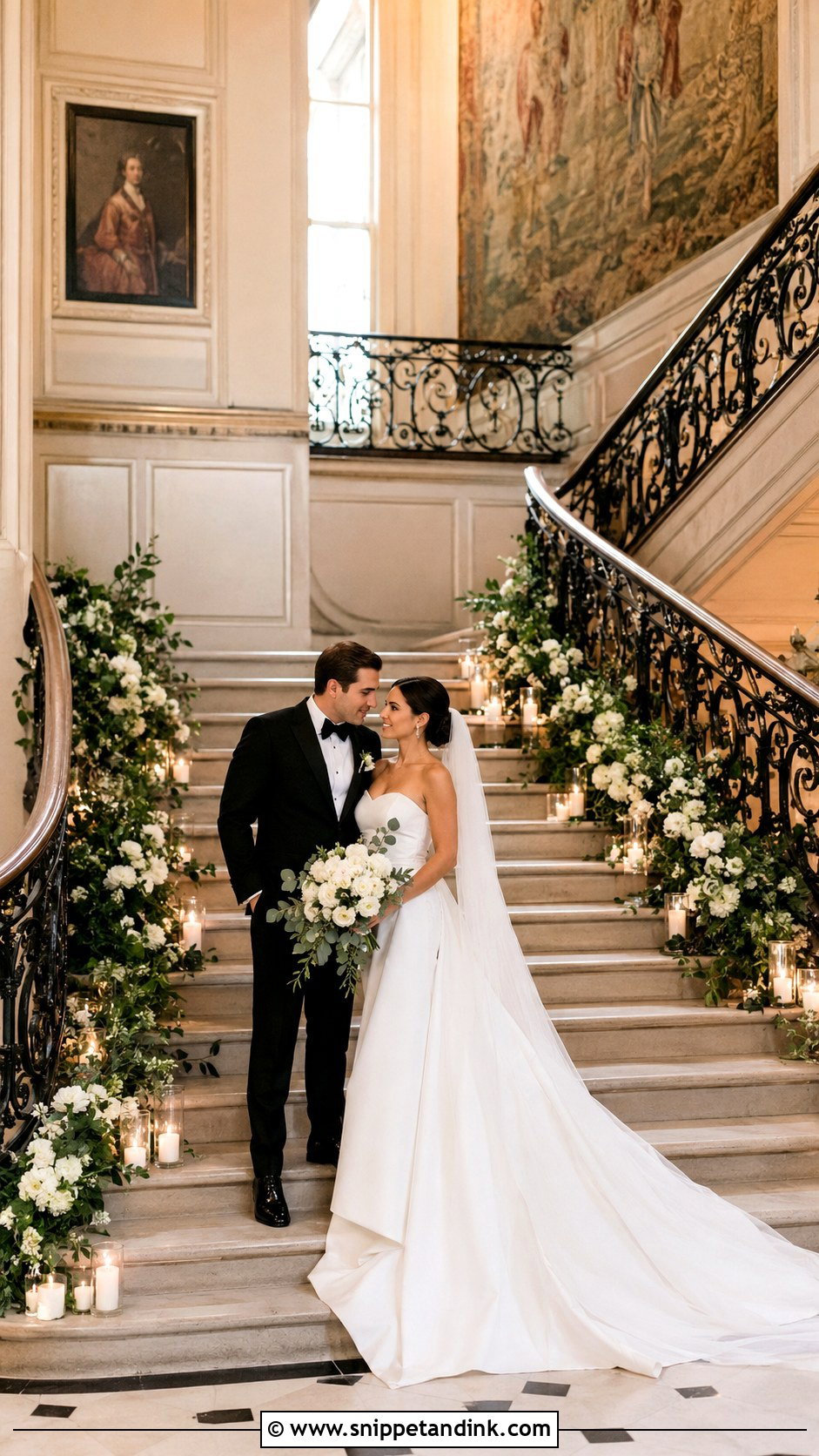
Staircases give height and movement for portraits, arrivals or a ceremony entrance. Dress the railing with garlands, candles or soft fabric, but leave plenty of walking space. Formal fashion, long veils, tuxedos and bridal party portraits all look great on a staircase, and it can frame a first look. Mansions, museums, historic hotels and estates usually have one. Candles on stairs are a hazard with long dresses, so I keep them on the outer edge only, or use LEDs.
17. Mirror Seating Chart Wedding
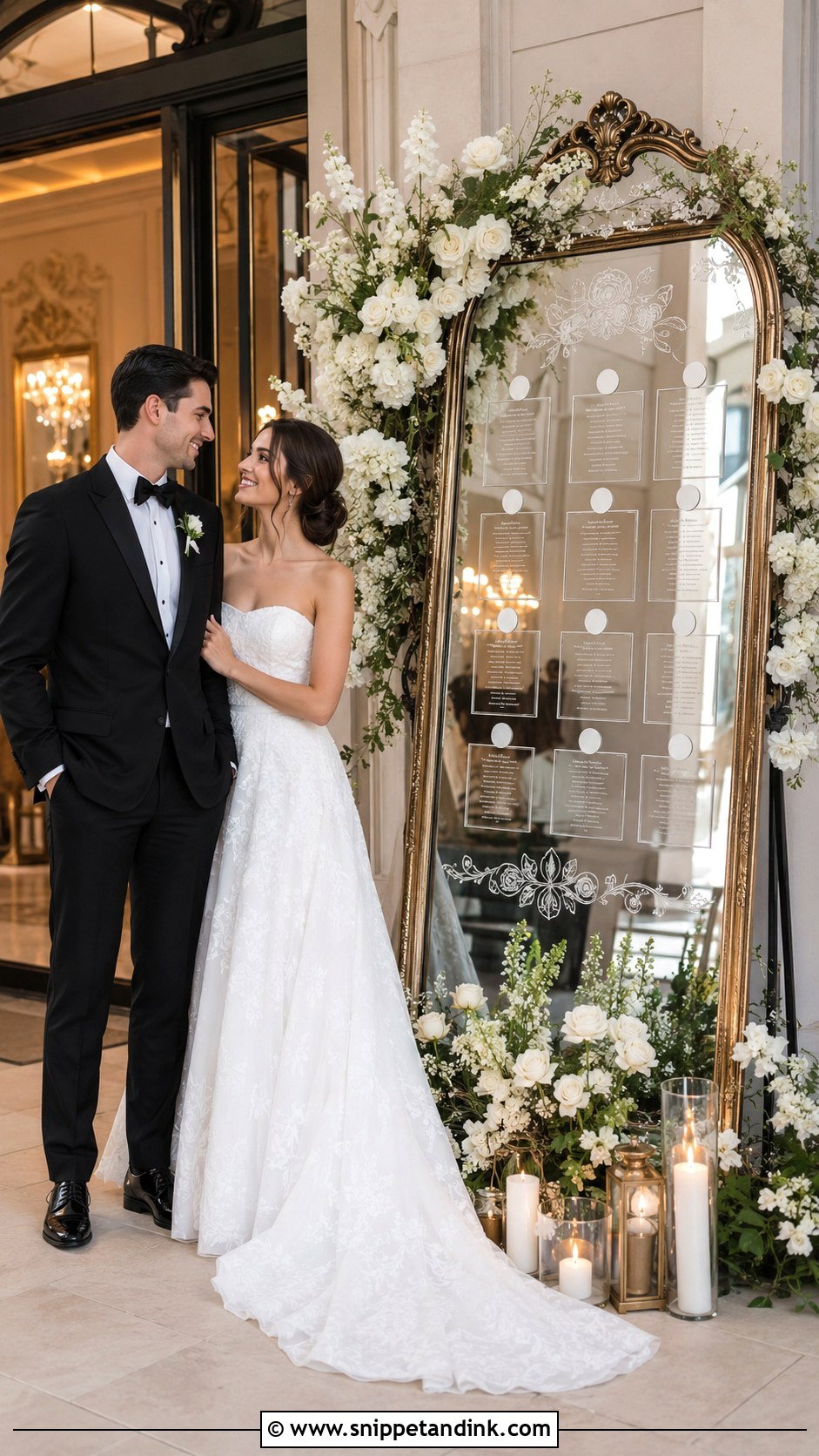
Mirror seating charts look good and work hard. A large gold, silver or antique mirror with calligraphy or printed vinyl names, framed with flowers or candles, suits classic, vintage, ballroom and garden weddings. Put it somewhere bright where guests can gather without blocking the door. For a modern take, use several smaller mirrors with grouped table lists. Readability comes first: elegant script that nobody can read causes a queue, so I test it from two metres away before the day.
18. Custom Monogram Wedding
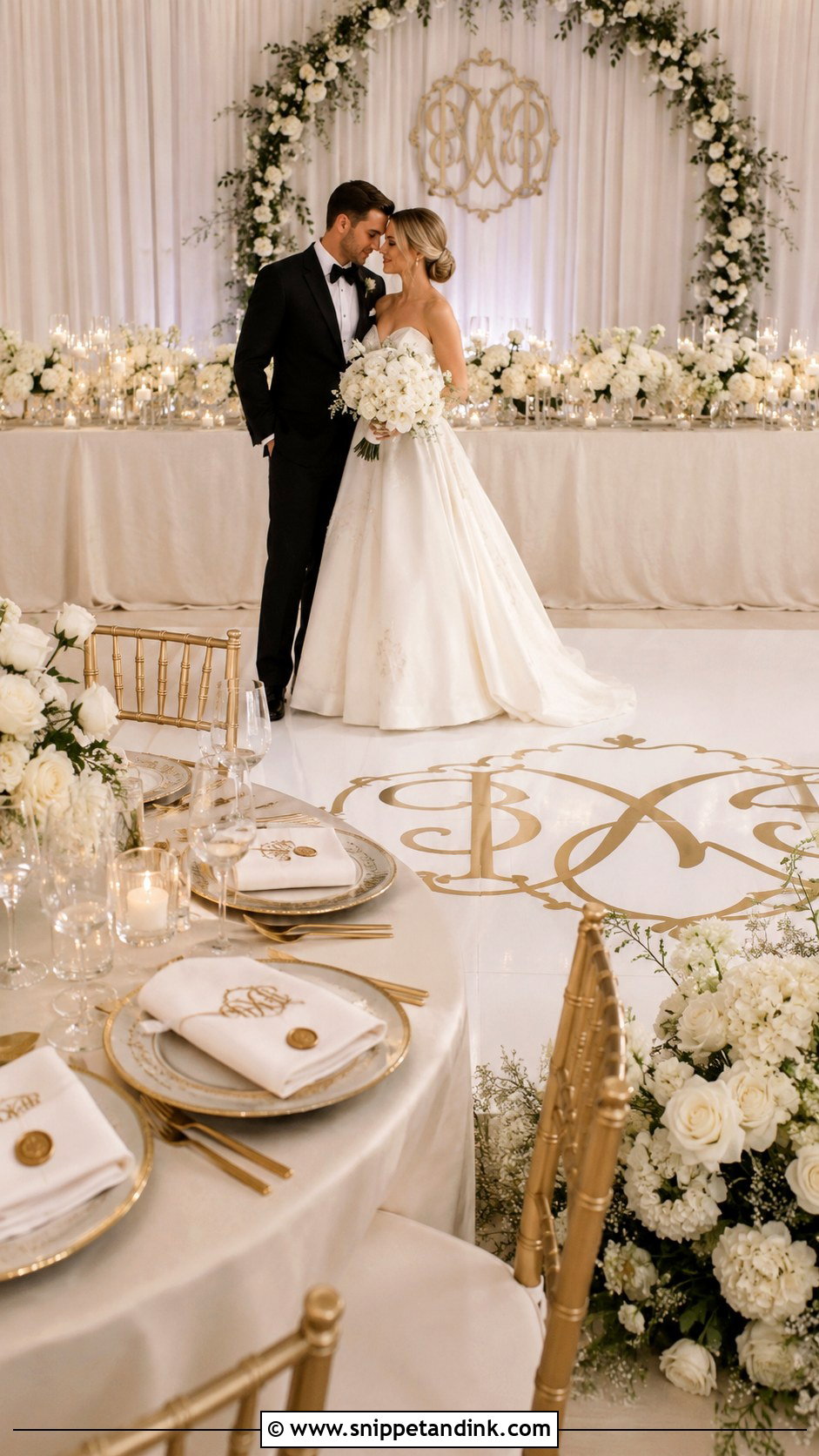
Monograms tie the paper and decor together. Use yours on invitations, menus, cocktail napkins, wax seals, dance floor decals, signage and favors, but not everywhere at once. Script feels classic, a clean serif modern. You can add a small symbol for the venue, season or your story. A monogram turns plain pieces into ones that look planned. Approve one master file and send it to every vendor; small differences between printers are what make a monogram look homemade.
19. Sculptural Flower Wedding
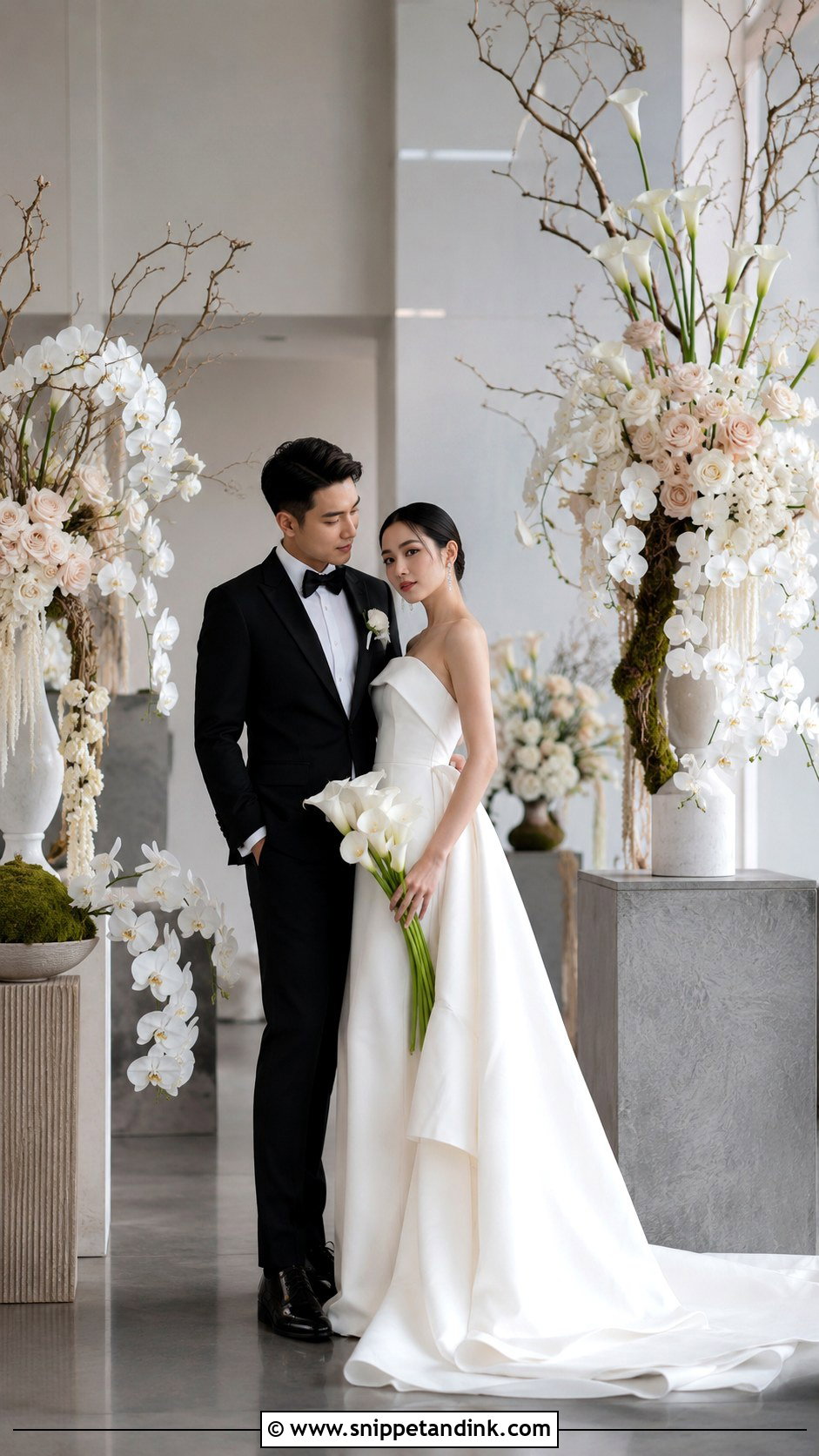
Sculptural flowers treat the arrangement as a shape: curves, towers, clouds, architectural forms. Orchids, calla lilies, anthuriums, roses, hydrangeas and branches suit it. Keep the palette tight so the shape reads. Use them at the ceremony backdrop, bar, escort table, cake table or entrance. It feels editorial and modern. These pieces take longer to build than standard arrangements and some need mechanics and water sources hidden inside, so your florist will need access to the room earlier than usual.
20. Black And White Wedding Theme
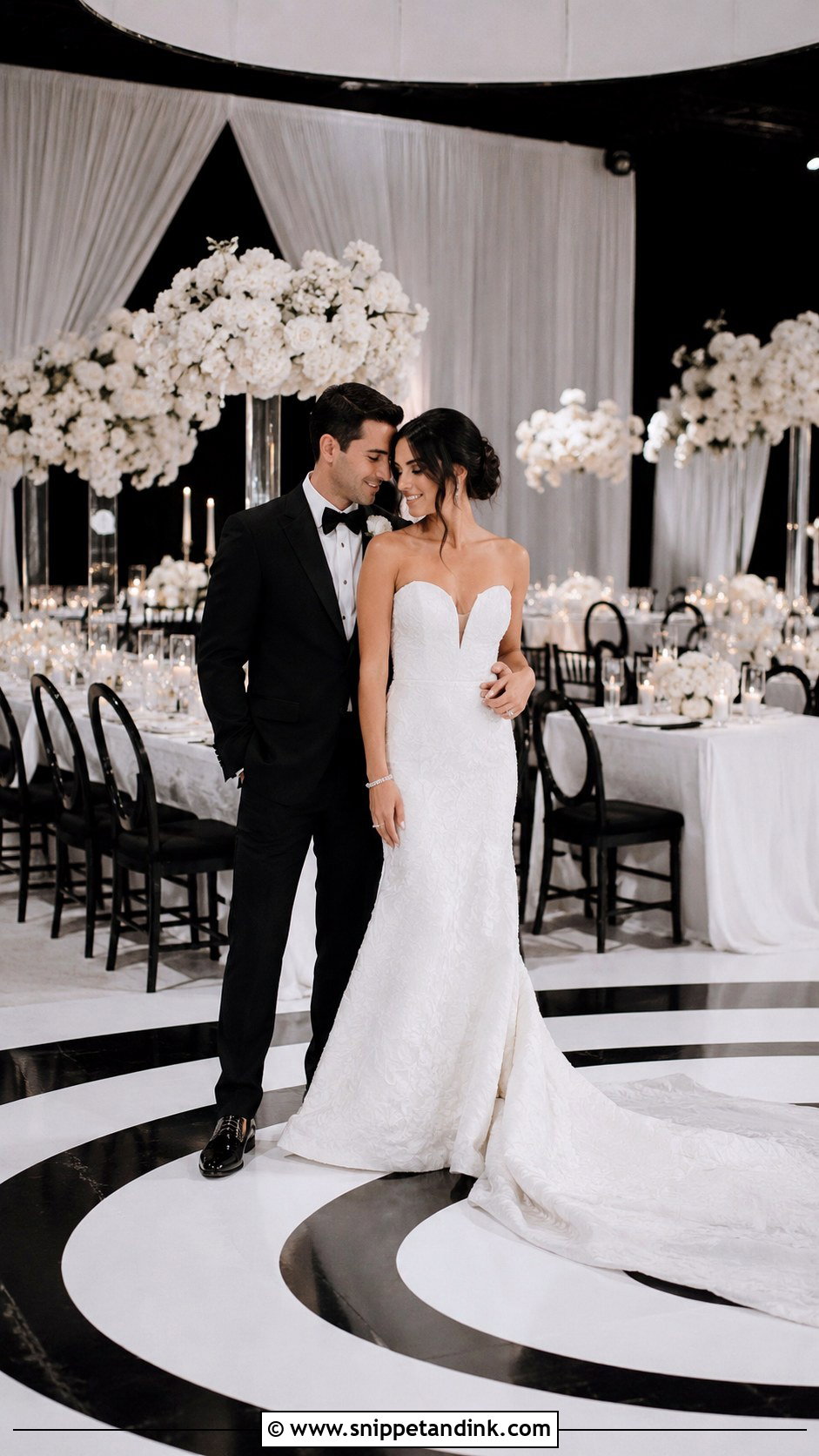
Black and white is crisp and easy to make formal. White flowers, black accents, black menus, white linens and clean type are the base; clear glass, silver flatware or crystal add shine. A black dance floor with white lettering makes a strong focal point. It suits black-tie dress and modern rooms, and works in historic spaces too. Bring in texture through fabric, flowers, candles and paper, or it can look stark. The contrast is clean in photos.
21. Old Money Wedding Aesthetic
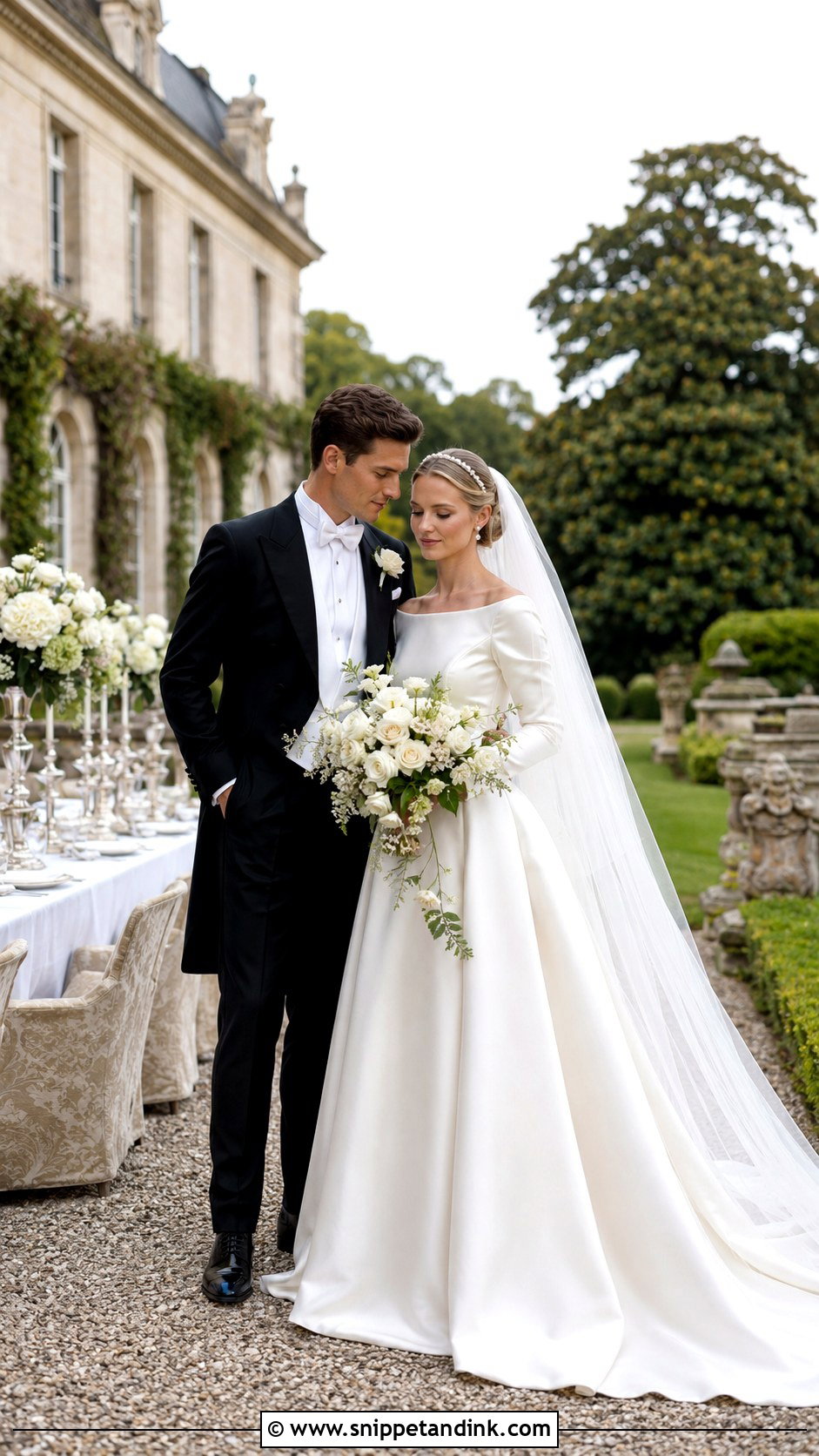
An old money wedding aesthetic is quiet and classic rather than shiny. Historic estates, private clubs, gardens and grand hotels suit it. Use ivory flowers, tailored stationery, fine linens, silver and traditional place settings. Bridal fashion leans to simple satin, lace, pearls, gloves or a long veil; the groom should be sharply tailored. Skip anything trendy or crowded. Put the money into fewer, better things, such as a dressed staircase, well-set tables and a refined cake. Restraint is the whole look, which makes it one of the more budget-friendly formal styles.
22. Modern Minimalist Wedding
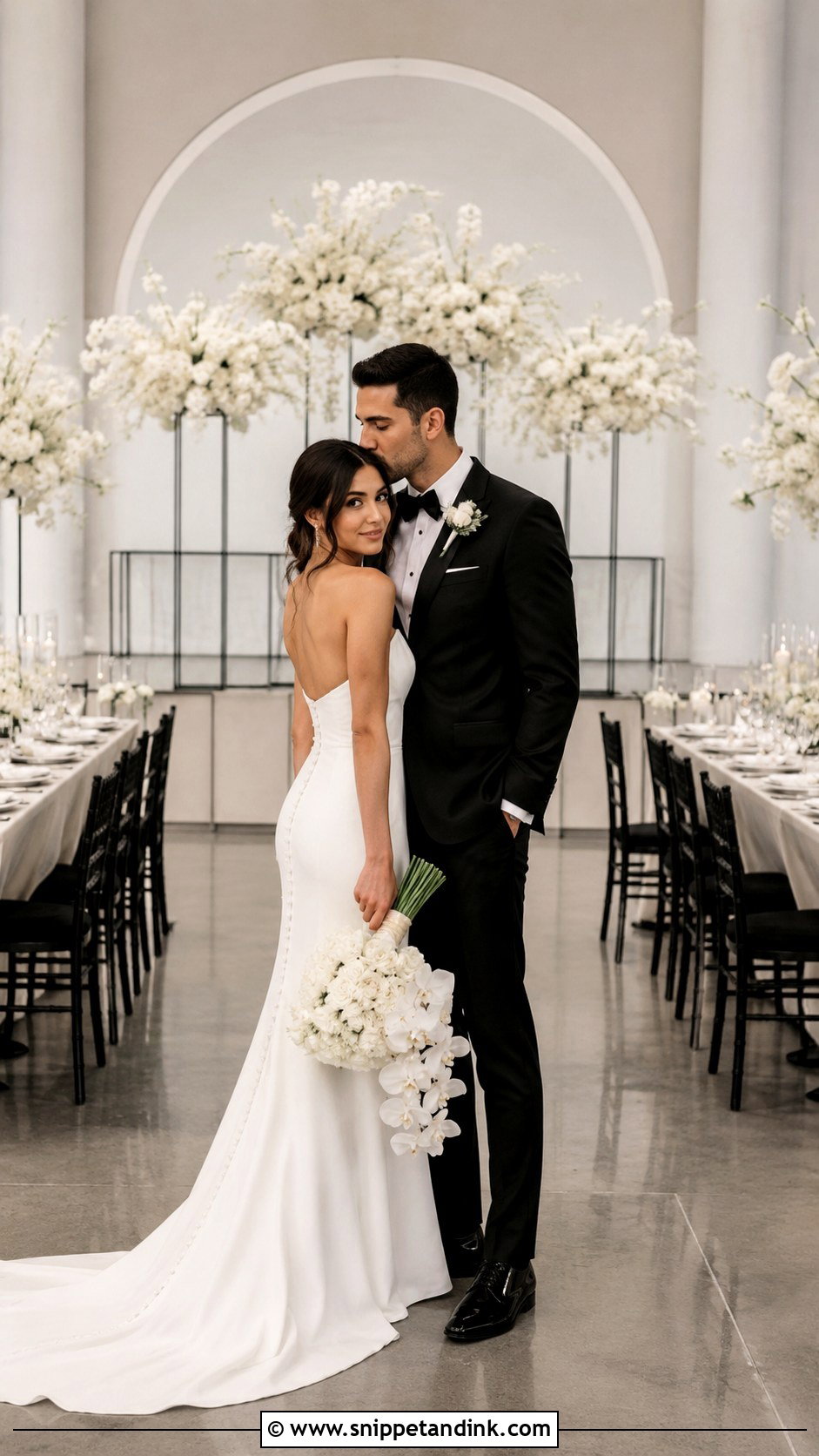
Minimalism only reads as formal when every detail is precise. Clean lines, open space, good materials and a short palette of white, ivory, black, beige and soft grey. Choose a few strong pieces, like sculptural flowers, a sleek ceremony backdrop and simply set tables. Galleries, rooftops and architectural spaces suit it best. Keep signage clean, flowers deliberate and lighting bright. It’s less forgiving than a busy design, because a crooked chair or a stray cable stands out, so I schedule a full walkthrough of the room before doors open.
23. Romantic Draped Wedding
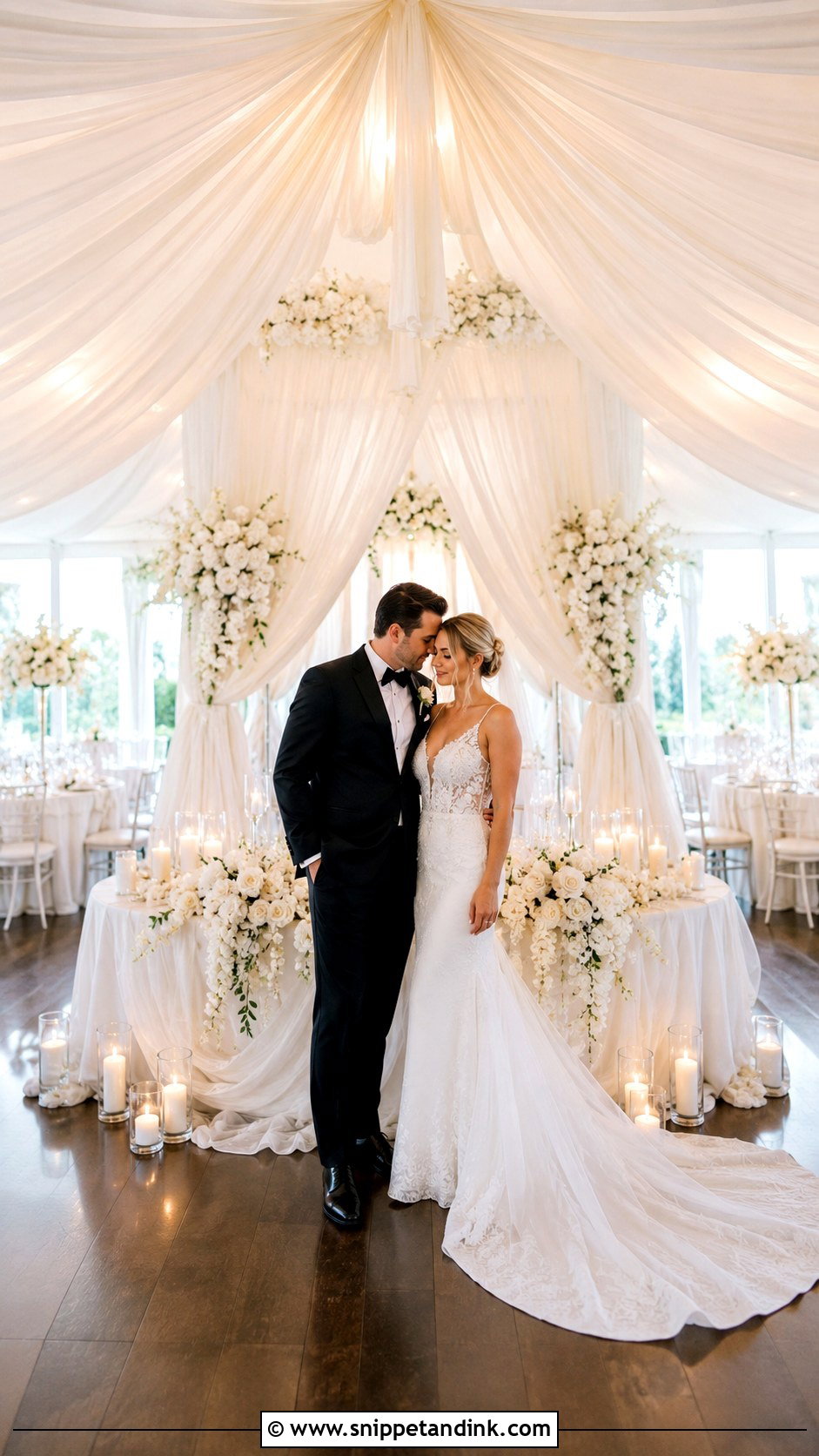
Fabric softens a room quickly. Draping can frame the ceremony, line a tent ceiling, define the reception area or highlight the sweetheart table. Sheer white, ivory, blush or champagne fabric gives the soft look; add flowers, candles and good lighting so it looks deliberate. Tents, ballrooms, warehouses and plain halls benefit most, and it makes large rooms feel more intimate. Thin or wrinkled draping looks cheap, so ask your decorator about fullness and whether fabric will be steamed on site. Also check it’s flame-retardant, which many venues require.
24. Luxury Tent Wedding
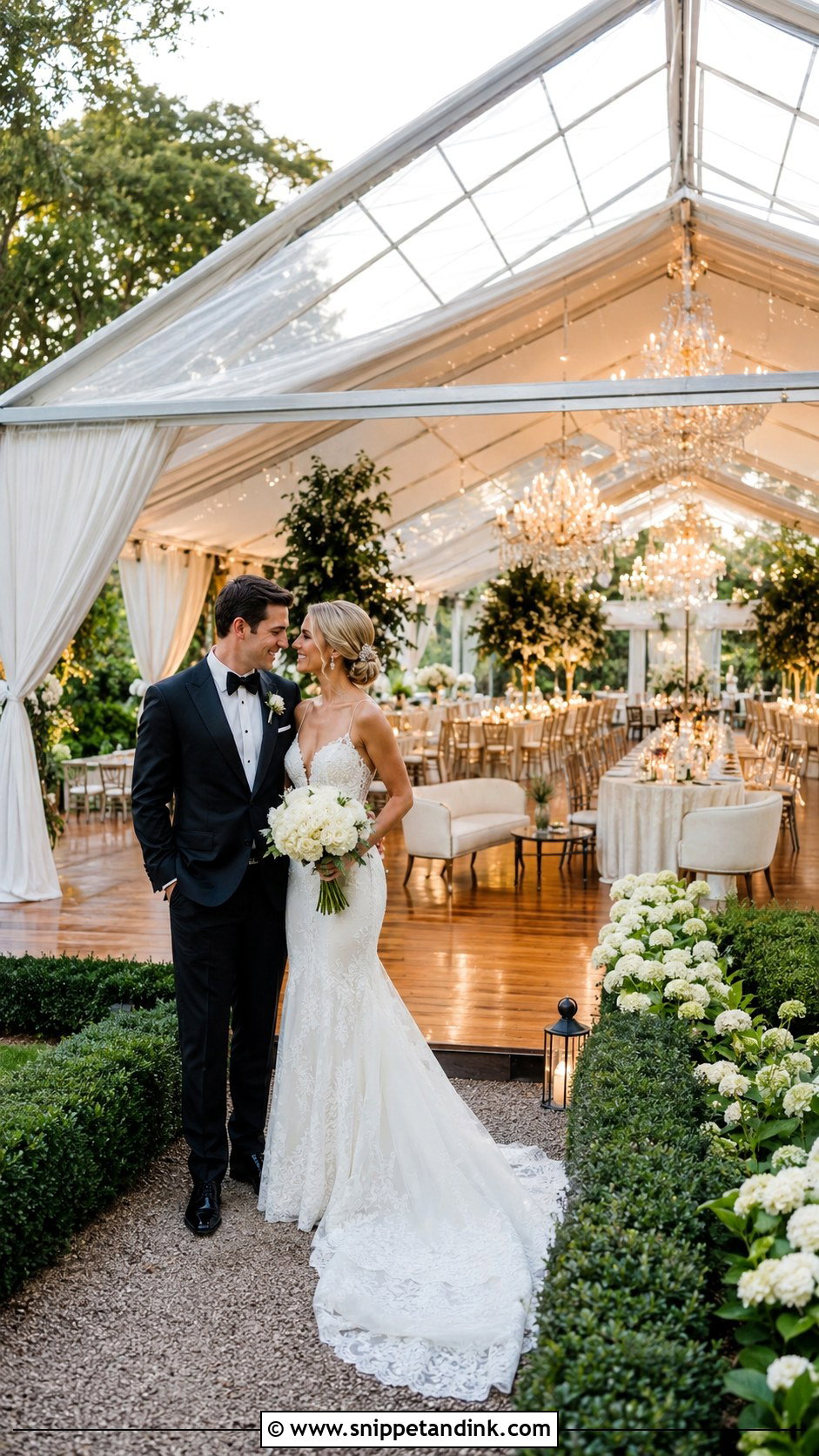
Tents give you outdoor scenery with a designed reception inside. Choose clear-top, sailcloth or high-peak, then add flooring, lighting, draping and good furniture. Long tables, chandeliers, floral installations and lounges make it feel like a real venue. Pick a palette that suits the landscape: ivory and green, soft blue and white, or beige and gold. Tents need serious planning for weather, power, restrooms and guest flow, plus possible permits, so I start tent logistics as early as any other venue booking.
25. Pearl Detail Wedding
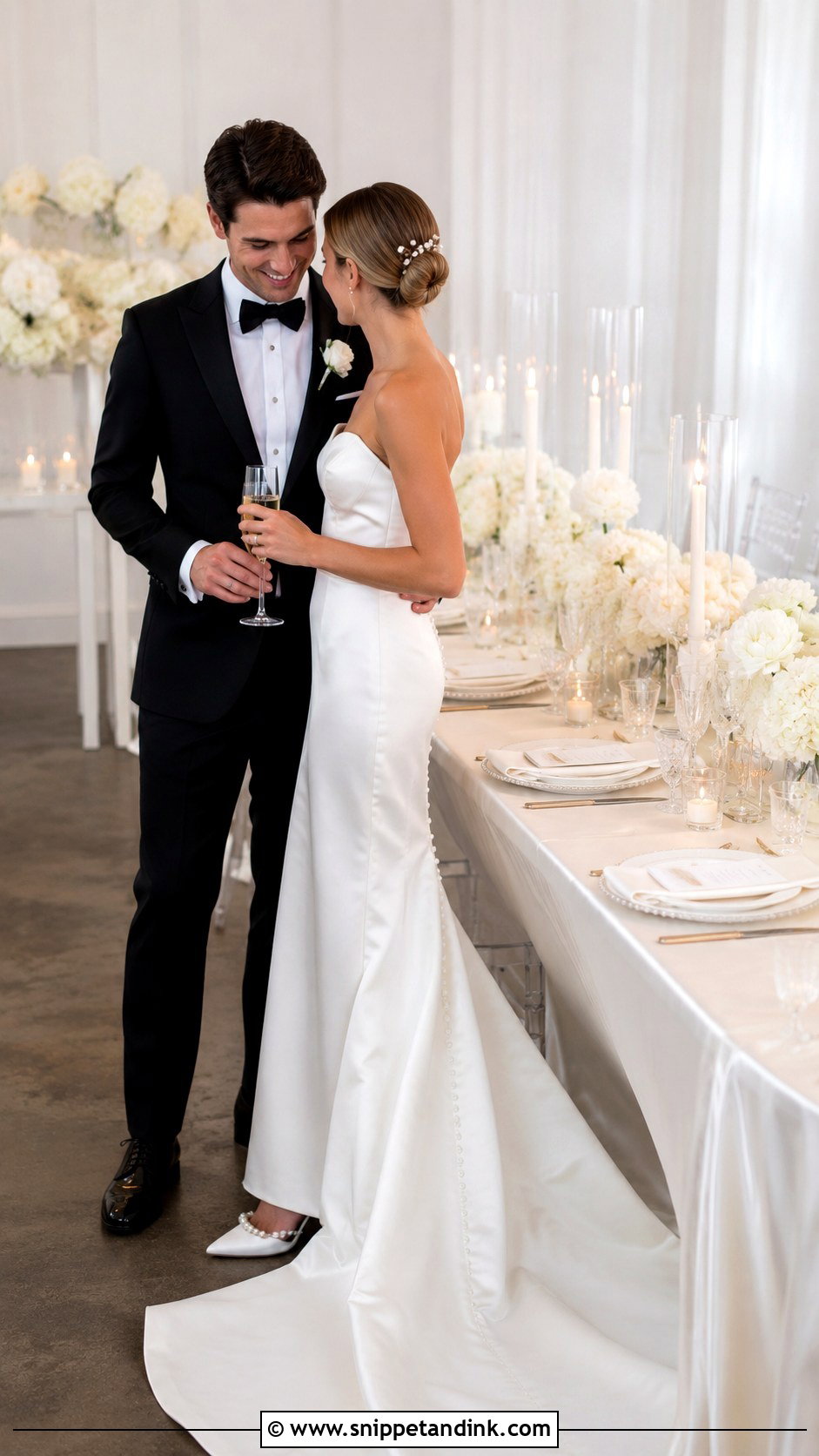
Pearls work best as a repeated small detail, not a theme. Put them on bridal accessories, invitation accents, napkin rings, cake details, shoes, hairpieces or clutches. Pair them with ivory flowers, satin, glass candleholders and soft metallics, in cream, white, blush and champagne. Classic, coastal, ballroom and vintage weddings suit it. Strands draped over everything make it look themed; three or four quiet appearances through the day feel refined.
26. Fine Dining Wedding Reception
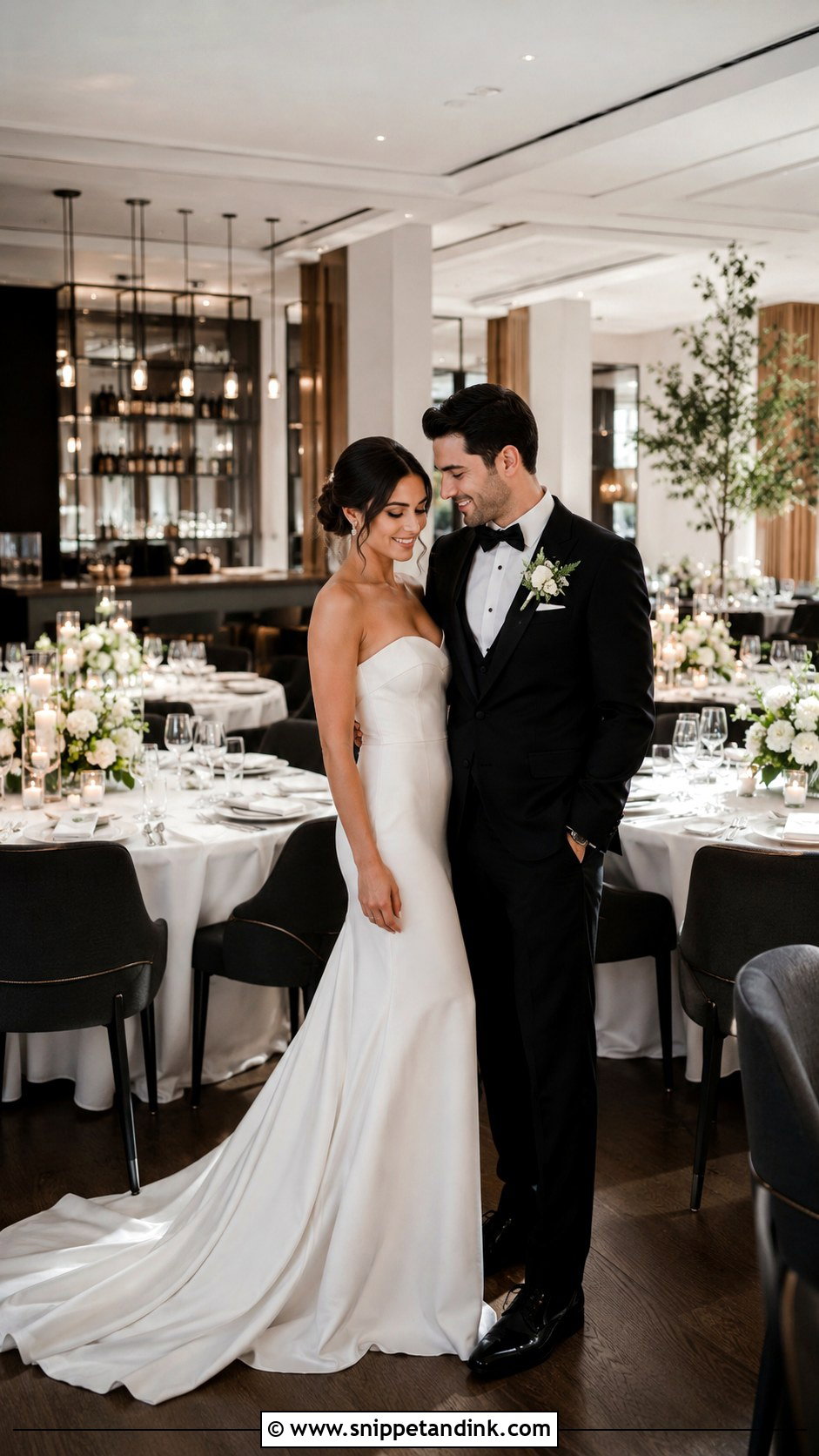
Fine dining puts the guest experience at the table first. Elegant place settings, attentive service, plated courses and a calm pace are what make it feel special. Printed menus, glassware for each pairing, folded napkins and comfortable chairs complete each seat. Low flowers and candlelight let people talk across the table. Smaller weddings, restaurant buyouts, private estates and venues with strong catering teams suit it. Plated service needs more staff and more time than a buffet, so build longer dinner blocks into the timeline and confirm staffing ratios with your caterer.
27. Statement Wedding Cake Table
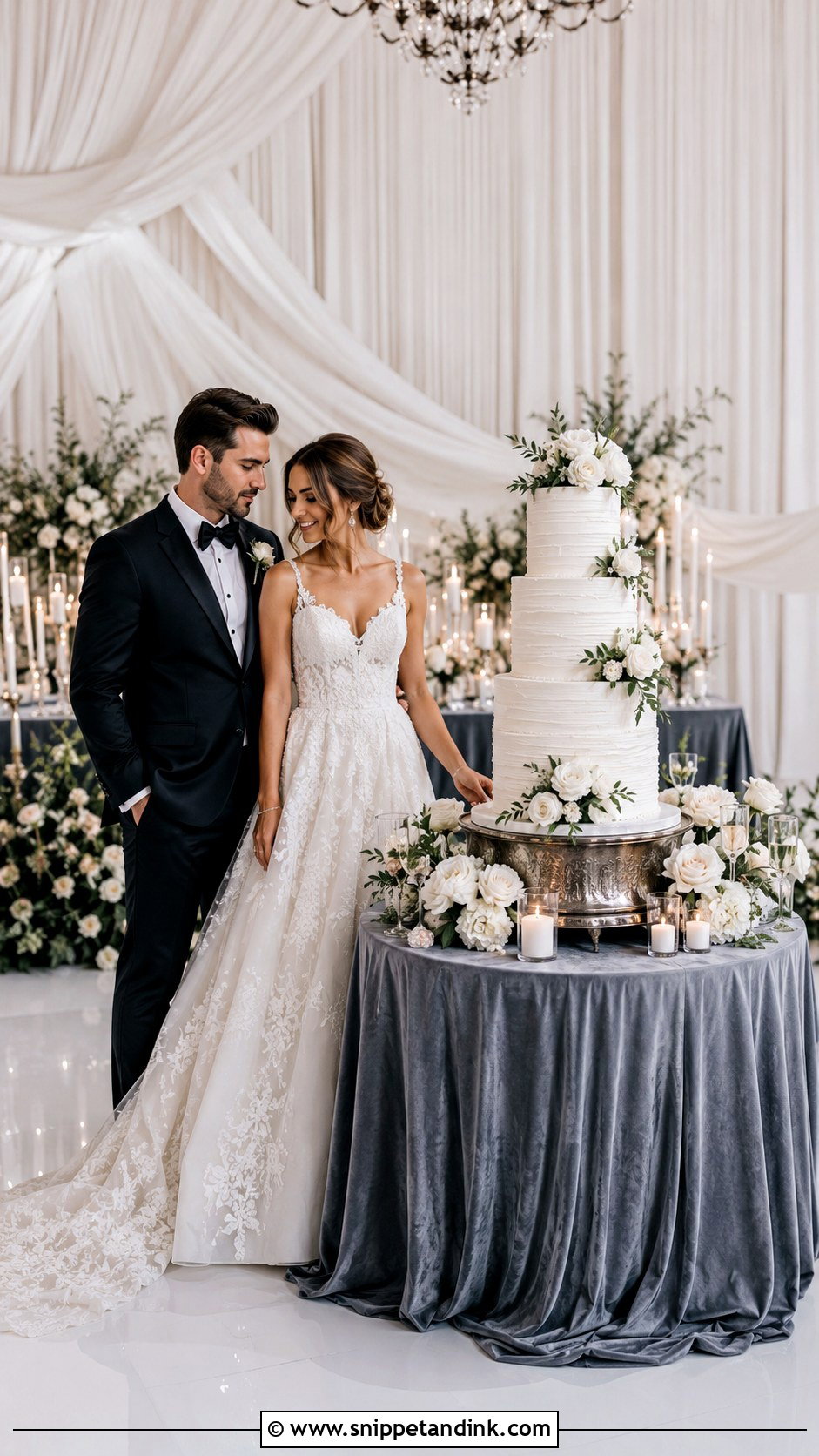
A statement wedding cake table gives dessert its own moment instead of a forgotten corner. Style it with flowers, candles, fabric or a backdrop. Choose a cake that matches the mood: smooth white tiers, florals, pearl details or modern texture. Keep the table in proportion to the cake. Add clean signage if needed. Place it away from heaters, sunny windows and the dance floor’s foot traffic; buttercream softens in heat and a bumped table is the most common cake disaster I’ve seen.
28. Live Music Wedding Ceremony
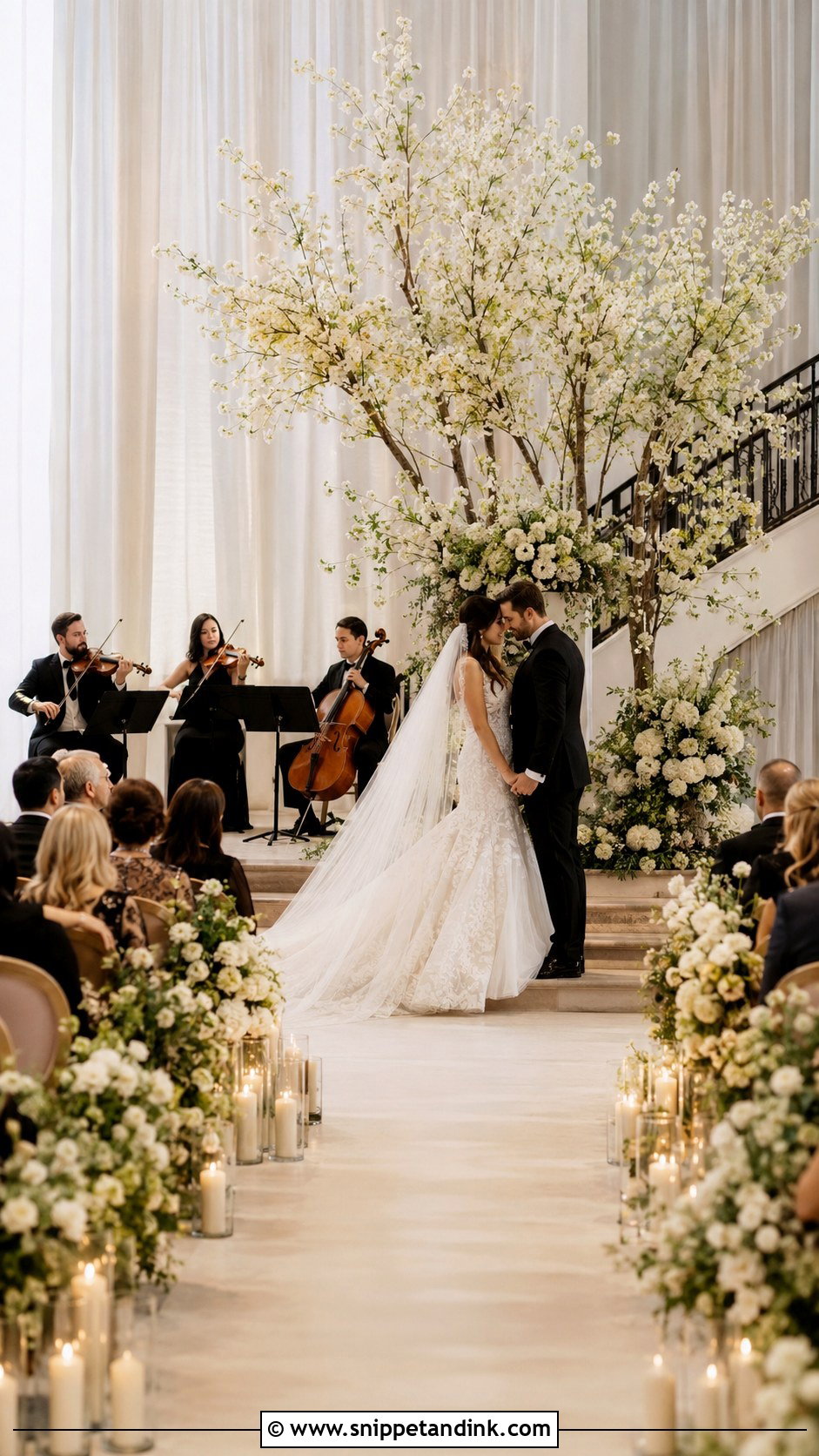
Live music changes the feel of a ceremony more than any decor. A string quartet, harpist, pianist or acoustic group adds emotion. Pick music that suits the setting and your style while fitting the moment, and use it for guest seating, the processional, the signing and the recessional. It works indoors or out, from gardens to ballrooms. Outdoors, check that musicians have shade, a flat surface and power if needed, and that the instruments can handle humidity; many string players won’t perform in direct sun or rain.
29. Editorial Wedding Portrait Area
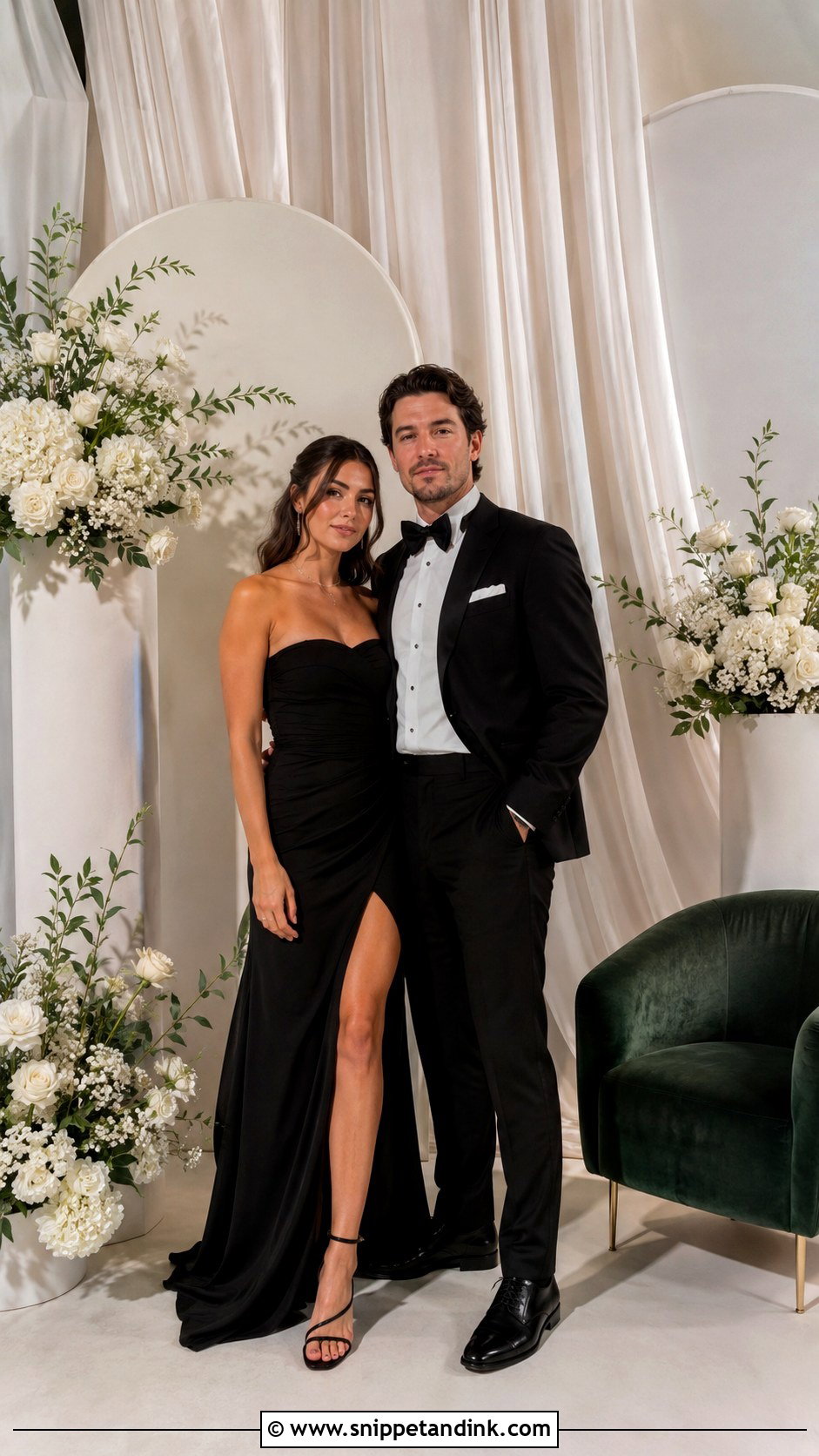
A styled portrait area is a grown-up alternative to the photo booth. Build a backdrop with fabric, flowers, furniture, lighting or architectural panels, and link the colors to the rest of the design. A velvet chair, a floral pedestal or a clean wall treatment adds depth. Place it near cocktail hour or the entrance, where guests pass naturally. Good light is what makes it work, so plan a dedicated light source rather than relying on the room, which usually dims as the night goes on.
30. Elegant Wedding Send Off
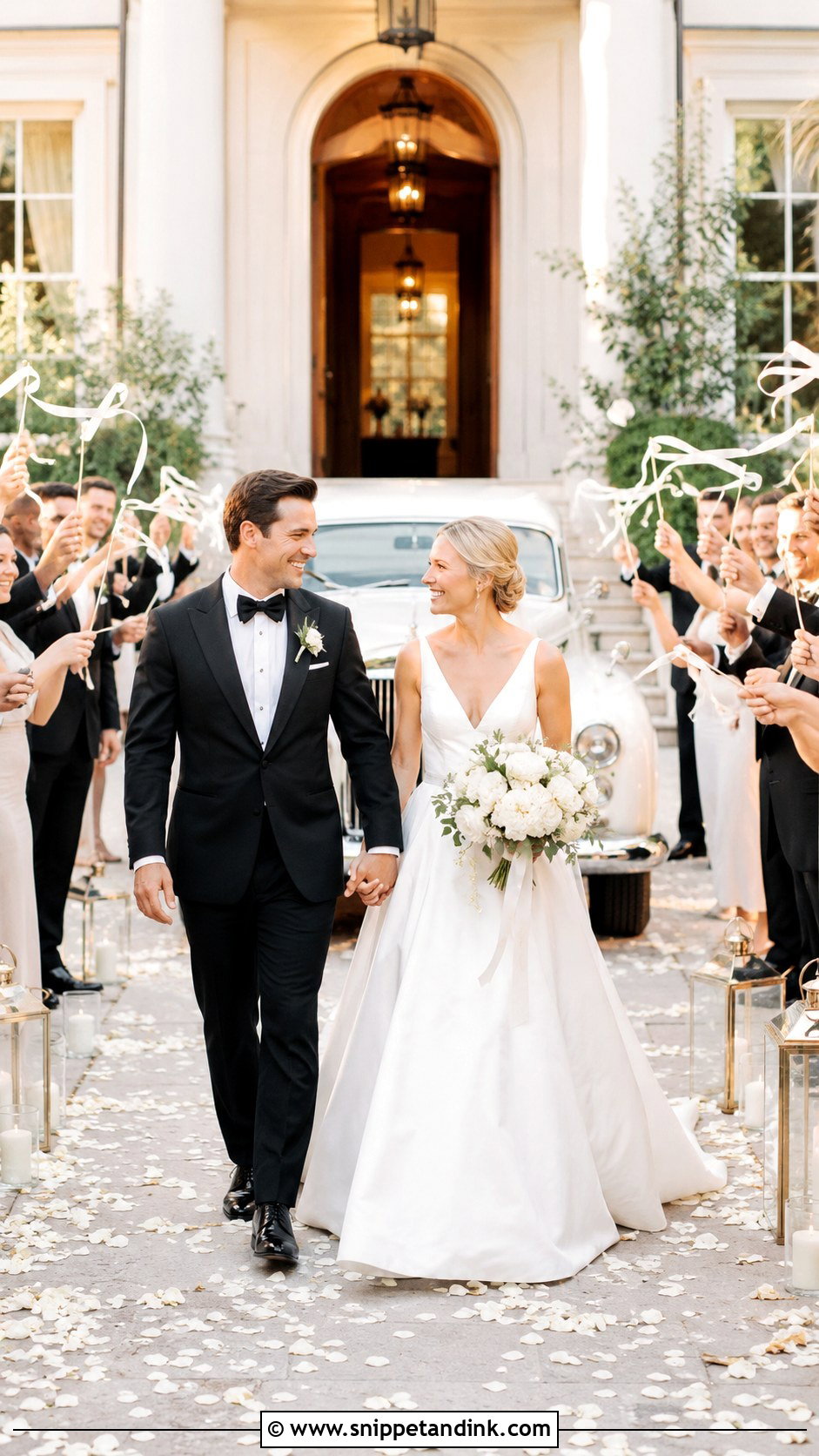
An elegant wedding send off gives the night a proper ending. Petals, ribbon wands, bubbles or a classic getaway car all work if they suit the venue’s rules. For a grand exit, line the path with candles in glass or lanterns. Agree the timing with your photographer so it happens while they’re still on the clock. A sleek reception dress, sharp suit or wrap can add to the moment. Ask the venue early what’s permitted; many ban confetti, rice and sparklers, and petals sometimes need to be real rather than paper.
Venue Rules That Can Sink a Grand Idea
Most of the ideas above depend on what your venue allows, and the contract is where I look before any design meeting. Ask these questions before you book or before your florist starts pricing:
- Open flame: are bare candles allowed, or only candles enclosed in glass? Some venues allow neither.
- Hanging anything: where are the rigging points, what weight can they hold, and must you use the venue’s approved rigger?
- Access times: when can vendors load in, and when must everything be out? Large installs need hours, and a late-night load-out can add overtime charges.
- Exits and send-offs: are confetti, petals, sparklers or bubbles permitted inside, outside or not at all?
- Room changes: if the ceremony and dinner share a space, how long is the turnaround, and who moves the chairs and flowers?
Getting written answers early saves the painful version of this conversation: a designed floral ceiling the venue won’t let you hang, discovered three weeks before the wedding.
Three Details Done Well Beat Thirty Done Halfway
Formal weddings work when they create one clear feeling from start to finish. You don’t need every luxury at once. You need a few strong choices that fit your venue, season, guest count and style. Put your effort into florals, lighting, tables, music, stationery, fashion or hospitality, and repeat those choices with care so every moment connects. The weddings guests remember are polished, comfortable and personal, and that comes from planning, not from the size of the budget.
You'll Like These Ideas:


Leave a Reply