
A Greek-inspired cake works when it borrows one or two real things from the islands: whitewashed walls, that deep Aegean blue, olive branches, lemon, honey, figs, marble, a trail of bougainvillea. It doesn’t need to look like a postcard. Some of the most convincing versions I’ve made carried a single olive wreath on plain white tiers and nothing else. Below are twenty directions, each with notes on how it behaves in the kitchen, on the drive and on the cake table, so you can pick the one that suits your venue and menu.
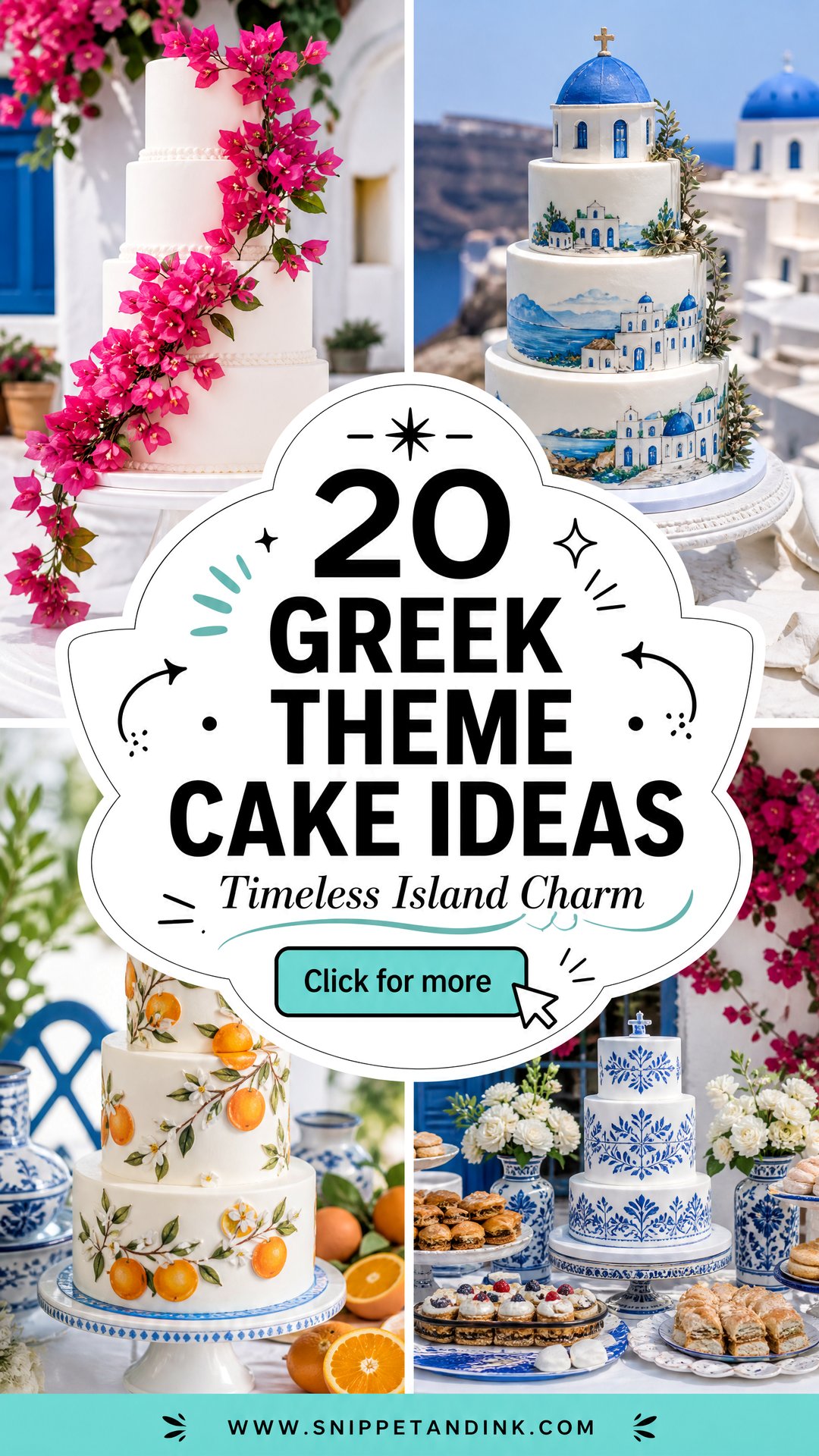
Getting Santorini Blue Right Before the First Tier Is Baked
Almost every Greek cake brief I take hinges on one colour, and blue is the hardest colour in cake decorating to predict. It’s worth settling it at the design stage rather than on the morning of delivery.
- Bring a physical swatch, a napkin or a ribbon, not just a phone photo. Screens push blue toward bright cyan, and island blue in real life is deeper and slightly grey.
- Ask what the blue sits on. Butter-based icing has a natural yellow tint that turns blue greenish, so the baker will either whiten it first, use a white chocolate ganache under fondant, or paint the colour onto a white surface.
- Expect the colour to deepen. Gel colours keep developing for a few hours after mixing, which is why I tint blue the day before and judge it the next morning.
- Keep blue away from moisture. In a humid marquee or a fridge-to-terrace move, condensation can make painted blue bleed into white icing beside it.
Agree the flavour and the palette together. Lemon, almond and honey are the natural Greek pairings, and lighter sponges sit better under fondant than very dense ones.
1. Santorini Blue And White Wedding Cake
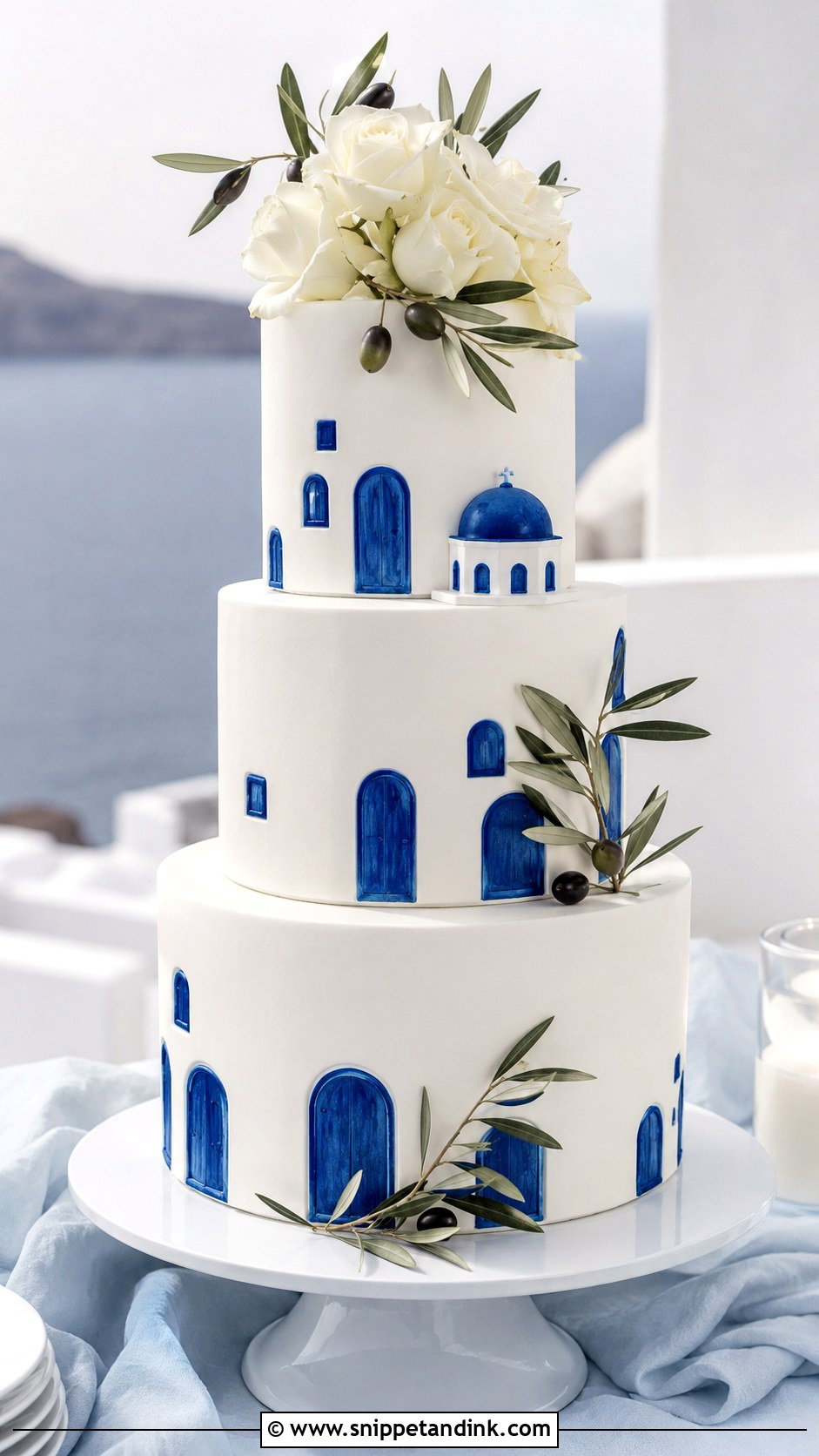
This is the look most couples picture first: smooth white tiers standing in for island walls, with cobalt arriving through ribbon bands, painted arches or a tiny dome on top. Blue is where I slow down. Gel colour mixed into buttercream that still has a yellow cast from the butter drifts toward teal, so I either whiten the base first or paint the blue onto fondant panels. Keep the shape clean and let the colour do the work. Vanilla bean, lemon or almond sponge keeps the flavour as light as the look, and a few olive leaves soften it for a wedding table.
2. Olive Branch Wedding Cake
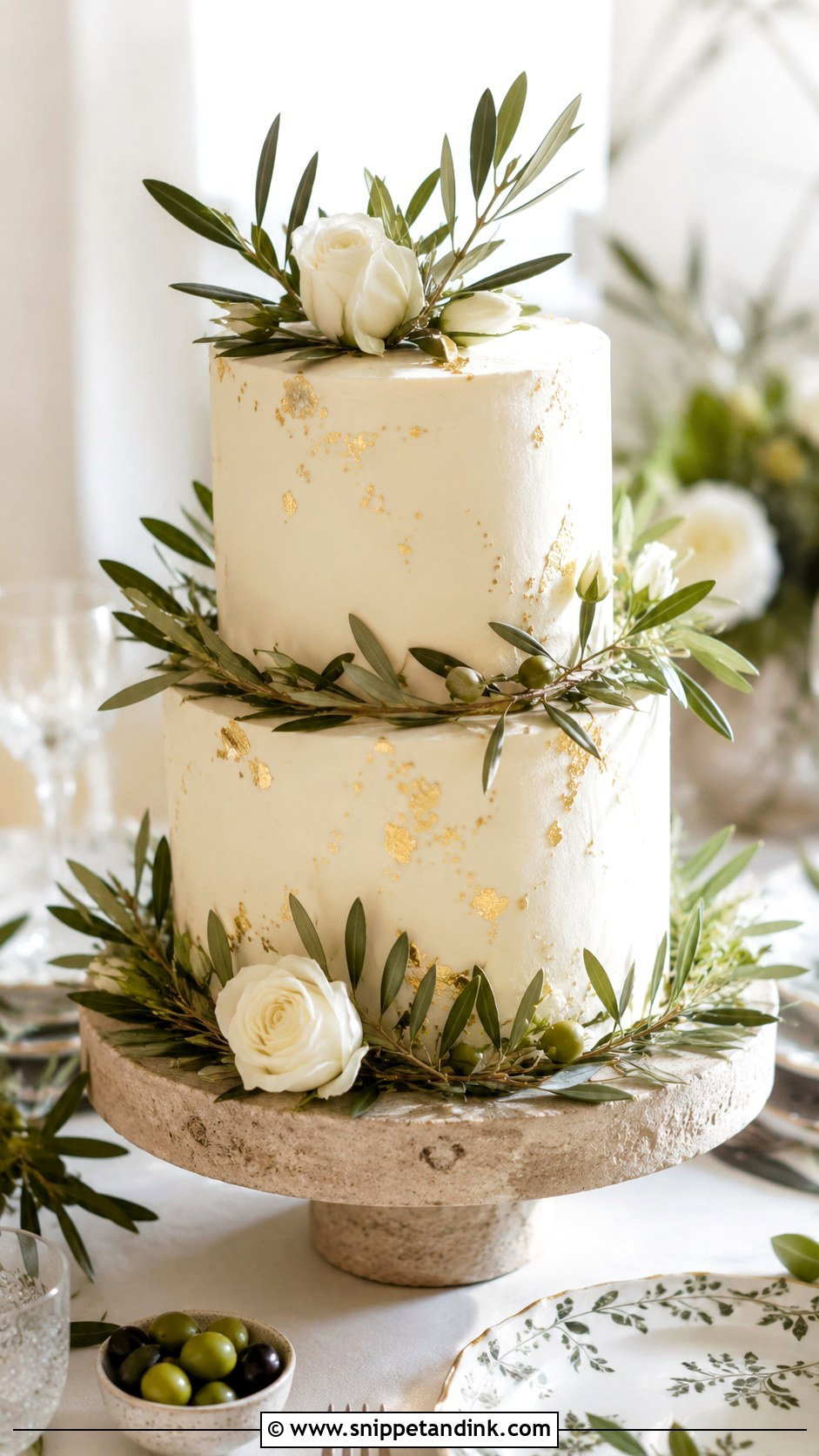
Olive greenery is the easiest Greek cue to get right, because the leaf shape is unmistakable even in small doses. On a white buttercream or fondant base you can wrap fresh olive leaves around each tier, build a small wreath on the front, or run one branch up the side. If the leaves are real, I wash them, dry them fully and put a barrier under any stem that touches the cake, since florist greenery is rarely grown as food. Lemon olive oil cake or pistachio sits naturally underneath.
3. Greek Column Wedding Cake
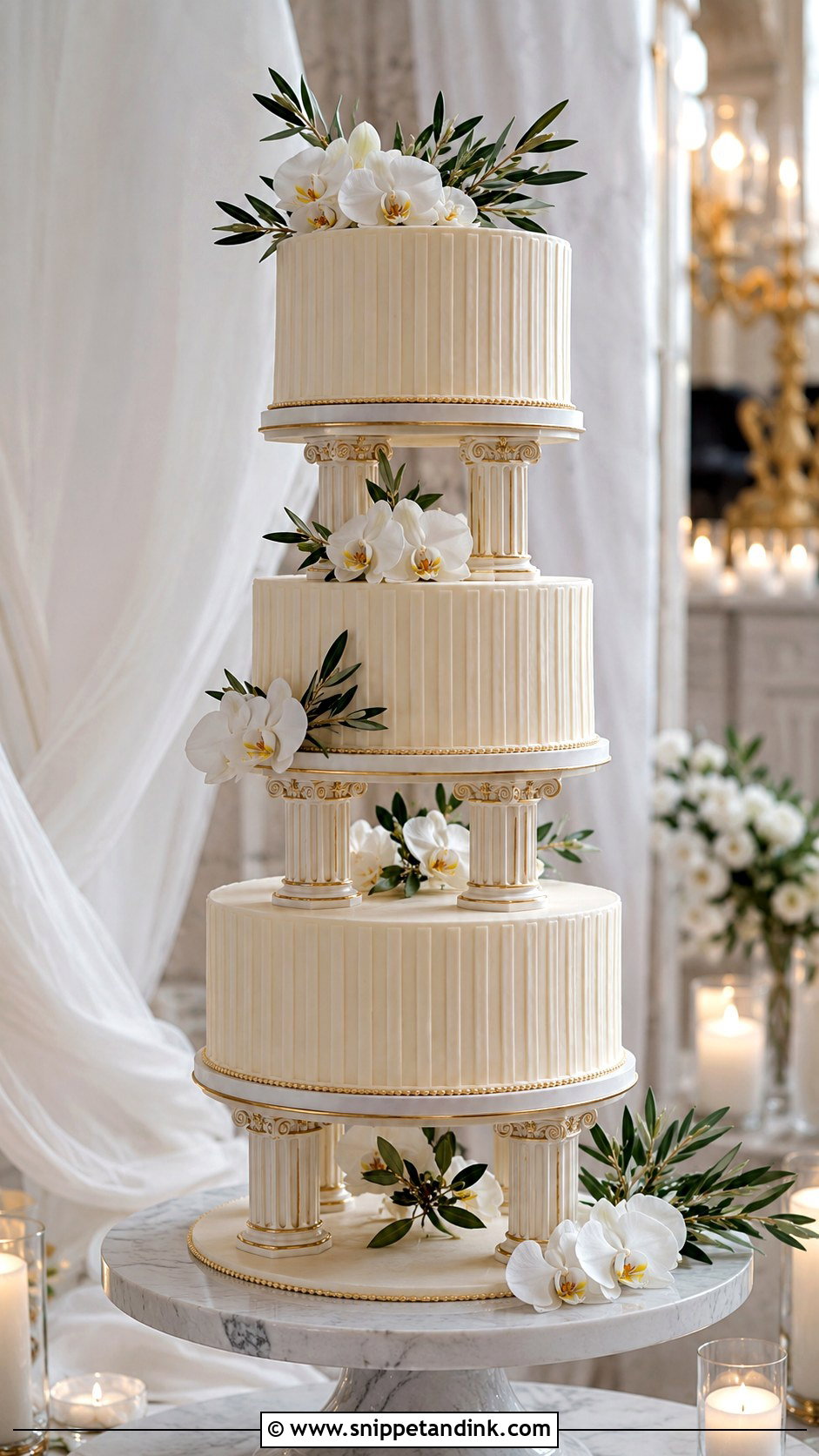
Columns tempt people toward something that looks like a museum model. I keep the reference softer: fluted fondant panels that catch side light, or tier separators shaped like plain pillars. Those separators are structural, not decoration, so each tier above them needs its own board and dowels sized for the weight. White and ivory read as marble; gold trim suits a formal room, olive leaves an outdoor one. It needs three or four tiers to have presence, and almond or honey sponge suits the classical mood.
4. Greek Marble Wedding Cake
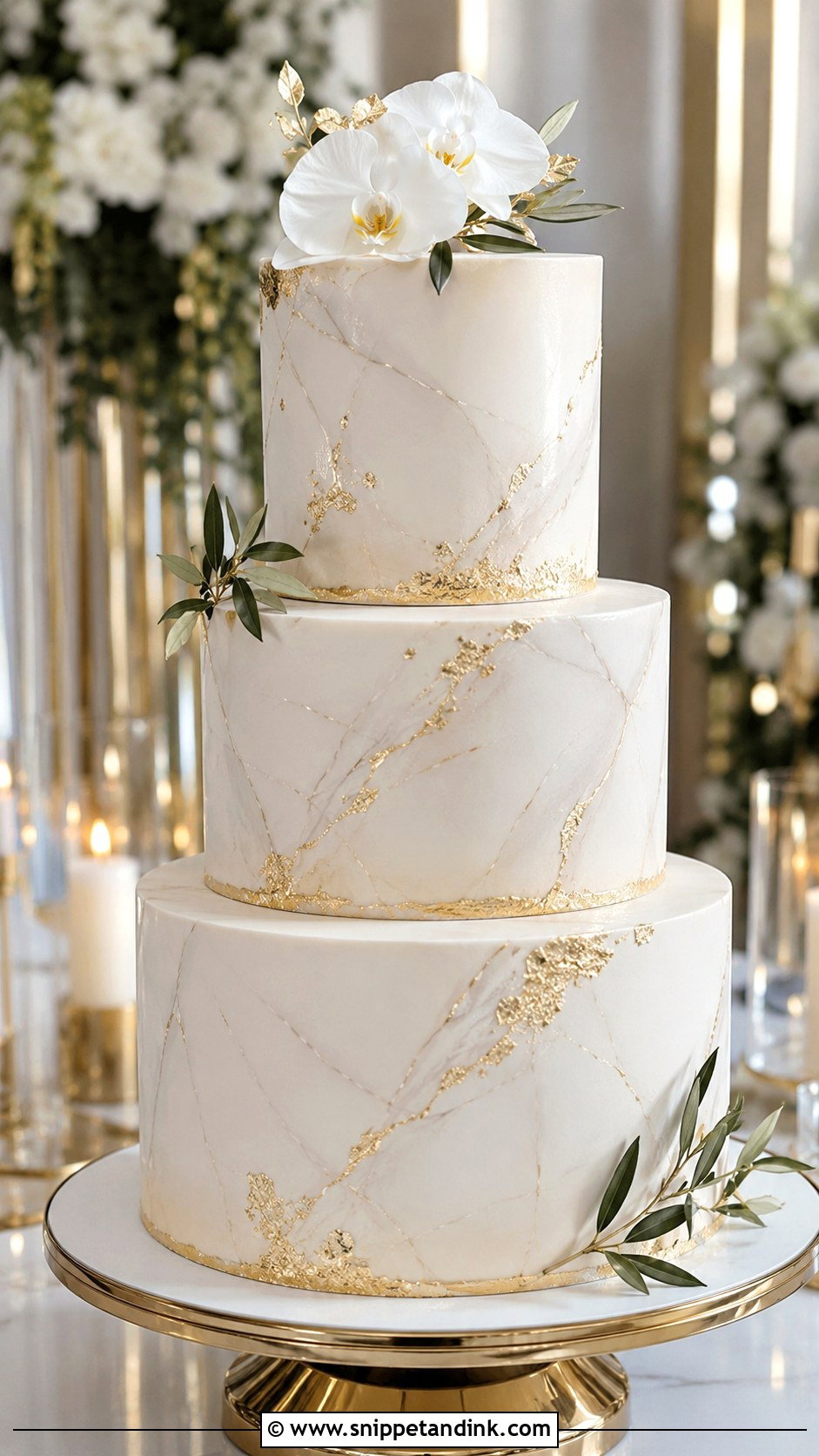
Marble gives you a modern cake with an ancient reference, and the veining already supplies all the movement it needs. I build it either by folding grey into fondant before rolling or by painting veins on with a fine brush and diluted colour; the folded method looks more like real stone at a distance. Stop at gold leaf and one small laurel or olive sprig. Hotel ballrooms suit it best, where cool even lighting shows the veins. Vanilla almond or white chocolate keeps the inside as calm as the outside.
5. Bougainvillea Wedding Cake
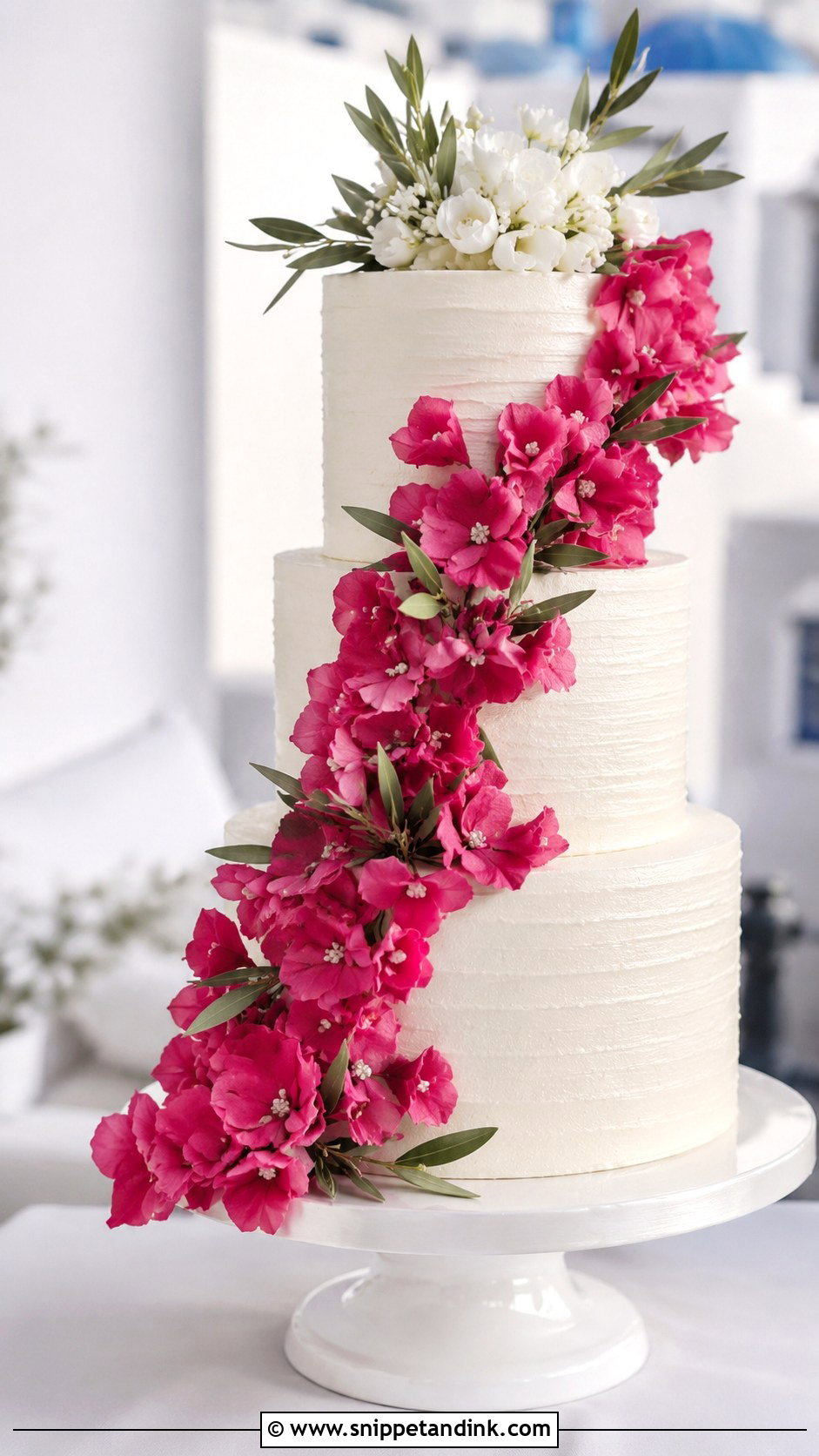
Bougainvillea instantly says Santorini, and the hot pink against white tiers brings real warmth. I’d make the blooms in sugar rather than use fresh ones. Bougainvillea’s colour comes from papery bracts that wilt quickly in heat and aren’t a food-safe flower to press into buttercream. A cascade down one side is plenty; let the pink be the only strong colour. Spring and summer weddings suit it, with lemon, strawberry or almond cake underneath.
6. Greek Tile Wedding Cake
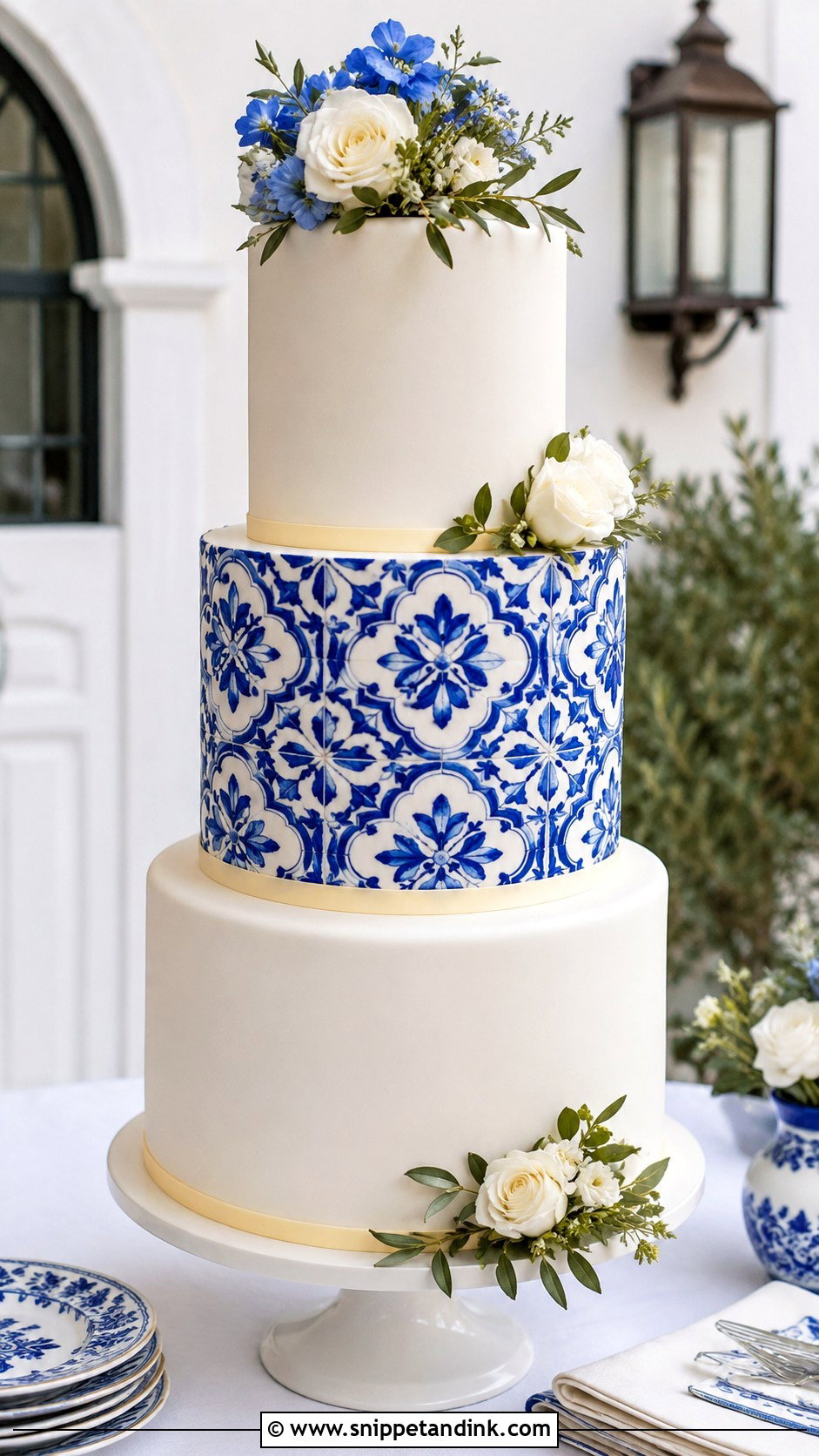
Tile pattern is pure hand painting, so ask to see a baker’s brushwork before you commit to this one. The motifs come from blue-and-white island ceramics, painted with colour mixed into a little alcohol on fondant that has firmed overnight; on soft icing the brush drags. One patterned tier looks refined, while every tier patterned turns bold quickly. Keep flowers small and white, and set it on a plain white stand so the artwork has nothing to compete with. Orange or almond sponge fits the bright coastal feel.
7. Gold Laurel Wedding Cake
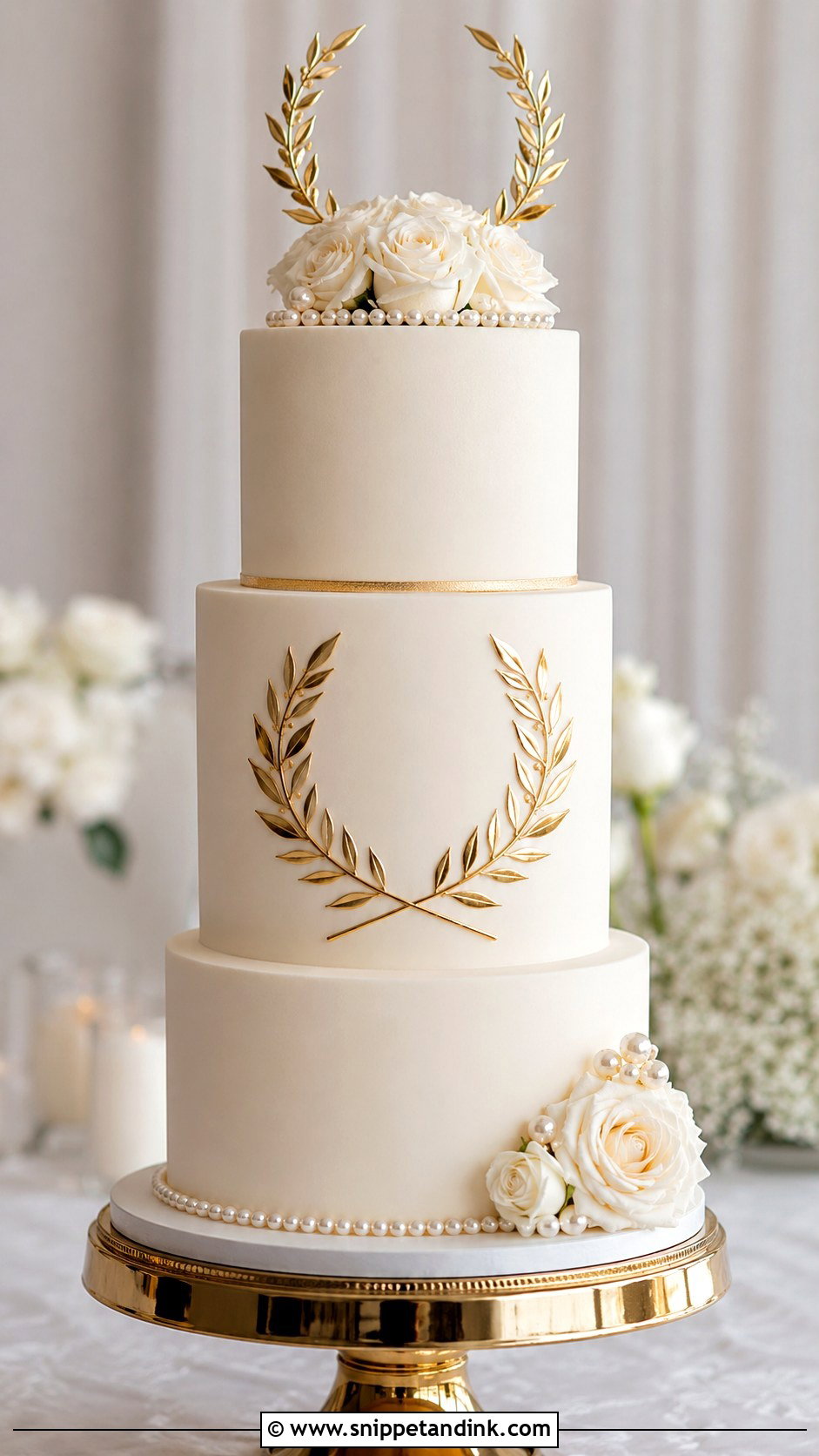
Laurel carries the old associations of honour and victory, which makes it a meaningful wreath for a wedding. On smooth ivory tiers I’ll either pipe and gild it or cut it from gumpaste and paint it with gold lustre, which is edible and different from the non-toxic decorative dust some suppliers sell. Ask which one your baker uses if the gold sits on parts that get served. A crown-like wreath round the top tier works for black tie. Honey vanilla or pistachio adds the warmth.
8. Lemon Olive Oil Wedding Cake
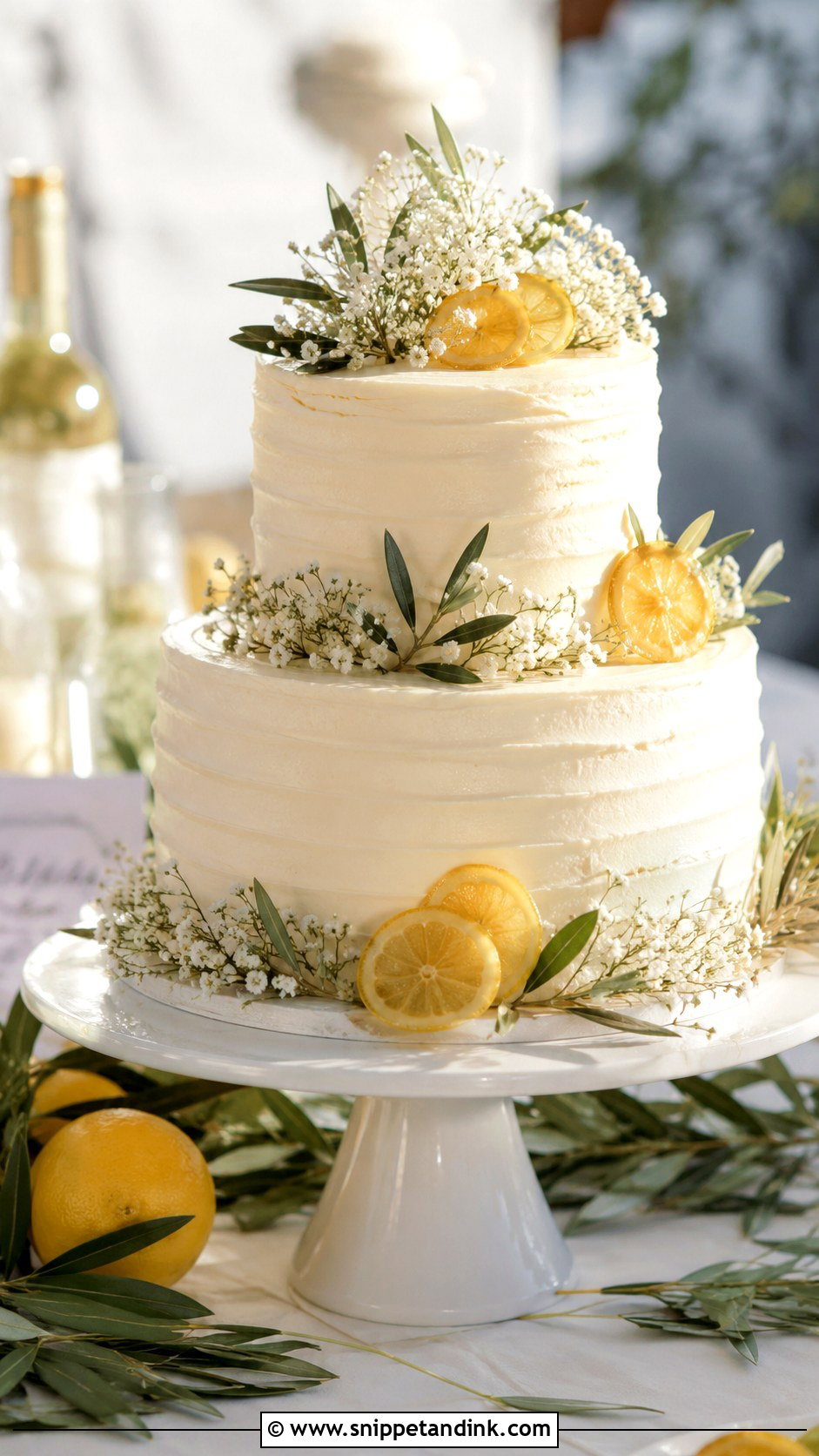
Here the flavour leads and the decoration follows. A lemon olive oil wedding cake has a tender, slightly dense crumb that stays moist for days, which helps when tiers are baked ahead. Fresh lemon slices weep onto icing within hours, so I use candied slices or add fresh ones at the venue. White frosting, pale yellow accents and olive leaves are enough. It eats lighter than chocolate after a long summer dinner, and a semi-naked finish suits a villa or garden reception.
9. Greek Honey Cake
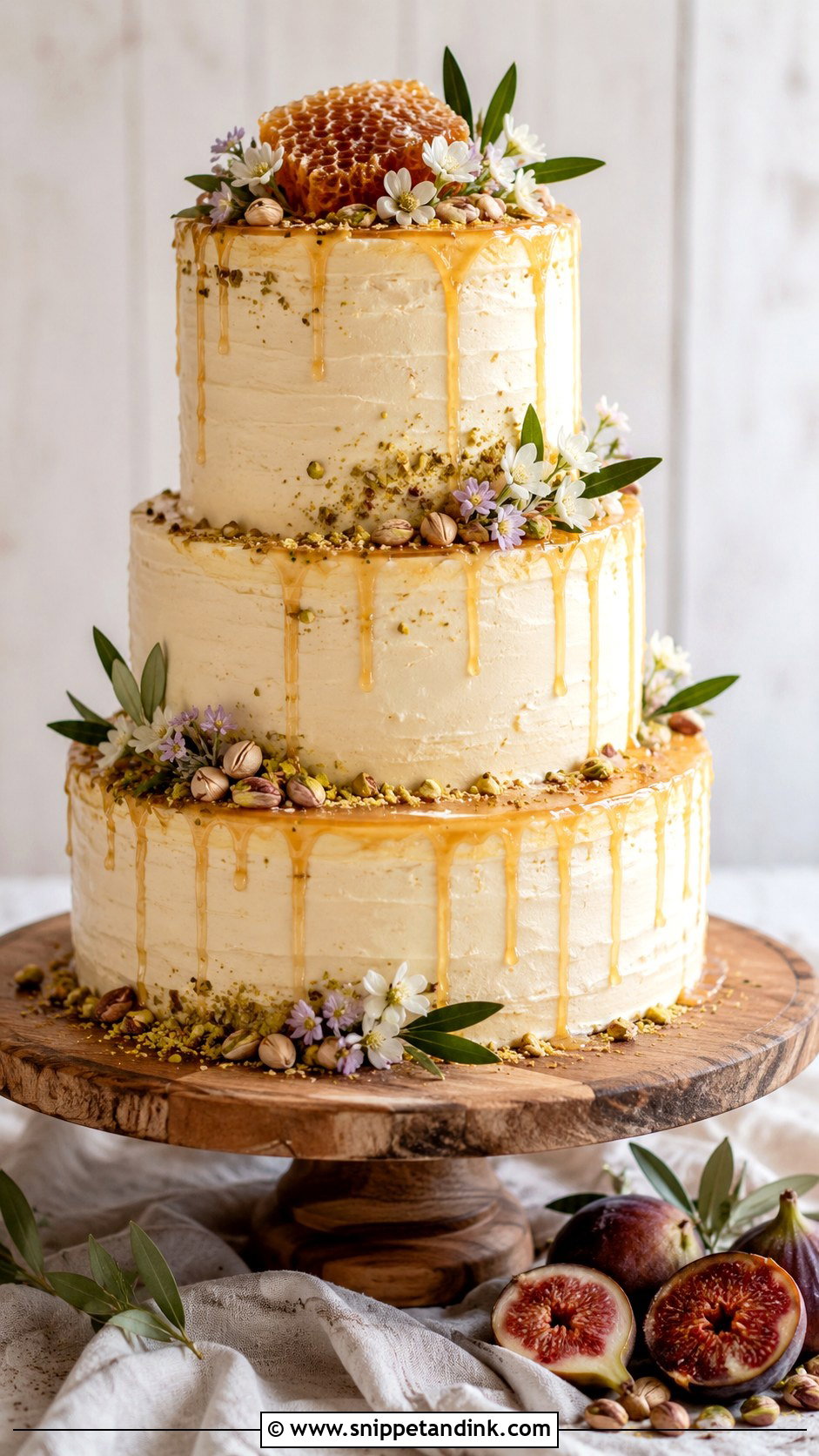
Honey is a natural Greek flavour, pairing with nuts, citrus, yogurt and warm spice. Honey drips are trickier than chocolate ones, though: they stay soft and keep sliding in a warm room. I thicken the drip with a little white chocolate so it sets and holds a clean edge. Crushed pistachio on the top tier adds colour and texture. Autumn weddings and smaller receptions suit it, and it makes a good cutting cake beside a table of Greek pastries. Honey almond or orange honey layers are what guests remember.
10. Greek Goddess Wedding Cake
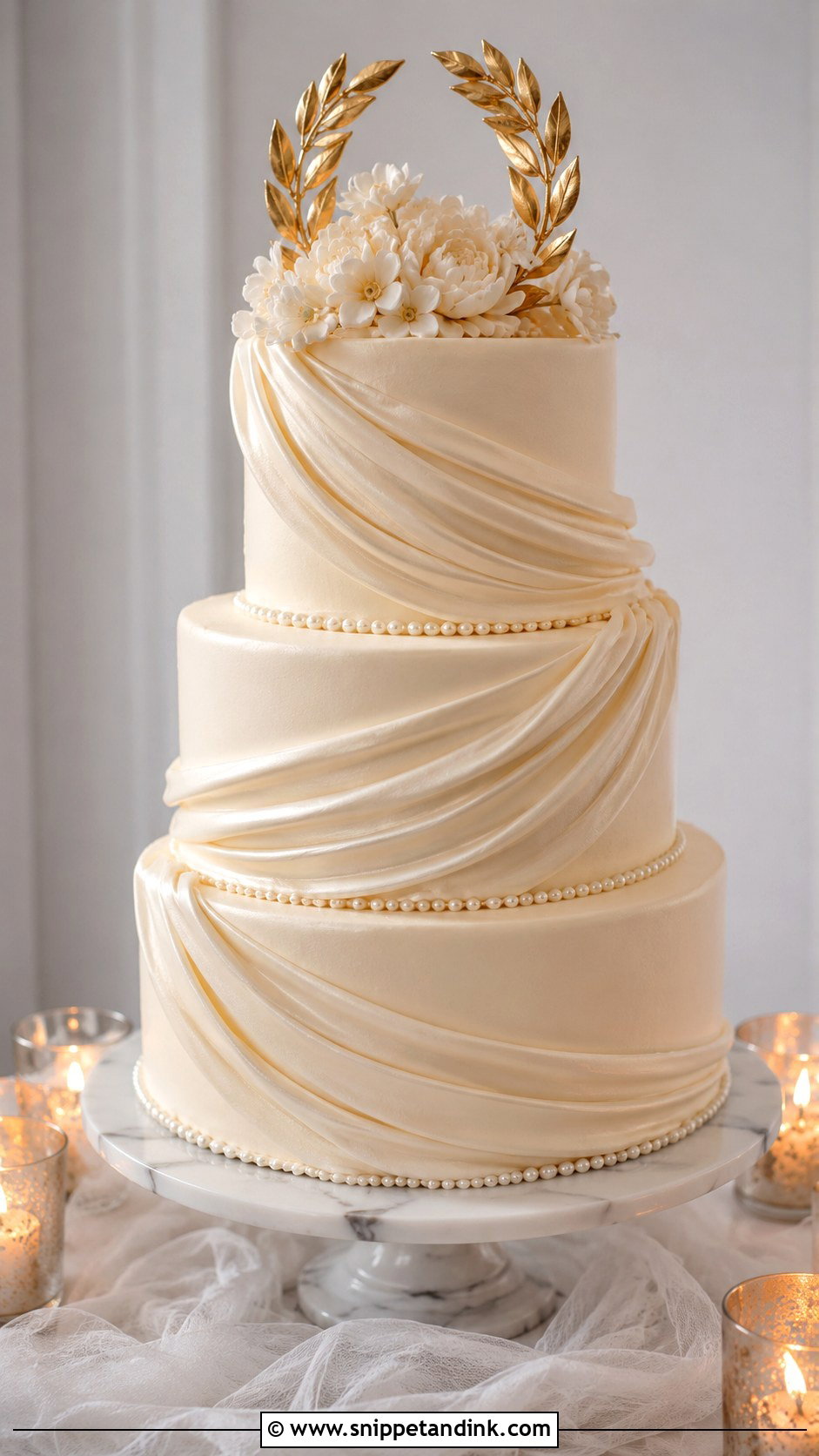
A Greek goddess cake goes theatrical fast, so restraint matters more here than anywhere on this list. Draped fondant that reads like folds of a gown is the heart of it; I roll the drapes thin and shape them on the cake while they’re still pliable, because pre-dried drapes crack at the folds. Ivory, champagne and soft gold are the palette, with a few pearls. Skip the statue topper. Rose almond or honey sponge suits the softness.
11. Greek Island Wedding Cake
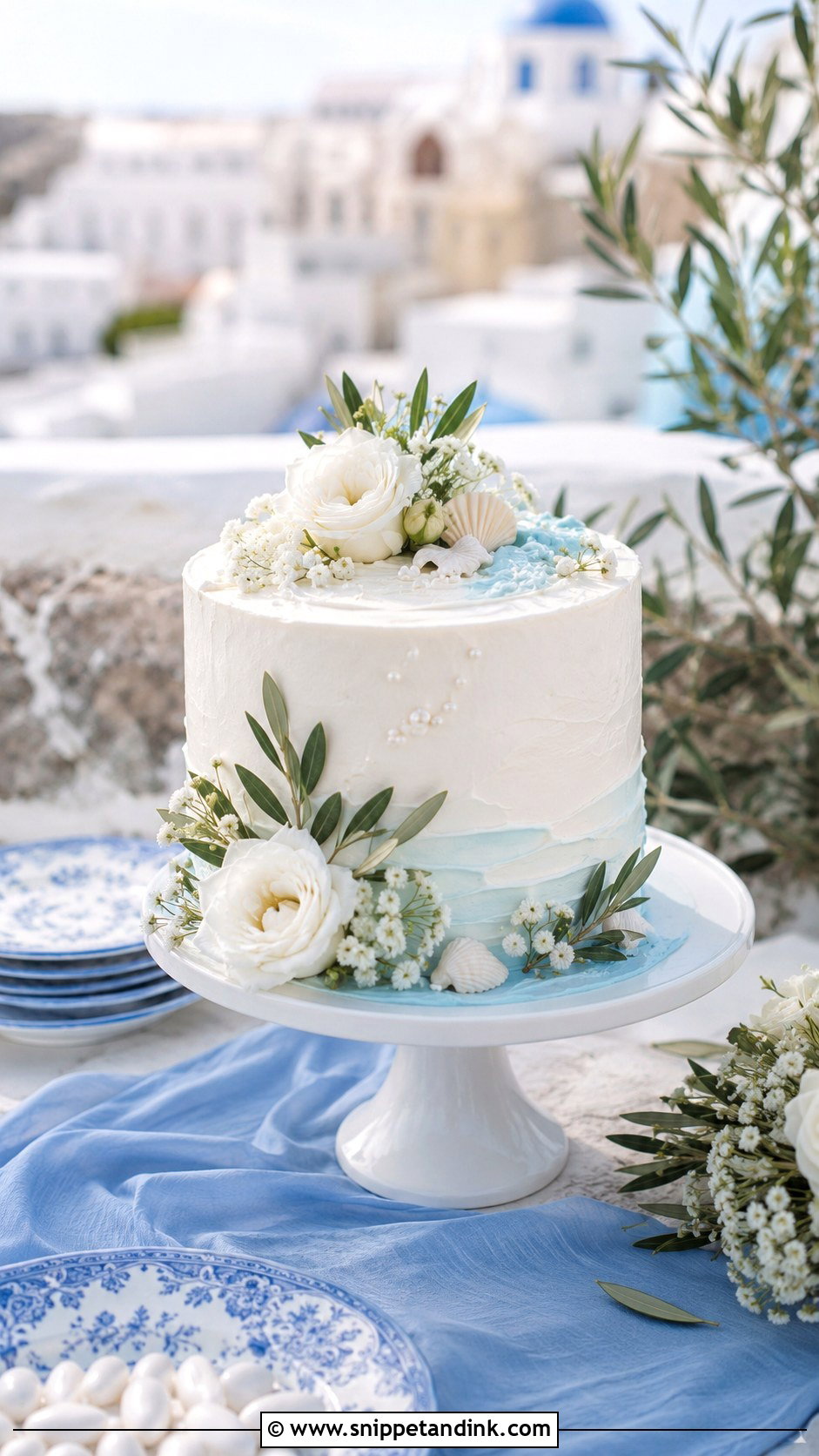
Think of the island cake as the relaxed one: a white base with a few blue touches, olive leaves and maybe shell-like piping, without turning the table into a beach shop. Coastal receptions get breezy, and a light topper can shift in wind, so anything perched on top should be secured with a food-safe pick. Linen, ceramic plates and soft blue napkins finish the scene around it. Lemon, coconut or orange cake keeps the flavour bright. It’s the right pick if you love Greece generally rather than one particular place.
12. Mykonos Blue Door Wedding Cake
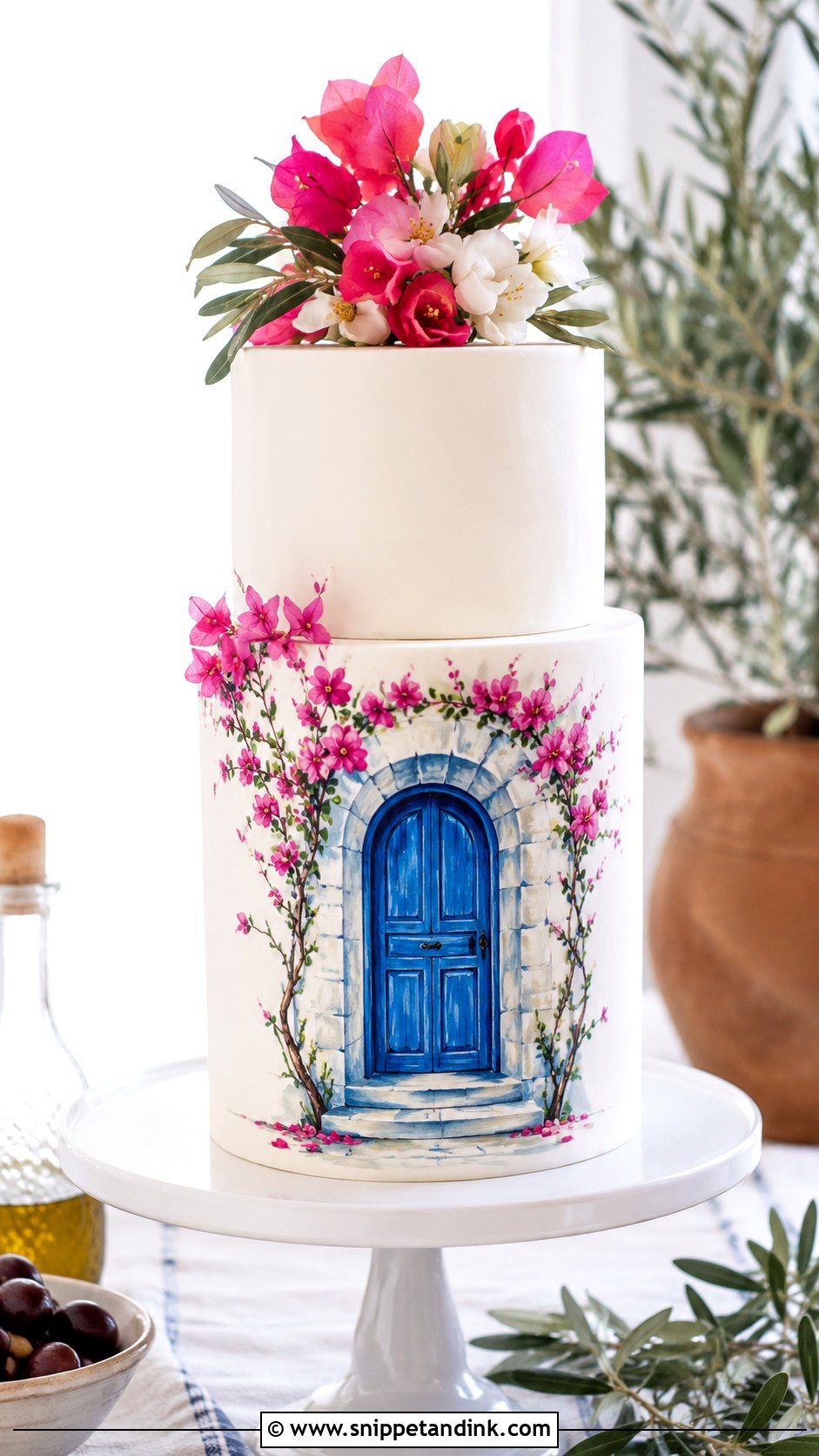
The Mykonos door is a single painted feature, and it should stay single. White fondant walls with a little stone texture, a tiny blue door and a few sugar bougainvillea blooms round the entrance tell the whole story. Painting scenery on every tier makes it look like a model village. Two tiers covers a smaller guest list; three if you’re feeding more. Vanilla or strawberry cake sits well underneath, and a plain white stand keeps it from feeling like a souvenir.
13. Greek Orthodox Wedding Cake
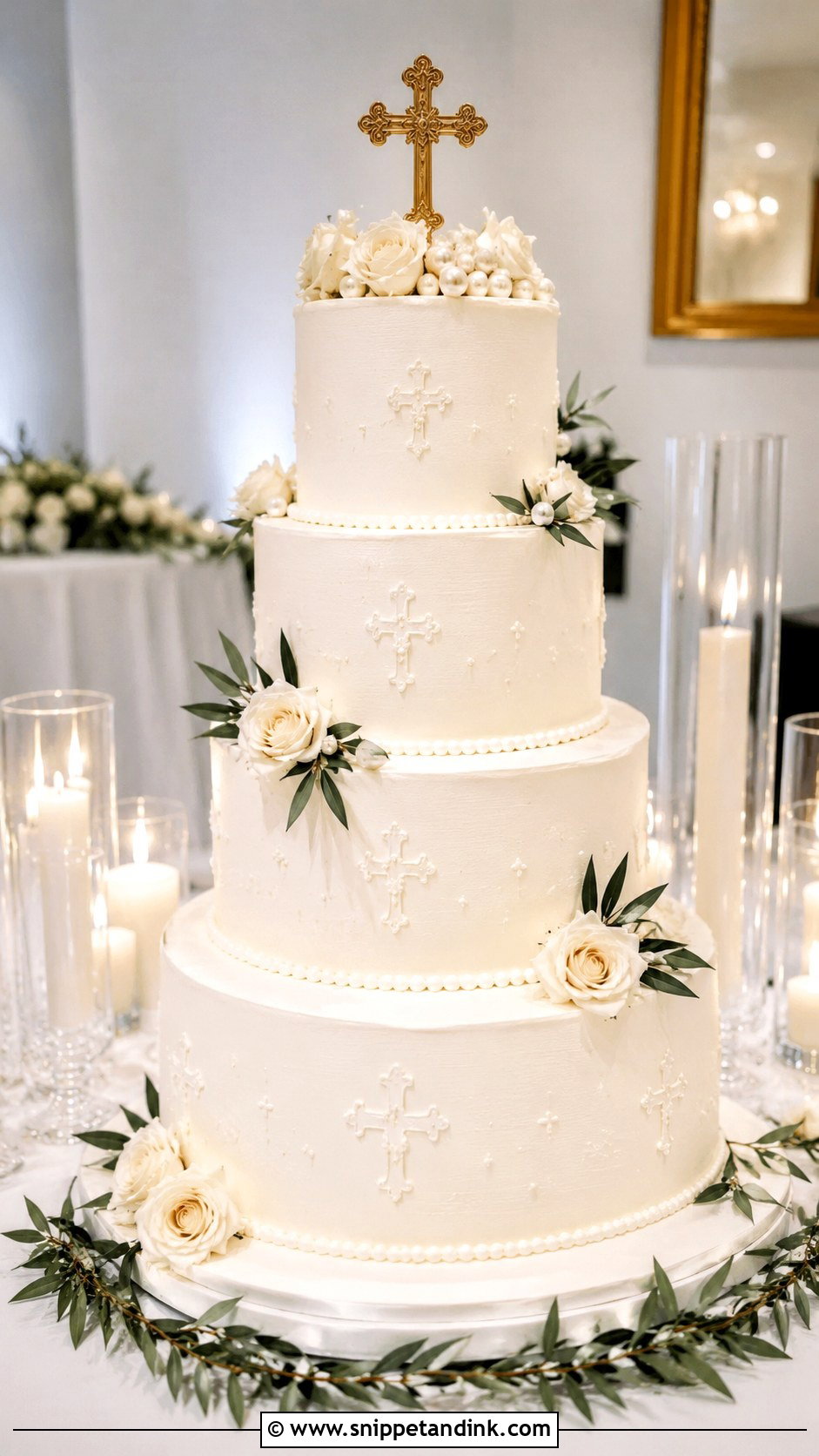
After a church ceremony, many families prefer a cake that stays classic: white, tall, with pearl piping and white roses. If a cross is included, I keep it small, either embossed into one tier or as a delicate gold topper, and I always confirm with the couple how the family feels about religious symbols on something that will be cut and eaten. Some love it; some would rather leave the symbolism in the church. Vanilla, almond or a chocolate and vanilla split keeps a large mixed-age guest list happy.
14. Mediterranean Fig Wedding Cake
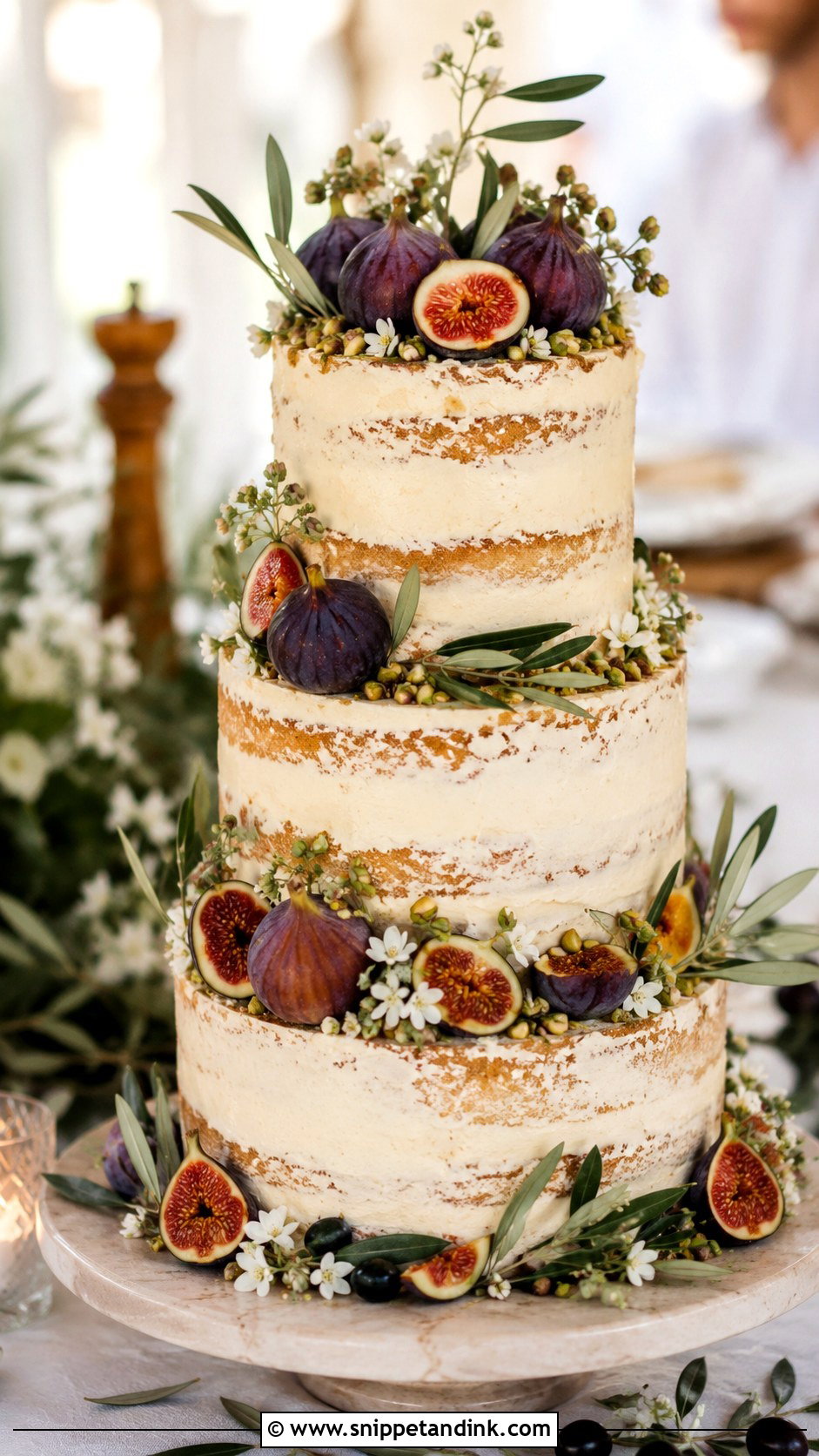
Figs bring a deep purple you can’t get from colouring, and with honey and pistachio they feel like a Greek late-summer table. They’re also the most fragile fruit I put on a cake. Cut figs leak juice into buttercream within an hour or two, so I place them whole or halved at the venue and brush the cut faces with a thin glaze. A semi-naked finish suits them. Mascarpone with fig jam is a rich filling; just keep the decoration sparse so it doesn’t drift toward a cheese board.



15. Greek Almond Wedding Cake
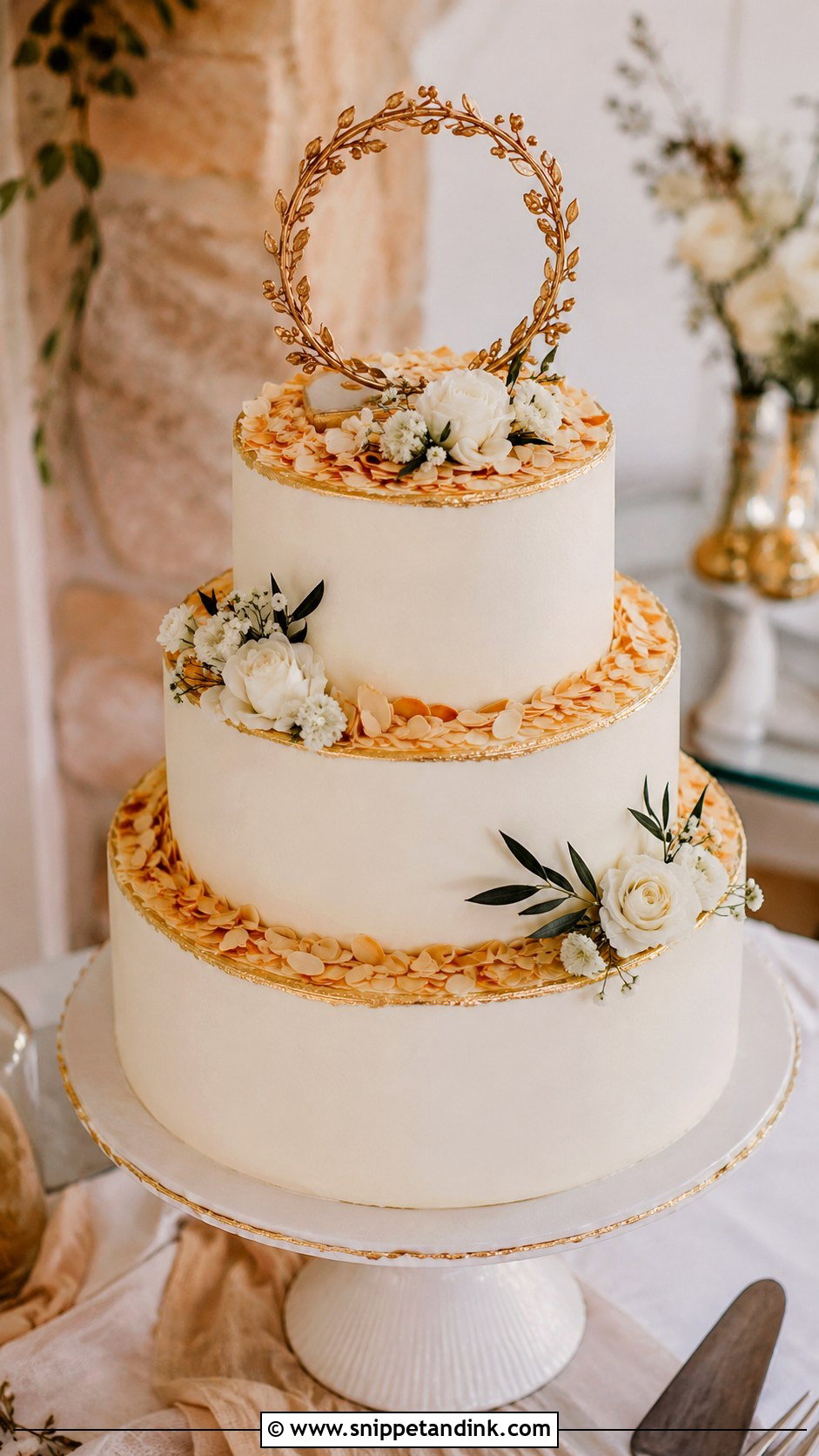
Almond is the quiet classic here, delicate enough to pair with vanilla, honey, citrus or a touch of rosewater. Rosewater needs a light hand: a few drops too many and the cake tastes of soap, which is why I always test it at a tasting rather than assume. For the outside, smooth ivory buttercream, toasted sliced almonds pressed onto the lower tier and a thin gold rim are enough. It fits nearly any venue. Do check for nut allergies on your guest list before you settle on it.
16. Aegean Sea Wedding Cake
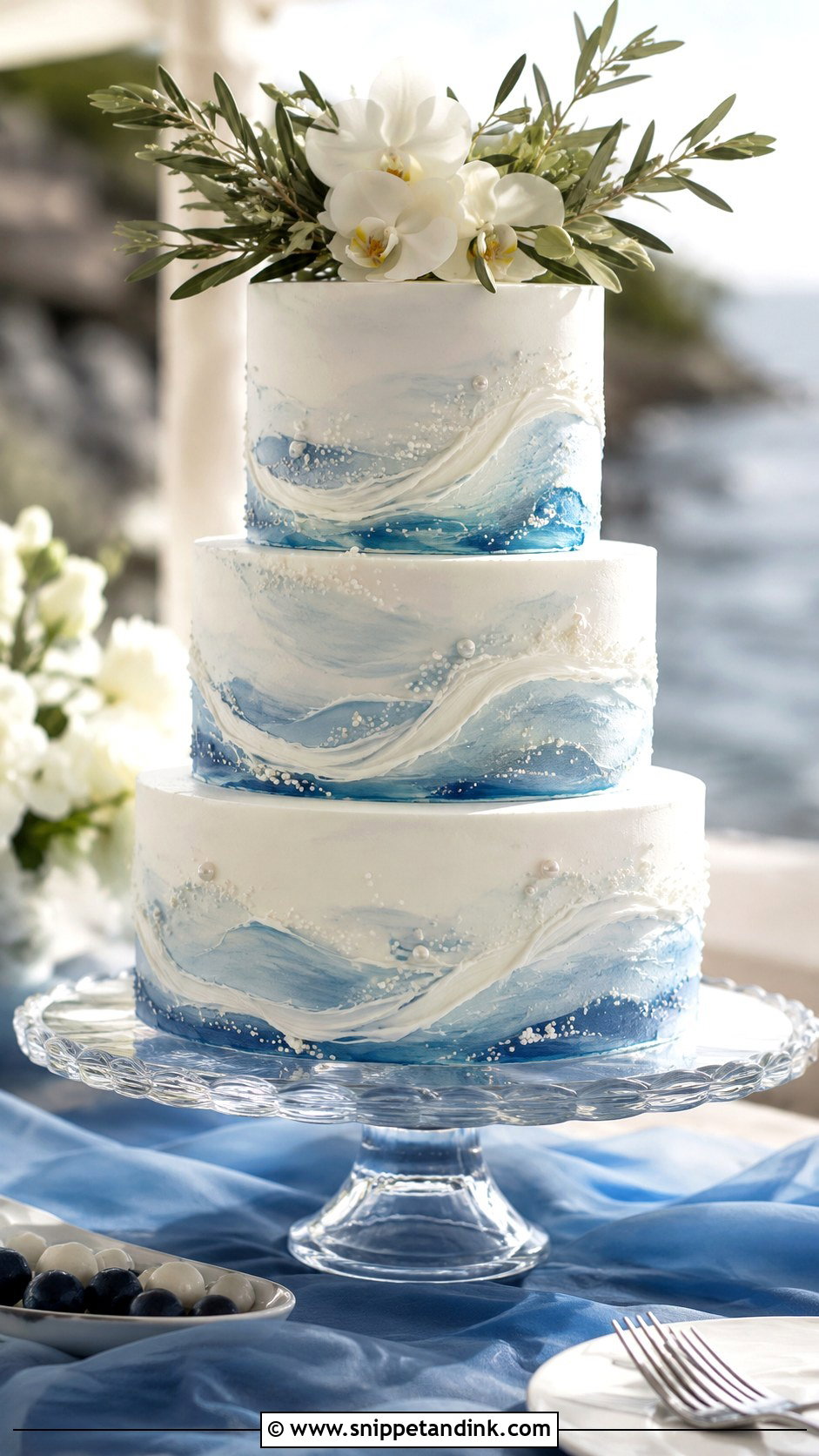
Blue ombré is the heart of the Aegean cake, with tiers shading from white at the top to deeper sea blue below. Blended buttercream gives the softest watercolour effect, while sharp fondant edges make it modern. Strong blue buttercream can stain lips and fingers, so I keep the darkest shade to a thin outer layer rather than colouring the whole frosting. White wave texture and a few pearls are enough beyond that. Coconut or blueberry filling suits the sea feeling.
17. Greek Orange Wedding Cake
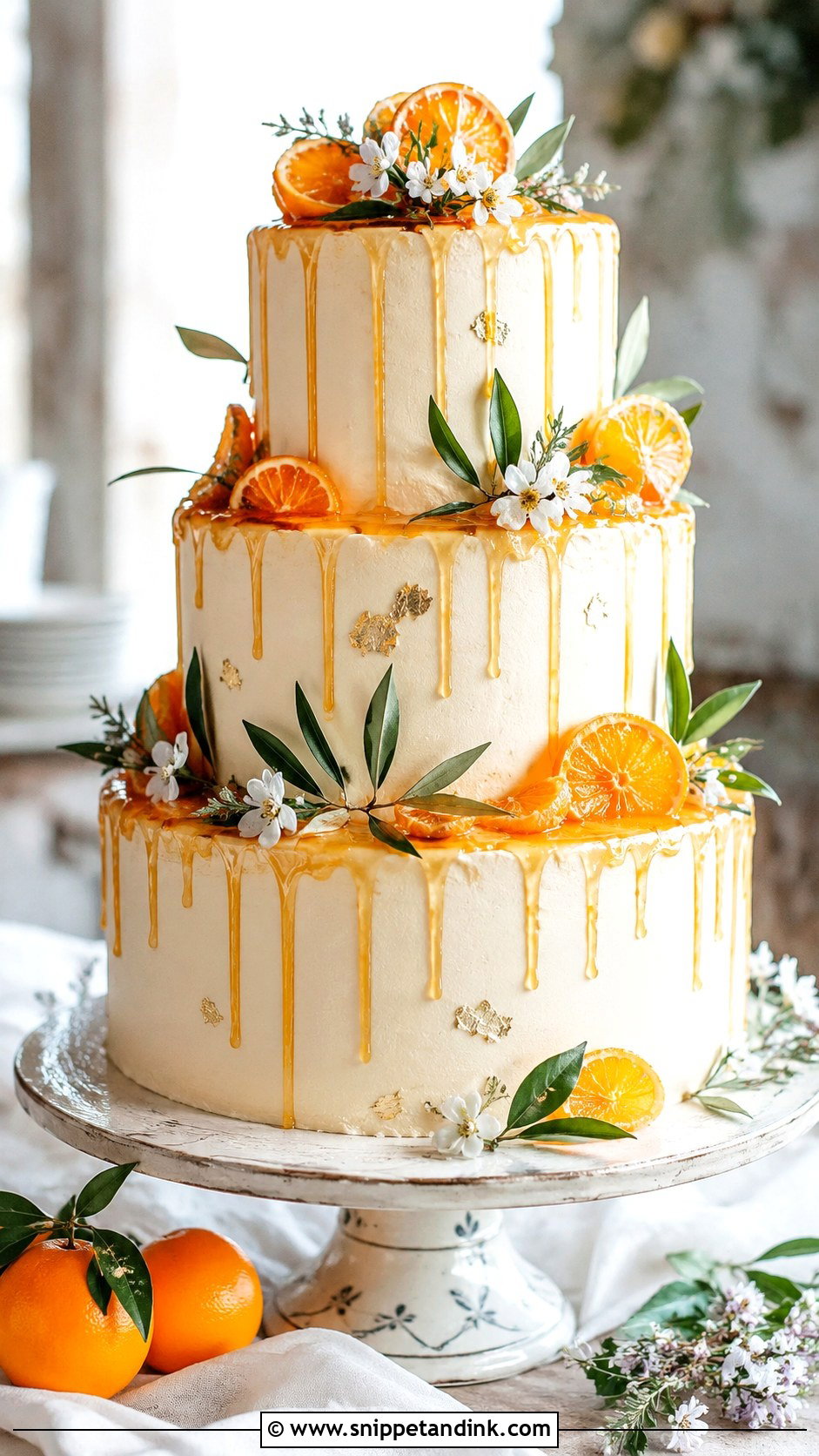
Greek orange cake is traditionally soaked in syrup, which makes it moist but heavy for stacking. For a tiered wedding version I bake an orange sponge, brush it lightly with an orange syrup and keep that glaze to a thin brush rather than a soak, so the tiers stay stable. Ivory buttercream, candied orange slices and white blossoms dress it. It tastes fresh after a big dinner, which is why it does well at spring and summer weddings. Honey or yogurt cream filling adds tang.
18. Olive Grove Wedding Cake
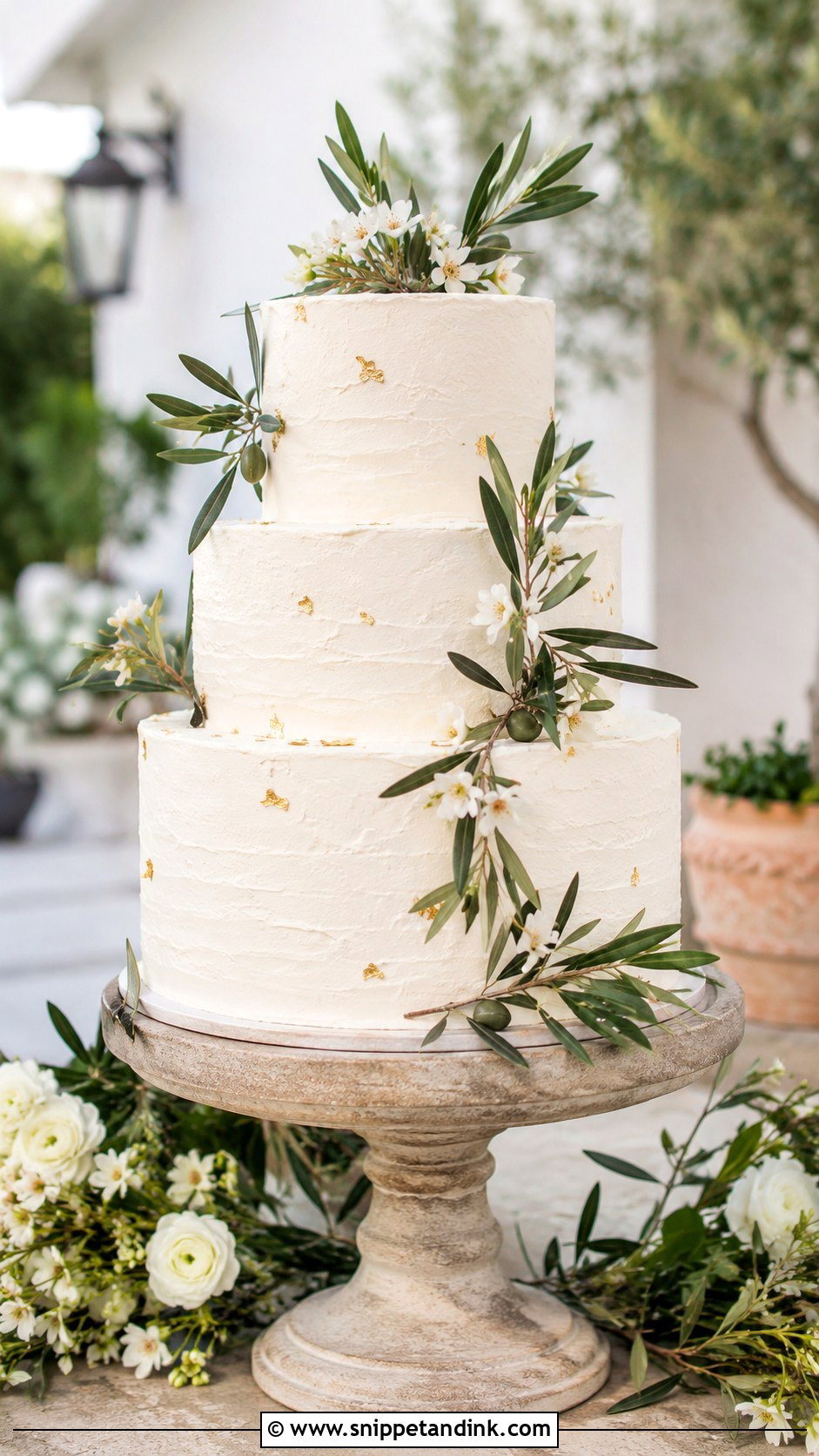
An olive grove cake should look grown rather than placed. Textured white buttercream, branches wound around the tiers and small white blossoms give it that feeling, with a little gold if you want polish. On a wooden or stone stand it sits naturally in a garden or countryside venue. Outdoors in the afternoon, buttercream starts to soften once it’s out of shade, so I ask the planner where the cake will stand and when the sun reaches it. Candles, linen and ceramic plates complete a Mediterranean dessert table.
19. Greek Blue Dome Wedding Cake
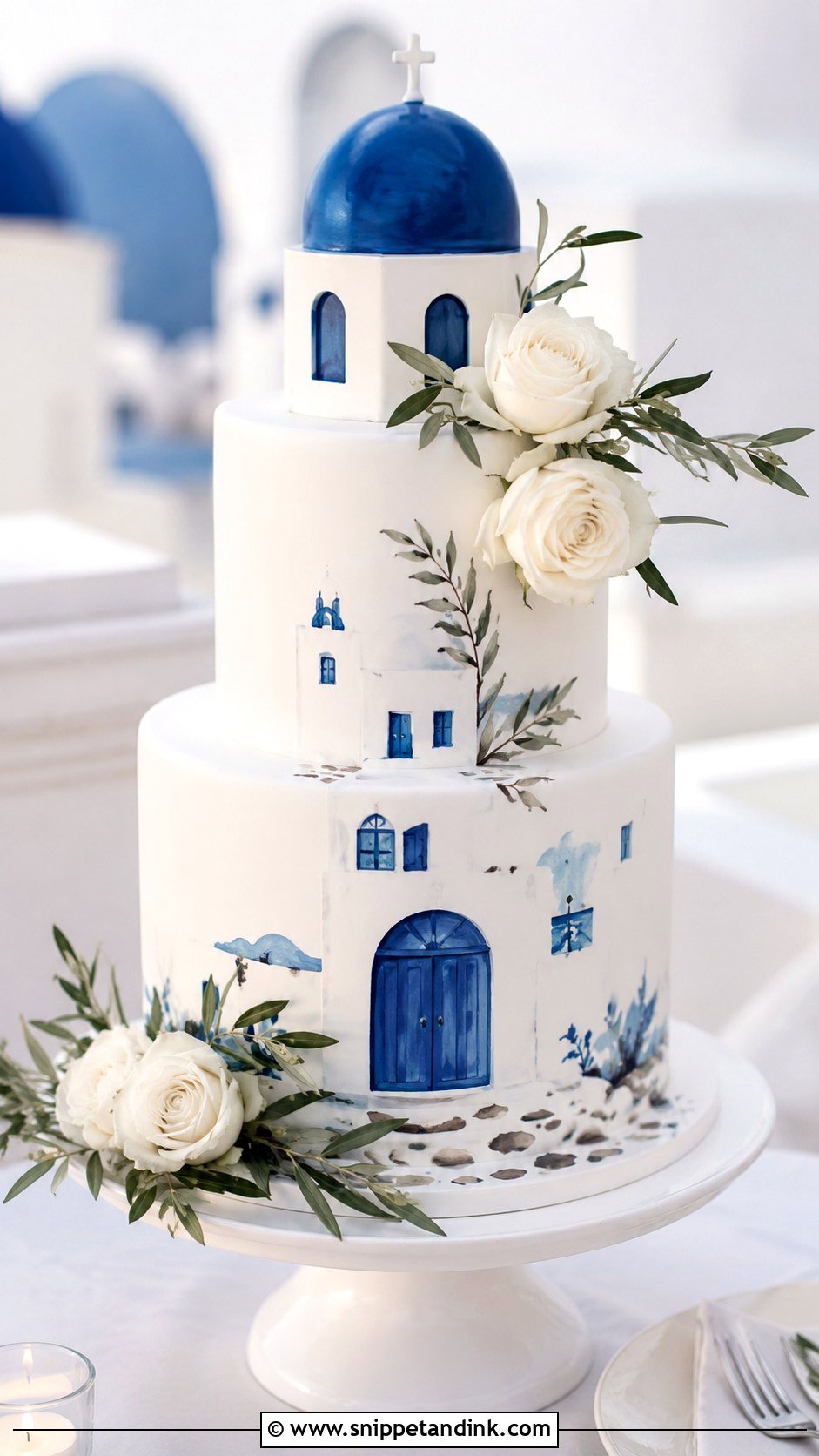
The blue-domed chapels are some of the most photographed buildings on the islands, and one small dome is enough to call them up. I sculpt the dome from rice cereal treats or gumpaste so it adds no weight to the tier below, then cover it in blue fondant. Painted archways on one tier finish the scene. Resist adding a whole village. It means the most to couples marrying in Greece or honouring family from there, and lemon or coconut cake keeps the taste as light as the palette.



20. Greek Dessert Table Wedding Cake
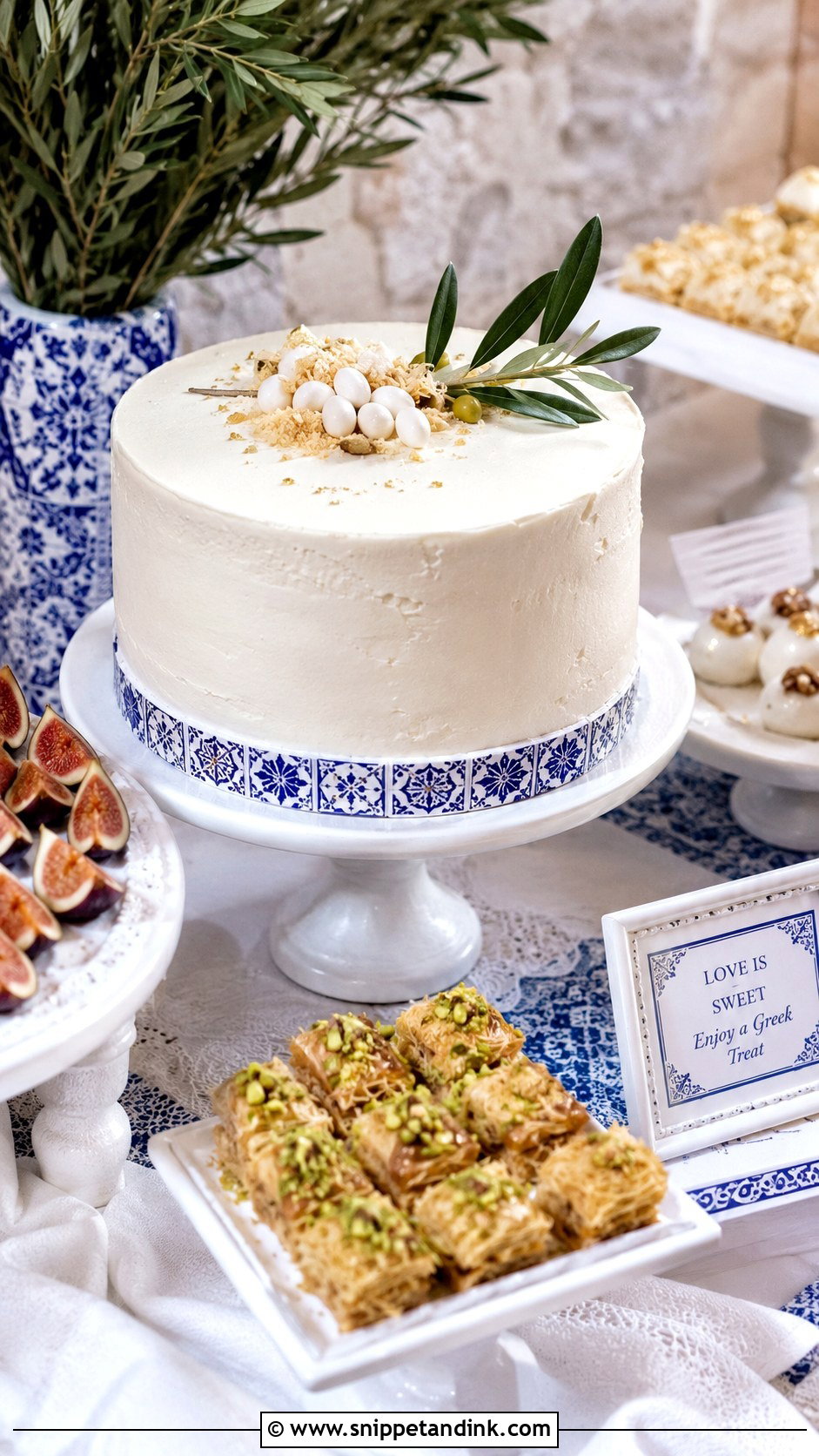
Sometimes the right Greek cake is a small one. A clean white cutting cake sits at the centre and is surrounded by Greek-inspired sweets: honey pastries, almond cookies, orange cake bites, figs and pistachio treats. Syrup-soaked pastries like baklava stay sticky, so I serve them in paper cases on trays rather than loose. Tie the cake to the table with one shared detail, such as olive leaves or a blue tile band. With matching trays and small labels, it serves a big crowd more easily than a towering cake.
Honey, Figs and Olive Leaves on a Warm Terrace
Greek weddings tend to be outdoors and warm, and several ingredients on this list react badly to heat. Here’s how I plan around them.
Real food on the cake goes on last
Fresh figs, lemon slices and berries all weep juice once cut, and honey drips keep moving in warm air. I set the cake up with its structure and icing finished, then add fruit, real greenery and any fresh flowers at the venue, as close to the reception as the timeline allows. If your baker isn’t staying to dress the cake, ask who will, and make sure they’ve seen a photo of the finished design.
Shade and a cool room matter more than the recipe
Butter-based icing softens in direct afternoon sun, and a cake that was chilled for transport will sweat if it goes straight into humid air. Ask your venue for a shaded spot for the cake table, away from heaters and the dance floor lights. In real heat, a fondant cover over a firm ganache holds up far better than a semi-naked finish, so I’d steer a midday seaside wedding toward the marble, tile or blue dome designs rather than the rustic ones.
Destination weddings change the plan
If you’re marrying abroad, you’ll almost certainly be working with a local baker rather than flying a cake in. Send your reference photos early, ask to see their own past work in the style you’ve chosen, and keep the design to details they make often. Local bakers usually know exactly how their buttercream behaves in their own summer, which is worth more than any detail you might lose.
One Greek Detail, Done Well
Every cake above leans on one clear idea: olive branches, Santorini blue, marble, laurel, citrus, figs or tile. None of them needs all of those at once. Let your venue and season make the choice. Aegean blue suits a beach terrace, marble and gold suit a ballroom, and figs and honey belong to late summer. Light the cake table well, keep the flowers simple, and then tell your baker the one detail you care about most. That’s the brief that turns into a cake that feels Greek.
You'll Like These Ideas:




Leave a Reply